

Cairo #1 (Egypt): Visiting the Old Egyptian Museum
Welcome to this new road trip in Egypt and beyond. We weren’t able to properly celebrate our 10th wedding anniversary because of Covid, so we’re taking advantage of a slightly more relaxed time at work this year to celebrate our 10th anniversary a few years late. Let’s take the opportunity to celebrate anything and everything because there’s always an excuse to treat ourselves, right?
Part 1: Travel Journal
Part 2: Practical Tips
Part 1: Travel Journal
Day 1: Chaotic Arrival in Cairo
We weren’t originally supposed to go to Egypt, but to get to Saudi Arabia from Athens, we have to make a stop in Cairo. We’ve been there before, but why not stay a few days?
From Athens, we take a flight with EgyptAir that’s supposed to arrive early afternoon in Cairo. But due to weather delays, our flight was 6h15 late !!! Luckily, we were able to spend all that time in the two lounges at Athens airport (thanks to our Amex card) and got a voucher for 35 euros per person valid at an airport café. I’m in a bad mood and very tired, especially with a seatmate who snores like a truck driver (thank goodness for AirPods Pro that reduce a ton of noise, otherwise I would have blown a fuse).
On arrival at the airport, we get jumped on like ATMs on legs: the airport toilet cleaner who wants a tip, the porter who wants to take our luggage without asking, the taxi driver who wants to take us to our hotel for 5 times the usual price, etc. With the fatigue, I’m starting to regret our little stop in Cairo. But it’s our second time visiting Egypt, so we take a deep breath and don’t take it personally. We know no one will be offended if we say no; it’s all part of the folklore, everyone says no to everyone.
As soon as the payment for our visas on arrival goes smoothlyand our SIM card works in Egypt, things get much better. We rush to the parking lot right across from the airport to wait patiently for our Uber, and 5.30 euros later (plus a well-deserved tip), we arrive at our hotel in the city center (Booking link).
Plus, before coming to Egypt, JB exchanged money in Athens and asked for a mountain of one-dollar bills, so we’re all set to tip everyone. Last time, we had a hard time getting small Egyptian bills for tips (which is expected of tourists), and it caused unnecessary stress every time someone smiled at us (and expected a tip). This time, we’re better prepared. And since the Egyptian pound has dropped a lot, a $2 tip for a $6 Uber ride is very appreciated. For info, a meal at a local joint currently costs 60 LE, about $1.2. For tipping, the Egyptian technique is this: you place your bill in the palm of your hand, shake hands with the person you want to tip, and magically, the bill disappears when you part hands.
If we had arrived earlier in Cairo, I would have liked to visit Old Cairo and do some shopping (I need an abaya and a veil before going to Saudi Arabia). But luckily, we already visited it last time, so no regrets.
Our hotel (Booking link) is a 5-minute walk from the old Egyptian Museum, and we’re not only well treated, the bed is very comfortable. We slept great. They even exchanged money for us (USD to LE) at a very good rate. Good thing, because withdrawing from an ATM (we only tried one) costs us a good 10% in fees!!!
Day 2: Egyptian Museum of Cairo
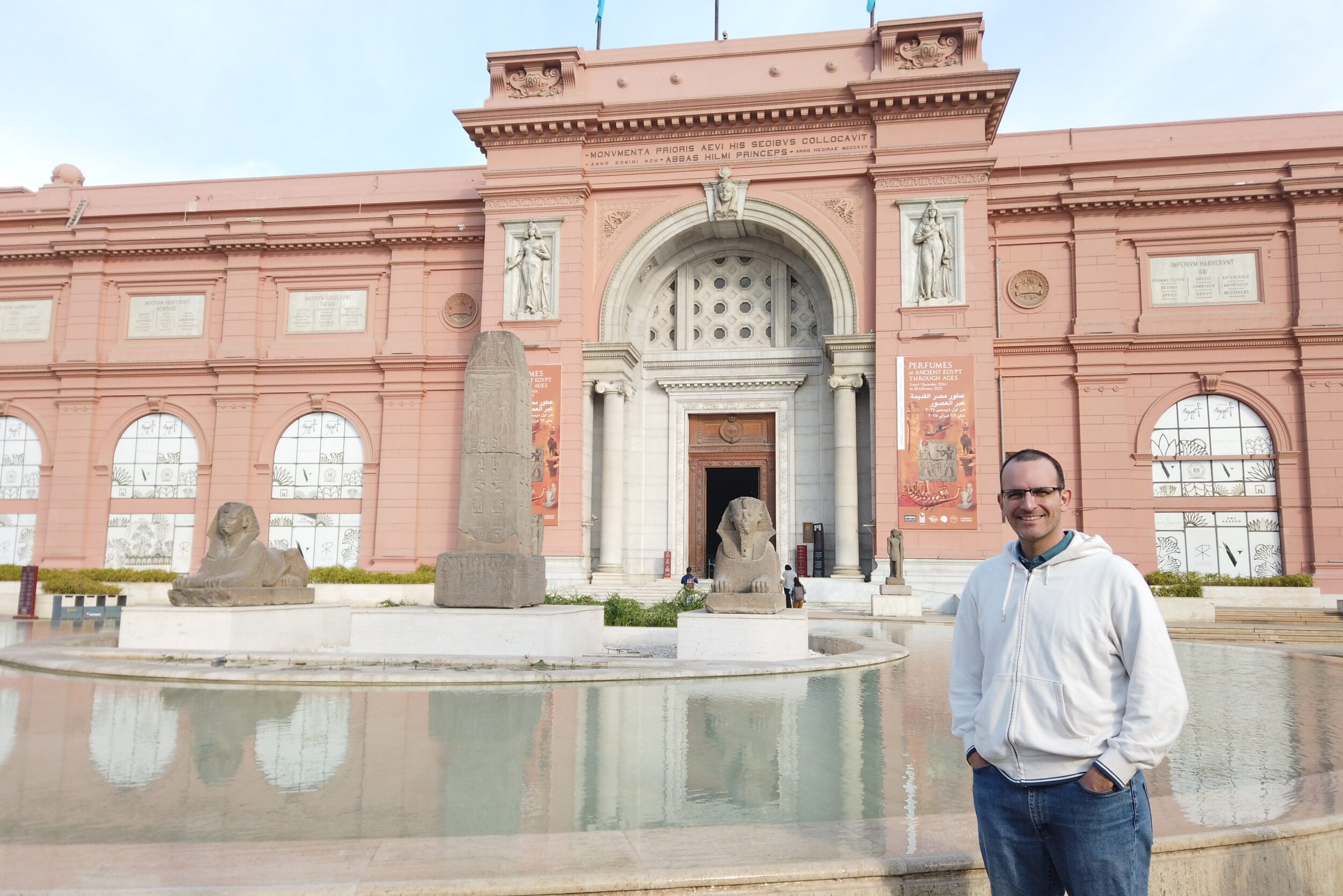
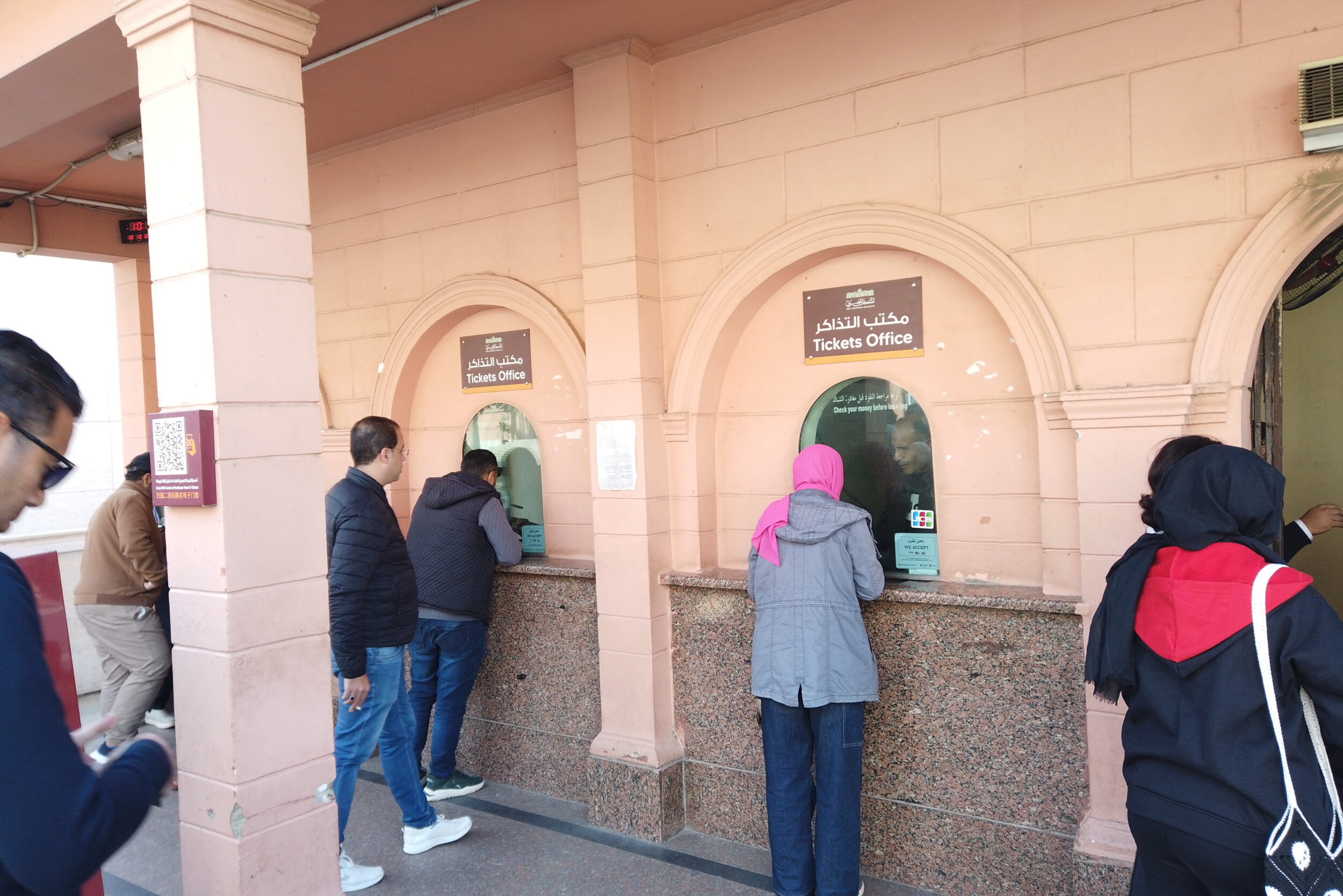
We leave our bags at the reception before walking to the Egyptian Museum. We arrive right at opening time to avoid the crowds. We go through several security gates (come with minimal belongings; there are lots of checkpoints). JB shows his entrance ticket, and the guard tells us, “Oh no, this isn’t the right ticket”. He had bought online, by mistake, the ticket for the National Museum of Egyptian Civilization which is located who knows where. Luckily, the ticket booths are empty, and card payments with VISA/Mastercard are accepted (550 LE/person). With our international card, we didn’t pay any extra fees.
This one is the old museum, in the city center, because there’s a new one near the pyramids. Luckily, we decide to visit this one because some of the artifacts from Tutankhamun’s tomb are still here. There are fewer than what we saw 5 years ago; for example, some items that existed in duplicate are now only in single copies.
Anyway, I’m very happy with the new layout. Last time, the objects were piled on top of each other, everything was dusty, old, abandoned, and we wondered what was the point of cramming them into a place without taking care of them. This time, it’s much more “empty,” airy, because part has already been transferred to the new museum.
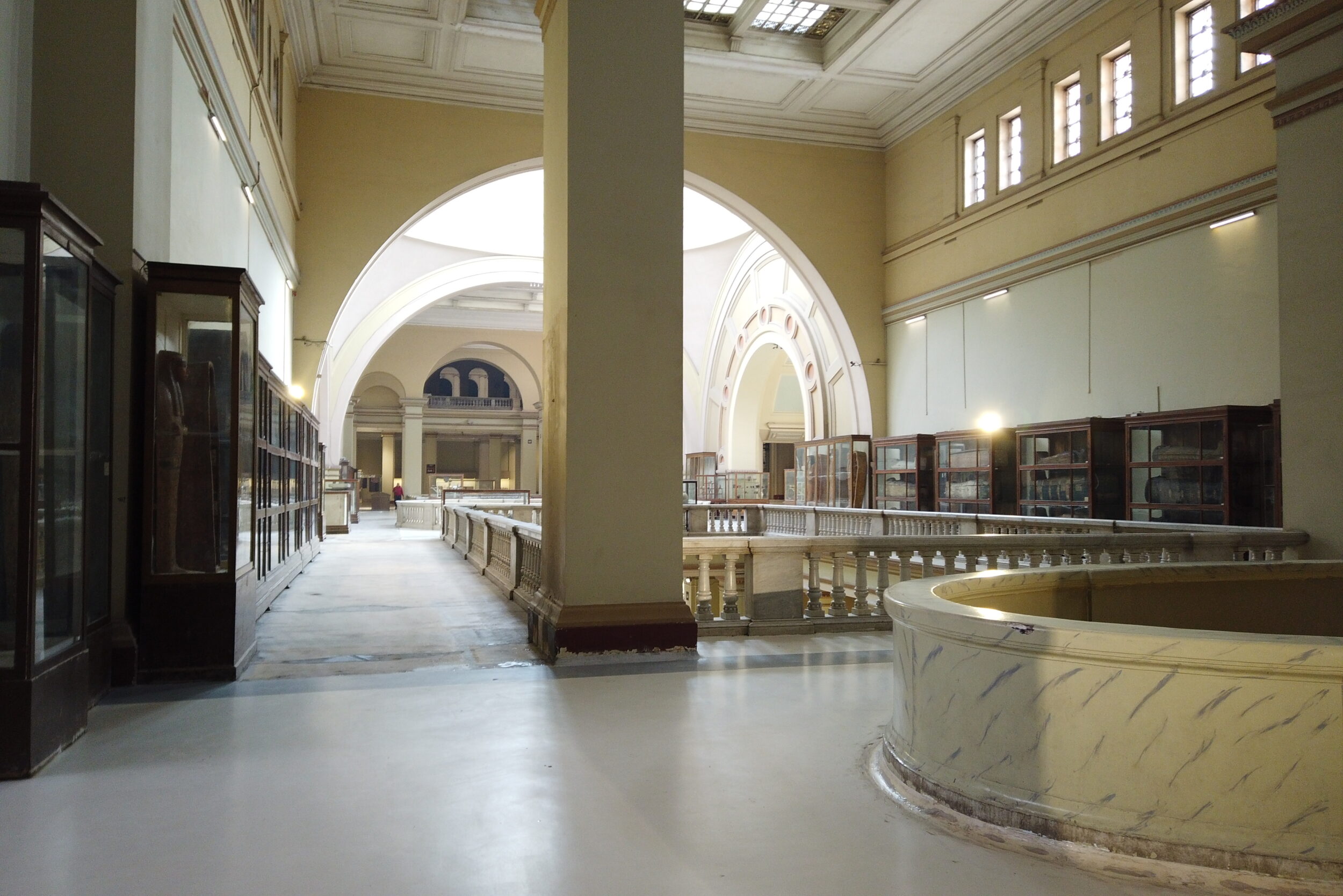
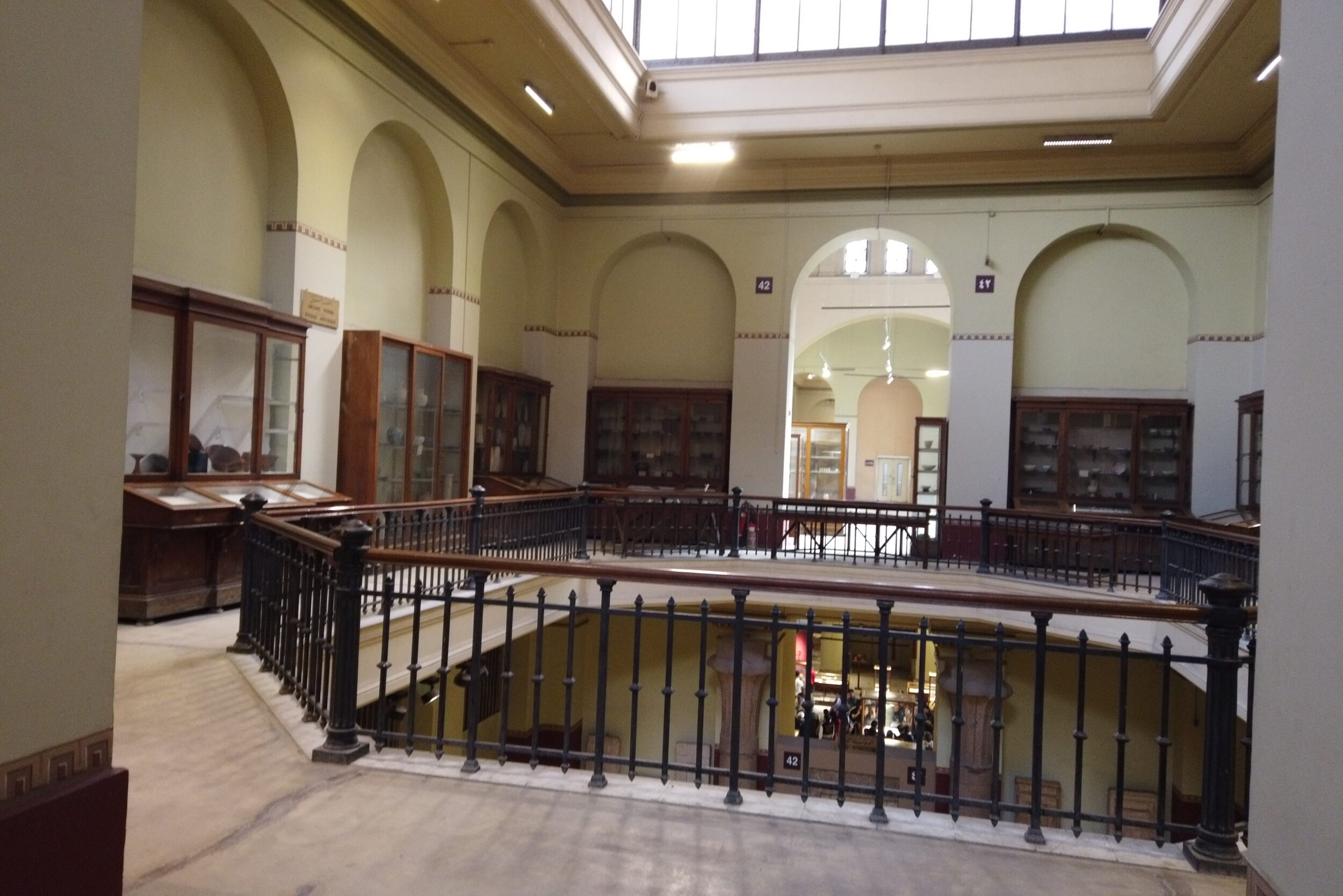
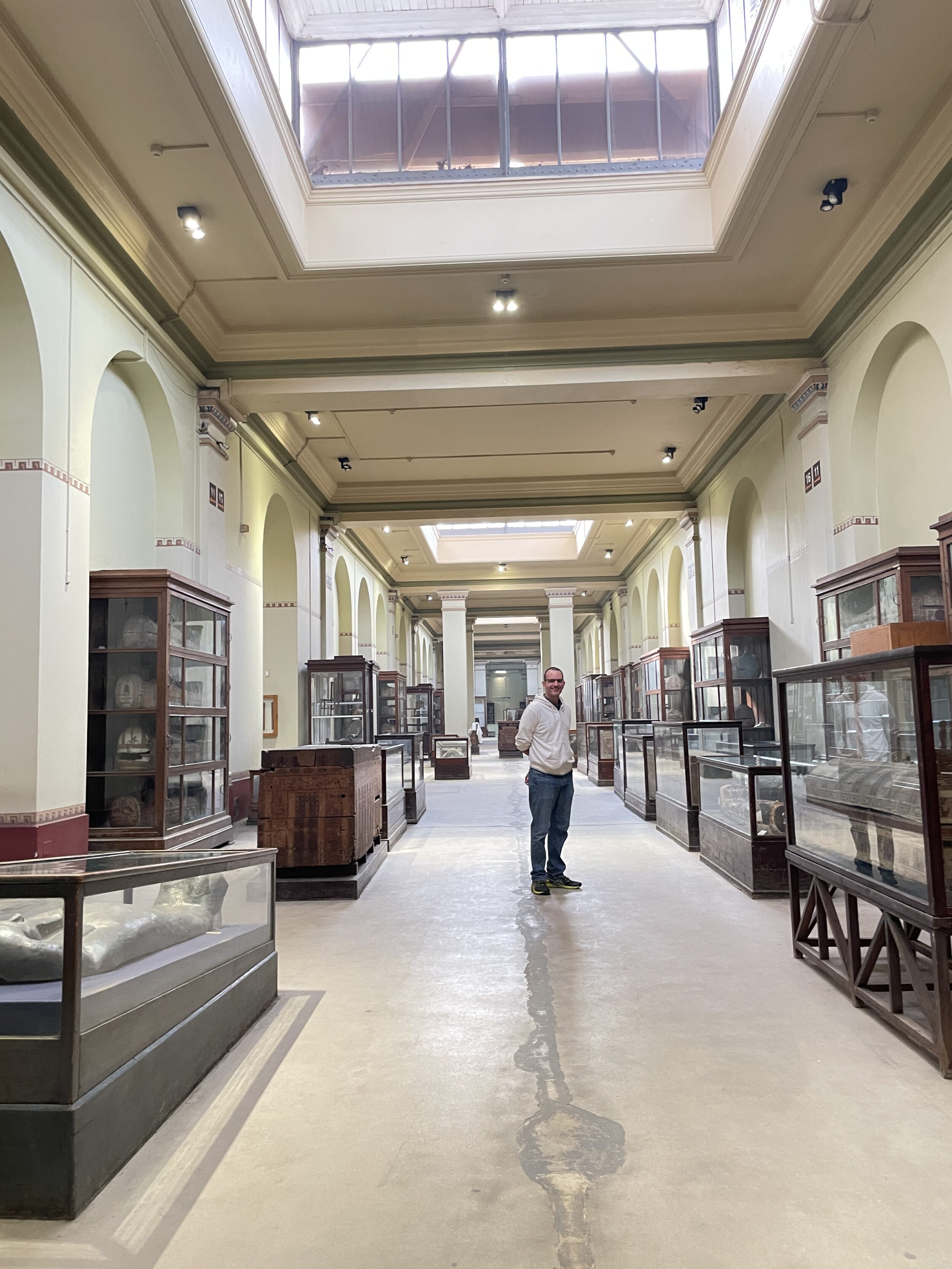
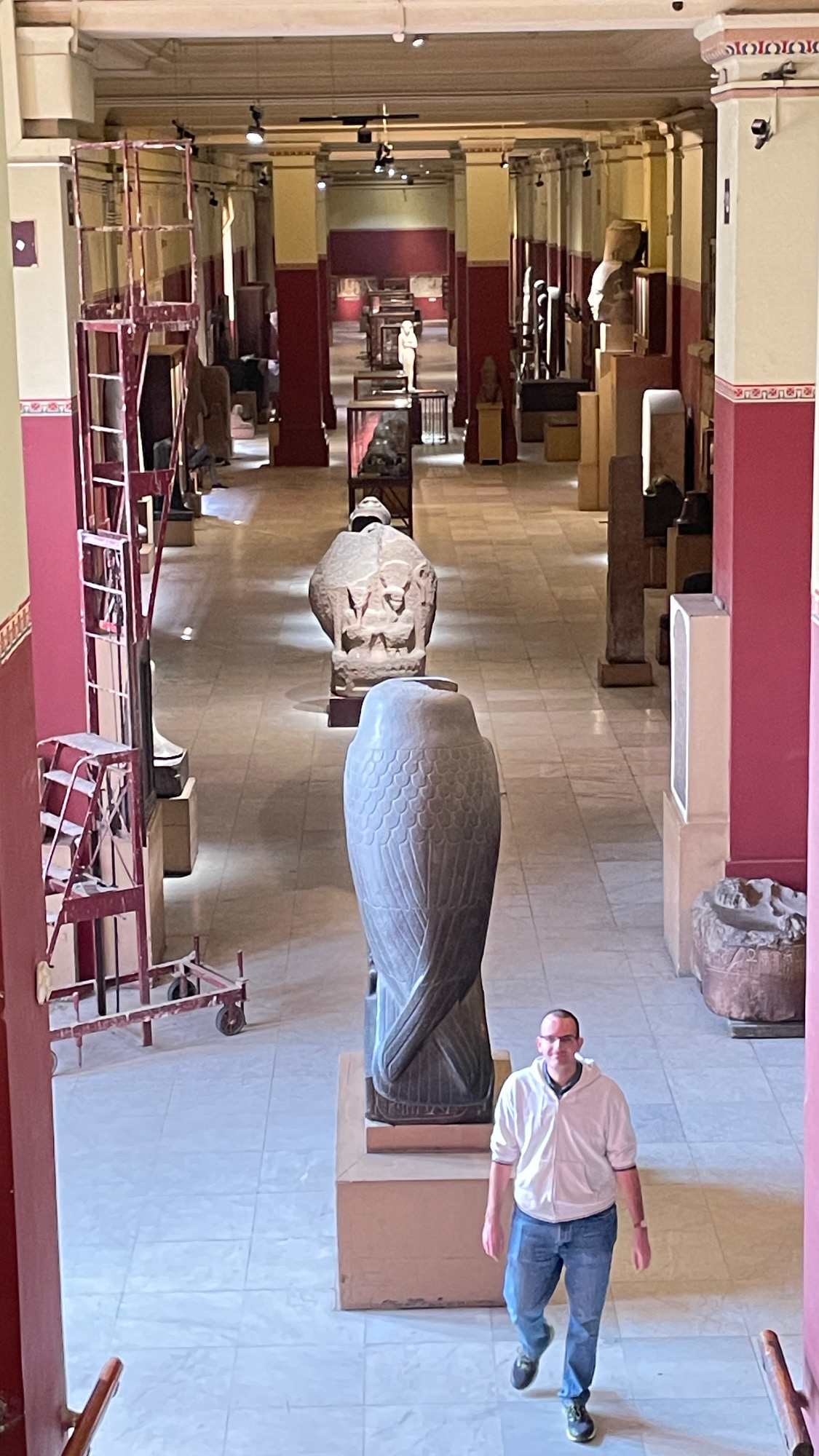
We still have some iconic things, like “The Scribe,” and a few famous statues, and especially the famous gold mask of Tutankhamun. So, for the next few months, it’s still a good idea to visit this old museum.
This time, we’re visiting Cairo without a guide because it’s our second time here, but if you’re visiting for the first time, absolutely get a guide because there’s so much to know and the museum is huge. Not as big as the Louvre, but big enough to get lost.
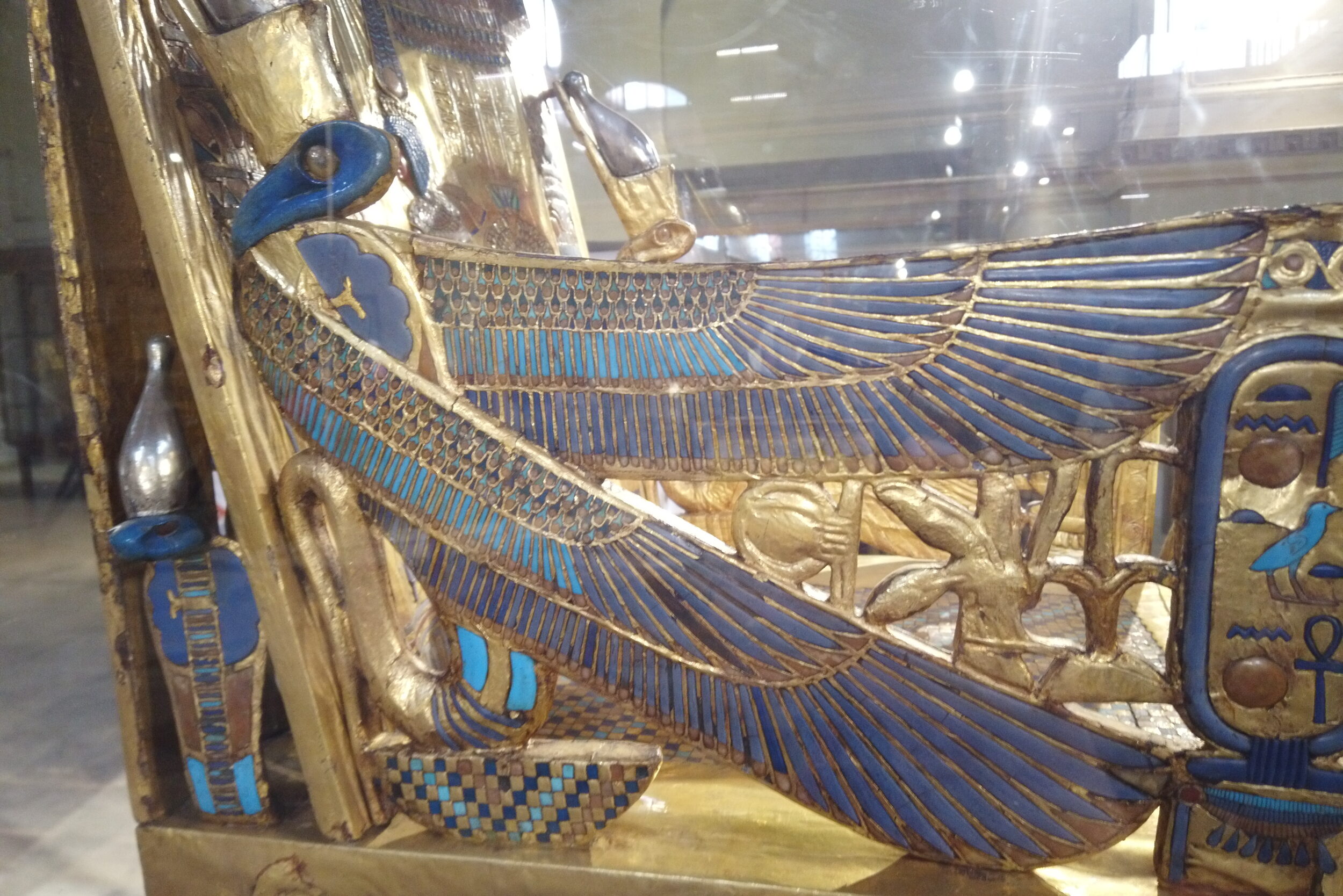
Personally, we don’t follow any particular route, we just rush to see Tutankhamun on the first floor before the tourists arrive. We completely get the wrong room because the old Tutankhamun room has moved 10 meters. We realize our mistake when we notice that the gold mask in this room doesn’t look like Tutankhamun’s gold mask, hahaha. These two rooms with precious gold objects are off-limits to photos and videos. So I’ll just show you what they look like from the outside so you can spot them.
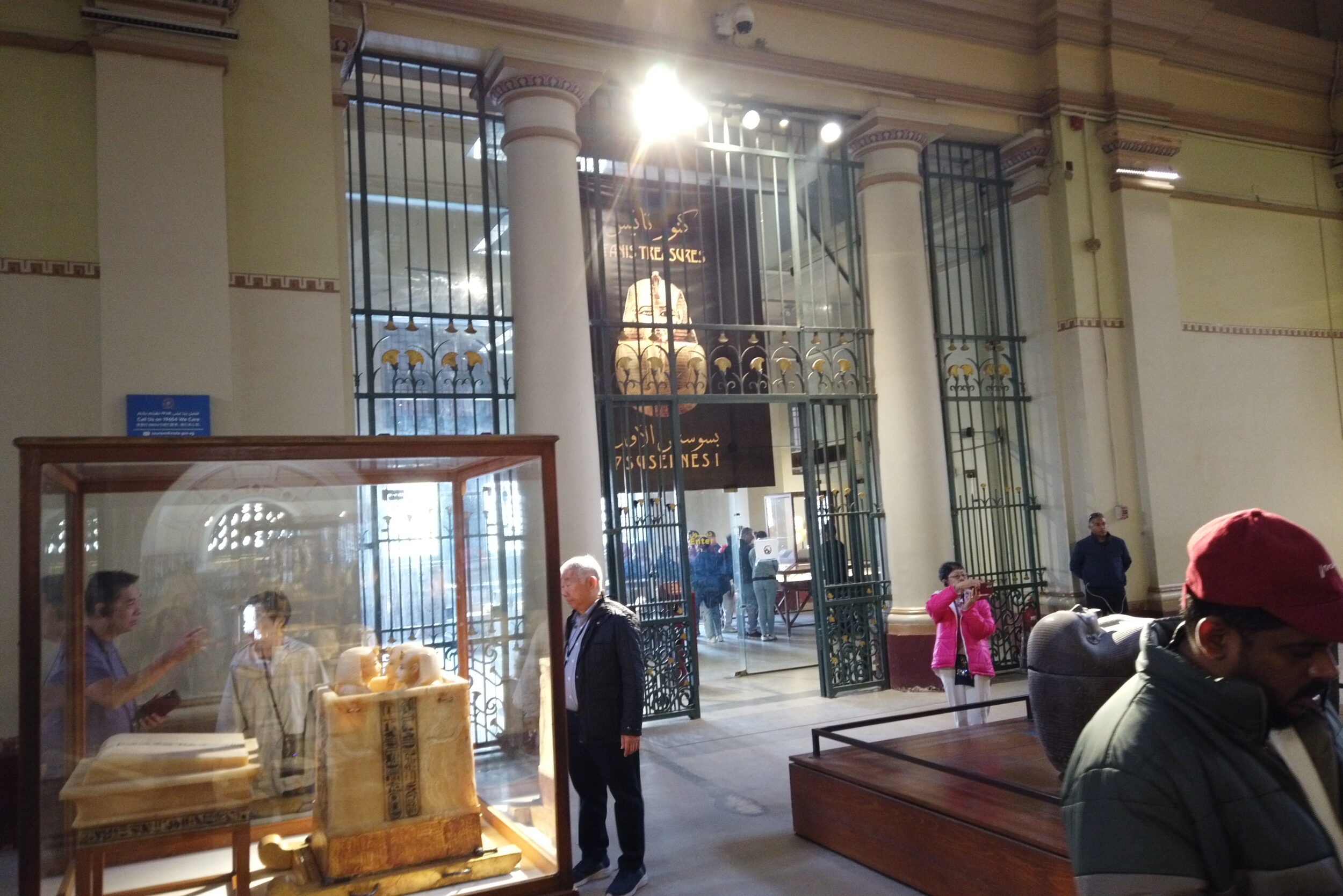
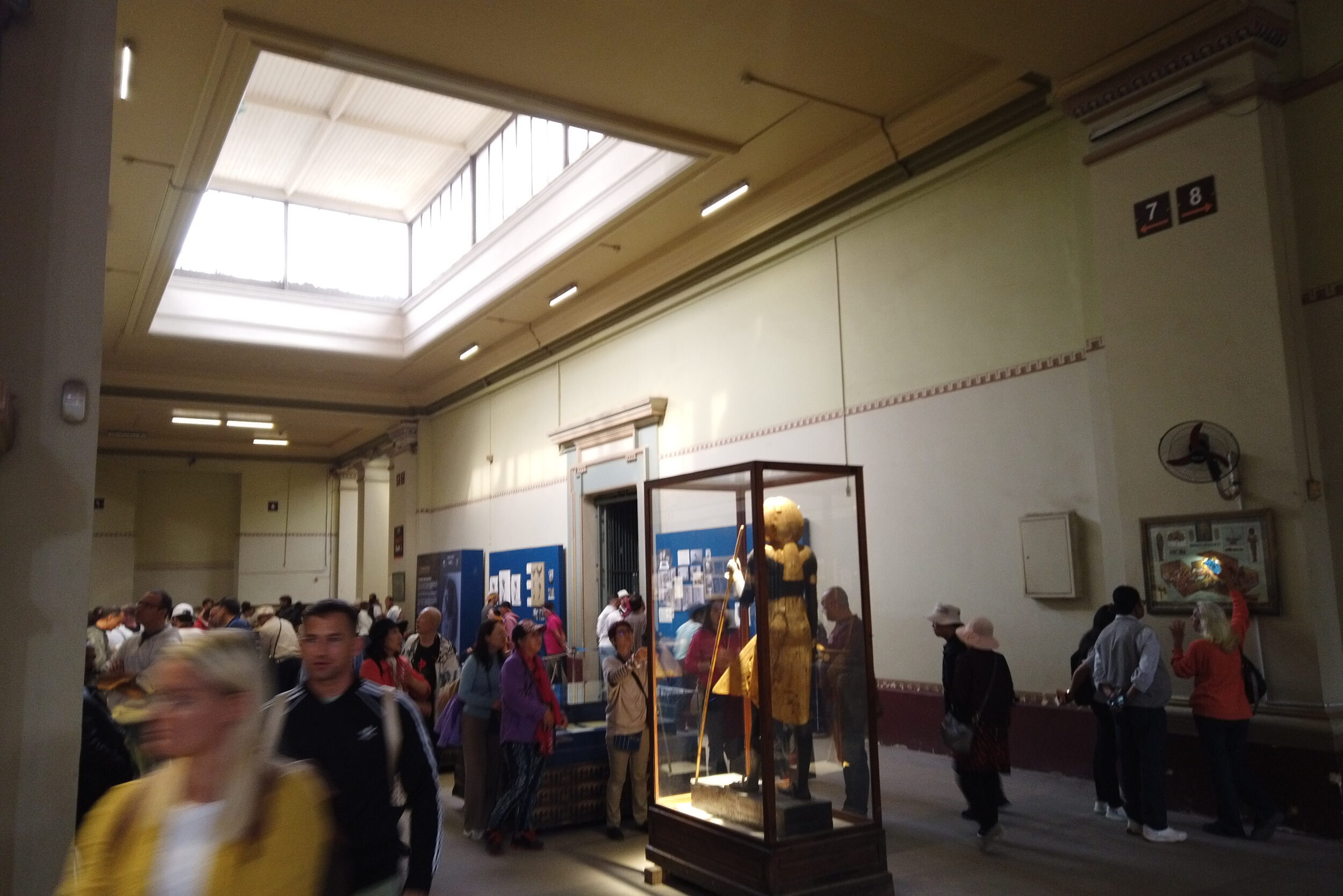
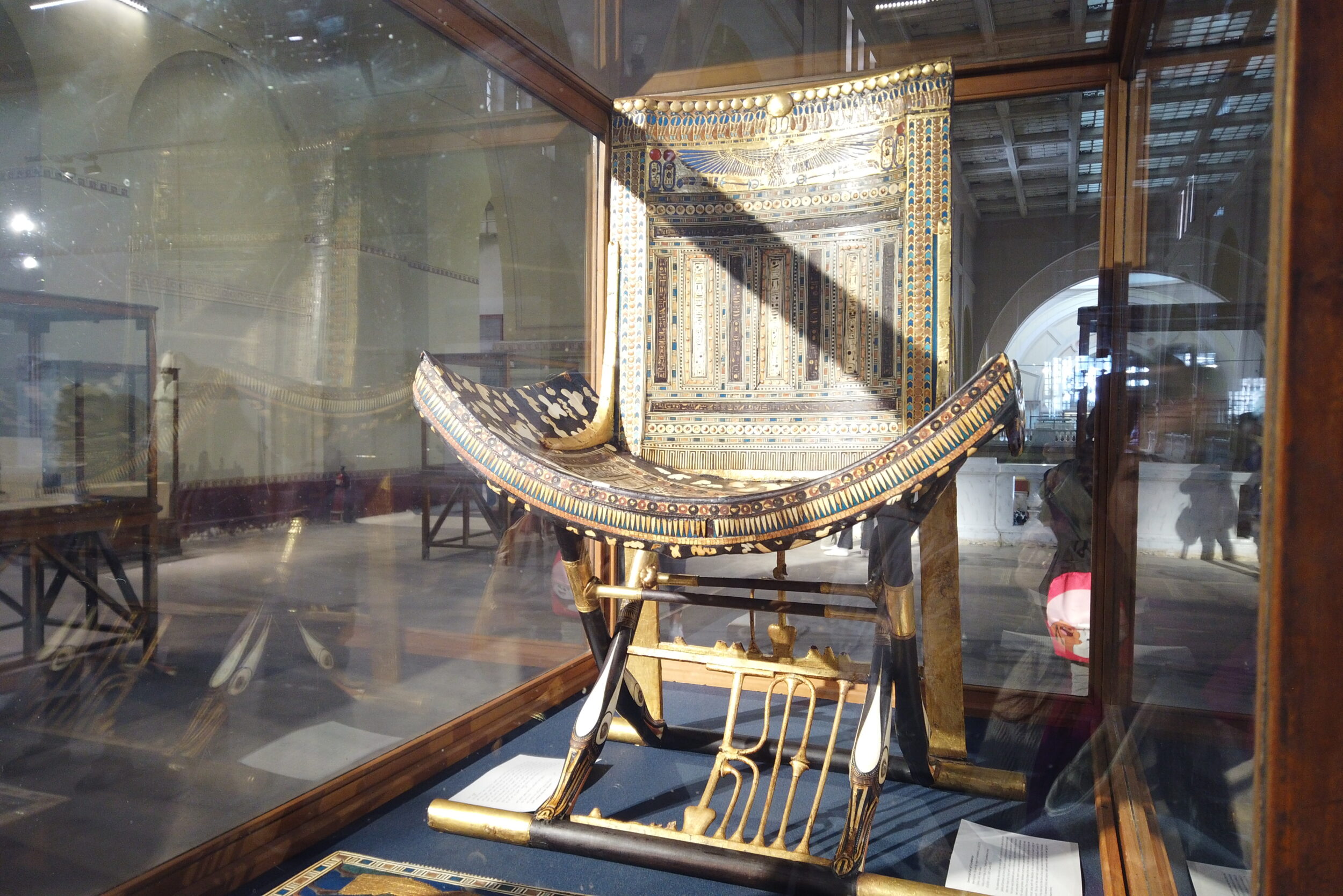
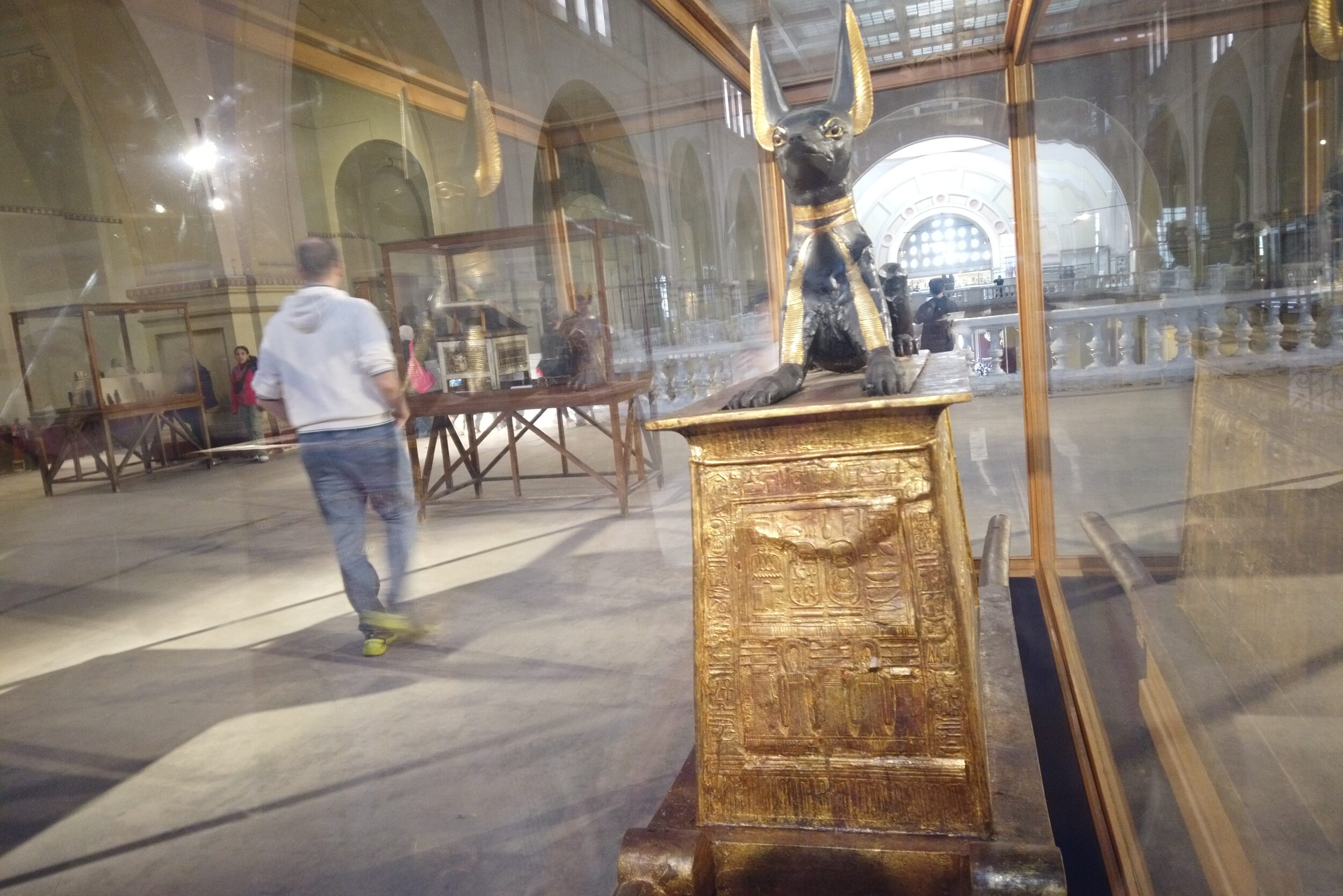
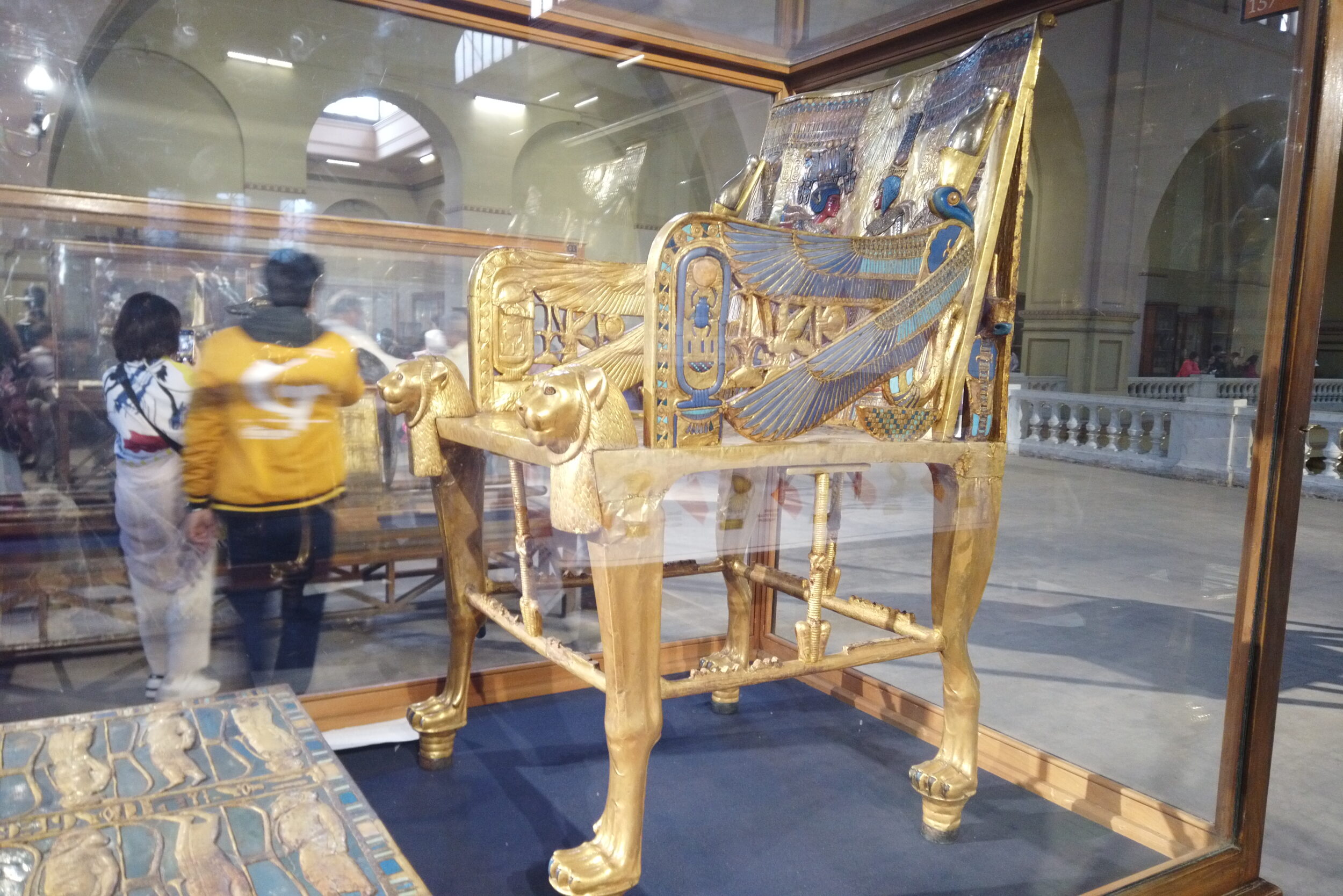
The wooden objects from Tutankhamun’s tomb are displayed outside the rooms, and you can take photos of them, but there are many missing objects. Unfortunately, they won’t be in the new museum yet in December 2024, so I think there will be a rather unpleasant period for tourists where the beautiful archaeological treasures won’t be accessible anywhere in Cairo.
I have to confess something and I’m a bit ashamed: I visited the Tutankhamun exhibition in Paris a long time ago, where all the objects were faithfully reproduced (not in solid gold, of course), and I found it more interesting than in Cairo. There, I said it!
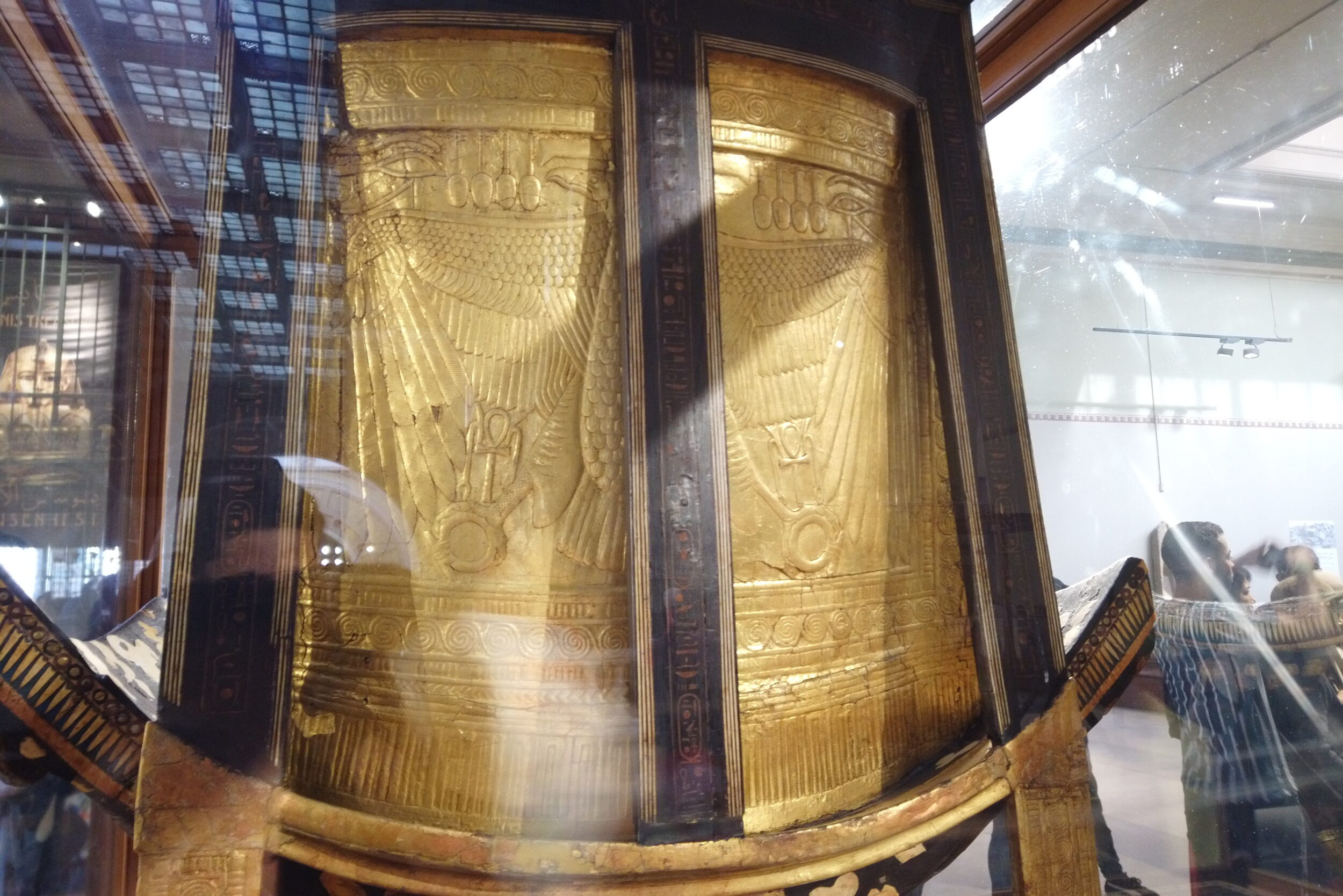
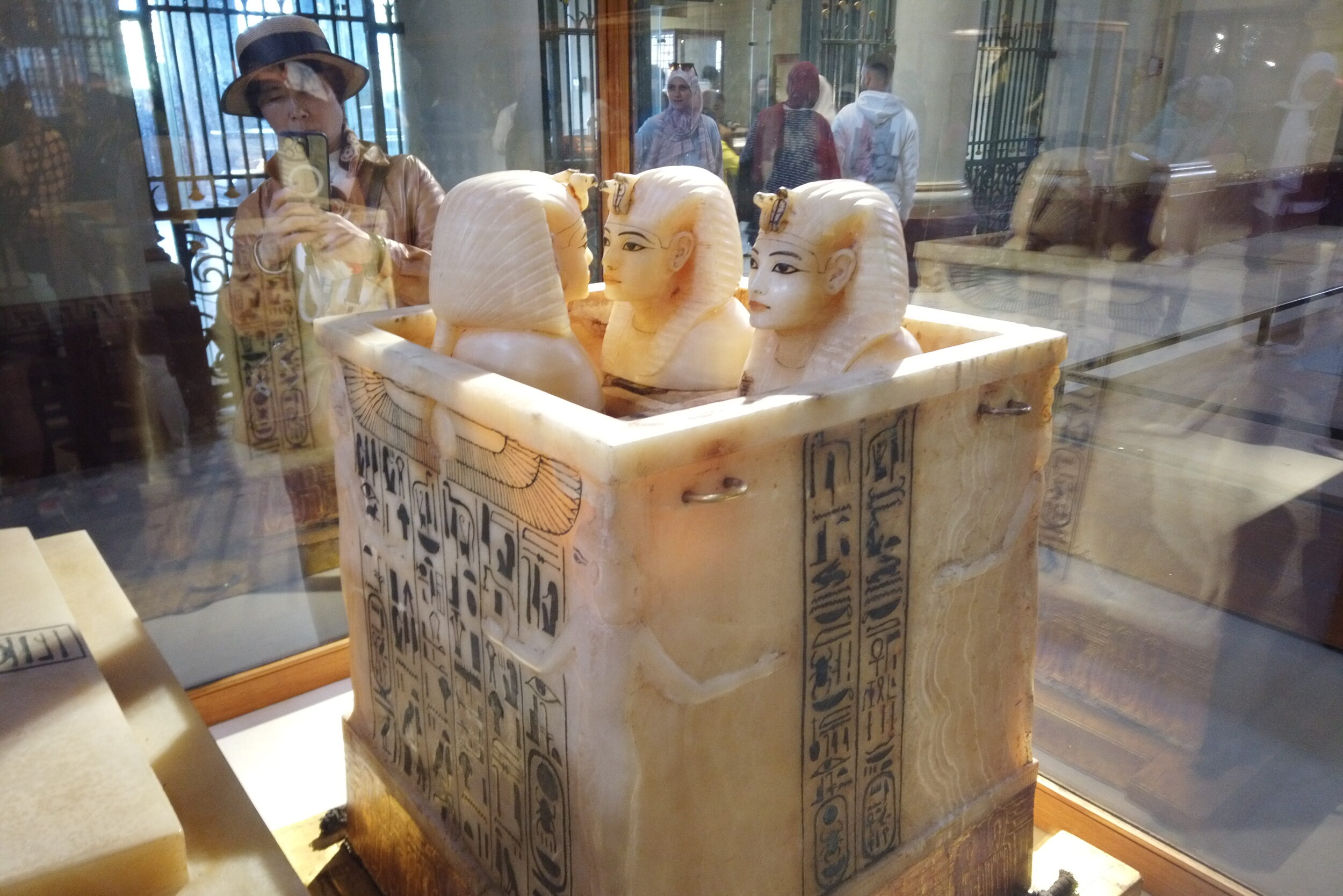
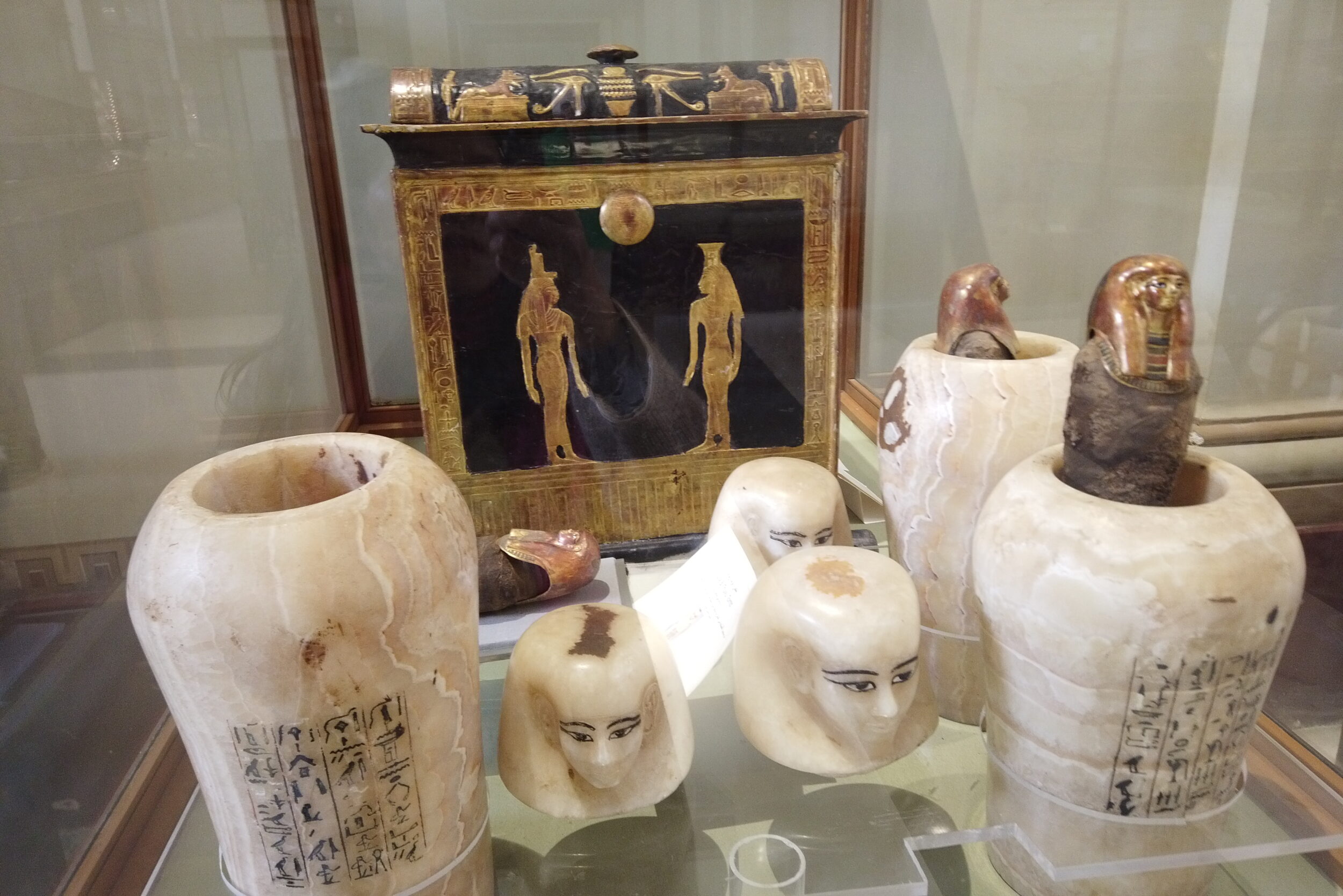
Inside the sanctuary, wrapped in a linen cloth, was the container of the Egyptian alabaster (calcite) canopic jars, resting on a gilded wooden sledge. Its interior was divided into four compartments with lids representing the pharaoh’s image, in which were four small sarcophagi, miniature reproductions (39 cm high) of the pharaoh’s intermediate anthropoid sarcophagus, which contained the viscera (lungs, stomach, intestines, and liver) removed from the king’s body. The base of the container is covered with gold leaf and decorated with the symbols of the djed and the tit.
The gold objects are absolutely stunning! For someone who’s done a bit of jewelry making like me, it’s pure bliss; I find very, very advanced techniques, extremely well executed. Gold is a very malleable metal, so for repoussé work, for reliefs, it’s an excellent metal for that. Well, it’s not comparable, but you know, I visited the Vatican museum. Anyway, it’s still the place that brings together the most beautiful objects on the planet in the last 1000 years! I found the goldsmithing there really poor, especially the completely crooked settings, poorly cut stones, whereas here, I haven’t found a single argument to criticize this level of craftsmanship. And there are lots of hieroglyphs on the objects, it’s very, very pretty. There’s a simple ring, in the Psusennes I room, like an engagement ring with hieroglyphs on it (like Lord of the Rings but on the outside), so simple that you can’t find its photo on the internet; I fell in love with that one. Maybe one day, I’ll order a custom ring with cool hieroglyphs on it (for example, the recipe for some cream or other), it would really make me happy.
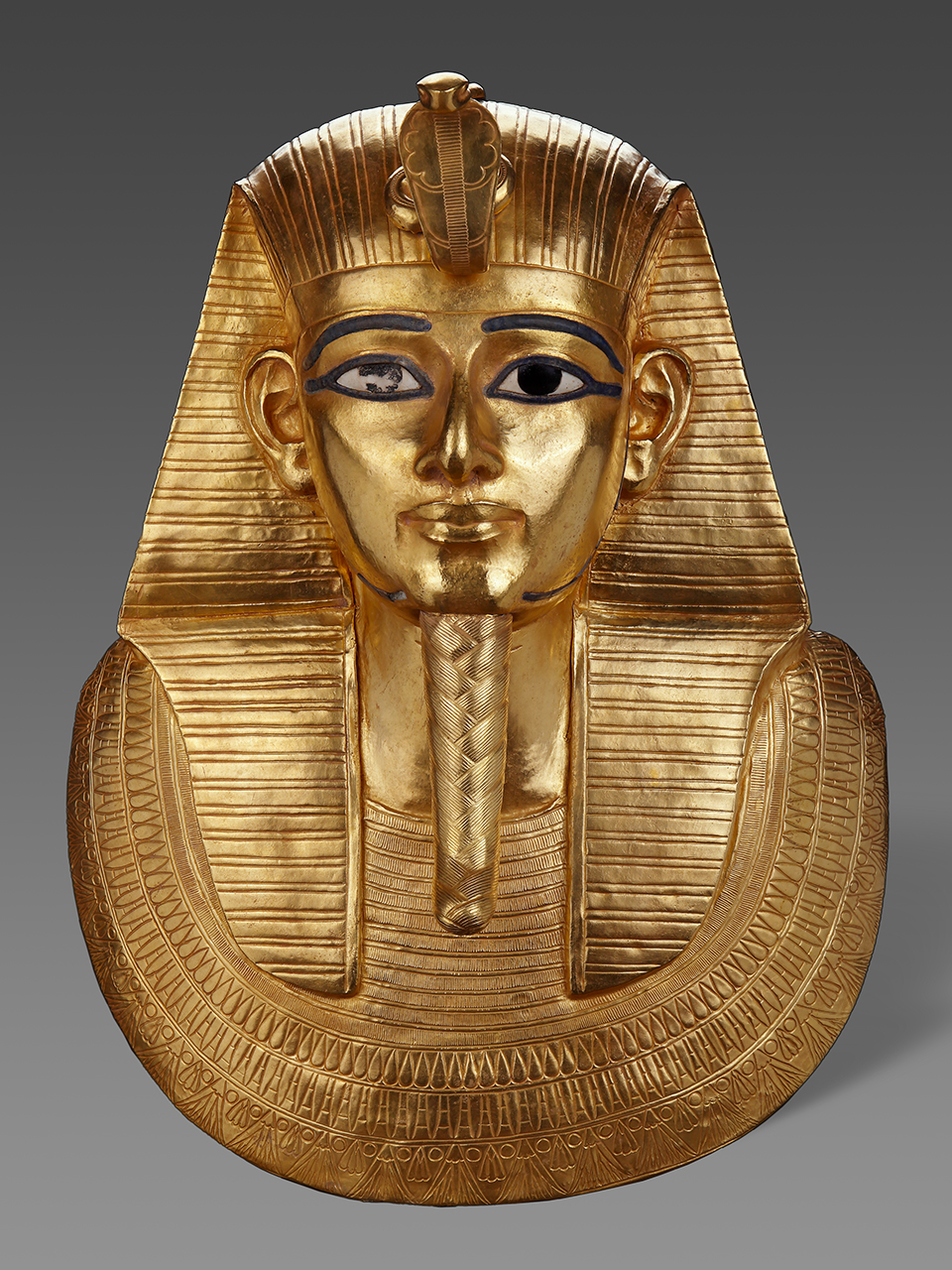
In the Psusennes I room, there’s a gold mask, I show you the official photo here. I quote the museum: “This gold funerary mask, discovered by French archaeologist Pierre Montet in 1940, is one of the masterpieces of the Egyptian Museum and one of the most beautiful artifacts from the Tanis excavations (now Tell San el-Hagar). The king is depicted wearing the nemes (royal headdress) adorned with a uraeus (the sacred cobra protecting royalty), as well as idealized features and a usekh collar.”
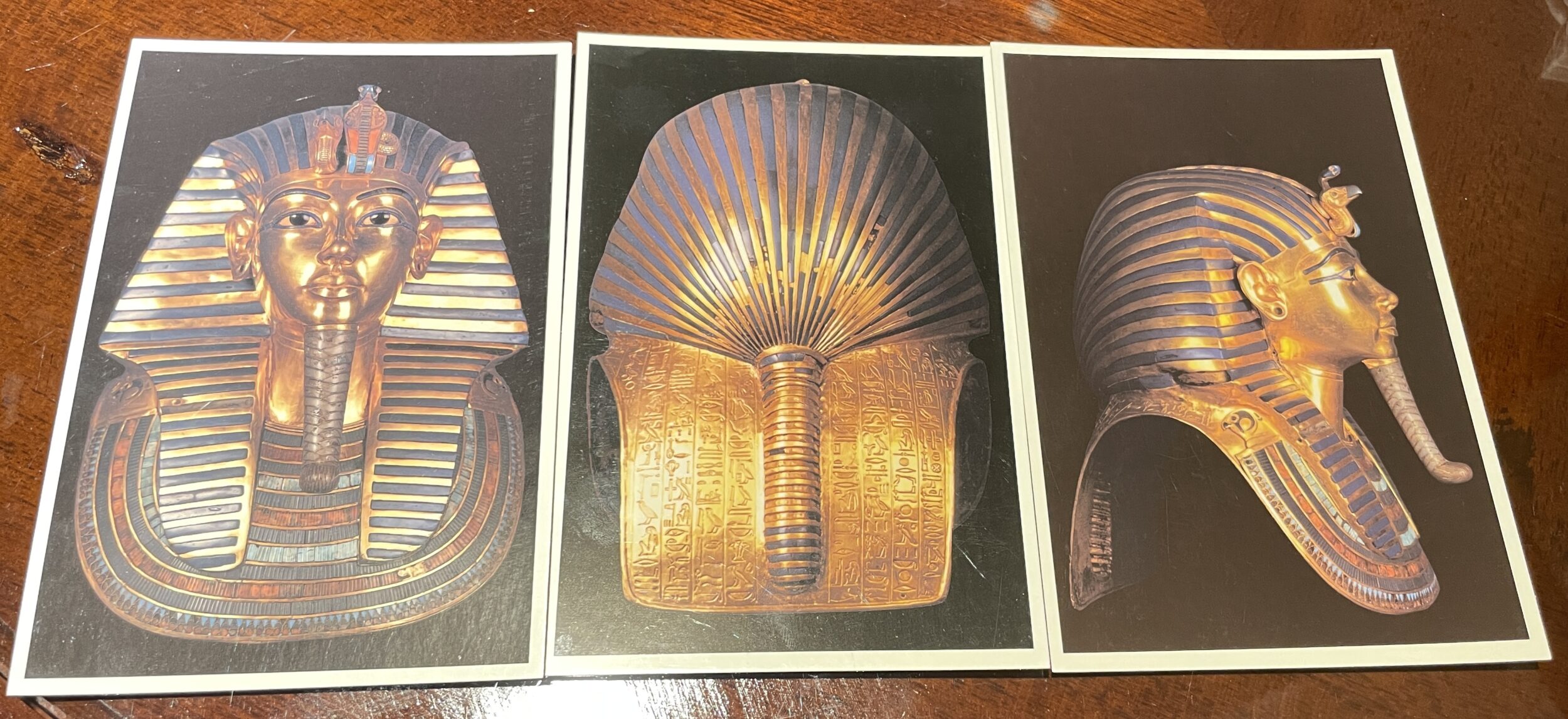
Tutankhamun’s gold mask is even more incredible because it has stone inlays. It is depicted on the 1 LE coin. “This gold mask is the most famous of all ancient Egyptian artifacts, a true icon of the pharaonic civilization. It will be the last artifact to be moved to the new museum. The king is depicted with the nemes, a headdress with white and blue stripes: a uraeus (sacred cobra) and a vulture adorn his forehead, and a false beard in gold and glass paste adorns his face. The king’s eyes are made of quartz and obsidian. On his back, magical inscriptions are engraved, taken from chapter 151b of the Book of the Dead.” I took some postcards to show you this mask. The first time I saw it in person, I was awe-struck, but this time, I don’t know if it’s the lighting or because the surprise effect is gone, it seems much less magical to me (but it’s still the BEST of the museum). It just goes to show how important lighting is!! What’s great about these rooms where you can’t take photos is that people suddenly visit much, much faster. You can stand alone in front of the mask for several minutes without being disturbed.
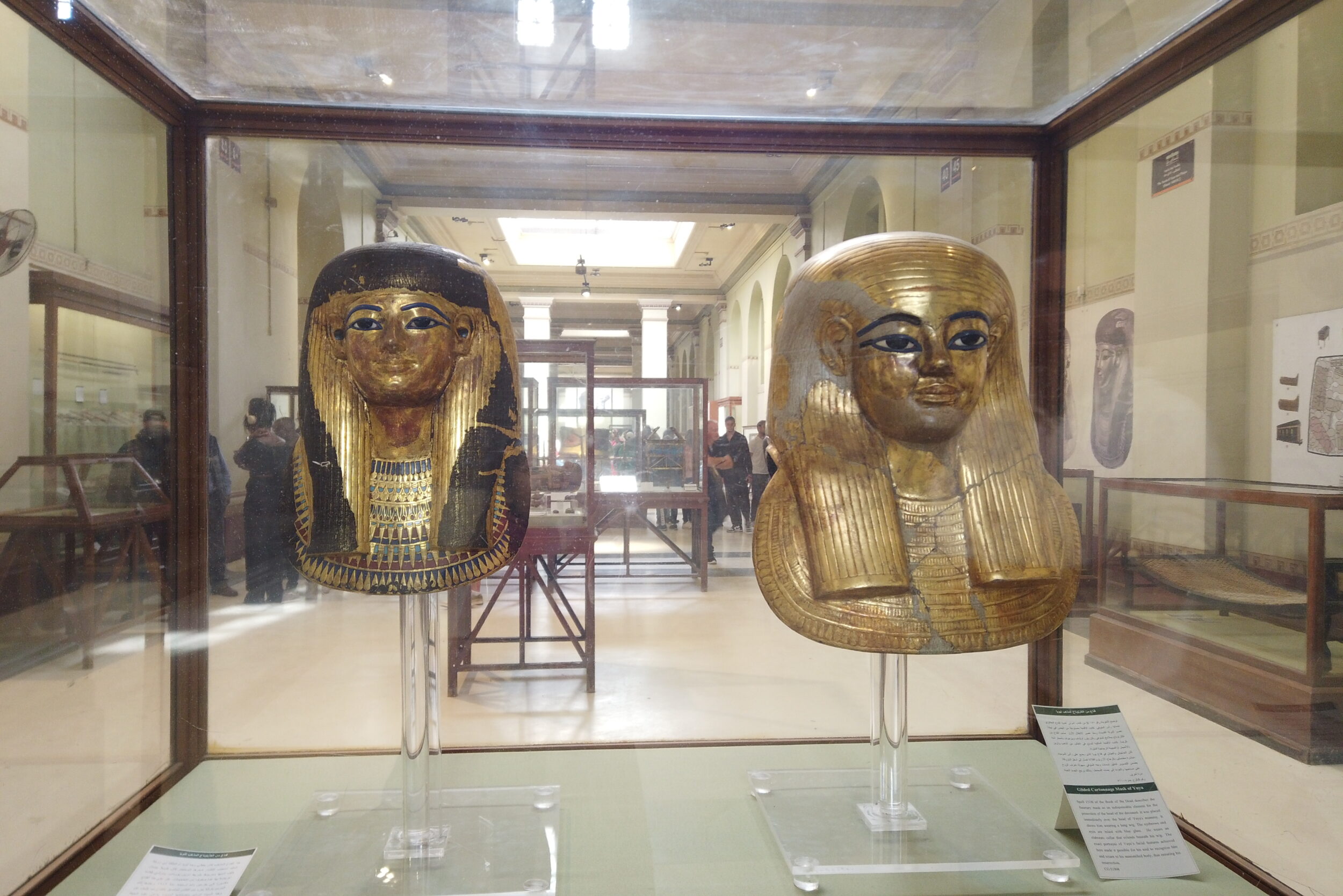
Next to it, there are lots of objects from the tombs of Yuya and Tuya, it’s very comprehensive, from sarcophagi to the Book of the Dead, including two gilded wooden masks. I recommend visiting in the other direction: if you see the masks, you know you should go to the other end of the room and start from the sarcophagi side first.
I found these canopic jars very well preserved. I didn’t quite understand, but I think the 4th one is currently on loan to China (there are always 4).
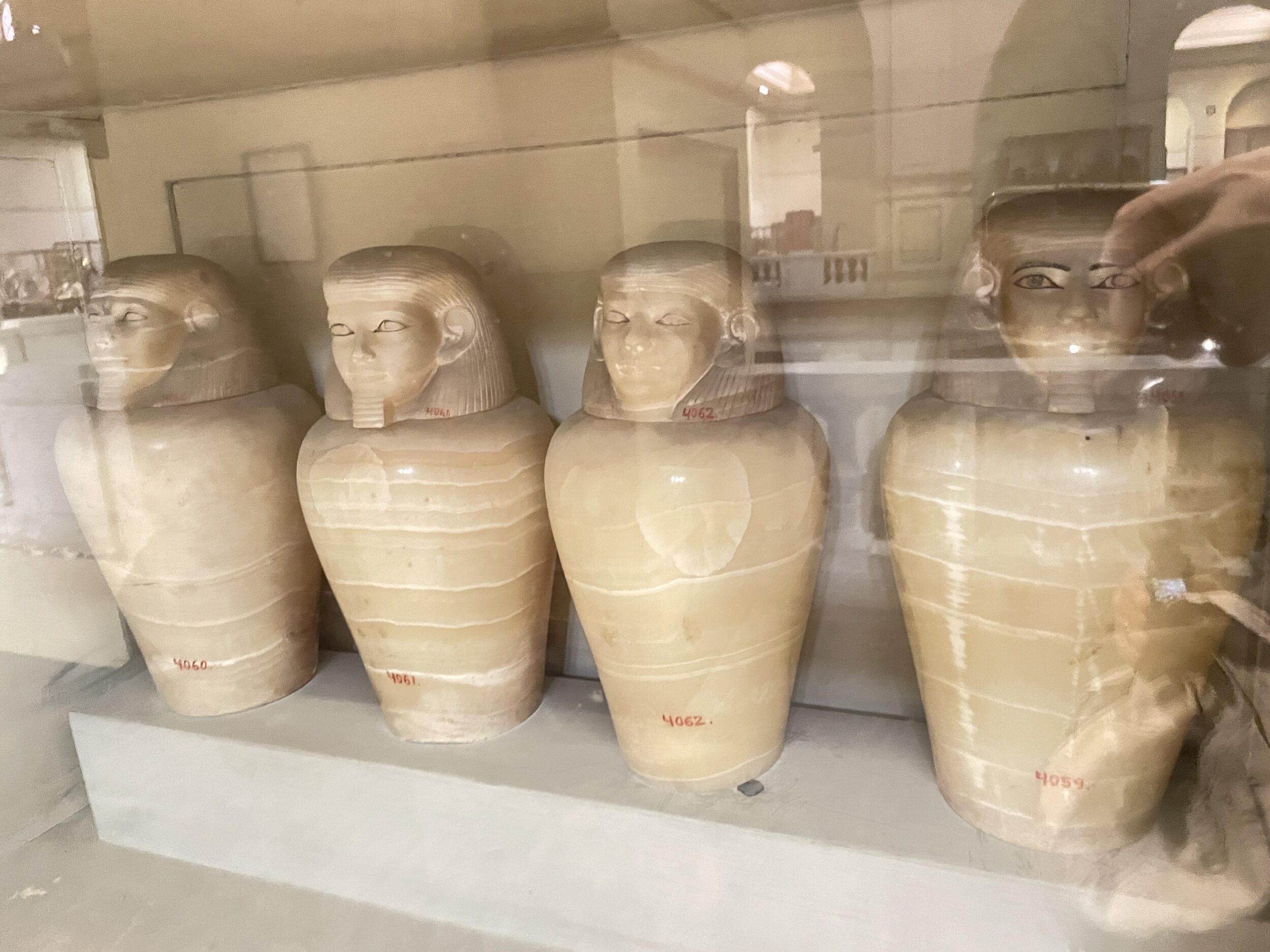
In this museum, there are other well-preserved jars, but placed on a shelf with no label at all, you don’t even know who they belong to. Dear poorly identified objects and mummies ignored by tourists, I’m thinking of you, I tried to admire you all.
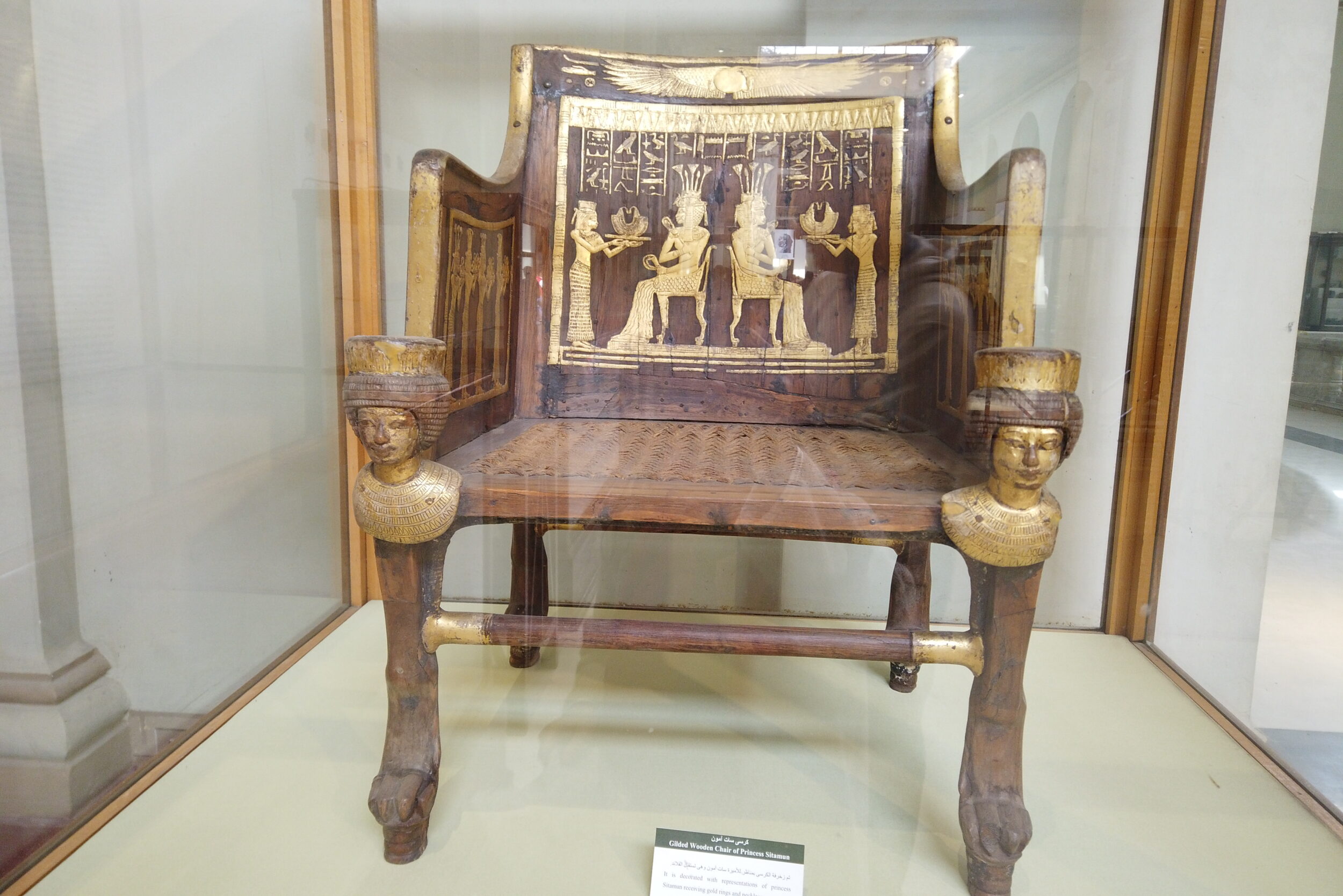
That said, they still make a lot of effort; the important pieces are commented in Arabic and English. But some important pieces aren’t commented at all, yet you still notice them because they’re very beautiful or placed in the middle of a room.
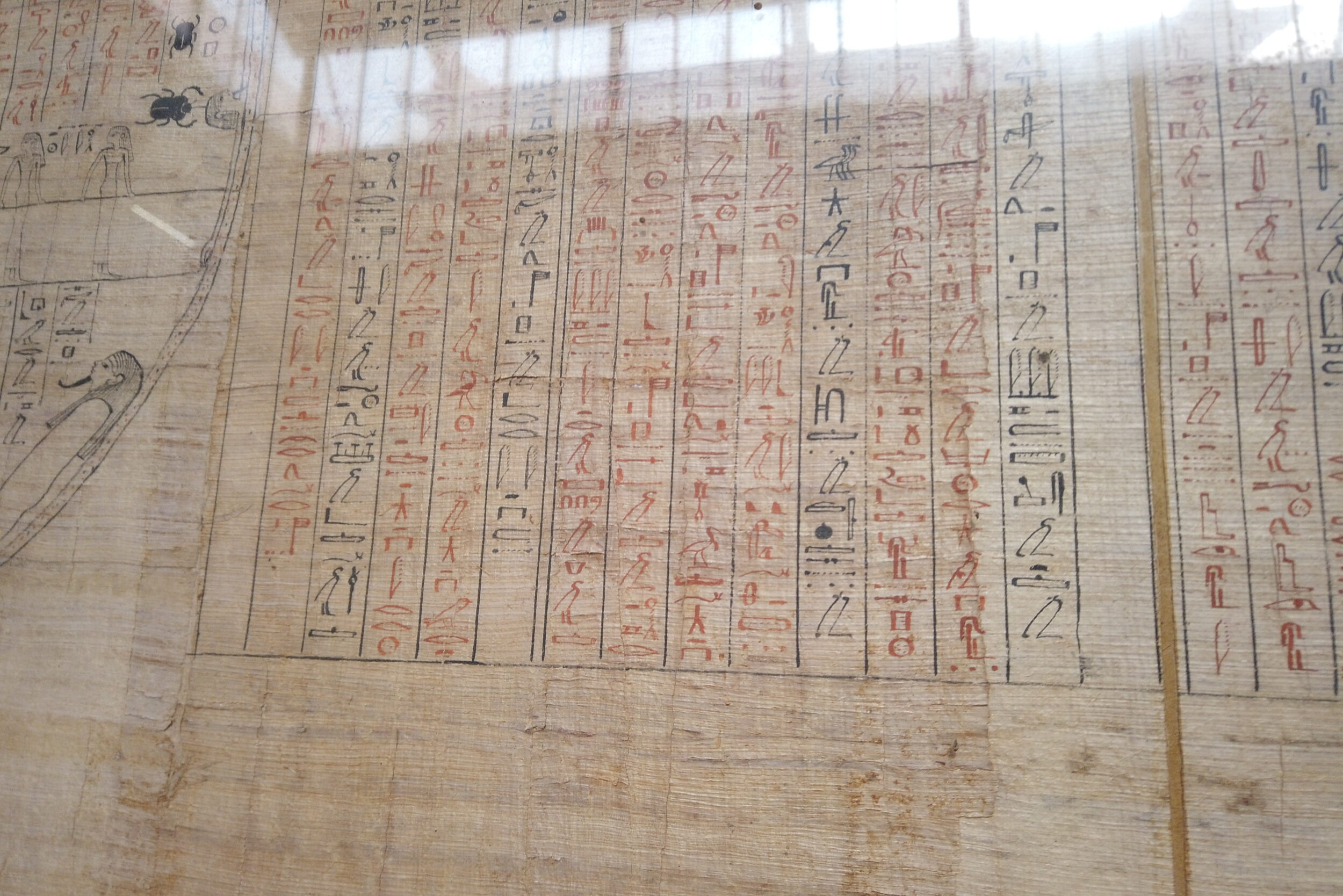
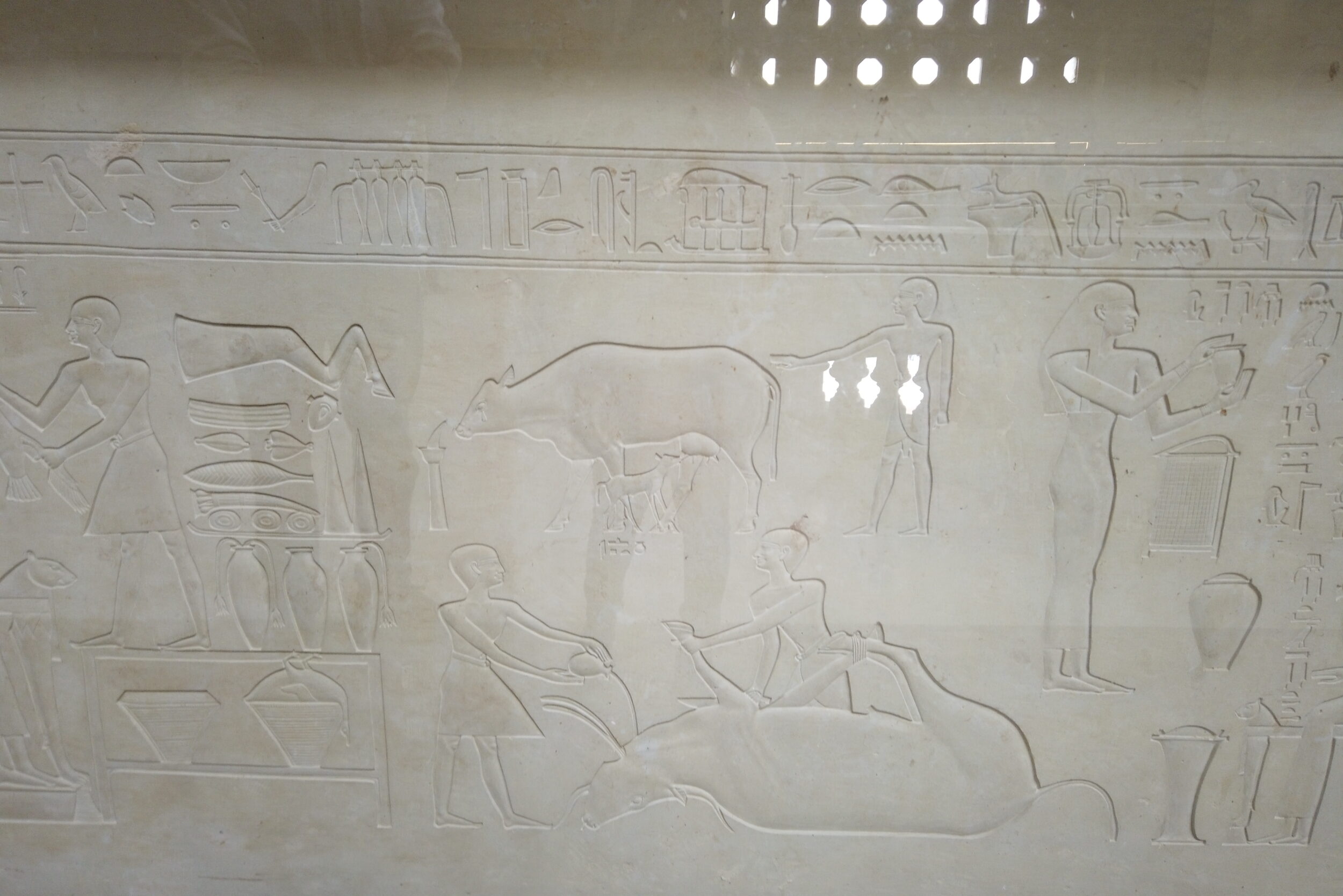
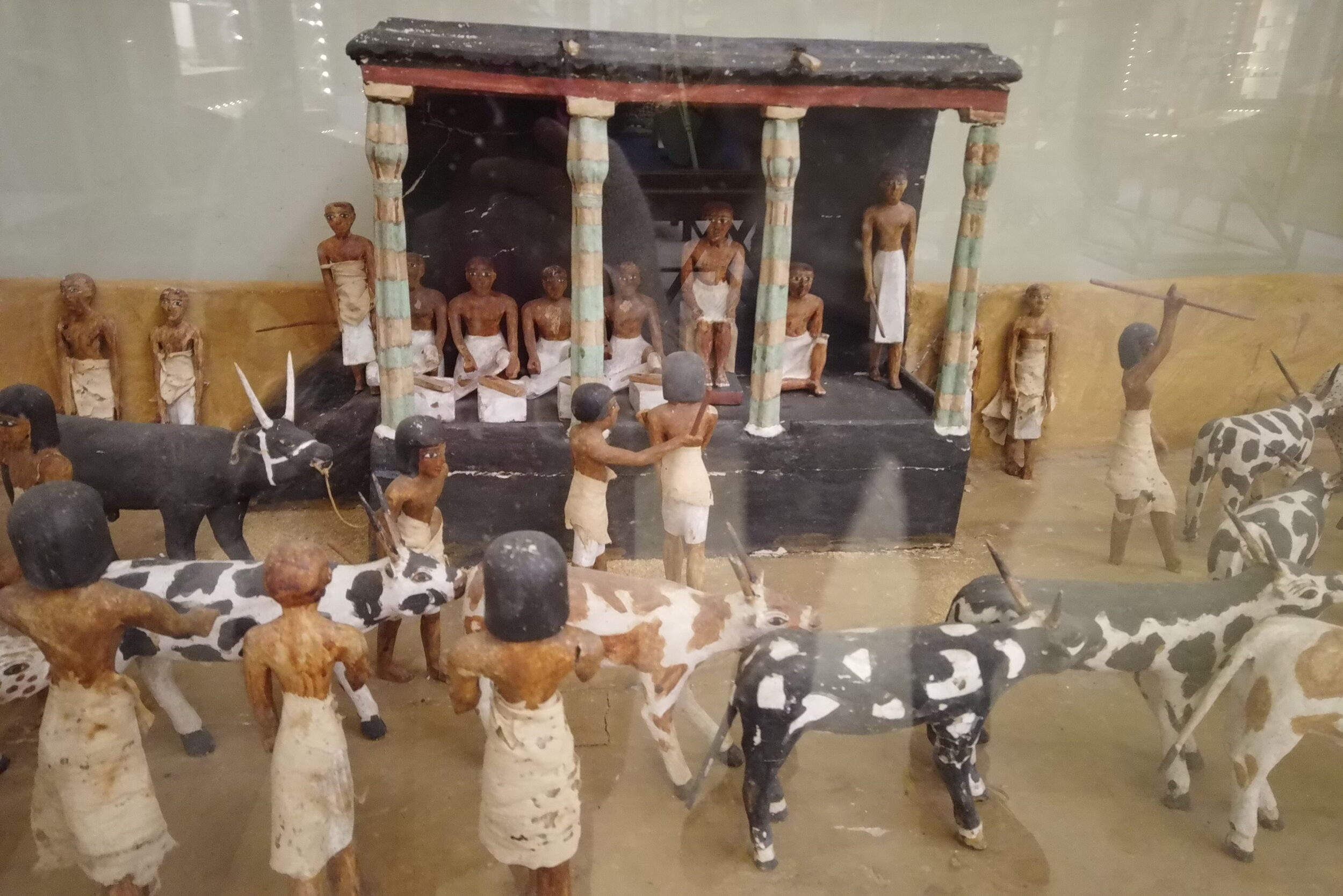
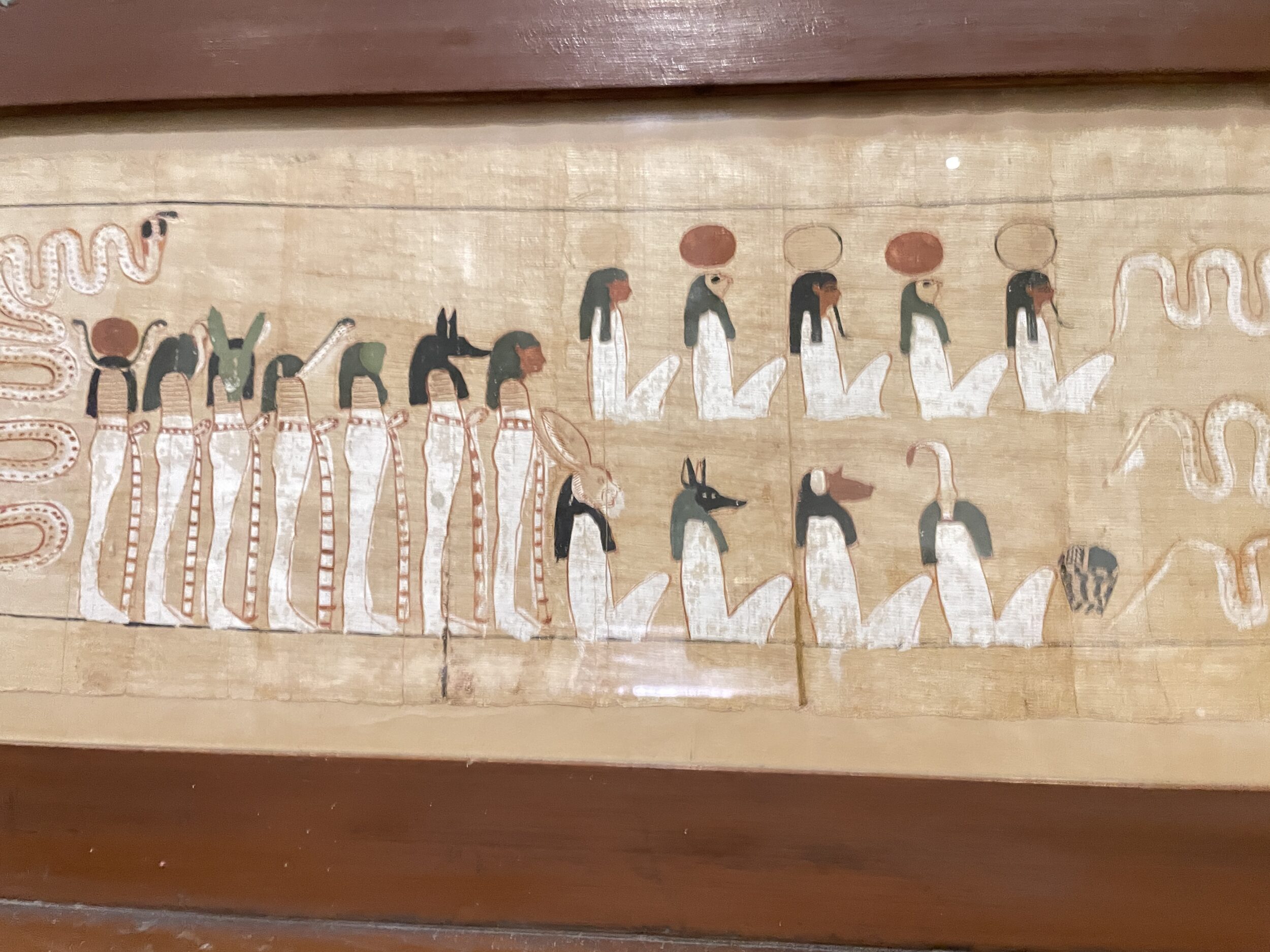
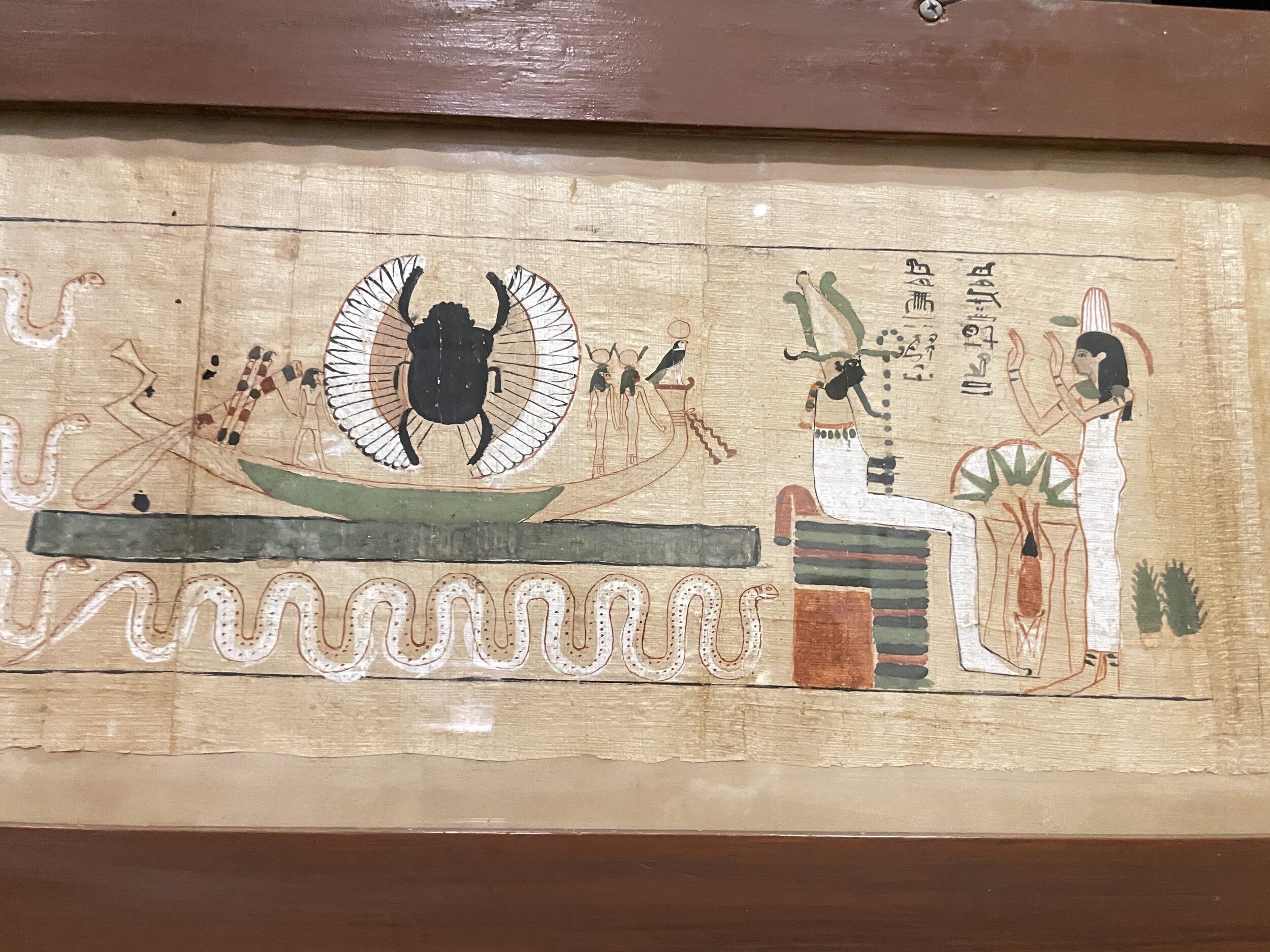
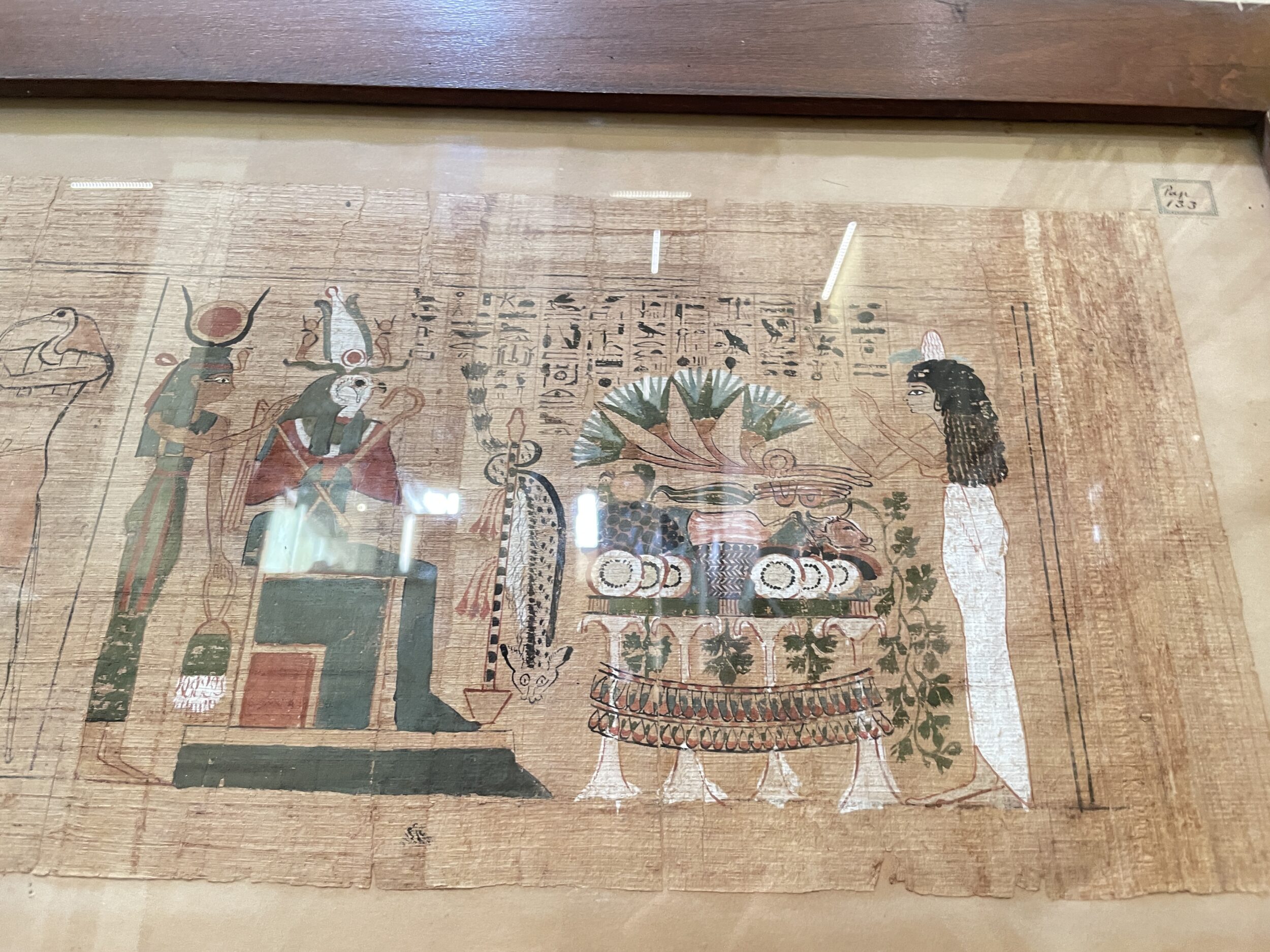
On the first floor, there are tons of sarcophagi and mummies. The really big sarcophagi are on the ground floor. Honestly, I have a bit of a hard time with that. They put so much energy into preparing their death, decorating multiple layers of sarcophagi, only to end up displayed, deformed, in a museum like this. I feel so sorry for them.
Plus, there are absolutely magnificent objects, for example two wooden horse heads, portraits that look real. I didn’t take photos because I feel like a soul still inhabits them. There are objects like that in the museum; they have a not-so-cool energy, it’s creepy, and I definitely DON’T take photos of them.
The horrible room of pharaoh mummies no longer exists. The pharaoh mummies have been transferred to the new museum, which significantly reduces the eerie effect of the first floor.
There are entire rooms of amulets, statues recovered from temples… it’s really, really beautiful!!! I love these rooms because they look like miniatures. There are also miniature objects used in daily life that are placed in tombs; these objects are very well made. Not to mention an army of miniature servant statues here and there. These are objects I find very interesting.
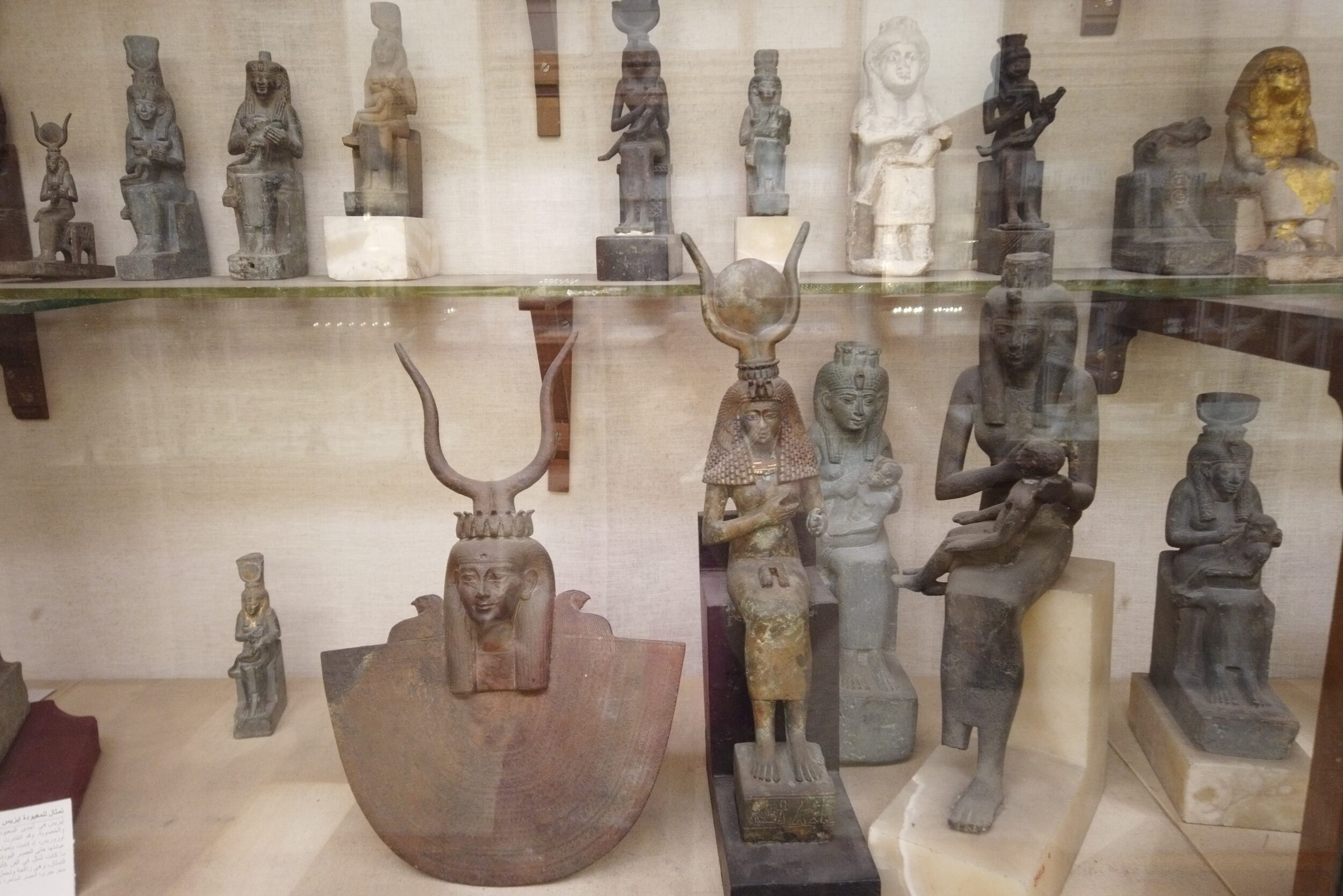
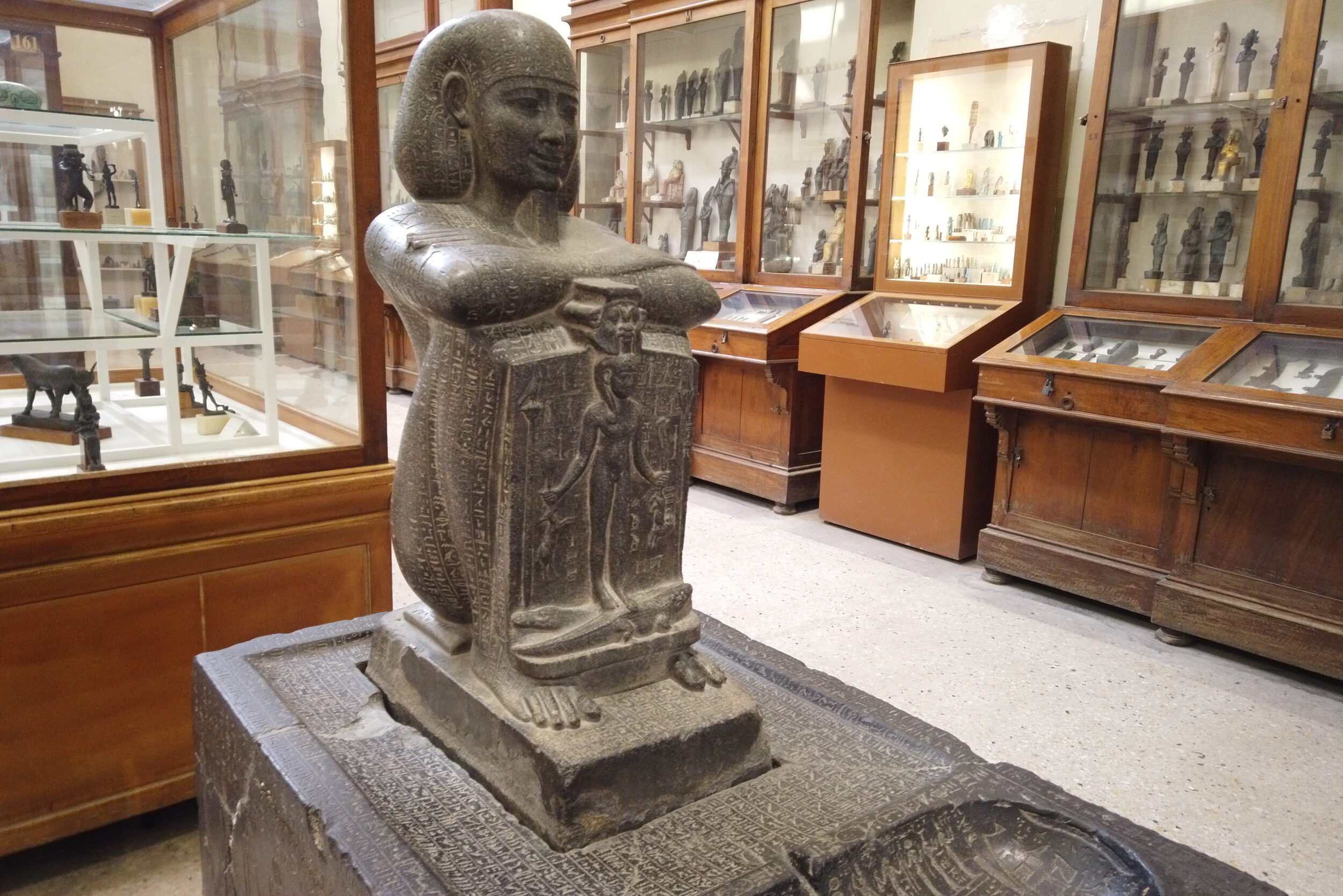
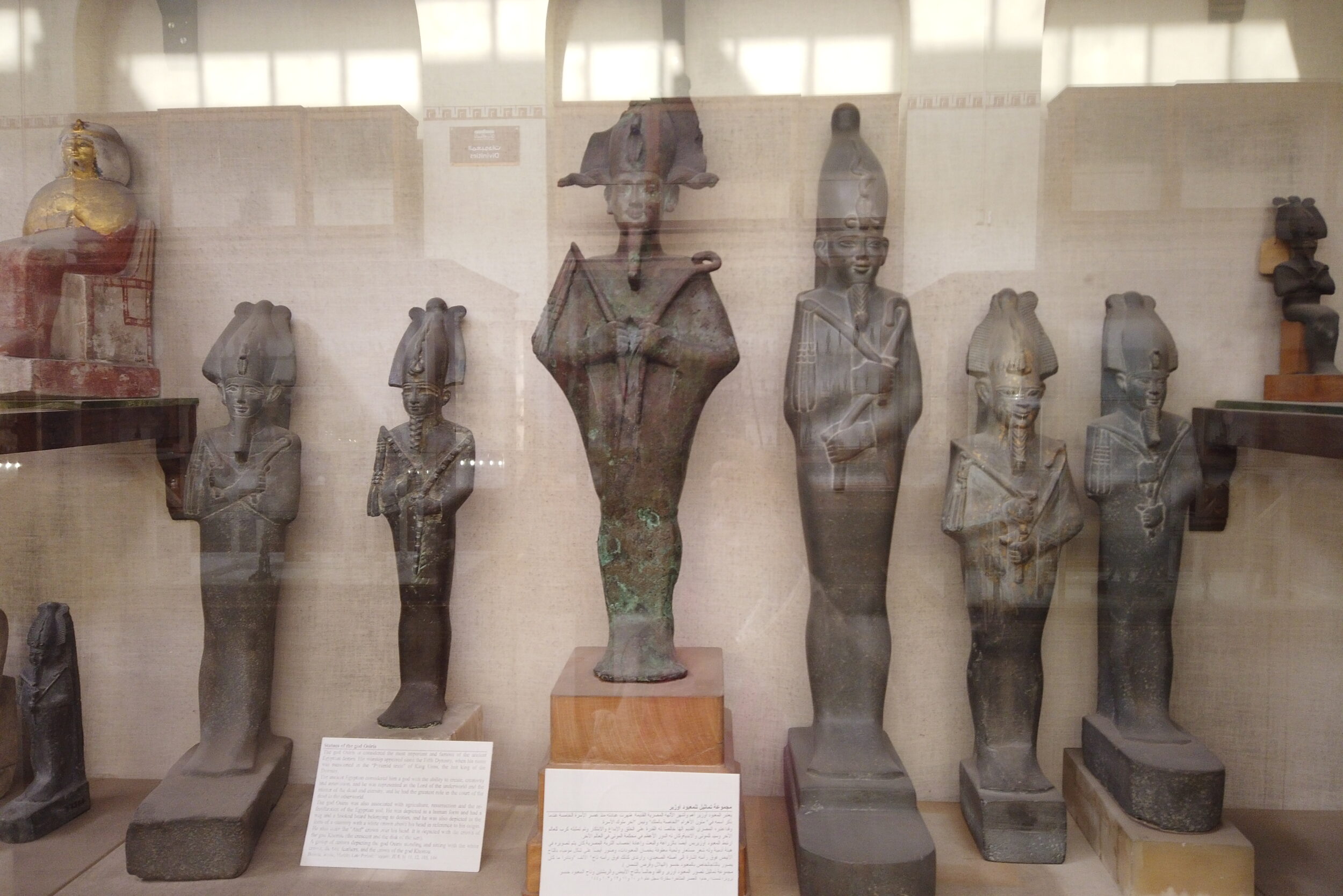
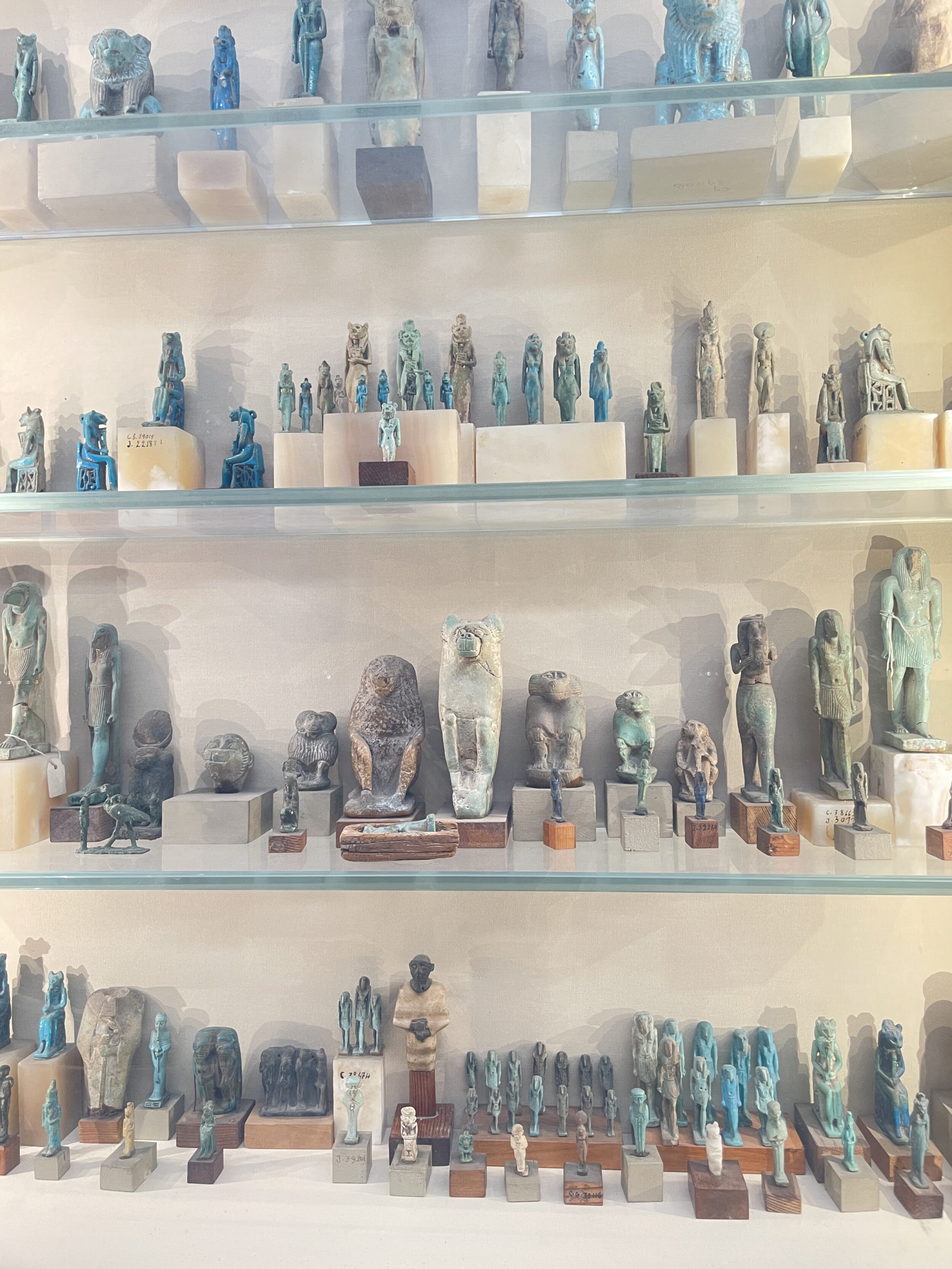
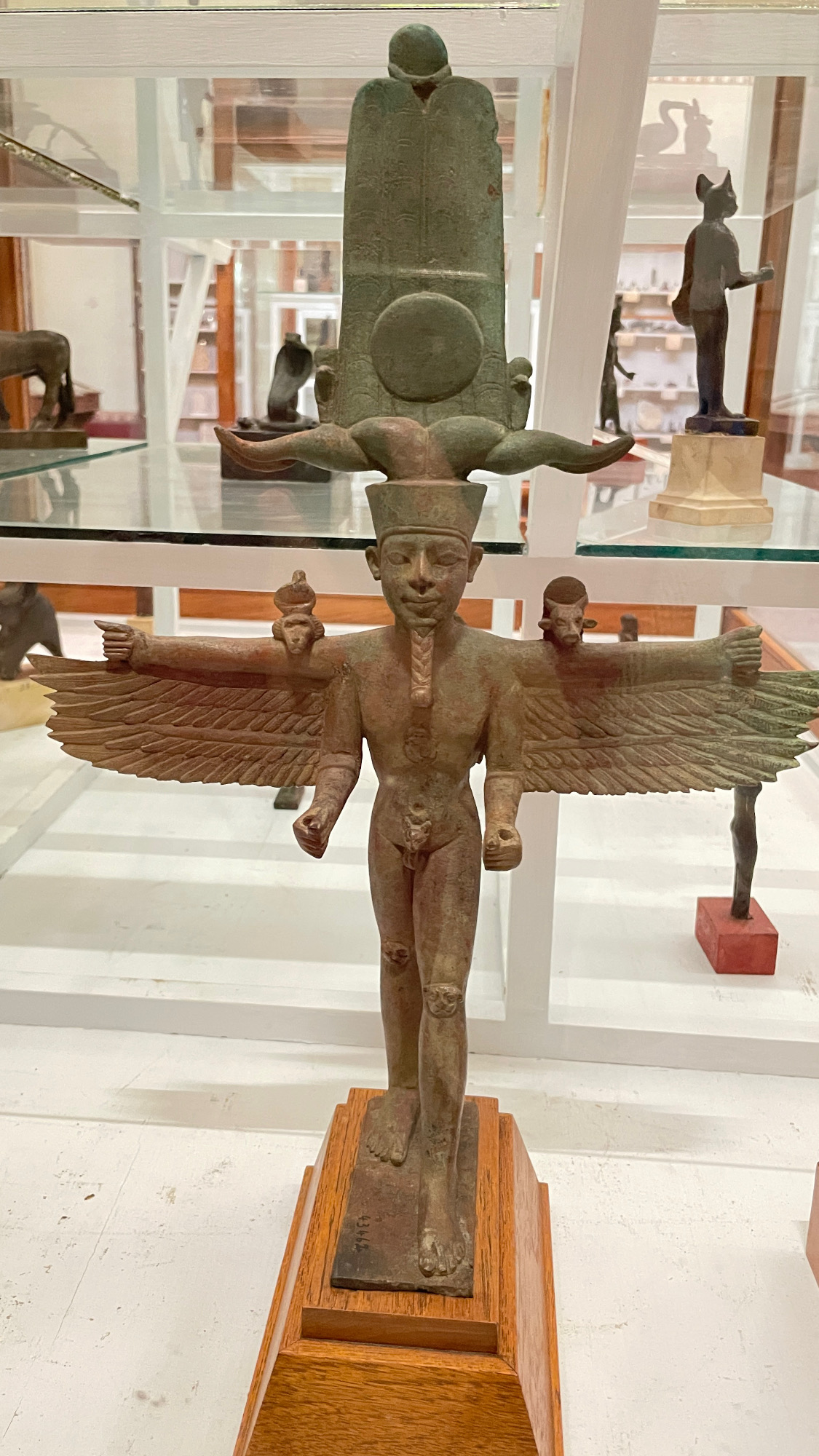
Seeing the number of objects, anyone who has known the Louvre or the British Museum must have been relieved: there are still many things left in Egypt. “The whites didn’t steal everything!!!” Phew.
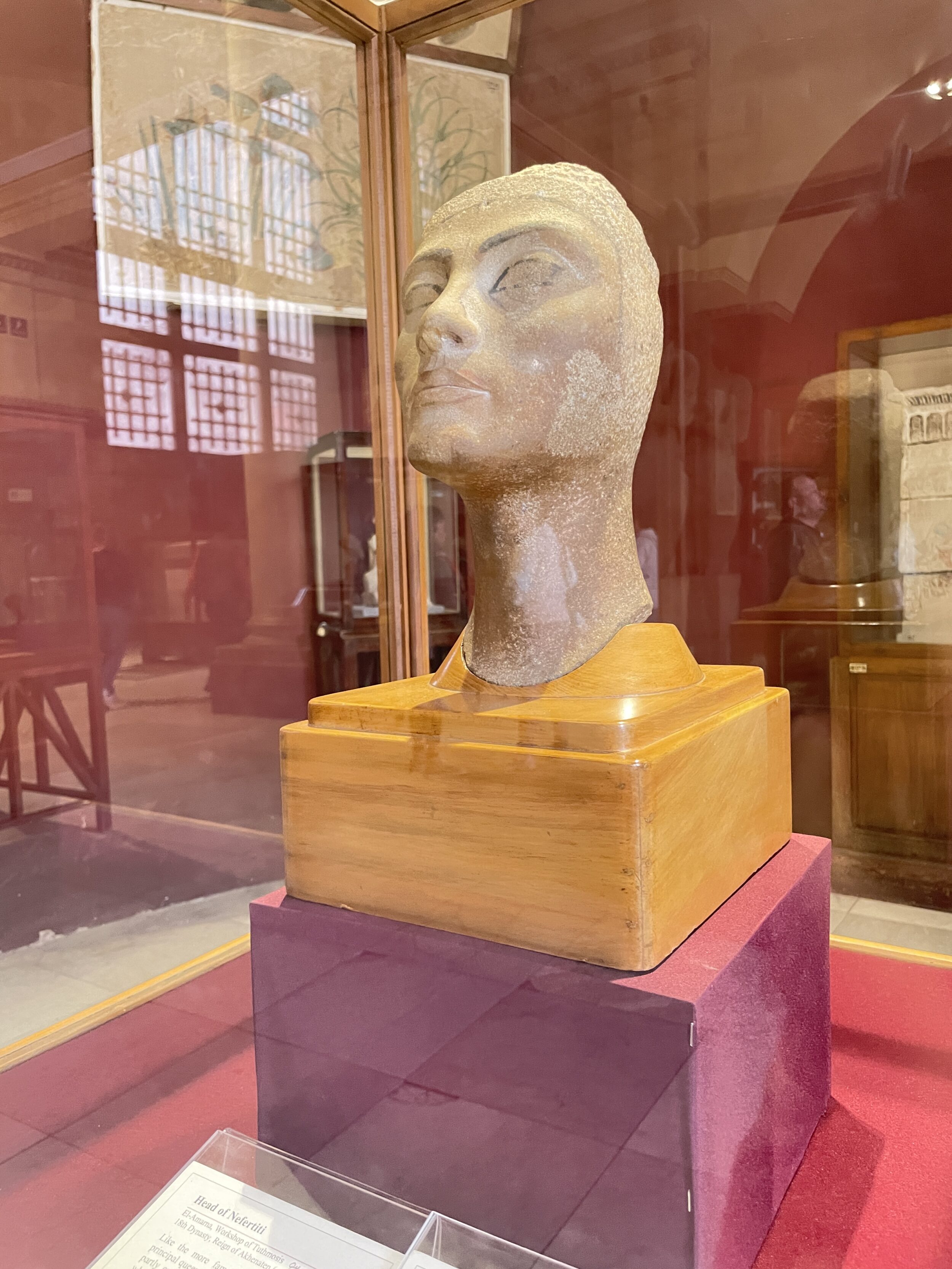
For example, a statue of Nefertiti remains. It’s of unparalleled beauty. I quote the museum: “This unfinished head of Queen Nefertiti, royal wife of Amenhotep IV (Akhenaten), evokes the iconic beauty of the famous bust now in the Neues Museum in Berlin. It presents her as an idealized royal figure, but despite the unfinished state of the sculpture, the classic elements of Nefertiti’s features remain visible. The origin of Nefertiti (whose name means ‘The beautiful one has come’) has not yet been fully elucidated, but we know she married at age 13, during the first three years of Akhenaten’s reign.”
“This masterpiece of Egyptian sculpture, created according to the artistic canons of the Amarna style, was discovered in 1933 during the Tell el-Amarna excavations led by the Egypt Exploration Society, in a sculptor’s workshop that produced composite pieces. This head was intended to be mounted on a composite statue: the black lines drawn on the queen’s face give us an idea of the sculptor’s working method.”
There is an important work dating from Akhenaten, the pharaoh who tried to impose monotheism, that is no longer in this museum; I don’t know if it was moved.
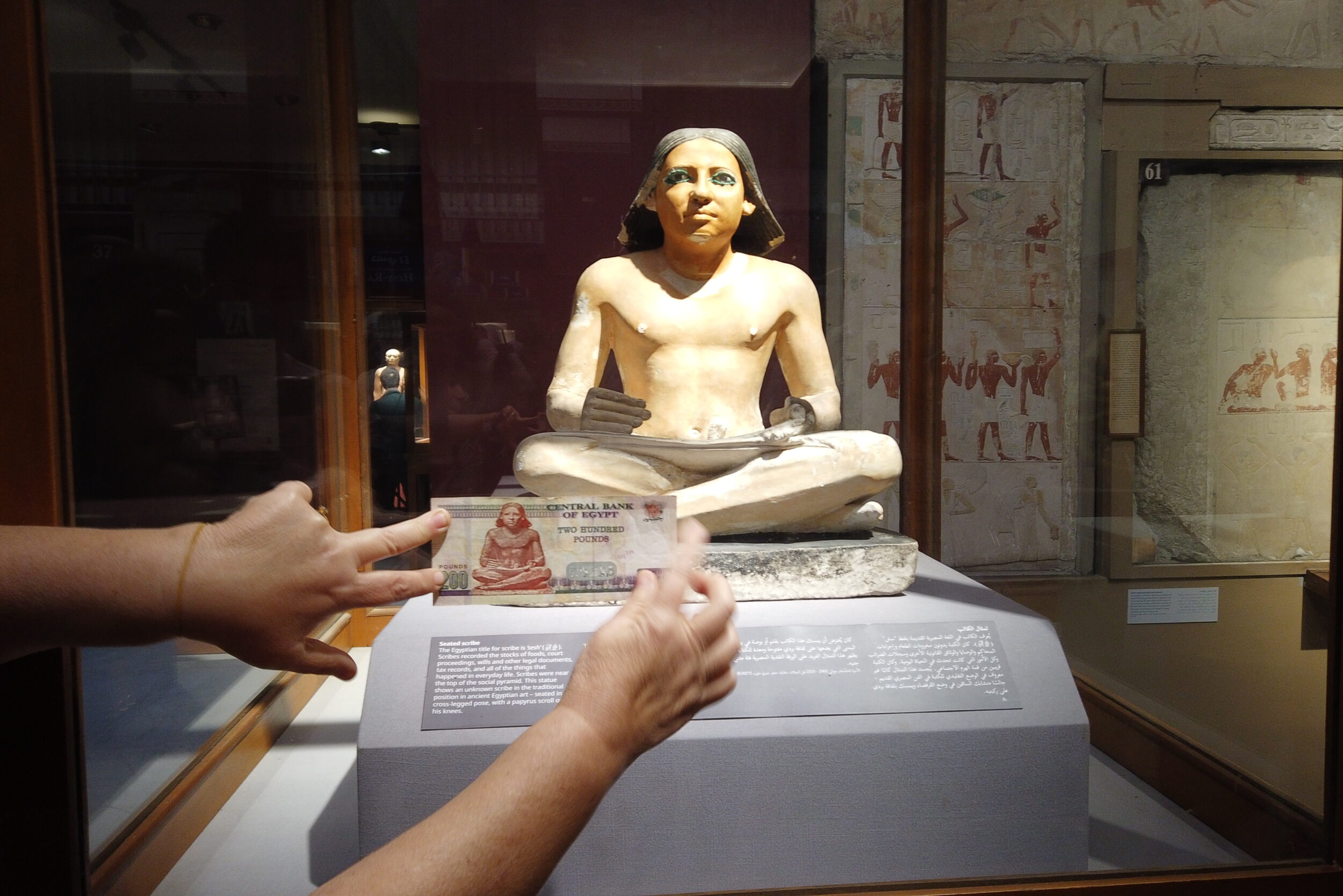
The Scribe gave me goosebumps because as I filmed it from every angle, it seems to come alive on video. If it had moved its arms, I wouldn’t have been surprised, it looks so realistic from every angle.
It’s the one you find on the 200 EGP bill. “During the Old Kingdom, officials often commissioned statues for their tombs, depicting themselves as scribes. Only a small part of the population was literate, and the ability to read and write offered opportunities for economic and social advancement. Individuals wanted to preserve their status in the afterlife and therefore made sure to include images reflecting their rank and skills in their tombs. The classic scribe pose shows crossed legs under a partially unrolled papyrus scroll. The right hand is positioned to hold a reed pen. Those who could write possessed the power to bring something into existence by inscribing it or repeating written words. The repetition of offering lists in a tomb magically supplied the deceased with everything they desired. This exceptionally beautiful scribe statue is uninscribed, so the subject’s name remains unknown. This piece is sculpted with great mastery: the facial features are finely modeled and, unlike most stone statues, the arms are detached from the torso. The right hand would have held a reed pen, while the left hand holds the papyrus scroll.”
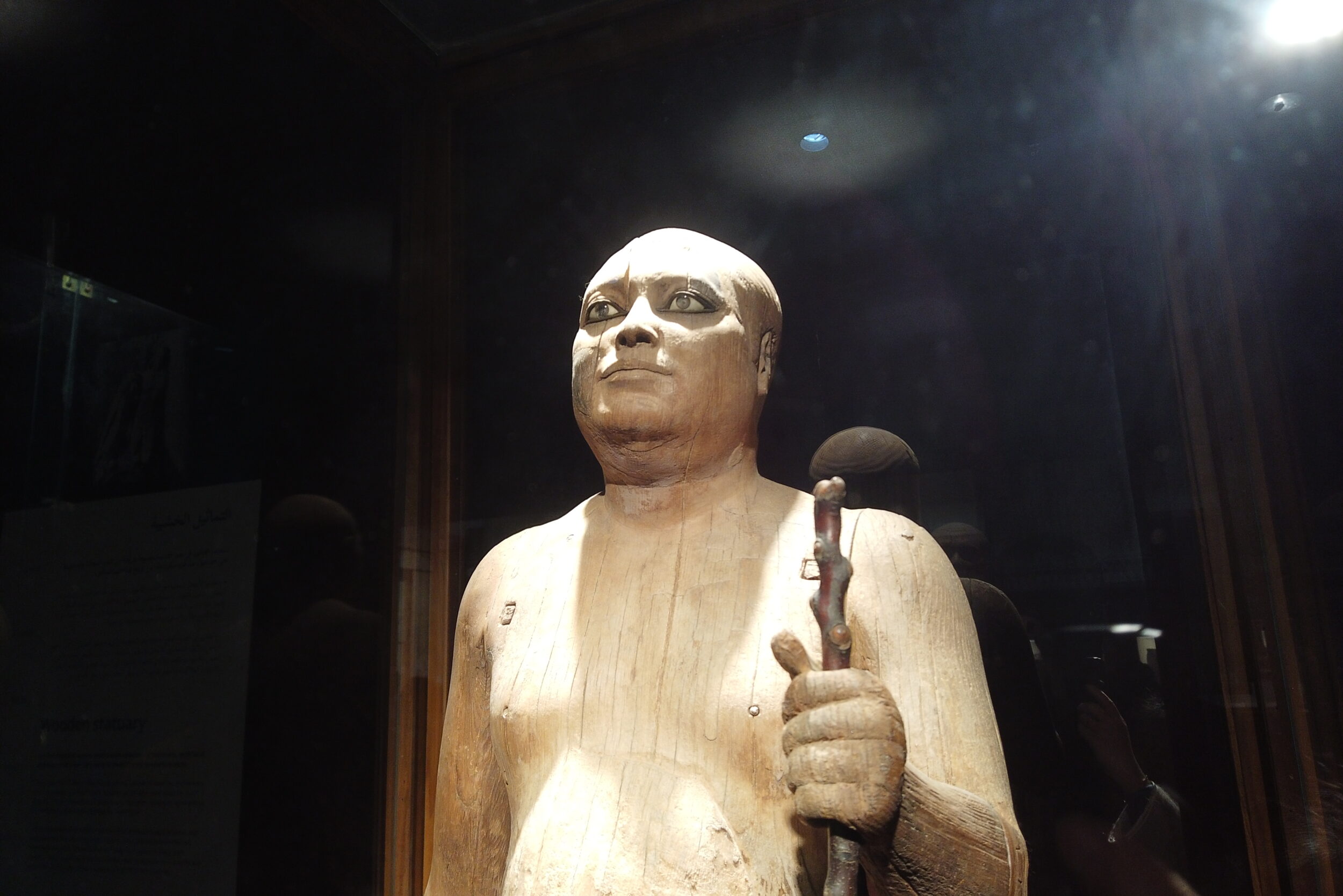
This one is also well-known; it’s in the same room – in that room, there are only statues that are a bit too lifelike because the eyes are very realistic. “This is one of the very rare wooden statues to have survived to this day. Discovered by Auguste Mariette in 1870, the statue, originally covered with a layer of painted plaster, depicts with striking realism the corpulent chief lector priest Ka-aper, left foot forward, holding a staff (now replaced by a copy) in his left hand. His eyes are inlaid with calcite, quartz, and black stone to create a strikingly realistic model.”
There is a tiny statue of Khufu, highlighted today by a French team (TV? Documentary?) that plans to film it today.
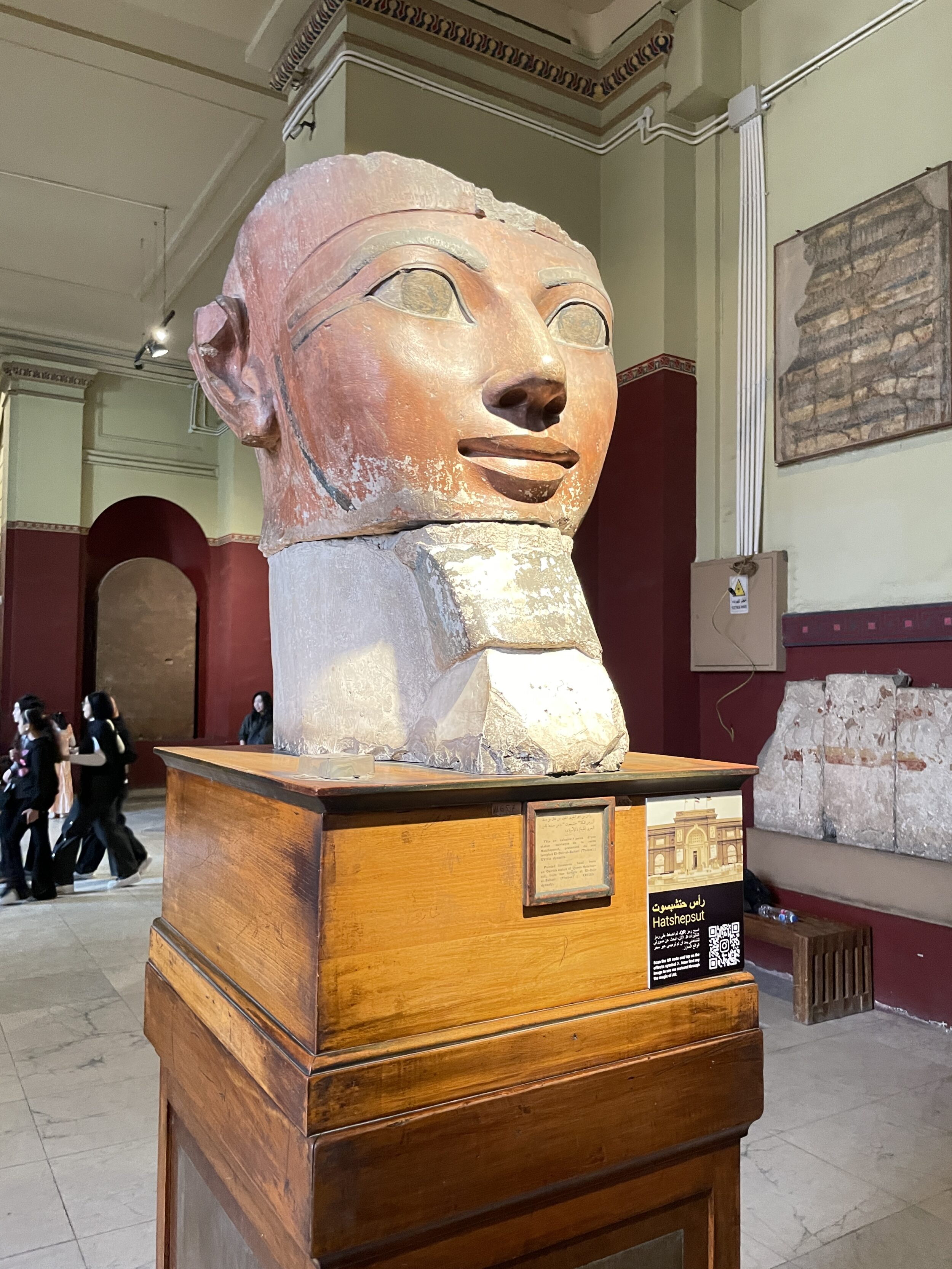
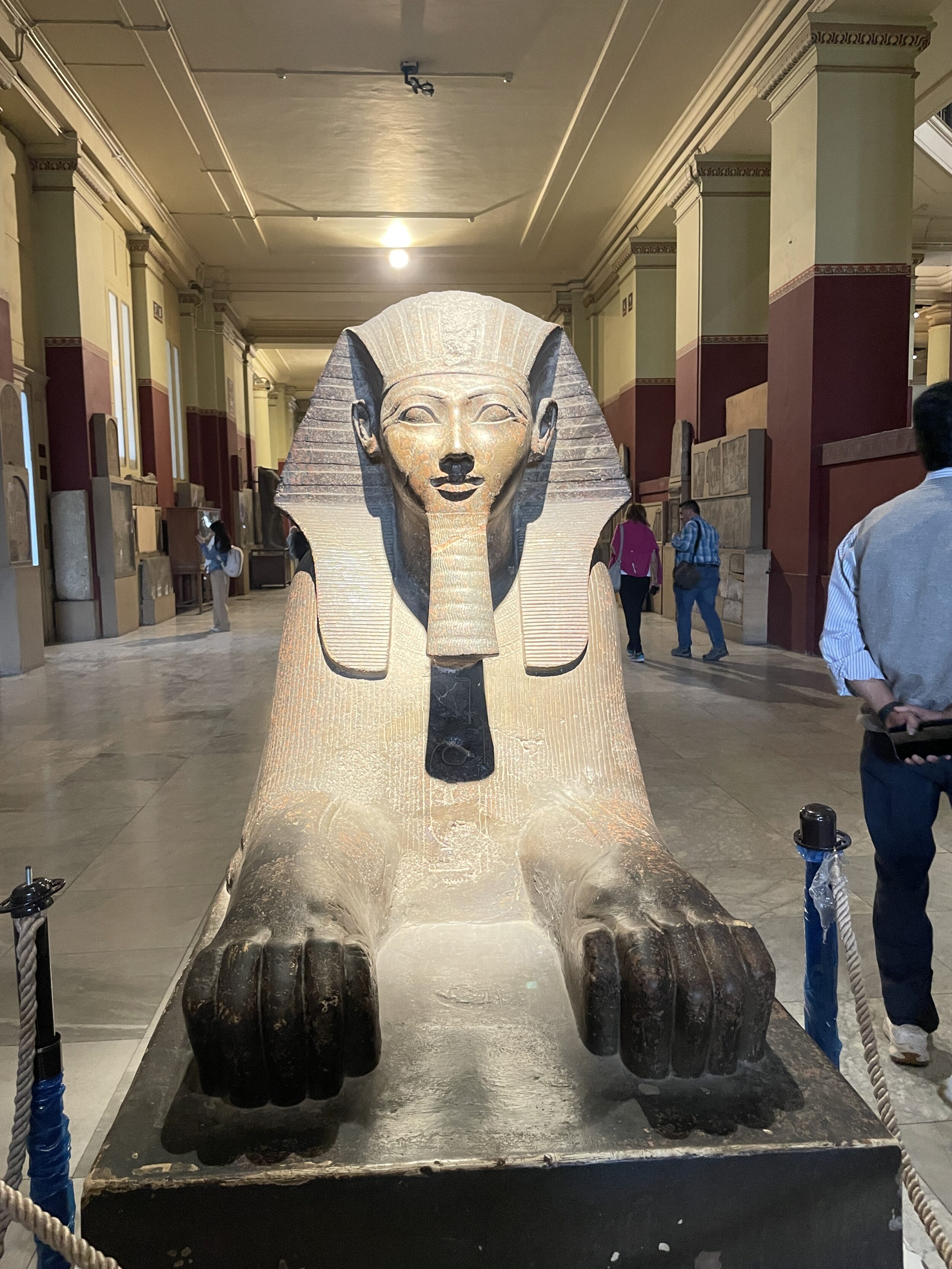
We have a few objects from Hatshepsut, the sphinx and a piece of her head, very pretty. I quote the museum: “This head comes from one of the twenty-four colossal statues of Osiris that adorn the portico of the third terrace of her mortuary temple at Deir el-Bahari. Hatshepsut, sister-wife of Thutmose II, became the fifth pharaoh of the 18th Dynasty. The queen is represented as Osiris, with male attributes such as the ceremonial beard, and depicted with reddish-brown skin, a color usually reserved for men in ancient Egyptian art, in contrast with the pale yellow tint reserved for women.” We visited this mortuary temple during our first trip to Egypt, we really liked it. If I’m not mistaken, we saw the same sphinx version at the Egyptian Museum in Turin too.
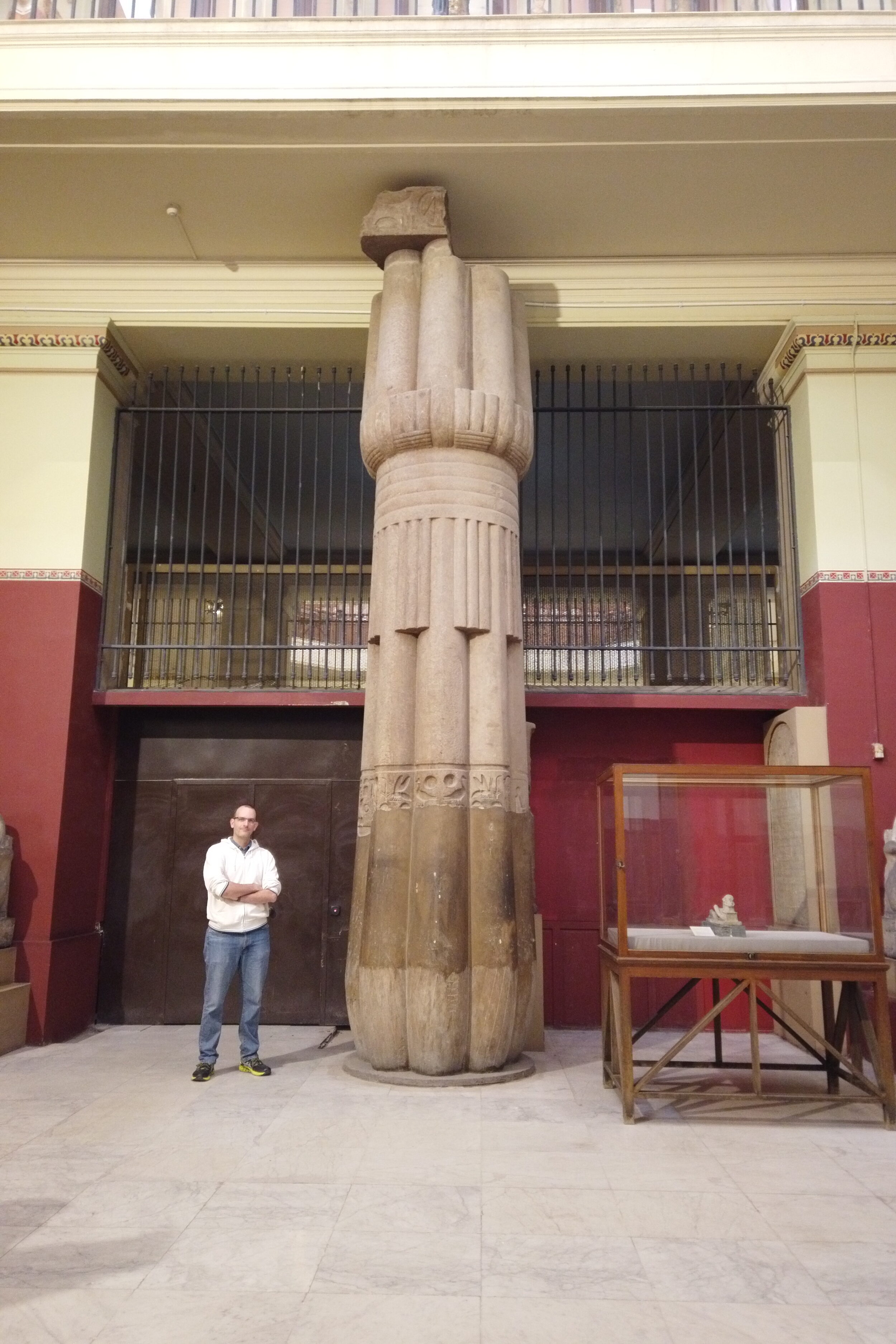
There’s a very impressive hall with two enormous statues at the end.
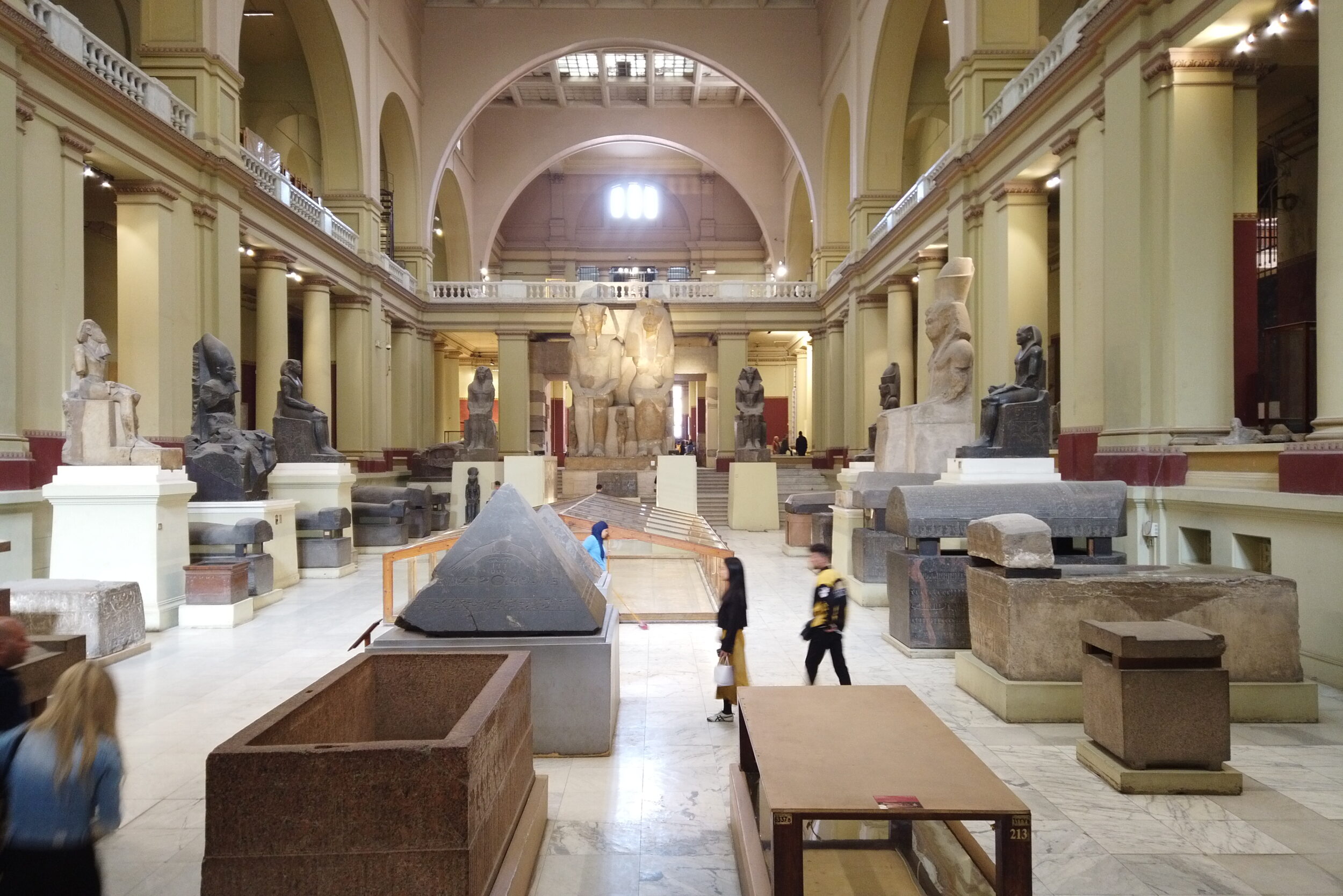
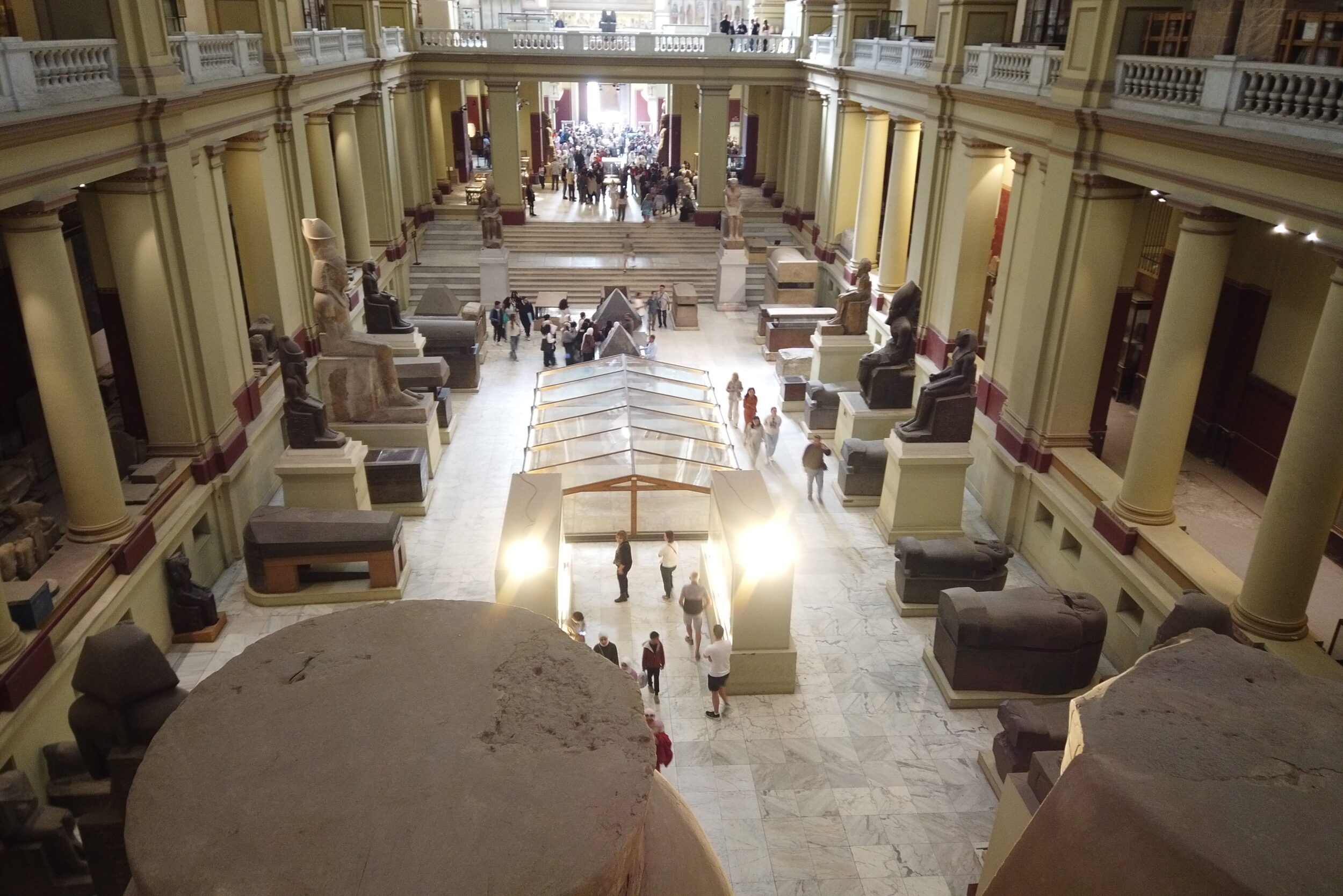
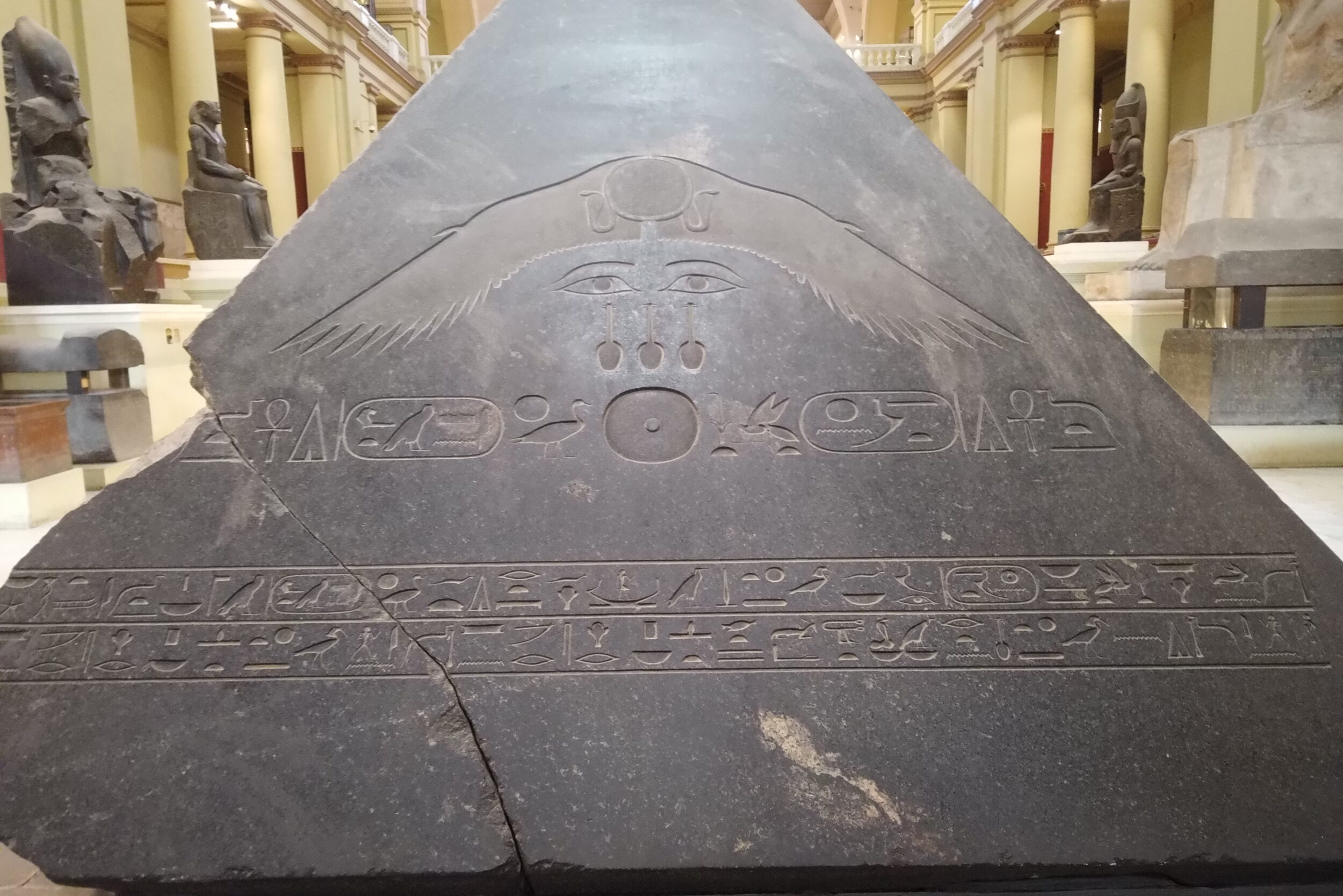
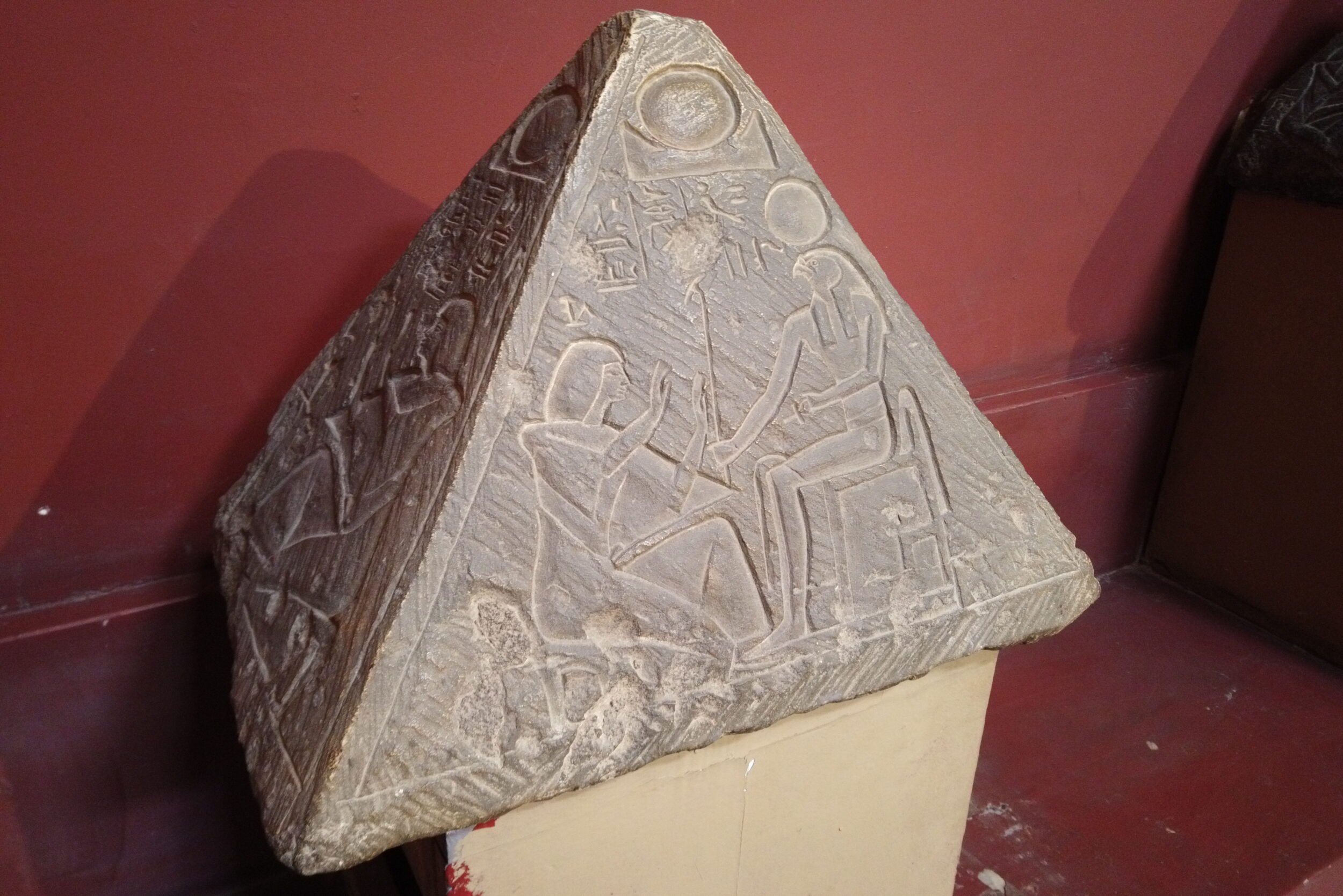
Here, you find the Pyramidion of the pyramid of Amenemhat III, massive. “King Amenemhat III built his pyramid at Hawara in the Fayoum, but also a cenotaph at Dahshur, where his predecessor Amenemhat II had been buried. The pyramidion, which topped this structure, is decorated on the east face with a winged solar disk flanked by two uraeus cobras and two eyes above a hieroglyphic text celebrating the sun god Ra.”
A sarcophagus of remarkable size belongs to Ahmose-Meritamon. “She was the daughter of King Ahmose I and the Great Royal Wife of her brother Amenhotep I. Her tomb (TT358) was discovered by American archaeologist Herbert Winlock in 1929 at Deir el-Bahari. The queen originally had three sarcophagi: the outermost was destroyed by looters, the intermediate sarcophagus is displayed here, and the inner sarcophagus is now at the National Museum of Egyptian Civilization.” The photo doesn’t do it justice; it’s GORGEOUS in real life. It looks like a tree!
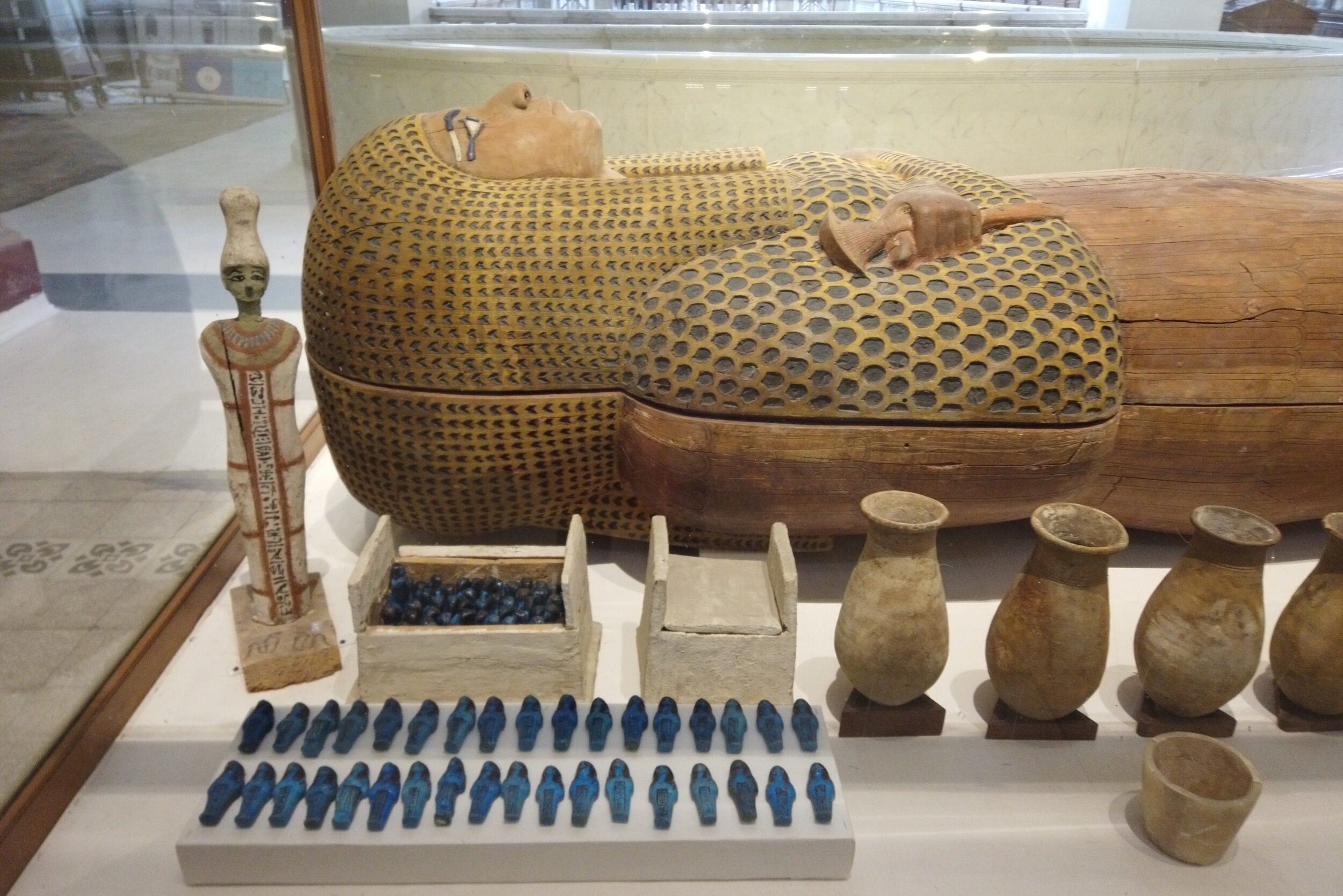
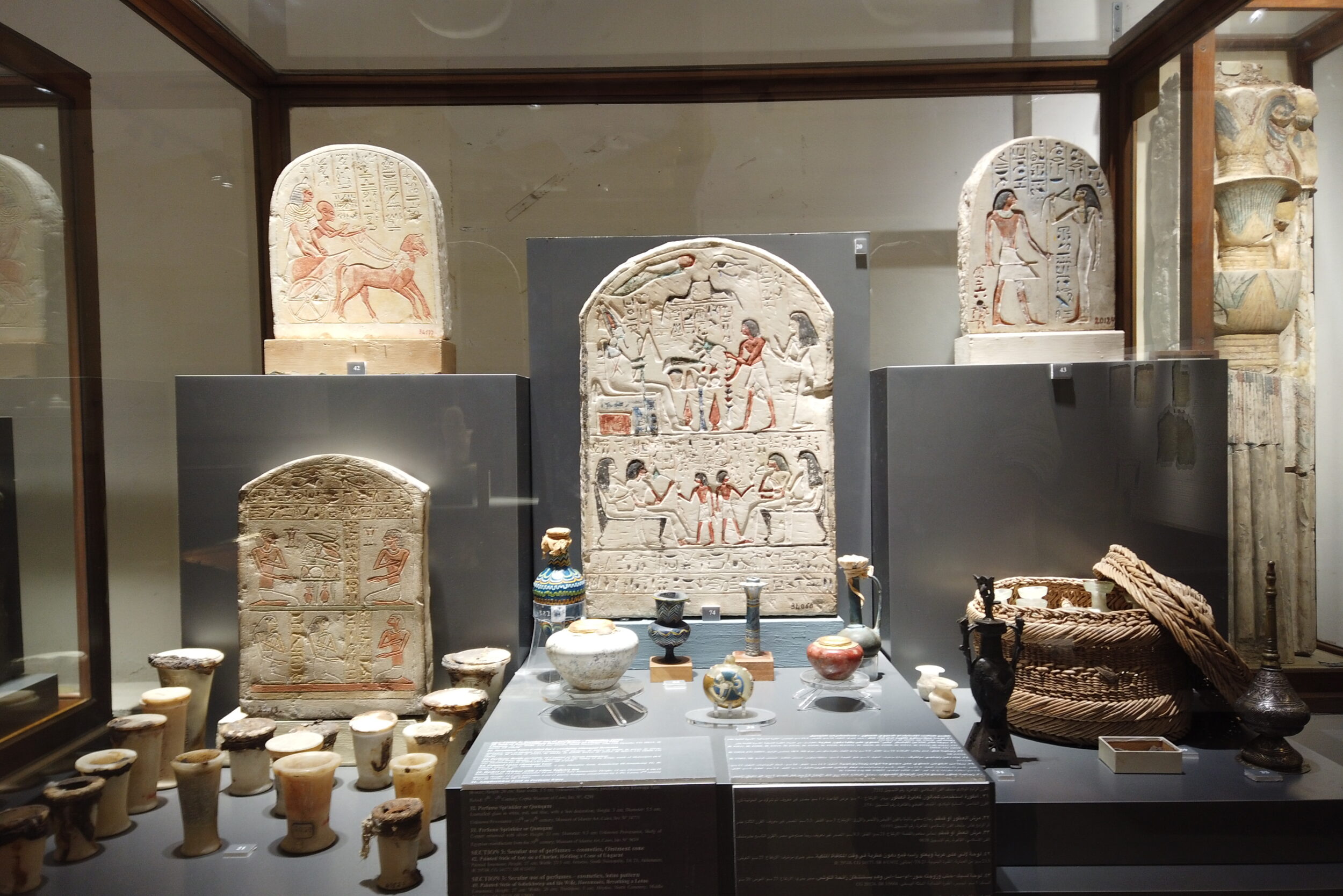
There’s a small exhibition on perfumes. I think this room is part of a temporary exhibition because the display style resembles a luxury boutique window.
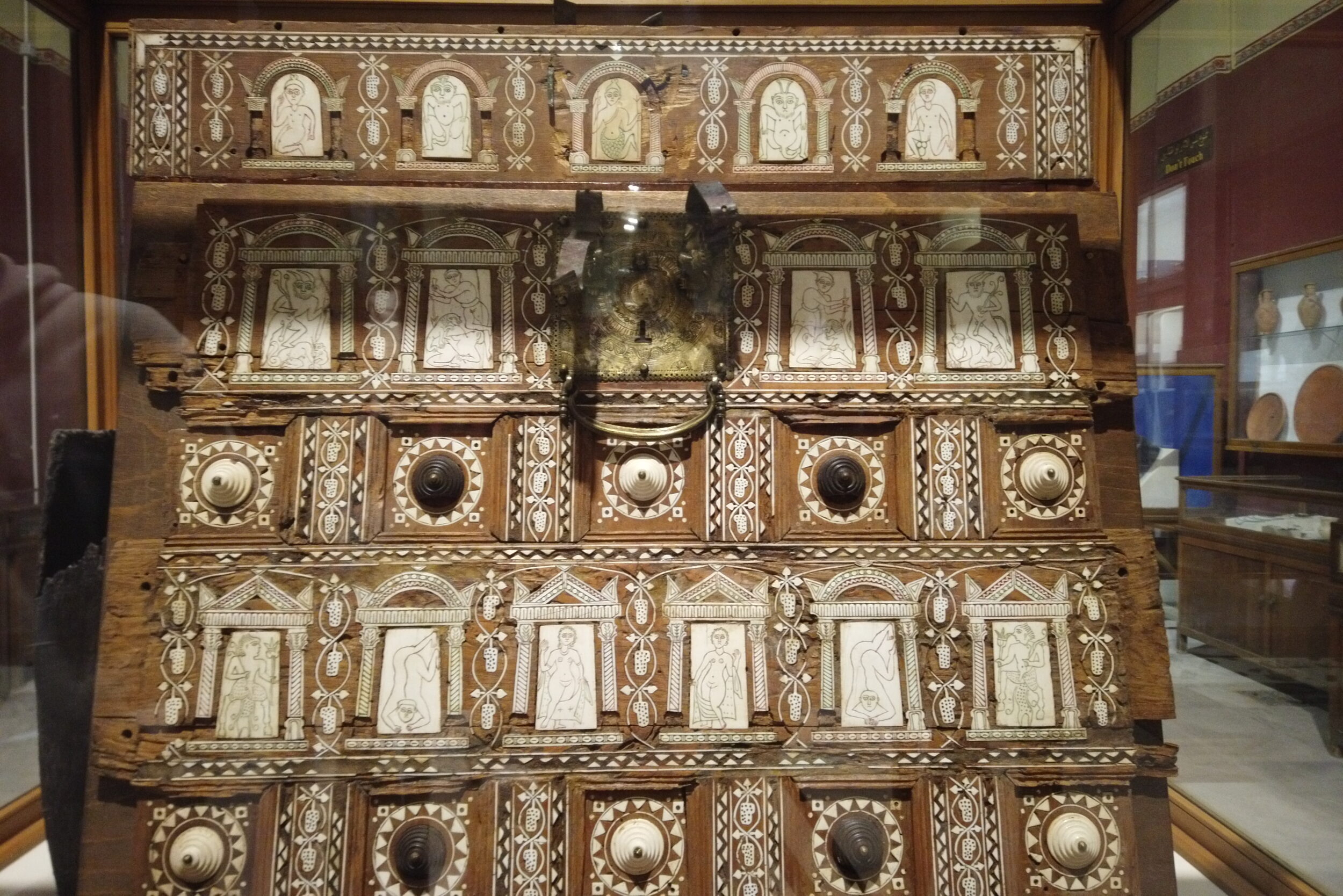
We also discover other beautiful objects like this chest. The white parts are ivory.
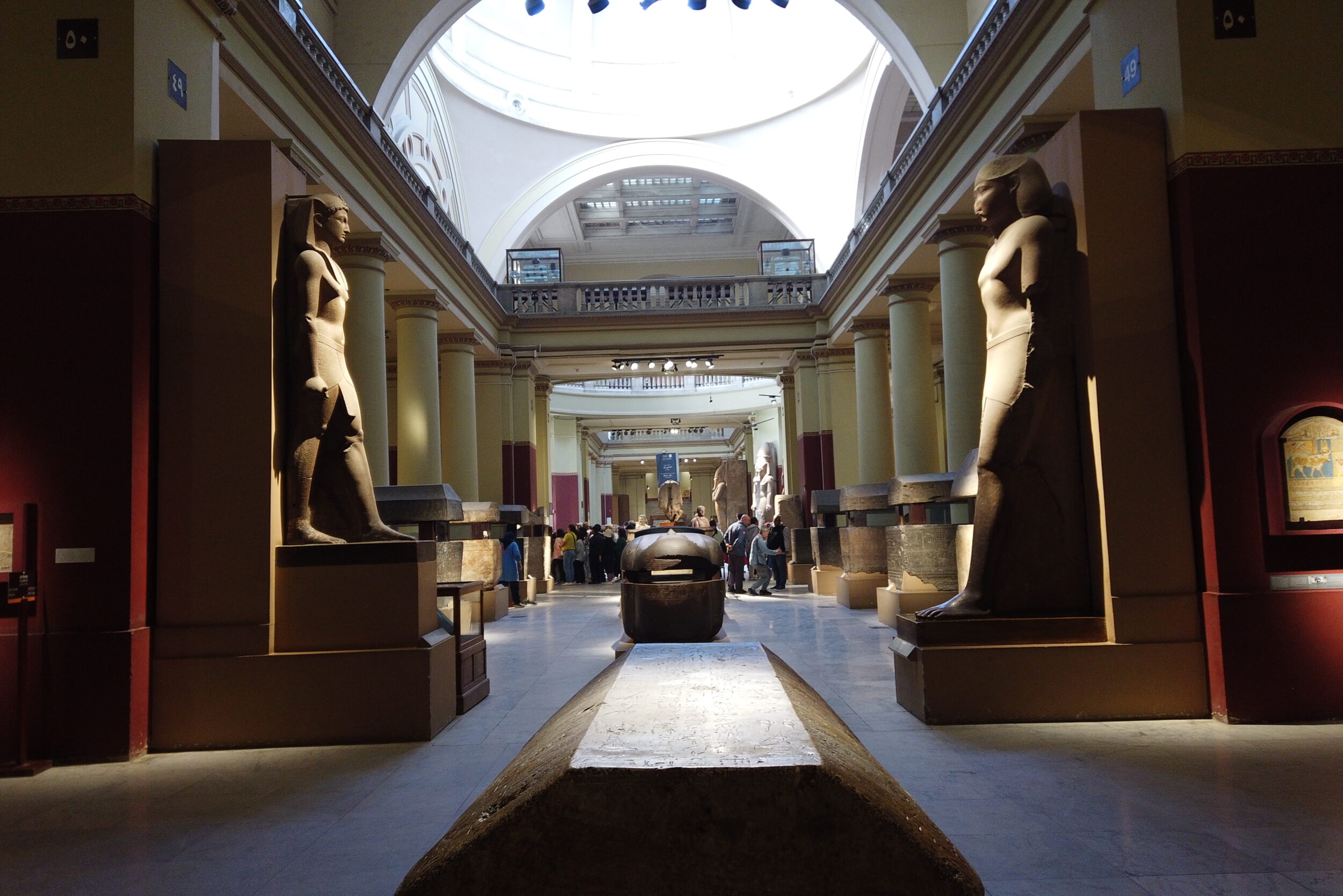
I saw a tourist touching this stone sarcophagus. I hope she won’t be haunted tonight.
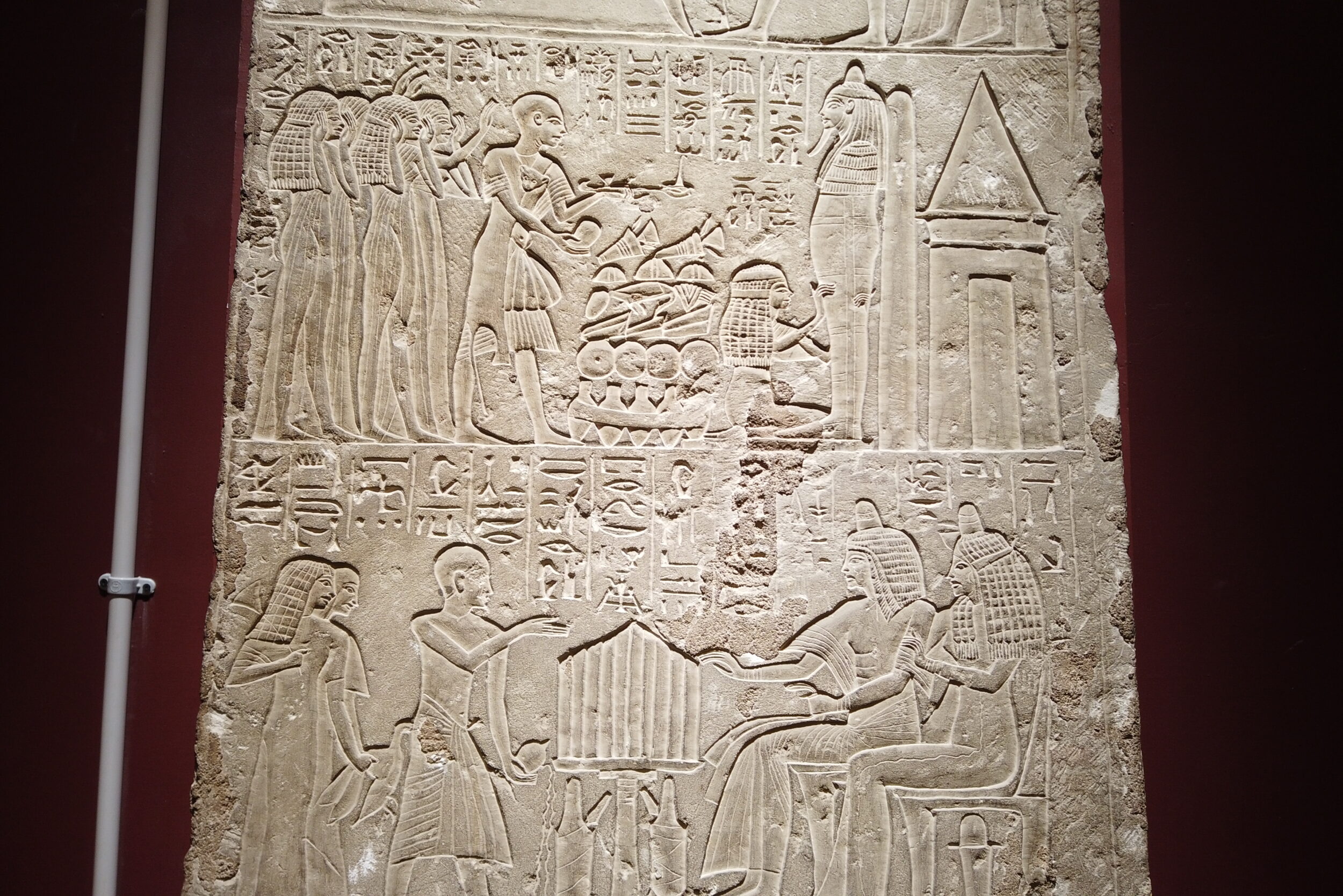
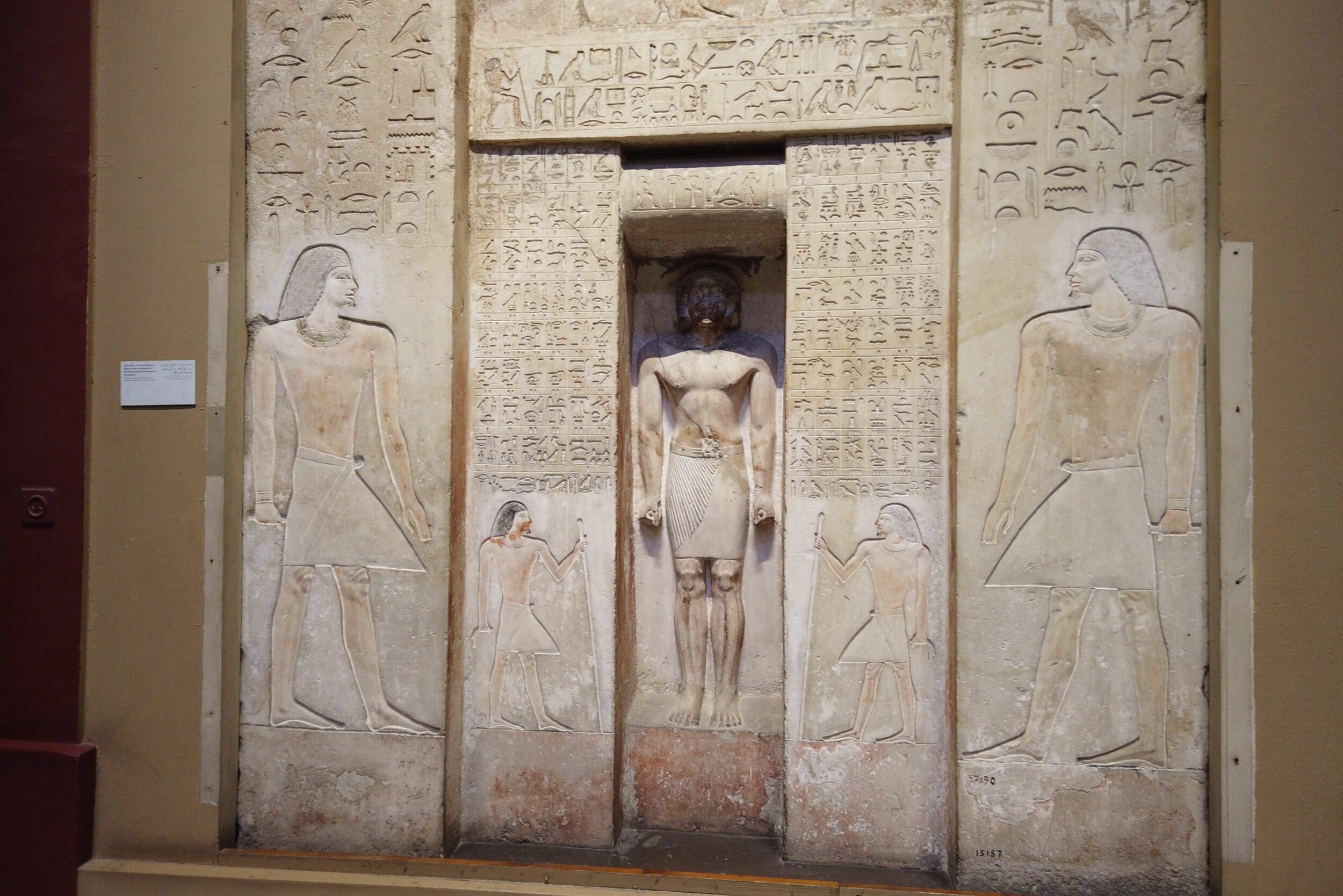
False door of Iteti Ankhiris, composed of an outer lintel and jambs, a stela-tablet, an inner lintel and jambs, a mat roll, and a statue of the deceased. The outer lintel is uninscribed and bears no text. On each outer jamb, there are three columns of text above a figure of Iteti. On the panel, Iteti is seated, facing right, before an offering table. On the inner lintel is an offering prayer in two horizontal lines and an image of Iteti seated. On each inner jamb, six columns of text present a list of offerings above an image of Iteti standing. The name of the deceased appears on the mat roll. In the central niche, a figure of Iteti, carved in half-relief, stands on a raised threshold, arms at his sides, holding cylindrical objects in his fists. He wears a round wig and a short kilt reaching to the knees with a pleated flap. The pigment is well preserved towards the bottom of the door.
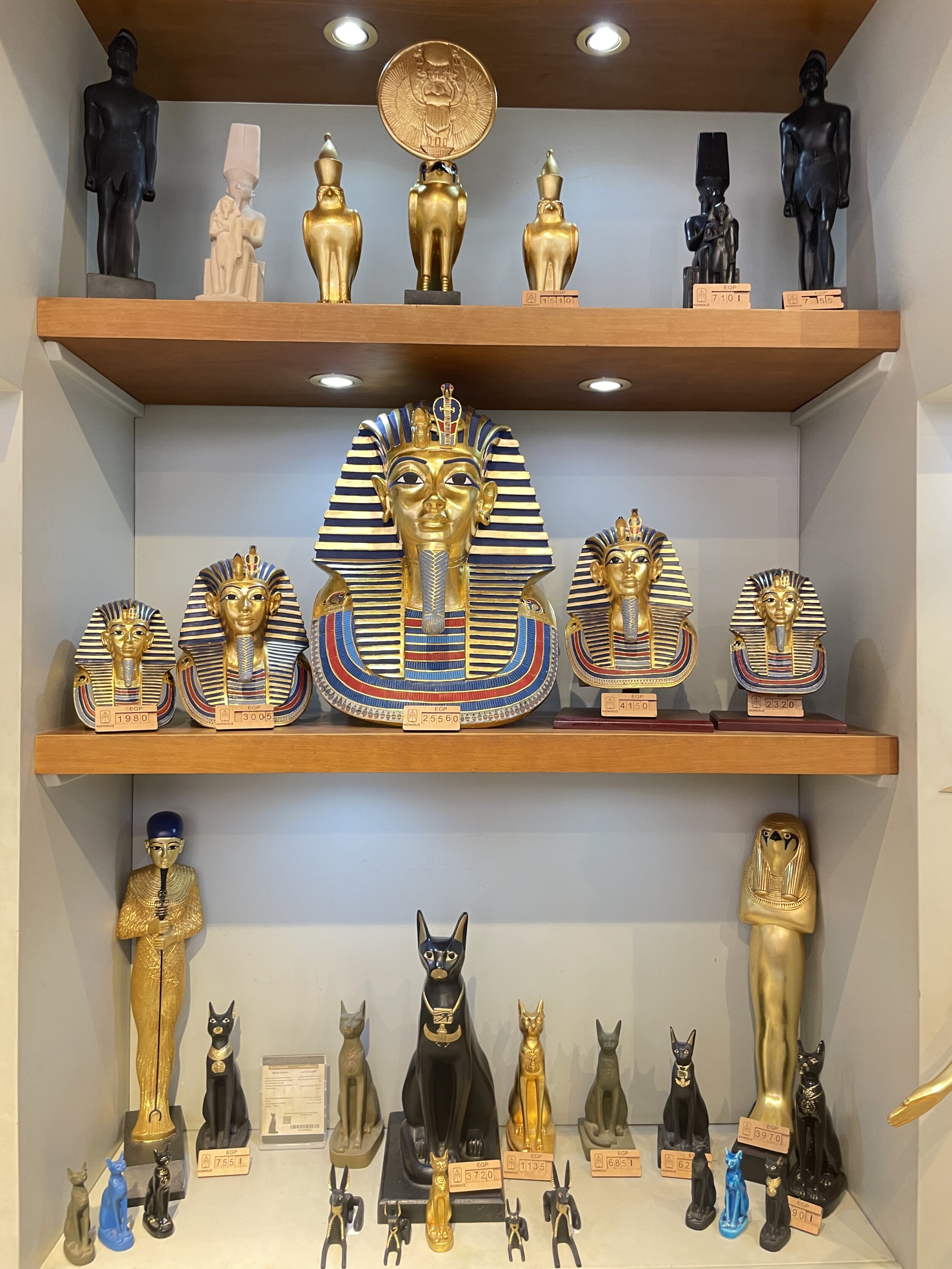
Tourists are starting to arrive. We hurry through the souvenir shop (which I find very cool and affordable) where a robot writes my first name in hieroglyphics for 200LE, before grabbing our bags and heading to Giza.
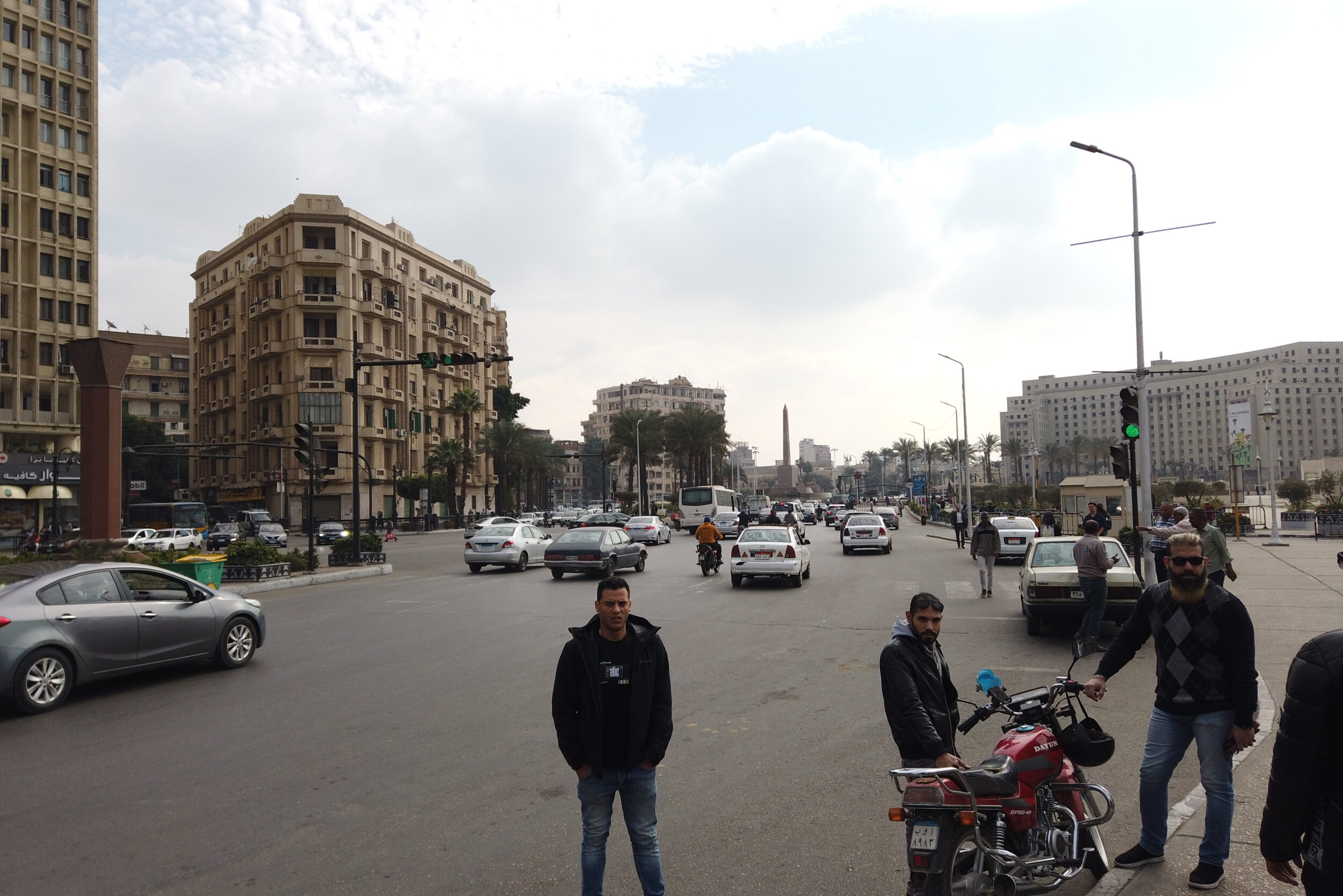
Here is the obelisk and the avenue in front of the museum, where the whole world watched the mummies parade during their “move” to the new museum.
In short, the Egyptian Museum in Cairo is a museum I love dearly. There’s a dated side, a bit frozen in time, that also moves me, even though there are absolutely creepy objects and I would never dare spend the night here hahaha.
The rest of our adventures in Cairo, is right here
Part 2: Practical Tips
- Budget:
- Visa on arrival 25 dollars/person
- Airport Uber to city center: 5.3 euros. Add your bank card to your Uber account and choose the COMFORT option, just a bit more expensive, to get the best drivers who won’t rip you off.
- Museum entry: 550LE/person. International bank card payment OK.
- For SIM cards, remember to buy them before the trip so you can order an Uber at the airport. more info
- It’s possible to visit Egypt without a guide, but in that case, you need to know how to say no and not be affected by the solicitations in the street and even in museums.
- Prepare $1 bills before you go to tip everyone (hotel porter, hotel housekeeper, Uber driver, waiter, guide, etc.). Euro coins are not appreciated because they’ll have trouble exchanging them.
- To know what to look at in the museum, don’t hesitate to follow the tourist groups; they all look at the same things. Otherwise, you have the list of masterpieces on the official website: https://egyptianmuseumcairo.eg/the-collection/ You can also opt for a paid audio guide (we didn’t take it). There are guides near the ticket counters, happy to accompany you (I don’t know the rates).
- To avoid being bothered by the horde of tourists, come when the museum opens, like we did. You can, for example, sleep the night before in a hotel right next to the museum, like ours (Booking link, $84/night breakfast included, cash payment on site or by credit card with 3% fee)

