

[Travel diary] Keukenhof 2023 and Tulip Fields (Netherlands)
After years of telling ourselves “we really must go one day,” we finally made it to the Netherlands in late April 2023 to see what the famous “tulip festival” is all about. It was our first trip to the Netherlands ever, and we made the most of it.
Part 1: Travel Journal
Part 2: Practical Tips
Part 1: Travel Journal
Very high prices
Accommodation around Amsterdam has always been expensive, and it’s even more so between mid-April and mid-May, when millions of people flock to see millions of tulips in bloom. With the travel skills we’ve picked up over the years, we know we need to stay away from the city center and instead opt for a nearby town accessible by public transport (or train). After some thought, we chose The Hague, ibis Styles The Hague (Booking link), for its historical appeal and its proximity to Amsterdam.
But for those staying for less time than we did, you have other options closer to Lisse and Amsterdam, which I’ve mentioned in this practical guide I wrote for you.
Accommodation in The Hague
We opted for the ibis Styles The Hague hotel (Booking link, €70/night), in a stunning old building right across from a beautiful cathedral. I’ll tell you more about The Hague in another article, but know that we really liked this city, whose city center is entirely walkable.

Tulips & the Netherlands
Why is the Netherlands the largest exporter of tulip bulbs? To find out, we need to go back to the 16th century.
Tulip cultivation is said to have begun in Persia in the 10th century before becoming a symbol of the Ottoman Empire. Tulips were introduced to the Western world by the Viennese diplomat Augier Ghislain de Busbecq, who saw them in Edirne, Turkey, in 1551 and sent seeds to Austria. The arrival of a cargo of tulip bulbs in Antwerp in 1562 marked the beginning of Europe’s tulip horticultural industry. French botanist Carolus Clusius was one of the first to cultivate tulips in Europe and is credited with introducing other spring bulbs, such as hyacinths and irises. Between 1633 and 1637, a speculative frenzy over tulips in the Netherlands became known as Tulipomania.
In the aftermath of a 1581 revolt against Spain, many merchants and craftsmen from Antwerp and Brussels migrated to the new Dutch Republic, while Protestant immigrants from other parts of the Spanish Empire flocked north, quickly swelling many Dutch cities. These immigrants brought money to invest. At that time, tulips were still rare, and they became a symbol of wealth and prestige for the rich Dutch seeking ways to display their riches. Speculators began buying and selling tulip bulbs, with prices rising rapidly.
Tulip mania peaked in late winter 1637 at an auction in Alkmaar held for the orphans of the local former innkeeper and tulip speculator, Wouter Bartelmiesz. A single bulb of Semper Augustus, the most prized tulip of all time, cost more than a lavish house on Amsterdam’s grand canal. The average price paid per bulb in Alkmaar (which did NOT include the most valuable tulips of the time) could have employed a master carpenter for two years, with the rarest selling for much higher prices.
However, in February 1637, the market collapsed as sellers began to outnumber buyers. Tulip trading was suspended, and even the courts refused to hear tulip-related cases.
After the crisis, the Dutch knew two things: they were good at growing tulips, and Tulipomania had captured the world’s attention. European buyers, curious to see the beauties that had driven Dutch collectors and speculators to madness, formed the basis of the first Dutch export market, but the export trade really took off when the Turkish sultan fell in love with tulips in the early 18th century. Dutch bulbs complemented the needle-petaled flowers the Turks grew themselves. Sultan Ahmet III regularly ordered thousands of bulbs from growers near Haarlem.
Over time, tulip cultivation spread to other regions of the Netherlands, and the idea of using tulips as a landscape element became popular.
In the United States and Europe, the Dutch learned to sell their flowers through beautiful catalogs and by donating sizable samples to public parks. Over time, many people came to love tulips, and the flowers, though more common, became infinitely more affordable than they had ever been before.
When to see the tulips?
There are thousands of tulip species, but they can be classified into 15 groups. These groups bloom at different times, but it is recommended to come in late April, when most groups are in bloom and during Keukenhof’s opening period. In 2023, the park is open from March 23 to May 14, 2023.
We chose to be there at the same time as the flower parade (more info below), but after being really disappointed by it, we honestly think you shouldn’t plan your visit around the parade.
What is Keukenhof?
Keukenhof is Disneyland for tulips. It’s a human-sized park where tulips form varied landscapes. It’s where you can take the famous photo of a windmill with tulips, the photo you see in every travel guide.
Transport from The Hague to Keukenhof
The Hague is a bit far from Keukenhof, so we budgeted an hour door-to-door to get there. First from central station to Leiden Centraal, then a public bus takes us there. For tourists without bus tickets, a combined ticket is offered on official website or on Civitatis (link), departing from several cities (Leiden, Haarlem, Schiphol, or Amsterdam), between €31 and €36 (bus + Keukenhof entry), knowing that the entry ticket to Keukenhof alone costs €19 (official website, Civitatis link). There’s a set schedule, but in reality, you just show up whenever you want, showing the QR code on your ticket.

Despite the high number of tourists, I think the park is well-organized and large enough for everyone to find the time and space needed to take photos and enjoy the flowers. Avoid photographing everything right at the entrance and move a bit away from the crowd; there are far fewer people further in! The biggest downside is having to stand on the bus for 45 minutes, but on the way back, we got on first and found seats, so it was fine. Plus, there are plenty of stalls and food trucks for those who didn’t pack sandwiches. Prices are a bit cheaper than in Amsterdam but still high compared to France (expect €5 for a waffle, €4 for a hot chocolate).


My favorite café is on the other side of the windmill, not far from the fields… it looks like a greenhouse with views over a rustic garden.
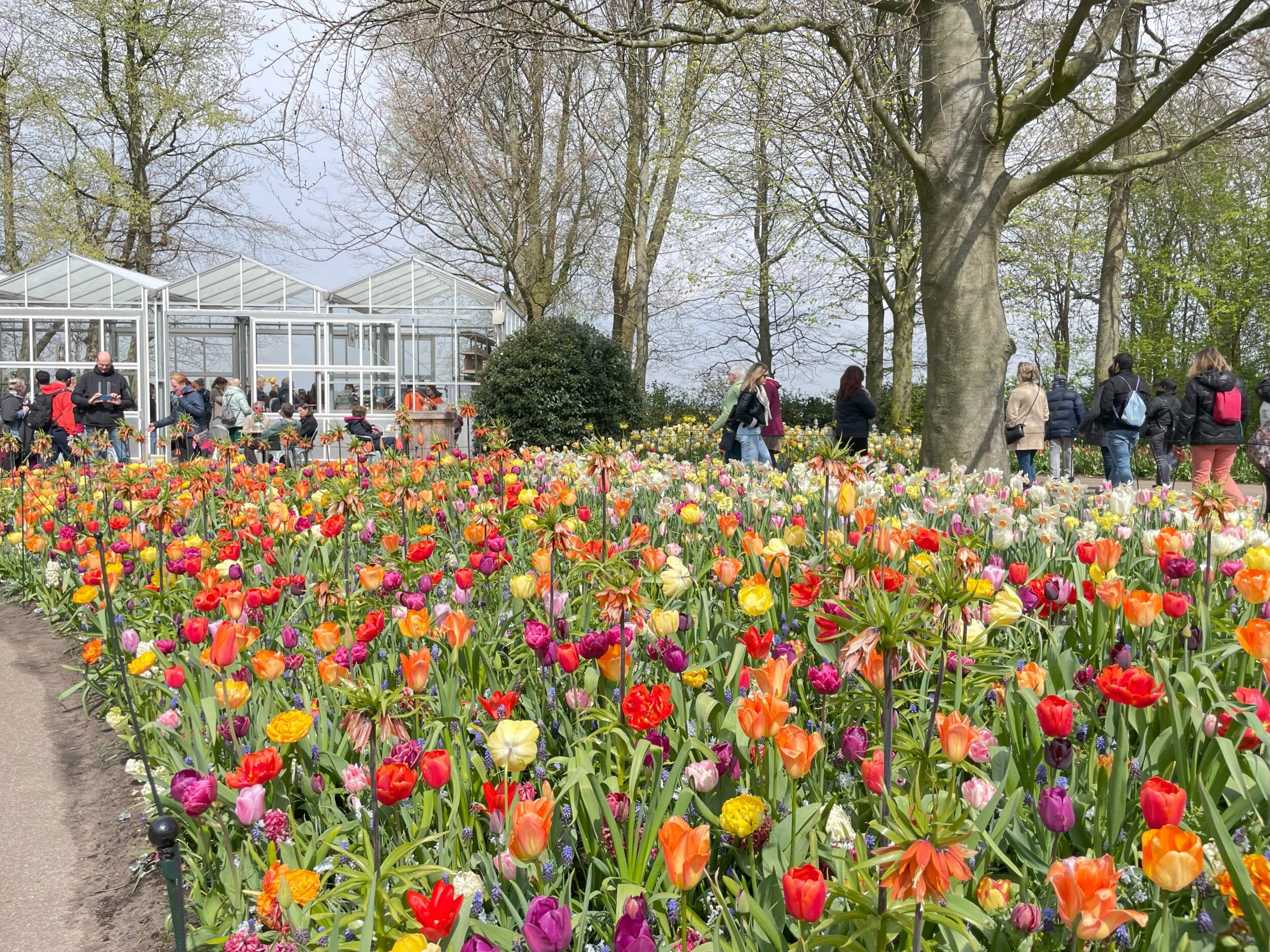
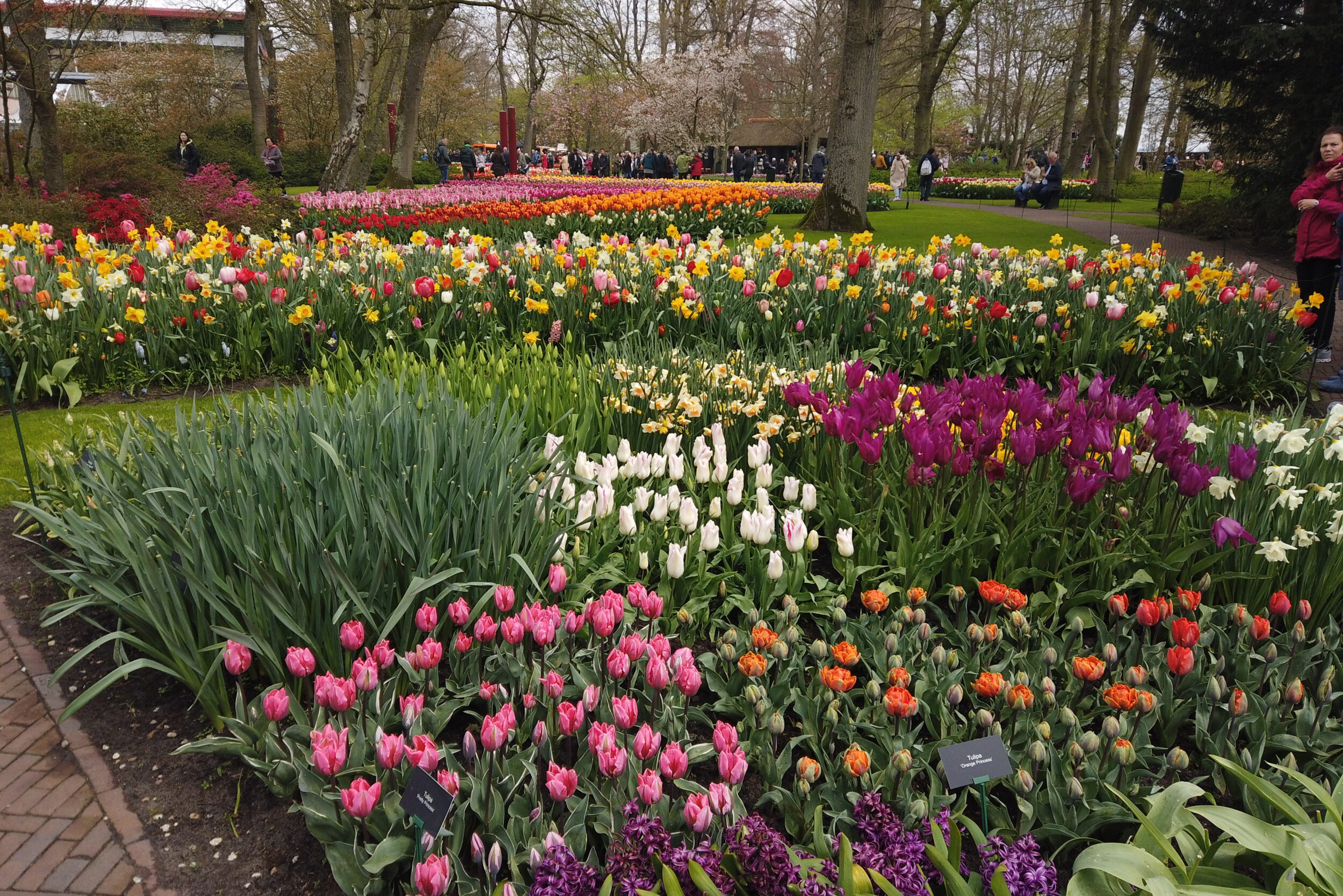
Right after the entrance, we’re greeted by a forest of very colorful tulips. You’ll see, there are spots where you’re allowed to get close to the tulips and others where a wire is stretched to keep you out, so you can mix it up.
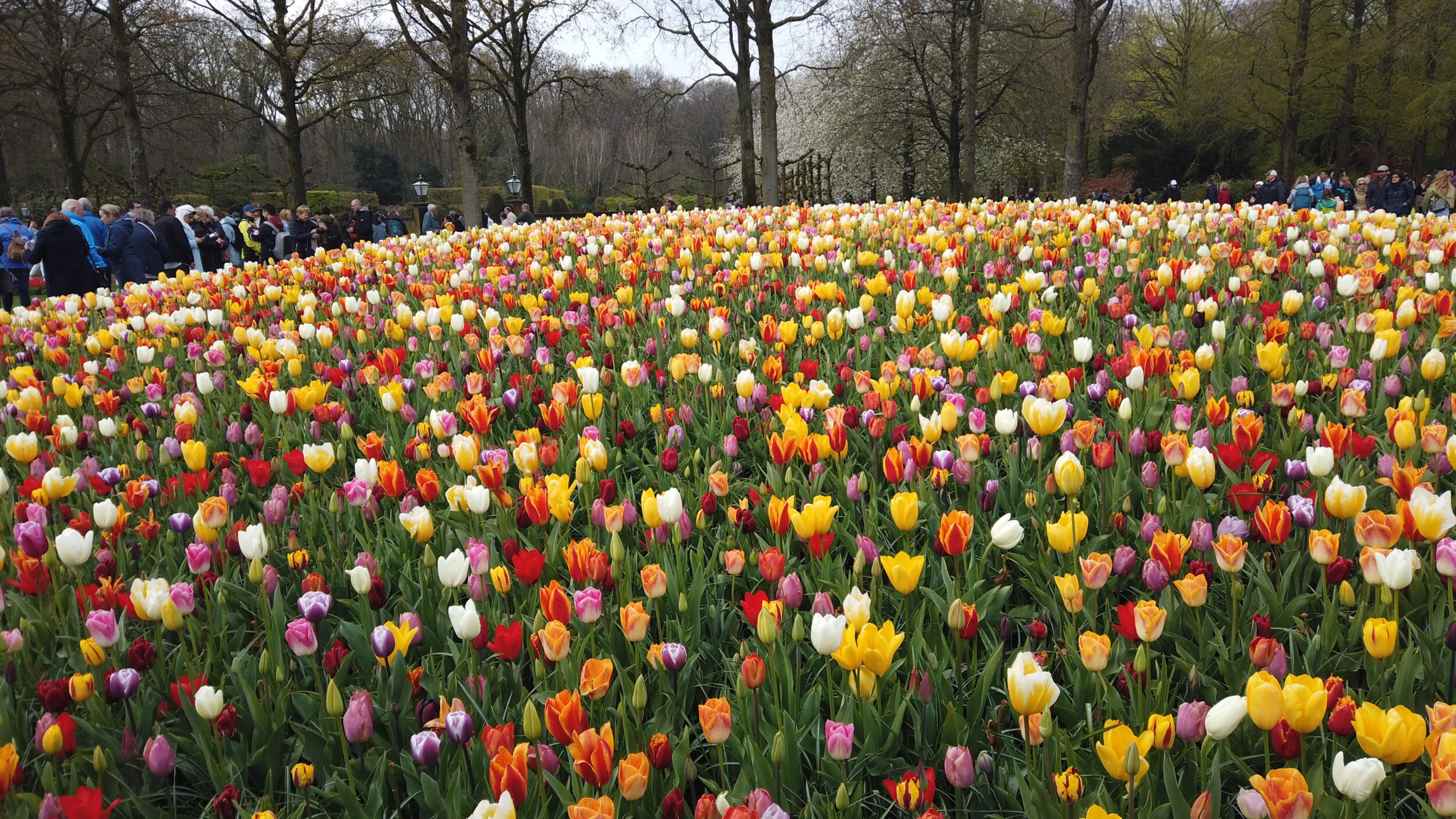
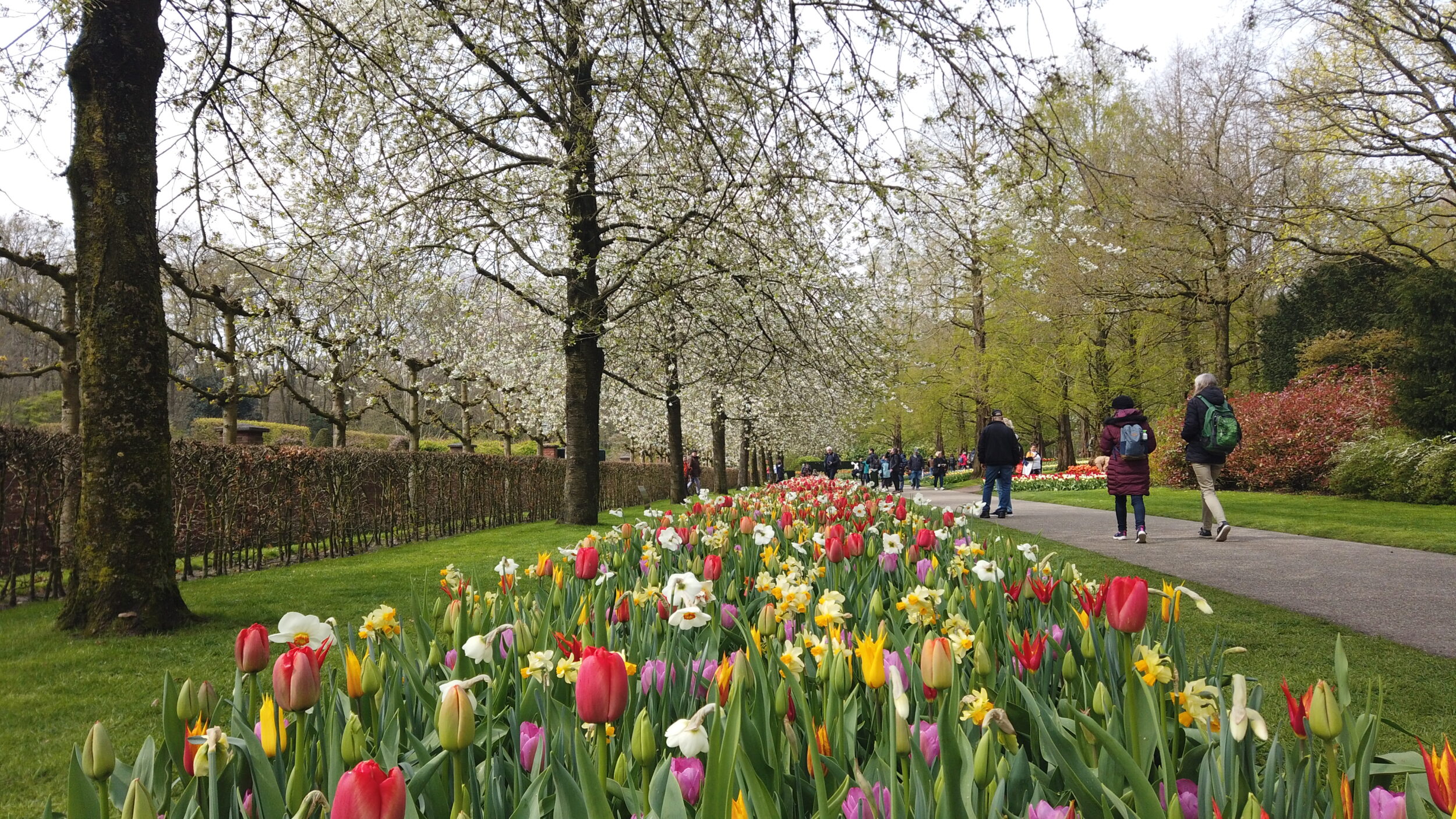
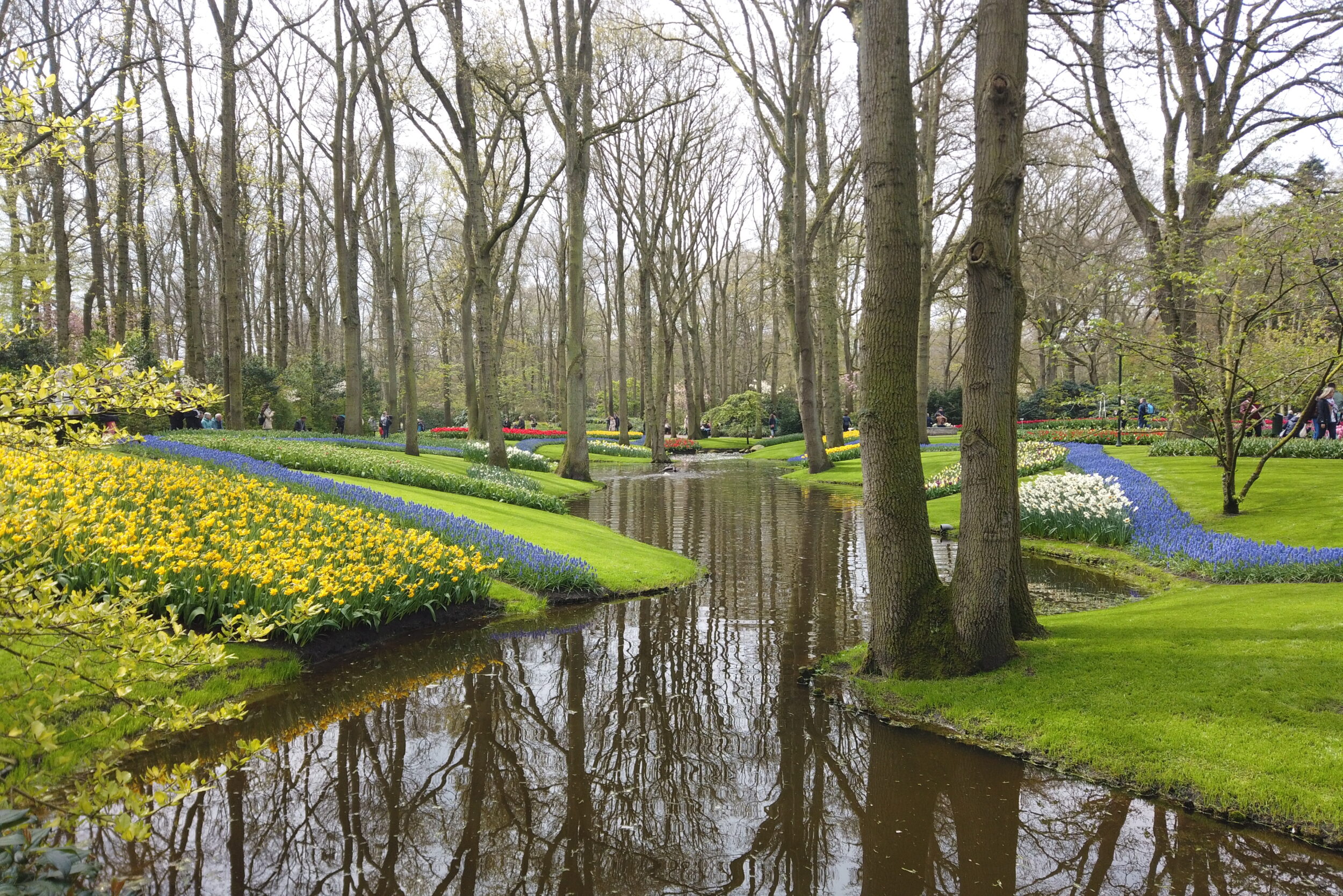
It’s really pleasant because it’s not just tulips here. There are also cherry trees (?! ) in bloom, and other bulb flowers like hyacinths and daffodils, in all colors. Not all the flowers are in bloom yet, so there are surprises in store for tourists who visit after us.
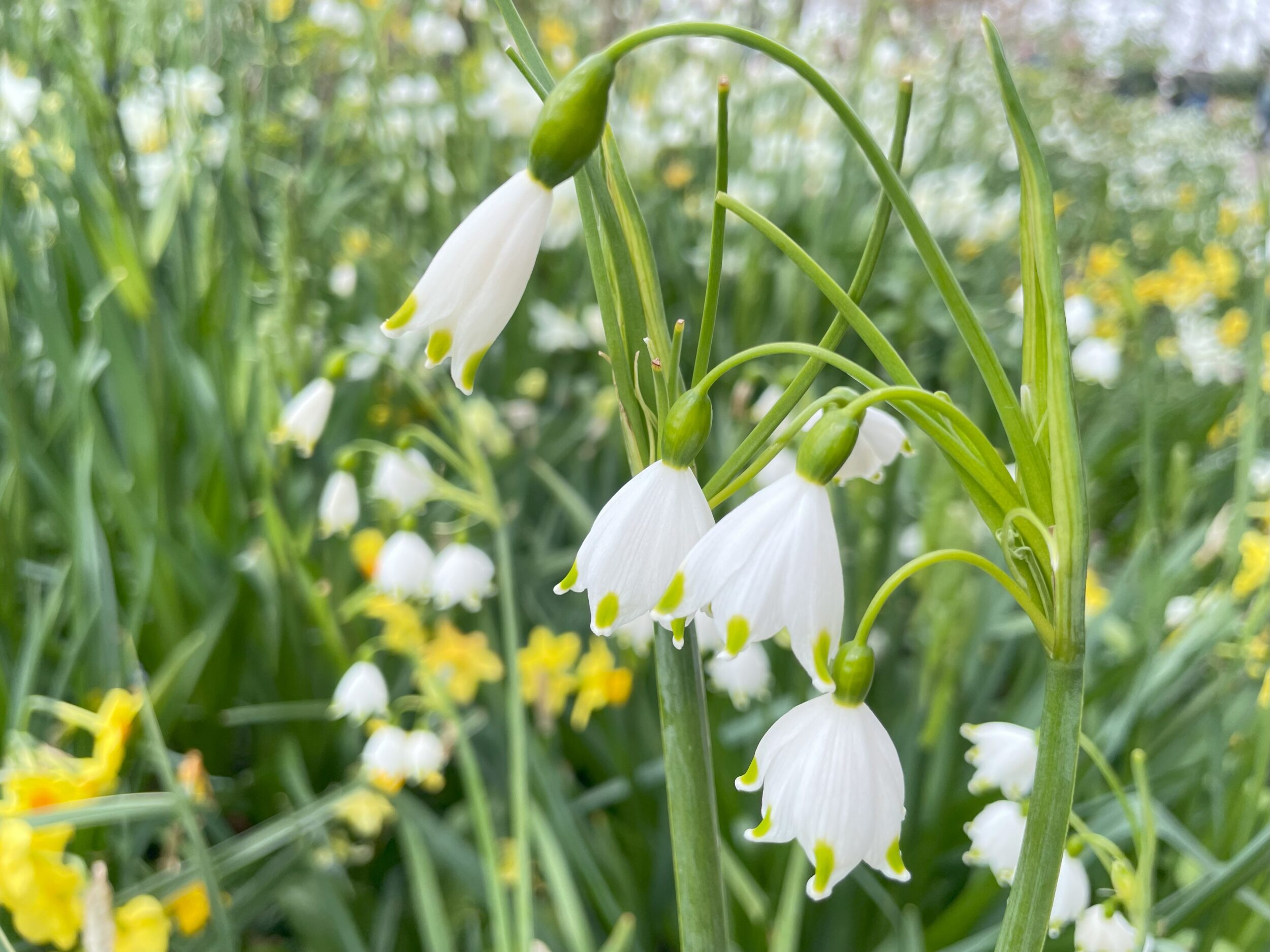
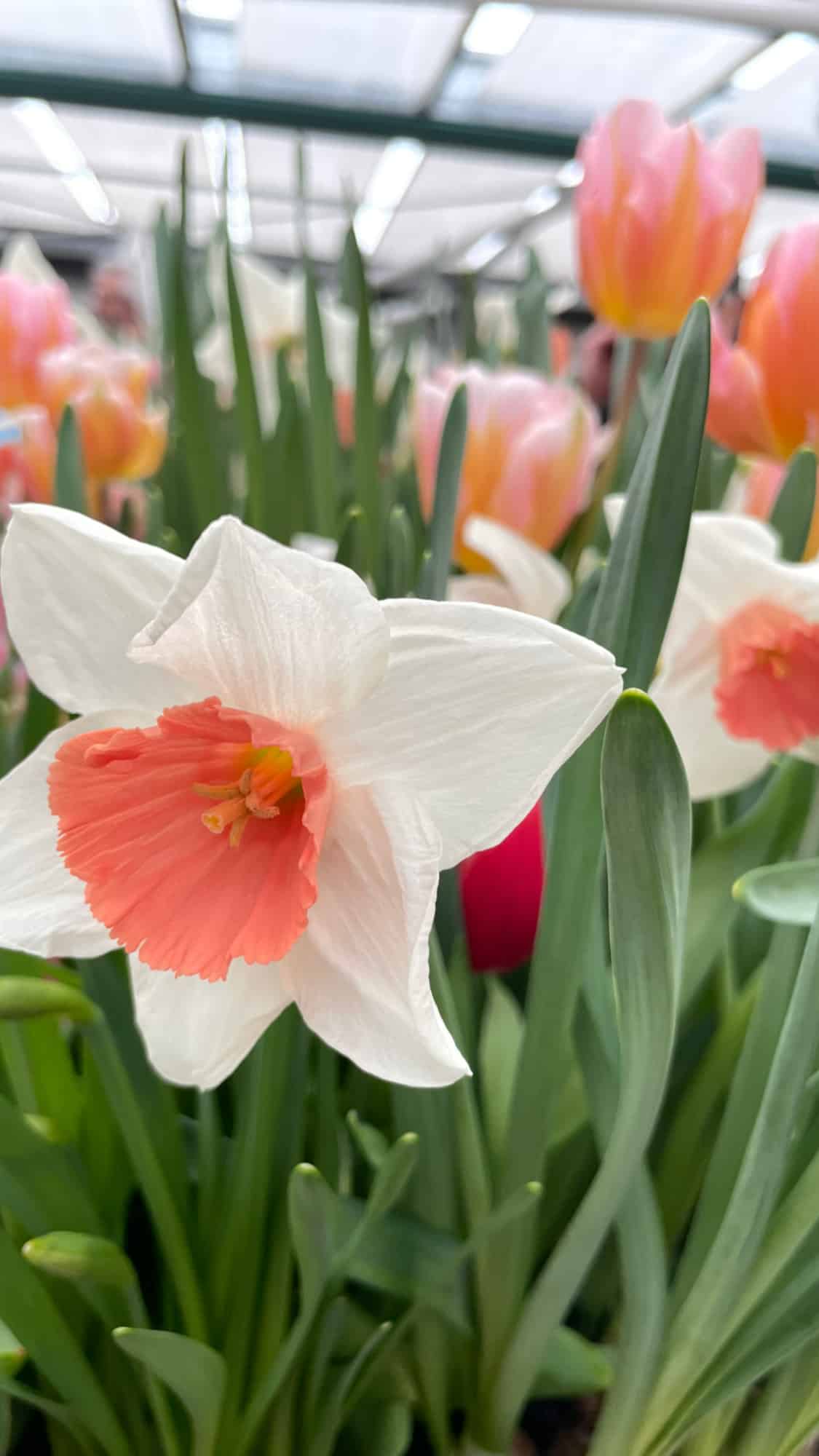
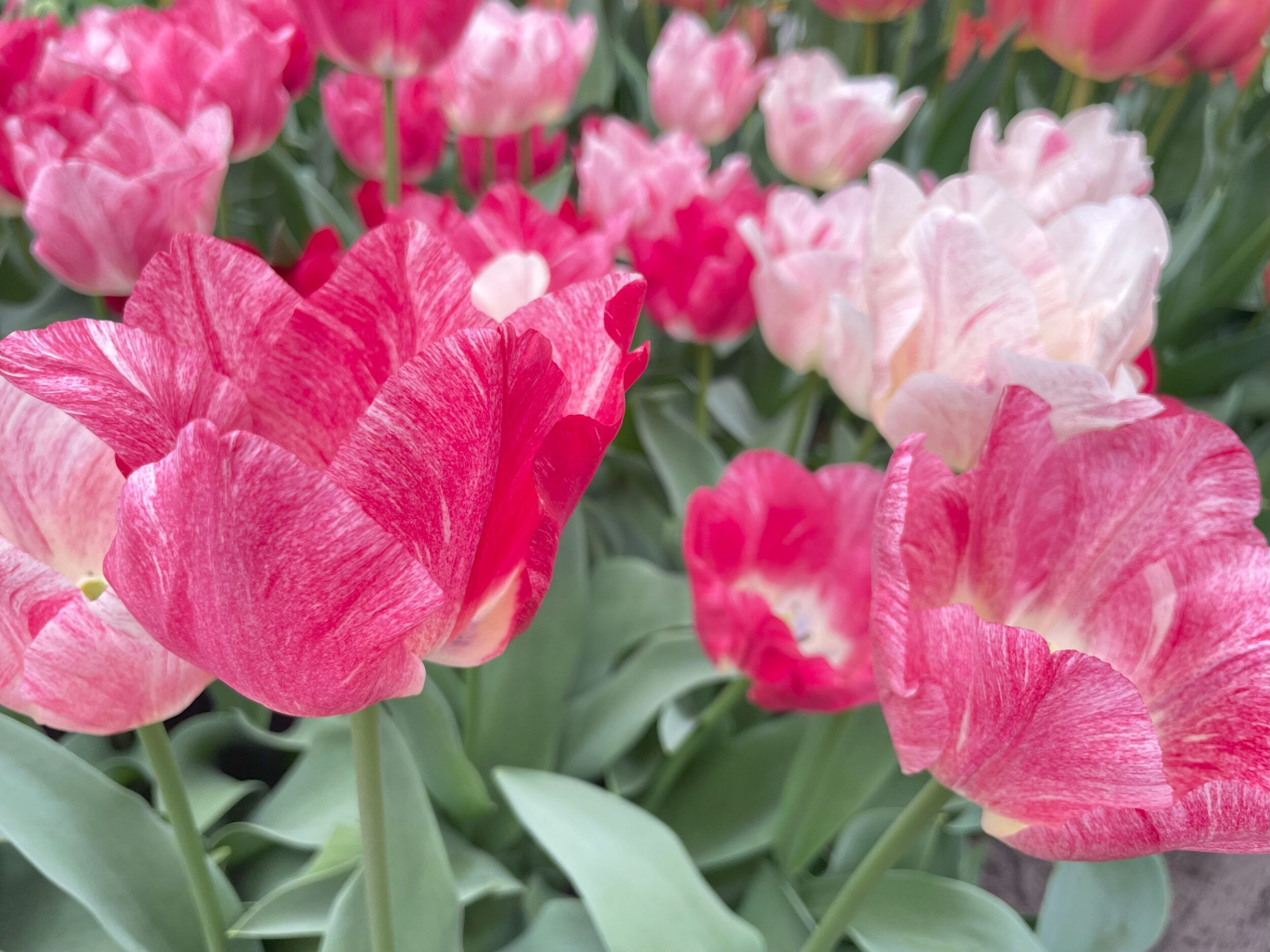
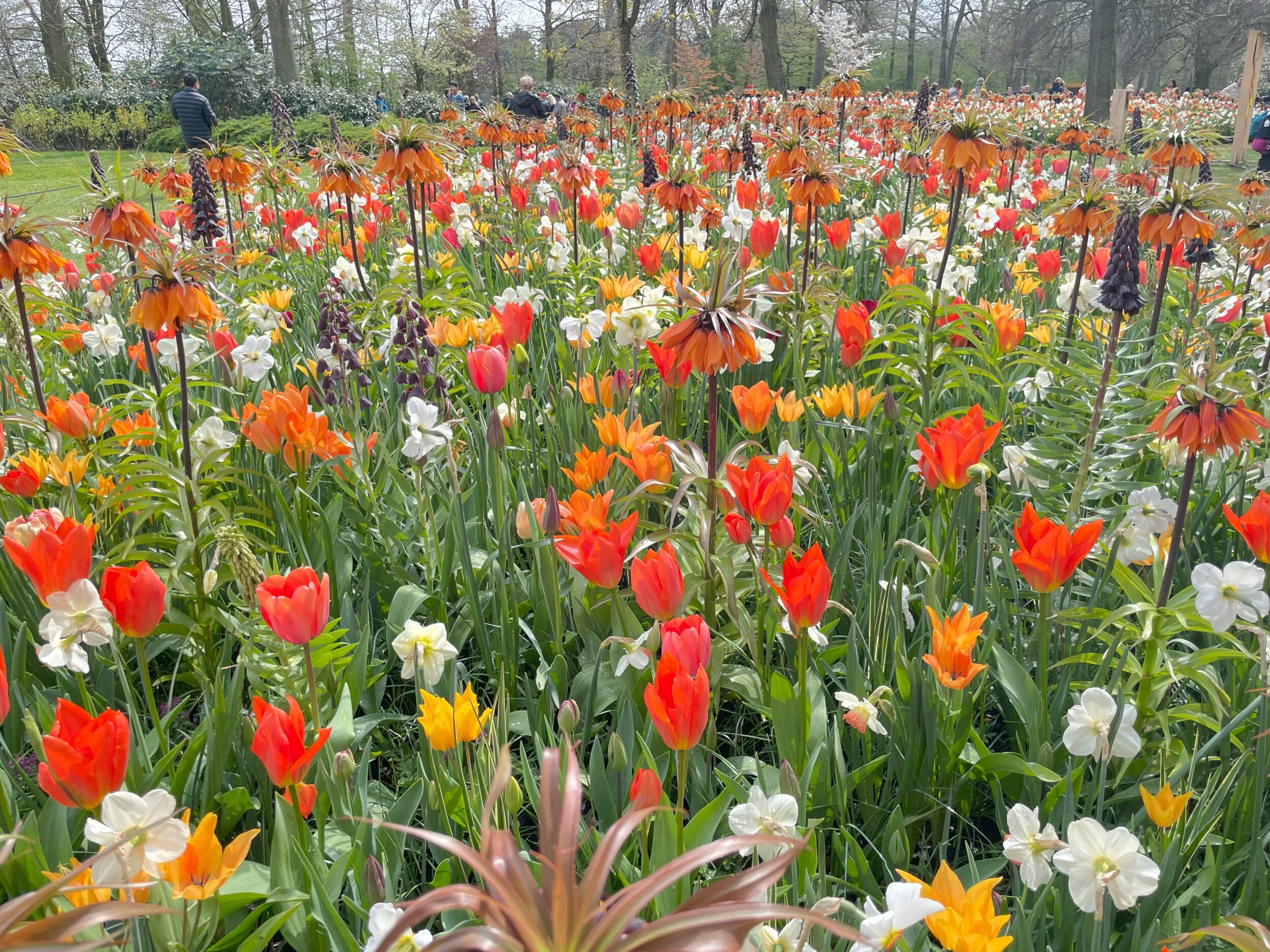
I really like this corner. There’s a statue surrounded by huge picture-photos of tulips that are in the Mauritshuis museum in The Hague.
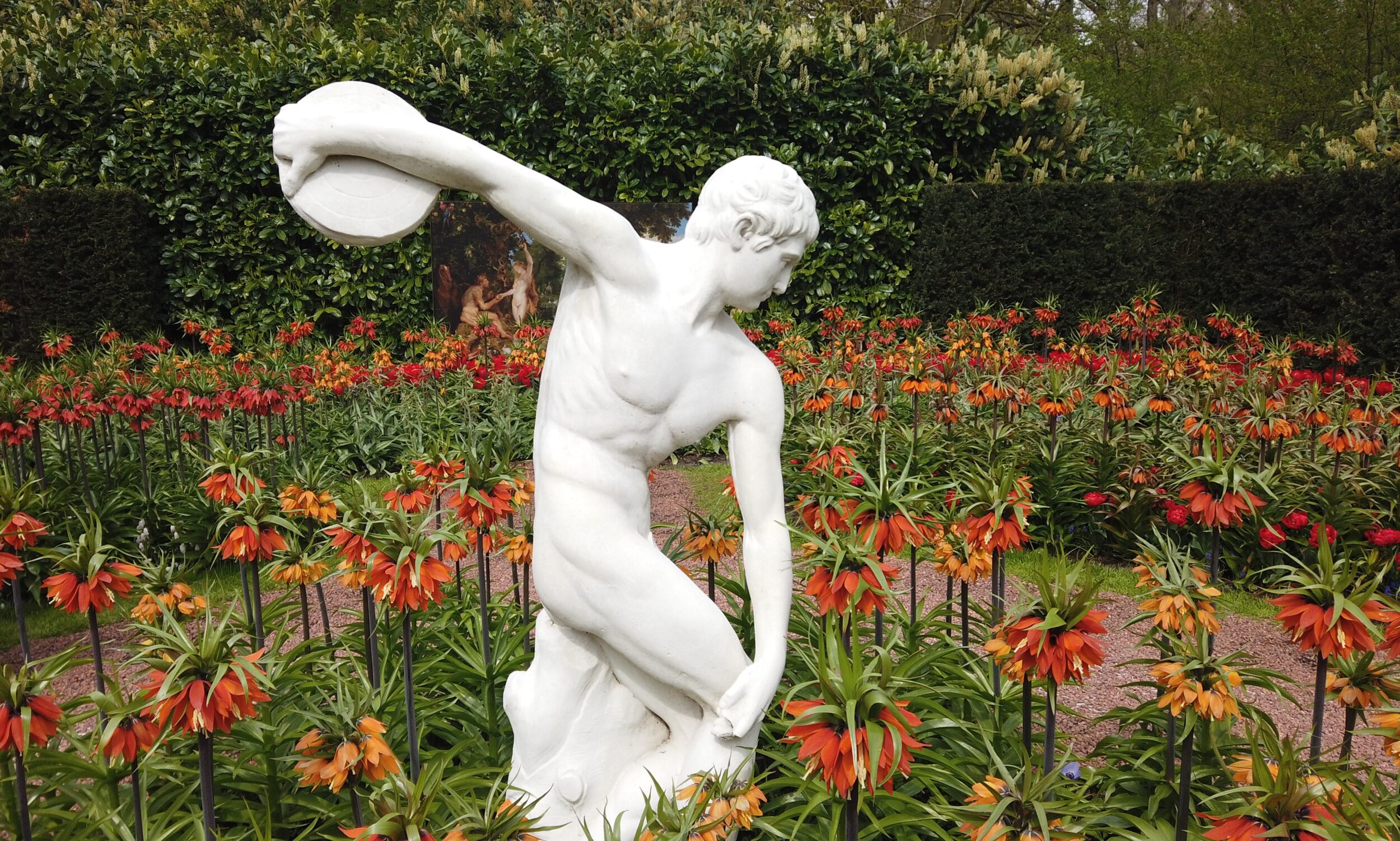
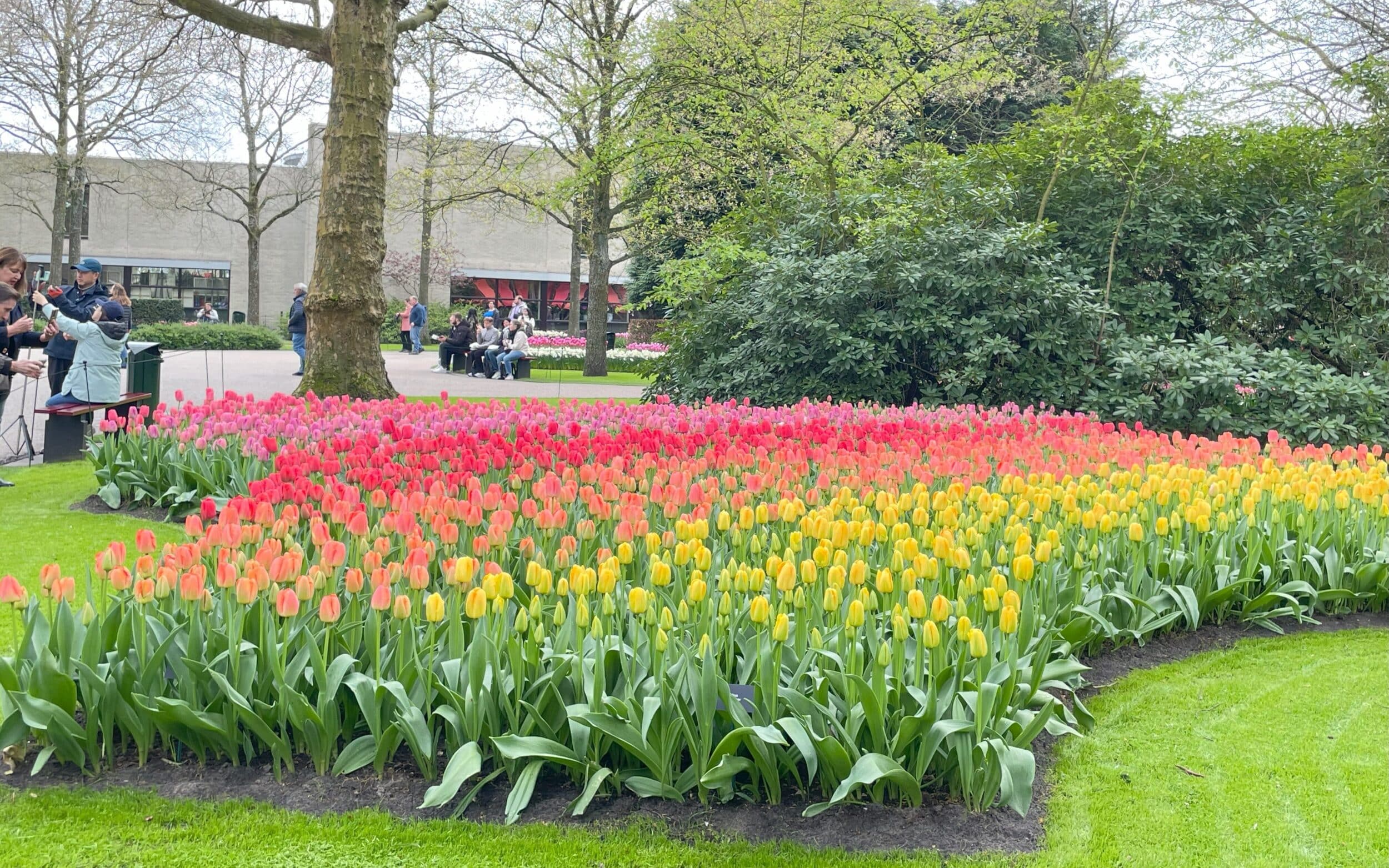
The landscapers pay special attention to varying the colors, species, and also the blooming times. For a non-expert like me, red tulips all look alike, but I’m sure with all the varieties they have, true connoisseurs will be delighted and leave with some ideas. We crossed paths with a few gardeners, who cut off wilted flowers and set up wire supports for each hyacinth.
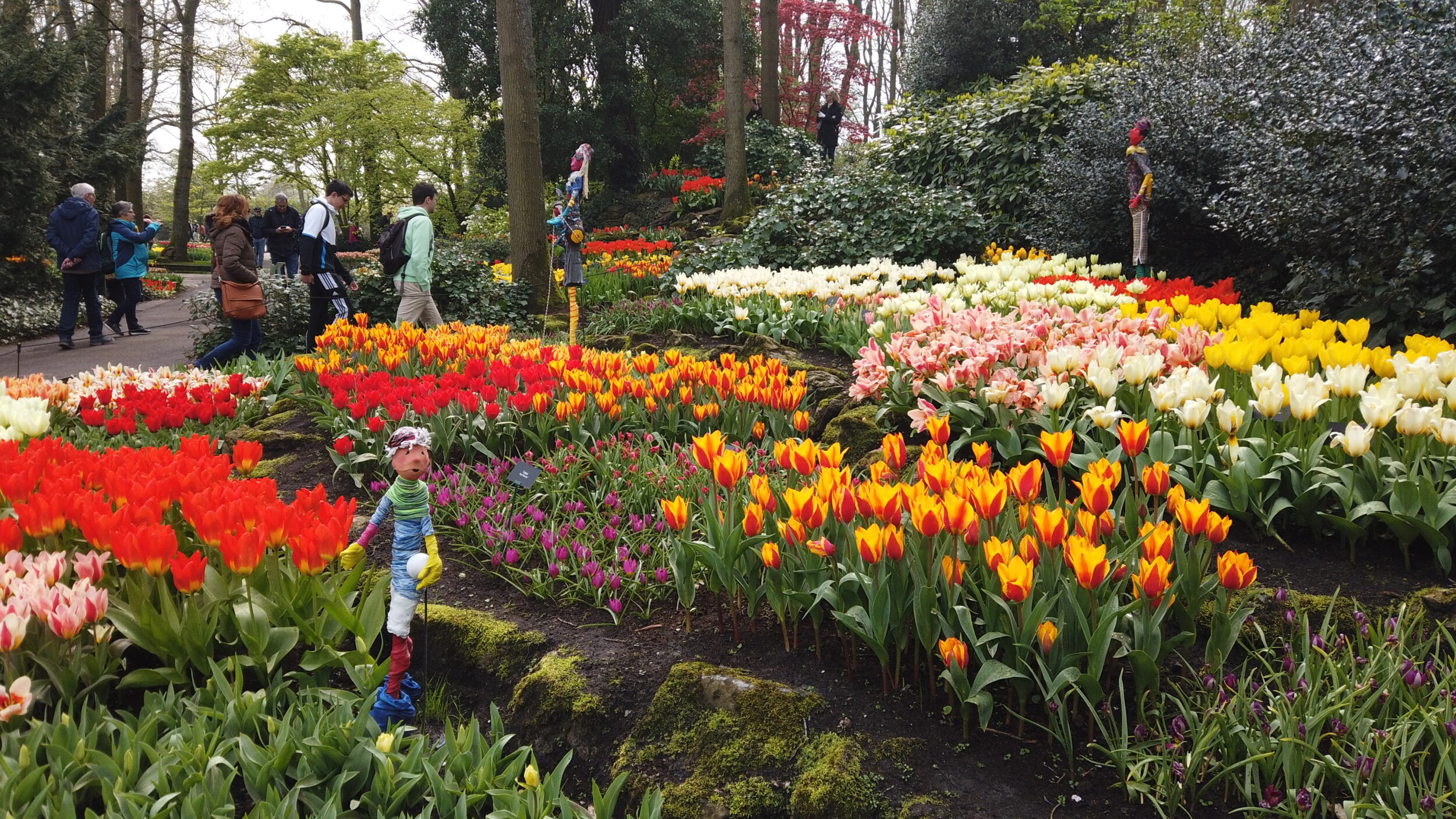
You can see that the gardeners alternate flowers with different blooming times.
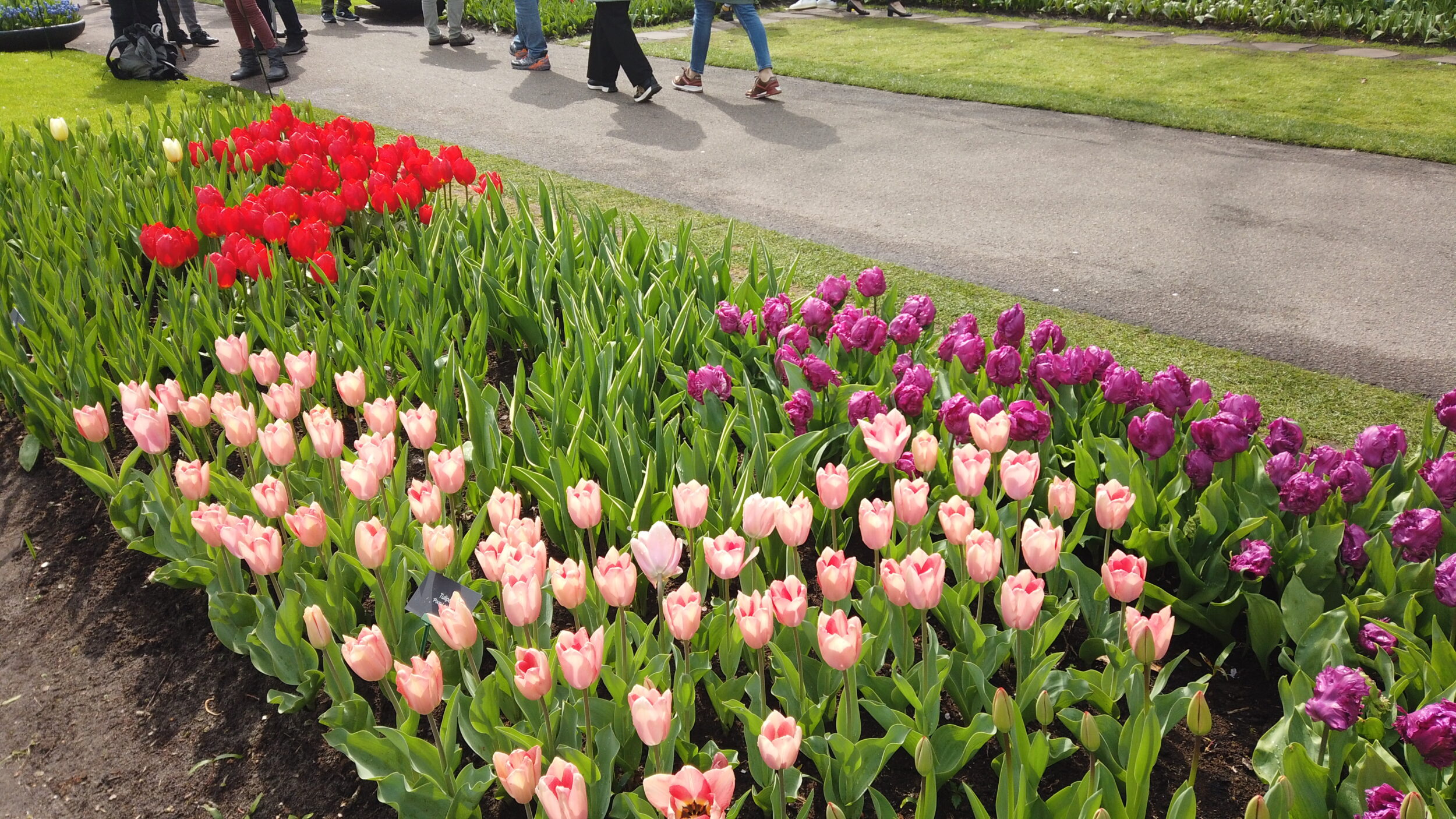
and try their best to create colors that go well together…
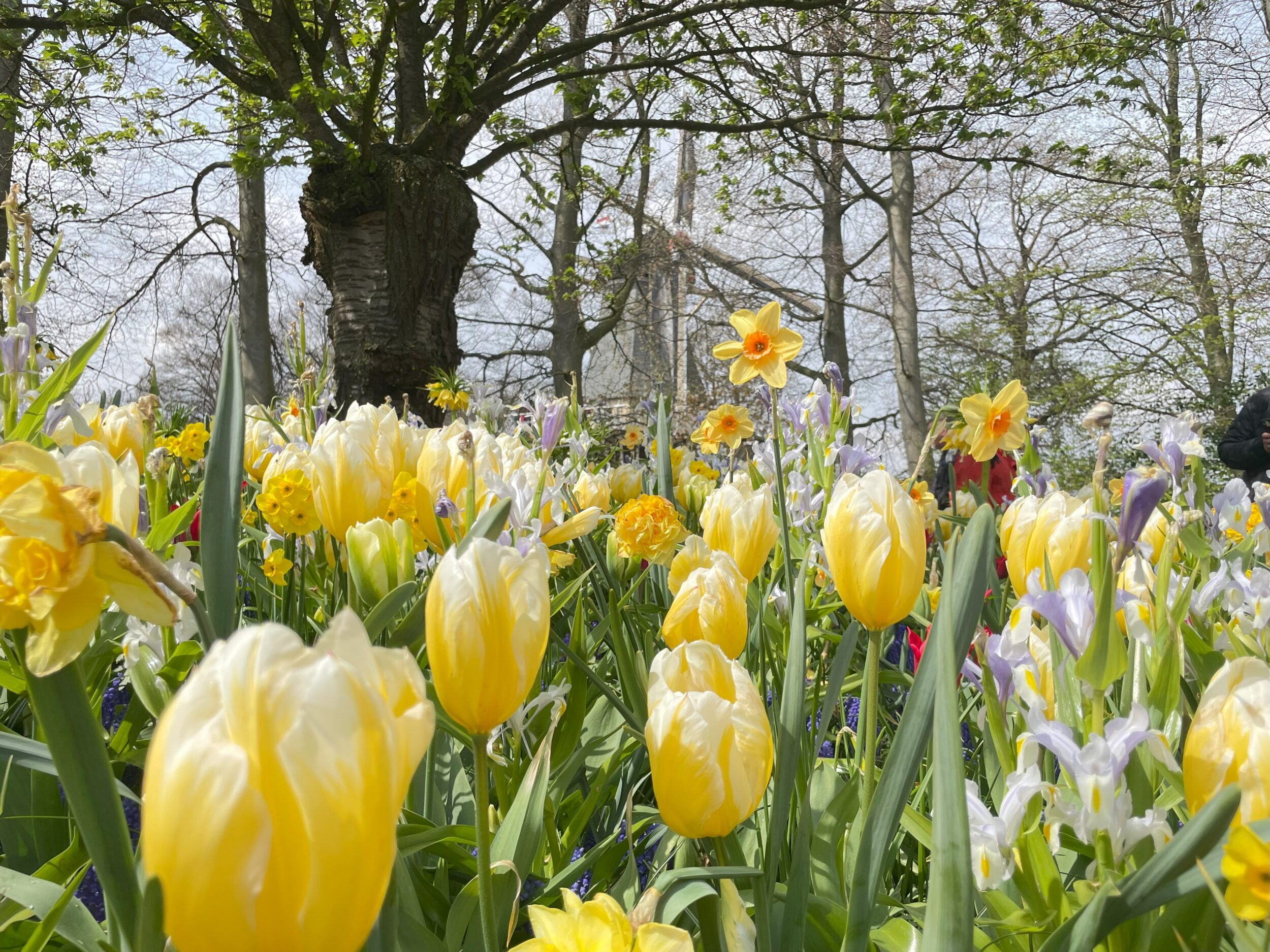
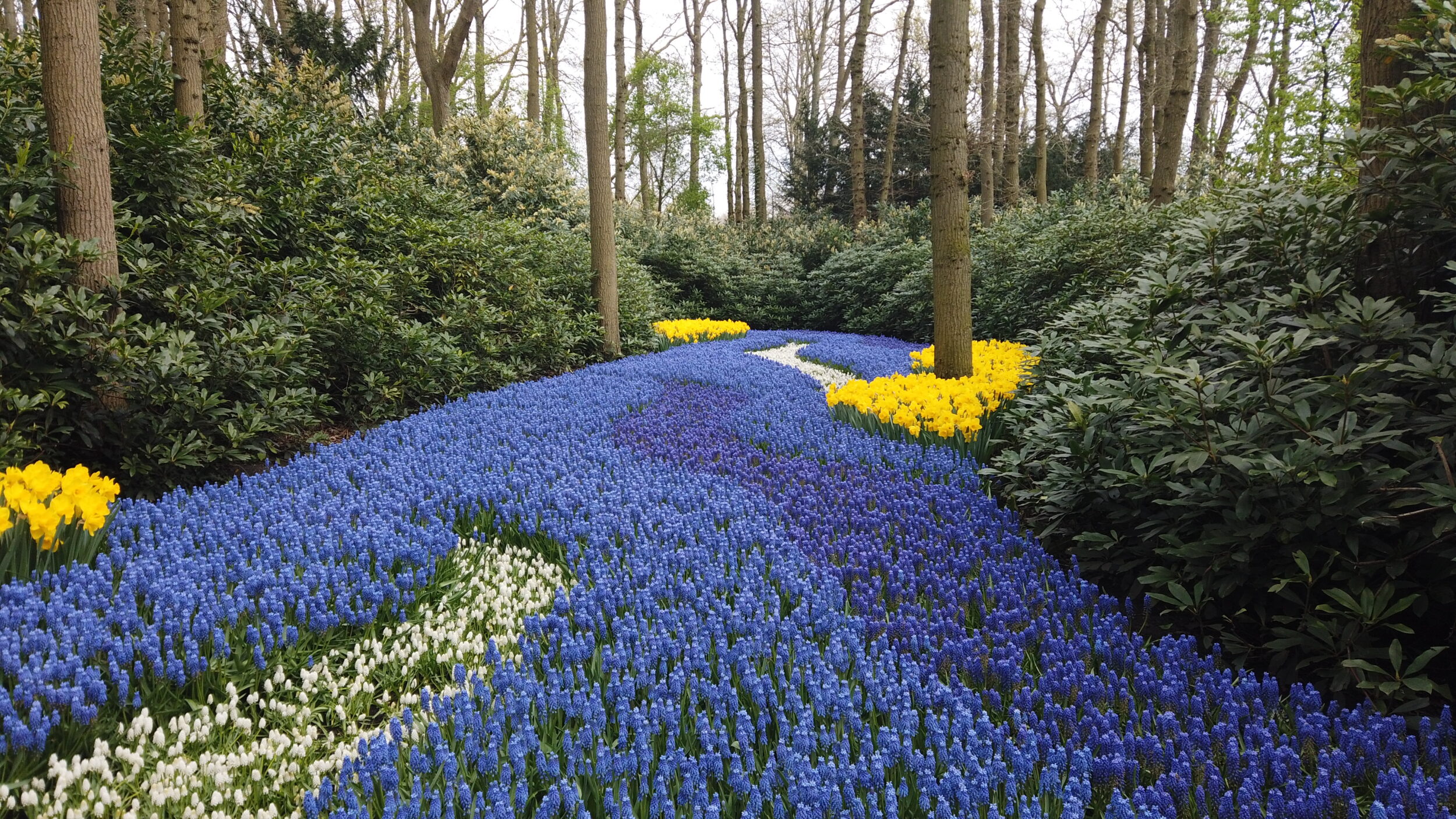
The best spot is this one! It looks like a cozy carpet, makes you want to sleep on it 😀
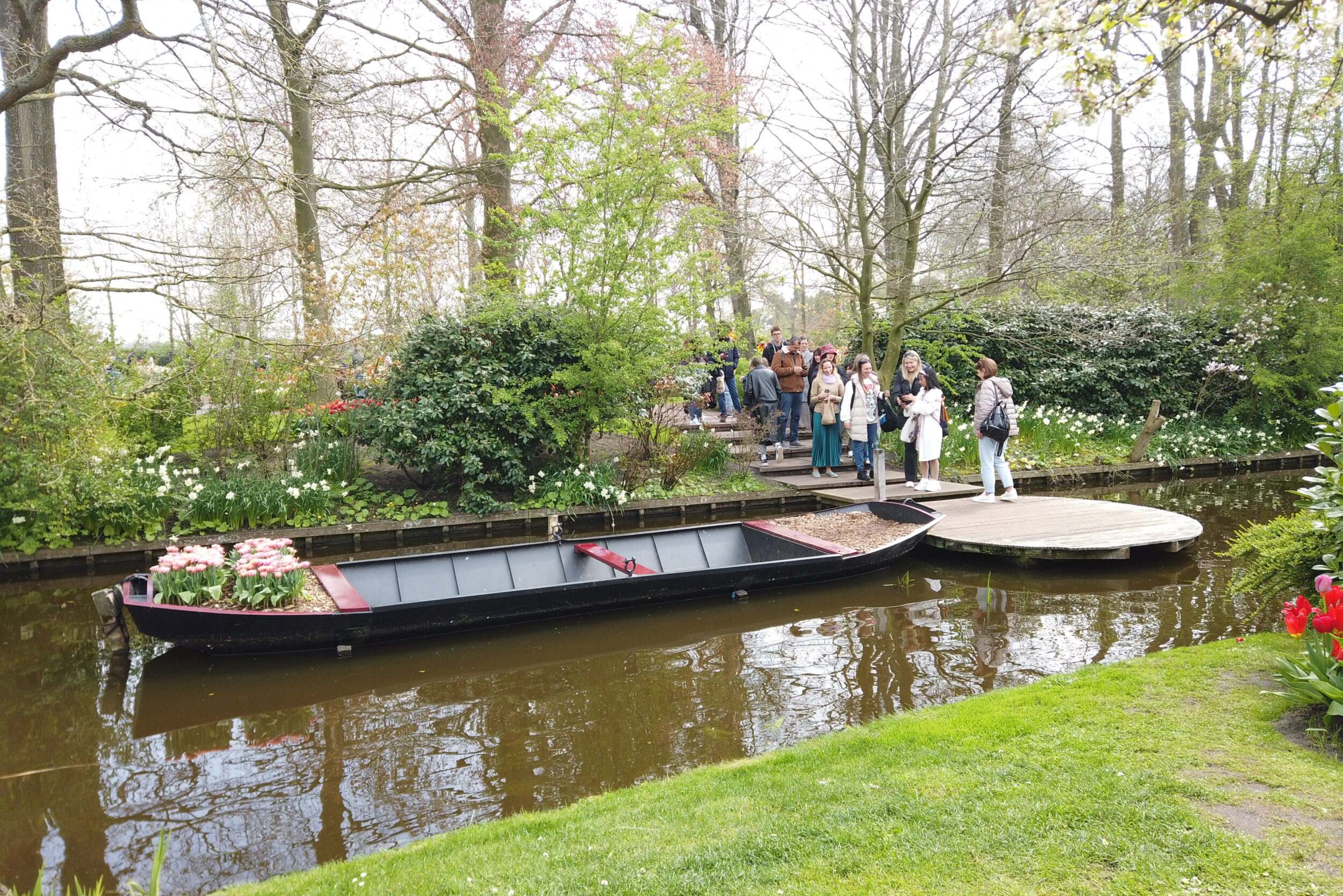
A few lovely spots are set up to give you unforgettable shots, like this boat that’s going nowhere.
Or the windmill that really turns but is swarming with people. Yes, it’s the same windmill you see on travel guides, the one where you think you’re in the middle of the flowers. No, it’s just an optical illusion. It’s a bit disappointing in person, but oh well…
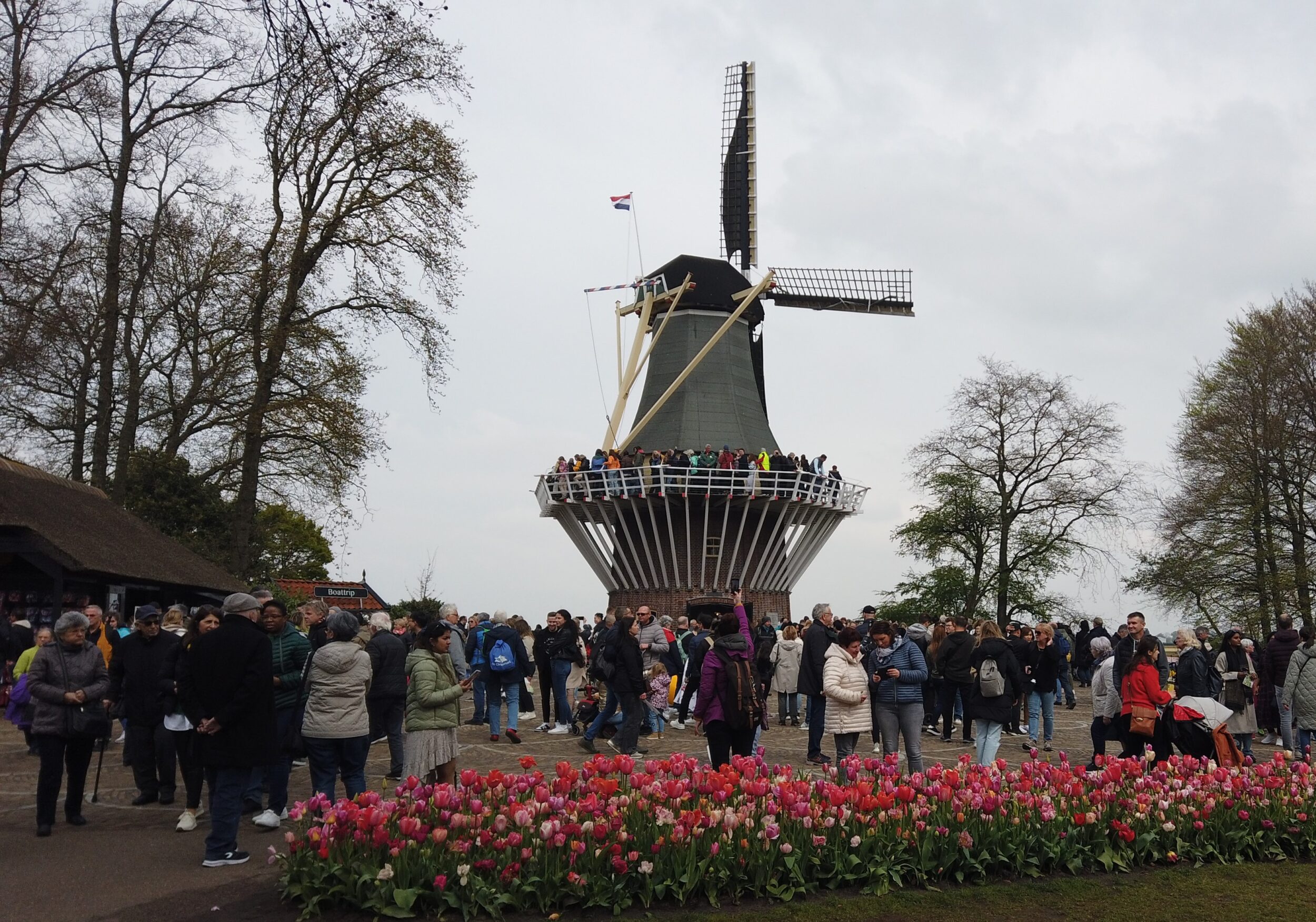
When you climb the windmill, you can see fields of hyacinths and tulips on the other side… inaccessible to tourists. Some pay €10 for a boat ride through the fields, but I’d advise against it because there are other ways to get close to the fields, for free.

It’s really a shame that despite millions of flowers right under our noses, there’s absolutely no scent. Industrialization now gives us beautiful flowers, but they lose their essence.


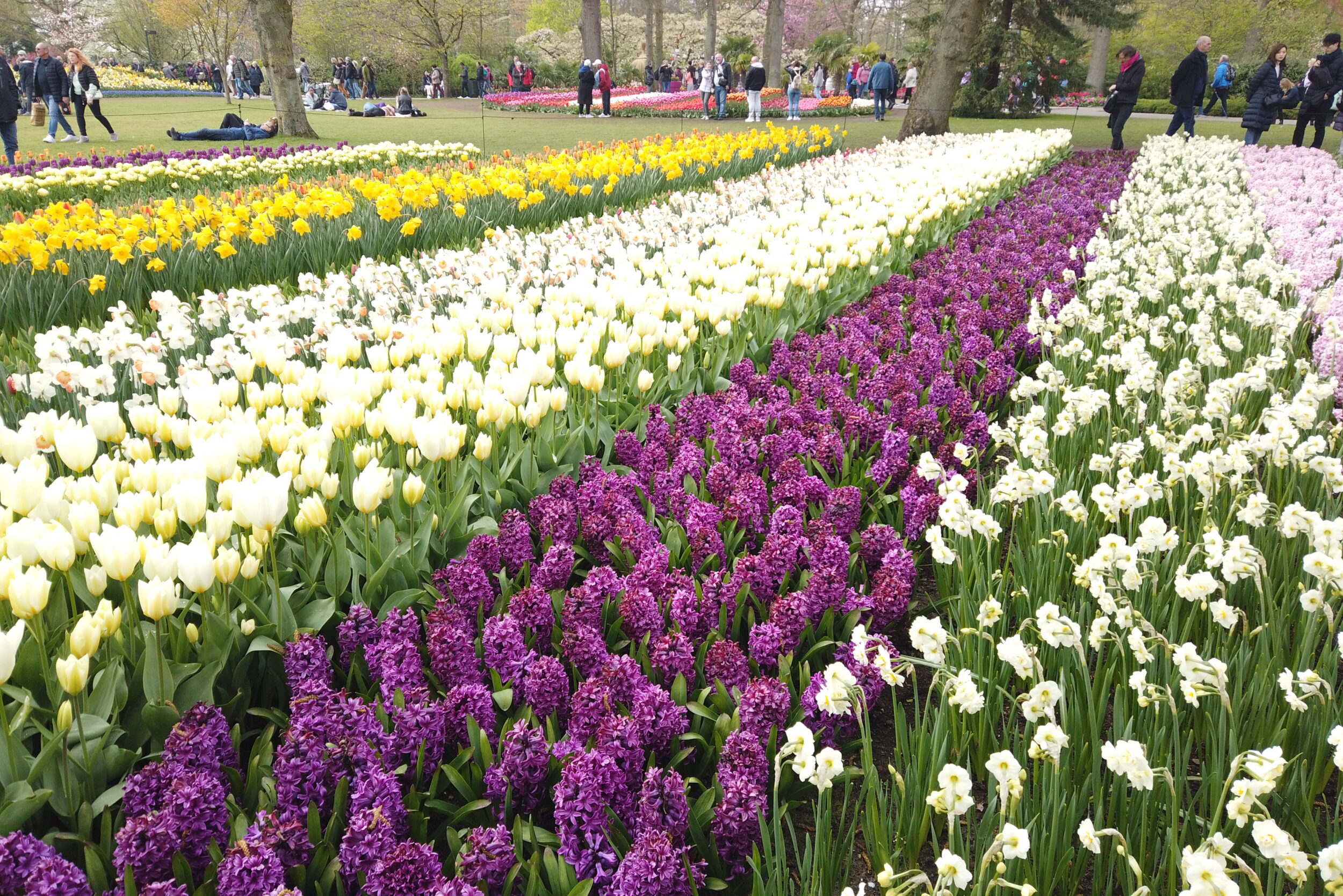
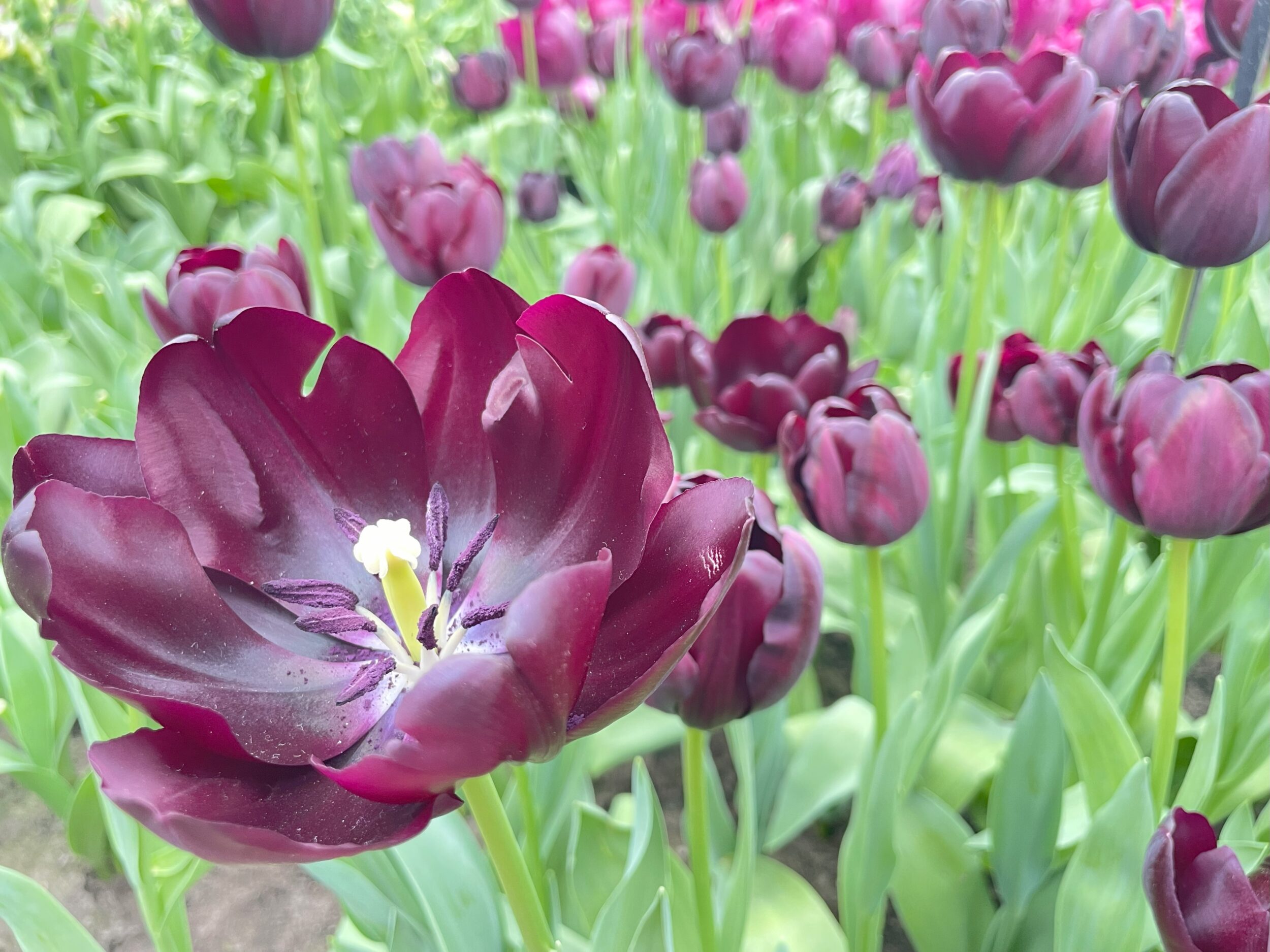
Well, we wandered through the park, moving from one landscape to another, but it gets a bit repetitive after a while. We search in vain for black tulips, but as we’ll learn later, the darkest color possible is a very deep purple.
We now head to the points of interest marked on the map, namely:
Juliana / Tulpomania : it’s just a small building explaining Tulipomania, and everything I told you above about tulips. There’s a video showing you how to plant tulips at home (which incidentally encourages you to buy bulbs sold all over the park). There’s a machine to look up tulip varieties that match your name.
Oranje Nassau: it feels like being at a florist’s. There are all sorts of flowers, but I didn’t find this building very pretty.
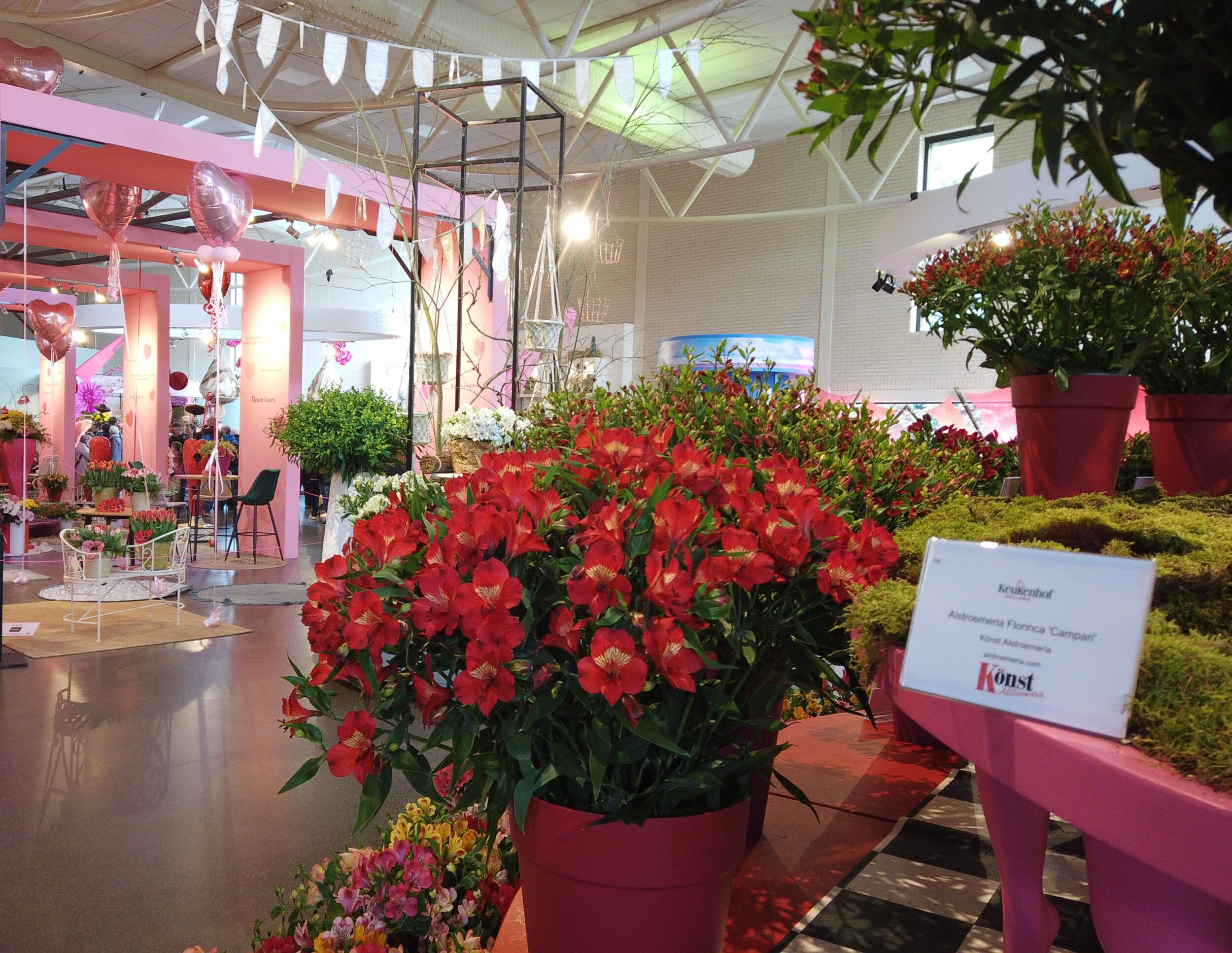
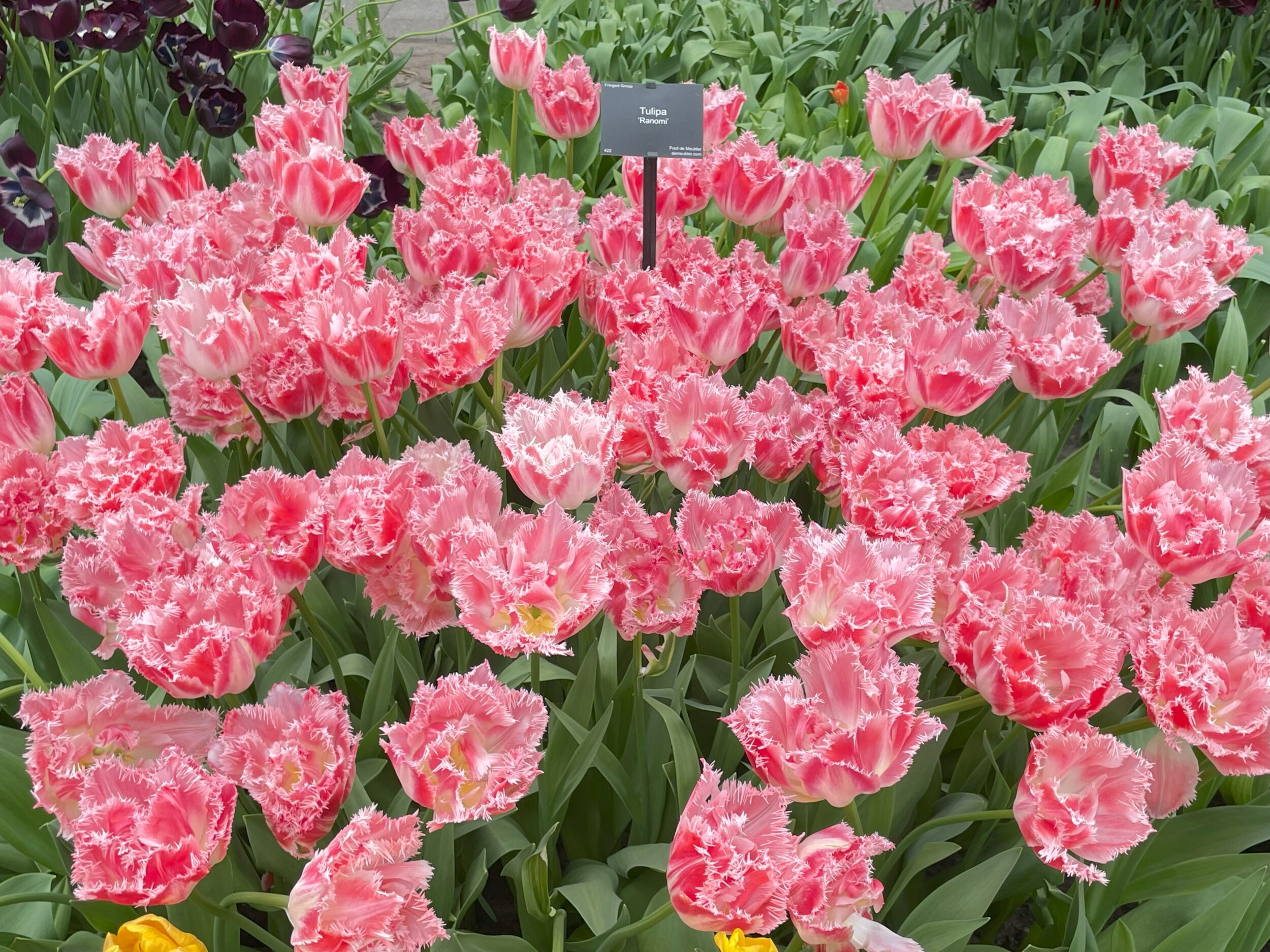
Willem-Alexander: it’s my favorite; there are countless tulip varieties, with signs indicating their names. You see many very rare and beautiful tulips that aren’t planted outside.

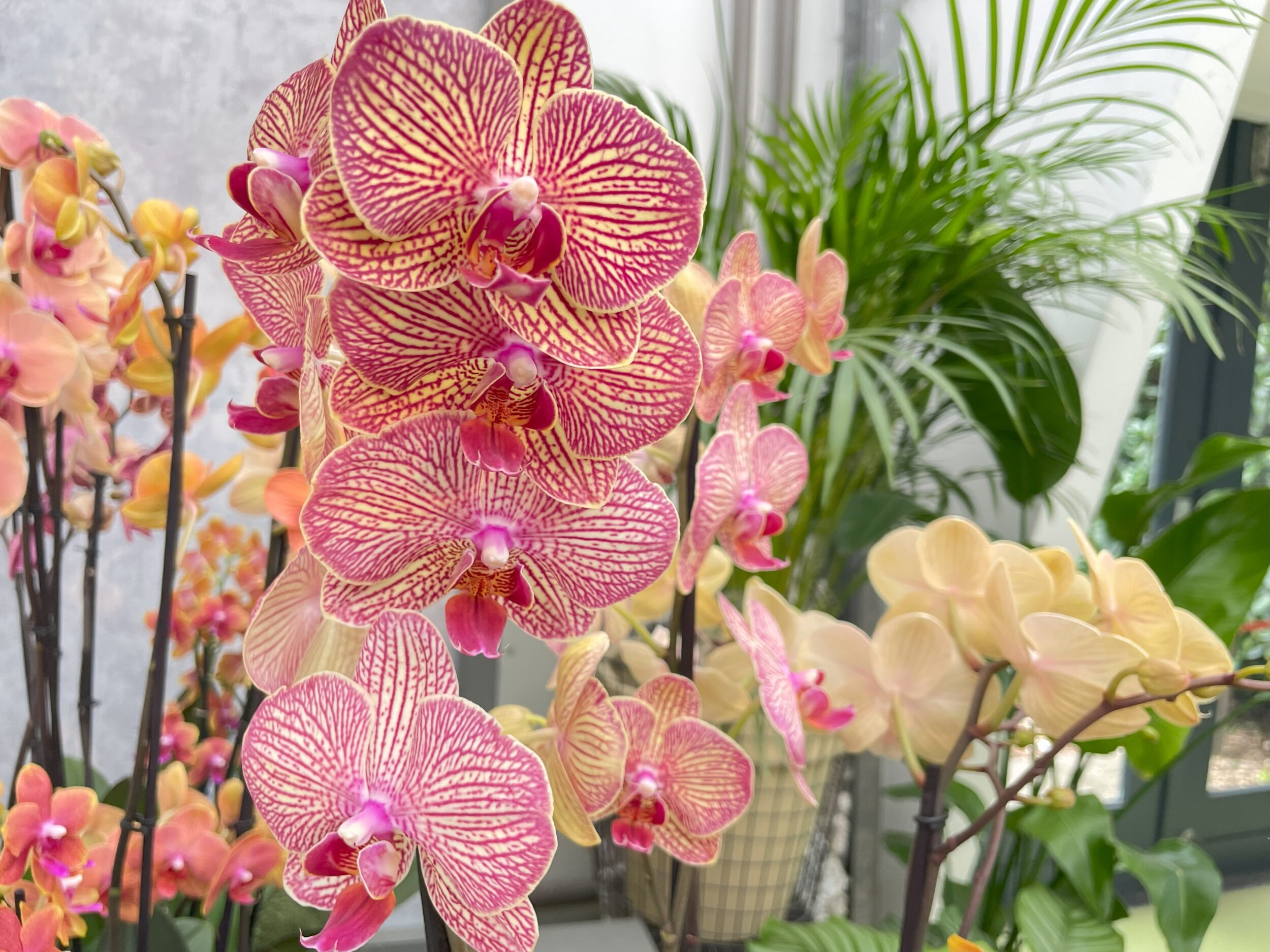
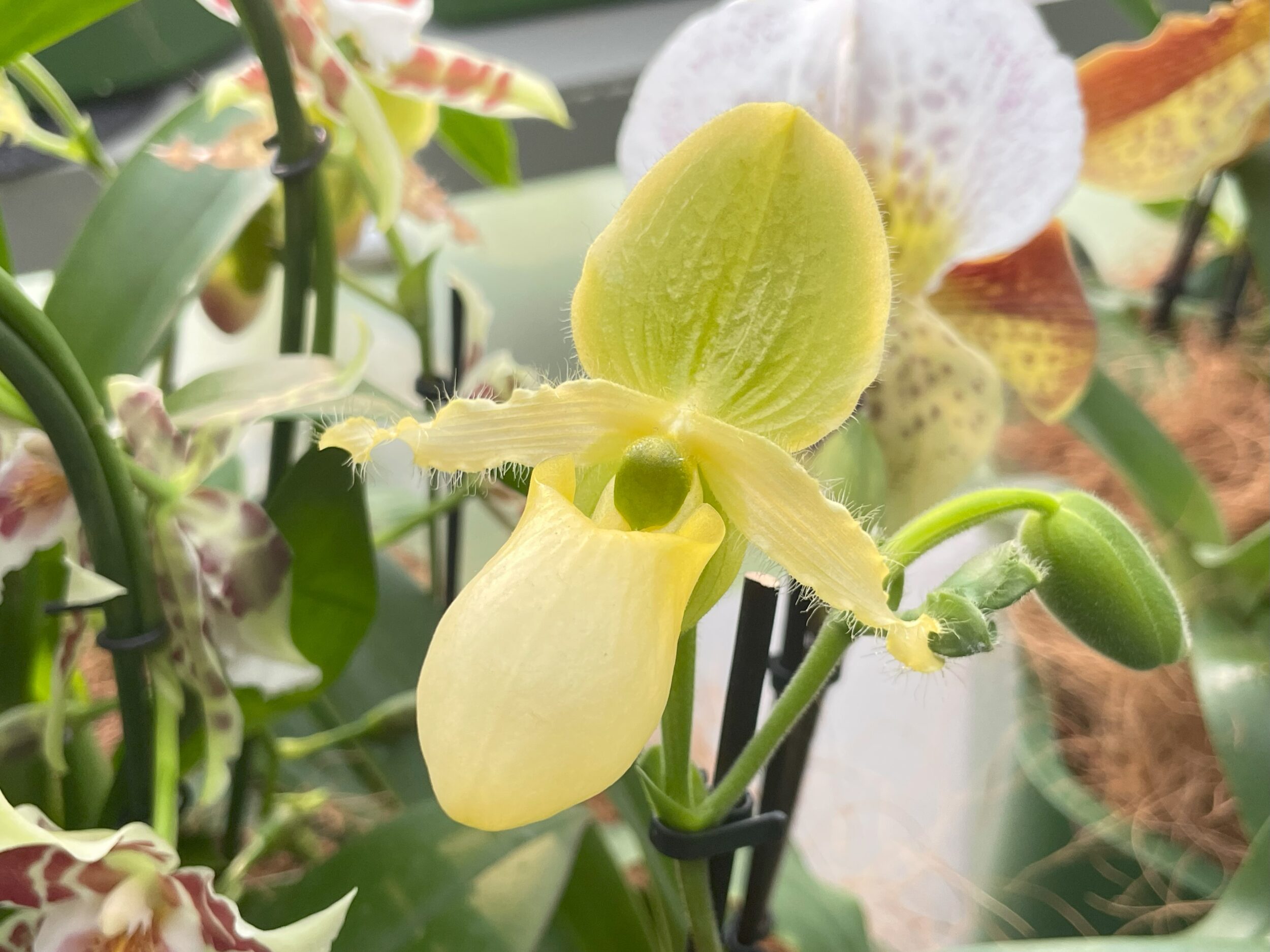
Beatrix : I really like this building too, where you can view thousands of orchids, in different varieties and colors.


Visiting Keukenhof took up almost our entire day. We return very tired but very happy to have seen so many flowers. For those still full of energy, you can visit flower fields right next to Keukenhof on foot, or by renting a bike (everything within 2km is full of flowers).
Flower Parade
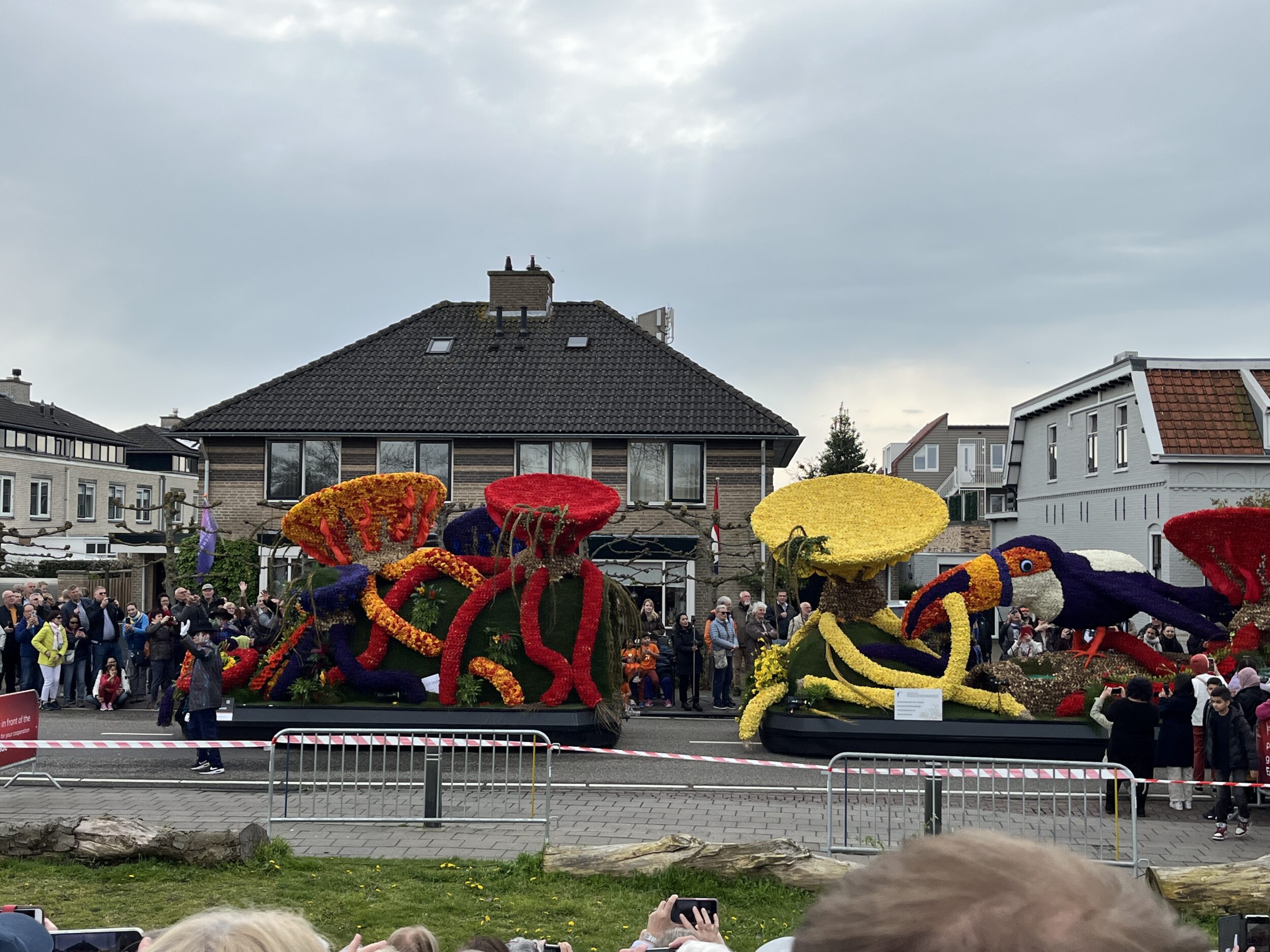
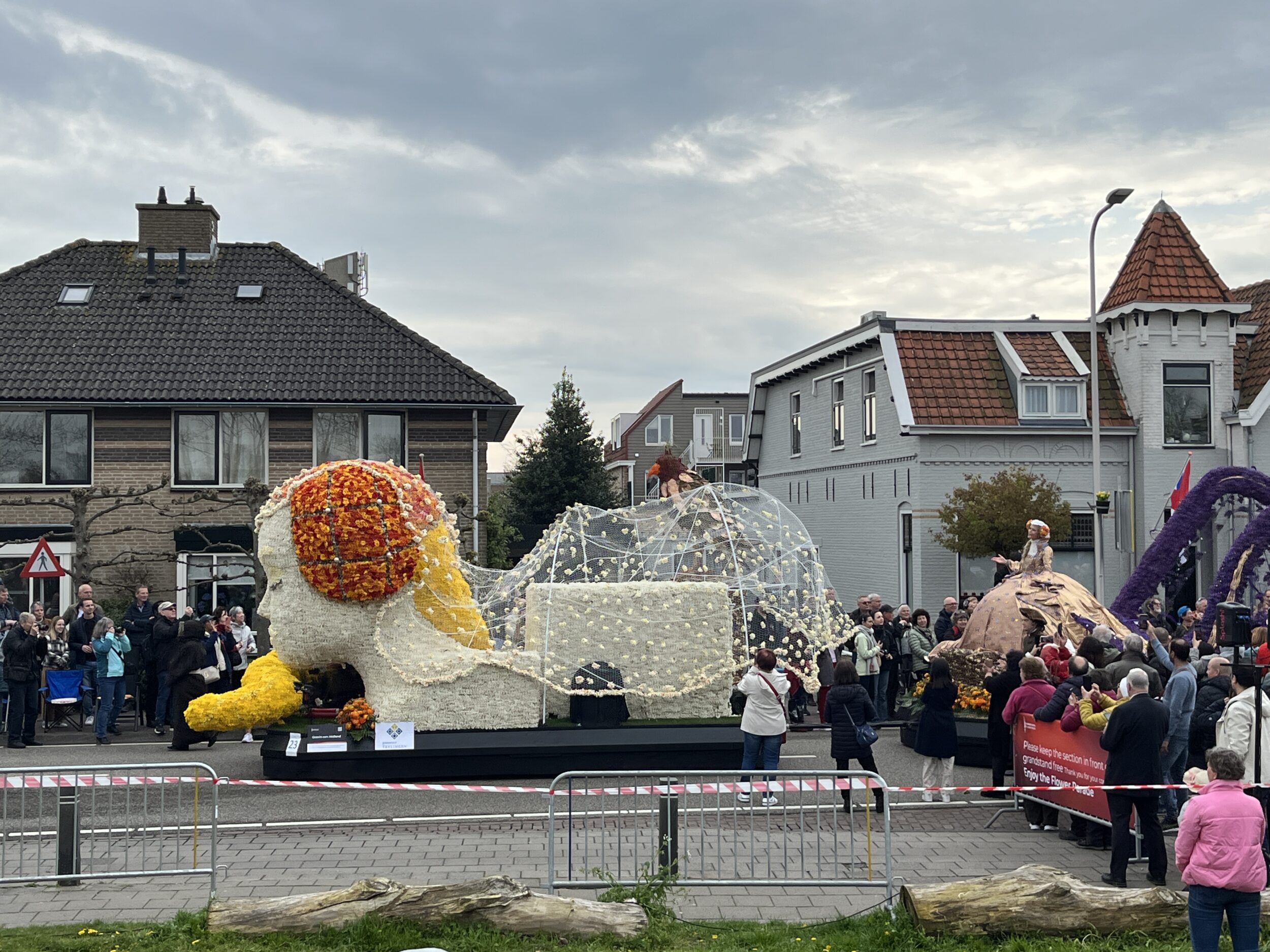
We also attended the flower parade, which takes the whole day to tour the towns around Lisse. We timed our stay to catch this parade, but I’ll spoil it for you right now: it will be a major disappointmentWe paid for grandstand seats, but it’s perfectly possible to watch the parade for free from the sidewalk if you arrive a bit early. The parade ran 45 minutes late, and under an unexpected sun, my foundation melted and the sun disappeared exactly when we needed it: during the parade. Nothing was going right! I’ll share some photos—it’s nice, but it doesn’t deserve your attention, free or not. First, because the floats are mainly made of hyacinths! Not tulips!! And on top of that, between floats, there are 3-4 sponsors passing by in their ugly cars. The parade moves very slowly. In short, I won’t be going back.

Tulip fields
JB tries to rent a car through traditional rental companies, but except at Amsterdam airport, it’s not possible to return the car on a Sunday. He finds a service similar to Autolib, with electric or gas cars that you can unlock via an app. We hit the road in the rain, but it was in the sunshine that we were able to admire the fields. What luck!
Within 2 kilometers of Keukenhof, there are thousands of tulip fields as far as the eye can see. Three options are available to you:
- You can rent bikes from Lisse and/or from Keukenhof
- You can take the train and explore the fields right next to the station.
- You can rent a car by the hour like we did.
- You can book guided field tours (GetYourGuide link from €42).
There are two types of fields:
1/ fields very close to the road, where you can access respectfully (i.e., don’t touch the flowers, don’t walk between the rows, stay away from the tulips). These fields are very impressive. Some have installed barriers, others haven’t.
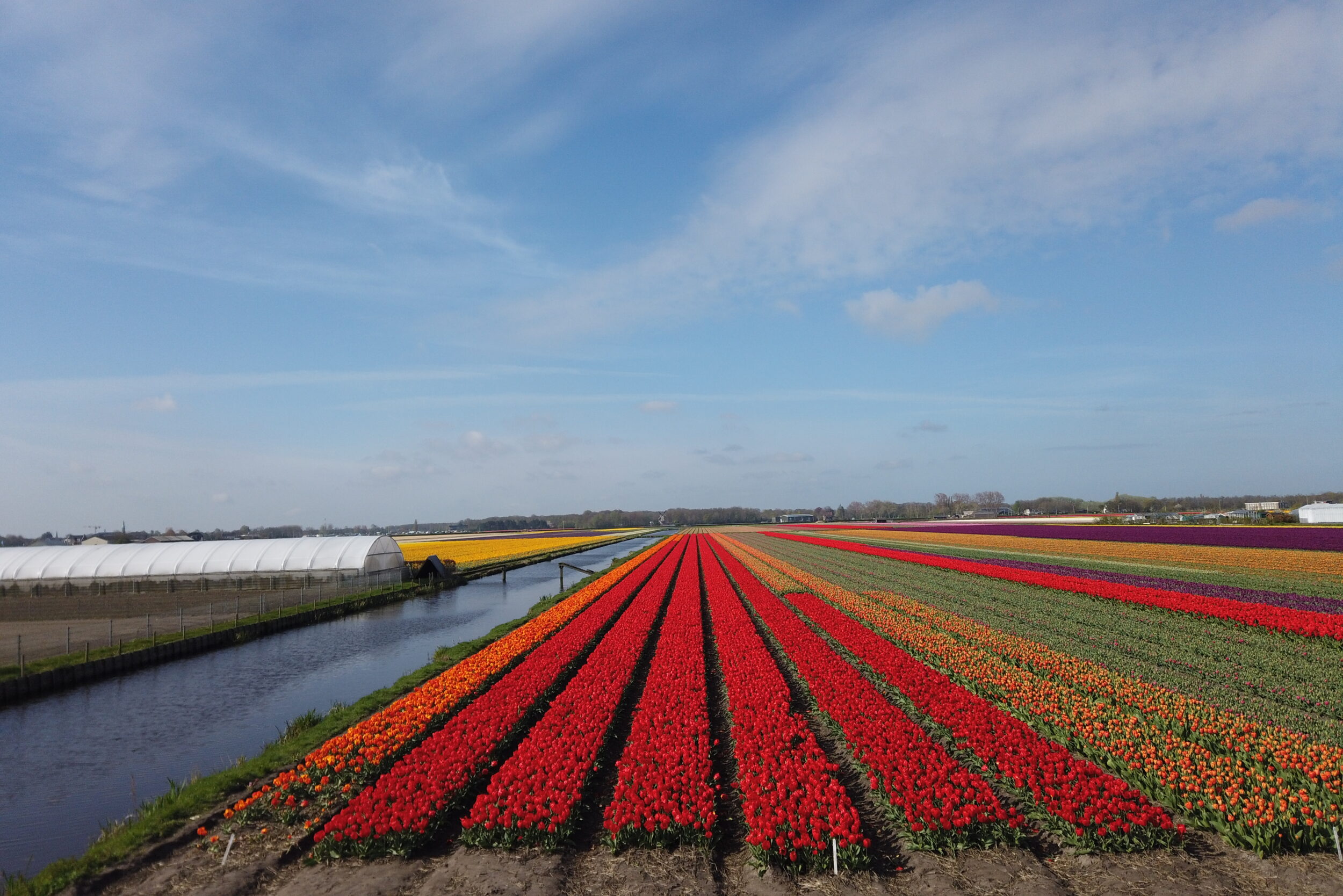
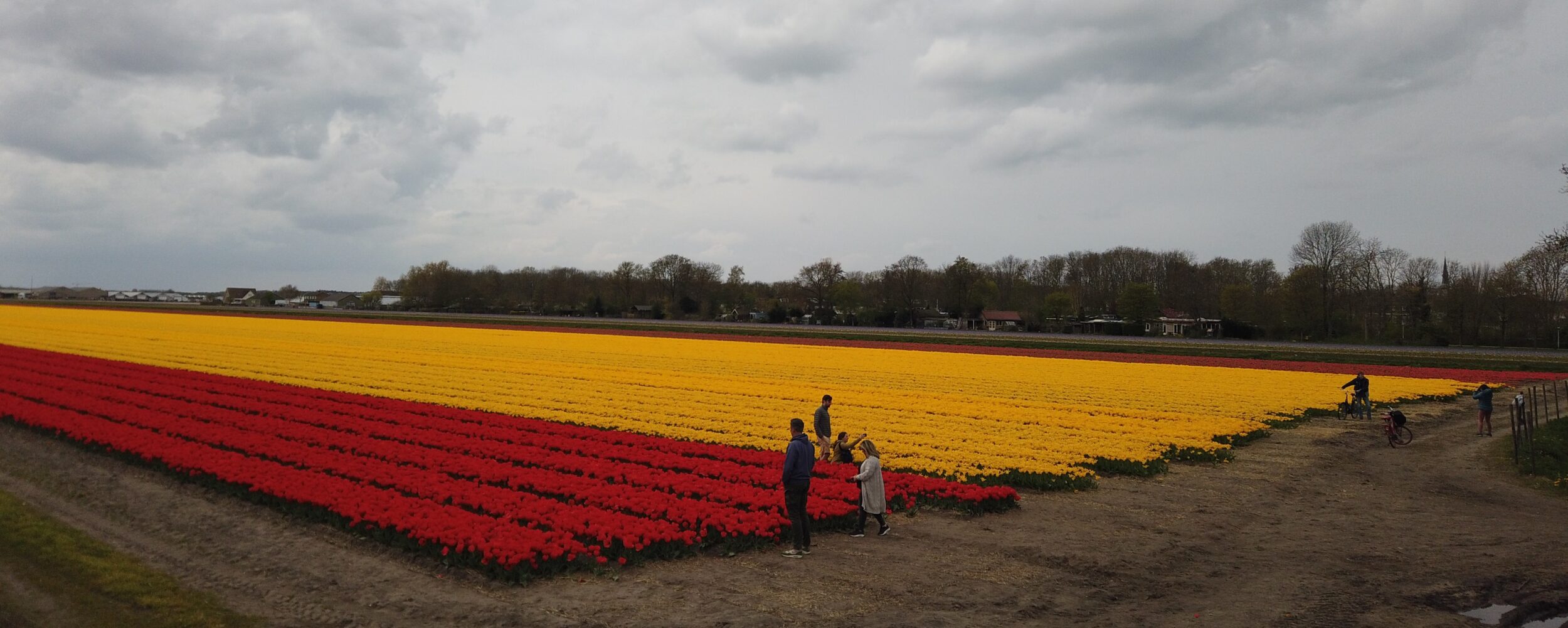
I’m amazed to see fully open flowers. Who would want flowers like that at florists? I did some research, and here’s the answer:
- The fields you see are meant to produce tulip bulbs, which are sold for more than the flowers and exported worldwide.
- When the flower is fully open, farmers can tell which ones are diseased, and they can remove them and keep only the healthy ones.
- A machine comes through to cut off the flowers’ heads—yes, just the heads 🙁 they don’t even collect them; they just fall onto the field like that
- The stems and leaves stay, and all the nutrients now go to feeding the bulbs. From the main bulb will sprout 2-3 small bulbs
- At the end, the farmer collects the bulbs, sorts them by size, and sells them, making more profit than selling flowers
- The cut flowers sold at florists are grown in nurseries and shipped worldwide while still closed. That way, they’ll be pretty when they reach you, instead of wilted
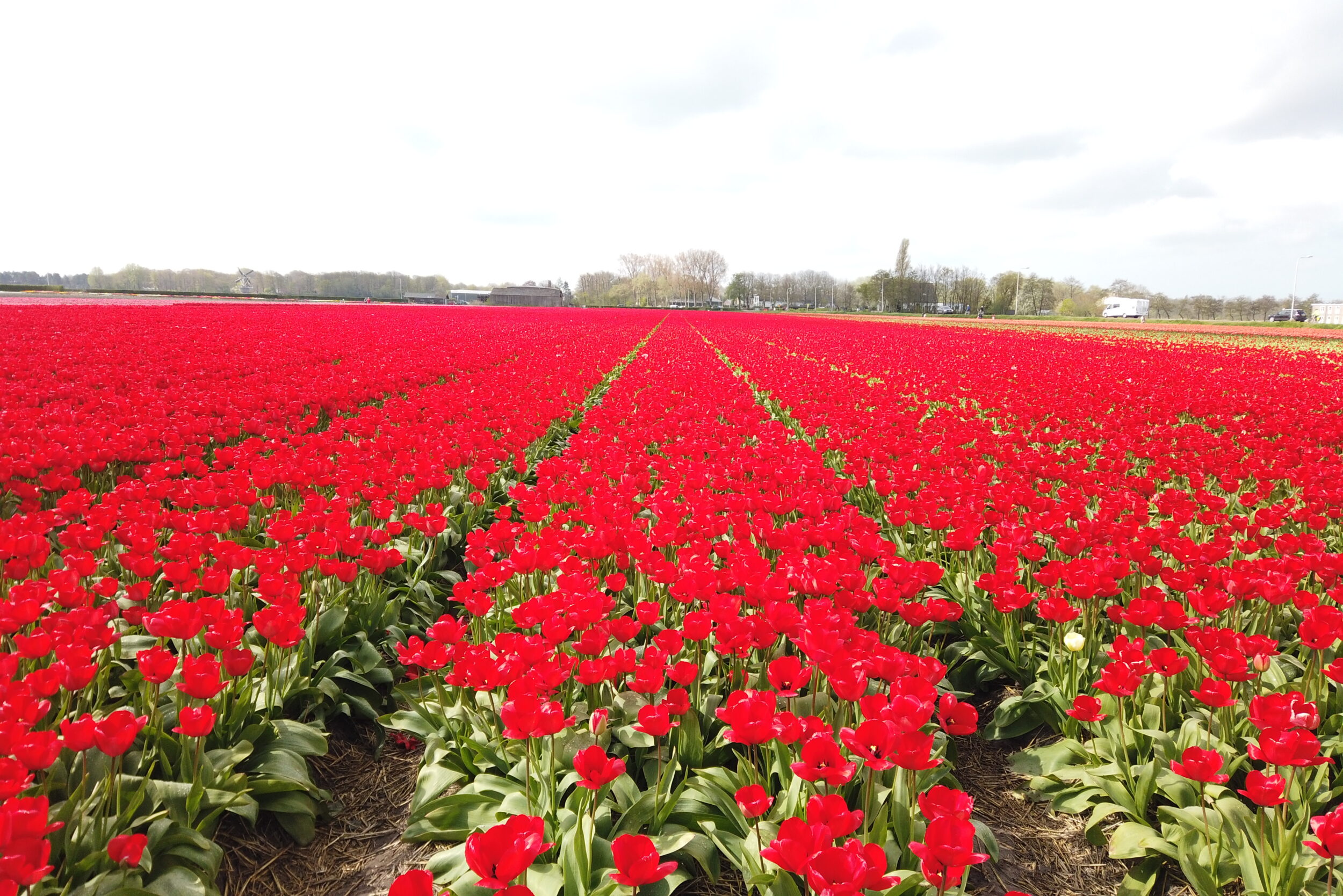
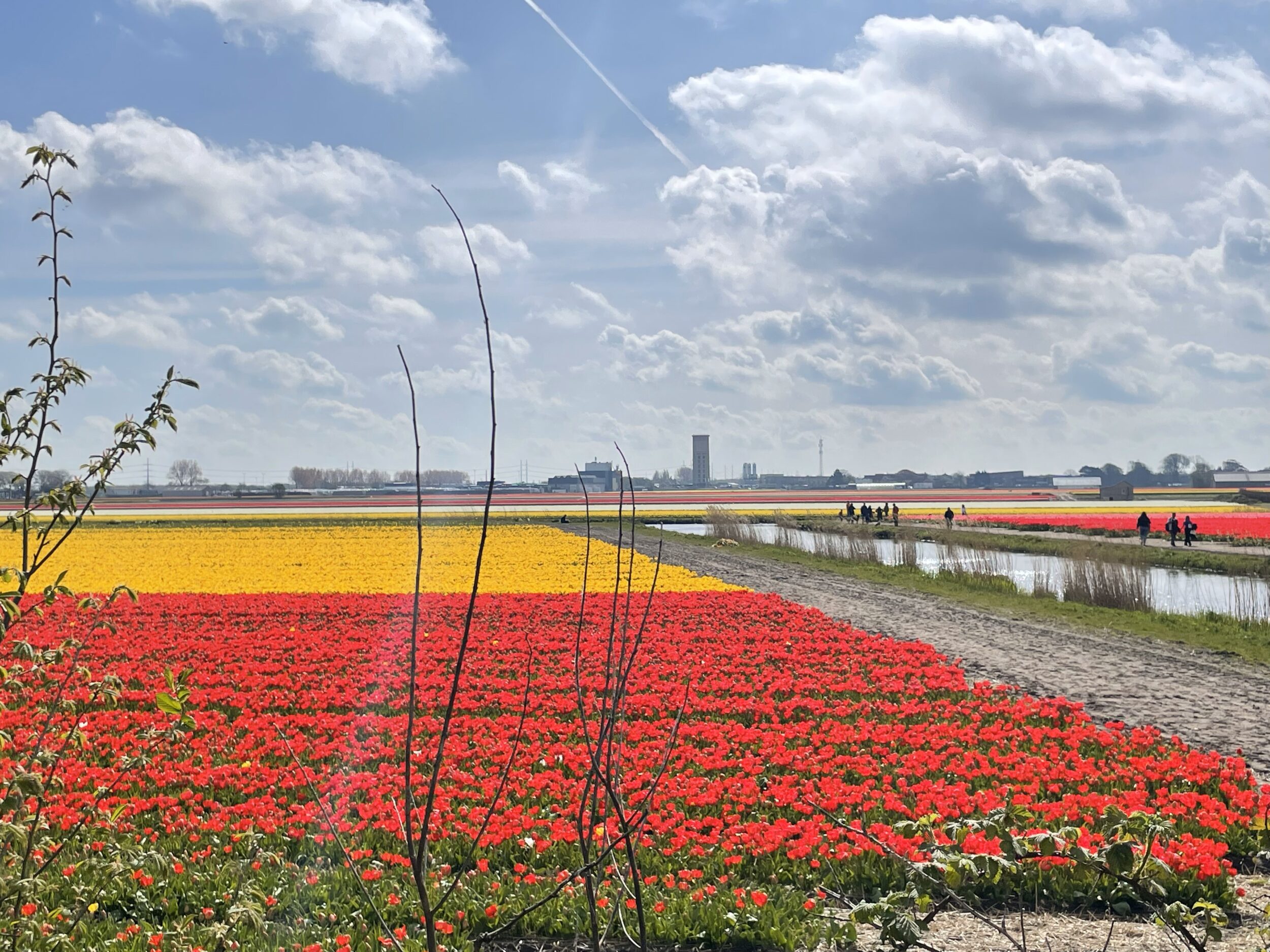
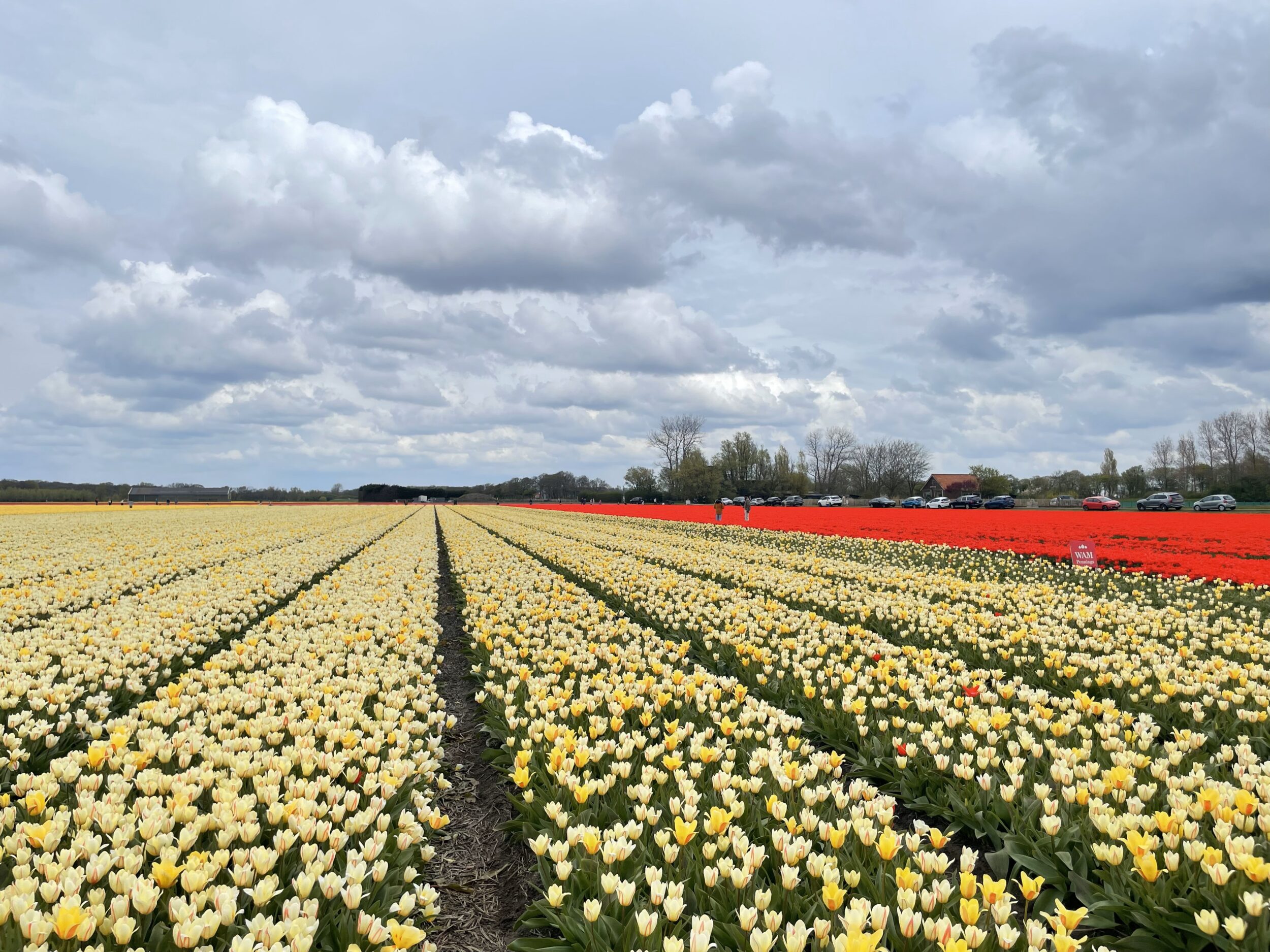
The reason we have so many varieties now is that the Dutch have mastered the art of crossbreeding tulip bulbs to create new hybrids and genetic lines. They select the “parents” based on characteristics such as color, growth rate, disease resistance, flower shape, bud presentation, bulb growth, and bulb quality. When you create a new variety, you can’t multiply it via bulbs in the first year. You have to rely on manual pollination. Seeds are harvested in July and selected for quality. Bulbs are harvested after several years of selection and testing. That’s when you can produce bulbs in mass. The best ones are put on the market with a specific name. Farmers have to create new hybrids because trends and customer demands change.
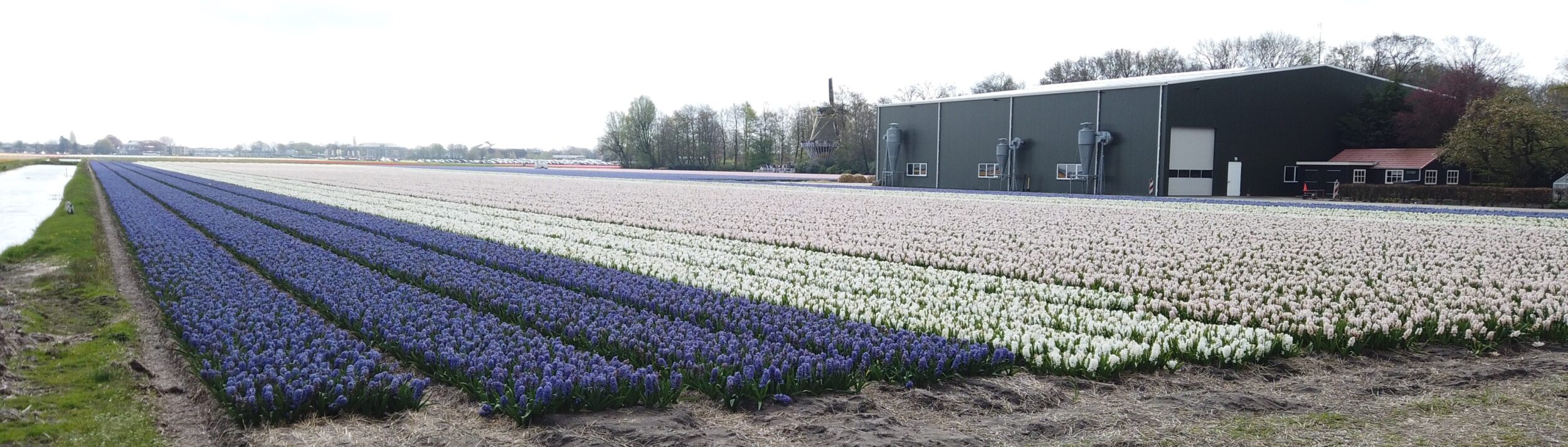
Keep in mind that around Lisse, there aren’t just tulip fields—you’ll see hyacinth and daffodil fields as far as the eye can see. Unlike Keukenhof, the hyacinth fields smell heavenly. But these flowers are even more fragile than tulips, so definitely don’t walk near the flowers!
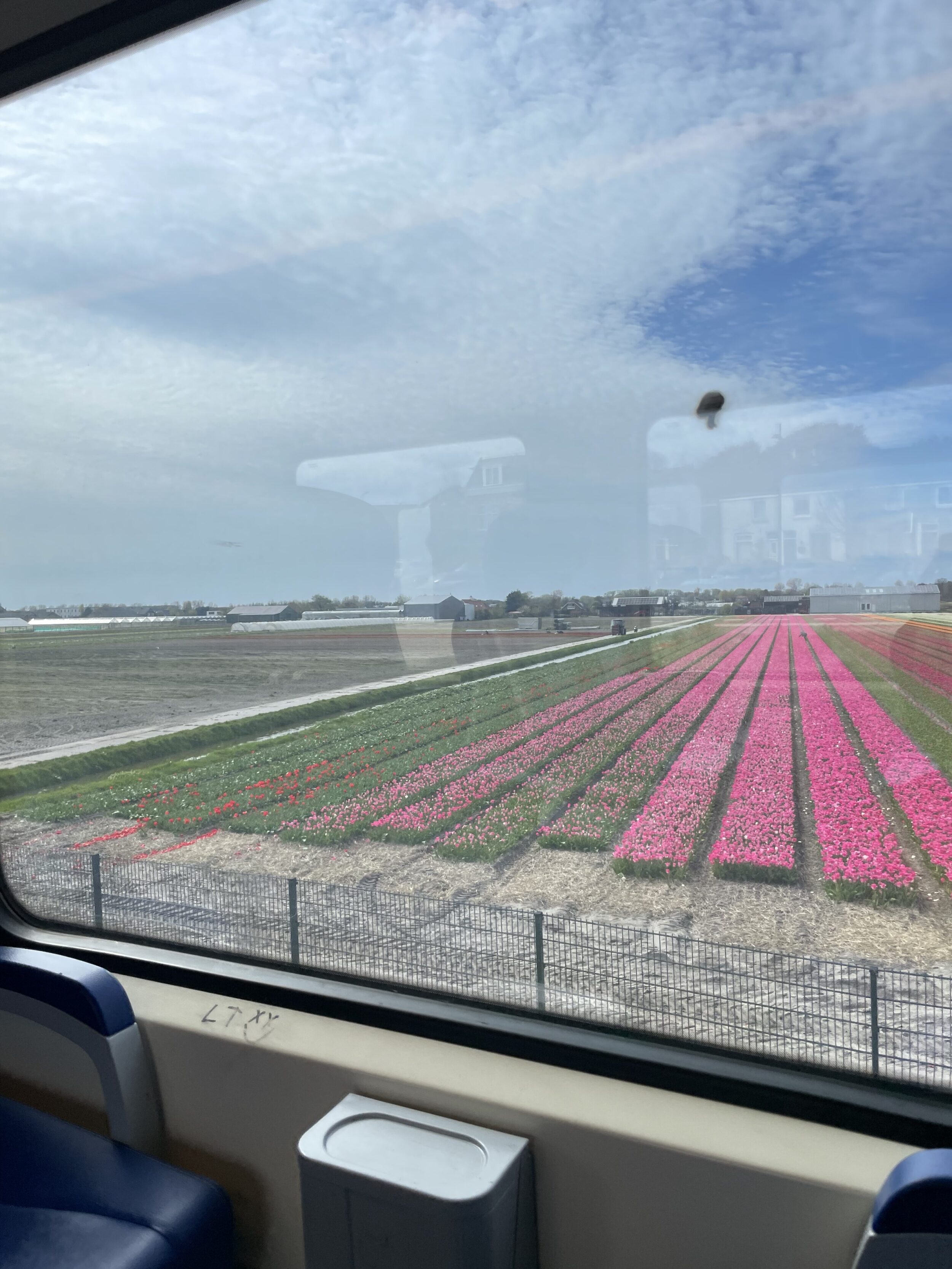
Taking the train to Amsterdam, I saw fields very close to the train station (Hillegom). If you don’t feel like visiting fields by bike or car, come by train. However, the farmer is already cutting the tulips, so you can see cut petals on the field. The bulbs are now in “other bulb production” mode. As you can see, within just a few days, you can have a field that’s 100% in bloom… or not.
2/ The second type of field is paid fields where you can walk among the flowers and take as many photos as you like. There are three spots I’ve tried:
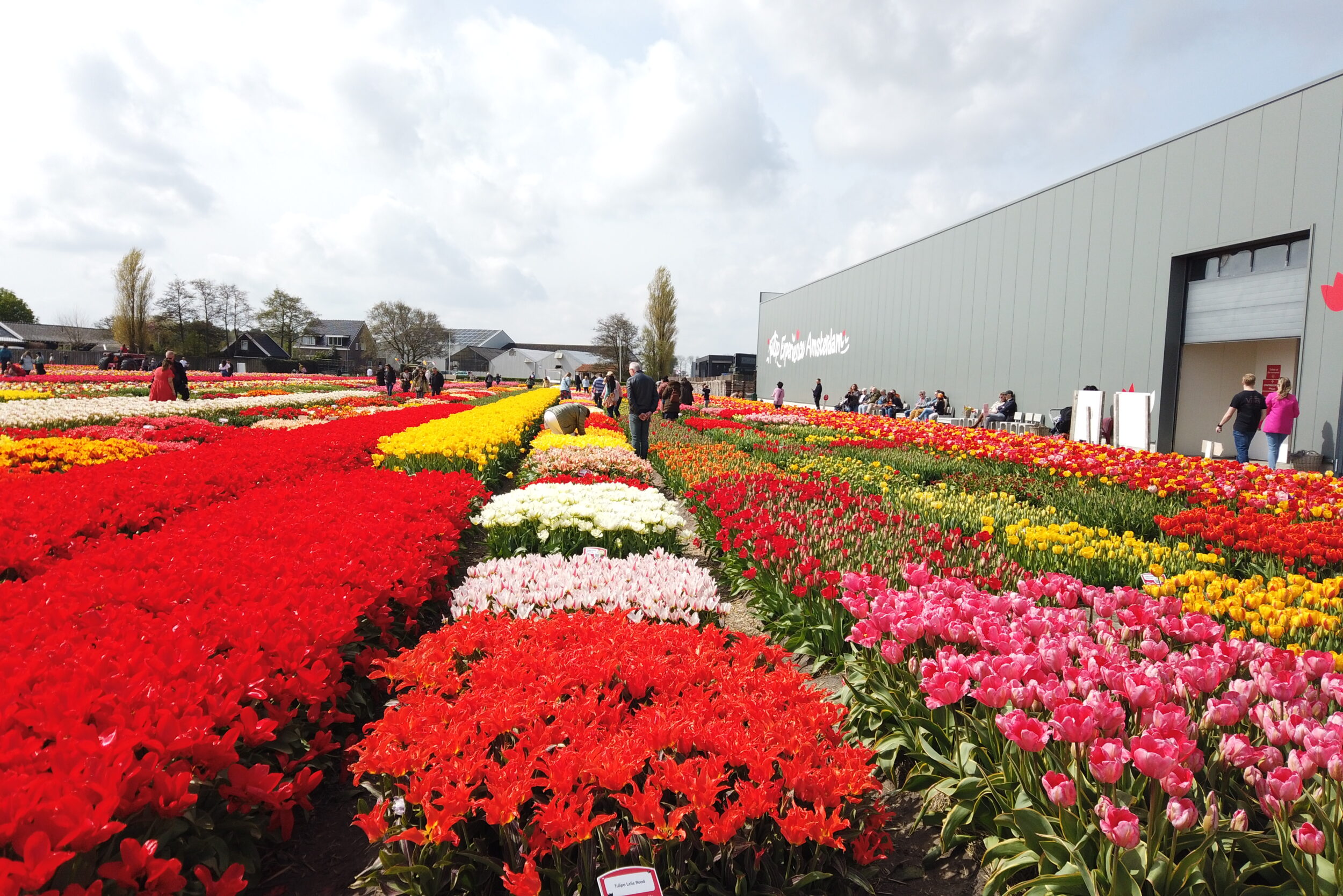
- Tulip Experience : €9.5/person (book via this link) and you’ll also leave with 5 tulips from the nurseries. This field holds about 1 million tulips of over 500 varieties, with an emphasis on education, meaning you’ll learn a lot about the tulip industry through the signs and exhibits
- How to get to Tulip Experience? Rent a bike from Keukenhof (8 minutes by bike) or rent a car
- Tulip Barn : it’s a mix of real tulip fields and decorative props for Instagram photos. There’s no information about the tulips, but there are twice as many tulips, and accessible hyacinth fields that smell absolutely amazing. It costs €7.5/person
- How to get to Tulip Barn? Rent a bike from Keukenhof (11 minutes by bike) or rent a car
- A small field where you can pick your own tulips (Google Maps coordinates), and you pay 20 cents per tulip. This is an address I found by chance; it’s not even on Google Maps. There are also daffodils to pick if you fancy. There are fewer varieties to choose from, but it’s fun to pick your own tulips—it was one of my best experiences there. No guarantees though: I don’t know if it was a one-off tulip sale or if it’s open every day of the tourist season.
- How to get there? Rent a bike from Keukenhof (18 minutes by bike) or rent a car
Tulip Experience cares more about educating than just offering Instagram photos. There are diagrams, videos… that explain everything I’ve written in this article. The varieties are numerous, fewer than at Keukenhof but enough to marvel at certain colors. Right across from it, you have hyacinth fields that smell amazing. There’s a small food truck on site with reasonable prices (sandwiches), and you get access to tulips grown in nurseries (each person leaves with 5 tulips). I’m a bit disappointed because I thought I’d be able to pick my own tulips, but we clearly saw that for freshness, it’s better that they come from nurseries. Still, I think if you have to pay for just one field, this is the one.
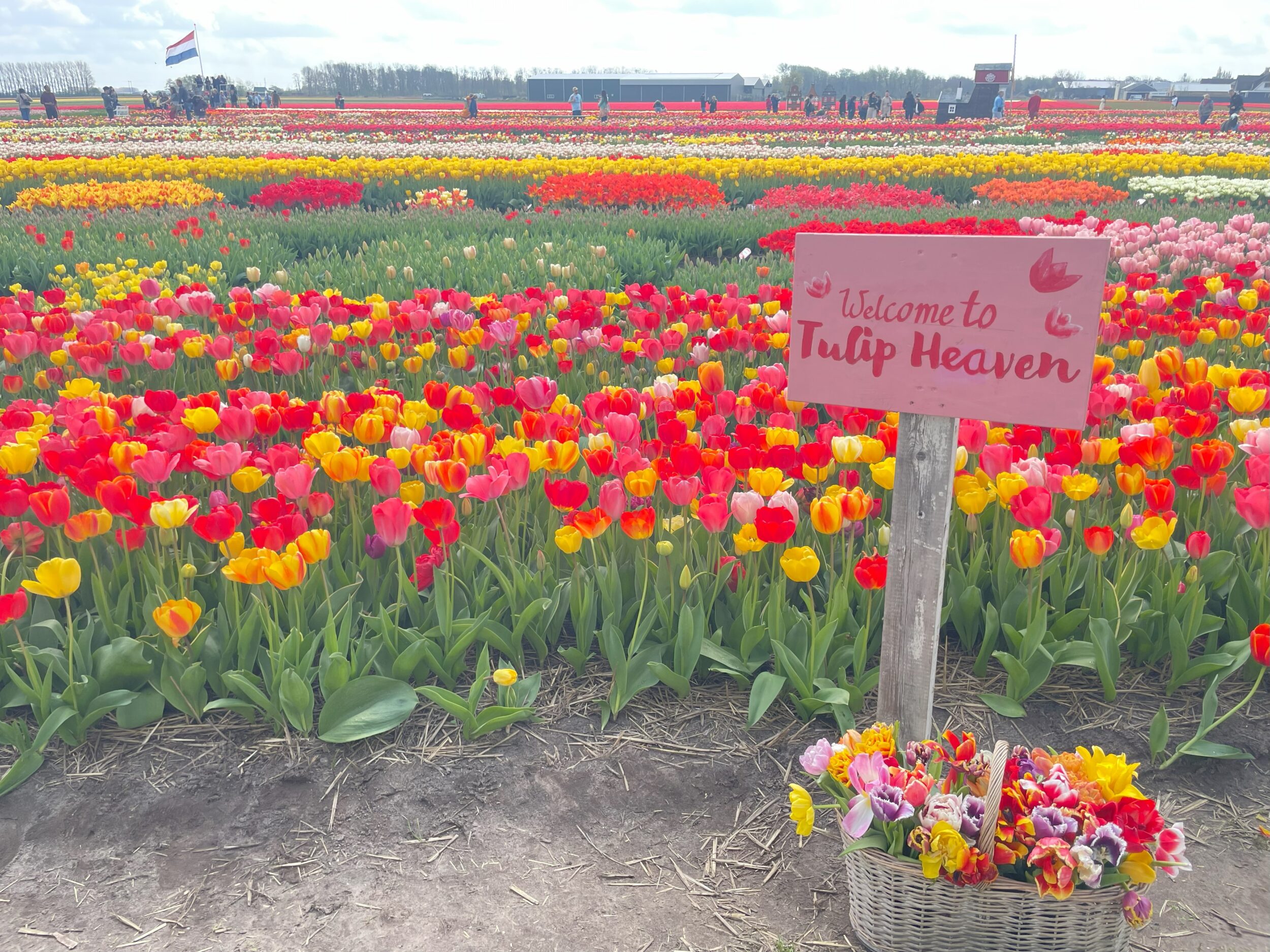
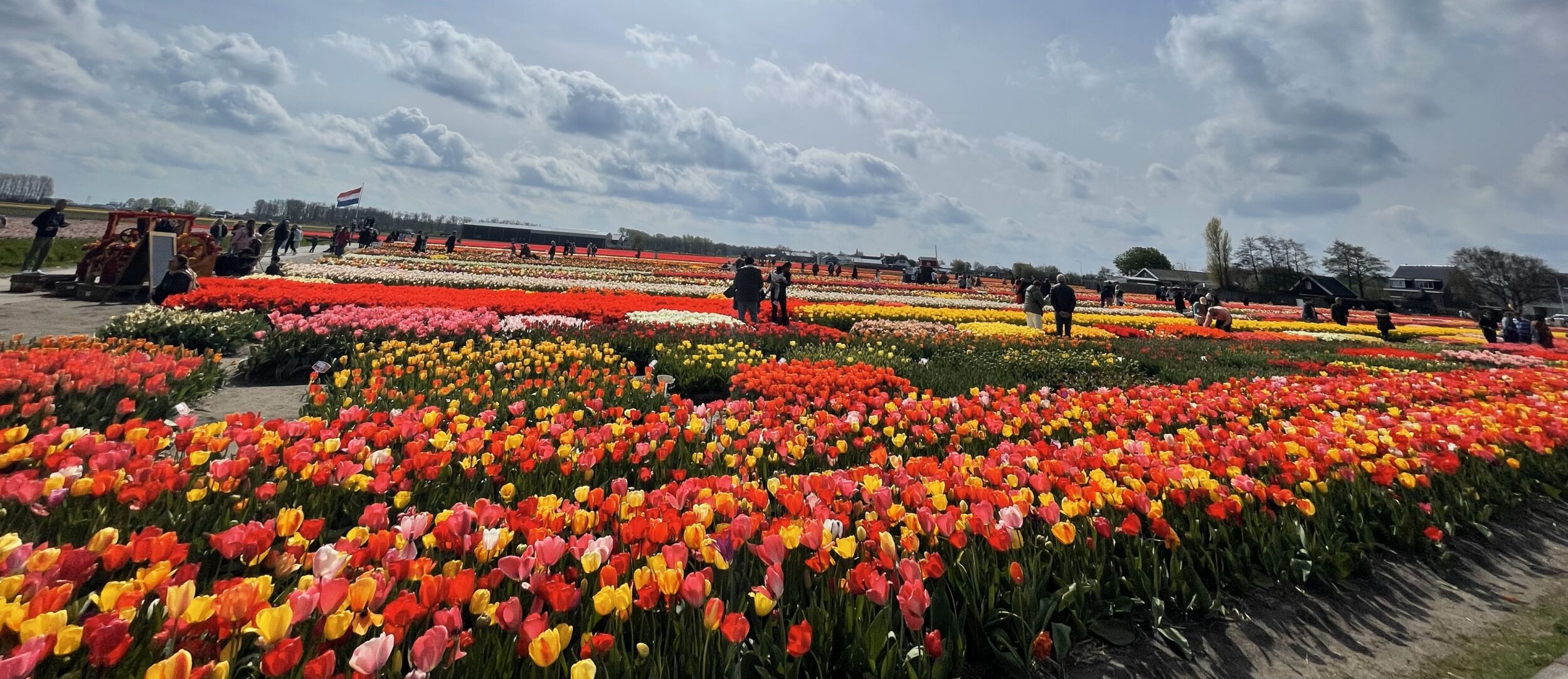
Tulip Barn is much bigger and there’s more to photograph. Their parking lot is very large. There’s no info about tulips. Right next to it, you have hyacinth fields that smell amazing. Here, you feel more like you’re at a grower’s place.
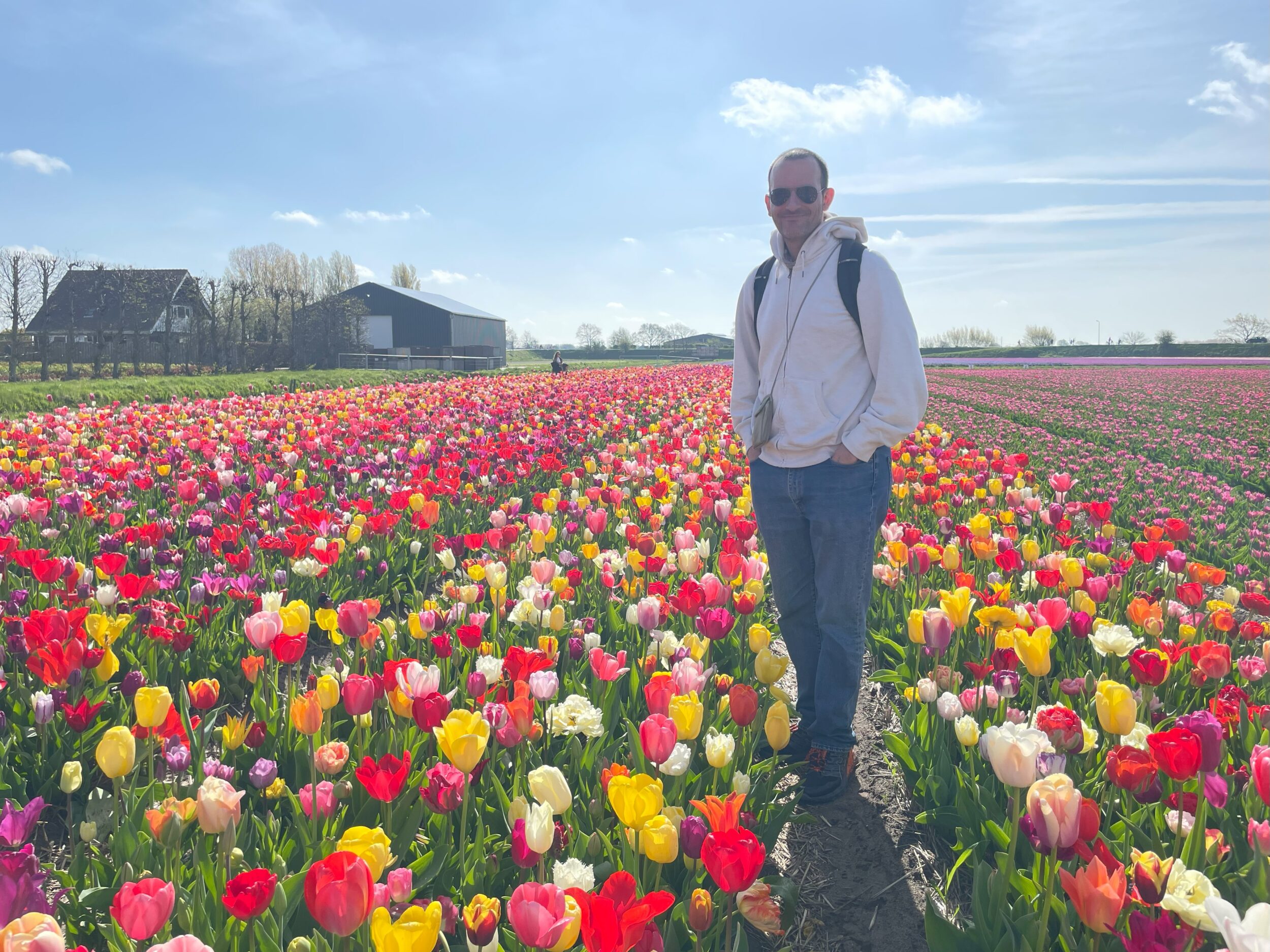
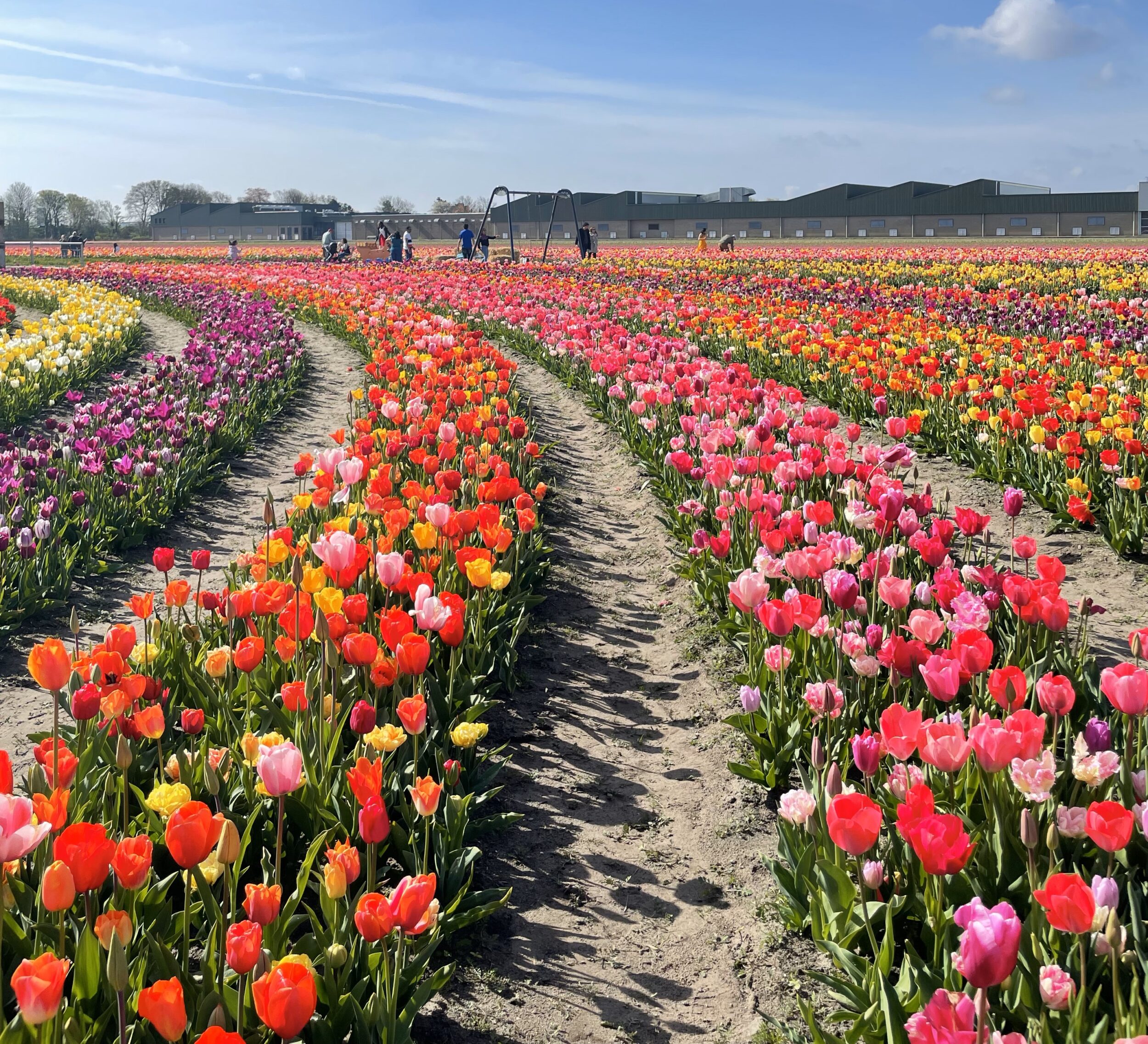
My favorite field: Pick-your-own tulips
I almost buried my dream of a pick-your-own field when I saw a modest little field where people seemed to be bustling about abnormally. Watching closely, I realize they are tourists in the middle of picking their own tulips !
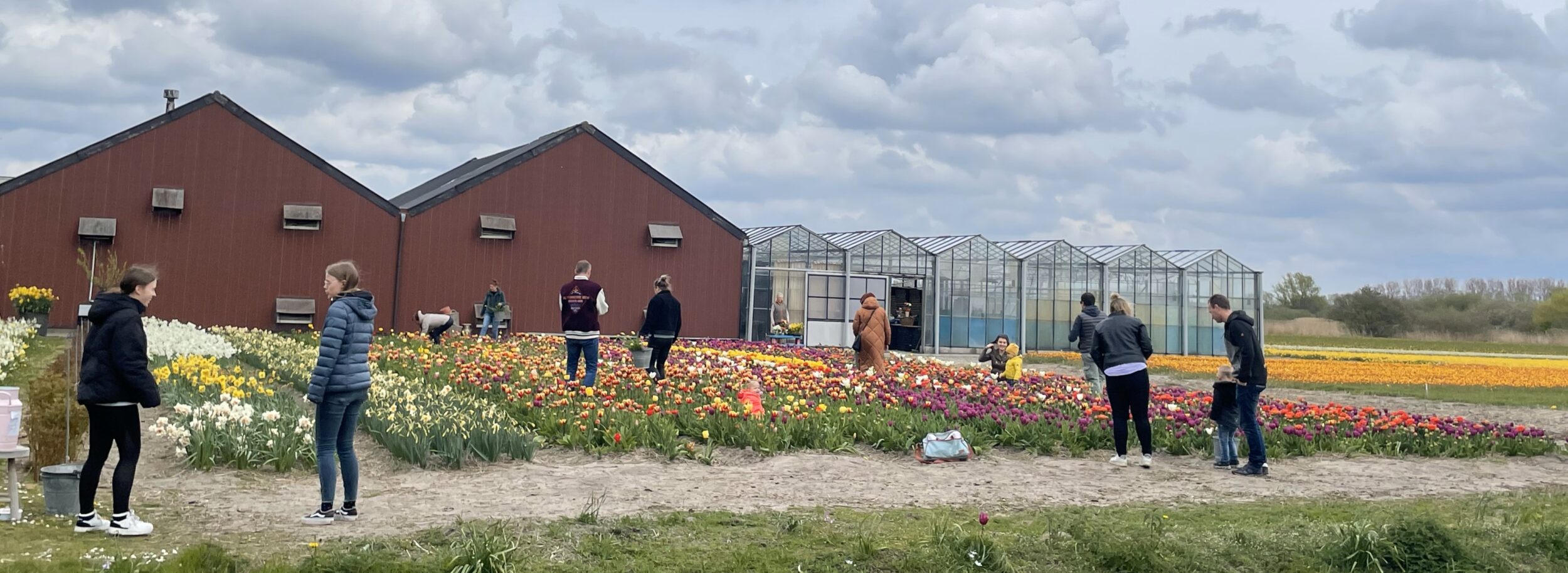
For €0.20, I can pick the tulip I want. We already have the free tulips from Tulip Experience, but I want to pick my own. So I run to grab the available bucket. The lady in charge is very kind and gently shows me how to pick a tulip: simply pull at the base of the stem, and you’ll hear a little “plop.” She also has beautiful daffodils, so I pick about ten flowers and can only marvel at the small price of my bouquet: €2, and the lady even makes me a lovely bouquet!
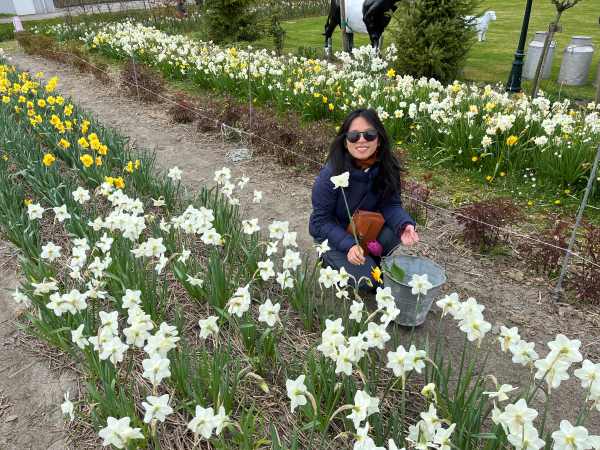
Most tourists rip tulips out with the bulbs (they must have pulled too hard), but the lady in question just cuts the stems and makes us lovely bouquets, so fear not. This address appears nowhere, so if you go and love it as much as I did, send me a little positive thought, it’ll boost my karma ahahah (here are the Google Maps coordinates), park on the other side of the river and go through the small metal gate.
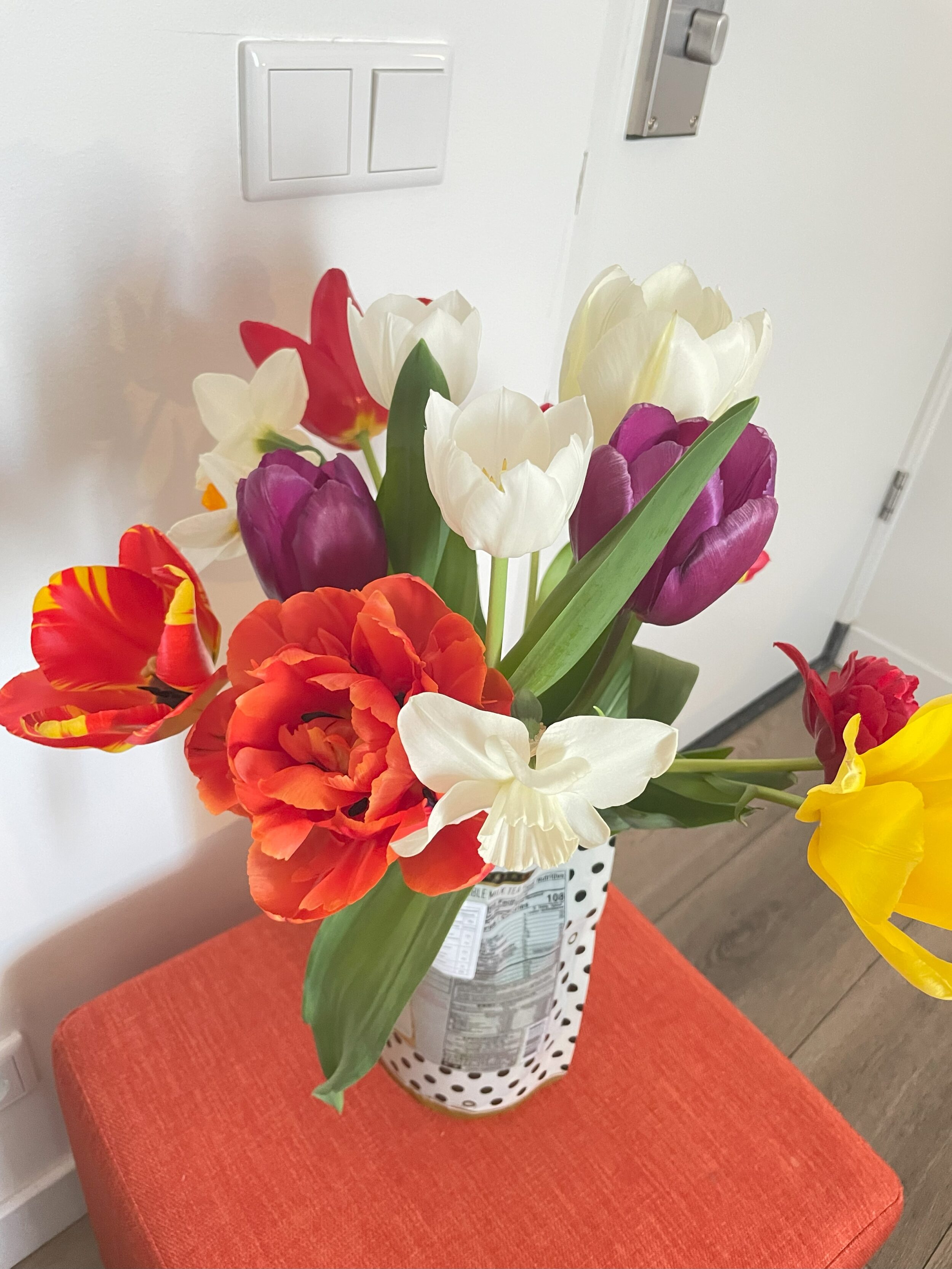
Having chosen closed flowers, I discovered that just an hour in the car is enough for the most closed ones to open that same evening. So if you fancy bringing back some tulips, wait until your last day to buy your flowers. Without a vase at the hotel, I went for plastic wrap and my flowers lasted several days. Just one smells divine and it’s enough to fill my whole room with fragrance. I’m so happy! Tulips are flowers I never allowed myself to buy. In Vietnam, they’re so expensive, so expensive that people only dare to buy one tulip at a time. And here, I have a beautiful bouquet, with 10 picked by myself, it may be a tiny insignificant pleasure for you, but for me, it’s a dream come true, I felt so alive in that little field.
If you’re feeling peckish, know that we really really enjoyed our meal at Como & Co (Google Maps coordinates) right across from a lake. Count on about €15/person. There’s indoor seating, but it gets snapped up quickly.
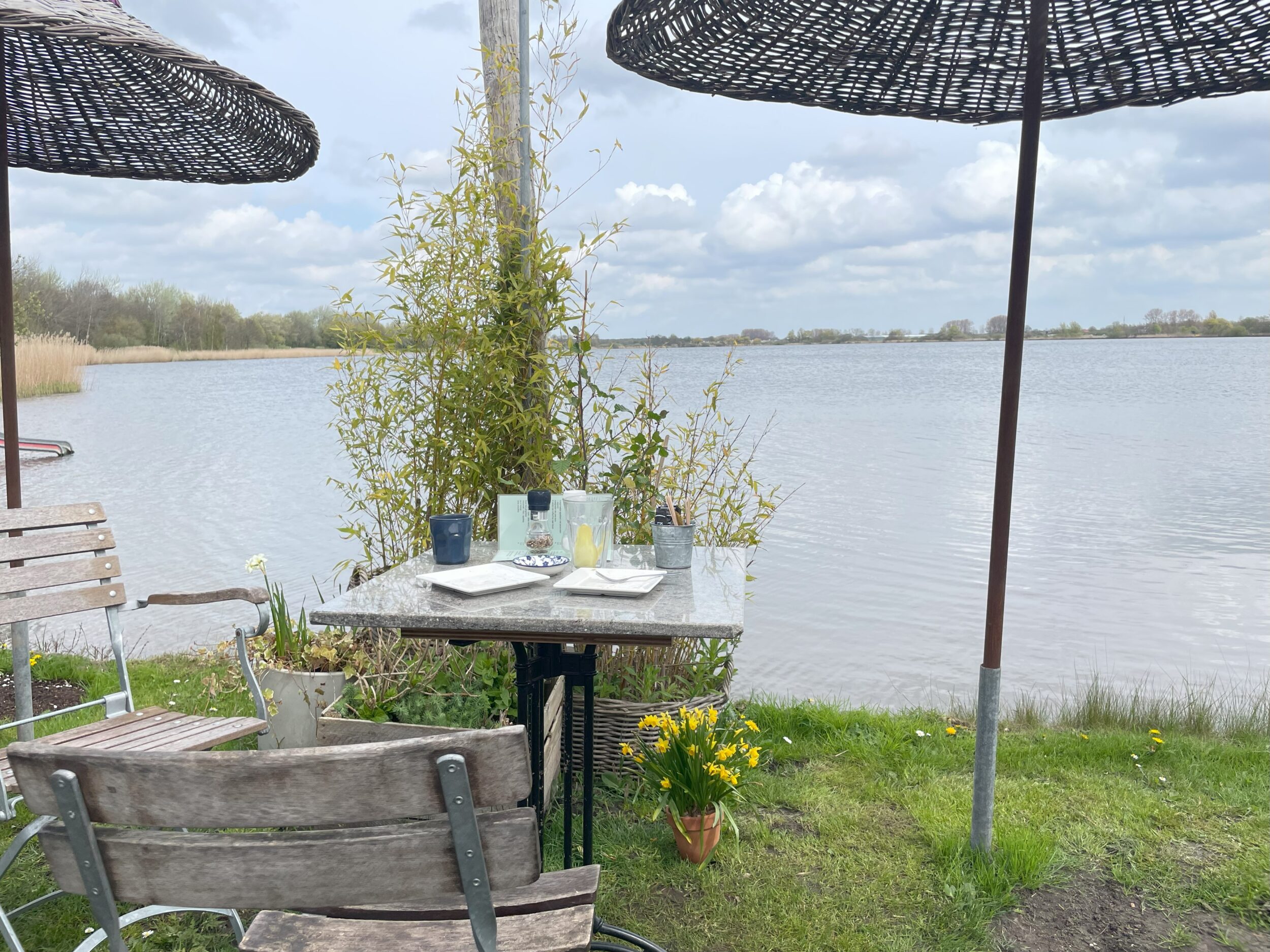
Well, I hope you enjoyed this experience as much as I did. It’s less impressive in photos, and more striking in person, but I highly recommend, if you have the time, to go at least once.
Part 2: Practical Tips
For practical and detailed tips, check out my other article PRACTICAL GUIDE Keukenhof & tulip fields. Everything I did can be packed into one day (if you rush) or two days (and you’ll even have time left to visit The Hague).
Budget
- Accommodation: ibis Styles The Hague (Booking link) : €70/night for two, no breakfast
- Transport:
- Den Haag Centraal – Leiden Centraal: €4.1/trip (€2.46 off-peak)
- Bus Leiden Centraal – Keukenhof (round trip) + entry to Keukenhof: €36/person, book it on the official website or on Civitatis (link),
- Tulip experience: €9.5/person (book via this link)
- Tulip Barn: €7.5/person
- Tulip parade (reserved seating) in Voorhout:
- Reserved seating: €19.5/person
- Transport: Den Haag Centraal – Voorhout: €5.7/trip (€3.42 off-peak)
- Hourly car rental:
- €3.25/hour and 37 cents per kilometer (€60.34 total for us)
- To get a €25 promo code for MyWheels, accept my invitation by clicking here.
Enjoyed this post? Check out our other articles on the Netherlands here
Planning a trip to the Netherlands? Our partner Get Your Guide offers entry tickets and guided tours with French-speaking guides at very reasonable rates. Click here to see what they offer and book online.
