
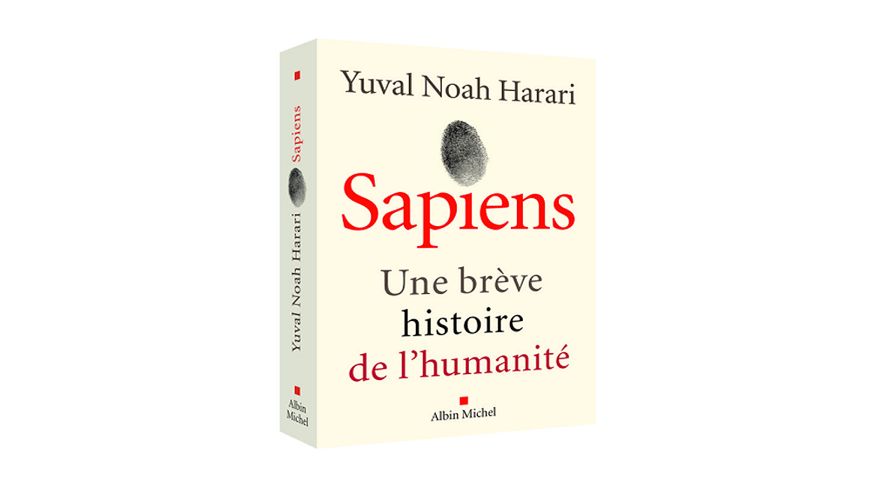
[review] Book Sapiens: A Brief History of Humankind, a book by Yuval Noah Harari
Sapiens: A Brief History of Humankind is a book by Yuval Noah Harari that explores the history of humanity from its origins to the present day. This book is a global phenomenon, thanks to which everyone is interested in human history. For once, an author explains the history of humanity very simply and in a multidisciplinary way.
Following the success of the book, two graphic novels were also released, aimed at teenagers (and those who can’t handle big books). Personally, I started by reading the graphic novels, which cover half of the book, before finishing the rest by reading the original book. It took me over a year to read everything, so take your time too!
The book is divided into four parts:
- The Rise of Sapiens: This first part explores the early stages of human evolution and how our species became dominant on Earth.
- The Age of Empires: This second part deals with the emergence of the first civilizations and how they built empires and kingdoms using advanced technologies and social organization.
- The Age of Divergence: This third part explores how humanity diverged into different cultures and religions around the world, and how these differences influenced our history.
- The Age of the Human-Machine: This fourth and final part deals with how technological advances have transformed our world and how we are increasingly dependent on technology.
This book offers a unique perspective on human history and raises important questions about our future as a species. Here are some of the original ideas presented in the book:
- The idea that beliefs and myths have played an important role in the evolution of humanity. According to the author, collective beliefs allowed humans to organize into groups more effectively and develop advanced technologies.
- The idea that the emergence of agriculture and the monetary economy had a profound impact on humanity. The author argues that these developments led to the appearance of empires and kingdoms, but also had negative consequences on individuals’ lives and the environment.
- The idea that human history is influenced by the complex relationships between different cultures and religions. The author explores how these relationships have evolved over time and how they have helped shape our world.
- The idea that technological advances have had a profound impact on humanity and have radically transformed our world. The author explores the benefits and challenges these changes have brought and questions the future of humanity in an increasingly technological world.
Even though it has been widely praised for its accessible storytelling and original approach, the author has nevertheless been criticized by scholars
- for his lack of depth and nuance in certain parts of history. The author simplified some aspects of human history to make them more accessible to the general public, but at the expense of the complexity of these topics.
- the book is centered on Western history and lacks cultural diversity and alternative perspectives.
The author responded to these criticisms by pointing out that scholars, by being too focused on their field, lack the macro vision to connect different elements and see history as a whole.
The last part of the book is unfortunately too short. The idea that cyborgs could soon populate the planet comes too quickly and disturbs readers. That’s why the author released another book, “Homo Deus”, to further develop this part. He unfortunately cannot avoid some repetition with “Sapiens: A Brief History of Humankind”, but I liked both books.
Homo Deus: A Brief History of Tomorrow explores the possible evolutions of humanity in the coming decades and how they could transform our world. The book is divided into three parts:
- The World of Tomorrow: This first part explores the main trends that could shape humanity’s future, such as technological advances, climate change, and economic developments.
- The Big Questions: This second part deals with fundamental questions that humanity might face as it evolves, such as death, immortality, freedom, and happiness.
- The Choices of Tomorrow: This third and final part explores the different directions humanity could take and the crucial decisions it will have to confront.
I really liked the books by Yuval Noah Harari (Amazon link here). Whether in graphic novel or book format, the content is very interesting. Be aware that these books might make you want to go vegan. Without necessarily guilt-tripping consumers or being preachy, the author simply highlights the appalling living conditions of farm animals. Both books are full of examples from different fields, which considerably increases general knowledge. A complete bibliography has been added to the latest edition, and you can also consult it on the author’s website.

