
[review] My 99% pure sterling silver tea cup at Hi’de Maison (Vietnam)
I can’t remember when I started looking for a sterling silver cup. Was it since my visit to George V with my sister where we were served hot chocolate with a silver cup and cutlery? Or since I signed up for Interenchères where I see silver cups sold for 60 euros? I’m not quite sure.
Why? First off, why do we use silver for cutlery and utensils? In the past, poisons were impure and contained traces of sulfur. Now, sulfur makes silver tarnish, and that’s how you detected the presence of poisons. These days, it’s the silver ions that interest us, because they can attack bacteria. There are no serious studies on whether using a silver fork can better kill bacteria in food, but Asians believe that silver can only do good. And it’s cheaper than gold.
In any case, the more I research, the more I realize that the Minerve hallmark (92.5% silver) stamped on solid silver items sold in France doesn’t suit me. When an item is 92.5% silver, the other 7.5% have a significant impact on the metal: its malleability, its color, and its food safety. For example, there are silvers famous for jewelry such as Thai silver, Peruvian silver… and that’s thanks to the composition of that 7.5%. I’ve read that before 1925, some cutlery contained lead in that 7.5%, and even now, without lead, it’s not pure enough for me. To be truly good, I want to aim for Asian silver, 99%, 99.9%, or 99.99% pure silver found in Vietnam and China.
I took advantage of the drop in the Vietnamese dong to treat myself to lots of silver items during my vacation in Vietnam. As for the cup, I didn’t want to settle for a simple tumbler; I wanted a work of art, and that’s how I stumbled upon the creations of Hi’de Maison, based in Hanoi (Vietnam). After much thought, I went to their tiny shop on Hang Trong street. They sell all kinds of objects in 99.9% sterling silver with reliefs.
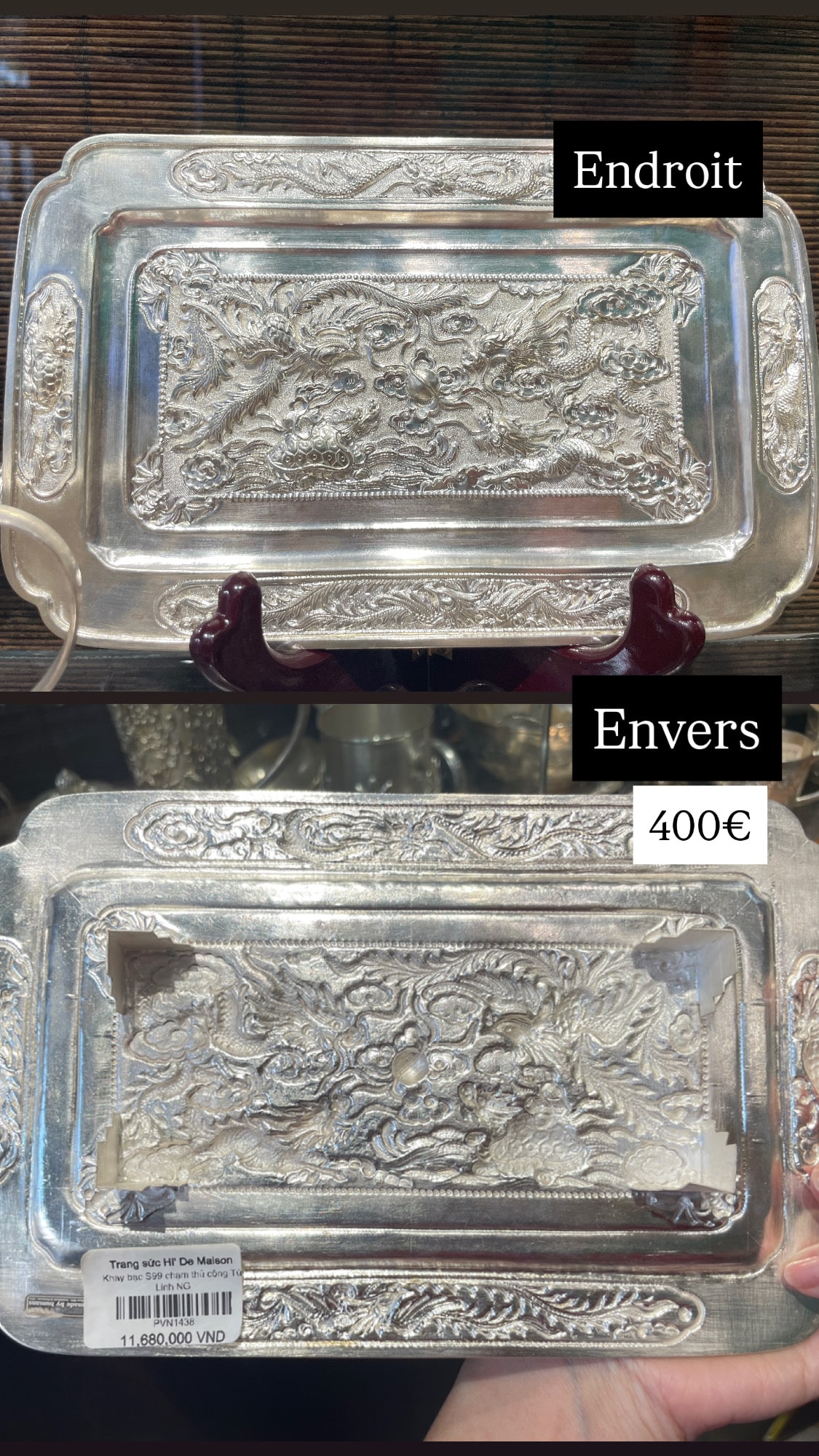
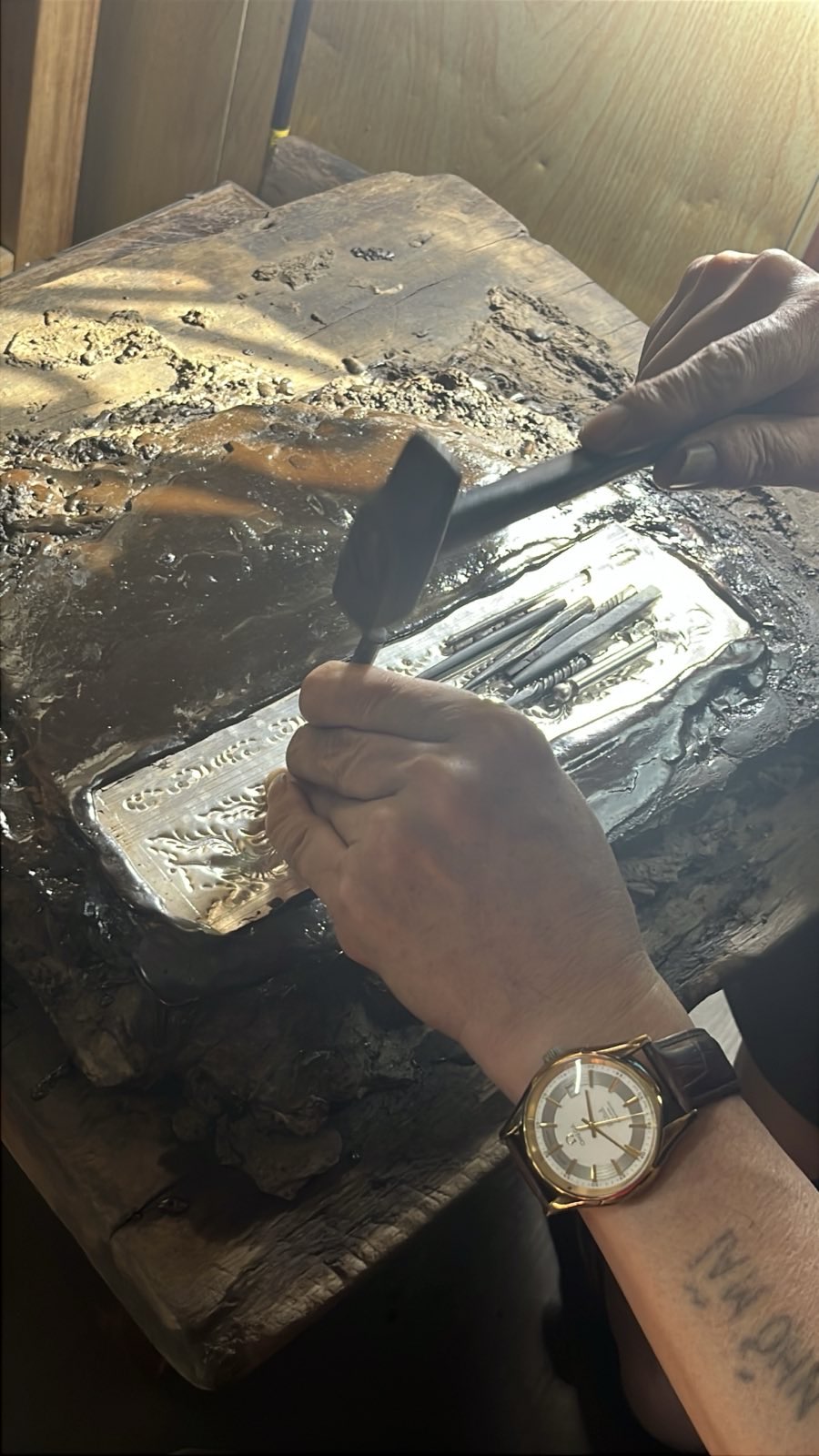
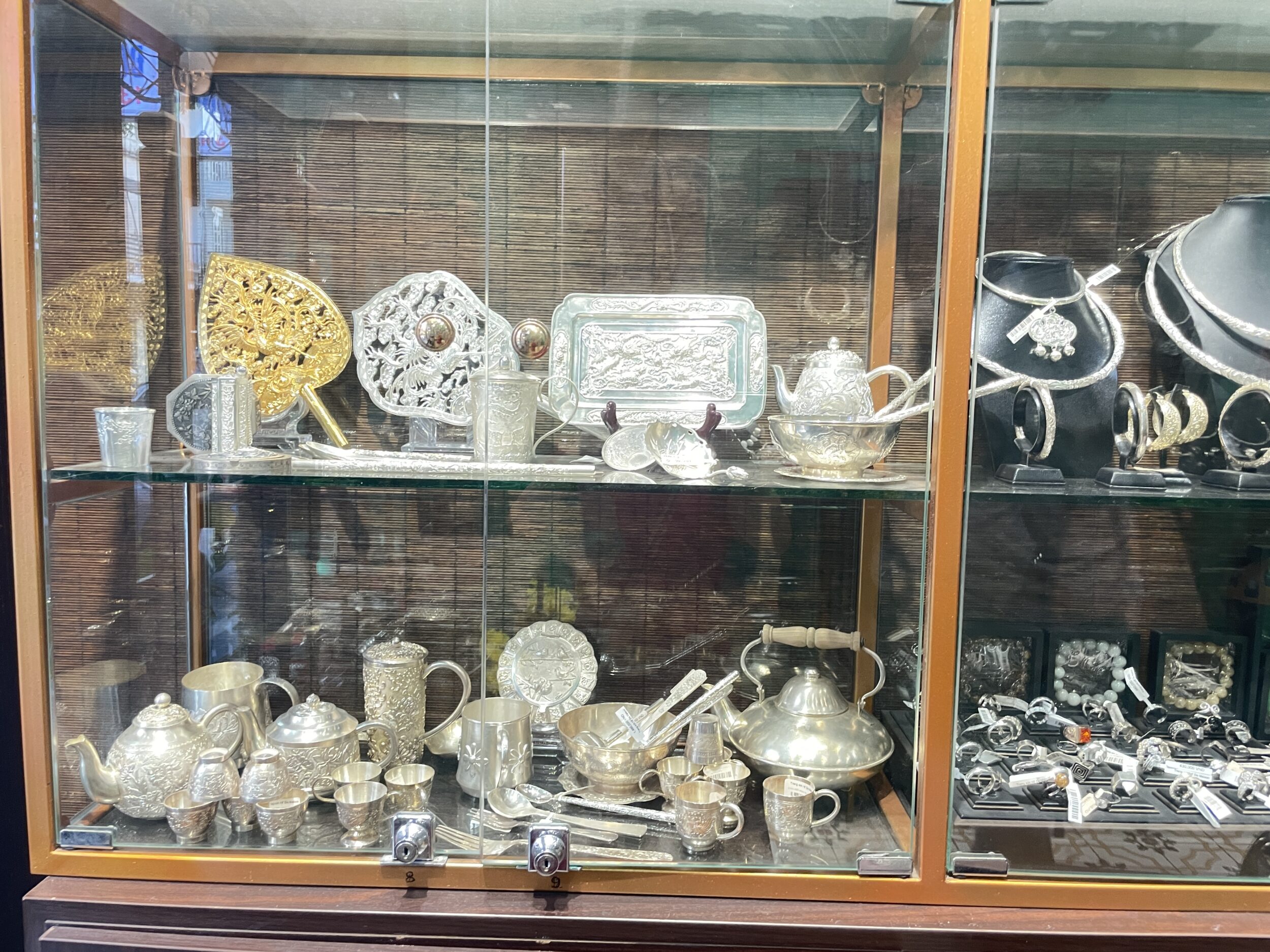
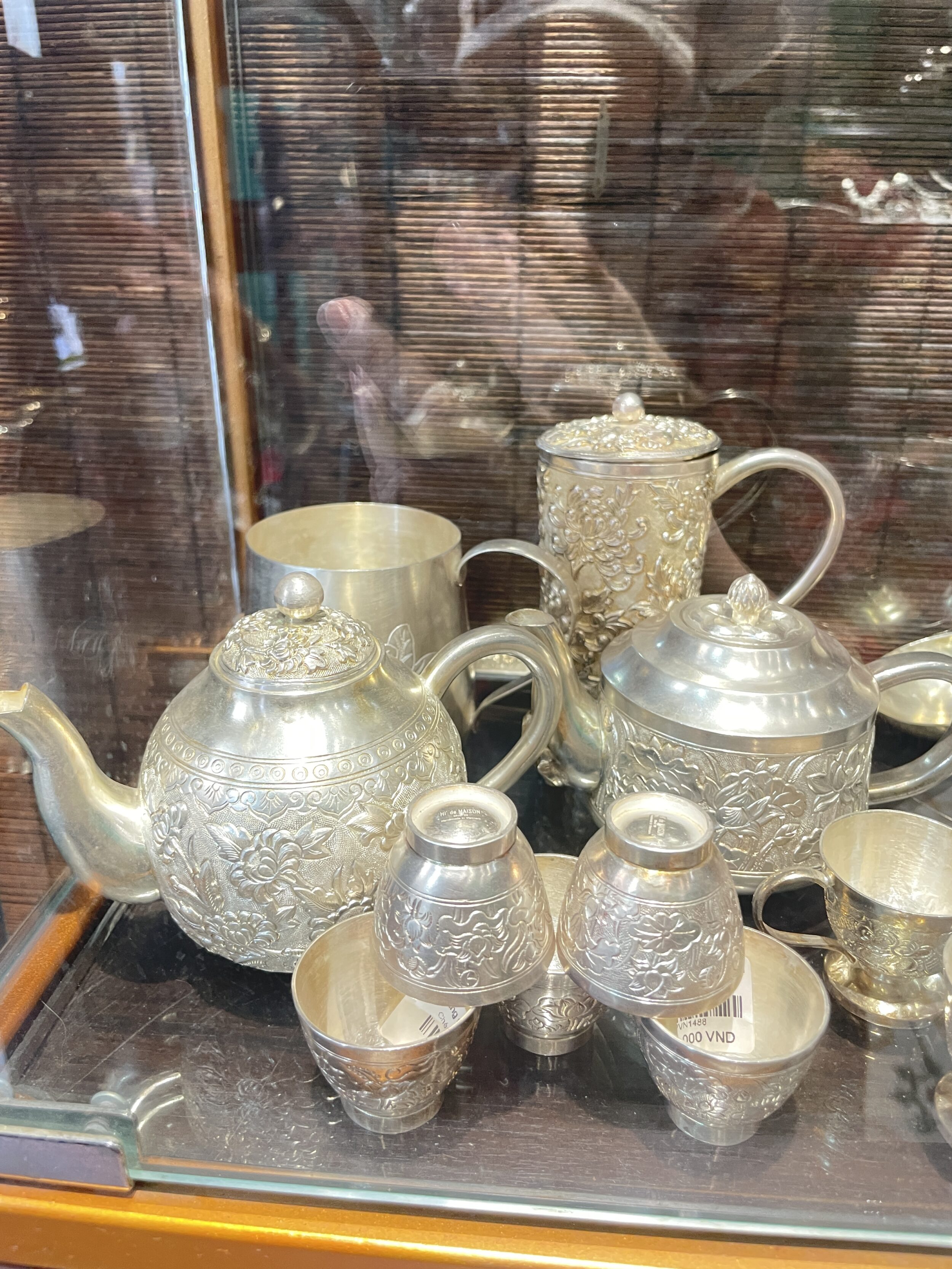
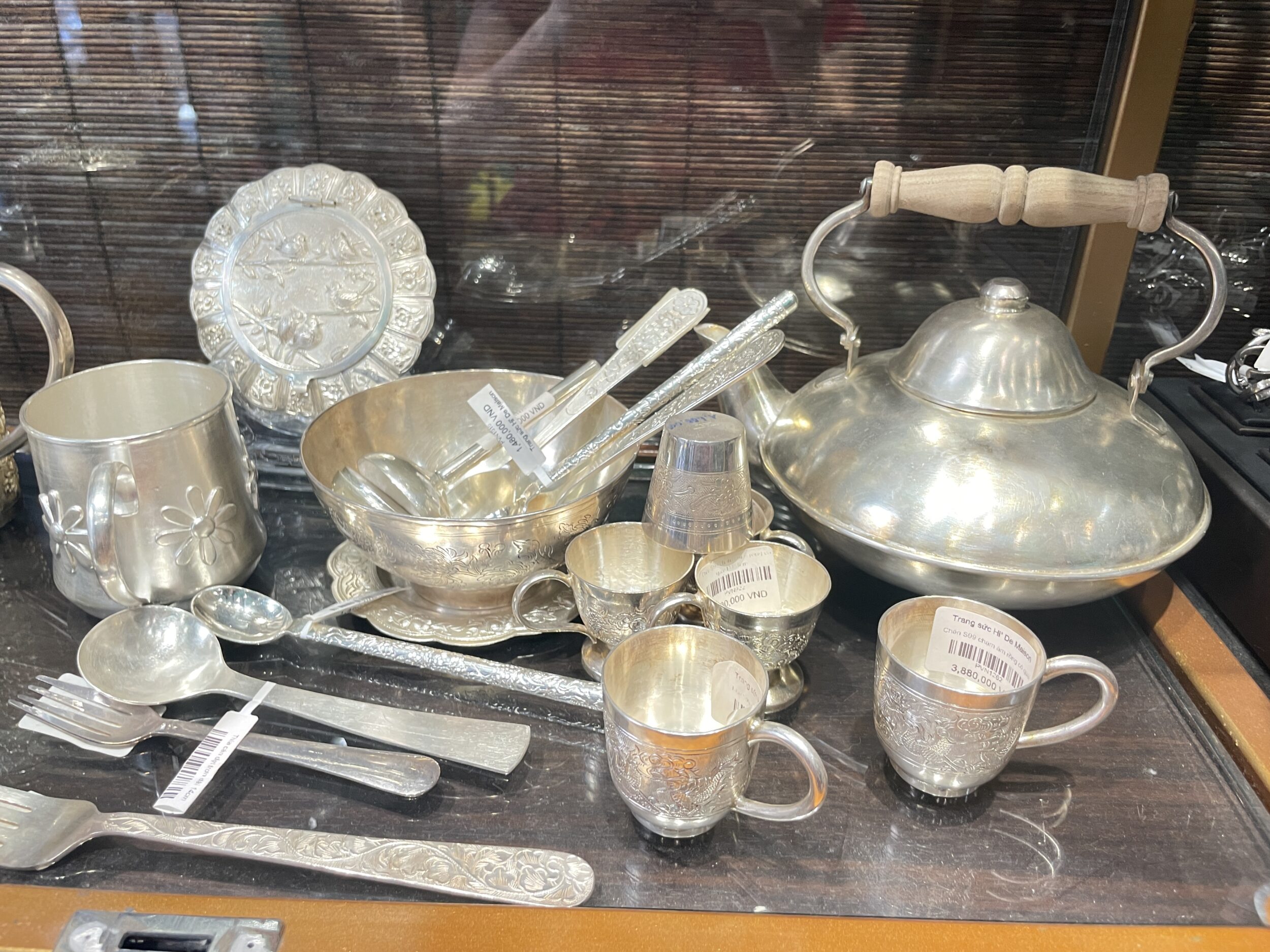
Reliefs can be achieved by soldering silver elements, or by using mallets: in that case, it’s called repoussé (hammering from the back), or chasing (hammering from the front). The first technique is more expensive because the reliefs are much more 3D and require more time and skill. When I went to the shop, I heard an artisan working on the second floor, so I went up to see him. 99% silver is the ideal material because it’s very soft and malleable; you don’t need to heat it much to work it, which avoids oxidation (fire stains).
| Repoussé | Chasing | |
|---|---|---|
| Working surface | Back of the metal | Front of the metal |
| Main purpose | Create relief in volume | Create texture or matte finish |
| Result | Raised patterns | Flat patterns or surface effects |
| Tools used | Repoussé tools | Hammers, chasing tools |
| Level of detail | More sculptural, in 3D | More decorative, in 2D or texture |
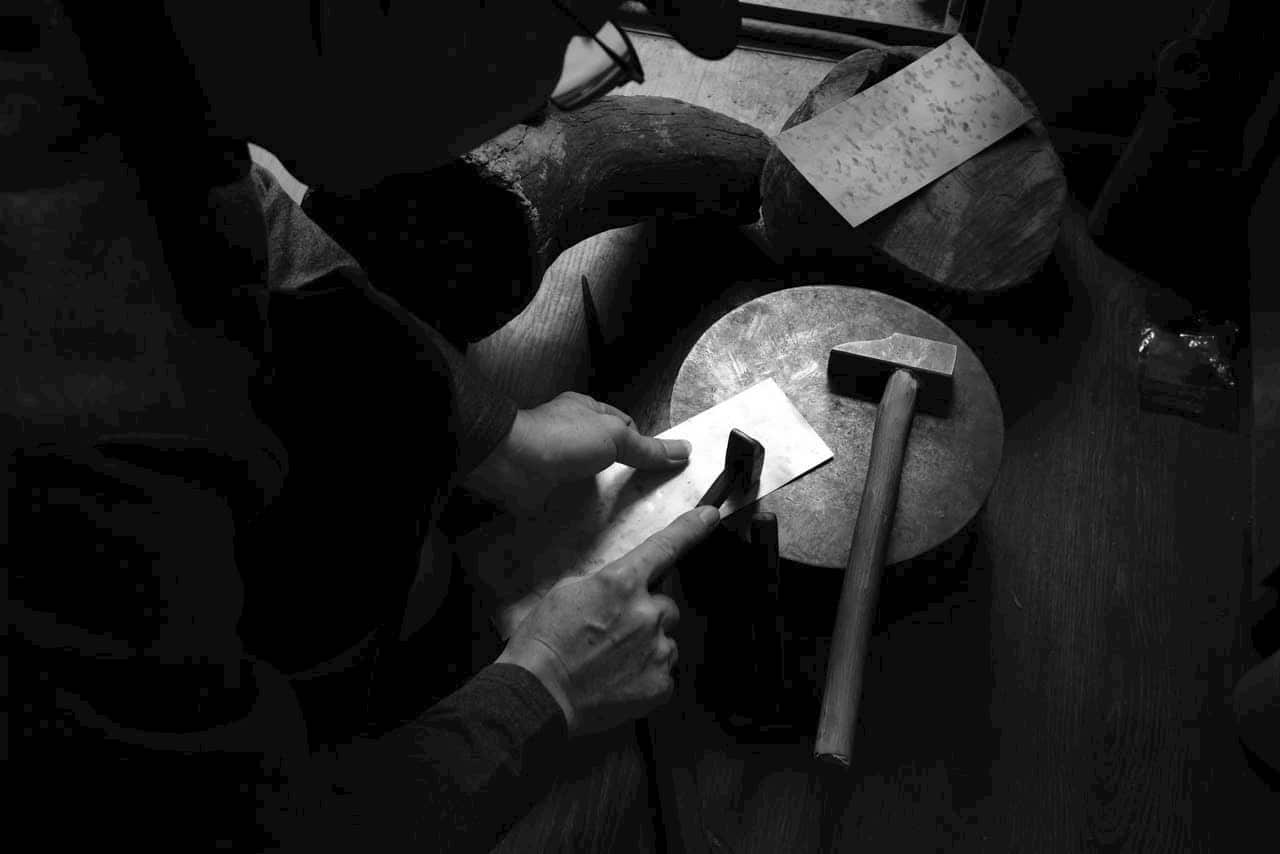
I found several photos on their FB showing the creation process of my silver tea cup, so I’ll show them here with explanations.
It all starts with a silver sheet. Mine is just over a millimeter thick. It will be shaped into a tube.
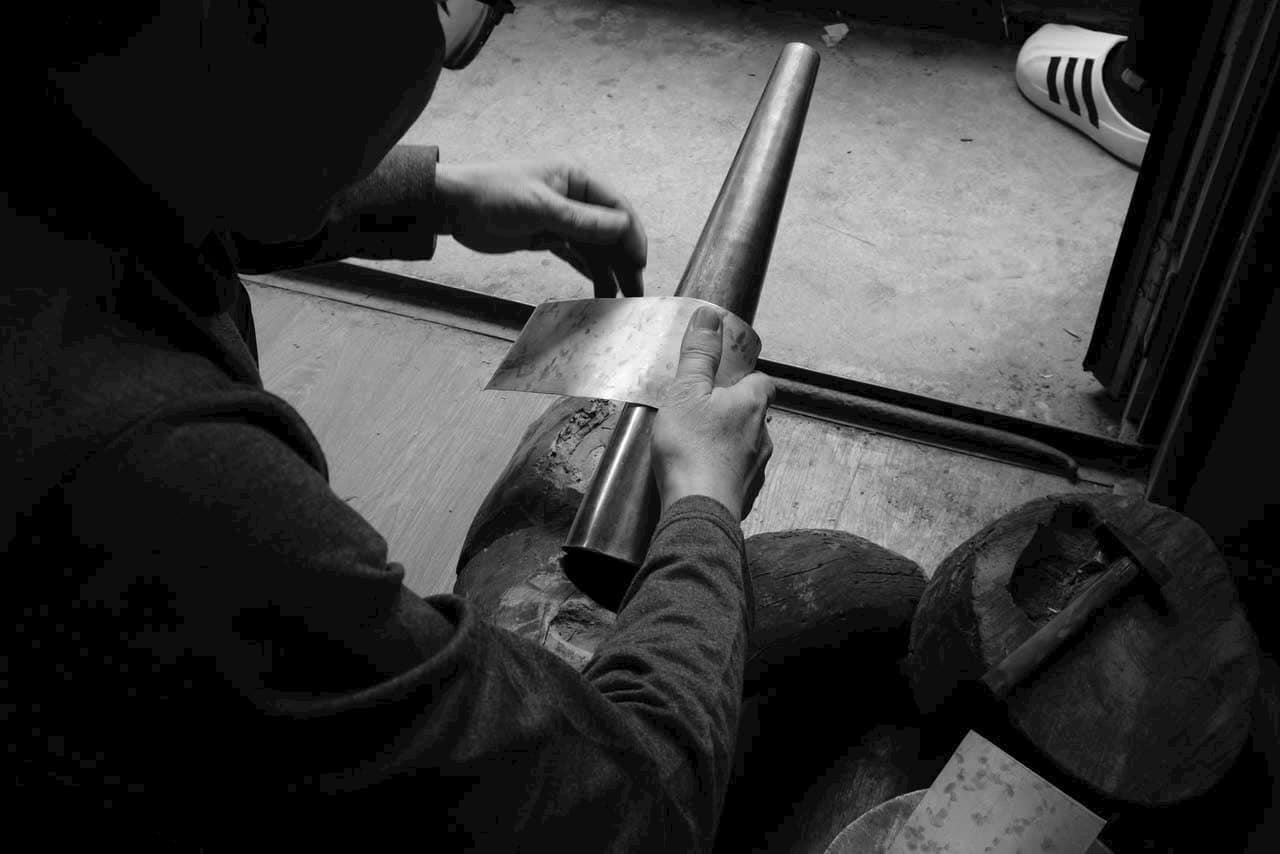
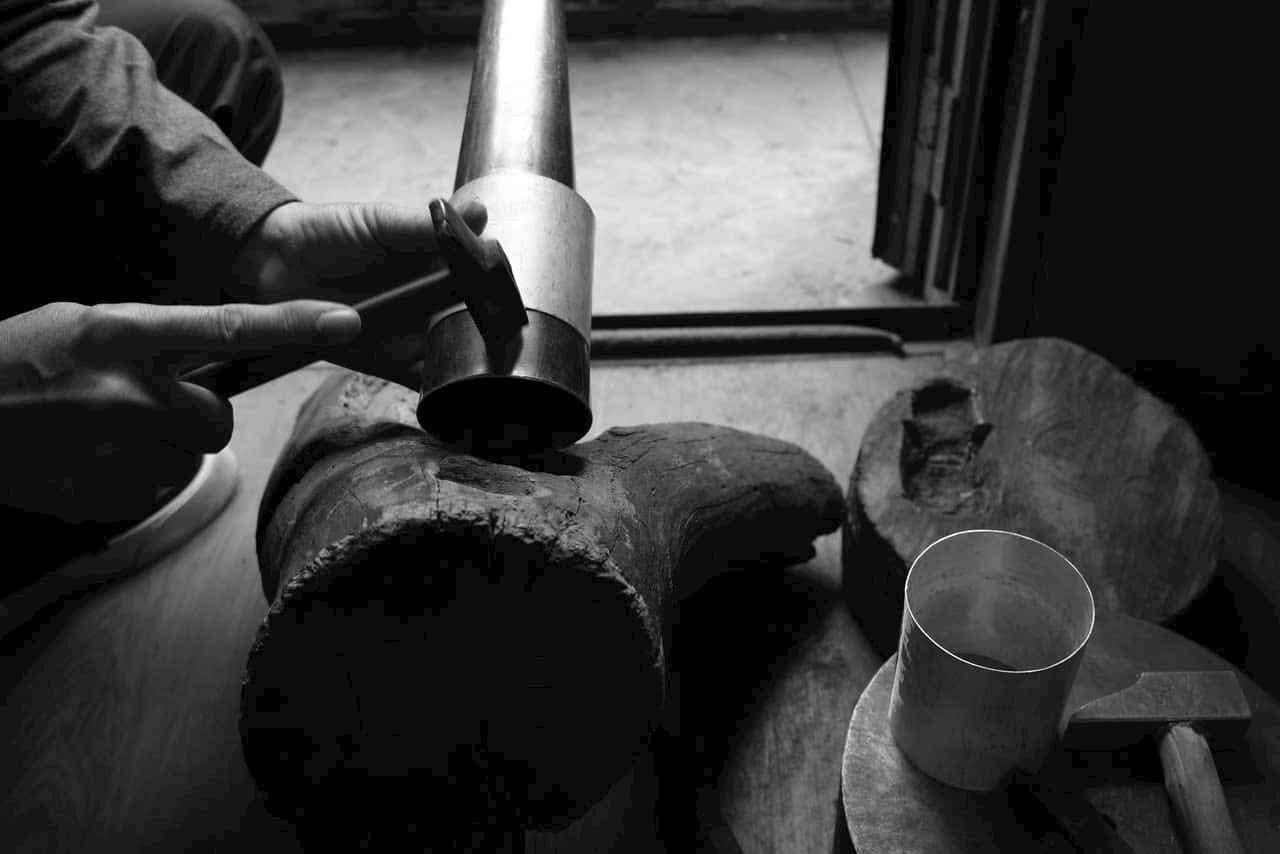
Then, a hammer is used to give the curved shape at the bottom of the cup.
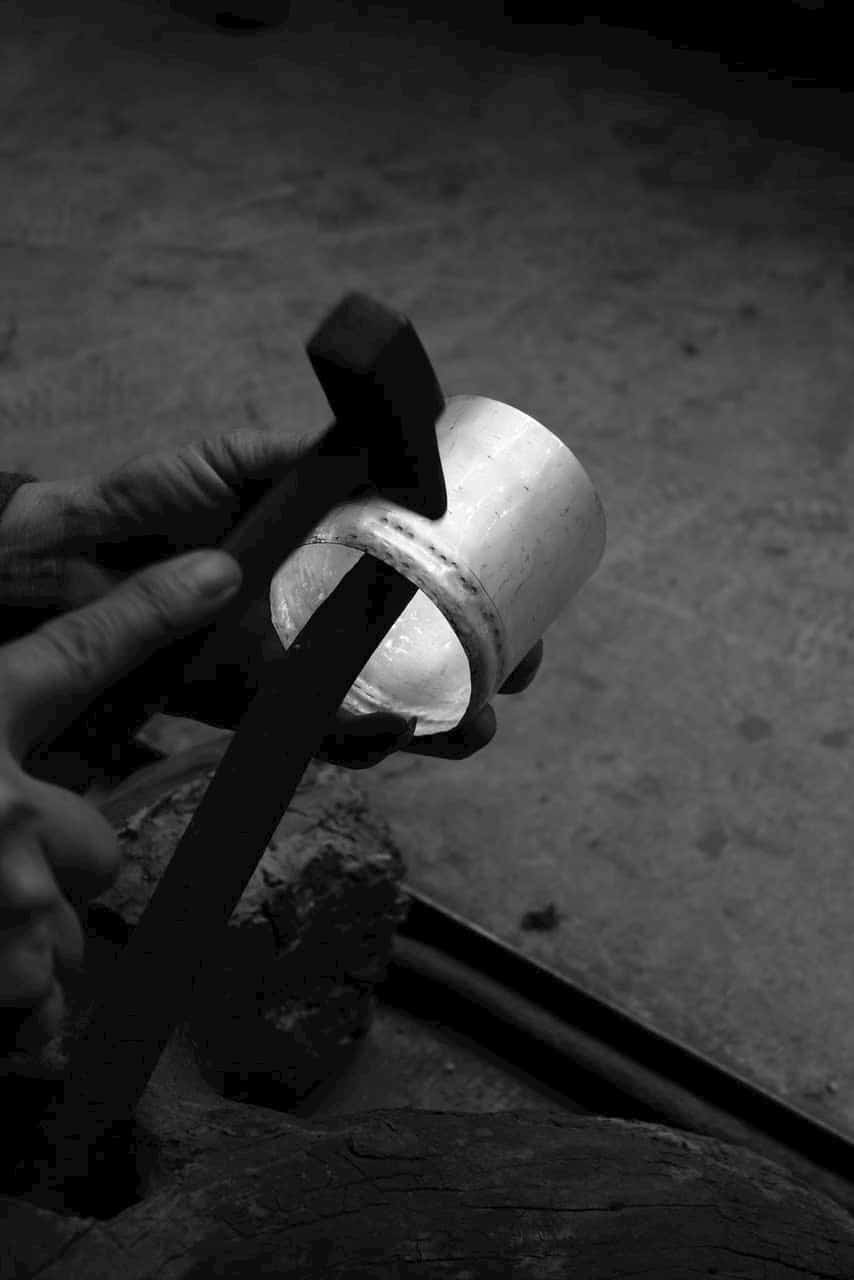
Two soldering points will be made to “close” the cup at the bottom and give relief at the top, bringing it to its simple form.
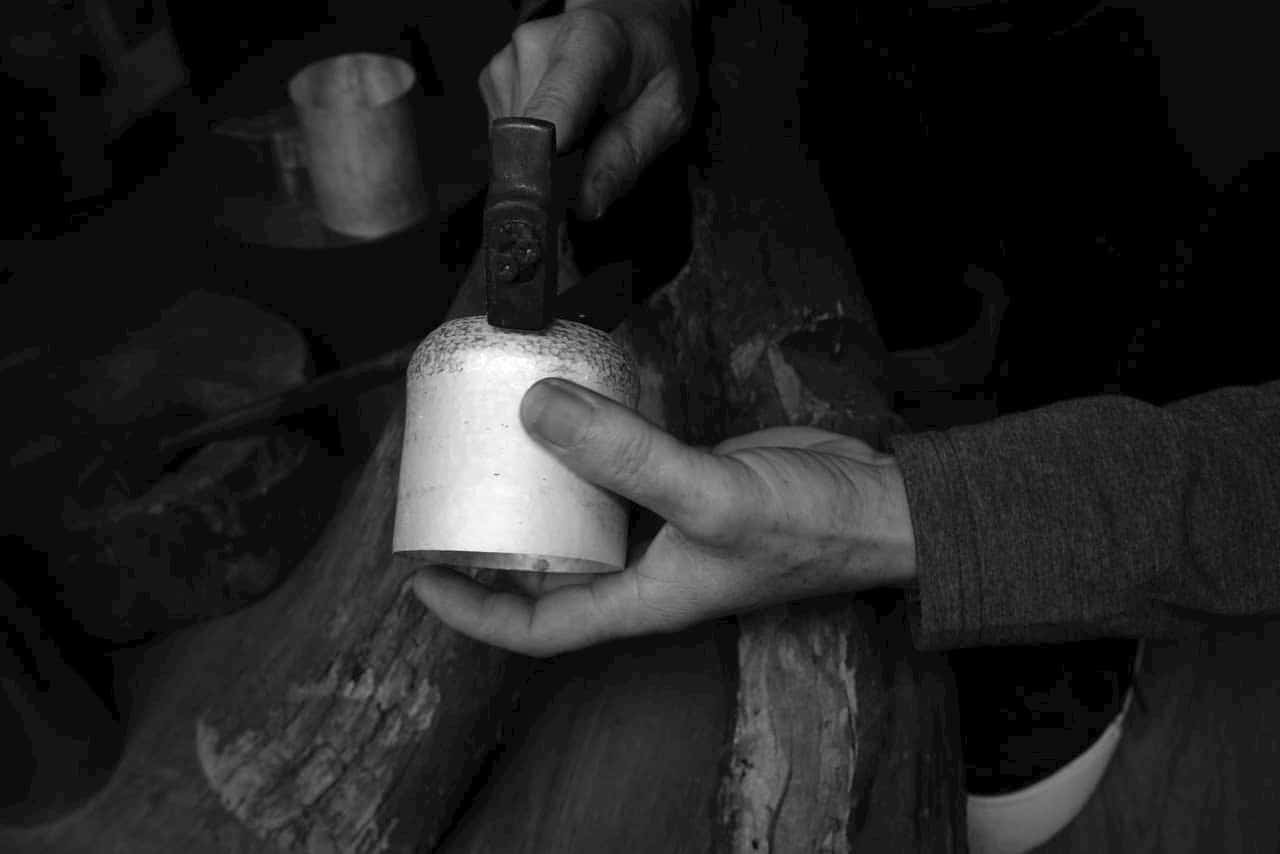
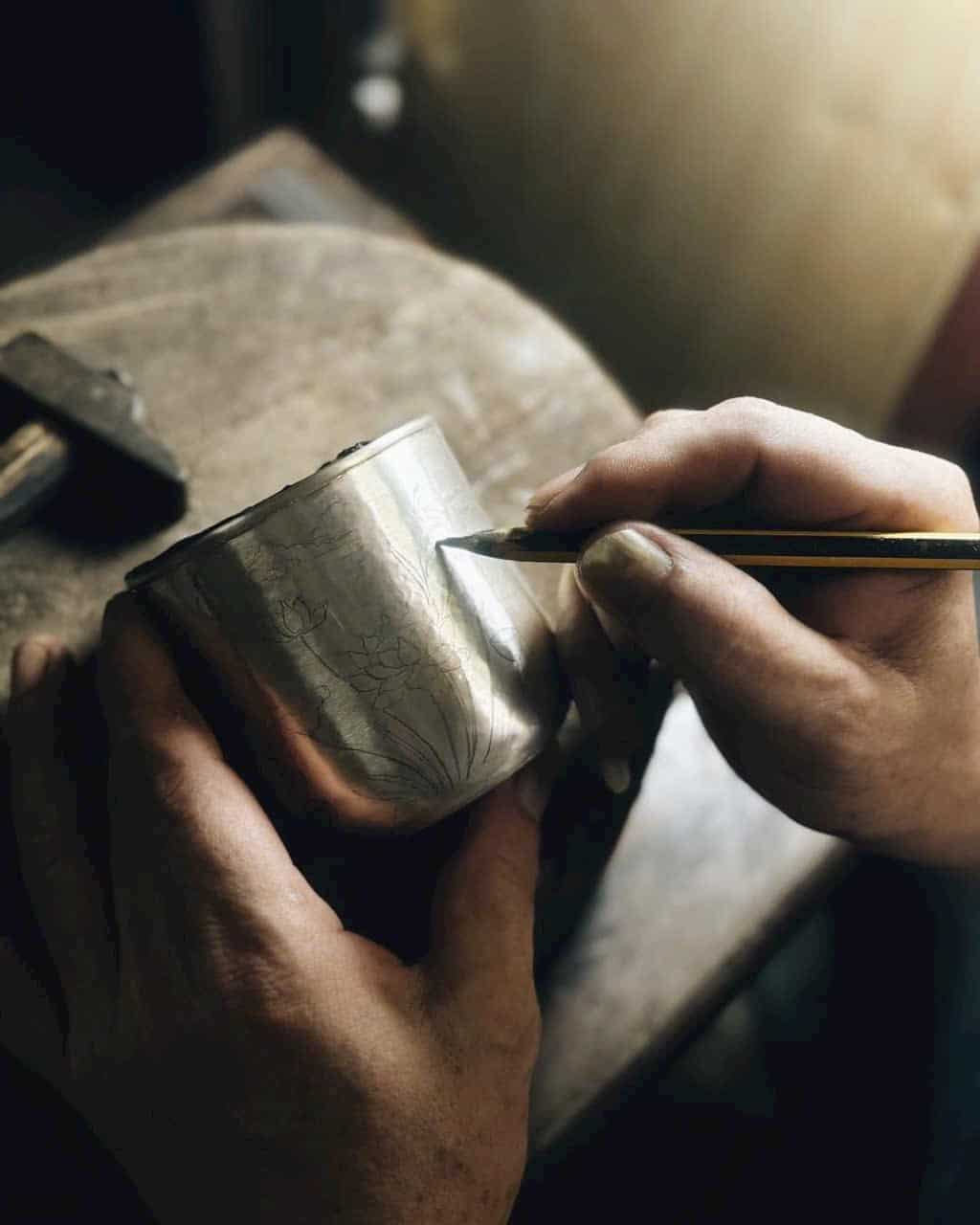
Next, the artisan draws the pattern on the cup. It’s roughly the same pattern on all “lotus” cups, but since it’s hand-drawn each time, there can be differences from one cup to another.
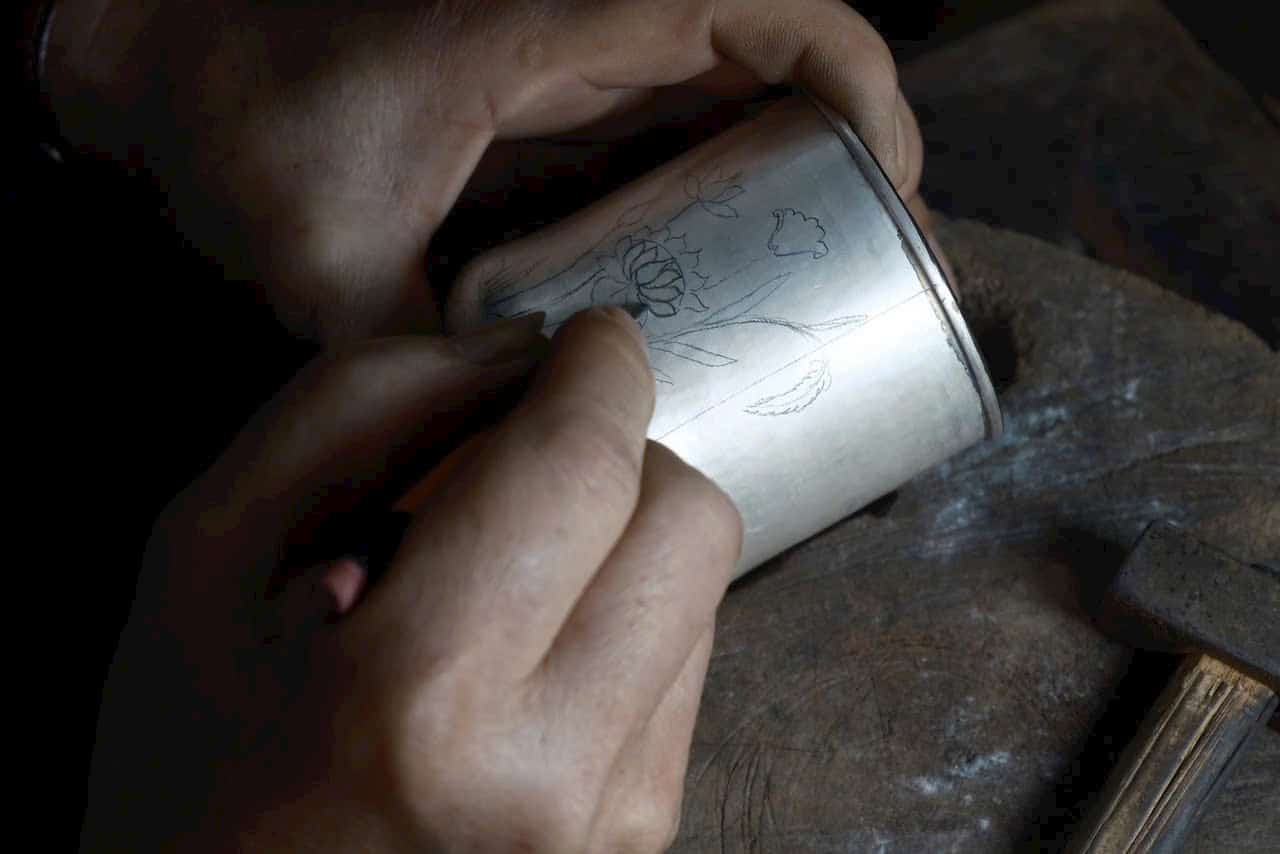
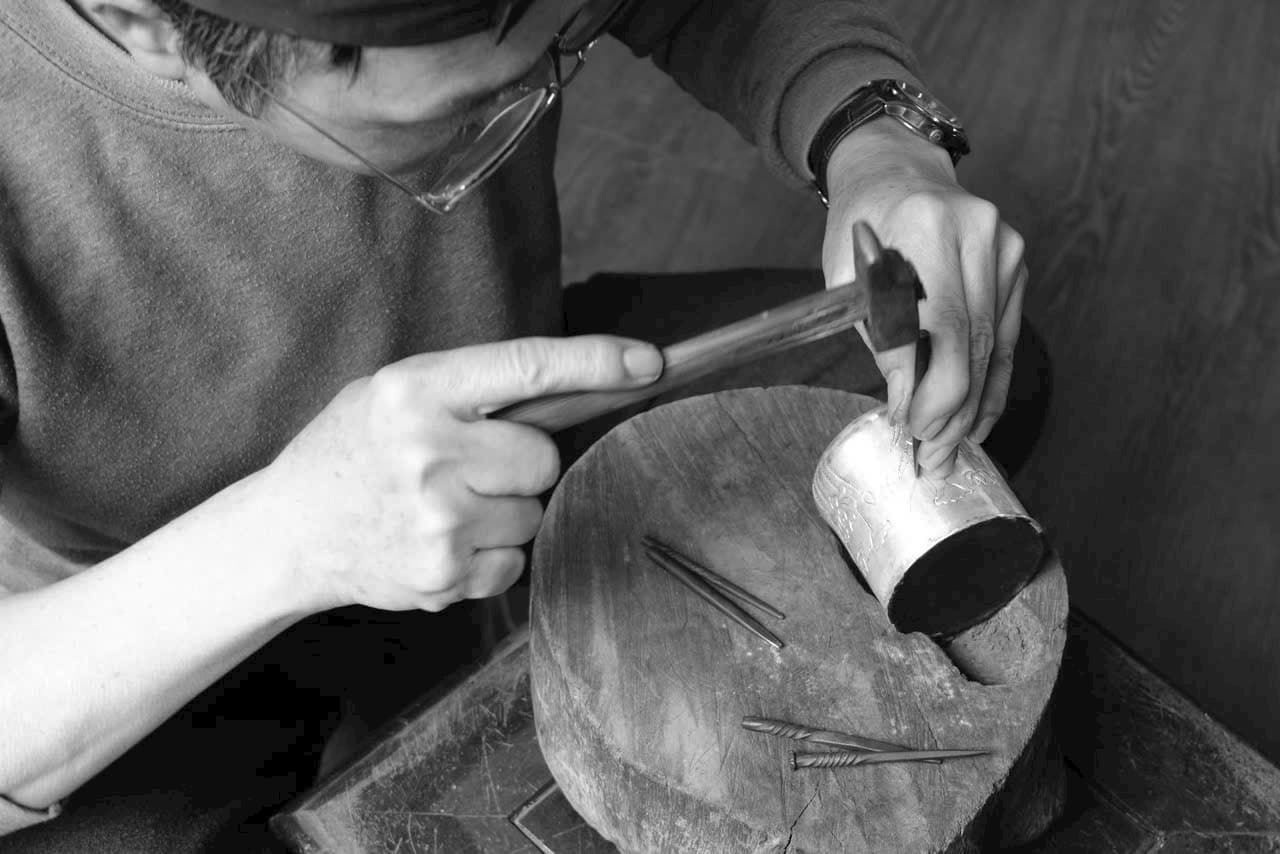
A kind of resin is inserted inside the cup (to prevent the cup from being too deformed, but enough to withstand the hammering). Since the cup already has its final shape, repoussé is no longer possible here; chasing is done instead. The artisan uses different punches to create different patterns, and the force of the strikes gives more or less deep reliefs.
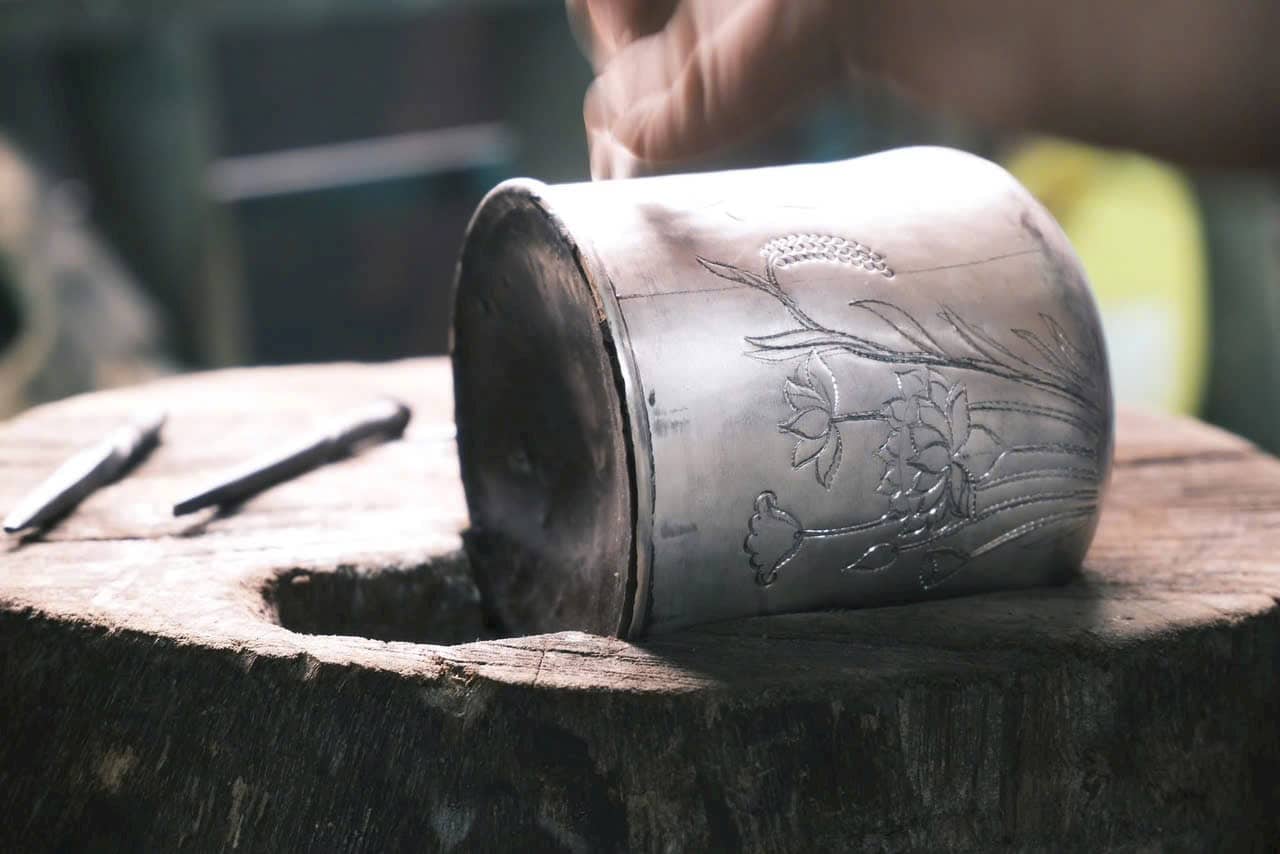
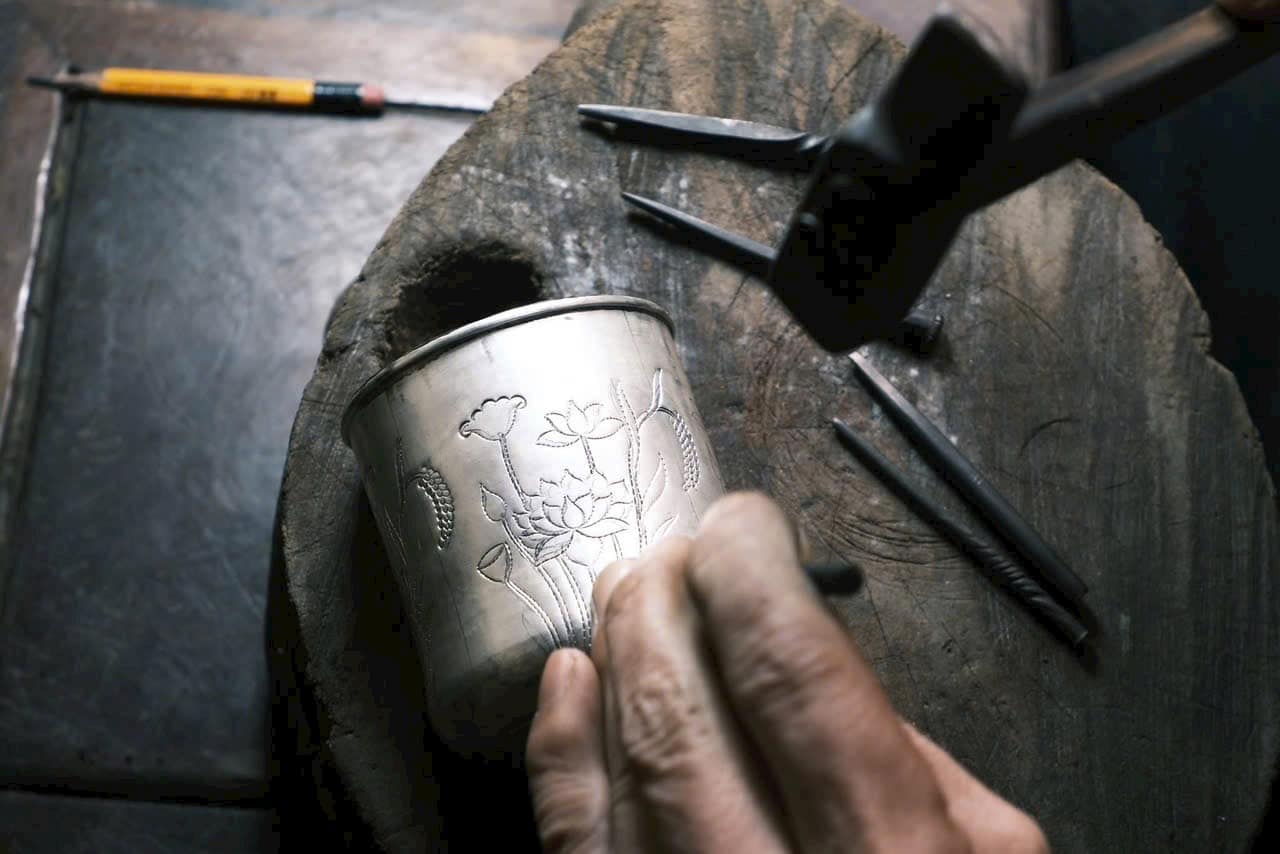
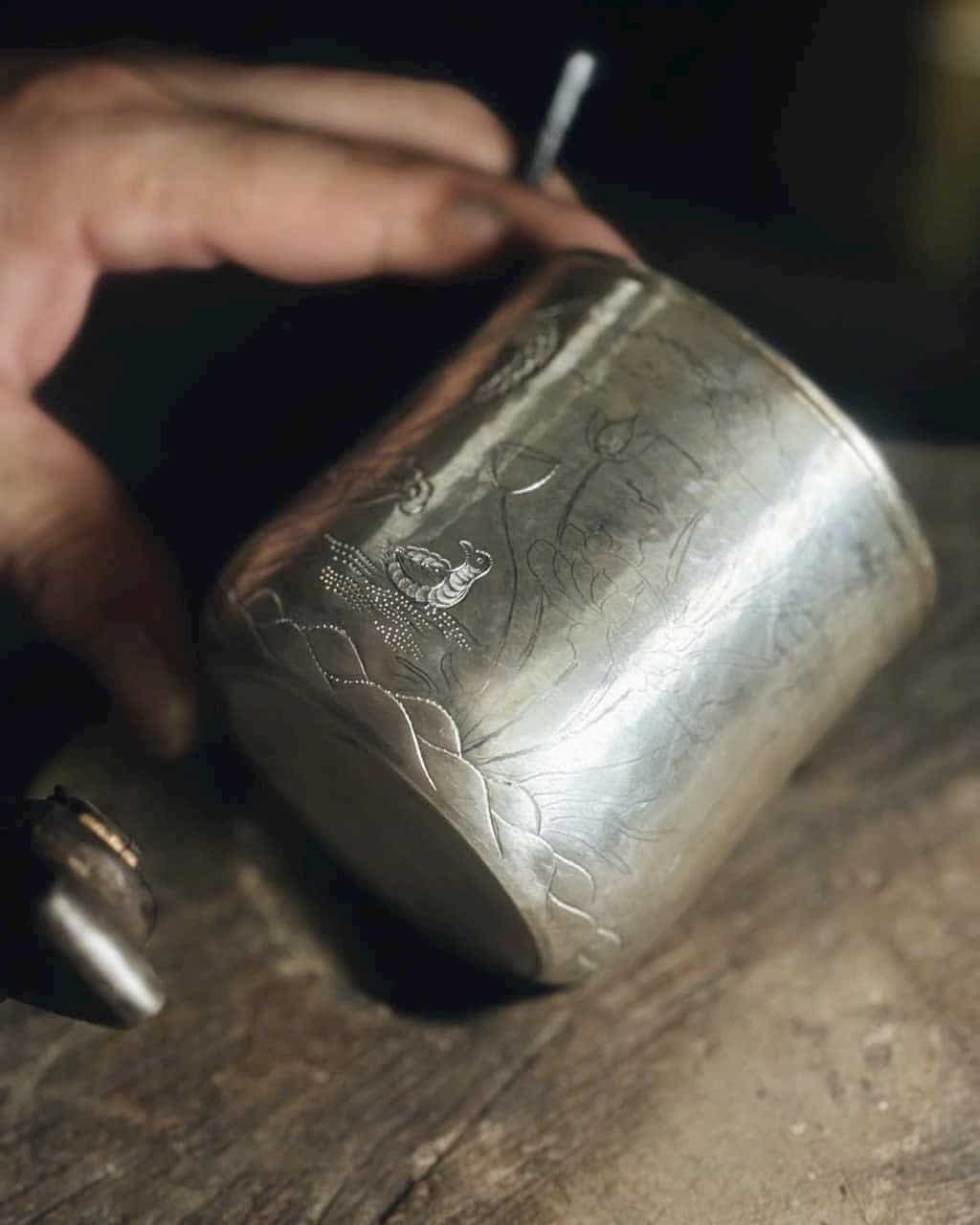
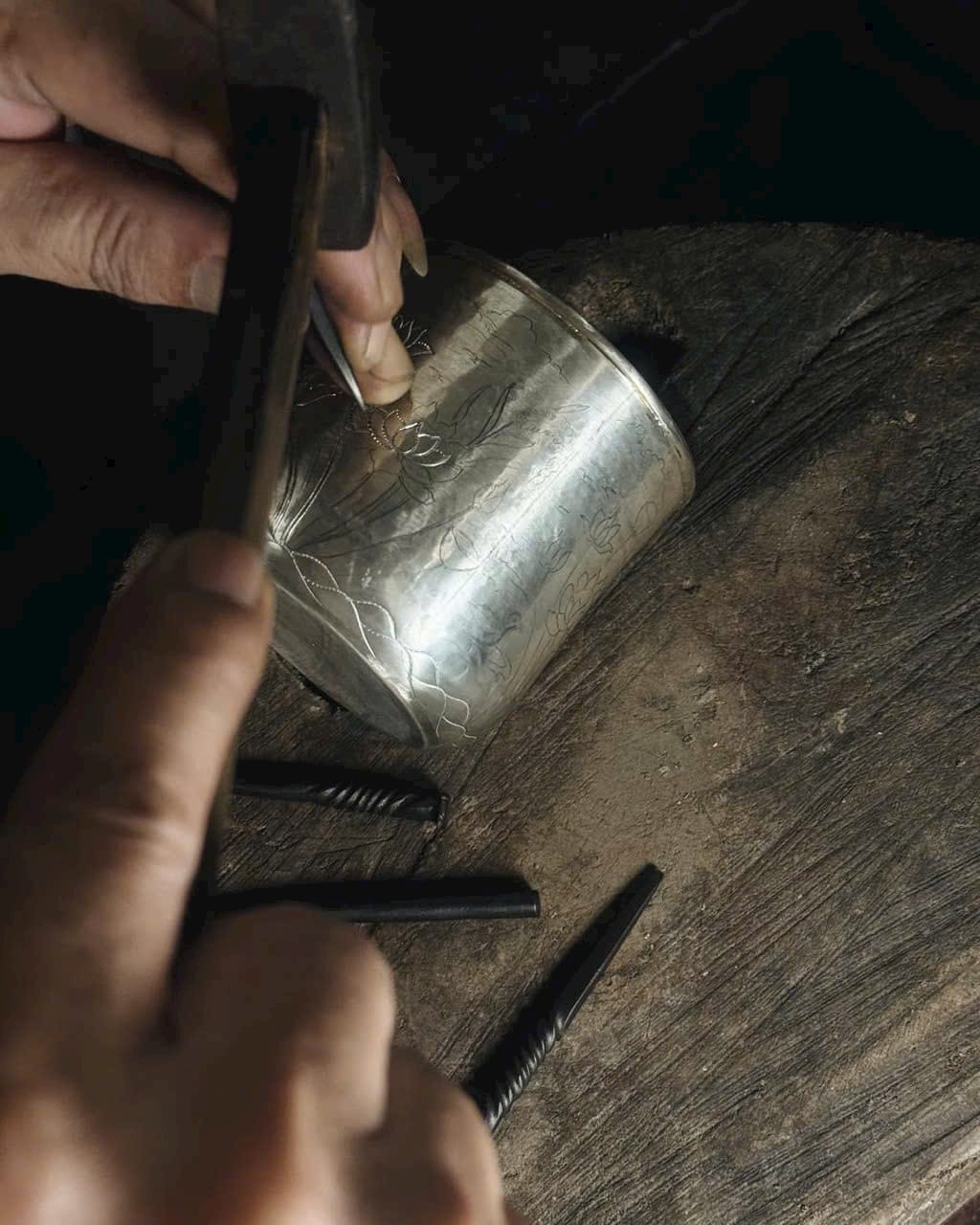
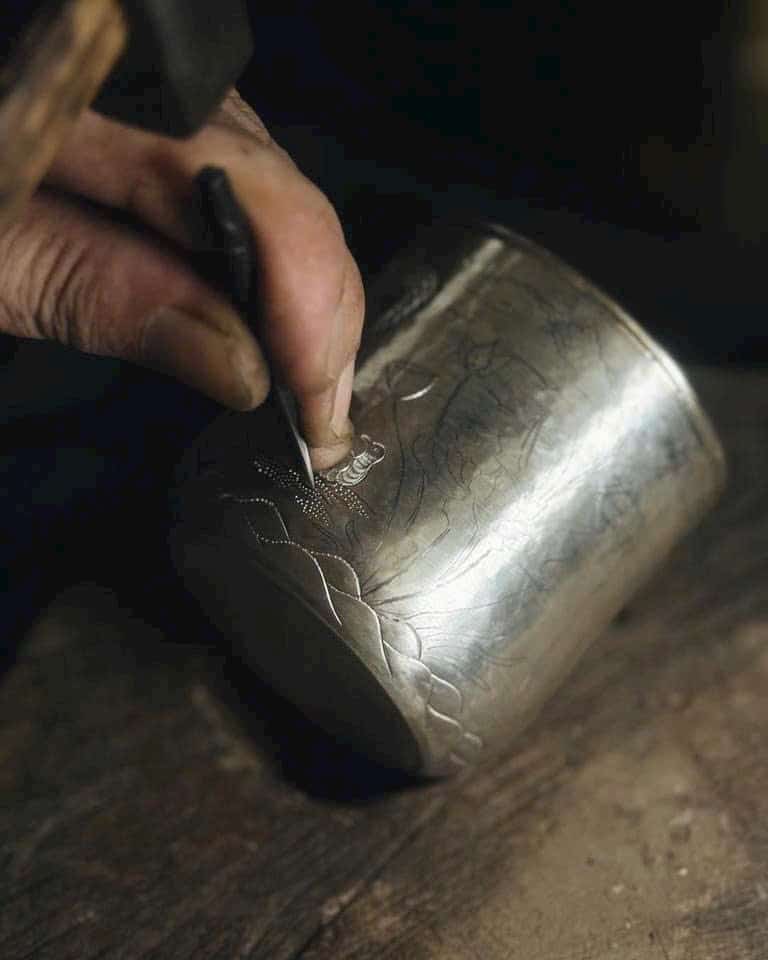
And here is the final result:


This cup weighs 115g and costs 233 euros as of June 2025.
I took it to a third-party lab for testing, and it’s indeed pure silver (99%). For me, at least, I trust this type of silver for food consumption. If there’s one criticism, I’d say the solder joints weren’t polished perfectly. You can see them. But maybe that’s intentional to keep that handmade feel.
Look what you can do with just a silver sheet. Silver repoussé will allow for more pronounced reliefs but requires more time and skill. I really appreciate this technique, but for now, I don’t have enough budget.
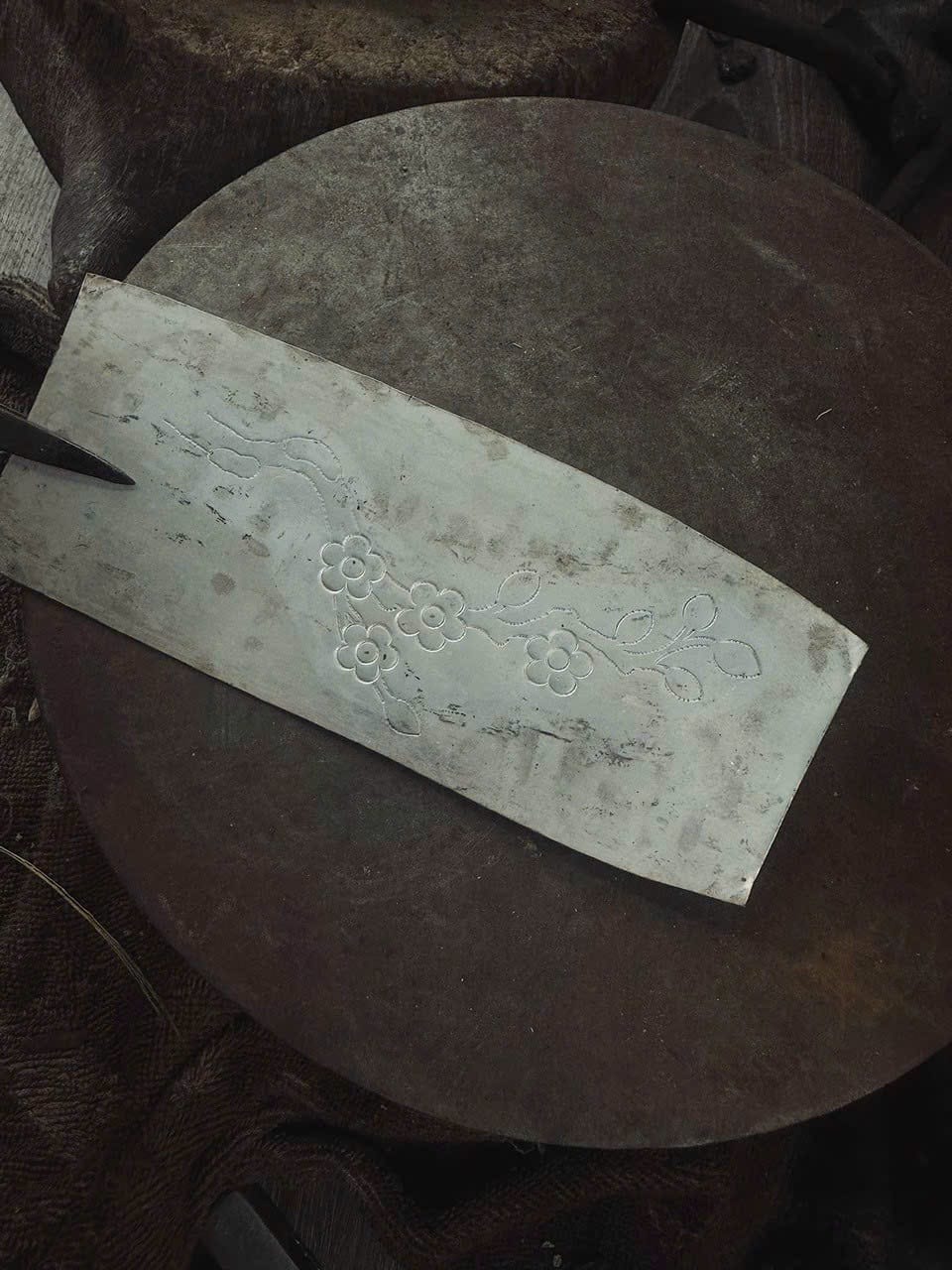
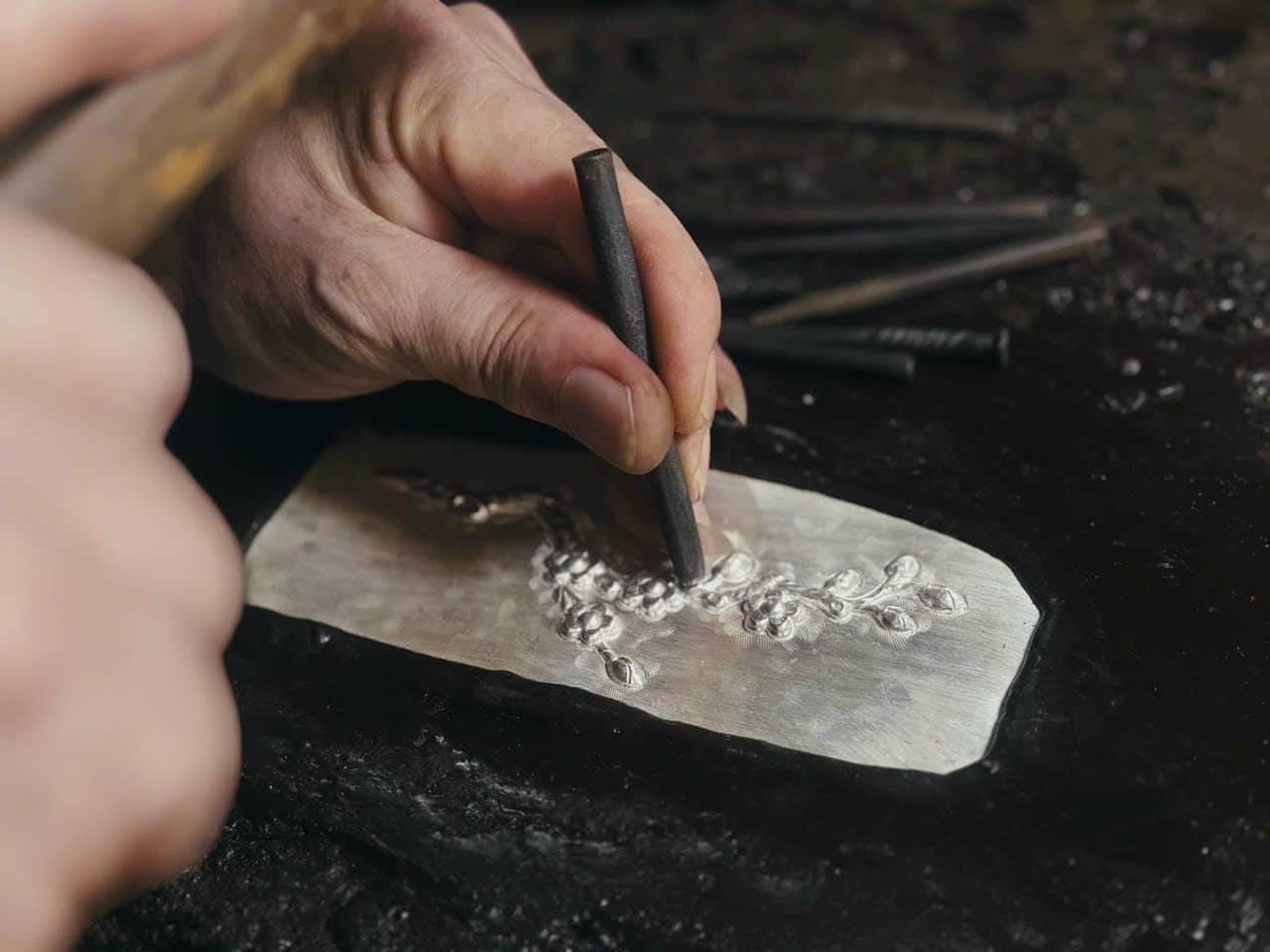
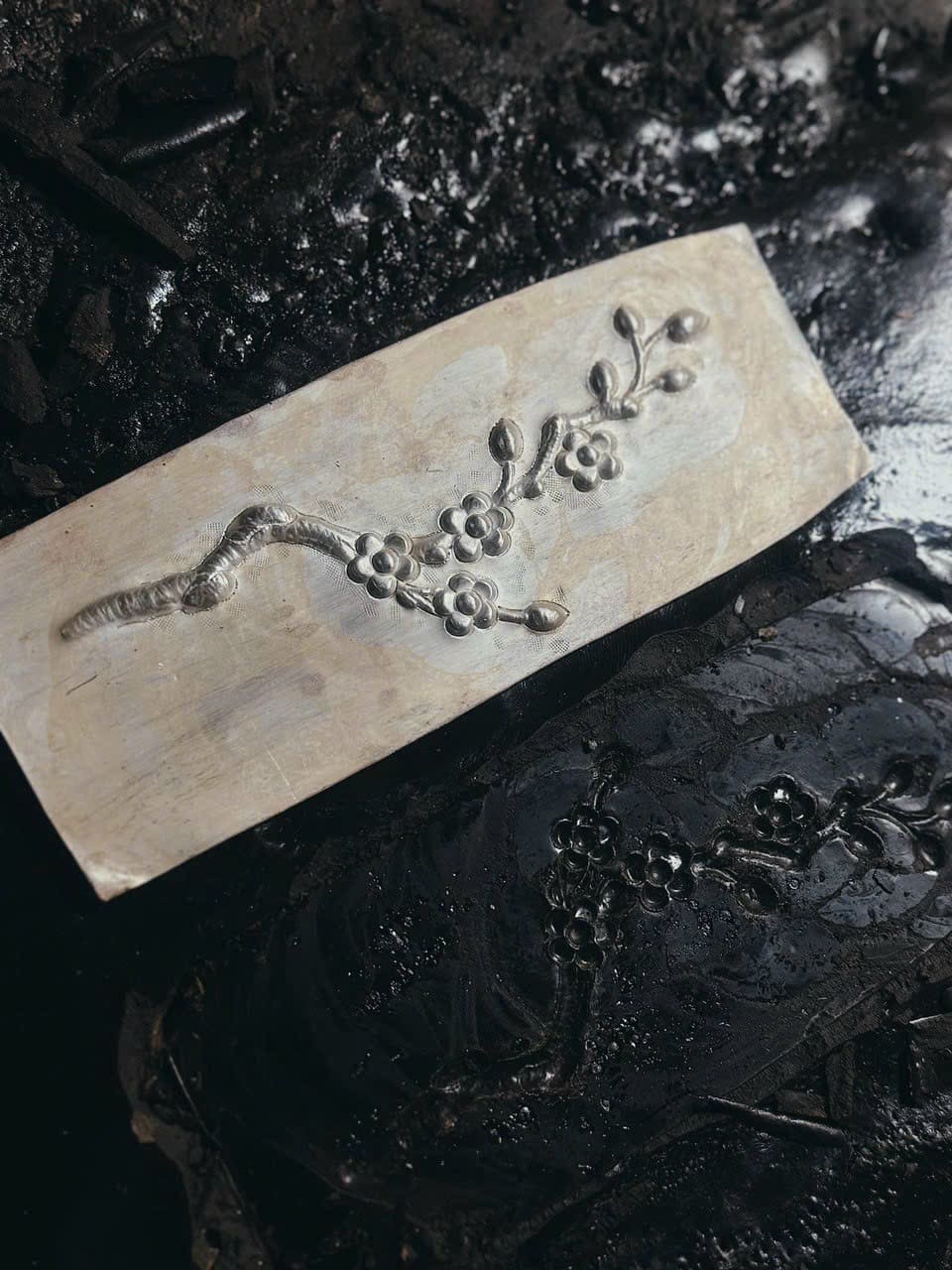

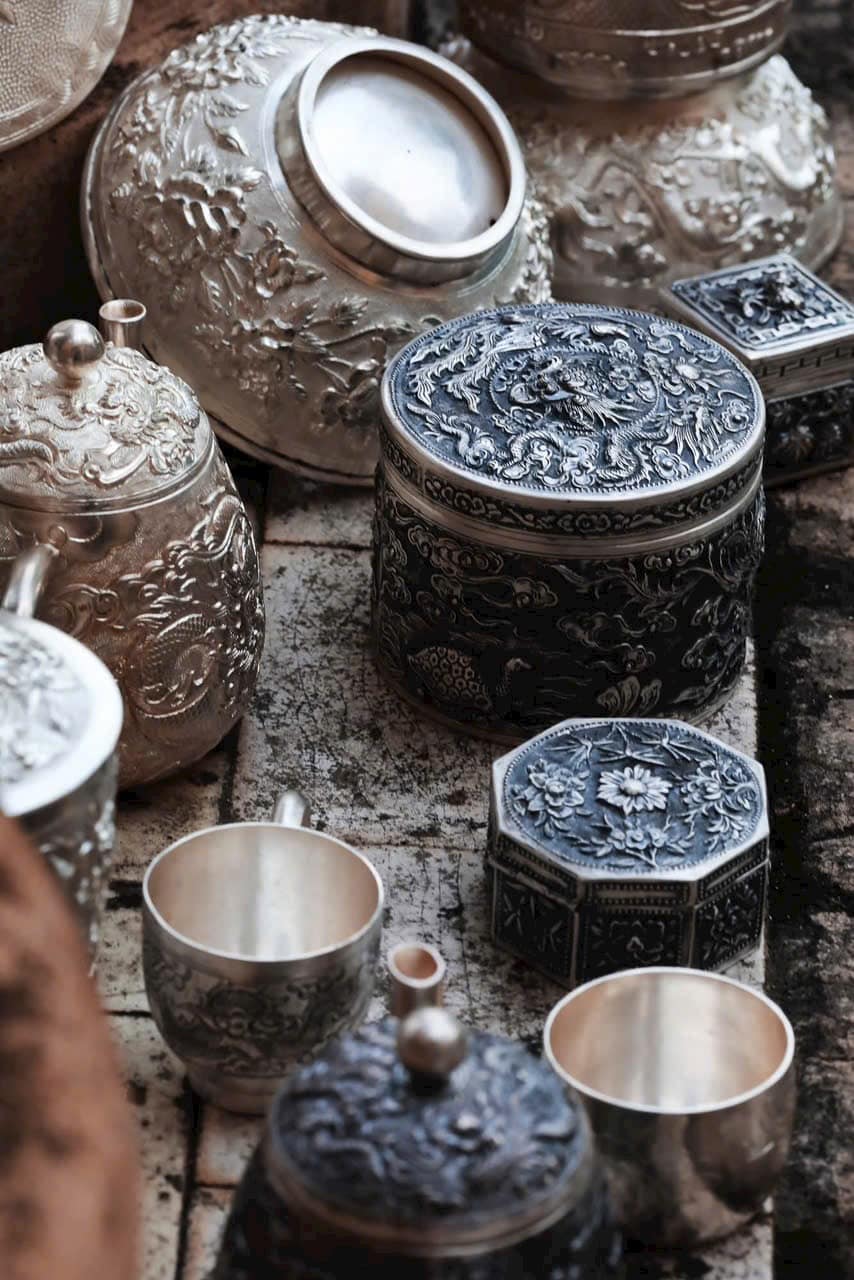
I admit, I’ve already thought about making a silver tumbler (super simple) myself (I do jewelry making too), it just requires two solders. Then I wondered if I had the specific tools (no!), a torch powerful enough for this kind of soldering (no), the desire (no), and I ended up buying. As of now, silver is around 1 euro/gram, so in the price I paid, there’s 50% labor, VAT, marketing, store, etc. That’s super reasonable!!! A 100g tumbler with a Minerve hallmark in France should sell rather around 200 euros without relief and outrageously priced with relief. Even in Turkey, I was shown a lighter, very simple cup that was more expensive. I’m glad I had the patience to wait until I returned to Vietnam to treat myself to THE cup of my dreams.
So, there’s only one cup, because the budget is limited, JB doesn’t believe in this silver ion story at all, and he doesn’t drink tea. Oh well, oh well!
For cleaning, they advise using 90-degree alcohol, preferably, or very diluted soapy water to clean. If the silver oxidizes, the store can clean it for free the first time and for a fee thereafter. I think I’ll just stick with a grandma’s recipe for that.
