
Catania & Mount Etna – Sicily Trip #2 (Italy)
I’m catching up on travel journals left unwritten since 2022-2023, and here we are in January 2023, having just left Malta by boat to head to Sicily. While the first stop is the famous Syracuse, the second (very brief) stop is Catania to visit Mount Etna.
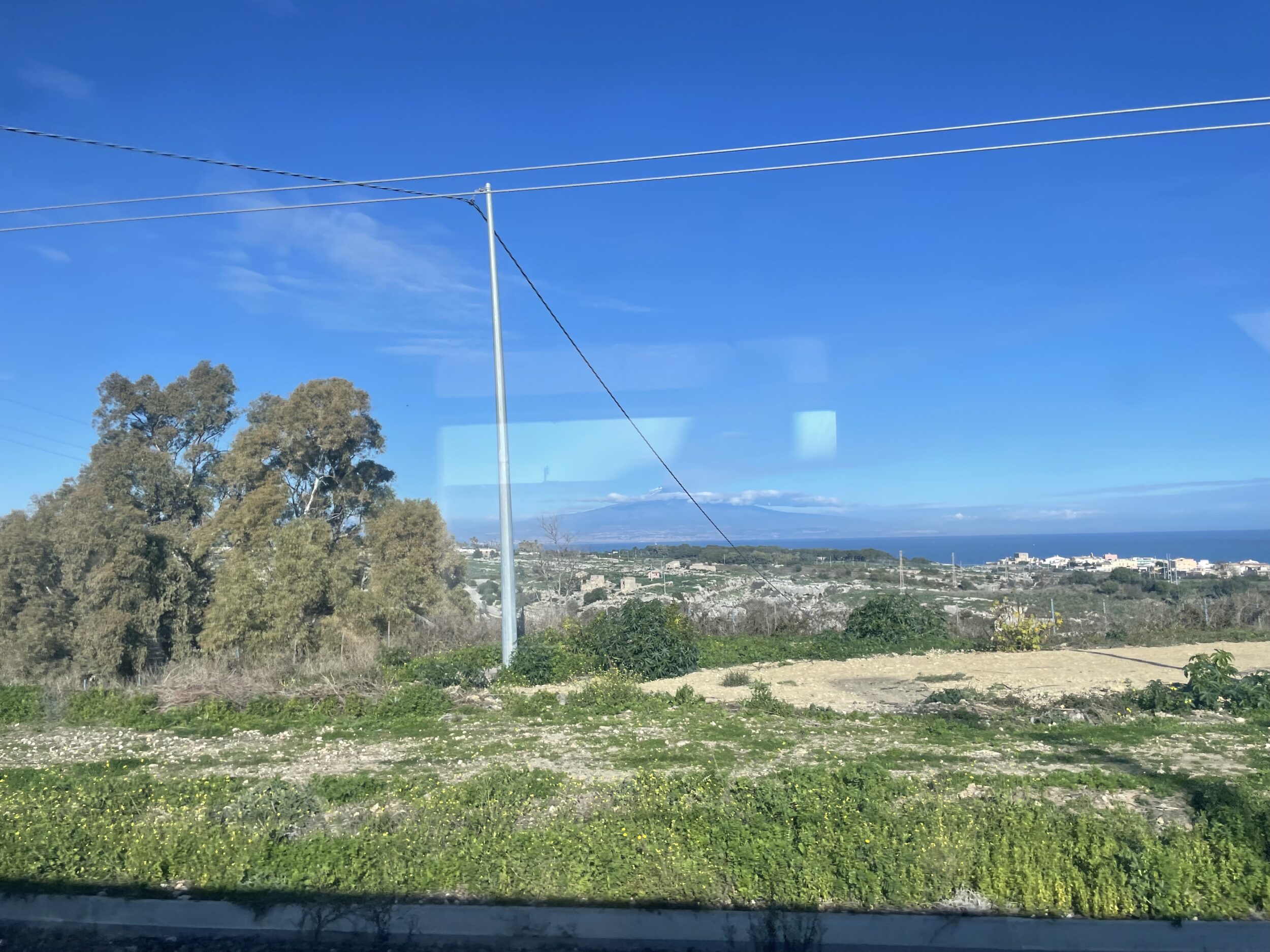
We take the train from Syracuse to Catania and spot Etna from afar. You can’t tell from photos, but it’s massive, given how far away we can see it. As an active volcano, it regularly releases gases and smoke plumes, even without major eruptions. This smoke is mainly water vapor, sulfur dioxide, and other volcanic gases. From a distance, it just looks like clouds.
Catania
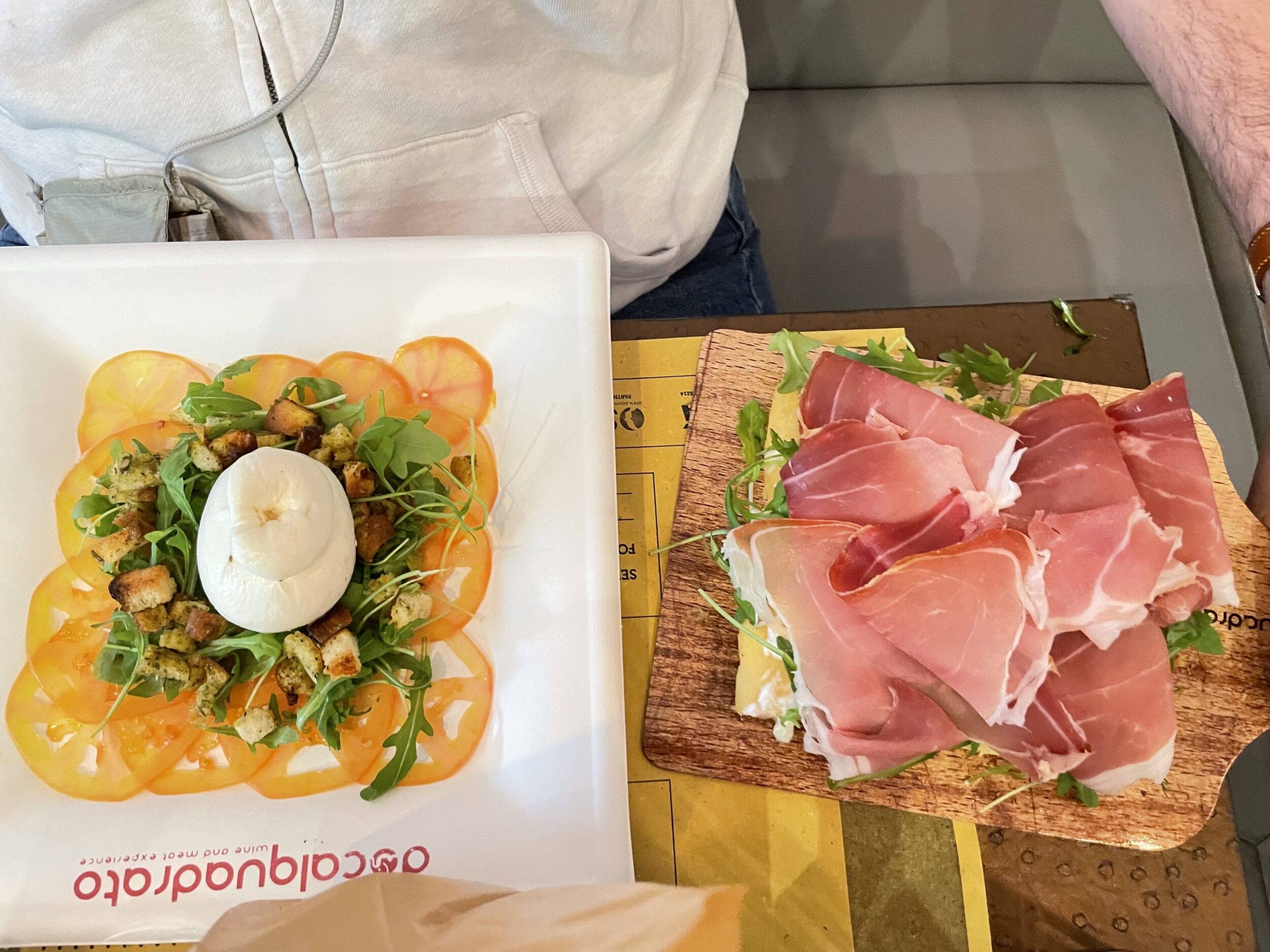
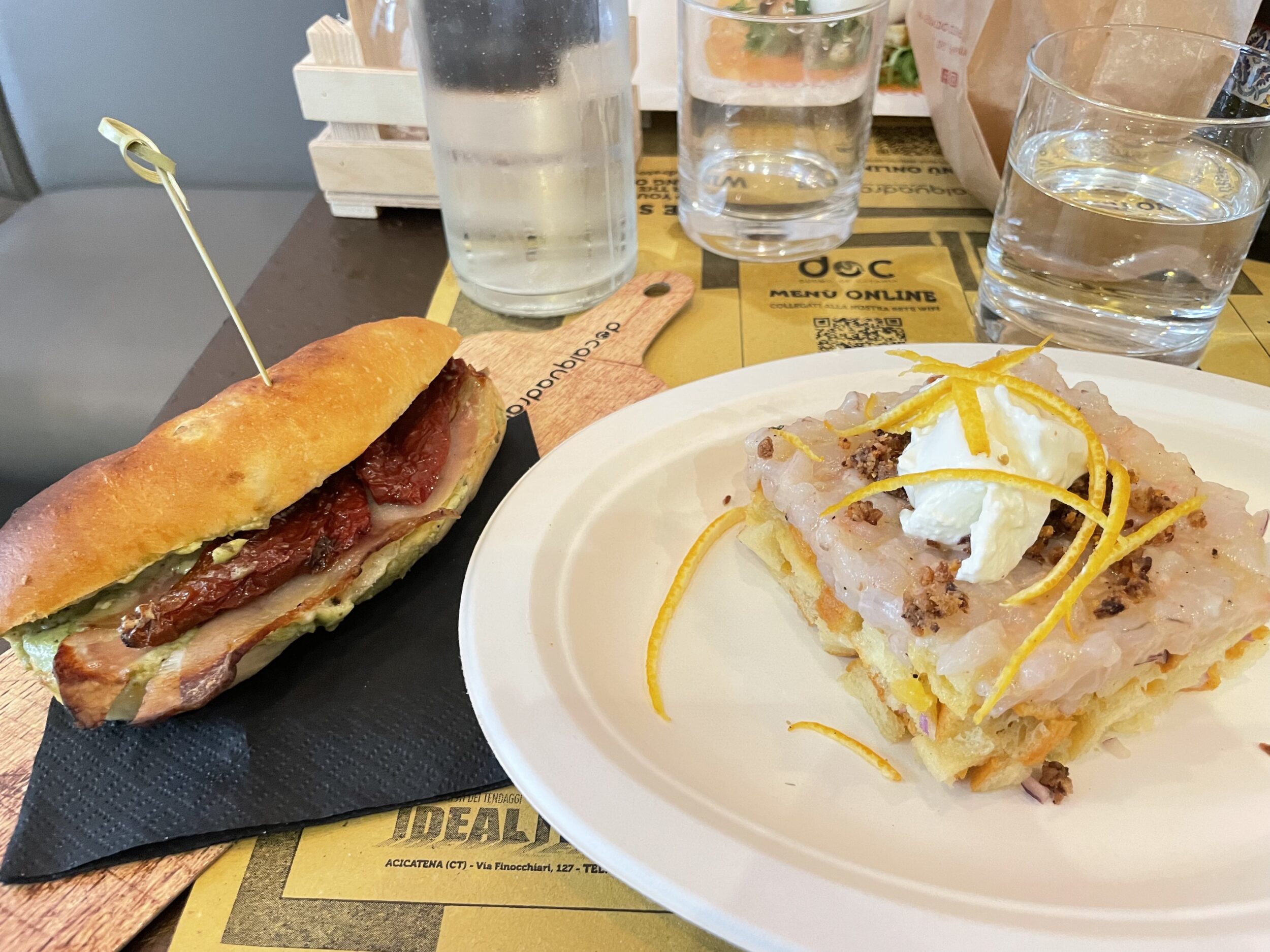
Catania’s city center is tiny but calm. We fully enjoy Italian food at a very reasonable price (between 9 and 13 euros per dish).
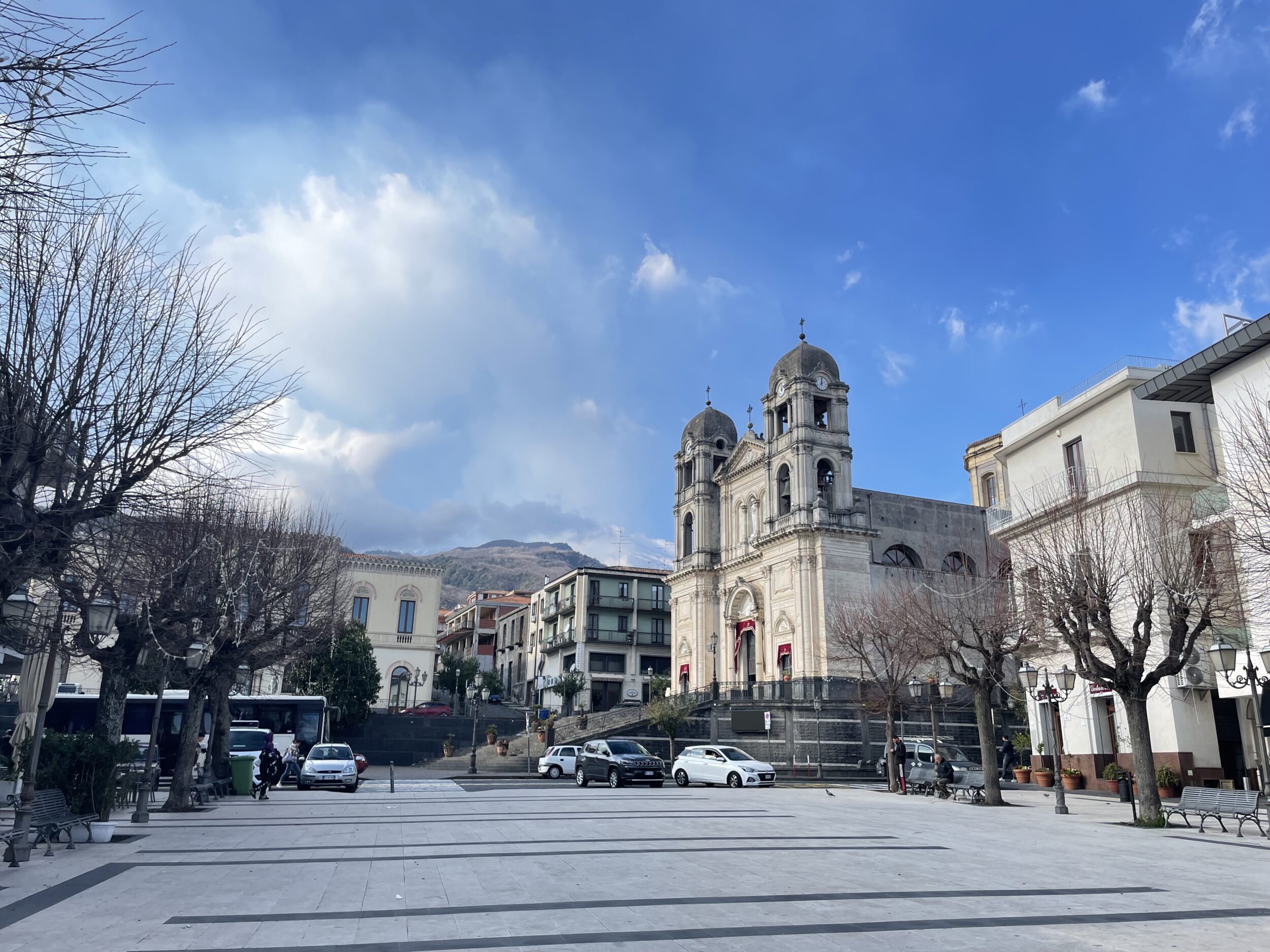
We stay here a few days to work, then rent a car to exploreEtna. We were advised of a few stops along the way, namely for handmade chocolate and a miniature museum in Taormina… but unfortunately, we didn’t have time for everything since we only rented the car for one day.
Etna
Mount Etna is Europe’s largest volcano and one of the most active and dangerous volcanoes in the world. Its impressive volcanic activity and natural beauty spark the curiosity of scientists, hikers, and tourists, making it one of Italy’s most sought-after destinations. It’s not symmetrical like Mount Fuji and changes its appearance regularly due to frequent activity. In April 2024, a new crater formed. Reaching an altitude of about 3,300 meters, it dominates the Sicilian landscape, covering a vast area of 1,200 square kilometers and having a base perimeter of about 135 kilometers.
Mount Etna also plays a central role in Greek mythology, often associated with Hephaestus, the god of forges and fire. Etna has been a UNESCO World Heritage Site since 2013. Its last eruption occurred on August 10, 2023. Although relatively moderate, it produced significant ash columns that led to the temporary closure of Catania airport in Sicily due to low visibility and risks to aviation.
Growing up, I heard about active volcanoes in Sicily and imagined something more “end-of-the-world”—constant tremors and all—but after visiting several active volcanoes, especially in Latin America, I’m no longer afraid of them.
While it’s fairly warm in Catania, we see more and more snow as we approach Etna, and it gets colder and colder. Luckily, we’re dressed warmly, but we didn’t expect it to be this cold.
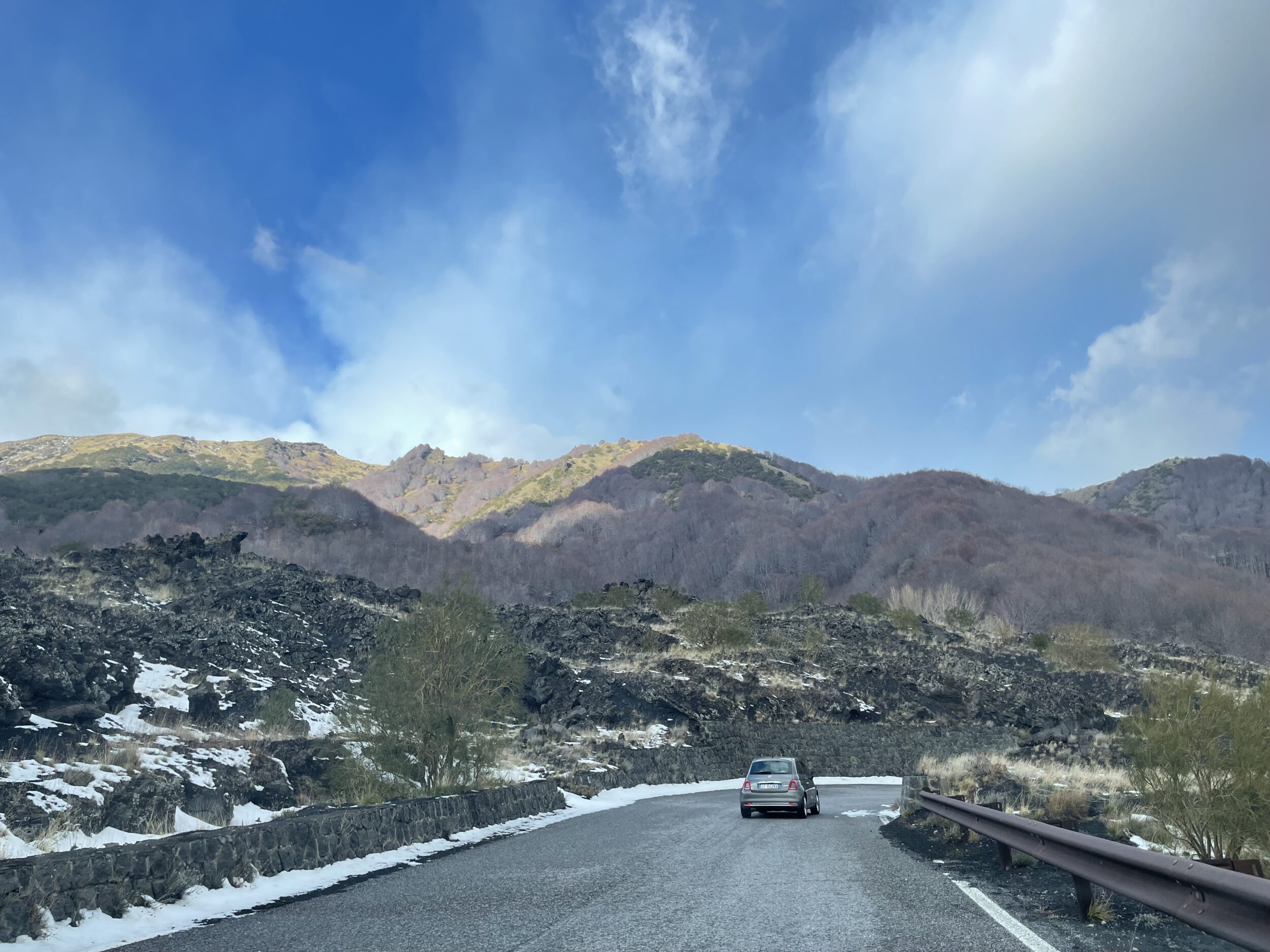
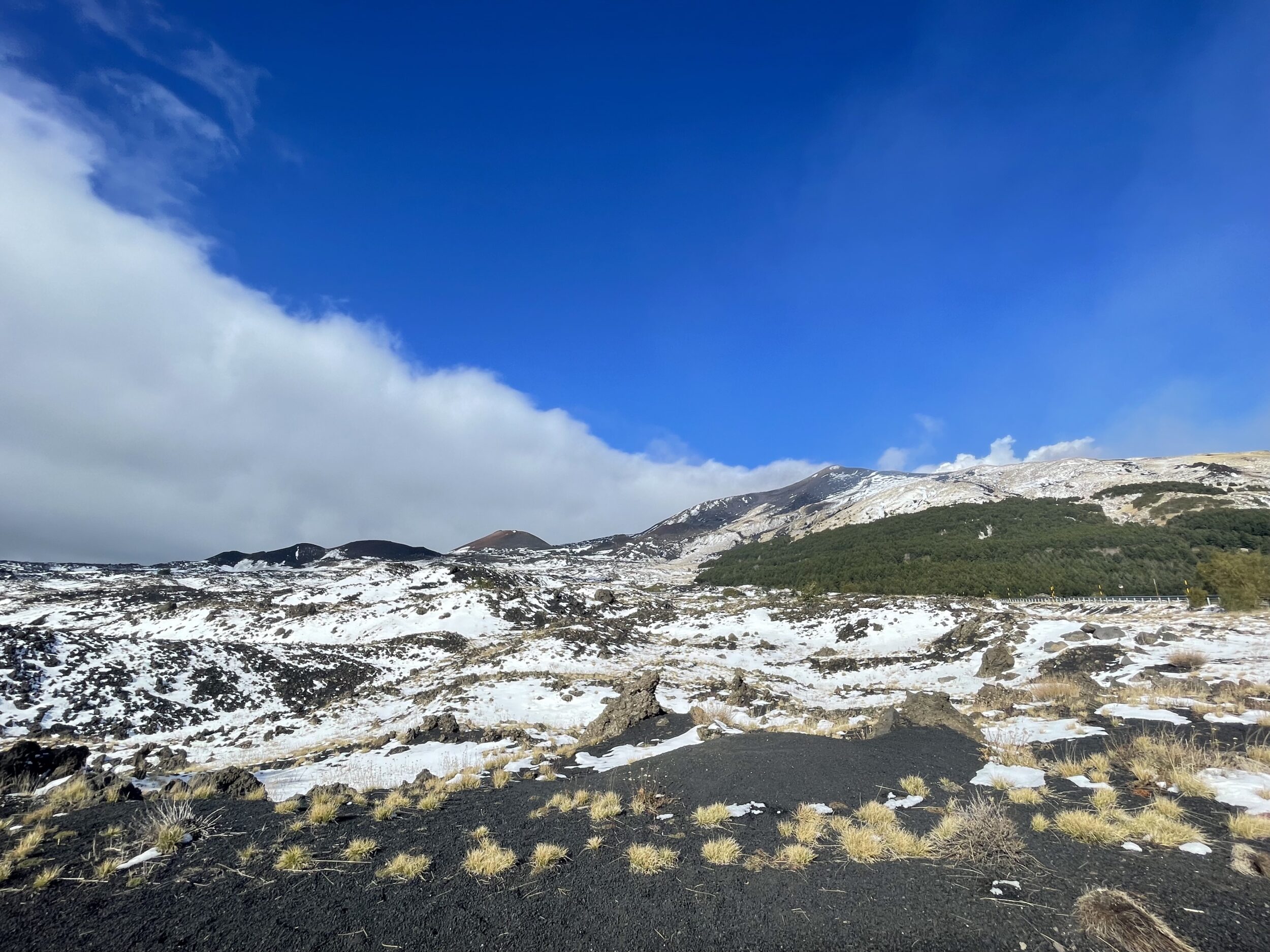
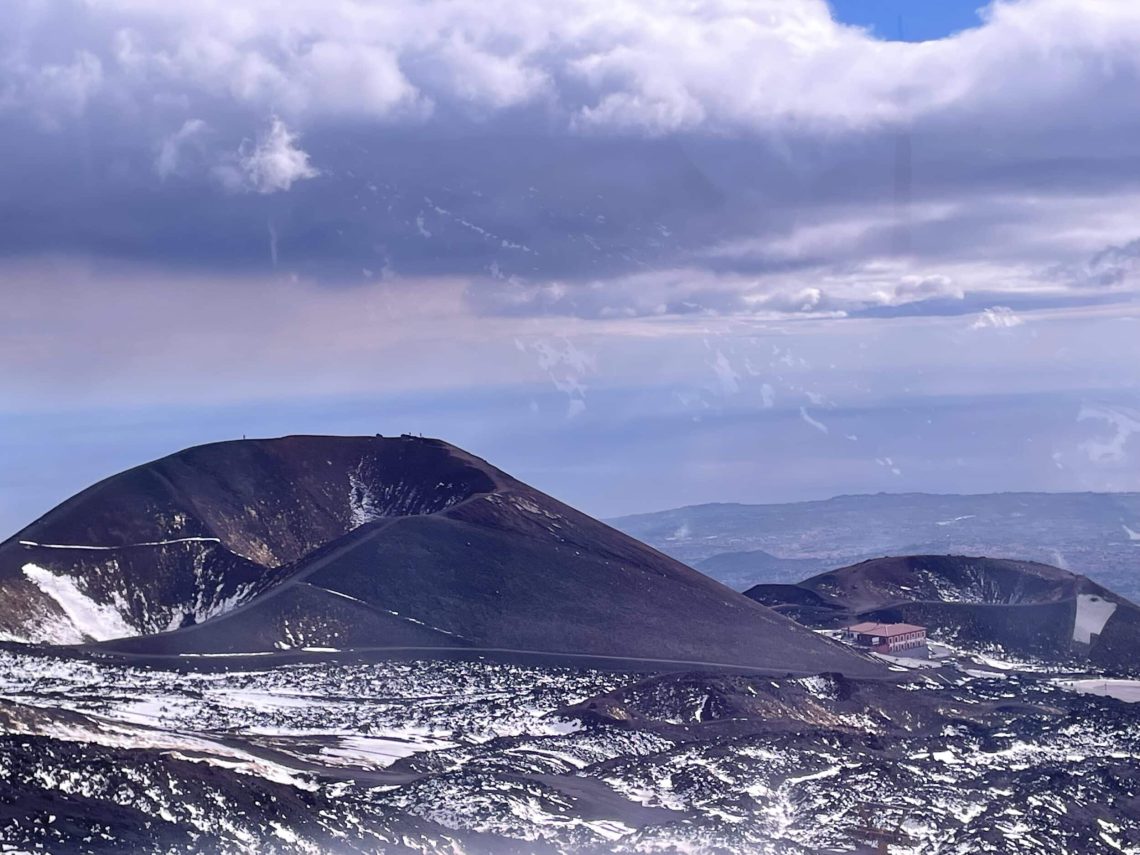
We discover the volcano in “ski resort” mode, with a cable car taking us up to 2,500 meters (21 euros/person round trip). Gaining some height lets you grasp the size of Etna park and, especially, better view the two craters near the parking lot. But we also lose 10 degrees and get cold!
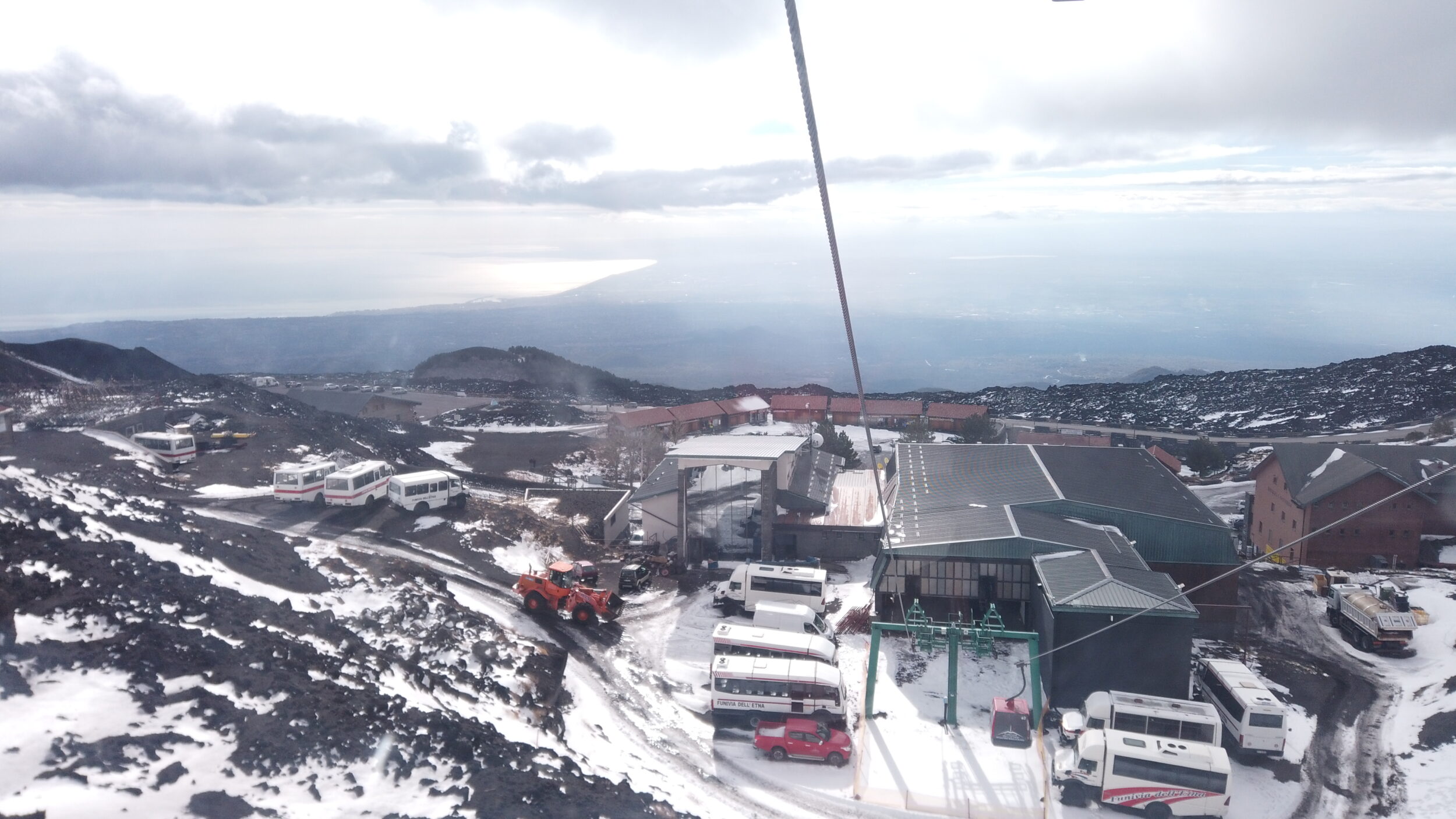
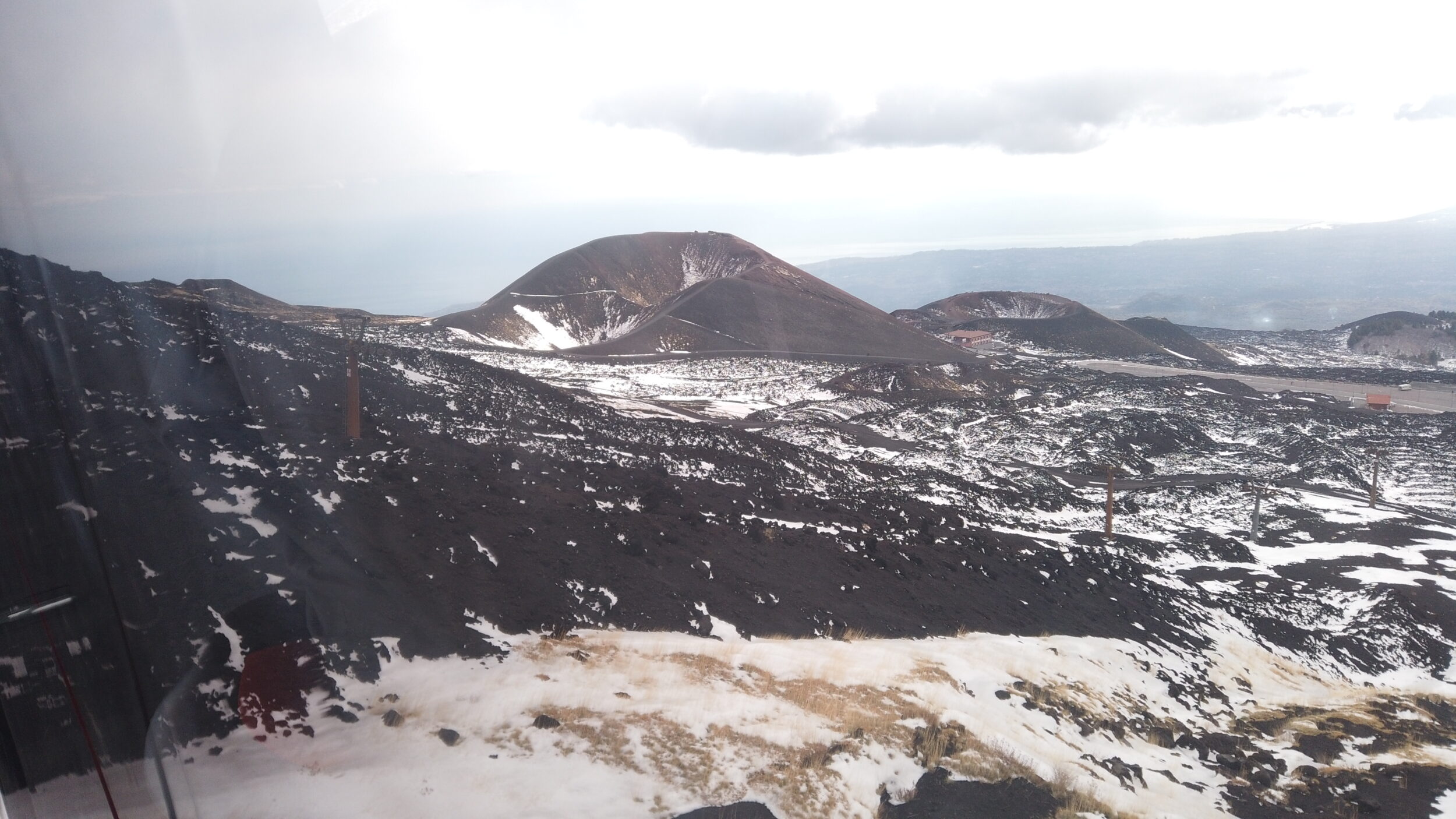
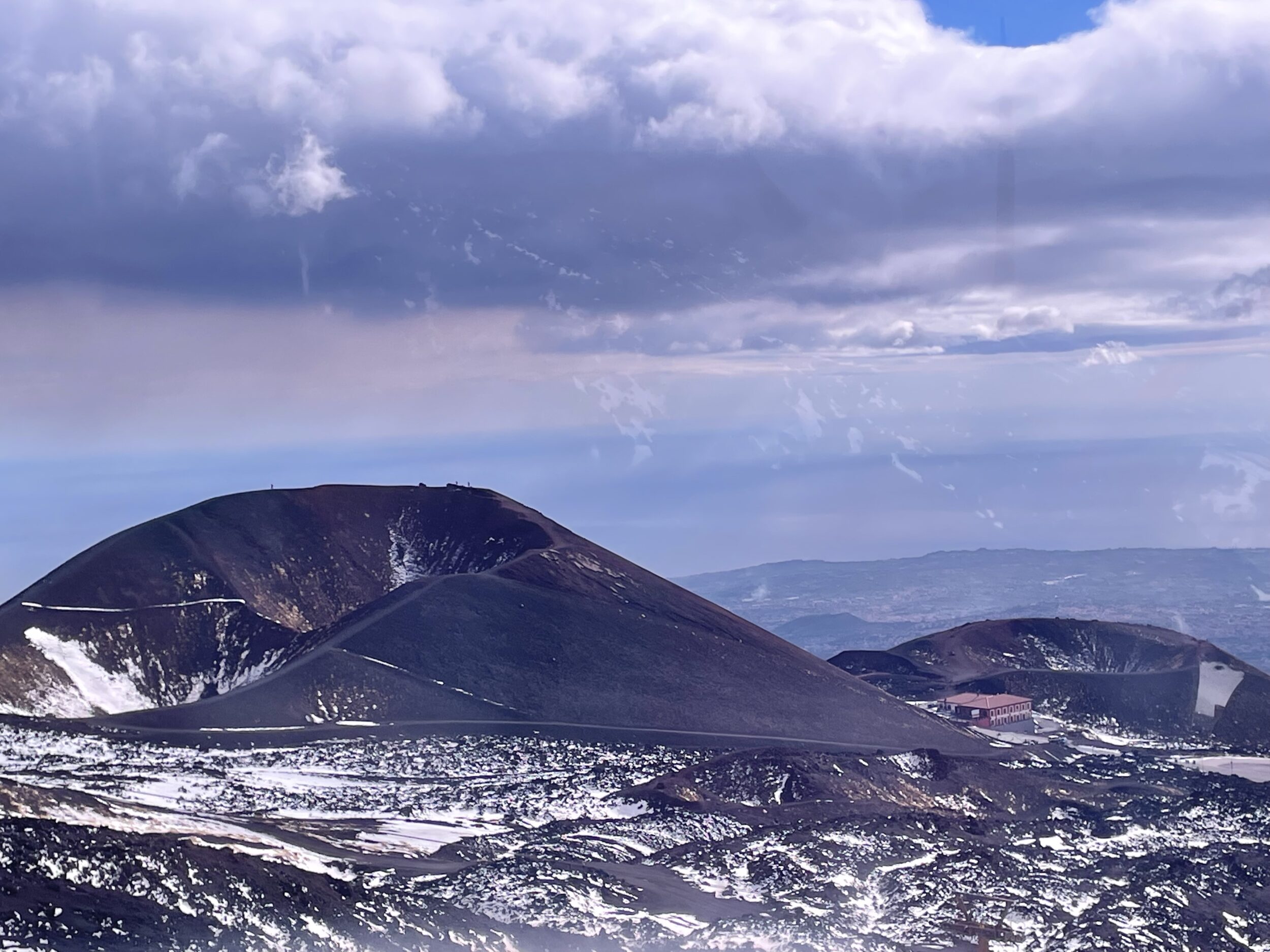
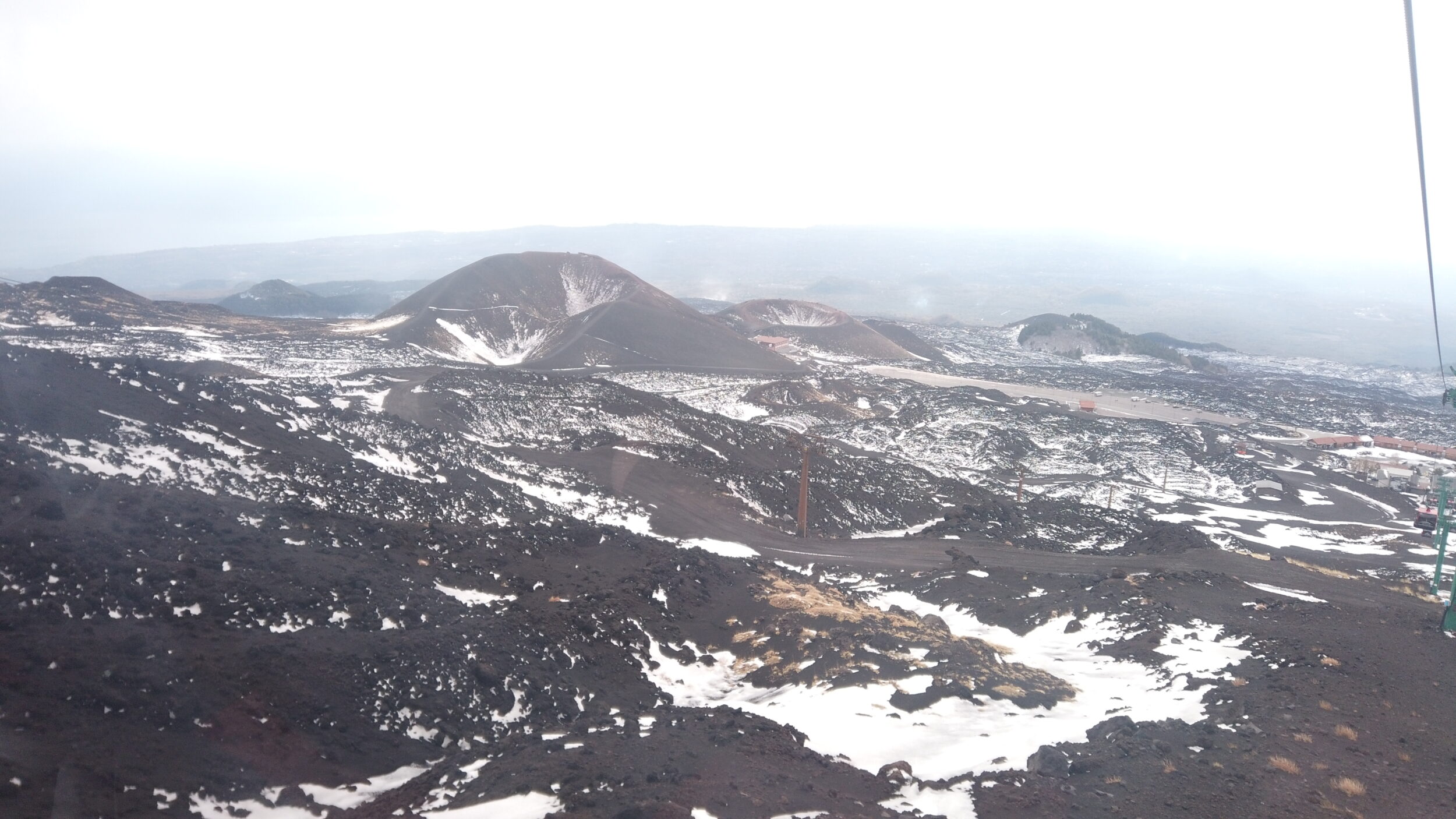
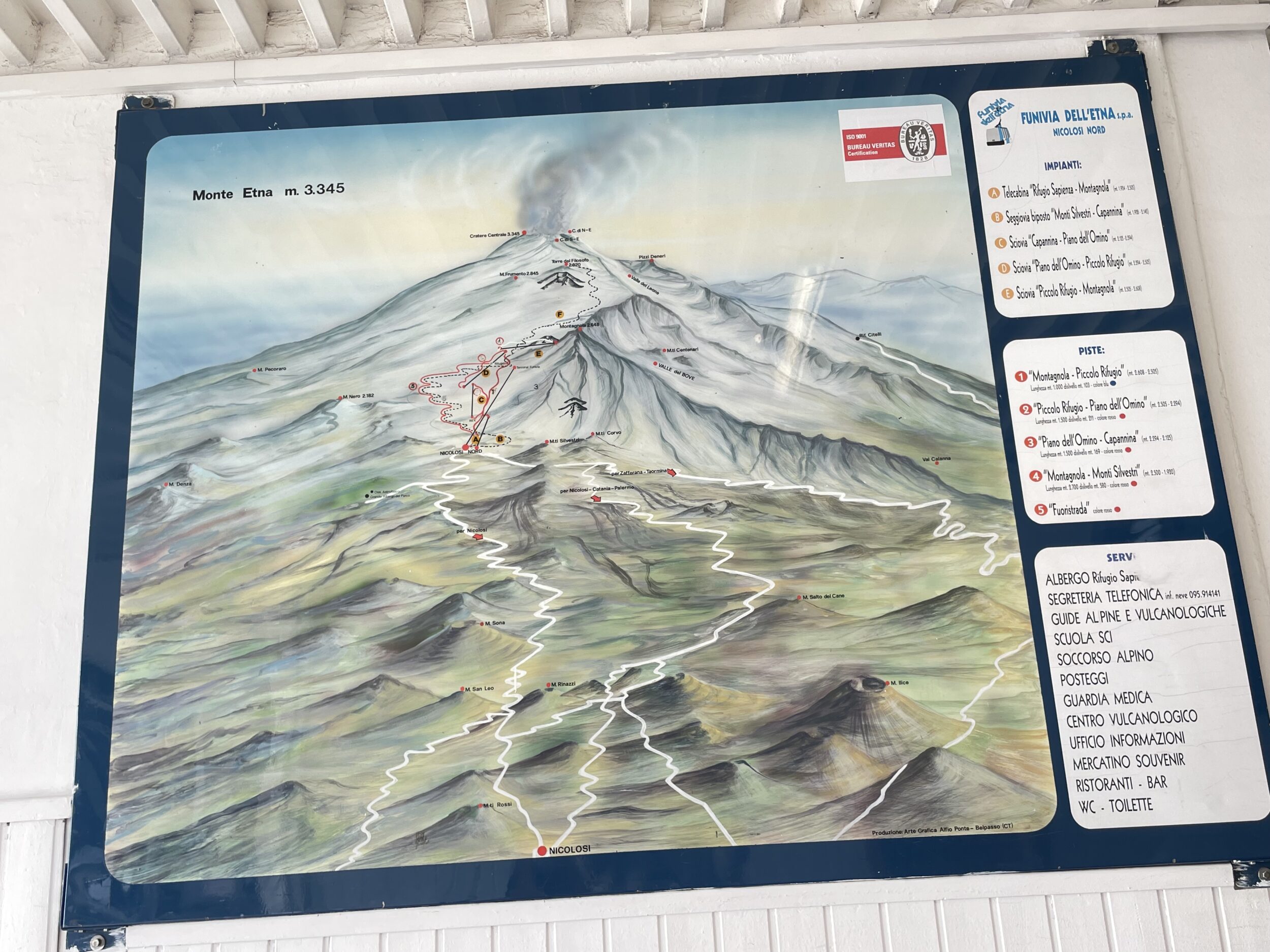
If we want to continue and go higher, we have to go on foot, like this very brave gentleman.
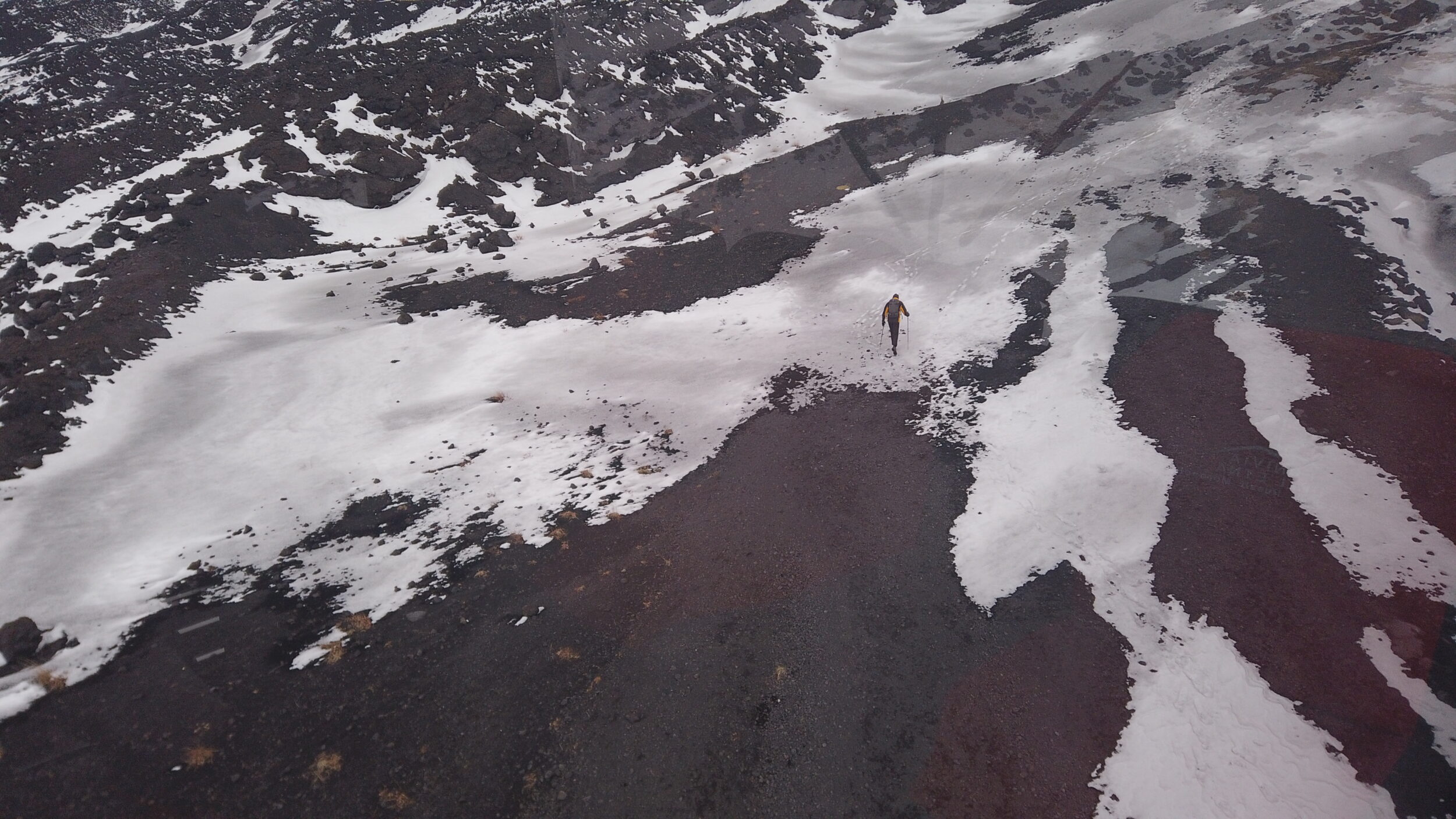
A few minutes later, fog rolls in and we can’t see a thing. We stay for 10 minutes to see if the weather improves, but since we can’t see 5 meters ahead, we head down ASAP.
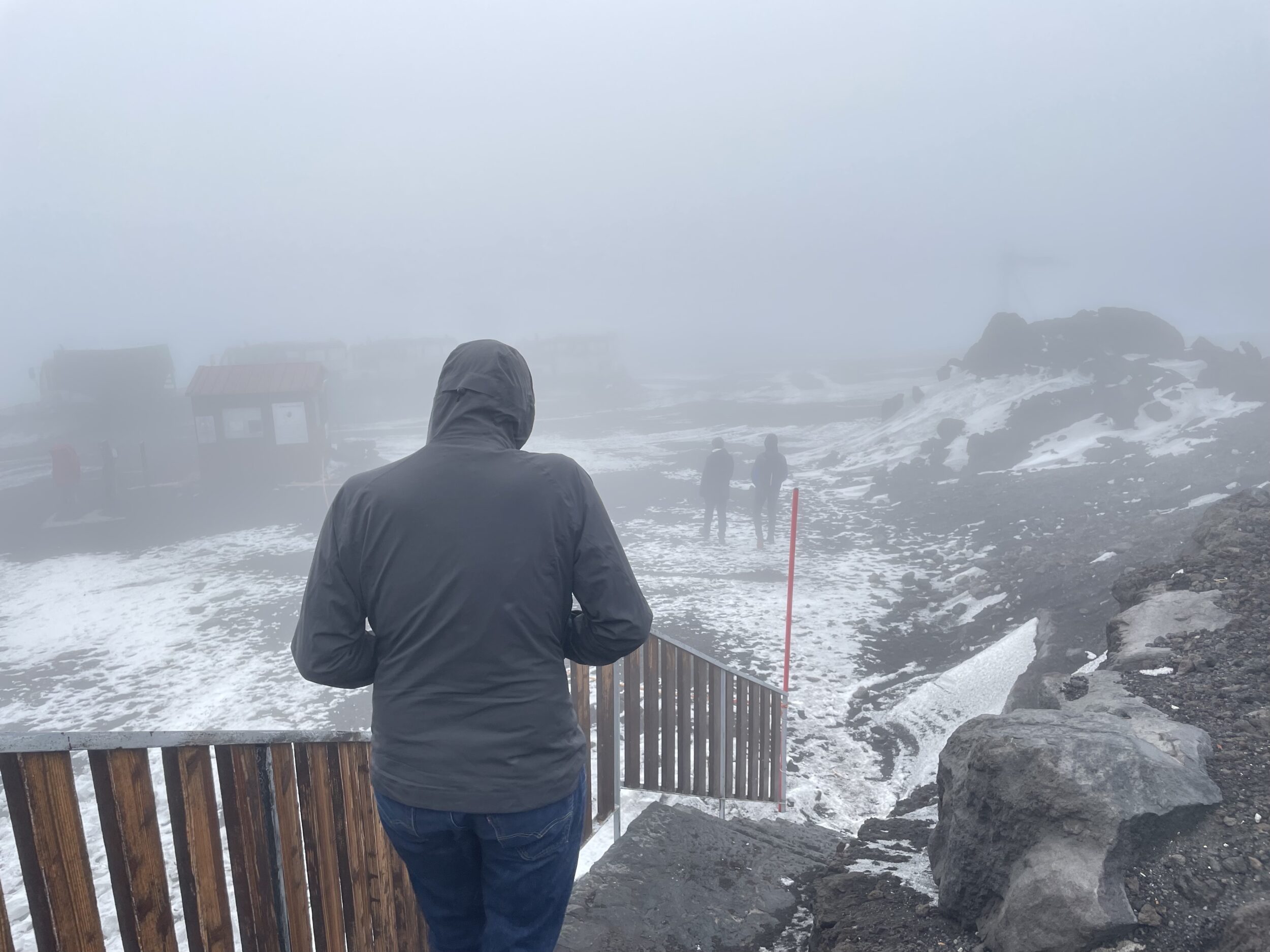
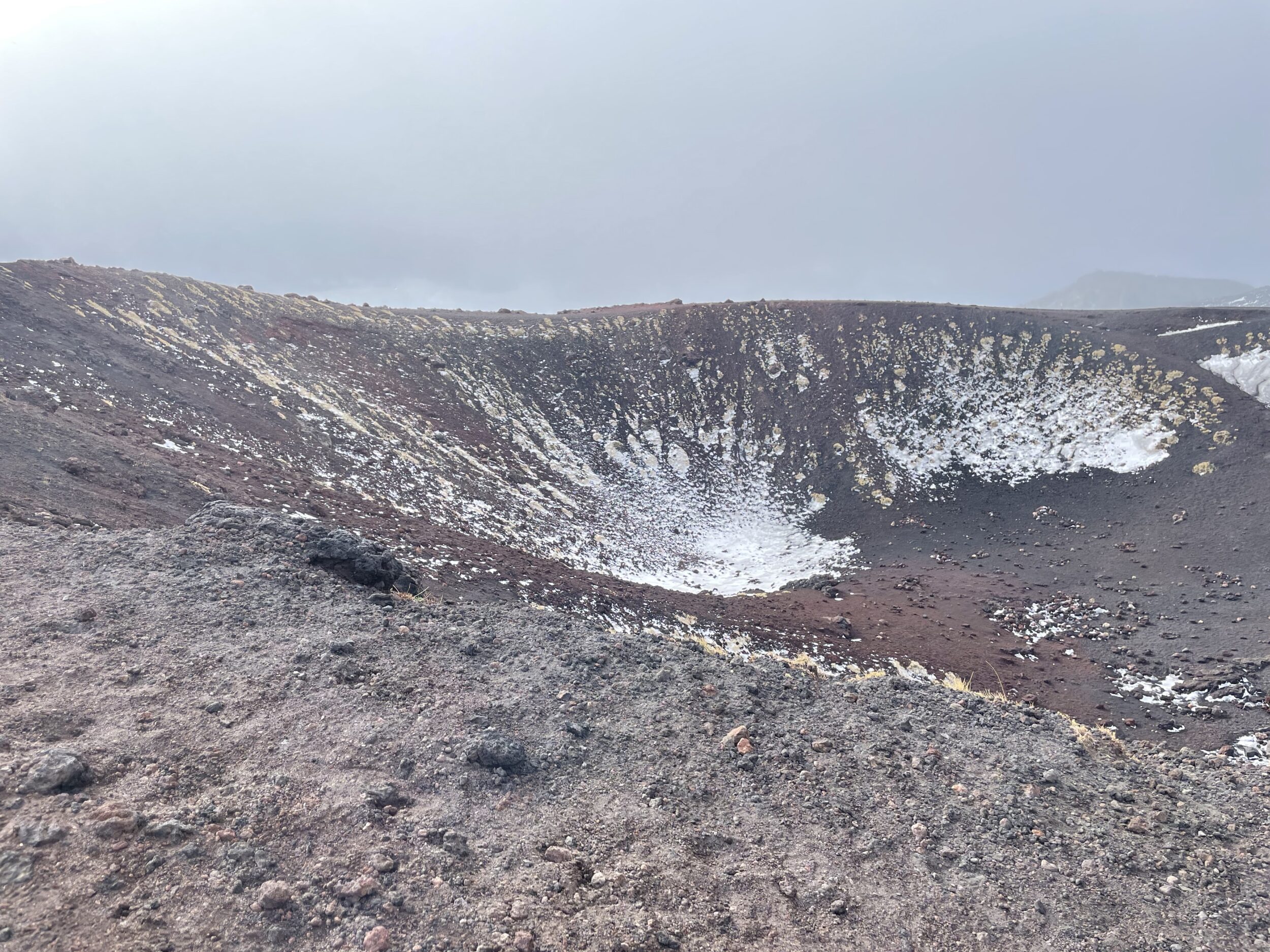
We visit the craters near the parking lot. Though impressive from above, up close they’re not that amazing. Plus, it’s snowing!
Gole Alcantara Botanical and Geological Park
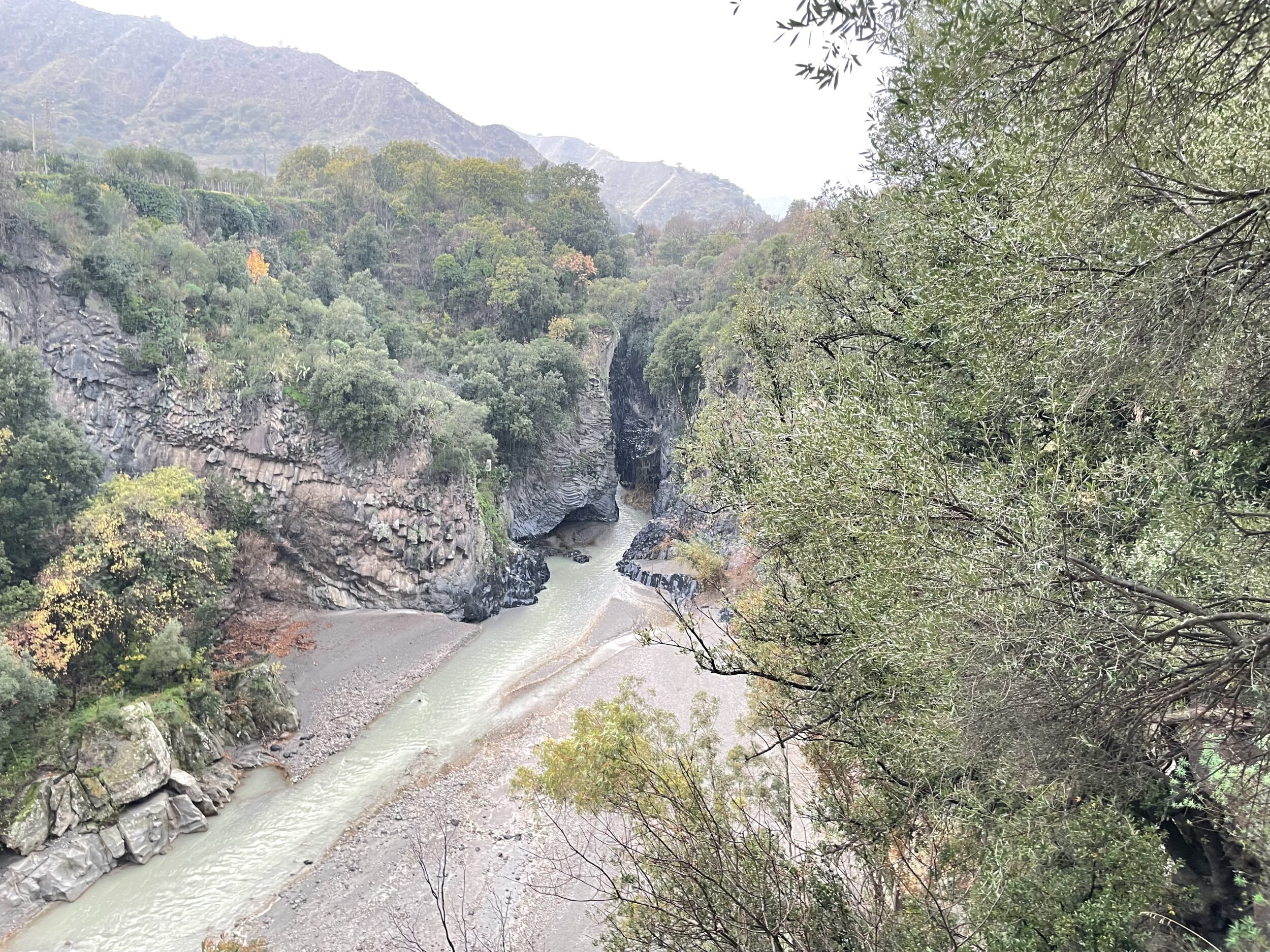
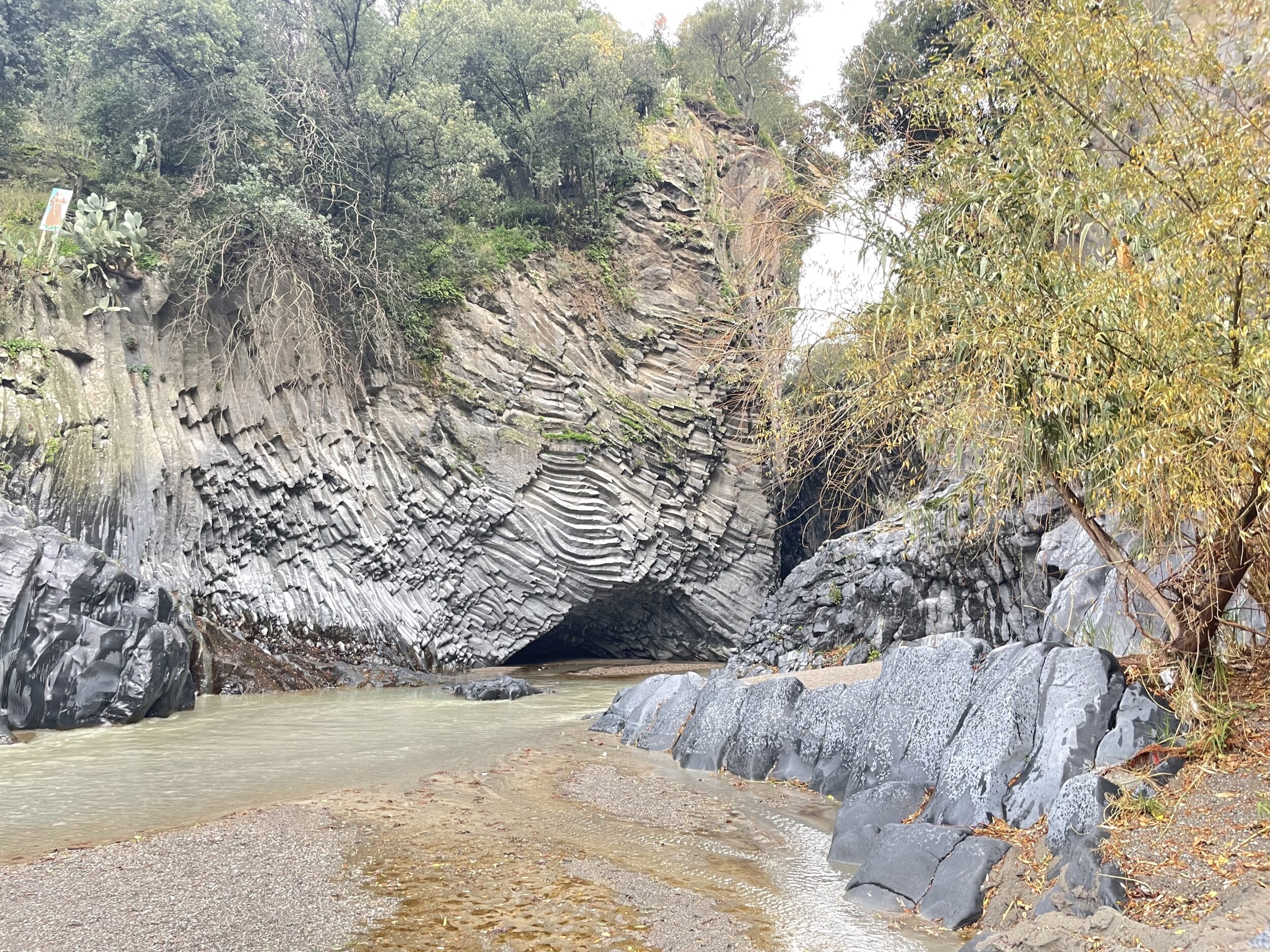
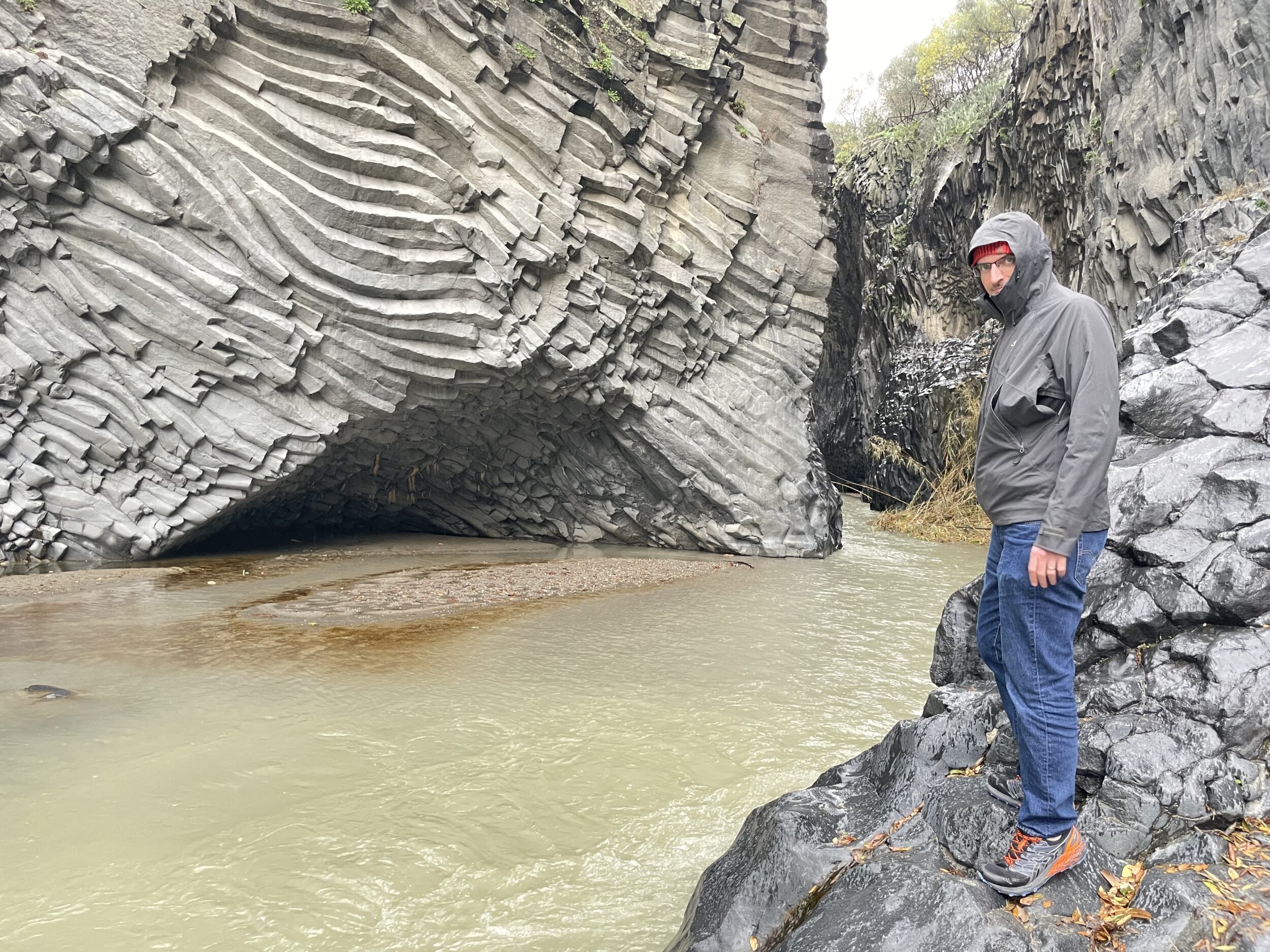
Too much for me, we get back in the car to go to Gole Alcantara Botanical and Geological Park (10 euros/person). It would have been a nice spot with 20 degrees more, and for swimming! The water looks amazing! But it’s raining, and we advance as far as possible to see this typical volcanic structure. The hexagonal basalt walls were formed by ancient lava flows from Etna, cooled and sculpted by water. They stretch about 6 kilometers, but you can access a 400-meter section in summer and 20 meters in winter. It reminds us so much of Iceland andJeju Island.
The next day, we take the train across all of Sicily, heading toward Palermo.

