
Fabric printing techniques
I put together a mini guide on fabric printing techniques on Instagram and I wanted to keep a record of it on the blog because it’s a really interesting topic.
I’m not a fabric collector, but this topic has stuck with me for several years. I have to say that I visit a lot ofartisan workshops during my travels, and I’m a DIY enthusiast (do it yourself), so I have a lot of knowledge in this area. I really enjoyed my visit to the Museum of Printed Textiles in Mulhouse, which I told you about here.
Dyeing
The very first technique, and we’re not talking about patterns yet, is dyeing.
Originally, pigments were natural, but you can’t just dip fabric into a color bath. The colors also need to stay on the fabric. So a mordant, metallic salts, is used for that.
This business of a “fixative” also applies to perfumes. Back in the day, to scent your laundry, you couldn’t just put flowers on it. Musk, thanks to its fixative properties, was widely used for linen. Hence that association we still have: musk = cleanliness. Even today, you need base notes (amber, musk, vanilla…) as fixatives for the top and heart notes in perfumes.
Block printing
Now that dyeing is mastered, there are different techniques for creating patterns.
The ancient technique, but still used by some brands in India, is block printing. You have wooden stamps to create the pattern. You have to stamp thousands of times, the work is manual and not very precise. There are as many stamps as there are patterns and colors, of course.
Weaving
The pattern can be achieved through special weaving. I’ve had the chance to observe several damask silk weaving machines. Damask silk has matte patterns and shiny background. Back when it was done by hand, it required two artisans to weave such silk. Now, machines have been improved to master this technique. There’s like a music score behind the machine to guide the threads, to have them pass sometimes over, sometimes under.
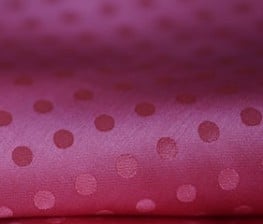
A special weave, recently used by Dior, is ikat. The threads are dyed beforehand, and the machine’s settings produce a base weave to create the pattern. It takes an enormous amount of time. The process itself is admirable.
Now let’s get back to printing.
Copper plates & rollers
Wooden boards are cool, but the patterns are less precise and bigger.
Someone had the bright idea to use copper plates.
You still stamp with copper plates, but this time the designs are much more precise, finer.
However, stamping the same pattern thousands of times takes time and gets tedious.
Someone else had the idea to turn the plate into a copper roller. The pattern is engraved on the entire surface of the roller, then you just roll it over the fabric.
Flat-bed screen printing
In the 1930s, a new printing technique appeared: flat-bed screen printing . A gauze is stretched over a frame and coated with varnish on the areas where color shouldn’t pass through: it’s basically the stencil principle.
This is the technique still used today Hermès for their silk scarves. The process has been well automated since then, but we’re still one frame per color. Some squares have 70 colors, so that’s as many passes as colors. A titanic job. Let me show you a video of another manufacturer who still does it by hand.
The 1960s are comparable to what the 19th brought to the 18th: the flat tool becomes cylindrical. A rotary screen in micro-perforated nickel diffuses the dyes. This technique will quickly become dominant in textile printing.
Modern printing
The computer now simplifies the process and allows for greater freedom. Instead of making a heavy, costly metal roller, we can now even take advantage of custom textile and apparelservices, at minimal cost. This results in lower production costs, bolder patterns, more varied colors. A dream for fashionistas.
Eco-printing
Another printing technique is making a comeback among DIYers: printing with leaves and flowers. You still need a mordant in this process, so the color stays fixed on the fabric.
Silk marbling technique, using dyed starch paste
There’s only one family (Japanese) that masters the technique. Hermès found them, then Dior came to place an order. I’ll let you watch both videos to understand the technique behind it.
Wax printing
This is the technique used for very colorful African fabrics. You mask the pattern you don’t want to dye with wax.
Marbling
The ink floats on water, and you just lay the fabric on top to pick up the whole pattern.
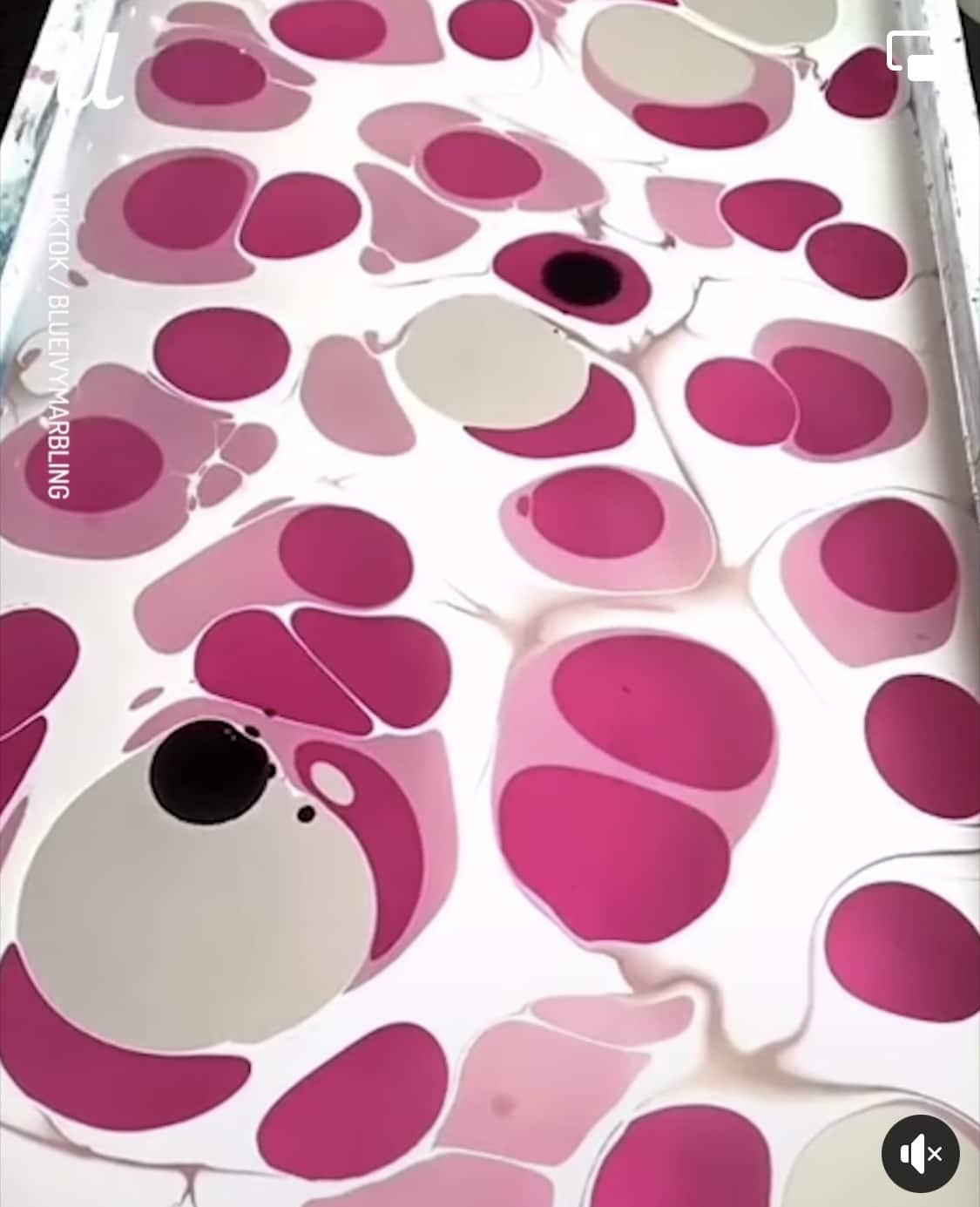
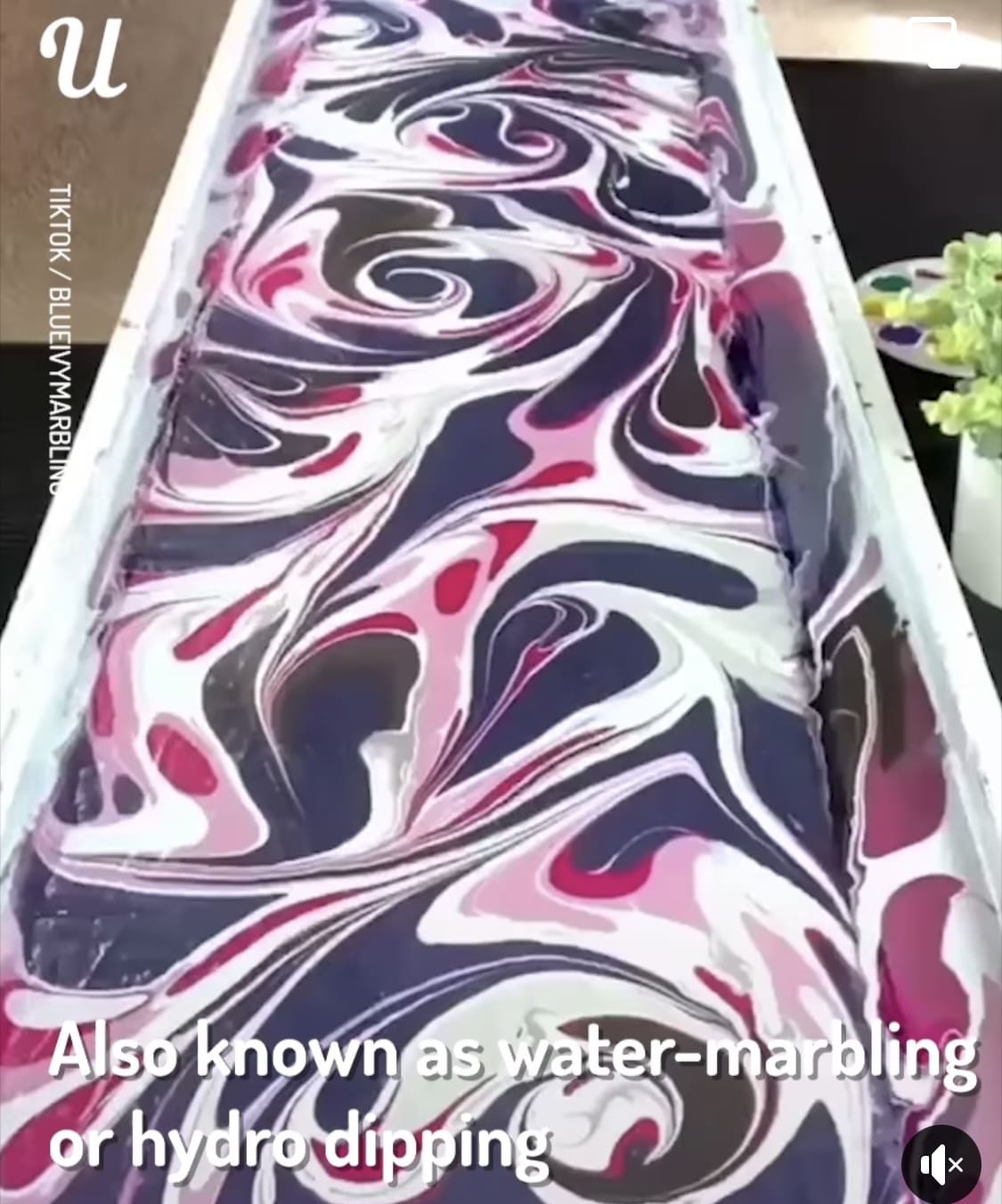
@blueivymarbling Spreading joy #blueivymarbling #smallbusinesstiktok #satisfyingvideo #boutiqueshopping #arttok #happyvibes ♬ Count on Me (Instrumental Version) – Instrumental Pop Songs & Soft Background Music

