
[review] Book “Marcel Proust: The Making of the Work”
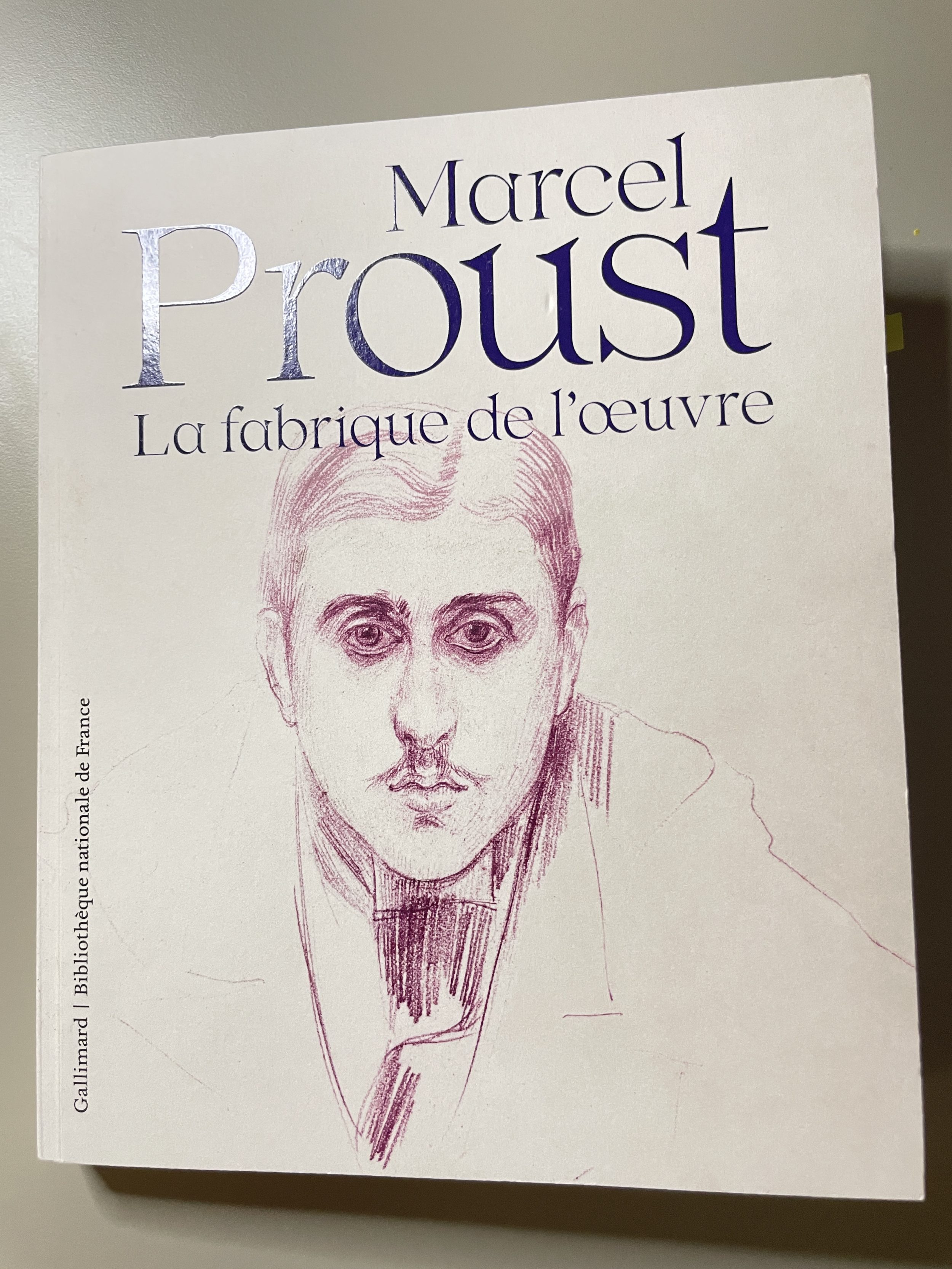
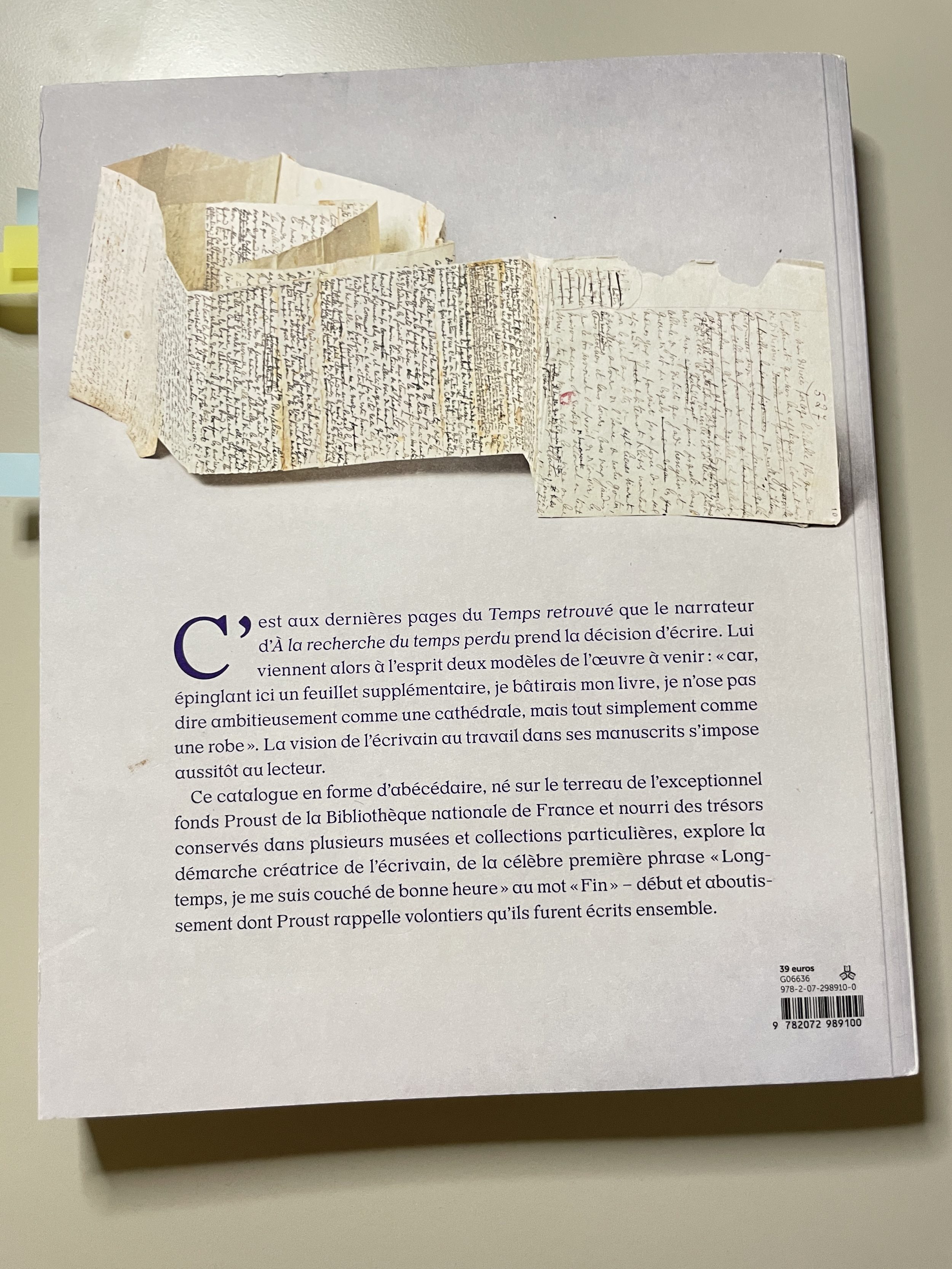
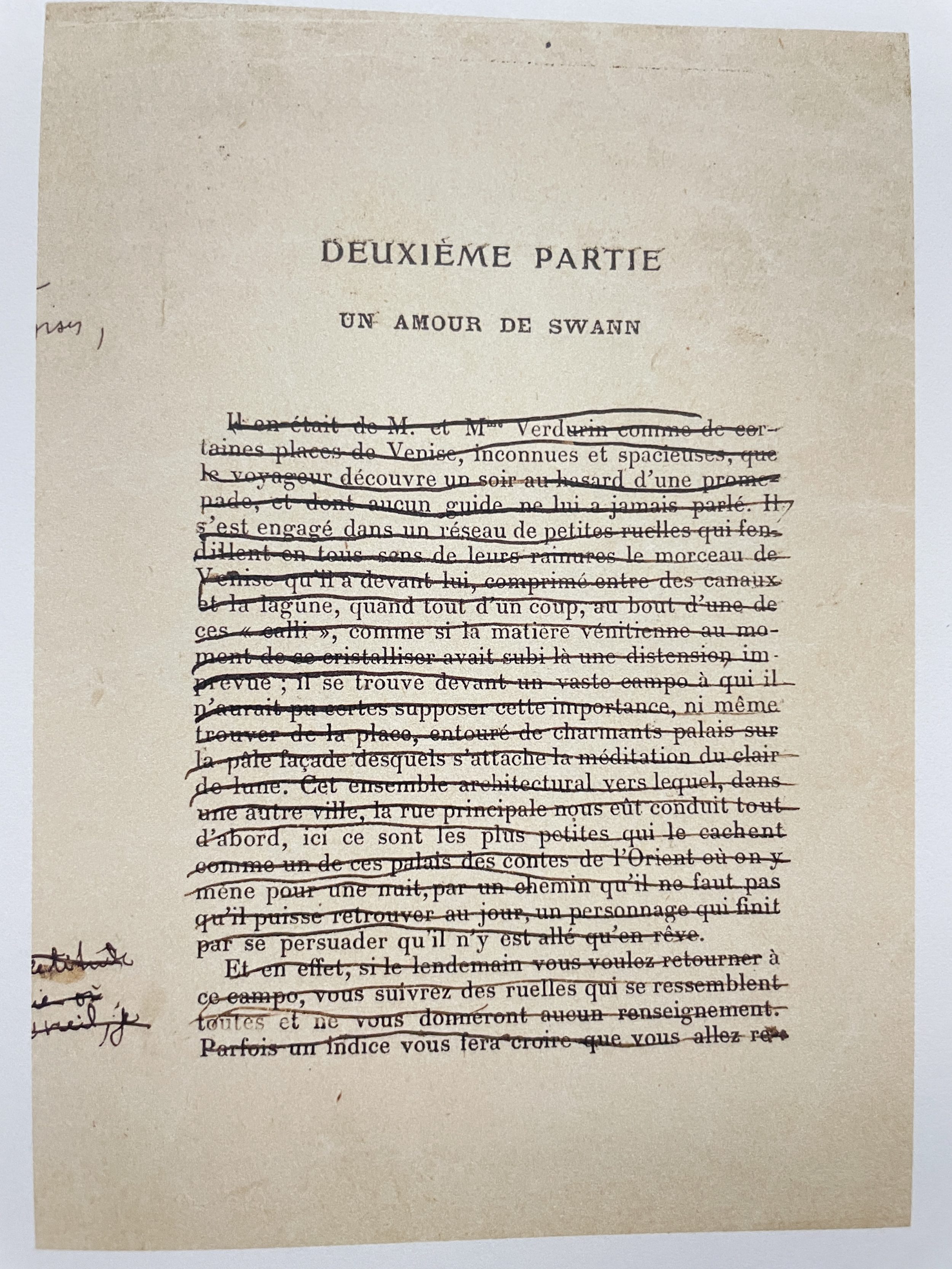
This book is a synthesis of the BnF exhibition held on the occasion of the 100th anniversary of Marcel Proust’s death in 2022. The book is structured as an alphabetically ordered exploration of the “making” of the novel In Search of Lost Time with photos taken from the Proust collection. Proust’s handwriting is difficult to decipher, so when necessary, the book deciphers the text and the crossings-out in the photos presented.
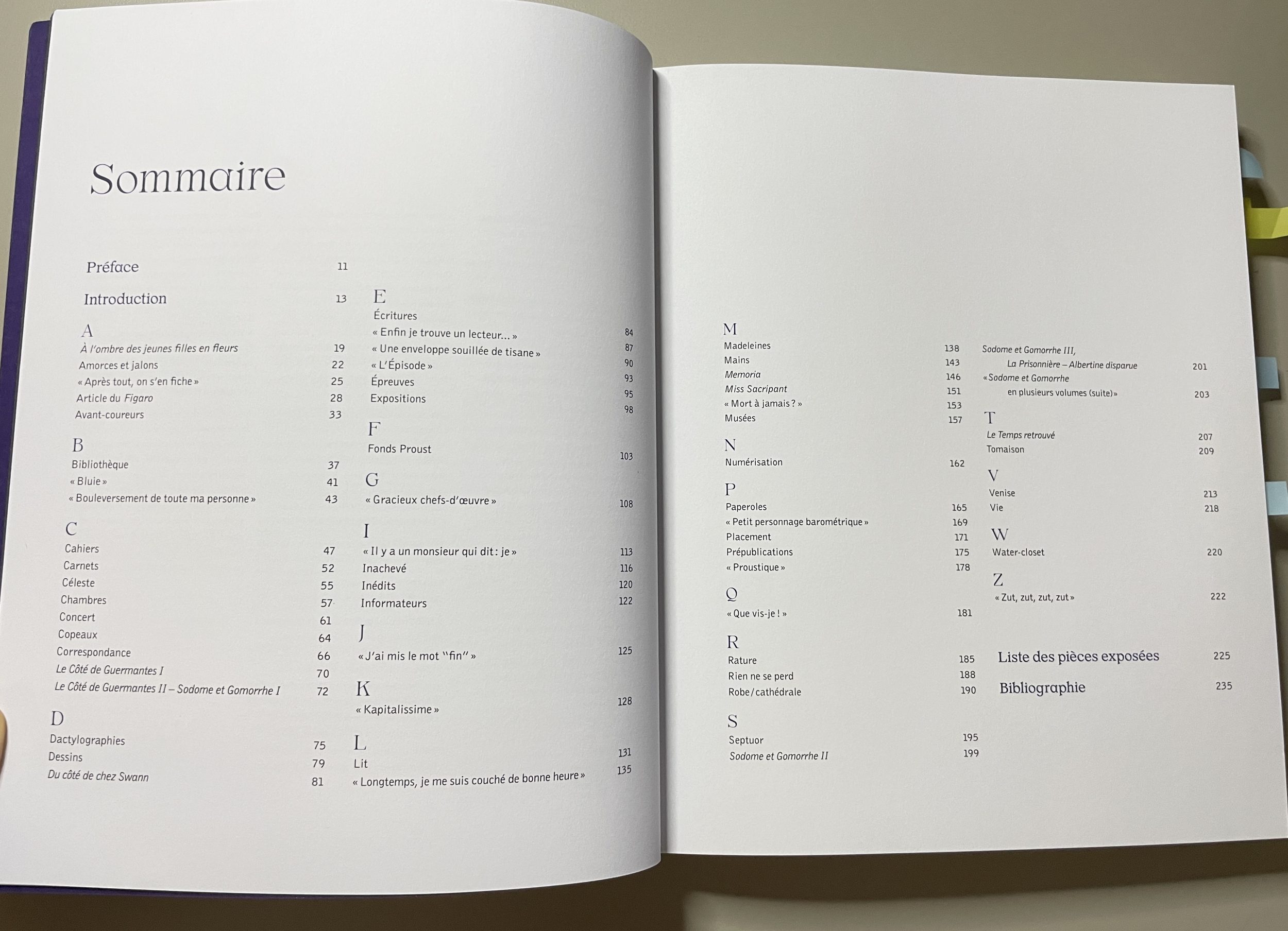
I really like this book because the chapters are independent; you can browse a few pages each day. You learn a great deal about how Proust created and organized his work. I think we believe we know this from reading the introductions, annotations, and sketches in the new Pléiade edition, but these sketches represent only a part of the notebooks held at the BnF. This book, over 200 pages with evidence to support it, leads us step by step to discover “the Proust method.”
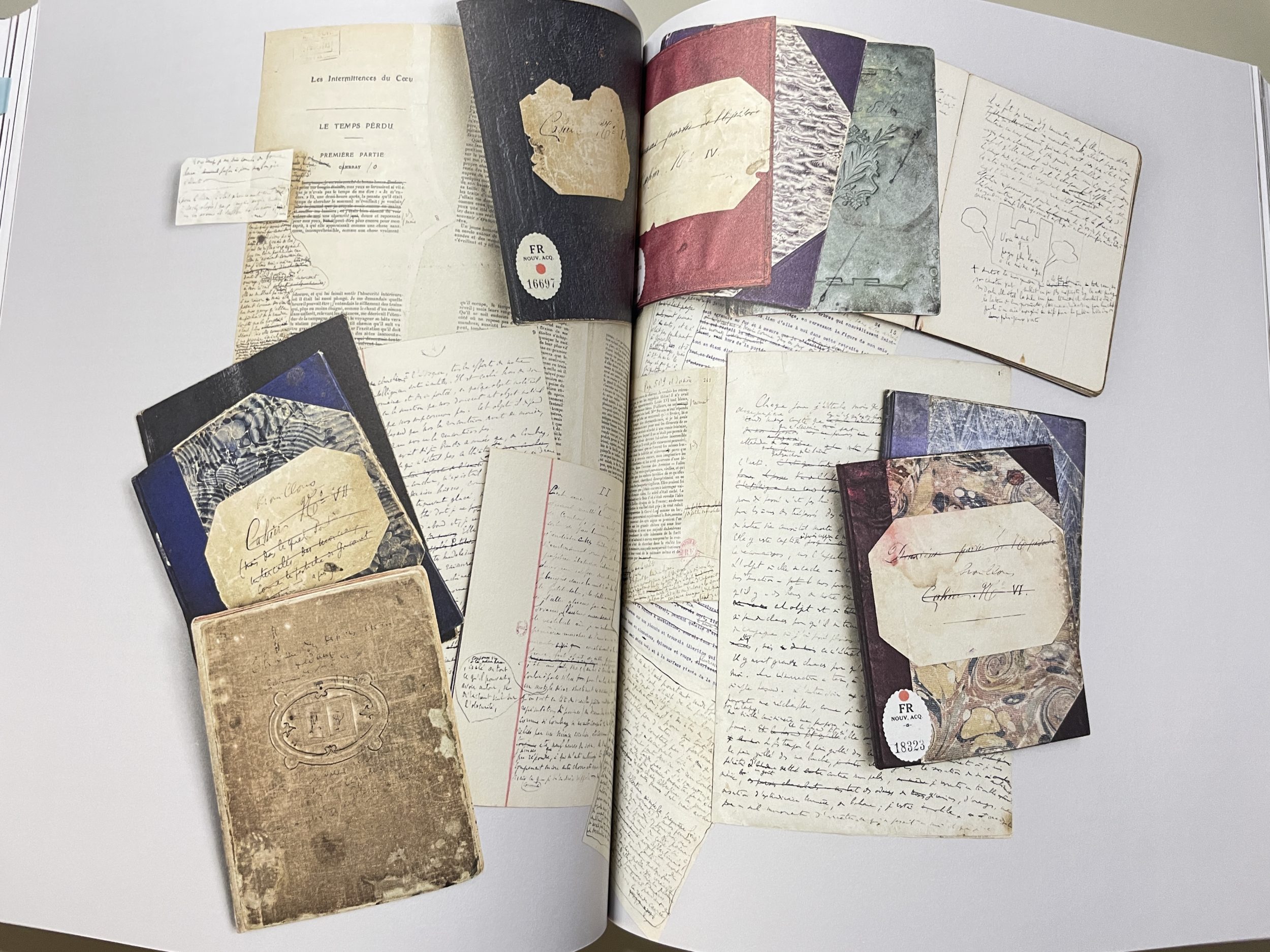
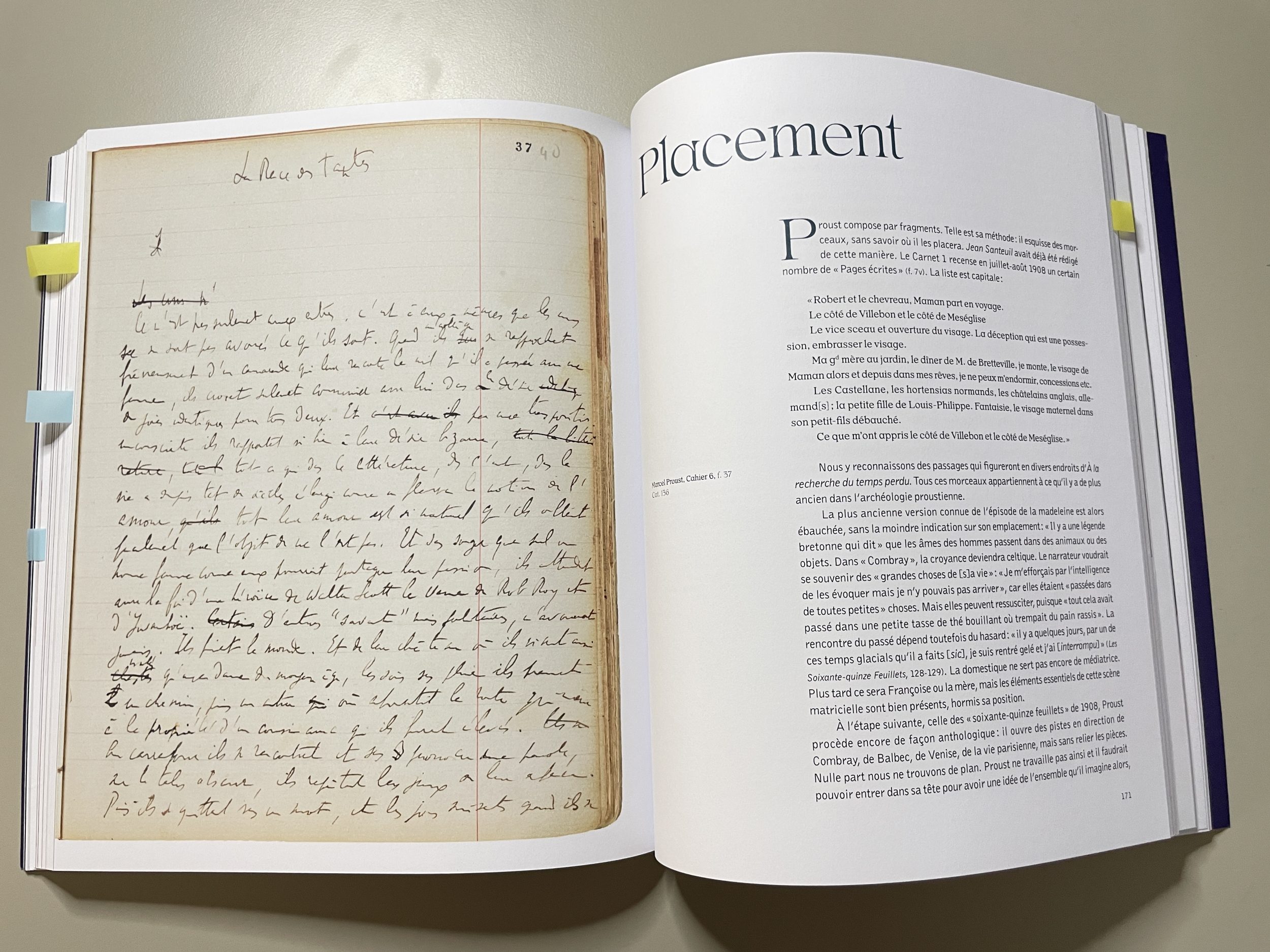
We also get some analyses of famous passages such as the incipit, the madeleine, the three voyeurism episodes, Bergotte’s death… which shed new light thanks to the multitude of revisions and rewritings in the Proust collection.
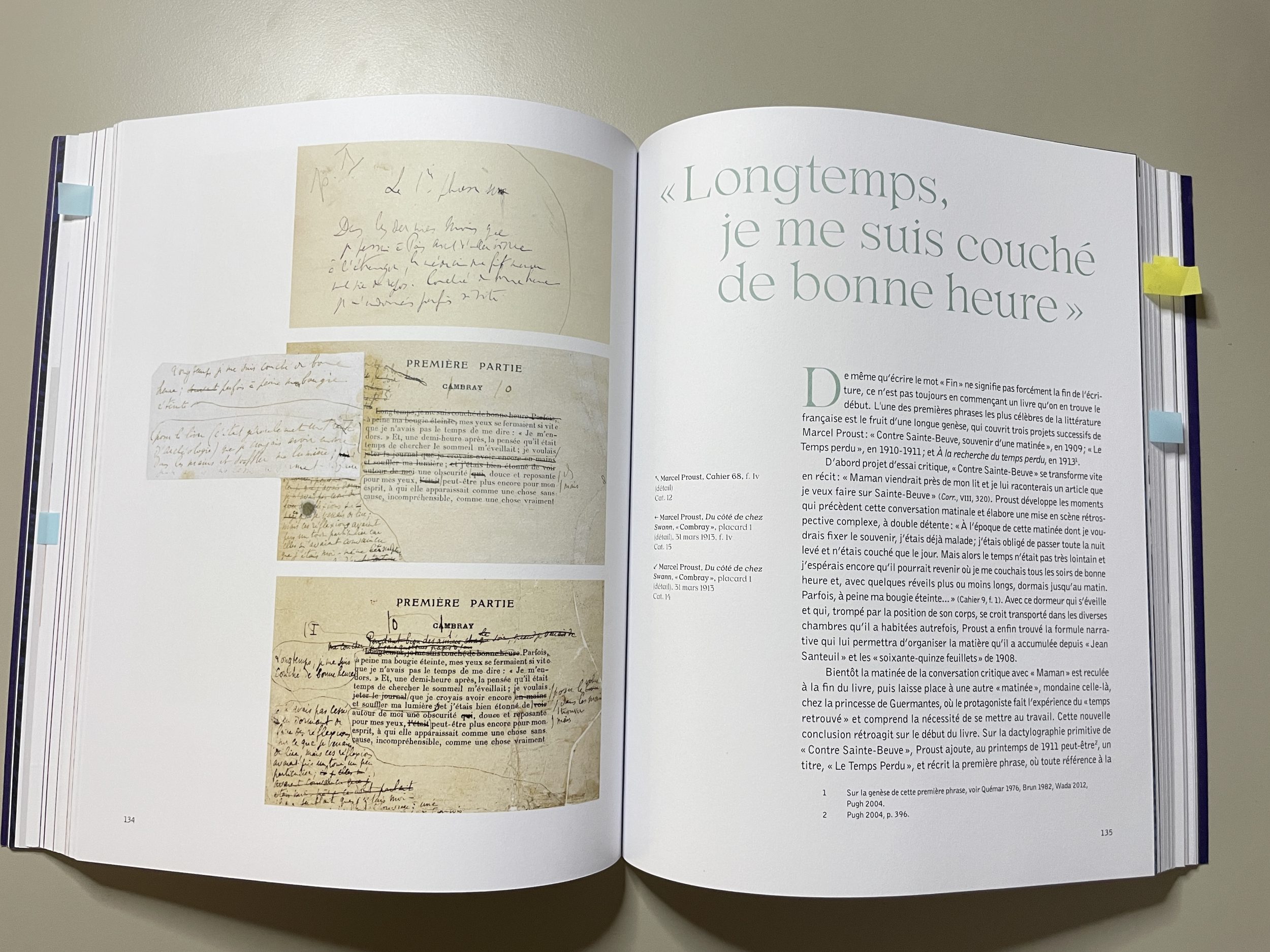
A few passages I find interesting. Having had a temporary memory loss, I chose readingIn Search of Lost Time as a way to re-strengthen my memory. And it worked! The madeleine episode is famous because it activates several senses in the reader, allowing them to actively participate in the experience.
Neuropsychology teaches us that synesthesia, that is, the encoding of memory through multiple sensory modalities, is a natural faculty of certain individuals who possess “prodigious memory.” Proust shares this experience with us through his writing: what might seem like a rhetorical device takes on a mnemonic power here, giving our long-term memory the dimensions of an extraordinary work. Not only does the text program certain memories in the reader, to better convey the hero-narrator’s impressions, but it weaves a multiplicity of narrative threads, offering an infinite number of possible reading paths, and just as many personal recollections of the book.
Proust himself possessed a “wonderful” memory, according to various testimonies, such as that of the novelist Paul Brach recalling his memory of Venetian places, more than twenty years after his trip to Venice. Such a faculty was needed to produce, without getting lost, the mass of manuscripts of In Search of Lost Time. In his writing work, Proust did not neglect memory aids: “don’t forget,” “capital,” “capitalissime,” even “capitalissimissime” (NAF 27350 (2), f. 199r)’. The whimsy of certain drawings adorning the manuscripts is better understood when one knows their mnemonic purpose: to strike the memory to locate the continuation of a passage or an addition, which systematically exceeds the planned frame. Strange names are given to certain notebooks to better distinguish them: “I will put in the notebook Vénusté L…] essential things about this” (Albertine’s departure announced by Françoise), we read in the “Dux” notebook (Notebook 71, f. 104r)®. Such a notebook name suggests an analogy between the memory of the writer at work and that of the hero-narrator: Notebook 57 is called “black Serviette notebook” (“where there is Serviette in the first sentence,” Notebook 74, front cover), alluding to the involuntary memory triggered by a “starched serviette.” The pages themselves can have a name when they are the subject of a delicate writing operation and need to be made memorable: in the “Vénusté” notebook, the “MORS” pages—letters traced in red pencil—constitute the “framework” of “everything that follows the news of Albertine’s death” and must be inserted about thirty pages higher” (Notebook 54, f. 60r).
Proust always has interesting reflections throughout the novel; he must have a very rich spiritual life and certainly talents as a medium. The “obligations that have no sanction in this present life” he speaks of below reminds me of the concept of “life contract” with reincarnation, or the “personal legend” mentioned by Coelho in The Alchemist.
Proust, while visiting the Dutch exhibition, had himself feared becoming the “news item” of the day, an expression he used with several correspondents (Corr., XX, 251, 289, 329). However, imagining Bergotte’s death on the model of his own dizzy spells, he knows, he, that he has succeeded in his work, that “the little patch of yellow wall” does not threaten him with its “Mane, Thecel, Pharès.”
For his narrator, writing has meaning only if time, time regained, is eternal life, not death. This is what he immediately explains: “there is no reason in our conditions of life on this earth for us to believe ourselves obliged to do good, to be delicate, even to be polite, nor for the atheist artist to believe himself obliged to begin twenty times a piece whose admiration will matter little to his body eaten by worms” (III, 693). To overcome this skepticism leading to inaction, he continues, we must be imposed upon by “obligations that have no sanction in this present life,” which take on meaning only under the hypothesis of a “previous life” and of a “completely different world” where “unknown laws” would have been traced in us. We act in this life as if there had been another life whose accounts we were settling, or as if there were to be another life where we would be accountable for our actions in this one, whereas Proust calls “fatalism” a behavior that would not be dictated by the obligations of another life. Without this convention, this fiction of immortality, this suspension of disbelief about death, so to speak, Proust cannot conceive of art being possible. This convention makes us participate in a kind of secular eternity, immanent in the world, neither timeless nor motionless like divine eternity. Such is the time of art.
Even though the book was released in 2022, it’s very rare to find a second-hand copy. You can buy it on Amazon (link) or Fnac (link) for €39. The price is a bit high, but the book is very large and printed in color. It’s a must-have, especially if you couldn’t make it to the exhibition.

