
My Current Favorites [September 2026]: Flash cards, Therapy, AI
This month, I went on vacation for two weeks so I didn’t have time to read. I’ll just share two or three things I found interesting with you. I recently ran into a friend again who has two children so we talked a lot about kids’ education.
The first idea is about using spaced repetition with children. The show Are You Smarter than a 5th Grader? (where adults are asked questions that are supposed to be easy for an elementary school student, since they just learned them in class, and where adults often fail) illustrates this phenomenon well: a large part of our school knowledge only passes through short-term memory. Without regular review, all we’re left with in the end are crumbs from those 17 years spent on school benches. Spaced repetition can solve this problem very easily.
The second idea is that the school curriculum has become heavily simplified. The father of the youngest ever brevet winner said that his child wasn’t necessarily smarter than others, but that he was teaching them the 1950 curriculum, hence the excellent results. I applied this method without knowing it: In high school, I came across a math textbook from the 1945 curriculum published by éditions Jacques Gabay, and reviewing that curriculum allowed me to get excellent grades; and to earn a spot in Maths Sup – Maths Spé at a prestigious high school, even though I’m not at all a math genius. I remember it, that curriculum was very demanding with far more theorems to memorize than the already very heavy curriculum at my high school.
Recall.cards
The recently published PISA 2025 results show a decline worldwide. Reading comprehension and math scores are dropping significantly, and I think that with spaced repetition, everyone can memorize more while learning less, free up time for other things, all while being smarter than previous generations. Speaking of spaced repetition, I can only recommend the tool Recall https://recall.cards/ from my friend F.
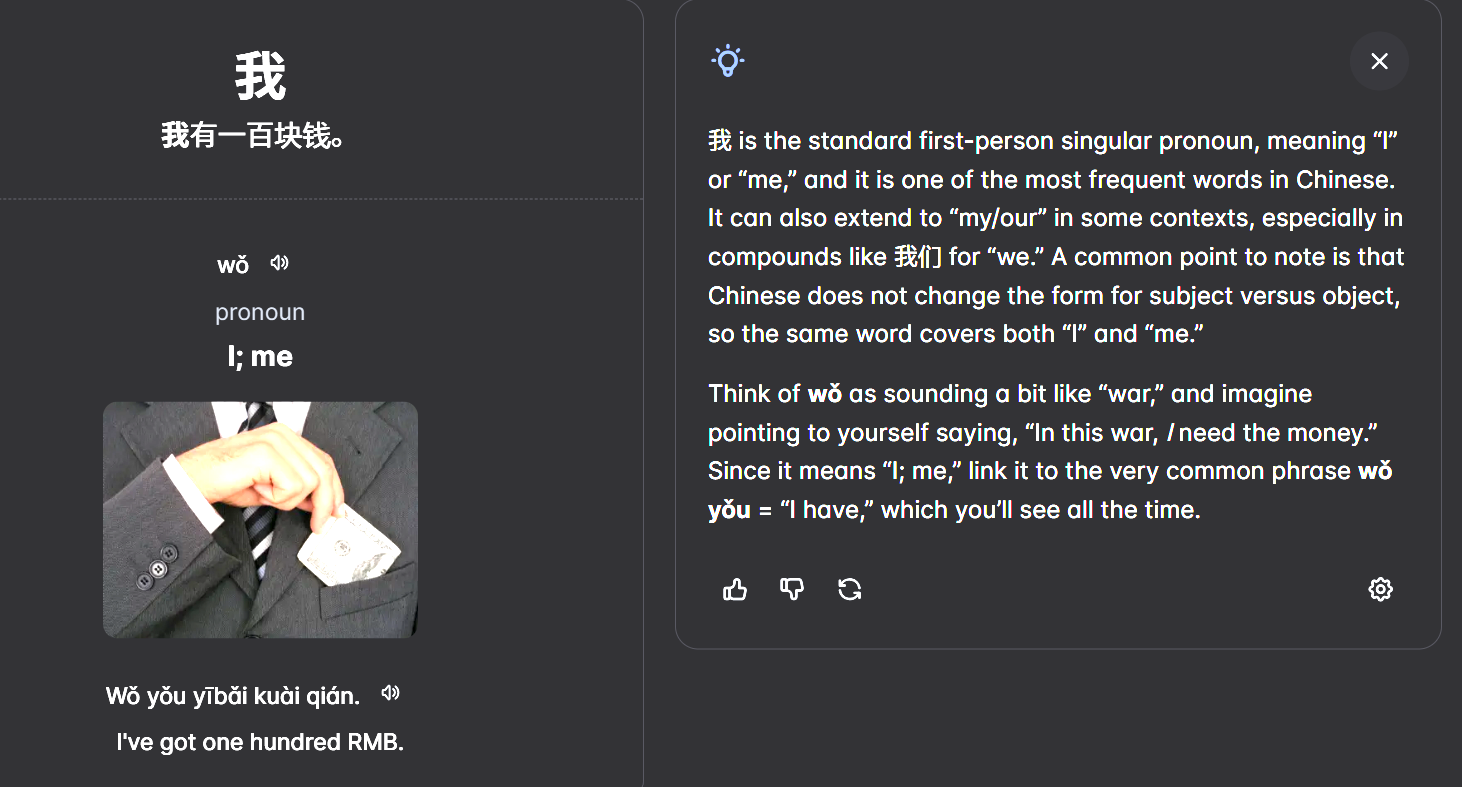
Recall is a flashcard app modern design built to make memorization as efficient as possible, with the motto “learn more, review less”. Thanks to a spaced repetition algorithm, the app calculates the optimal time to review each card, which considerably reduces the workload while maximizing long-term retention. Recall also stands out for its AI autofill, capable of automatically generating answers, translations, audio pronunciations or images to speed up card creation, as well as its AI connectors (MCP) that let you directly transform a conversation with ChatGPT or another assistant into a review deck.
My friend F. improved the spaced repetition algorithm so that you spend even less time reviewing and memorize more (so more efficient than ANKI). The fact that it’s AI-compatible lets you create review lists (which used to take forever) with AI in seconds. Mnemonic techniques & pronunciations are added as well. There are plenty of ready-made decks for learning Japanese or Chinese.



If the flashcard and spaced repetition method doesn’t convince you, read this article: The Developer Who Knows Everything. Even in a world of AI, we still need memory.
Couples Therapy

Another topic, I came across excerpts from this HBO series that authentically films couples in therapy with a psychologist. I really liked it because the viewers’ comments are also incredibly high-quality.
The dynamic between the couples is quite similar, I find: often, there’s one person who hasn’t really worked on themselves, like a plate missing a piece, and this person looks for the missing piece in their partner. But their partner isn’t exactly the piece they’re looking for, so the person gets angry, becomes bitter and criticizes their partner. All this dynamic becomes visible pretty quickly with the psychologist, because she asks the right questions. You get “the woman’s perspective”, then “the man’s perspective”, and you understand that there are often communication problems, unspoken expectations, deeper issues buried underneath, but also that we expect the other person to guess what’s wrong and save us.
Warning: there are a lot of narcissists in this show. Some of them even exhaust you through the screen 😀
What’s most interesting is the viewers’ comments. They analyze everything: expressions, gestures, words… which ultimately allows you to build a kind of visual “dictionary” of the signs to watch out for when communicating with someone. I think it’s an excellent show for developing your emotional intelligence.
When you understand why the person is reacting that way, in 90% of cases, it has nothing to do with us, but with an unspoken expectation we didn’t meet. Recently, I was in a book lovers’ group and we were discussing the Tao Te Ching. A person asked a sharp question, which I answered enthusiastically. But she seemed super offended and came up with a nonsensical response. It really surprised me, I wondered if there was a problem with my answer. In fact, this person, by asking a question backed up by lots of quotes, was perhaps above all expecting to receive a compliment. She didn’t get one, and she took offense. Seeing the way the question was framed, I should have refrained from answering.
In Óc sáng suốt by Nguyễn Duy Cần (which I highly recommend to Vietnamese readers), he says that when you see the result (or karma), you should always look for the because. Observing isn’t just noticing that someone did something or reacted in a certain way. It’s trying to understand what lies behind what we see: what produced this result? What logic, what fear, what expectation, what habit or belief is behind it? That way, we judge less and are less affected by that person’s words and actions.
“To perceive the true nature of each thing, we must look at it as it really is, without distortion. Most of our torment doesn’t come from events themselves, but from the emotions they stir in us—it’s our attention that fixates on these emotions rather than on the facts. And very often, it’s precisely these emotions that lead us toward suffering.”
In cases where a partner is narcissistic, we wonder how the other person could have put up with the situation for so many years. Because we, behind the screen, after 3 minutes, can’t take it anymore! 😀 We tell ourselves we really need to learn to love ourselves otherwise we can very easily end up with narcissists like that. And vice versa, we need to work on ourselves first, otherwise we’ll ruin someone else’s life.
On this topic, I came across an analysis of The Metamorphosis by Kafka, which poses an open question: “Why, in the end, do all the family members come out much better off than when Gregor was financially supporting them?”. When he transformed into an insect and could no longer provide for them, as if by miracle, they were able to manage on their own. So all of Gregor’s sacrifices were harming both himself and his family.
It very often happens that after a couple separates, the “loser” of the couple turns out to be capable of much more. When the other person was always there to fill their gaps, meet their financial needs, help with their paperwork, etc., they never really had to fully develop their autonomy or work on themselves. The separation then forces them, for the first time, to manage alone and to reveal a potential that had never been tapped until then.
This also made me think of the theme of “letting people reach their full potential”. I watched a video about the journey of a young Vietnamese mother, surrounded by psychologists (Emotion Coaching), trying to save her relationship with her children. This mother, under the pretext of “wanting what’s best for her children,” molds them into an improved version of herself, through anger, reproaches, demands, control and requests for recognition (emotional abuse). Thanks to the show, she becomes aware of her own toxicity, but perhaps too late.
The mother sees her daughter’s tears as she practices piano without any passion. Instead of understanding what they’re trying to tell her, she asks: “Why are you crying? Why, why?” But her daughter stays silent, because deep down, even if she tried to explain what she feels, she knows she’d end up getting yelled at. So the mother reproaches her for not “expressing herself,” even though the space to express herself never really existed. It’s very cruel to reproach someone for their “lack of communication” when every attempt to express themselves ends in more anger or guilt-tripping. When the little one didn’t play piano, she got yelled at. When the older one played piano, she got yelled at too because she played too loud. No matter what the children do, it will never be good enough for this mother. There’s never a “right” way to do things: whatever they choose, they’re at fault. When no path offers an escape from reproach, the child thinks the problem isn’t what they do, but who they are, they won’t immediately question their parents.
Deep down, everyone seeks to be loved for who they are, unconditionally, and not for their grades, their wallet, their success or their beauty. And some children have even never truly been allowed to exist as individual beings. They become emotional garbage bins, ego boosts, extensions of their parents, living projections of their ambitions, their regrets or what they themselves would have liked to be. Their identity then builds around what’s expected of them. And when they don’t measure up, they may feel like they’re disappearing. As if, by ceasing to be the child expected of them, they also cease to be worthy of love and of existing. That’s why Gregor transformed into a disgusting insect.
These children become experts in anxiety (or perfectionism, foresight, hypervigilance, people pleasing…). They learn to anticipate scenarios A, B, C, to decode mood swings. The nervous system of a child who never knows if the parent coming home tonight will be gentle or furious remains in a permanent state of alert: this is what Stephen Porges’s polyvagal theory describes as an autonomic nervous system stuck in danger-detection mode, unable to truly relax, even in the absence of immediate threat. This hypervigilance, which from the outside looks like intuition or great sensitivity, is in reality a survival strategy: better to foresee the storm than to endure it unprepared. But anticipation isn’t always enough, so they learn to keep a low profile, to put others’ needs before their own and often end up, later on, with narcissistic partners, thus perpetuating the cycle. Today’s toxic parents were yesterday’s children of toxic parents: hence the importance of working on oneself, to avoid repeating the transgenerational transmission.
Silk
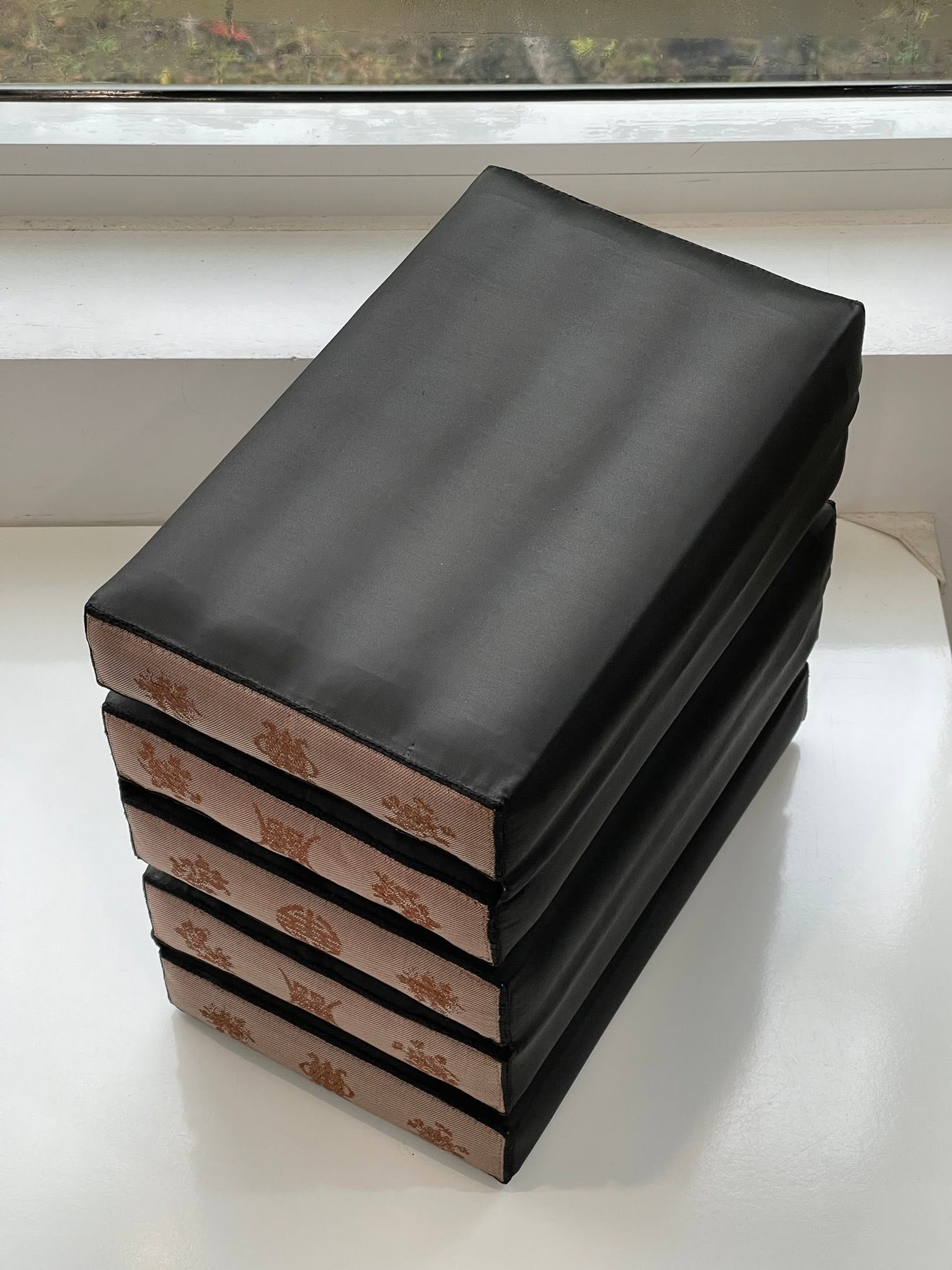
It’s very hot in Tahiti right now. Good thing all my clothes are made of natural materials, 80% of which are silk. I thought my silk clothes were already great, but apparently there are even more prestigious silks out there. I’ll buy them later and take them to a tailor. Silk is a delicate material, so I have to replace them constantly. At the slightest stain, they can’t be saved.
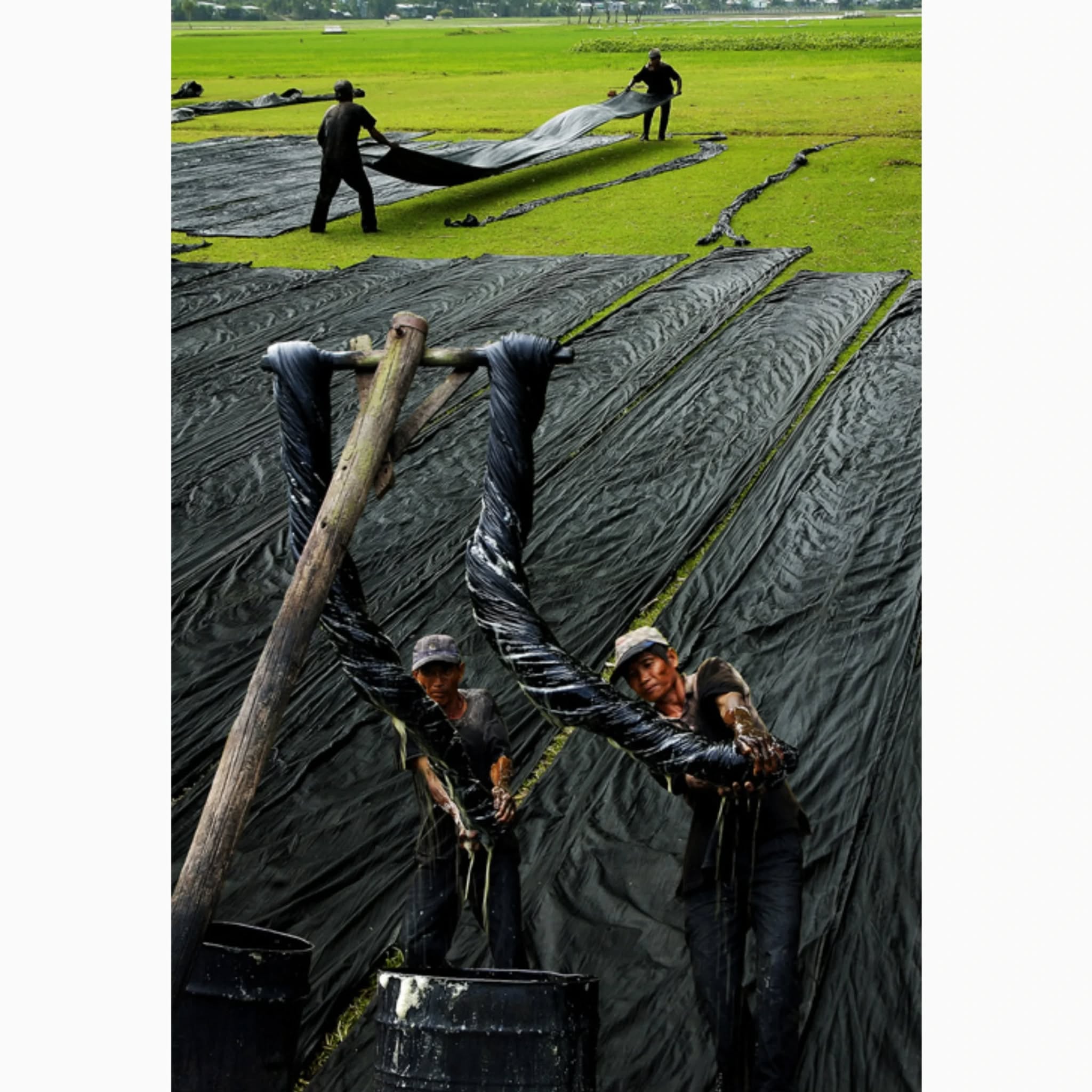
Xiangyun silk, Xiāngyúnshā, originating from the Shunde region in Guangdong, China, stands out above all for a particularly complex traditional dyeing and finishing technique. Its uniqueness lies in the use of two natural elements: the juice of 薯莨 (shǔliáng), a tannin-rich plant used as a vegetable dye, and the mud from the region’s rivers, rich in metal ions. The white silk is first immersed several times in the juice of this plant, then stretched out and exposed to the sun; these dyeing and drying operations are repeated many times so that the tannins gradually penetrate the fibers. Then comes the essential step called 过泥 (guò ní), or mud treatment : a thin layer of mud is applied to the surface of the previously dyed silk. The plant’s tannins then react with the iron ions present in the mud, causing a deep black-brown color and a characteristic sheen to appear.

The Lãnh Mỹ A silk, emblematic of Tân Châu in Vietnam’s Mekong Delta, also has an identity that relies essentially on its traditional dyeing process. It is made from high-quality silk, then dyed with the juice or resin of the mặc nưa fruit (Diospyros mollis), a plant material once abundant in the Tân Châu region and now much rarer. The dyeing is not a simple immersion: the silk is dipped many times in the liquid extracted from the fruit, then washed, dried in the sun, and dyed again. This cycle is repeated over several stages, sometimes for more than a month and with hundreds of operations of dyeing, washing, and drying. The fabric is also subjected to controlled beating or hammering of its surface, to further penetrate the colorant and gradually develop its smooth and shiny appearance. It is this succession of vegetable dyeing, washing, drying, and mechanical working that gives Lãnh Mỹ A its deep black, almost ink-black, and its particular sheen, rather than a simple black obtained by industrial dyeing. The more the silk is worn and maintained, the more its surface develops this characteristic shine.


AI
We’re still learning how to use AI. We’re so happy because it feels like having virtual interns or assistants. JB is launching agents Hermes in all directions, mainly to send documents to his reMarkable. reMarkable, with its SSH access, is extremely compatible with AI agents.
During my vacation, since I didn’t have my computer with me, I tested Claude Code’s cloud (claude --cloud) and found it faster and more convenient. You don’t need to have your computer plugged in, responses seem to come faster (commands executed on a virtual machine on Anthropic’s side), and you can automate everything with scheduled routines schedule. Tasks were processed so quickly during my vacation that I had to give it additional tasks. You just need a Github account and a Claude subscription to set it up.
