
Monreale Cathedral and Segesta Temple – Sicily Trip #4 (Italy)
There are so many things to see in Sicily that you have to make choices. Since I want to visit both Monreale , and Cefalù which are in two opposite directions from Palermo, we decide to visit Monreale one day (and go as far as the Temple of Segesta), come back to sleep in Palermo, then go to Cefalù the next day, then return to Palermo, to our Airbnb.
We rent a car for two days from Dream Rent – Noleggio Auto e Scooter – Rent Car and Scooter https://maps.app.goo.gl/pBbsWLLWCBPmMmd78 for 70 euros (insurance still covered by Serenitrip). It’s a small local rental company with a tiny office, but the welcome is friendly, they take photos for the car condition report and send them to us by email (whereas with other rental companies, we usually have to do it ourselves). Also, the car we have has a sticker allowing us to drive without any problem in Palermo city center. Since we have to come back to sleep in Palermo, we don’t know where to park the car and they said to park on the big avenue along the sea, but being careful not to leave anything in the car (except our Airtag because we’re afraid of not knowing where we parked haha).
And off we go!
Monreale
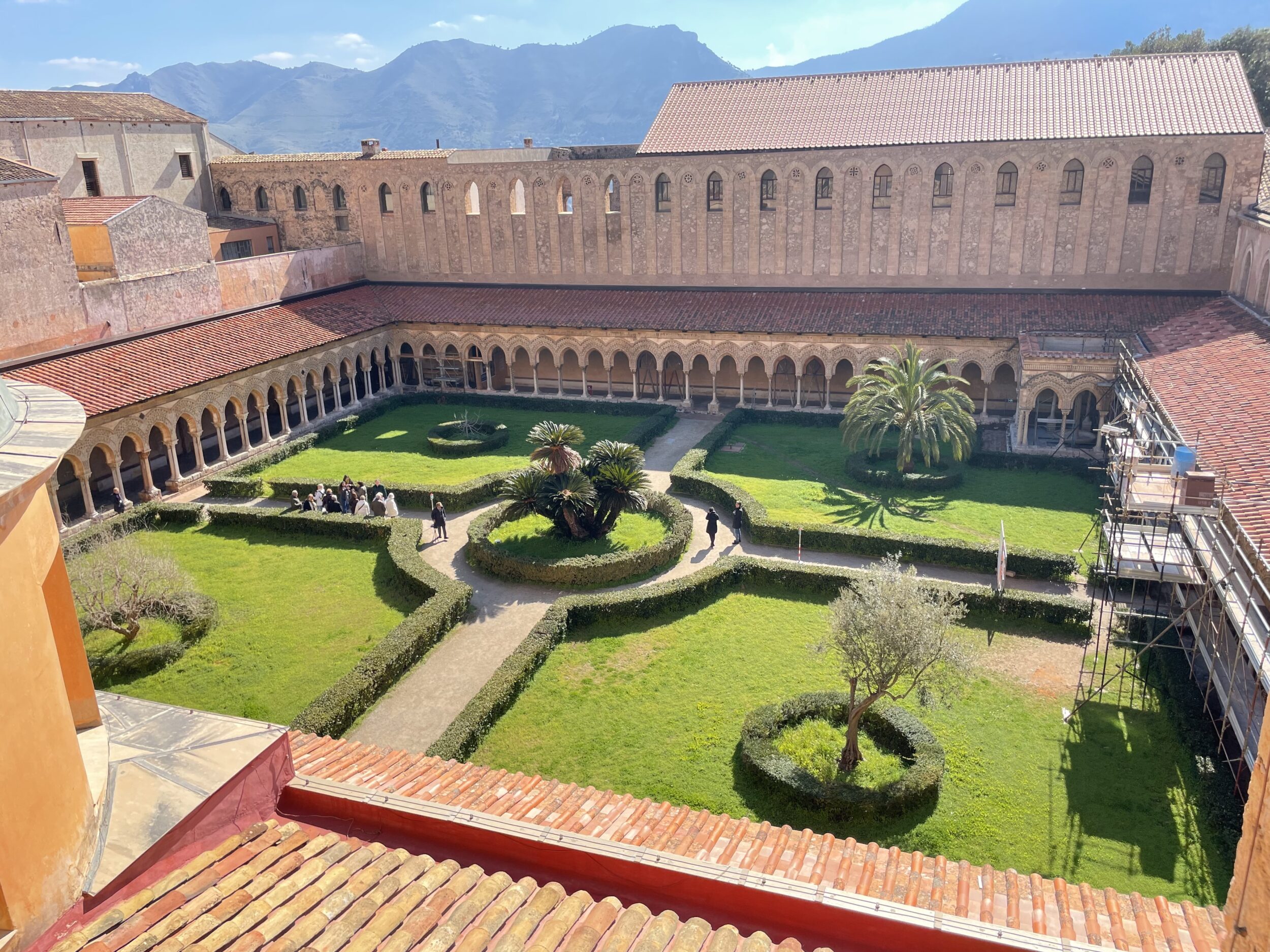
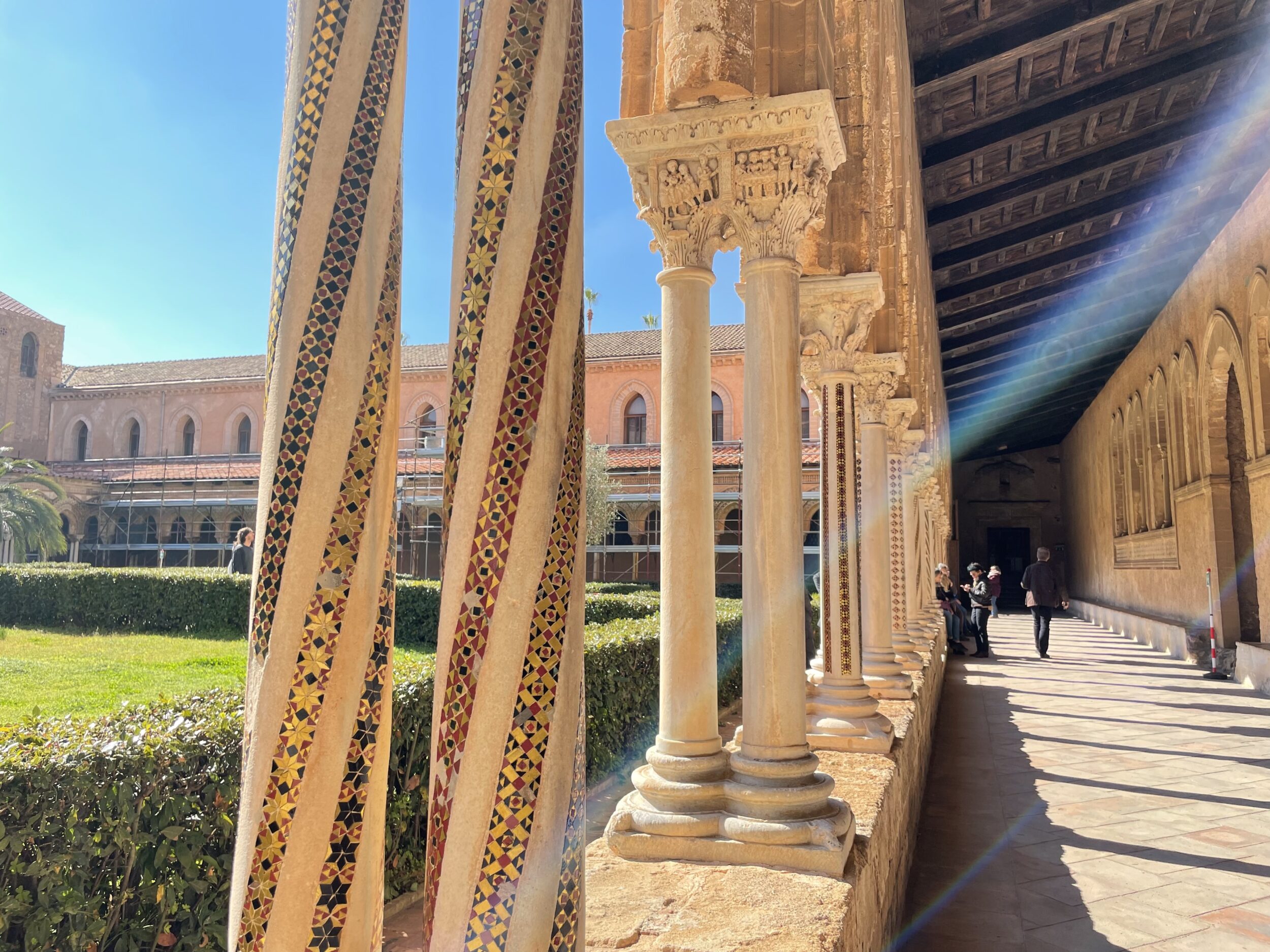
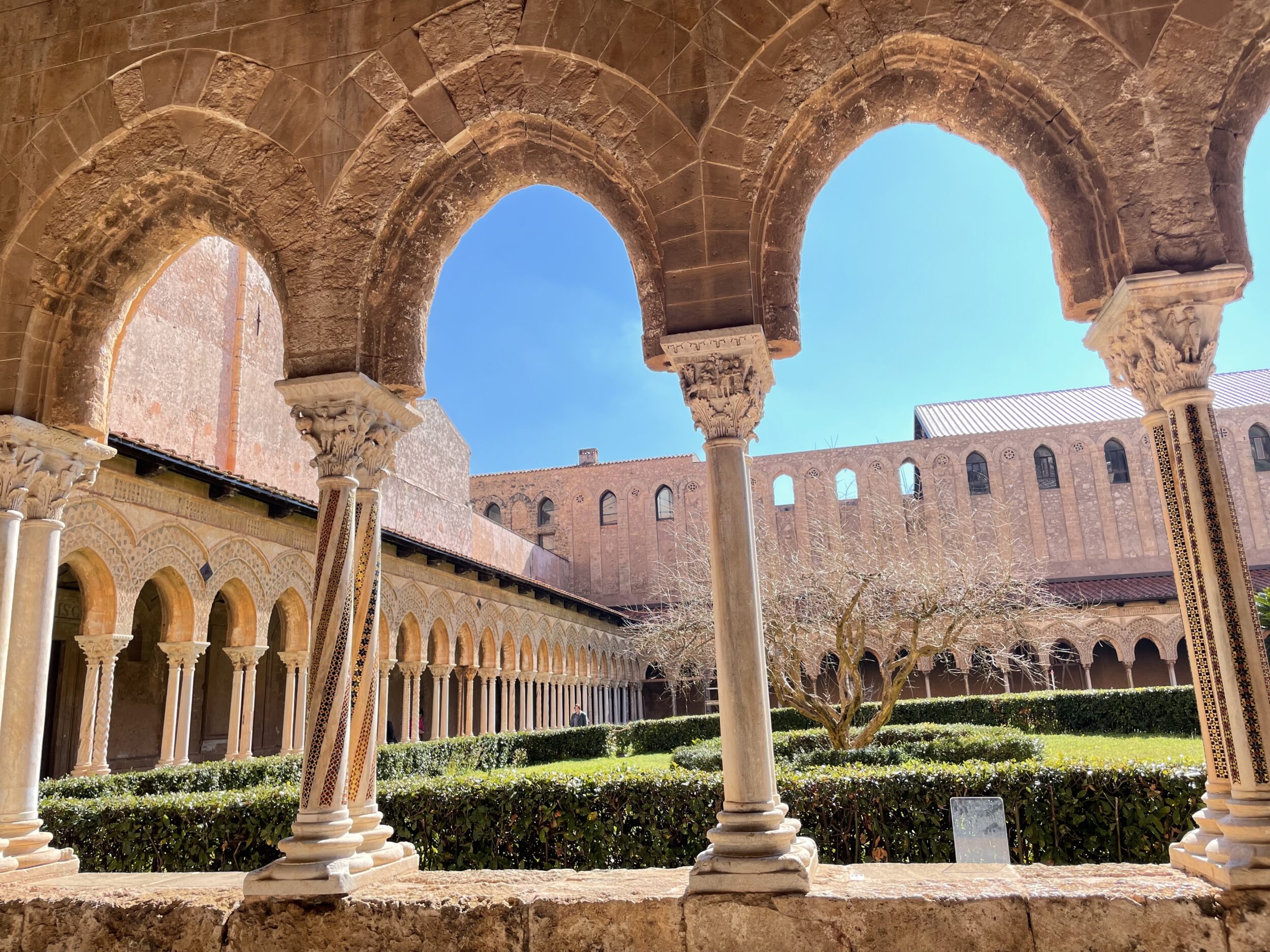
Perched on the Sicilian hills 30 minutes from Palermo, Monreale is a little paradise for history buffs and lovers of beautiful stone. The town was built around a Benedictine monastery founded in 1174 by King William II, a place that was once ultra-rich and influential. Today, little remains of the original buildings, except for a magnificent cloister with its 216 marble columns, located right next to the cathedral.
It’s at the cloister that we buy our tickets to avoid the queue. We’re presented with different options and since we don’t know what we’re missing if we opt for a cheaper option, we take the most expensive one, which gives access to all the paid areas of the cathedral and the cloister. The cloister employee advises us to go to the cathedral first, then visit the cloister afterwards. If I had to do it again, I would have taken the FULL cathedral option and not paid for access to the cloister (which is not very interesting, just photogenic).
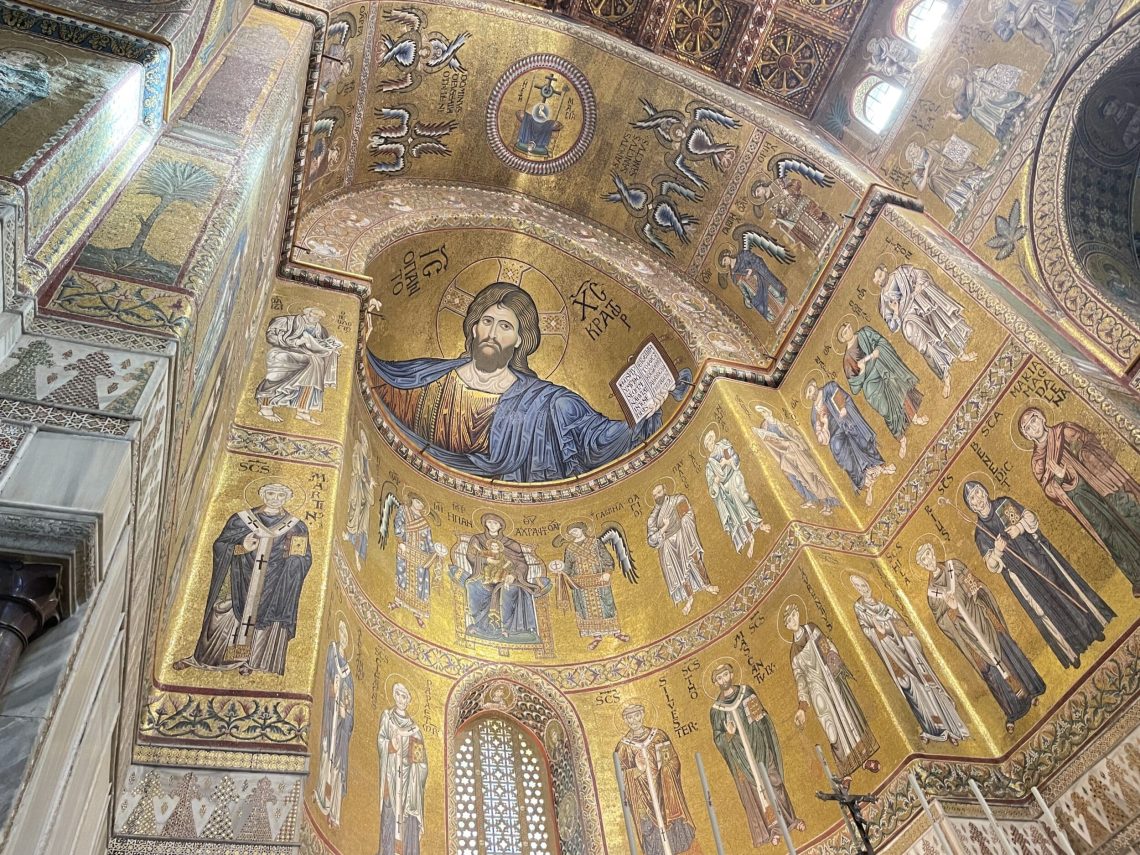
The cathedral, built between 1174 and 1189, is one of the most impressive in Italy. A real melting pot of styles – Norman, Byzantine, Italian, and Saracen – making it a unique monument. Inside, we are immediately dazzled by the mosaics. They cover almost all the walls and tell biblical stories. This colossal work was completed in less than ten years by artisans from Byzantium. It’s one of the largest collections of mosaics in the world!
We have to show our tickets constantly because some areas are accessible with one ticket, others not. There are two chapels on either side that are absolutely beautiful.
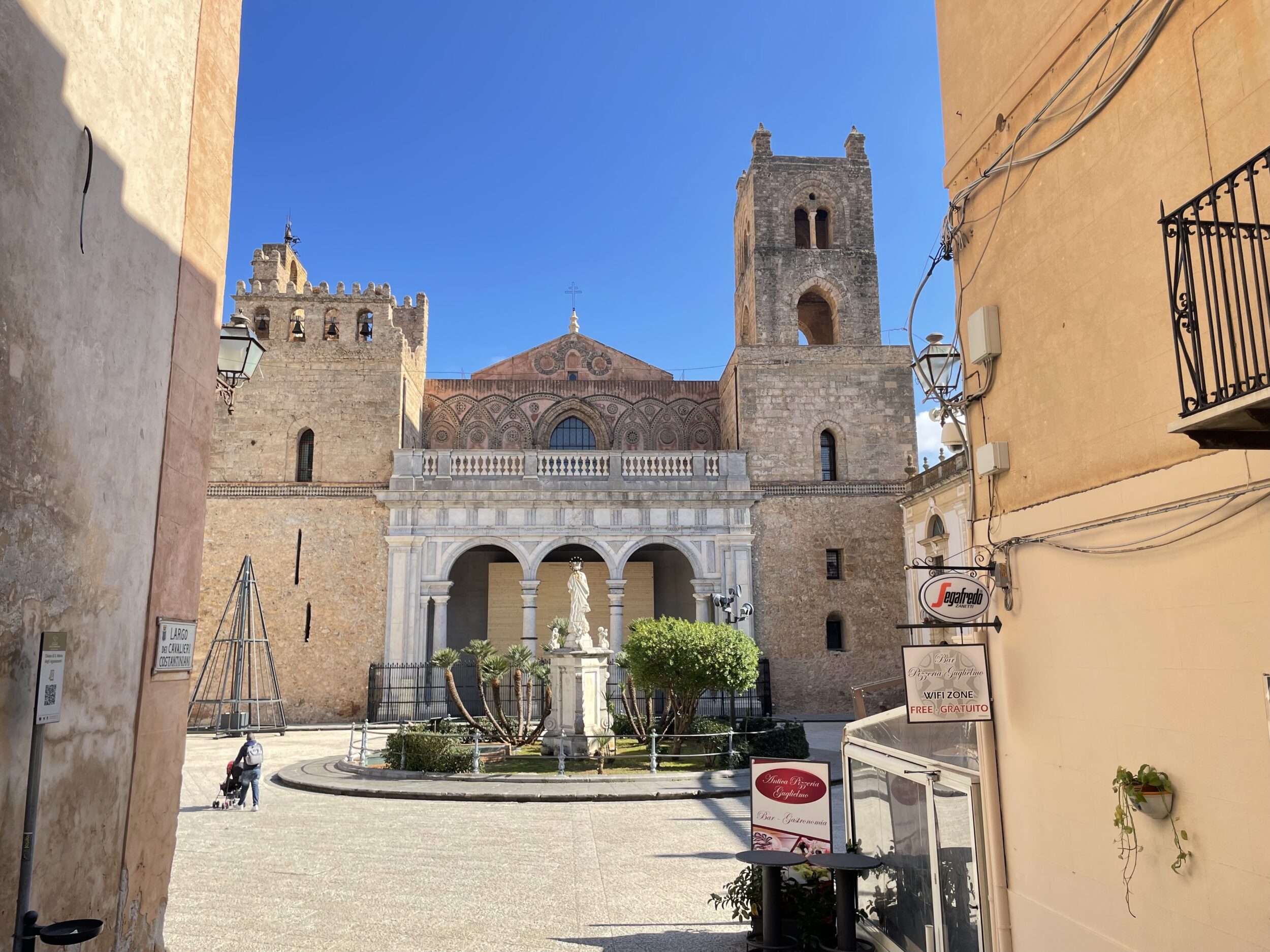
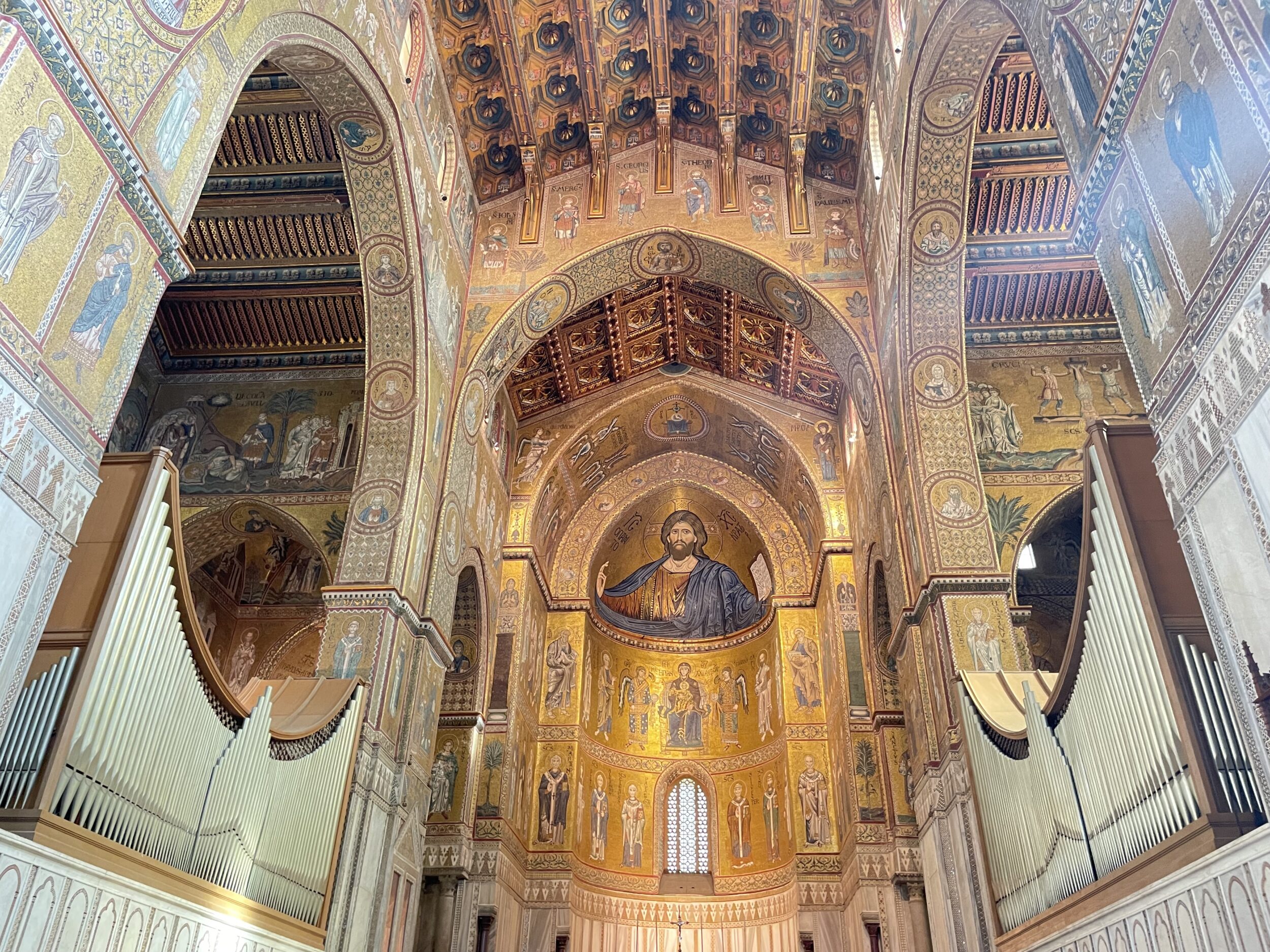
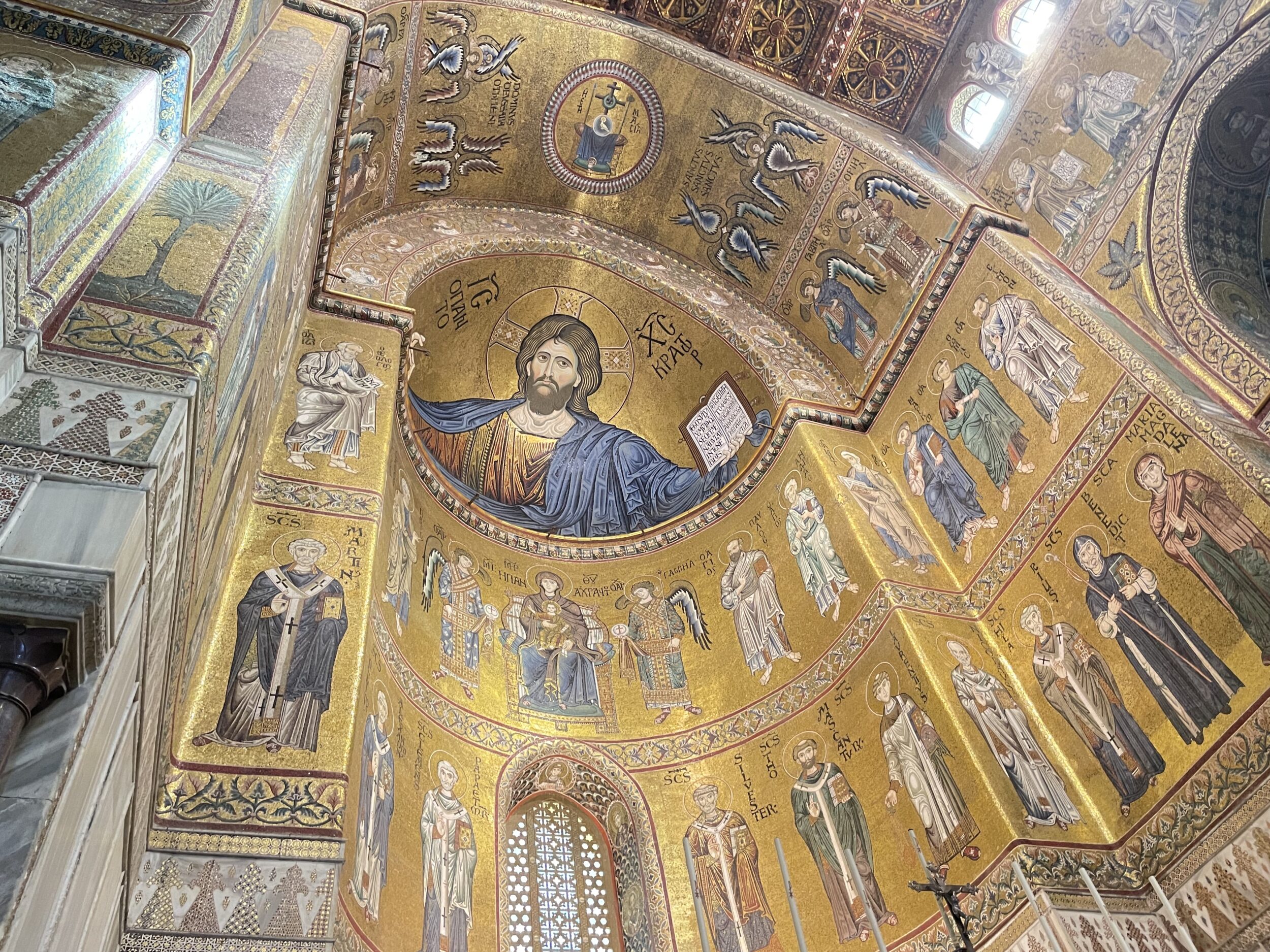
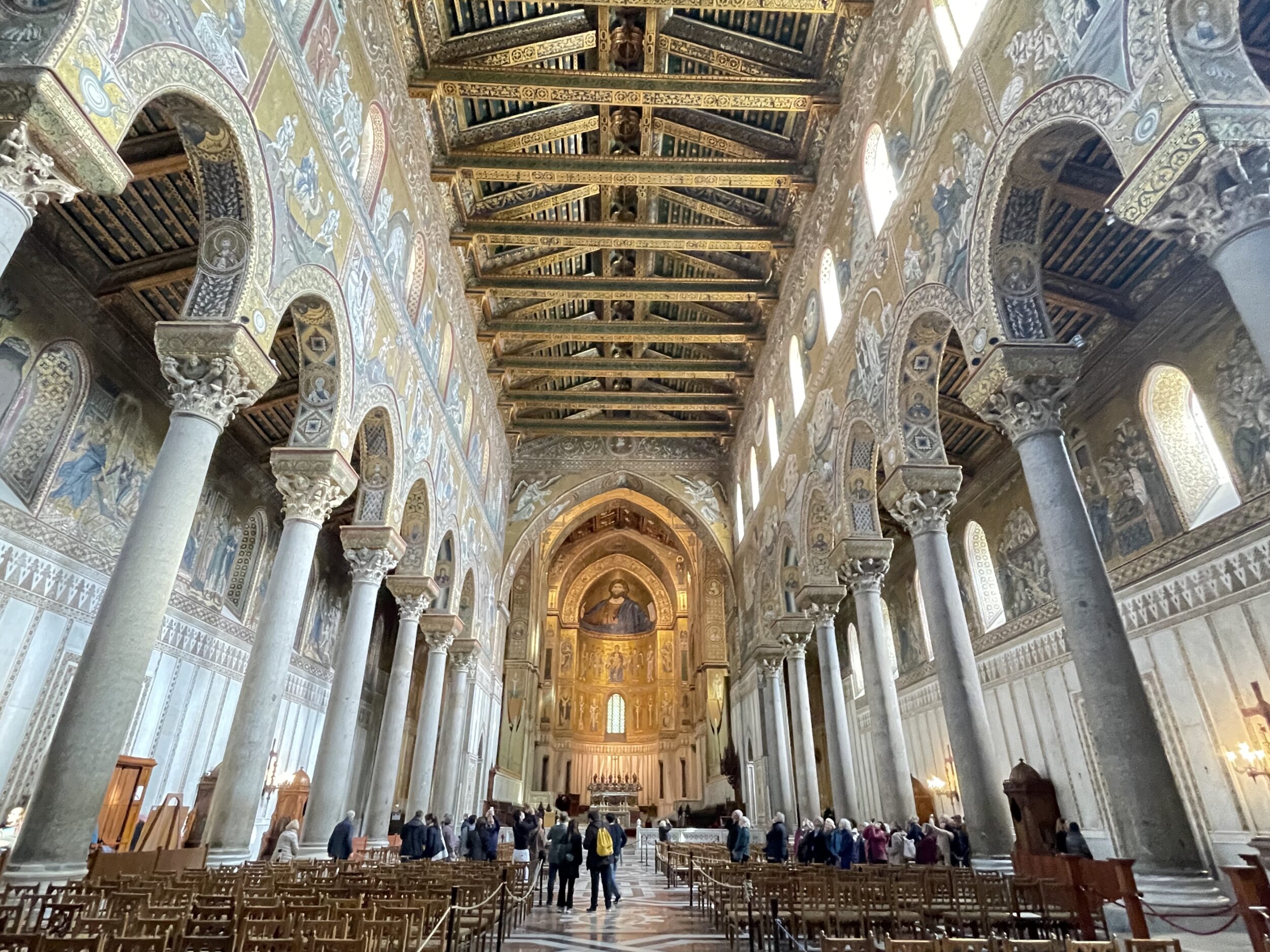
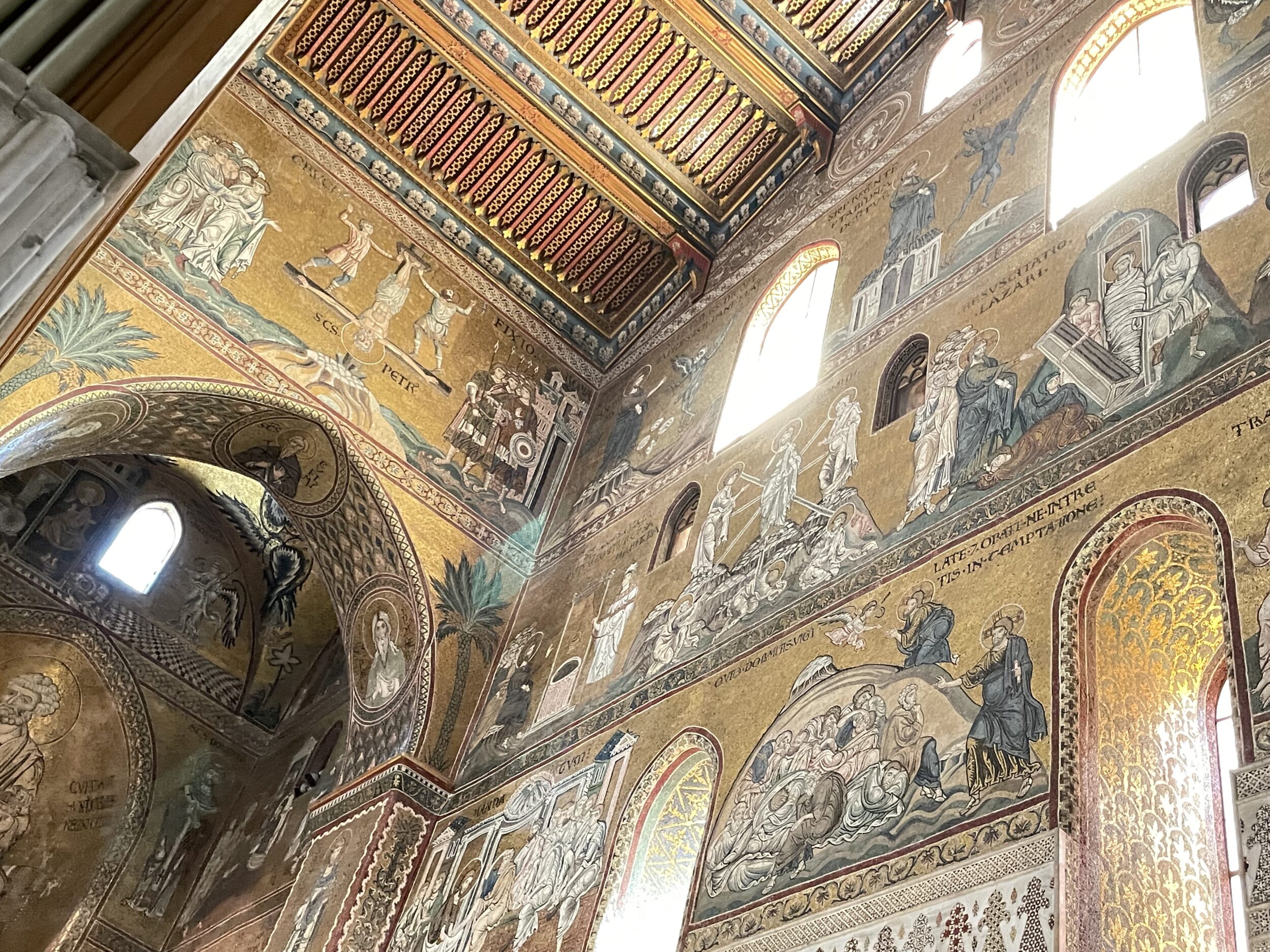

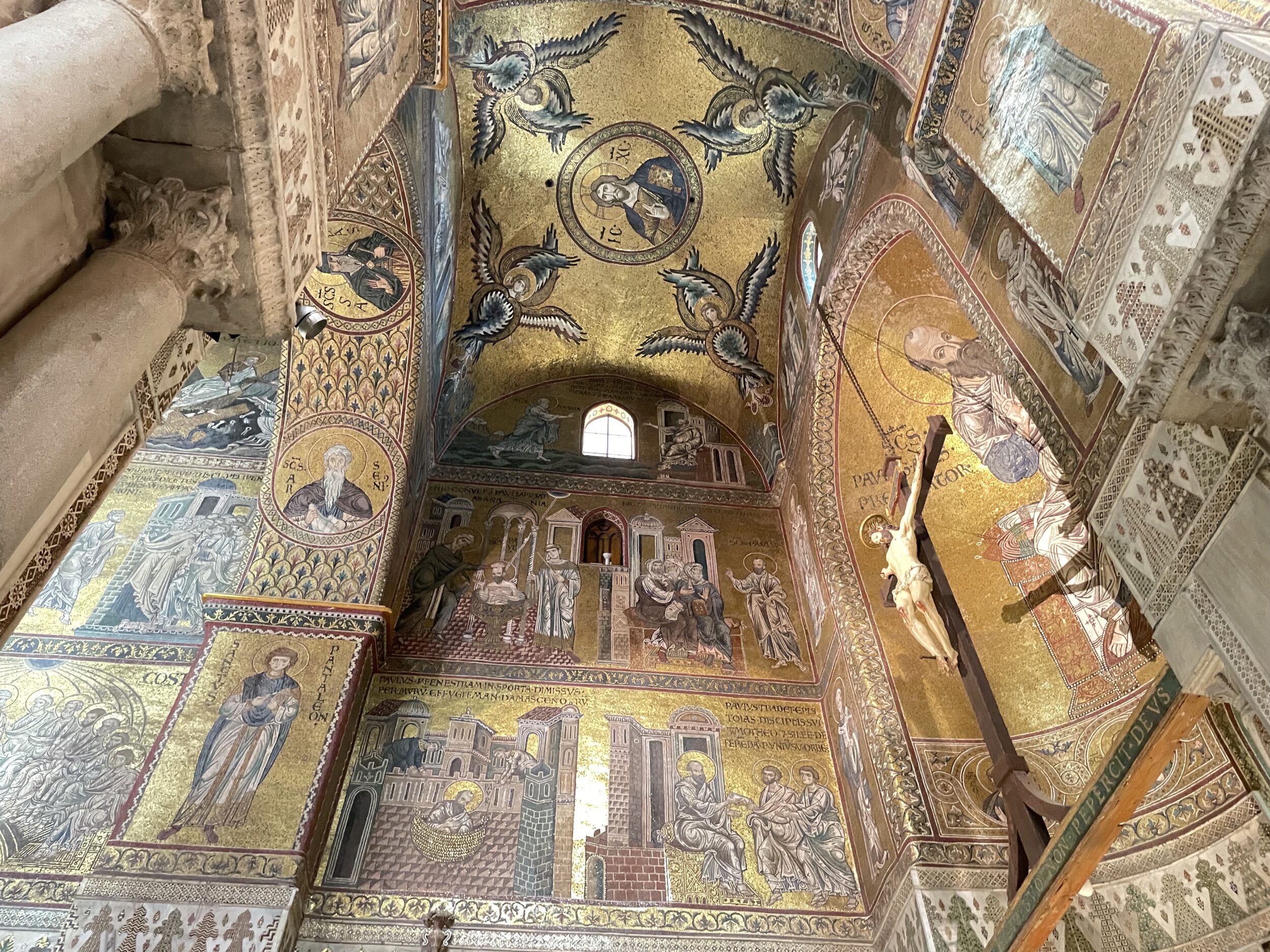
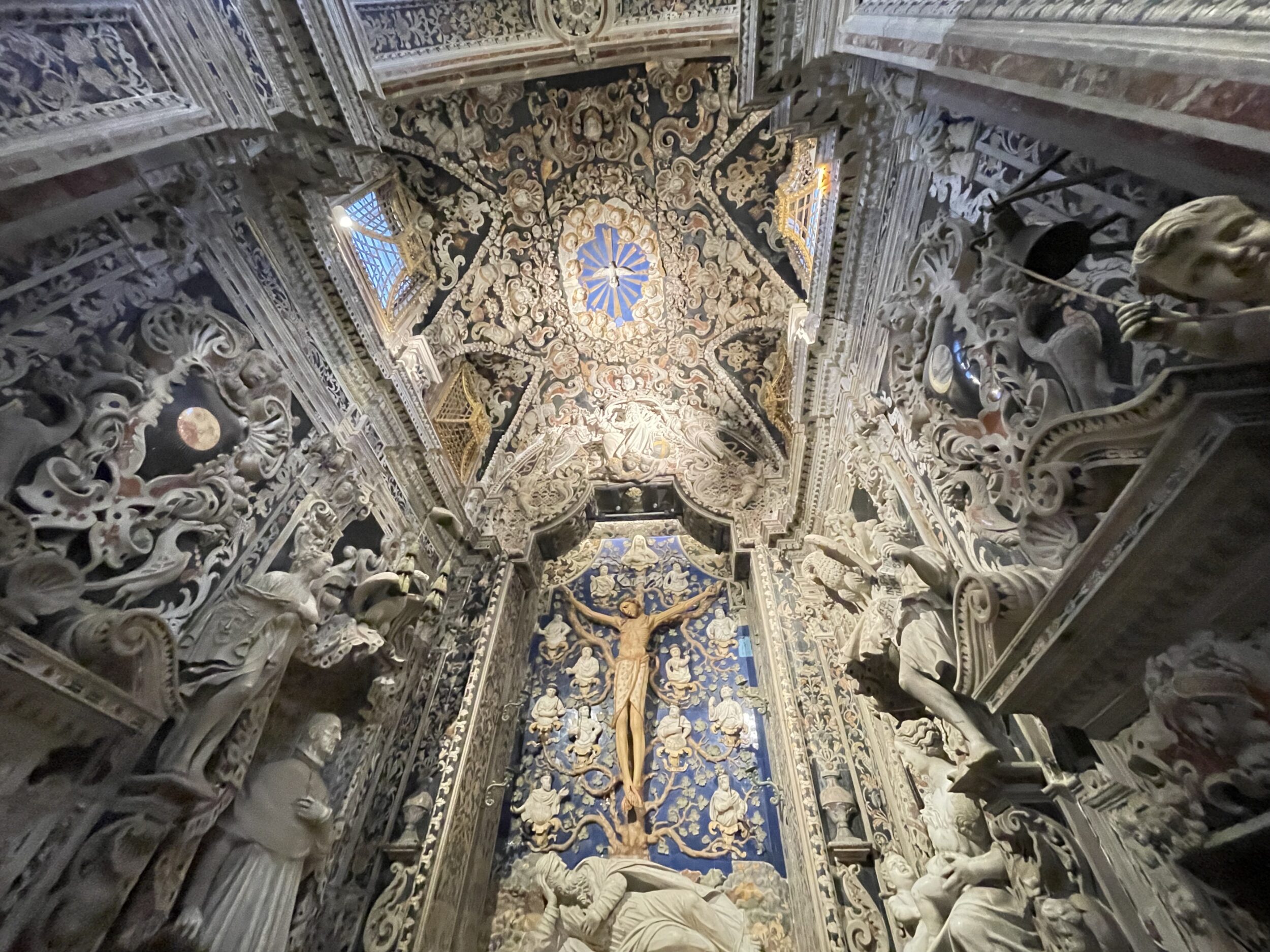
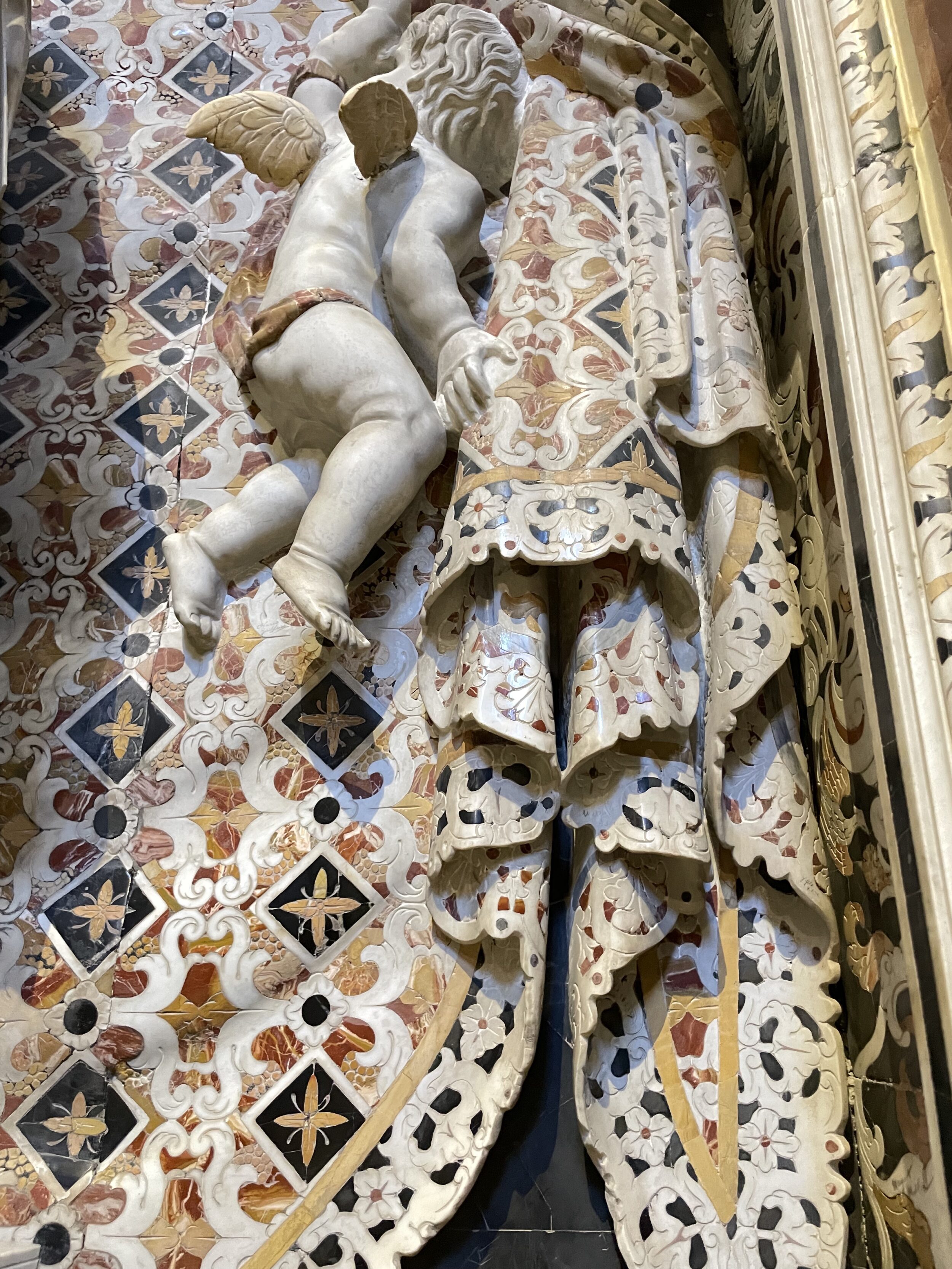
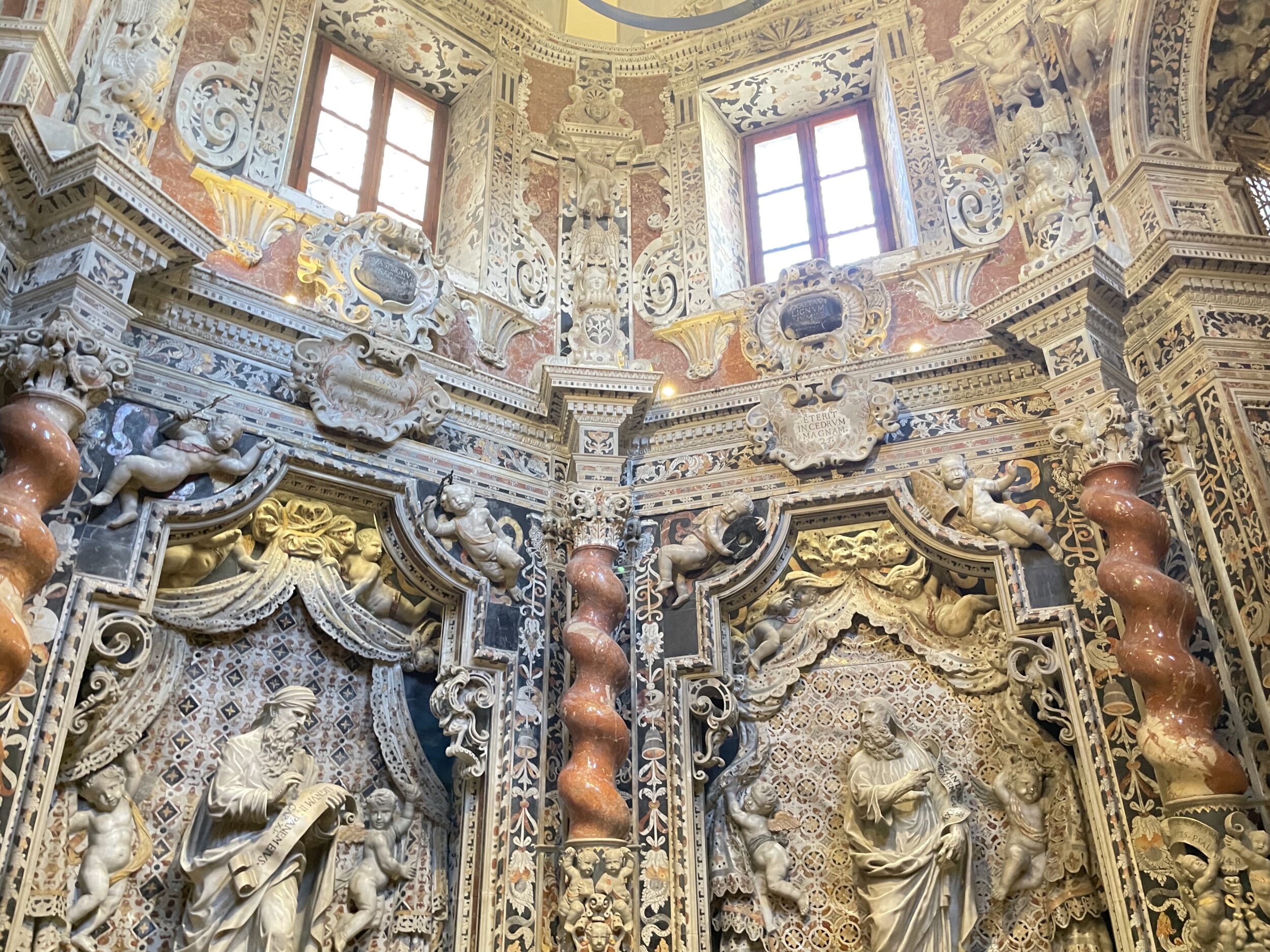
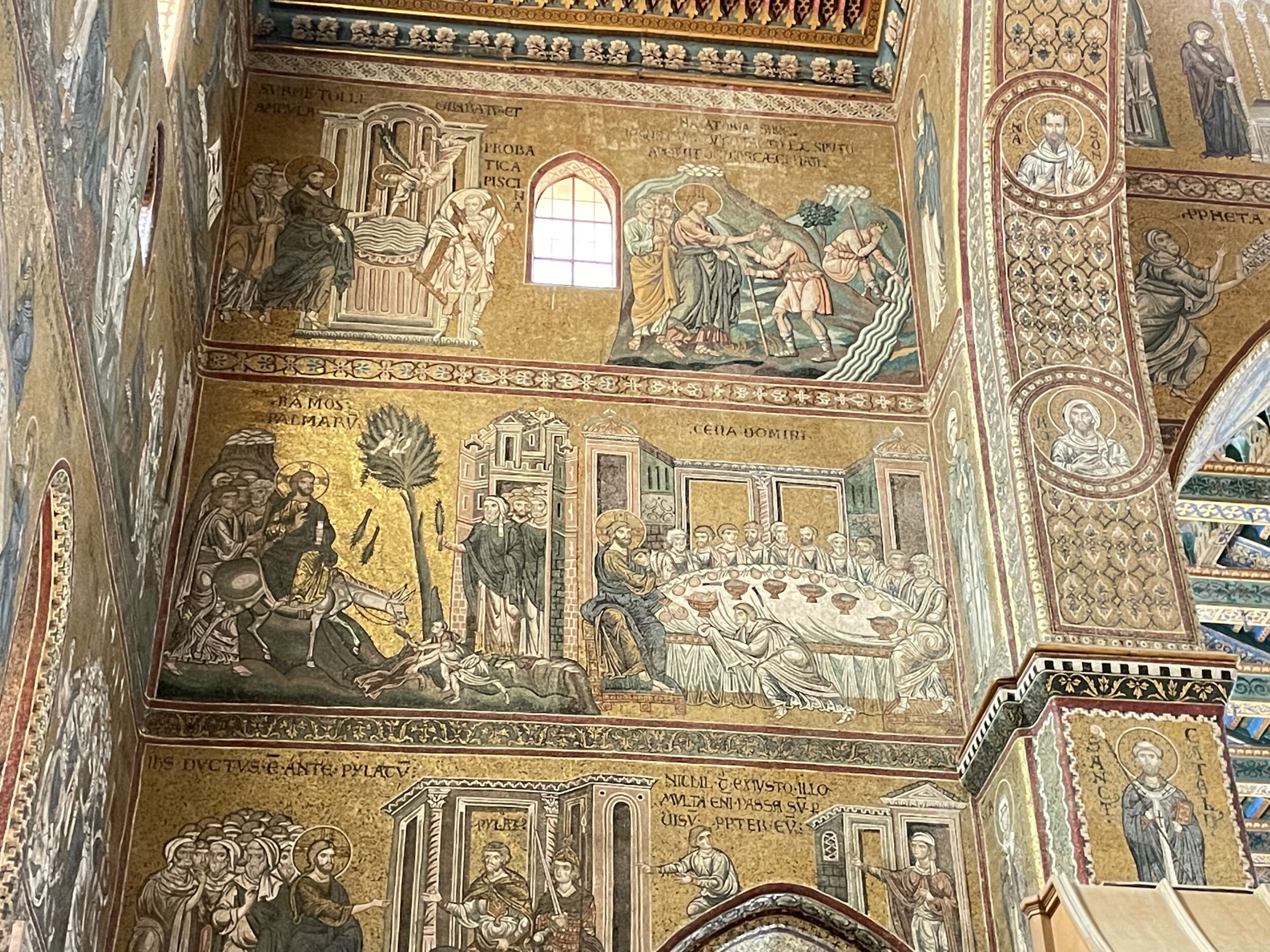
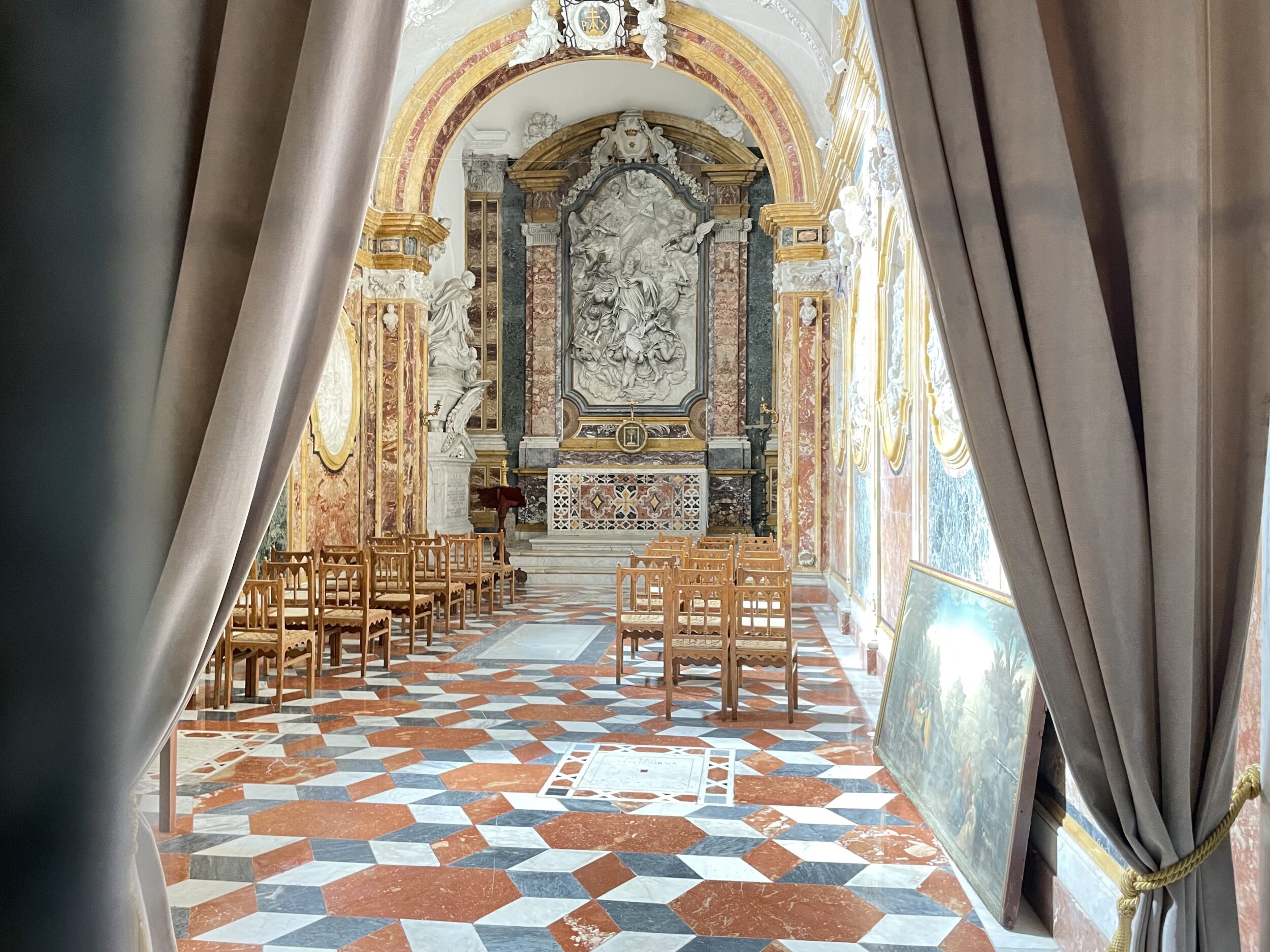
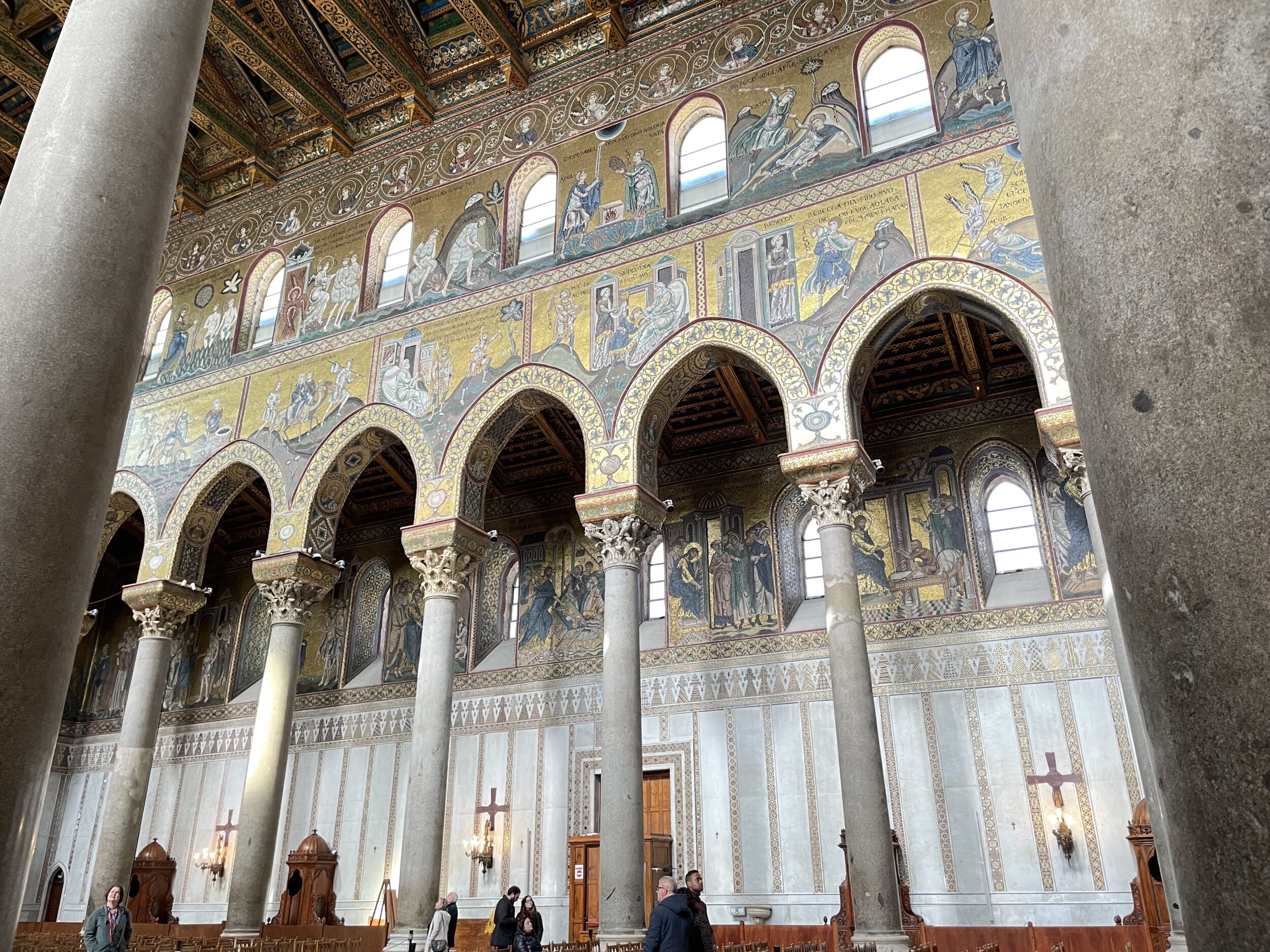
This cathedral made a great impression on me, and even more so when we went up to admire the mosaics from large glass windows. However, you must not have vertigo! Going up, we also saw the cloister, which is why I think access to the cloister is not so essential.
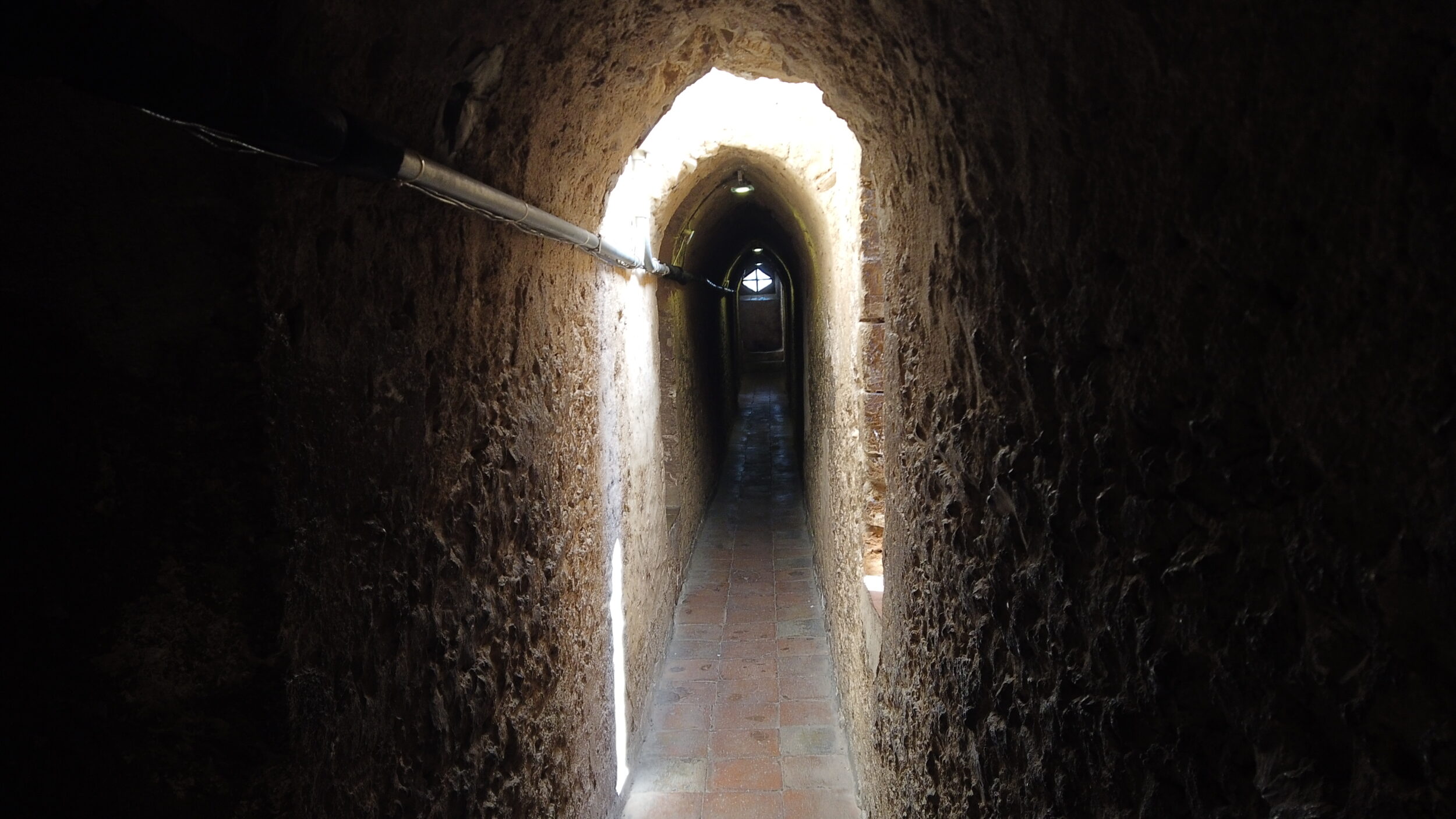
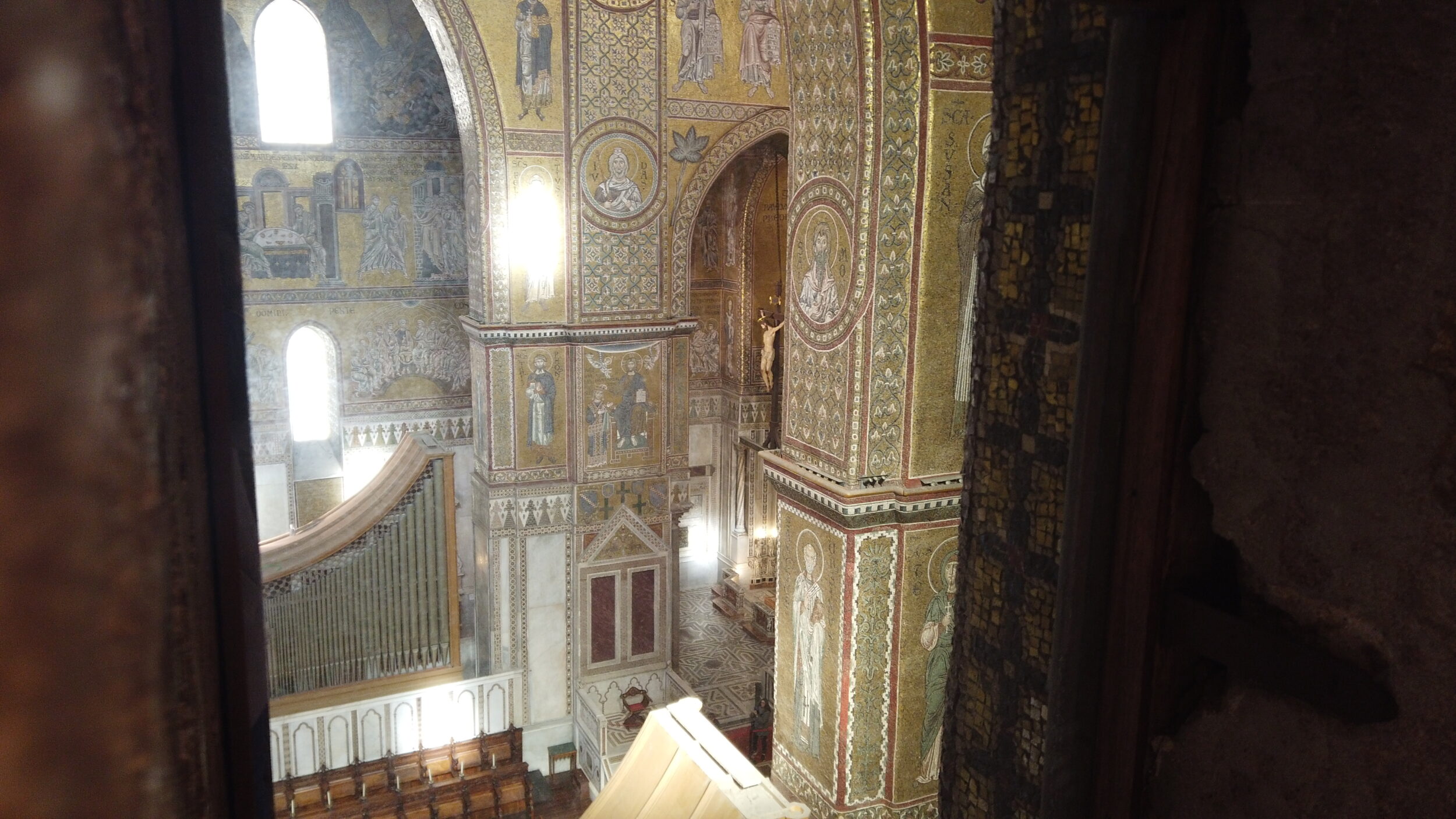
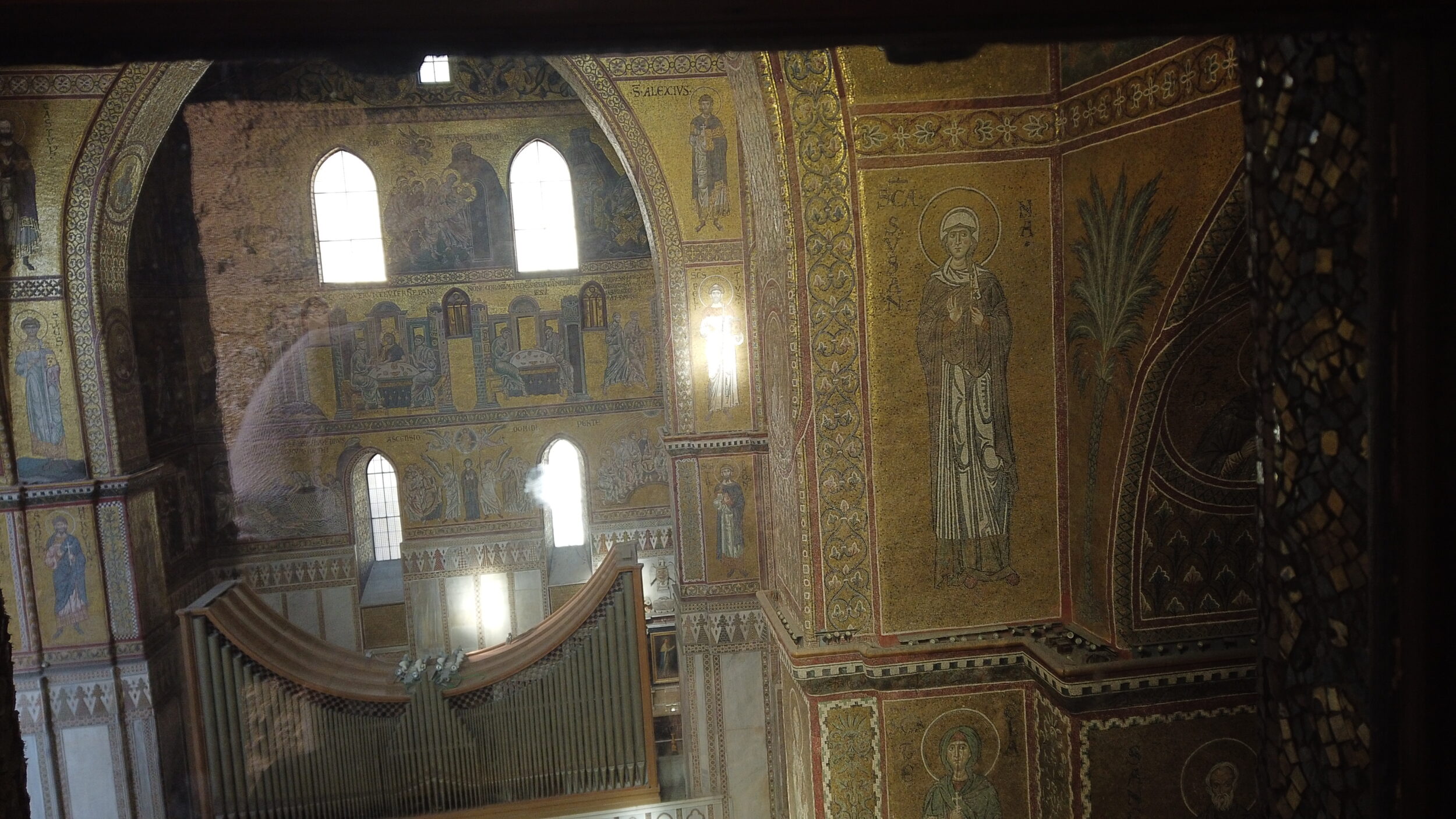
I think about this cathedral very often. When a place is beautiful and doesn’t yet have a dedicated article, in my head, I can’t file it under ‘to forget’ or ‘long-term memory’. It stays in my short-term memory and I have to think about it regularly to review my memories. Moreover, I visited it in February 2023, at a time in my life when I was losing my memory, so I often find myself asking where it was, because there is another very beautiful one in Belgium that had the same effect on me. I can’t wait to catch up on all my travel journals so I can file them in my long-term memory.
We return to the cloister; the columns are all different. The place doesn’t have much energy compared to the cathedral; it didn’t impress me that much, but it’s photogenic.
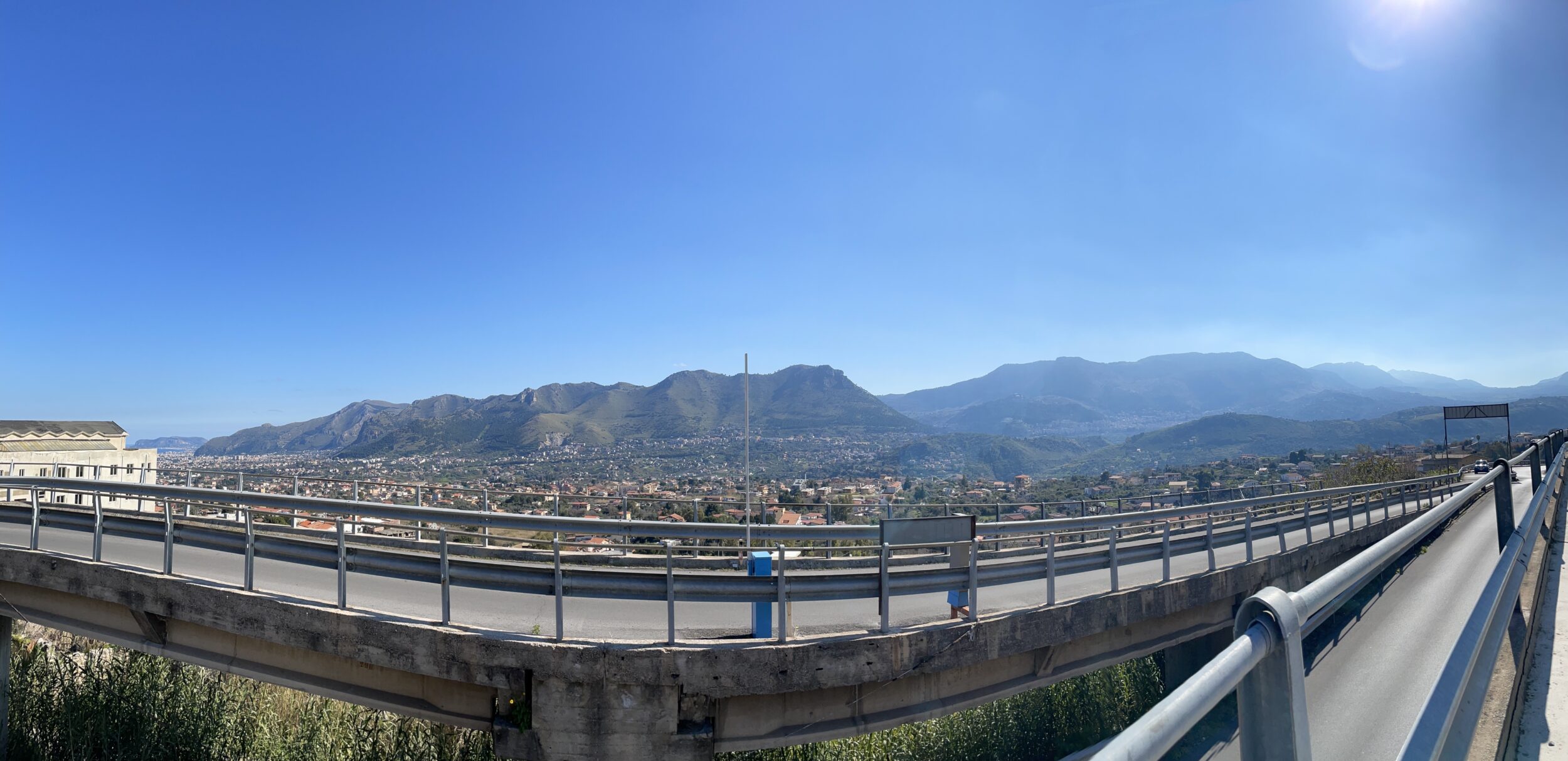
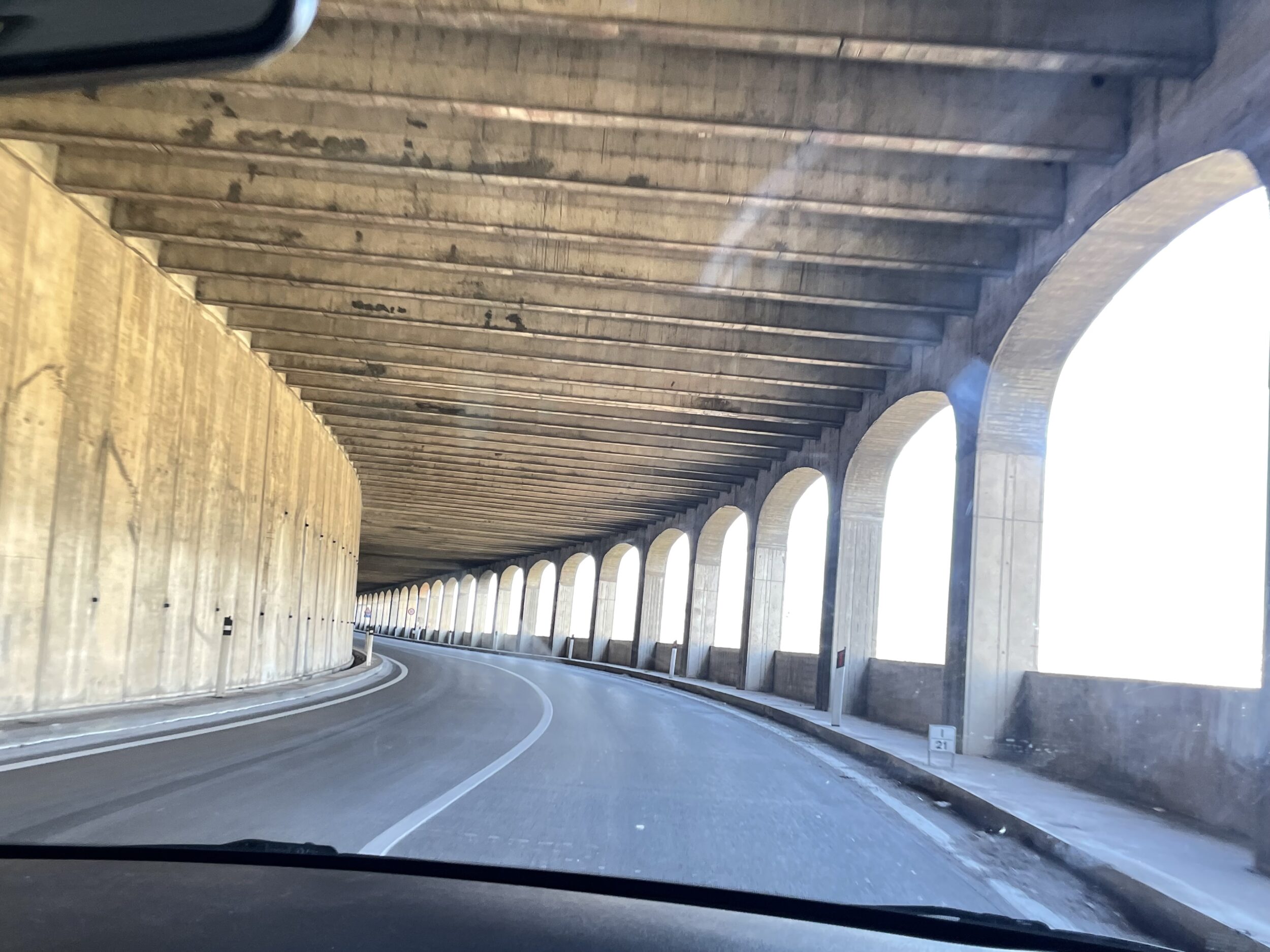
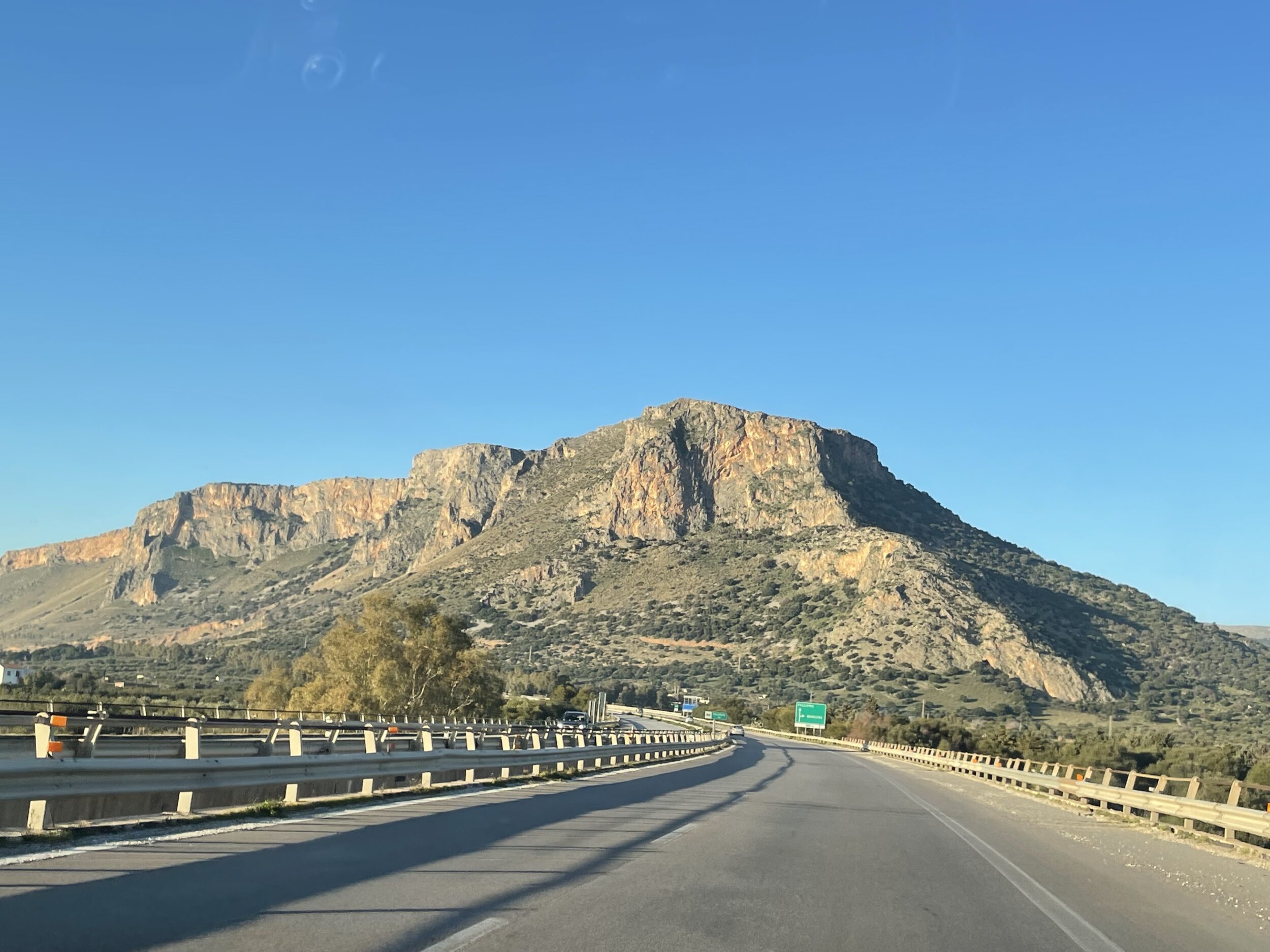
We then head to the archaeological park of Segesta. On the way, we enjoy beautiful landscapes.
Segesta
At the archaeological park, everyone must take a shuttle that drops us off first at the ancient theater, giving us ample time to visit each site.
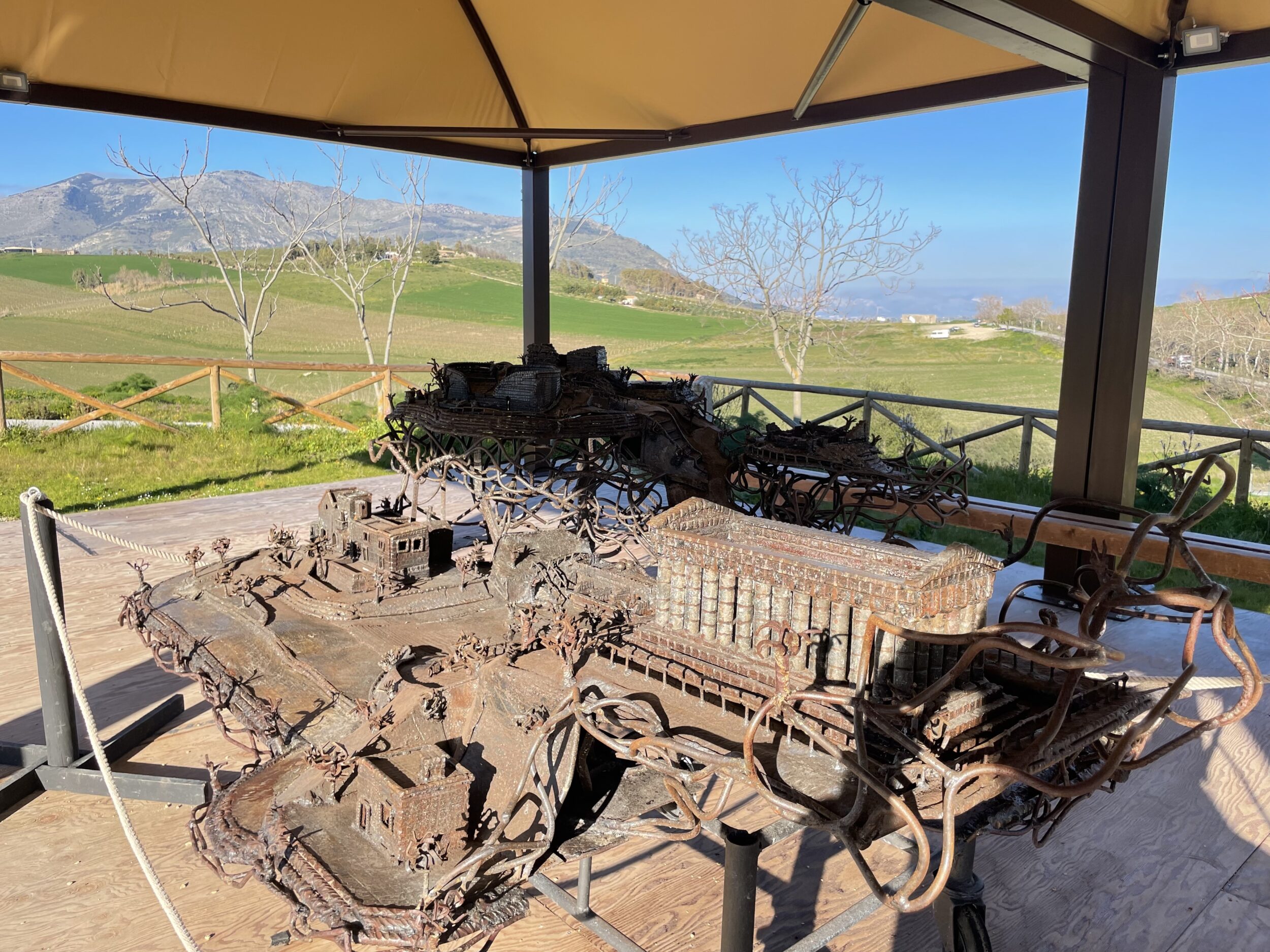
The park consists of two acropolises: The North Acropolis houses the remains of public buildings, an agora, and an ancient theater, while the South Acropolis reveals ancient dwellings. As we head to the ancient theater, we visit some public buildings of which only the walls remain.
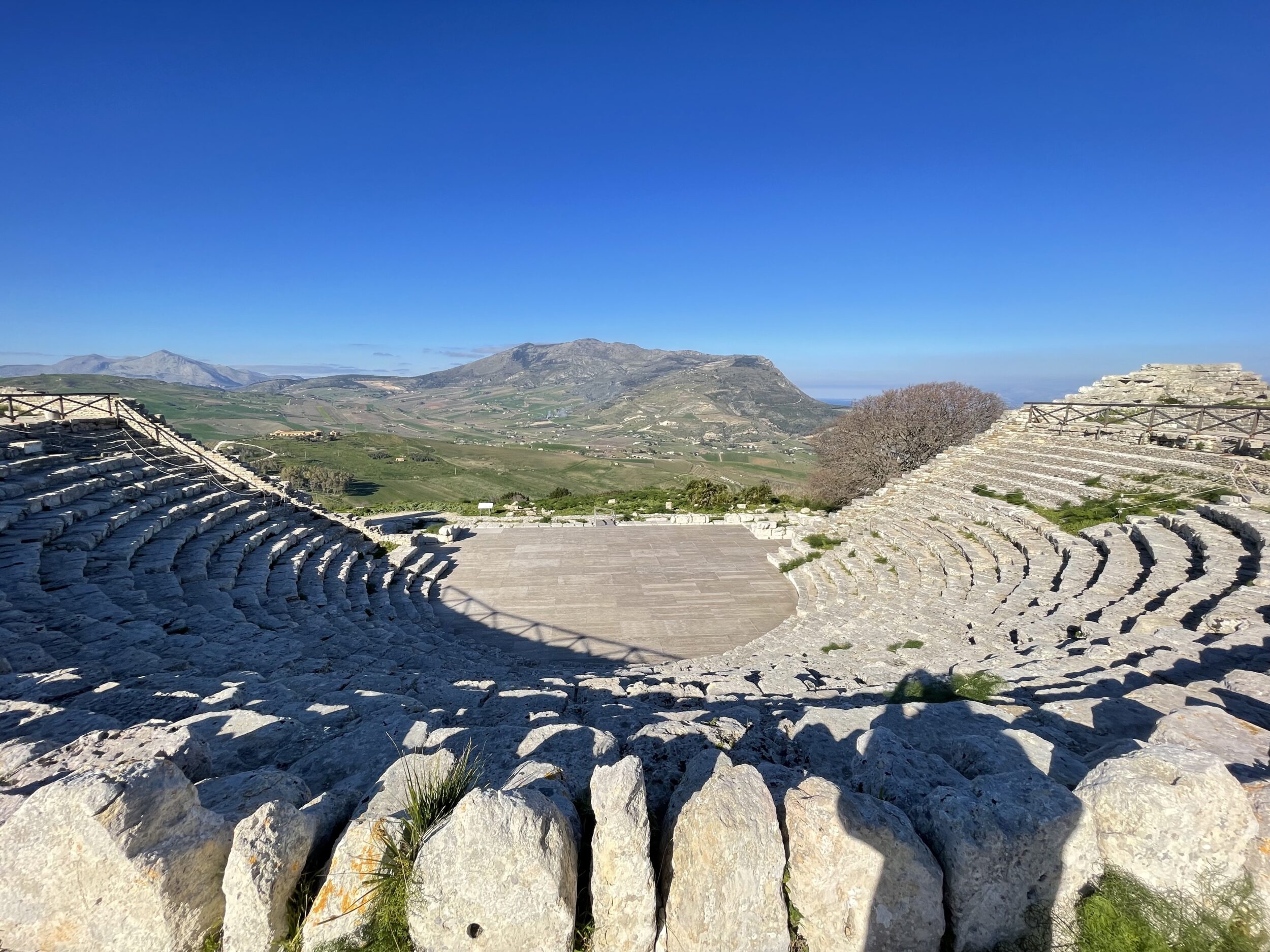
The ancient theater is perfectly integrated into the surrounding landscape. It once served as a place of entertainment, and its elevated position now offers a magnificent view of the surrounding valleys.
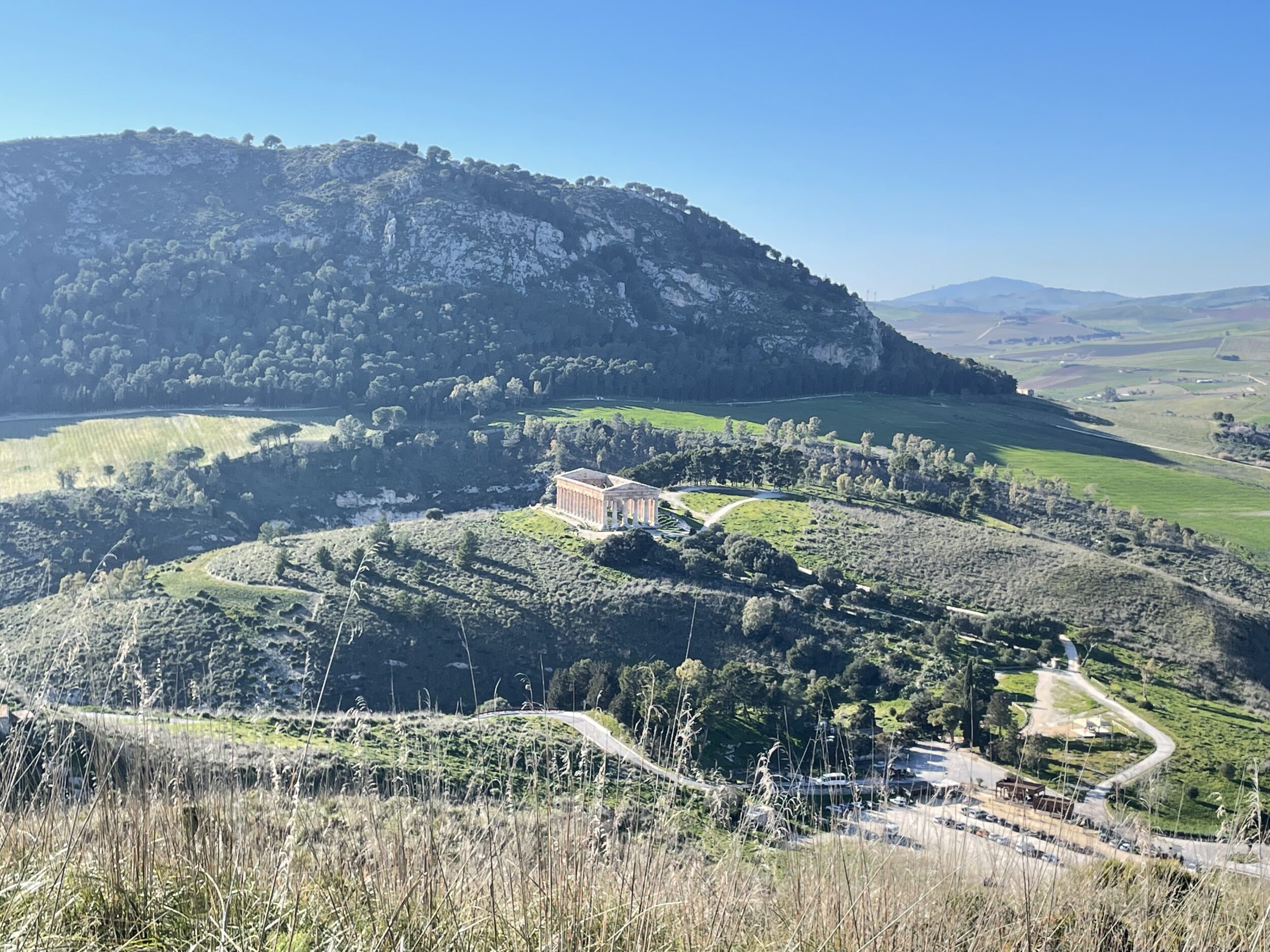
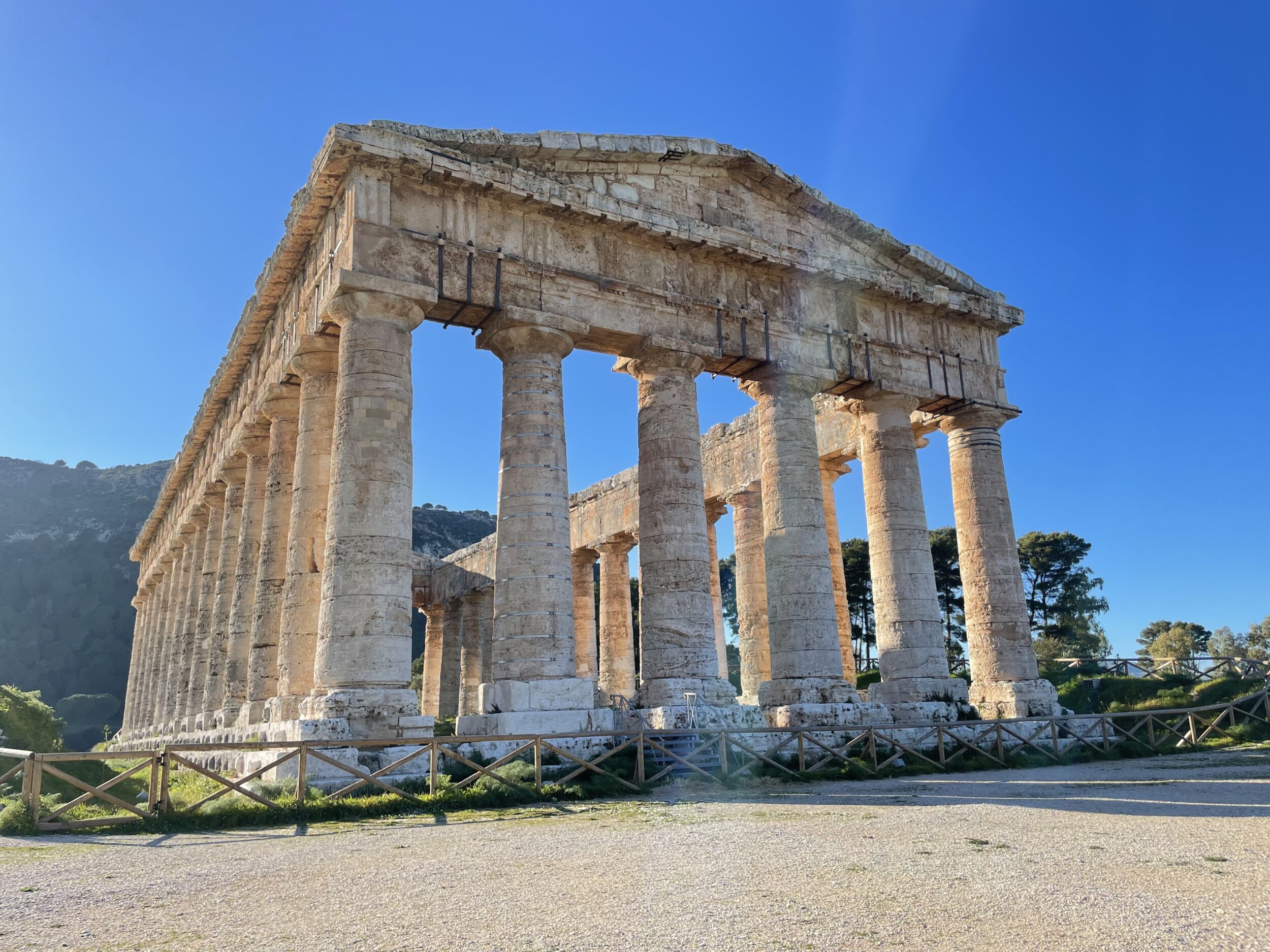
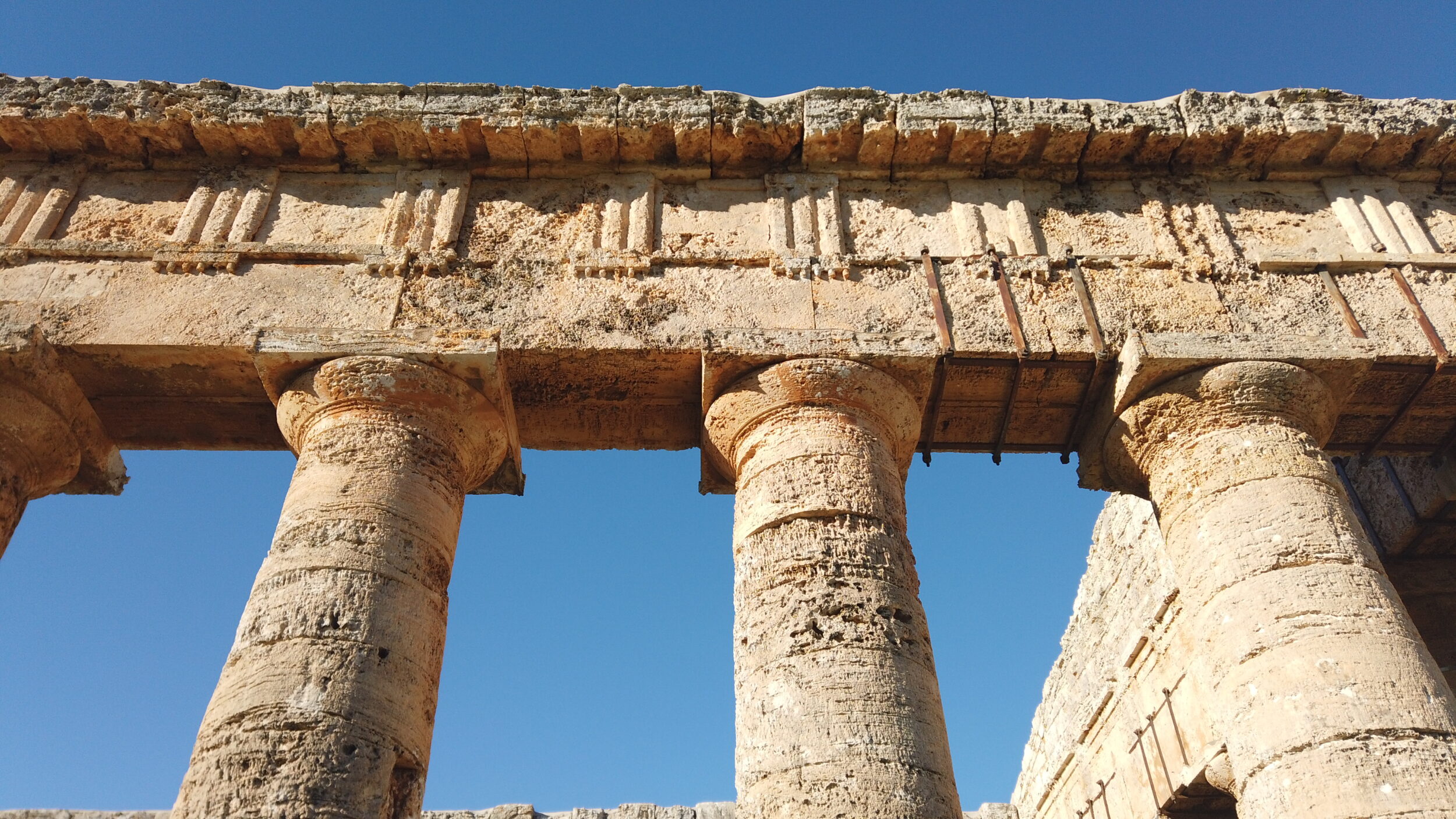
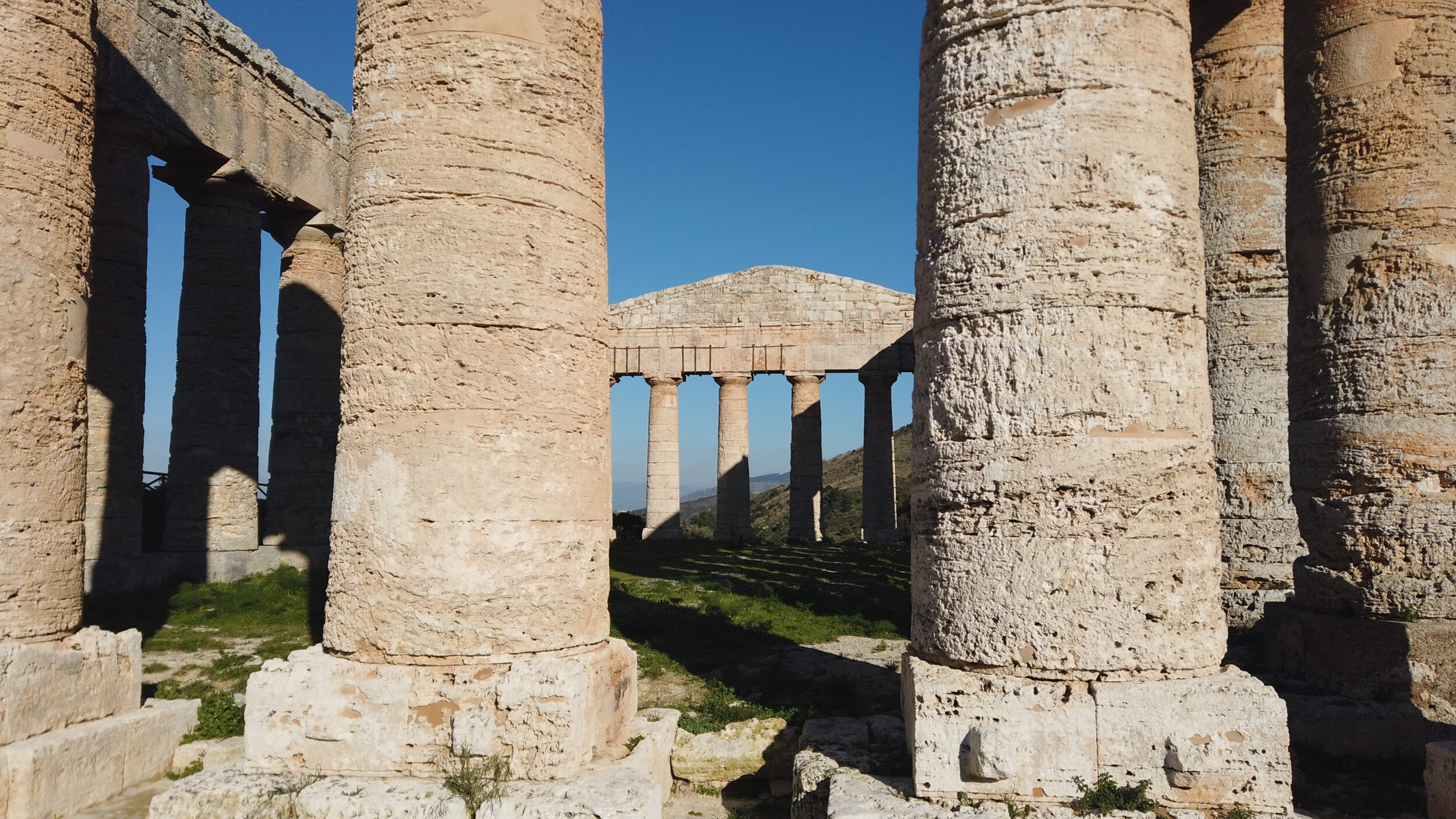
But the most impressive element of the park (which you can clearly see from afar on the right side of the shuttle) is undoubtedly the Doric-Siceliot temple with 6×14 columns, erected outside the city walls. Its unfinished state still fuels discussions about its origins and function, but it remains a powerful symbol of Segesta’s past.
We return to Palermo, park the car on the big avenue. Tomorrow, we leave for Cefalù.

