

[Analysis of the Dream in the Red Chamber] Could the Jia family have been saved? Wang Xifeng, the money, and the tragedy of helpless lucidity
In The Dream of the Red Chamber, the real question isn’t just why the Jia family eventually falls. The most painful question may be this: if certain characters could already see disaster coming, if a few knew how to diagnose the flaws in the house, if Wang Xifeng possessed genuine administrative genius, then why couldn’t the Ning and Rong mansions have been saved?
The novel’s answer is cruel, because it’s never entirely simple. On a practical level, the Jia family isn’t without remedies. It still has clear-headed minds. Qin Keqing, before dying, appears to Wang Xifeng in a dream and advises her to prepare for the future: set aside assets reserved for ancestor worship, preserve the clan school, create a material foundation that would allow the family to survive the day its splendor collapses. Later, when Xifeng enters the Ning mansion to manage the funeral, she immediately perceives its ailments: too many staff members, vague responsibilities, inflated expenses, embezzlement, poorly distributed servants, and high-status people who refuse to obey. Tanchun, too, will later attempt to reform the management of the Grand View Garden by dividing tasks, clarifying rules, and turning dormant resources into real income.
In other words, the Jia family doesn’t lack people capable of understanding. But understanding isn’t saving. This may be one of the novel’s great tragedies: the characters aren’t lost because they’re completely blind. They’re lost because, even when they see clearly, they lack the strength, the rank, the freedom, or the time needed to act at the root.
From the novel’s very beginning, the diagnosis is made: the two mansions still look grand, but their interior is already hollow. The façade stands; the framework, meanwhile, is rotting. The descendants still live off the prestige amassed by previous generations, but they no longer have the energy, the discipline, or the virtue needed to maintain it. The Jias’ decline isn’t just a matter of bookkeeping. The finances are sick, certainly, but so is education, as well as the rites, family transmission, power relations, desires, marriages, dealings with the authorities, and even the household’s intimate morality.
So we need to distinguish several levels.
At a first, purely administrative level, the two mansions could have bought time. Had Qin Keqing’s advice been followed, had inalienable assets been set aside for ancestral sacrifices, had the family school been protected, had prestige spending been cut, had responsibilities been clarified, had the accounts really been audited, the fall might have been delayed. The old tree was already sick, but one could have propped it up, cut the dead branches, slowed the rot.
But at the moral level, salvation becomes much more uncertain. The evil doesn’t come from a single individual. In the Ning mansion, Jia Zhen embodies a corrupted masculine authority; Qin Keqing’s death reveals a darkness that funeral rites can’t erase; Ruizhu kills herself, Baozhu is drafted into the mourning theater, You Shi retreats behind illness. In the Rong mansion, Jia She, Jia Lian, Wang Xifeng, arranged marriages, maidservants, debts, and schemes form another web of everyday corruption. The good people there are often too weak; the lucid ones, too isolated; the competent ones, forced to serve an already rotten system.
At the level of the novel’s very structure, finally, rescue seems impossible. The Dream of the Red Chamber isn’t the story of a successful domestic reform. It’s the story of a splendor that peaks precisely when it’s already doomed. Chapter 5 reveals the registers of fate, the funeral songs, the Ford of Delusion; Chapter 13 voices, through Qin Keqing’s dream, the warning of the great tree that will topple and the monkeys that will scatter. These prophecies aren’t there so the characters can correct their destiny. They’re there to show that, even at the heart of the dream, some already know, and that knowing isn’t enough.
How do the different schools of “redology” read the possibility of saving the Ning and Rong mansions?
If you ask the question of saving the Ning and Rong mansions within the critical tradition of the Dream of the Red Chamber, you’ll find that each branch of the Redology answers slightly differently. That very plurality is what makes the question interesting. The novel isn’t just the tale of a great family ruining itself; it’s at once family memory, social critique, a tragedy of desire, a meditation on women, and a philosophical dream.
For the school of historical and biographical research, particularly associated with Hu Shi, Yu Pingbo, and Zhou Ruchang, the Jia family is often read in light of Cao Xueqin’s own family history. The Ning and Rong mansions are thus not just two fictional spaces: they evoke a type of Manchu and Han aristocracy living on imperial favor, hereditary posts, court connections, and the memory of former glory. In this view, the Jia are not truly masters of their destiny. They are not like a merchant family that can cut its losses, change course, and start over elsewhere. Their wealth depends on external power. When favor fades, when the political climate shifts, when old revenues dry up, even excellent internal management can only prolong the agony. Gaining a few years is not saving a fate.
For a social and political reading, the problem is even deeper. The Jia family appears as an aristocratic organism living off land, titles, servants, marriage alliances, and legal privileges. It declines not just because it spends too much. It declines because its entire way of life is already unjust and corrupt: men hold power but shirk their responsibilities; women can be intelligent and capable without having ultimate authority; servants are treated as living property; titles can be bought; trials can be influenced; marriages serve to preserve the clan’s face. In this view, “saving” the Jia is not necessarily an obvious moral goal. Saving such an organism without radically transforming it would simply be allowing it to continue living at others’ expense.
For literary criticism, especially in the line of Yu Yingshi and his theory of the “two worlds,” the tragedy lies in the fact that at the very heart of the Jia family there exists a relatively pure world: the Grand Garden, Baoyu’s love, the young girls, poetry, flowers, ties that are more tender and truer than external rites. But this world cannot subsist on its own. It depends on money, power, servants, and the protection of the very family that is rotting. The Grand Garden is an ideal space, but it is lodged in the belly of an impure reality. The Ning and Rong mansions cannot be saved merely because they lack money; they cannot be saved because their most beautiful aspects are nourished by their most corrupt ones. When the outer world collapses, the inner garden has no ground to stand on.
For a Buddhist, Taoist, or philosophical reading, partly inherited from Wang Guowei, the very question of salvation remains caught in the dream. Wealth is a dream, love is a dream, the official career is a dream, the family itself is a dream. In chapter 5, the Goddess of Disillusion thinks she can cure Baoyu of love through love, of desire through experiencing desire, in order to lead him back to Confucius, Mencius, and the path of engagement with the world. But as the novel progresses, it shows that the official career and the morality of social utility are themselves paths of delusion. If awakening only means becoming a more rigid Jia Zheng, a more skilled social climber like Jia Yucun, or a more reasonable heir who knows how to keep accounts, then that is just trading one dream for another. True awakening does not consist in saving the Jia mansion; it consists in understanding that the Jia mansion cannot be saved in the very form that defines it.
For the tradition of old commentaries, especially those associated with Zhiyanzhai, the fatal dimension is even more visible. Chapter 5 already shows the registers of fate, the prophetic songs, the beautiful woman hanged in a tower, and the idea that the source of corruption lies in the Ning mansion. Chapter 13 then has Qin Keqing return in a dream to warn Wang Xifeng: the great tree will fall, the monkeys will scatter; one should prepare property for ancestral sacrifices and protect the clan school. In other words, the novel already contains the warnings, diagnoses, and even some remedies. But no one manages to apply them fully. The old commentaries thus not only make us understand that the family is doomed; they make the tragedy more painful, because this family was warned, and yet the warning prevented nothing.
If we bring together these different readings, we can say this: the biographical school sees in the fall of the Jia the reflection of an aristocracy once favored and then abandoned; the social reading sees the rot of a system of privileges; literary criticism sees the destruction of an ideal world caught in an impure reality; the Buddhist and Taoist reading sees a dream of splendor impossible to repair from within; the tradition of old commentaries sees a catastrophe foretold from the start. These approaches do not say exactly the same thing, but they converge on an essential point: the Ning and Rong mansions can be patched up, not saved. To truly save them would require not only changing the management of money, but transforming the very structure of power, desire, rites, and statuses that sustain them. Yet, changed that much, the Jia family would no longer be the Jia family.
Wang Xifeng: genius manager or symptom of the disease?
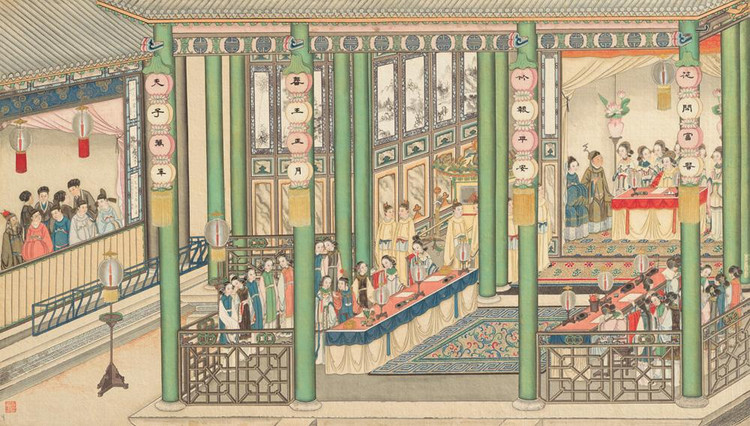
Talking about the possible salvation of the Ning and Rong mansions inevitably means talking about Wang Xifeng. She is undoubtedly one of the sharpest, most efficient, and most formidable minds in the entire novel. The moment she takes charge of affairs, she spots the leaks: personnel, accounts, responsibilities, abuses, delays, privileges. She understands the concrete logic of domestic power better than most of the men in the family. When she’s called a “heroine among women,” it’s no empty flattery.
But Xifeng is also tragic because her power is real without being sovereign. She administers, but she doesn’t own. She commands maids, stewards, and servants; but she can’t truly oppose Old Lady Jia, Lady Wang, Jia Zheng, Jia She, Jia Zhen, or the lavish expenditures that uphold the clan’s prestige. She can monitor small sums, but she cannot abolish the big display expenses: extravagant funerals, parties, gifts, construction, visits, alliances, ceremonies. She’s asked to maintain the facade of a great house even as the resources sustaining that facade drain away.
That’s why her recourse to usury can’t be read too simplistically. There’s greed in her, of course. But there’s also the pressure of a constantly strapped treasury. Monthly payments must be made, rank maintained, ordinary and extraordinary expenses met, deficits here covered with what’s missing there. The family refuses to give up its lifestyle. It wants to keep appearing rich. So where does the money come from?
It’s here that Xifeng becomes both worthy of compassion and condemnable.
She’s worthy of compassion because she’s asked to feed an entire household while reserves dwindle, and no one wants to eat less. She’s condemnable because, instead of transforming management, she uses the power the common coffers give her to create private profit. Delaying monthly allowance payments, circulating that money as loans, then pocketing the interest—this is no longer just “managing.” It’s turning others’ dependence into a source of personal gain.
Usury is dangerous not only because it reveals her greed, but because it destroys three essential things.
First, it destroys the boundary between public and private money. When the one keeping the books uses household funds for personal profit, the entire moral edifice of management collapses. Subordinates quickly learn the lesson: if those at the top embezzle in their own way, everyone can embezzle at their own level. Corruption doesn’t just trickle down; it spreads through imitation.
Second, it destroys the very ethics of administration. Xifeng is smart enough to plug the holes, but her solutions create new problems. The more she succeeds in circulating money, the more the family can delude itself into thinking it’s still standing. Her talent becomes a kind of painkiller: it momentarily relieves the illness but prevents recognizing that the disease runs deep.
Finally, these practices leave traces. On the day the family is investigated, seized, and judged, everything can be turned against her: usurious loans, interference in lawsuits, bribes, private use of domestic power. Xifeng wants to save the house with the very tools that prove that house deserves to fall. Her cunning becomes her trap.
What could she have done, then?
It would be unfair to say Wang Xifeng could have saved both mansions on her own. She lacked the full rank, political power, and moral authority to do so. But within the limits of what was possible for her, she could have acted differently.
The first thing would have been to rigorously separate the common coffers from her personal interests. If money had to be invested or advanced, it should have been done with clear accounts, witnesses, rules, and the profits should have gone to the household, not to her. The issue isn’t just financial; it’s symbolic. A house where management begins with blurring the public and private is already doomed.
The second thing would have been to turn her personal authority into an institution. Xifeng knows how to inspire fear. She knows how to punish, summon, command, humiliate, and have things carried out. But a system that only works because one person inspires fear is fragile. The moment she falls ill or loses power, disorder returns. Stable responsibilities should have been established: who keeps what, who signs what, who answers to whom, which expenses are authorized, what sanctions follow abuses, what rewards accompany savings.
The third thing would have been to ally earlier with Tanchun and Baochai. Xifeng possesses authority and energy; Tanchun has a reformist mind; Baochai has a sense of measure and the ability to soothe resistance. Together, they could have formed a true force for internal reform: Xifeng to cut through immediate disorder, Tanchun to change the rules, Baochai to make reform acceptable and sustainable.
The fourth thing would have been to adopt Tanchun’s logic earlier: not just cutting expenses, but creating independent revenue. The gardens, ponds, flowers, bamboo, lands, and internal productions of the mansion could have been entrusted to overseers who’d get a share of the profit while reducing household costs. That’s a way to turn dormant assets into living resources. The Jia family lived too long consuming the inheritance of the past; it never learned enough to produce healthily.
The fifth thing would have been to tell the truth to their superiors about the cost of prestige. Obviously, this was the hardest part. It meant taking on Old Lady Jia, Lady Wang, Yuanchun, Jia Zheng, Jia Zhen, and Jia She. But as long as the major expenses remained untouched, squeezing the little people would do no good. A great family cannot save itself by delaying servants’ wages while continuing to host lavish banquets, grand funerals, expensive gifts, magnificent gardens, and elaborate ceremonies. What kills the Jia is not some isolated minor expense; it’s an entire lifestyle that refuses to admit it can no longer afford itself.
Finally, Xifeng should have avoided illegal or morally dubious acts: meddling in lawsuits, taking bribes, using her power to crush the weak, and practicing usury. This is where she fails most clearly. She wants to maintain the household, but she does so by using the very forms of corrupt power that make it condemnable. She is intelligent, but she doesn’t know her limits. And intelligence without moral limits becomes even more dangerous than mediocrity.
Why, despite everything, she couldn’t save the Jia
Even if Xifeng had acted more ethically, it’s doubtful she could have truly saved the Ning and Rong mansions. Saving the family would have required more than an excellent administrator. It would have required the masters themselves to accept change. Jia Zhen should have been stopped. Jia She should have given up his appetites. Jia Zheng should have actually governed his household instead of merely embodying its moral sternness. Jia Jing should have stopped fleeing his responsibilities into religion. Old Lady Jia and Lady Wang should have agreed to scale back the grandeur. The younger generations should have been reeducated. Ties with the official world should have been cleaned up. Money should have stopped serving appearances first.
None of that happens. And because it doesn’t, Xifeng can only do one thing very fitting for the world of Dream of the Red Chamber : endlessly patch up a house that refuses to be truly repaired. The more competent she is, the more bitter the tragedy becomes. If she had been mediocre, the family might have fallen sooner, but her personal guilt would have been less. It’s precisely because she’s brilliant that she prolongs the illusion of wealth a little longer, sinking deeper into the web of money, power, and guilt.
One could say that Xifeng didn’t create the Jia family’s illness, but her way of treating it worsened the complications. She isn’t the sole cause of the fall, but she reveals its logic with almost cruel clarity. She sees the cracks, she knows where the water seeps in, she reaches out to plug the holes; but that same hand also diverts some of the water for her own use.
That’s why we must avoid two overly simplistic readings: seeing her merely as a greedy woman, or conversely, as a genius crushed by the system. She is both at once. She is a woman of exceptional ability in a family where the powerful men often prove weak, cowardly, or corrupt. But that ability serves to sustain a false world. She is a victim of the system, and at the same time one of its best operators. Her hands are tied, yet she still uses those tied hands to bind others.
Conclusion: patching up is not saving
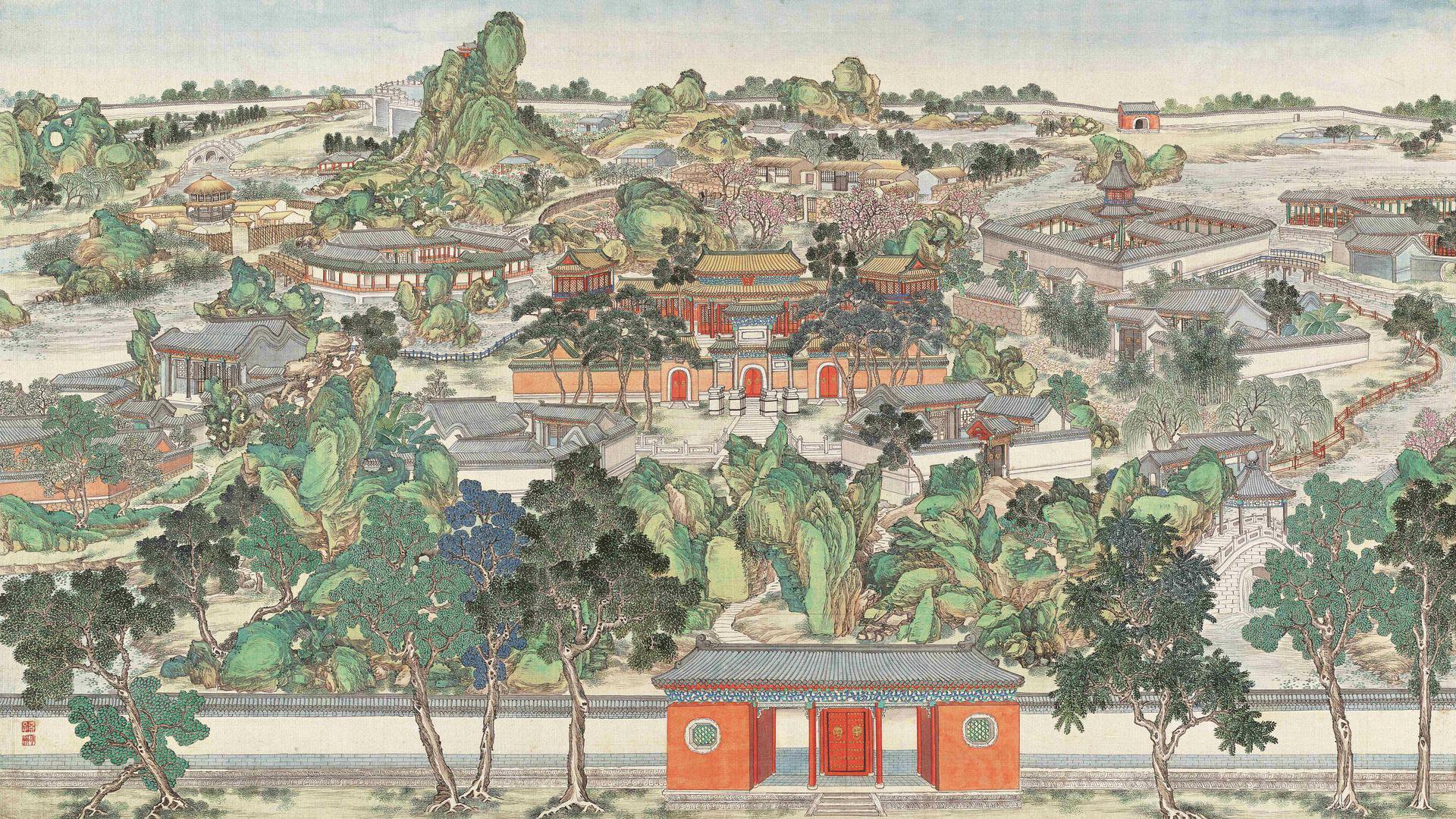
Could the Ning and Rong mansions have been saved? If you reason like an accountant, the answer might be yes, in part: cut expenses, control accounts, limit ceremonies, create new resources, preserve the school, establish ritual property, oversee the stewards, separate public and private money. All of that could have delayed the fall.
But The Dream of the Red Chamber is not just a novel of ledgers and administration. It’s the novel of a dream of splendor taken too far. The Jia’s problem isn’t that they don’t know how to save. The problem is they don’t want to live like a family that must save. No one wants to be the first to admit the tree is rotten. No one wants to cut with their own hand the prestige that still lets them believe they are noble.
Everyone, at one point or another, knows something. Qin Keqing knows. Wang Xifeng knows. Tanchun knows. Baochai understands. Baoyu will eventually understand. The reader, for their part, knows almost since chapter 5. But this knowledge doesn’t liberate. You know the house will decline, but you must still observe the rites. You know money is scarce, but you must still save face. You know the servants suffer, but the whole household rests on their work. You know the official world is corrupt, but you still depend on titles and favors. You know love is a debt, but you can’t help loving.
That’s why the two mansions can be repaired, but not saved. Wang Xifeng can delay the moment the tree falls, but she cannot bring life back to a trunk already hollow. And Baoyu, deep down, doesn’t awaken by becoming a better administrator, nor a more virtuous official, nor a more reasonable heir. He only awakens by understanding that love, wealth, family, prestige, managerial talent, and even the morality of worldly engagement aren’t enough to save those living in the dream.
The ultimate lucidity of Dream of the Red Chamber therefore isn’t to make the dream more livable. It’s to see it for what it is, to still love it, to suffer it fully, and then to let go.

