

My Current Favorites – [April 2025]: Books, AI, The White Lotus, Mattress Topper
Here are my current favorites.
Book “Mastery”
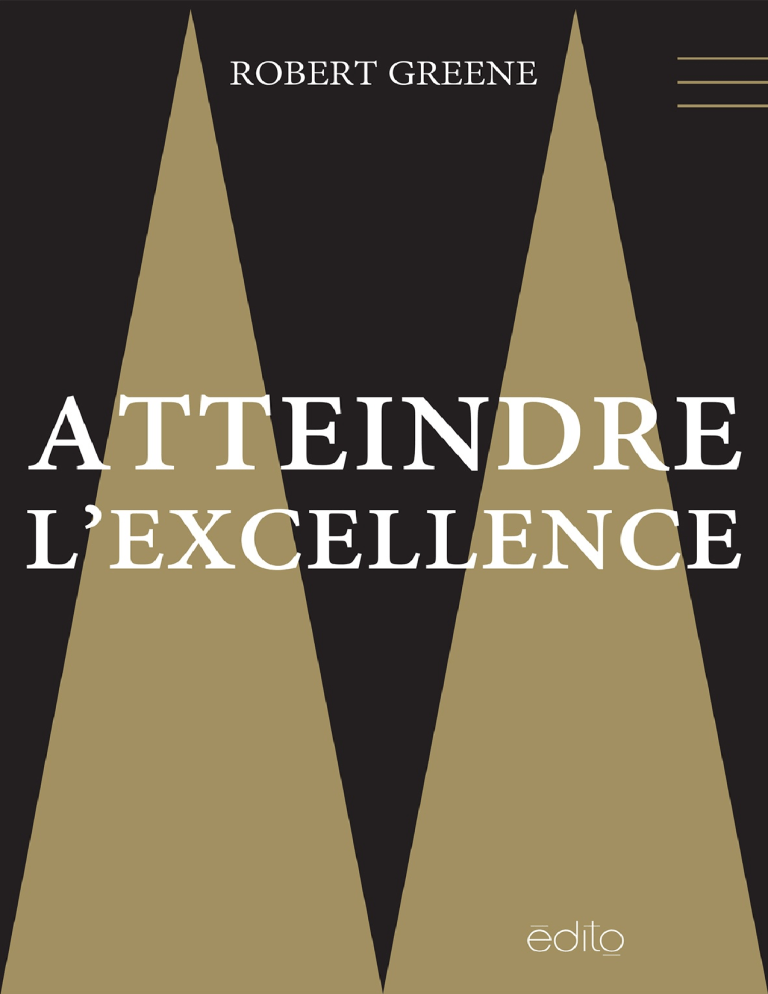
“Reaching Excellence” by Robert Greene (Amazon link, Fnac link) is a guide to developing mastery, mastery, based on the study of the paths of geniuses, artists, and innovators throughout history. Greene explores the idea that mastery is not an innate gift reserved for an elite, but a state accessible to everyone through a patient, strategic, and passionate approach.
I came across this book because I had big doubts about my ability to learn sewing. I’ve been doing it for 2 months now, and I find that everything I make is ugly; I started doubting my dexterity, and I find sewing strangely more difficult than all other forms of craftsmanship. This book rightly reminded me that it takes 10,000 hours to achieve mastery and why it is so difficult when you start learning something new.
What I really like are the passages about learning and the brain. You have to repeat the same actions / activities thousands of times so that one day, you can have new synapses created solely for that task. By taking the same route thousands of times, you eventually create a path in the forest, but if you take different routes each time, there will be no path. With sewing, I don’t do it enough to create that “path” in my brain, hence the difficulty and discouragement I feel every time.
The other aspect I really like is that it encourages being multi-disciplinary. In a world where everyone is a specialist, only people with broad knowledge will be able to connect them and innovate. And I find that we have lost that curiosity and no one encourages us to go beyond our specialties either. The author also encourages understanding how things work. Personally, when I became interested in textile manufacturing, I was suddenly able to choose my own clothes better because I now know how to recognize quality.
And lastly, he emphasizes emotional intelligence, which is perhaps the most valuable skill to develop.
I find the book a bit long because it contains many stories and examples from other innovators. But there is also a condensed version for those who want to go faster (Amazon link, Fnac link).
Quelques citations
For lack of varied experiences and actions, many brain synapses die from lack of use. (…) Every living being is in perpetual change and movement. The moment one stops, believing they have reached the desired level, part of the brain begins to deteriorate. One loses that hard-won creativity, and others notice it. This power and intelligence must be constantly renewed, or they die.
In acquiring any knowledge, there is a natural learning process corresponding to the functioning of the brain. This process results in what we will call tacit knowledge : the feeling that such and such an action is difficult to describe in words, but easy to perform. (…) The natural way of learning, based mainly on the activity of mirror neurons, was observing and imitating others, and repeating their actions for a significant duration. Our brain is perfectly adapted to this form of learning.
Acquiring a skill is accompanied by changes in the brain that are important to understand. When approaching something new, a large number of frontal cortex neurons (the most conscious and highest command area of the brain) are excited and become active, contributing to the learning process. The brain must process a large amount of new information, and one would feel stressed and overwhelmed if only part of the brain were used to do so. During the initial phase and when one concentrates energetically on the task, the frontal cortex even increases in size. But once the action becomes familiar, the circuits that enable its execution become automated, and the neural pathway corresponding to that task is delegated to other parts of the brain, lower down in the cortex. The frontal cortex neurons involved in the initial stage are freed up for new learning, and this brain area returns to its normal size. (… ) In the end, a complete network of neurons is established to memorize that single task, which is why you can still ride a bike even if you haven’t touched a pedal for years. If you examine the frontal cortex of people who have mastered something through repetition, this part of the cortex turns out to be remarkably inactive when they perform that action. All brain activity is concentrated in lower areas and requires less conscious control. This process of building a circuit cannot take place if you are constantly distracted and constantly flit from one task to another. (… ) In the latter case, the neural pathways specialized for that task are never established. What you learn is too faint to remain etched in the brain. Better to devote two or three hours of total focus to a skill than to spend eight hours on it distractedly. You must be as intensely present in what you do as possible. (… ) Once an action is automated, you have enough mental space to observe yourself while practicing it. (… ) The figure “10,000” has something magical about it. In fact, it means that regardless of the field or the person, it’s the time needed to achieve a significant change in the brain.
The human brain has evolved in close connection with the hand. Many of our primal survival techniques depend on fine, rapid coordination between hand and eye. Even today, a vast portion of our brain is devoted to managing these interactions. When we work with our hands and build something, we learn to make movements in the right order and to structure our thoughts. When we take something apart to repair it, we acquire problem-solving skills that we can apply widely elsewhere. Even if it’s just a secondary activity, we must find a way to work with our hands and learn the inner workings of the machines and other technological marvels that surround us.
Our culture does not value learning discipline through hardship or suffering. People are reluctant to truly acknowledge their weaknesses, deficiencies, and the flaws in their work. Even self-help books meant to set us straight are stitched with leniency and flattery; they tell us what we want to hear: that our nature is fundamentally good and that we can get what we want by following a few simple precepts. Authors fear being insulting and damaging readers’ self-esteem by offering harsh, realistic criticism and making them aware of the distance they have to cover. In fact, this sweetness and fear of hurting others is ultimately devastating. They prevent people from gauging where they stand and from self-disciplining. They render them unfit for the trials that arise on the path to mastery. They weaken the will.
In this new age, those who follow a rigid curriculum in their youth end up in a dead end at forty, or sink into deadly boredom. If, on the other hand, starting at twenty you pursue a multidisciplinary learning, you broaden your potential as you age.
The Picture of Dorian Gray illustrated by Benjamin Lacombe
Despite the novel’s fame, I had never read it in full. I read the abridged English version when I was learning English via software, and all the beauty of Oscar Wilde’s style was lost in that abridged version.
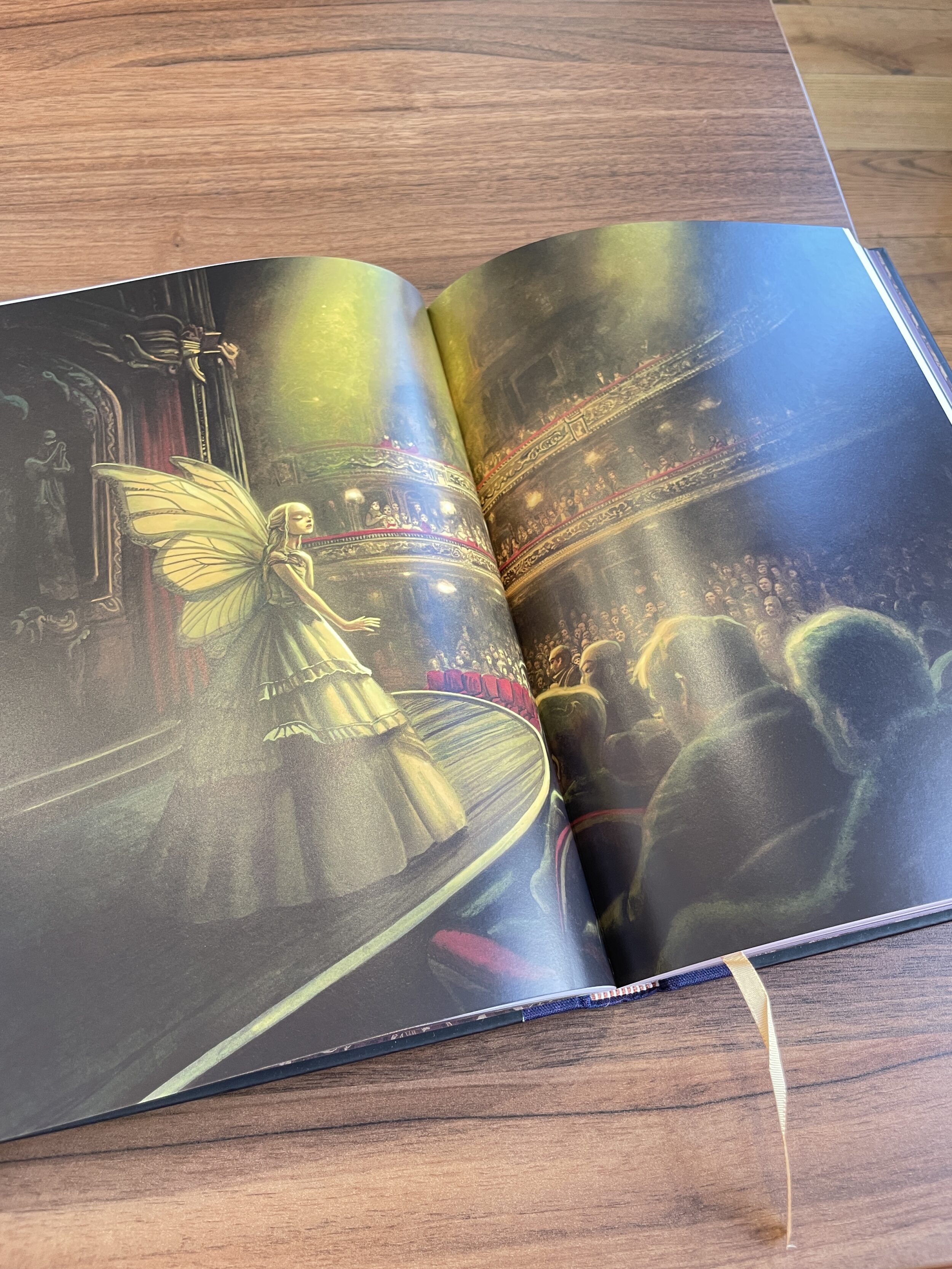
I bought this book (Amazon link, Fnac link) because I love Benjamin Lacombe’s illustrations, and this time the book is not only well illustrated, but also well bound, well printed, well laid out (with patterns like William Morris, which I love). It contains the uncensored version of the novel (the censored passages are in gray). And there’s a comic section at the beginning and end of the book that tells the story of Oscar Wilde around the novel, how he went to prison for his homosexuality (this novel was used as evidence during the trial). Usually, I read novels in English in the original version, but the French translation is so well done (not to mention the illustrations) that I don’t mind reading the translation at all.
What’s a bit odd is where this book is placed in the bookstore (with a little note though specifying to parents that it’s an adult novel). In my bookstore, all Benjamin Lacombe’s books are in the children’s section.
I’m very happy about the creation of this Papillon Noir collection at Gallimard. Proof that people are getting interested again in illustrated books, once reserved only for bibliophiles.
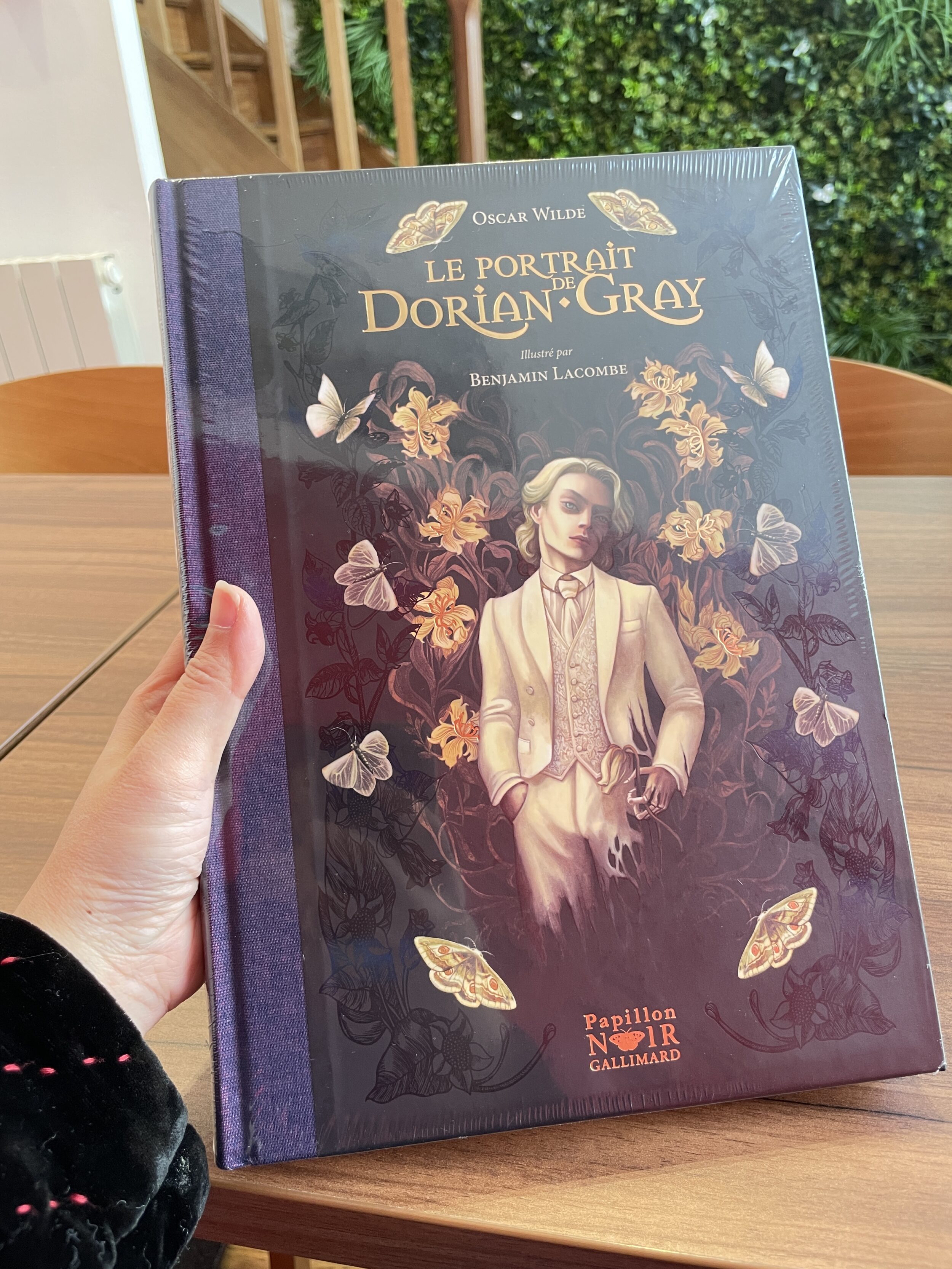
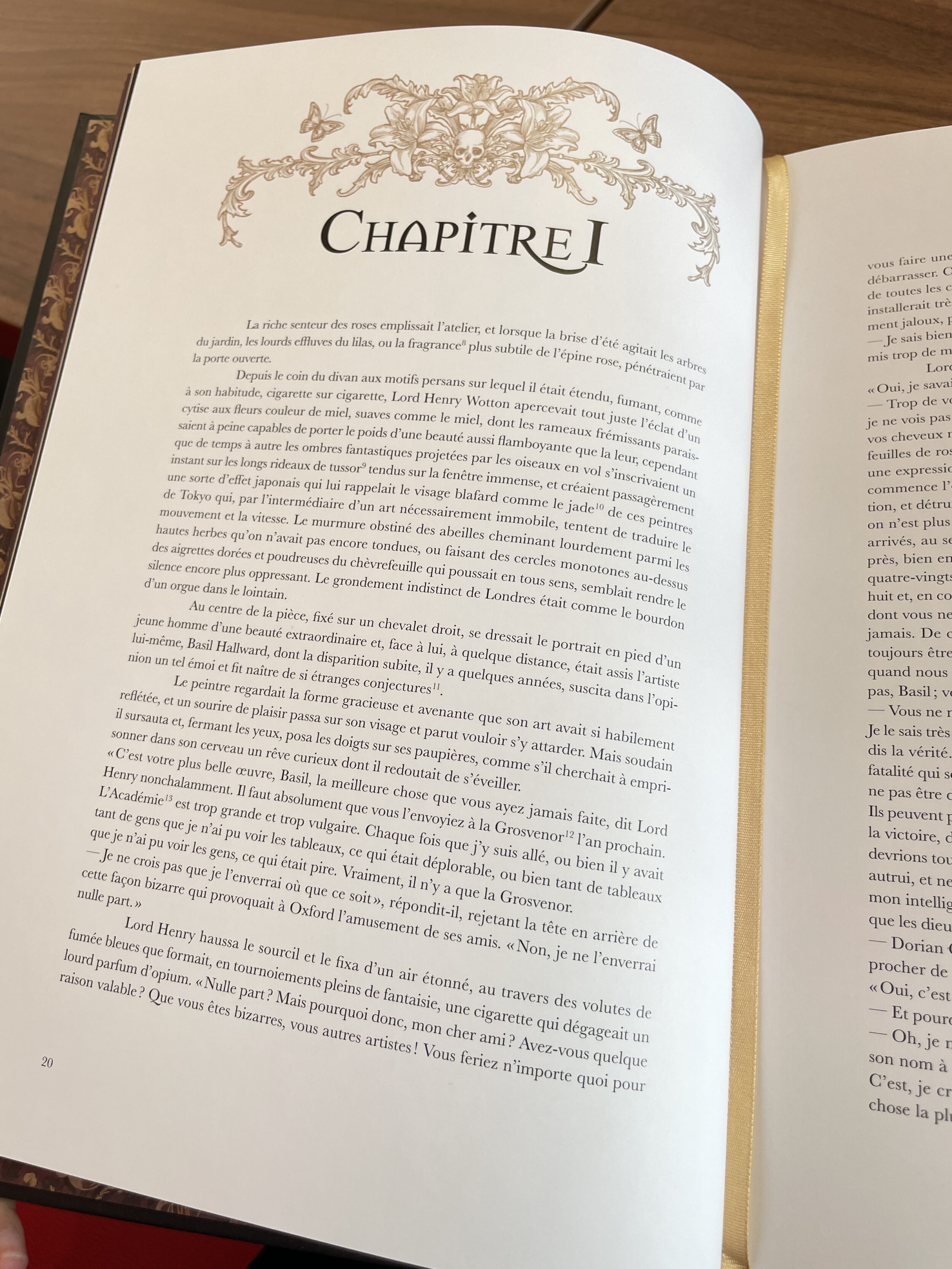
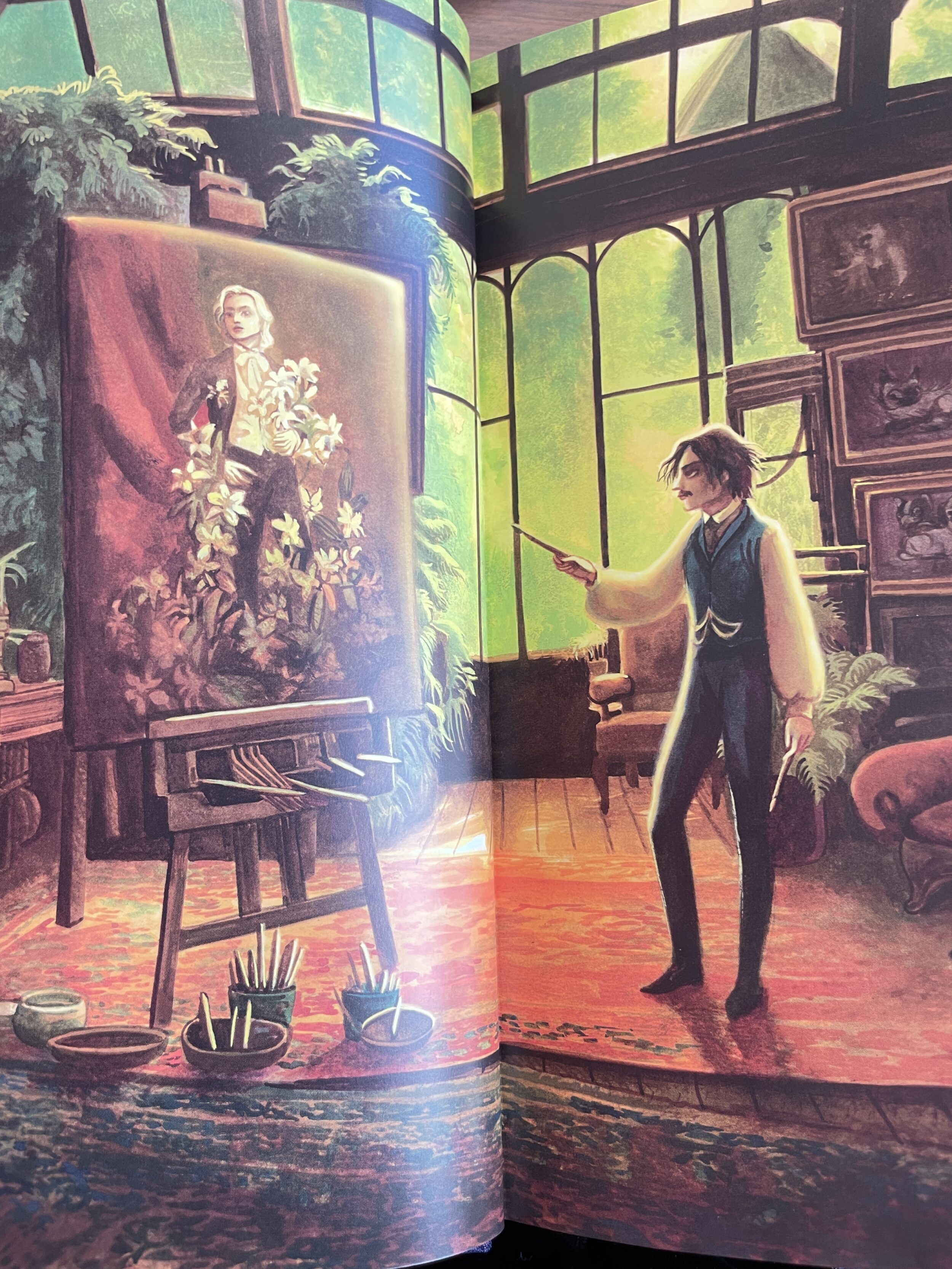
A few quotes:
“I choose my friends for their good looks, my acquaintances for their character, and my enemies for their intelligence; a man cannot be too careful in the choice of his enemies.”
“Every effect you produce gives you an enemy. To be popular, one must be mediocre.”
“Because I consider thatto influence a person is to give them a bit of your own soul. She no longer thinks with her
natural thoughts, she no longer burns with her natural passions. Her virtues are no longer hers. Her sins, if there is anything like sins, are borrowed. She becomes the echo of foreign music, the actor in a play that was never written for her. The goal of life is the development of personality. To realize one’s own nature: that is what we all try to do. Men are afraid of themselves today. They have forgotten the highest of all duties, the duty one owes to oneself. Naturally, they are charitable. They feed the poor and clothe the ragged; but they let their souls starve and go naked. Courage has left us; perhaps we never had any! The terror of Society, which is the basis of all morality, the terror of God, which is the secret of religion: these are the two things that govern us. And yet…”
reMarkable Paper Pro
4 years after the release of reMarkable 2, reMarkable Paper Pro comes to life. It’s the most advanced color e-ink tablet in the world (as of now). I did a full review here.

I find that the technology isn’t mature yet, even the best in the world isn’t functional enough, but if you’re an early adopter, a bit geeky, it might interest you.
AI Translation
For several years, I’ve been studying the I Ching and there are more books on the subject in Chinese than in English or French. I started translating books on my own using AI (I don’t speak Chinese). I told you about it here. I tested OpenAI’s API (ChatGPT) and Anthropic’s (Claude AI) and found Anthropic’s translation more relevant (the company was founded by former OpenAI employees).
To do this, I wrote a script (with ClaudeAI’s help) to interact directly with the API (when the document is too long, it’s useless to go through the interface; you have to communicate via API and pay). JB set up a connection with his Raspberry via SSH, and I can run my script very easily. I’m super happy.
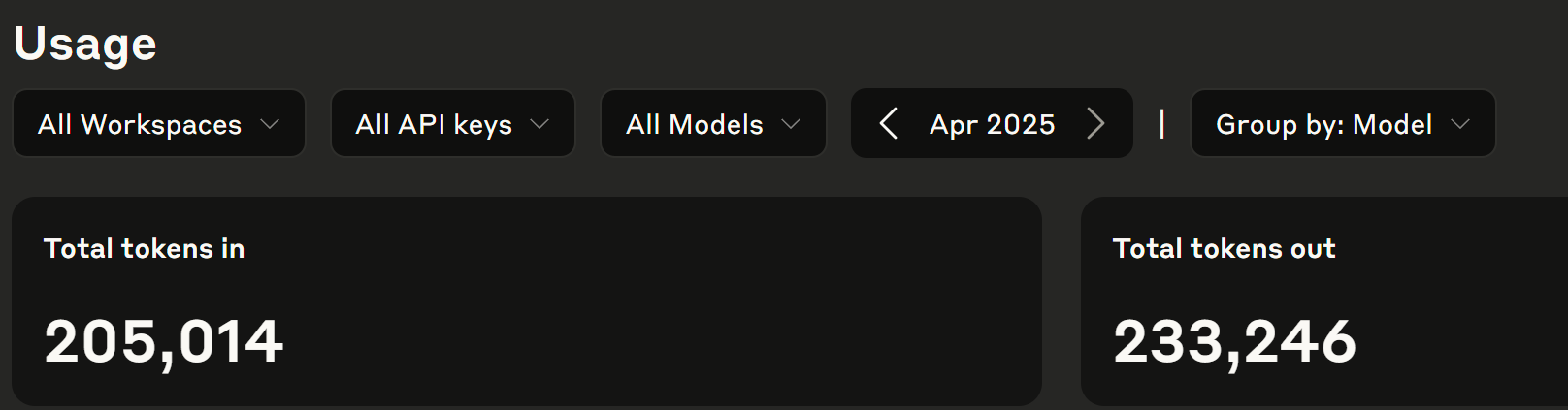
It’s an indescribable feeling when you create a script, when it runs without bugs, and it translates all the world’s books in minutes. Now, prices are getting lower and lower. With Anthropic’s latest model (claude-3-7-sonnet-20250219), I pay $4.11 to translate a 300-page book vs. $8 before.
Some friends, who don’t know how to code, have been able to generate scripts for their personal use. Honestly, try it! You can use scripts almost anywhere, on Excel, Google Docs, Google Sheets… you can automate a huge number of things. If you have no knowledge, AI will guide you step by step.
The White Lotus
When Season 3 came out, I binge-watched, I watched all 3 seasons in a row (for the first time). I really liked the first and second seasons (especially the last episode). The 3rd season tackles issues that concern us less, I think.

Anyway, having stayed at quite a few hotels during our world tours, I find the characters & situations fairly credible: the one who doesn’t have the right room category; the mother who forces everyone to go to the breakfast buffet because it’s expensive (even though on vacation we’re supposed to sleep in a bit); the guests who never swim in the ocean but stay by the pool all day; those who stay at the hotel the whole trip without taking an interest in the locals, etc. It did me good to see images of the hotels we visited in Koh Samui. It makes me want to travel again.
I think The White Lotus’s success is largely due to the collective jealousy the audience feels toward the elite. There’s a certain pleasure in seeing that even the ultra-rich aren’t spared suffering, conflict, or malaise. It’s almost cathartic: their wealth doesn’t protect them from inner chaos. But there’s also something unhealthy about this type of series, which we also find in Succession. (That said, I couldn’t get into Succession. I lasted until episode 3, but I found the characters too stupid).
We also see that certain characters voluntarily isolate themselves within their community for fear of being exploited by others. Even among the rich, they are wary, because between $500 million in net worth and $50 million, the level isn’t the same, and they try not to mix if the wealth level isn’t the same.
Spoiler : The White Lotus has highlighted a rather troubling reality: some friends may be happy for you… as long as you don’t surpass them. If your success becomes too brilliant, it can awaken in them a difficult-to-manage feeling of inferiority. Your success reflects back to them the image of their own stagnation. That’s what we observe with Laurie (season 3): we don’t know why the other two are doing better, but we guess that her own choices have, in part, contributed to her current situation. We also see this concern with Cameron (season 2) as soon as his friend Ethan meets with meteoric success. But the reverse isn’t obvious either: Kate and Jaclyn, despite their apparent success, seem hollow inside. To compensate for this emptiness, they denigrate Laurie — it’s their way of feeling superior, of maintaining the illusion of a certain power. Morality: it’s essential to choose your close ones wisely — friends or colleagues.
Mattress Topper
Last week, we spent almost a week in the Netherlands, in 3 different hotels. Having equipped my apartment with bed and bath linen worthy of a 5-star hotel, I have nothing to envy in the hotels we stayed at. Except one, where the bed was particularly cozy. Every time that’s the case, there’s a mattress topper.
Mattress toppers allow you to fixing the flaws of our current mattress, to add a plush feel or, on the contrary, a bit more firmness. It’s not too soft, but not too hard either; I find it perfect. There’s a cover that can be removed and washed. Instead of changing the mattress and paying €500, adding a mattress topper for €150-€200 seems like a good solution to me. We found ours at Marriott
The only downside is that I won’t want to go on vacation anymore because we’re so comfortable at home 😀
Watch display case
Finally, be sure to check out my watch display case, which I made for JB (I talk about it on my other blog)