

A Sunday in Moorea (French Polynesia): Scouting
We still don’t have wheels on Tahiti, so this 3-day weekend feels a bit long. On May 1st, absolutely all shops are closed, and downtown is dead silent. We decide to do a round trip to Moorea in a single Sunday to scout it out. Moorea is the closest island to Tahiti, and we plan to go back regularly.
Part 1: Travel Journal
Part 2: Practical Tips
Part 1: Travel Journal
We sleep terribly because at 2:30 a.m., there are sharp noises coming from our wardrobe. I don’t know why, but my guess is that for the first time, I left the AC on all night and the wood must have contracted or something. I tried to get back to sleep as best I could, only to drag myself out of bed at 6 a.m. to catch the first ferry of the day at 7 a.m. On Sundays, there are far fewer ferries than usual, so we can’t miss it! There are express companies that cross Tahiti-Moorea in 30 minutes, and others, like ours, in 50 minutes ++.
We walk 15 minutes to the ferry. JB took care of booking the tickets the day before because he wanted to see if we could get a special rate. We’re now considered Tahiti residents, hallelujah! There are 3 types of fares (in descending order): tourists (2500 Fr), Tahiti residents (2000 Fr), and Moorea residents (?). The tickets purchased are valid for one year, for a round trip, with the company VAEARA’I.
Several companies offer ferries connecting Tahiti, Moorea, Huahine, Raiatea, Taha’a, Bora Bora, and Maupiti, with multi round-trip passes or unlimited round trips. Honestly, I thought inter-island travel was expensive (I thought we’d have to fly), but if we have time, the ferries are super interesting, and above all, later we can take our scooter with us.
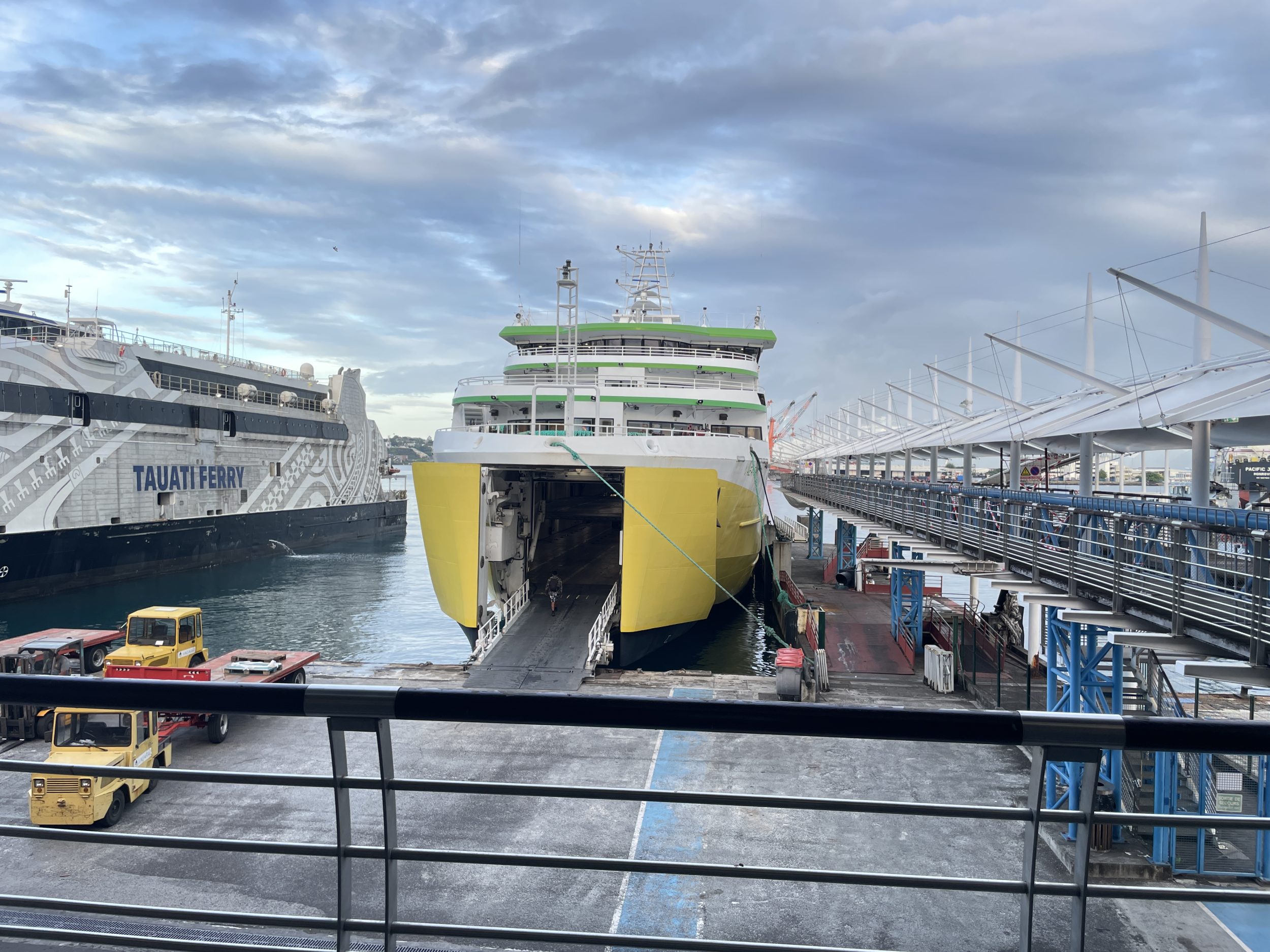
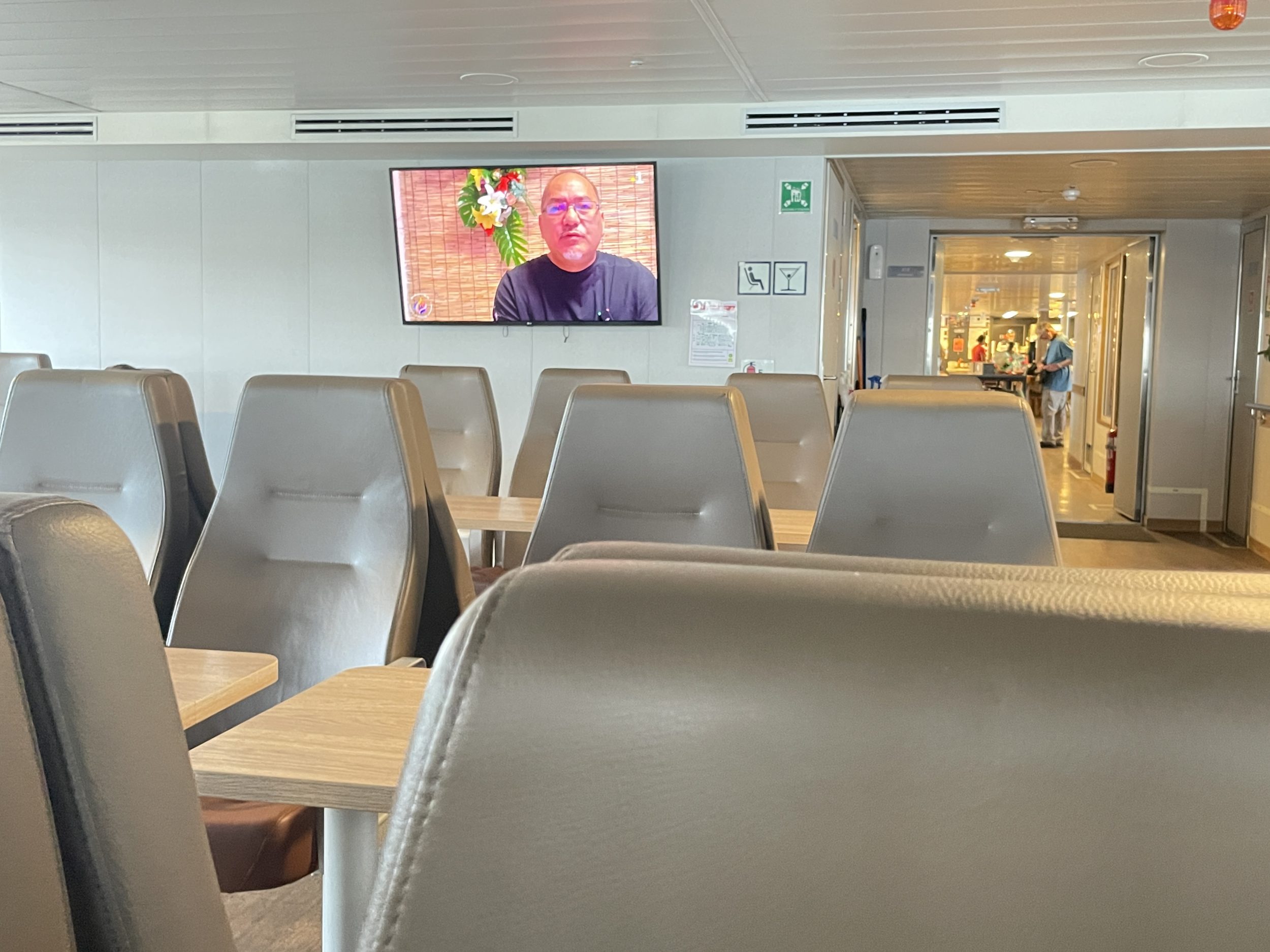
The ferry’s bar is well stocked; there are even prepared meals or a breakfast deal (pastry + hot drink) for 600 Fr. On the TV, there are evangelists preaching with great passion. I don’t know if that’s always the case or because it’s Sunday morning and it’s to make up for the missed Mass for those taking the ferry? Anyway, the seats are very comfortable, the AC is a bit strong (bring your scarf). There are a few seats outside, more or less in the shade, but the exhaust smell might bother you a bit.
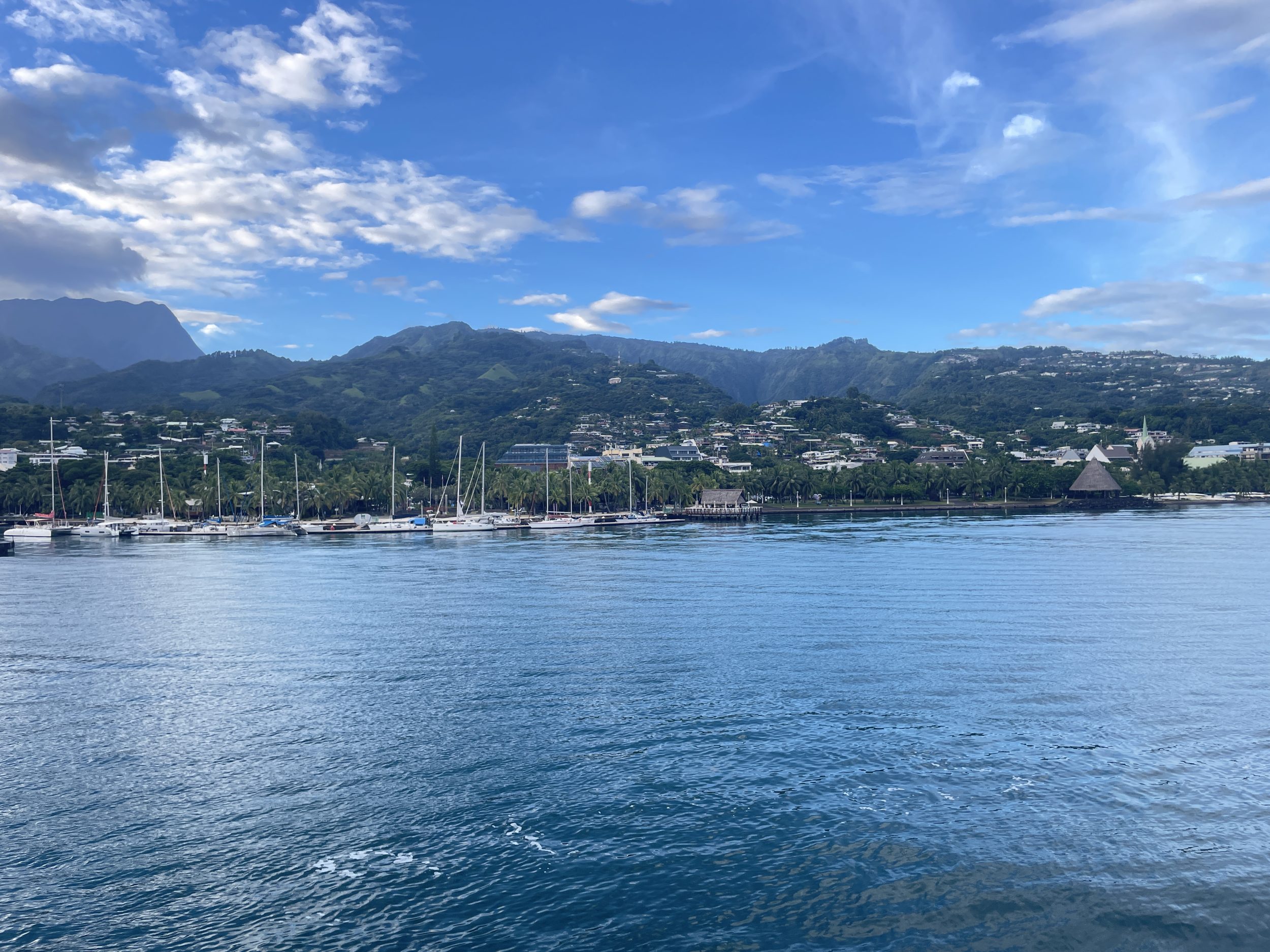
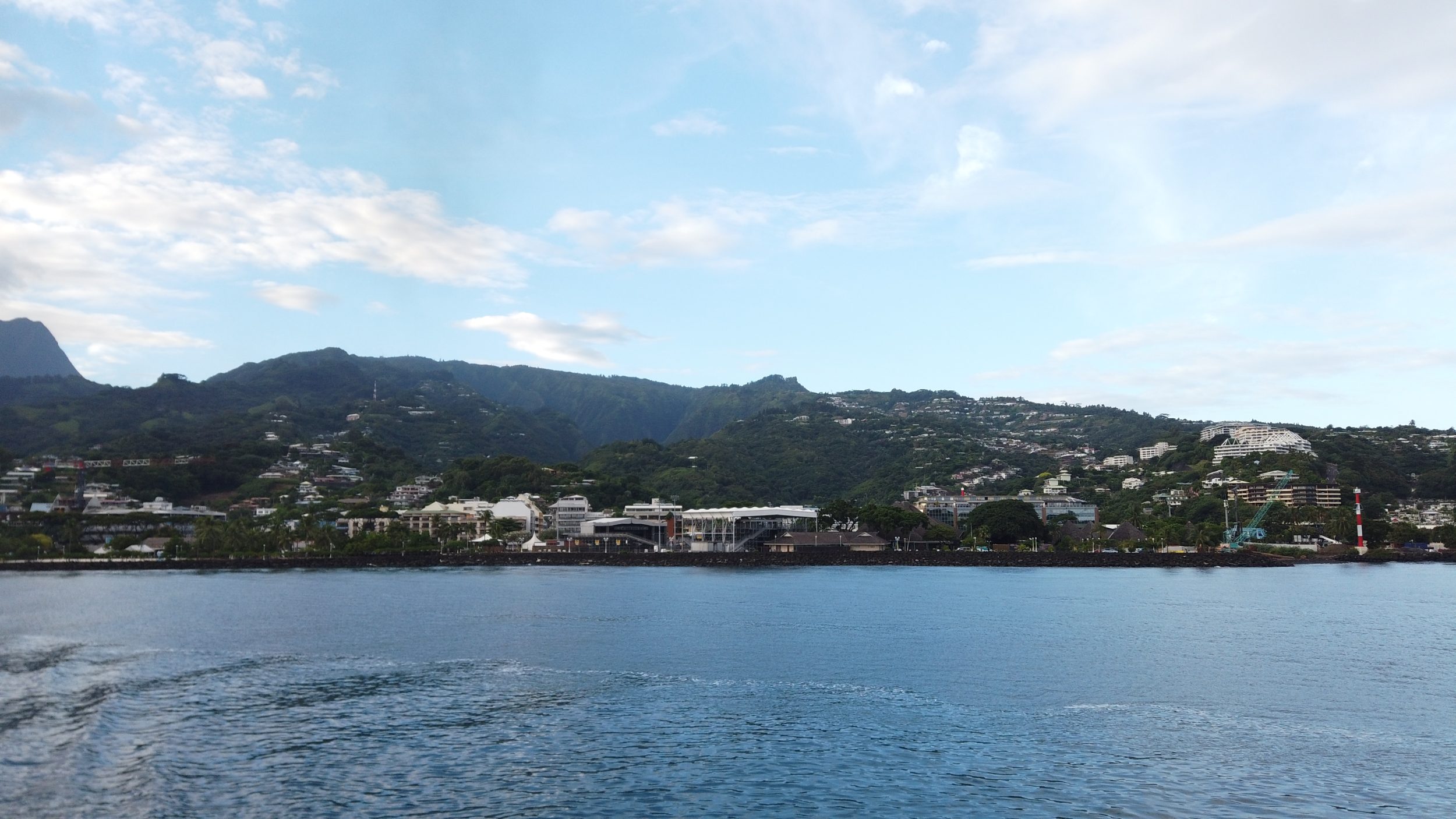
The view of Tahiti from the ferry is satisfying. You can see there are quite a few constructions, even on the mountainsides, but it’s still mostly green. The problem with these islands is that the roads up to the elevated buildings are often very steep. You need super powerful scooters to get up. JB and I have seen several Airbnbs like that and didn’t want to take them because it only takes a bit of rain for us to wipe out quickly. That’s from experience in Koh Samui and especially in Montenegro.
Moorea
The contrast with Tahiti is striking. On Moorea, from afar, it looks like a wild island; it’s almost 100% green, and it’s rare to see bungalows up high. The houses are all tiny and only one story. It reminds us of the wild, lush side of our beloved Koh Phangan island.
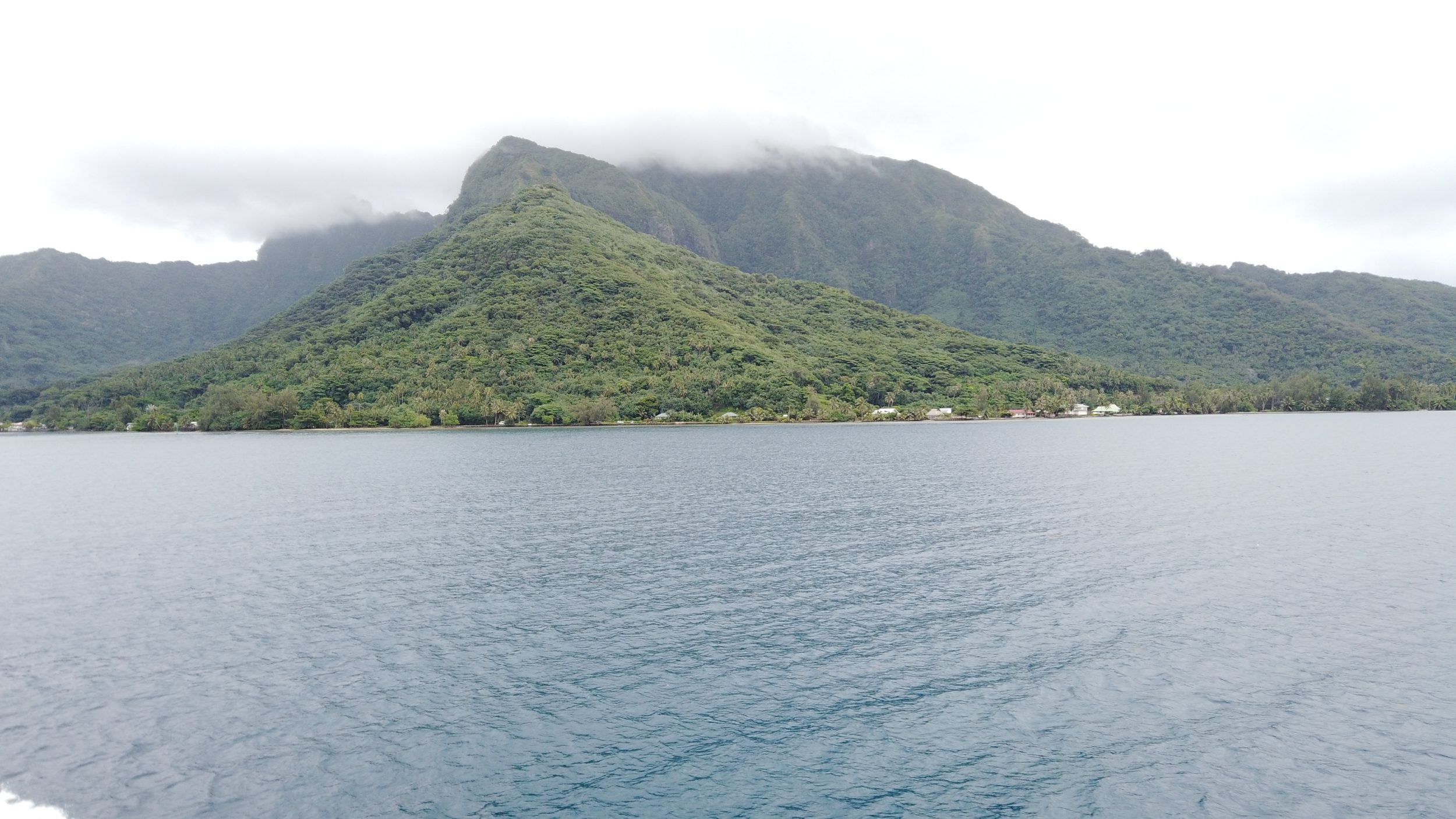
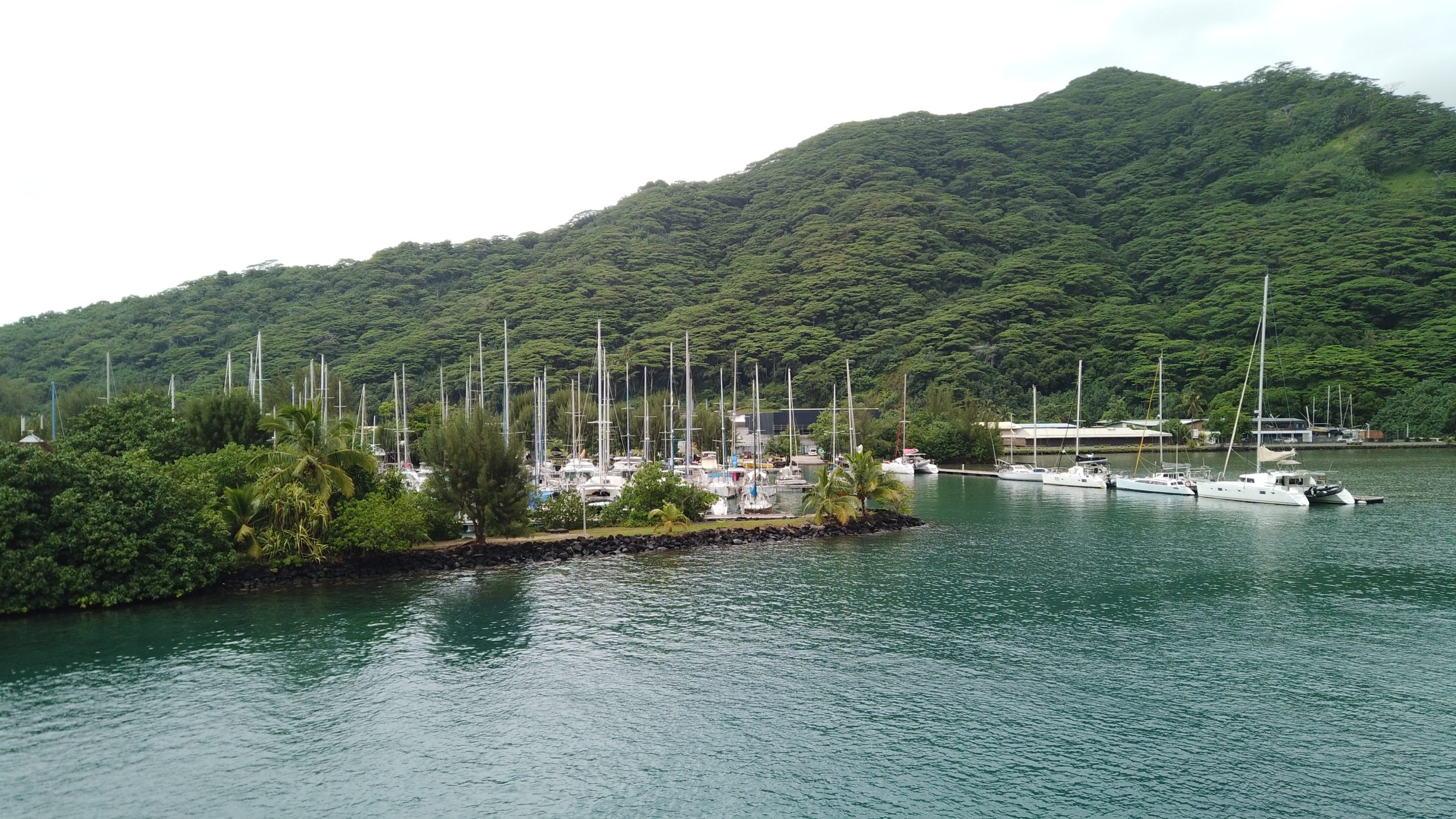
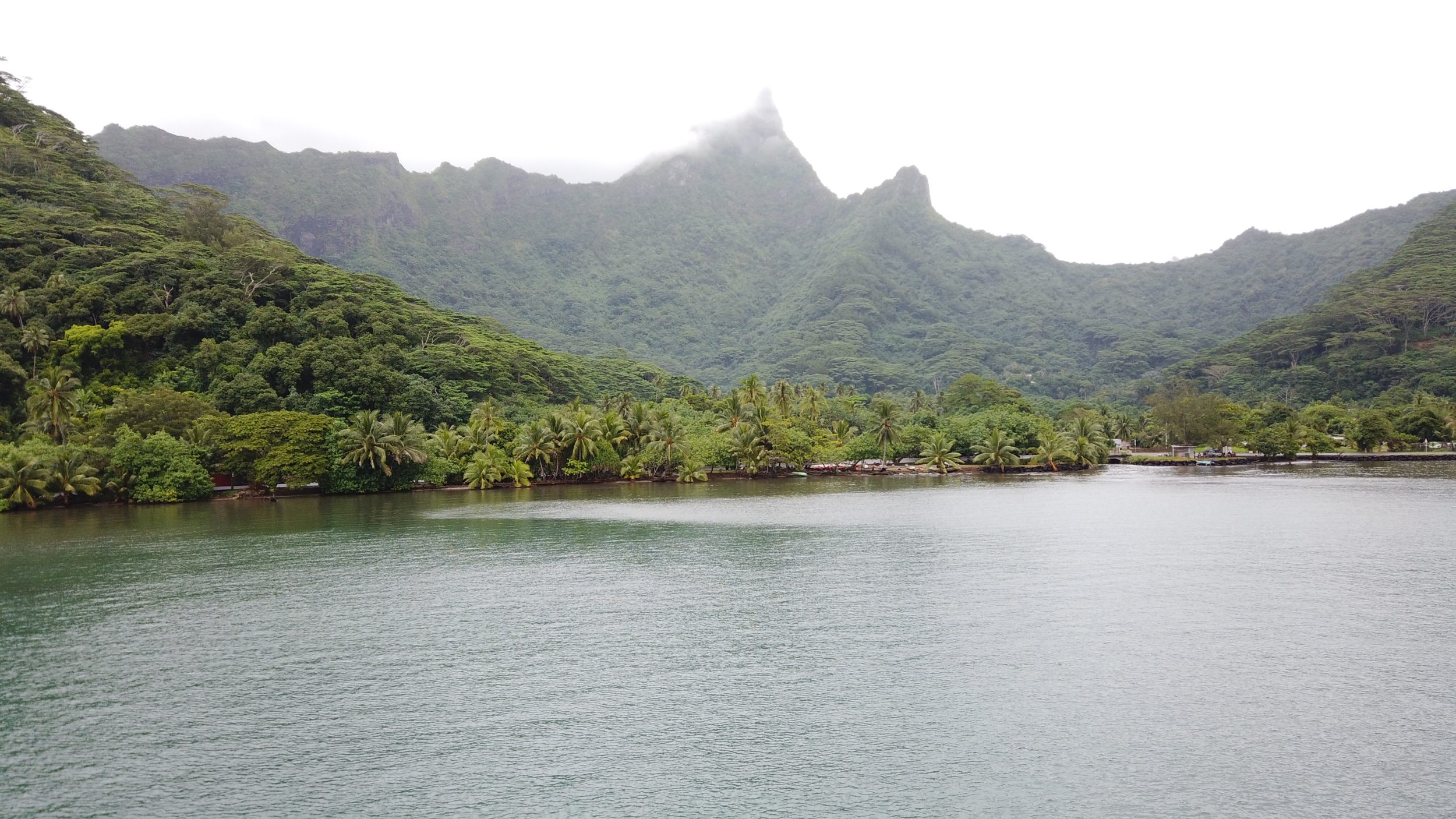
We walk 3 minutes to our car rental. We could have rented a scooter, but I heard there are quite a few dogs on the island that wander right on the road. And if they’re aggressive like those in Koh Samui, I’d rather rent a car first to see what it’s like. In the end, they are indeed numerous, but during the day, pedestrians and scooters pass by without issue, but apparently they don’t like bicycles. The loop around the island takes about 2 hours with photo stops here and there, and having a car lets us do the full circuit without dying of heat.
JB found our rental online. The website showed no availability, but we managed to book via WhatsApp. Today is super quiet; when our ferry arrived, there were only two cars available for rent. Ours is all white, electric, automatic, almost brand new (we’re the 4th to rent it), which adds a bit of stress because it’s never reassuring to drive a car without flaws; the slightest dent will show right away. They brief us on precautions, especially sunscreen marks on the leather seats. I’m slathered in sunscreen, but luckily I always have a long-sleeved shirt on.
Belvedere
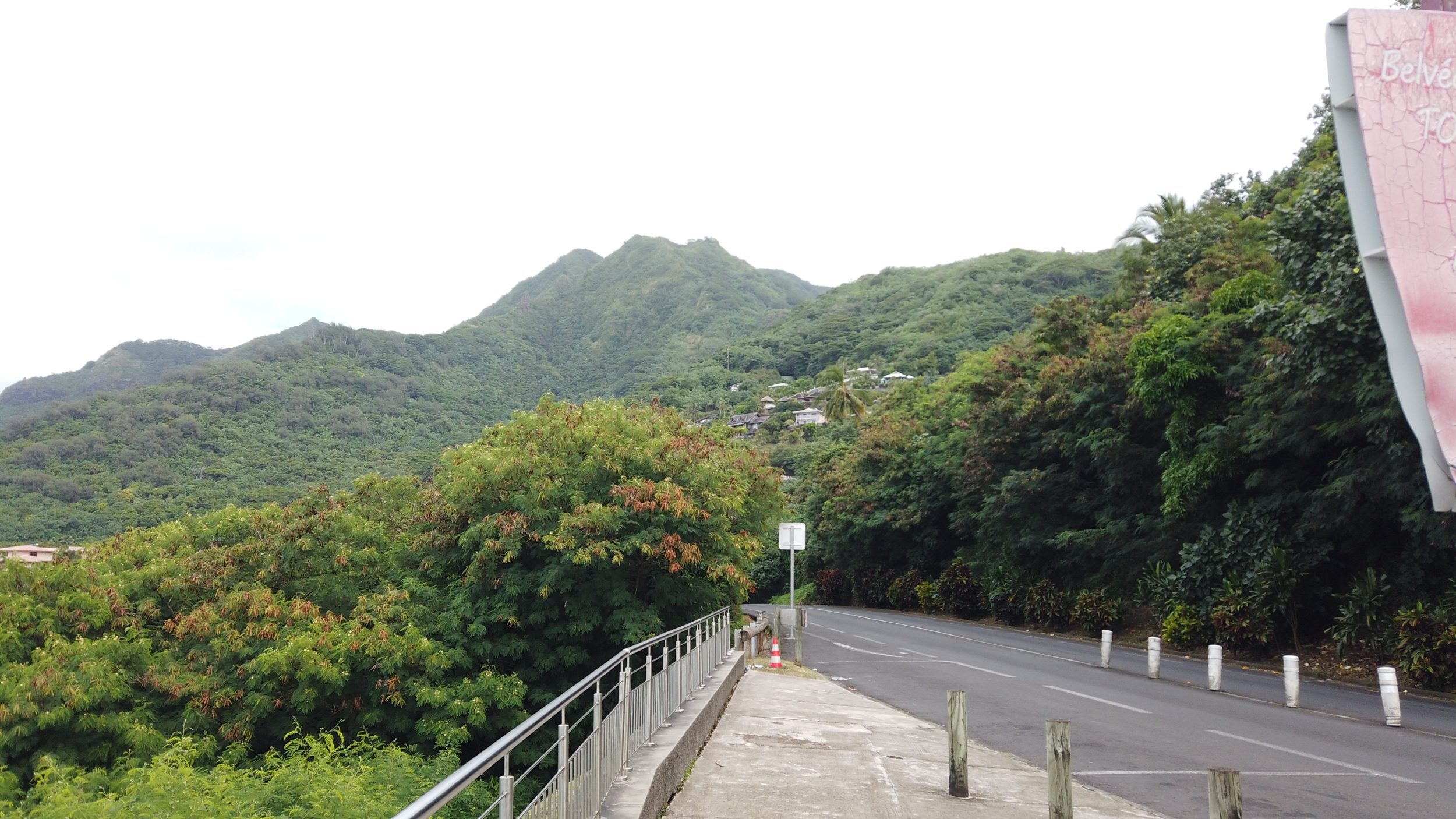
Our first stop is the Belvedere of Toatea, a 4-minute drive and right off the road. The sky is a bit cloudy but can’t hide the beauty of that splendid, shallow water full of corals and fish. It’s the only hotel with bungalows that can be easily seen from a belvedere. The other 5-star hotels can be spotted from the road, but not with such a satisfying elevated view. The hotel you see below is the Sofitel Kia Ora Moorea Beach Resort. When I was a contractor for Accor, my client often talked to me about the Sofitel Bora Bora and I always dreamed of going there. But I didn’t know they also had the Sofitel Moorea, which is super beautiful.. Actually, on TikTok, many travelers call Moorea the Bora Bora of budget travelers. I’ll be able to confirm that when I go to Bora Bora.
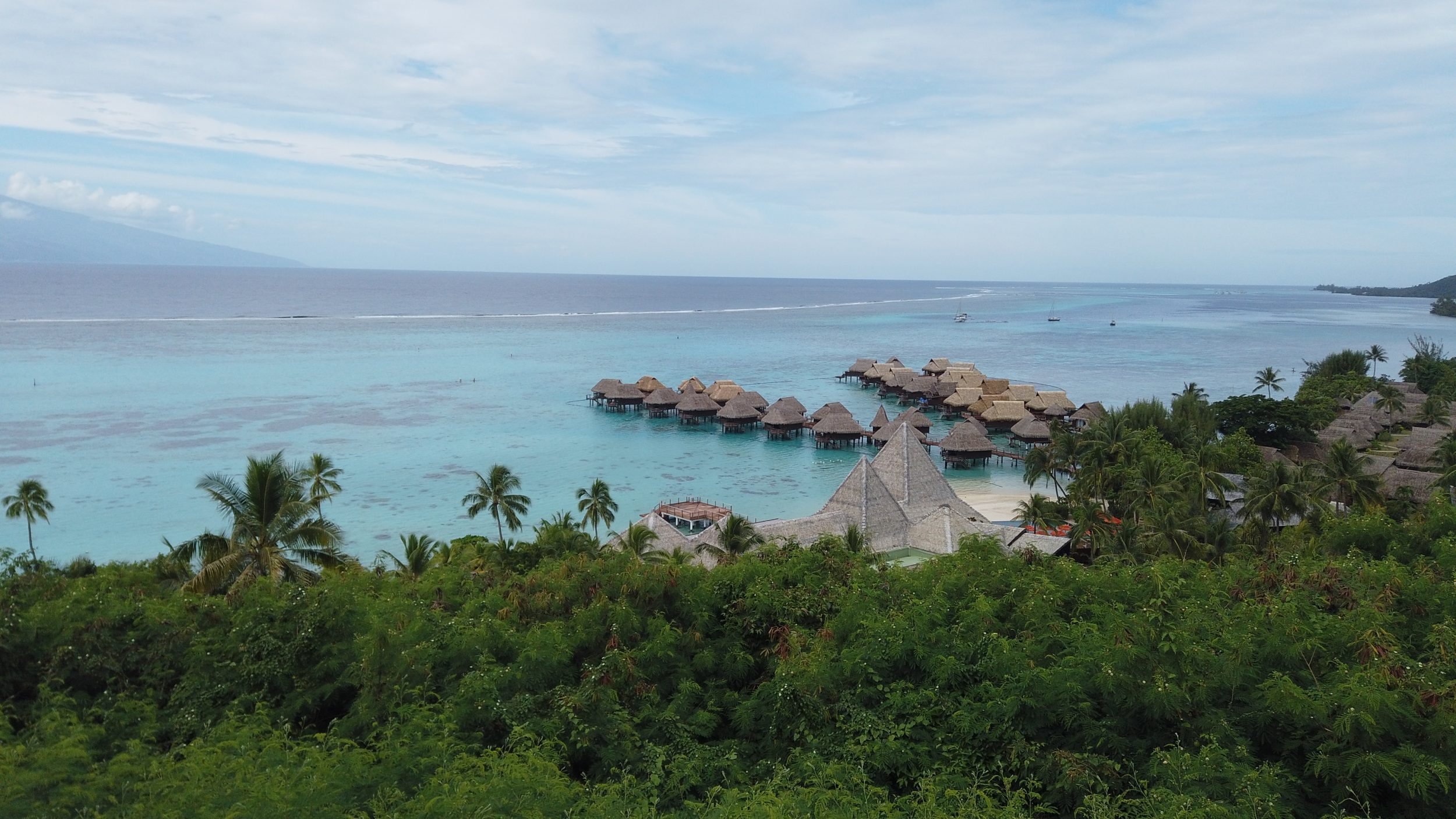
You can see there’s a coral reef where the waves are. The reef is shallow and full of corals, so the sailboats you see there, if they want to leave the lagoon, have to find a passage marked by buoys. Given the color of the water and the layout of the place, this spot is excellent for snorkeling because there are corals very close together right in front of the Sofitel, and the water doesn’t seem that deep. In Tahiti for example, you can see deeper lagoons than this, e.g., right in front of the Intercontinental. Even if the water looks calm, there can be currents; some lagoons have whirlpools, so always ask locals before getting in the water.
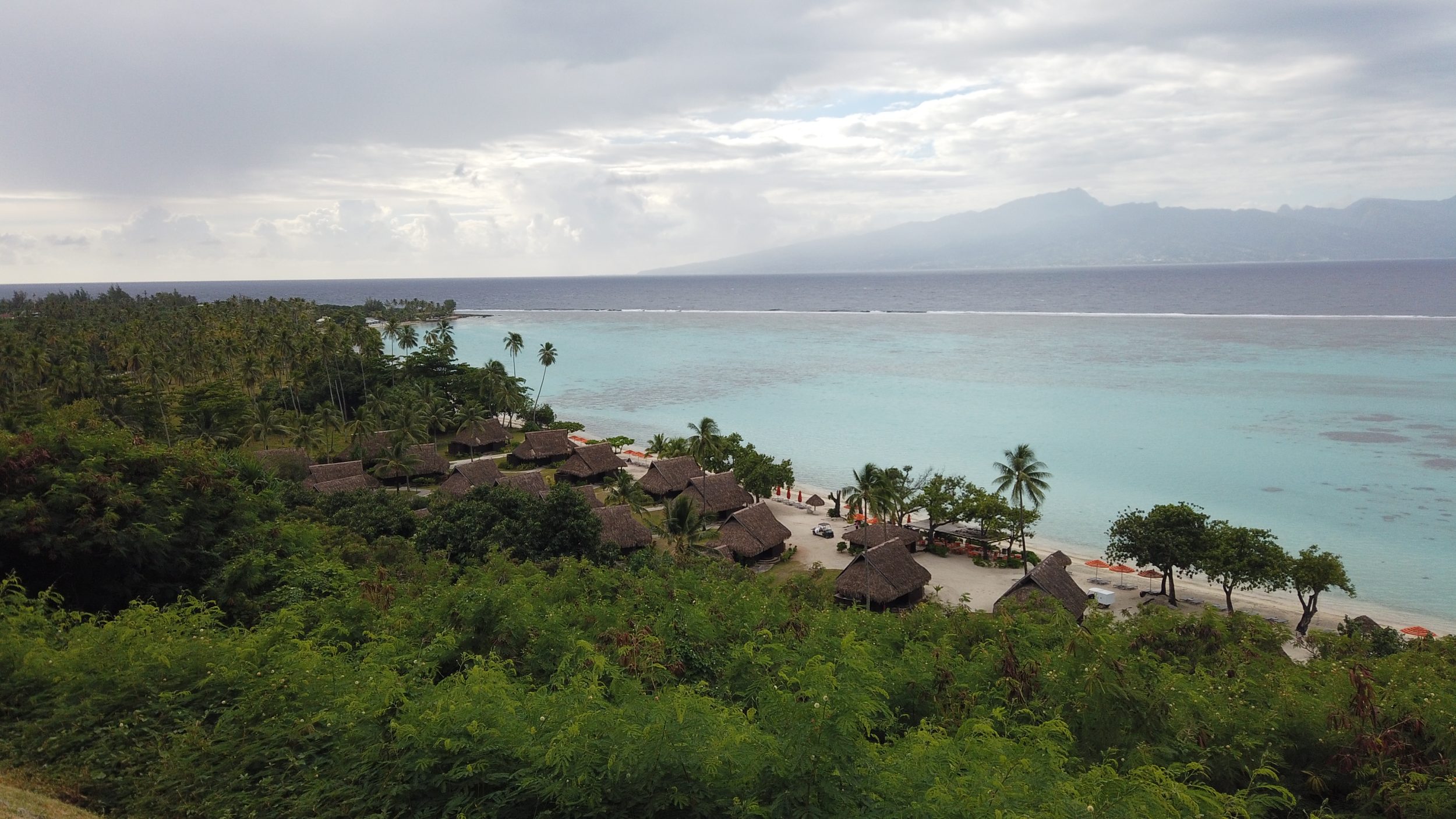
Tahiti is right across!
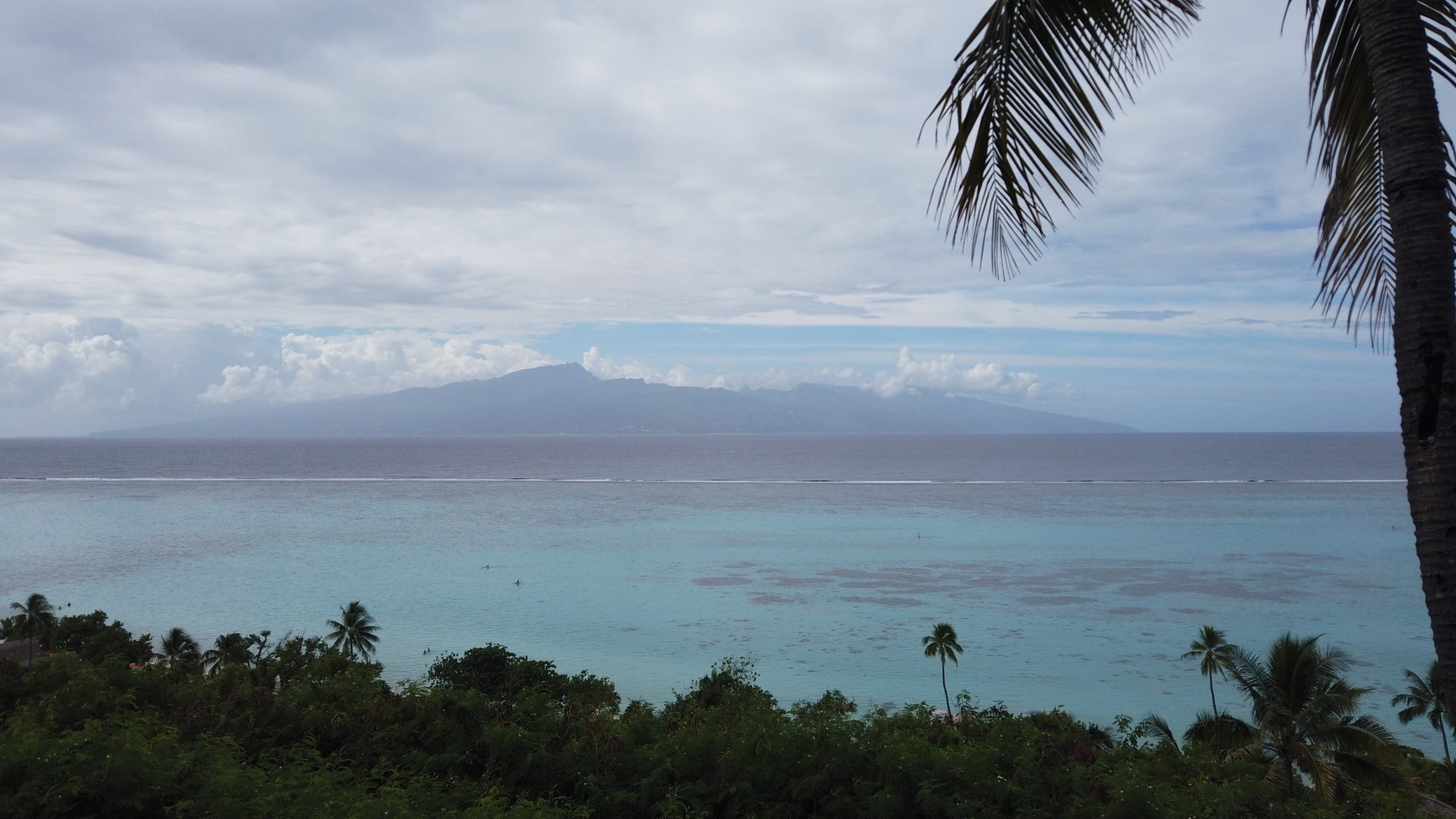
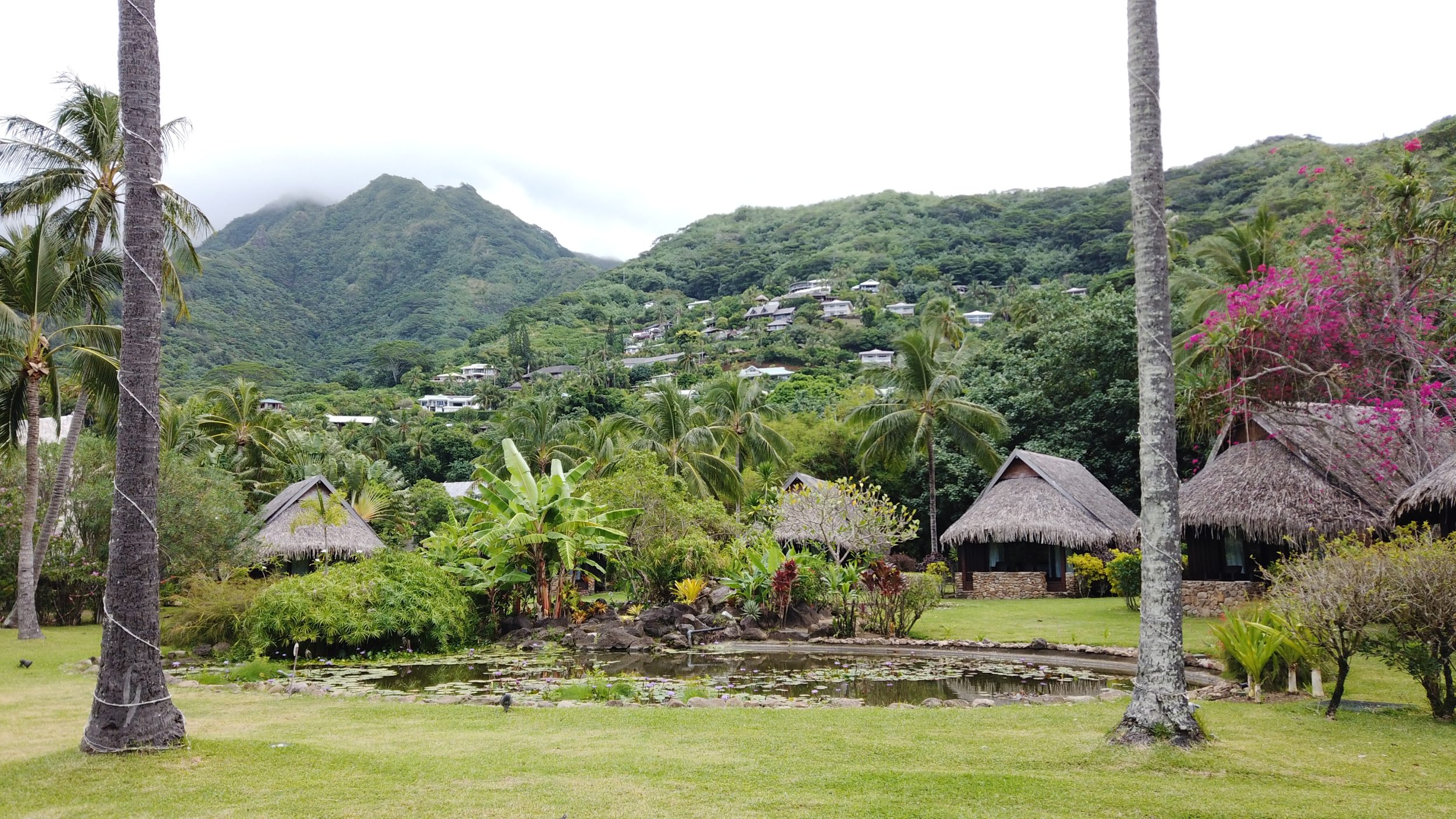
From here, you can see some bungalows on the mountainside. The bungalows built on Moorea look much more “natural” than the all-concrete buildings in Tahiti. They are private residences; the view must be very satisfying.
Temae Beach
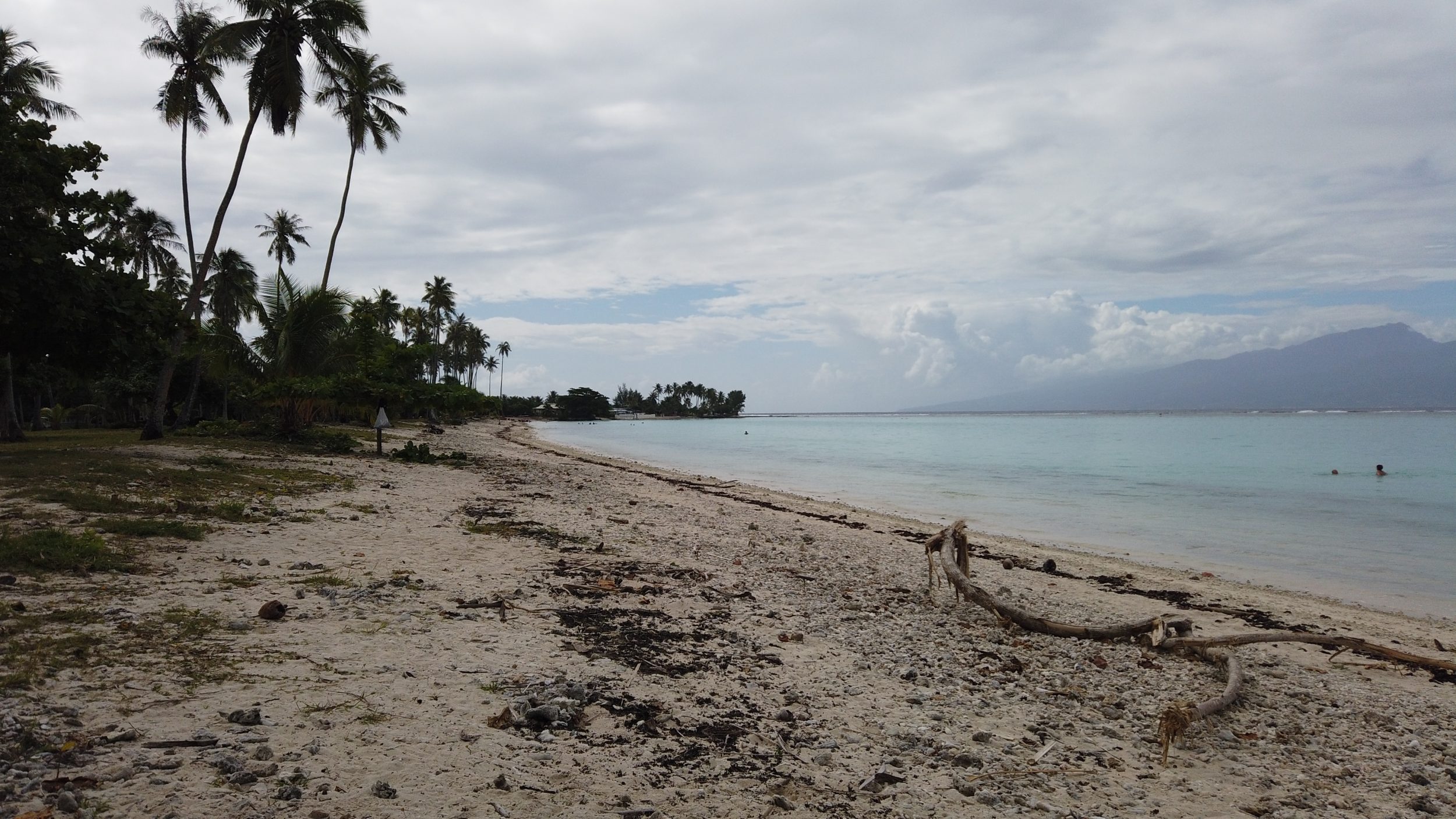
We then take a small unmarked but well-maintained road to get to Temae Beach. This beach is very large and, as you can see in the Sofitel photos, part of it is right in front of the Sofitel. But to the left, you can access the public section. The beach is public, but the land to access it can be private. On Moorea, there are only 3 actual beaches (Temae, Tiahura Beach, and Tipaniers), but Tipaniers beach can only be reached via the hotel of the same name or by boat. We were told to be very careful with coconut trees (there’s even a sign); you have to walk between the coconut trees because you’re not safe from falling coconuts. Luckily, there are other trees near the sand that provide shade.
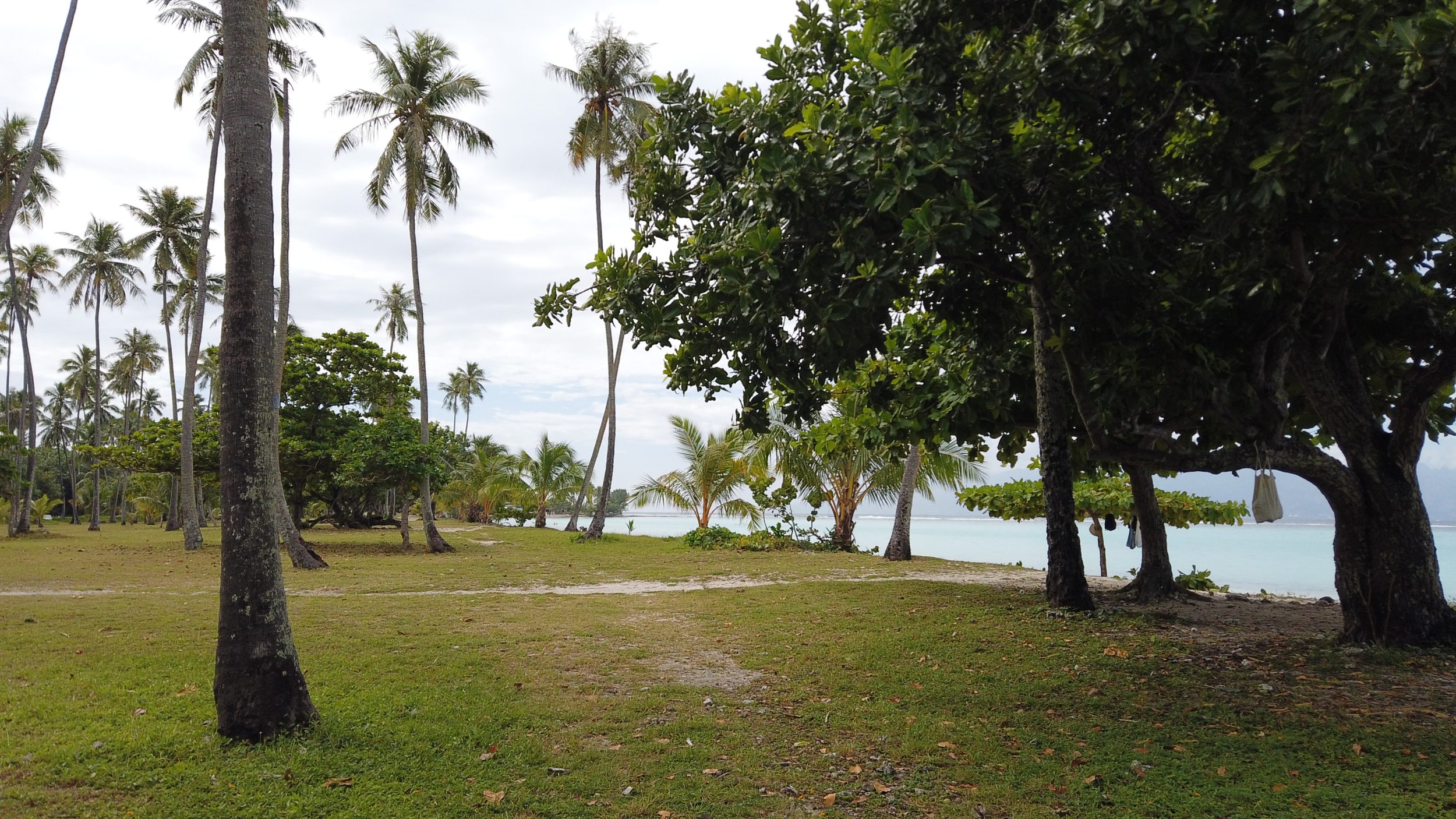
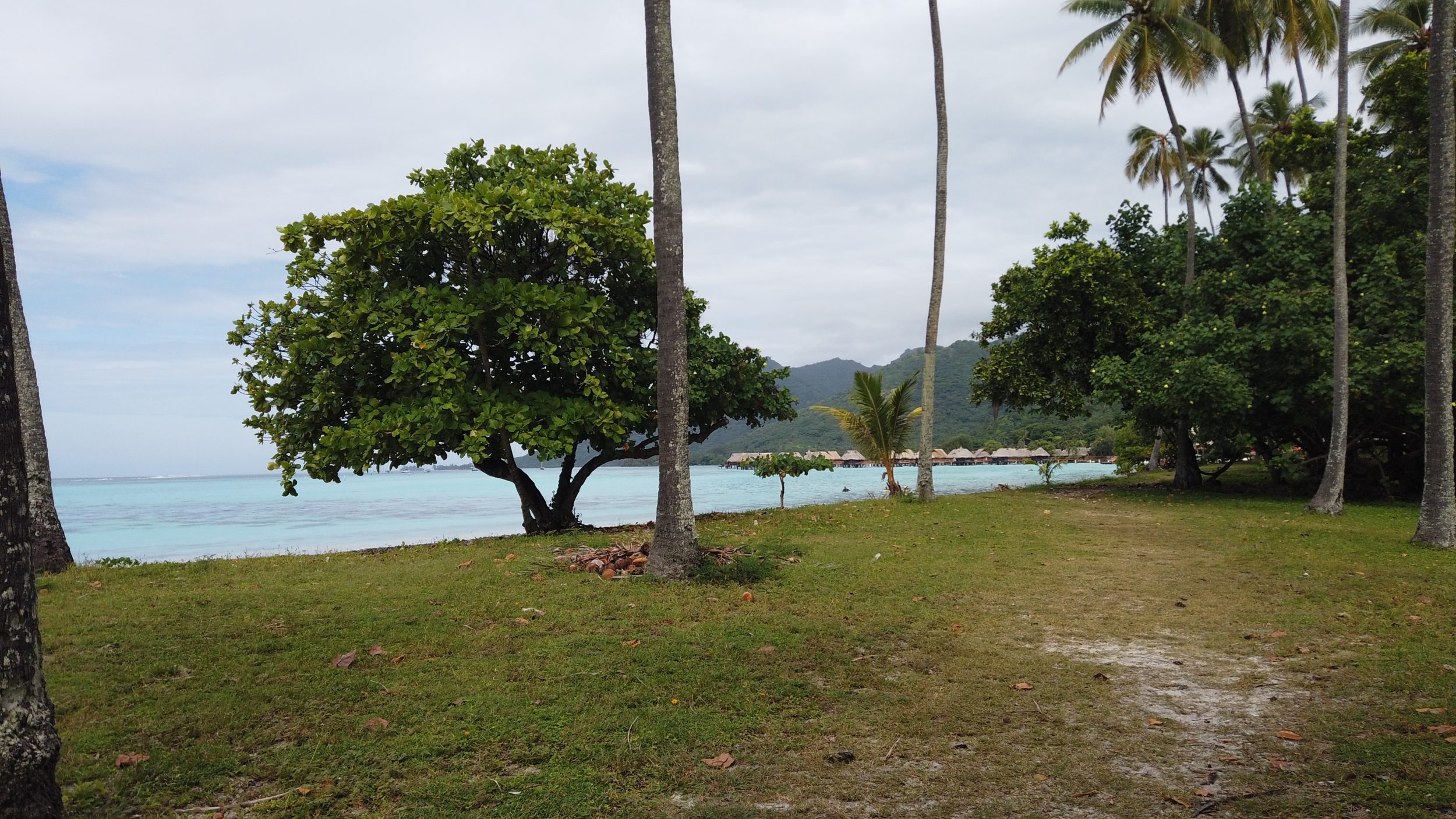
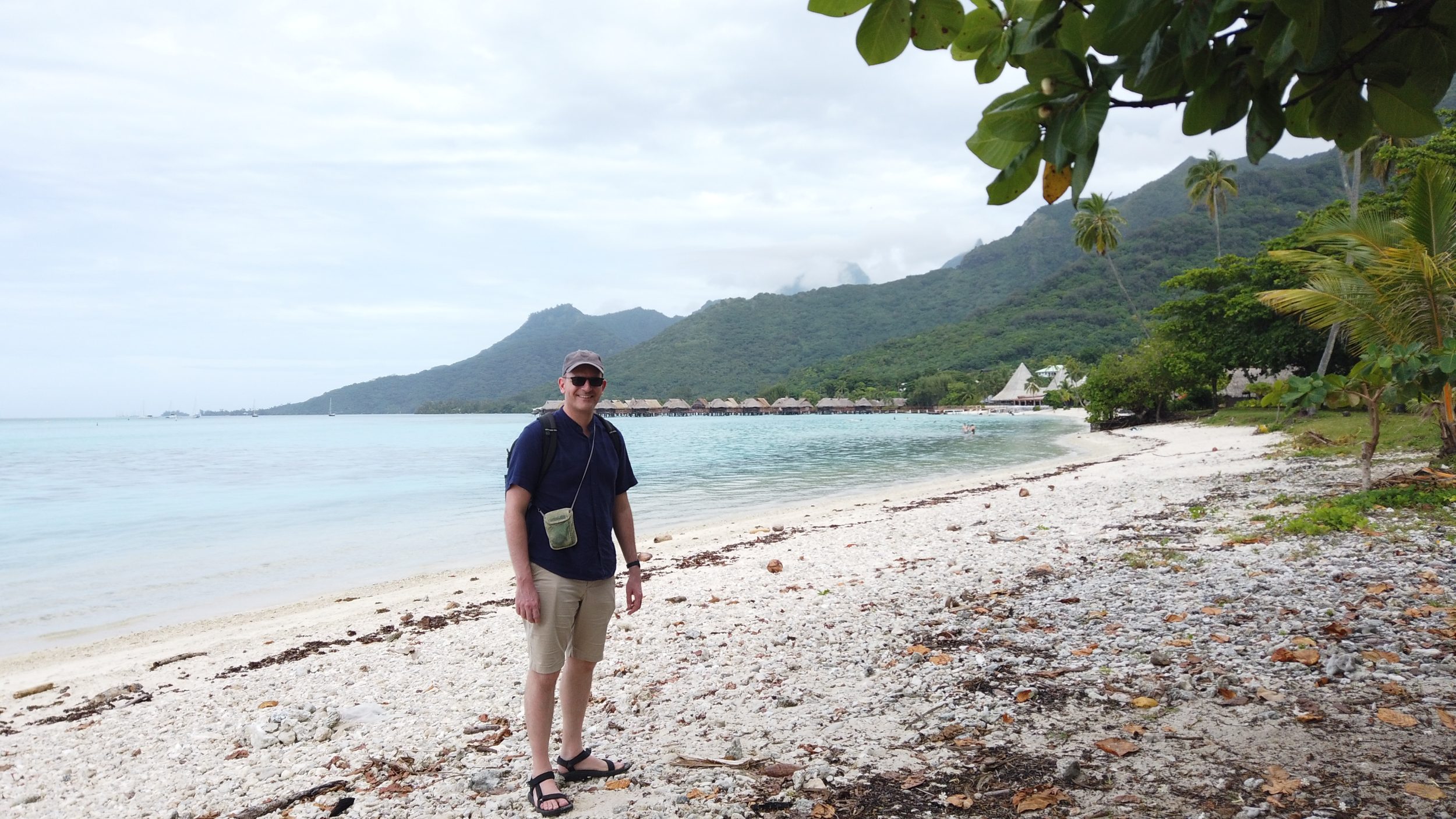
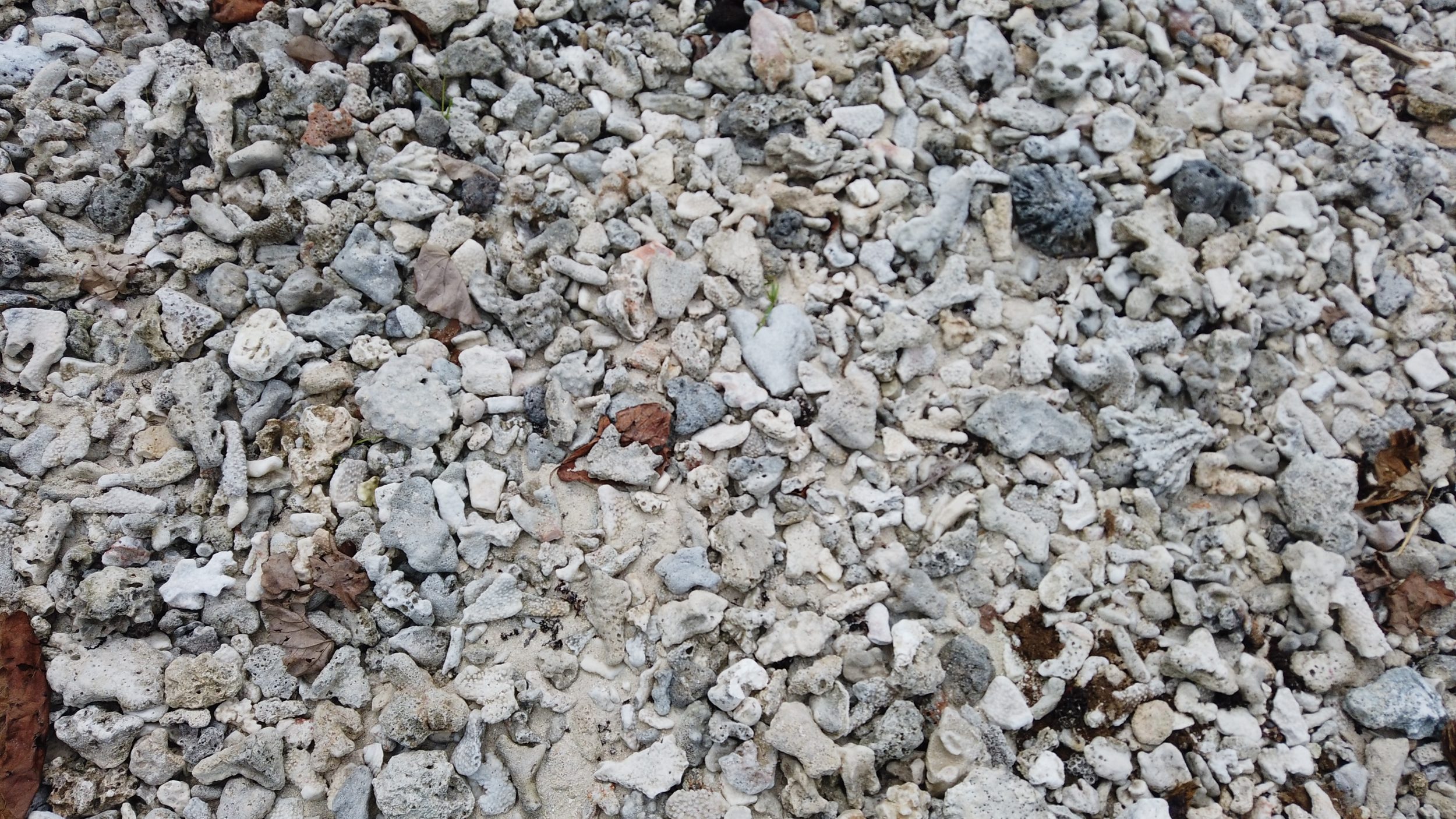
This public section isn’t well maintained. So there might be some litter, some algae, and lots and lots of dead corals that hurt your feet (don’t forget your water shoes!). The Sofitel beach, on the other hand, is cleaned every day and they’ve added sand so their guests don’t get hurt. As everywhere in Polynesia, it’s advised not to leave your belongings on the sand. Better to leave your stuff in the scooter/car and keep your phone and keys in a waterproof pouch on you.
Nothing stops you from getting in the water and ending up on the Sofitel side; you can’t privatize a beach, and the corals in front of the Sofitel seem to attract more fish because that’s where I saw most people snorkeling.
The Island Tour
We continue the island tour to discover spots we probably missed on our first trip. The rental company forbids us from taking the pineapple road due to poor road conditions. Besides, the agricultural high school and distillery are closed on Sundays, so anything pineapple-related will be explored another day (Moorea’s pineapple is considered the best in the world, but also very expensive; we saw signs for 800Fr per pineapple (€6) and €7 for a juice!).
Here is Tiahura Beach; there are two showers and toilets on site, and a few bars. It looks like a great snorkeling spot; I saw many people with masks and snorkels.
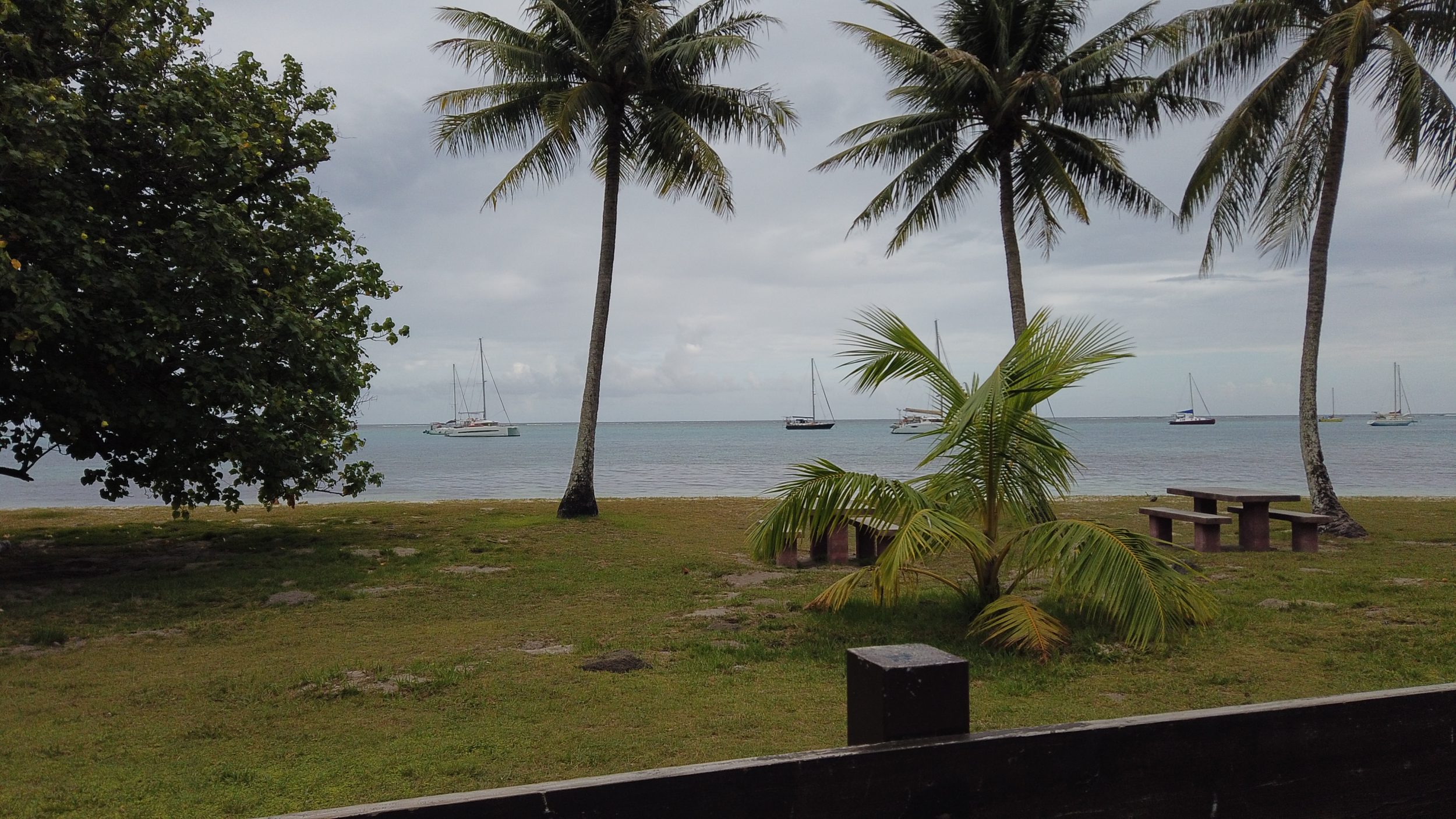
On the way, we pick up two French tourists on vacation in Polynesia. They’re having a hard time finding a ride because everyone is rushing to church and not in the mood to pick them up. Going to church seems important for Polynesians; they’re all dressed up with flower crowns, it’s beautiful. The two tourists are currently staying at a campsite (€60 for a bungalow, I think those are holiday weekend rates). JB’s colleague told us you can find homestays for €15, but then you have to go through Facebook groups.
On the way, we find a small parking spot to stop and admire one of the lagoons. There’s absolutely no one in the water. The water is beautiful, and it could have been a great snorkeling spot. However, you can’t easily get down to the lagoon, and we don’t know if it’s protected, so we’re just scouting for now and will ask later.
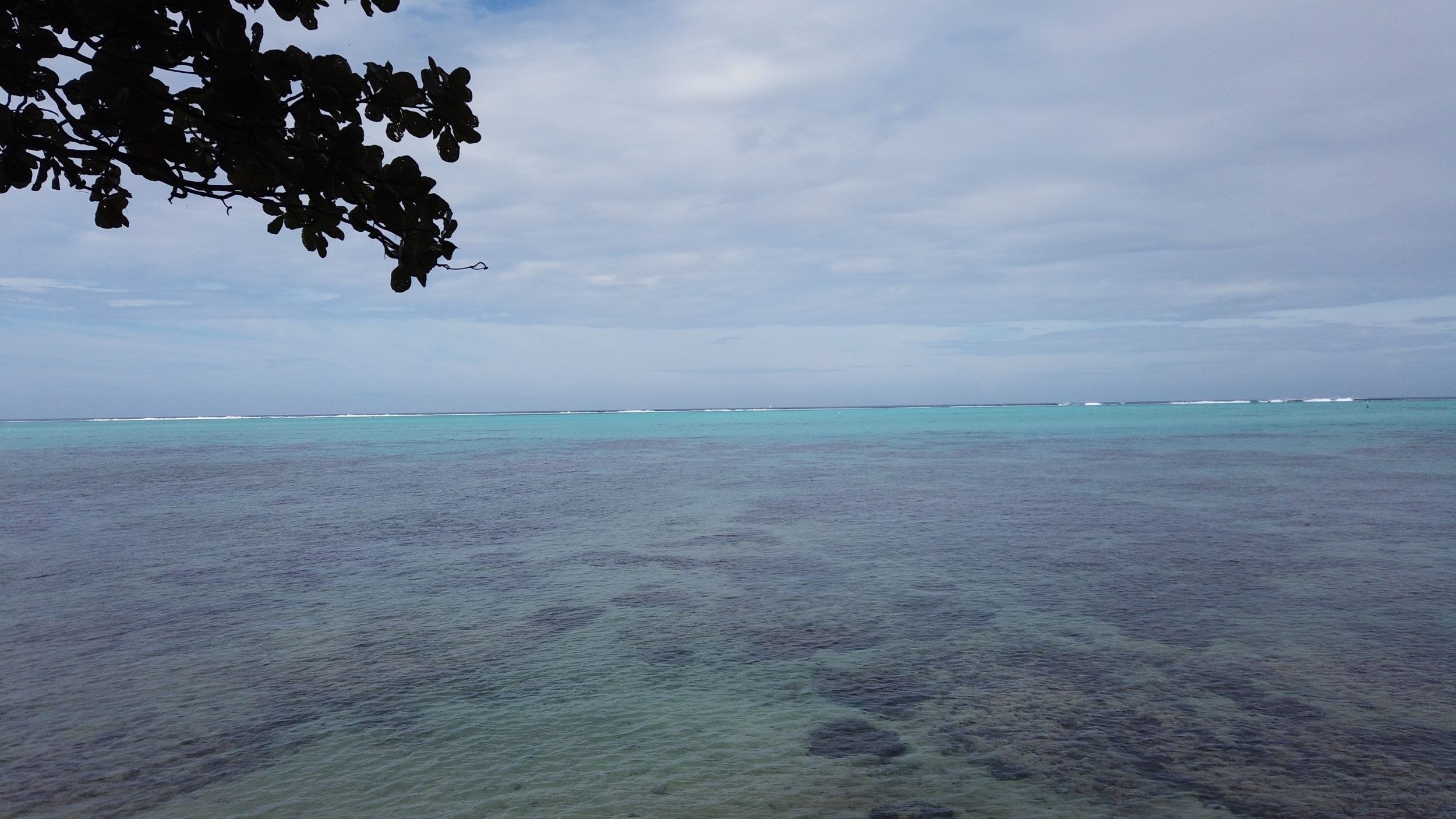
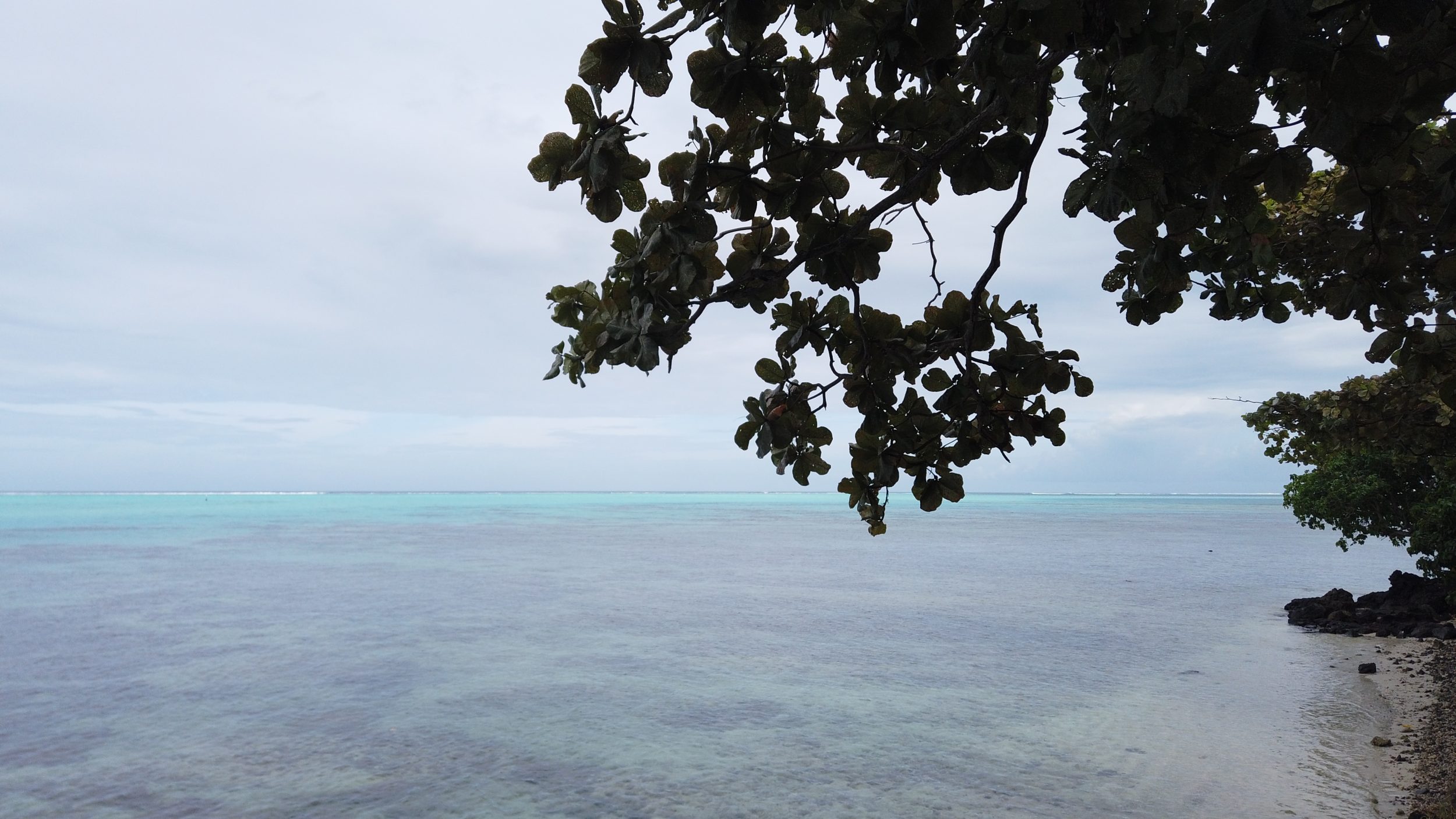
Sofitel Moorea
We drop the two tourists at their hiking trailhead and stop at the Sofitel for a drink. The bar opens at 10:30 AM and you can go even if you’re not a guest. In front of the Sofitel is a “banyan tree.” It’s funny; if the hotel ever leaves the Accor group, they can quickly switch and apply to the Banyan Tree group. I’m kidding; Banyan Tree is usually a step above.
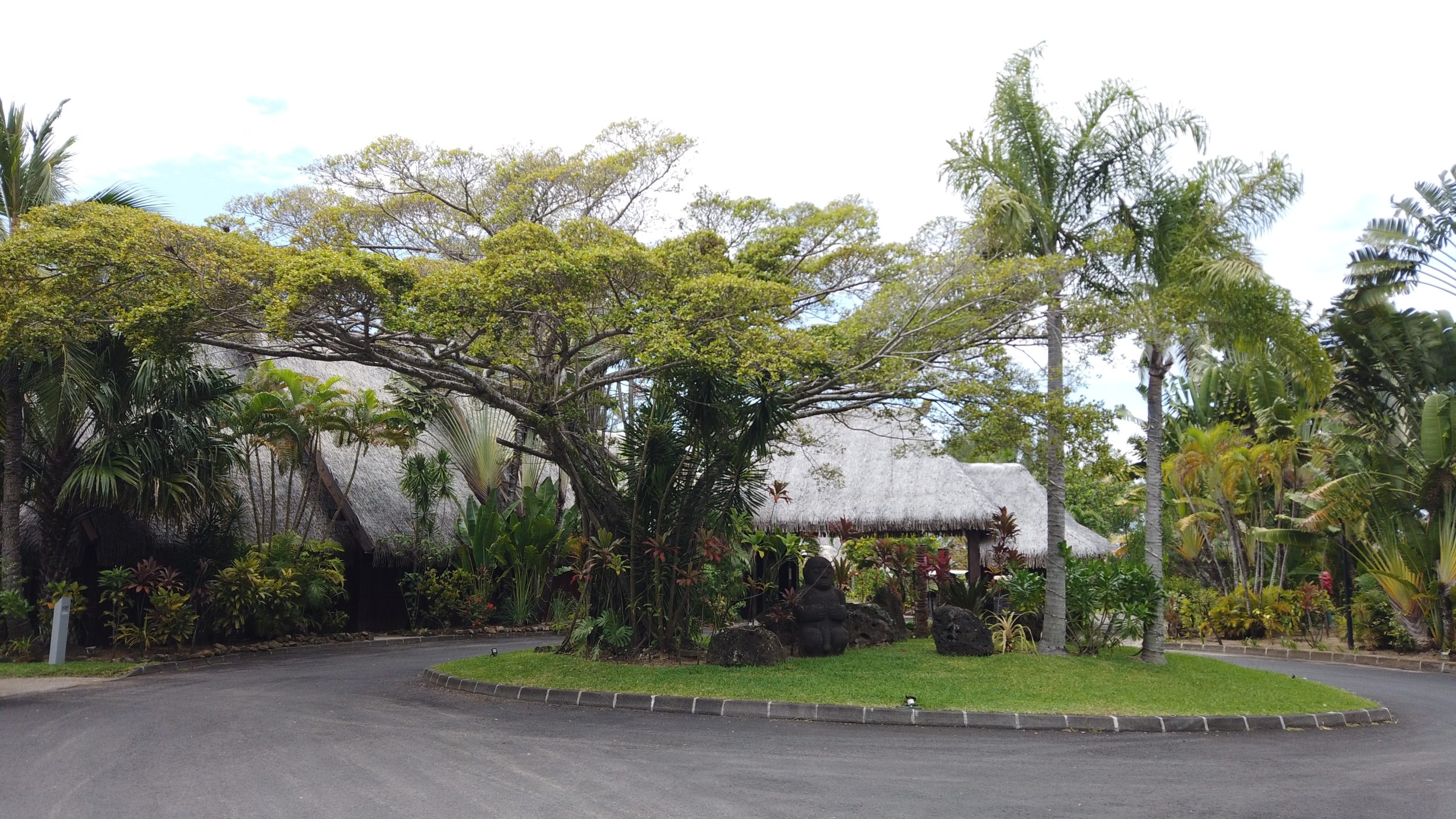
We are very well received at the reception. We take the opportunity to ask about the pool pass (10,000Fr per person including lunch) and the possibility of getting resident rates. Apparently, you can get special rates at many luxury hotels. My dream of sleeping in an overwater bungalow and snorkeling from my balcony can come true!! The hardest part now is choosing the hotel! And the island!
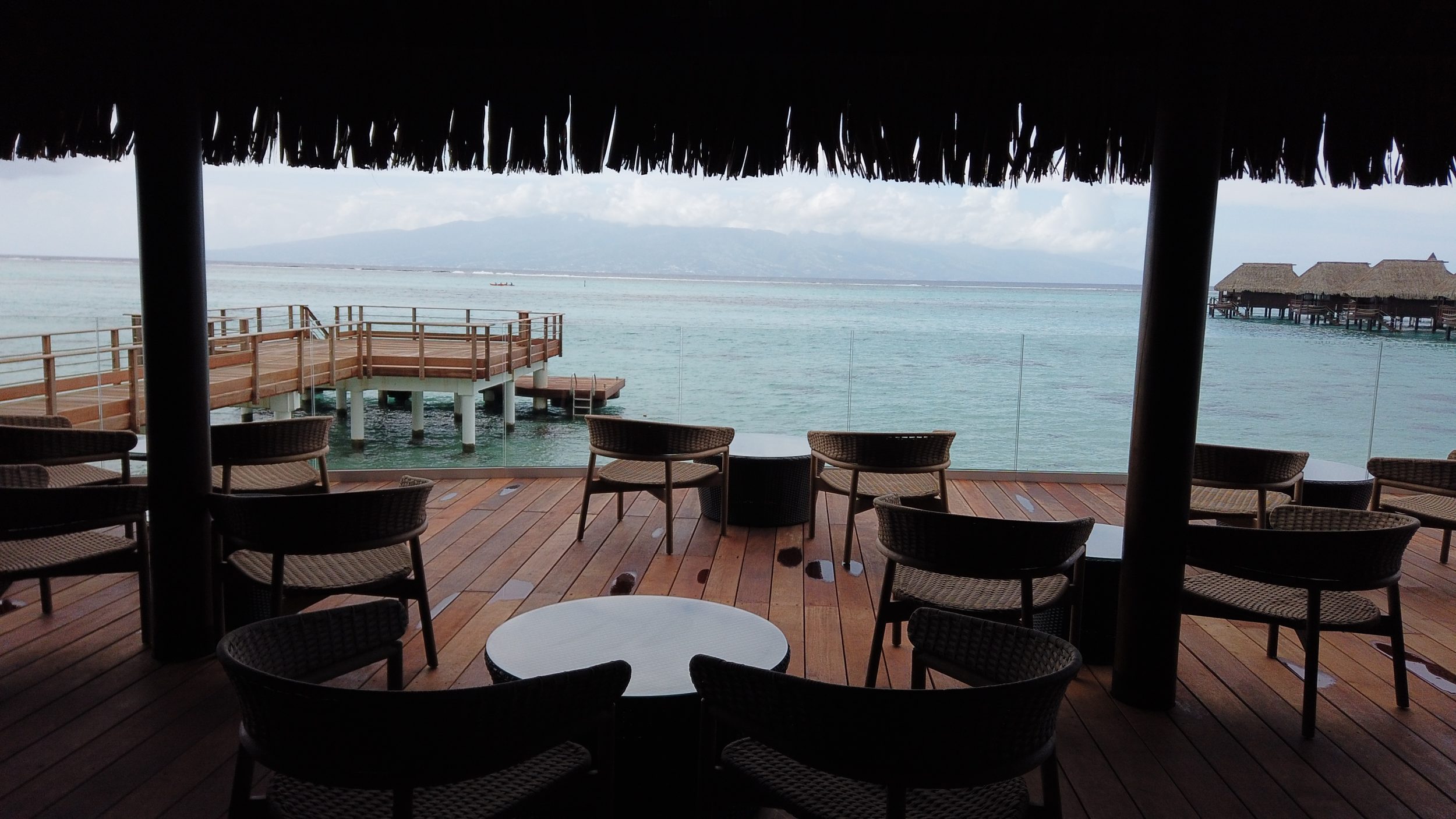
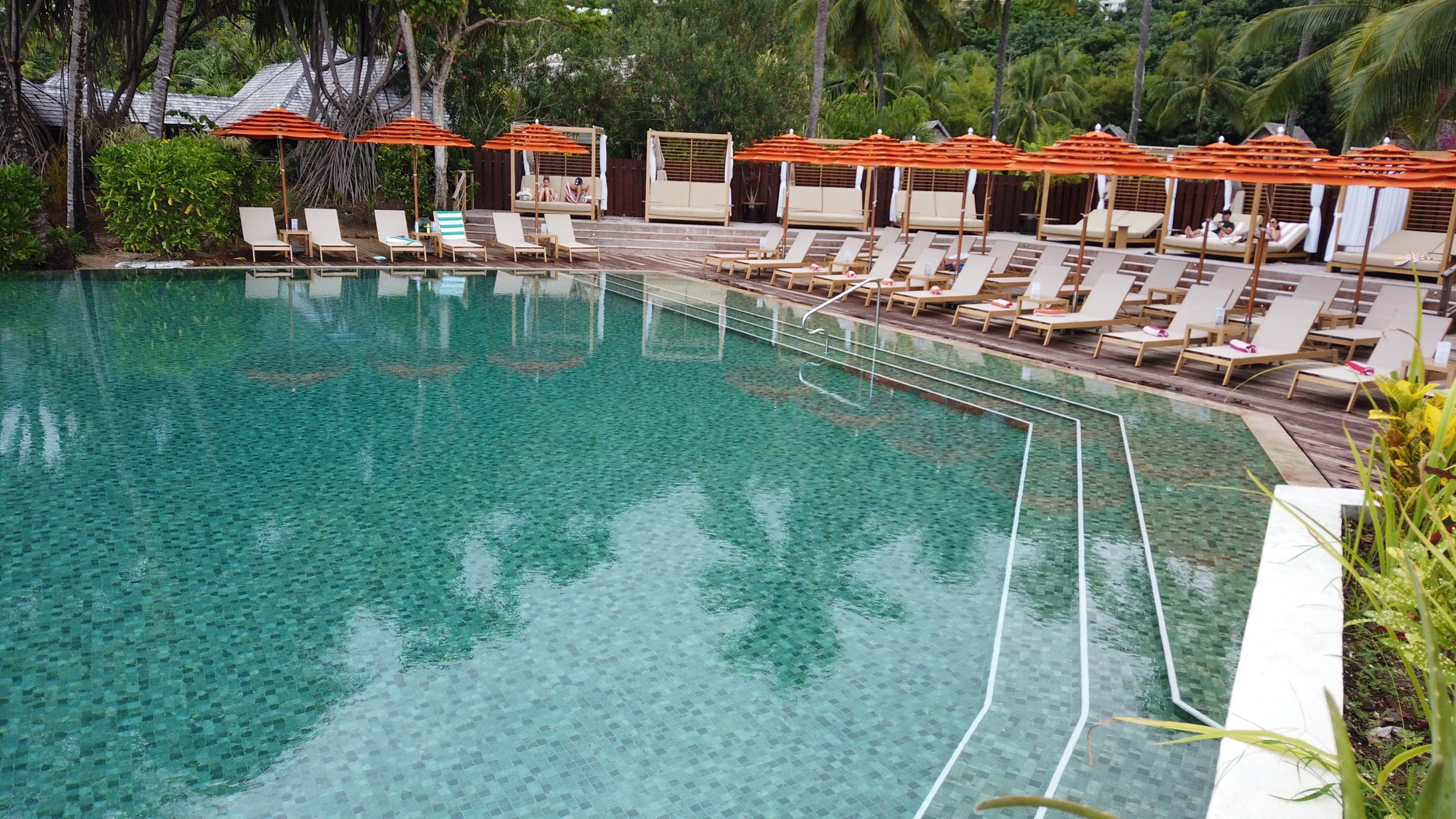
The hotel has a huge bar and a huge restaurant. We settle at the bar right in front of the pontoon. Under the pontoon, there are many fish because we were told that fish also like shade. To the right are the infinity pool and the famous overwater bungalows.
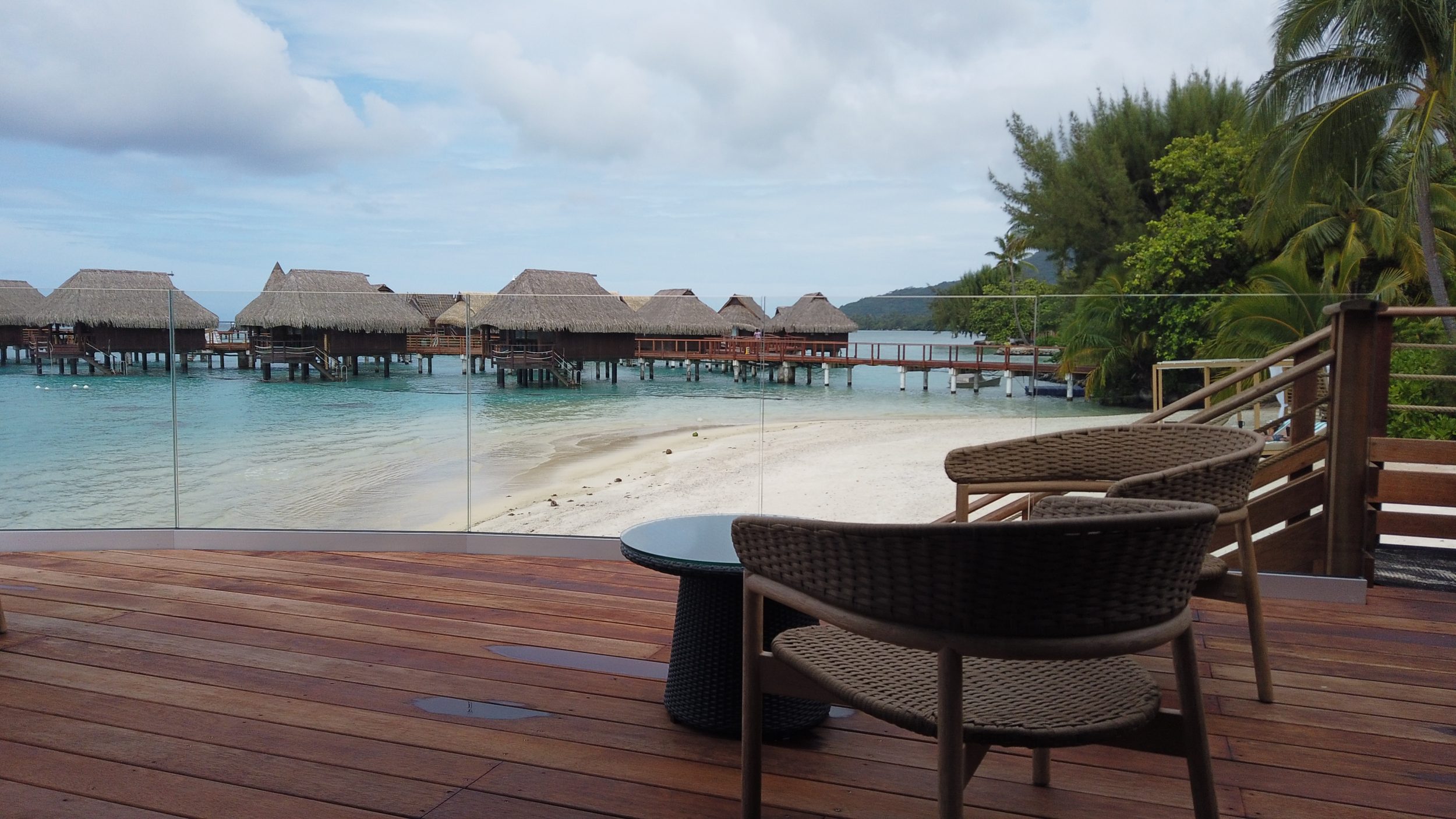
Non-alcoholic drinks are between 1100Fr and 1800Fr (€9 to €16). When you think that pineapple juice by the roadside costs €7 and a drink here is €9, I think sometimes audacity pays off. We thought the doors were closed until we knocked.
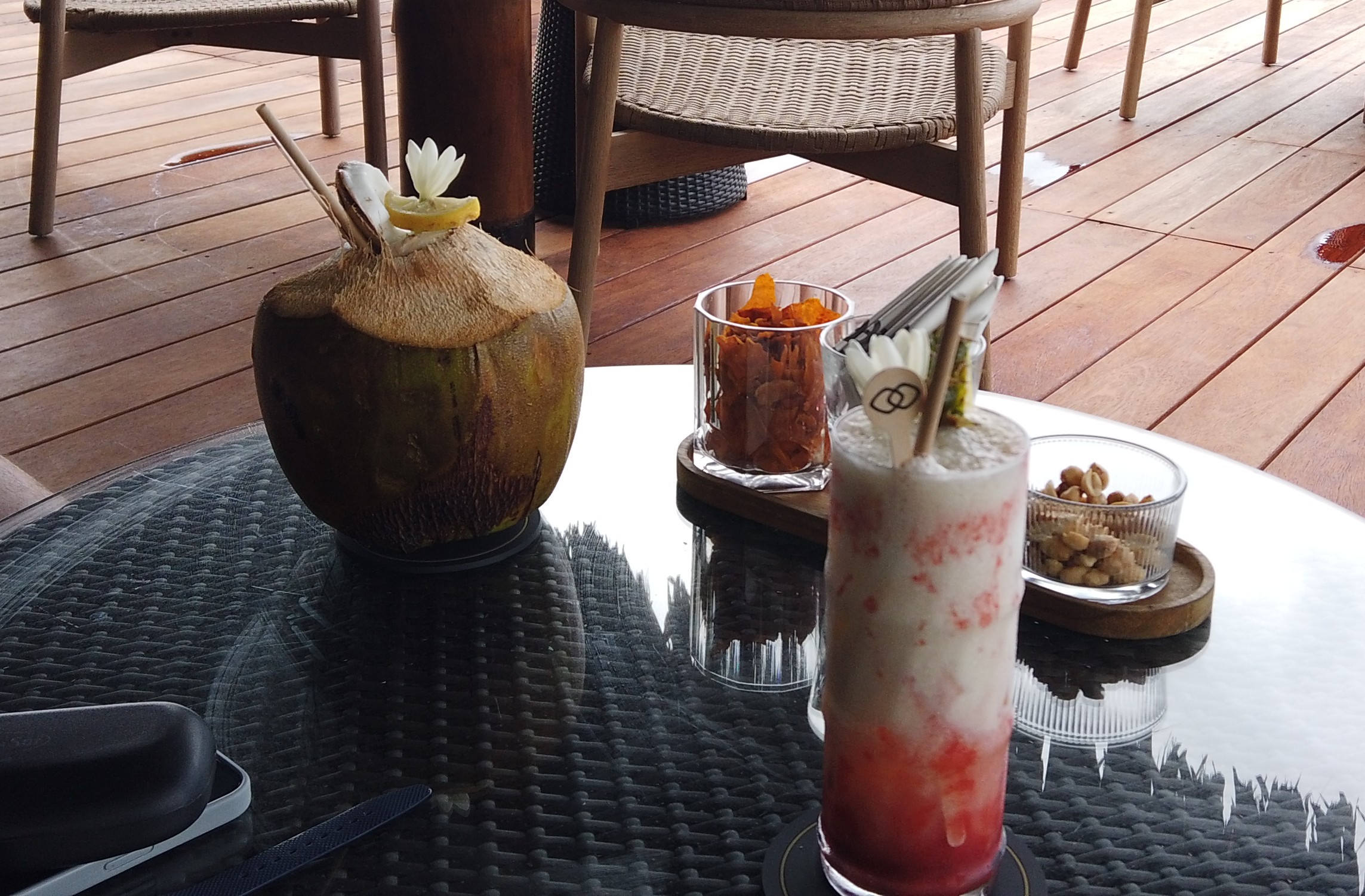
We see a group of tourists arriving, each with a flower necklace and a towel from the hotel. They must be tourists who just landed from France and can’t access their room yet (too early for check-in) (Moorea doesn’t have an international airport, but many tourists take an inter-island flight right after arriving in Papeete). They all deserve a nap by the pool after such a long journey.
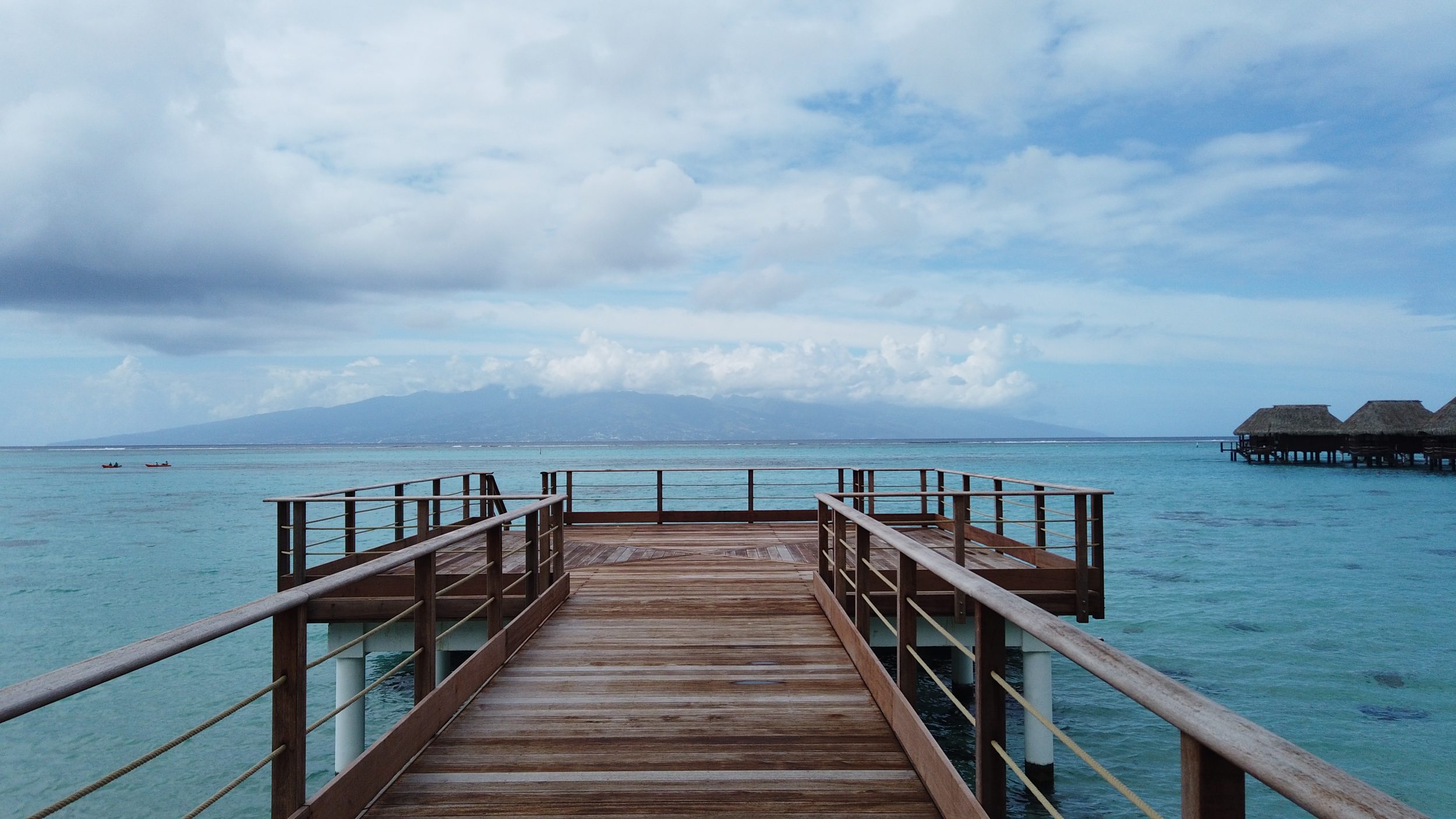
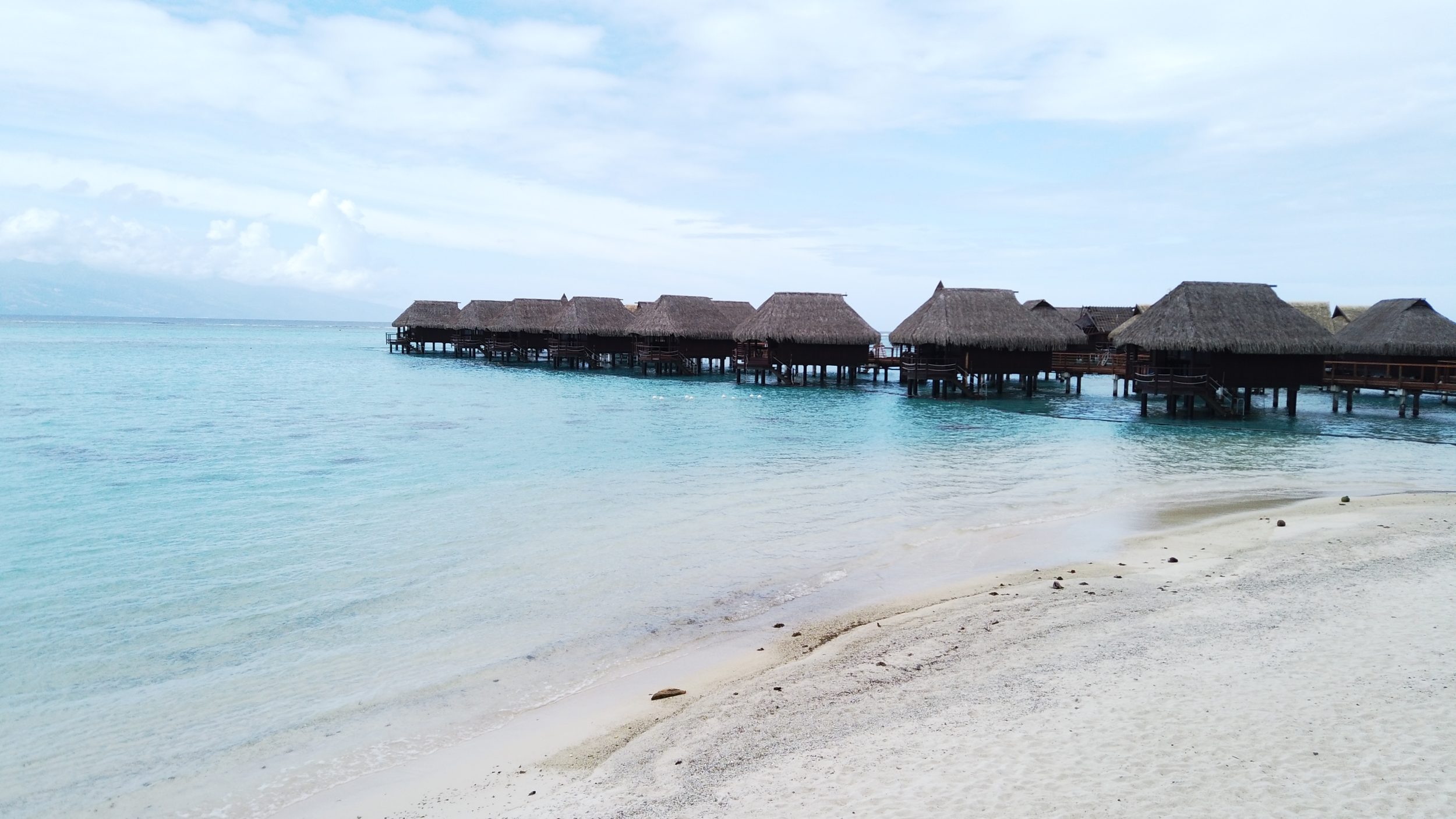
When I sent the photos to a friend, he told me that postcards don’t lie. I replied that they do. The beach at the Sofitel doesn’t hurt your feet, but the public beach on the left there, full of coral, you can’t walk on it without aqua shoes. And in the Seychelles, there are sand fleas, but you don’t see them in photos. Here, we were told about mosquitoes, but hallelujah, it must be the end of their season because in April, at the end of the rainy season, we haven’t seen any.
Anyway, I really like the hotel and I can see myself coming back for a day pass.
Taoahere Beach House Snack
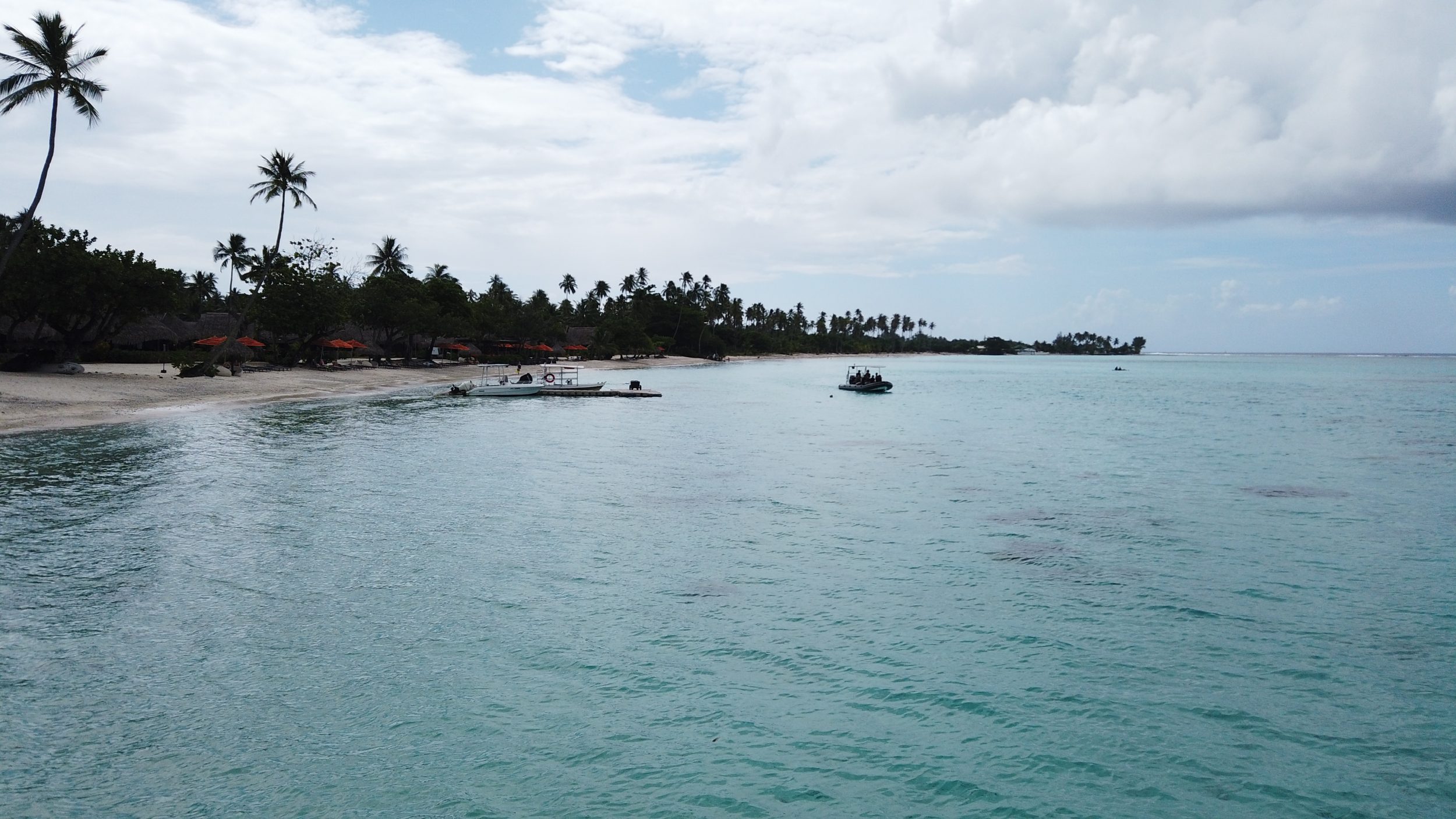
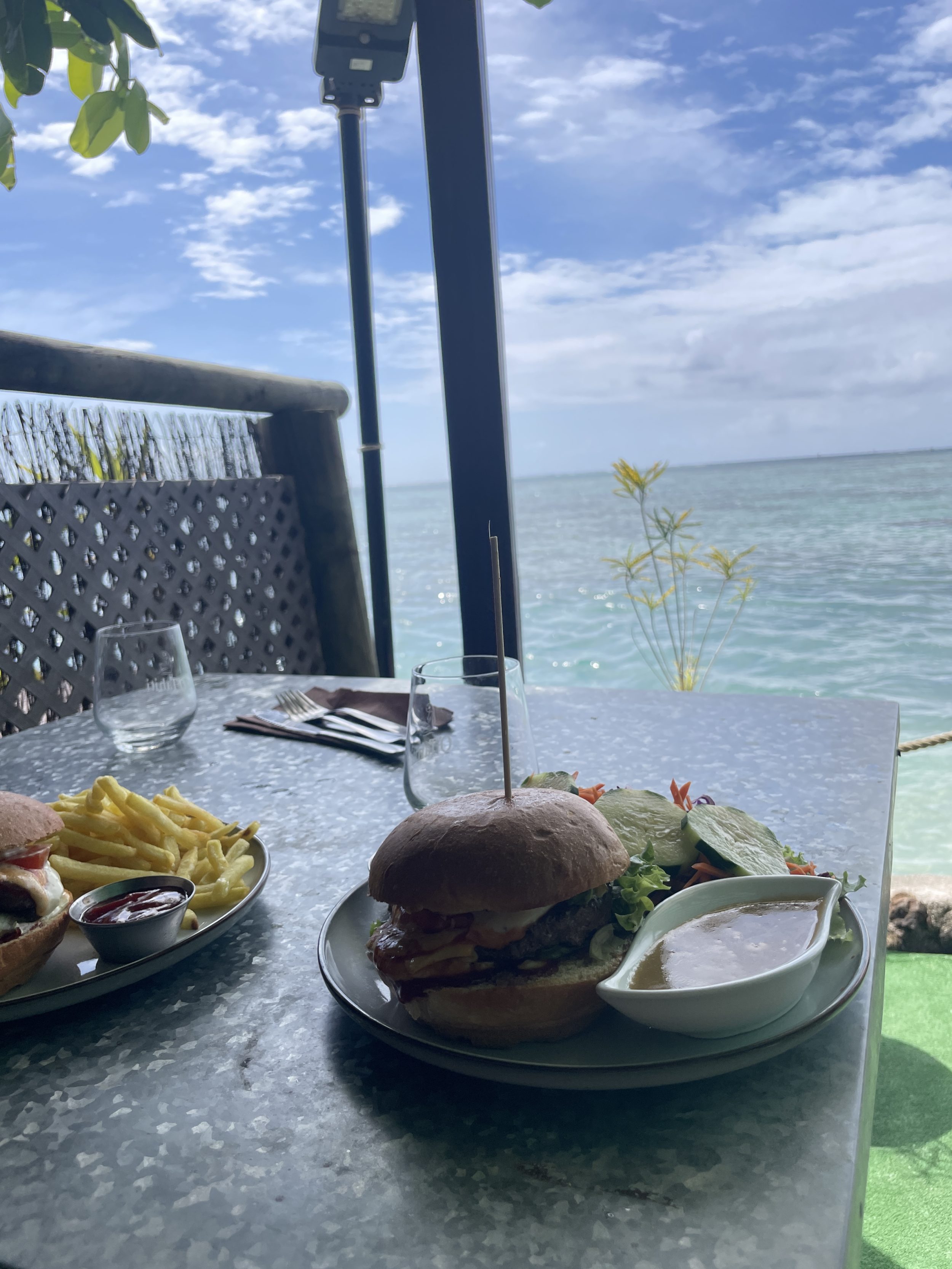
There are several restaurants along the lagoons, but most are closed on Sundays. I choose this one because it’s opposite the snorkeling spot for rays and sharks, but I didn’t realize it was still a bit far to see them. It is indeed across, but like 100 meters across. No big deal; the wind is pleasant, we have a nice little table in the shade, and the food is good (I approve of the burgers). Access to the lagoon from the restaurant is prohibited (too bad!). We were able to park right in front of the restaurant (by car), and there are plenty of spots for scooters inside the restaurant.
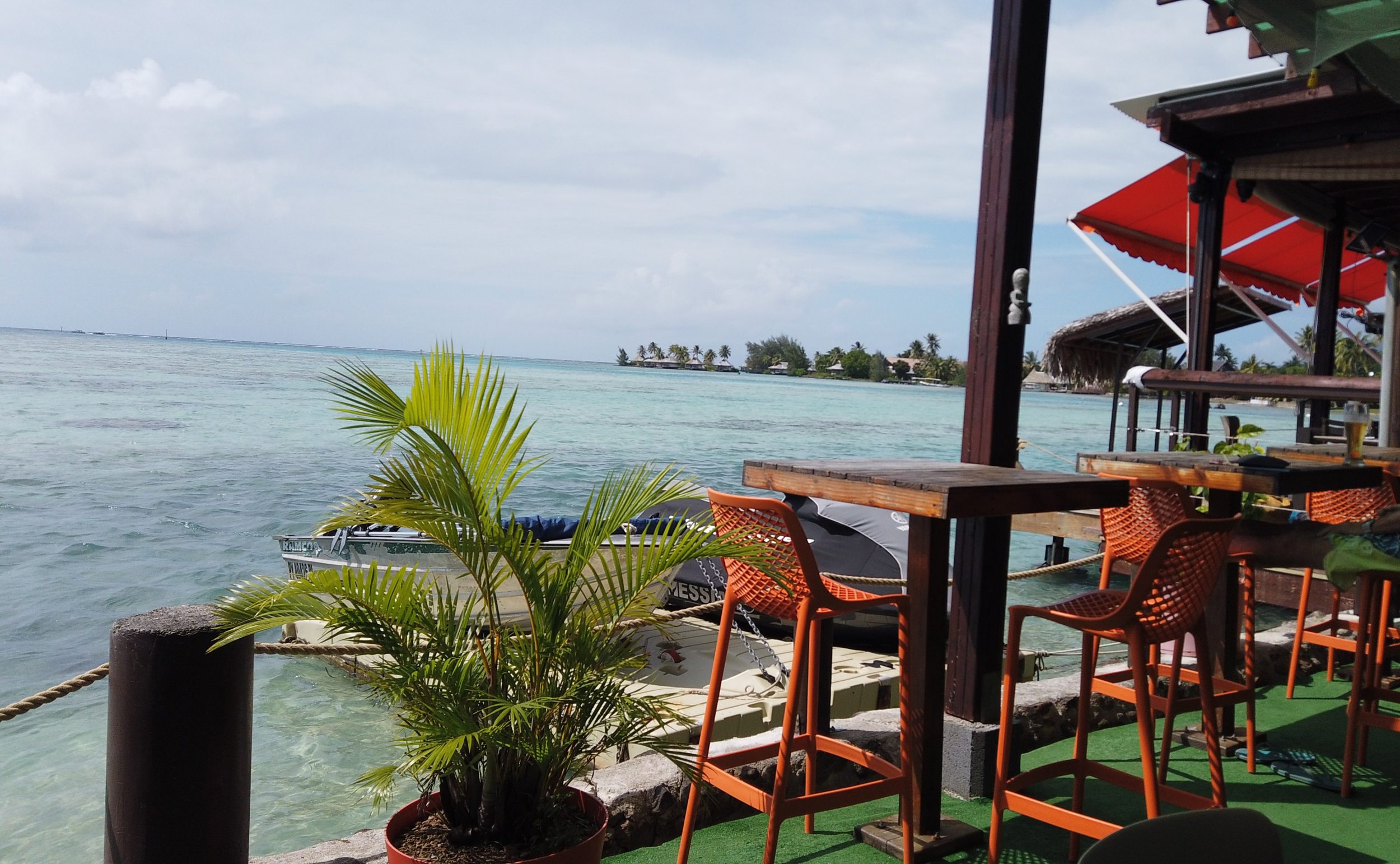
On the right, you can see the bungalows of the Intercontinental Moorea hotel, which we visited last time. We’ll pass by another day to see if they still have dolphins and turtles.
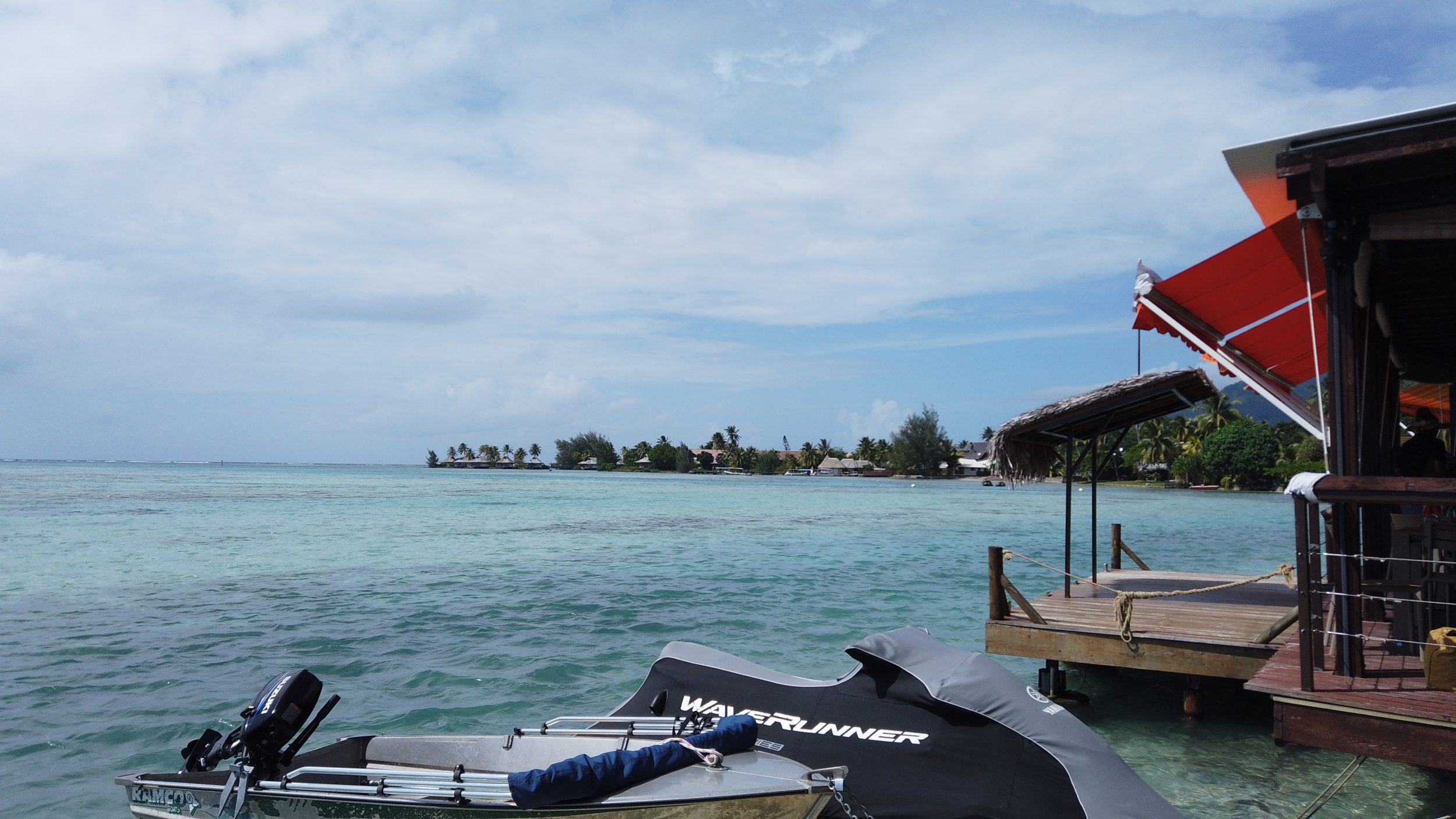
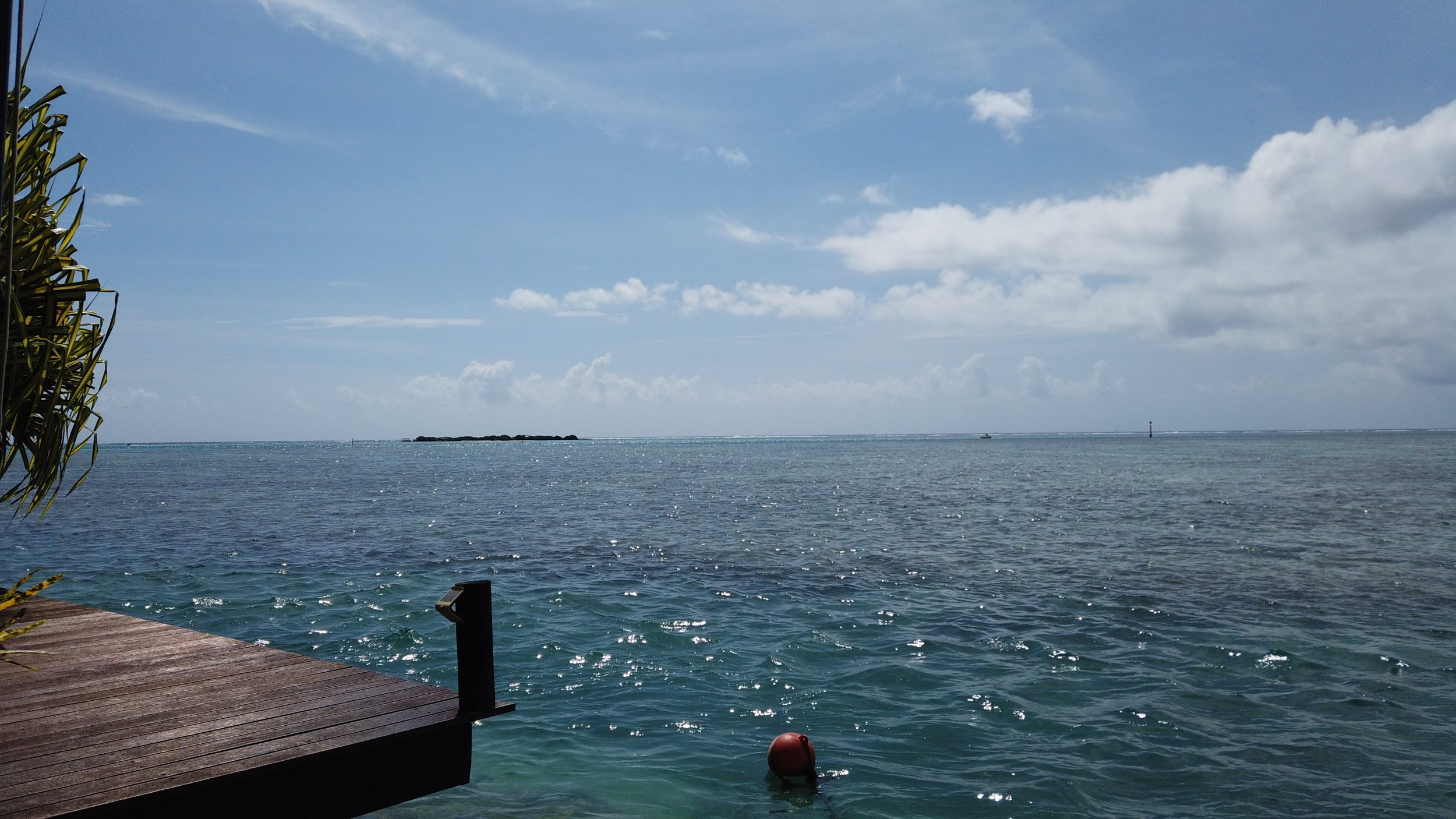
I’m finishing my meal when I see something jumping in the distance. I look again and it’s 4 dolphins moving along, jumping joyfully. It’s funny because dolphins also take the boat lane 😀 maybe the movement of boats moves their prey, so they follow the same path, or it’s related to the depth of these water areas. Anyway, I got to watch them for a good 5 minutes, from very far away, of course. I think I should have brought binoculars. Last time we came to Moorea, we saw whales jumping in the distance, and we regretted not having binoculars. I think from now on, I’ll always have binoculars with me whenever I’m near a beach. Two kayaks stop to watch the dolphins, and the dolphins head straight for them, jumping higher and higher. How lucky!
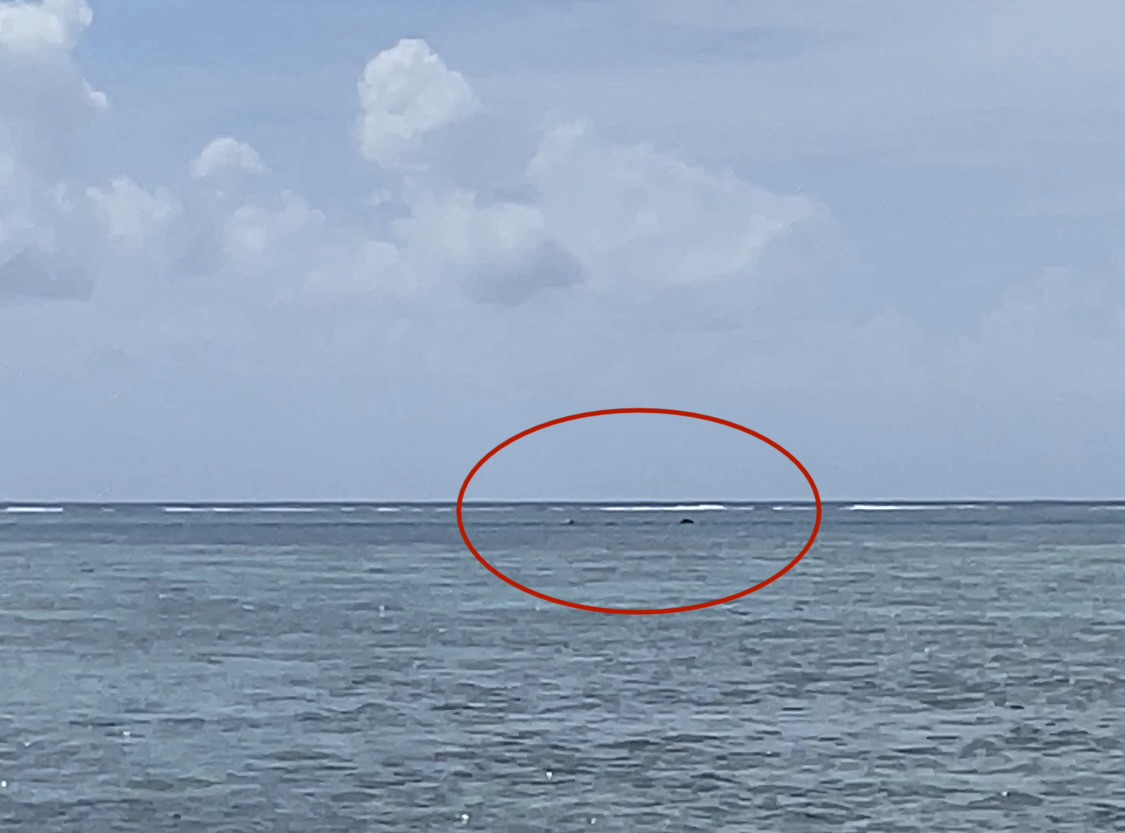
It’s 1:30 PM and we don’t know what we want to do. The sun is way too strong for me to swim anywhere (I absolutely must avoid the sun between 10 AM and 4 PM). JB, on the other hand, is keen to go snorkeling. But as we saw, access to the shore is via private properties; there are no bars like in Thailand where you can grab a drink and enjoy the beach. The only public beaches have very little shade. I don’t know where to sit in the shade while he swims. Next time, we’ll either get a day pass or an Airbnb on Moorea. Anyway, taking these constraints into account, we’ll know better how to organize for future trips to Moorea.
Anyway, we decide to take the ferry back at 3 PM. We’ll come back on a Saturday when there are more ferries, and we’ll leave earlier and return earlier. On Sundays, supermarkets stay open, but for restaurants and activities, more things are open on a Saturday.
Fashion aside
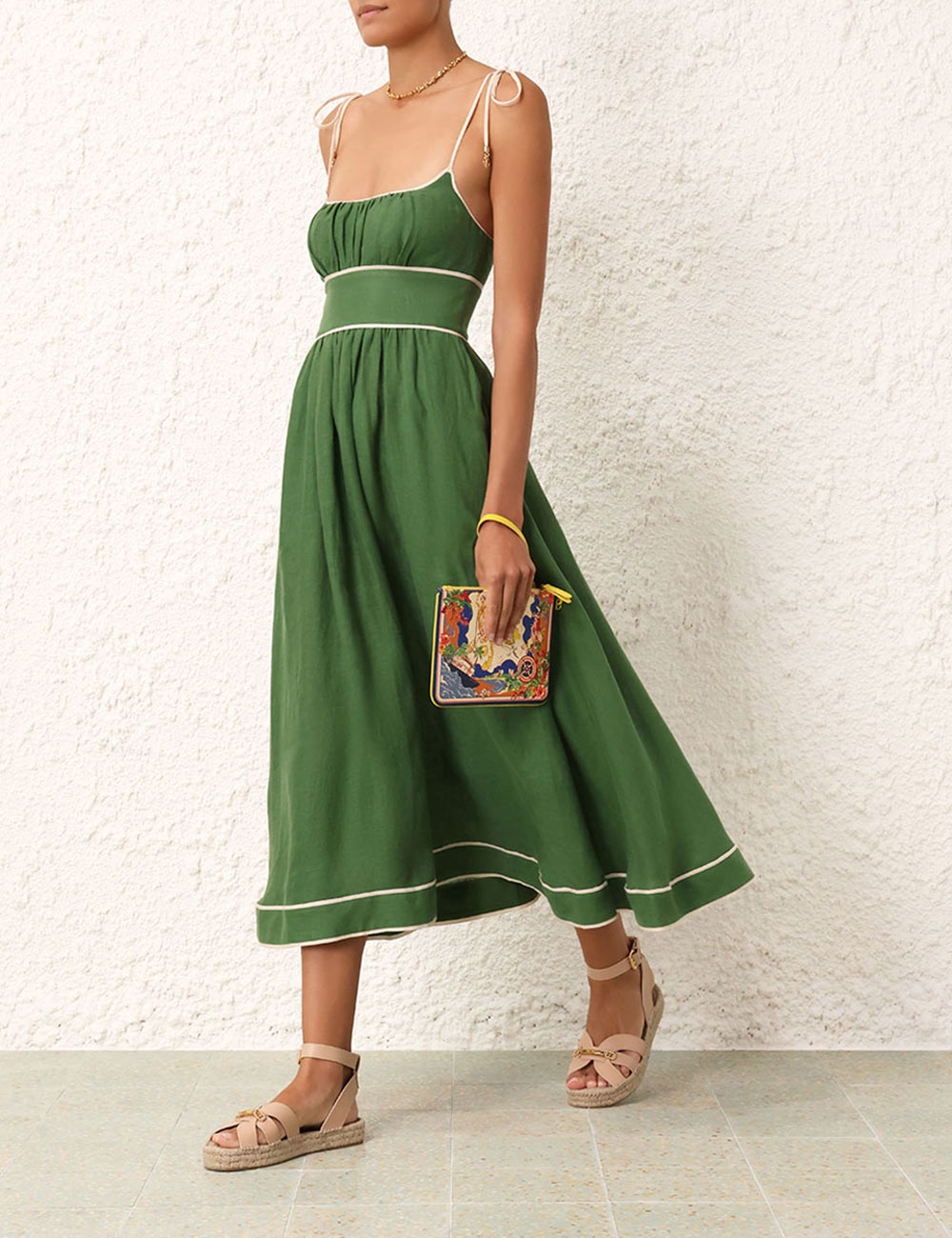
For this little trip to Moorea, I took out and wore for the first time my long green linen dress spotted on Instagram. Green isn’t my color, but the cut is perfect; I think I’ll have a copy of this dress made in burgundy when I pass through Hoi An. You can do an image search on Vinted if you’re interested. When I go to 5-star hotels, I always have a nice dress with me, because in summer, I have tons of beautiful dresses just waiting to be worn, preferably to go to beautiful places.
Yesterday in Papeete, I bought a large straw hat from a Texan company (Sun n Sand). I was surprised to discover that the hat has UV50+ protection. I paid 6,900 Fr for it. And unlike other straw hats, this one can go in (salt) water without a problem. The choice of hat was inspired by three ladies spotted at the Intercontinental hotel. From the hotel restaurant, I could see three American ladies with three gorgeous straw hats, like that.
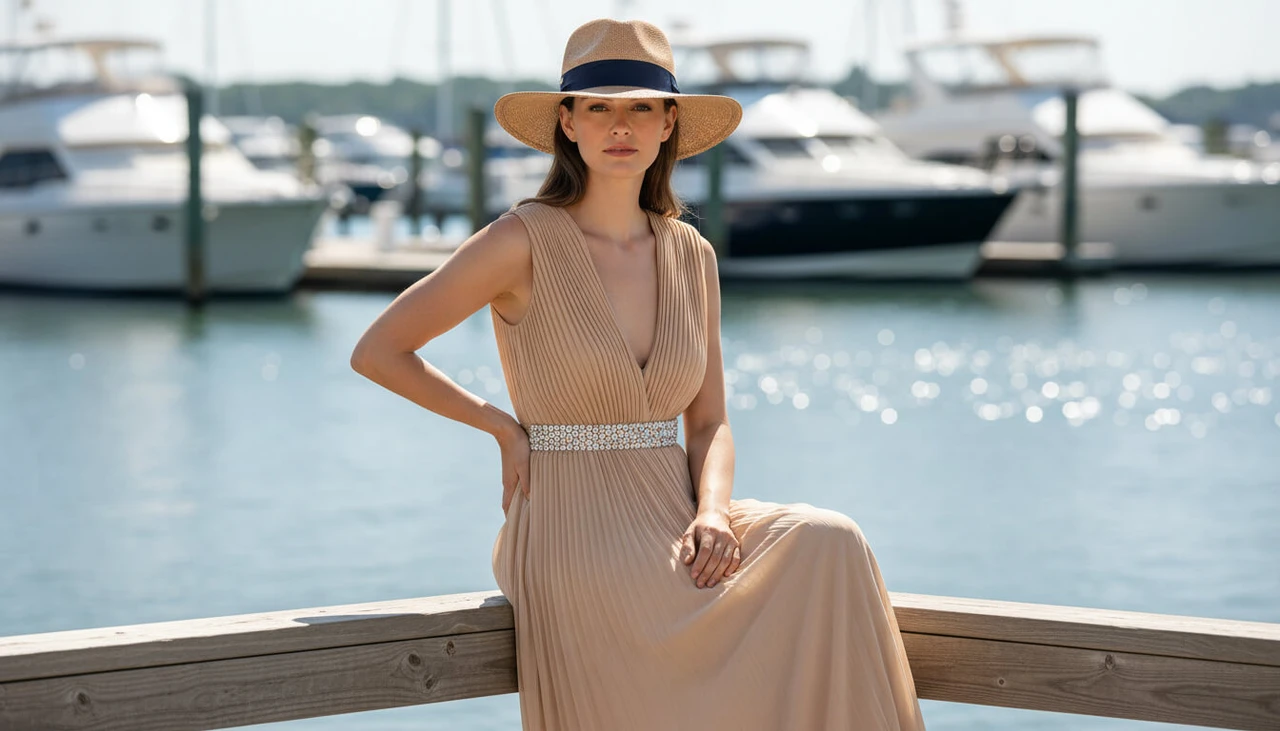
I found them super classy and wondered for a long time why their straw hats were truly much classier than all the hats I’ve bought so far (everyone knows how much I love hats; even our blog logo has a hat!). Here’s the kind of hat I used to wear:
Honestly, I thought about it for a long time. And I came to the conclusion that I always chose soft hats that I could fold and bring in my small suitcase. Whereas these ladies all had a very structured, rigid hat, woven very tightly. Soft hats like mine have the advantage of covering more of the face because you just twist them a bit to lower the brim and protect the skin; whereas rigid hats must be worn at an angle if you want to cover more of your cheek, for example. But anything structured looks more dressed up, while soft hats look more “chill, vacation.” So for once, I said to myself, “I’ll try a rigid hat to see what it’s like.”
After that story, I told myself I needed to work on my observation skills. It took me too long to notice the difference between the various hats, and I really need to practice more. I’ve read a lot of travel journals and those with a keen eye for detail produce the best stories. Because everyone can quote the history of a place, but few can describe the little details that aren’t in the guidebooks, or compare and point out interesting nuances for European readers. I remember reading an article by a guy who only spent 5 days in Havana, yet he was able to list every available mode of transport and their fares (an incredibly tough task that I totally failed to replicate in Havana).
Part 2: Practical Tips
- Ferry Tahiti – Moorea round trip: 2500Fr for tourists
- Restaurant: 1900Fr to 2400Fr per dish
- Bar at Sofitel: between 1100Fr and 1800Fr per drink (non-alcoholic)

