

Our move to Tahiti (French Polynesia): first impressions
When I settle somewhere new, I write a “first impressions” post, and usually there are no “second impressions”—we just skip straight to the “wrap-up.” I hope this time it’s different and I’ll actually have things to share about Tahiti.
We’ve only been in Tahiti for 10 days, but it feels like a month. We have an Airbnb in downtown Papeete. For some context, French Polynesia is made up of 118 islands (76 of them inhabited) spread over an area the size of Europe. The largest island, and home to the international airport, is Tahiti Nui. Tahiti Nui connects to the peninsula of Tahiti Iti. Papeete is the capital of Tahiti—it’s small like a Parisian arrondissement, but here it’s considered a city. From much of the island, you can see Moorea, which is a 30-45 minute boat ride away. Moorea is like a low-cost version of Bora Bora.
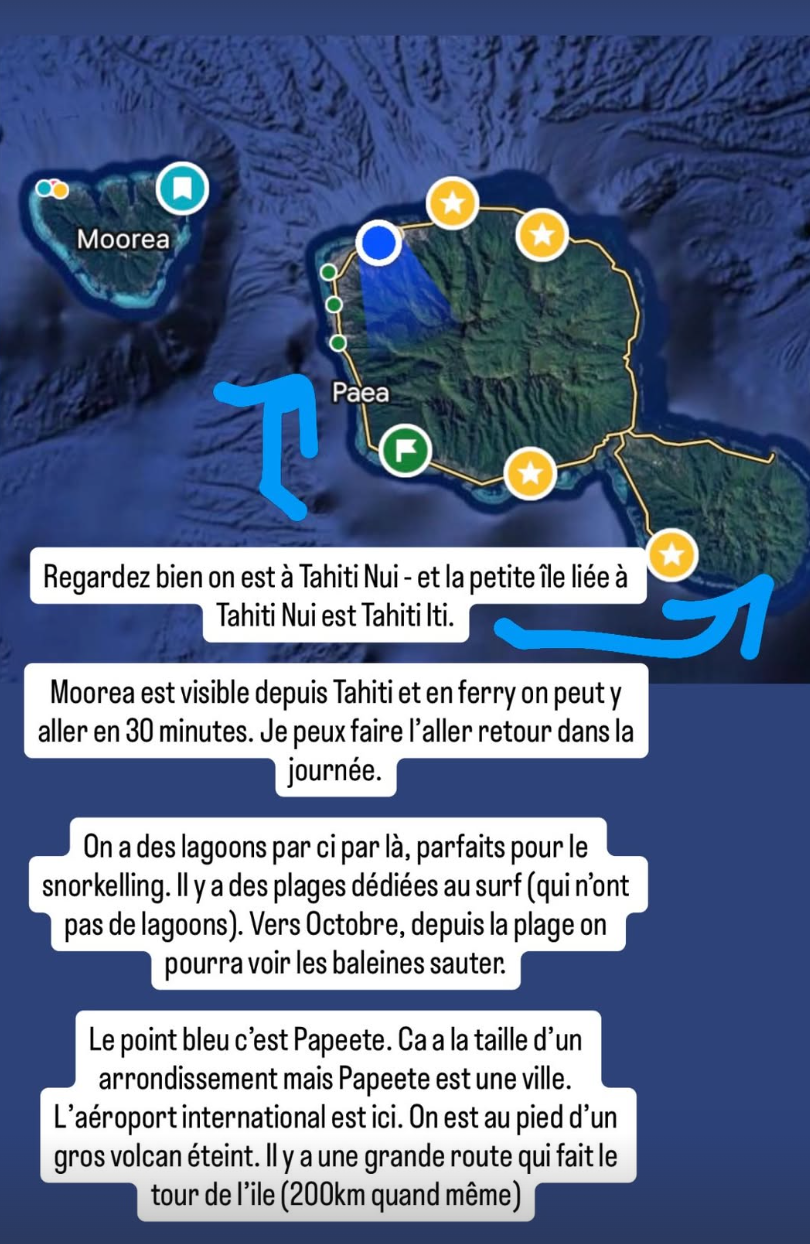

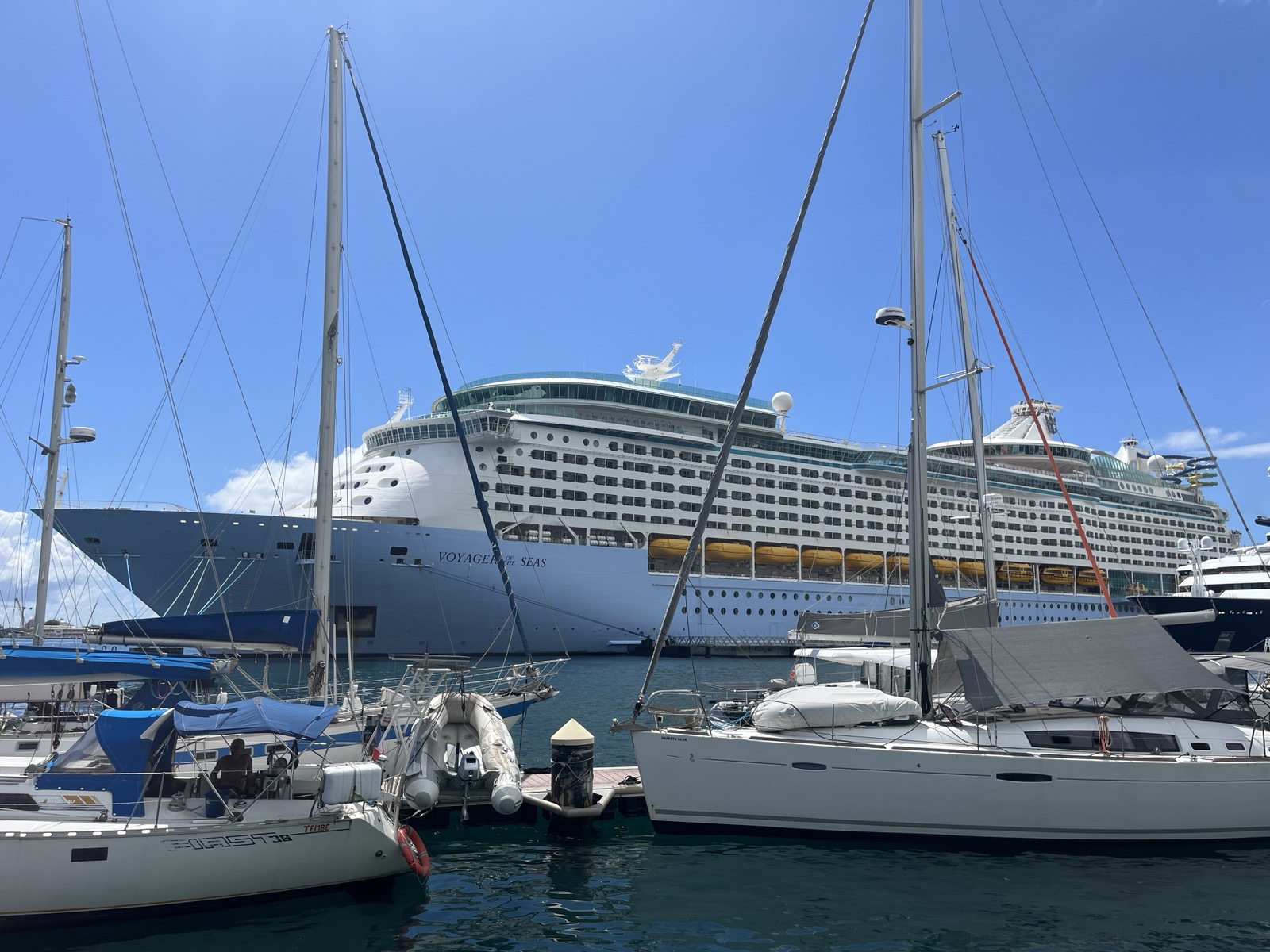
So right now we’re in Papeete, downtown (the blue dot), 5 minutes from the harbor where the big cruise ships and ferries to different islands of French Polynesia dock. The cruise ships that stop here are often repositioning cruises doing USA-Australia, or world cruises. Some islands are so far away that you need to fly or take a seaplane. Depending on the distance and the island’s popularity, the plane can be tiny or fairly large (Bora Bora, for example, has medium-sized planes).
French Polynesia really is on the other side of the world—we’re 12 hours ahead of mainland France. It’s far from everything. I think Easter Island is one of the most isolated places on the planet (7 hours by plane from Santiago) with no other islands around, but Tahiti is pretty isolated too. Even from New Zealand, it’s a 6-hour flight. And door-to-door from Paris airport, it took us 27 hours to get here. Anyway, those who make it to Tahiti, dealing with jet lag, exhaustion… they’re survivors and fully deserve a nap by a lagoon with their feet up. It’s draining!
Before we left, JB’s employer asked if he wanted to join the team building in June (all expenses paid, food and lodging included), and he said “hell no!“. Dealing with 27 hours each way just for a week of team building, plus managing two time zone changes, sounds exhausting to him. If the team building were in 6 months, after he’d restocked his sausage supply, maybe, but going Paris-Papeete in April, then Papeete-Paris-team building-Paris-Papeete again in June is too much for him. That just goes to show how far, far away we are. When our friends heard about our move, everyone said “I’ll come visit,” but once they checked flights on Google Flights, oddly enough, nobody wants to come anymore.
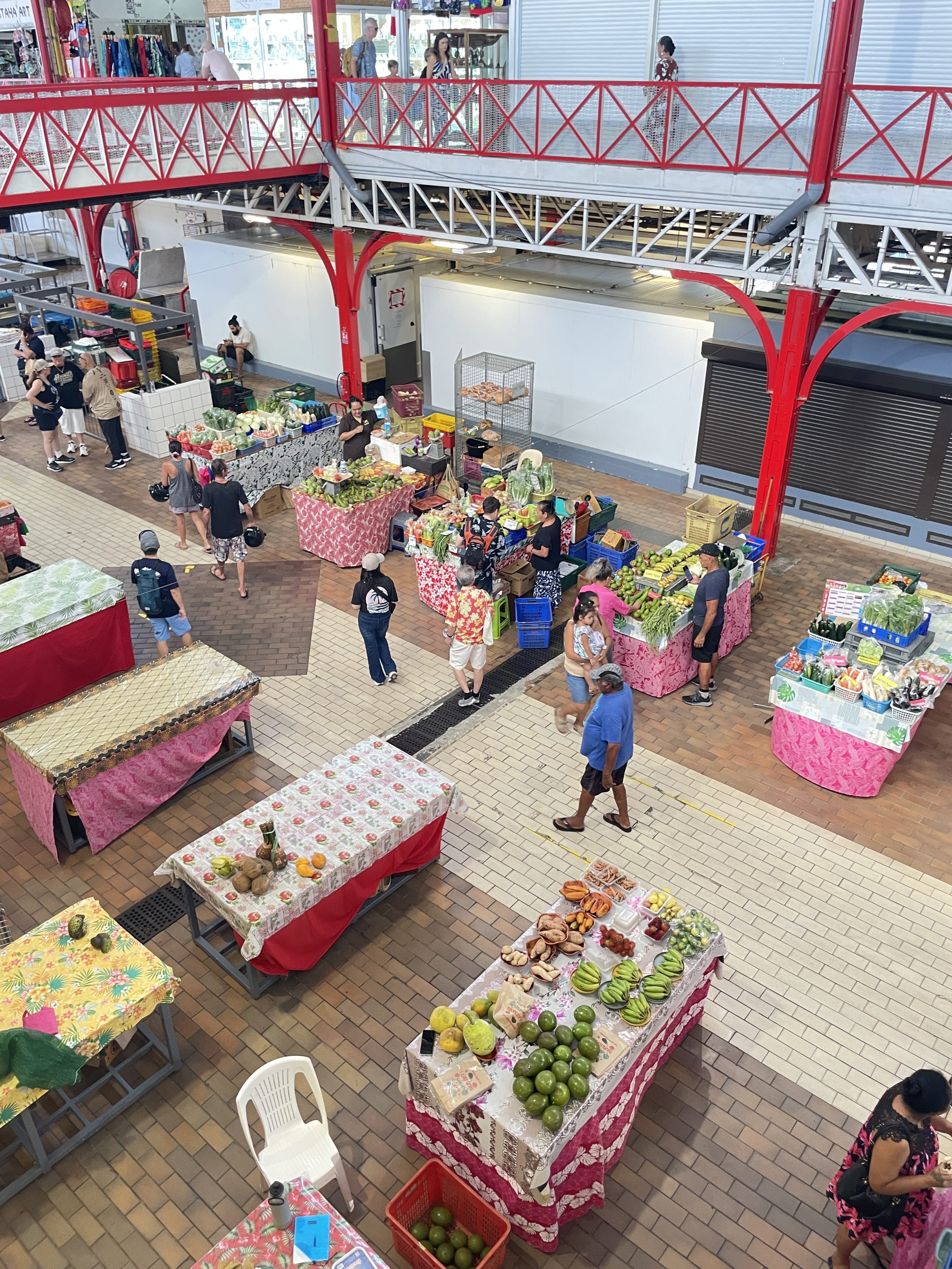
I still haven’t adjusted to the time difference. After several mornings of waking up at 4 a.m., now I go to bed at 9 p.m. and get up at 5:30 a.m. That’s still 8.5 hours of sleep, which is plenty. I’m not particularly into the hustle culture of waking up at 5 a.m., but I’ve wanted for a long time to go to bed early and follow the sun’s rhythm. Because according to traditional medicine (backed by I Ching), certain organs get repaired between 10 p.m. and 11 p.m., and if you always go to bed at 11 p.m., they never get fixed. Ideally, you should wake up with the sun and go to bed a bit after sunset (which means you sleep less in summer and more in winter). If you’ve read the Chinese novel “The Dream of the Red Chamber“, you’ll see that when the heroine goes to bed at 11 p.m. because of her illness, it’s really serious—it means she had a rough night. Anyway, waking up at 5:30 a.m. works for me because I go to the Papeete market to buy ingredients for cooking that day, and if I go at 9 a.m., for example, there’s nothing left. I go between 7 and 8 a.m., a bit earlier if I want fresh fish. By noon, there are stalls selling prepared dishes, but in 5 minutes, they can run out of food.
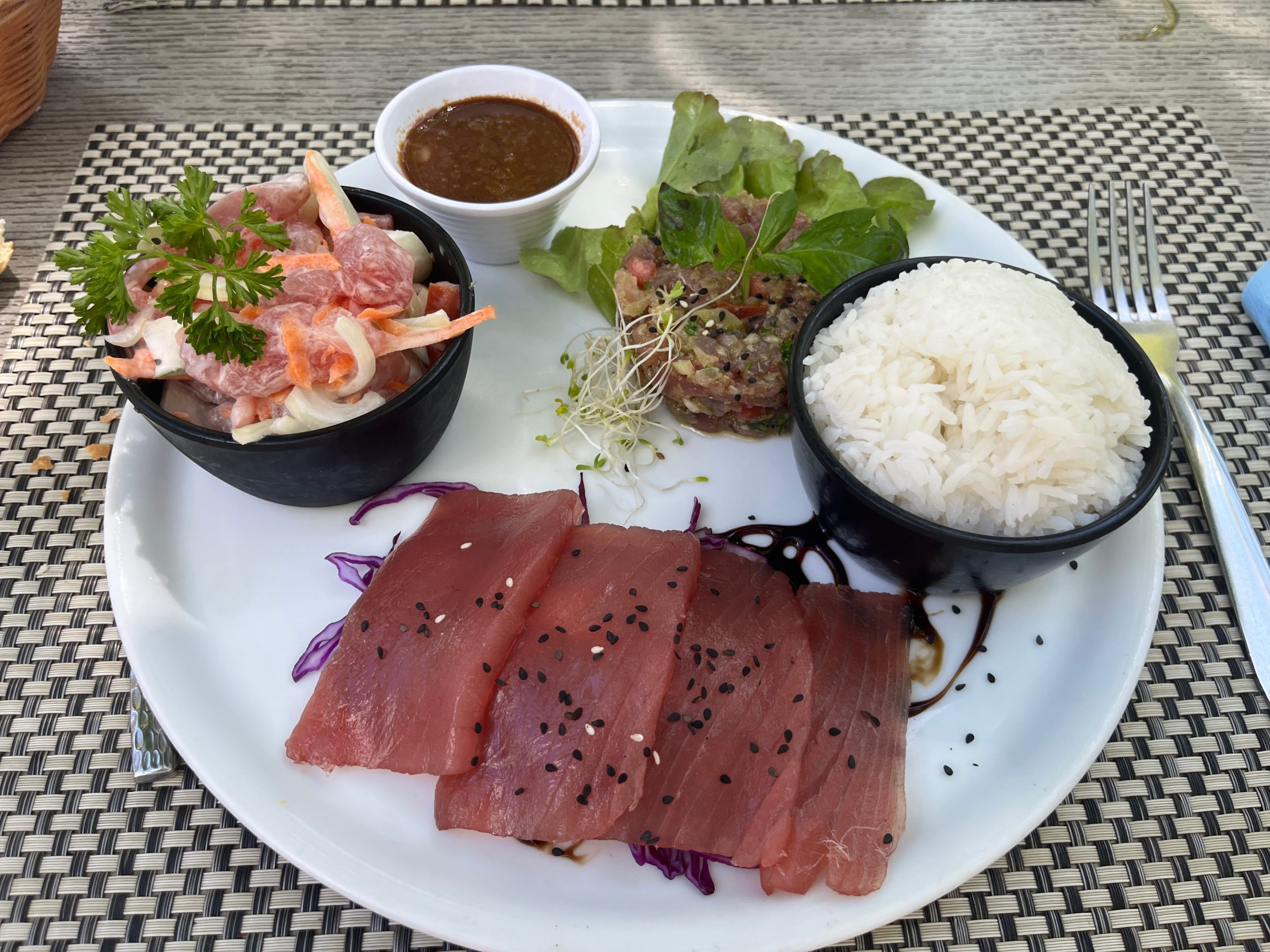
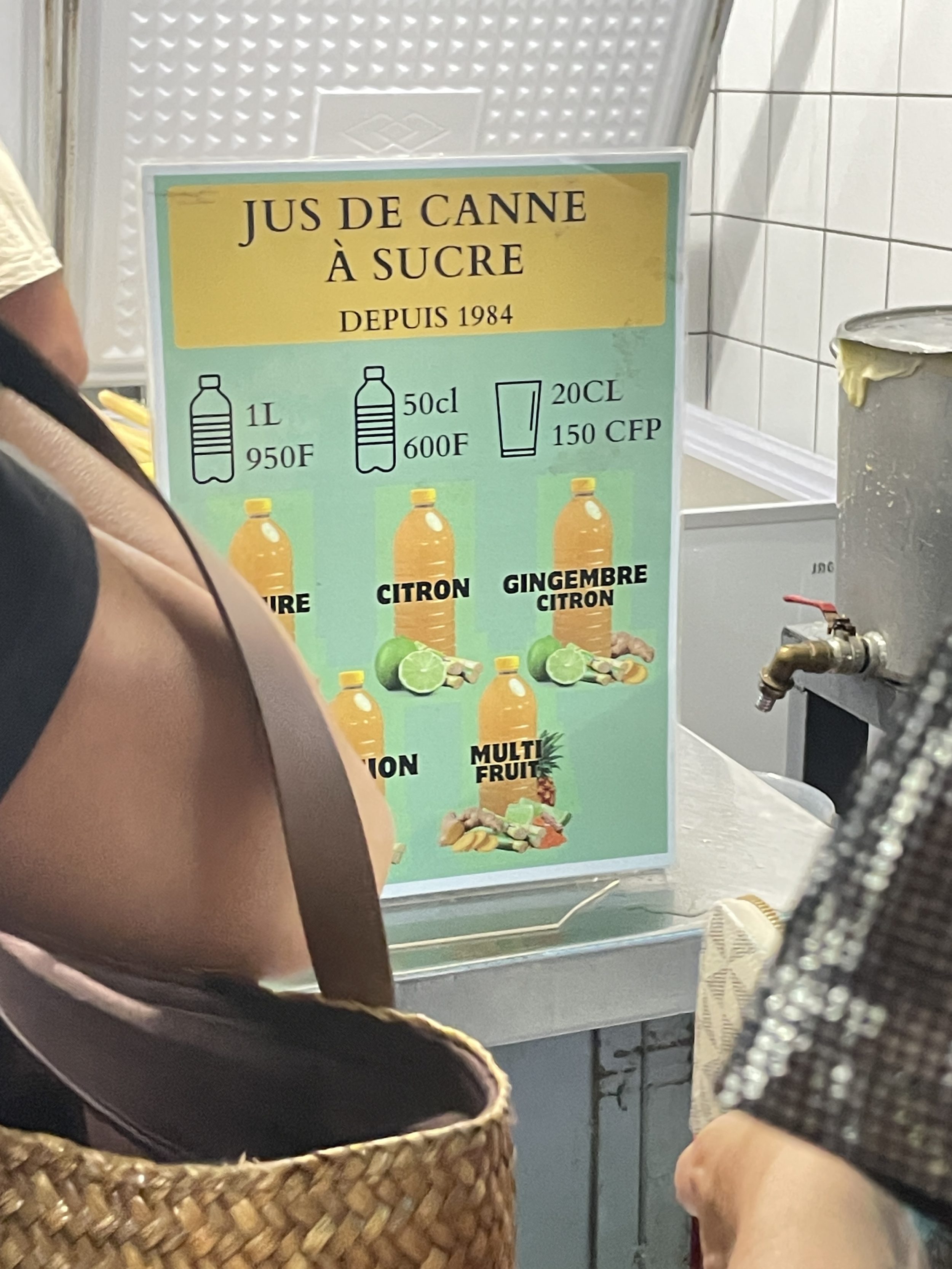
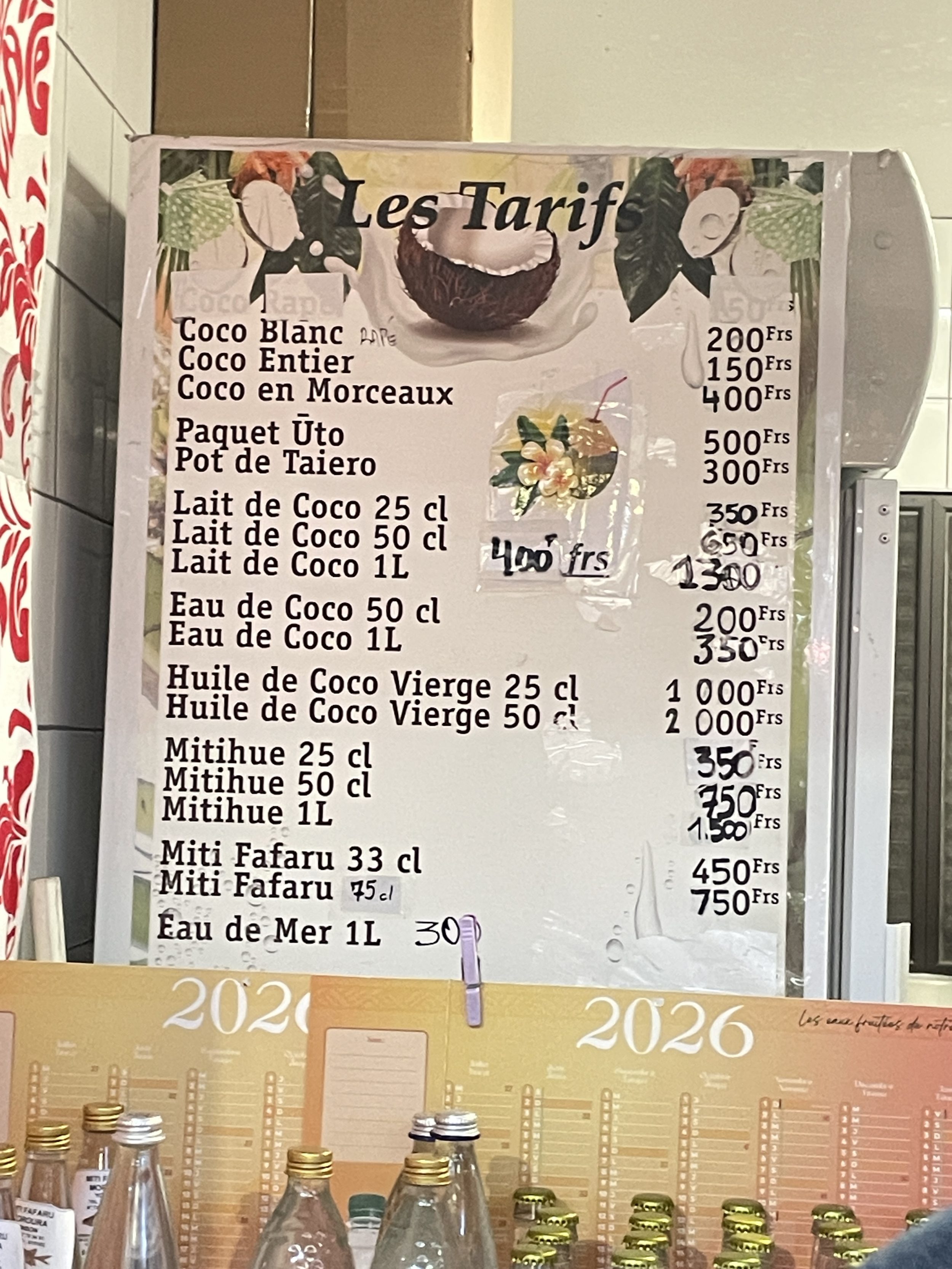
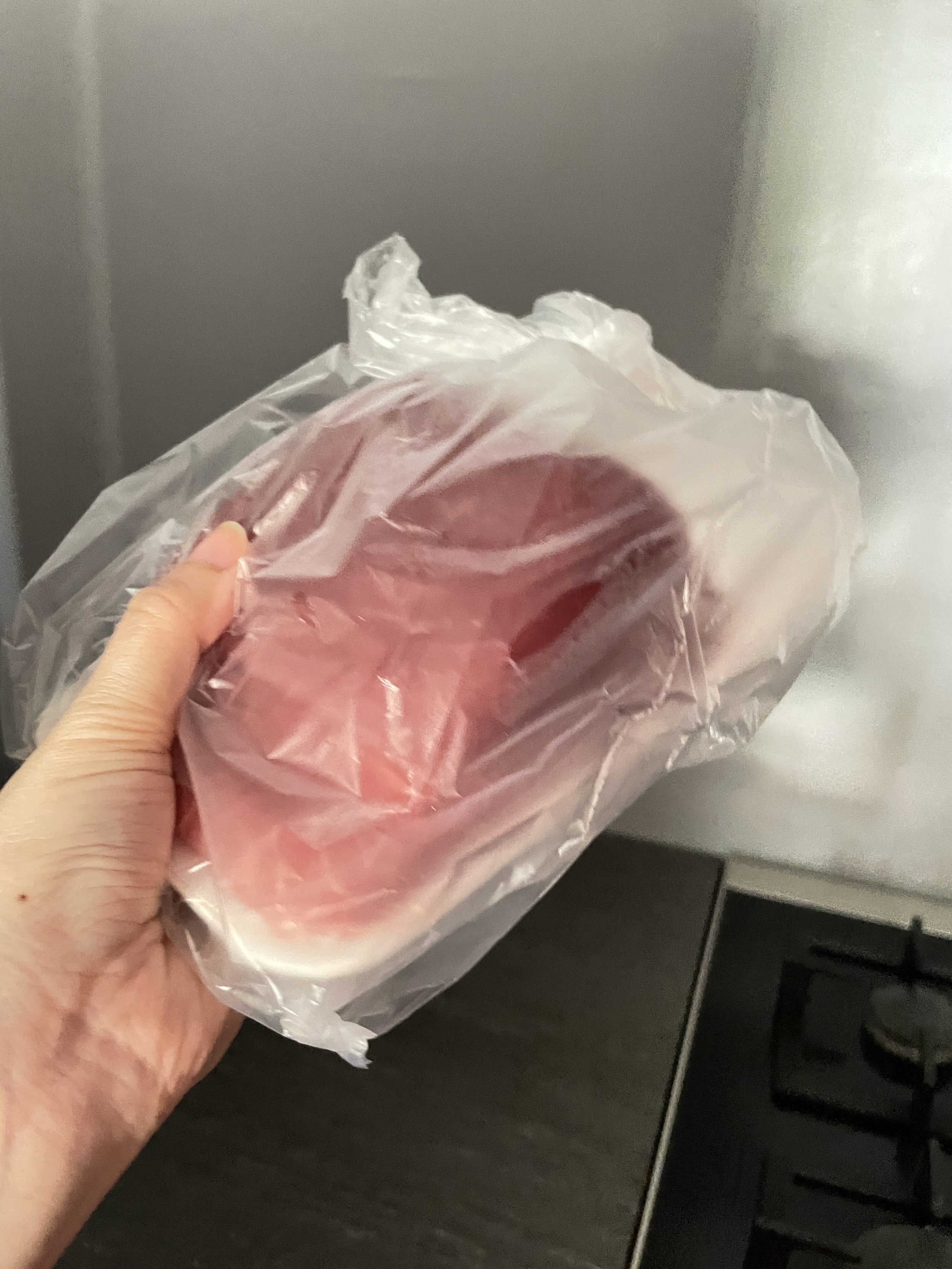
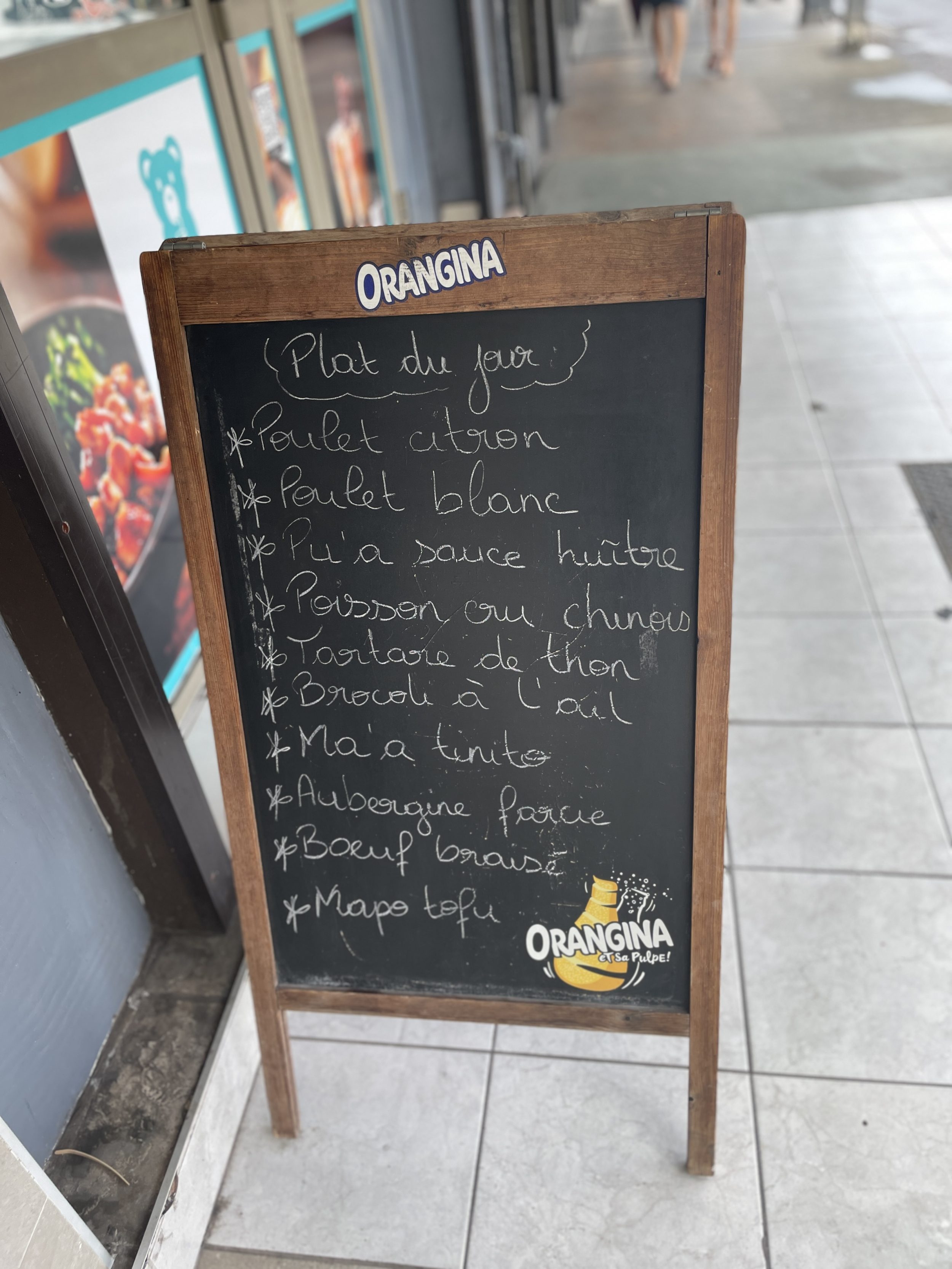
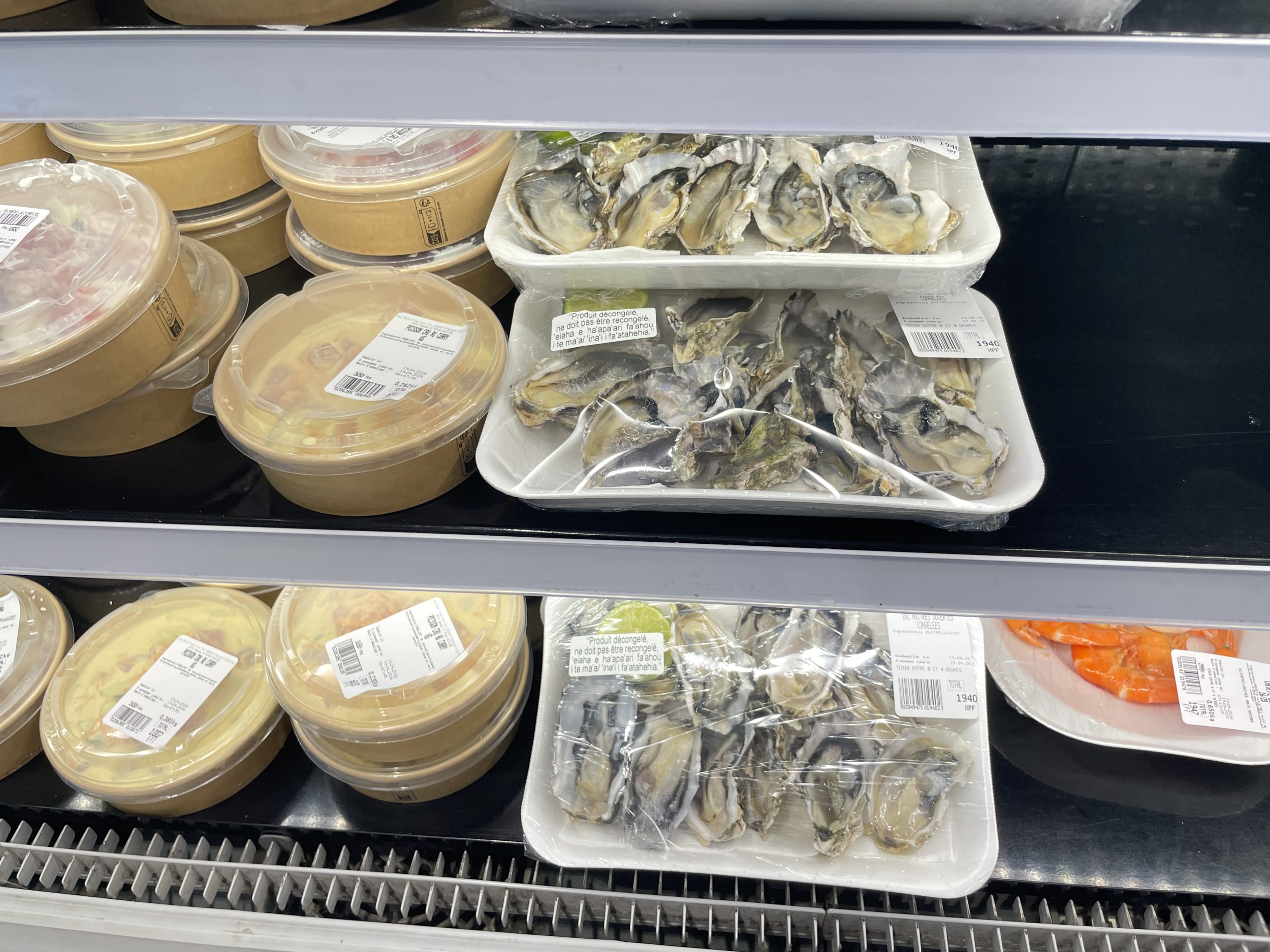
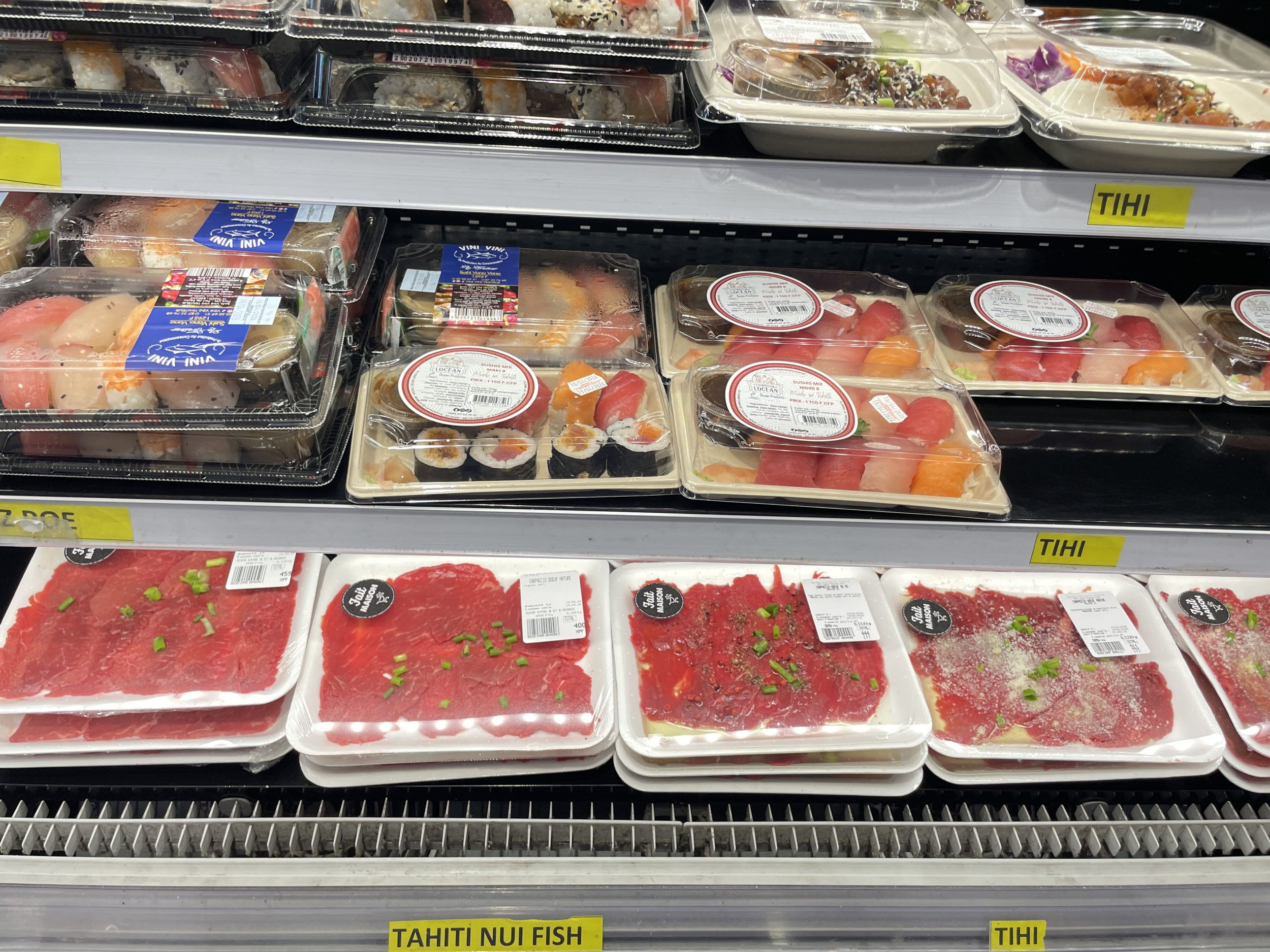
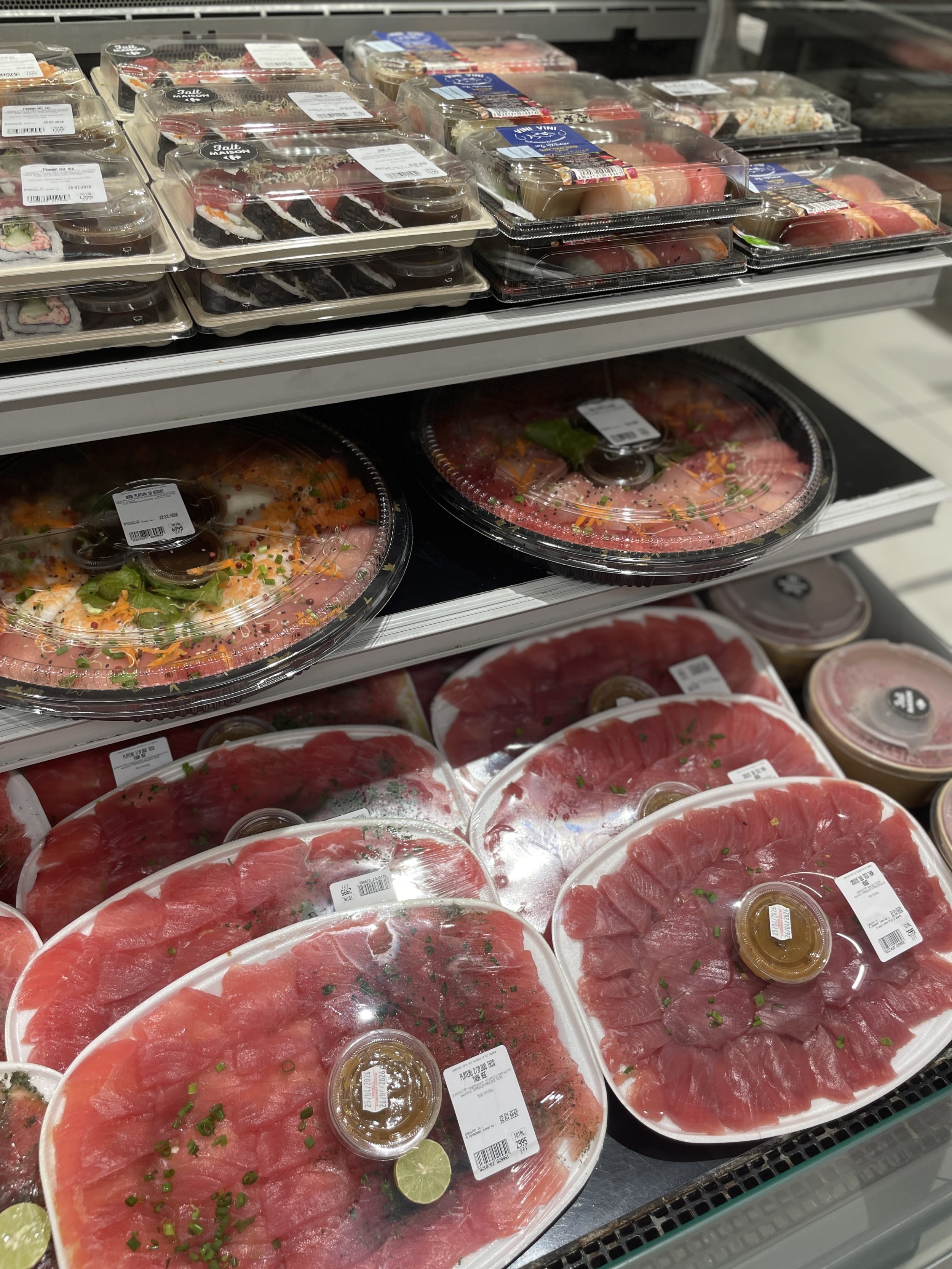
On Sundays, the market is much livelier, and the street right next to it becomes pedestrian-only, selling ready-to-eat food, mostly Asian. There are a few Polynesian dishes, but everything’s drenched in coconut milk: veggies, fruit in coconut milk, and all sorts of tuna tartare. Here, the meat quality isn’t great, but the fish is fresh and wild! Tuna is so cheap! We have bluefin and albacore; personally, bluefin has more flavor, and I prefer it for sashimi or tartare. The only thing I miss is having a proper Japanese sashimi knife. Fishing is managed by big companies, including Vini Vini, which controls the whole value chain and even has two restaurants in Papeete. It’s only on the smaller islands that independent fishermen will go catch 1-2 tuna and immediately sell them to luxury hotels. Tuna is a really, really big fish. For 8€ (1000 Francs), we get a good 400-500g. It’s so huge that JB tells me to cut back and only buy half because the two of us can’t finish it.
On the other hand, vegetables and fruits, even if they come from here, cost twice as much as in France. For 4€, I get the equivalent of 2 large tomatoes. Meat comes from New Zealand, pork is local, and even though the beef is excellent (angus beef), I ate so well in Lille that I’m struggling to settle for the quality available here. In Lille, at my butcher’s, I had access to aged AOP beef, free-range chicken, and pork that wasn’t organic but was good quality. Here, the meat is mediocre, like what you find at Carrefour, Auchan… I ordered free-range chicken from a lady at the market, and she texted me to say that “the guy didn’t kill the chickens.” I have no idea which guy she’s talking about, but there you go—it seems like even reserving a chicken is complicated. It’s been a week, and no free-range chicken has been killed. Official sources talk about prices being +31% compared to mainland France, but the prices I actually feel are more like +50% for worse quality (except for vegetables and fruits, which are excellent). It’s like the temperature: it’s only 25 degrees, but it feels like 40 (to me, again) because I’ve spent too much time in Lille.
If you’re moving to Tahiti soon, you can check the prices at the various supermarkets/hypermarkets here (+200 common products).
Papeete Market:
Restaurants & Supermarkets:
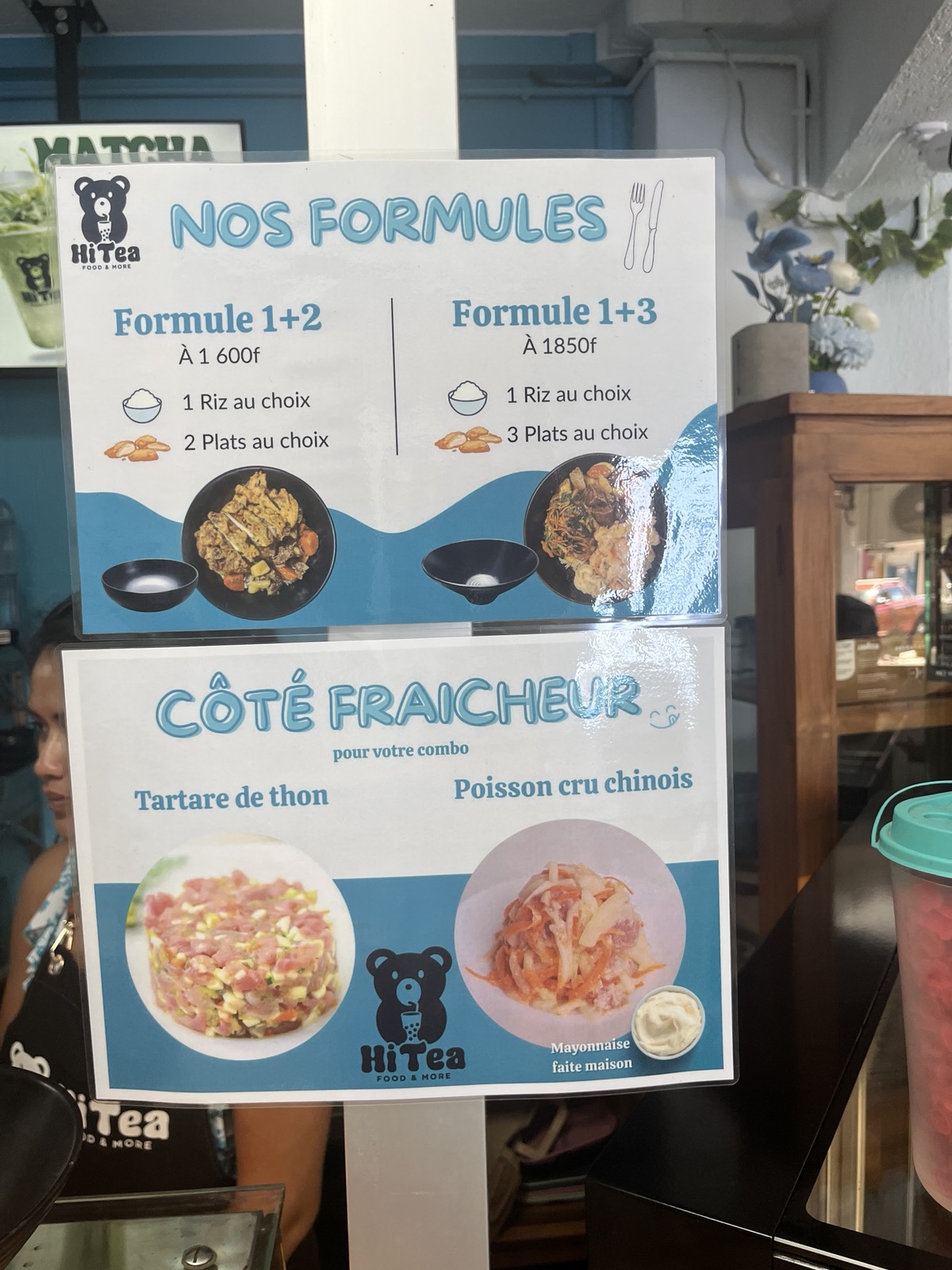
I’ve relapsed and started consuming bubble tea again because Polynesians love it. Here, the “medium” size is equivalent to a “large” in France, and the “large” size is 1 liter!! When you look at Polynesians, you’re not surprised—they’re massive and probably need a lot of food, hence the XXL sizes. But I hope to cut down to zero.
Anyway, seeing the ugly and expensive clothes on sale here, I’m glad I packed as much as I could. The little rice cooker I brought was an excellent choice because we use it every day, and there aren’t 36,000 options here either. I managed to slip some saucissons from my Lille cheesemonger into my suitcase because I know that’s what I’ll miss the most. They have Carrefour and Auchan here too, but it’s just not the same.
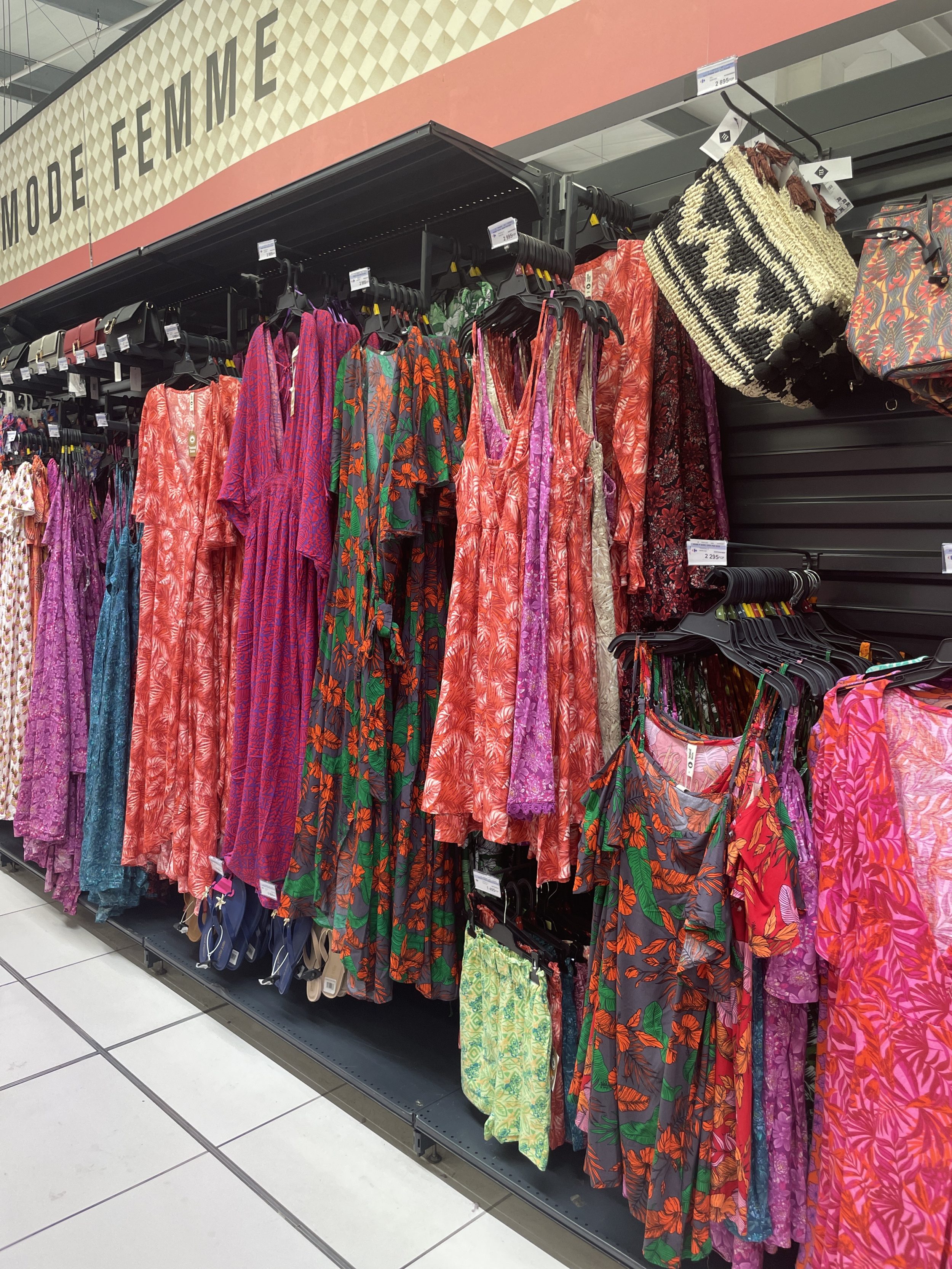
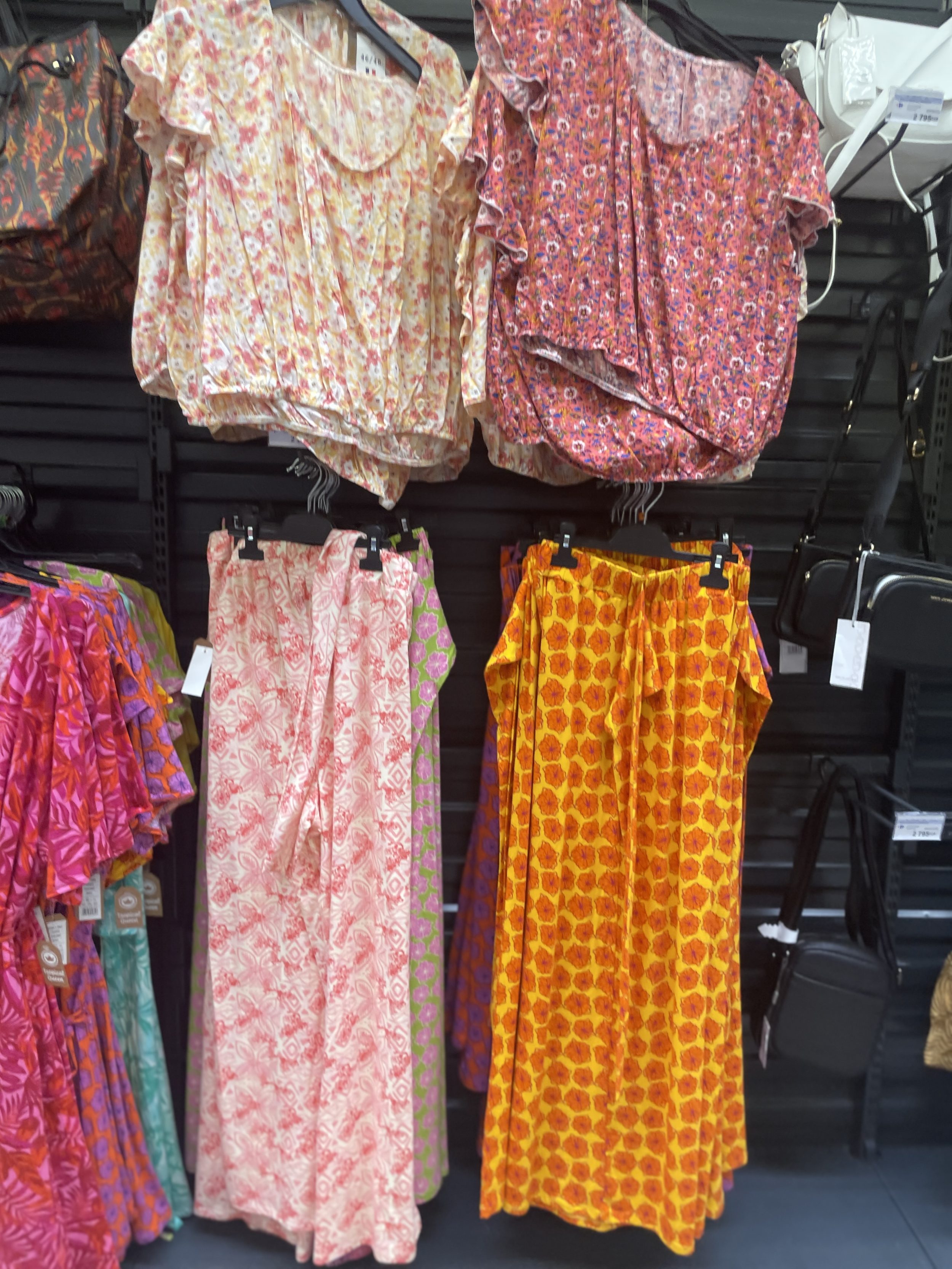
Tahiti is the biggest island and it’s where planes and boats unload goods, but just going to Moorea across the way makes prices climb higher. It’s a real problem for Polynesians because the cost of living is too high compared to salaries, even though VAT is lower (16%) and there’s no income tax. If you don’t work in tourism or as a civil servant, salaries are lower than in mainland France, but expenses are higher than in Paris. Imported products are almost double (e.g., a paperback sold for €8.50 in France is €16 here). But there are “red” products, the PPN (Essential Goods), where the government covers part of the shipping costs and imposes very low margins on supermarkets, so that helps a bit. And when it comes to pure services, since labor isn’t very expensive, it’s much cheaper than in France—for example, I visited several spas, and prices were always between -10% and -20% compared to Lille.
In short, we’re losing purchasing power and choice, but we knew that before coming. It’s one of the reasons I wasn’t too keen on coming at first, but when living conditions worsened in Lille, I preferred losing purchasing power to putting up with the gloomy atmosphere in Europe. Now, my solution is to learn how to cook fish dishes. There are fish that are very colorful (too pretty to eat, in my opinion), but I’ll give it a try. My greengrocer in Lille explained that there are basically two types of fish: white and red. So I just apply Marmiton recipes and categorize them as white or red fish.
I’m telling you in detail about prices and purchasing power because people don’t realize it and think it’s like Asia. Nope. Keep in mind it’s a honeymoon destination, so prices match the type of tourists they cater to.
Traffic jams here start around 6:15-6:30 AM. Polynesians wake up early, start early, and finish the day around 4 PM. So with JB’s schedule—9 AM to 6 PM—theoretically we can’t have friends because all social activities end early. Why does JB have a schedule that’s off from Polynesians? Because his employer wants 24/7 service. When the day ends in mainland France, Canadian teams take over, then the Polynesian team, so with different time zones, there’s 24-hour protection against cyberattacks. The fact that JB finishes at 6 PM corresponds to 6 AM in France, which is perfect for early-riser teams in France to take over. 4 AM (which would be 4 PM in Polynesia) would have been too early. So these hours don’t bother us because even in France, we’re not the type to hang out with friends on weekdays; but for someone who loves going out, it might not be the ideal job. One of JB’s colleagues is Polynesian, so a lot of the info in this article comes from him (thanks!).
For the record, JB being transferred to Polynesia isn’t a coincidence. JB received two job offers when he retrained in cybersecurity, but he chose his current employer because there were opportunities for transfers to Canada and Polynesia. And the employer knew from the job interview that he was aiming for a transfer. We didn’t know if or when he’d be eligible, or for which office, but you know us by now—we tend to think long-term and seize opportunities as they come. The hardest part is knowing what you want.
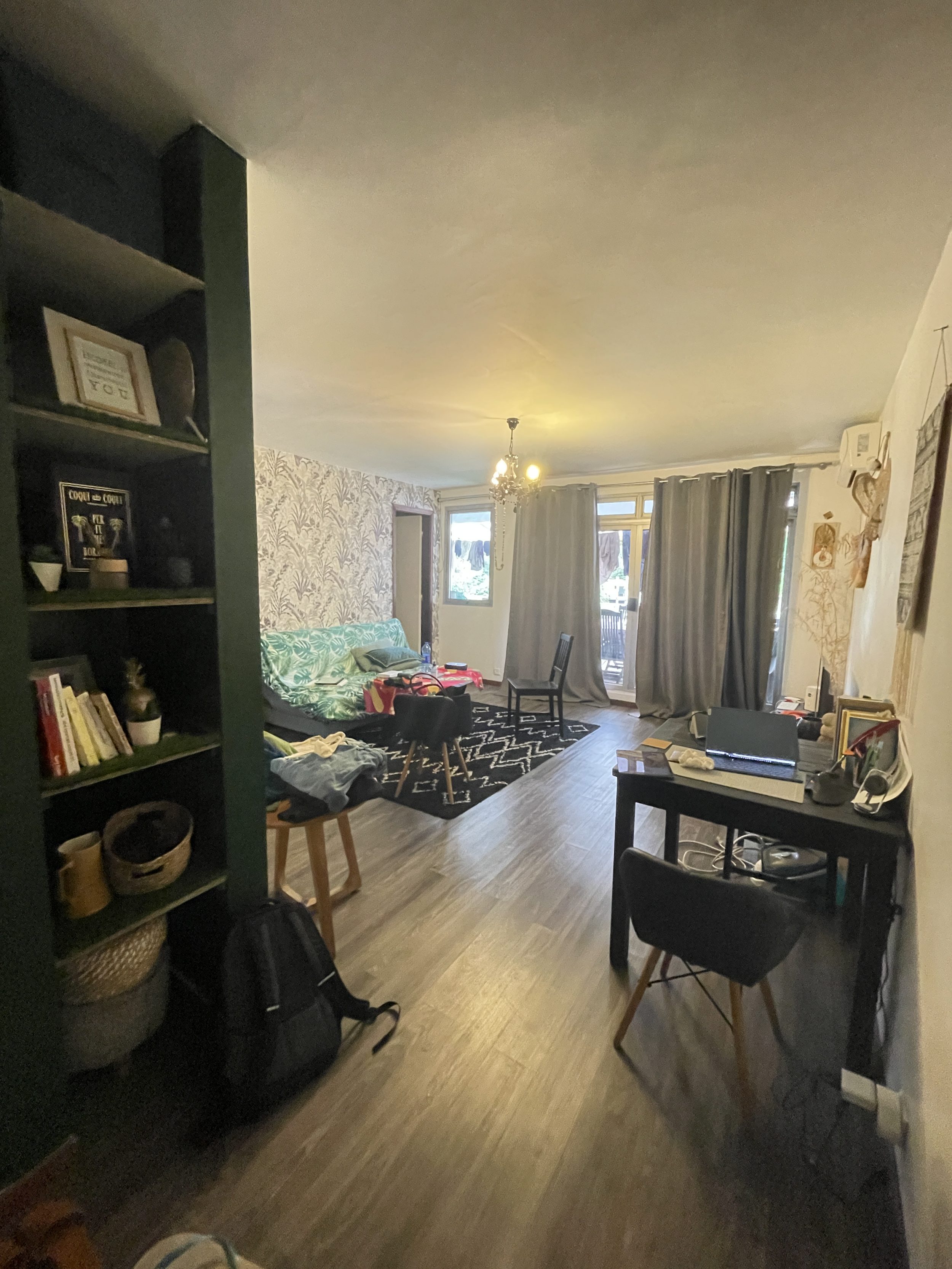
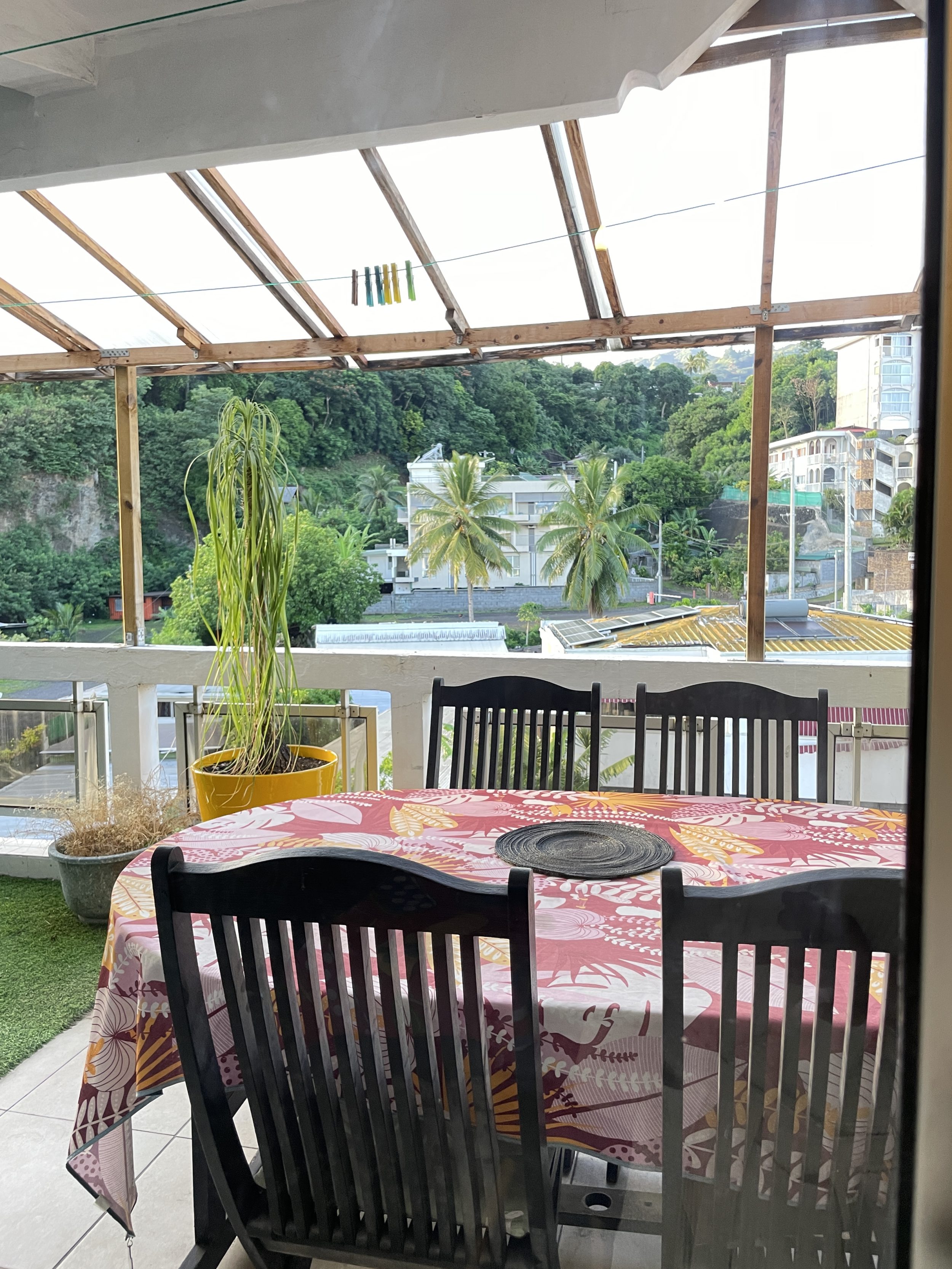
As for accommodation, we’re currently in an Airbnb in the city center so JB can walk to the coworking space paid for by his employer (8 minutes on foot). We tried doing our grocery shopping 15 minutes away on foot in 25° sun (since the market only sells fresh produce, not sauces or rice), and we came to the conclusion that we absolutely need a scooter! Plus, the harbor nearby isn’t swimmable, which is a shame—being in Tahiti and not being able to go to the beach. In 3 weeks, we’re moving to another “town” in Tahiti with beach and snorkeling access (10 minutes on foot or 3 minutes by scooter). And we’re going to buy a small scooter to get around. We’re not buying it now because our current Airbnb doesn’t have secure parking and our insurance doesn’t cover scooter theft. We’re renting scooters by the minute (Hello Scoot), just like a bike-sharing service.
We debated a lot between renting an apartment and paying for Airbnbs, but with a rental lease under a year, you lose the deposit (around €1,500), plus there are agency fees, internet fees, electricity, insurance… So staying in Airbnbs costs barely more, but we can move to whatever “town” we like. For Airbnbs, we’re paying between €1,600–2,000/month for a large one-bedroom; for a rental, we’d be between €1,100–1,500 (+ electricity + internet + deposit + …). All of them have a balcony or terrace—it seems to be the norm here. For now, we want to stay on Tahiti and visit the other islands on weekends, because JB needs a big screen and a good internet connection, which the smaller islands don’t have. Importing Starlink antennas is banned to protect local operators; on Tahiti you can get fiber optic, but most of the Airbnbs we’ve checked use 5G boxes. So signal strength varies depending on the island.
So I’ve been telling you about everyday details, but I haven’t mentioned the Polynesians. They’re all very sturdy, deeply tanned, and smiley, with such great energy. You can feel their kindness and also a certain purity. When you live in tune with nature and eat wild fish, it’s a whole different vibe, lol. That zen feeling hits you right away upon arrival. Even at customs and immigration, they’re smiling at you. Everyone is happy to chat with anyone, we’re on a first-name basis. When JB calls an insurance company or any service, he doesn’t get a local voicemail—it’s a real person who uses his first name and is genuinely caring. I think that’s what’s missing in Europe, and here we feel safe and protected. Everyone dresses very lightly, so you can wear whatever you want without getting heavy stares. Being at the other end of the world also cuts us off from anxiety-inducing news.
There can be petty crimes (opportunistic theft), but never any crazy stuff. For example, on Moorea, there was an attempted child kidnapping that shook all of Polynesia, sparked social media, upset JB’s Polynesian colleague, and worried parents who no longer felt safe letting their kids walk to school alone. Then we found out the kid had made the whole thing up. Of course!
The fact that Polynesians are so massive is said to be linked to the discovery of the Polynesian islands. To paddle all the way from Southeast Asia, you had to be seriously strong; those who survived had the right genetics and passed them down. It’s kind of the same story with Quebecers. To get as many people as possible over on boats to Canada, they favored individuals who were, how should we say… “vertically disadvantaged” (to borrow a stupid term from the woke) which explains why today’s Quebecers are short.
The only thing you could criticize them for is maybe a lack of precision/attention to detail. It shows in the little things and in the quality of service, but you can’t be both zen and a perfectionist. It just doesn’t work 😀
Since I wake up super early, I have all the time I need to devote to my artistic and literary pursuits. For instance, I’ve already finished proofreading the translation of a book from Chinese into Vietnamese, a project I’ve been dragging on for months. I think it’s the perfect environment for me; I’m really, really happy. My main goals are (1) to work on my dexterity and (2) to work on my intuition. And once we switch Airbnbs, it’ll be even better because we’ll have our own wheels, and I can walk to the beach every day.
On that note, I’ll leave you with a short video of the Intercontinental Tahiti hotel, the biggest hotel in all of Polynesia. We got a day pass to have lunch at the restaurant (with a double-starred chef) and relax by the pool (see our more detailed article), but it’s funny to think we can access paradise beaches and feel like we’re on vacation every week. That we can do a round trip to Moorea in a day or spend a weekend in Bora Bora on a whim. It’s truly wonderful.

