

Luxury at Its Finest: Understanding Cashmere and Silk
The world of luxury natural fibers is fascinating, and I have a soft spot for two of them: cashmere and silk. I’ve been using them for a very long time. During a shopping trip with a friend, she asked me why I was splurging on the best materials and quality. I hope this article will answer those questions.
Why opt for 100% natural wool?
First, let’s talk about the benefits of pure wool. There are many synthetic products that imitate wool, but I absolutely want to use pure wool because wool fibers have an outer layer made of tiny overlapping scales that are hydrophobic (tending to repel water). The inside of the fiber is hygroscopic (tending to attract water), which allows wool garments to retain their natural insulating properties even when wet. For someone like me who sweats a lot in the subway but feels chilly as soon as I step out, and gets sick as soon as my clothes are a bit damp in winter, I need materials like wool or silk to manage perspiration effectively in winter. Plus, wool doesn’t develop bad odors. A merino wool t-shirt can be worn 3-4 days in a row on a hike. It’s the material we wear year-round when we travel.
Cashmere: The Fuzzy Gold of the Mountains
Let’s start with cashmere, this incomparably soft fiber that has made the reputation of the greatest designers. Contrary to what many believe, cashmere doesn’t come from a specific breed of goat, but rather is the result of careful selection to produce a particularly fine undercoat.
What makes cashmere so precious? Above all, it’s its rarity. After years of genetic selection, Chinese goats, which are the most productive, produce only about 1 kg of raw fiber per goat per year. But wait, out of that kilo, only 500 grams actually constitute the precious cashmere (the down). In some countries, the situation is even more extreme: goats produce about 500 grams of raw fiber, of which only 150 grams are true cashmere! To be classified as cashmere, a fleece must contain at least 30% underdown relative to guard hairs. This down in goats only develops in particularly harsh climates (down to -40 degrees), so the main producers of cashmere are Mongolia and China (northern China). It is nature itself that creates this exceptional quality: to survive the icy winters of the Mongolian steppes, goats develop this unique natural protection.
To merit the name “cashmere,” the fiber must meet very strict criteria. It must be incredibly fine – less than 18.5 microns in diameter (to give you an idea, a human hair is about 75 microns) and a length of 3cm minimum.
Thus cashmere is very light, very soft, but keeps you very warm. For those who feel the cold like me, it’s the ideal material in winter! I need sweaters that are super warm but ultra lightweight, because I can’t stand the feeling of wearing 1kg of wool on me. The lighter the wool, the more I like it.
Choosing Mongolia: A Matter of Ethics and Quality
Although quality cashmere can come from different regions, Mongolia stands out. Beyond the exceptional quality of its fibers due to the climate, it’s also the farming method that makes the difference. In Mongolia, goats are generally raised in smaller, family structures where age-old herding traditions are respected. This system allows for better animal treatment; the wool is harvested more respectfully because each farmer looks after their small herd and has more time to collect the wool from each goat, unlike the large Chinese farms where goats are mistreated.
Pashmina: The Excellence of Cashmere
Special mention must be made of pashmina, considered the finest cashmere in the world. This term, which comes from the Persian word “pashm” meaning “wool,” specifically refers to fibers from changthangi goats (or pashmina goats) living in the Ladakh region, at over 4000 meters above sea level in the Himalayas. These extreme conditions lead these goats to develop an undercoat of exceptional fineness.
What distinguishes pashmina from ordinary cashmere is its diameter even finer: between 12 and 15 microns, compared to the 18.5 microns maximum of standard cashmere. This extraordinary fineness explains the incomparable softness of pashmina and its even higher price. Pashmina is very light but extremely warm. I’ve treated myself to a pashmina scarf twice, and I can tell you I’ve never touched a material so soft, so pleasant; it feels like a cloud.
Unfortunately, the term “pashmina” is now often misused in commerce to refer to simple cashmere shawls, or even blends of various fibers. True pashmina is a rarity, produced in limited quantities and under very specific geographical conditions.
The weaving is also important. I noticed that my first pashmina scarf (bought in Dubai) woven in a standard way (vertical and horizontal threads crossed) was more fragile. My rings regularly snag threads from the scarf. Whereas for my second pashmina scarf purchased at Princesse Moghole, the “diamond” weave makes the scarf sturdier because the weave is tighter. A tight weave also reduces pilling, an inevitable drawback of cashmere and pashmina. The “diamond” weave is a very specific traditional pattern of genuine pashmina. It is considered more difficult to execute and reserved for more experienced weavers.
Double-Face Cashmere: The Ultimate in Luxury
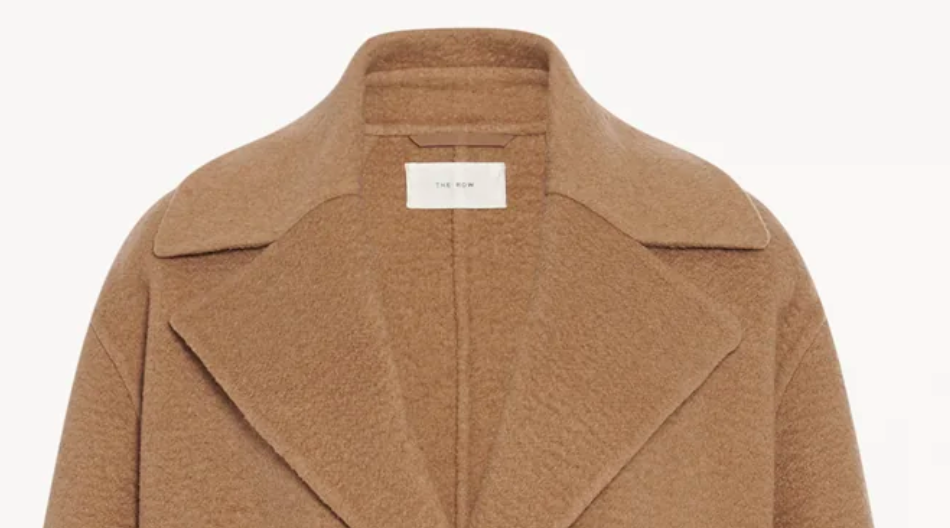
Among the most prestigious cashmere products, double-face coats represent a pinnacle of craftsmanship and luxury. The term “double face” refers to a particular construction technique where the fabric is perfectly finished on both sides, without a traditional lining. This technique requires not only exceptional raw material but also meticulous artisanal work.
Making a double-face coat requires the highest quality cashmere, as each side of the fabric will be visible and must look flawless. The weave must be particularly dense and even to ensure the garment holds its shape without the help of a lining. The high price of these pieces is explained by several factors: first, the significant amount of pure cashmere used (double face = 2 times more cashmere), but above all, the extraordinarily meticulous construction work.
Creating a double-face coat requires rare expertise: every seam must be invisible on both sides, necessitating precise, time-consuming handwork. The finishes require special hand-stitching techniques. However, to speed things up, some brands may use a special machine (which is very expensive) for this type of stitching. In any case, this particular construction yields a garment as beautiful on the inside as on the outside, often reversible, offering two coats in one. The result is a garment of exceptional lightness despite its warmth, a technical feat that justifies its price. This type of product is only available from luxury brands like The Row, Loro Piana, Max Mara, Hermès, Akris, Lan Jaenicke …
Note: you can find double-face coats at Joseph, for example, but check the composition label carefully—it’s often 70% wool and 30% cashmere (or even less). Personally, I always aim for 100% cashmere to achieve that “featherweight” effect, but that’s very specific to my selection criteria. You can search for “100% cashmere double-face coat” or “100% cashmere reversible coat.” To spot this kind of product, it’s simple: they have no lining.
Silk: The Thread of Emperors
Silk, for its part, has an equally fascinating history. This fiber gave its name to the famous Silk Road.
The silk-making process begins long before spinning, with the fascinating life cycle of Bombyx mori, the domestic silkworm. To learn more, I joined a group of Vietnamese sericulturists on Facebook and was able to see what their challenges are.

The silkworm cycle, meticulously monitored by sericulturists, unfolds in several precise stages:
The Eggs (3-10 days)
- The female moth lays about 300 to 500 eggs
- Incubation lasts about 10 days under ideal conditions (temperature 22-25°C)
- The eggs, initially pale yellow, turn dark gray just before hatching
Larval Growth (25-30 days)
- The tiny larvae, barely 3mm at hatching, feed exclusively on mulberry leaves
- The worm goes through four molts, called “sleeps,” where it stops eating
- Between each molt, we speak of a different “age” of the worm
- At the end of its growth, the worm reaches about 9 cm and has multiplied its weight by 10,000. In Vietnam, there’s an expression that goes, roughly, “eating as much as silkworms.” It takes an astronomical amount to feed these silkworms. That’s why sericulturists often plant their own mulberry trees to be able to feed them. The mulberry leaves must be of excellent quality. The slightest trace of pesticide (even if it’s the neighboring farmer who sprays it on his plot) can kill all the silkworms and ruin the effort invested over several weeks.
Cocoon Formation (3-4 days)

- Once mature, the worm seeks a suitable place to spin its cocoon. Whether it spins its cocoon or not also depends on the weather. It’s not at all guaranteed.
- It produces a continuous silk thread that can reach 1500 meters
- Spinning the cocoon takes about 3 days of uninterrupted work
- The worm uses “8” movements of its head to build its cocoon
In total, from egg to complete cocoon, it takes about 35-45 days. This relatively short cycle explains why sericulture can produce several harvests per year. However, success depends on many factors beyond the sericulturists’ control (like the weather, for example), and you can’t know in advance whether the cocoons will form or not.
The purchase of cocoons is done through intermediaries, and the price depends on supply and demand. Sericulturists cannot keep the cocoons and sell them when the price is higher because they must absolutely sell them within 3 days after the cocoons form. Too early and the cocoons are not heavy enough; too late, and the worms become moths, the cocoons are pierced and worthless. Indeed, the cocoon must be unwound in one continuous strand to preserve the length and quality of the thread. The silkworms are therefore gassed or boiled before harvest; they will never become moths 🙁
A single silk thread can measure up to 1.5 kilometers long. It takes threads from 10 cocoons to make one silk thread. Thus, about 2500 silkworms are needed to produce a single dress.


Natural silk has unique properties: it is both lightweight and strong, thermoregulating and hypoallergenic. Its smooth surface and molecular structure give it that characteristic luster that captures and reflects light in a unique way.
Beware of False Promises
However, it is crucial to understand that a high price is not always a guarantee of quality. In the world of cashmere, some brands, even prestigious ones, use fibers that do not meet quality standards. The fibers may be too thick (exceeding the required 18.5 microns) or too short (less than the minimum 3 cm), the weave may be too loose (to save on raw materials), which compromises the durability, weight (heavier than necessary), and softness (too much pilling) of the final garment.
For silk, the situation is no simpler. Many manufacturers offer blends where silk is mixed with other fibers, without the consumer being able to easily detect it. These blends are perfectly legal as long as they are declared, but the composition label may not indicate it (especially when you buy silk abroad), and the price does not always reflect this dilution of quality.
How to Protect Yourself?
For cashmere, opt for brands that are transparent about the origin of their fibers. Quality cashmere should be soft to the touch (but not too soft either, since synthetic fibers are much softer), non-itchy, and should not pill excessively after a few uses (pilling is inevitable, but if the fibers are long enough, you’ll get less pilling than with a low-quality sweater). Personally, I only buy 100% cashmere. I find it pointless to blend 70% wool with 30% cashmere; you lose the benefits I look for in cashmere while paying a premium price. I’d rather pay a bit more than end up with a heavier-than-necessary item. On the other hand, a cashmere-silk blend is quite desirable, but it costs a lot.
For silk, carefully examine the composition labels. Pure silk will be listed as “100% silk.” Beware of vague labels or blend percentages that don’t justify the asking price. If you buy silk products abroad, unfortunately there’s no way to know if it’s real silk.
The burn test seen all over the internet is worthless because any animal-derived fiber will behave the same way (it will burn like hair). Thus, it takes a real lab to distinguish cashmere from ordinary wool, and the same goes for silk.
Environmental Impact and the Future
In our increasingly environmentally conscious world, these natural fibers have a definite advantage: they are biodegradable and renewable. However, their production poses challenges. For cashmere, increased global demand has led to overgrazing in Mongolia. For silk, animal welfare issues are increasingly debated.
So, I strongly advise you tobuy these exceptional products second-hand. Not only will you pay less, but your purchase won’t have an impact on increasing the demand for cashmere/silk.
Where to Find Cashmere/Silk
In short, cashmere and silk remain symbols of luxury not merely for their rarity, but for the whole set of qualities that characterize them: softness, lightness, durability, and incomparable comfort. Their production demands patience, craftsmanship, and adherence to high standards. Since these are excellent quality products, you can keep them for a long time. The cost per use decreases when you have durable products. Moreover, these are timeless basics; you’ll always look chic in a cashmere sweater or coat, regardless of the current trend.
However, as consumers, we must remain vigilant: a high price is not synonymous with quality, and only a deep understanding of quality standards will allow us to make informed choices. Even luxury brands make compromises on quality, so it’s essential to educate yourself to recognize the true value of these exceptional fibers. True luxury does not lie in the price tag or the brand name. Learn to read composition labels and research the origin of fibers.
The brands I recommend below did not pay me a single cent to be mentioned.
For cashmere, I recommend Gobi which produces in Mongolia. Only take 100% cashmere. I recommend the older collections because I’ve noticed a decrease in quality in recent years. For pashmina, I recommend Princesse Moghole (choose the diamond weave).

For cashmere coats, a search for “100% cashmere coat” will help you spot quite a few vintage coats. Then you need to read the composition to see if it’s really 100% cashmere. Be careful: current coats, except from very high-end luxury brands, are always blended with regular virgin wool, with a bit of polyamide here and there. You have to dig into vintage, slightly older collections, or niche brands to find the holy grail. Personally, I managed to buy a recent coat, 100% cashmere, from an American luxury brand. Since it’s unknown in France, I got it for 80 euros, while it’s worth 1600 euros new (and still on sale on the brand’s website). For JB, I was able to buy him a 100% cashmere featherlight coat with incredible softness at a private sale about fifteen years ago. Now, you can’t find them anymore, at least not for under 300 euros for new ones.
For double-faced cashmere, you can buy scraps of 100% double-faced cashmere fabric from Piacenza or Loro Piana (between 150 and 350 euros per meter) to have a coat or poncho made by a tailor, or simply use it as a throw at home (when I return to France, I’ll give you a demo). You can also contact Artisanale du Cachemire, a workshop based in France (30440 Saint-Martial) that makes cashmere sweaters to your measurements. They make a second collar for you. When the first collar is worn out, they can replace it with this extra collar. Thus, their custom sweater will last 10 years.

For silk, I recommend silk woven the traditional way in Vietnam. I buy from lualang. I’ve used many silk products, and traditionally woven silk has NOTHING in common with industrially woven silk. I don’t know exactly how to explain it. The feel is rougher because the hand weaving is less regular, there is less sheen, it wrinkles more, but when you wear this silk, it’s like a second skin.
The downside is that you become completely addicted 🙂 When my nightgown tore, I had to go back to cotton and I slept poorly for months while waiting for my supplier to replace it. I love their hair scrunchies and pillowcases. A test shows that their silk doesn’t produce static electricity, so my pillowcase and scrunchies don’t pull out my hair. Still, 3 hairs lost per day due to static electricity is over 1000 hairs lost per year, and we wonder why we have less hair.
Then, there’s a Vietnamese brand I love, aochanbonghanoi. They offer handmade quilted jackets. You can choose the silk version (left) or the silk velvet version (right). The traditional silk version is only sold twice a year, and there’s only one design offered. The silk velvet version is made with industrial silk, so you can order it all year round and there are many designs.


Next, for maintenance, frankly I’m not a slave to my clothes, so I put everything in the washing machine, in a thick cotton bag to avoid friction. Then I use the “wool” program, a bit of shampoo, and I dry flat on towels. Silk dries very quickly, and cashmere too. I think dry cleaning would have been ideal, but I don’t have time for that.
By following me on Instagram, you might think I spend much more than you on clothes, but it turns out that’s not the case. By buying just one cashmere sweater every two years, I think my budget is really lower than those who regularly buy fast fashion. Quality is expensive, but in the end, you buy fewer clothes.

