
Where to buy a real Pashmina scarf in Dubai and how much does it cost?
Dubai (Do Buy) has always been full of temptations and shopping is one of the most expensive temptations here. I was strolling casually through the Dubai Mall, the largest shopping center in the world, when I was drawn to a shop selling scarves.
Before the round-the-world trip, I already had a large collection of scarves in all colors, so I couldn’t resist the temptation to go in and take a look. Fatal mistake! I discovered a scarf that was extremely light and extremely soft, with an absolutely extraordinary feel – light as silk, but soft and warm like wool. I’ve never experienced such a texture before.
The saleswoman tells me it costs 600 AED (150€) and that it’s cashmere. She encourages me to try it on and I’m done for. I want this scarf!
I do some research and find out that:
- cashmere has a much nobler cousin called pashmina
- both come from goats, but pashmina is obtained only from goats living at high altitudes
- pashmina is made only from the softest hairs of the goat, i.e., from the neck and belly
- pashmina is even finer than cashmere
- pashmina is too soft to be machine-woven, but only hand-woven, and also hand-embroidered
I managed to resist by telling myself that a benchmark wouldn’t hurt, but I want to have that “out of this world” feel.
Once I had the info, came the difficulty of finding a shop that really sells pashmina scarves.
Because in that shop, they sell lots of scarves they call “pashmina” when it’s obvious they’re made of synthetic fibers because the feel is just horrible. And I’m sure it’s polyester or viscose, but not wool, because the price is ridiculously low (30 AED to 100 AED, knowing that 1€ = 4 AED). I don’t like shops that sell all sorts of things.
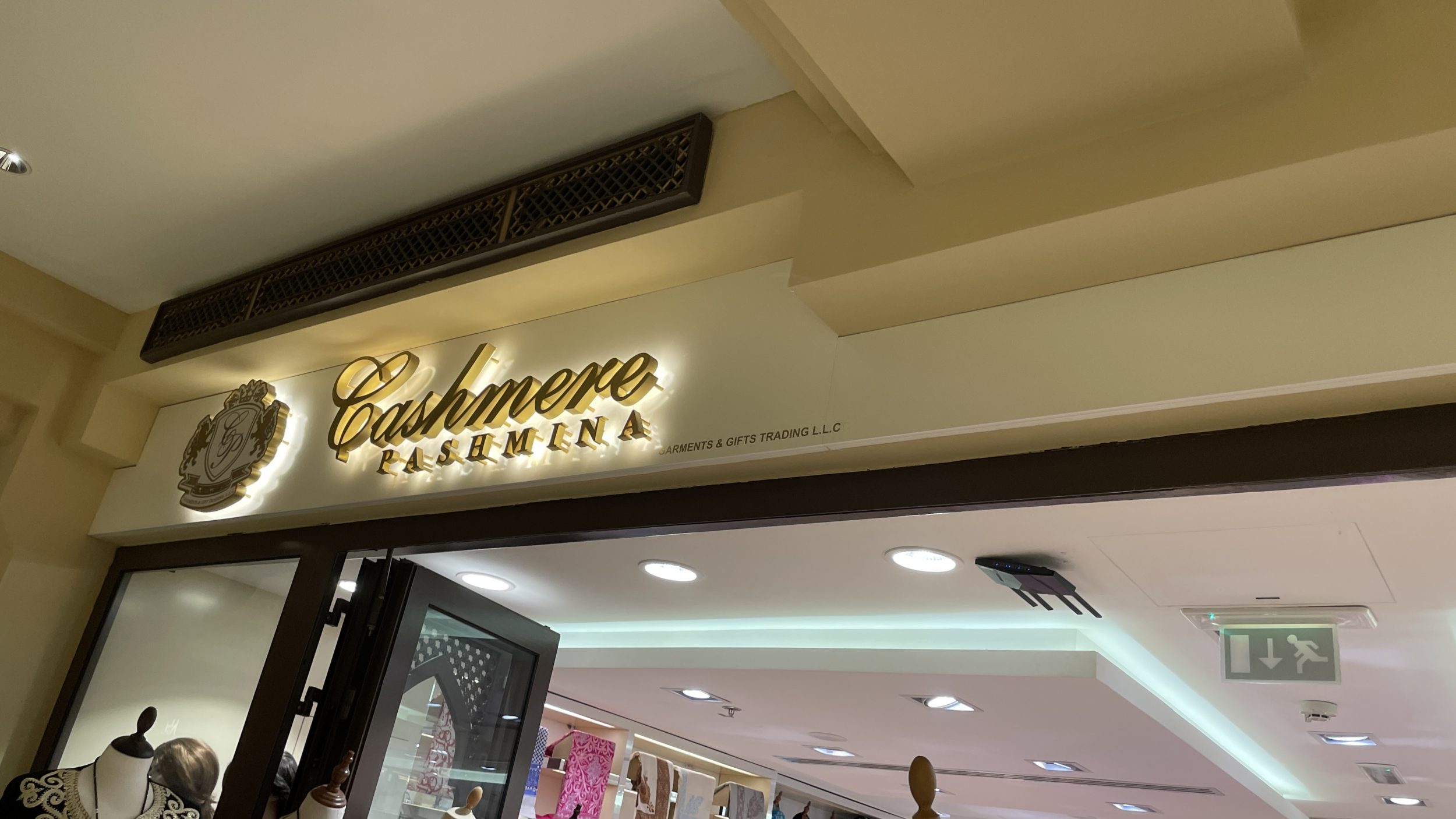
It’s while wandering from one shop to another that I discover a shop called Cashmere Pashmina, in the air-conditioned souq (luxury souq) Souk Al Bahar just across from the Dubai Mall.
There are absolutely no reviews online, so I’ll have to trust my own judgment.
The shop is packed to the brim, with abayas and scarves everywhere everywhere. I noticed that in the other shop, the 600 AED scarf was prominently displayed on a kind of hanger, so I head straight for the scarves on display instead of looking at the ones piled up.
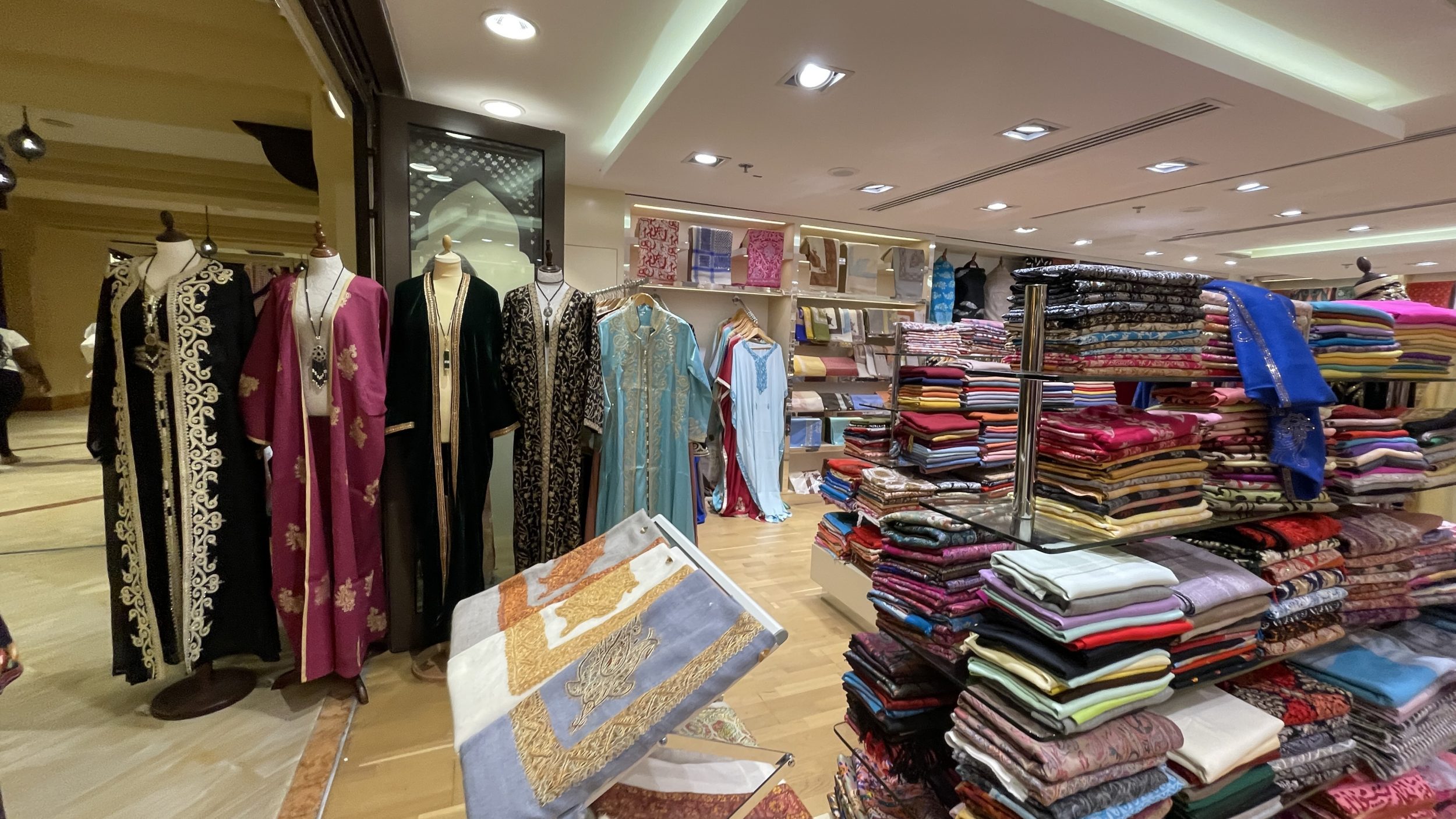
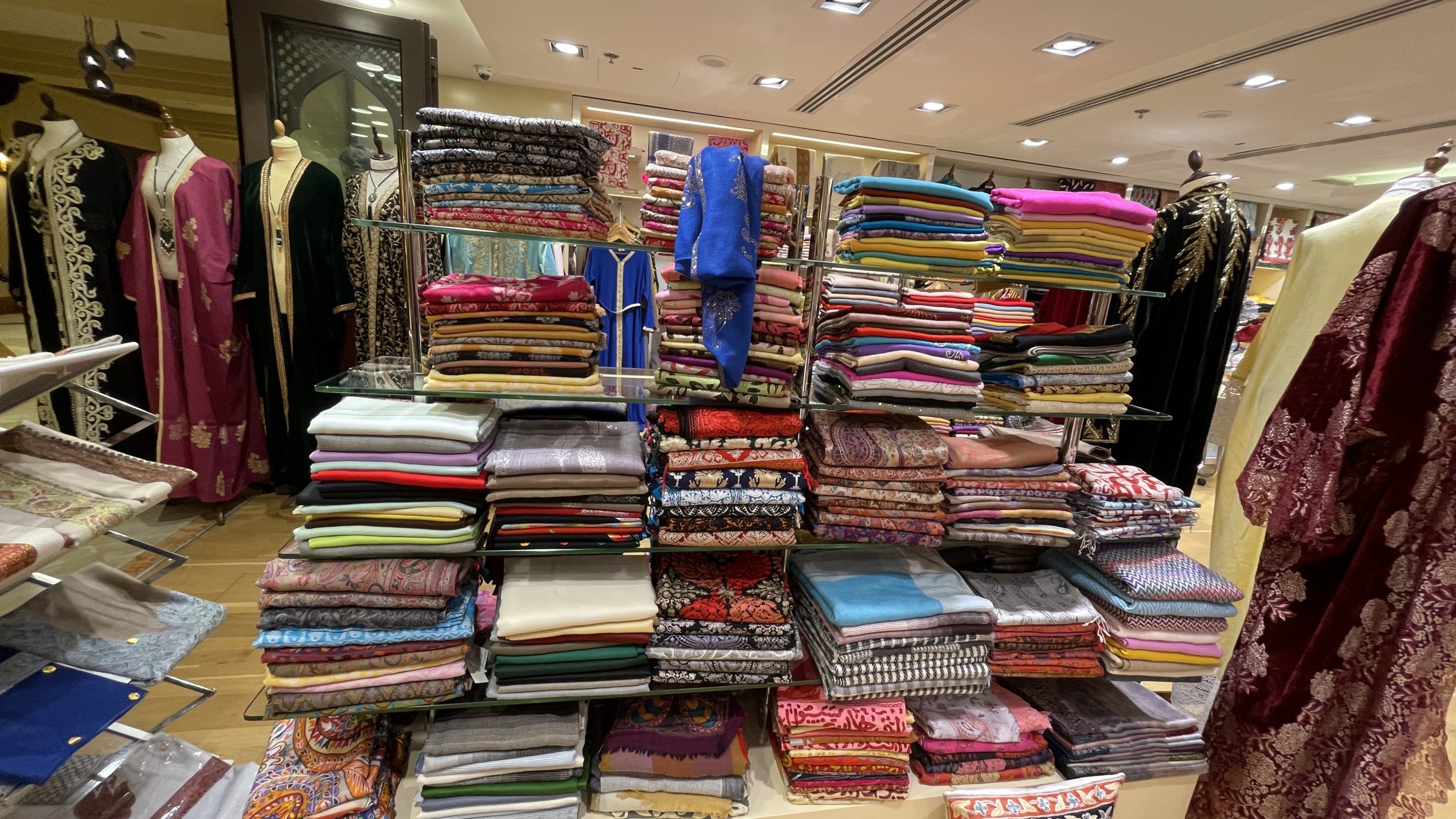
The salesman immediately comes to talk to me, tells me that what I’m touching is pashmina and mentions several qualities. Very quickly, he steers me toward scarves worth 1200 AED (300€).
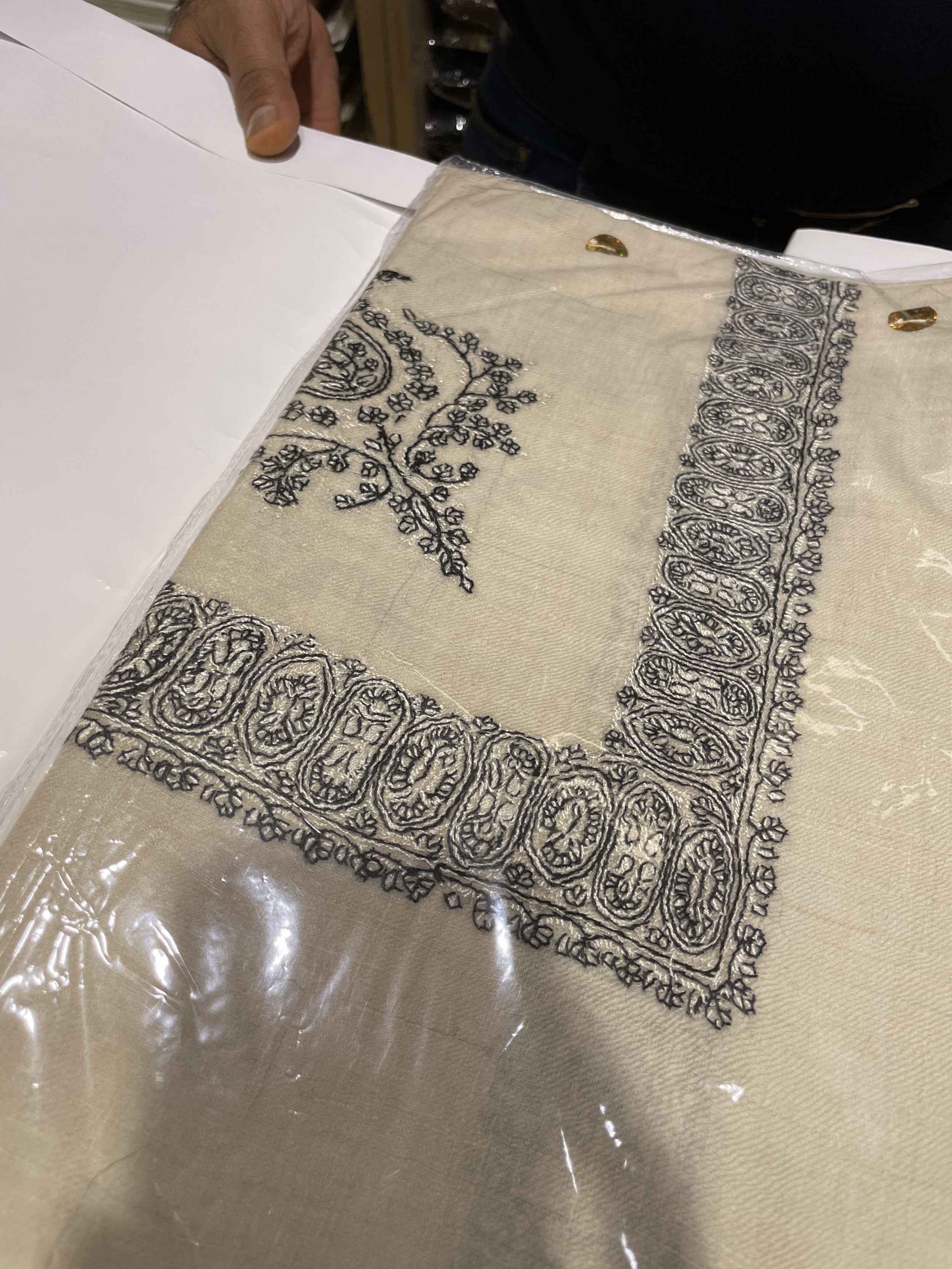
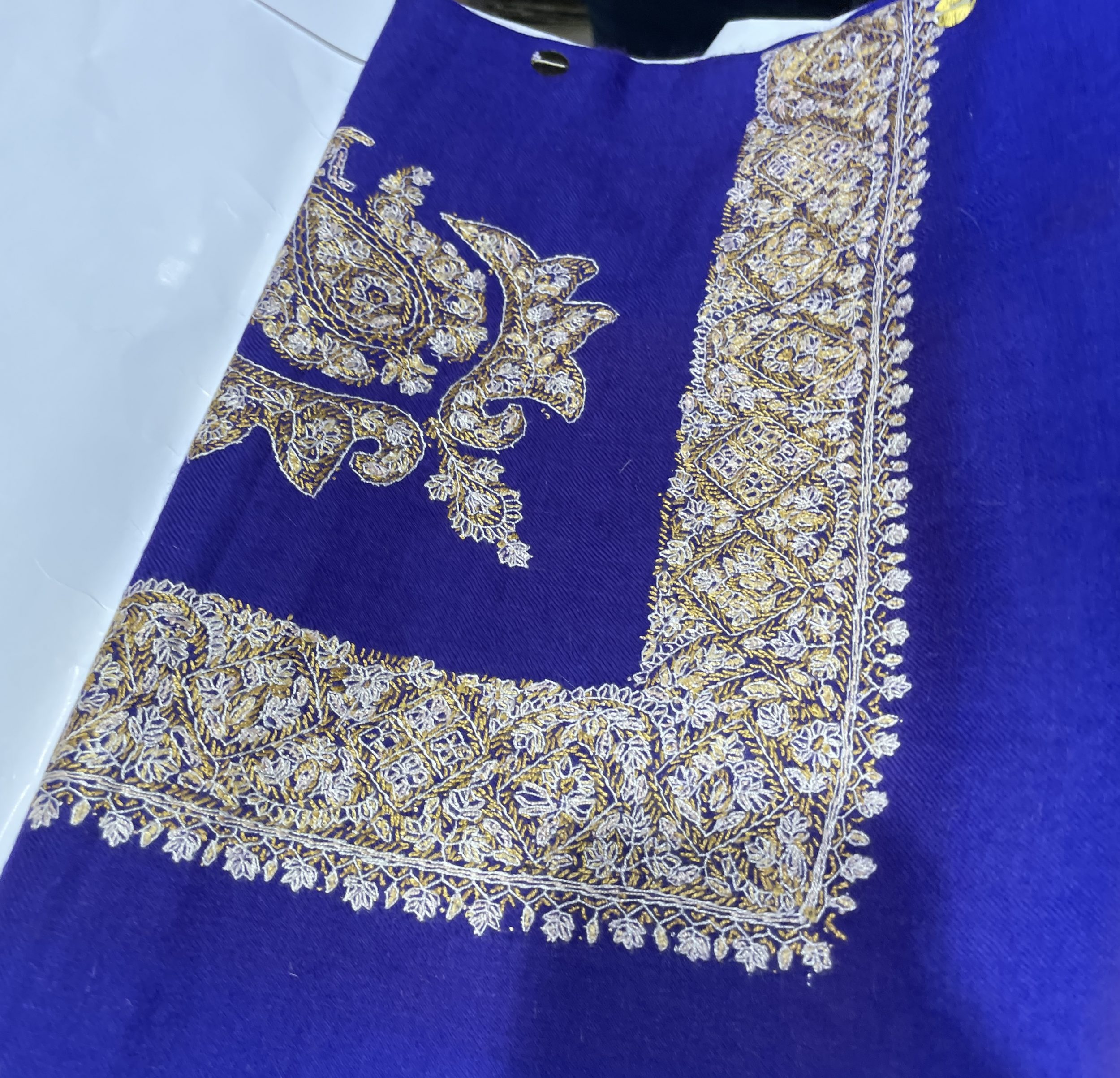
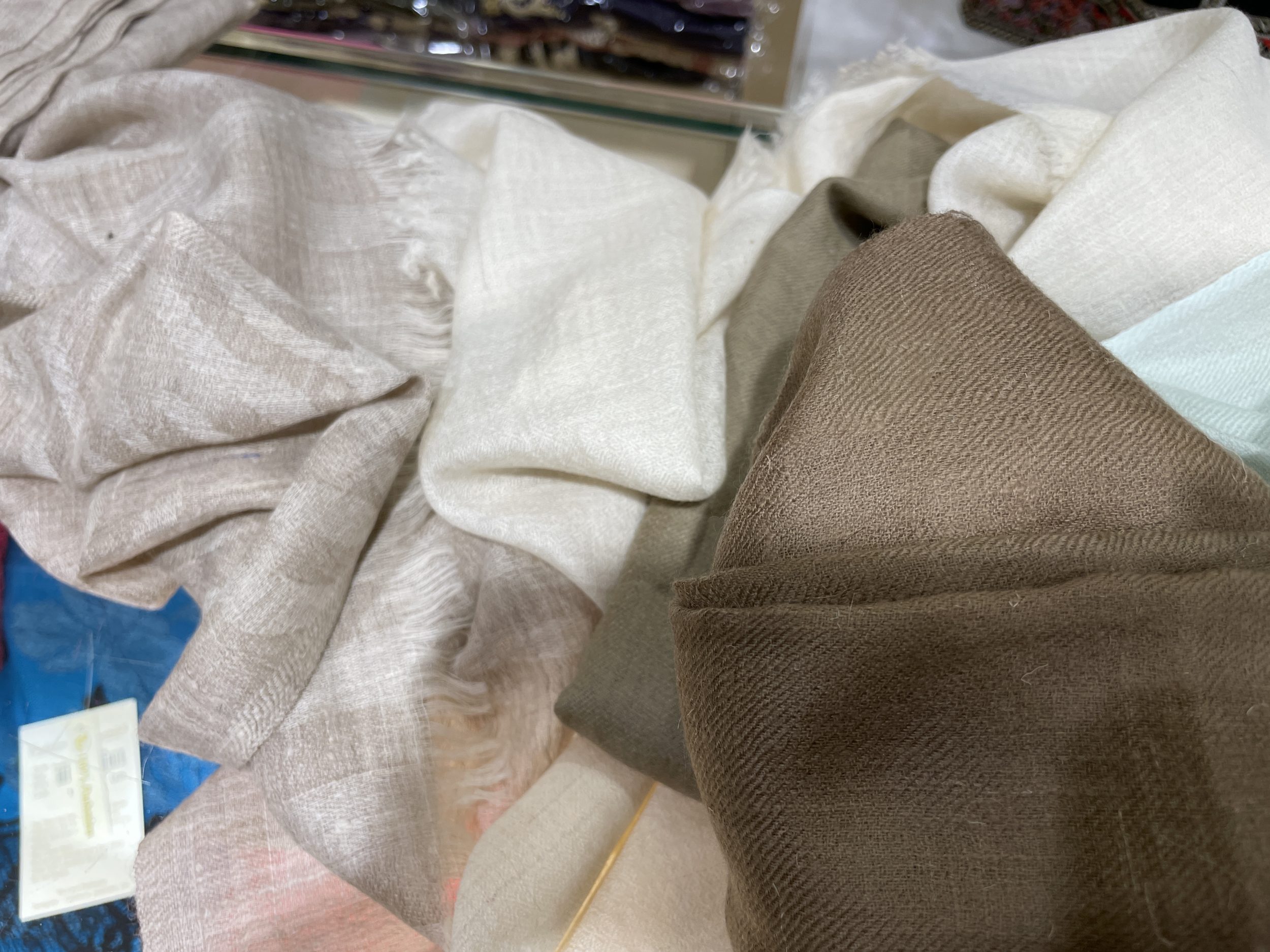
Seeing my hesitation, he also shows the 50% cashmere, 50% pashmina scarf (on your left) and a 100% cashmere 4-ply scarf (on the right). The feel is luxurious but not “out of this world”.
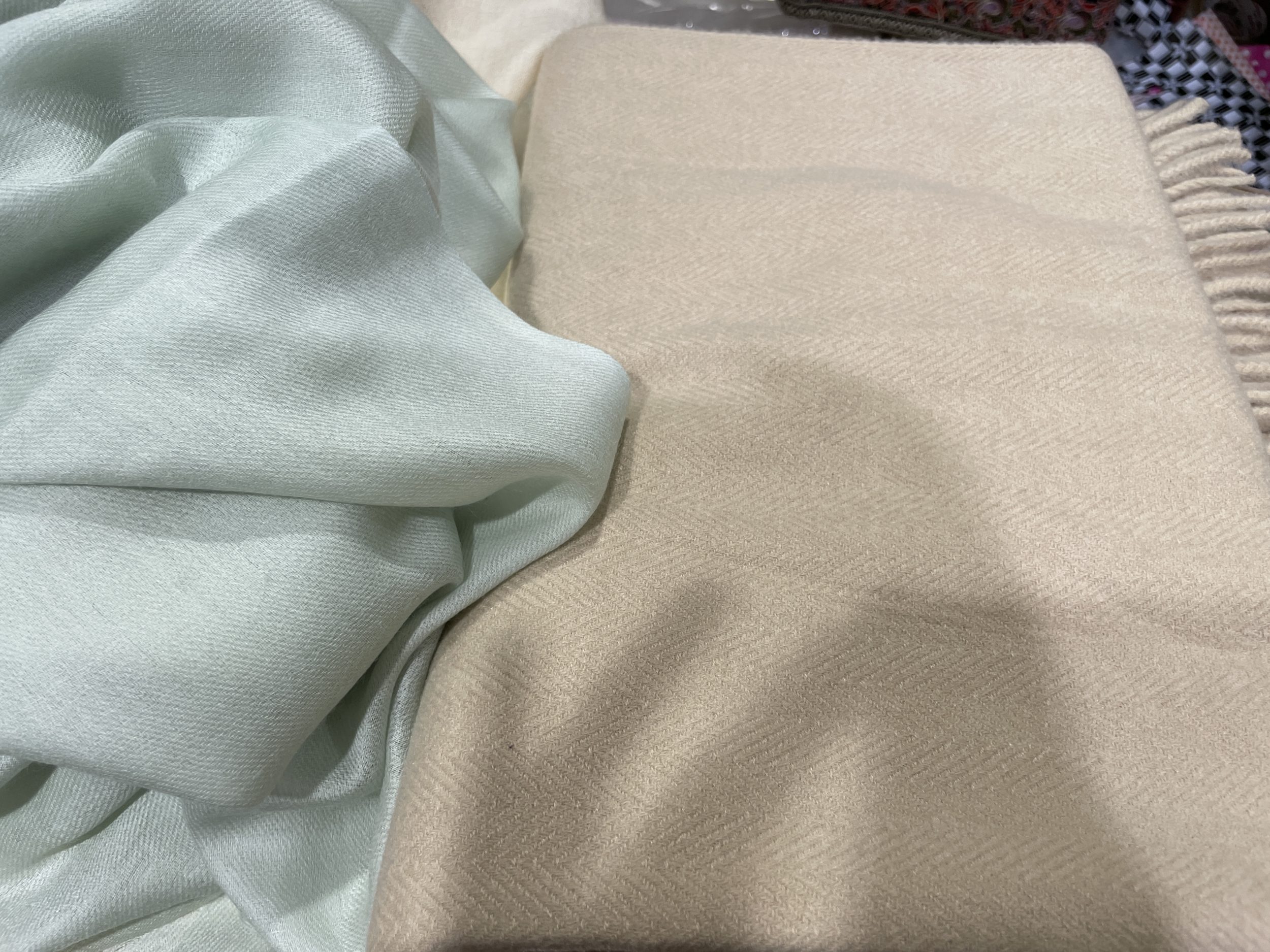
He then shows me other pashmina scarves, but woven more densely, worth 550 AED each. The presence of “wave” patterns on the scarf on the left doesn’t appeal to me at all, because hand weaving won’t allow such a difficult pattern, only machine weaving, and therefore it’s not real pashmina but just cashmere – because pashmina cannot withstand machine weaving unless mixed with nylon (nylon which, through a chemical process, disappears, but still).
However, the white scarf in “diamond” weave is genuine pashmina, and if you like the rectangular format, it’s an excellent choice.
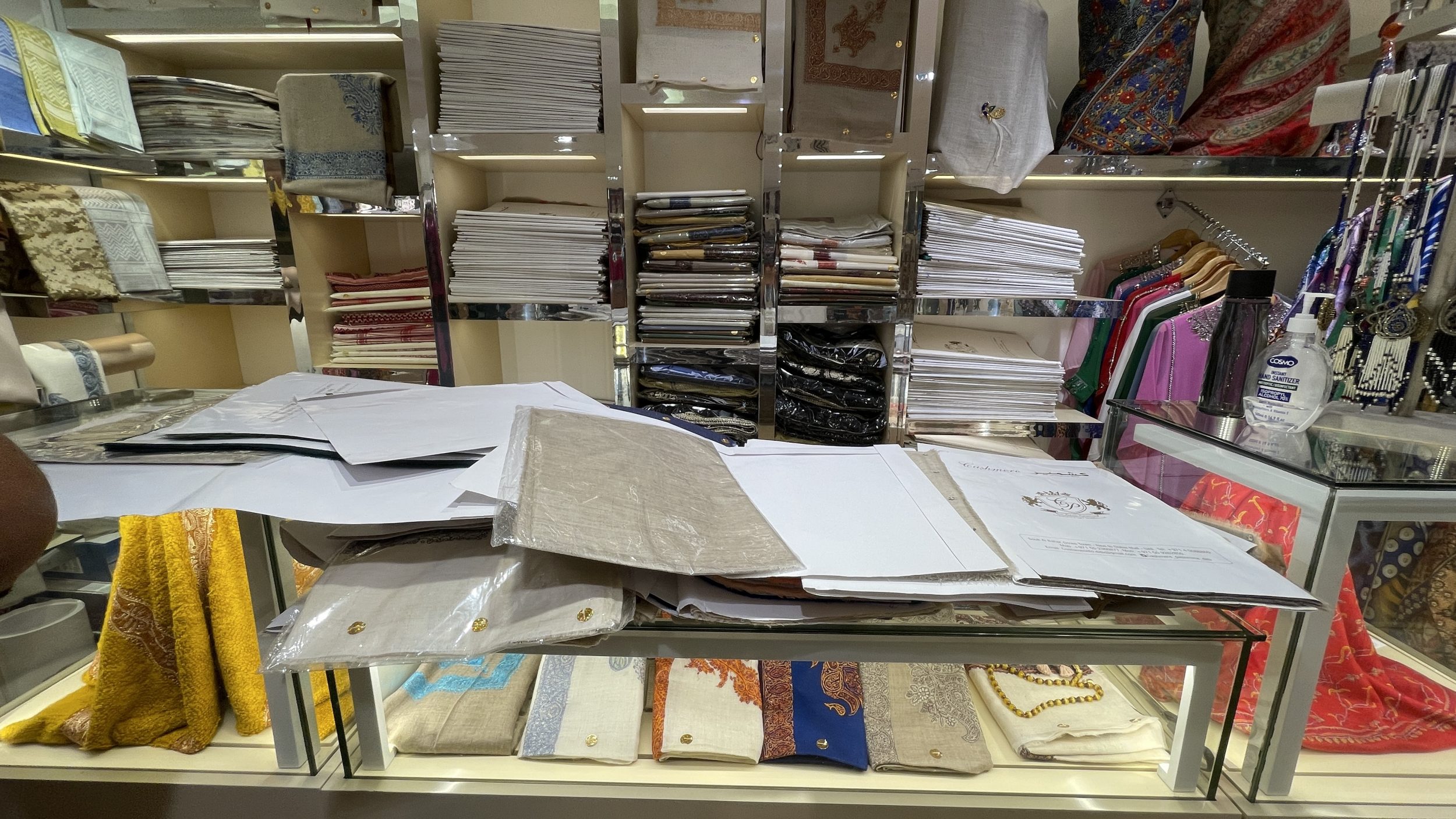
I go back to the 1200 AED scarves, finding the feel much more satisfying and “out of this world”. He shows me scarves with embroidery and without embroidery… in all colors. I understood that the more embroidery, the more expensive, so I chose a minimum of embroidery. Look, I saw at least 50 scarves.
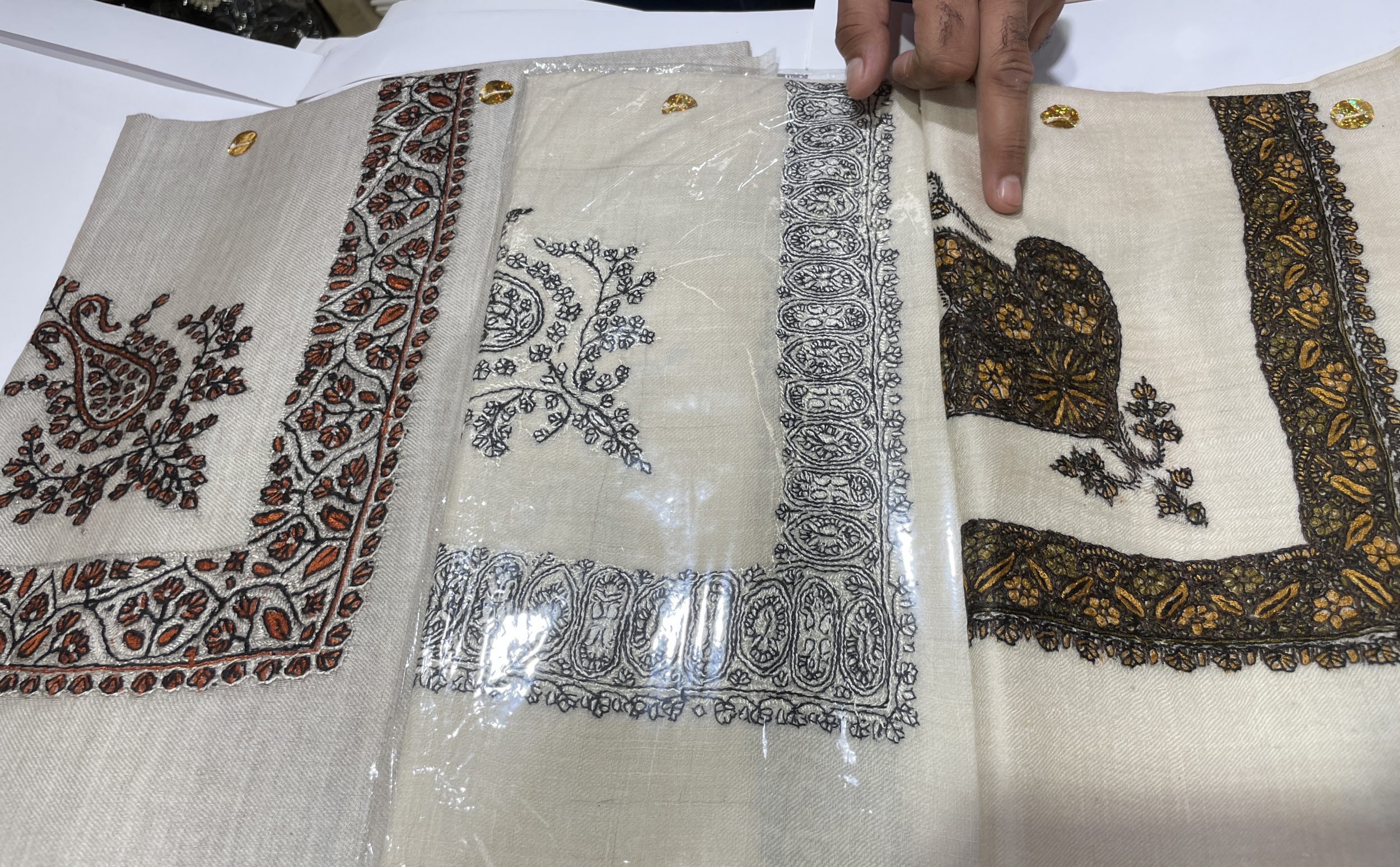
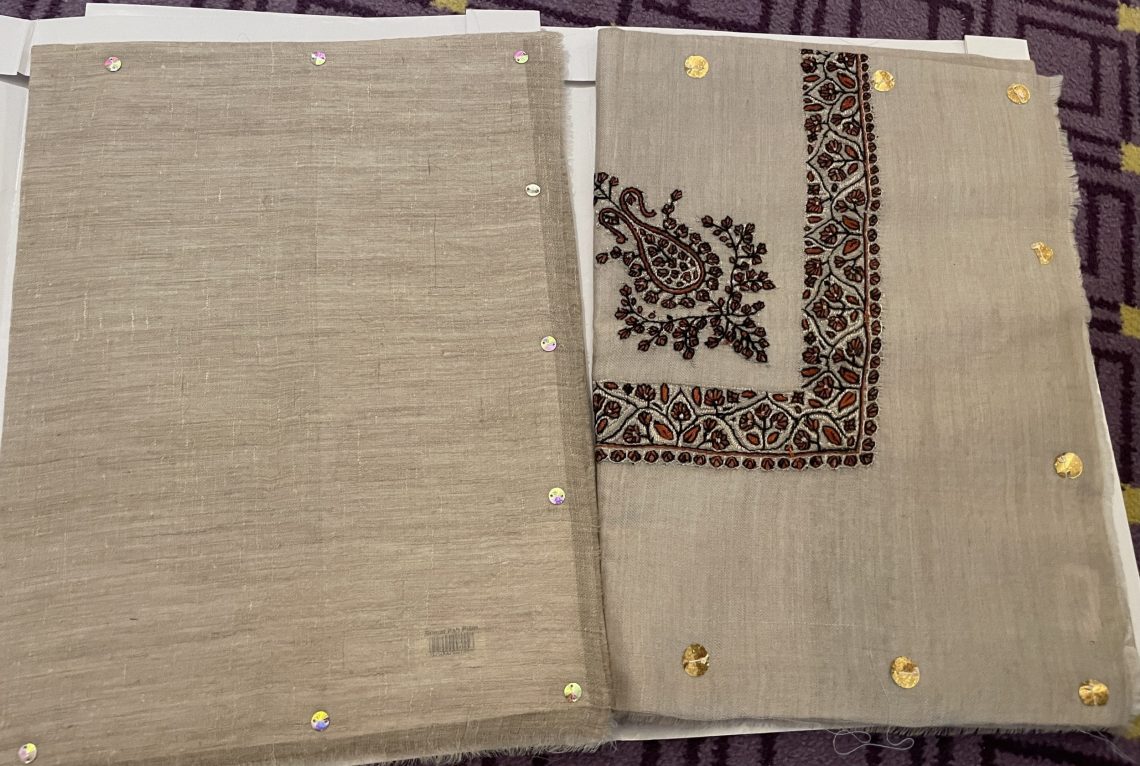
Finally, I opt for two scarves: the one on the left, natural color without embroidery for 500 AED – and the one on the right with embroidery for 700 AED (after haggling), so 300€ for both scarves of size 140cm x 140cm. I asked for an invoice with VAT but he said he’d have to raise the price with the invoice, so the payment is by card without the VAT refund paper (VAT is only 5% in Dubai).
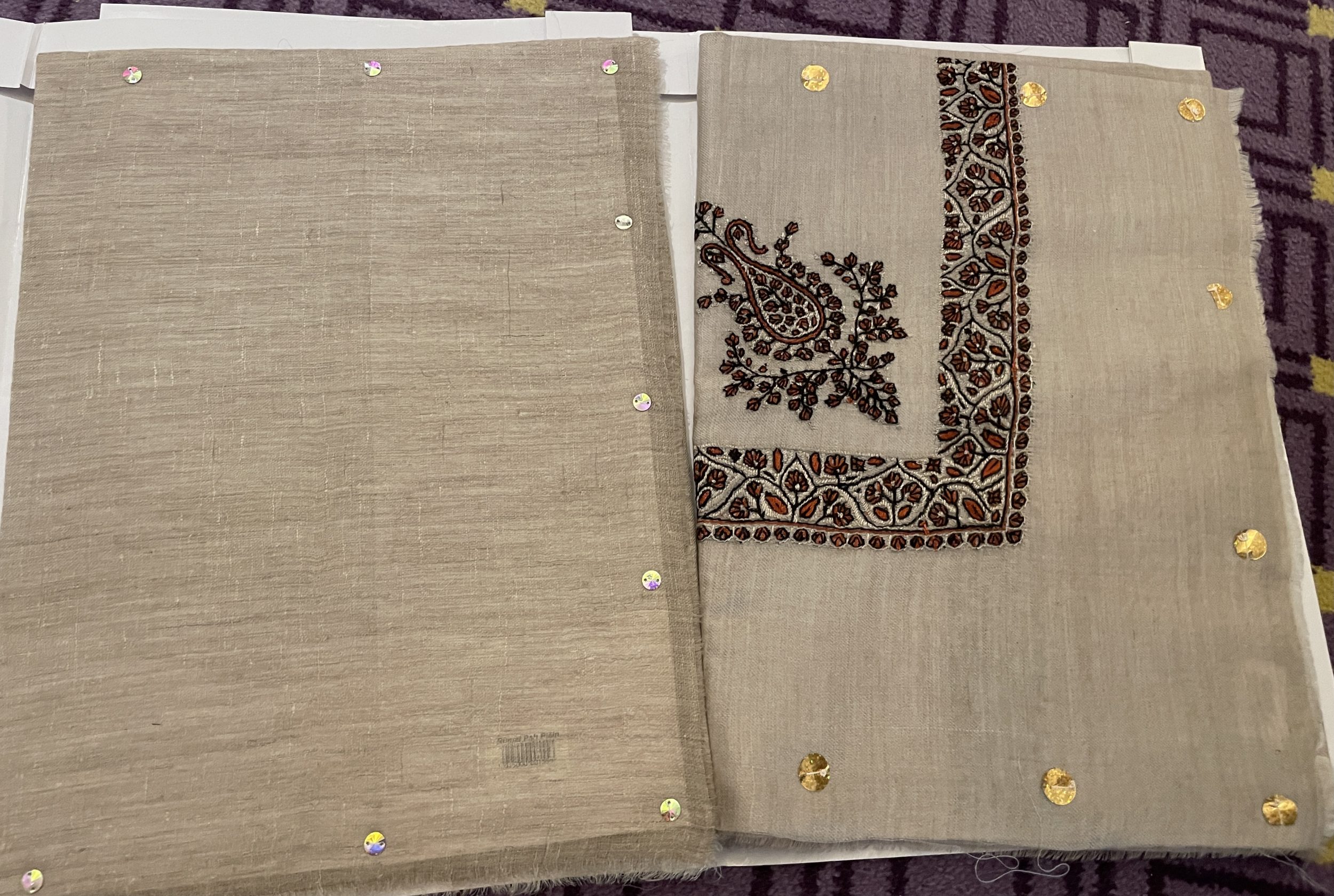
You can see that these scarves are not woven in a “diamond” pattern but “twill”, which is better for supporting hand embroidery. The weave is irregular because it’s handmade. The “diamond” weave would have given something like this, while being super super fine.
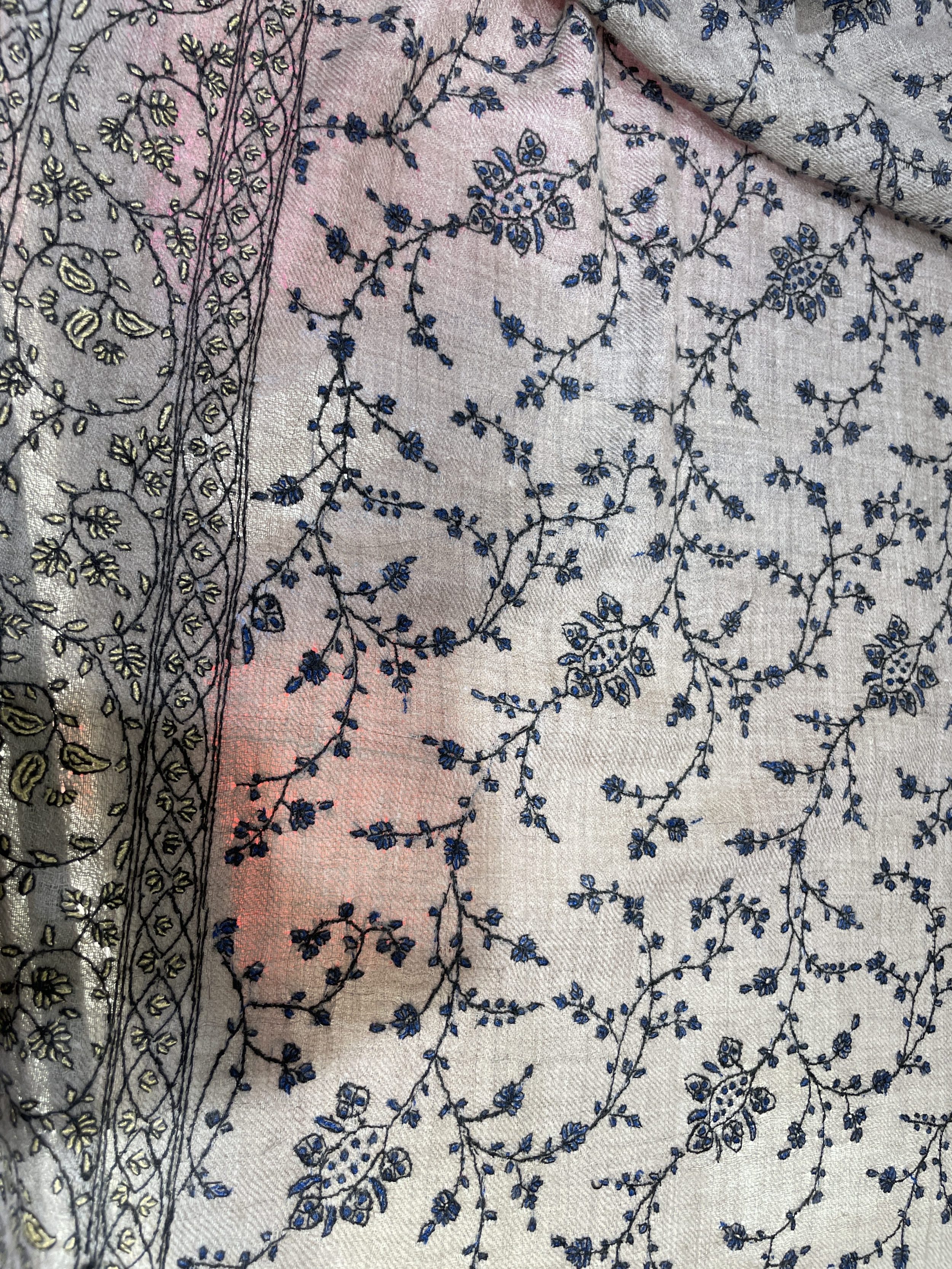
This scarf is my favorite, but it’s almost entirely embroidered, so the price is 2200 AED before haggling, and 1550 AED after, which is almost 400€. I wasn’t ready to spend such an amount on a scarf, but isn’t it beautiful!
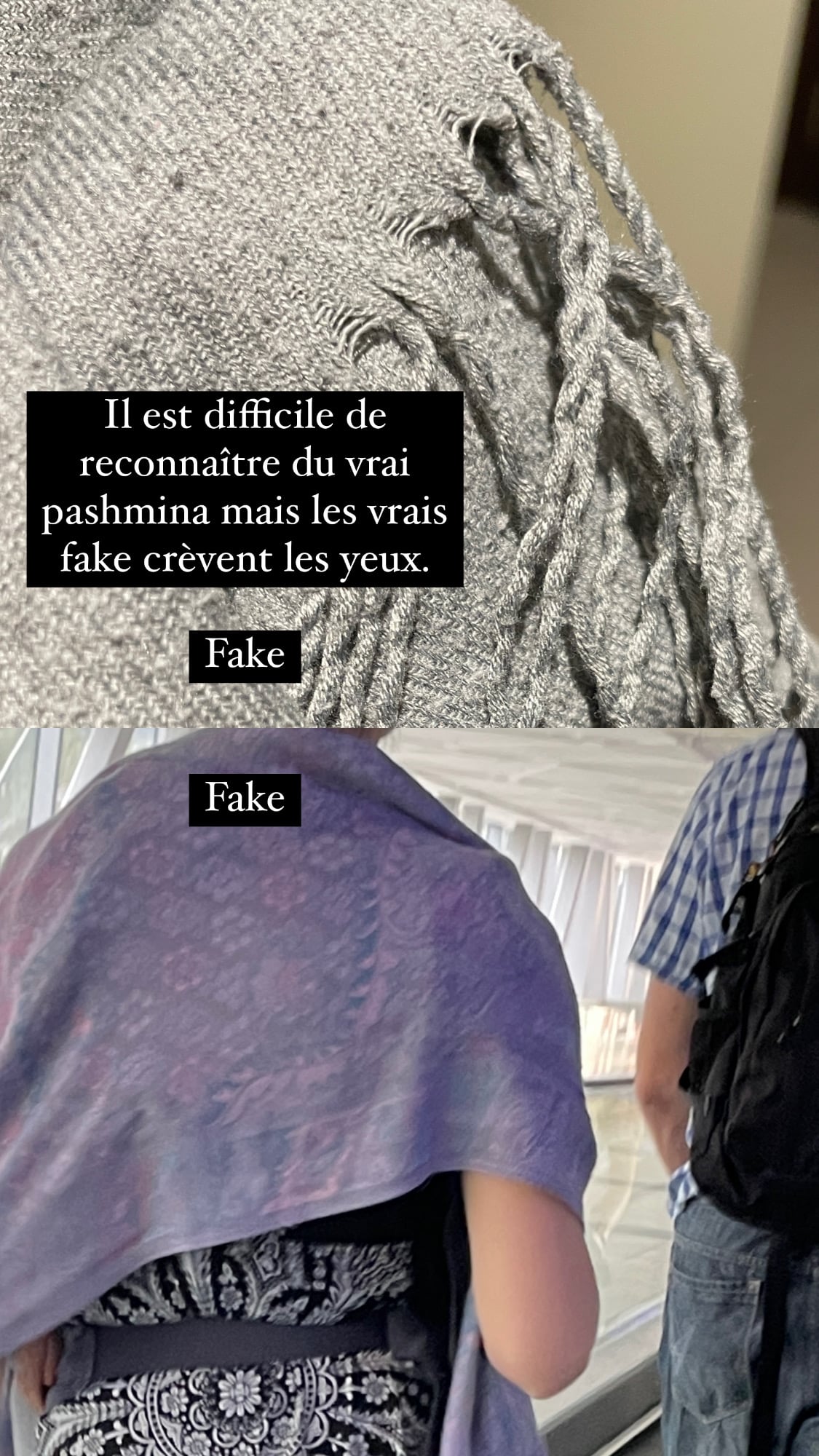
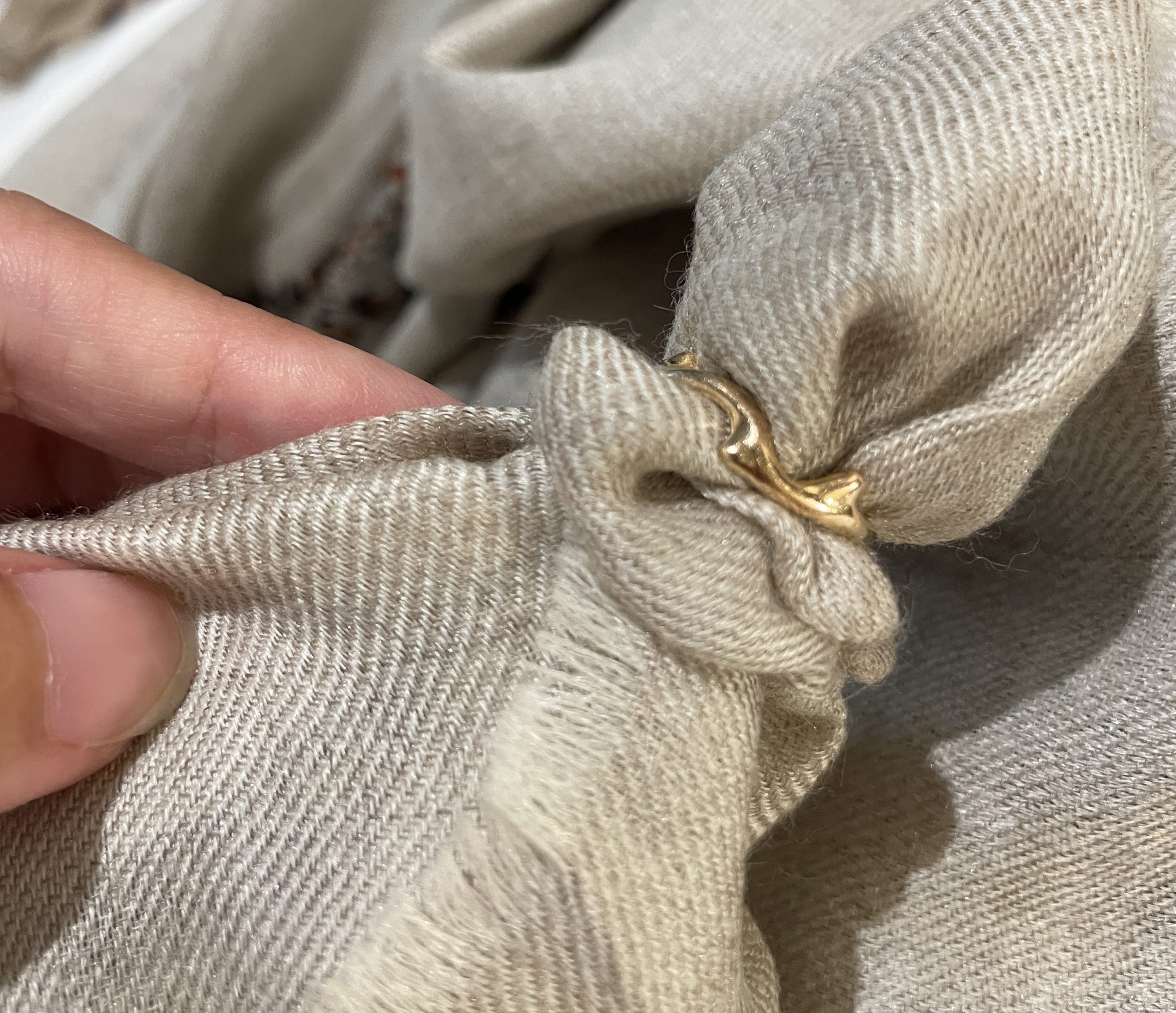
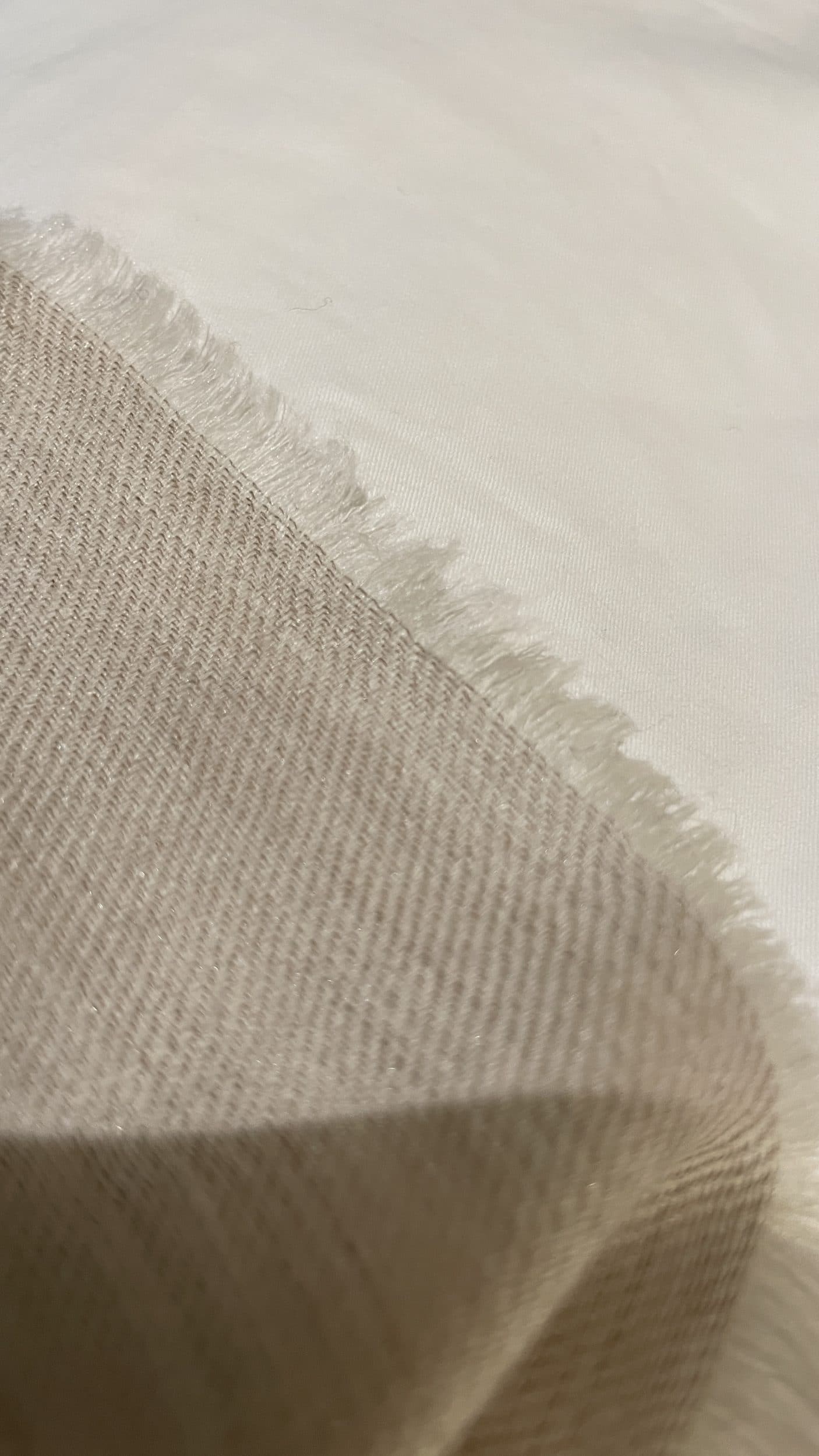
The myth says that a real pashmina scarf easily passes through a ring. But with softeners, synthetic materials… it’s hard to tell with such a simple test. At least you can know it’s probably wool by looking at the fringes of the scarf. If they are twisted, it’s 100% fake, because pashmina is too soft to be twisted; it can only be fringed like my photo on the right. If the scarf passes the ring test AND burning a thread gives ash AND rubbing the scarf doesn’t create static electricity, you can conclude it’s at least wool. Only a lab can really distinguish between wool, cashmere, and pashmina… because a cashmere fiber has a diameter less than 19 microns, pashmina: less than 15 microns.
Why buy pashmina in Dubai?
- Pashmina comes from India. If you can’t go to India or Nepal, Dubai is a good choice
- There is a large Indian community in Dubai
- Emiratis often use scarves to cover their heads (especially men), so there is a demand for pashmina.
- Tourists don’t pay taxes (see VAT refund) and VAT is only 5% in Dubai.
My tips
- Don’t buy at the souq, there are many more fakes than real scarves. A shop in a mall will cost more, sure, but you are more likely to find genuine pashmina.
- Pashmina is a trademark owned by a Chinese company. Unlike cashmere, calling a scarf ‘pashmina’ when it isn’t is not illegal because the term ‘pashmina’ is not legally recognized. All pashmina scarves will, at best, have the label ‘100% Cashmere’.
- A pashmina scarf is never cheap. If it costs less than €100, it’s not genuine.
- Pashmina has an out-of-this-world feel, a texture so soft you’ve never known before.
- To train your touch, when you enter a store, spot the scarves in the display window or highlighted, not the ones piled up.
- Touch them first because they are the most expensive in the shop. That way, you’ll know what it should feel like.
- Then ask to touch cashmere, cashmere and silk, cashmere and pashmina, pure pashmina, pashmina with embroidery… all to train your fingers, and your hands will guide you to the best quality.
- The embroidery must be hand-stitched. It’s very easy to recognize hand embroidery if you’ve ever handled a needle. On the other side, you should be able to see threads crossing from one place to another.
- In France, you can request a sample from Princesse Moghole by filling out a contact form. I’m not affiliated, I don’t know them, I zoomed in on all their scarves and I know they are authentic, that’s all. If you can’t be bothered, you can simply buy pashmina scarves from them.
Address
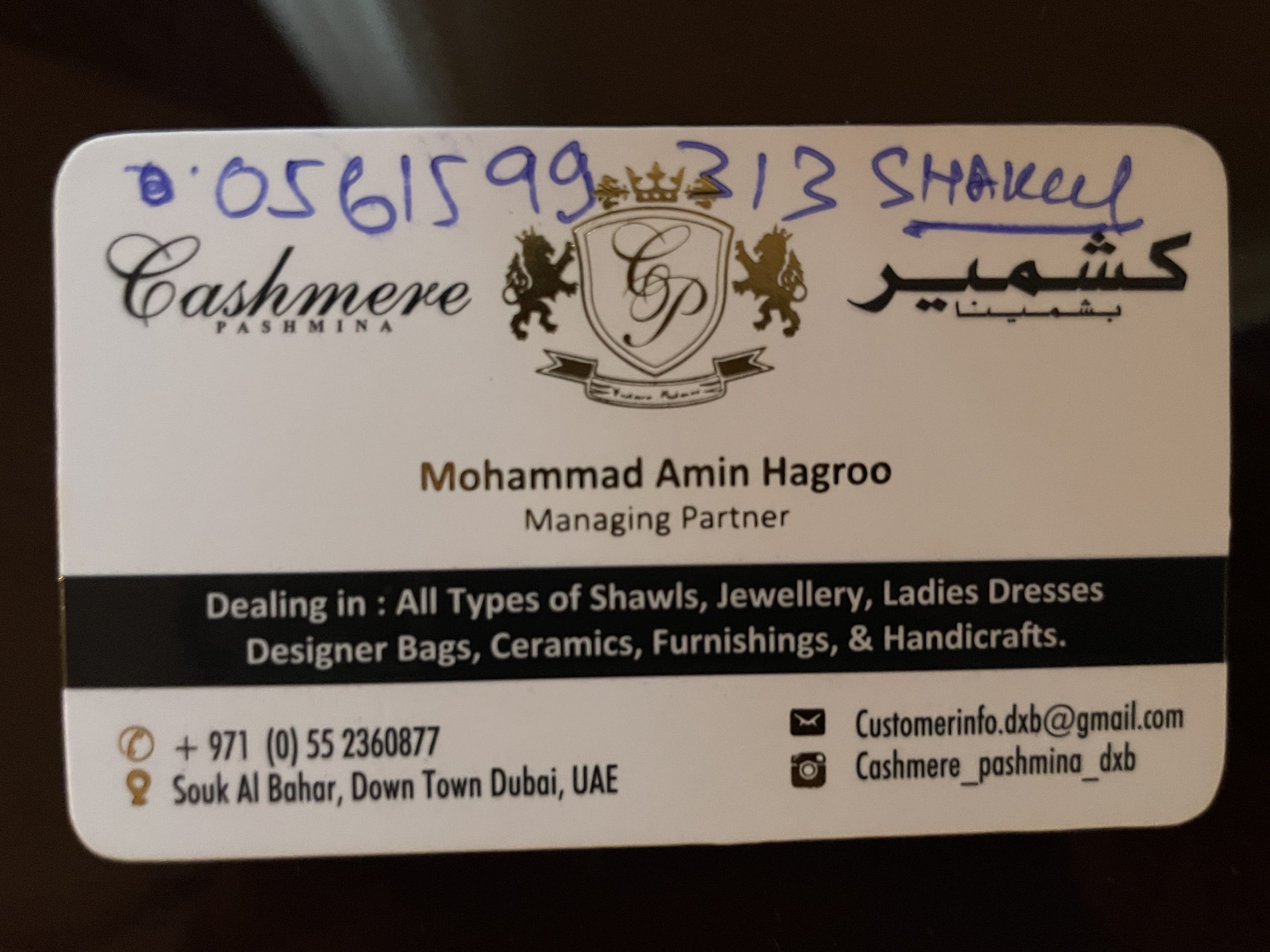
Go to Souk Al Bahar Dubai and look for the shop Cashmere Pashmina on the ground floor
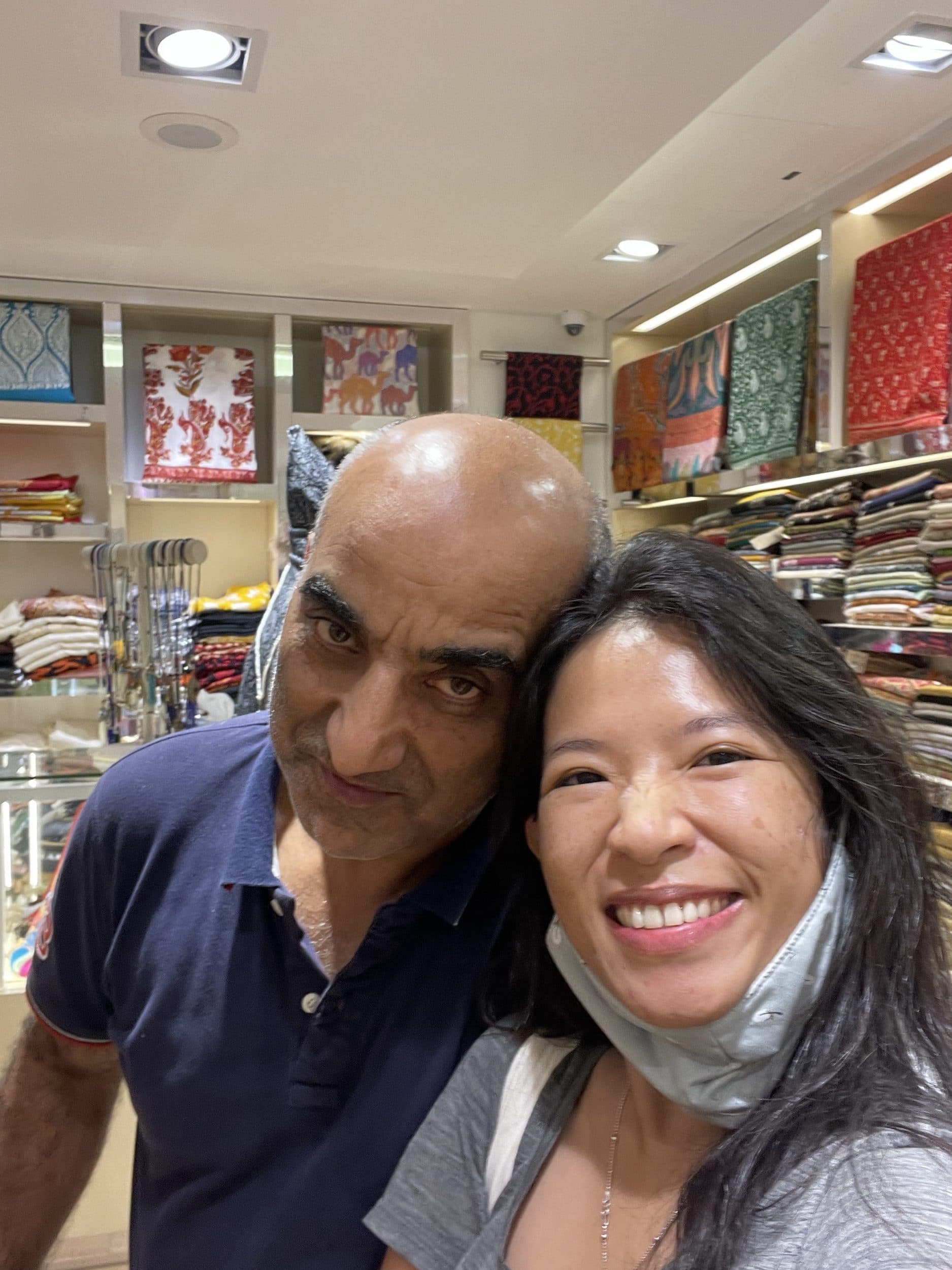
Here is the seller, Shakul, who helped me find the scarf. Happy shopping!
Enjoyed this article? Discover all our travel guides and journals on Dubai, Abu Dhabi & the UAE here
For guided excursions with French-speaking guides in Dubai, Abu Dhabi & the UAE, check out the offers with our partner Civitatis

