

Visit to the Richard de Bas paper mill in Ambert (France)
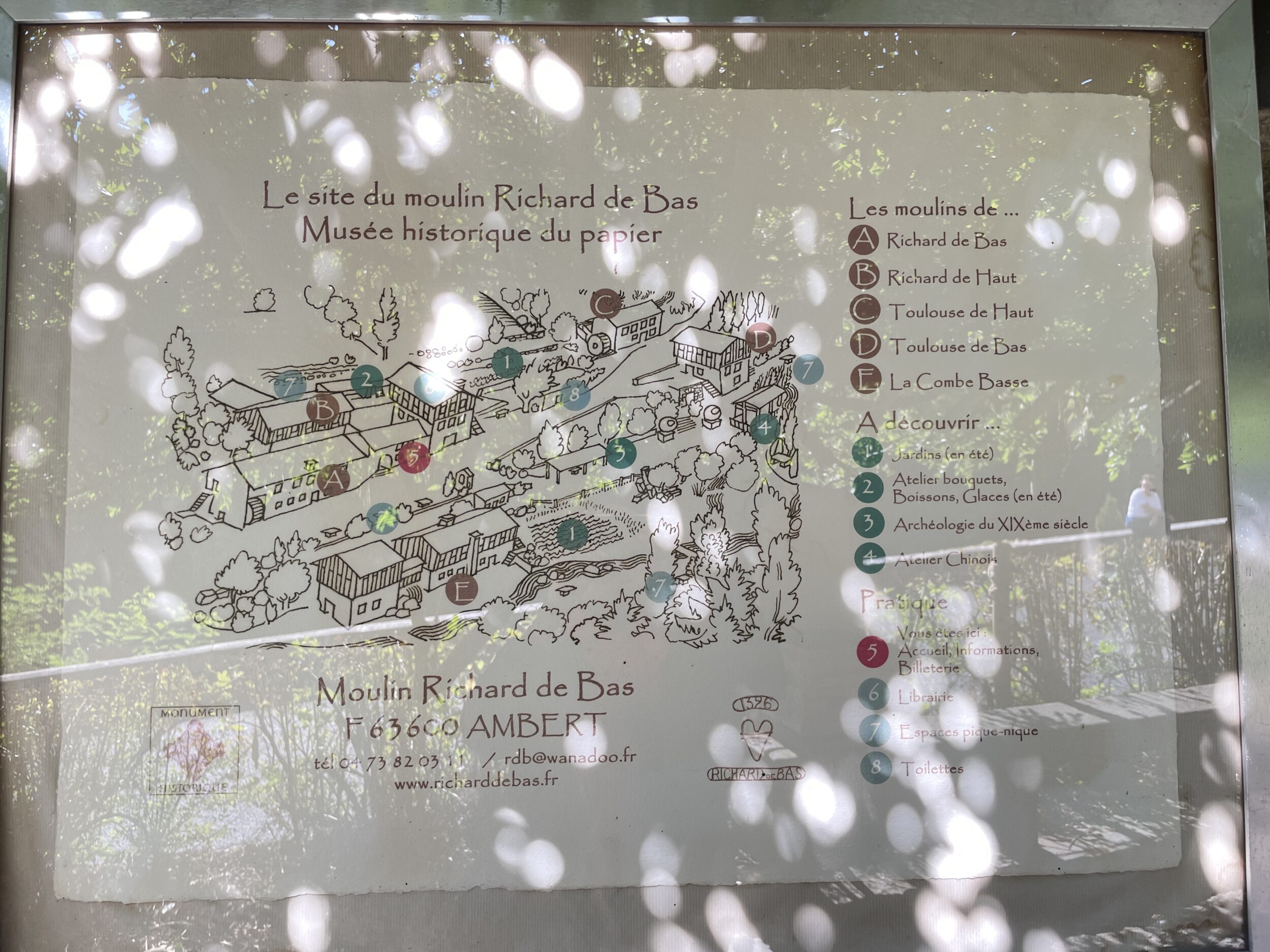
For someone who loves working with paper, it’s a bit surprising that I had never visited a paper mill before. During our stay in Rhône-Alpes, we discovered that a traditional paper mill still existed in Ambert, a 1-hour drive away. I thought it was difficult to visit, because someone mentioned online that it was better to book, but as we found out on a Saturday in September, there was a tour every 15 minutes. We booked and paid online, but we could have just shown up and bought tickets on site.
This site was the favorite spot for paper mills thanks to its favorable location: not too far from Lyon, and next to water sources. However, only the Richard de Bas paper mill continues to make rag paper.
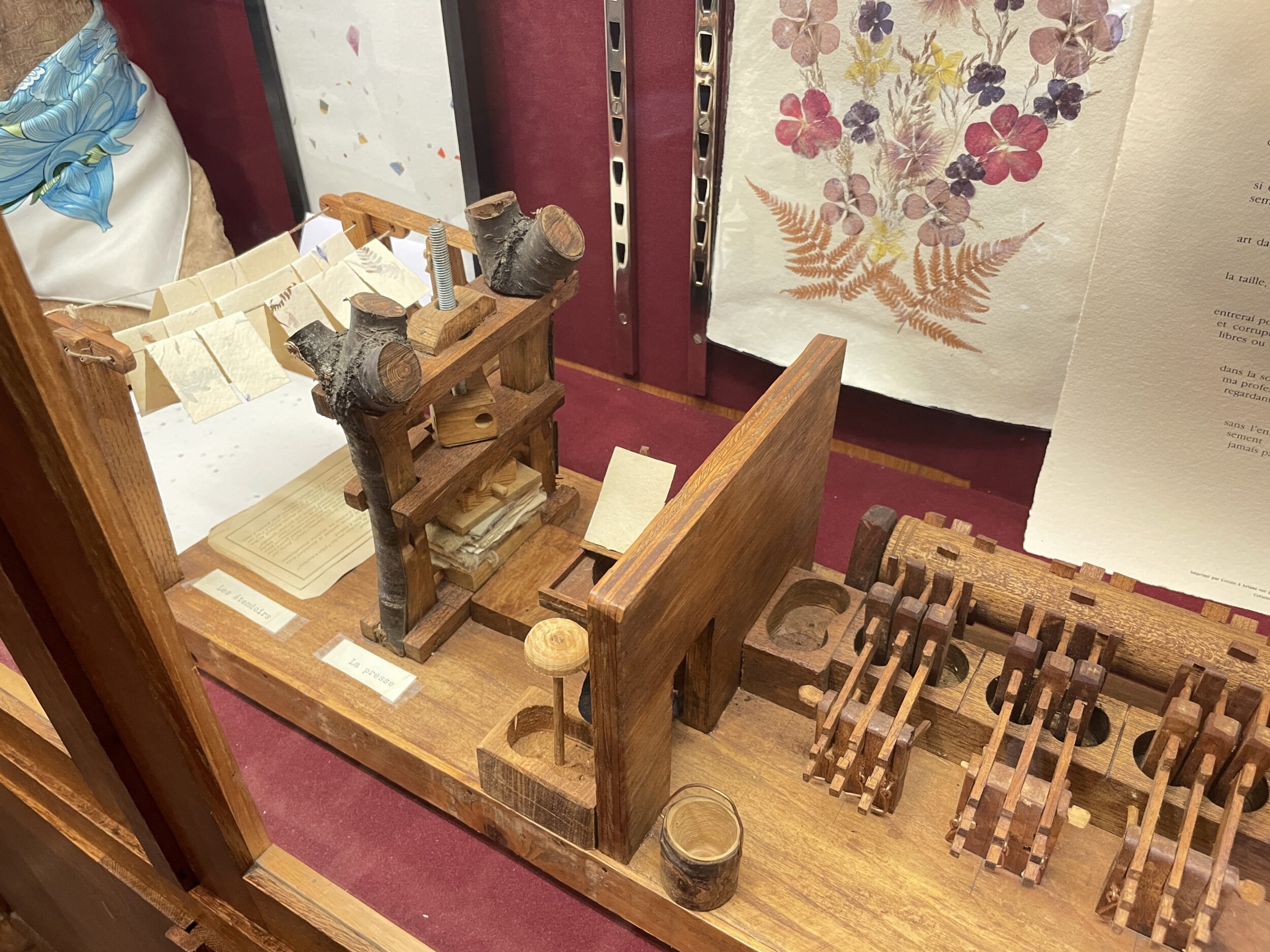
Right at the entrance, you see a miniature of the tools used and a sample of paper with pieces of Hermès silk.
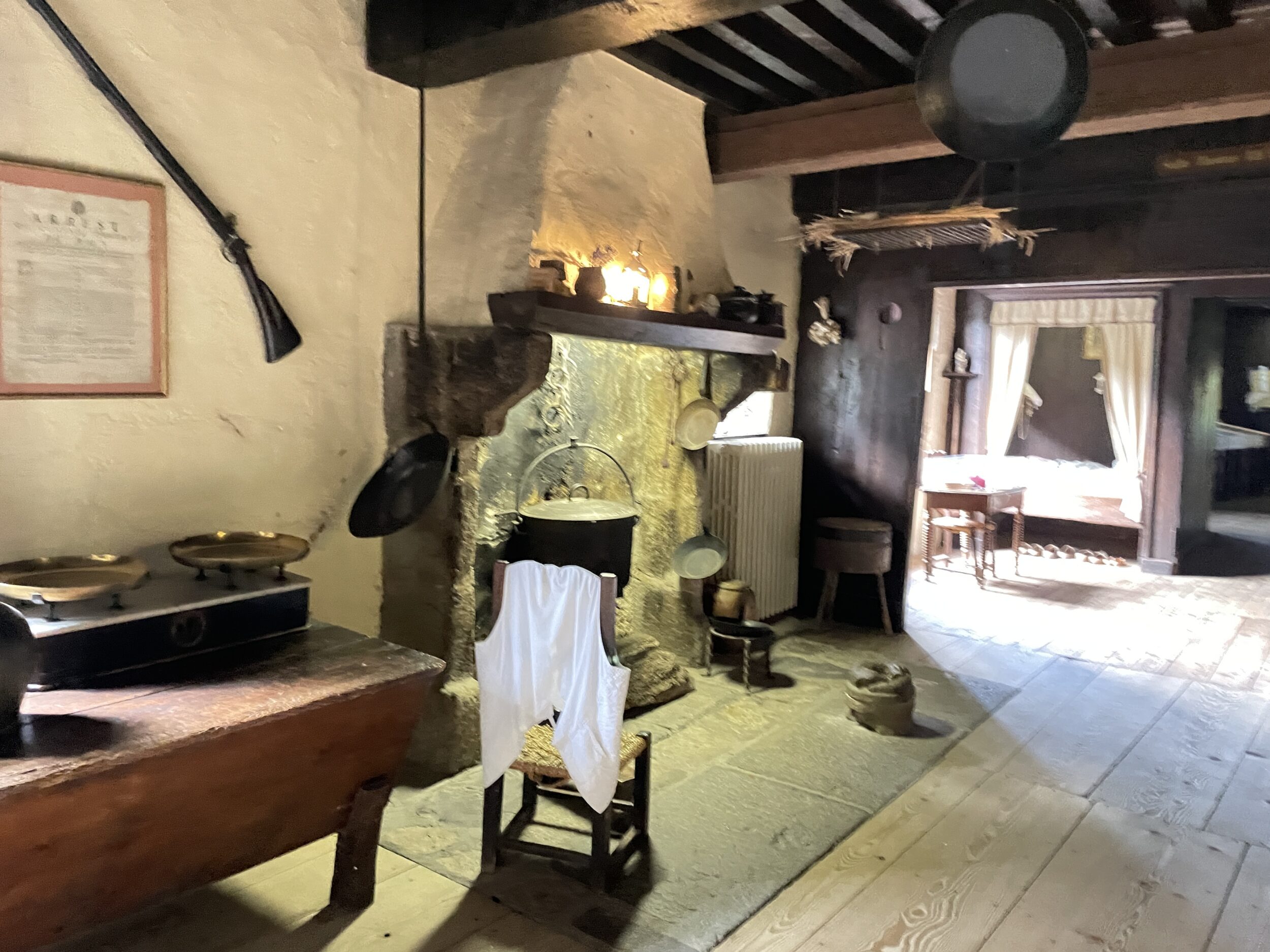
The first part of the tour involves exploring the private area of the former owners and seeing how people lived almost 2 centuries ago. There’s a modest but sufficient collection of manuscripts to show the evolution: from the use of terracotta to parchment, then paper. I won’t dwell on it because we’ll talk about it at length in my article on the printing museum in Lyon.
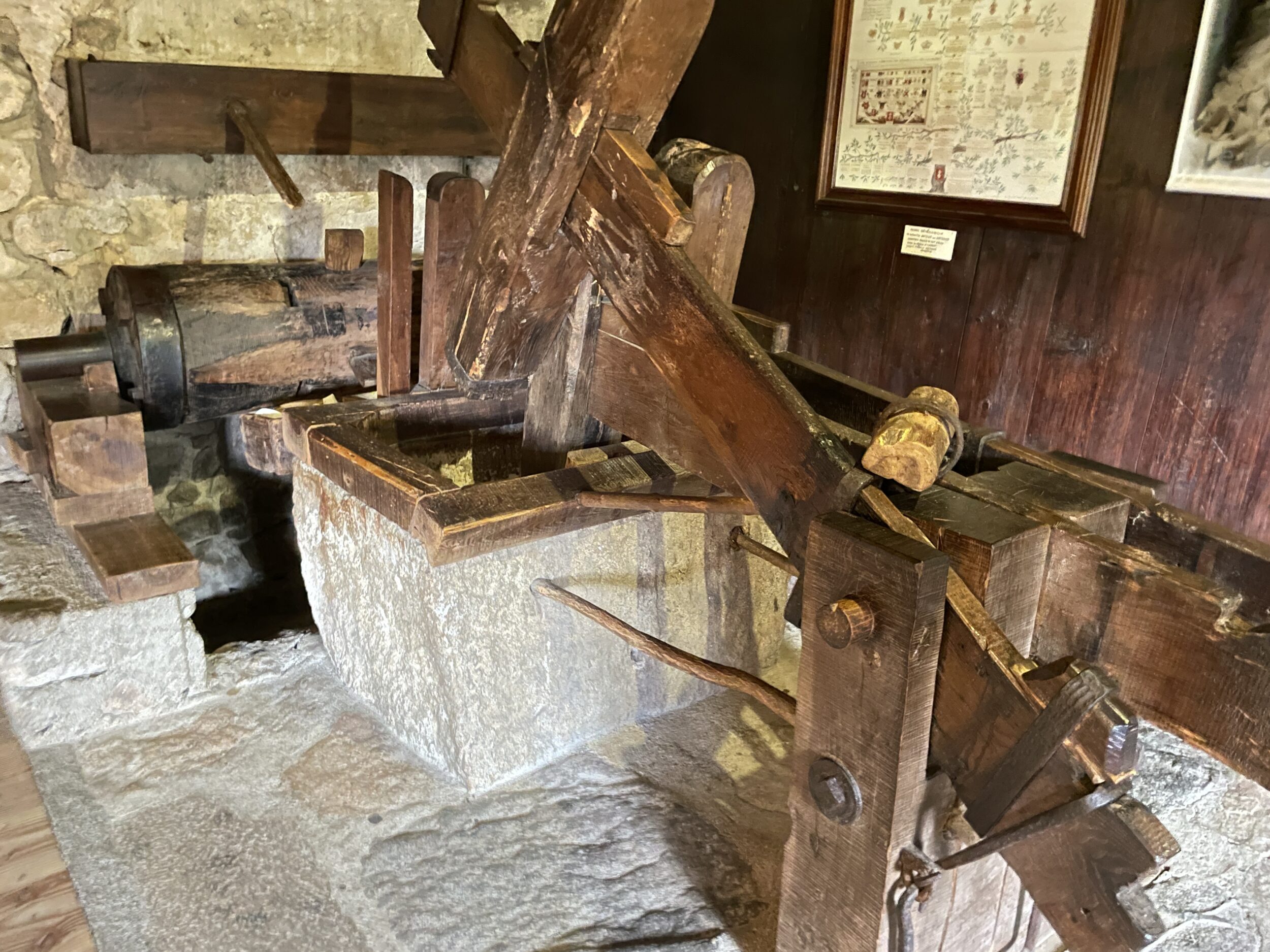
These types of tools are used to turn rags into pulp. They work thanks to the force of water, using a real water mill. Hence the importance of being next to a river or stream as is the case here.
Then, the pulp is placed on screens with wire mesh more or less spaced apart. If you want a watermark, nothing simpler: just incorporate the pattern by creating relief.
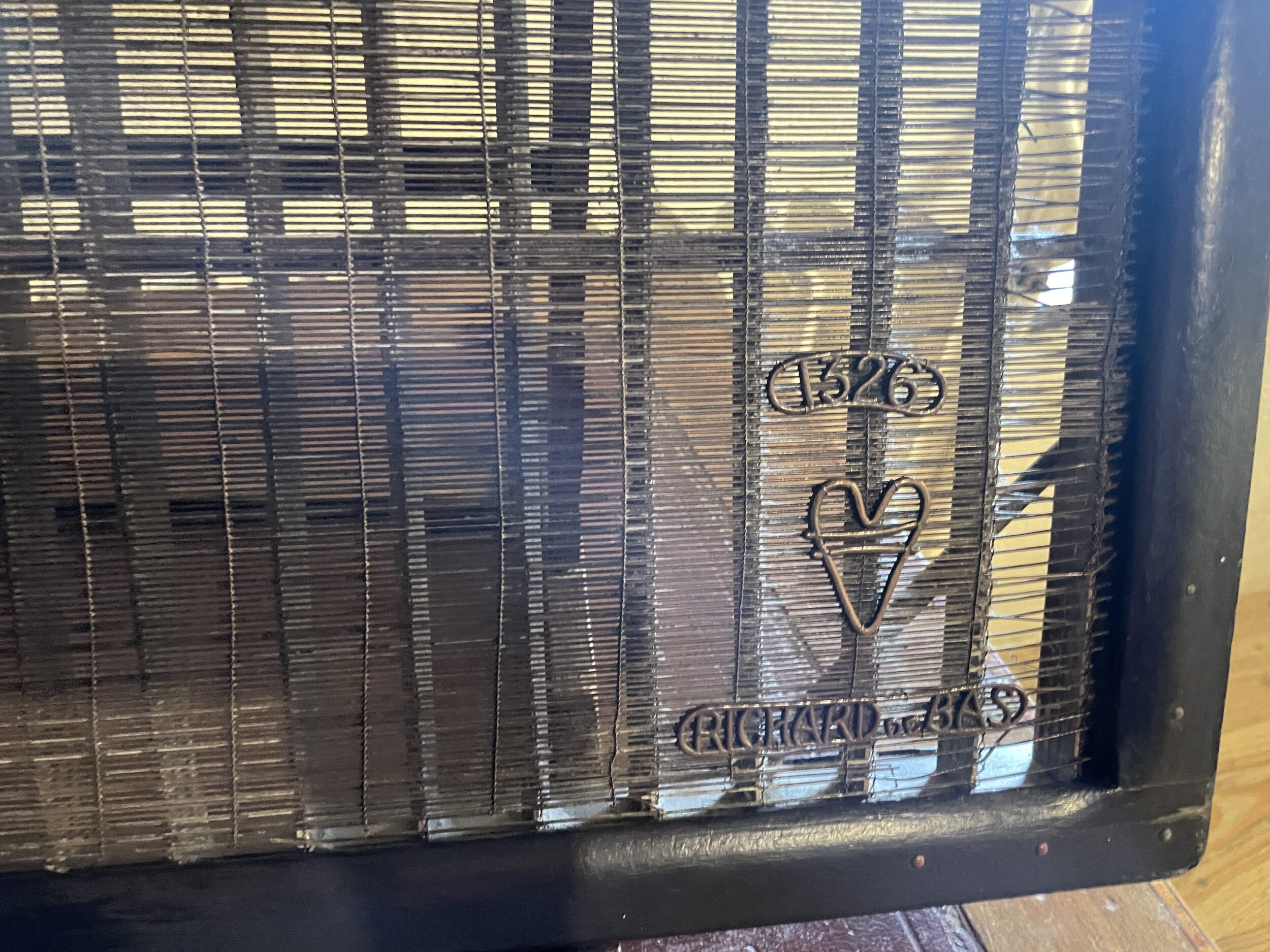
The fineness and density of the screen lines determine whether the paper is “laid paper” or “wove paper”. Wove paper is more used by artists, I think. Even for my linocut prints, I was advised to use wove paper. Laid paper also has a really nice feel, and I’ve long used this type of paper for my paper cuttings because it gives a nice texture.
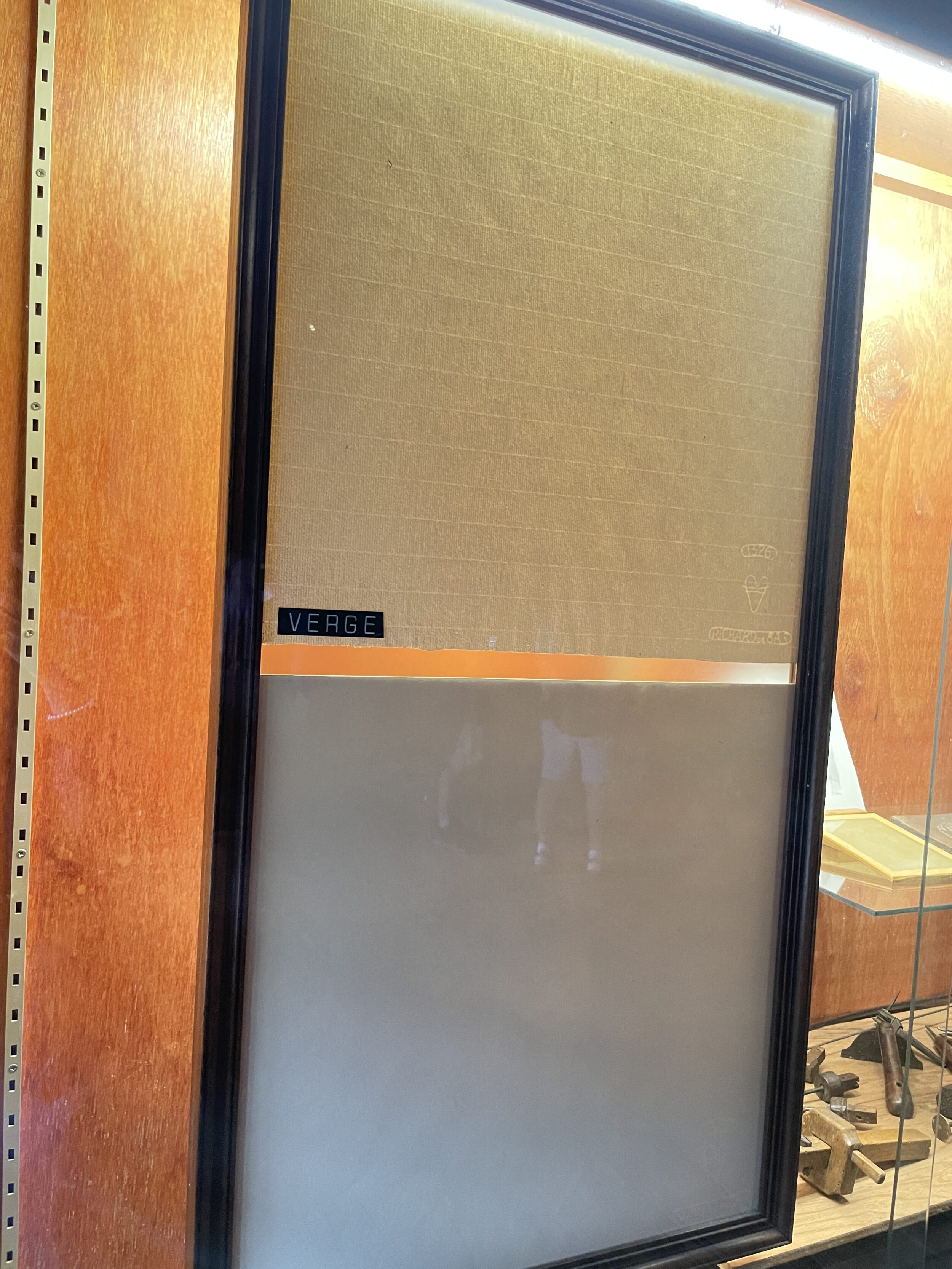
You can be extremely creative with watermarks.
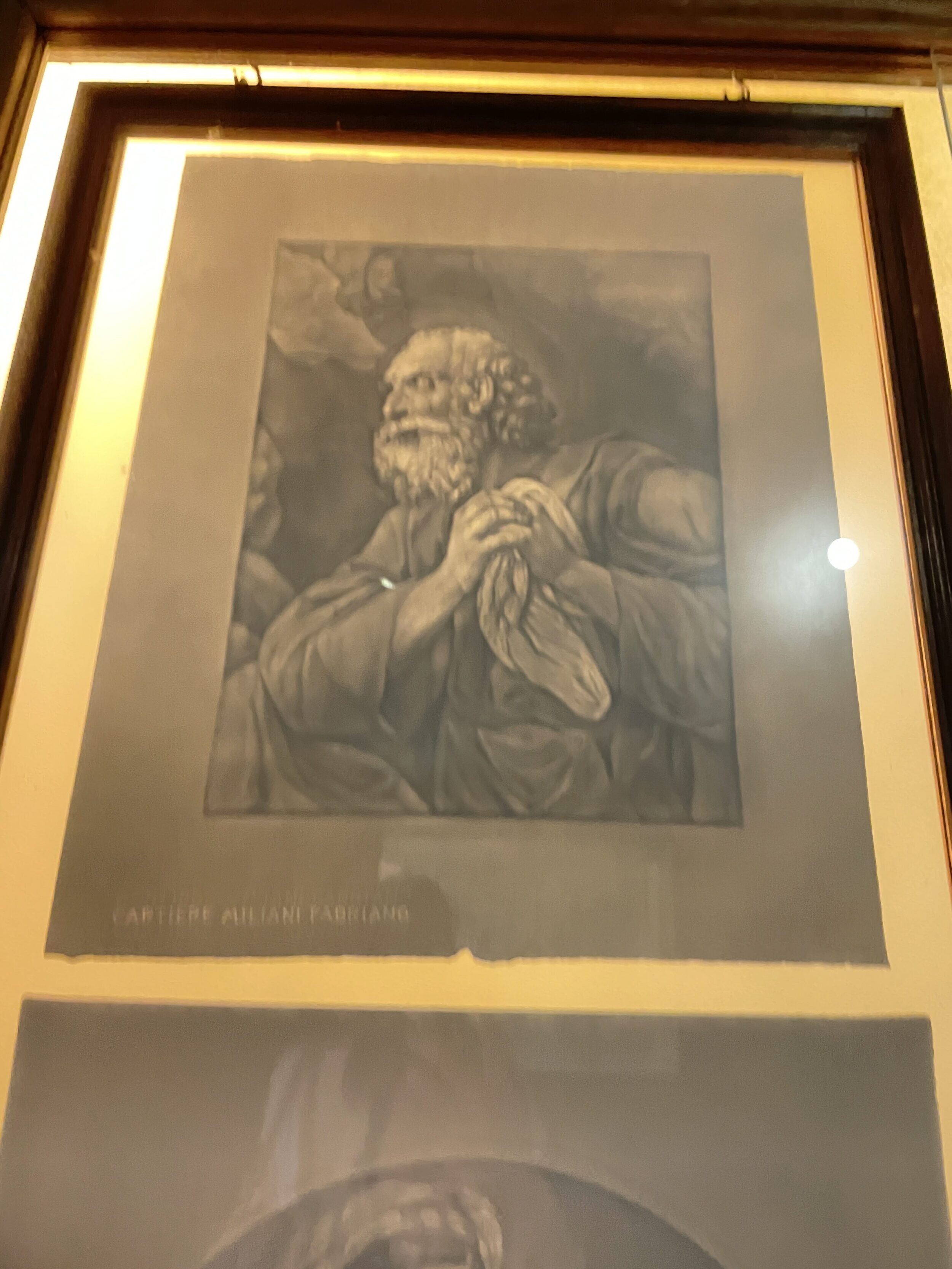
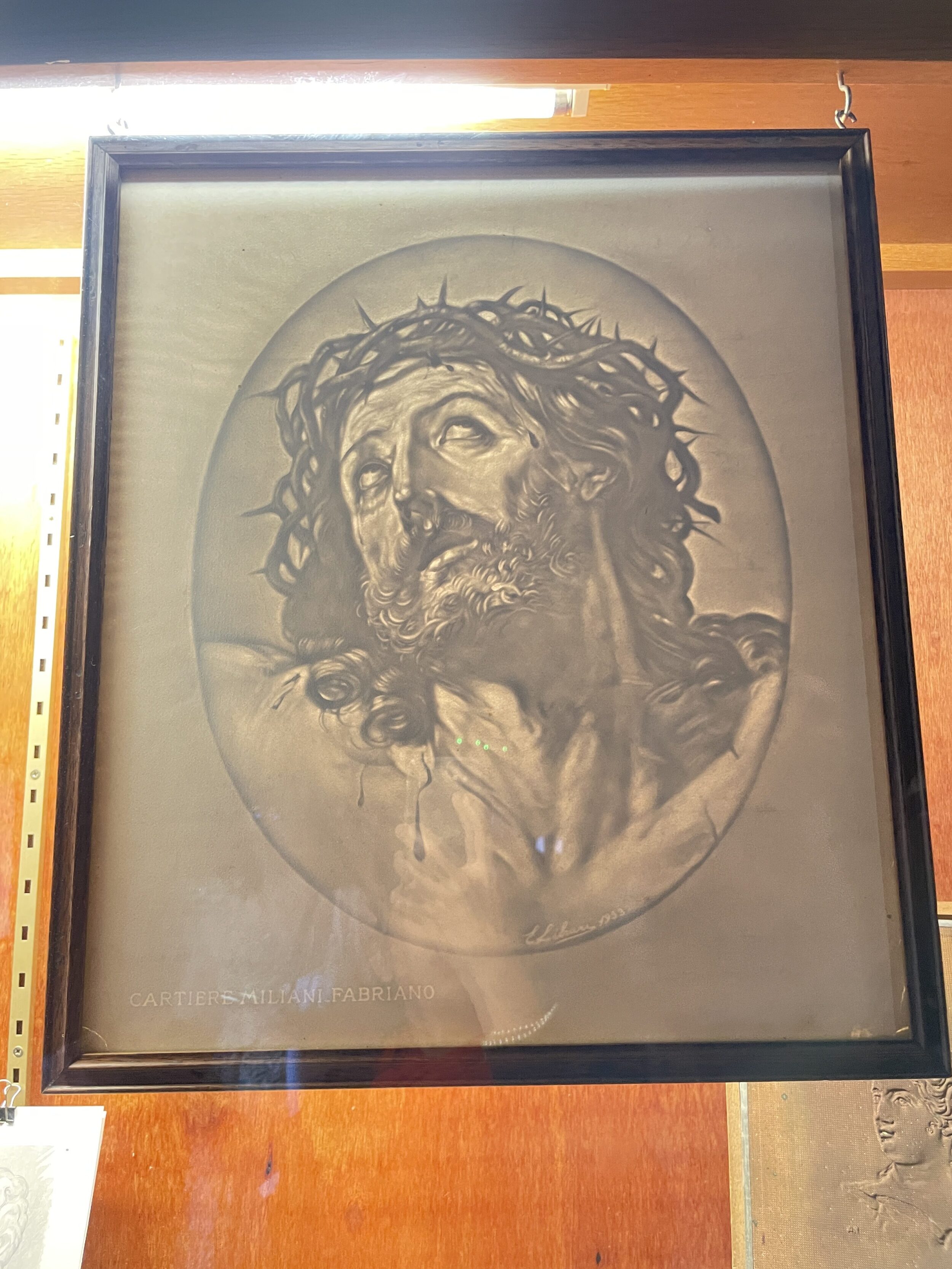
We leave the museum to enter the workshop through a tiny door. A papermaker opens the door for us. JB is surprised to see that he’s young. He was expecting an old man. Indeed, there was another older man, but due to health issues, he wasn’t there. It’s a physical job, where you have to lift up to 25kg of water-soaked pulp, in water that’s too cold, and it wreaks havoc on your back and hands.
After obtaining the pulp, the papermaker mixes it with a certain amount of water. The water here is spring water because water that’s too acidic can cause papers to yellow over time. Hence the importance of also being near a freshwater source.
The pulp-to-water ratio determines the weight of the sheet. Here, they prepare papers with embedded flowers and leaves in A5 size. The screen allows you to recover a certain amount of pulp.
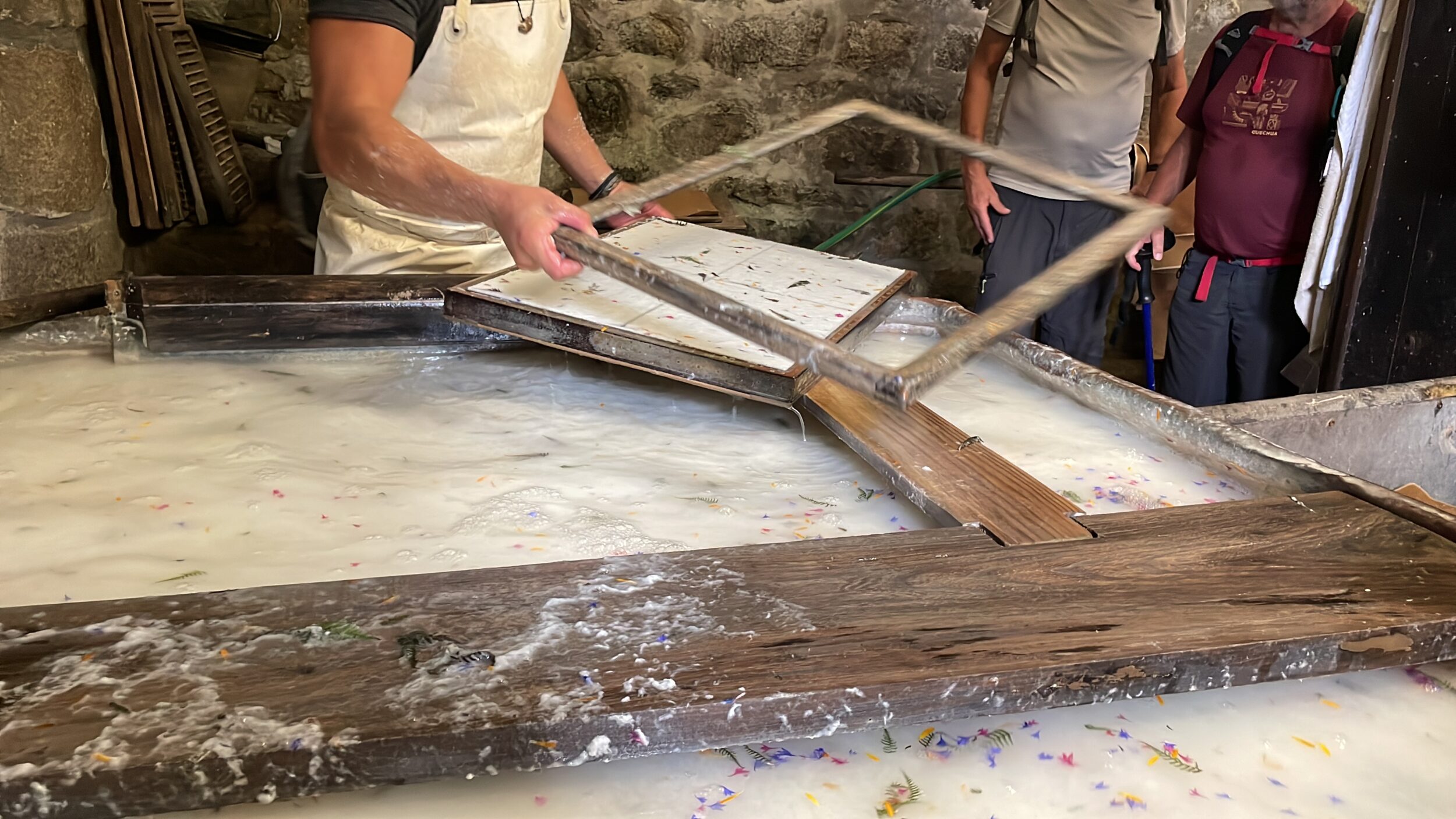
Then, you gently place the very wet sheet on pieces of wool. As soon as you have 100 sheets, you press them to remove the excess water. The papers will be almost dry.
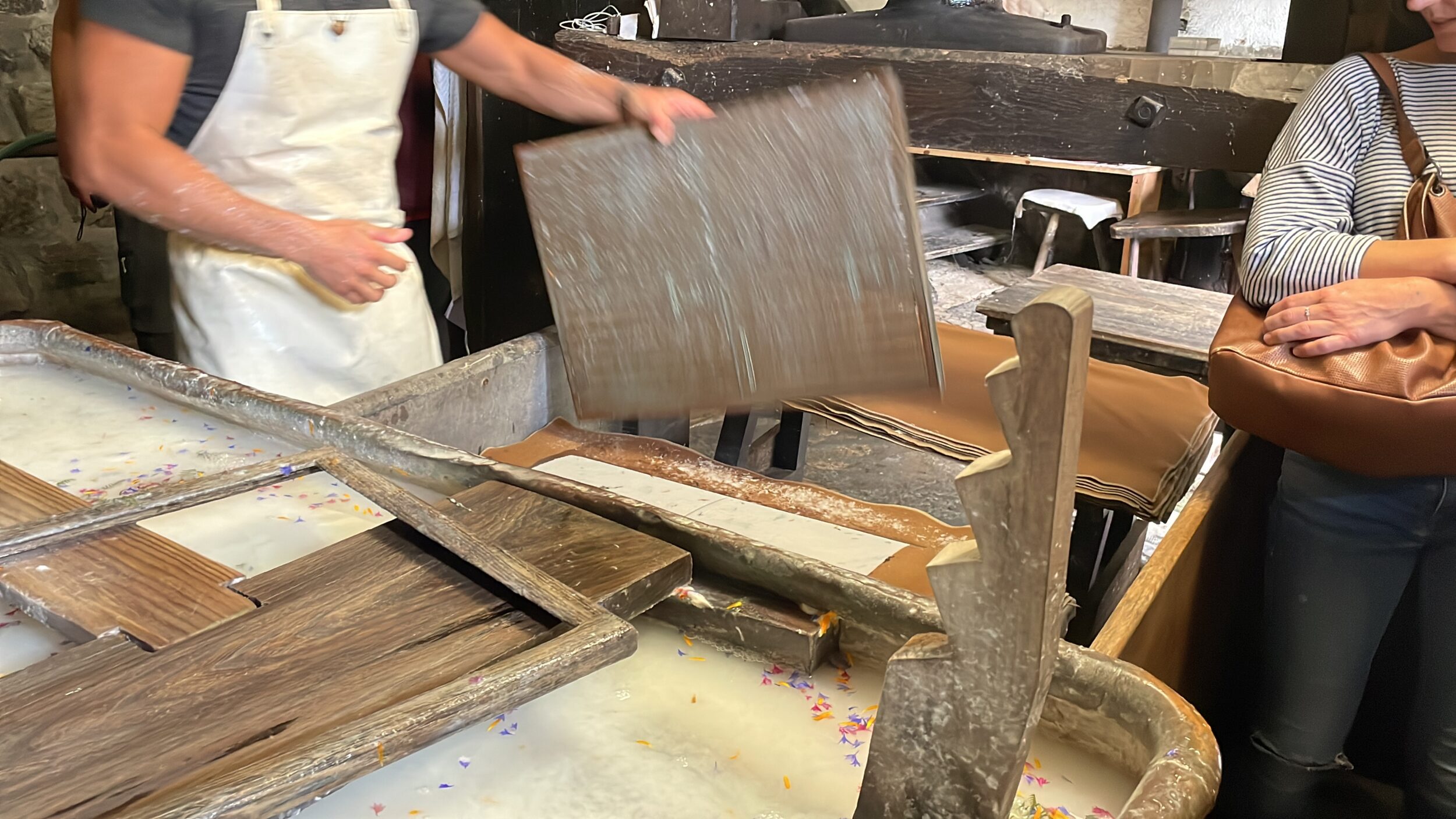
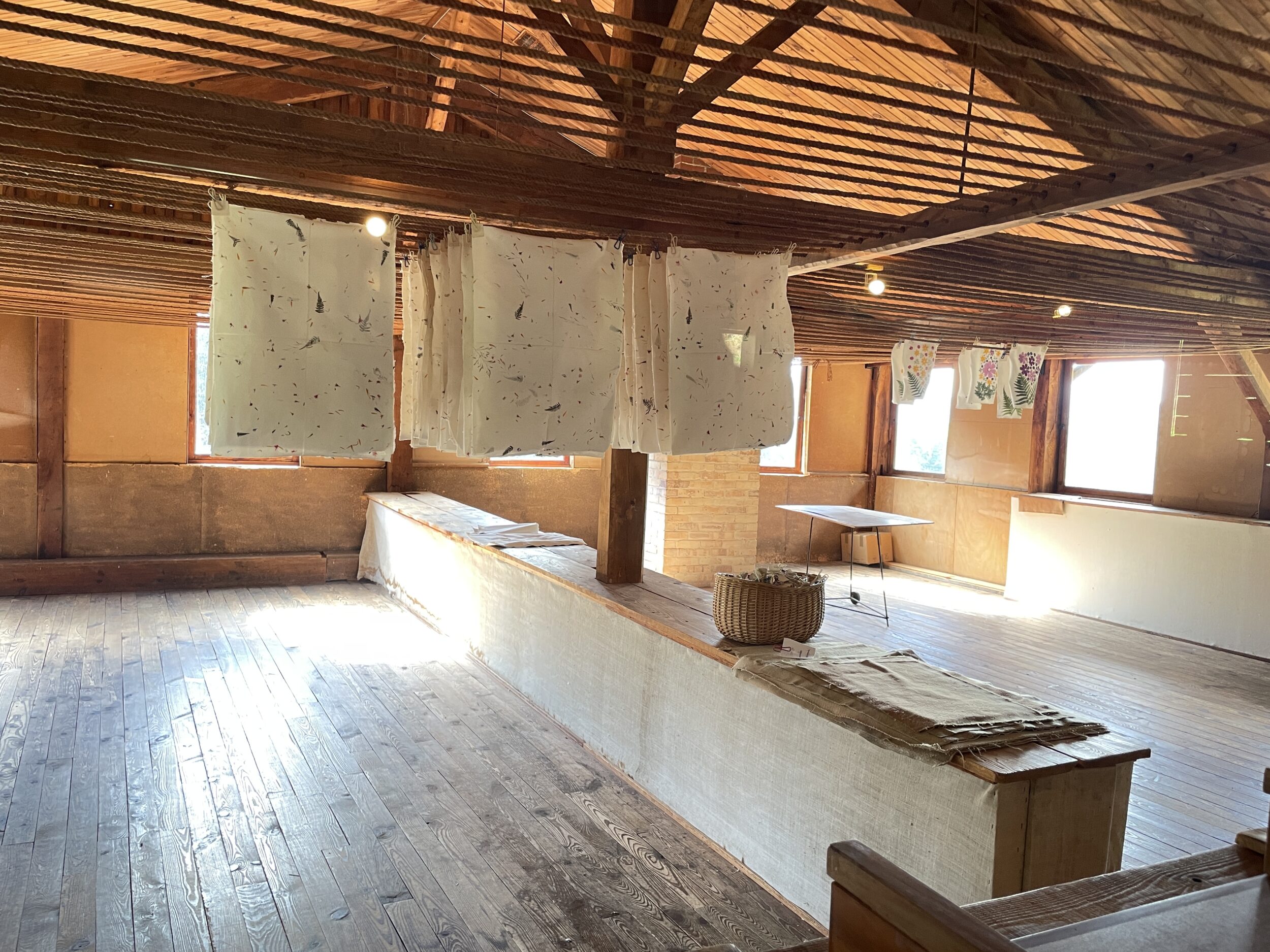
Drying is nonetheless necessary and depends on the weather. The sheets can be laminated, or not.
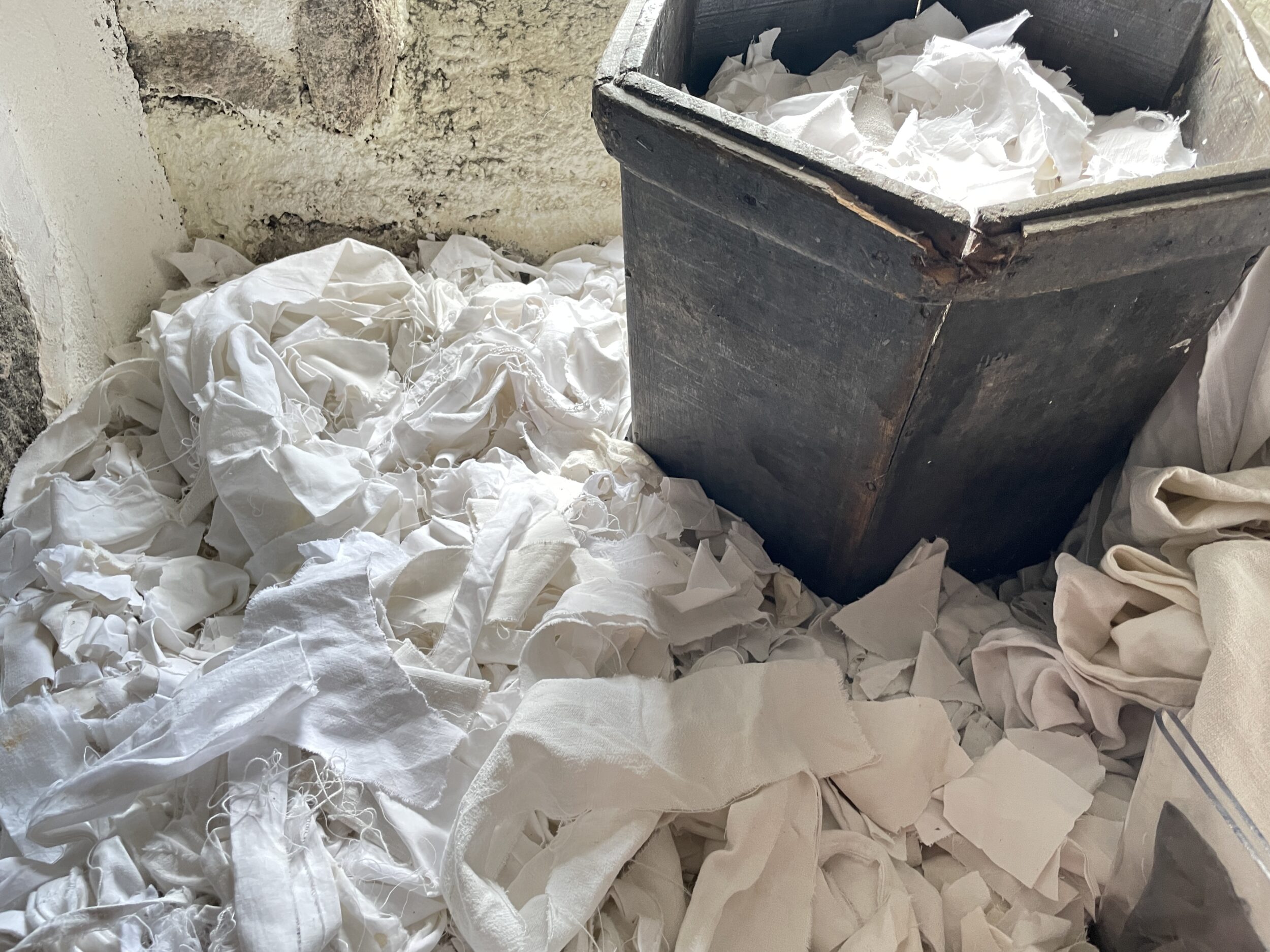
The rags used to make the papers are collected through donations (from Emmaüs, among others). They only take white sheets and fabrics to avoid problems. It’s extremely rare to still find papers that are 100% rag of this type. I read on another website that it’s better to use used rags, rather than brand new cotton, for example, because the fiber of a used rag doesn’t have the same quality as a new one, nor that of cotton in general. These papers are expensive not only because they’re handmade, but also because the raw material is not unlimited. They want old 100% cotton sheets like before, not today’s synthetic fabrics.
They’re used by artists but also museums and some prestigious publishing houses. If you want paper that lasts over time, doesn’t yellow, and holds ink color well, you need to use this one. This is the type of paper used in the past for Diderot’s Encyclopedia, and you can see in museums that these papers remain immaculate and white. Contrary to belief, the use of wood (and its acidic components) will cause paper to yellow over time.
Another paper, even rarer, is 100% linen rag (here, we’re more in the range of 80% cotton rag, 20% other rags). It’s the best paper in the world, according to William Morris of Kelmscott Press (promise, there will be an article on William Morris).
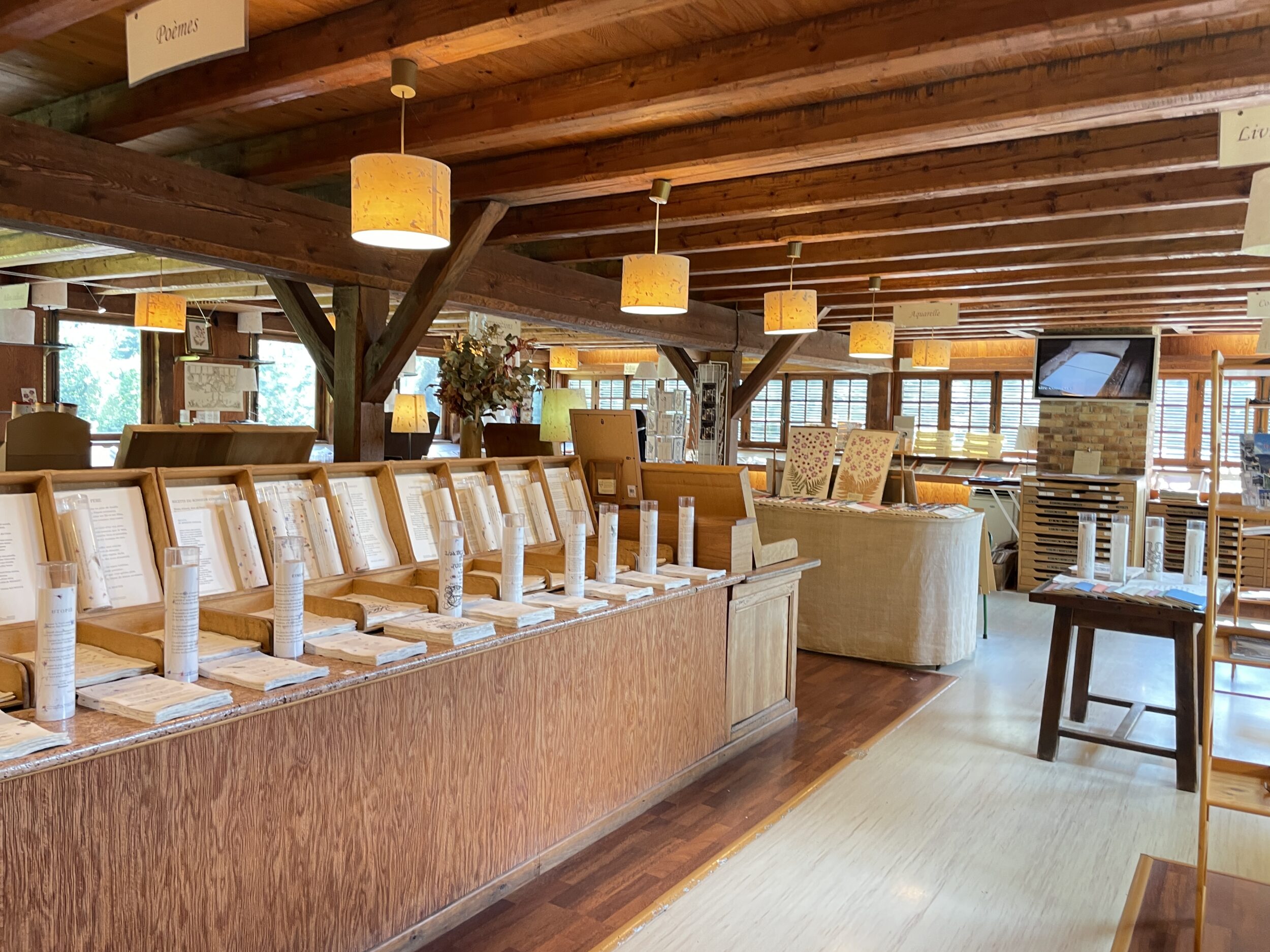
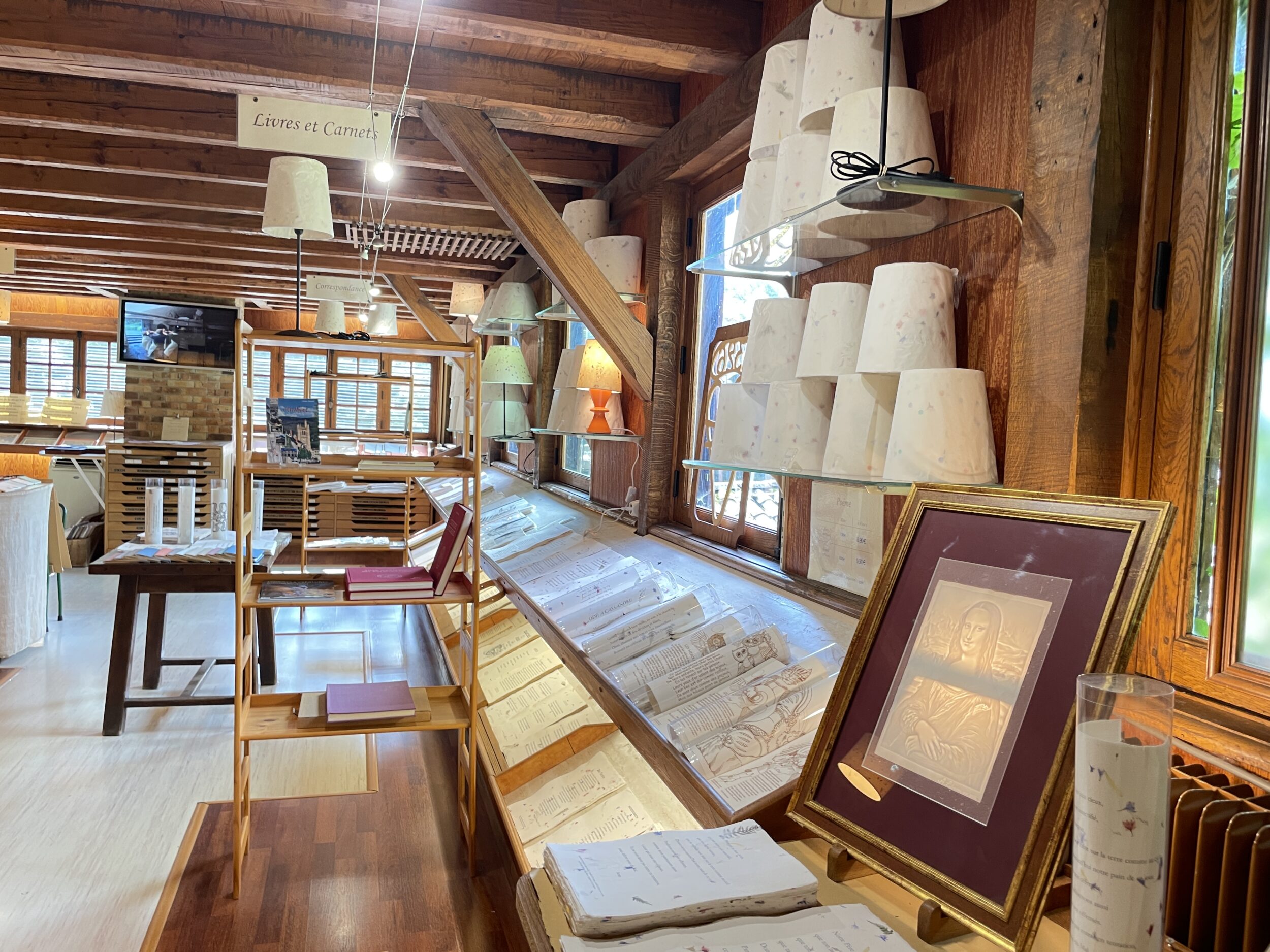
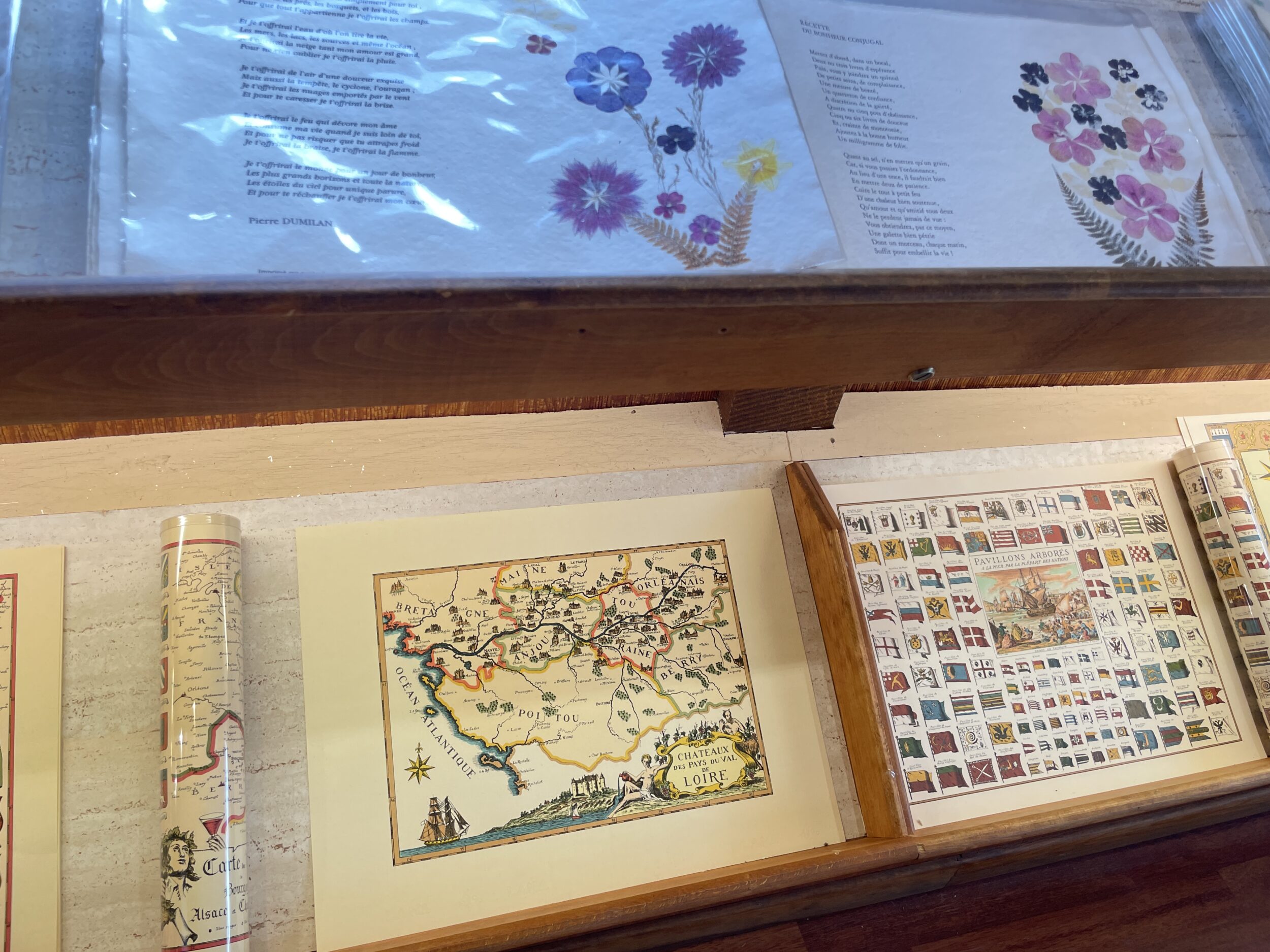
The shop looks like Aladdin’s cave (to me). I want to buy everything! These beautiful papers with embedded flowers, yes! These printed poems, these lampshades, these old world maps, yessss!! until I come to my senses a bit: I don’t have a fixed address, and I have no one to send these beautiful cards to 😀 I left with a dozen A4 sheets compatible with a printer. The pack cost me around €24 (??) Maybe I’ll print a short story I like and bind it myself? 12 sheets give 48 pages in A5 format, far too little for Proust, but perfectly sufficient for Maupassant.
2023 rates:
Semi-guided tour: adult €8.90 / child €5.90 / free for under 6s.
Papermaking workshop: €5.50 per person

