Serbia: How to Withdraw Money (ATMs, Exchange Offices, Airport)
In Serbia, the currency is the Serbian Dinar (RSD); here is some useful information for withdrawing money at minimal cost.
Exchange Offices
At Belgrade Airport, in March 2023, here are the exchange rates observed at the exchange office.
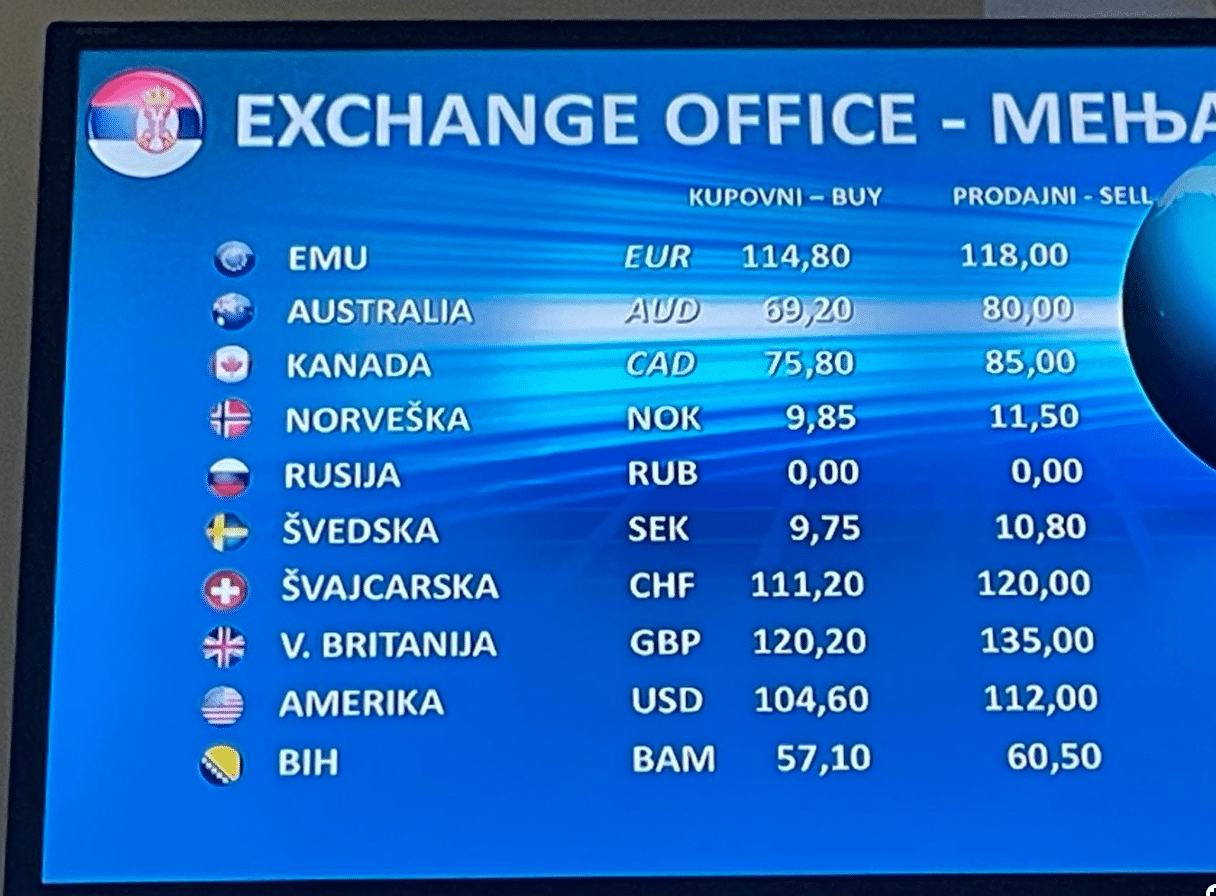
If you’re not used to reading this type of table, look at the first row for the Euro zone and the first column labeled “Buy.”
In other words, this exchange office gives you 114.8 RSD for 1 EUR.
That day, the “real” exchange rate was 117.36 RSD for 1 EUR.
That’s a spread of 2.63%, which is fairly honest. Every time you exchange 100 EUR, 2.6 EUR goes to fees.
ATMs
On our end, we’re the “ATM team.”
If you play your cards right, ATMs are the way to withdraw money at minimal cost. But if you’re not careful, it can get very expensive!
When you withdraw money from an ATM outside the eurozone, you’re exposed to 3 types of fees (which can stack):
- Fixed fees and foreign transaction fees from your own bank, if you don’t have a specific international option
- The ATM operator’s currency conversion fees
- The ATM’s fixed fees (not in all countries)
The first two lines are avoidable. The last one, not always.
The first step is, before you leave, to get a bank card that doesn’t charge foreign transaction fees outside the eurozone.
I recommend the following free cards:
- Boursorama (€130 in referral bonuses using this link)
- Fortuneo (€50 referral code: JEMO8585)
- Binance (which allows you to get cashback: referral link)
- Crypto.com (cashback as well, $25 referral with this link)
The second step is to find the local bank that charges the lowest fixed fees.
There’s no rule here; it depends on the country. In some countries, local banks don’t charge any fees. In others, some banks charge and some don’t. In still others, all banks charge fees.
At Belgrade Airport, in the baggage claim area, there are many ATMs. Since there weren’t many people around, we took the time to investigate.
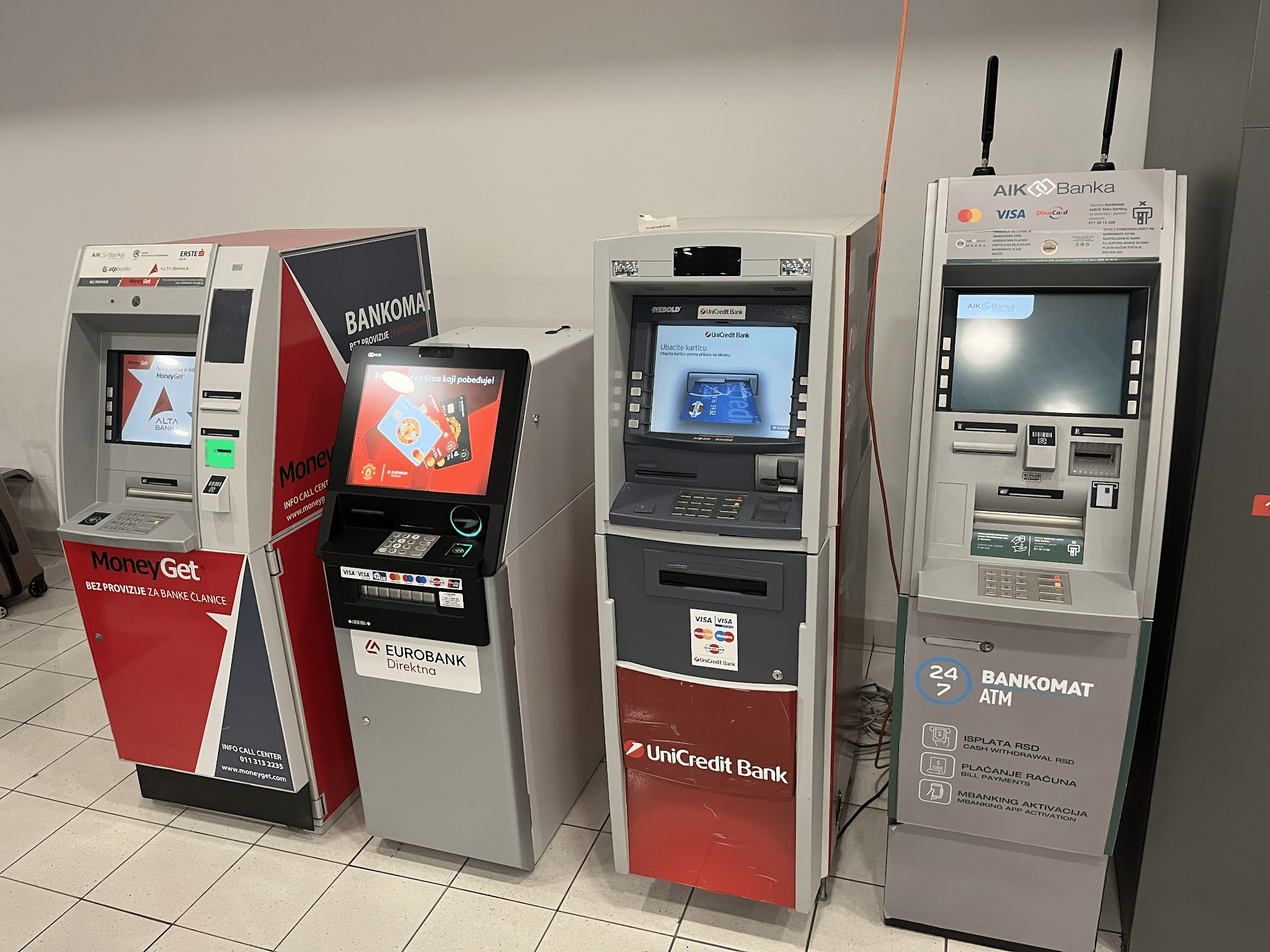
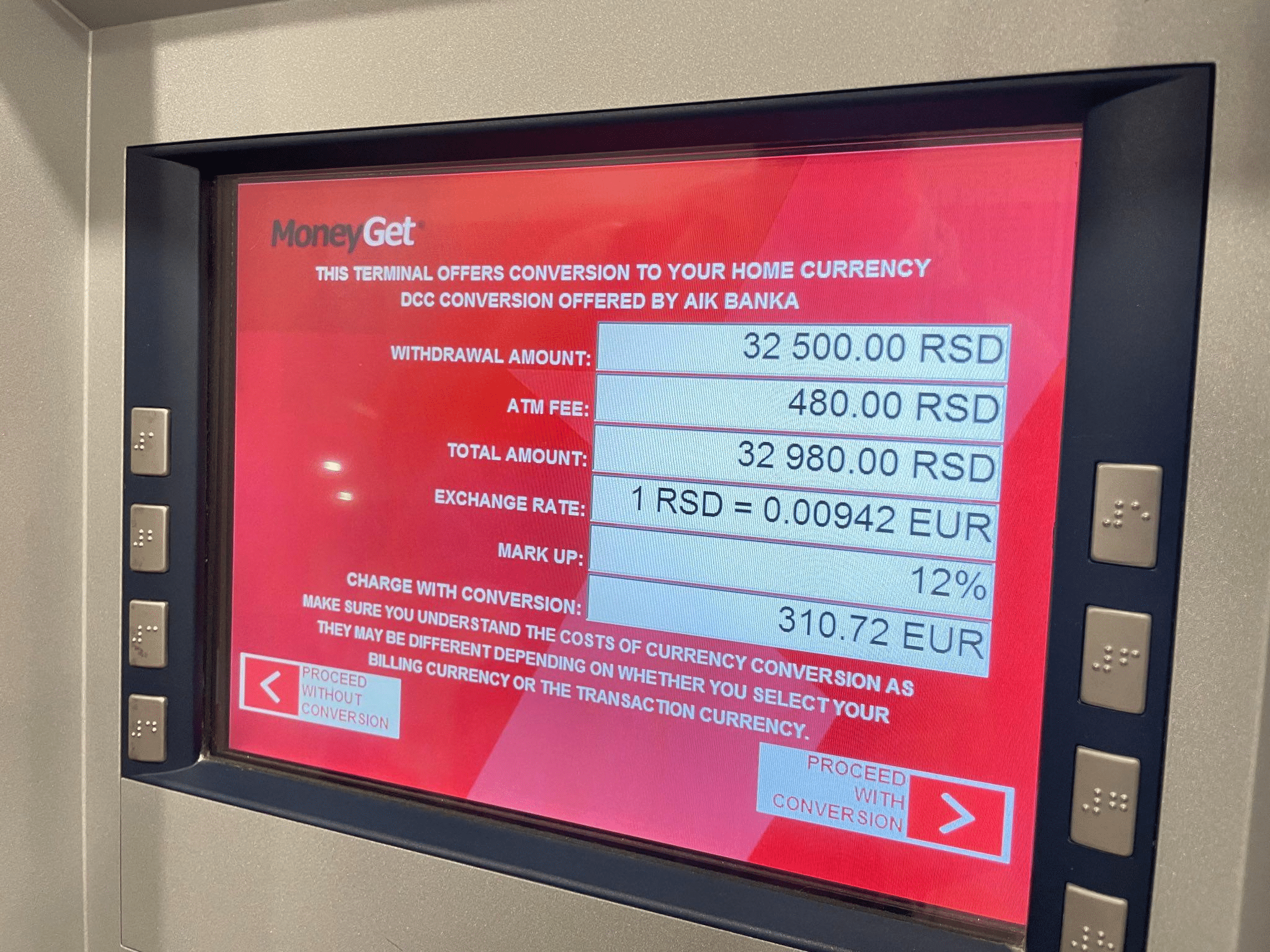
Bad surprise: they all charge around 500 RSD (480 RSD for MoneyGet).
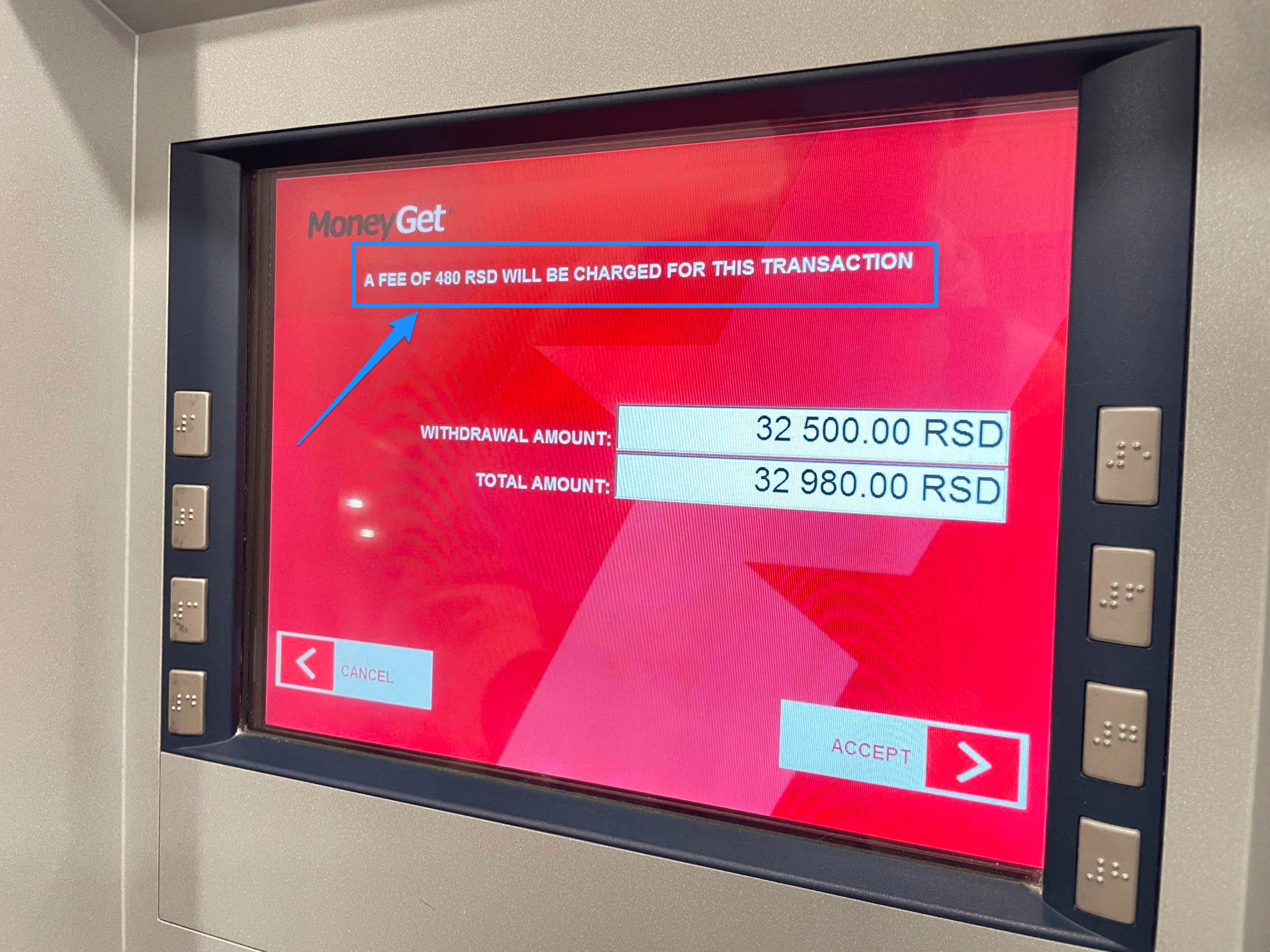
You can’t escape it unless you find a bank elsewhere that doesn’t charge. We’ll continue our investigation in the city.
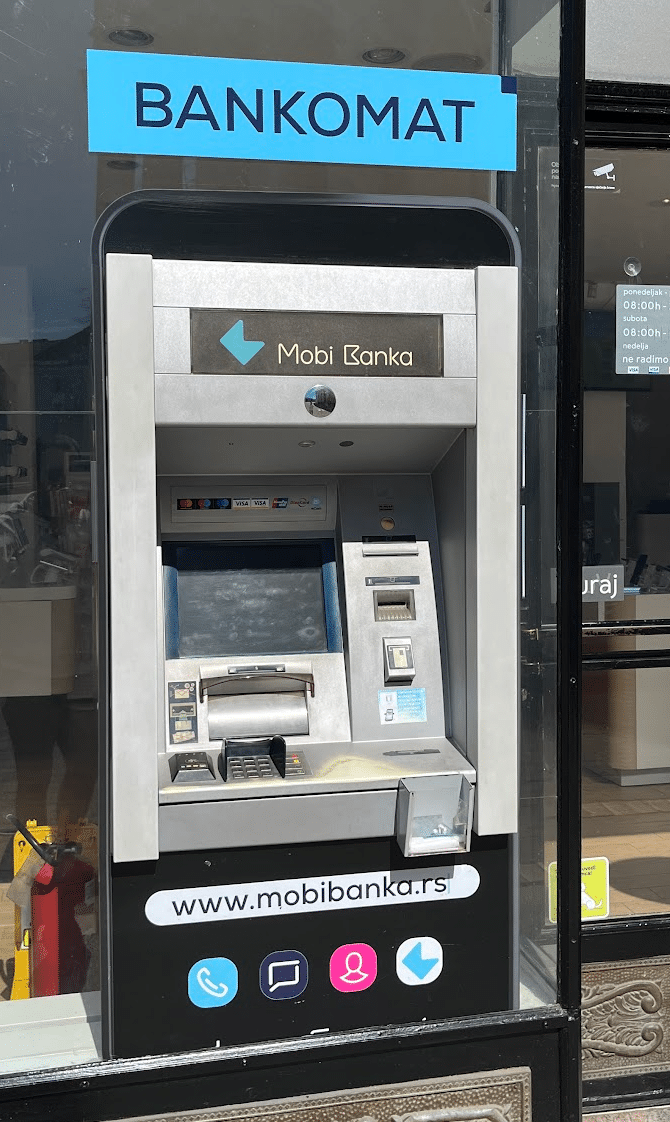
EDIT: We found it! The bank Mobi Banka doesn’t charge withdrawal fees.
The last step is to avoid falling into the trap of what could be considered a scam (but is practiced everywhere in the world).
The local bank will offer to apply its own exchange rate.
If you have a card that doesn’t charge foreign transaction fees (see first step), you’ll go from zero fees to a lot of fees if you accept.
Even if your card charges fees, it will still be less than what you’ll pay if you accept.
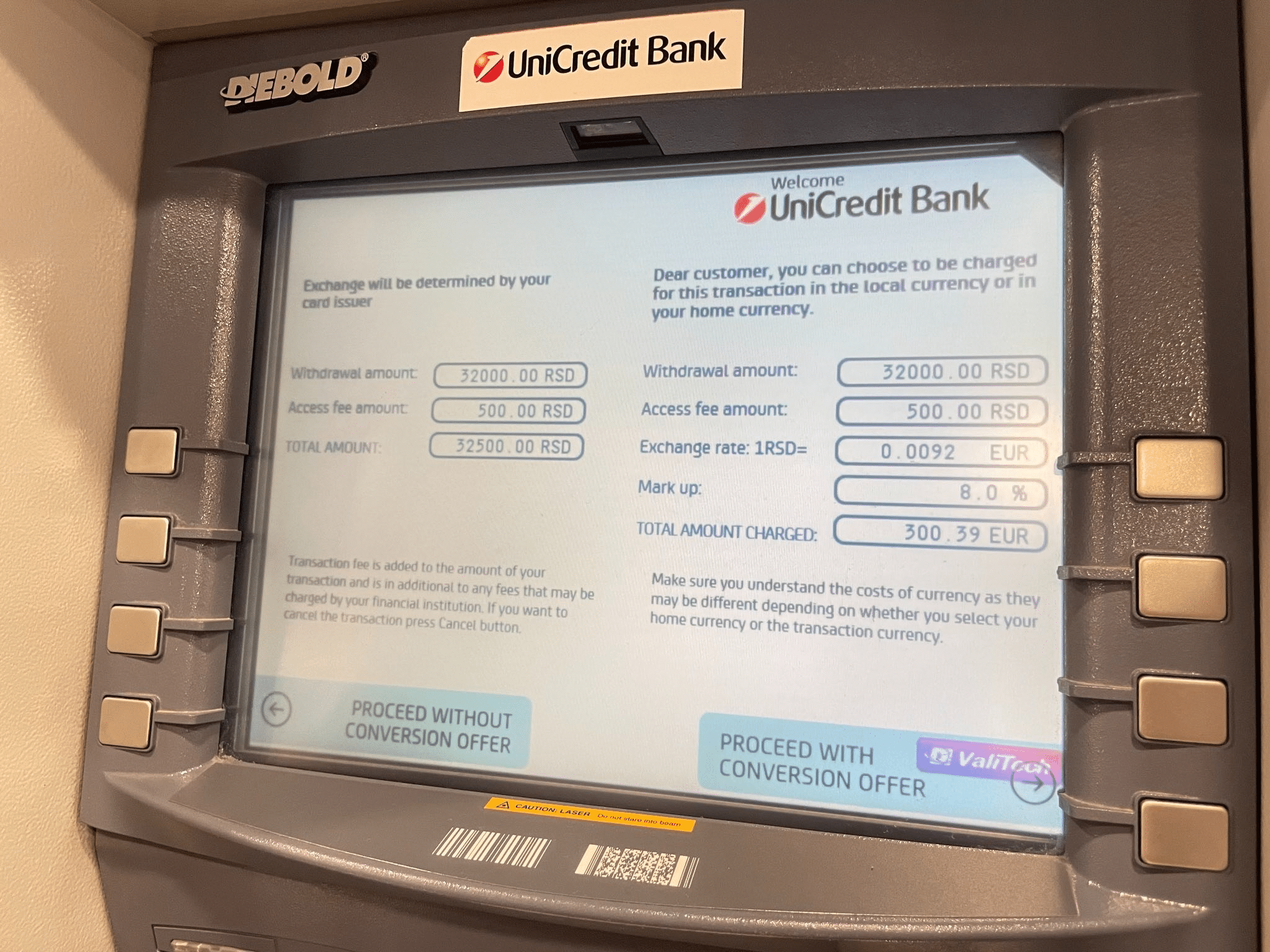
You should ALWAYS decline the ATM’s exchange rate.
Here’s what this exchange rate offer looks like on two different ATMs.
Match result
Yesterday, we withdrew 30,000 RSD.
If we had had no fees, it would have cost us 255,70 €.
We withdrew with our Boursorama card (no fees), declining the ATM’s exchange rate. We only had the fixed 480 RSD fee that was unavoidable, so it cost us 259,74 €.
Going through the currency exchange office, it would have cost us 261,32 €.
With the MoneyGet ATM, accepting the ATM’s exchange rate, it would have cost us 278,07 €.
With the UniCredit ATM, accepting the ATM’s exchange rate, it would have cost us 271,04 €.
Most casual travelers don’t pay much attention to these fees. But in this example, we see that there’s an 18 € fee difference between the cheapest and the most expensive option. Even though we’re talking about a withdrawal of barely 250 €.
By paying a little attention, at the end of the trip, this can represent significant savings!
