
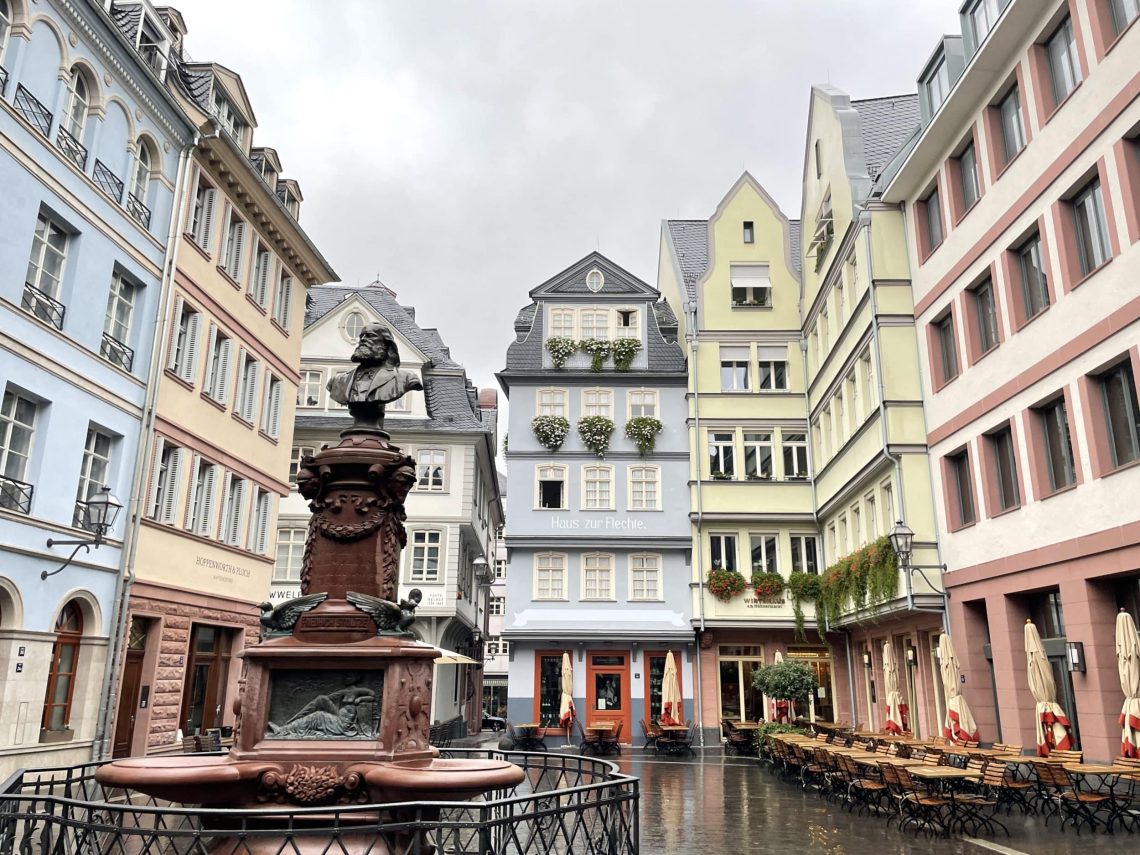
Frankfurt and Mainz (Germany): Gutenberg Museum
After Vietnam, we had to return to France for family reasons. In recent years, the Vietnamese airline Bamboo has been offering very affordable tickets between Hanoi/Saigon and Frankfurt. We took the opportunity to spend a week in Germany before taking the train to Paris.
I haven’t been back to Germany since the start of Covid (March 2020). Yes, if you still remember, I had to flee Germany, fearing that the borders would close for good and that I’d end up in lockdown alone in Germany (a fear that turned out to be well-founded!). On that solo trip, I didn’t get to fully enjoy Mainz, so I decided to go back.
Part 1: Travel Journal
Part 2: Practical Tips
Part 1: Travel Journal
Frankfurt
Frankfurt has one of the largest airports in Europe, and we’ve had layovers there before, but this is only the second time we’ve actually left the airport. The first time, we came for a 2Cellos concert and Air France reimbursed us twice for the plane ticket, due to an overbooking incident, which covered the entire cost of the trip. So we always associate Frankfurt with good memories.
From the airport, we took a taxi because we were exhausted after a long flight, but there’s a train between the airport and the city center station, so don’t hesitate to take it. We opted for a hotel near the station to make it easier to head to Mainz later. If I had to do it again, I would have chosen to go straight to Mainz because the airport is between Frankfurt & Mainz. Frankfurt station isn’t the safest at night. I should have gone straight to Mainz, then taken the train another day to visit Frankfurt, without luggage, and during the day.
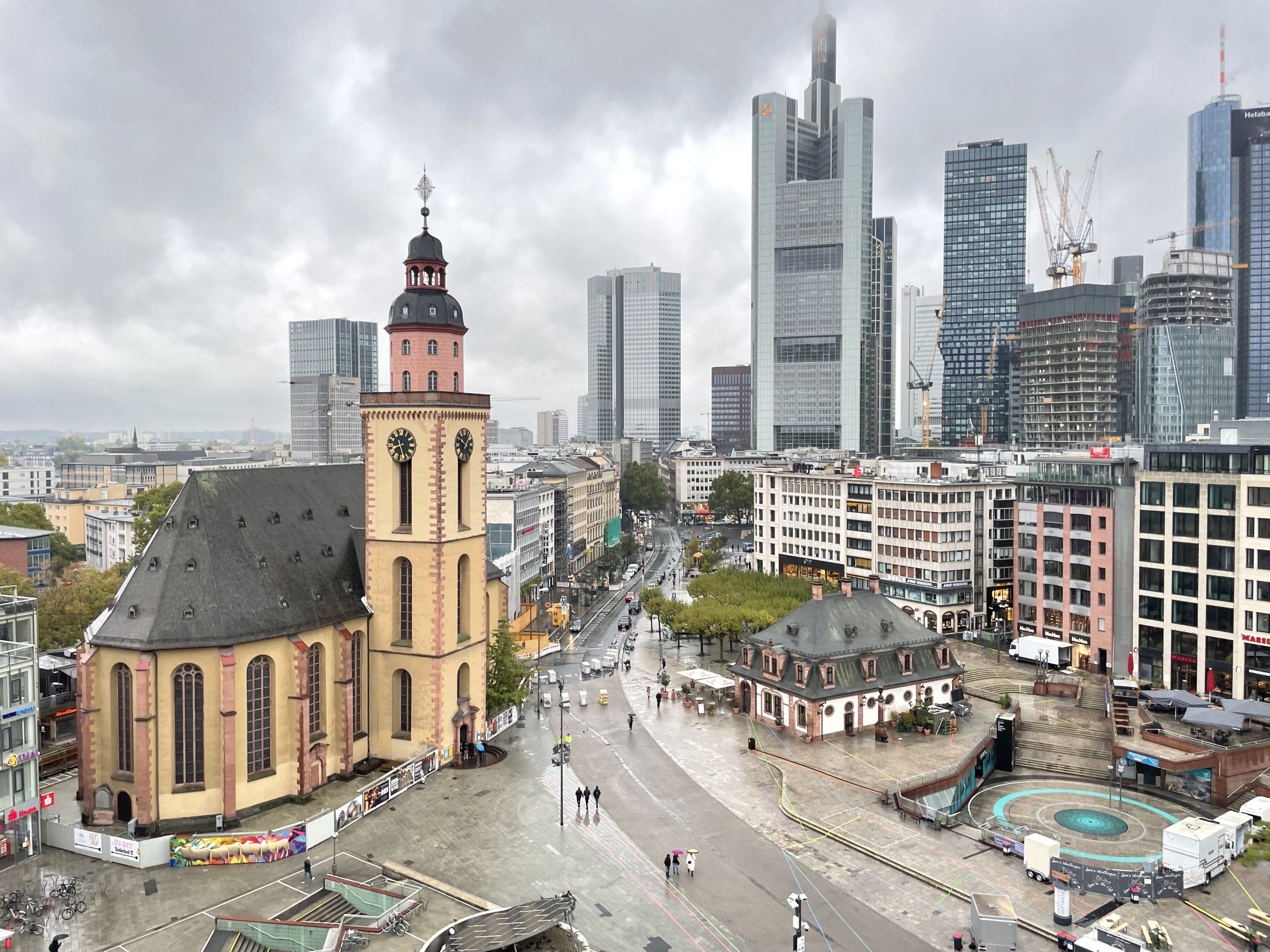
In any case, the trams in Frankfurt are very good and on time. The old town is beautiful despite the rain:
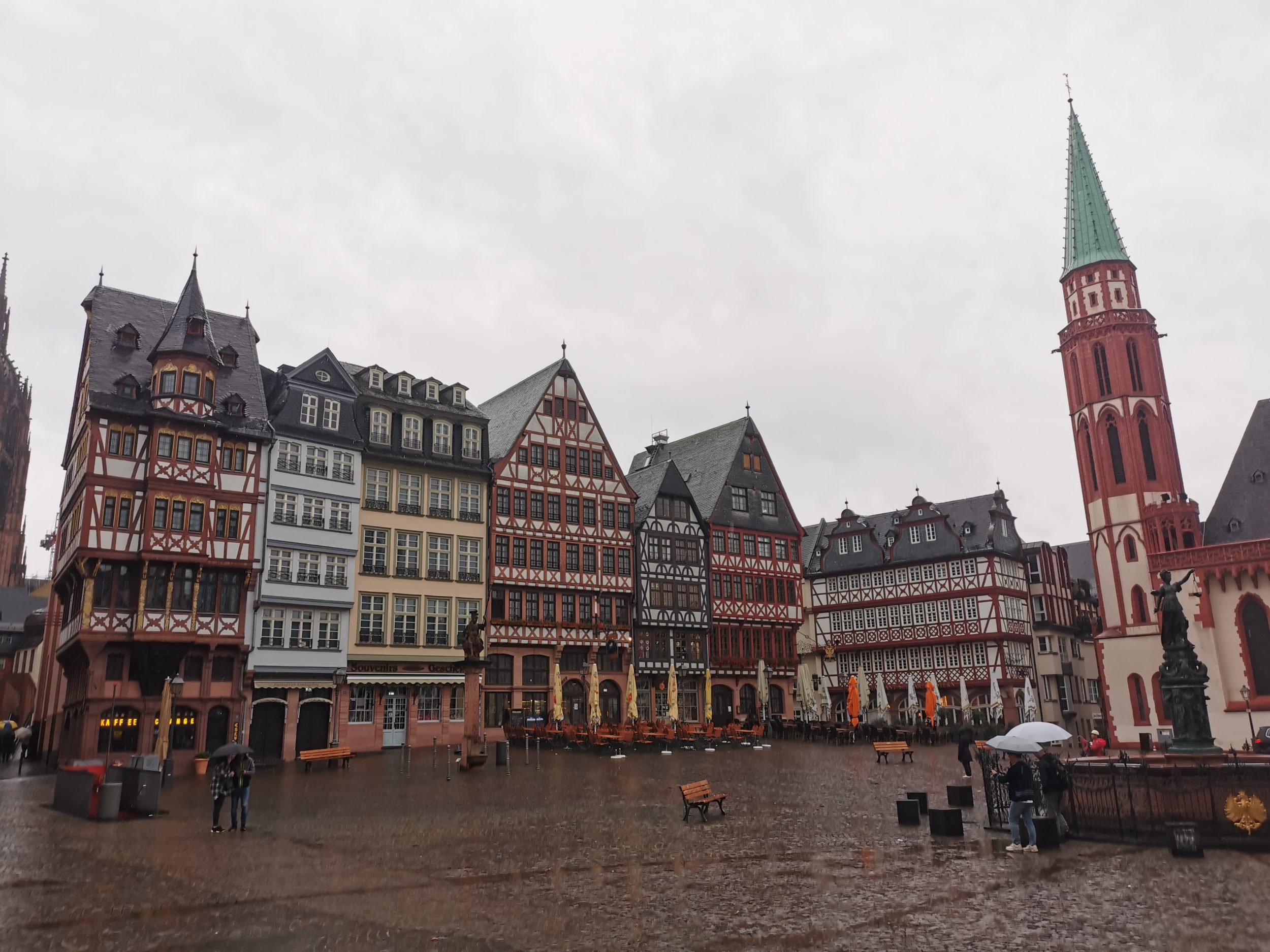
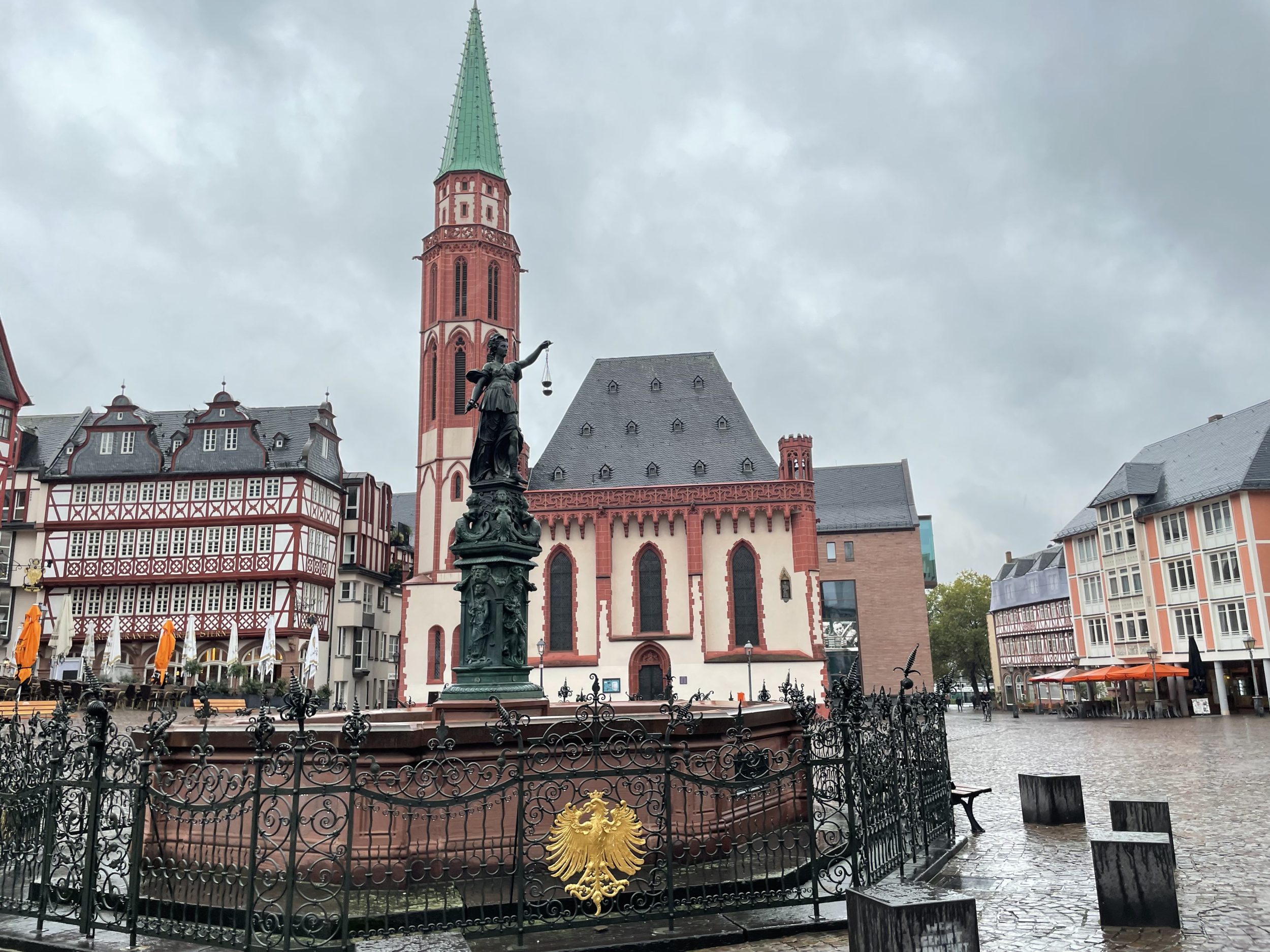
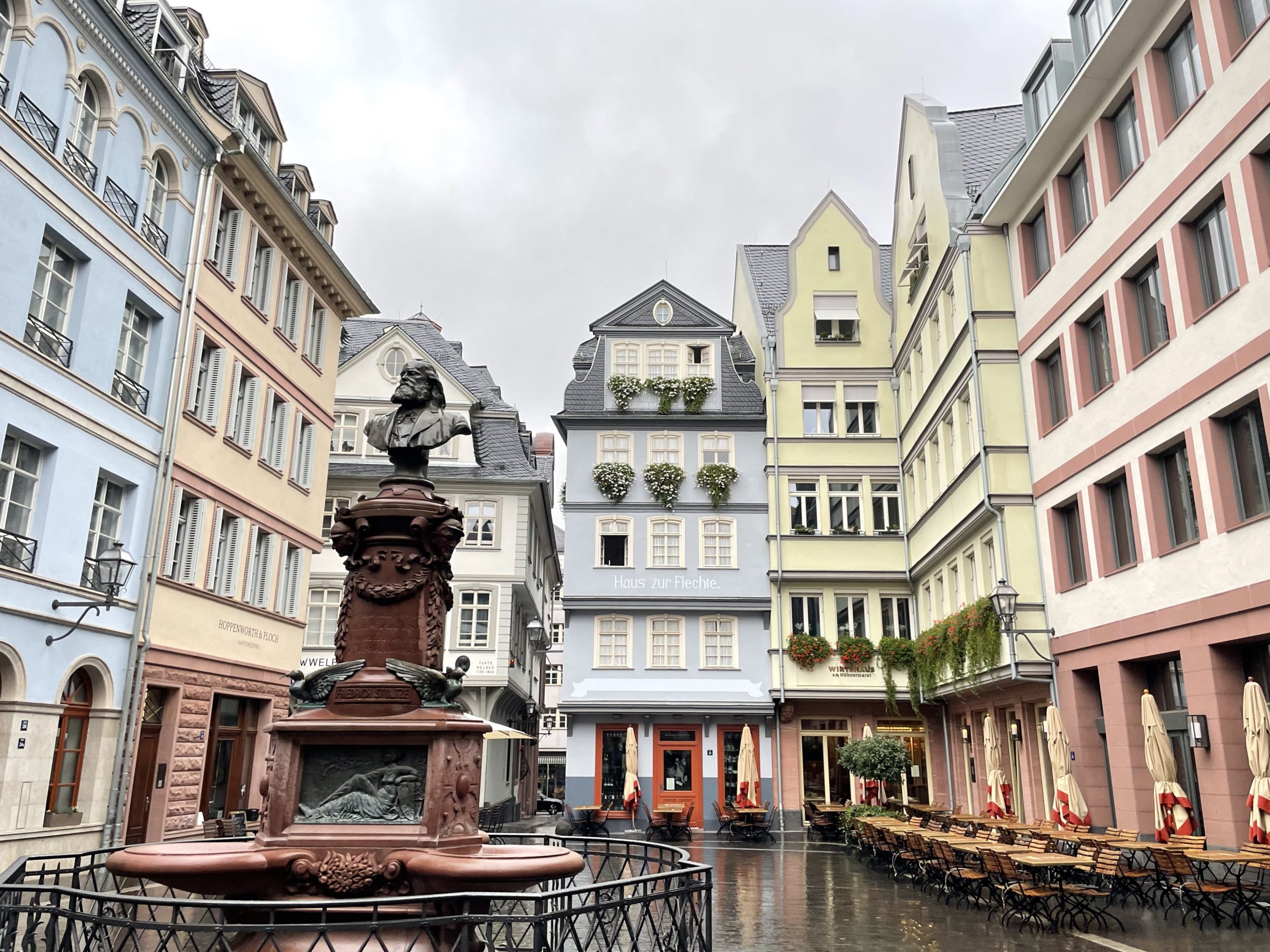
Since it’s raining more and more, I have to buy an umbrella and we end up in a shopping mall whose rooftop offers a very nice view over the city, very modern and concrete.
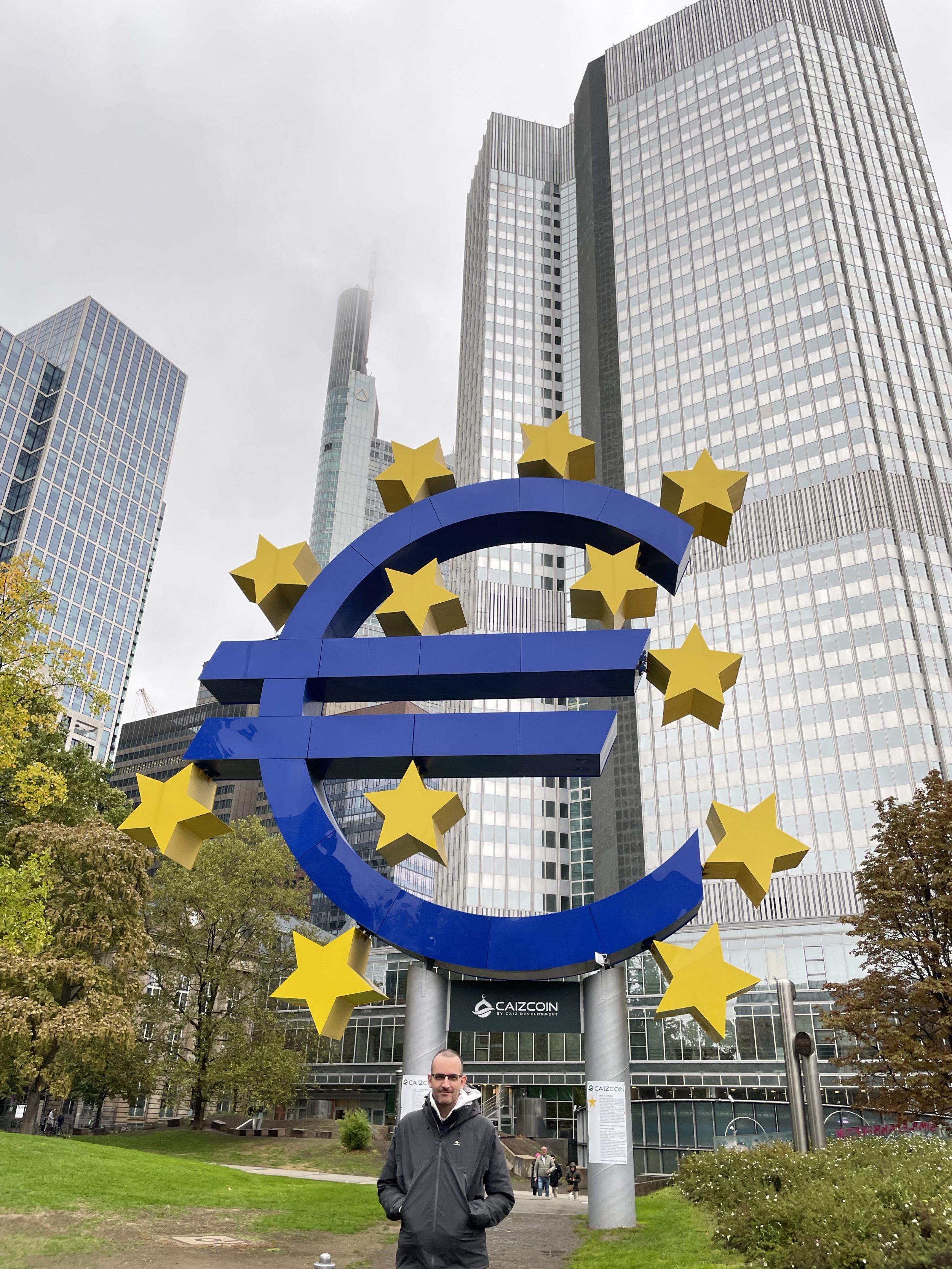
On the way back, JB insists on stopping to take a photo in front of the € sign of the European Central Bank. Given how much the euro is losing value right now, JB struggles to muster a big smile, sorry sorry!
Mainz
The train between Frankfurt and Mainz is a sort of commuter train, so you can’t buy tickets via an app, but at the station entrance, like a metro ticket. We’re overloaded (we have to bring stuff for my sister in France), but the train is packed with (well-lubricated) fans heading to a football match (this train also serves the stadium). Miraculously, we manage to get on with our 3 suitcases and even find a seat 🙂 That’s why I wish we’d gone to Mainz first with the luggage.
Gutenberg Museum
Mainz is one of my favorite cities from my short road trip by train in Germany in March 2020 (cf. my travel itinerary). Unfortunately, the day I went, the museum I most wanted to visit was closed. To get my revenge, I visited it twice: Gutenberg Museum. The entrance fee is very affordable: €5, and from memory, the audio guide rental (in French) costs €3.
A quick aside for our regular readers: you’ll see a lot of approximations in all the 2022 travel logs, because after JB’s emergency surgery, and a difficult year, I had such a shock that my memory deleted all non-essential events from the previous 12 months, and since then, I have the memory of a goldfish. I no longer remember prices, bus/tram numbers, or place names, whereas before I had all that in my head. All articles written after August 2022 will be without prices/tariffs lol until further notice 😀
I highly recommend getting the audio guide because a lot of things aren’t written down; you only have access to them via the audio guide.
The Gutenberg Museum is a must-visit because printing was a major advancement. The idea of printing with individual letters wasn’t new (in Asia), but Gutenberg found a much more efficient alloy to produce thousands of metal letters in a very very short time (to learn more about matrices, fonts, letters, etc., read my travel log at the printing museum in Antwerp here).
Even in Gutenberg’s time, Gutenberg Bibles were highly prized because they were of great quality and cheaper than hand-copied Bibles. He used particularly thick (and expensive) paper. His font was beautiful and legible. To achieve perfectly justified text, you had to play with the spaces between letters and have slightly thinner letters than others. All this took an enormous amount of time to prepare the letters for a single page. The columns were of perfectly equal widths. Gutenberg Bibles only exist in about 180 copies in total, so they are very rare. At that time, Bibles were too large, so they were divided into two volumes. While the regular letters were printed, the illuminated initials and decorations were done by hand. Customers could choose their decoration style.
These Bibles are so rare that even the Gutenberg Museum didn’t have one at first, and had to buy them at auction (they have 3, including a complete Bible) and bring them back to Germany in a carry-on bag. These treasures are kept in a huge safe and you can’t take photos of them, so here are official photos from the museum’s website. These are 42-line Bibles.
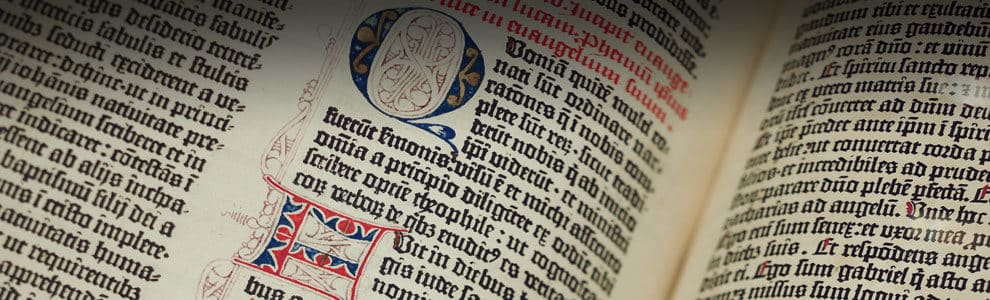
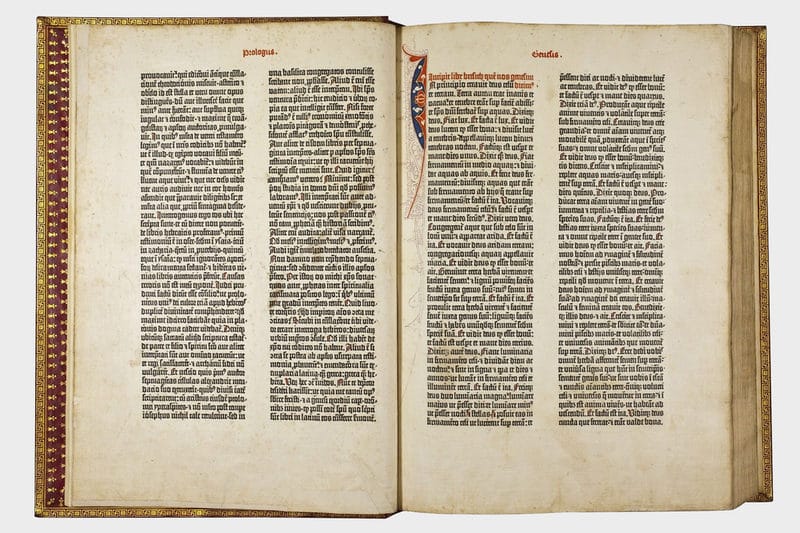
It’s hard to convey how emotional I was to see them in person. It’s like when I saw the staff of Muhammad at the Topkapi Museum in Turkey, I couldn’t believe my eyes. An incredible transformation affecting all of humanity can be represented by an object that we can admire with our own eyes.
Down in the basement, there are regular live demonstrations showing the printing process. Someone melts metal and creates a metal letter right before our amazed eyes in just a few seconds. We barely have time to process what’s happening before the letter is already ready!! Imagine how many letters you could create in an hour, and on an assembly line!
Then, a page from the Bible is printed live. The printing press uses a lot of pressure, hence “pressure” in “impression,” and if you don’t apply enough, the letters won’t come out the same color.
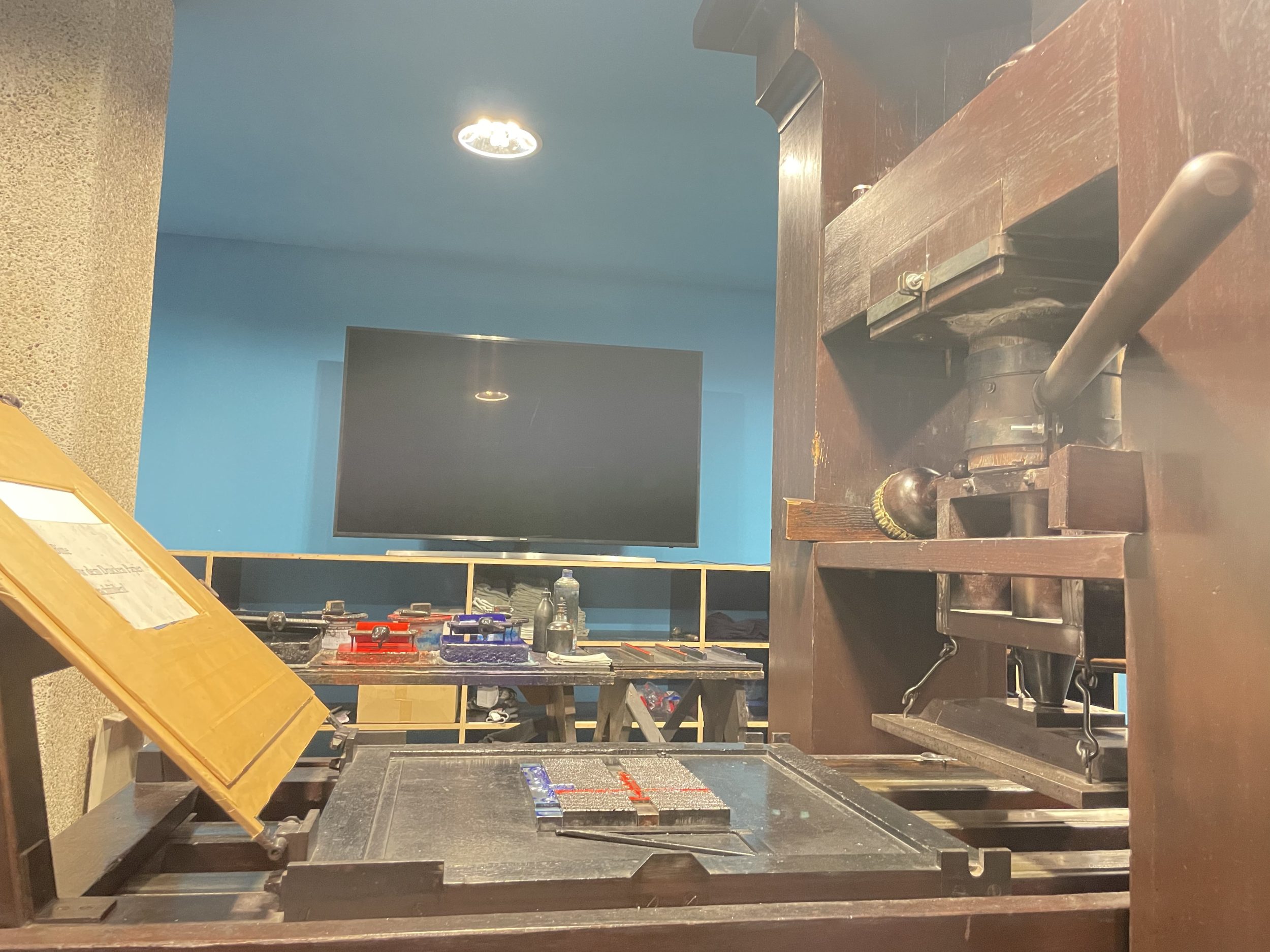
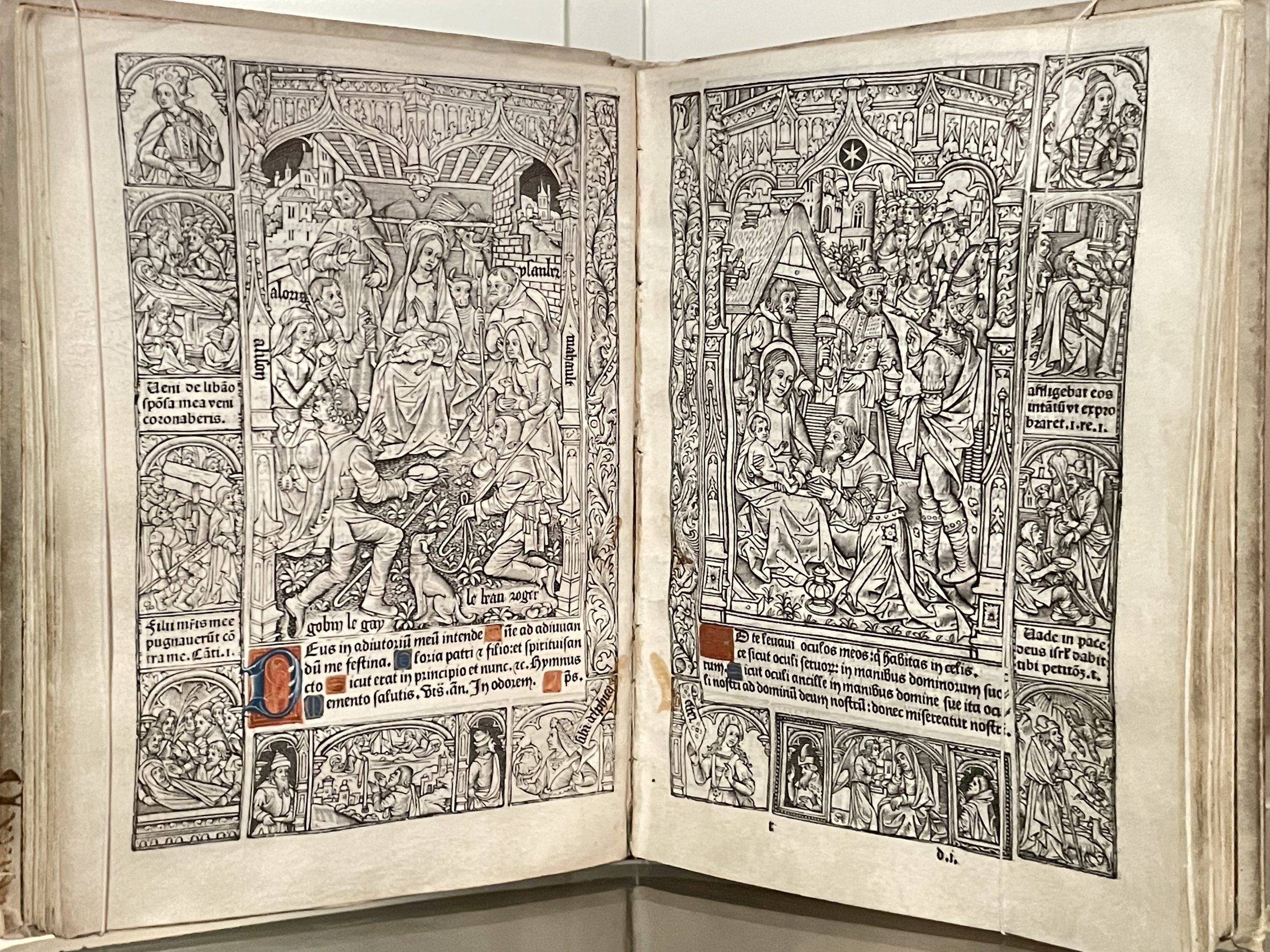
The rest of the museum showcases various printing presses, more recent Bibles, and beautiful books created through etching. What I really loved was that there’s a large section dedicated to bookbinding and to Chinese, Korean, and Arabic printing techniques. In short, I spent hours there, and I loved it so much!
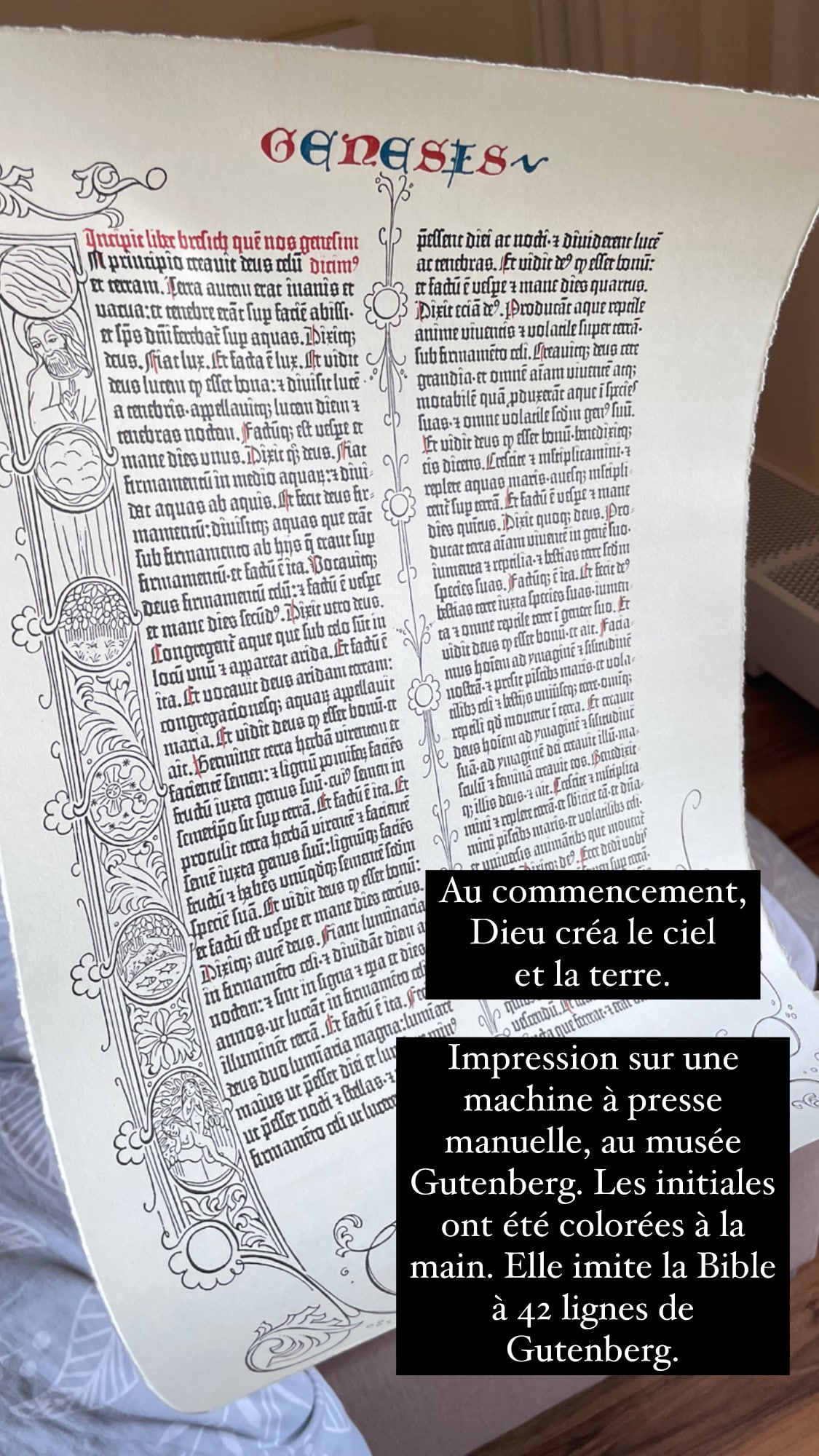
Afterwards, I bought a page from the Book of Genesis at the gift shop, printed the old-fashioned way with some details hand-finished—I find it really beautiful.
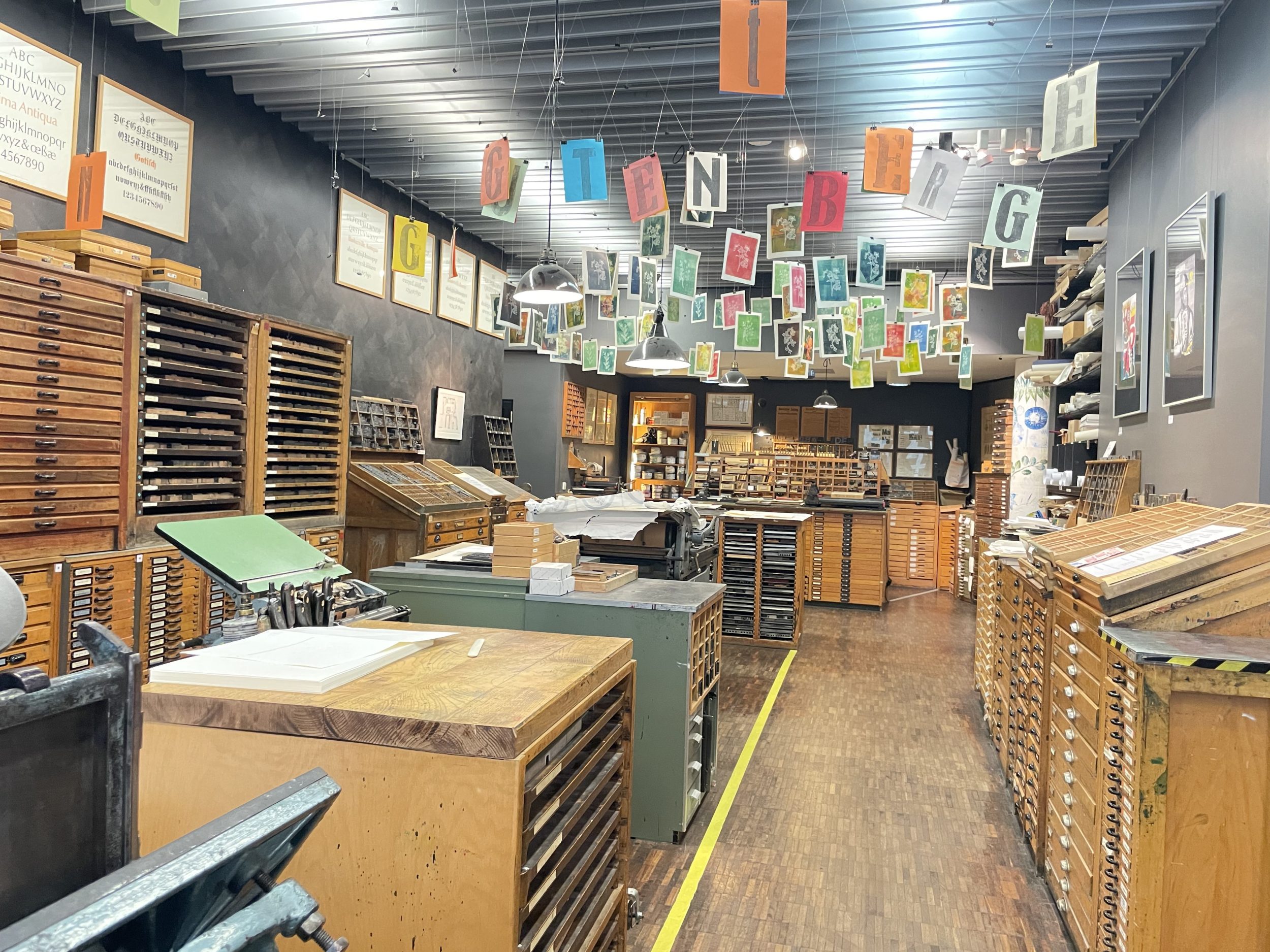
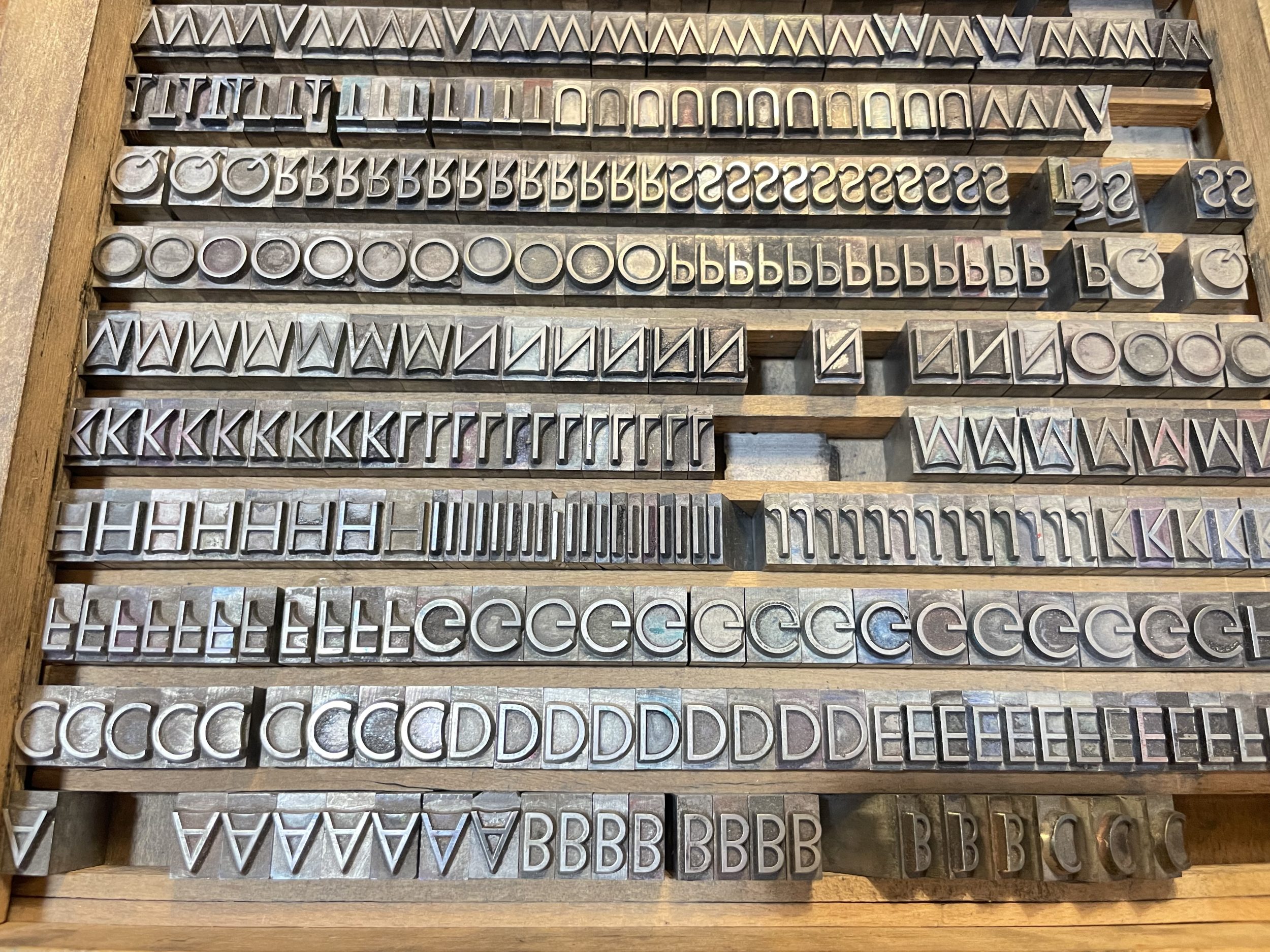
I would have loved to try printing myself, searching for the letters on my own. It’s possible at the printing workshop right next to the museum, but when I stopped by, they told me it’s only by appointment since it takes about 2 hours. But look at this workshop—it’s absolutely gorgeous, and there were tons of letters and spaces in all sizes and fonts.
City Center & Cathedral
The old town and the cathedral are stunning. It’s small, but this city has always had a great vibe; I could live here without any issues.
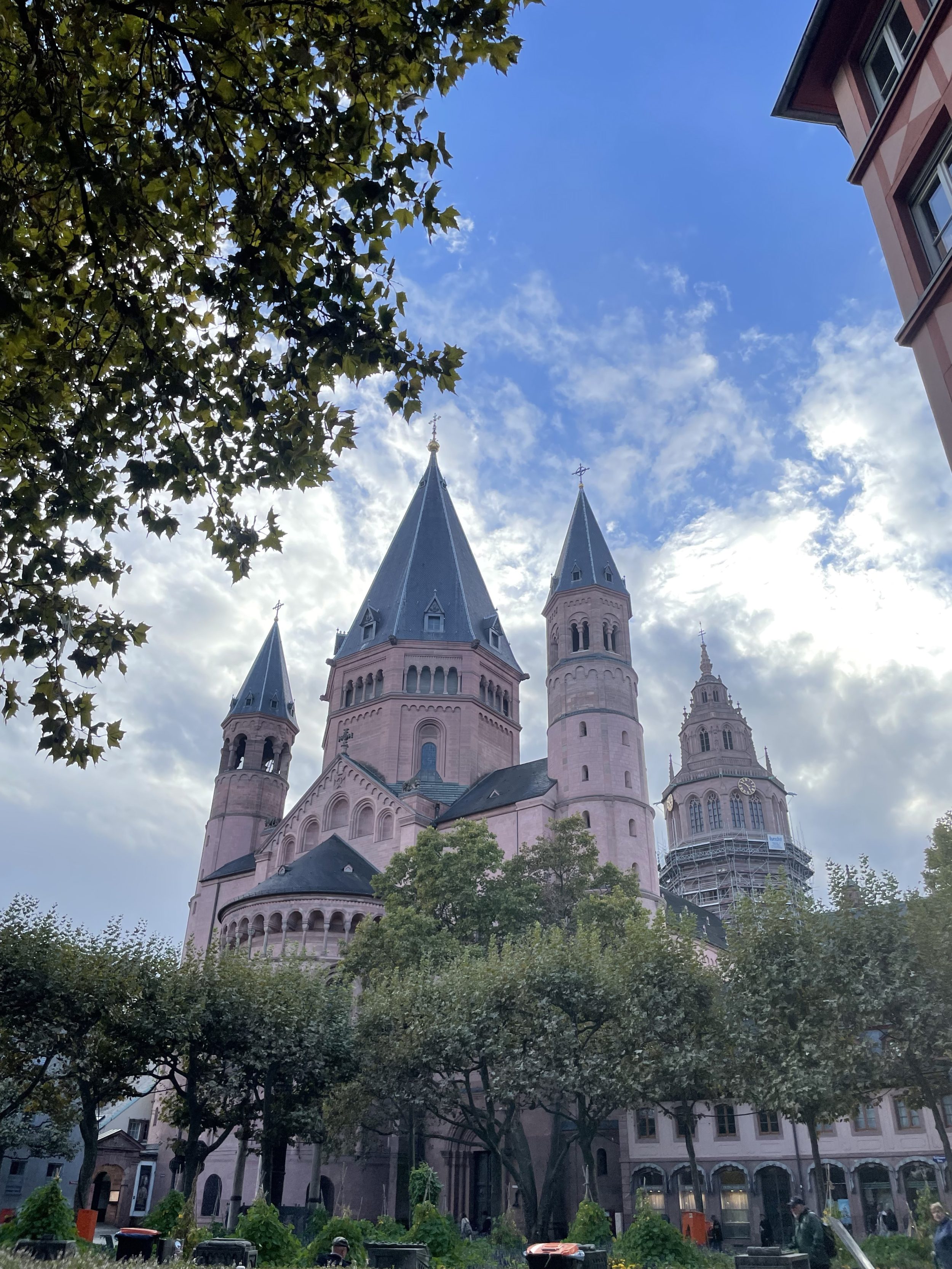
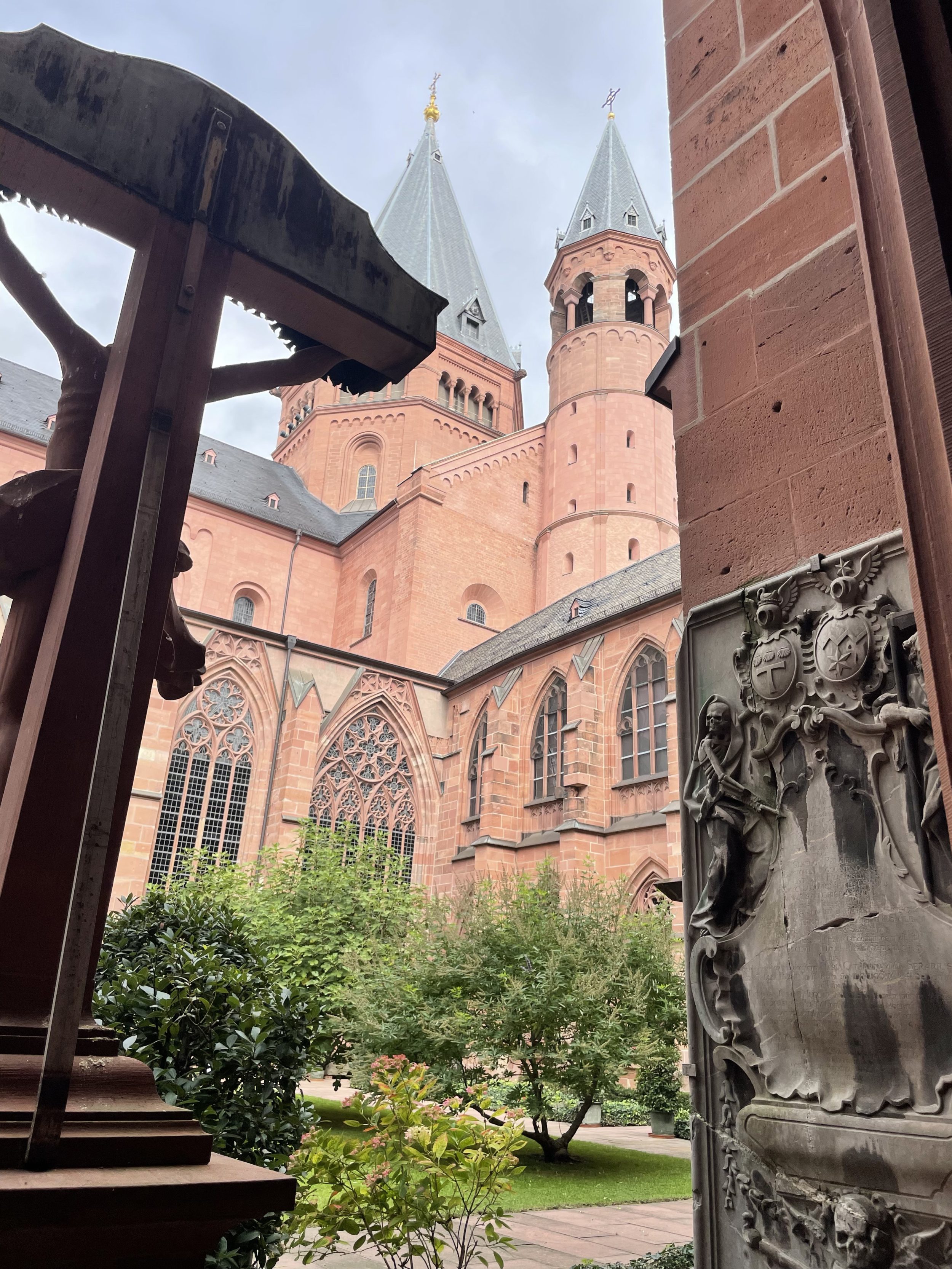
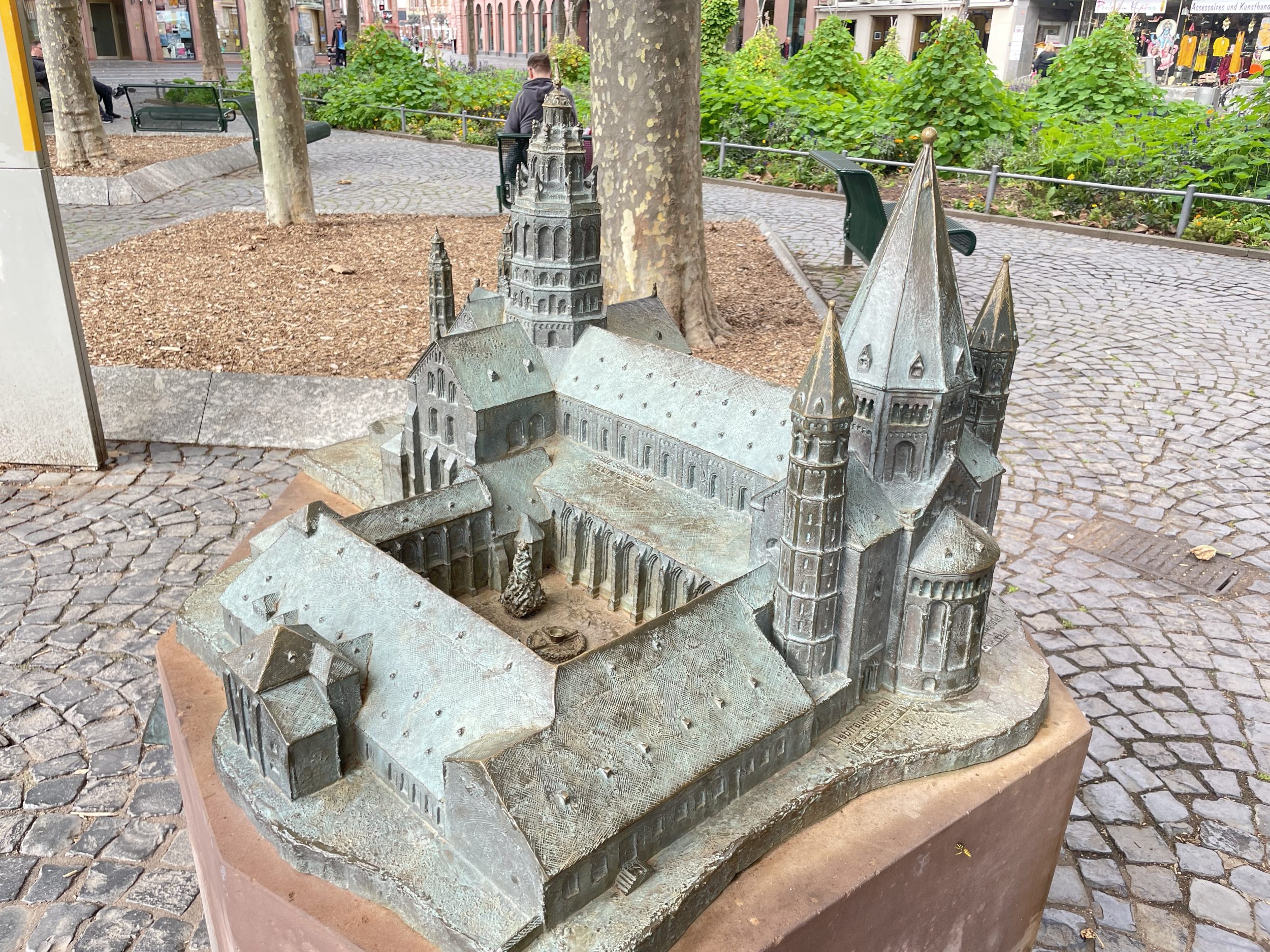
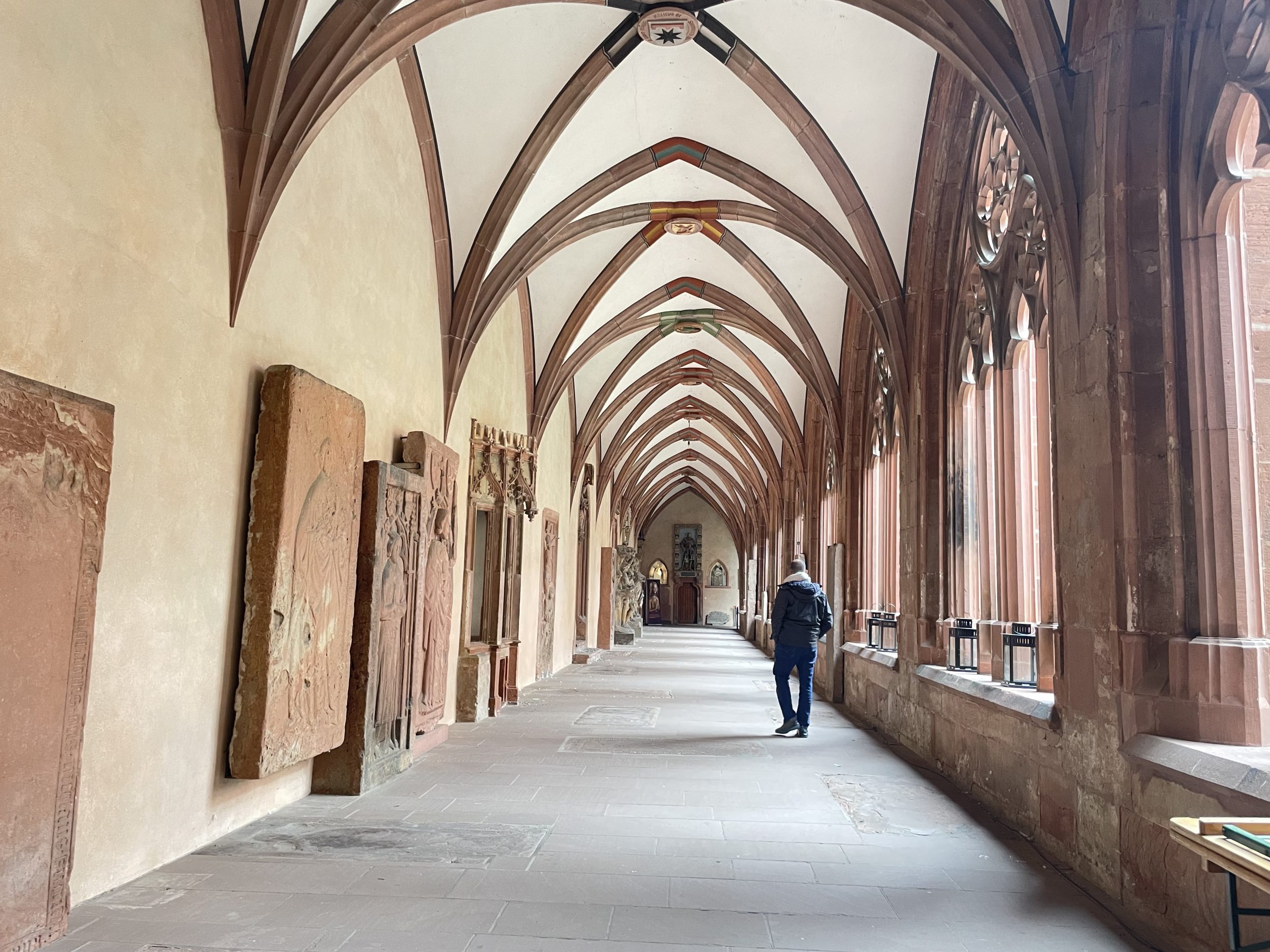
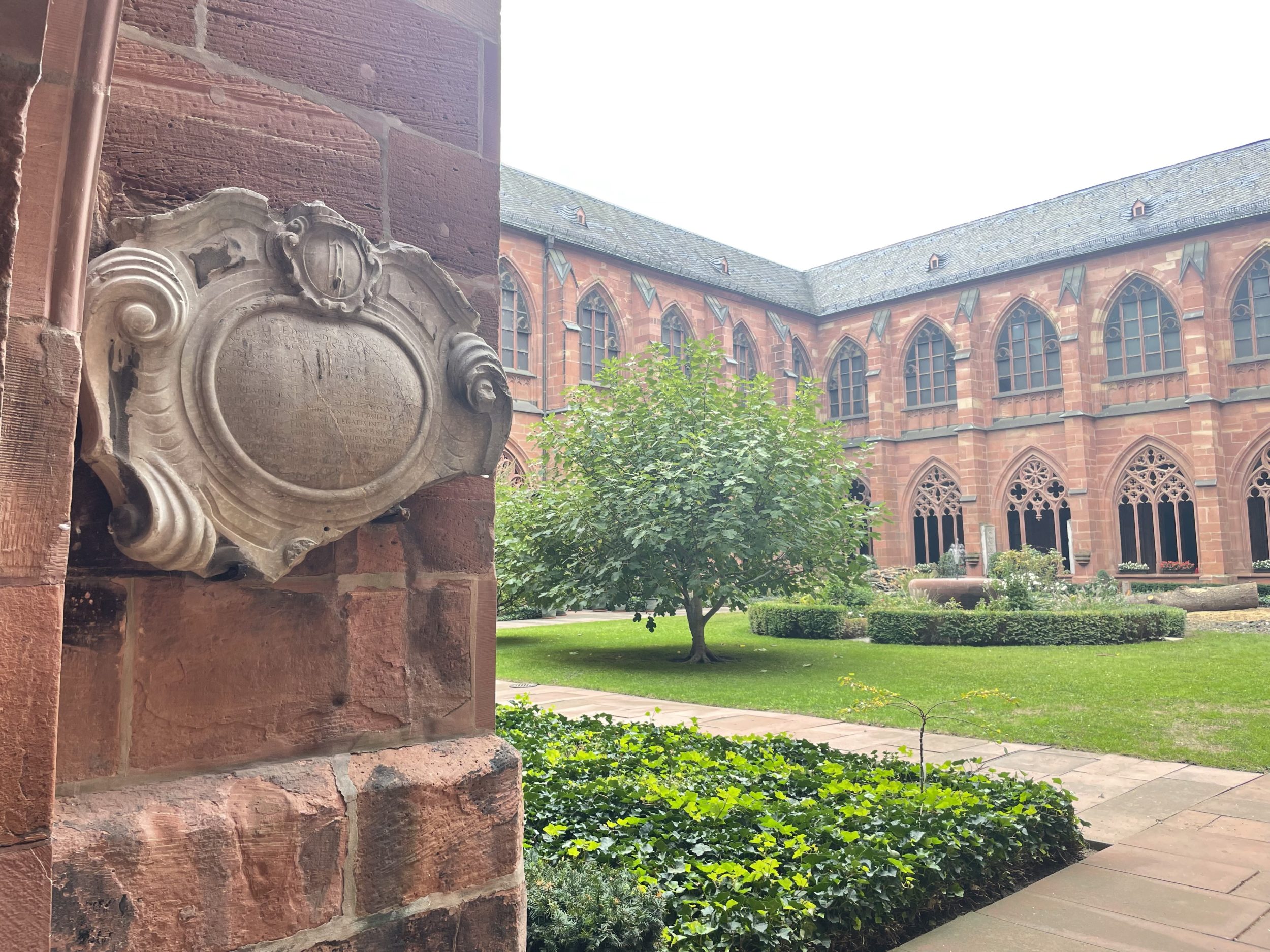
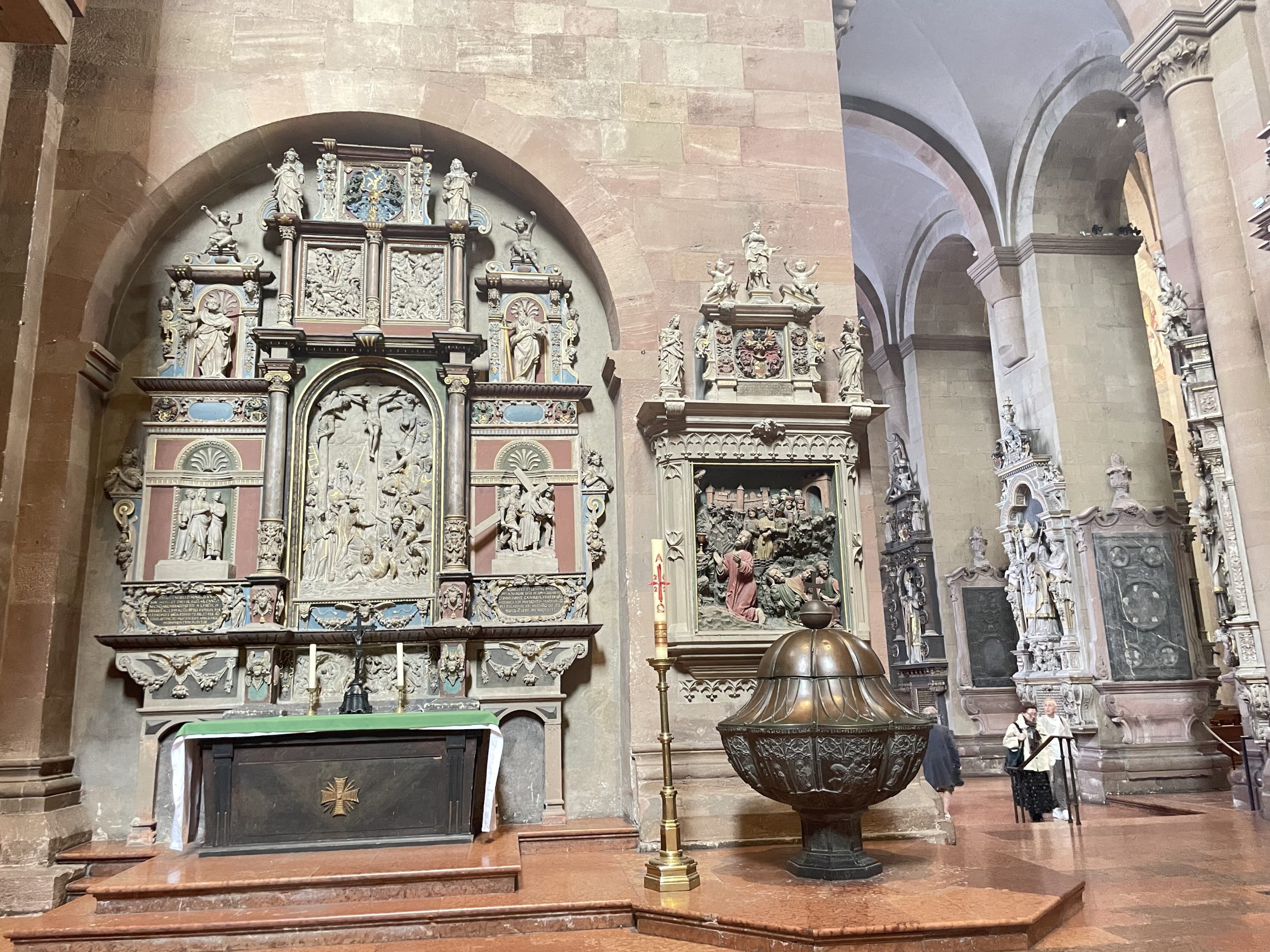
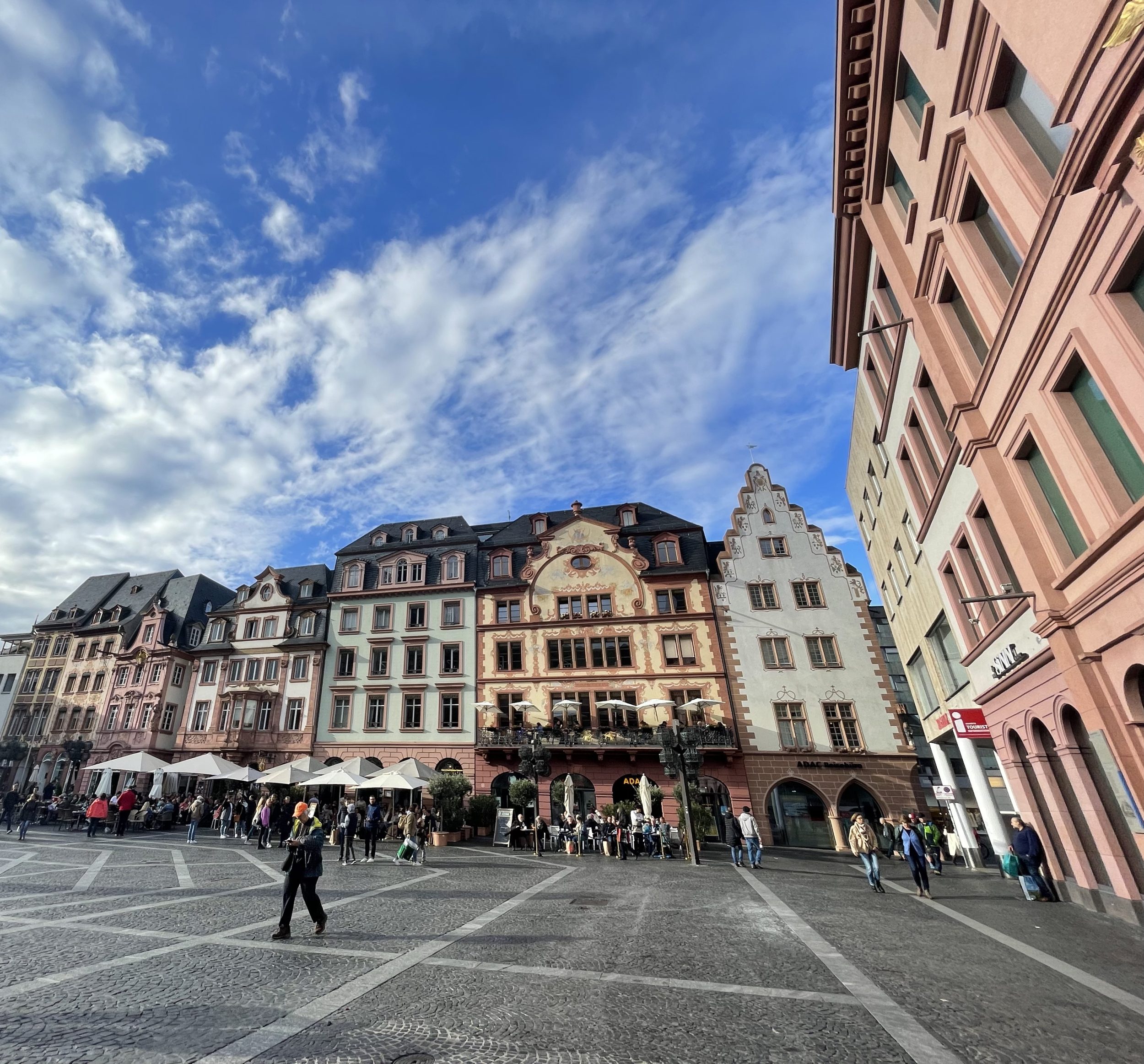
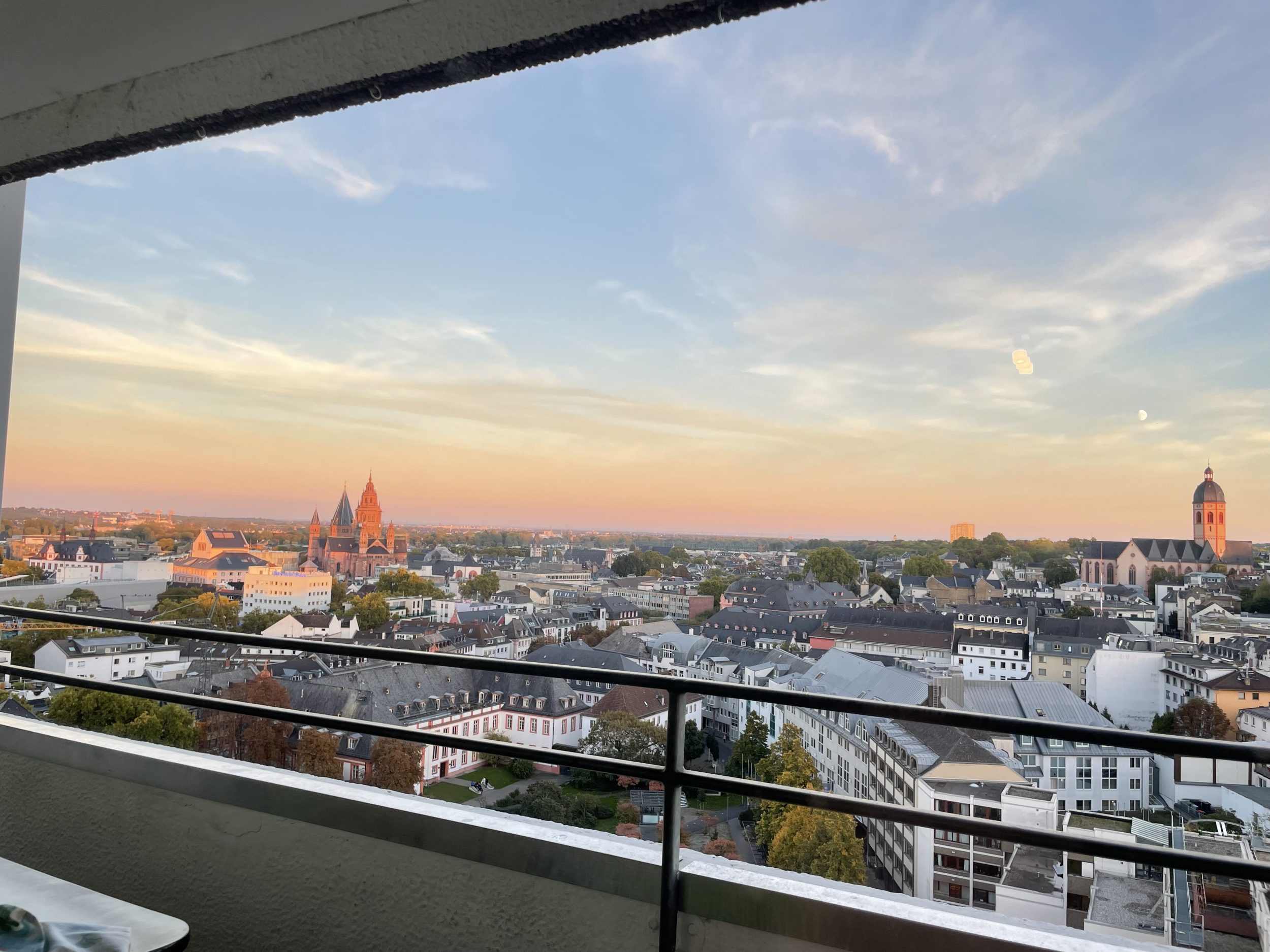
In fact, we spent a week here in an Airbnb, and every day I saw the cathedral from my balcony. The atmosphere is gentle, which feels really good after months in stressful Asian cities.
Part 2: Practical Tips
- There are regular direct flights between Hanoi and Ho Chi Minh City and Frankfurt with Bamboo Airways. Plus, you get 43kg/person of checked baggage, which is huge!
- Germany’s rail network and public transport are excellent; before taking a taxi or an Uber, think about checking Google Maps first.
- Germany is a country that really loves cash, so always have some change on you. Many restaurants don’t accept cards.
- Buy train tickets through the Deutsche Bahn app; it’ll be simpler.

