

3 Days 2 Nights in Sapa (Vietnam): flooded rice paddies in late April
Our friend A. was supposed to join us in Vietnam in 2020, but it was only after 2 years of covid that this project became a reality. We’ve traveled together several times before, but this is the first time he’s meeting my parents and traveling with them, in my country.
Since I’ve often planned and organized our shared road trips all by myself, A. jokingly calls me “Anh Agency“. My parents are amused to see me acting like a tour guide, that is, paying for everything, booking everything, and setting the itinerary every day. It also lets my parents rest a bit and explore off the beaten path, as they used to plan their own trips. But honestly, there’s no agency involved 😉 it’s just me planning the itineraries my way, and the others have no say, that’s all hahaha, so I can spend as much as I want.
Part 1: Travel Journal
Part 2: Practical Tips
Part 1: Travel Journal
Private driver
For this trip, we hired a private Vietnamese driver (and his 16-seat minibus) for 3 days. Since it’s the eve of a long weekend (April 30th & May 1st), rates are a bit higher, but it’s still very reasonable given the recent fuel price hike: 7 million VND for 3 days 2 nights, with unlimited stops between Hanoi and Sapa (more on the budget at the end of the article).
We’re only 5, but choosing a 16-seat vehicle is strategic: we’re heading to the mountains and need a powerful car. The ride is long (5h30 between Hanoi and Sapa) and we need as much space as possible to stretch out and sleep.
Note: unfortunately, I can’t share our driver’s contact details because he only speaks Vietnamese and we weren’t 100% satisfied with his service.
Day 1:
Day 1 itinerary:
– Departure at 6am
– Breakfast
– Arrival in Sapa at noon, hotel check-in MGallery La Coupole (Booking link, Agoda link)
– Cable car (Sun World Fansipan Legend) to the top of Fansipan
– Stop at the Silver Waterfall
– Sunset at the glass bridge Cau Kinh Rong May
– Dinner at the hotel & hotel tour (Booking link, Agoda link)
Early departure at 6am. The night before, since we all worked like crazy to avoid working during the road trip, we barely slept.
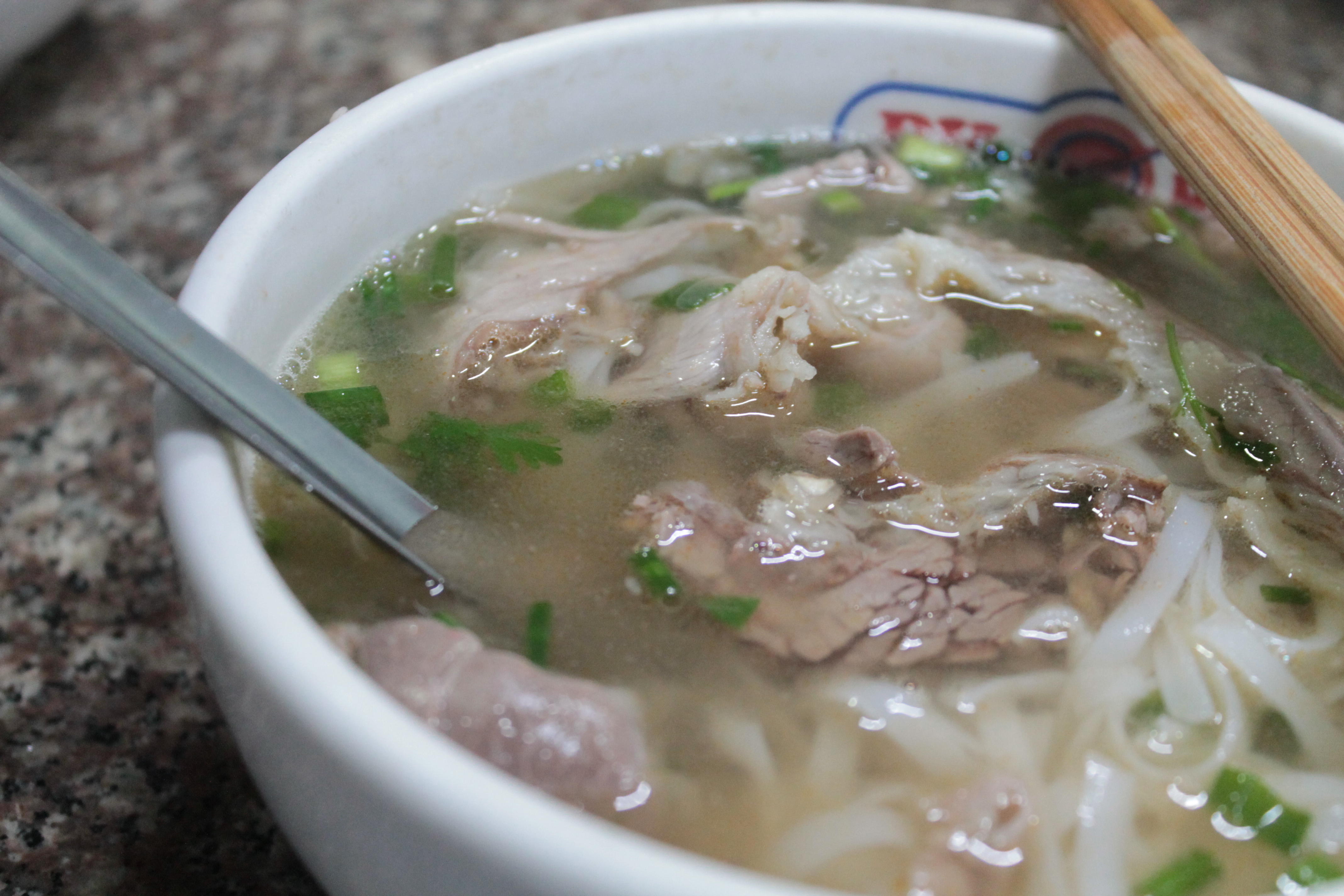
Like all trips to the North, we stop 45 minutes later at a famous Pho place for breakfast. It’s not the most hygienic restaurant in the world, but the beef pho (phở bò chín) with soft-boiled eggs (trứng trần) are very comforting. We make a point of eating well in the morning so we don’t need lunch and have more time to explore.
Before, when the road was bad, you had to take a night train to Lao Cai, get woken up at 5:30am, then take a bus to Sapa. Now, we still get up early, but at least we can take the car and sleep in the car until Sapa. I much prefer this option because I didn’t really like the Vietnamese sleeper train.
The drive between Lao Cai and Sapa is absolutely stunning, but there are many curves. The viewpoints are on the other side of the road, so I think it’s better to stop there on the way back, otherwise it’s too dangerous.
Before the road trip, I checked the weather every day and expected a totally rainy trip. But luck was on our side.
Sinceit’s sunny, we decide to visit Fansipan first and simply drop our luggage at the hotel.
A. scares us by saying he might have left his passport at the hotel in Hanoi. I call his hotel, which says they never keep passports. After an emergency stop to calm everyone down and find that passport playing hide-and-seek, it reappears. Phew. We can continue.
Sun World Fansipan Legend
Fansipan is the roof of Indochina. At an altitude of 3143 meters, Fansipan was the challenge of all seasoned trekkers.
Before, reaching its summit required between 2 days and a week of trekking (if the weather was bad), with fatal accidents recorded; you needed excellent physical condition. Due to the growing desire of non-trekkers to conquer this peak, the group Sun Group built a cable car and put it into operation in 2016 with the help of Swedish experts. Unlike Ba Na Hills where you saw a lot of human intervention for a very impressive cable car, here, apart from the huge support pillars, you can barely notice any human footprint. This cable car stretches over 6km and is the longest in Vietnam, and also the most impressive.
To get to the cable car, you have two options:
- take a funicular from our hotel MGallery La Coupole (90,000 VND/person/round trip)
- take our car
We opted for our own car to enjoy ASAP the good weather, because the funicular would have taken much longer.
Here’s the Sun Group cable car station, seen from afar:
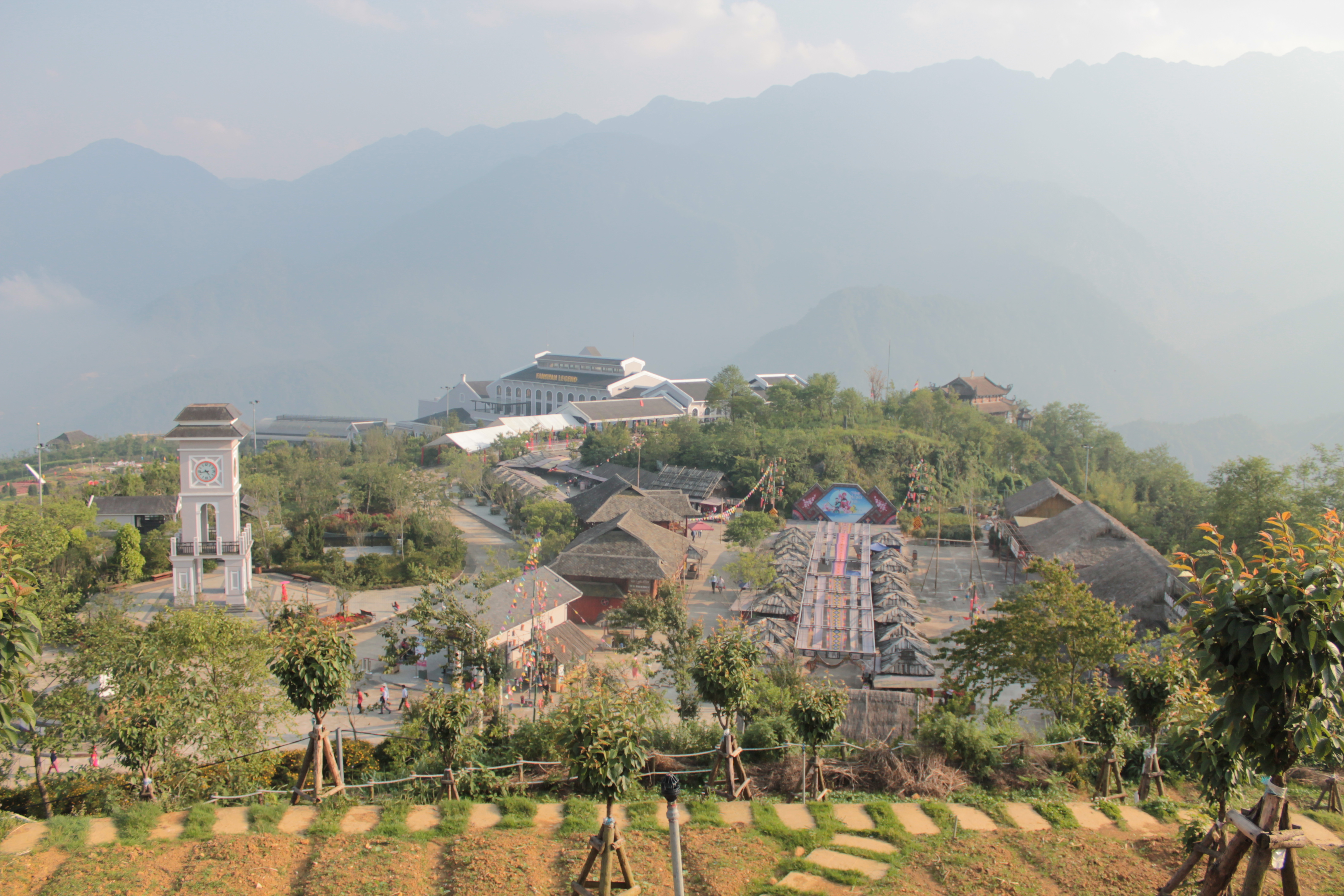
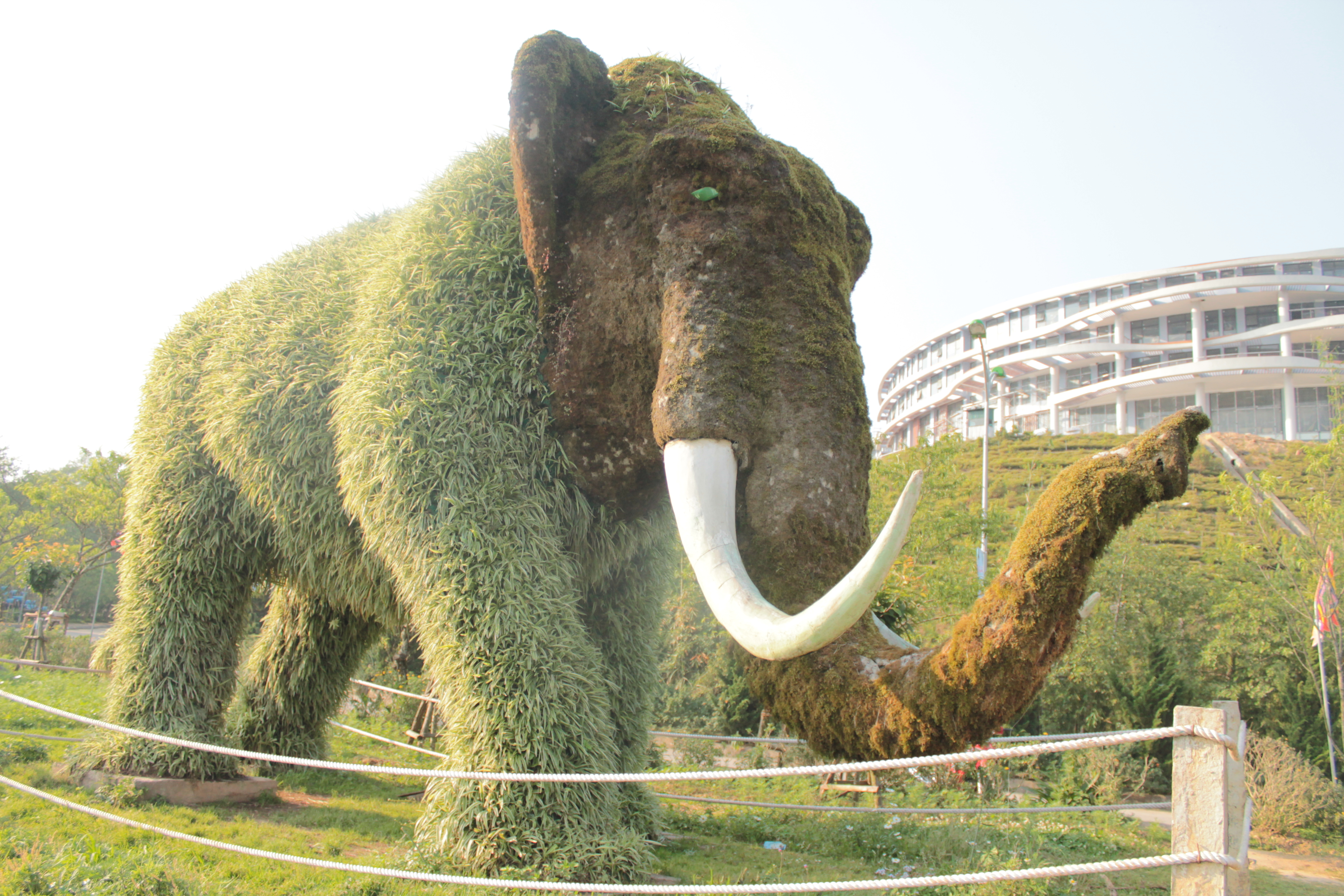
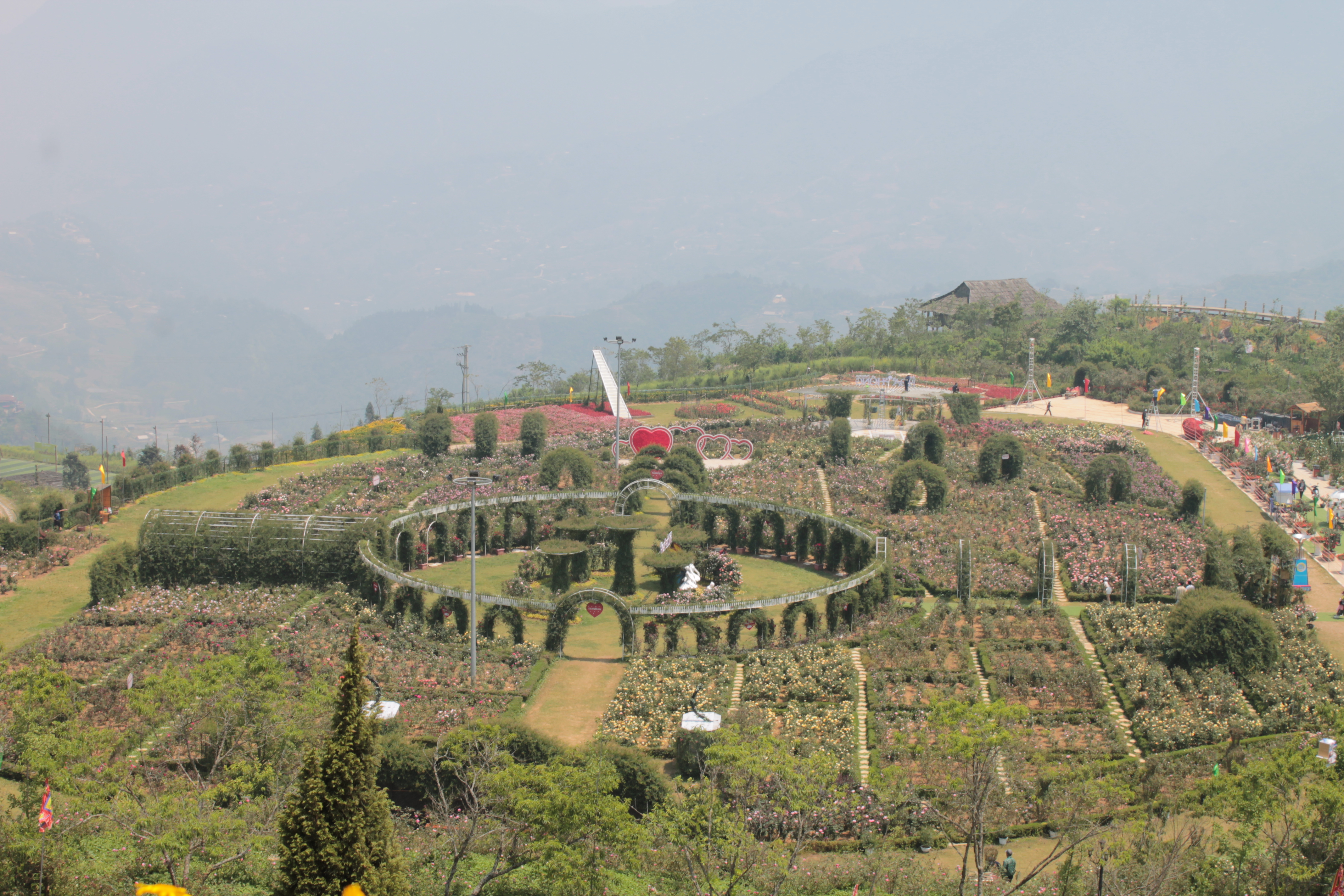
They’ve created some gardens to take as many photos and selfies as you wish. It’s a pastime much appreciated by Vietnamese people.
The ticket costs 737,000 VND/person/round trip. Each cabin can hold about twenty people. Since we travel during the week, before the holidays, we have a private cabin for the 5 of us. Luxury!
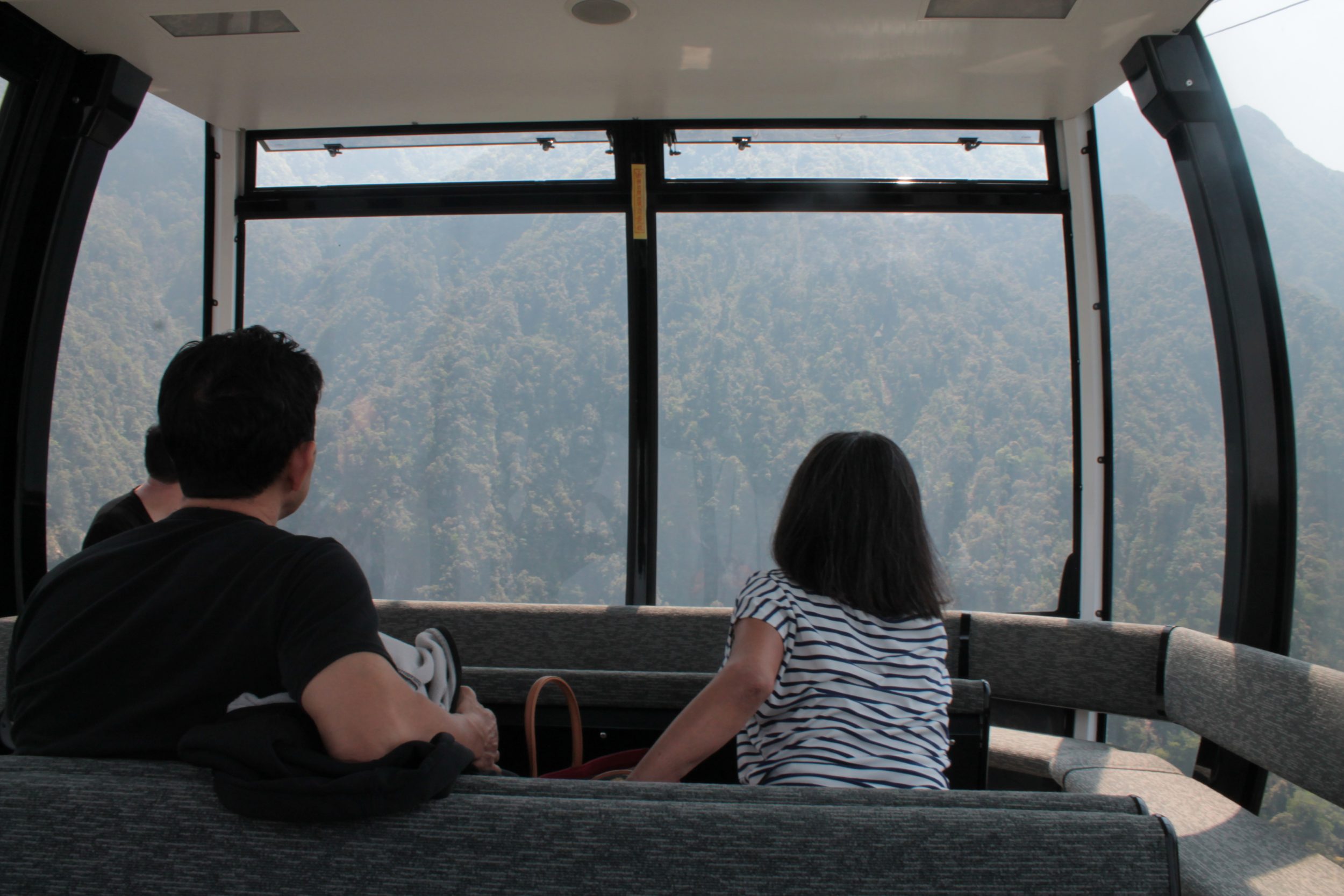
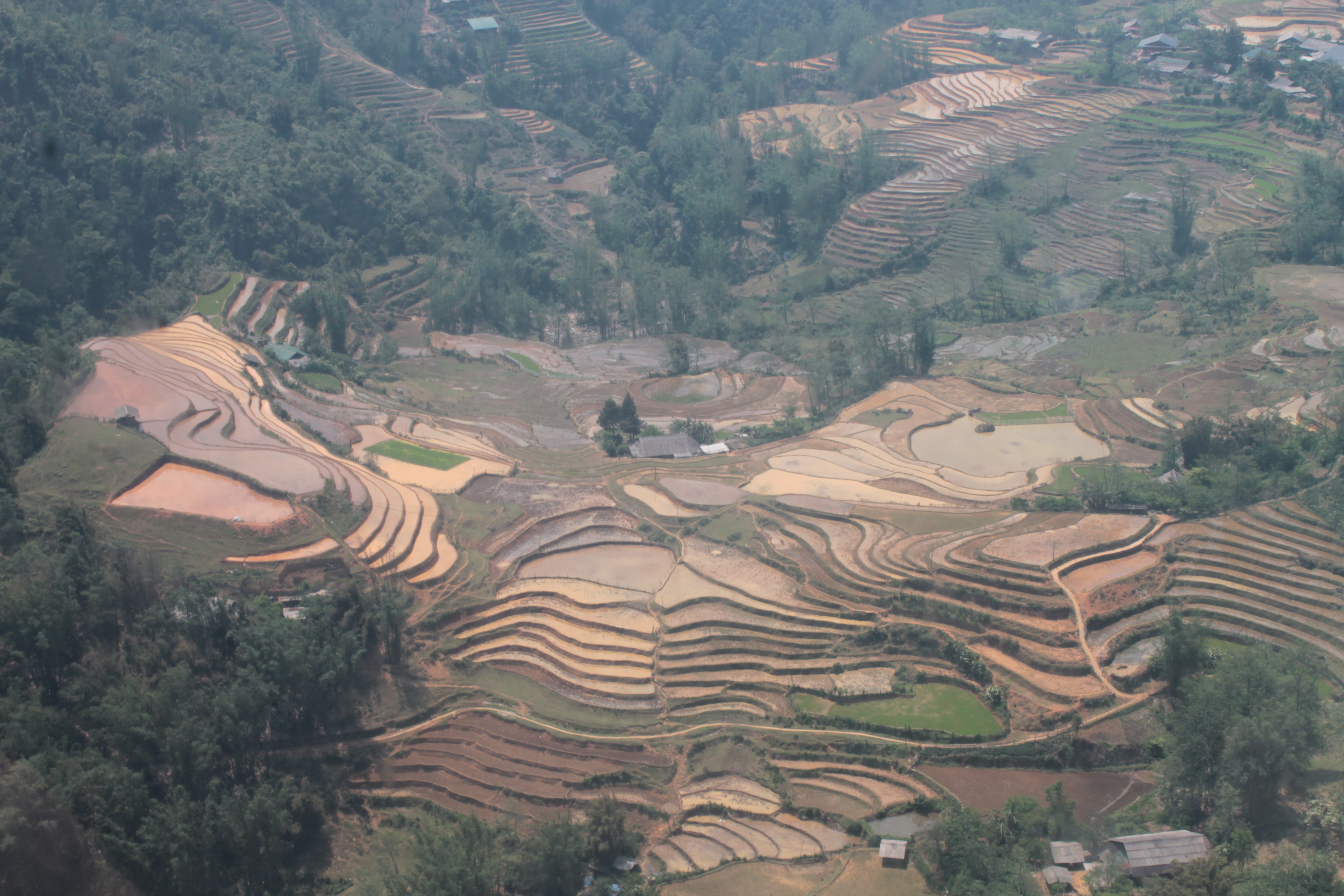
From the first seconds, we are dazzled by the beauty of the landscapes unfolding before us. At the end of April, the rice paddies start to be flooded, ready to welcome the rice sprouts. In a few weeks (mid-May), all these flooded paddies will be green. And in June, they’ll be all yellow and it’ll be magnificent.
We go from one mountain to another, the cabin is very stable because it’s supported by 3 cables (instead of 2 cables like other cable cars).
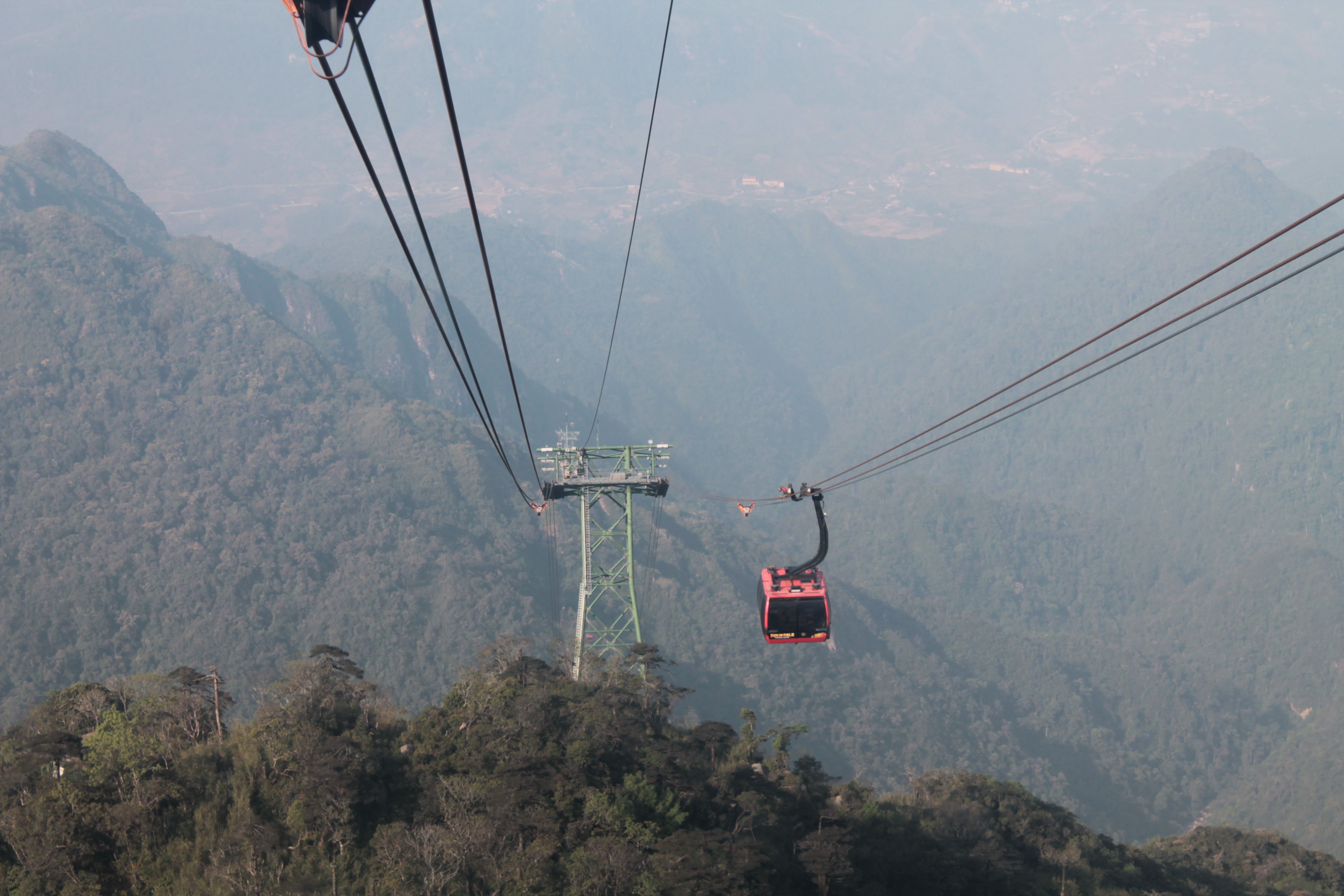
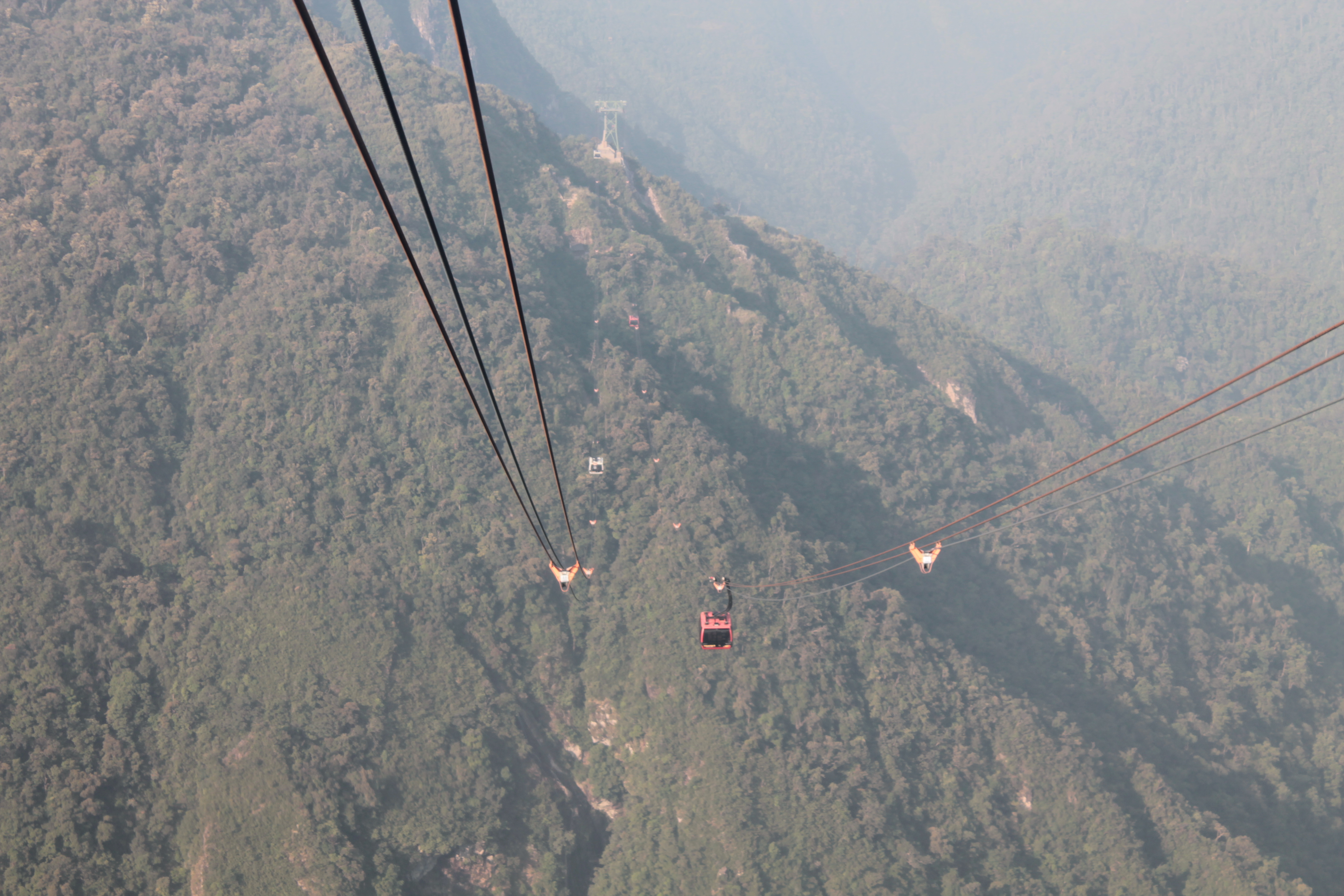
Sometimes, you feel like you’re truly in the void and wonder how this cabin can still be supported when the pillars are so far apart from each other.
I’m sharing the photos I took on the way back because the light was more beautiful and you could see the reflection of clouds and sky on the flooded rice paddies better. A feast for the eyes!
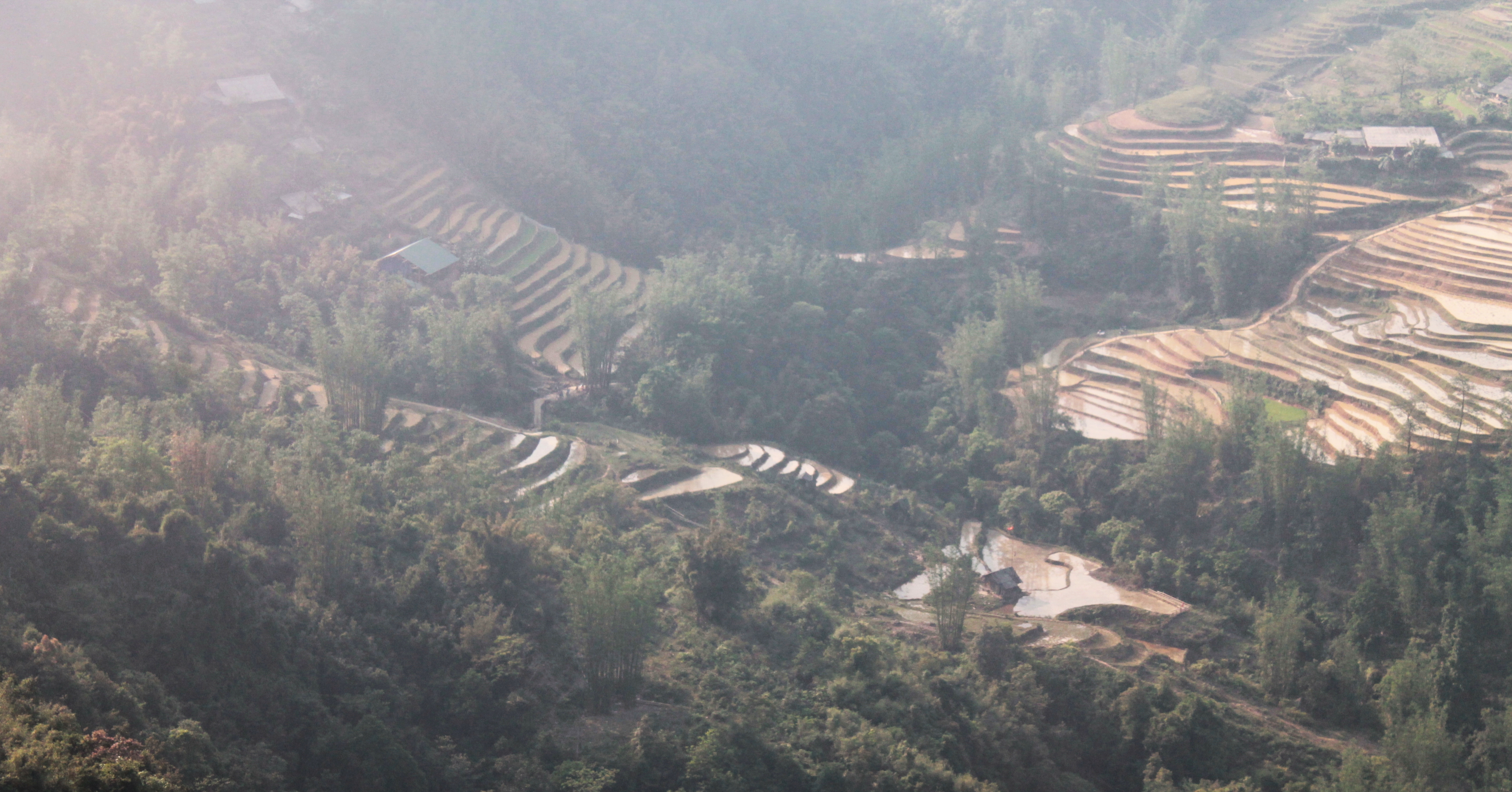
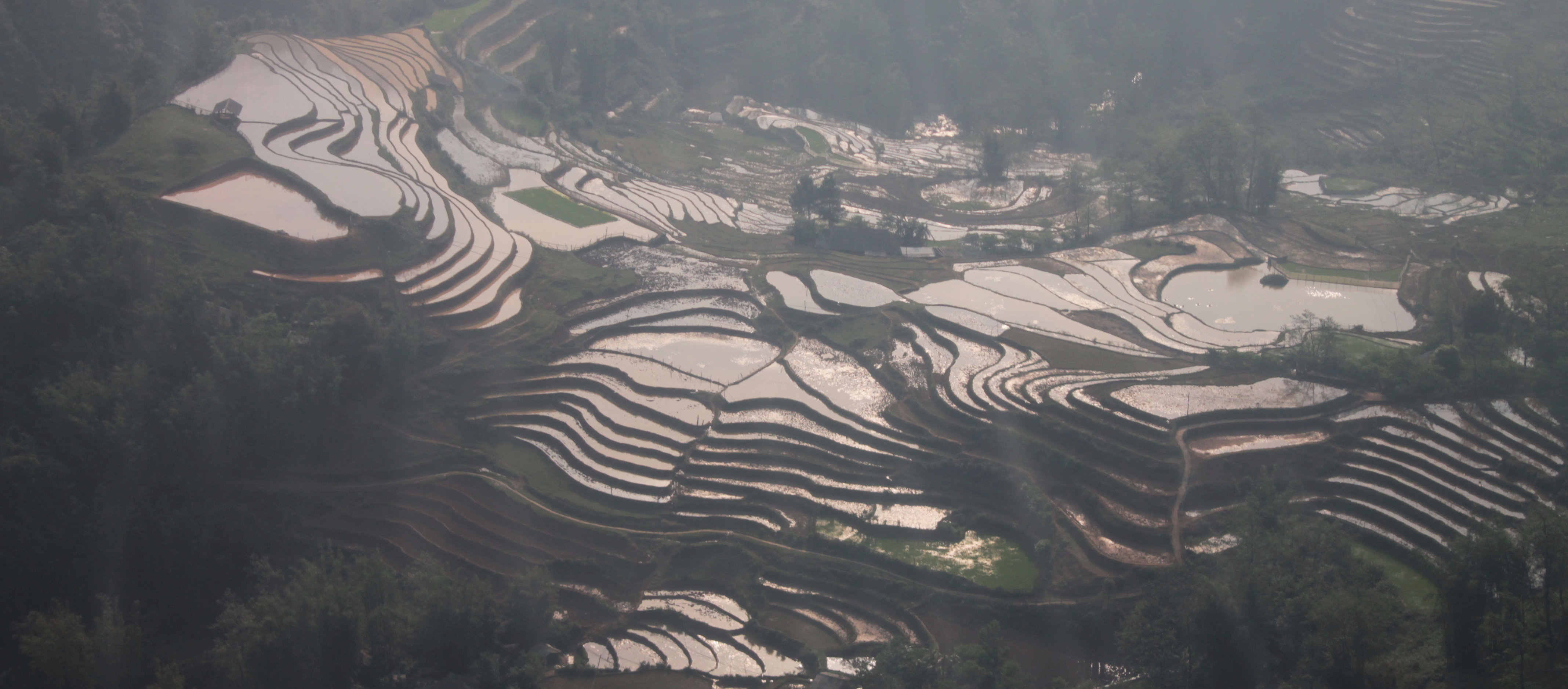
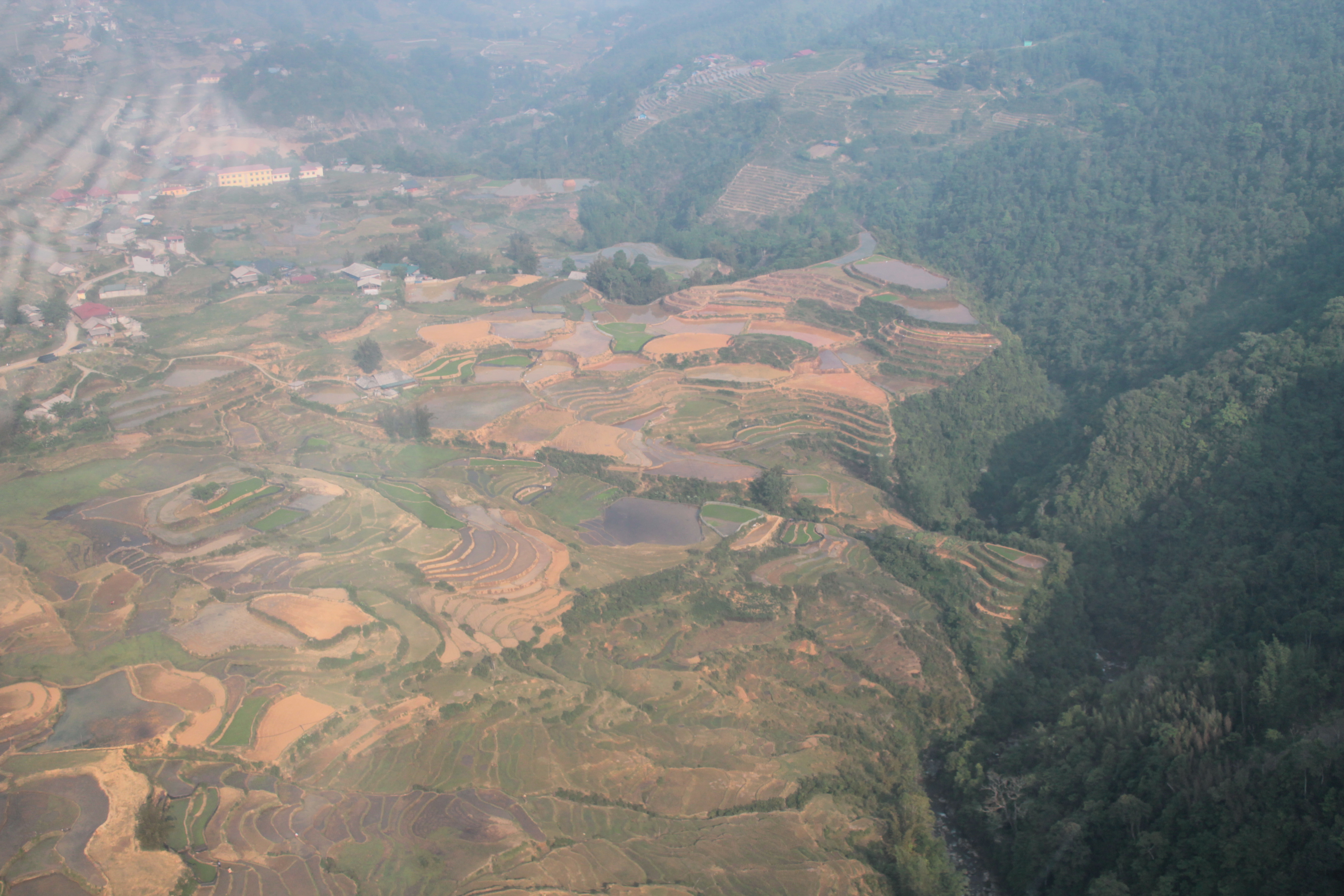
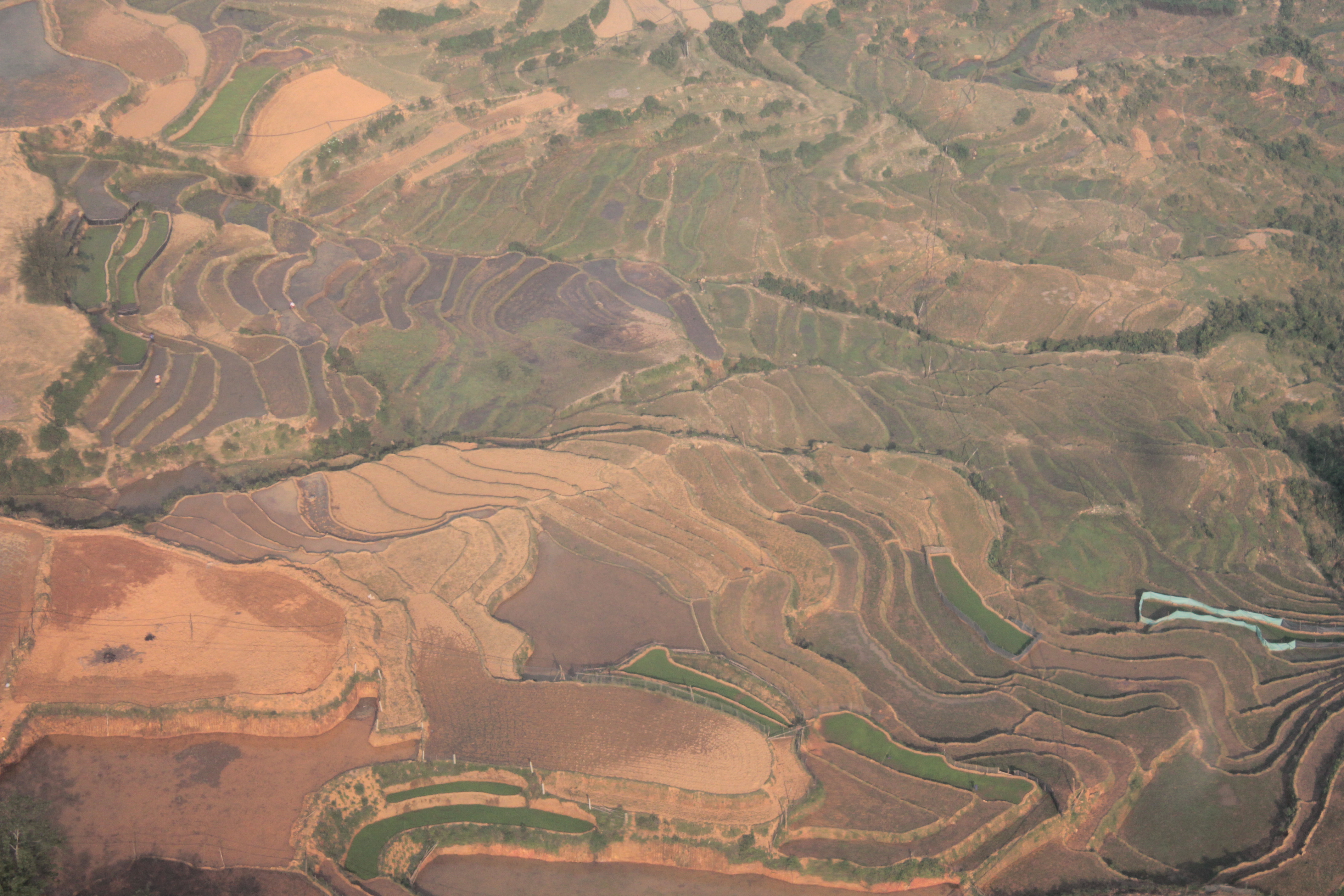
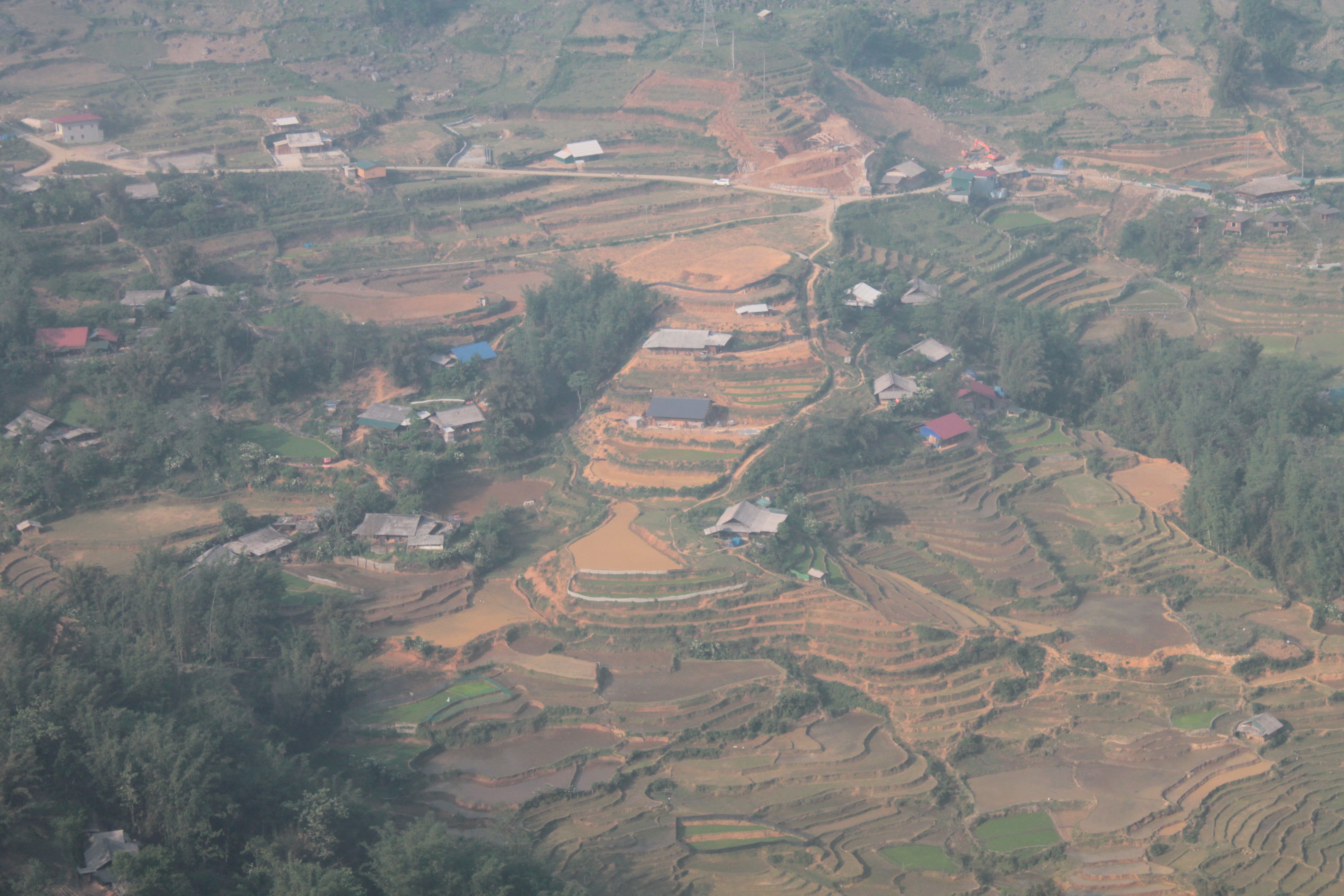
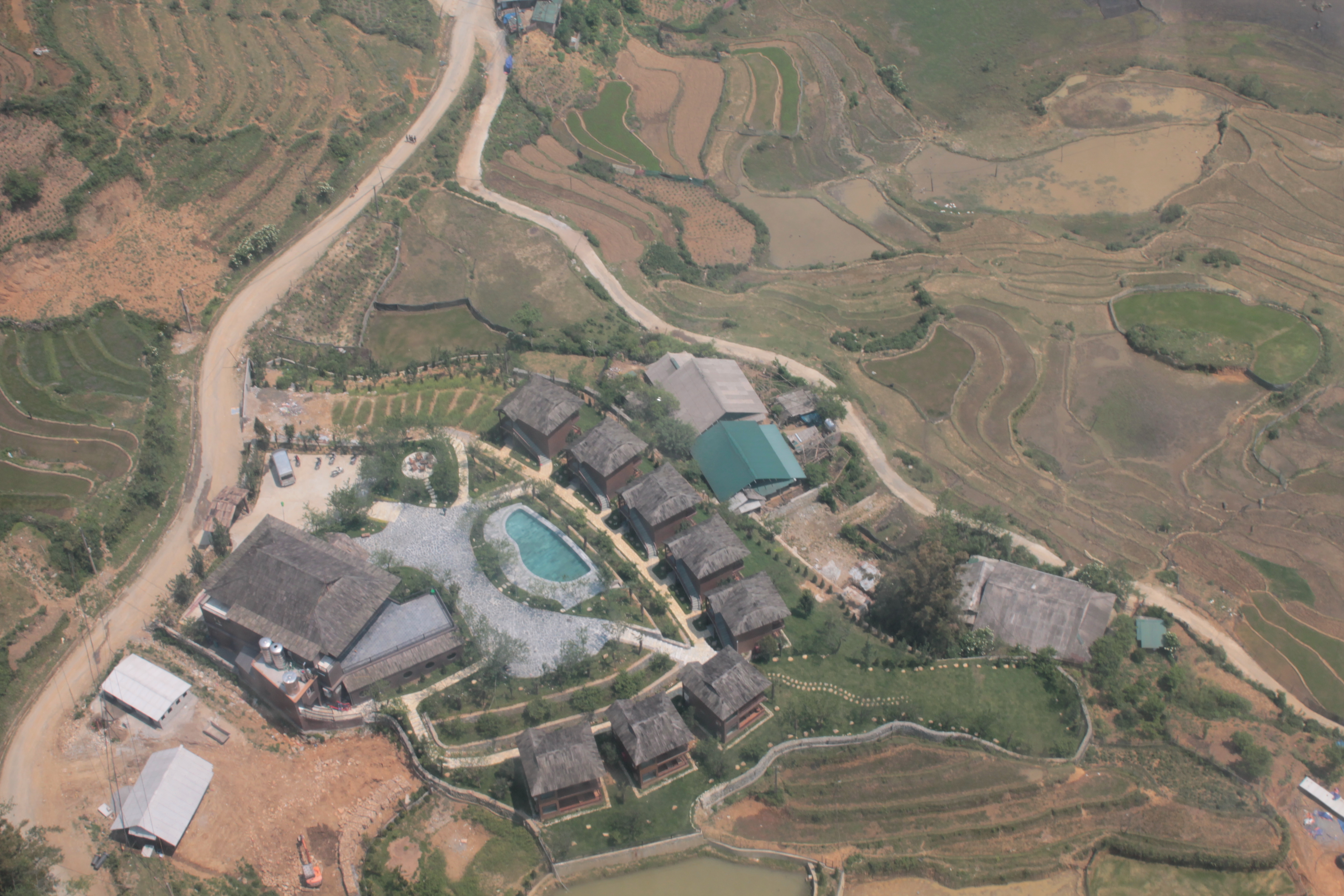
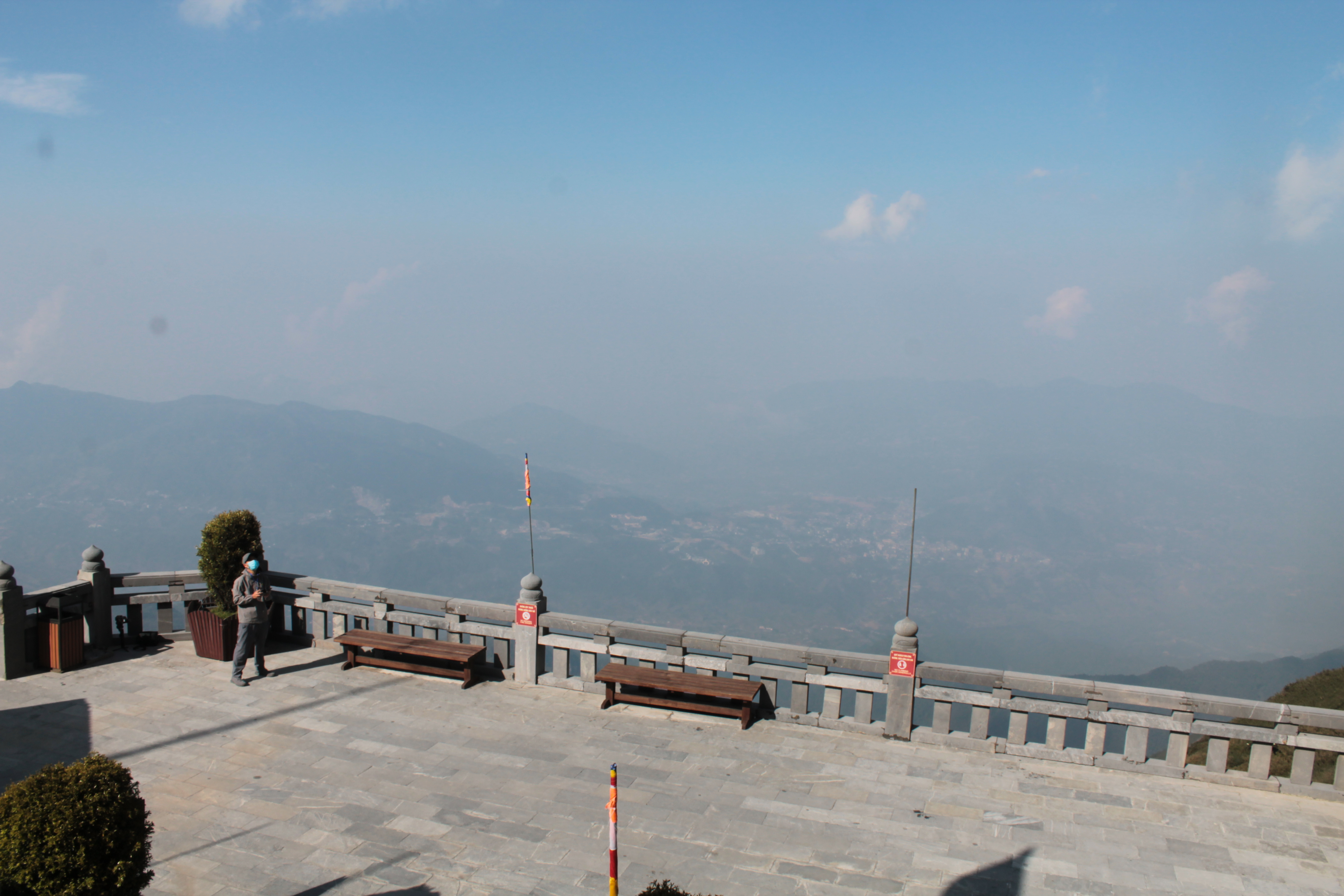
We finally arrive at 2,900 meters altitude (Sapa being at 1,600 meters). I’m short of oxygen and every step takes a lot of effort. My parents have already been here and advise us to rest a little and take the funicular, instead of walking and dying on the stairs like other inexperienced tourists. So we drink a bit of ginger tea (50,000 VND) bought on site and rest. And after 15 minutes, I feel better. There’s an all-you-can-eat buffet on site (150,000 VND) if that interests you.
Just the landscape right after the cable car is incredible.
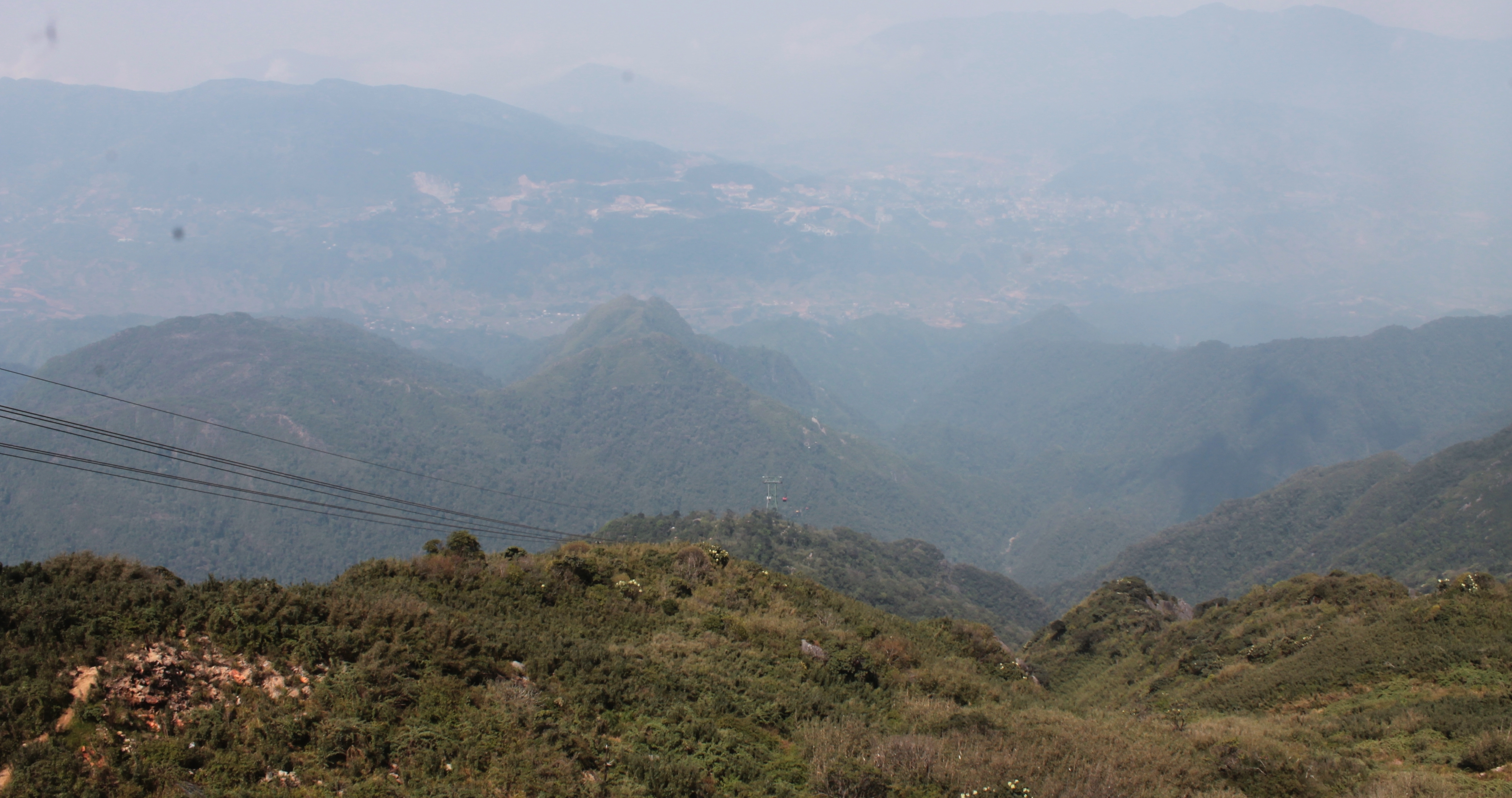
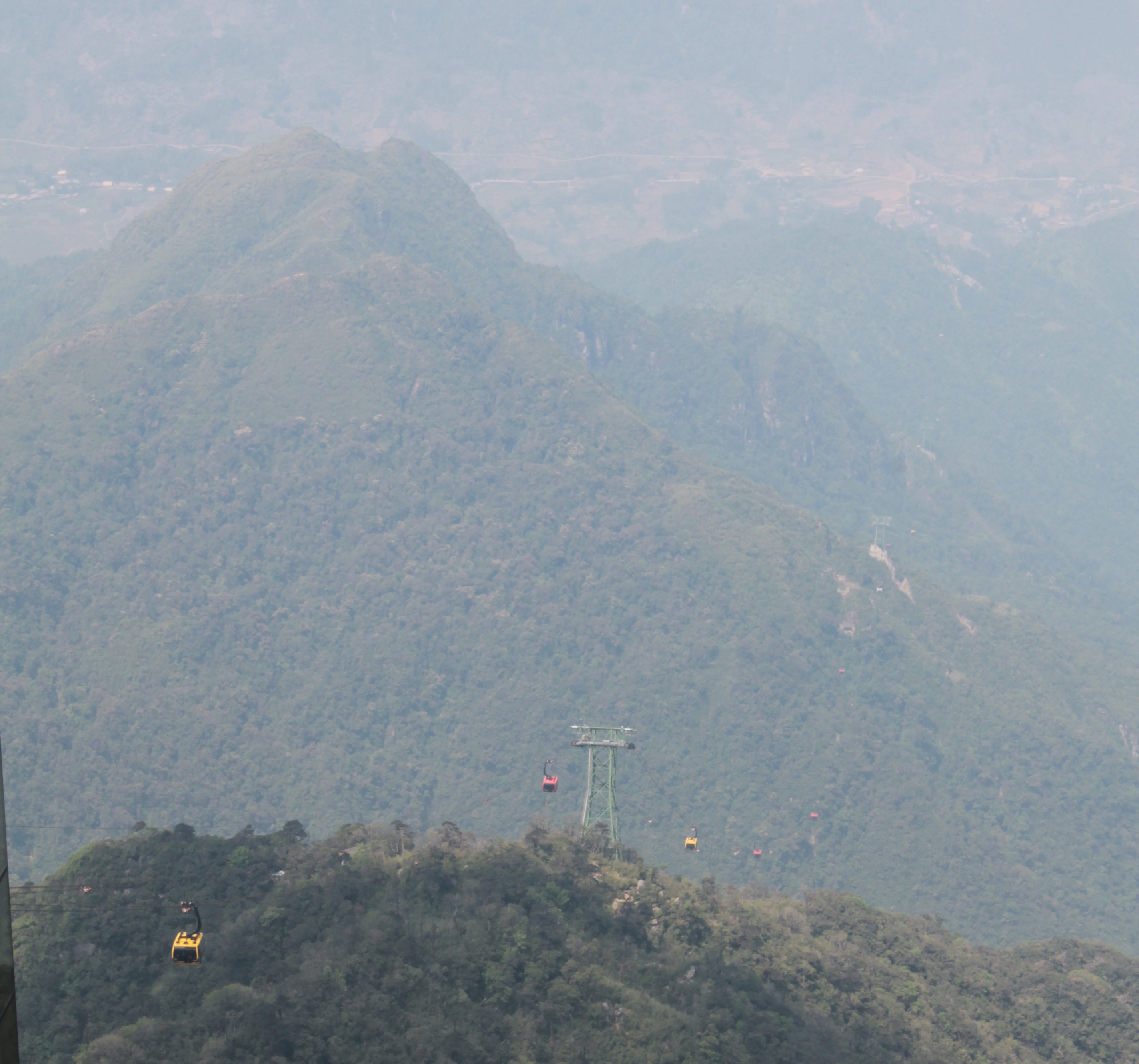
To make the visit a bit more varied, Sun Group created, between the top of Fansipan and the cable car station, a set of Buddhist sites, very modern but terribly photogenic, including an enormous bronze Buddha statue containing a relic from Burma, and a Bodhisattva statue also in bronze. The ensemble is harmonious. Unfortunately we lost too much time here. If you can walk faster than us, go for it 🙂
Tips: Right after getting out of the cable car, rest a bit. Then take the funicular to go up to the top (99,000 VND/person/one way) instead of walking, continue up to the summit of Fansipan, then come down straight to the Buddha statue, before taking the cable car again and heading back to Sapa.
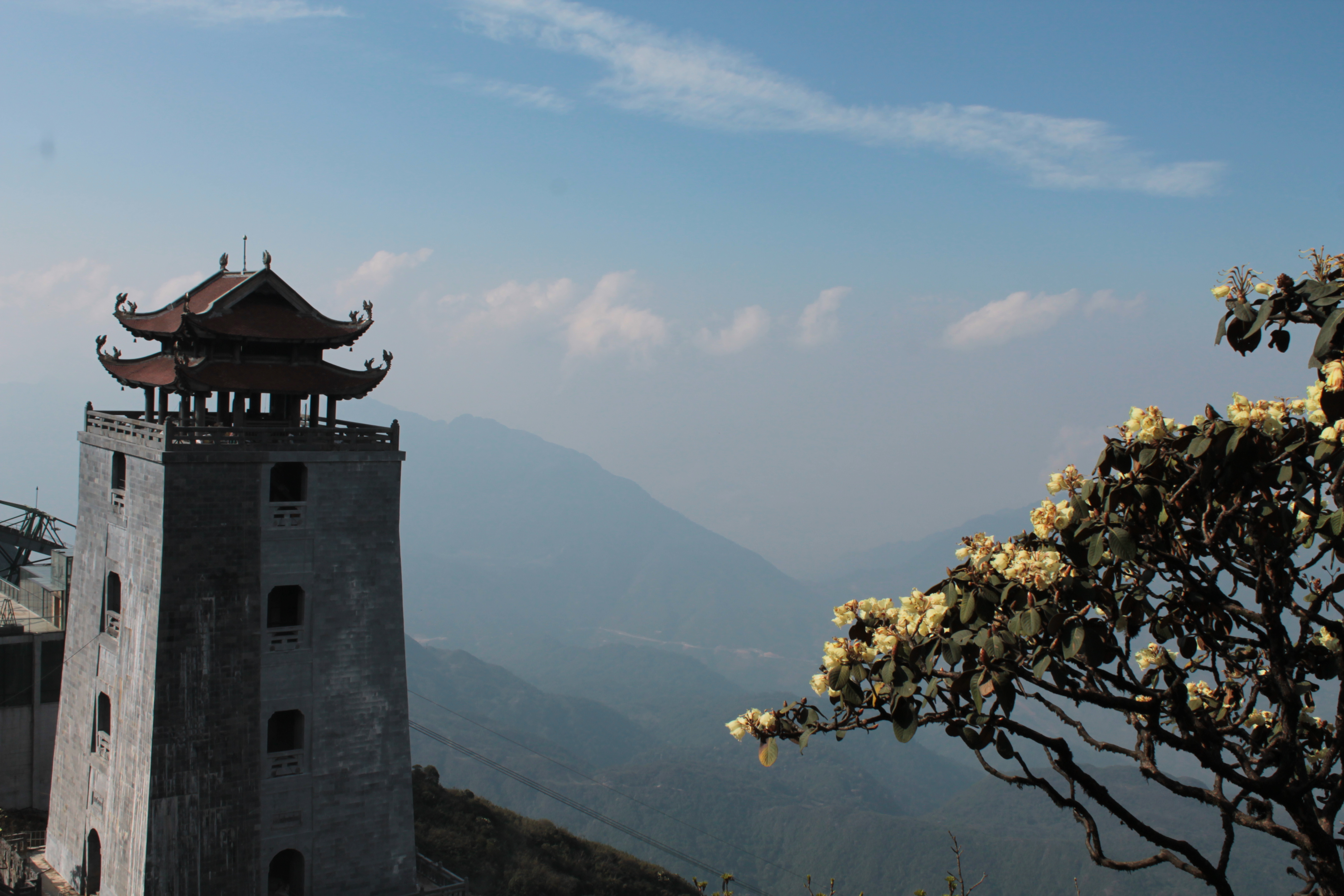
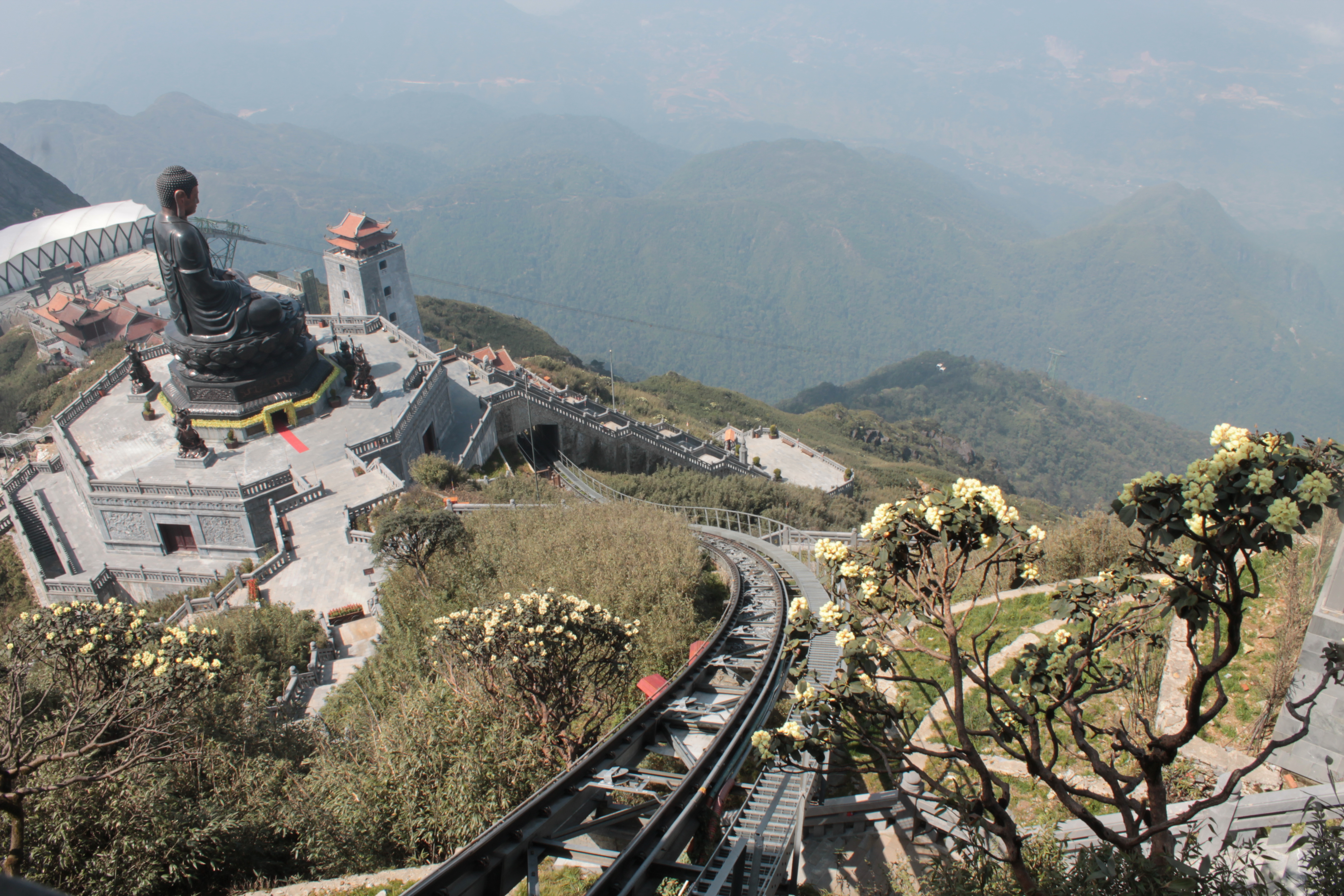
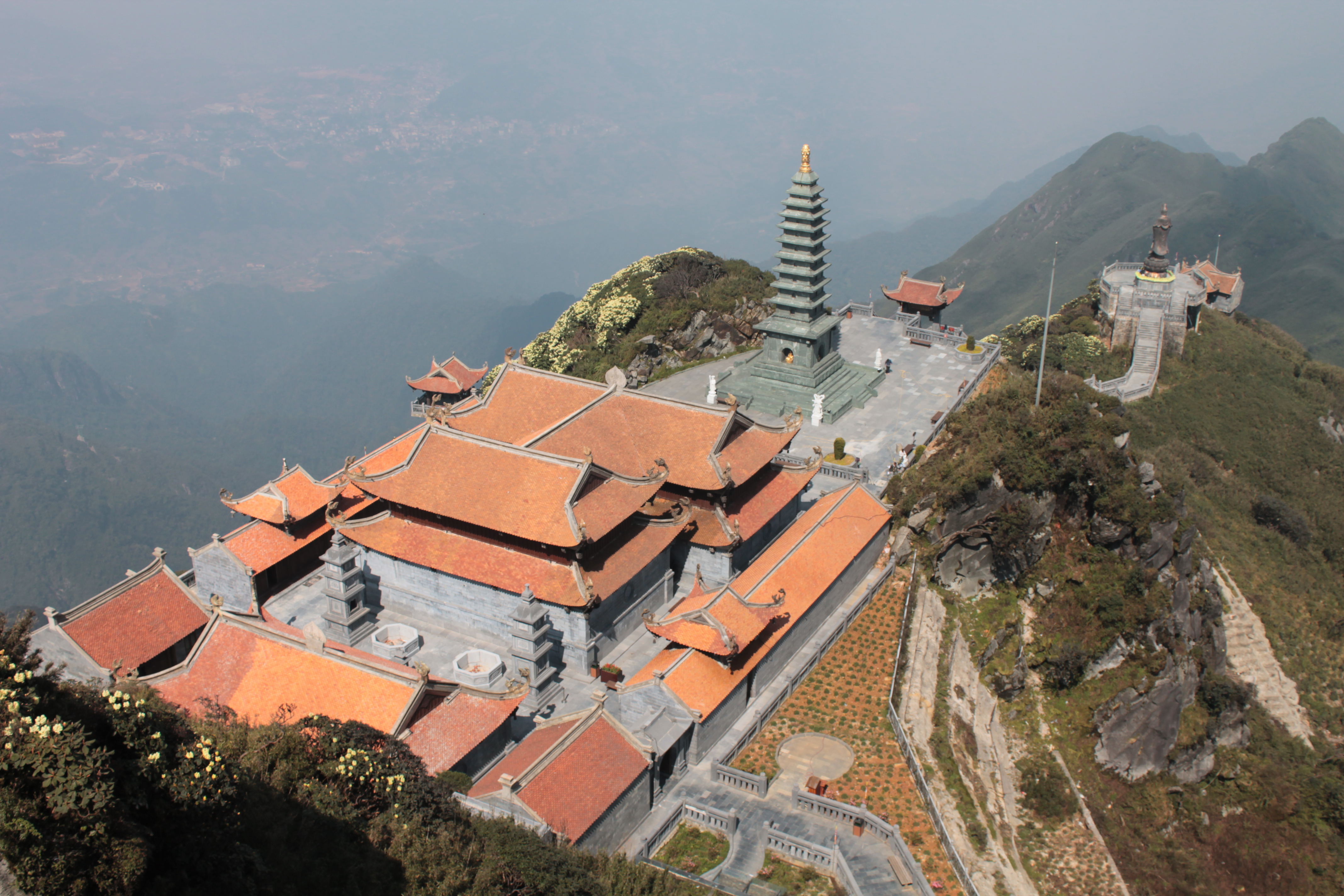
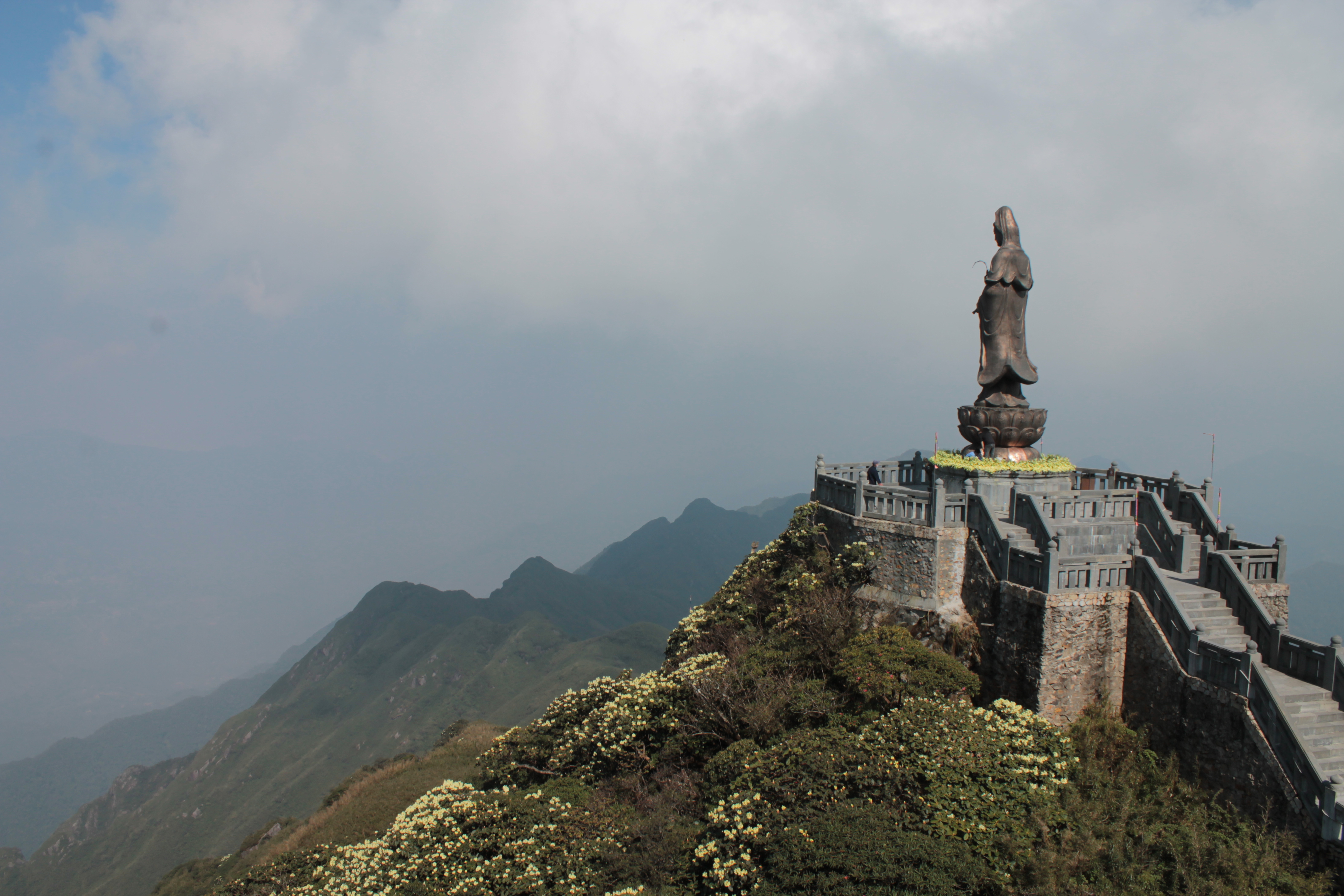
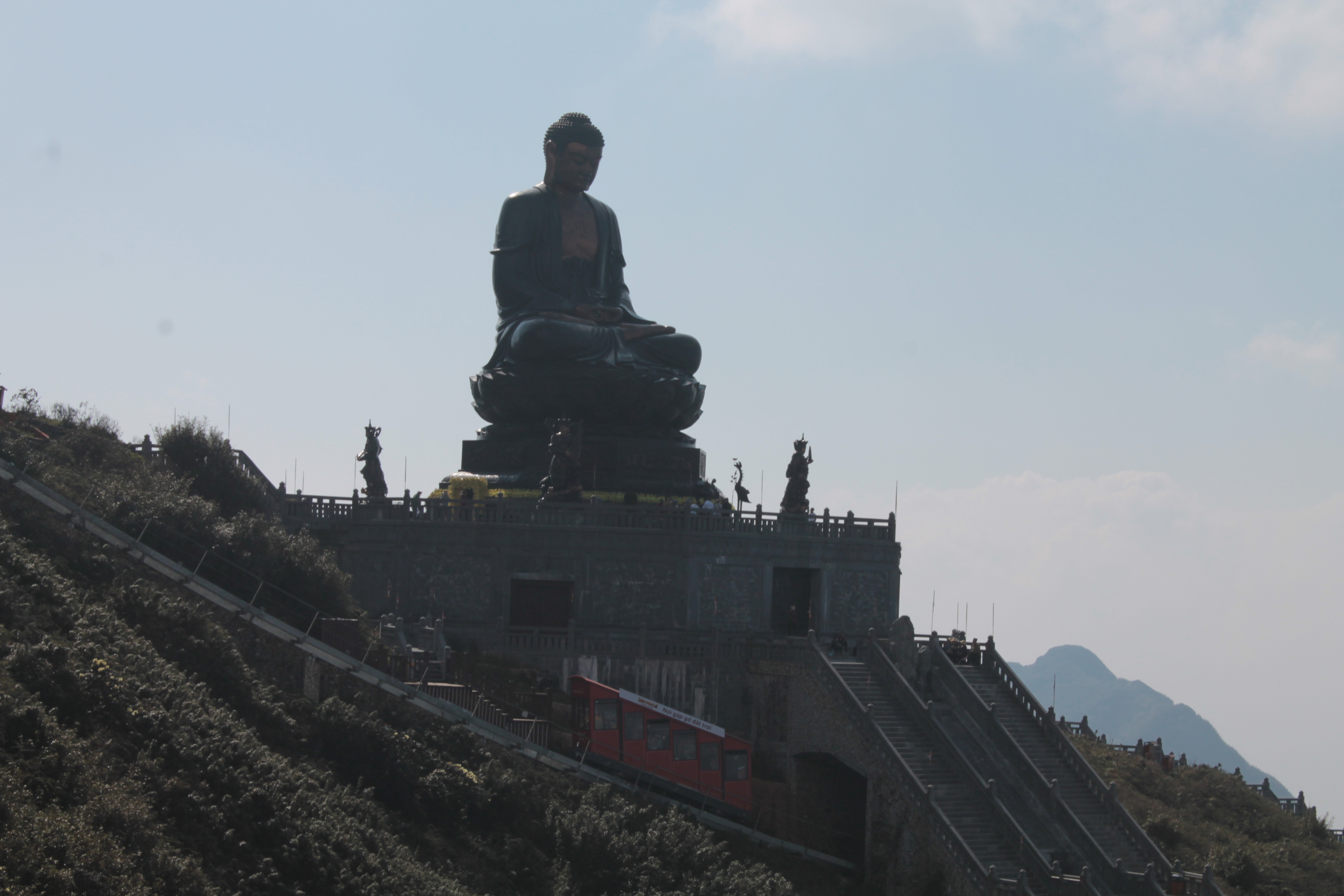
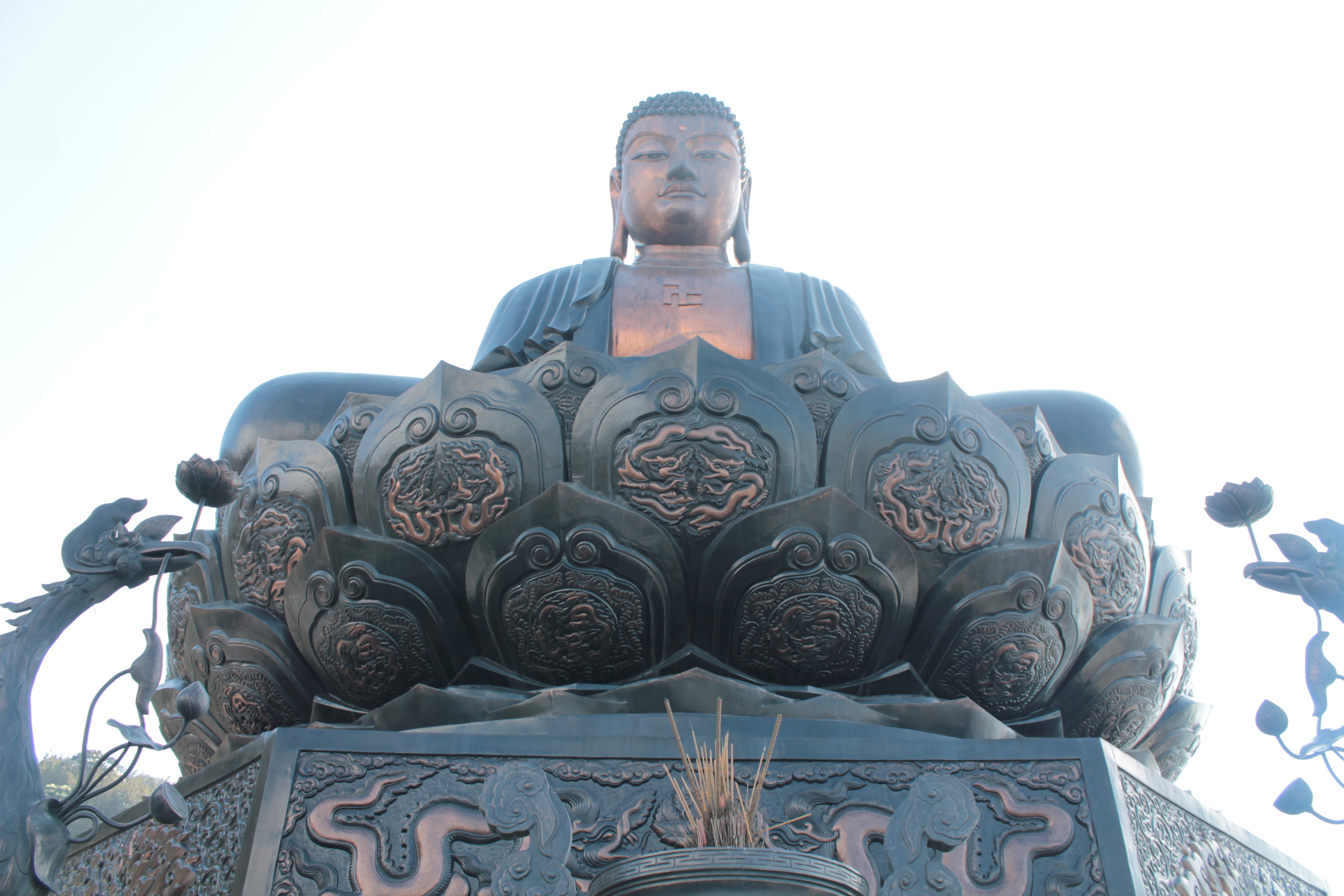
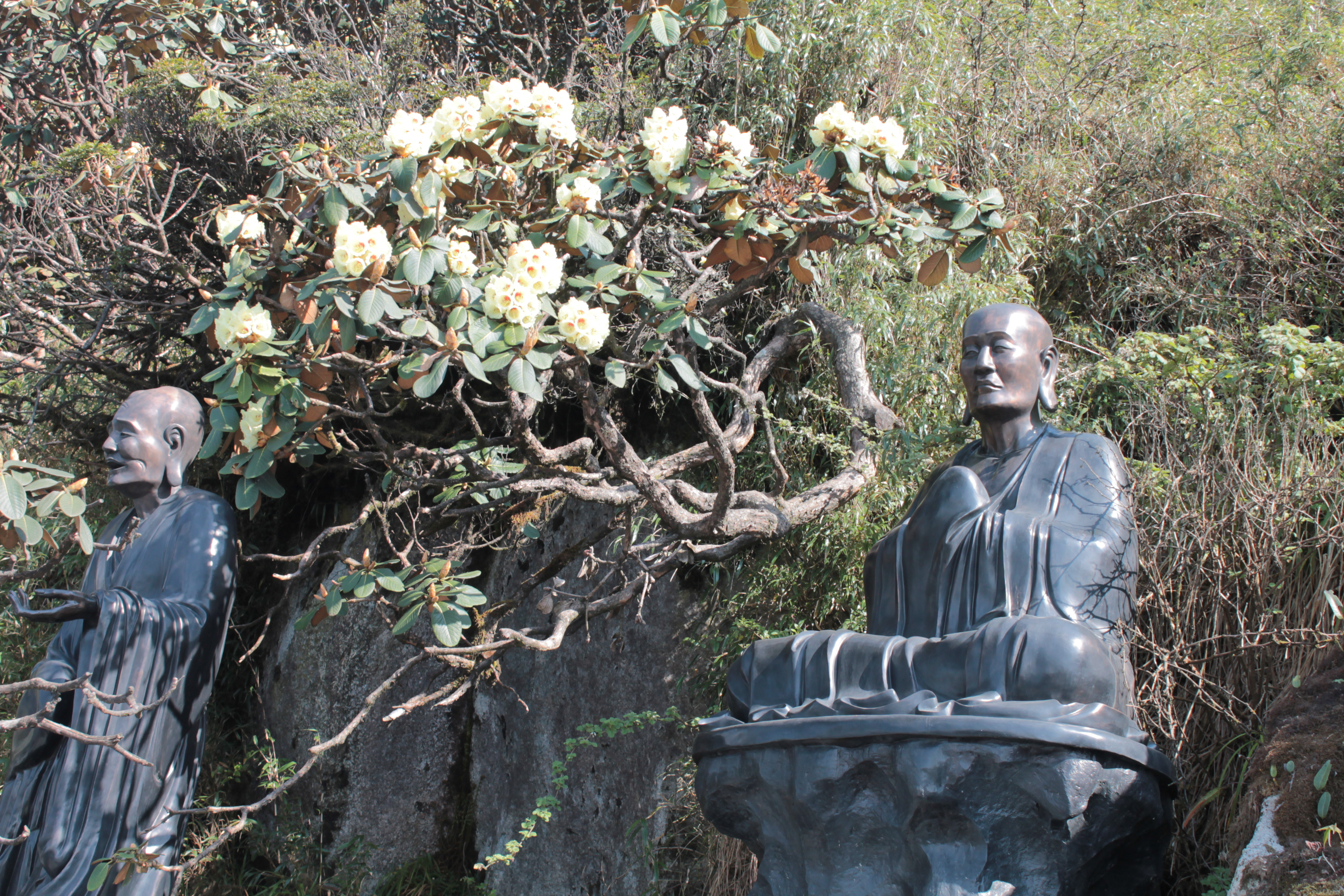
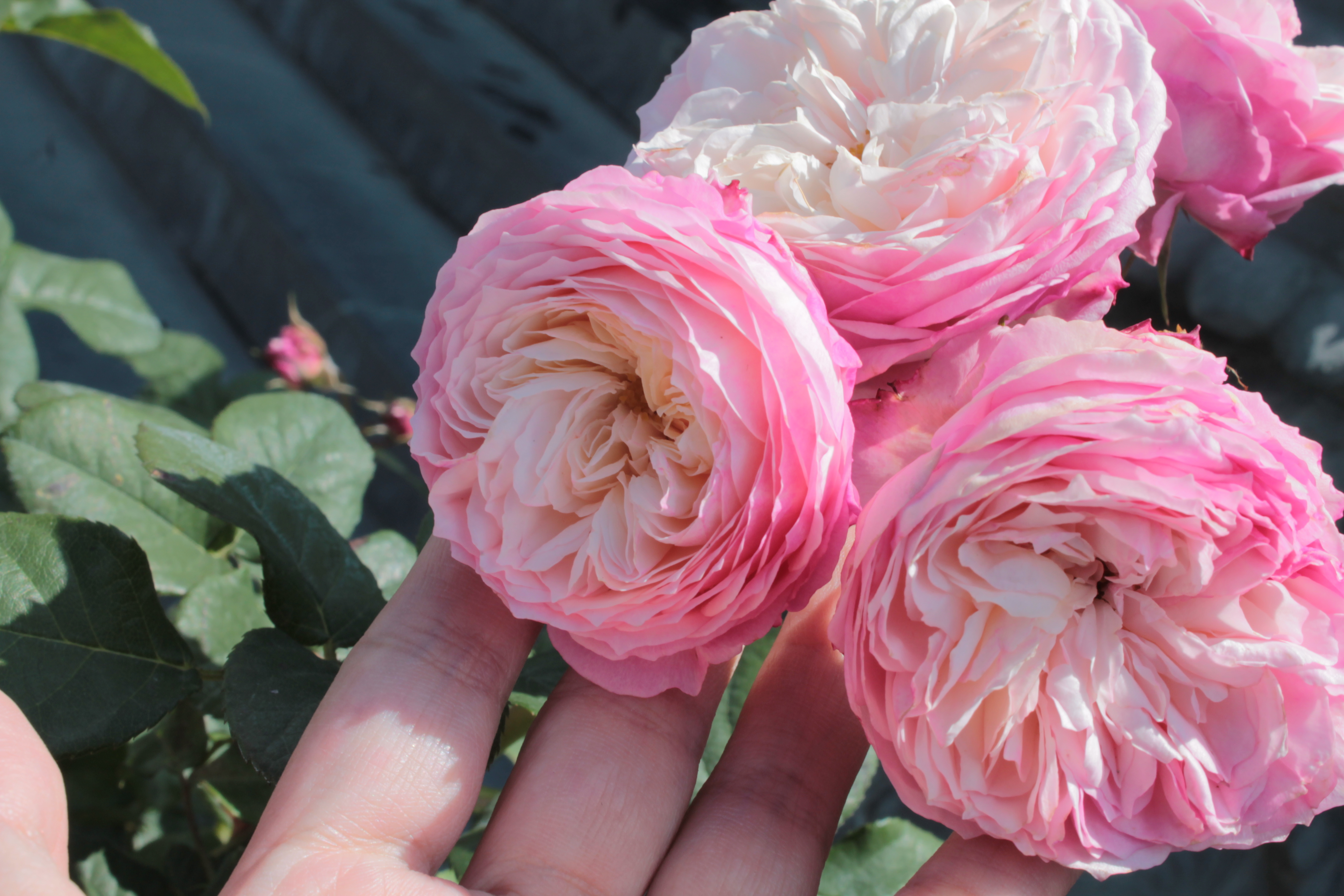
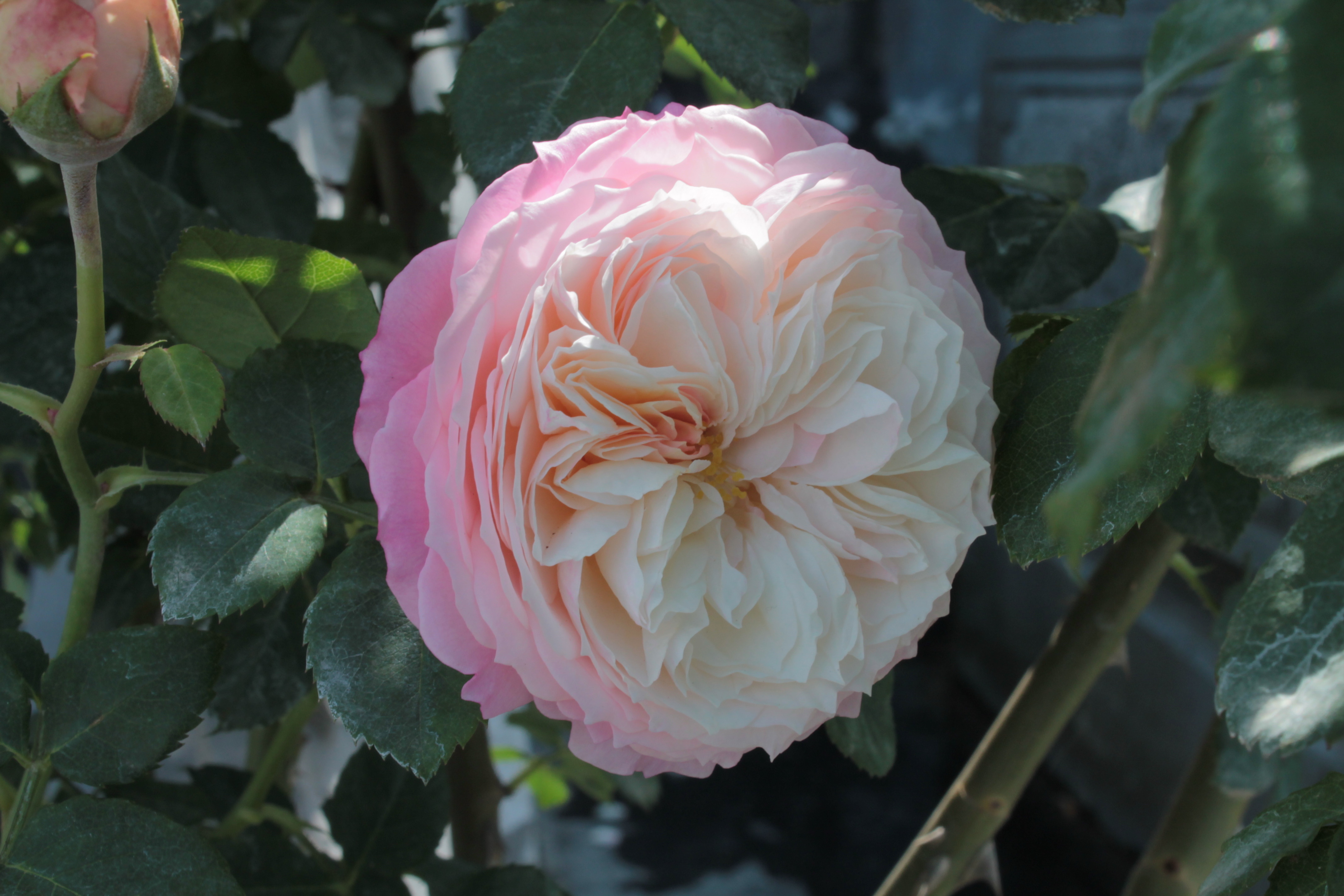
The roses here smell divinely good!
After the funicular (paid – we only paid for the one way), you need to climb about 50 steps. The real summit is here! However, there are markers everywhere for people to take photos of themselves. The real summit is protected by wooden barriers. A bit lower, there’s a huge Vietnamese flag (currently under repair). Don’t hesitate to grab the Vietnamese flags provided for free on the side, to make your photos even more unforgettable.
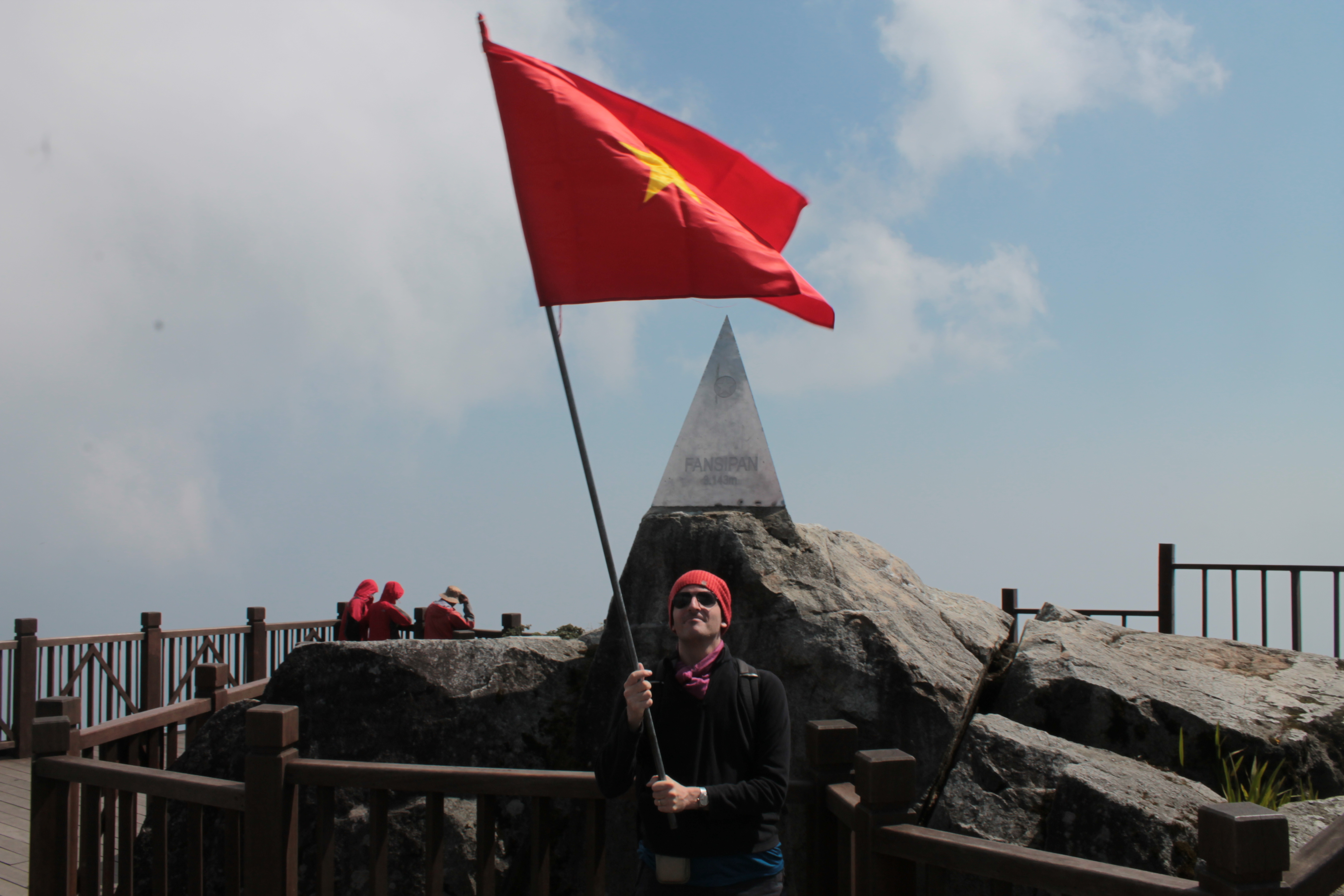
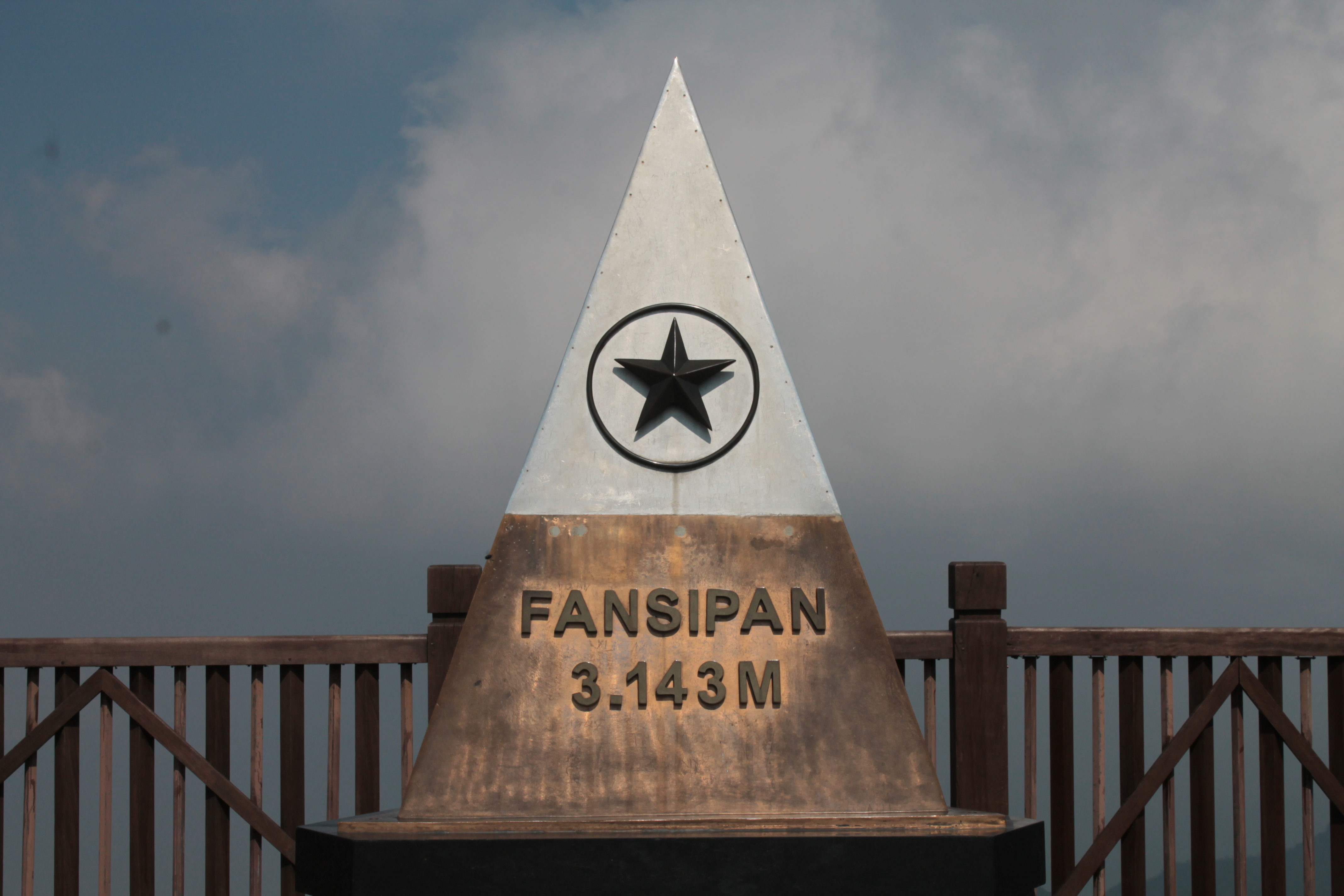
Be careful, there’s a 10-degree difference between Hanoi and Sapa, and between 5 and 10 degrees between Sapa and Fansipan. Bring warm clothes and a scarf.
Silver Waterfall
This waterfall is very well-known and visited. You can pay a ticket to go up and get closer to it. But the small water flow didn’t appeal to me, so I decided to just take a photo from the road and continue visiting elsewhere.
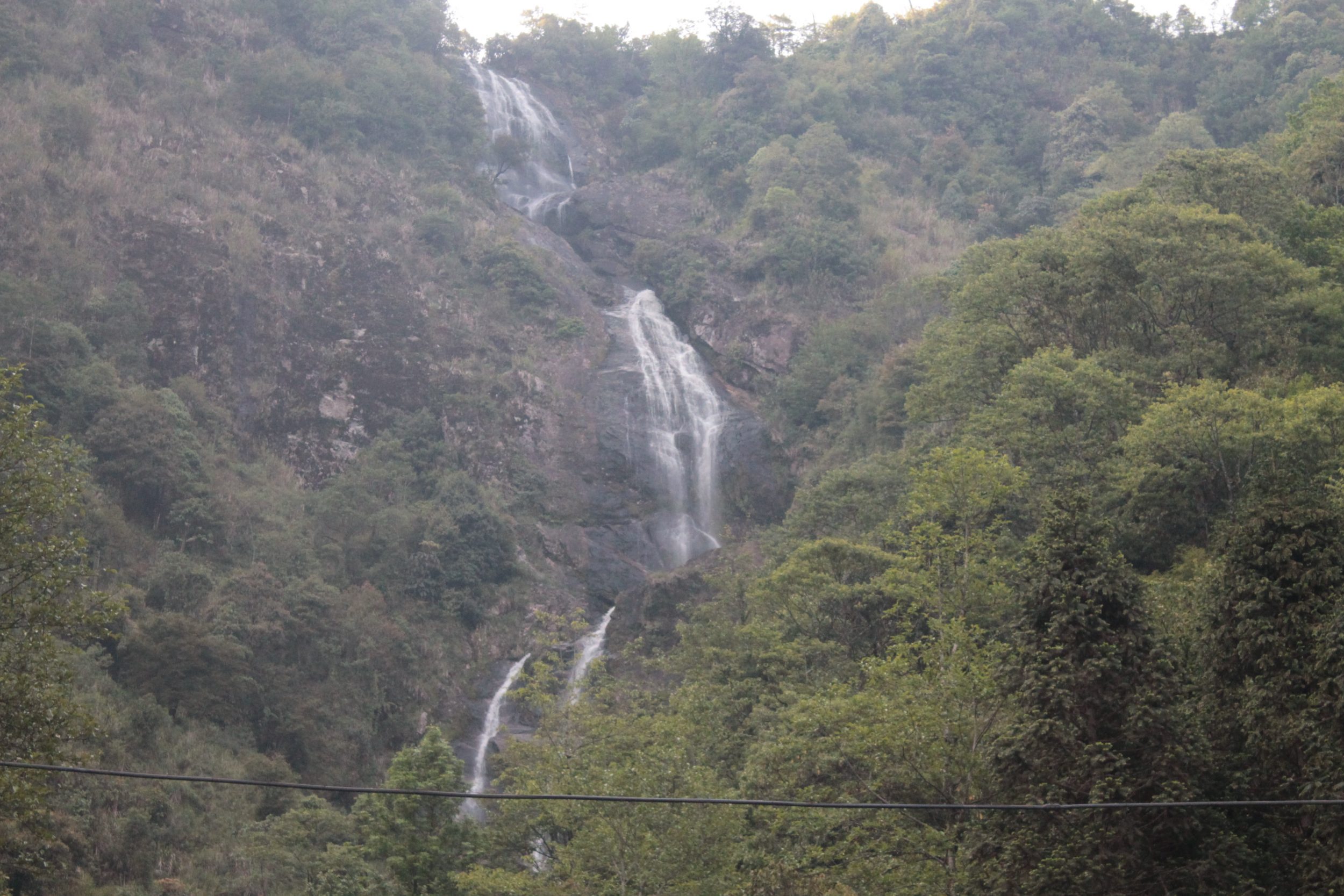
Right after that, we start the hairpin road sections. There are 4 famous ones in Northern Vietnam, including Ma Pi Leng which we drove through during our our trip to Ha Giang. This time, it’s O Quy Ho. At the top of the switchbacks, there’s a spot for taking photos called Cổng Trời Ô Quy Hồ Sa Pa. It’s here that you can take photos like in Bali with the fake gates of heaven, the nests, etc.
Cau Kinh Rong May
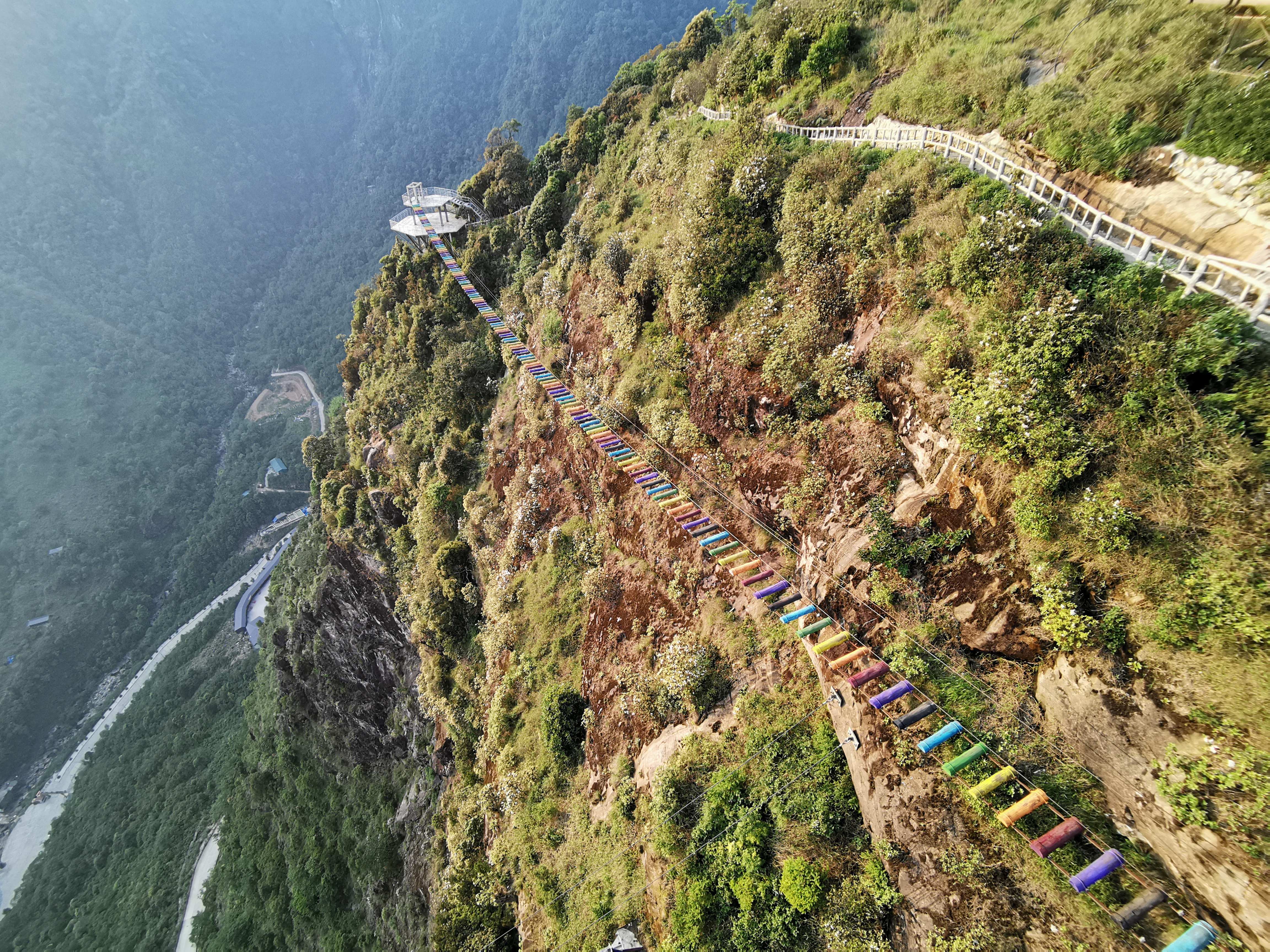
Cau Kinh Rong May is a very ambitious construction. It’s a bridge made of glass, transparent, 305 meters high, which is equivalent to a 100-story building. You definitely can’t be afraid of heights.
You have to take a shuttle to reach a first set of stairs, before going to the ticket office, then take a second shuttle to the main elevator. The main elevator is built inside the mountain. For the first part of the ride, you can’t see anything, then you start to see the landscapes, but the elevator still doesn’t stop.
Fortunately for the faint-hearted, not the entire bridge is transparent; a large part is covered by mats. Then, you put on socks to wear over your shoes so as not to scratch the glass, and then you can decide if you really want to walk across the entire walkway, before reaching the balconies where you truly feel like you’re suspended in the void.

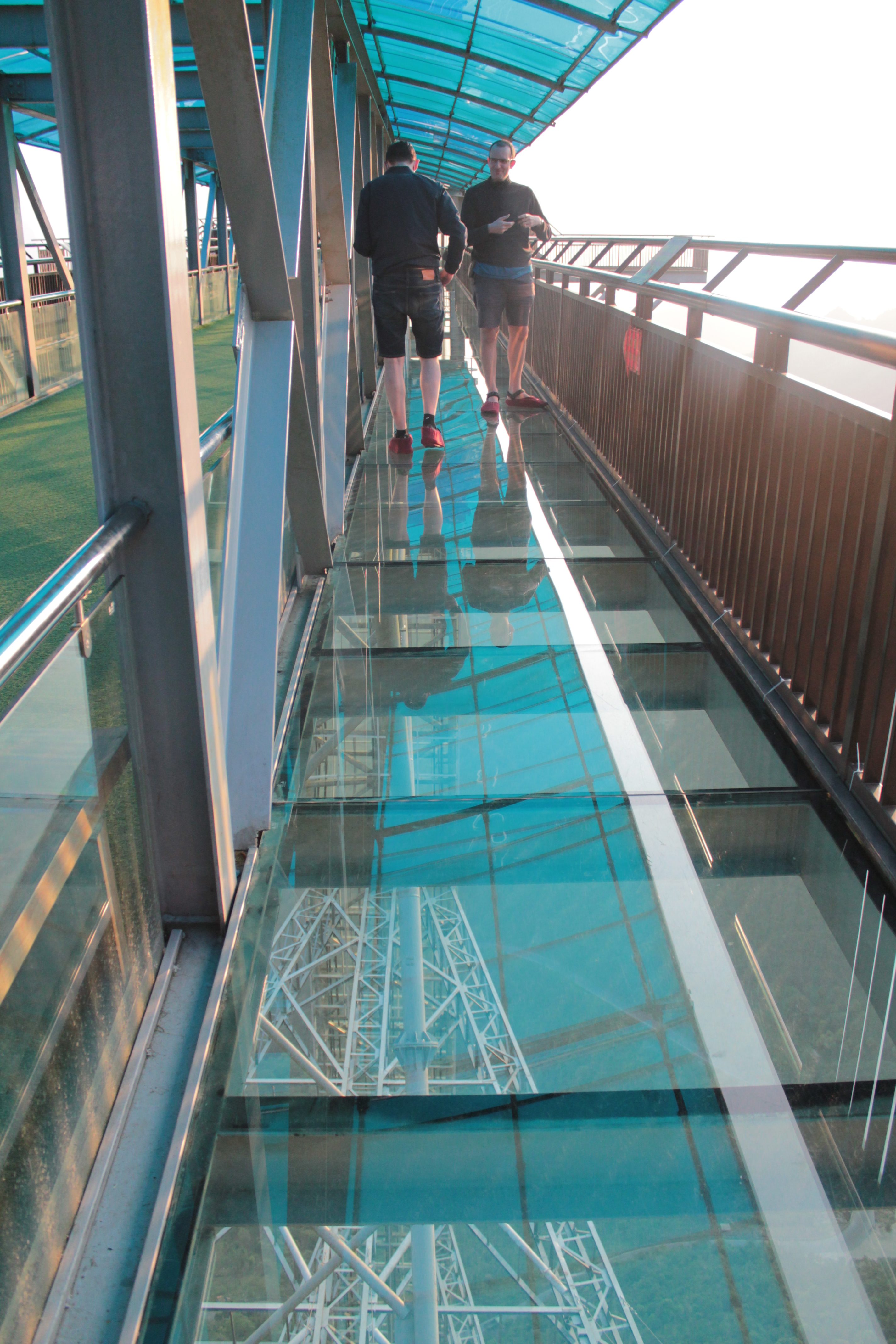
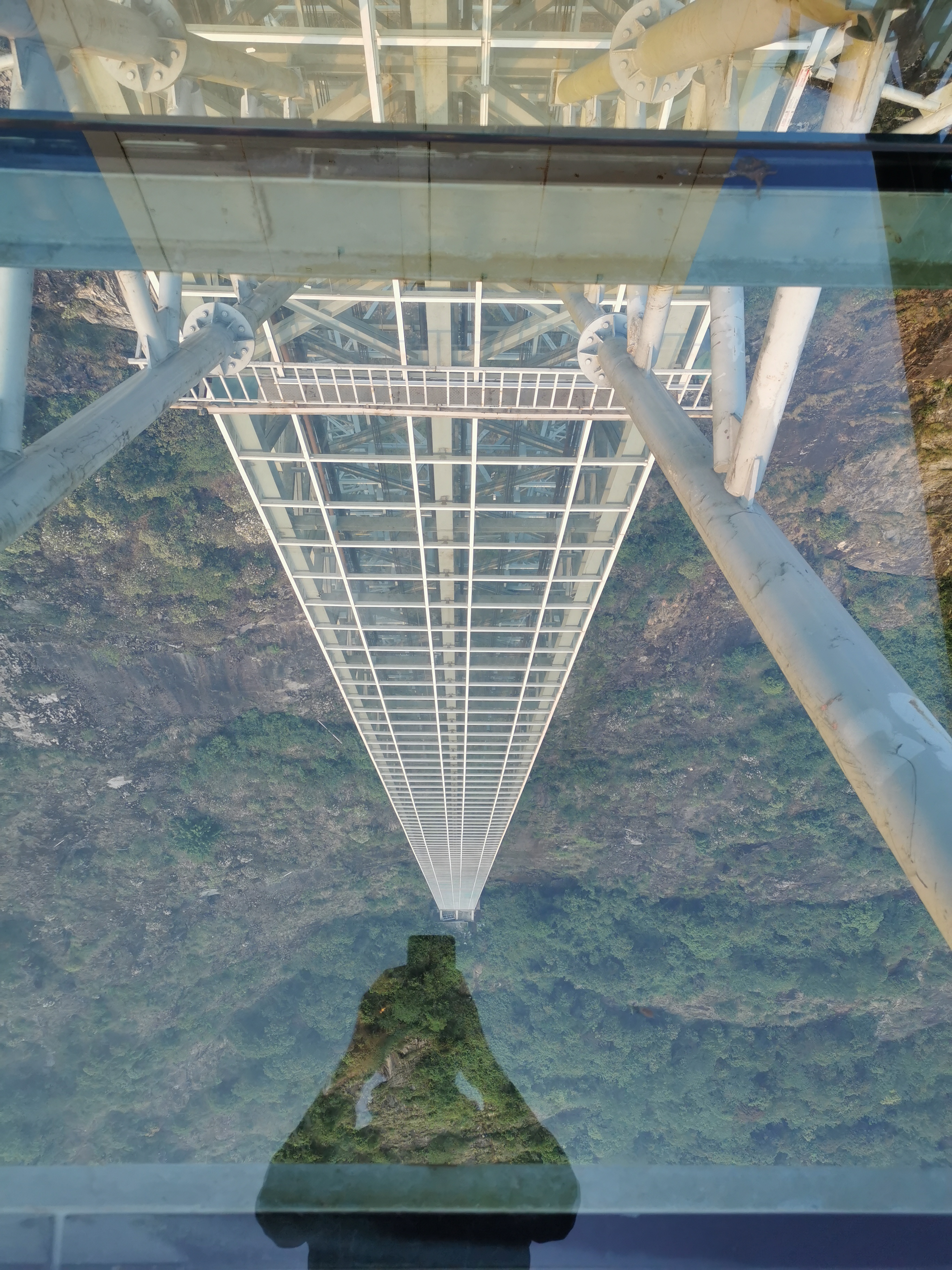
If we don’t talk about the terrifying experience, let’s talk about the landscapes. From here, you can see absolutely everything. There are so many mountains that you shouldn’t aim for the usual sunset time but 30 to 45 minutes before.
You can see the small winding roads, the little cars, and the bright red sun hiding behind the mountains. Strangely, there isn’t that much wind, and if you don’t look down, but only at the landscapes, it’s fine too.
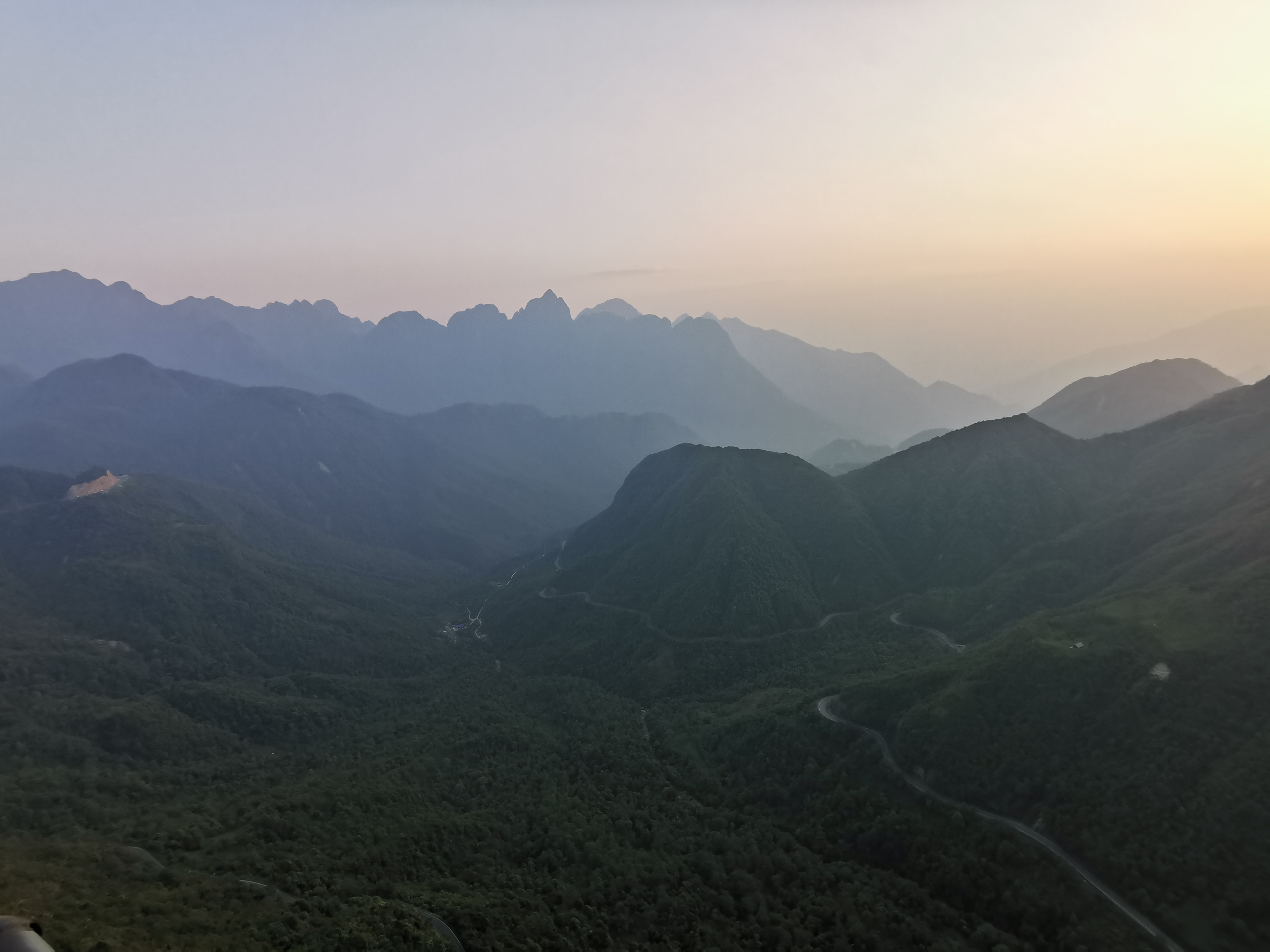
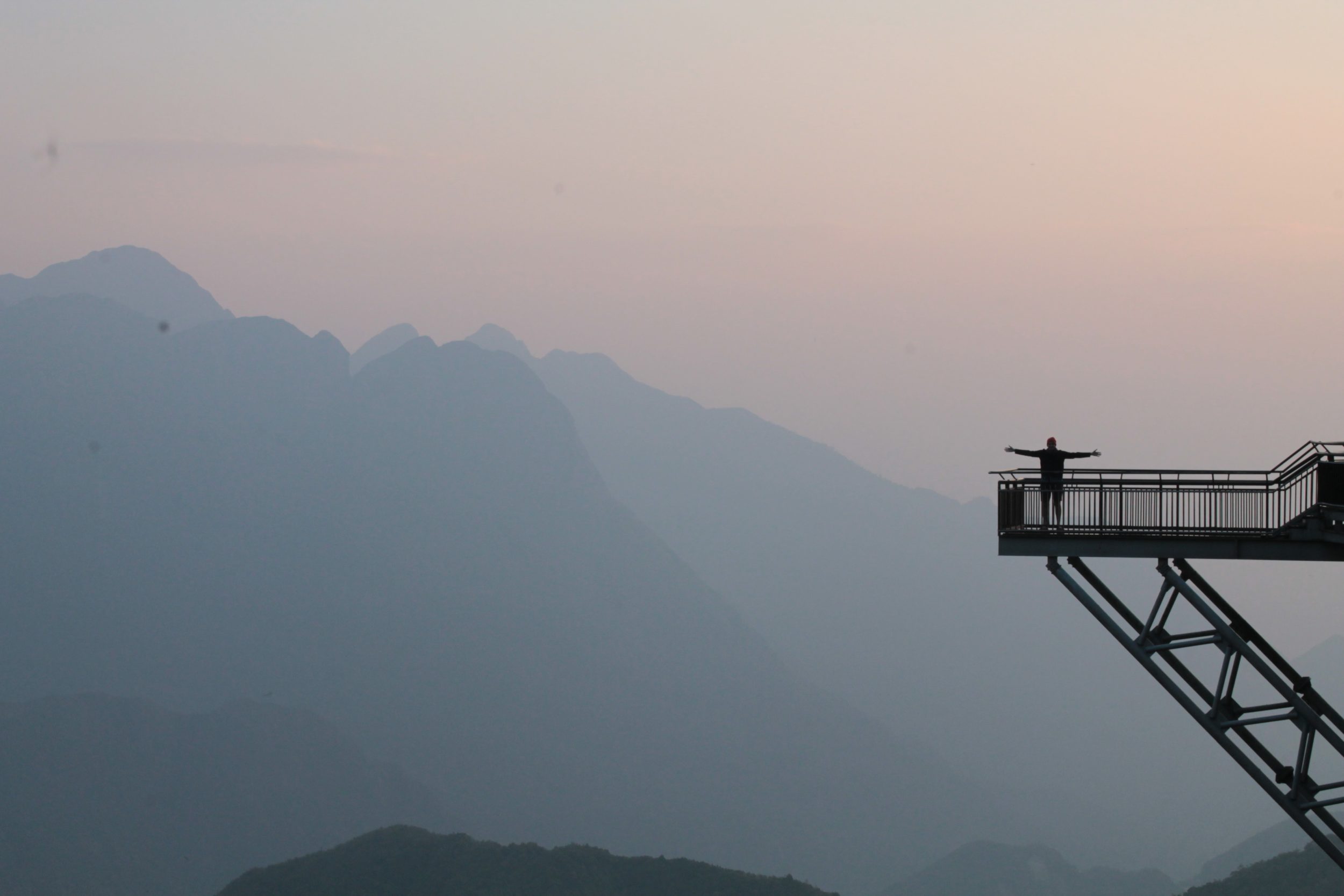
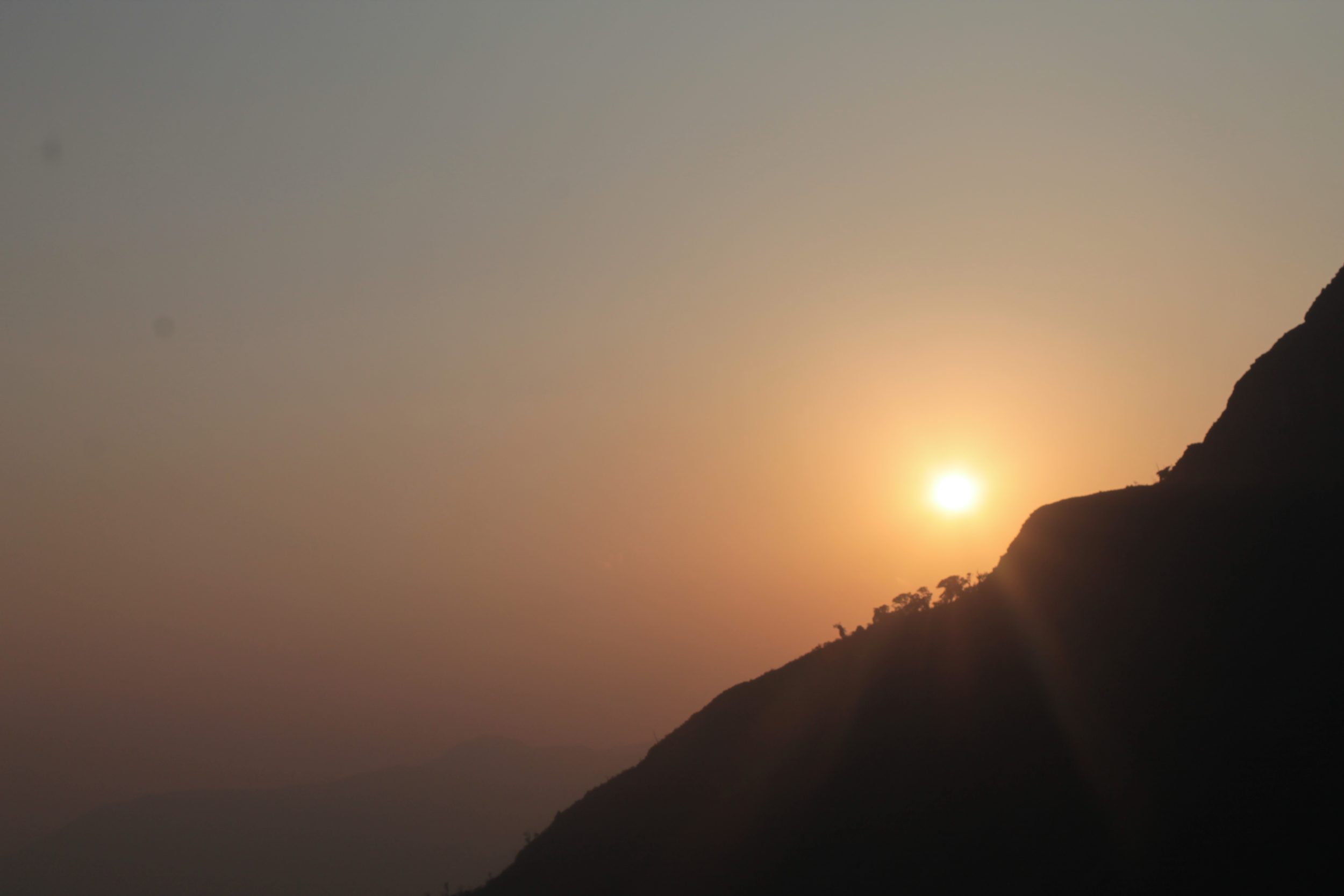
On site, you can decide to pay for thrilling activities, like walking on a suspension bridge, ziplining, etc. (150,000 VND/activity), but personally, for me who’s afraid of heights, the bridge is more than enough.
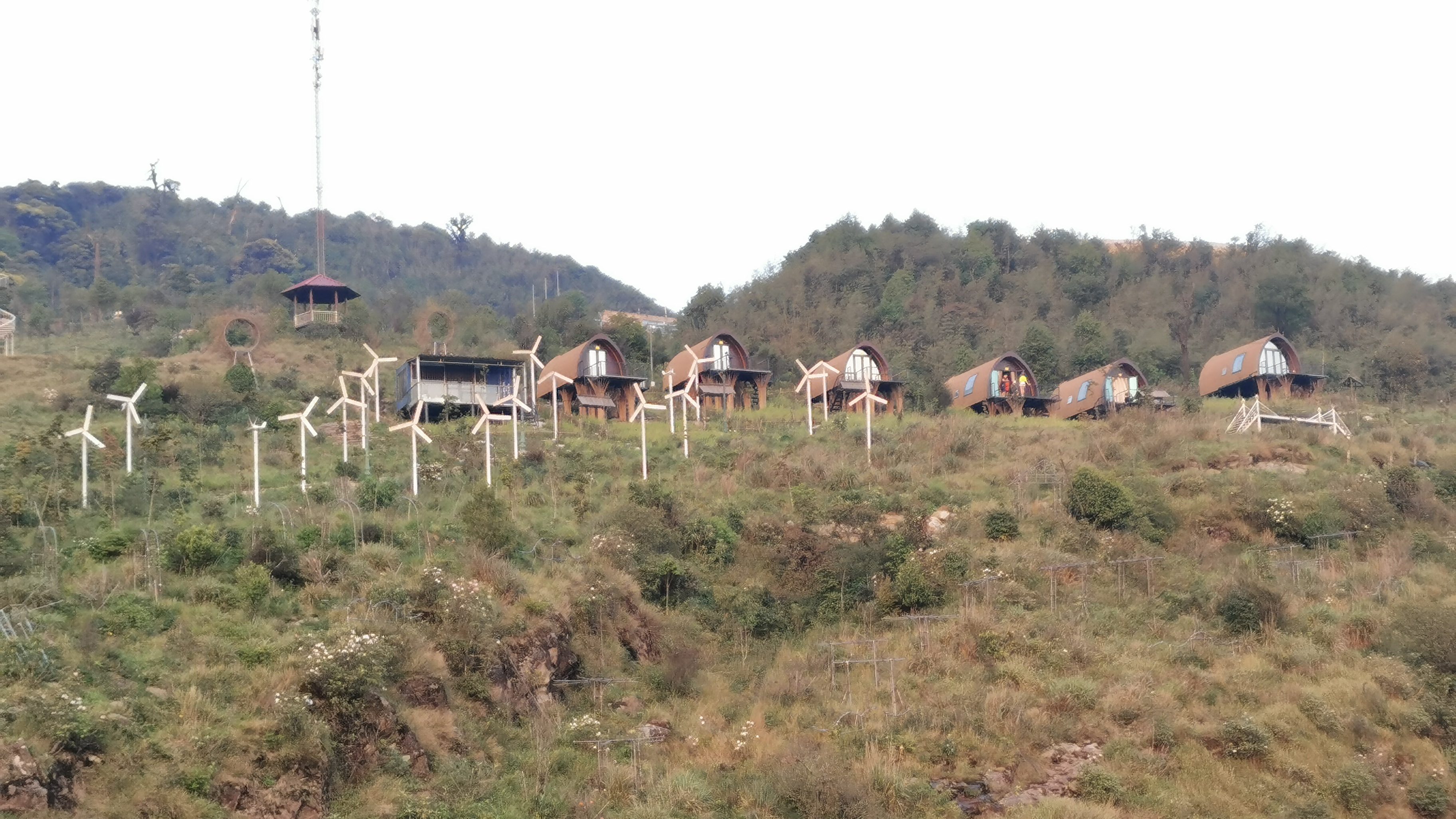
The bungalows are even higher and very cute. They’re not that expensive (count about 700,000 VND per night, with, of course, the requirement to have dinner at the hotel because there won’t be anything around).
MGallery La Coupole
Very tired from the early wake-up, and many changes in altitude, we head back to the hotel. We barely have time to put down our things before it’s already time for dinner. We exceptionally have a voucher to enjoy the hotel restaurant (very good, but a bit pricey). We highly recommend the Sapa trout sashimi (goi ca hoi). We take the opportunity to celebrate my dad’s birthday with a delicious chocolate cake (made by the hotel’s pastry chef).
MGallery La Coupole isn’t just any hotel. It consists of a “funicular station/shopping mall” part and a hotel part.
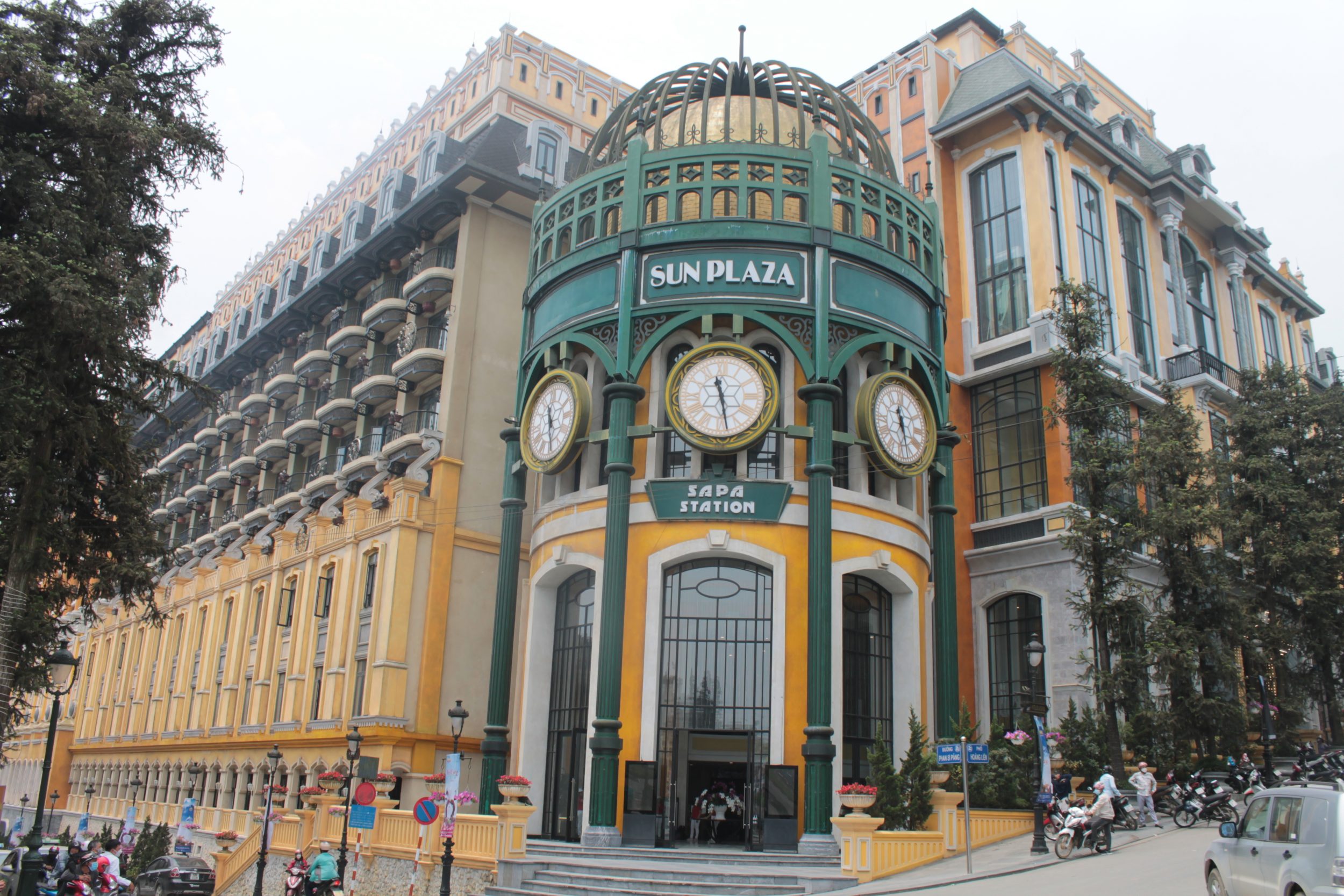
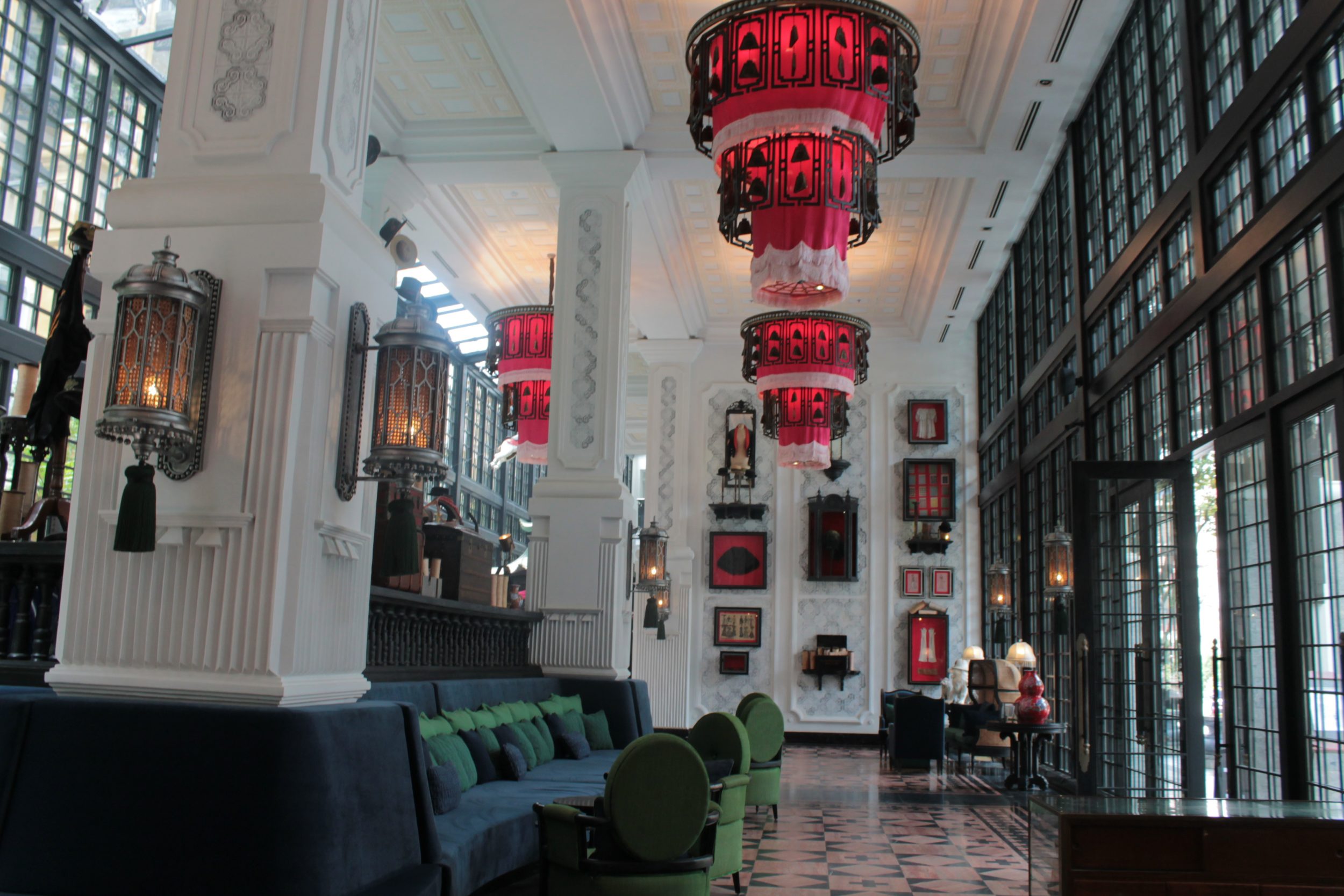
Opened only in 2018, it was designed by the famous architect Bill Bensley, who is very demanding in the choice of materials and location. He often requires an ideal location to develop all his creativity. MGallery La Coupole is his second work in Vietnam, after Intercontinental Da Nang (much, much more expensive). As it’s a former dye factory, everything evokes the fashion world. However, he used lots of elements and patterns from the clothing of the ethnic minorities living in Sapa (Dao, Muong, H’mong…) to make lamps, rugs, tiles… that recall traditional elements. This hotel won the award for best architecture at the World Luxury Hotel Awards 2019.
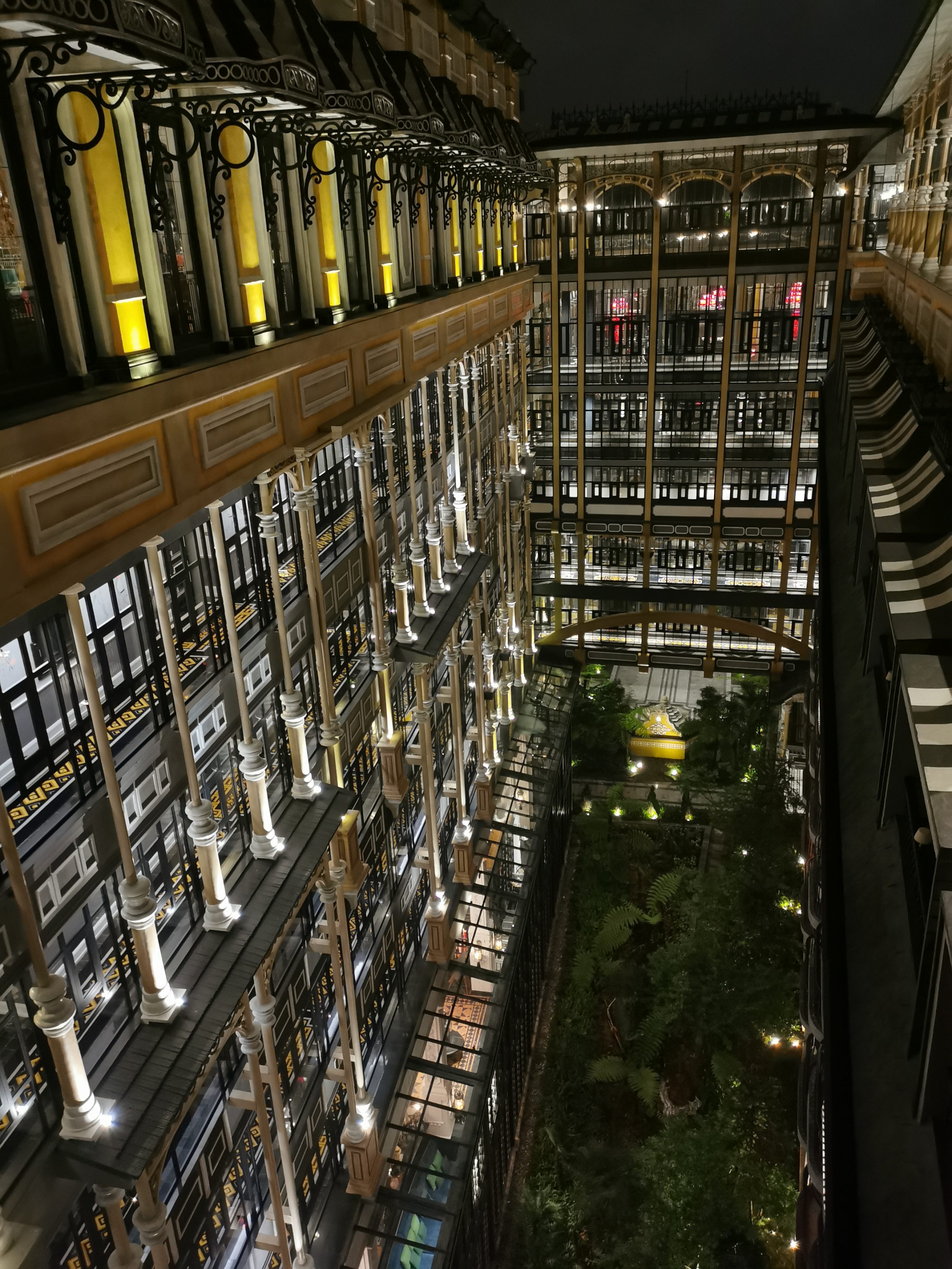
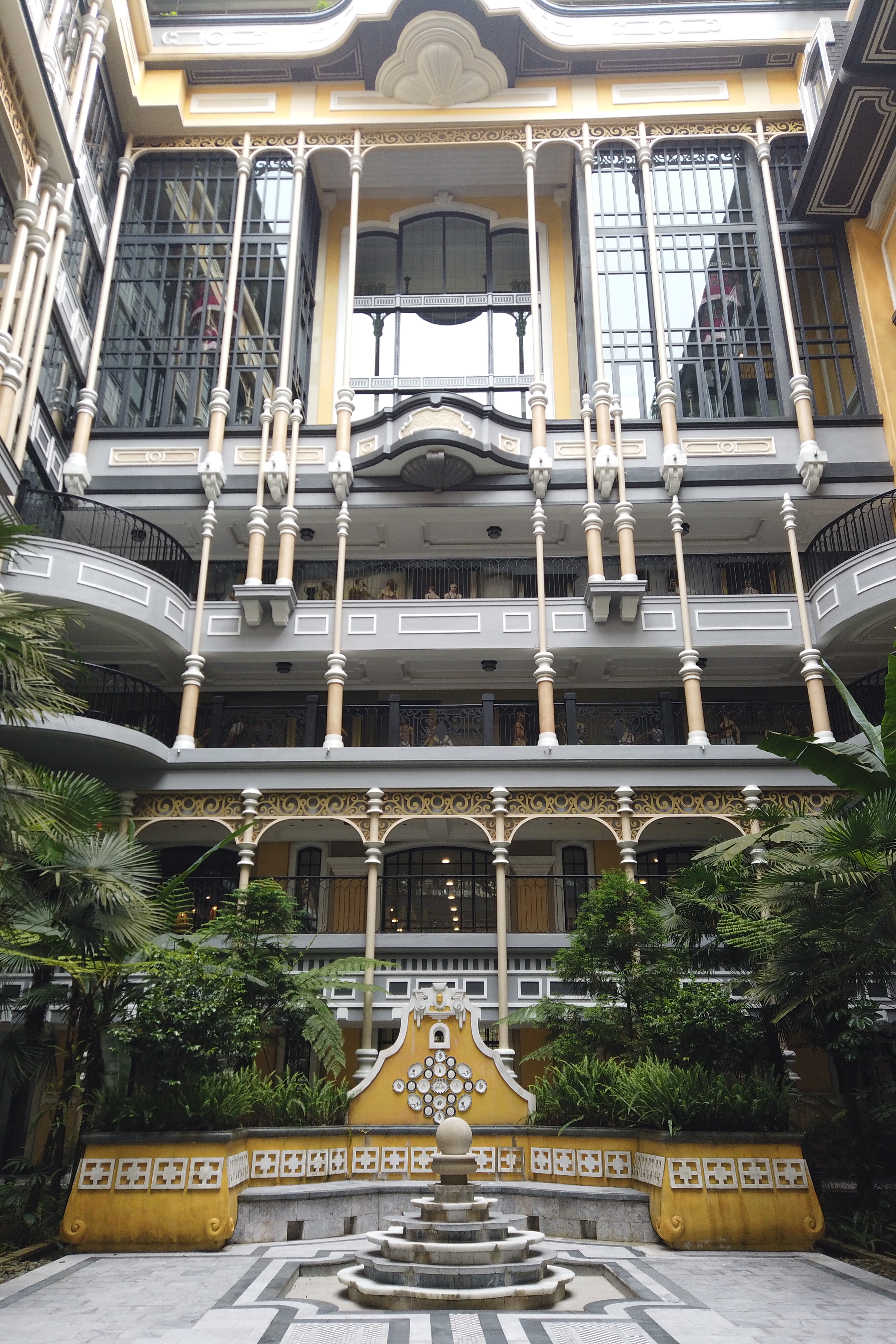
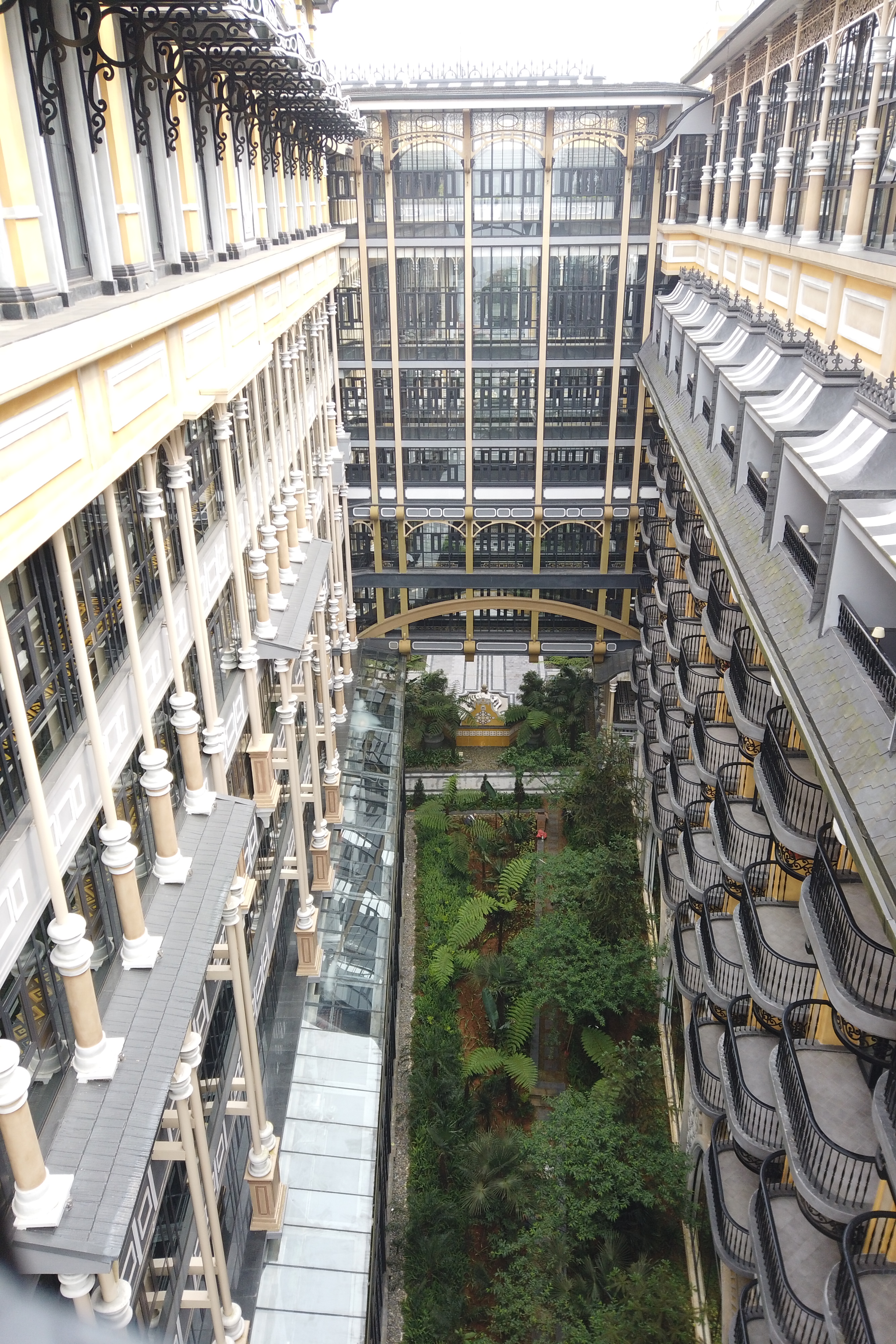
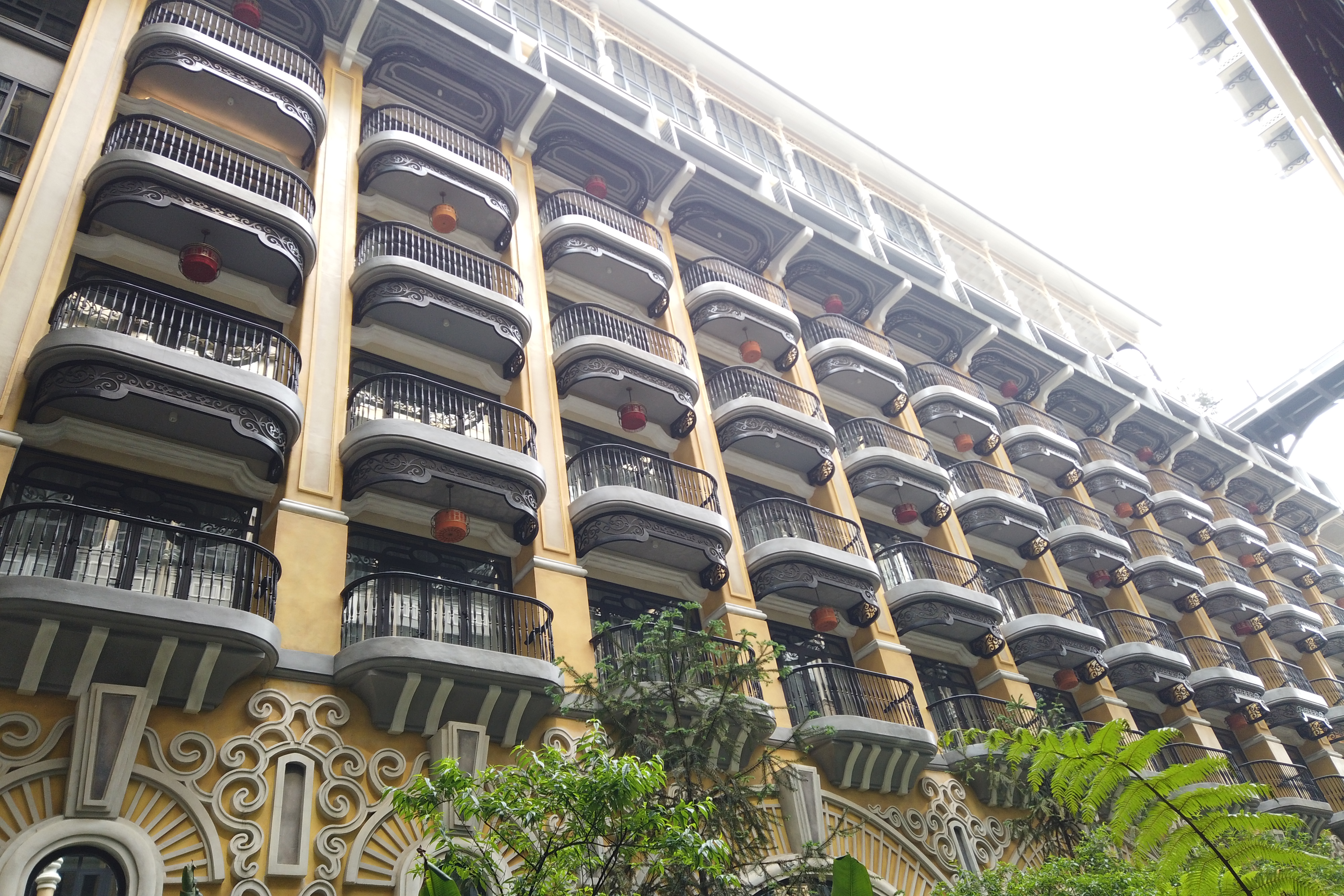
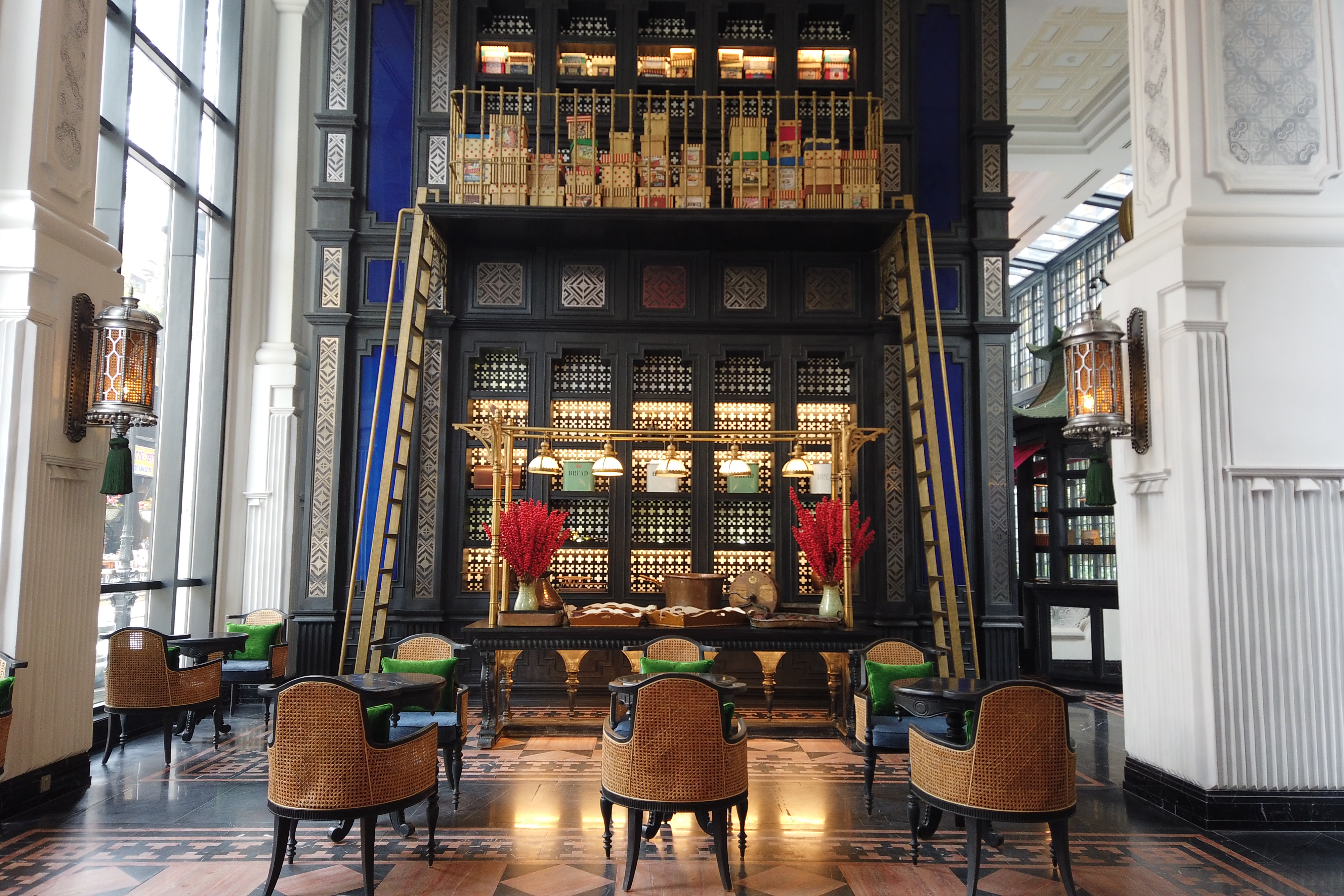
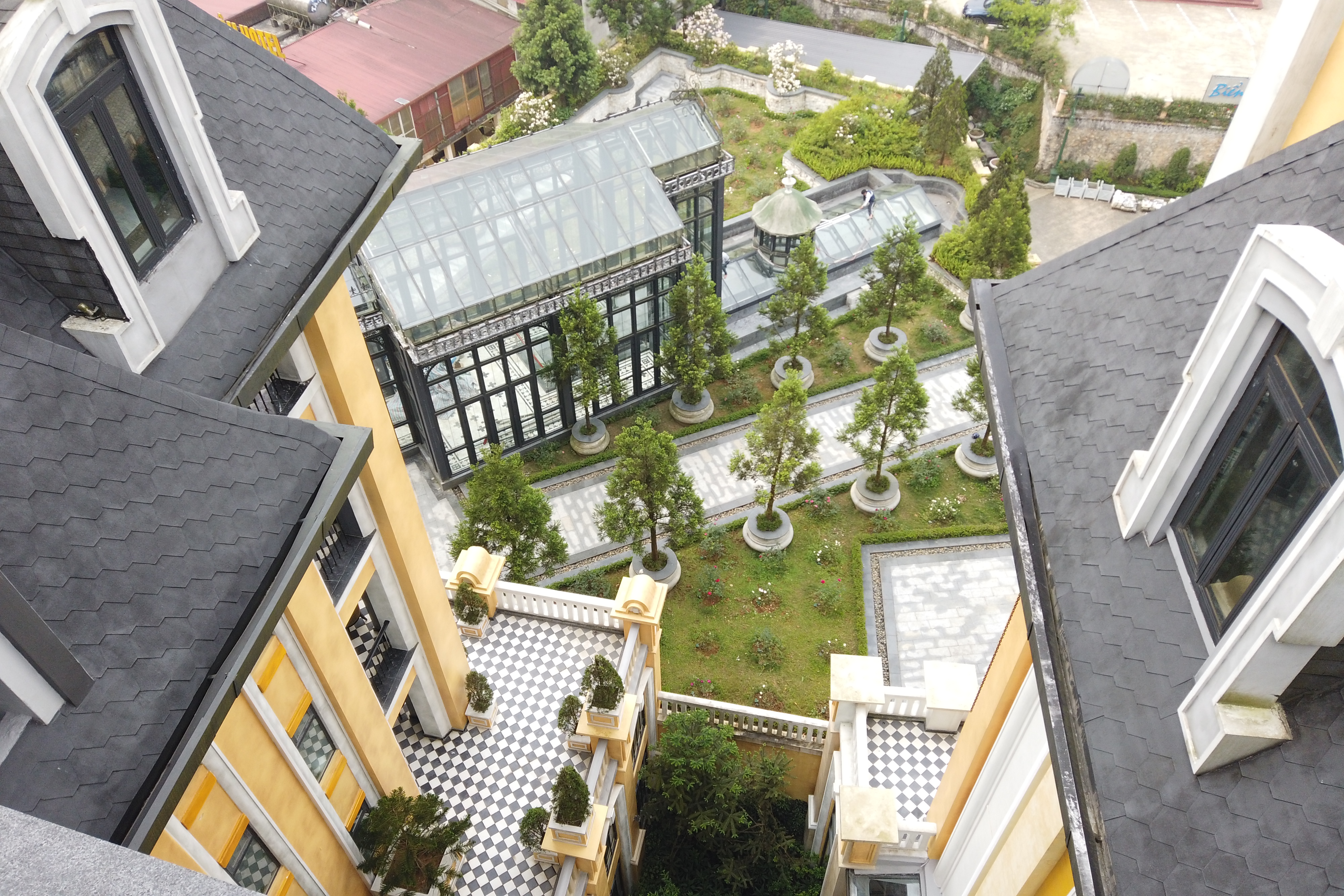
The pool, whose ceiling height corresponds to two floors, is a masterpiece. We spent almost the entire morning there. There are tons of loungers, resting areas, and chandeliers (yes, yes, chandeliers!!) above the pool. It’s surrounded by statues of athletes 3-4 meters tall. The tiling is inspired by traditional patterns; it’s absolutely gorgeous!
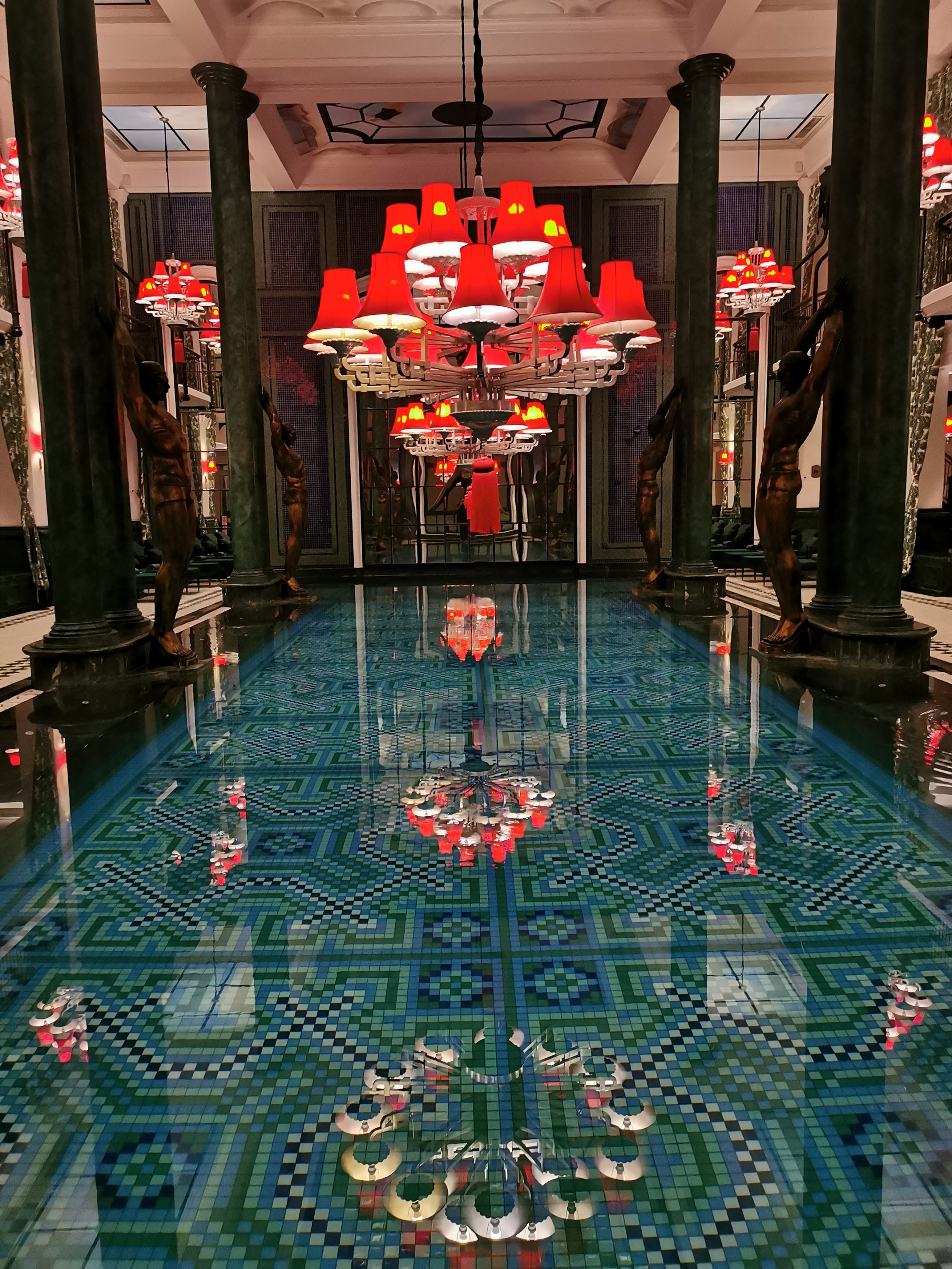
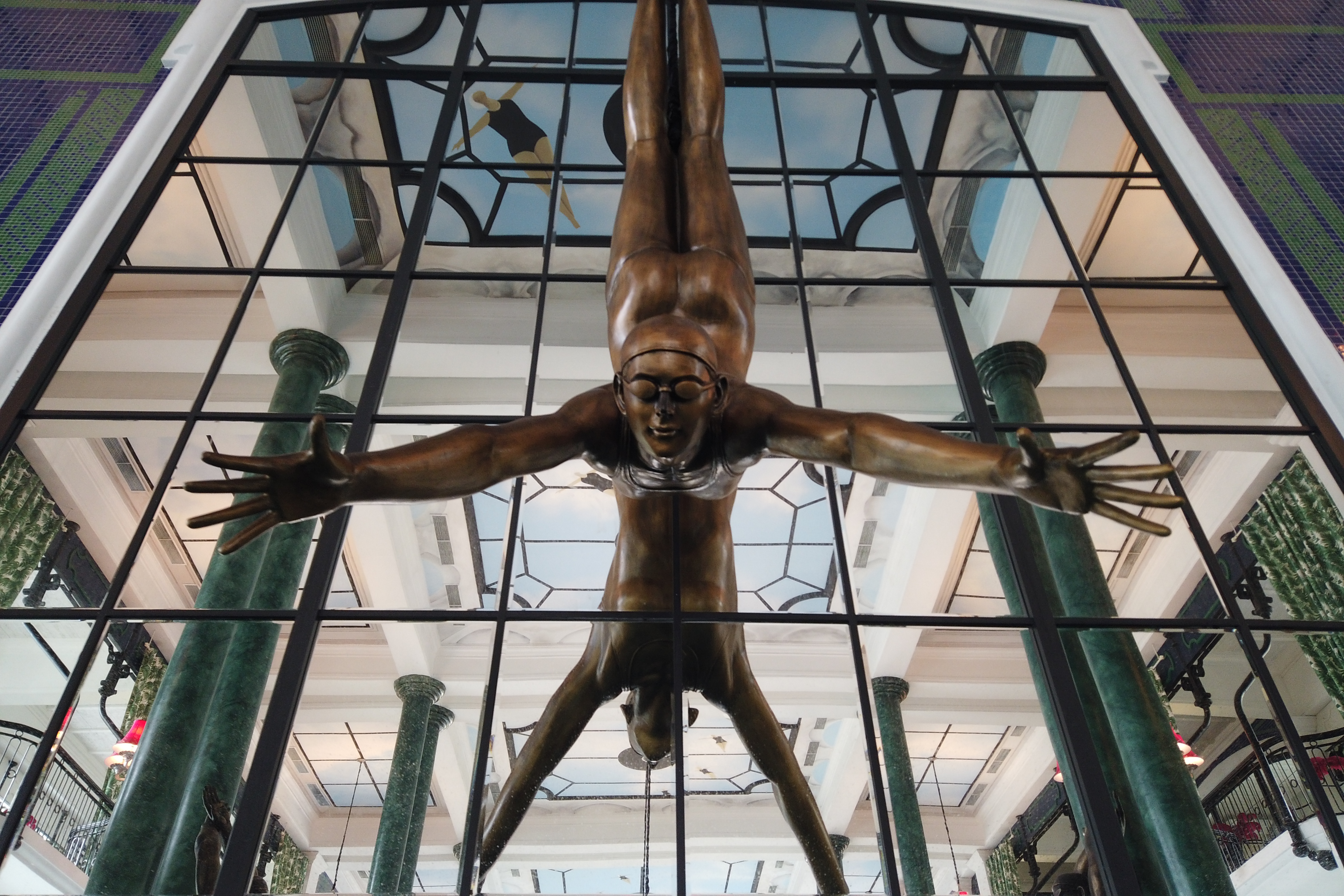
Of course, like all luxury hotels in Vietnam, breakfast is an all-you-can-eat buffet and there are tons of choices.
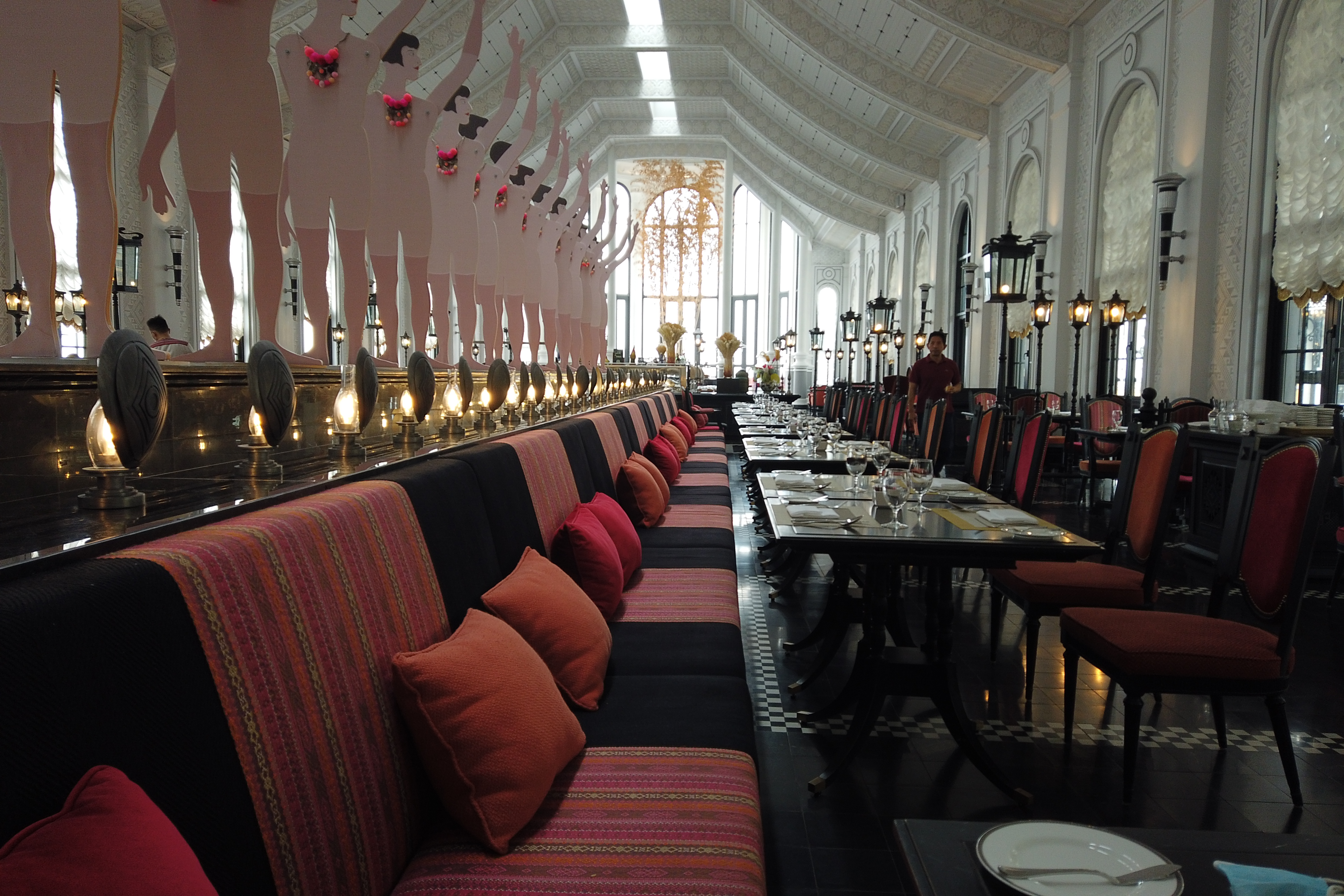
We chose a superior room with a view of the garden and/or view of Sapa.
On the 10th floor, there’s the bar and a terrace with a view of the whole city. Without fog, the view must have been breathtaking.
Unfortunately, I don’t have enough space to show you all the hotel photos, but know that there are tons of things to explore, little details to admire. If you love vintage furniture, you’ll be delighted to discover a unique piece in every corner of the hallway.
MGallery La Coupole in Sapa: count 3 million VND, or 120€/night for a superior room.
Booking link
Agoda link
Day 2:
Day 2 Itinerary:
– Breakfast at the hotel at 8am (all-you-can-eat buffet) (Booking link, Agoda link)
– Pool at 9am
– Walk downtown at 11am
– Check out at noon
– Visit the village Cat Cat
– Medicinal herb bath at 3pm
– Arrival at homestay Sau Chua Village à 16h15
The all-you-can-eat buffet is always satisfying in any 4-star hotel or above in Vietnam. Besides Vietnamese food, there’s a huge amount of European food too. And in a French chain like AccorHotels, the croissants and pain au chocolat are always very good.
We quickly visit the town center, especially the stone church left by the French.
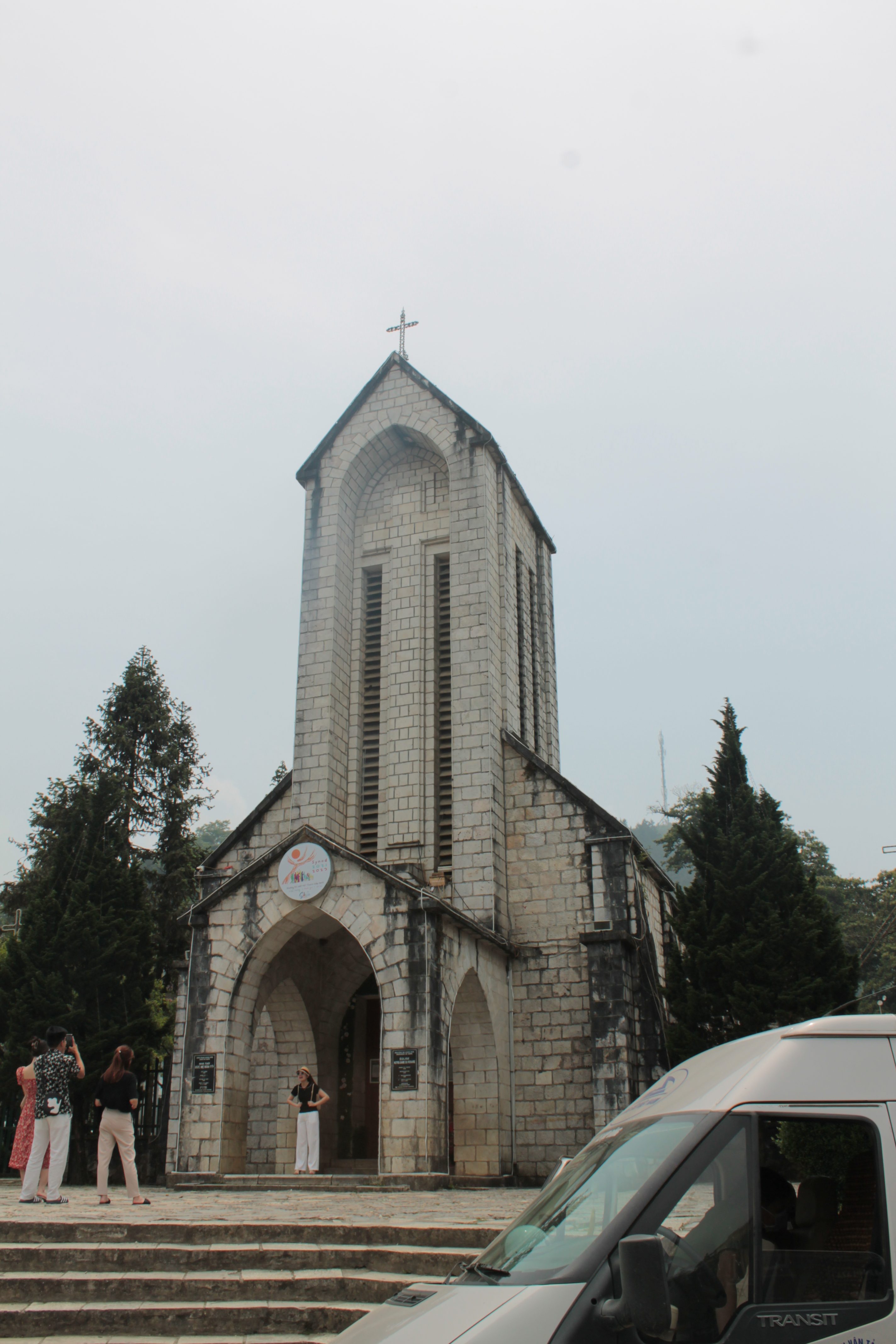
The town center is now filled with restaurants, each one more bling-bling than the last. Whereas before, when I came here about twenty years ago, there was only one shopping street, and we struggled to find a hotel with a warm shower.
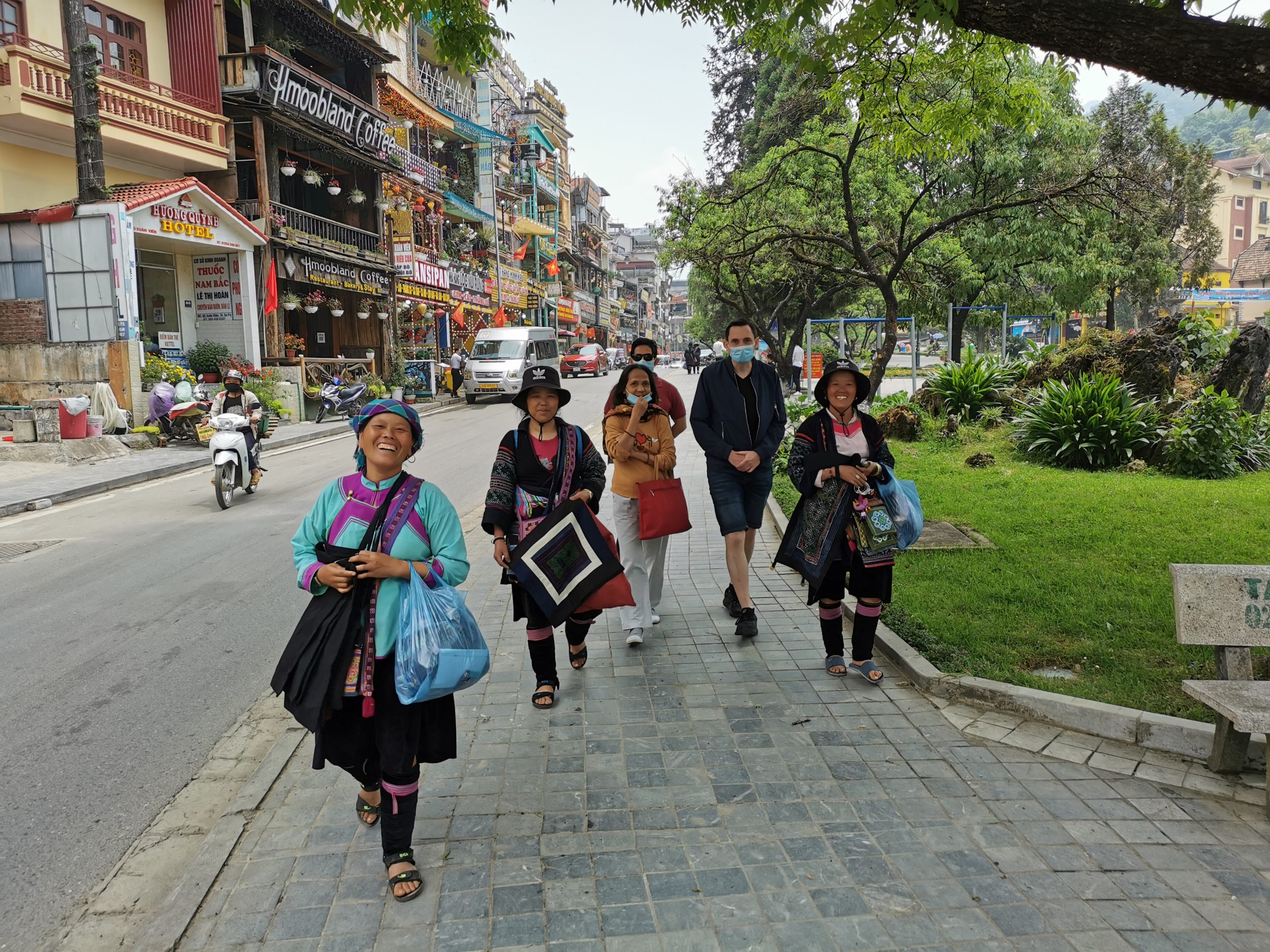
We quickly get approached by ladies from ethnic minorities in traditional dress. Despite my mother’s explanations that we don’t plan to buy souvenirs, they still happily follow us and even pose for a photo 😀
Cat Cat Village
Between Sapa and Cat Cat village, pretty cafes and hotels line the way. If you’re motivated, I recommend walking, since it’s all downhill, so you can enjoy the nice cafes.
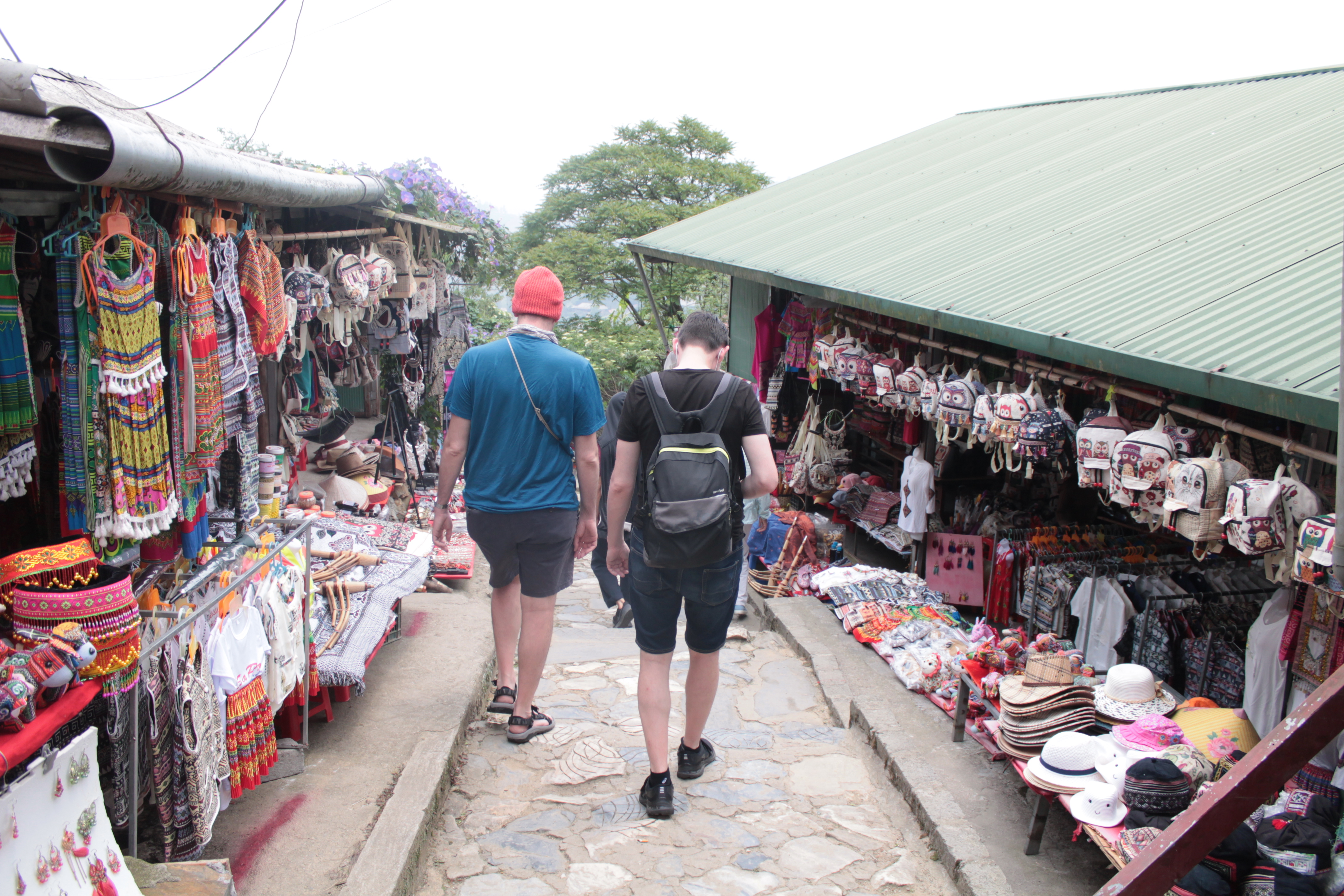
The driver drops us at the main entrance where we pay 500,000 VND per person for entry fees. Cat Cat village was very poor twenty years ago. But thanks to tourists, the tiny, poor houses have been replaced by souvenir shops all along the path.
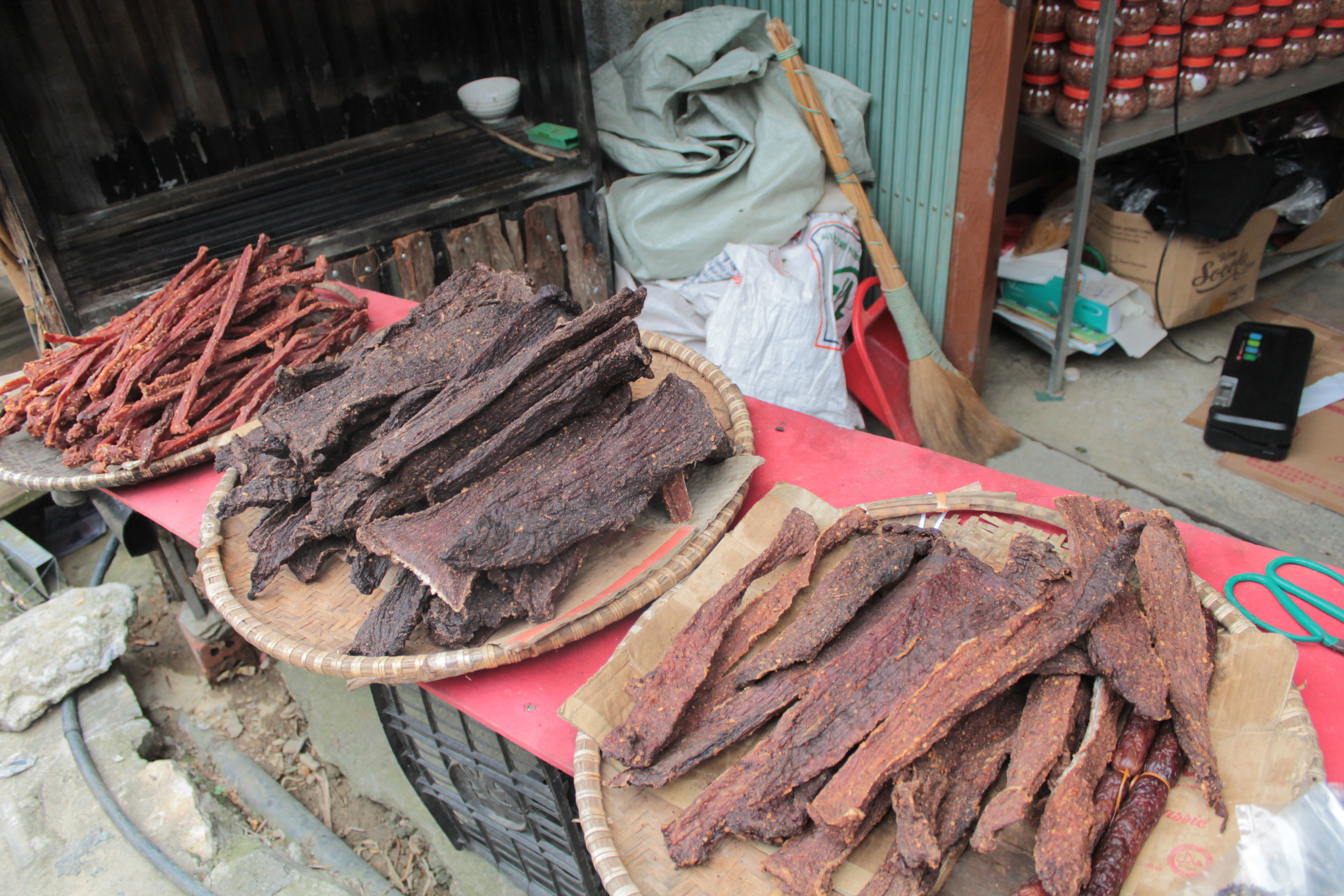
You’ll probably wonder who can eat such hard dried meat? It’s a specialty of northern Vietnam: buffalo dried for months, hung right above the fireplace. It’s very tough to chew; you have to cut it into small pieces with scissors before attempting to chew a little bit.
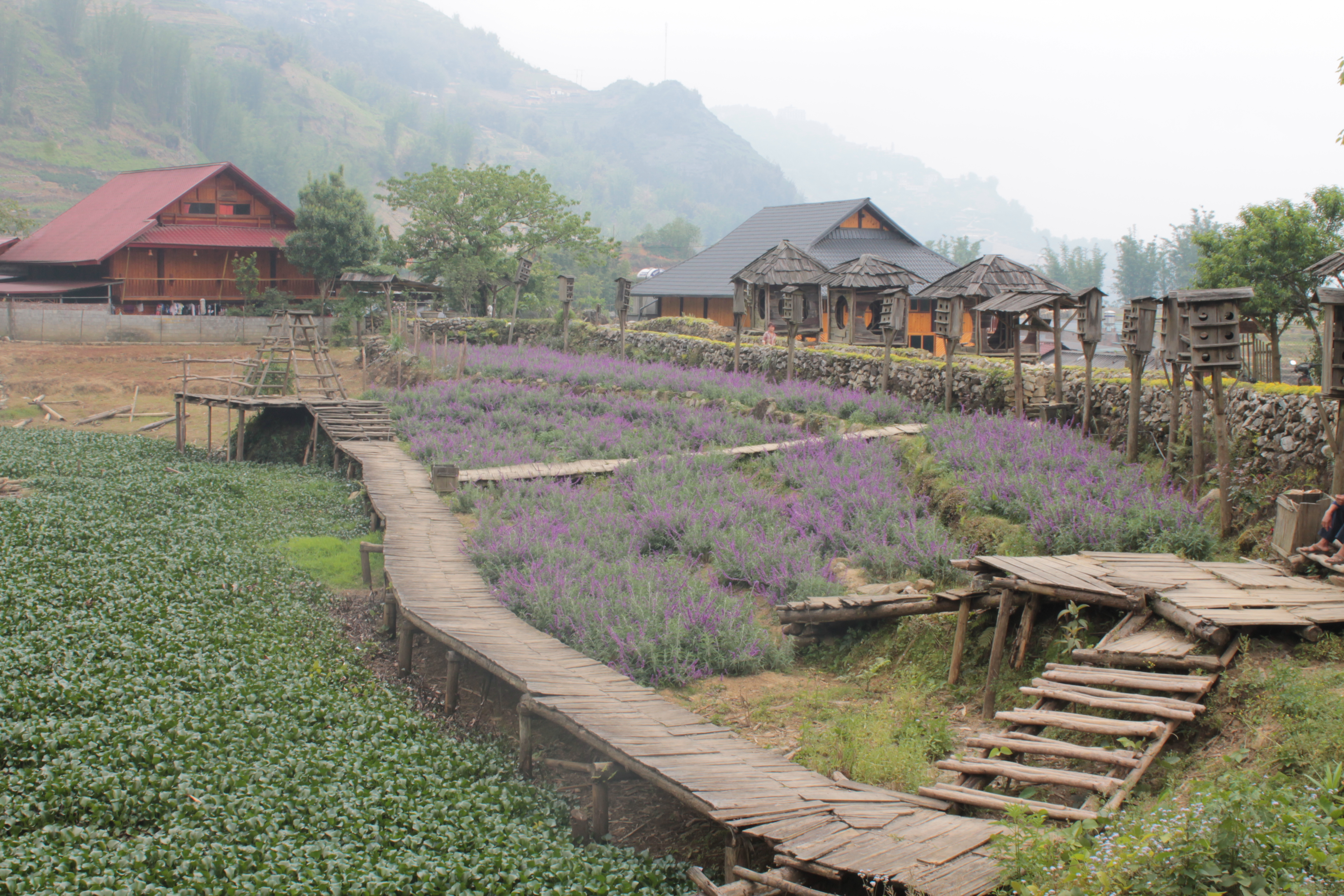
We finally arrive at a more open area. Right next to it is the motorbike parking. Tourists on motorbikes all park here, while those with a driver or on an organized tour arrive from above like us.
About thirty meters later (it’s downhill and steep), we discover many waterfalls, big and small. This one is the largest. Cat Cat, the village’s name, might come from the French word “cascade”?
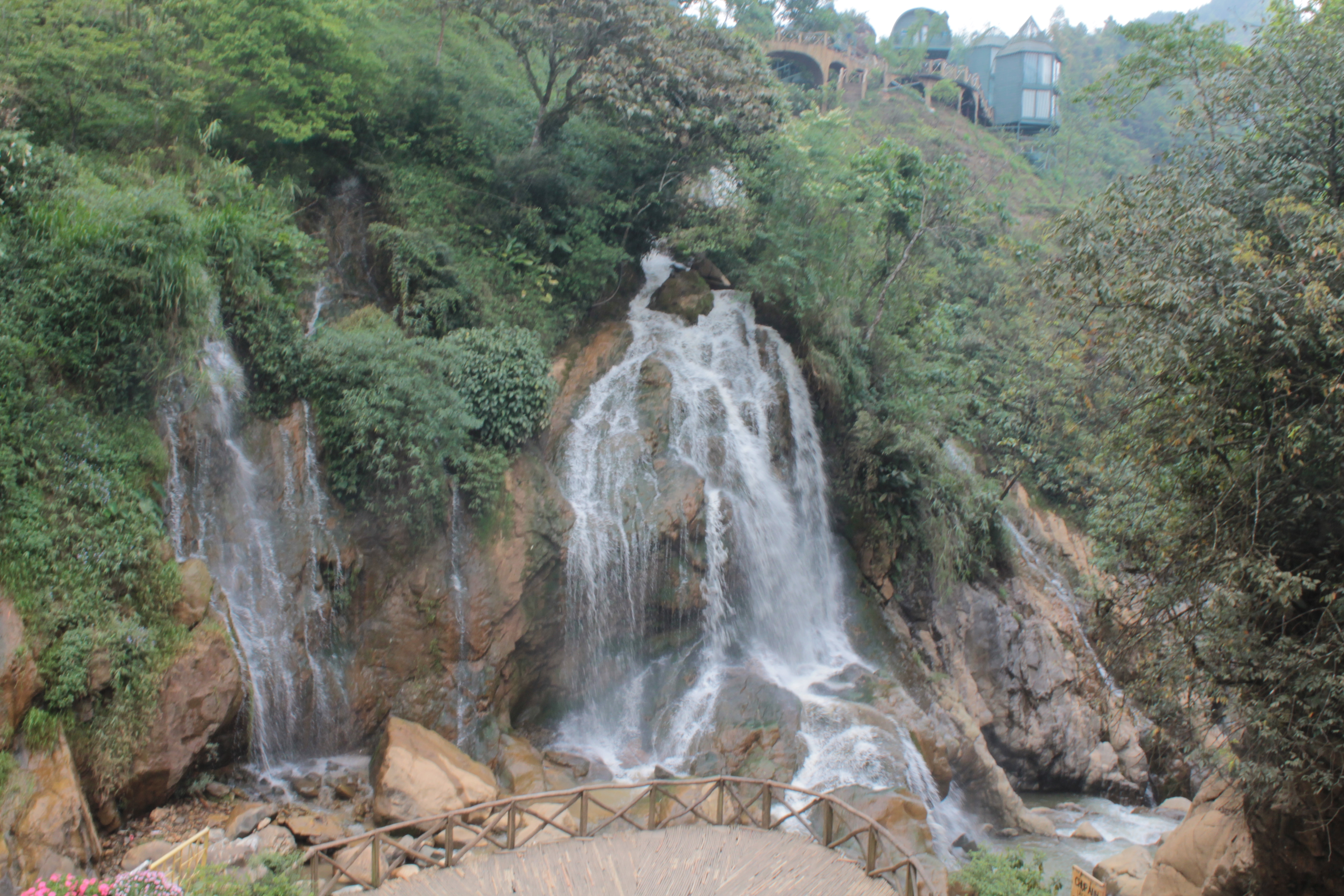
I’m impressed by the beauty of the place. After walking a lot, we’re delighted to enjoy the coolness around the waterfalls and a fresh sugar cane juice. With a view, of course.
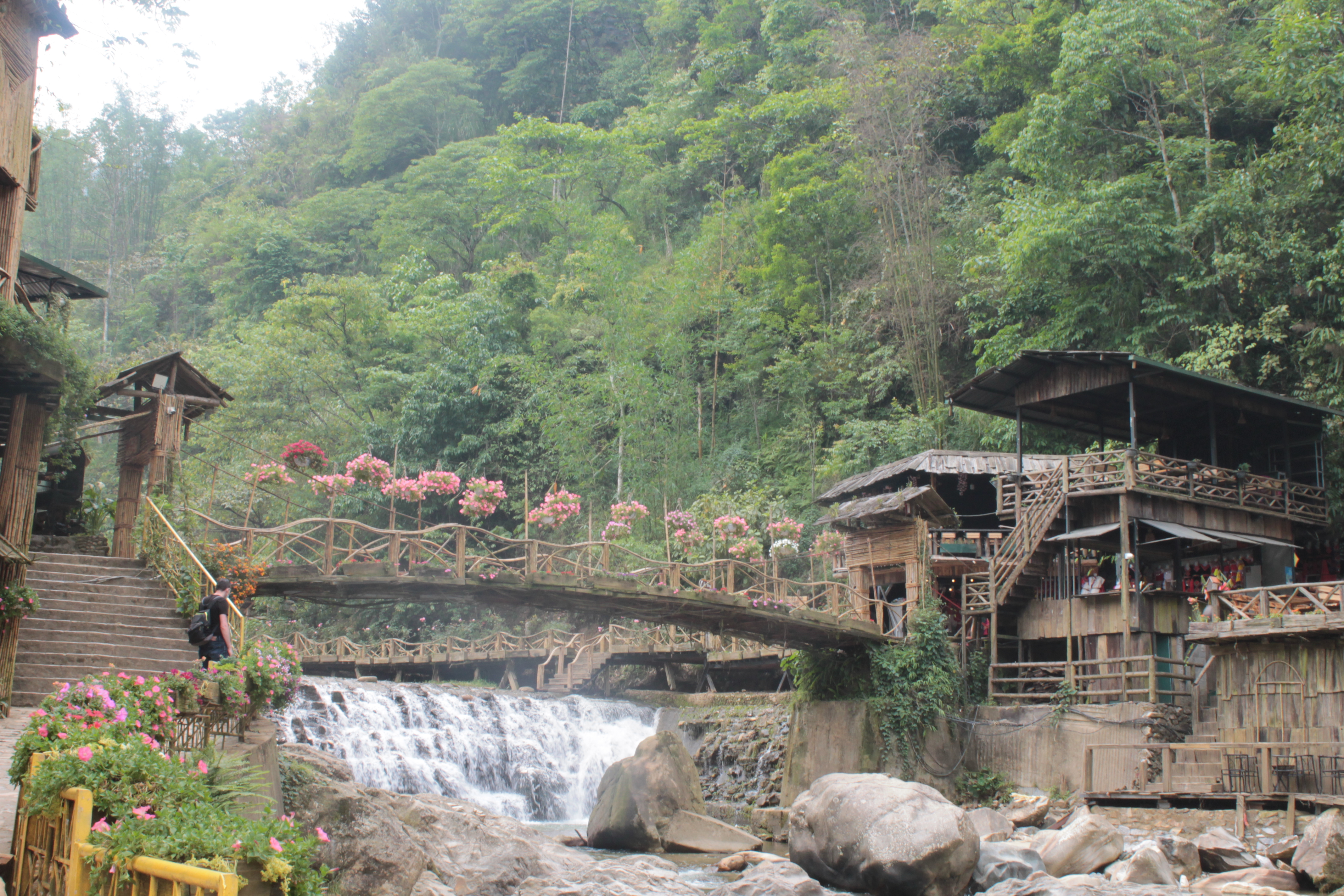
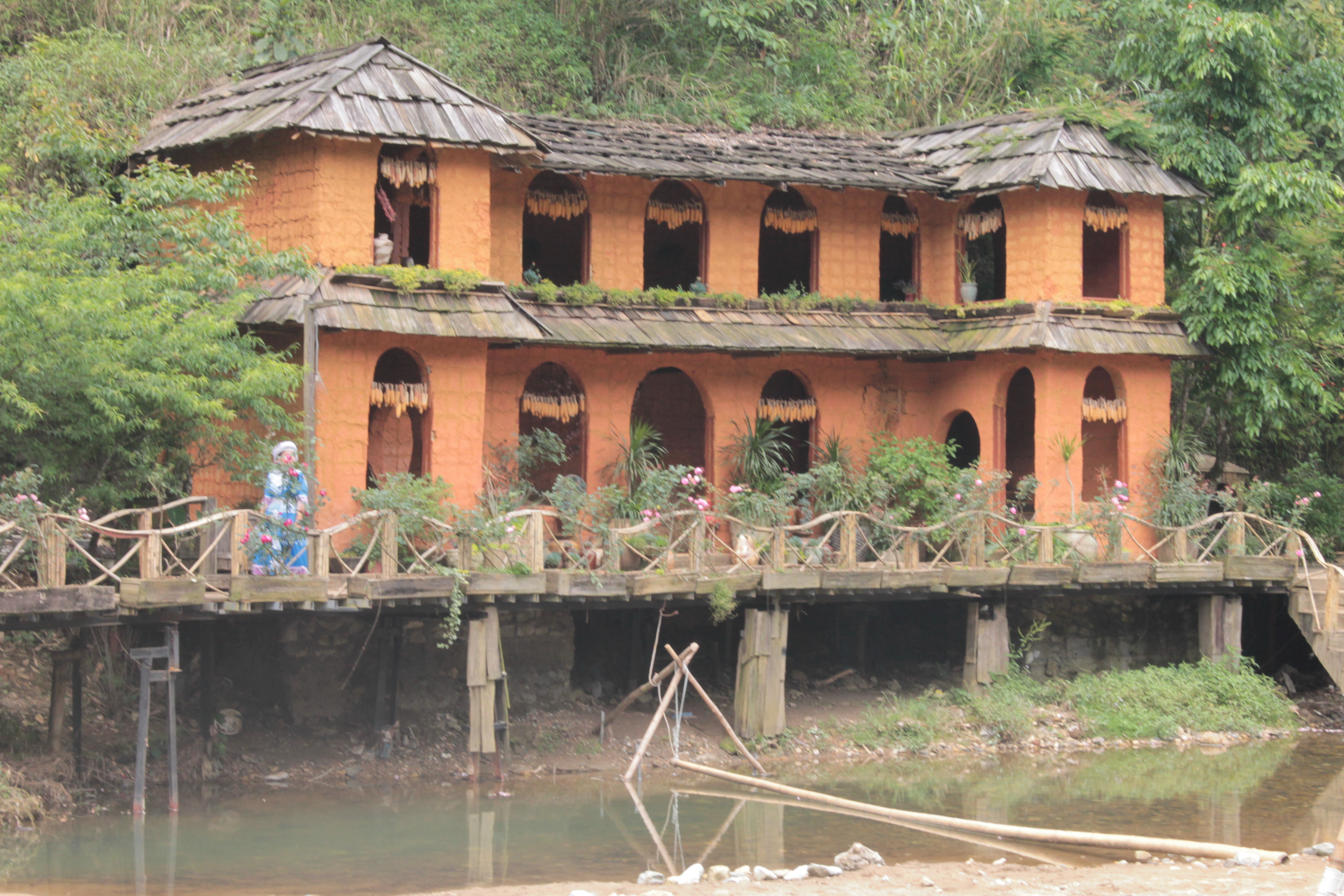
After the waterfalls, the view gradually becomes less pretty, less interesting. We slowly make our way to parking lot #2 where our driver is waiting. If you come here alone, you can take a motorbike taxi or an electric shuttle back to Sapa.
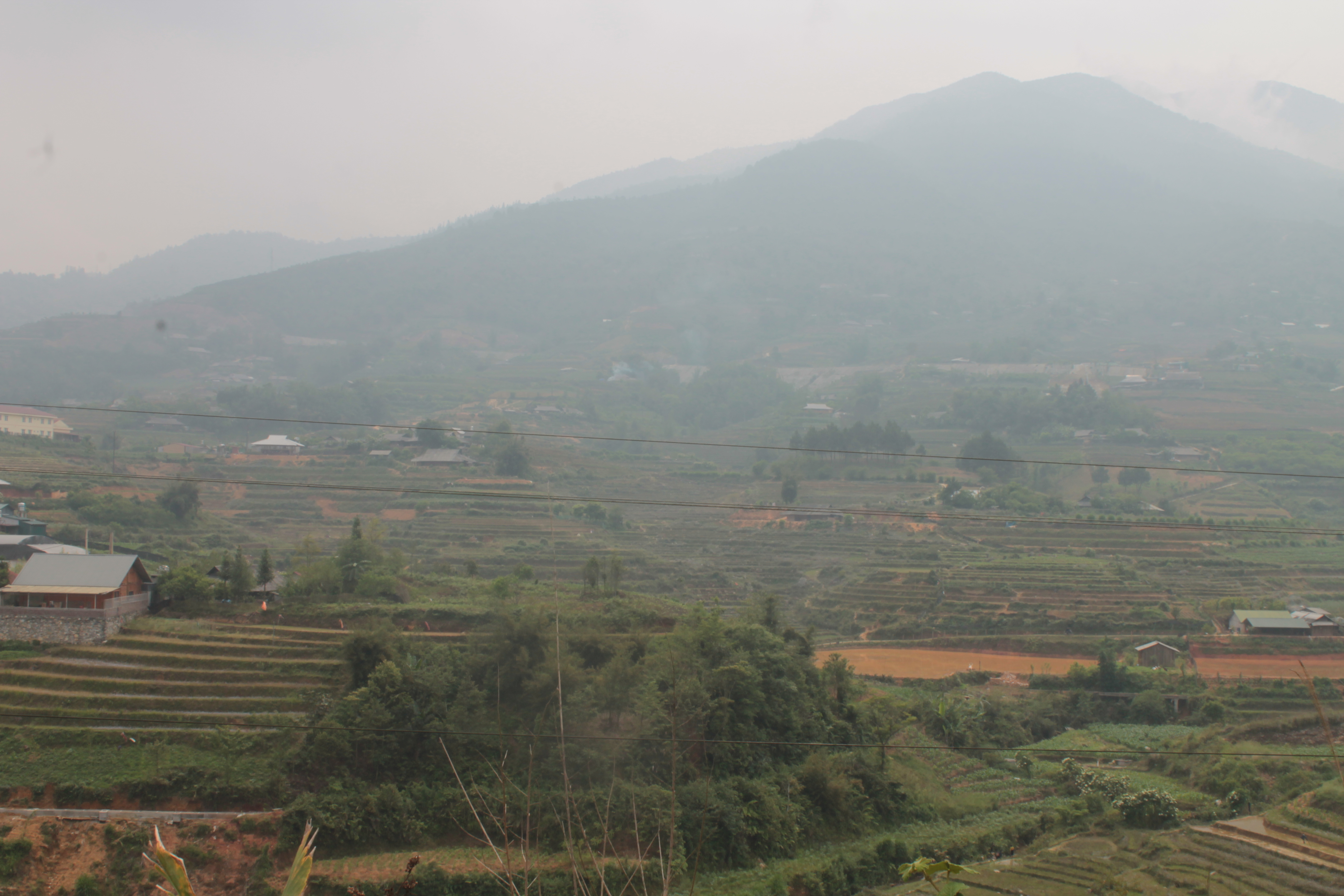
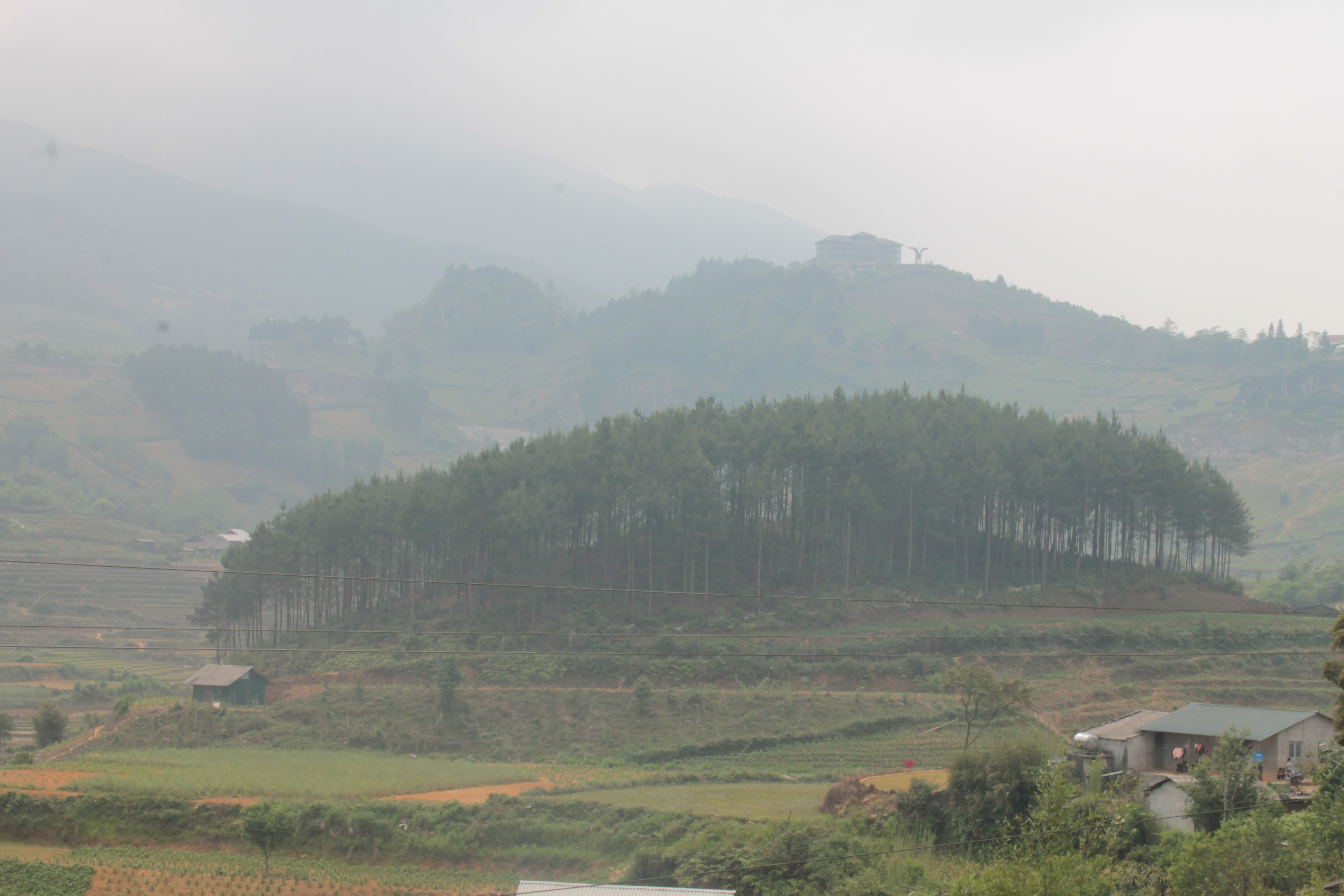
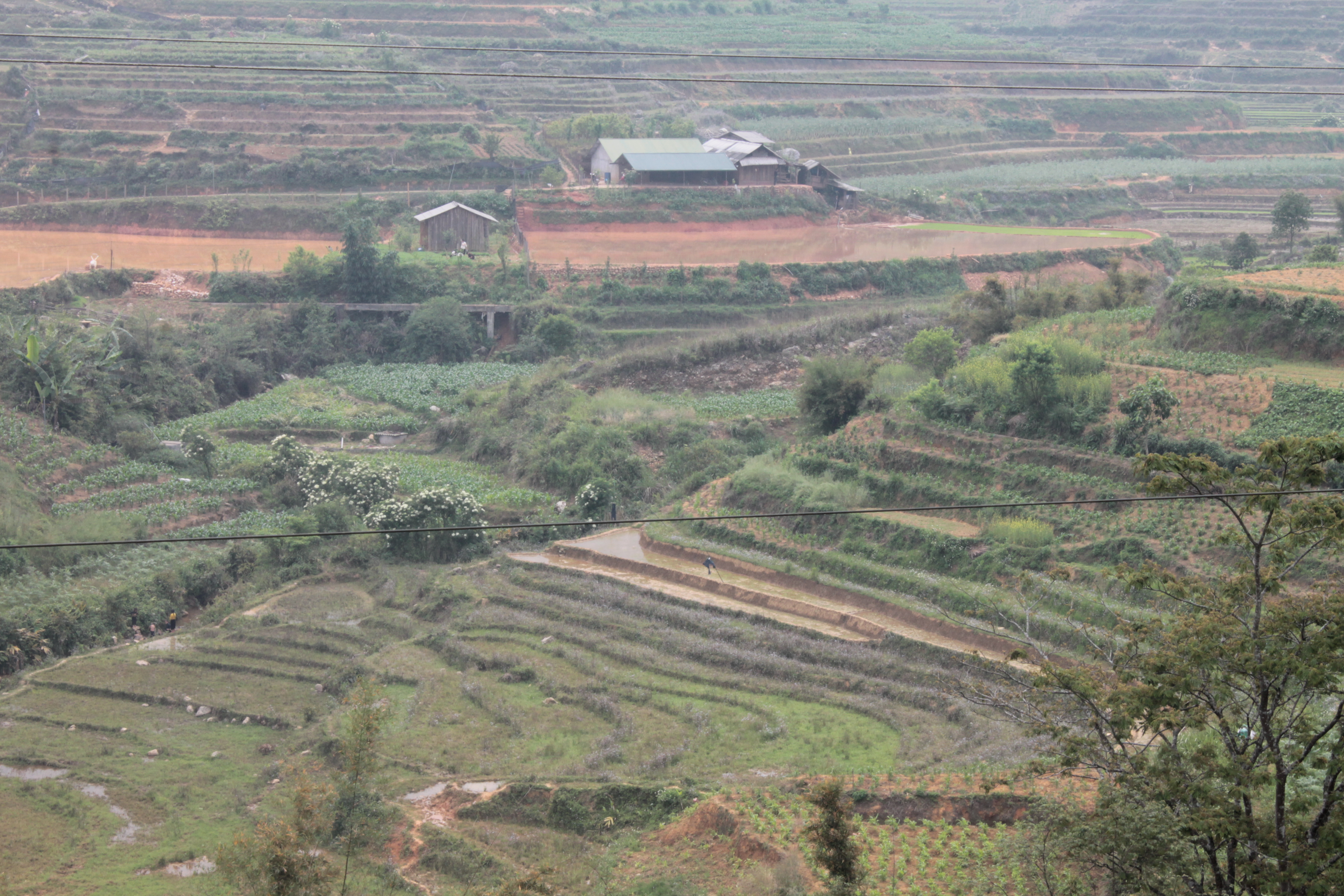
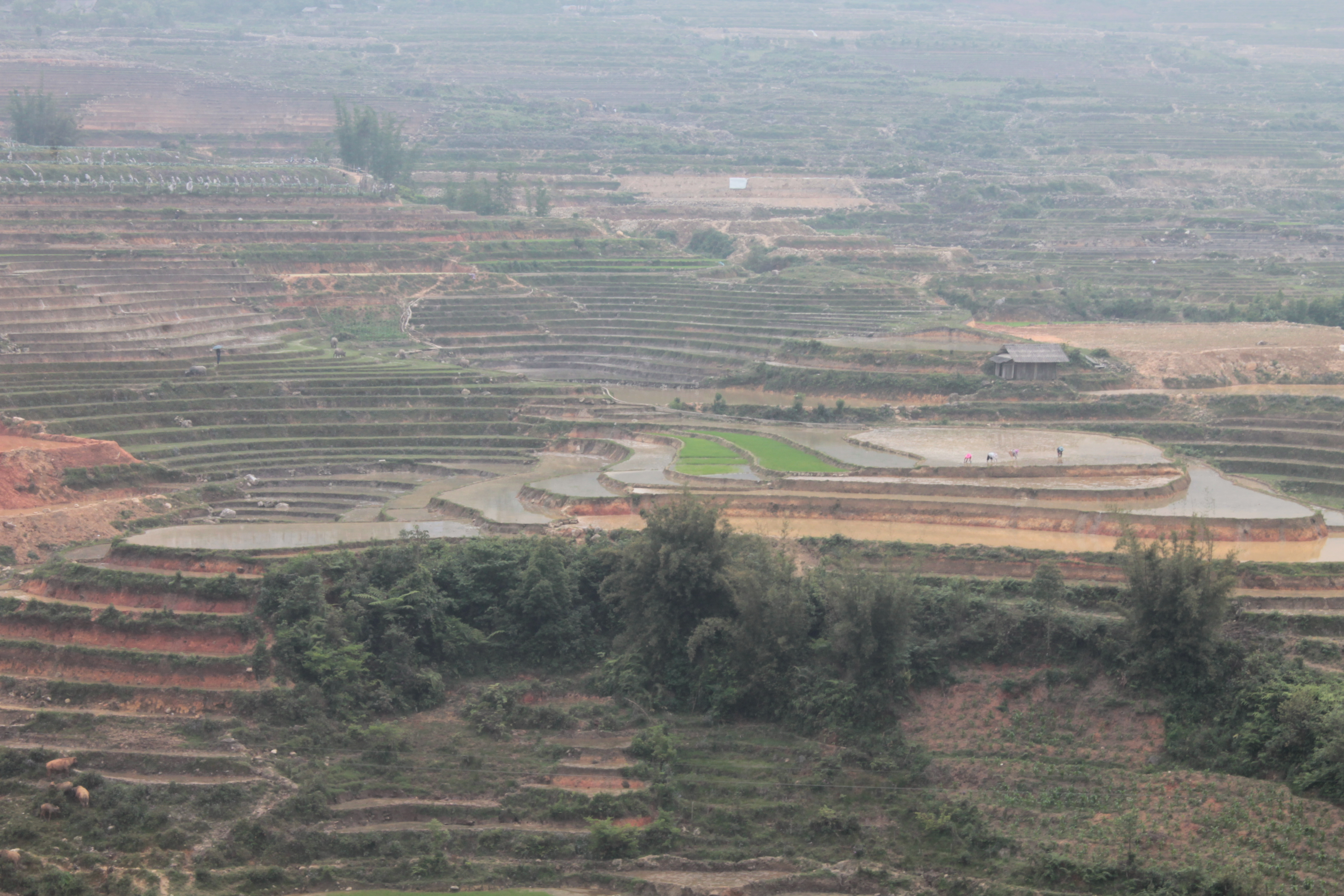
Medicinal herb hot bath
In general, right after childbirth, Vietnamese women are not allowed to shower or work, but the ethnic minorities in the mountains have a secret to get new moms operational quickly so they can return to the rice fields: a good hot bath with medicinal herbs. How many herbs are in it? What kinds of herbs? I won’t be able to tell you.
The locals gave me the address of Sapanapro. Their water is so famous that they also sell concentrated versions to mix into bathwater. The road leading there is partly under construction, so we’re glad to have a sturdy car.
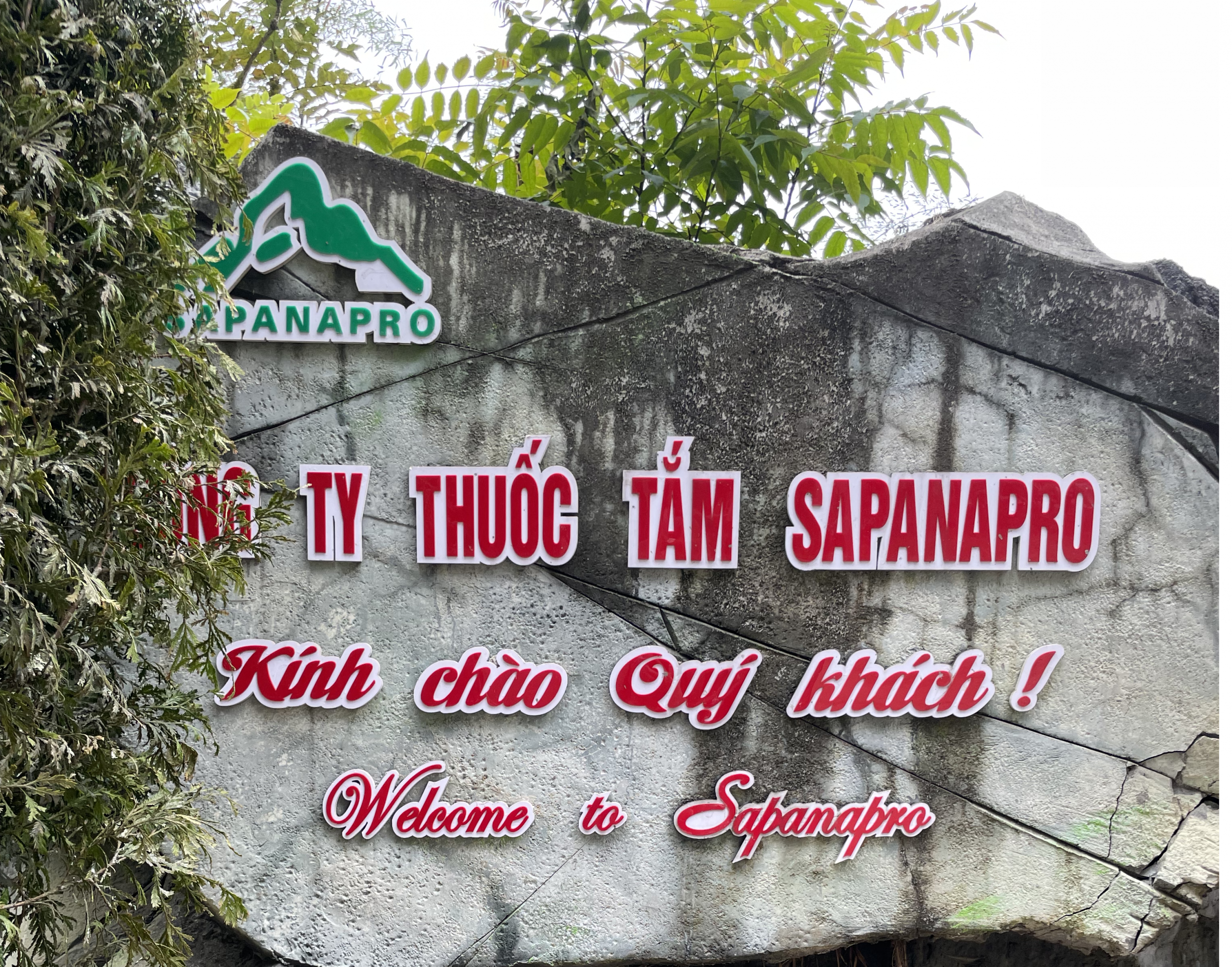
A. suffers a bit from the itinerary, but once settled in the huge wooden barrel that serves as a bathtub, with an incredible view of the rice terraces and forest, hot water that smells good with herbs, he seems delighted with this unique experience (just like the one we had at Ha Giang). Of course, there are 6 rooms, so we each have a private room. There are up to 3 tubs per room. After the bath, you don’t need to rinse off with fresh water; on the contrary, you should let it all soak into your skin and just pat dry.
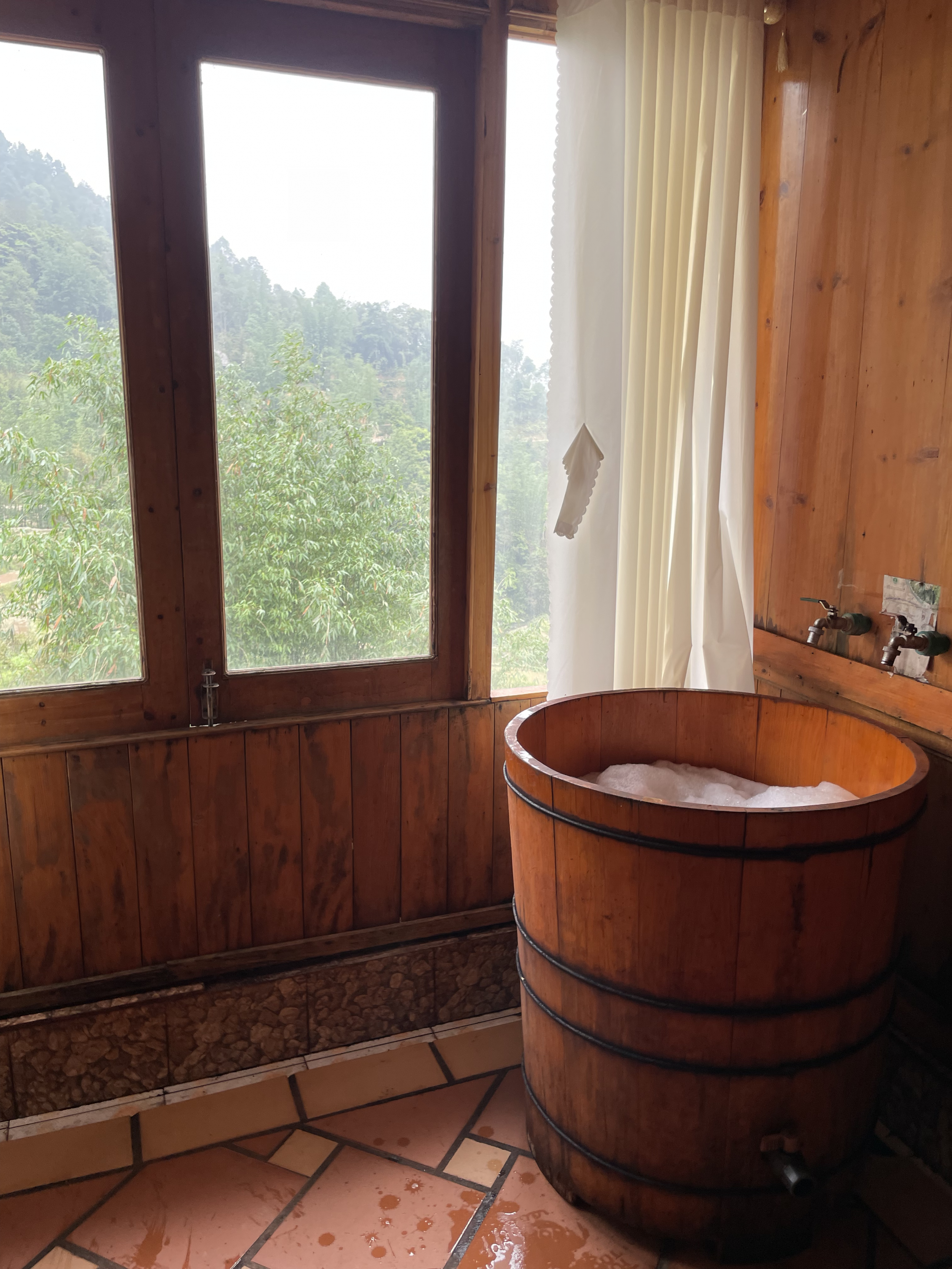
I can’t stand the heat of the bath for long and am the first to get out. While waiting, a Vietnamese man asks me stupid questions that annoy me; I go from relaxed to bad mood. Later, my parents will tell me he was probably trying to flirt with me, but since I left Vietnam so long ago, I can no longer grasp all the subtlety (or lack thereof). It’s yet another experience showing that I’m no longer fully Vietnamese, nor fully French.
Homestay
It’s still quite early, but the owner of tonight’s homestay insists we arrive in time to enjoy the sunset there, so around 4pm, we’re already on our way, ignoring a whole bunch of tourist attractions along the road (rose garden, ruined cathedral, etc.), and even the driver is surprised that I’ve made such a light itinerary.
Tonight’s homestay is one of the most memorable experiences of the program. Obviously, no one knows about its importance. The driver just got the address, that’s all. As the organizer, I carry the weight of planning, booking, but also the excitement mixed with anticipation of a particularly unforgettable experience. I’ve been waiting for this moment for weeks. But that’s also the side that bothers me; sometimes I wish I also had the carefreeness of someone who just enjoys a well-planned itinerary, who doesn’t have to watch the clock and think about the next destination.
The road is difficult and narrow, but we arrive a bit earlier than expected. I’m relieved because there’s nothing left on the schedule. The homestay’s “butler” welcomes us warmly, he was waiting for us. He belongs to a minority ethnic group and speaks Vietnamese with a slight accent. He’s alone and has to do everything, which must have tired him out because he keeps apologizing for the delay or for the wait, when we actually think he’s very efficient. Our group discovers, open-mouthed, that I’ve privatized a homestay that can accommodate 25 people! Yes!
Okay, let me explain: I like to show off, but not to that extent. Actually, the owner I’d been in touch with, after giving me rates for 3 rooms, pushed me to privatize the whole place because it adds just 40€, “and the experience will be 10 times more enjoyable,” she claims. Okay. I discovered this homestay by diligently following the Facebook of a Vietnamese friend who travels around Vietnam with her husband and two children. Since they have a car, they always manage to find super cool hotels, homestays, and Airbnbs. I remember she was very impressed by the 5-star service of this homestay, as well as its off-the-beaten-path location. I saved this address by pinning it on Google Maps, and you just have to open the map and stumble upon it; that’s how I spot places and put together my little itinerary. The coordinates and rates are at the end of the article, as usual.
There are 3 levels: the ground floor has the kitchen, a huge living room, and a terrace. The second floor: another living room, 3 bedrooms, 2 of which have a private bathroom. The top floor is an open bedroom with lots of bunk beds. The third and fourth rooms can use the two shared bathrooms.
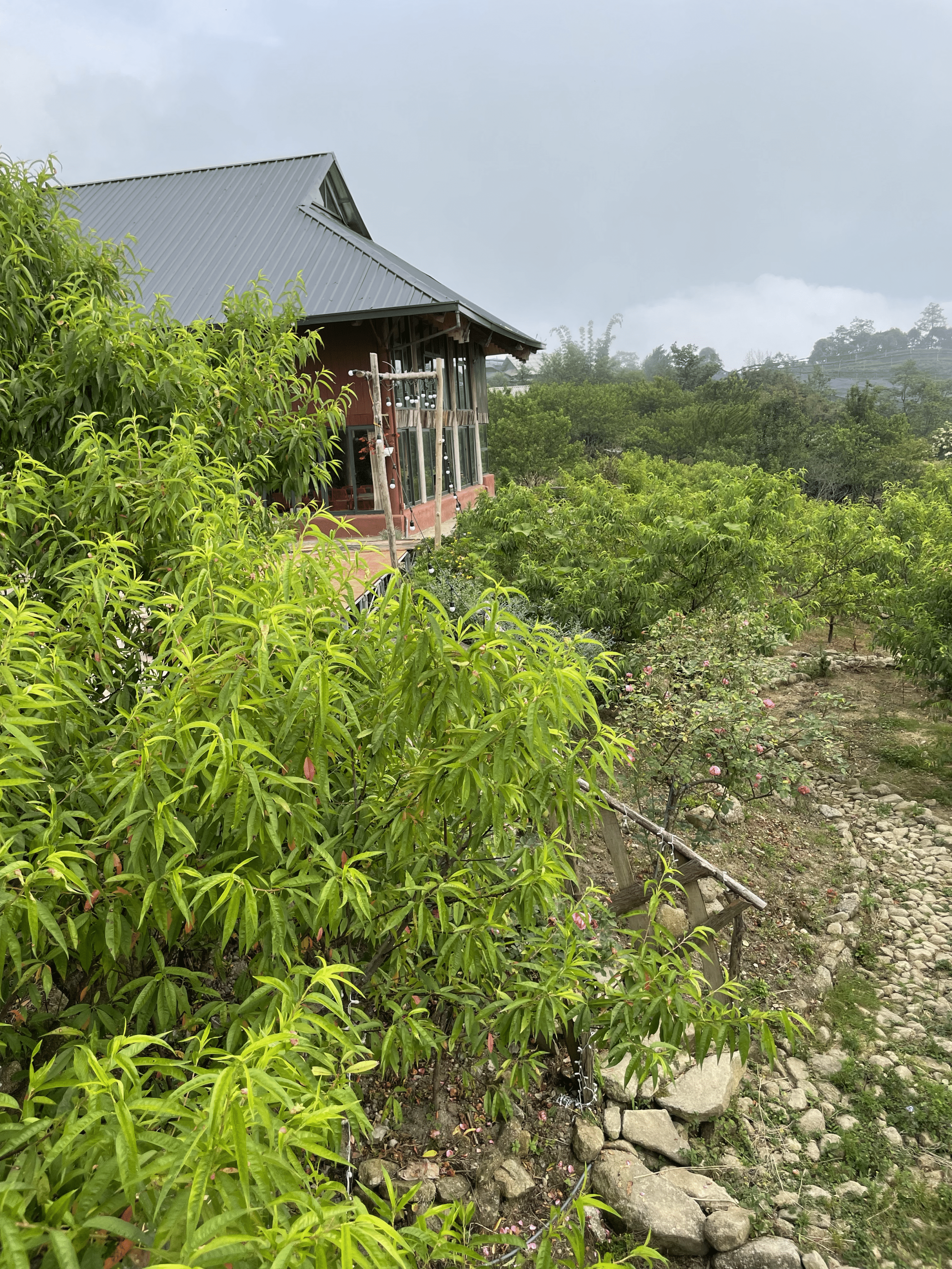
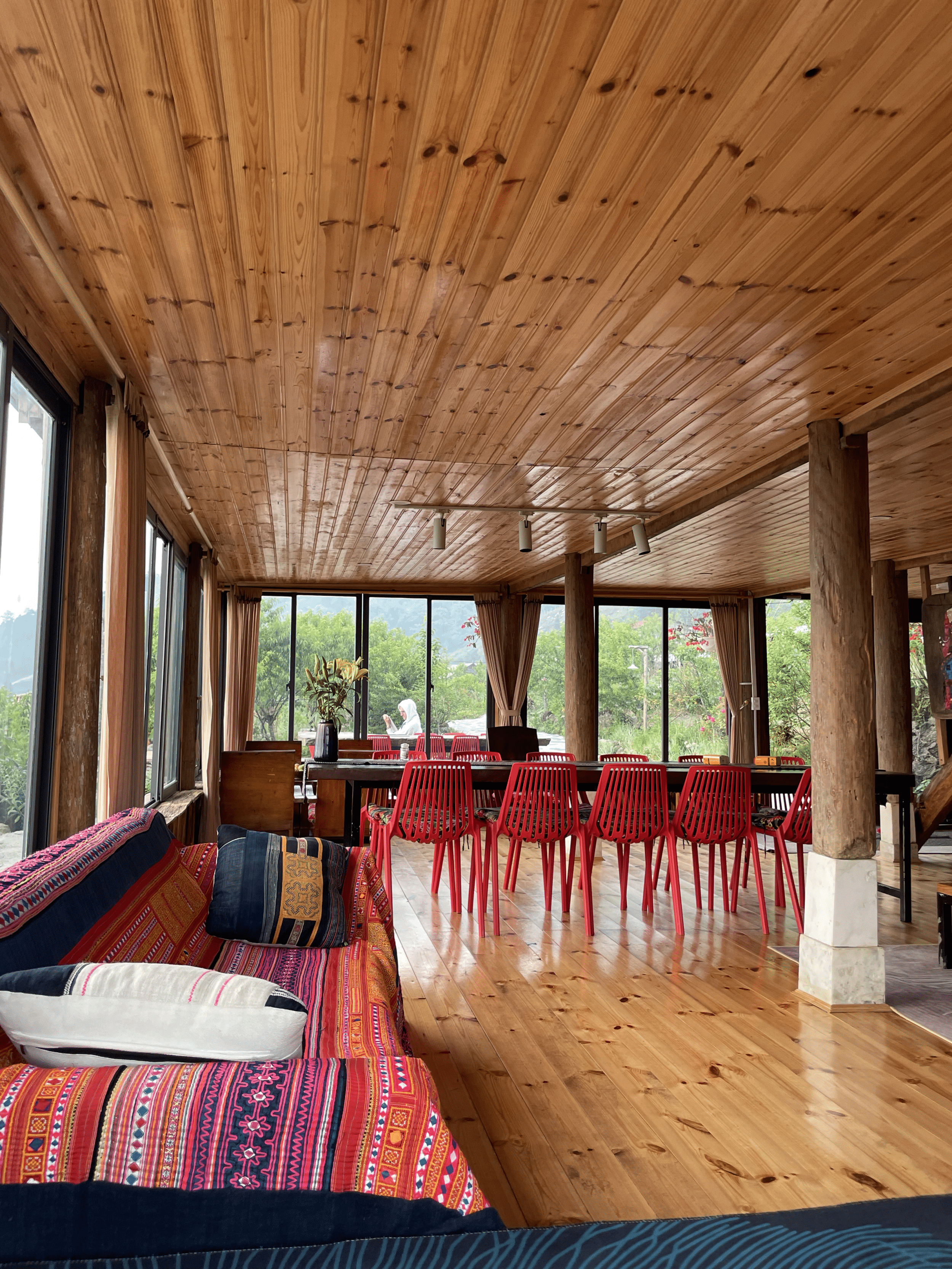
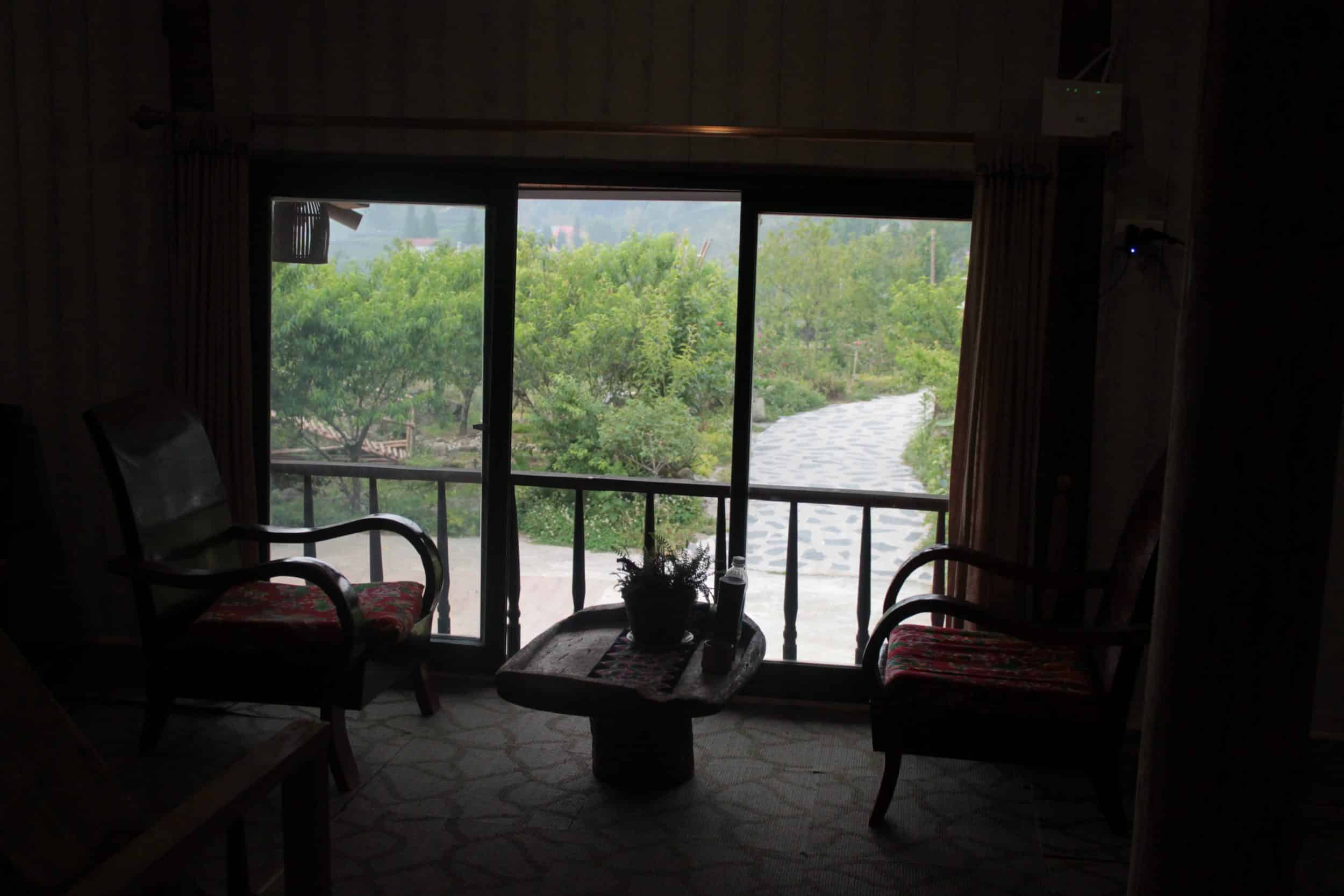
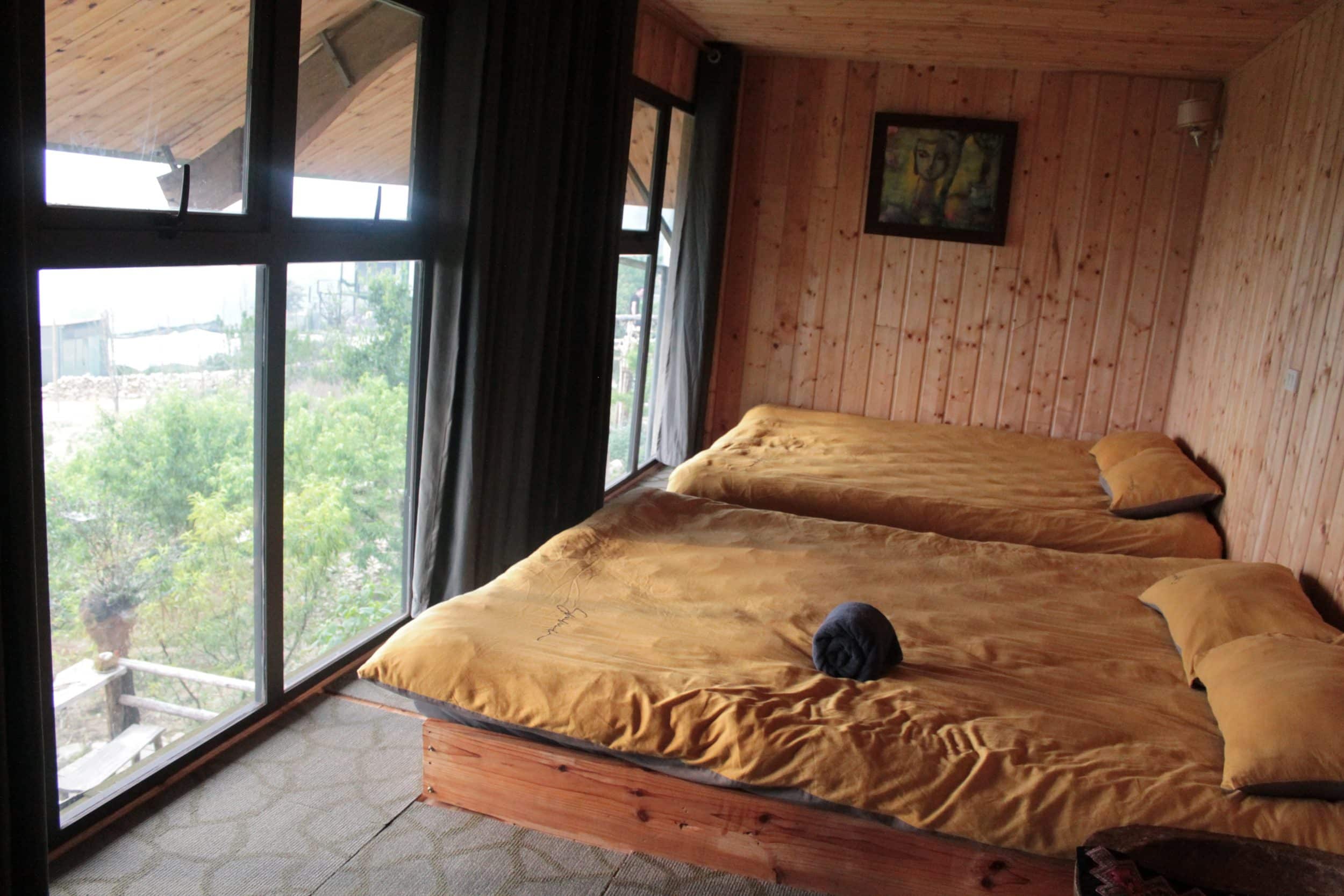
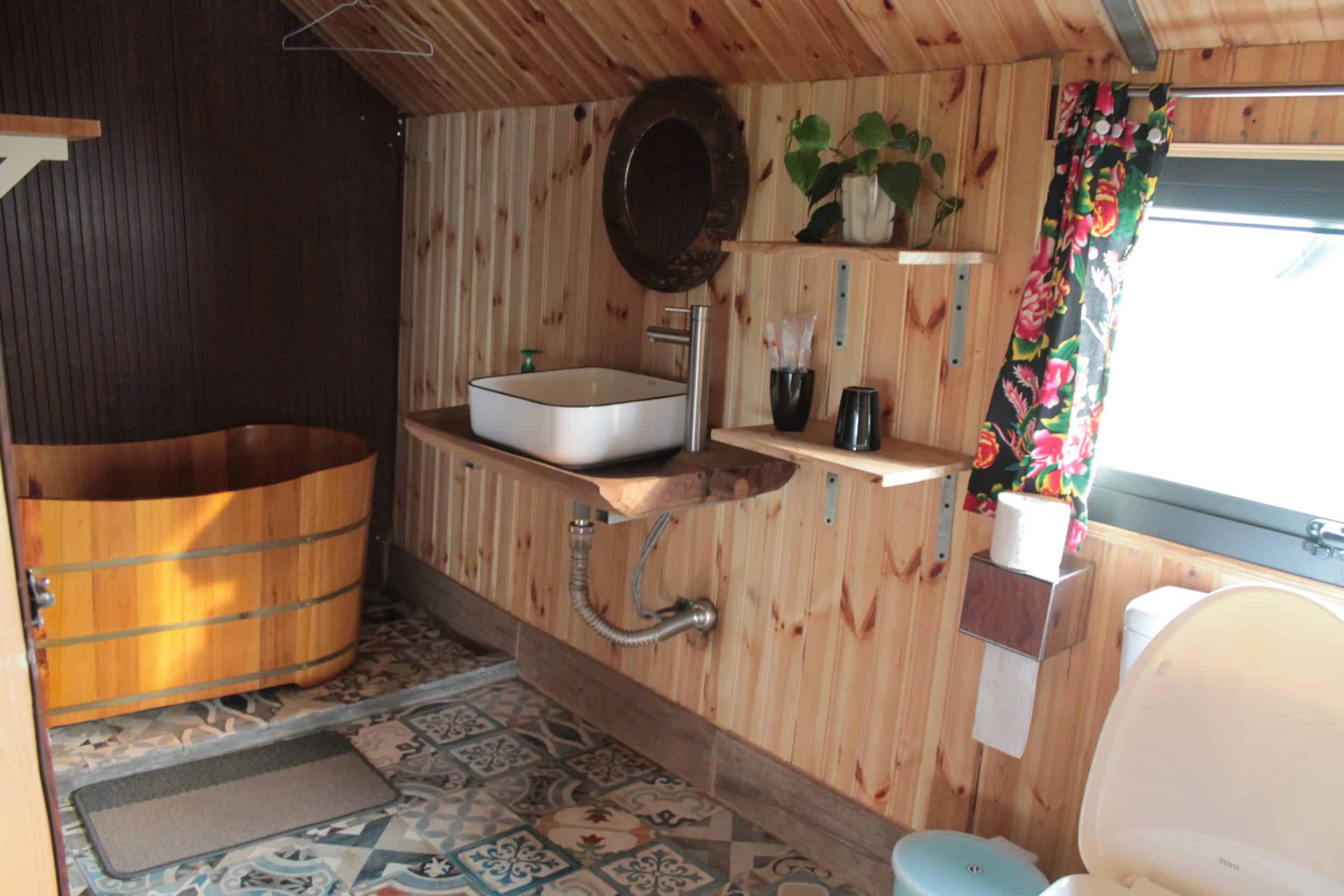
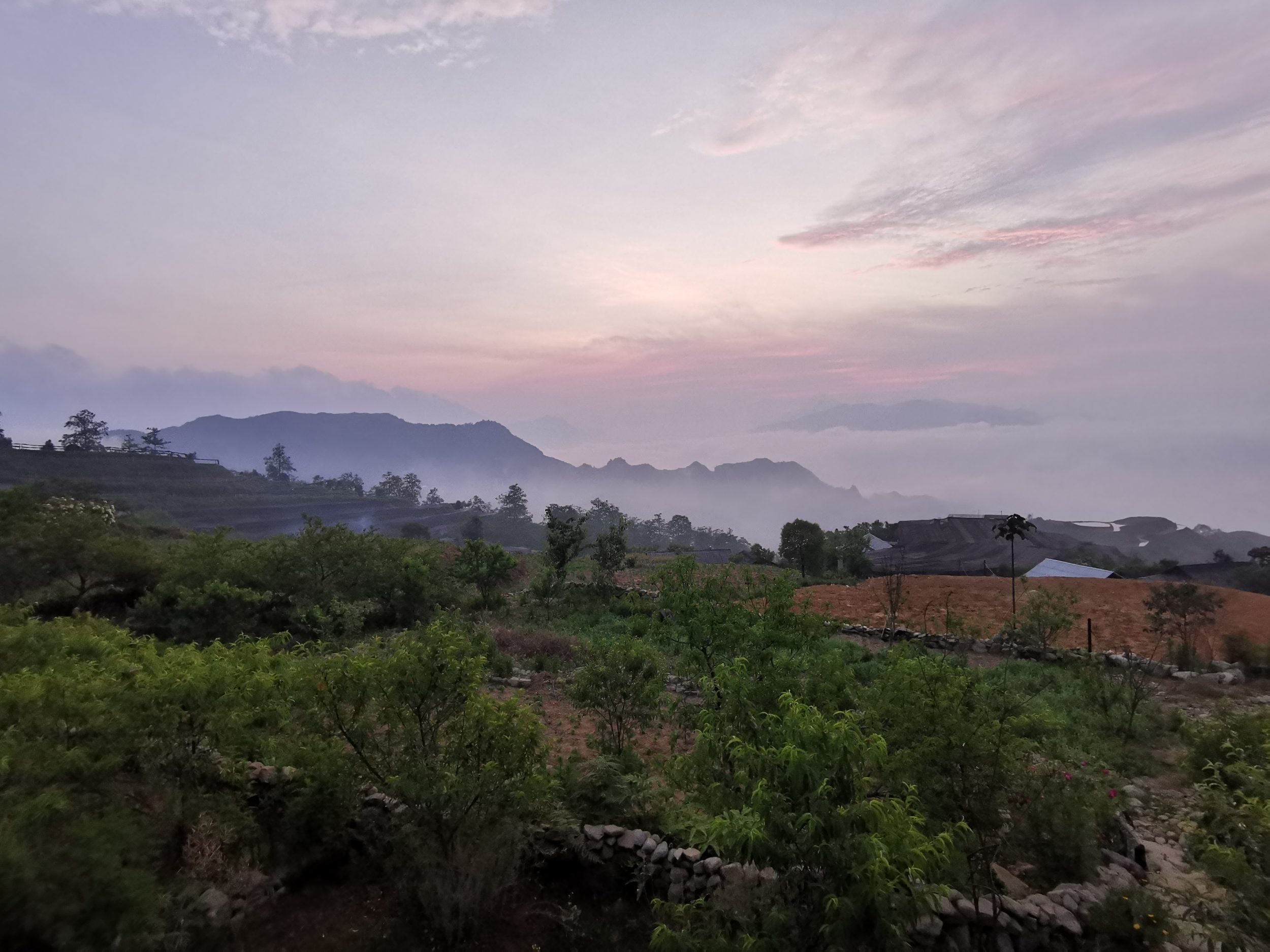
The garden is huge, and there’s a spot where we can sit to drink tea and enjoy the sunset. Since we arrive a bit early, we don’t even have time to watch the sun go down before the teapot is already empty.
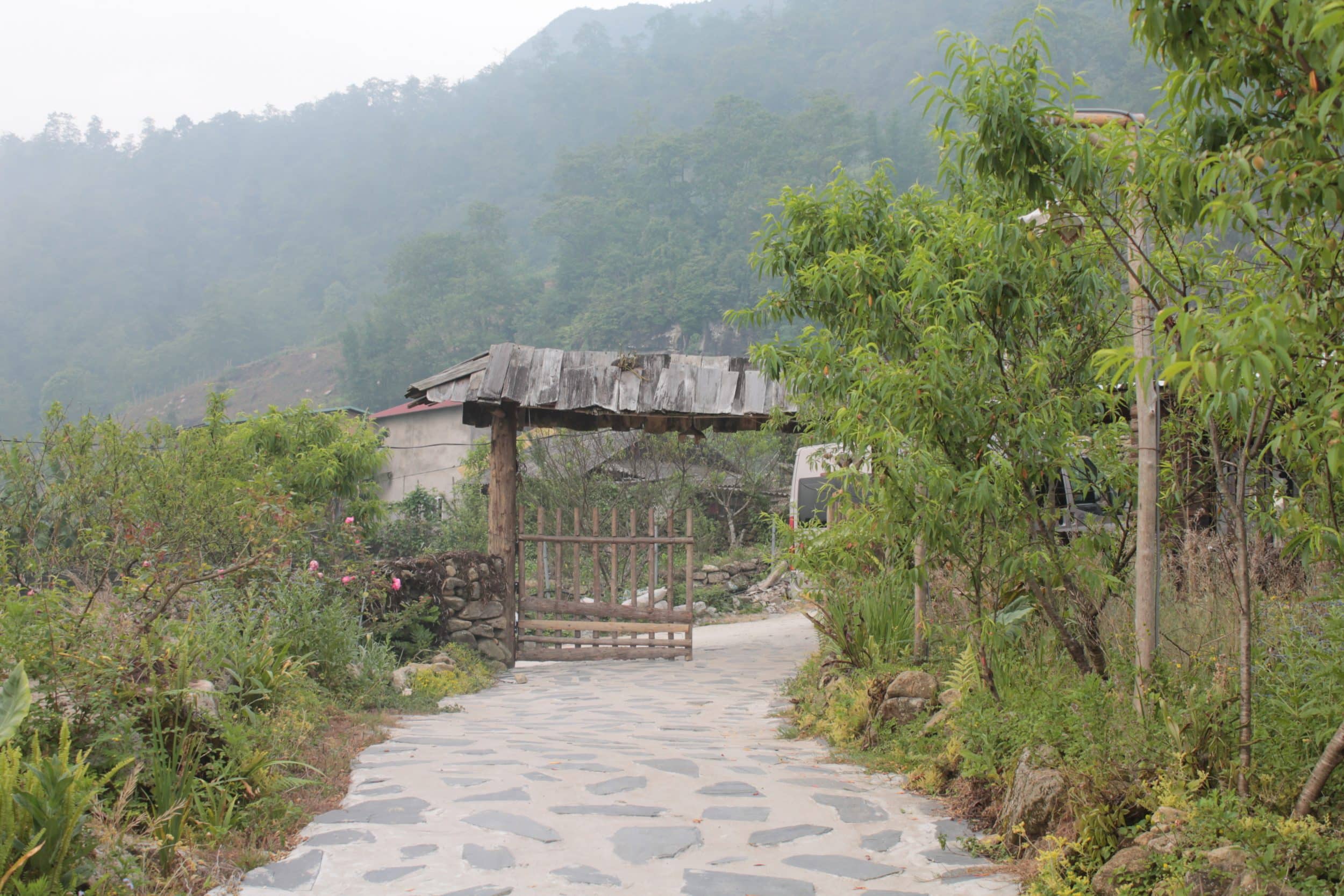
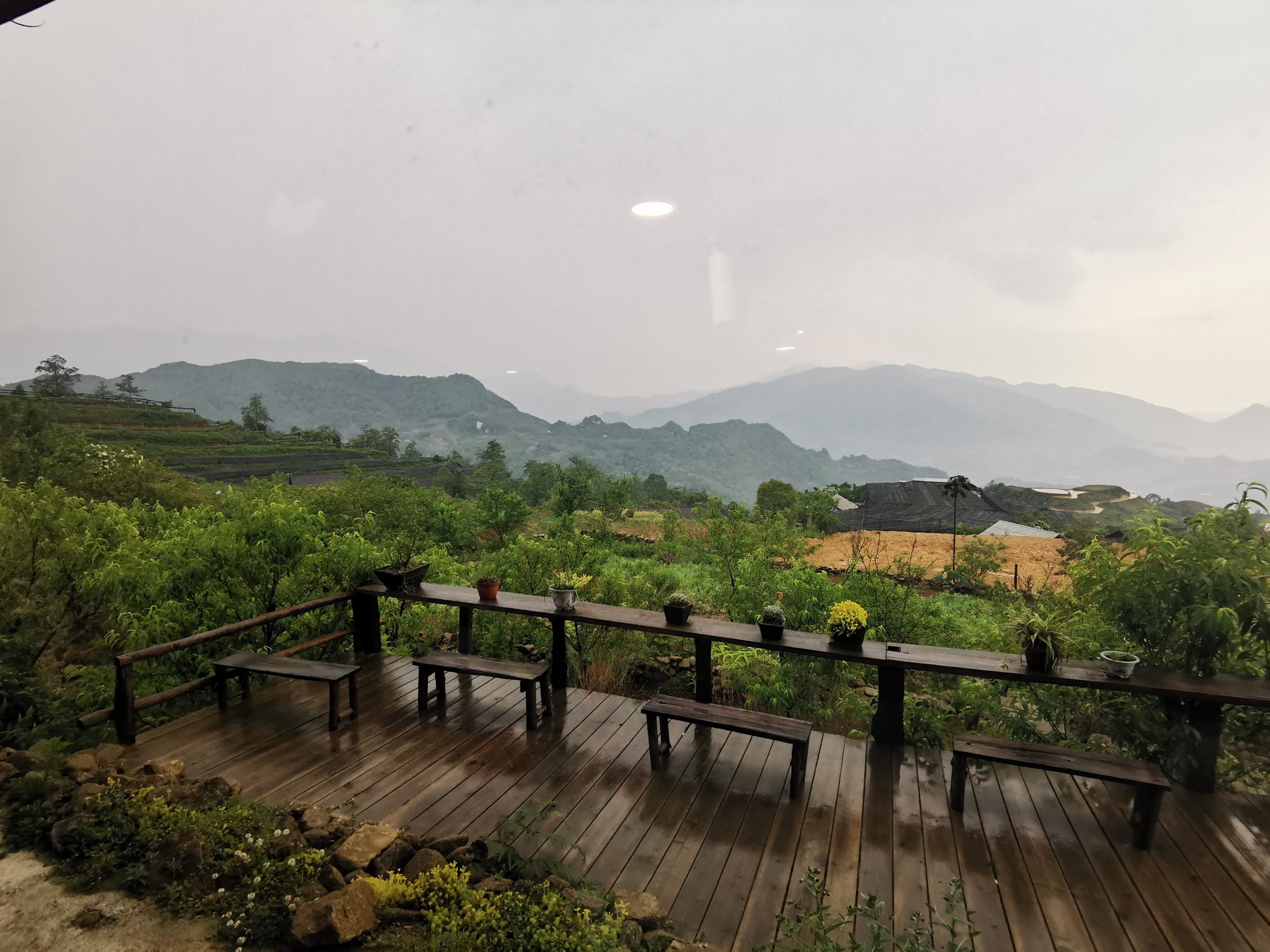
Each of us enjoys this huge space by reading, sleeping, or just gazing at the landscapes. This place is a haven of peace, there’s absolutely no noise, we have a view of the mountains, the butler is there to fulfill every request, pure luxury!
The driver arranges things with the butler. Since there are no restaurants or inns nearby, and the nearest village is 30 minutes away, he’ll sleep in the living room tonight and have dinner with the butler.
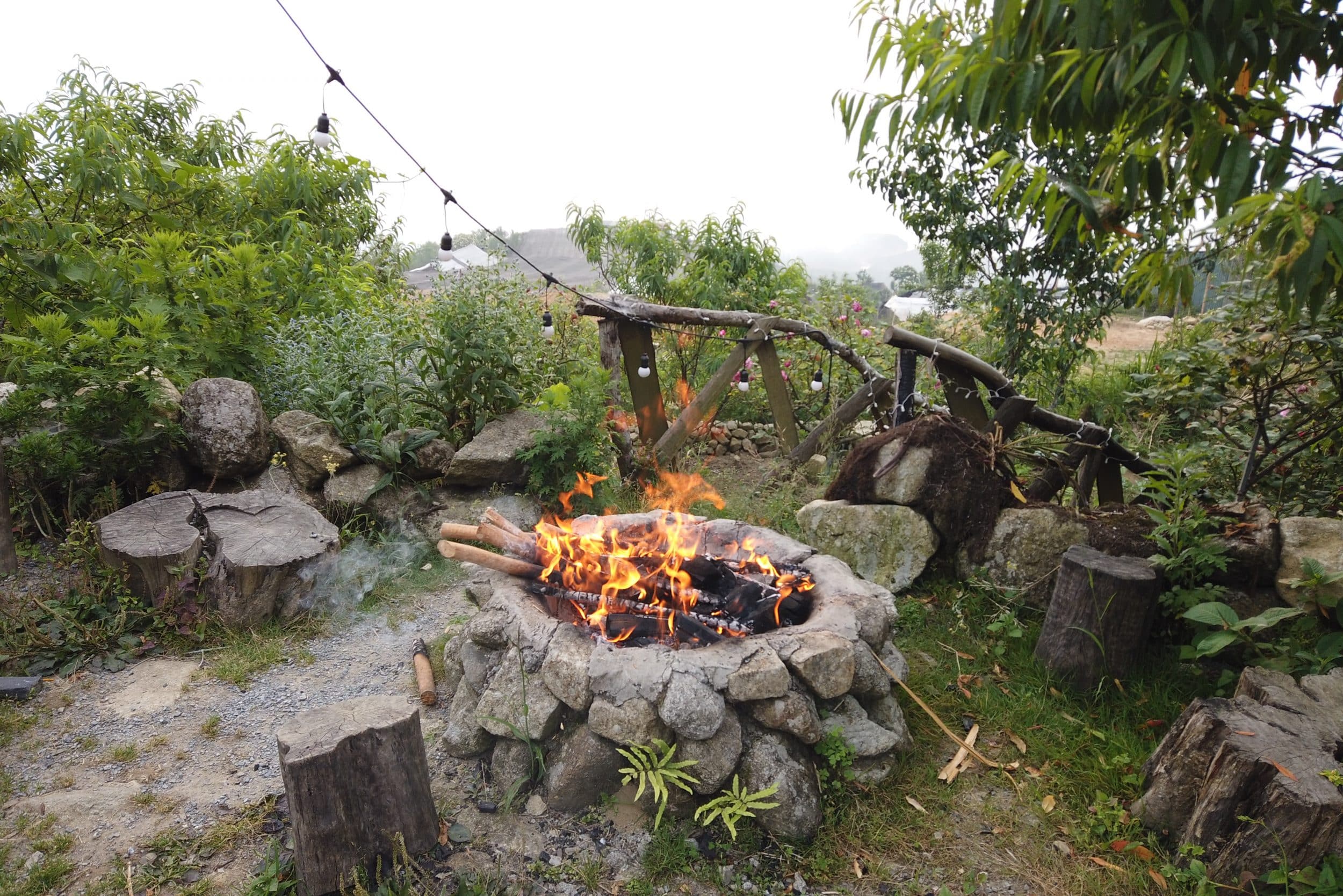
A day before arrival, I had to book dinner via the owner. There’s no real menu, so I gave a few instructions, and it’s up to her to figure things out. I didn’t even ask for the price, since this homestay was tested and approved by my friend. When you have to get into too many details, especially for 5 people, it exhausts me, so I’m waiting for the surprise.
And the surprise really exceeds my imagination. I see a barbecue being prepared, then I see pork skewers, eggs, and a whole fish on it, wrapped in a banana leaf.
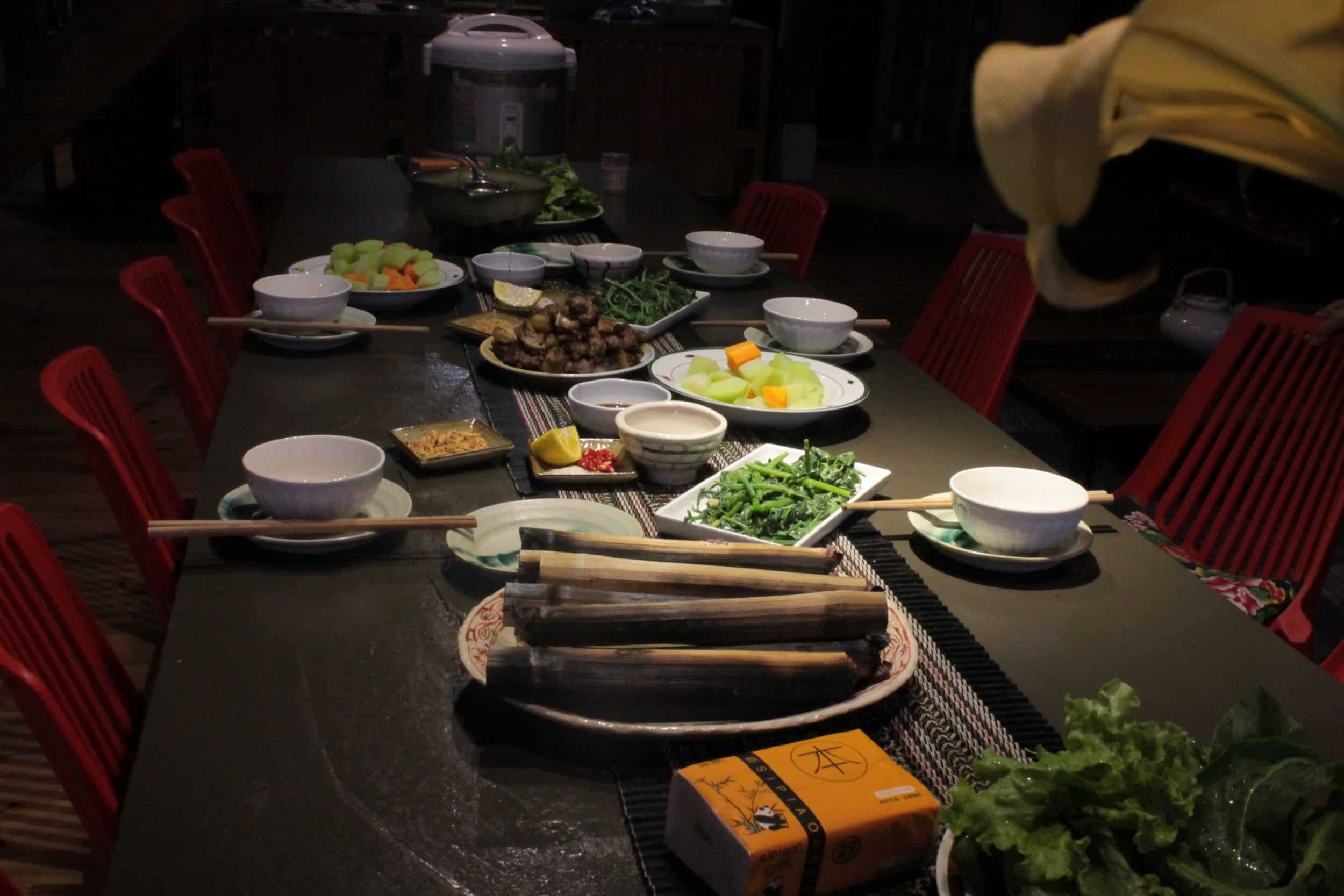
When it’s time to sit down at the table, we discover a feast ! It took me several minutes to name and explain how to eat each dish. Our two Westerners loved the sticky rice cooked in bamboo. You eat it with sesame salt. We all love the fish, which is very tender.
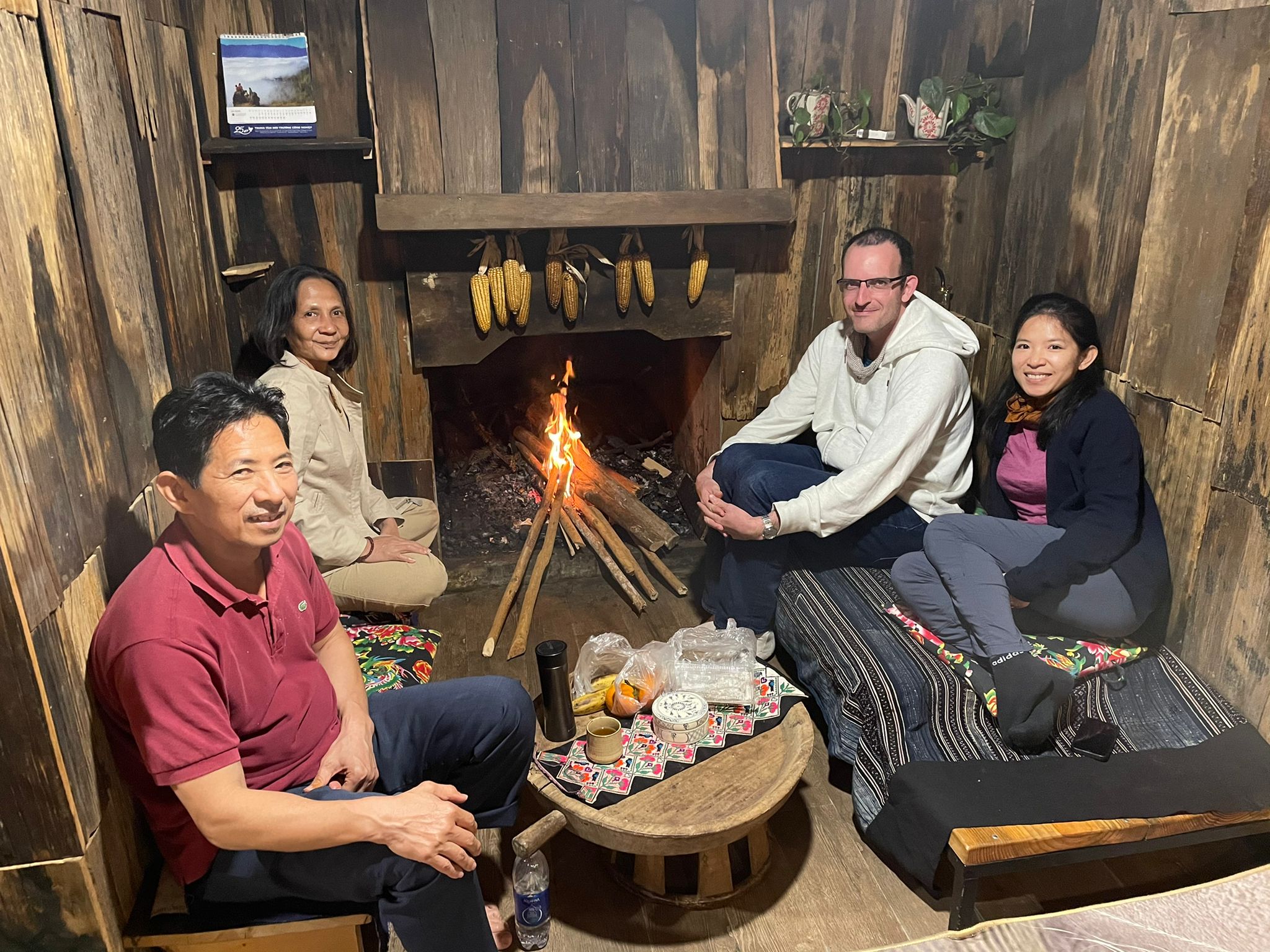
It’s not that cold, but I’ve seen photos of the fireplace lit, so I ask the butler if he can light it for us. I think we’re bothering him with this request, but he does it anyway. He brings us the leftover charcoal from the barbecue and cinnamon wood. Granted, the wood has been stripped of its outer layer (the cinnamon we use in cooking), but the wood still gives off a subtle aroma. We all sit in front of this fireplace, so happy about this unexpected moment.
We go to bed very quickly because there’s nothing else to do. The internet is very slow, and we can’t get 3G/4G. Around midnight, it pours down, but really really hard. Since the roof is made of sheet metal, we can hear every drop of rain, plus the thunder. The dogs bark almost all night, poor things.
Day 3
Day 3 Itinerary:
– Breakfast at the homestay
– Visit of the border crossings in Lao Cai
– Visit of Lao Cai market
– Lunch & return to Hanoi
We can’t say we slept well. But a very hearty breakfast already awaits us, and it feels so good. The butler must have gotten up very early for that. He quietly tells us that a group of 20 people has already arrived at 6 a.m., to avoid the traffic of this long weekend, but also because they didn’t know what to do or where to go with this rain. He didn’t let them in because we’ve just privatized the house. They’re squatting in the small hut at the entrance of the homestay. That group must be very happy to learn that the organizer of the itinerary, namely me, has planned an early departure, and they’ll be able to enjoy the house from 8:30 a.m..
Faced with this rain, I’m at a loss. My itinerary completely falls through (no pun intended!), and I have to choose between several options. Feeling very tired too after all the traveling in recent weeks, I go for the easy option: we’re leaving 😀 goodbye to cloud hunting, goodbye to cafés with a view, goodbye to the 5-star hotel we planned to squat. And it’s better this way. Because the weather is kind to us. Every time we see something interesting on the way, it’s not raining. So, we were able to stop to observe some female farmers, the rice fields, eat a pineapple, stop at viewpoints, etc. There’s no real schedule, just random stops here and there.
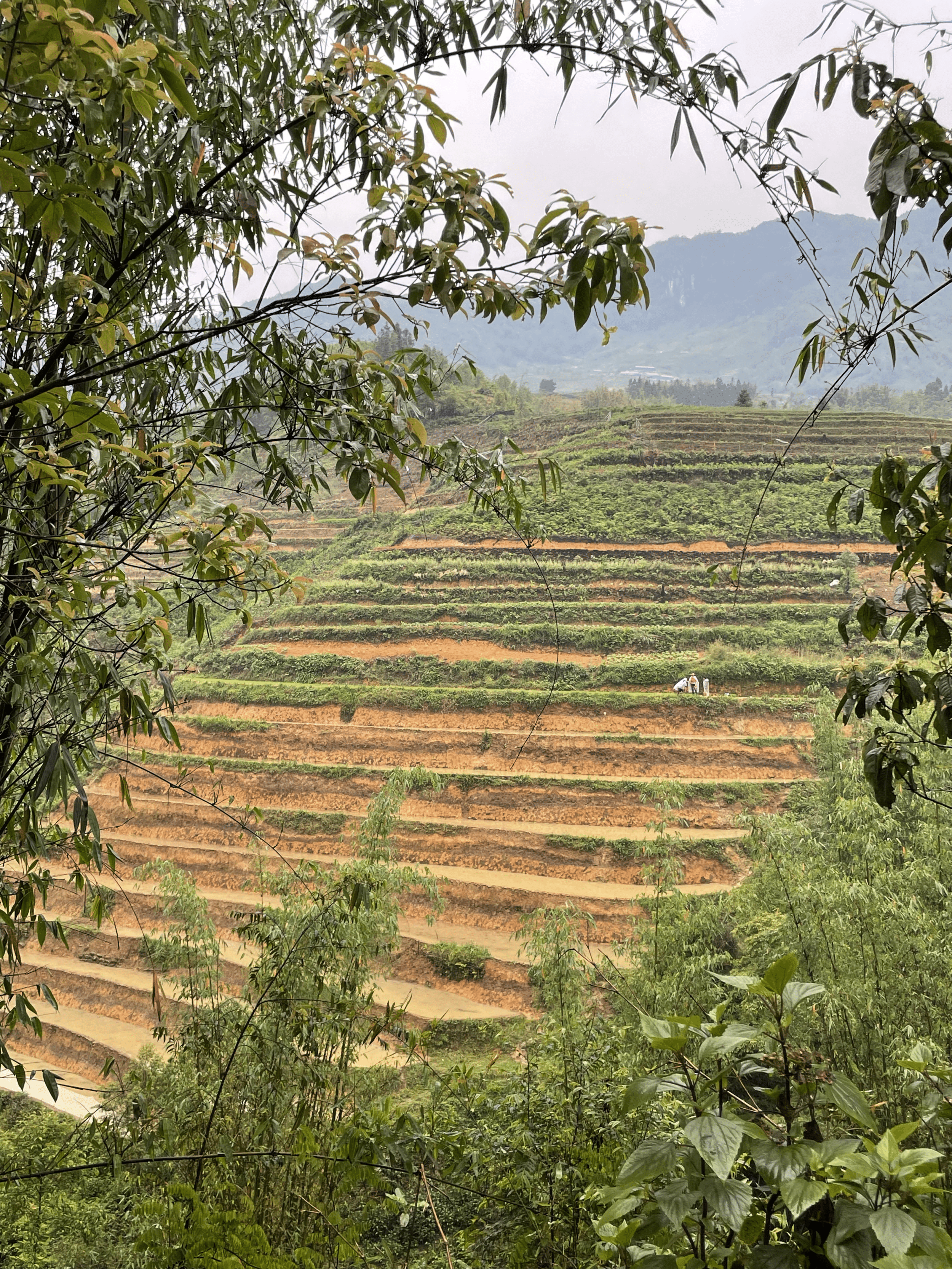
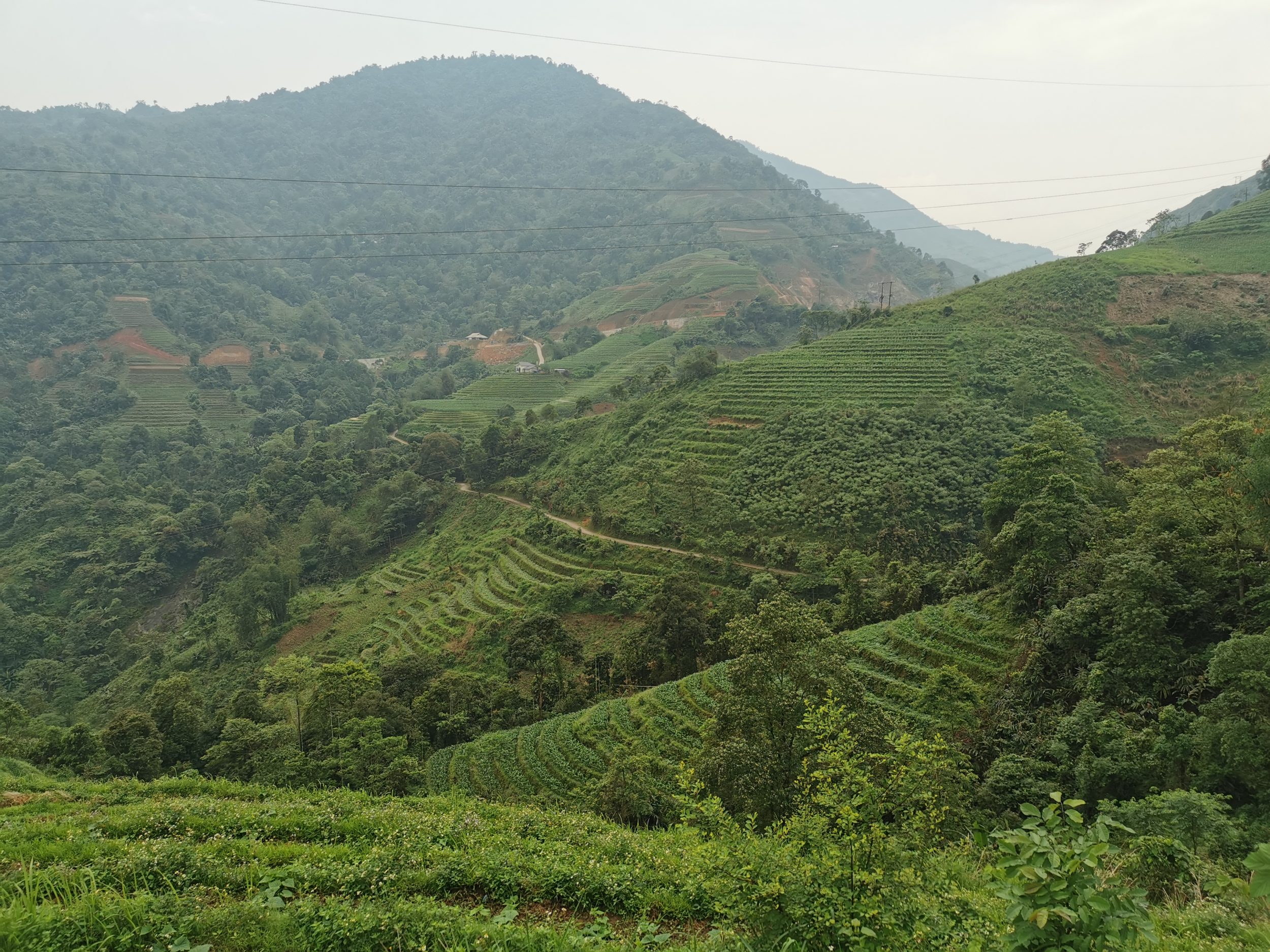
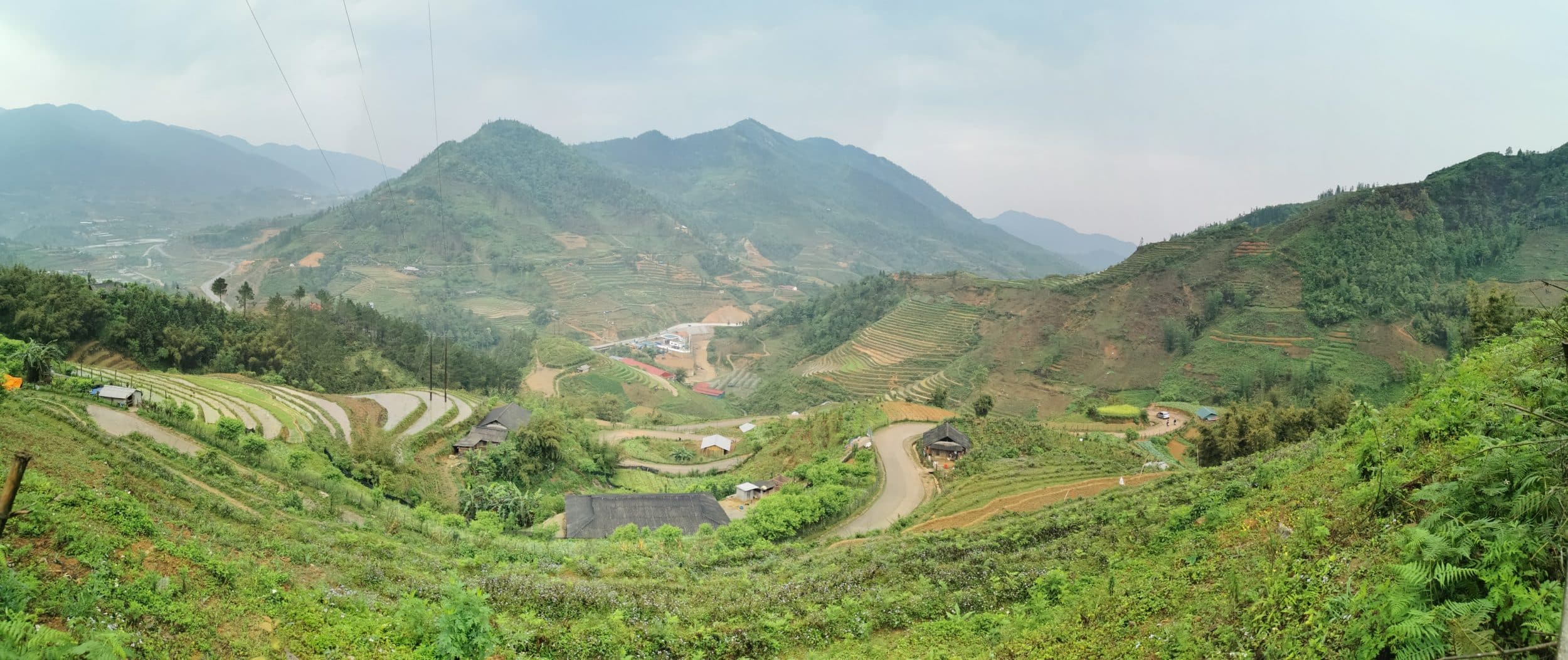
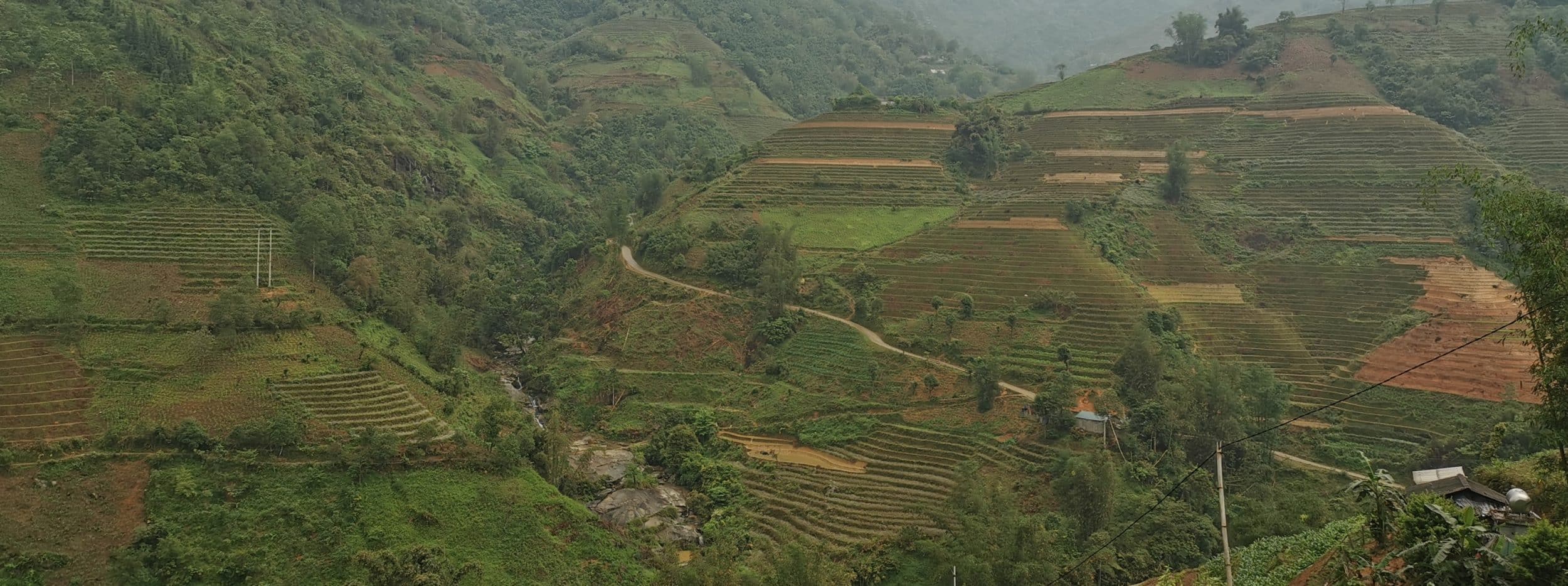
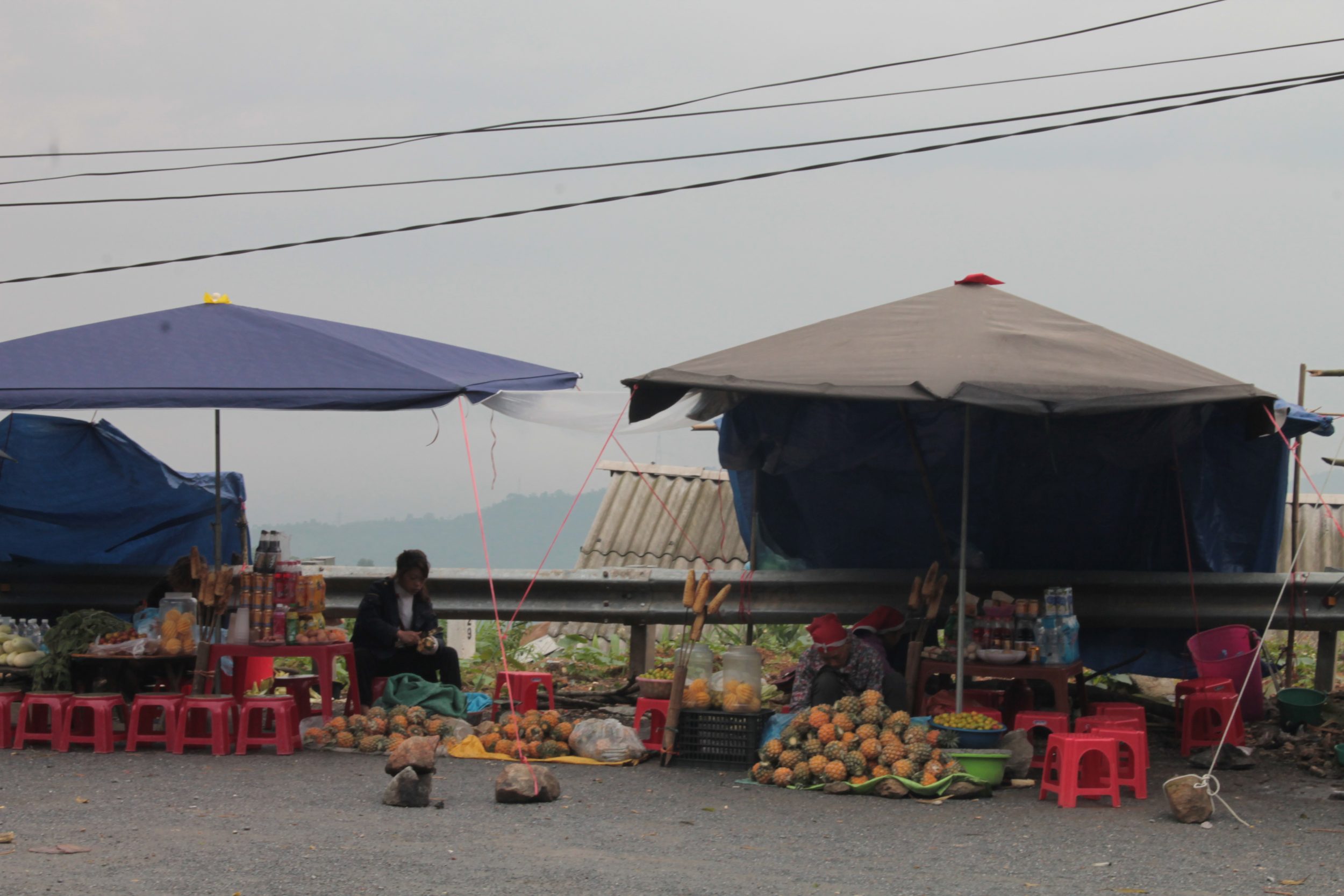
In the other direction, cars are lining up to get to Sapa. Traffic is so heavy that Sapa’s city center has already banned access for large cars for the whole weekend, and tourist buses have to drop their passengers at the entrance to the city. While the whole of Vietnam is off for a long weekend and fighting to take Instagram photos, we’re heading slowly back towards Hanoi, in the opposite direction.
Lao Cai & the border
However, we have to go through Lao Cai to get back to Hanoi, and with Lao Cai comes the “border with China.” A. has never set foot in China, so we’re going to let him catch a glimpse of it. We easily find the border checkpoint (closed), where we can take photos with the bridge connecting the two countries and the border markers. The atmosphere is festive; everyone’s acting like they’re already in China while we’re still on Vietnamese soil. Pre-Covid, all you had to do was pay a small fee for a one-day visa to see what the Middle Kingdom looked like.
Right now, China is still in lockdown, and you can see that nothing is happening over there. The only cars spotted are police cars or ambulances. It’s dead as dead can be. China is still implementing their zero-Covid strategy and absolutely controlling every border crossing (limited to the exchange of goods).
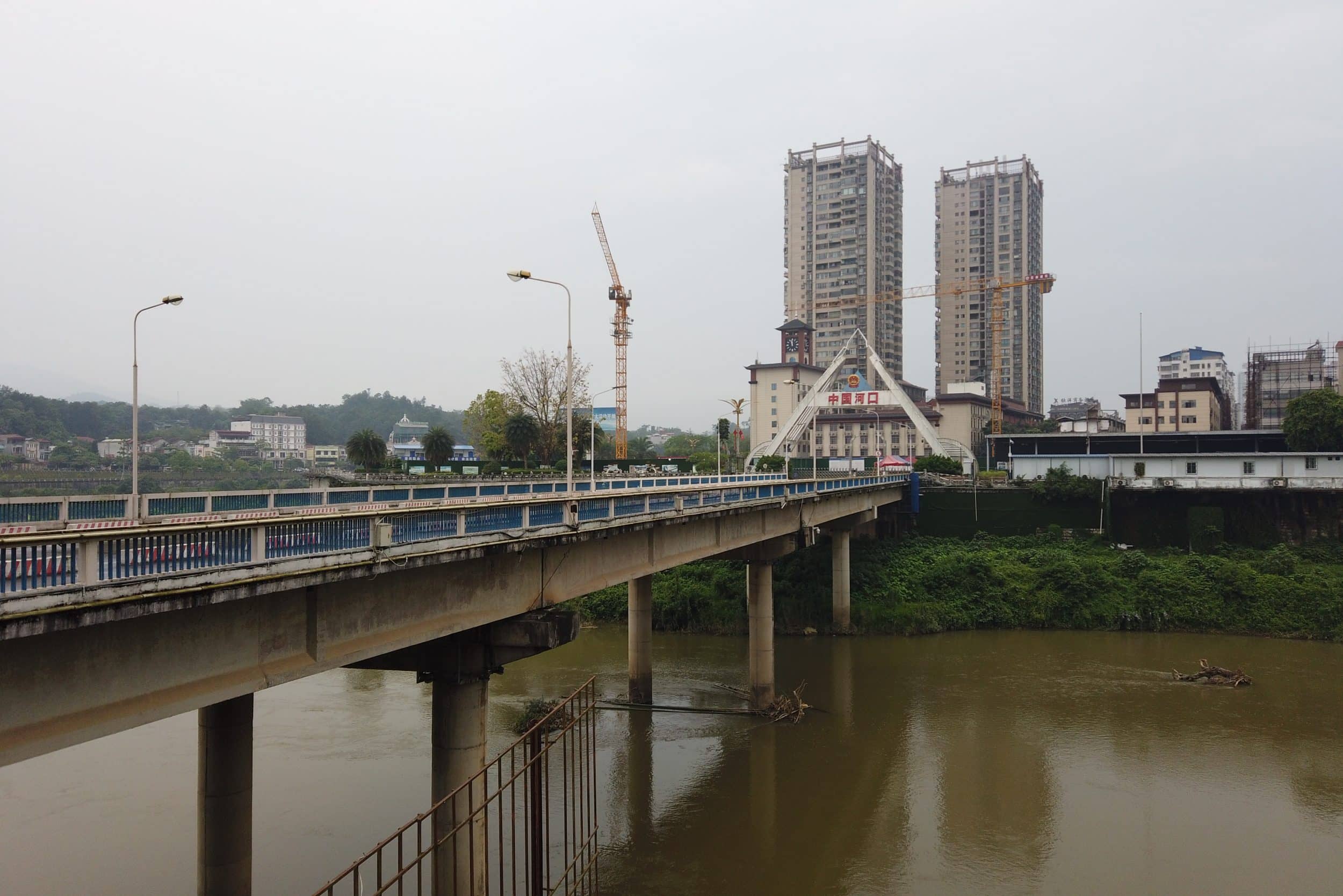
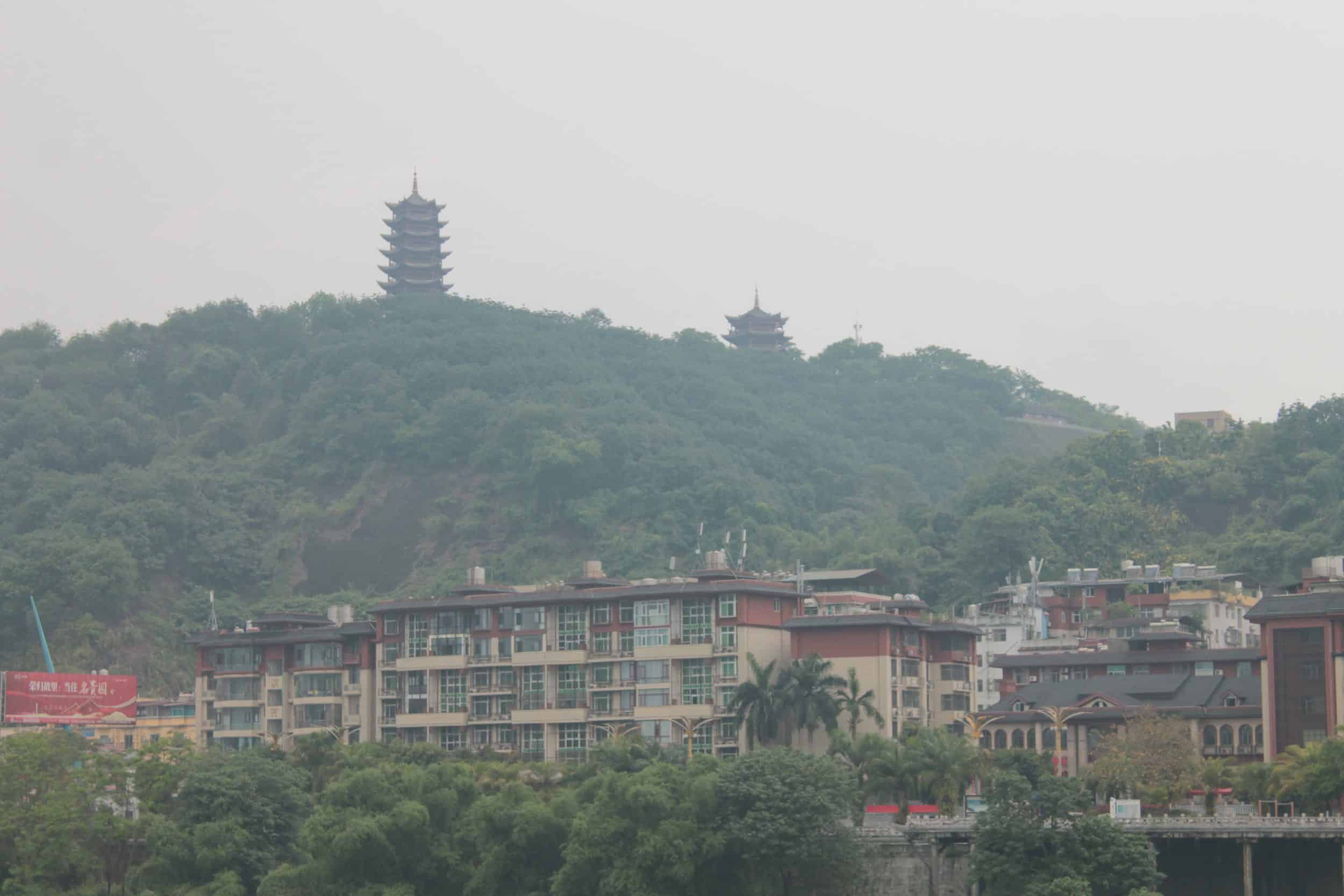
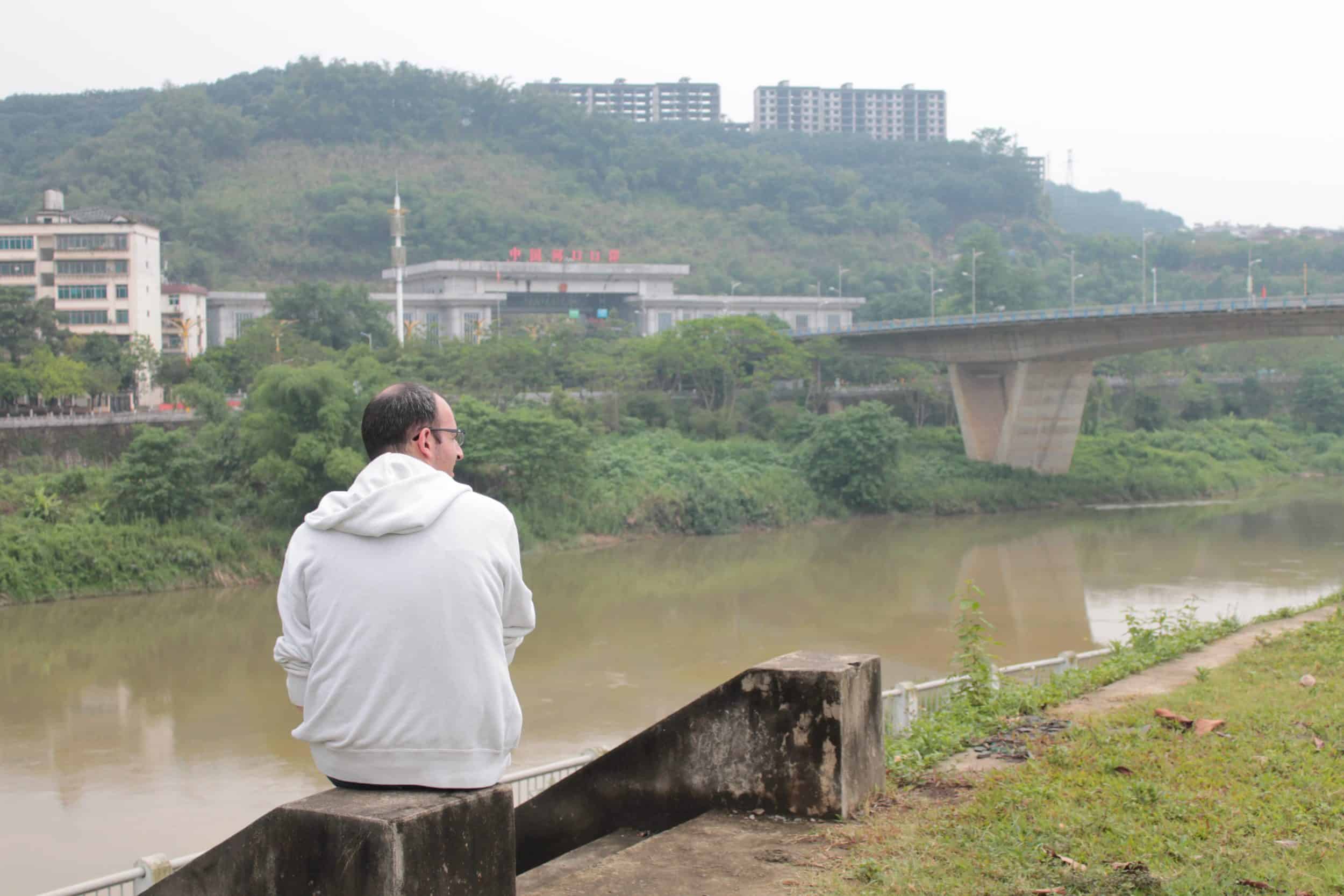
We then follows the river that separates the two countries and come across another border checkpoint where cargo trucks pass through one by one. The drivers are covered in medical suits as if they’d come into contact with Ebola. The trucks cross the bridge one at a time, with no crossing in the opposite direction allowed! So sad! Those Chinese people living on the other side of the river, can they see us? Watch us? When we’re heading out, going to restaurants, piling up at the border to take photos of the bridge, do they see us? Do they think they were born on the wrong side of the bridge?
We spend some time at the market in Lao Cai. This border checkpoint isn’t the main one for importing Chinese goods, but we still see a ton of low-quality Chinese products in this market. The fruit, on the other hand, is local and looks amazing. Feel free to grab some lunch here if you fancy it.
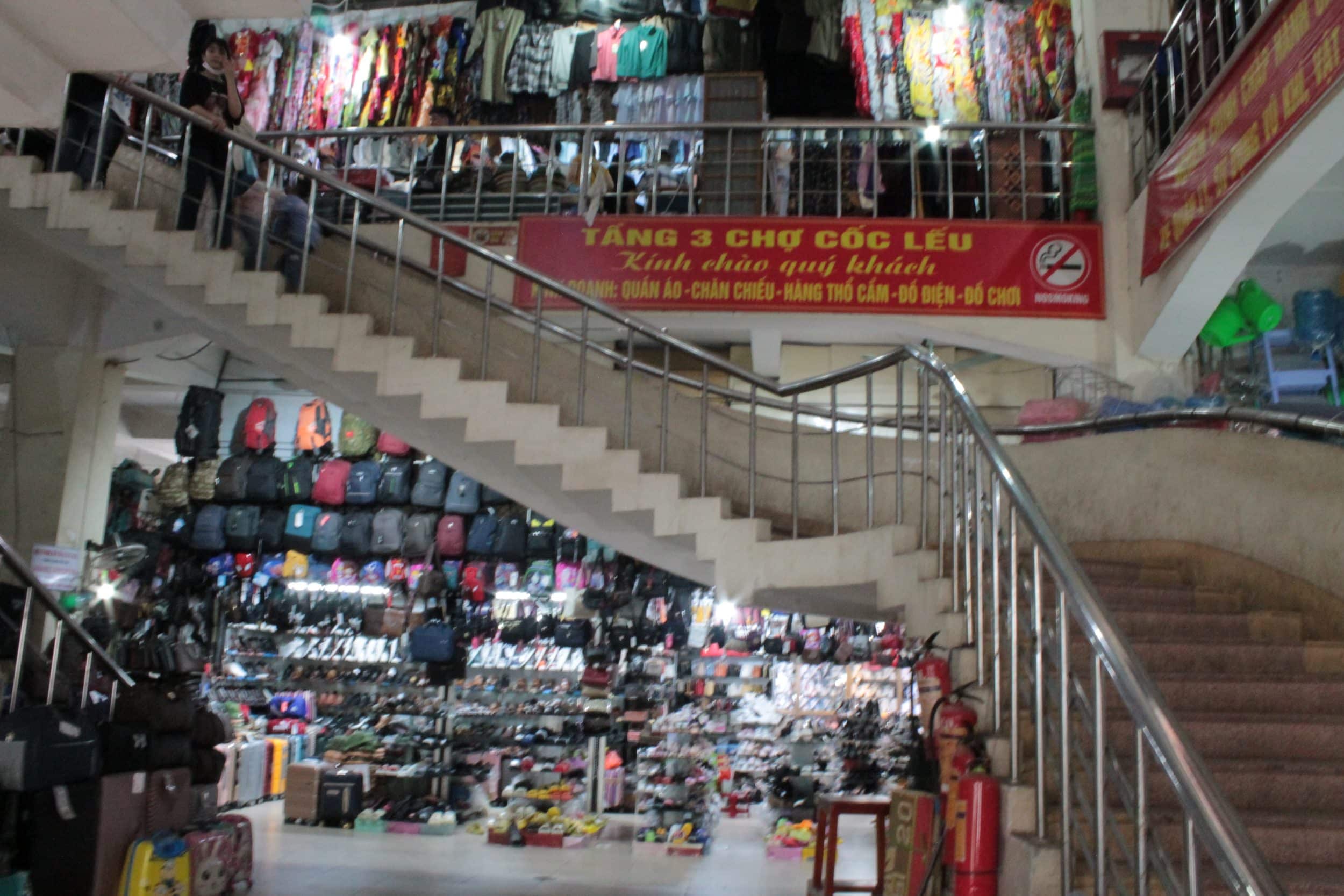
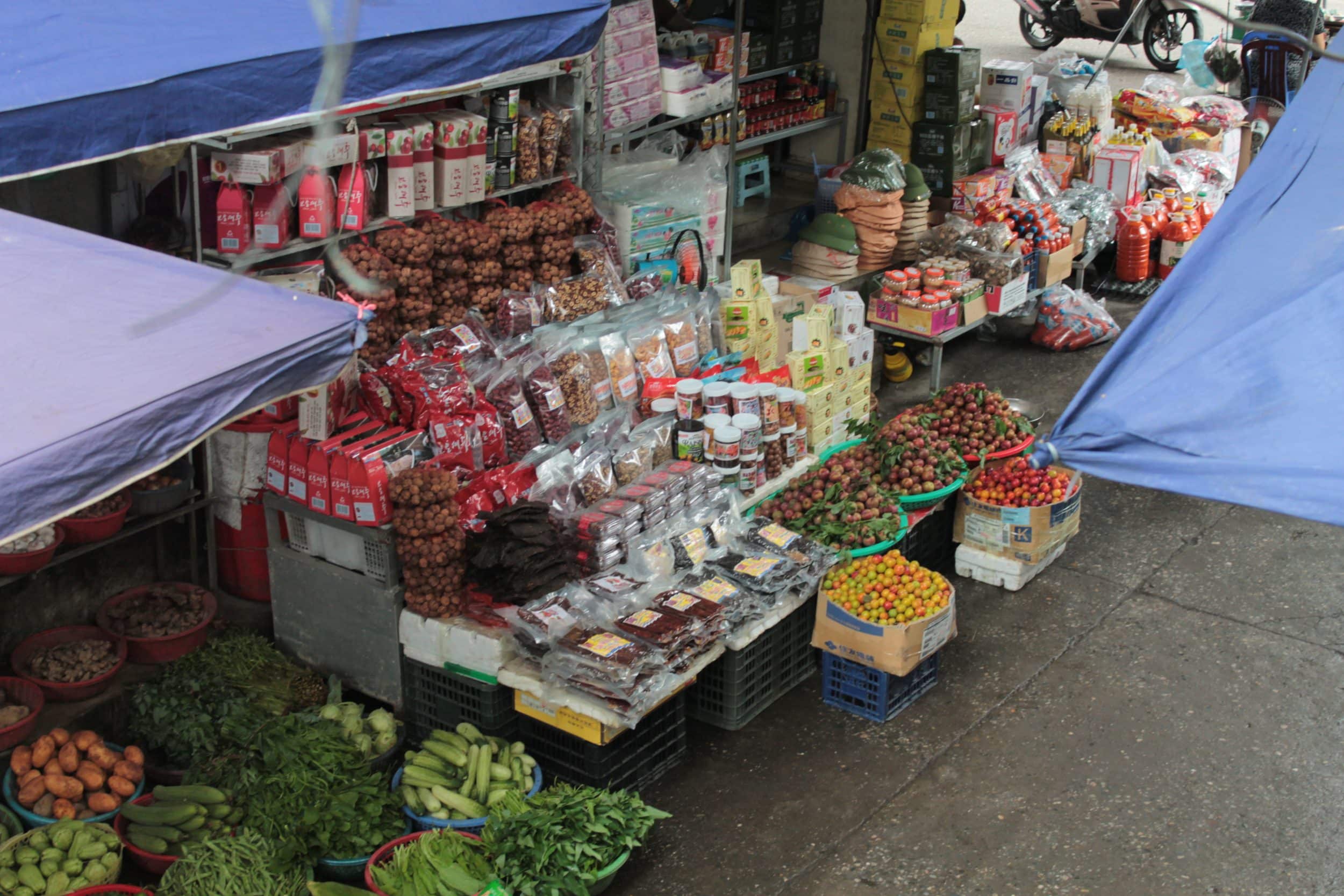
We try to find a restaurant my parents really loved, but I think it’s gone because of Covid. We stumble upon a simple restaurant serving bun cha (grilled pork with noodles), before heading back to Hanoi for good.
Part 2: Practical Tips
Budget
- Driver: 7 million VND for 3 days 2 nights + 300,000 VND for lodging expenses. 16-seater car.
- Unfortunately, I can’t give you our driver’s contact details because he only speaks Vietnamese and we weren’t 100% happy with his service.
- You can find plenty of drivers & tours from Hanoi.
- MGallery La Coupole (Booking link, Agoda link) : budget around 100 to 120€/room
- Cable car: 737,000 VND/person/round trip
- Funicular: 99,000 VND/person/one way
- Glass-bottomed bridge: 350,000 VND/person, without activities
- Cat Cat village entrance: 90,000 VND/person
- Hot bath at Sapanapro: 100,000 VND/person, I got -20% extra, not sure why
- Sau Chua village sapa: 4,500,000 VND to privatize everything, otherwise budget between 800,000 VND and 1,100,000 VND per room. Contact the owner on Facebook, she speaks English. Payment is by bank transfer, you can do it easily using Wise (formerly Transferwise)
- Dinner & breakfast at Sau Chua village sapa for 5 people: 2,250,000 VND
- Bun cha in Lao Cai: 45,000 VND/person
Planning a trip to Vietnam? Our partner Get Your Guide offers entry tickets and guided tours with French-speaking guides at very reasonable rates. Click here to see what they offer and book online.

