
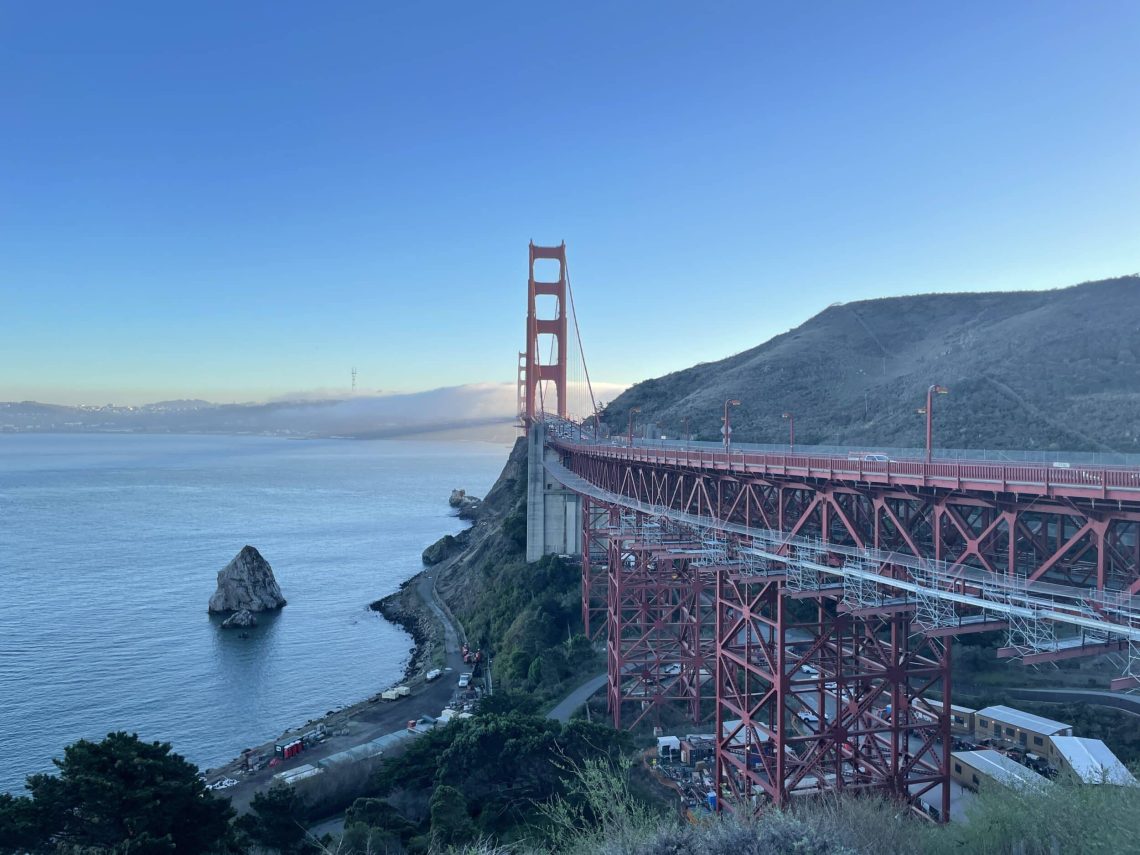
Silicon Valley & San Francisco – Road trip in the American West #12
Fatigue is starting to set in, and despite an afternoon of rest yesterday, we had a hard time getting up this morning to head to San Francisco.
This article is part of our series of articles on the American West road trip. If you haven’t read the previous travel diaries, here they are: #1, #2, #3, #4, #5, #6, #7, #8, #9, #10, #11
I would never have known what goes on in San Francisco if a friend hadn’t warned me. Knowing I was on a road trip in the States, she told me to look up “bipping” in San Francisco. Cars get their windows smashed in, especially if you leave anything inside. Plus, there are so many homeless people due to the housing crisis that there are tents all over the streets. The city is also hit by a “zombie-like” drug. On Reddit, a tourist innocently asks if he can leave his luggage in the trunk while visiting the city, and the answers are all “NO.” Another post talks about people so desperate that they roll down their windows and leave the trunk open to show there’s nothing to steal. It’s a really bad idea. During our visit, we saw an A4 piece of paper stuck on the (opaque) window of a car: “there’s nothing in the car.”
Part 1: Travel Journal
Part 2: Practical Tips
Part 1: Travel Journal
So before heading to San Francisco, I made sure to clear out all the unnecessary stuff and pack a small bag we take with us every time we get out of the car (with the cables, GPS mount, and car papers). The chosen hotel also has to have secure parking (valet parking is the safest) and be located very, very far from sketchy areas. I contact a friend who lives there to ask him what “sketchy areas” means, and he replies: Downtown + Tenderloin.
In the end, we pick a Marriott hotel 10 minutes from Pier 33 (since we have Marriott points to use up thanks to our American Express card, might as well do it in the most expensive city in the world, it’ll hurt less). Valet parking is insanely expensive! $60 + taxes = $85 per night. But having a rental car with out-of-state plates (the favorite target of bippers), I have zero desire to leave it in a paid parking lot accessible to anyone. Plus, in all the tourist parking lots, there are signs warning against bipping (with a photo of smashed windows that’s quite off-putting).
Day 17 of the road trip:
Leaving Yosemite, we first stop in Silicon Valley. I take all my stuff with me (leaving just the suitcases in the trunk). The basic rule is to never open the trunk when you park. But I quickly realize that Silicon Valley must be the safest place on earth. At the Apple Park and Google parking lots, there are security guards paid just to stare into space, so…
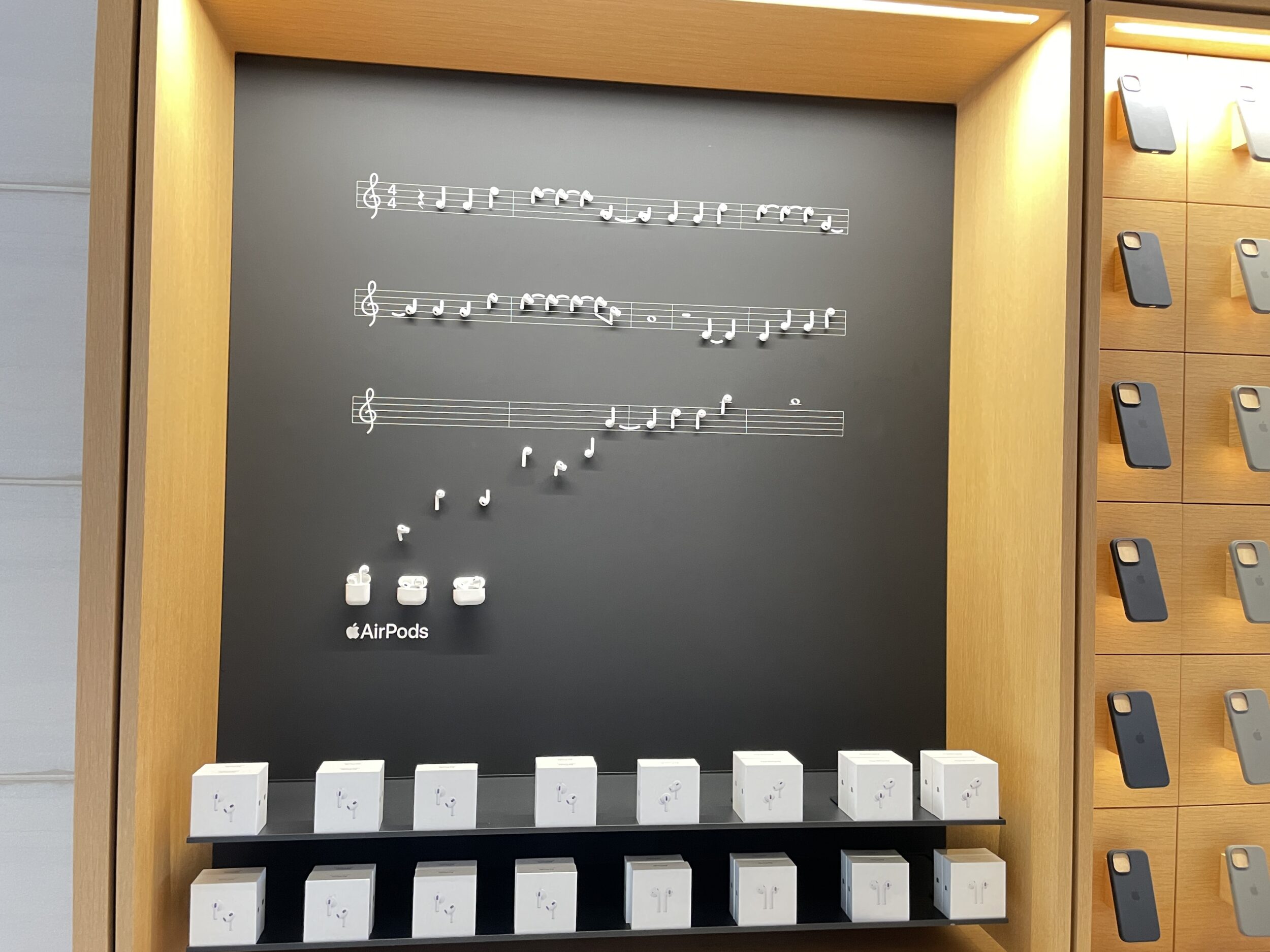
Apple Park Visitor Center
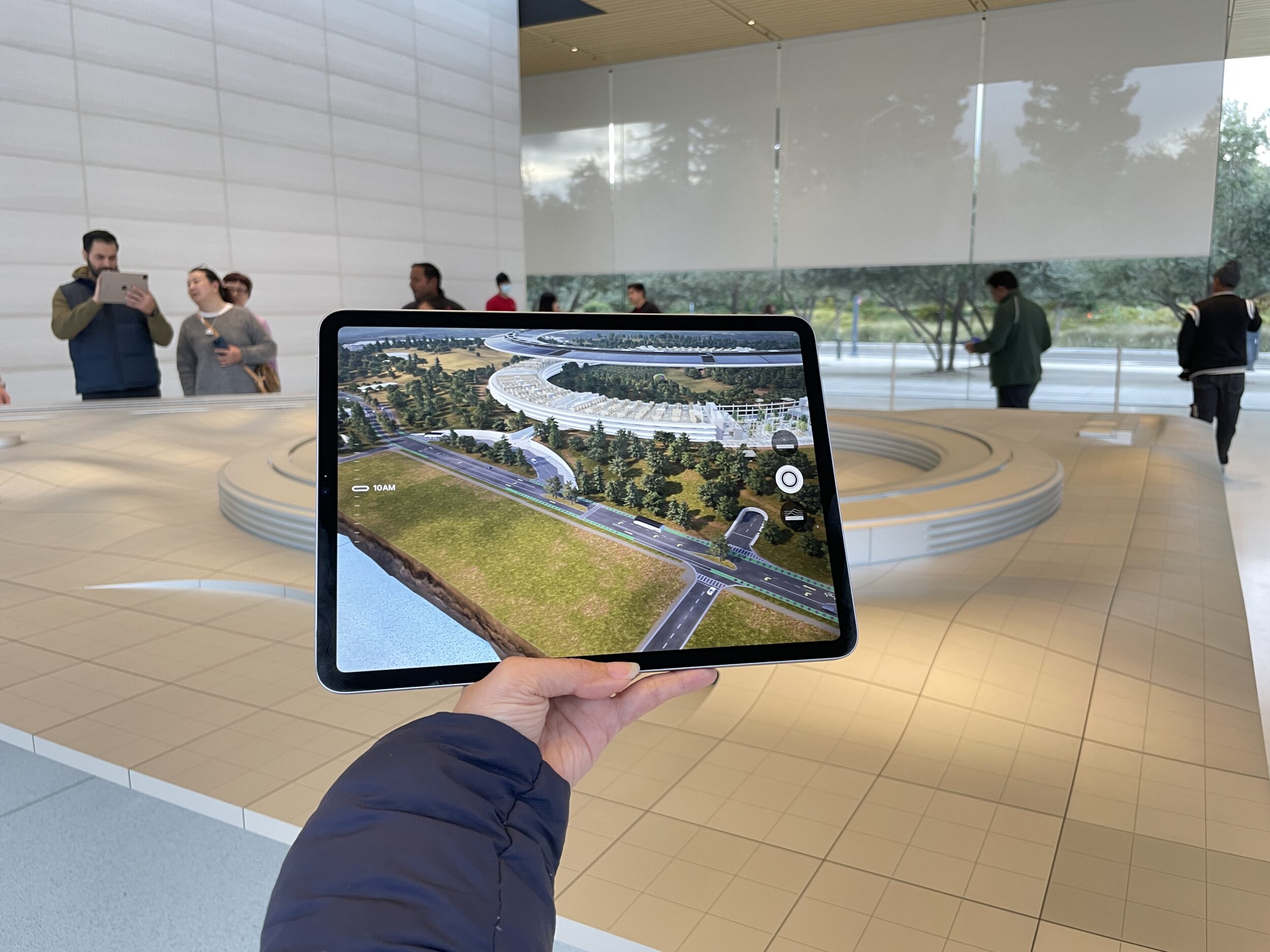
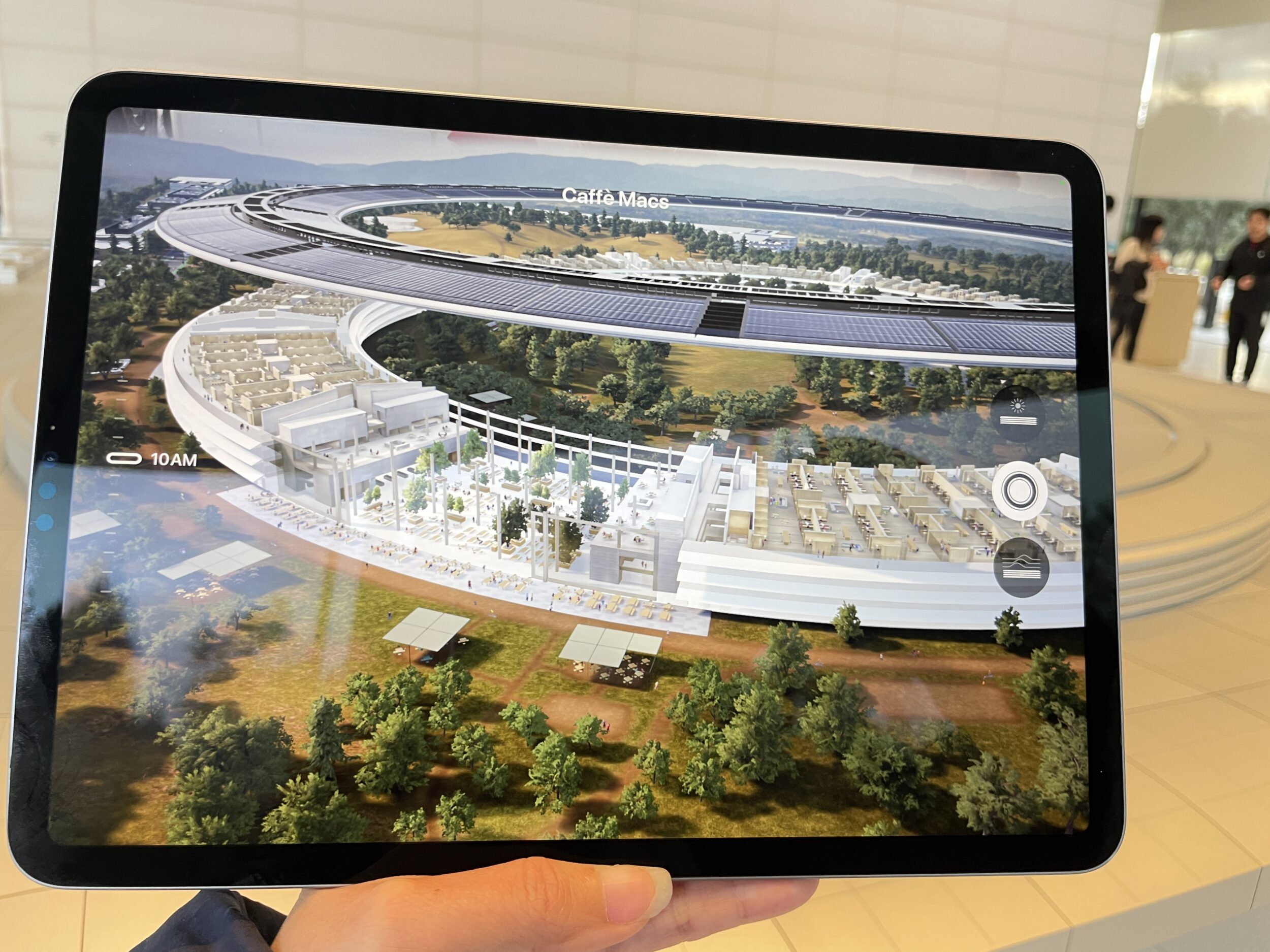
It’s an Apple Store with a view of Apple Park. There’s a miniature of Apple Park made from recycled metal from broken MacBooks. An iPad lets us play with augmented reality, lift the roofs off the buildings, and see what’s inside.
It must be so cool to work for Apple. The employee assisting us points to the hills and explains they’re not natural. They were created to funnel wind toward Apple Park and limit the use of air conditioning. It’s really smart because Americans tend to always crank the AC. A building that big without AC is good news. With the iPad they lend us to see the buildings in 3D, we can even pretend to lift the roofs to see what’s happening inside.
We learn there’s a terrace we have access to. The staircase is a bit hidden, and there are very few people. We get a fairly clear view of Apple Park.
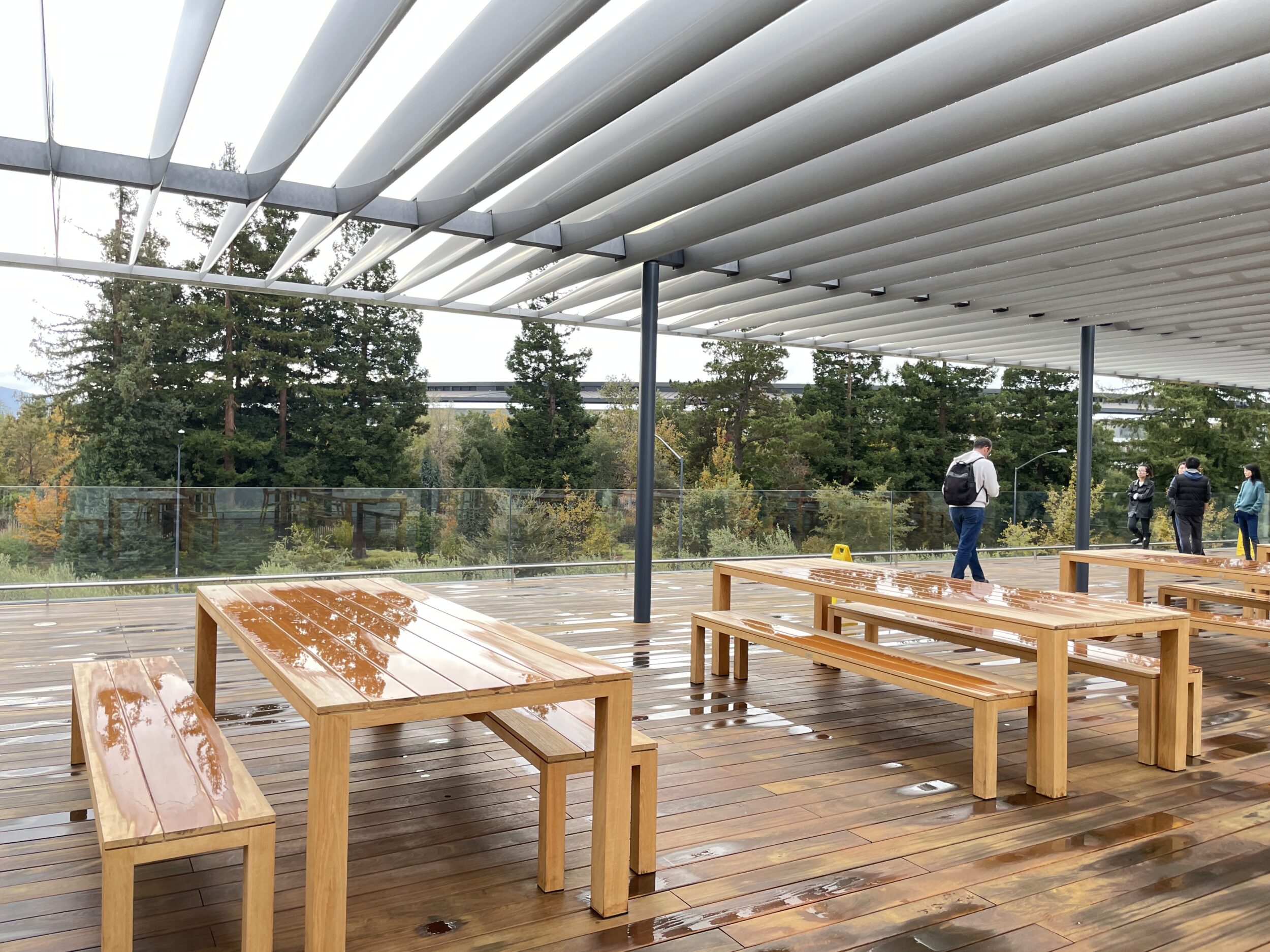
This Apple Store has a small café (with free Wi-Fi). Lots of young people set up there to work. The “souvenirs” section is small but pretty fun.
We head to another Apple Store (located in Apple’s old headquarters), thinking we might find more Apple-logo souvenirs, but it’s unfortunately very sparse. This Apple Store is super well guarded—there’s even a police car out front with “Sheriff” written on it. Infinite Loop is closed for renovations, so we didn’t see anything.
We try to go to Google, but there are so many addresses that we get lost. I’m afraid of arriving too late in San Francisco and getting stuck in traffic, so I ask JB to head straight to SF, even if it means coming back to Silicon Valley later. Despite our hasty departure, we do indeed get stuck in traffic.
San Francisco
JB teases me, asking where the San Francisco zombies are (we won’t see any), but we don’t go through the sketchy areas at all. Sometimes, two streets make all the difference. It’s when I point out the homeless tents right behind the 4-star hotel next to ours that he starts to think maybe they do exist.
Apparently, with the APEC summit that happened a few weeks ago in San Francisco, the city made a big effort to “clean up” everything. Unfortunately, it’s a financial issue—Tenderloin, even before the “zombies,” was always a sketchy area, as if it had been created to dump all of SF’s problems there. The closure of psychiatric hospitals and the release of their occupants contribute to SF’s insecurity.
Day 18:
Leaving the car at the hotel, we simply take the bus to get around. We can’t pay on the Munimobile app with our international cards, so we have to pay the driver directly. Provided you have exact change. The bus doesn’t accept card payments, and the machine doesn’t give change! We’re amazed at this archaic side when Silicon Valley is only 30 minutes away, but JB fortunately has some change, which pays for two one-day bus passes ($5 each). Another English family, handing $20 to the driver, will quickly realize that their bill is useless because exact change is required. Fortunately, the driver is very kind and lets them ride for free this time.
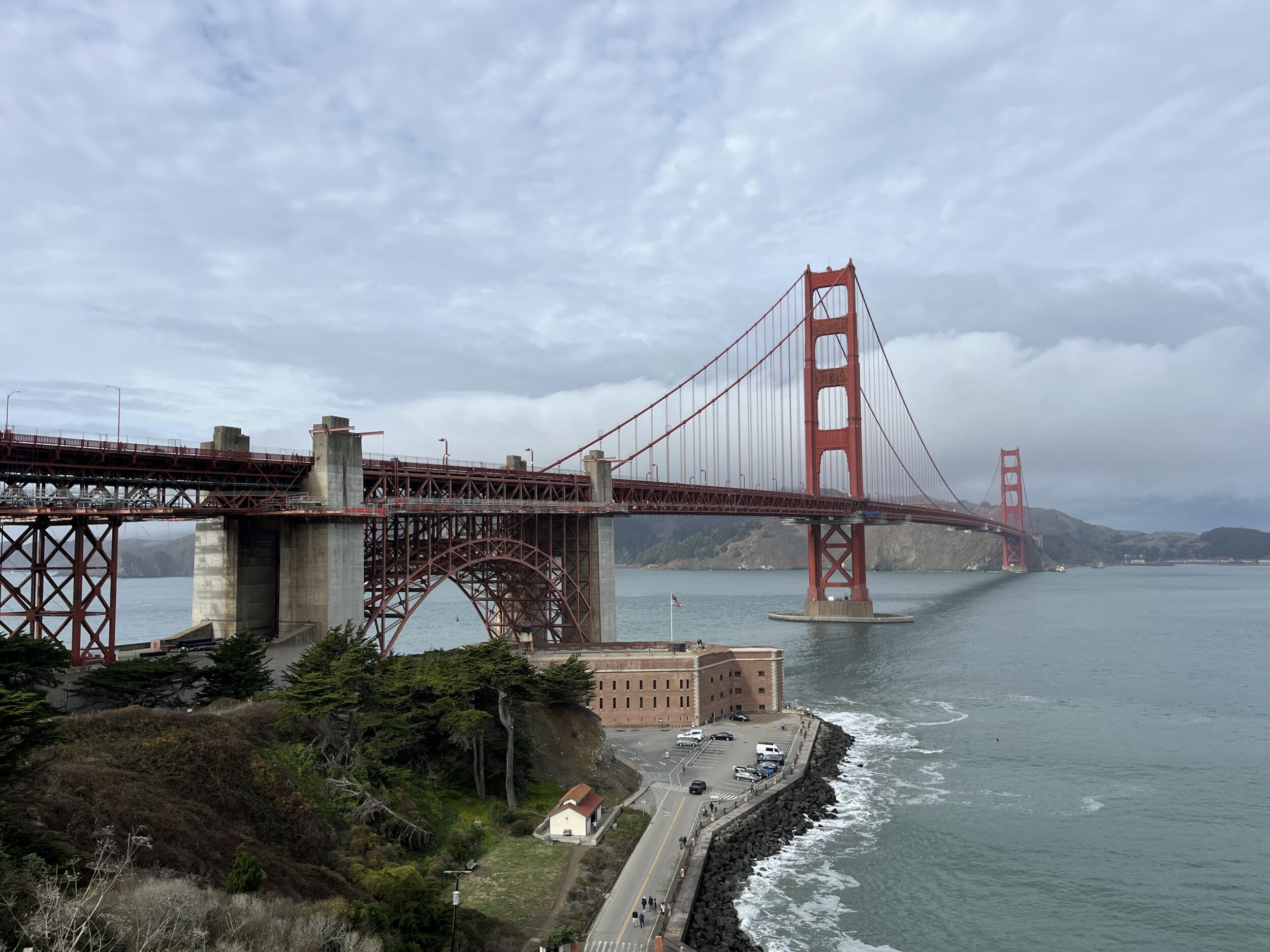
Our first stop is the Golden Gate Bridge Visitor Center. It’s smaller than in my imagination (probably due to an optical effect because it’s massive in reality), but we’re lucky to have a clear view. For this bridge, you need to come back several times because it’s often foggy.
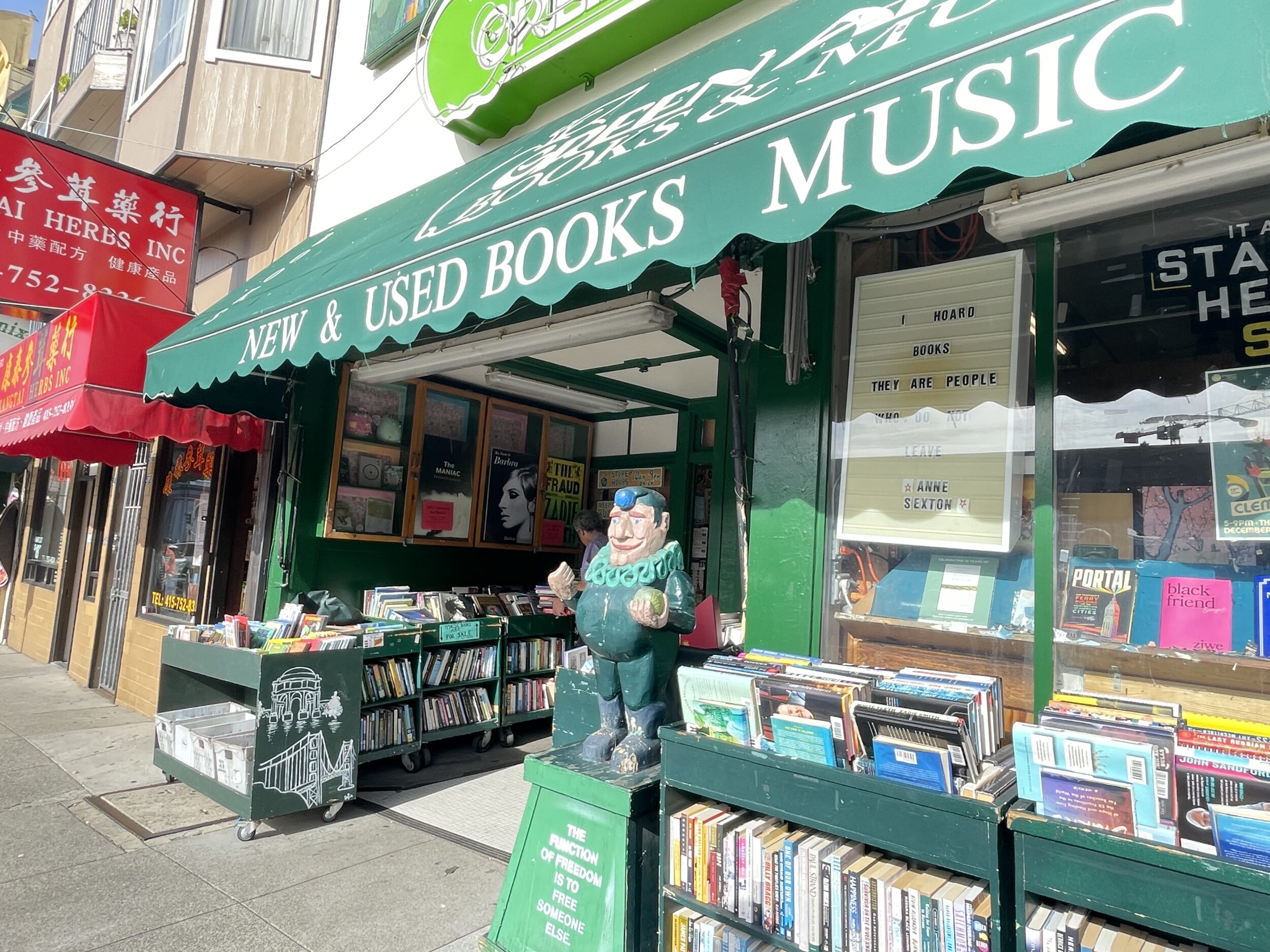
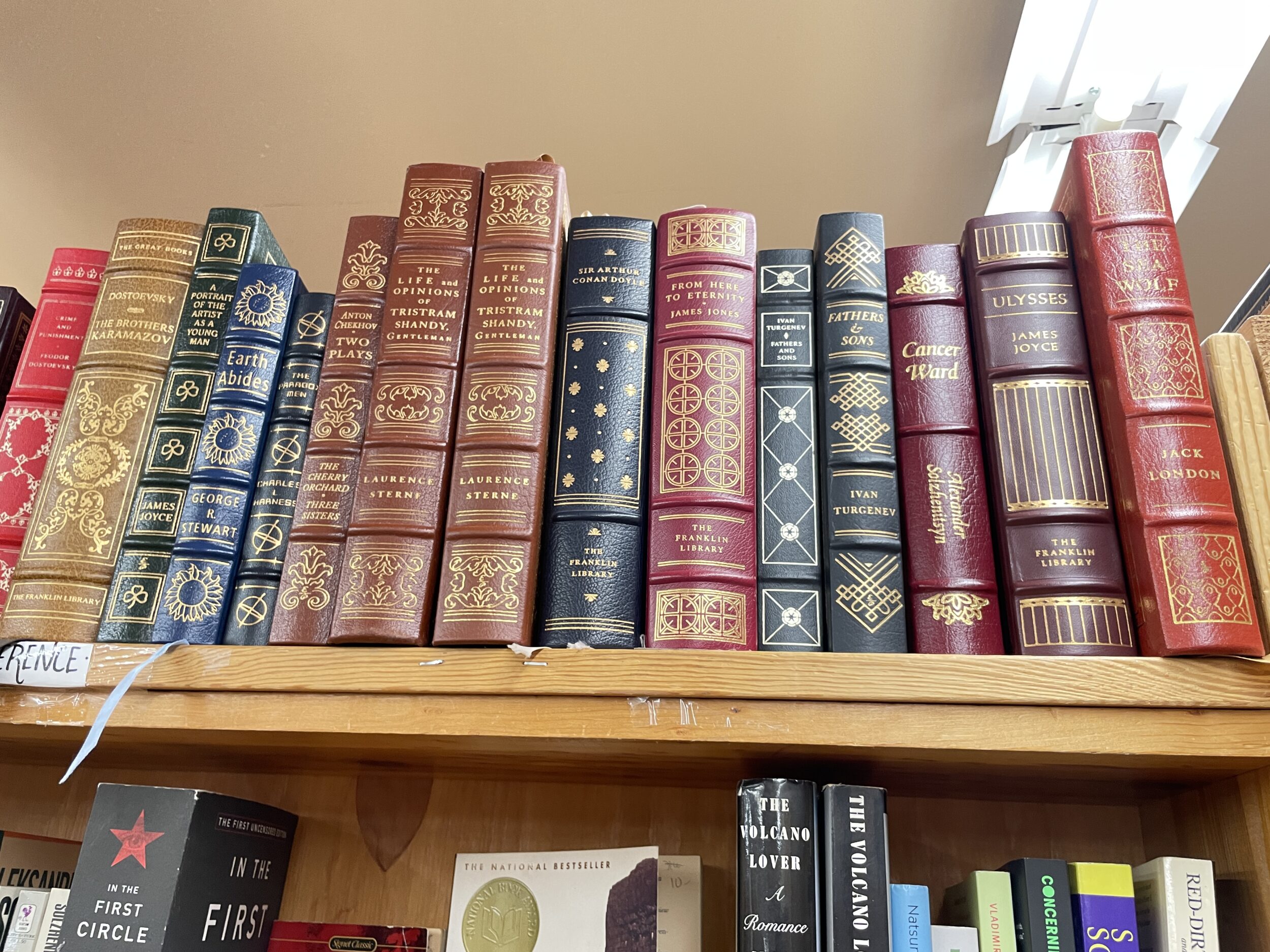
Our second stop is Green Apples, a bookstore that is apparently very well-known. I go there to sell the books I bought in the USA and read. They offer me $40 for my books. $40 in cash, or $50 credit towards new books that I’ll buy in the store, or $60 credit for used books. I scour the whole bookstore and only find one book that appeals to me: Daisy Miller by The Heritage Press New York (layout, paper, illustrations, binding, everything is perfect!).
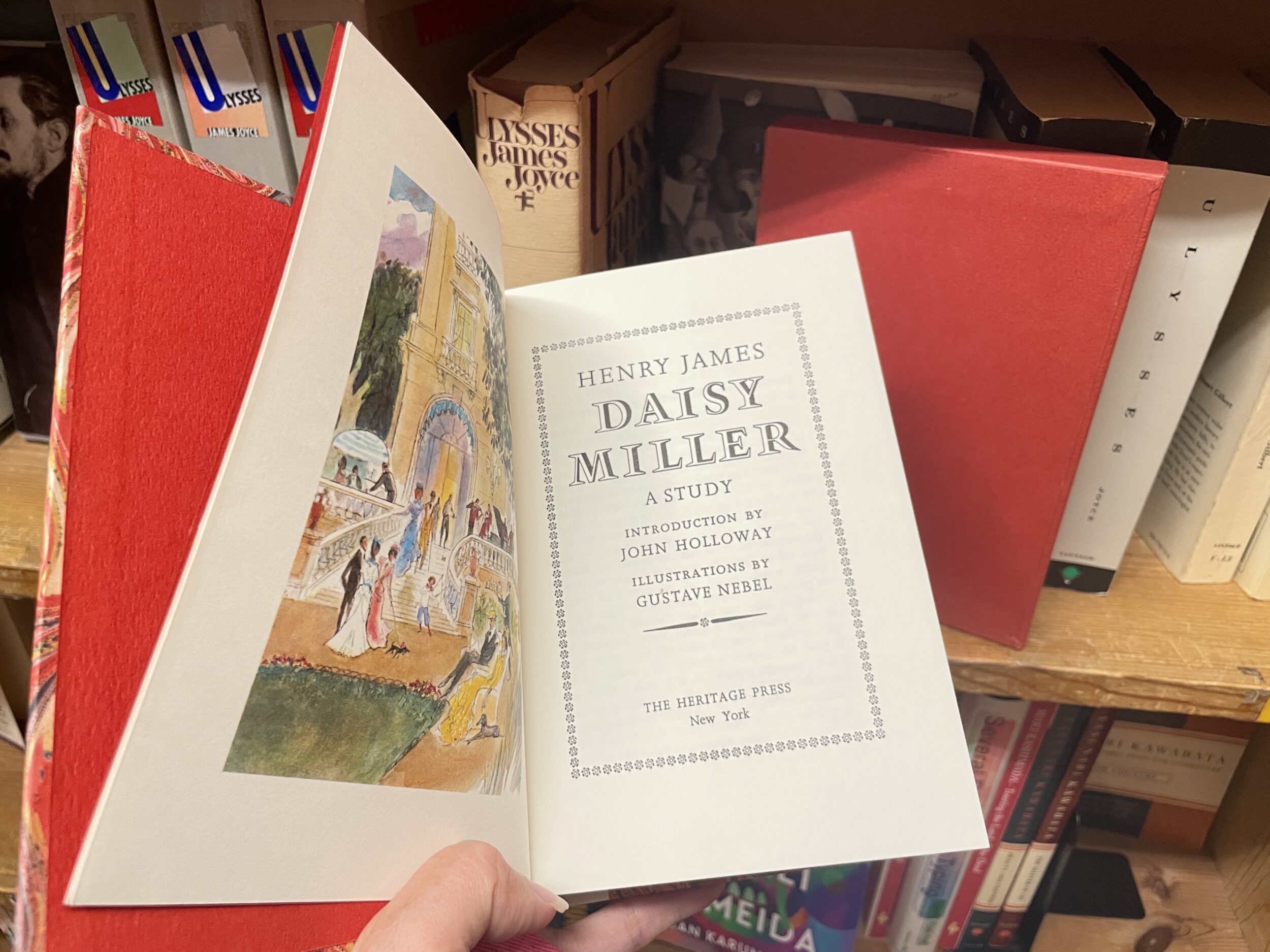
They don’t have many, but all the ones I found are of high quality. I’ll do research later and understand that Limited Editions Club comes from the same publisher, but will be even, even more beautiful. Here, they have some Folio Society books and many from Franklin Library and Easton Press. Franklin Library is a notch above Easton Press. I talked about these publishers in my other article about fine books. I was able to note the quality of old books from Library of America, Random House, and Everyman’s Library. In short, I need to spot all the books that are in individual boxes (slipcase); treasures hide there. At one point, I had, for the same book, two editions: an old one and a new one, from the same publisher, and I could note the decline in quality in just 30 years!
However, compared to the bookstore I visited in Nice, this one is small and sparse. Yet, in reviews, people talk about it as if it were Aladdin’s cave, with 100,000 books. I overhear a customer’s conversation who claims it’s her “fa-vorite bookstore!!!”.
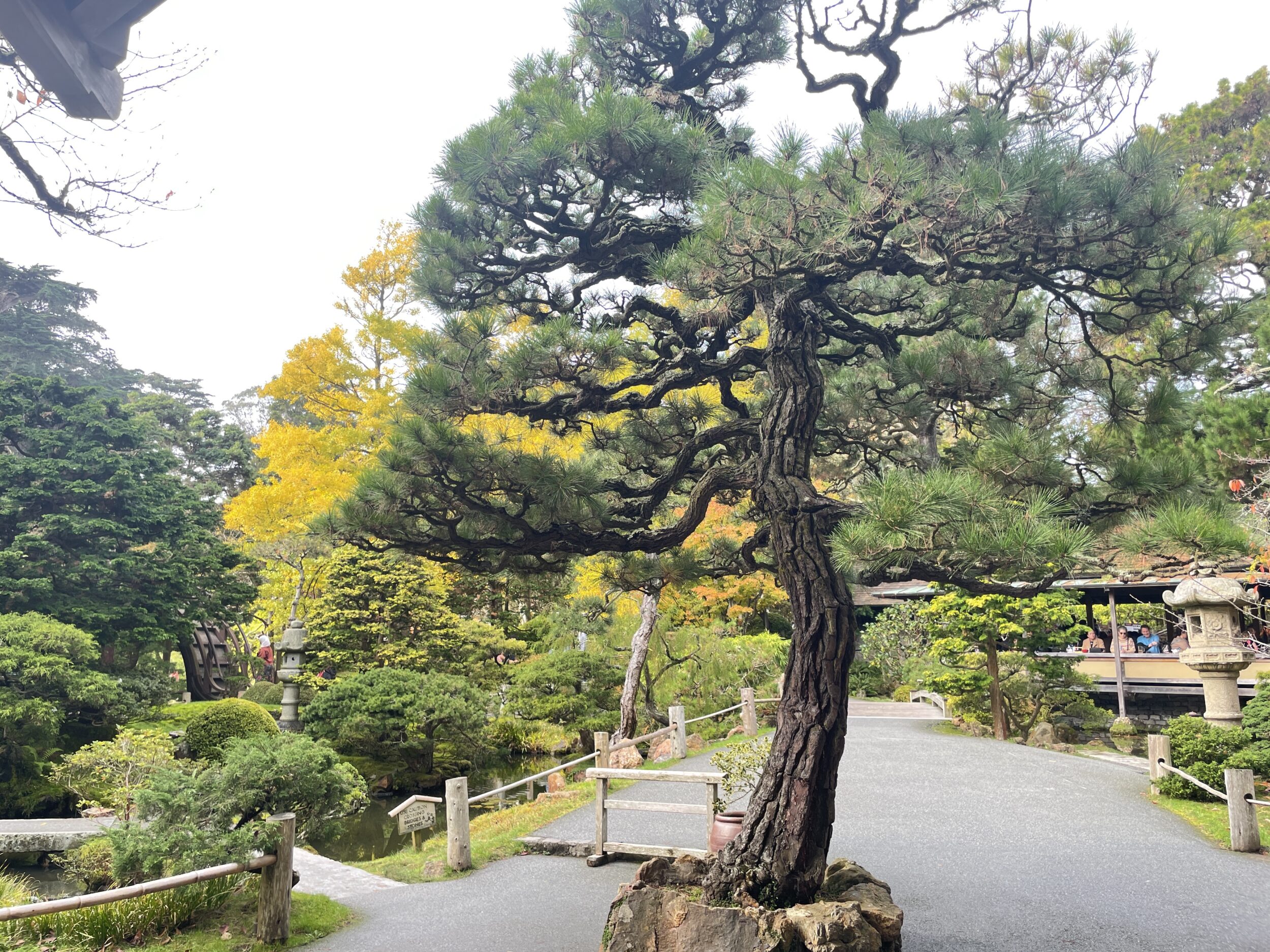
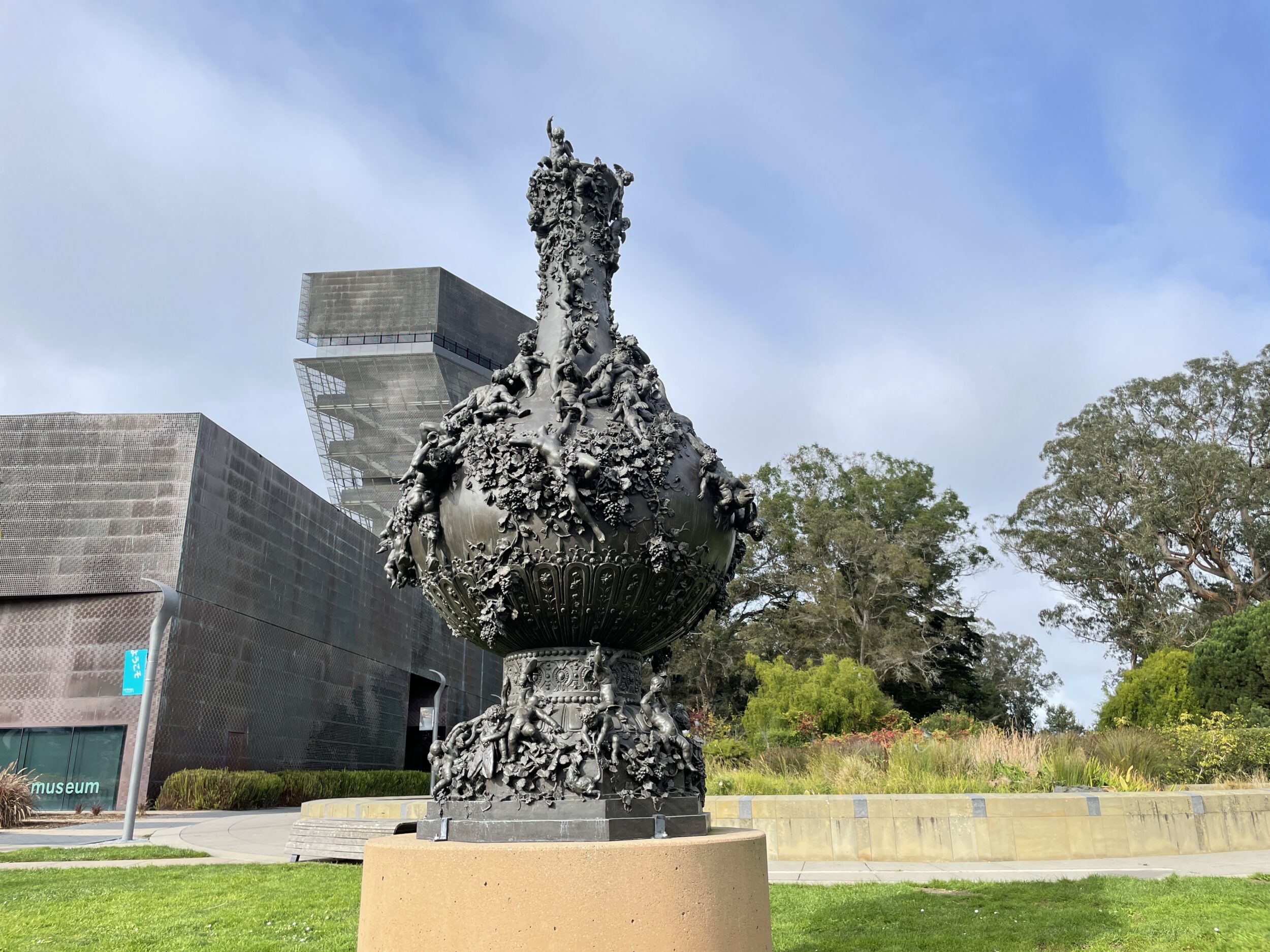
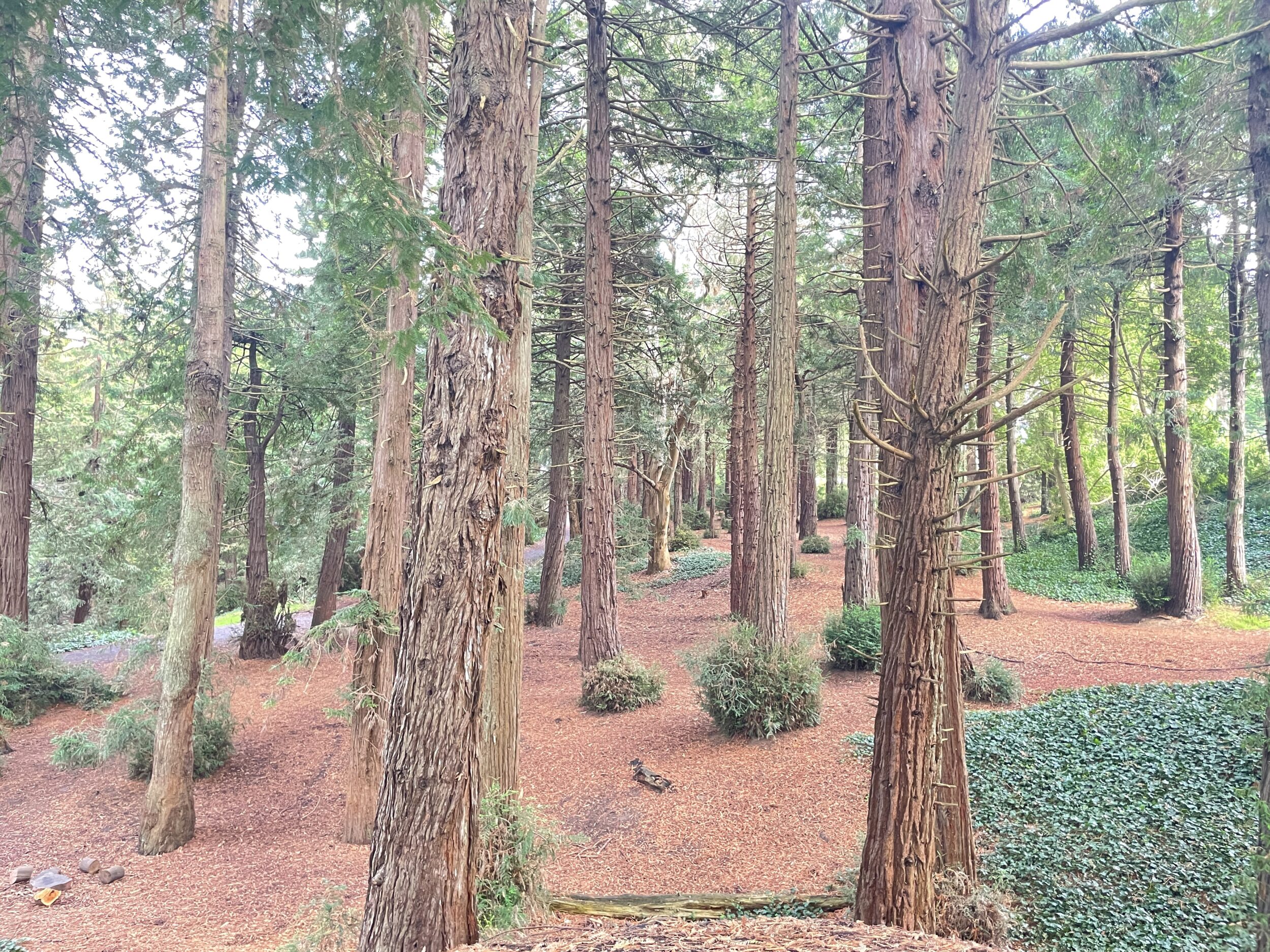
We walk to Golden Gate Park. It’s the weekend, so the roads are pedestrianized and many people are exercising. We pass by the De Young Museum, which has a funny roof. And then the Japanese Garden looks very beautiful, but at $18 entry, I’d rather see a real Japanese garden in Japan in a few months.
It’s already time to meet my friend G. and his daughter at Ghirardelli Chocolate, very close to our hotel. The portions are gigantic, and their hot chocolate is superb. G. has lived in San Francisco for over 10 years, works for one of the Big Tech companies, and was able to give us a glimpse into the life of expats in San Francisco. San Francisco feels very “European”, unlike other major American cities. There’s a very green and pleasant neighborhood: “Presidio”, which I really like. The area around Ghirardelli Chocolate is also very nice, with small shops, pretty boats, and a place to stroll.
While we’re talking, a Waymo car stops in front of the café, and people take photos of it enthusiastically. Waymo is a subsidiary of Google that operates driverless taxis. You order a Waymo, it arrives on its own, you sit wherever you want, and off you go! The steering wheel turns by itself, and there are cameras everywhere to aid navigation, as well as a radar on the roof. We would have loved to try this service, but unfortunately, the launch is recent, and you have to sign up for a waitlist. I read an article explaining that this kind of car could be the solution for those who absolutely want to own a car: imagine a car that comes to drop you off / pick you up from work every day. Instead of leaving your car in the parking lot all day, it would live its own life and take other people to do their shopping, to the airport, etc. It’s a glimpse into the future, and it’s what Tesla is preparing for the coming years.
We take the bus again to go to another bookstore I spotted on Google Maps: Russian Hill Bookstore. On the bus, there are three young people chatting; they have an absolutely incomprehensible accent, like thugs, and I understood absolutely nothing, but there are words I don’t like much like “knife”, “criminal”, “fist” ahahah.
Back to Russian Hill Bookstore : against all odds, this bookstore is full of treasures: some Easton Press leather-bound Tolkien, a The Last Unicorn signed, the complete series from Dune at Easton Press and lots and lots of Folio Society. Unfortunately, their Heritage Press and Limited Editions Club collection is almost nonexistent. I still spot a magnificent Heritage Press Quran. I had a hard time putting it down, because I already have an extremely well-made Quran from the French Book Club. I leave with an old book on Sanskrit grammar.
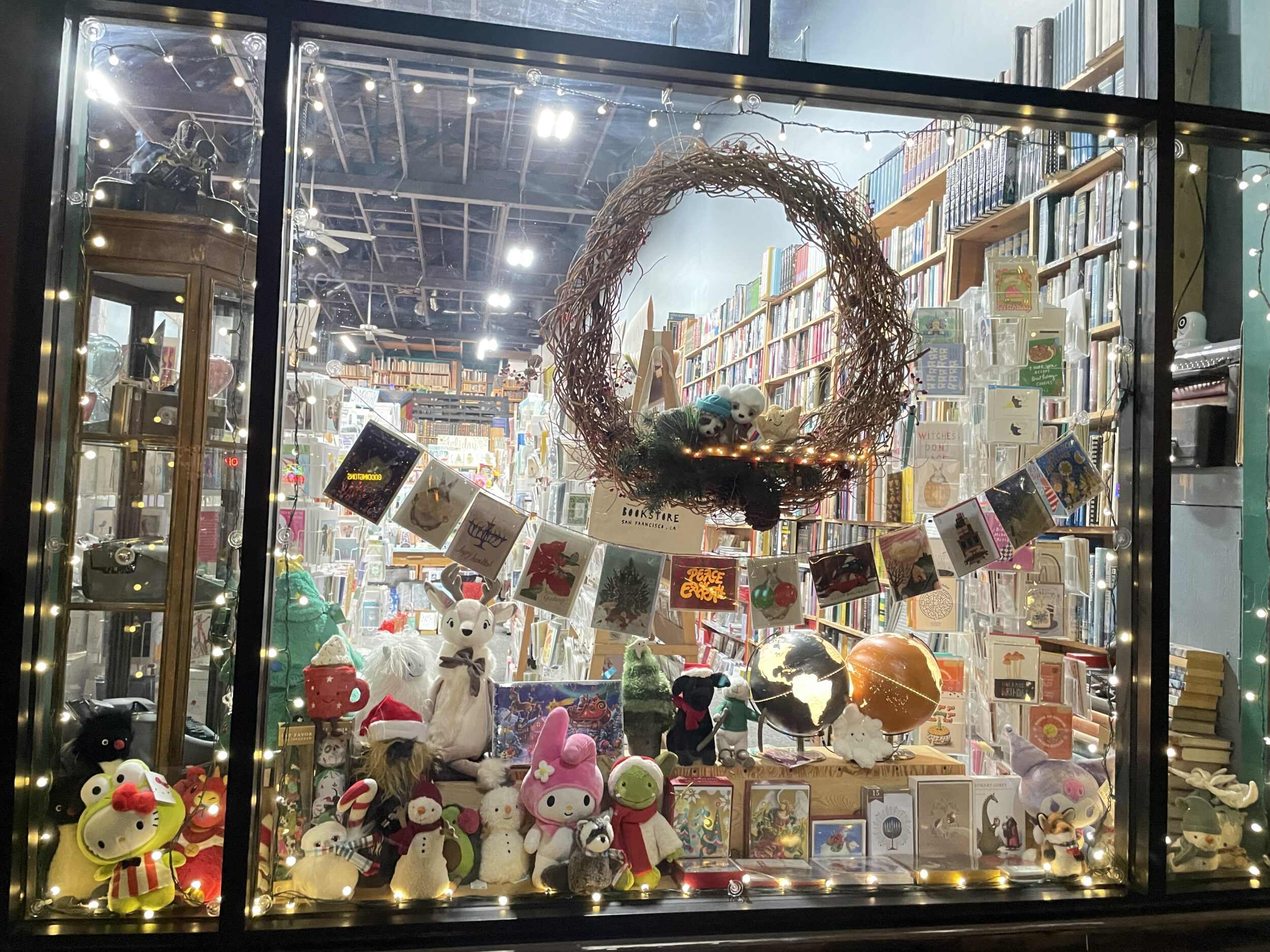
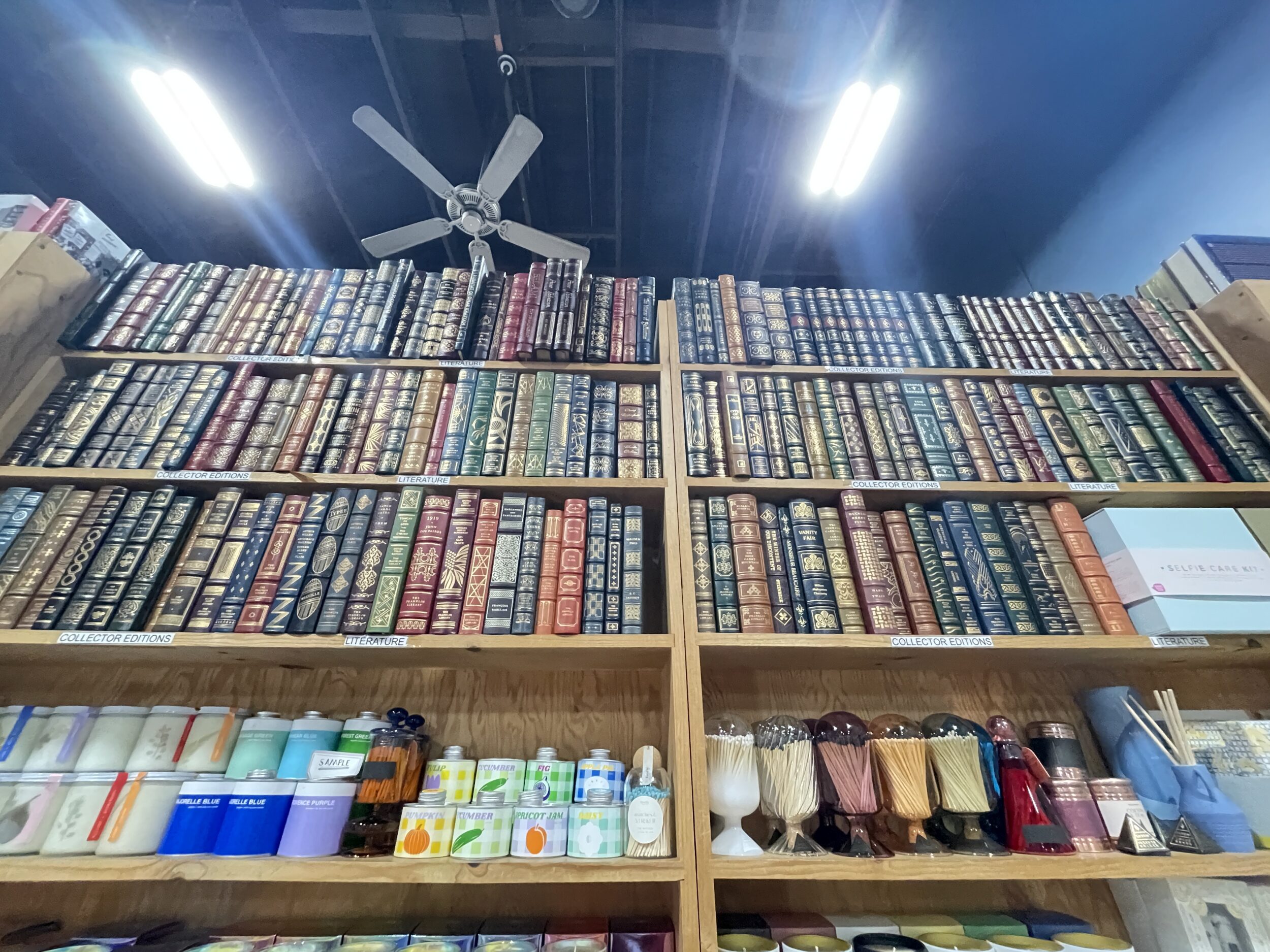
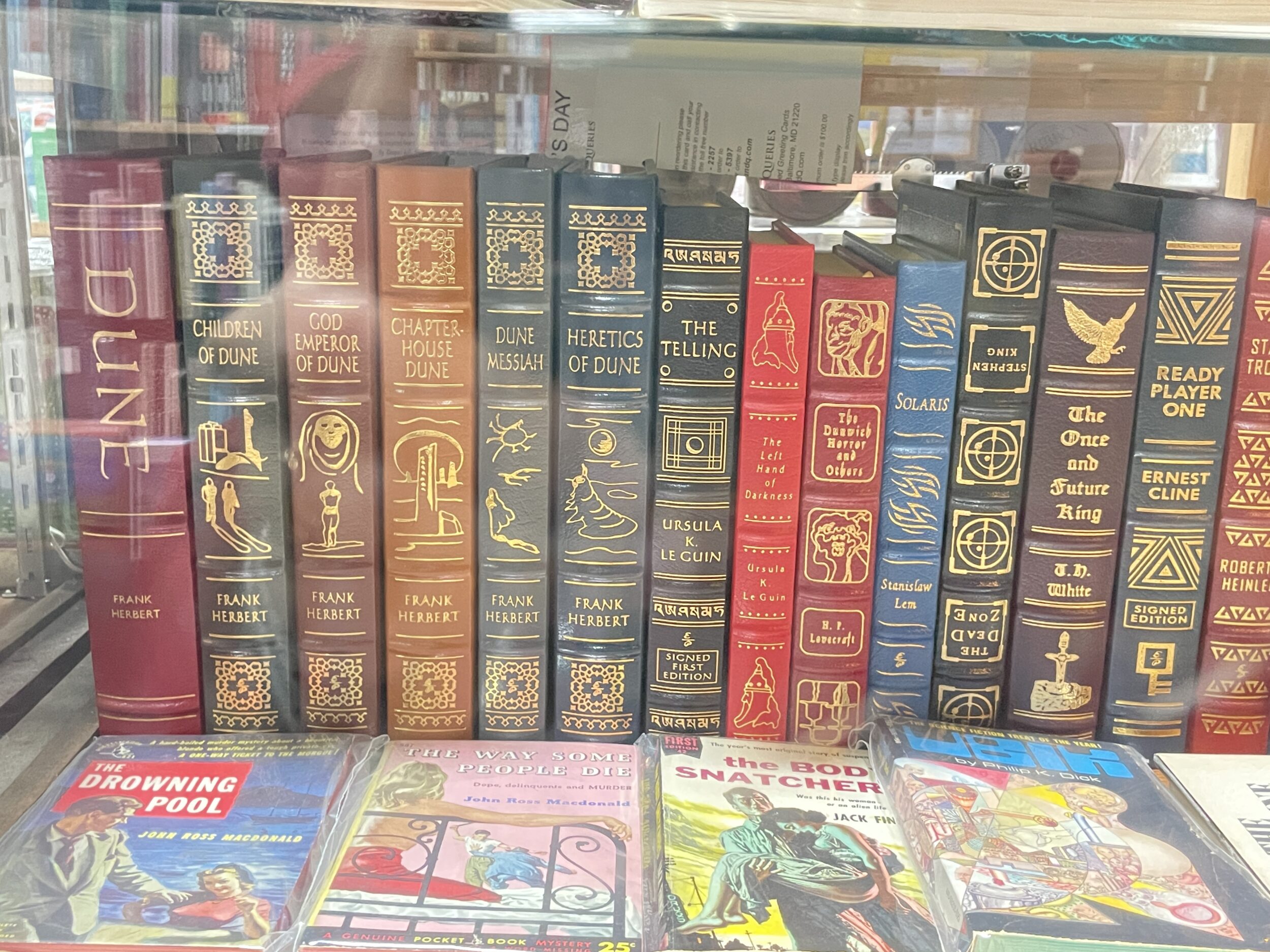
All this searching is frustrating. You have to dig around, go from one bookstore to another. I’m not used to it because before, I read ebooks accessible with one click. This hunt for old and rare books is frustrating for me, and the books available with one click on eBay and Abebooks are 3 times more expensive than the books sold in physical bookstores. It’s better to dig, come back, dig.
A few days after leaving San Francisco, I find online a seller in San Francisco who has books I covet. I’m so mad at myself for not finding him earlier. I email him to ask about a book and he replies “I’m getting cataract surgery etc.”, and then a few days later, he doesn’t seem to want to send me photos of the books or a package to France. You need a lot of patience to collect anything. Later I’ll read the book “Les Collectionneurs” by Philippe Jullian, where he makes fun of collectors, and I don’t see myself in the portraits he draws. Besides, he clearly states that collecting is a rather masculine activity, “women are not collectors; they have a taste for jewelry, dresses, and sometimes pretty objects, but those who claim to be crazy about trinkets, little boxes, or Gallé have simply found a convenient excuse to receive gifts less ephemeral than flowers.”
After spending an eternity at the bookstore, we stroll down the street looking for a restaurant. In San Francisco, prices are significantly higher than in the small towns we visited earlier. We find a small Asian supermarket that serves delicious ramen for $16. The server asks JB where he’s from because he really likes his accent.
Day 19:
Alcatraz
We walk to Pier 33 to catch one of the first boats to Alcatraz Island. It houses the famous prison of the same name and is only accessible with Alcatraz Cruises. Although we were proactive and booked the tickets in advance, given the small crowd, I think it wasn’t necessary in early December.
When JB was a child, his friend S. moved to San Francisco for a year with his family. Before he left (or after he returned?), he remembers watching a documentary with him about the prison and the famous 1962 escape. At the time, it had made a big impression on him, and he’s thrilled to discover the prison “for real” several decades later.
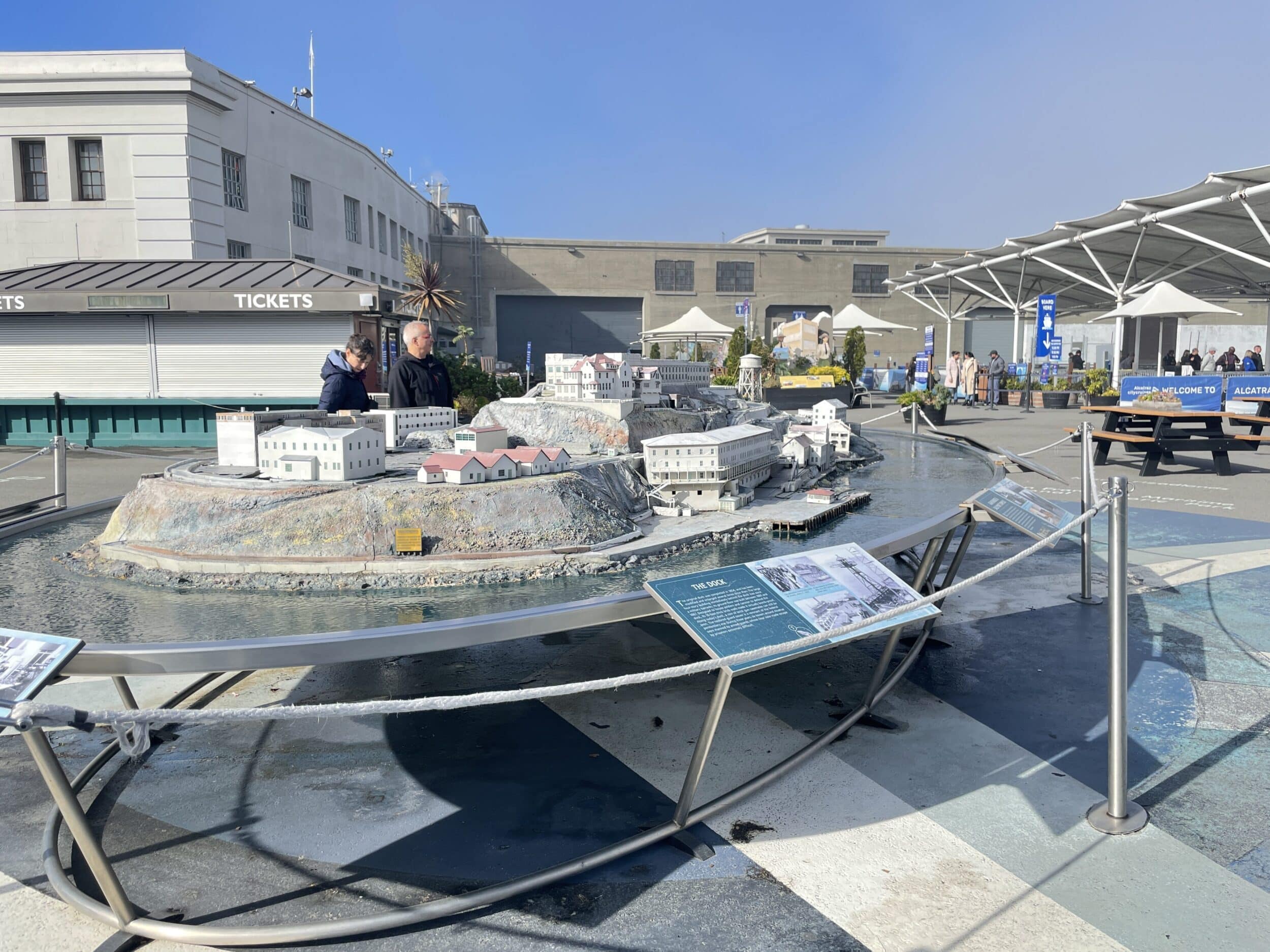
Today, the fog is everywhere and you can’t see ANYTHING. You only see the island at the last moment. We get a little welcome speech explaining that we’re in a national park. Yes indeed! That on a day in 1962 with as much fog as today, three prisoners escaped from Alcatraz and were never seen again. The ranger asks those who think they made it out alive to raise their hands. I’m one of the few hands that go up, too optimistic!! because one of them didn’t know how to swim, and given the time it took us to come by boat and the complete lack of visibility, there’s actually 0 chance they made it out.
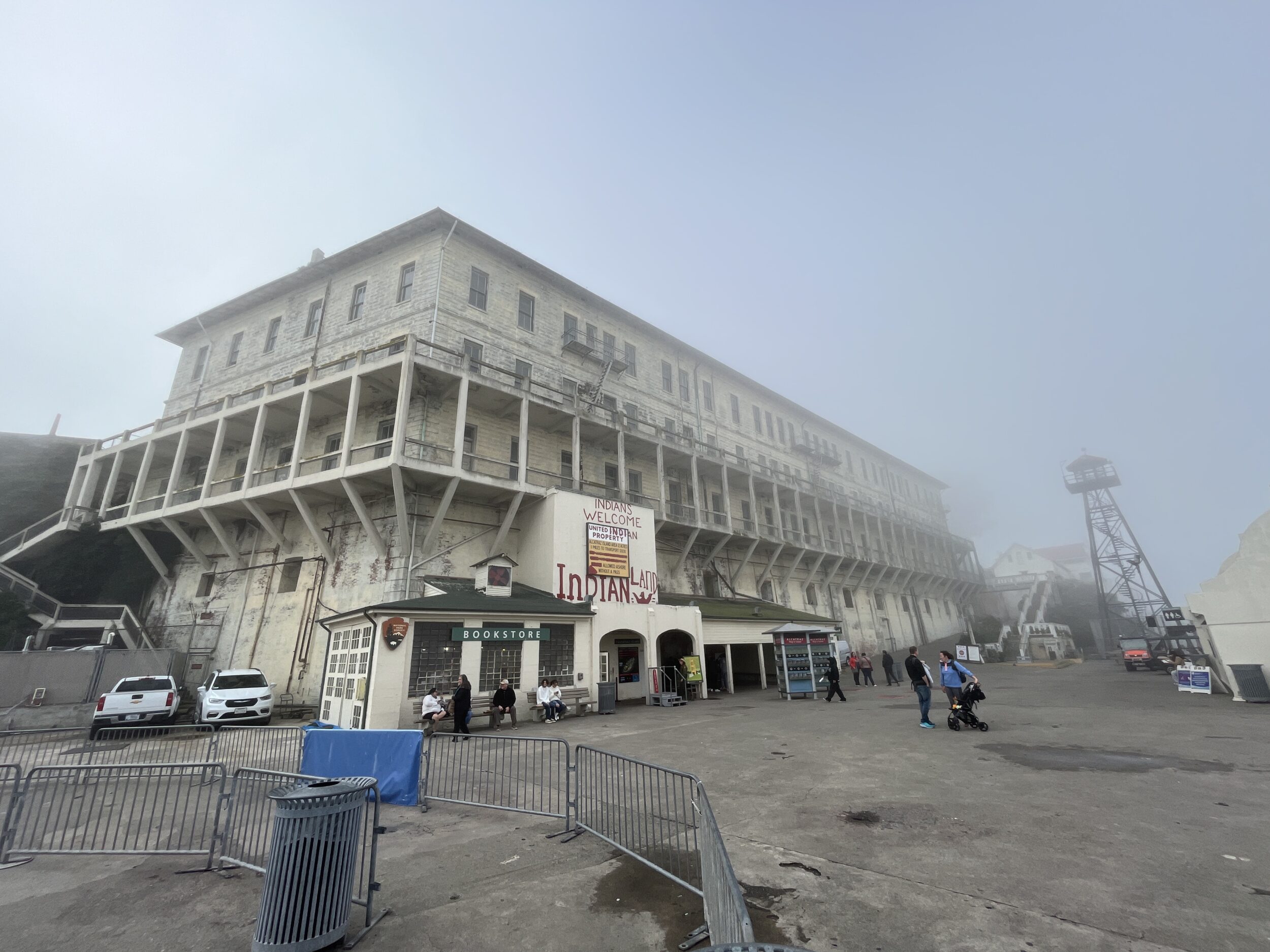
I thought you could only visit the inside with a guide (since there is a guided tour), but we can do the visit with an audio guide in French. You feel like a prisoner because we follow the same route as them: when you arrive, you first see the place where you drop off your belongings and receive your uniforms. Actually, it’s rather the audio guide that they hand us ahaha and then we go see the cells. There’s absolutely no privacy; the doors are just grates. It must be extremely noisy.
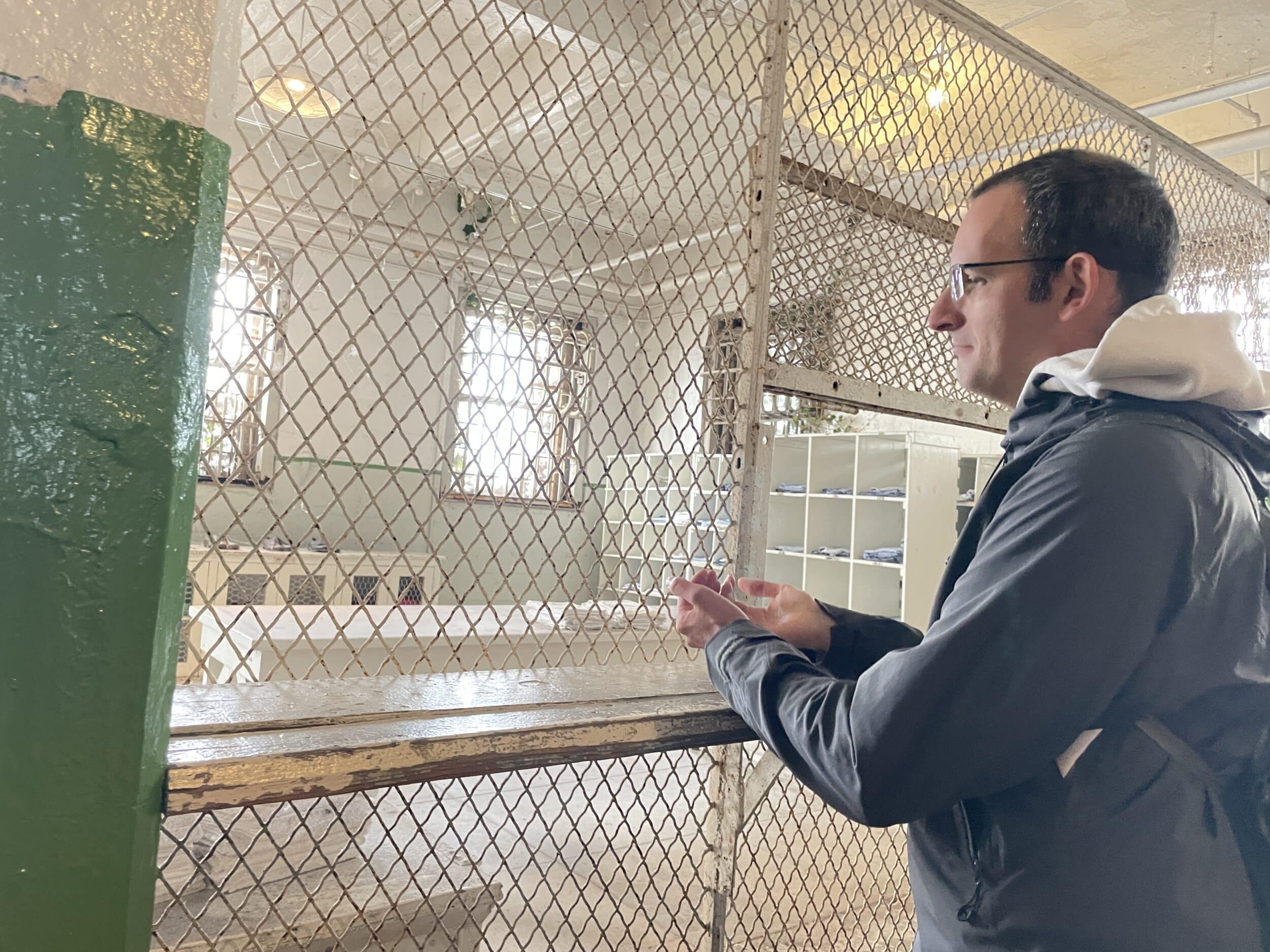
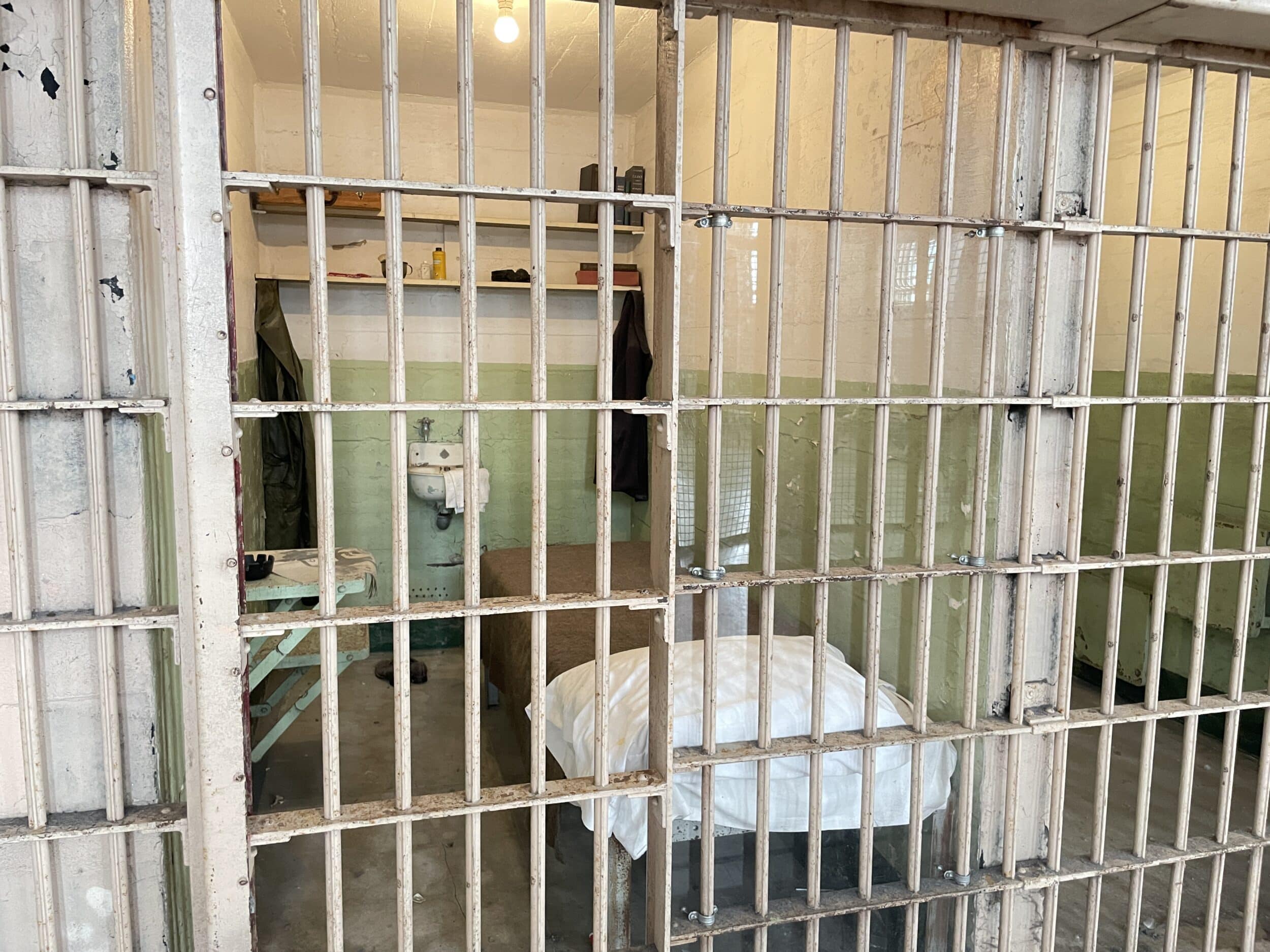
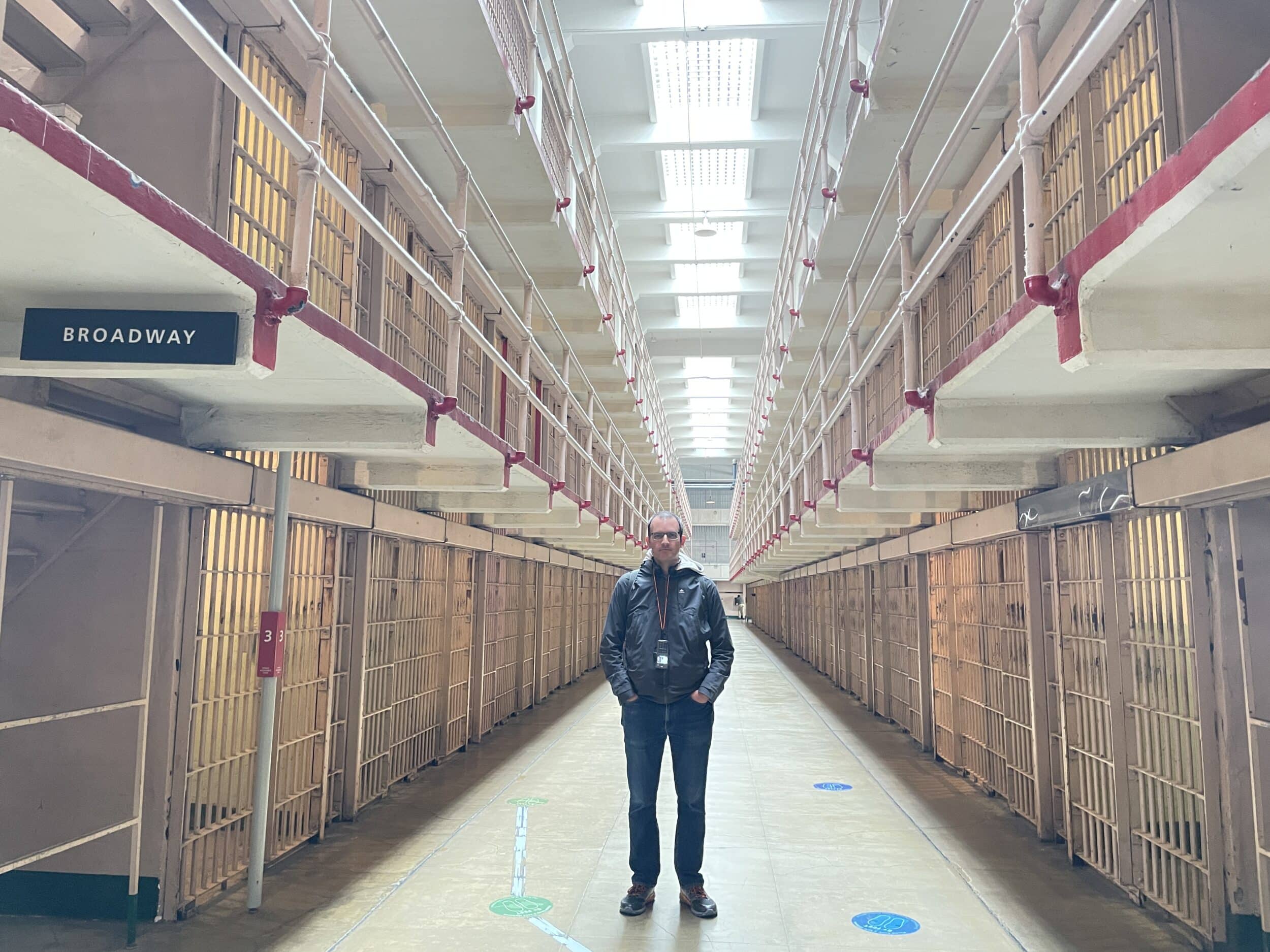
There are regular cells, and punishment cells: no light, not even artificial.
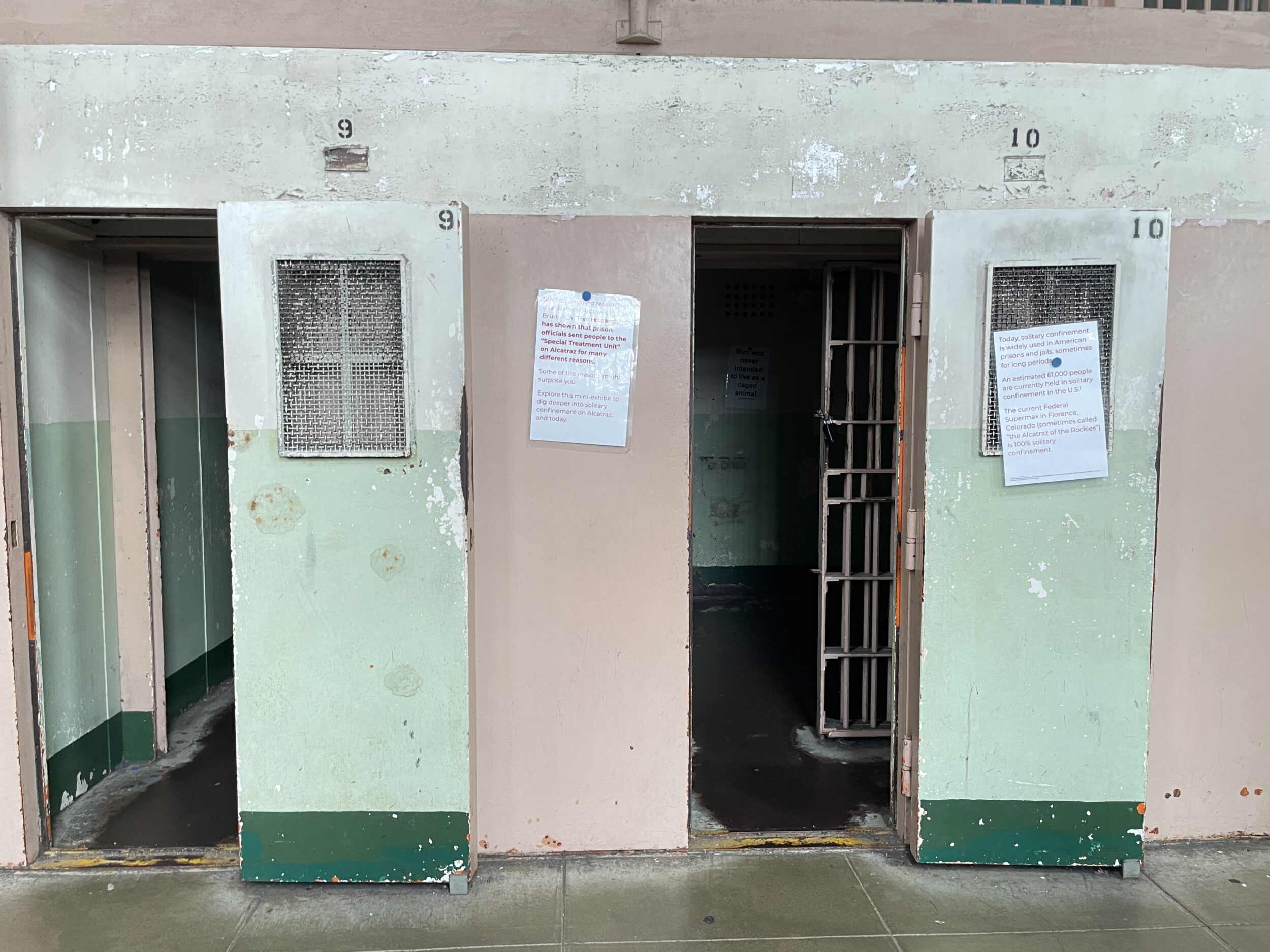
Even though the prisoners locked up here weren’t angels, I still felt sorry for them seeing the state of the prison. It was designed to break them mentally, to strip away any possible hope.
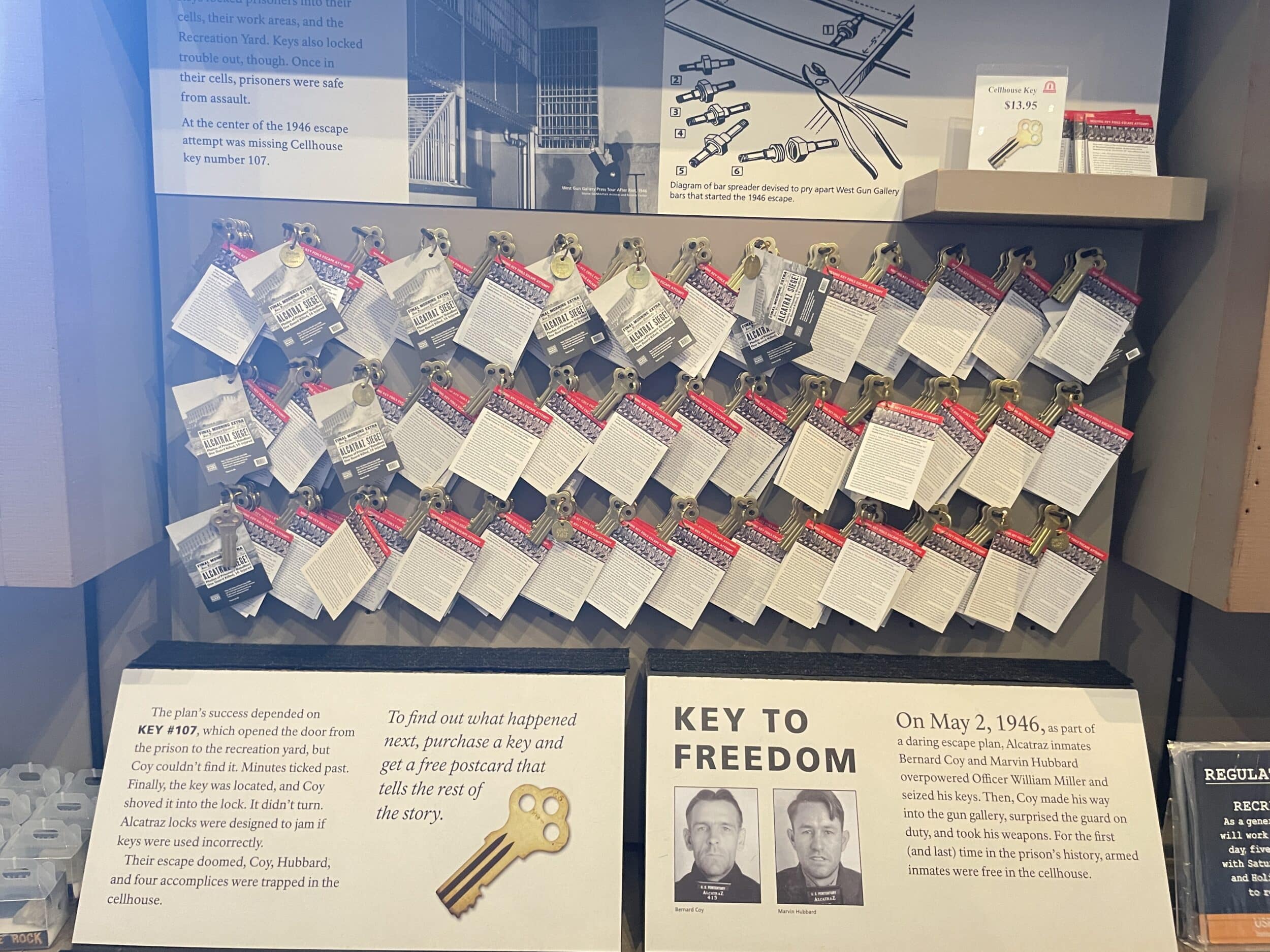
However, they still managed to dig a hole in the wall using their hardened steel spoon, and make a fake head to slip under the blanket. Others managed to steal a key from a guard. However, inserting the key too quickly into the lock caused it to jam (Alcatraz locks are designed for that). So many attempts (and successes) in a place where hope shouldn’t even exist anymore.
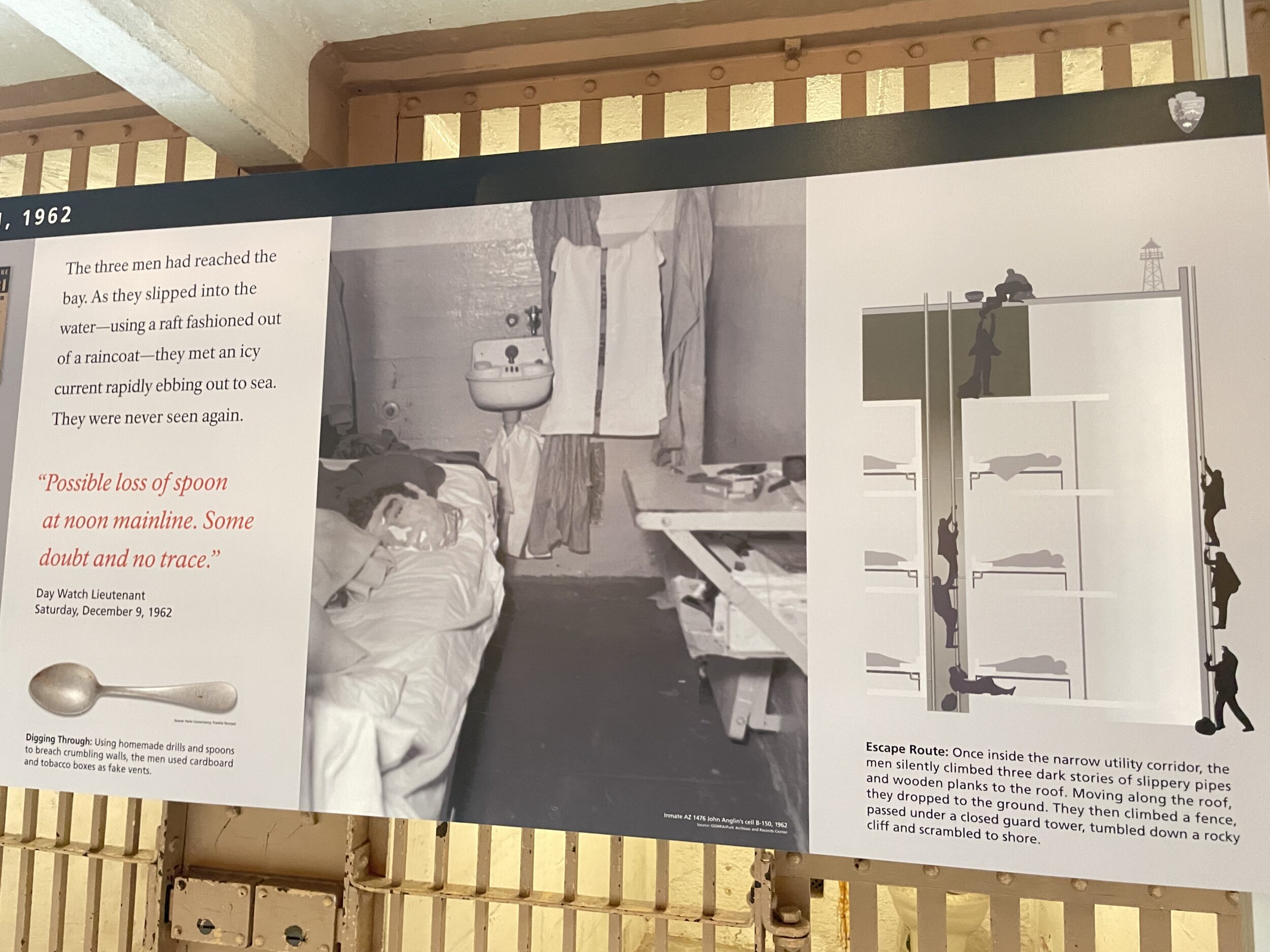
Fun fact: the three escapees, who would be about a hundred today, are still officially wanted by the FBI. You can even see their photos, with a simulation of aging, on the authorities’ website.
We then visit the dining hall, the most dangerous in the prison, where 200 prisoners, for 20 minutes, all had access to a knife and a fork. The holes in the ceiling are ready at any moment to release toxic gas, to kill them all. It deters, but doesn’t prevent some crimes. Fortunately, this gas was never used, because it would have also killed the guards and cooks.
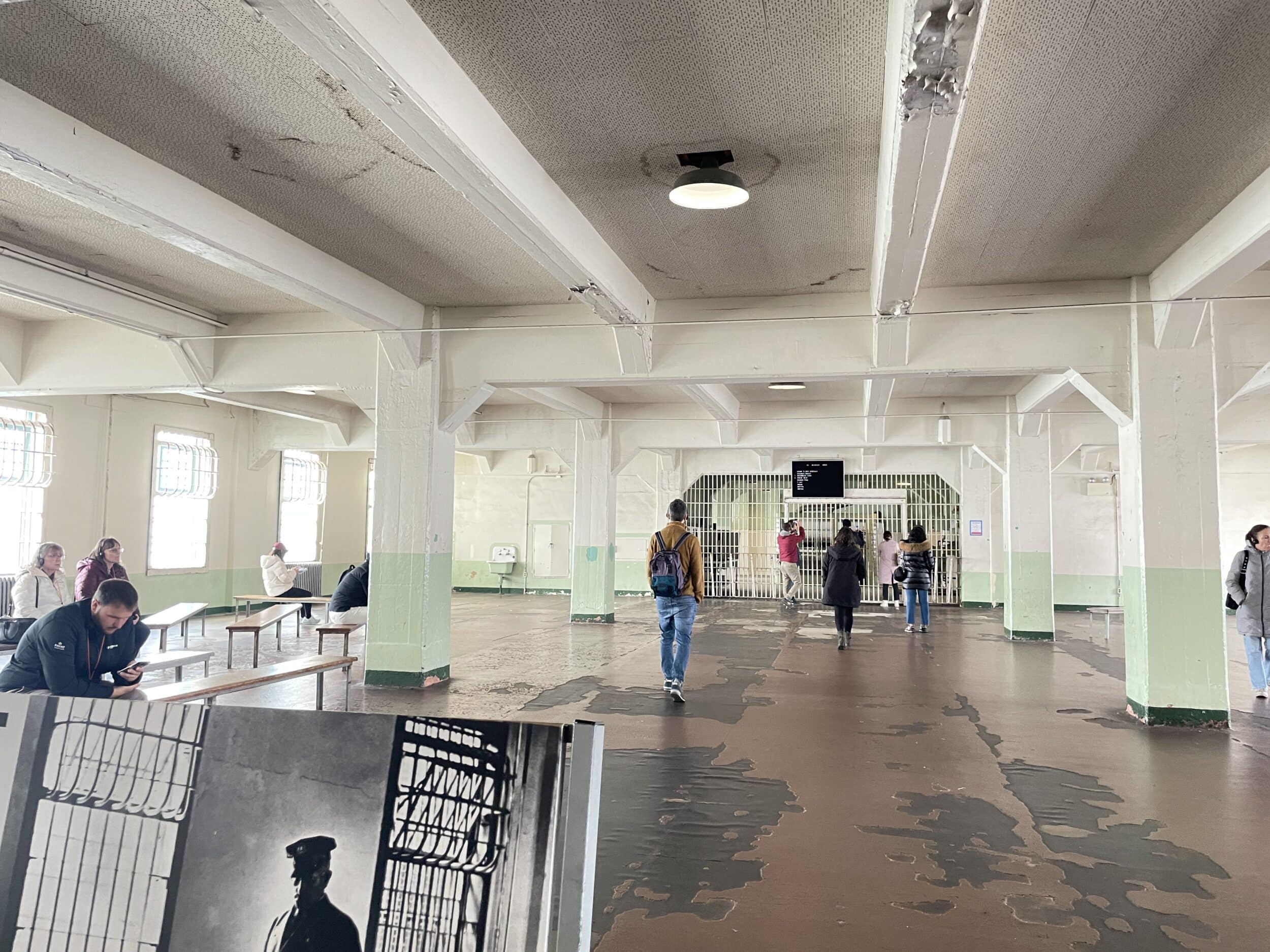
Due to excessive cost, Alcatraz prison was closed, and now only birds and visitors enjoy it. At the souvenir shop, you can buy a metal bowl with the Alcatraz logo stamped on it. It looks good quality too! Curiously, there are fewer purchases here than at the Golden Gate Bridge 😀
Pier 39
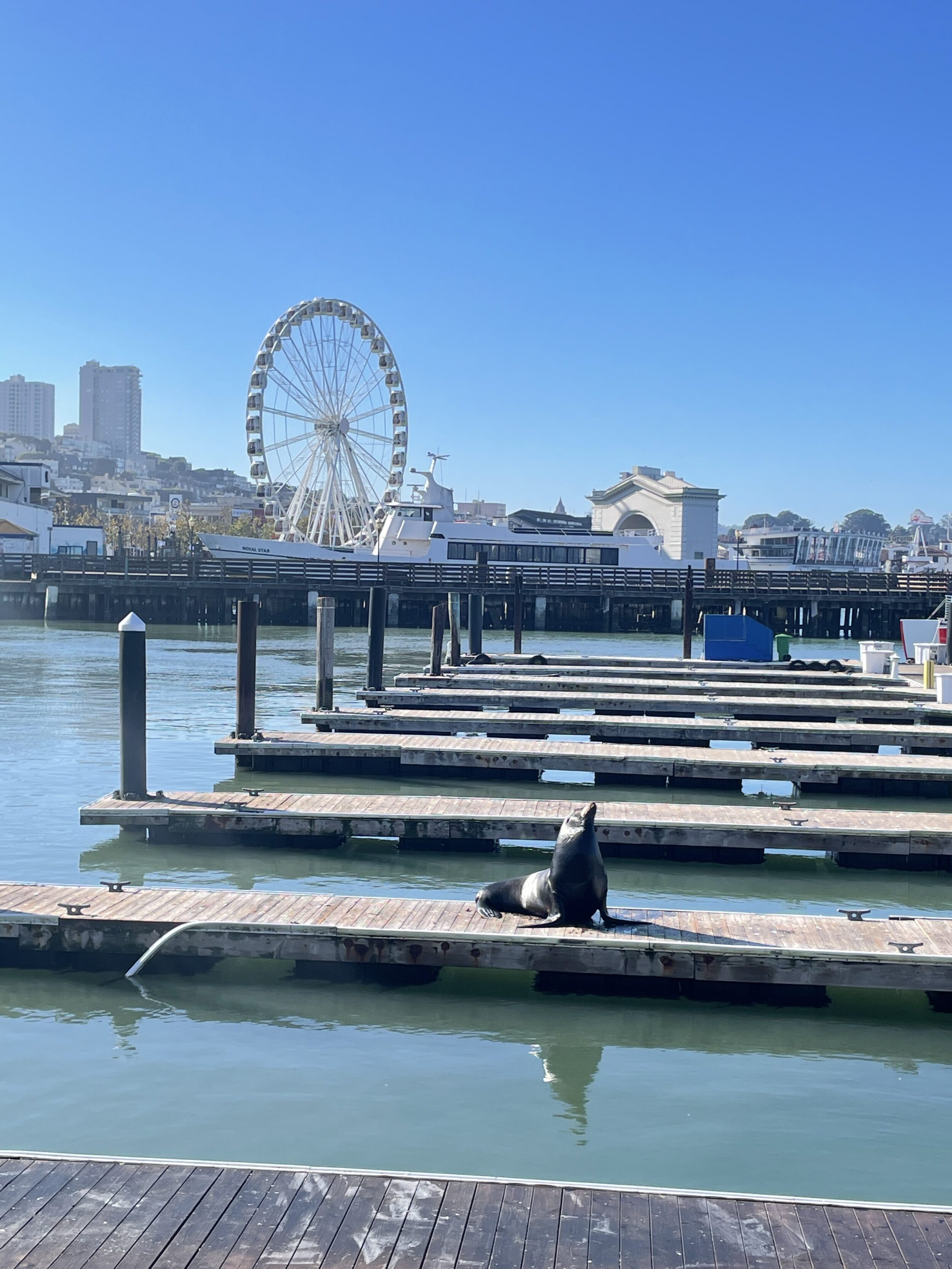
We walk to Pier 39 to see sea lions basking in the sun. We spot five in all, but in summer, there are about a hundred of them. An employee is there to answer all our questions. She says the sea lions living here are all males. Females rarely come. Their presence was very annoying at first, but when the city realized it was attracting tourists, they even built platforms for them. Anyway, there’s plenty of fish for them, they don’t come to steal our sandwiches, and all the merchants at Pier 39 are happy.
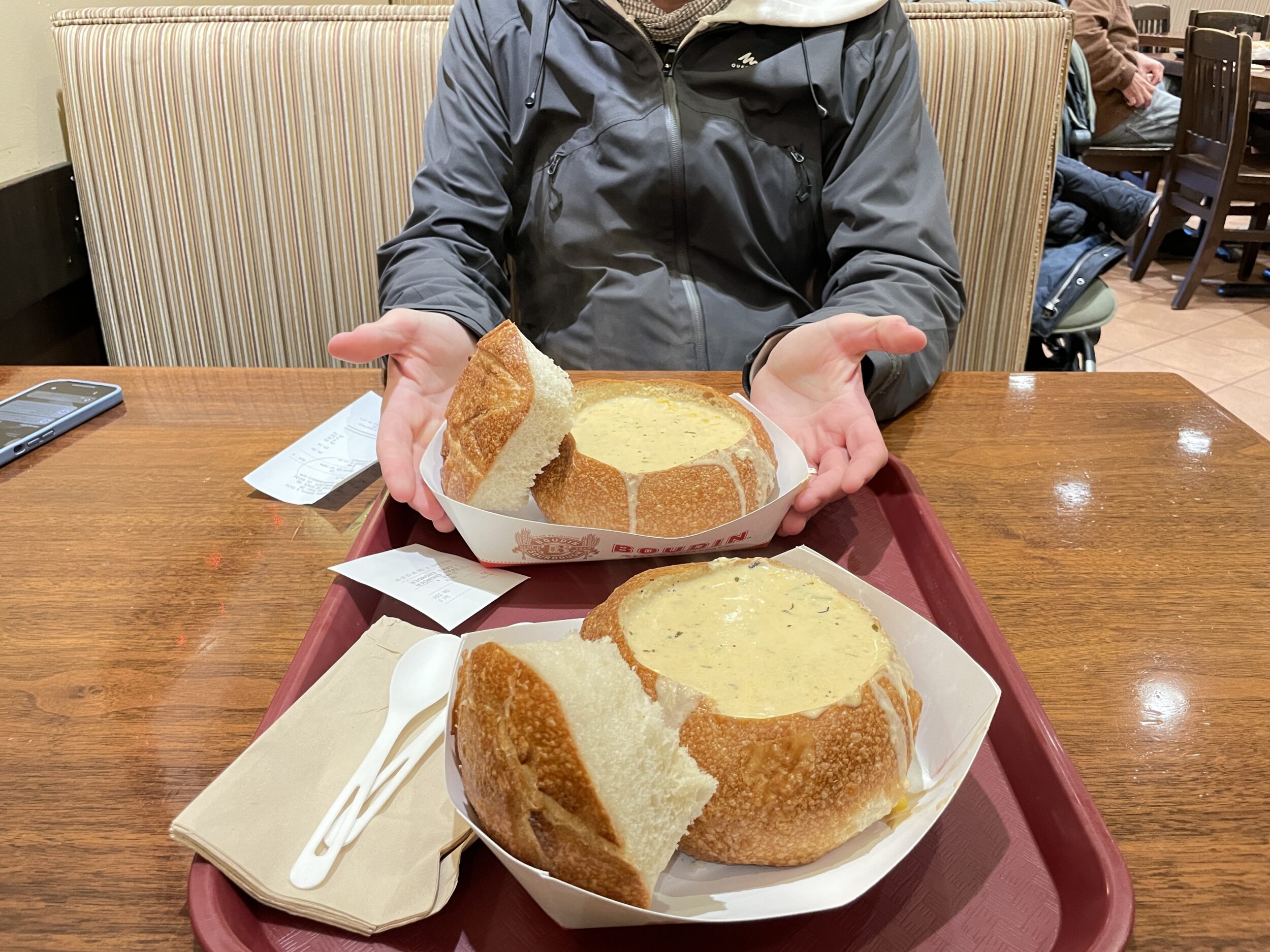
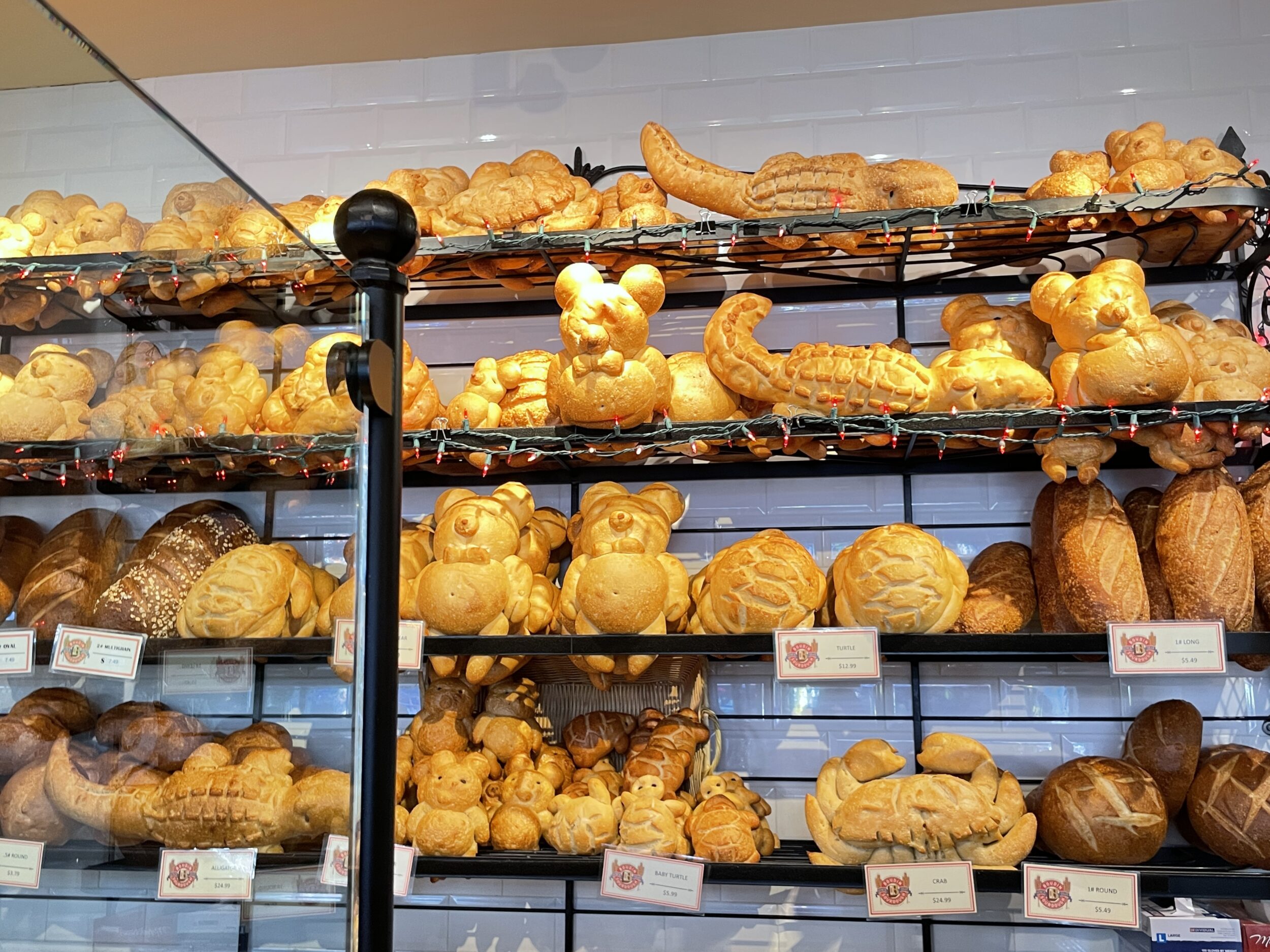
We grab a Chowder at Boudin. You’ll find it all over California, but apparently they’re the ones who invented this dish: soup in a bread bowl. It’s edible, it fills you up, but the bread isn’t that great. Worth trying at least once. G. told me about another seafood restaurant, but I didn’t have time to go.
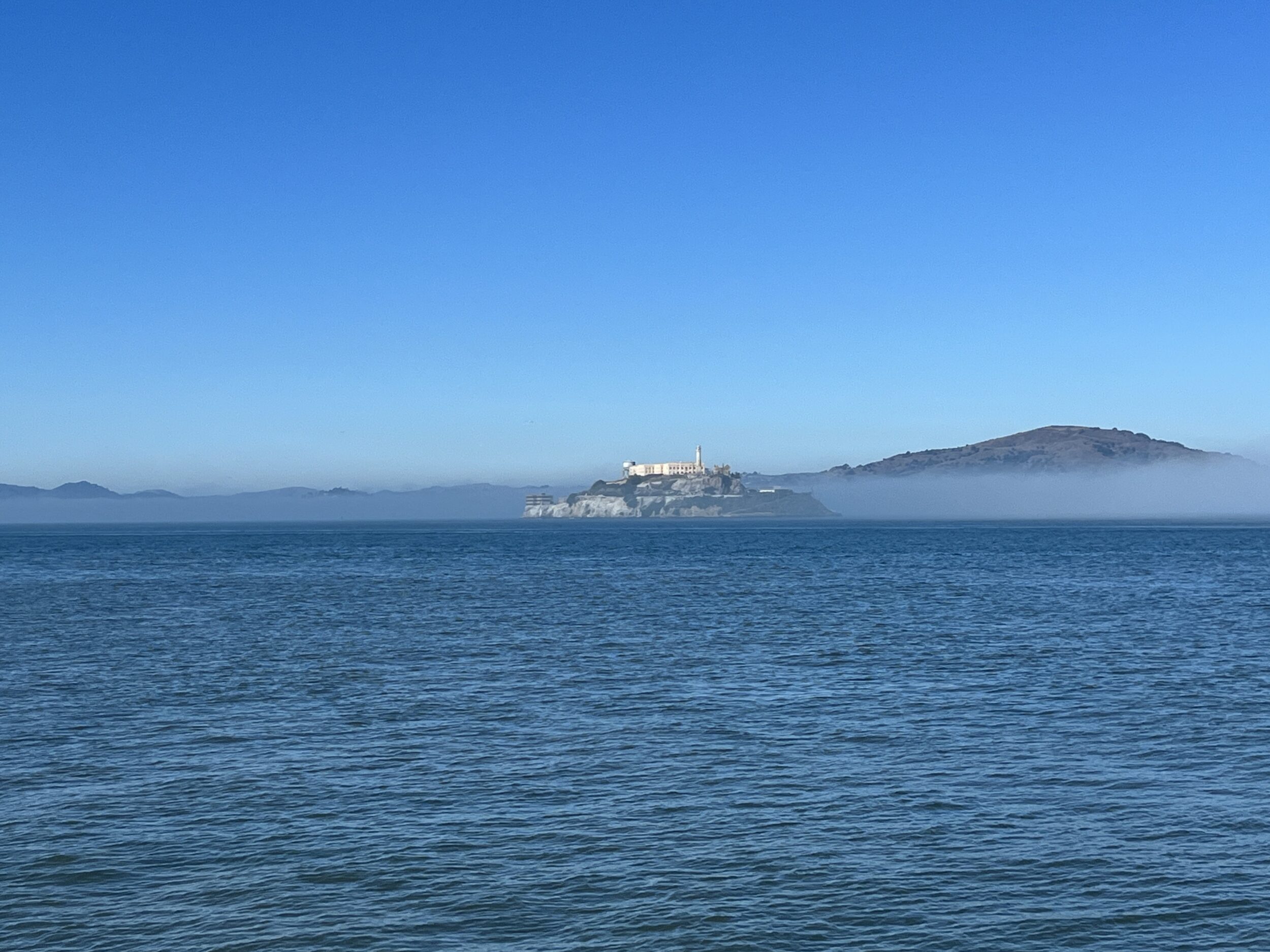
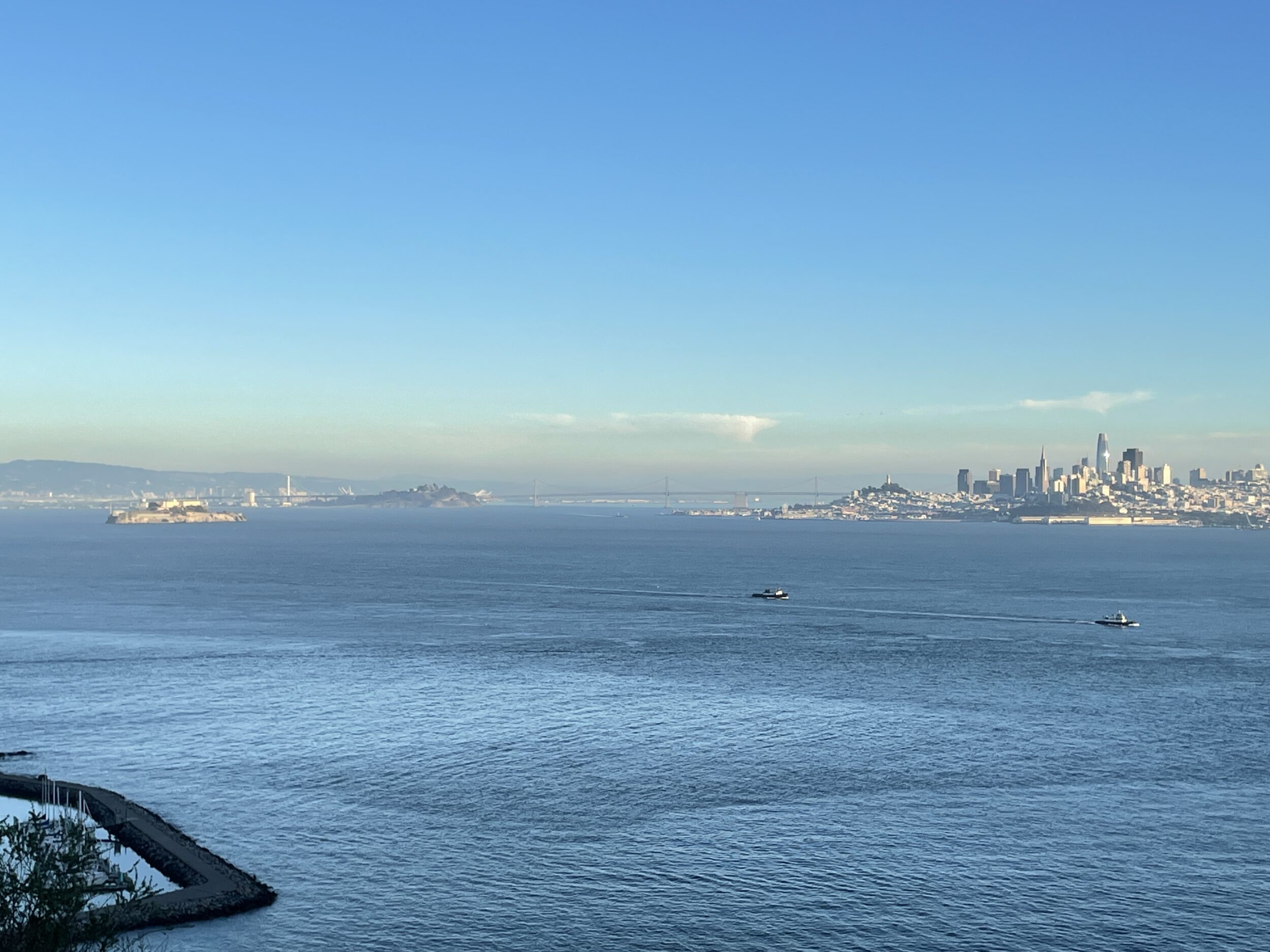
The fog lifts and we finally see Alcatraz!!
The tram
We walk to Powell Turn Point to catch the famous tourist tram. We buy a one-day passport, valid for buses and trams. It’s overpriced: $8 for a single ride, $16 round trip, but $13 for a 1-day pass. This tram doesn’t brake very well, and doesn’t start very smoothly either, so if you see it on the road, be careful; on the hills, you don’t want to be behind it.
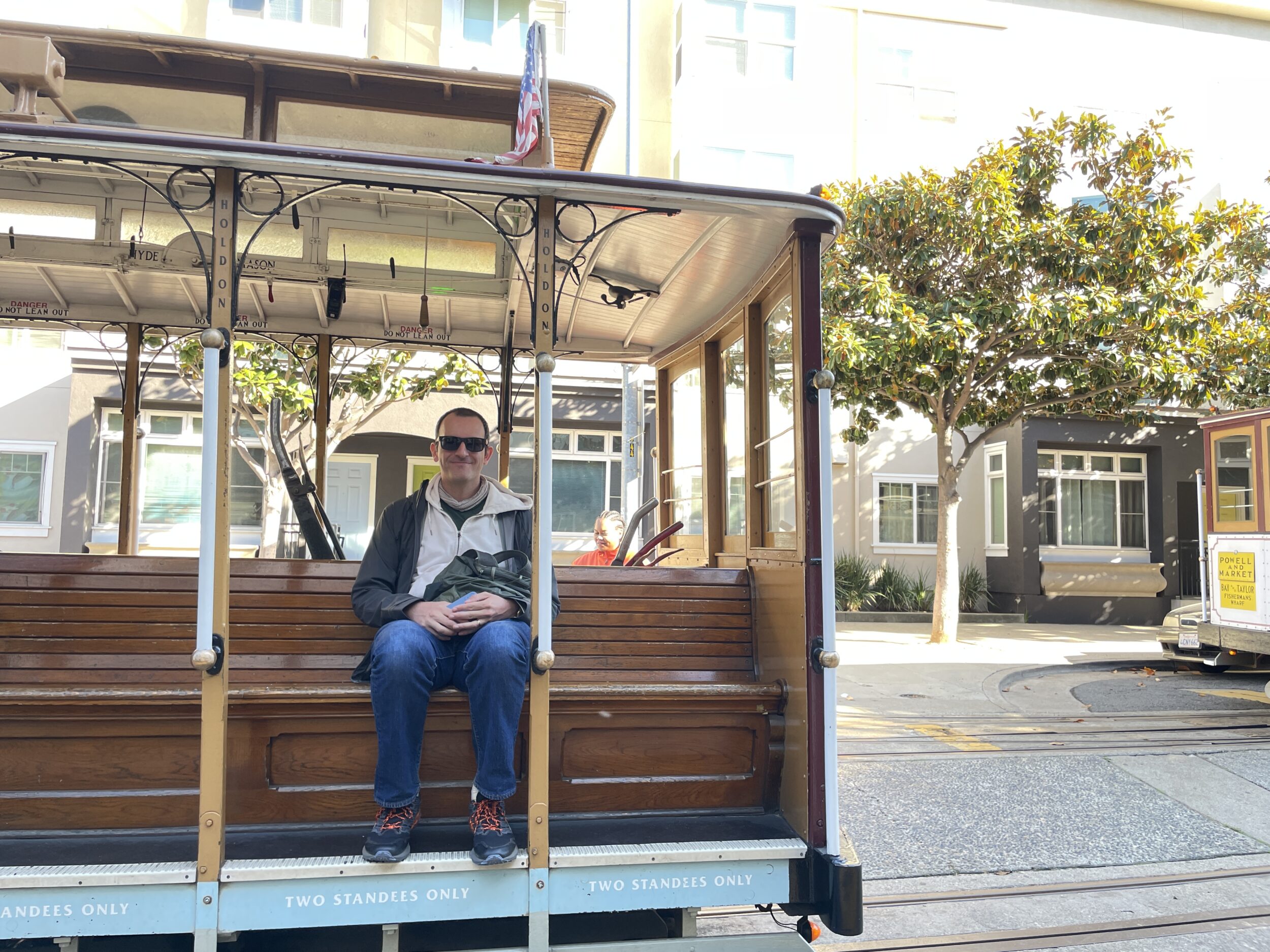
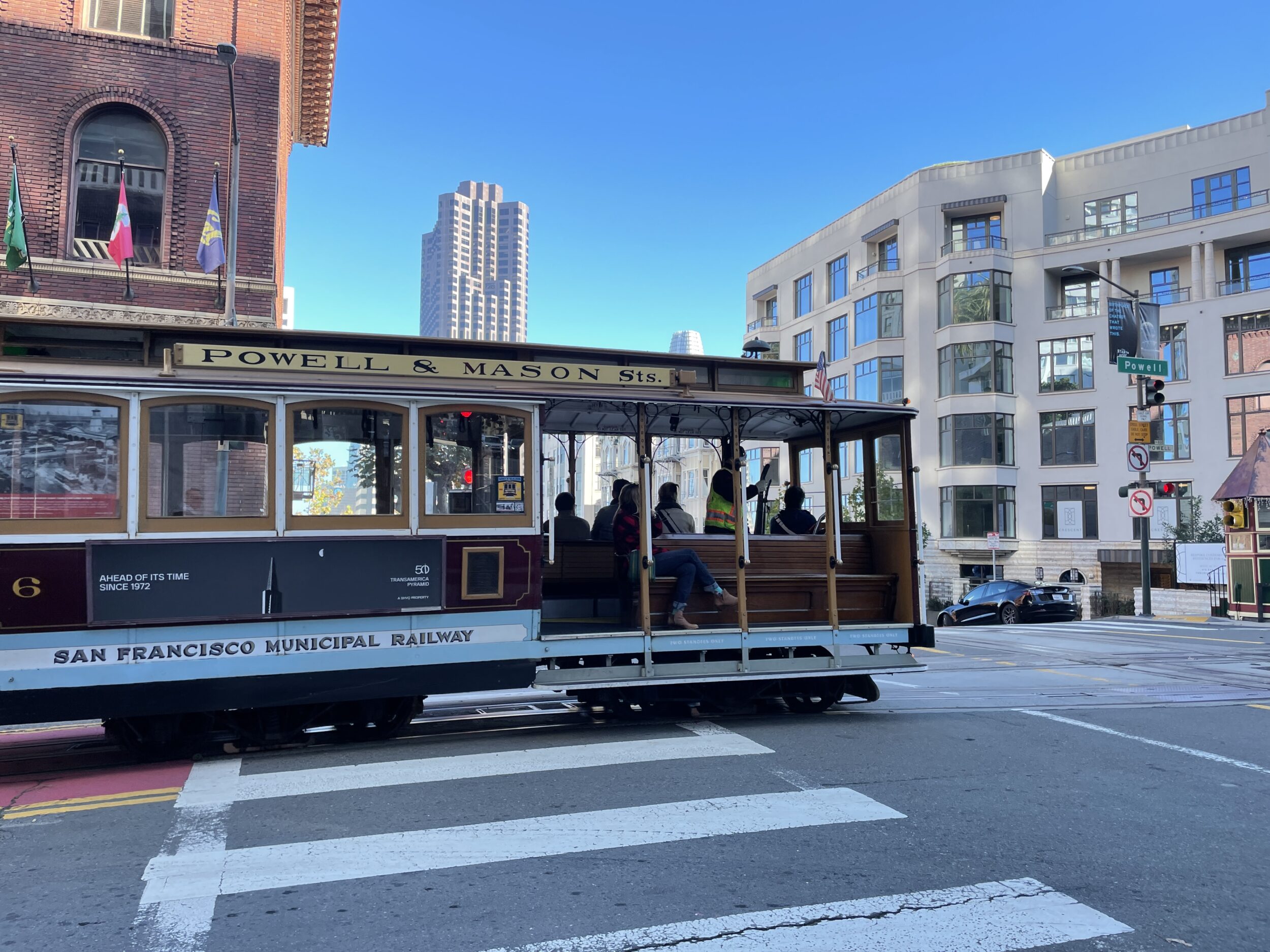
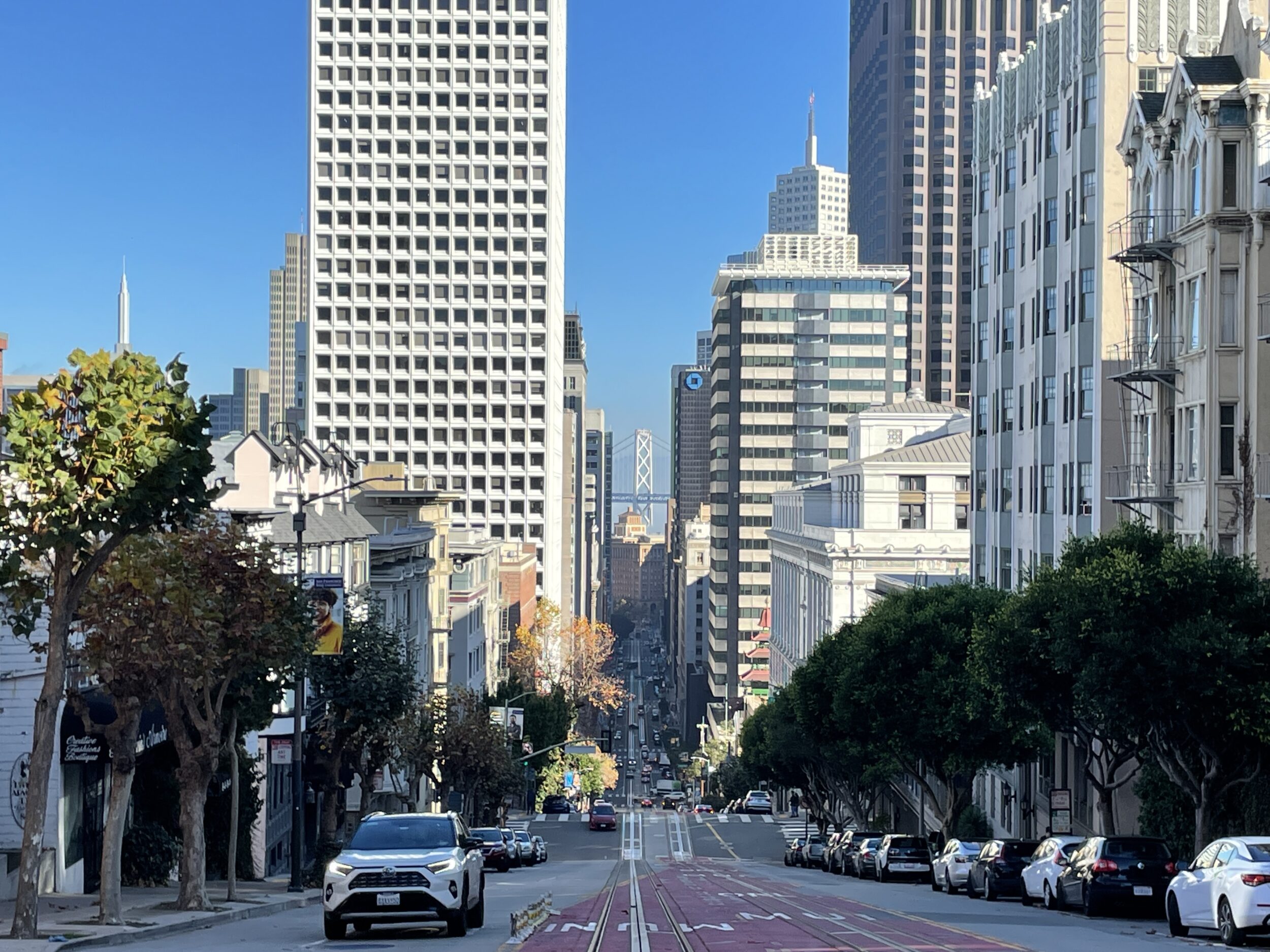
It’s fun riding up San Francisco’s endless hills on the tram; we go slower than a pedestrian! We stop in Chinatown because I want to visit Grace Cathedral. It’s a concrete copy of French Gothic cathedrals. They even copied and pasted the labyrinth of Chartres. But here the labyrinth is always available, unlike in Chartres.
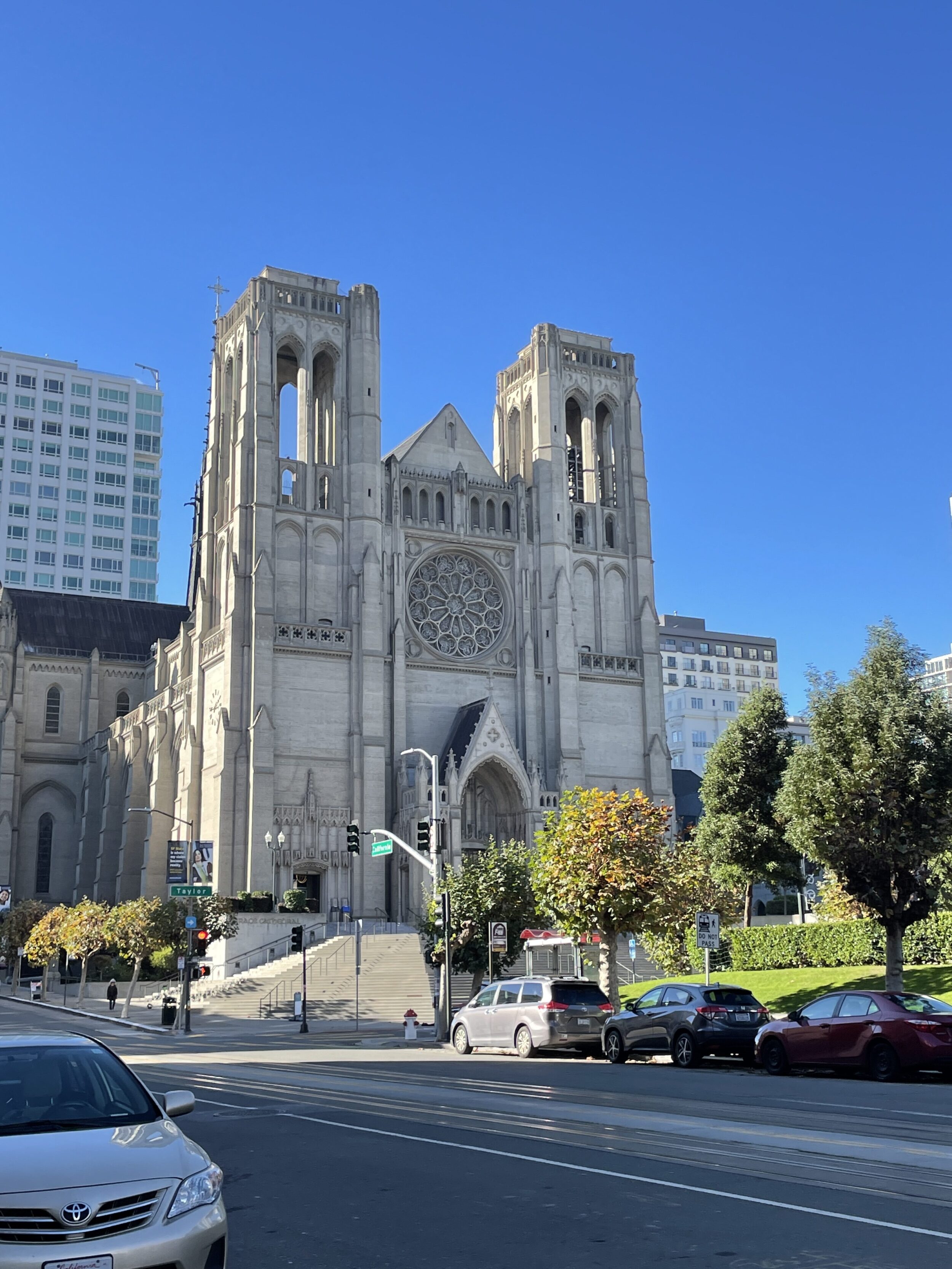
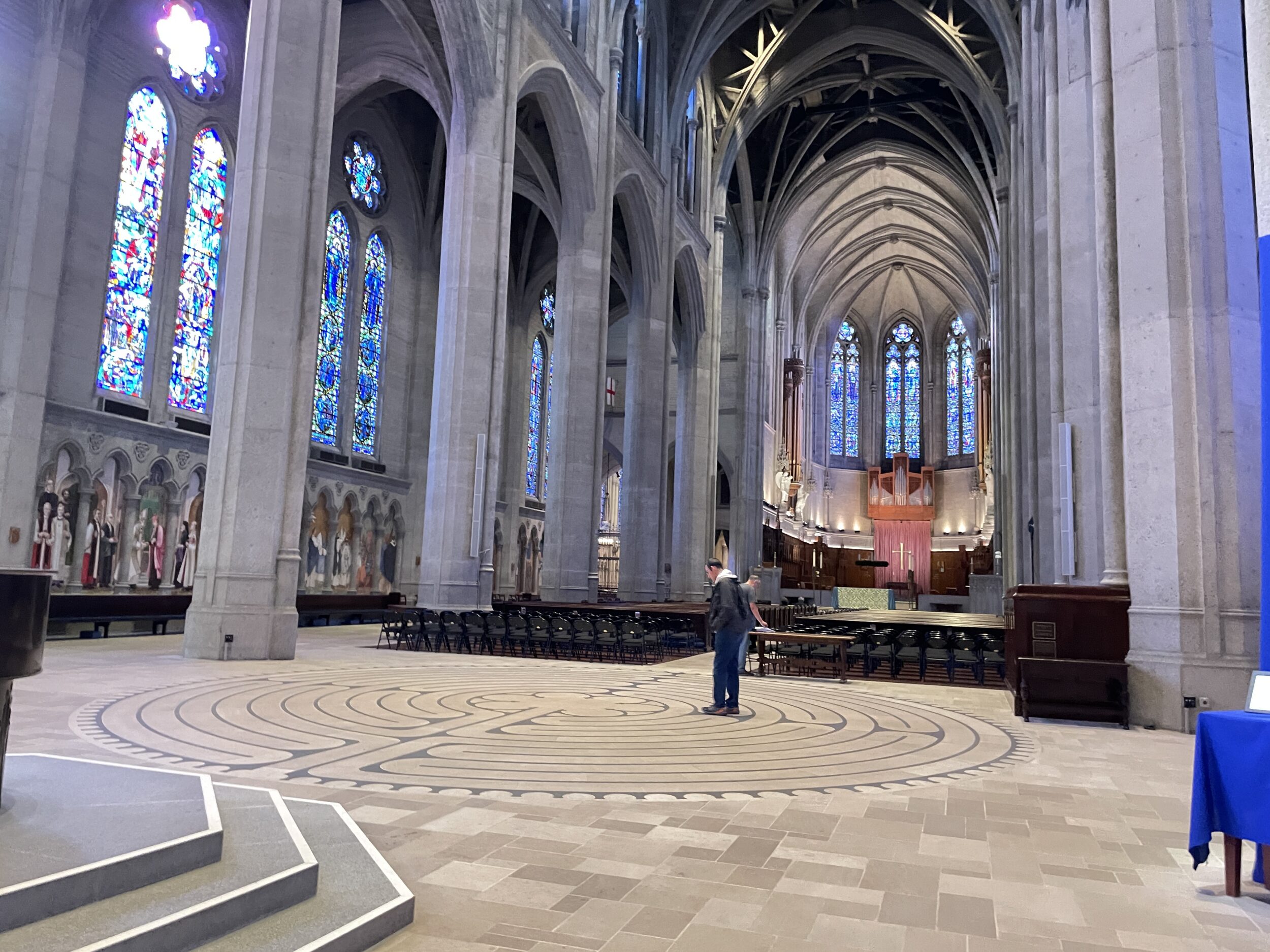
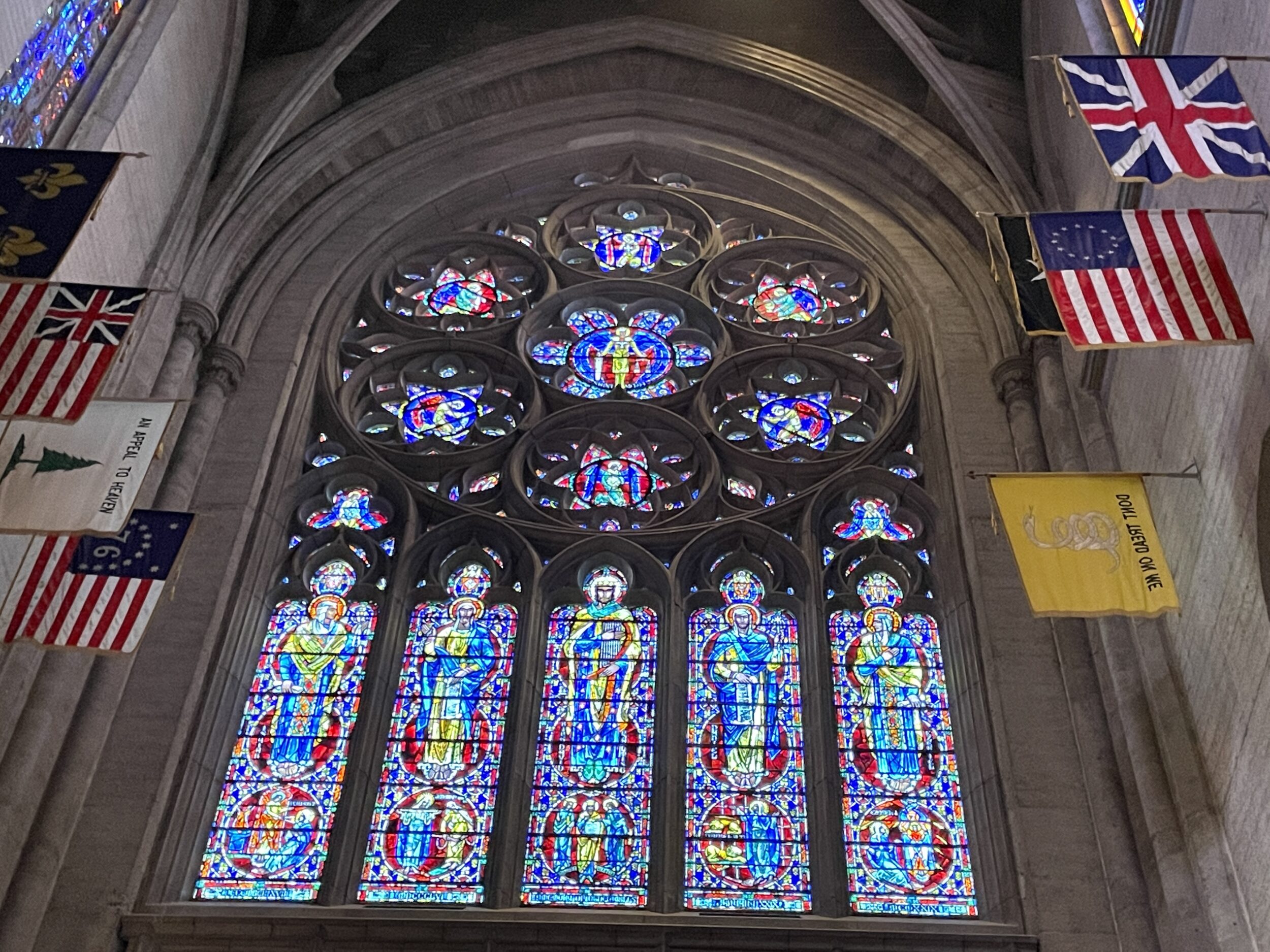
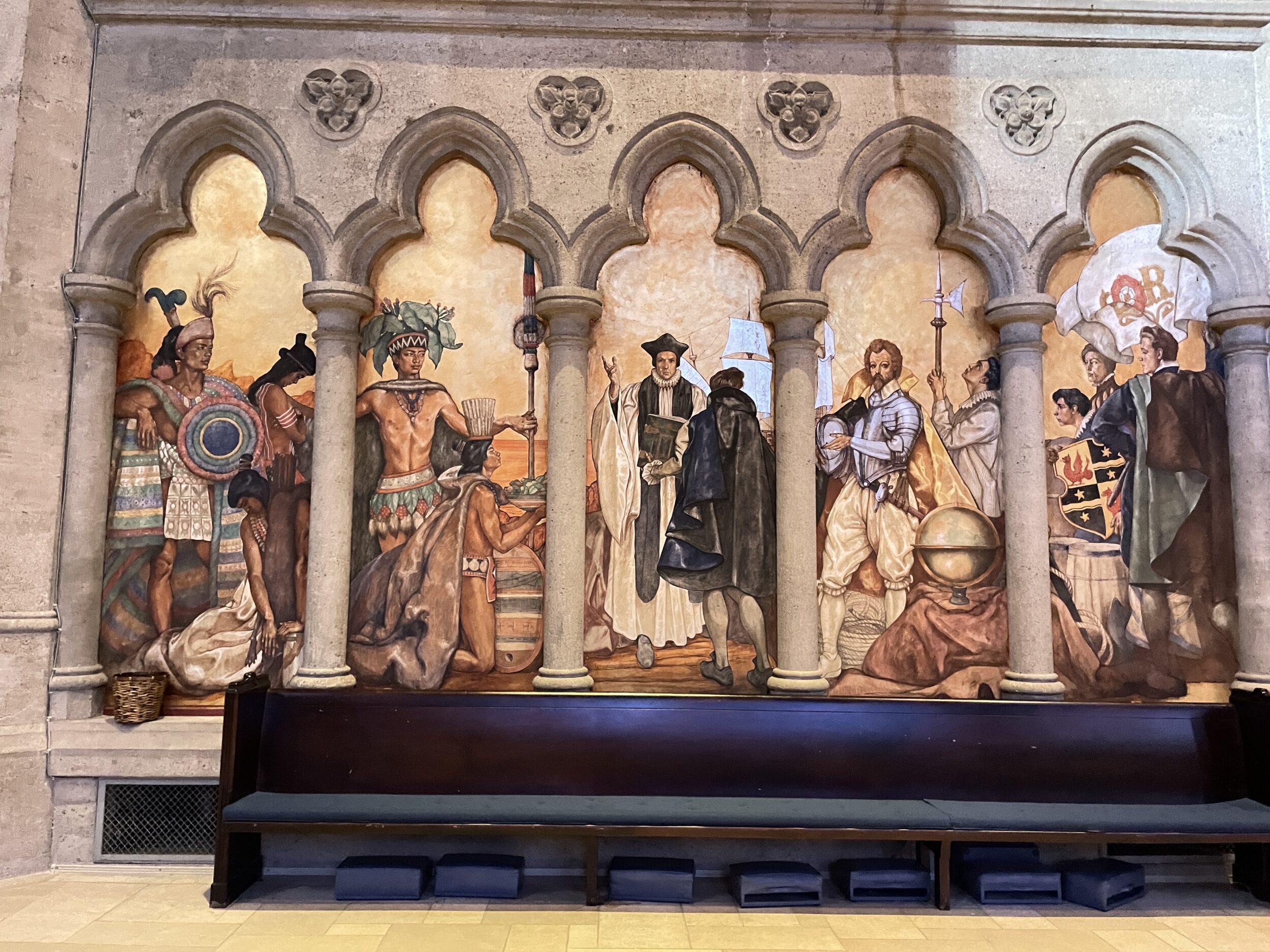
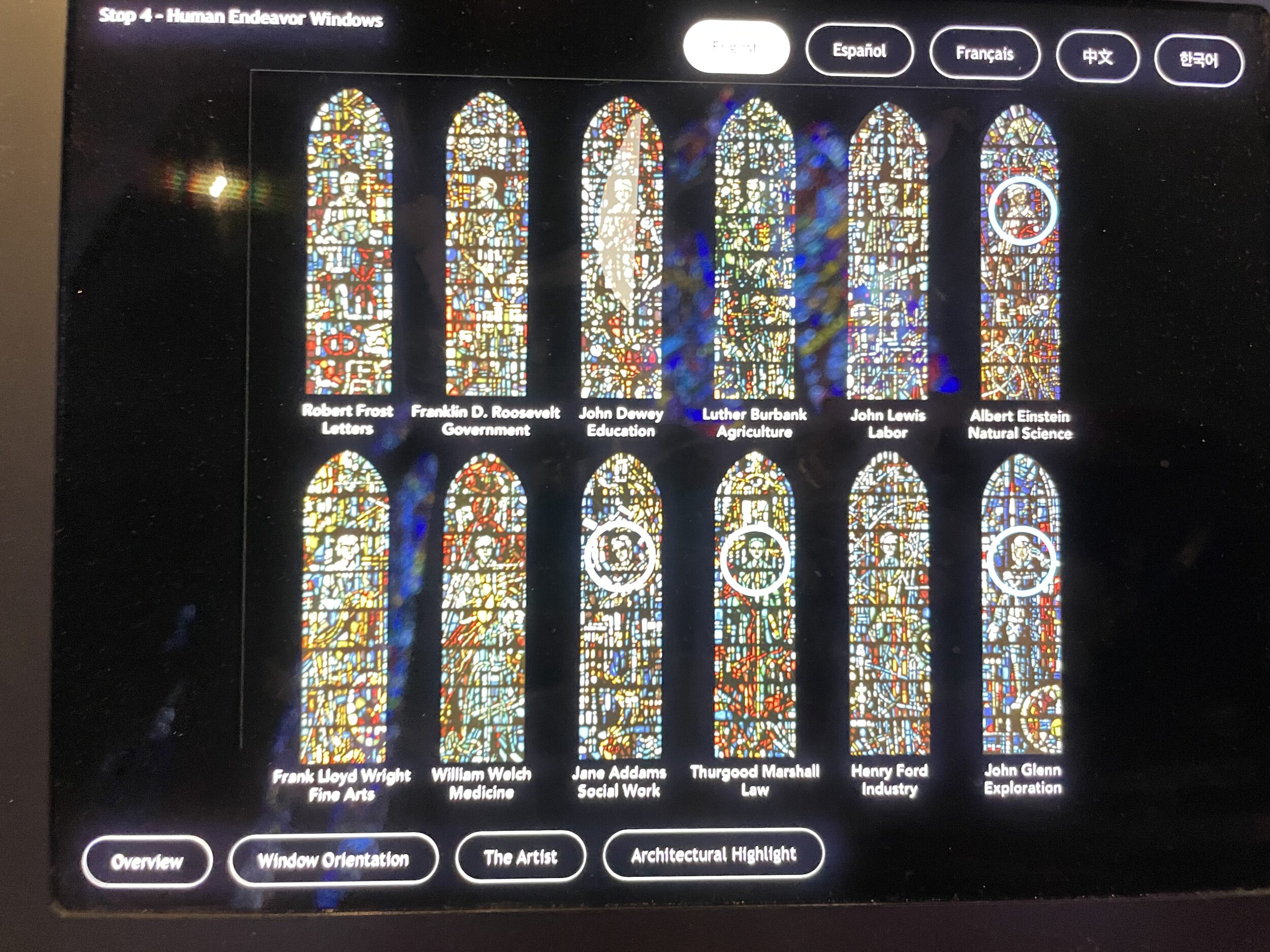
The stained glass windows are magnificent, with contrasting colors and fairly modern designs. One of the windows pays tribute to Einstein (you can see E=mc² from below). They did everything to have a true Gothic cathedral, French-style, on American soil. The designs on the walls are also quite lovely. Admission costs $12, which is too much, but I’m glad I visited.
The Freemasons’ lodge is right across from the cathedral. I recognize it immediately because their logo is huge. Freemasons next to a cathedral, how logical! I’ll also see one, very well located, in Monterey a few days later.
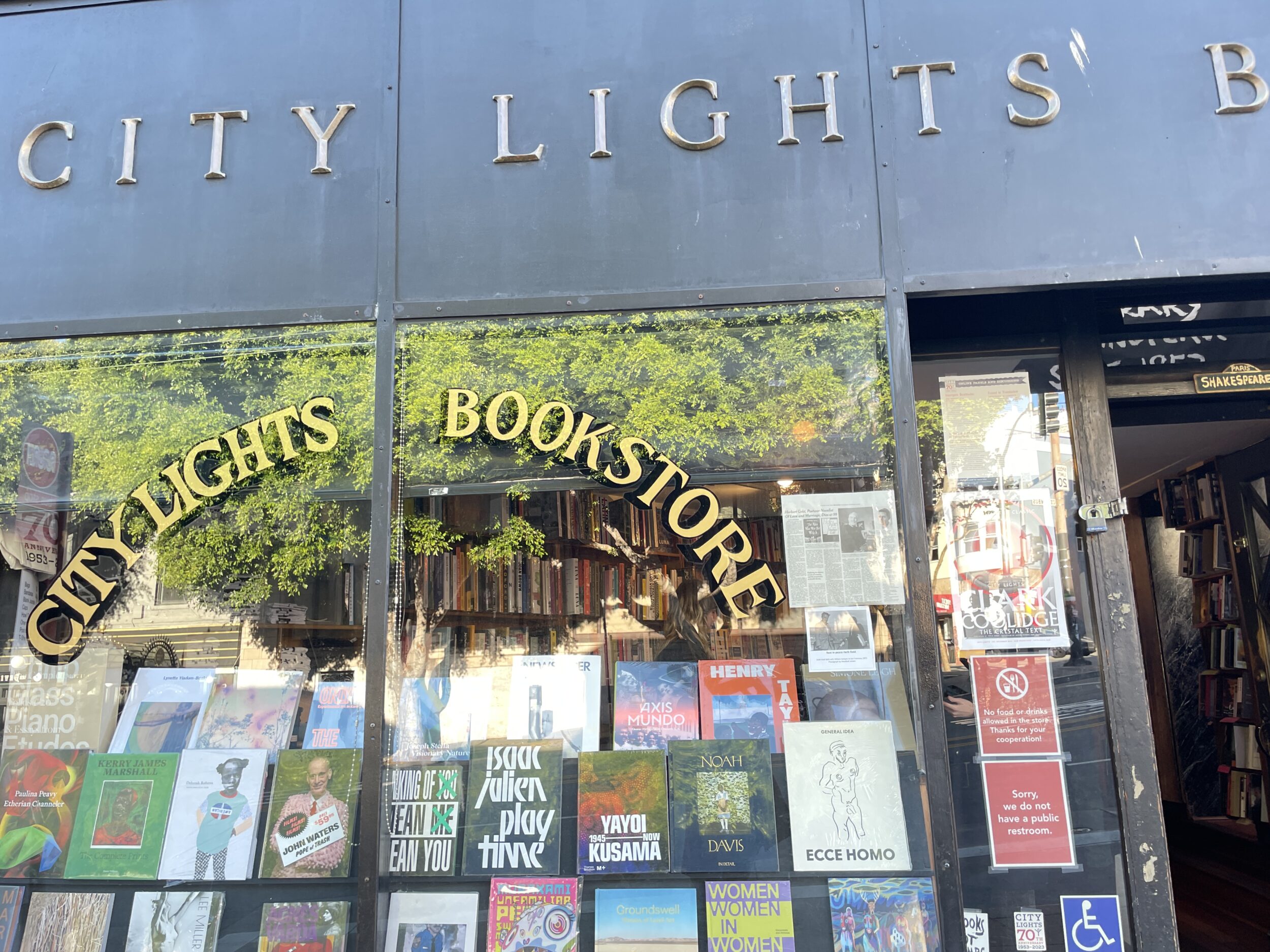
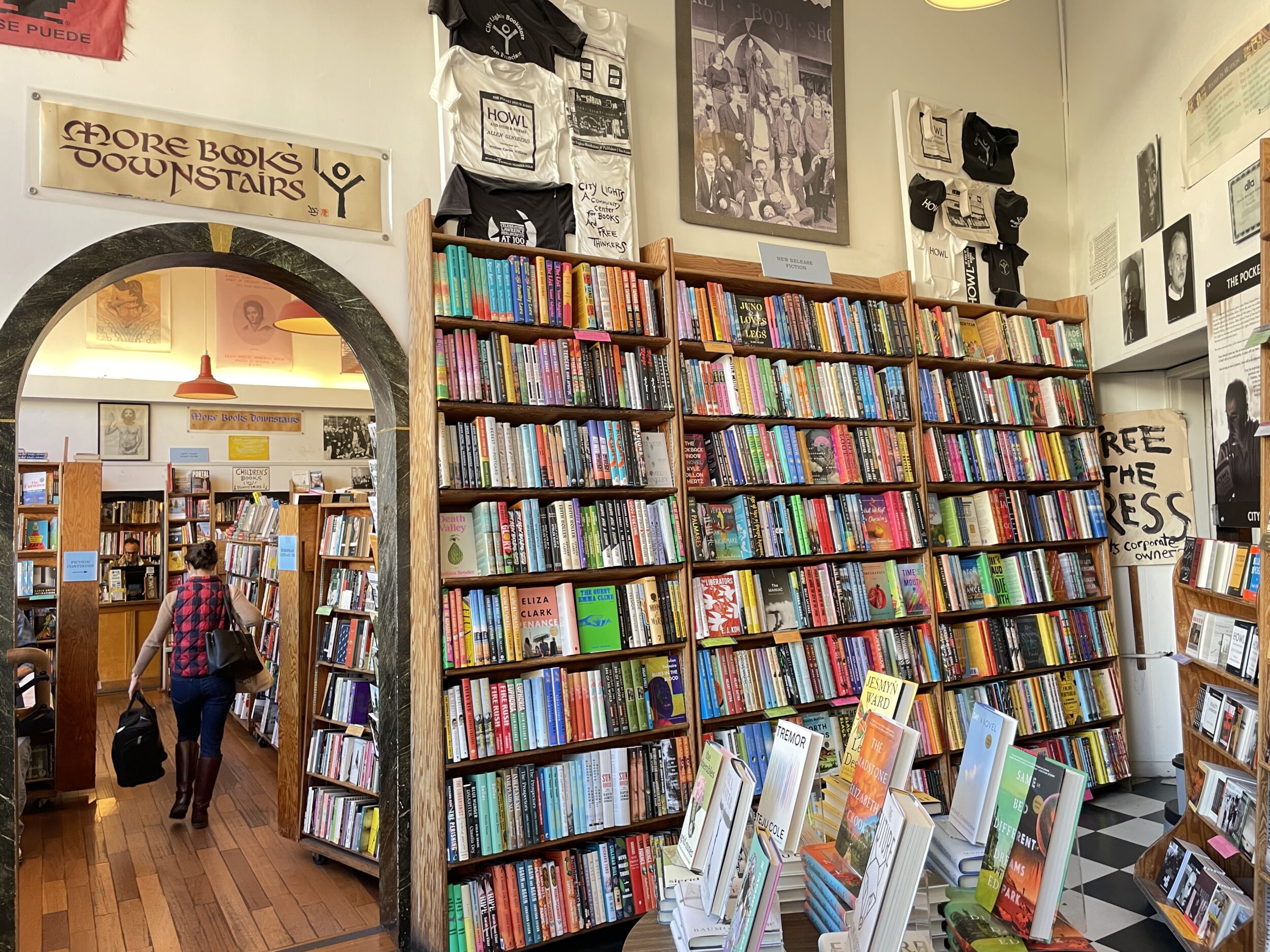
We head to the bookstore City Lights, which only sells new books. It was the first bookstore to sell only paperbacks. City Lights is also a publisher. It was a favorite spot for beatniks, and there’s a floor dedicated to them. The revolutionary, free-speech, anti-conformist vibe is clearly visible here. For example, amid conflict, the display window shows pro-Palestine books next to pro-Israel ones. The “banned books” corner is the first thing you see. Not having much time, I couldn’t dig around, but I really like this side of the city.
In the distance, we see skyscrapers; there’s something reassuring about feeling like you’re in the US, not Europe. The other side of San Francisco feels too European; the street where we ate ramen feels too Montreal; San Francisco knows perfectly how to mix things up.
By car, again
We take the car to reach LombardStreet, where a section of the street, all flowery, is shaped like a serpent. You can drive down the hill. It’s fun, but it’s prettier as a pedestrian than in a car.
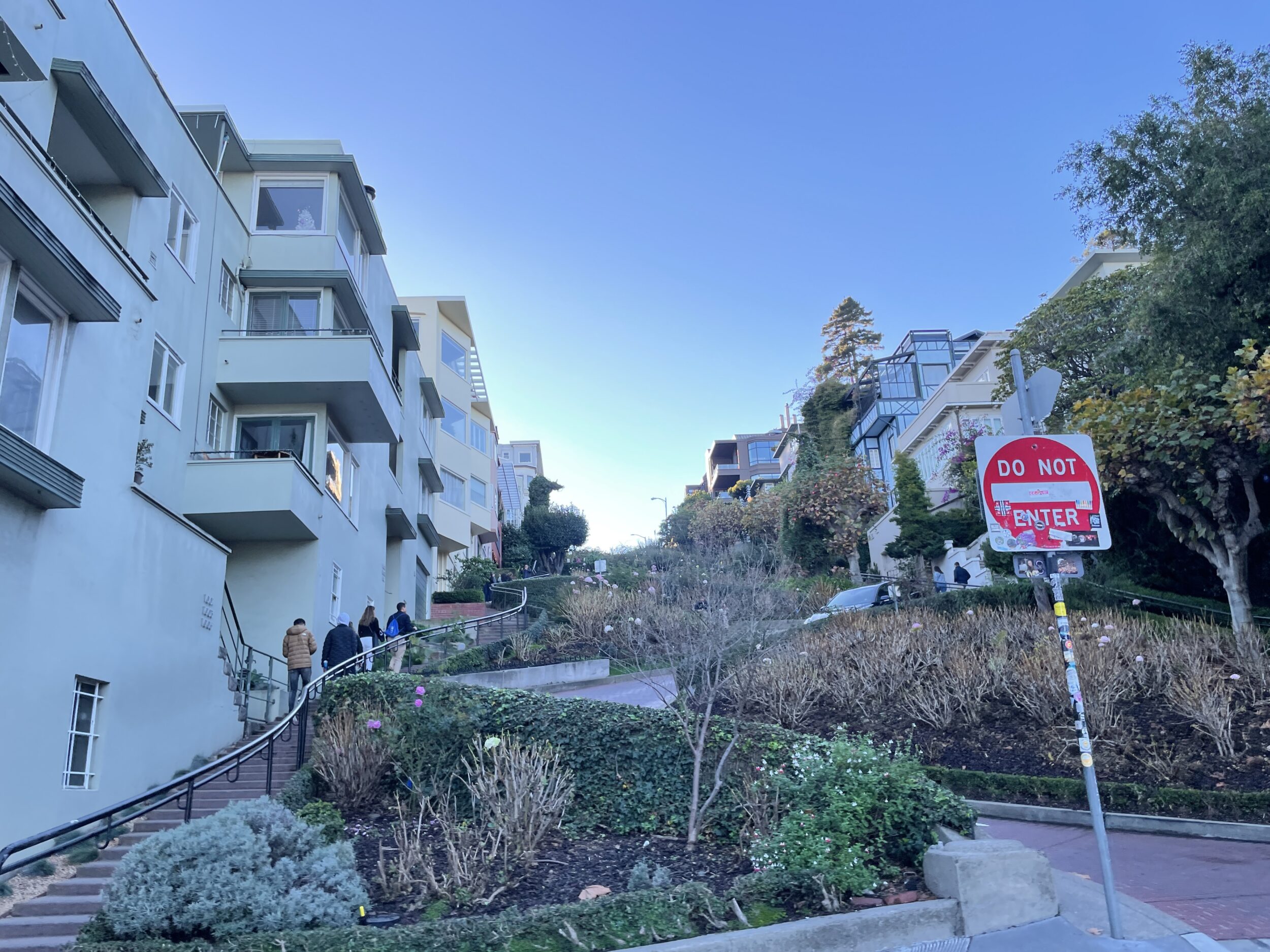
JB has to be very careful when driving up the hills because there are plenty of “stop” signs and you can’t see anything at all since the road is too steep and a car can appear at any moment. He’s glad to have an automatic car because starting on a hill in SF with a manual transmission could be tricky.
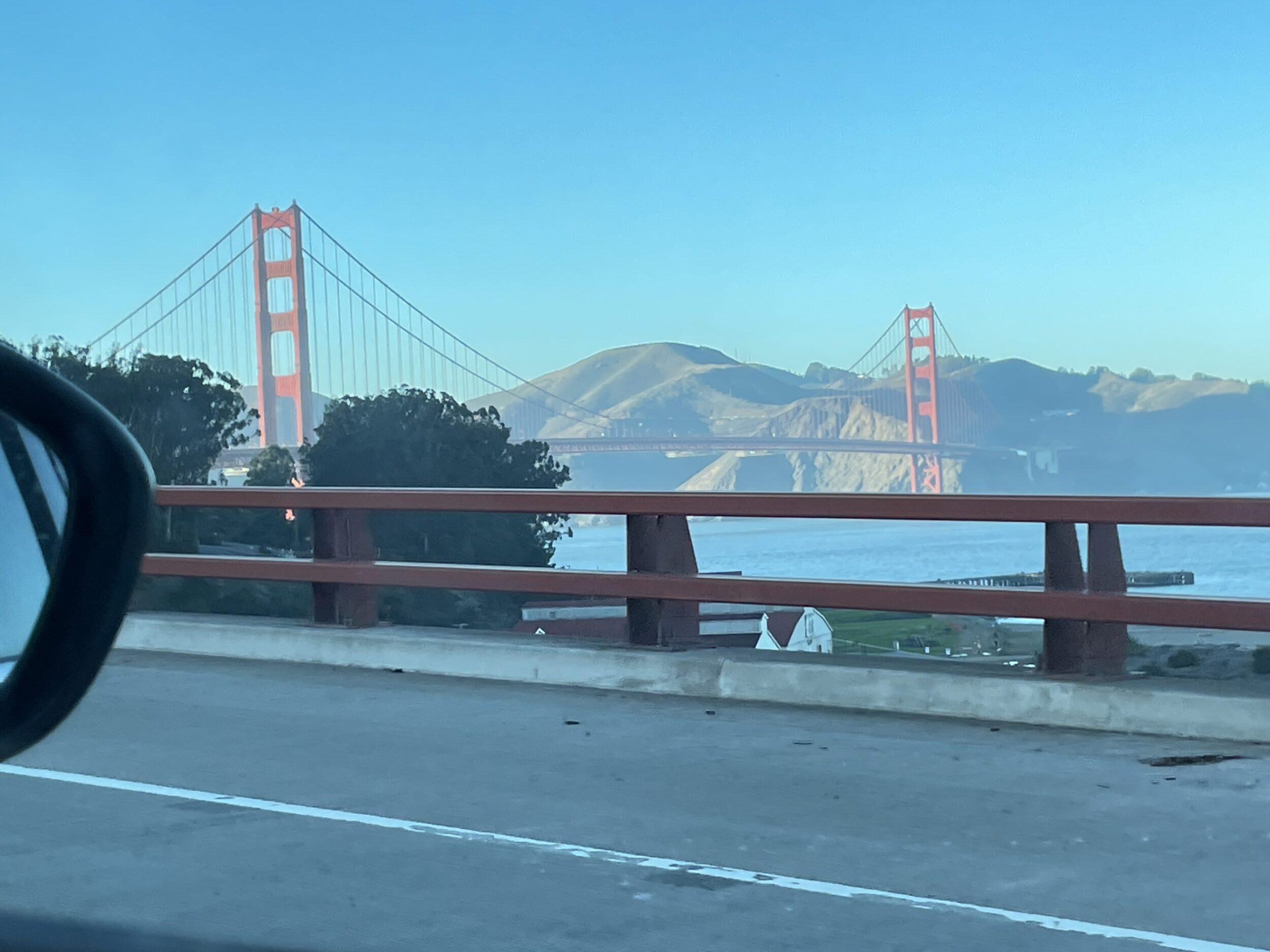
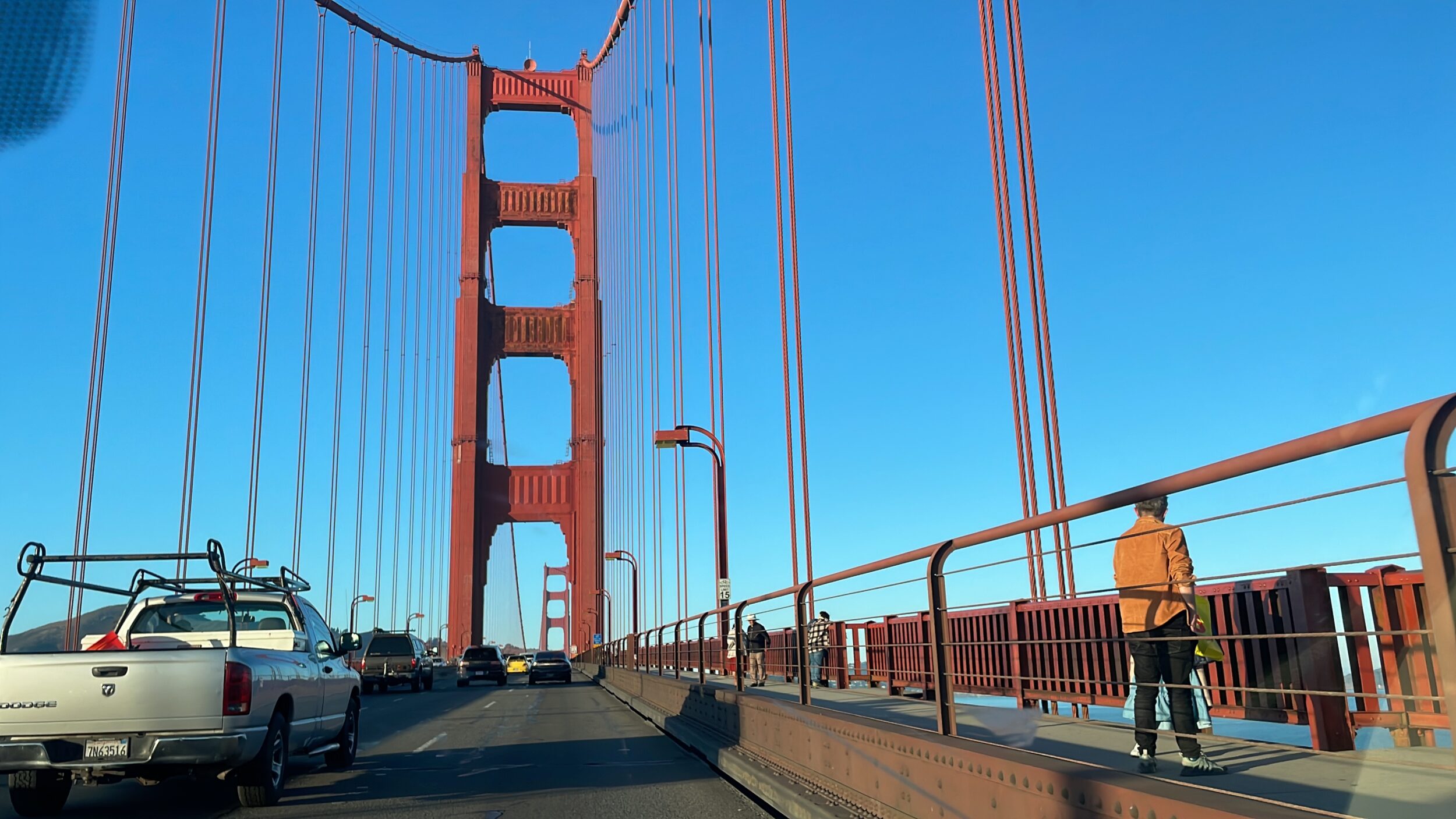
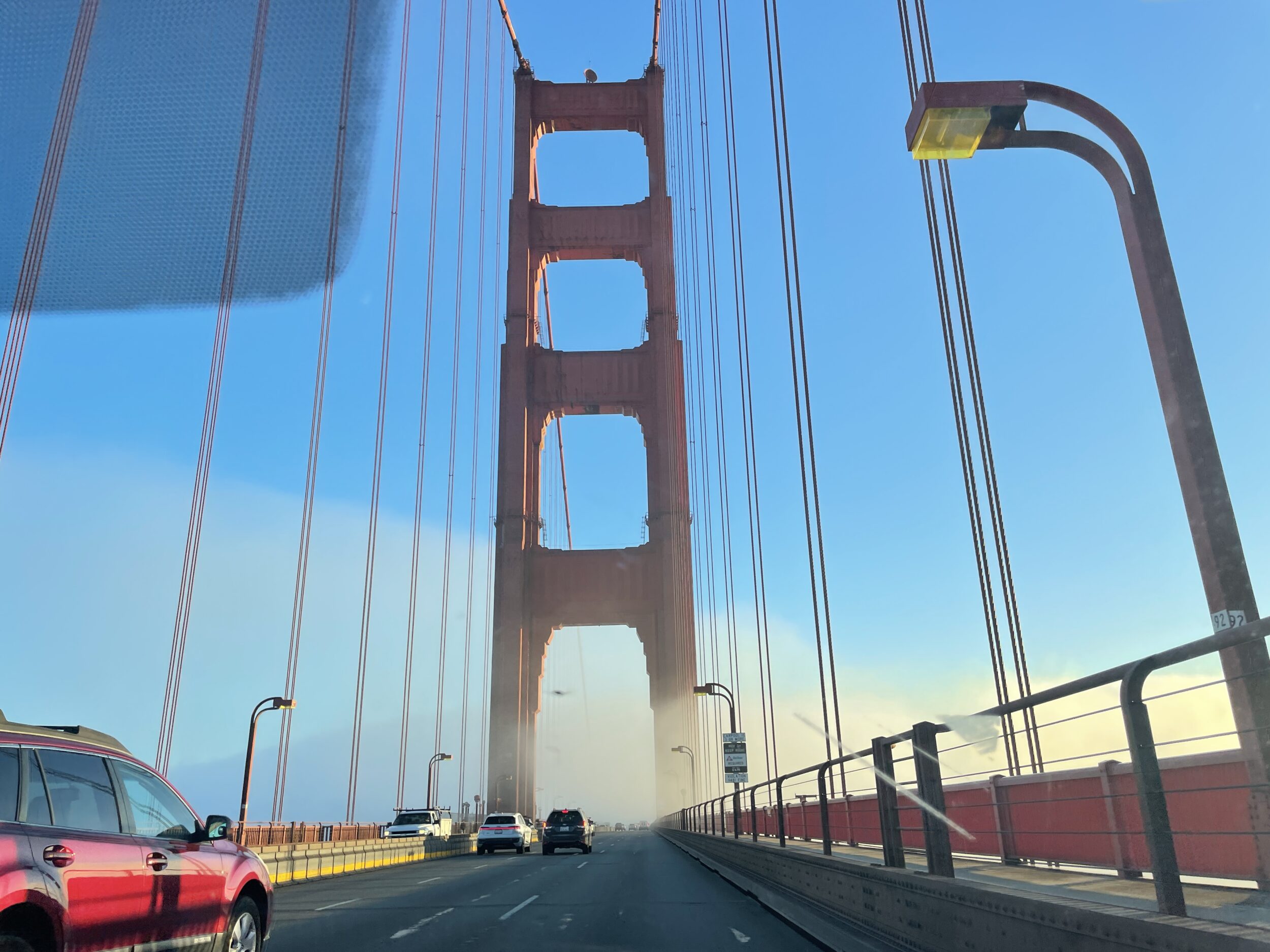
We then decide to cross the Golden GateBridge. You have to pay the toll, but JB can’t manage it, neither with his FasTrak account nor by scanning the QR code given at the Visitor Center. Well, we’ll see how our rental agency will charge us for the crossing. (EDIT: we did get charged in the end; they must settle accounts at the end of the week. We’ll write an article to explain this; type “fastrak” in the search field to find it). In any case, the fog is so unpredictable in SF. On the way back, half the bridge is already in the fog!
Day 20:
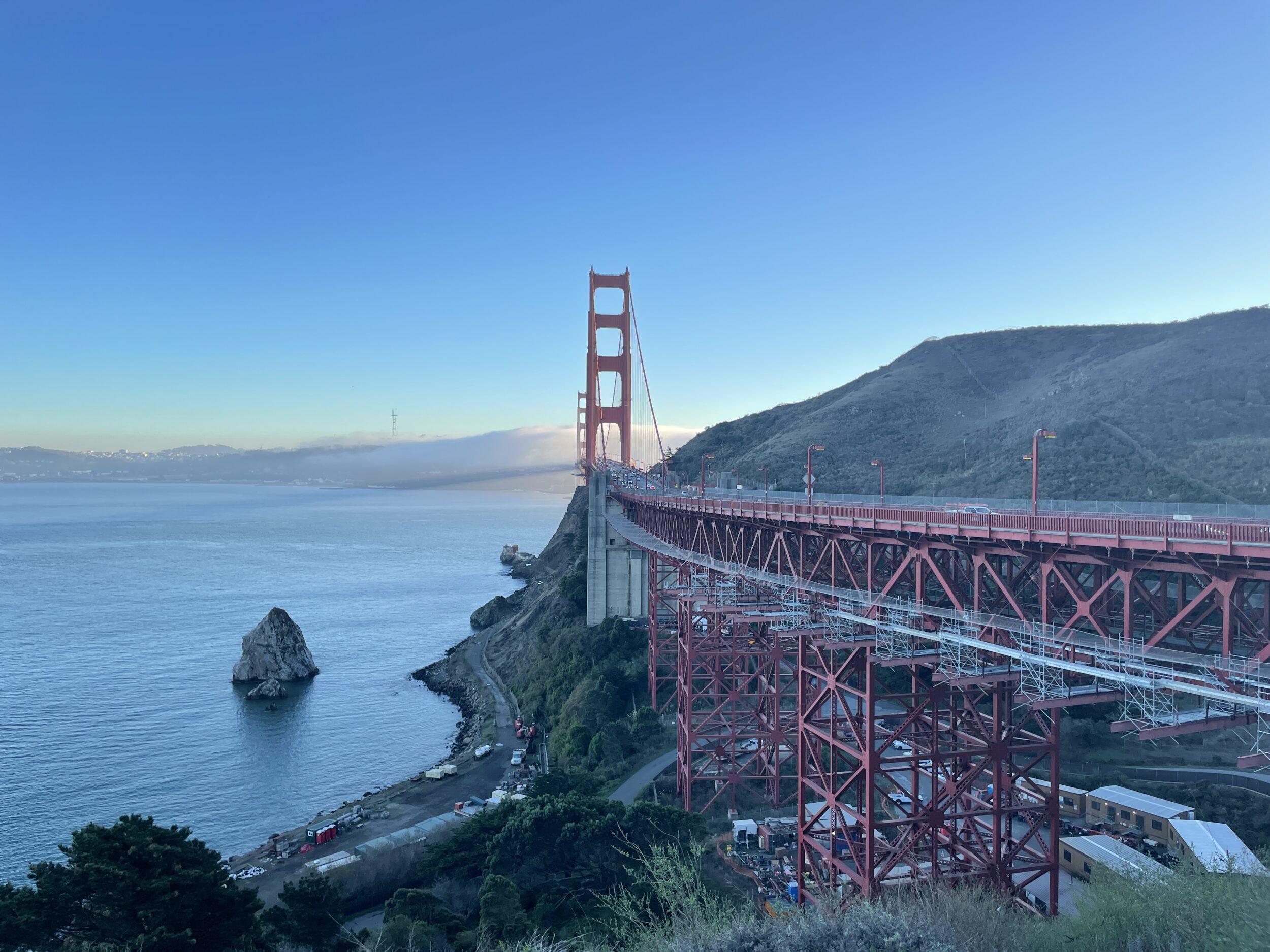
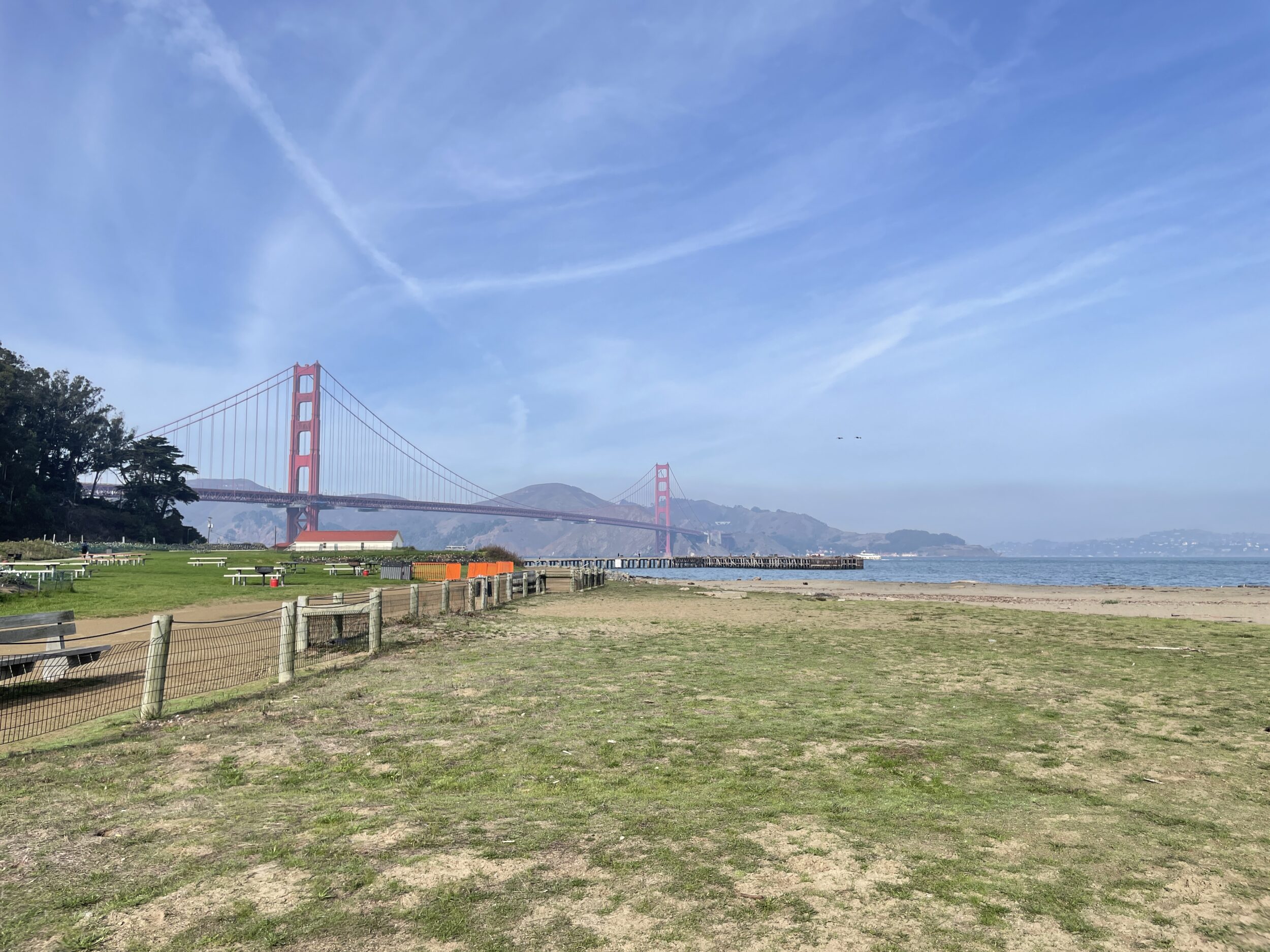
We have to leave SF today. We want to see the bridge one last time, but from a lower point. The weather is splendid, and luckily there’s not too much fog.
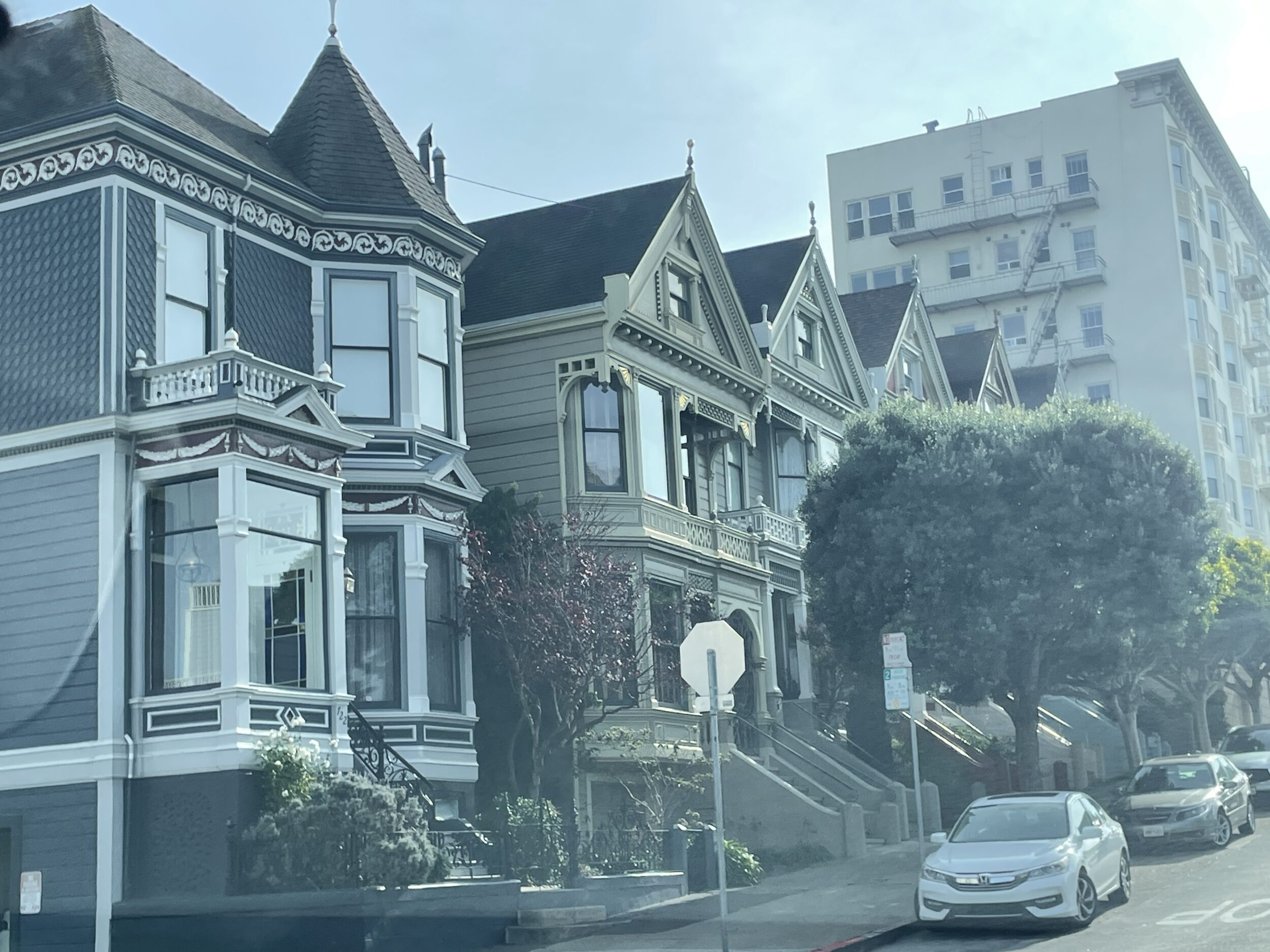
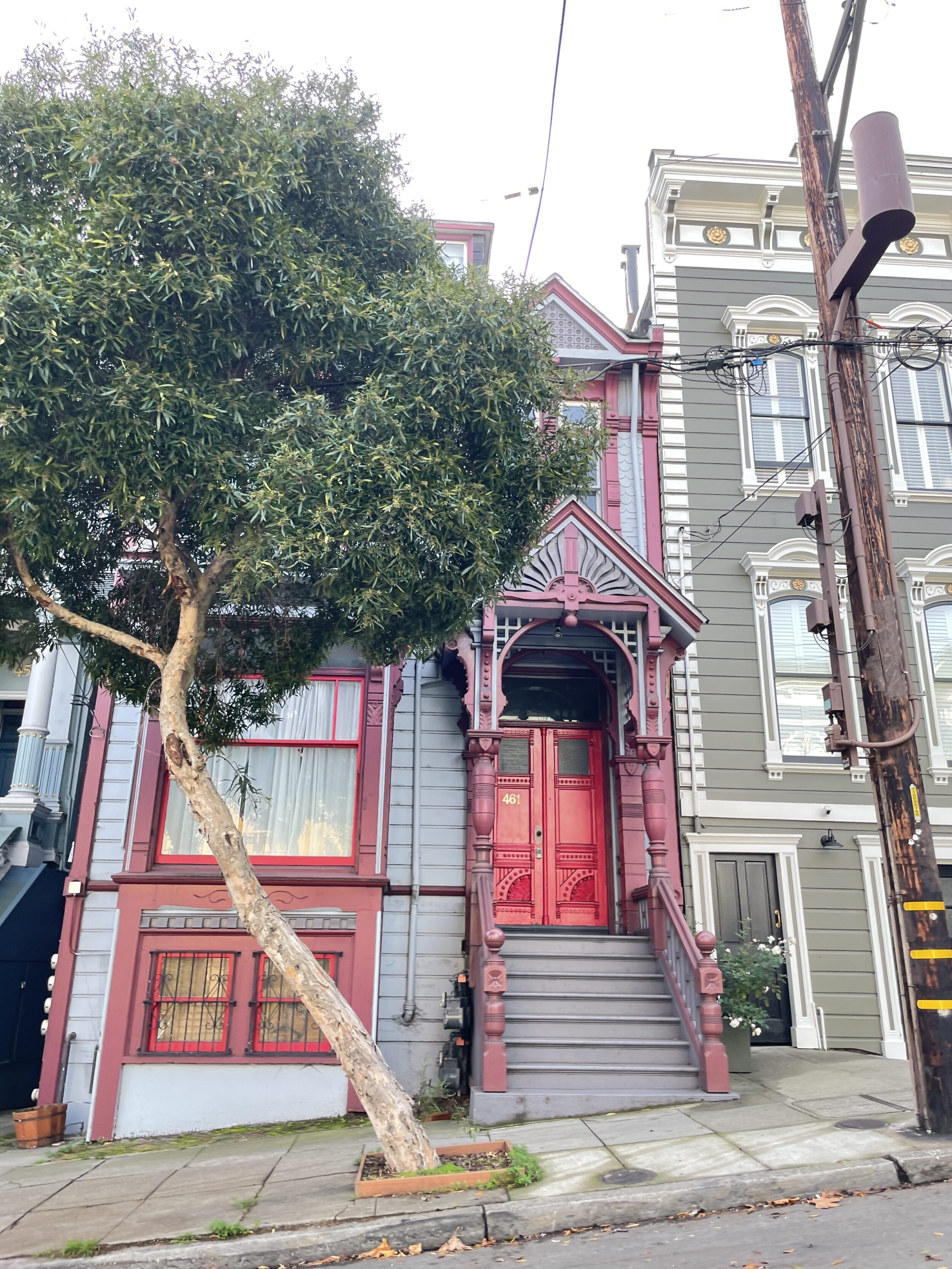
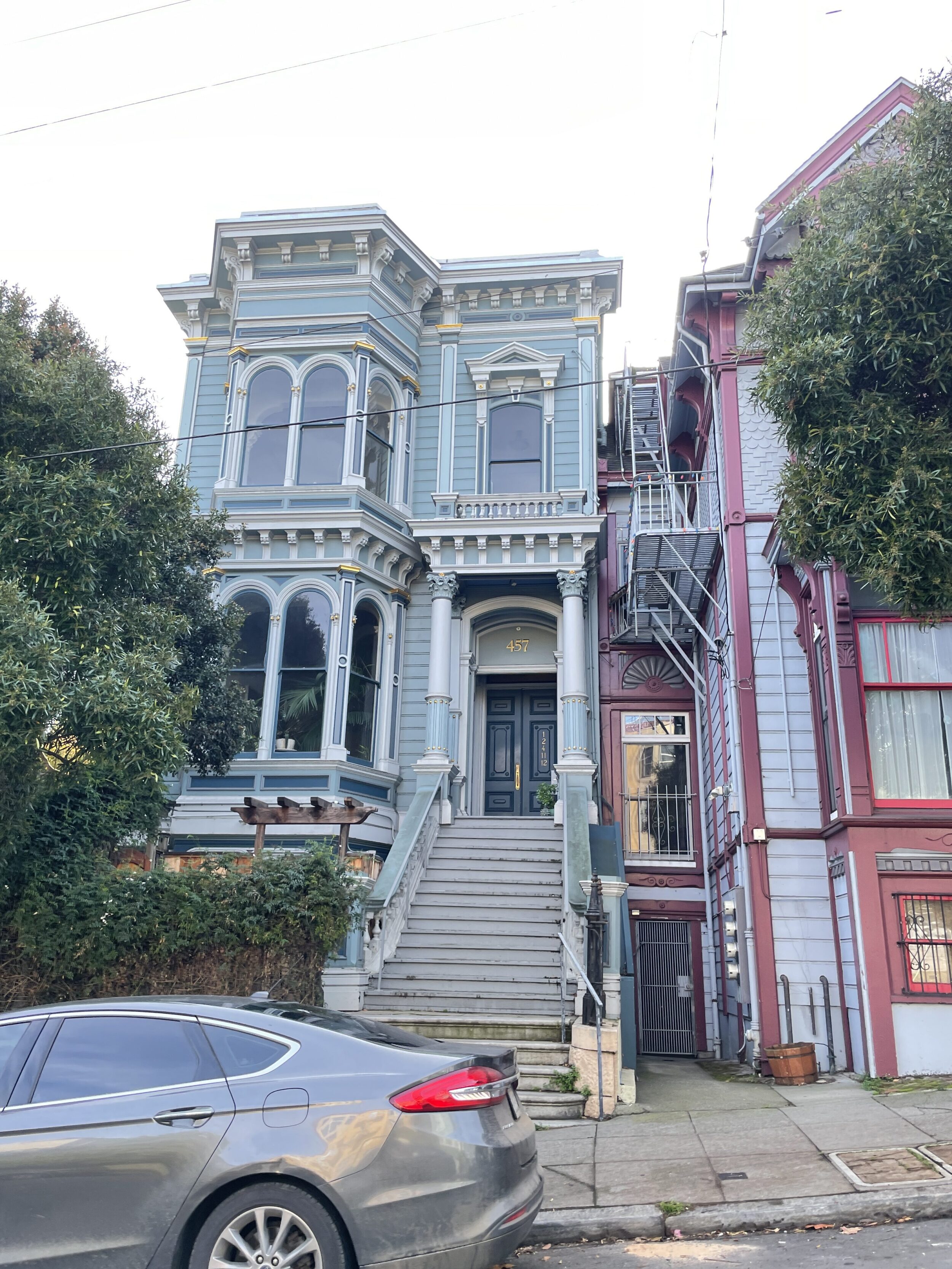
We pass by the famous Painted Ladies houses, which apparently appear in many movies. I don’t remember them specifically, but I really liked them, and there are plenty of other Victorian houses on Oak Street. They look like dollhouses. Clearly, if I were to build one, I’d draw inspiration from one of these beautiful houses. Apparently, Julia Roberts supposedly owns a Victorian house in SF itself.
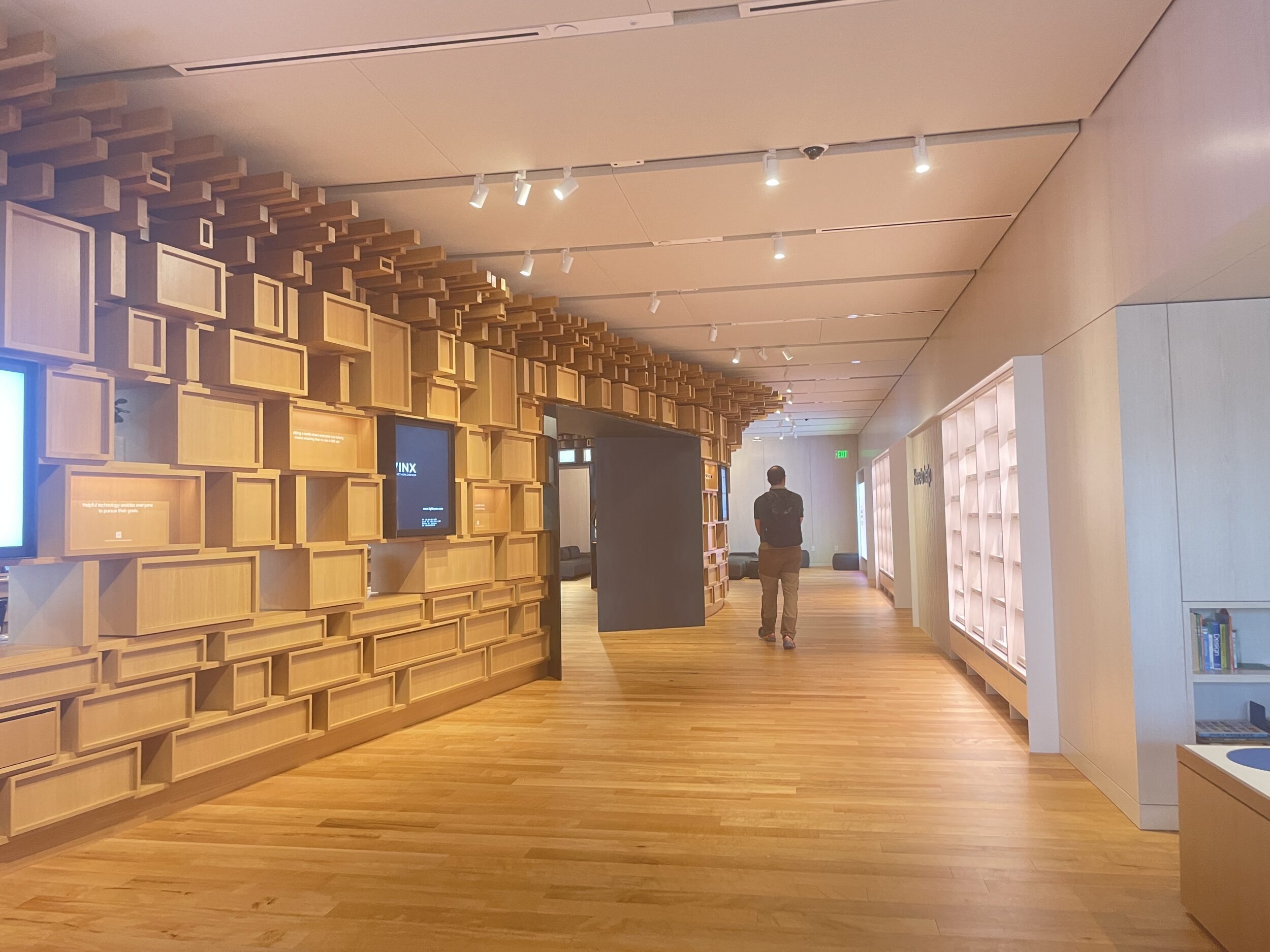
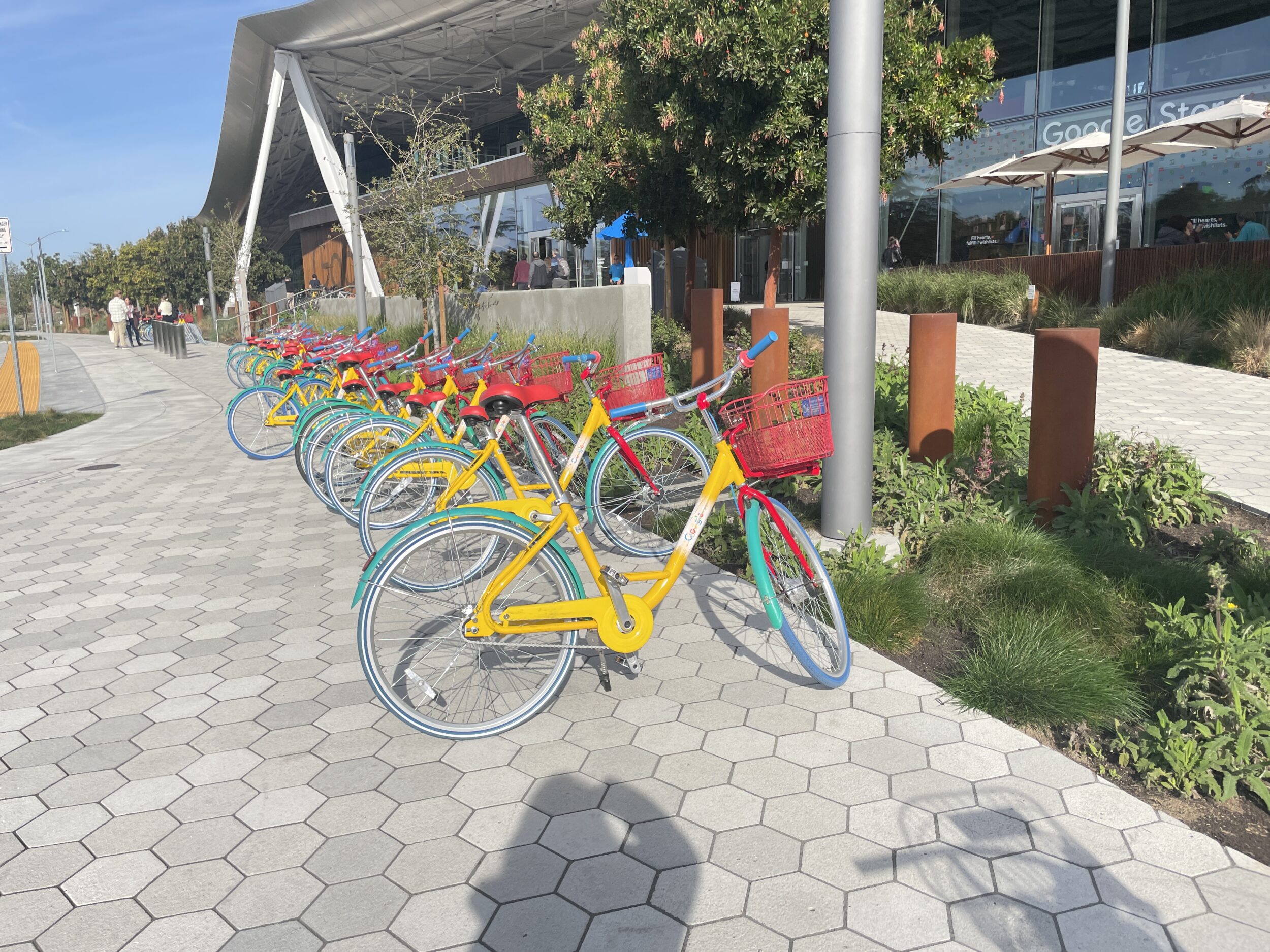
We stop by Google. It takes us a long time to find the “Visitor Parking”. The Google Store provided for tourists is nice but nothing special. The souvenirs with the Google logo are really disappointing and not very creative. Compared to the Apple Park Visitor Center, you can clearly see they don’t put much heart into welcoming tourists. There’s a café next door, where there are more Google employees than tourists, and a tiny coworking space. There are sculptures that don’t make you want to go to the park across the street. We must have had too high expectations because at Apple, it was perfection, while at Google, it was “we don’t know what to do with this extra space”. They might as well do nothing, like Facebook/Meta or Twitter/X or Tesla. Well, their store teaches us that they have AirPods equivalents, Wi-Fi repeaters, surveillance cameras, smartwatches, and connected doorbells. Not being on Android, we discover all this today.
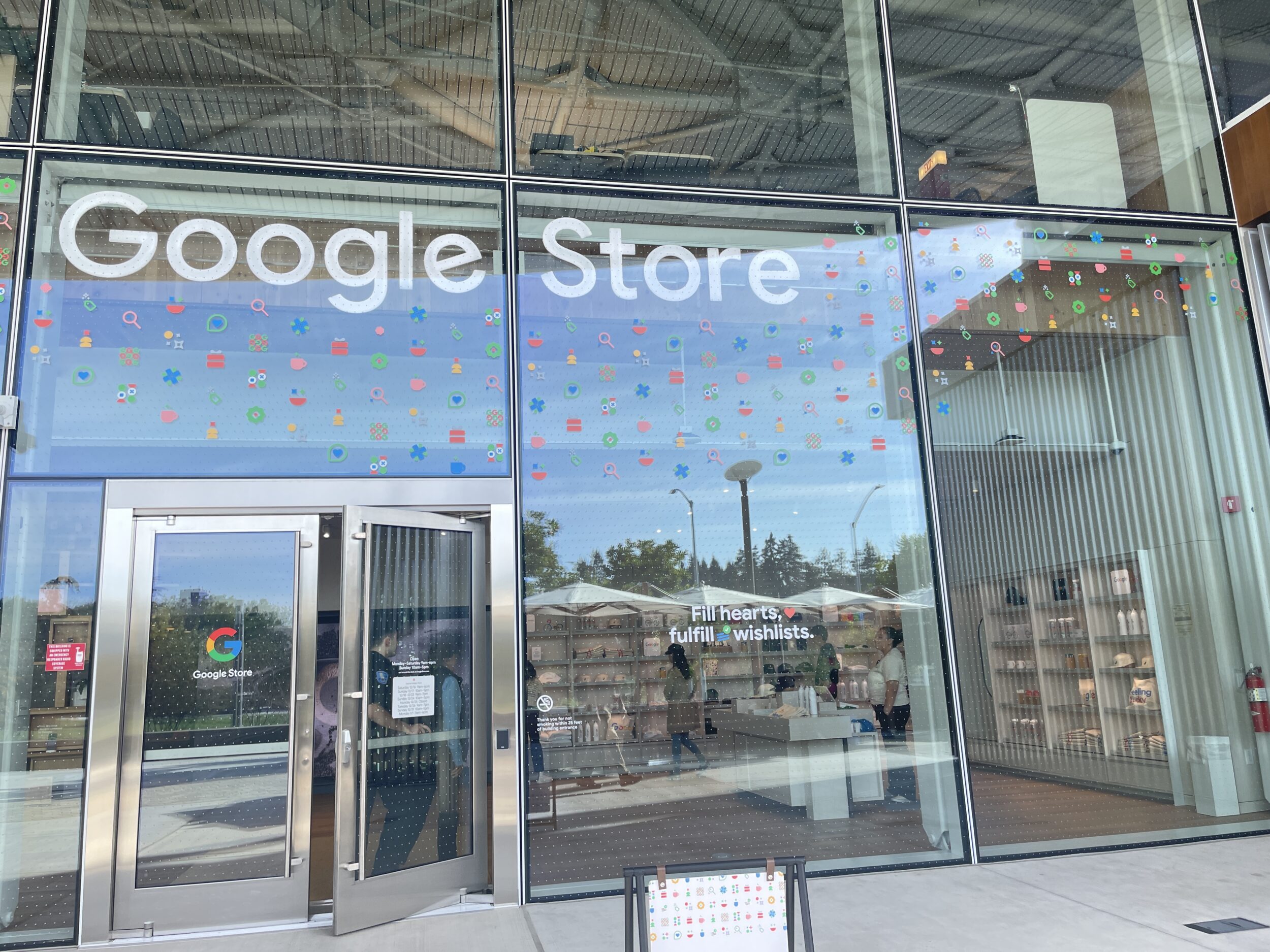
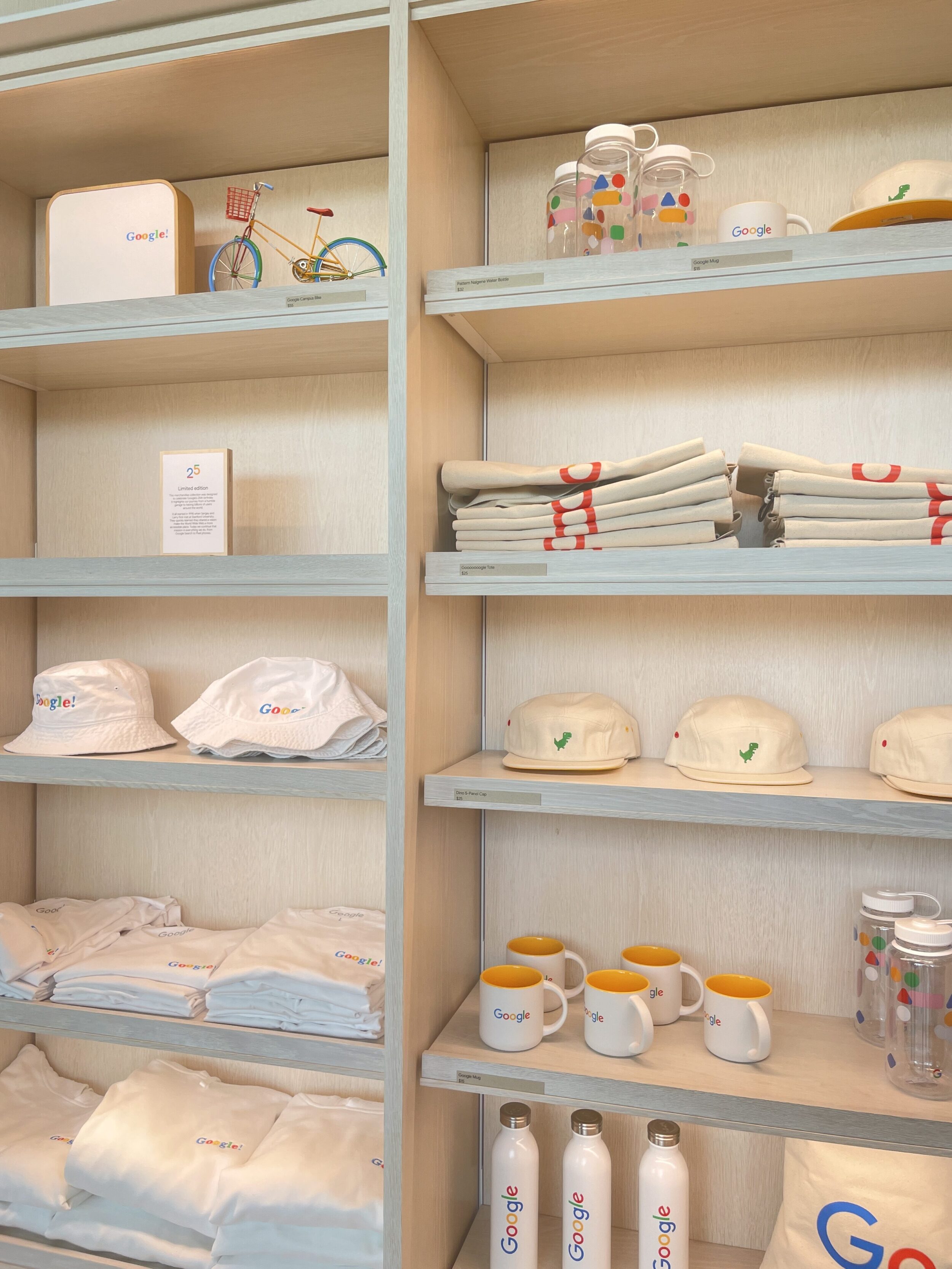
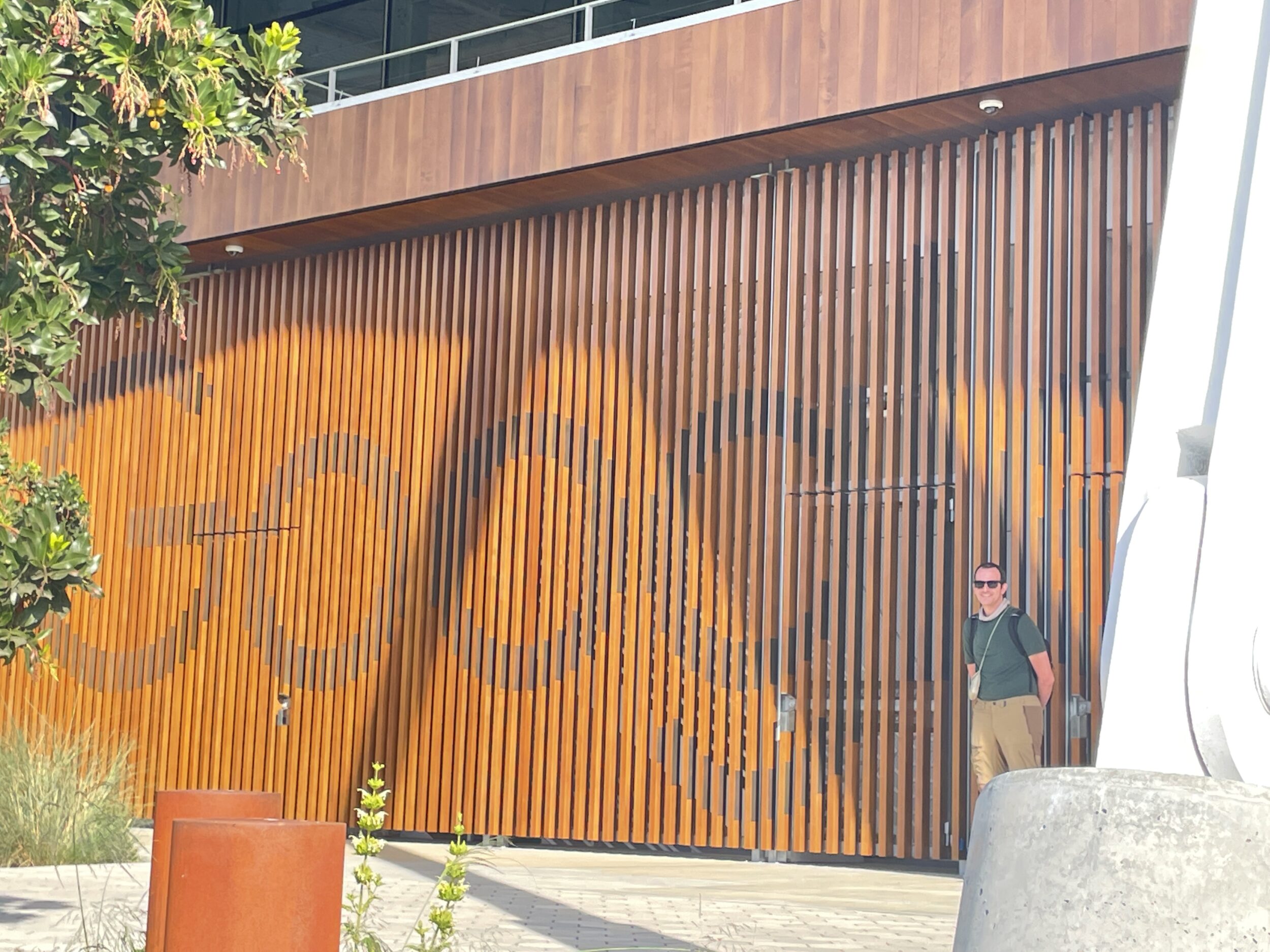
The bikes in Google colors are only available to Google employees.
We have lunch right next to the offices of LinkedIn. It feels really weird to see logos and offices of services we use every day. I imagine it must be the same in Dublin.
I wanted to motivate myself to visit the huge campus of Stanford University (the self-guided tour is free, parking is paid, not very expensive but it’s a pain in the ass to pay with an international card) but I’m overcome with an incredible laziness and we drive non-stop to Monterey.
Part 2: Practical Tips
All our routes and points of interest are available on this Google Maps map. I’ve already explained how to use our custom maps here
- Alcatraz Cruises: $45.25/person
- Bus: $5/day
- Tram: $13/day
- Bus + tram: $18/day
- Grace Cathedral: $12

