

Page and Antelope Canyon – Road trip in the American West #4
We reluctantly leave the Grand Canyon, heading to Page. It’s in Page that we’ll be able to visit Antelope Canyon, run by the Navajo.
This article is part of our series of articles on the American West road trip. If you haven’t read the previous travel diaries, here they are: #1, #2, #3
Part 1: Travel Journal
Part 2: Practical Tips
Part 1: Travel Journal
Day 4 of the road trip
Route from Grand Canyon to Page
Right after leaving Grand Canyon National Park, we’re on Navajo land. I’ve seen maps where they mark “Navajo Nation,” which spans three states: Arizona, Utah, and New Mexico. There are huge private areas, and at first we see endless plains with “holes” like that in the middle, little canyons.
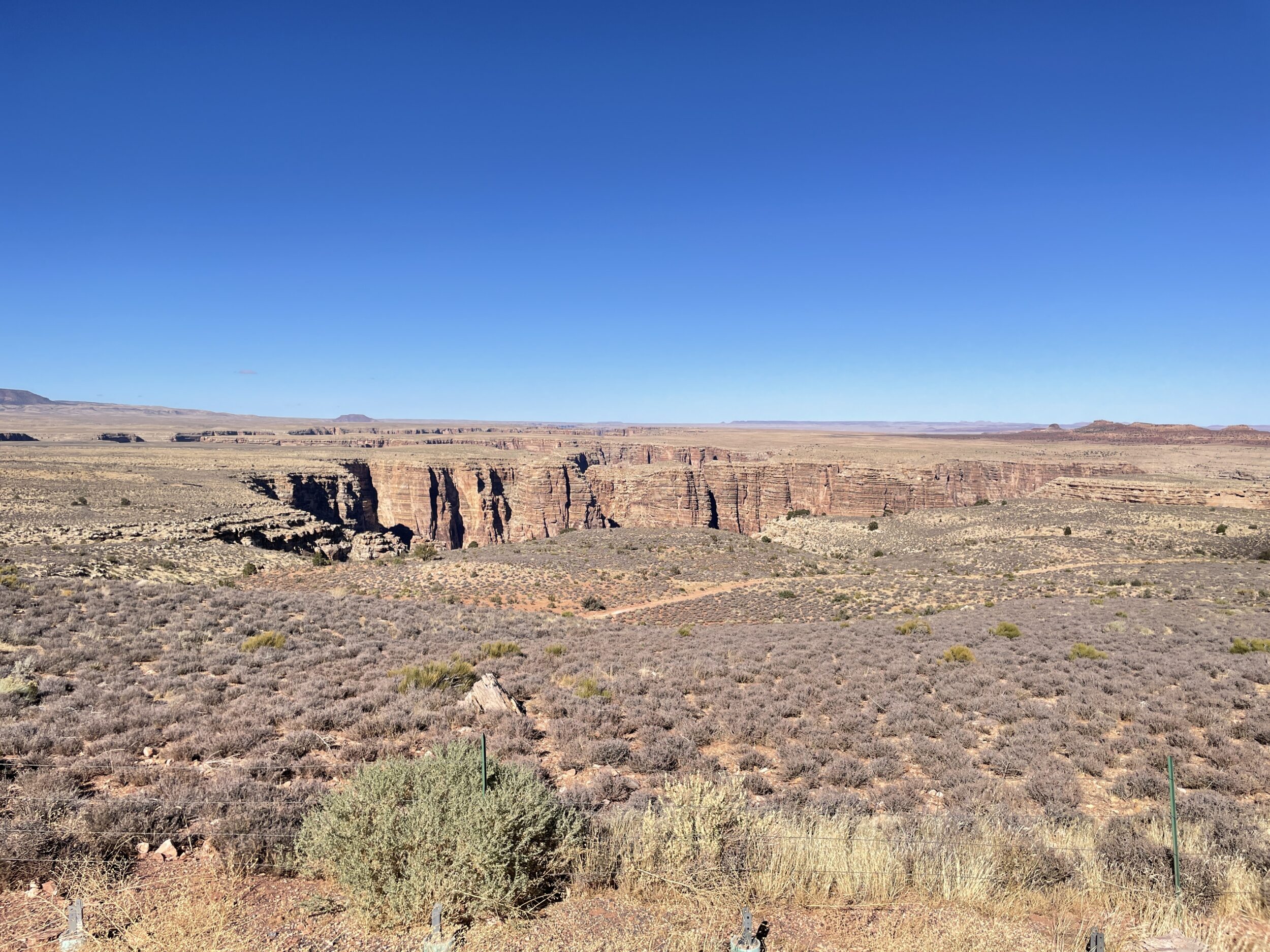
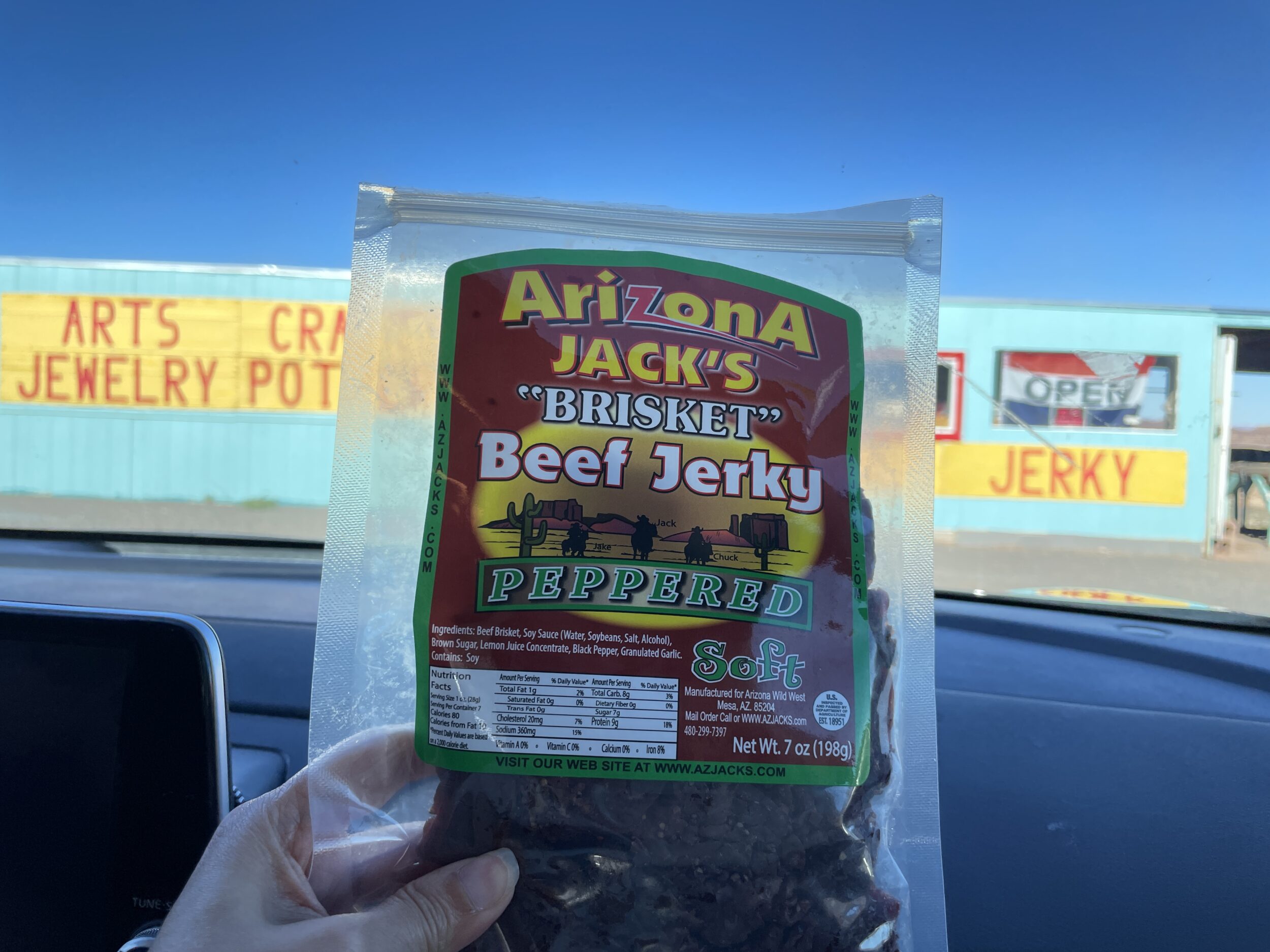
We stop at the first parking lot, and I’m happy to get not only a great photo but also some beef jerky. I said I had to try all the flavors. This time, it’s the “peppered beef jerky.” It’s really good too. For the record, I paid $15 for 200g; it would have been cheaper at the supermarket, but it’s better to support the locals. Tourism is very important to them. So if you want to buy souvenirs (dreamcatchers or bracelets), buy from different vendors to support the local economy as much as possible.
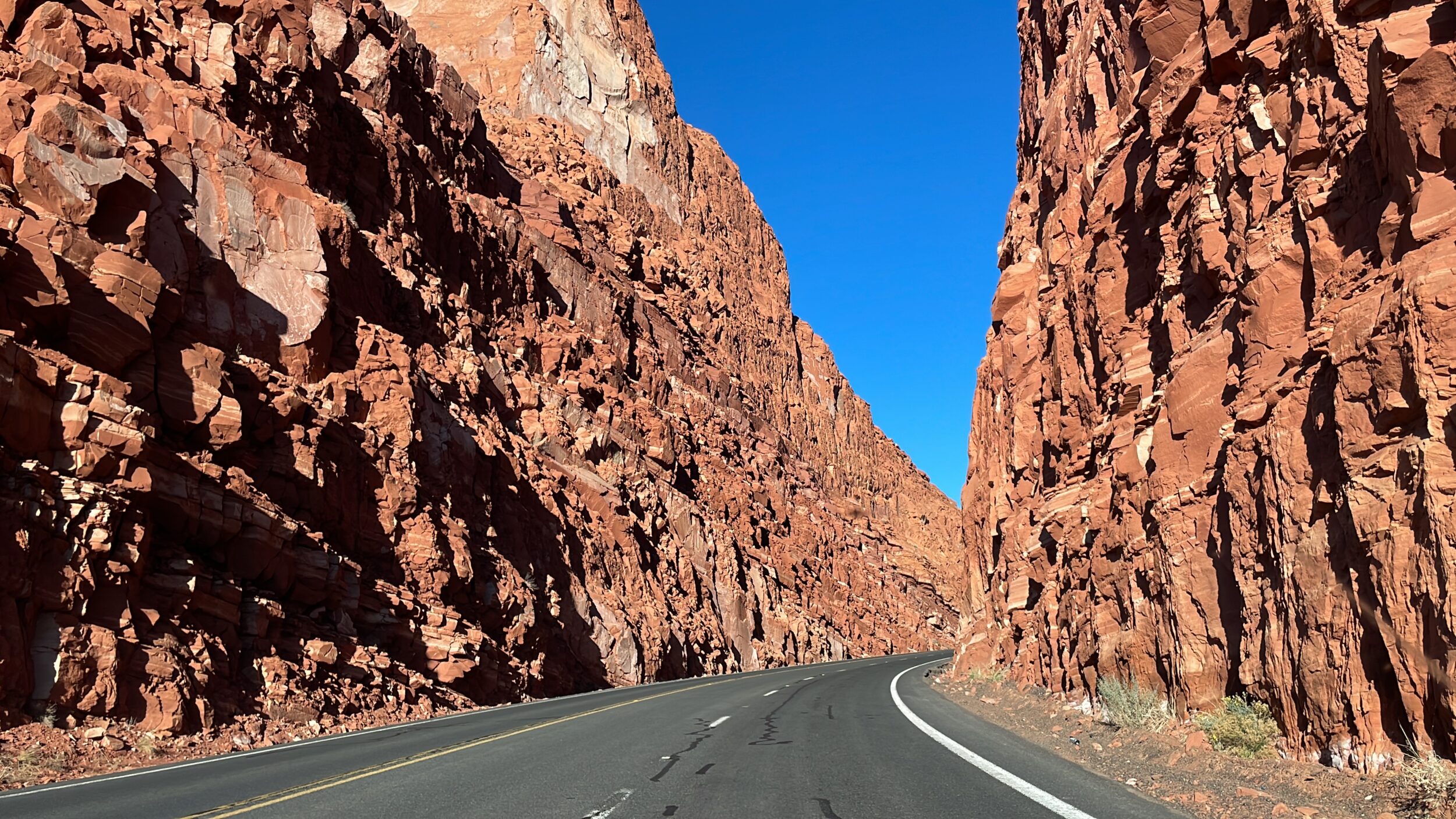
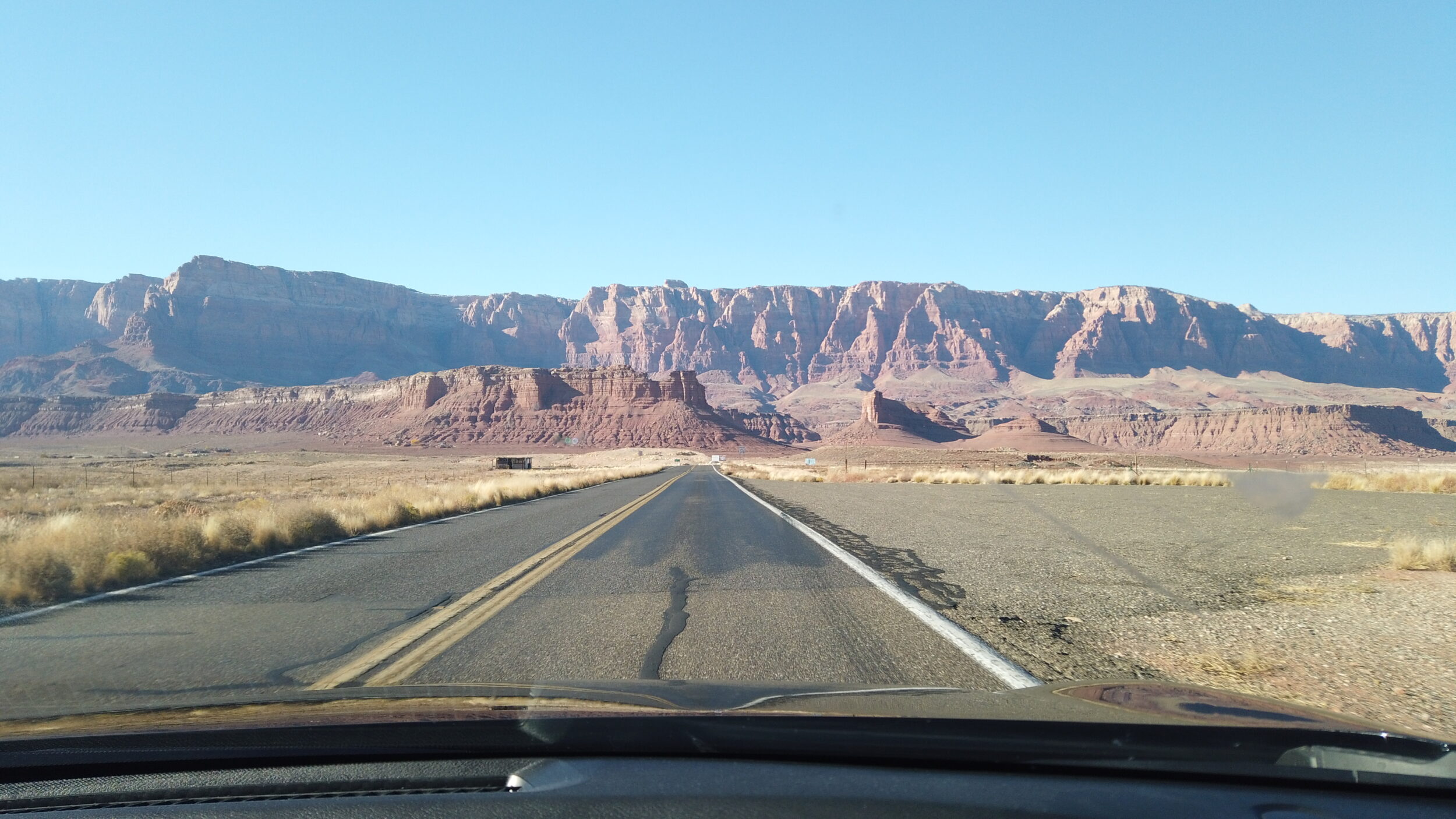
The road is pretty long (3.5 hours total) with pretty monotonous scenery, but JB handles it well (despite the lack of sunglasses which still haven’t arrived). We wonder how such a beautiful road can be completely free (we haven’t paid a single toll since the start of our road trip). JB learns to use cruise control and is thrilled because the road is almost perfectly straight.
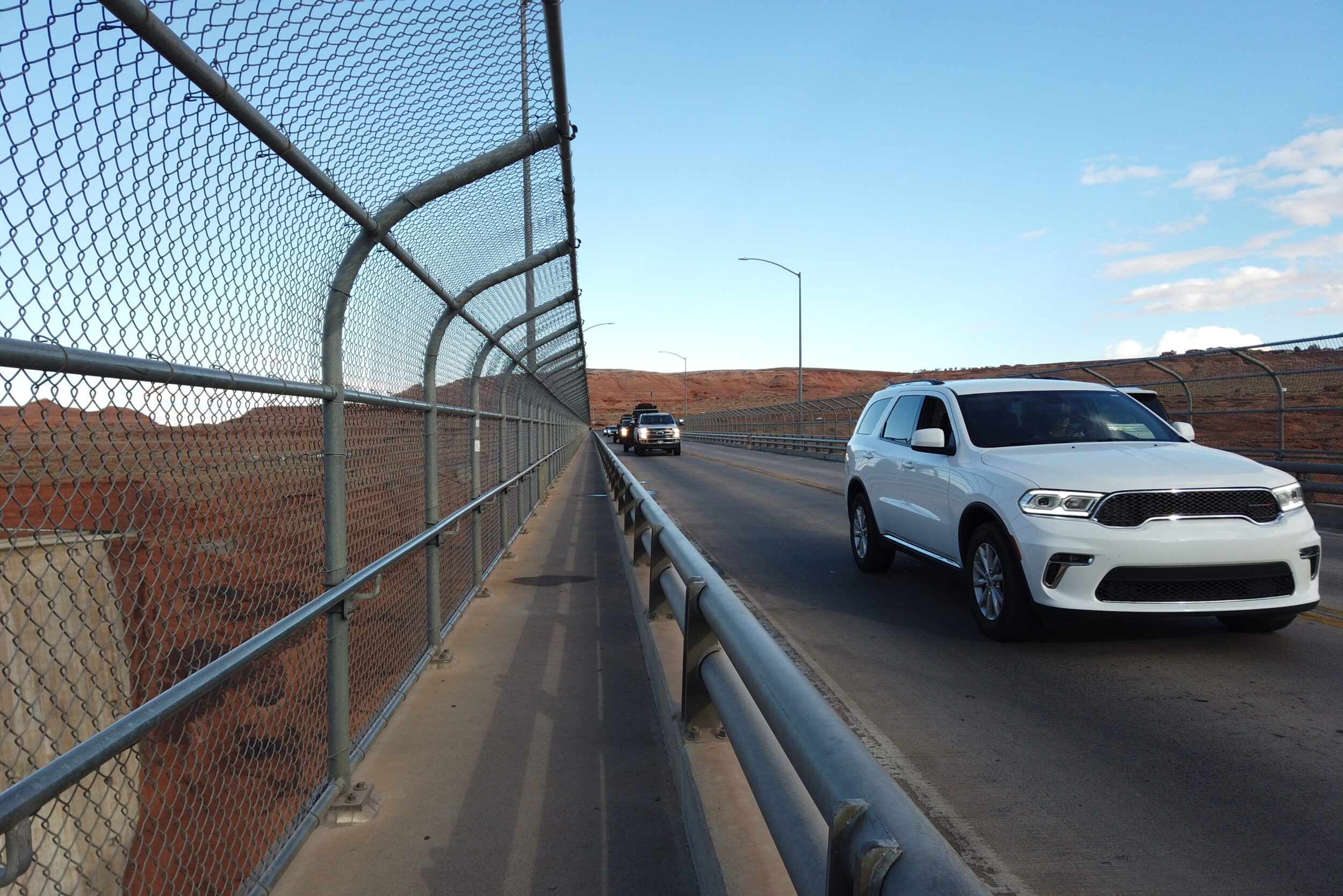
Instead of going straight to Page, we take a small detour (15 minutes) to see an old bridge that crosses the Colorado. The old bridge is no longer in use, but the new bridge next to it is an exact copy of the old one. You can walk on the old one, but not the new one.
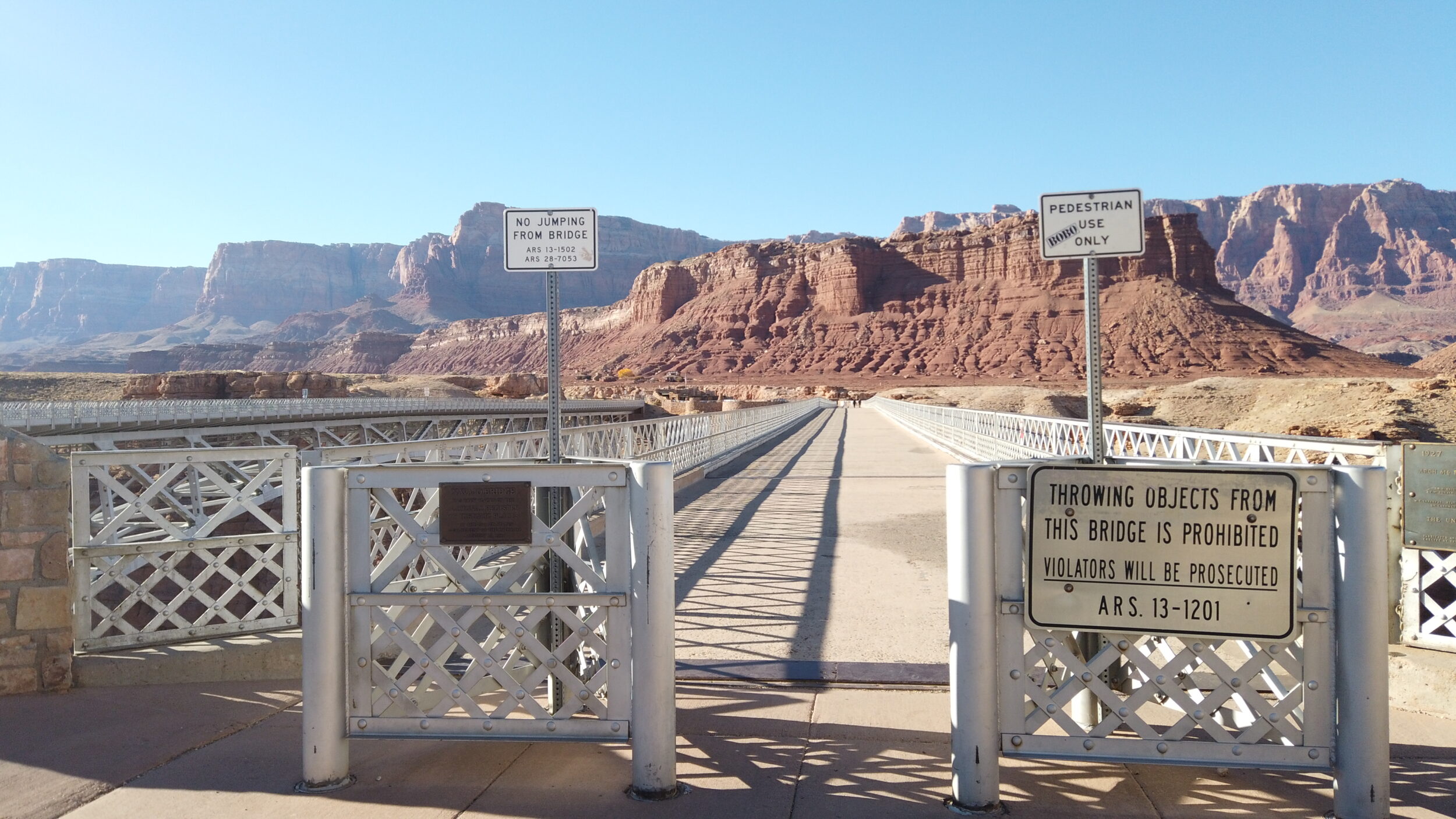
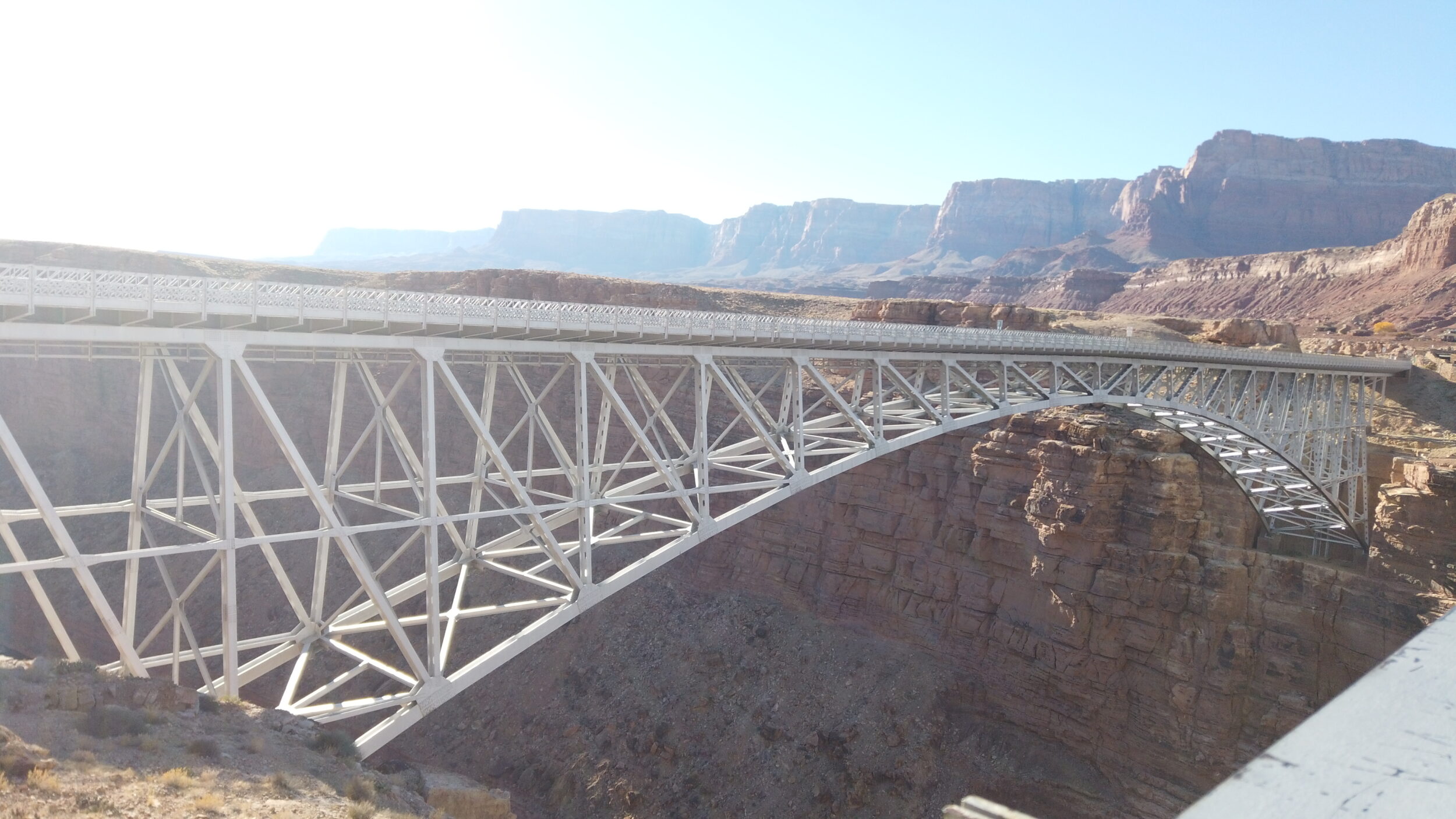
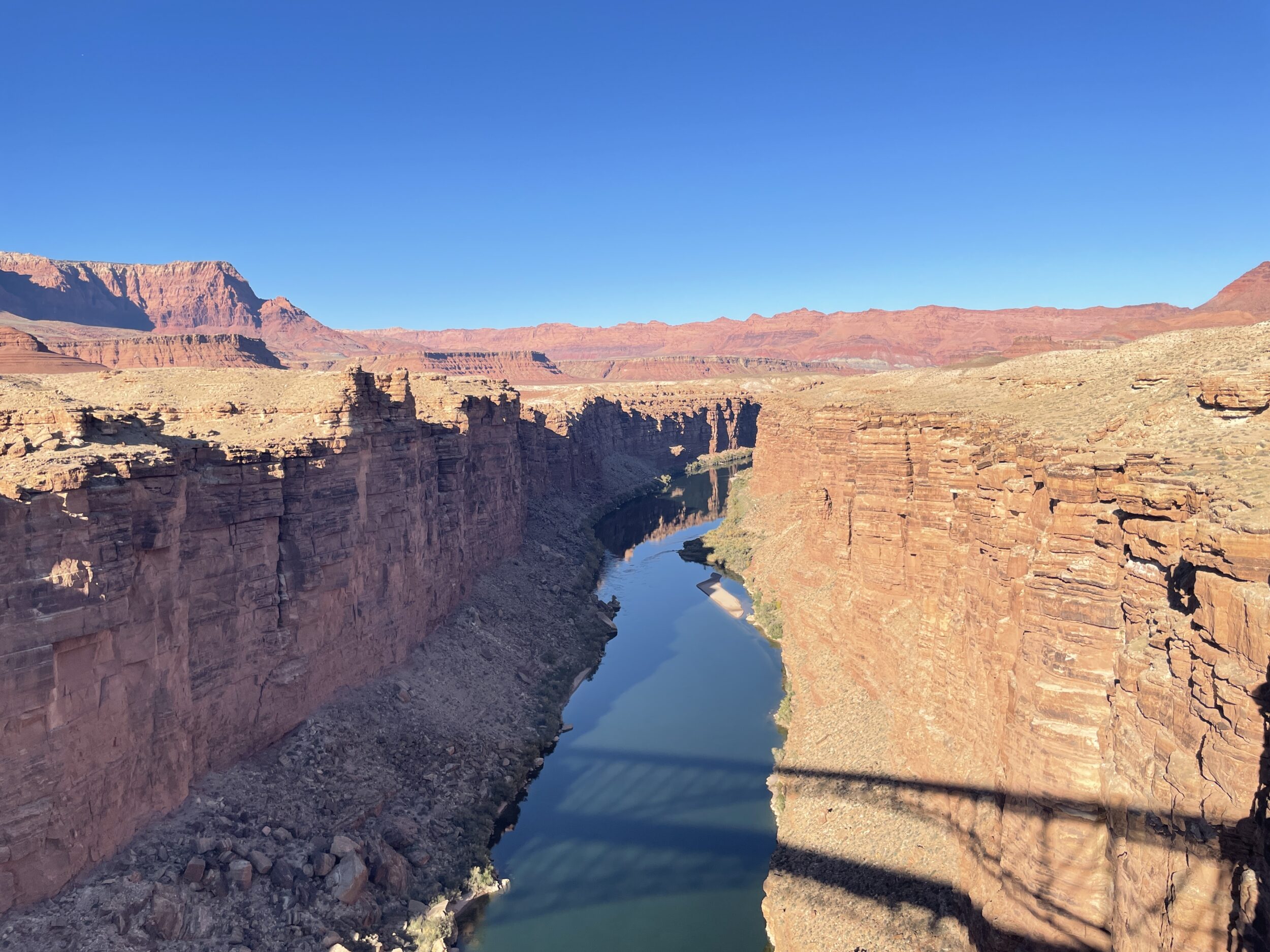
It’s hard to imagine you can go rafting on this river; the water looks so calm. Actually, a few miles away there’s a dam, so the water is quite calm, especially at this spot.
Horseshoe Bend
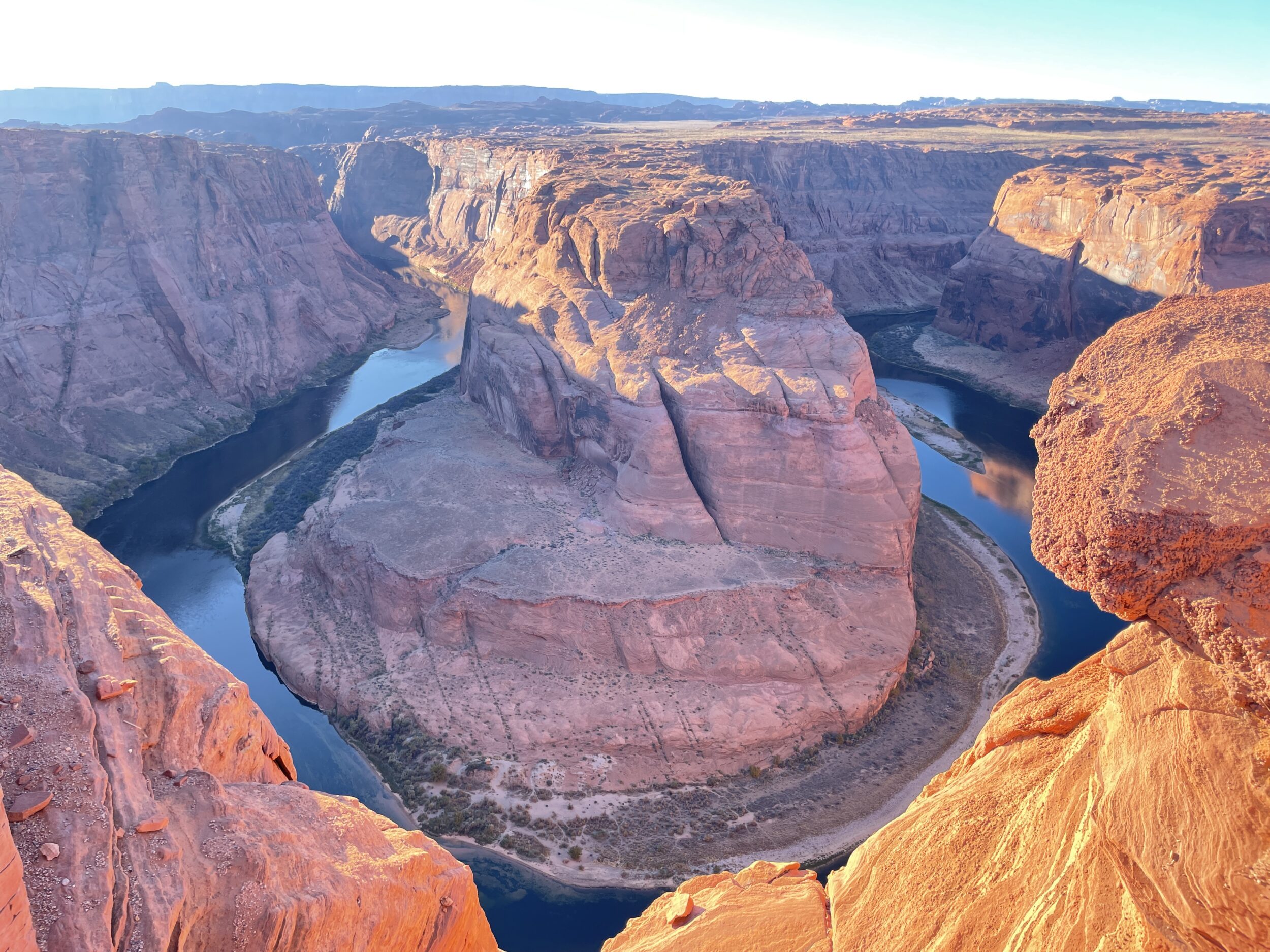
Next, we visit this famous meander that you see on every influencer’s feed. You have to pay $10 per vehicle to get in, then walk 1 km (easy).
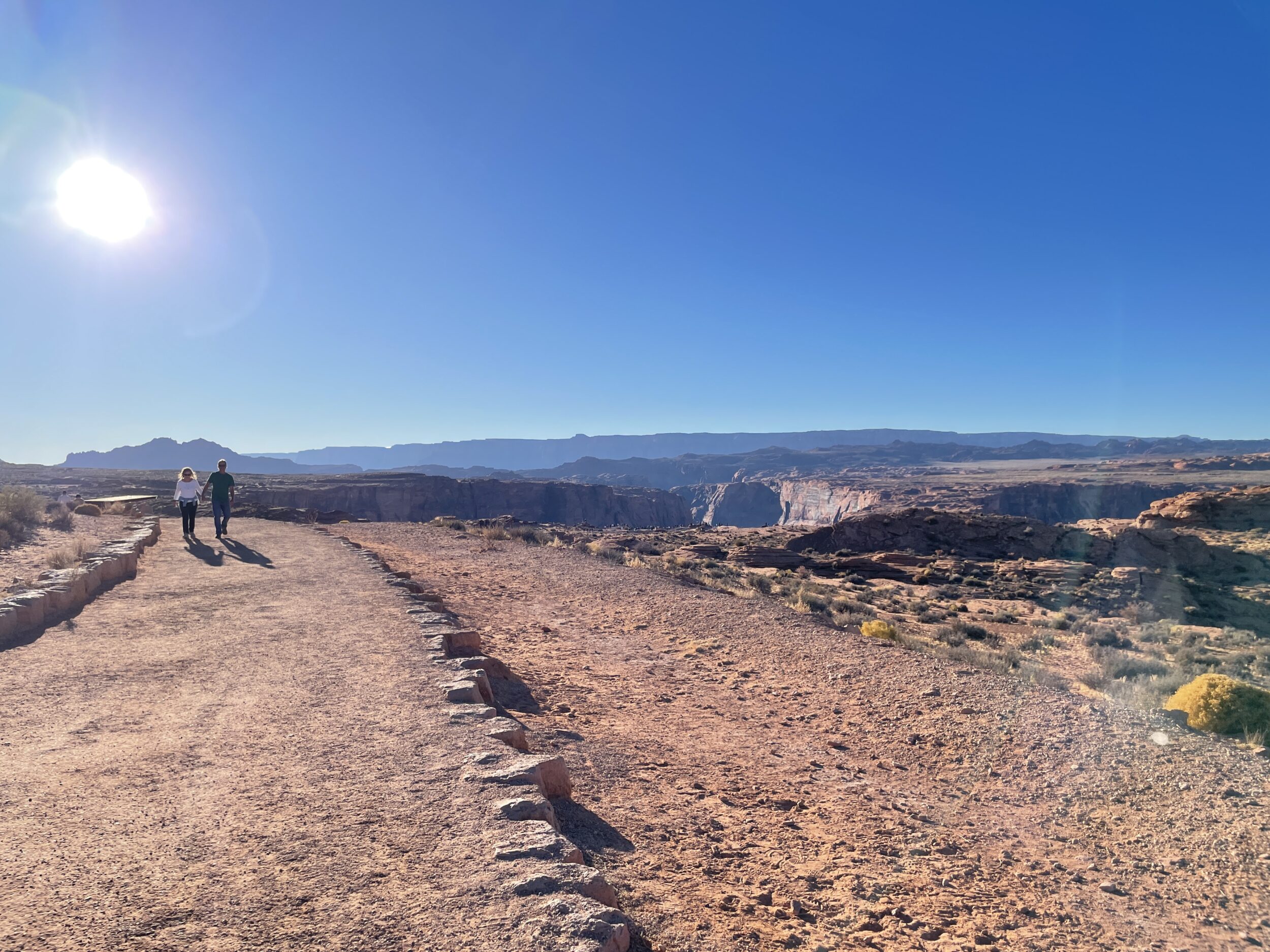
The light at the end of the day isn’t the best; we’re a bit against the light, but you just have to find the right angle to make it look decent. I’ll note that for once, the landscape is less beautiful than in my photo 😀
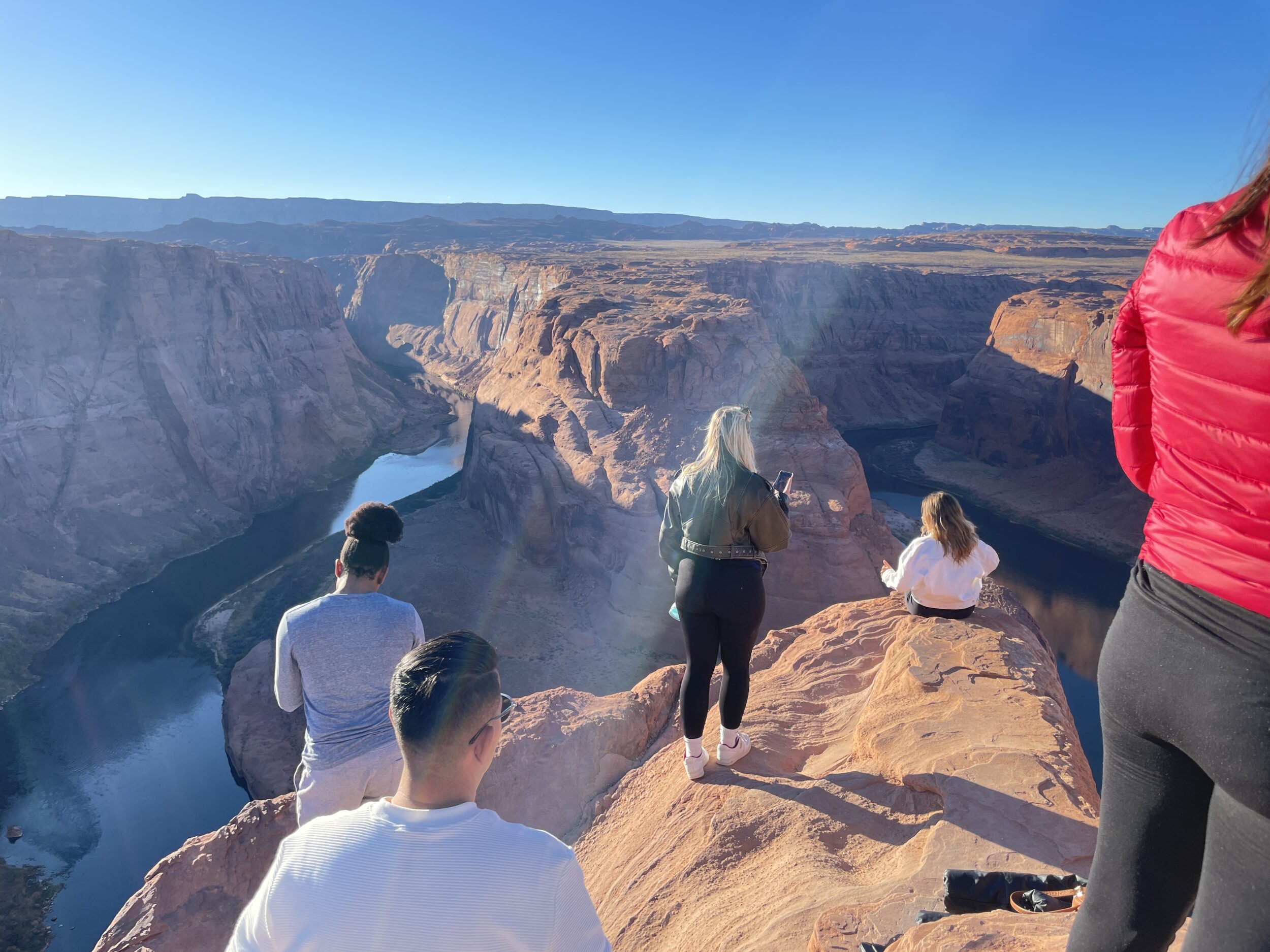
Tourists try their best to get into increasingly dangerous spots.
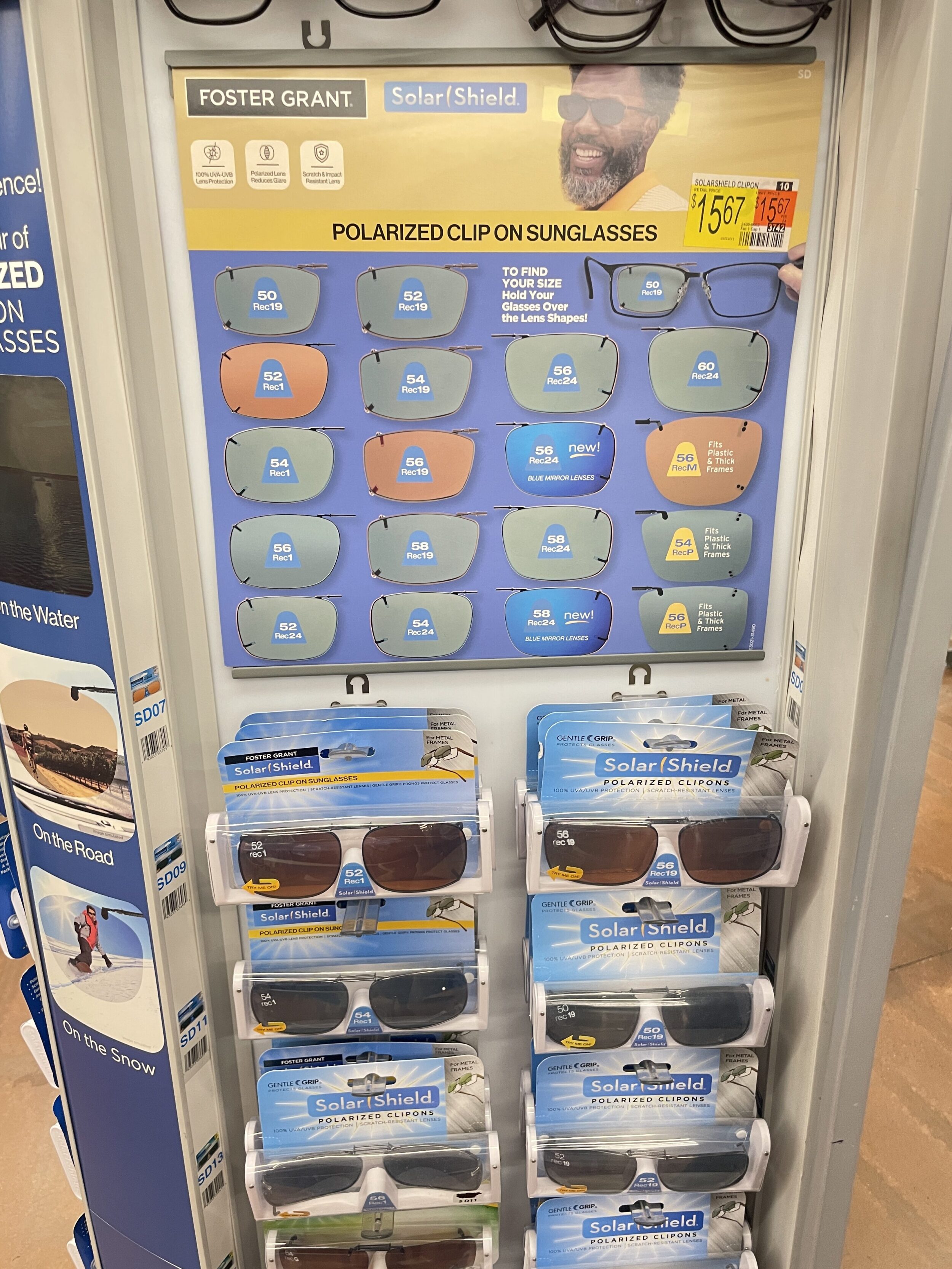
We pick up our room at Days Inn. It’s a hotel on the outskirts of town, so we have Walmart right across the street. We’re stoked because we were told that at Walmart, you can find tinted clip-ons to wear over prescription glasses. So JB can have “sunglasses” while waiting for his to be ready. That way, we won’t have to go back to Las Vegas too early and can pick them up on our original road trip route.
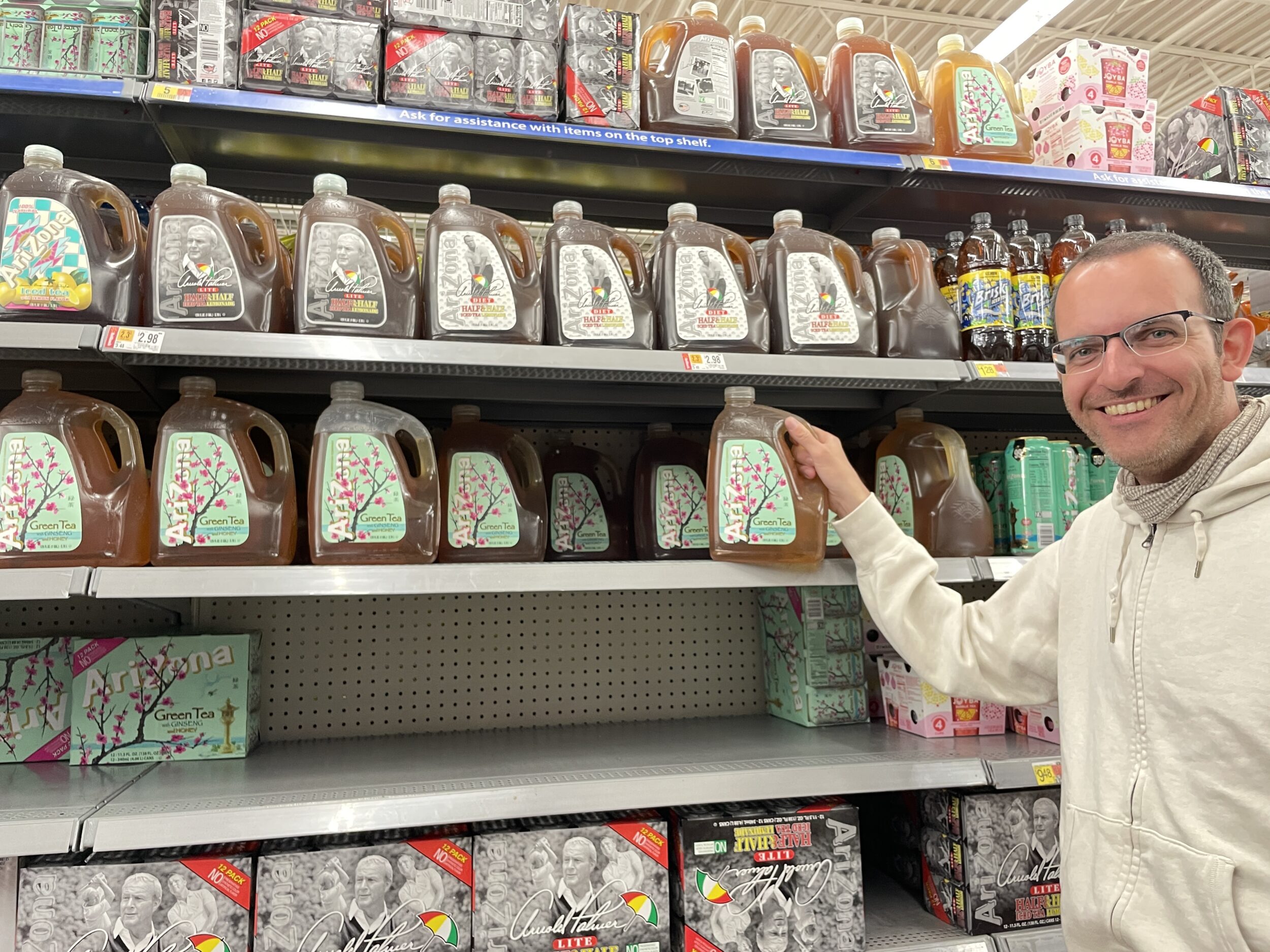
Walmart is a place where I could spend a whole day: they sell everything from pharmaceuticals to tires, and even house paint. My favorite drink, Arizona, is sold in big jugs (so American!). The brand is American, but despite its name, it’s made in New York 😀 We have dinner at Subway; ordering is tedious because there are even more choices than in France.
Day 5:
To save time and money, our strategy is to make the most of the hotel breakfast (when there is one) and skip lunch. That way, we have all the time we need to sightsee between noon and 2 p.m., when no one is around.
We booked two nights in Page to double our chances of seeing Antelope Canyon. As soon as it rains, these canyons can flood quickly, and water can reach up to 6 meters deep. So it’s better to plan some buffer time in the itinerary in case.
Antelope Canyon
We go through the agency Mystical Antelope Canyon. It’s an off-the-beaten-path spot recommended by our friend Kévin. He even wrote an article about this agency here. We made the reservation via iMessage (+19286403852, Google Maps coordinates). If you book directly (not online), the price is cheaper: $100 cash per person (+ tip, $10/person seems right). The day before, Rose-Ann texted me the exact GPS coordinates, gave us instructions, and told us about the weather: despite the forecast rain, we’d make it between the drops.
The agency is still relatively unknown, so you can just show up without an appointment (tours at 9 a.m., noon, and 3 p.m.), but booking ahead seems like a better idea. Honestly, it’s a great deal. The other nearby canyons are much busier and booked months in advance: 35 minutes for $65, with a few photo stops. But here, we were only 5 today, had a 2-hour tour, and could take as many photos as we wanted. This one isn’t connected to Lower Antelope Canyon or Upper Antelope Canyon (where all the tourists go). So when those flood, Mystical Antelope Canyon might not. Flooding isn’t just due to local rain; it can rain far away and then the water comes and floods these canyons, so the agency keeps an eye on it and lets us know.
It’s raining this morning, but from 10 a.m. it’s bright and sunny, which is perfect because our tour is at noon. We arrive well early (11:30 a.m.). You have to pay at the little red house near the entrance before taking a dirt road (very easy, even with a regular car) to the tipis, where a 4×4 is waiting for us.
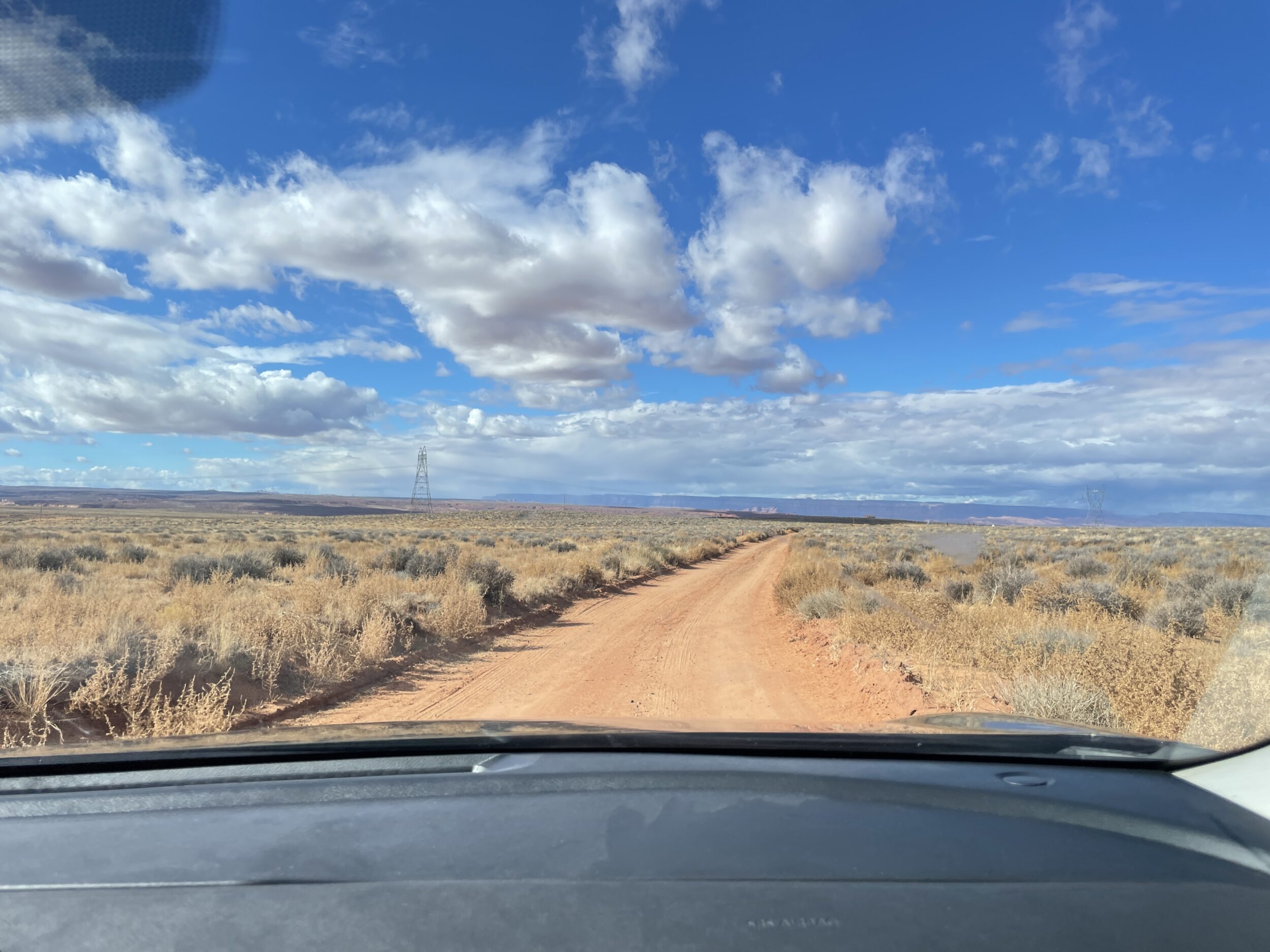
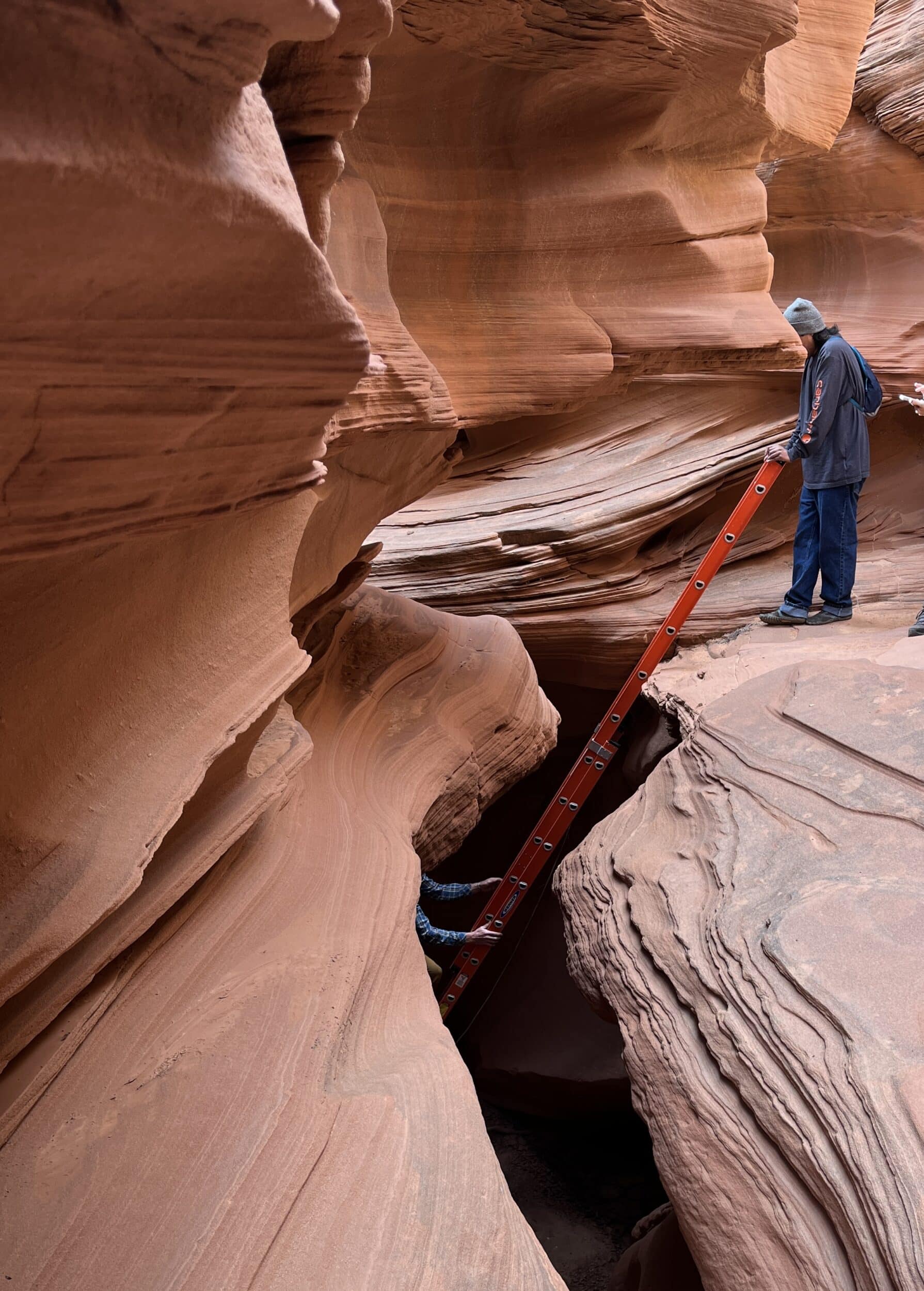
We hop on the 4×4 with three other tourists and arrive at the spot where we descend into the canyon using ladders.
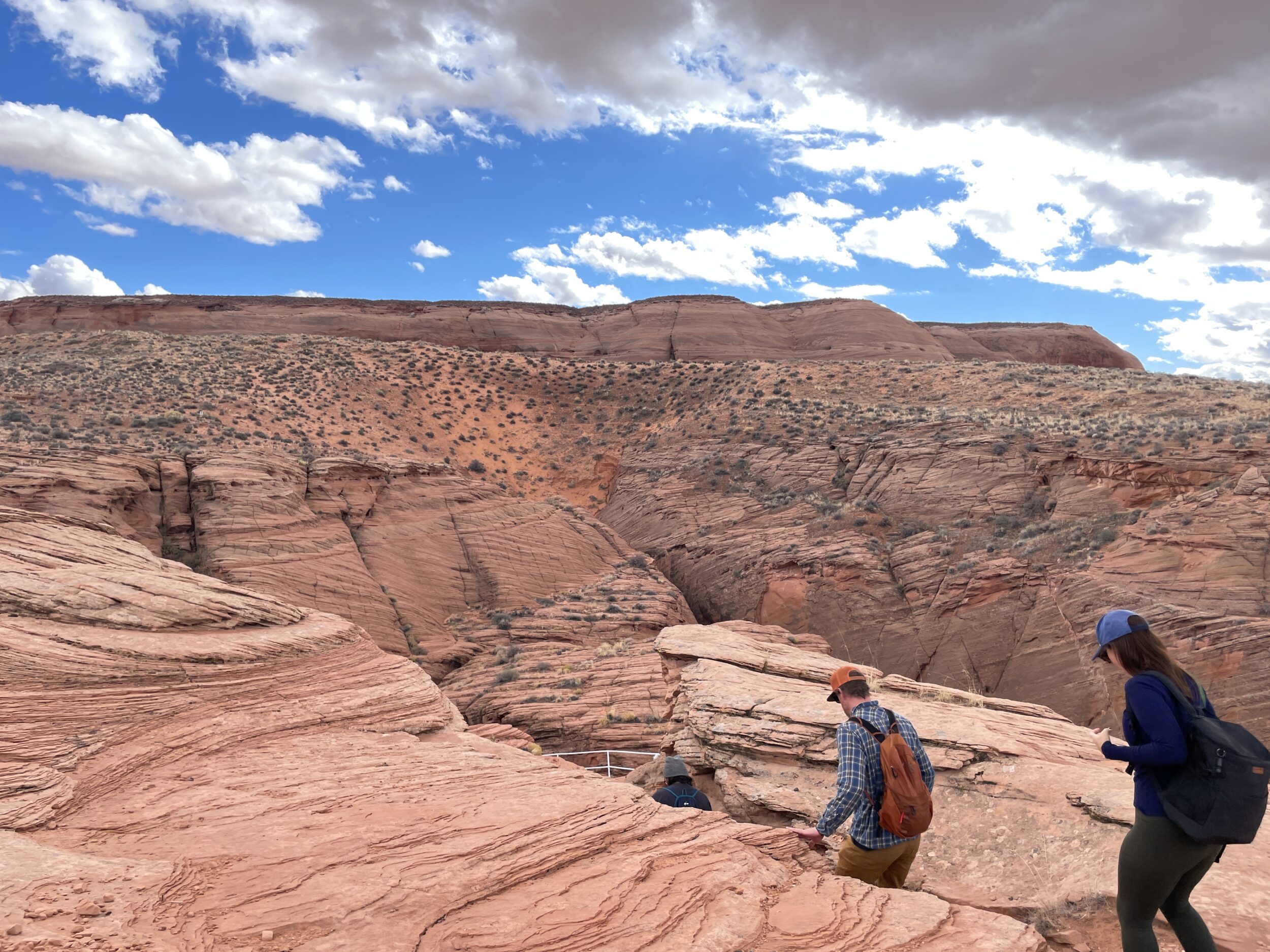
This is the only arch we will see on our visit. The Navajo people believe arches connect worlds, so when you see one, you must not walk under it but go around it. Otherwise, you risk being possessed or losing a piece of your soul.
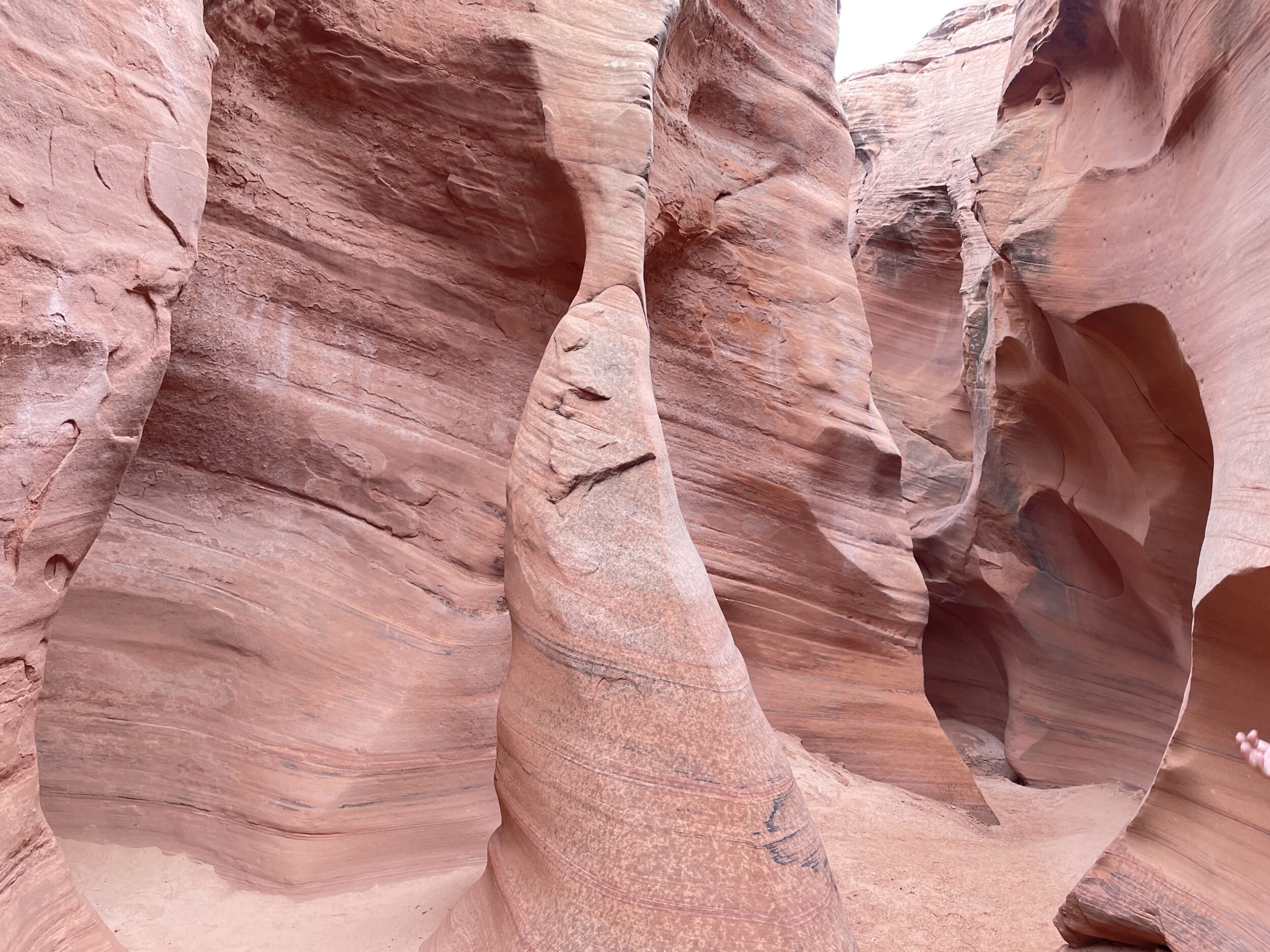
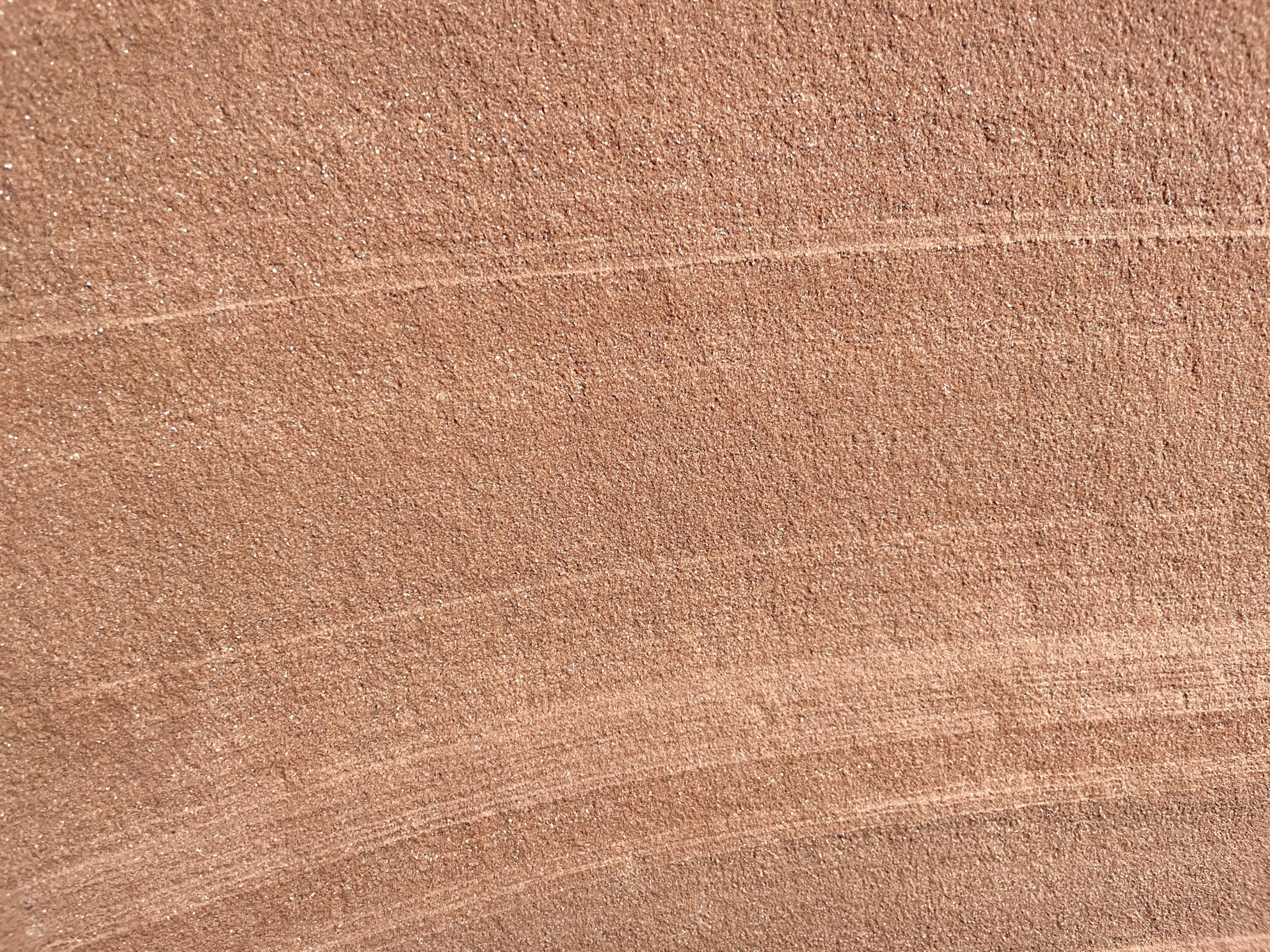
Phones glitch and produce colors that aren’t very realistic, a bit too pink for my taste, but the canyon is more of a sand color. Plus, the color you get also depends on the light at the moment; it can be orange if it’s really sunny. This type of canyon was formed from sand and wind. Imagine sand moistened by rain, then solidified. Wind continues to deposit sand on top, which starts to harden, and then wind and rain cause erosion: that gives these shapes, very different from what you see at the Grand Canyon.
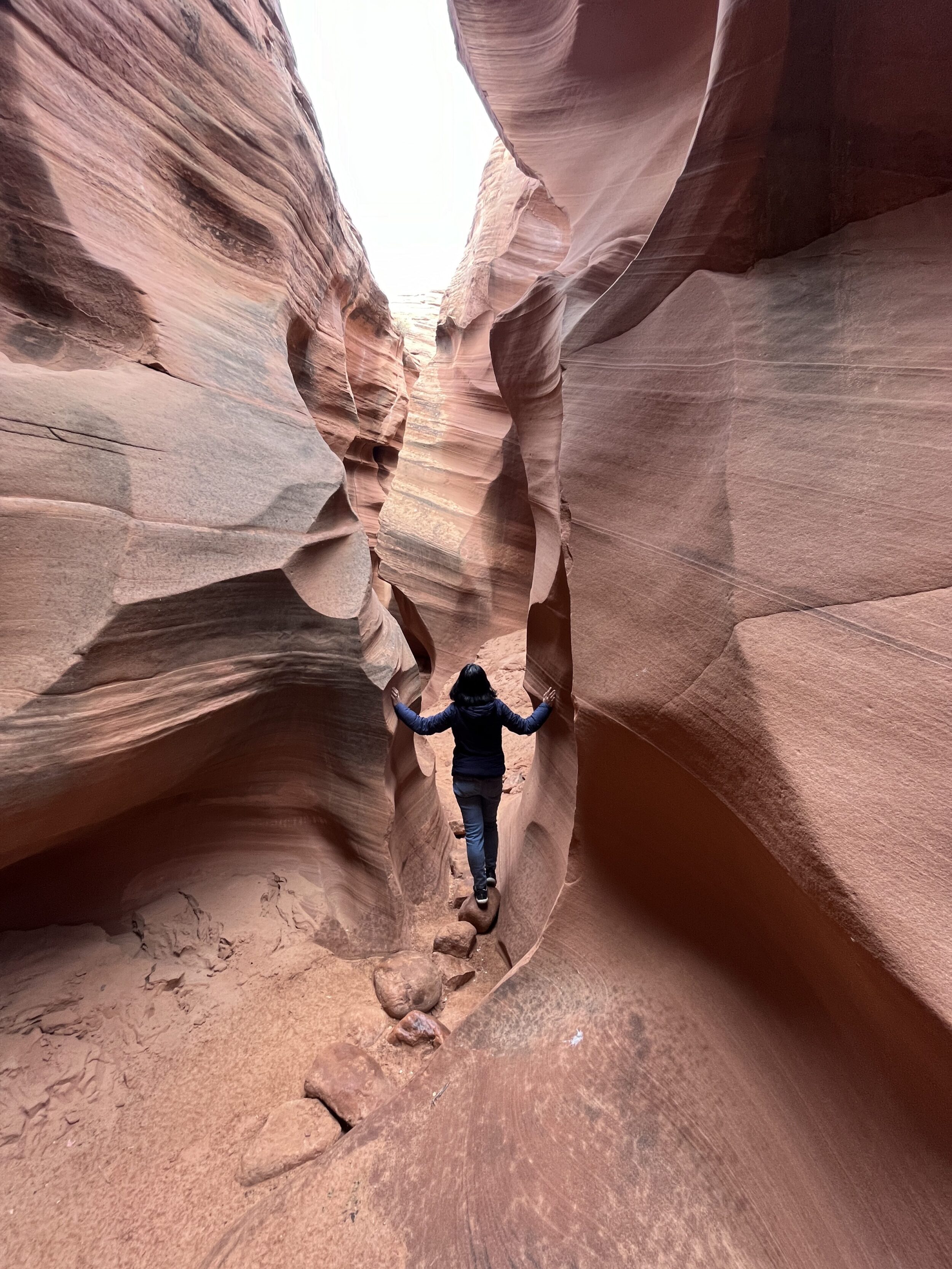
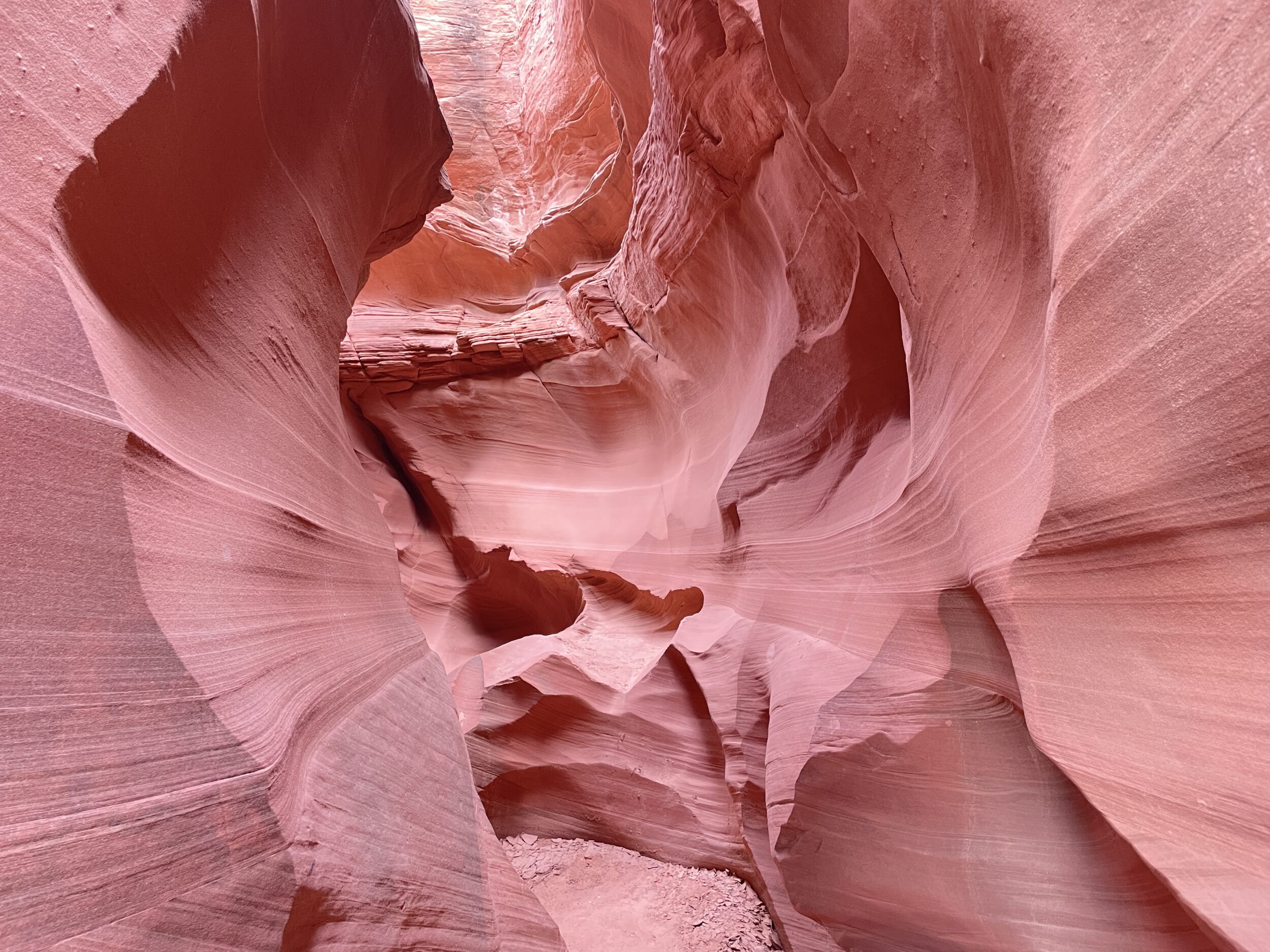
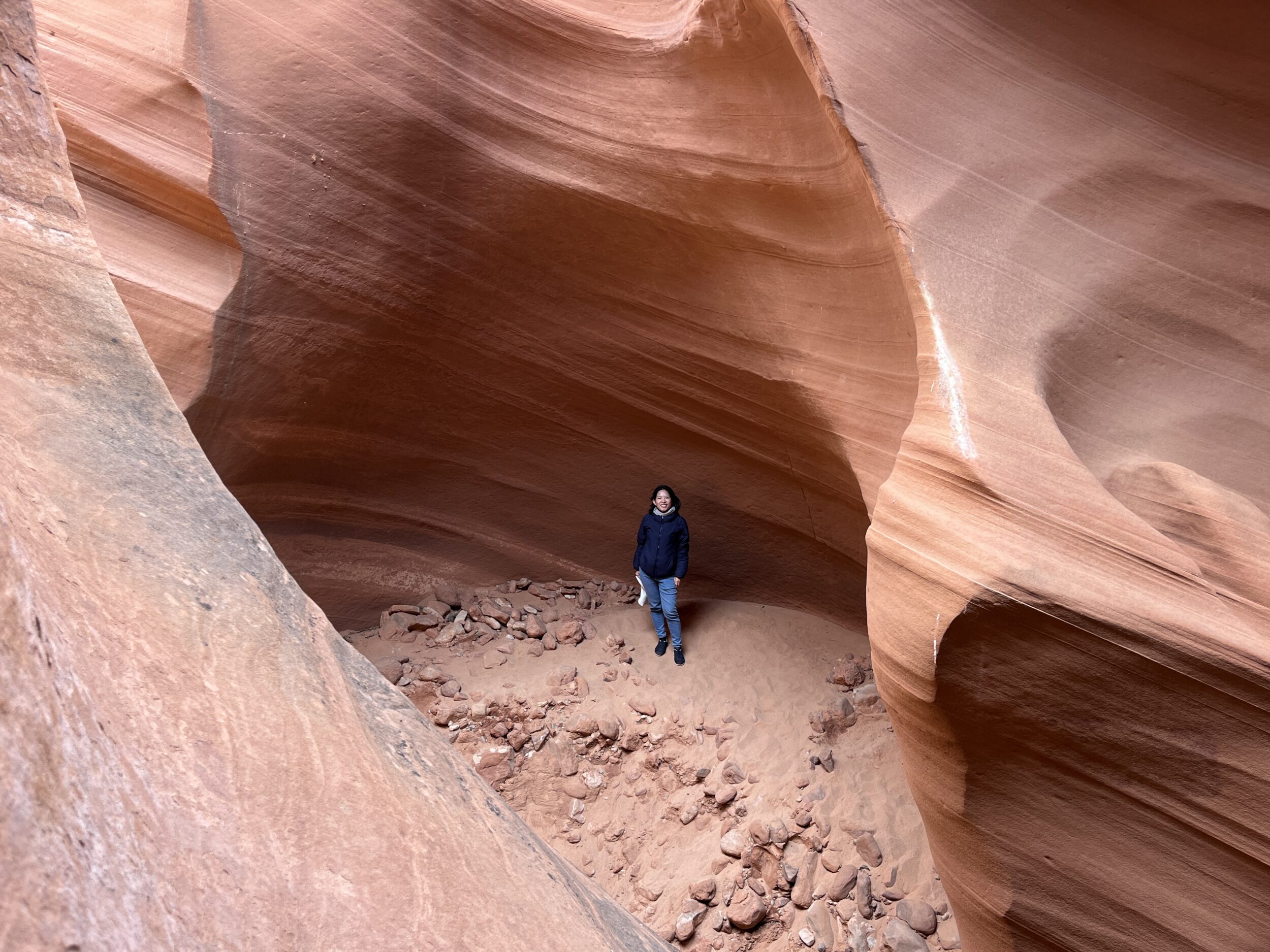
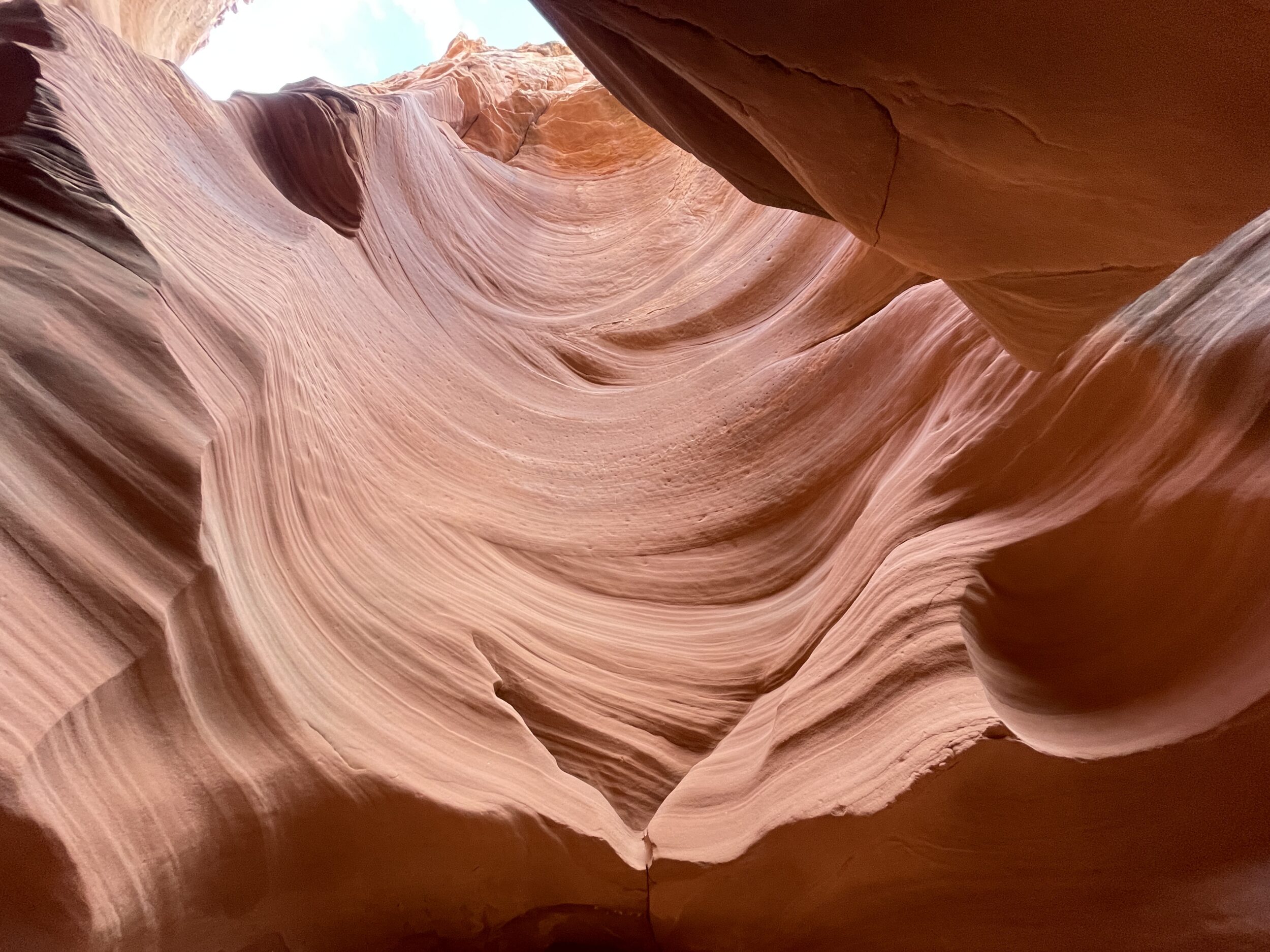
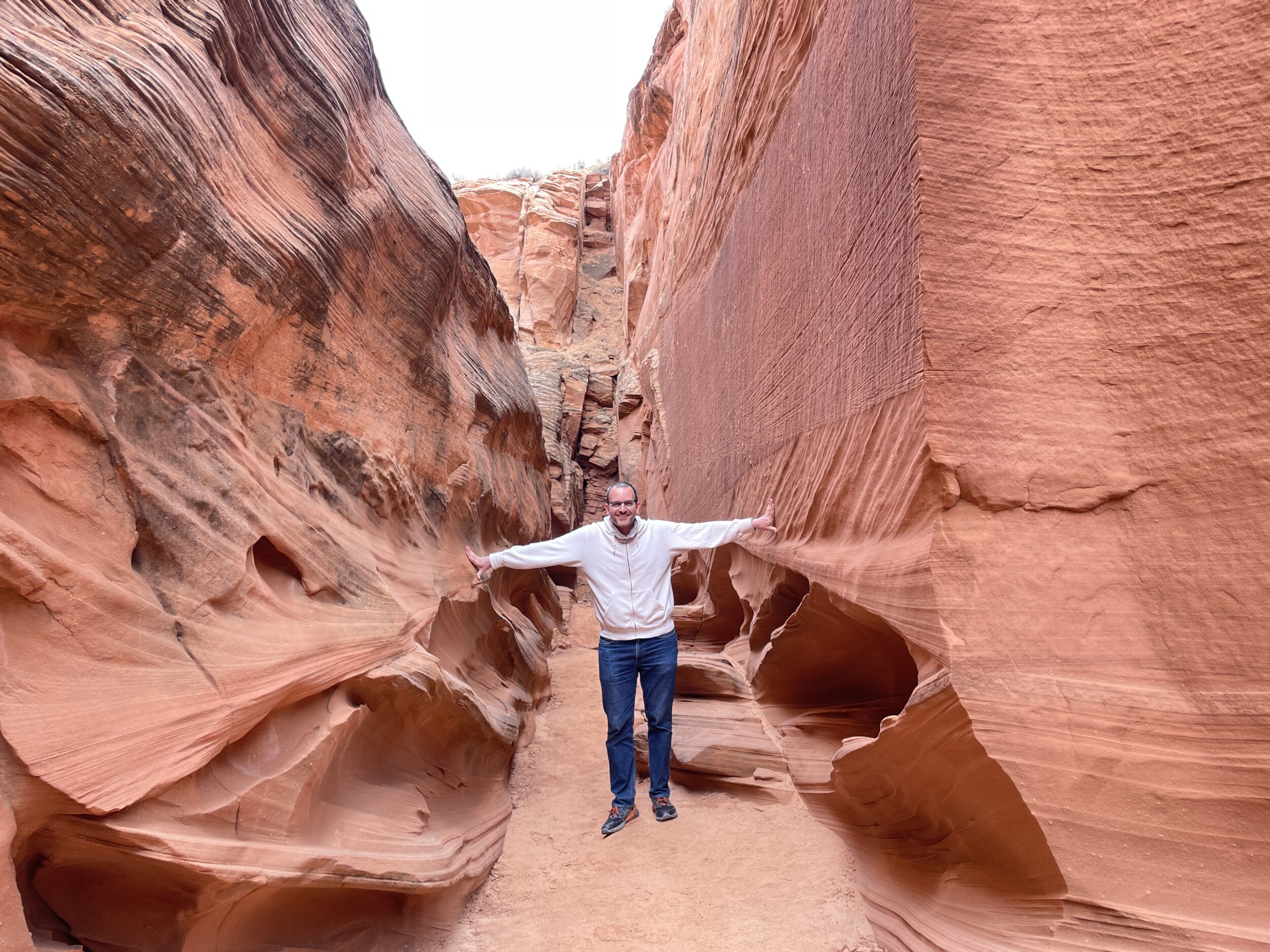
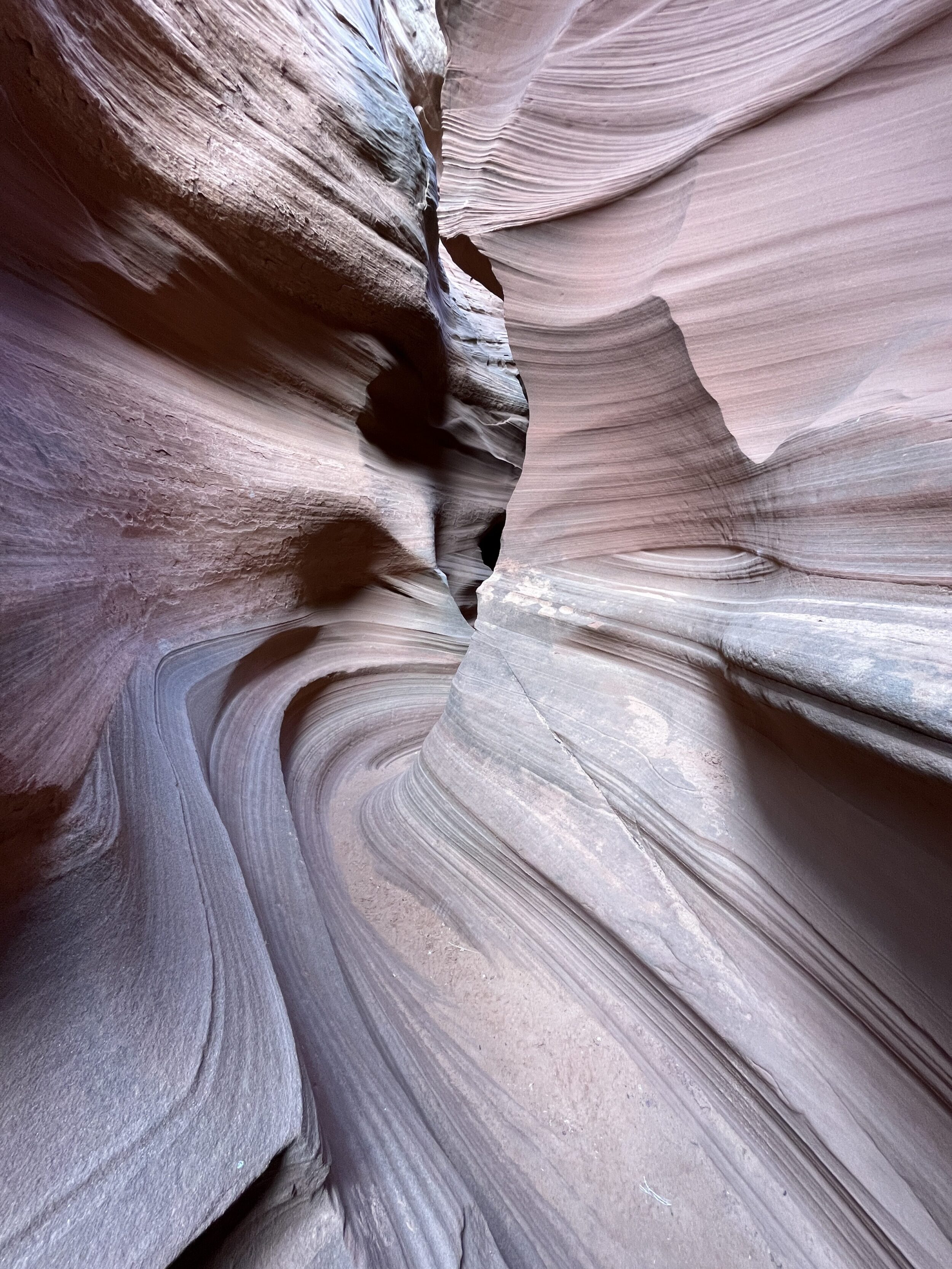
There are places where water creates a vortex and sculpts the walls into wave shapes. The current can be extremely strong, so the guide tells us that in case of an incident, if water suddenly arrives, the best thing is to climb as high as possible and wait for the water to recede. You can’t run because you don’t know where to go, and if you’re caught in a vortex, it’s fatal. The cracks are also potential dangers. In case of heavy rain, water can seep through cracks and force its way through. Hence the requirement to visit with a local agency; they’ll inform you about the weather and take you to safe spots.
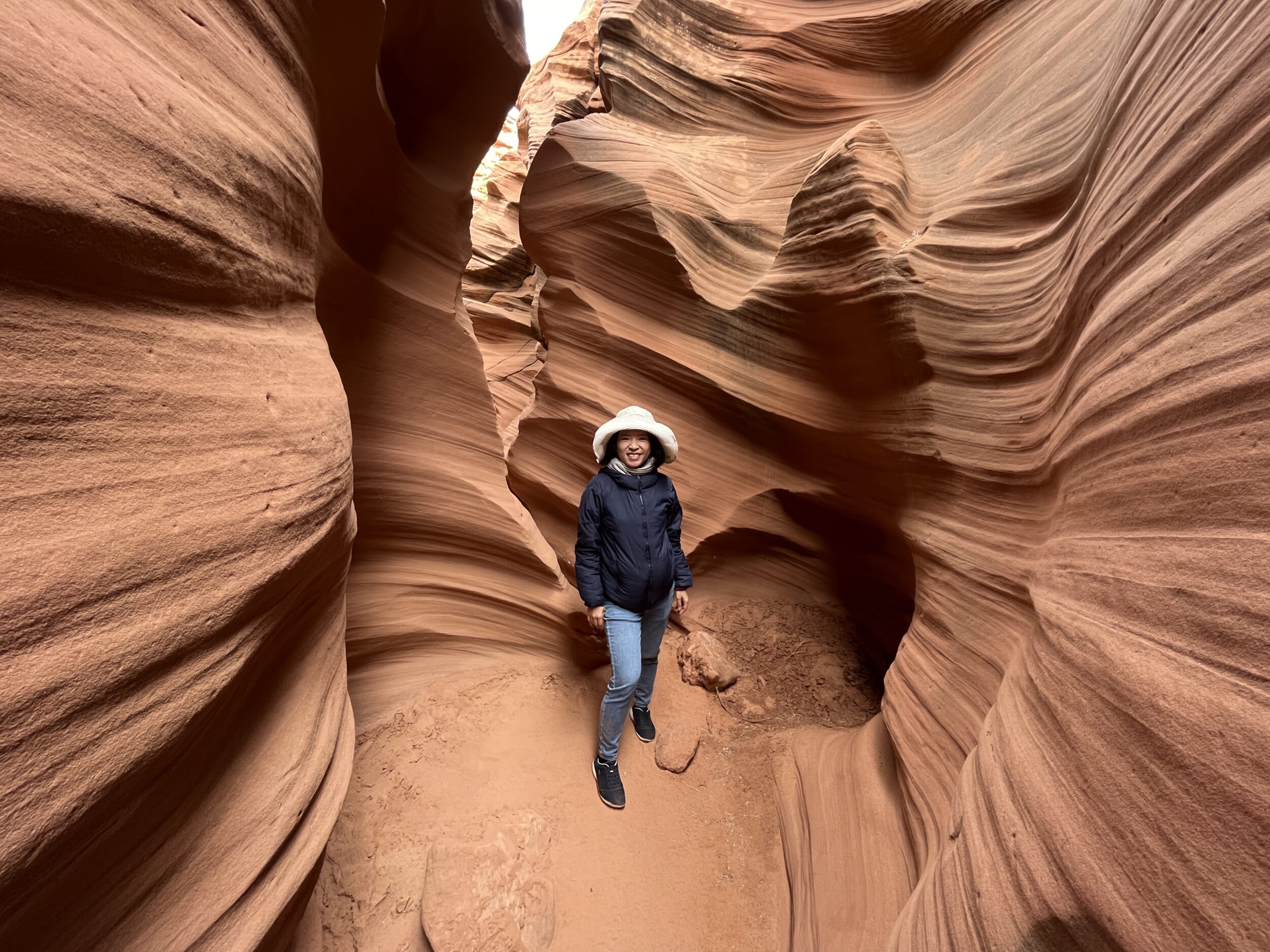
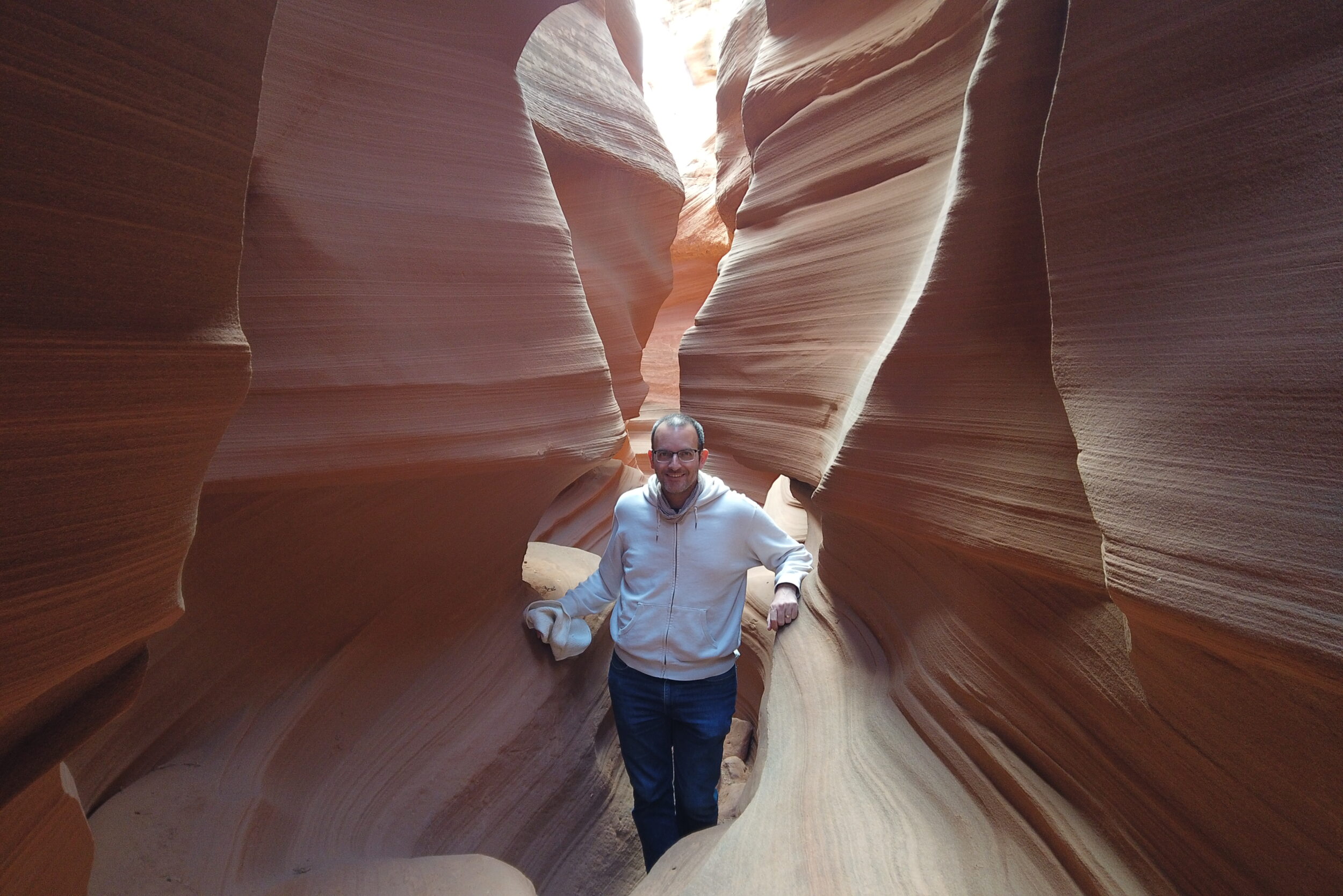
Some places are so narrow that a backpack would have been cumbersome.
I think I underestimated the ladders (there are many). I’m fairly slim, so when I reach the end of the ladder, I realize it only takes one wrong move to slip into the gap between the walls and the ladder 😀
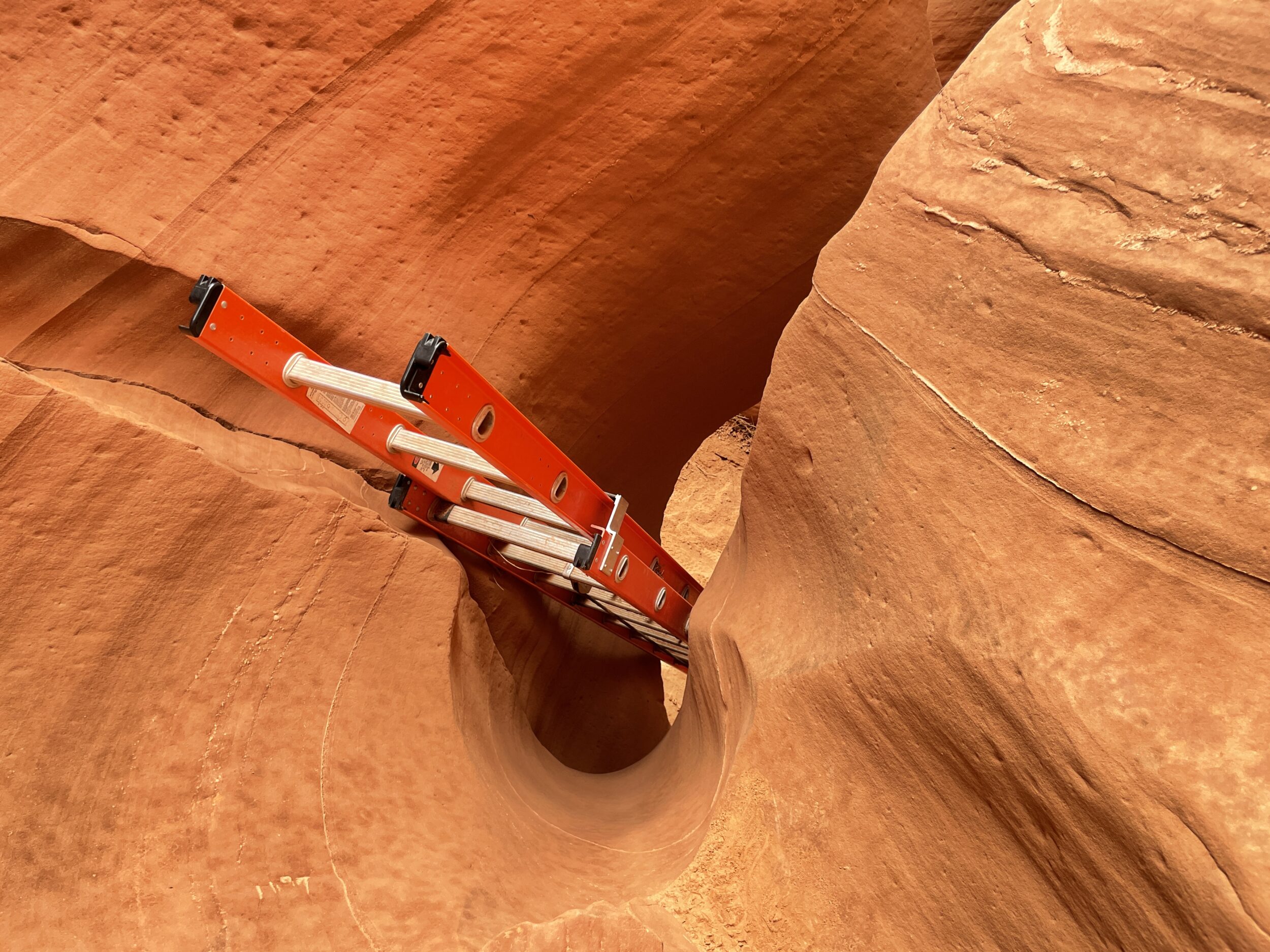
Fortunately, the walls aren’t smooth; it’s packed sand hardened over millions of years, so shoes grip well on such surfaces. However, there are some spots where it’s loose sand and you can slip if you’re not careful. But we move so slowly that if we pay attention, everything will go fine.
The guide gives us a little speech about the negative effects of industrial food and toxic friends. I gather that the natives are very afraid of possessions, evil spirits, or demonic influences. Their homes face east to receive the morning sun (even though it’s scorching hot). When they’re treated by a sort of shaman, they don’t talk about it or show their amulets, for fear of being targeted by the evil eye. I ask a few questions about the dreamcatcher, and he tells me that you must never let people touch it; only I can touch it, in my home. So if you’re invited to a Navajo’s home, don’t touch anything, just look, because they are very careful that another person’s energy doesn’t influence their home or their energy.
The canyon is called “antelope” because there used to be many antelopes. But at some point they couldn’t cross the river (the water being too high), so there aren’t any on this side anymore, but the name stuck. This part of the canyon is shared among 3 agencies, and the agency we’re visiting with today has the rights to exploit the heart of the canyon, so the most interesting part.
We don’t see the time pass. This tour is so exceptional and so peaceful that we feel like we’re having a small spiritual experience. We chat with another tourist who has visited more touristy canyons. He confirms this one is harder and narrower, but it’s also cooler, more peaceful, and luxurious. Even though we didn’t get sun rays reaching the bottom of the canyon, we were very lucky with the weather: rain this morning, and heavy rain expected tomorrow.
Lake Powell Dam
We get back in the car to head to the dam. Lake Powell. There are paid viewpoints to see the dam from afar, but we opt for the Visitor Center on the other side of the bridge, which is free.
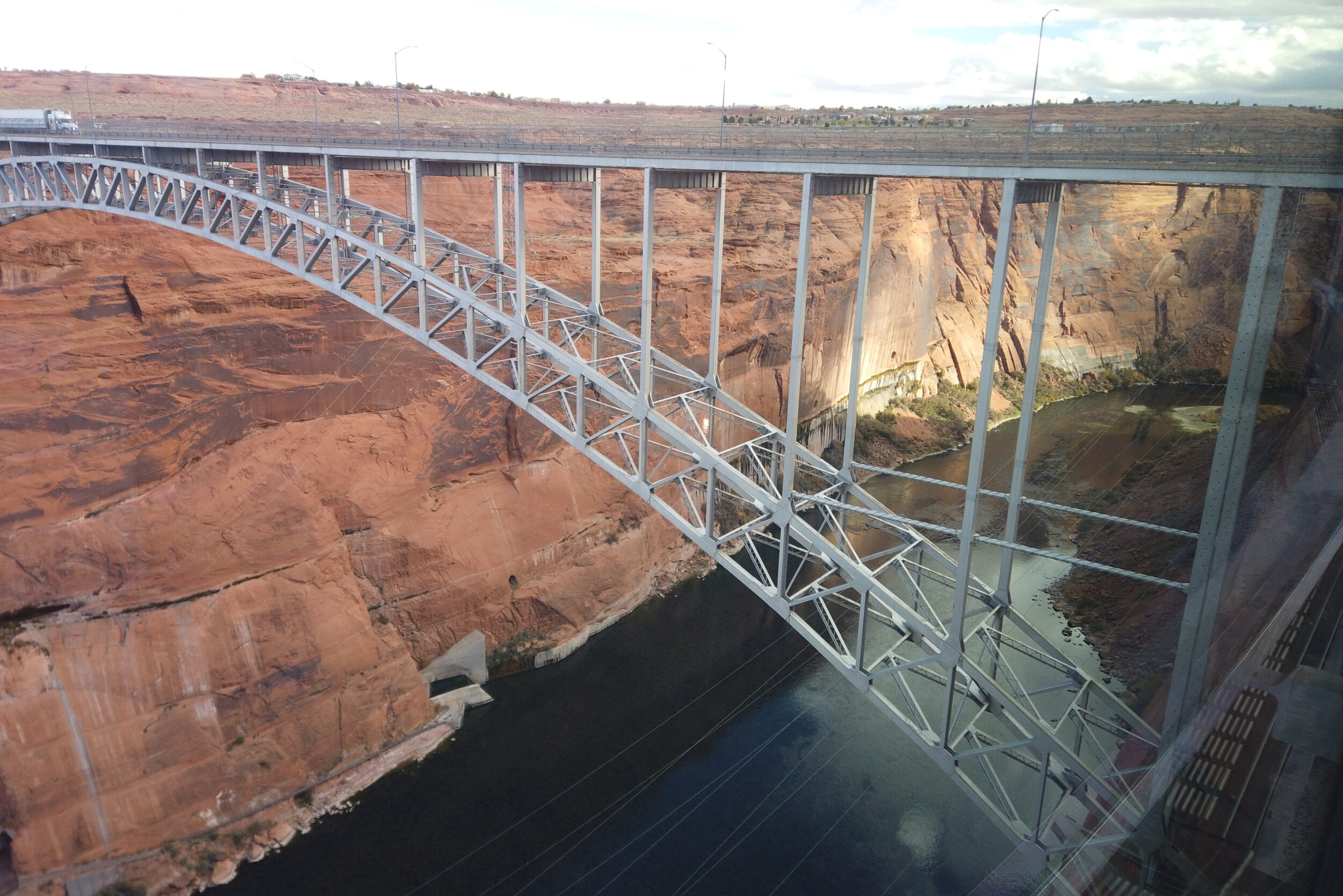
You can walk across the bridge, but the view from the Visitor Center is more interesting and safer.
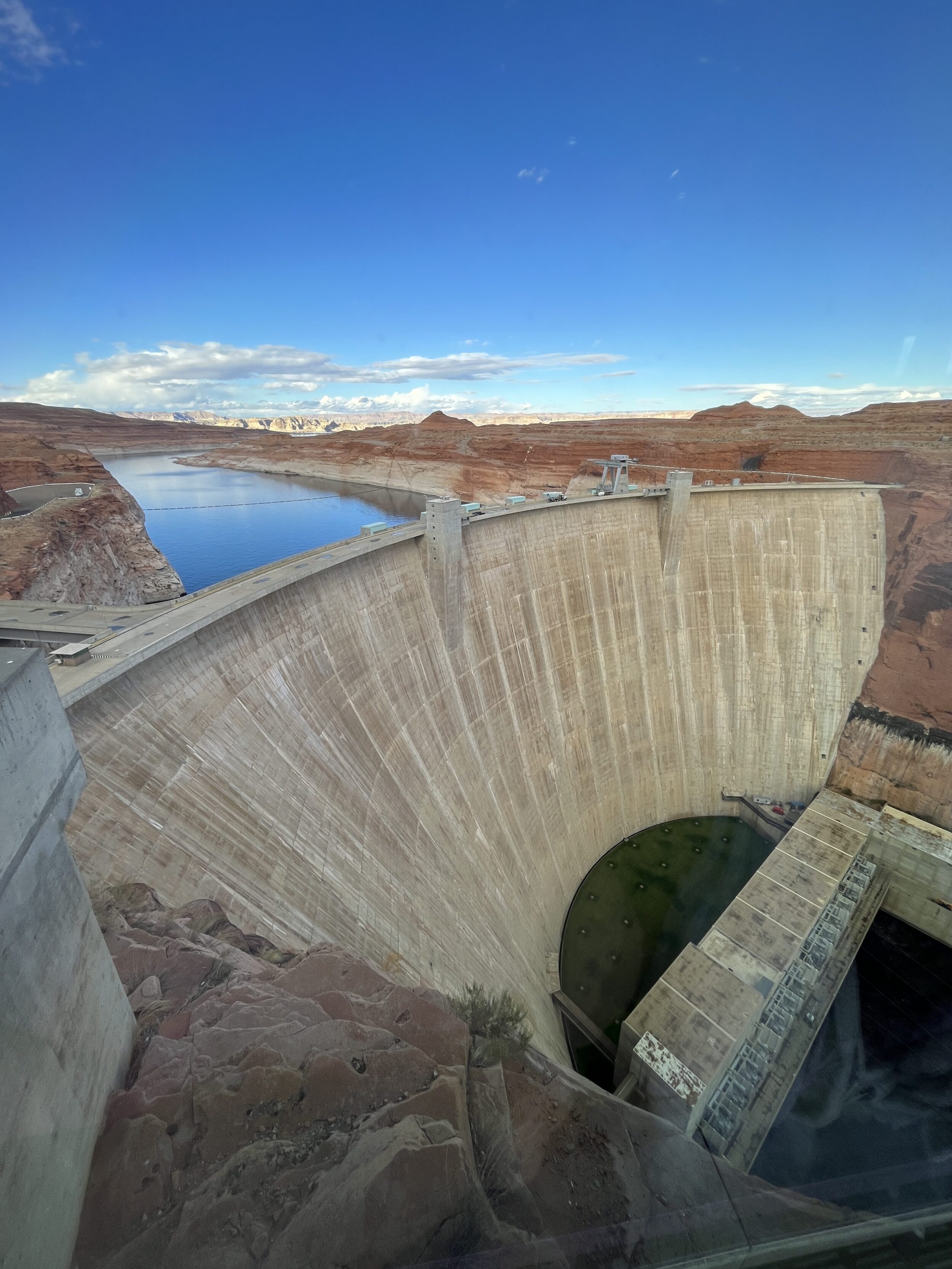
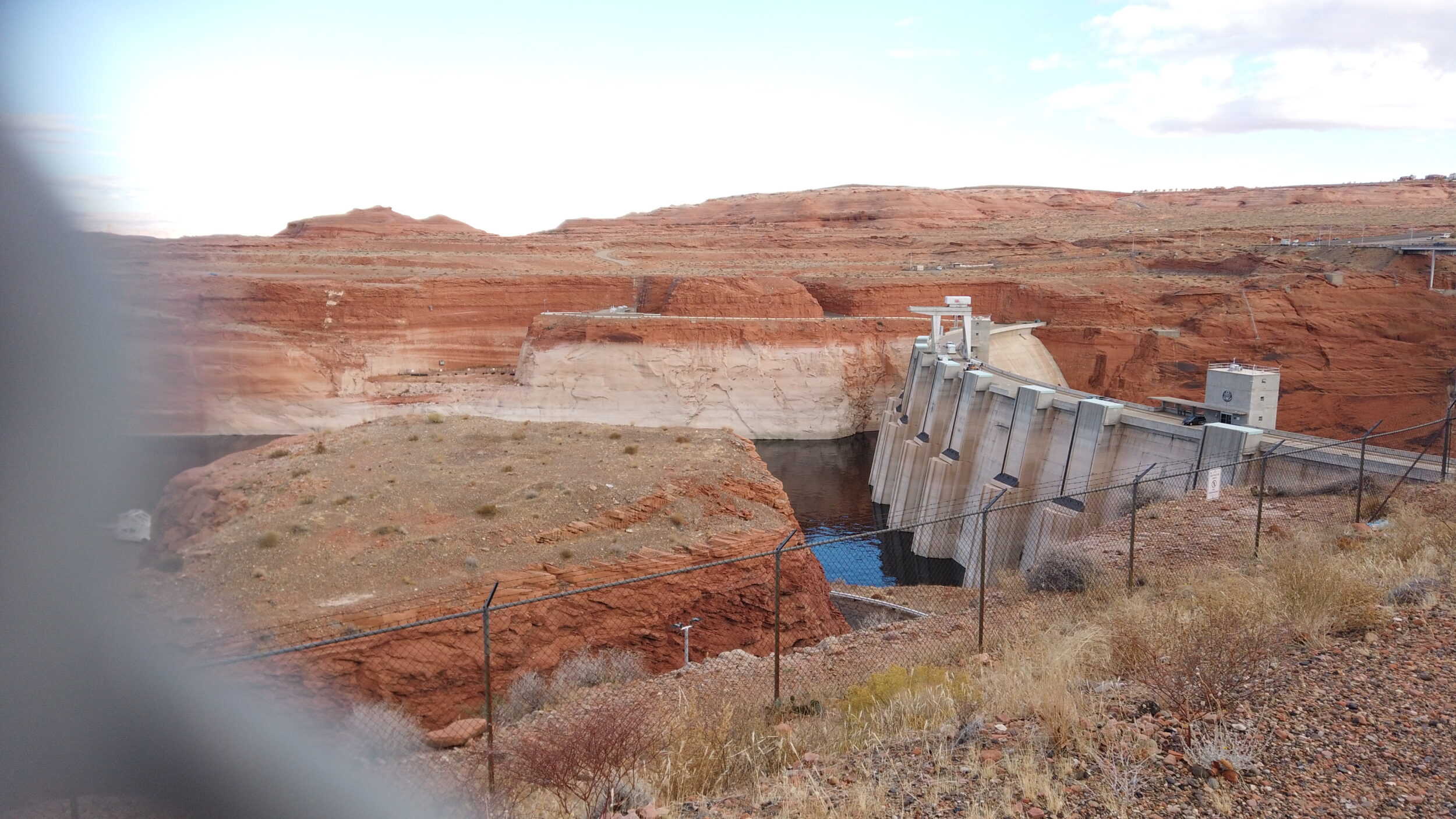
The dam holds back the water of Lake Powell. This water comes from snowmelt, so the water level is quite low right now (mid-November). It’s the second largest water reservoir in the United States. Every day, the dam must release a certain number of cubic meters of water to feed the Colorado River (which many animals depend on). Lake Powell’s water is used mainly for residential purposes, then for industrial.
To see the lake, we went to a free lookout (Wahweap Overlook). We can see quite a few boats (for rent), and there are even fun activities if you’re interested (helicopter, paddle, kayak..).
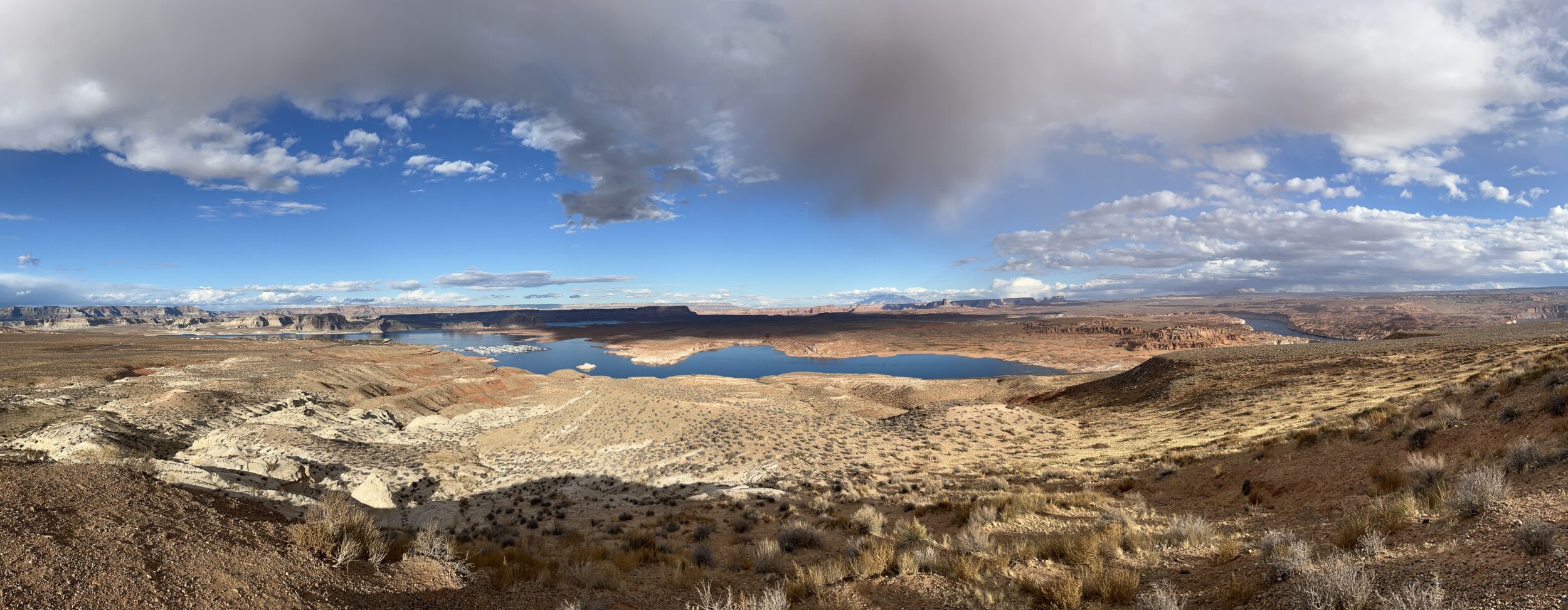
We have a big part of the afternoon to rest, work, and blog. The dry desert air tires us out a lot, hence the well-deserved rest.
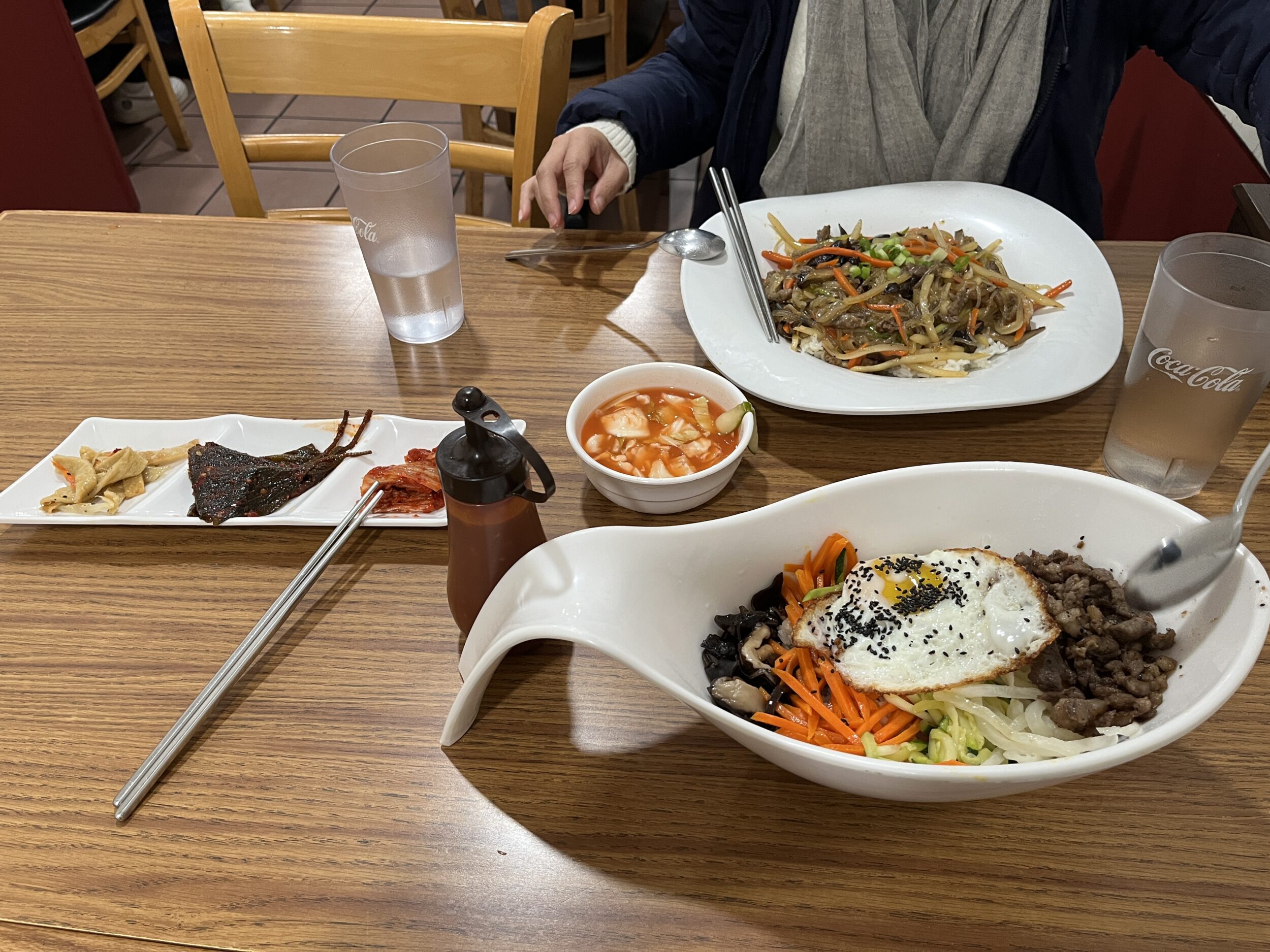
In the evening, we dine at the only Korean restaurant in Page: K-pop Kitchen. American food is starting to get boring and definitely not very healthy. The Korean kimchi will bring us some probiotics. It’s filling and good, I recommend it!
Part 2: Practical Tips
All our routes and points of interest are available on this Google Maps map. I’ve already explained how to use our custom maps here
Budget
- Lodging (2 nights): Days Inn & Suites by Wyndham Page Lake Powell, €62/night, taxes and breakfast included
- Mystical Antelope Canyon: $100/person to be paid in cash + tips. Reservation via iMessage (+19286403852, Google Maps coordinates)
- Food:
- Subway: $13/person
- K-pop Kitchen: $22.5/person, tips included

