

Two nights at the Grand Canyon: Road trip in the American West #3
After seeing the Grand Canyon from above thanks to our helicopter tour, we finally visit the park “from below,” by car. We booked two nights inside the park to make the most of it.
This article is part of our series of articles on the American West road trip. If you haven’t read the previous travel diaries, here they are: #1, #2
Part 1: Travel Journal
Part 2: Practical Tips
Part 1: Travel Journal
Day 2 of the road trip (continued)
From the helicopter agency, you just keep going straight. With no real choice, we fill up at the park entrance ($5.59 a gallon instead of $3.80).
We don’t have an access pass, but we buy the America the Beautiful pass, valid for a year, right at the park’s entrance station. It’s better this way, because buying online is much more complicated and doesn’t offer anything extra. The attendant has us sign the annual pass. There are two signature lines, and he says the other can be for a friend. That’s good news; we can lend the pass or give it to a friend when we get back to France. At the same time, this money helps maintain the national parks, so that friend can also chip in by paying. The pass is really cheap given how long it’s valid and all the parks it covers.
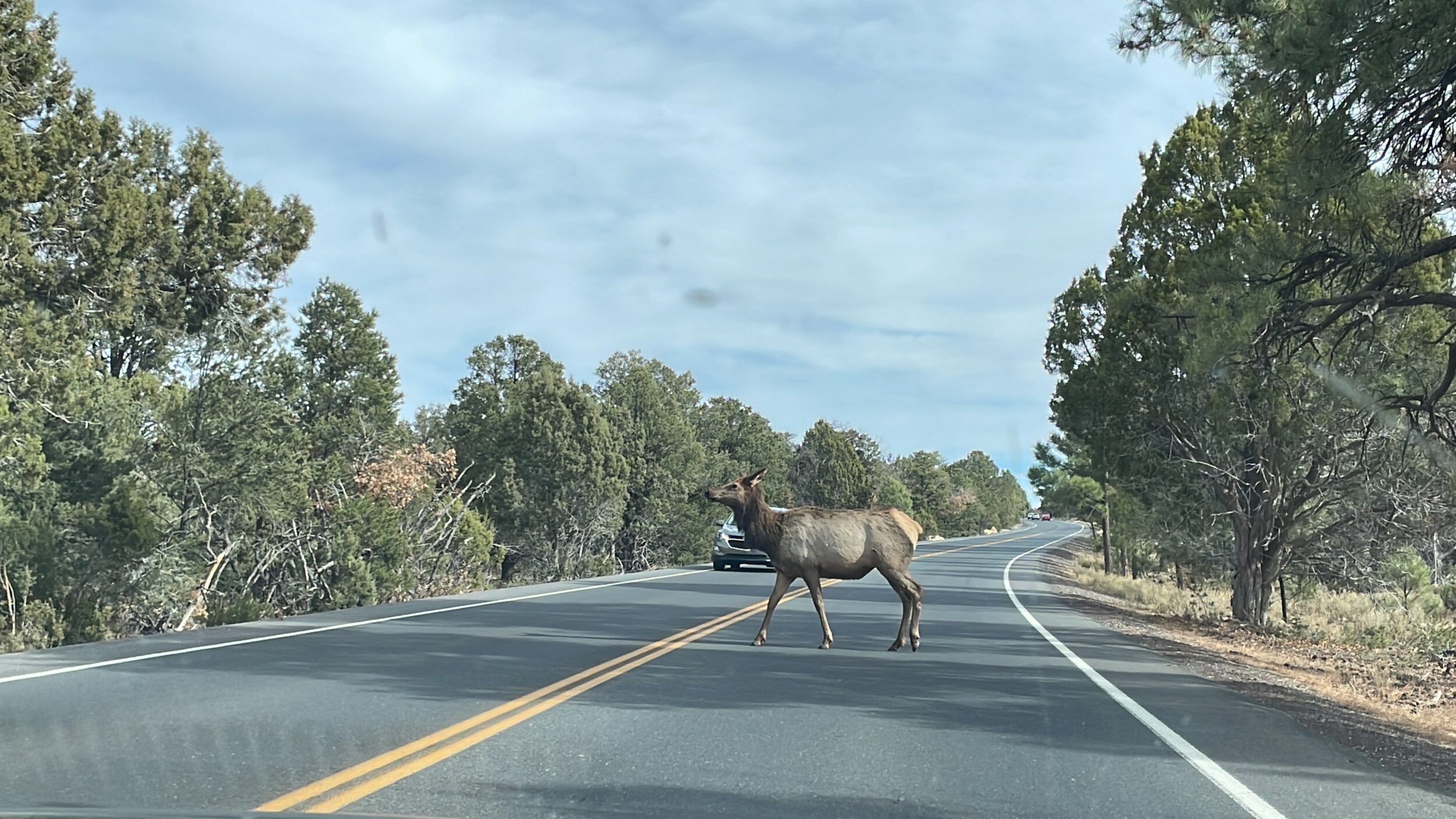
Just a few minutes after entering, we spot a mule deer waiting patiently on the side of the road. We let it cross, and it takes its sweet time. From the helicopter, we also spotted a bison, but we won’t see any by car.
We park at the Visitor Center. There are 4 parking lots in total; #1 is for campers. #2 is near the shuttles, and #4 is near the visitor center. I’d recommend parking in #4 when you go to the visitor center for the first time. If you can’t find it, no big deal—park wherever you can; it’s just a few minutes’ walk from the lots.
There’s a film to watch that does a great job explaining how the Grand Canyon formed.
How to visit the Grand Canyon by car?
I ask a Visitor Center employee some questions, and she explains in two sentences what I’ll take over 10 sentences to explain to you, namely:
- due to an overwhelming number of visitors, the park has set up shuttles to ease traffic. These shuttles run from March to November, and they’re either mandatory or optional depending on the month.
- there are 4 lines: orange, red, blue, and purple. Buses come every 15 minutes, and depending on the stops, you can ride them one-way or round-trip. Schedules vary by season.
- the red shuttle is mandatory; the road is closed to private vehicles until the end of November (we’re here mid-November).
- for the orange shuttle route: half of it is off-limits to private cars and can only be done on the orange shuttle.
- the blue route can be done in your own car, but there’s very little parking, so she recommends leaving your car at the Visitor Center, then taking the blue shuttle to the red shuttle station and hopping off at as many stops as you like along the way.
- on the way out, the red shuttle stops at every stop, but on the way back it only makes 3 stops.
- the orange shuttle makes different stops on the way out and back.
- you can also walk from one stop to another along the canyon rim. Some paths are paved, others aren’t; it’s not hard, but it’s not always fenced, so don’t let kids run—it’s dangerous!
- then there’s the black route (Desert View Drive), which you can do in your own car.
We’ll listen a bit too much to this lady (regarding parking) on the first day of our visit, but we’ll quickly learn from our mistakes.
Mather Point
Right behind the Visitor Center is this viewpoint that shows off the Grand Canyon in a spectacular way. The colors are breathtaking, and the weather is glorious. I think you can look at as many photos and videos as you want, but nothing prepares you for a view like that. You have no idea of the canyon’s vastness, its depth, until you see it with your own eyes. It stretches as far as the eye can see, and the other side (the North Rim) is 16 km away as the crow flies. 16 km!!!
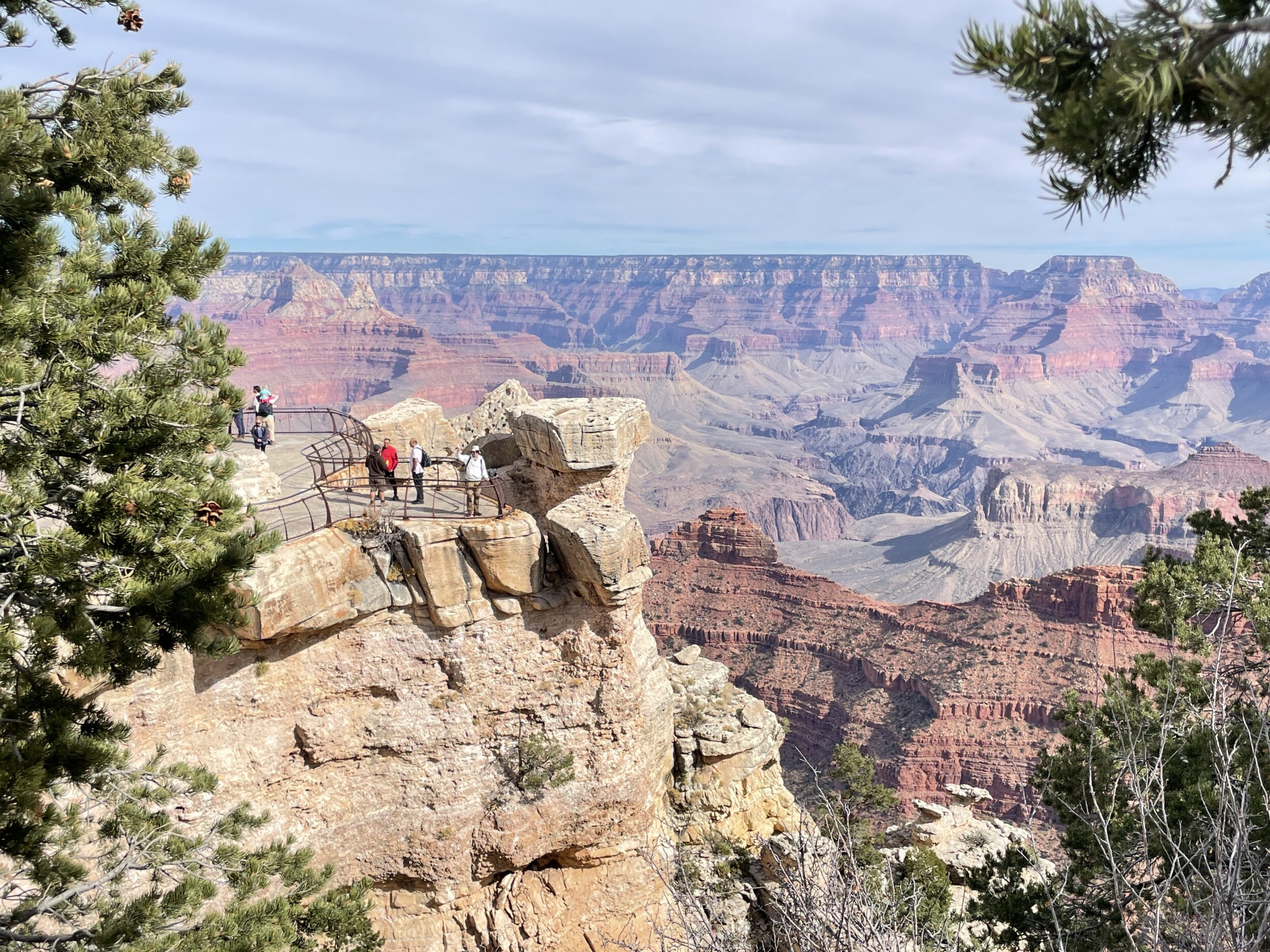
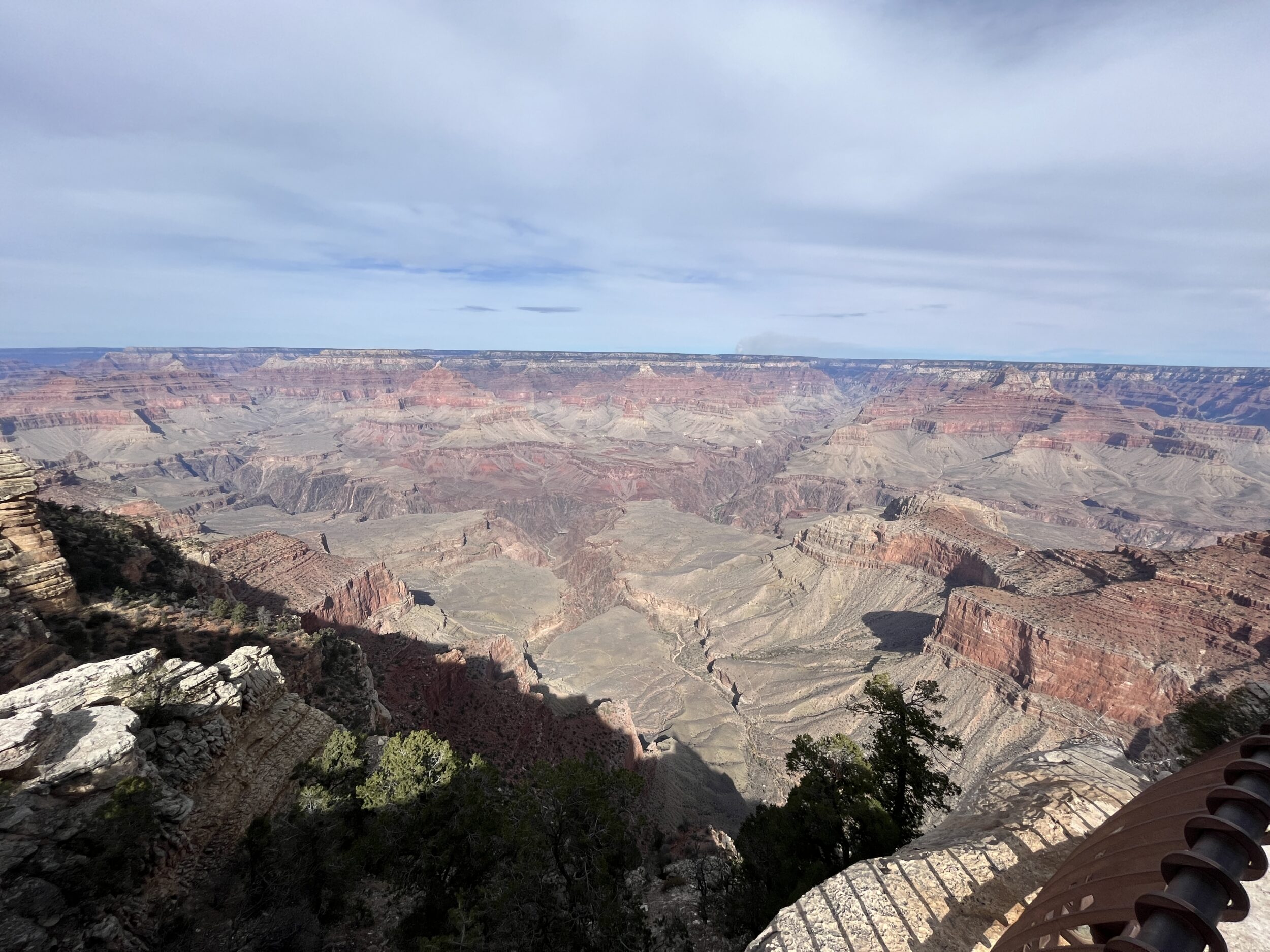
At one point, we hear a helicopter and have a hard time spotting it. It appears as a tiny red mosquito, lost among miles and miles of canyon. It’s when comparing the helicopter’s size to the canyon that we’re blown away by its grandeur.
The North Rim is higher than the South Rim (where we are), and it’s colder on the North side.
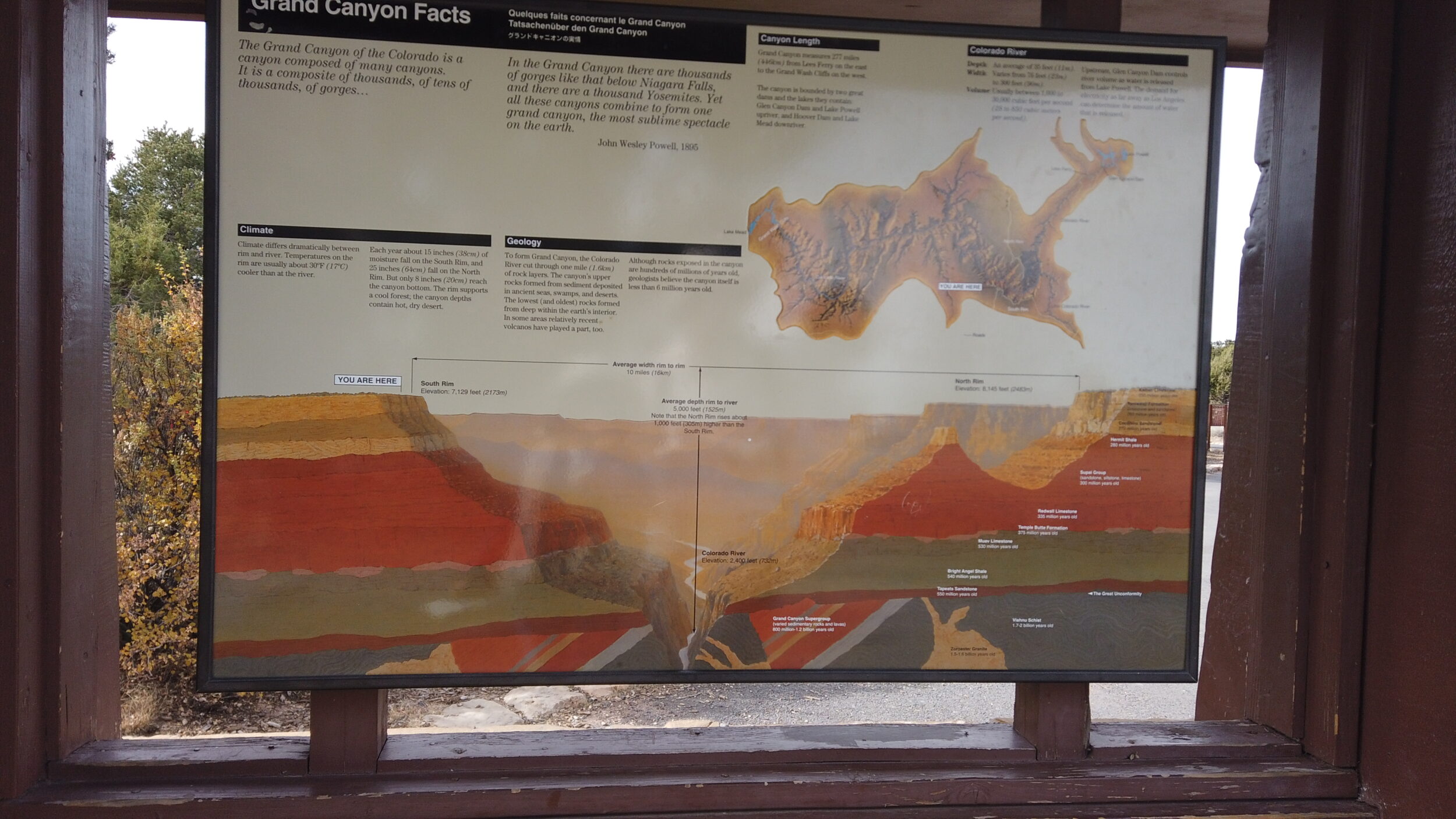
All visitors are tempted to follow the path along the edge (called the “rim”), but having watched some YouTube videos on this, I know we must resist the temptation and hop on the red shuttle ASAP because there are more beautiful stops ahead.
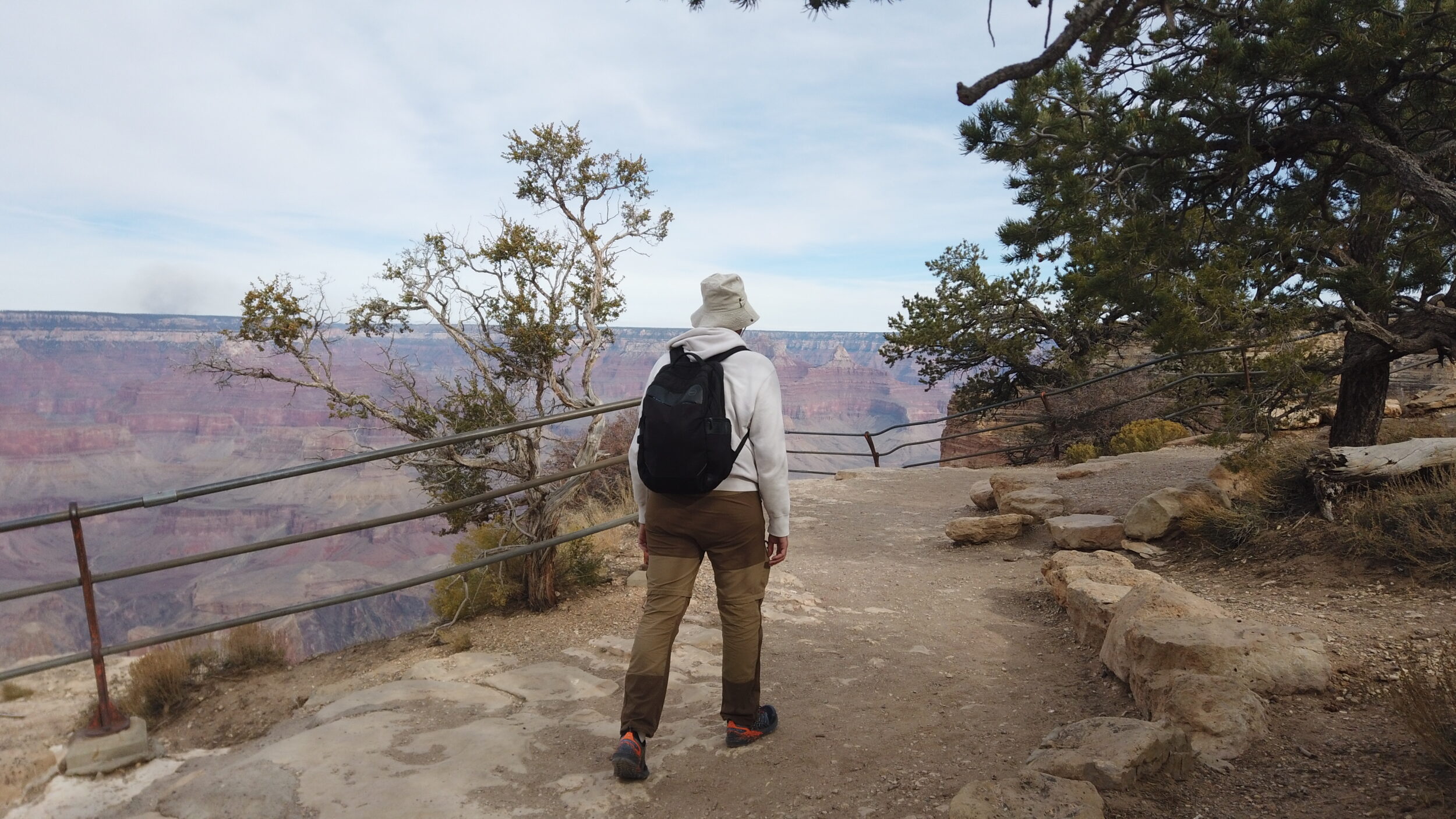
To get to the red shuttle, we have 3 options:
- either leave the car at the Visitor Center and take the blue shuttle,
- or drive to our hotel to drop off the car and take the blue shuttle (the blue shuttle goes to all the hotels inside the park),
- or drive to the start of the red route (Google Maps coordinates) and park there.
On the first day, we’ll go with option 2, before realizing that this blue shuttle takes forever stopping everywhere. The next day, we’ll understand it’s better to go with option 3 to save time. But parking spots near the red shuttle are scarce, so you might want to check here or here.
Red Shuttle
We practically stopped at every stop and can compare them. The full route takes 80 minutes (not counting the time you spend at each stop). This route takes an entire afternoon.
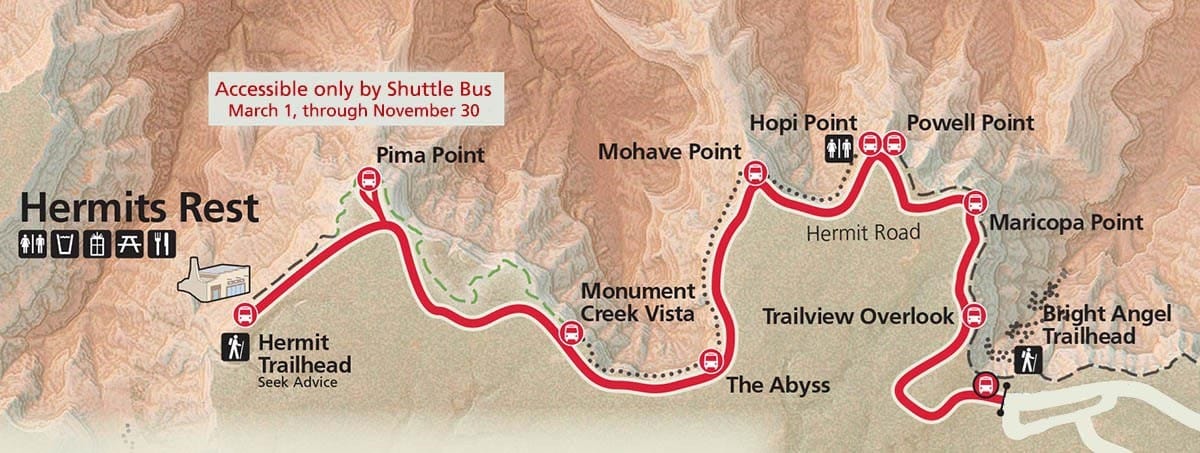
Trail View Overlook (recommended)
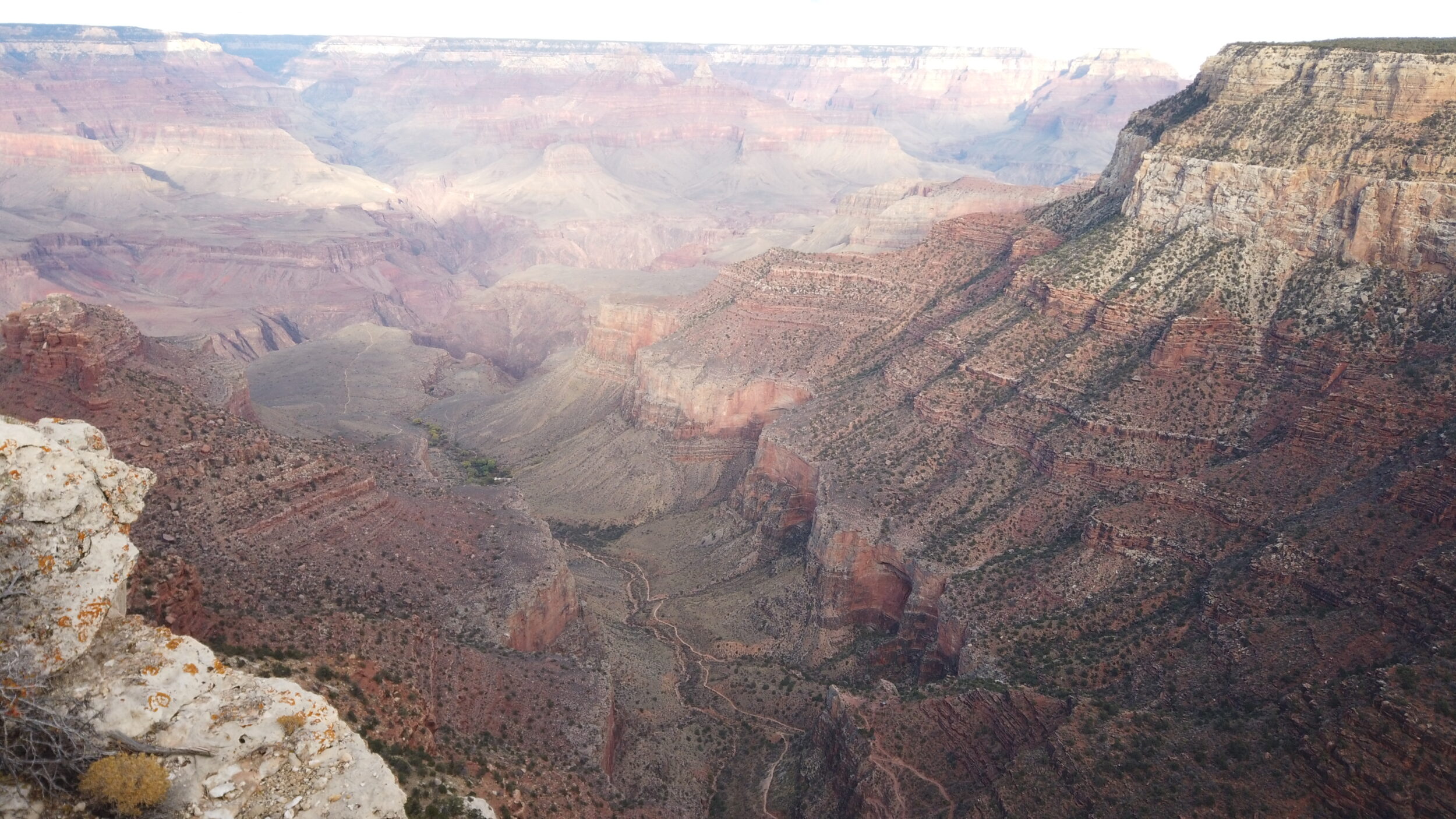
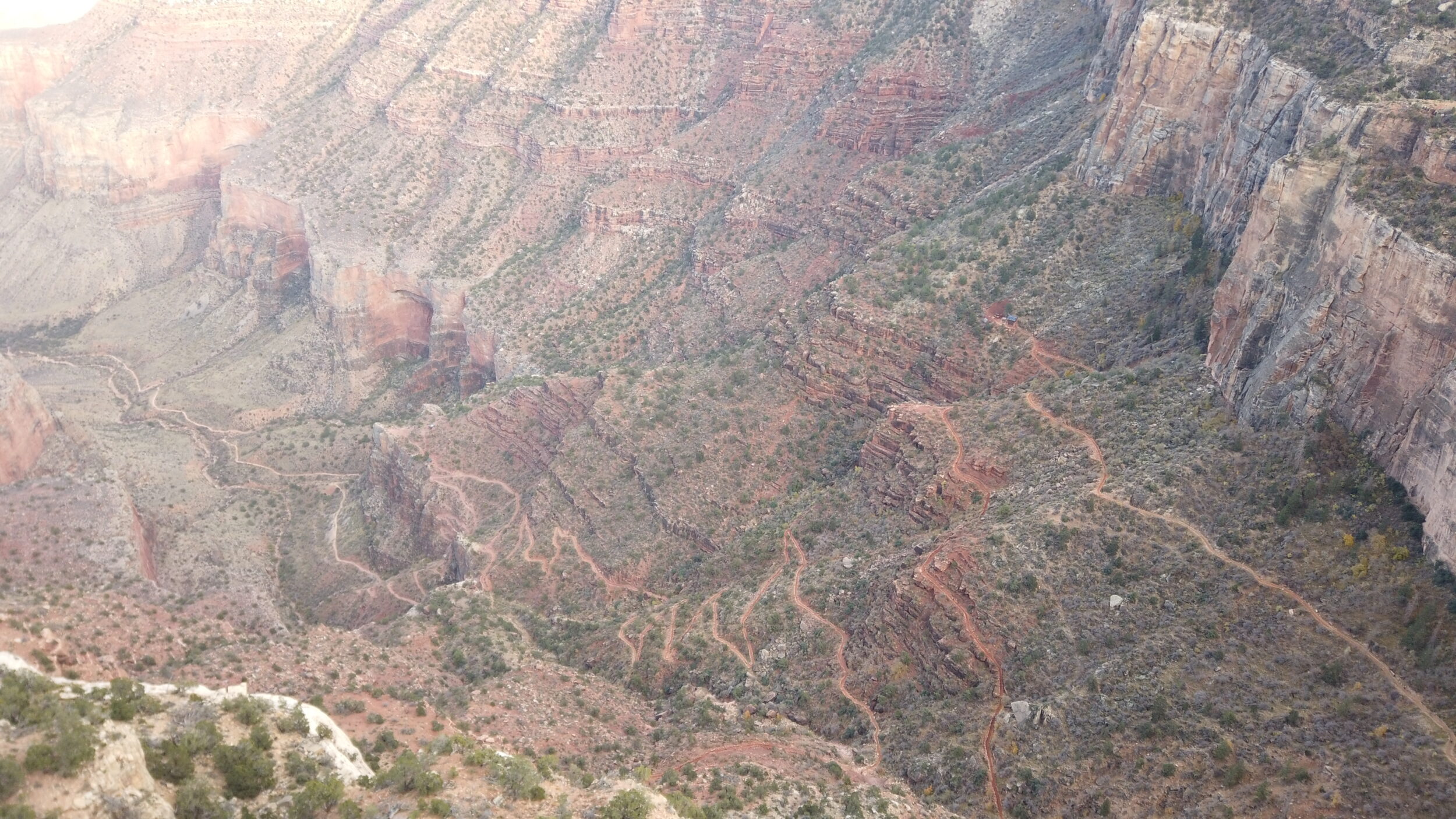
Trail View Overlook is the first stop on the red shuttle. I recommend this stop because it offers a view of the hiking trails. In the middle, you’ll see the Bright Angel Fault. Tectonic activity is still ongoing at the Grand Canyon, and the landscapes will continue to change, little by little. If I understood correctly, the Bright Angel Trail involves descending to the river and coming back up. The park insists it’s impossible for an average tourist to do it in one day, but at least 2 days.
Feel free to hike down here, as you get a better view of the hiking trails.
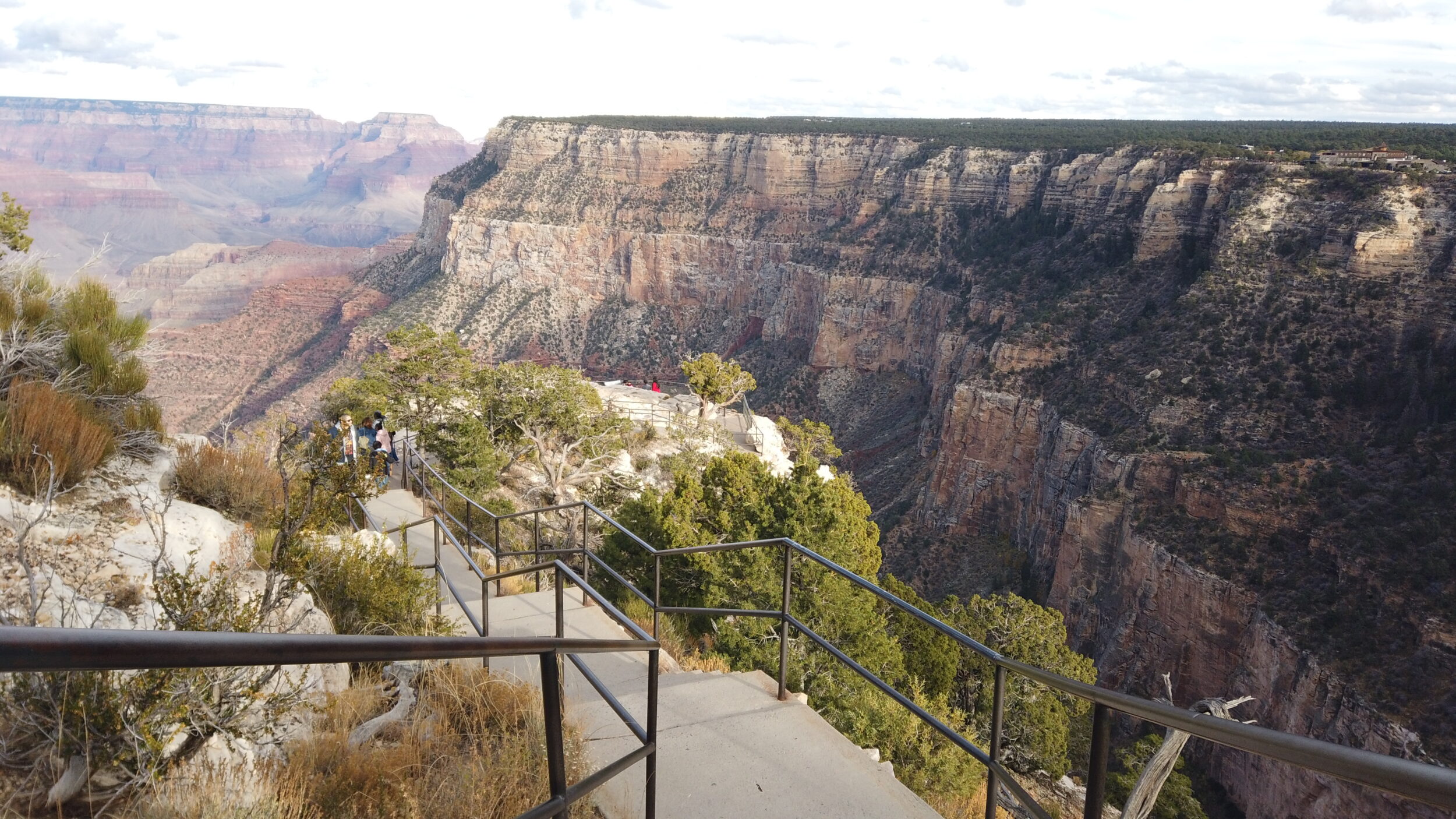
Maricopa Point (recommended)
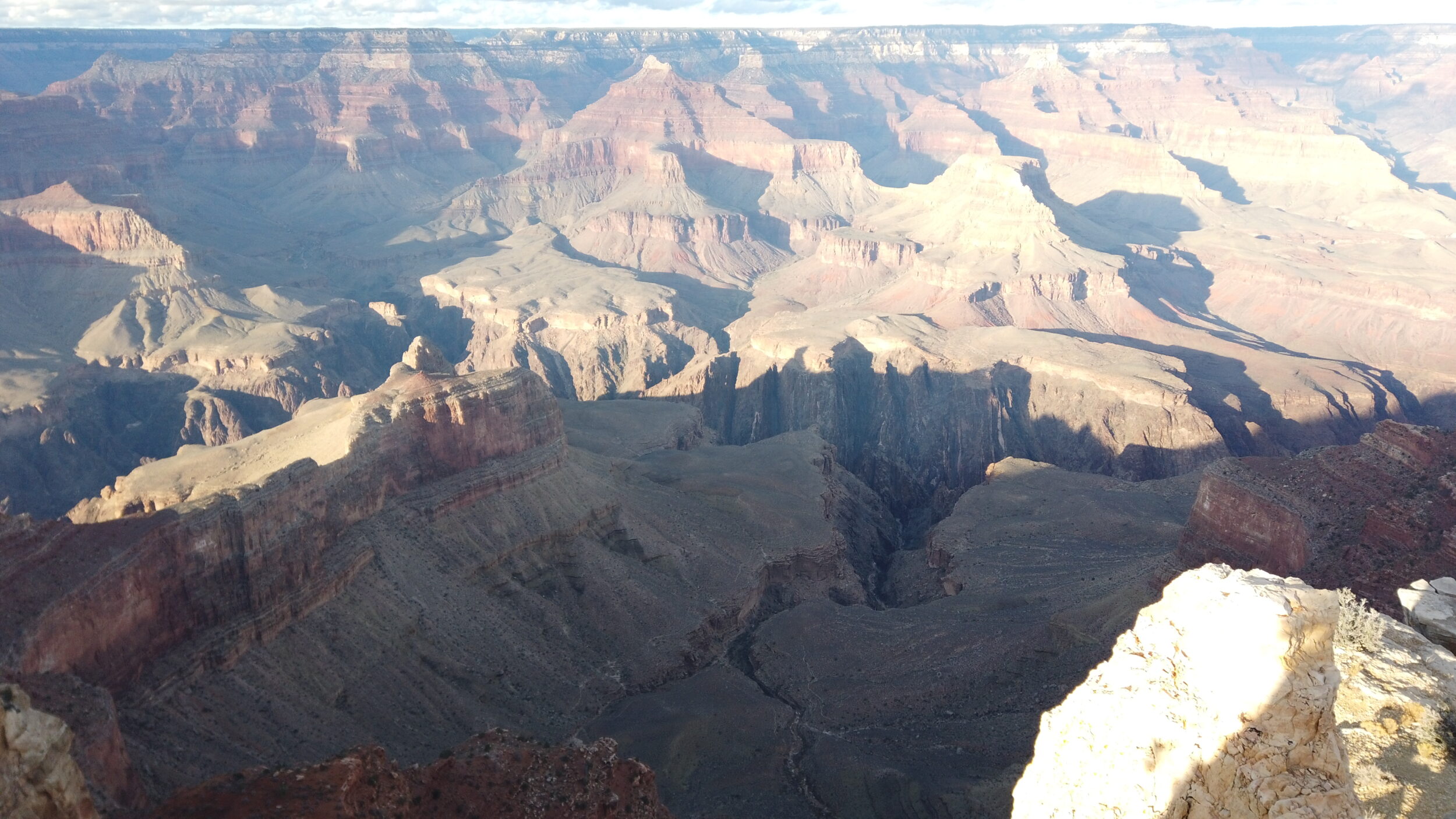
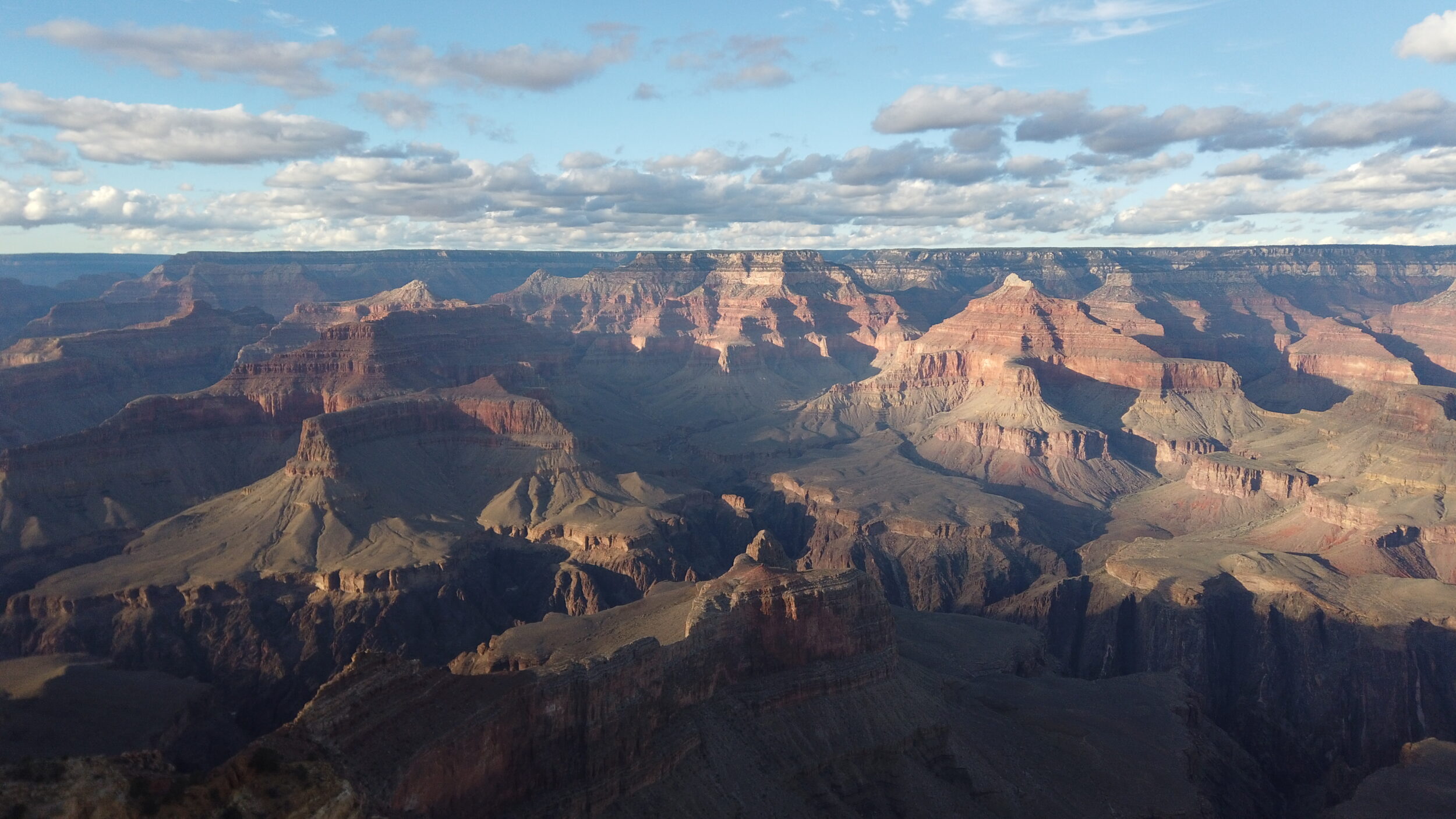
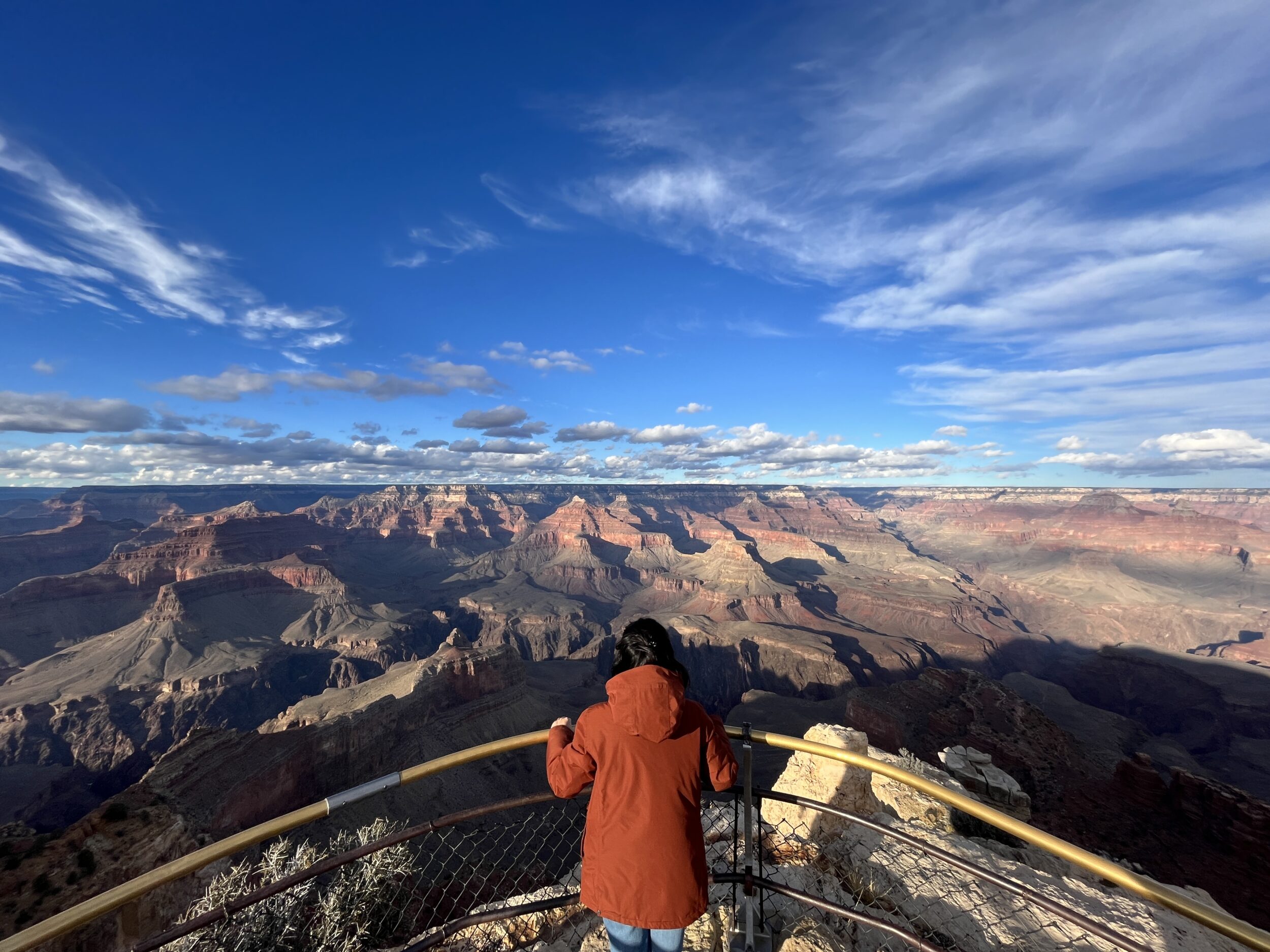
From Trail View Overlook, instead of taking the bus, we walk about 1km to Maricopa Point. Walking doesn’t add much compared to the shuttle, because whenever it’s scenic, the shuttle makes a stop, so we’re sure all the best sights are already covered by the shuttle. Maricopa Point is really lovely. You can take some great photos here.
Back on the shuttle, JB discovers an iPhone left on a seat. The owner couldn’t activate Lost Mode, probably because she was on the same bus as us 15 minutes ago. We have no way to contact her friends (her phone is locked). All we find is a driver’s license behind the phone. We give the phone to the shuttle driver, trying to find her on Facebook and let her know where to find it, but in vain.
Powell Point
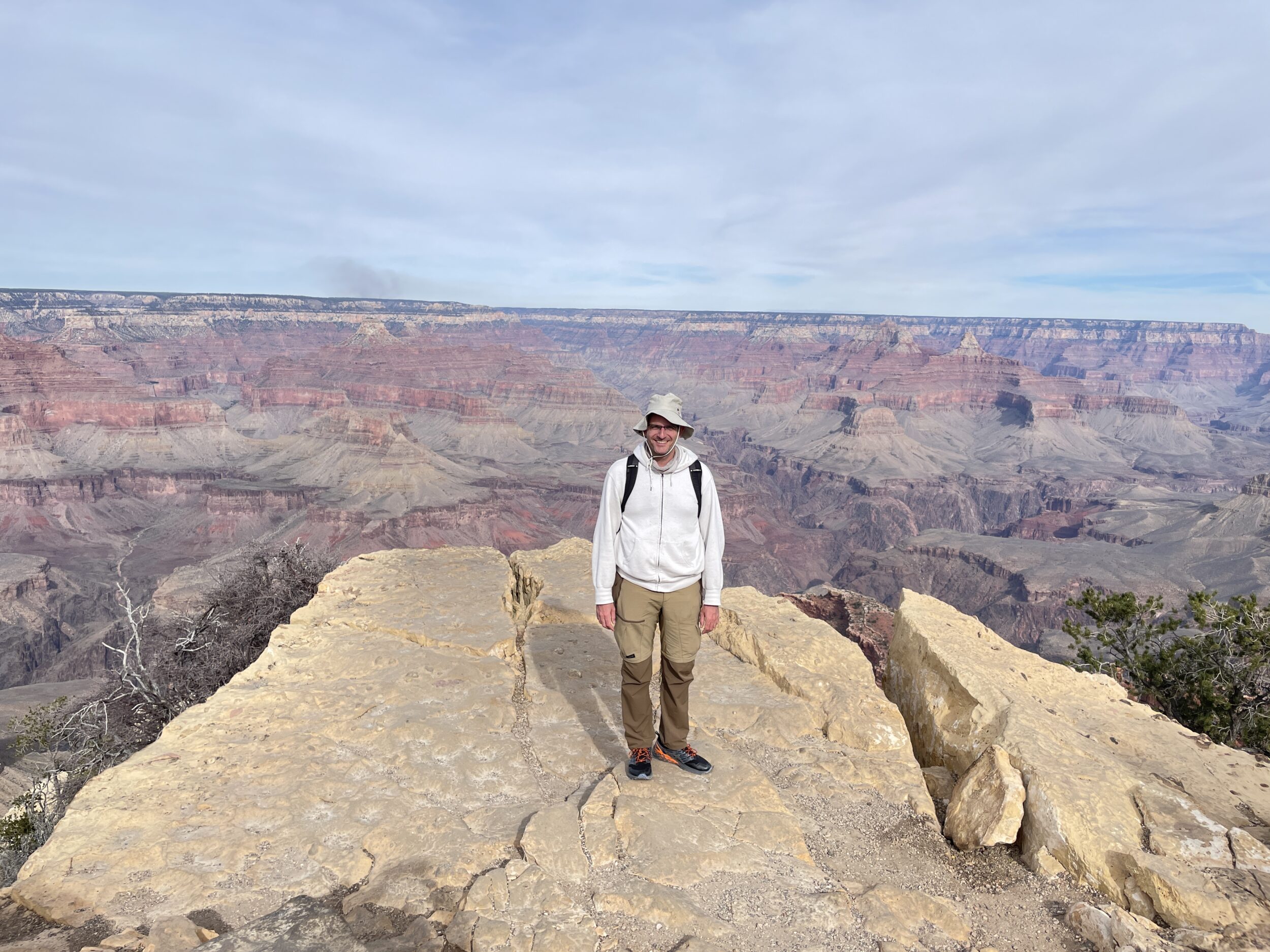
It’s really pretty, but if you’re short on time, skip this one.
Hopi Point
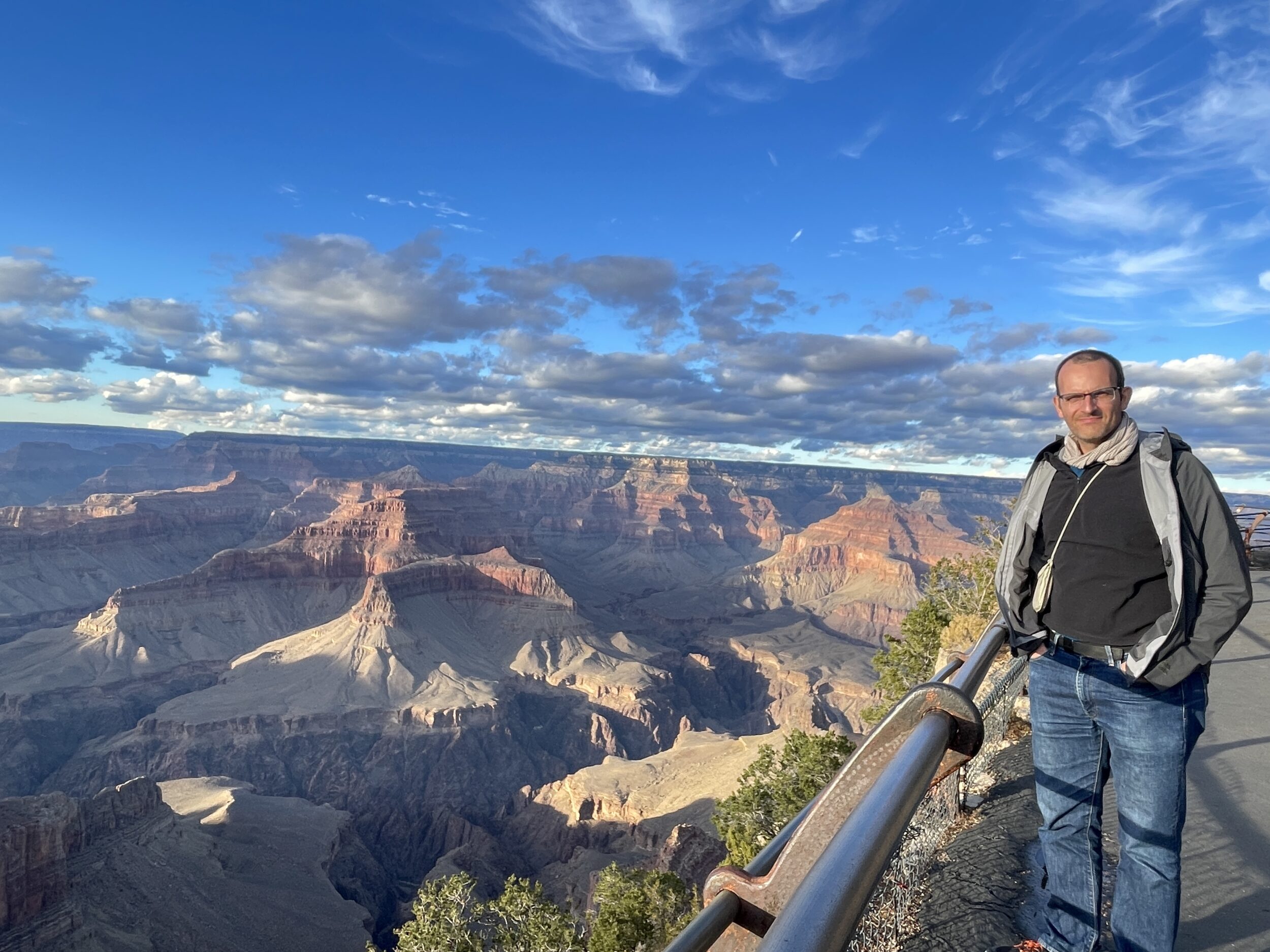
Quick to visit. The view is somewhat similar to Mohave Point but less impressive.
Mohave Point (recommended)
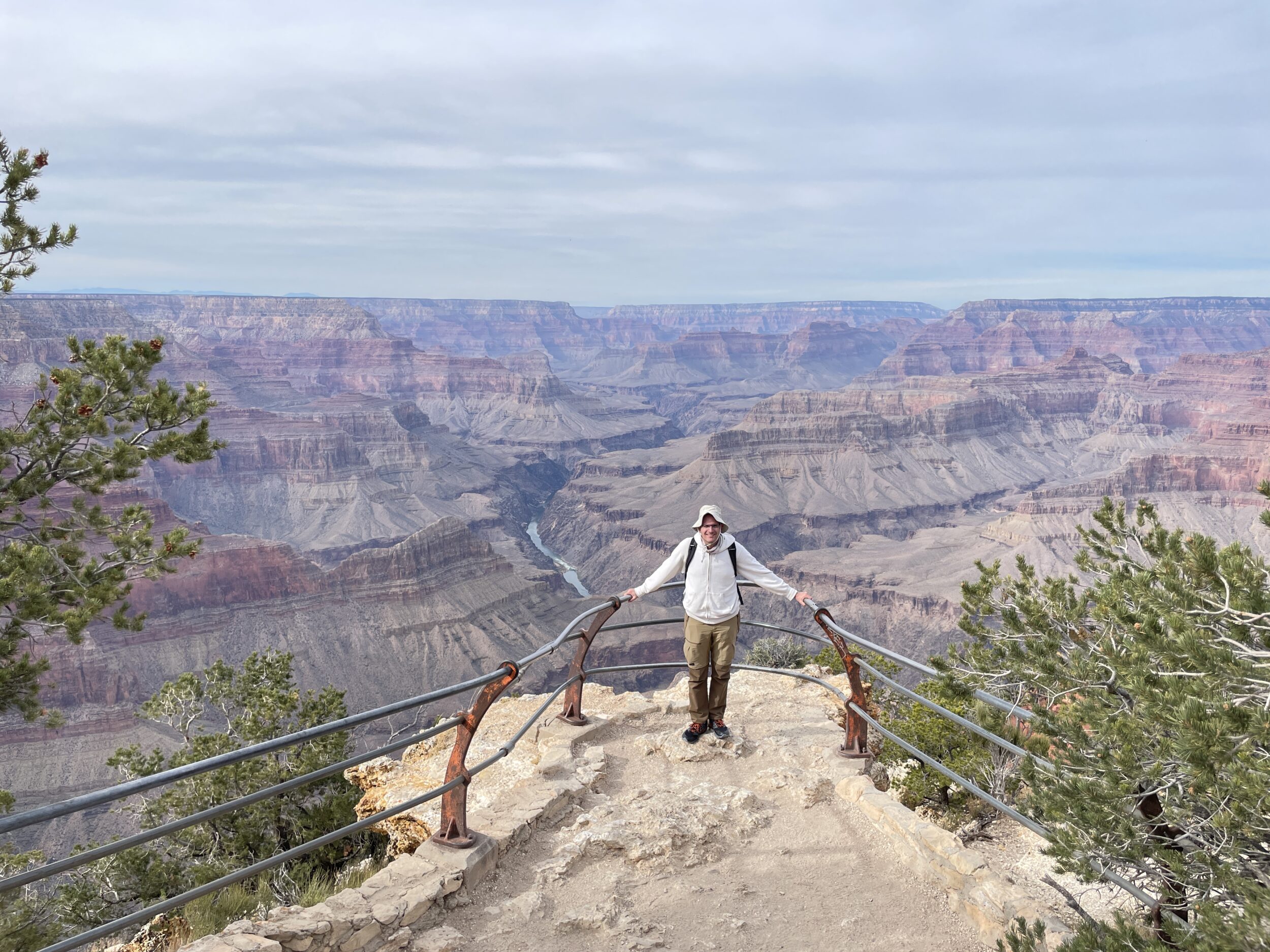
Wow wow wow!! It’s my favorite stop on the red route. You can clearly see a section of the Colorado River. You get a panoramic view of over 200°. I love it! However, the balcony (where the best view is) is small, so it’s best to come when it’s not crowded.
Pima Point
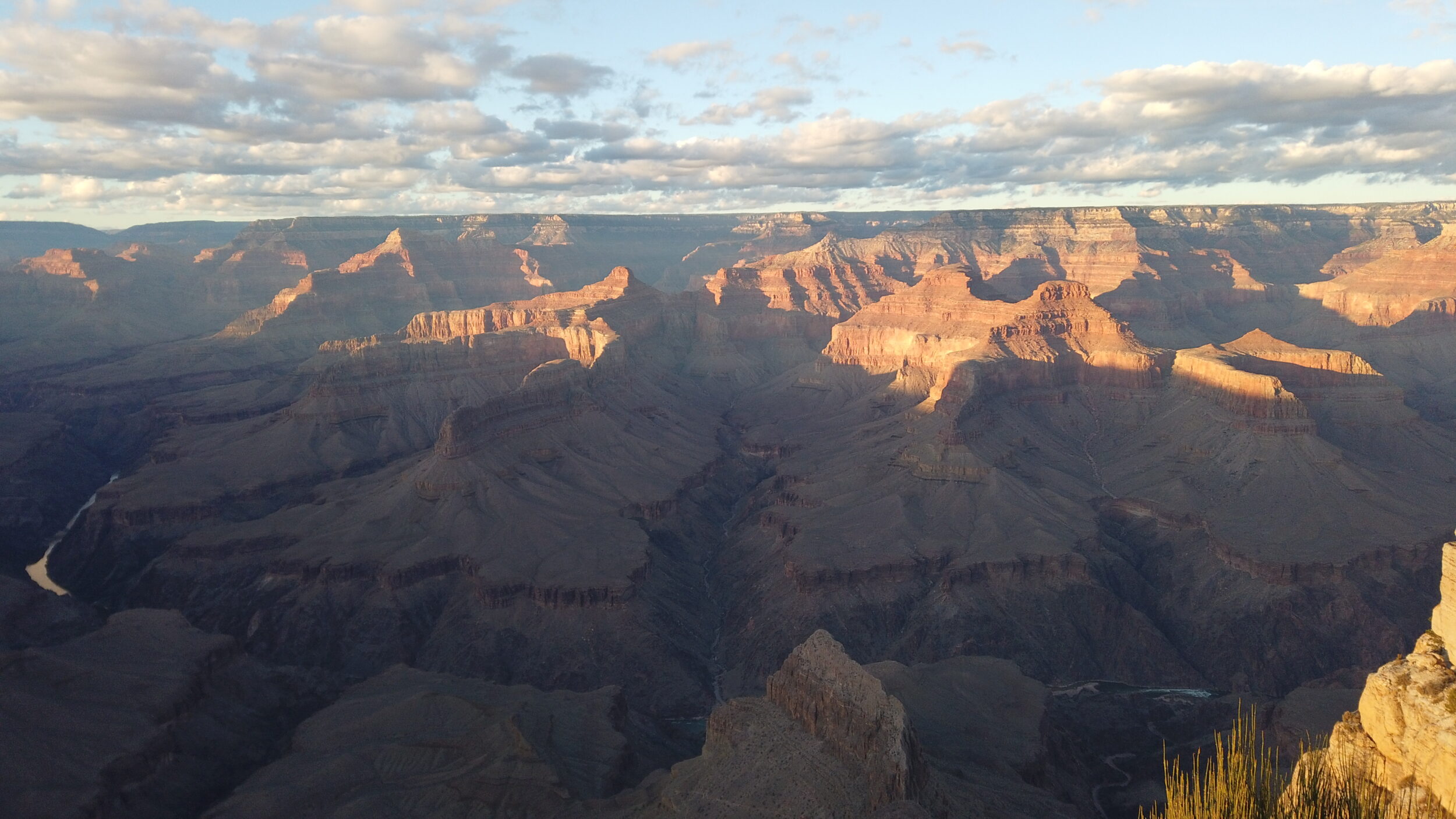
It’s an interesting and pretty stop, but less spectacular than my other favorites. It’s not the best spot for sunset, though, because the peaks are lower.
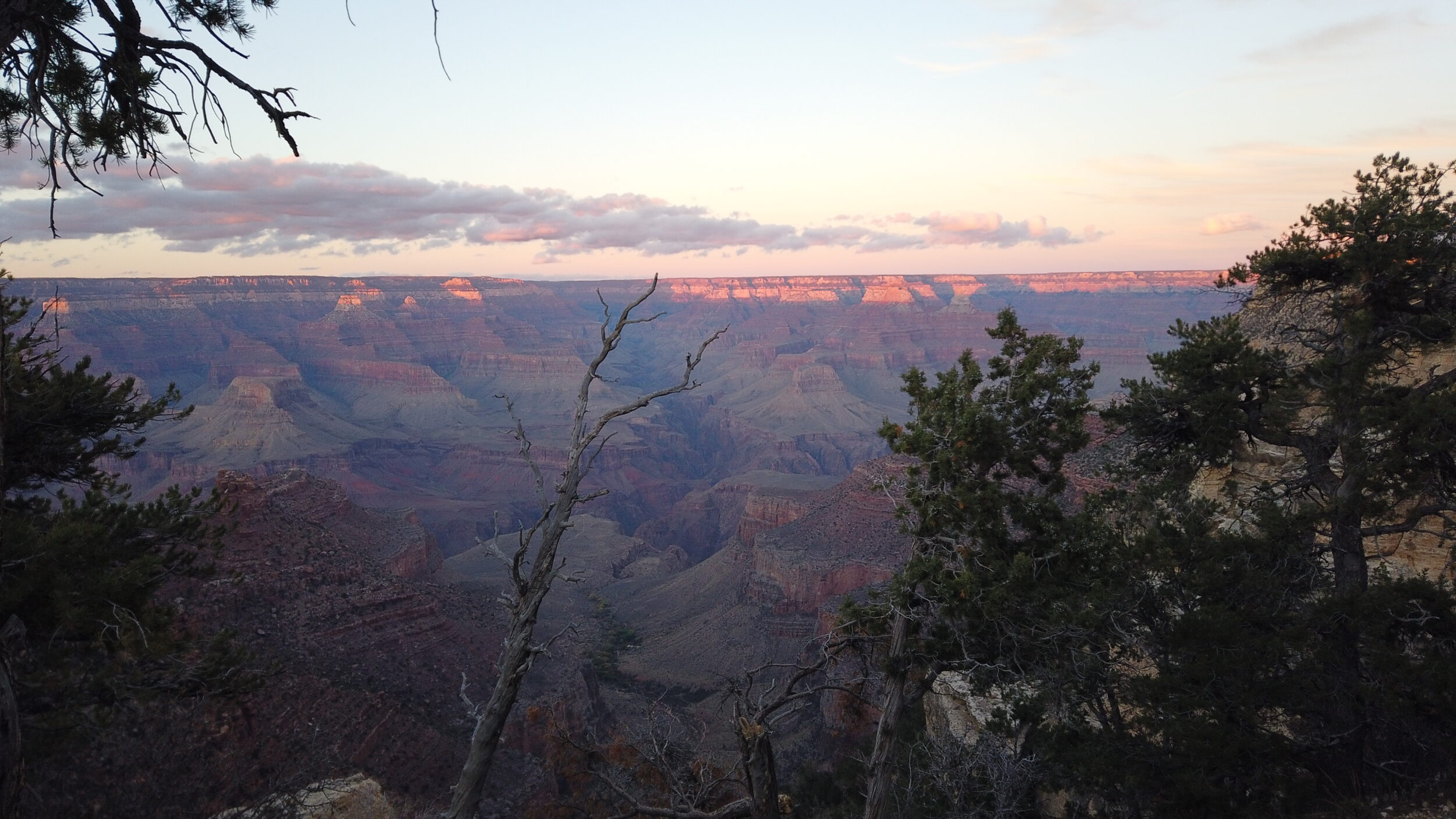
Sunset and sunrise at the Grand Canyon, from what we saw, are interesting for their play of light. You don’t really see the sun rise or set, but rather the red light spreading over the canyon, creating shadows and highlighting the dips.
Boarding the second-to-last shuttle back for the day, I notice a woman who looks a lot like the person who lost her phone. She doesn’t seem happy. She gets on the shuttle and says something to the driver. He has her sign a document, and I see him hand over the phone. So it all ends well! It’s funny that we happen to get on the exact same shuttle we gave the lost phone to, and she also finds the same driver. We’re not sure how she figured out who had her phone, but we’re glad we witnessed the scene to get the full story.
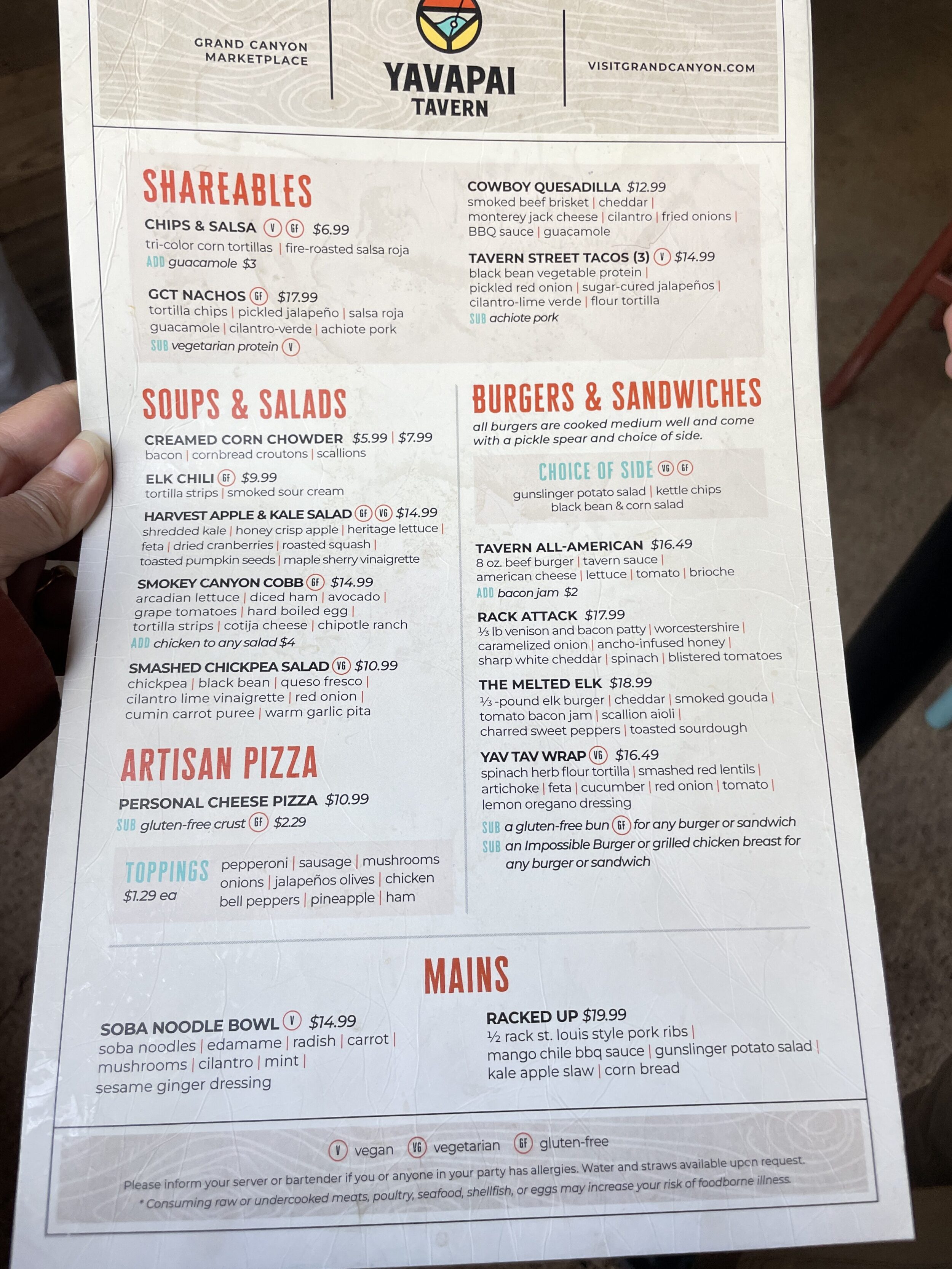
In the evening, we have dinner at our hotel’s restaurant. I find the prices very reasonable for a restaurant in the middle of a national park (we get out for $17/person excluding drinks). Wi-Fi is only available in the lobby and restaurant, so we stay there a long time to upload blog posts for you.
Day 3:
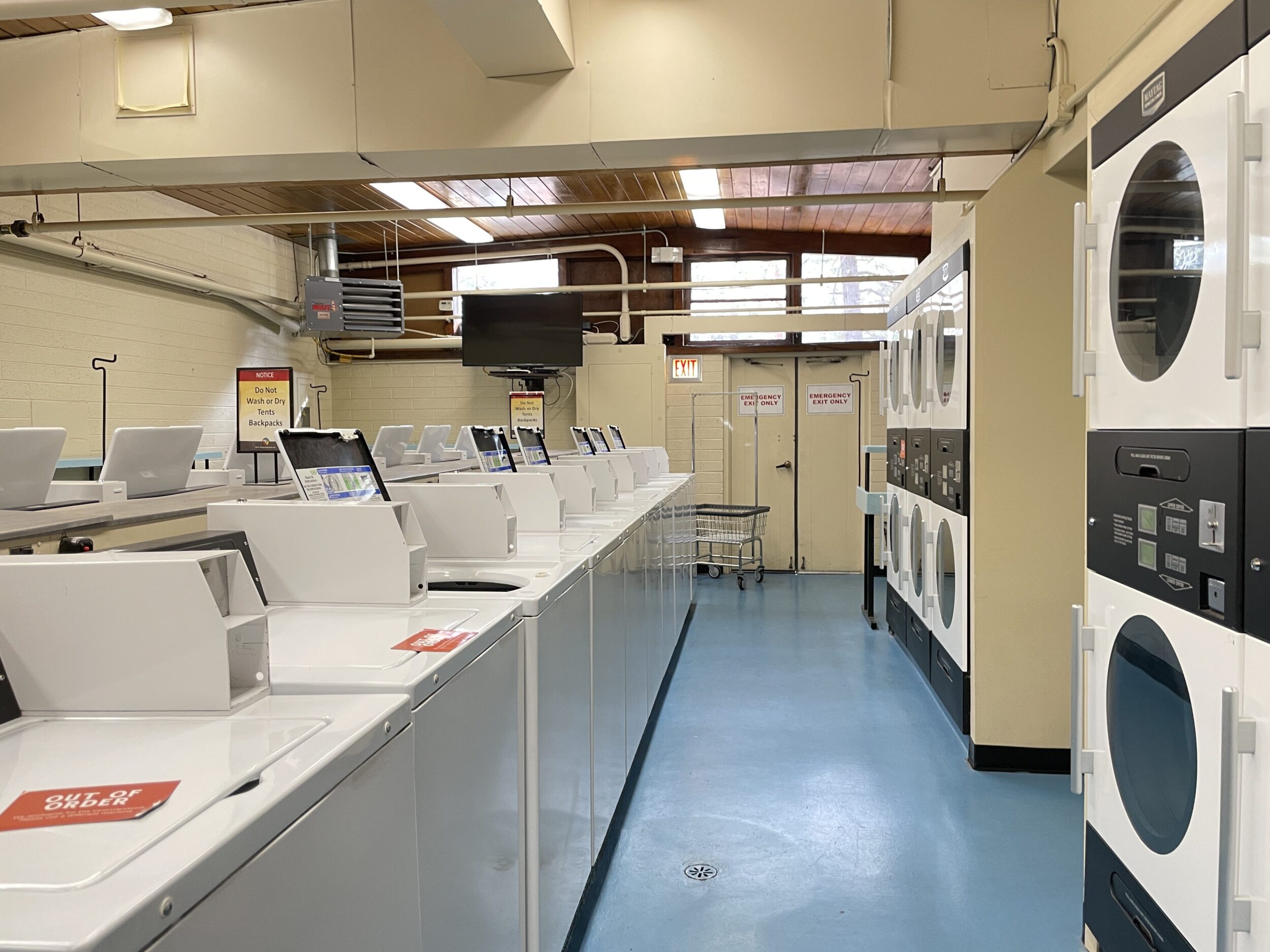
We’re not very efficient today because we wake up late and have to do laundry. The campground right next door has a laundry : $2.5 for the washing machine, $1.25 for the dryer. If you don’t have detergent, count an extra $1.25 (we bought some at Target before coming).
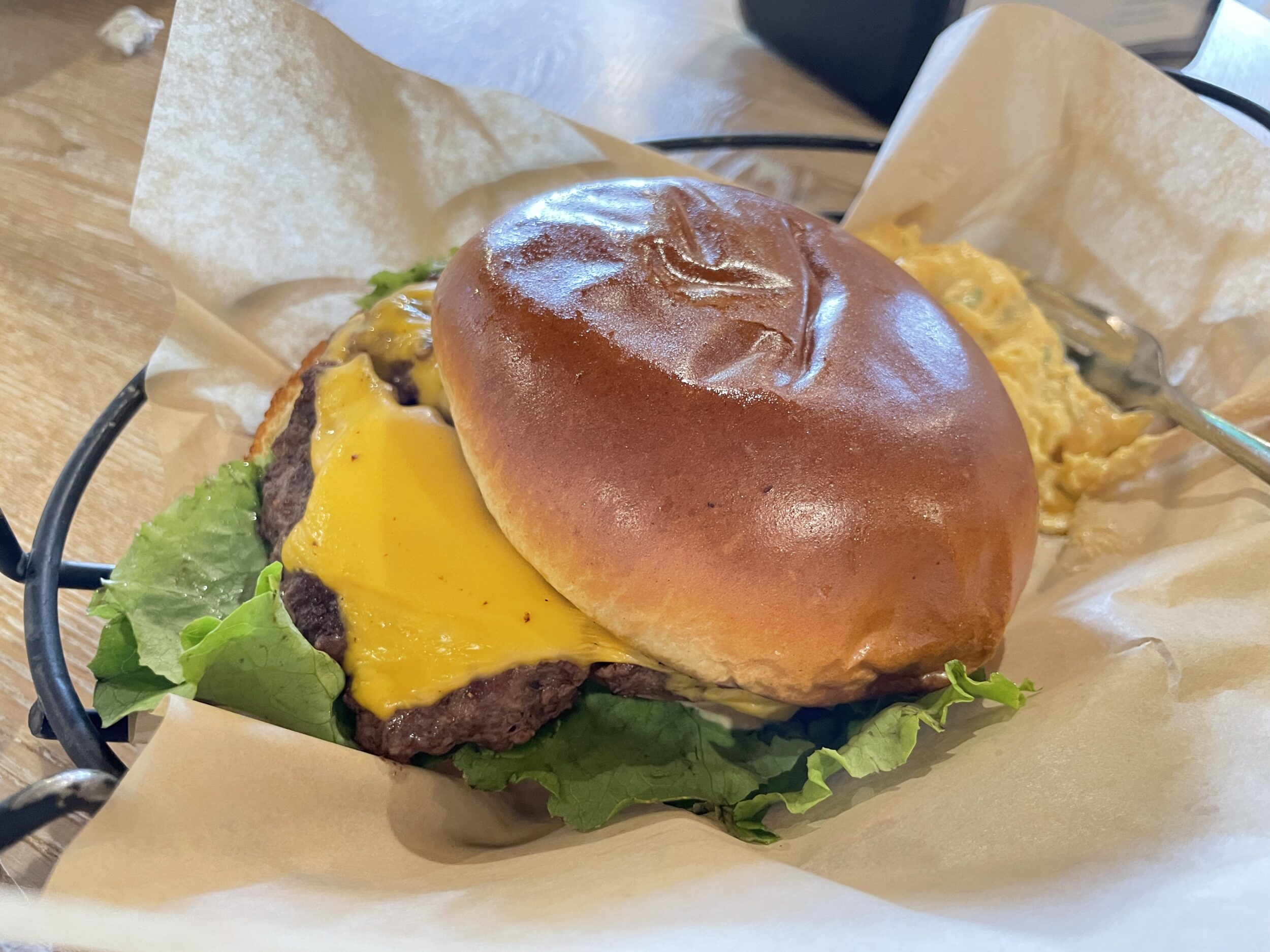
Too used to having three meals a day on the transatlantic cruise, we’re starving and opt for a burger at the hotel restaurant, which is very good (but when you’re hungry, everything is good).
We’ll have just enough energy to visit part of the orange shuttle today and Shoshone Point, recommended by a friend.
Orange Shuttle
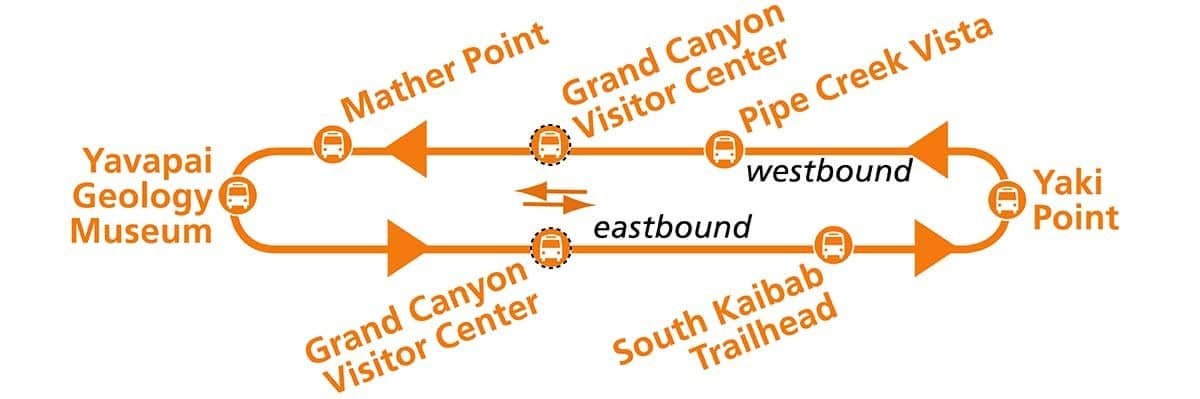
We park at Visitor Center (parking 2) and right across is the orange shuttle. We first stop at South Kaibab Trailhead. This is where hikers set off for a full-day trek.
South Kaibab Trailhead
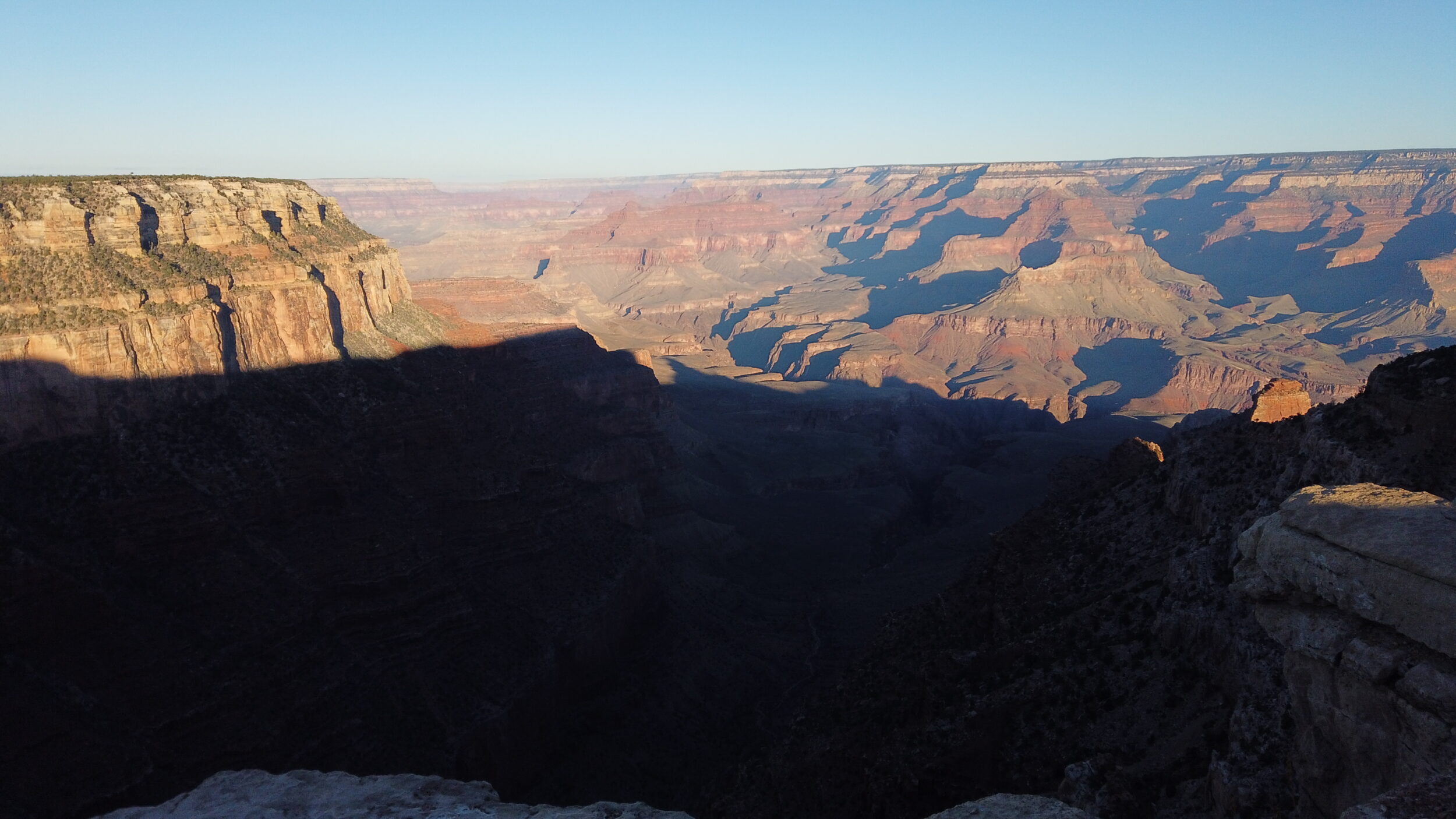
The view from this stop is a bit like Yaki Point, but not as good. I think a stop isn’t necessary, unless you’re hiking
Yaki Point (recommended)
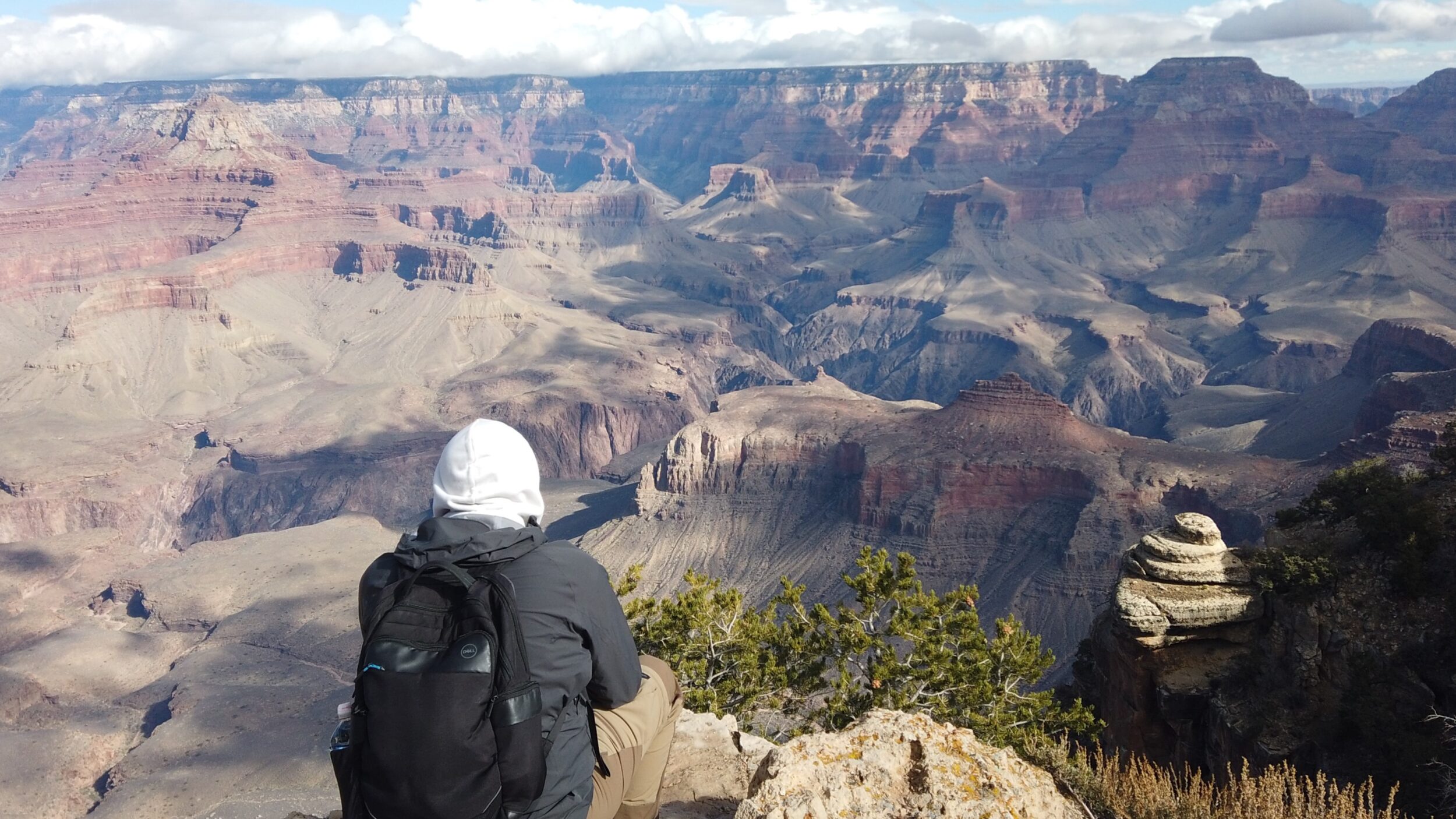
This is the place people recommend for sunrise. Not having fully understood why the orange shuttle starts after sunrise, I didn’t try it. But during the day, the view is very beautiful even if there’s no spot offering a 270° view.
Pipe Creek Vista (recommended)
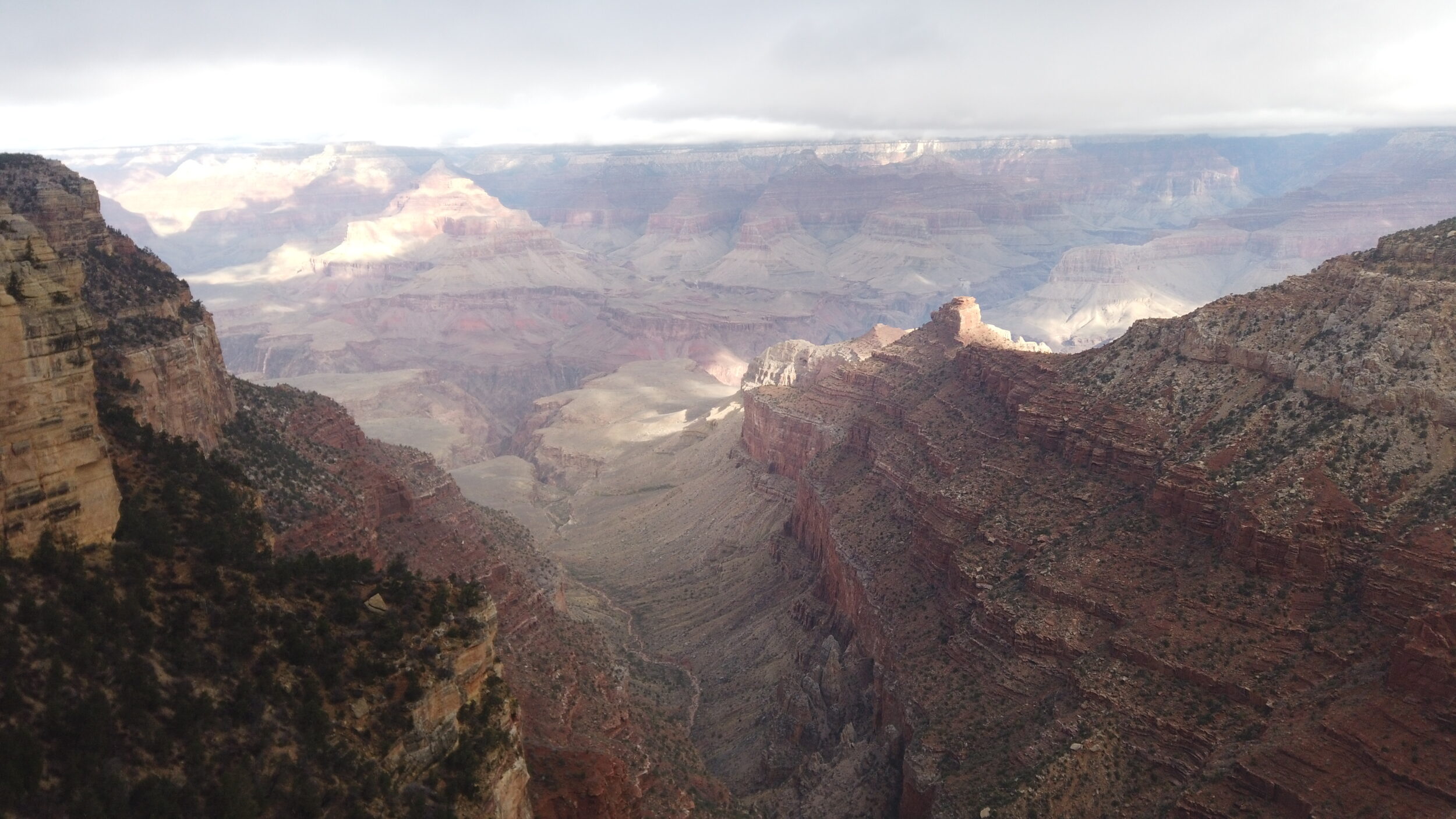
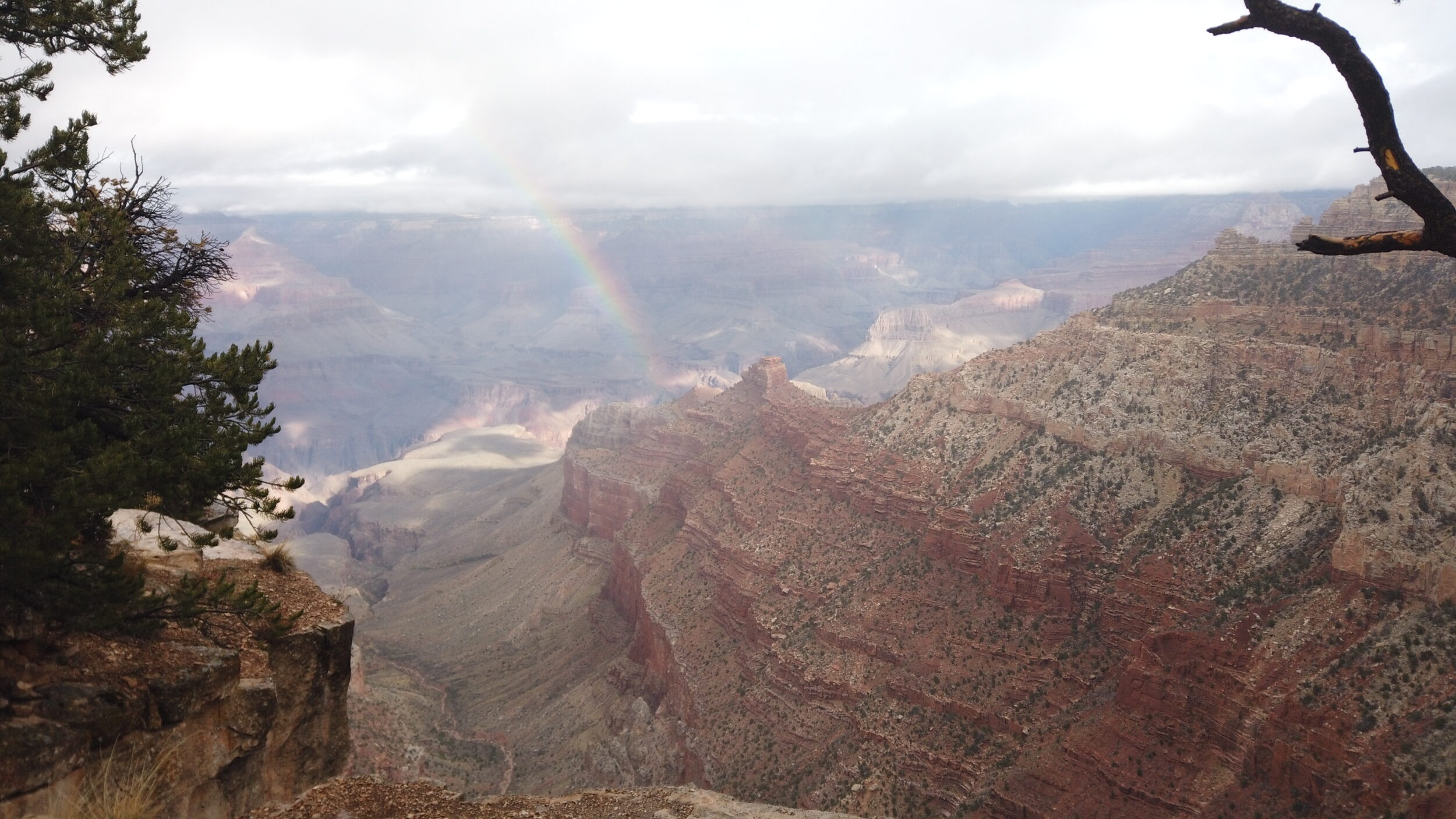
On the way back, the orange shuttle stops here. The view is open, a bit different from the others, and there’s plenty of parking. You can come here with your car. We spot a beautiful rainbow, which disappears after a minute. How lucky!
The other two orange shuttle stops: Mather Point and Yavapai Geology Museum are highly recommended. A gentleman told us that the sunset at Yavapai Geology Museum was very pretty.
Shoshone Point (highly recommended)
We take the car again to go to Shoshone Point, recommended by our friend Kevin. Even in high season, nobody goes there because you have to walk 3.2km round trip. It’s the only place in the park that can be reserved for weddings, among other things. There are large tables, composting toilets, but no water. The view is absolutely incredible and above all, we are alone! It’s not that there are many of us in mid-November, but it’s always nice to be alone and have this kind of landscape, just for us.
Photos don’t do it justice because the place is much more beautiful than that. We have a view of almost 360 degrees.
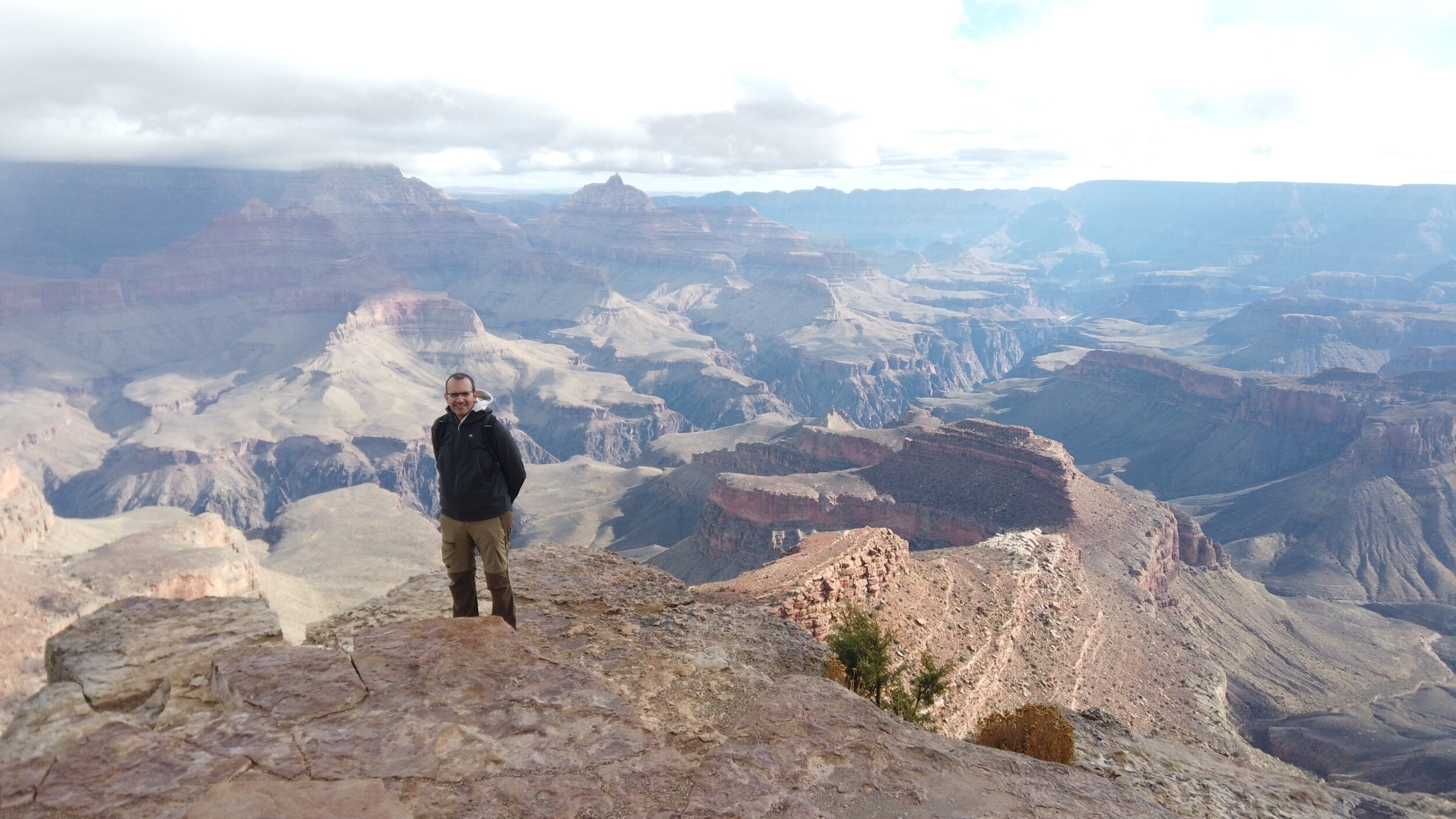
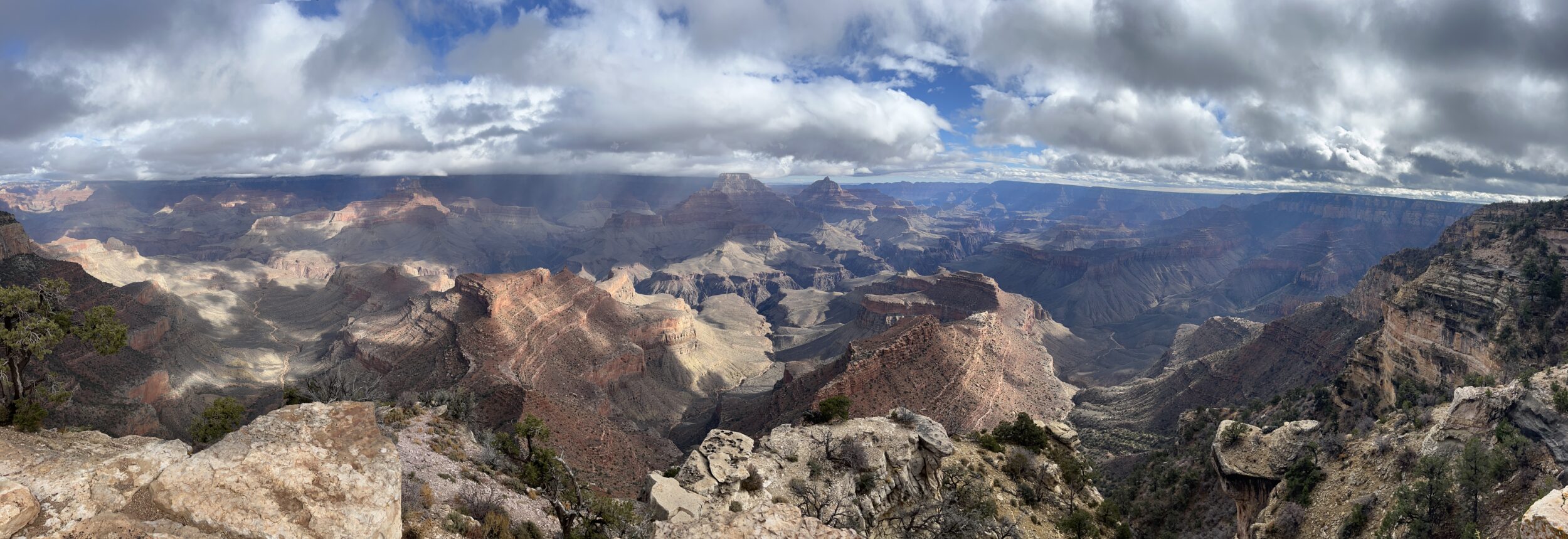
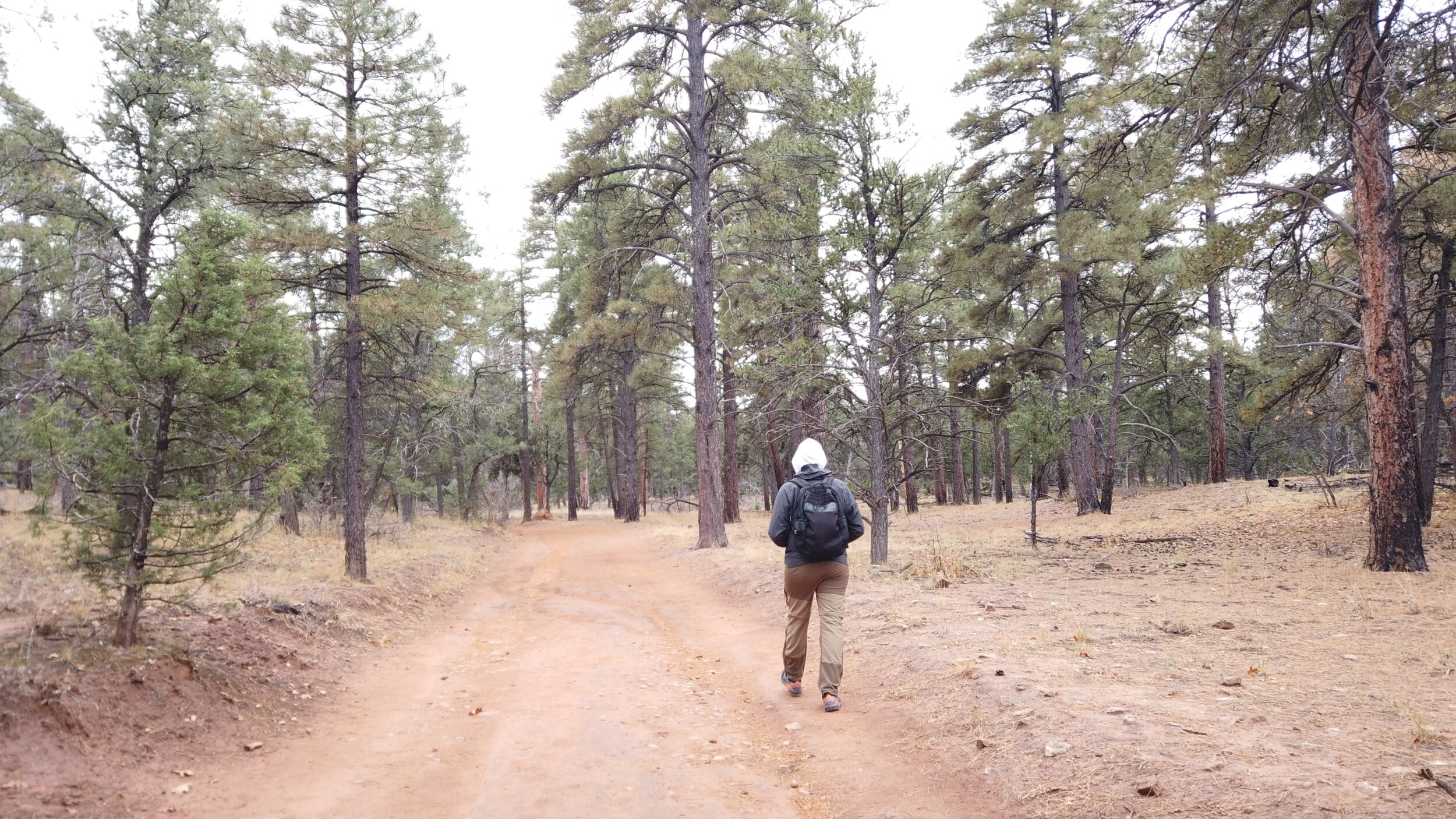
The walk is not difficult, it goes up very little. Bring lots of water with you. Even if you walk in the shade, among the trees, it’s dry here.
Tonight, for dinner, we settle for things bought at the supermarket opposite our hotel (the general store). It’s about 15% more expensive than in town, but it’s still very reasonable. I happily find beef jerky (beef jerky). By the end of my road trip, I’ll have tried all the flavors. This time, it’s “hot beef jerky”, it’s very spicy but so addictive!
Accommodation
Speaking of our accommodation, we opted for Yavapai Lodge, the cheapest hotel inside the park. At first, I thought all the park hotels were booked only through the official national parks websites, but that’s not the case, you can find them on hotels.com as well. It’s more convenient (rather than having to create an account for each park).
Our room is spacious and very comfortable. There are posters everywhere encouraging us to save water, while also encouraging us to drink water to stay hydrated. At the lobby, there’s a free water fountain, and there are some all over the park too.
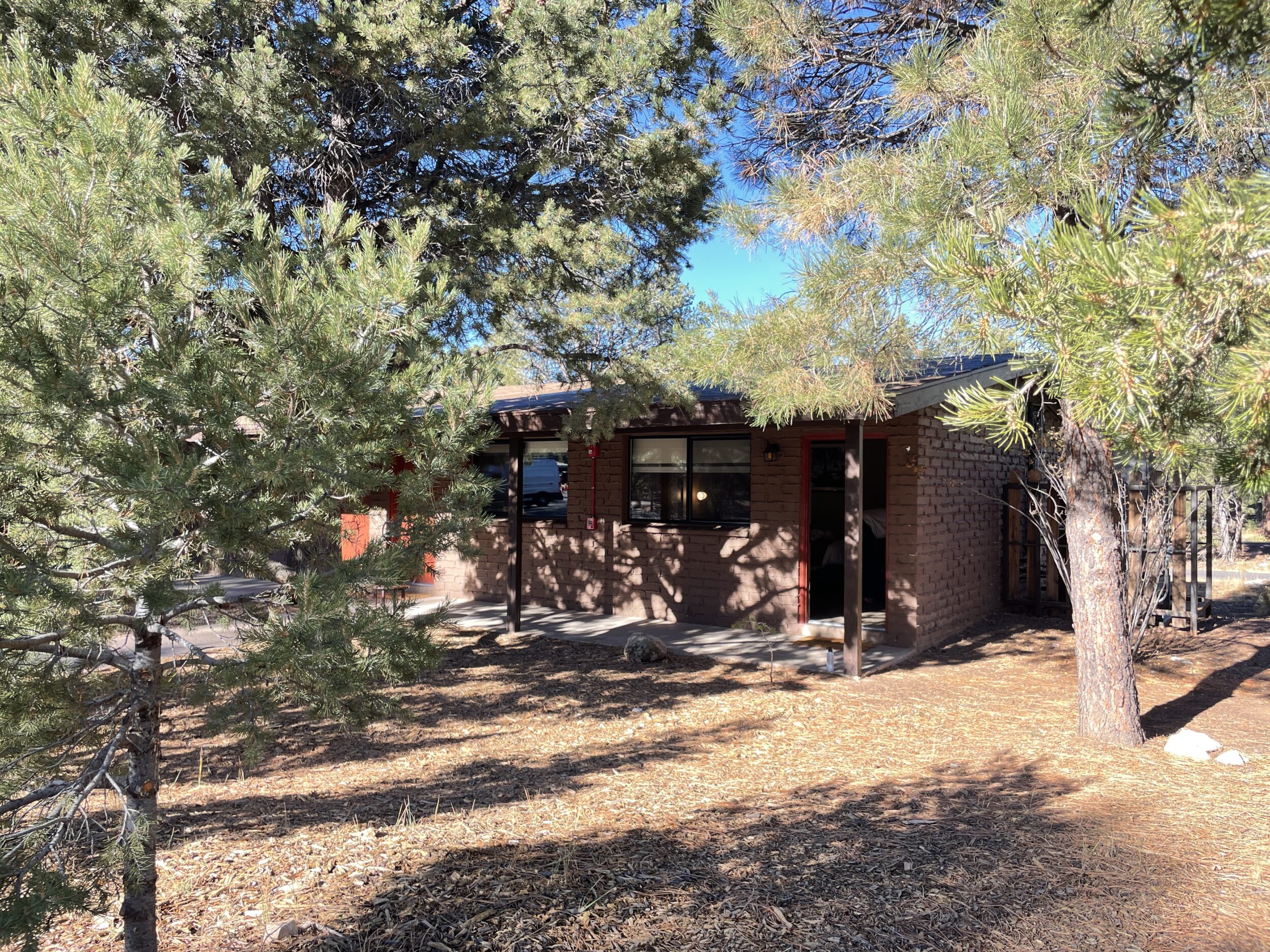
The rooms are spread across several small buildings next to the lobby, right on the street, a bit like motels. Be careful at night, there’s no light so it’s better to go to the lobby by car (and come back by car) 😀 There are plenty of parking spots in front of the room. There are cheaper options, especially if you have a tent or a van.
If money weren’t an issue, I would have preferred the Bright Angel Lodge, which has a terrace overlooking the Grand Canyon directly, and it’s a stone’s throw from the red shuttle. So you won’t need to take the car for sunrise/sunset, or to catch the shuttle.
Day 4
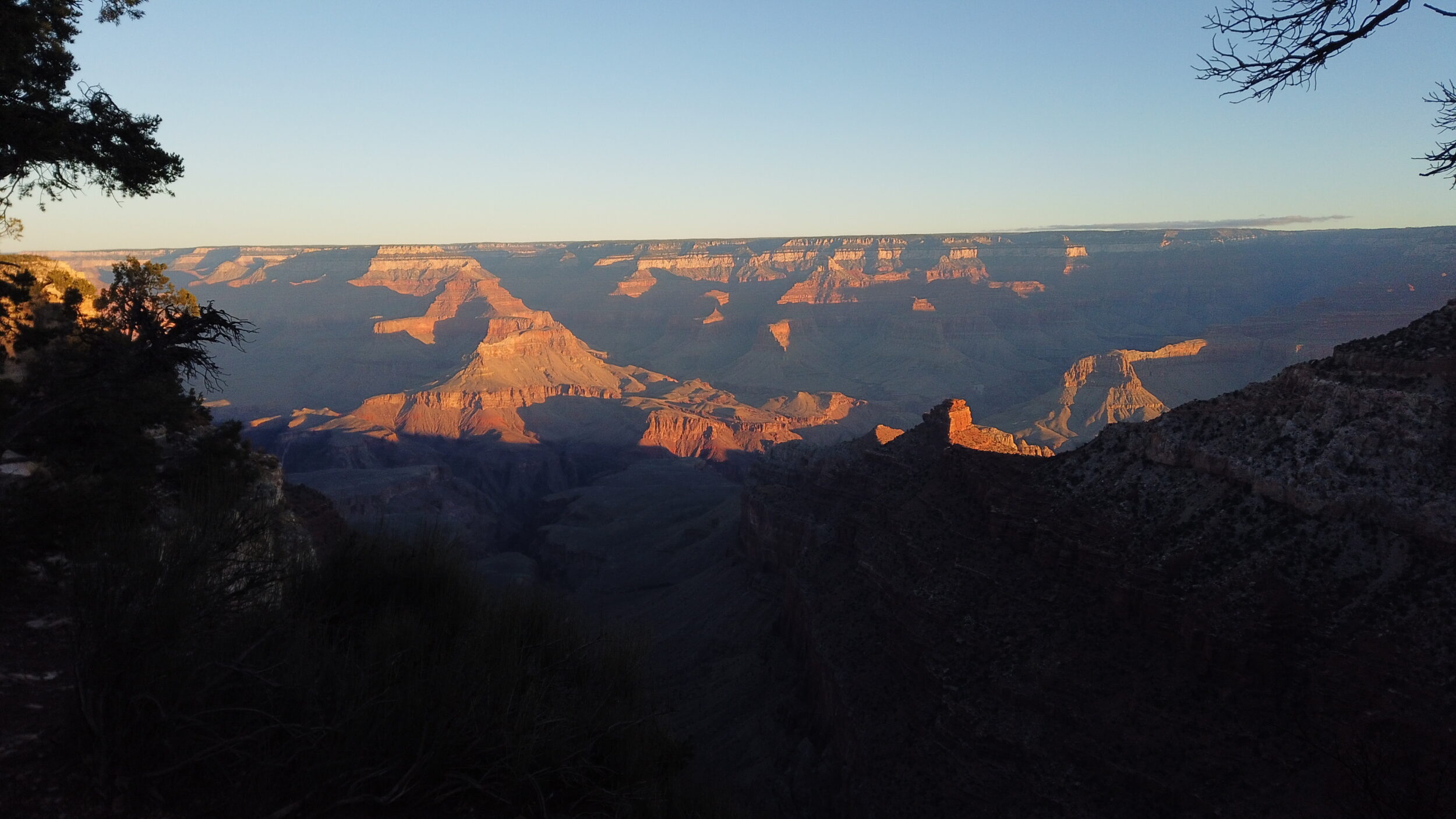
We motivate ourselves to wake up at 6:30am to watch the sunrise at 7:05am. We’re delayed by a major incident: the car windows are frosted and we have no tools with us. JB looks for warm water in the bathroom and luckily it works! However, we have to be very careful because there’s black ice everywhere, including at the viewpoints. You can slip and die because of a photo.
Pipe Creek Vista is clearly not the best place for sunrise because of its narrow view, but I find the lights quite pretty.
Yavapai Geology Museum
We then go to Yavapai Geology Museum and the view pleases me much more, we should have come here from the first day.
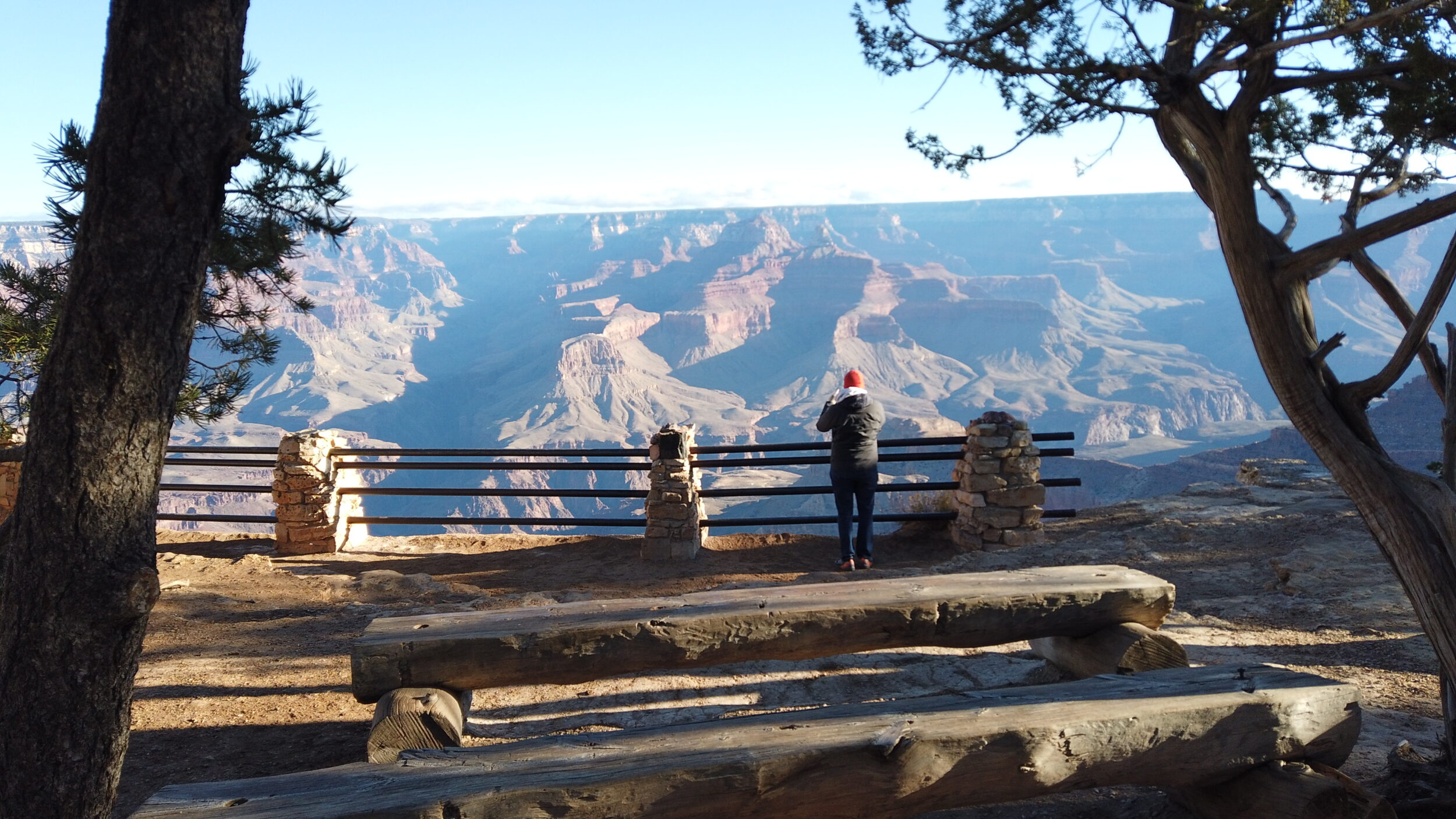
We run into an American who is very happy to strike up a conversation with “Europeans”. He also claims it’s the best place for sunset, and the best time to visit the park (few people + good weather). He booked 5 days here because his son intended to run “rim to rim”, but he couldn’t get time off. So the parents are here alone, but they’ll meet up for Thanksgiving in a week, a holiday more important than Christmas for Americans. That reminds me that I need to book a hotel ASAP, because when the whole country is on vacation, everything is sky-high.
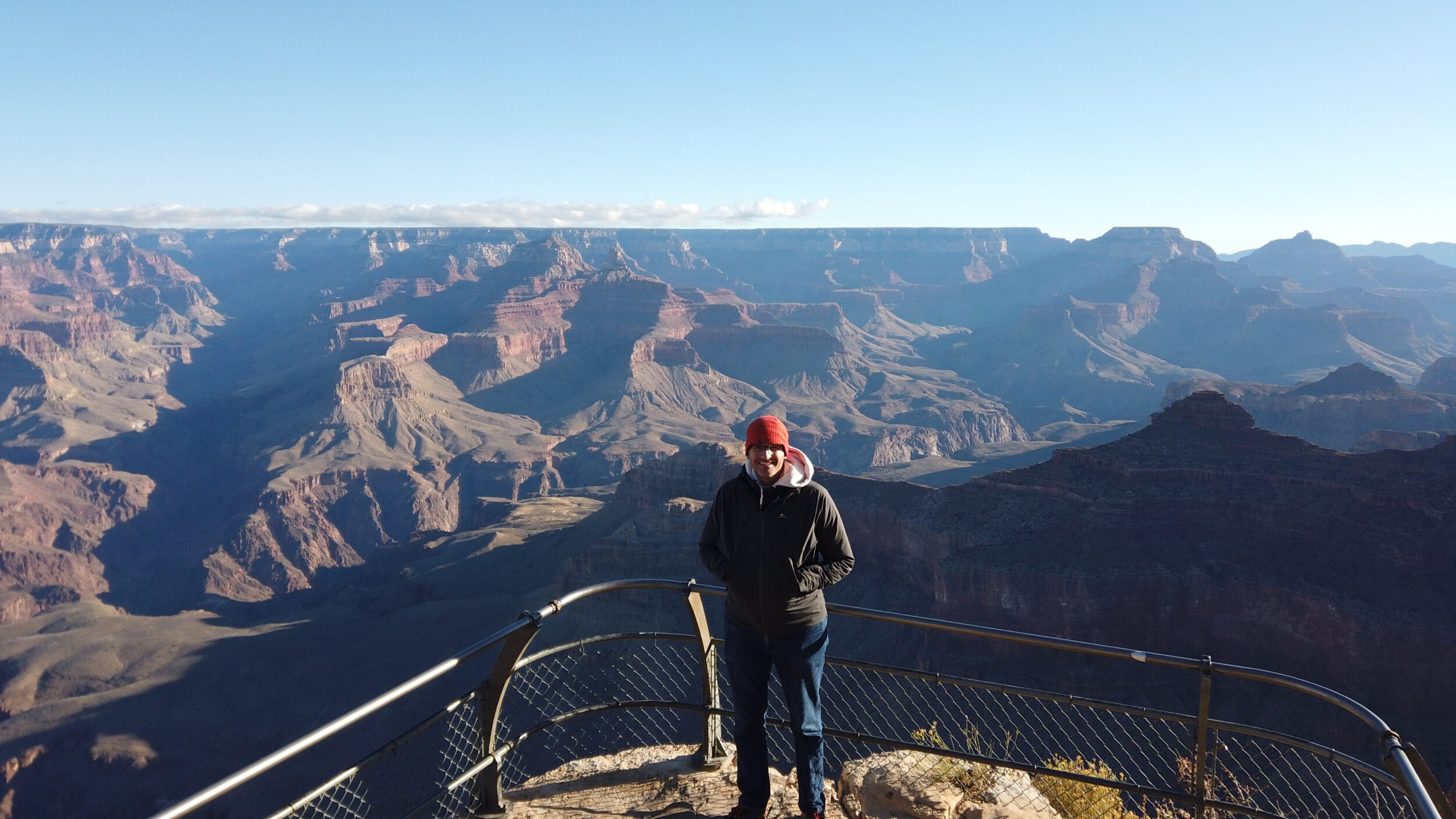
We go back to the hotel for a quick nap, before packing up and leaving. JB takes the opportunity to withdraw money at Chase ($3.50 fee, the lowest we’ve seen so far). If we need cash, it’s to pay for a tour tomorrow, which only accepts cash – and to leave tips for everyone.
Desert View Drive
To get to Page, we take Desert View Drive, which leads to the exit (east side). The stops on Desert View Drive are much more impressive than those on the red route. So we end our visit on a high note.
There are several stops along the way:
Pipe Creek Vista : we’ve been there several times, so we don’t stop anymore
Duck on a rock
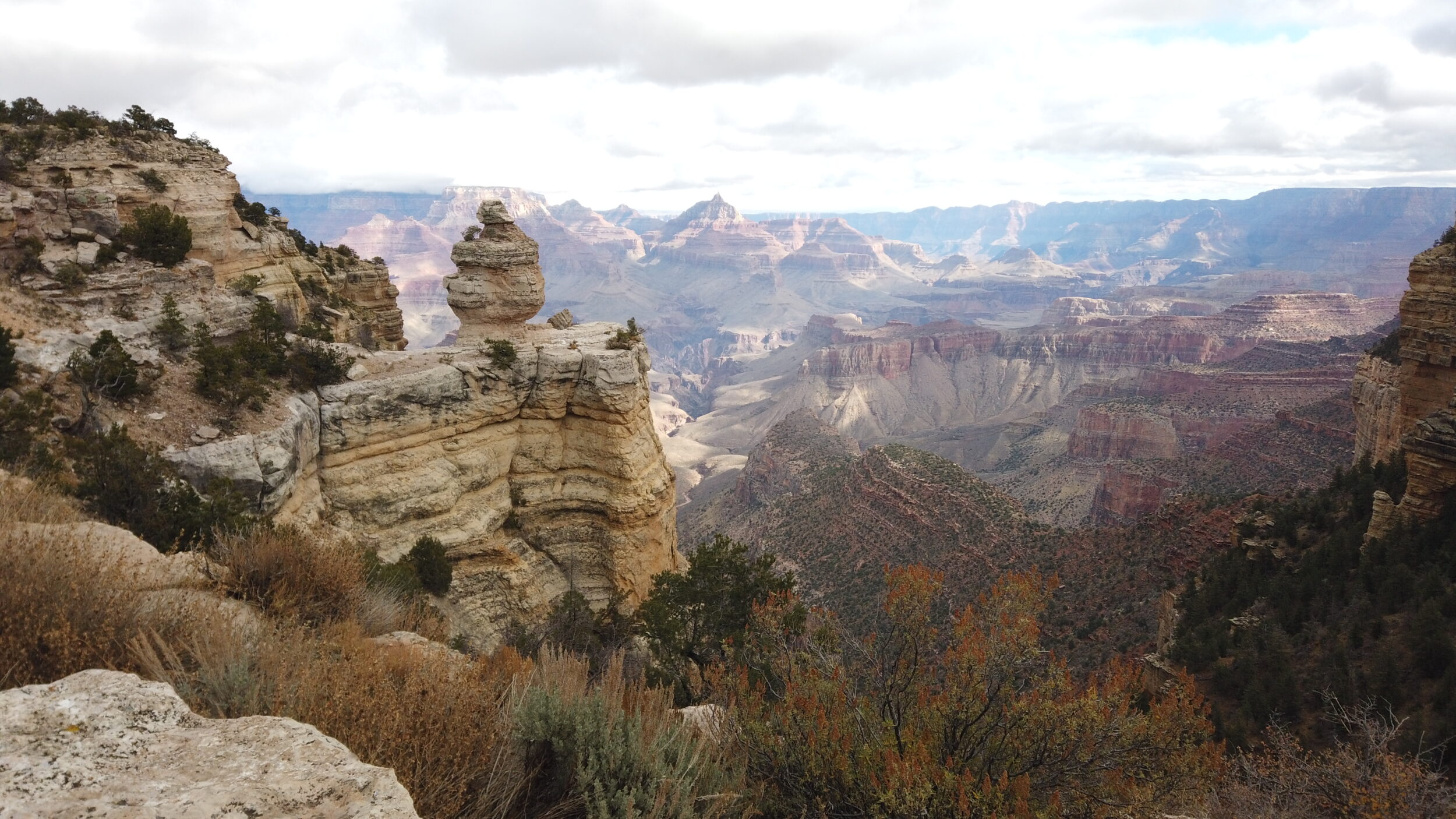
The rock is shaped like a duck, the kind of rubber duck you float in a bath.
Shoshone Point : did it yesterday, we don’t stop anymore
Grandview Point
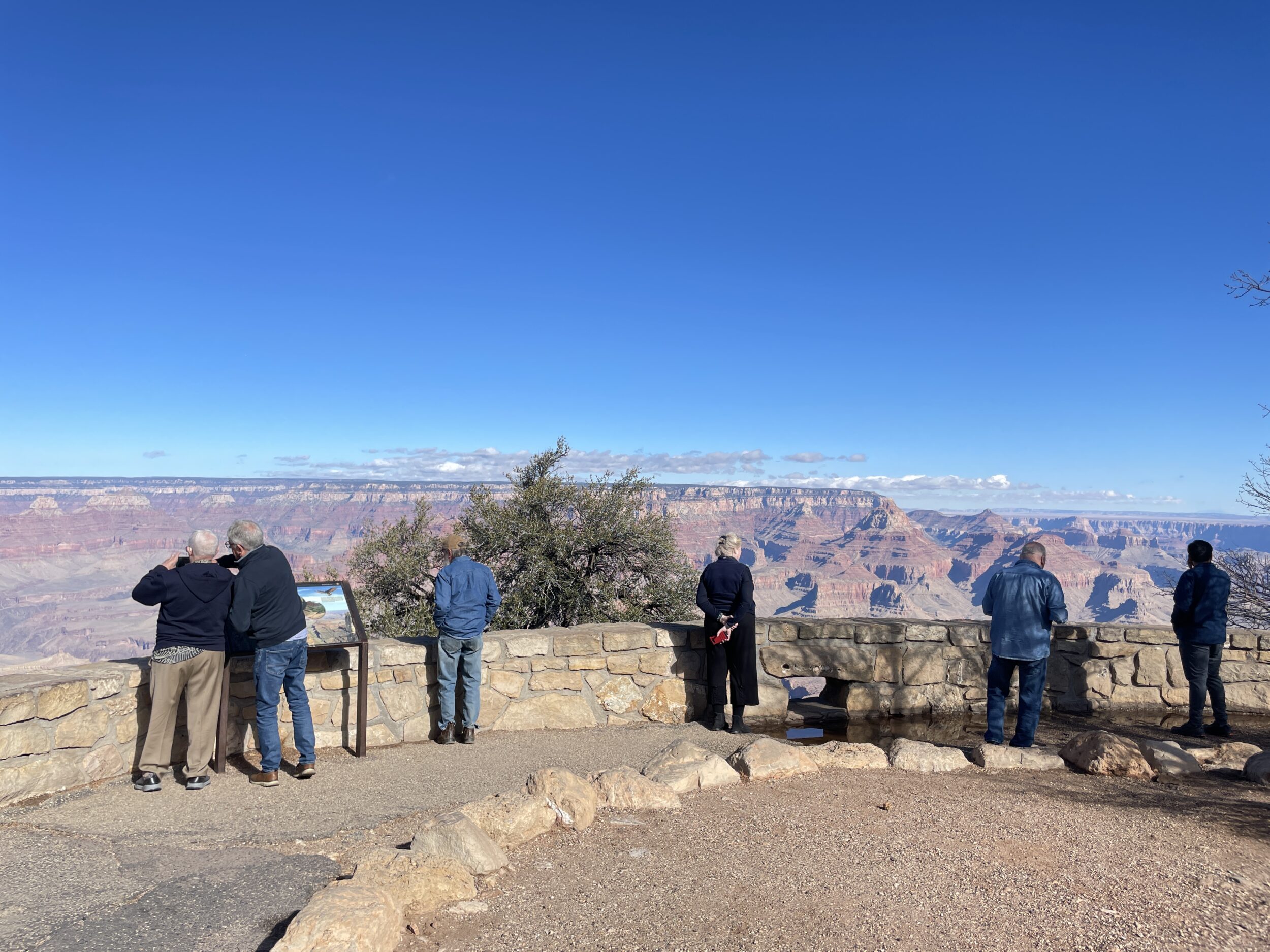
It’s pretty, but you’ll see, it gets more beautiful later on.
Moran Point
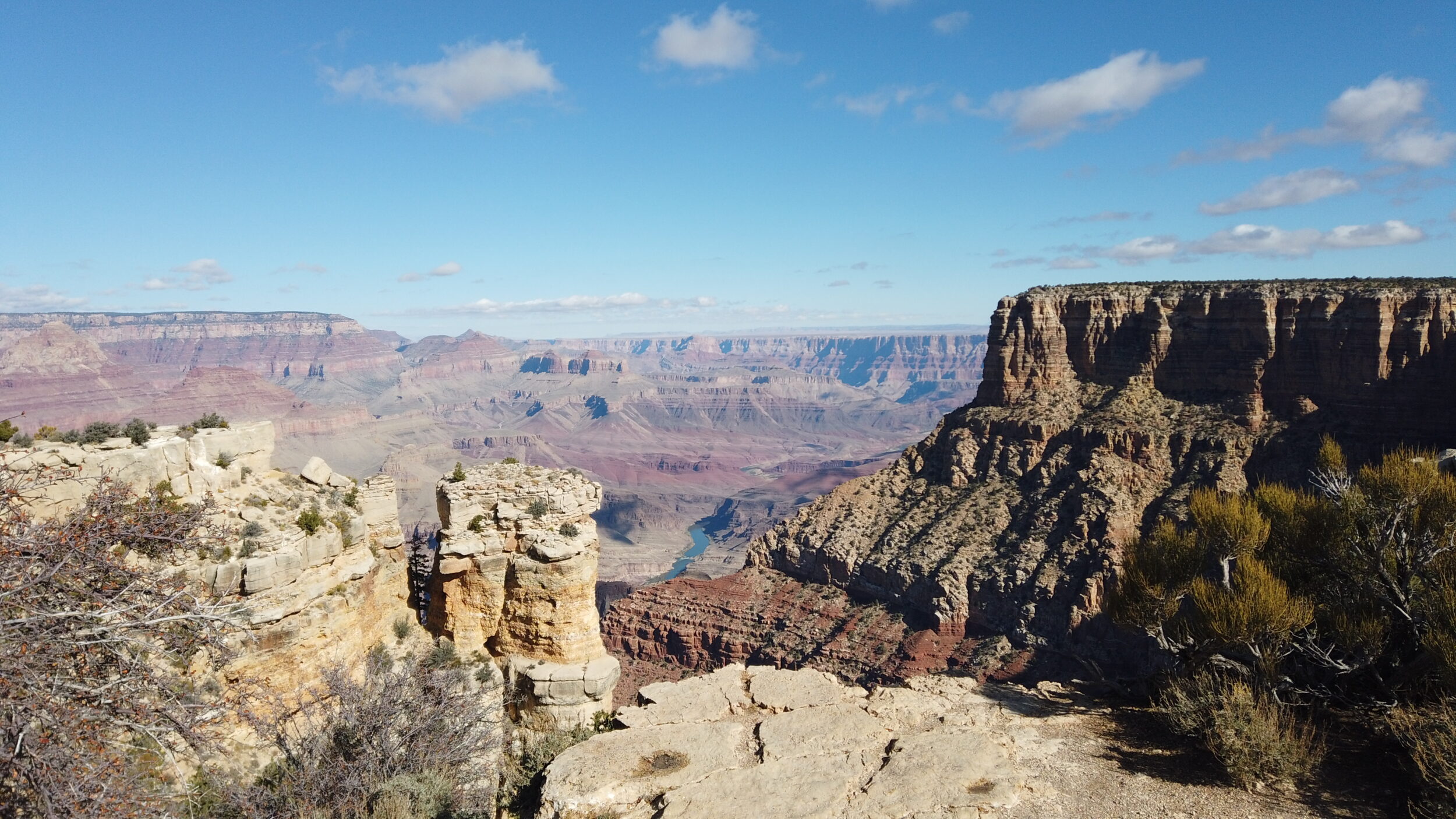
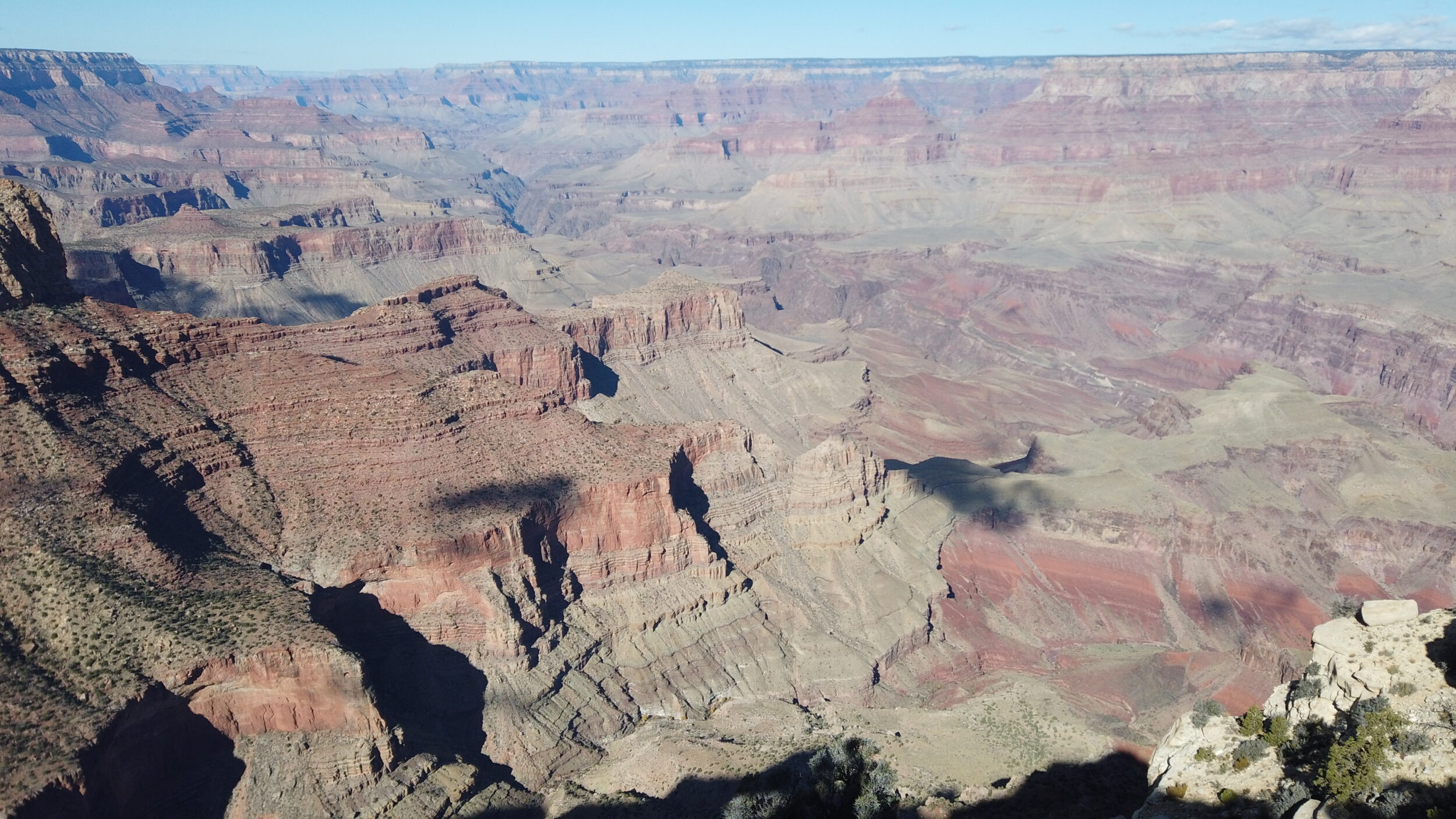
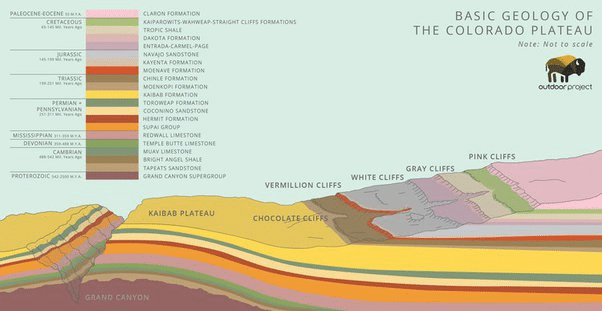
The colors are more varied, and the three types of rocks are clearly identifiable here.
Lipan Point : we didn’t stop there
Navajo Point
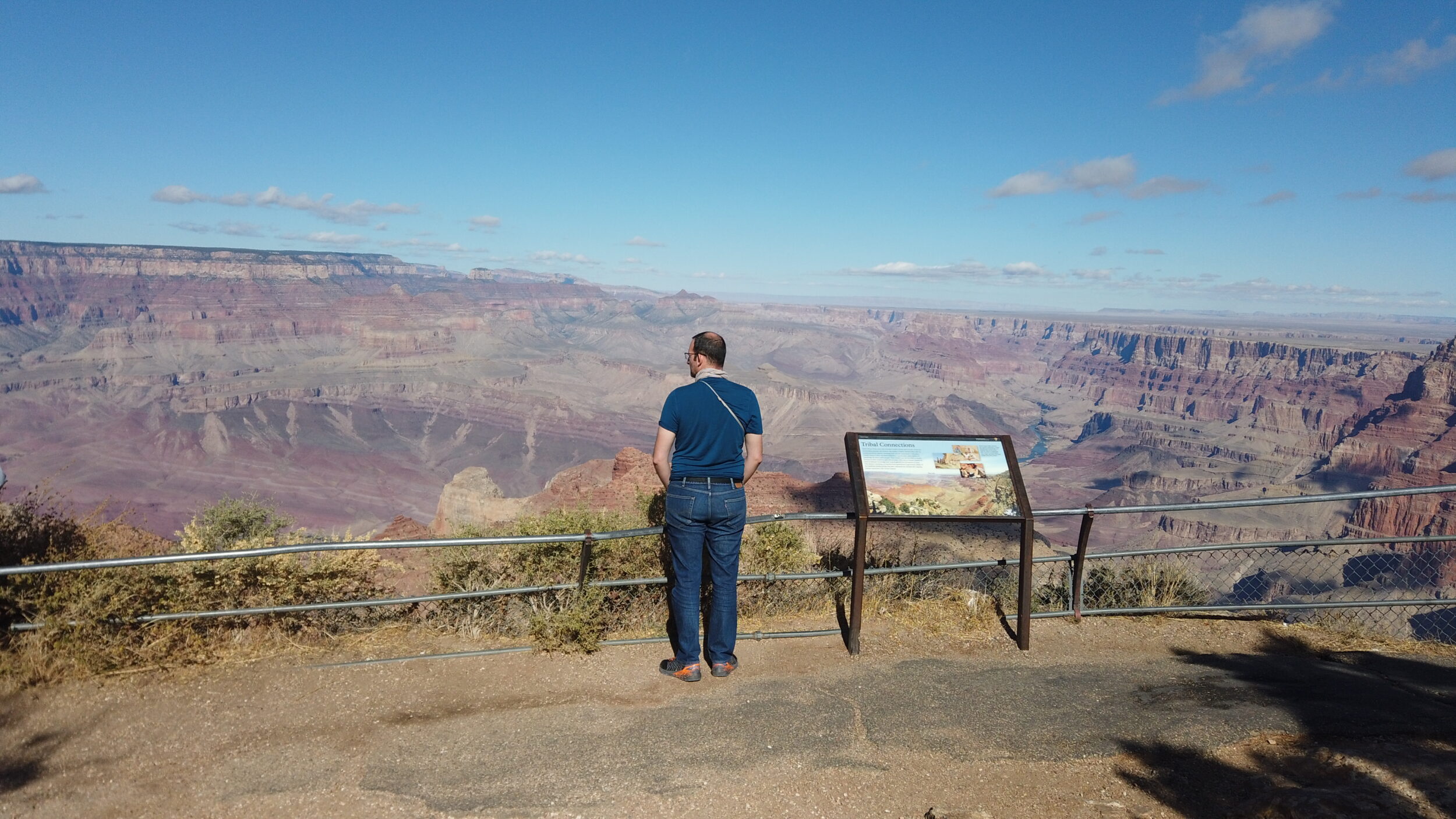
This is the highest stop in the southern part. From here, you can see the Desert View Watchtower in the distance. However, the star was a pretty white dog in “princess” mode, super friendly, who lets everyone pet her.
Desert View Watchtower (recommended)
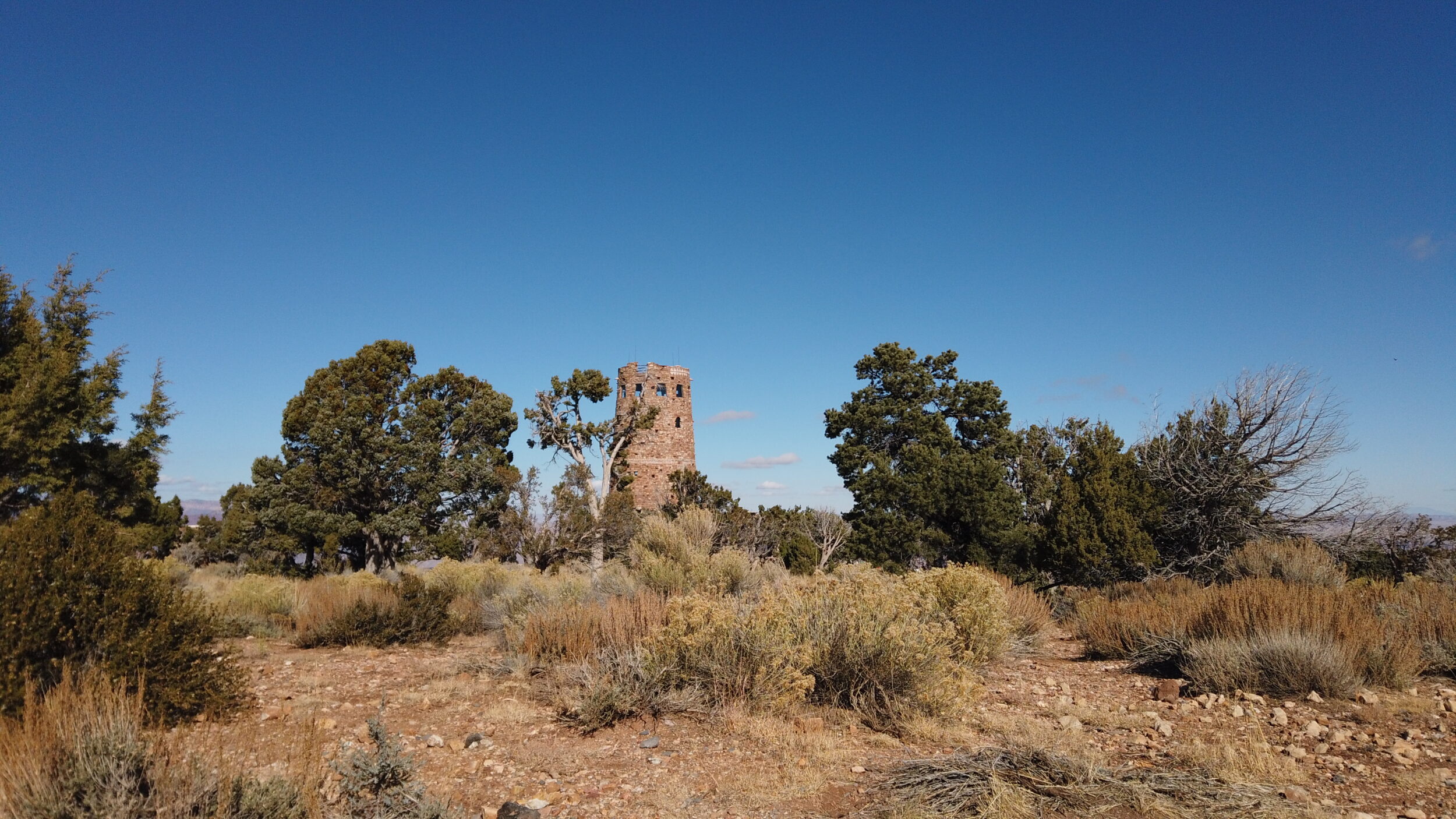
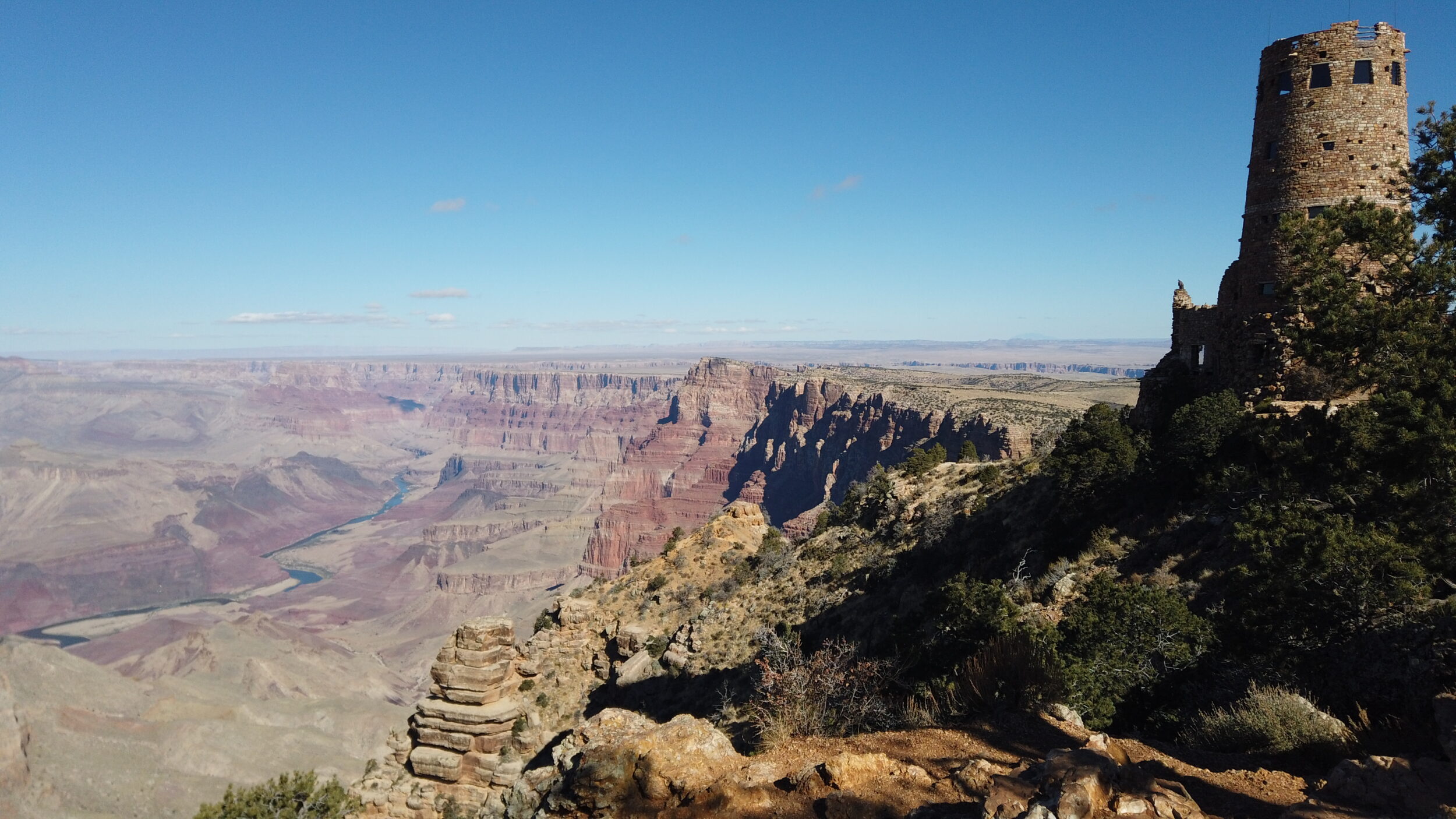
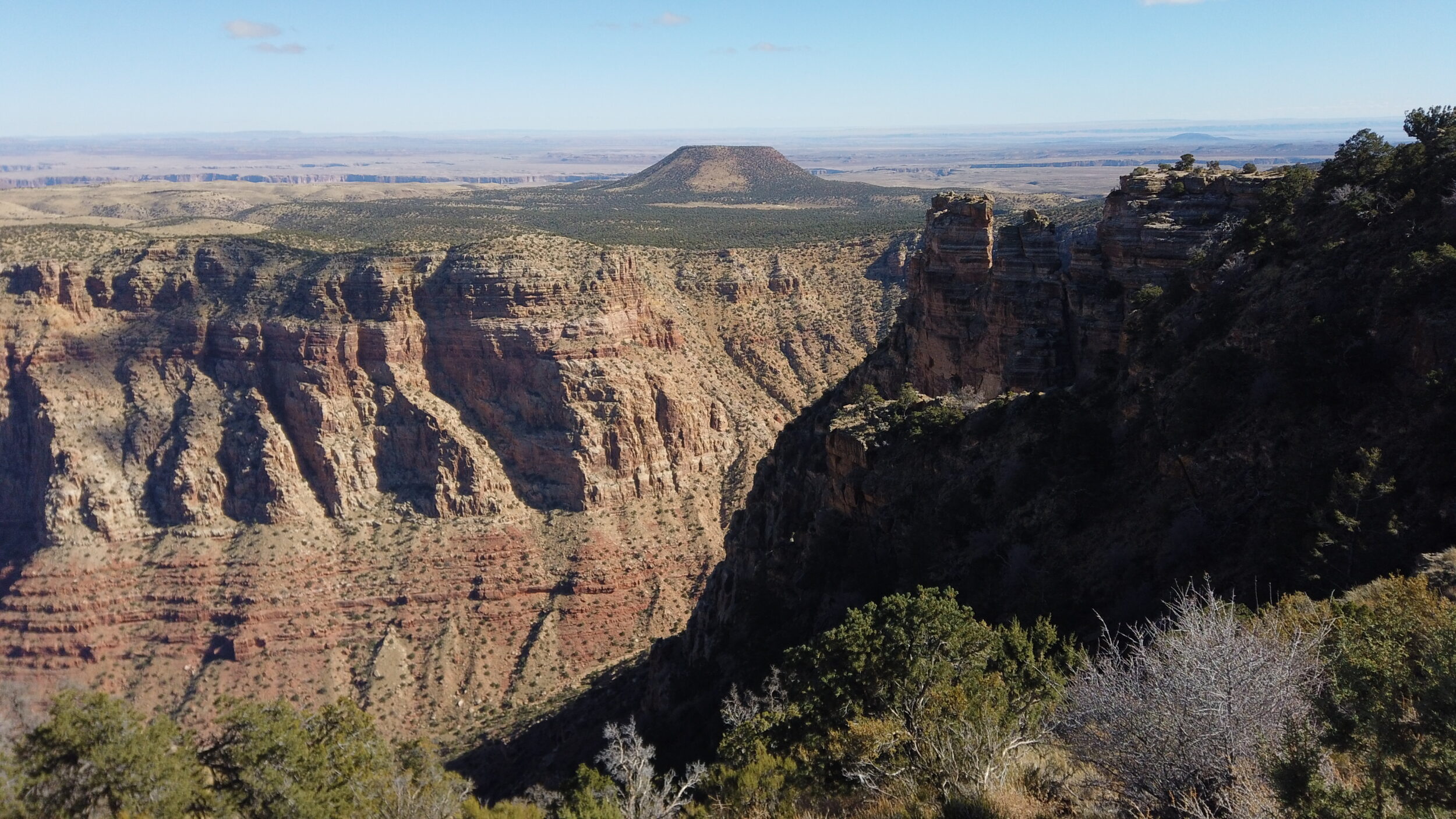
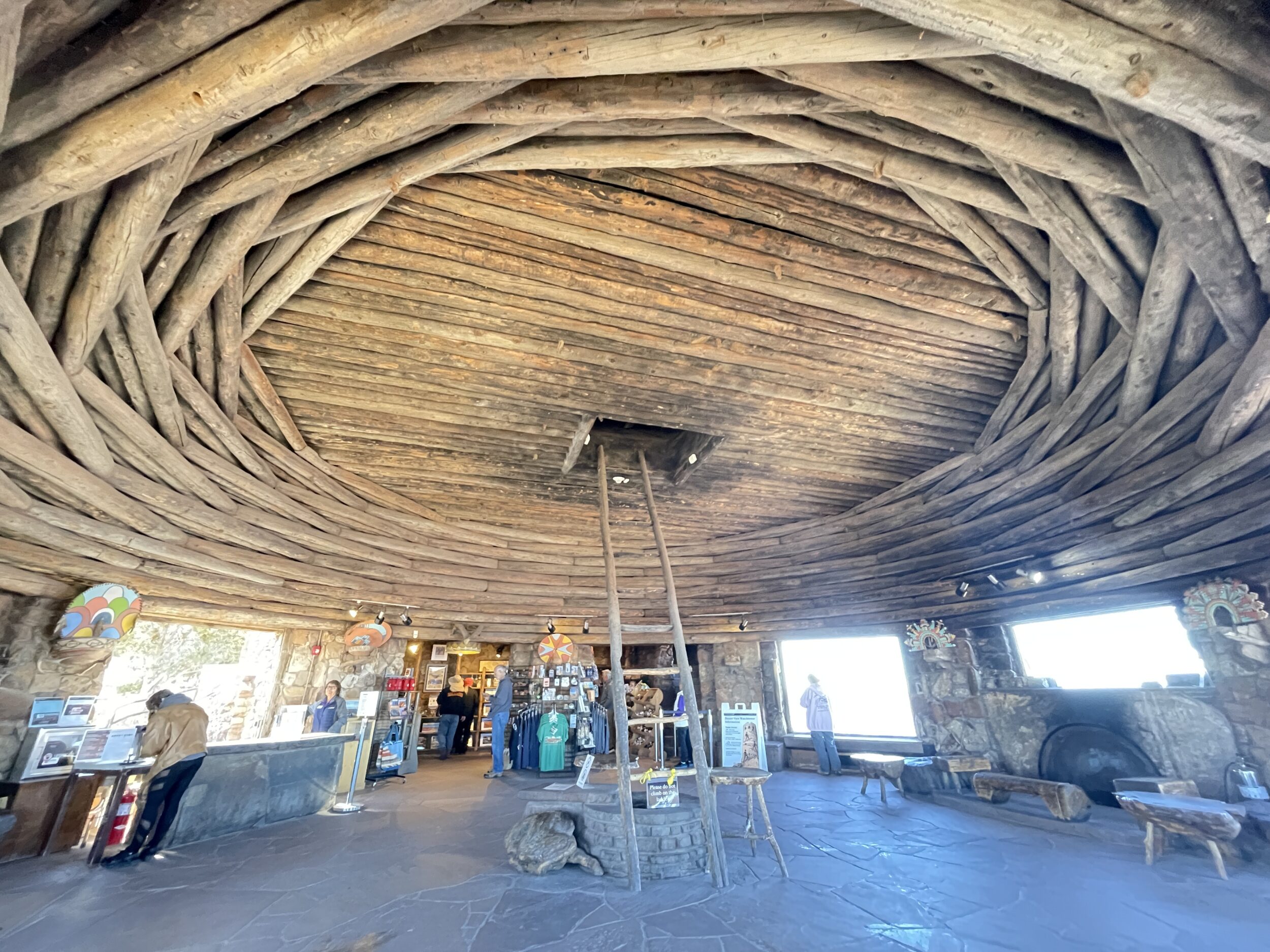
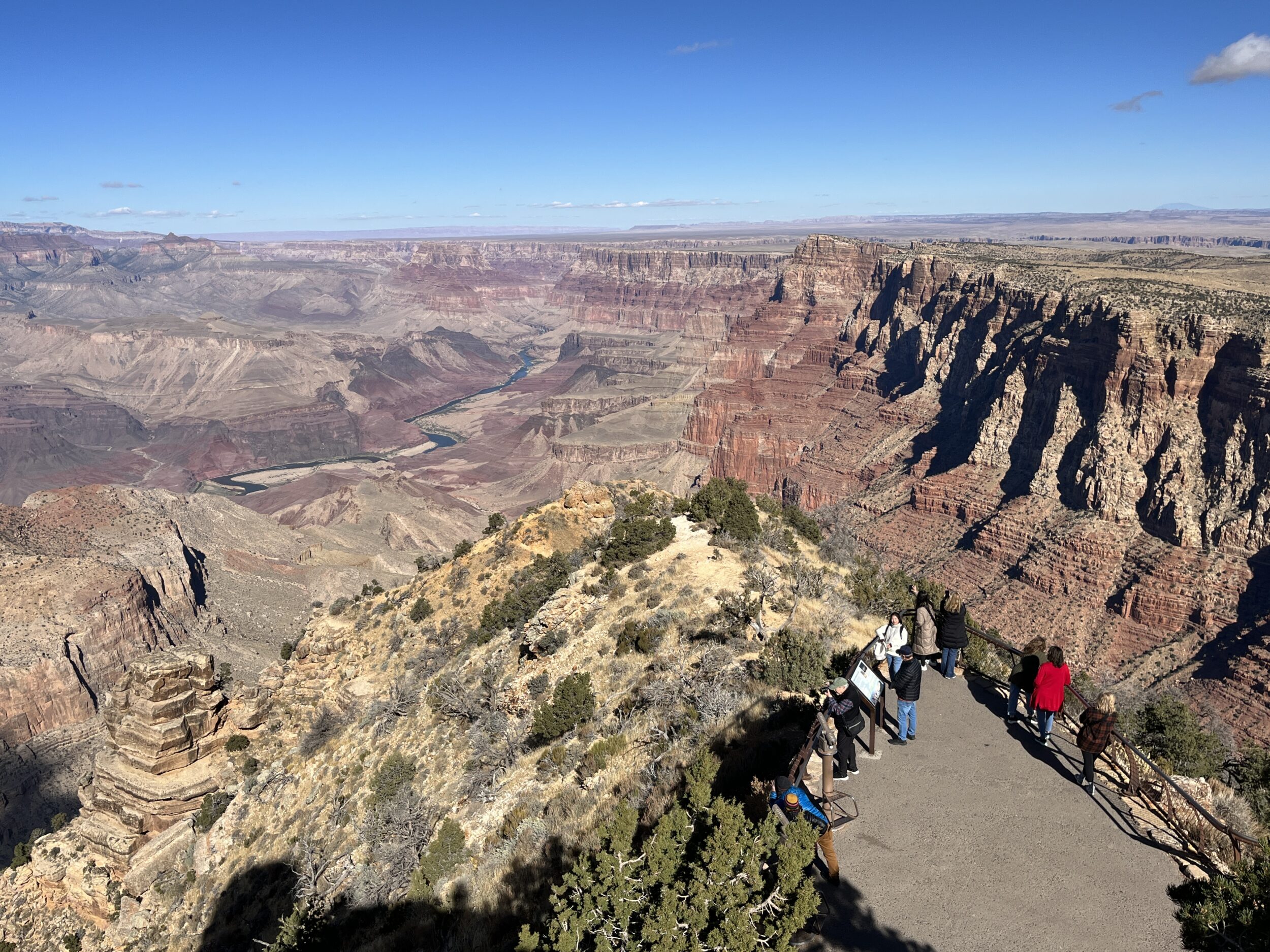
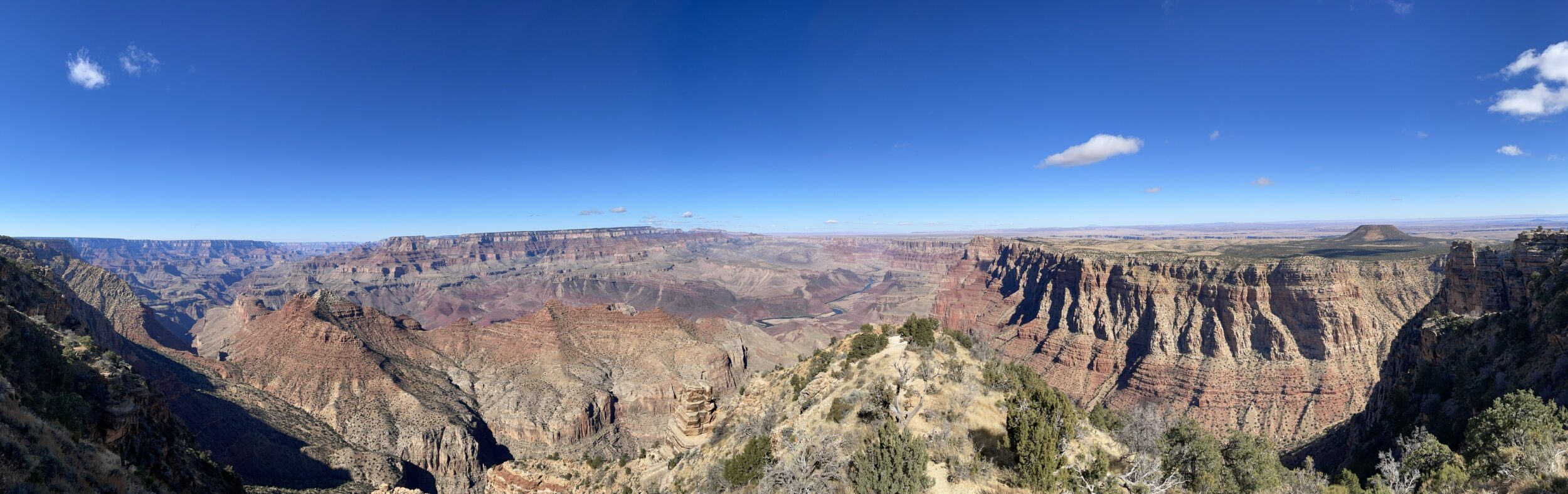
This is my favorite stop, it’s so beautiful. This is where the canyon makes a 90-degree angle. You have a view of over 300 degrees over the surroundings, you can see the Colorado River very, very well, as well as a volcano and Navajo lands in the distance. With the free binoculars provided, I could see a group of rafters resting by the river. The scenery is so varied, you don’t know where to look. We chose to picnic here; there are several benches with a view; the hardest part is choosing your bench.
You can pull on the door of the tower where it says “no food, no drink” to ask for a free ticket to go up the tower. You can’t go up to the rooftop, but to three floors higher, with windows, and to the terrace. There are entry permits about every 20 minutes.
View from the terrace:
Tourists arriving at the Grand Canyon from the east side will see Desert View Watchtower first, i.e., the best view. It’s a shame because for them, everything will go downhill from there. I think arriving from the south side like we did is better. It’s also the itinerary recommended by Lonely Planet. I asked the man I met at the top what he thought about the North Rim (north side), and he told me the colors and lights were less pretty. I take his word for it because he had a huge camera around his neck.
Tip: Before leaving for Page, take advantage of the restrooms, supermarket, and restaurant here.
Conclusion
Wow wow wow!! This park is spectacular! We were right to come from the South side and finish at the East side.
The Grand Canyon can be visited in one long day (provided you arrive very early in the morning and only do the recommended stops). However, it’s so beautiful and big that it deserves at least 2 days of visiting (or 3 like us). As you can see, the stops look a bit similar, even though there are some nuances here and there. If you don’t have time to see everything, it’s not a big deal.
Anyway, we really loved the Grand Canyon. The landscapes are grandiose. Even though the viewpoints are well arranged, it still feels natural. The barriers are quite rare; you still feel like you’re in a natural park, not in Disneyland.
Discover the rest of our adventure (Page & Antelope Canyon) here
Part 2: Practical Tips
Equipment
JB and I didn’t hike, so we don’t have any advice for treks. However, for visits, remember to:
- Slather on sunscreen, come with sunglasses and a hat
- Drink a lot
- Dress warmly (we’re at over 2000 meters altitude) and some viewpoints are very windy
- Bring a small backpack and some food with you because you’ll be walking a lot and will need energy
All our routes and points of interest are available on this Google Maps map. I’ve already explained how to use our custom maps here
Budget
- The America the Beautiful pass: $80/vehicle, valid for one year, and can be lent to another vehicle
- Lodging:
- 2 nights at Yavapai Lodge (ours): €153/night including taxes, without breakfast
- but a better option, if your wallet allows: Bright Angel Lodge
- Food:
- To make your own sandwiches: budget $5-6/person/meal
- At the restaurant inside the park: between $17 and $23 per person per meal
- Lunch for two: $35.26
- Dinner for two: $31.92
- there’s no table service, so you can leave $1 as a tip in the jar each time
- Shuttles and parking inside the park are free
- Water is free, remember to refill your bottles regularly and drink up

