
Back to Barcelona (Spain): Travel Diary
Back when we didn’t travel much, we spent 2 weeks in Barcelona with friends and enjoyed it so much that it never crossed our minds to go back. Since our transatlantic cruise departs from Barcelona and we’re very afraid of something going wrong and making us miss the departure, we arrive 5 days early and have plenty of time to visit this lovely city once again.
Part 1: Travel Journal
Part 2: Practical Tips
Part 1: Travel Journal
I had forgotten how expensive Barcelona is. Paying almost €100/night, we only get a room with a shared bathroom. It’s not a budget motel, but it’s clearly not as comfortable as a standard hotel. We’re in the LGBT neighborhood, but it takes us several days to realize it, but as soon as we know, we notice the rainbow flags in all the shop windows.
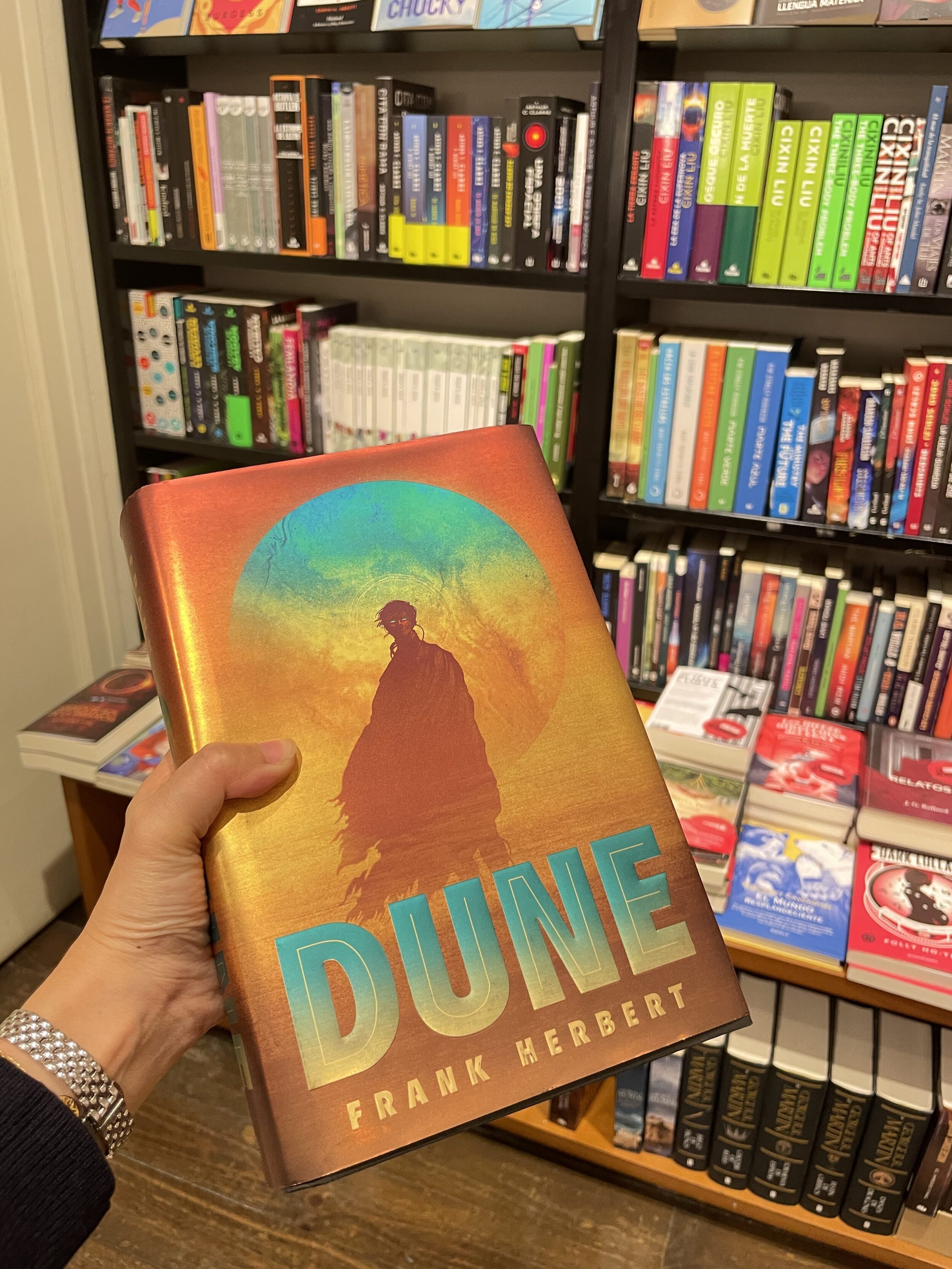
Barcelona has become even more cosmopolitan since our first trip. A simple example: in a perfectly normal bookstore, I found French and English books mixed in with Spanish ones (whereas in France, books are separated by language). So I’m super surprised to find a deluxe edition of Dune (Frank Herbert) in English, which I plan to read on the cruise ship.
JB has just returned from Nepal. The day before, he went Nepal – Kuwait – France and today Paris – Barcelona. He’s exhausted, dealing with several hours of jet lag, but very happy to see me again after his 3 weeks in Nepal. I arrive the same day from Nice (by plane, I wanted to take the bus, road trip style, but I was held up in Nice for various reasons). Both very tired, we explore Barcelona at a leisurely pace, wandering here and there. Since it’s sunny and hot, we prefer to stay cool between 11am and 1pm. It’s always hard to wait for meal times, which are late (and delicious) in Spain.
Casa Batlló
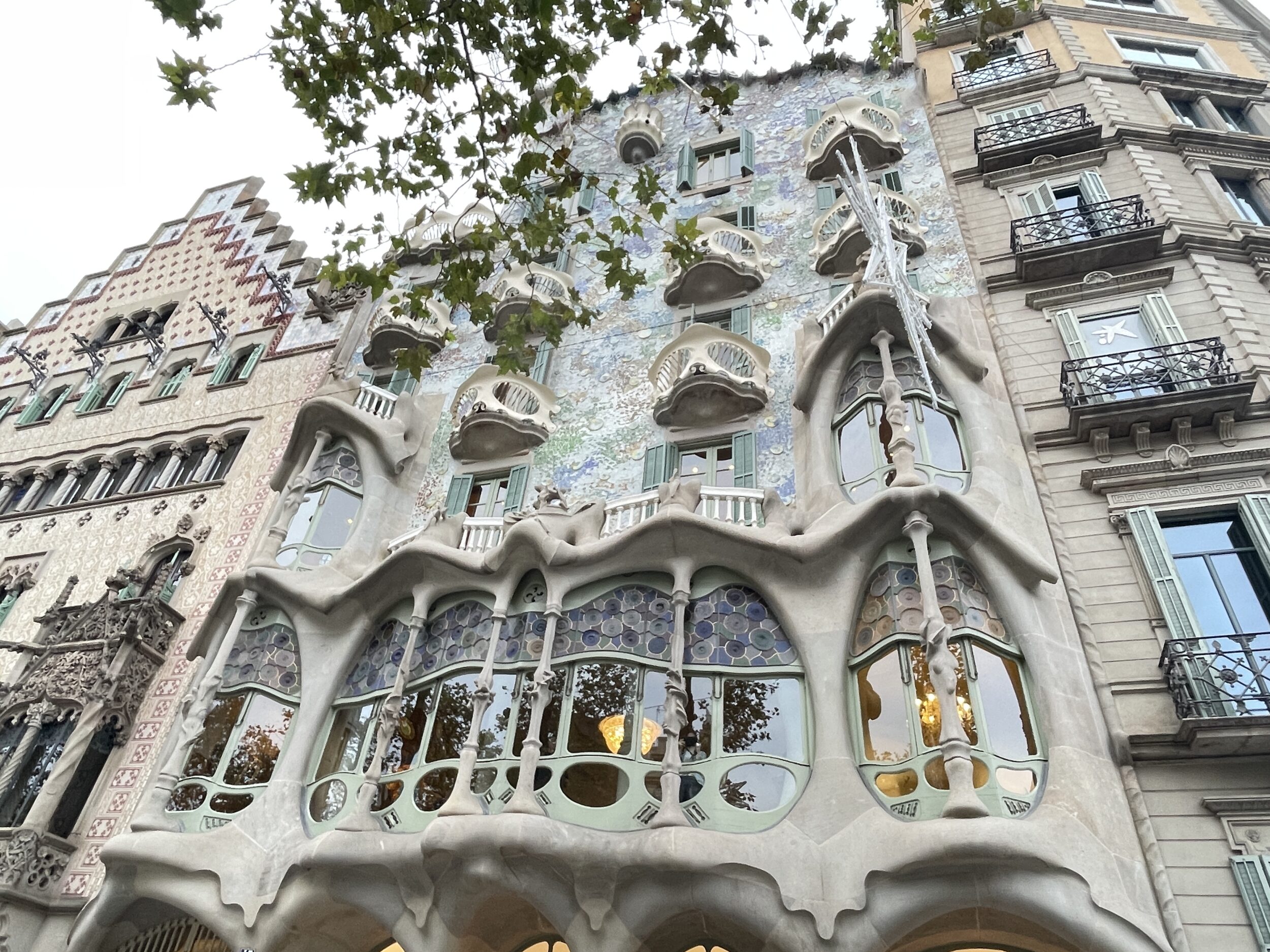
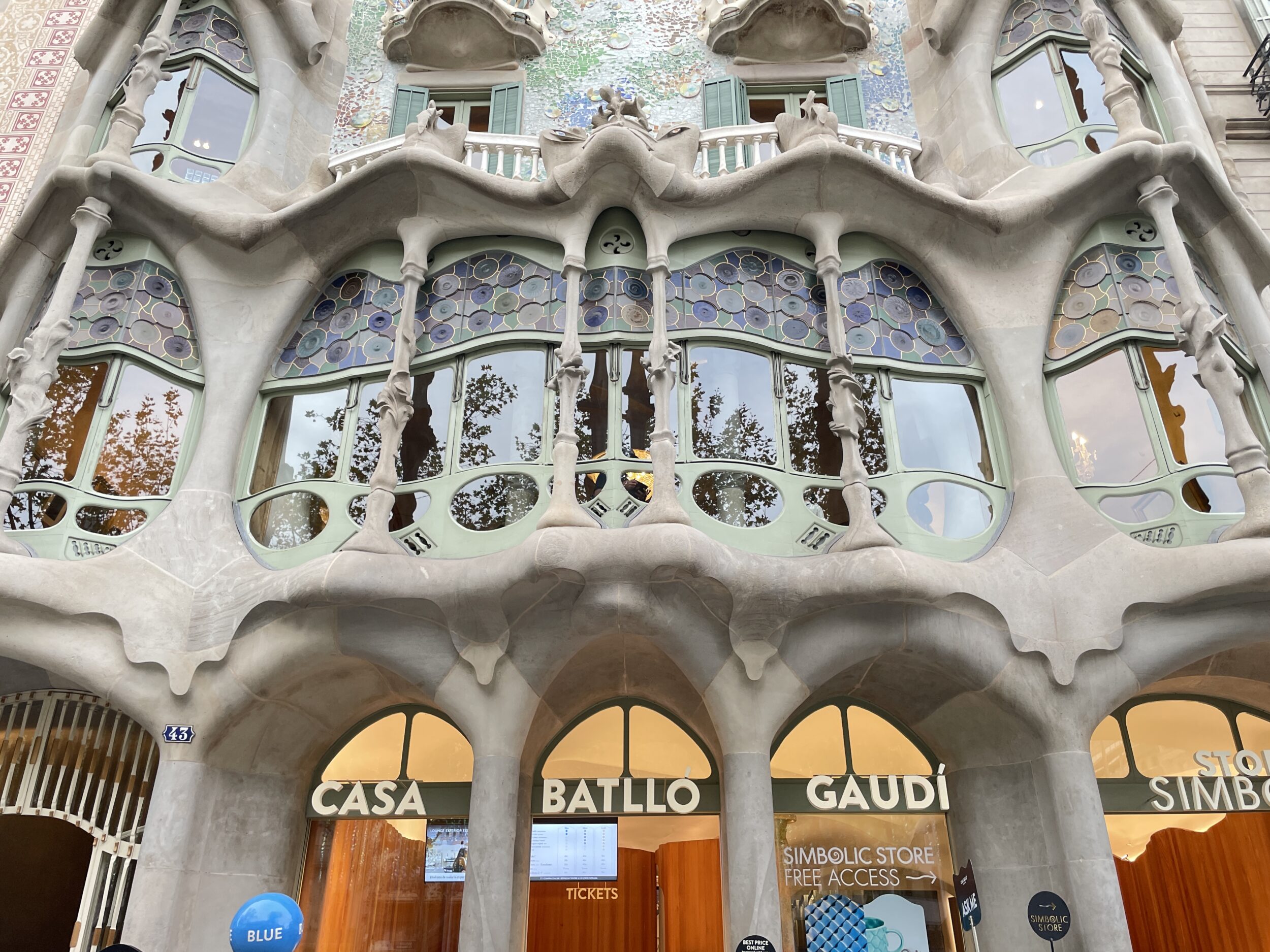
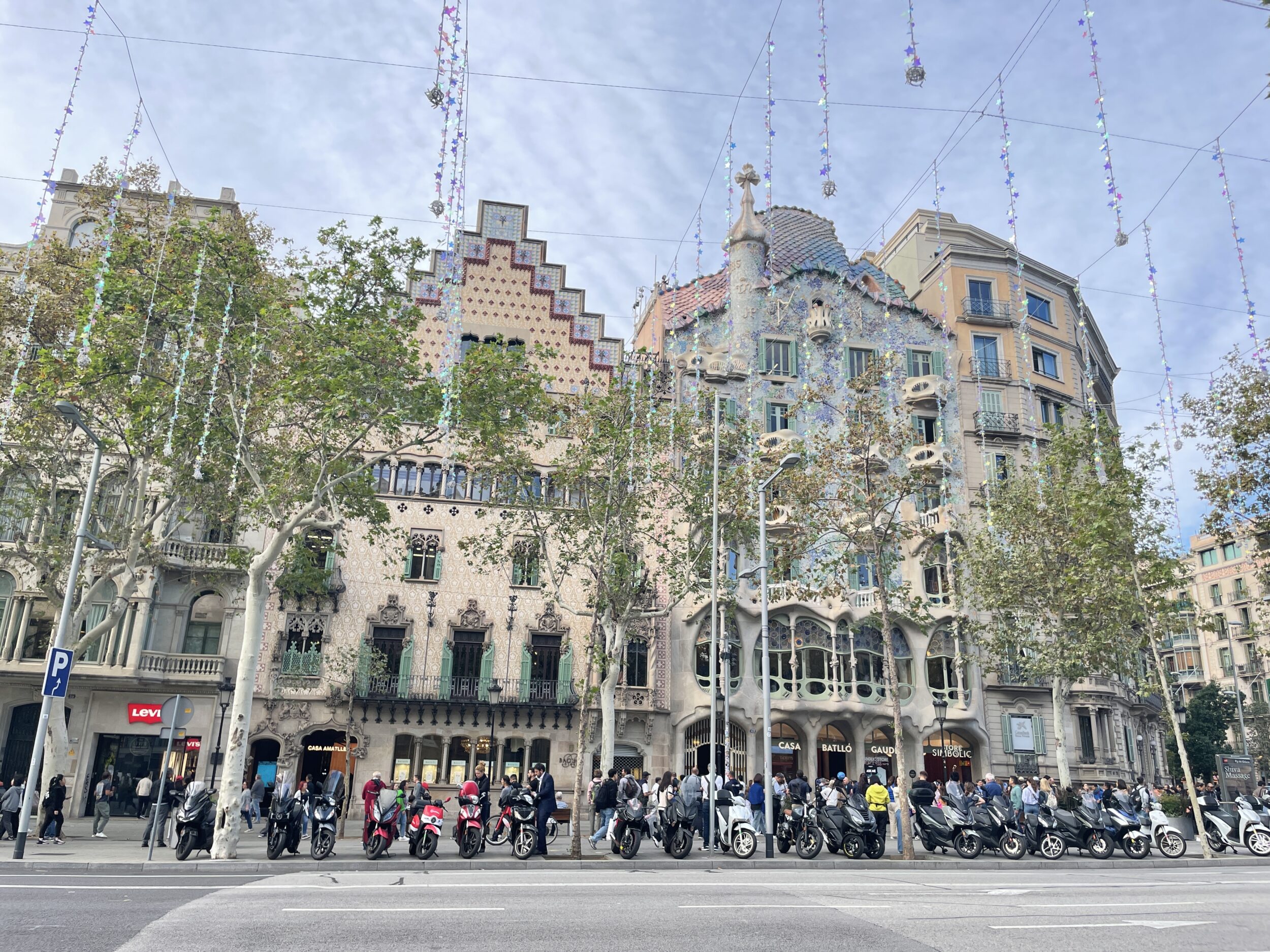
This house designed by Gaudi is a 10-minute walk from our place, so we go there several times at different hours to admire its facade. You need to step back quite a bit to realize that the balconies look like masks. There are lots of people from opening time (9am), because there are VIP tours before the official opening time (8:30am).
Online, you don’t have many choices. There are VIP tours that let you visit the entire house, whereas online, we only have access tothe standard tour. So I only got to visit one floor fully and catch a glimpse of the maid’s quarters, the roof, and the terrace. It’s expensive for what it is (€35) but that’s how it is everywhere in Barcelona; entrance fees are much higher than in France.
We each have an audio guide (in French). There’s very little furniture, but the woodwork can be appreciated everywhere: on doors, along walls… everything is smooth, perfectly carved. The glass is simpler than I imagined; there are no Art Deco stained glass windows like I love, but transparent glass with varied textures, concentric round glass (which is quite popular with decorators; it must be blown glass (very expensive) because you can see imperfections and especially air bubbles). I looked carefully at all the windows in this house and I’m really happy to say “I know how to do that, and that too” since my internship in Chartres (I wouldn’t say the same for the Palace of Music, but here, the owners seem to opt for simple stained glass). All rooms have access to natural light, and the roof has a high-tech system for the time to insulate the interior well and drain rainwater.
My favorite spot is the grand hall facing the street. The walls with golden patterns, the windows that can be opened via an ingenious system, the chandeliers… everything is perfect here. However, I wonder how you could furnish such a house. How do you get rectangular furniture into a house where corners are often rounded? If I understood correctly, Gaudi also furnished the house with his own creations with rounded corners too.
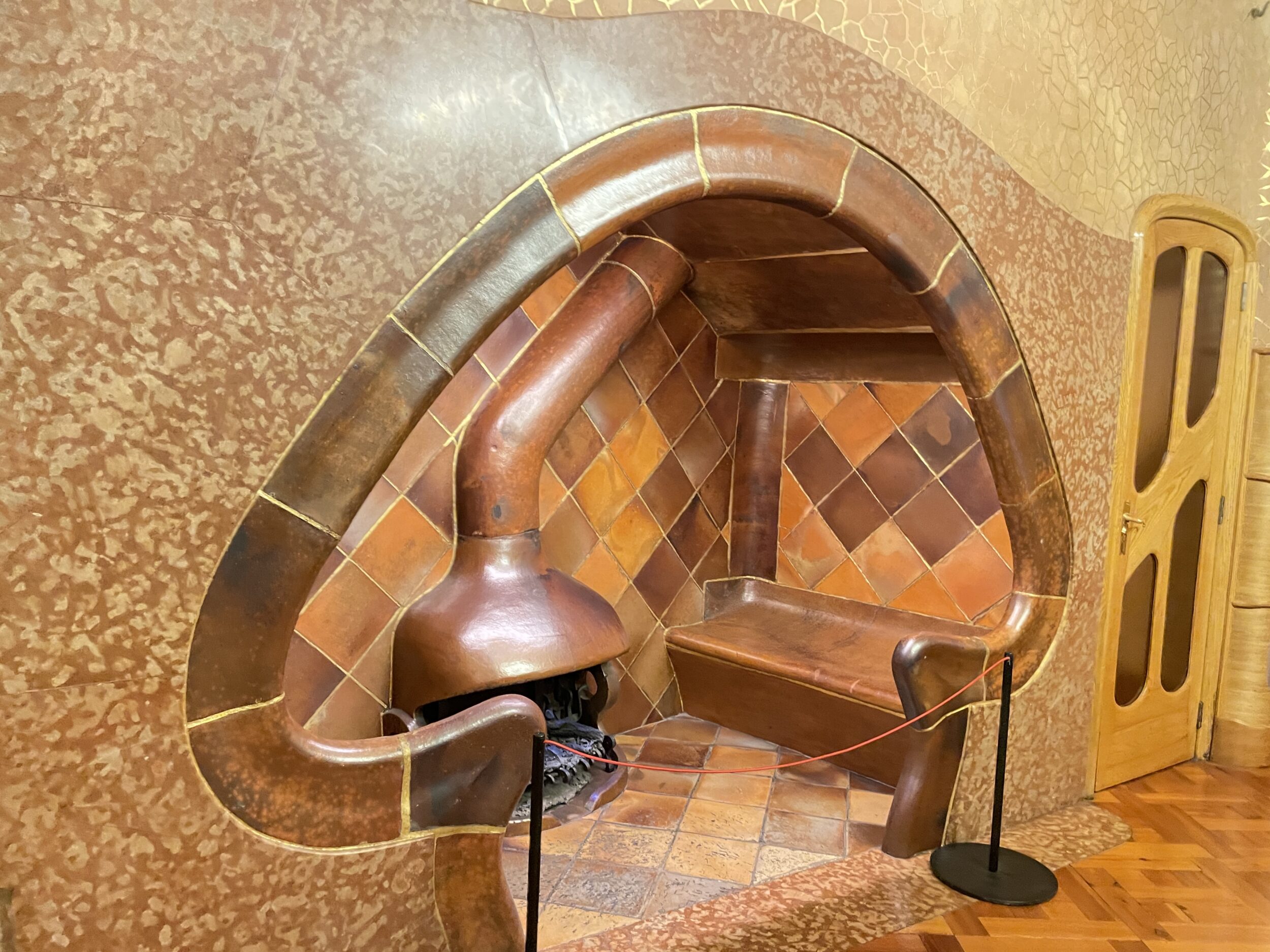
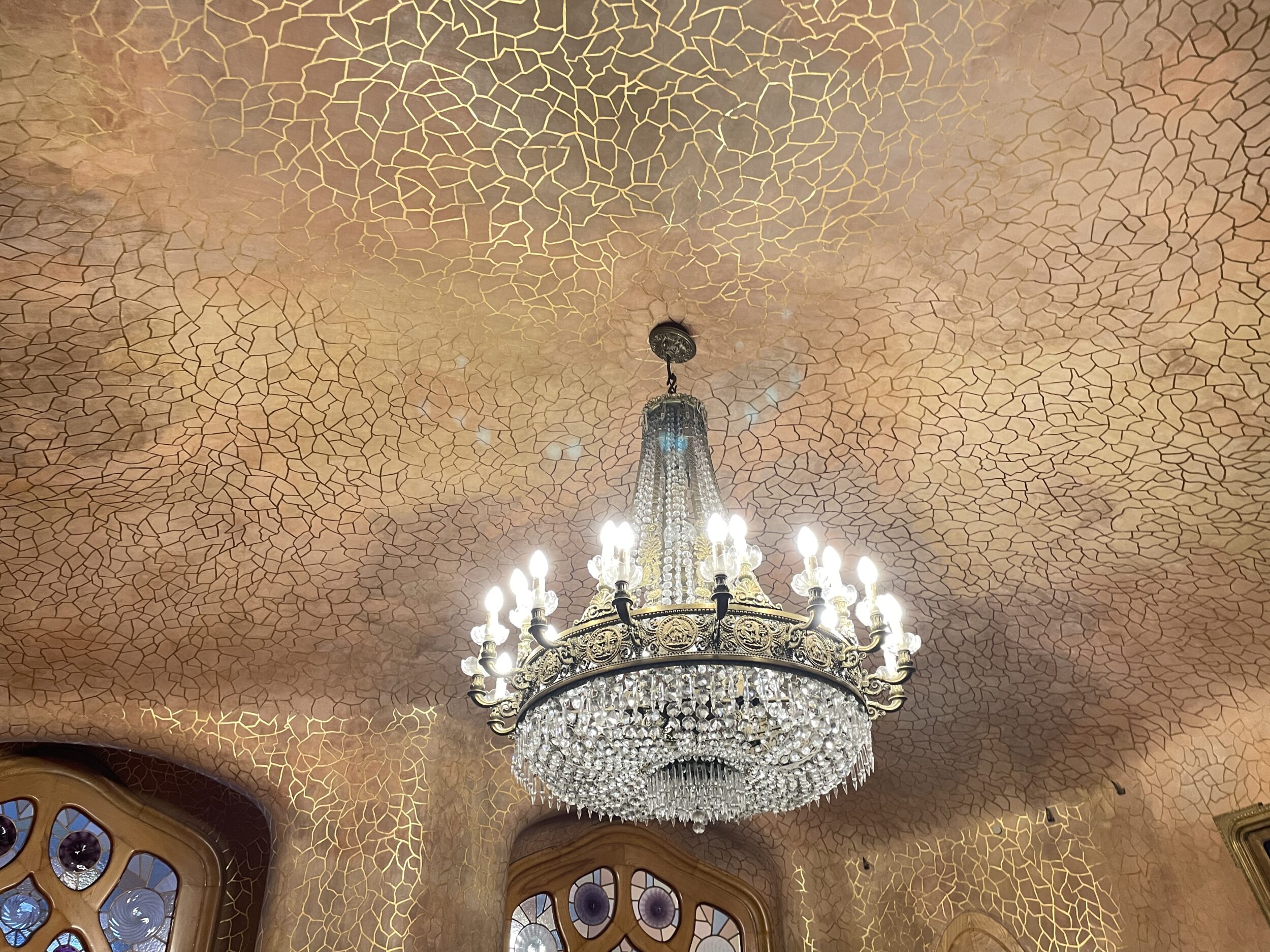
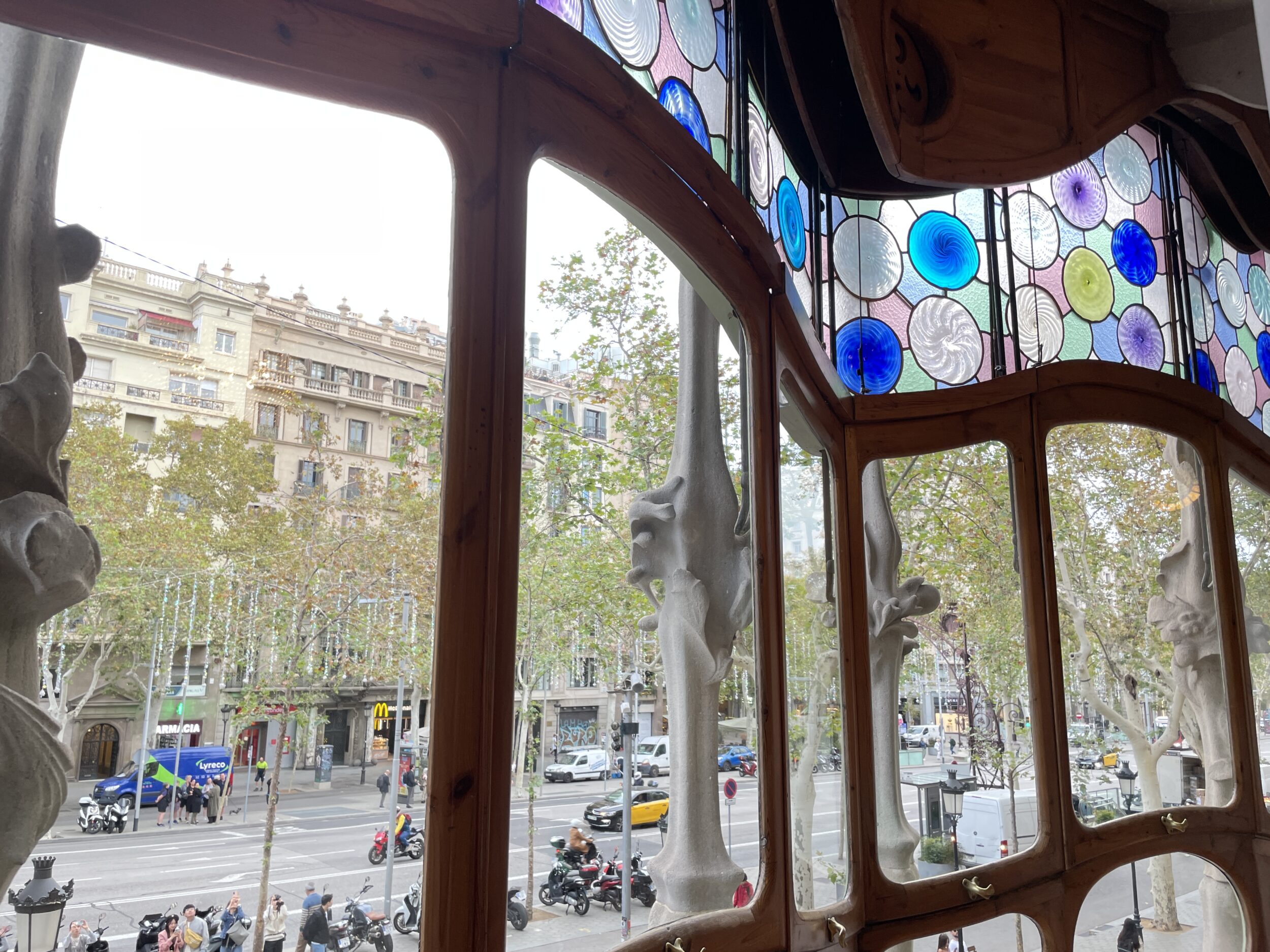
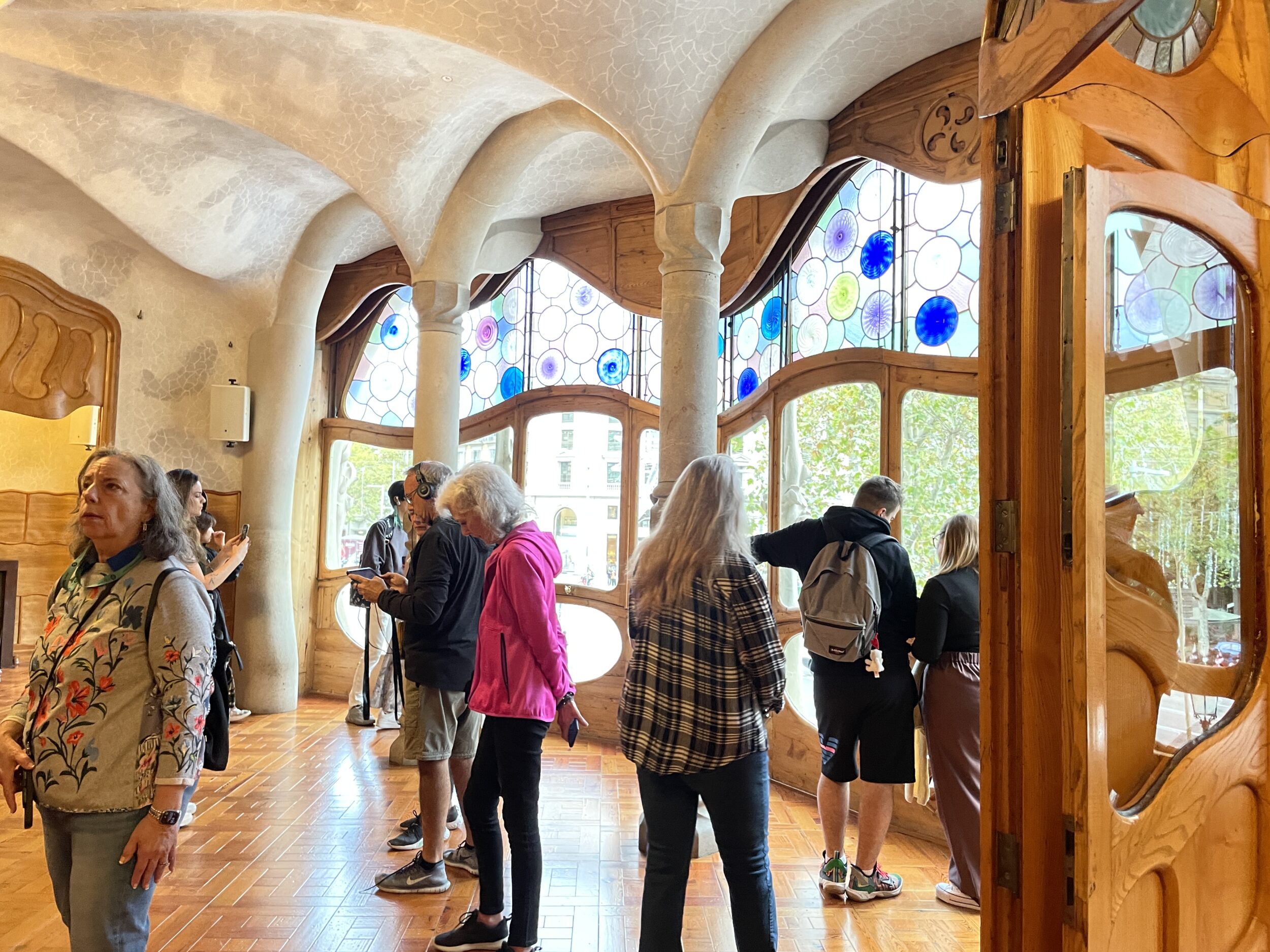
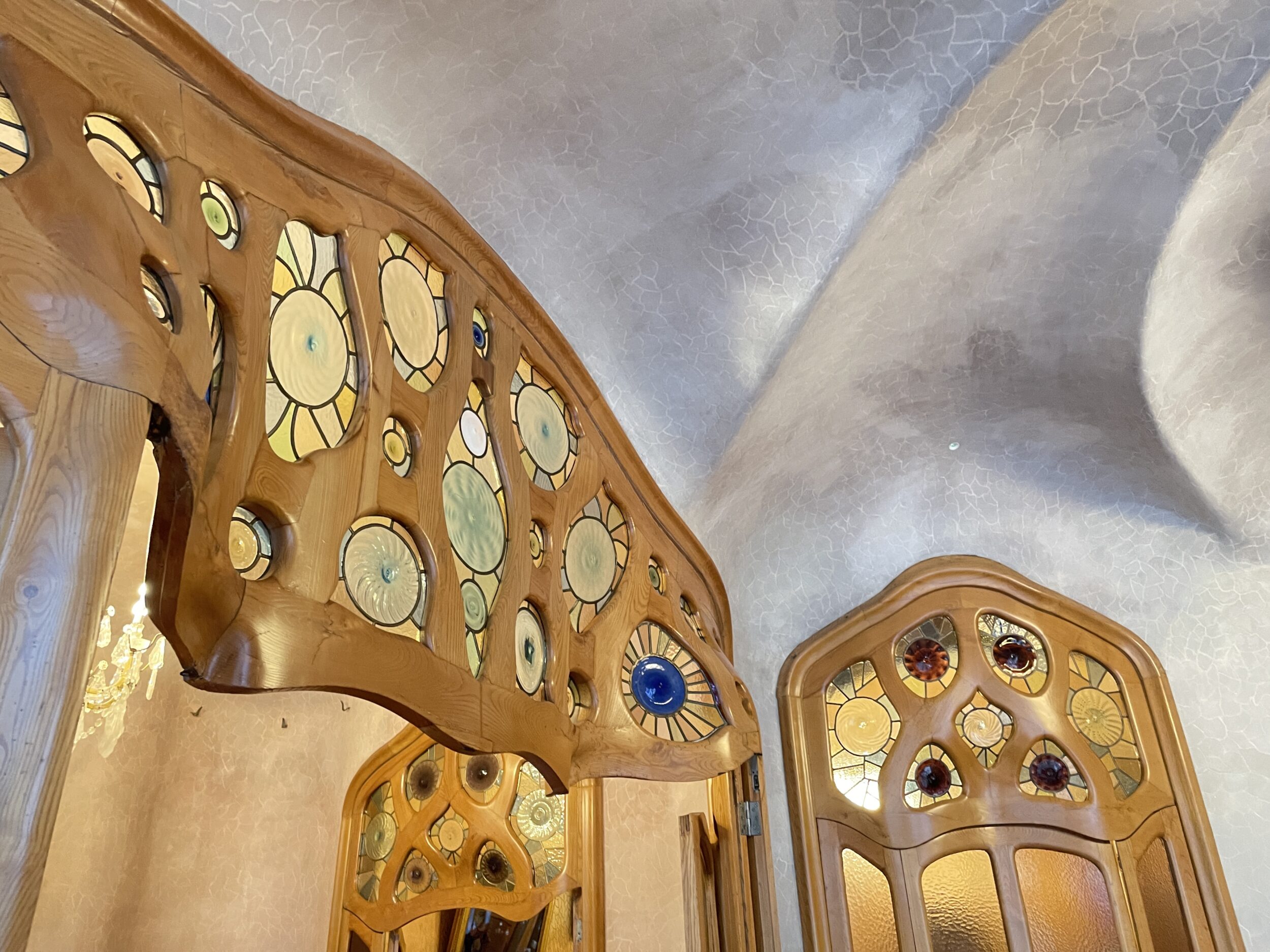
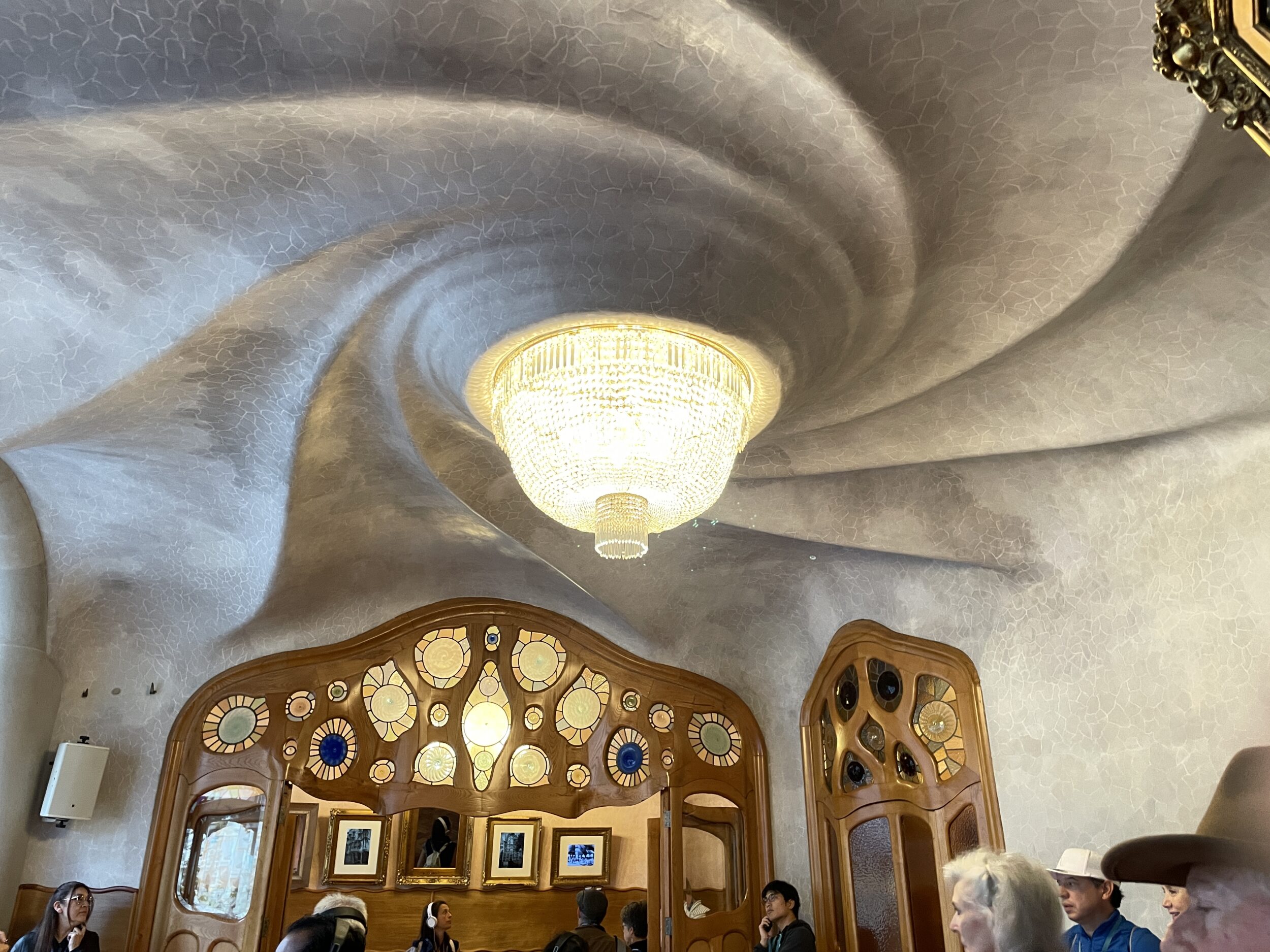
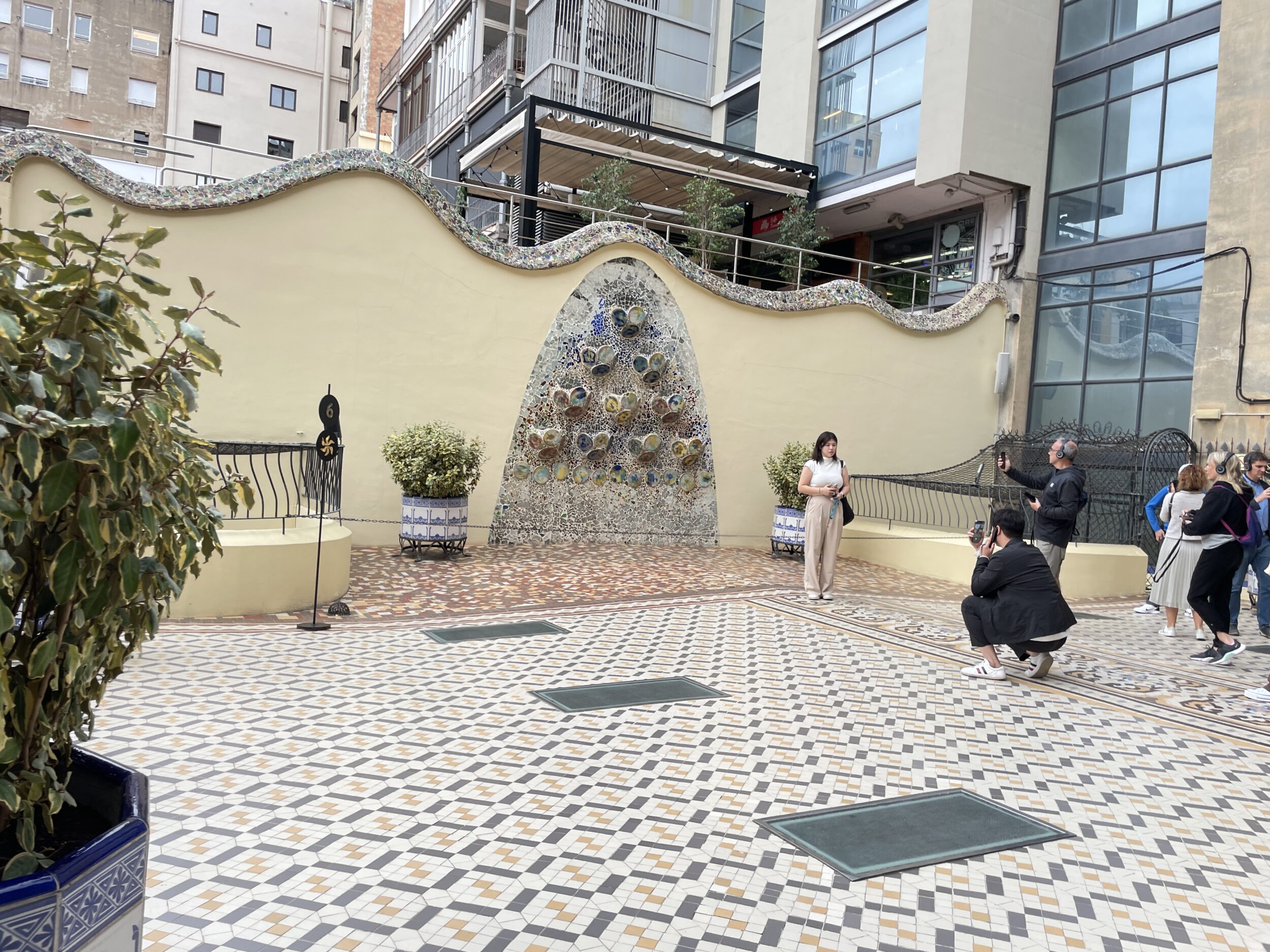
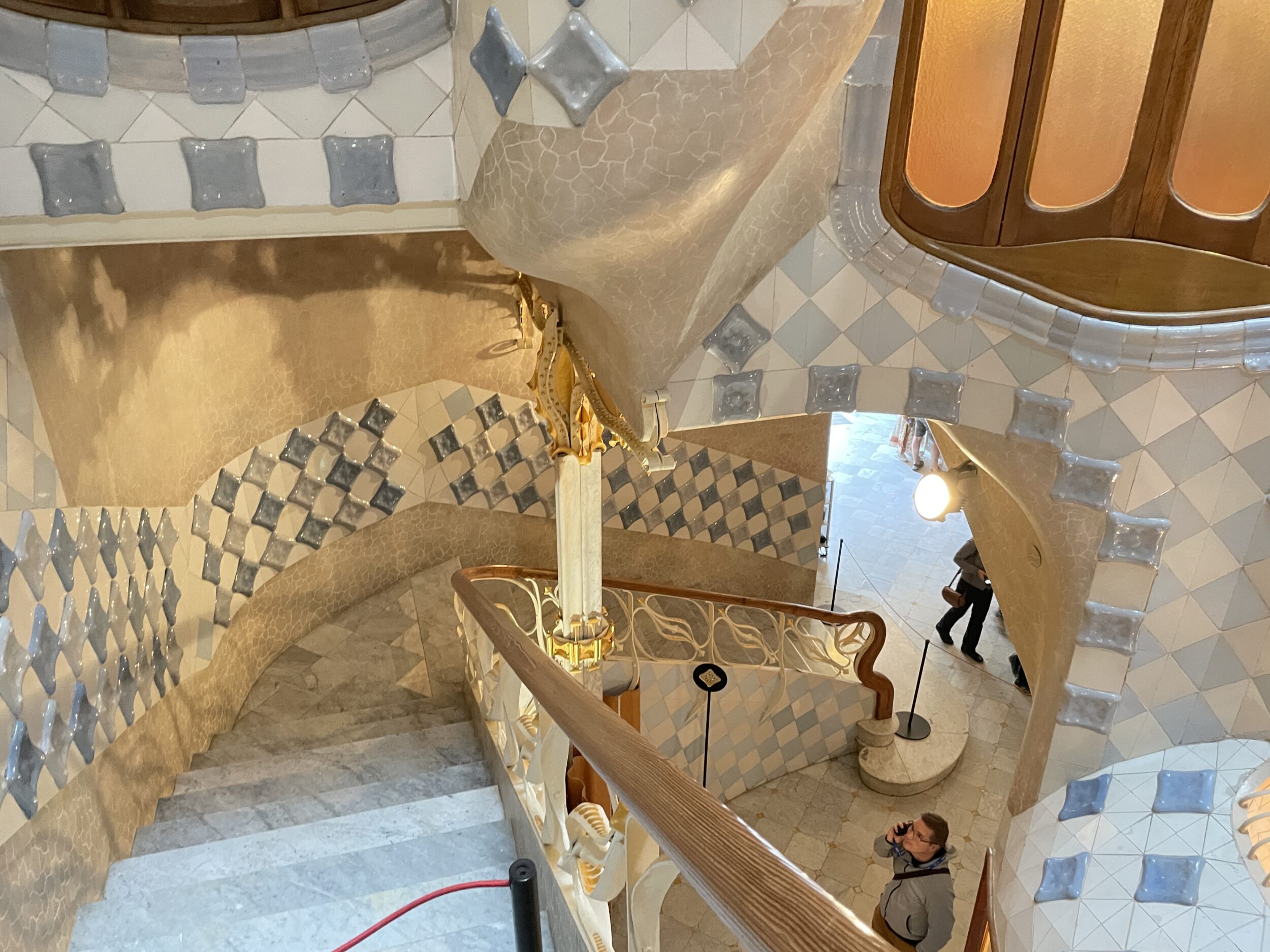
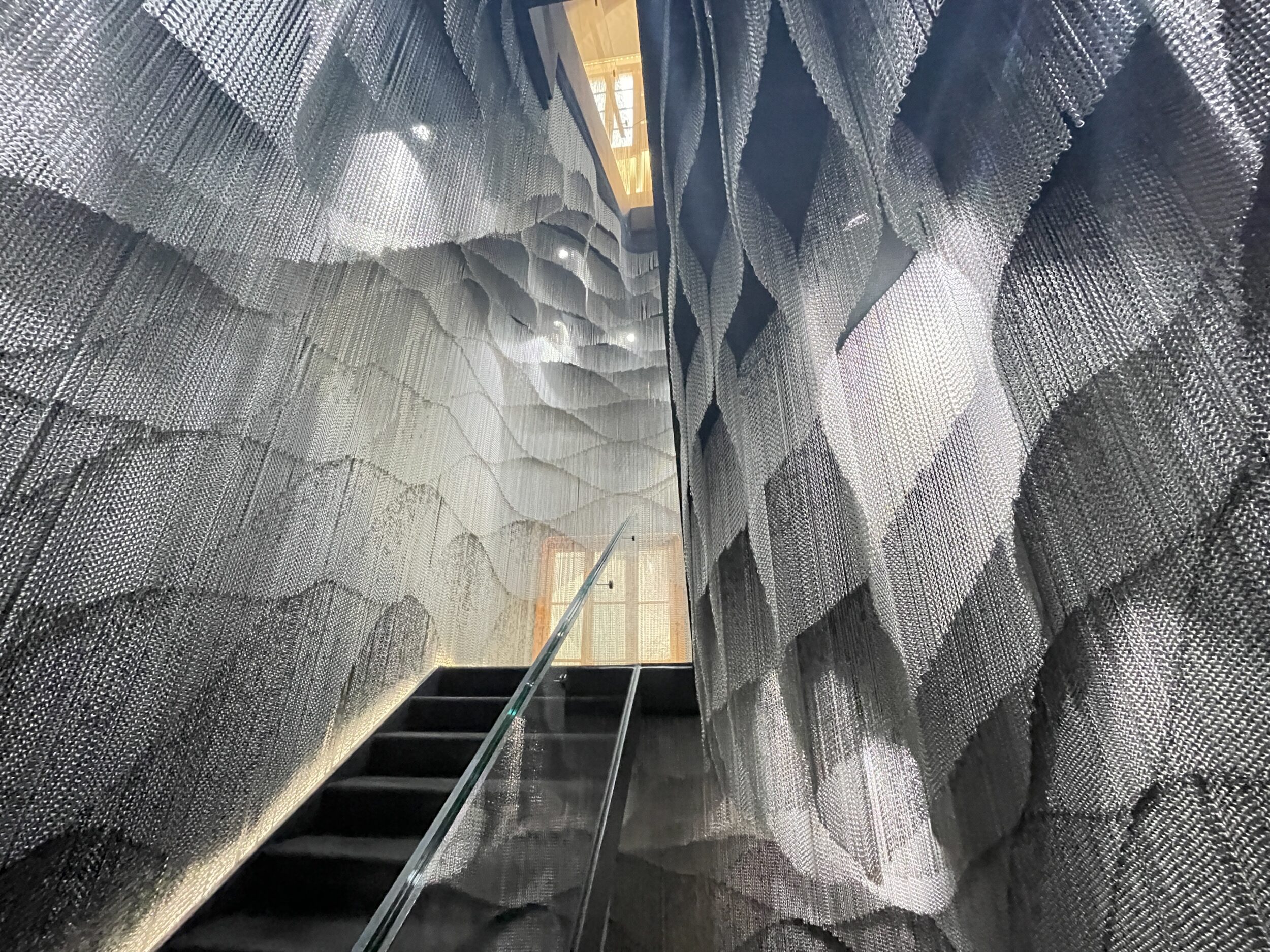
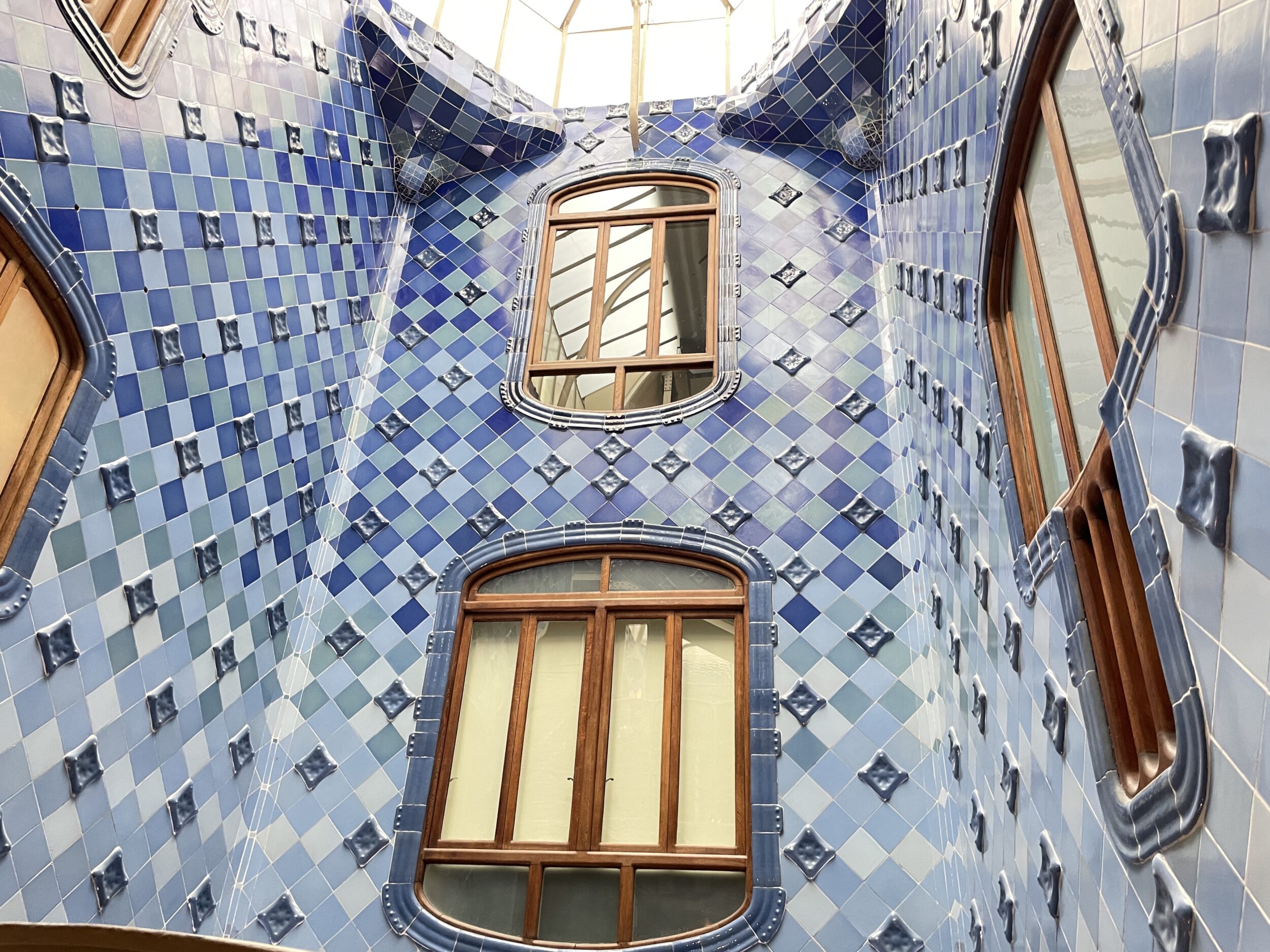
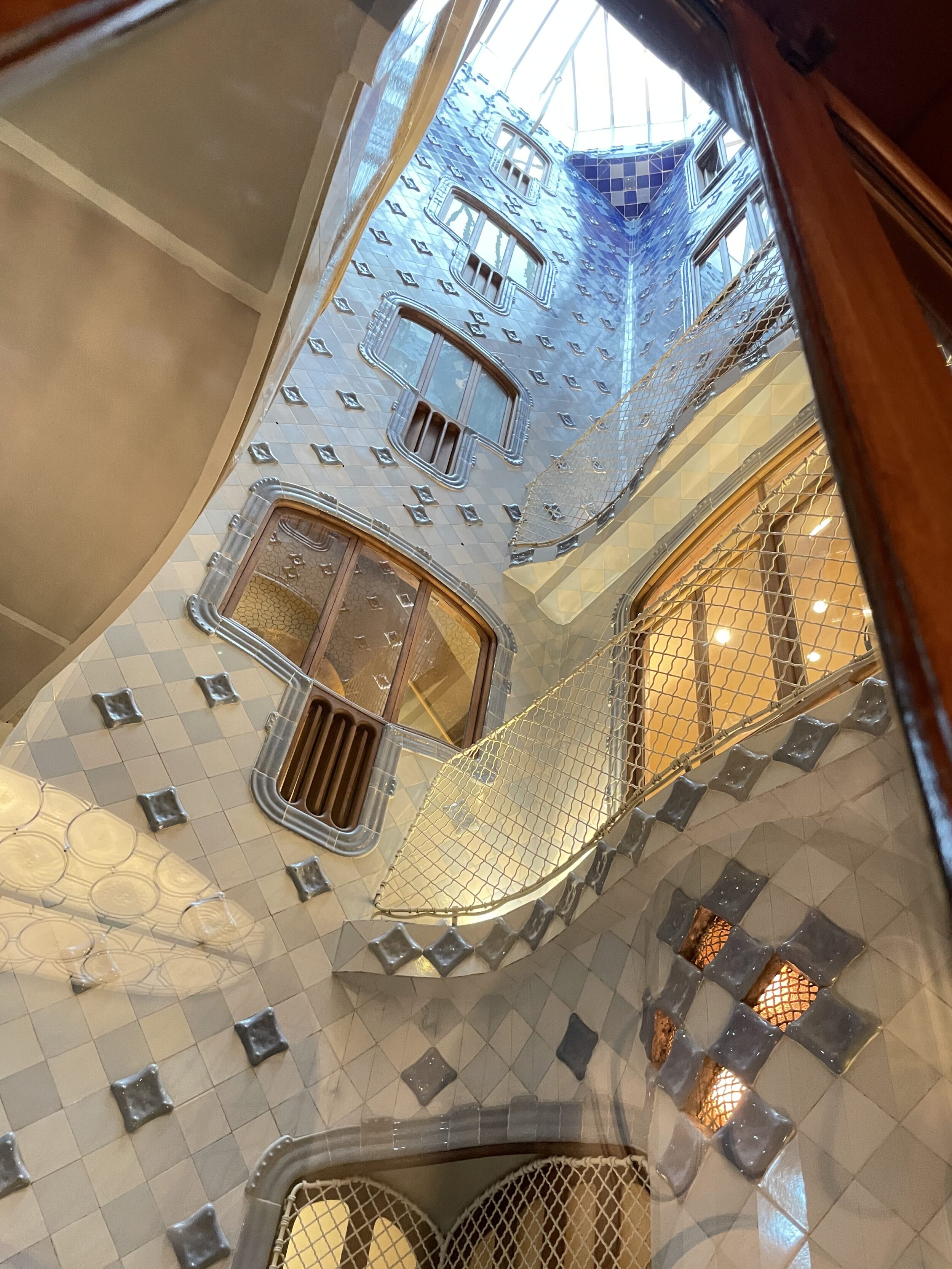
We’re told that the ceramic covering the interior wall becomes bluer towards the top. Some have a dripping effect, as if the blue of the sky were flowing over it, forming drops about to fall.
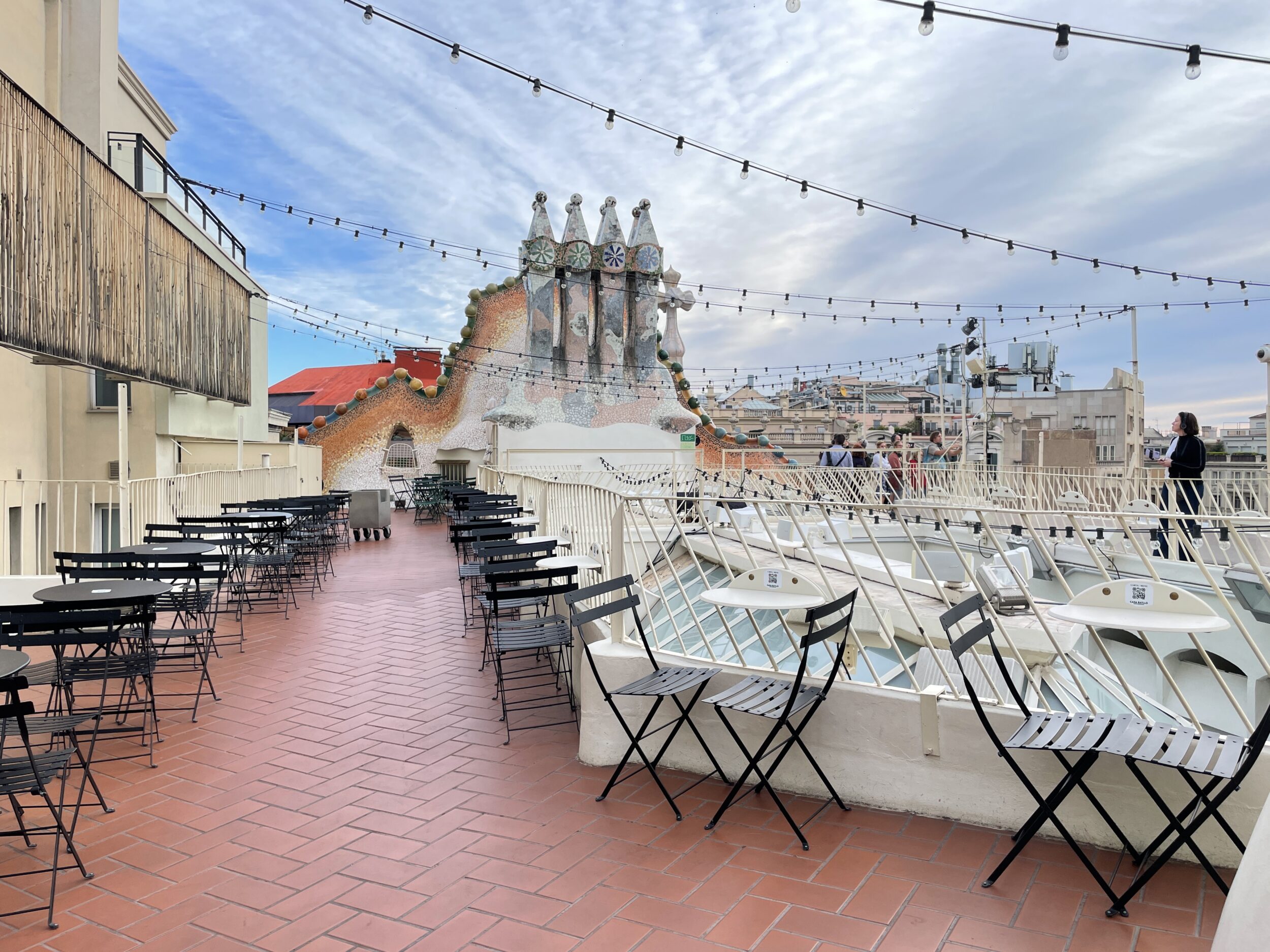
The roof, we’re told, is like enveloped by a dragon (up close, you don’t really notice).
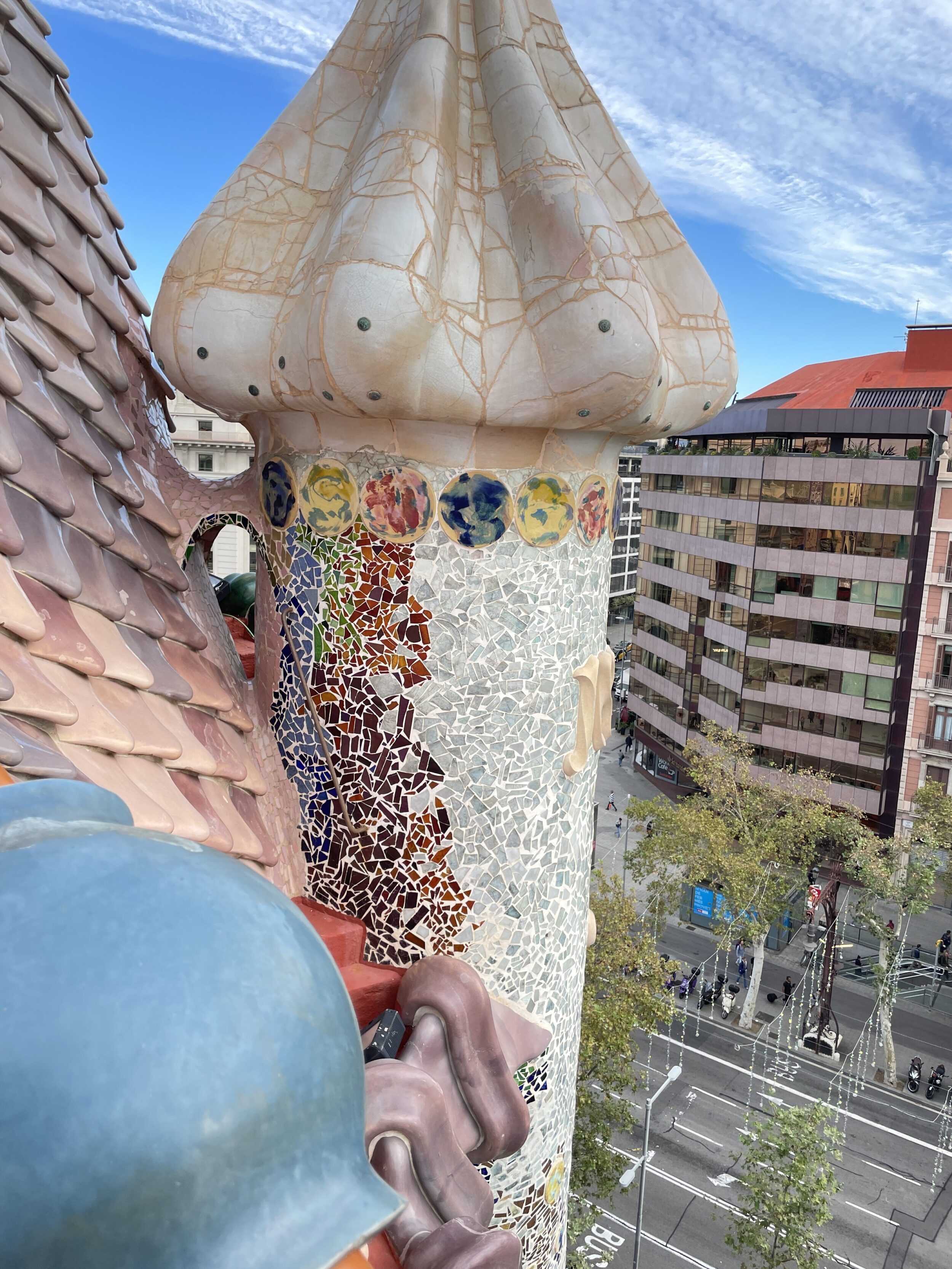
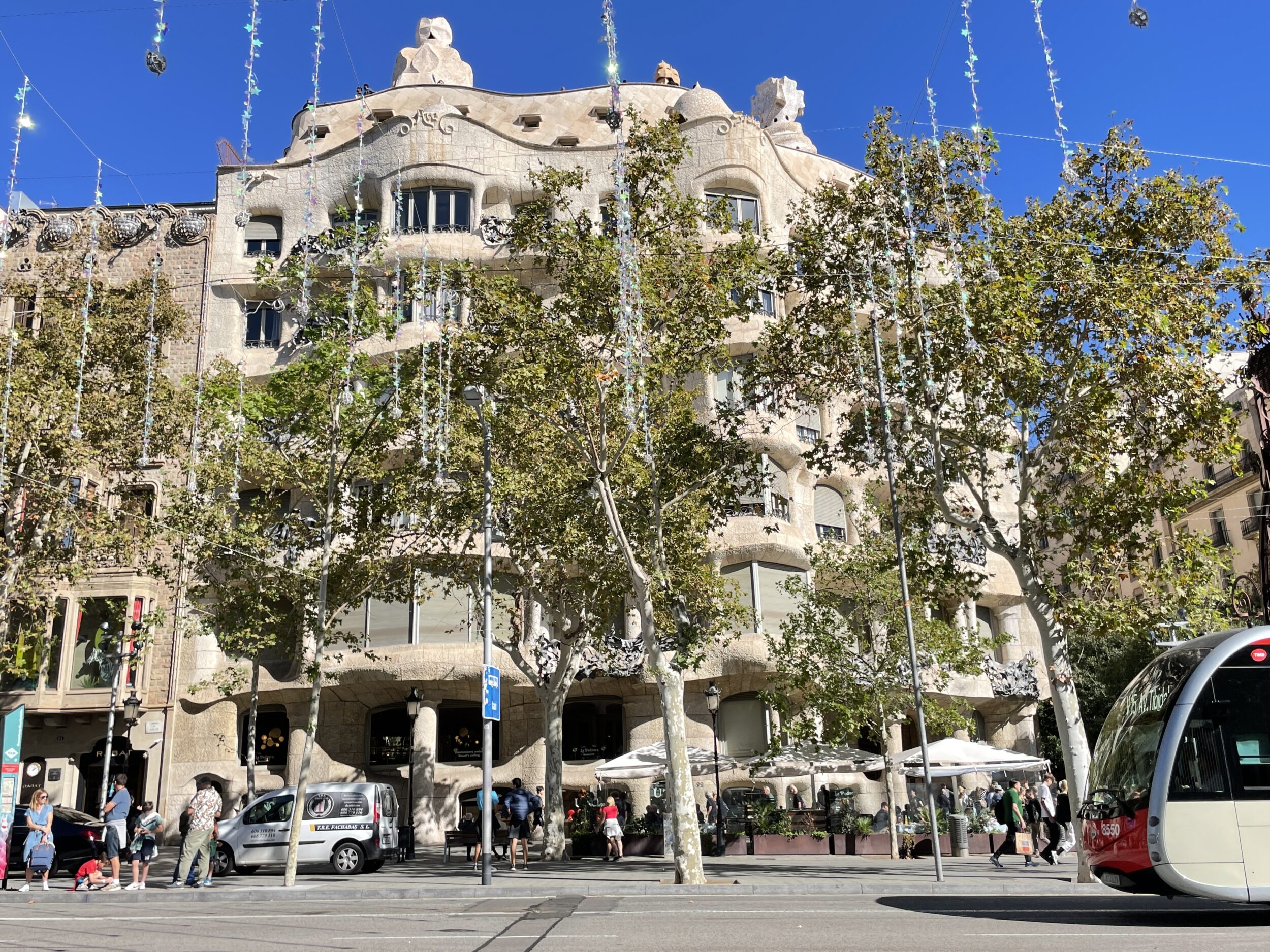
There are other Gaudi houses in Barcelona, but a friend who visited all the houses in question told us that Casa Batlló was the best, so we’ll just visit this one. It would have cost a fortune to visit all the sights in Barcelona. Another famous house (Casa Pedrera) was so hated by its owner that she took advantage of the negative press reviews to make modifications. It’s therefore less “original” than this one.
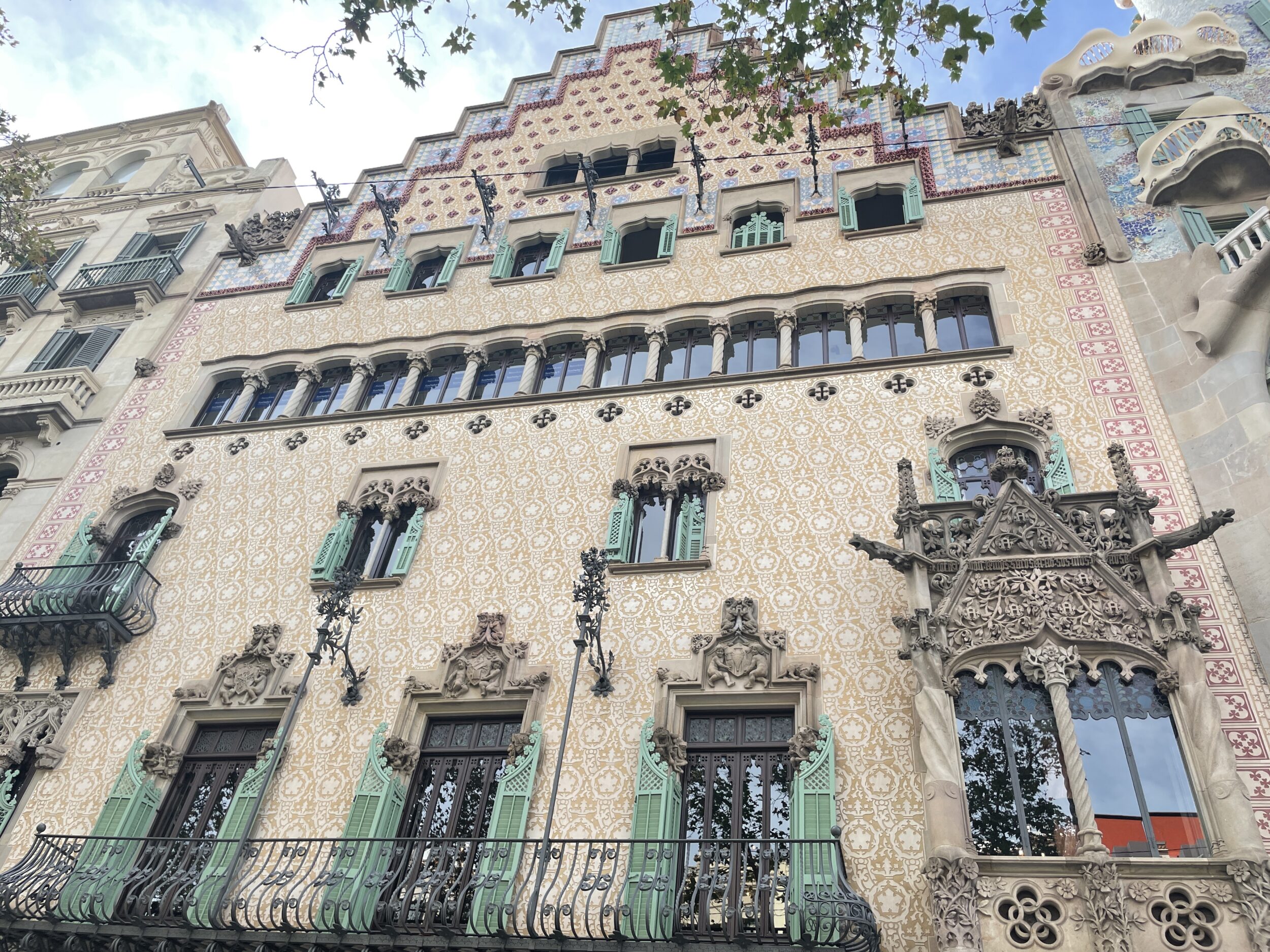
Since the café on the roof of the house is still closed, we have breakfast at the house next door (Casa Amatller), which has a faint Northern European vibe. In the end, it’s better this way because their Viennese hot chocolate is delicious. Almost as rich as an Andalusian hot chocolate, but airy enough to add a luxurious touch. We have breakfast in the old kitchen of the house, still equipped with old-fashioned gadgets. We won’t tour it because we didn’t understand the pricing at all 😀
Palau de la Música Catalana
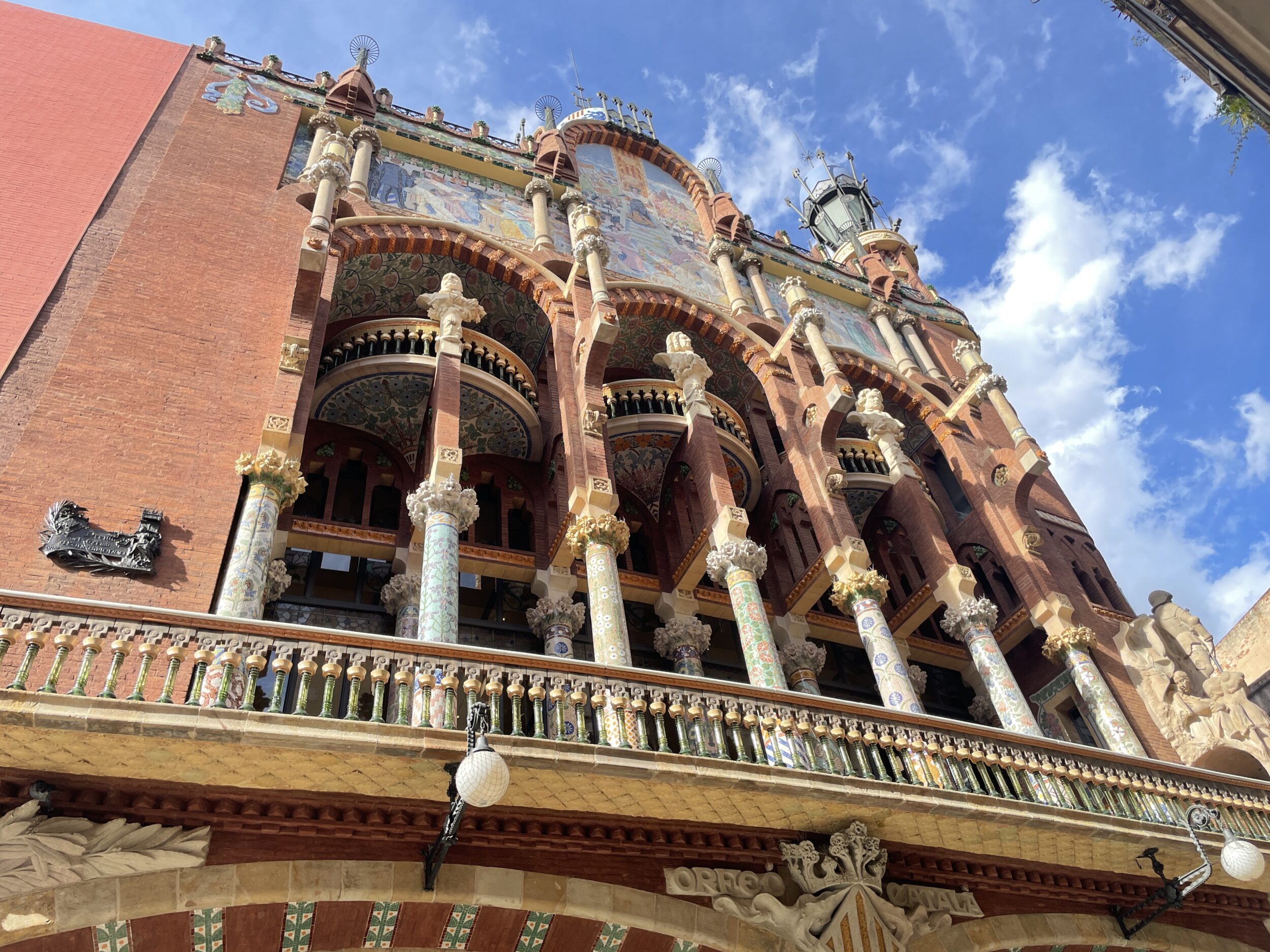
If there’s one place that left an indelible impression on me in Barcelona, it’s the Palace of Music. Last time, we found our HQ: a bar selling heavily loaded mojitos for €1.5. Time has erased that café from Google Maps; if we do find the spot again, it’s a different menu that greets us. Goodbye to €1.5 mojitos!
Last time, we visited the Palau de la Música Catalana by attending an evening concert, but I now realize our mistake. In the manner of a cathedral, the palace is surrounded by stained glass windows. Do you visit a cathedral in the evening to better see its stained glass? No! So it’s better to visit the palace during the day.
This time, equipped with my new knowledge about stained glass, I appreciate the beauty of the place even more. I even took photos of the patterns I think I could recreate myself, noting the difference in colors used from one window to another, looking at the placement of the windows, to see how I can highlight the one I’ve already made (made mainly of transparent but textured glass, it needs more light than colored glass, which looks nice even without light). Thus, while an inattentive eye would see repetition and symmetry everywhere, an expert would see that a rose is completely different from the rose in the next window, because the red glass used is slightly different. That’s the beauty of handmade work: everything is unique!
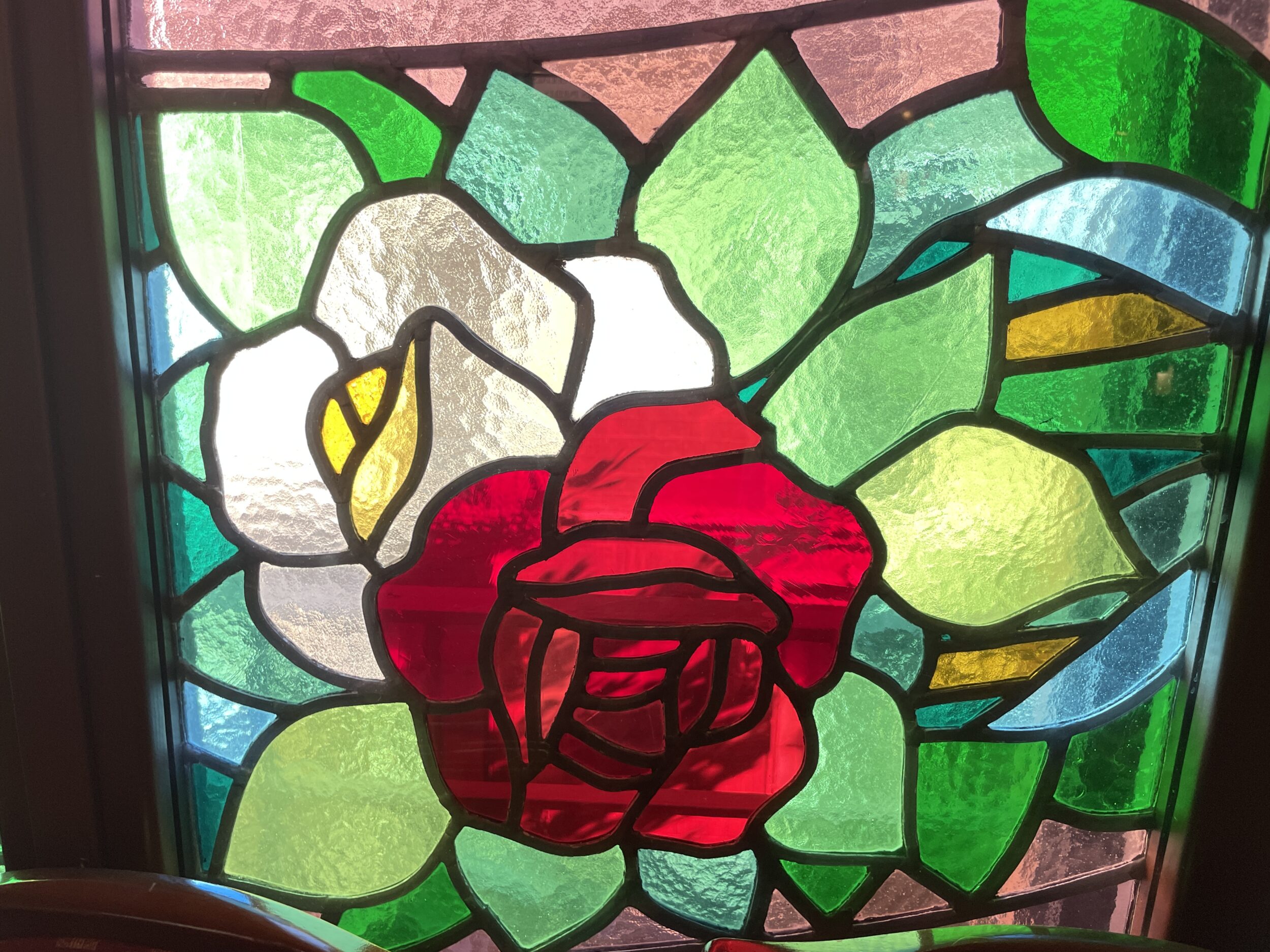
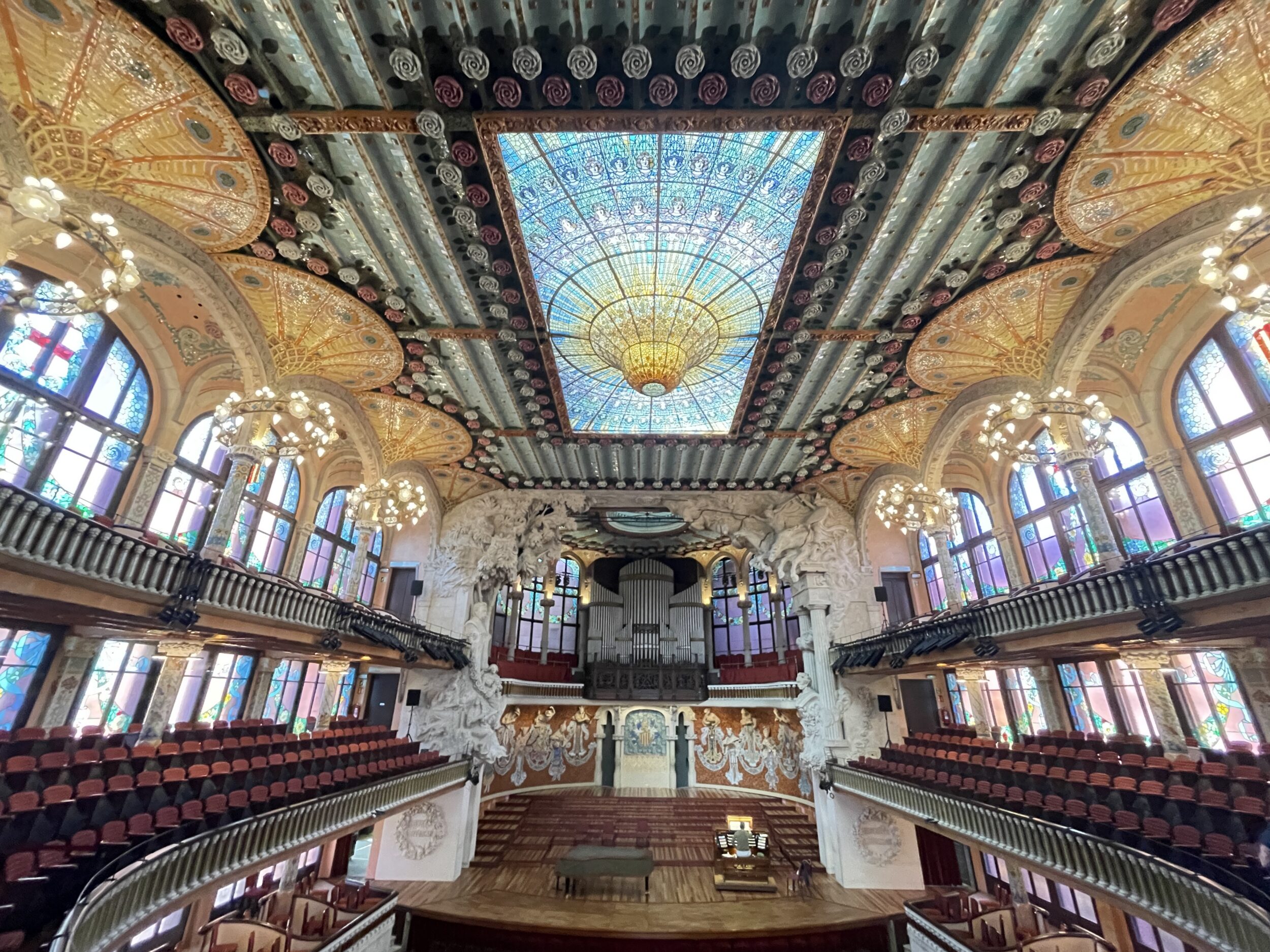
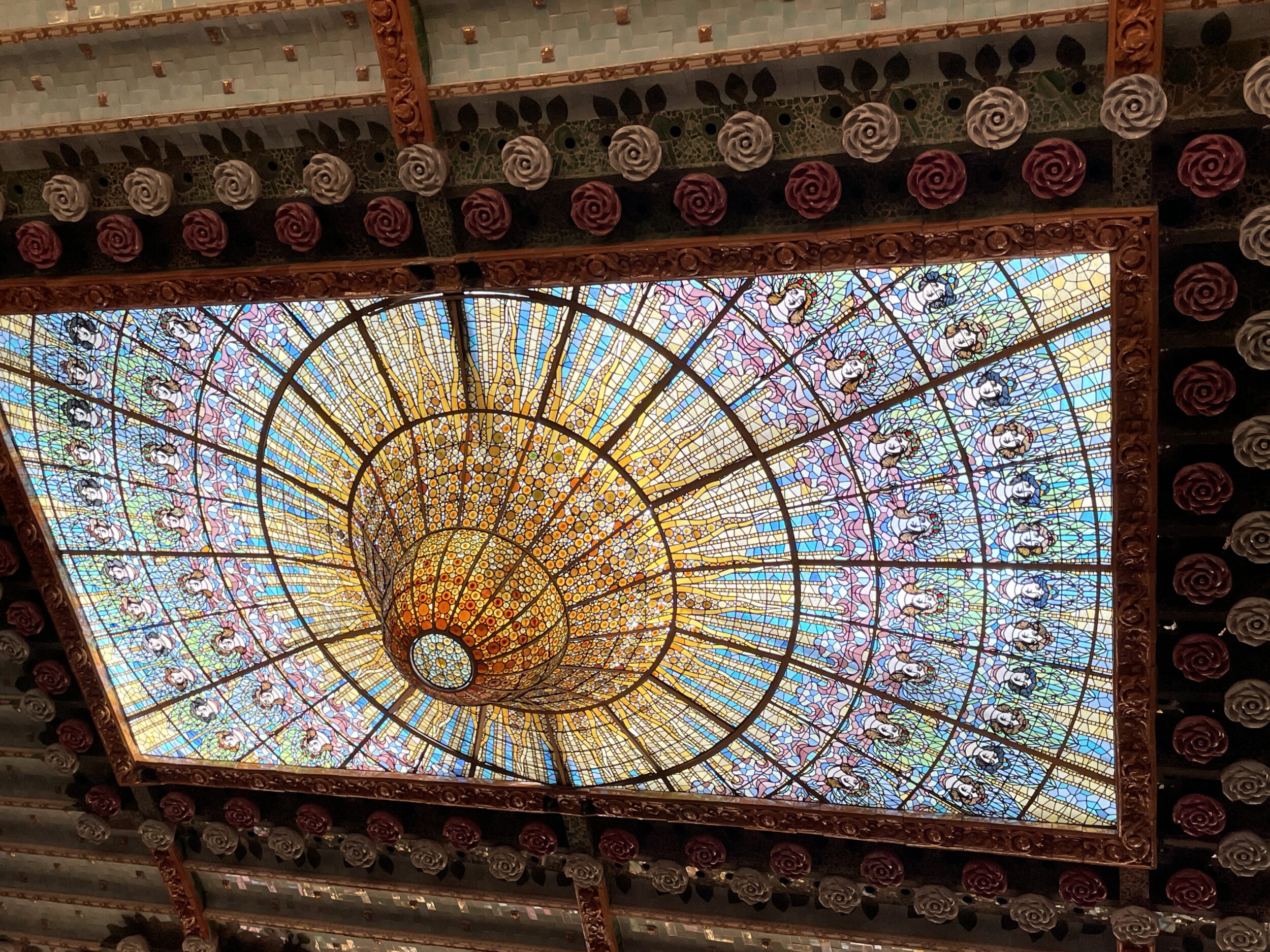
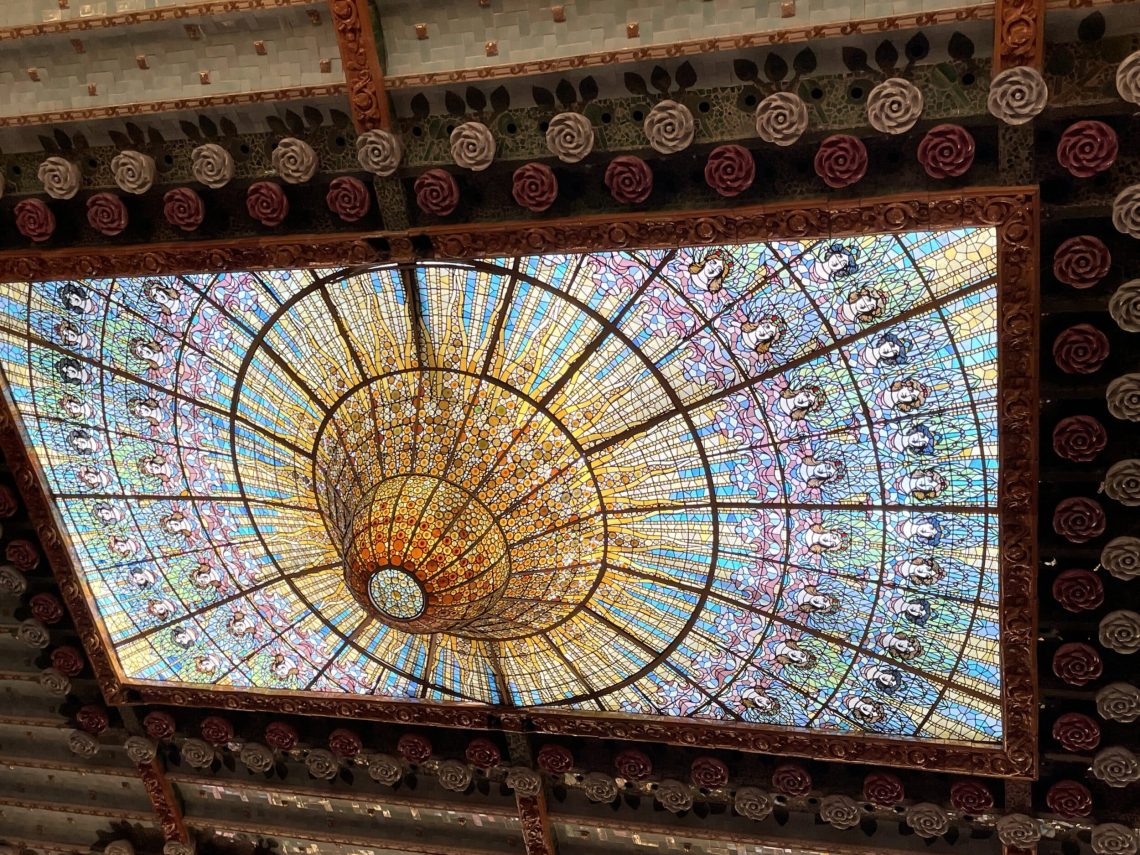
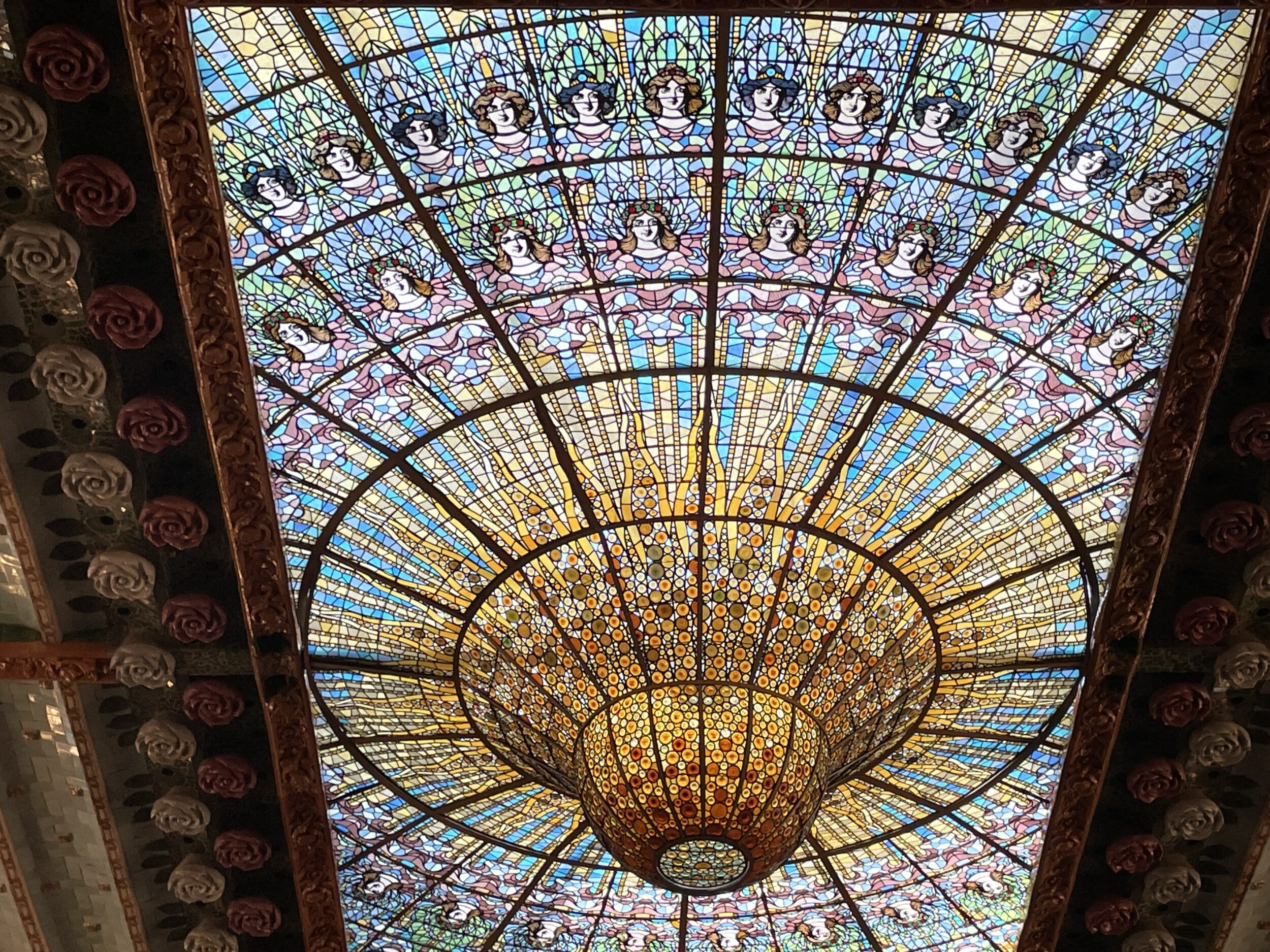
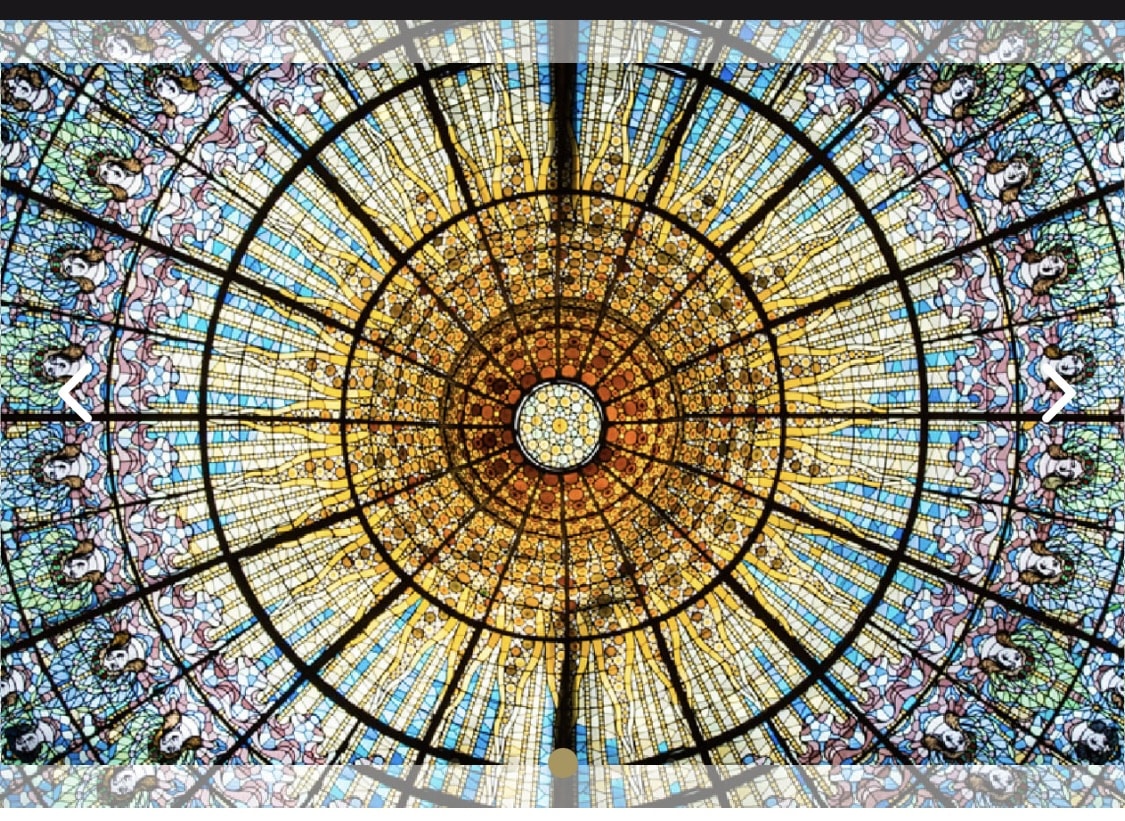
Everything is beautiful in this palace, from floor to ceiling. You don’t know where to look (well, actually, the audio guide helps). There are 3 levels in the amphitheater, and last time we bought cheap tickets on the top level, but that was a mistake. The hall is best appreciated from the second level because you feel more enveloped and can better appreciate the magnificent ceiling. As beautiful as a chandelier, the glass pieces are supported by steel frames. I don’t know how much it weighs in total, but it must be a technical feat. Not only for the designs (female faces all different from each other), but also for the chosen colors, and the massive size. This “chandelier” is well lit in the evening, but the windows on either side of the hall are not. During the day, the pale pink colors envelop the hall with a soft, feminine warmth; I feel extraordinarily good in this hall.
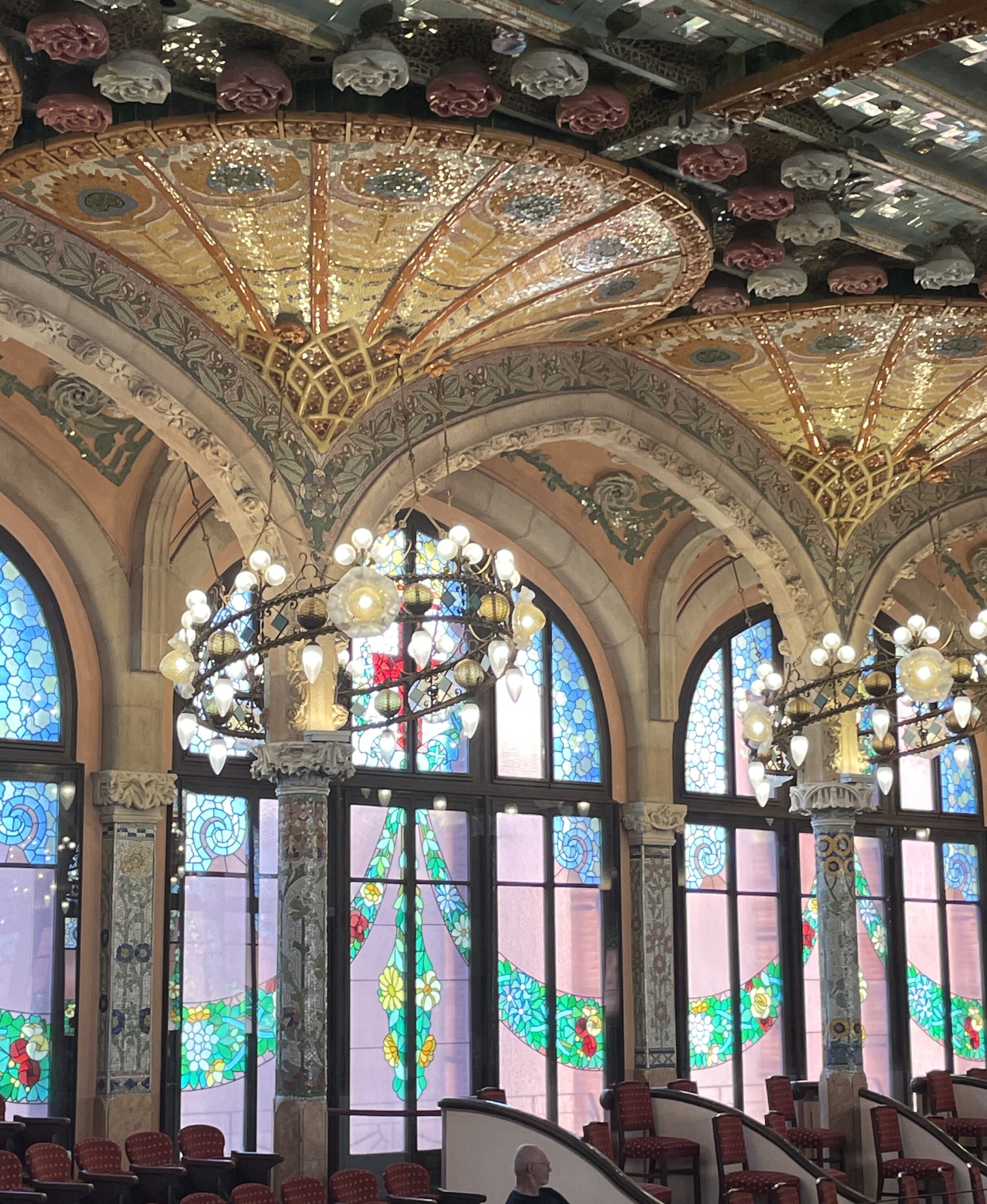
Here’s what the audio guide says:
The hall was designed to bring transparency to the spaces while supporting the weight of an ostentatious decoration. For the construction, a wide variety of materials was used: marble, stone, brick, glass, and wrought iron. The Palau is one of the first buildings where this technique was applied, which allows the creation of large open spaces. When it receives daylight, it transforms into a fantastic music box, blending sculpture, mosaic, glass, and wrought iron. Facing the versatile stage, there are over 2,100 seats. The building was created through popular subscription, which is a nice contrast to other performance halls promoted by the aristocracy or bourgeoisie. Look up and take a few seconds to contemplate the sun illuminating the Palau de la Música Catalana in its entirety. This glass skylight connects the inside of the music box with the outside. During the day, light enters through the stained glass and caresses the entire concert hall. At night, the dome resembles a lantern or a drop of honey about to drip from the ceiling. It seems light despite its weight. A sensation made possible by the structure that supports it, which undoubtedly confirms the great architectural quality of the whole ensemble. Now, look closely at the part of the dome with cooler colors, the blues and greens. You will discover the stylized faces of forty maidens. Forming an angelic choir, they remind us that the Orfeó Català was the first in Catalonia to include female voices.
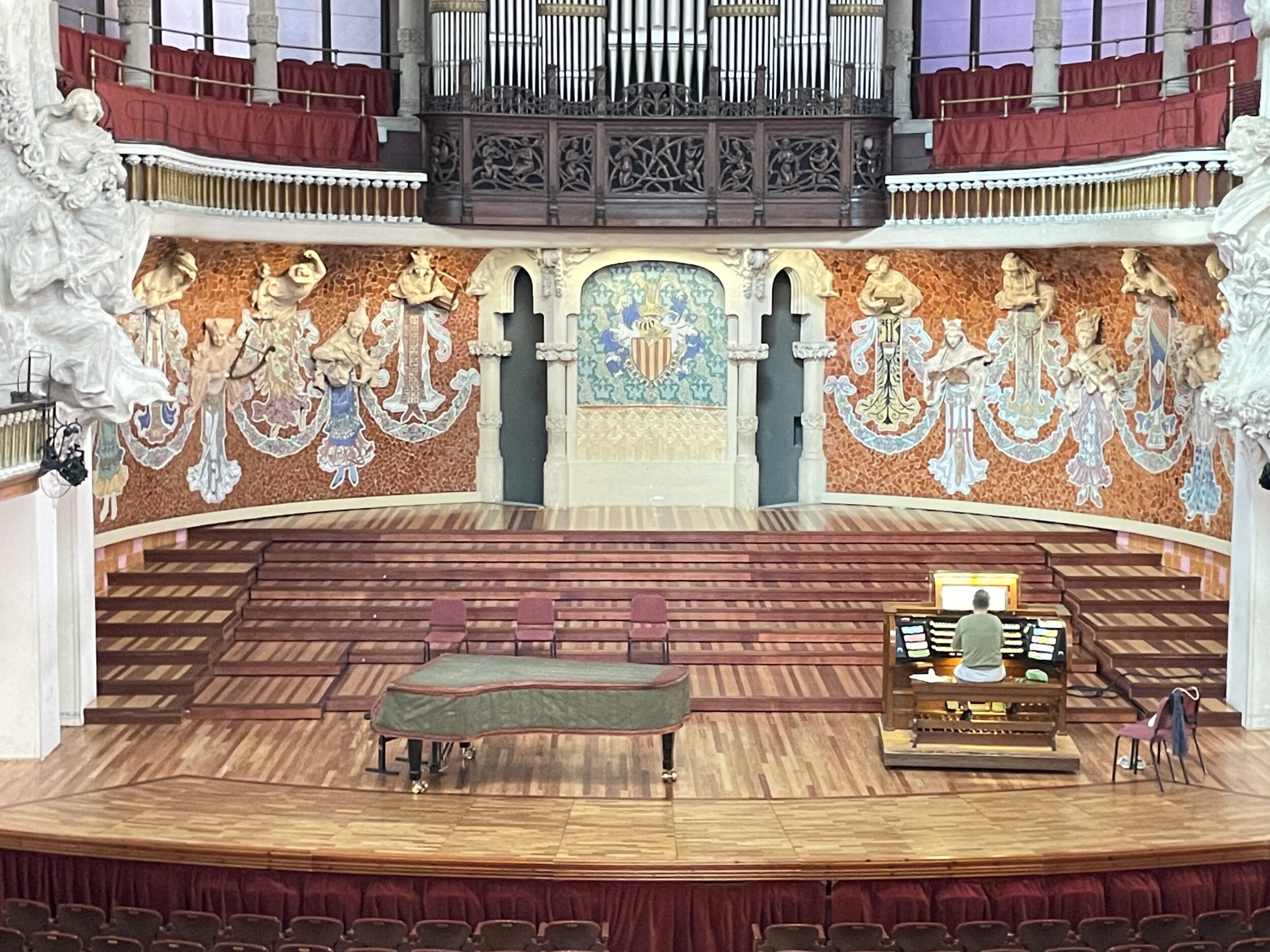
During the visit, we don’t have access to the lowest level; we would have had this view:
Well, the second level is great! Huge statues also decorate the stage, and the audio guide explains well who is who, what represents what. A musician is rehearsing his piece on a small organ. I would have loved to hear the real, huge organ dominating the hall. I don’t remember what we listened to here, but the acoustics didn’t seem unforgettable to me. I think it’s only when the acoustics are bad that I remember them 😀 In preparatory classes, I wanted to write a paper on the acoustics of opera halls, and my professors said no, in unison, saying it was too difficult a topic. Instead, I wrote an essay on the fractal shape of ribs.
Sagrada Família
We got around to buying entrance tickets too late (it’s fully booked a week in advance), but it’s no regret because we already visited the interior last time, and it’s far from finished, 10 years later. But the exterior has changed a lot compared to last time: taller, more details. Once, the land used for the construction of the basilica was in a poor neighborhood of Barcelona and cost a mere pittance. Now, thanks to tourism, it’s a completely normal neighborhood. The advantage is that the 4 sides are quite clear, allowing you to admire it from all sides.
However, we notice a kiosk of a travel agency offering tours for about thirty euros, barely more than the entrance ticket. They have availability for the next day. Proof that travel agencies have access to a certain number of tickets, for poorly organized tourists like us.
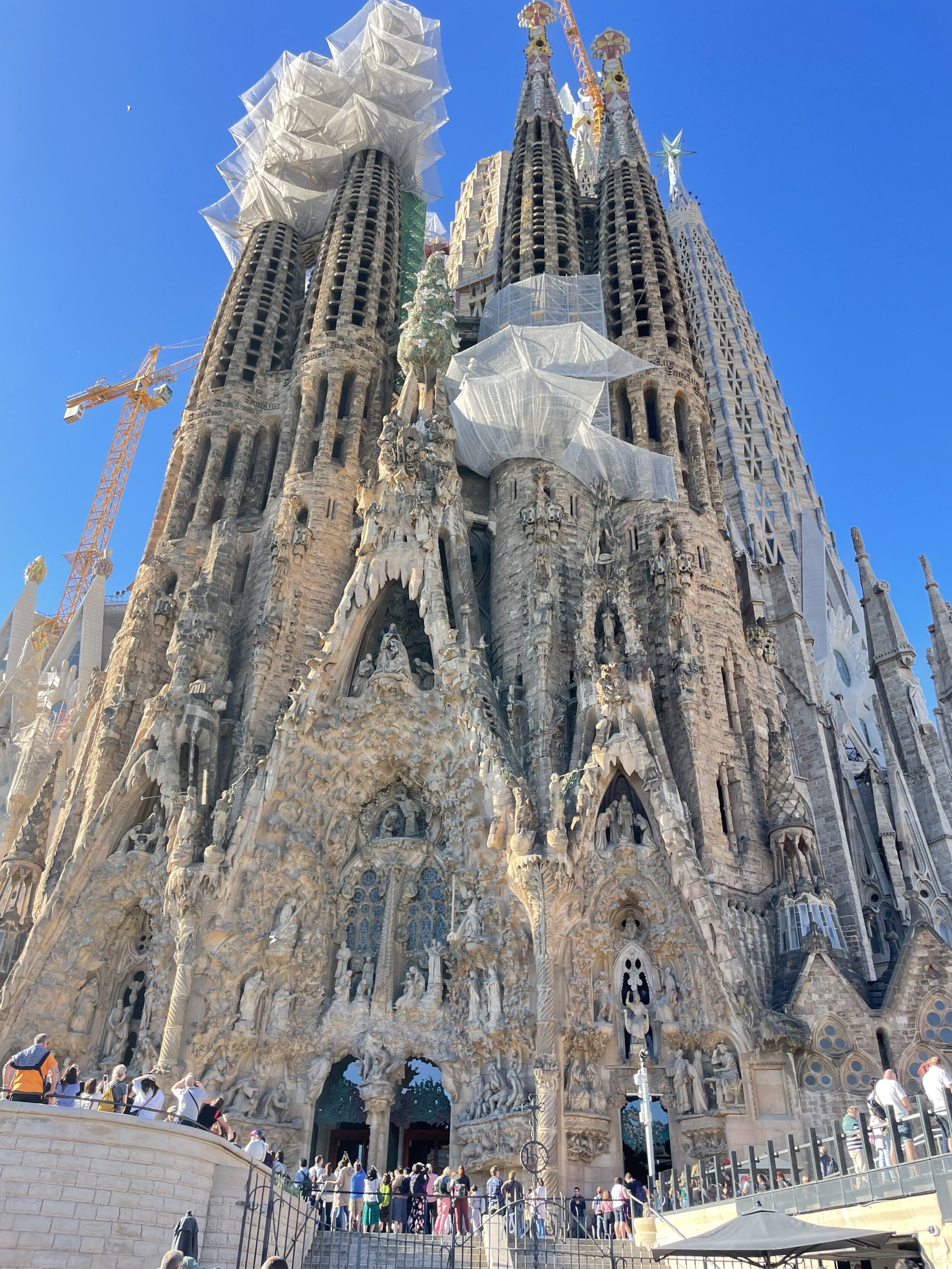
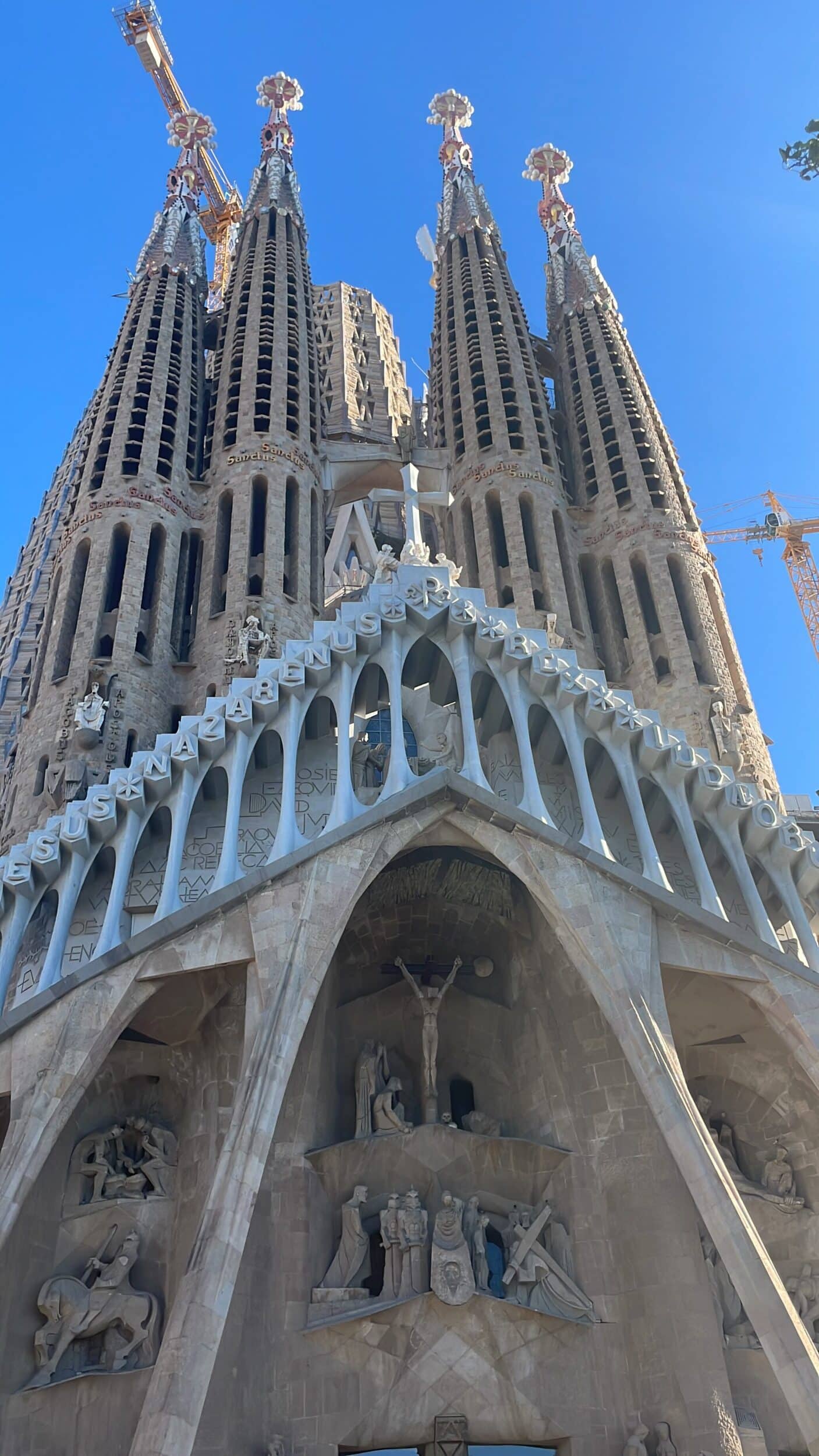
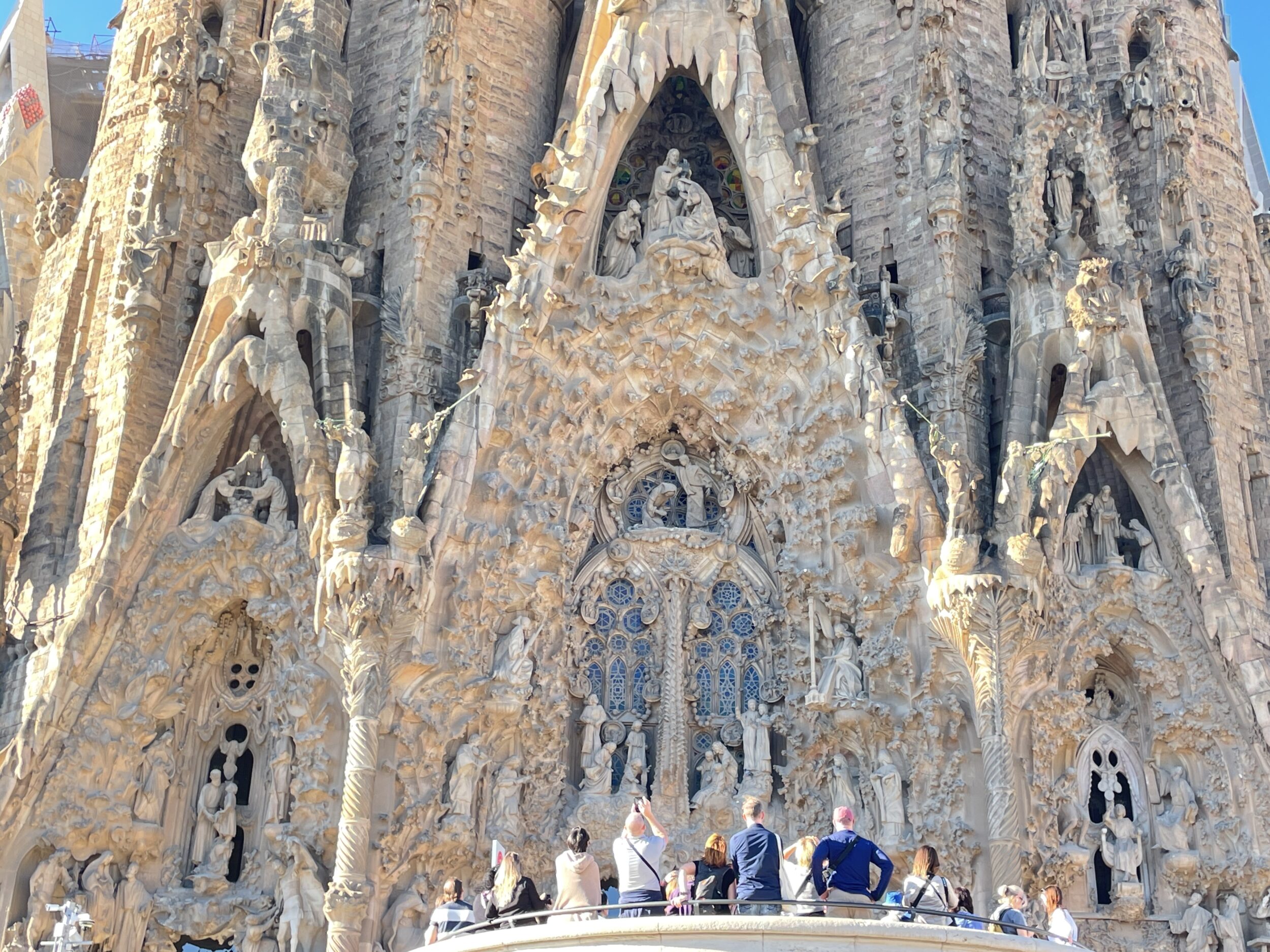
Observing the basilica from the outside is also very interesting. You notice lots of little details: for example, these shapes of lizards and snakes, letters, names here and there… The stained glass windows seem to be double-glazed because you can’t see the exposed lead from the outside (it’s better for cleaning and insulation). I know that modern stained glass can be used even in private homes, and to limit the risk of break-ins and be more effective in terms of insulation, they can be double-glazed.
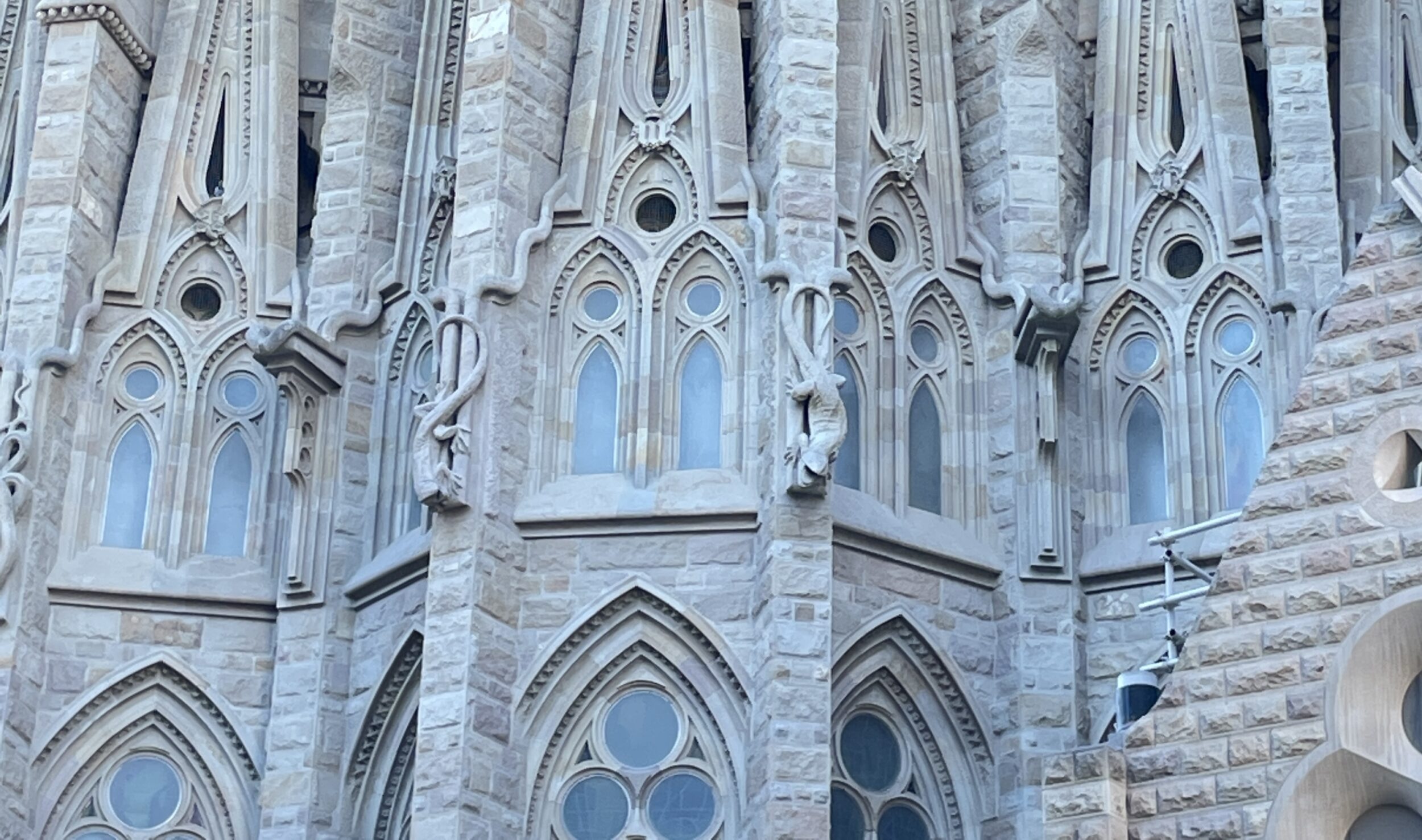
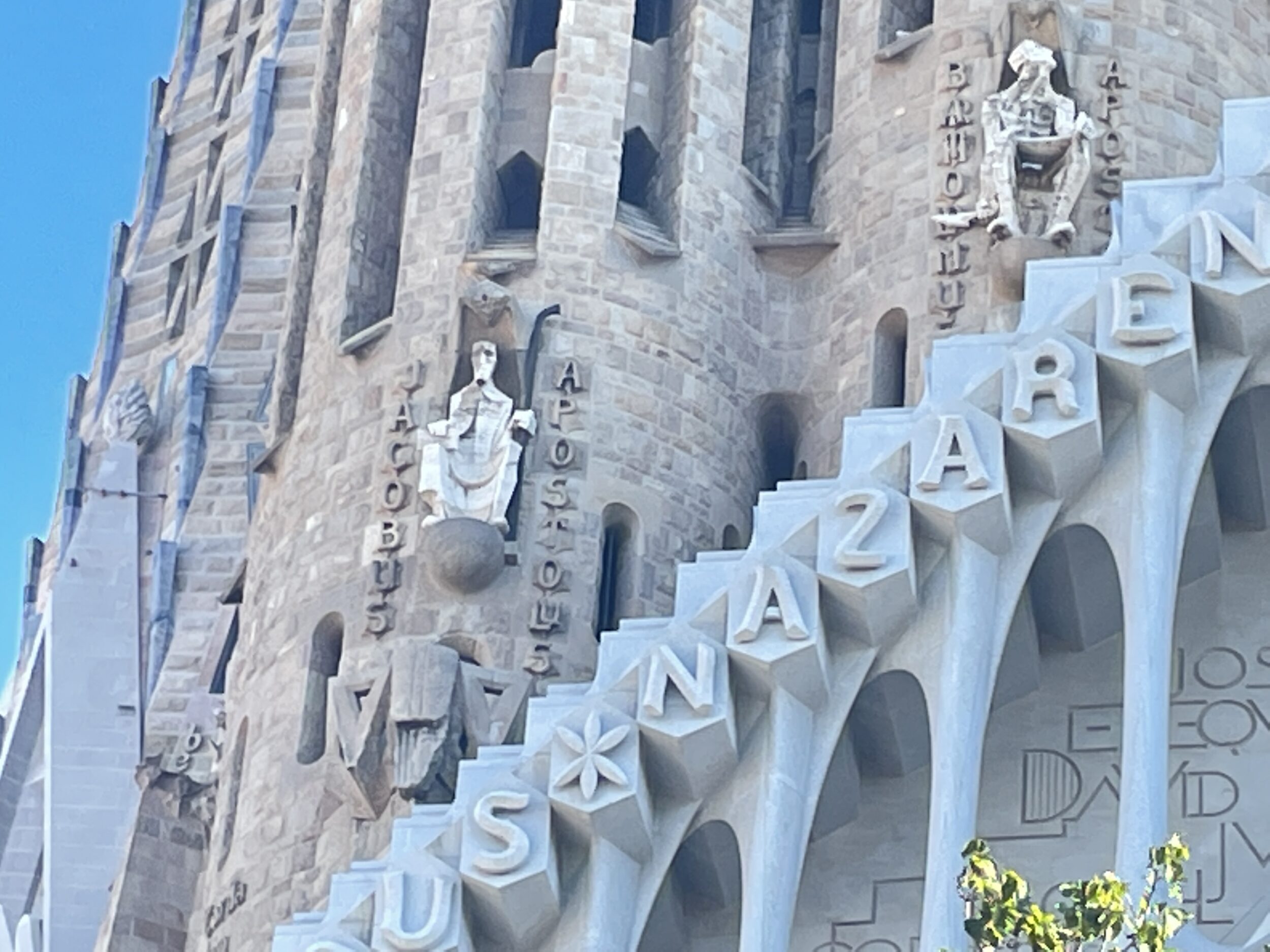
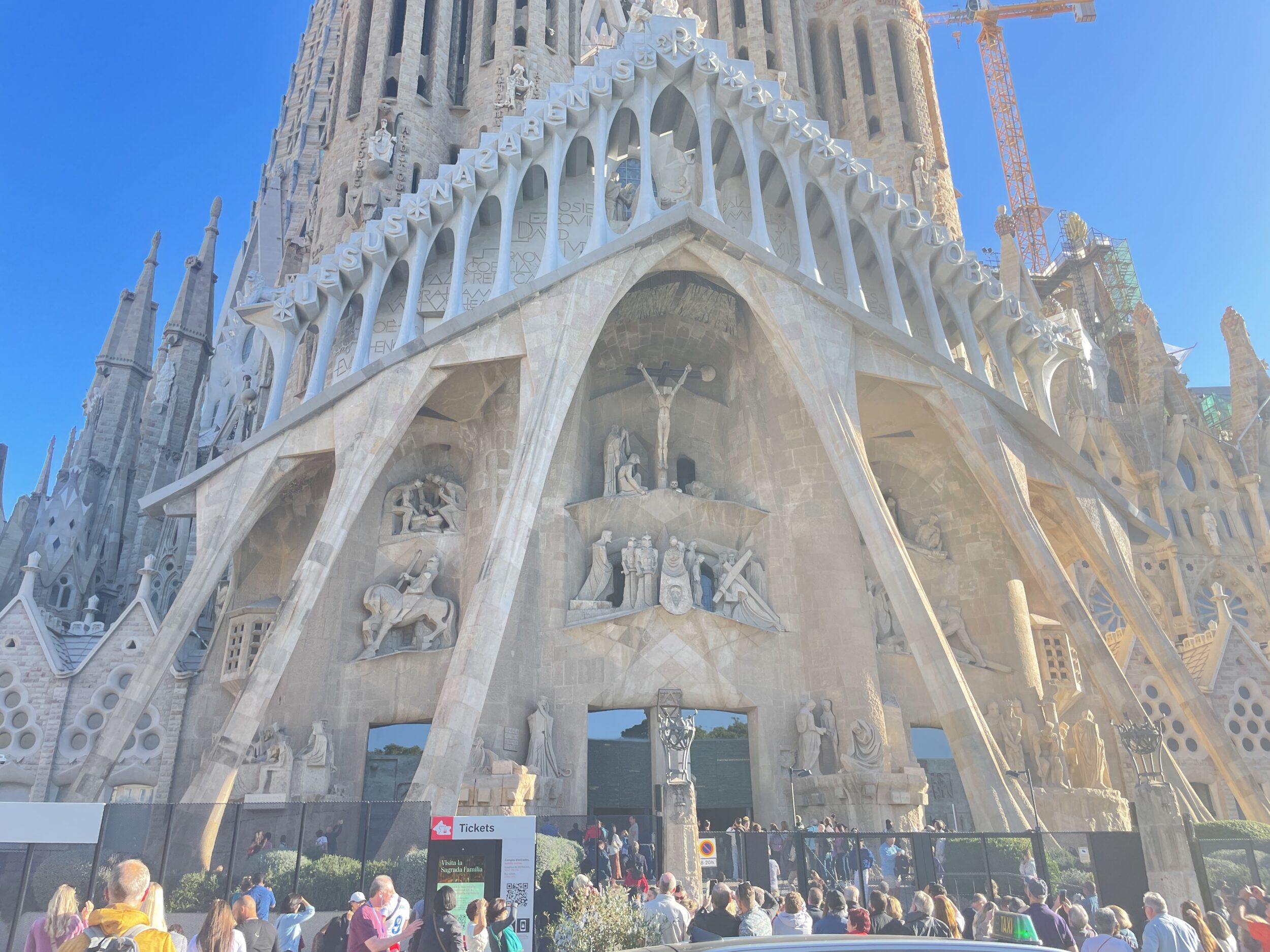
I don’t know if these “fruit baskets” are recent, but I don’t remember seeing them last time.
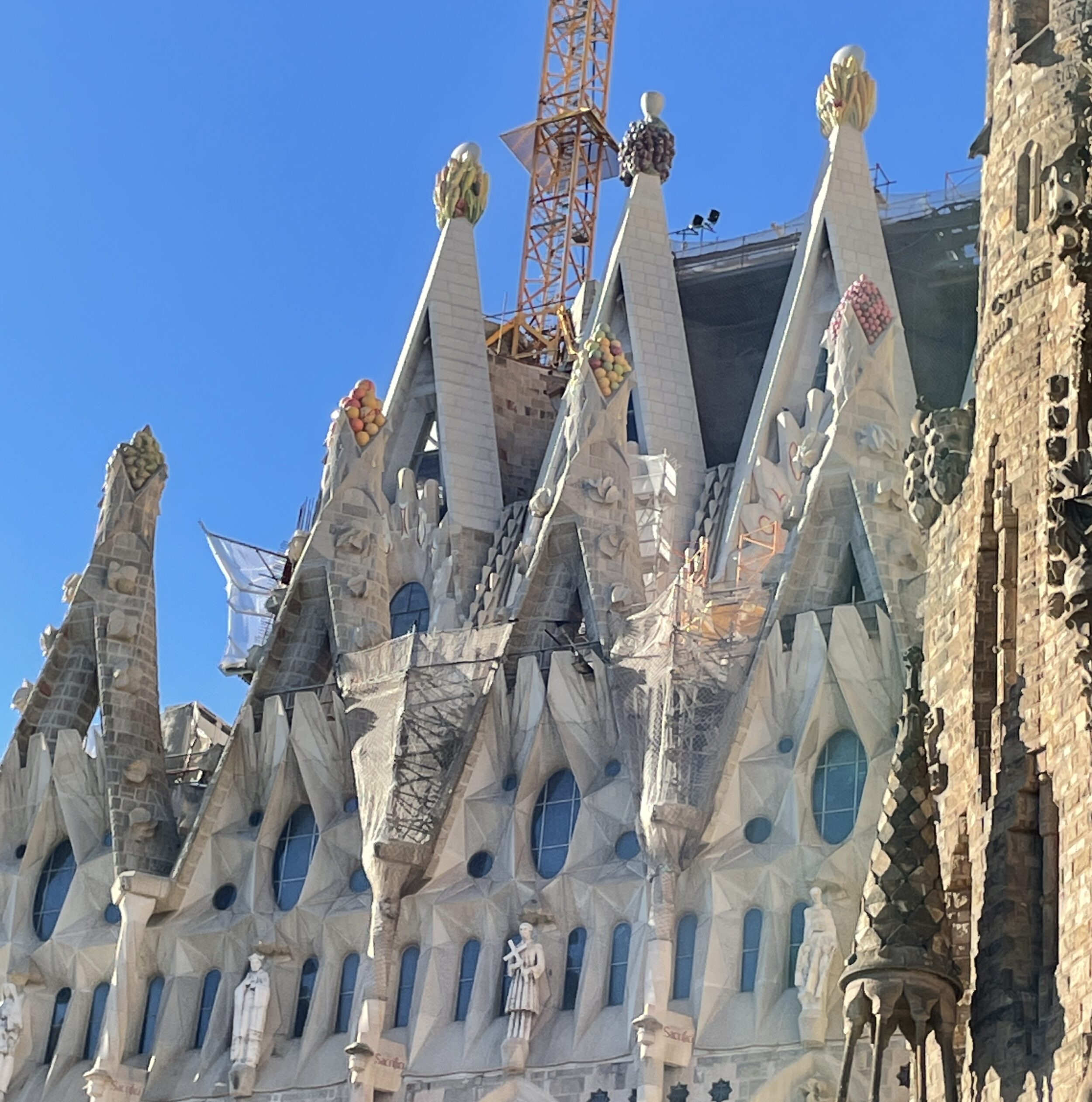
Compared to the plan, the towers haven’t reached their full height yet (the central tower is supposed to be finished in 2026). The basilica promises to be incredibly beautiful once it’s completed.
Hop on hop off bus
Usually, we don’t go for this kind of bus, but since we’re feeling too lazy, we buy tickets for a hop on hop off bus, valid for 24 hours, which meant we could enjoy it two days in a row (afternoon and the next morning) to do both the red and green routes.
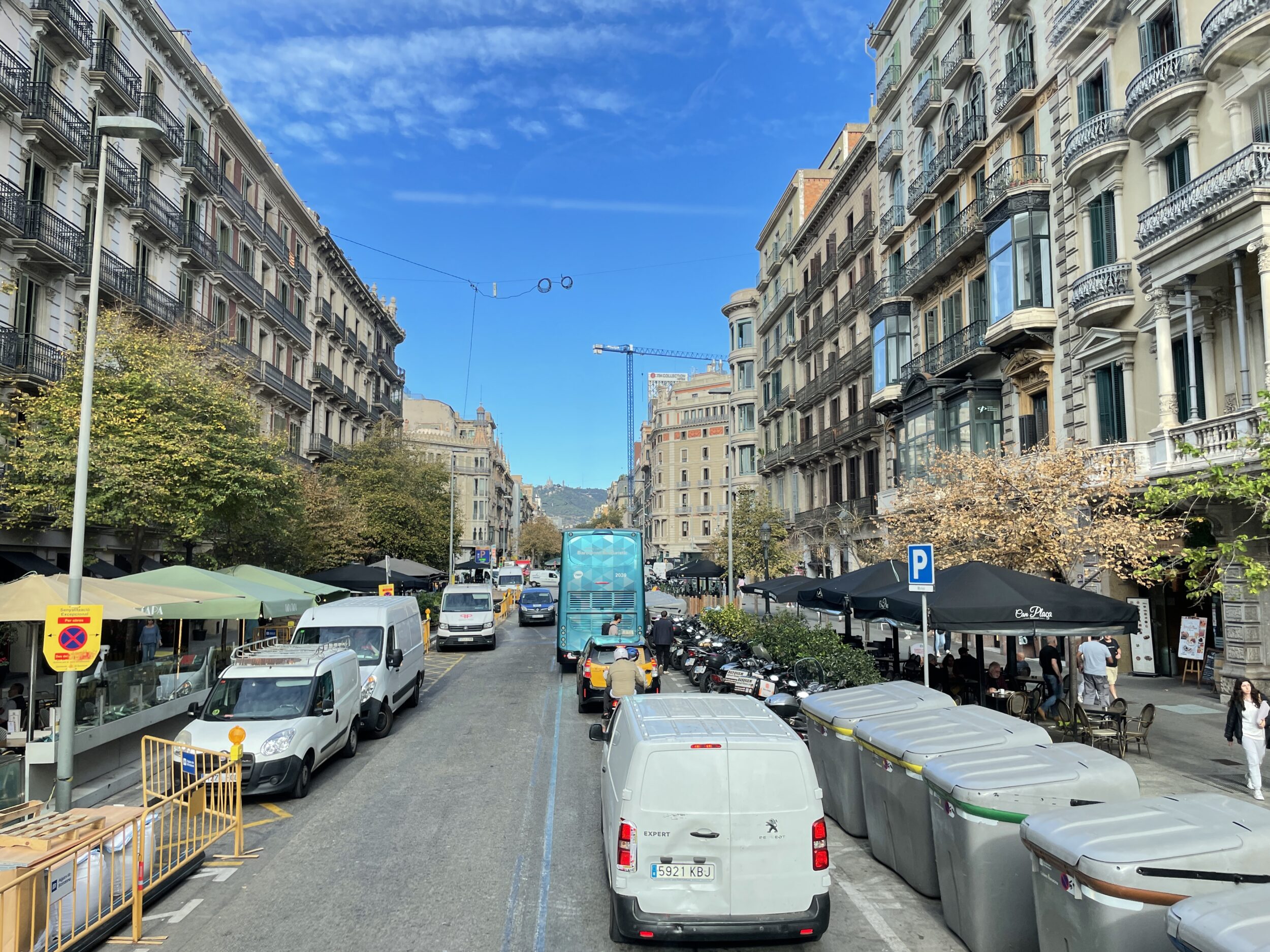
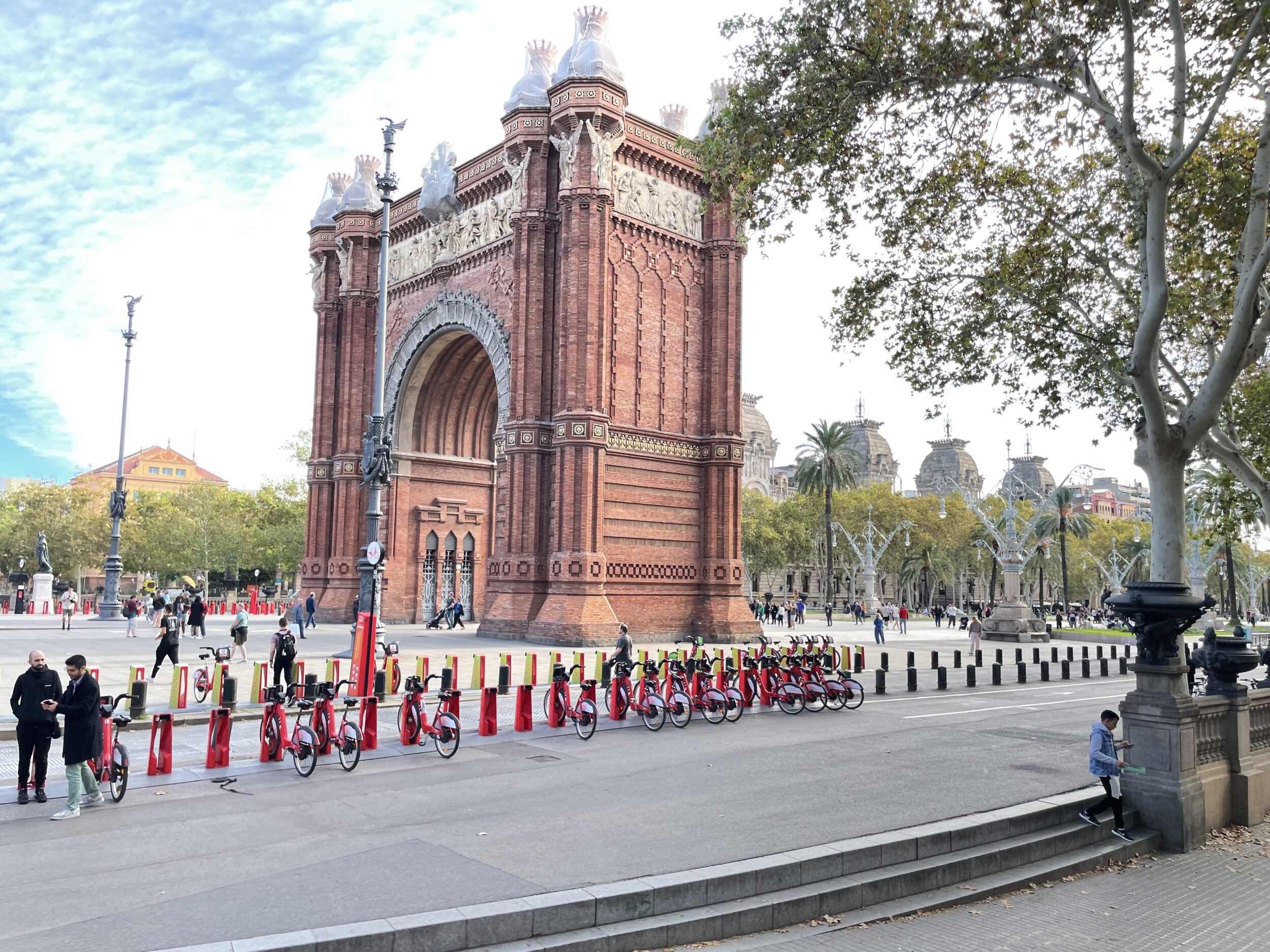
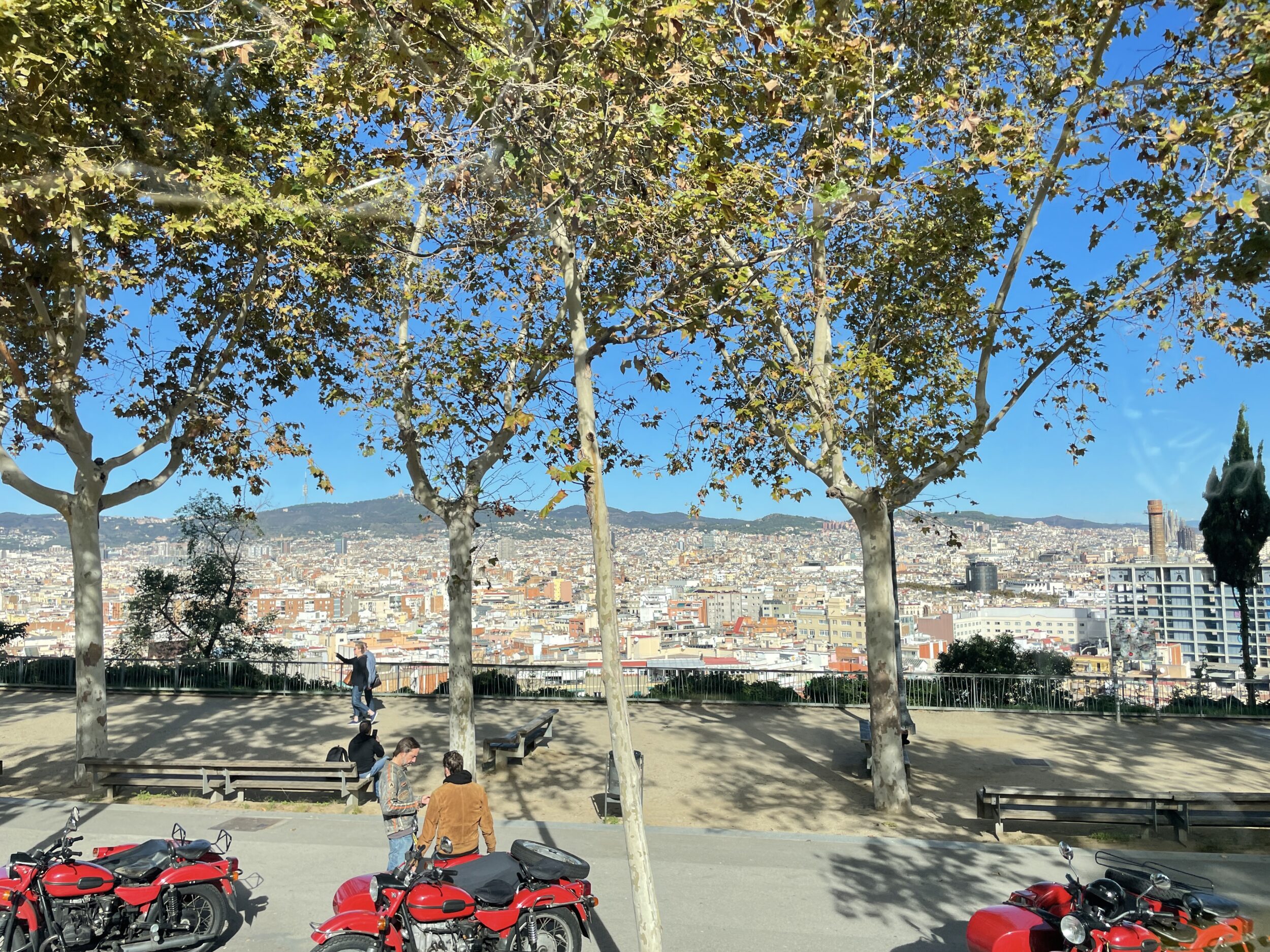
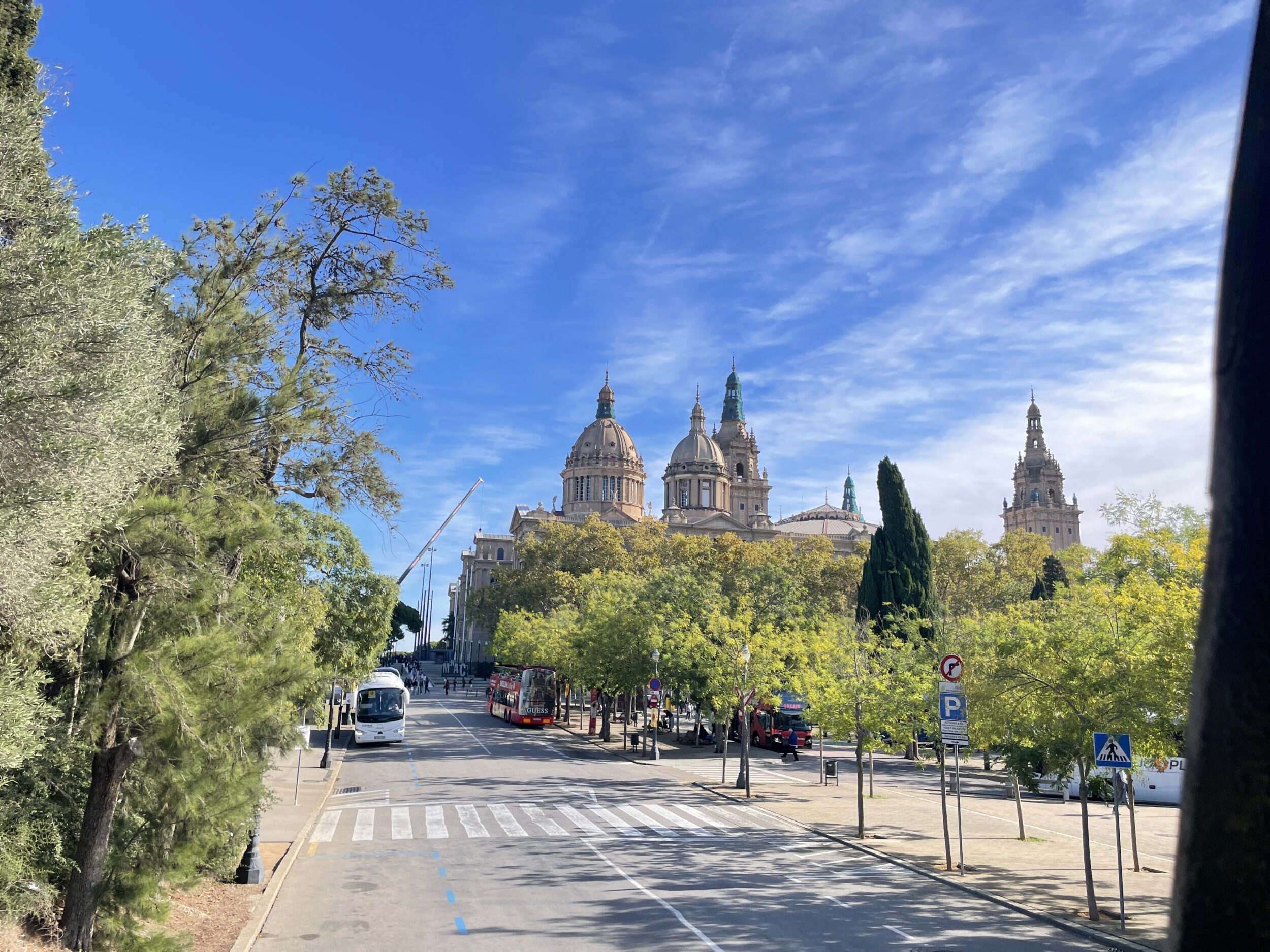
So, we passed by the Arc de Triomf, the Museu Nacional d’Art de Catalunya, the Olympic stadium, the beach, and Montjuïc. Since reading “The Shadow of the Wind,” I associate Montjuïc with the dark history of the Spanish civil wars, because in that book (and the others in the same series), Montjuïc is linked to prisons and painful memories. The green route also passes by Park Güell, which I’ve already visited twice, so we don’t go back there.
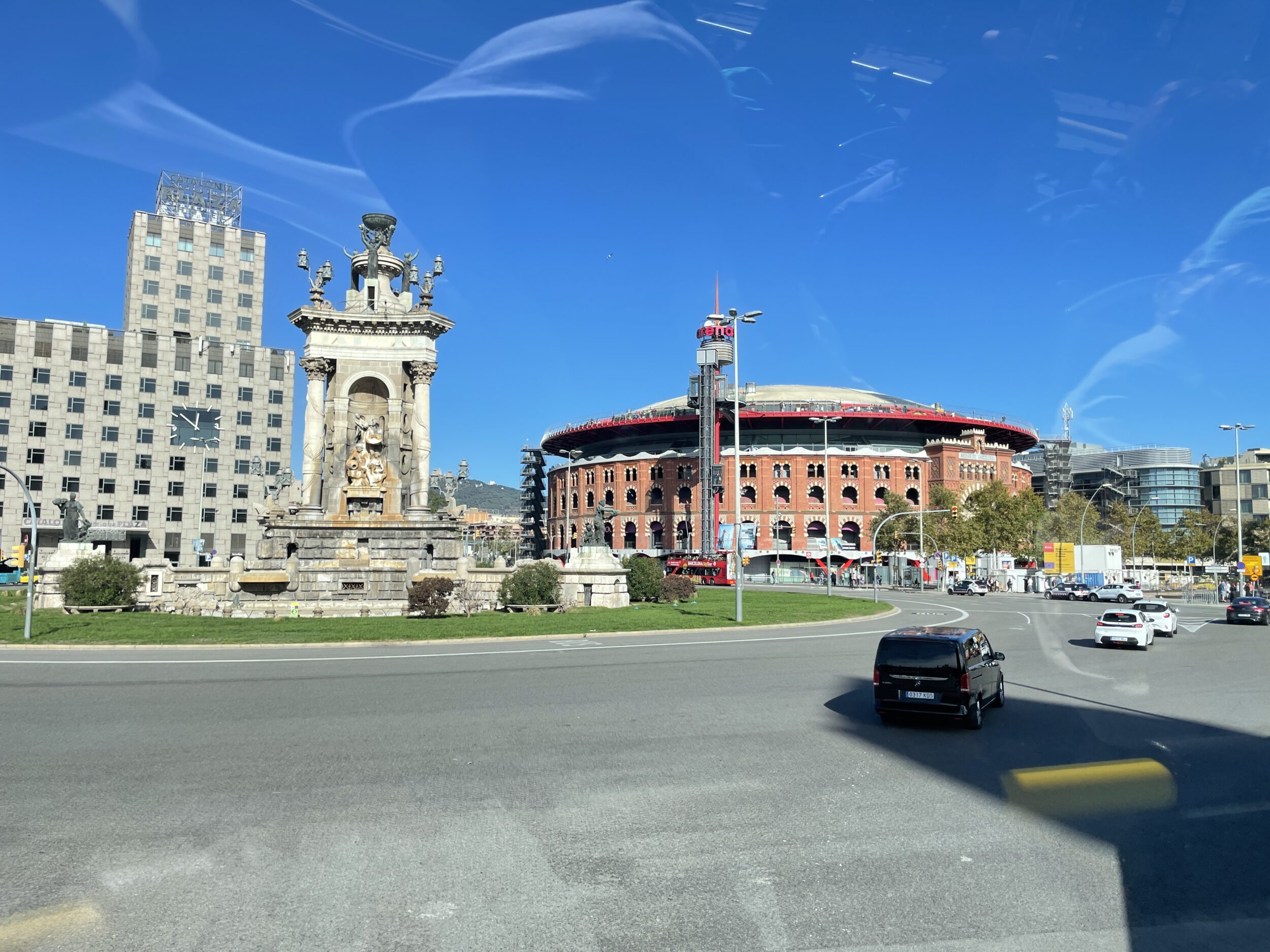
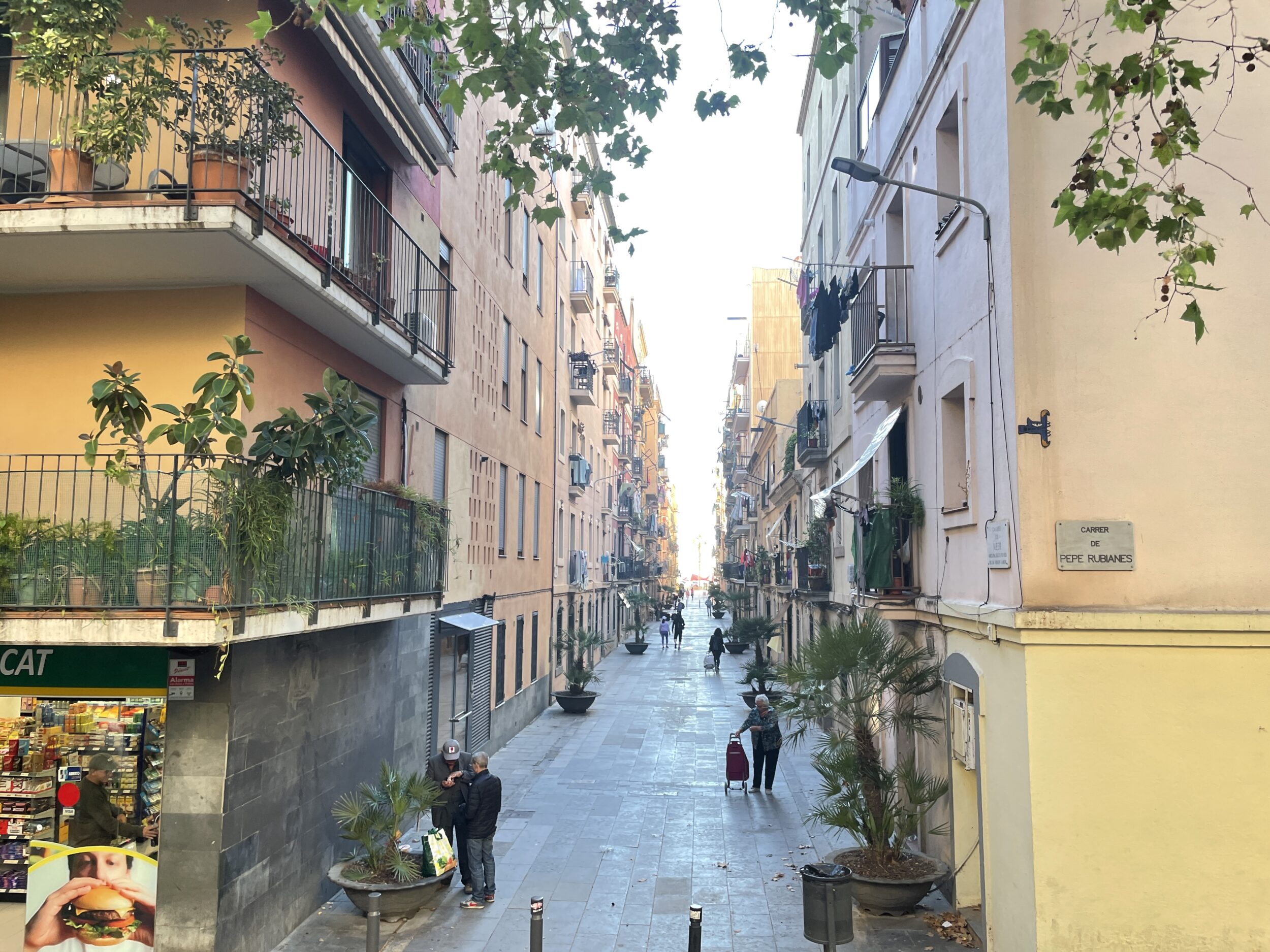
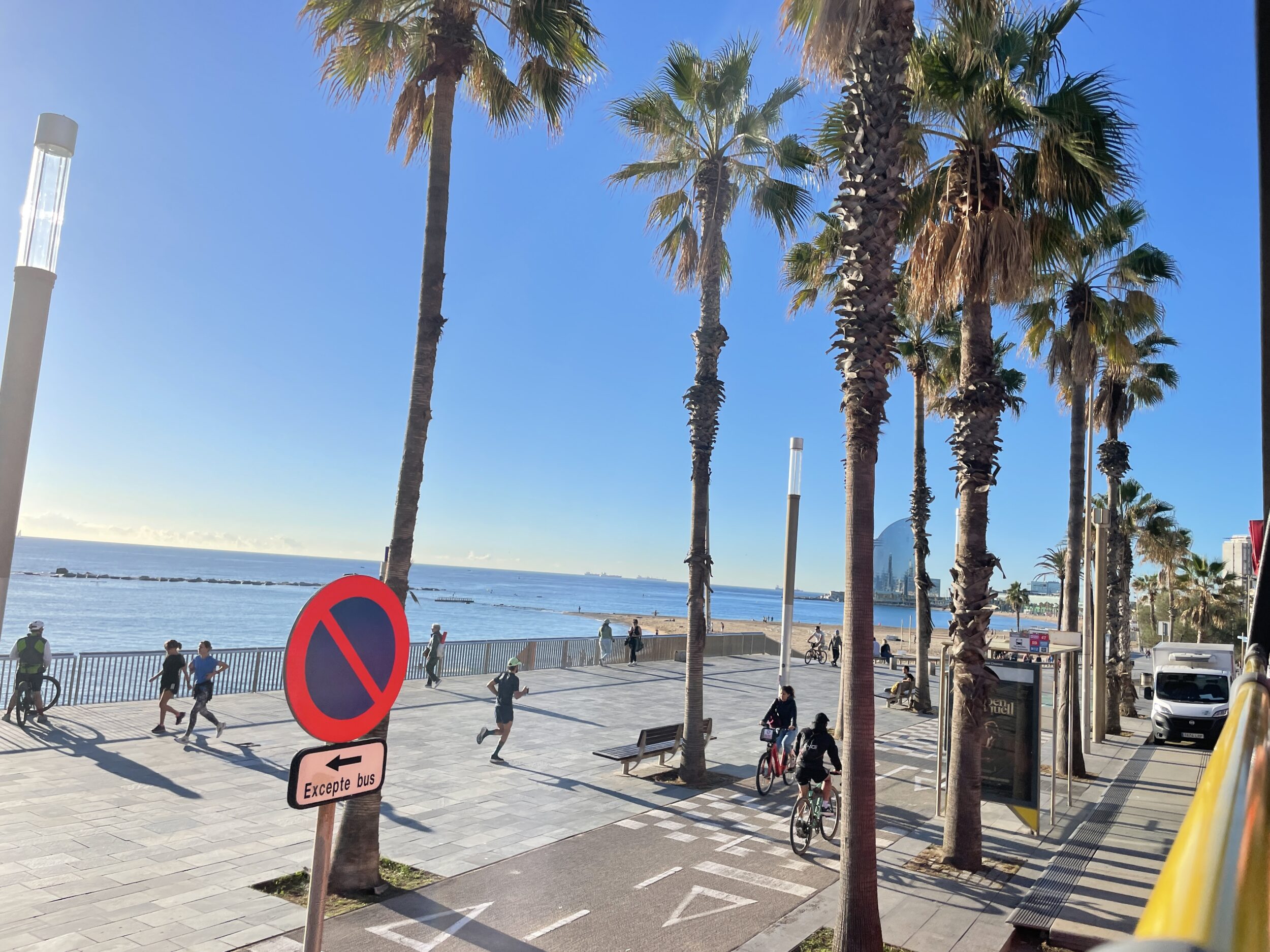
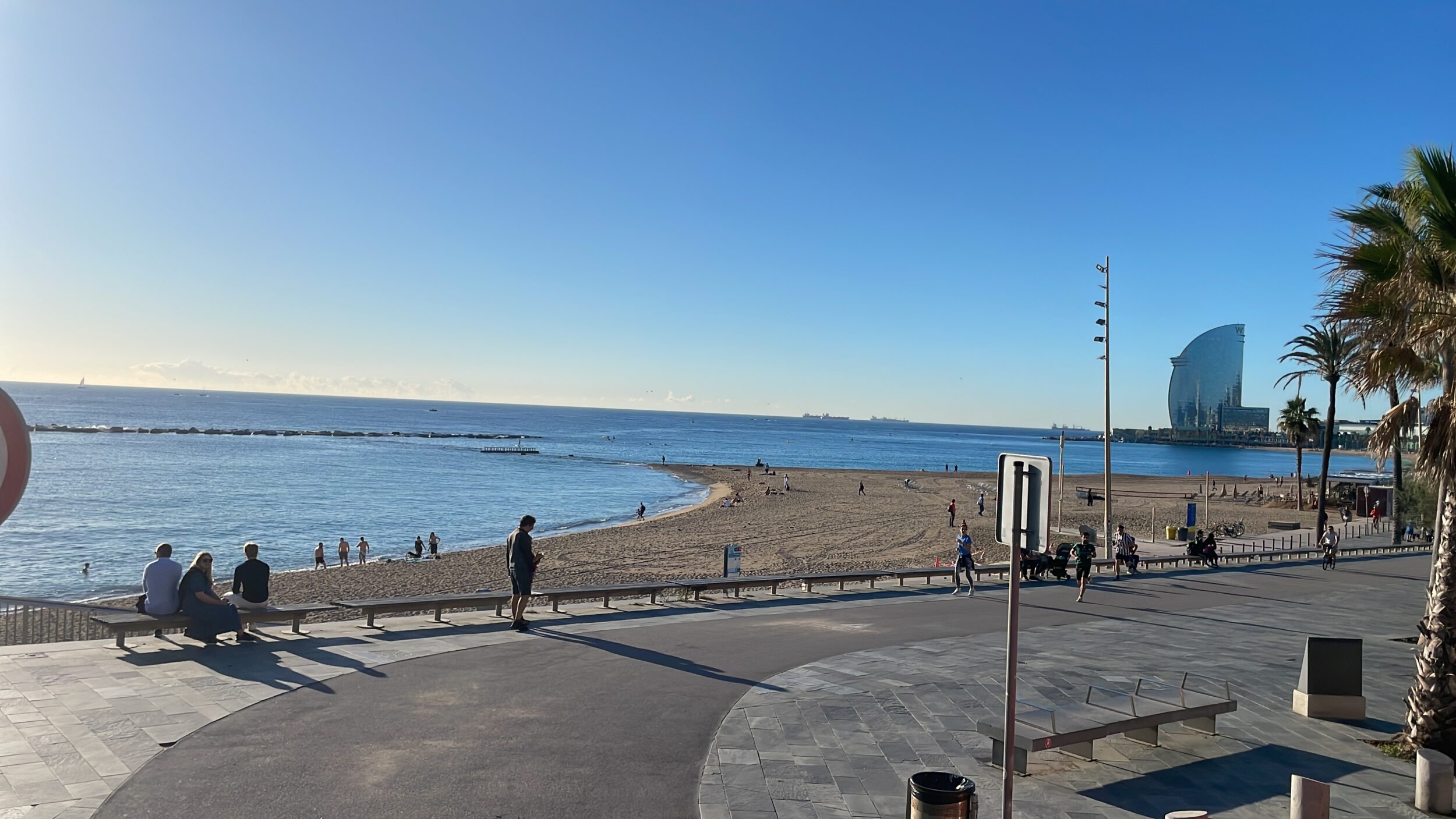
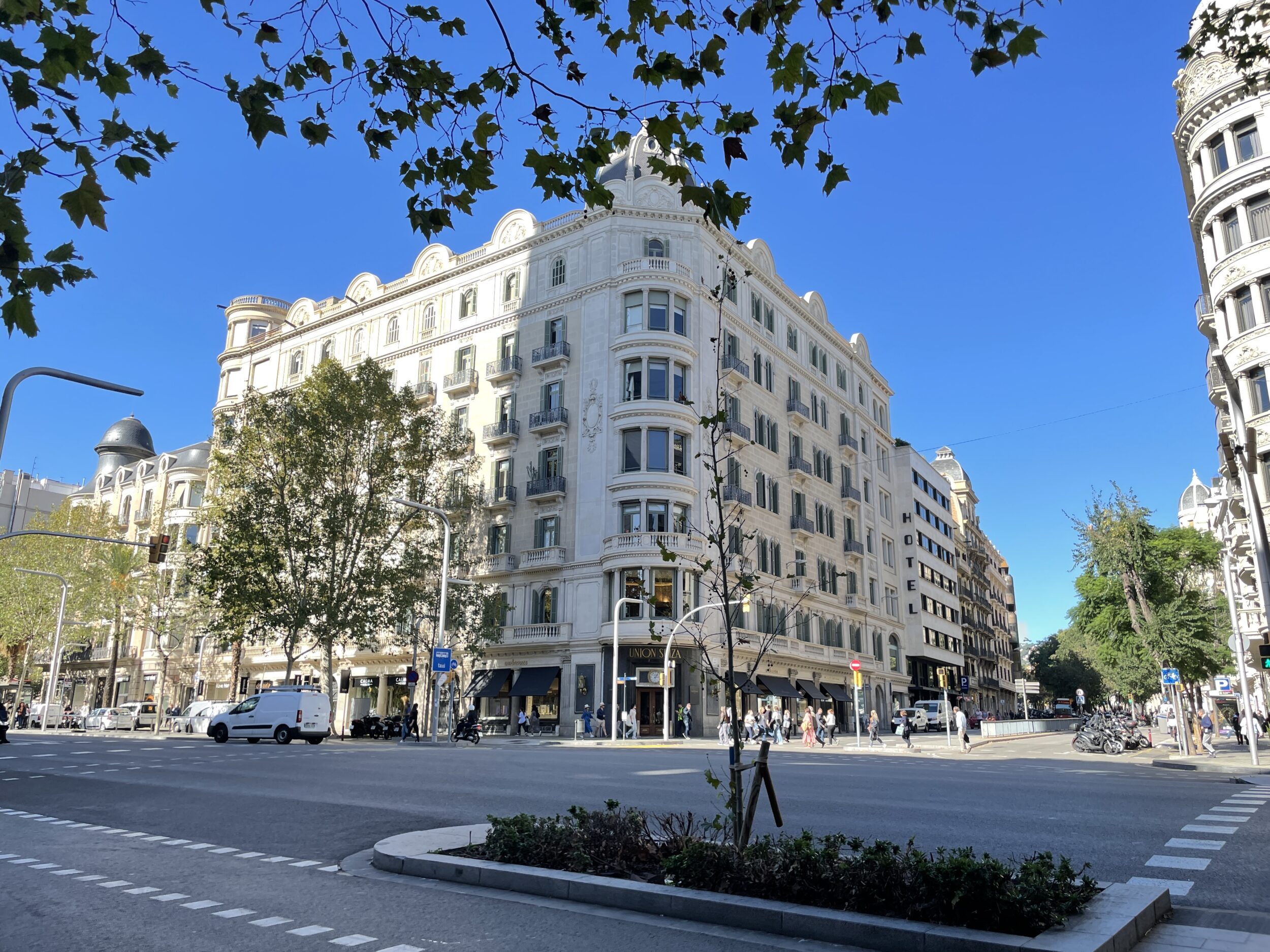
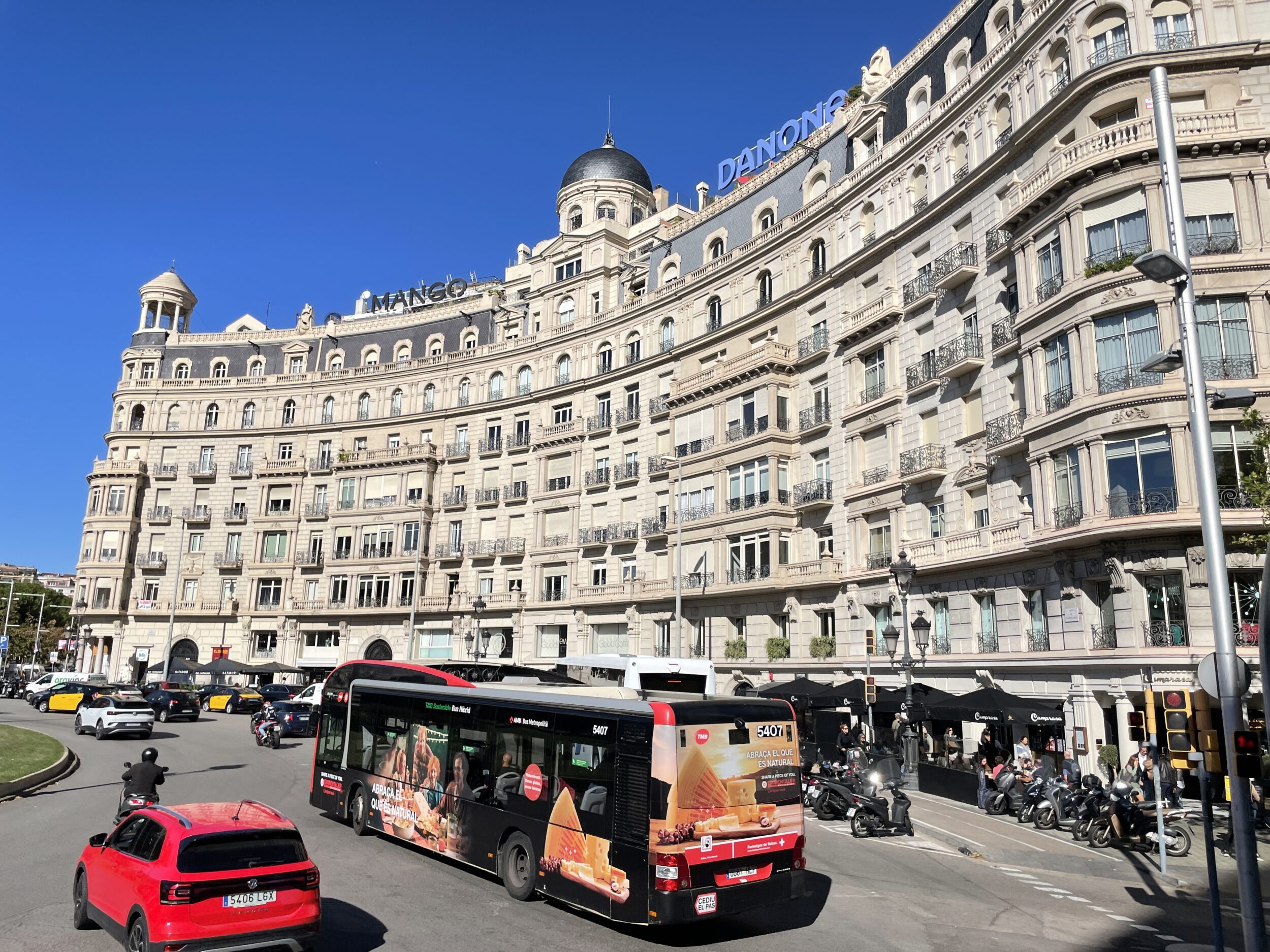
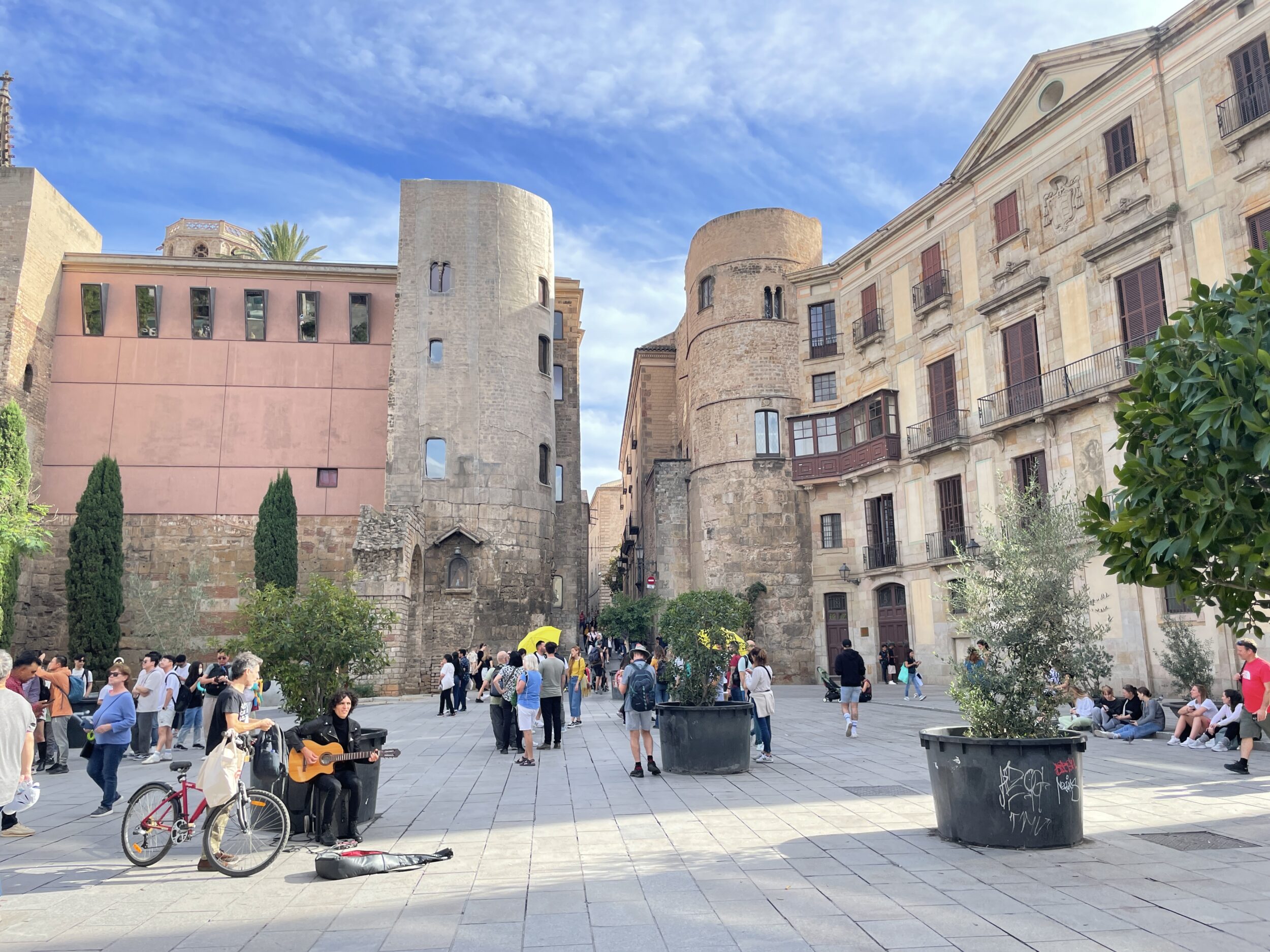
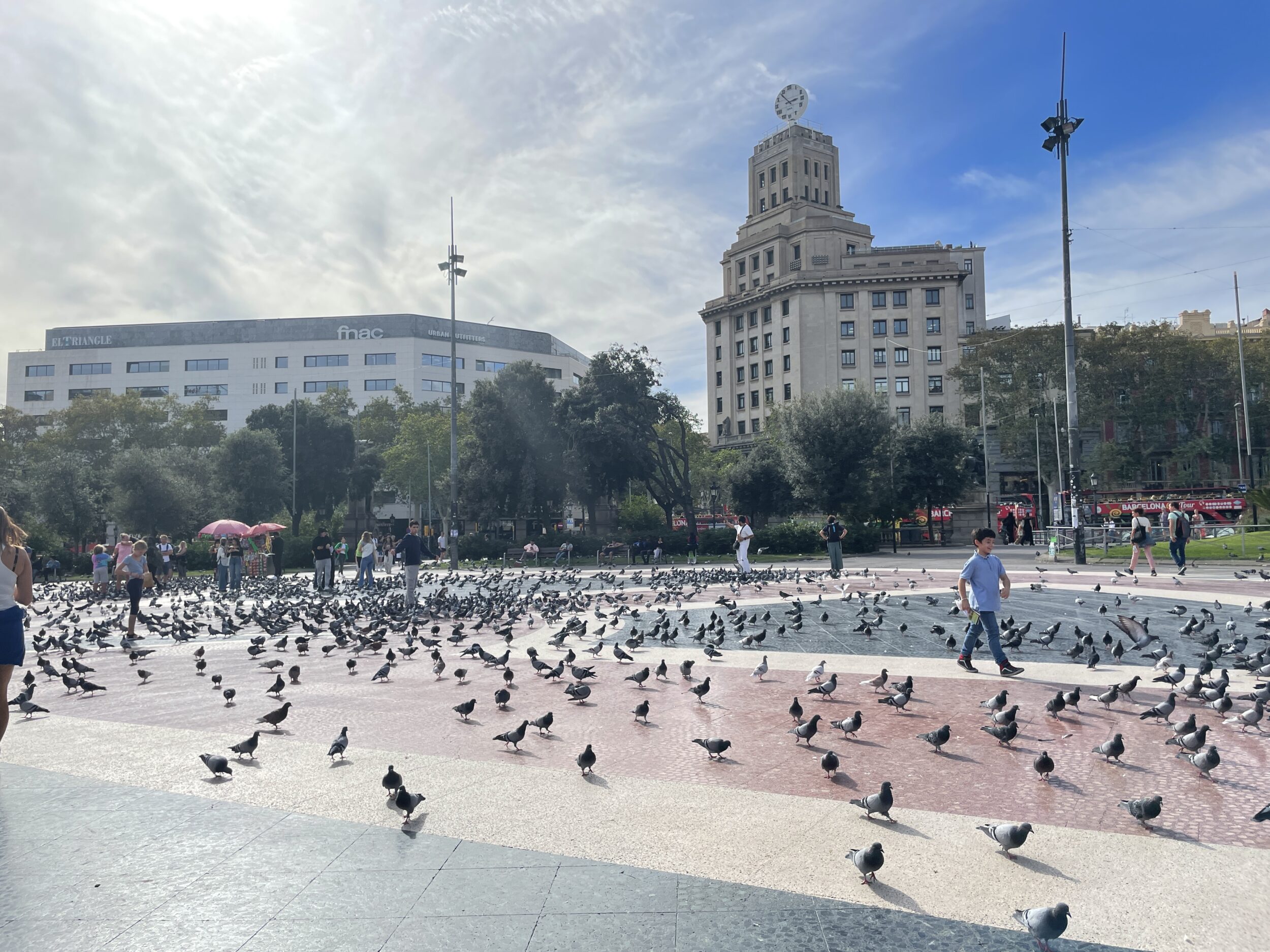
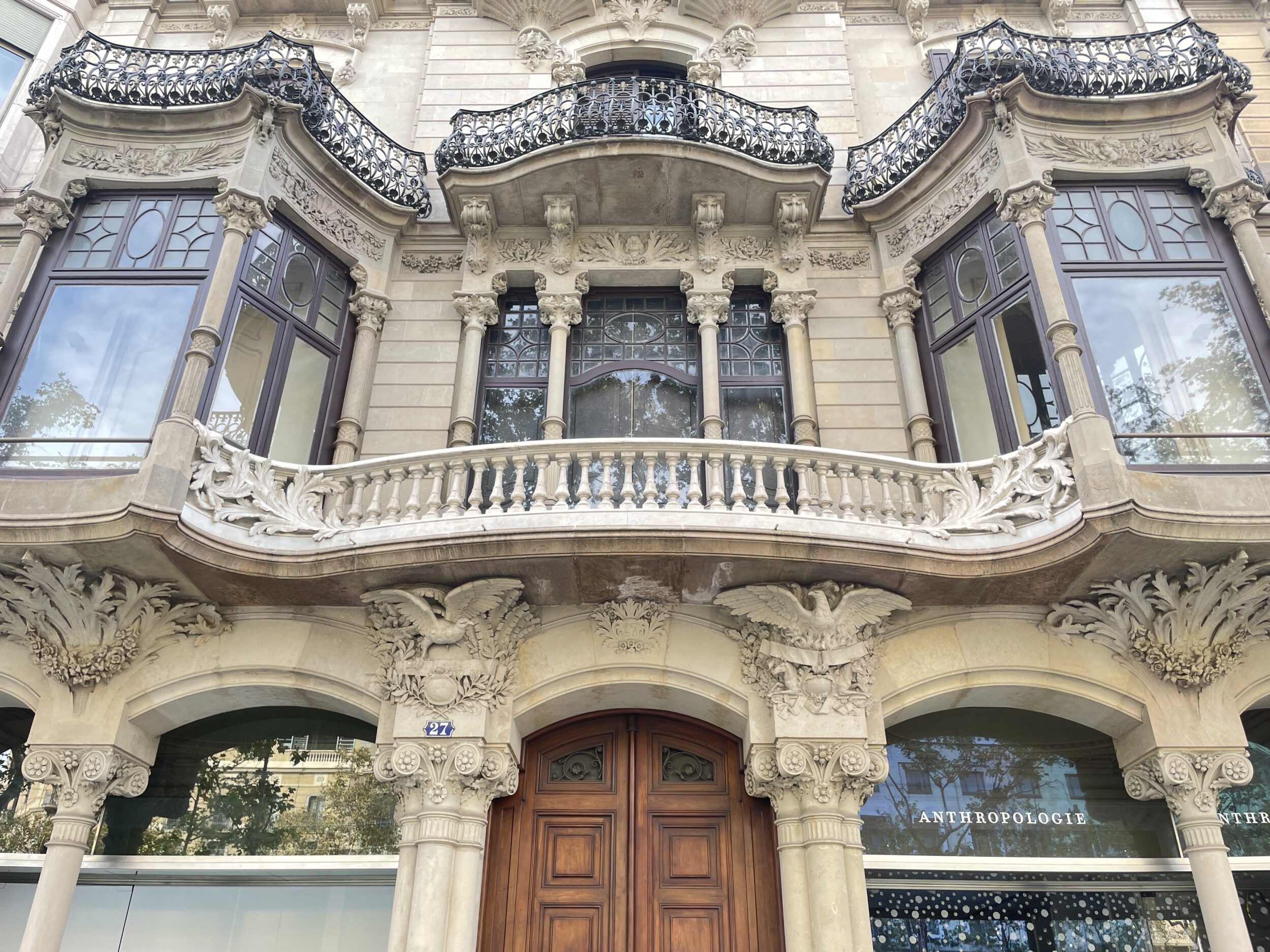
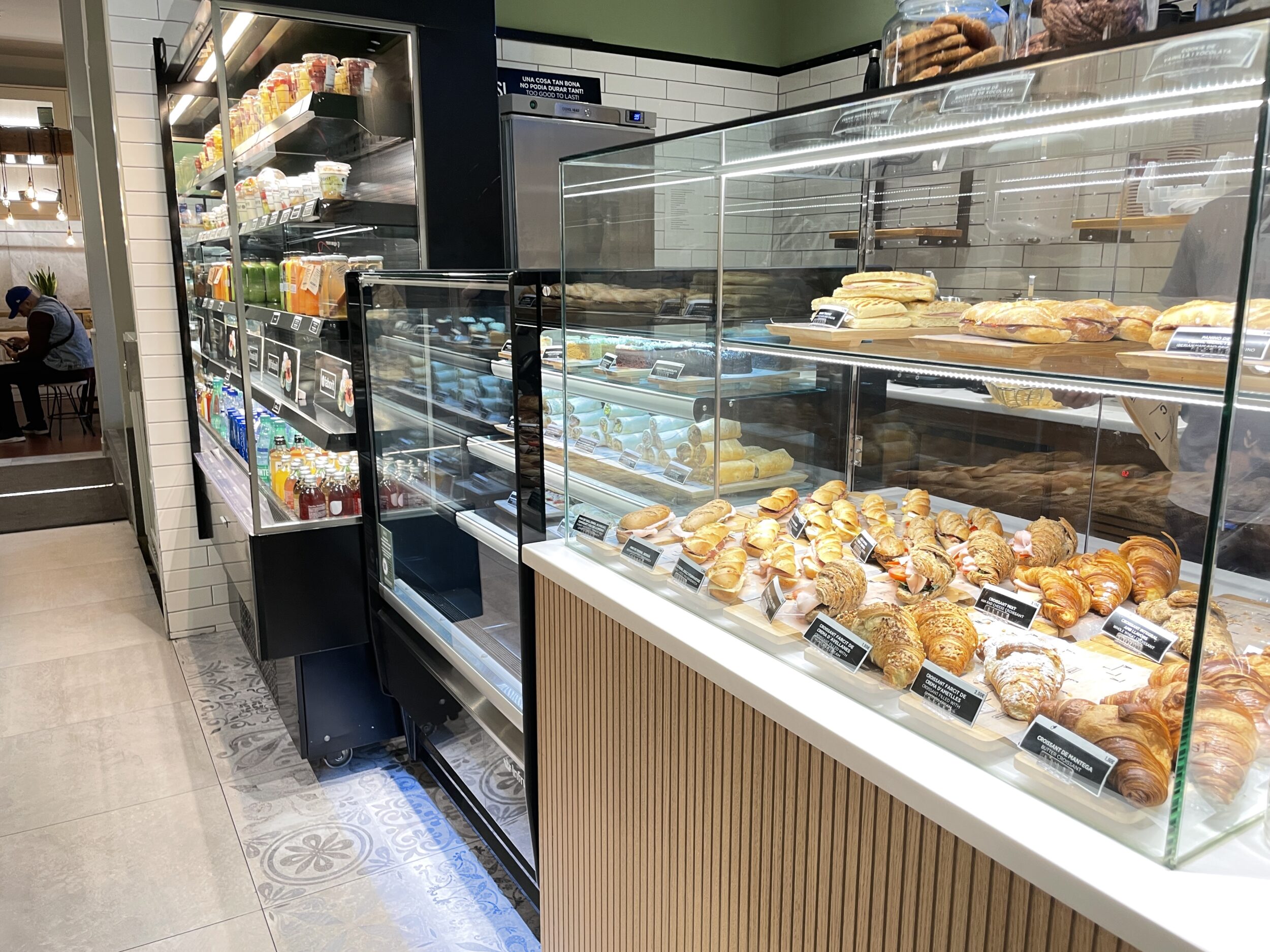
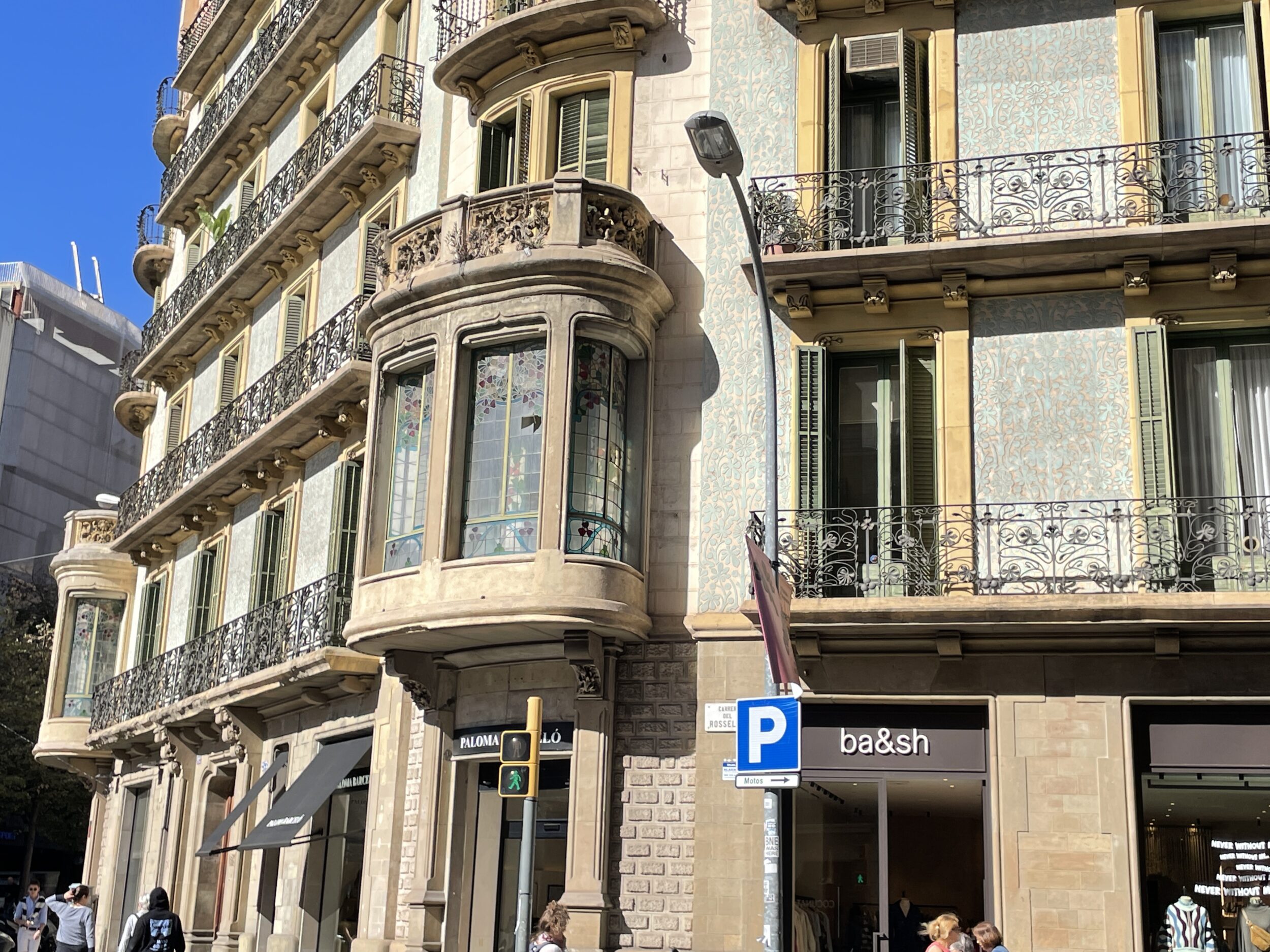
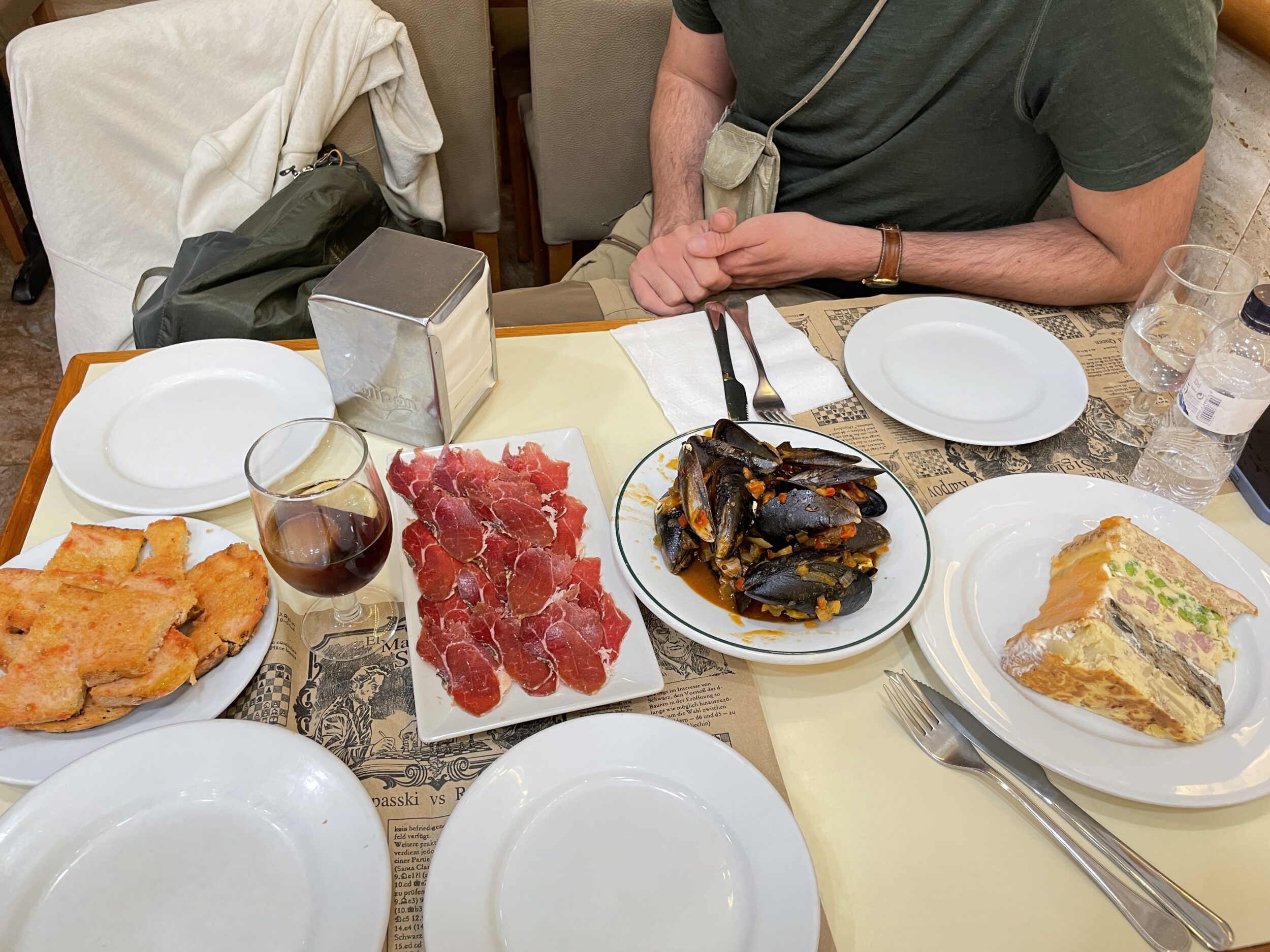
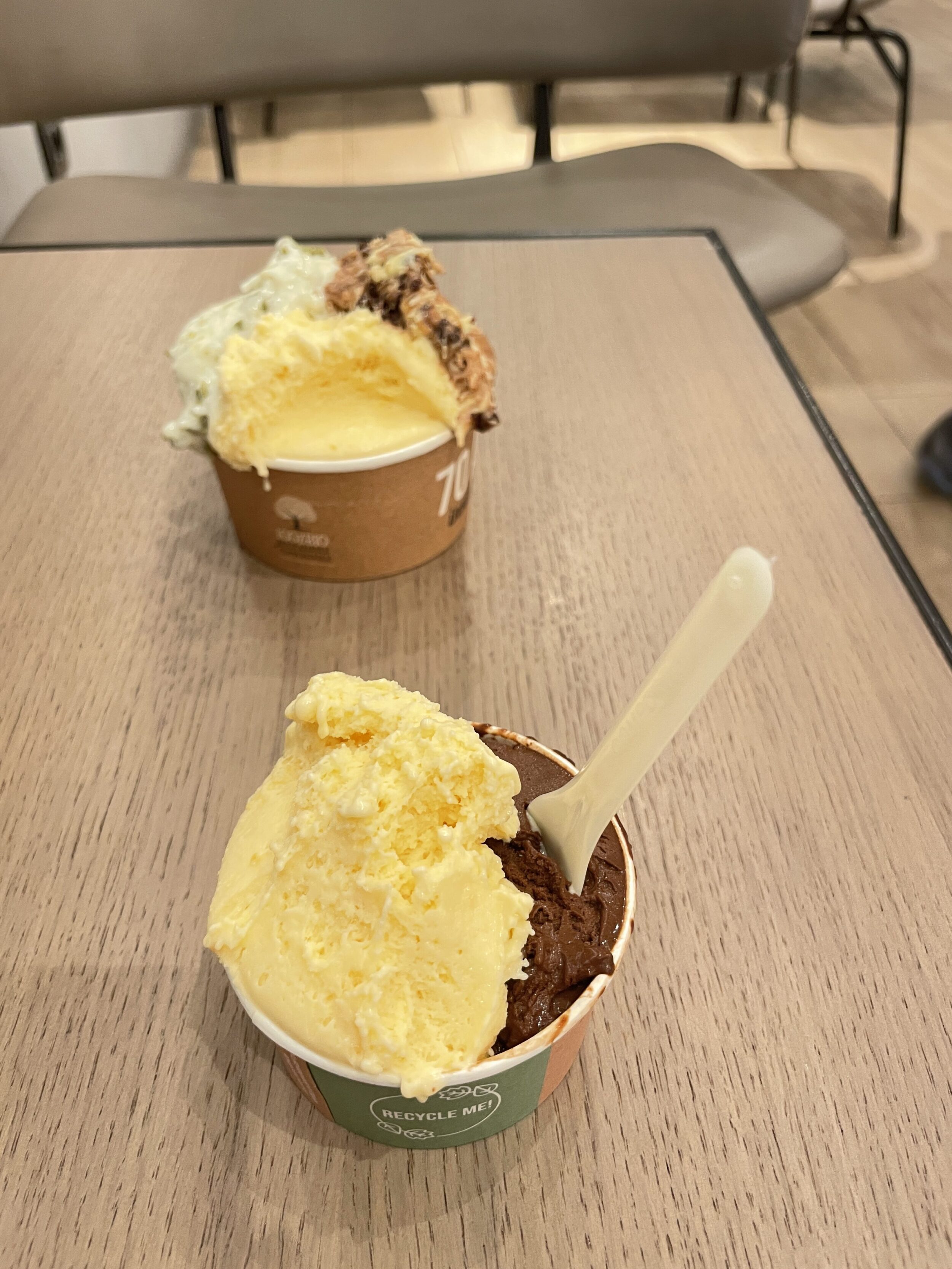
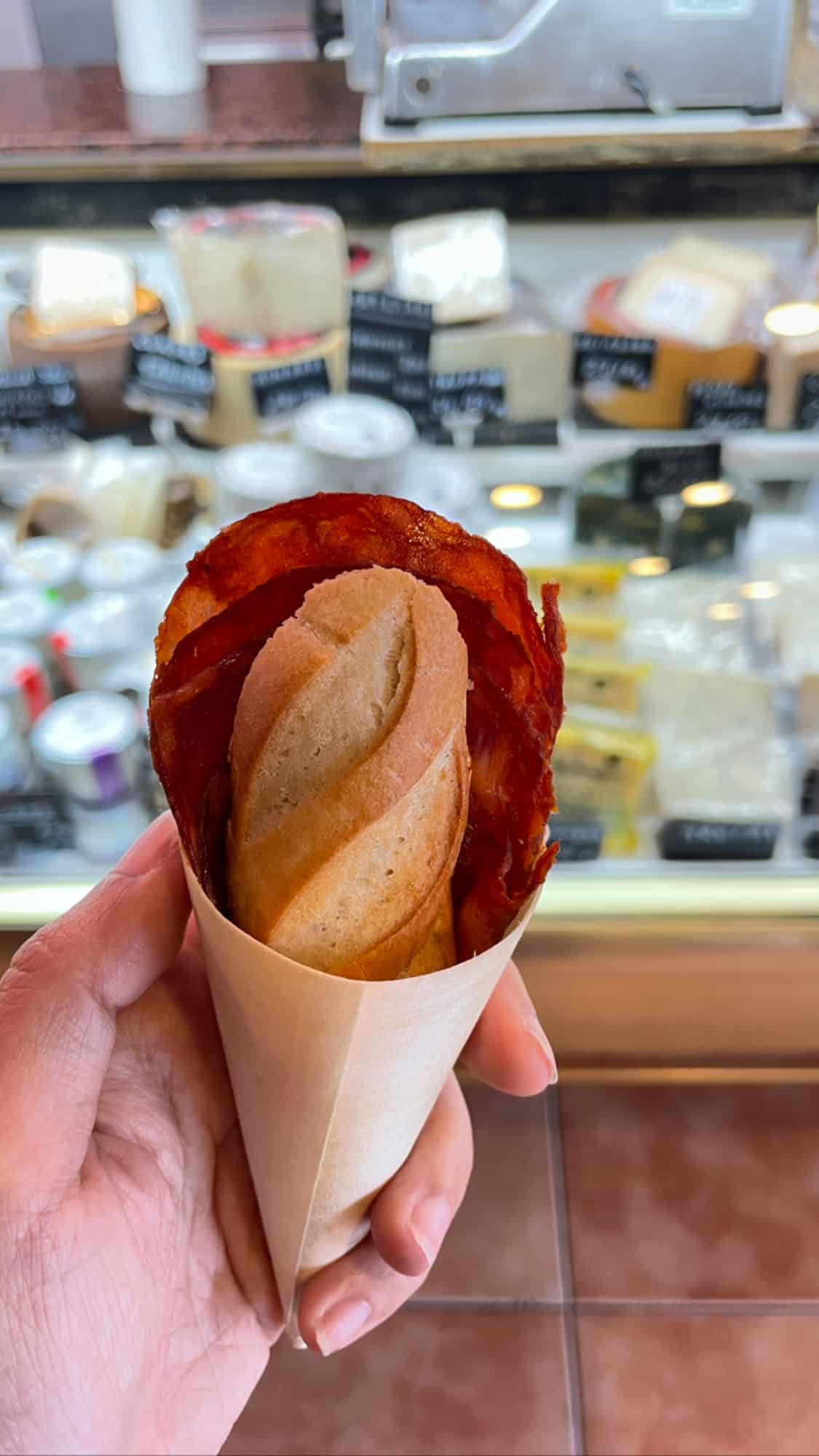
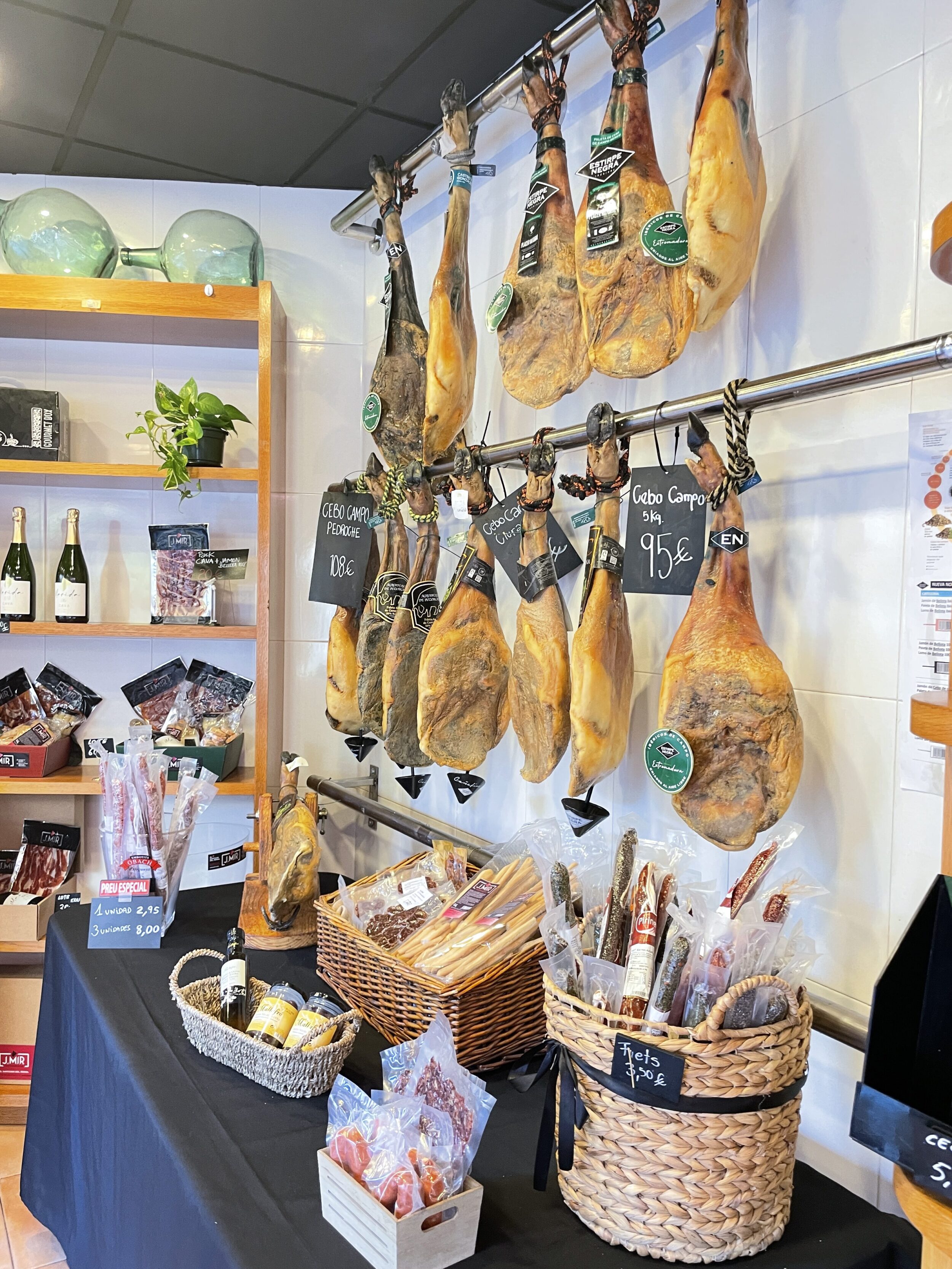
On the other hand, when it comes to eating well, we’re not lazy at all and can walk for a long time (it’s too nice out to take the metro) to find an ice cream at Romana (the best ice cream in the world, of Italian origin) or Iberian ham sandwiches. I take the opportunity to spot as many stained glass windows as I can. Art Nouveau still leaves a lot of traces in Barcelona, it’s a feast for the eyes.
Part 2: Practical Tips
- Accommodation: Hostal Absolut Stay, double room, shared bathroom with another room 87.5€/night (Booking link)
- Casa Batlló: 35€/night (standard tour)
- Hop on hop off bus: 30€/person and gives discounts at certain attractions
- Palace of Catalan Music: 18€/person (with audio guide downloadable on phone)
- Food:
- Tapas: about 15€/person
- Restaurants: from 22€/person
- Iberian ham sandwich: between 5.5€ and 6.5€
