

Tour of the Louis Vuitton house & workshops in Asnières (France)
JB and I are LVMH shareholders and, from time to time, they organize exclusive (and free) tours for their shareholders. We’ve been lucky enough to attend a few of these, and we take advantage of them every time we’re back in France.
This year, JB managed to get us two spots for the tour of the Louis Vuitton house and their workshops in Asnières. You should know that Louis Vuitton has a ton of workshops, but this one is the most prestigious because it’s here that they still make trunks (their original craft), one-of-a-kind pieces (like the trunk that carries the FIFA World Cup trophy), and special orders (custom requests). JB watched a documentary about this very workshop years ago, and he was particularly impressed by the example of a client who came with all his belongings so that Vuitton could design a trunk for him, with a dedicated spot for each item. That story really inspired me, and I did the same thing when designing my custom bag in Novonappa leather with my artisan.
It’s hypocritical of me to sit in the middle of the Vuitton house’s living room for a photo, as a shareholder, and then bash the luxury industry on my blog, hehe. Bernard Arnault, at the helm of LVMH, killed true luxury and replaced it with the luxury industry : mass-produced products with a semblance of quality, genius marketing campaigns, and a very high price tag (but with affordable entry-level products) so the middle class can splurge on something to show off.
But you have to admit that this luxury industry has helped preserve certain crafts. Thanks to it, I have access to beautiful leathers from French tanneries that would have gone hungry if artisans still spent 60 hours making a leather bag. Artisans continue to be trained by luxury houses before going independent. Anyway, we can all agree that if we say, “okay, okay, these are just beautiful products at high prices, I know I’m paying for the brand, but everyone knows it and no one plays the victim,” then we can totally sit at Vuitton and sip some tea, right?
Do I think Vuitton products are worth their price? No! Is it respectful to customers to make them believe it’s high quality and worth that price? No! But you can’t stop people from throwing their money out the window, right? They do what they want.
P.S.: I didn’t buy anything at Vuitton and have no intention to; I’m just a (microscopic) shareholder.
So, we show up at a door with no name or logo, and a gentleman discreetly opens it, revealing a lush garden in the middle of a dreary Parisian suburb. As soon as we step inside, a huge, warm living room catches our eye, and we want to stay there forever.
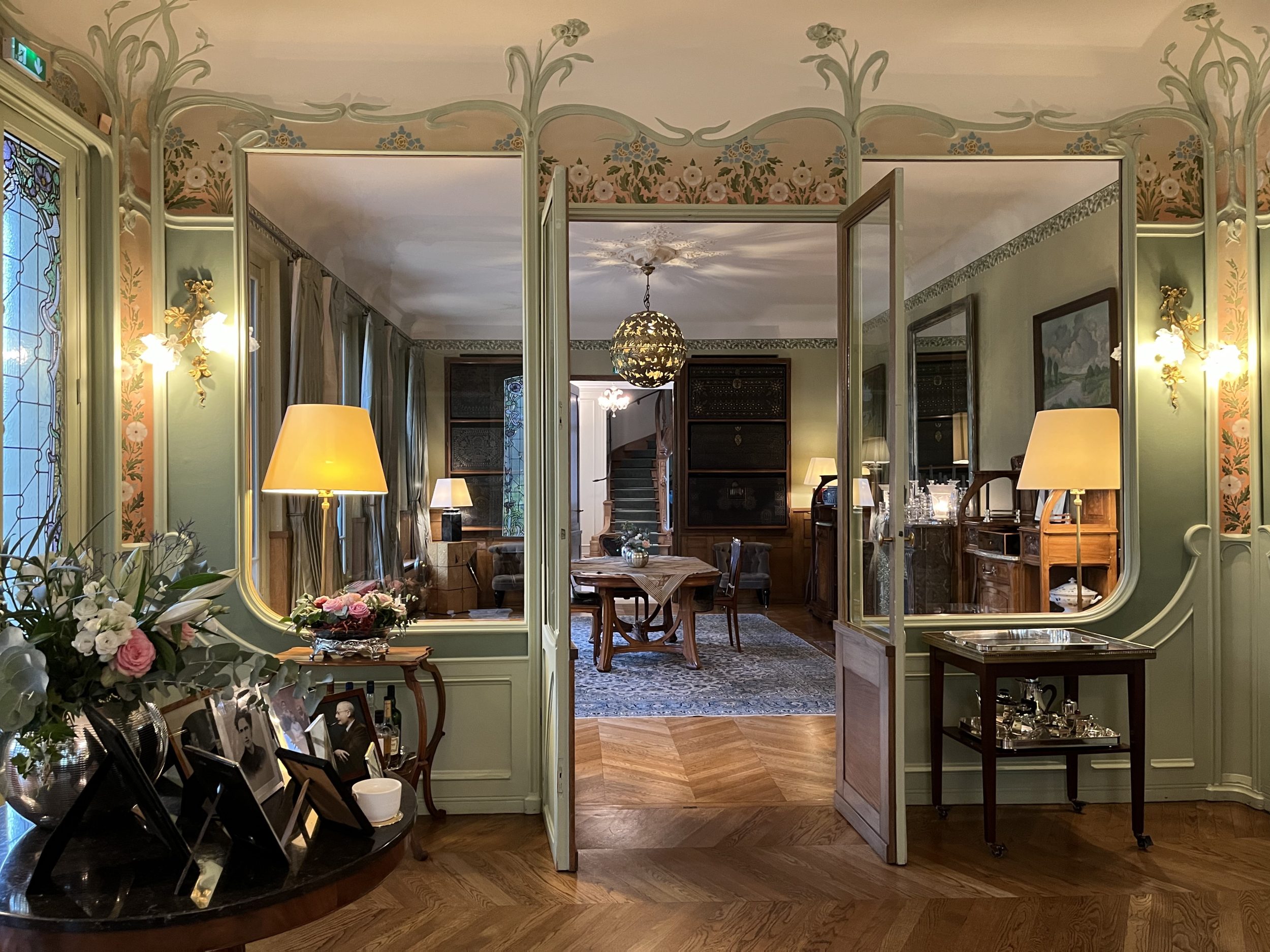
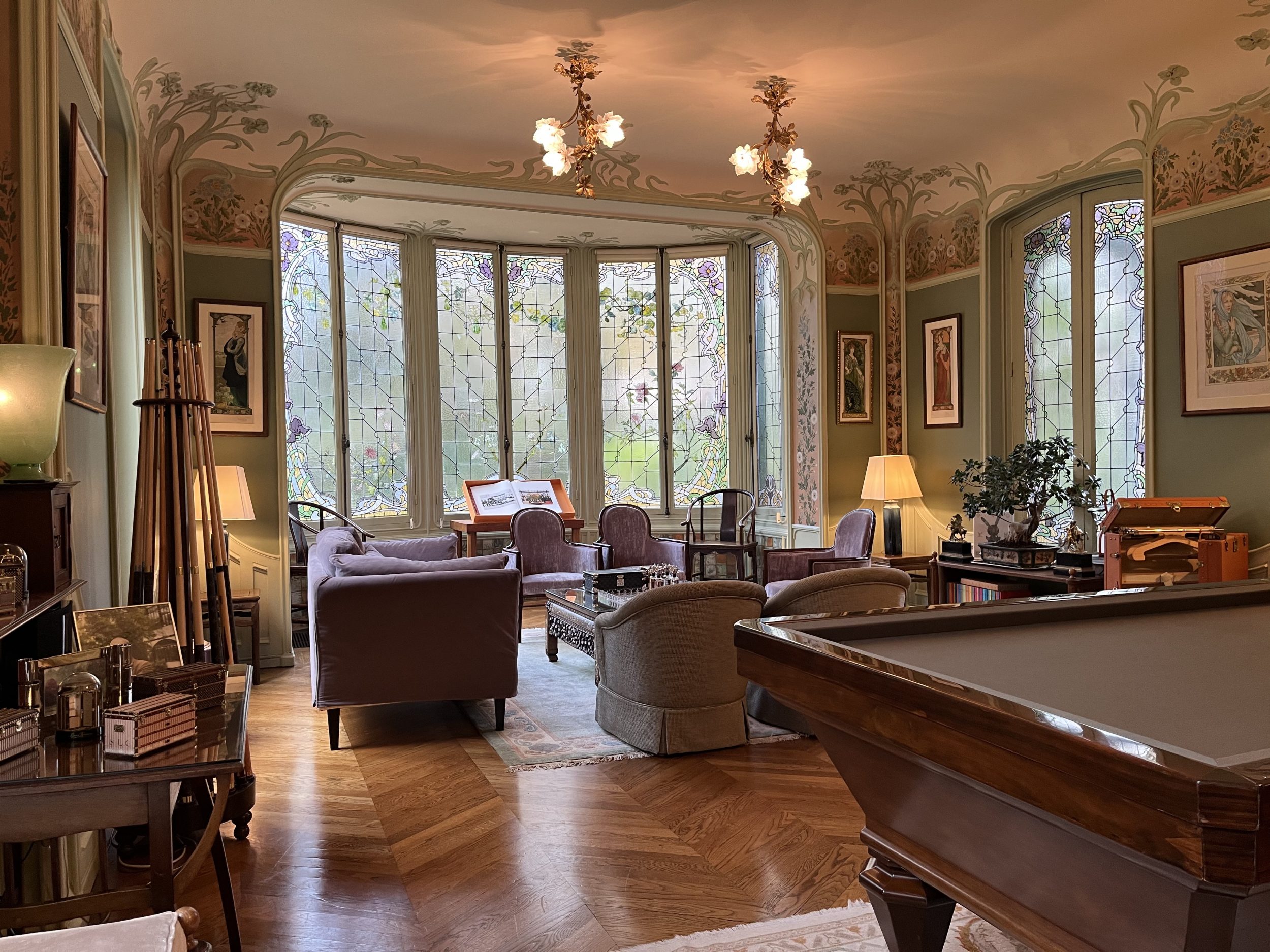
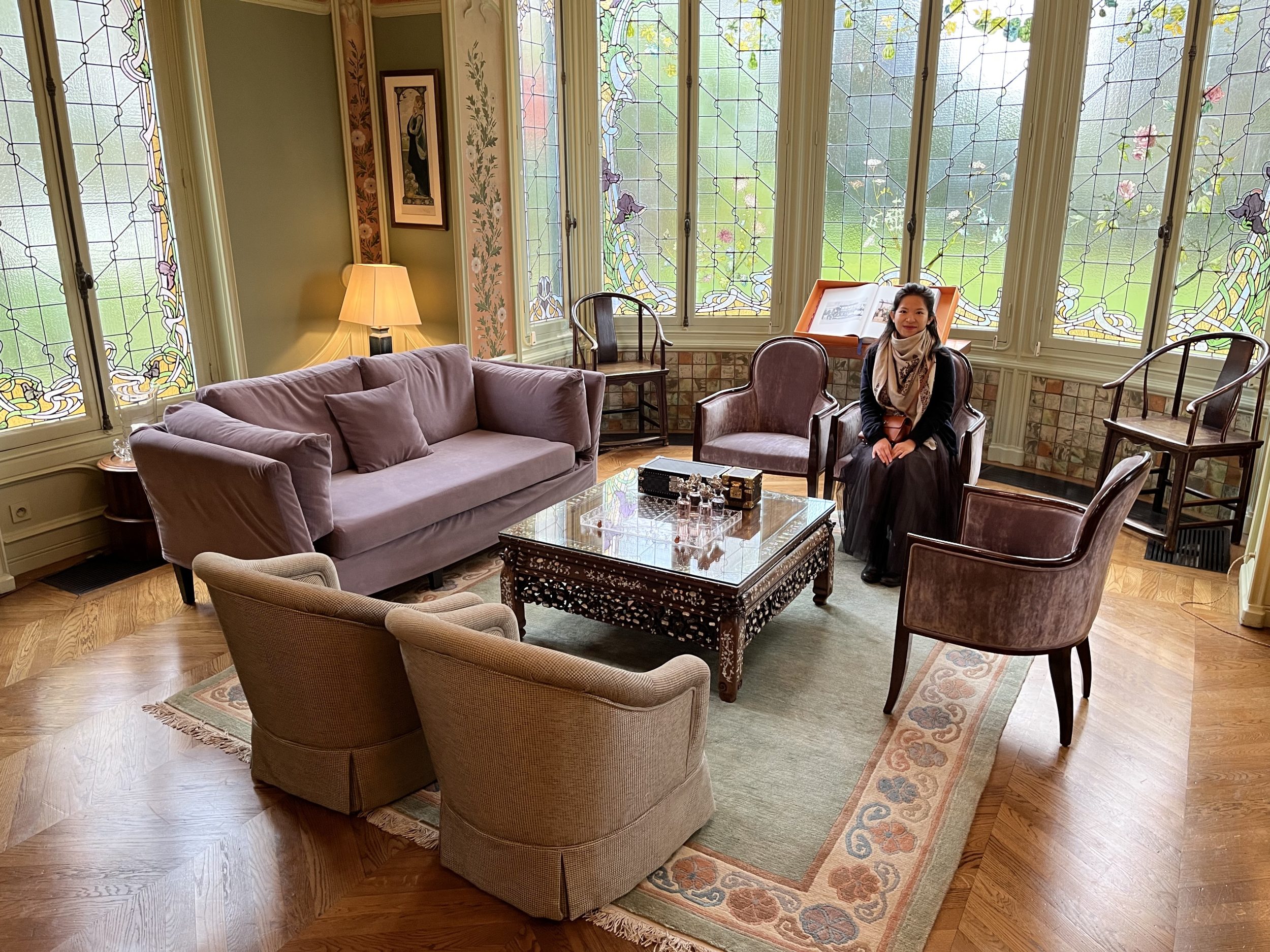
Much like the Hermès museum, this space is reserved for VIP clients, employees, suppliers, special occasions, but it’s a place specifically designed for entertaining. There’s a dedicated reception team, and groups fill and empty the space without ever crossing paths, of course. It’s both an exceptional event (for us) and just another event for those hosting us.
This house is absolutely incredible because it feels like we’re guests at someone’s home; it’s family-like and welcoming. But it has all the codes of luxury: from the furnishings to the decorations, to the tea served in very refined china, down to the little details (fresh flowers, lit fireplace…).
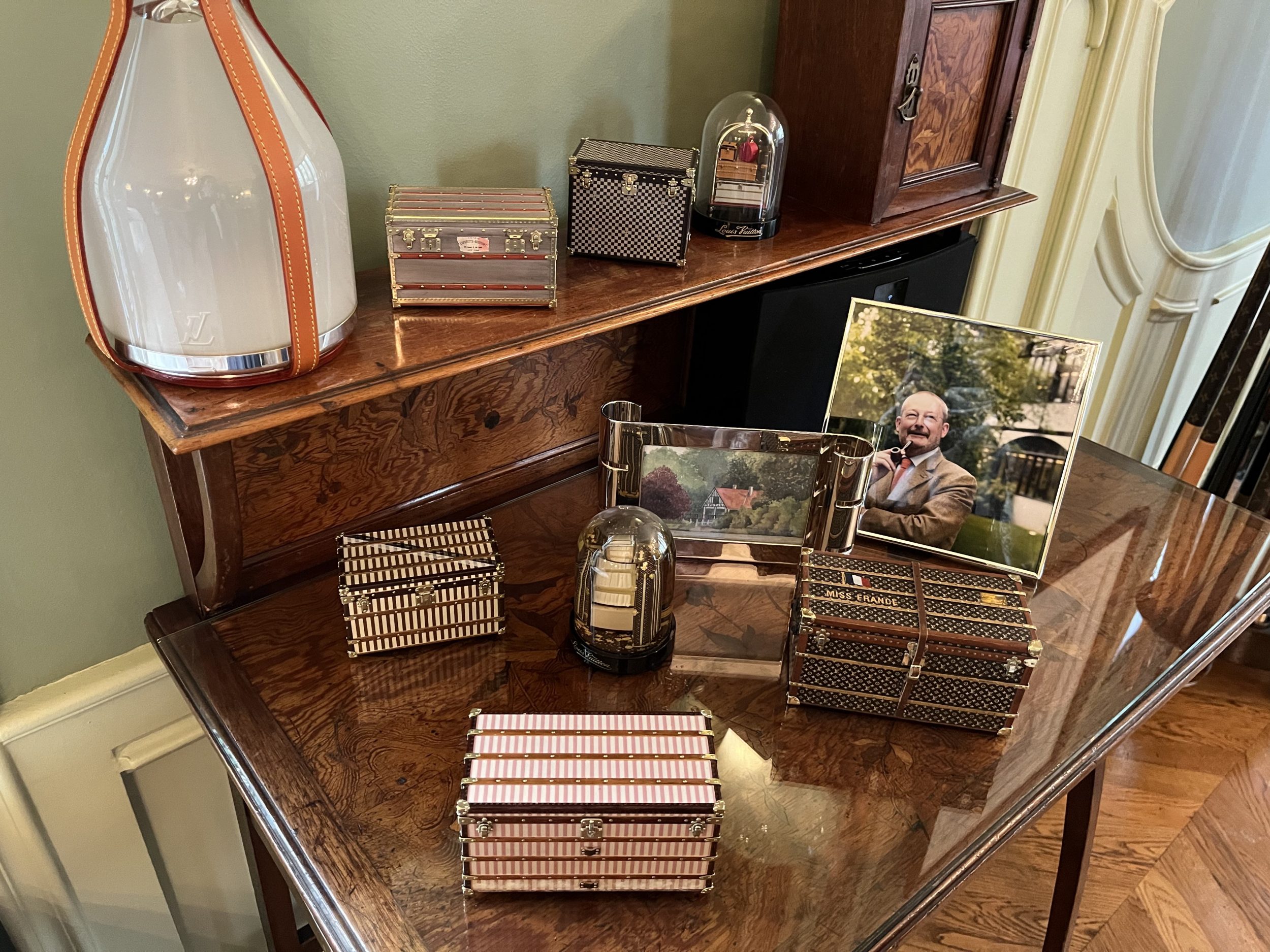
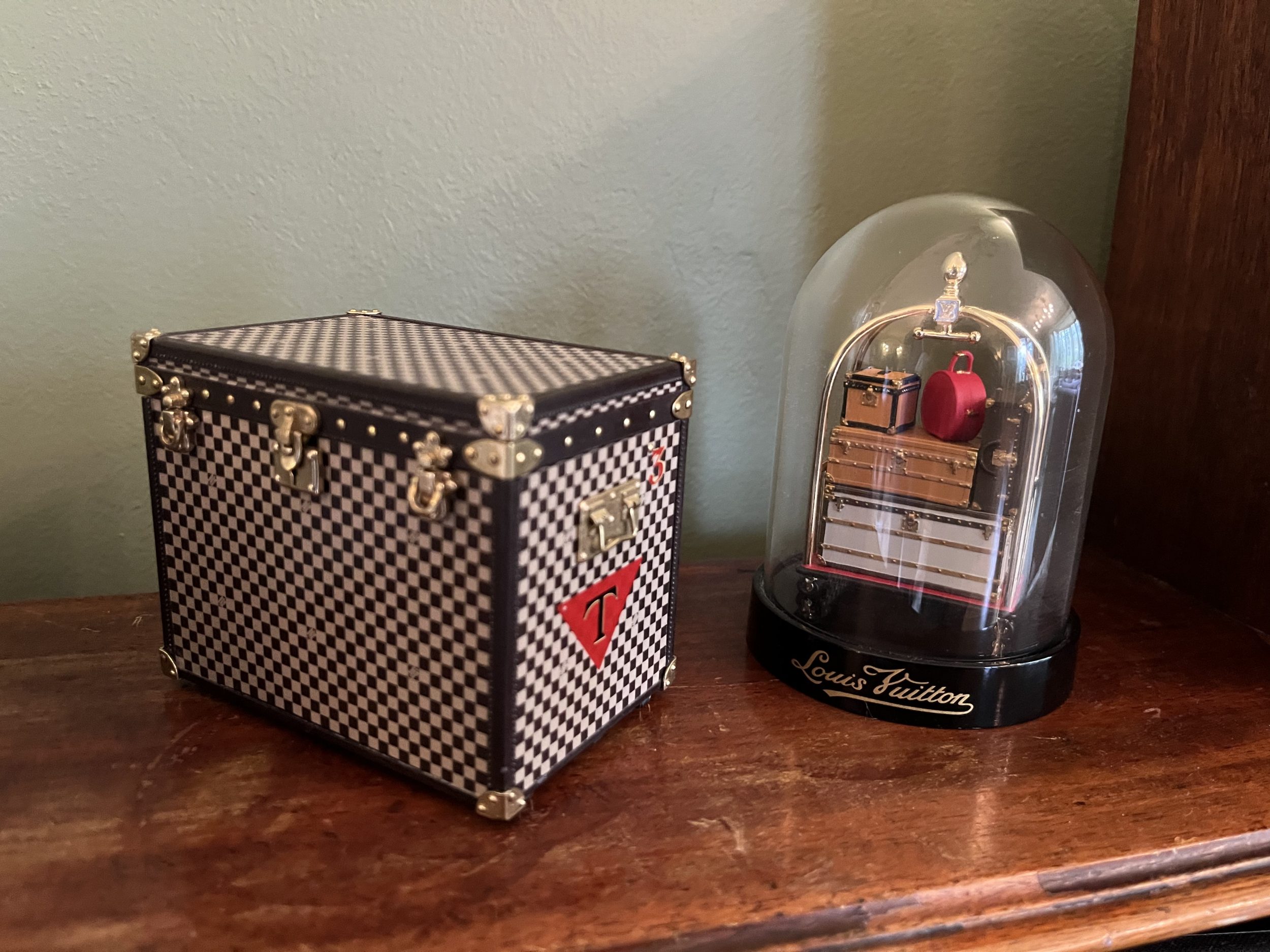
After a light snack and a few words about the history of the house, we’re invited to tour the workshops. We can’t film or take photos inside, so I’ll just show you the outside.

These workshops are the same ones Louis Vuitton shows when there’s a TV segment, like the Hermès workshop in Pantin. Because here, it’s special orders, so many things are still done by hand (unlike in other workshops…).
The trunks are made to order (since they don’t produce many ready-made ones), some are custom (for example, to hold the FIFA World Cup trophy this year). There are a few carpenters who build the entire wooden frame of the trunks. These trunks are then sent to other teams to be covered in coated canvas or leather, and the interior is crafted according to the client’s wishes. Expect to wait many months to receive your order.
But in the meantime, we first get to touch exotic leathers: crocodile, snake, ostrich, lizard… our guide is incredibly skilled; she knows everything about all the trades, and we were able to ask her very specific questions. I saw a Himalaya crocodile skin, ten times more beautiful than the one I have, and I truly fell in love.
Next, they show us how exotic skins are cut: a laser projects the pattern onto a huge worktable so the artisan can position the leather properly. Then, there’s a kind of computer-guided knife that cuts. Anyway, in luxury houses, leather is no longer cut by hand; it’s always with a die cutter or a computer-guided knife, because otherwise it would take too long. That’s the difference between the luxury industry and craftsmanship, yep!
We see several leatherworkers busy making crocodile bags. I didn’t see anyone sewing by hand, but maybe I came at the wrong time (or maybe the sewing machines are hidden from us?). In any case, I did see hand-polishing and handcrafted handles (mind you, these are exotic leather bags we’re talking about again, not your average bags. We got to chat directly with a leather worker who told us she’d been an apprentice there and was very happy about it. No wonder, with leather that beautiful!!
Next, we really get into the trunks. For the small trunks, the wooden pieces are joined together with fabric glued over the wood. Sorry, I’m not explaining this well, but there’s actually very little metal involved. Then the whole thing is covered in coated canvas (much, much cheaper than leather) and they go and nail it all over (well, for certain models anyway). Apparently, hammering nails in a regular, straight line is a really tricky job. I’ll take their word for it—I used to think cutting leather in a straight line was easy, but it takes a ton of effort for me!
The inside is then divided into compartments, decorated, and glued (lots and lots of glue, it’s unavoidable in this trade).
We got to see both small and very large trunks. Our guide mentioned they don’t make coffins (though they often get asked to)! But they have plenty of cool models like a vanity trunk with an integrated chair—just open it up and you’ve got a ready-to-use dressing table.
This is giving me so many ideas—I’m dying to make my own leather jewelry box. For the small boxes, no nails needed (whew).
We wrap up the tour with a small museum (where we can finally take some pictures). LV created two mascots: Vivienne and Gaston, and Vivienne had her own little trunk like a “dollhouse.” It’s sooo cute!!!
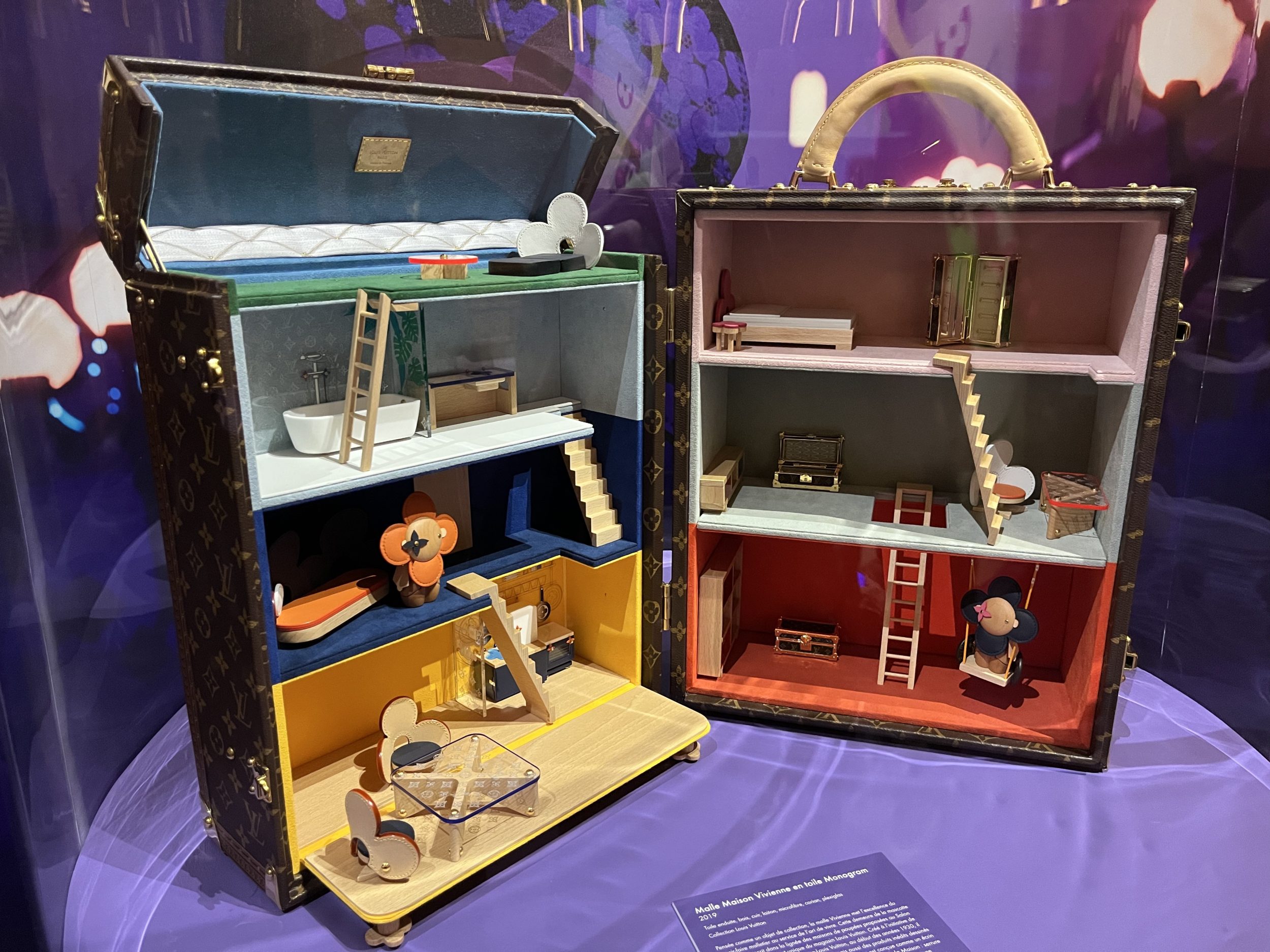
We take advantage of this museum to brush up on Louis Vuitton’s history: it all starts with train travel, where people needed trunks to pack their belongings. Vuitton has a brilliant idea: using canvas instead of leather to cover trunks—it’s lighter, more durable, and waterproof. His idea is copied everywhere. He tries to stand out with striped patterns, then the Damier check, but he’s copied again, so his son comes up with those Japanese-inspired motifs and the iconic LV. Later, trunks fall out of favor, and they diversify into handbags.
What they didn’t tell us, but I read elsewhere, is the totally unexpected (and undesirable) takeover of LV by Bernard Arnault… but shhhh! Like with Dior, let’s tell ourselves how Christian Dior loved roses, instead of how the house was nearly in ruins when Mr. Arnault bought it (source). Shhh!!
Louis Vuitton is very proud of its history as a trunk maker, which sets it apart from other houses rooted in saddlery (like Hermès) or fashion (like Chanel). Recently, LVMH acquired Moynat, which also started as a trunk maker. I’m not quite sure how they plan to position Moynat, but for now, it’s not a slam dunk (we’ll cover that in another post since we also toured Moynat’s workshop, so stay tuned!).
Anyway, I absolutely loved this visit! Our guide was amazing—you’d think she’d worked every job in that workshop before guiding us through it. She knows exactly which tasks are tricky, what equipment you need for each one… it was superb!
At the end, we were once again invited to the Vuitton house to sip some champagne, from Veuve Clicquot (the lady who was quick to sell champagne to the enemy so they could celebrate their (fresh) victory over France)… I found that choice quite amusing! They could have picked another brand, but no, it had to be Veuve Clicquot.
We all left with a little jar of honey from the rooftops of the house.
