
My Current Favorites – [January 2026]: Books, Memory Foam, Sales
The Sales
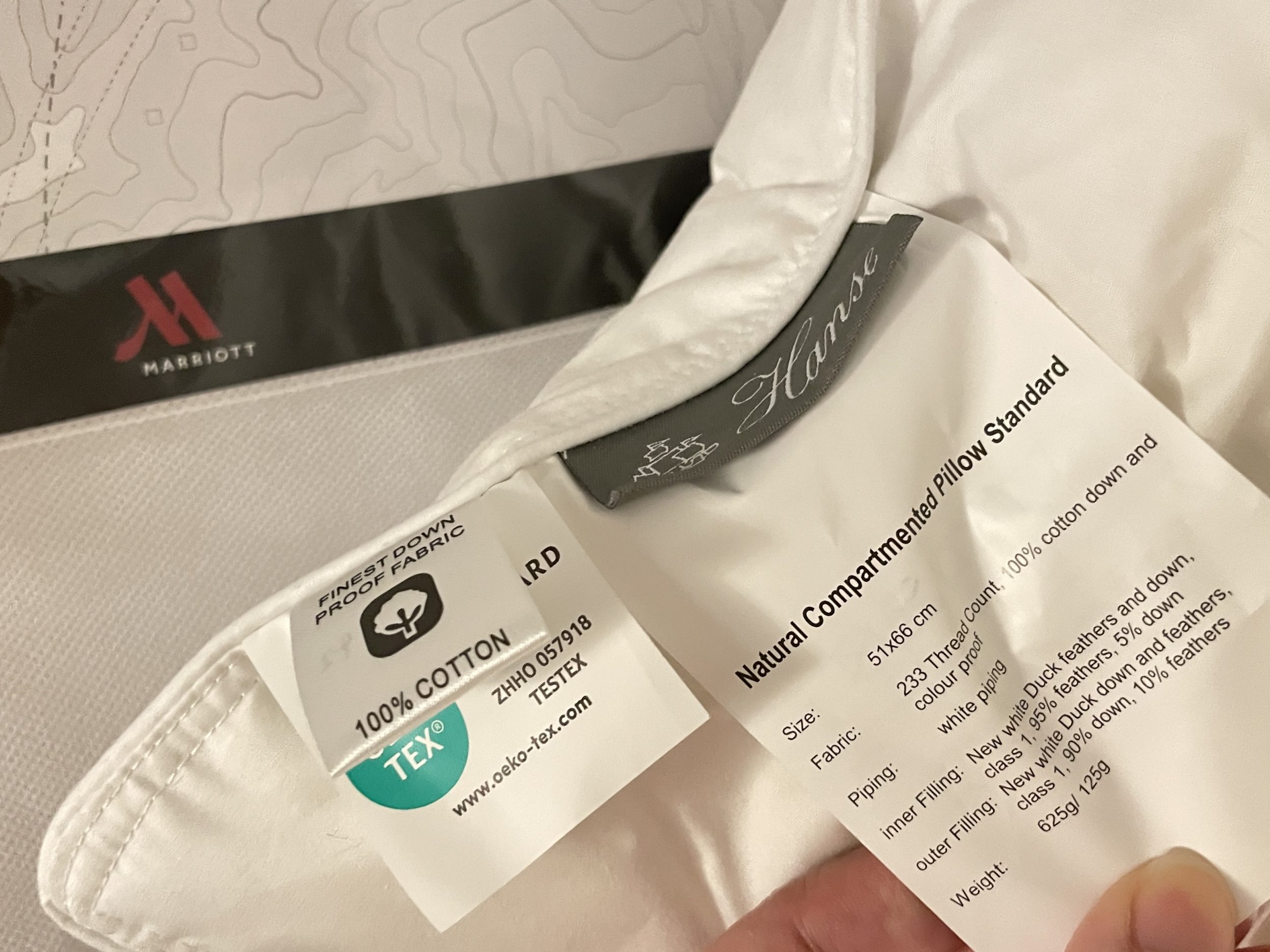
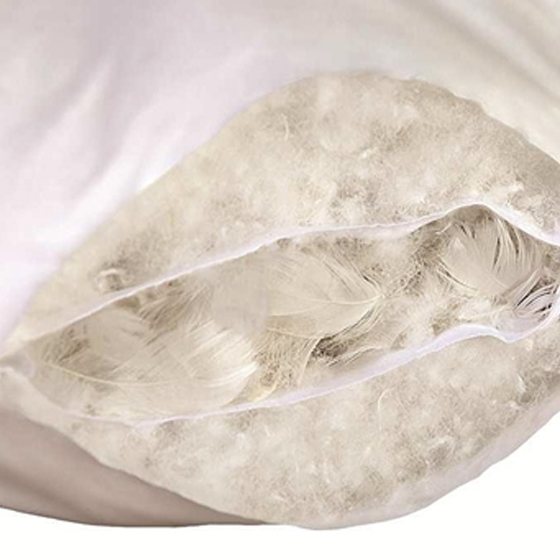
The sales are back, and I took advantage to replace some household items. My memory foam pillow had flattened over time, so I decided to treat myself to a new one. I took advantage of the sales at Marriott to buy a 3-compartment pillow with duck down & feathers, 233-thread-count cotton, 625g (for 76.3€ + 24€ shipping).
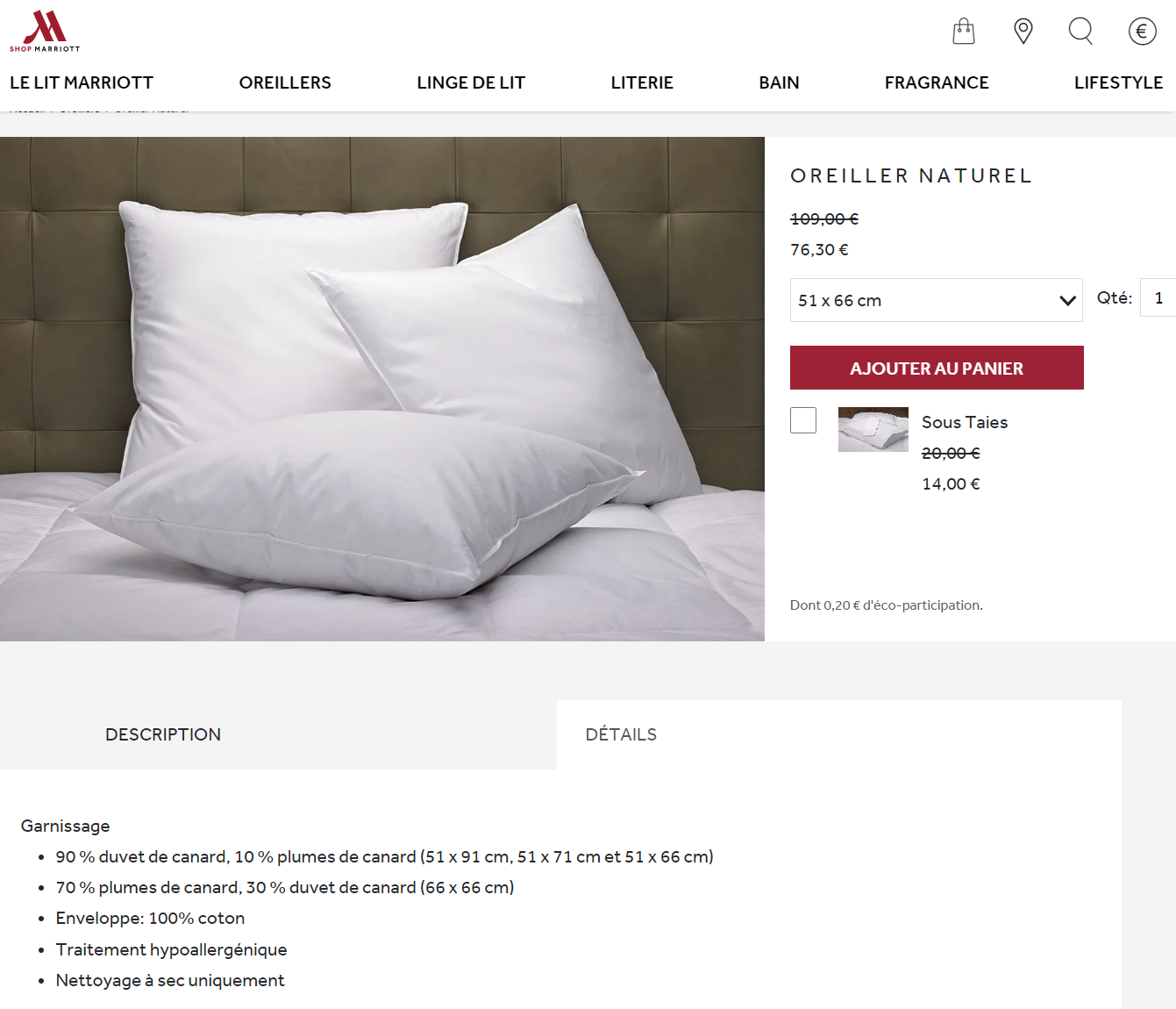
It’s not as high-end as JB’s, which is goose down and weighs 700g—but since I don’t need a too-tall pillow, this one works for me. For an extra 14€, you can add 2 cotton pillowcases (140g/m²), and I highly recommend it. For pillowcases, I use the hand-woven silk ones from Lua Lang as usual.
Compartment pillows are used in 5-star hotels. The outer layers are made of down, which is softer (90% down, 10% feathers for my pillow), so when you lay your head on it, it sinks like a marshmallow and conforms nicely to your neck & head. The middle layer is mostly feathers (in my case, 95% feathers, 5% down), providing a dense internal structure so the pillow doesn’t flatten completely.
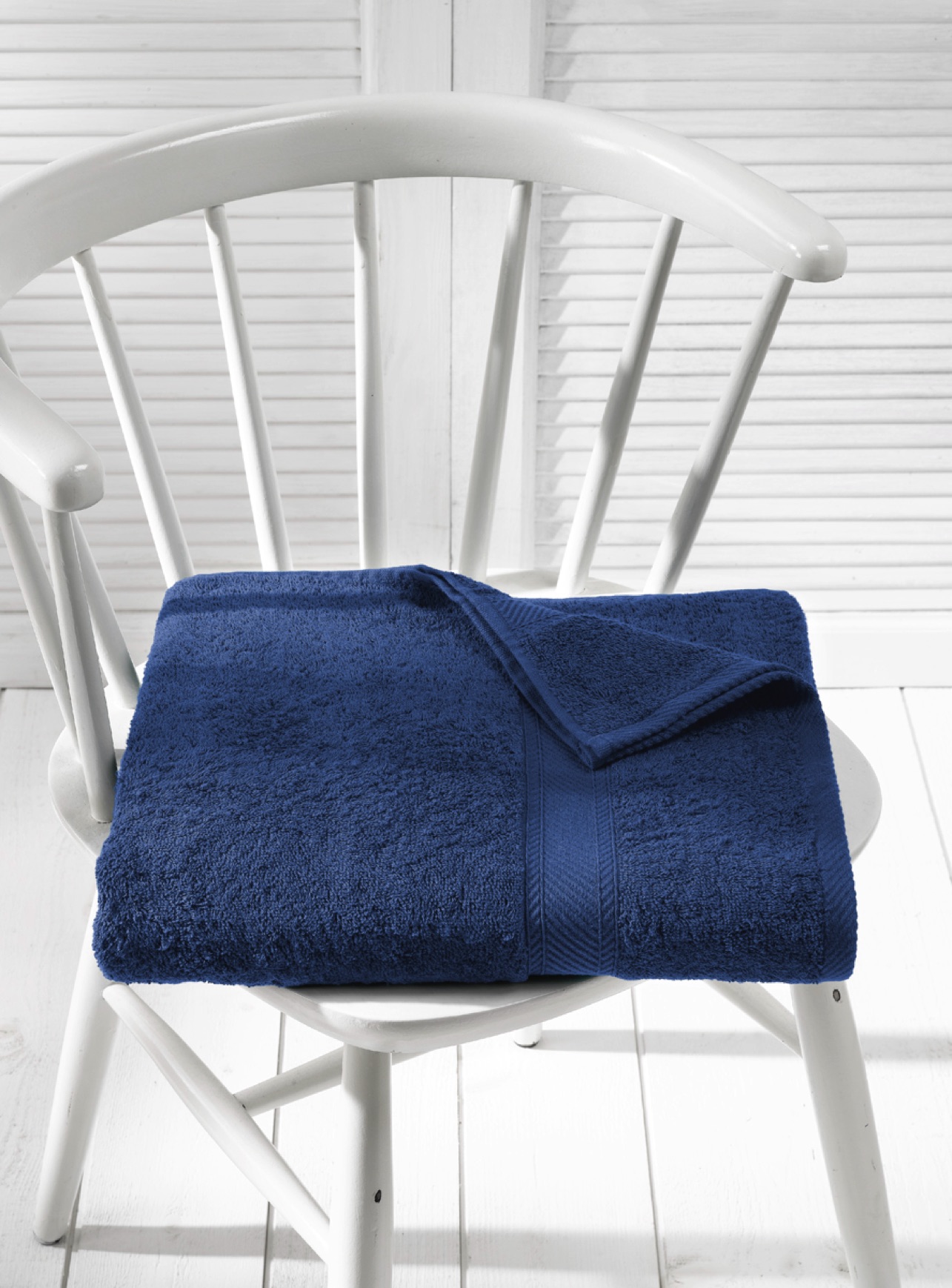
JB has been looking for an XXL bath towelfor a while now. Since he’s tall, even though he’s very happy with his 5-star hotel bath sheet from Atelier Particulier, he wanted a bigger size. I found one at De Witte Lietaer, the linen supplier for W Marriott 5-star hotels. This one is 100x200cm, 50€. The weight (450g/m²) is lower than Atelier Particulier’s (600g/m²), but the priority is the XXL size. I recommend it because Atelier Particulier’s towels are now out of stock.
Note: at De Witte Lietaer, there are lines for individuals and lines for hotels, which is why I only recommend specific, highly curated products there.
One last purchase to keep from freezing this winter: a reversible down jacket in cashmere/duck down (see my detailed review). It’s the only product I like from Falconeri. I got it at -50% in Porto, so 150€. Unfortunately, it’s not on sale in France 🙁

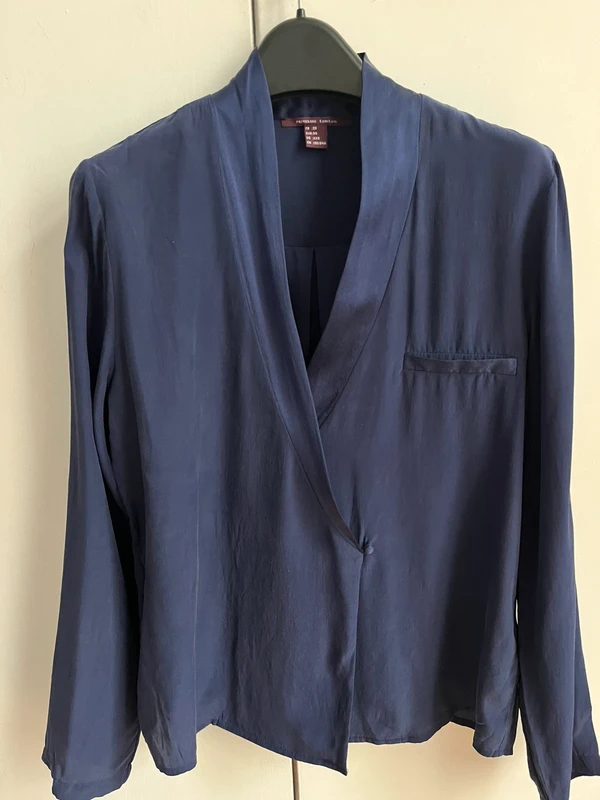
Until now, I hadn’t found a silk pajama shirt. The ones I bought were too tight in the sleeves or too short. I opted for a looser, smaller top in silk crepe from Princesse Tam Tam and the fit is perfect. I think I can give it to my Vietnamese tailors to use as a pattern and make more with Vietnamese silk.
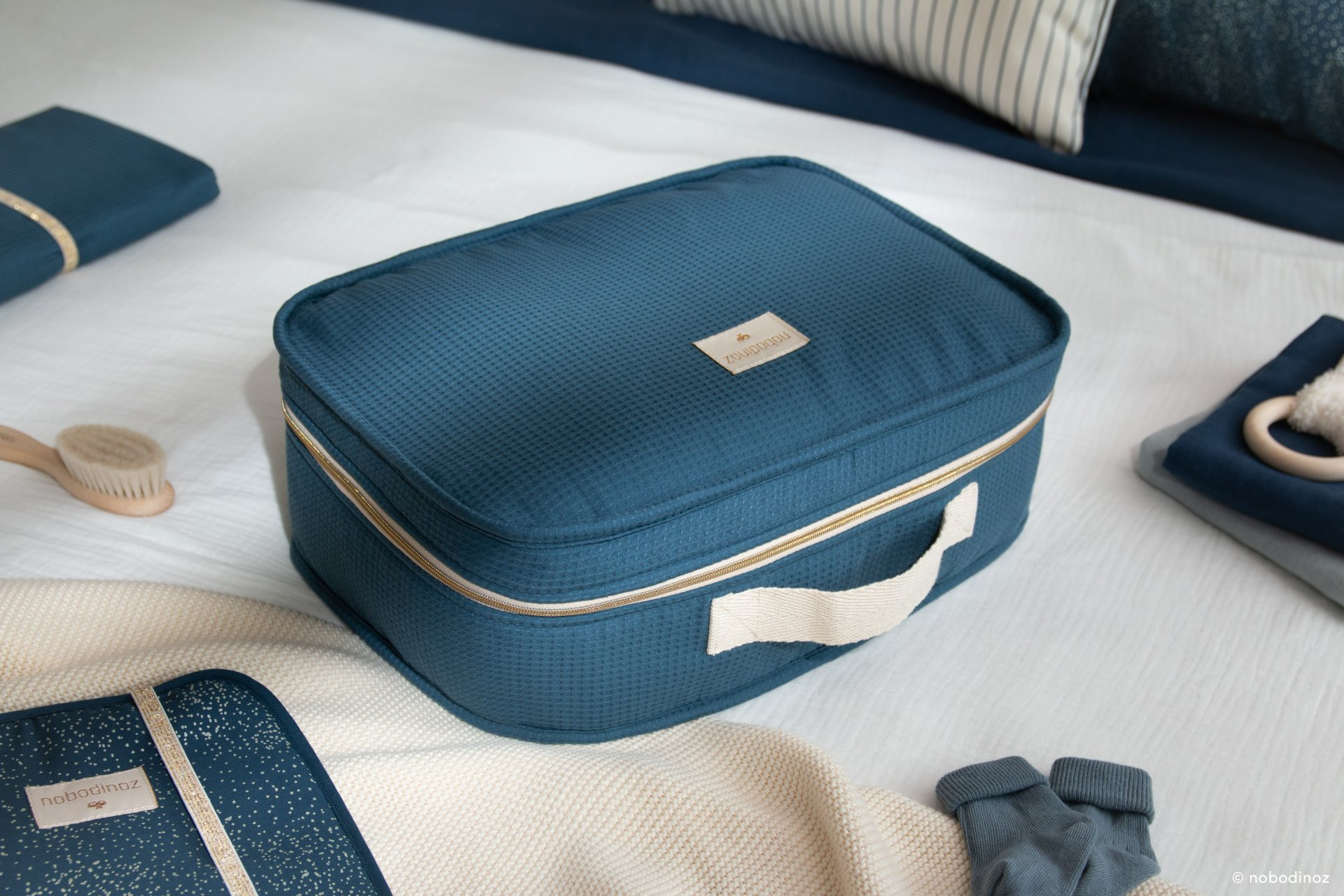
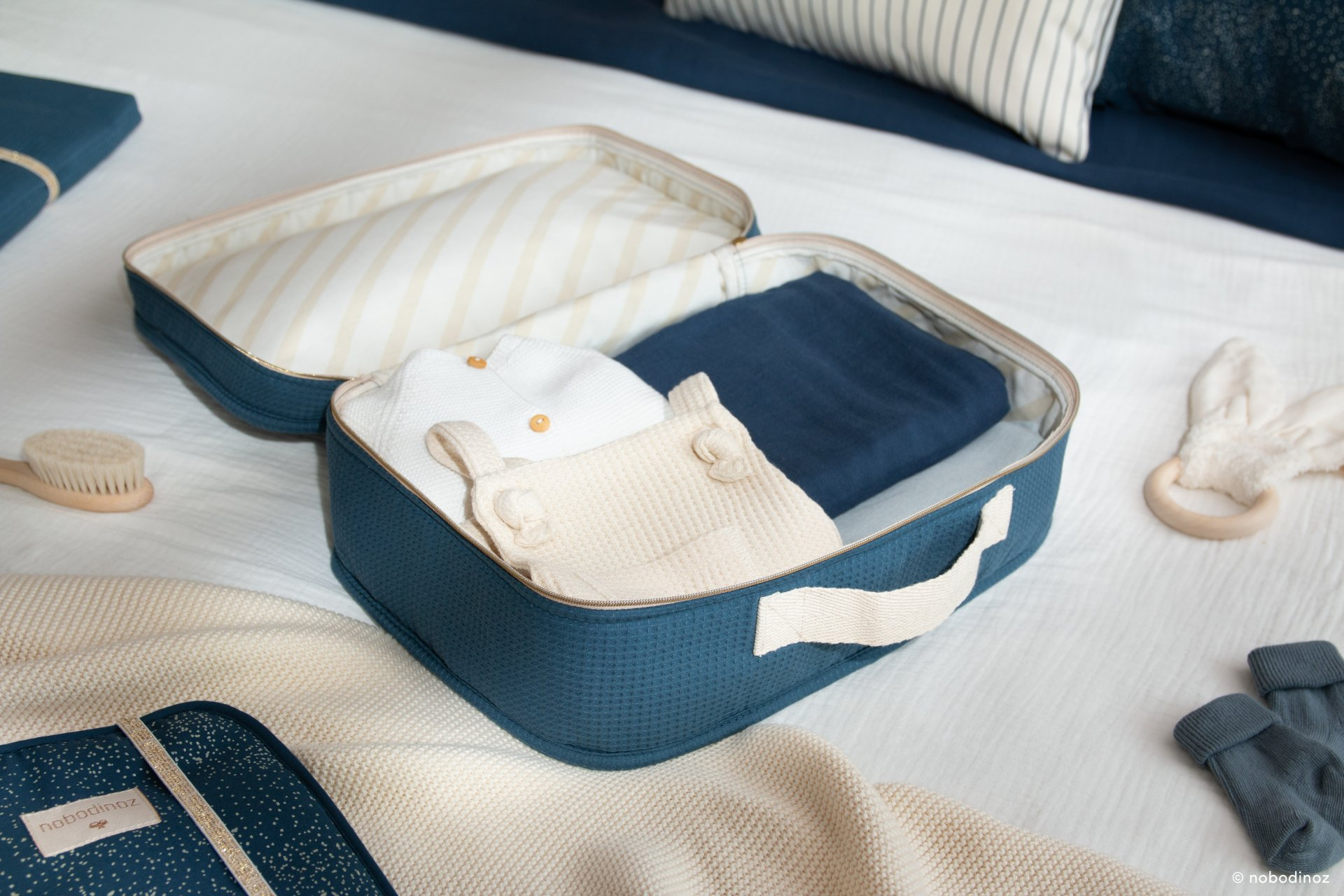
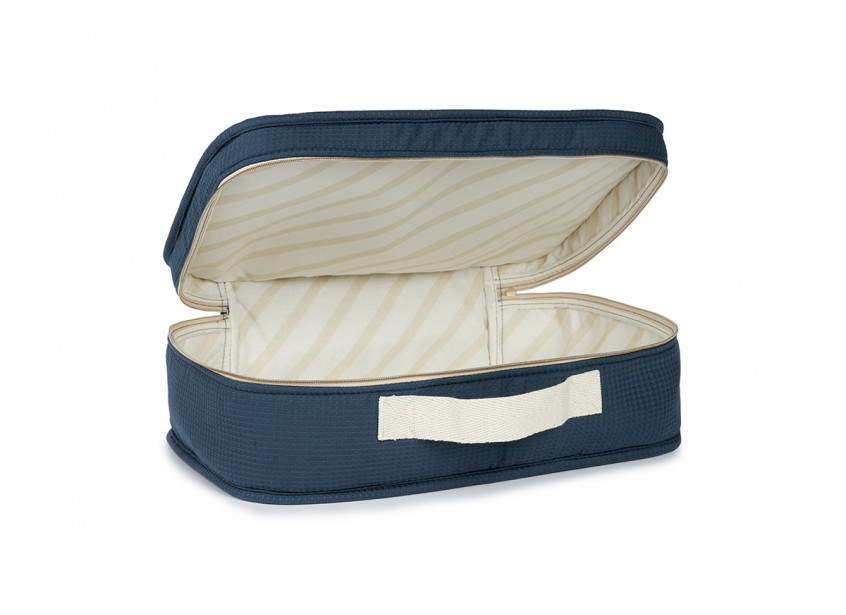
Nobodinoz is a baby brand I really like. I already bought a weekend bag from them a few years ago. They have a maternity bag in organic cotton that I think is super cute, but it’s out of stock. I found it by chance on Vinted (just the bag, without the clothes). If I’m not sewing my own maternity bag, it’s because I already tried that a few years ago and realized it’s very, very difficult, especially the corners. This bag will serve as my weekend bag and for storage.
The Maison & Objet Fair
JB and I got entry tickets thanks to Carole M. (thank you so much!). Luckily, we happened to be in the Paris region during the fair. I’ve always wanted to go (see my thoughts here). It’s a trade show for professionals, but individuals can still sneak in discreetly because you don’t need a Kbis extract at the entrance or to buy tickets. I loved the “Fine Craft” section, where I saw creations by very talented artisan-artists. This fair is concept store huge, and you can even buy directly at the fair for pickup of items on the last day. It’s very busy, and everyone is super occupied placing orders. It must be quite profitable for exhibitors.


Rotring
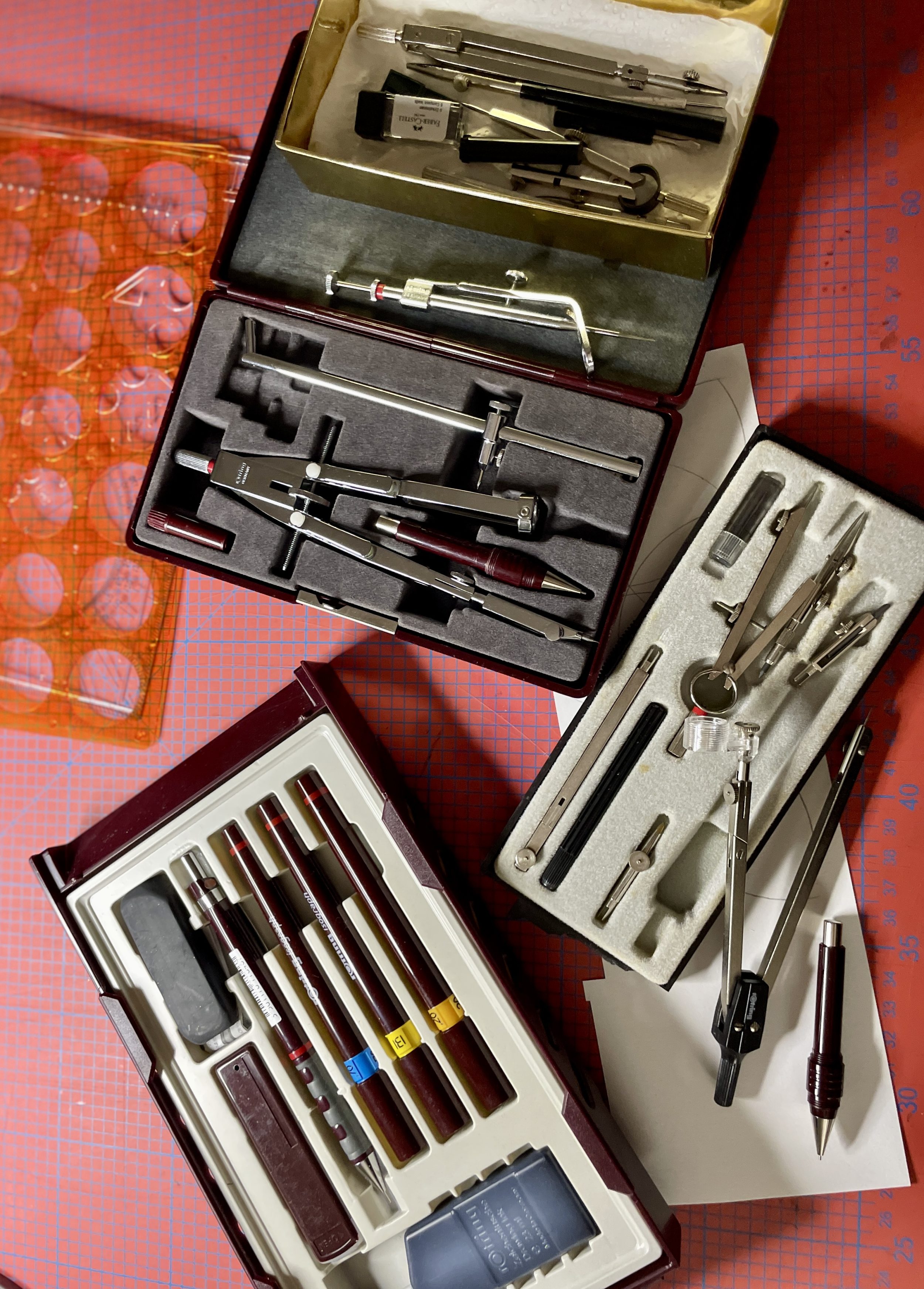
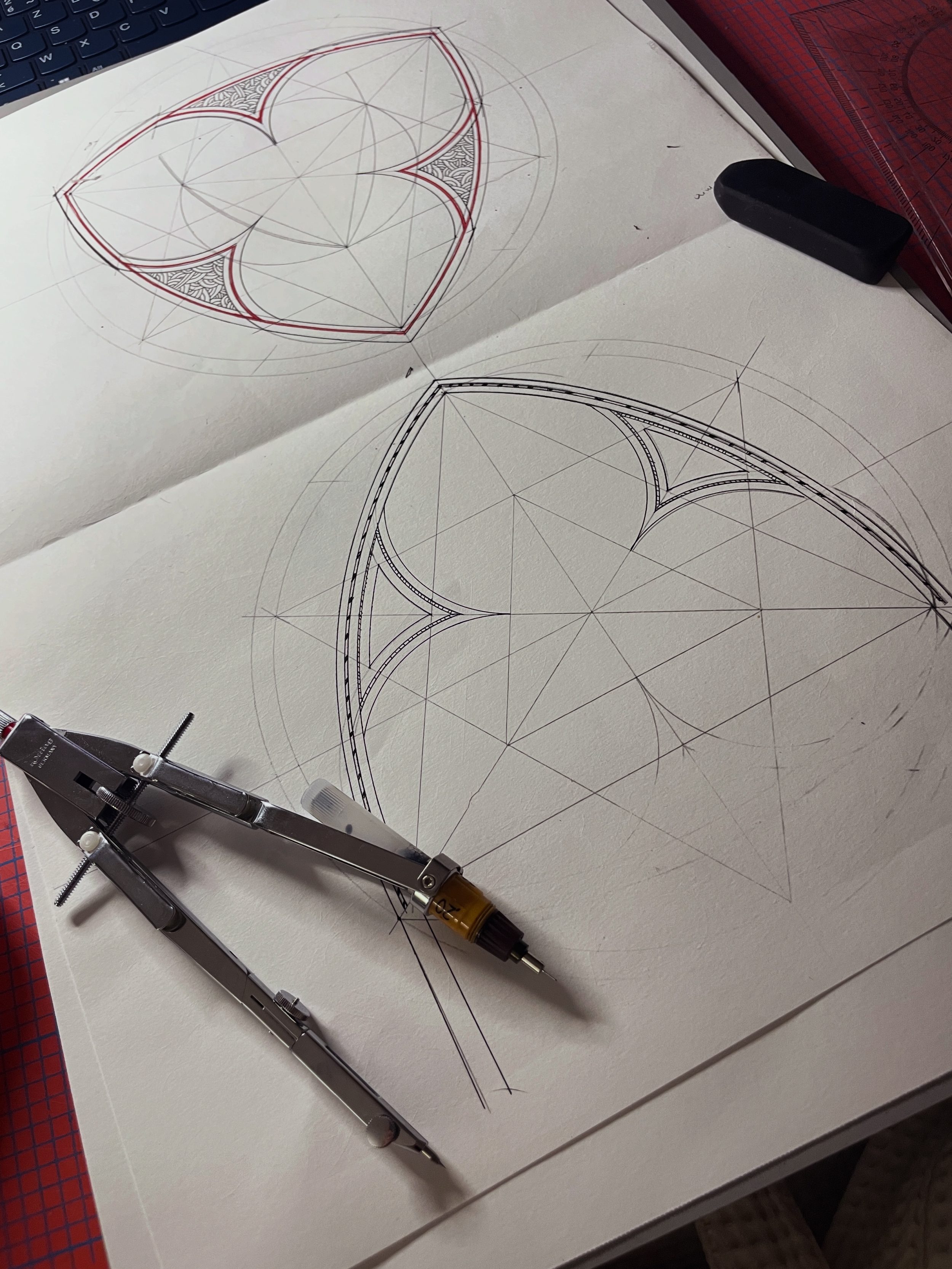
Just before Christmas, someone stole a package from my mailbox containing my vintage Rotring compass. It wasn’t very valuable, but since it was old, it was impossible to find an identical one. In the end, after searching, I replaced it… with three compass sets! As they say, every cloud has a silver lining: my collection is now ten times nicer! I told you about my Rotring collection in this article. These ultra-precise tools designed for engineers and architects are very useful to me for illumination and sacred geometry.
Tao Te King
I’m currently translating a book on Tao Te King (from Chinese into Vietnamese), a Taoist classic. To familiarize myself with this book, I’m copying it by hand. This allows me to work on my calligraphy and study the book thoroughly. It’s a shame we don’t write by hand as much anymore. It’s the best way to memorize a text. By taking the time to write each letter, each word has time to sink in.
According to this study, “Handwriting activates a broader network of brain regions involved in motor, sensory, and cognitive processes. Typing on a keyboard engages fewer neural circuits, leading to more passive cognitive involvement. Despite the advantages of typing in terms of speed and practicality, handwriting remains an important tool for learning and memory retention, especially in educational settings.”
According to the book Reaching Excellence by Robert Greene (Amazon link, Fnac link, my review here , and and there), thinking while doodling or writing allows you to mimic synesthesia. It’s “a phenomenon in which stimulation of one sense triggers another […] Studies have shown that synesthesia is more developed in artists and high-level thinkers. […] synesthesia represents a high degree of interconnectivity in the brain”. Synesthesia is innate, but you can work to increase synapses (especially in children under 3). This also explains why even though I read ebooks, I read them on my reMarkable e-reader equipped with a stylus to be able to highlight, summarize important paragraphs in a few words, and doodle.
I learned that American Gen Z no longer learns to write in cursive and can no longer read cursive writing! It’s a form of illiteracy. In Greece, faced with the Greek alphabet, I felt illiterate. We were in front of a doctor’s building and didn’t know which doorbell to press because his name was written in capital Greek letters and online we only had his name in lowercase lol, the two didn’t match. I imagine that a person who has never learned cursive will feel the same helplessness in front of a handwritten letter as I felt with the Greek alphabet: the total inability to read.
I quote and translate for you an article from The Atlantic : Gen Z Never Learned to Read Cursive.
Most of these history students admitted, they could not read manuscripts. If they were assigned a research paper, they sought subjects that relied only on published sources. One student reshaped his senior honors thesis for this purpose; another reported that she did not pursue her interest in Virginia Woolf for an assignment that would have involved reading Woolf’s handwritten letters. In the future, cursive will have to be taught to scholars the way Elizabethan secretary hand or paleography is today. […] All of us, not just students and scholars, will be affected by cursive’s loss. The inability to read handwriting deprives society of direct access to its own past. We will become reliant on a small group of trained translators and experts to report what history—including the documents and papers of our own families—was about. The spread of literacy in the early modern West was driven by people’s desire to read God’s word for themselves, to be empowered by an experience of unmediated connection. The abandonment of cursive represents a curious reverse parallel: We are losing a connection, and thereby disempowering ourselves.
Most of these history students admitted they couldn’t read manuscripts. When asked to write a research paper, they chose topics that relied only on published sources. One student reshaped his senior thesis for this purpose; another said she didn’t pursue her interest in Virginia Woolf because it would have meant reading the author’s handwritten letters. In the future, cursive will have to be taught to scholars the way Elizabethan secretary hand or paleography is today. […] We will all be affected, not just students and researchers, by the disappearance of cursive writing. The inability to read handwriting deprives society of direct access to its own past. We will become dependent on a small group of trained translators and experts to report what history—including the documents and papers of our own families—was about. The spread of literacy in the early modern West was driven by individuals’ desire to read God’s word for themselves, to be nourished by an experience of unmediated connection. The abandonment of cursive writing constitutes a curious reversal of this movement: we are losing a connection and, in doing so, disempowering ourselves.
That’s why calligraphy is so important. There are quite a few archaic fonts like Gothic; if you haven’t learned it through calligraphy, you’d have a hard time deciphering handwritten books from the Middle Ages (the j, c, r, and s are illegible).
In the midst of studying the Tao Te Ching, I realize there are several versions of the text. My municipal library has a book from the Pléiade collection (Philosophes taoïstes I, Amazon link, Fnac link 2022 edition) which contains two translated versions of the Tao Te Ching (the Guodian version (the oldest) & the canonical version). Out of curiosity, I’m reading another long book written by a researcher (The Bamboo Texts of Guodian: A Study and Complete Translation) comparing all versions of the Tao Te Ching. A real work of passion / PhD level! Chinese people have even more trouble than us reading ancient writing because their characters have evolved over time (strokes gradually disappear, leading to simplified characters). If there are so many translations, it’s because there are many manuscript versions; and researchers don’t all agree on the meaning of this or that character from the 3rd century BC. Fascinating! Since JB started giving me access to the BnF to read theses & research, I’ve been coming across incredibly valuable documents.
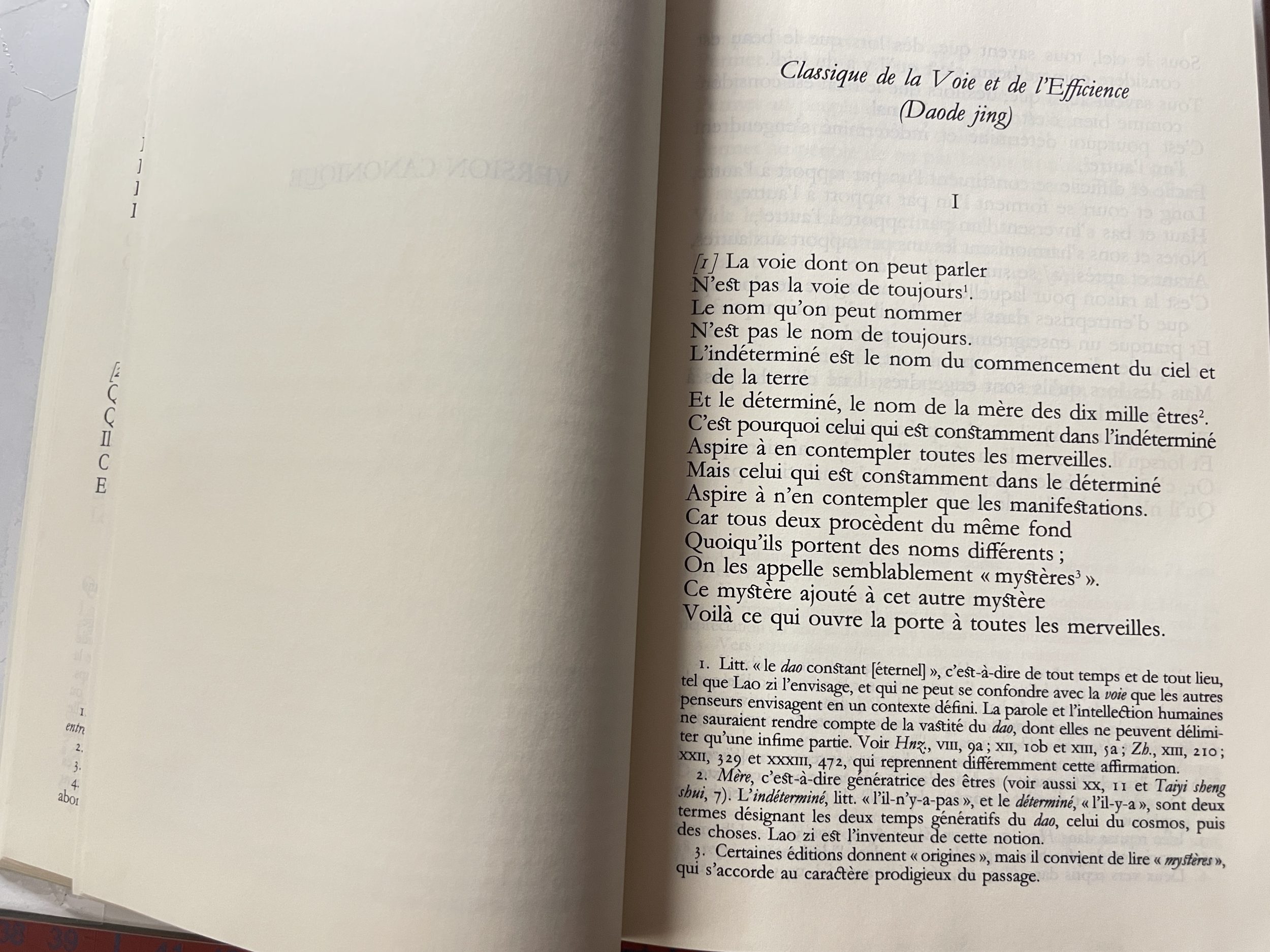
I highly recommend the Tao Te Ching; it complements the I Ching. The more I read it, the lighter I feel. Nothing seems important anymore, desires and needs diminish; you learn what it means to be content, what “enough” means. I even went through my apartment to put lots of things up for sale on my Vinted to declutter, because according to chapter XI, “Carving out doors and windows creates a house. And it is precisely in the empty space nothing, that the house’s usefulness lies. Therefore, there is profit in having, but there is use in having nothing.“ Let me study this text further, then I’ll give you a more detailed review.
There are other books I really enjoyed this month, about which I’ve written a review :
- Brave New World Aldous Huxley : In this dystopian novel, one detail particularly stood out to me: the author often mentions synthetic music. This topic resonates with me even more because I played electronic keyboards for over ten years. Despite technological advances, it remains very difficult to infuse real vital energy (the qi) and emotion into synthetic sounds. The sensitivity of the keys, for example, will never match that of a piano. I then wondered why contemporary music moves us so little. It’s not just because compositions and lyrics have lost richness, but also because a real orchestra is expensive. The result: most tracks rely on artificial sounds. And unfortunately, no machine can yet reproduce the life and emotion that physical instruments played by real musicians exude. Moreover, if you sing off-key, software can correct every note. I think you should always prioritize live.
- Marcel Proust: The Making of the Work : This book presents a synthesis of the exhibition dedicated to Proust’s archives at the BnF in 2022, and traces how the writer conceived his masterpiece In Search of Lost Time. One detail struck me particularly: the book explains the concept of voluntary memory and shows that Proust himself implants memories into his readers’ minds. For example, every two to three hundred pages, he refers to an event from previous volumes. This technique surprisingly echoes the spaced repetition method, used today to learn languages or memorize with flashcards (ANKI). By revisiting certain events throughout the narrative, Proust leads the reader to store them in long-term memory, to the point of feeling them as personal memories. Many events in the novel are evoked through synesthesia. For example, the Vinteuil sonata is described with vocabulary borrowed from writing: we talk about “phrase” rather than “melody.” Thus, in evoking this sonata, the reader simultaneously has the impression of hearing and seeing it. It’s all the more fascinating that In Search of Lost Time is precisely the novel I had chosen (at random) when I wanted to work on my memory again, after realizing it had weakened. I am convinced this text is excellent for stimulating memory: the entire novel functions like a memory exercise.
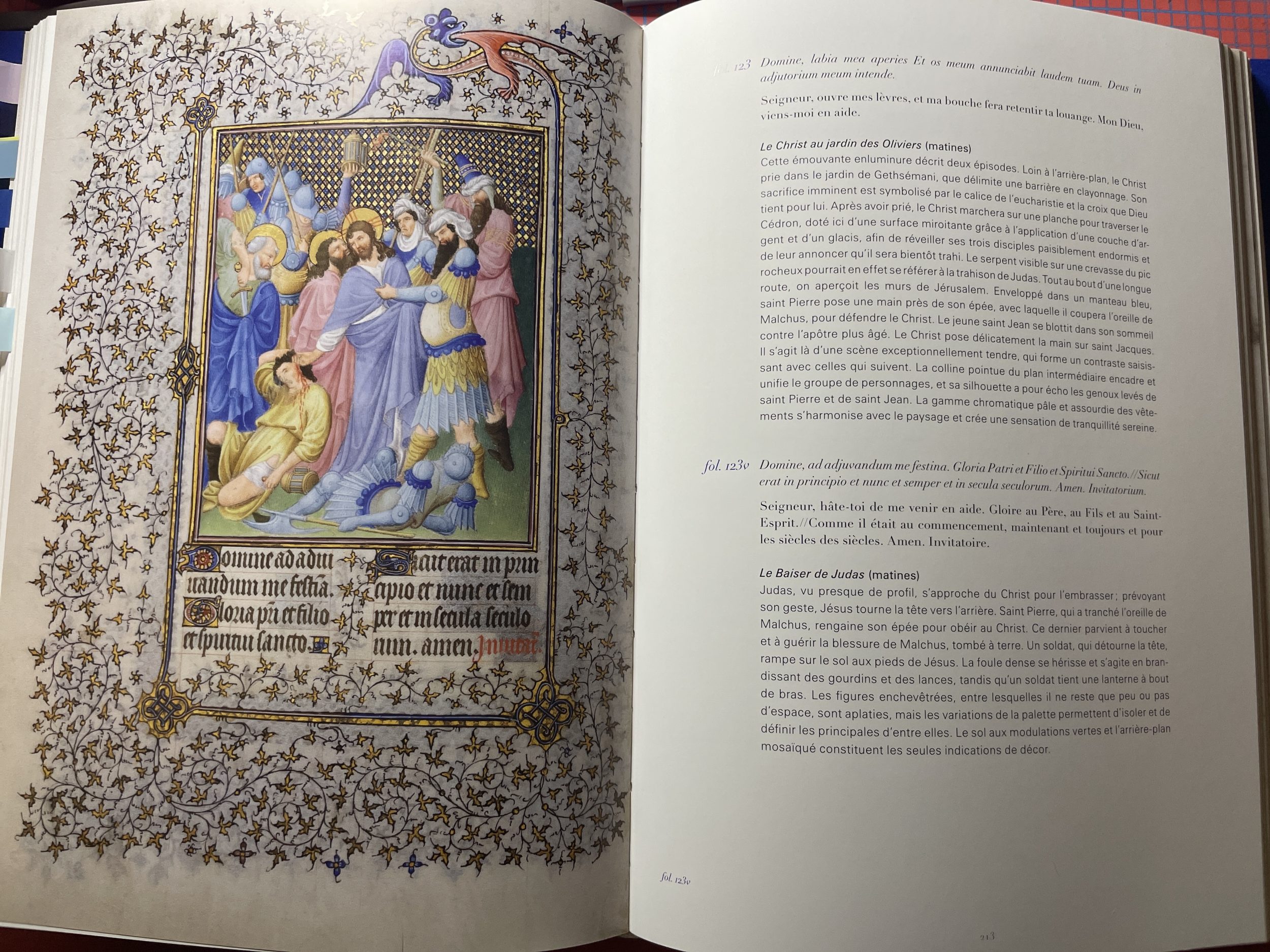
- The Art of Illumination: The Limbourg Brothers and the Belles Heures of Jean de France, Duc de Berry: Right now, I’m working on an illuminated facsimile of a page from the Belles Heures of the Duke of Berry. In 2010, an exceptional event took place: the exhibition at the MET of the 225 bifolios of the Belles Heures of the Duke of Berry, a masterpiece of illumination, whose binding was removed for restoration. In 2012, 47 bifolios were exhibited at the Louvre. Two books were published following these exhibitions. You can freely download the English ebook version here. The French paper version (with some French additions from the exhibition at the Louvre) can be purchased here. It’s not really a facsimile, but the book has the same dimensions as the original. It’s very handy for grasping the exact size of each illumination. Most of the Latin texts are transcribed and translated (which lets me familiarize myself with the Gothic script littera textualis), the illuminations are described and commented on. At the end of the book, all the techniques used to create this manuscript are explained.