

Visiting Medina and the Prophet’s Mosque as non-Muslims (Saudi Arabia): Travel Diary
Part 1: Travel Journal
Part 2: Practical Tips
Part 1: Travel Journal
Day 8 (road trip continued)
It takes us a little over 3 hours to drive from‘Al Ula to Medina. We decide to dress in traditional clothing in Medina.
Before coming, we researched the dress code, and YouTubers all say you can come in loose, well-covered clothing. No need to veil. However, reading the comments, I found that some people are very reluctant to have tourists in Medina (which happens to be the second holiest site in Islam, after Mecca). Some sarcastically say “ahh, we must thank our prince for inviting these tourists”, and others say “please, we are pilgrims from Indonesia. Some of us sold our houses, our belongings to make the pilgrimage to Saudi Arabia. This is not a place for tourism” etc. The curious looks I received at the airport, when I wasn’t veiled (just covered and wearing a hat), came mainly from these pilgrims. So, out of respect for them and to avoid drawing attention to ourselves, we want to dress in traditional attire, and in my case, to veil (hijab only).
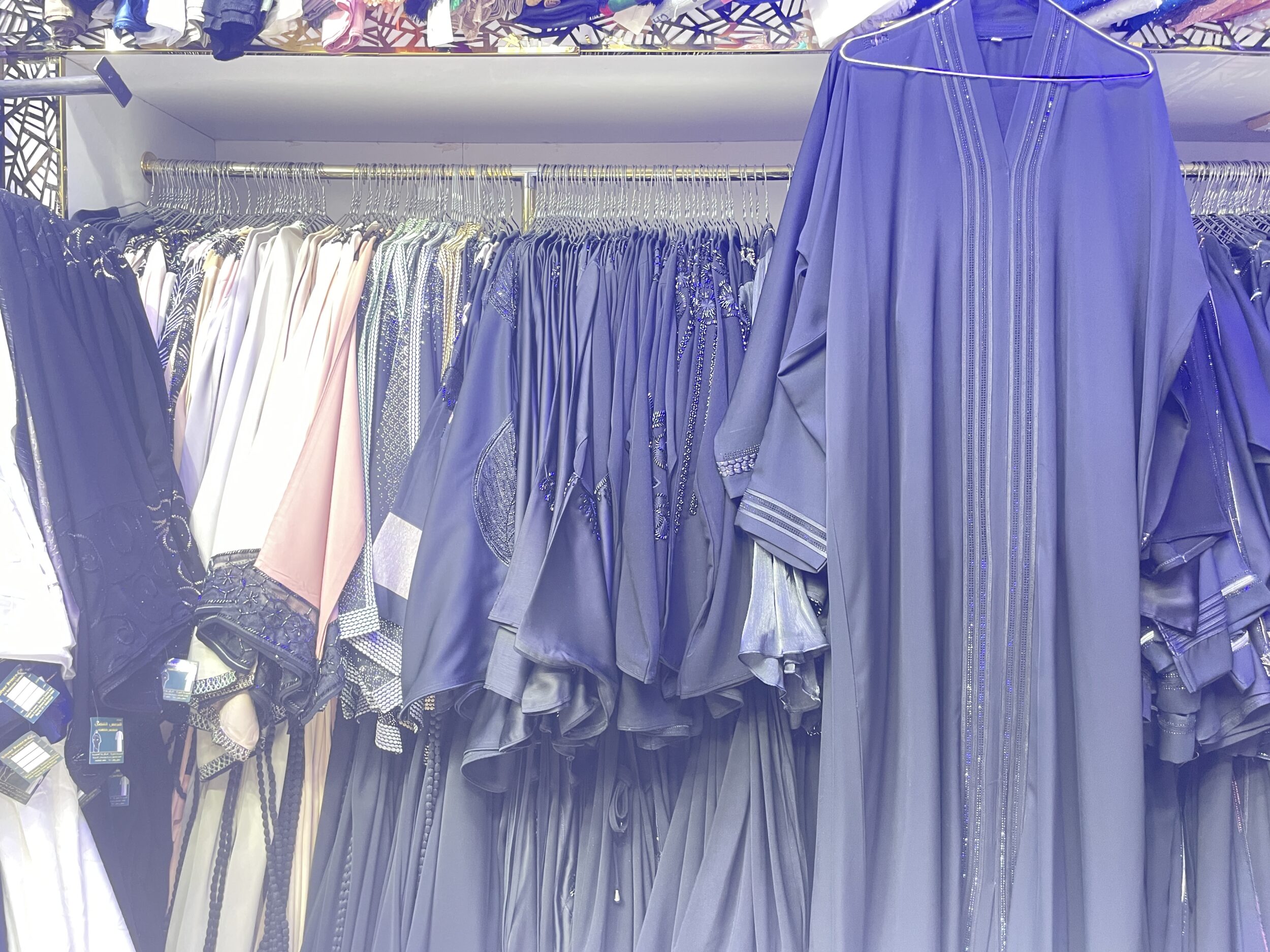
We want to stop at a mall to buy me an abaya, but mysteriously, all traditional clothing shops are closed. I don’t know if we arrived during prayer time, but I only had time to glance at the price (100 euros for these beautiful pieces). They’re very pretty and made of nice materials; I think I could even wear it in France as a coat. They come in all colors, but black remains favored by Saudi women. And they’re almost all in Niqab (only the eyes are visible).
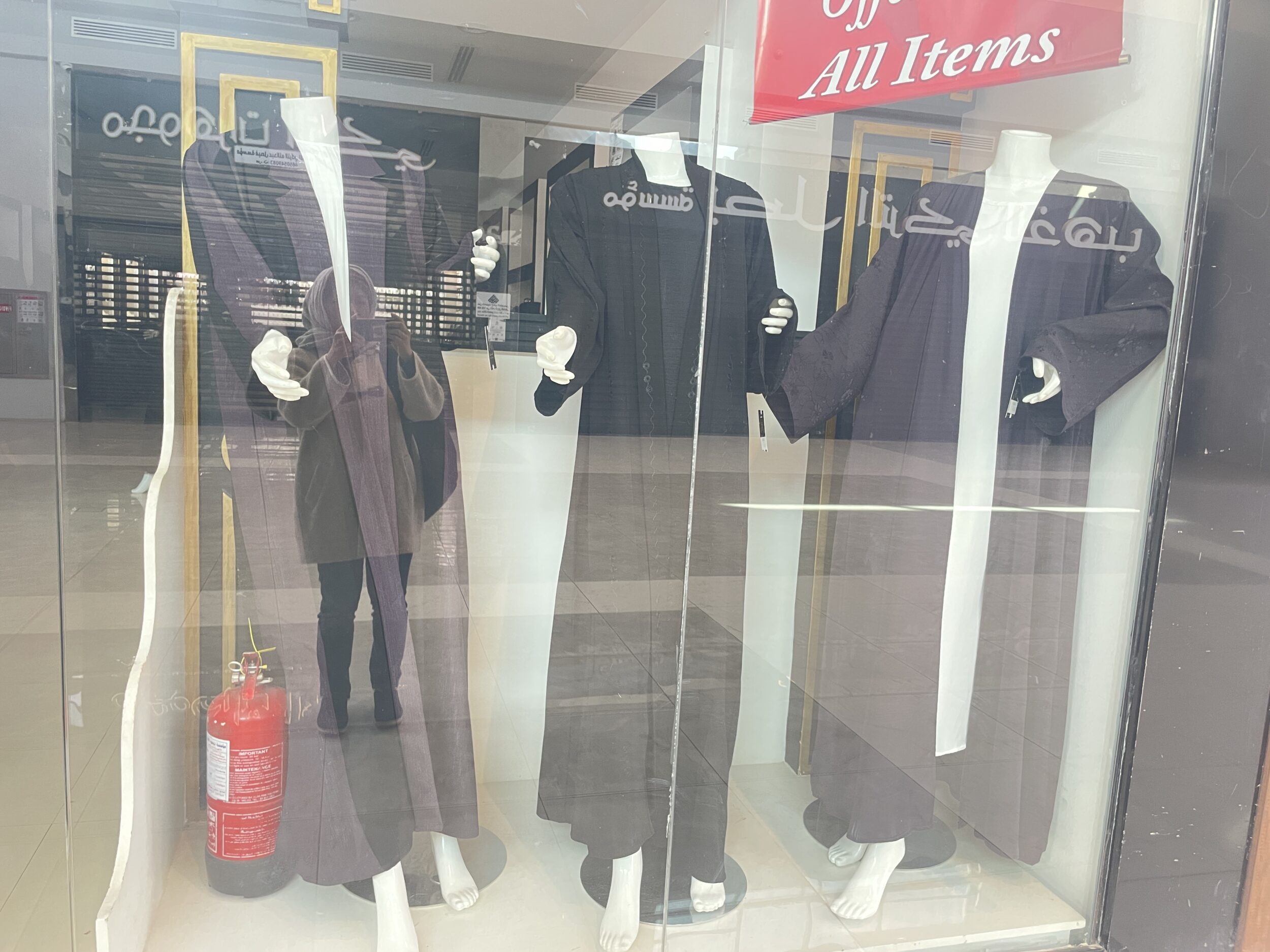
As for JB, he easily finds a traditional outfit (thobe) at the hypermarket for only 55 SAR. It looks very comfortable. We decide to go with beige because we don’t want to “disguise” ourselves as Saudi either, and white seems to have a religious connotation of purity. We want to blend in as much as possible but stand out a little to show we’re not Muslims but respect tradition. Not finding an abaya, I settle for just veiling with two scarves, obviously without pins, I veil poorly, but at least I’m making an effort.
Our hotel
We then arrive at our Pullman Zamzam hotel (Booking link), which we paid for with our miles American Express KLM. We get upgraded, thanks to our Accor Gold status, to a huge suite!!! This allows JB to work well with a proper desk.
(as you can see, JB is not working in this photo)
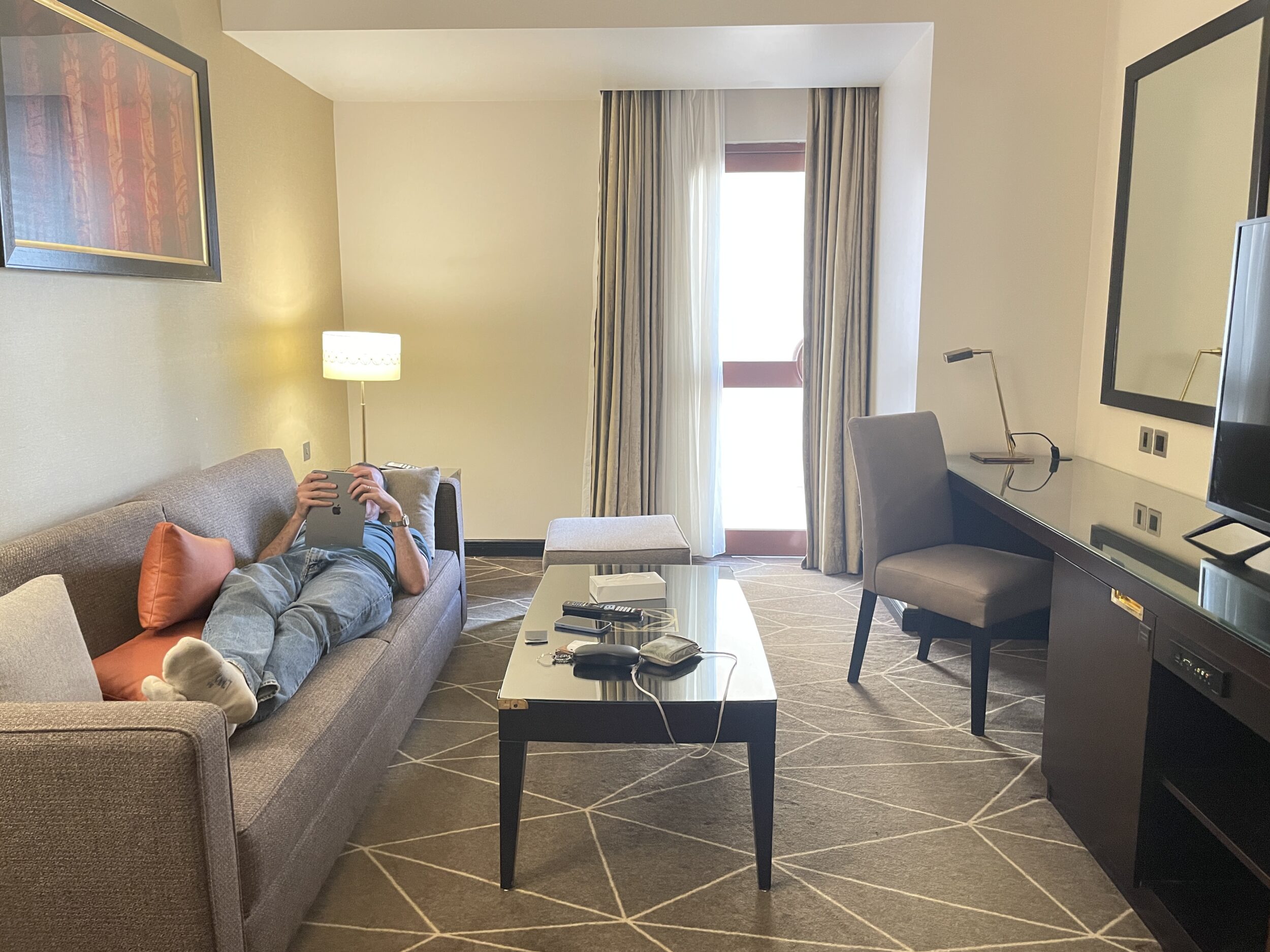
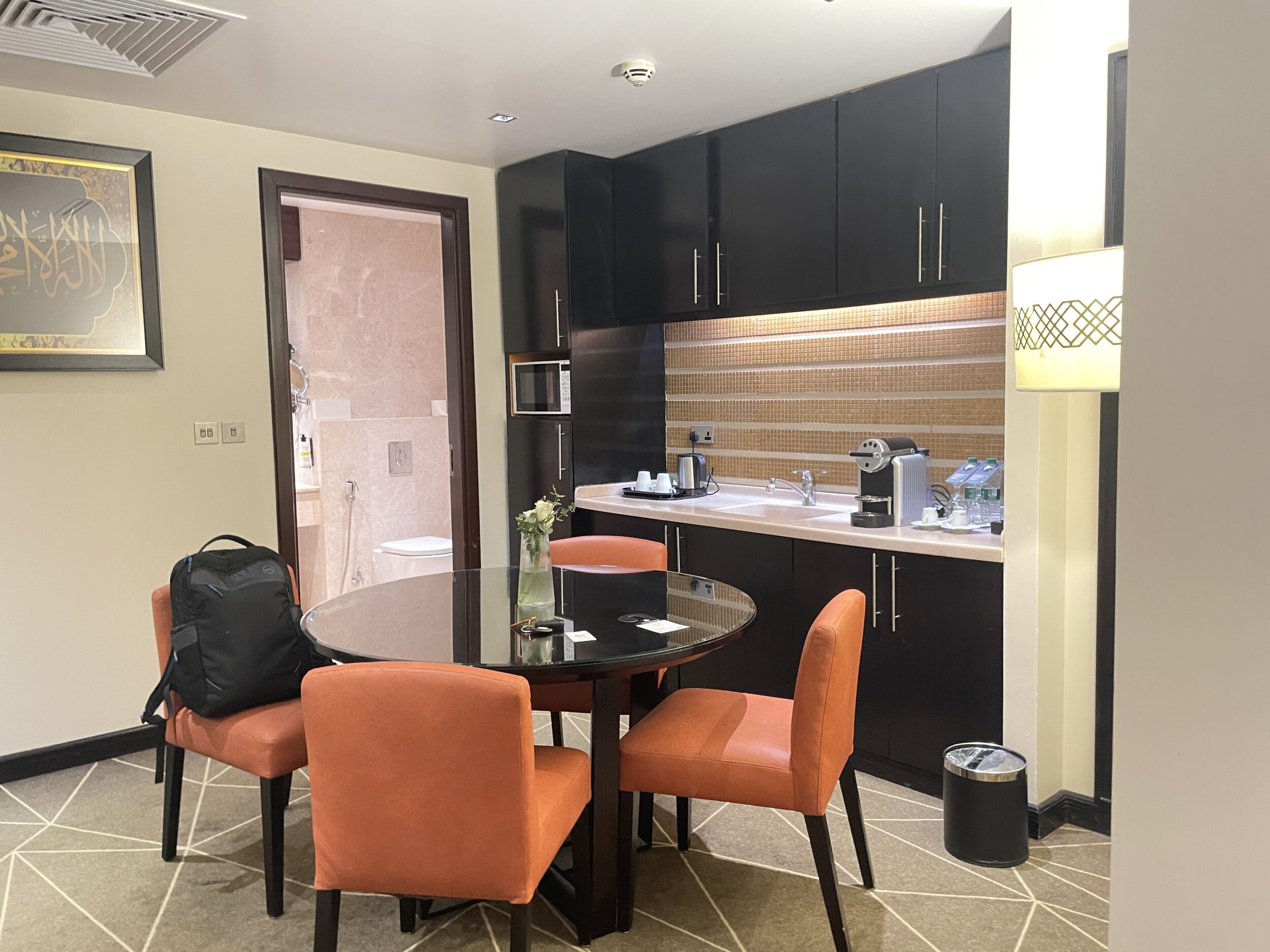
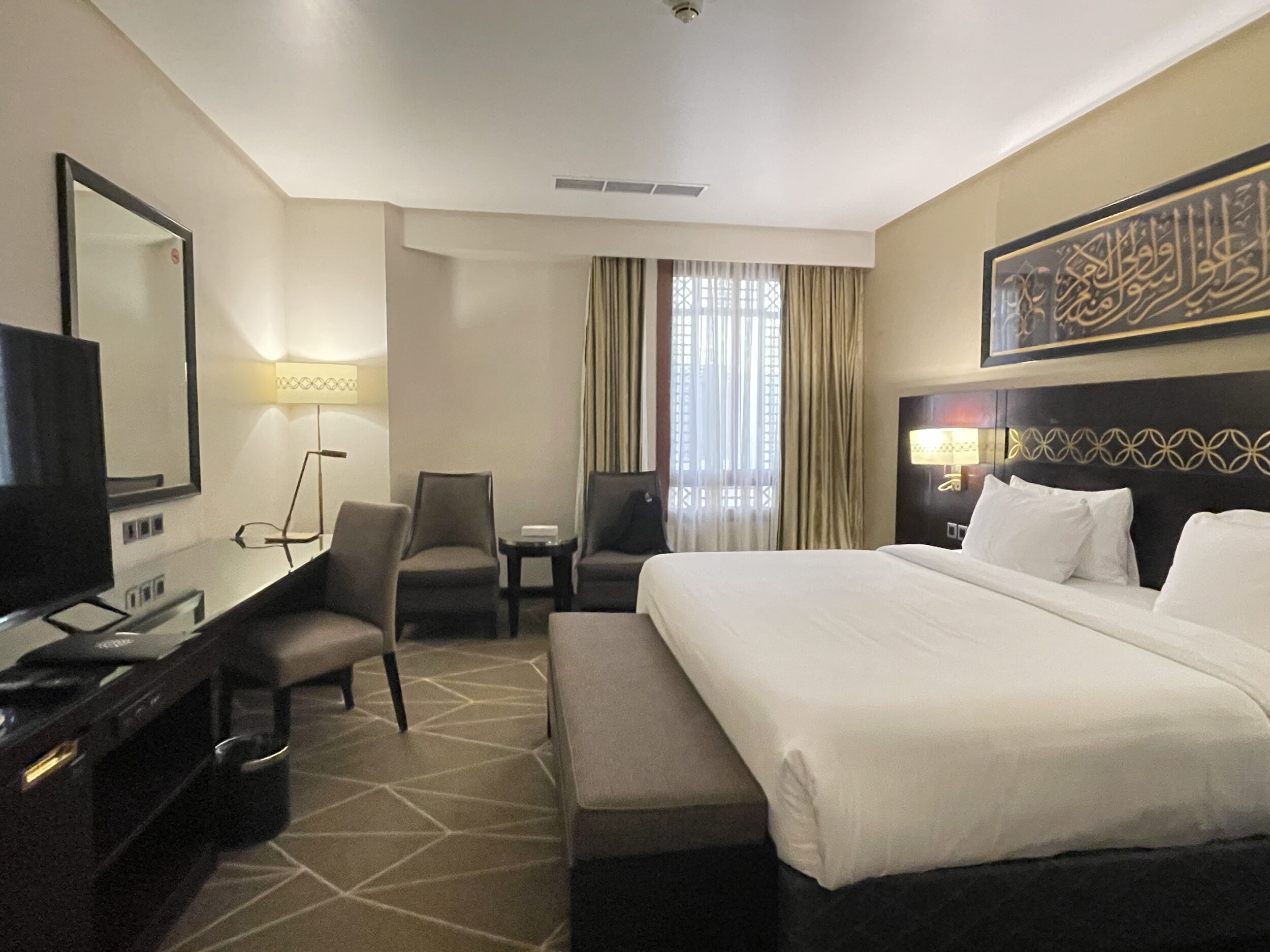
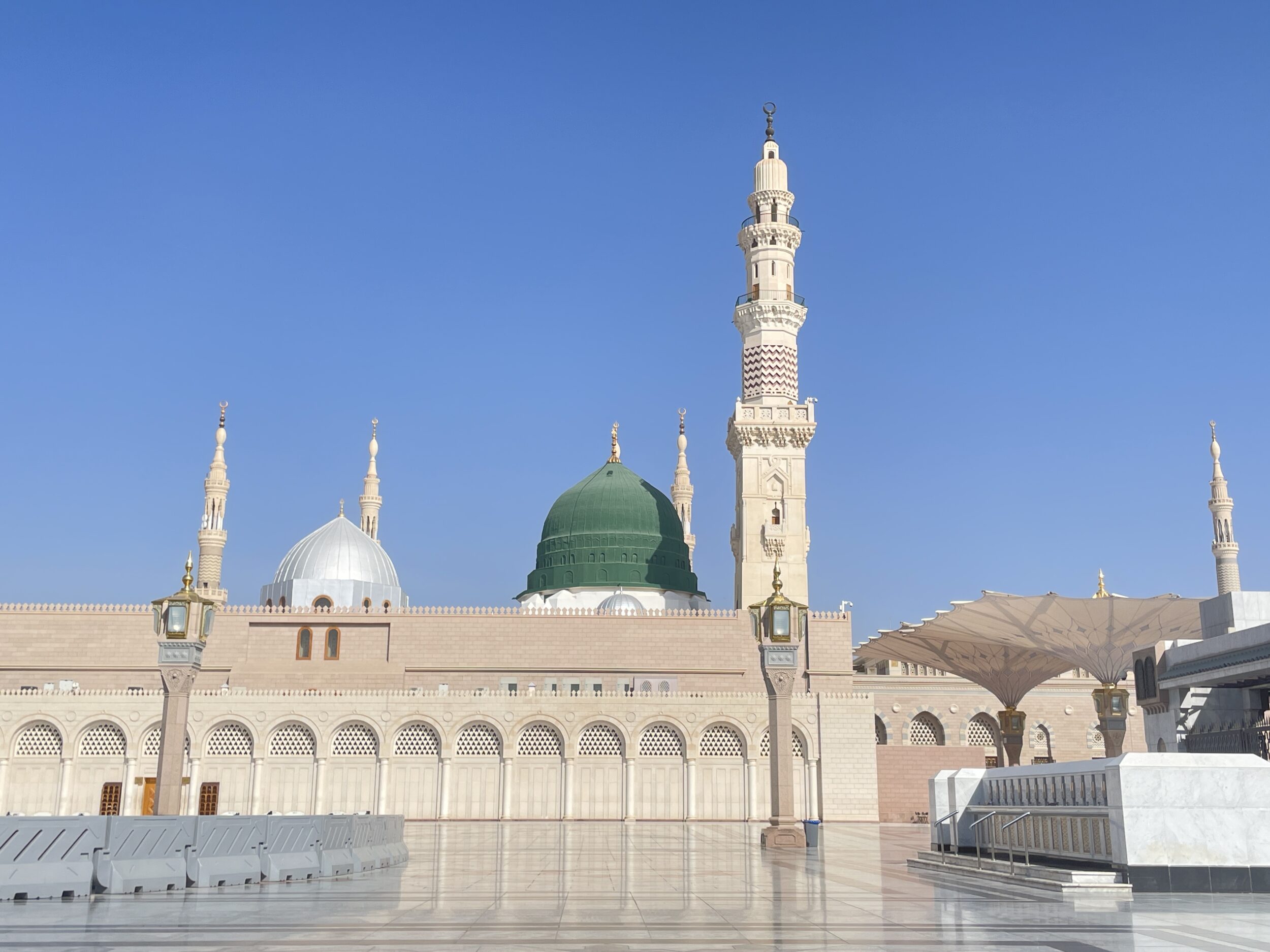
We rush to the restaurant on the rooftop to find something to eat, but it just finished its service. We’re lucky enough to still see the Prophet’s Mosque from above through the windows (our hotel is almost facing the mosque). It’s incredibly big!!! The green dome is the sacred chamber. And to the far right, not far from the cranes, is the first Islamic cemetery.
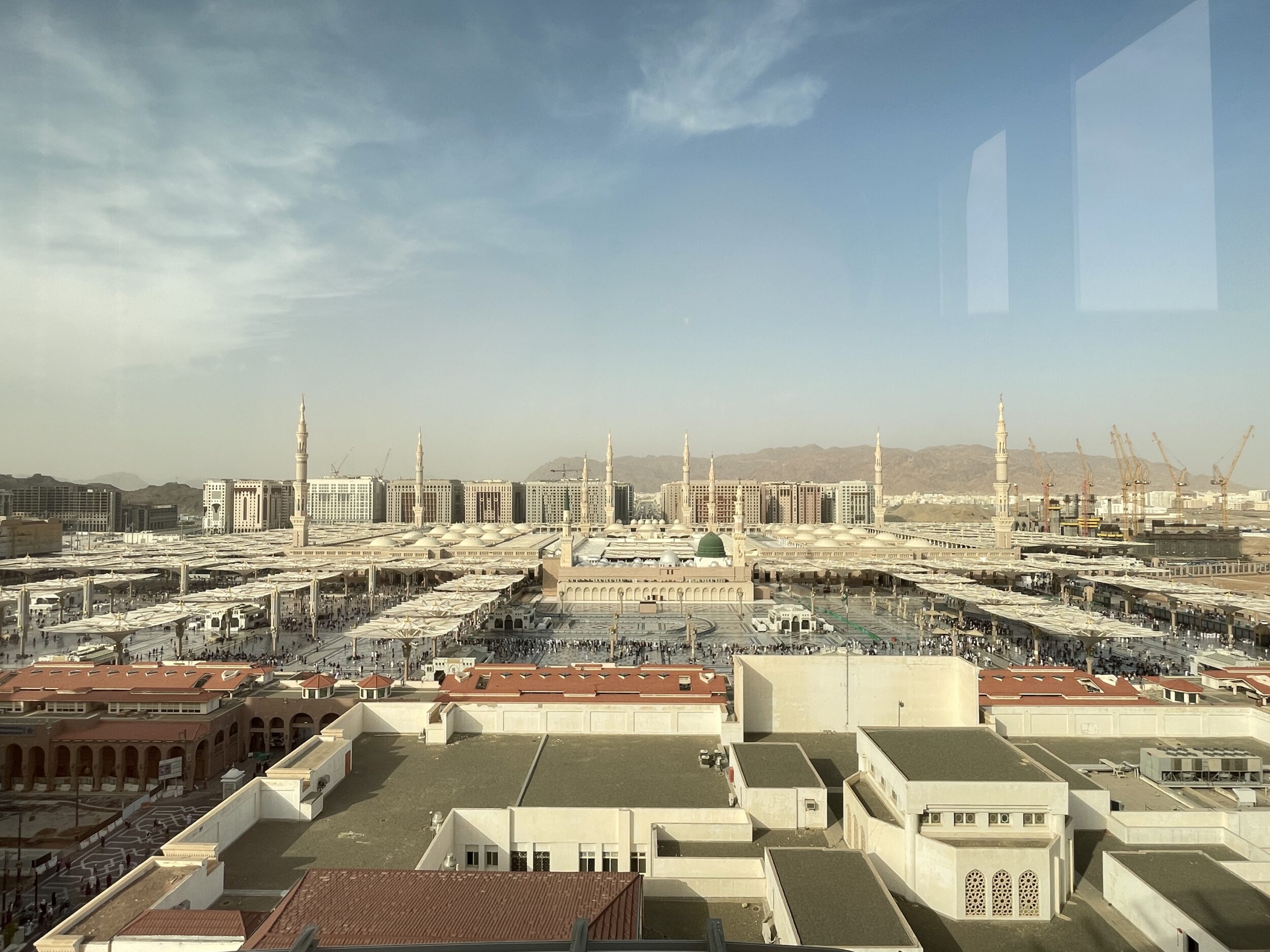
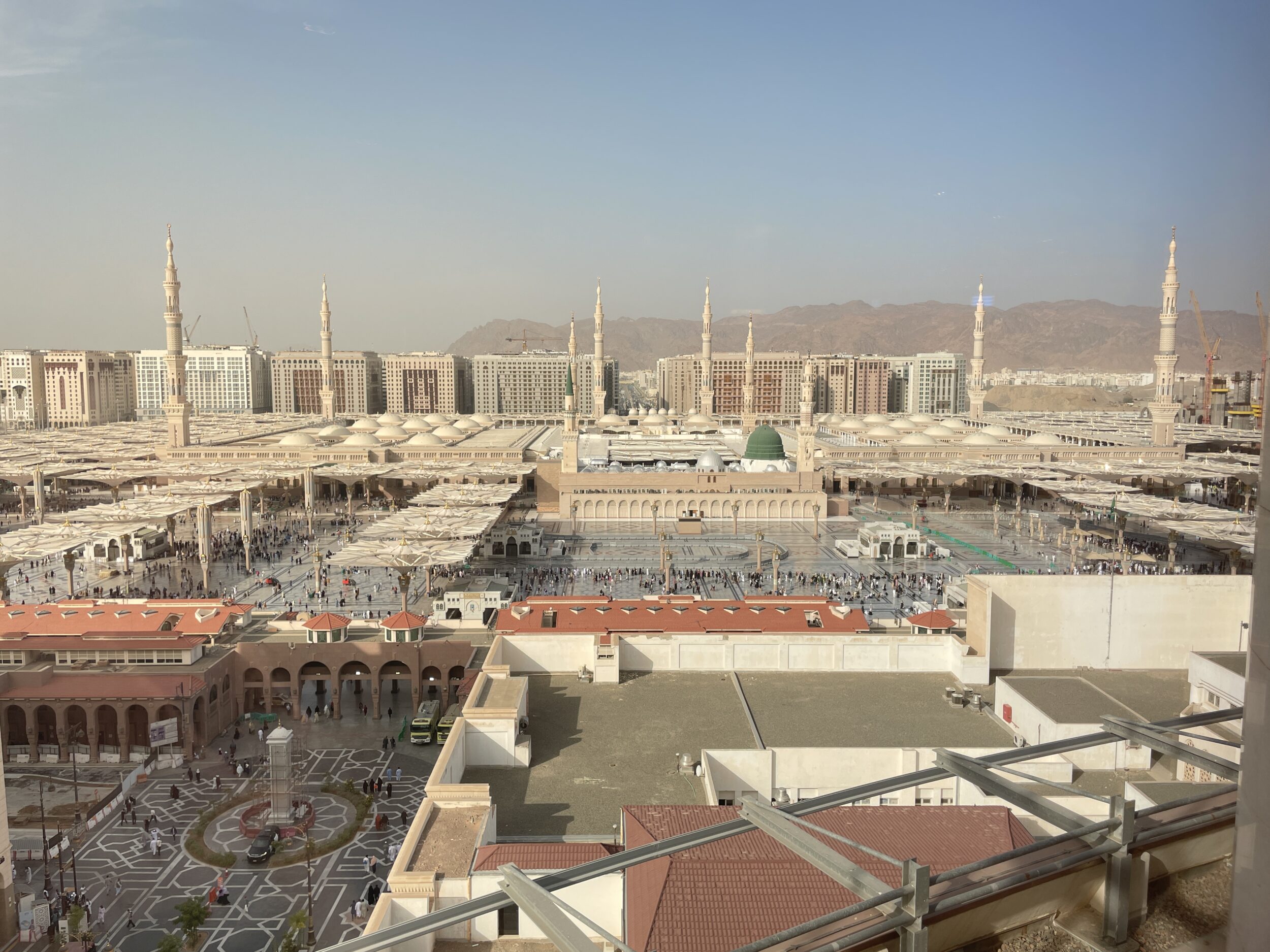
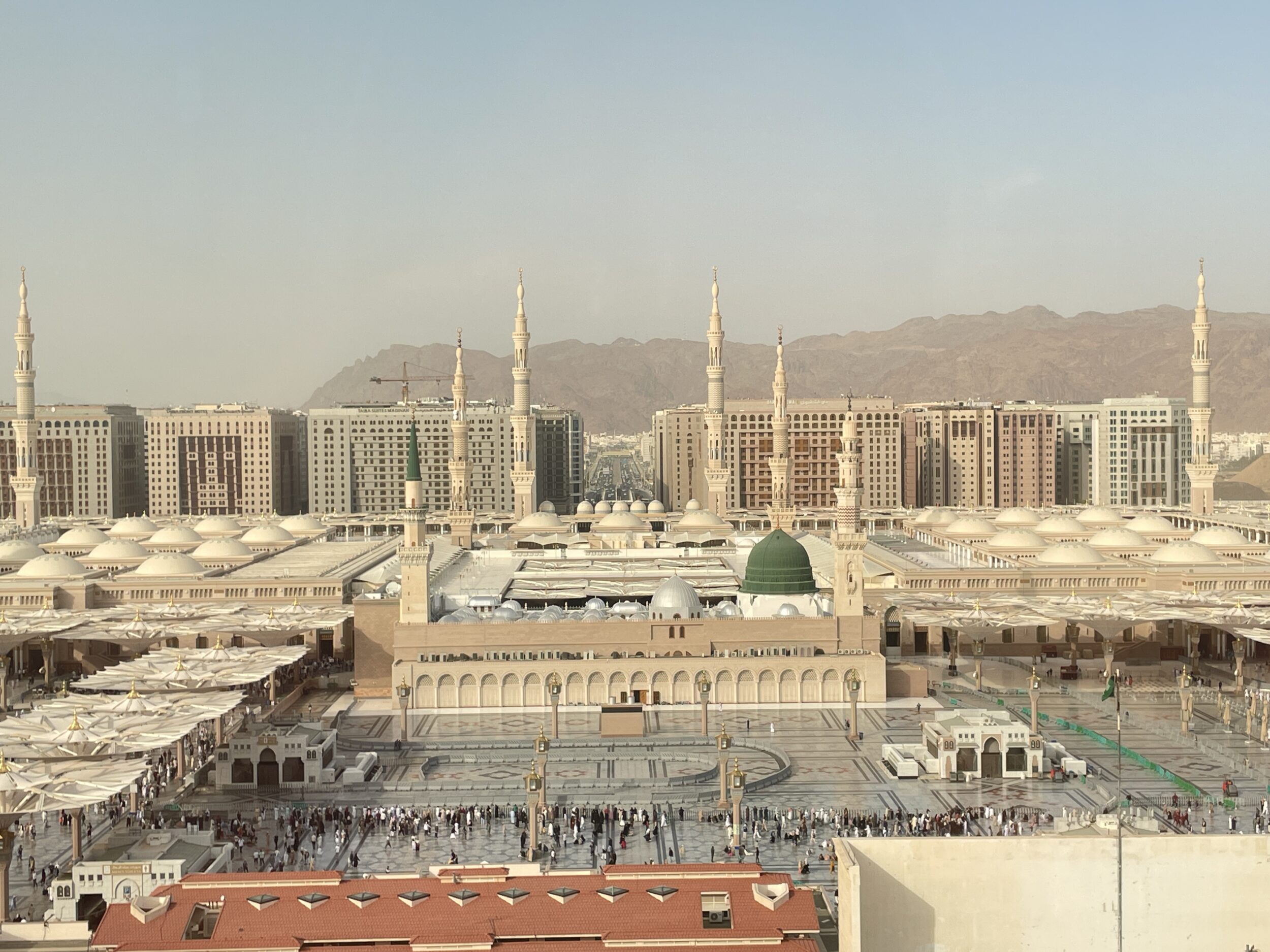
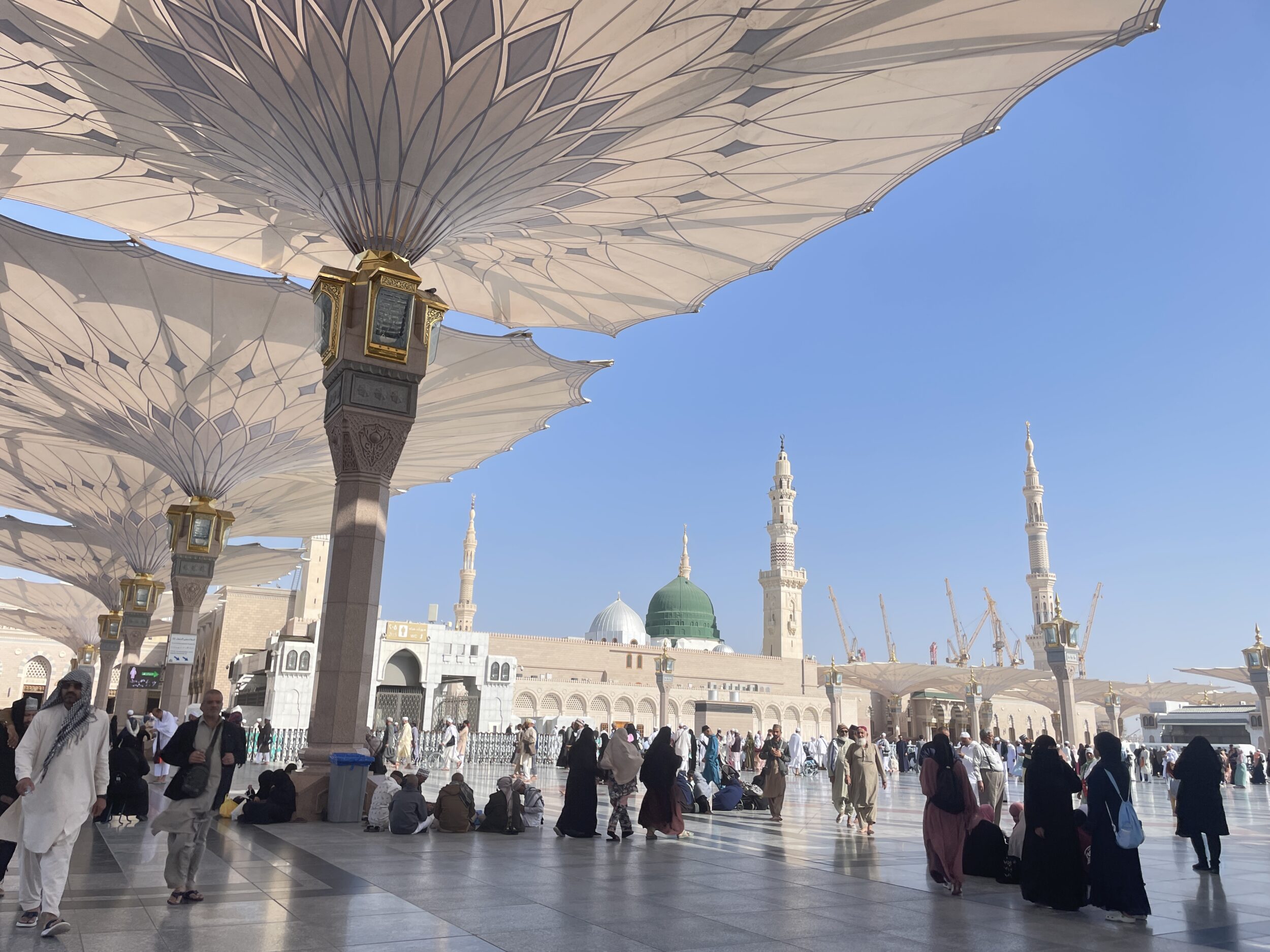
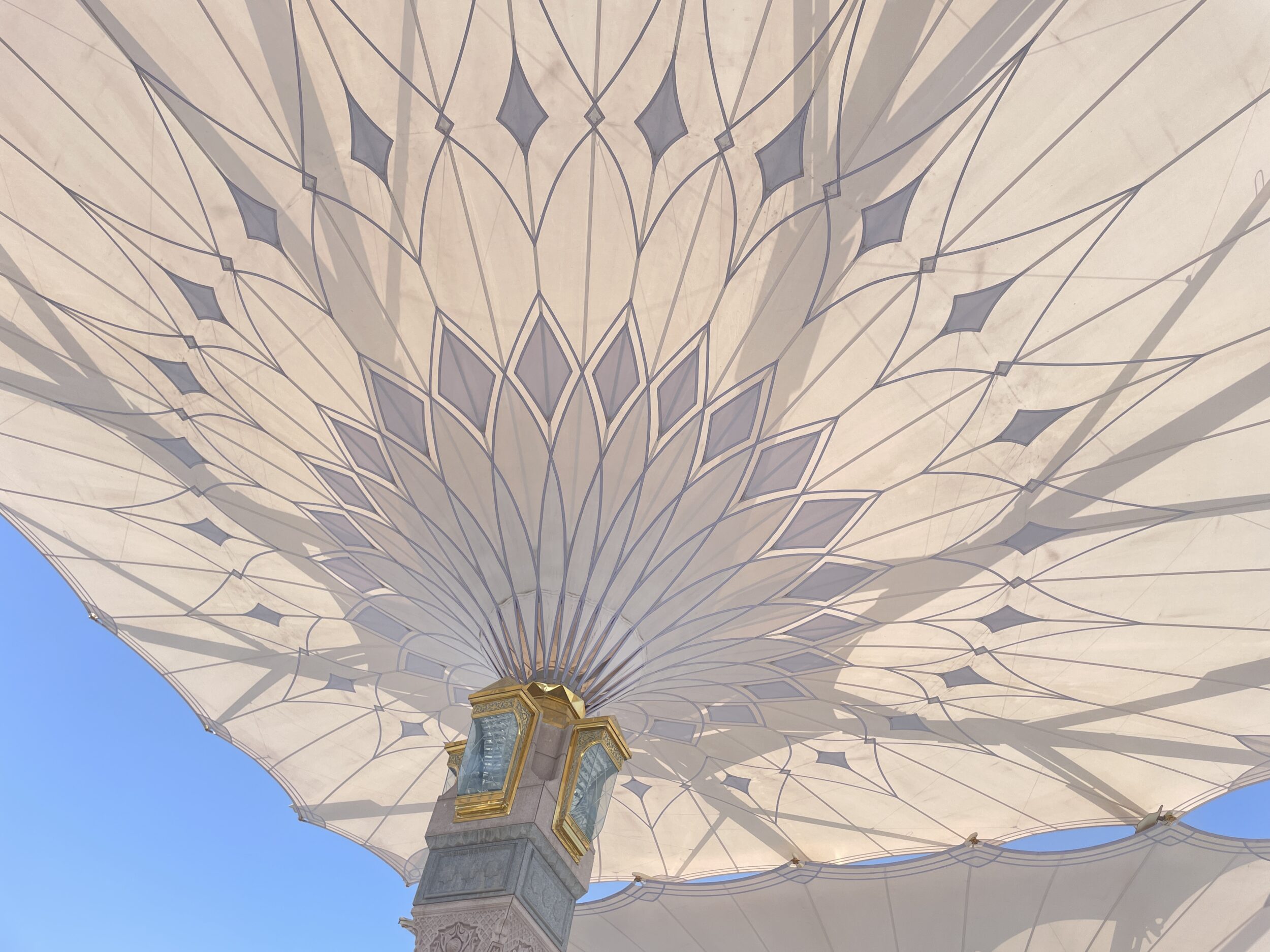
You can see lots of huge umbrellas; they’re automatic, retractable, and protect pilgrims from the sun (and rain), as many wait or pray directly on the esplanade.
No restaurant open, but room service is available. We treat ourselves to two absolutely delicious tagines!!
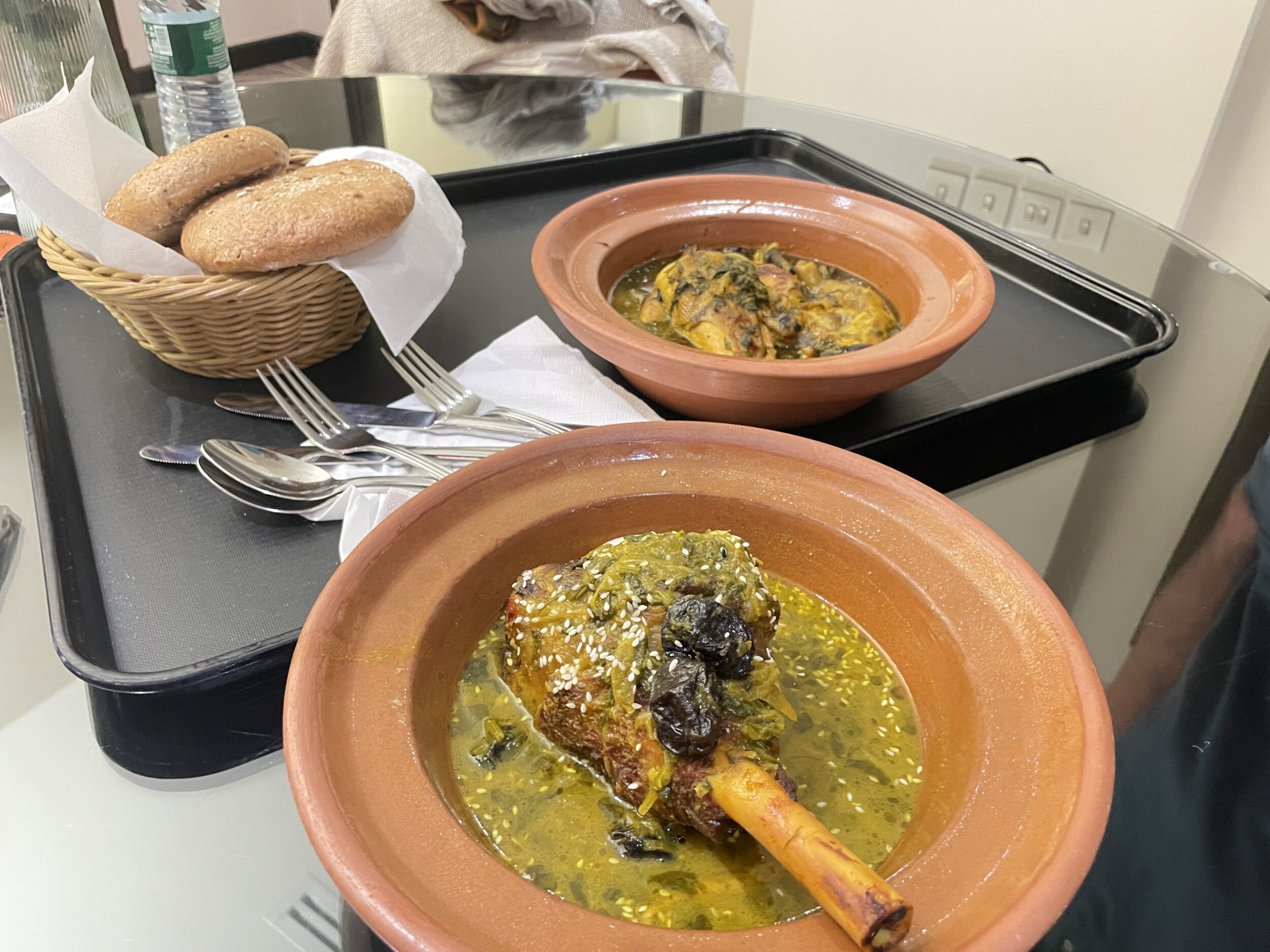
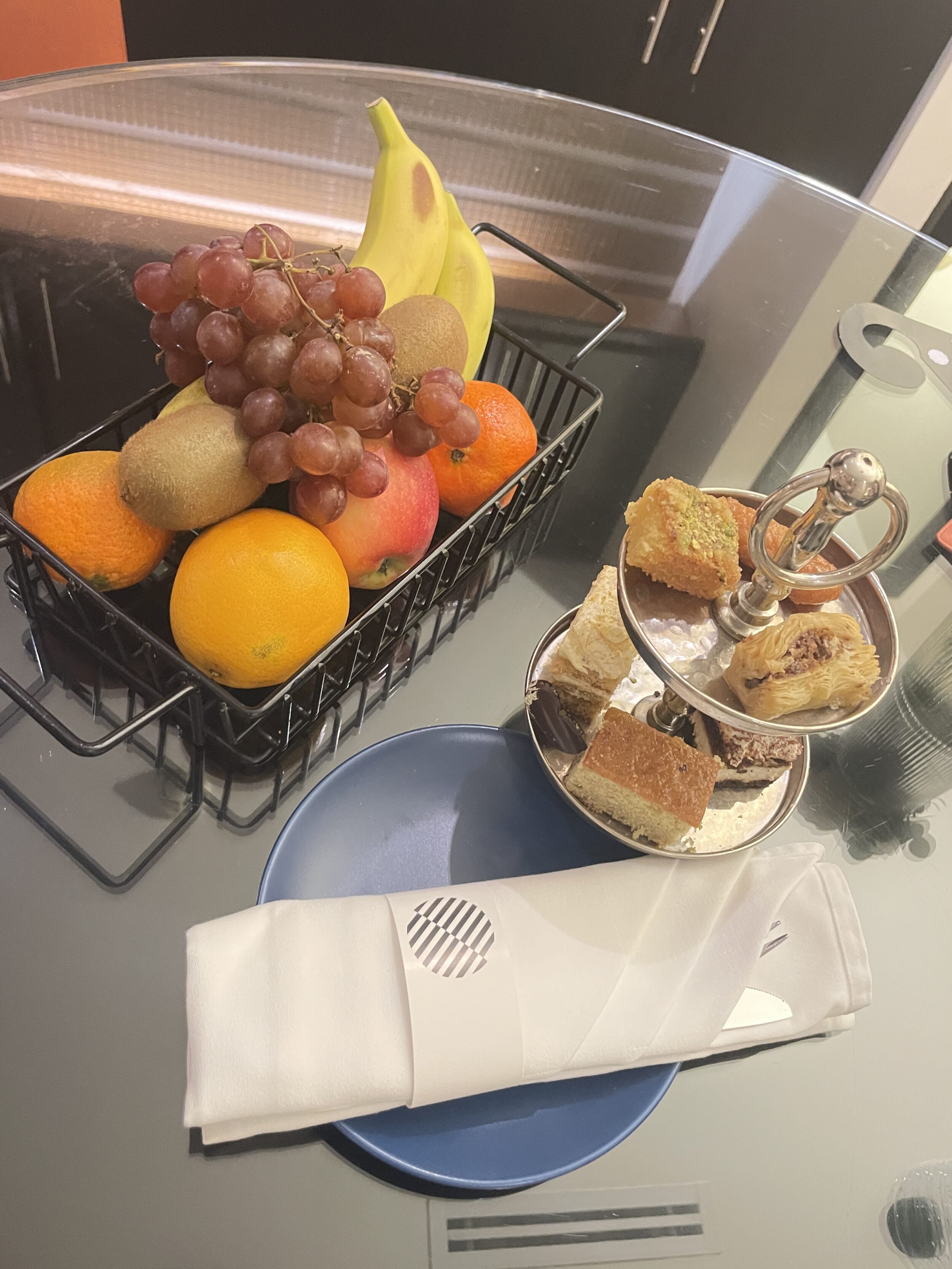
Room service also gives us fruit and some sweet treats for an afternoon snack. What luxury!!
Al Masjid an Nabawi
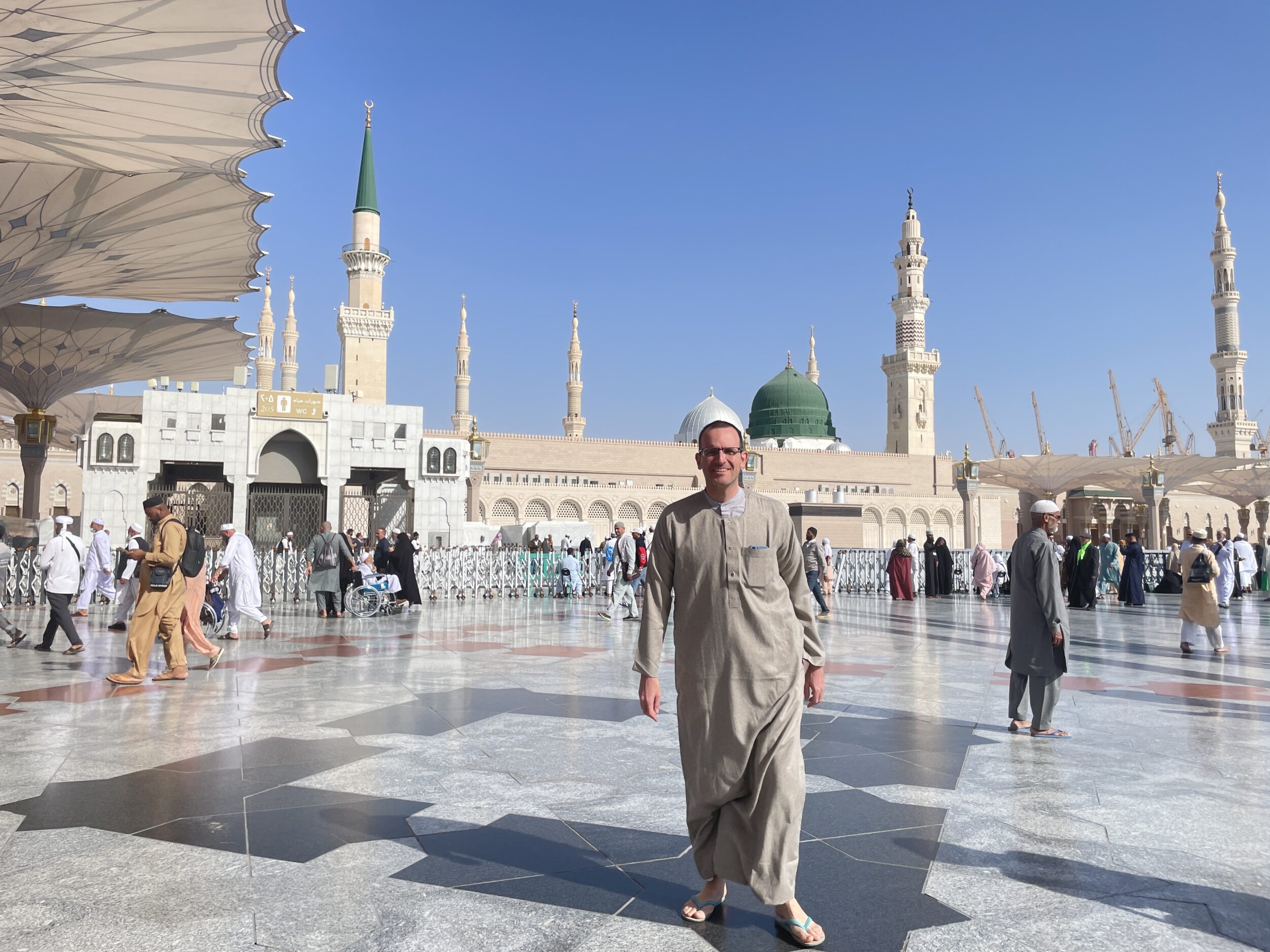
After a good meal, we visit the Prophet’s Mosque Al Masjid an Nabawi. You can admire JB’s traditional outfit here. On the esplanade, everyone dresses modestly. The few rare white tourists dress in Saudi attire like JB. I didn’t see any white or easily identifiable non-Muslim women; in any case, all women are veiled. I’m veiled, but poorly, yet it draws no attention, and no one kicks us out or makes a comment. There are people from all Muslim countries around the world, dressed in their traditional attire. It’s a true melting pot, and you can have fun trying to guess where people you pass are from. The outfits and head coverings give clues: those must be from Iraq, those from Uzbekistan, those from the Maghreb, …
From here, you can admire the famous automatic umbrellas of the mosque. It’s immense and can hold a million people. I didn’t realize the importance of this mosque until I saw the number of pilgrims there.
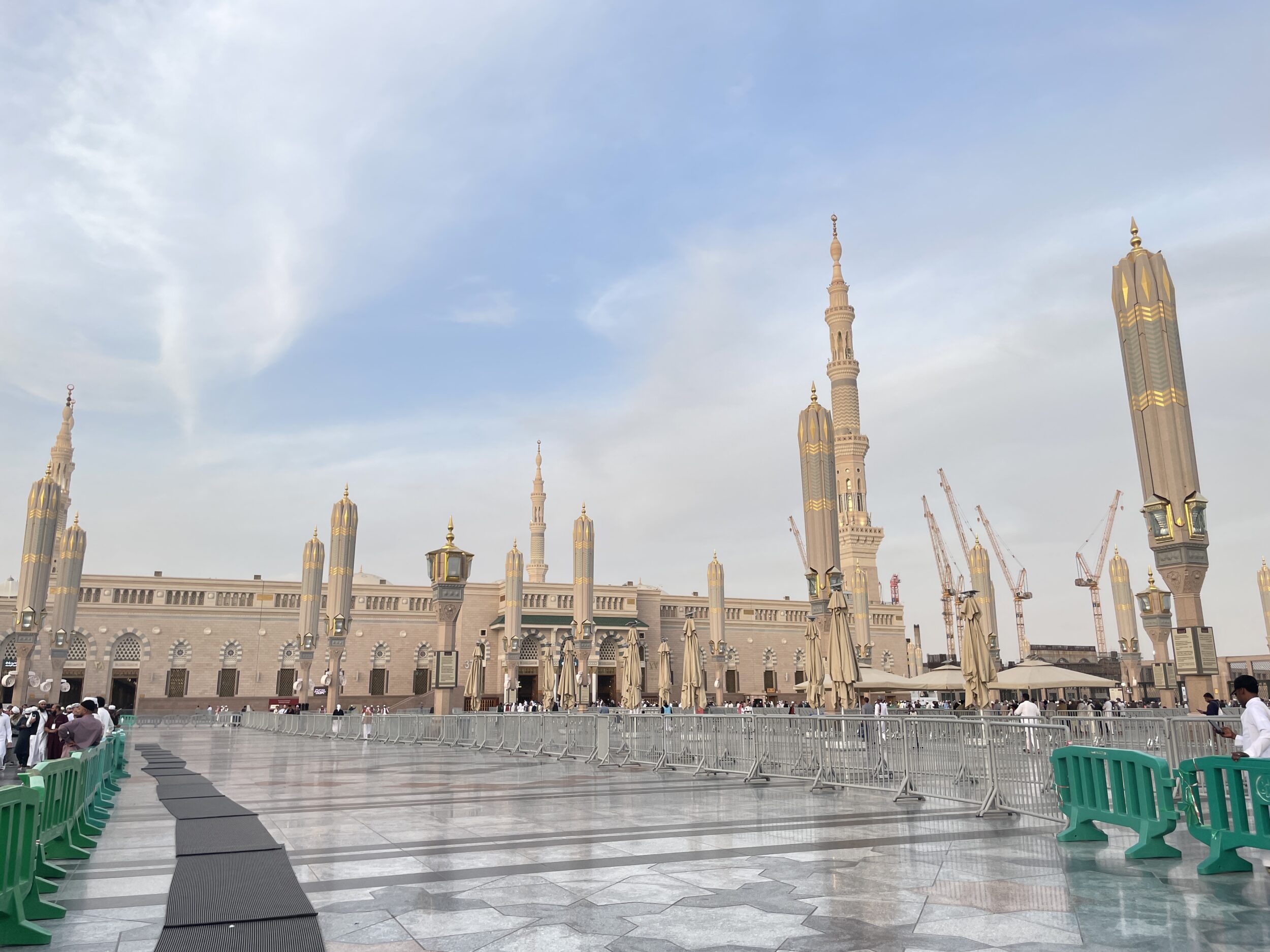
They will close automatically as soon as the sun goes down.
Here is the green dome. Below it is the sacred chamber containing the tomb of the prophet and the first two caliphs. You can’t access it because it’s completely closed; there’s no door, no window. There’s an entrance on the right, you need a badge to be allowed in; it gives access to the Noble Rawdah, which refers to the area between the prophet’s tomb and his minbar inside Masjid Nabawi. This area is very small after the videos, and there are columns bearing names, including Aisha’s column. This column is located at a place that, according to Aisha, is so incredible that if people knew, they’d have to draw lots to pray there.
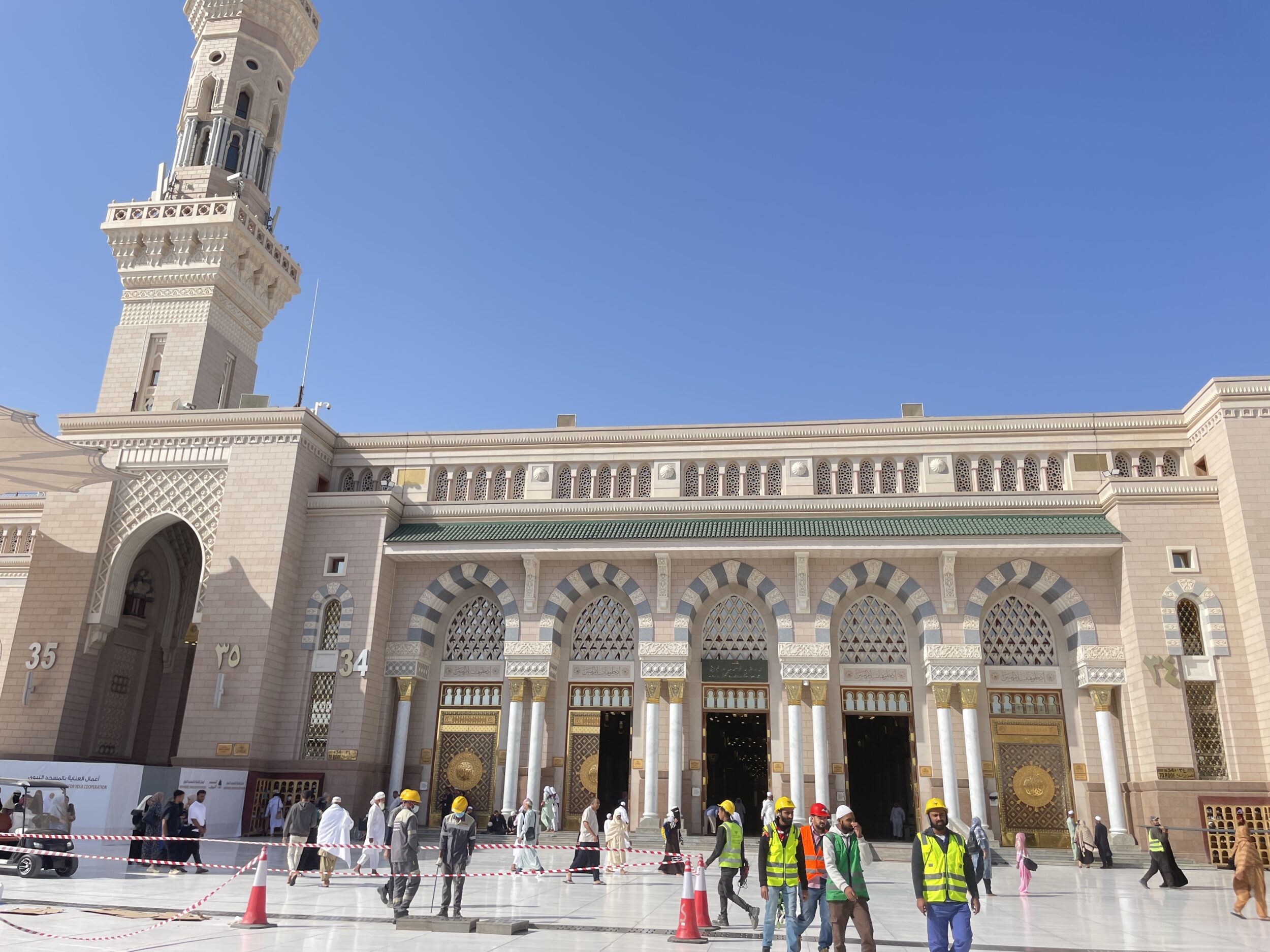
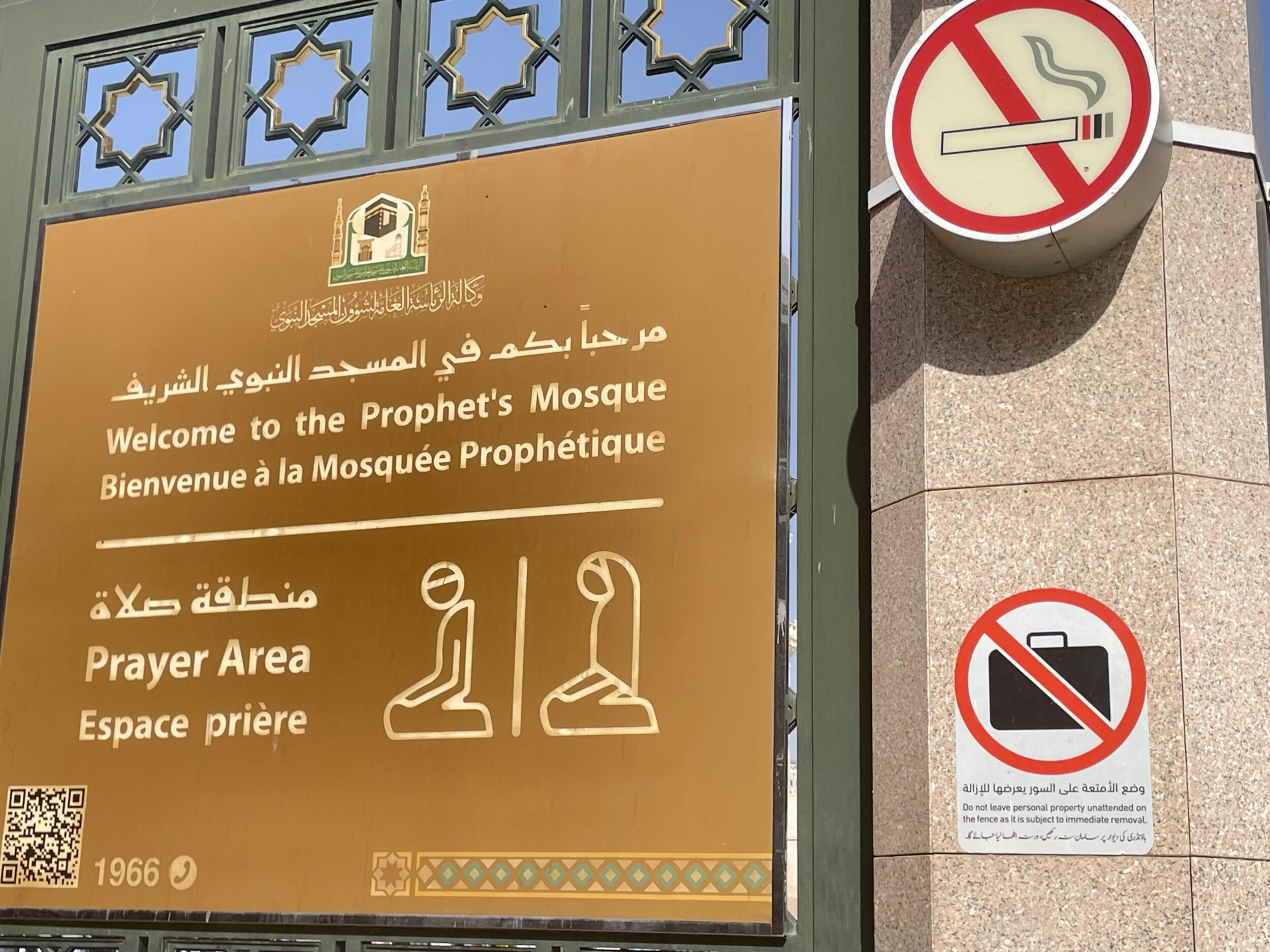
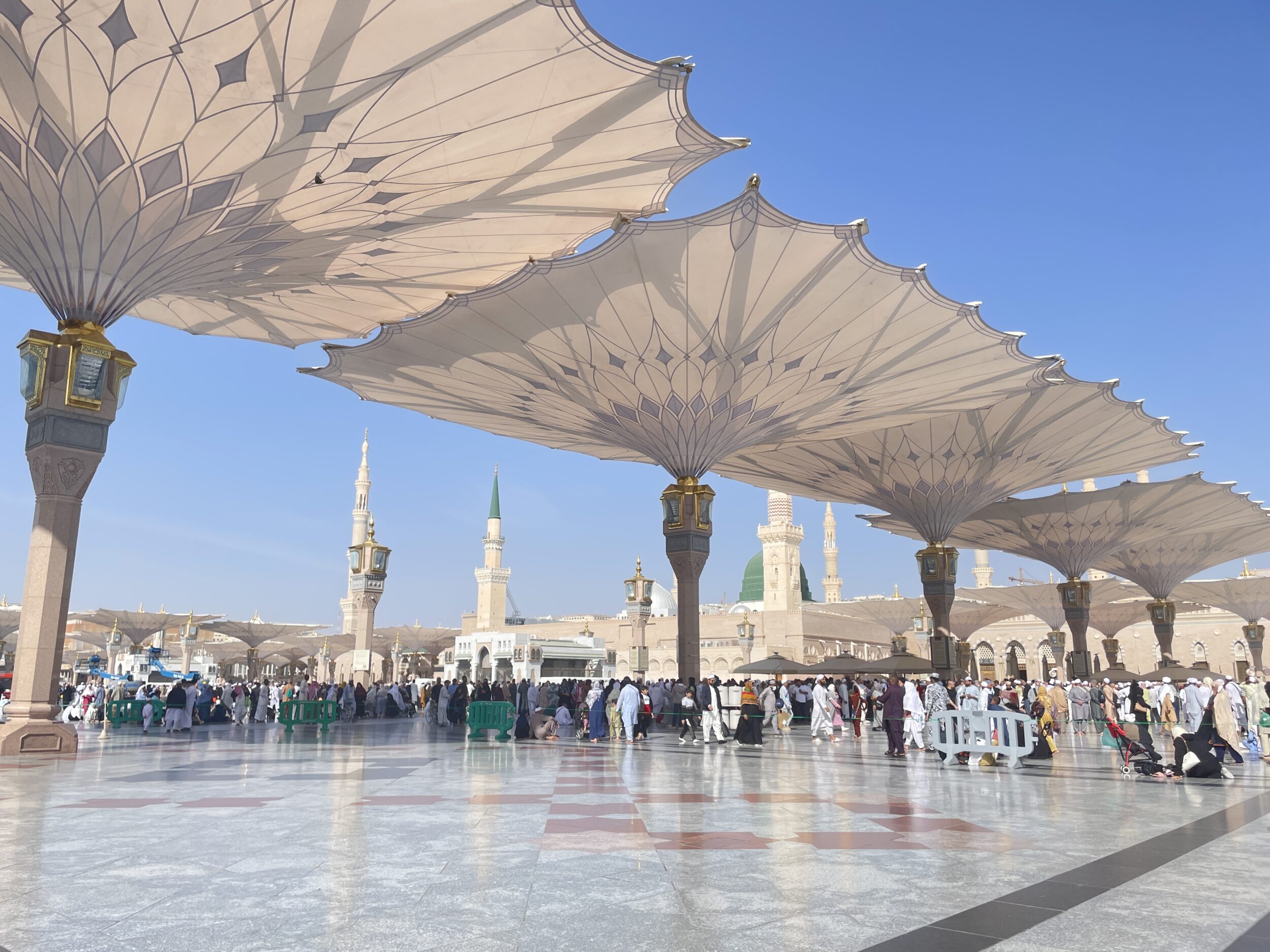
We check the prayer time on Google and wait patiently outside the mosque for the call to prayer and then the prayer itself. Even though there are plenty of places inside, there are so many people at sunset that many prefer to stay on the esplanade and pray in the designated areas. Men and women are separated, of course. Latecomers quicken their pace but don’t seem too worried about missing half the prayer.
It is said thata prayer in this mosque is worth 1000 prayers elsewhere. So imagine Mecca!!! It reminds me of a mountain in Tibet where there is a similar promise: walking around the mountain = one less reincarnation. But it is located at an altitude of over 5000m, so some people feel like they are dying while walking. It’s a very good marketing argument to motivate pilgrims from around the world. Some even walk around the mountain 3 times (the holy grail for Buddhists is to escape reincarnation, so if they can reduce their path to enlightenment by one or two lives, it’s totally worth it).
It’s a very moving moment because you can see a large crowd prostrating, standing up, praying… with a melodious prayer chant broadcast through the loudspeakers. It’s so moving that it brings tears to my eyes. Religious rites and religious places have always moved me all over the world, because the important thing is not the place itself, it’s the people who concentrate their energy, their faith, their hope there. They are the ones who make these places magical and spiritual. And there is always a very benevolent and united atmosphere, that’s what’s beautiful: strangers who are linked by something common, which transcends borders.
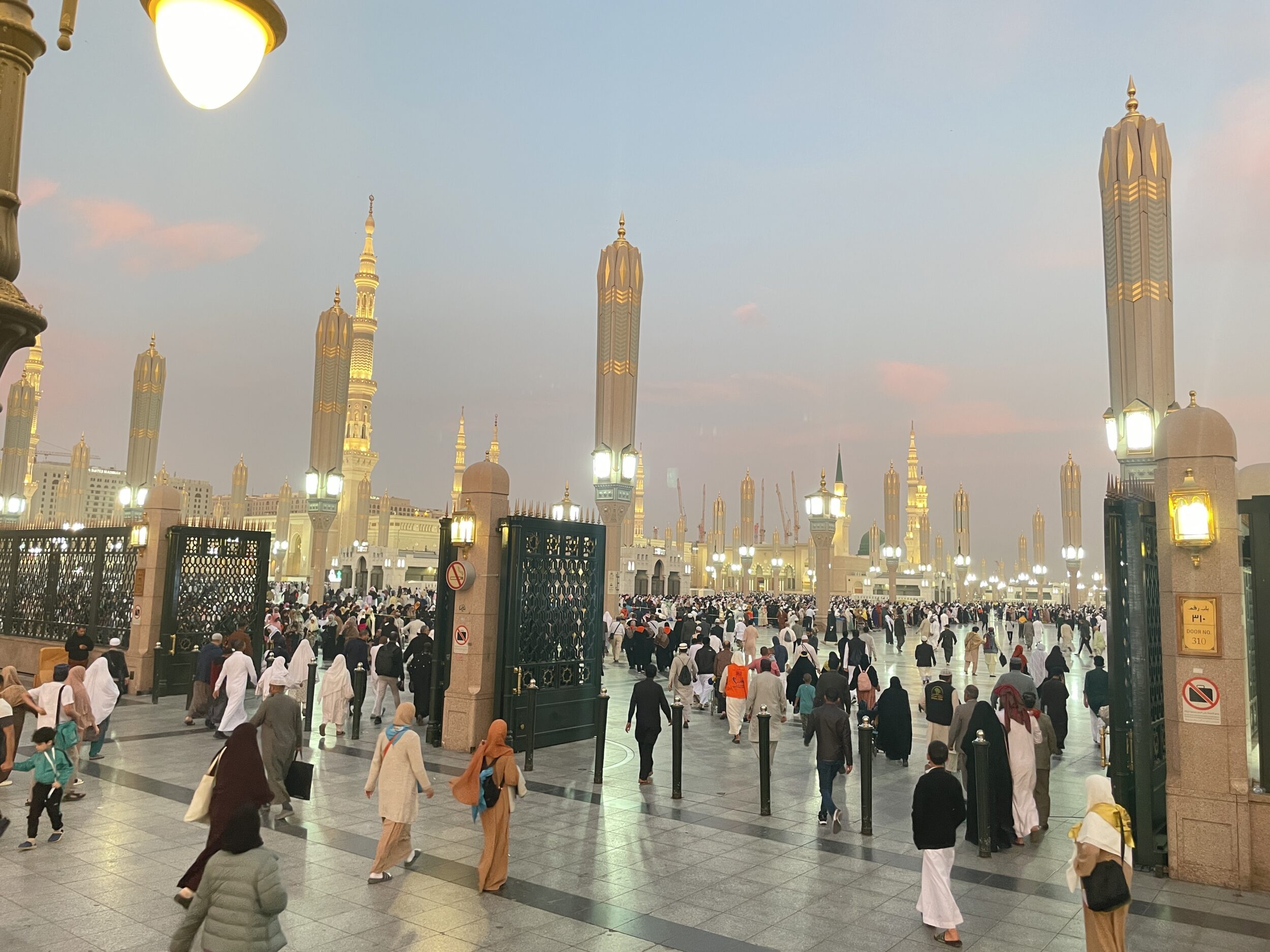
Mecca must be even more wonderful because it’s the only place in the world where people can pray forming a circle!!! Besides, in Mecca there is a Sofitel with a rooftop that has a direct view of the Kaaba. I wanted to go there too but the whole city is forbidden to us, so whether we get close to the Kaaba or not, the question simply doesn’t arise.
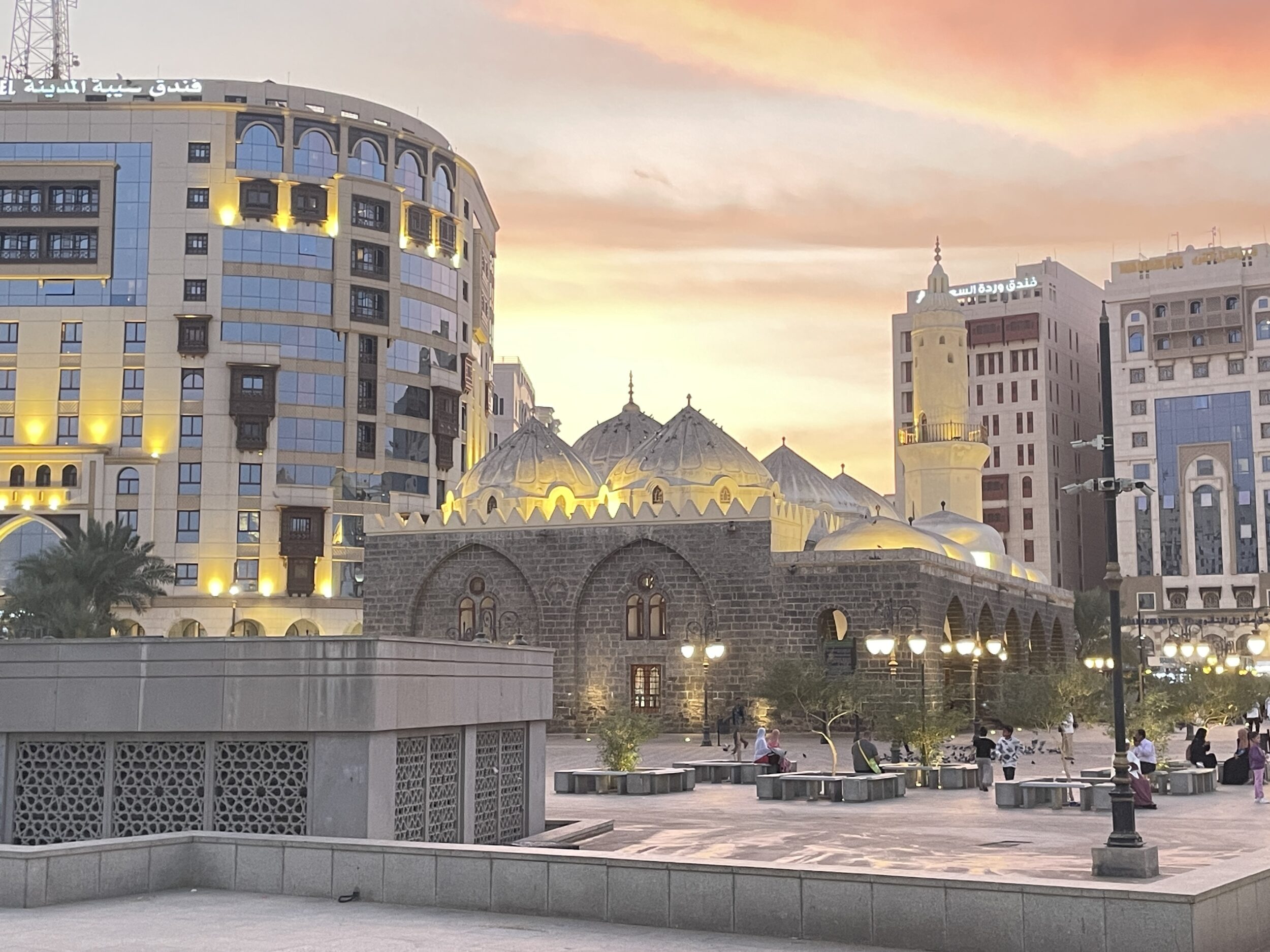
Nearby there is also another mosque, very beautiful, made of stone.
Around the hotel, I finally find abayas for me, a bit expensive (160 SAR though, abaya and veil included, we didn’t dare to negotiate). There is more black than colors in stores, but I also opt for a beige abaya. I notice, however, when wearing it, that any color other than black still reveals the figure. So that’s why black is preferred and hides the body the most.
To be honest, I completely understand the need to cover up in this part of the world. Even men do it because we are in the desert and all we want is to protect ourselves from the sun and cover up as much as possible. However, after veiling myself two days in a row with silk scarves on top, I notice that I have neck pain because I can’t move my neck far enough back (the thickness of the veil prevents me), I have a limited field of vision, and my hair suffers enormously despite using silk. My face is however well highlighted and each feature is like amplified. For very beautiful women, they are even more beautiful because their features are not hidden by hair.
I really like the abaya. Adding an abaya is like a layer of UV-protective clothing on top, which Vietnamese women are used to wearing. Plus, it gives a very nice silhouette, as if you were floating.
Since 2016, Saudi Arabia has undergone major transformations under the leadership of Prince Mohammed Ben Salman through his plan “Vision 2030”. These changes aim to reduce the country’s dependence on hydrocarbons and modernize society, particularly regarding women’s rights. The main advances include:
- Introduction of gender mixing in public spaces
- Granting women the right to study, travel, and work without a male guardian
- Appointment of women to high-responsibility positions (deputy ministers, ambassadors)
- More equitable laws regarding personal status and employment
These reforms respond to the aspirations of a predominantly young population (two-thirds are under 35) and have economic motivations. The goal of 30% women in the workforce for 2030 has already been exceeded, reaching 37% in 2022 against 17.7% in 2016. This evolution is also encouraged by the high cost of living in big cities, which pushes couples to seek a double income. The average income of Saudis is half that of the Emirates, for example.
For women, it is no longer legally obligatory to wear the abaya since 2019. The obligation is now to have a “decent and respectful outfit” that covers the body (law passed in 2019). The full veil (niqab) is no longer obligatory. The hijab (veil covering the hair) is no longer imposed on foreign women, but social pressure is such that, in places like Medina, I feel more comfortable wearing one. For men, the traditional outfit (white thobe and keffiyeh) is not obligatory. Clothes must be modest and cover the knees and shoulders. Short shorts and tank tops are not accepted in public places
These rules remain stricter in some conservative regions of the country and more flexible in urban areas like Riyadh or special economic zones like NEOM. Note that despite the relaxation of rules, many Saudi women continue to wear the abaya and hijab by personal choice or social pressure.
Day 9
The next day, we return to the mosque again. And between 8am and 12pm in general there is no prayer, so from the esplanade, we can see the inside of the mosque without entering. There are a lot of people, some are on their phones, others sleeping. The interior looks less luxurious than the mosque in Casablanca, and the columns look a bit like what we saw in Grenade in Spain. But this mosque has the peculiarity of having 10 minarets, not very tall, but 10!!! The most we’ve seen so far is 6 in Istanbul. We try to peek at the cemetery, but it’s closed and even if it were open, access was reserved for men only.
We’re really tired after all the traveling these past few days, so let’s enjoy our beautiful suite and rest instead of visiting other places in Medina, but I’m sure there are plenty of other spots to discover, it’s just that we don’t have the energy to go.
Dar Al Madinah Museum
This museum (25 SAR/person) not far from the airport tells the evolution of Medina, from Mecca, through miniature houses. Unfortunately, the explanations in English are too brief, and since I have very little general knowledge about Islam, even though I understand the sentences, I don’t even understand what they refer to.
Anyway, I understood that the sacred chamber had five walls because they didn’t want it to be rectangular or square and be confused with the Kaaba. And the green dome was imposed by a caliph around 12xx.
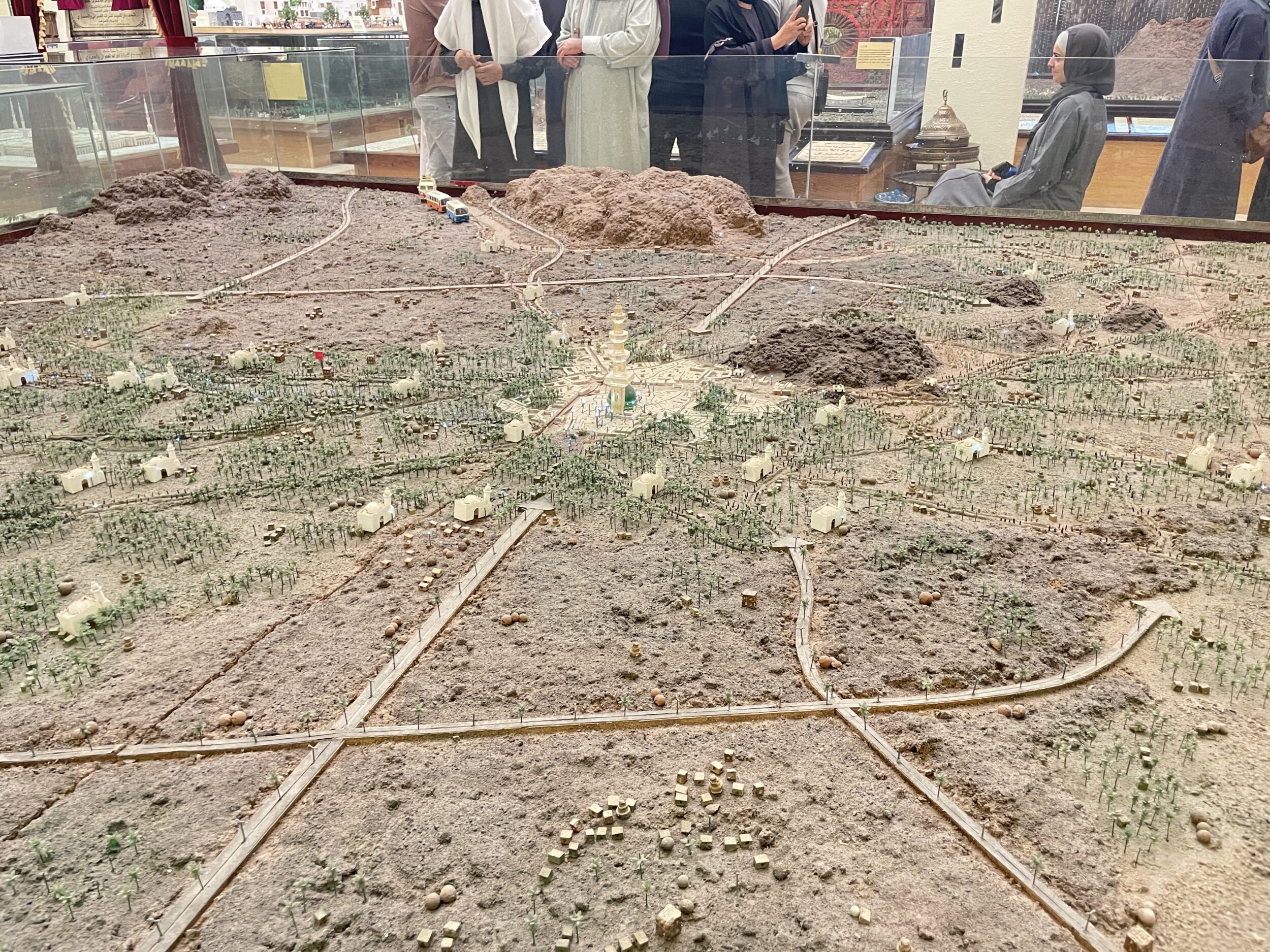
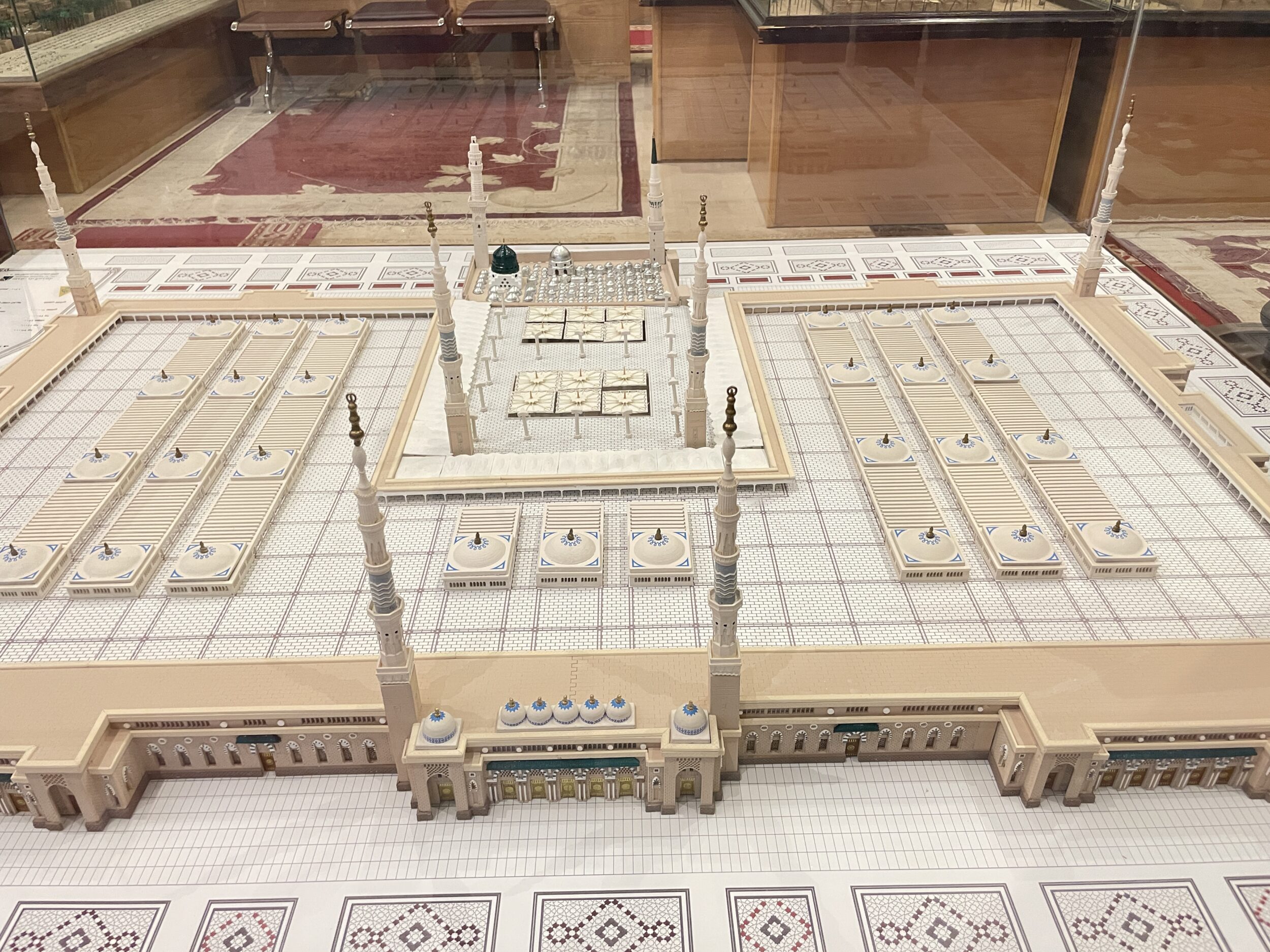
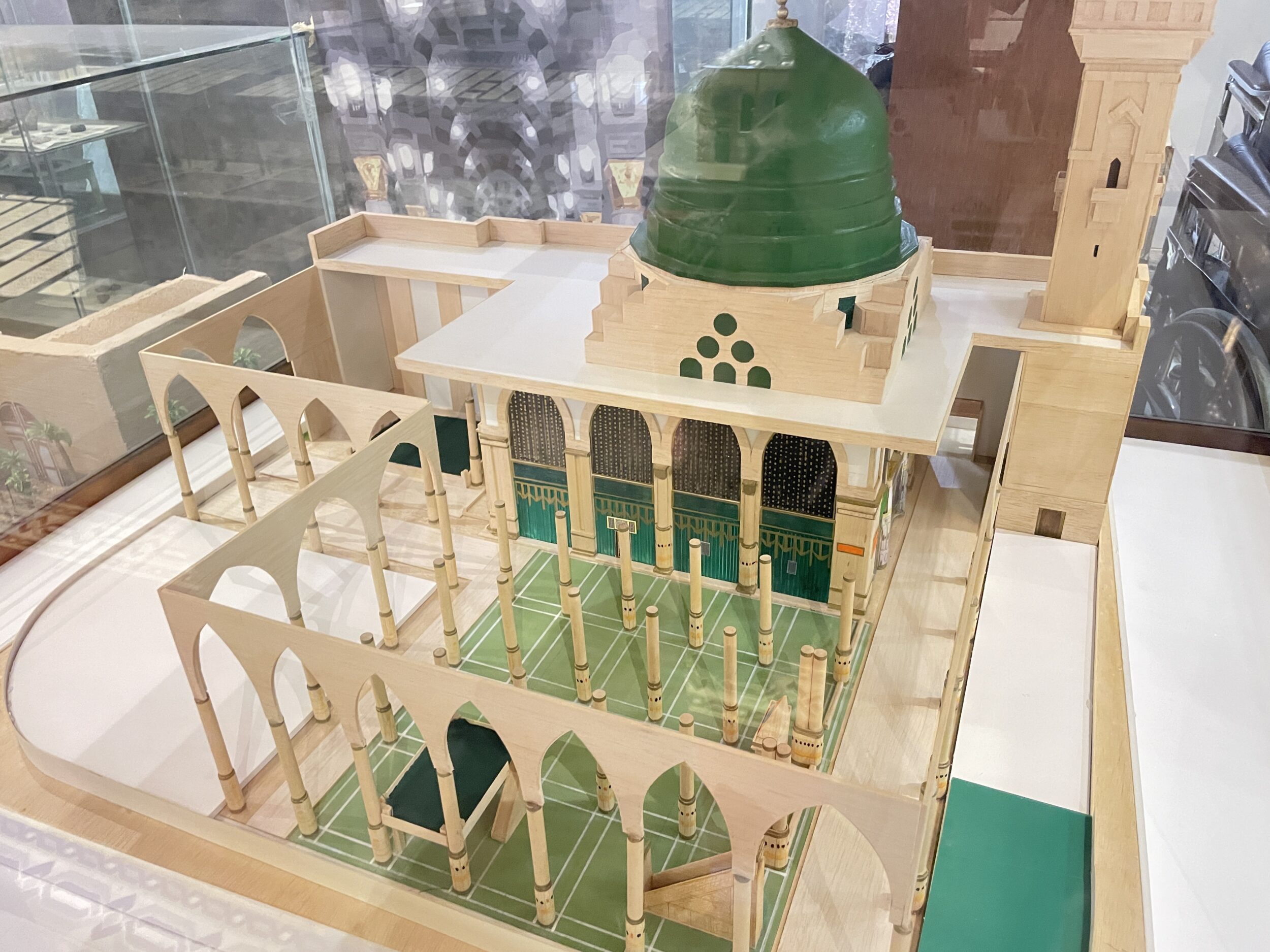
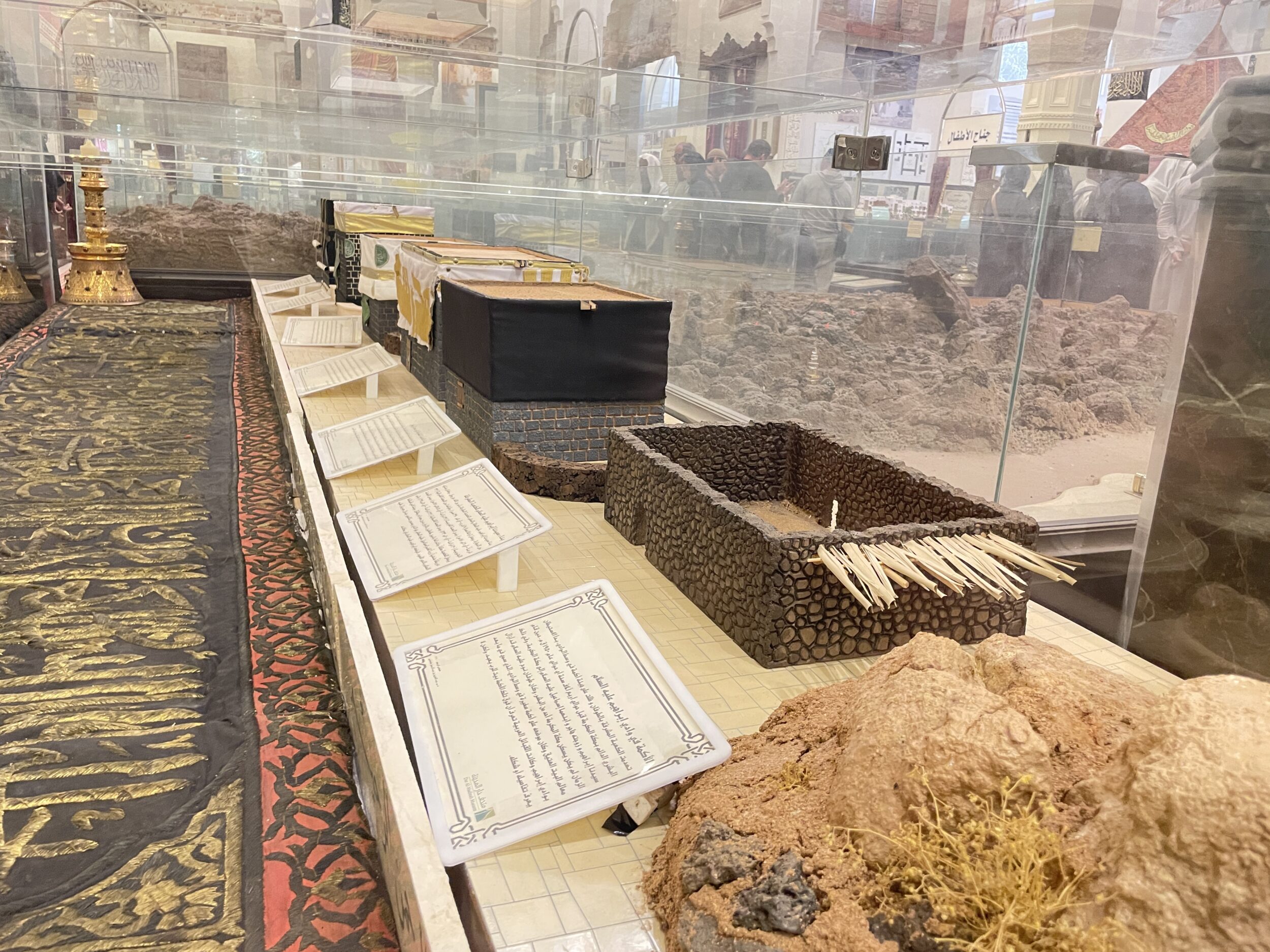
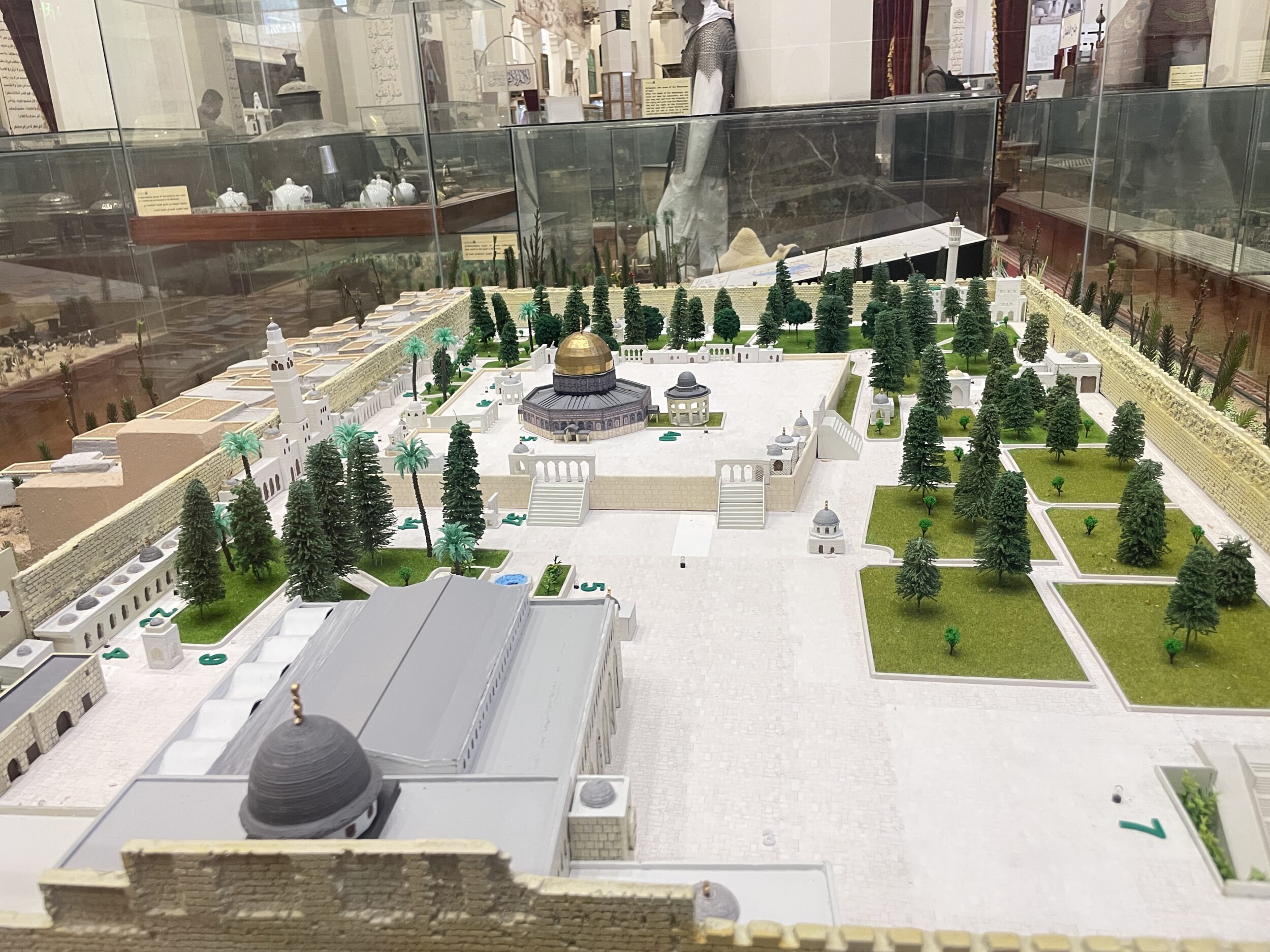
We then return our car at Medina airport (after 978 kilometers driven in four days) to take a flight and go to Amman, Jordan. We try to exchange our last SAR for JOD, but the currency exchange at Medina airport doesn’t have JOD. We’ll exchange them in Jordan later. A sign at the airport prohibits taking zamzam water in carry-on luggage. A few meters later, we see a zamzam water dispenser station.
We really enjoyed our trip to Saudi Arabia. I understand the appeal of expats for this region: absolute safety, 5-star services, a large and cheap workforce, delicious food…
What bothers me enormously is the desert. There’s dust all the time, my clothes always seem dirty, the air is dry, I have to slather on moisturizer and sunscreen all day, and the sun tires me. Arid areas don’t suit me 🙁
Part 2: Practical Tips
- Pullman Zamzam Hotel (from 150 euros, Booking link) has a rooftop restaurant with a beautiful view of the Prophet’s Mosque. There are well-located rooms with the same view. The hotel has its own private parking.
- The shops around the mosque are full of souvenirs and clothes. Remember to haggle (not like us!)

