
Al Ula & Hegra (Saudi Arabia): Travel Journal
We continue our December 2024 road trip in Saudi Arabia, which we are discovering for the first time. We learned that the country was open to non-Muslims during the 2020 World Expo in Dubai, and the magnificent Saudi Arabia booth gave us a strong desire to go there.
Part 1: Travel Journal
Part 2: Practical Tips
Part 1: Travel Journal
Day 5 of the road trip (continued)
Cairo – Al Madinah
The airport in Cairo is not the most peaceful in the universe. Everyone has tons of luggage, is very impatient, and very rude. Luckily we get there 3 hours early because it takes us 1 hour of waiting to check in our bags. The bags are scanned three times, and to go through the gate, men go first, then women, but they have no sense of personal space and jostle each other, I don’t feel comfortable. Twice in a row, I’m asked if I went through the wrong gate and asked if I’m okay going to Medina. It’s true that tourists doing Cairo – Medina are not common, and I stand out among these Egyptian women going on pilgrimage. I wear a hat to cover my hair, but it’s obvious that I am not Muslim at all.
At the Medina airport in Saudi Arabia, all these rude Egyptians turn into lambs. They are suddenly super calm, respect personal distances. Some still try to cut in line but get severely scolded by airport staff. I find this airport not super efficient because the wait time is very long, but the staff are very attentive. For example, there were two women who fainted, and they were helped quickly enough to be moved to the front of the line. With our visas obtained in advance, immigration is smooth, we get through in 20 seconds. We get stared at by other pilgrims who seem to not understand what we’re doing there. JB is one of the very few white people, and our clothes immediately give us away. They all have a pouch with their agency’s name, many are dressed in white, all women are veiled. Saudi women wear black and only show their eyes.
Despite my modest clothes and big hat, I feel scrutinized by the other pilgrims, and it bothers me a lot. Maybe it’s just an impression, but in Medina, I don’t feel judged by Saudis, but by the other pilgrims; we’ll talk about that later. I watch how the women put on their veils, and the next day, I manage to cover my head somewhat like them, even if it’s obvious my veil is not well put.
We wait a long time in front of Budget to get our car. It’s super clean, powerful, automatic, and almost new. JB booked a night at a nearby hotel (booking link). Since he wasn’t too keen on driving right upon arrival, especially since night had fallen, in a new country, he looked for a hotel close to the airport. It’s a bit remote and has no restaurants nearby, but a very nice hotel employee ordered food for us upon request, and the delivery guy came right to our room to feed us (rice + roast chicken, so good). We were even able to pay by card. The only downside of this hotel is the noise (we’re next to a main avenue) and the shower (hot but low pressure). But the room is huge and comfortable, which will be the case for all our hotels.
Day 6
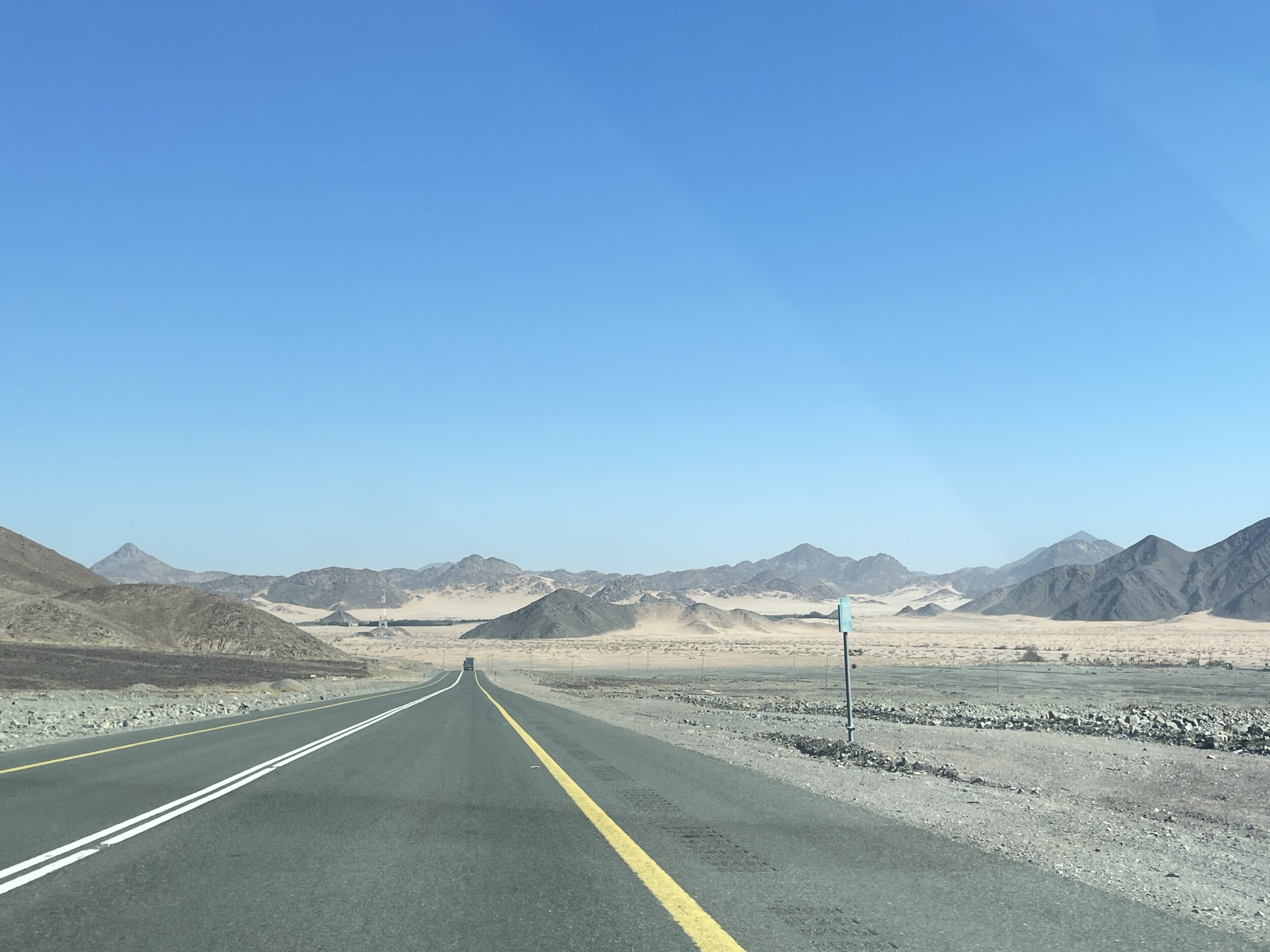
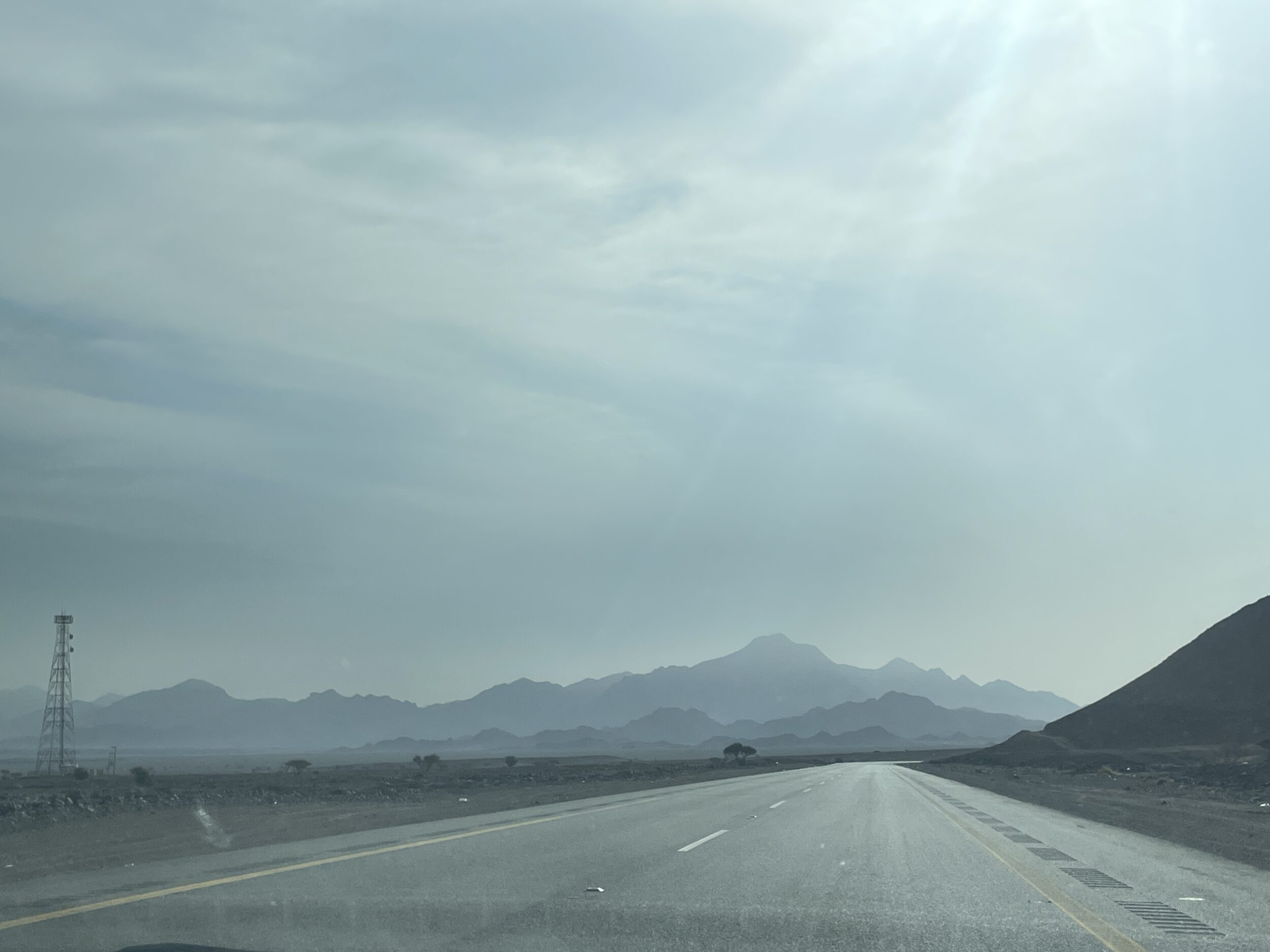
The next day, we head to Al Ula – Hegra. The drive is very long (3h40) and monotonous, but the roads are like in the USA; in fact, the landscapes resemble the American West a lot. Seeing the desert mountains, we worry a bit because we forgot to fill up before leaving. Fortunately, there are always small oases with gas stations along the way. These stations have prayer rooms and restrooms too. Here, a liter of water costs more than a liter of gasoline. We pay €0.50 for a liter of gas vs. €0.75 for a 1-liter bottle of water.
Saudis drive very dangerously and don’t hesitate to overtake anywhere, without any visibility. When you see a car coming at full speed, do like the other slow cars: pull over to the right side to let the car pass. What’s funny is that there are so few tourists that they haven’t yet thought of translating signs into English. So, as soon as we leave Medina, all directions and even speed limits are in Arabic. But our car is smart enough to beep when we exceed the speed limit.
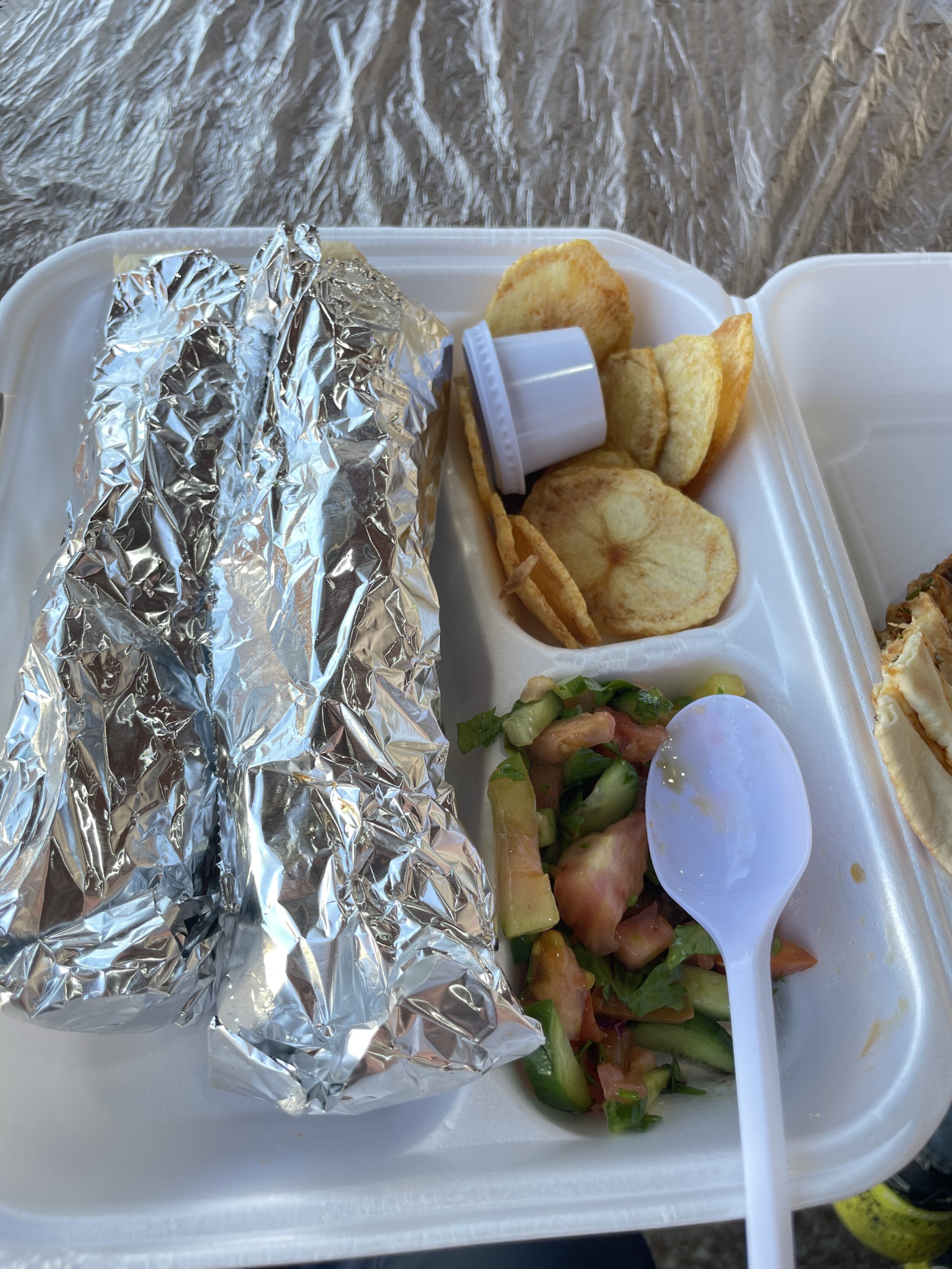
Quick stop to eat. We find quite a few small shops selling kebabs, grilled meats, etc. It’s not always very good because the meat is super dry, but it’s cheap (10 SAR – 20 SAR).
Hegra
Hegra, also known as Madâin Sâlih or Al-Hijr, is a remarkable archaeological site in northwestern Saudi Arabia. This ancient Nabataean city, inscribed as a UNESCO World Heritage Site in 2008, was the second most important city of the Nabataean kingdom after Petra. The site is famous for its 111 monumental rock-cut tombs, many with elaborate facades adorned with complex architectural motifs. Established in the first century BC, Hegra was an important trading center on the Incense Route, connecting the Arabian Peninsula to the Mediterranean. The remains testify to the Nabataeans’ exceptional architectural talent and their ability to create impressive structures in the desert, with a sophisticated system of cisterns and wells for water management.
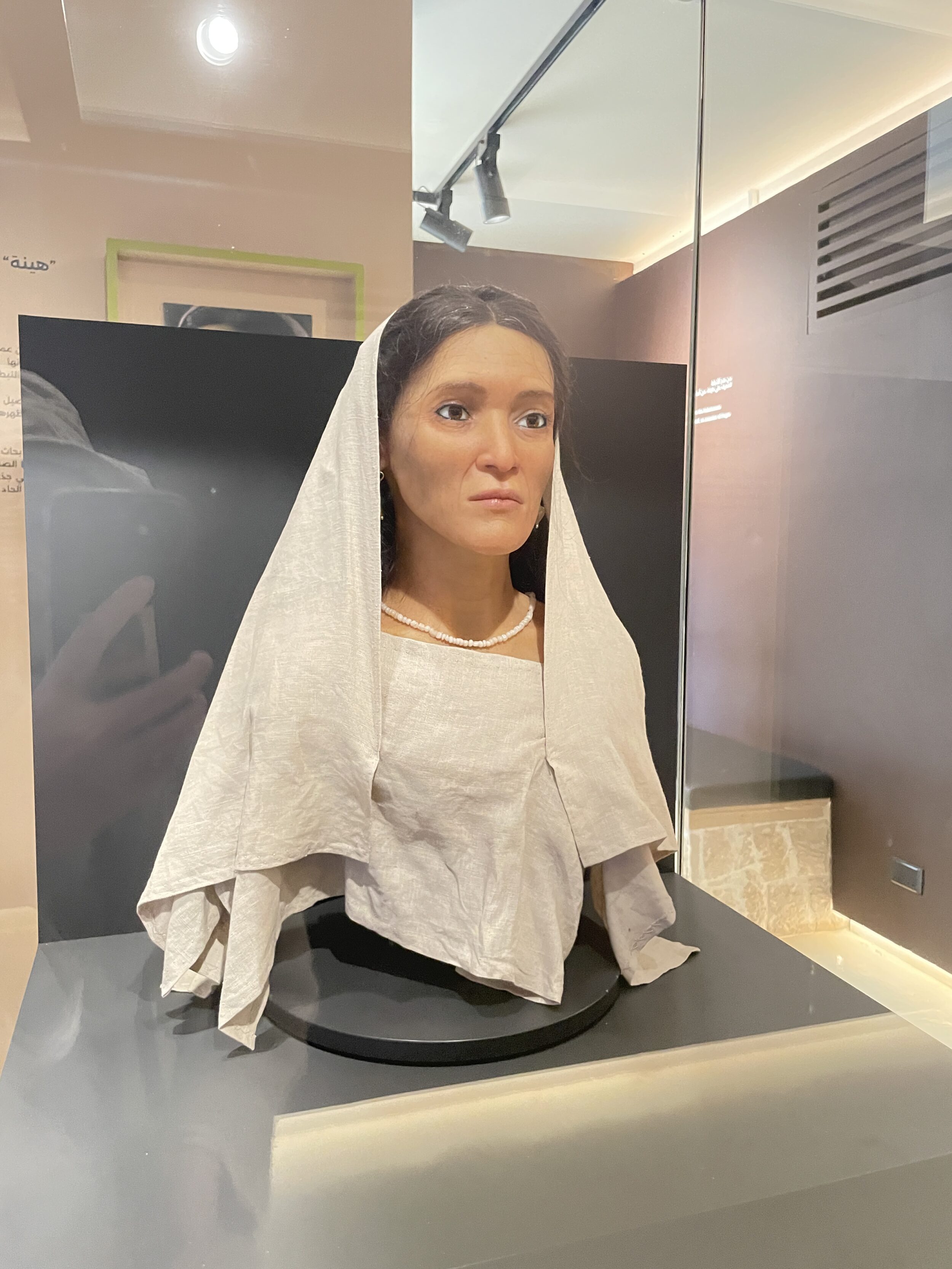
We have a reservation for a tour of Hegra (Hegra Day Tour) through the tourist office at 2:30 PM. It says you should come a bit earlier, but in reality, the tour doesn’t start until 3 PM. Actually, 2:30 PM is the departure time for the bus that leaves from downtown Al Ula. For those who can come directly to Hegra Visitor Center like us, it’s possible to arrive as late as 2:45 PM. We arrive very early, already at 2 PM. There’s a small exhibition nearby where they give some information about a recently discovered tomb with 80 bodies, and they picked one body at random to reconstruct the face, and the result is incredible (she has green eyes, but it’s hard to see).
There are 2 types of tours: the Hegra Day tour in a group like ours, or private jeep tours. It depends on how deep your pockets are.
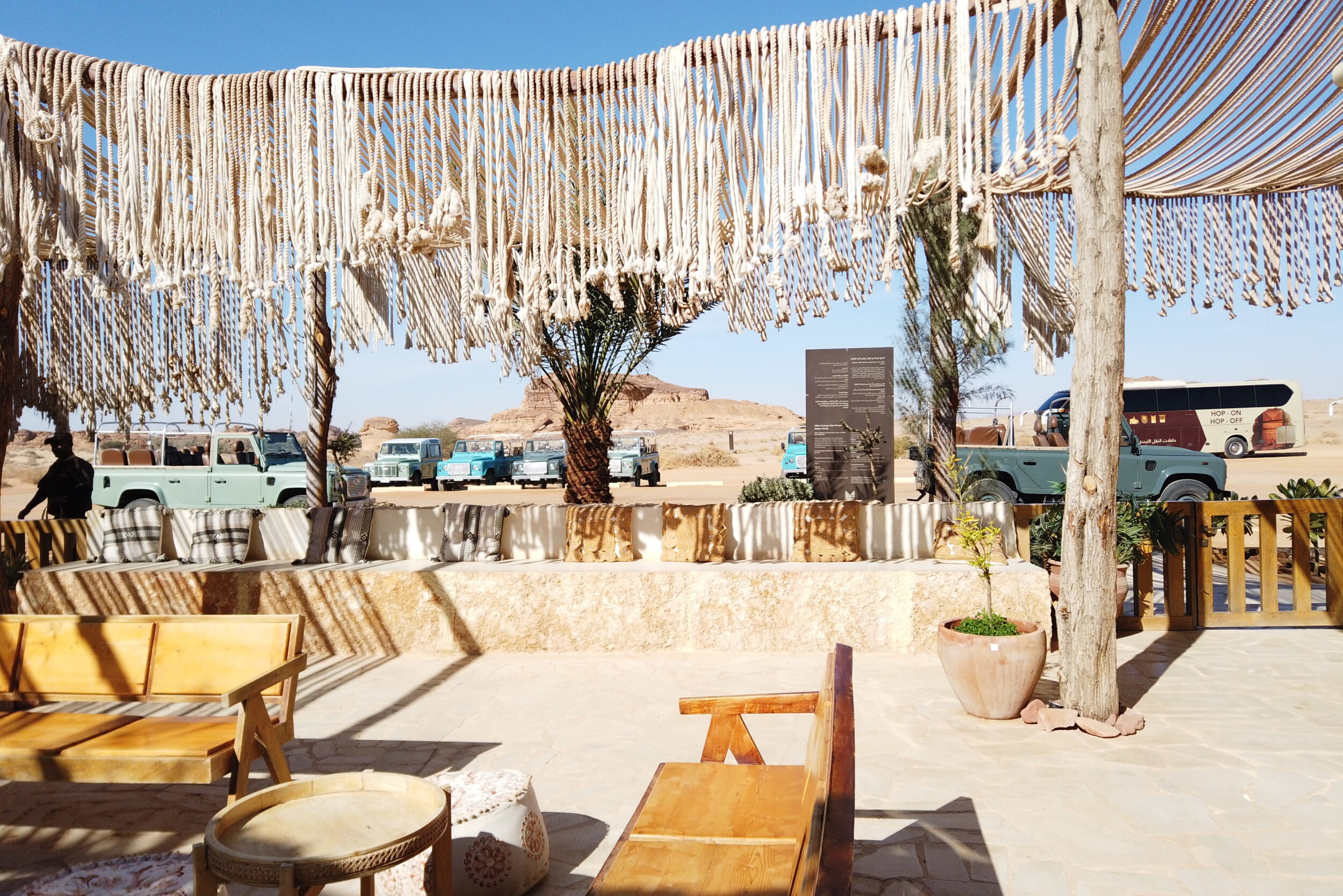
At one point, we see beautiful black GMC cars (the brand of big American cars from General Motors) perfectly clean, lined up one behind the other, and we think it’s a convoy of Saudi officials. Actually, it’s just a luxury agency picking up their clients. Instead of cramming them into a bus, they prefer to send a GMC for 2-3 clients. These clients look very chic, well-dressed. They remind me of the types of clients who do round-the-world tours by charter that we came across on Easter Island. I wouldn’t be surprised if they’re the same types of tours since there’s also an airport here.
We surprisingly and happily find the ice cream brand La Romana here. According to JB, they’re the best ice creams in the world.
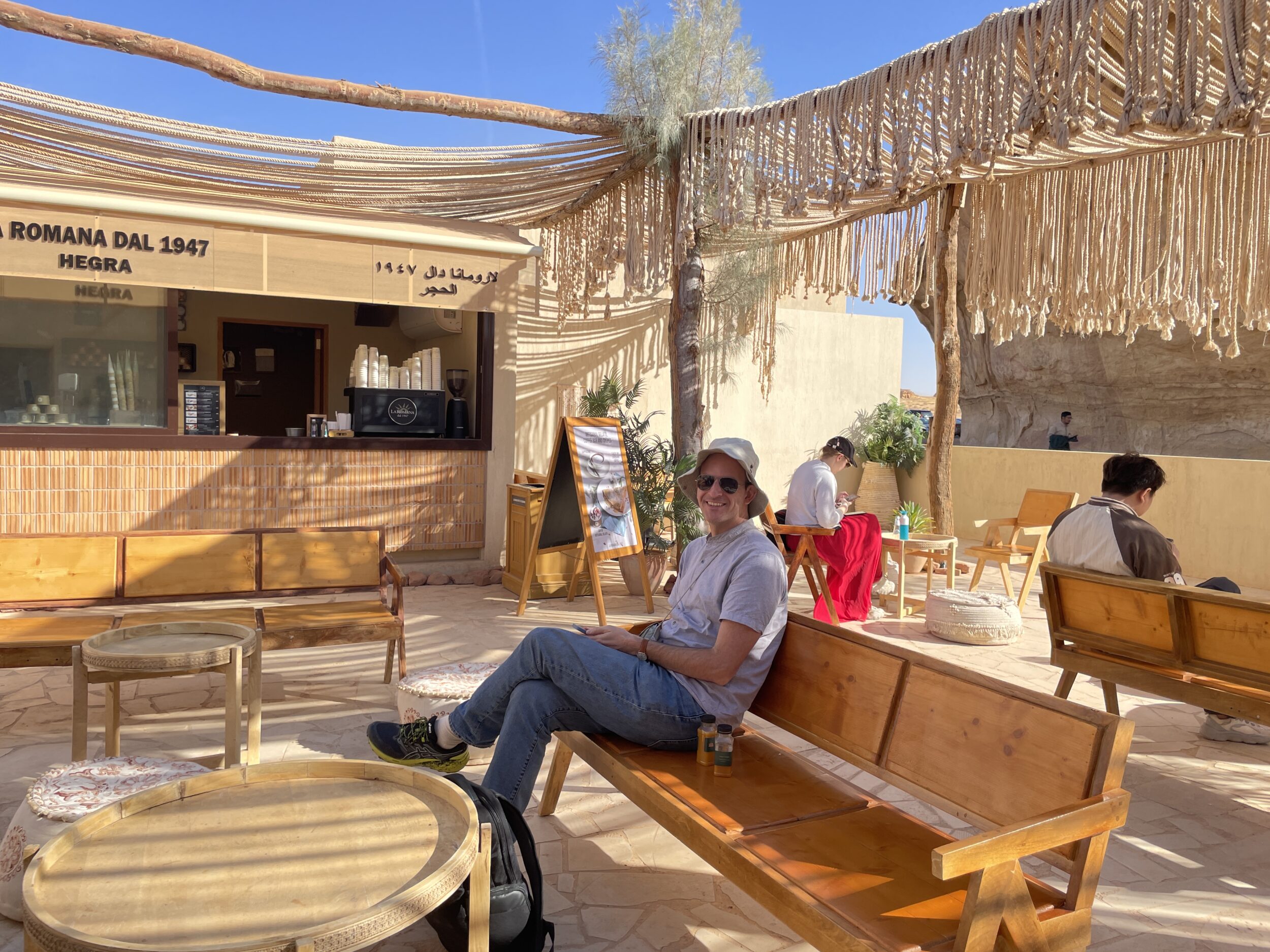
Alright, it’s finally our turn. Here we are with non-Muslim tourists, no female tourist is veiled, I feel a bit more relaxed and can finally take off my veil. That said, we’re in the middle of the desert, so it’s always good to protect yourself from the sun with a hat, sunscreen, and sunglasses. We all get on a bus with a guide and we make 4 stops. At each stop, the guide explains in English concisely what to see, but we can ask him questions.
The first stop is Jabal Ithlib, with a large dining hall with subtle decorations on the walls.
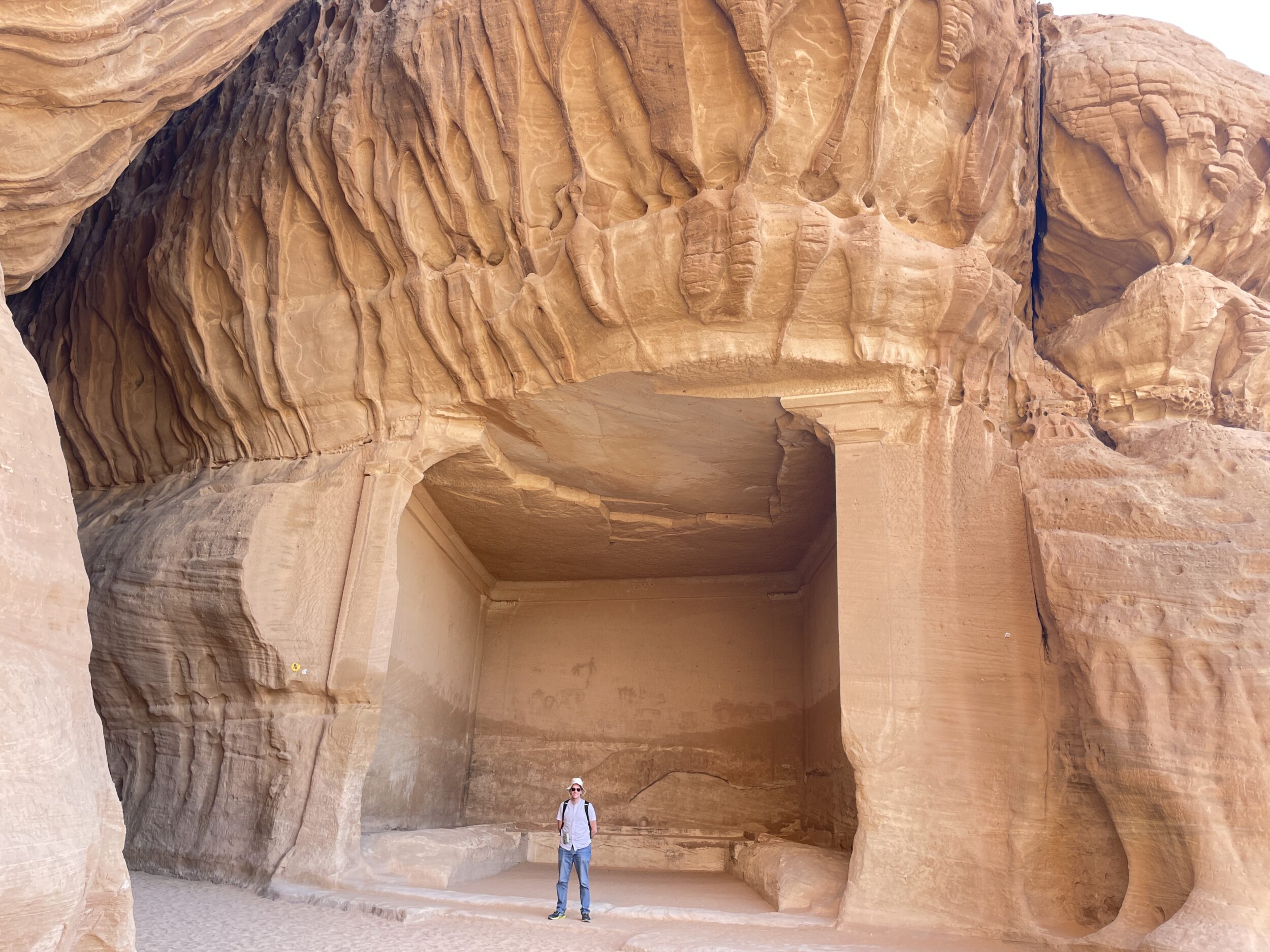
Along the canyon walls, statues of Nabataean gods are carved into the rock. As we advance into the canyon, we discover Arabic inscriptions (ancient script, without the dots) and some drawings engraved in the rocks. At Hegra, the rock formations are mainly made of sandstone, a sedimentary rock that was particularly suited for carving monumental tombs. This sandstone shows different colorations, ranging from beige to reddish-orange, creating spectacular hues, especially at sunrise and sunset. By choosing the last tour of the day, we don’t get the sunset, sure, but at the end of the tour, a soft glow that highlights the tombs. All these landscapes remind us of both the American West and Goreme in Turkey.
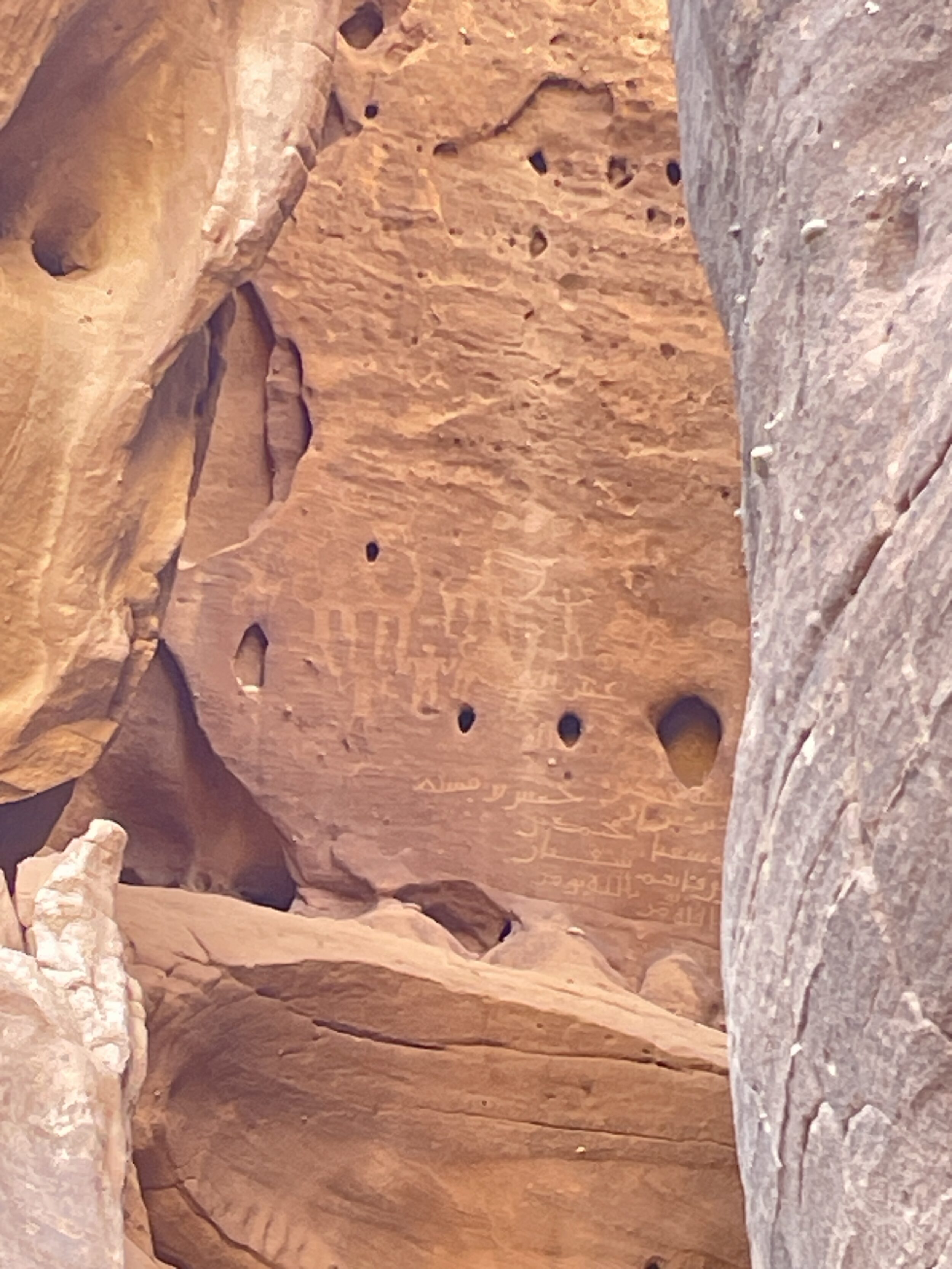
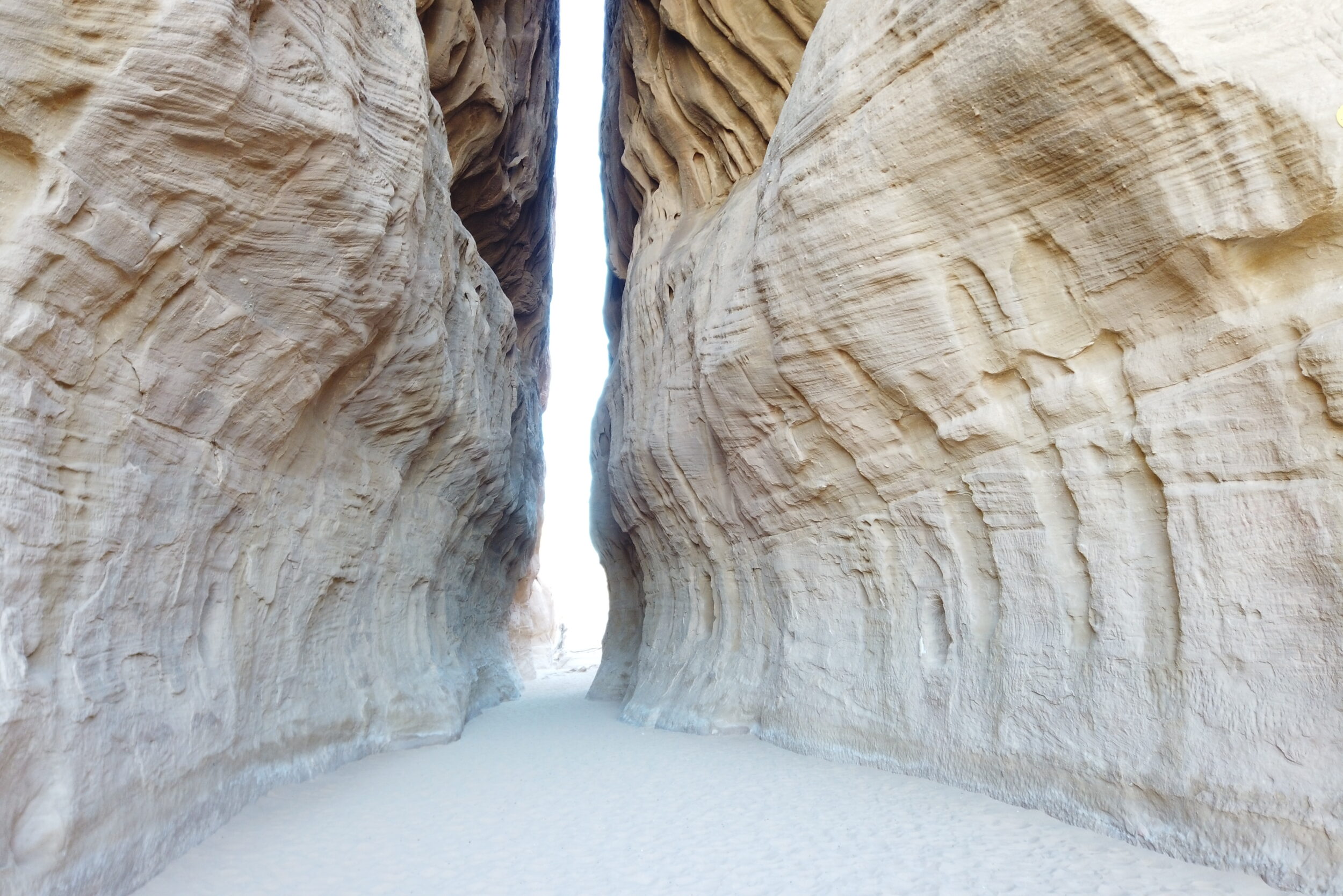
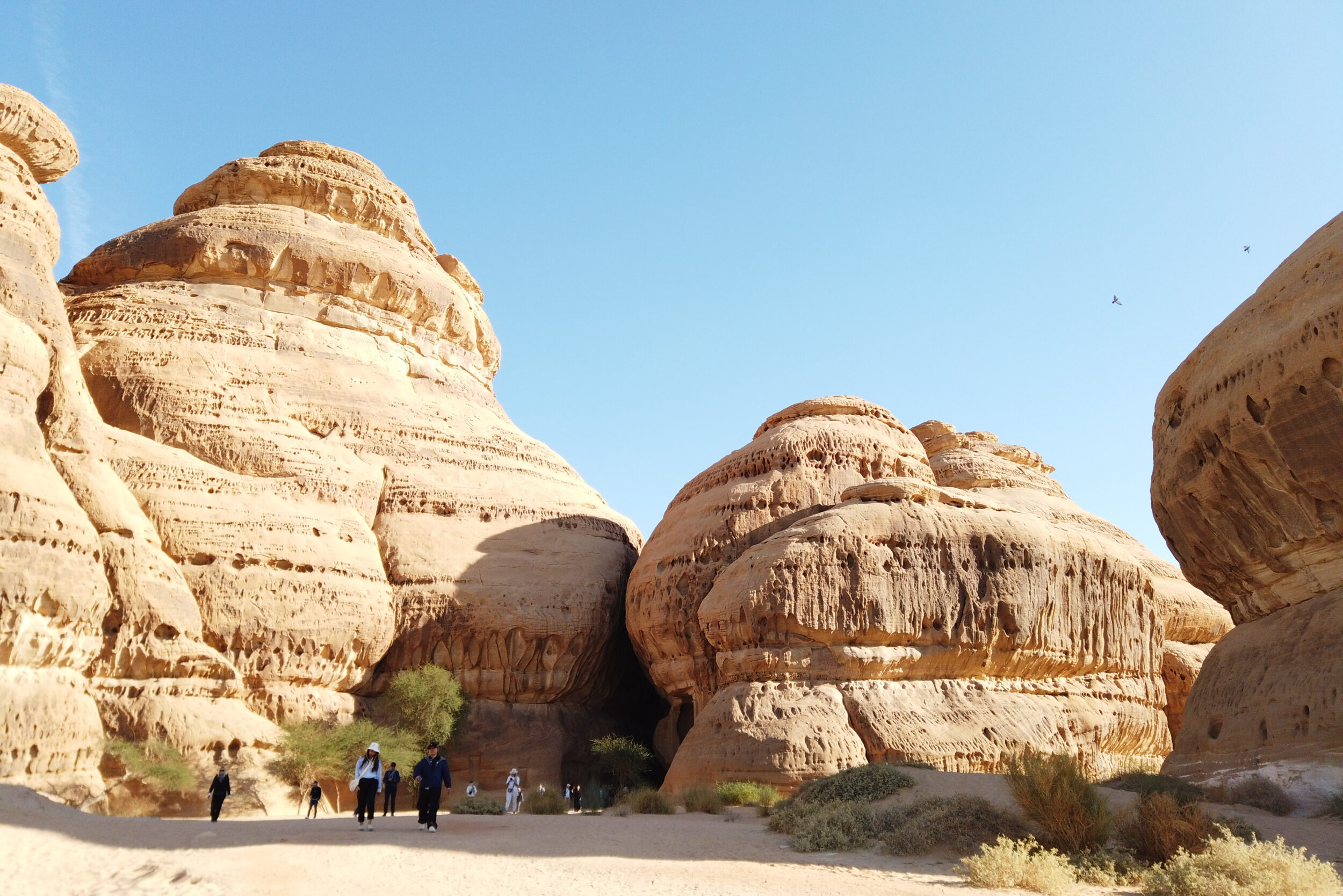
The second stop drops us off in front of the first decorated tomb we’ll see of the day. The tombs here have doors, but they were made of wood, so they’ve been destroyed. Already, it’s a miracle that the exterior remains intact after 2000 years!!
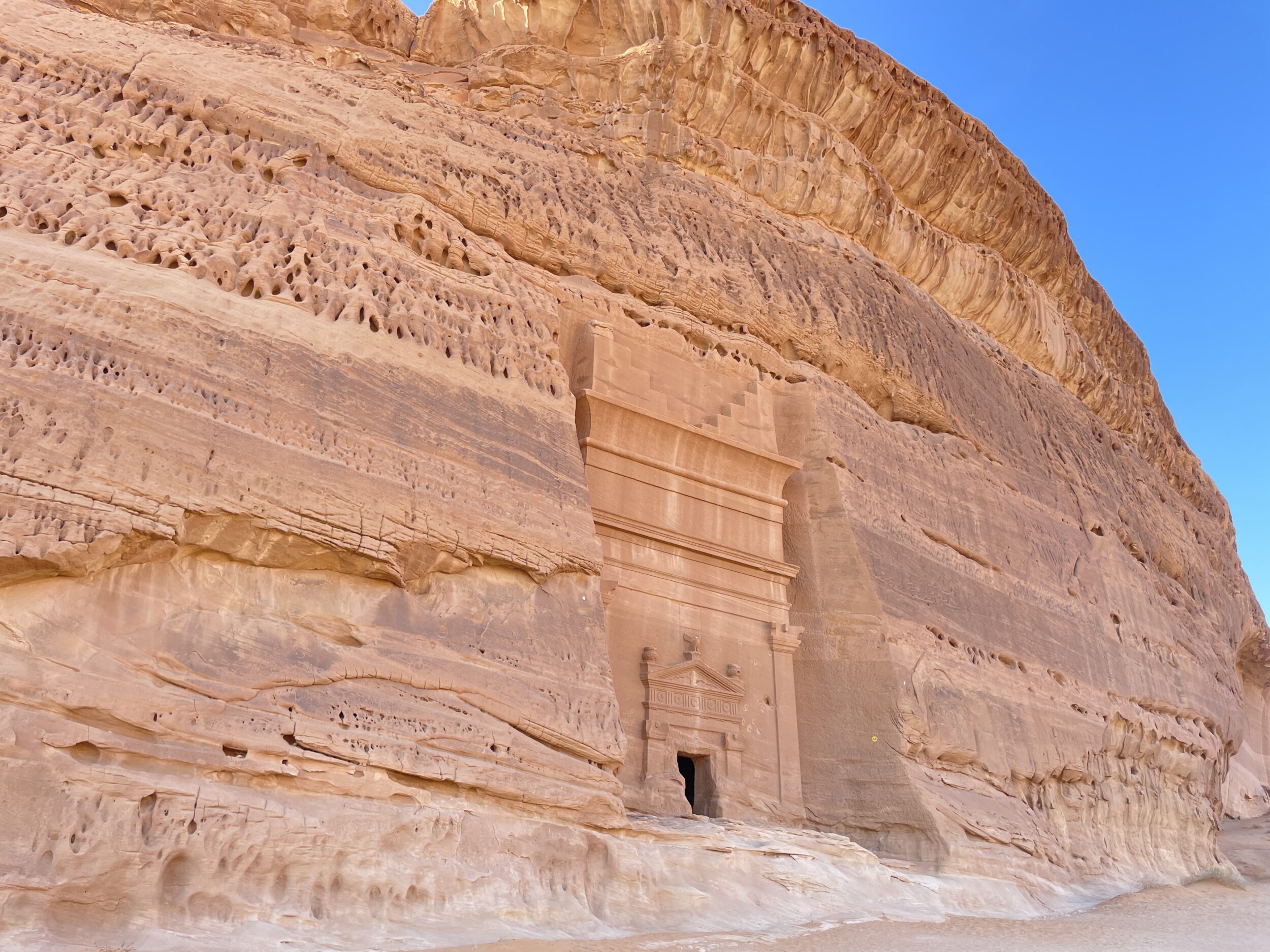
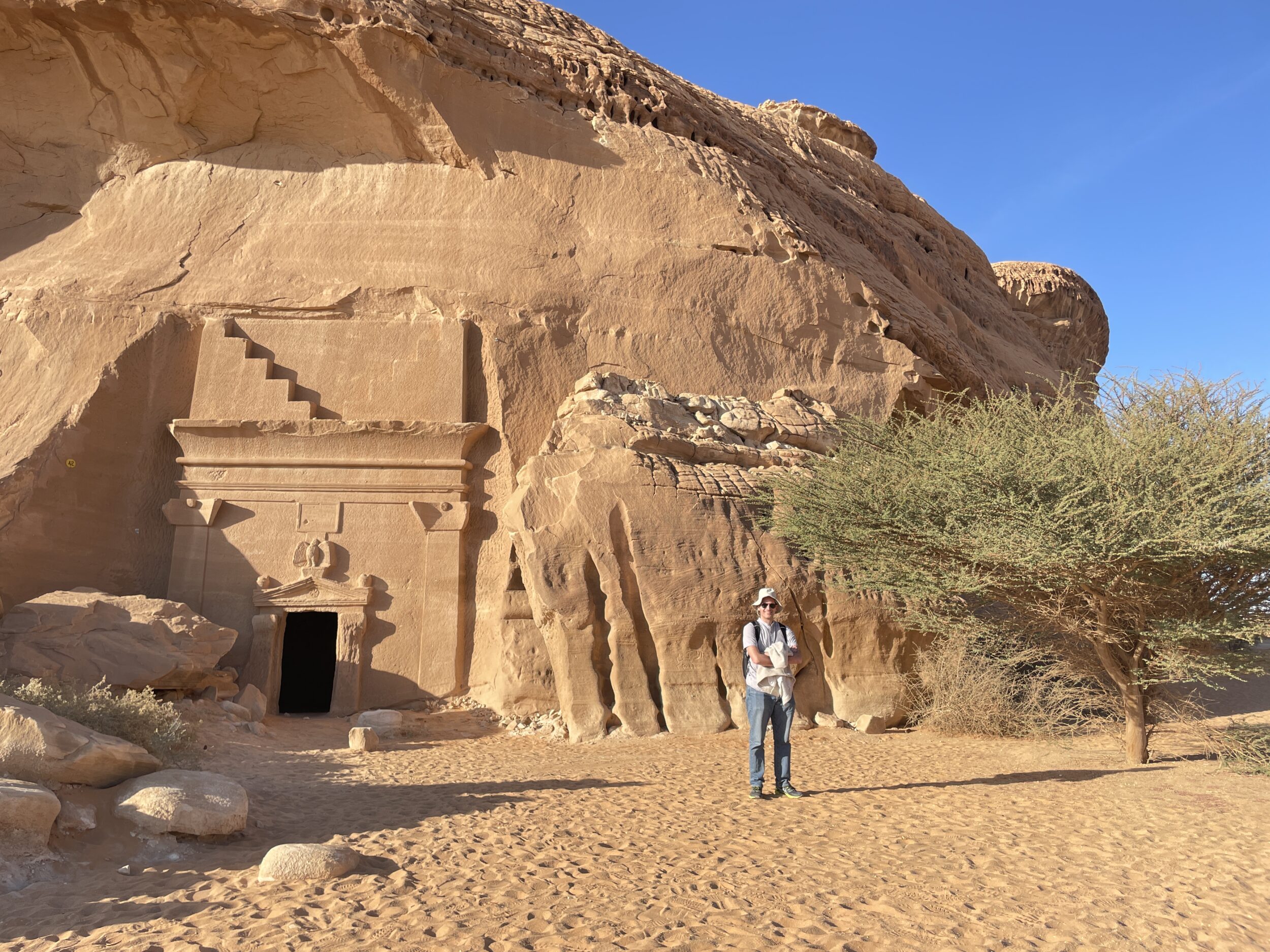
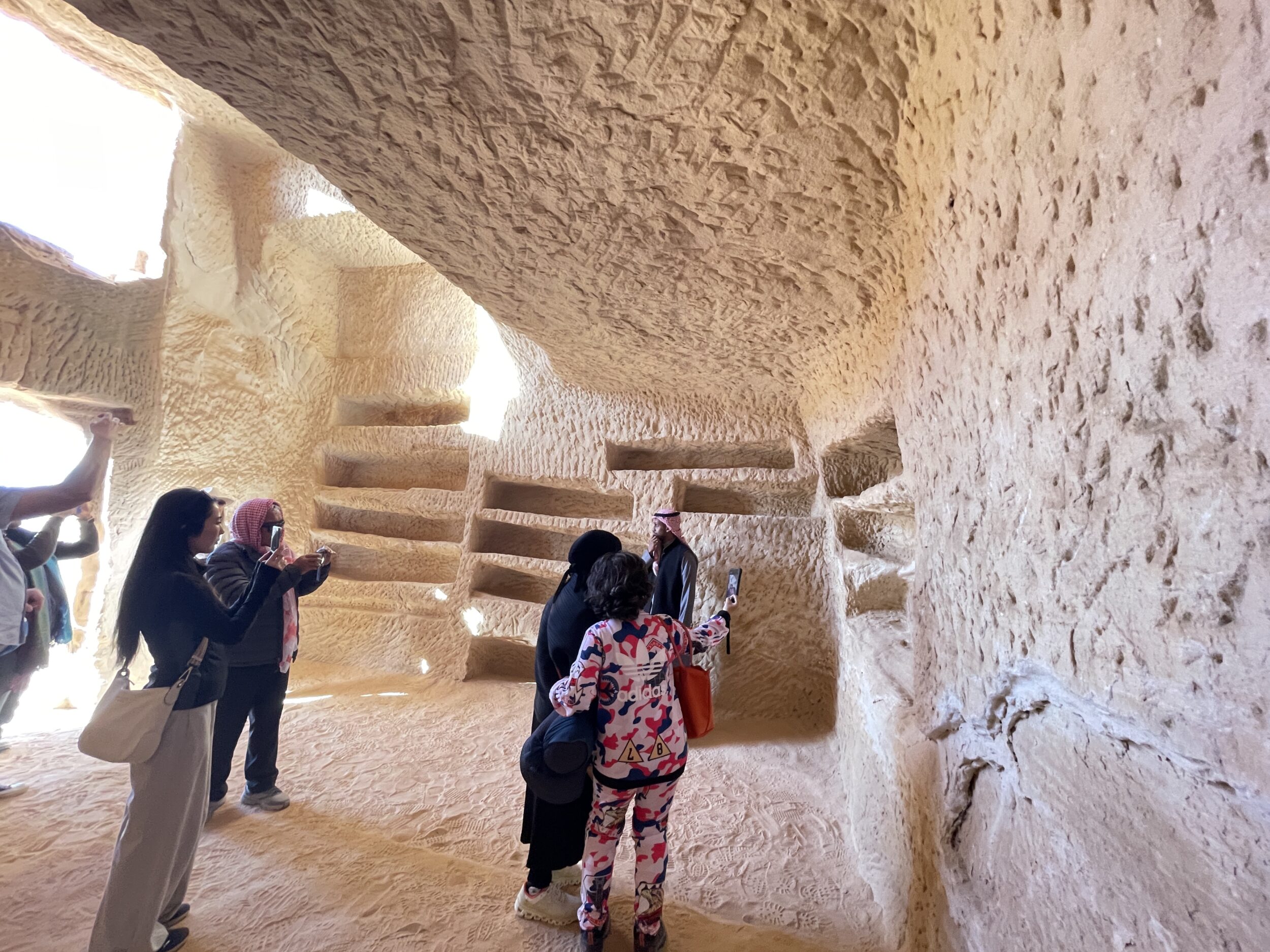
This part is dedicated solely to tombs, because the actual city of Hegra used to be further away. For the same rock formation, you can find several tombs. Each tomb contains multiple burials. We’re only allowed to enter one tomb, number 26. The others seem completely empty to me. The site wasn’t protected before 28, so you can see recent graffiti on the walls.
The tombs are simply decorated on the outside, but it’s very pretty. At the top, there are always a few steps to paradise, and then there’s an inscription indicating who they belong to. According to our guide, the inscriptions are the big difference between Hegra and Petra.
I find the tour very well organized. There are enough explanations but also enough time to take photos. However, sometimes 2-3 buses arrive at the same time, and when we leave, the guide doesn’t count us. There are a few tourists from our group who got on the wrong bus and left with the other bus, or they were left alone after all the buses departed. They were brought back in a golf cart. But hey, there are only 4 stops for everyone, so it’s impossible to get lost in the desert.
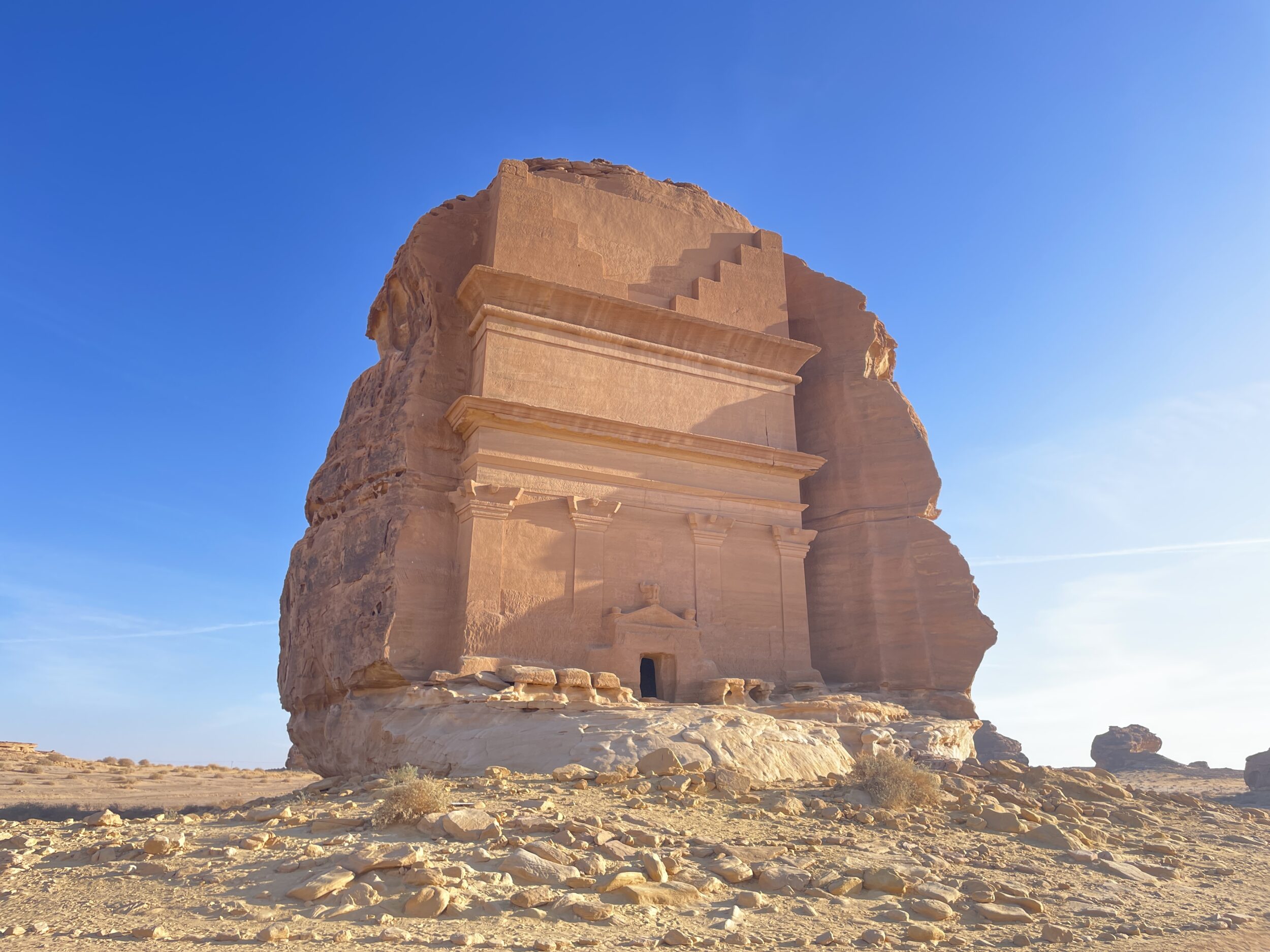
The third stop is the most anticipated (Tomb of Lihyan son of Kuza). It’s a rock highlighted in all the tourist brochures and videos promoting Saudi Arabia. Someone had the bright idea to privatize a rock to make it their family tomb. Unfortunately, this tomb was never finished. You can see, for example, that in front of the door, it’s not quite smooth. Anyway, it lets us know the construction method: it’s carved from top to bottom.
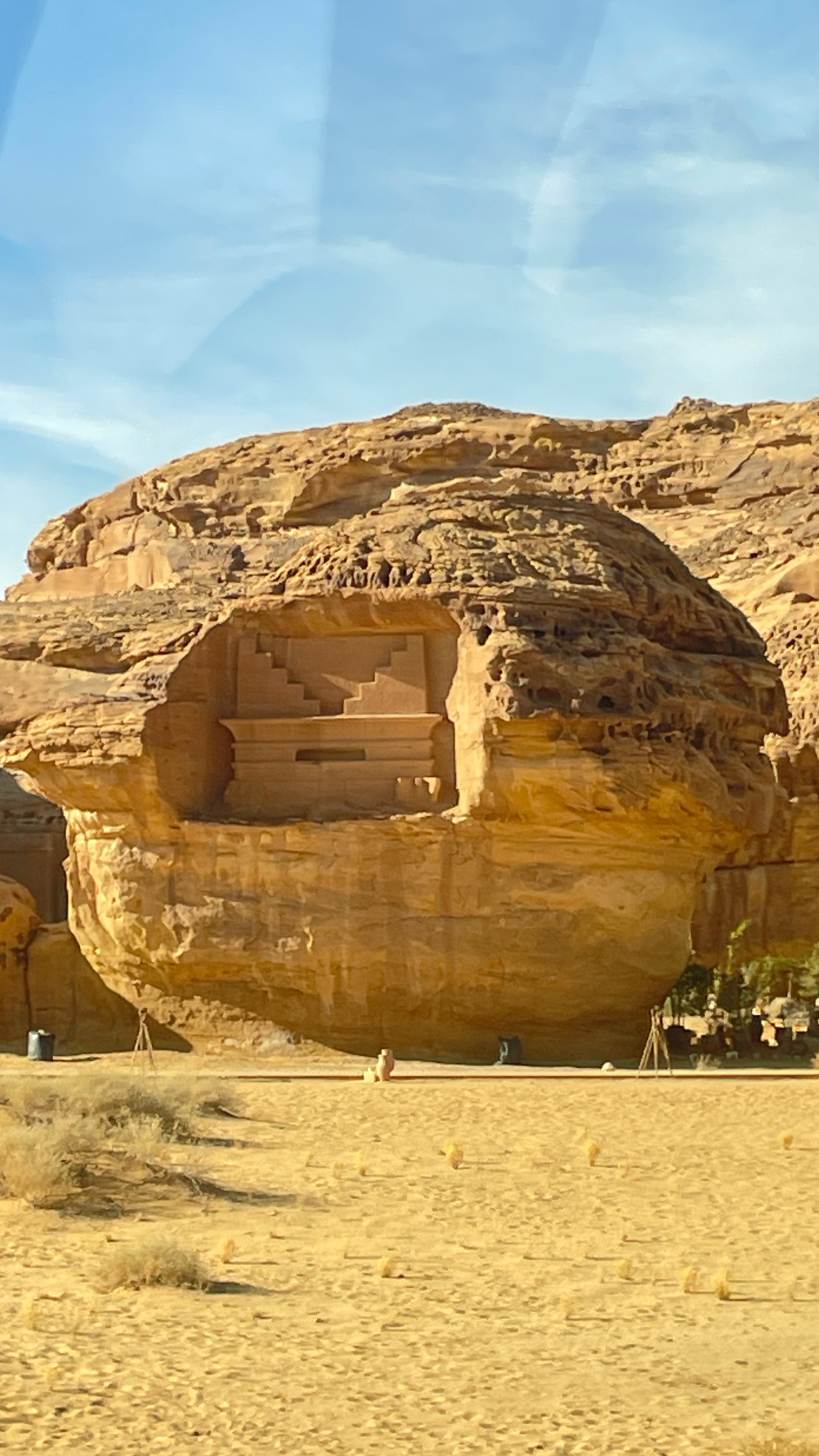
By the way, we’ll see this rock that looks like a mushroom (seen not far from the entrance) that this tomb is even less advanced than the previous one.
Everyone is so happy to be here, it’s really the highlight of the tour.
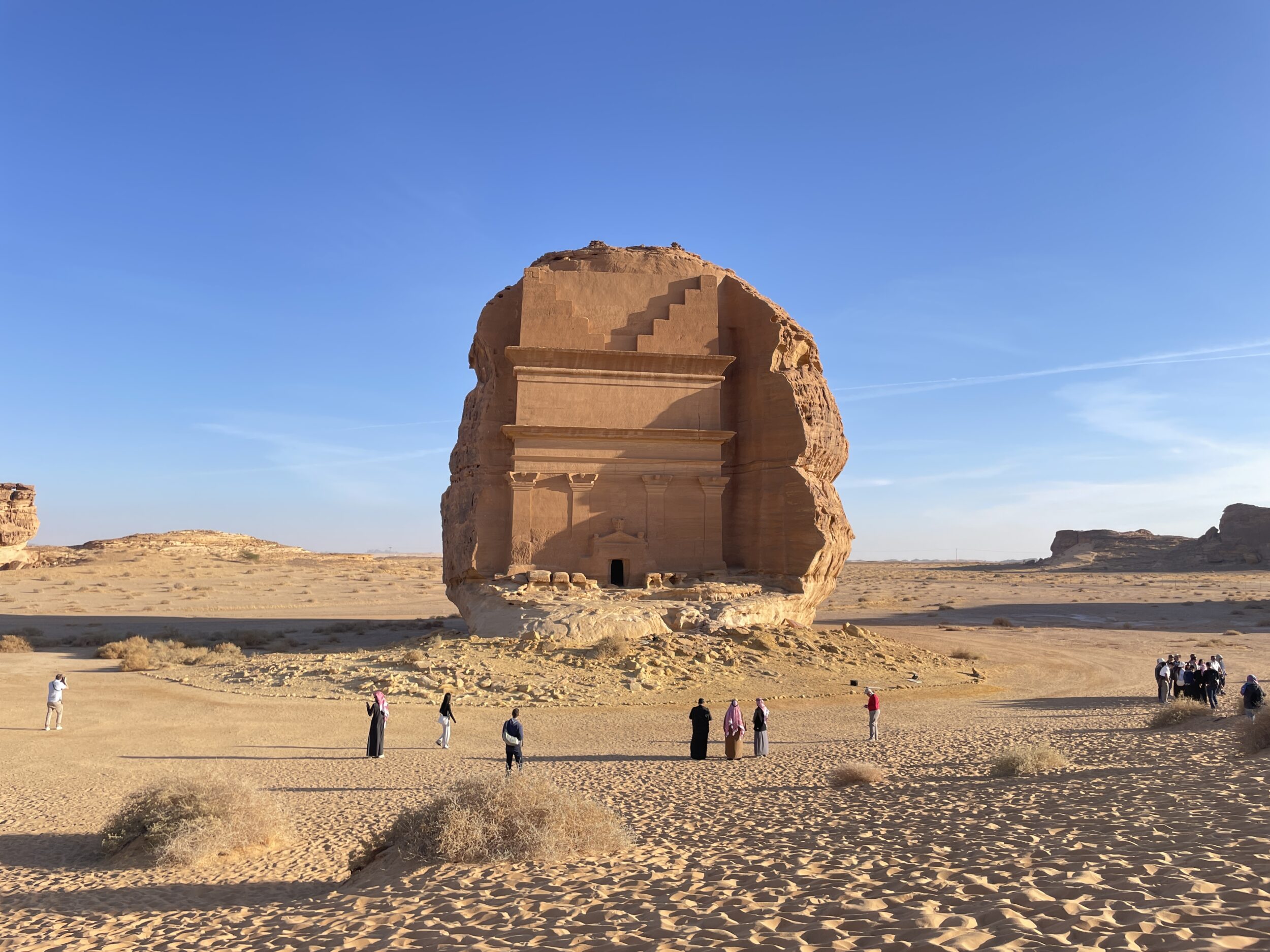
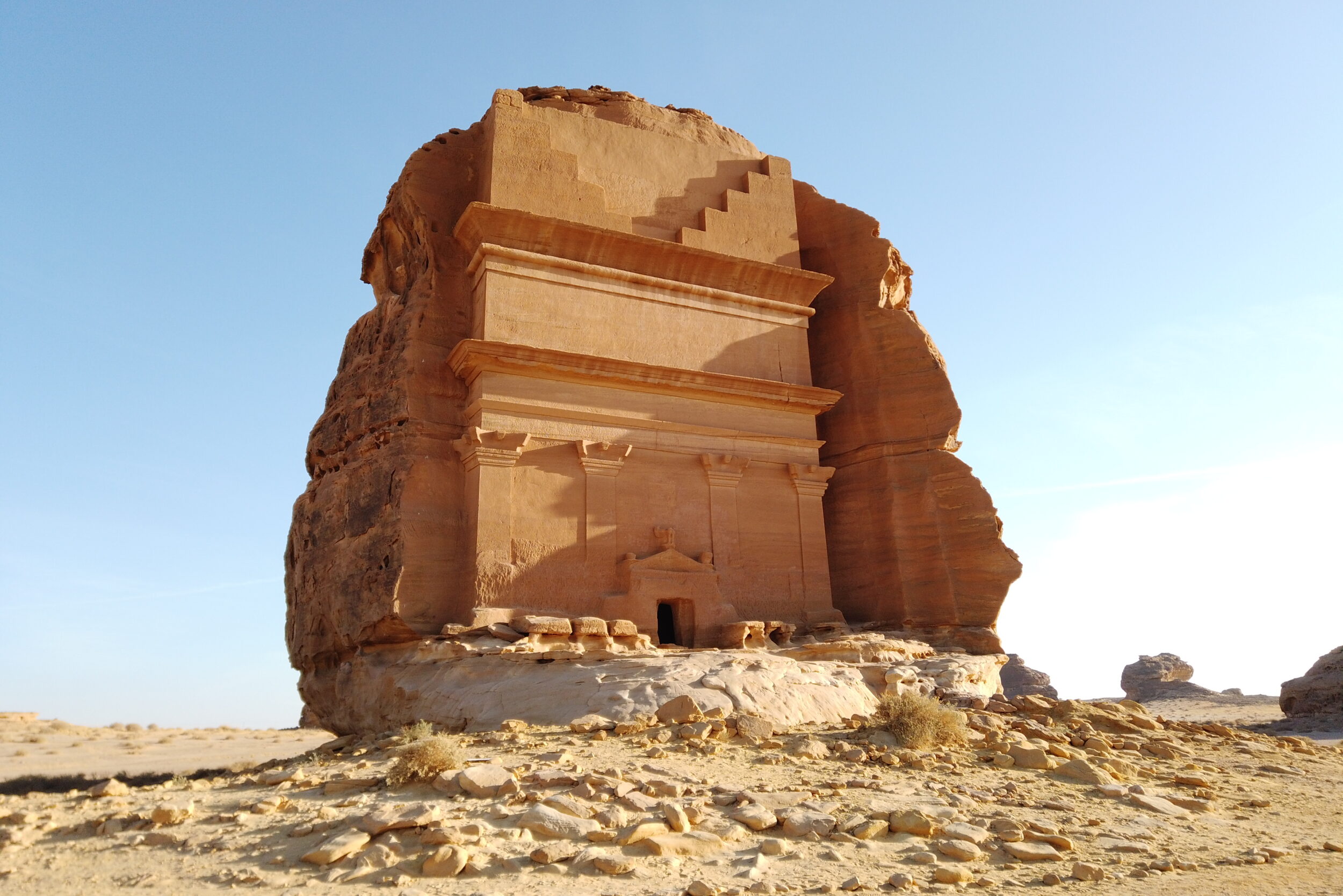
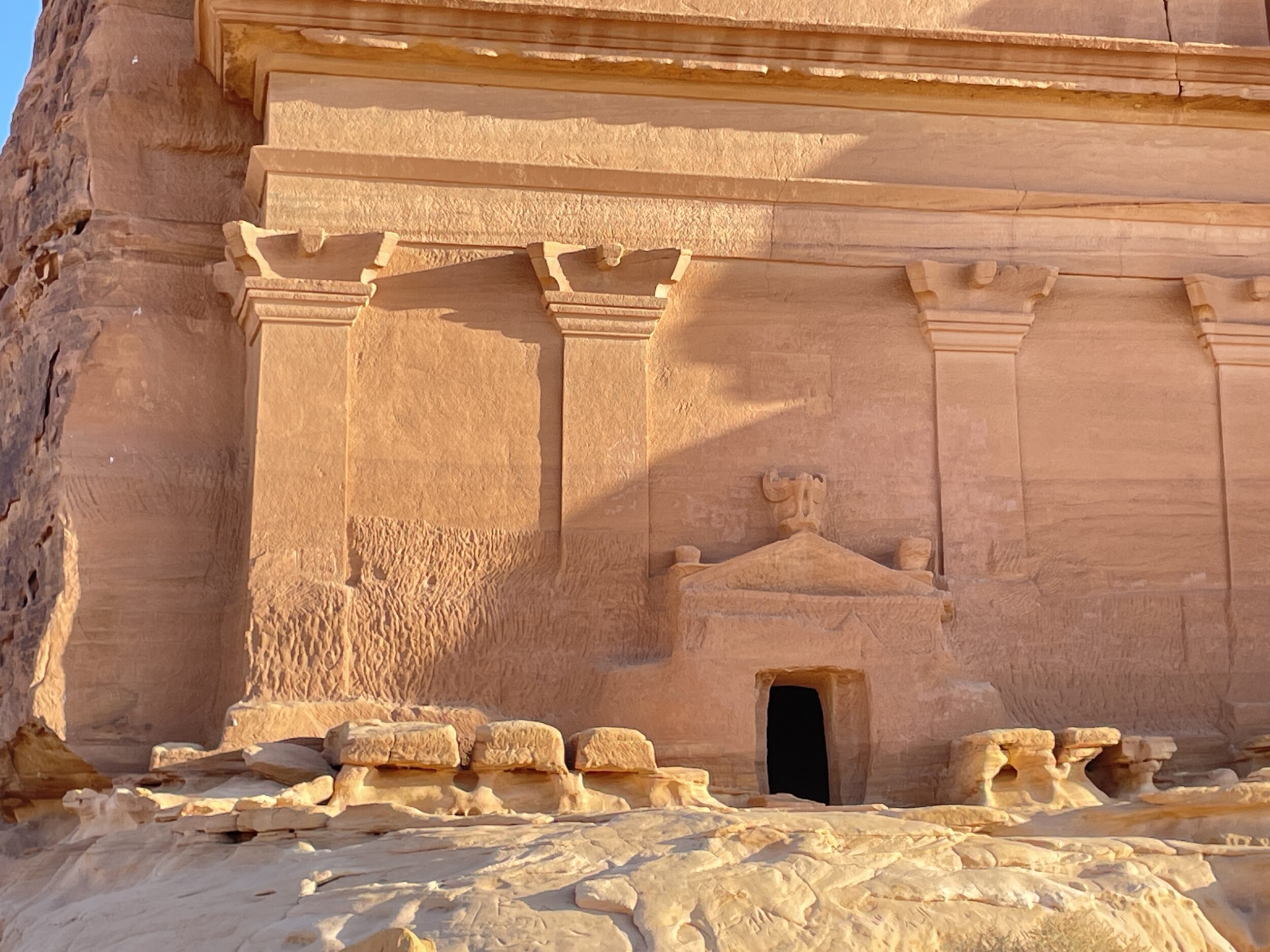
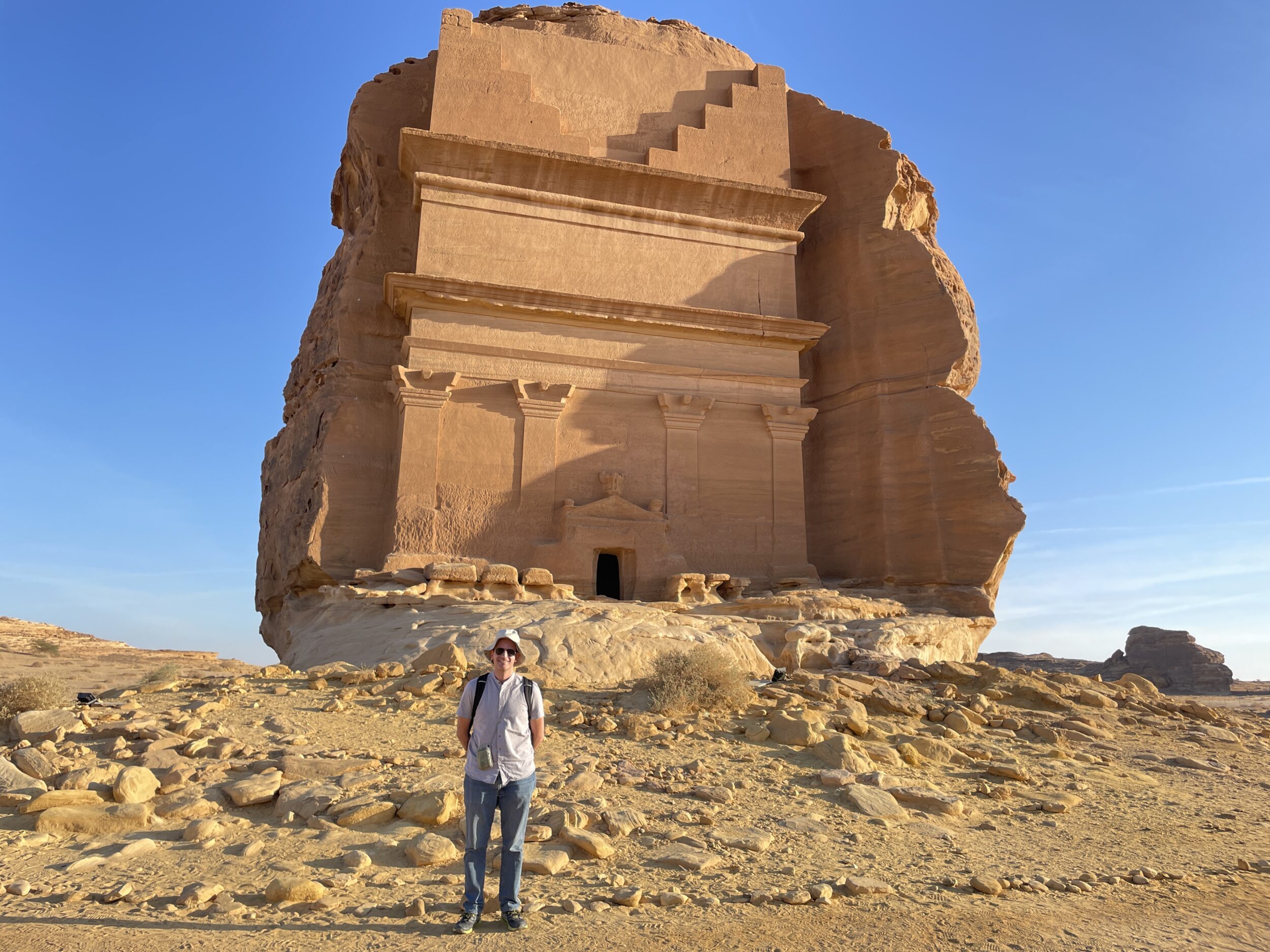
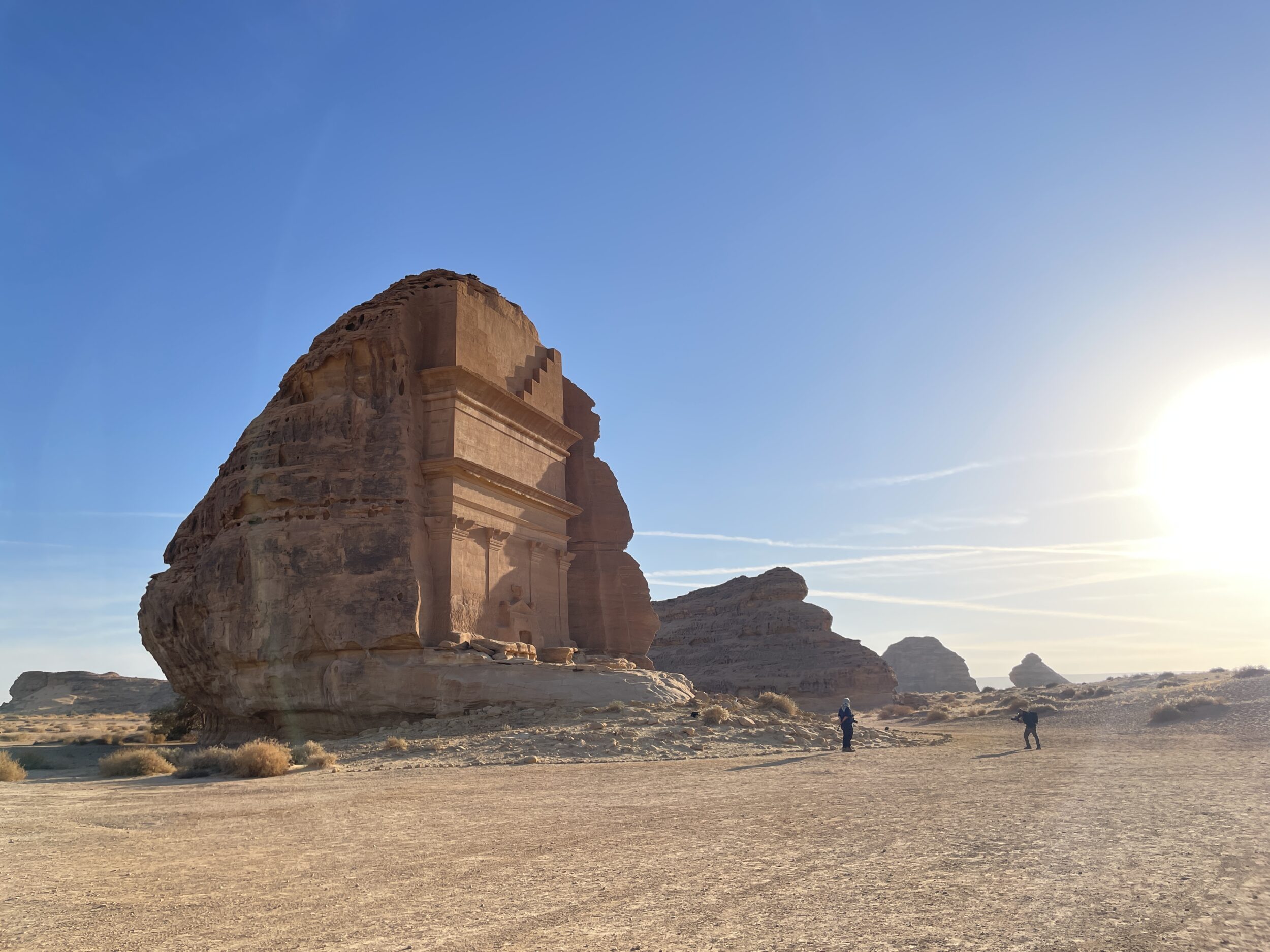
I’m a bit surprised by the size of this tomb, I imagined it bigger. It’s certainly not the tallest tomb here. It remains very beautiful though, and with the soft light of late afternoon, the rock takes on a warmer hue. I think the best times of day must be the first tour and the last tour. There are some places where we are against the light, but on the other hand, we can walk a few meters to go around the rock and there is another tomb in the light. I think among the hundred or so tombs on site, the tourist office chose the 4 stops very well. It’s not repetitive, there’s always something new to look at. It’s less free than Petra, sure, but for lazy people like me, I also like this American-style way of visiting.
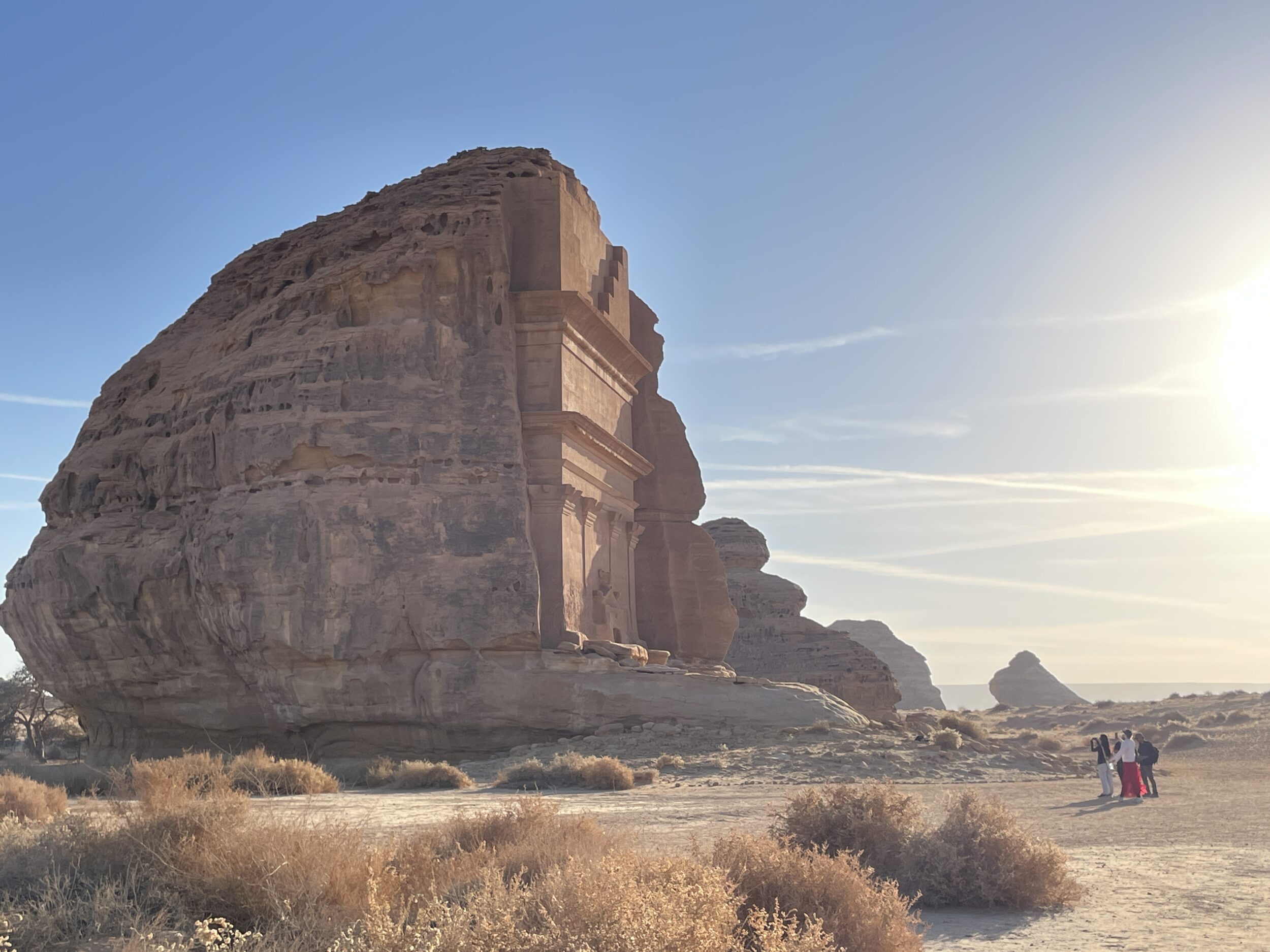
When you’re in front of a site you’ve dreamed about for so long, I think there’s a surreal side to it. I still don’t realize I went there.
If we continue straight ahead, about 5 hours later, we’ll arrive at Wadi Rum in Jordan.
The last stop is precisely the recently discovered tomb with the facial reconstruction of one of the bodies found. They discovered it thanks to torrential rain that revealed the very modest entrance of the tomb. It belongs to a middle-class family. One of the bodies had a necklace made of dates!! Such a great idea!
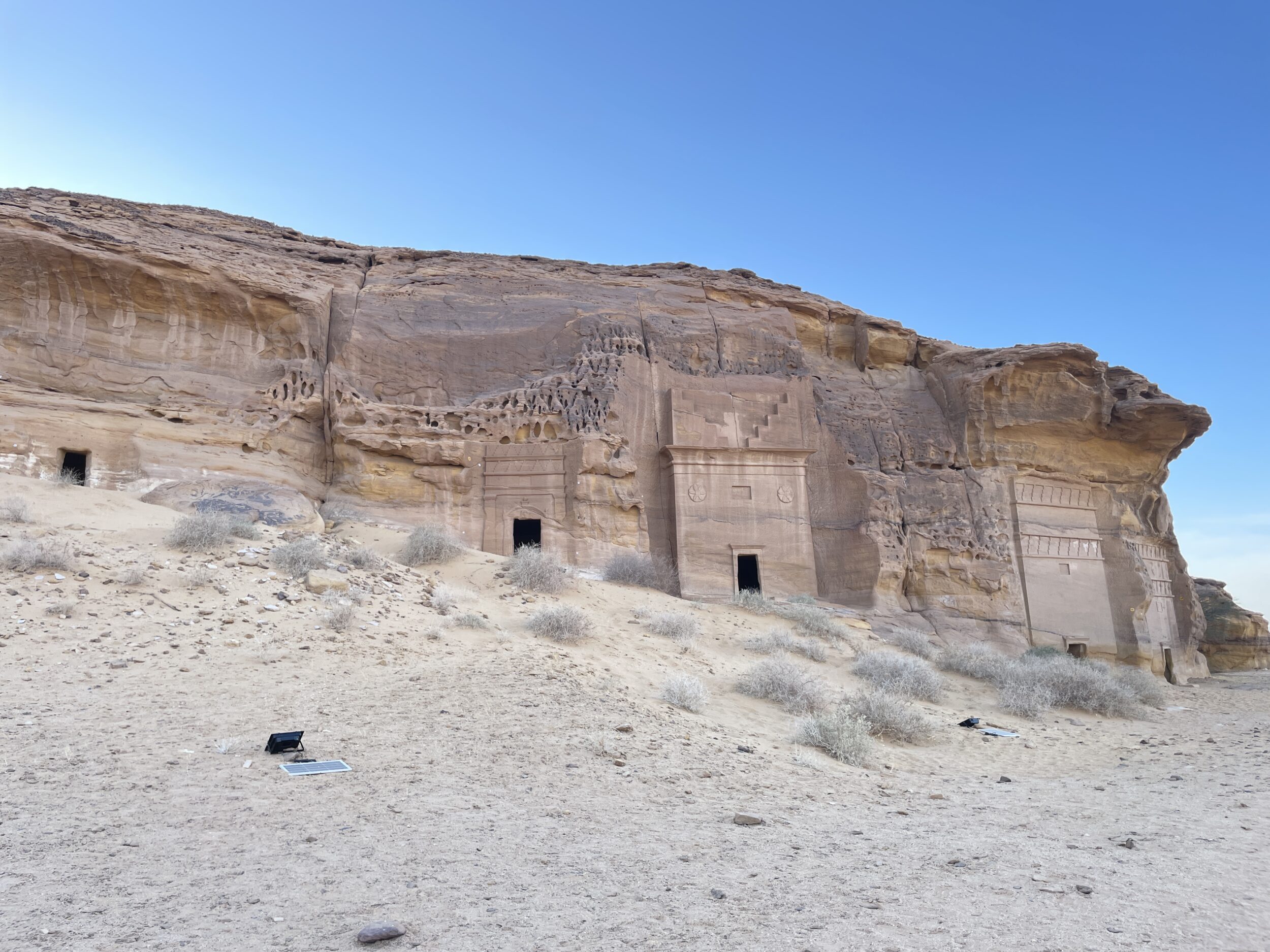
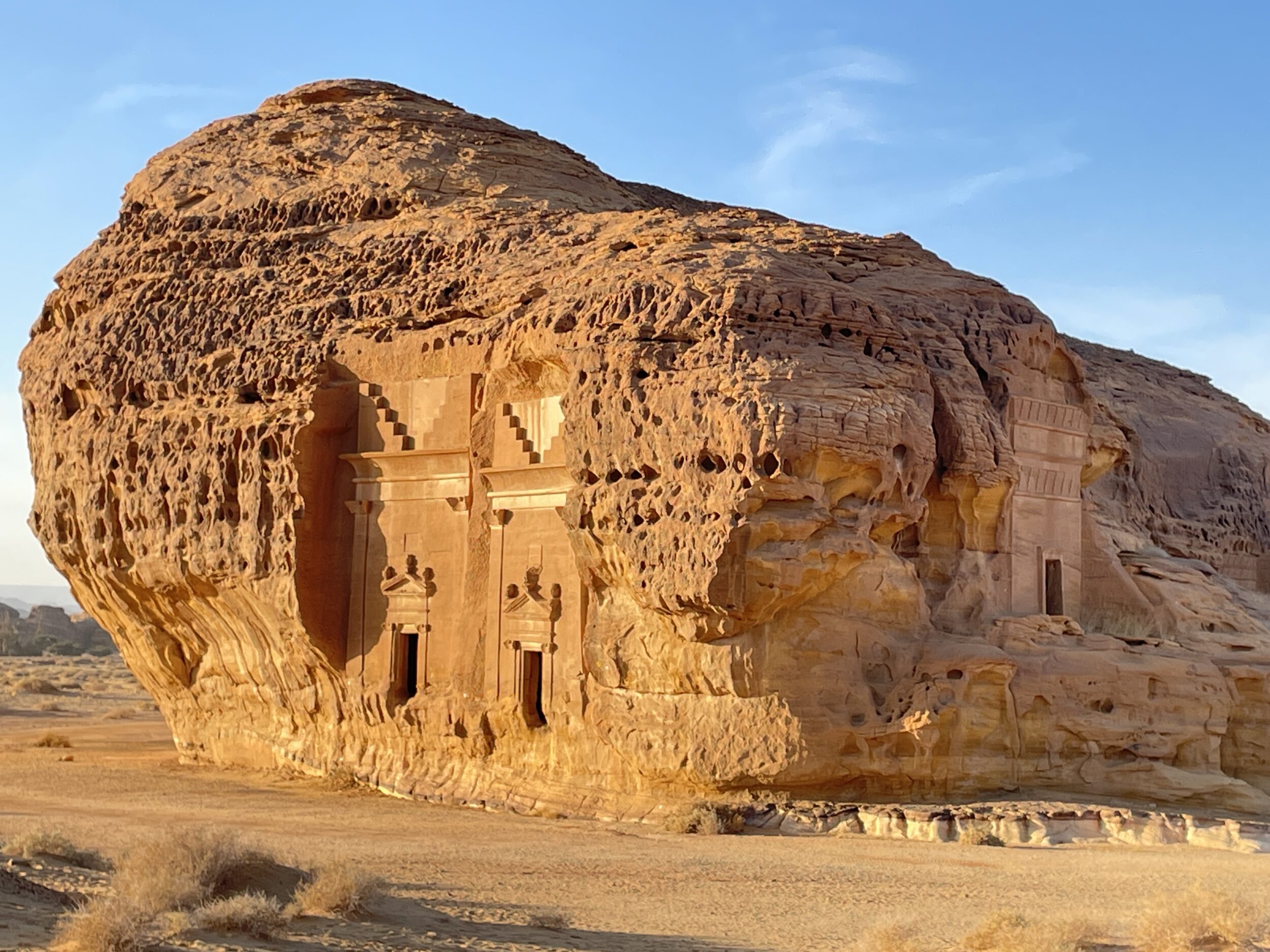
From this place, we see the “privatized” rock from afar, as well as a rock shaped like a human face.
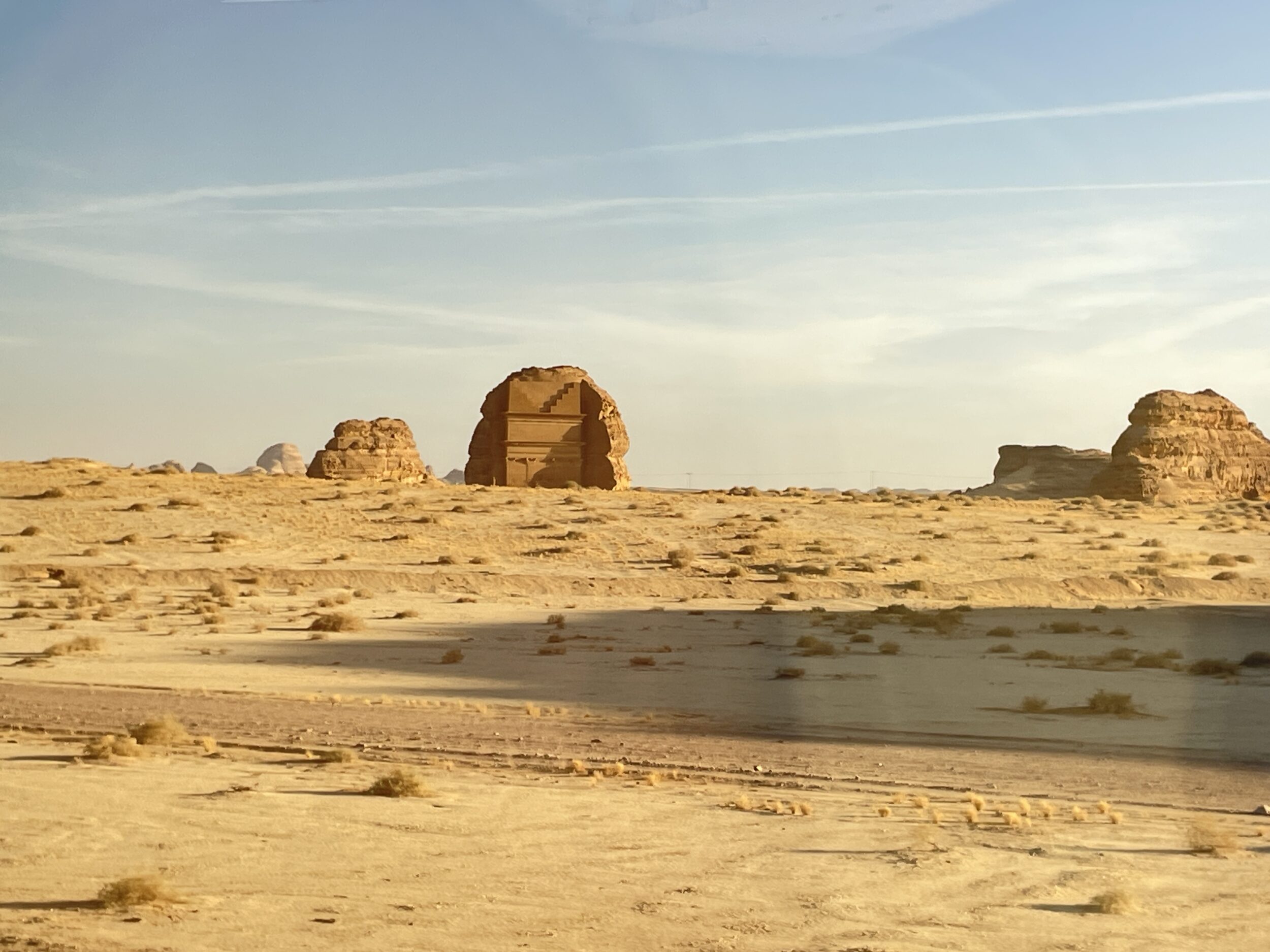
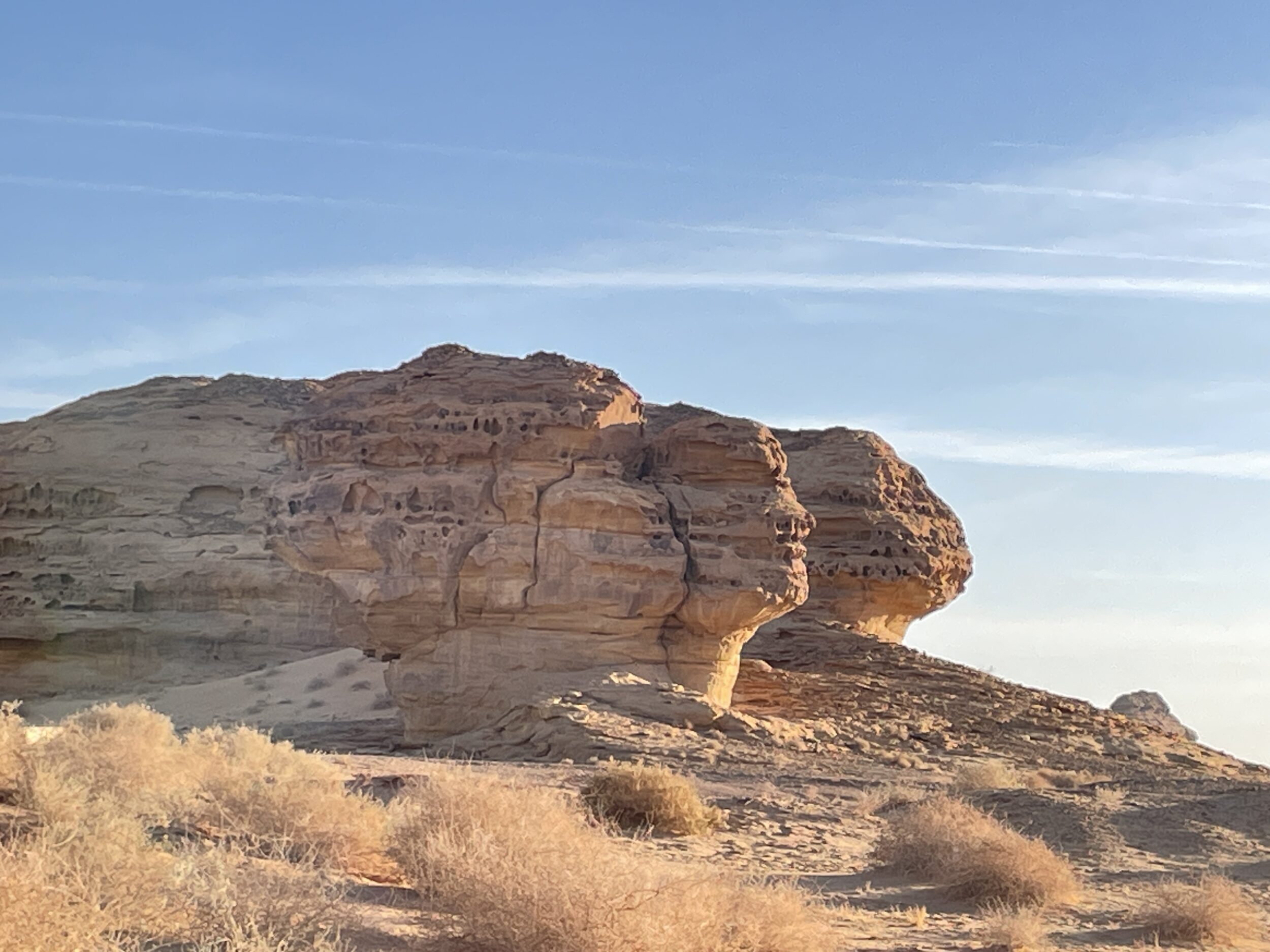
Everyone leaves the place, very happy with the tour. They have great images and all learned something. I’m very impressed with the organization. Plus, they give us drinks, for free, all the time; there’s fresh water on the bus and also at the welcome center, they give us absolutely delicious bottles of orange and ginger juice. The employees wear long wool abaya coats that are absolutely magnificent. Yes, we’re in the desert, there’s sun in December but it’s still a bit chilly, and especially after sunset, it gets super cold.
If you don’t have much time there, you can come back a few hours later for the Hegra After Dark but we preferred to go the next day.
It’s only after the tour that we check into the Airbnb. So, it’s only in Saudi Arabia that we allow ourselves to leave our computers in the car trunk in the parking lot during the visit. We know very well what awaits any thief in this country, so it’s super safe to leave them there.
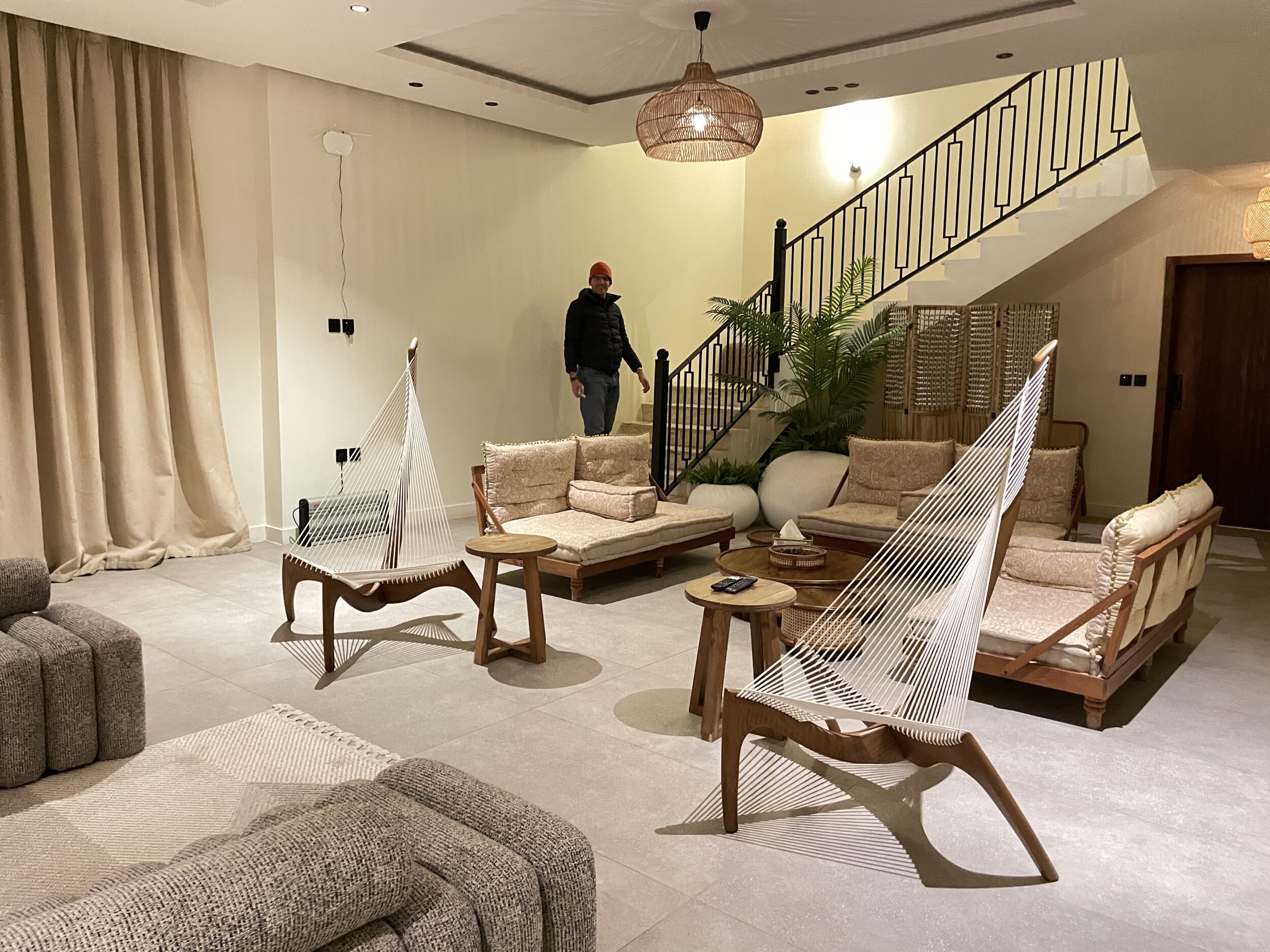
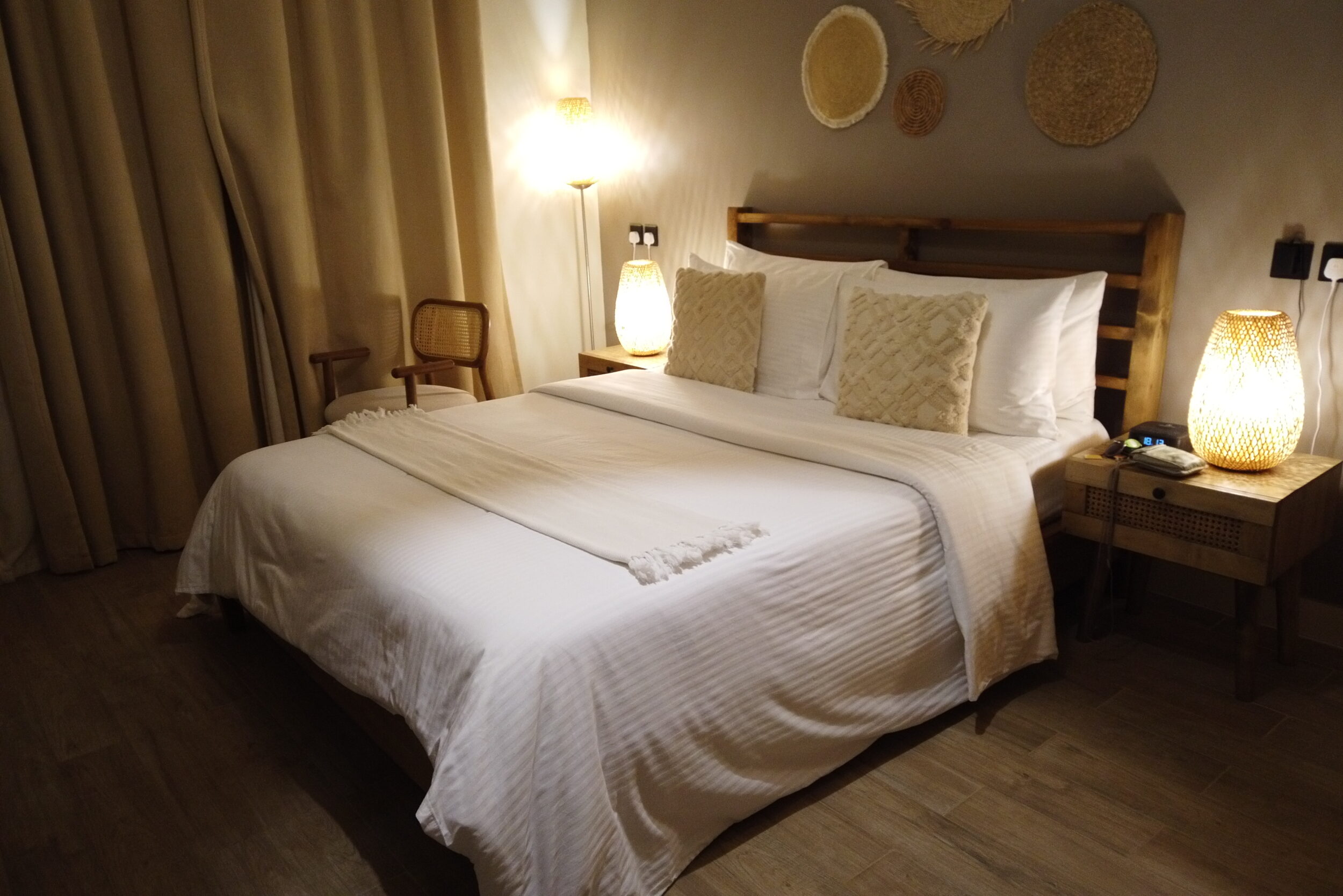
Our airbnb (link) is 30 minutes from Hegra. There are so few choices in the area that to get a good place, you either have to pay a lot or be a bit further away. Our Airbnb is very spacious; we have a room with private shower and a shared lounge with unlimited dates on the ground floor, I highly recommend it. The hot water lacks a bit of pressure, but that’s normal, we’re in the desert. We had so much mango juice and dates that we don’t need dinner tonight.
Day 7
Our Habitas AlUla
My friend H. is behind this visit. When we talked about Saudi Arabia and Jordan, she sent me lots of pictures of luxury hotels in the area. Many are well above our budget, but I’m not the kind to give up easily. There are two hotels that appeal to me a lot: Our Habitas AlUla (Booking linkand Banyan Tree Alula (Booking link, starting at 500 euros a night, but the average rate seems to be more like 1000 euros/night). Both are located in a privatized valley called Ashar Valley.
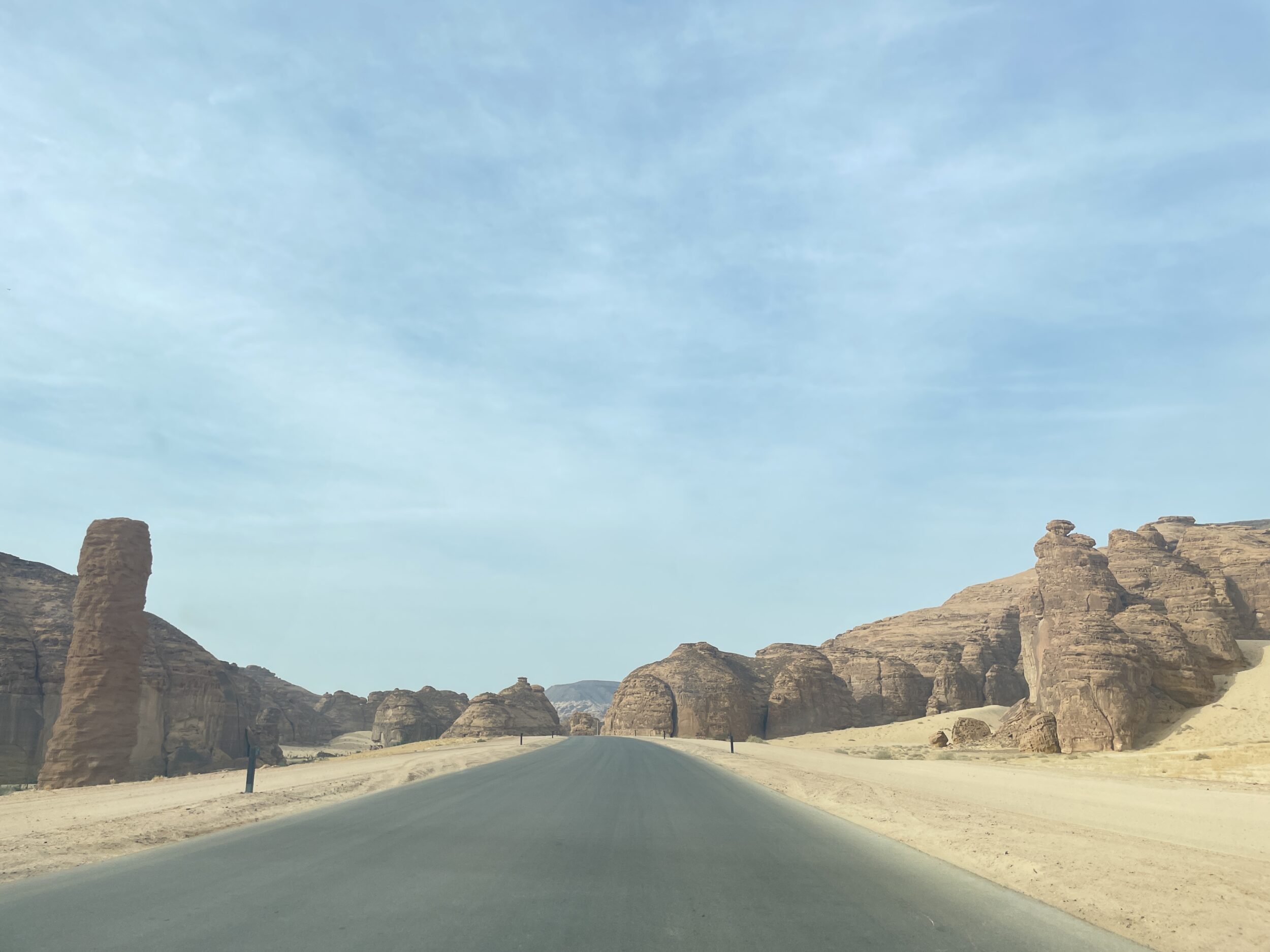
Both have pools in the middle of the desert. Our Habitas has a more affordable version Caravane by Habitas (from 280 euros), and guests of this more affordable version can still enjoy the spaces and activities of Our Habitas. I’m saying this for those who still want a “Habitas” experience.
Otherwise, for “squatters” like us, there are day pass at Our Habitas and Banyan Tree. For 350 SAR/person, you get access to the pool and the day’s activities. I preferred “Our Habitas” because their pool is made for taking great photos, and their restaurant is across from the pool, while Banyan Tree’s is more for swimming. Also, I checked the activities before coming, and the Sound Bath at 11am at Our Habitas particularly interests me. Our friend F. spoke very highly of “sound baths” with crystal bowls which is offered at Four Seasons hotels worldwide. There are several “Our Habitas” around the world and they’re a bit “new age,” “healing”… and the activities offered by the hotel are truly out of the ordinary (breathwork, sound bath, etc.).
Several weeks before our arrival, I write to Our Habitas to book the day pass but they don’t confirm my reservation at all. We go there on a whim anyway and are stopped by the guard at the entrance to the valley. Only those with Maraya visit tickets or a reservation at one of these luxury hotels can enter. Fortunately, I have my exchange email with Our Habitas, and they let us in. I find out at Our Habitas’ reception that our reservation had actually been taken into account, but they simply didn’t reply to me.
At the (tiny) reception, there are many guests (who just landed at Al Ula airport, I think) and check-in takes forever. The porters are absent; a couple of guests had to drag their super heavy suitcases to the buggy that takes ages to arrive. The check-in experience is total chaos, and luckily we didn’t pay 1000 euros a night because even the welcome at our 80-euro Airbnb was 10 times more satisfying.
However, I just think that given the number of guests crowding in here, there are really many, many rich people. The top 0.01% of the world’s richest still represents 800,000 people, for whom 1000 euros is nothing. It reminds me of Dubai where I truly felt that I would never have enough, that I could never be enough, be successful enough, smart enough, there will always be doors closed to me. I will never be able to pretend that 1000 euros is nothing, does that mean I don’t work hard enough? I’m not smart enough? It’s absolutely ridiculous because I’m currently living my best life and theoretically I shouldn’t envy anyone. I think in countries like this, you can very quickly get carried away by envy, greed, frustration. There’s always an exclusive service for the rich, the richer, the even richer… whereas in Europe, it exists too, but it’s not as visible. Anyway, after our trip to Bhutan, we understood that the secret to happiness is to eliminate envy and the most effective way is to bury your head in the sand, not to see, not to know that such and such luxury, such and such exclusive service exists.
Well, 350 SAR or 80 euros per person later, here we are in a buggy heading to the pool. We receive the best possible welcome from an employee near the pool who arranges the towels on the loungers for us and gives us huge robes that all guests wear (because it’s actually cold). Because yes, even in the desert, in December, it’s cold. The extra little breeze makes the pool unbathable even though the water is fine (because it’s heated). So all the influencers and dream sellers parade around the pool in bikinis (they must have a day pass like us because they all have a backpack to store their stuff). I think if you zoom into their photos, you could see the goosebumps from the cold. While the real guests, they barely take photos, too busy eating or staying in their rooms ahahah.
I looked at the photos of some Instagrammers and indeed I don’t see any photos of the room (which seems small but there’s a very nice little “bedouin” space overlooking the valley, very instagrammable).
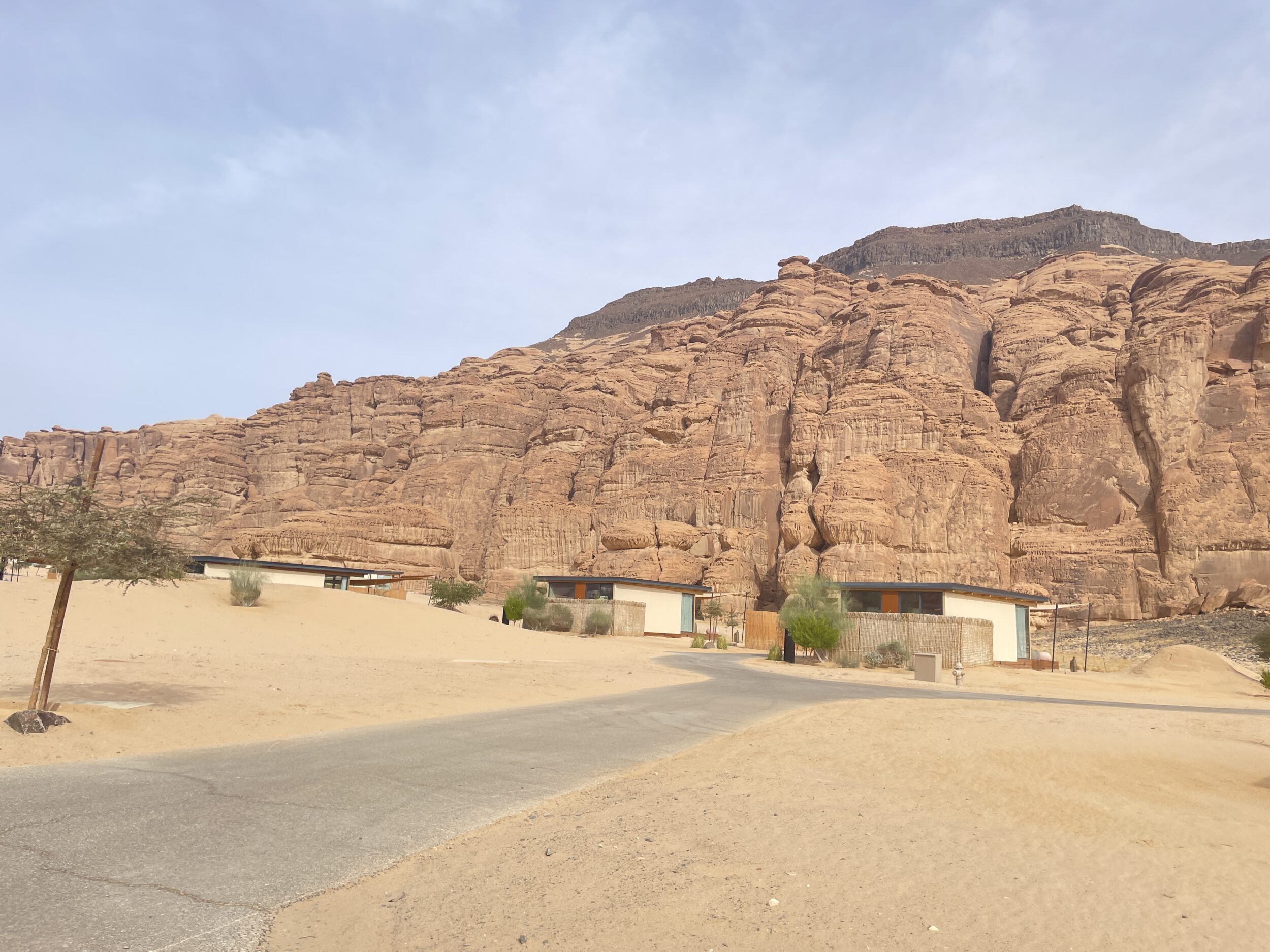
So if next time you feel bad because so-and-so is splashing around in a crazy expensive hotel pool, it’s possible it’s thanks to a day pass, or by booking a meal. Oh yes, a cheaper option to enjoy this space (without being able to swim though) is to book a spot at the hotel’s Tama restaurant via the MyTable app. But there are very few spots because they keep tables for guests or people with day passes like us. The day we went, the restaurant was almost empty but showed fully booked on the app.
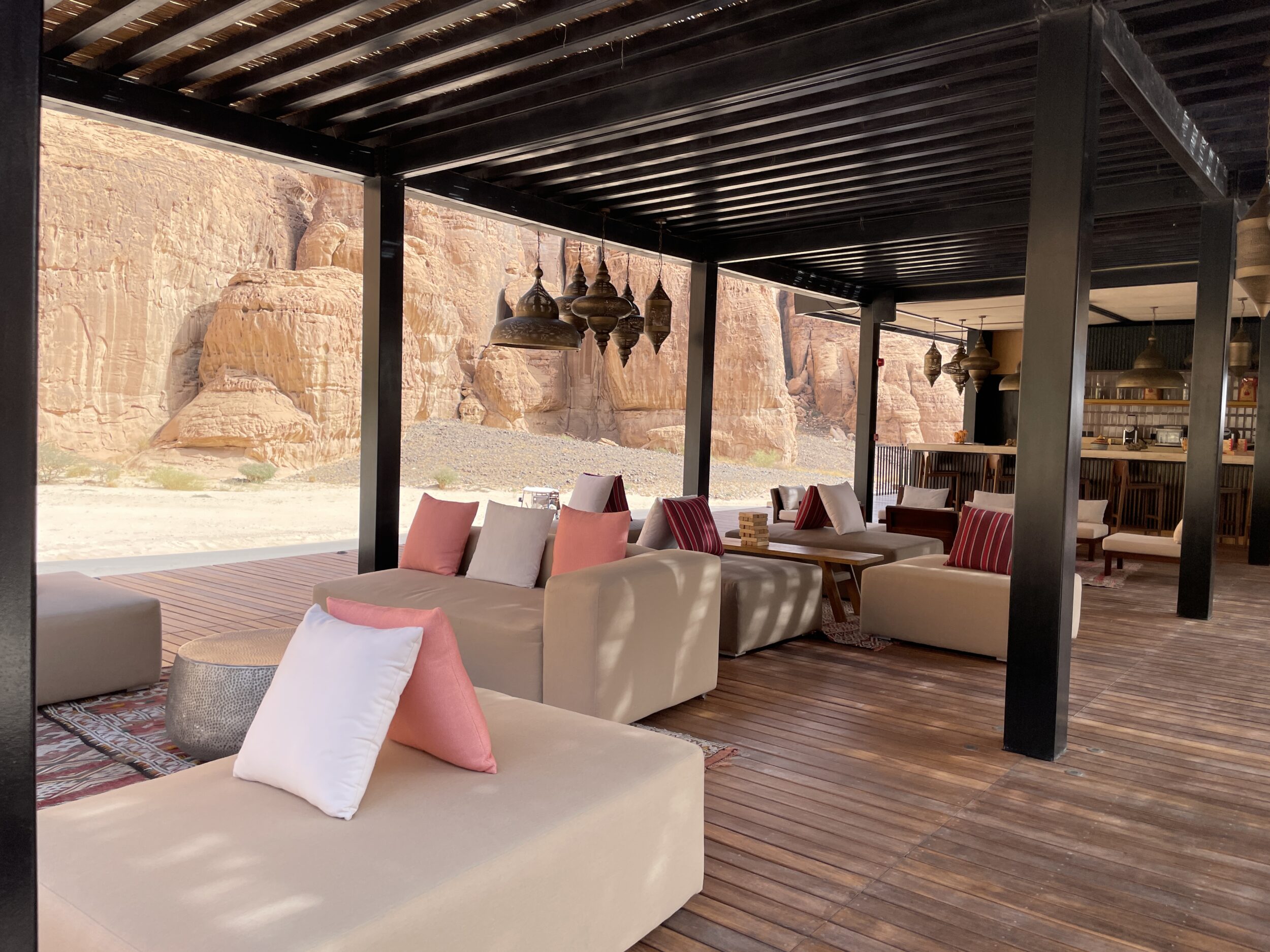
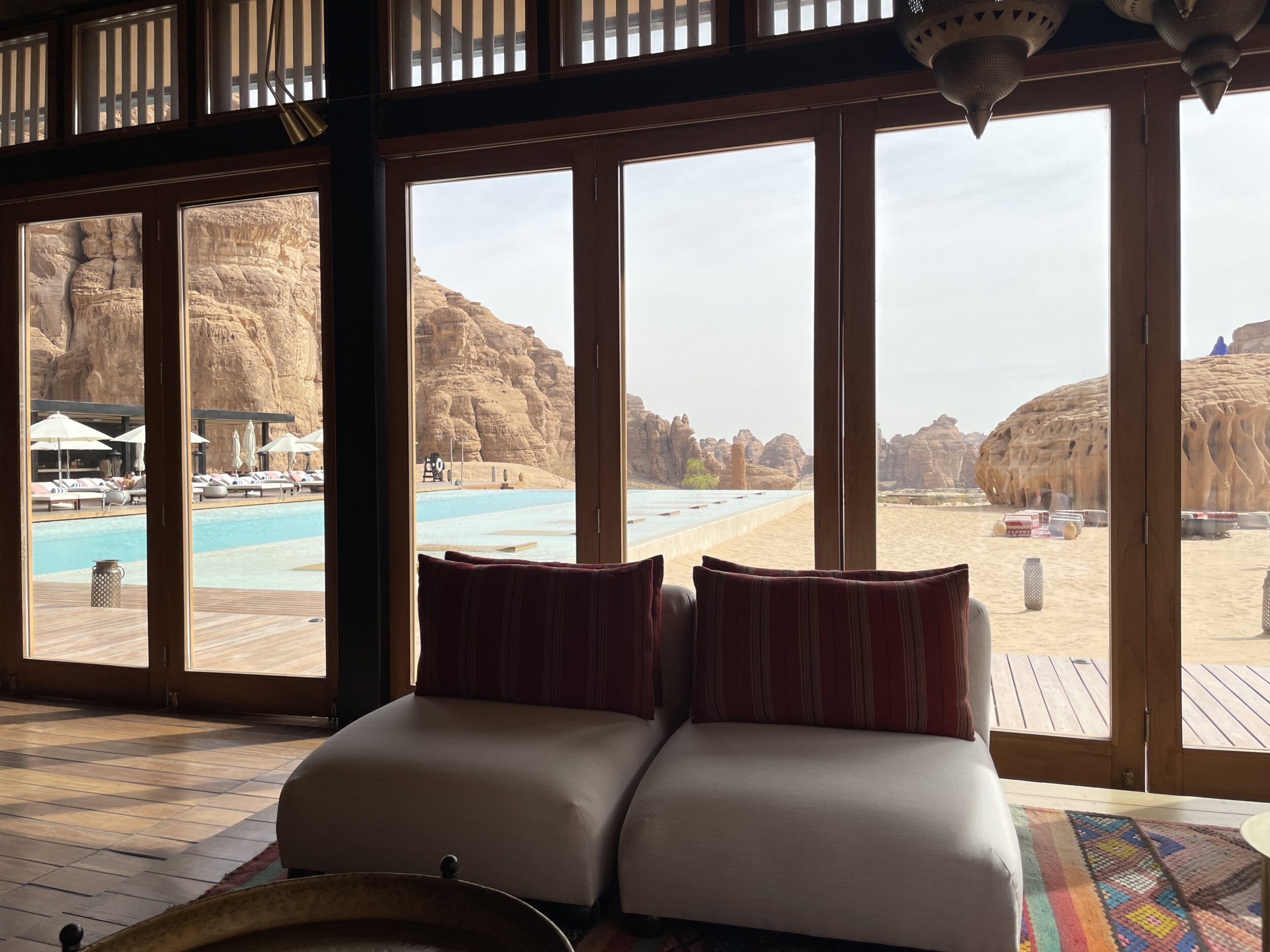
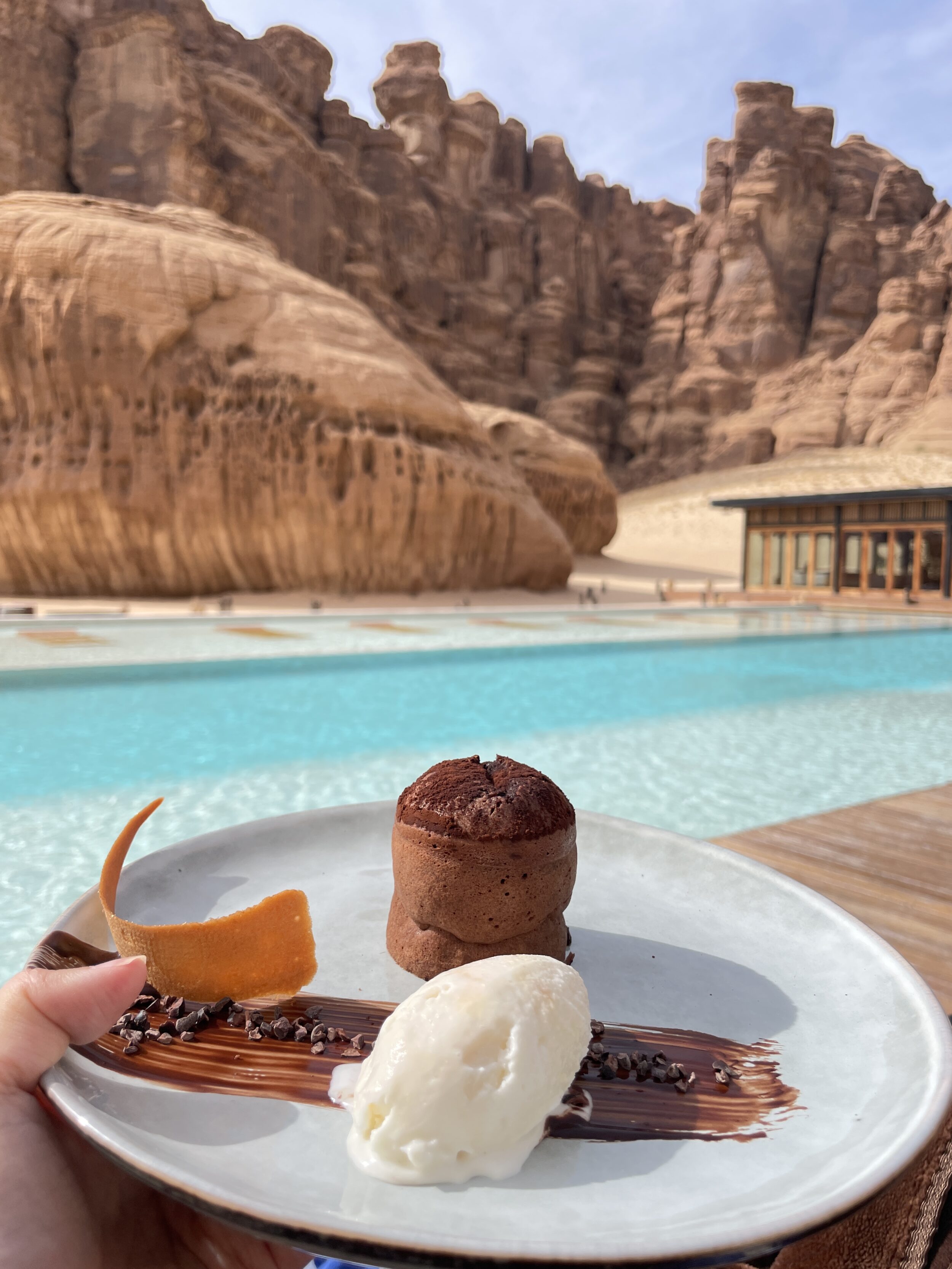
It has to be said that this pool is absolutely INCREDIBLE. Having such a pool in the middle of the desert is way too luxurious, way too bling bling. With heated water on top of that!!! But oh my, it’s so well done! Loungers in the water, up to the very shallow part where even kids can enjoy, to the infinity edge effect like a “waterfall”, very harmonious. In an absolutely feng shui and idyllic setting. It’s probably my favorite pool in the world !!! (along with the one in Sapa)
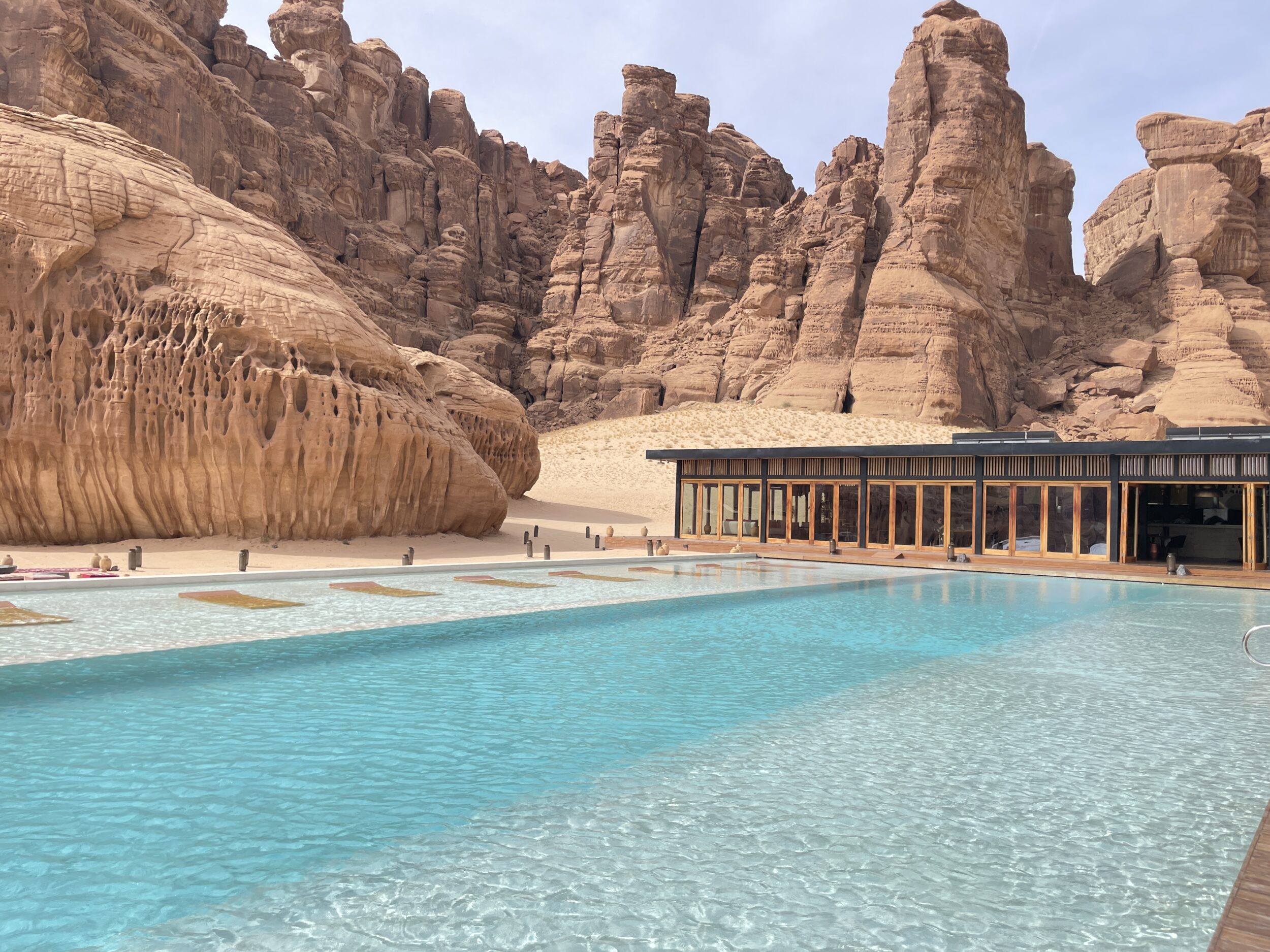
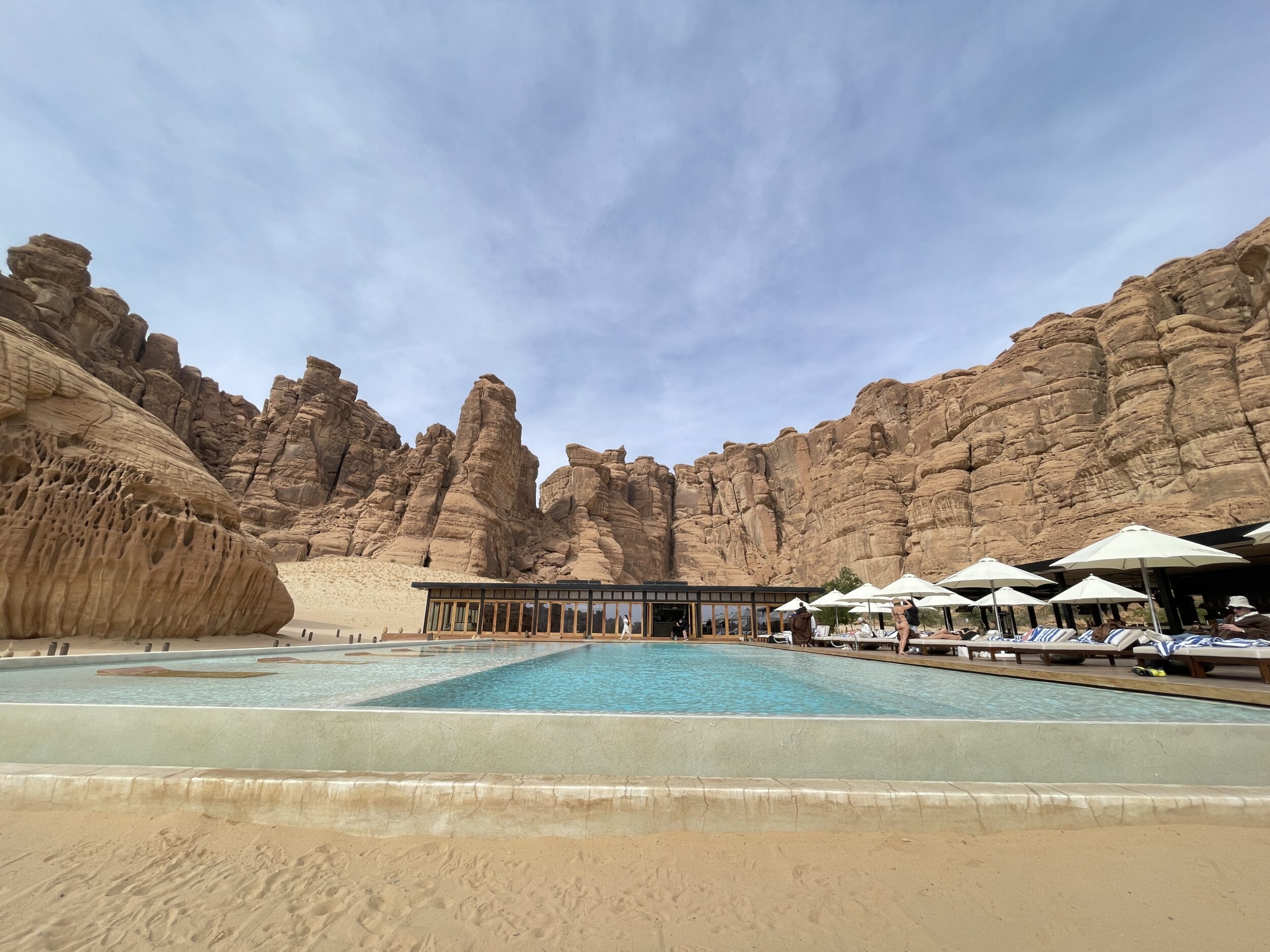
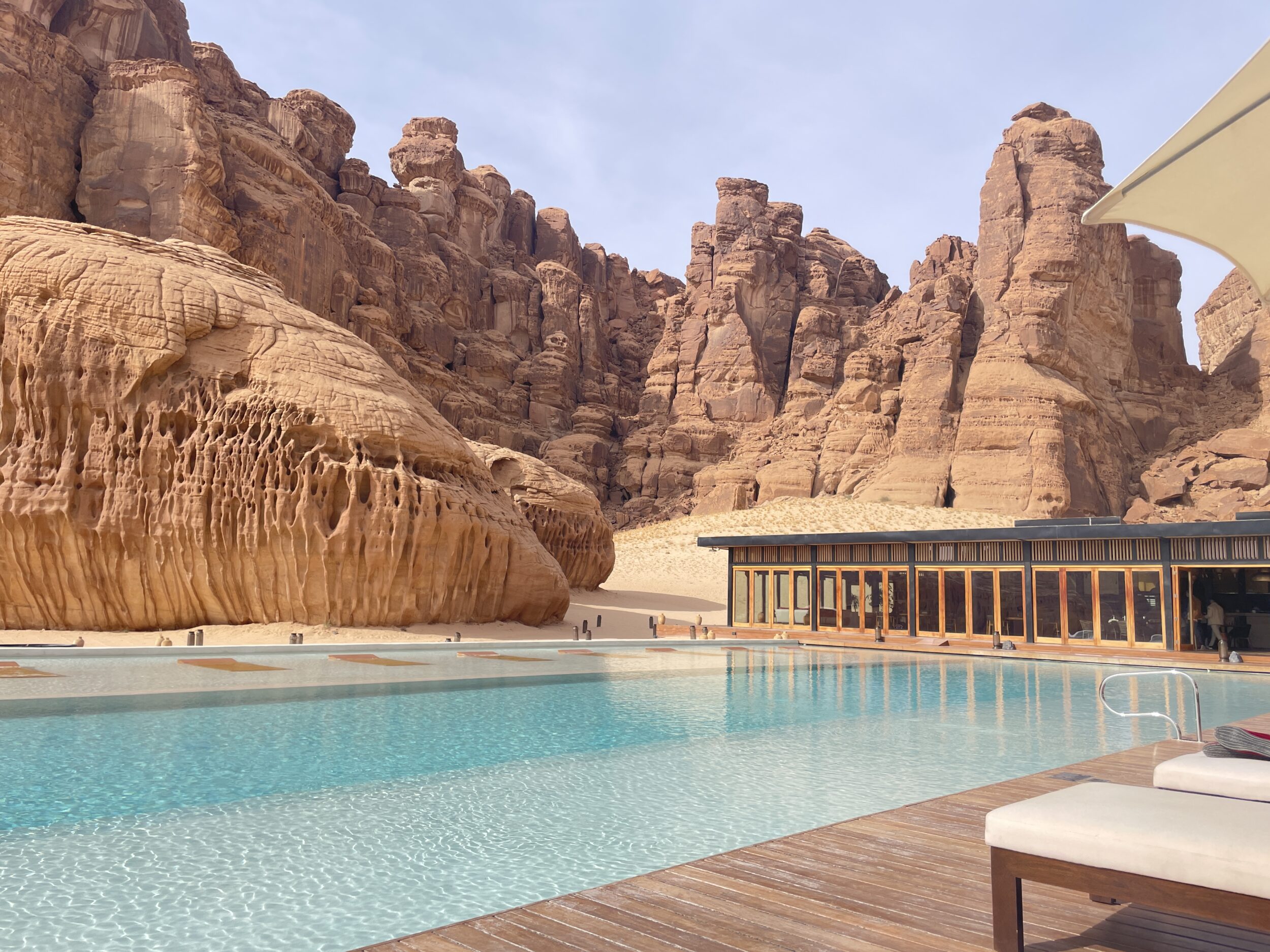
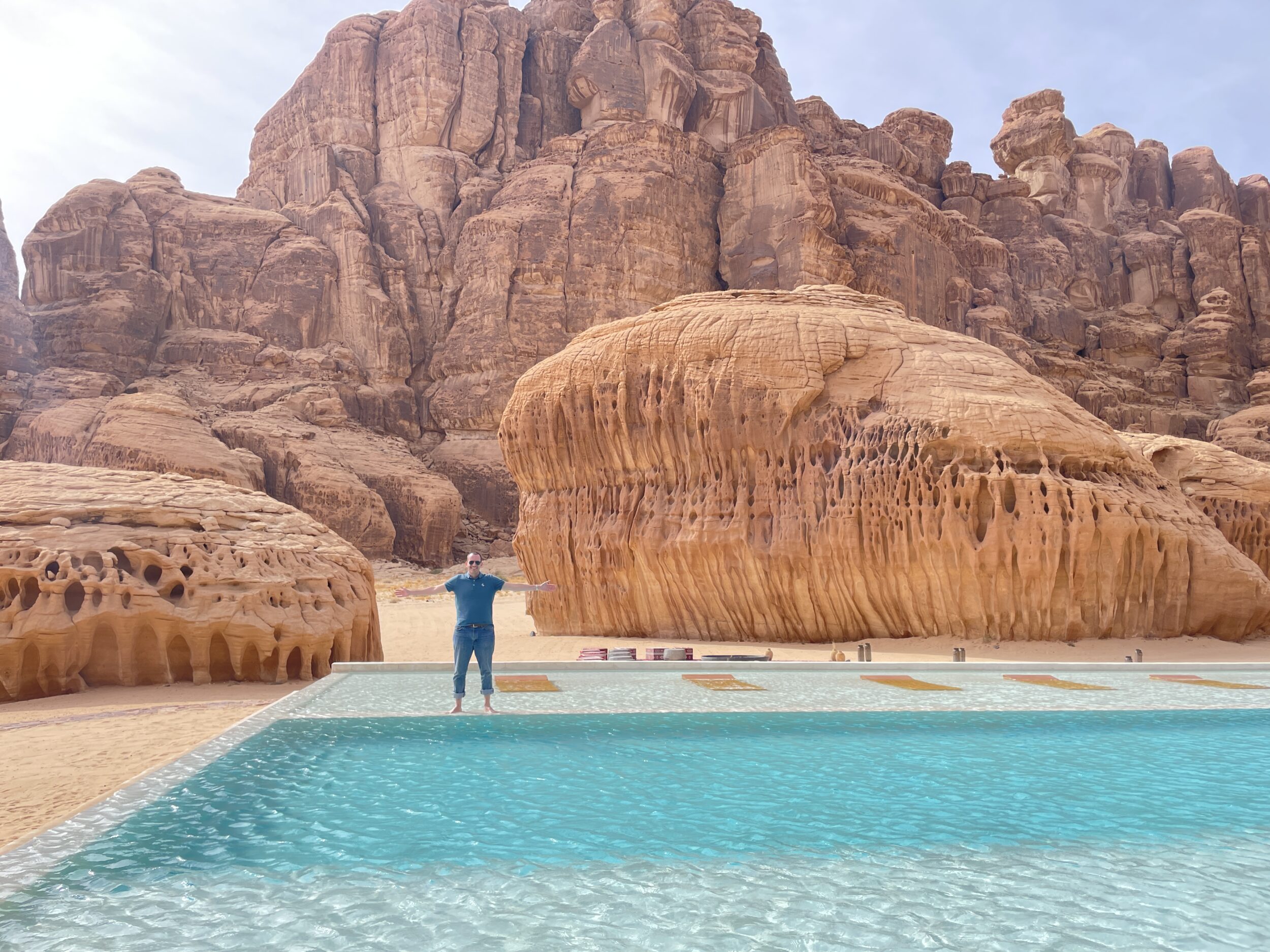
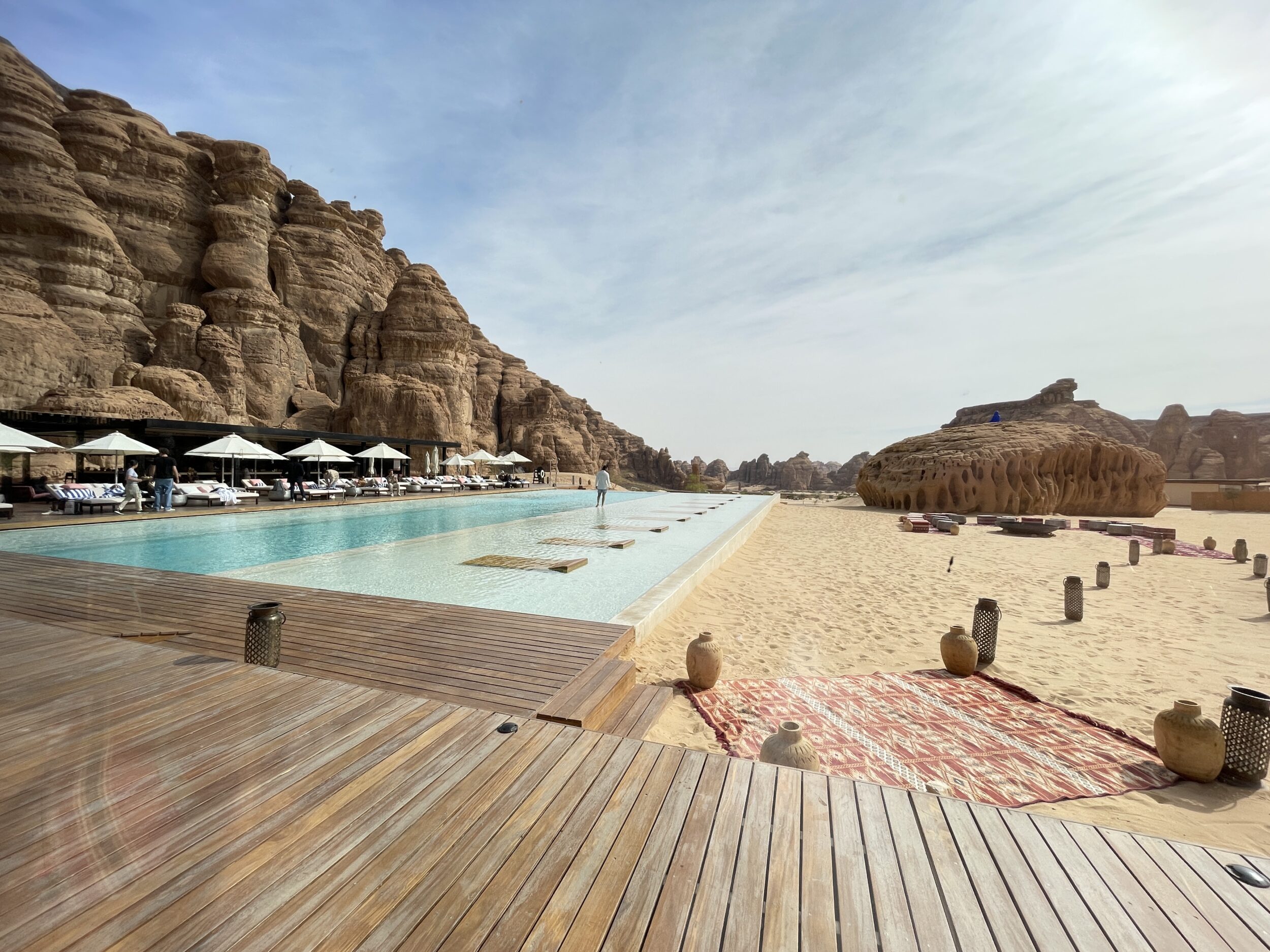
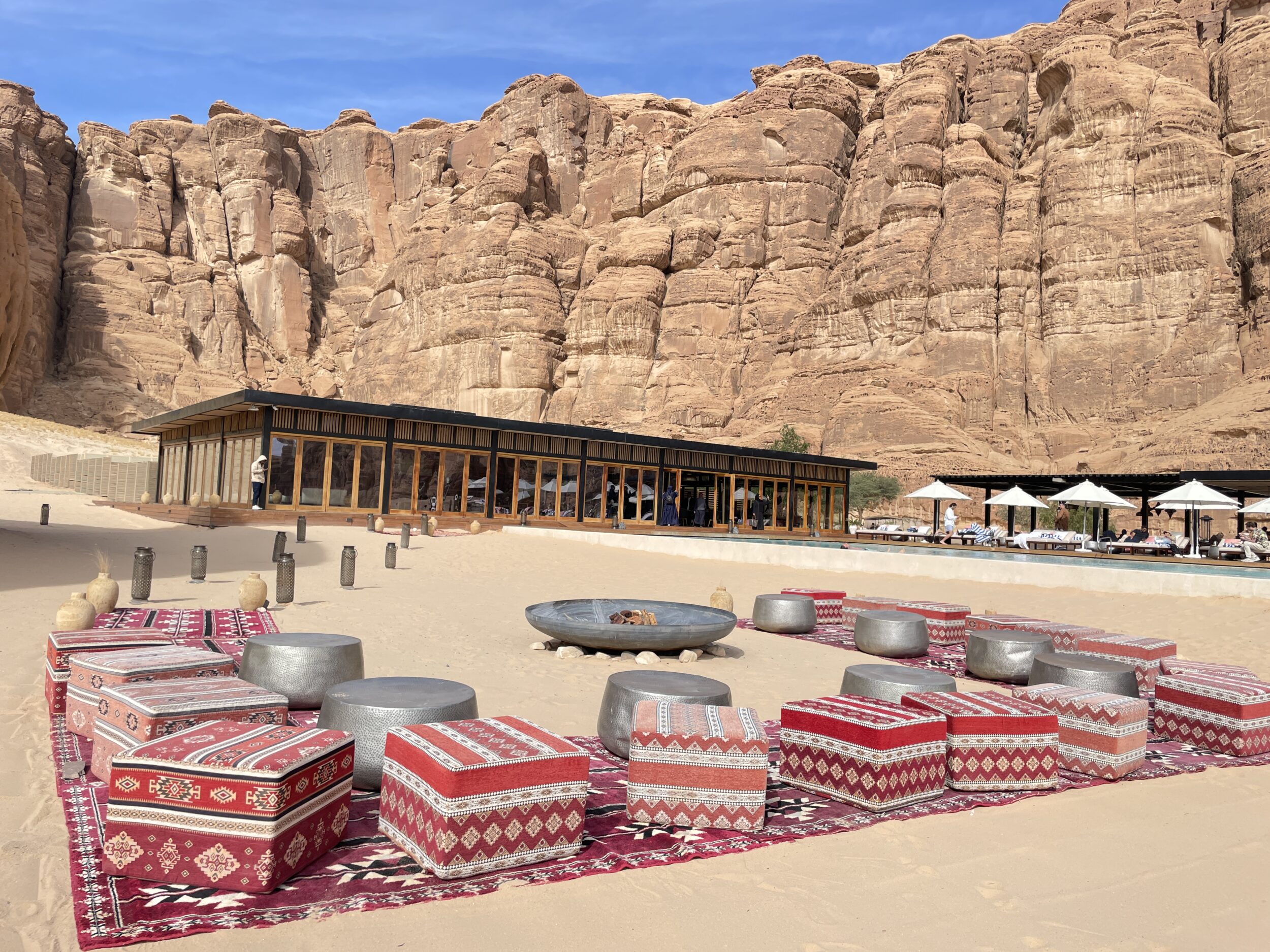
At 11am, we get on a buggy that drops us off at the yoga space. An employee is setting up the mats and cushions. Only JB and I come to the “Sound Bath” session and I love it so much!
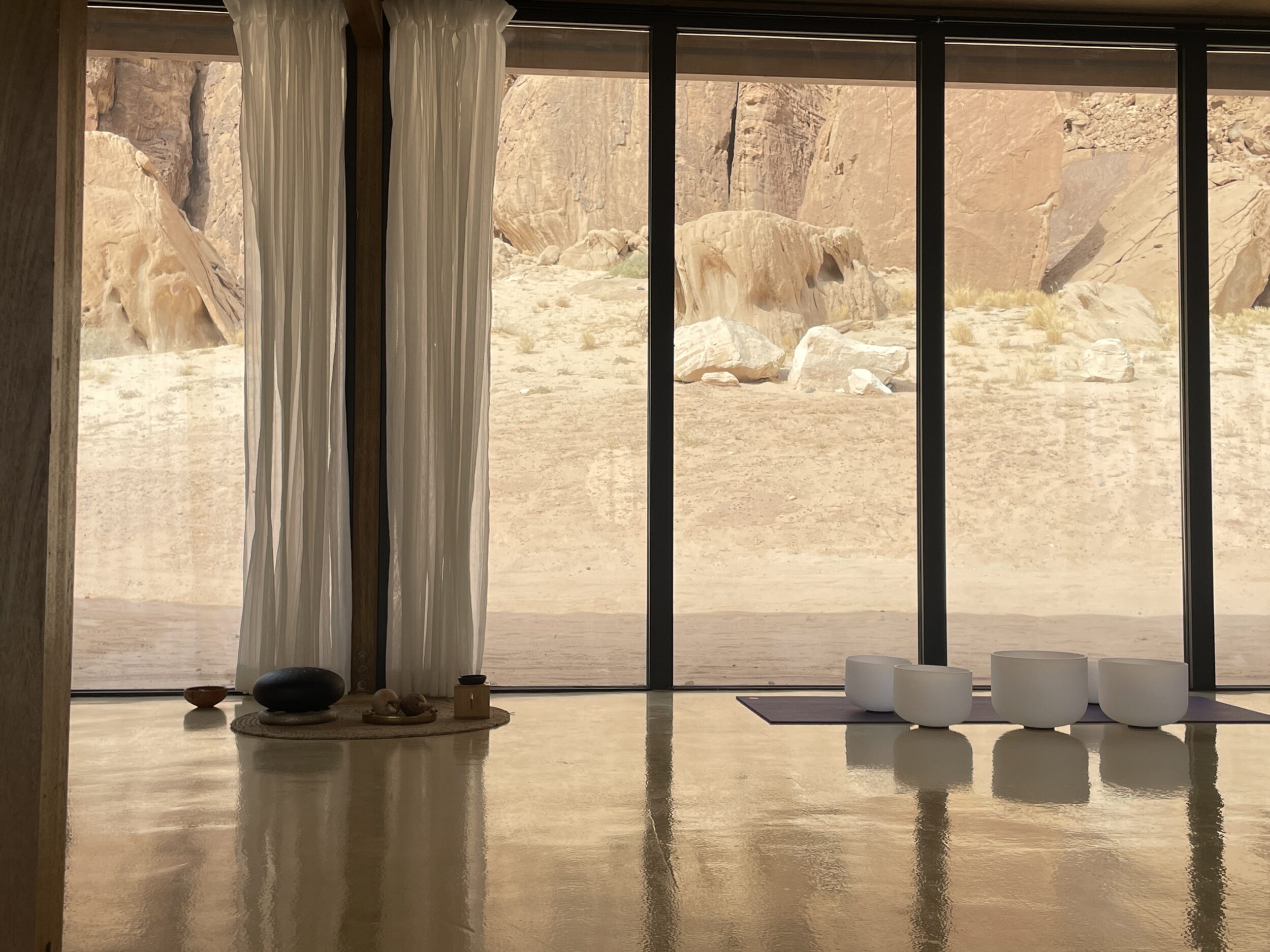
F. is right, it’s magical. I didn’t have a spiritual experience like him, but the crystal bowls have a more pleasant sound than the Tibetan bowls. It’s very very pleasant. JB falls asleep a bit while I manage, for an hour, to have time perfectly suspended. As the lady said at the beginning of the session “you have no worries, you have nothing to do, you’re going nowhere”… I manage to live fully in the present during this session, instead of planning our road trip for the umpteenth day, and wondering why I still don’t have 1000 euros to splurge on a hotel room ahahah. I honestly don’t know how you access this kind of treatment outside of hotels, because there’s a specific technique: each bowl corresponds to a chakra and there are two sounds at the same time, it changes all the time. Some are more harmonious than others. There’s one bowl, particularly, when it rings, it gives me a pain in my chest and by the end of the session, it doesn’t hurt anymore. It’s truly the experience I loved the most at Our Habitas. At 5pm, there’s also a sound bath in the canyon, but we don’t stay until 5pm either, let’s not overdo it.
Next to the yoga room is the fitness room (we can access it too) and swings.
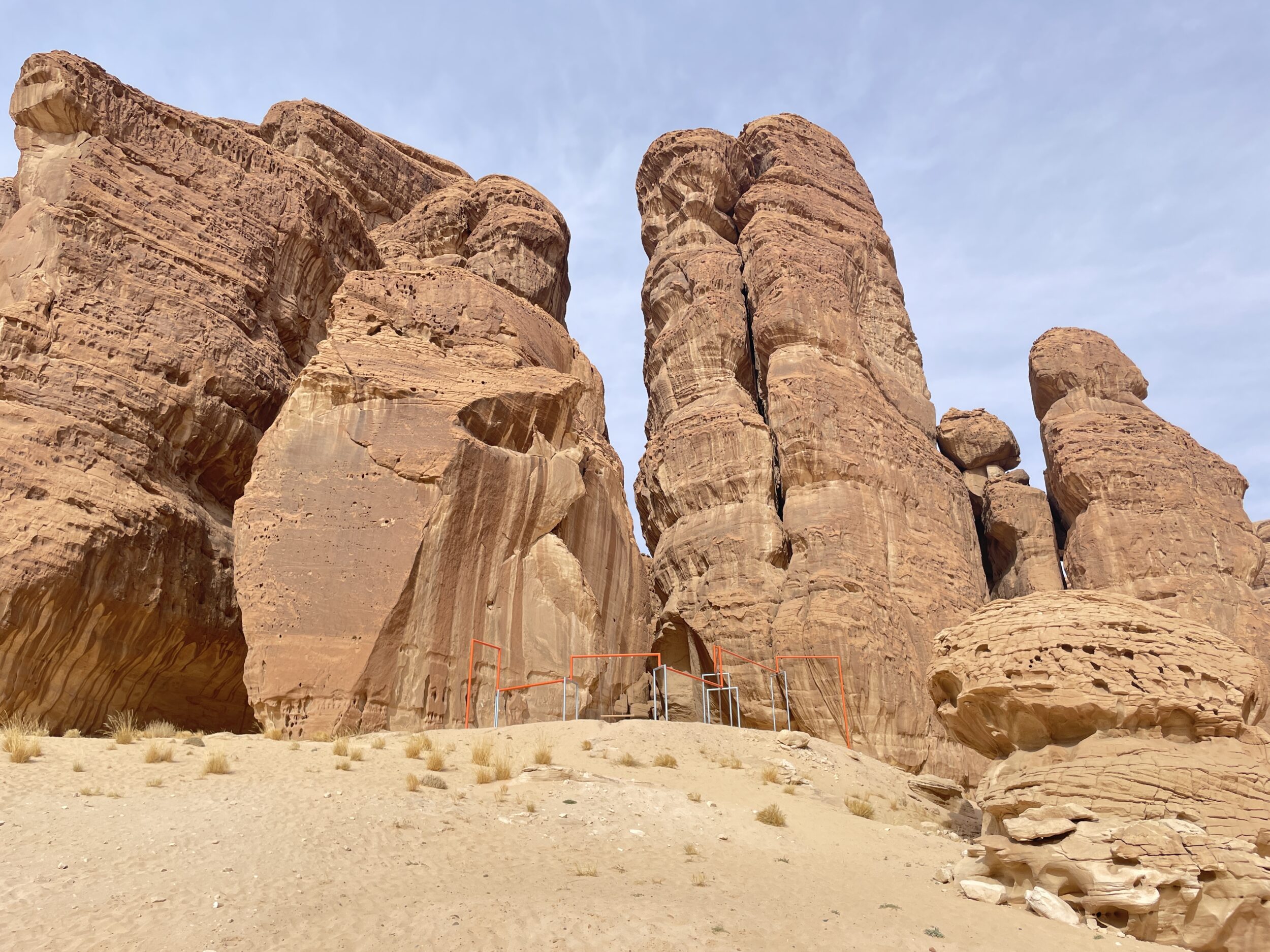
In short, for 80 euros/person, we live our best life. But probably not if it were 1000 euros ahaha.
We take advantage of our access to go see Banyan Tree. We don’t go in but the reception seems more intimate and exclusive. The villas are visible from the road, but from very far away. They seem bigger than Our Habitas. And especially, for the same price, many villas have private pools!! Banyan Tree is a very well-known luxury hotel chain but I’ve never had the chance to set foot in one. There you go, I’m giving you the info in case you’re part of the 0.01% who can afford such a room.
Maraya
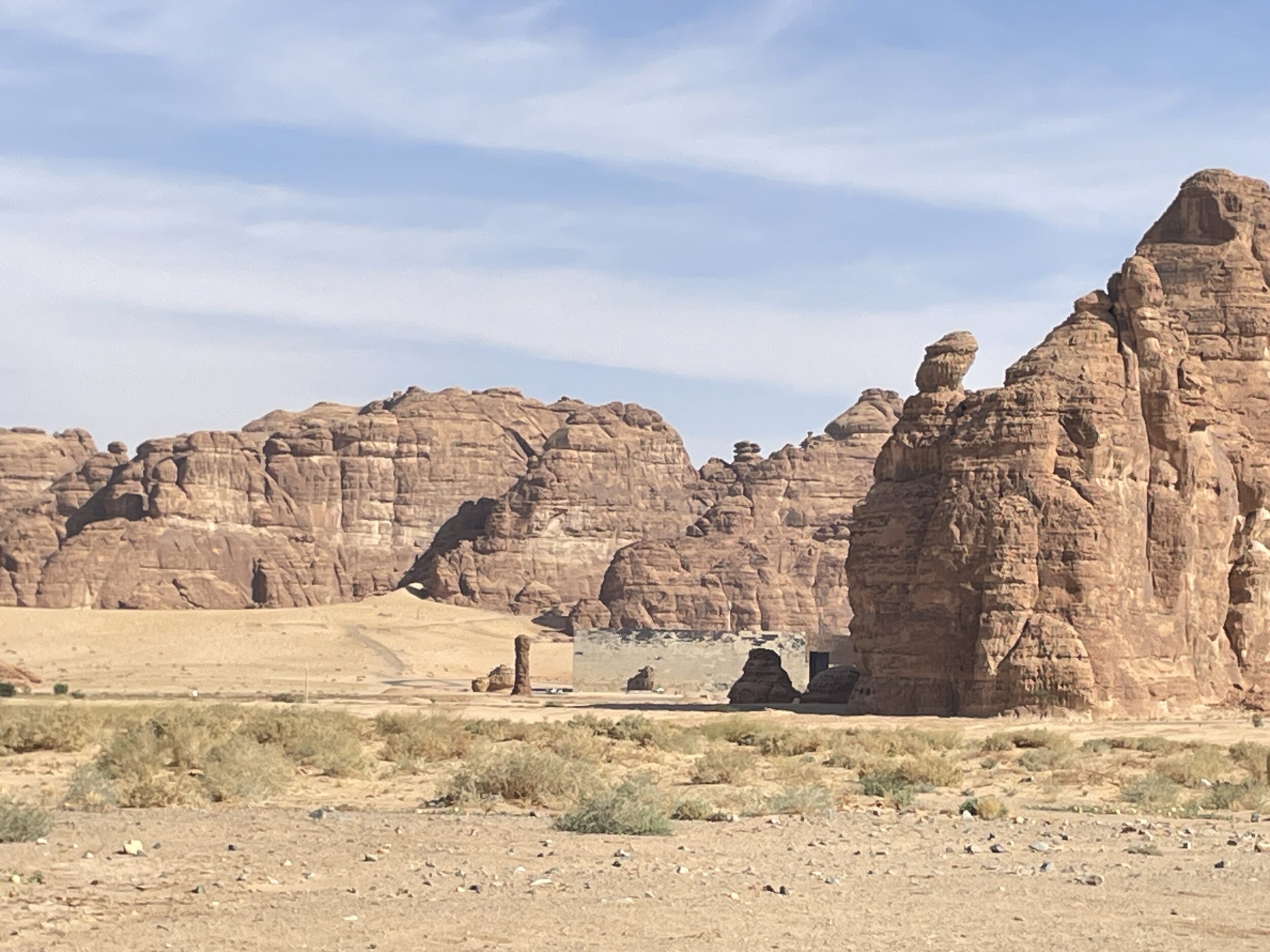
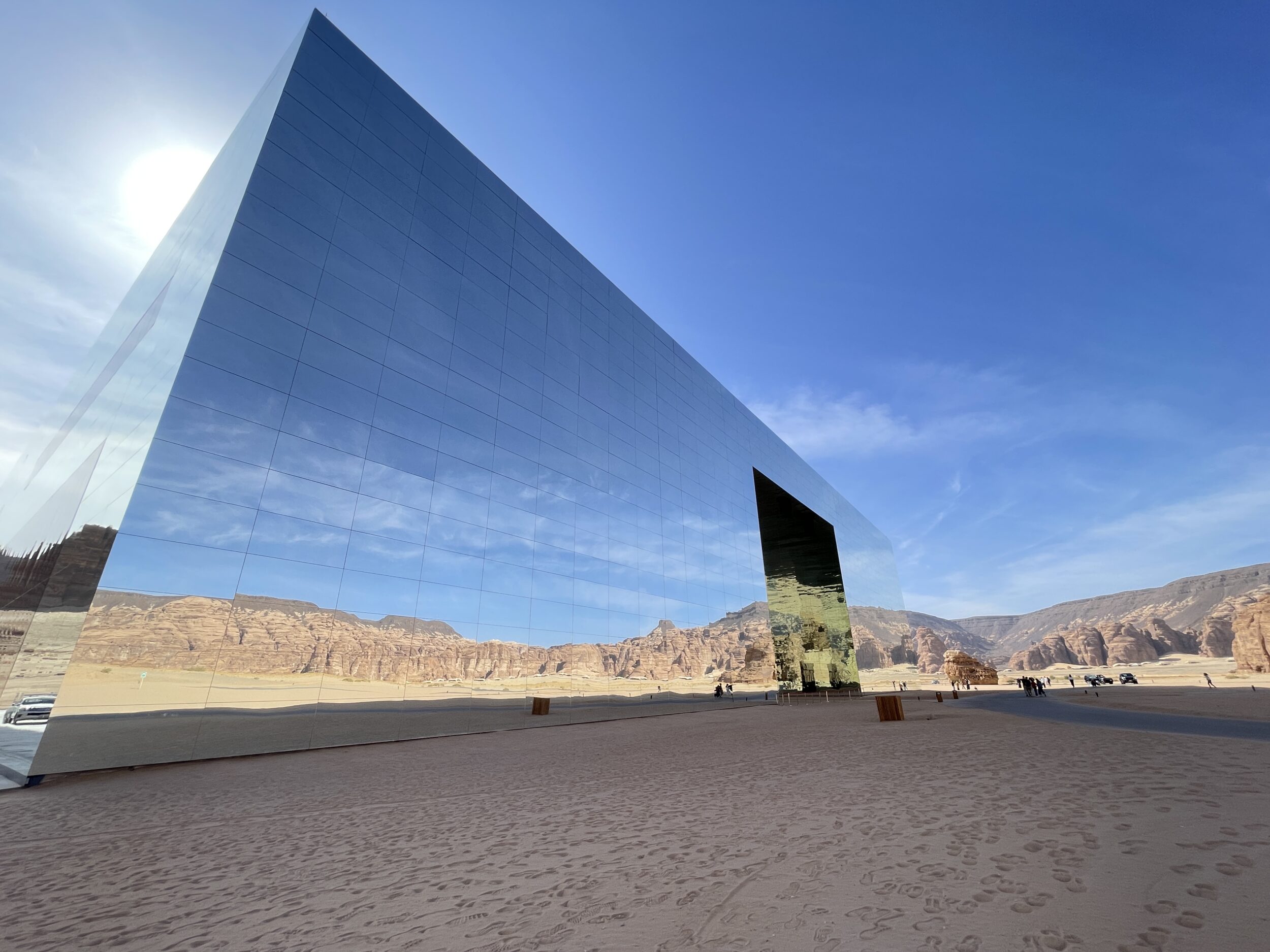
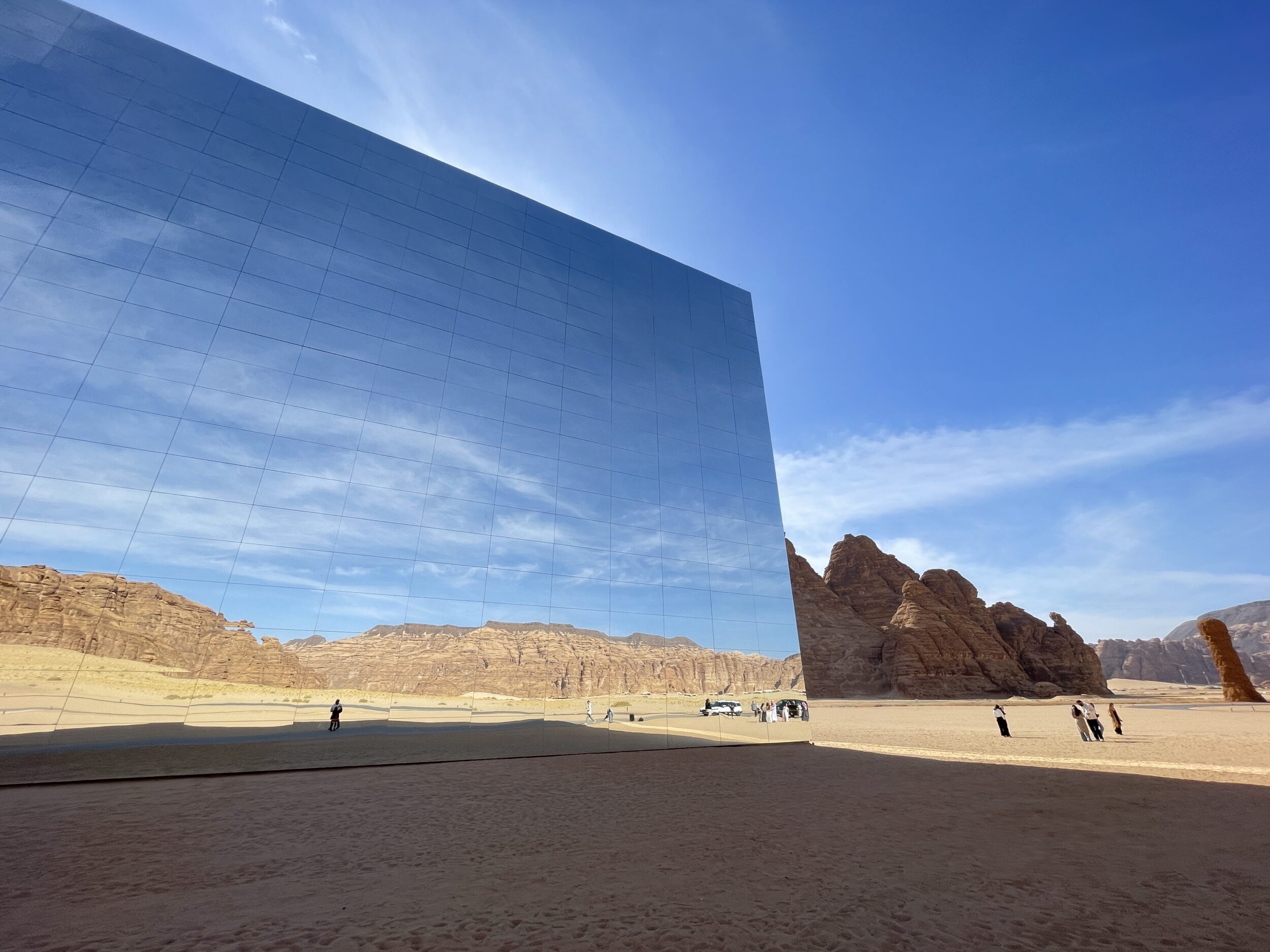
We take advantage of being allowed in the area to head to Maraya, a concert/events building. This building is on all of Saudi Arabia’s promo videos. The idea is very simple: it’s a building covered in mirrors. But it’s in such an exceptional area that depending on the angle you look at the building, it becomes almost invisible. This building really pleases JB who finds it particularly well-executed and entertaining.
Focus on the photo below to find the building.
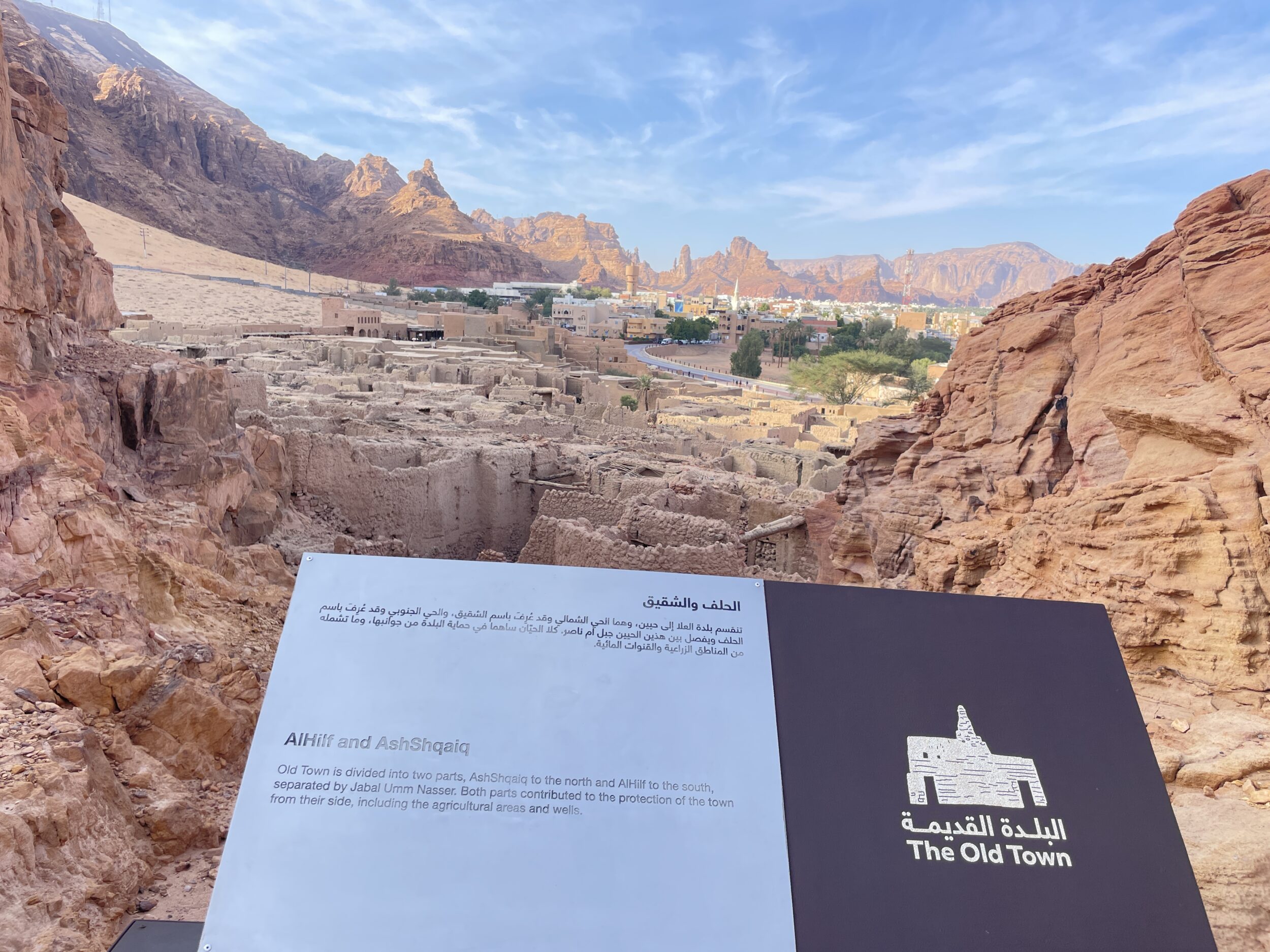
The old town of Al Ula
I’m not feeling well because I’m hungry. When I’m hungry, I get cranky. We’re supposed to go to Al Ula near our Airbnb for lunch, but it’s a 30-minute drive. I decide to reschedule the visits and have lunch instead in Al Ula’s old town. I expect there to be no parking available. However, there are two large parking lots at both ends of the old town; we park at North Parking and a golf cart comes by every 20 seconds to take us 50 meters further, to the entrance of the old town. In Saudi Arabia, there are lots of low-skilled jobs like this; it keeps people busy and creates a five-star service funded by the state. It’s cool.
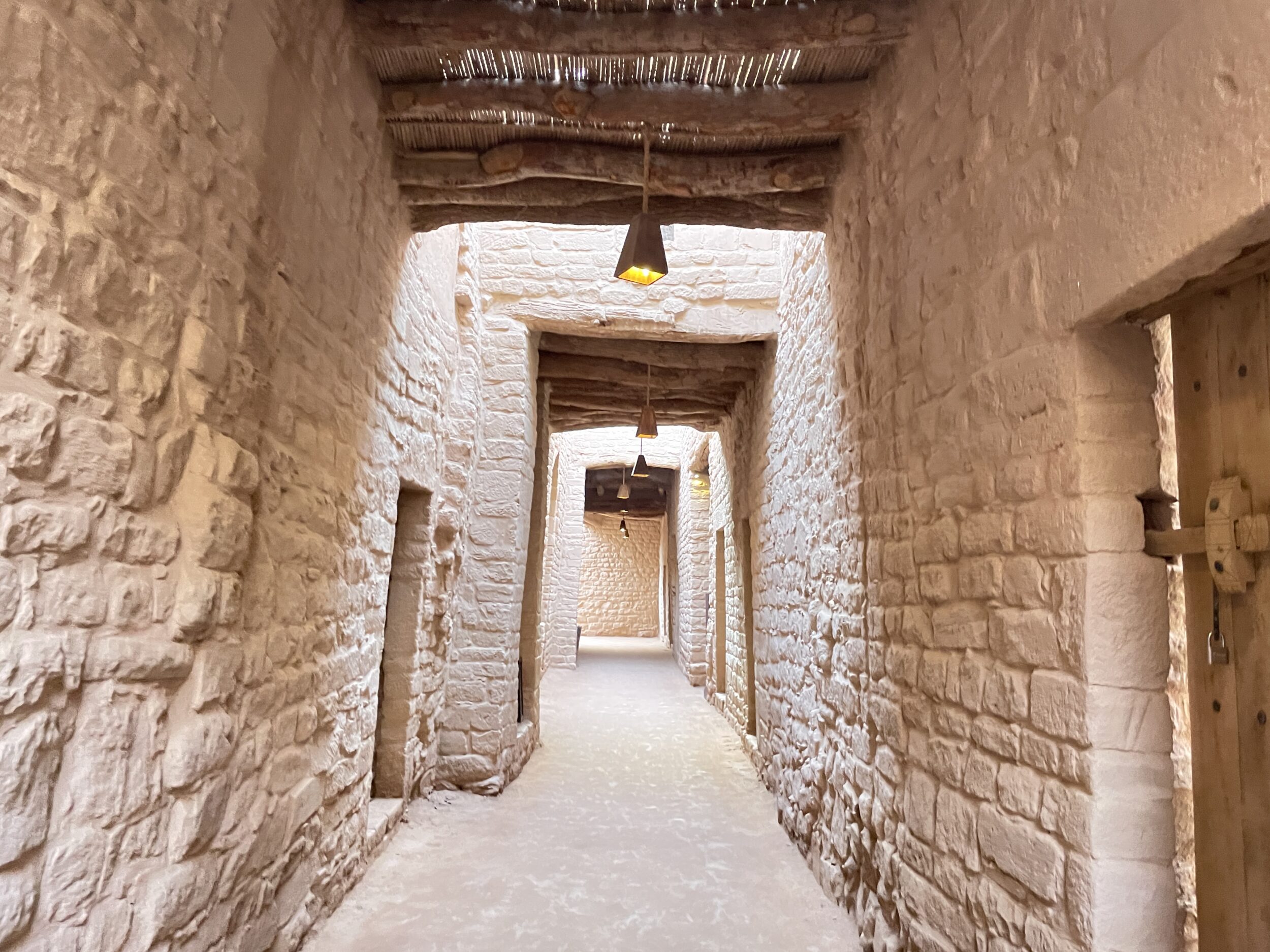
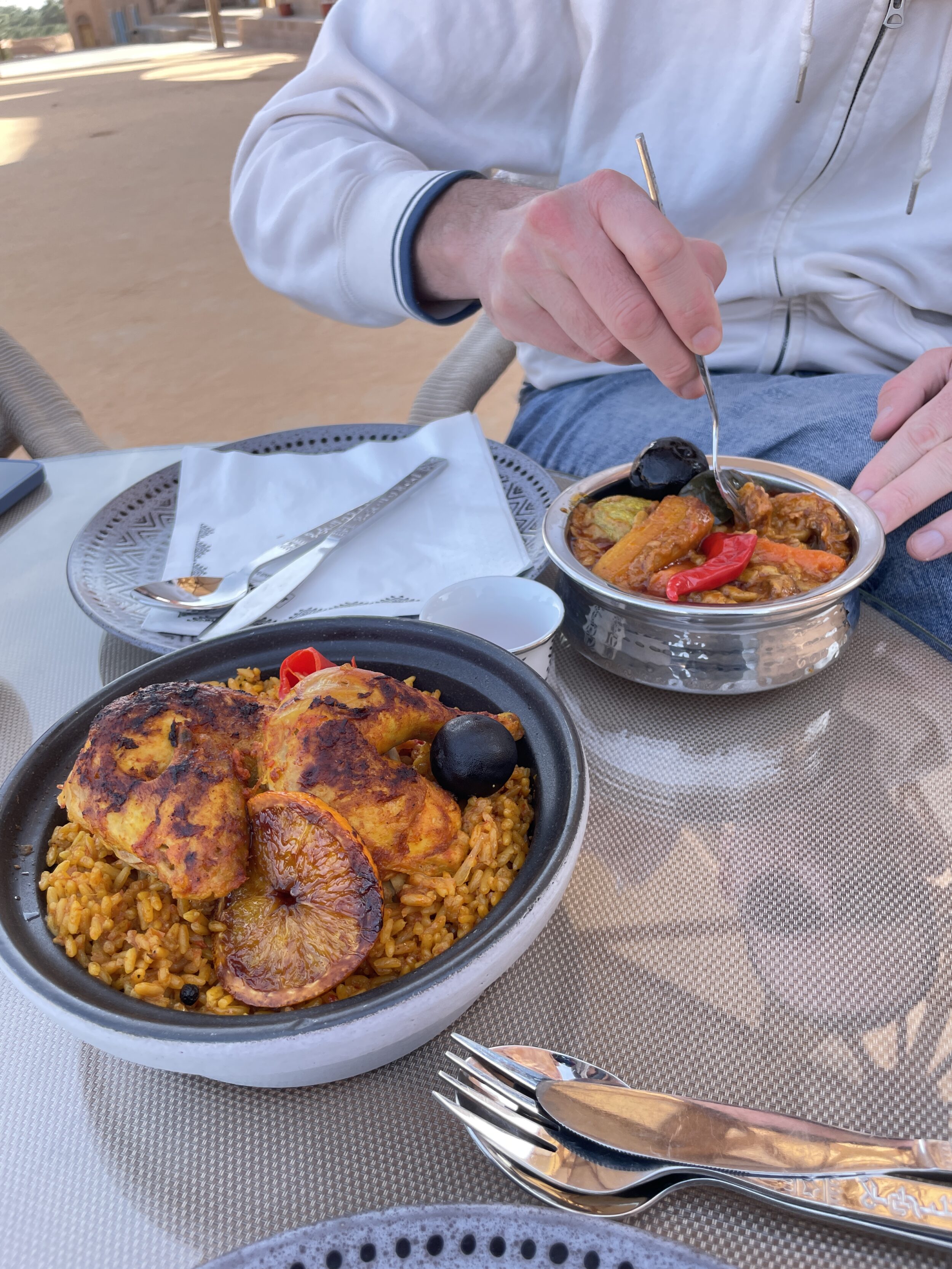
We check out the restaurants, but they’re either not good, closed, or overpriced. I’m about to end up with an empty stomach, when by luck, I find an alley that crosses the restored old town, and end up in front of an absolutely delicious and cheap restaurant (Google Maps link). I opt for their Kabsah, with chicken and orange. The rice is marinated and so good. Three Saudi women introduce themselves; they say they own the restaurant and ask us if the food is good. It makes me so happy to see female entrepreneurs in this country where, until 2019, women weren’t allowed to work.
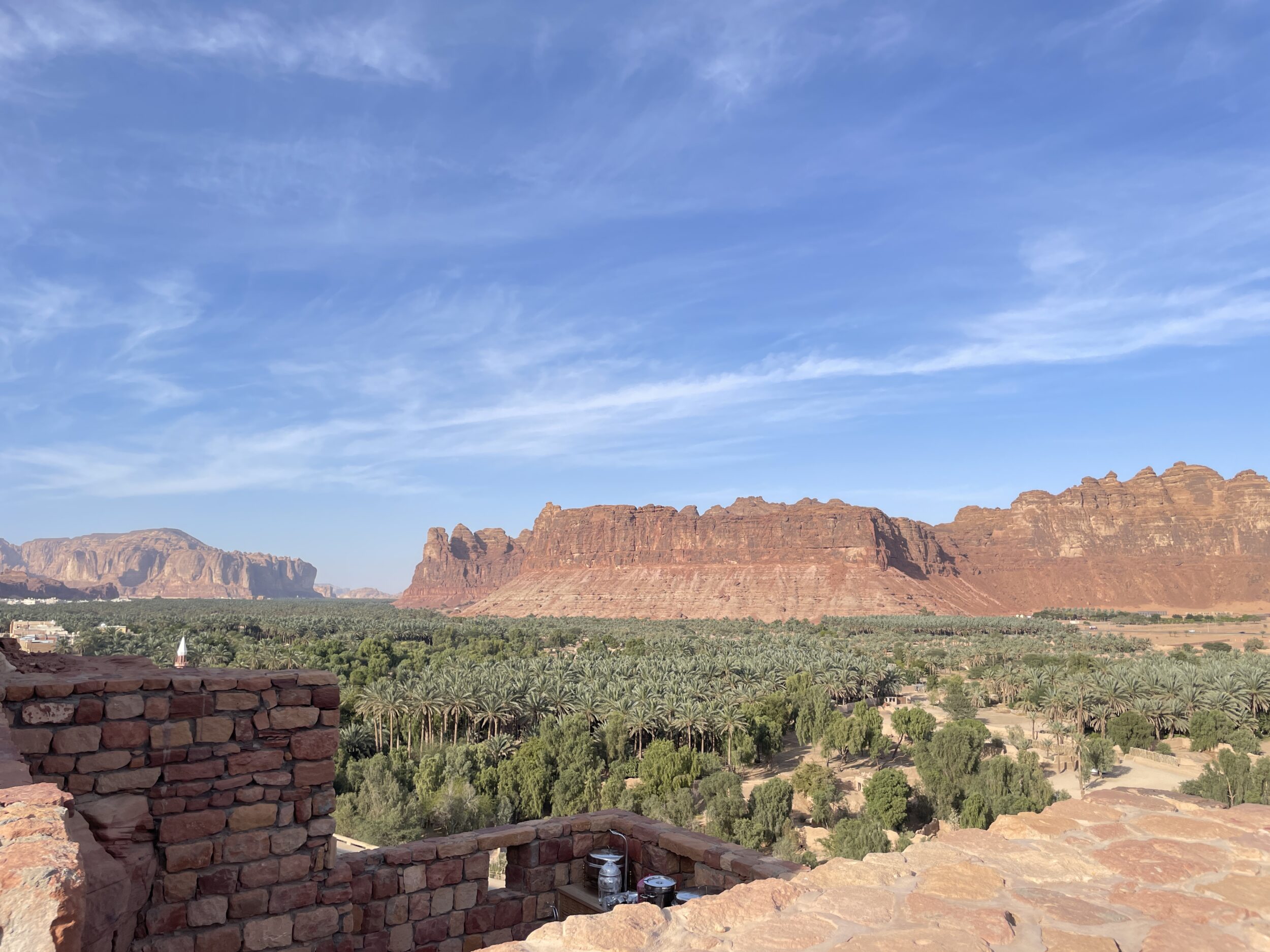
From here, you can clearly see that Al Ula is a true oasis. It’s like the US’s ‘Monument Valley’ but with more trees. If you go behind the restaurant, you’ll see stairs leading up to the highest point of the old town, and you’ll see old houses (no longer with roofs) and restored parts (with roofs).
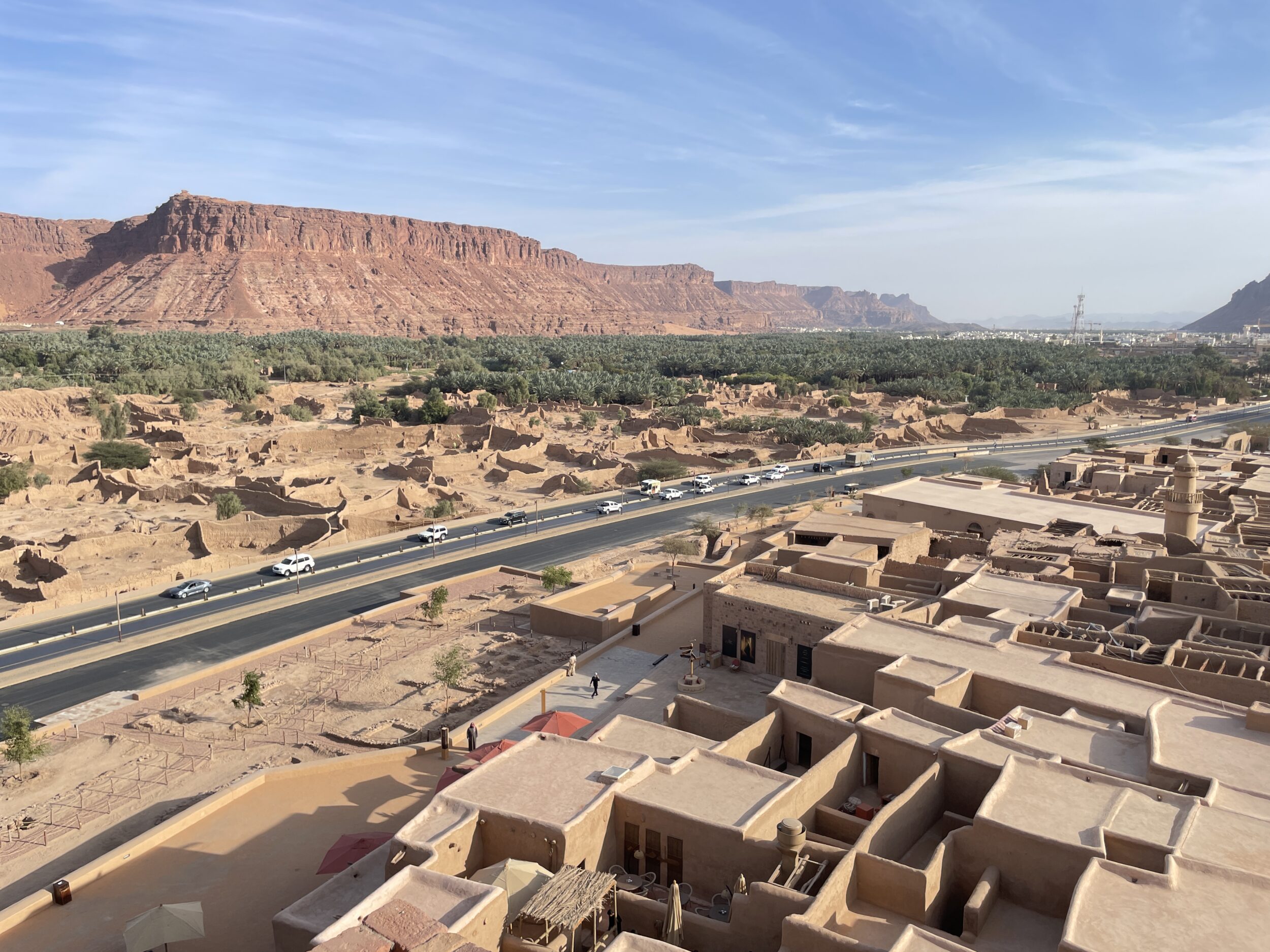
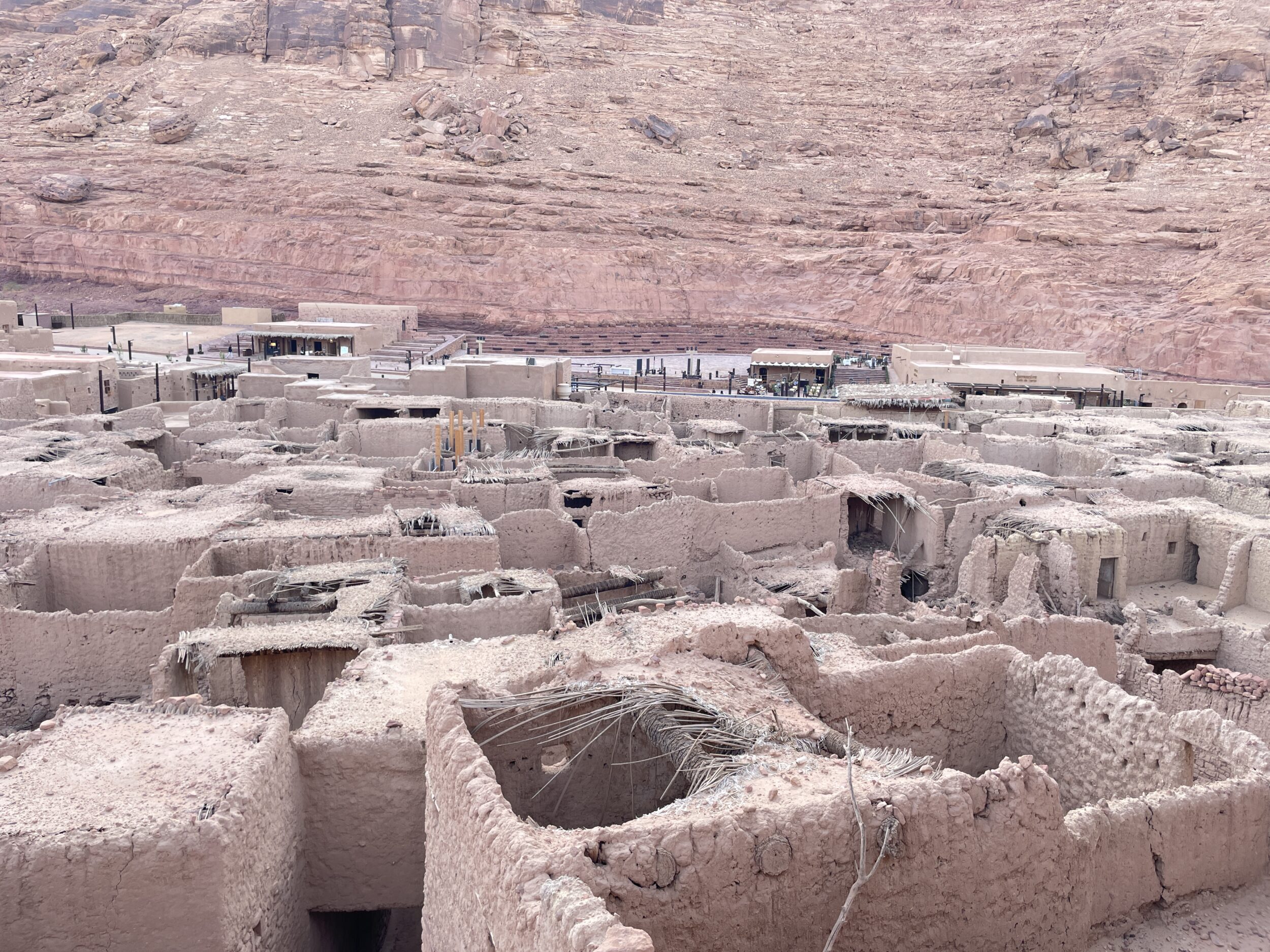
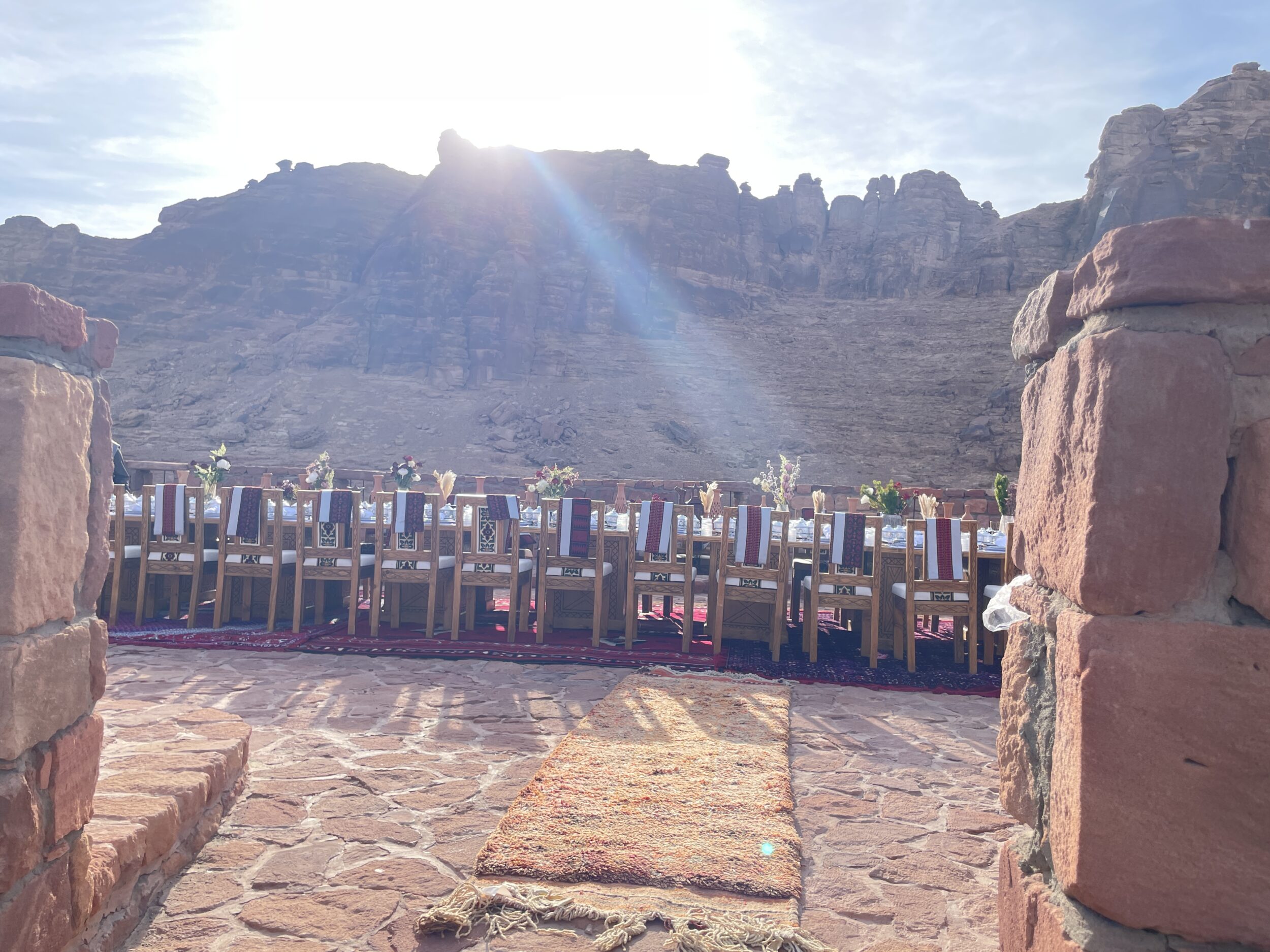
Once at the top, we see staff setting up a magnificent, large table for a fancy dinner. Who can privatize such a place? I think of the GMC cars we saw yesterday, but a few hours later, we’ll see veiled heads at this spot, so it must not be foreign tourists. My entourage calls me ‘Anh Agency’ because I occasionally bring family and friends on trips with me, planning luxury itineraries and always finding the ideal moment to have places to ourselves. But here, ‘Anh Agency’ has competition!!
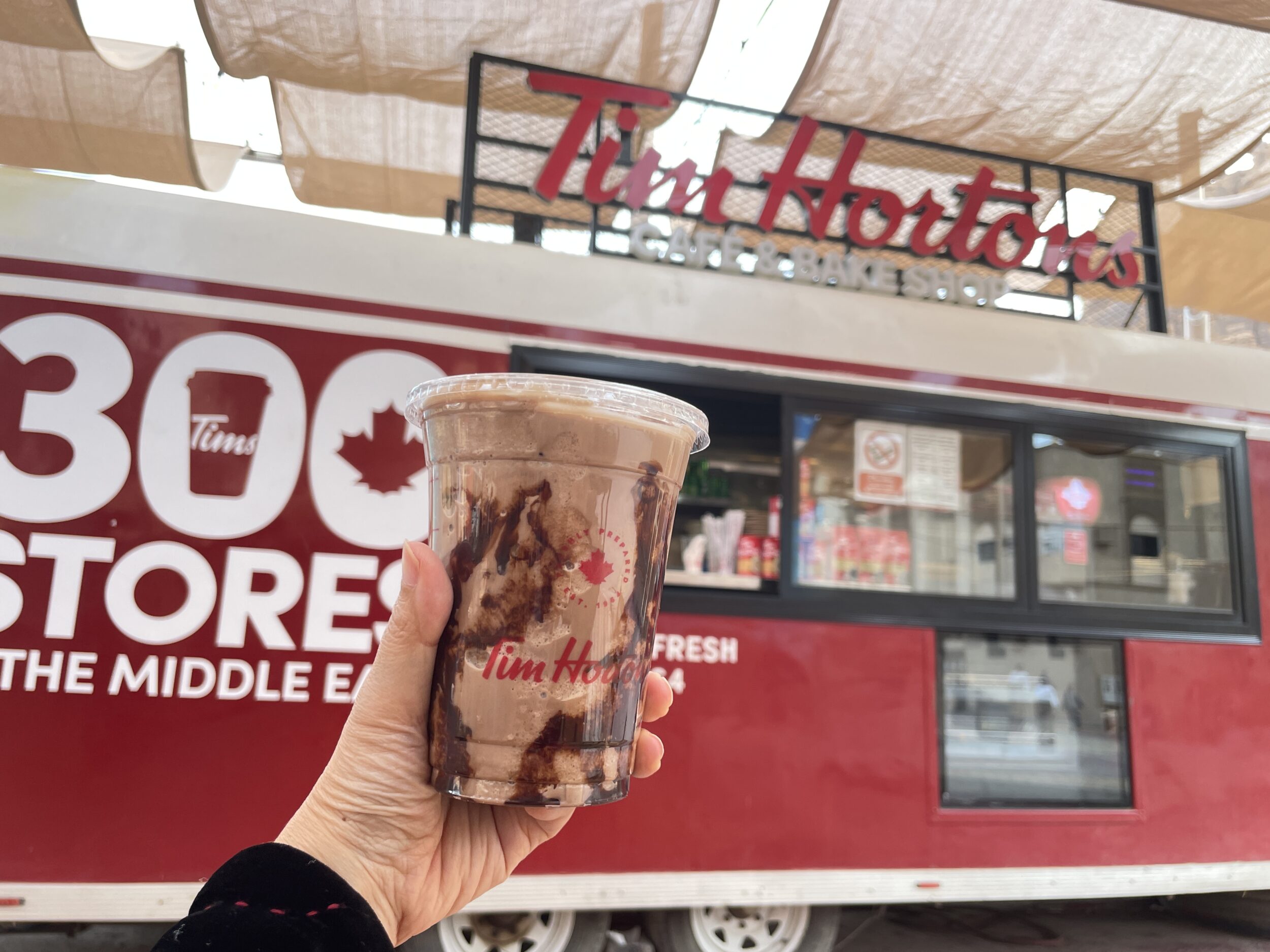
Here, even Starbucks and Dunkin’ Donut blend into the scenery. I’m so happy to find Tim Hortons, where I used to drink lots of hot chocolate when we were in Canada. However, given the climate, it’ll be an iced chocolate.
With full stomachs, we decide to push a bit further to Elephant Rock. It’s just a well-formed rock in the middle of nowhere. But the Saudis are very skilled. They set up a café and a restaurant, restrooms, quality speakers, a parking lot, and tables buried in the sand, and everyone goes there after sunset. The vibe is really, really nice. The Middle East has this talent of turning rocks into gold, with vision and lots of money. But they don’t explain how we, too, can have as much money as them without oil, haha.
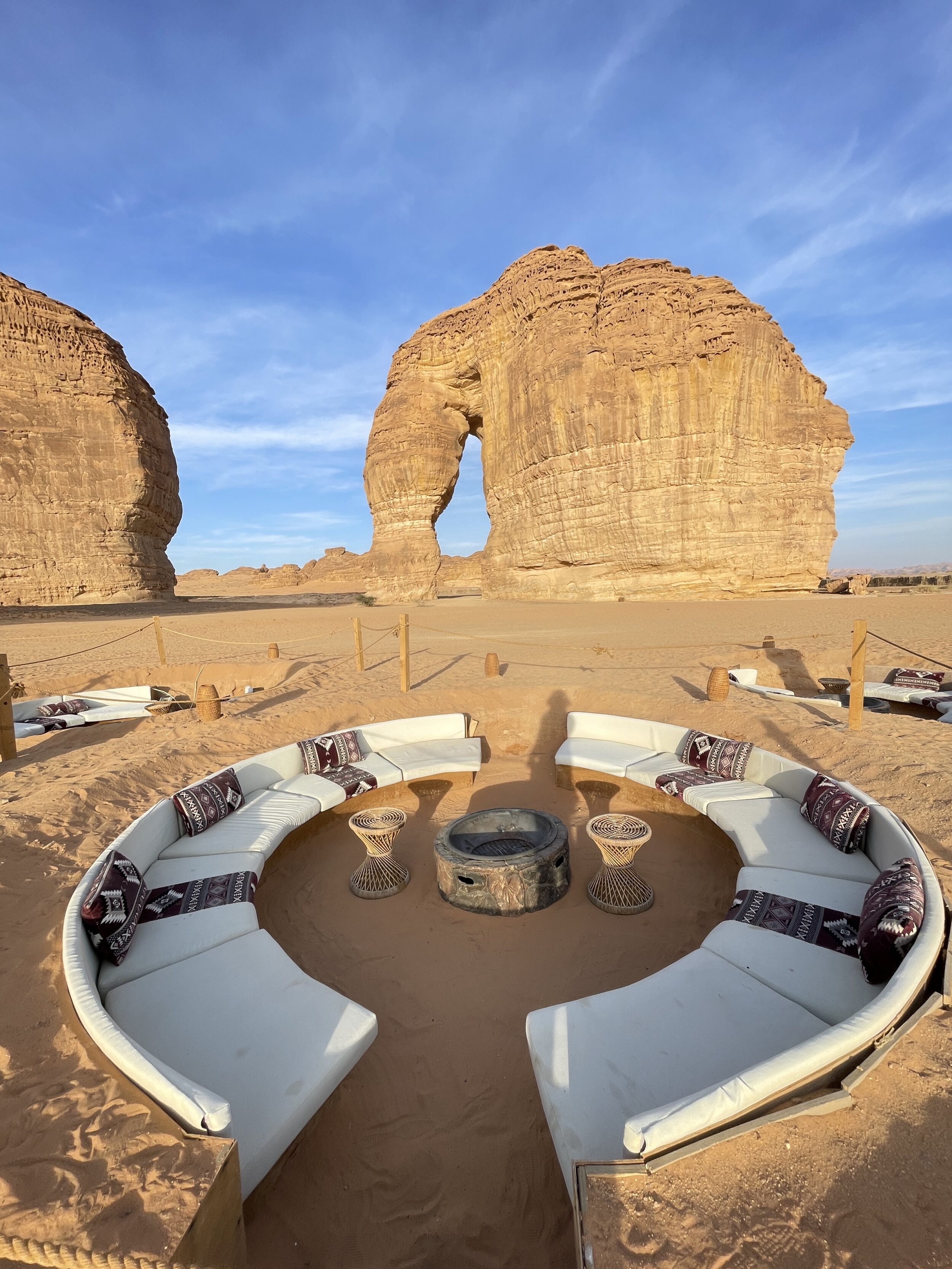
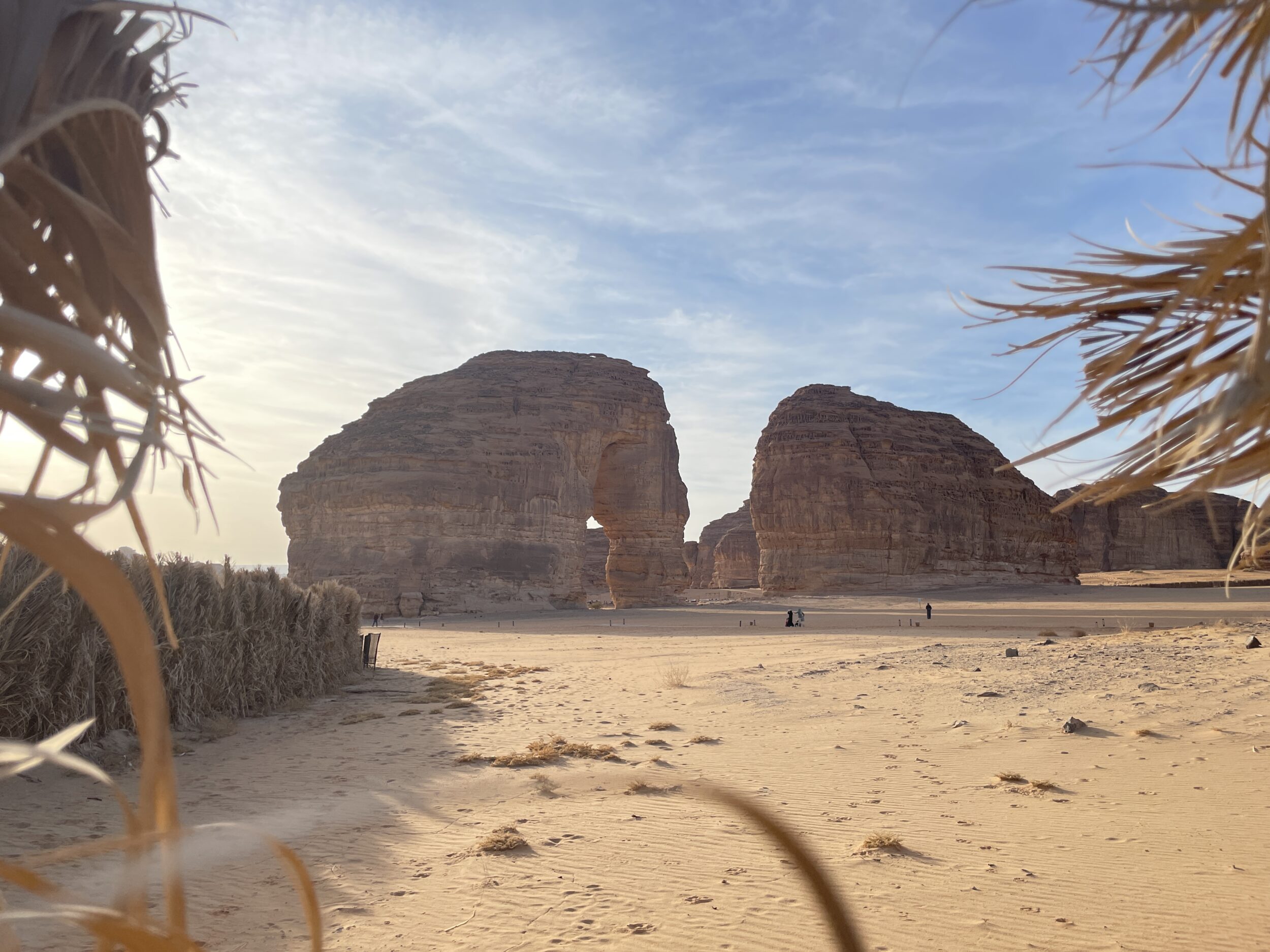
We return to the Airbnb. There won’t be a restaurant tonight. We just have ‘Hegra After Dark’ at 9 PM. As usual, 9 PM is for those leaving from Al Ula; for those coming to Hegra Visitor Center, the meeting is at 9:15 PM for a 9:30 PM departure.
What I really like is that we’re exploring a different area than the Hegra Day Tour. We’re taken there by cart, four people at a time, which feels very magical. Two Saudis are with us, and to our great surprise, the lady is not veiled. But she does wear a truly magnificent abaya made of wool that reaches her heels. I really like this garment; I find it dresses well while being very comfortable. I like the open version in the middle, like a coat.
There are two distinct places: the secret garden and a more open space. There are actors on site playing the role of the Nabataeans. It seems very funny, but the show is in Arabic and simply summarized in English. All the comedic aspect escapes us.
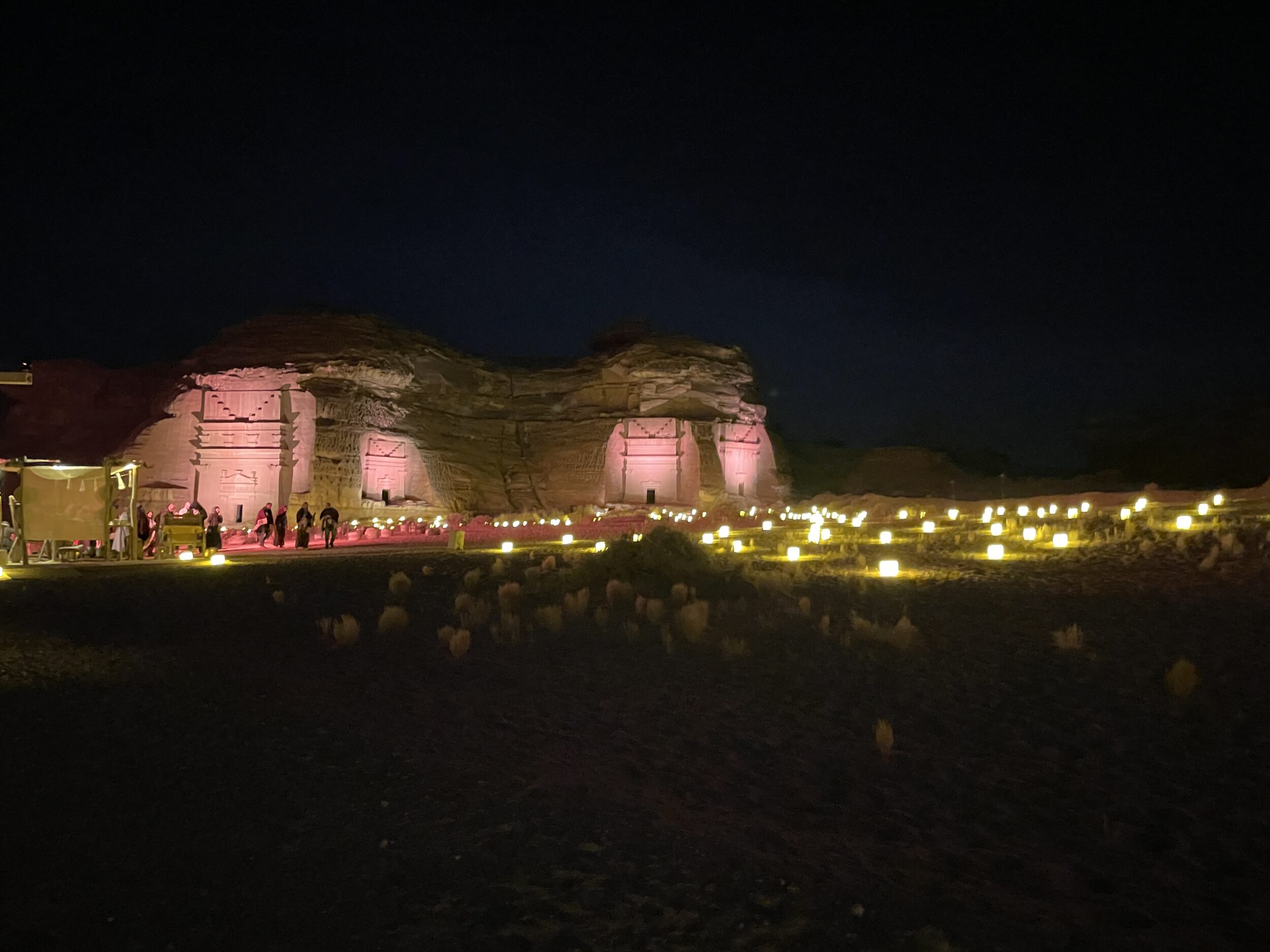
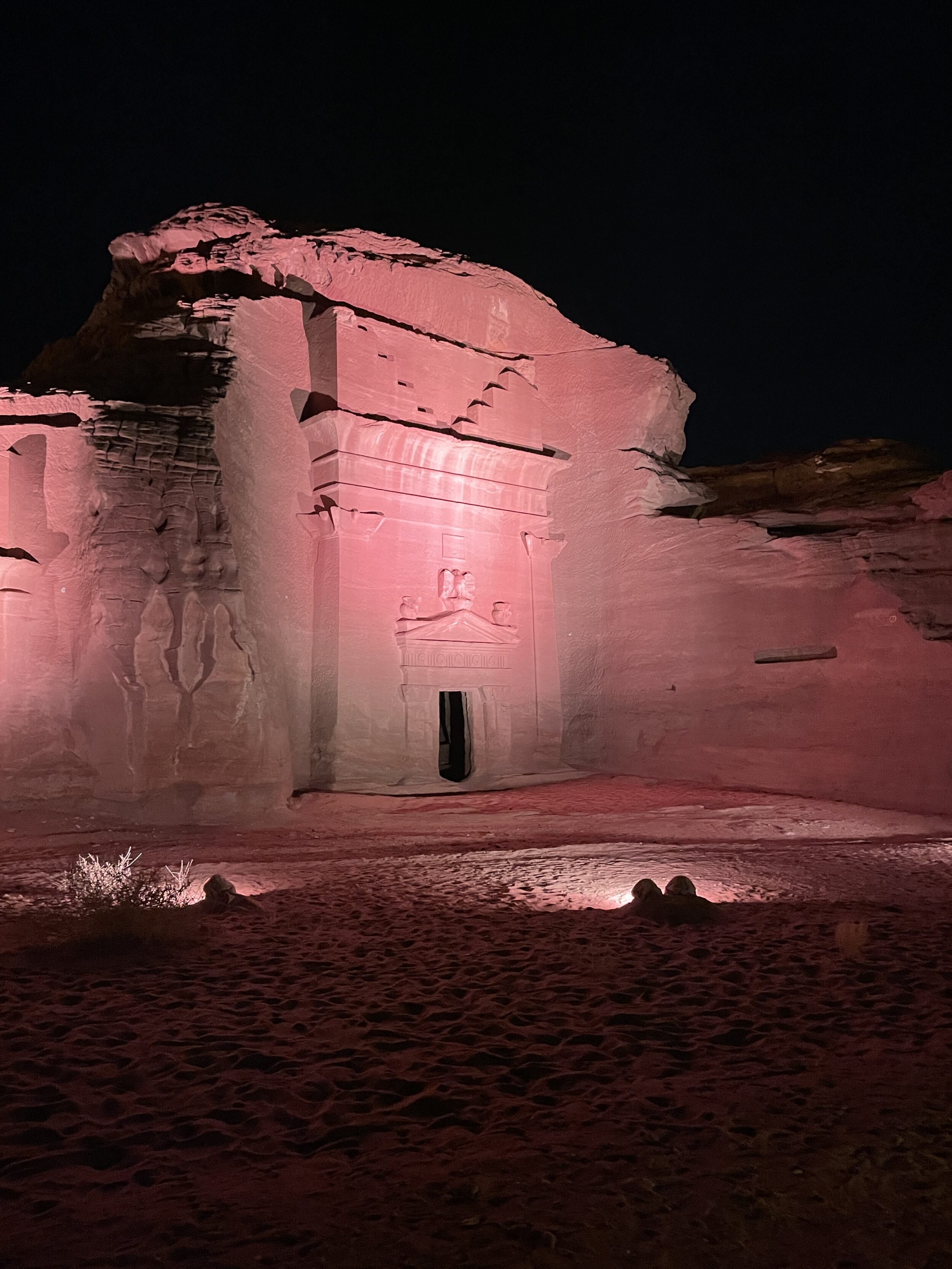
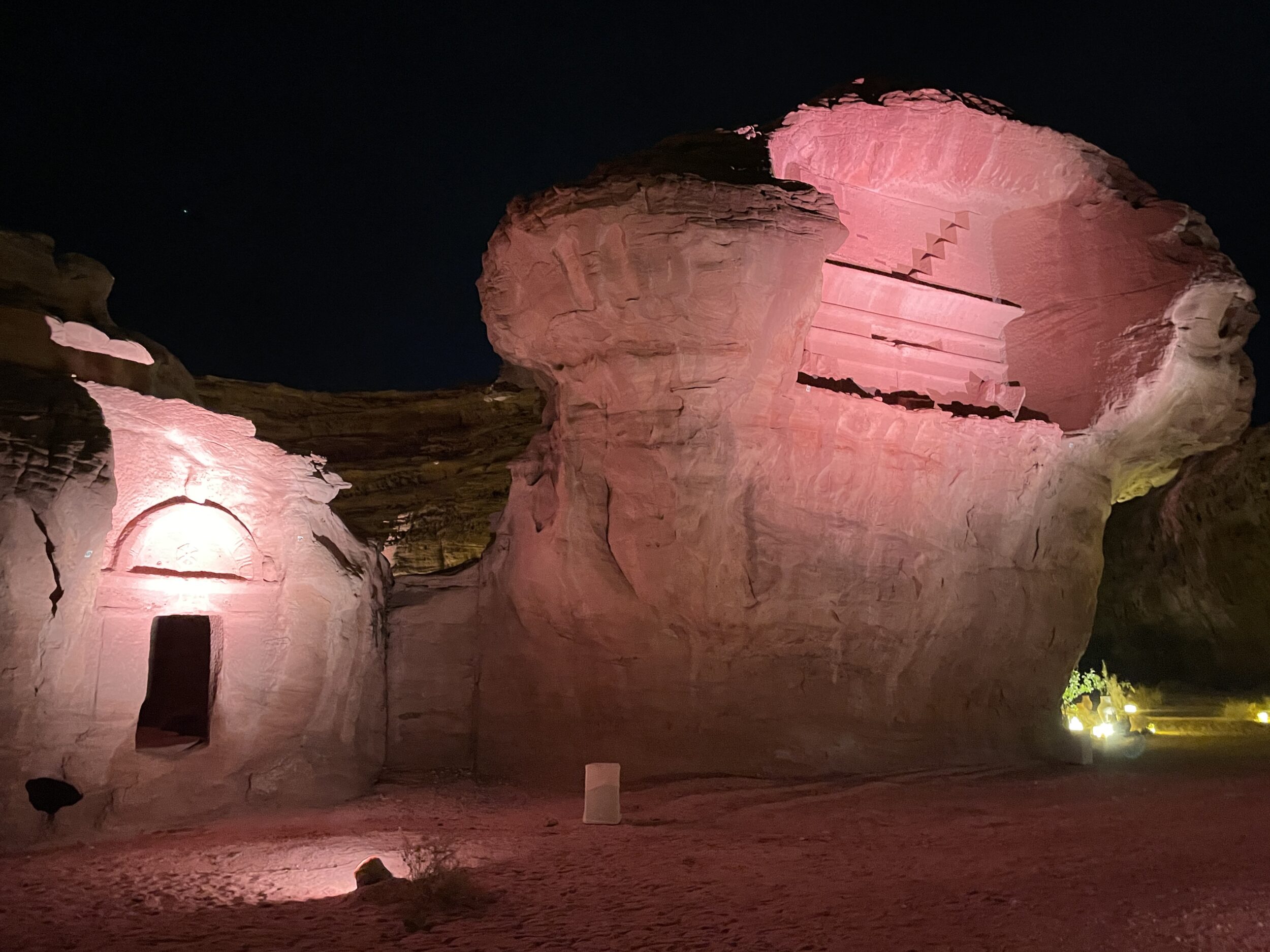
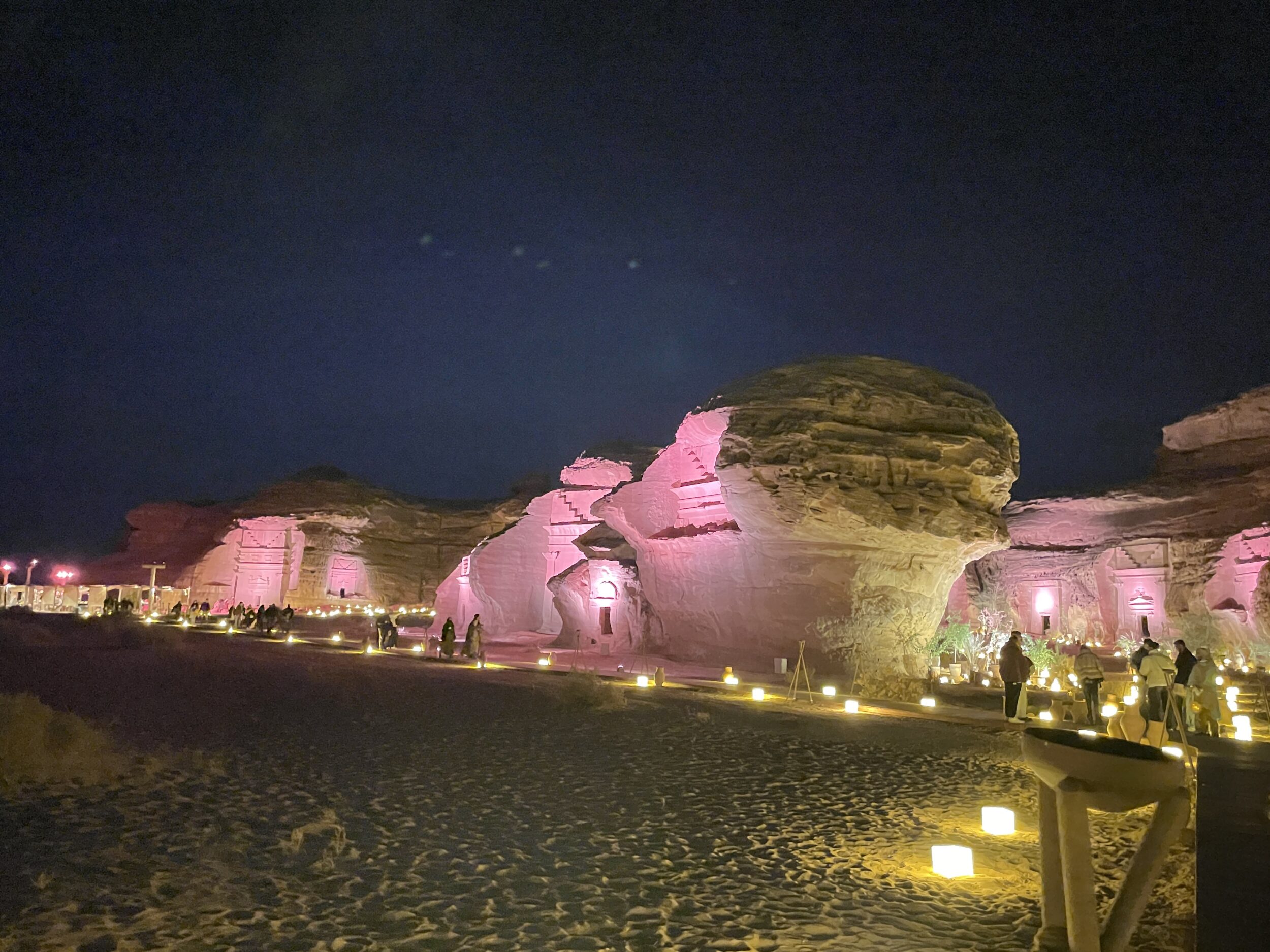
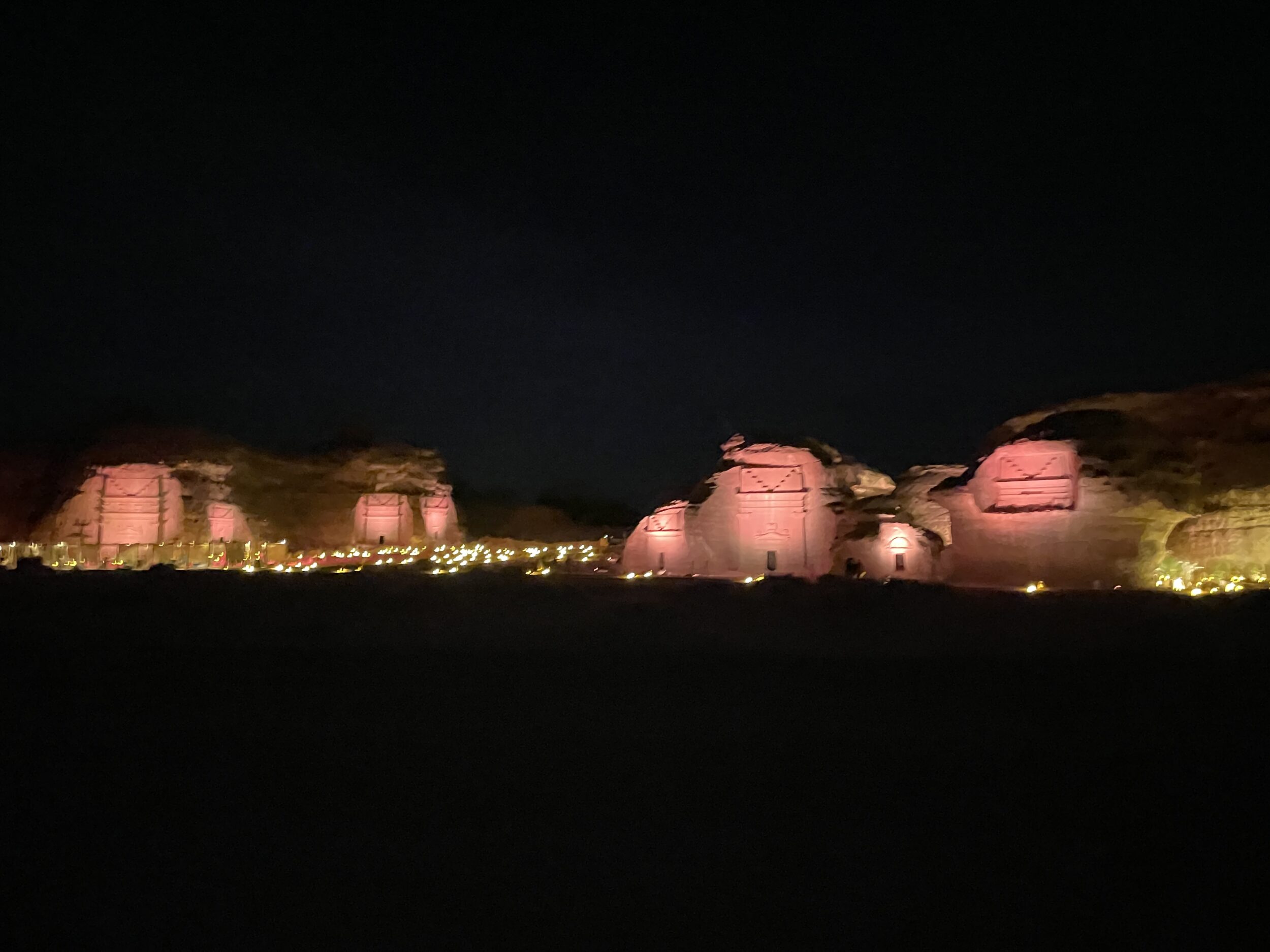
Then, there’s a sort of ‘local market’. We’re given fake coins, and we can go from stall to stall to ‘buy’ drinks and food and participate in workshops. For example, I learned how to make kohl (eyeliner) and learned the recipe for perfumes. Others make custom bracelets right there. All of this is already included in the ticket, of course. It feels a bit like Puy du Fou; we have fun, we eat well, I love it!! I highly recommend visiting the sites both during the day and in the evening, because they are complementary experiences.
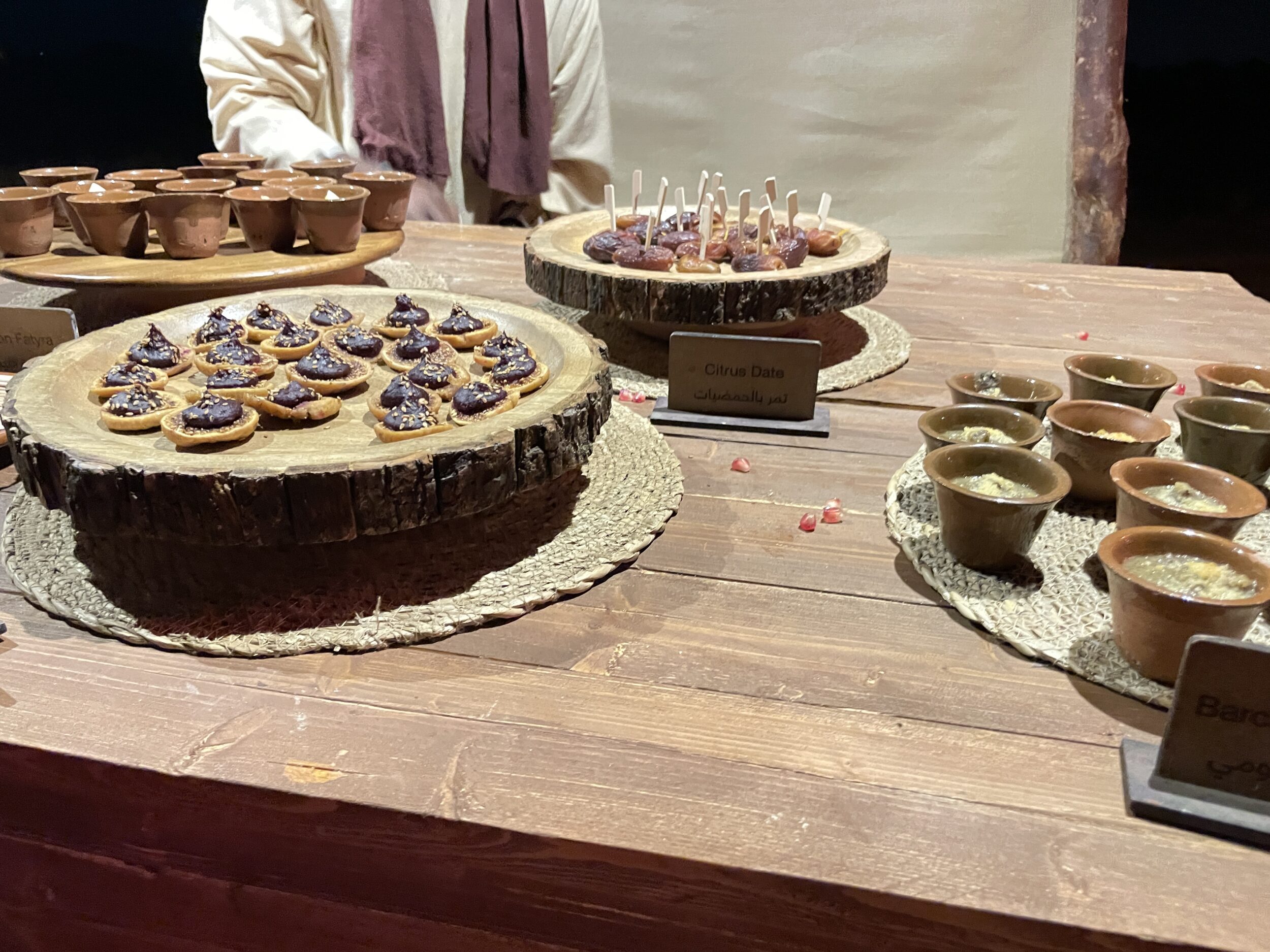
We stay another night in our Airbnb before returning to Medina.
Part 2: Practical Tips
Budget
- Car rental from Budget (office at Medina airport): 742 SAR for 4 days (189 euros). We took an automatic car, a Hyundai Elantra.
- Gas: 25 euros (88 SAR) for 978 km.
- Lodging:
- Hotel near Medina airport: Rekaz Diamond (Booking link)
- Airbnb in Al Ula: 101 euros per night (double room, private bathroom). Airbnb link
- Day pass Our Habitas Al Ula: 350 SAR/person, to be booked in advance.
- Food:
- 40 – 55 SAR per dish is a decent price.
- 20 – 25 SAR per drink is a good price.
- In Al Ula, I highly recommend the restaurant Tofareya with a beautiful view and delicious dishes. Restaurant founded by three young women.
- Visits:
- Old town Al Ula: free.
- Hegra Day Tour: 95 SAR, book on the official website: https://www.experiencealula.com/en/things-to-do/experiences/hegra-tour
- Hegra After Dark: 200 SAR, book on the official website: https://www.experiencealula.com/en/things-to-do/experiences/hegra-after-dark

