

A Week in Bhutan, the Land of Happiness: Part 4/4
Today, we visit the highly anticipated Tiger’s Nest.
This post is part of a series about Bhutan. Read part one, part two , and then part three.
Part 1: Travel Journal
Part 2: Practical Tips
Part 1: Travel Journal
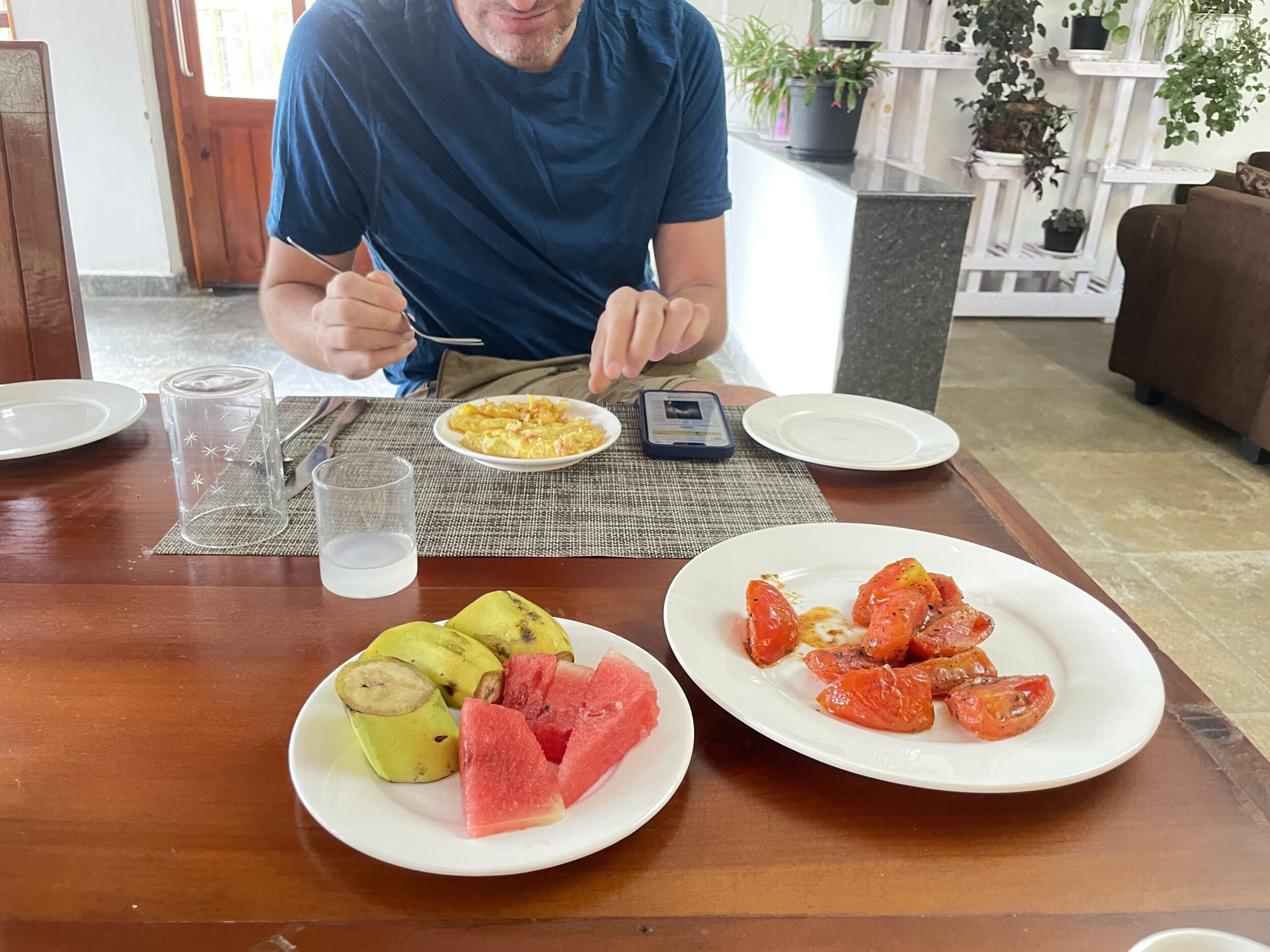
Even though dinner was a bit light yesterday, we’re quite well served this morning.
The guide picks us up early to avoid the heat. The driver drops us off at the parking lot and wishes us good luck. The Taktshang Monastery, also known as Tiger’s Nest , is one of the most iconic and spiritual places in Bhutan. It’s located in the Paro Valley, clinging to a cliff at about 3,120 meters above sea level. This Buddhist site is sacred to Bhutanese people and attracts pilgrims and tourists from around the world.
The monastery is linked to the legend of the Buddhist master Padmasambhava, also known as Guru Rinpoche. According to legend, Padmasambhava flew to this spot on the back of a tigress to meditate in a cave for three months and tame the local demons. That’s why the monastery is called Taktshang, or Tiger’s Nest. Our guide shows us a photo of the place, and indeed, in certain light, the mountain looks like a tiger’s head (you can clearly see the eyes and the mouth).
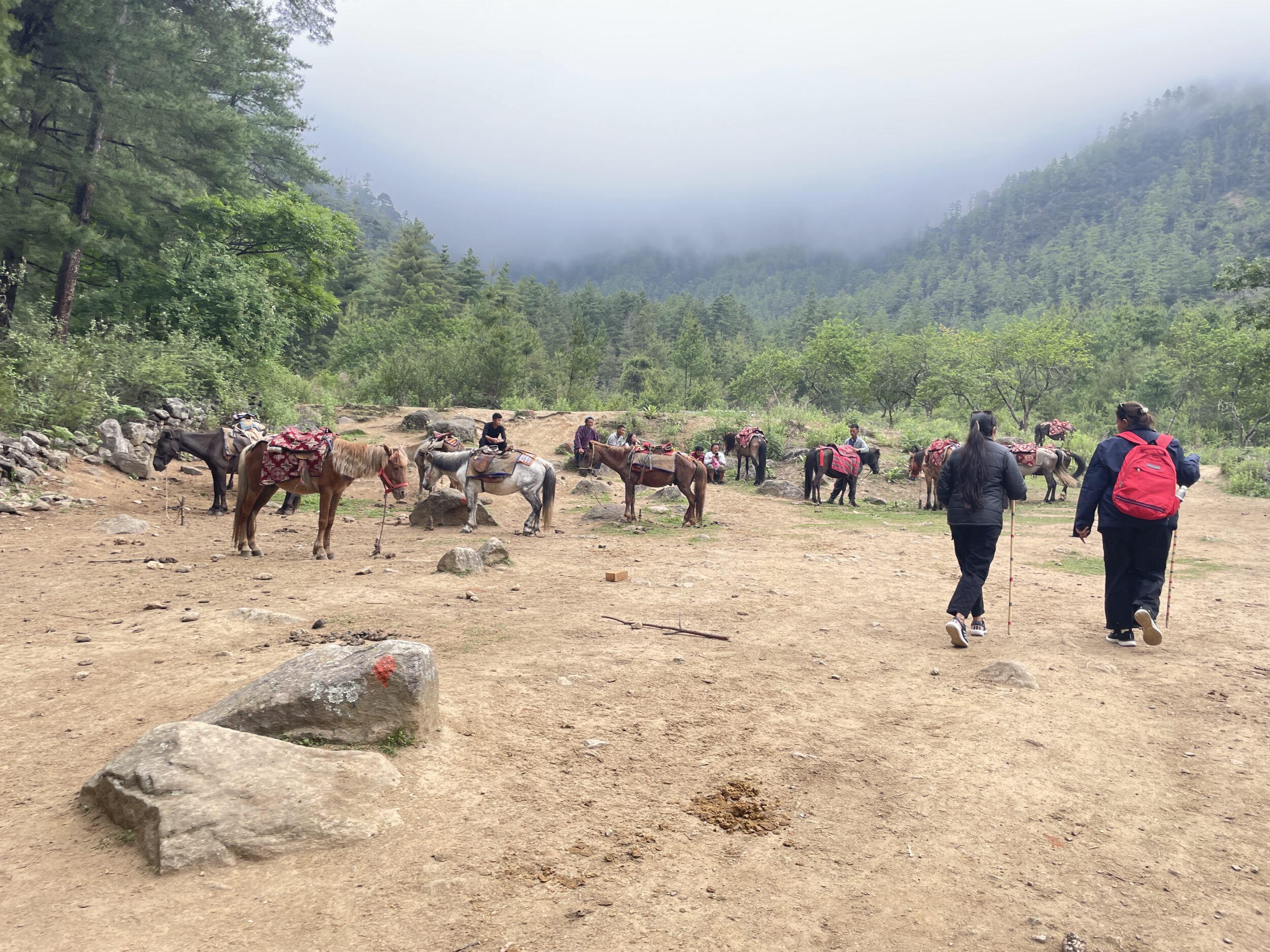
The only way to get there is on foot, or half by horse and half on foot. The horse can save the less brave about 45 minutes of walking.
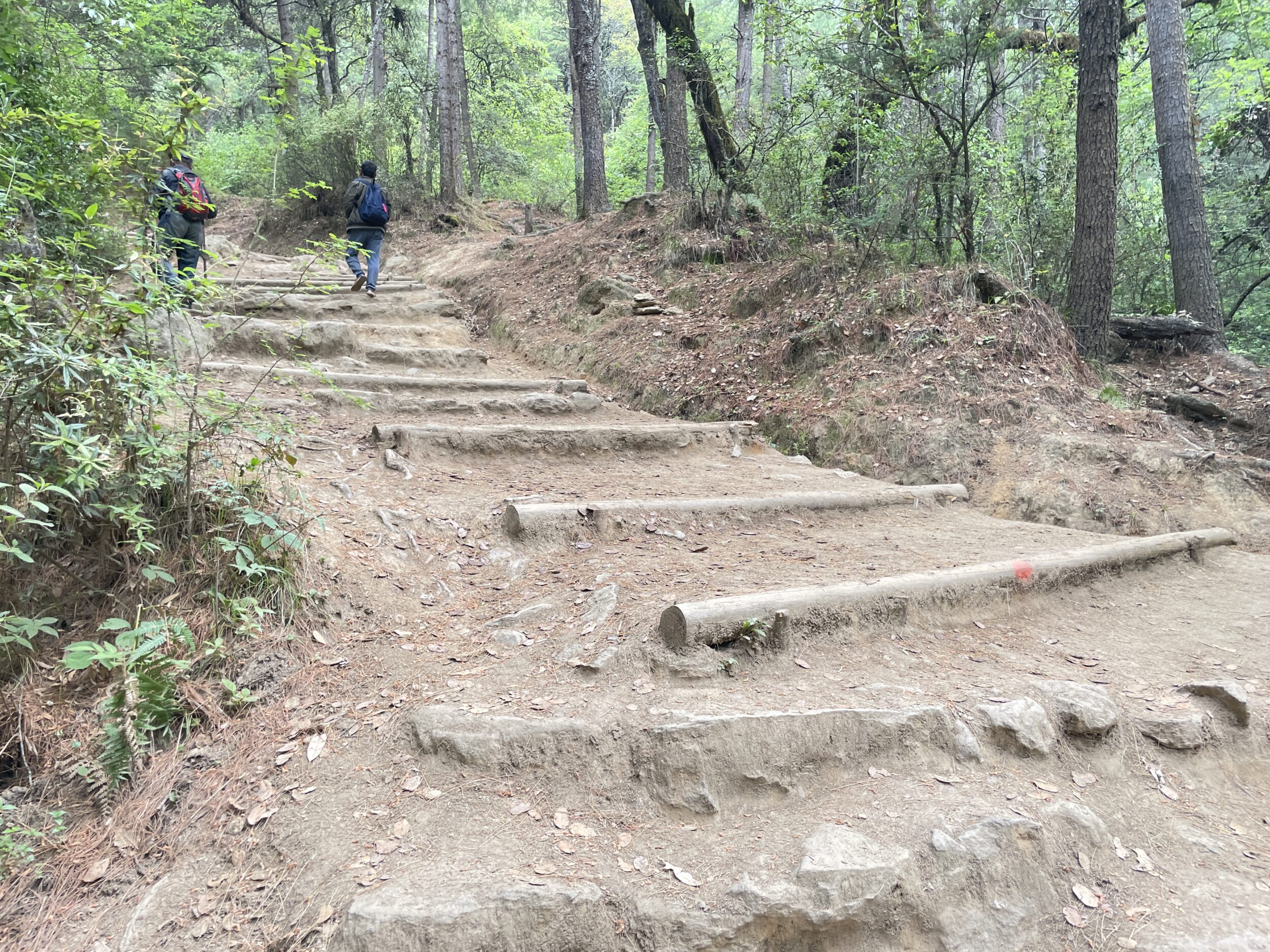
During Covid, the whole country rallied to improve the path. It became safer and wider, which is very useful on rainy days.
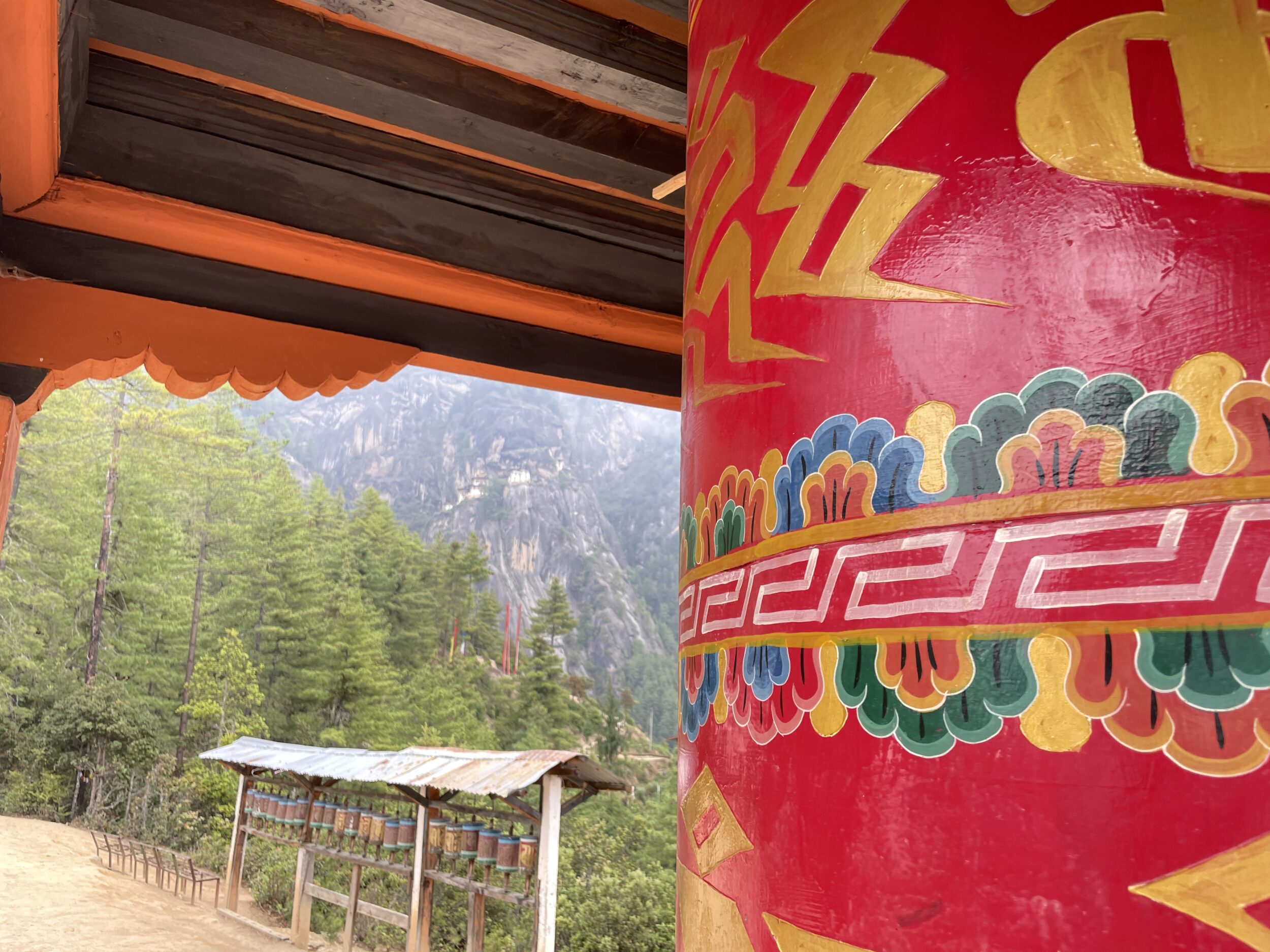
45 minutes later, we arrive halfway, at the only café around, and we’re happy to grab a hot drink there. The terrace offers a great view of the temple from afar. We can’t quite figure out how we’ll get there from here; it seems really, really far.
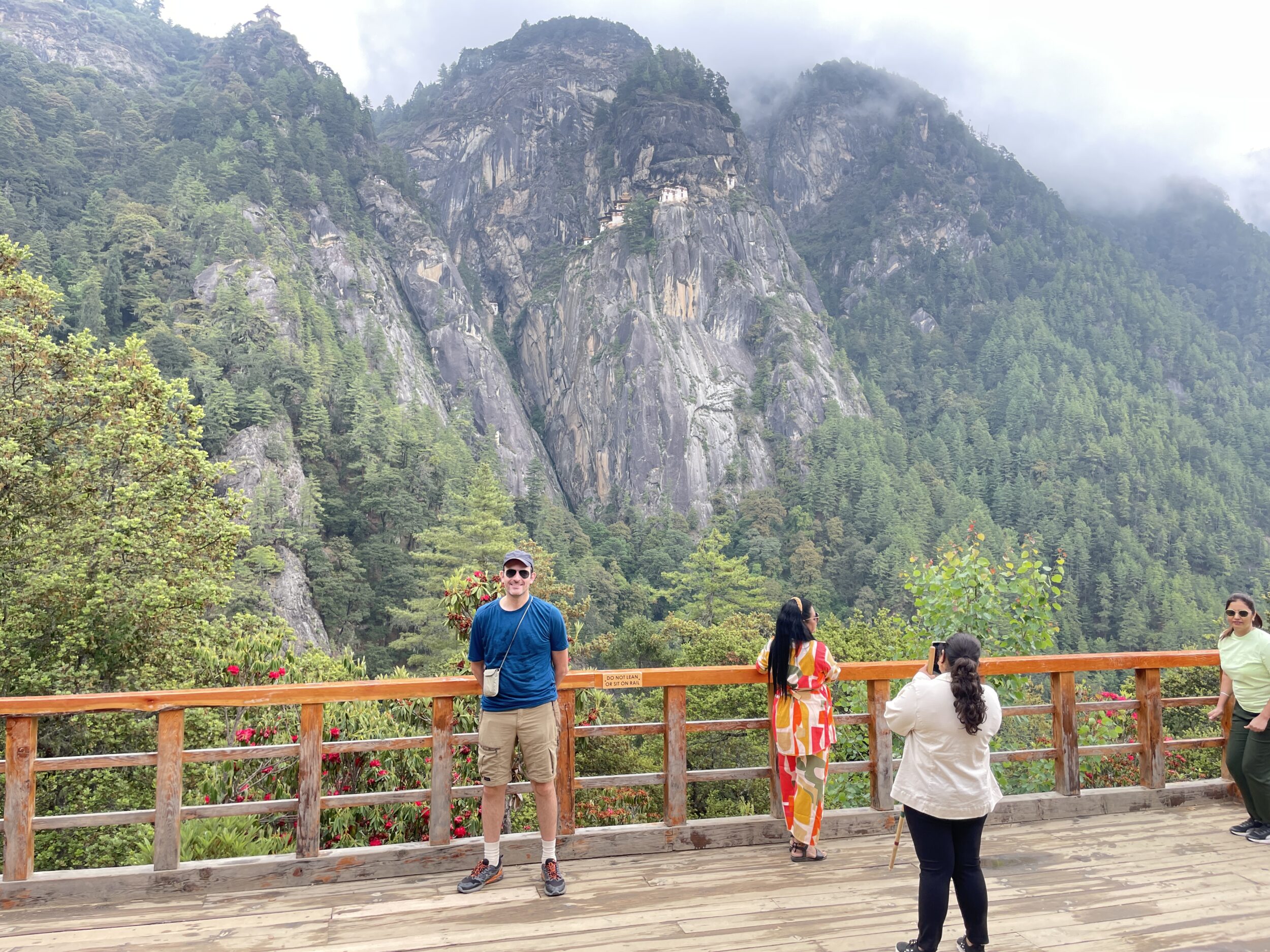
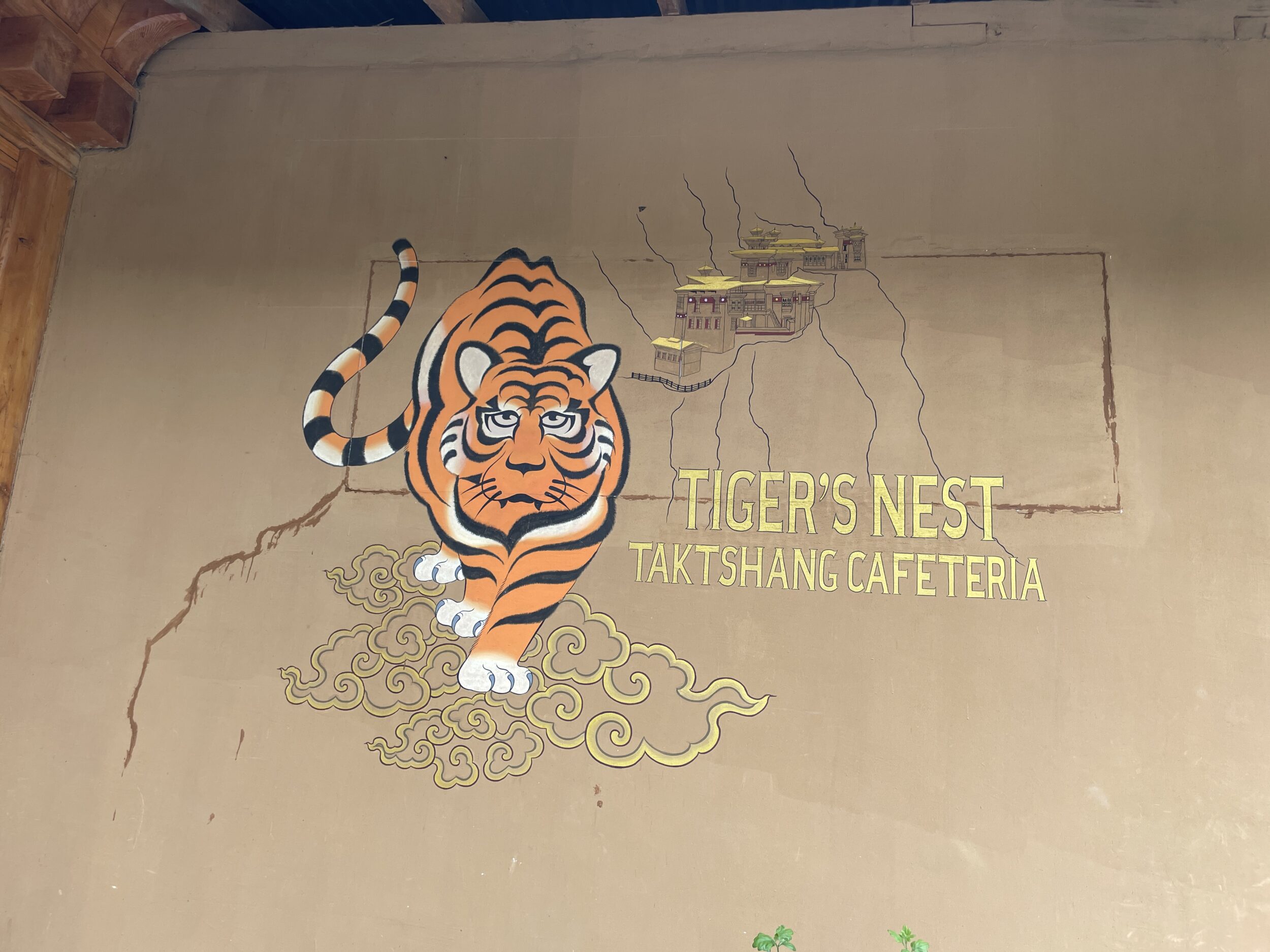
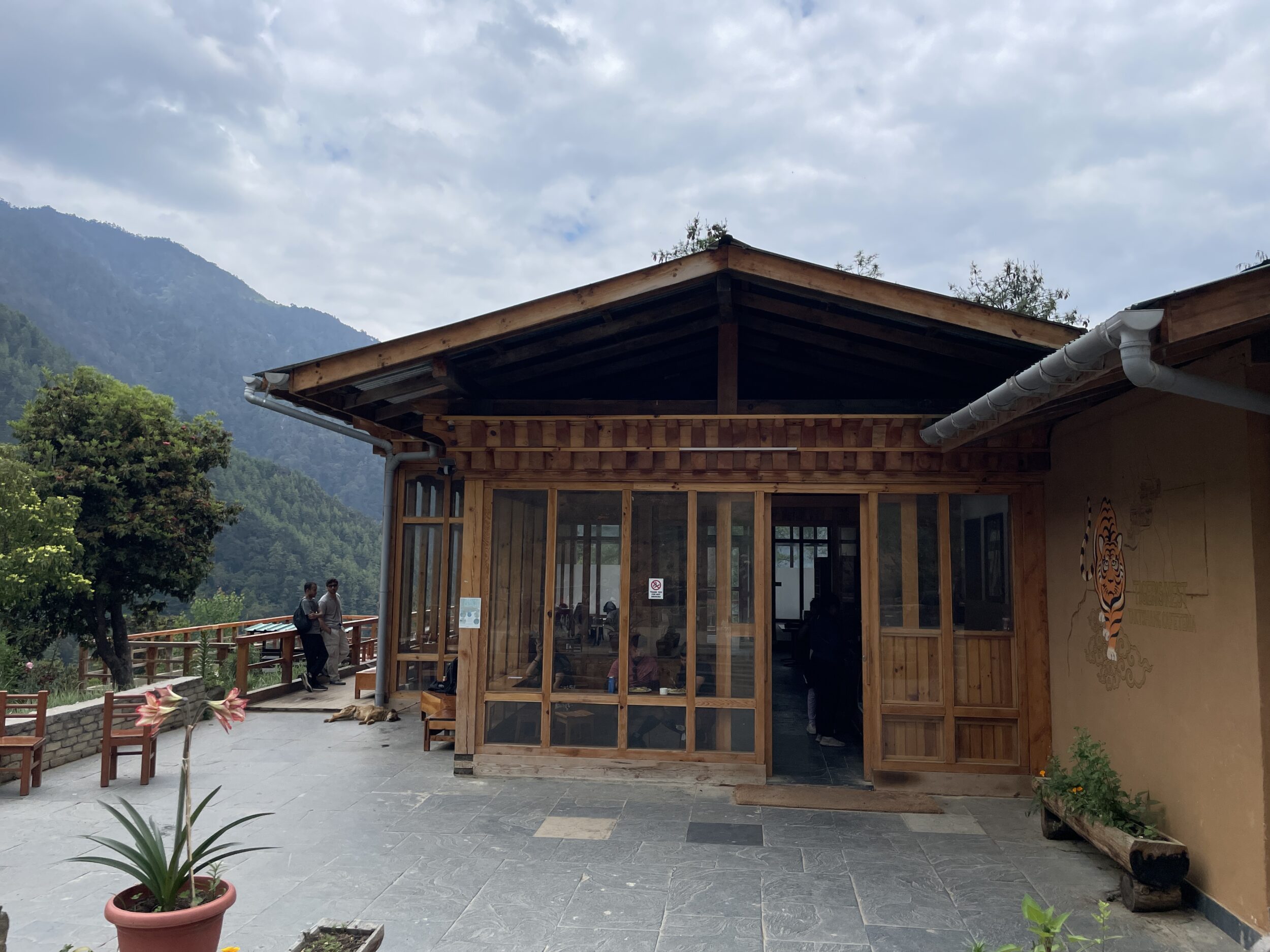
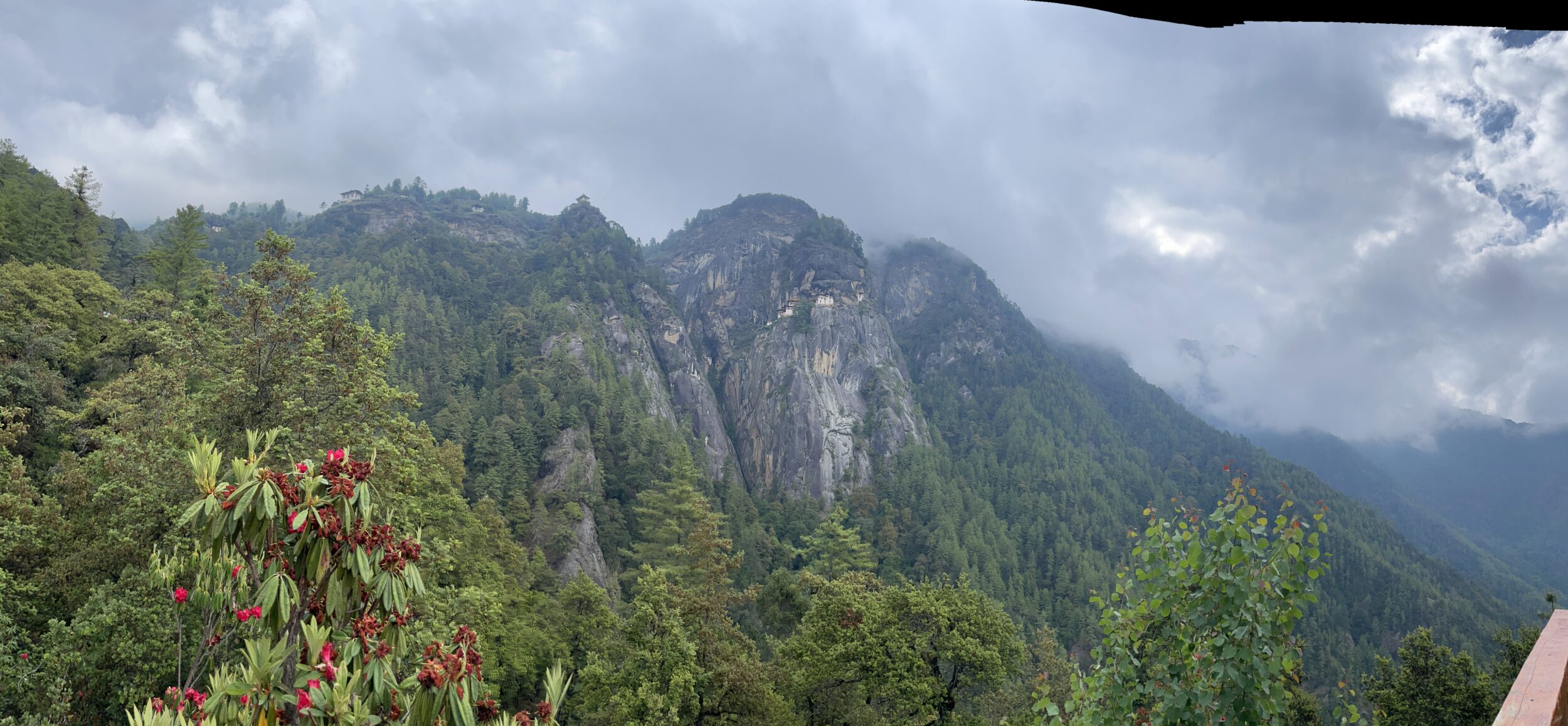
We continue on the path. I switch off all non-essential activity, i.e., thinking, and walk on autopilot, one step at a time. I understand why pilgrims make this journey. Getting there is already a spiritual experience; you arrive faster by meditating as you walk rather than thinking about the distance ahead. I admire our guide, because every week he has to make this same trek with tourists. We even run into his brother! It’s thanks to his brother that he wanted to become a tour guide.
The guide tells us it’s possible to sleep up top, and that there’s another path coming from the other side of the mountain. And that’s when he tells us the story of children whose bodies are left at the top of the mountain after they pass away, according to Bhutanese tradition. This only applies to children. I’m not sure I got it right, but if I understood correctly, he lost his own child and had to carry the body up to that mountain… it’s so tragic that I didn’t dare ask any more questions. Losing a child must be heartbreaking, but having to abandon their body on a mountain yourself—I can’t even imagine!! In places like Bhutan and Tibet, the rocky, frozen ground makes burial difficult. Sky burial becomes a practical solution, while also aligning with local religious beliefs: the body returns to nature after death.
From here, we stop climbing and descend 200 steps, only to climb back up about fifty.
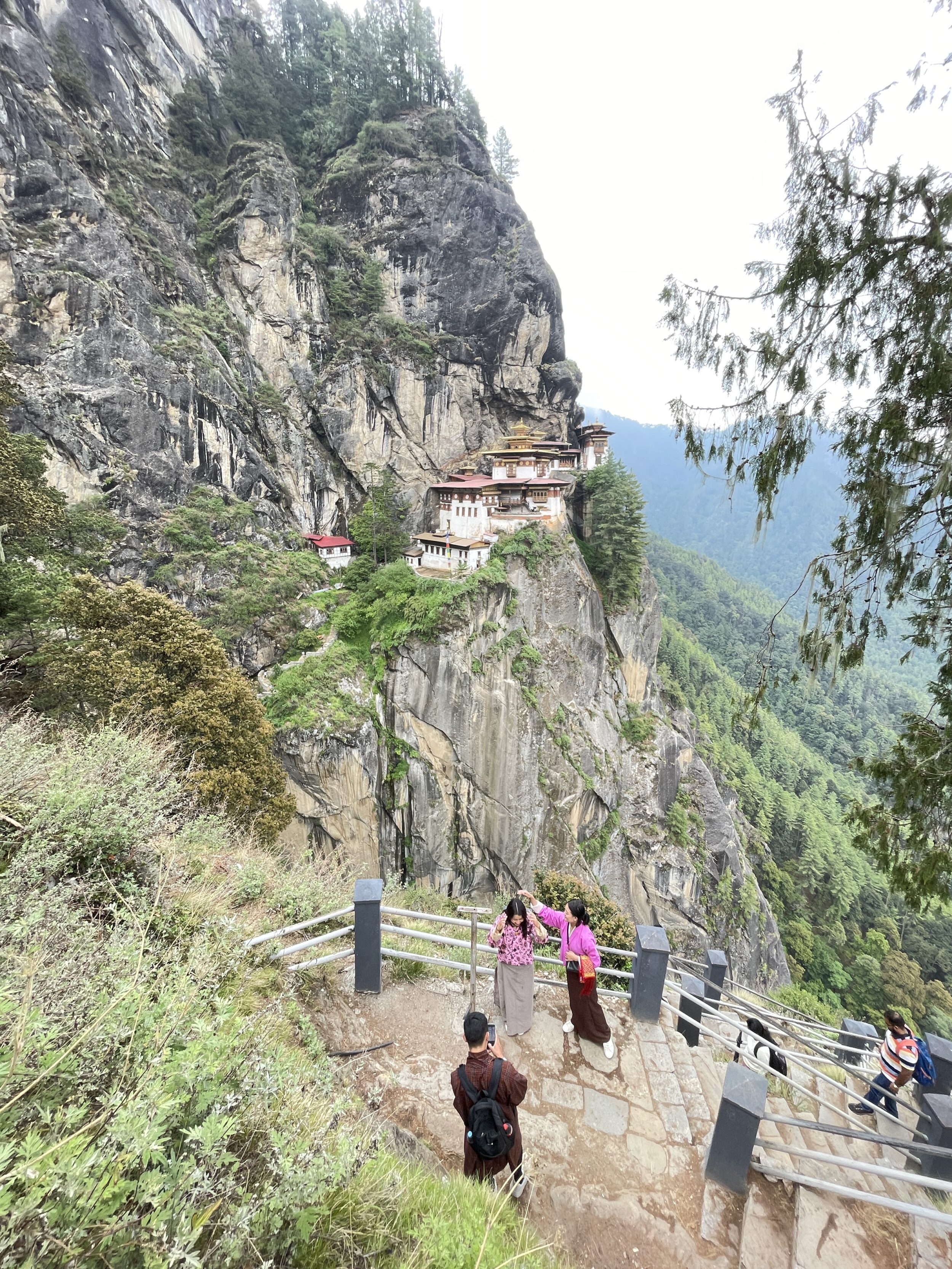
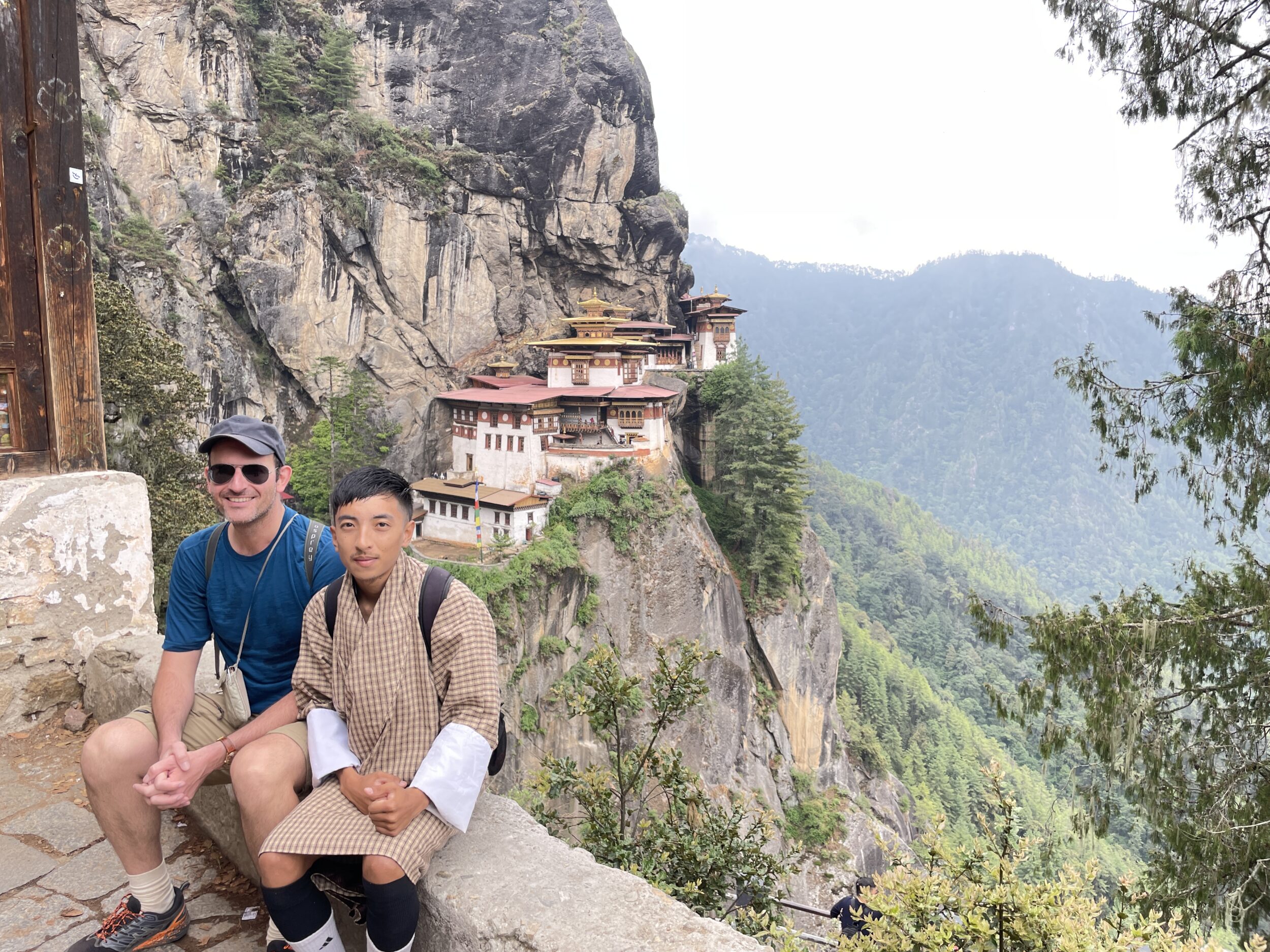
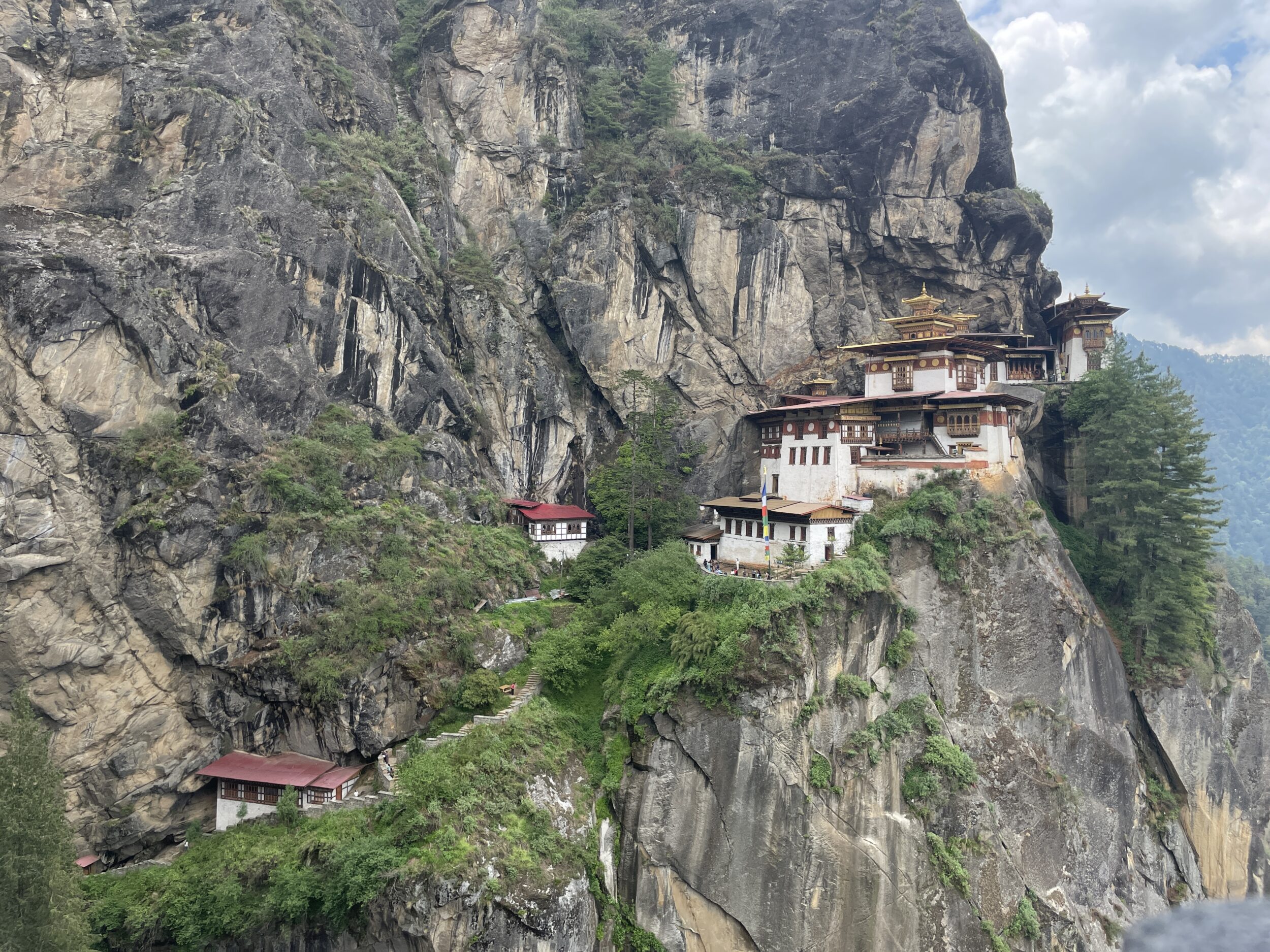
From afar or up close, this temple is stunning. It’s when it comes into our line of sight and stays there that we feel more energetic and motivated.
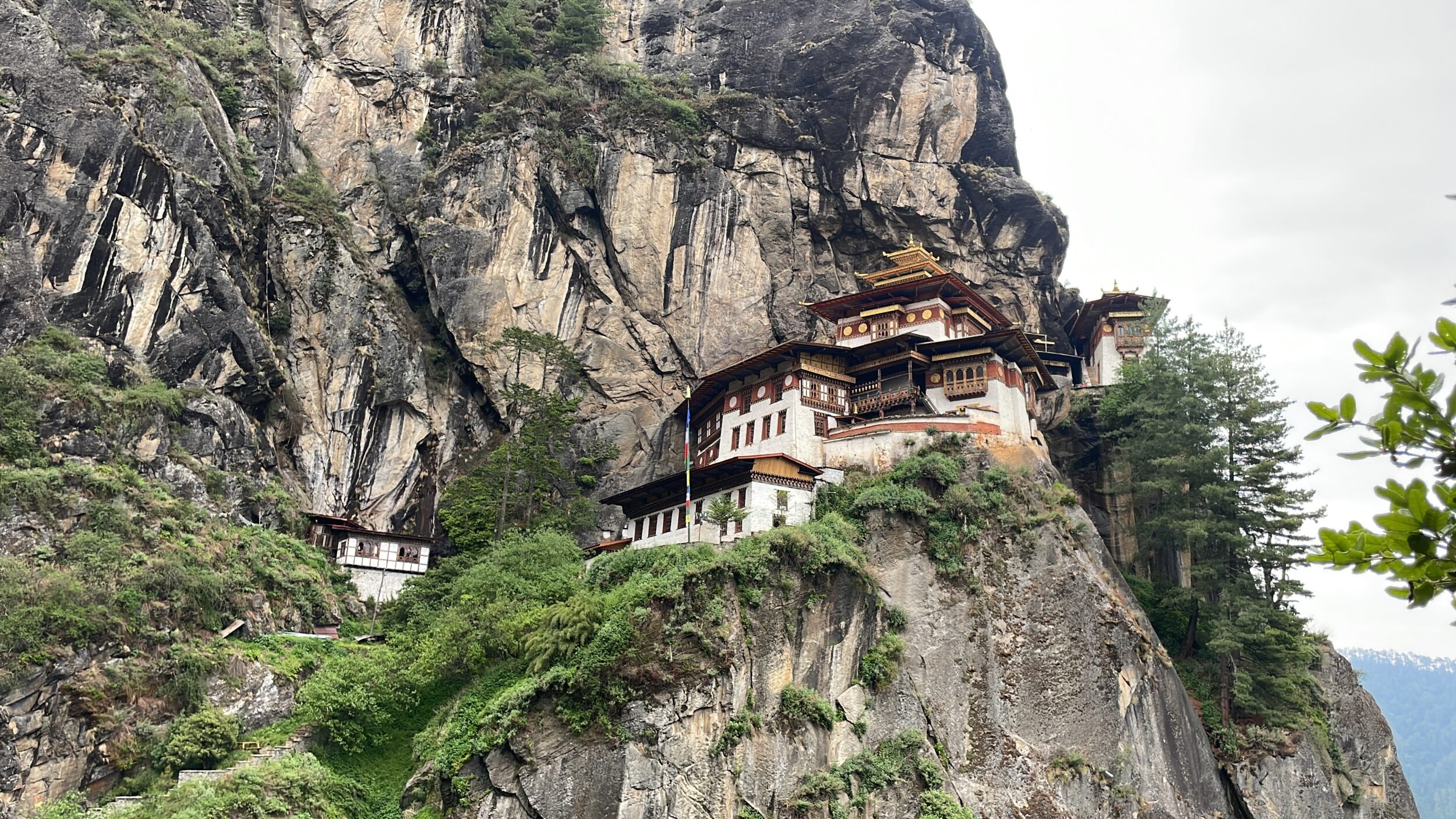
To enter the temple, you have to cross a very charming little bridge.
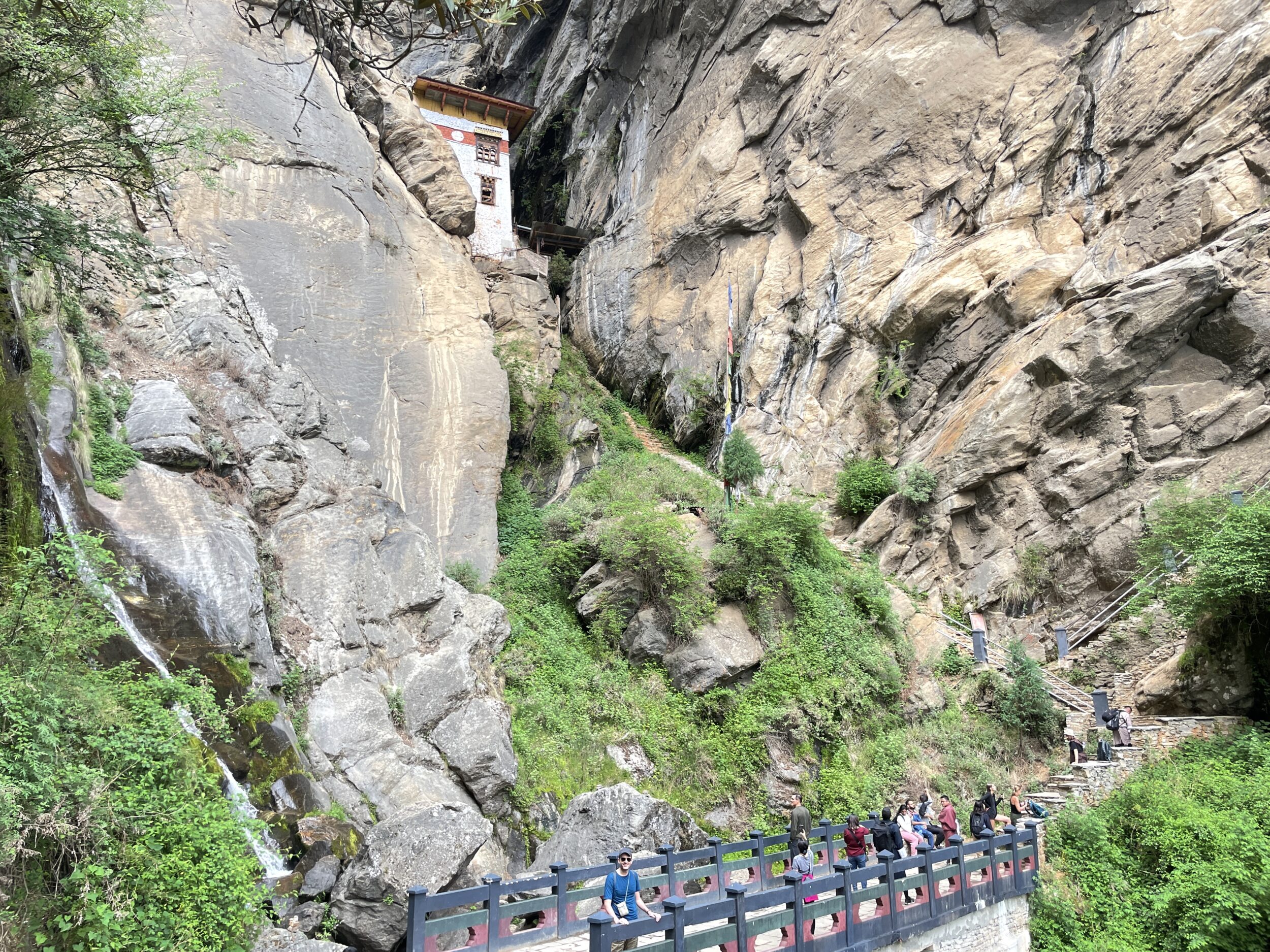
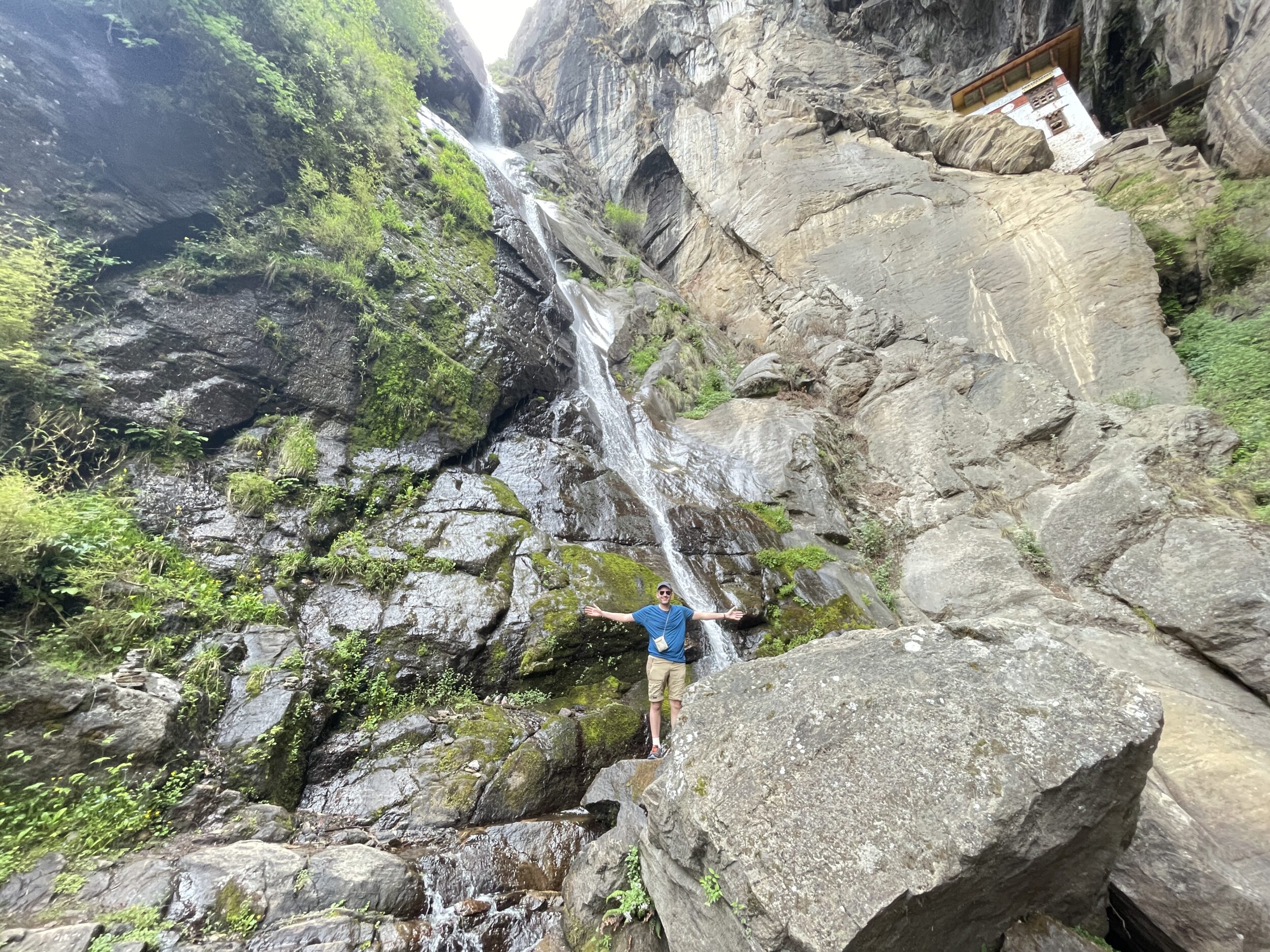
We’re at the bottom of the stairs. There’s a problem: JB is only wearing shorts, and the Bhutanese require him to cover his legs completely. Our guide didn’t think to warn us! No way to turn back now, and no chance of using a scarf to hide his legs either. Luckily, there are pants to borrow on site—some ugly sweatpants—but at least JB doesn’t have to go back empty-handed.
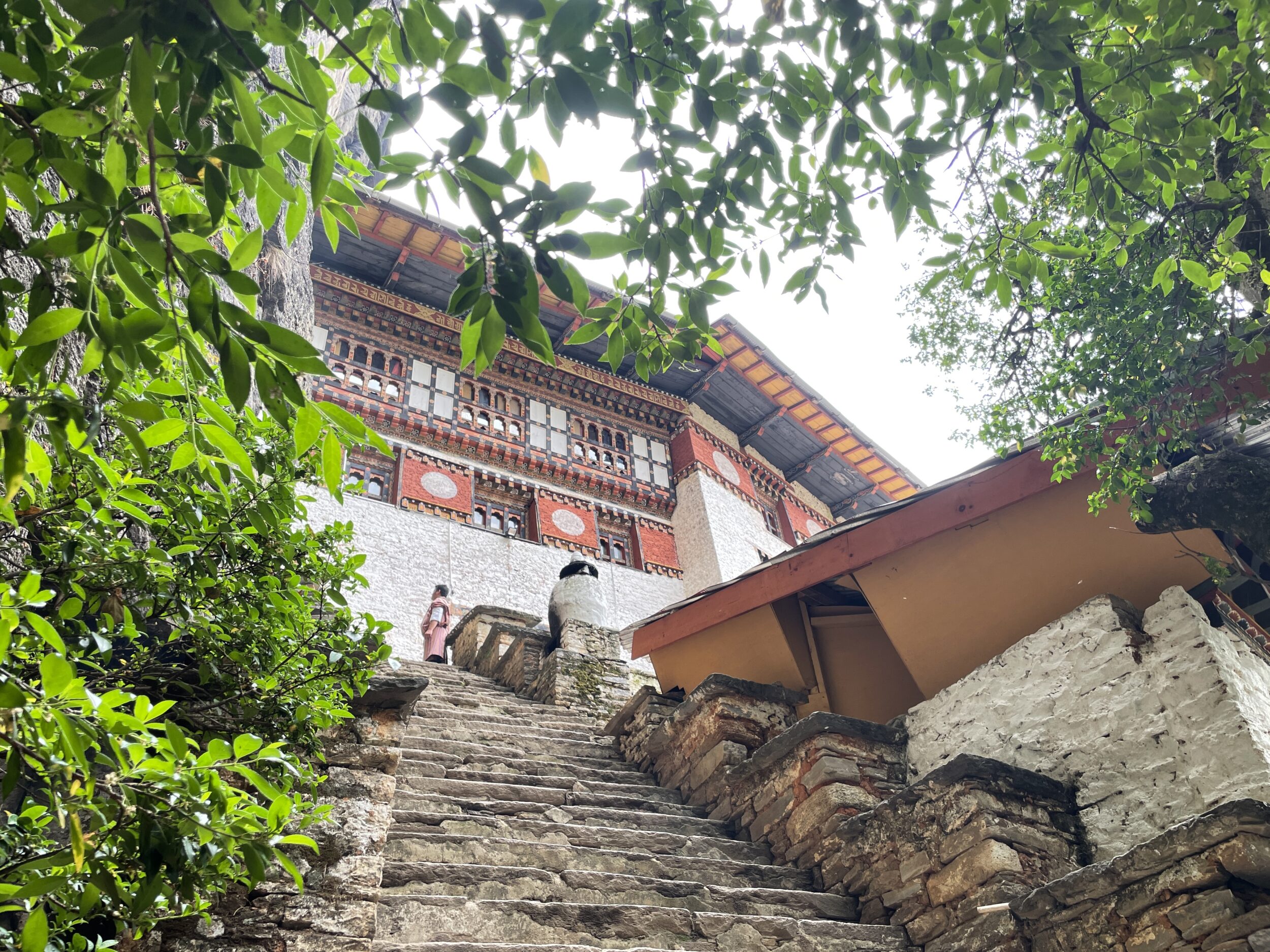
From now on, no photos are allowed. We visit the cave where the master Padmasambhava meditated. I wait for everyone to leave so I can stay there for a good ten minutes. The energy in that cave is incredible and calms me down. At the door, I hear pilgrims ringing the enormous bell from time to time. Upstairs, a lama is praying, and pilgrims prostrate themselves 108 times in front of the Buddha images. It moved me to tears.
We visit other places, including one where we can make a wish. We can’t believe our ears and ask the guide again if we can really ask for anything. He says yes. It’s quite revealing, when you get a wish, what idea crosses your mind first. We make a wish and then leave our white scarves (having seen others do it) as offerings. I’ll update you on the status of that wish, whether it comes true or not. Anyway, next to it there’s another place where you can ask for wealth… and we skip it because we’ve realized that wealth also comes partly from our efforts, so if we want it, we should go get it ourselves. When you’re inside the temple, you don’t notice its beauty, because it looks like any other temple, except that you have to change levels constantly and walk on rocks. On the top floor there’s a room where you can light a lamp with butter oil. You don’t light the lamp for yourself but to illuminate other lost souls. We choose the smallest lamp (because we don’t have much cash left) and are very happy to have waited for this moment to light our lamp, and not somewhere else. At the bottom of the stairs, there’s a water source where we can fill our bottles. It’s supposed to make us younger, so we gladly take some.
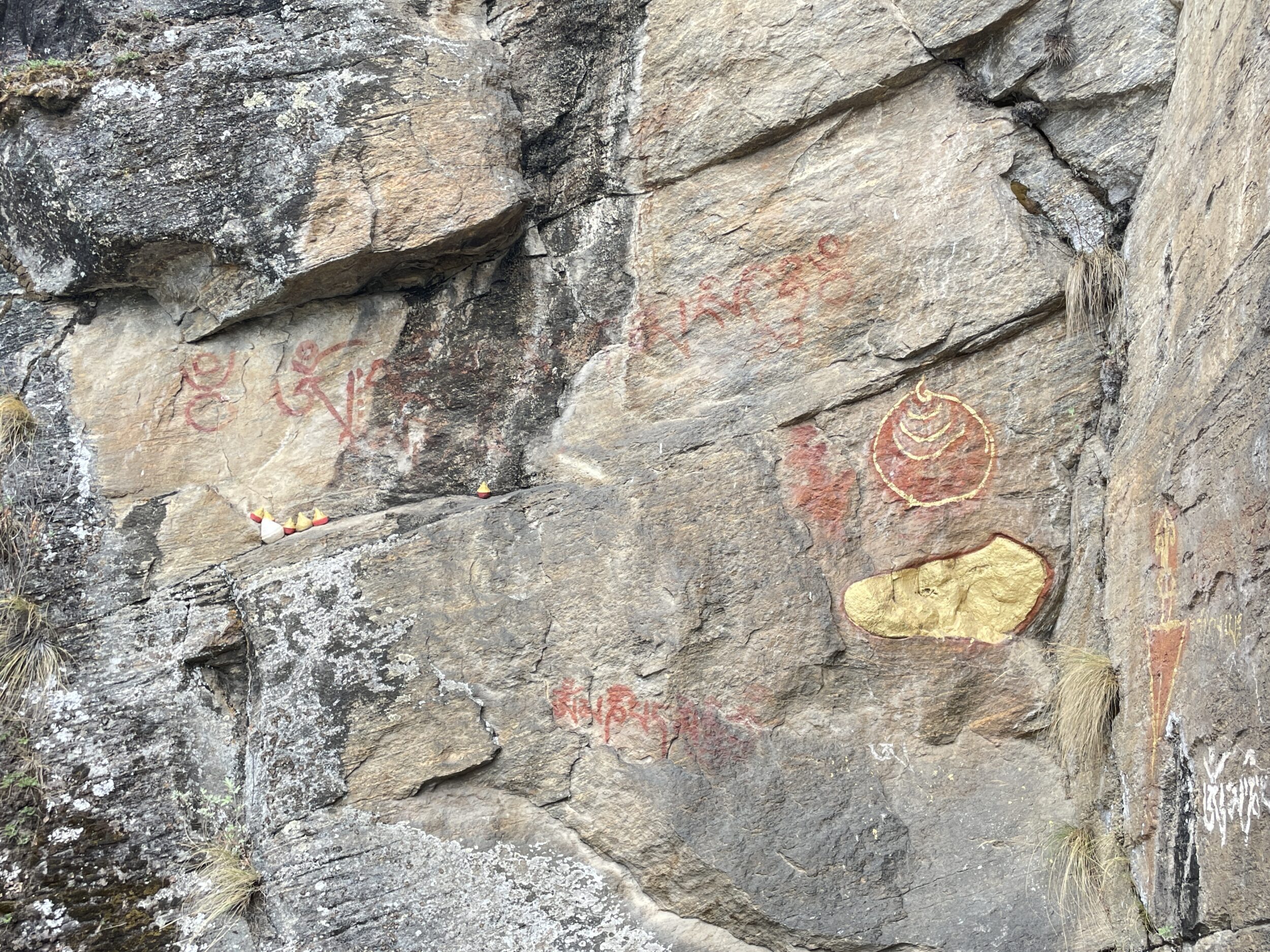
Here we go for a long descent. I’m still walking on autopilot to the café where we have lunch (all-you-can-eat buffet). Then to the parking lot. We’re very tired but we get a little visit before taking a hot bath.
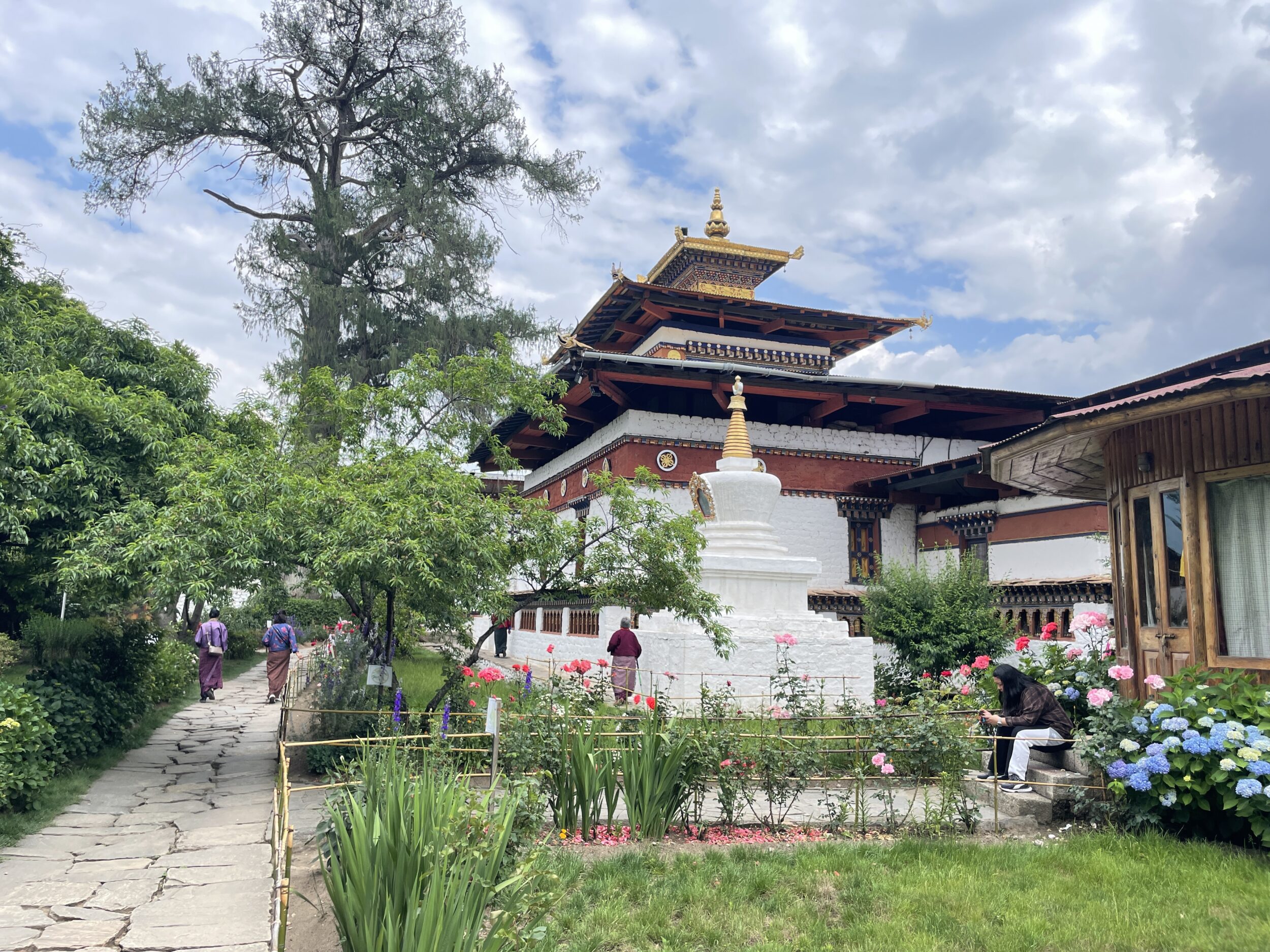
Here too, JB doesn’t have pants so he’s not allowed in because the temple (Kyichu Lhakhang) is currently being visited by officials. I visit alone with the guide, but he’ll bring JB back the next day so he doesn’t miss anything. It’s one of the oldest temples in Bhutan. It’s much smaller than the others but is nicely decorated. It’s part of the 108 temples created to block demons (there’s a drawing showing that the 108 temples form an animal watching over Bhutan).
I don’t know what you think of this story, but feng shui is a bit like that too: you build structures to modify the energy of a place: make it better, concentrate it in a specific spot (e.g., orient it toward the living room or office) or break its bad energy. In China, there’s a famous city (Tuojiang) whose bridge (very picturesque and very Instagrammable) was built just to prevent the economic and spiritual development of the ethnic minority living there (and they succeeded).
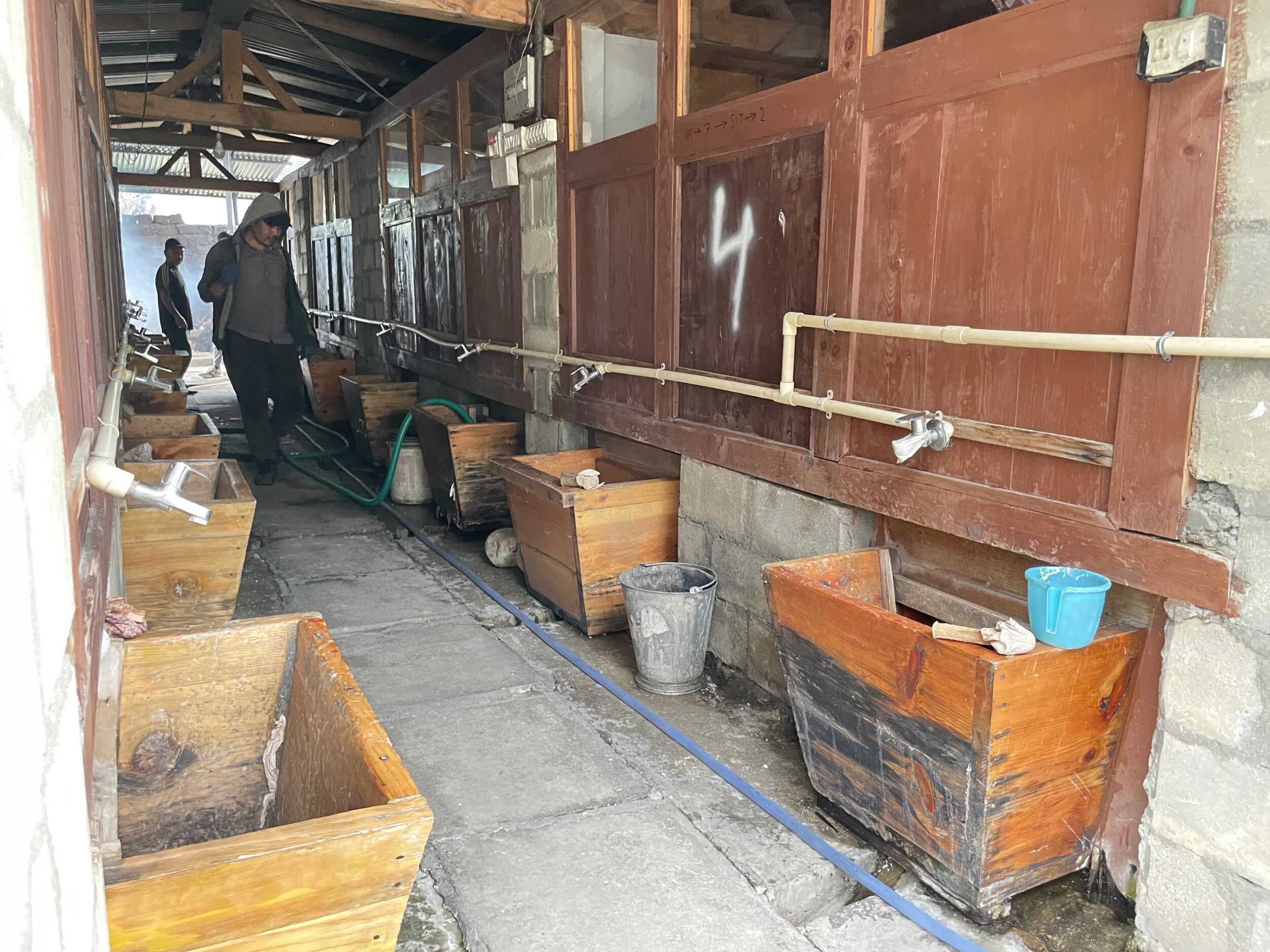
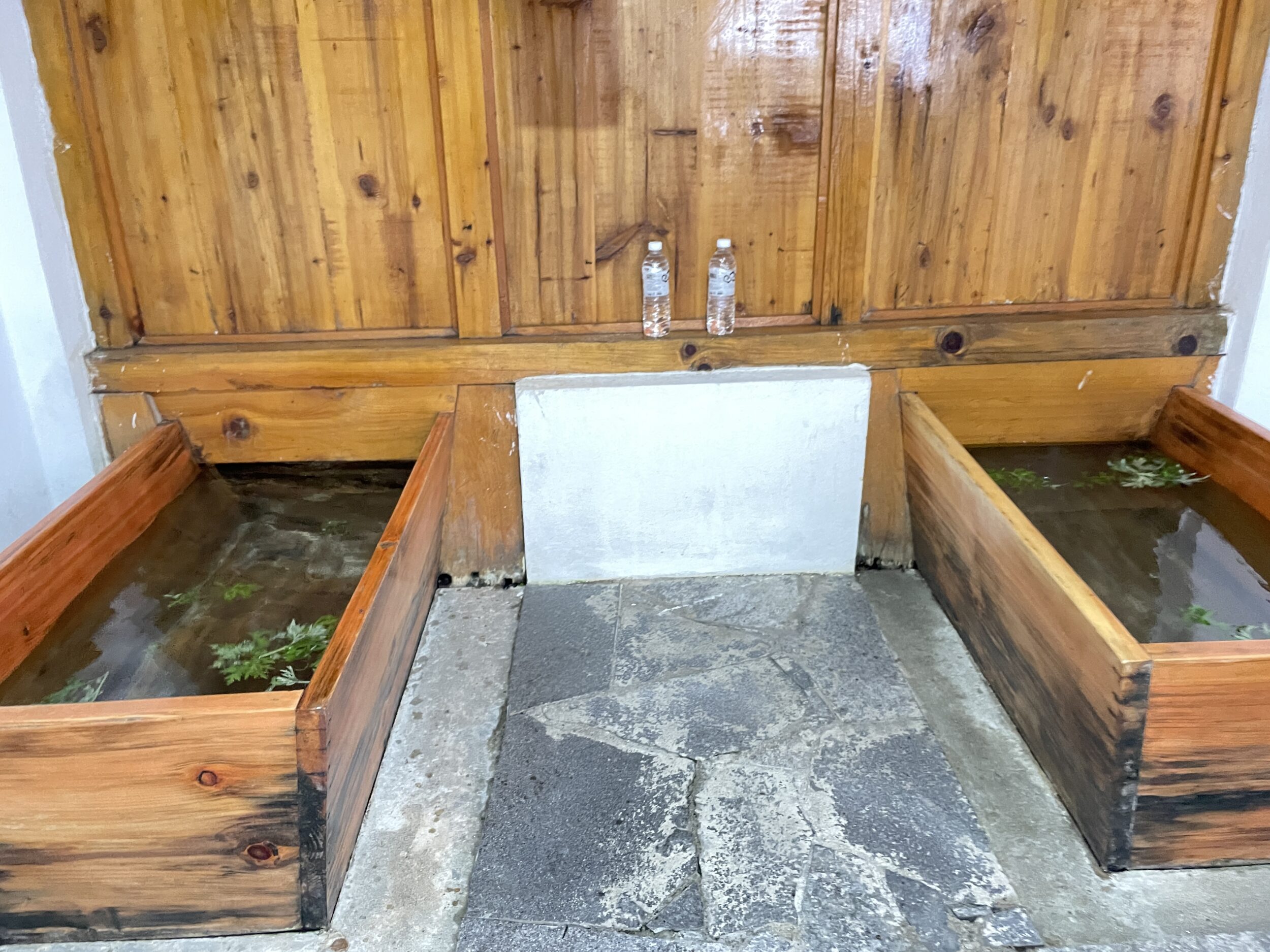
We go to a hot bath where the front of the tubs sticks out 20 cm, enough for an employee to slide hot stones under and top up with hot or cold water. The employees can’t see the clients, so if you want more hot stones or more cold water, you just knock on the wood and shout in broken English “more hot, number 3” for example.
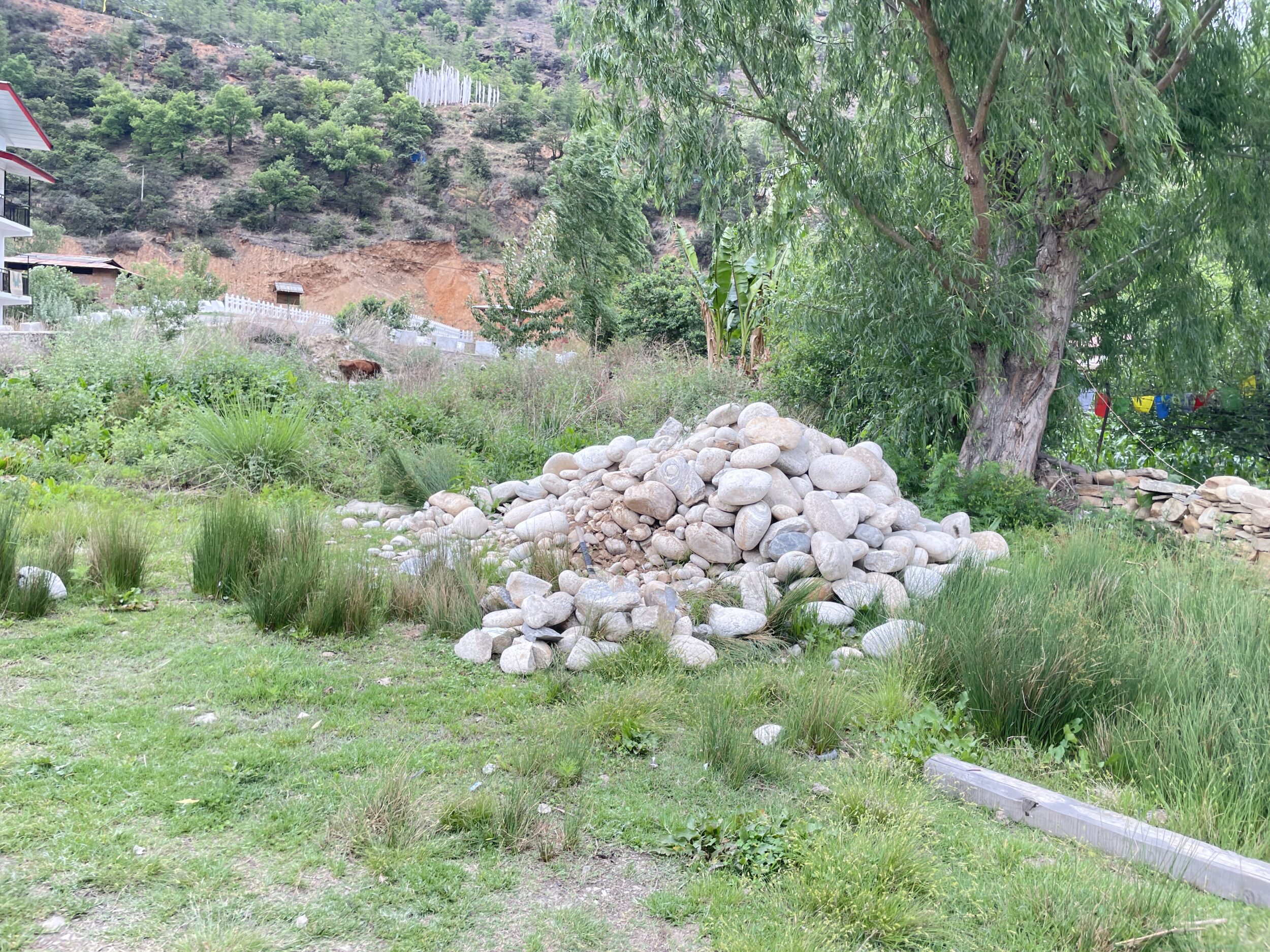
The stones come from nearby rivers and are used until they break.
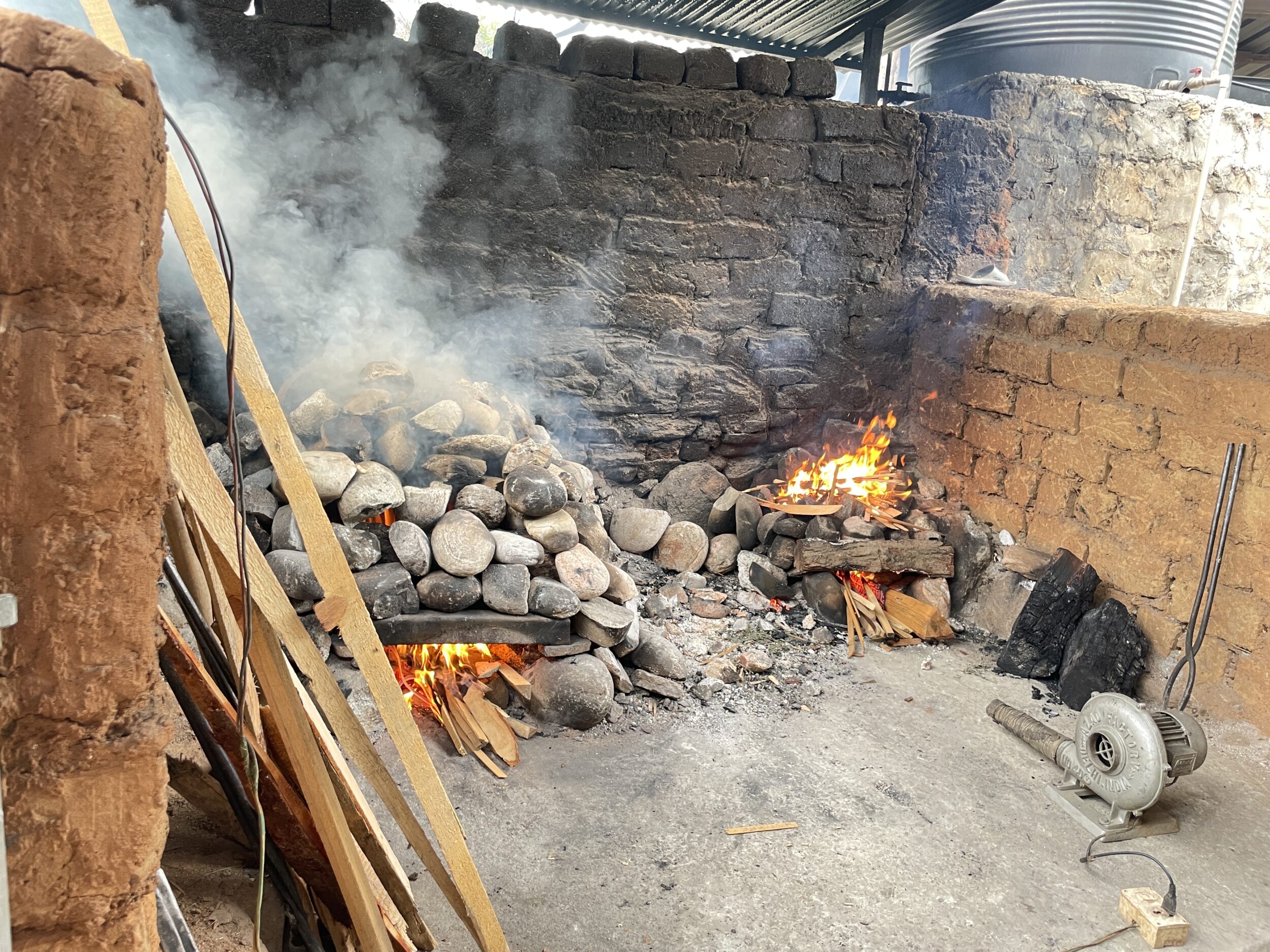
It’s clean, very hot, and the water also contains medicinal herbs. There are two clean towels and two bottles of water inside. It’s really a great experience, I love it! And above all, it feels good after so much physical effort.
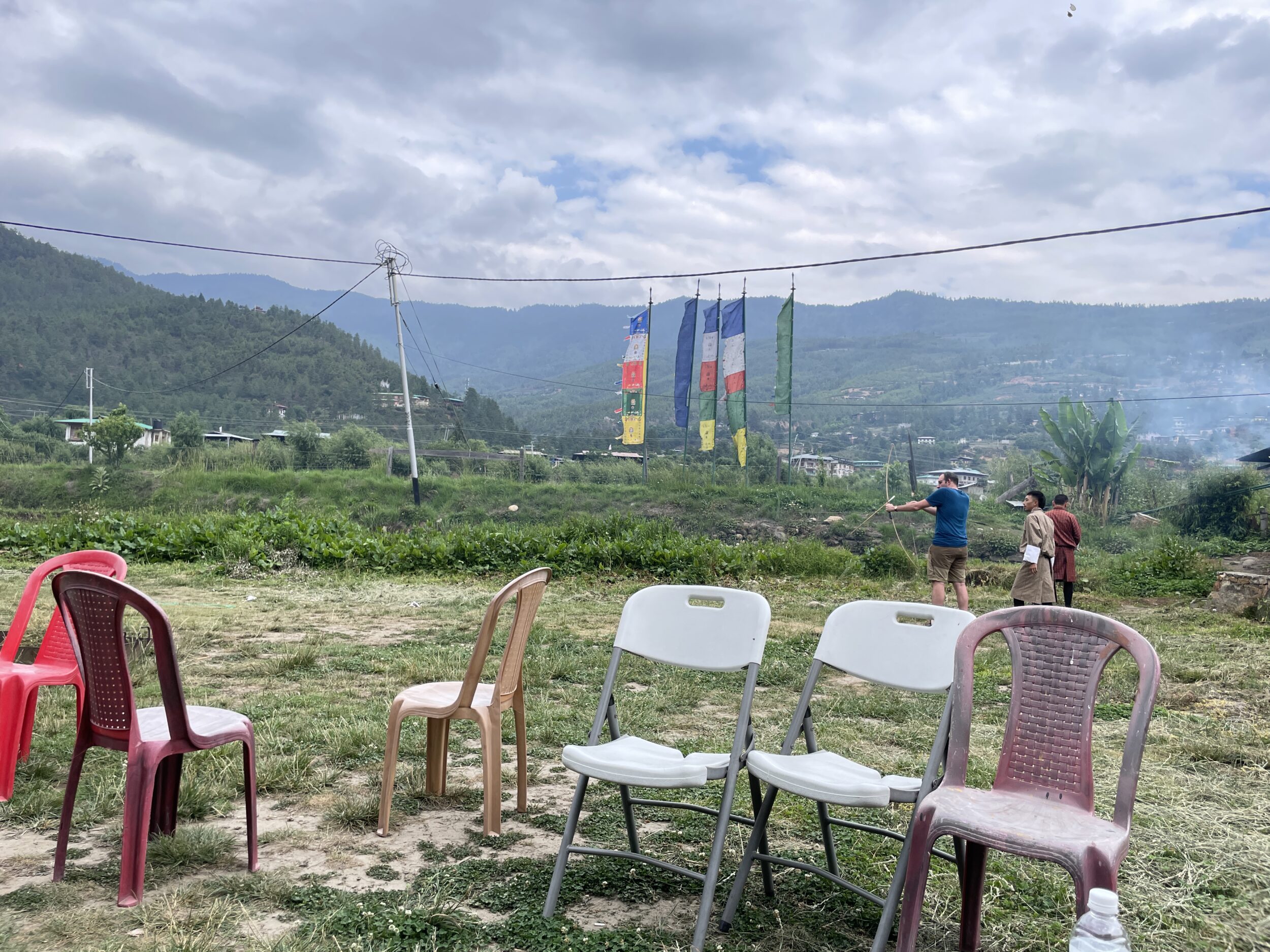
While waiting for the milk tea, JB and our driver practice archery. As we’ve already explained, Bhutanese archery has a target at 130 meters, but this time we’ll settle for about ten meters. A few arrows end up in the rice paddy, it’s harder than it looks. A tourist nearby is getting impatient because his guide is more occupied with archery than his job. He keeps telling his guide he wants to leave, but the guide doesn’t budge. That’s when we appreciate our guide and driver even more. Because as soon as I express the need to leave (I’m cold, my hair isn’t dry), they abandon tea and archery and we leave ASAP.
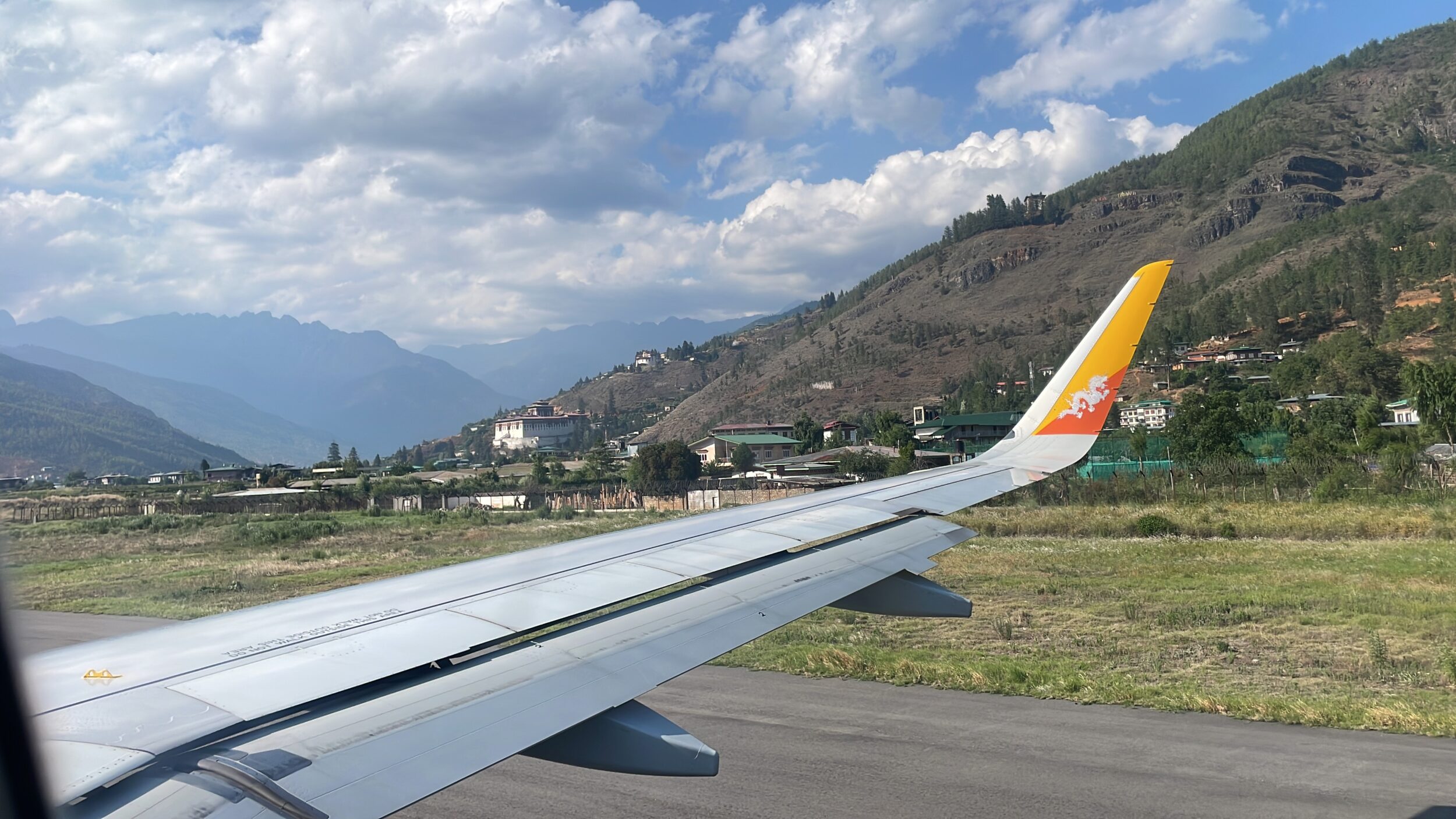
We try one last time, this time to see the day’s only plane take off from the airport, but it’s like yesterday: the plane had already left an hour before. They have so few planes that they come and go whenever they want, haha.
We spend the night in the same hotel as last night. The general manager comes to apologize for the lack of food the previous day and gives us 10 times more food. There’s so much food we can’t finish it this time. He says there was a misunderstanding, the staff were too focused on serving the buffet to a group of 60 Indian tourists that they didn’t cook much for us. And there’s been such a high turnover that the new employees don’t know what to do.
Last day
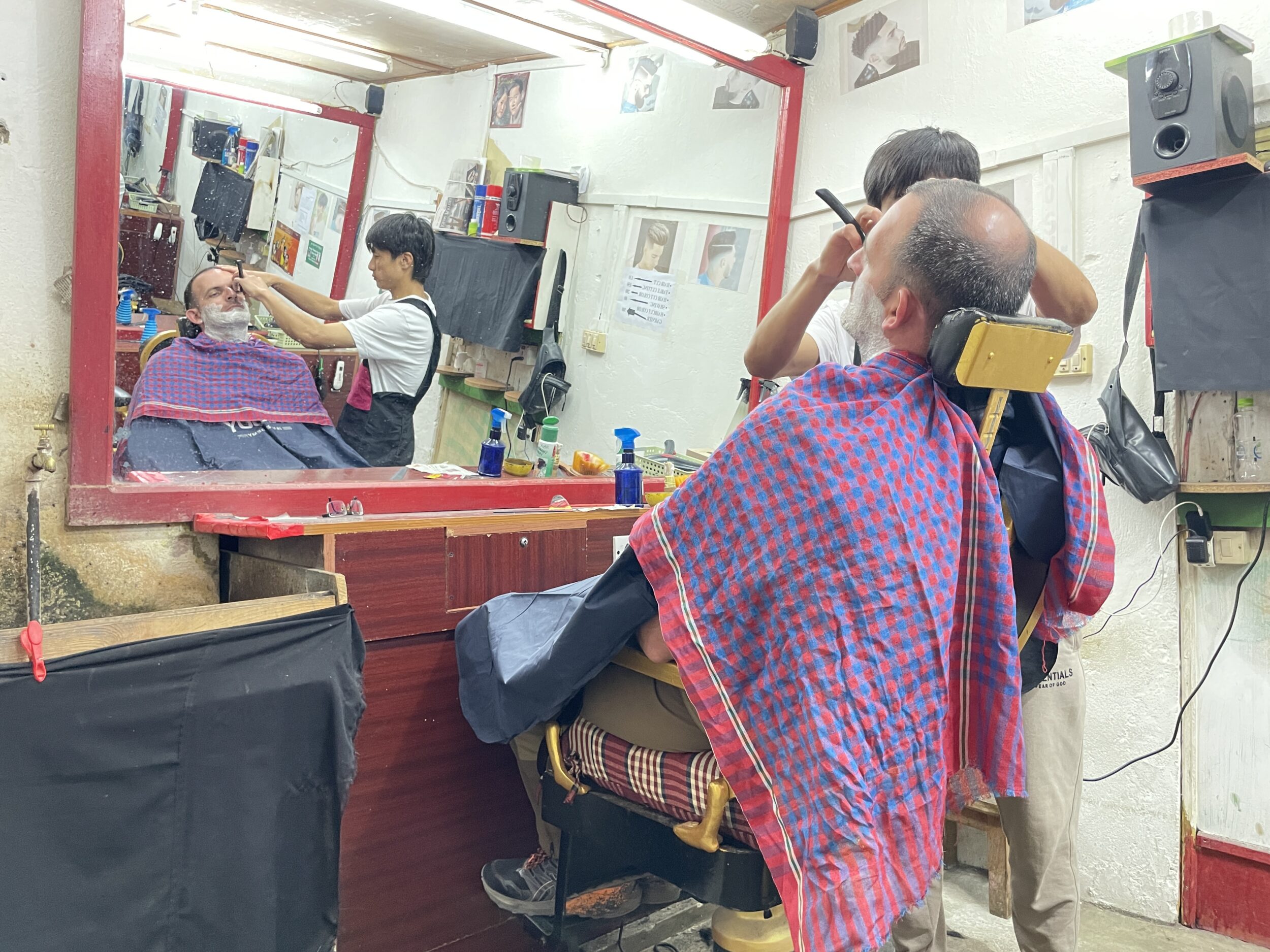
JB visits the temple he was denied access to yesterday. We take advantage of our last day to do some final shopping. The idea is to buy prayer flags to hang somewhere. And then JB has the brilliant idea to get a shave. We find an excellent barber who shaves him and cuts his hair.
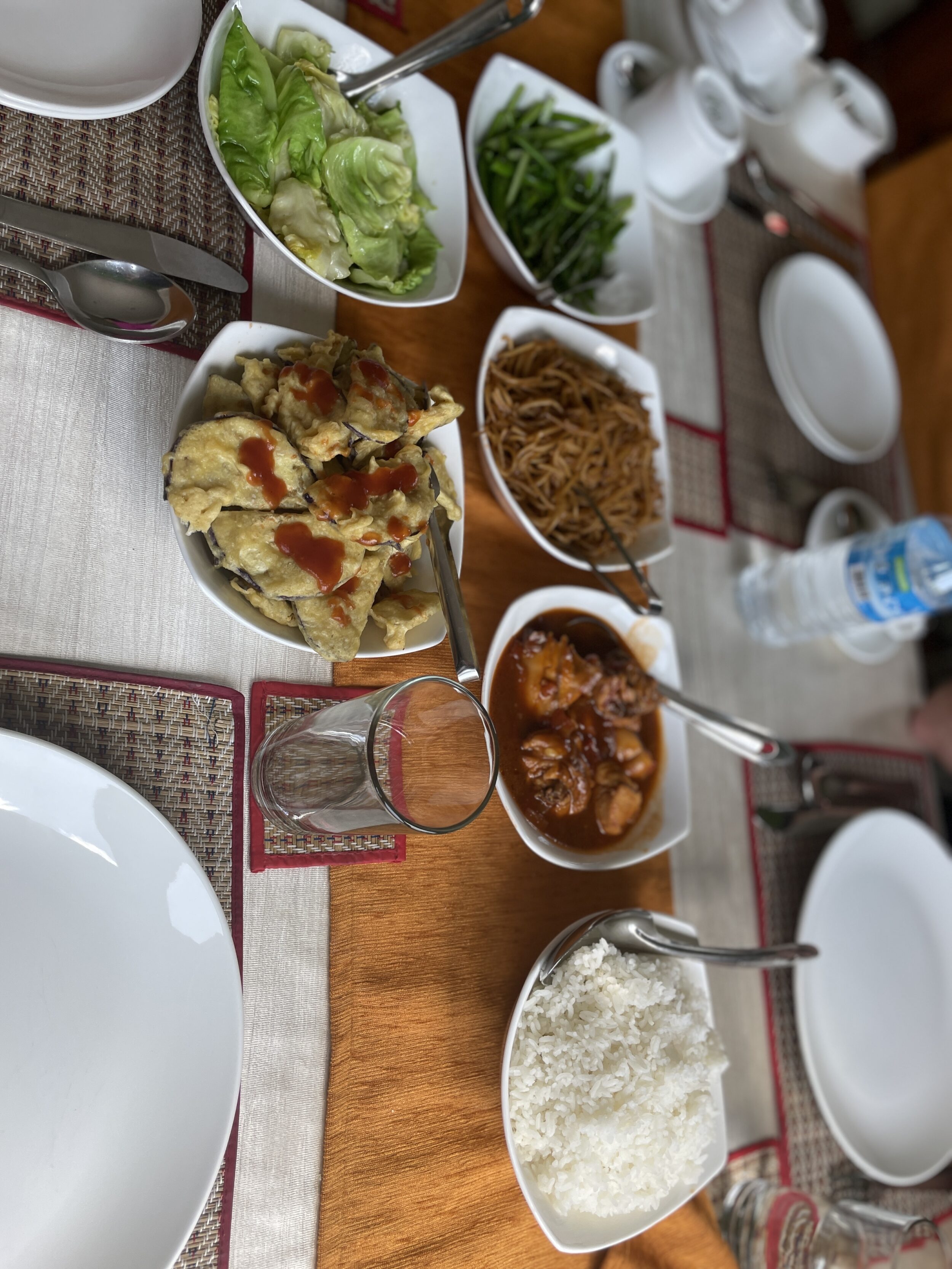
Last lunch in Bhutan:
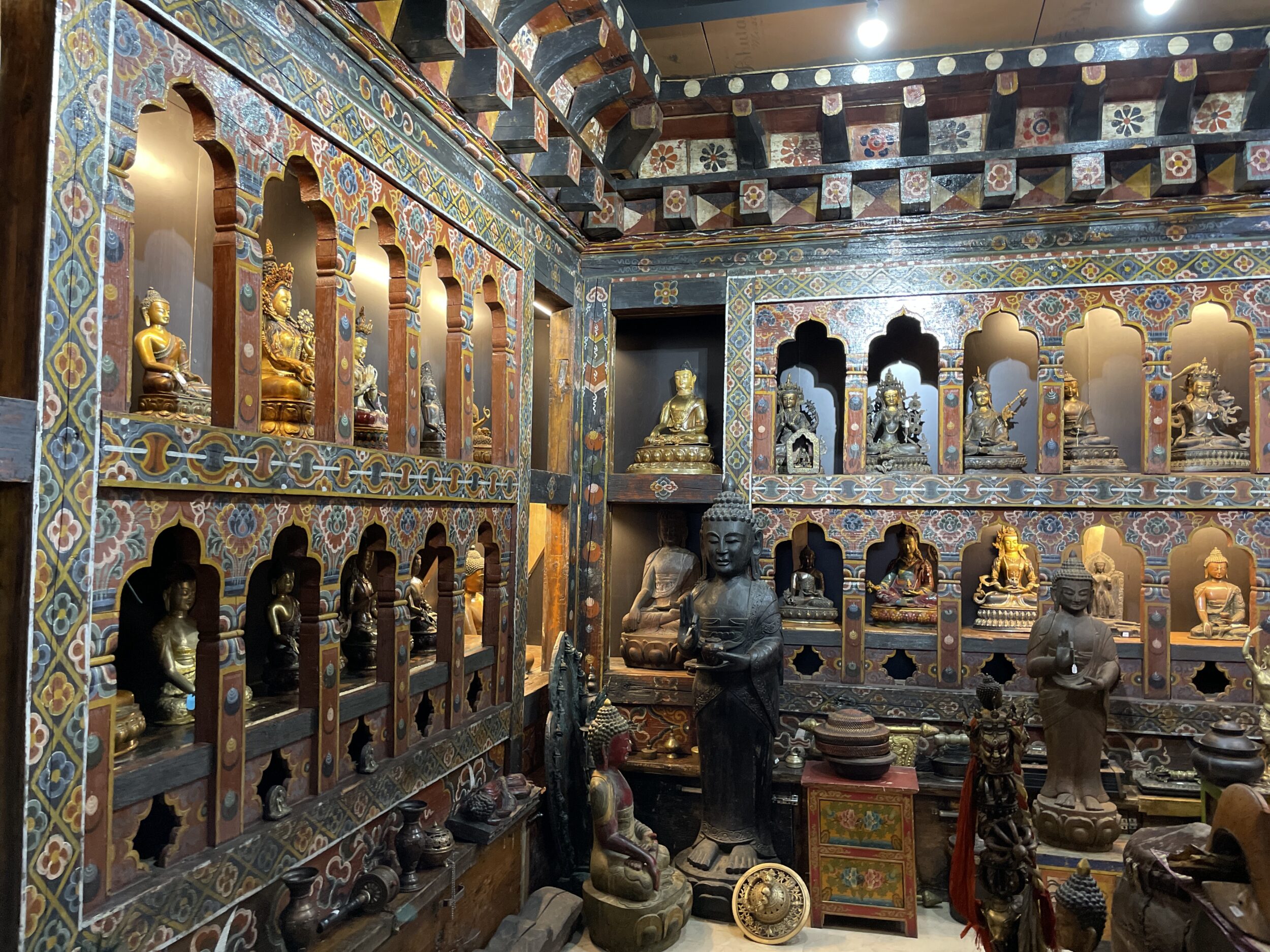
We visit a few souvenir shops in Paro and discover we could literally open our own museum with the antiques sold here. However, getting them out of Bhutan is another story!!
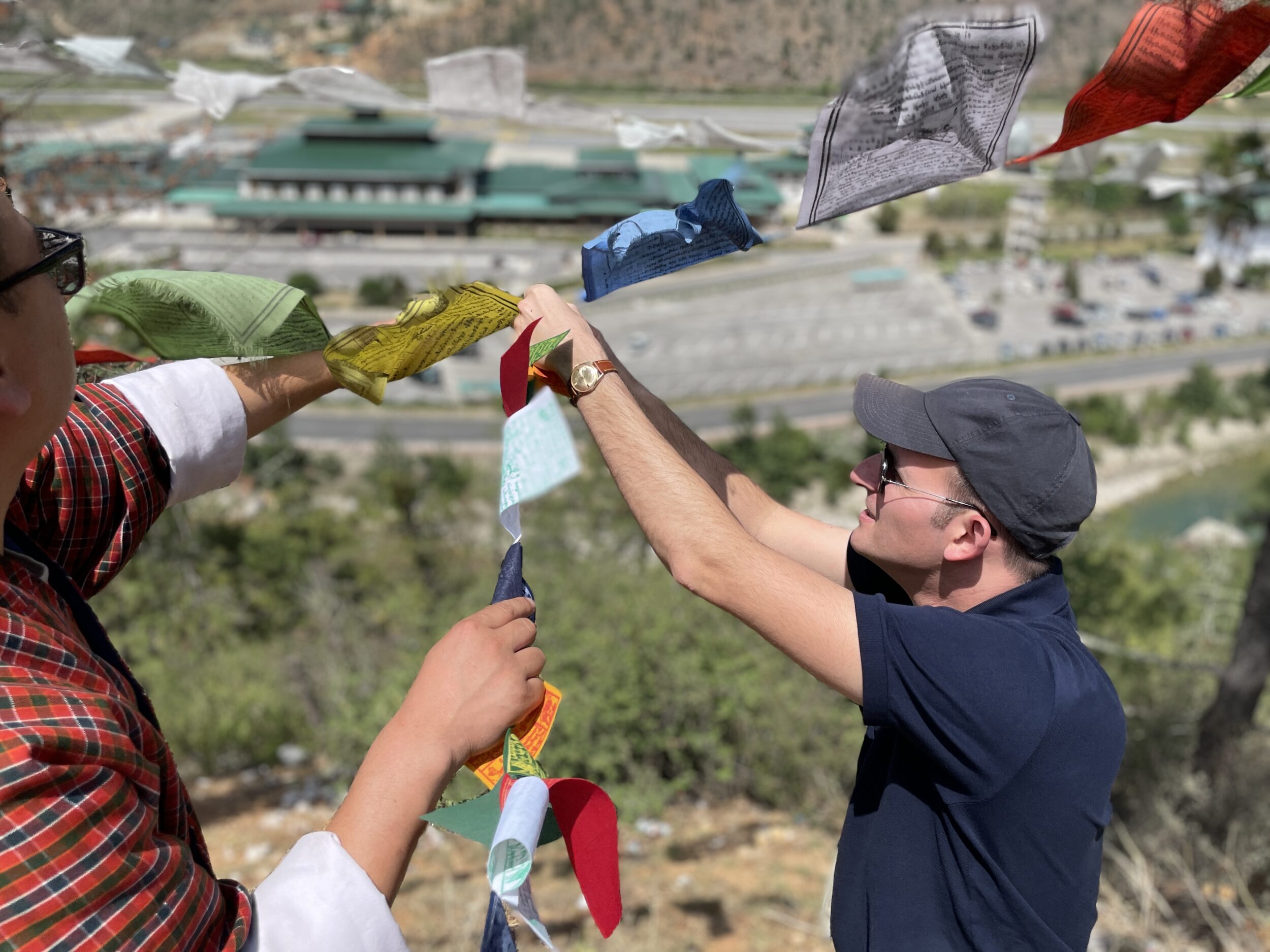
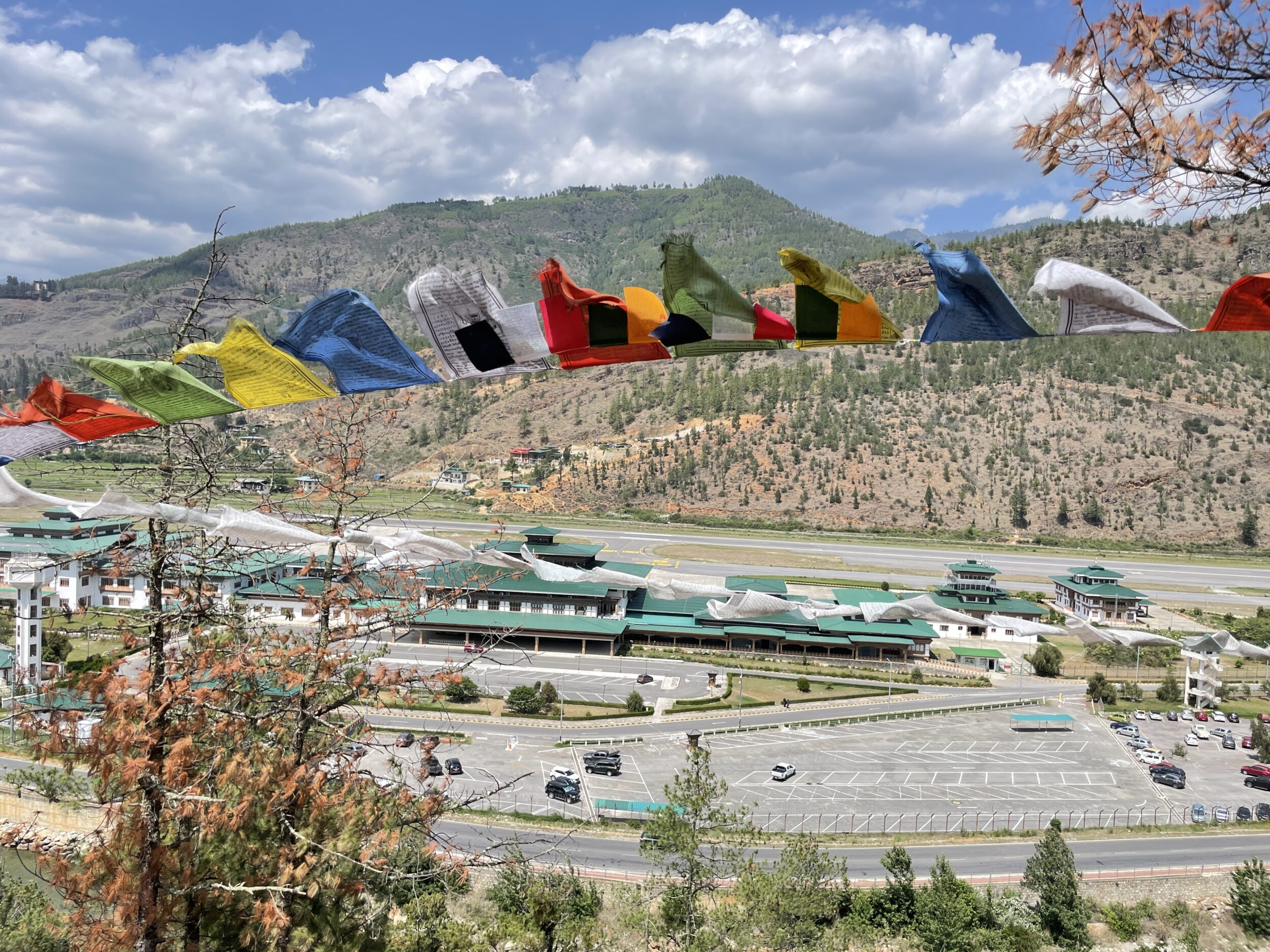
We find an accessible spot to hang our prayer flags. I don’t know how long they’ll last, but I hope not too long. These flags are made of very thin fabric and the wind damages them quickly (we don’t want too much waste either).
Well, that’s already the end of our stay in Bhutan. Our guide asks us if we find Bhutanese people happy.
The answer is, in my opinion, quite complex. On the one hand, the government measures the country’s success based on completely different criteria: the Gross National Happiness (GNH), for example, the rate of forestation, the preservation of culture, the equitable economy… and not on GDP or economic growth. They even hold competitions to plant as many trees as possible in a single day, and soldiers come to teach locals the best techniques for doing so. On the other hand, even if residents want to be full-blown capitalists, they can’t because the supply is very limited. If the neighbor next door doesn’t have a big TV, there’s no pressure for us to have a big TV either. In reality, we don’t know what we want; we want what others have. It’s like during communism in Vietnam, everyone was poor, so the overall happiness level was higher than it is now. So Bhutan’s success in happiness depends on an environment conducive to the pursuit of happiness, achieved by minimizing ENVY as much as possible. According to Buddhism, life is suffering, and suffering comes from envy and ignorance. If we haven’t yet managed to eliminate ignorance, at least we can already greatly reduce envy, and that’s the secret of Bhutanese happiness.
I left with this conclusion – which I found very sad because, to me, there were too many external factors, and an individual would struggle to create a favorable environment for themselves, meaning the Bhutanese model is hard to replicate elsewhere. They have access to technology but don’t have factories, so technology comes from more polluting countries. If no one wants factories anymore, there will be no more smartphones!
But the idea kept nagging at me, “eliminate envy, eliminate envy”… until I look at a rare book that would have made me envious and caused me suffering (because I can’t afford it), and instead of telling myself “see, another beautiful object I’ll never have, sniff sniff, I’m not rich, sniff sniff,” I told myself, “it’s pretty, I can make it myself”! That’s when I understood why I spend so much time doing crafts. It wasn’t premeditated, but that’s the reason: to eliminate envy. An object I can make becomes an object that no longer torments me because I can make it anytime. And then I look at it with a different eye and often end up concluding, “oh no, it’s not worth the effort!”
We say goodbye to our guide and driver, with a heavy heart. It’s really nice to have someone take us everywhere; for once, I’m not making the itinerary, I can stop thinking and live in the present 100%. We’ve prepared small envelopes with tips for them. It’s expected and appreciated, so don’t leave without giving tips. We had asked the agency at the time of booking what the expected amount was. On the way to the airport, they explain the meaning of the white scarf they gave us upon arrival in Bhutan. Oops, we left them at Tiger’s Nest.
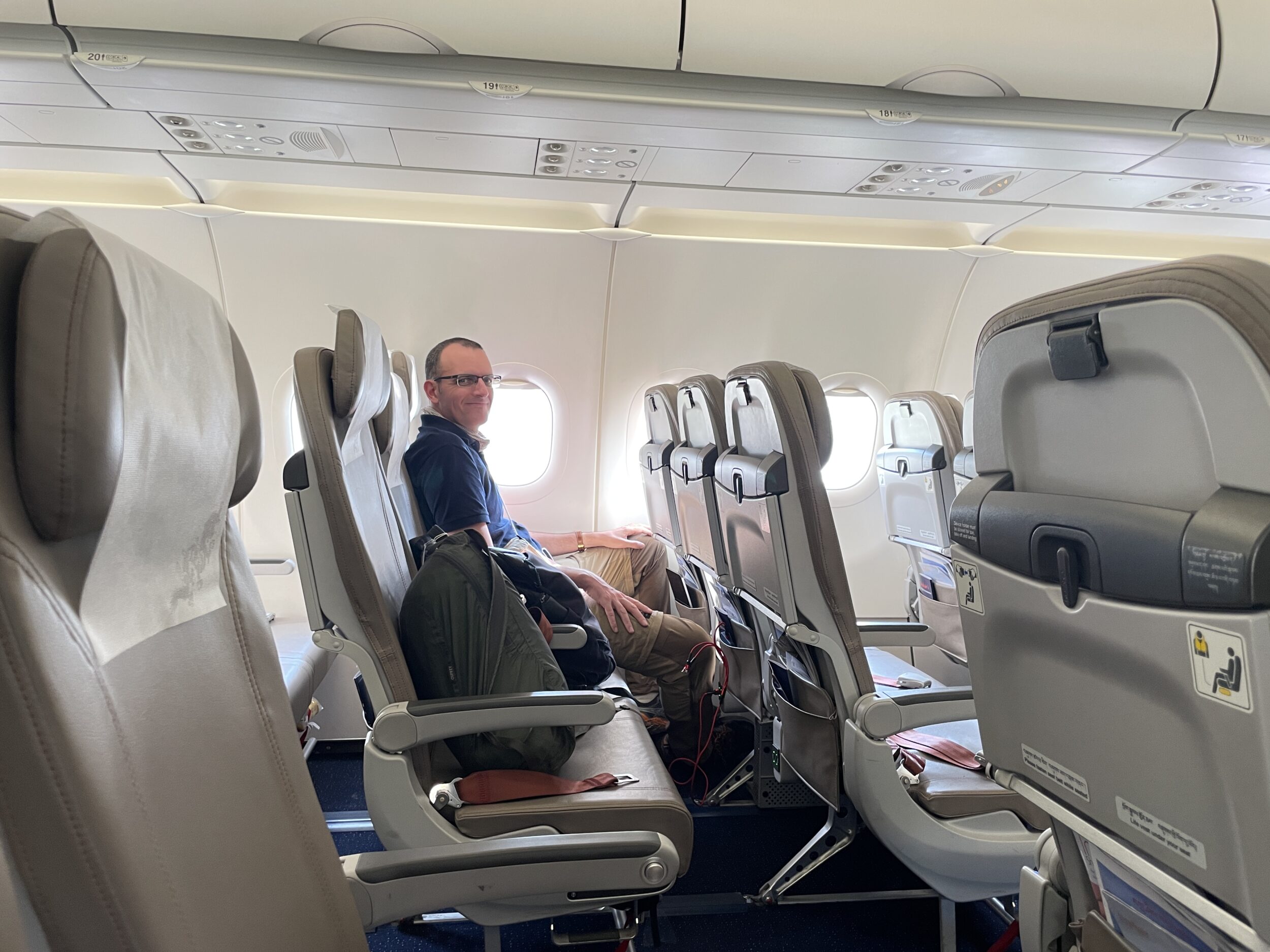
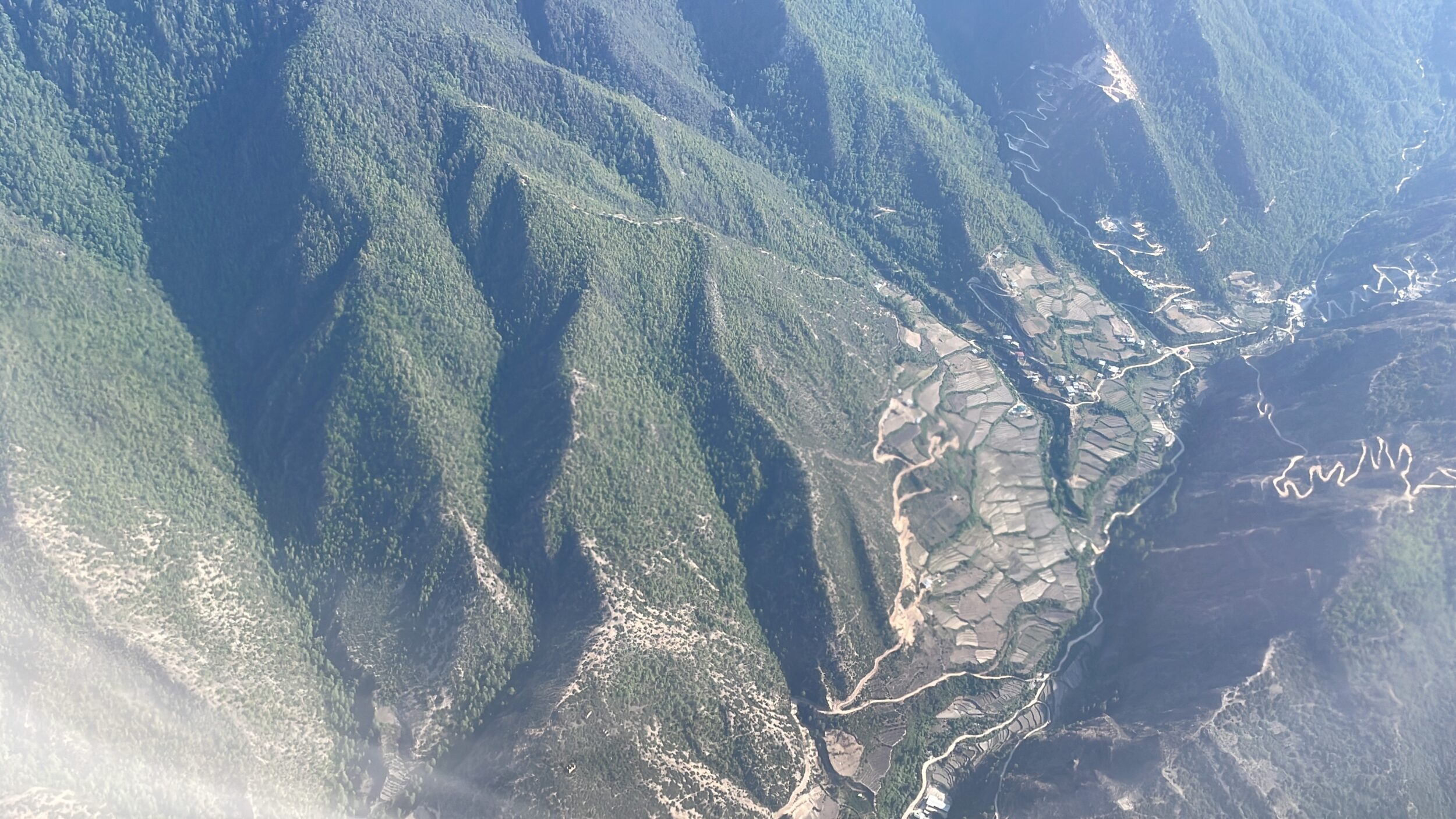
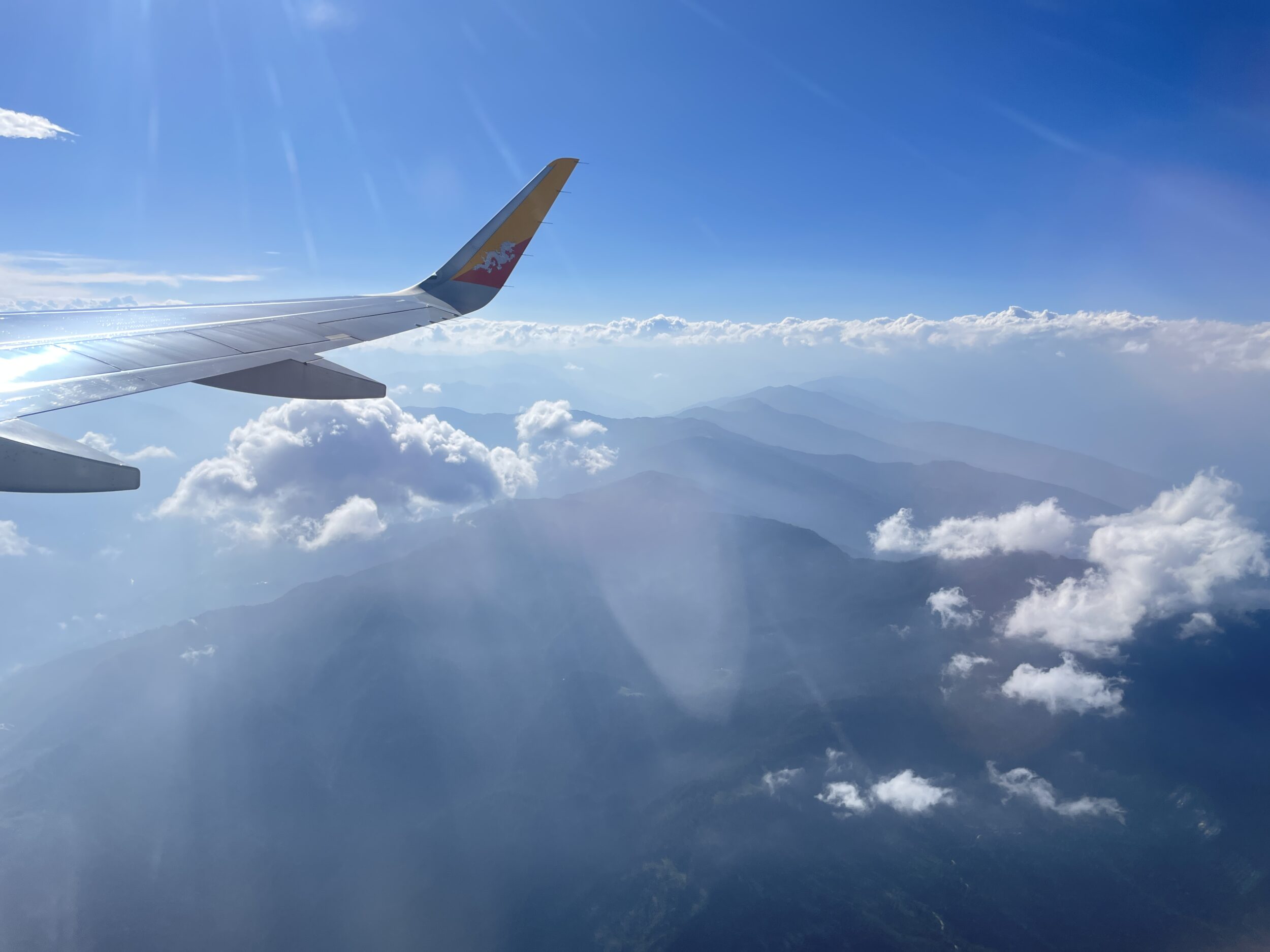
As usual, the plane leaves an hour early. We have too many seats since there are barely twenty of us on the plane. The departure is smoother than the arrival, and we leave this beautiful country, not knowing if we’ll ever come back.
Part 2: Practical Tips
We went with the agency Bhutan Inbound. We flew from Bangkok, one of the few destinations with a direct flight to Bhutan. More info on the rate and payment here

