

A Week in Bhutan, the Land of Happiness: Part 3/4
Today, we still have a lot of driving ahead of us.
This post is part of a series about Bhutan. Read part one , and then Part 2.
Part 1: Travel Journal
Part 2: Practical Tips
Part 1: Travel Journal
We pass by a stupa, where we buy a scarf for me. It says “baby yak”, super soft. 1800 BTN. The vendor gives JB change in Indian rupees, and he had to ask the guide if we could use them. The Bhutanese currency is pegged to the Indian rupee, and since there is a lot of trade with India, you can use them without any problem.
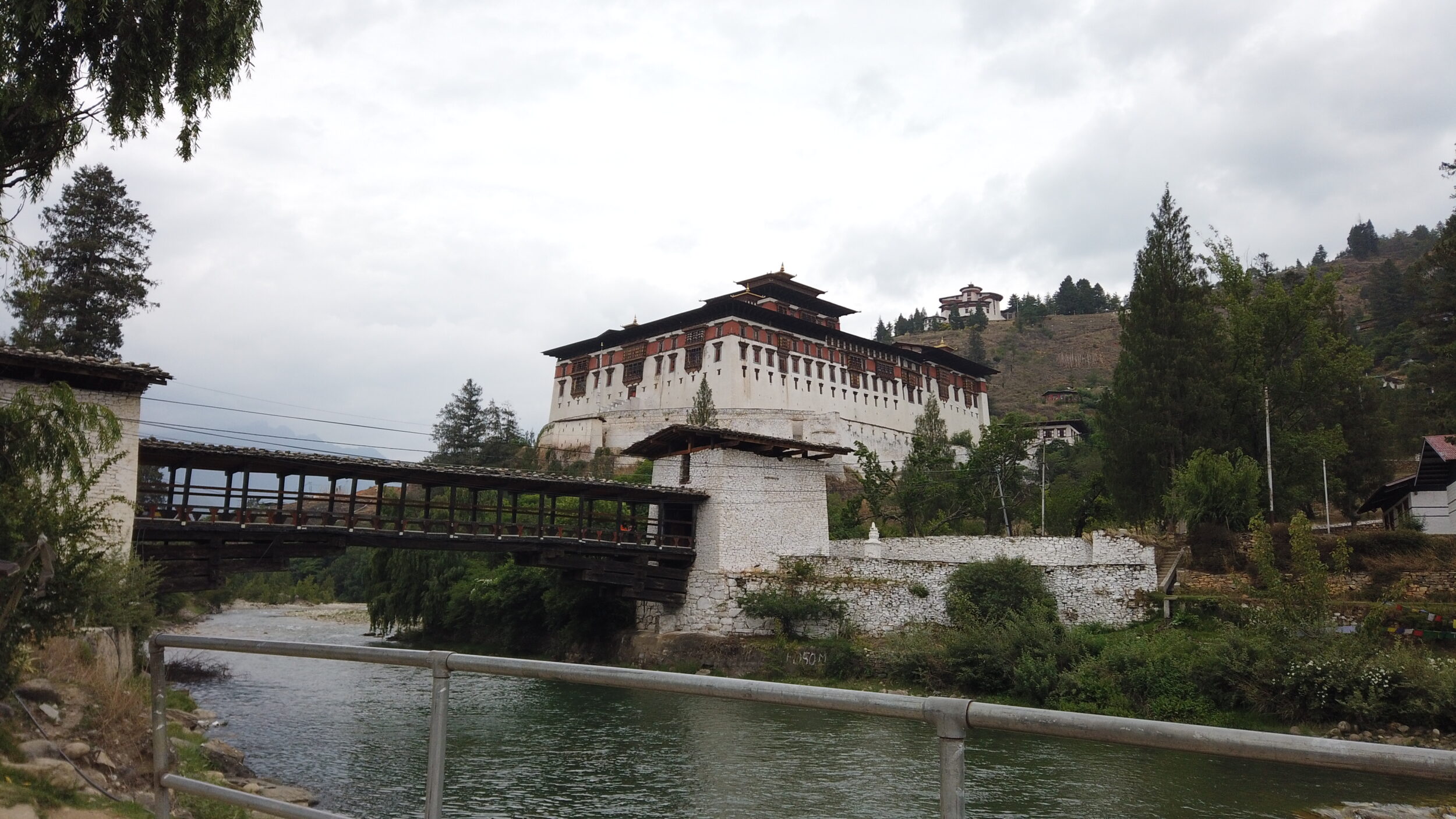
Today, we visit one of the country’s highlights: Punakha Dzong.
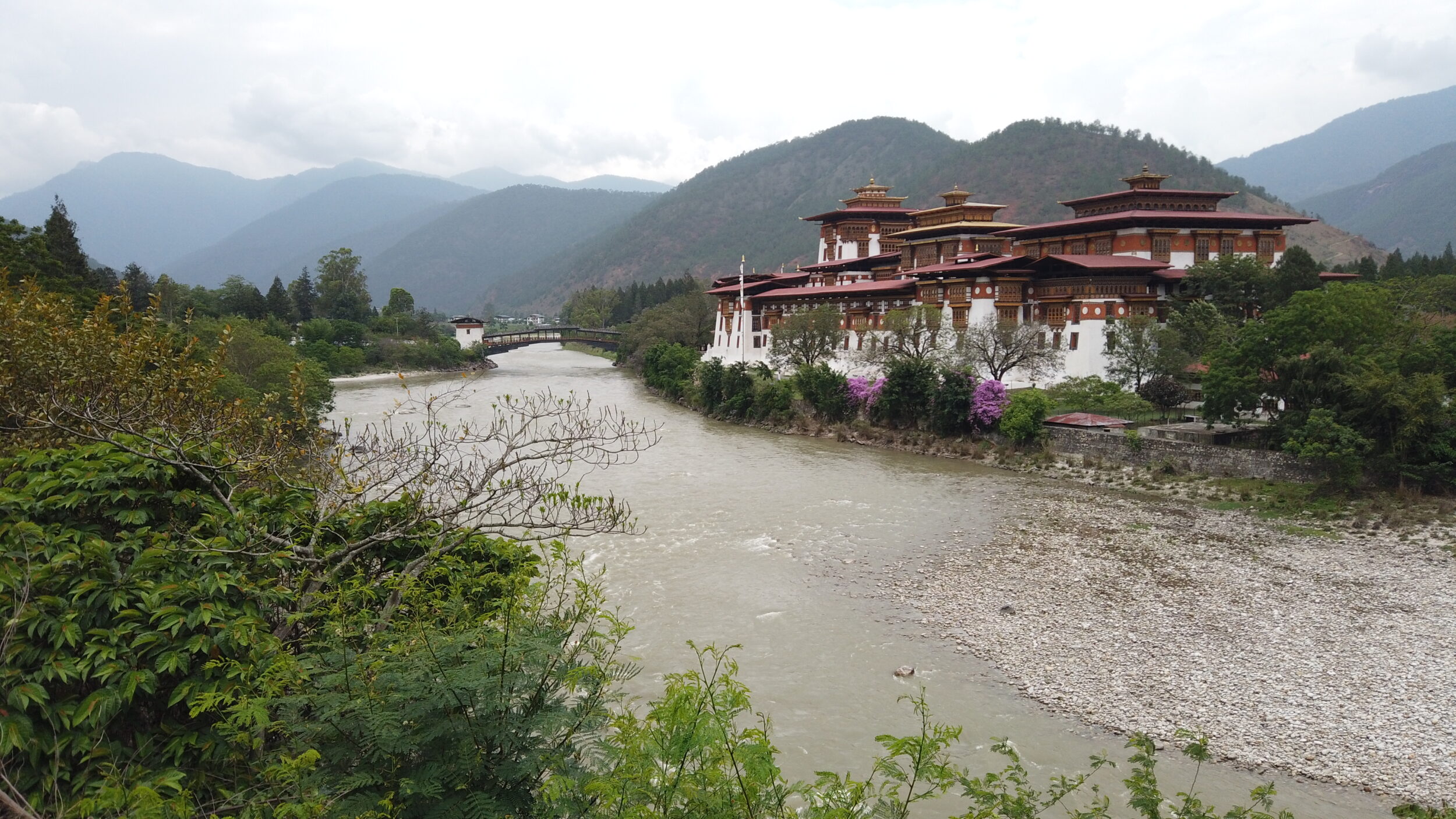
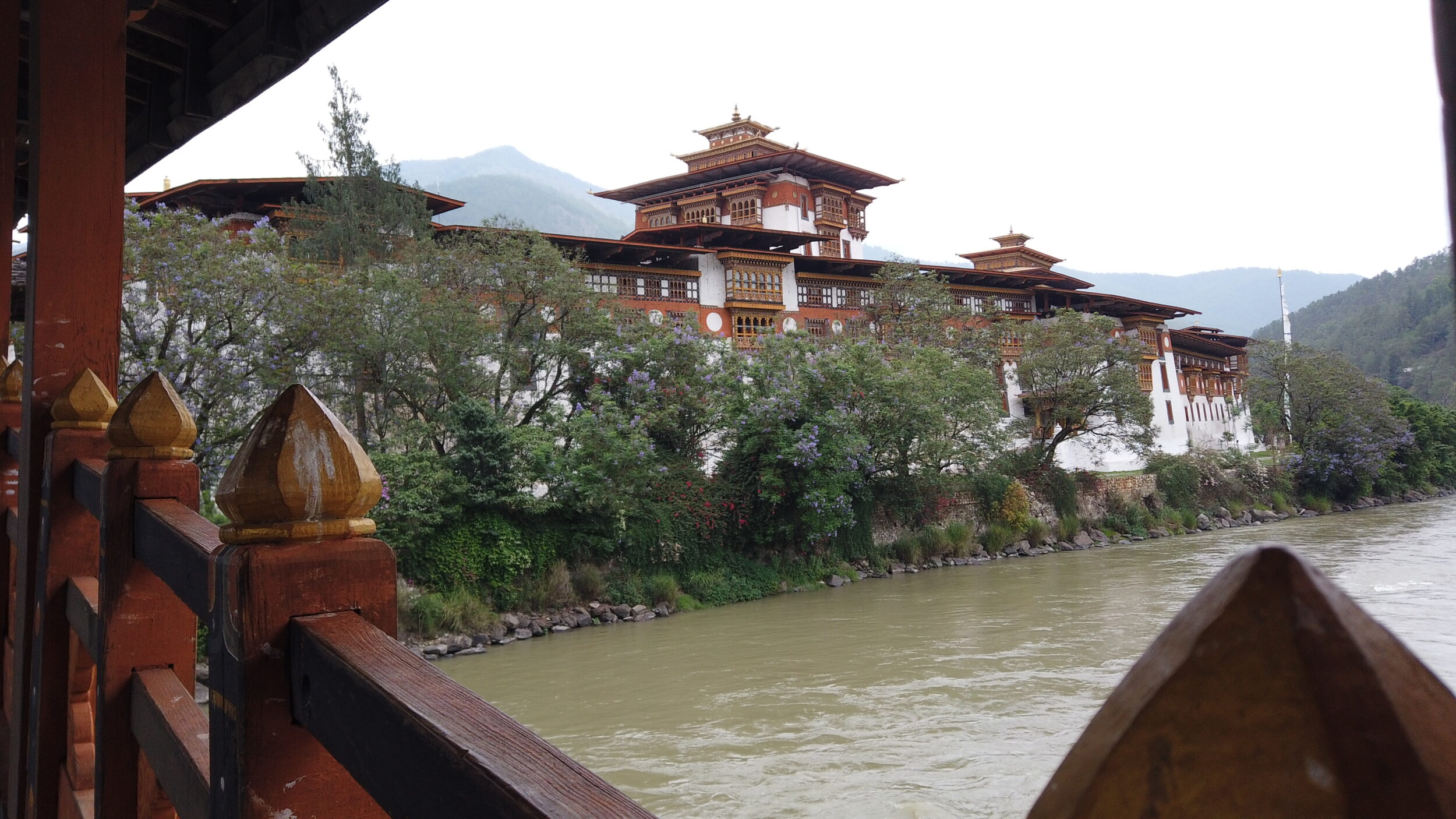
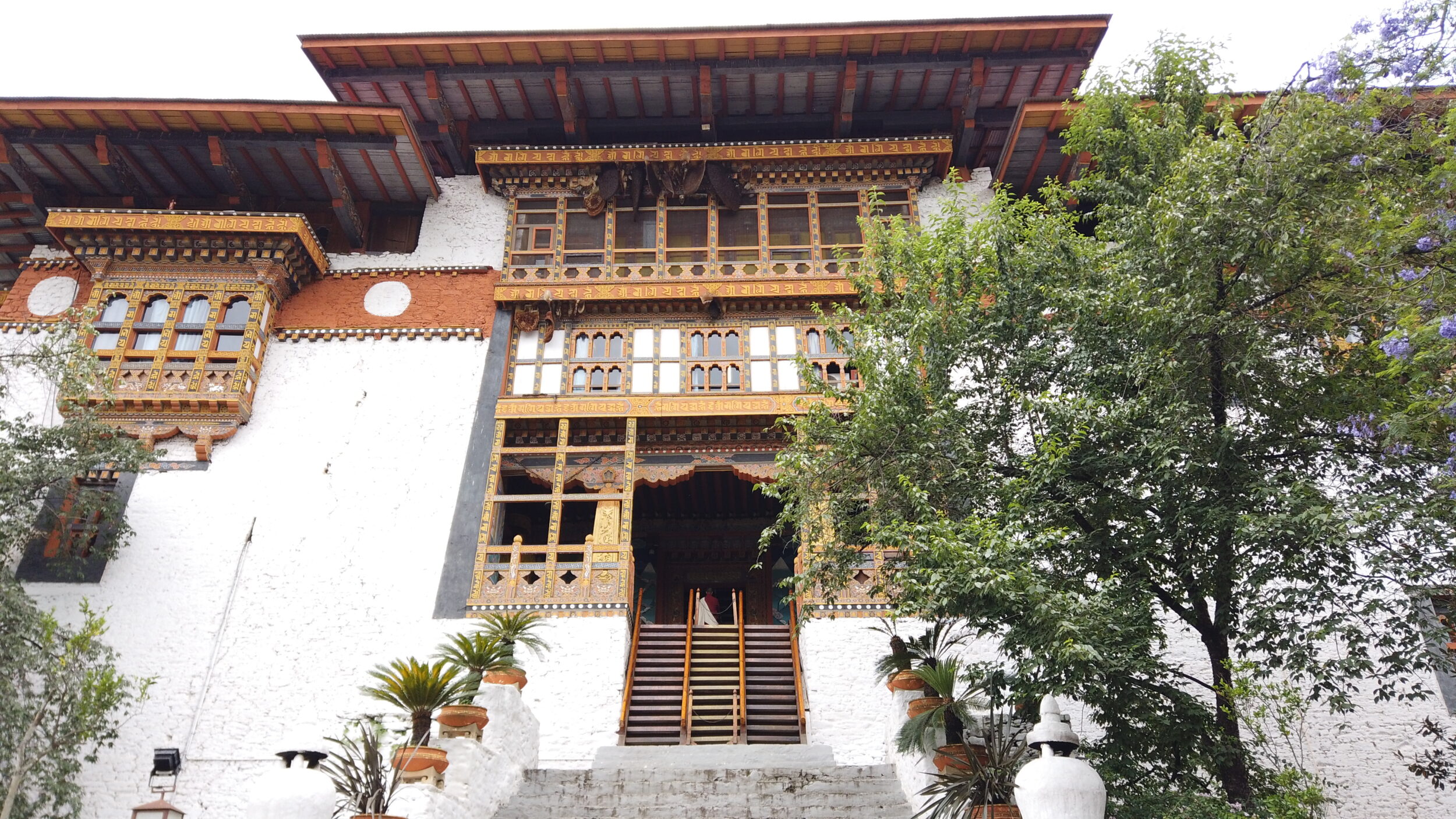
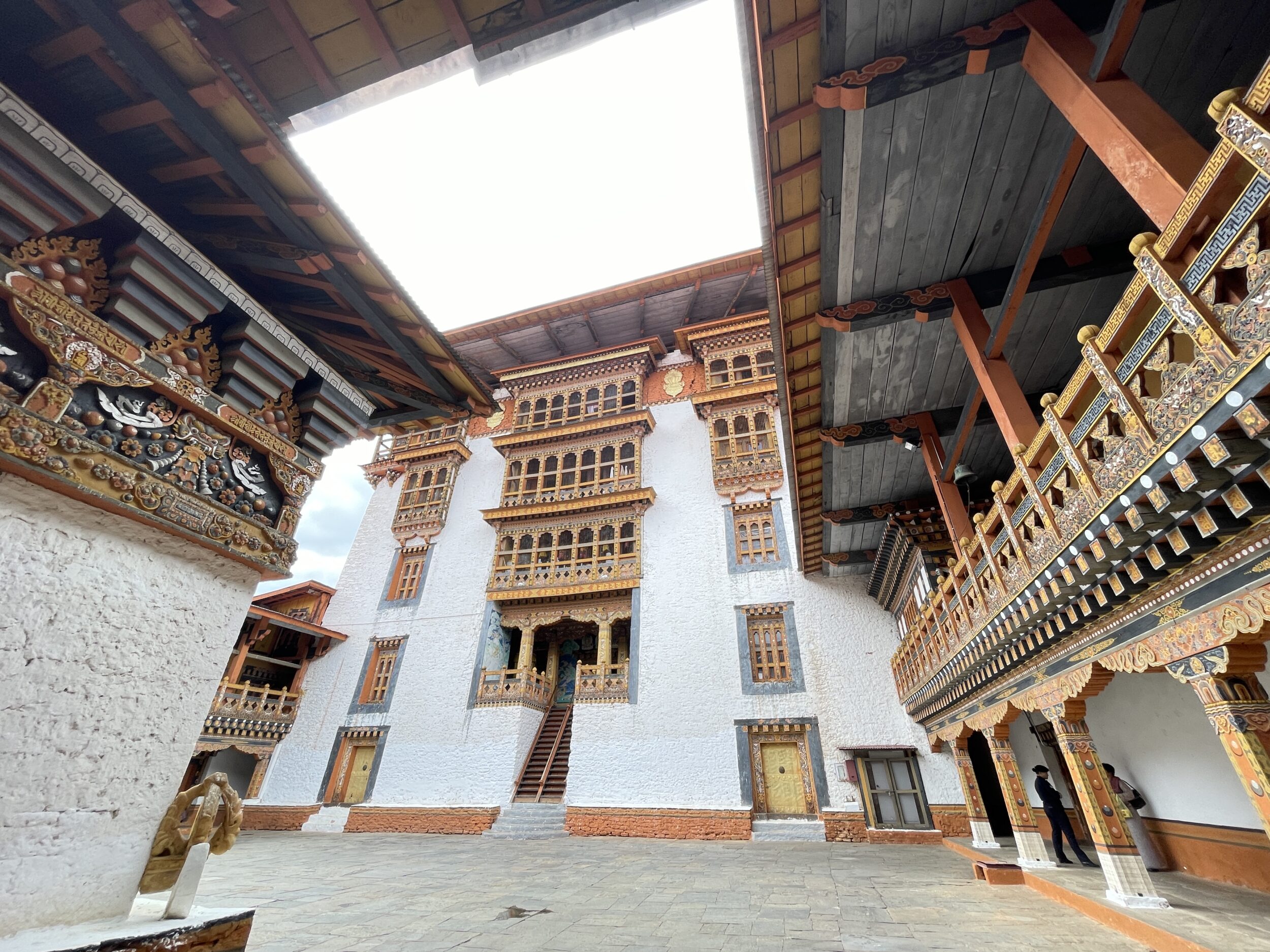
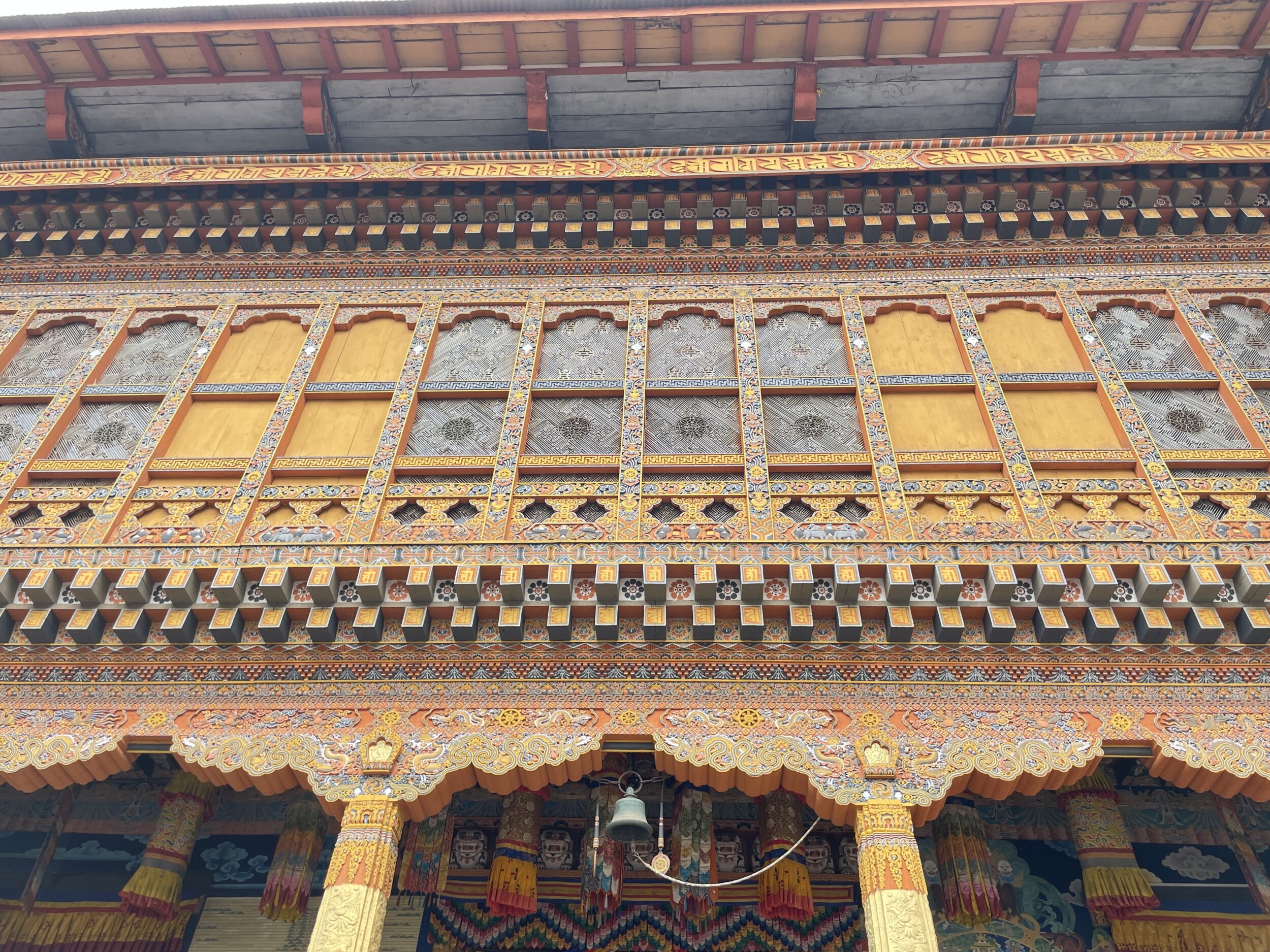
It’s a temple that also serves as a town hall. There are three large courtyards, and the first courtyard is surrounded by administrative buildings. To reach the temple, we have to climb a fairly steep staircase, and we can see many beehives. The second courtyard houses another magnificent temple, but we are not allowed inside. The third courtyard consists of two temples, one of which we can visit.
At the entrance of the building, I am struck by the 3×3 magic square that is also associated with the I Ching. I ask my guide to give me the Arabic numerals to see if the square is arranged differently, but it’s the same.
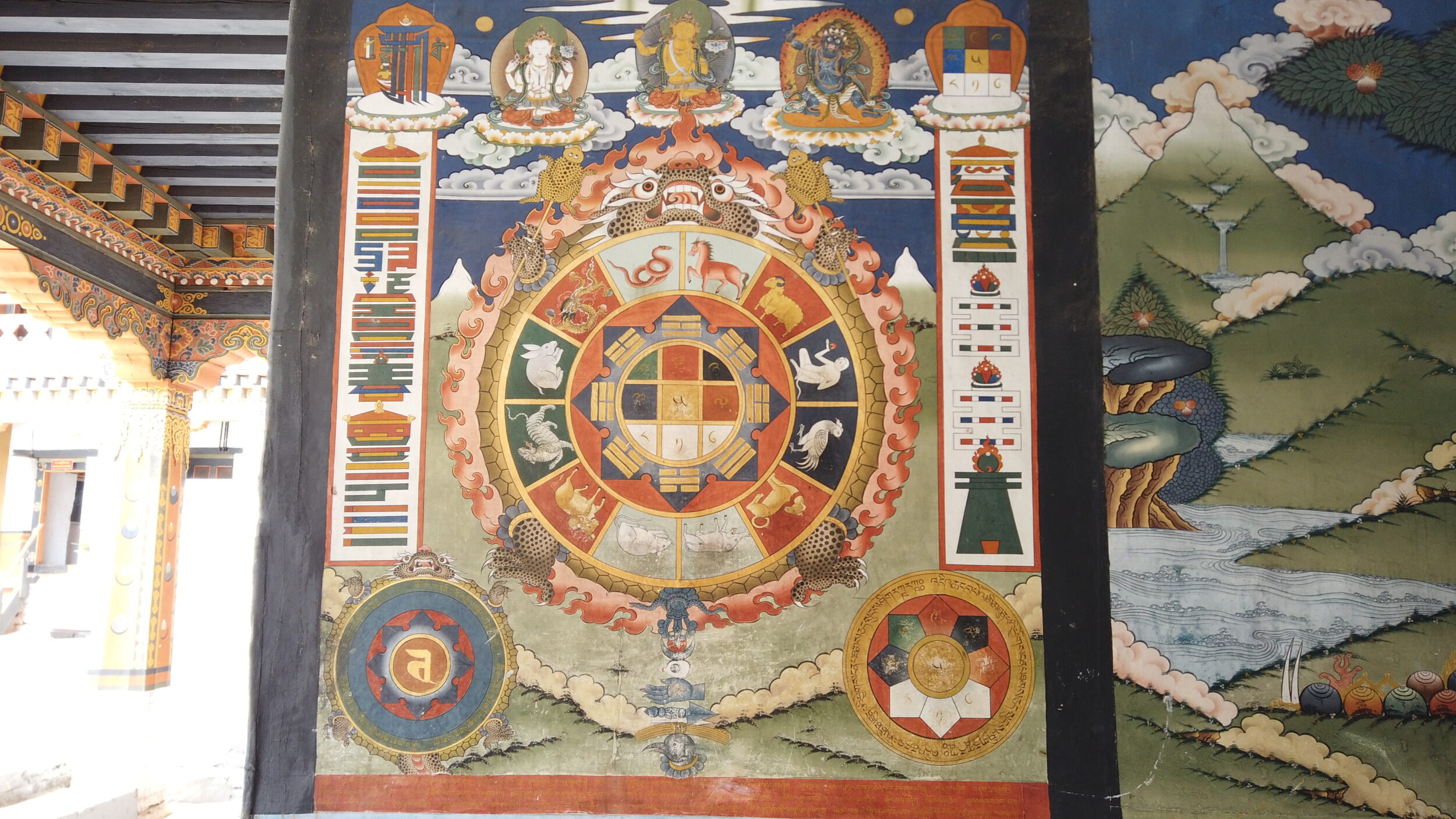
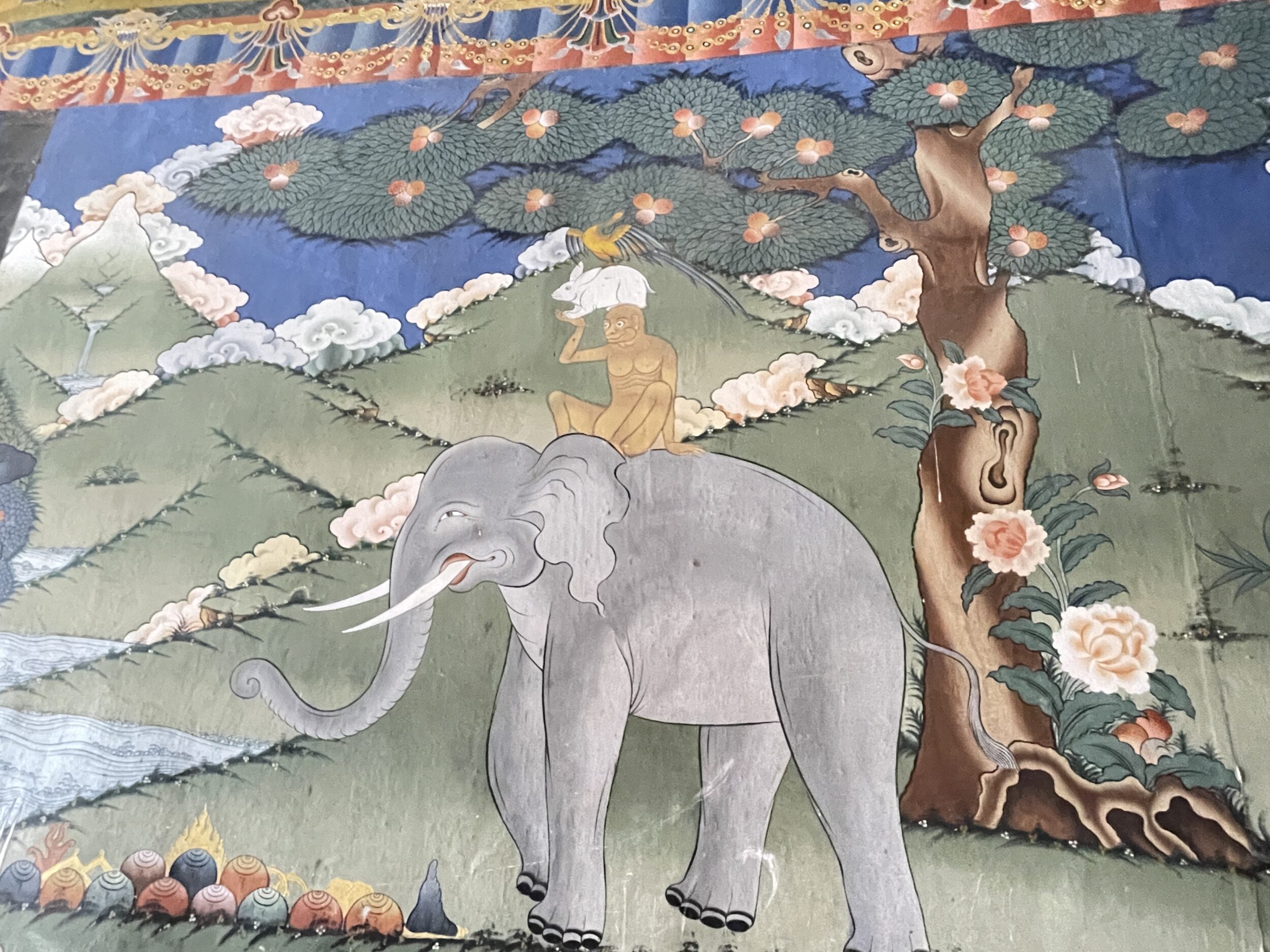
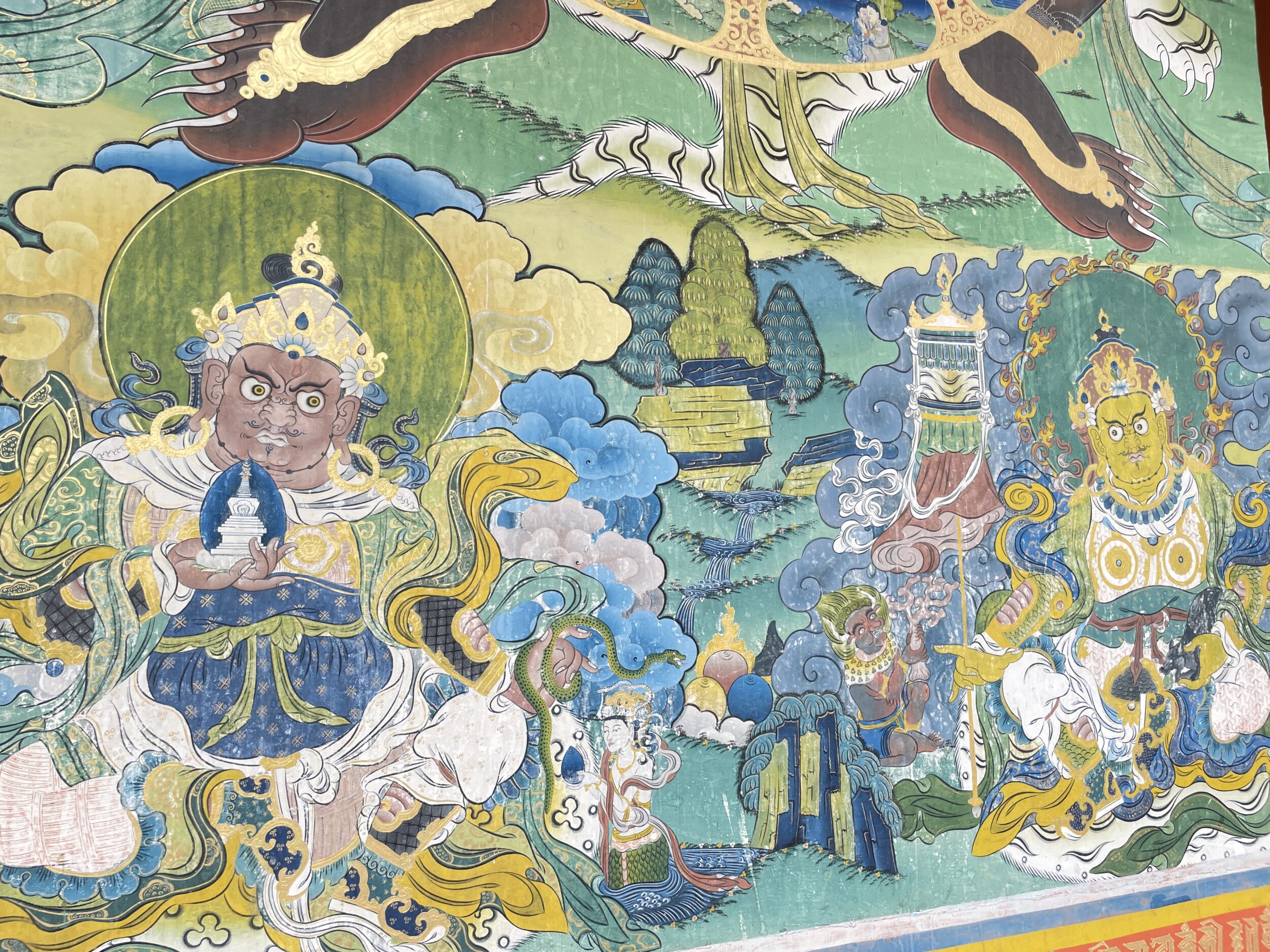
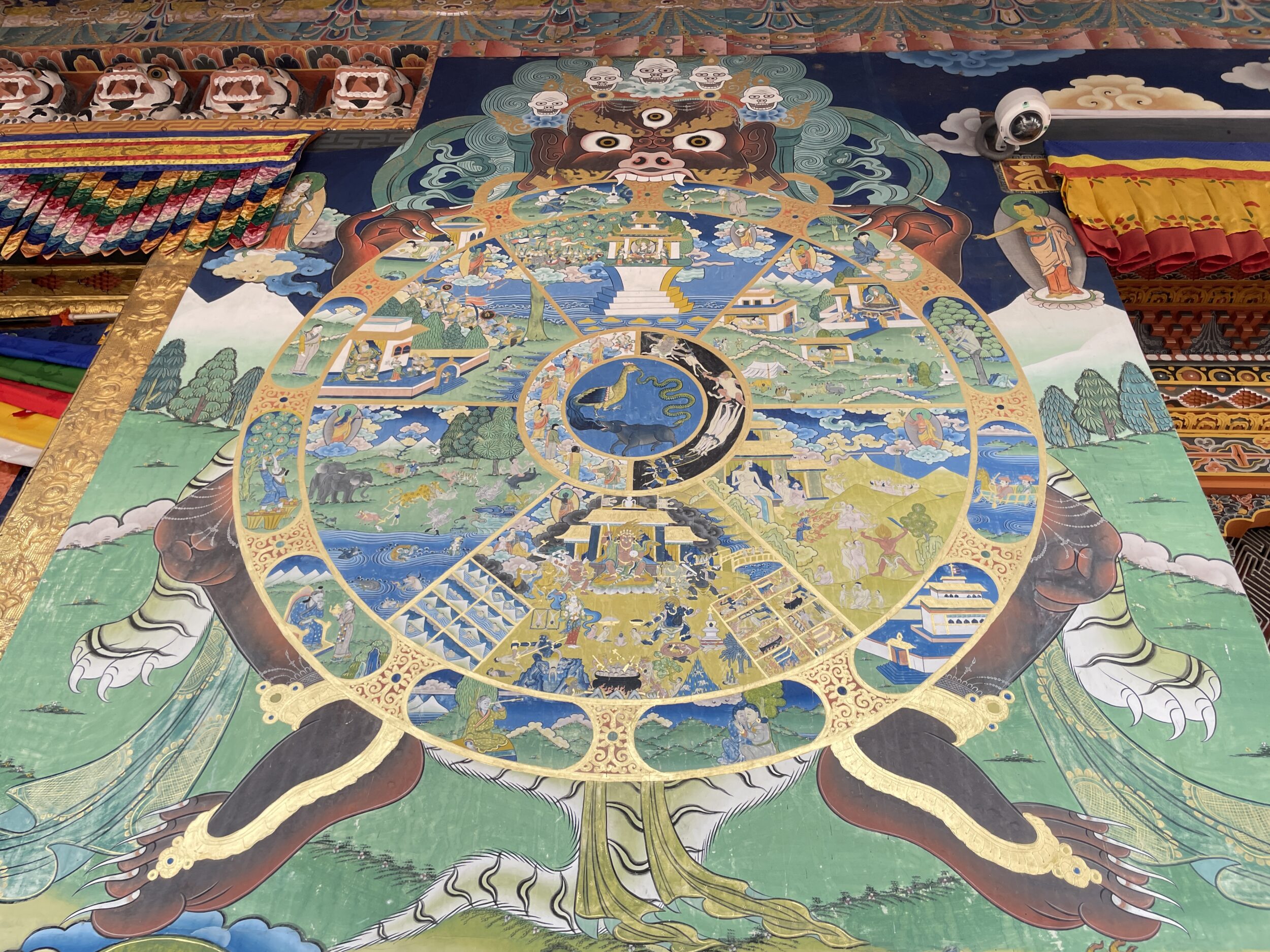
Then, he explains the drawings on the outside of the temple, which illustrate the six realms where we are reincarnating. Even if we are in the realm of the gods, the highest one, we still don’t escape the wheel of reincarnation, so the goal is still to completely break free from incarnation, from this world of samsara, it’s well explained!
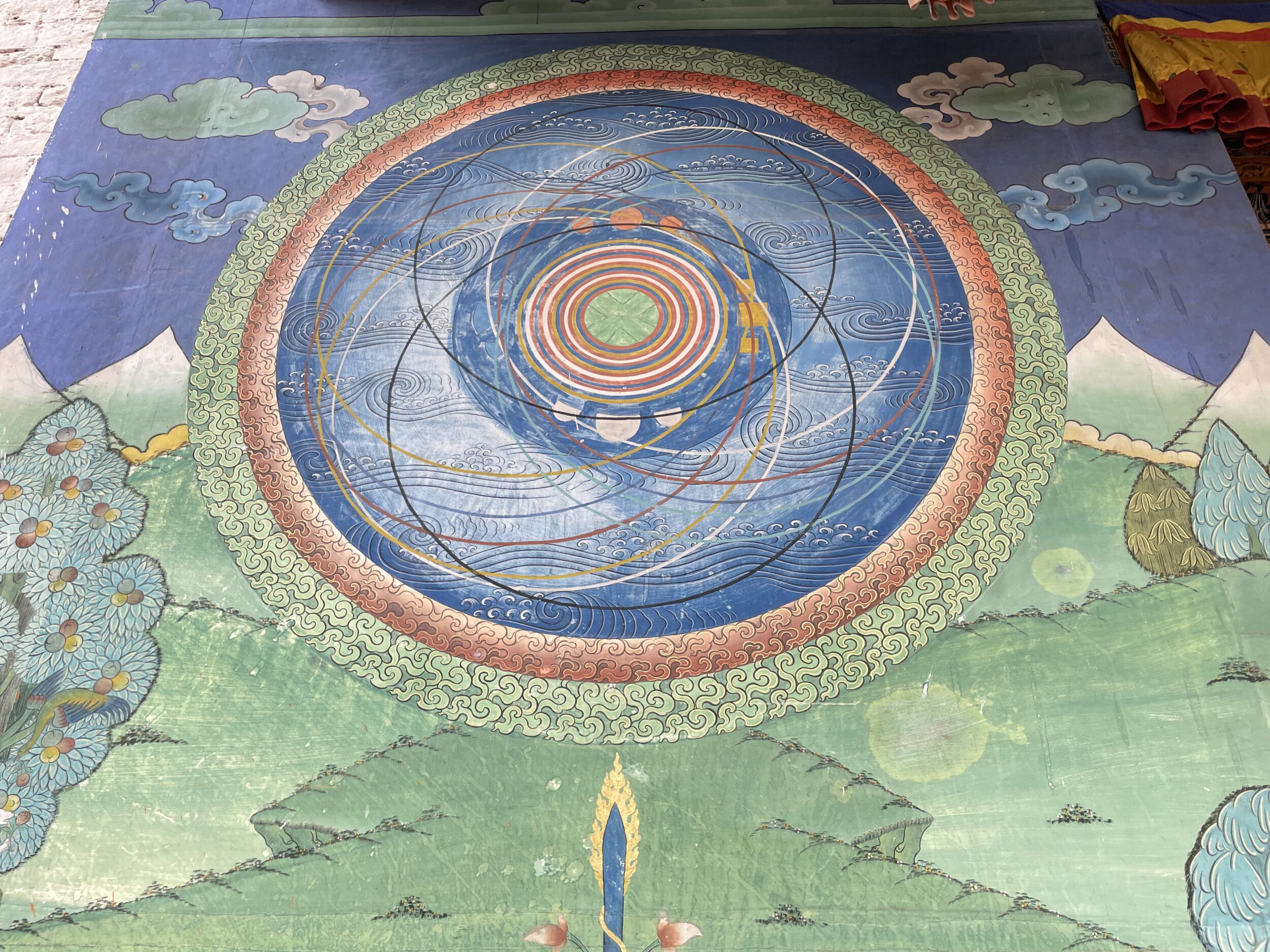
Inside, there are very colorful drawings that explain the life of Buddha. This time, the drawings are presented in chronological order, so the guide explains them to us; they are also in other temples, but out of order.
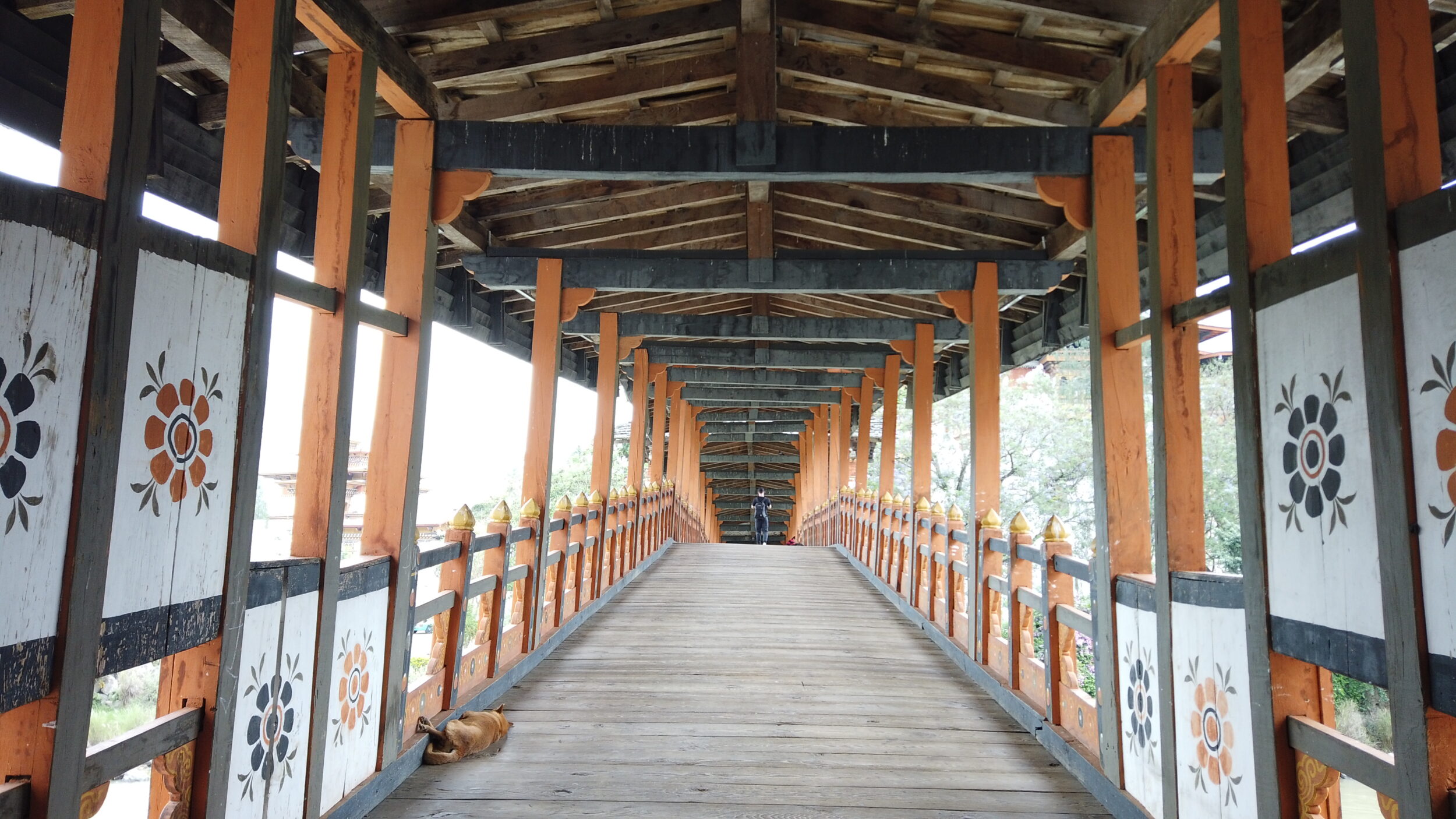
Suspension bridge
There are many suspension bridges in Bhutan, but this one is right next to the temple and is very long. Being afraid of heights, I could only go 10 meters, because another guide is having fun making the bridge sway by jumping. I let JB and the guide do the round trip. It would have been the ideal place to hang prayer flags, but we didn’t buy any. No big deal, we’ll enjoy the effect of other tourists’ prayer flags.
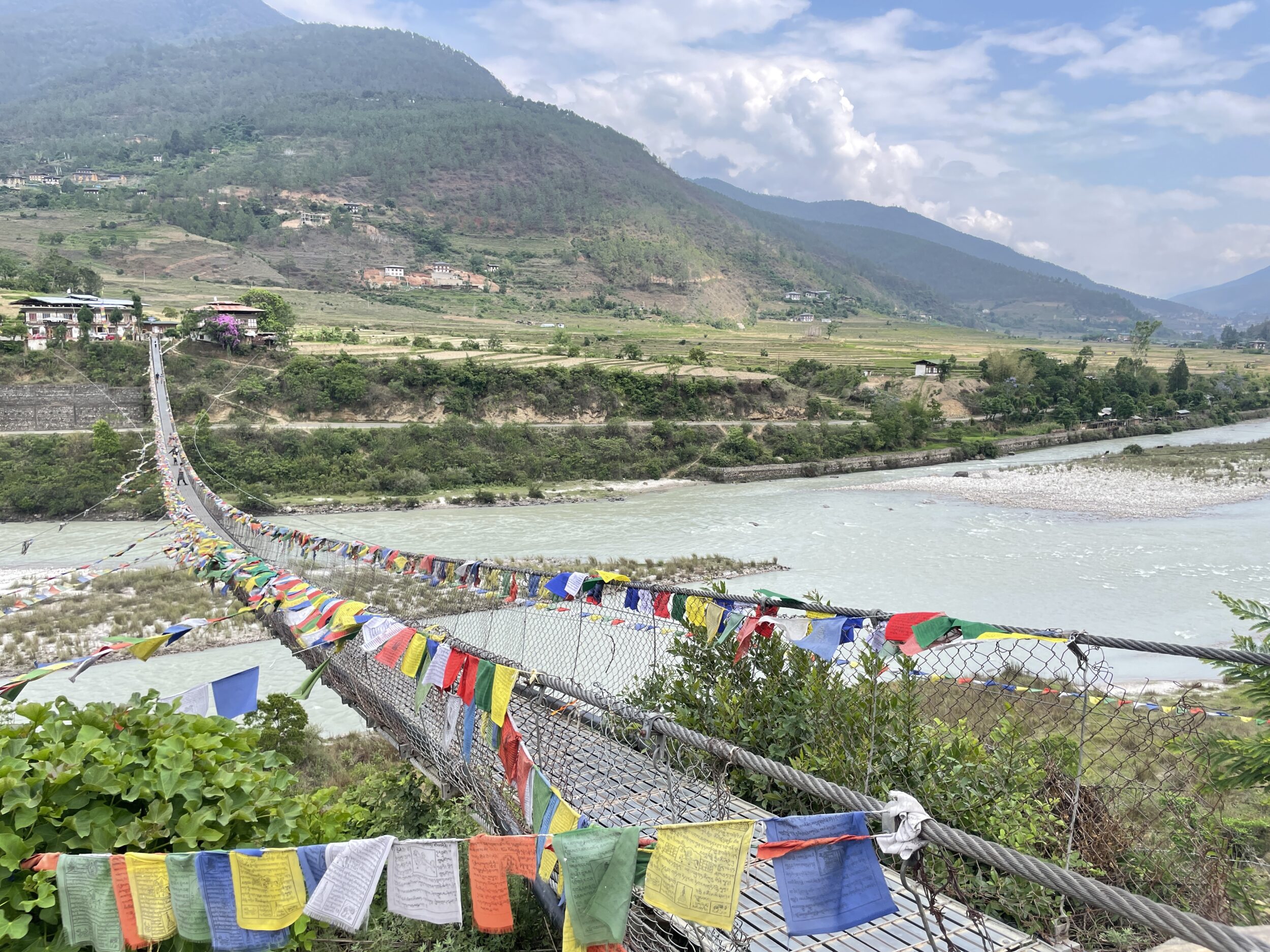
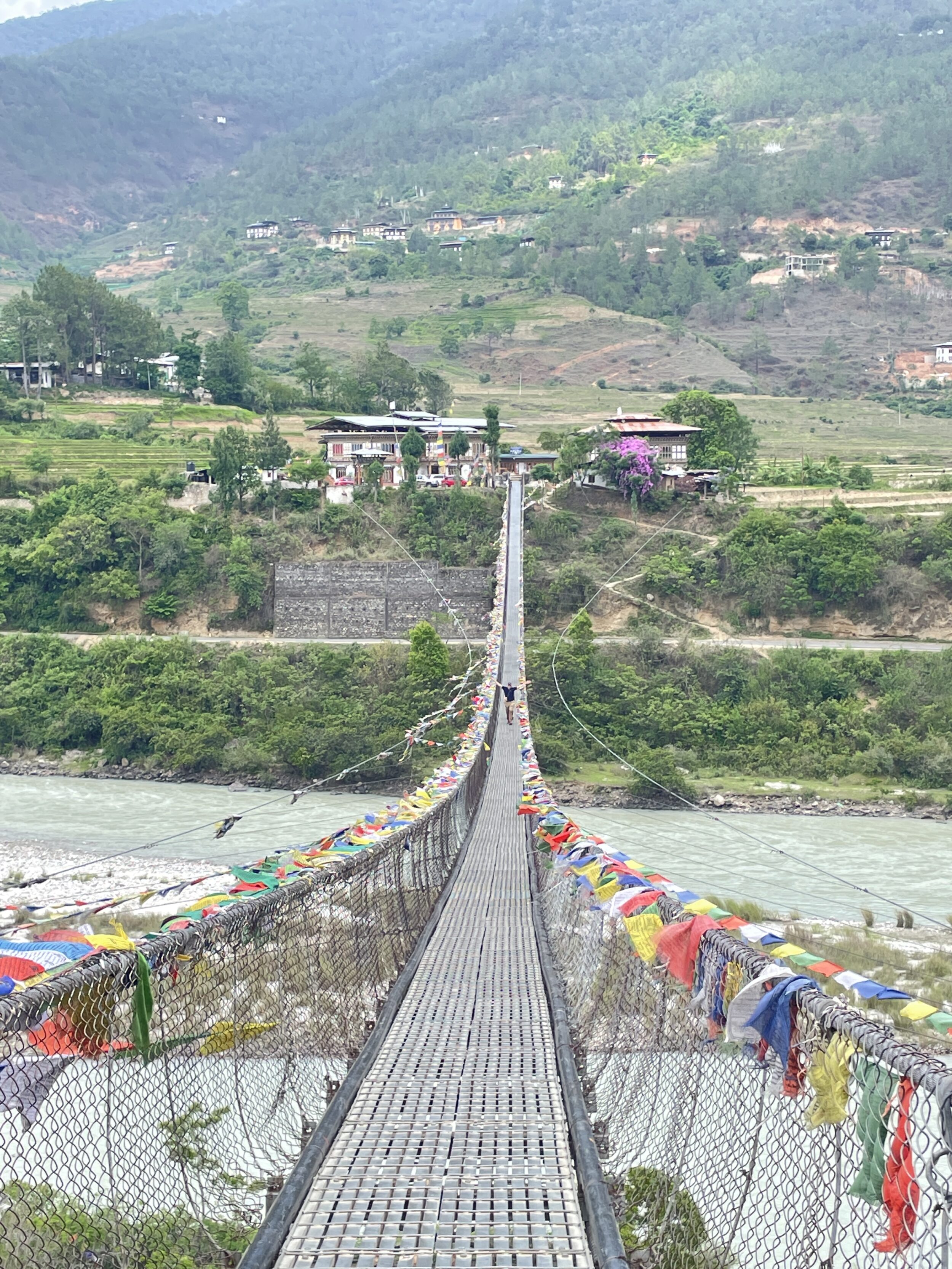
Homestay
For several days now, we’ve been hearing about this famous homestay where the hostess is like a mother to all guests. The road leading there is not easy (it must not rain), but we make it by driving very slowly. On the way, I see a huge blob of resin forming on a tree trunk, and I show the Bhutanese, astonished, how amber was formed from these resins, and why amber with insects trapped inside is worth a fortune. They are very impressed and finally understand why other tourists wear these yellow “stones” around their necks. Our driver says he’ll pay more attention when walking in the forest, but I warn him that it takes several million years for these resins to become amber, so he’ll have to be patient 😀
Our homestay is a traditional Bhutanese house by the rice paddies, surrounded by mountains. Today is harvest day, and several neighbors come to lend a hand.
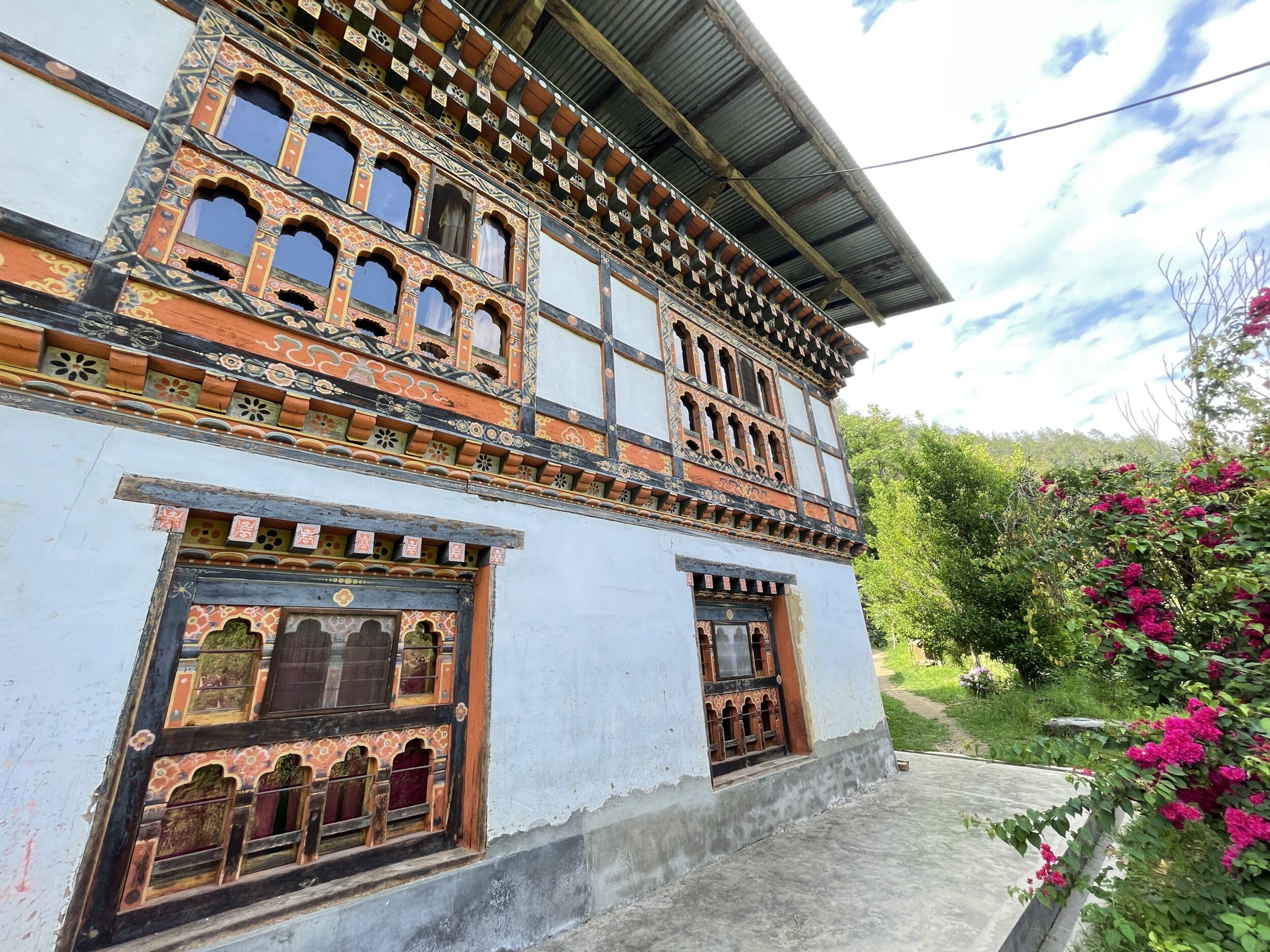
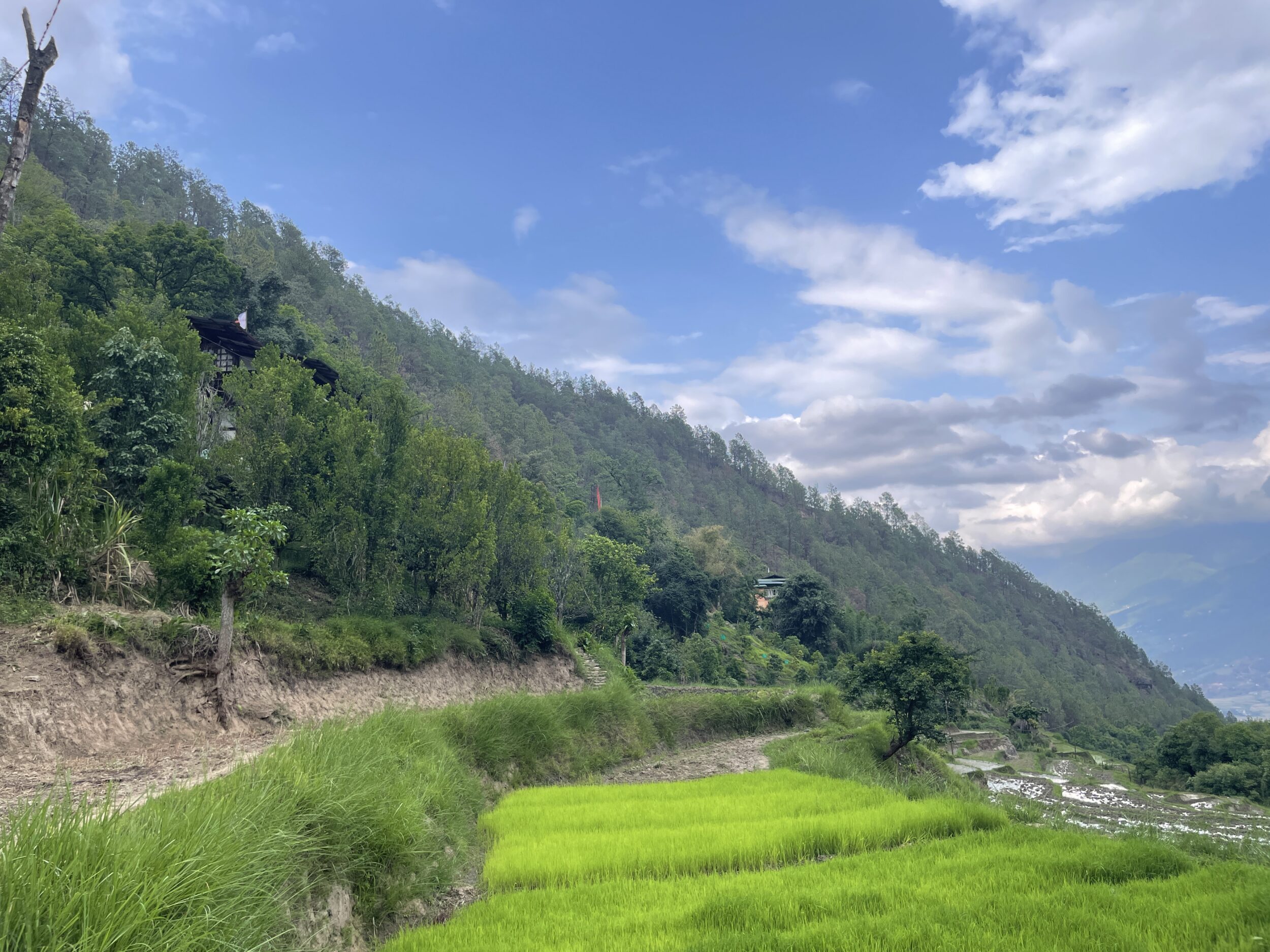
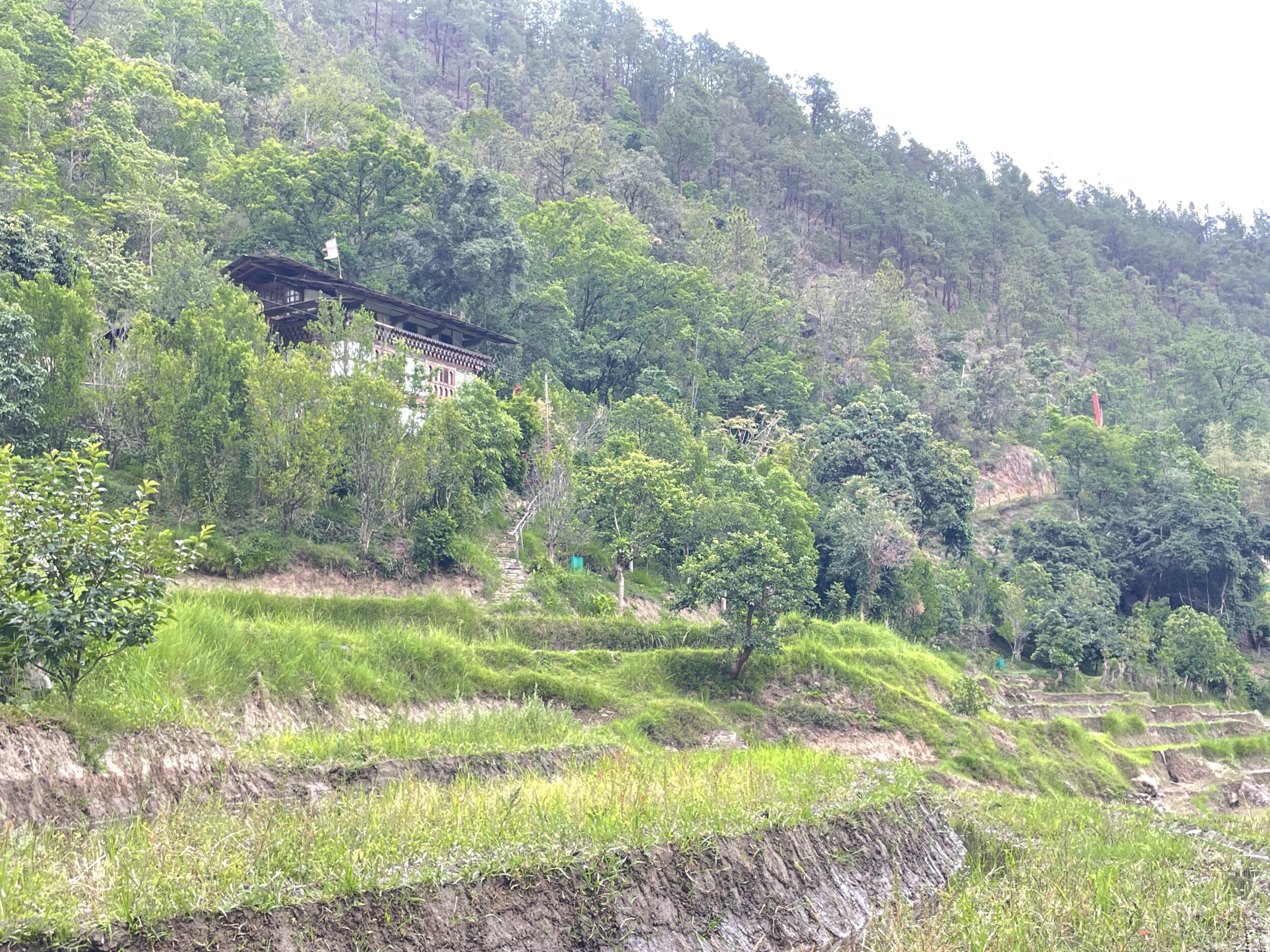
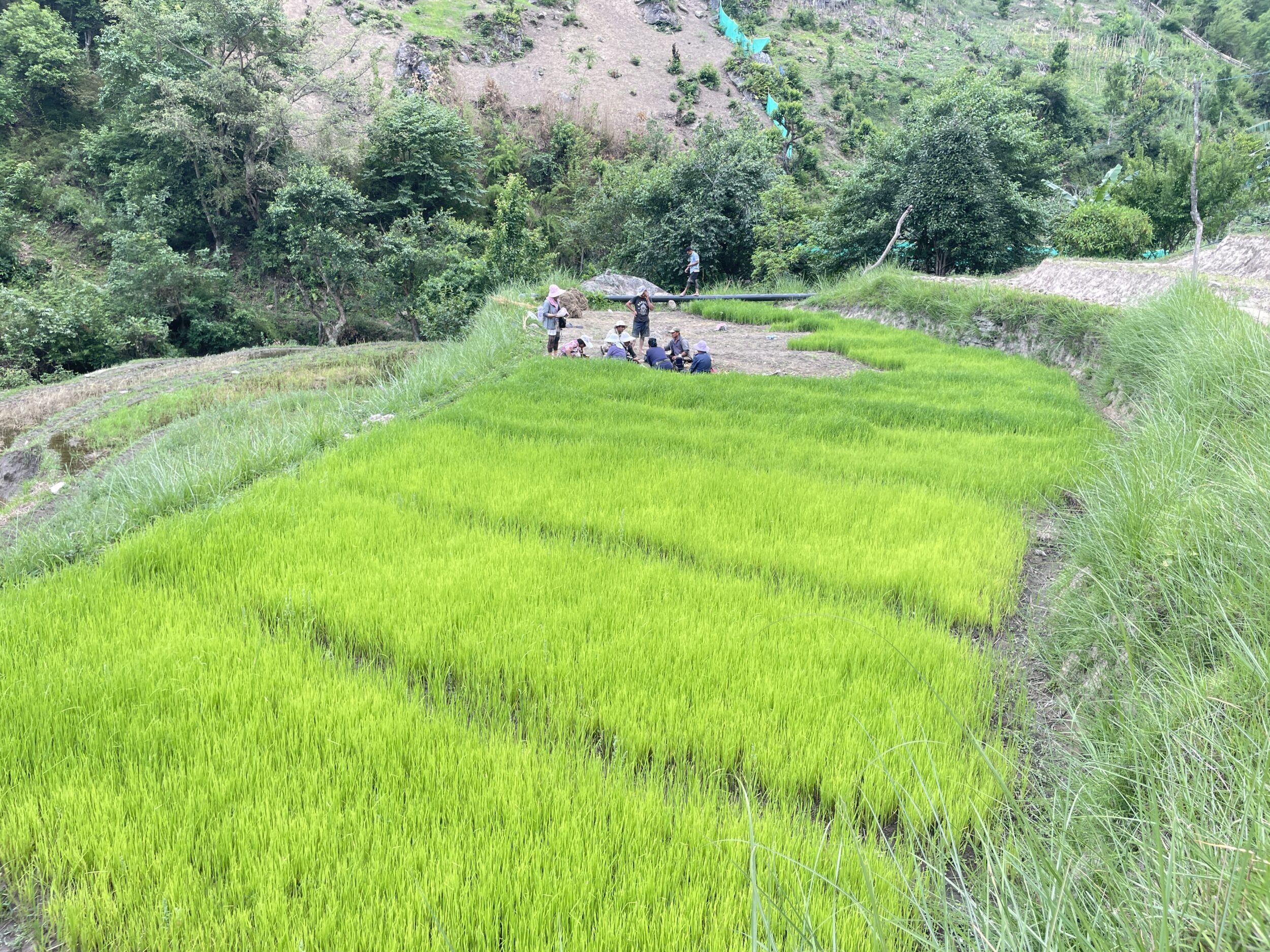
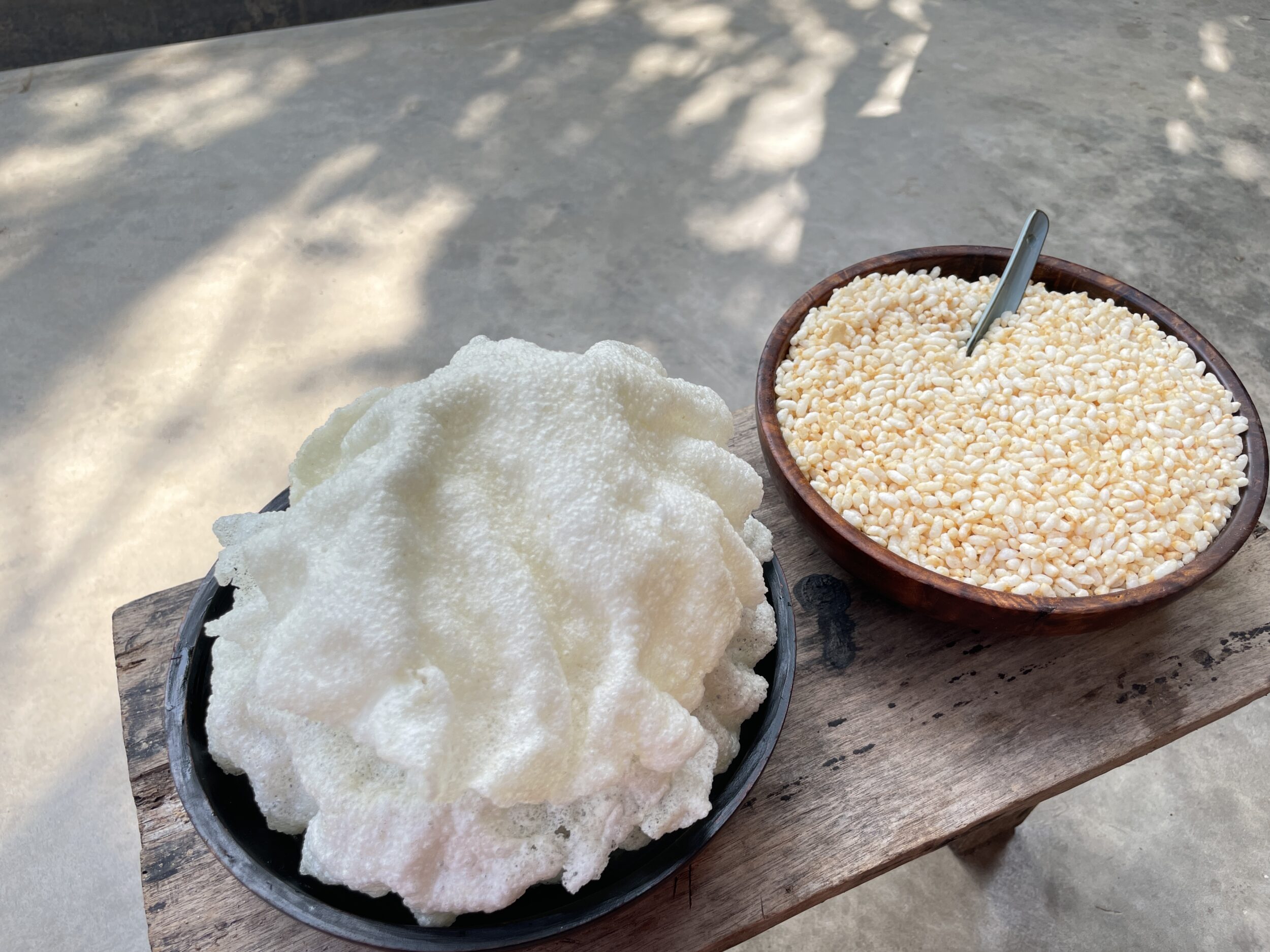
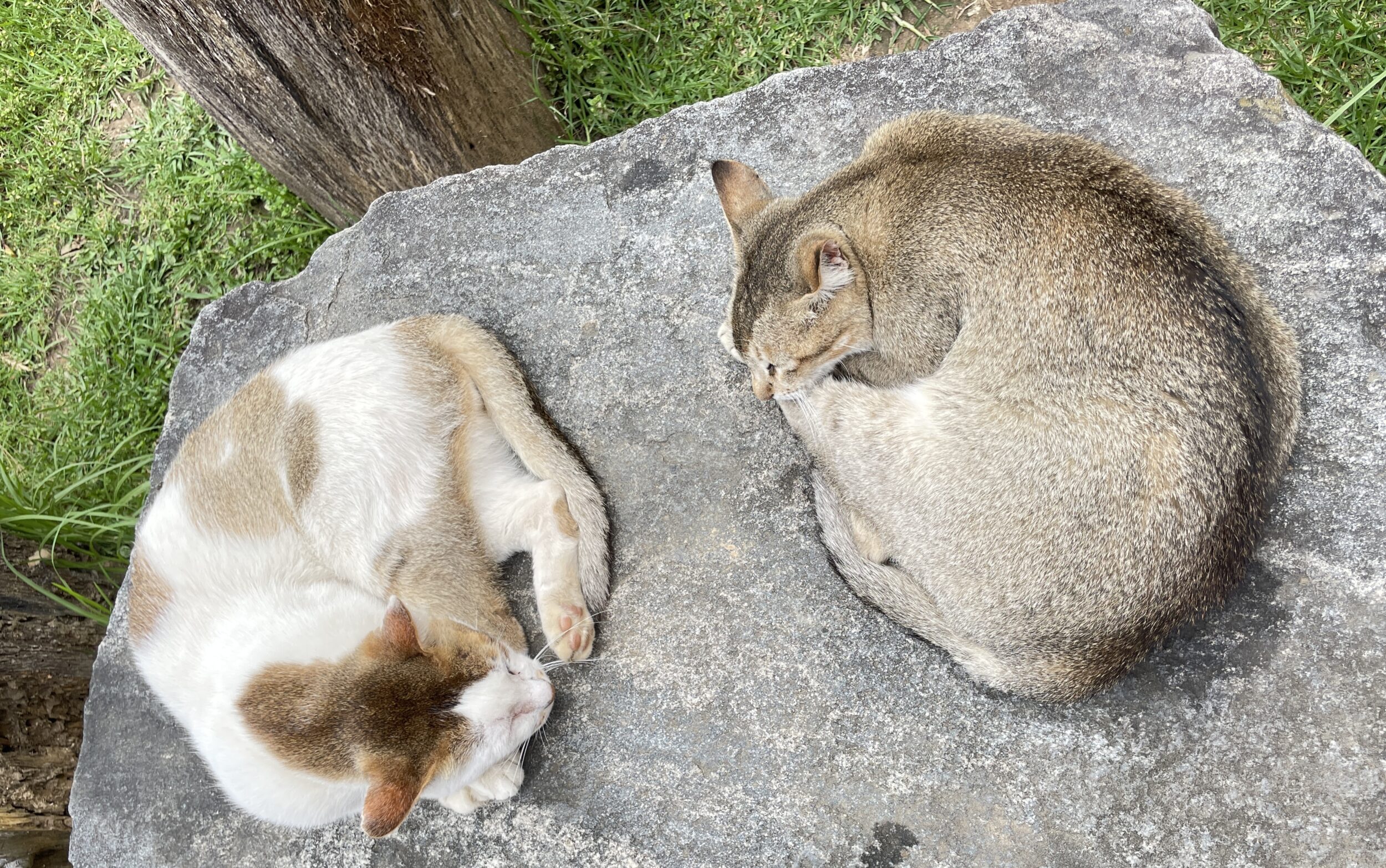
We are very well received. As soon as we arrive, we get our usual welcome teas, but also oatmeal and chips to dip in the tea. Two cats come to say hello, and a very cute dog that we must absolutely not touch (we are told this several times).
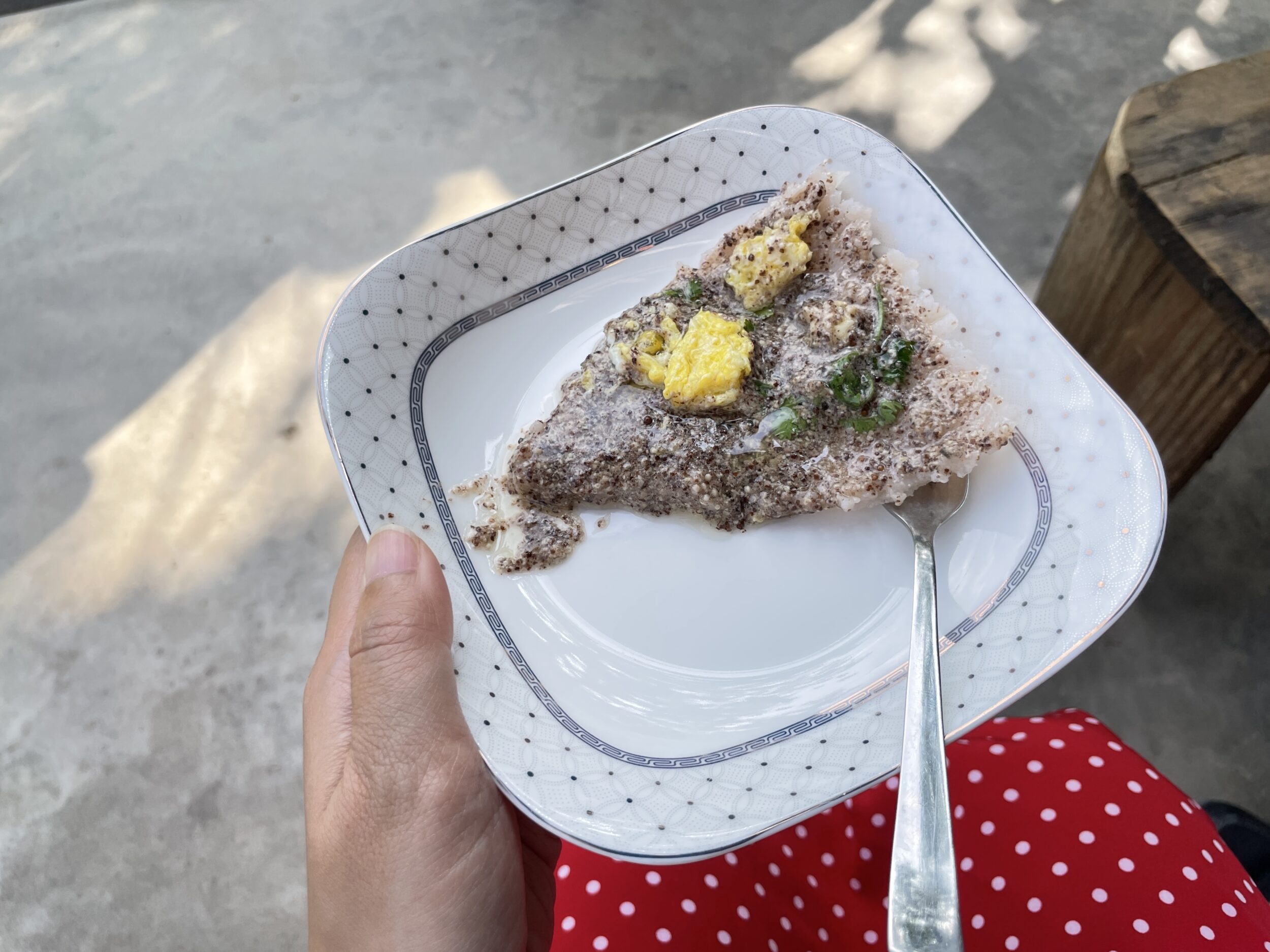
This slightly sweet dessert has a name I’ve obviously forgotten.
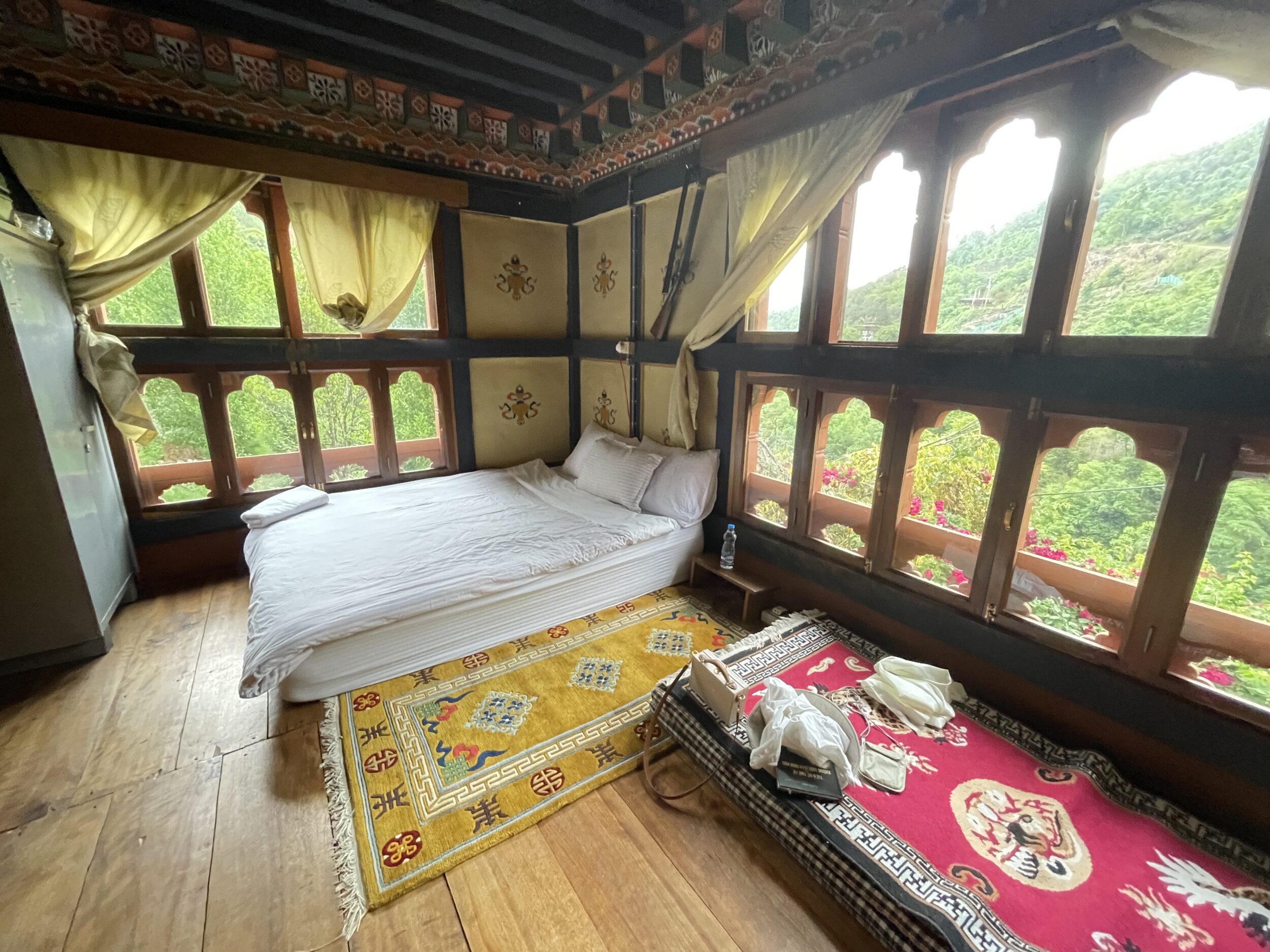
There’s a tourist in the room we were supposed to sleep in, so we were given another room, more convenient because it’s on the same floor as the bathrooms. Ever since we’ve been in Bhutan, we wake up several times a night to go to the toilet, so I appreciate that it’s on the same floor, instead of having to take their super steep stairs. The tourist who has been here for 3 days is an American restaurateur. He travels alone but must still be accompanied by a guide and a driver. His guide is an ornithologist, and they’ve had interesting walks in the forest, because to be honest, there’s nothing else to do around here.
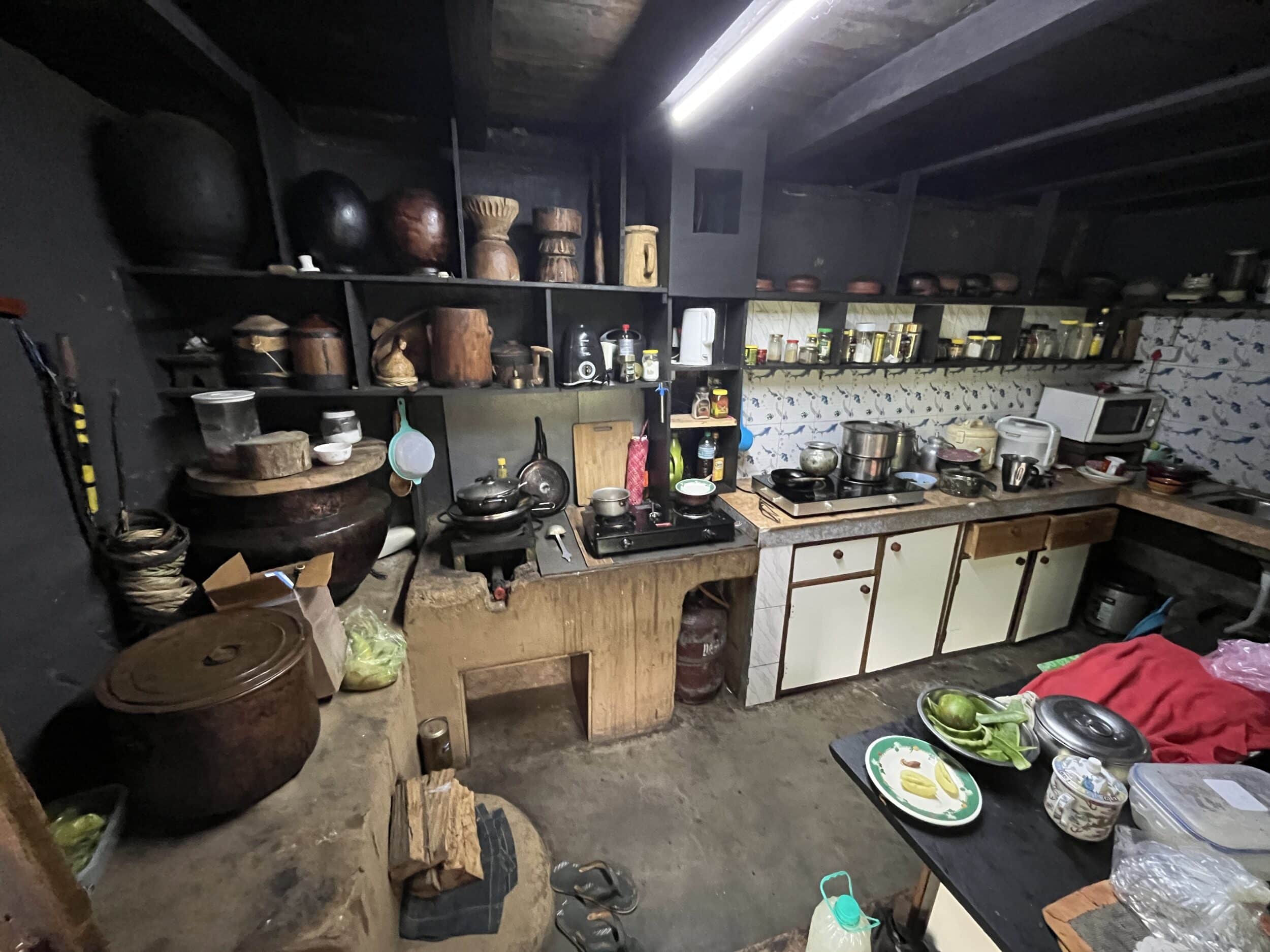
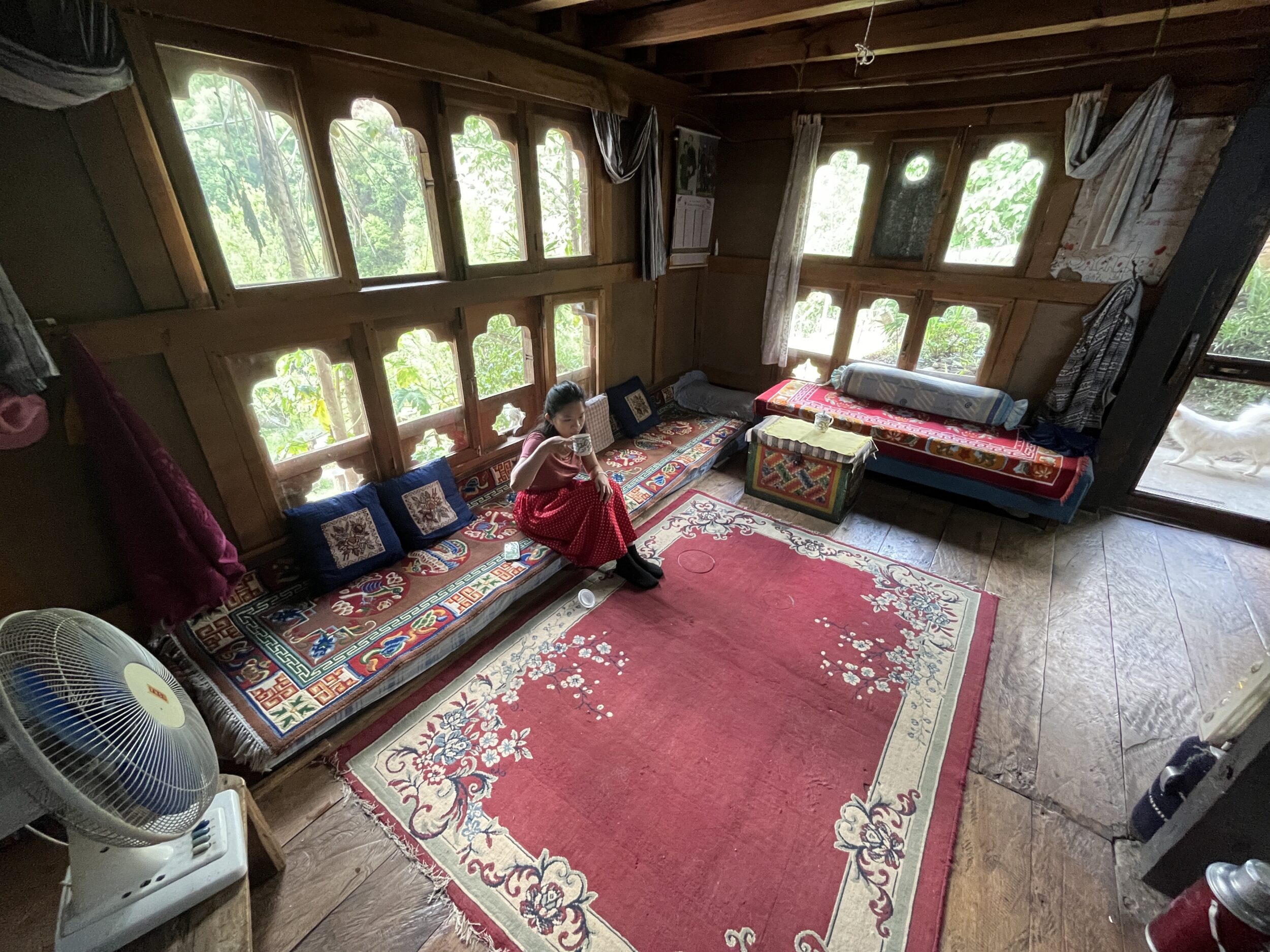
Dinner is a buffet and it’s delicious, as usual. Because of the language barrier, we can’t really communicate with the hostess, and we don’t have many questions to ask either, since what we want to know is already told by our guide. So we smile at each other without really knowing what to say, but it doesn’t seem to bother anyone. We watch them prepare the meal in a half-modern, half-traditional kitchen. The men, of course, bring out a bottle of strong alcohol for JB. This is the 3rd or 4th time our driver comes here, and he says he feels at home.
The bathrooms are shared but there are 2 and they are clean. I didn’t try to take a shower because I don’t think there’s hot water. There’s no Wi-Fi either, which suits us because we want to disconnect as much as possible. When we leave the homestay, the hostess gives us a big hug. The guide concludes that we now have a Bhutanese mom.
Staying only one night here isn’t enough to feel at home, but I really like it. The American tourist, having spent more time at the homestay than us, left with tears in his eyes. We’ll see him again a few hours later at a stop, since we’re all taking the same route.
Cordyceps
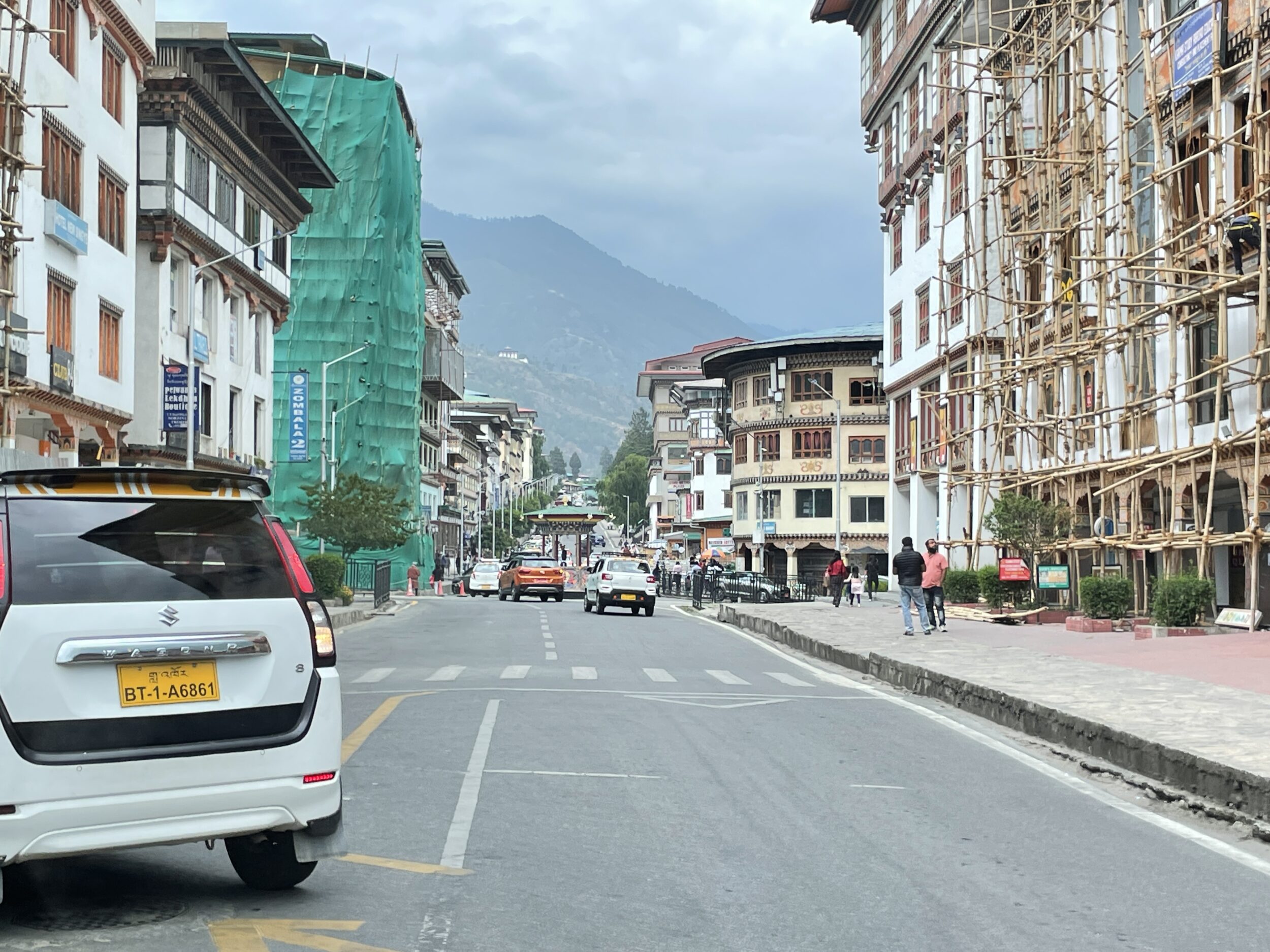
The rest of the day is supposed to be uninteresting, but since I forgot two cosmetics at our first hotel, we make a stop in Thimphu and take the opportunity to look for a jewelry store (spotted on Google Maps but nonexistent in reality) and buy cordyceps. Bhutanese cordyceps are the best in the world.
Our guide takes us to see his buddy, who has recently become a cordyceps seller. We had the price list before coming, so we know what to expect, but it’s when we arrive and see the tiny size of the cordyceps, which sell for $33 each, that I finally understand why you have to be very rich to consume them regularly. Cordyceps is very well known among Asians, but you Europeans must surely find this product absolutely disgusting.
It’s a fungus that grows inside a caterpillar, draining all its energy, and in the end… its life, because the fungus pierces the caterpillar (RIP) and kills it. The final product is therefore half caterpillar, half fungus. Like all weird Asian medicinal products, it’s expensive, rare, and can’t be cultivated. In Bhutan, there are only two times a year when Bhutanese with a certificate can go search for cordyceps in the Himalayas, up in the mountains. There’s no fresh cordyceps because it takes several days to bring them down from the mountain, so they’re all washed, sorted, and dried before consumption. Cordyceps is an energy boost unlike any other medicine. The fact that the fungus grows inside the worm means that everything the fungus secretes (antioxidants, antiseptics, amino acids…) is kept inside the worm instead of being lost in the soil. I read a very serious book on the subject, with the exact composition of good stuff in a cordyceps. Even I was convinced after reading it. Given the price, they’ve of course tried to grow the fungus on its own, but it doesn’t have the same concentration of a certain active ingredient as in nature, with the caterpillar.
There are several grades, and the higher you go, the bigger and more beautiful the caterpillar, and the larger the fungus. The best grade is no longer available, so we have to settle for the 3rd grade, but it’s still expensive. Plus, we don’t have many dollars, so we can barely afford 3 cordyceps, which makes 1 gram. The seller picks caterpillars with plump legs for us. The red eyes are a visible characteristic of Bhutanese cordyceps (vs. Chinese).
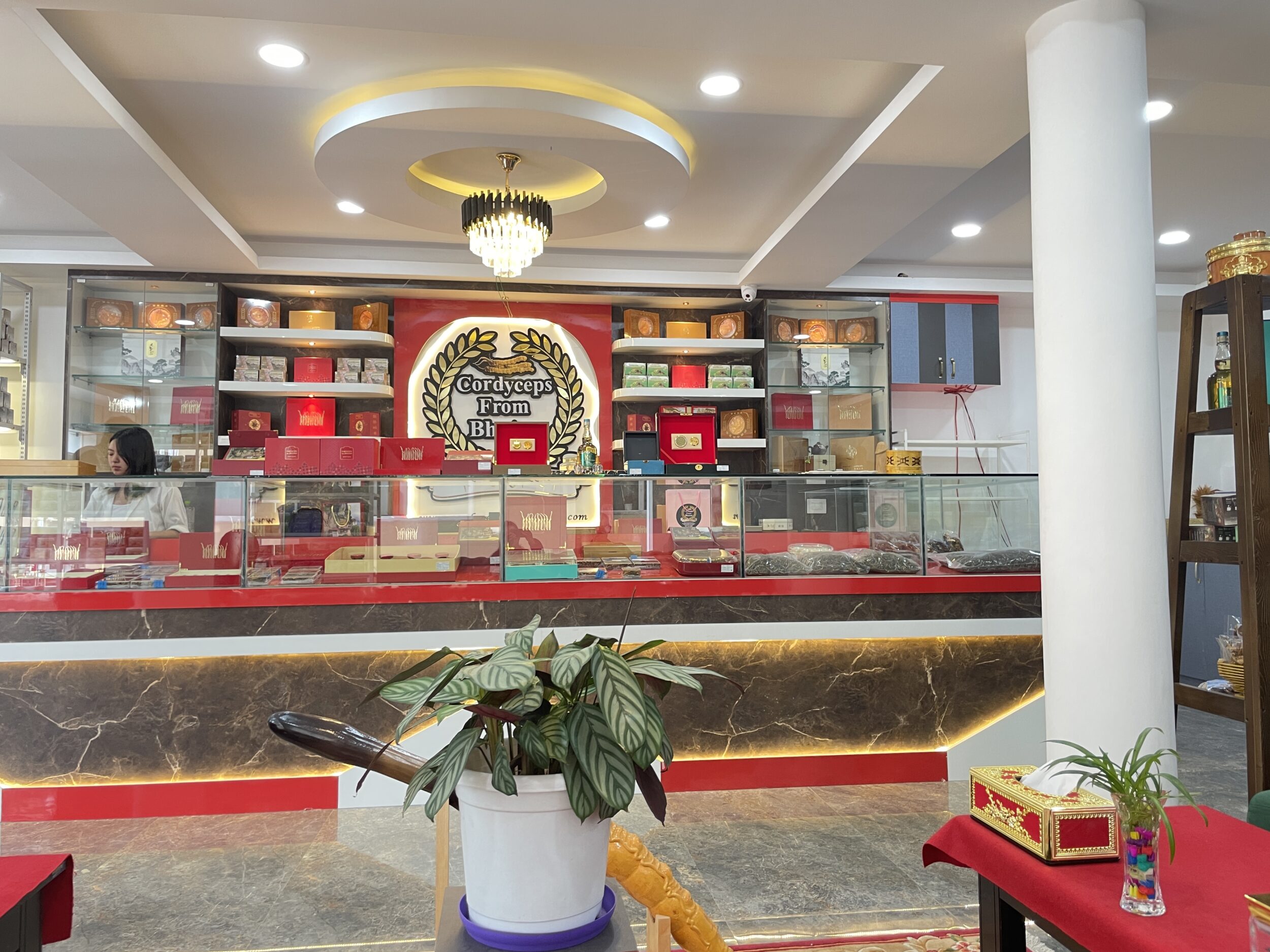
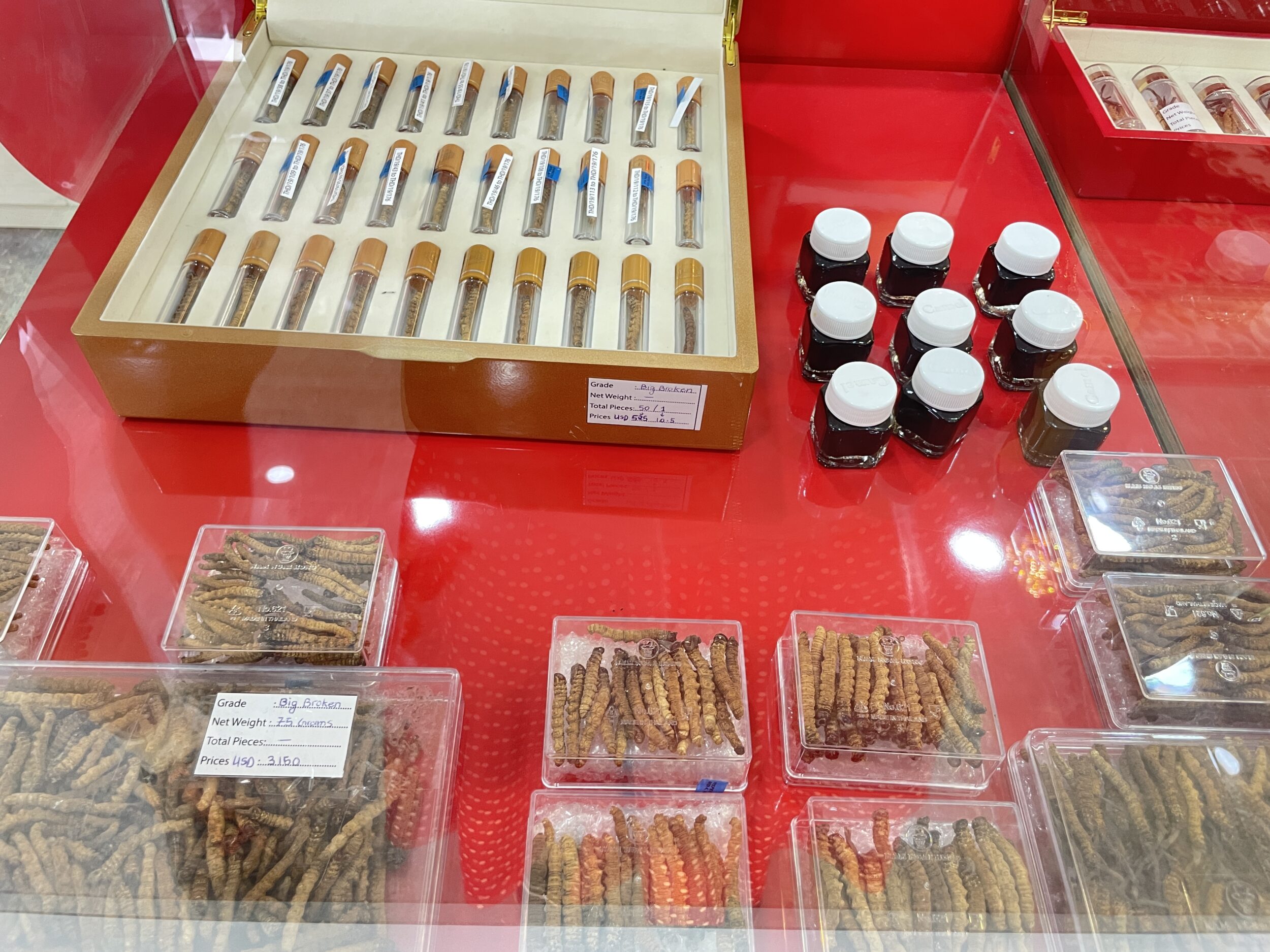
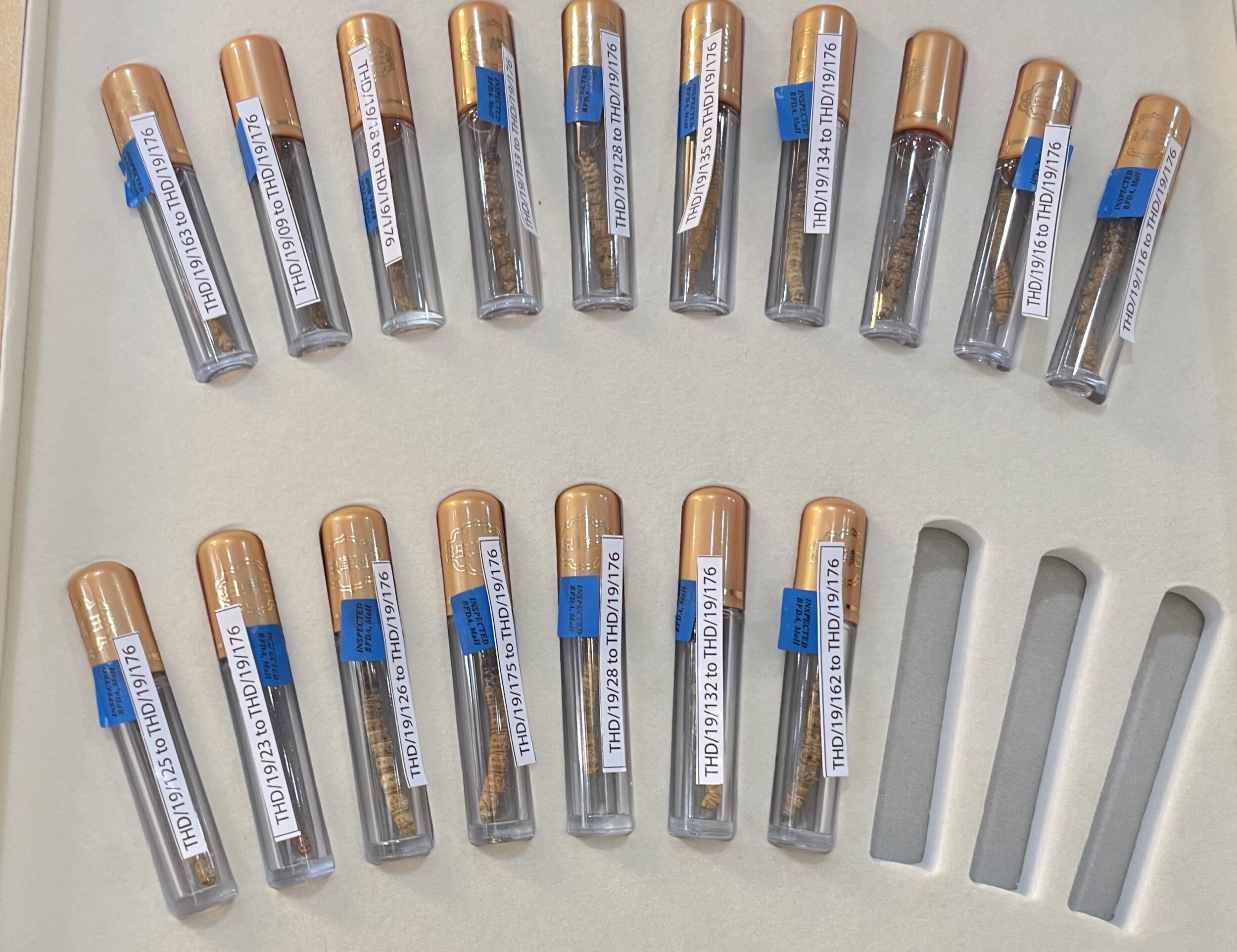
We’re given a certificate to show at customs just in case (but in reality, no one asks at the airport). There are bags of broken cordyceps; I think that for consumption, that’s interesting, you don’t need the caterpillar to be intact, but 1kg of these broken ones still costs several thousand dollars. And 1kg of the best grade costs $400,000!!!! So, extending your life comes at a cost! I don’t know what they taste like, because all three were given to my parents. They put them in a soup. You can also make several teas, but you always have to eat the caterpillar at the end.
JB asks to be dropped off at the Post Office again because he did some research and thought a collection of Bhutanese stamps, necessarily rare, was a good idea. So there we are with 35 euros worth of stamps, which we keep as souvenirs, and which will perhaps one day make our fortune 😀
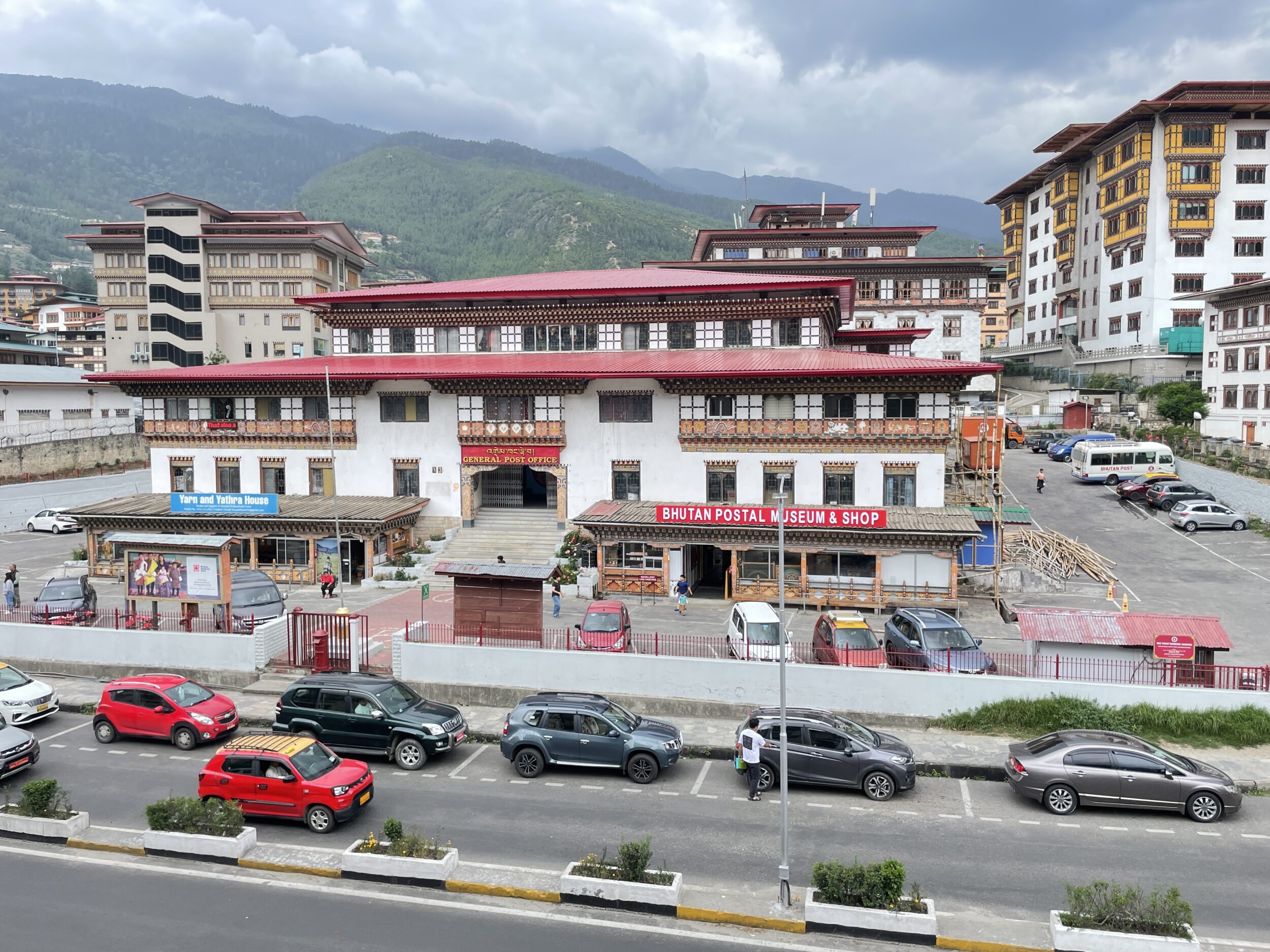
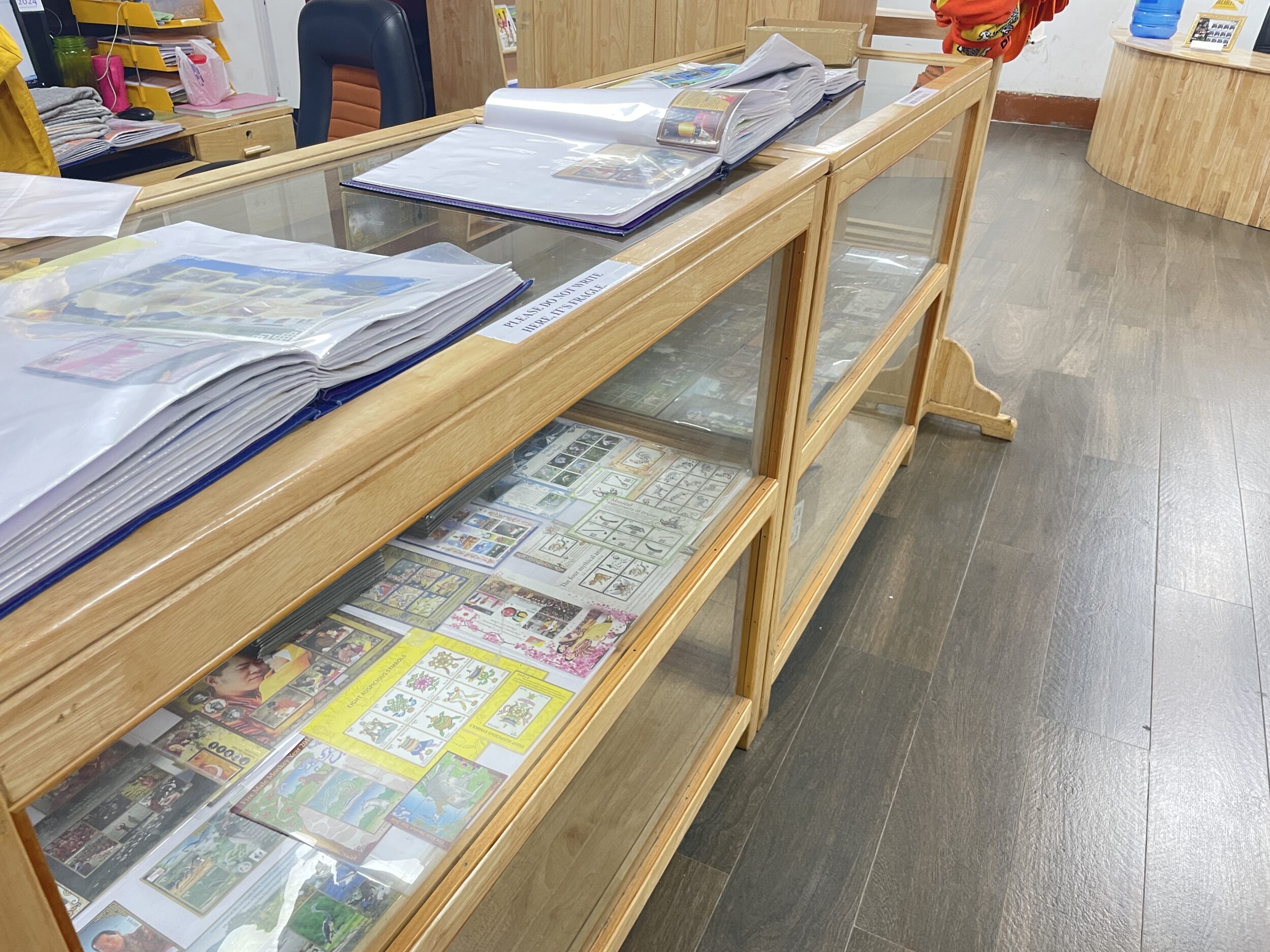
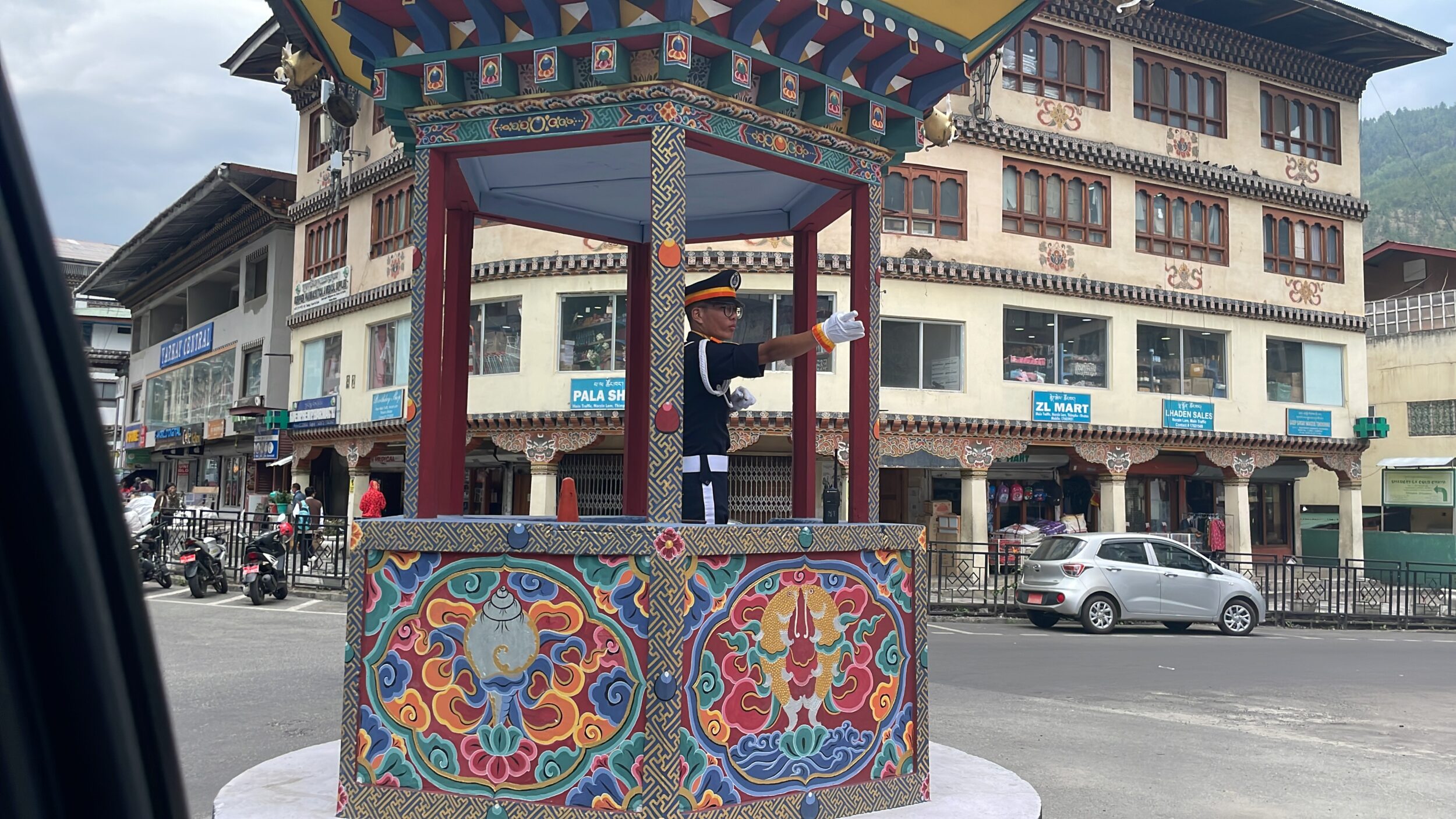
We pass by the only roundabout with a human traffic light in Bhutan. The policeman doesn’t expect me to take his picture and startles when he sees me with my phone.
Traditional clothes
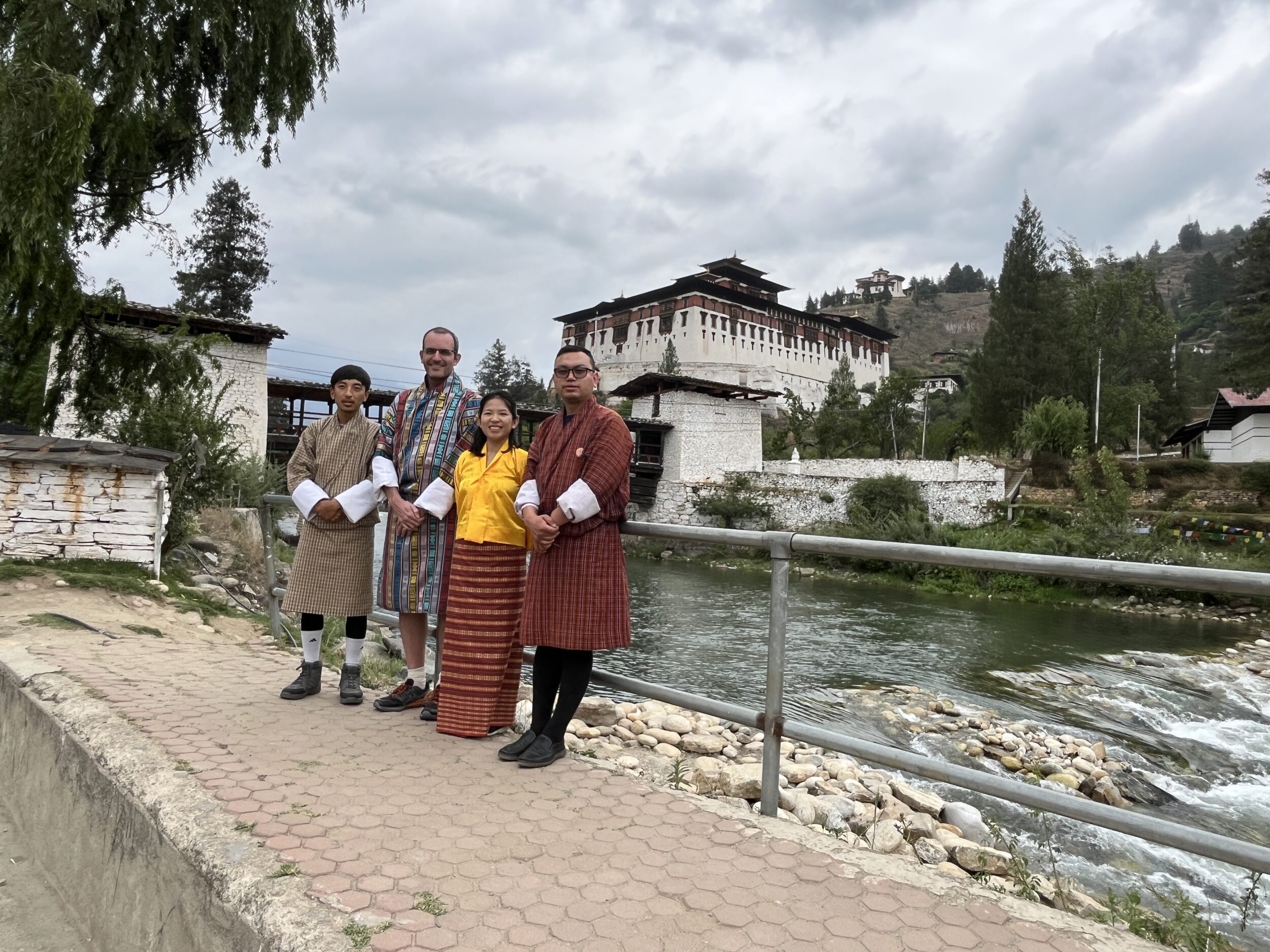
We’re dropped off at another temple, but we don’t go in because the building is purely administrative. This is where you rent traditional Bhutanese clothing. I go for a typically Bhutanese pattern. The guide tells me it’s better to go to the back of the shop, where there are better quality clothes. And he’s right because compared to other tourists, we look a bit more chic. The guides are very moved to see me in traditional dress, and we all take a photo together as a souvenir. It’s very rare for a Bhutanese person to dress in Western clothes, because their clothes are much more comfortable.
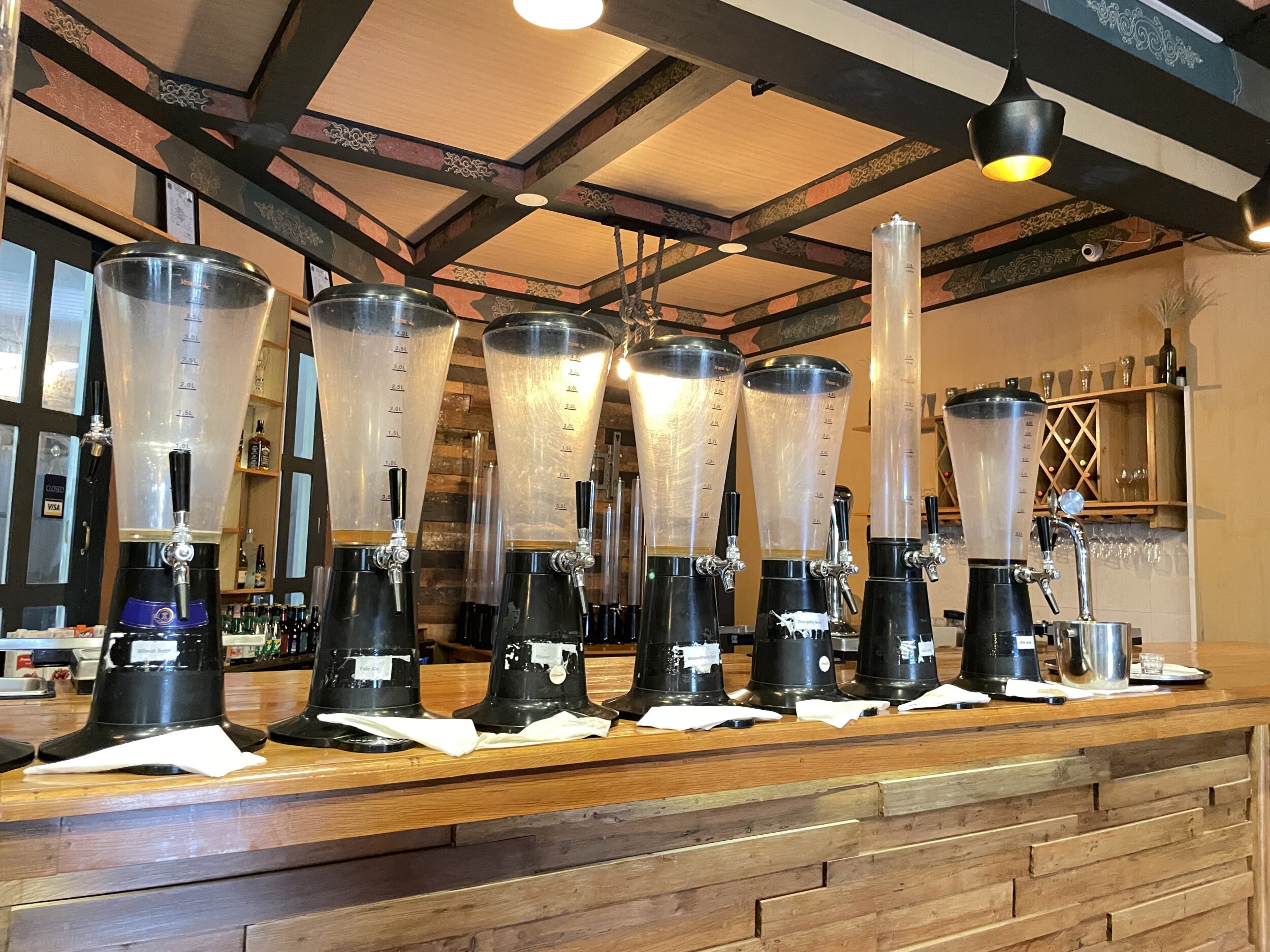
We go to a beer brewer, and JB goes for a tasting of about ten beers while I treat myself to a milk tea as usual. It’s a bit boring as a stop because we’re not beer enthusiasts.
Since we’re not far from the airport, I ask if we can go see a plane land (landing in Bhutan is quite spectacular), but we find out that the only plane scheduled to land today has already arrived an hour early.
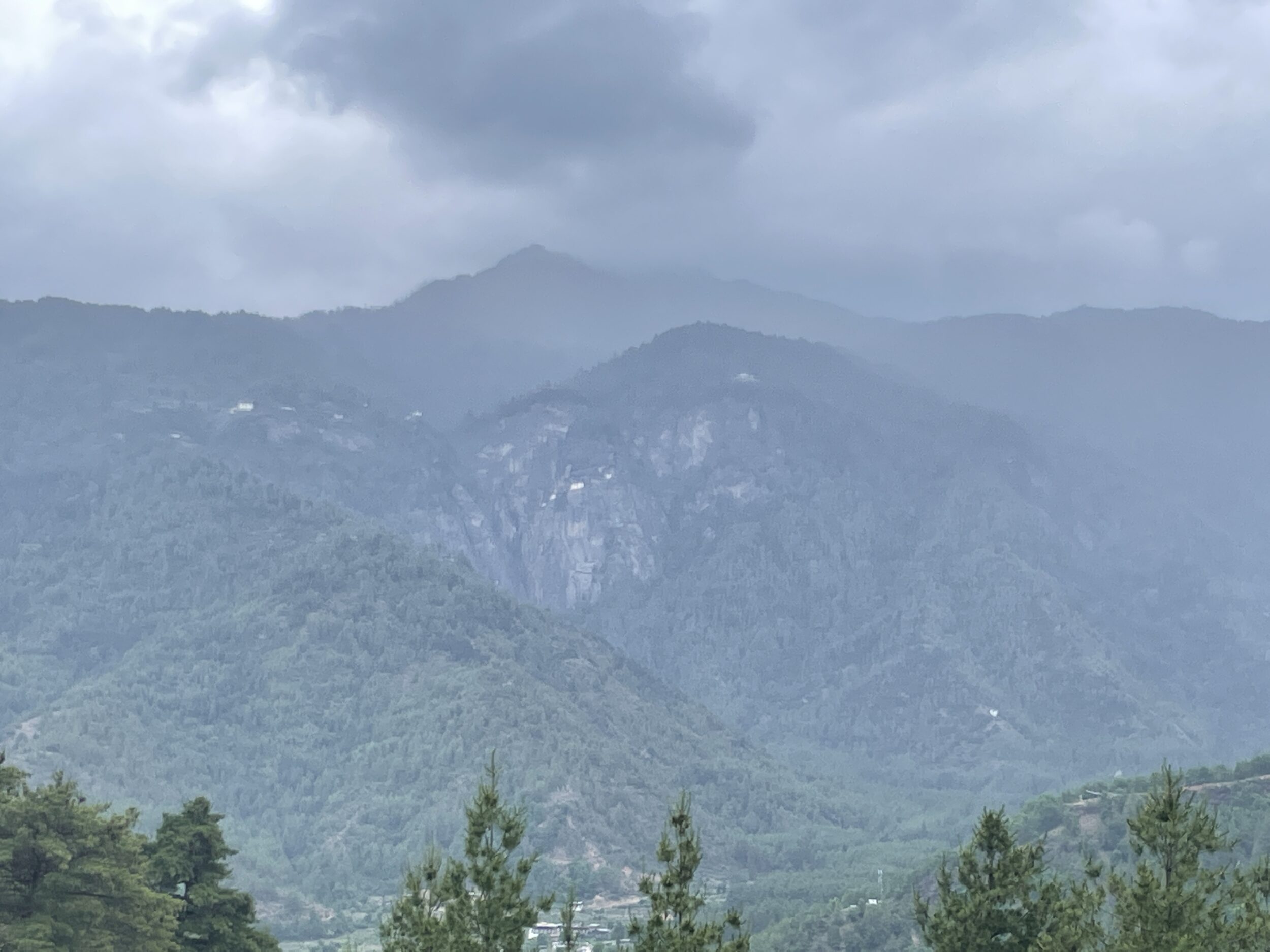
Tonight, we’ll spend the night at a hotel in Paro, not far from Tiger’s Nest. So close that we can see Tiger’s Nest from the hotel lobby (the white dots in the mountains). We’re served such a poor dinner that even I finished my plate since there wasn’t much to eat. Plus, it’s “vegan month” (the dates vary by hotel), so it’s even lighter for the carnivores that we are. Fortunately, the homestay lady gave me lots of peaches from the garden this morning, so that’s how we nourish ourselves, since we need strength to climb up to Tiger’s Nest tomorrow morning.
Part 2: Practical Tips
We went with the agency Bhutan Inbound. More info on the rate and payment here

