

[review] My First Book from the Pléiade Collection
When I was a student, I often went to the BnF (National Library of France) and had access to plenty of beautiful, well-bound books. Even softcover books had been carefully bound by the BnF to protect them. We also had abundant access to the Pléiade collection, and I drooled over them when I went to Gilbert Joseph.
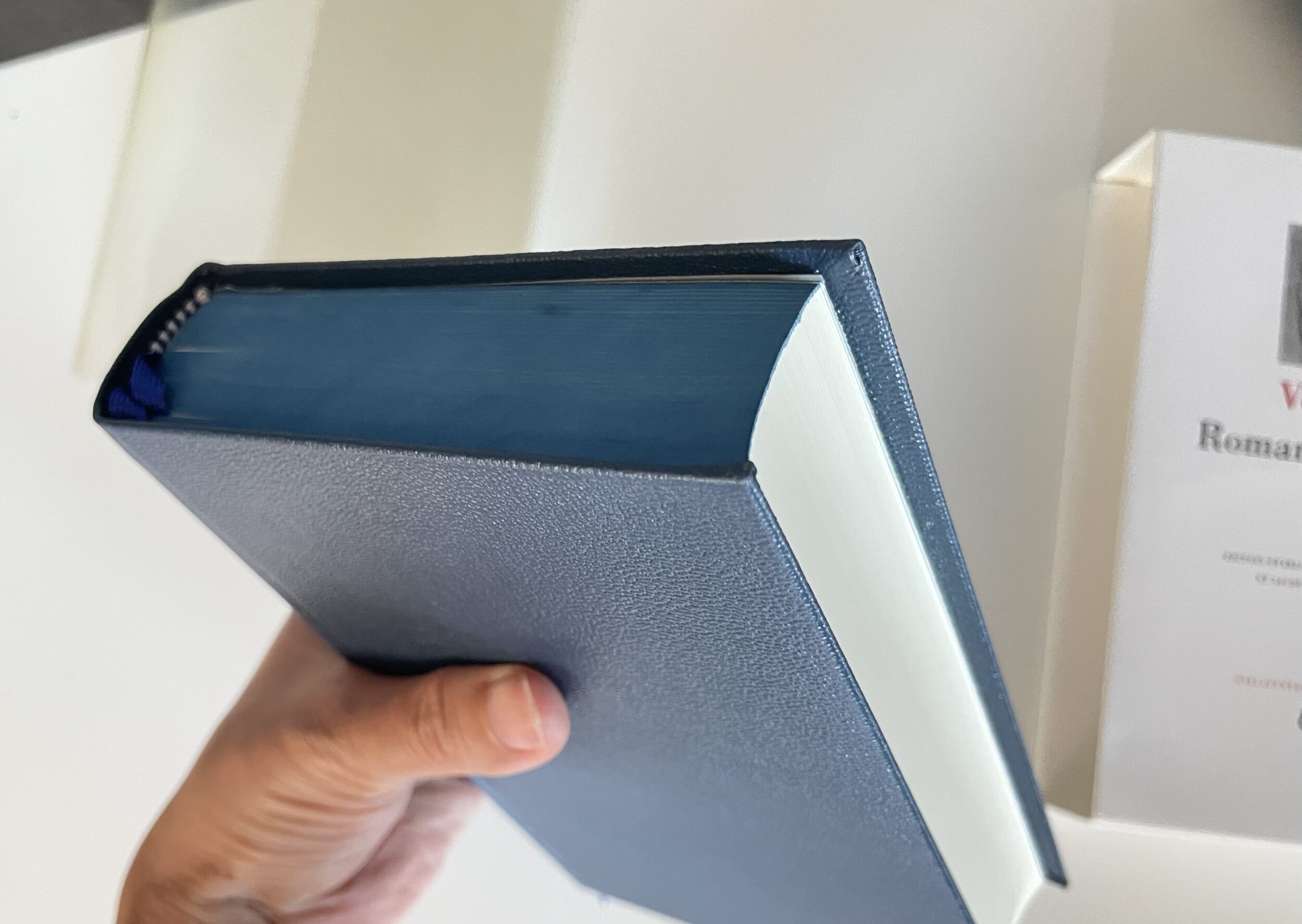
It’s a very beautiful collection of high-quality paperbacks, with leather binding, gilded letters, all the same height. One of the edges is colored. The color of the binding changes according to the century. A library filled with Pléiade books is very pretty, as evidenced by this “Pléiade” corner at Gilbert Joseph.
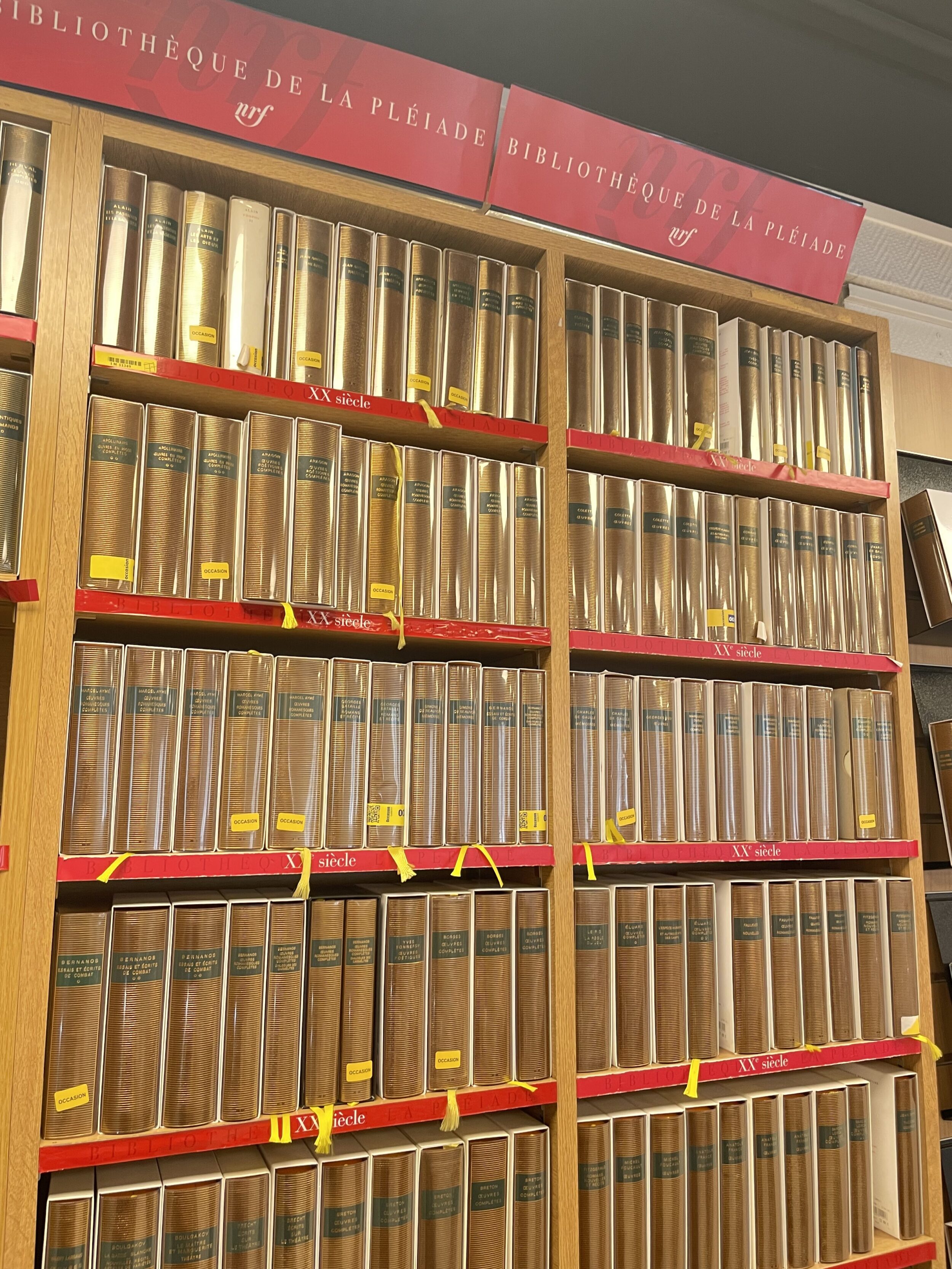
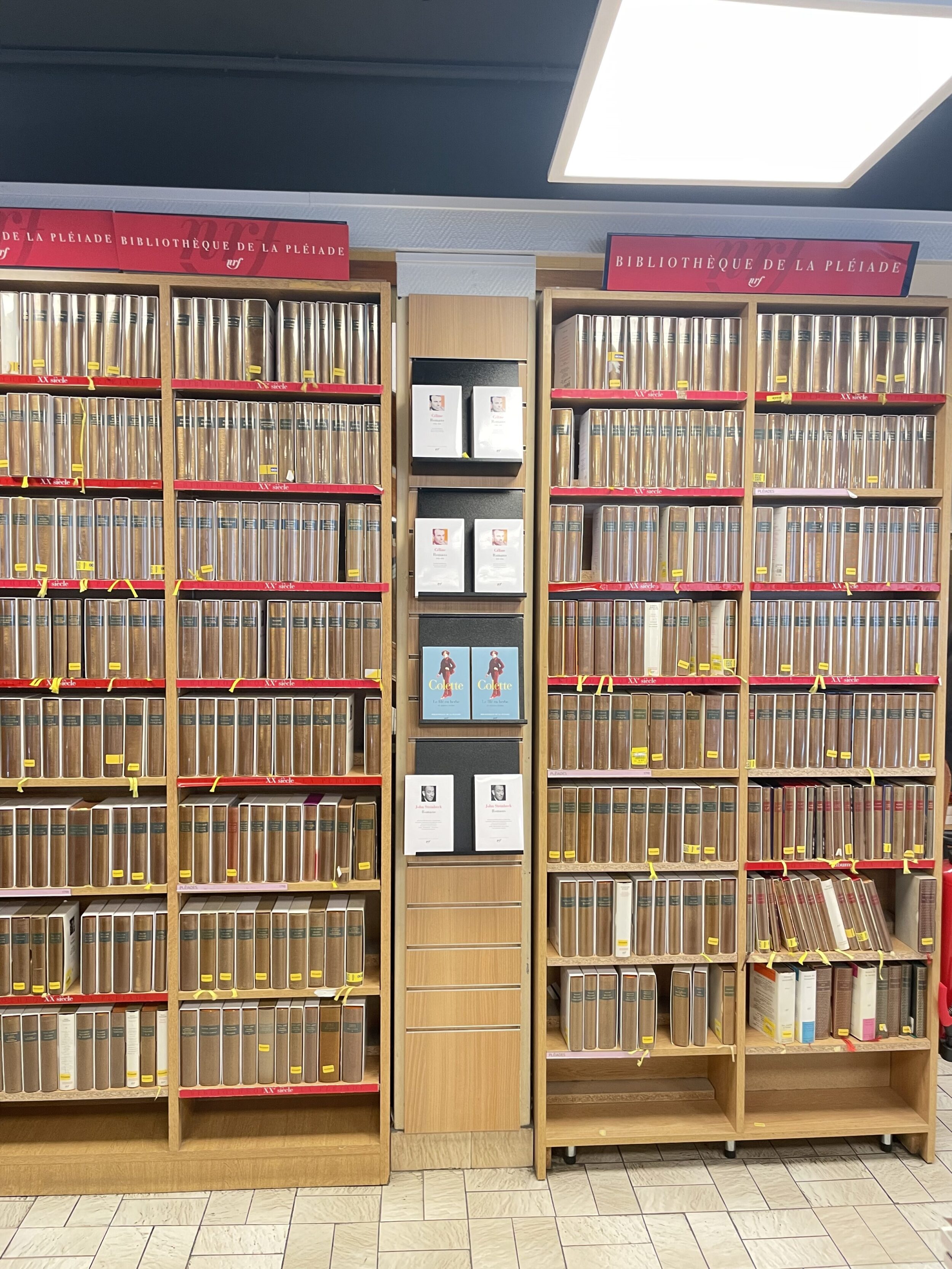
It never crossed my mind to buy one.
Each book in the Pléiade Collection gathers all or part of an author’s works. It’s very rare for me to be interested in all the works. I’m often interested in just one novel, or two at most. For me, paying €60 to €100 for a book that I only read 10% of is a waste.
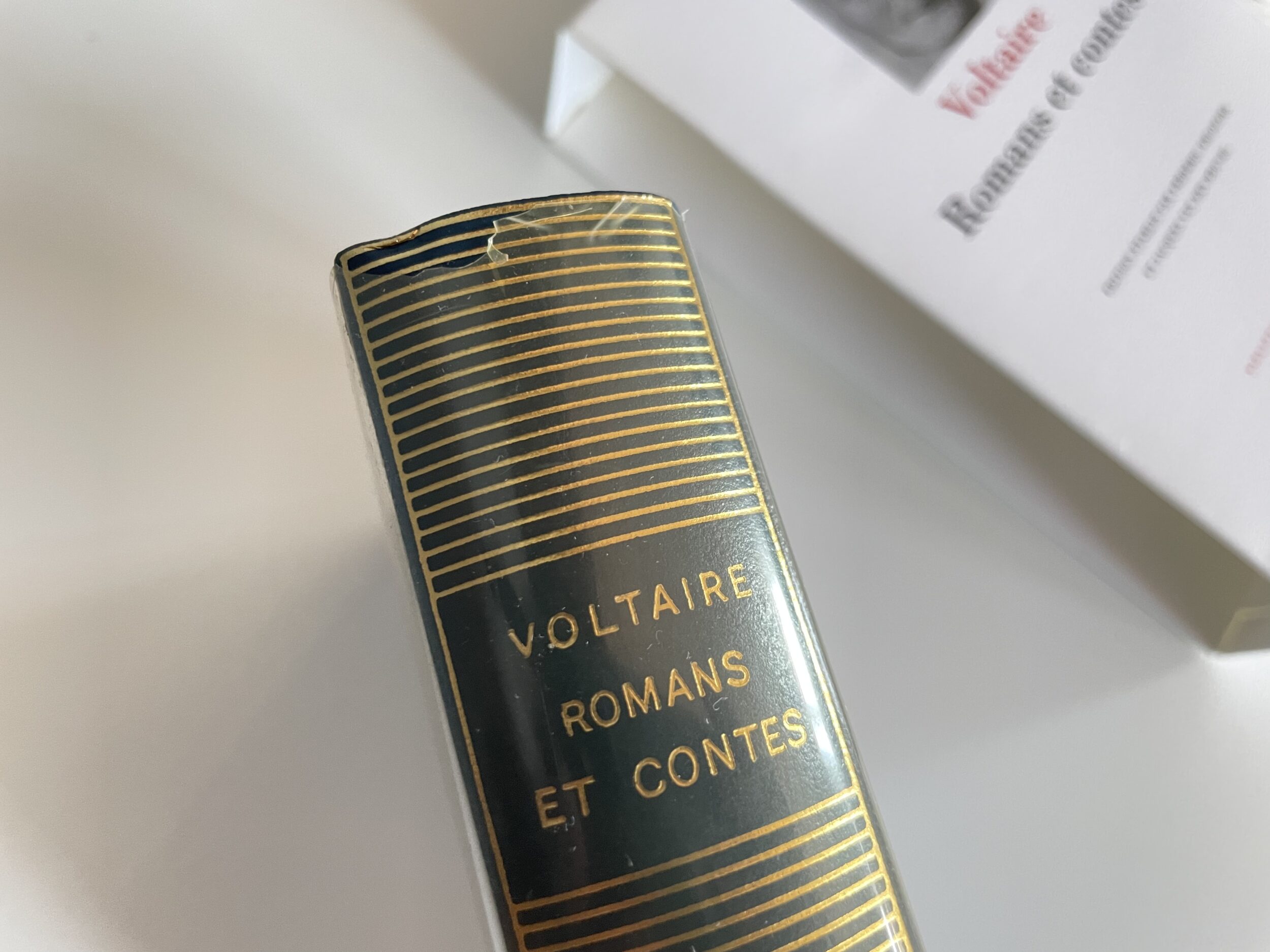
This year, I rediscovered Zadig & Destiny by Voltaire with pleasure, and I wanted to reread other Voltaire tales. I remembered the Pléiade Collection and after some research, I found a secondhand copy for only €25 on the site momox. The low price is explained by a small defect on the spine, as the plastic protecting it was damaged there (I was able to get it replaced this plastic here).
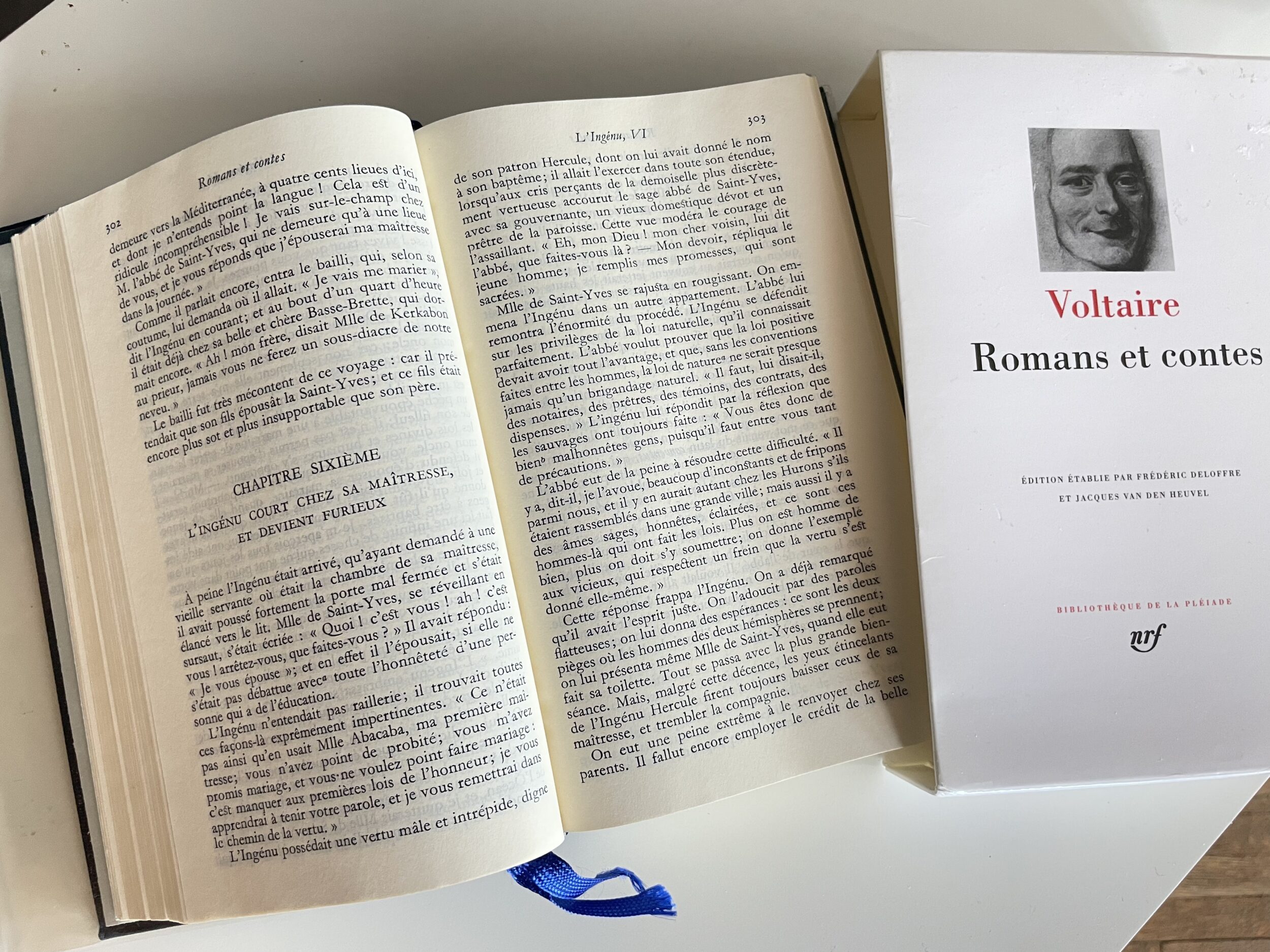
This allowed me to rediscover the Pléiade collection. These books are designed to be paperbacks, small enough to be carried anywhere, but of high quality, and are meant to last over 100 years. They are printed on Bible paper, which makes them very light.
Unfortunately, because of their high price, no one puts them in a bag like an ordinary paperback. Many buy this collection to decorate their library.
Strengths
Fortunately, many others actually buy to read. Since I’ve taken an interest in old books and bookbinding, I’ve noticed all the advantages that a Pléiade represents.
Today, modern books use a lot of glue to bind the pages and there’s no more stitching. So, to open and read a book, we have to exert a lot of force to keep it open, and that’s very tiring, especially with large books.
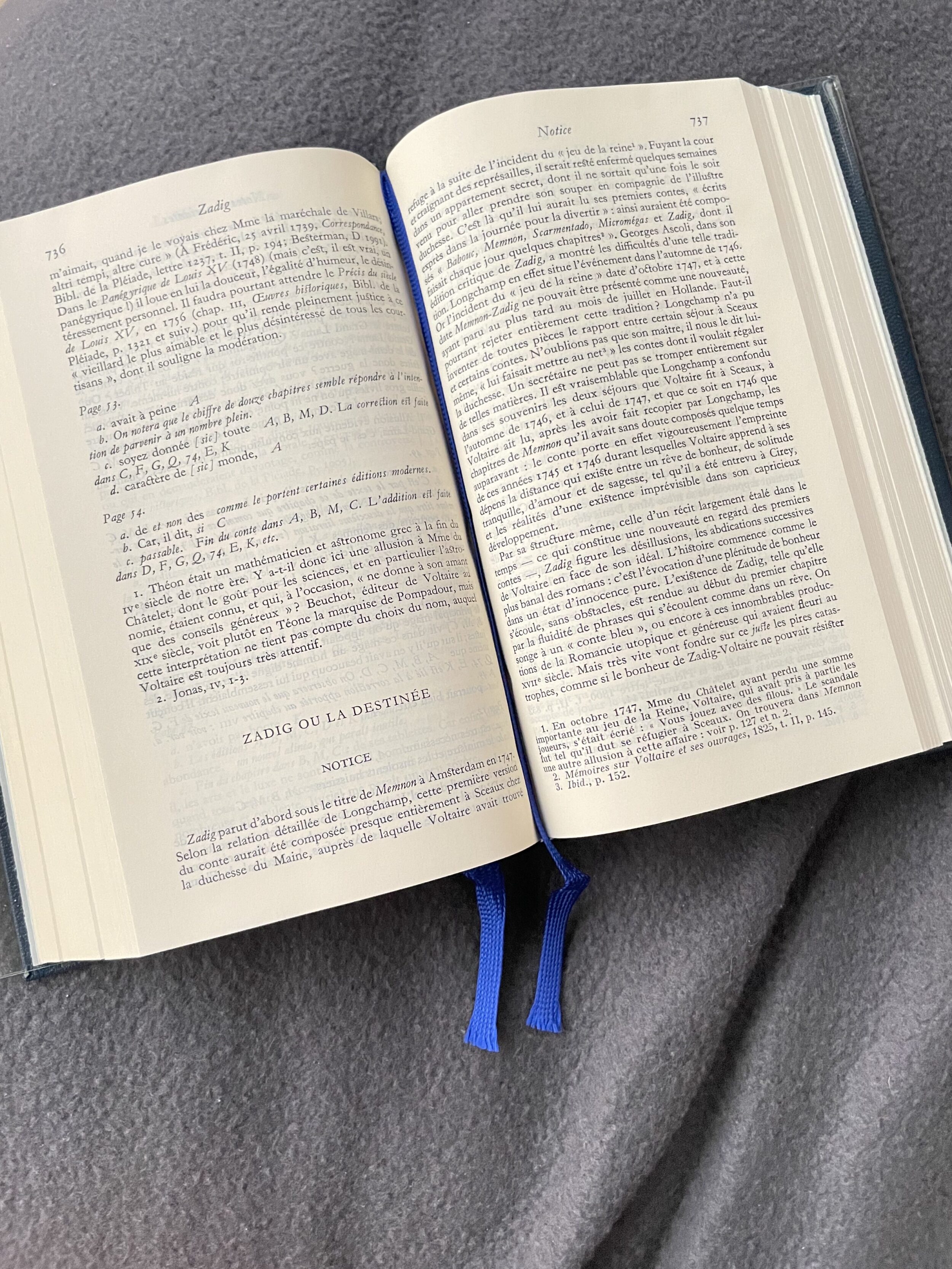
With the Pléiade Collection, since the binding is a case binding (aided by machines) with small sewn signatures, the book can open wide and stay open, without any force. It’s incomparable comfort.
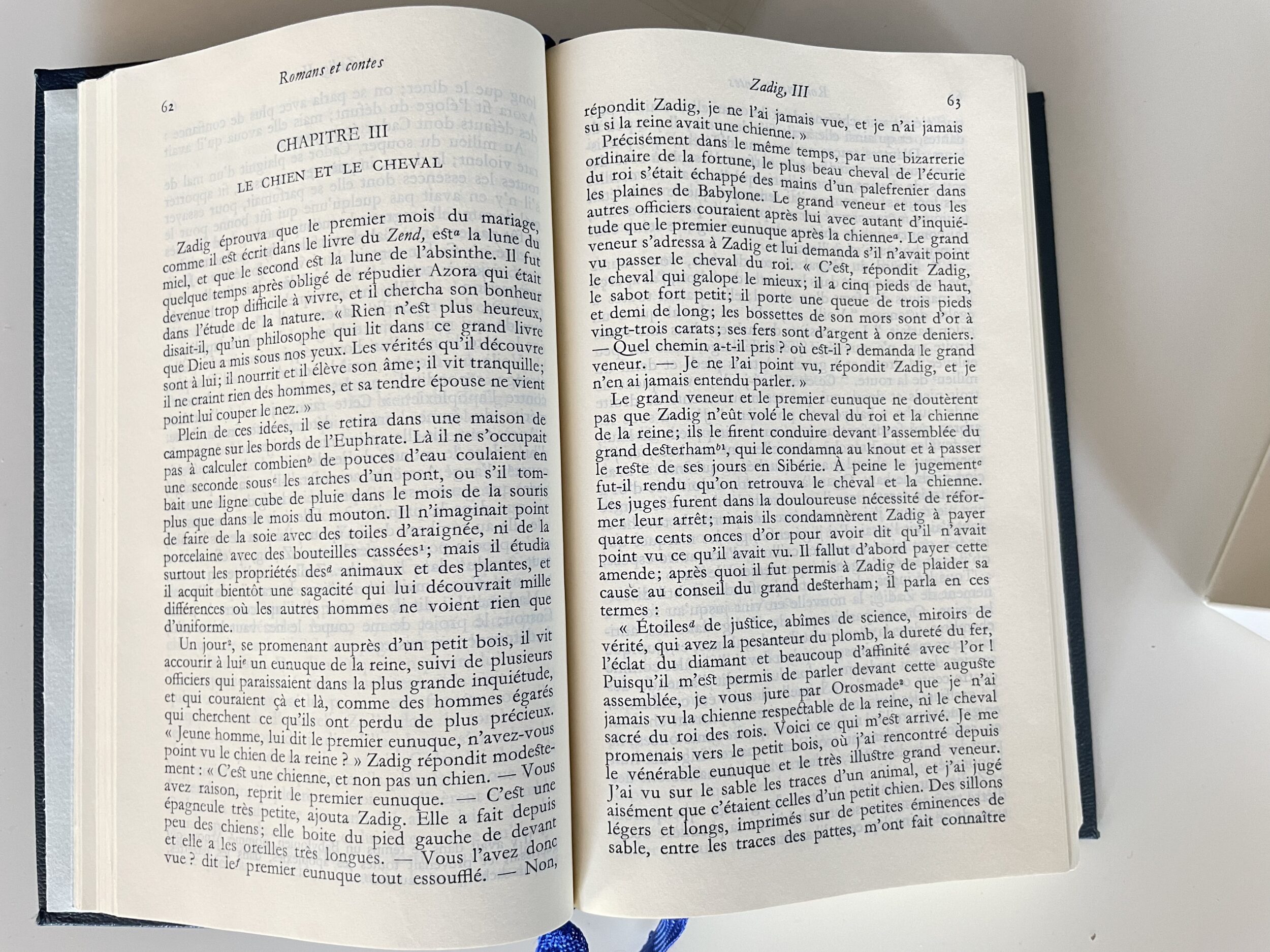
It does lack the perfection of a hand-sewn headband, the gilding on the cover, but that’s what you have to accept when books are no longer hand-bound. Mine is also damaged; I need to apply some glue. (Update: I was able to re-glue it without any problem).
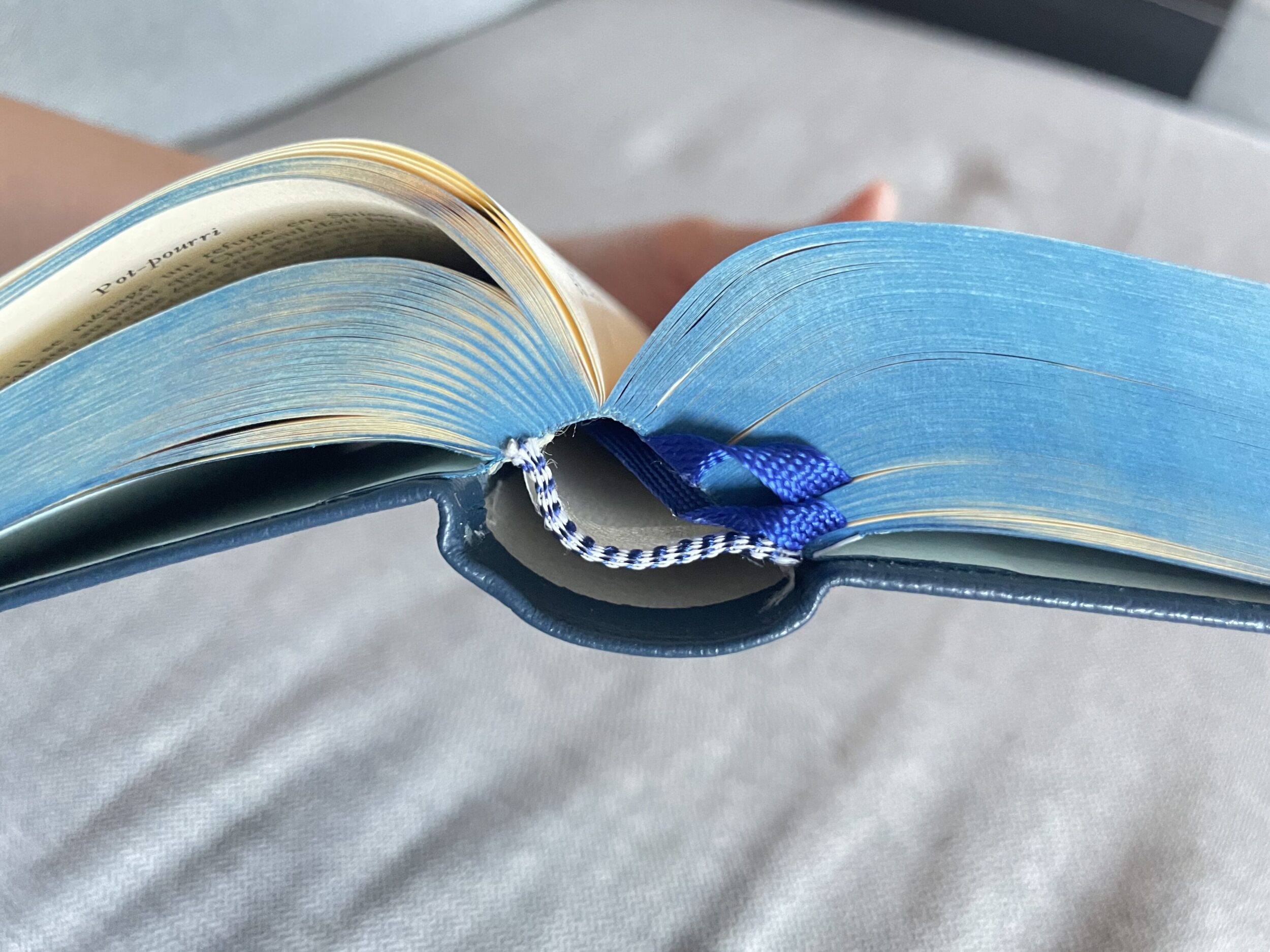
I really like the font used, as well as the ligatures.
The book is very thick so we get two bookmarks 😀 in the same color as the cover.
What I appreciate enormously are the numerous annotations and comments. While reading Voltaire’s tales, I asked myself quite a few questions, and the answers were already in the book, either in the annotations or in the “note” section, which is a sort of commentary on the work. There’s tons of information about the genesis of the tales, the differences between editions, that will satisfy both researchers and the curious. With the Pléiade collection, you no longer have to search left and right; all the important information is at your fingertips. You can put your smartphone and computer away from the book and truly immerse yourself in reading.
Aesthetically, it’s pretty, it’s light, it’s well made, it makes you want to read.
Weaknesses
Print quality: I don’t know if my book is too old or the quality isn’t as impeccable as they say: some letters are more faded than others. The ink isn’t laid down evenly, I find.
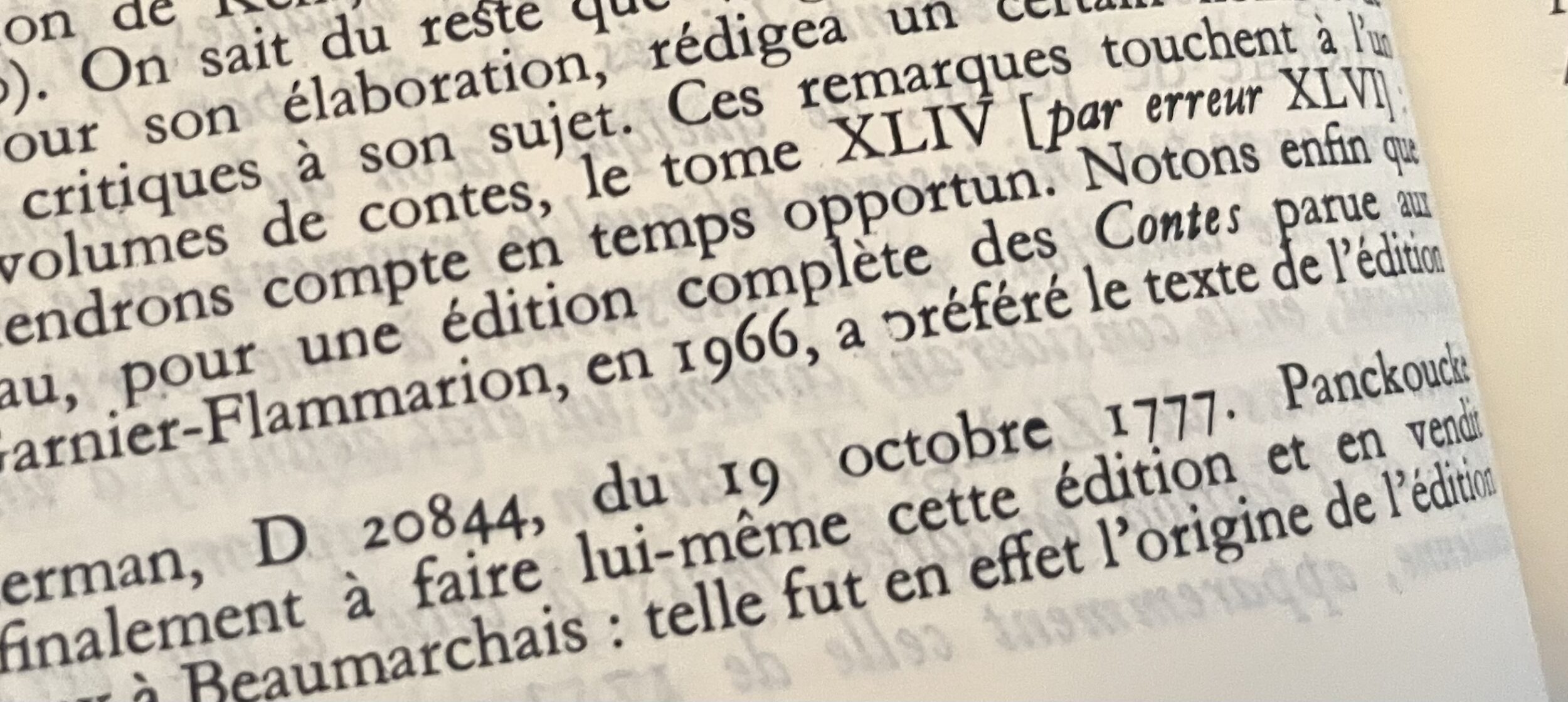
Legibility: Bible paper is very pleasant to the touch, but it’s a bit transparent and you can see through. (Update: my Proust version in two volumes is much less transparent, see my article). Some find the letters too small. Personally, it doesn’t bother me because I have good eyes, but I can understand that argument. The italic letters have the annoying tendency not to lean the same way; for example, uppercase consonants in italics are straighter than lowercase, making reading unpleasant.
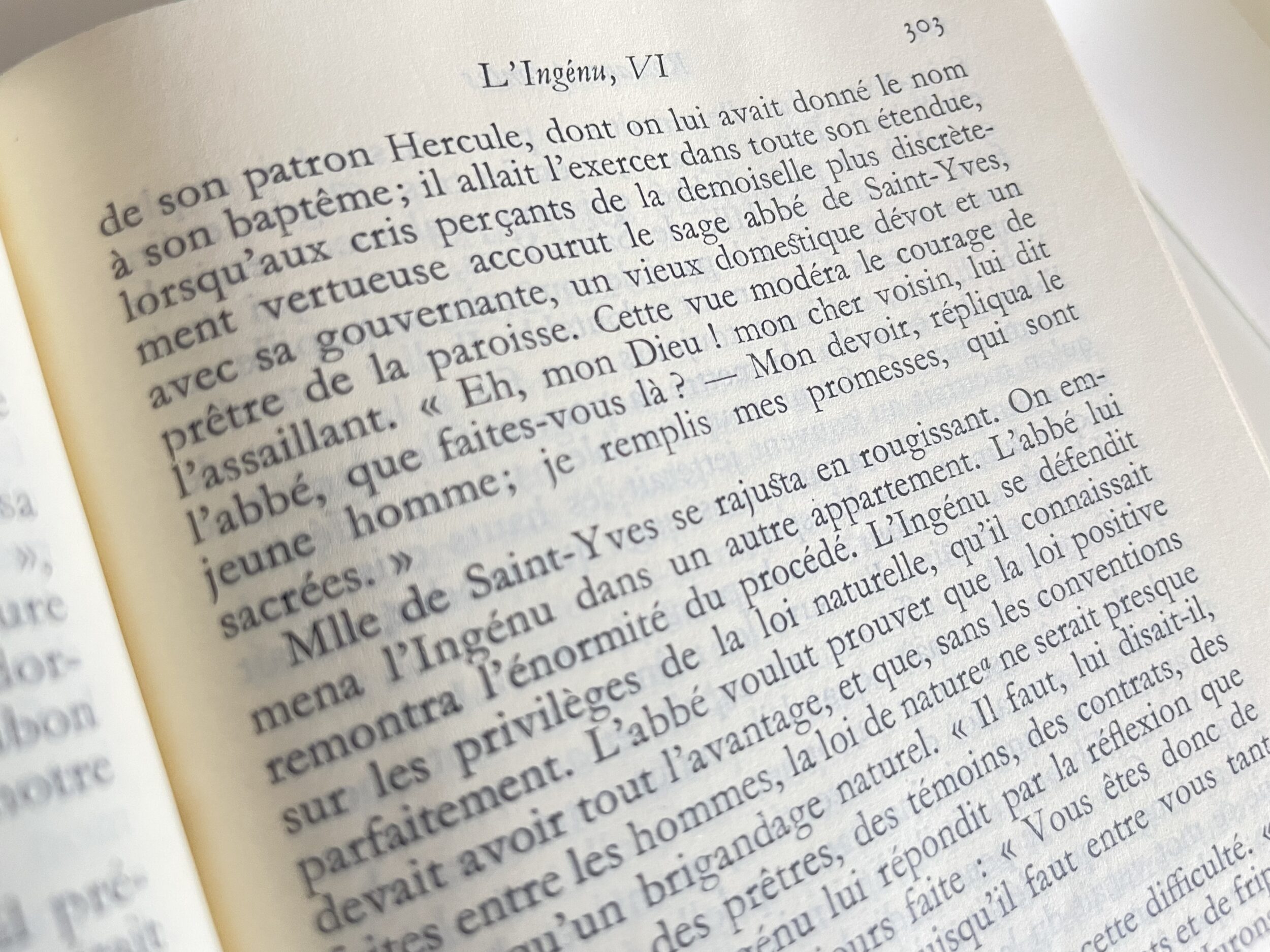
The price: if you only plan to read one work by an author, then the book becomes too expensive.
The book becomes too sacred with this very thin paper: you can’t dog-ear the corner, annotate, or highlight. It’s impossible. Yet, I like to annotate and highlight my books.
Bibliophiles used to old books with handmade bindings will find this case binding too cheap.
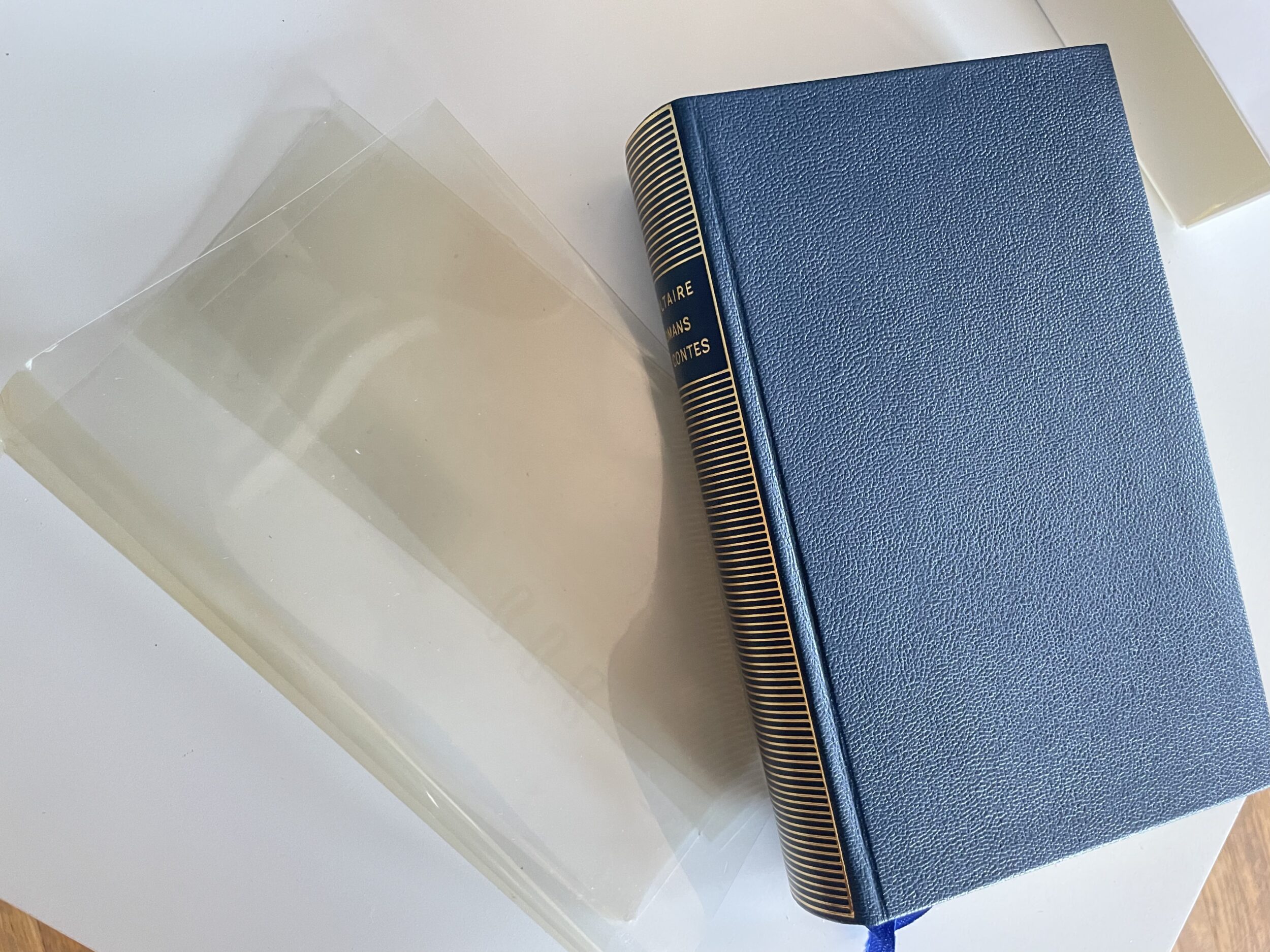
The binding is protected by a plastic cover that yellows over time. When you read while keeping this plastic protection on, it’s very unpleasant. However, removing the plastic in the long run can damage the leather binding (which is quite soft). Moreover, the leather used is chemically tanned, meaning it won’t develop a patina over time => so there’s no valid reason to remove the plastic when you’re not using it.
Conclusion
Despite all these weaknesses, the reading comfort is unmatched for a modern book. The editorial work is meticulous, and new authors are added to the collection each year. Nowadays, you can’t buy modern books of such quality unless you pay for limited editions or do the binding yourself. Moreover, the second-hand book sites make these books much more accessible.
Since purchasing this first book, I’ve been tempted by others, even seeking out books printed on bible paper from other publishers, including this magnificent The Lord of the Rings by George Allen & Unwin.

