
3 nights in Raiatea: Marae and Vanilla – French Polynesia Road Trip (1/4)
Since our arrival in Tahiti in April 2026, this is only the second time we have gone on vacation. This time, we’re heading to the Leeward Islands, accessible by ferry from Tahiti. So our itinerary has to be built around the ferry schedule.
Part 1: Travel Journal
Part 2: Practical Tips
Part 1: Travel Journal
Transport
I didn’t overthink it, I looked at the unlimited pass (for 30 days) fromApetahi Express to plan my itinerary. This pass costs 24,000 XPF per person (€201). That’s still very affordable compared to flying. To save even more, we’re bringing our scooter with us to get around the islands since there’s no public transport, even though each scooter crossing costs 10,000 XPF (€84, ouch) and you have to book a spot for the scooter, spaces are limited (by email, a payment link will be sent).
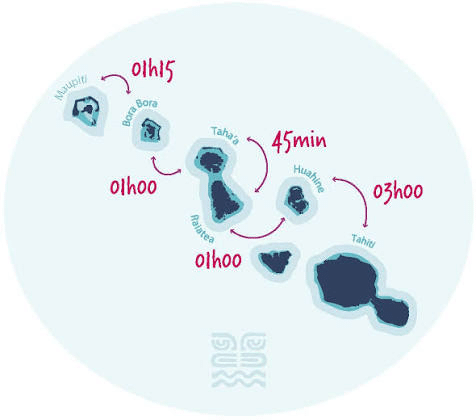
The logical itinerary would have been Tahiti -> Huahine -> Raiatea -> Taha’a -> Bora Bora -> Maupiti, but we’re not following that order so we can spend more nights in Huahine and make the last ferry ride shorter. So we choose to do Tahiti -> Raiatea (3 nights) -> Huahine (4 nights) -> Bora Bora (3 nights) -> Taha’a (3 nights). We won’t go to Maupiti this time because the Bora Bora – Maupiti ferry has been regularly cancelled in recent weeks due to the swell, and if that happens, we risk being stuck for 3 extra days waiting for the next ferry. In the end, this not-very-logical itinerary means the experiences build up in crescendo in this order, and we finish the trip with the best.
Two days before our departure, the ferry is cancelled in both directions due to the swell. Luckily, on the day we leave, the ferry is running again. Without knowing it, we’re going on vacation right in the middle of cyclone season. Thanks El Niño!!!
Departure
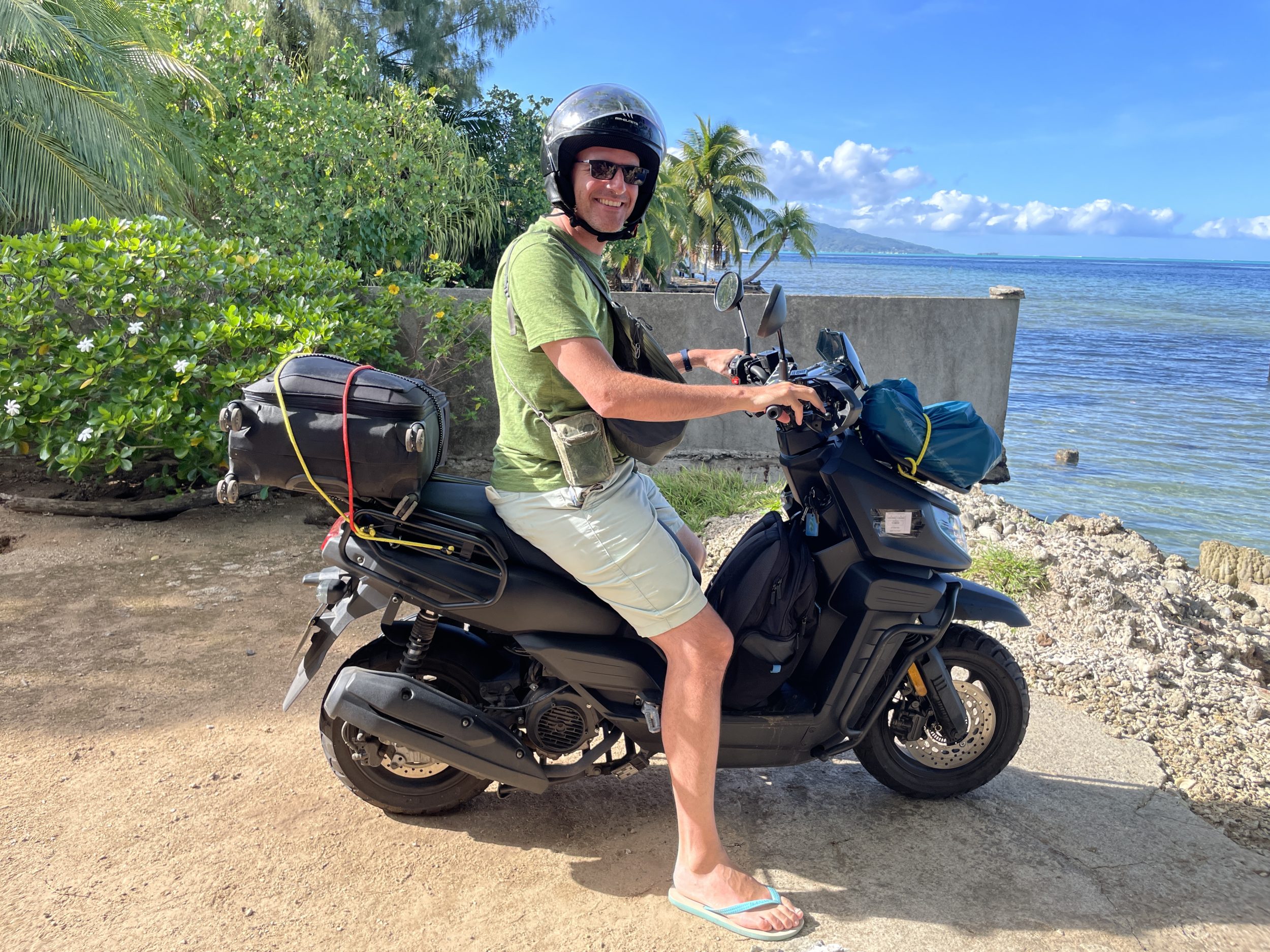
We leave our airbnb (where we’d been staying for over 3 months) on Saturday morning. Our stuff is stored in a colleague of JB’s basement. We just take a small suitcase, our scooter, two backpacks, and spend a night in a small airbnb not far from the ferry. It’s the worst night of my life. The window doesn’t close properly, I can hear absolutely everything: the neighbors arguing, the neighborhood dogs barking, even the roosters making noise from 3am. I didn’t manage to sleep at all.
Sunday: The ferry leaves at 6:30am and we have to be at the port by 6. We hand our scooter over to a ferry employee. He puts a tag on the scooter to indicate the arrival island (Raiatea). Then we board the ferry with about a hundred passengers, some of them freshly arrived from Europe in Tahiti. And off we go for 3 hours to Huahine, then 1 hour to Raiatea. Locals call Apetahi Express the Vomito Express because when it rocks, it’s not pretty. Good thing we knew about it and bought motion sickness pills at the pharmacy, because with today’s swell, I can’t even walk without getting a headache. I slept through the whole crossing.
When we arrive at the port of Huahine, the color of the water and the blue sky are so inviting that I kind of regret not choosing Huahine as our first destination.
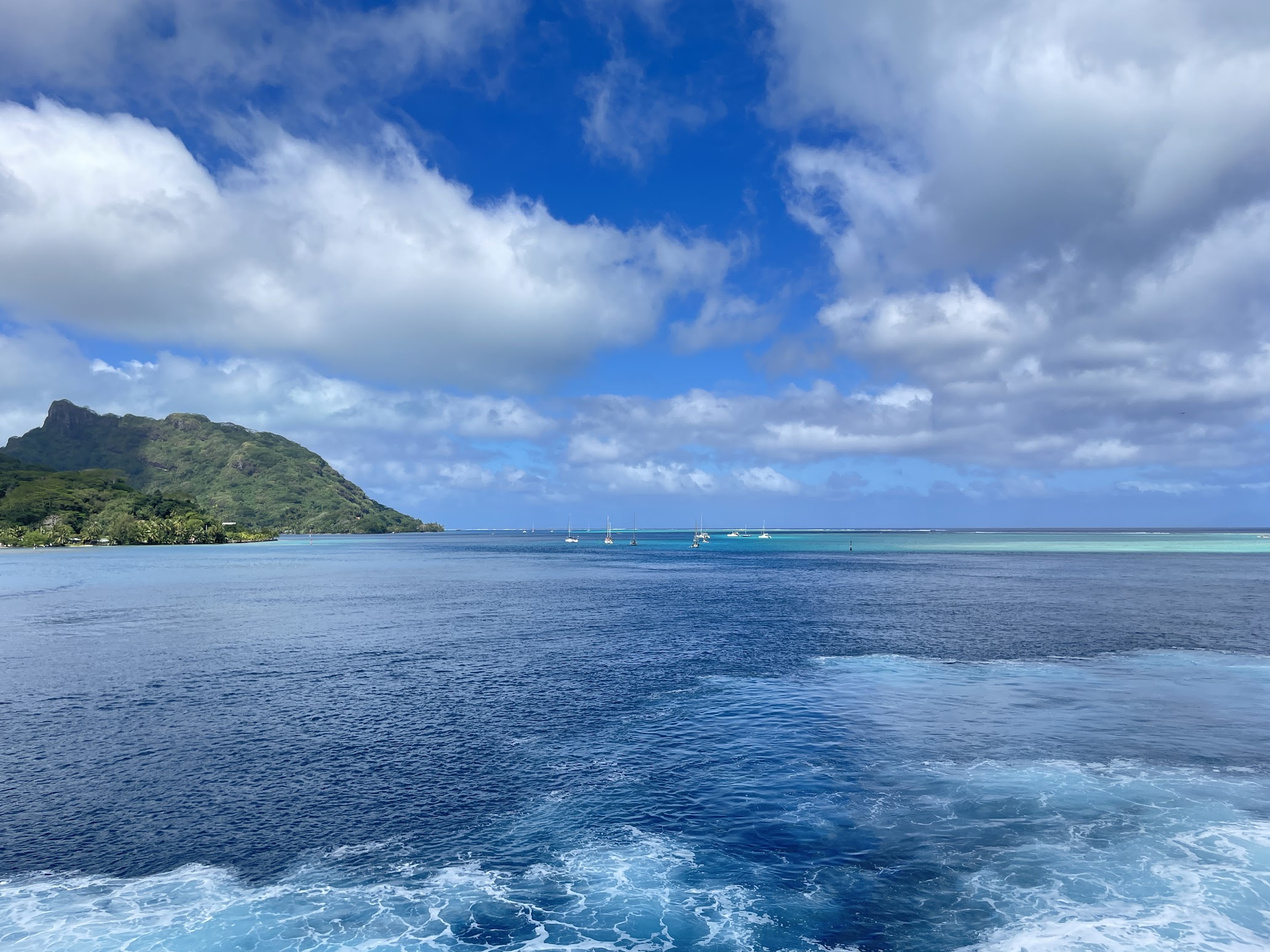
Especially when we then see the gray sky of Raiatea.
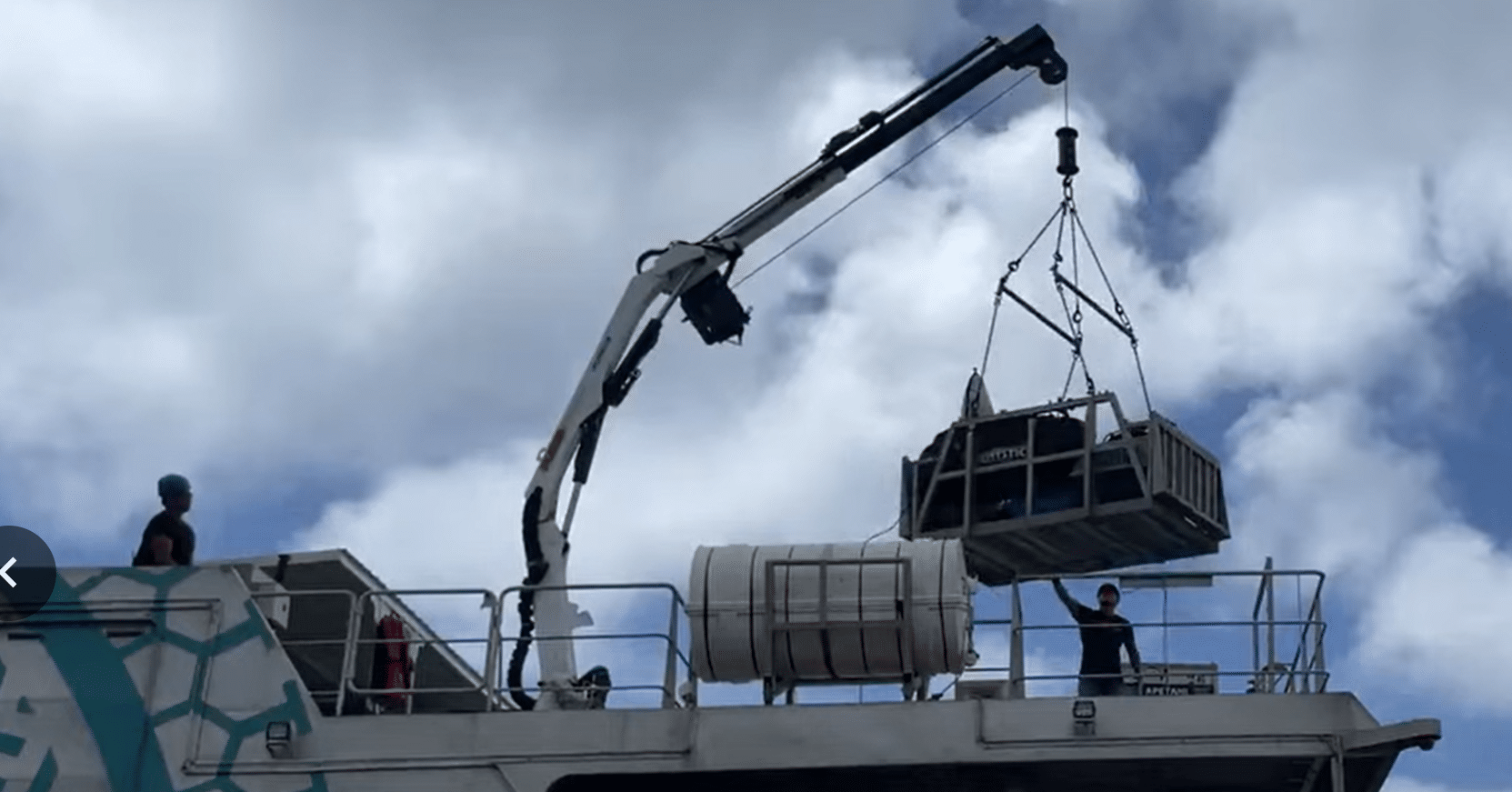
Raiatea is the administrative island of the Leeward Islands. You can do a lot of things there (take exams, request documents…), which lets residents of Taha’a or Bora Bora get there quickly instead of going to Tahiti (further away). As soon as we get off the ferry, we look out for our scooter. Instead of coming down normally, it’s put in a cage and lowered with a winch. That explains why it costs 10,000 XPF (€83) to transport the scooter!
Several passengers head toward a car rental agency. As on all the small islands, options are limited, including taxis, so you need to book everything in advance (transport, excursions, accommodation). We have an airbnb 6km from the ferry (link, I highly recommend it). We asked if we could check in earlier but no news. Our phones get no signal (we’re with Ora). We go there anyway, and the owner welcomes us with open arms, our room is ready and we can settle in ASAP. This will be the standard welcome on all the islands, here people come and go according to the ferry schedule (so pretty early), and check-in doesn’t seem to bother anyone.
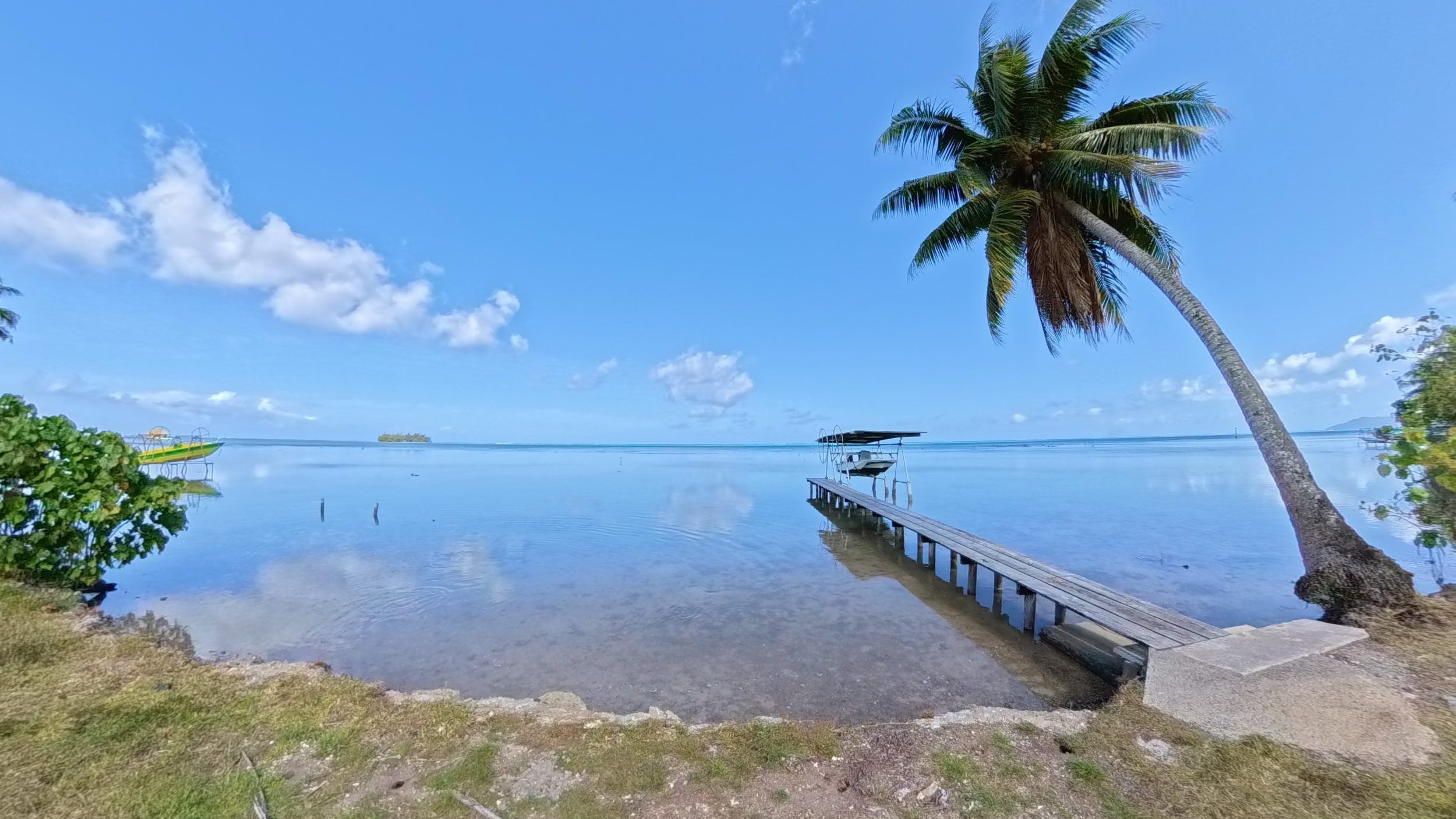
It’s a big house that looks directly onto the lagoon. The owners have two rooms to rent and they give us the nicest room aka with access to the terrace.
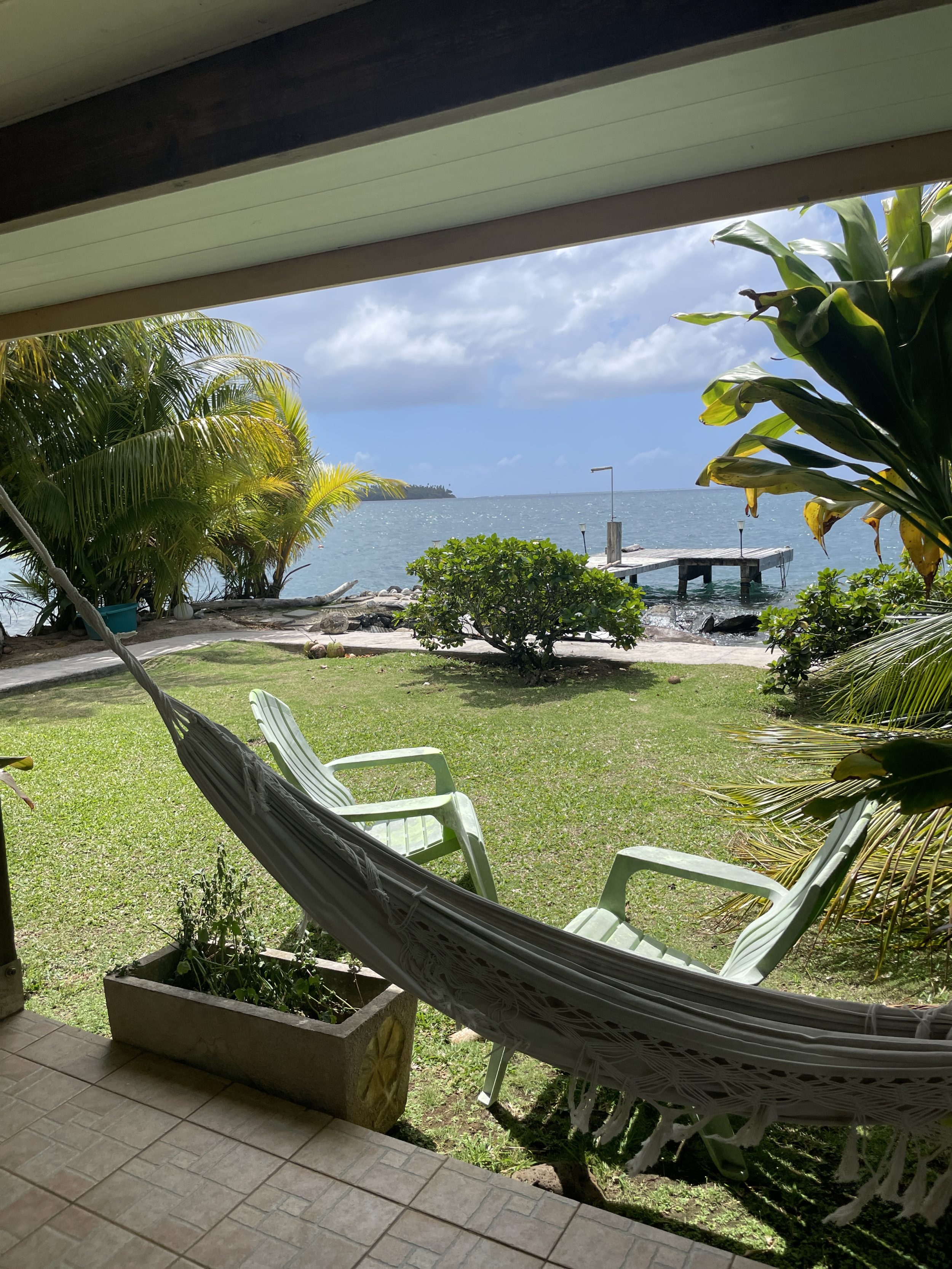
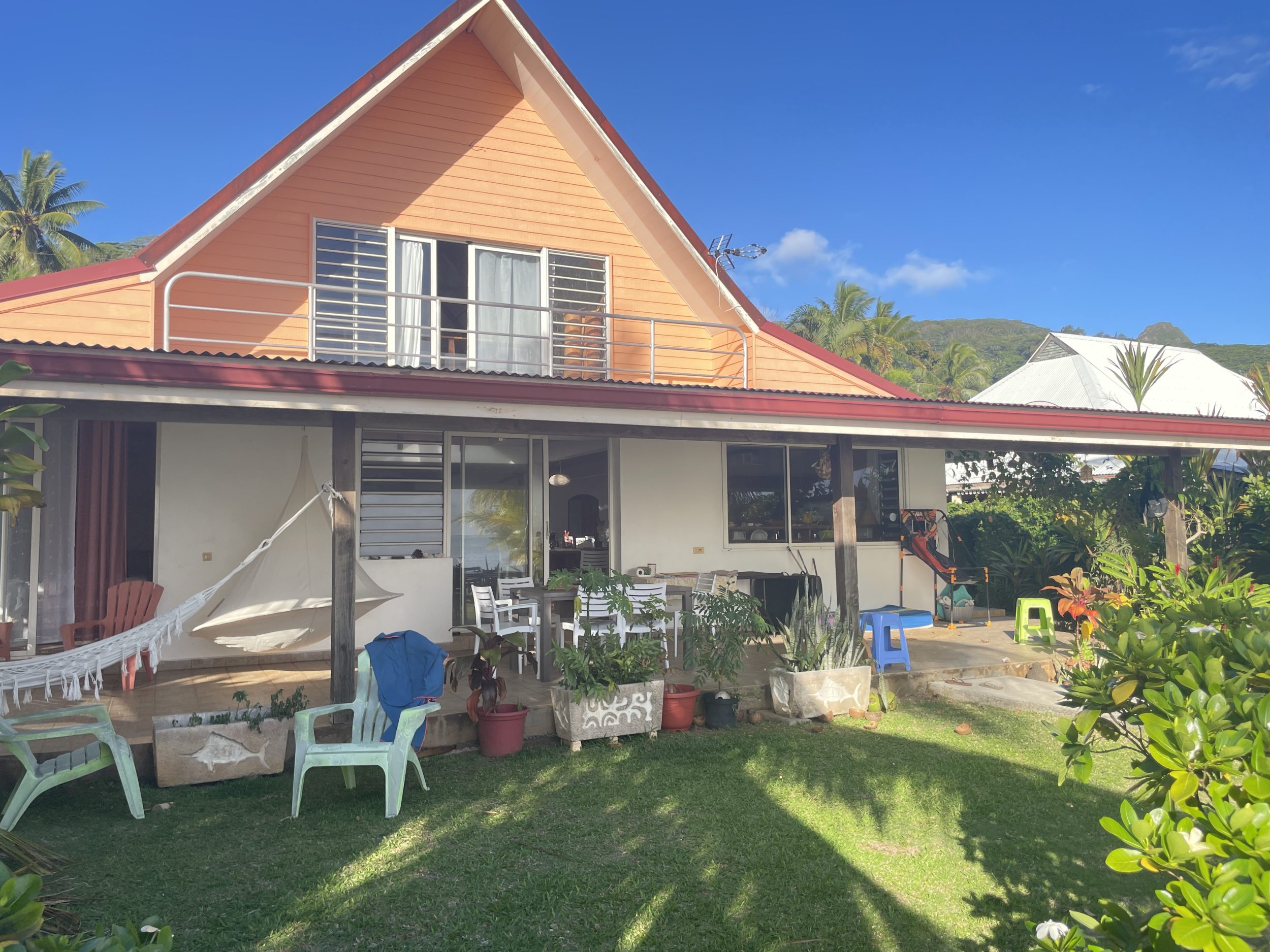
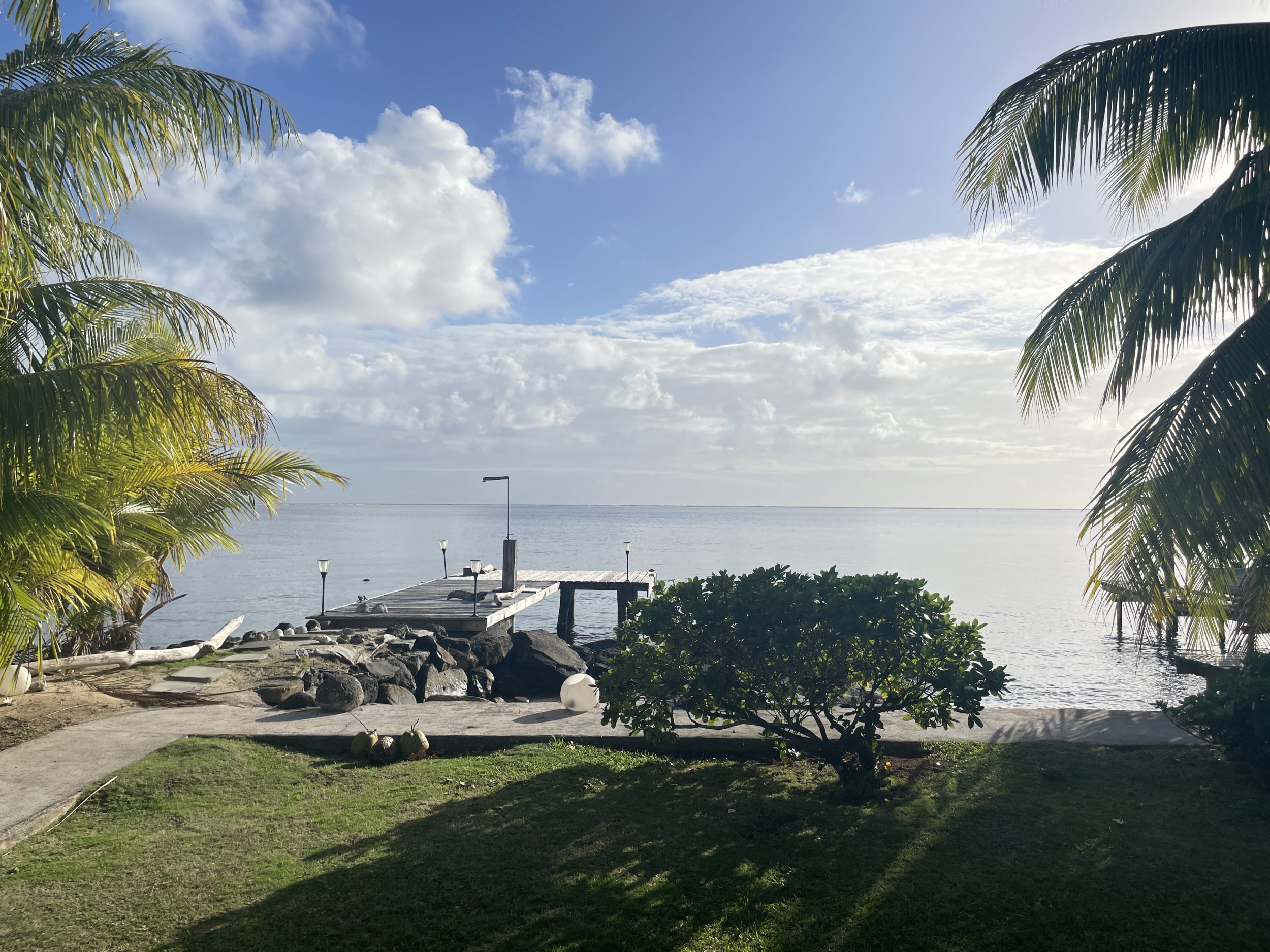
We share the bathroom with the other airbnb room, but during our stay, the other room was empty so we just shared the kitchen with the hosts. The owner explains that because of the wind, her favorite coconut tree fell. It’s the one that gives the best coconut milk. She really regrets it. But she doesn’t get rid of it right away. She’ll collect the leaves to weave something. All over the house, you find rugs woven from coconut tree leaves. It’s very pretty.
We immediately take the scooter to go to Carrefour to do some shopping. On Sundays, like on all the islands, nothing is open at this hour and the only place to find something for lunch is Carrefour. Since I didn’t sleep a wink all night, and the sky is gray, the water rough, we do absolutely nothing today. I sleep while JB reads on the hammock. We have dinner at the pizzeria right next door (super good).
Day 2
While I’m sleeping in, JB gets up early and stops by Carrefour; they have an “Ora Mobile” corner (our mobile operator) and it turns out we haven’t had network since we left Tahiti. The employee contacts support, and it turns out that to get network “in the islands,” you have to activate an option (free), which isn’t enabled by default – you can activate it via the website (but not on the app). It’s sorted out quickly, and we get network back.
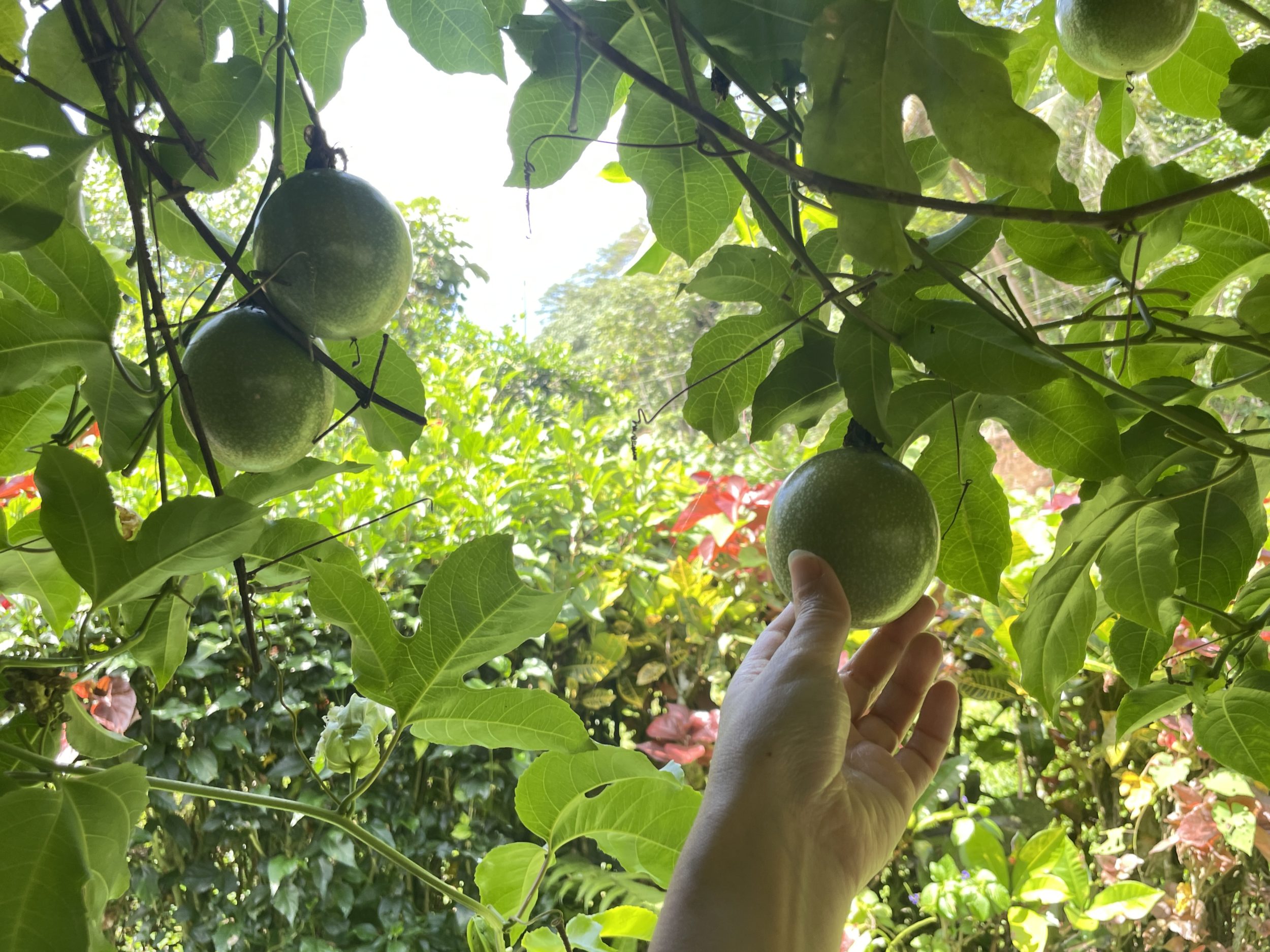
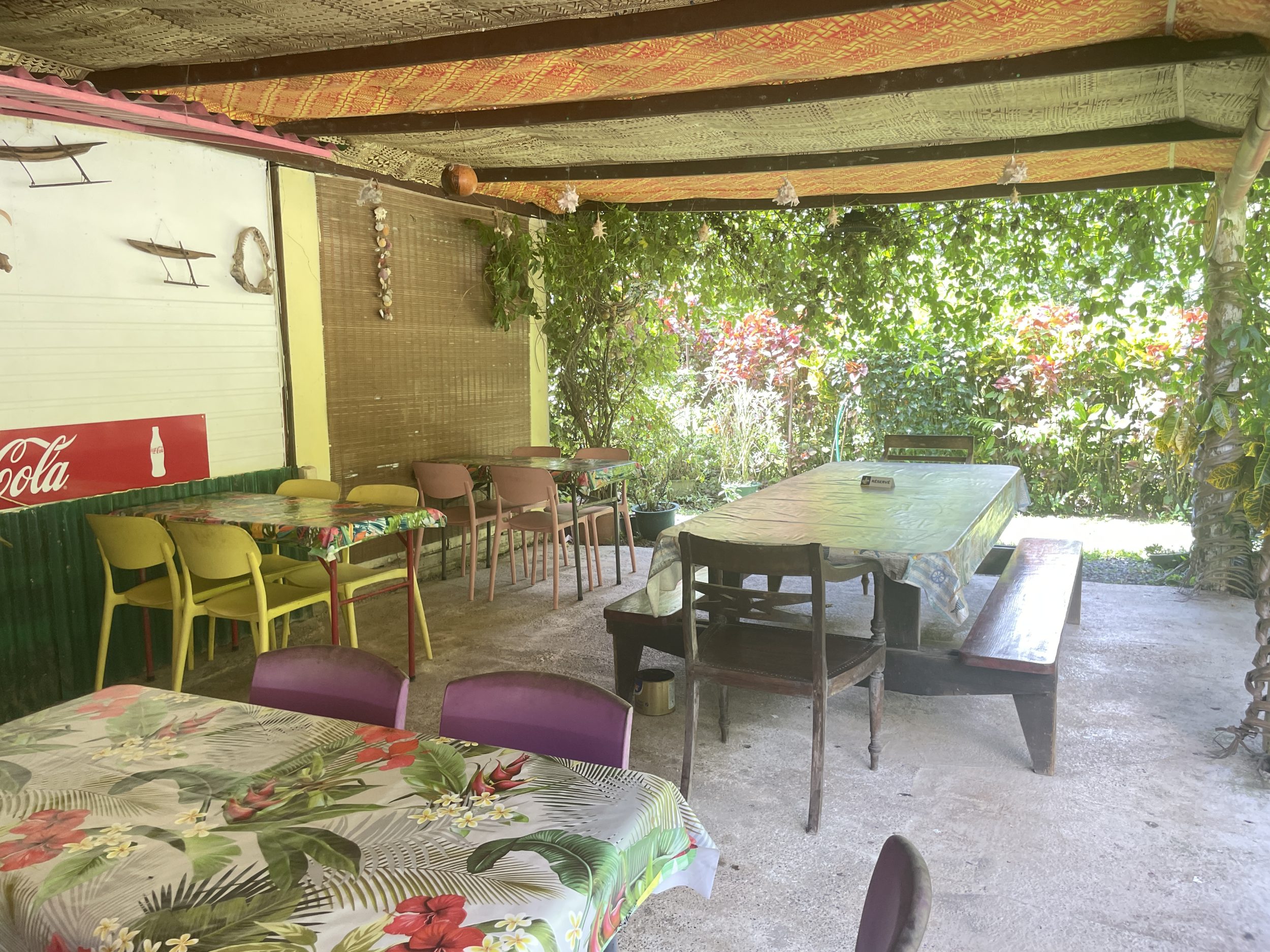
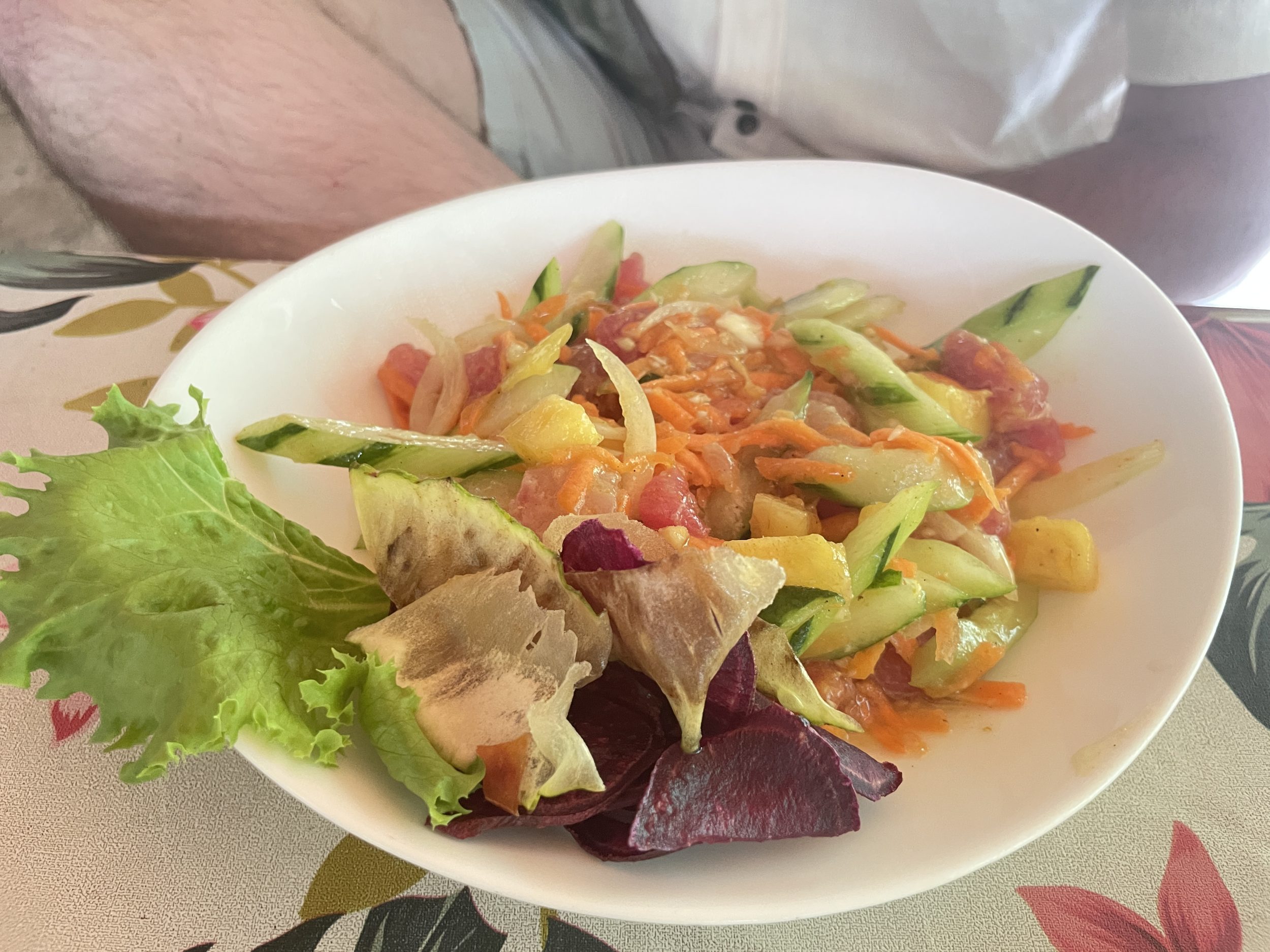
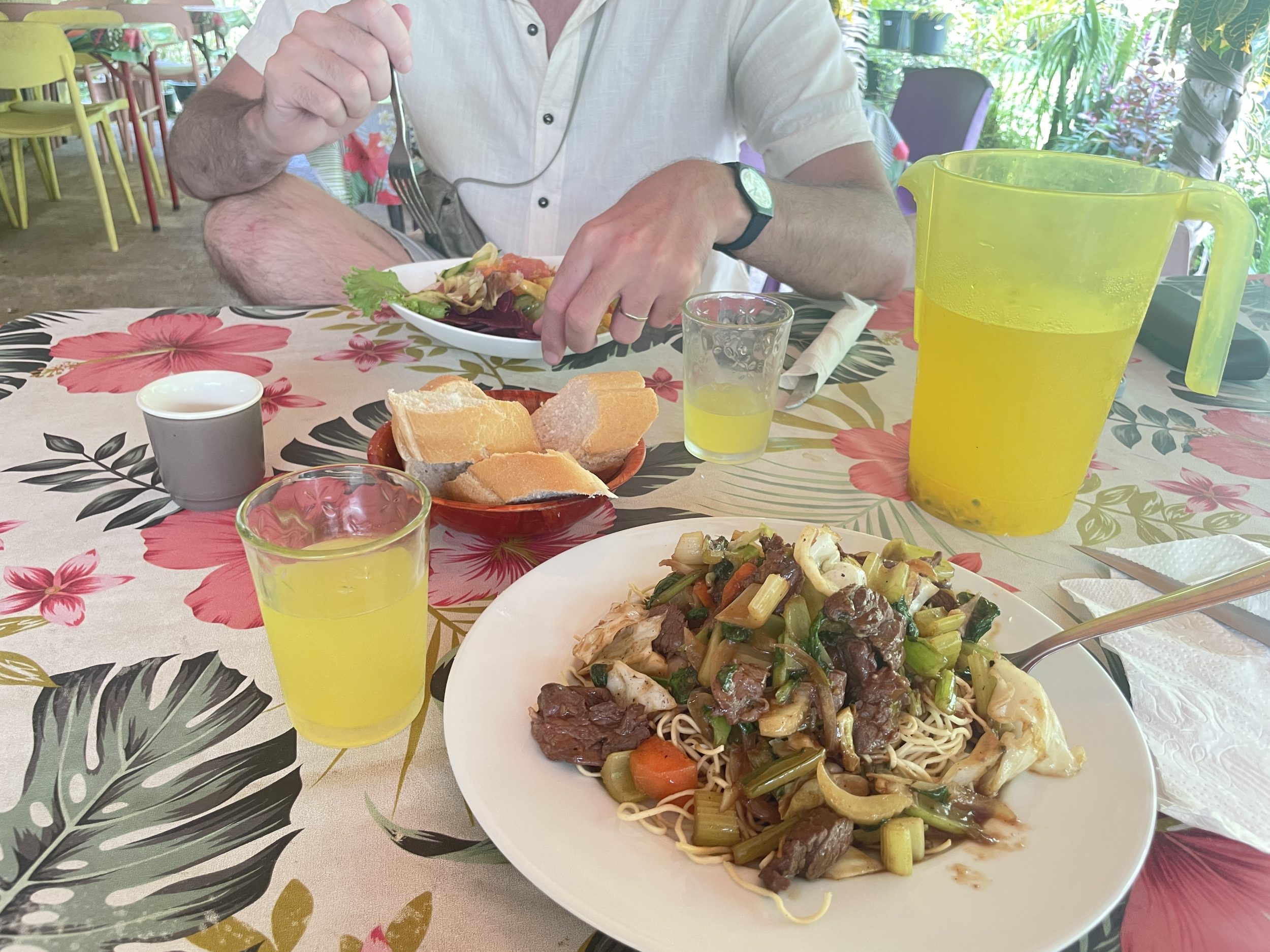
We’re finally going to do a bit of sightseeing today. Despite the long nap yesterday, I still manage to sleep until 11am. Just in time for lunch. We find super fresh and super good tuna at the food truck Tevahine. Their lemonade is superb as well. They’ve added passion fruit juice from the tree right next to it. When he shows me the fruits, I struggle to see them because they look like a garland.
I notice our scooter is covered in salt from the crossing. I ask JB to park the scooter on the lawn, while we wait for the food to arrive, so I can hose down the scooter and remove the salt. A tourist couple arrives after us and instead of parking in the designated spot, they see our scooter on the lawn and copy us. Throughout this road trip, I’ll have the chance to observe how people park, and frankly, people really don’t question anything, they don’t observe, don’t think, and just copy each other. In “brain off” mode during vacation. It’s quite disturbing to see. It reminds me of this story: a woman always cuts her fish in half before cooking it. One day, her husband asks her why, and she answers that’s how her mother did it. Intrigued, he goes to ask his mother-in-law, who explains that it was just because her pot was too small ahahah.
Payment is in cash on the small islands, and this food truck is no exception.
Taputapuātea Marae
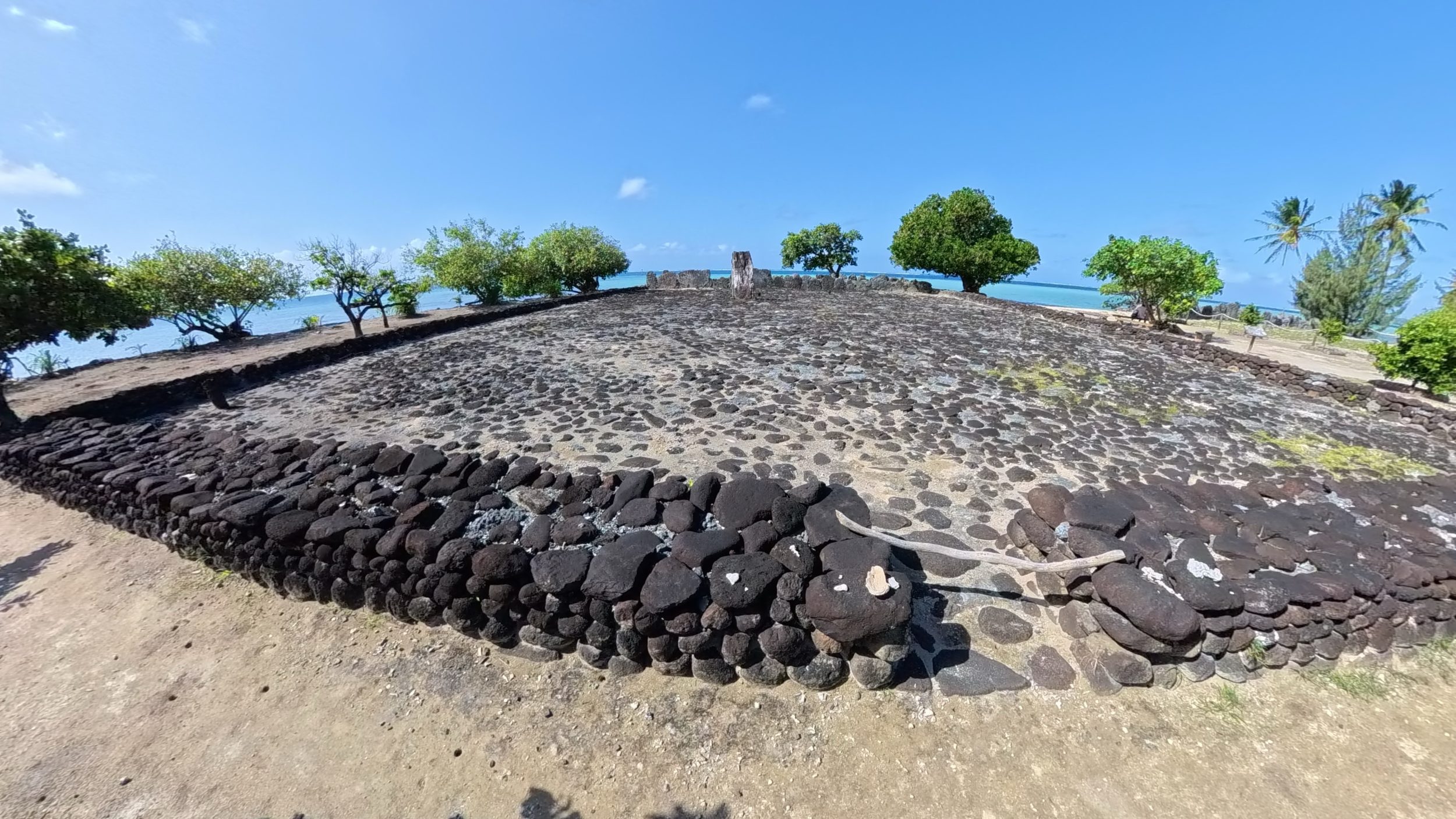
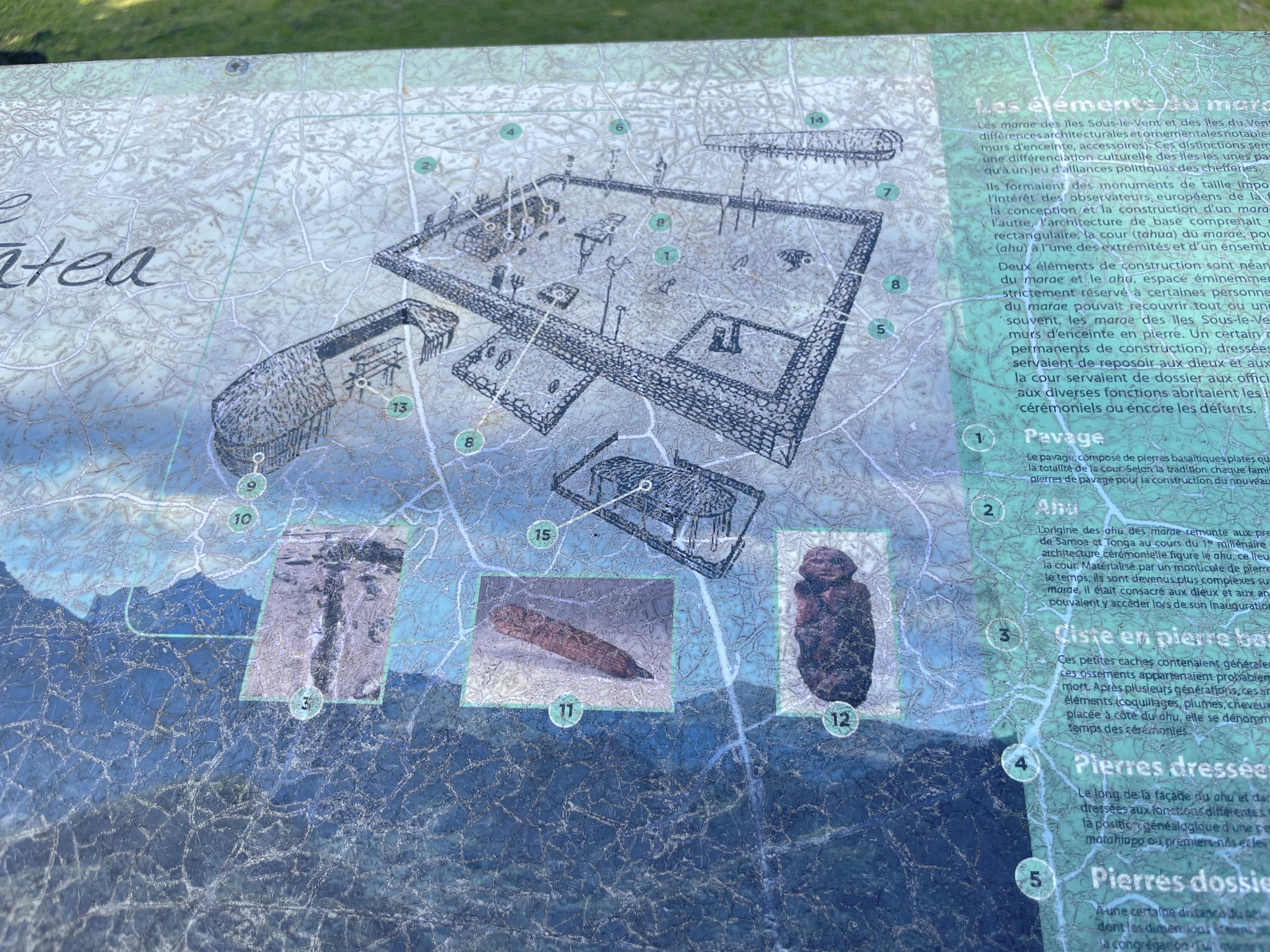
We continue our route to the Taputapuātea Marae. Marae are archaeological sites used in the past for worship, rituals, and political gatherings. Raiatea has plenty, and very large and ancient ones. It’s a more cultural island than “snorkeling/diving” since it has no beach. But we get a bit lost on the way and end up at a beautiful hotel (Atiapiti Booking link). I often get lost in a 4 or 5-star hotel, it’s strange. When I see their beach, I immediately forget about the marae.
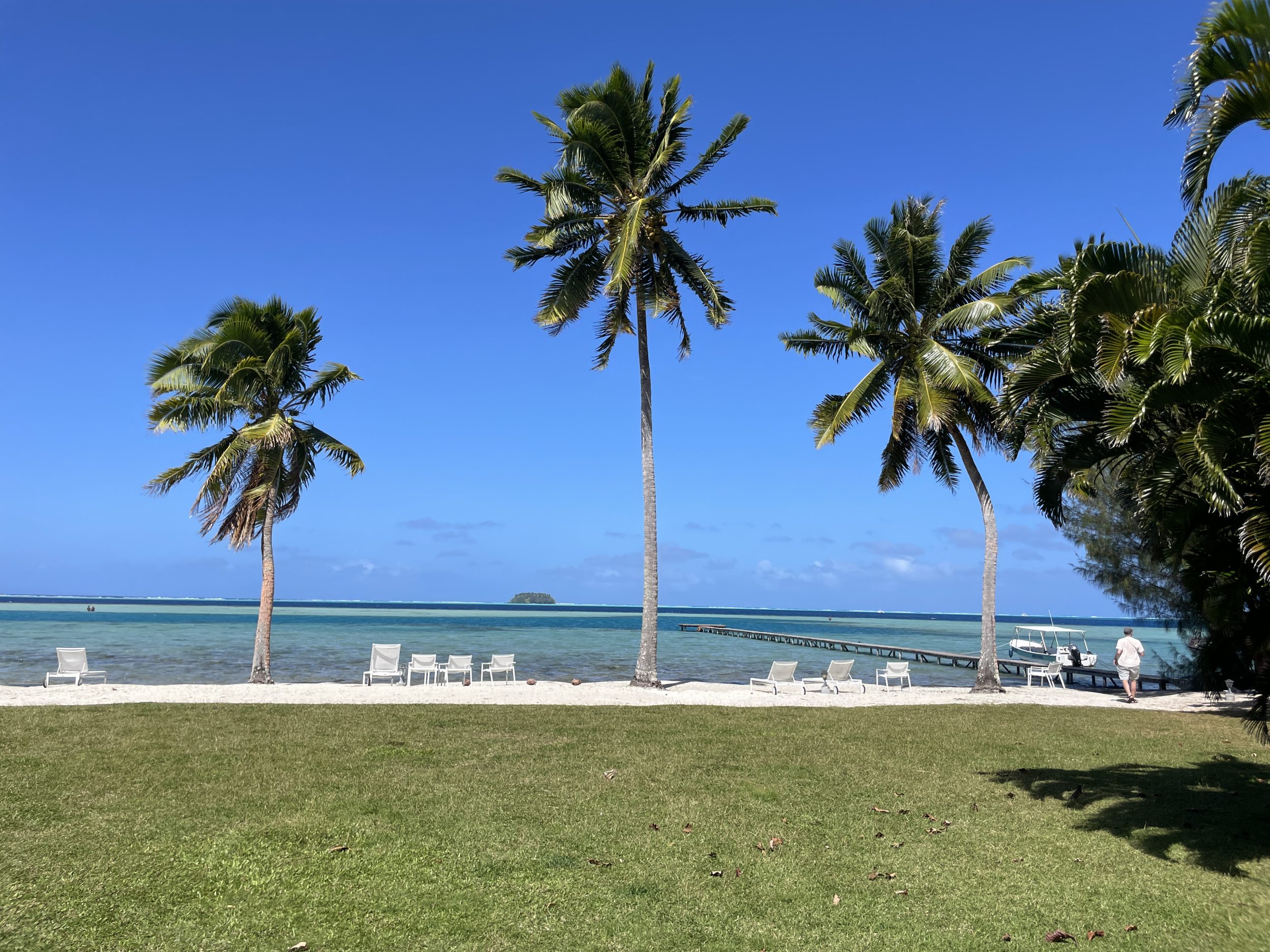
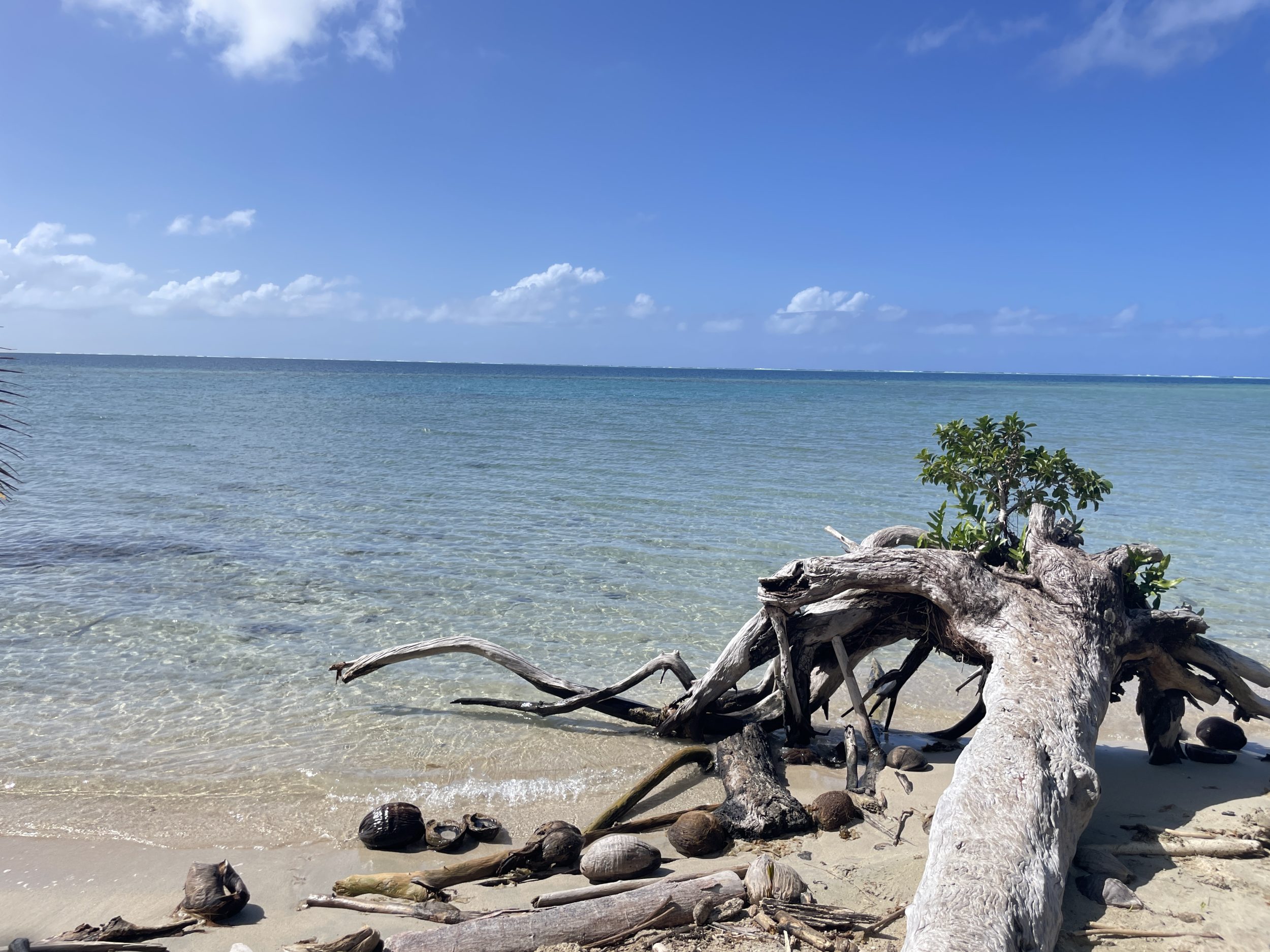
I’m just trying to find out: “can I get a drink here”. The beach in front of the hotel has a lovely, long pier. The water has several shades of blue. You can walk to the channel. Usually, at the drop-off, that’s where there are lots of fish. But the water is too rough today, so we settle for an ice cream. The waitress tried to scam us by not bringing the bill (surprising for a hotel of this caliber) and by miscalculating the price (intentionally?). Even in Polynesia, you have to be careful!
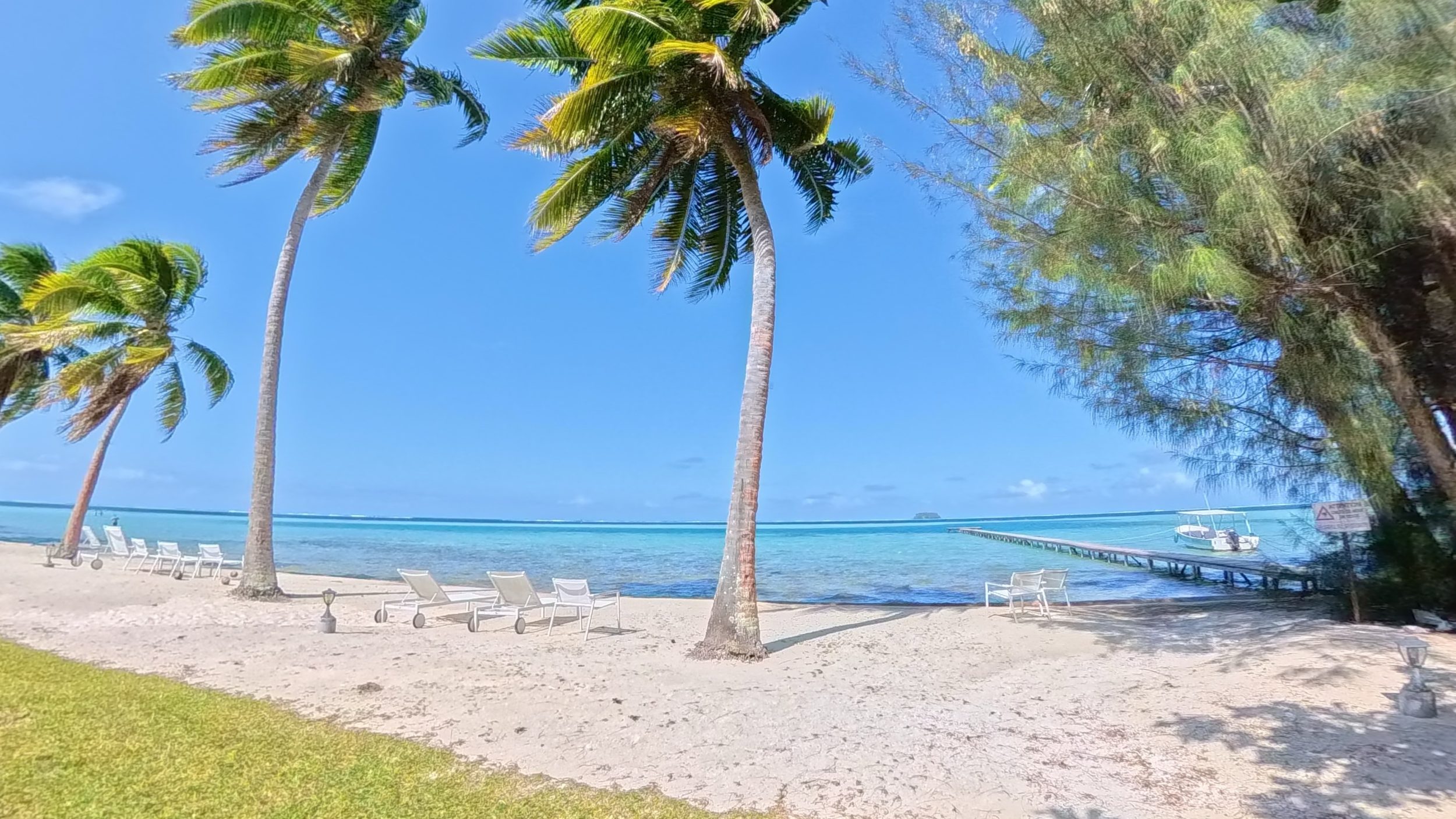
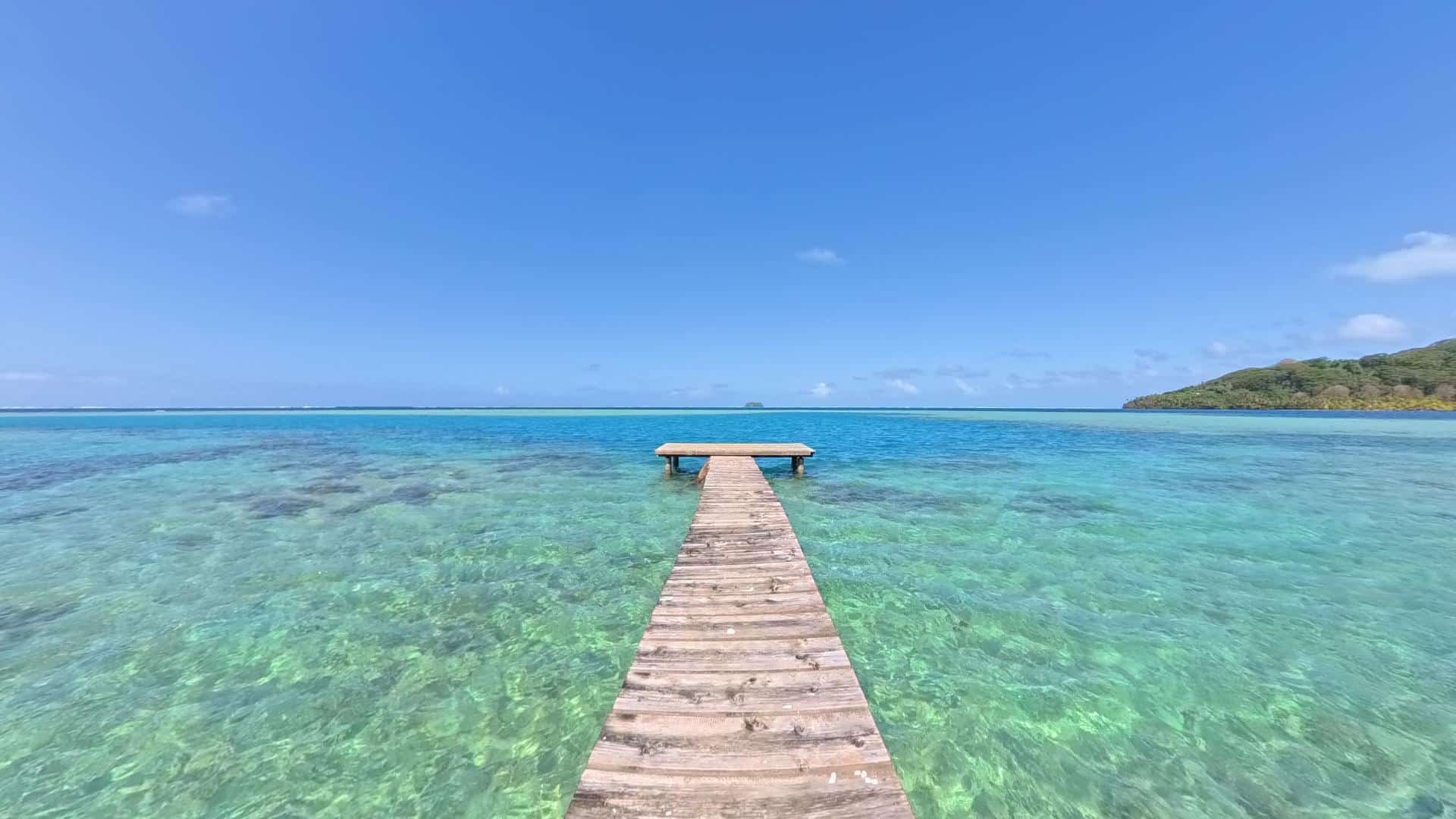
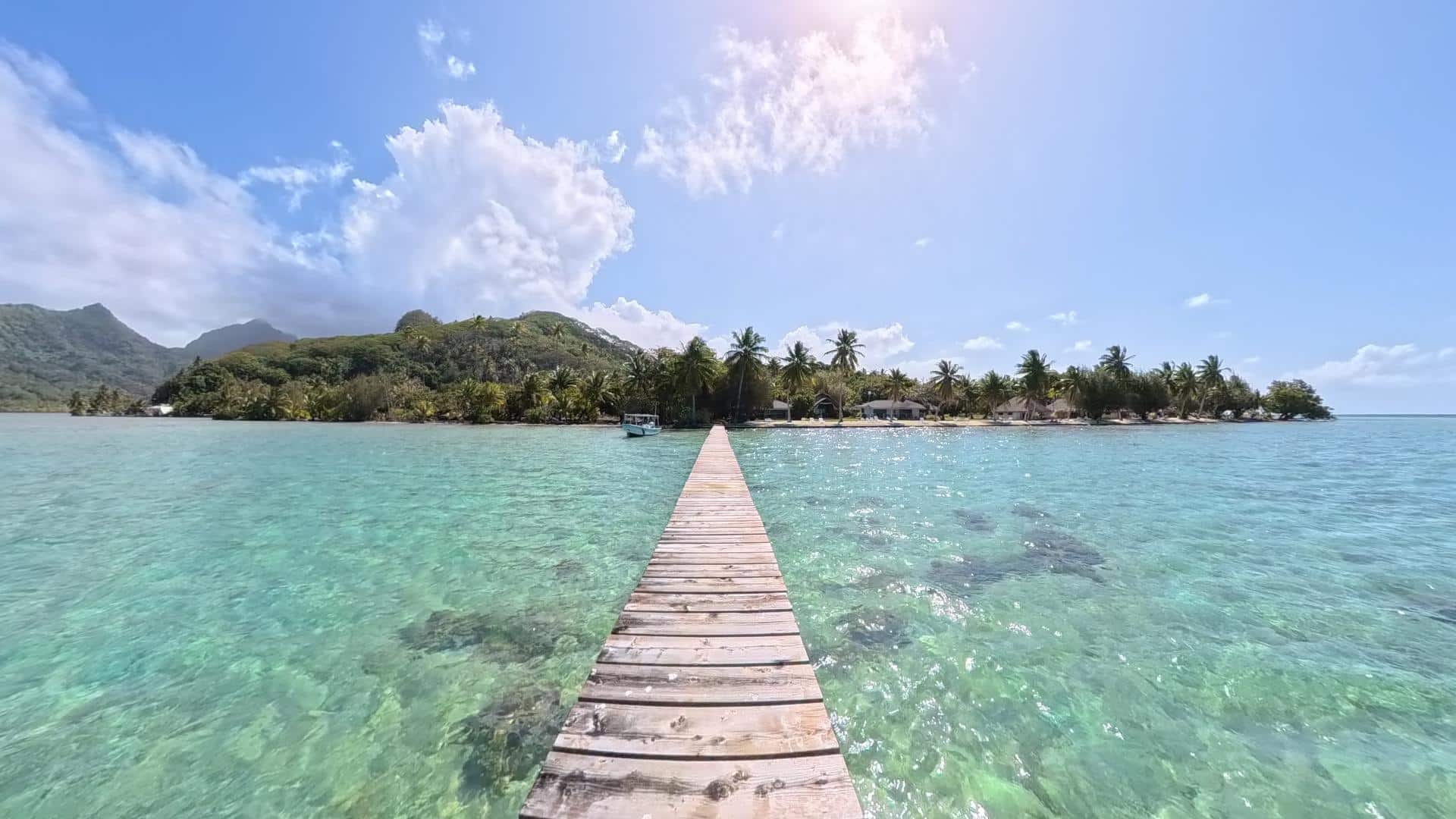
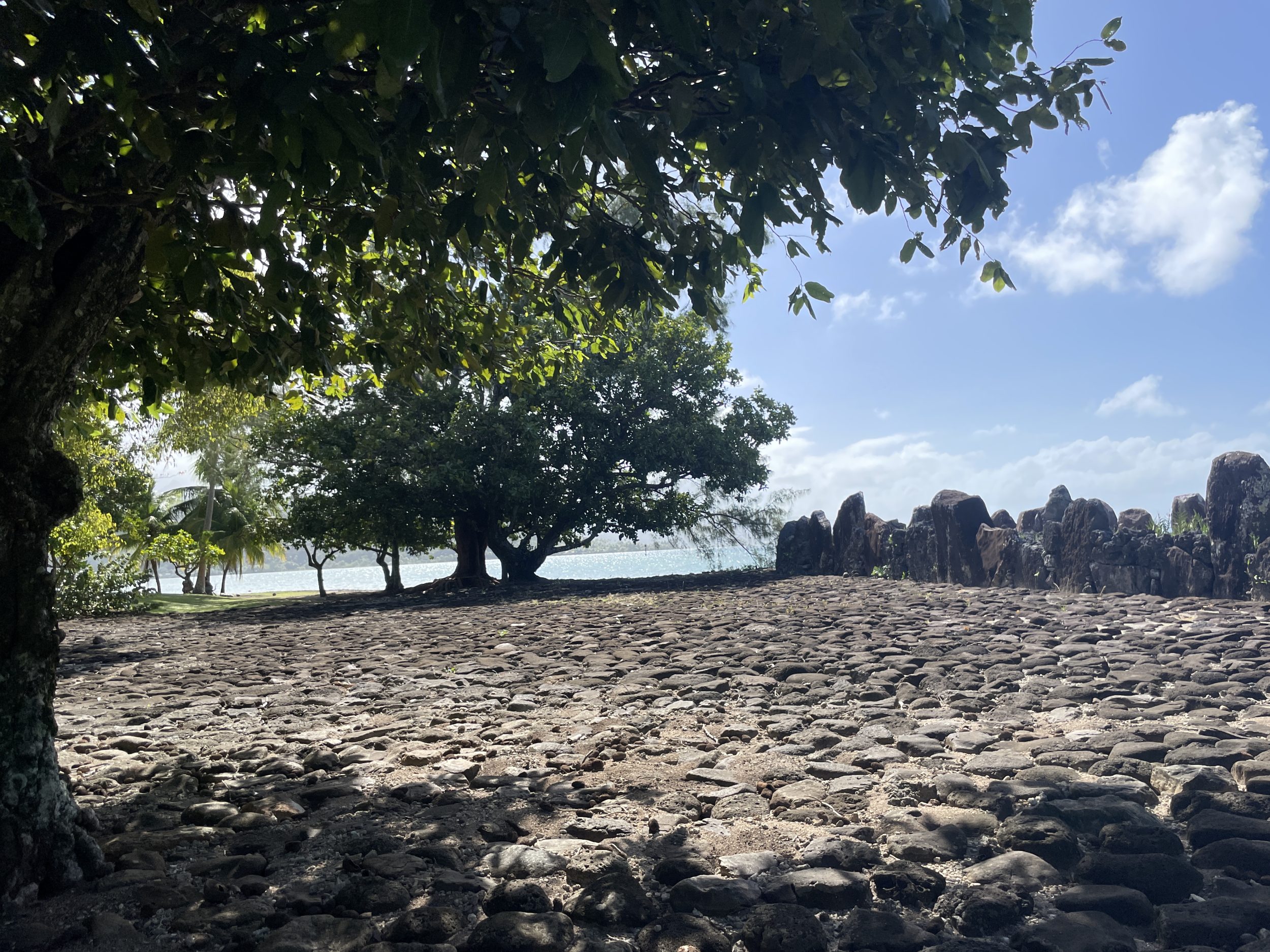
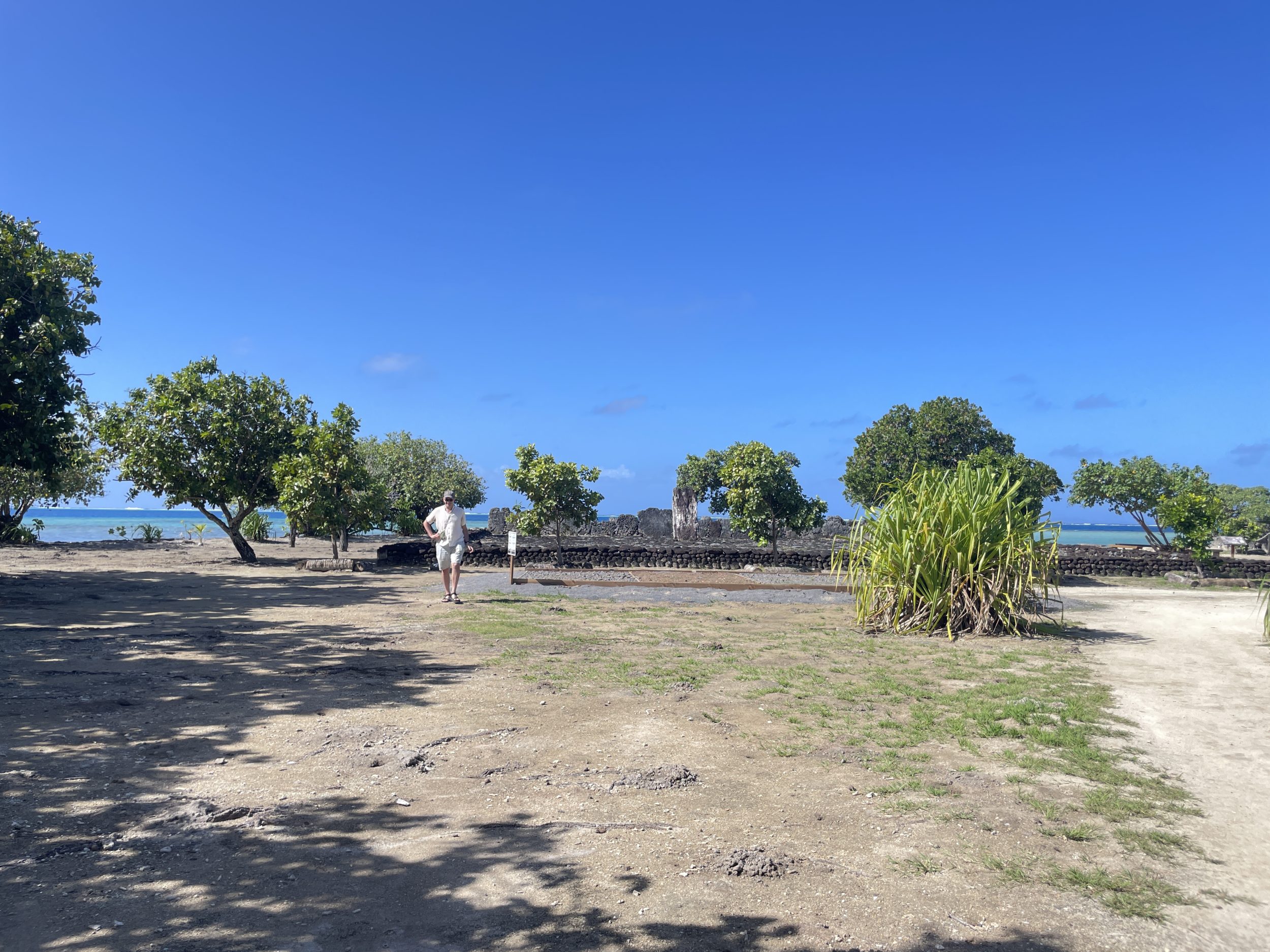
We take a two-minute scooter ride to the real Taputapuātea Marae. The visit can take a long time, but since it’s too hot and I find the sites pretty but not exactly “Machu Picchu,” we do a quick tour. The place is superb though, the most beautiful marae we’ve visited, by the water with lots of shade and benches to relax.
Vanilla farm
Vanilla is more famous on the neighboring island (Taha’a), but since both islands share the same lagoon, we figure we can visit any vanilla farm we want. We call a vanilla farm (Google Maps link) to ask for a tour. It’s a bit cheeky since the opening hours are listed on Google Maps (until 12pm), but nothing ventured, nothing gained. They tell us to come that afternoon.
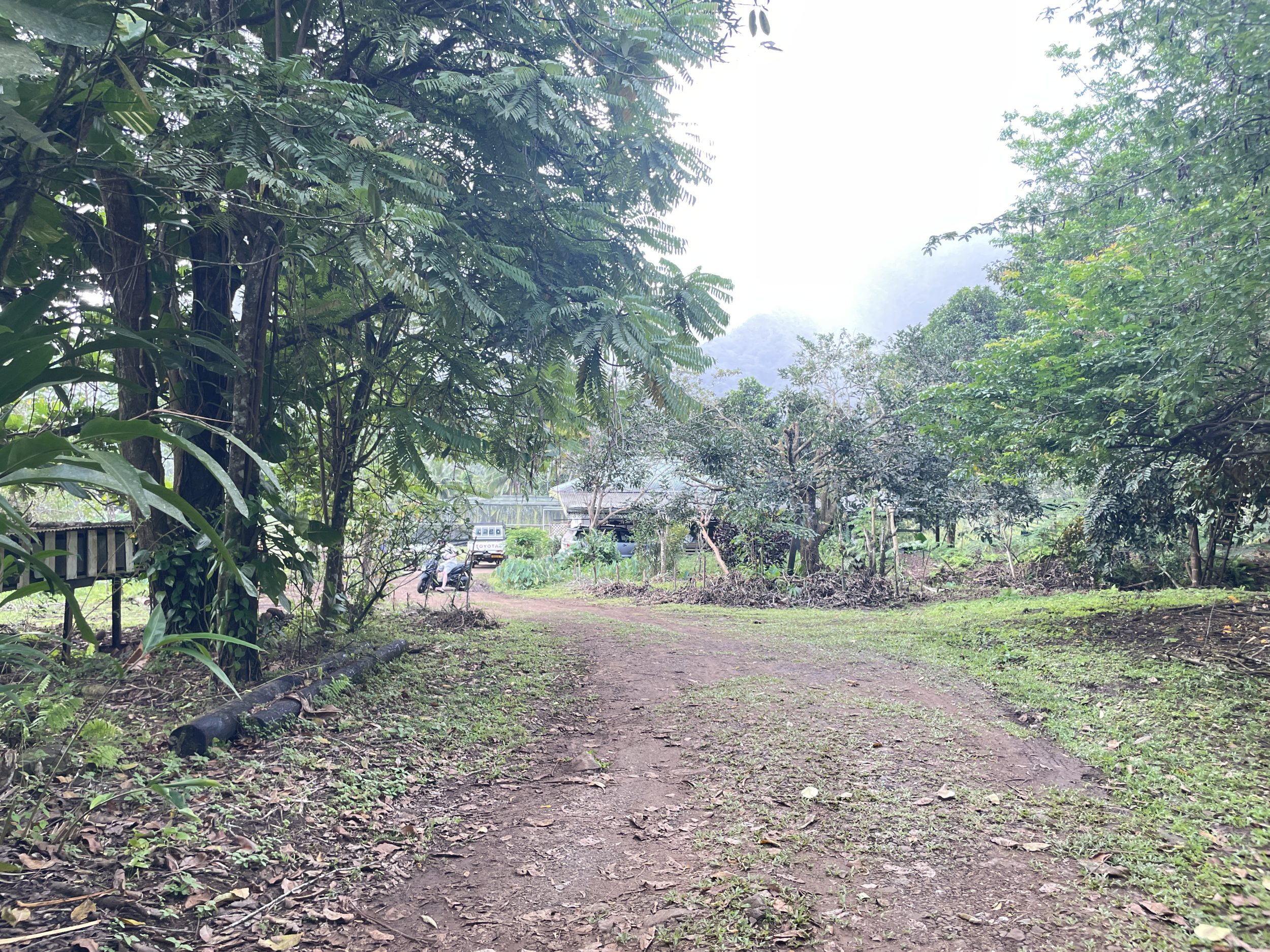
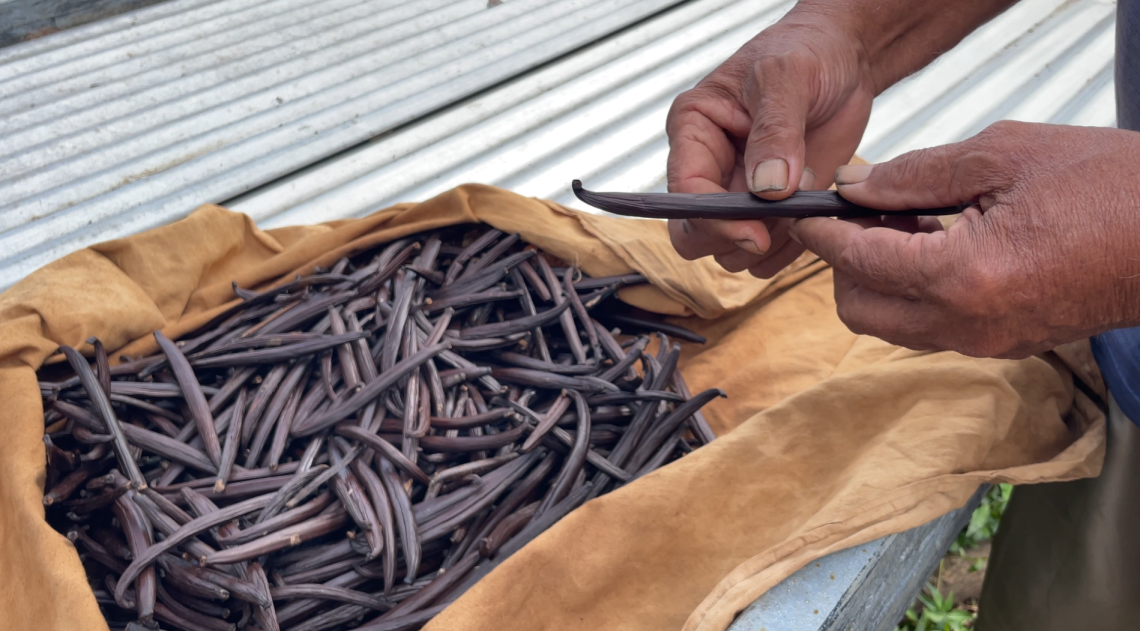
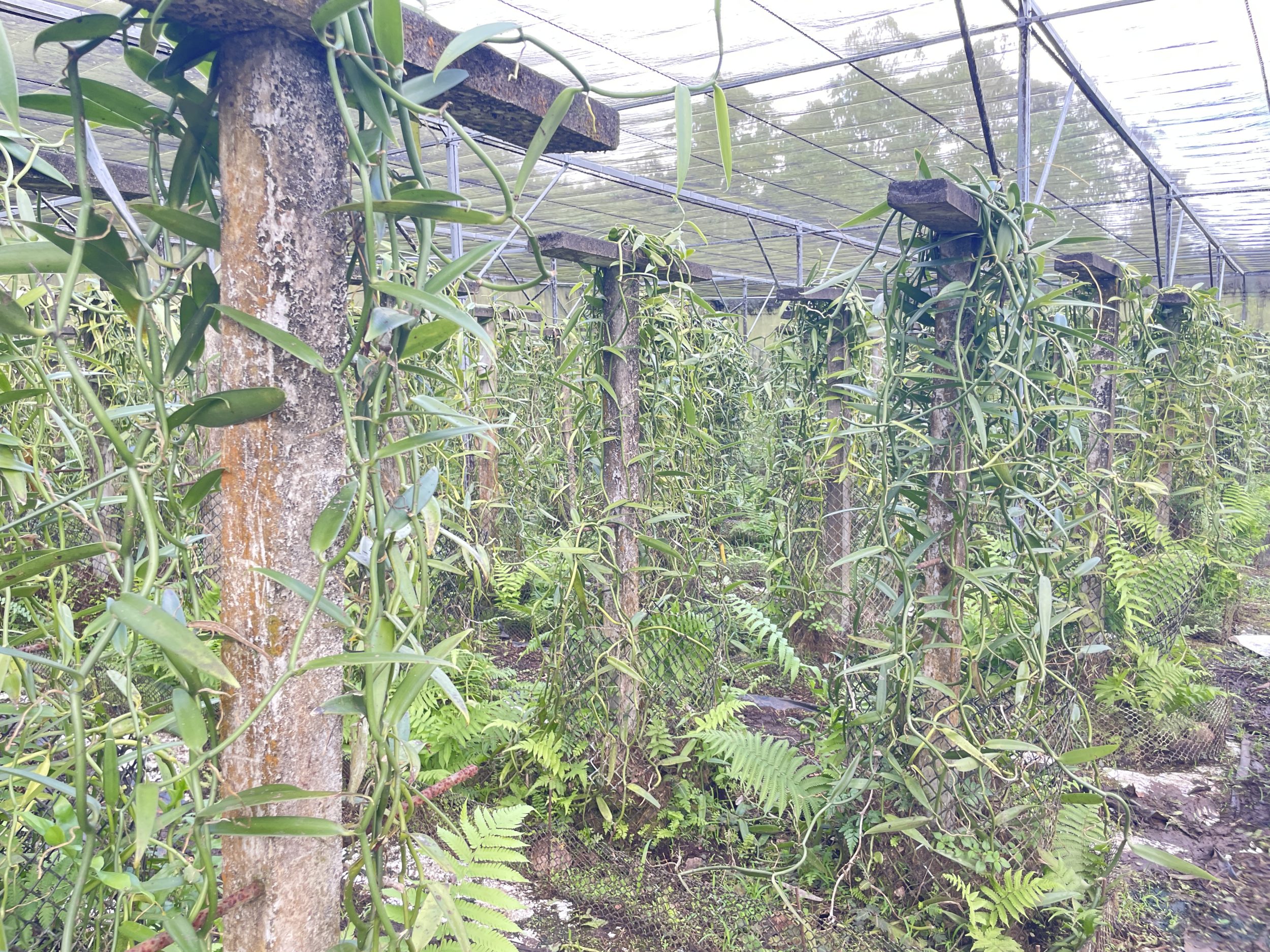
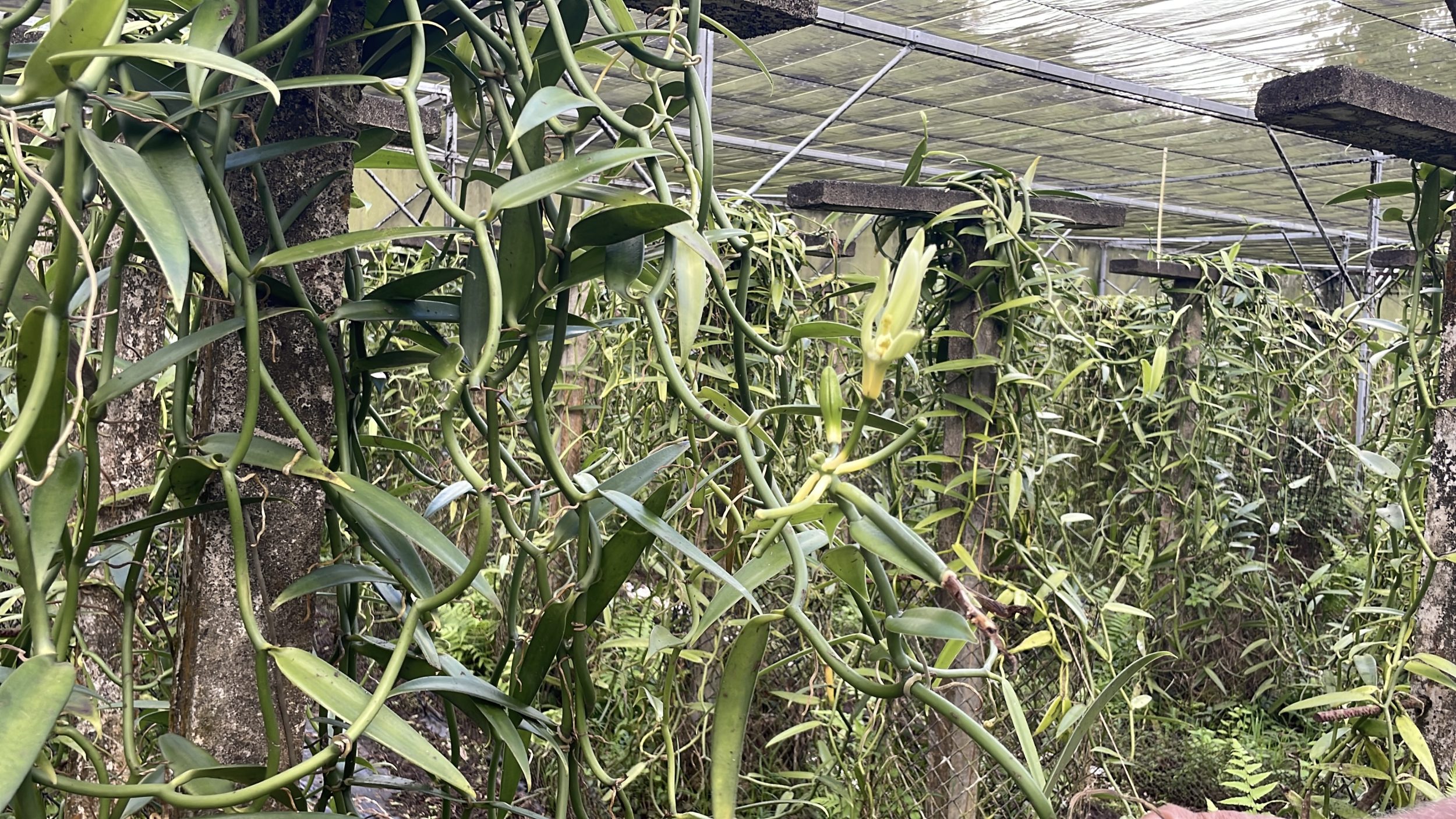
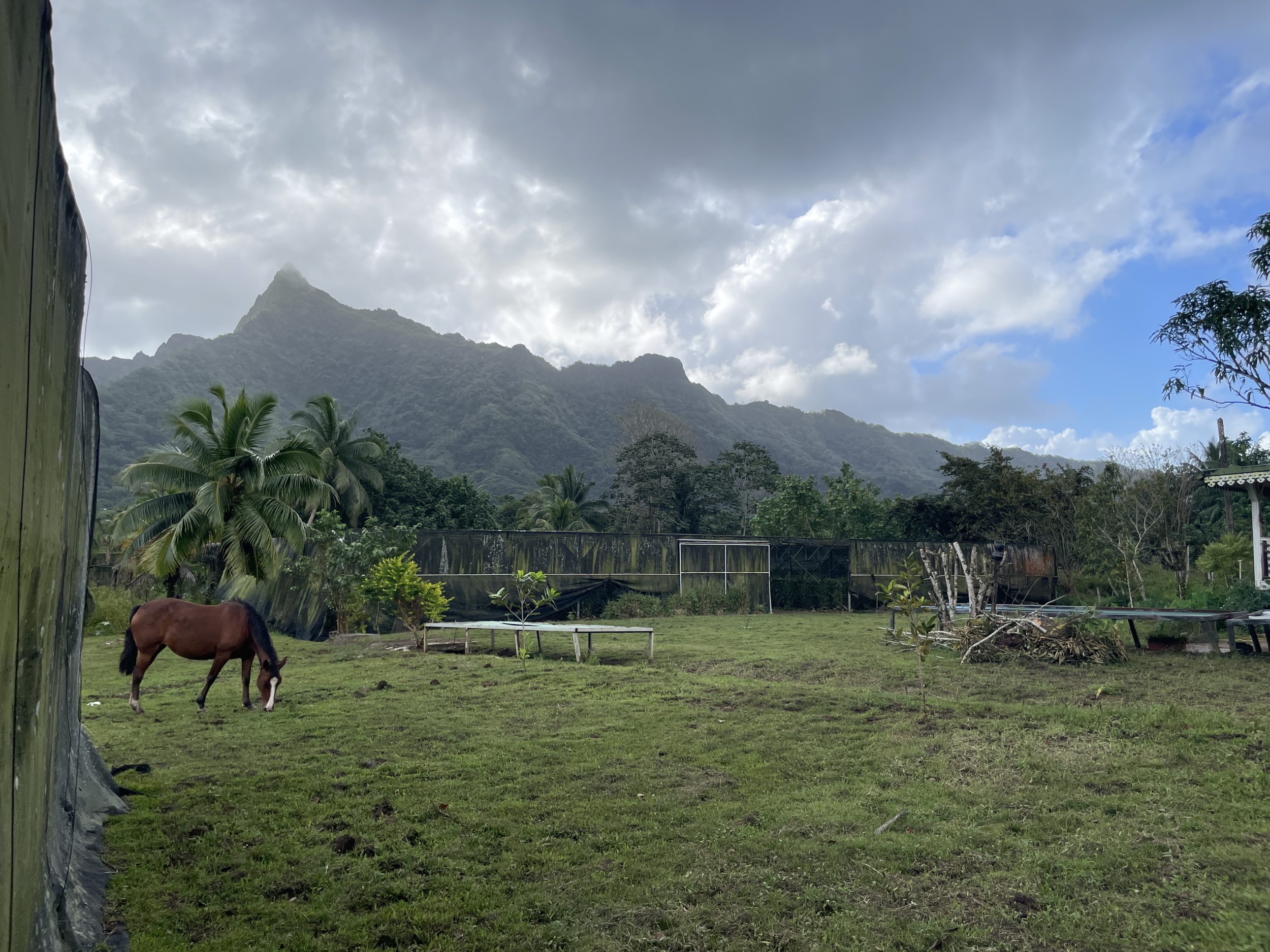
On site, we find Guy drying vanilla pods. His plantations go all the way to the foot of a big mountain “POU ATA” (the post that holds up the clouds), and it seems particularly suited to vanilla growing because it rains much more here and it’s more humid than other places in Raiatea. Guy is a passionate man, someone who produces quality vanilla, intended for chefs and 5-star hotels. He takes part in agricultural competitions, winning prizes and earning several gold medals several years in a row at the Paris Agricultural Show. We’re far from the “tourist” vanilla farms. And you can feel it: his explanations are complete but a bit disjointed; we chat “by feel.”
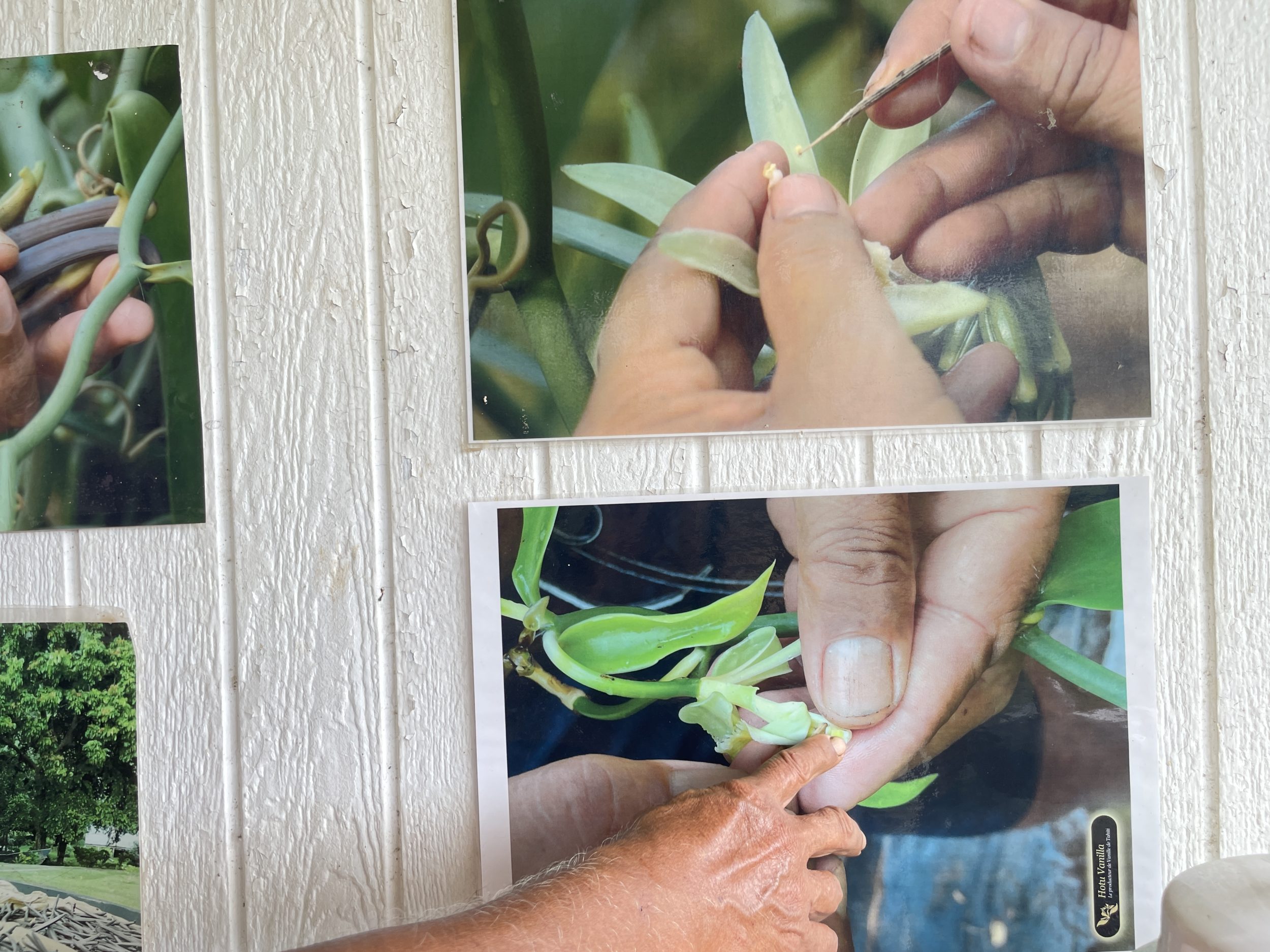
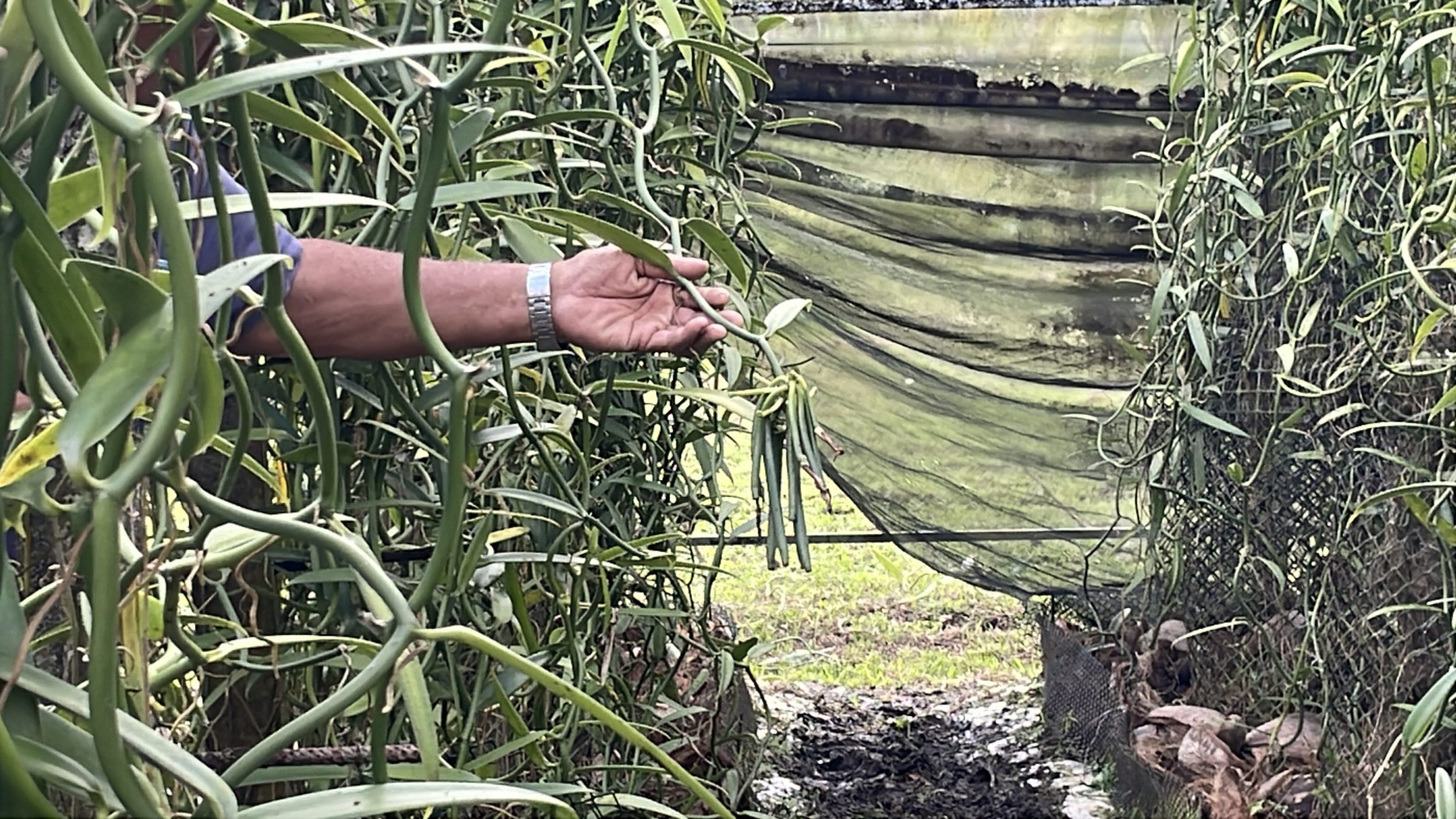
Since we arrive late (because of my sleep-in), we won’t be able to watch the manual pollination of the flowers (which happens in the morning). But he shows us a flower that was pollinated that very morning.
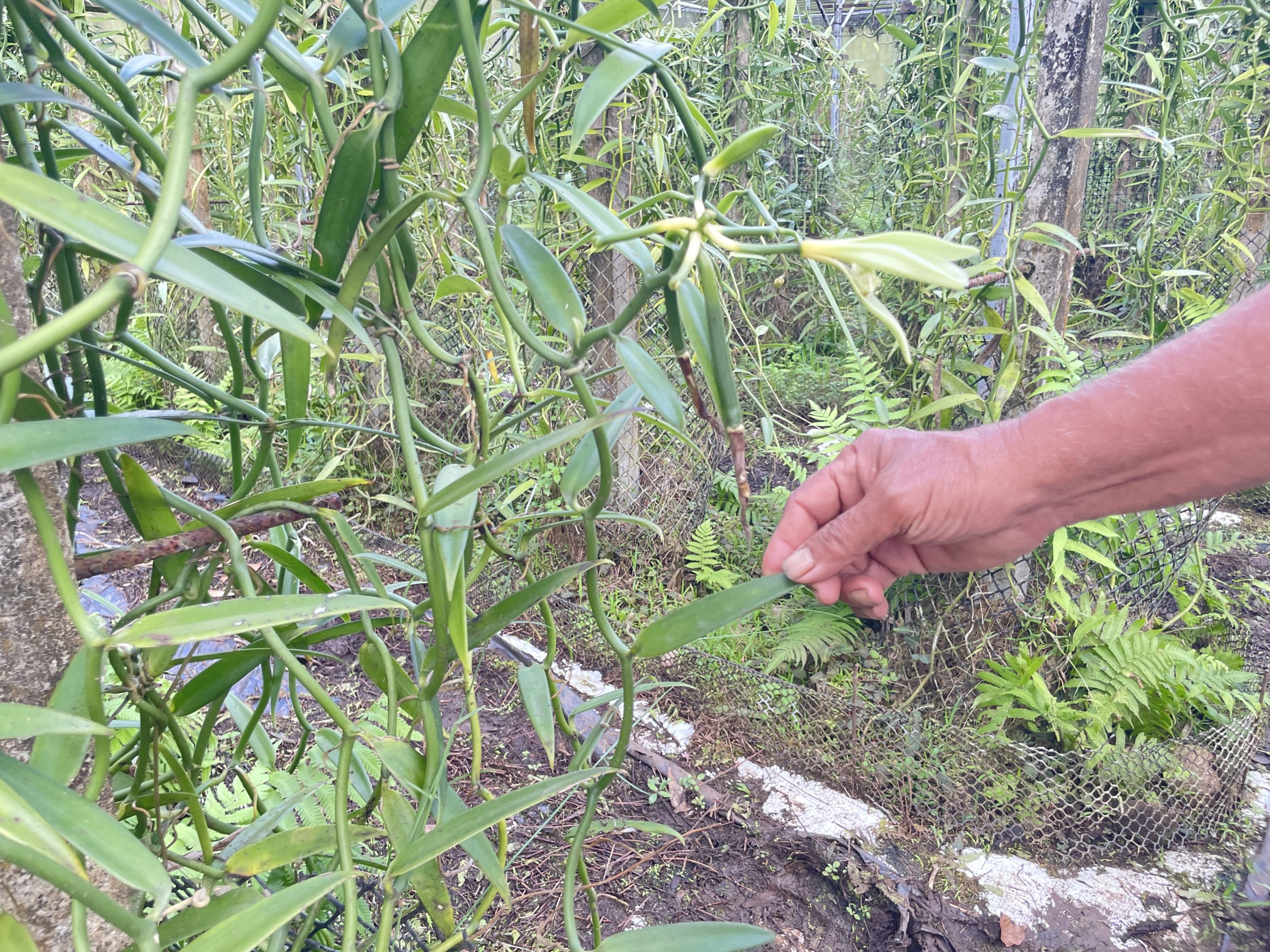
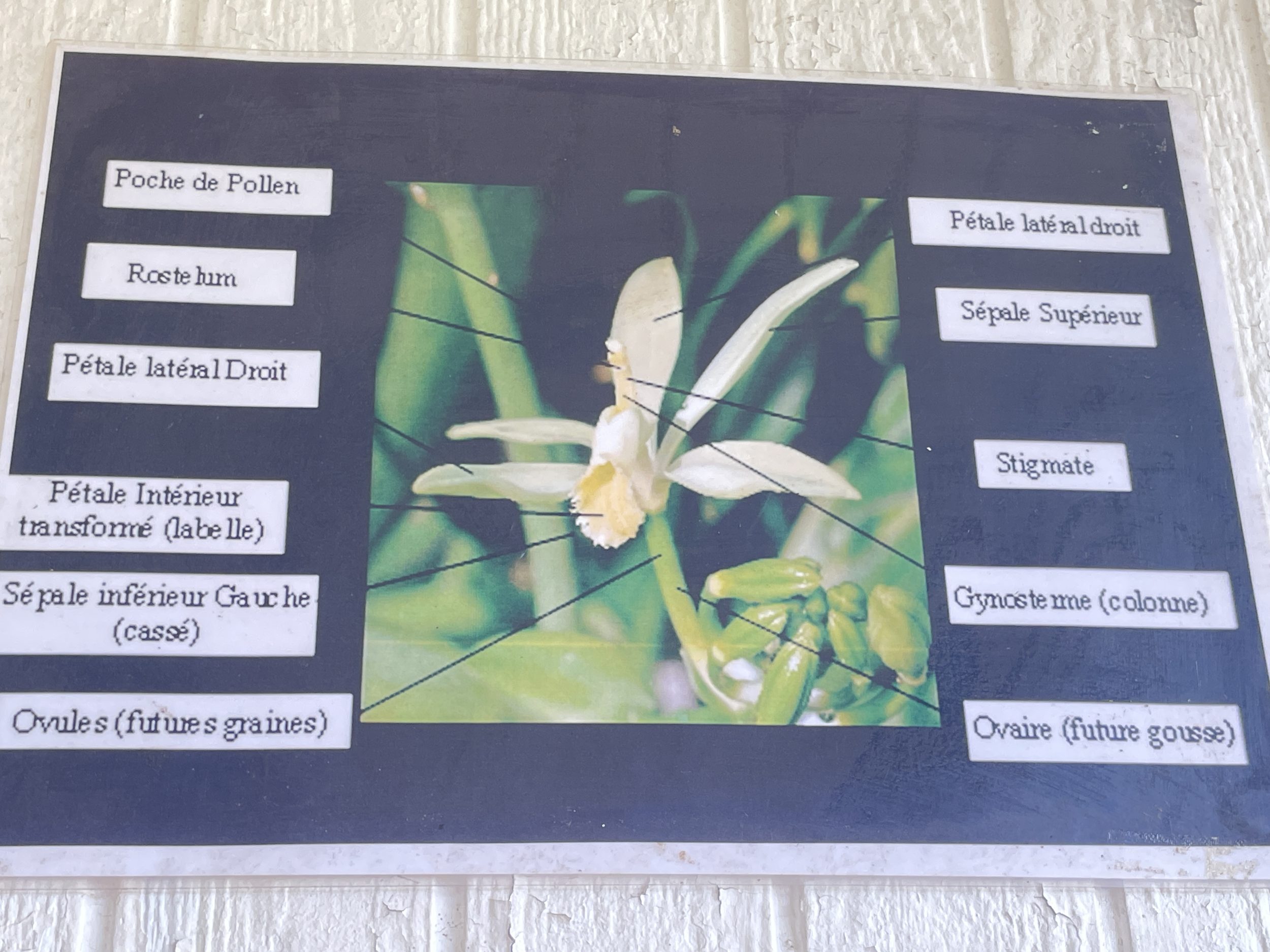
These flowers open for only 24 hours. They originate from Mexico, so the bees capable of pollinating them are in Mexico. Already in nature, the chance that this specific bee finds and takes interest in this specific flower in the jungle right when it opens (the vanilla flower opens only once, early in the morning, and wilts during the day. Add to that the flower produces no nectar, so nothing to really “attract” the insect, only fragrant molecules); that the vanilla pod, which takes 9 months to mature, survives insect attacks and bad weather… the wild vanilla pod seems as rare as an emerald. So pollination must be done by hand if you want a certain yield.
The vanilla found in Polynesia is a hybrid, so it tastes a bit different from the vanilla you can find in Réunion or Madagascar. I asked the AI to summarize the planting and maturation process of vanilla; I’ll put it here:
1. Planting and growth of the vine
The vanilla plant is a climbing epiphytic orchid, grown mainly in Madagascar, French Polynesia (Tahiti), Réunion and Mexico. It is planted at the foot of a living support (a tree or post), which it climbs using its adhesive roots that cling to the bark. It also develops absorbent aerial roots, which capture ambient moisture rather than water from the soil, hence the need for a shaded, humid environment.
Regularly, the grower bends and lays the vine down close to the ground to stimulate the growth of new roots and encourage flowering rather than simple vertical growth. It takes at least two years before the first bloom.
2. Hand pollination
Each flower must be pollinated by hand, one by one, on the very day it opens (the flower only lasts a day). An experienced “matchmaker” lifts a thin membrane (the rostellum) to bring the pollen and pistil into contact, a technique invented in 1841 by Edmond Albius, a 12-year-old enslaved boy from Réunion.
3. Harvesting the pods
Once pollinated, the flowers produce green pods that take 8 to 9 months to ripen. They are harvested by hand, just before they turn yellow (at 6 months), to speed up the process artificially.
4. Scalding
The green pods are dipped for a few seconds in hot water (60-65°C), which stops their growth and starts fermentation.
5. Sweating
The pods are wrapped in blankets or placed in wooden crates for 24 to 48 hours to “sweat” in the heat. Enzymes begin developing the aroma precursors, including vanillin.
6. Drying
The pods are spread out in the sun for a few hours a day, then left in the shade for several weeks. They turn black and lose much of their water content.
7. Refining (maturation)
The longest phase: the pods are stored in closed boxes for several months, sometimes up to a year, to develop and harmonise their aromas.
8. Sorting and packaging
Finally, the pods are sorted by size and quality, then packaged for sale.
All in all, it often takes 2 to 3 years from planting to vanilla ready to use, with manual work at almost every stage, which explains its price, second only to saffron among the world’s most expensive spices.
I’ll let you discover Guy’s explanations and the pollination I filmed in another vanilla plantation on Taha’a:
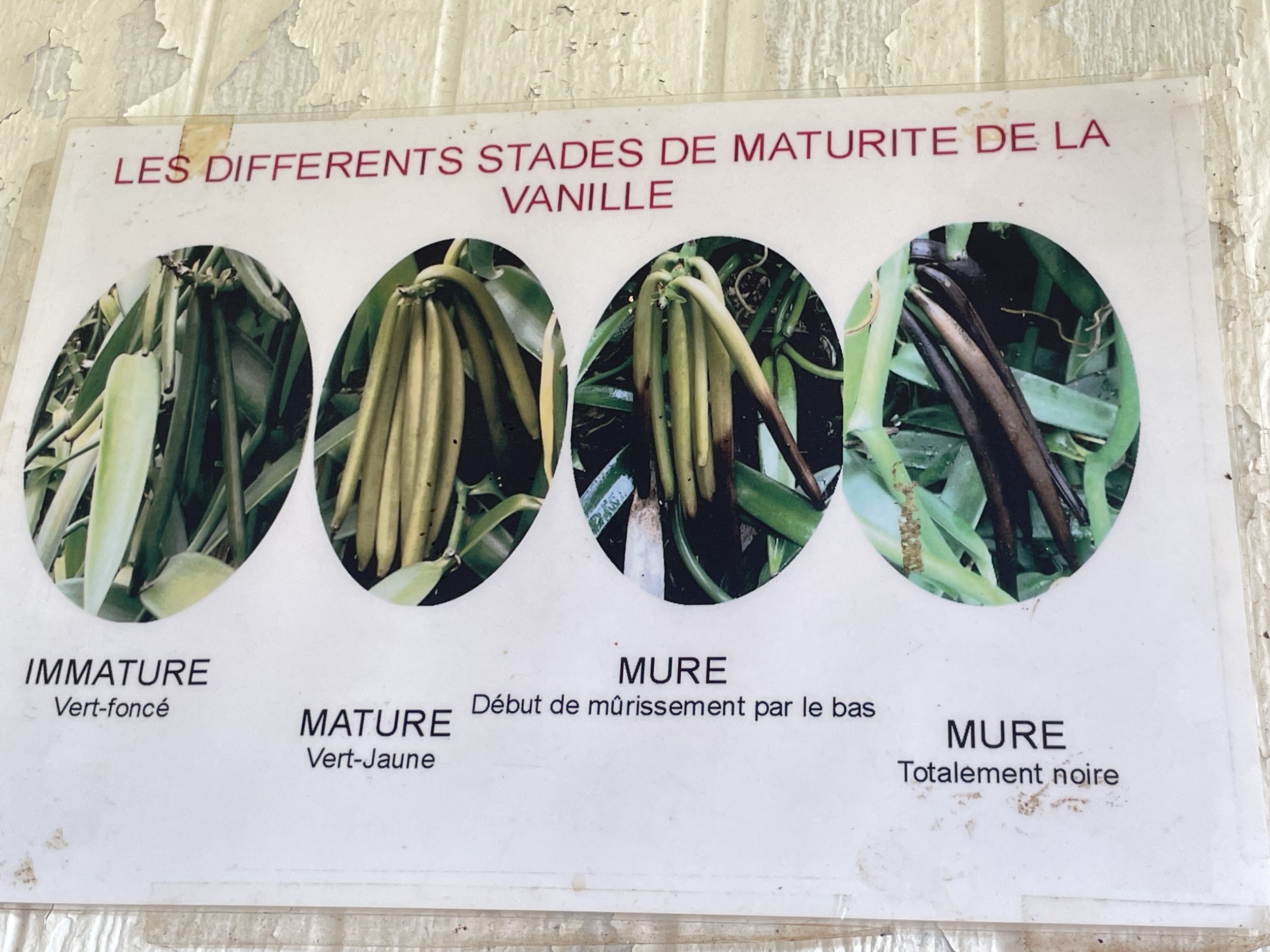
To earn the gold medal, Guy has to do things differently from steps 3 and 4 onwards. Instead of picking them green, he waits for maturity. A green apple forced to ripen off the tree and an apple picked ripe don’t have the same flavour. He takes three months longer than the other growers, but that’s how his vanilla ends up better quality. Drying also requires a great deal of expertise. Anyone can learn to pollinate the flower, but preparing vanilla requires proper training.
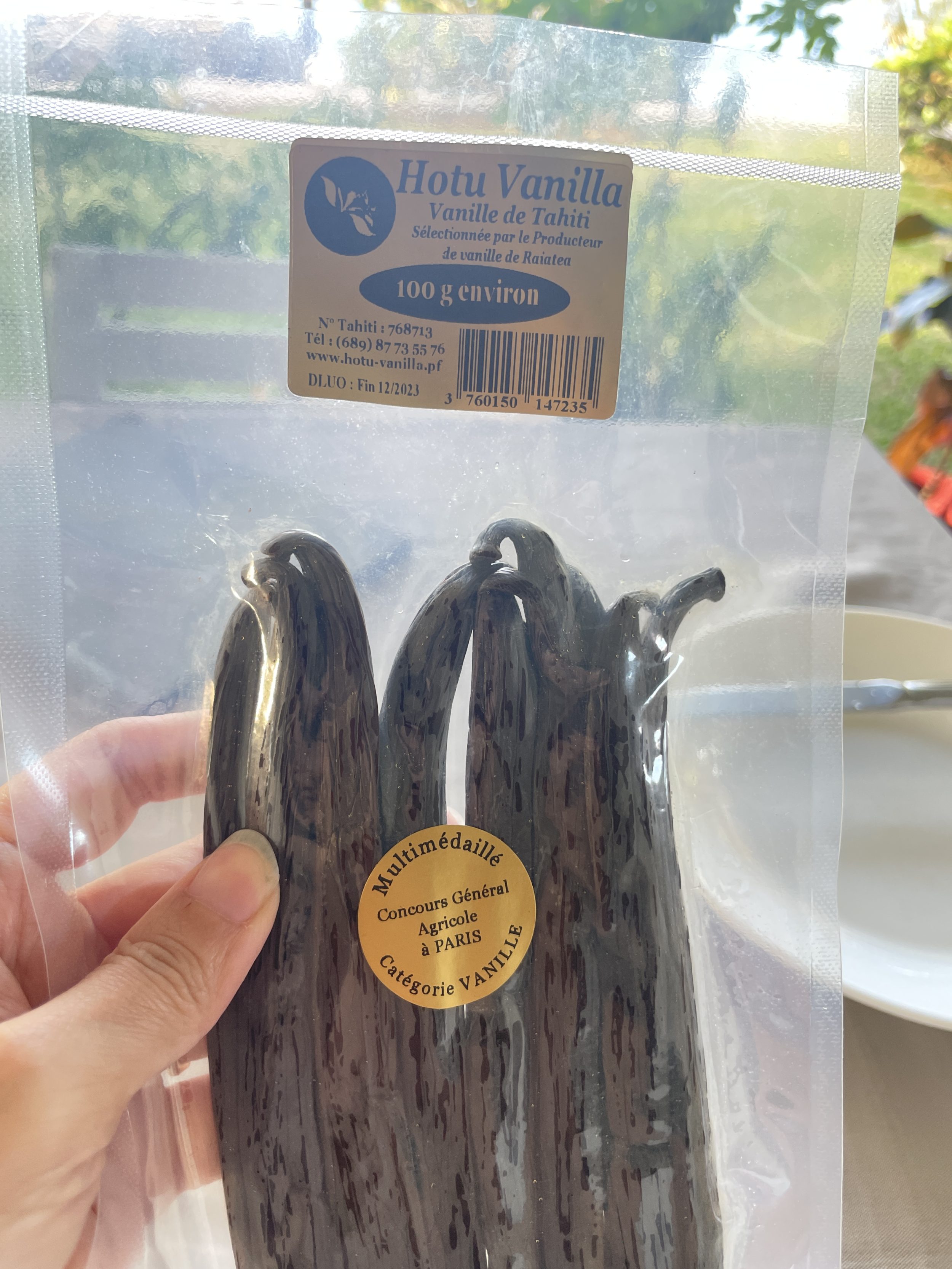
Unlike the vanilla we buy in Paris, all dry in plastic boxes, here the vanilla is sold vacuum-packed and it is “pliable” because it retains exactly the right moisture level for the best possible flavour & aroma. A good-quality pod should wrap around your finger without breaking. Like wine, it gets better with age.
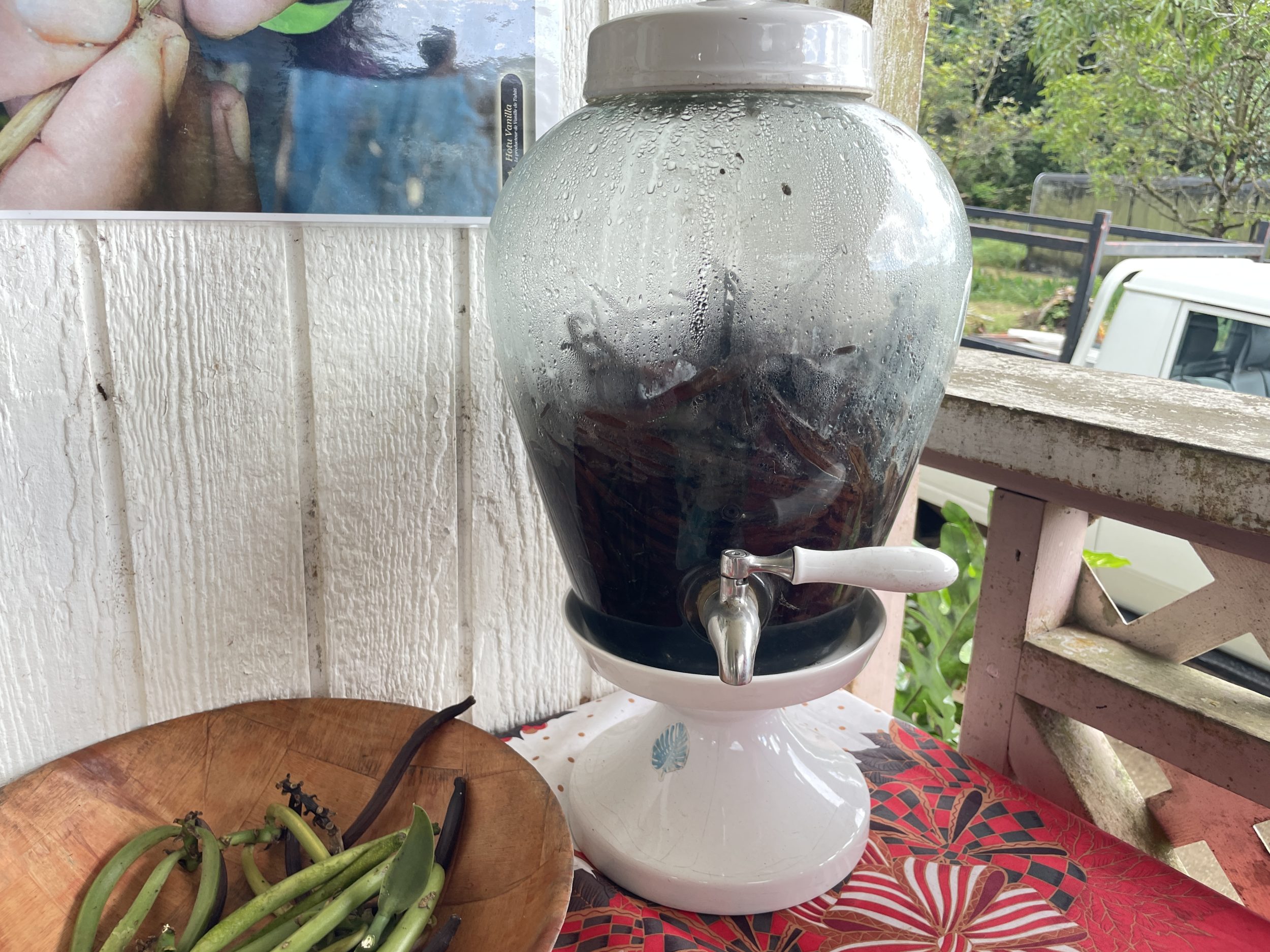
Polynesians tend to keep them in an airtight glass jar with a little cheap amber rum at the bottom. That way, you can keep fresh vanilla for years. Over time, the rum becomes “vanilla extract”. The vanilla can be reused several times. We were told to keep the pieces of pod and put them back in rum, then reuse them 3-4 times without any problem. Or put a pod in sugar.
It’s hard to explain just how good it feels to be with Guy and his wife Odette. Their farm is a paradise, but on top of that you can feel all the passion radiating from this couple and just how much the farm is their pride. They travelled the world to promote their vanilla, with no government help, at a time when Polynesian vanilla had no reputation. Everywhere they went, their vanilla was praised by top chefs. Their son is in Tahiti and can ship any order, so don’t hesitate to contact him to buy vanilla, his details are on Google Maps.
As for visiting with Guy and Odette, here are their numbers. You can buy the vanilla directly there; for reference, the price at the farm is 10,000XPF (€84) for 100g, but the price goes up when you buy it in Tahiti or France. Vanilla isn’t called “black gold” for nothing.

Before we leave, Odette puts about ten bananas from the garden into my hand. Without the rain, we could have stayed at the farm all afternoon. JB comes out of the farm feeling recharged and keeps talking about it for weeks afterwards. It will be the most magical land-based visit of our whole trip to Polynesia.
On the way back, we plan to visit the botanical garden of Raiatea, but it’s raining, so we head straight back to the airbnb to rest.
Day 3:
It would have been amazing to go to the famous pearl farm Apana Pearls but my memory failed me. I thought it was on another island, so I didn’t think to book the tour in time. It’s a shame because the weather is gorgeous. This pearl farm and the vanilla plantation will probably bring me back to Raiatea. Other pearl farms are often right by the road, with the molluscs brought there to be cleaned and so on, but Apana Pearls is at the end of a coral barrier and you can snorkel out to find your own pearl for $99/person. Remember to book ahead, unlike me!
To keep ourselves busy, we drive around the island. Remember to fill up beforehand, as the few petrol stations are all in the north of the island.
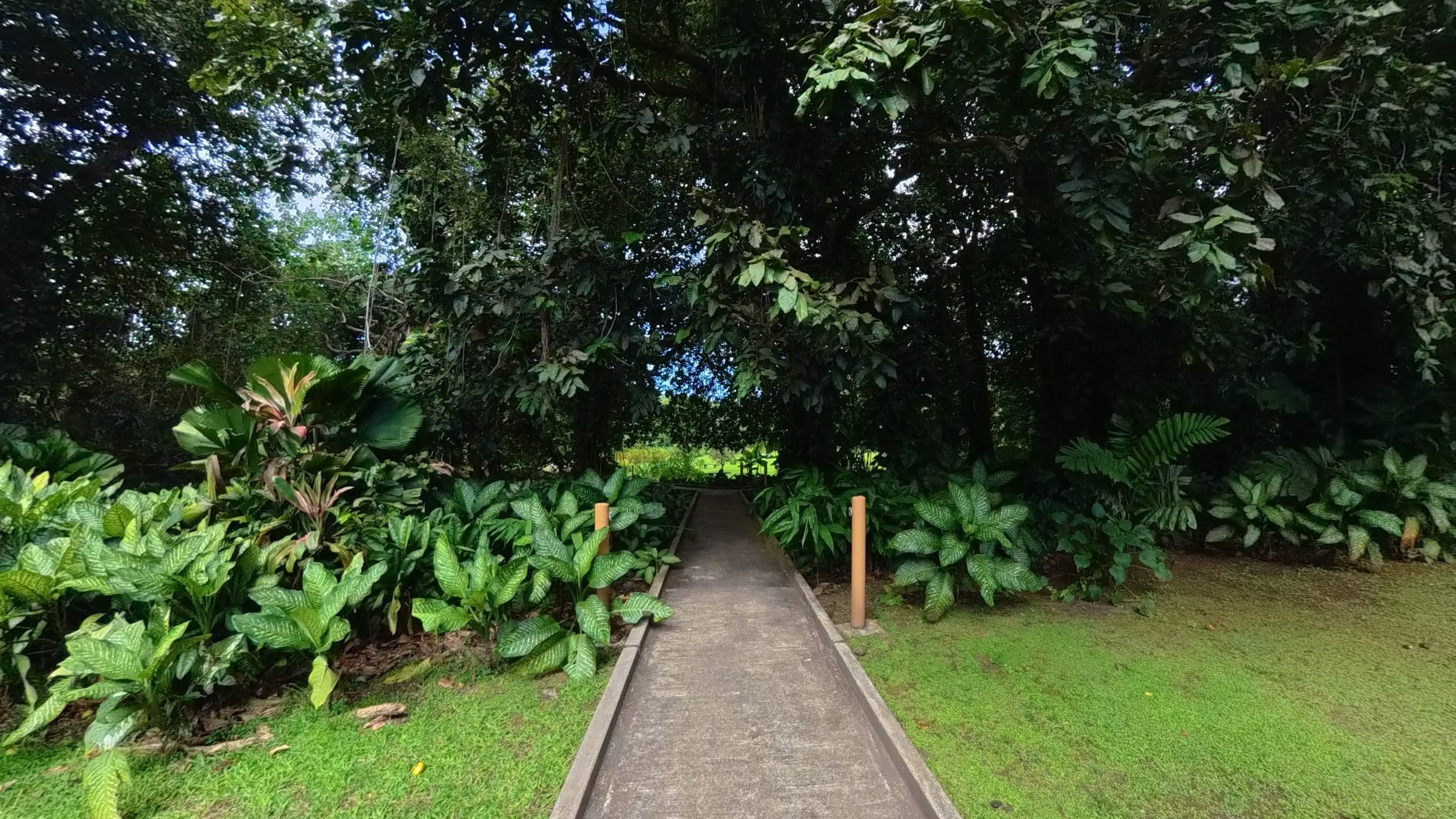
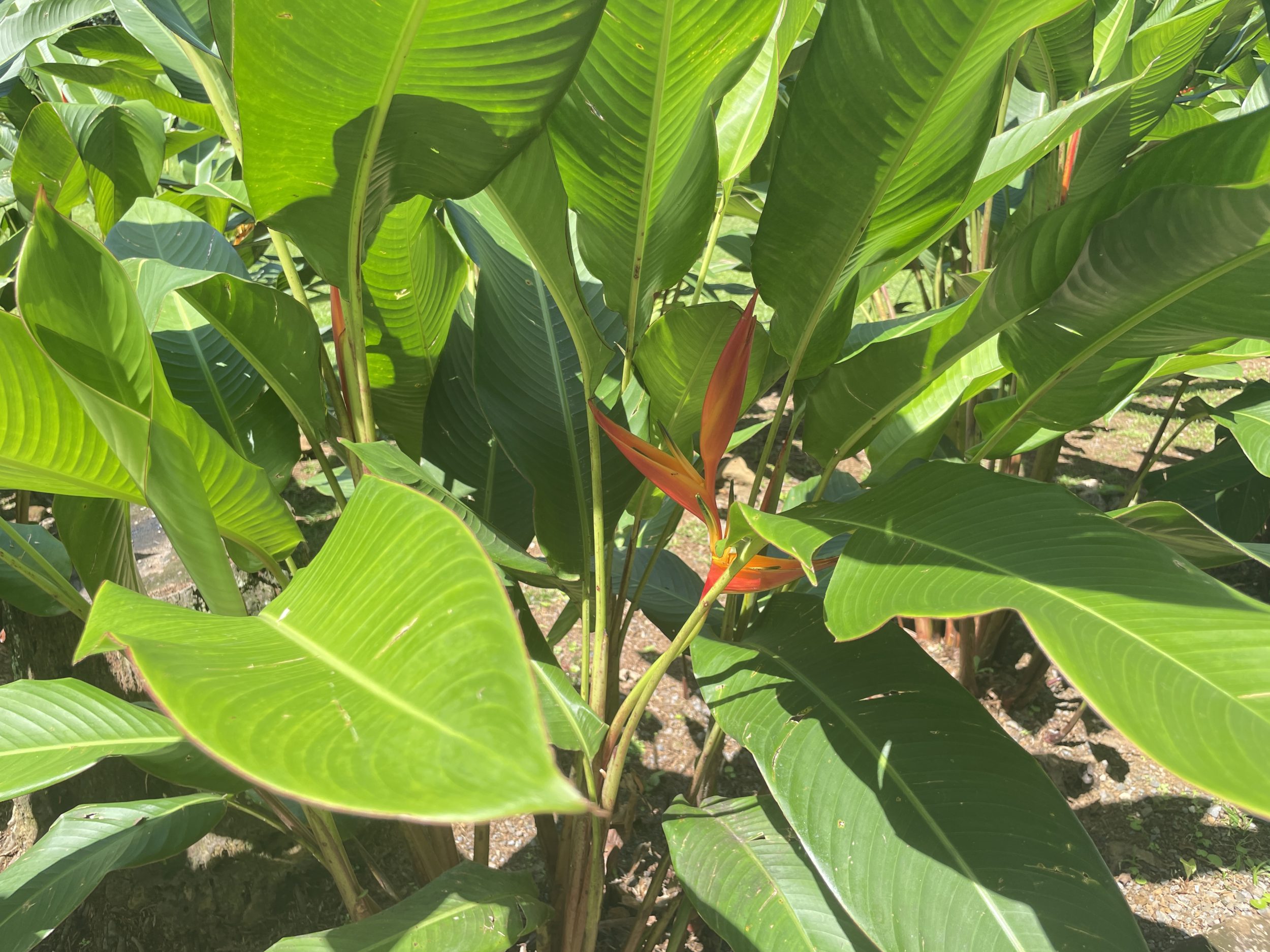
We stop at the Botanical garden which we couldn’t visit the day before. It’s cute but not an essential stop.
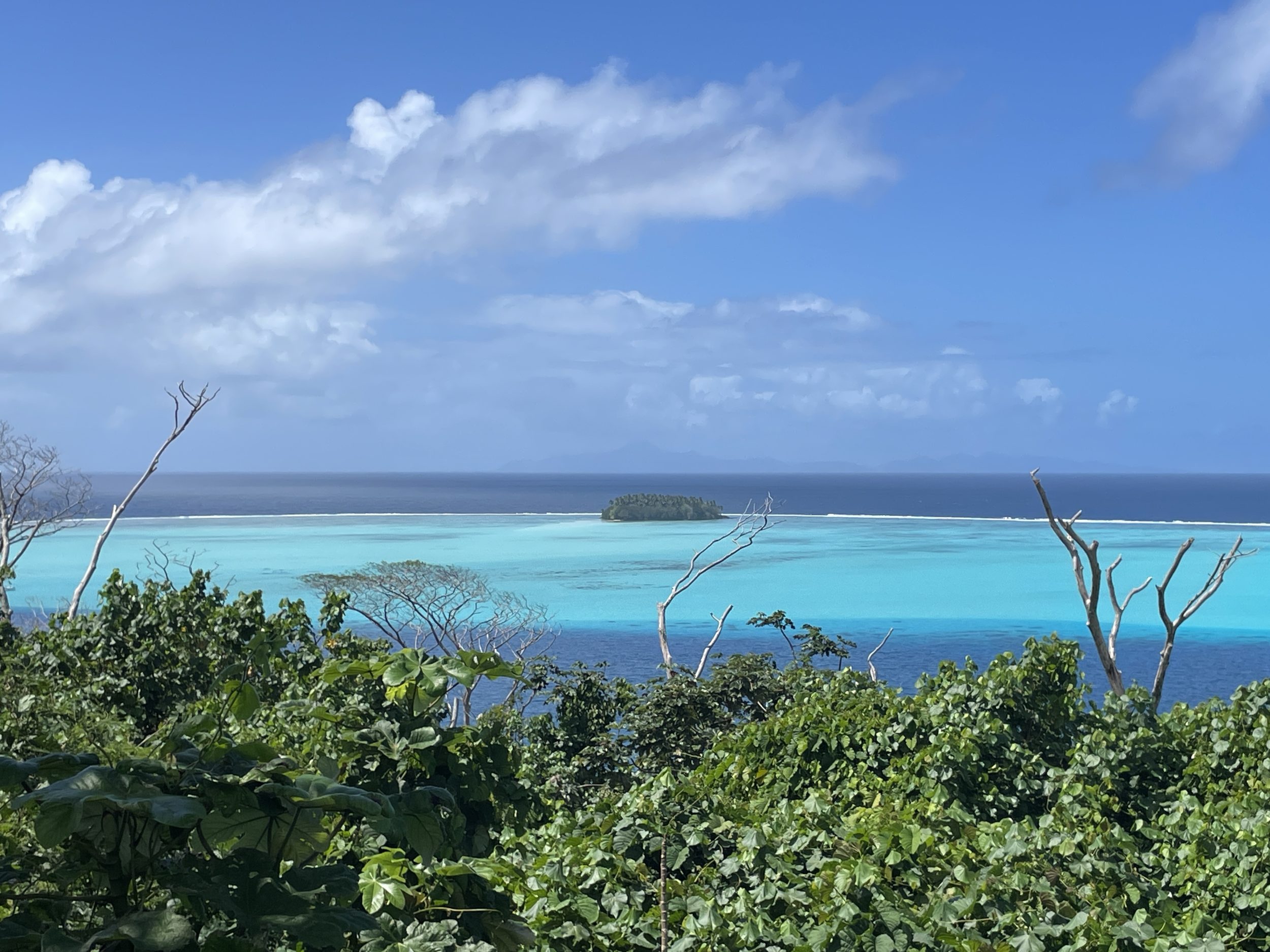
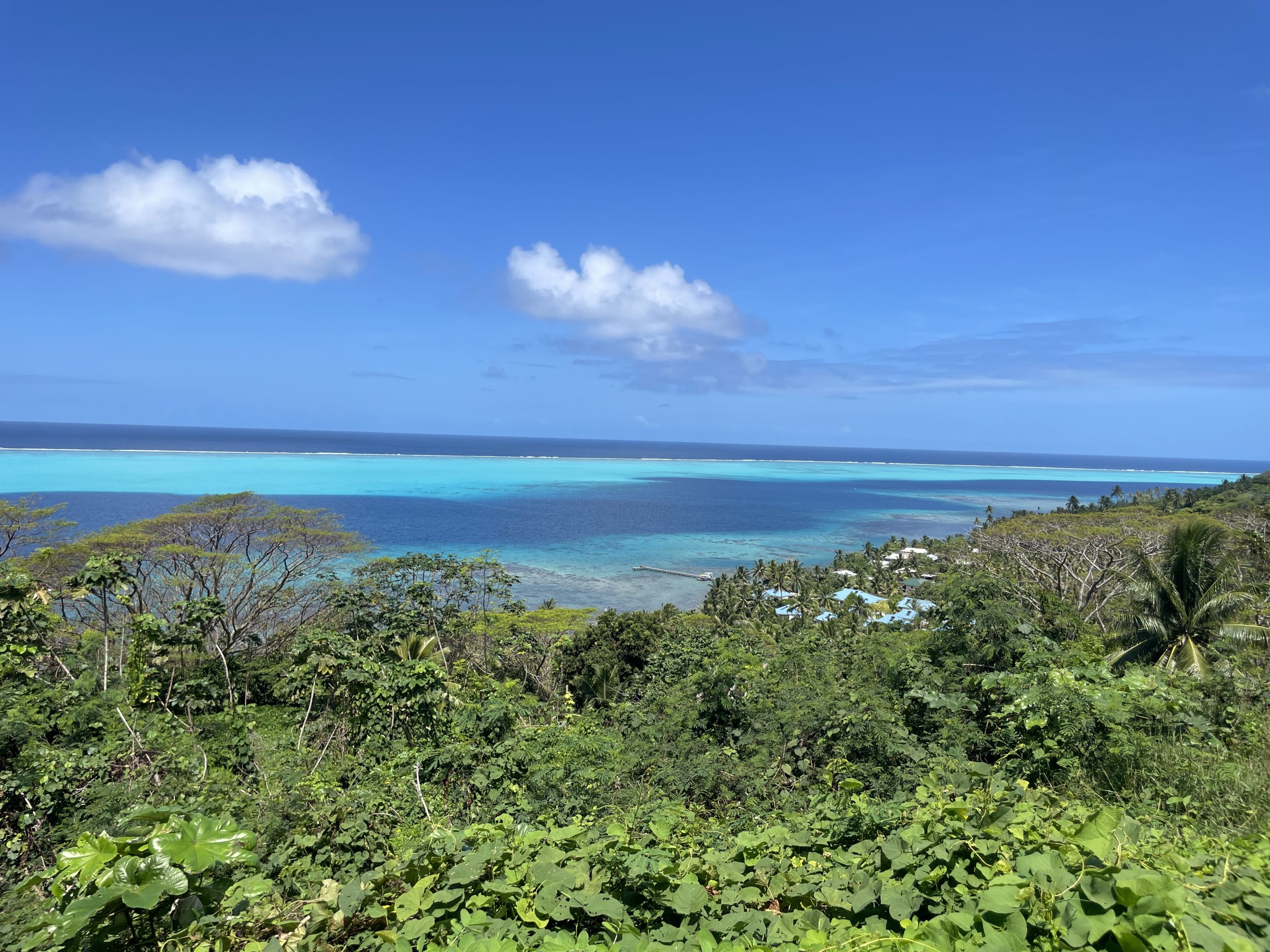
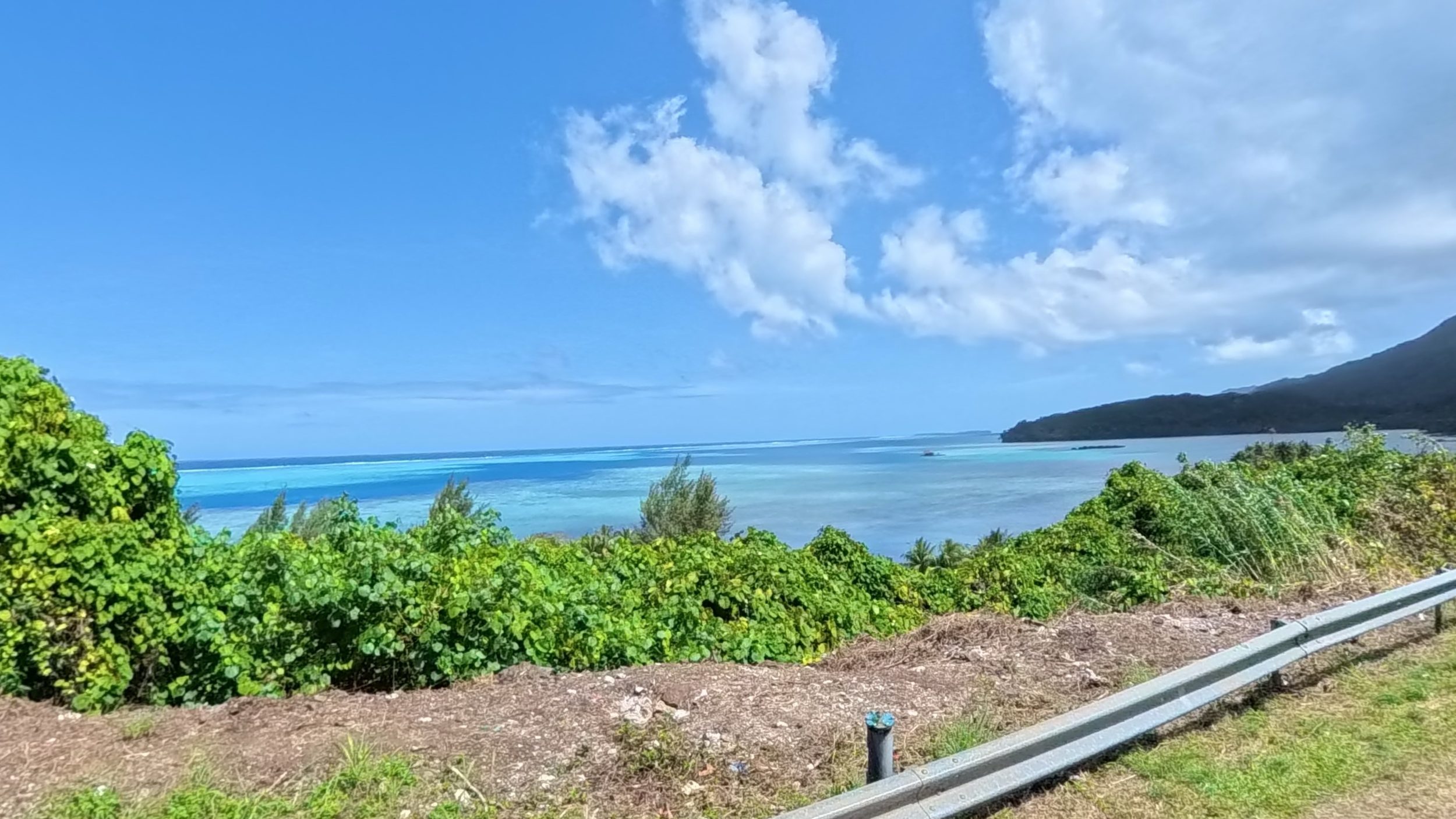
Then, on the way to the pain de sucre, we come across a viewpoint exceptional (Google Maps). The water is turquoise. We are amazed by such a landscape, unaware that we will see much more beautiful a few days later. As I already told you, I am happy that the WOW effect increases in crescendo with my “illogical” itinerary. Because each day raises the WOW bar a little more.
The successive ups and downs are a bit hard on our 125cc scooter. I’m glad we brought it to the garage several times for various repairs before our trip because if we had the slightest problem on the small islands, it would have been very difficult and especially costly to call a repairman.
When we arrive at the pain de sucre (very pretty), it starts to rain.
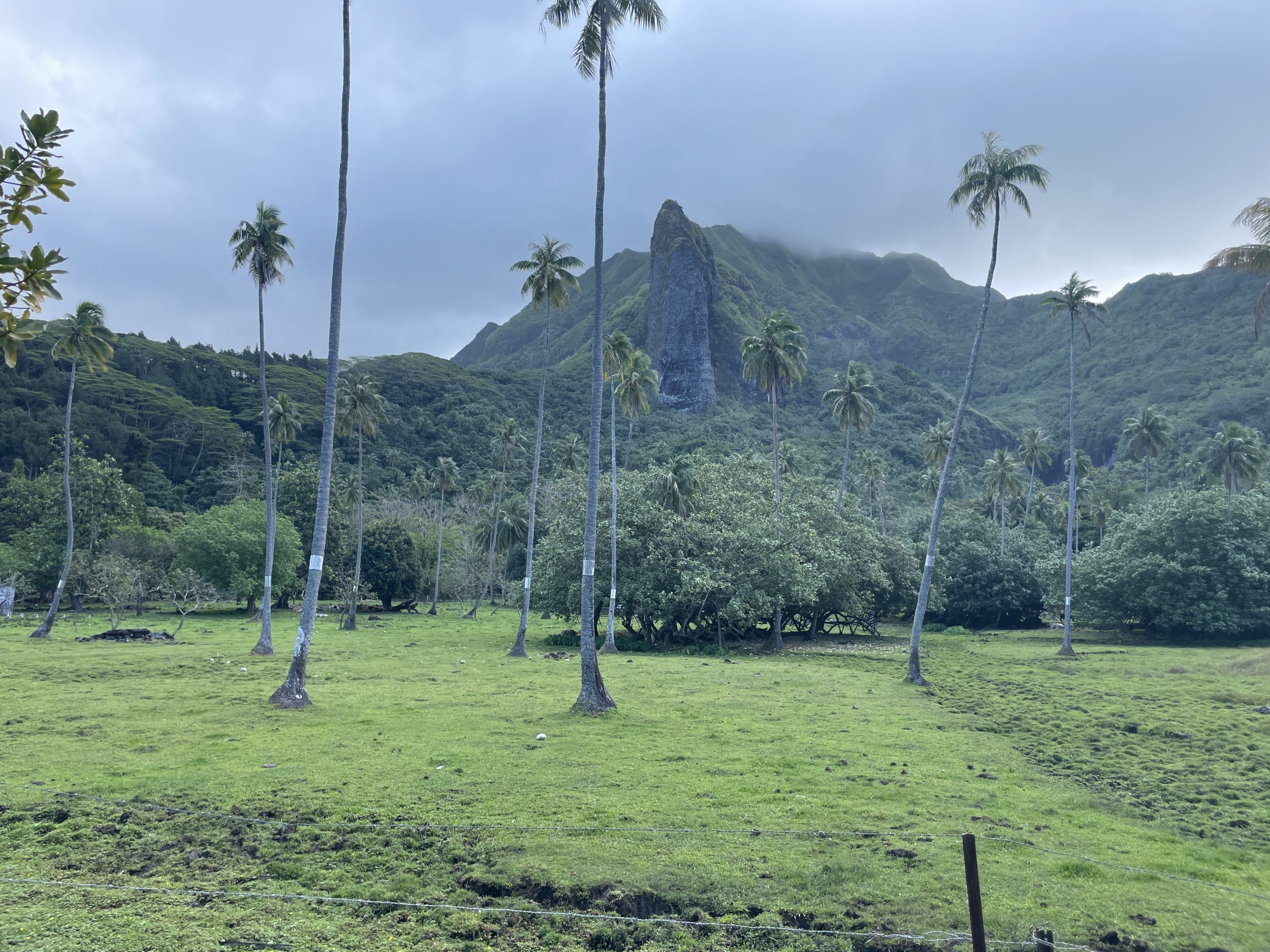
We continue on the path to a pearl farm that refuses us a visit. Only the shop is available.
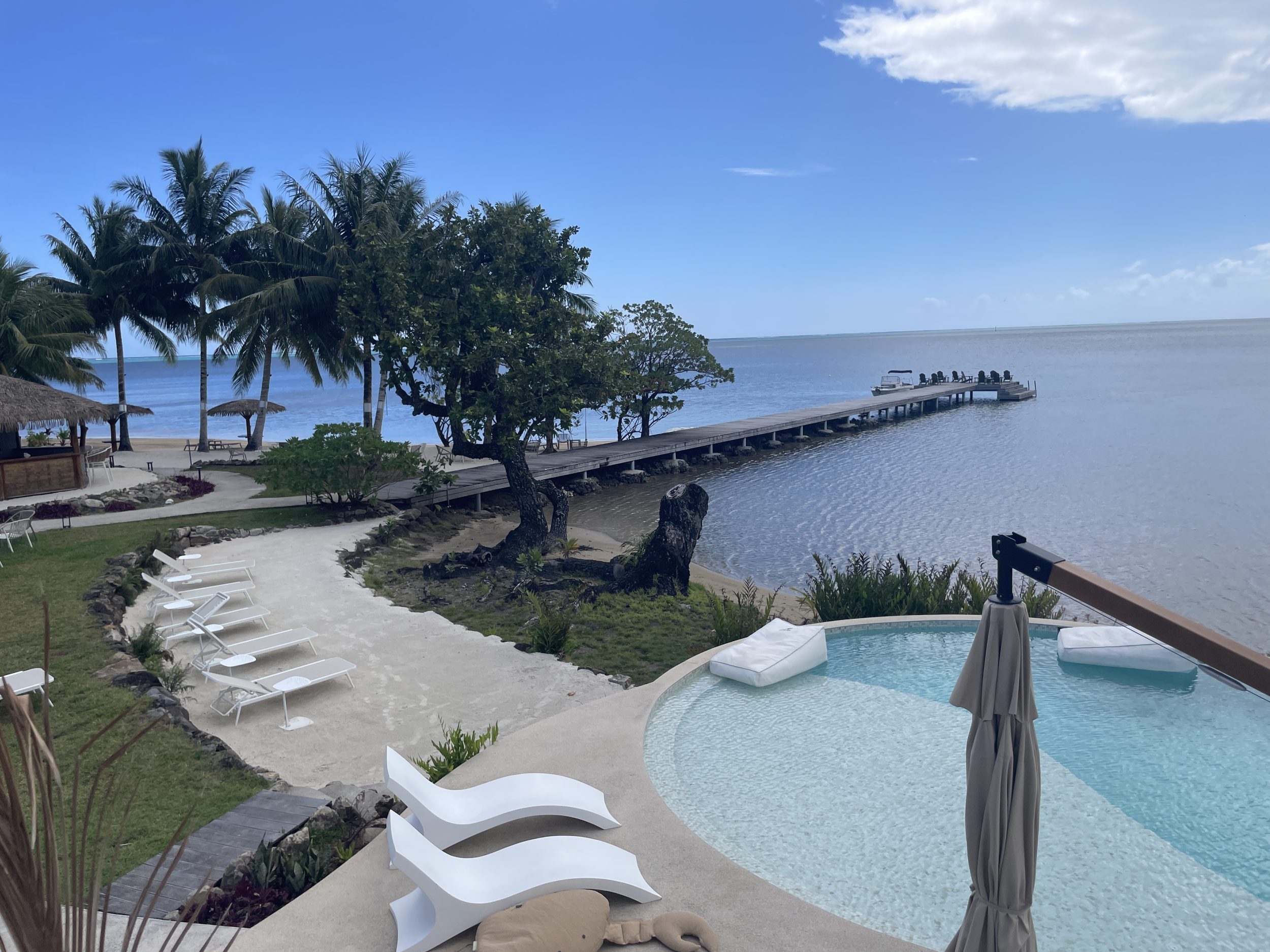
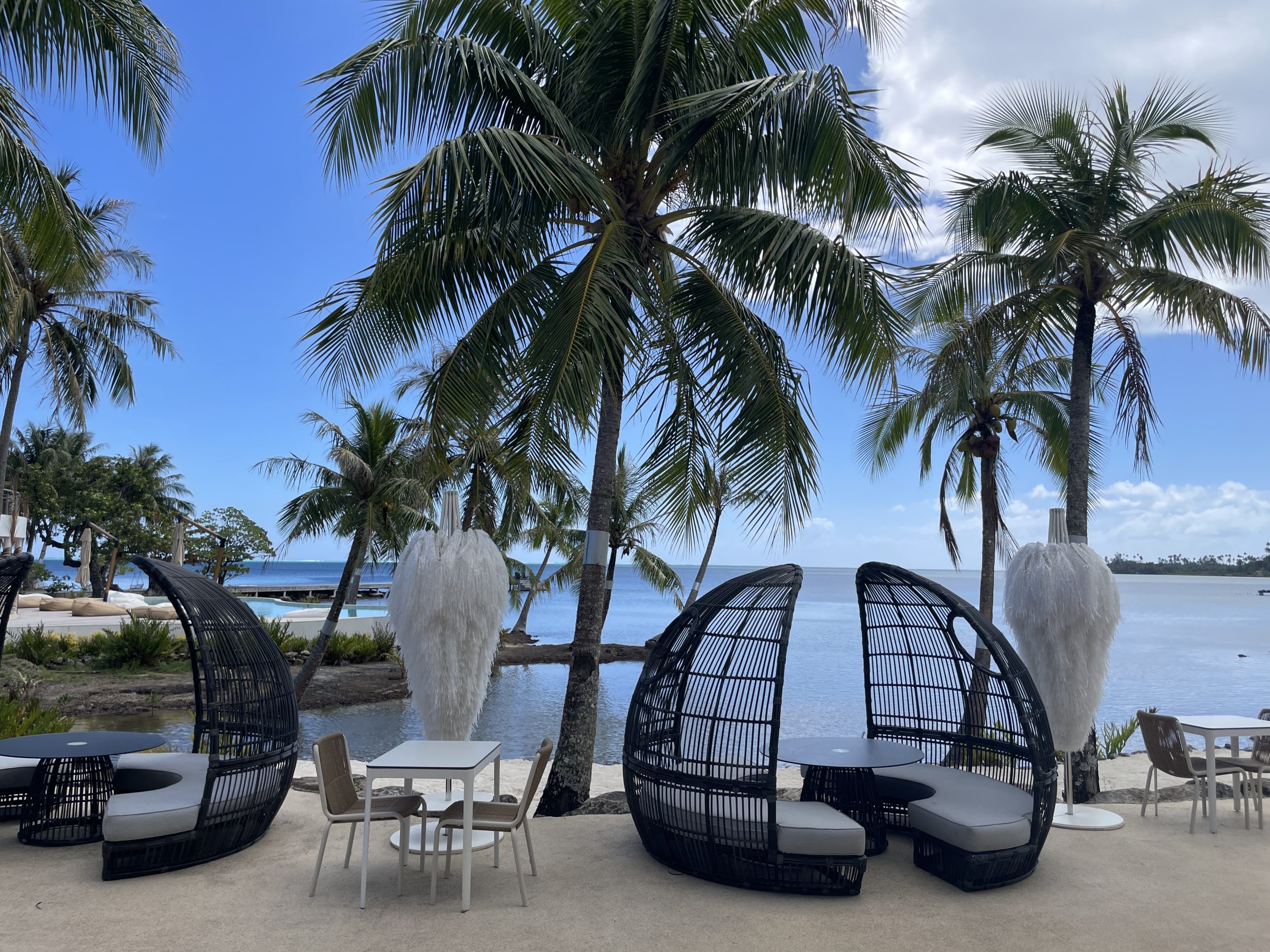
We continue to APATOA Beach & Garden Village Booking link, a hotel with a bistronomic restaurant. The restaurant isn’t open yet but we are welcome to have a drink / dessert. I find the hotel super well located but the luxury tent-shaped rooms look a bit odd. The photos of the interior look superb, and so does the pool. But I have a bad memory of this hotel because there was a little incident with the waitress who lacked tact; totally inappropriate for a 5-star hotel. It stuck in my throat a bit because I should have been firm at the time; this story bothered me more than I thought and I had to read a big passage of the Taoist text Nanhua zhenjing that same evening to calm down. In any case, this trip will have plenty of little frustrations like that, which I take either as a drop in my skin’s energy or as exercises for me to improve.
We continue our journey to Marae Taiununu, just behind a church. JB can no longer count the number of churches and temples on the island, there are so many. From this Marae, one can see the pearl farm that I should have visited if I were a bit more organized. Snif snif
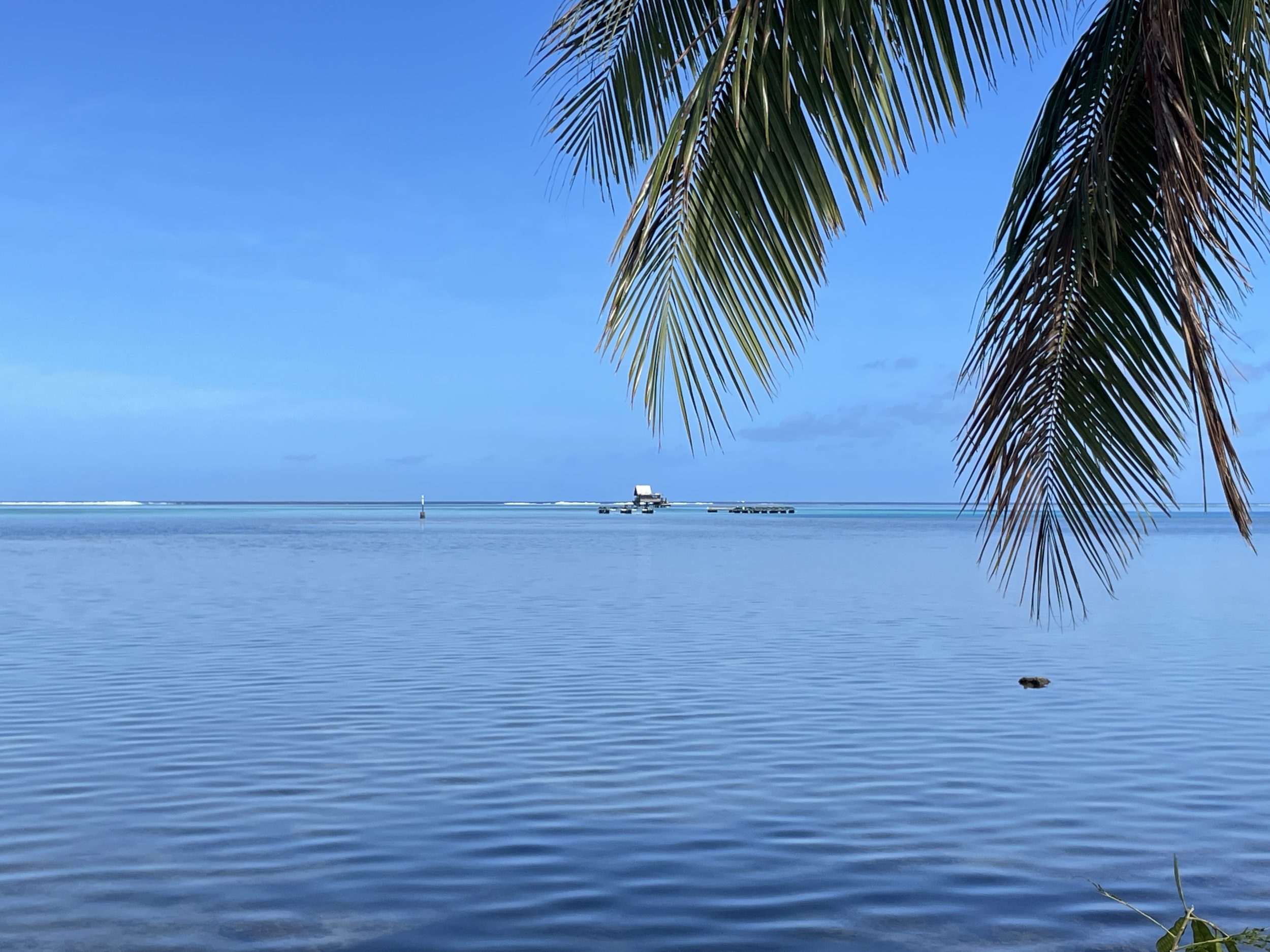
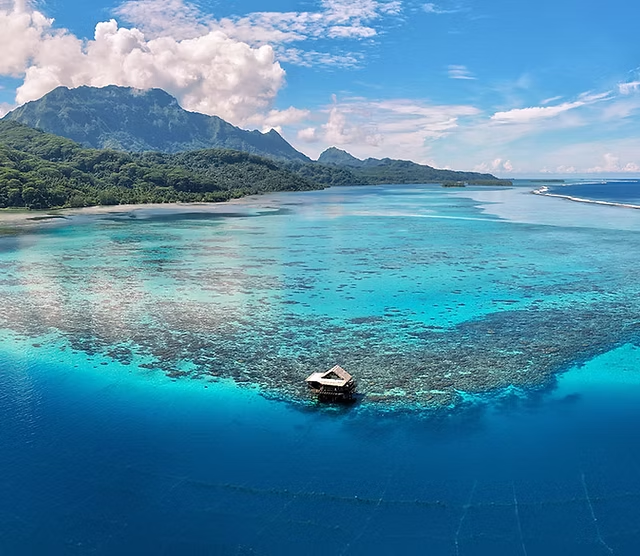
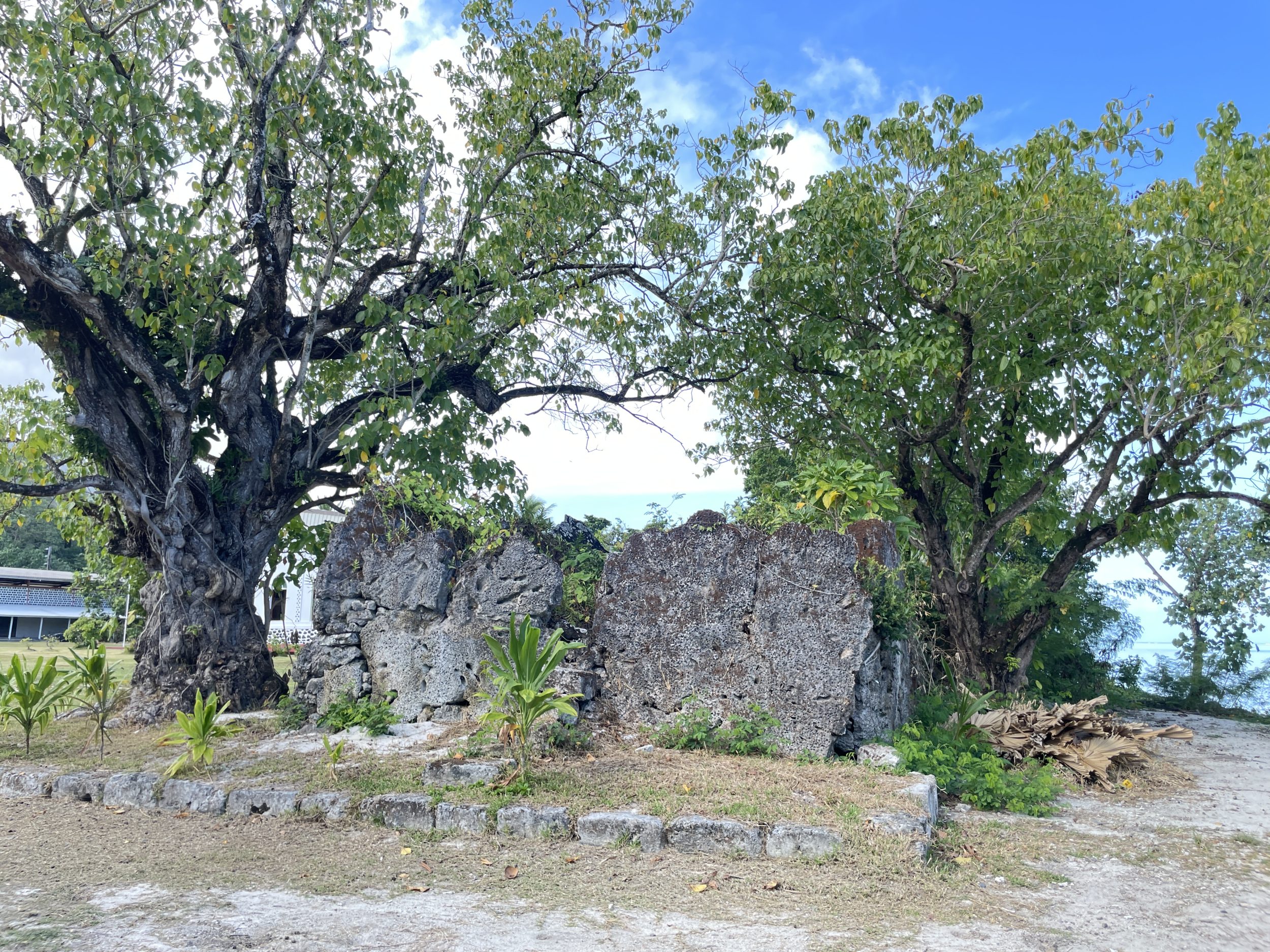
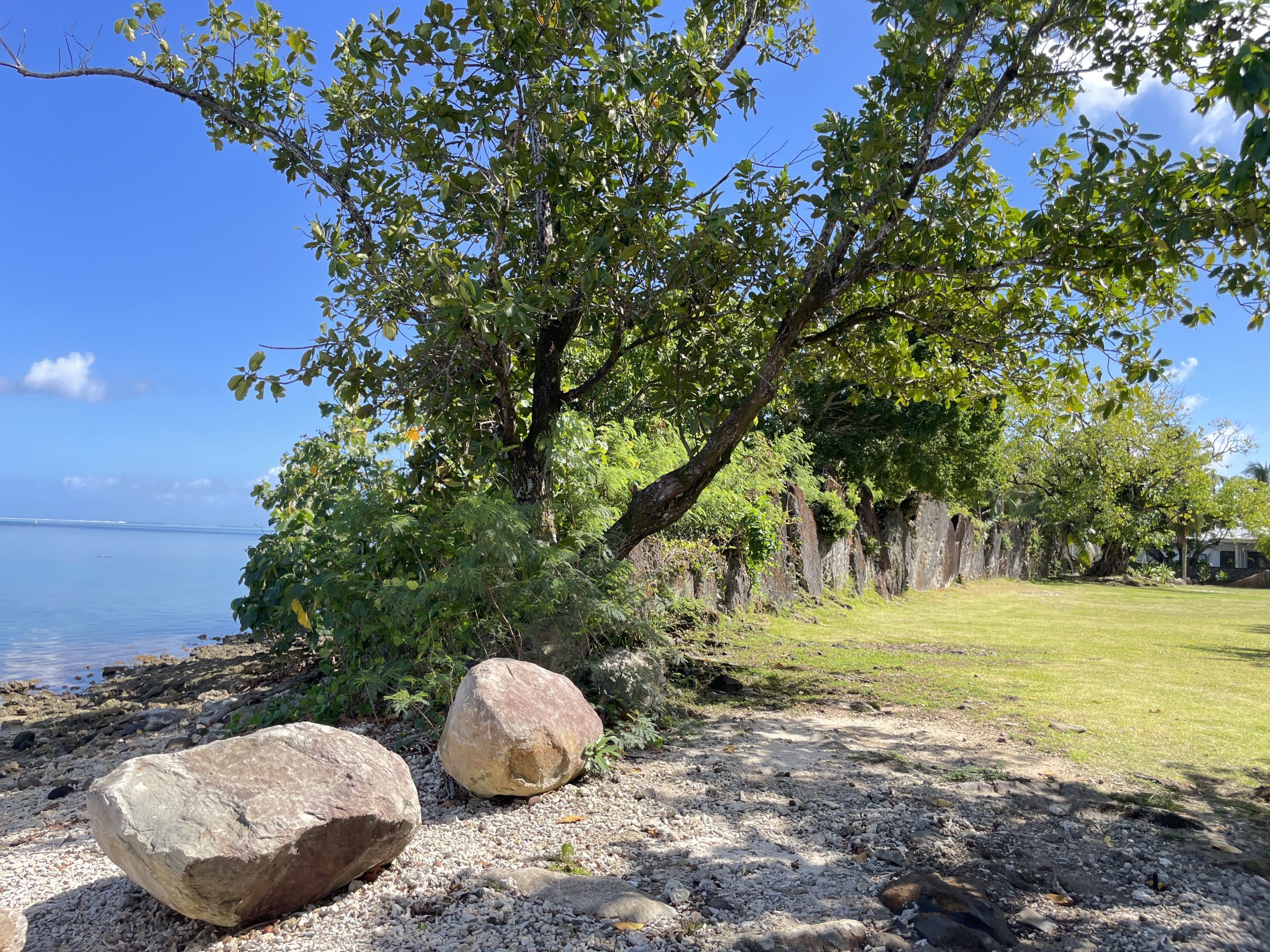
I’m sorry not to tell you more about the marae but to be honest, they don’t give off any particular energy.
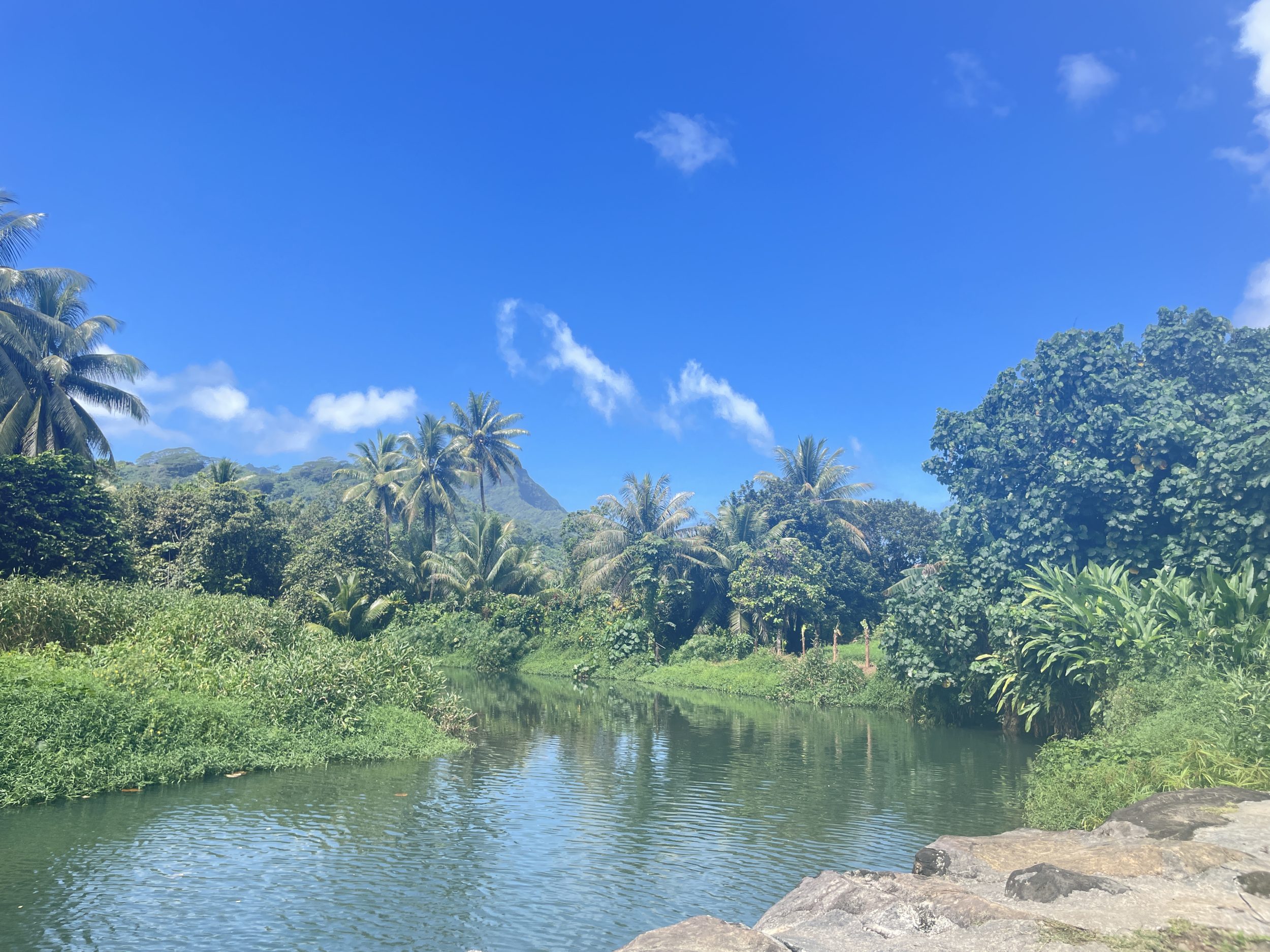
Raiatea is the only island with a navigable river. Day trips often offer a little kayak tour on the river, sometimes passing in front of the botanical garden.
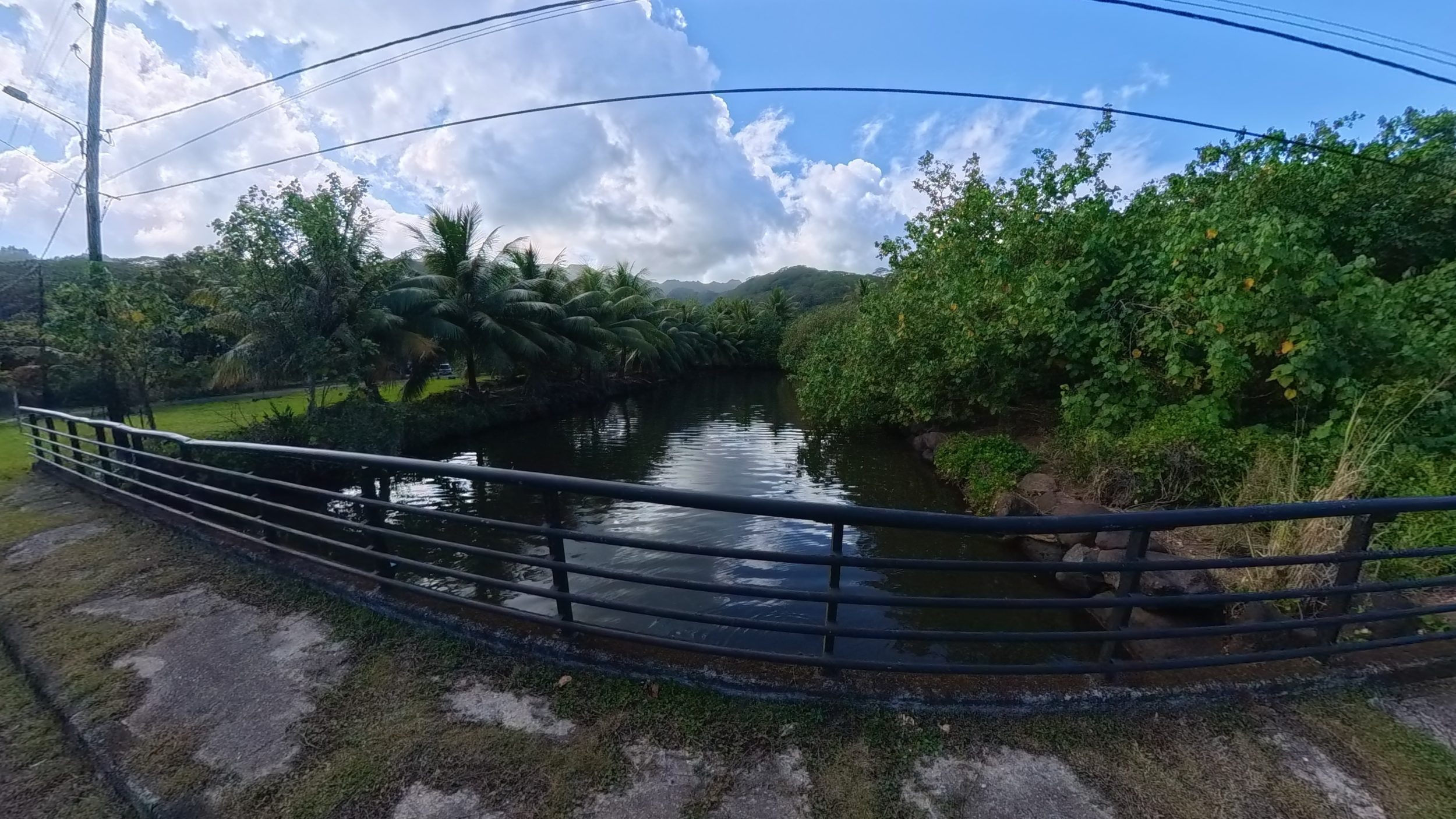
Raiatea may be the largest island of the Leeward Islands, its vibe looks a lot like our beloved little Thai island Koh Phangan.
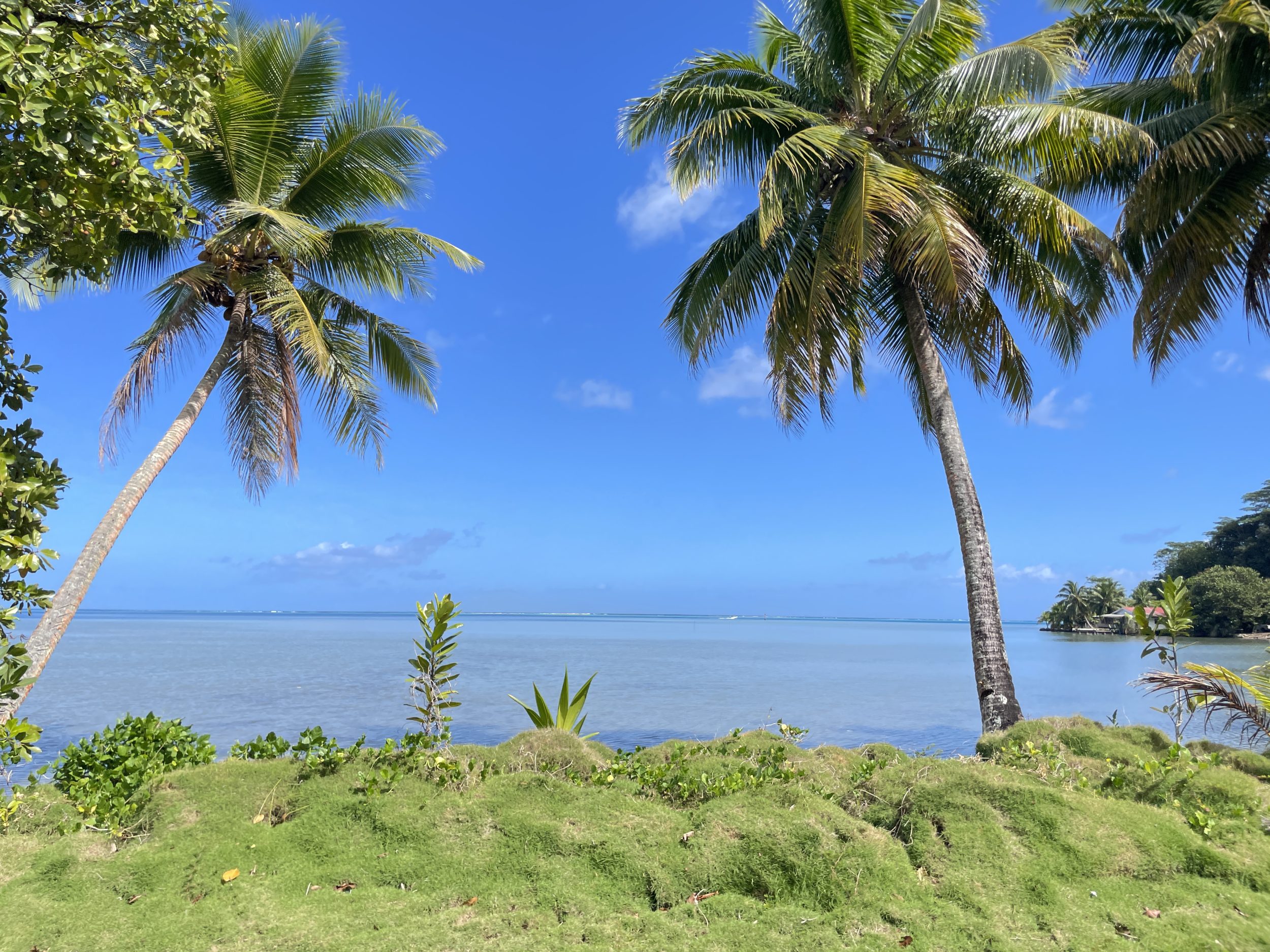
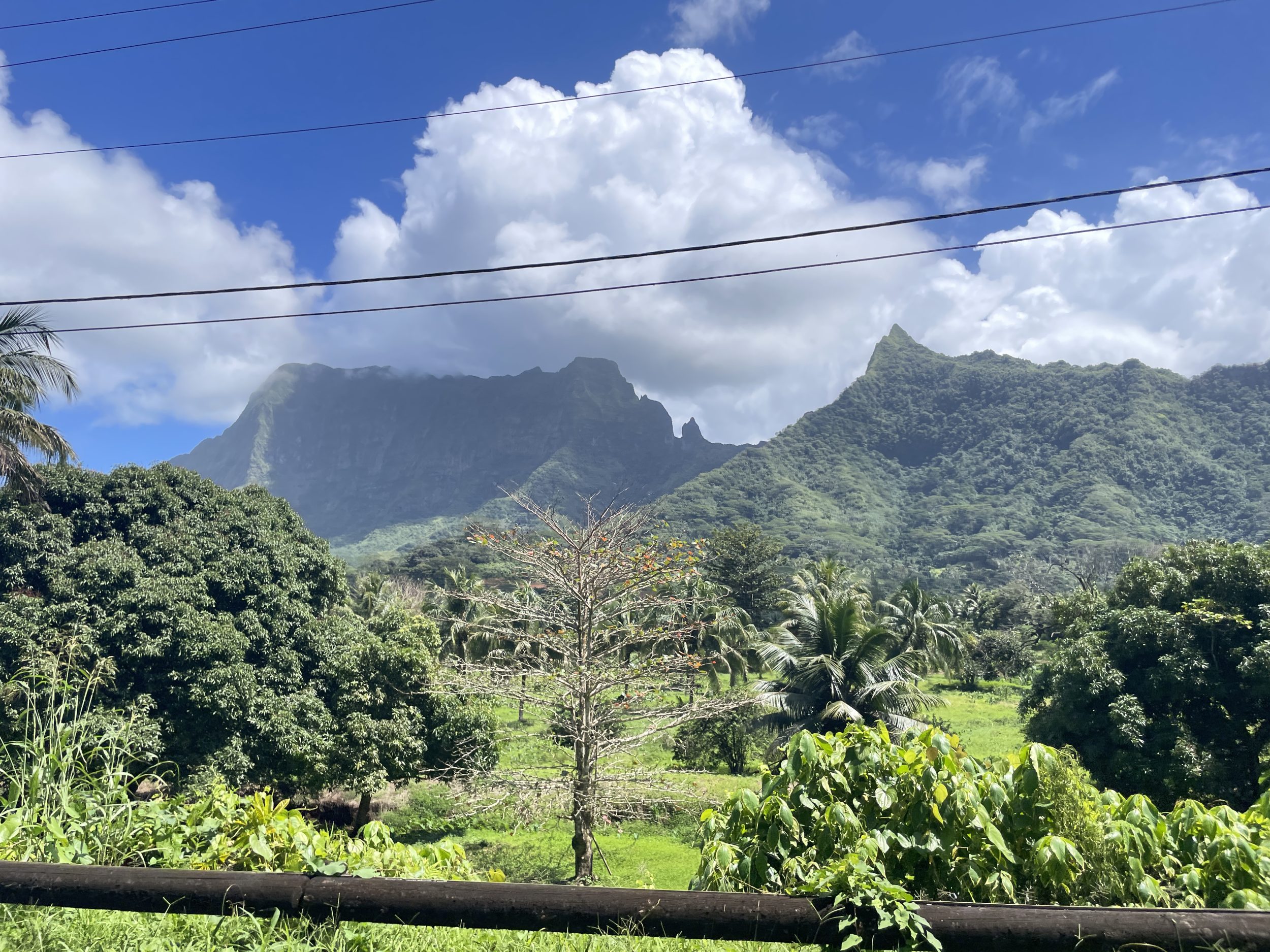
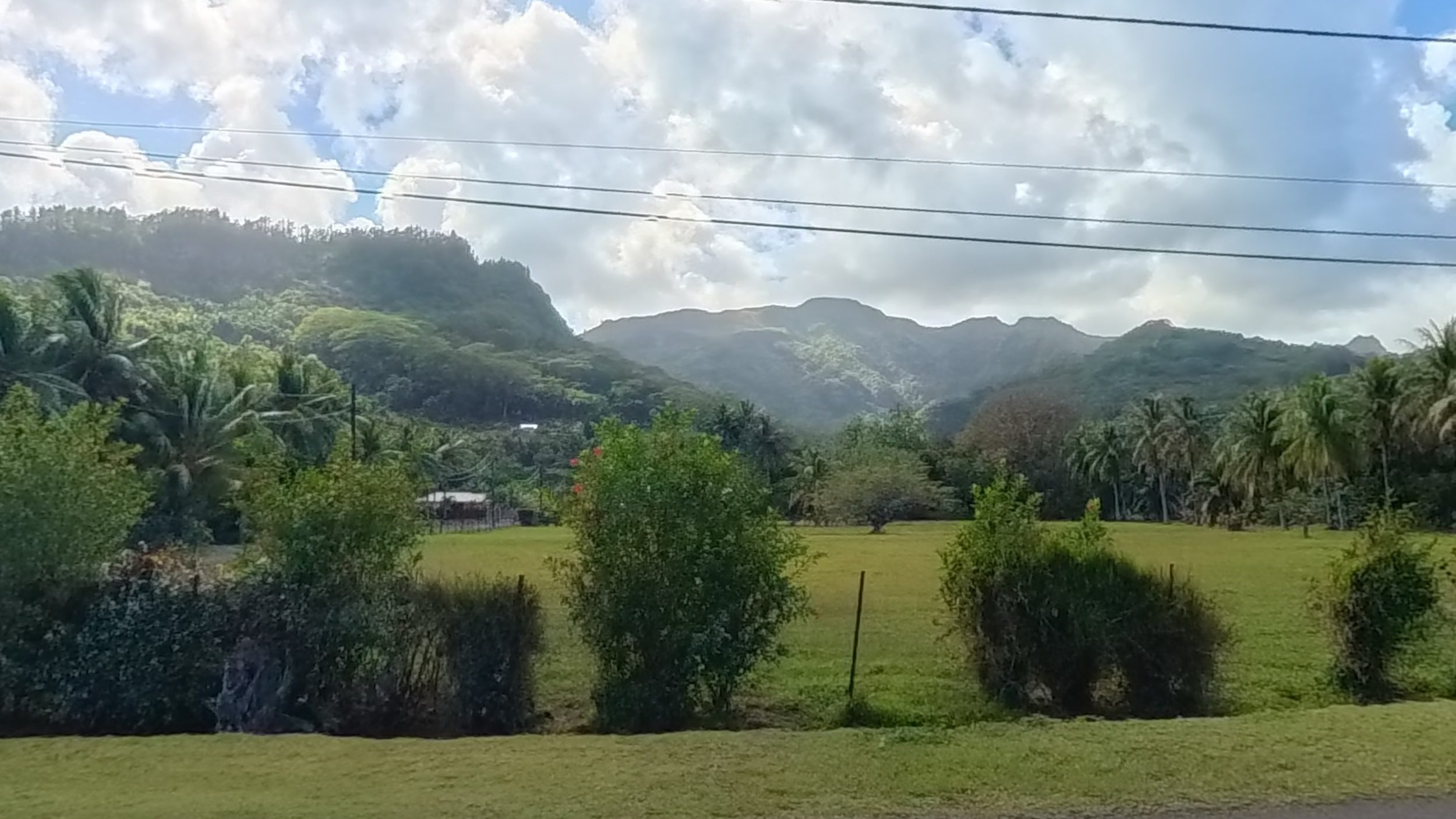
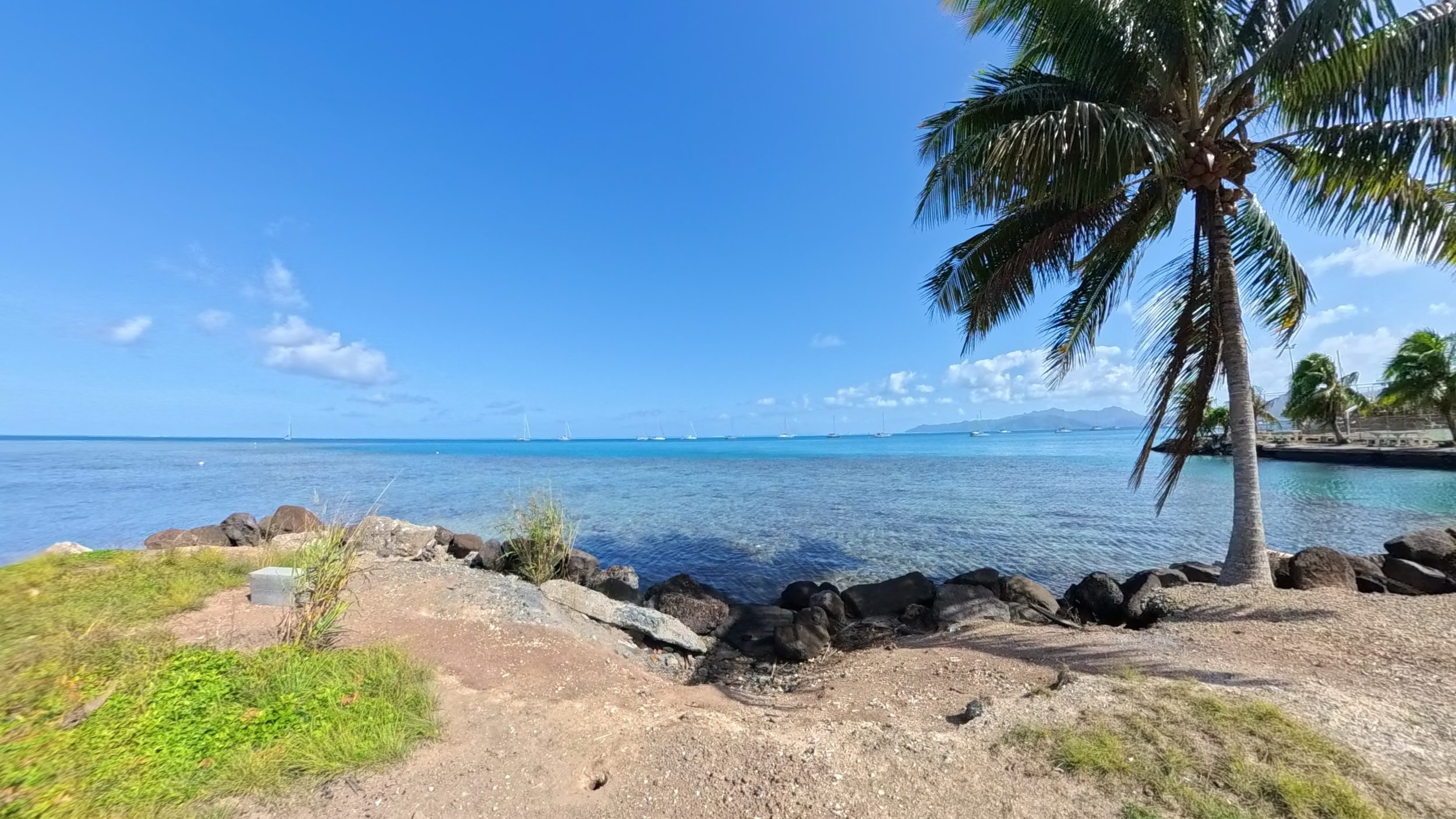
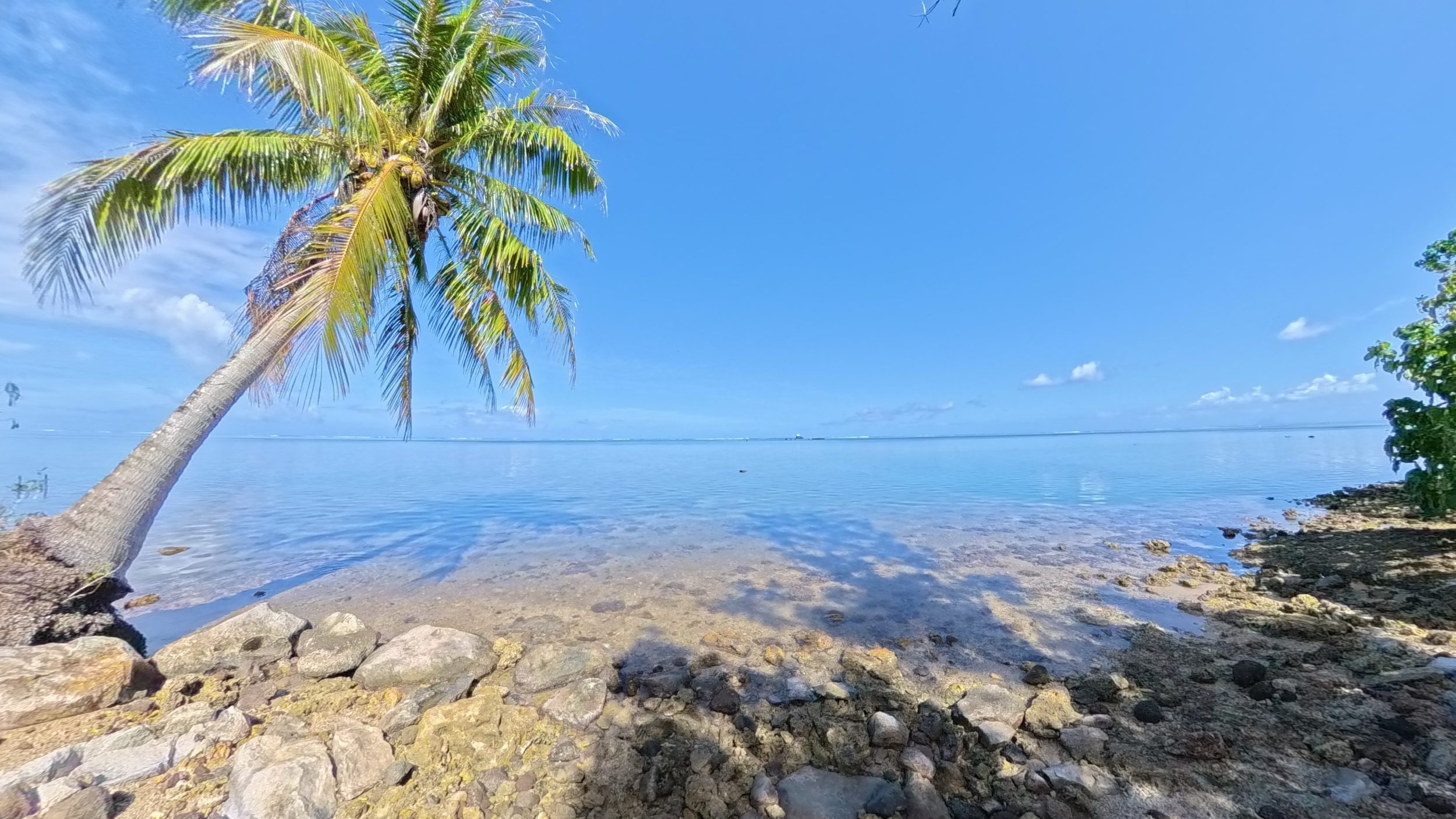
And when there is no wind, the water is perfectly still and reflects the sky. It feels like being at salar de Uyuni. It’s magical!
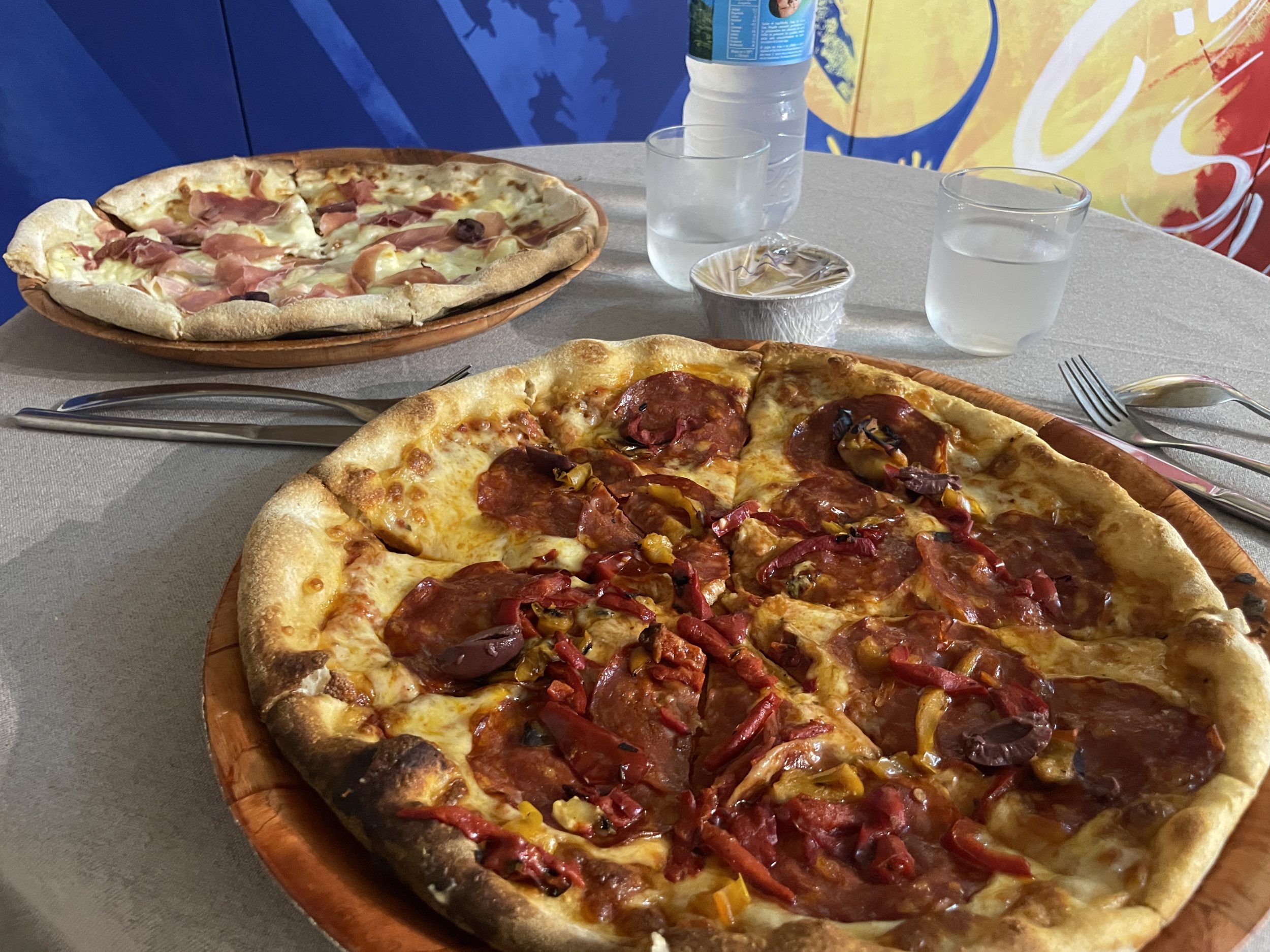
In the evening, we dine again at the pizzeria near our airbnb.
The next day, we take the ferry back to Huahine.
Part 2: Practical Tips
Points of interest and the itinerary for the Leeward Islands are available on this map Google Maps
There are no beaches on Raiatea, you can snorkel on the motus – islets ($25 for the taxi boat, round trip from the ferry dock), pay for an excursion or at the “pool” which is just a structure opening onto the reef.
Budget
- Ferry: 1-month pass 24,000XPF/person + scooter 10,000XPF per crossing
- Airbnb: €291.14 for 3 nights (Airbnb link), shared bathroom
- Vanilla: 10,000XPF for 100g
- Food truck: expect 2,500XPF/person
- Pizzeria: expect 2,000XPF/person
- Scooter or car rental to be taken into account as extra; or excursion if you don’t have your own transport
Not to be missed : the visit to the vanilla plantation of Guy and Odette

