

Review of our second trip to Japan
The first time we set foot in Japan was in 2018, a few weeks before the cherry blossoms bloomed. That year, the cherry trees bloomed two weeks early, and we were able to enjoy them fully, much to our pleasant surprise.
Japan is a country with a high cost of living, but the yen (the Japanese currency) is in free fall. We take advantage of the opportunity to return in 2024. Thanks to the yen’s devaluation, we can afford to stay in hotels instead of necessarily looking for Airbnbs.
However, to save some money, we decide to avoid the cherry blossom season and go two weeks later, in mid-April 2024. And there, surprise! There was a big cold spell just before, and the cherry trees are two weeks behind schedule.
Last time, we spent almost two months between Tokyo, Osaka, and Kyoto. This time, we decide to do:
- a 10-day road trip (by car) with my parents who came all the way from Vietnam. The road trip starts and ends in Tokyo, and we visit central Japan.
- spend Golden Week in Kyoto
- a few days in Osaka
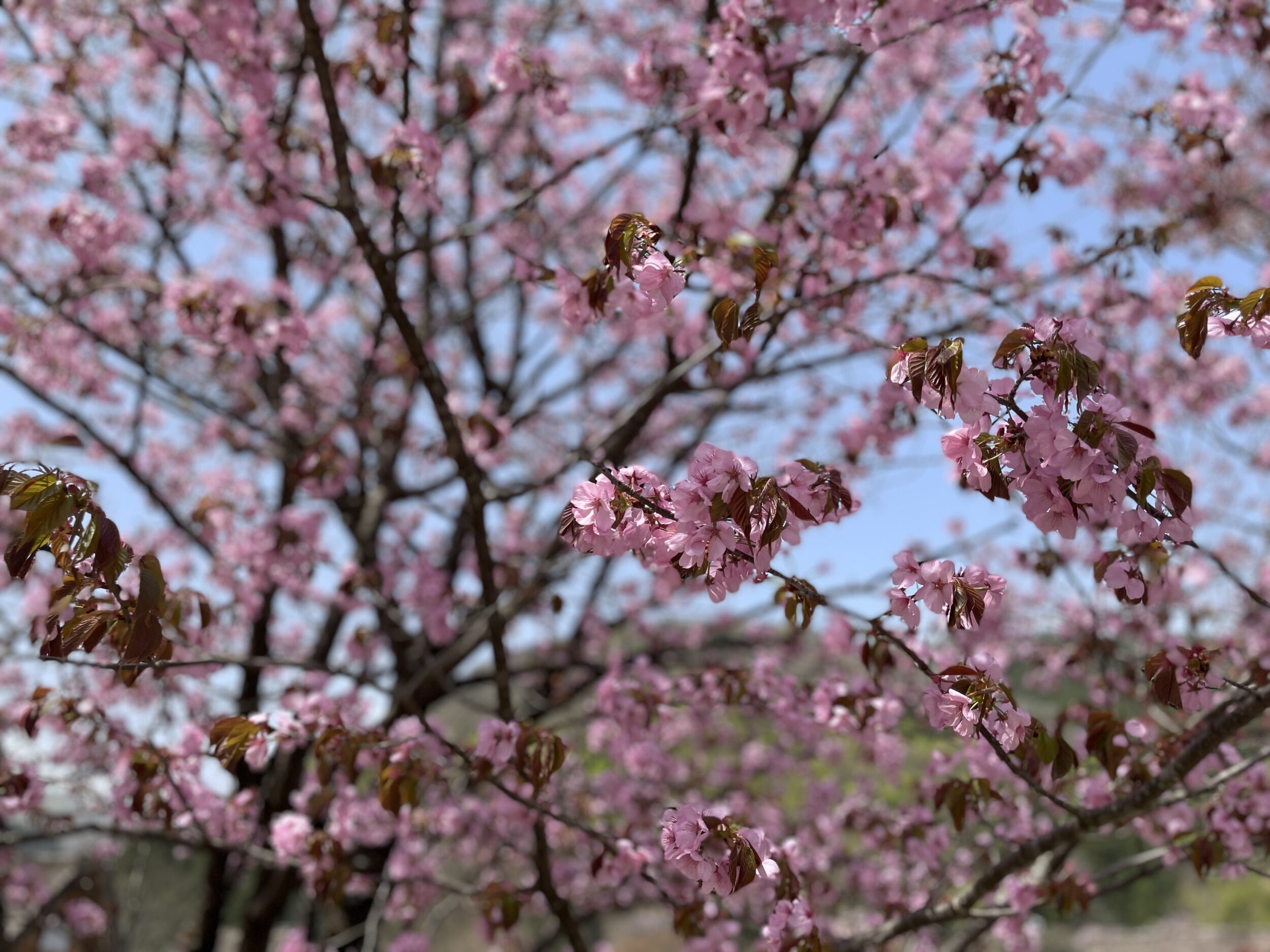
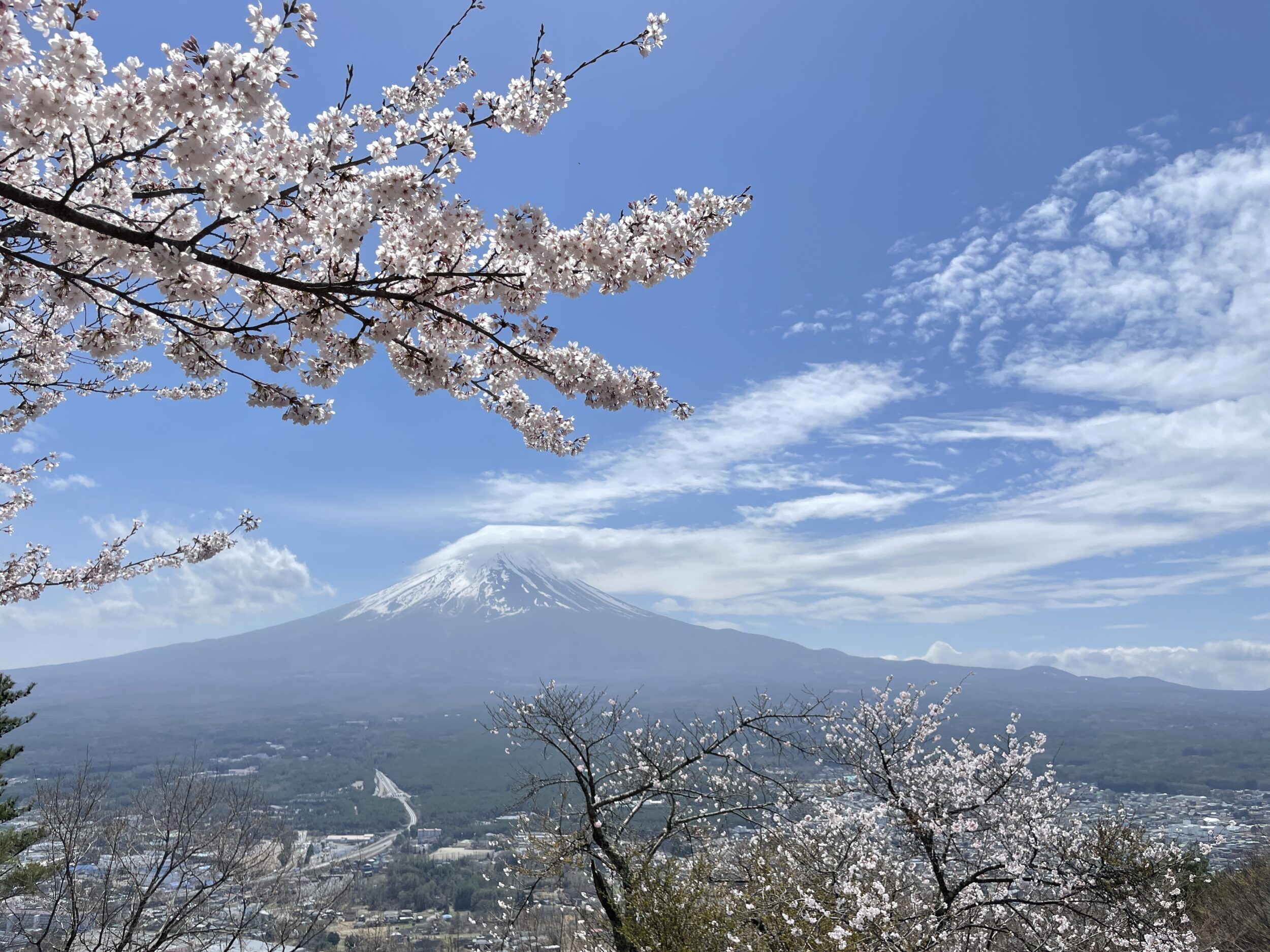
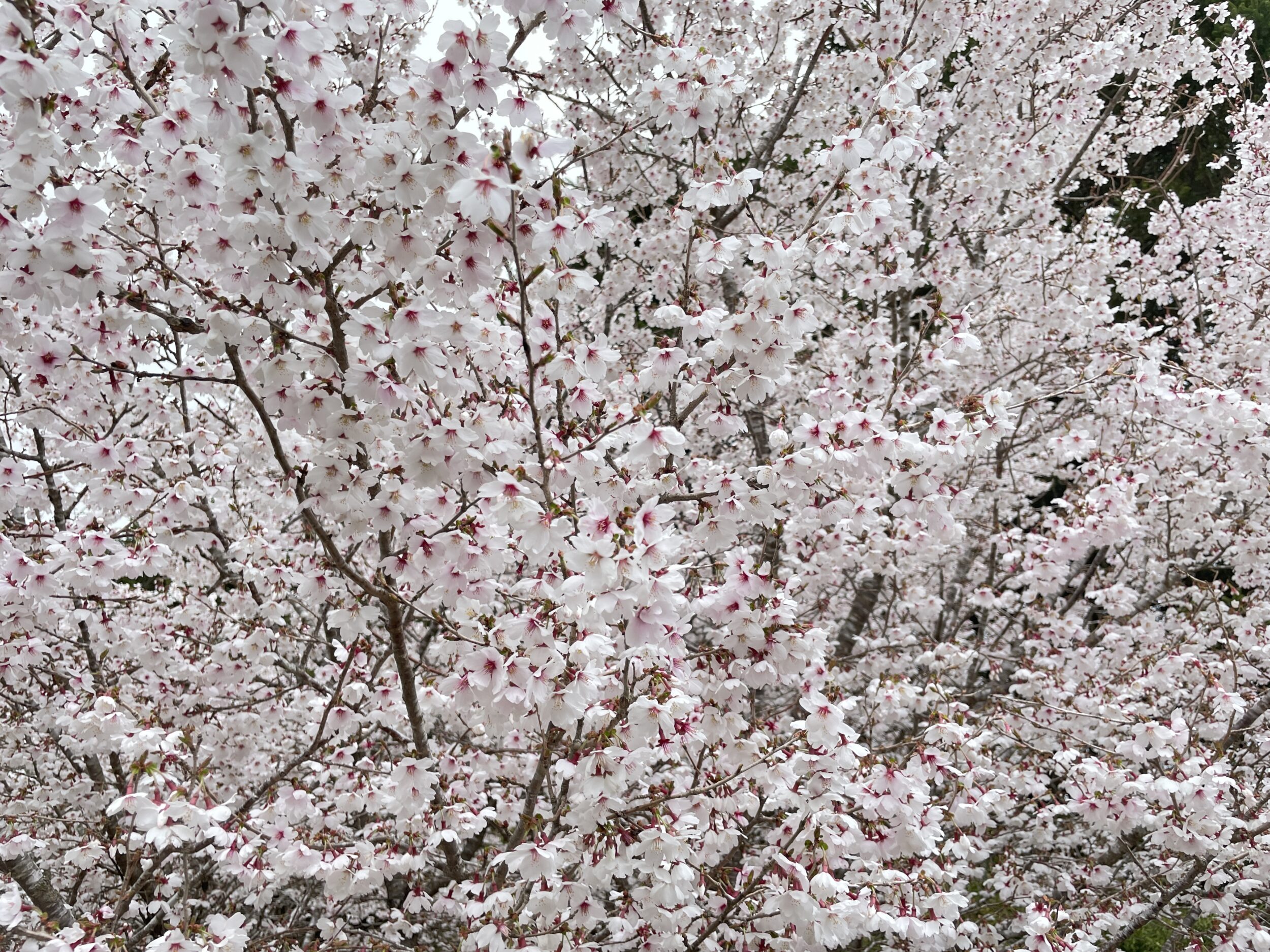
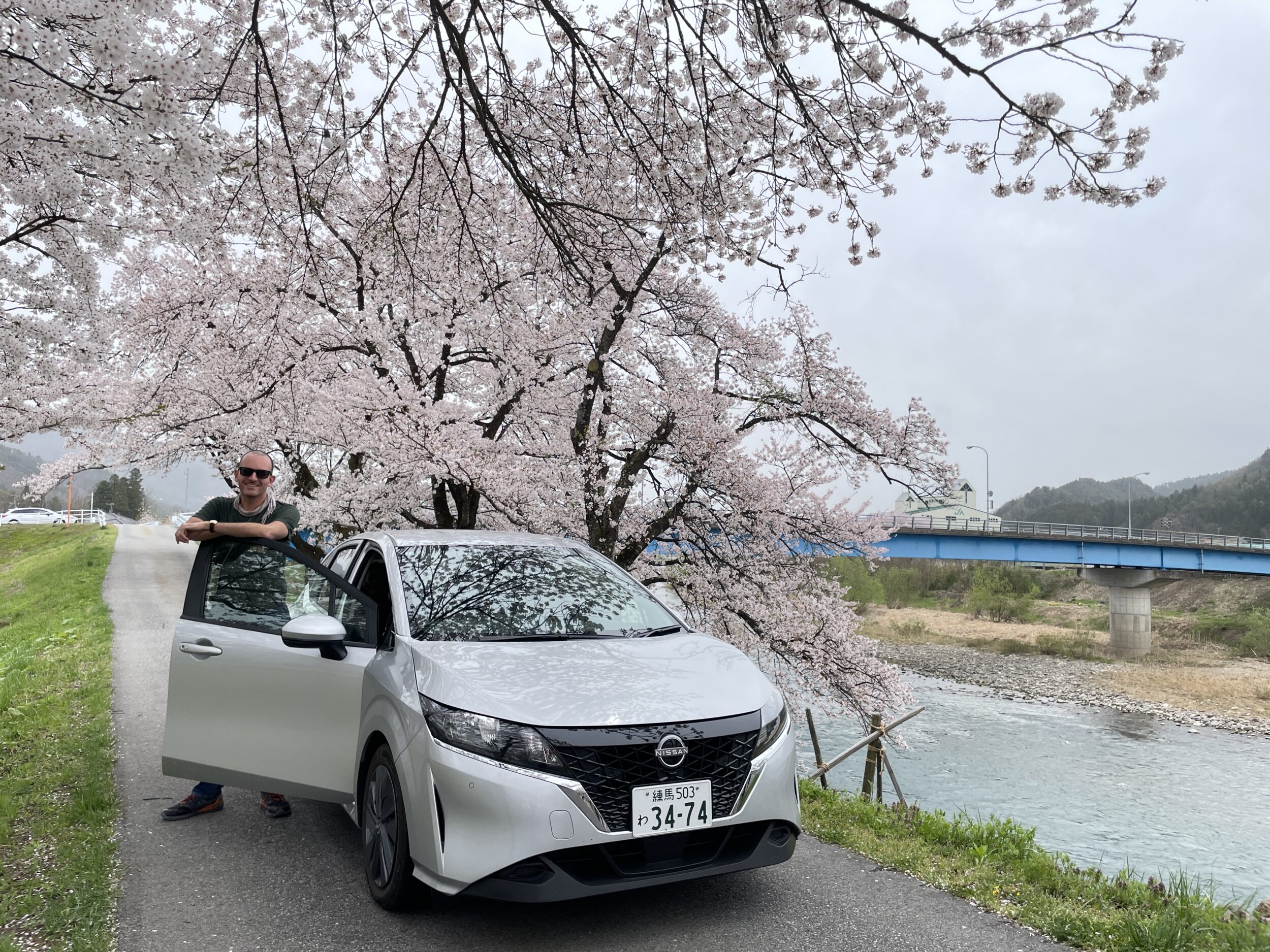
Compared to the Kansai region, cherry blossoms bloom a little later, and when they are in the mountains, they are one to two weeks behind Tokyo. So during the whole road trip, we saw plenty of cherry blossoms in full bloom. We thought we’d see nothing. After seeing all sorts, we concluded that cherry blossoms with white flowers are the most beautiful, as the flowers look bigger and more “concentrated” than the pink ones.
Another highlight, much appreciated and highly anticipated, is the wisteria park I’ve been dreaming of visiting for years.
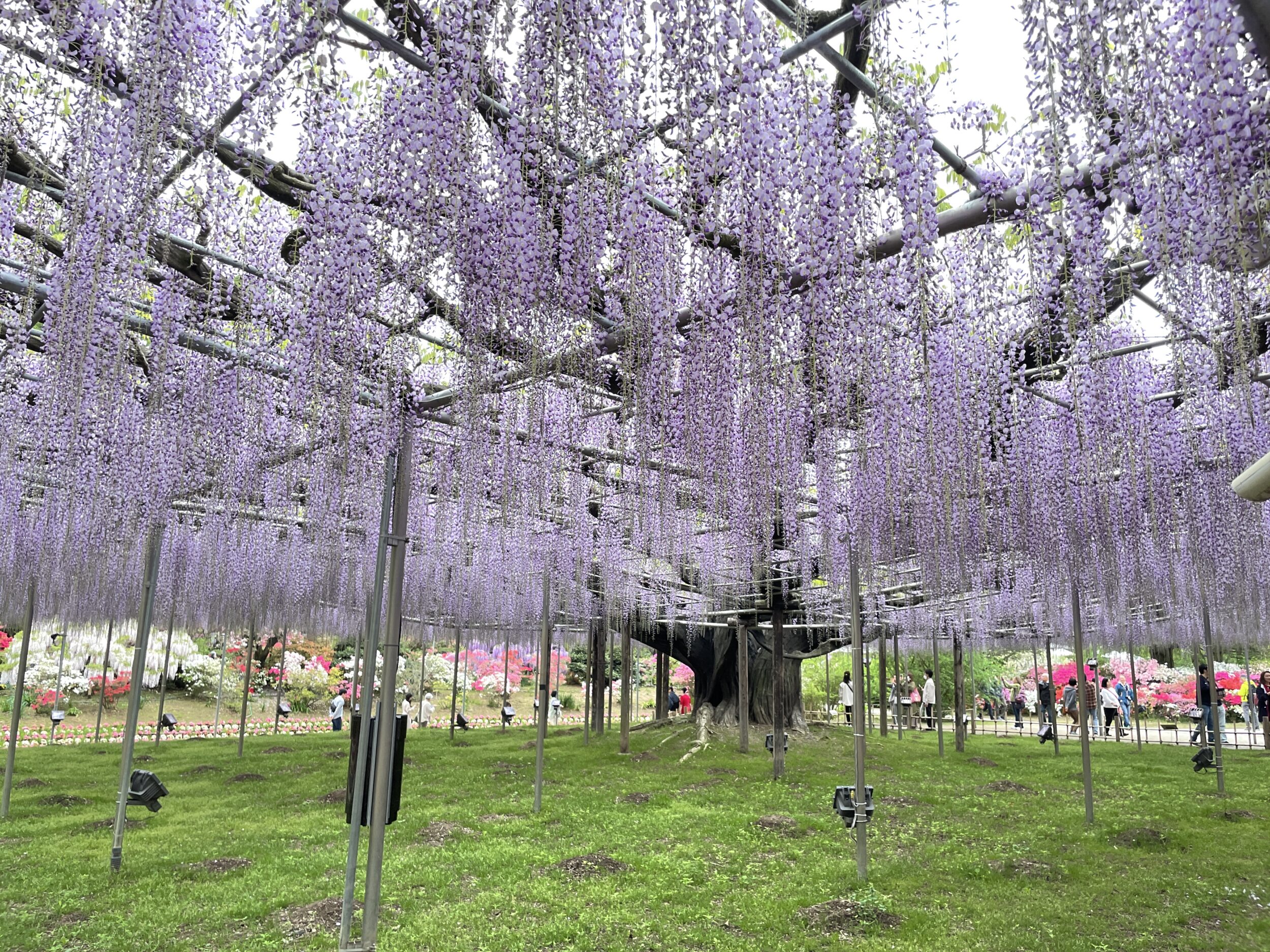
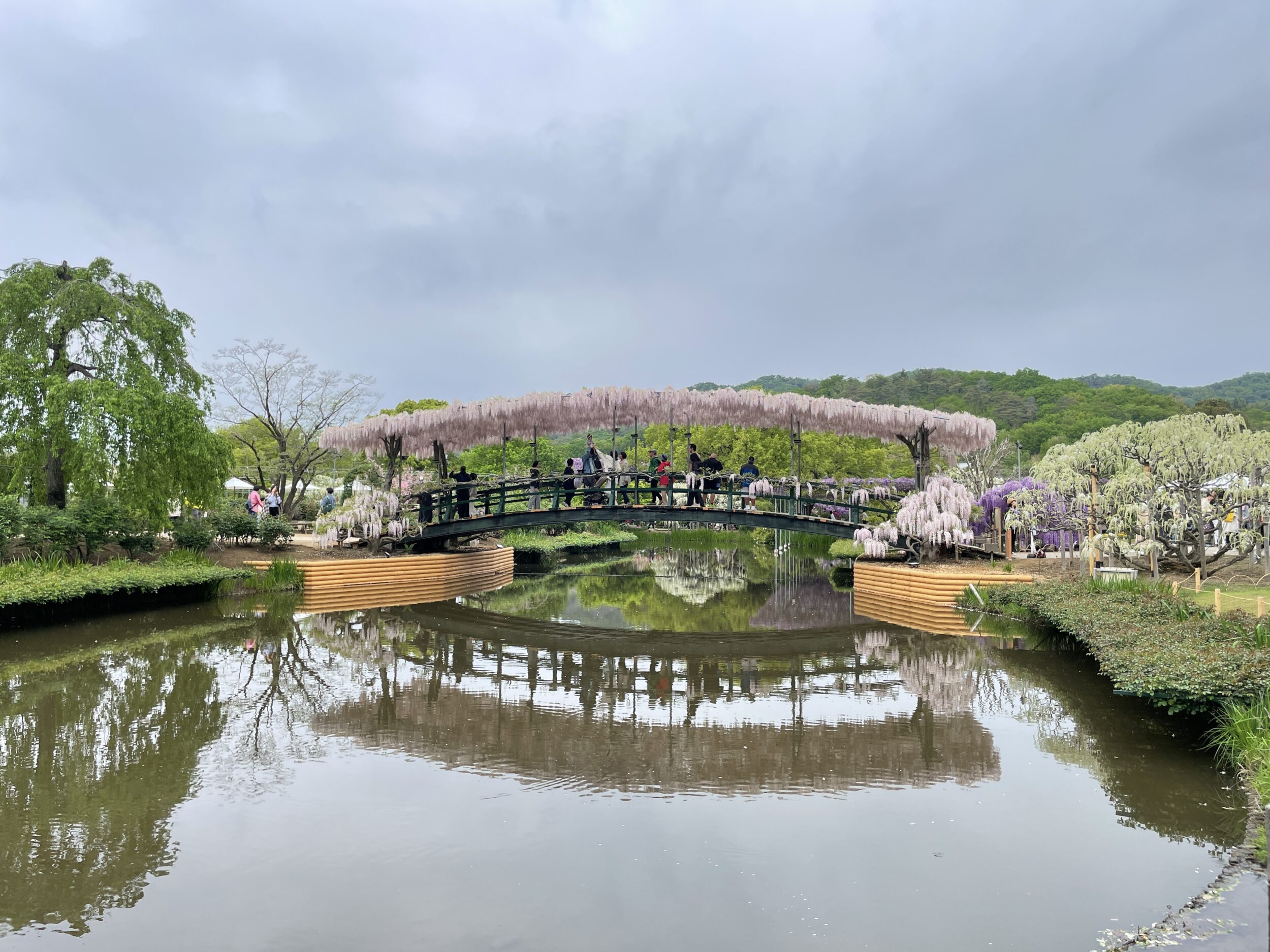
You can find the detailed day-by-day itinerary for our road trip here, our stay in Kyoto here and Osaka here.
Driving on the left is not a problem for JB, who has done it in other countries (South Africa, New Zealand, etc.), but Japan requires you to get your license translated into Japanese, despite having an international permit. That’s easy (we explained here how to do it online). We couldn’t have done the same road trip by public transport, or we’d have needed 3-4 extra days, as some towns are less well connected than others.
In summary, this road trip focused on traditional Japanese arts, namely:
- washi paper making
- tea ceremony
- geisha/geiko
- making Kyoto fans
- making daruma dolls
My parents experienced for the first time a night (with dinner) in a traditional ryokan, then a onsen town in a nice hotel. It’s funny how an onsen town works, a bit like thermal towns in France. Except here, the water is much, much hotter, and instead of taps for drinking spring water, you get free foot baths everywhere.
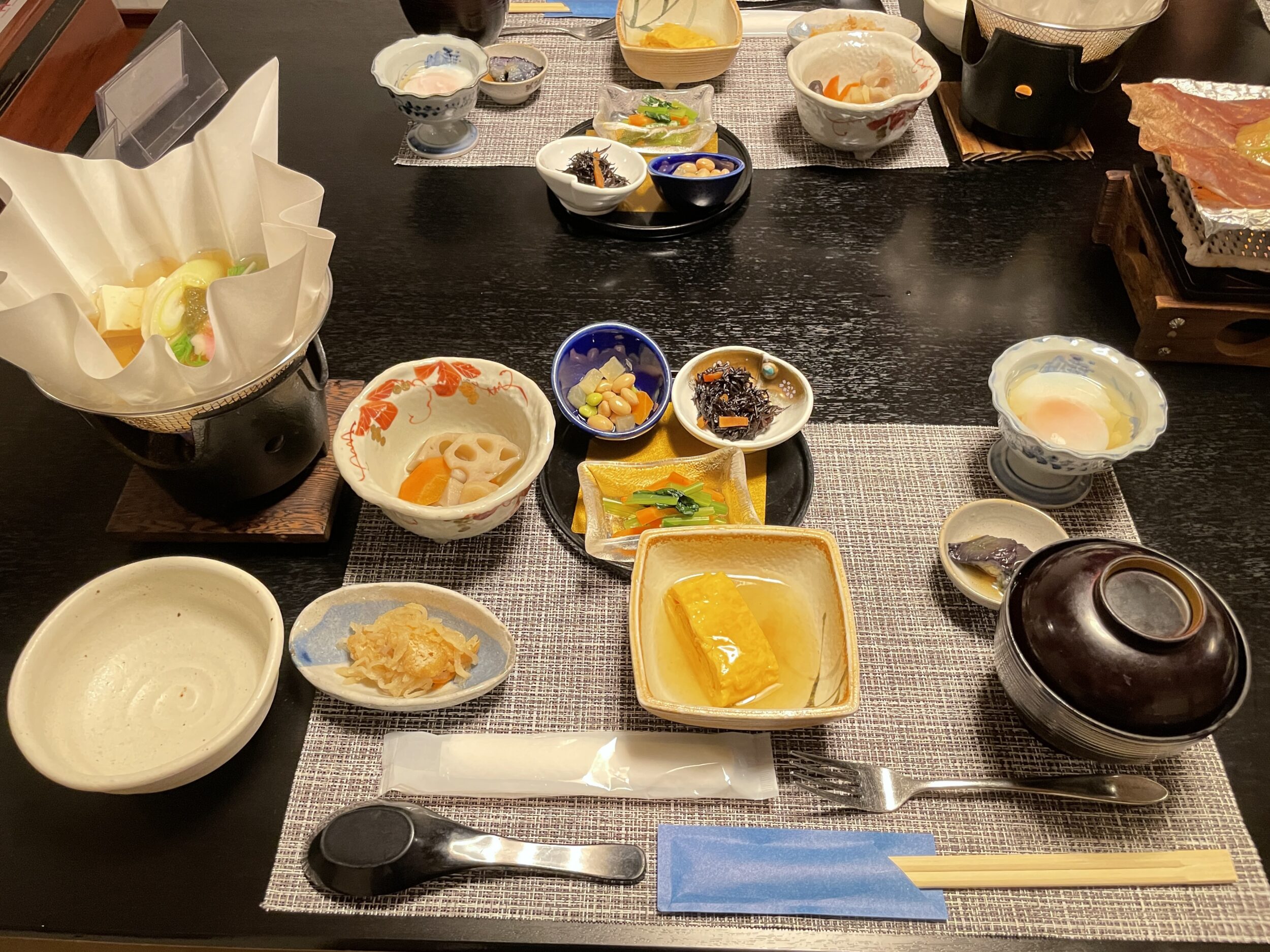
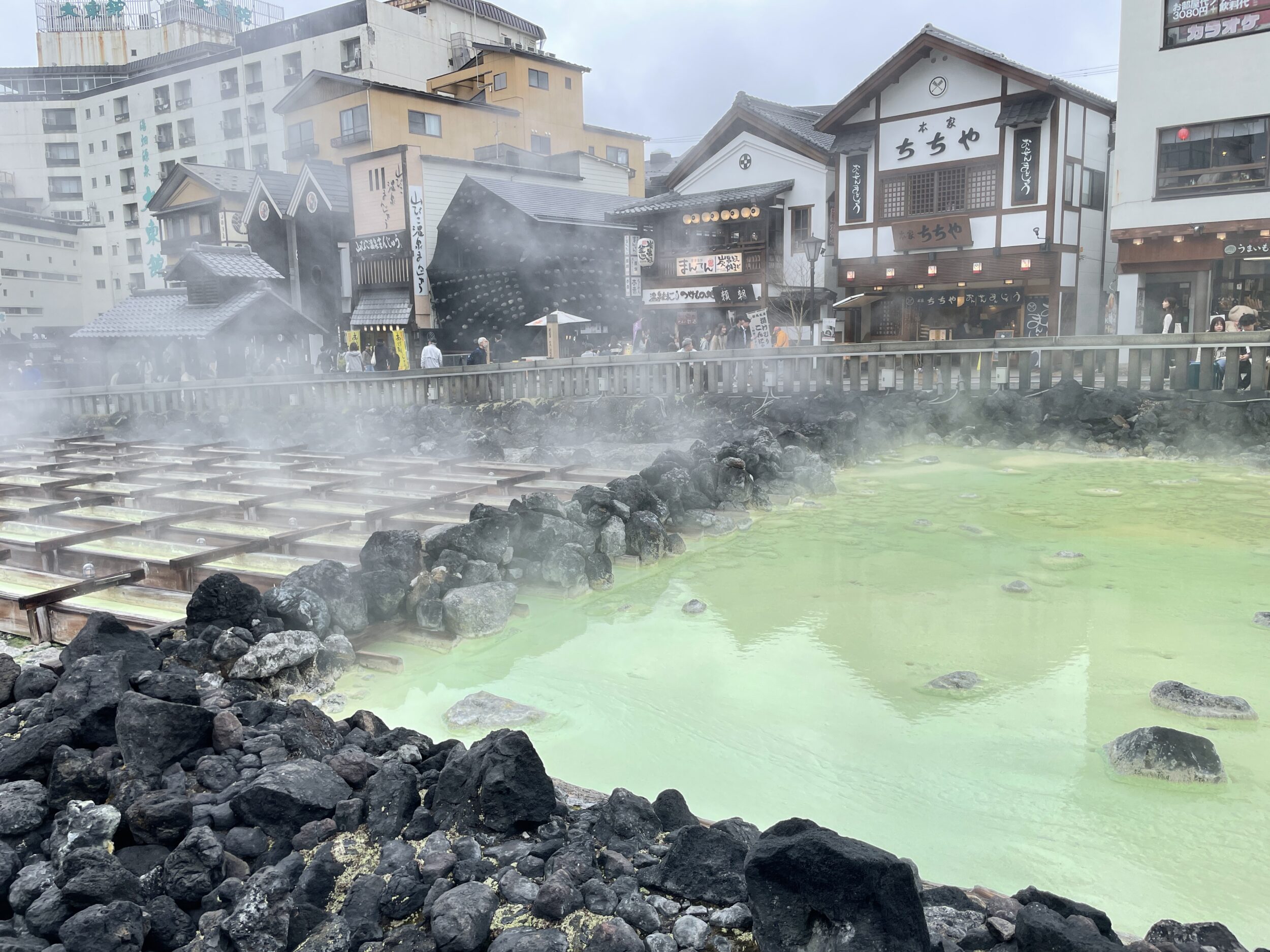
Our second trip to Japan allowed us to see Japan as it really is and to idealize the country less… which does deserve to be idealized.
For example, it’s still pleasant to think you’re safe. The crime rate is very low. You can stop worrying about your most valuable belongings (wallet, smartphone) for a while. There may be a long queue in front of popular restaurants, but JB says he’d rather wait a long time in Japan, knowing that NO ONE will try to cut in line, than queue for 3 minutes in France and have 10 guys elbowing their way through.
You can always count on Japanese trains; they’re always on time. We took the shinkansen twice, and even though it runs slower than our TGV, the punctuality and cleanliness of the train absolutely amazed us. Not to mention all the signage, very easy to follow, in Japanese stations, including Tokyo Central Station, always crowded.
Japanese service is impeccable; they’re smiling, polite, and always make exclamations too cheerful to hear. Once, we went to a tourist shop with Chinese saleswomen, and the service was worthy of a Parisian welcome (i.e., awful). The reception so displeased JB that he asked me to buy the product in another shop (with Japanese saleswomen) because we shouldn’t have to put up with that ahahaha. When you get used to good things, it’s hard to settle for less. Once, at a gas station in the middle of the countryside, we were so well served by the employees that their smile was infectious, and the four of us left that station super super happy. Imagine the incredible quality of service for a full tank of gas to become a memorable experience! In train stations, the Japanese are equipped with tablets to better manage communication with tourists, and when they don’t have a tablet, they have a kind of board with keywords, so you can point to “Osaka”, “Kyoto”, shinkansen, reserved seats… to buy our tickets at the counter. Whereas, honestly, it should have been up to us to make the effort and show them Google Translate, which everyone has now.
In short, in Japan, when things are predictable or part of the normal process, everything runs like clockwork. However, as soon as there’s a slightly special request, the Japanese are completely lost; there’s very little flexibility.
I don’t know if it’s Google Translate’s fault, or if that’s just how it is.
For example, as soon as we arrive at a hotel, check-in is at 3 PM sharp! Not a minute earlier. Sometimes we arrive at 2:50 or 2:45 PM, but they prefer to make us wait at the reception than let us take the room 10 minutes early.
When we send a package to France (a package between private individuals), it’s the same. They now require you to list the nature of each product, for example you can’t just put “Cosmetics x 2”, you have to specify the nature of the product (1 hand cream + 1 concealer), and provide the international product category number. I’ve sent lots of packages from different countries and it’s the only country where I feel like I’m shipping uranium to Iran.
Some Japanese people find hosting foreigners so stressful that they put up a sign outside politely refusing to host foreigners, like “we only speak Japanese and can’t host you”. Others can be more aggressive and chase tourists away by speaking Japanese in an aggressive manner, but luckily, during our two trips, we never experienced it, even in the countryside.
Flexibility seems to be hard for them and we feel for them too. They want so badly to do well, but sometimes their definition of perfection doesn’t match ours at that particular moment. For example, a duvet seller absolutely wants to give us his biggest box when we only want a small one to compress the duvet and fit it in our small car trunk. You can see it kills him to see us with such an ill-suited box, and in the end he ran to give us a fabric protection, still huge, but at least it eases his perfectionist conscience.
So, as soon as we think we need something special, we repress ourselves and try to conform so we don’t have to explain 10 times to Japanese people why we want it this way and how we want it.
For example, Japanese people tend to put 2-3 layers of packaging even for the smallest things. Once, we bought mochi and not only was each mochi individually wrapped in washi paper, but the whole thing was in a beautiful box which was then wrapped in colored paper + a plastic bag. I’ve always wanted to refuse this kind of packaging, but I’m too afraid of offending them (they make very beautiful packaging) so I don’t dare. In such an inflexible society, the risk is to completely conform over time, and lose your personality because anything that deviates from the norm requires too much effort. Clothing, for example, is the same style everywhere, super loose, Uniqlo-style, with very few colors. Even international brands adapt and only sell their “Japanese-style” pieces in Japan.
This time, being in less touristy areas, we see even more elderly Japanese people than last time. And many of them are still working. In Singapore, they tell us that elderly people often do it for fun, to serve society, but in Japan, it’s more to make a living. The flip side of the remarkable cleanliness, the incredible quality of service… is people who work hard and long hours. During our trip, we wanted to buy clothes for our niece (under 2 years old) and we were appalled to see how few dedicated children’s stores there are!!! Even on weekends, we see very few children. The birth rate is disastrous, the Japanese population is aging, and it shows.
The fall of the yen is inevitable and will probably be hard to save, despite the government’s attempts. Japan has lost its soft power. Tourism in Japan remains attractive, but you can see, for example in Takayama, a town that is nevertheless touristy, the lack of manpower. A few days after a festival, we had to check several restaurants before finding one available because they are too exhausted and don’t even have ingredients left to cook! Our friends who live in Japan, whom we met again in Kyoto, seemed pretty exhausted. With very little vacation and long hours, we understand that Japanese perfection comes at a price.
I hope Japan doesn’t follow Norway’s example. When Norway was filthy rich around 2008, it was truly El Dorado, no crime, I had my best pre-work year there. But when oil prices started to drop, Norway lost its peace & love, my friends who still live there confirm it. I hope that with the financial difficulties Japan will surely face in the coming years, they will show enough flexibility and ingenuity to get through it.

