
Kusatsu Onsen & Snow monkey park [Road trip in Japan #7]
We leave very early from Kanazawa to get to Kusatsu Onsen. The road is very long, so we make a few stops along the way so JB can rest a bit.
This travel diary is part of a series on our road trip in Japan. If you missed the previous episodes, here are the links: the itinerary, diary #1, #2, #3, #4, #5, #6
Part 1: Travel Journal
Part 2: Practical Tips
Part 1: Travel Journal
Day 6 of the road trip:
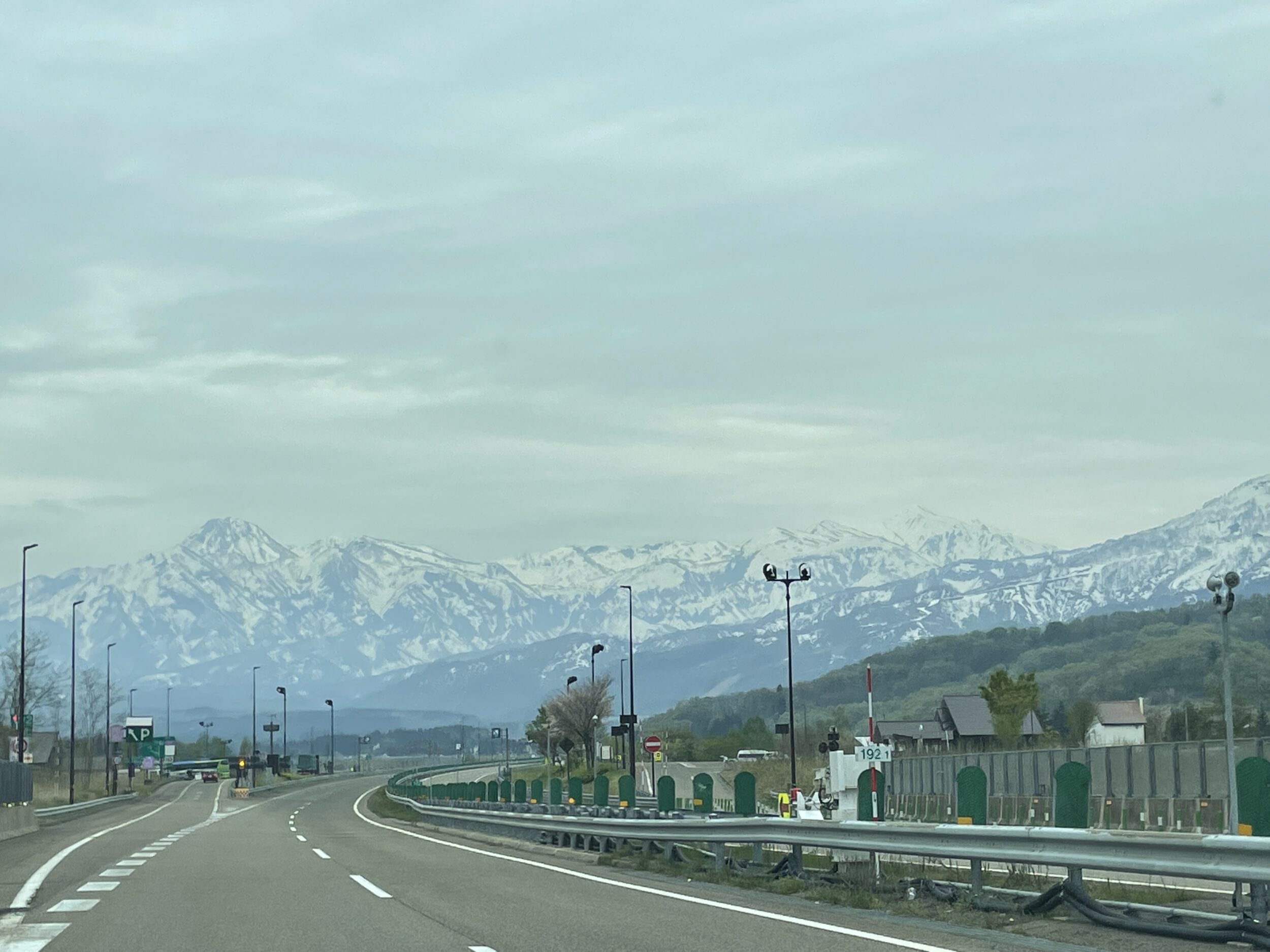
We pick up the car after parking it for less than 48 hours. The parking lot JB chose isn’t too expensive; we pay at most 1200 yen for 24 hours, so 2400 yen in total, but only in cash (you still need to have some change in Japan). If we go directly to Kusatsu, it will take 4h30. So I have two options for a major “tourist interest” stop along the way: either a temple in the forest (Togakushi-Jinja), or the famous monkeys hanging out near an onsen spring in the forest (Snow Monkey Park). That adds another hour of driving. After studying the options and looking at recent photos, I decide to skip the temple because I saw photos where it was still snowy and I was afraid we wouldn’t be able to get there since we don’t have snow chains. Instead, I add a micro-stop along the way. The drive today isn’t very interesting because it’s tunnel after tunnel.
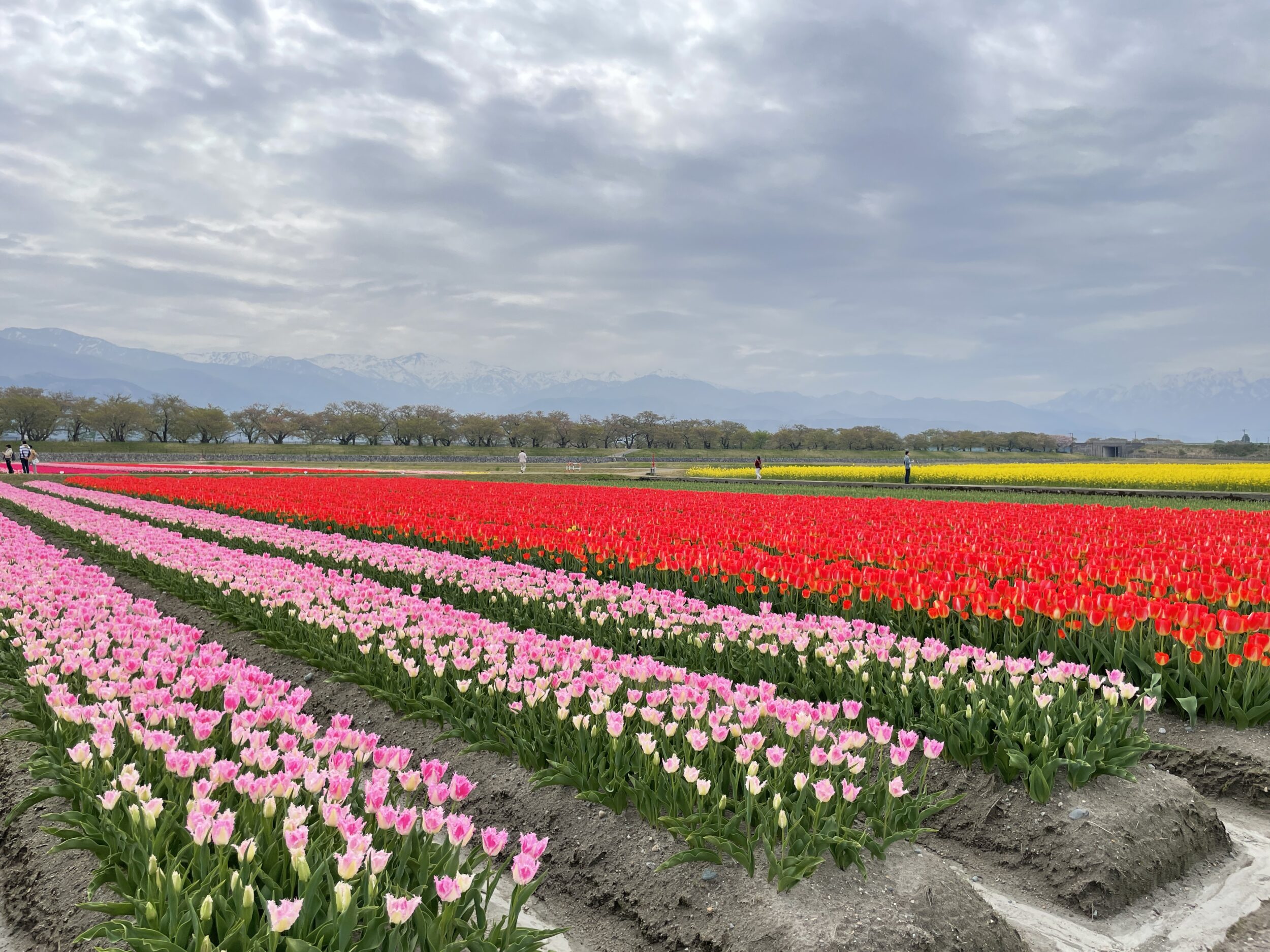
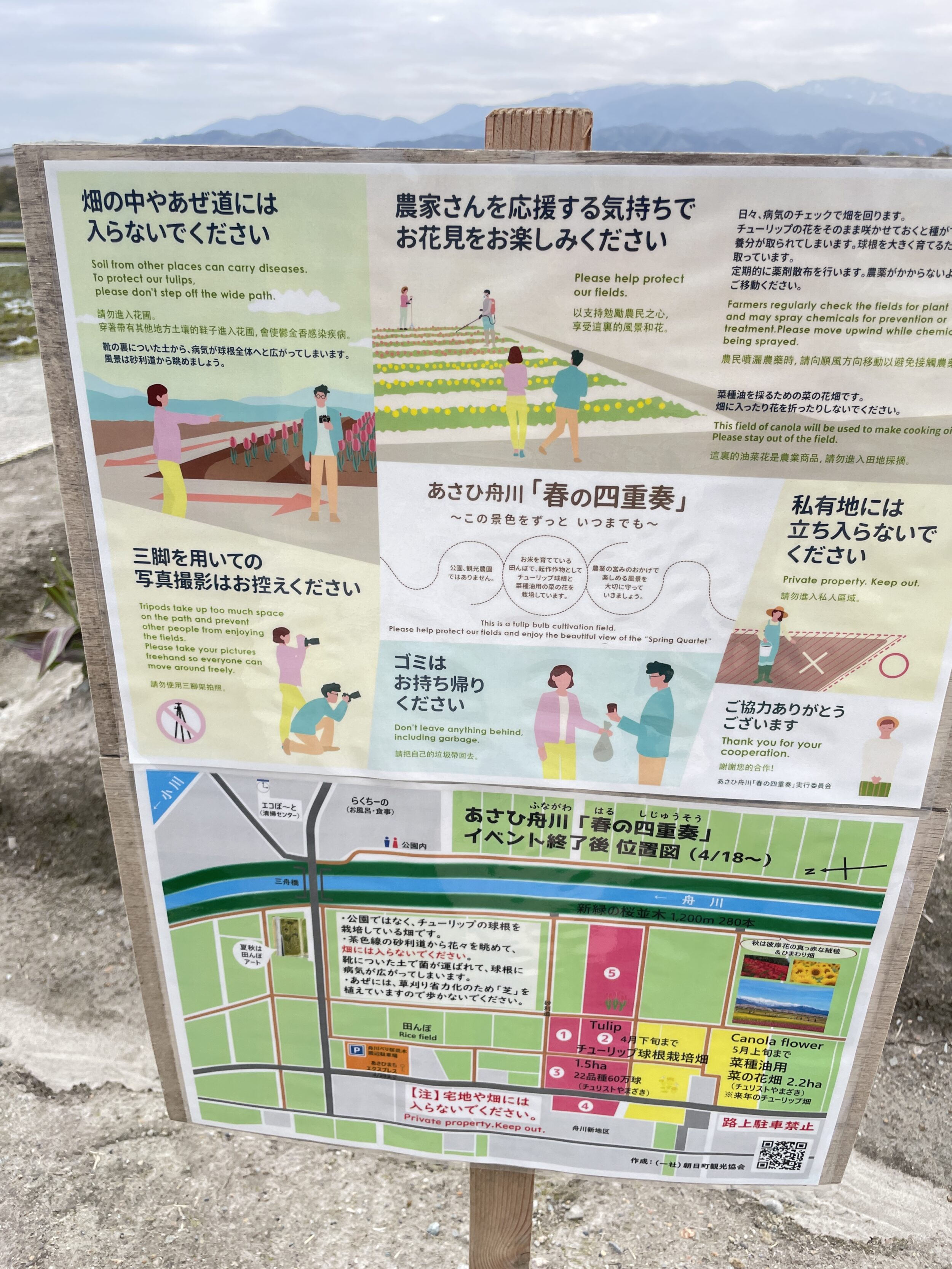
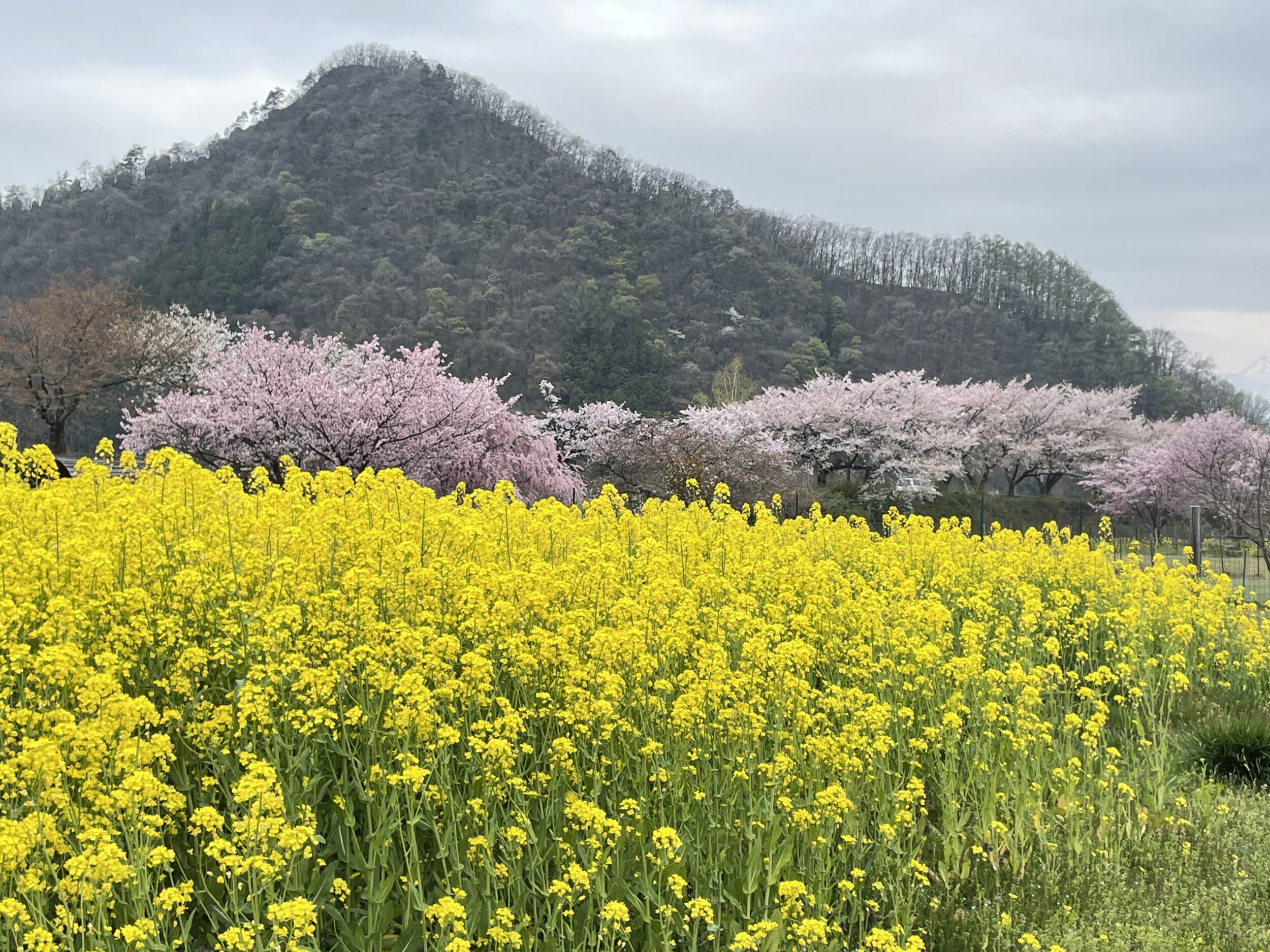
However, for my micro-stop, we see mostly green hills and fields. At one point, we stop in front of flower fields, and as we hesitate (do we park here or further? https://maps.app.goo.gl/afzW6urpAb8H5opL7), my dad asks if we made a little detour to come here, or if we just stopped along the way by chance. His question cracks me up because there’s not much chance with me 😀 Well, I hadn’t planned that the cherry blossoms were supposed to be in bloom but weren’t, but the tulips in bloom, yes, that was planned. I had spotted the spot the day before.
Tulips in Japan bloom two weeks apart from Amsterdam. Here they are also grown for their bulbs. If it were for selling flowers, no farmer could sell flowers that are already this open! Right next to it is a field of rapeseed flowers, and together they make a very harmonious ensemble, and it’s completely free!
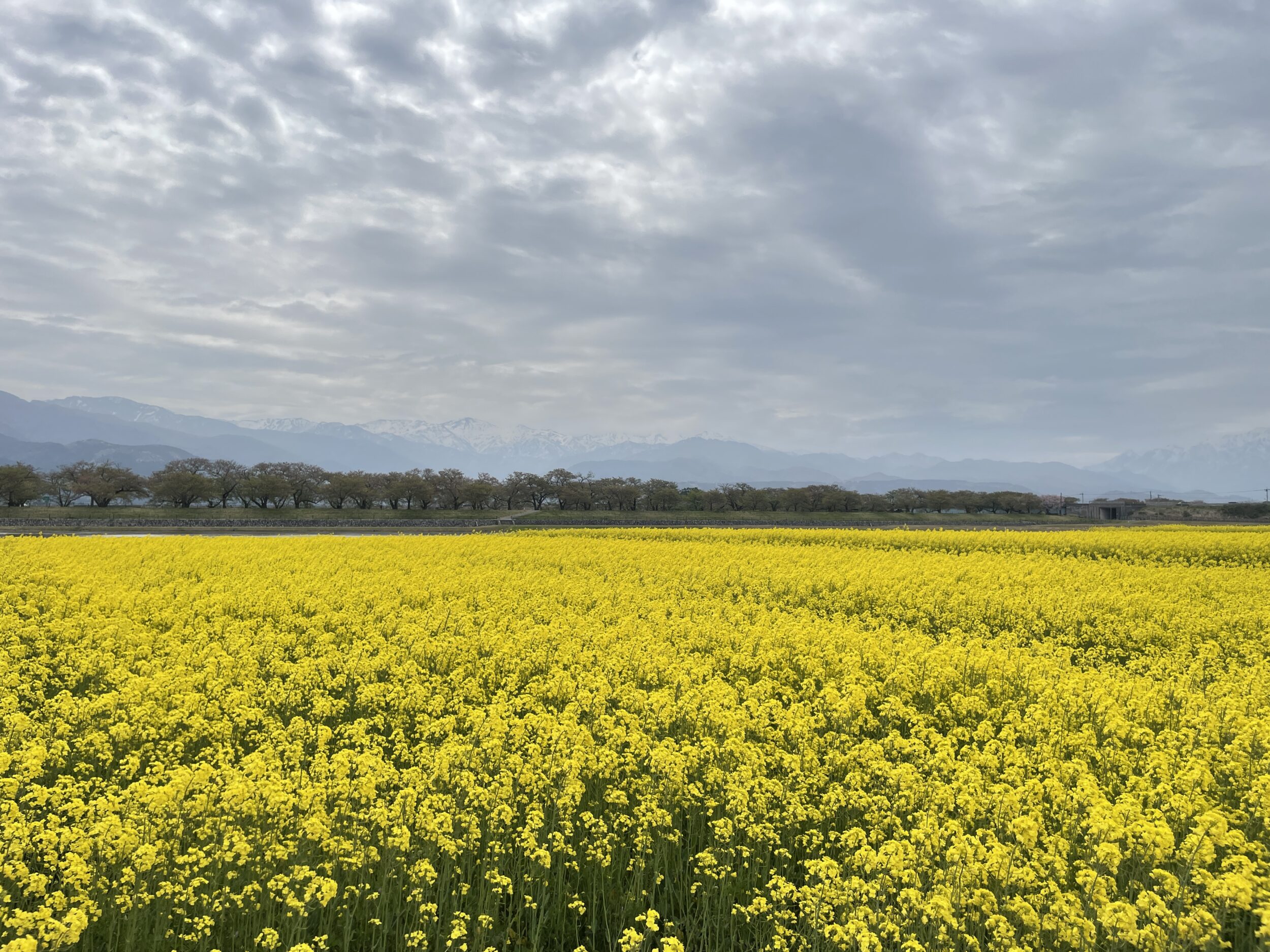
We drive non-stop to Yamanochi and on the way, we see another rapeseed field, but this time with cherry blossoms in bloom. And the stop is unplanned 😀
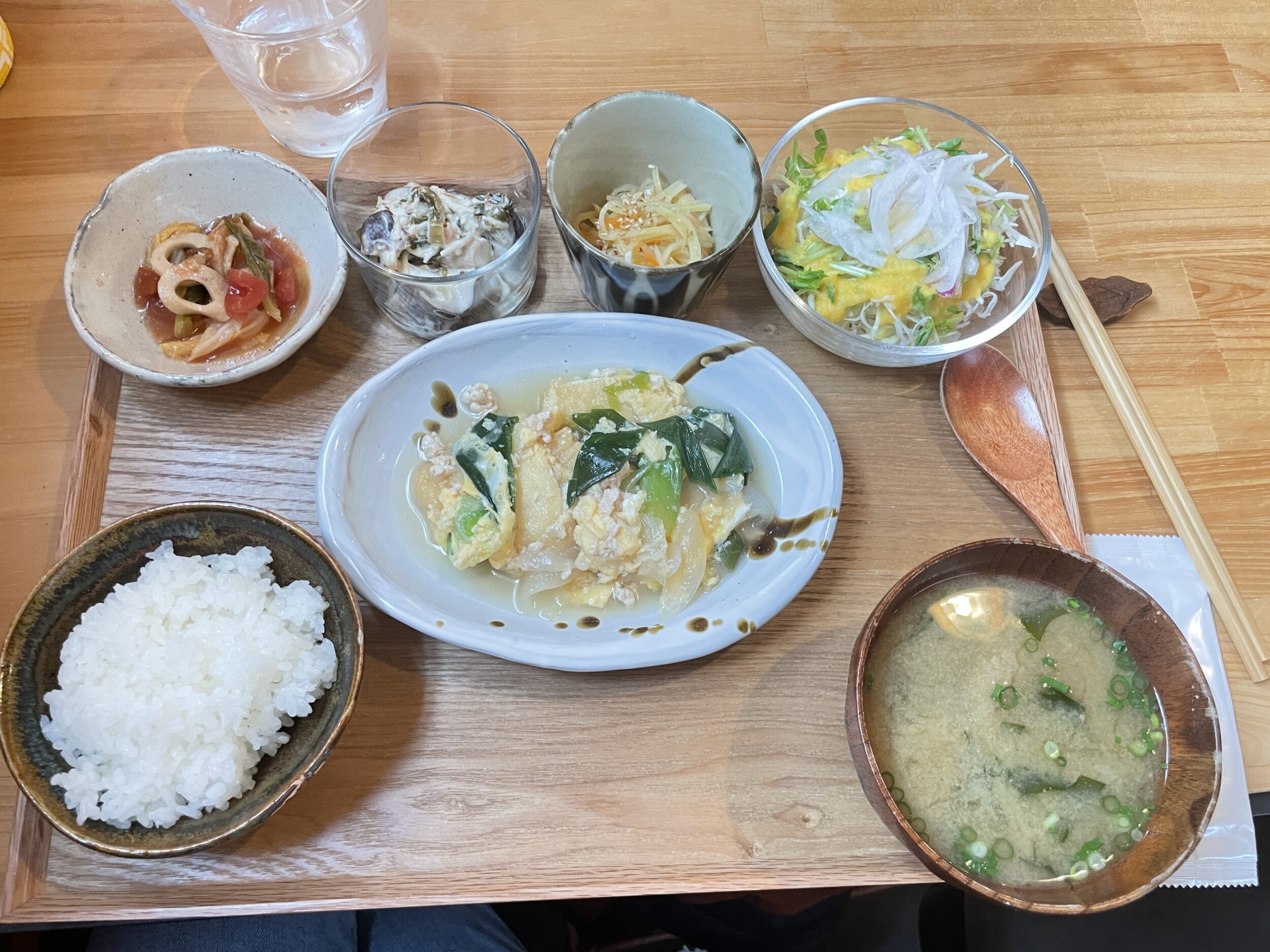
We’re very hungry and have lunch at the restaurant 食堂よろしき日 which offers a delicious lunch set, with very little meat. We even have to choose our rice bowl (the container) at the counter! They’re all different. I saw on Instagram that some cafés in Japan also let customers choose their own tea cup. It doesn’t cost much to the restaurateurs, but it leaves a good impression on customers, I think. I highly recommend it; we paid only about 1200 yen per person, dessert included.
Before going to the Snow Monkey Park, I wanted us to stop at one of the many free foot baths in town, but there’s a big parking problem and we can’t find a space at all (plus we took a one-way street in the wrong direction without knowing). My mom seems disappointed because she really likes that kind of bath, but I don’t think she’ll be disappointed when she finds out what’s in store for her tonight.
Snow Monkey Park (Jigokudani Yaen Koen)
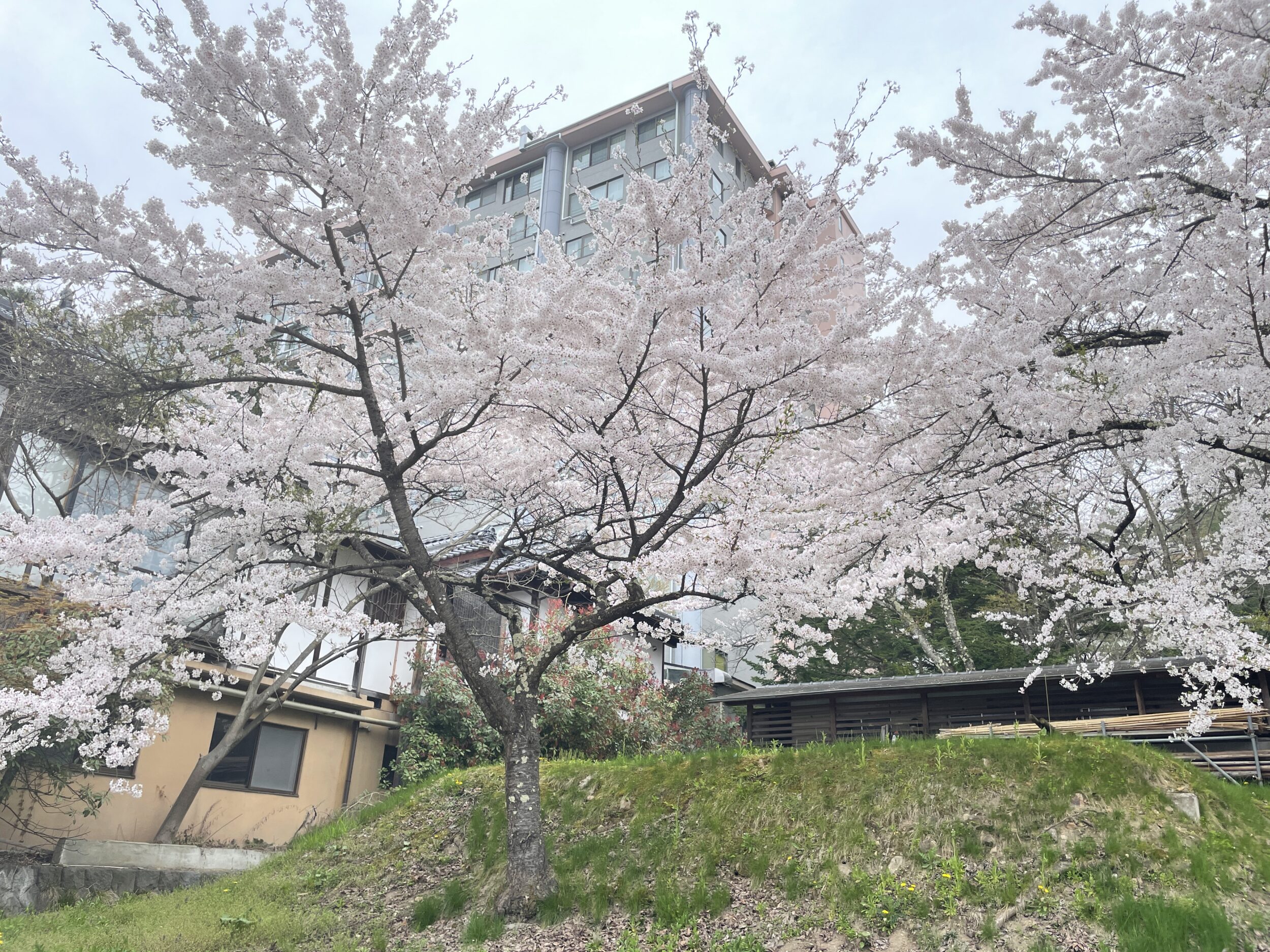
We finally arrive at the Snow Monkey Park. It’s a park that means a lot to JB; he’s seen photos in many travel guides, while I’m discovering it. The Snow Monkey Park village still has many cherry trees in full bloom.
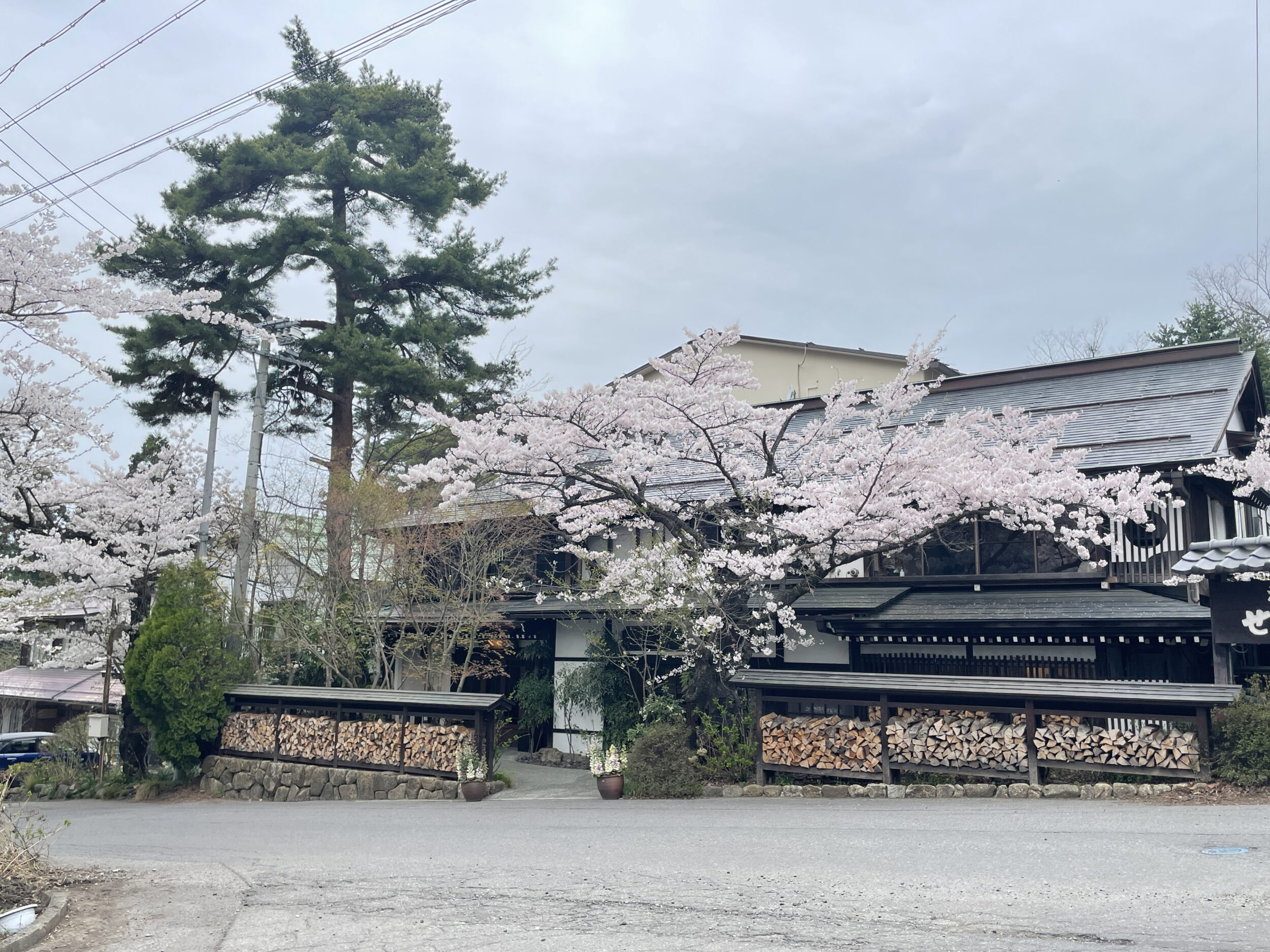
We manage to find a parking spot right near the entrance.
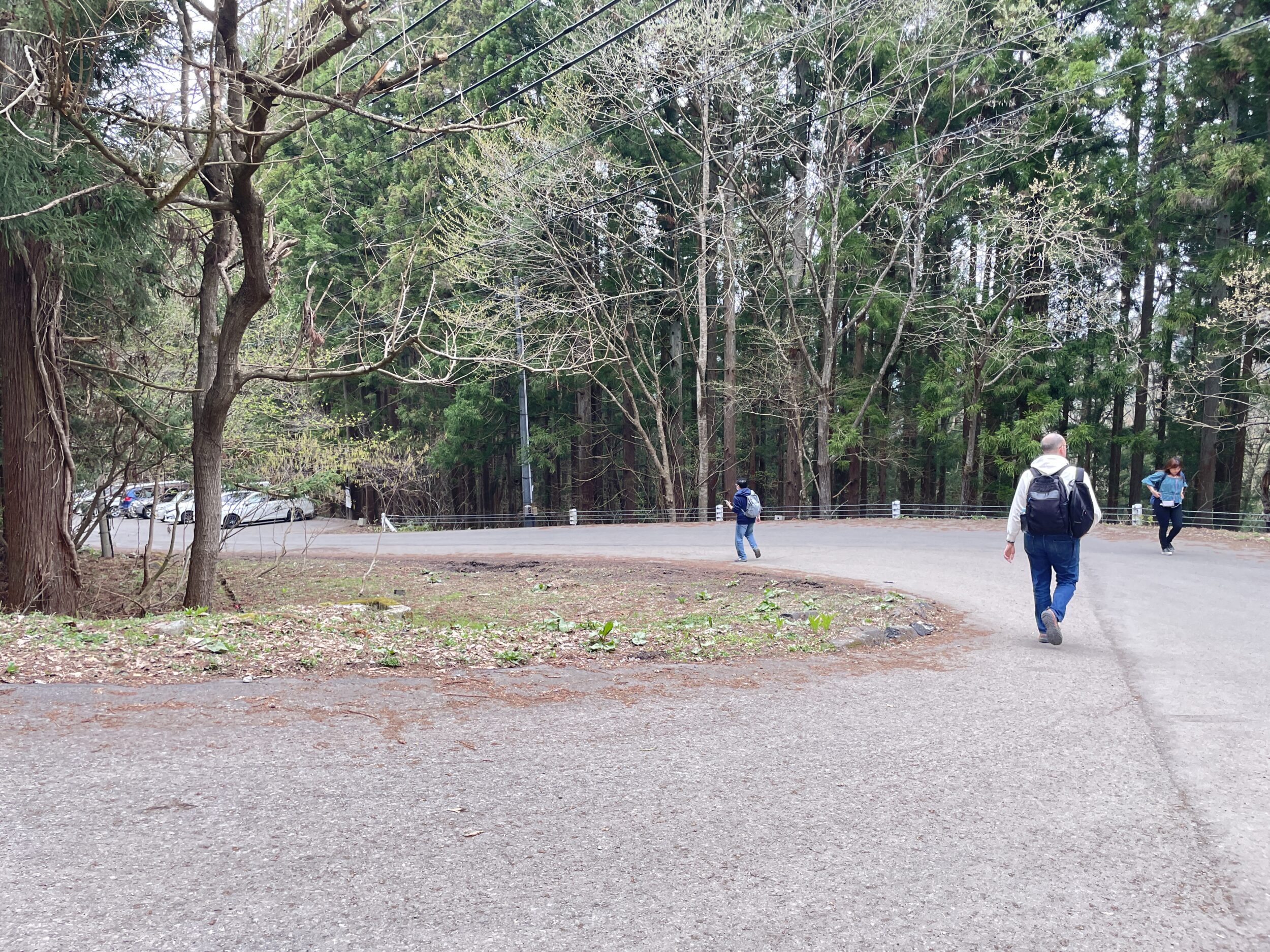
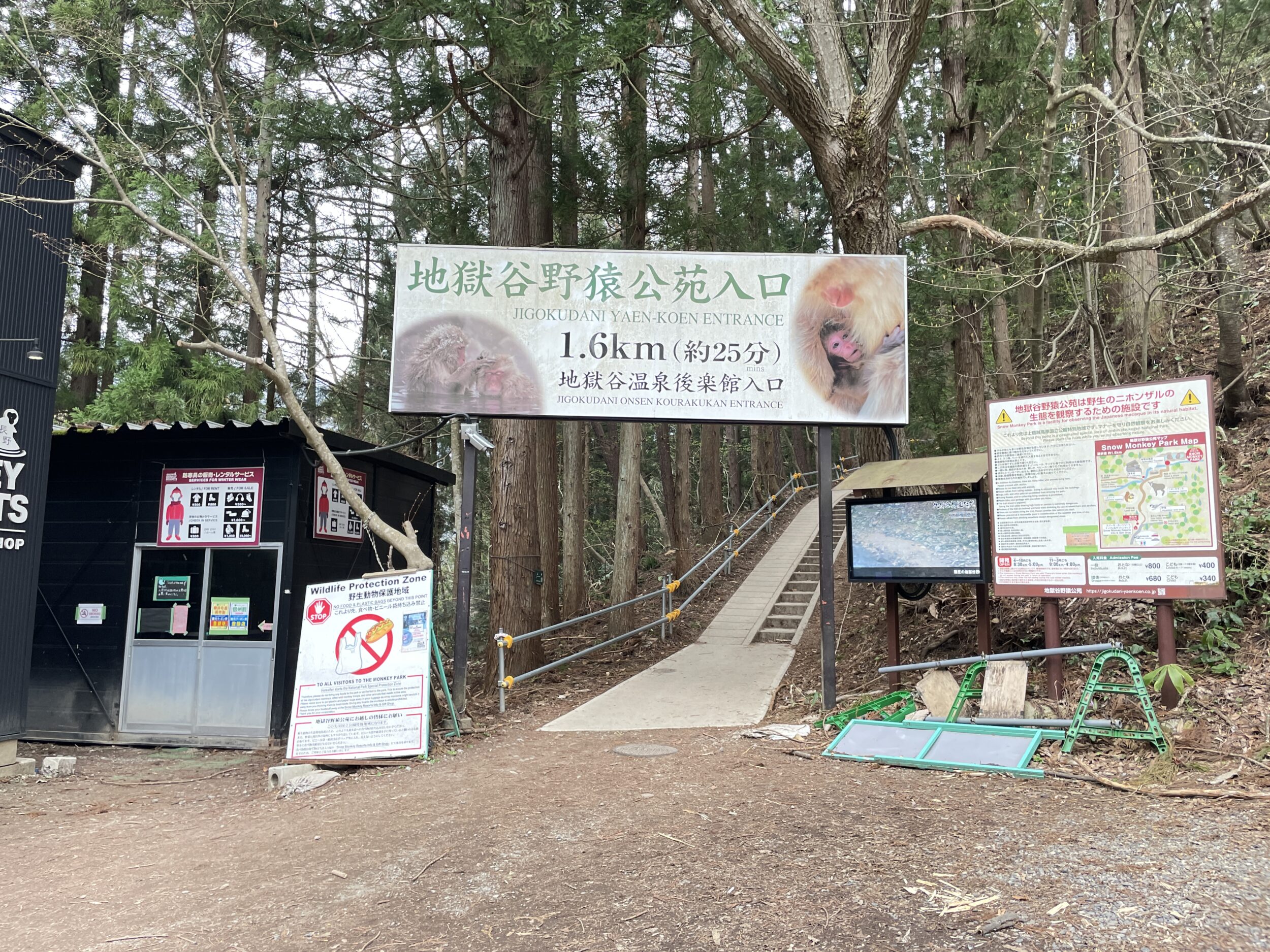
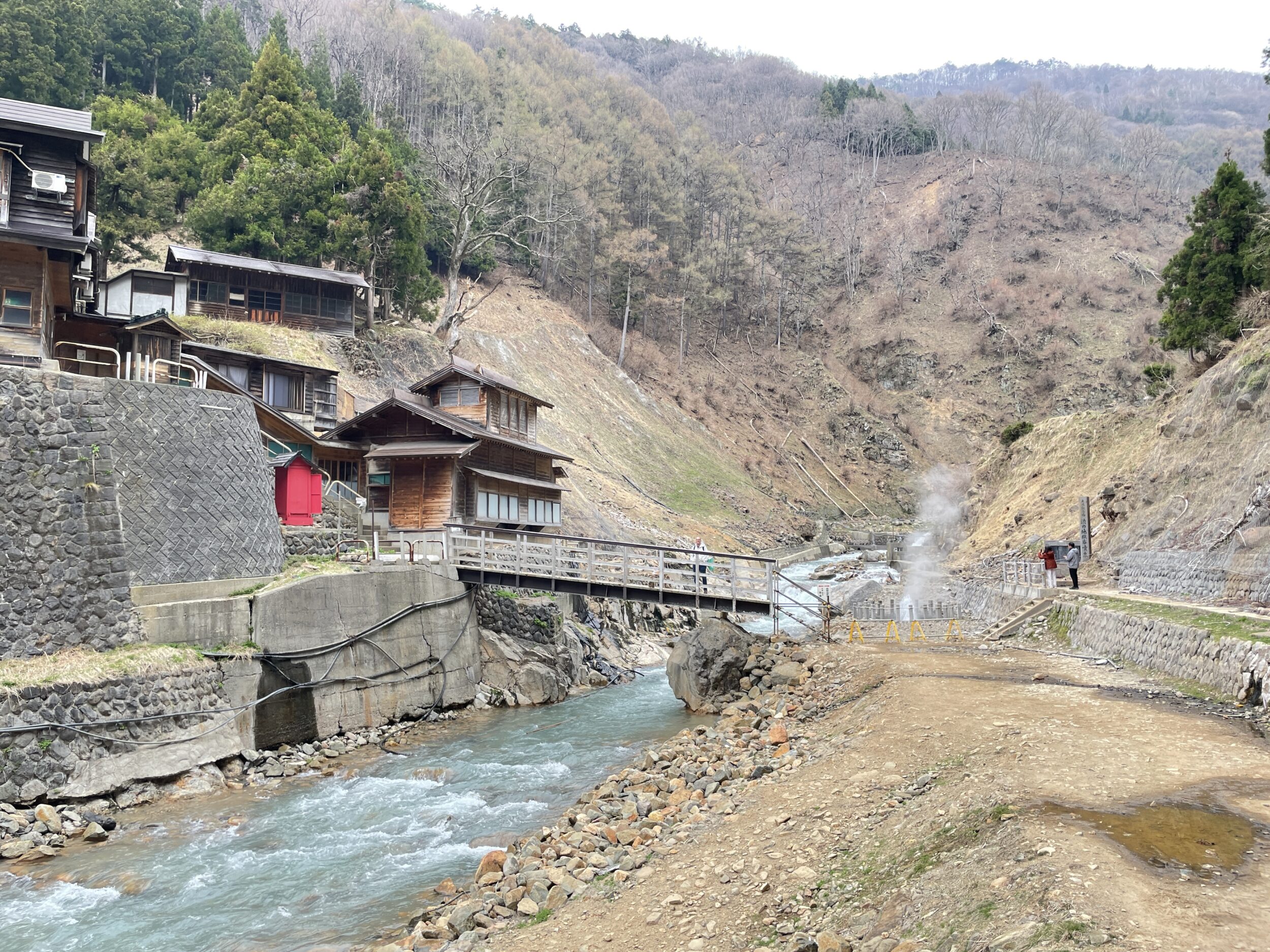
There’s 1.6km of walking left. No choice! At first it goes up a bit, but after that, it’s almost completely flat. We first arrive at a village, with a permanent geyser. We already start seeing monkeys.
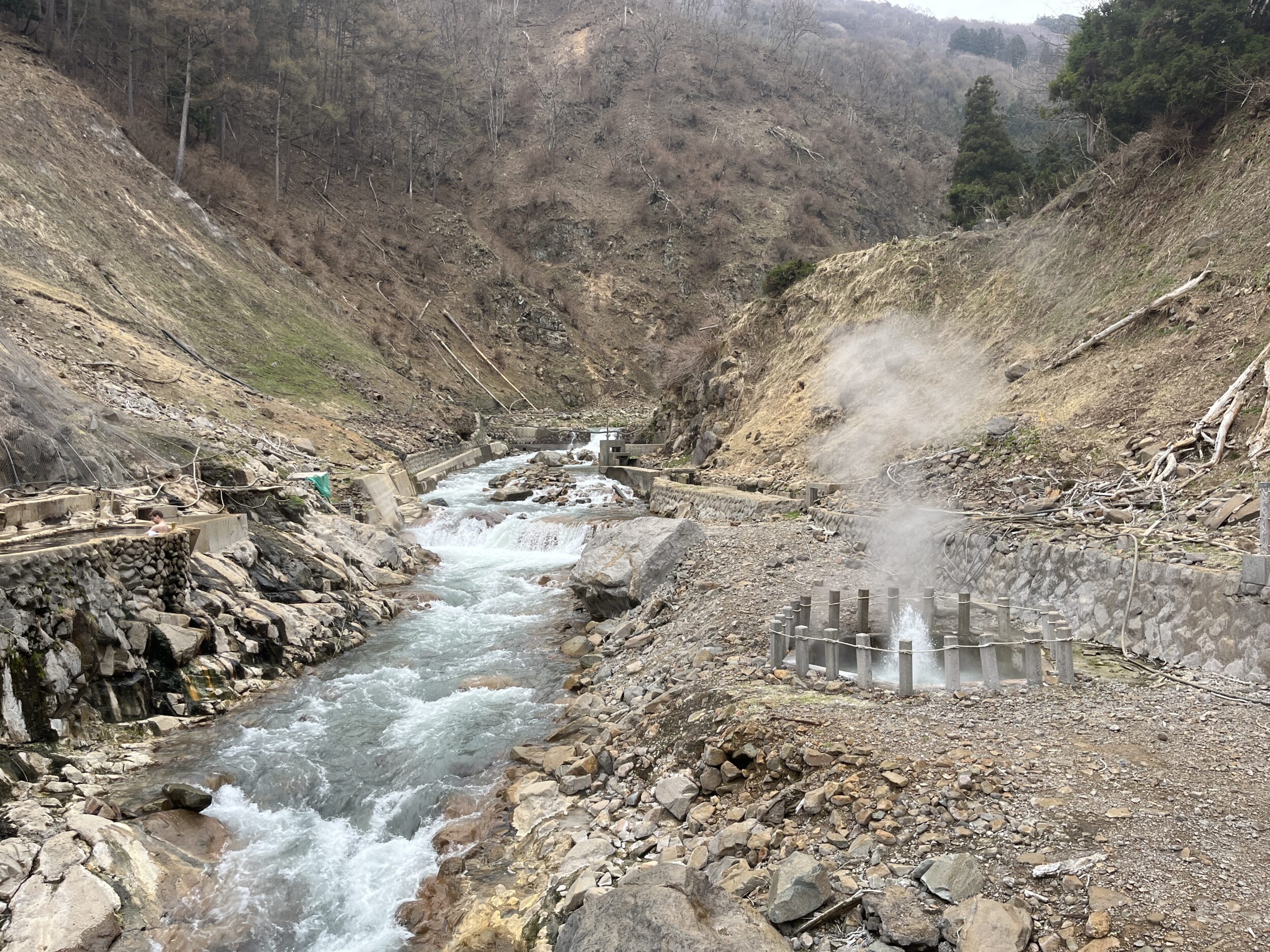
Then we climb about thirty steps, pay 800 yen/person, and get access to a small park with an onsen bath where monkeys gather around. There must be about thirty of them. None get into the water. Apparently, they’re here because they’re attracted by the food they’re given every day (they come to “work” during the day: welcoming tourists ahaha) but at night, they go back up to sleep in the forest. Personally, I don’t see why the monkeys would get into the onsen pool, which is admittedly warm in winter, but what will happen to them when they get out of the water?
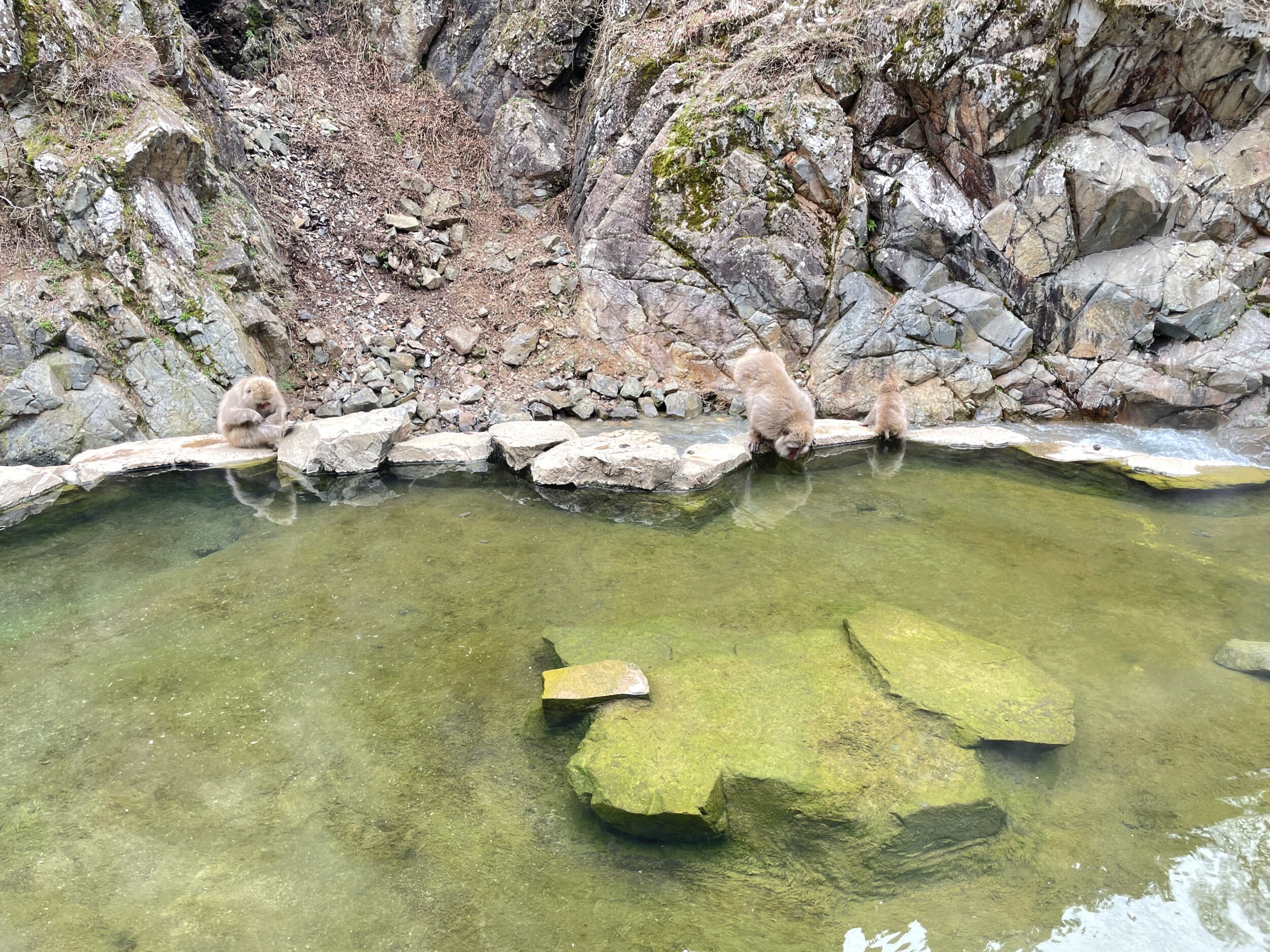
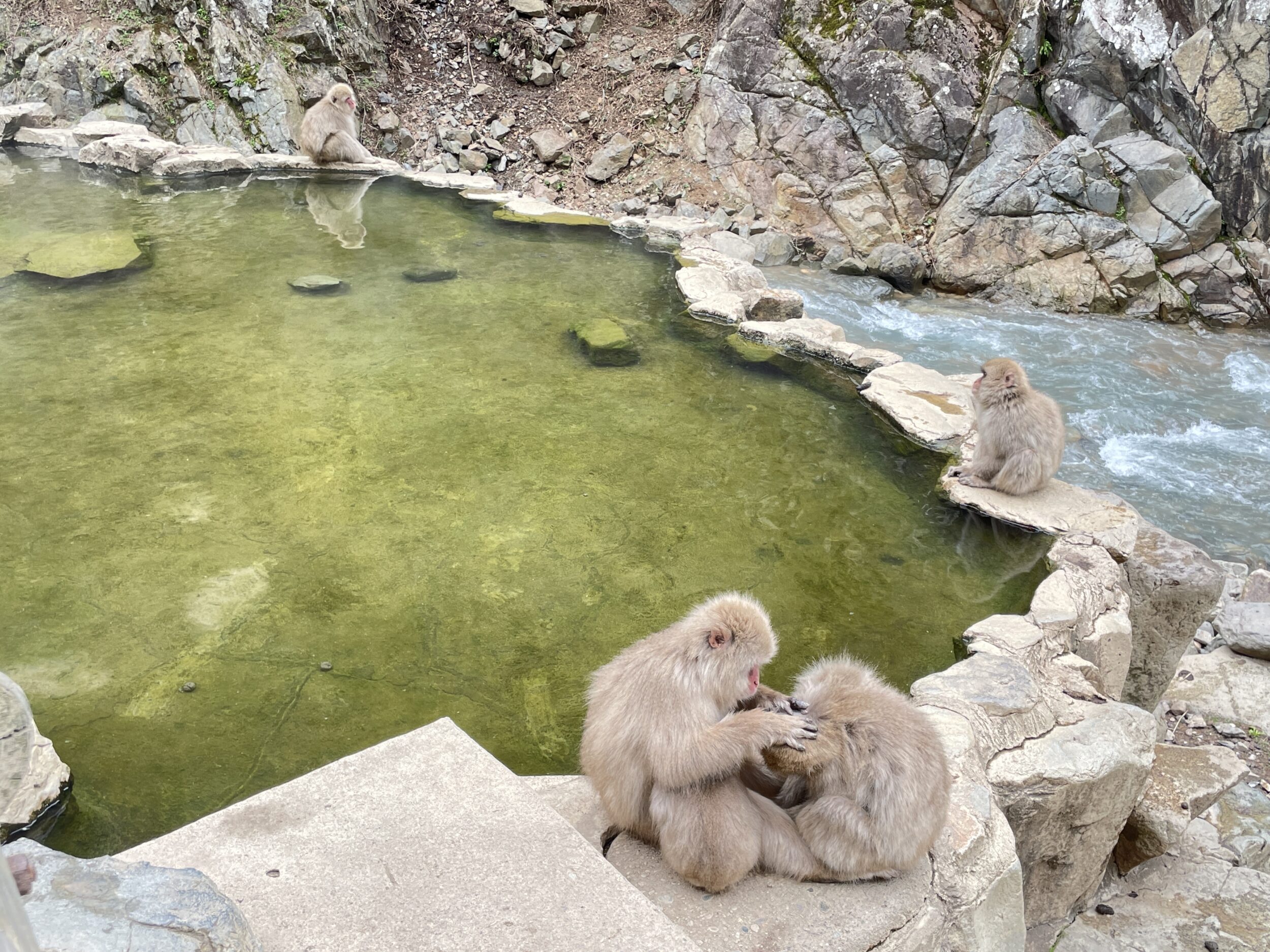
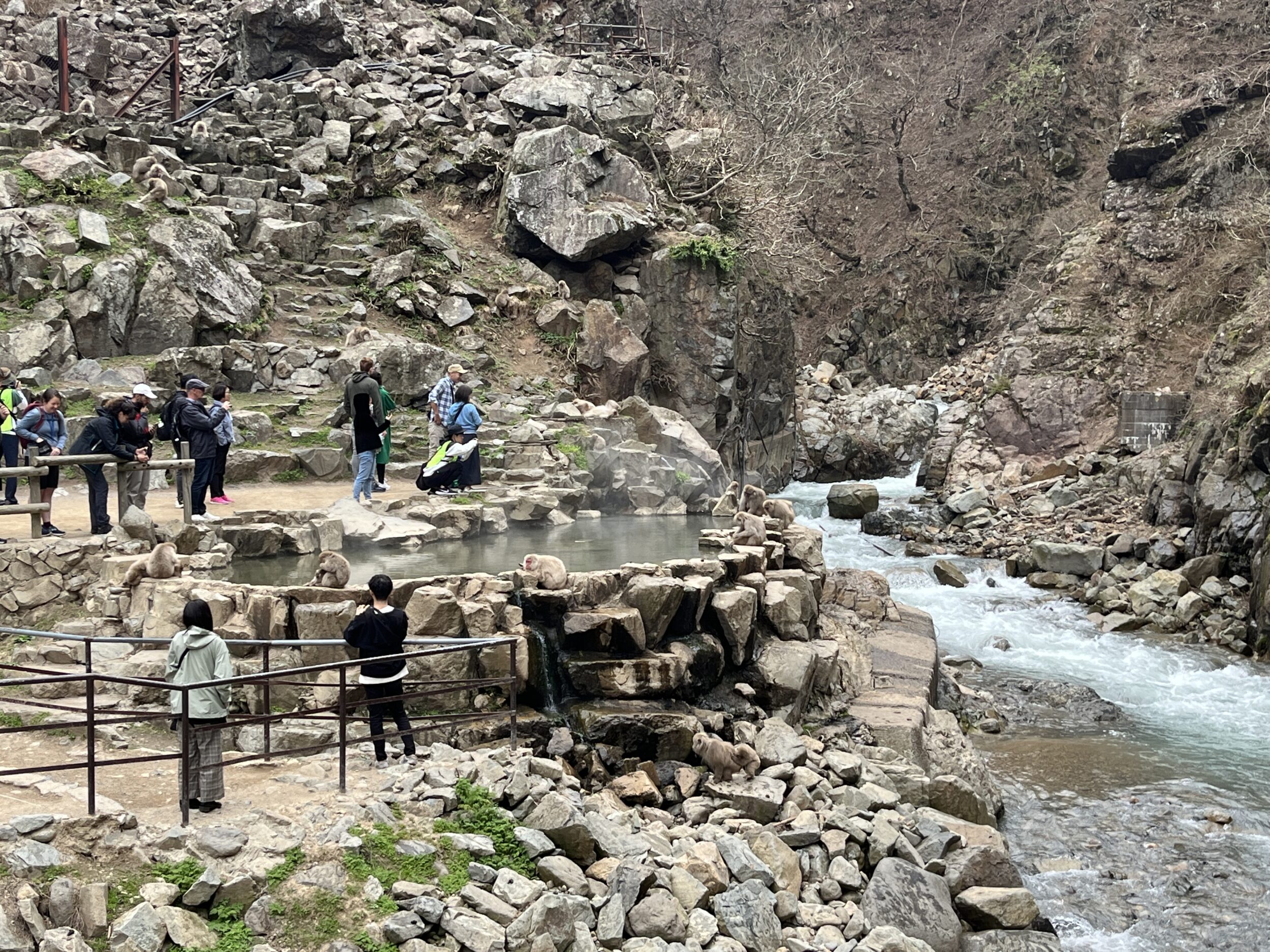
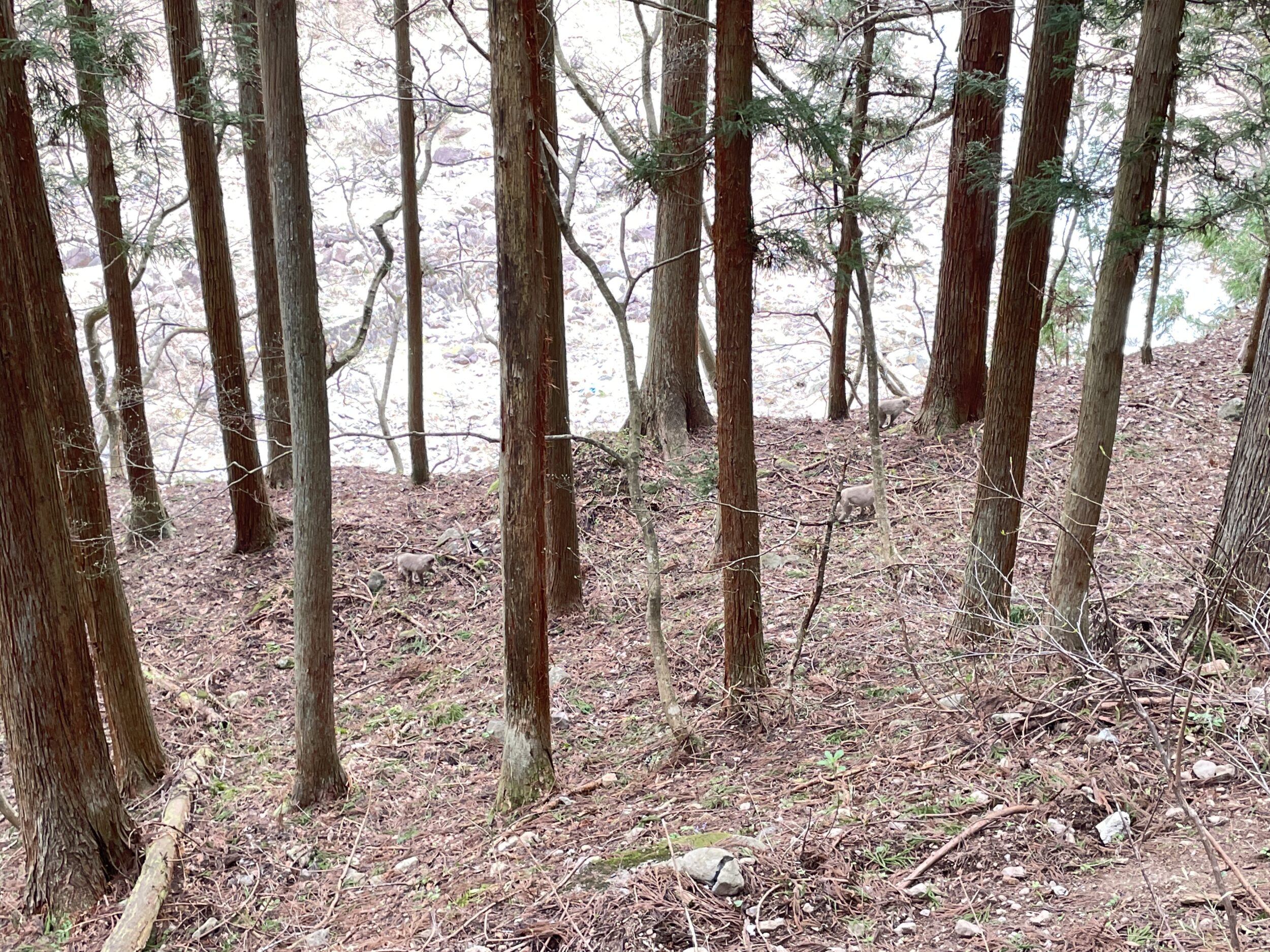
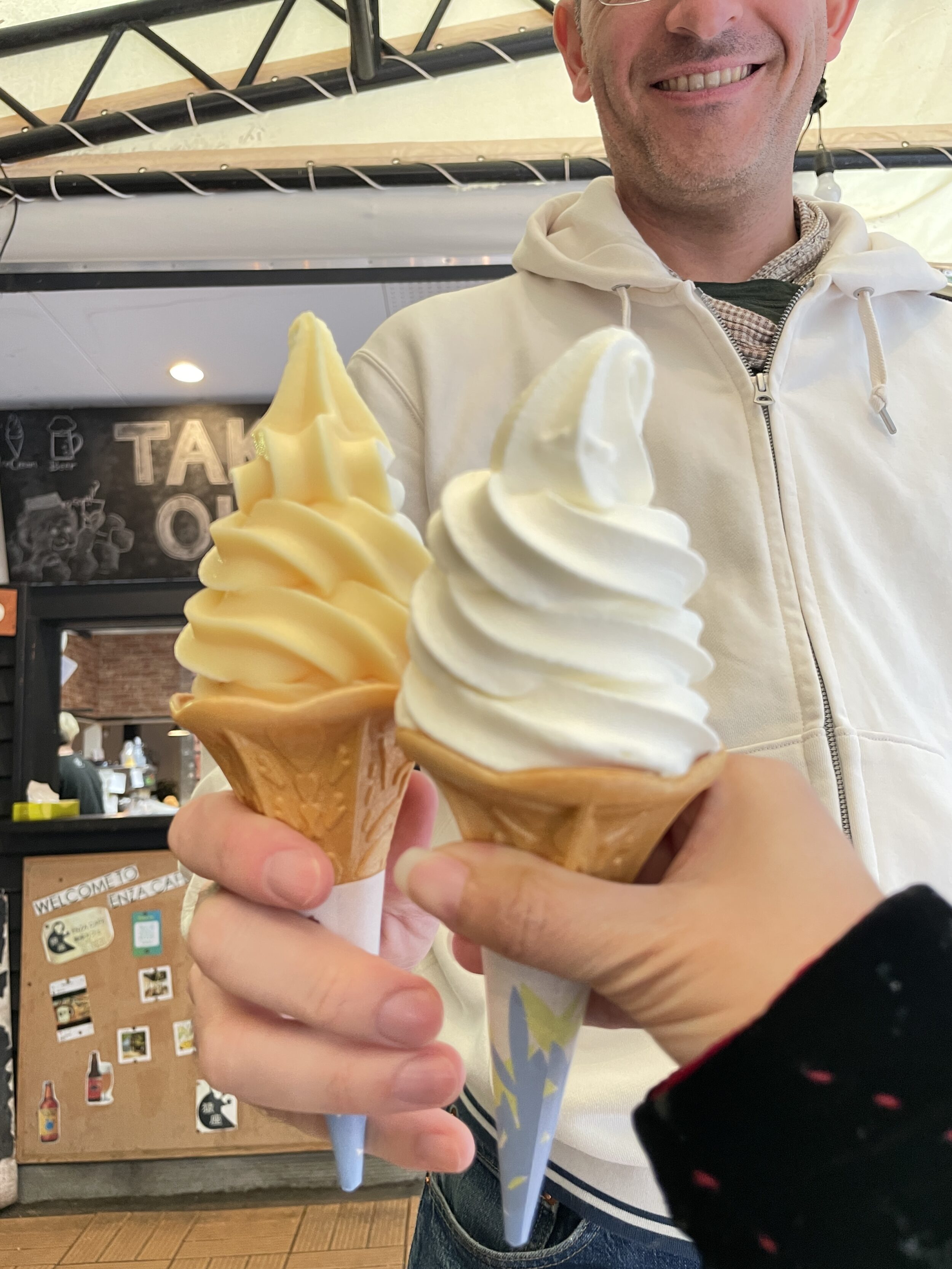
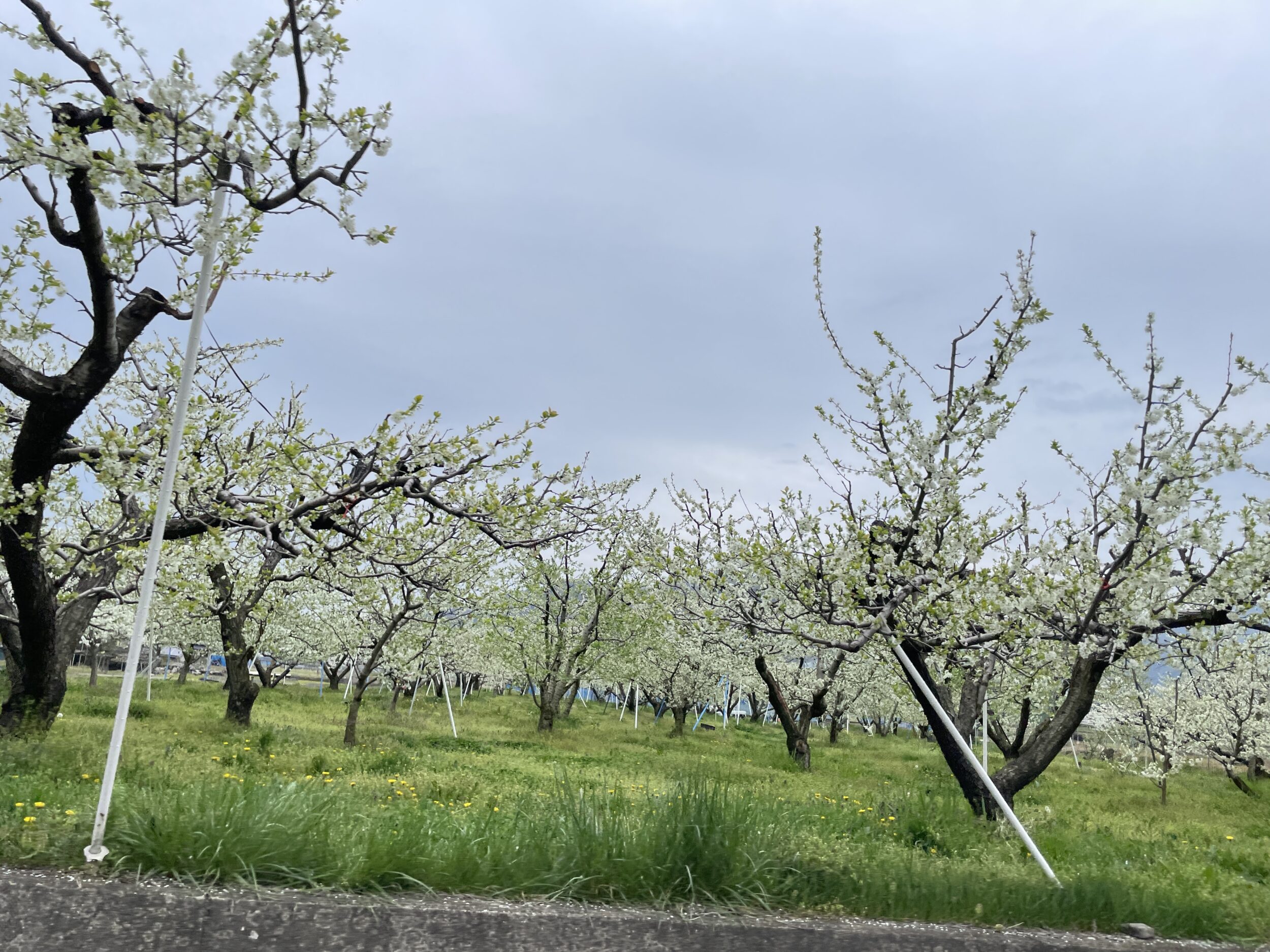
Anyway, I think the stop isn’t worth the 3.2km walk, but the path is still pleasant because it’s deep in the forest, with trees that are super super tall and super straight. At the end, we treat ourselves to ice cream + apple pie. The apples come from the region, and we’ll see lots of apple trees and peach trees in bloom.
Kusatsu Onsen
After 2 hours of driving in the mountains with sharp turns, JB is fed up and we arrive at Kusatsu Onsen. Just as a melody rings out across the whole town (we’ll learn that this melody plays twice a day at 8am and 5pm). We’re so happy to have arrived.
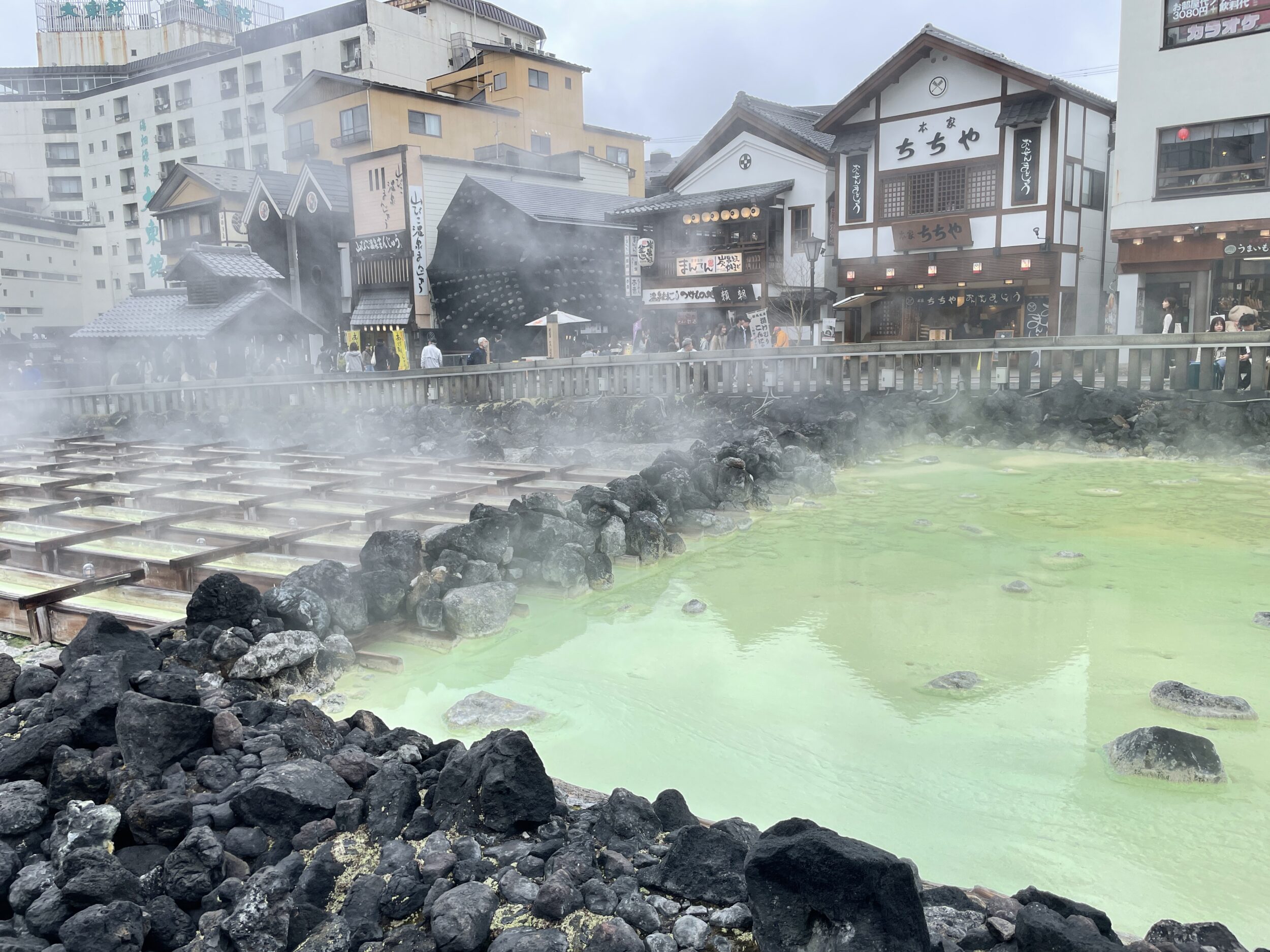
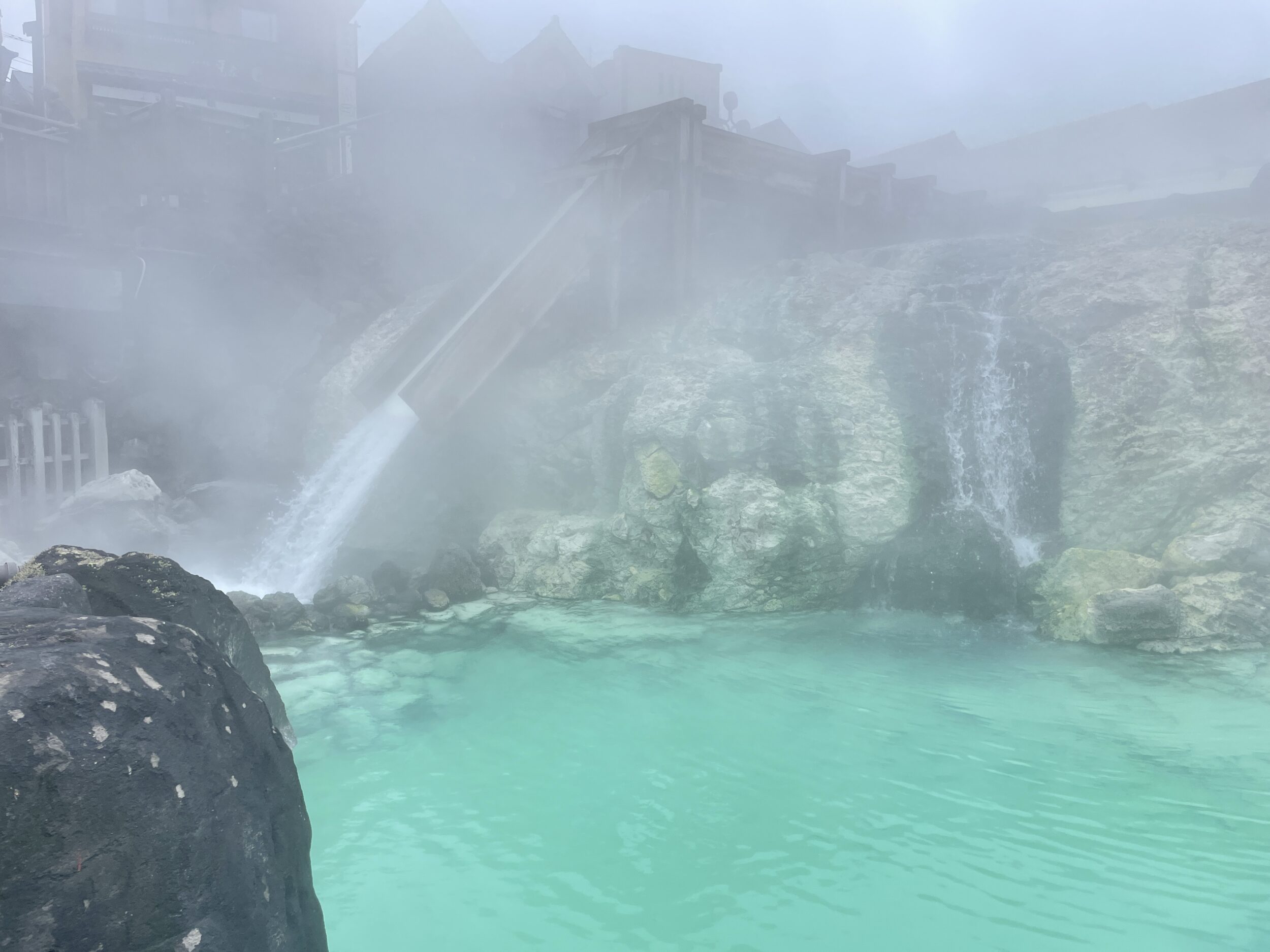
Kusatsu Onsen is the Japanese people’s favorite onsen town. The most important source, visible right in the city center, pours out thousands of liters of very hot water, so hot it has to be cooled down in the open air before it can be used in the onsens. Indeed, if you dilute it with cold water, it loses some of its properties, so better to let it cool naturally. We’ve already been to an onsen town near Osaka but this one is even more impressive with its thick permanent mist.
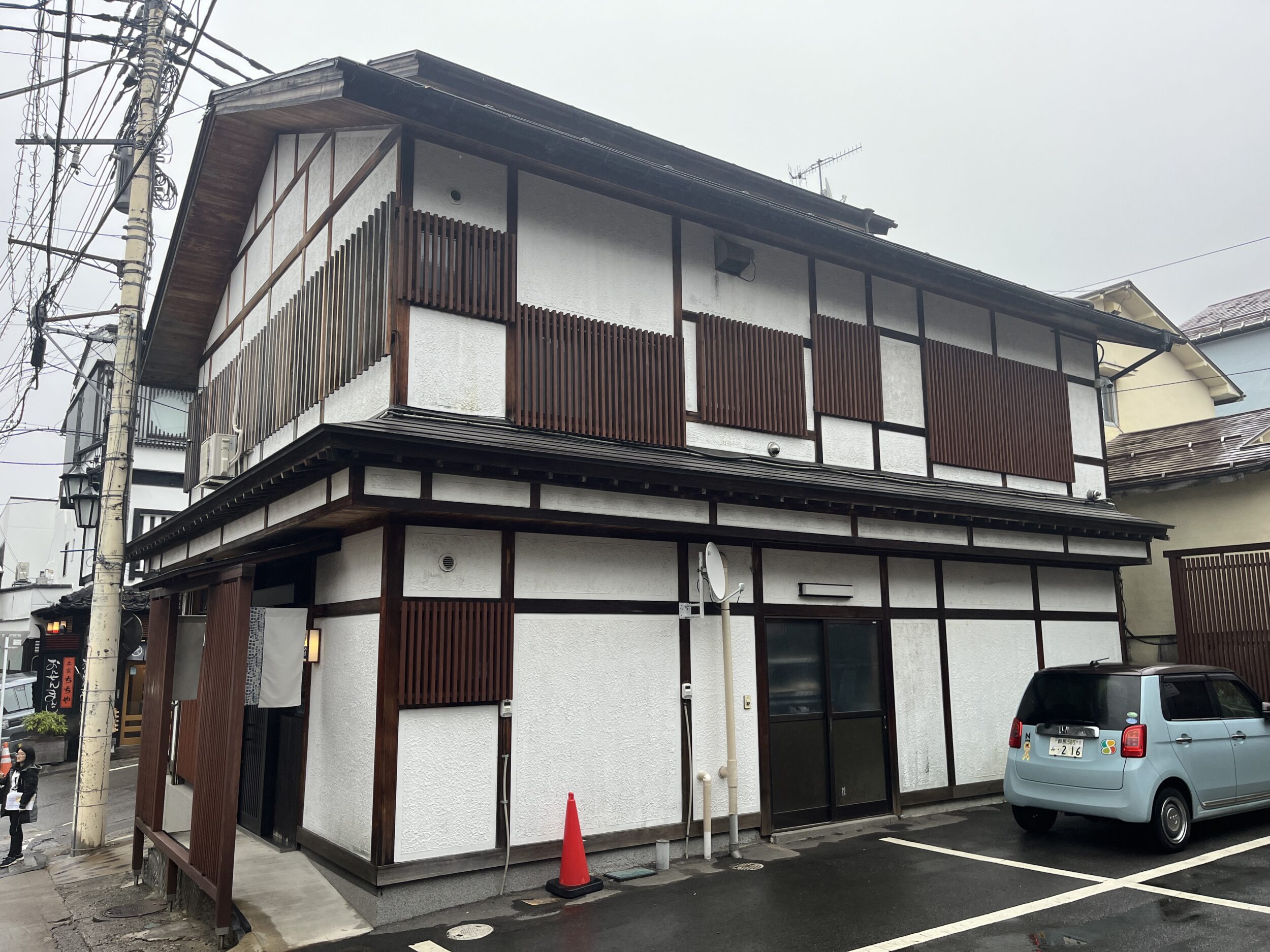
However, checking in at the hotel is complicated. We are in two different hotels because I wanted to book a more comfortable room for my parents. Of course, the receptionist at my parents’ hotel had a bit of trouble understanding why I was there. And at our hotel, we had to explain at length why we wanted to leave the car in the parking lot for our entire stay. In Japan, as soon as anything is out of the ordinary, it’s drama!! Also, this town seems less touristy (aka fewer foreign tourists) than other cities, no one uses translation machines here, so communication is less smooth, because they understand us (we use Google Translate) but we don’t understand them.
My parents discover their room in amazement (Booking link). They are in a separate building and occupy an entire floor by themselves.
The decor is a bit kitsch, like a “princess castle”, with 2 bedrooms (one modern style + one traditional style with tatami), a huge living room, a real dining room, but most importantly, the bathroom with a… private onsen !! Yes, the spring water flows directly into the bathtub and runs continuously.
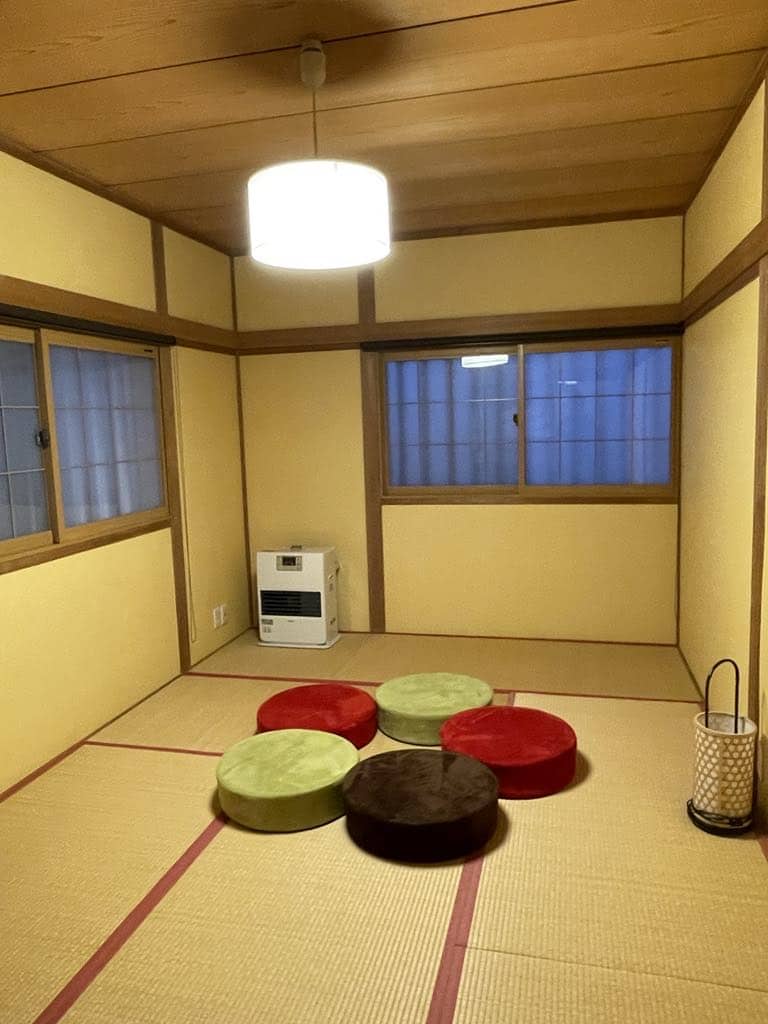
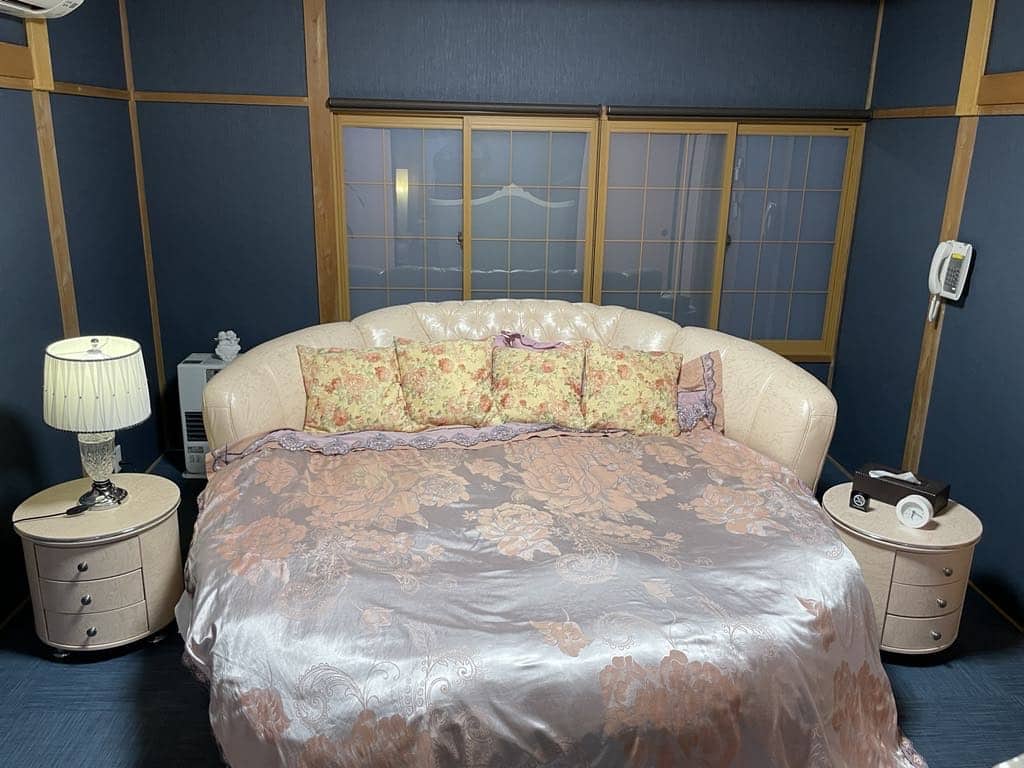
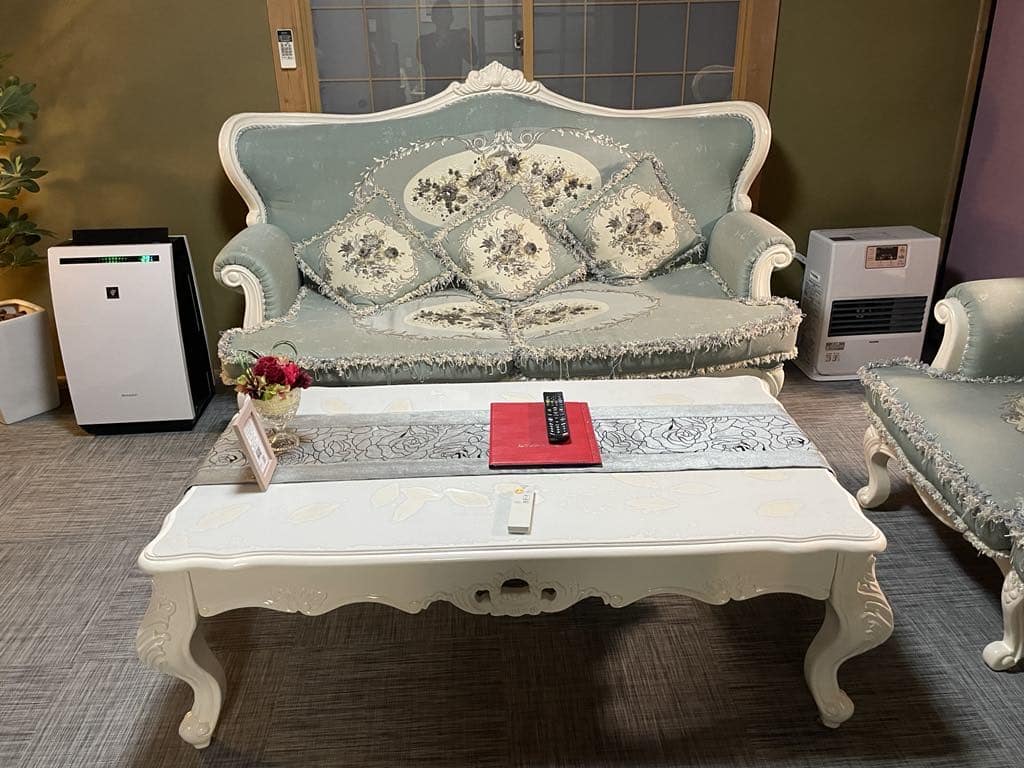
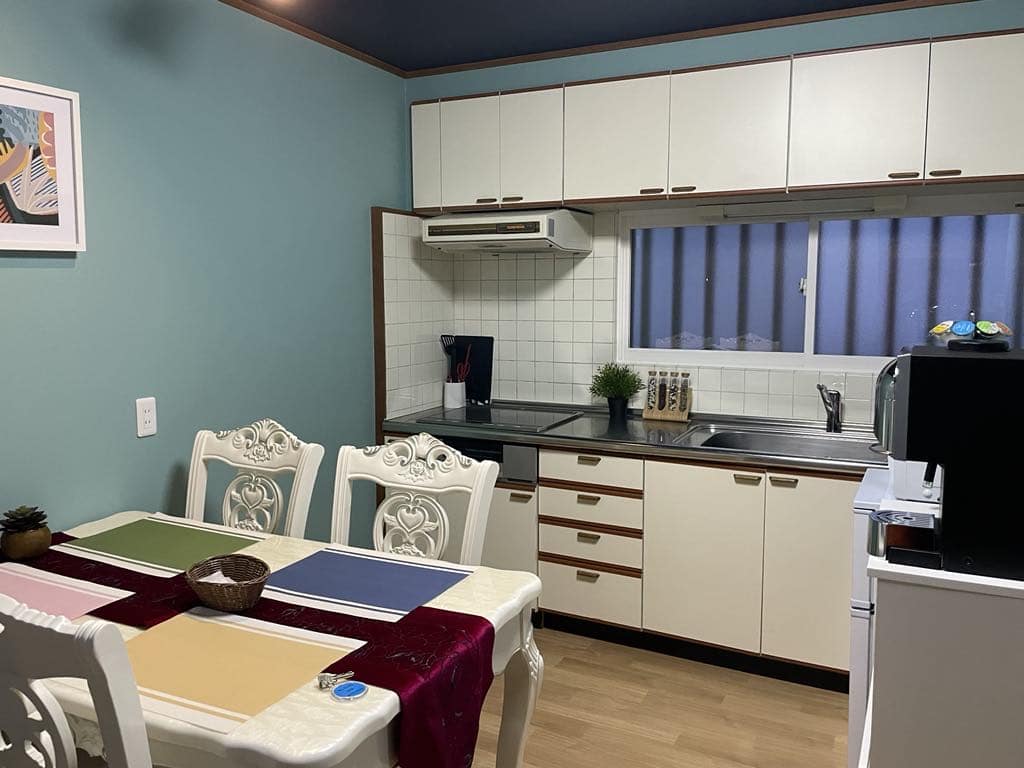
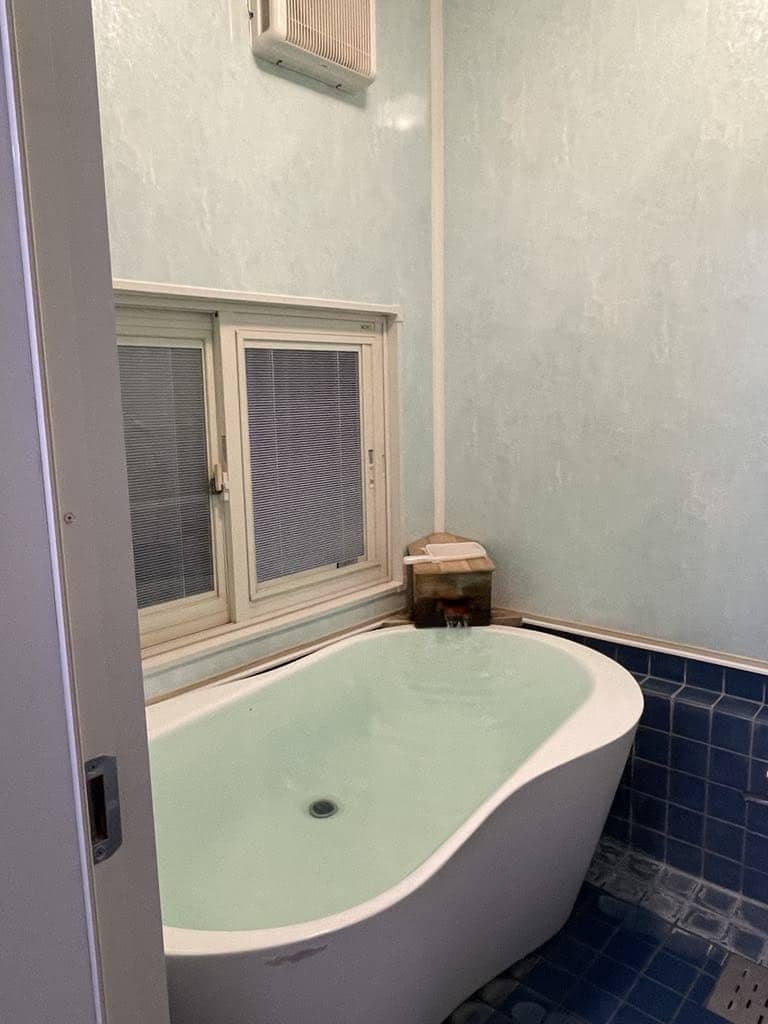
This hotel also has 4 private onsens in the main building (baths twice the size of this bathtub), so my parents get 5 onsen rooms in total, but they consider that theirs, since it’s in their room, is more than enough. Thus, they can soak their feet, their hands at any time, without necessarily taking a bath. Clearly, we could have housed an entire family here, but my parents thoroughly deserve this luxury experience for the two of them.
On our side, we are above a convenience store, our room is much smaller but has a nice table (where breakfast is served). We only have a toilet; we have to shower at the shared onsen on the ground floor.
At one point, a French-speaking couple passes us and, thinking I’m Japanese, asks us to translate a question to the receptionist. They quickly realize I’m not Japanese when JB pulls out Google Translate. I think they have more Japanese vocabulary than I do. But the funniest part is when the receptionist shows them the onsen, indicating the women’s side, the men’s side… and the two remain confused. Since I hadn’t seen the onsen, I thought it was complicated. Then, when I go to the onsen myself, I’ll laugh out loud because the curtain in front of the women’s onsen is pink, and the curtain in front of the men’s onsen is blue, i.e., no confusion possible… unless the two of them are colorblind?? It’s surely their first onsen, and it’s true that the concept isn’t necessarily obvious at first. If you ever discover the onsen for the first time, we have explained the concept here. Normally, onsens are off-limits to tattooed people, but in Kusatsu, it says they are accepted, but ask anyway if you have tattoos.
We meet at the restaurant right next to my parents’ hotel for dinner. My parents are still in shock that the hotel far exceeds their expectations. What madness! What extravagance! They thought the ryokan they stayed in a few days ago was already the best you could get. FYI, the room costs 224€/night, certainly a hefty sum, but after two nights in this little paradise, I have feedback saying it’s totally worth the price because it lets you fully enjoy the onsen. It’s important for those seeking healing with the spring water. Kusatsu Onsen’s water is rumored to be good for “curing all diseases, except lovesickness” 😀
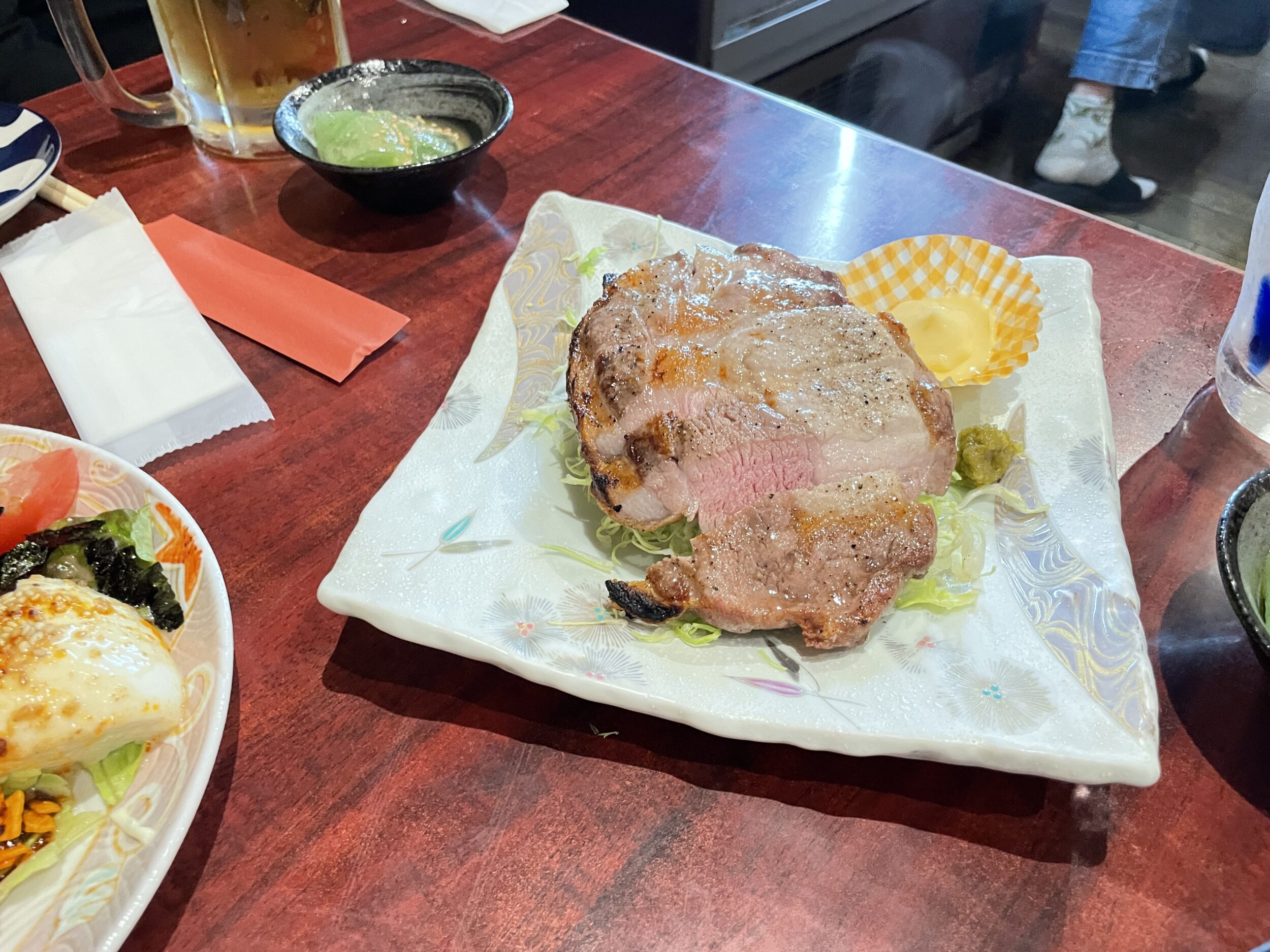
We dine at an “izakaya”-type restaurant, where people mostly come to drink, but there is food to accompany the drinks. After ordering a lot (of food), we only order one beer. But the waitress insists so much that she even counts the number of drinks vs. the number of diners. We don’t quite understand why and have to order a drink out of spite: I end up with a Fanta even though I ordered a hot tea hahaha but oh well, it’s not a big deal. In Japan, I don’t fight over such details because it takes more energy to make myself understood than to drink a drink I didn’t order.
The dinner was delicious and sponsored by dad. Thank you very much!
Day 7 of the road trip:
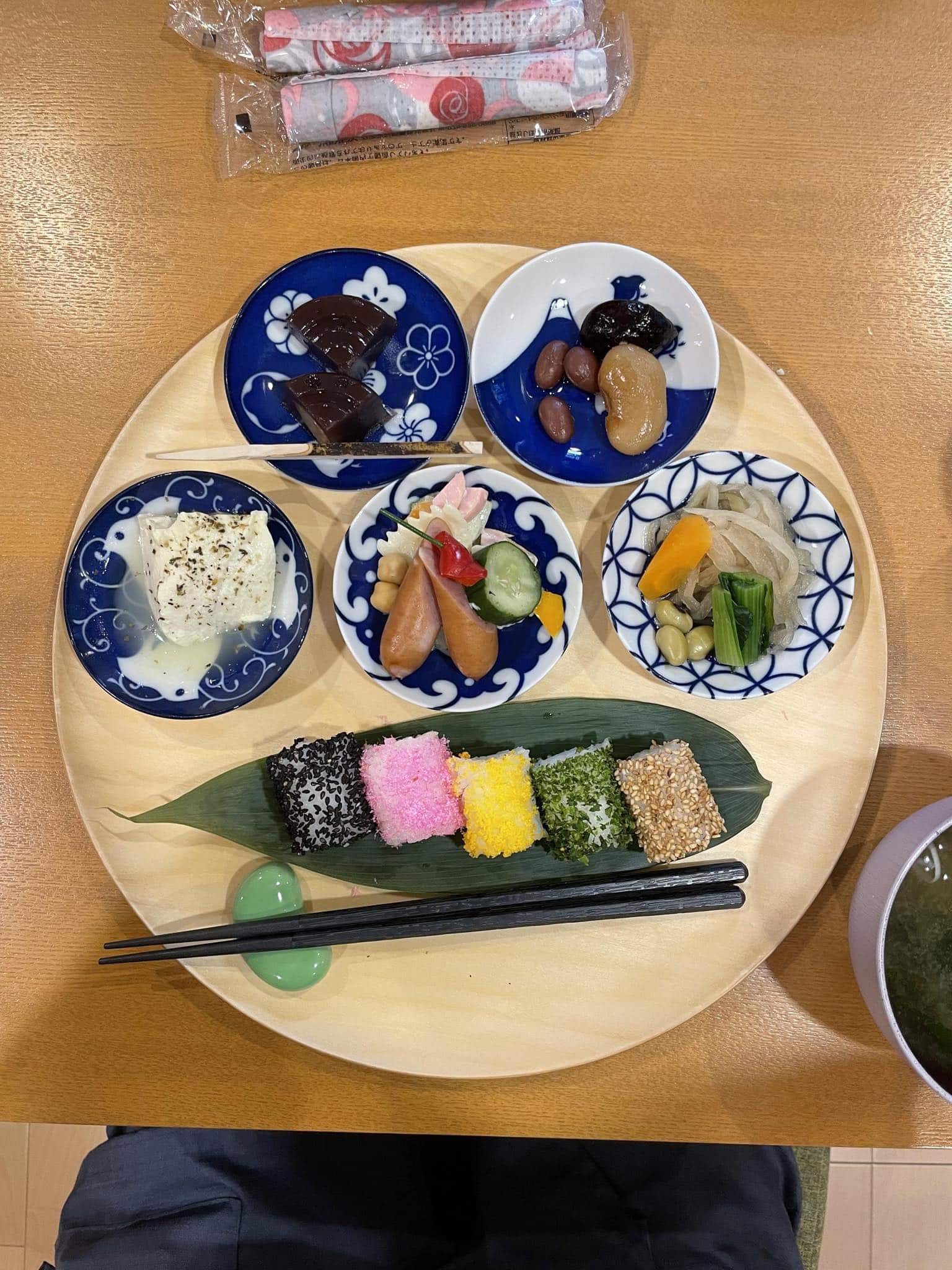
My dad sends me a photo of his breakfast, which he has in the main building. Apparently, it’s delicious, and there’s no raw fish (my parents don’t eat it). Breakfasts change from day to day. The next day won’t be as good.
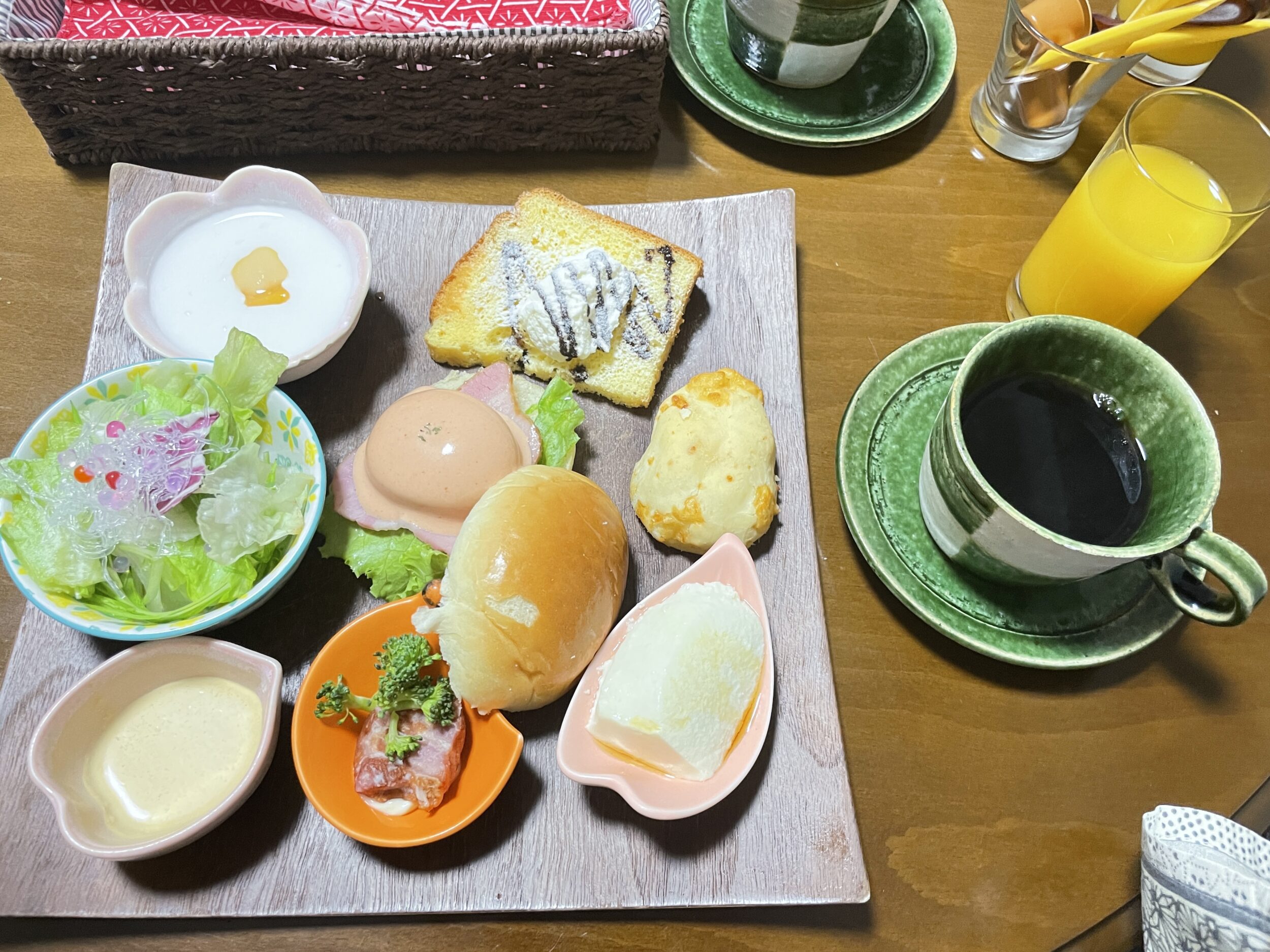
I send him a photo of my breakfast. Here, they give me coffee even though I don’t drink it 😀 the whole thing isn’t very good, but the burger with the runny egg is delicious!
Ōtaki no Yu
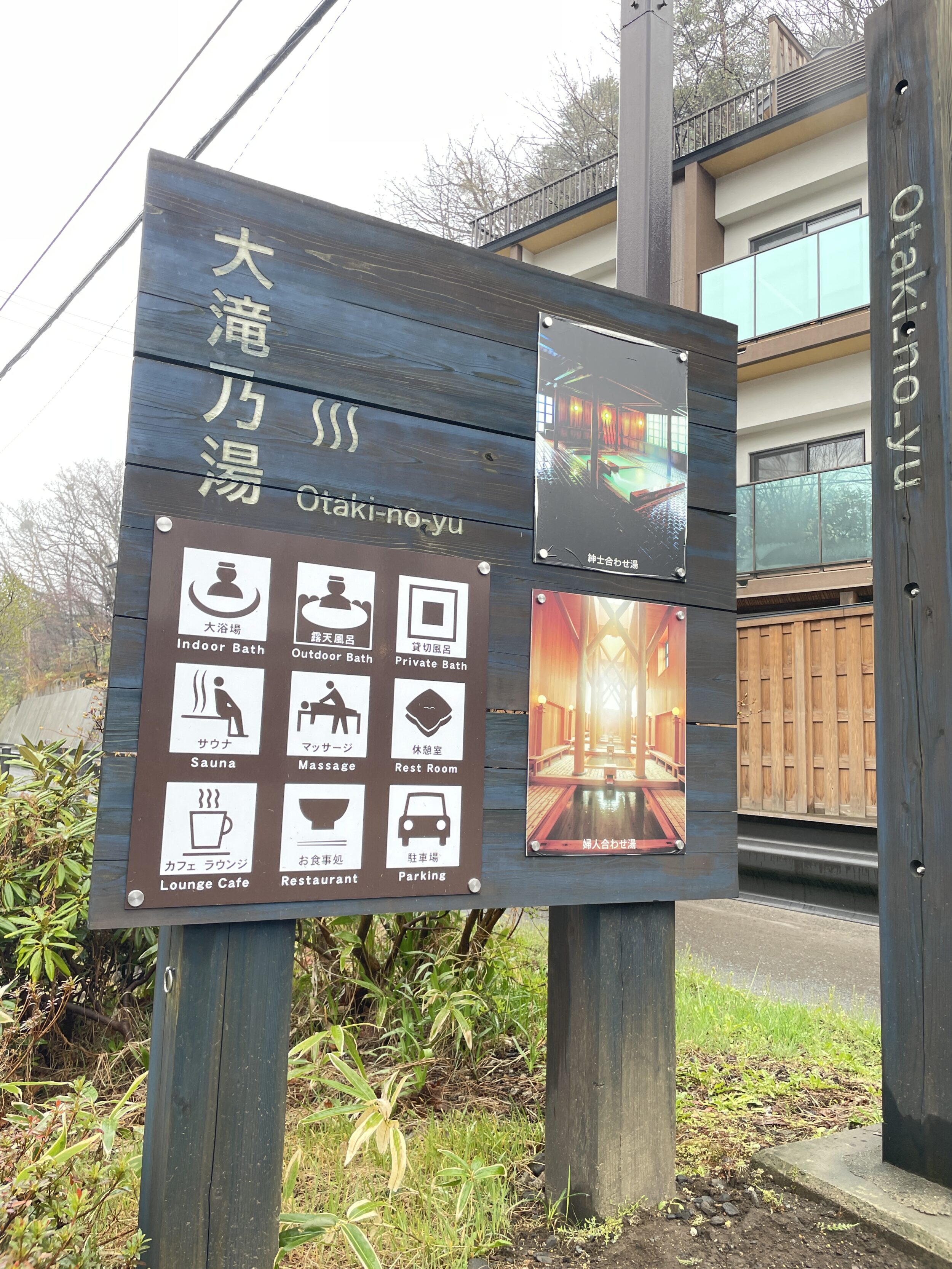
I leave my parents to enjoy their private onsen, while we pay for access to a paid onsen (1100yen/person): Ōtaki no Yu. My parents aren’t comfortable in these kinds of public onsens, but we’re used to it, having done only that on our first trip to Japan. There are three free onsens in this town and several paid ones.
This one is the most recommended. It’s small compared to the huge onsens we frequented in Tokyo and Osaka, but it has:
- an indoor bath
- an outdoor bath overlooking a nice hill
- a sauna
- a series of 4 successive baths, to be used in order: from the least hot to the hottest. Apparently, this helps the body get used to the hot water, and in this way, it can better eliminate toxins. Once you reach the hottest bath, you should stop. However, the hot bath is scalding! I barely lasted 5 seconds, it must be 46 degrees I think
The water comes from a different source than the one in the city center. I can’t tell you the differences, but those who are sick should try as many water sources as possible! There are six in total, so you’re spoiled for choice! Anyway, after this onsen, you feel like you’re floating on a cloud, but you’re also very, very tired, as is the case with waters too concentrated in minerals.
For those who struggle with public onsens and can’t afford a room with an onsen, there are plenty of other onsens that can be privatized, where you’ll need to shell out about 4000 yen for 50/60 minutes. You can contact:
- Onsen Ōtaki no Yu (besides the public onsens, they also have private ones)
- Gensen Ichinoyu
- Hanaingen Hotel
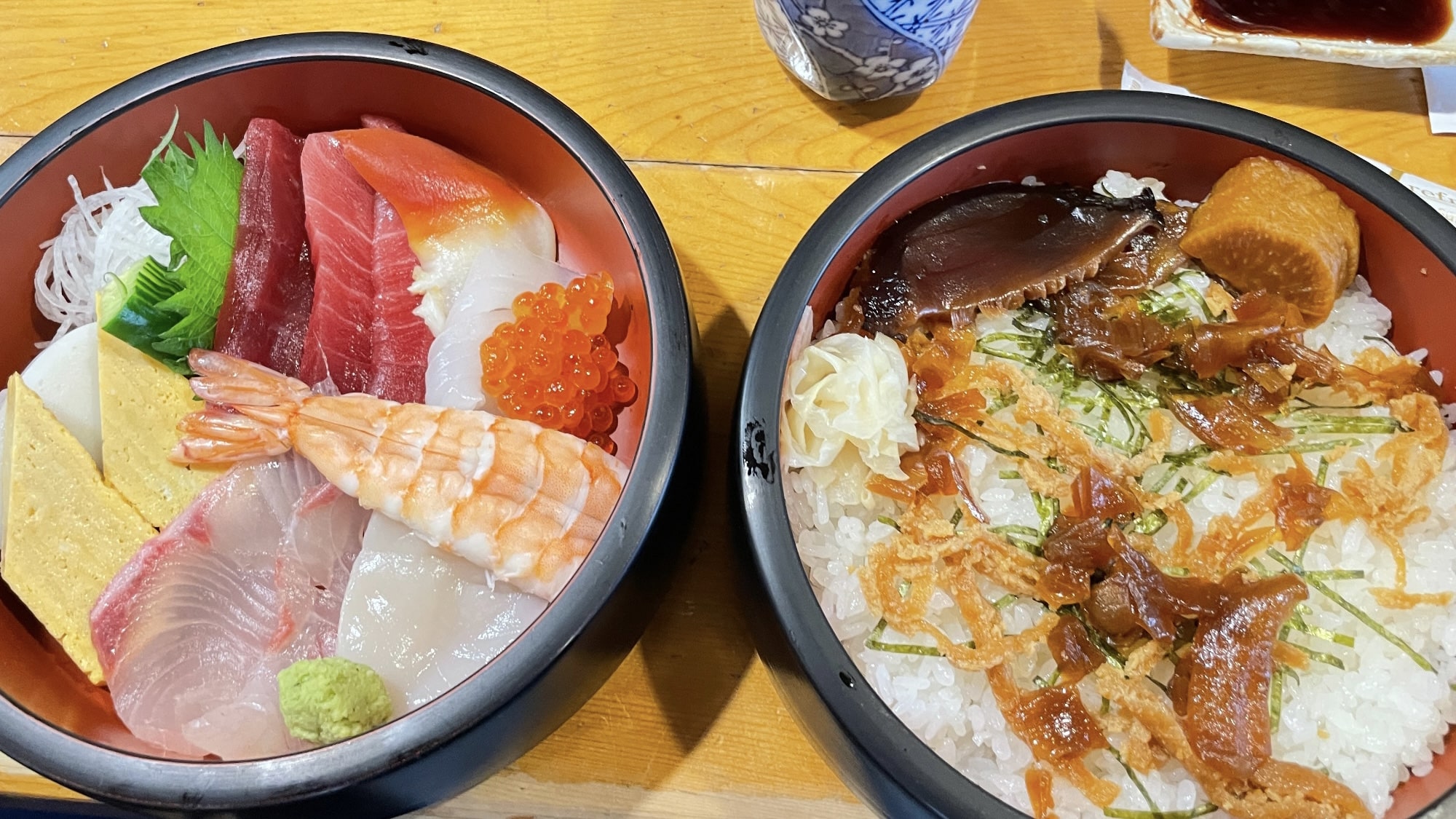
We have lunch at Makoto Sushi, a sushi restaurant. Here, the chef is behind the counter and you can watch him prepare the sushi for you. I opt for a chirashi. It’s excellent! We’re in the mountains, but the raw fish at the restaurant remains good quality.
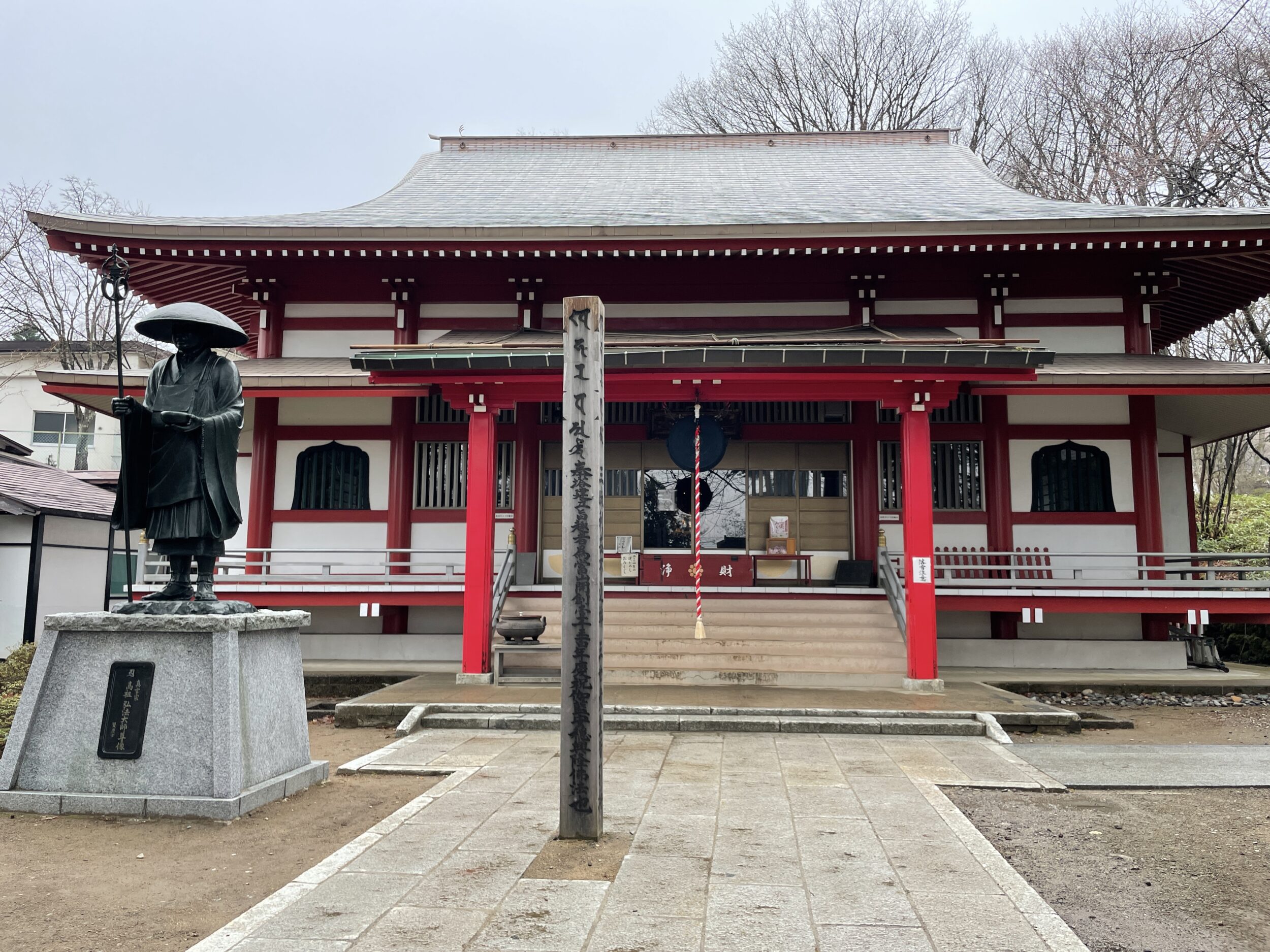
It’s time to join my parents. I give them a little tour of the town. We start with a Buddhist temple.
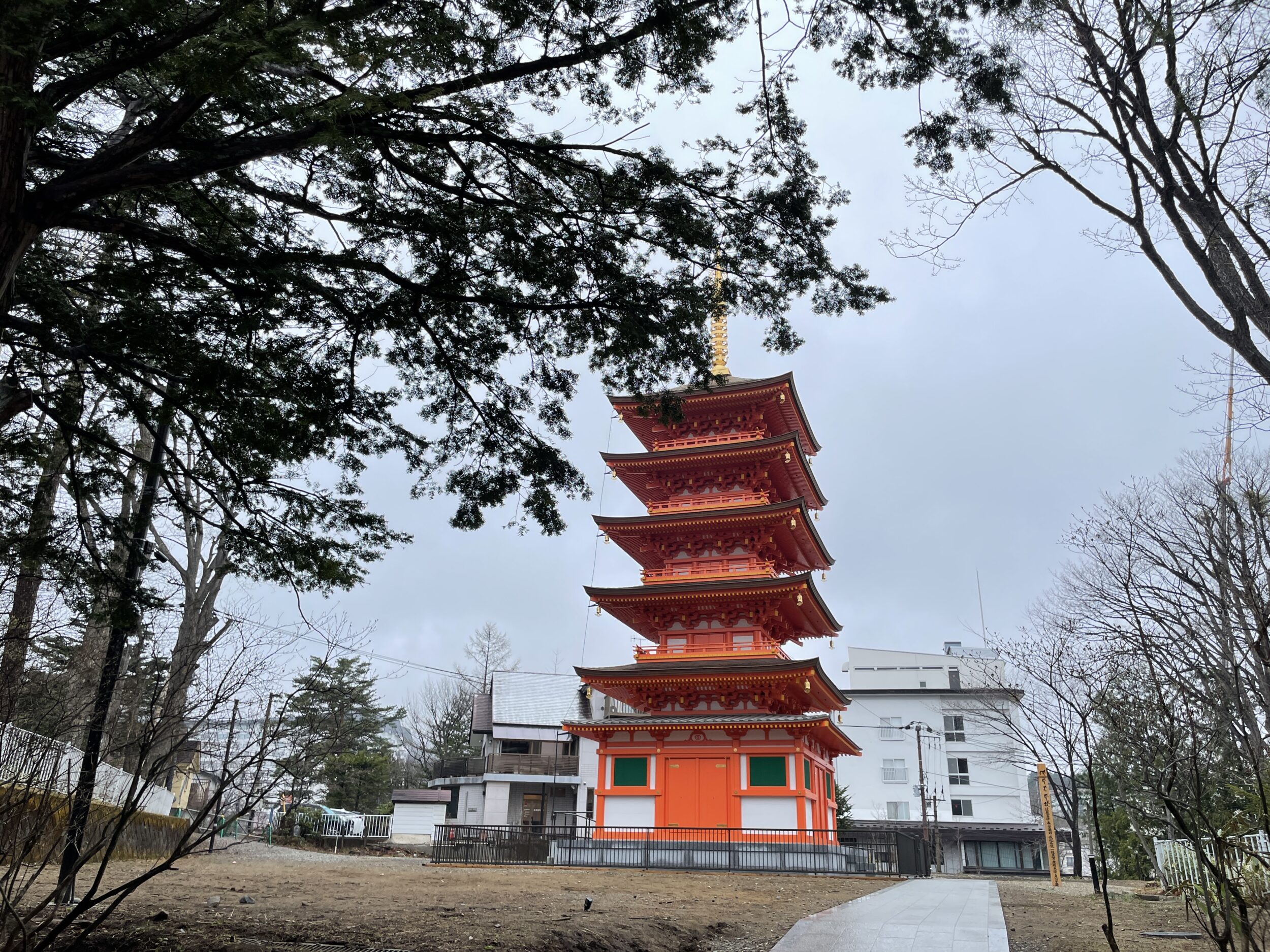
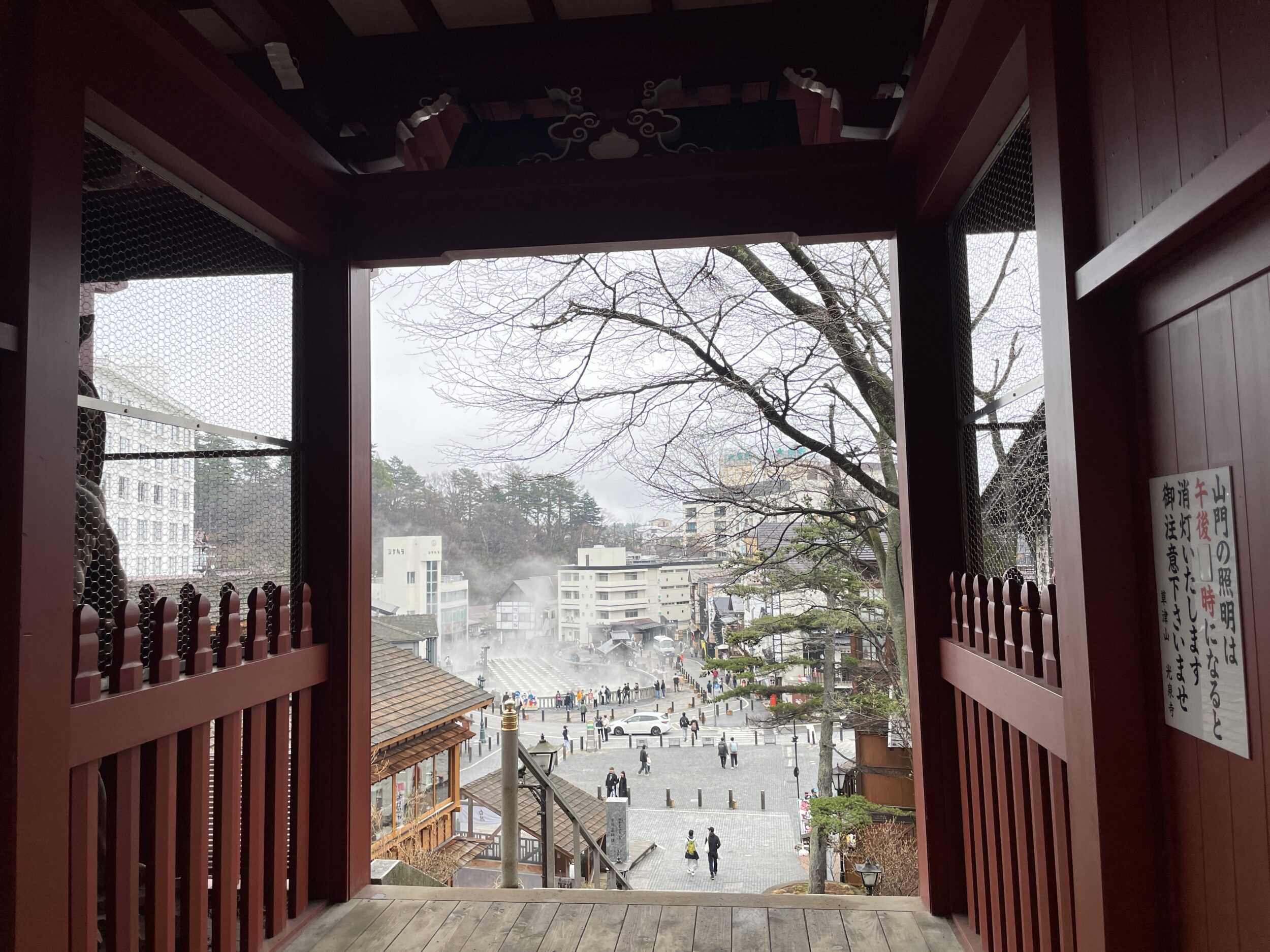
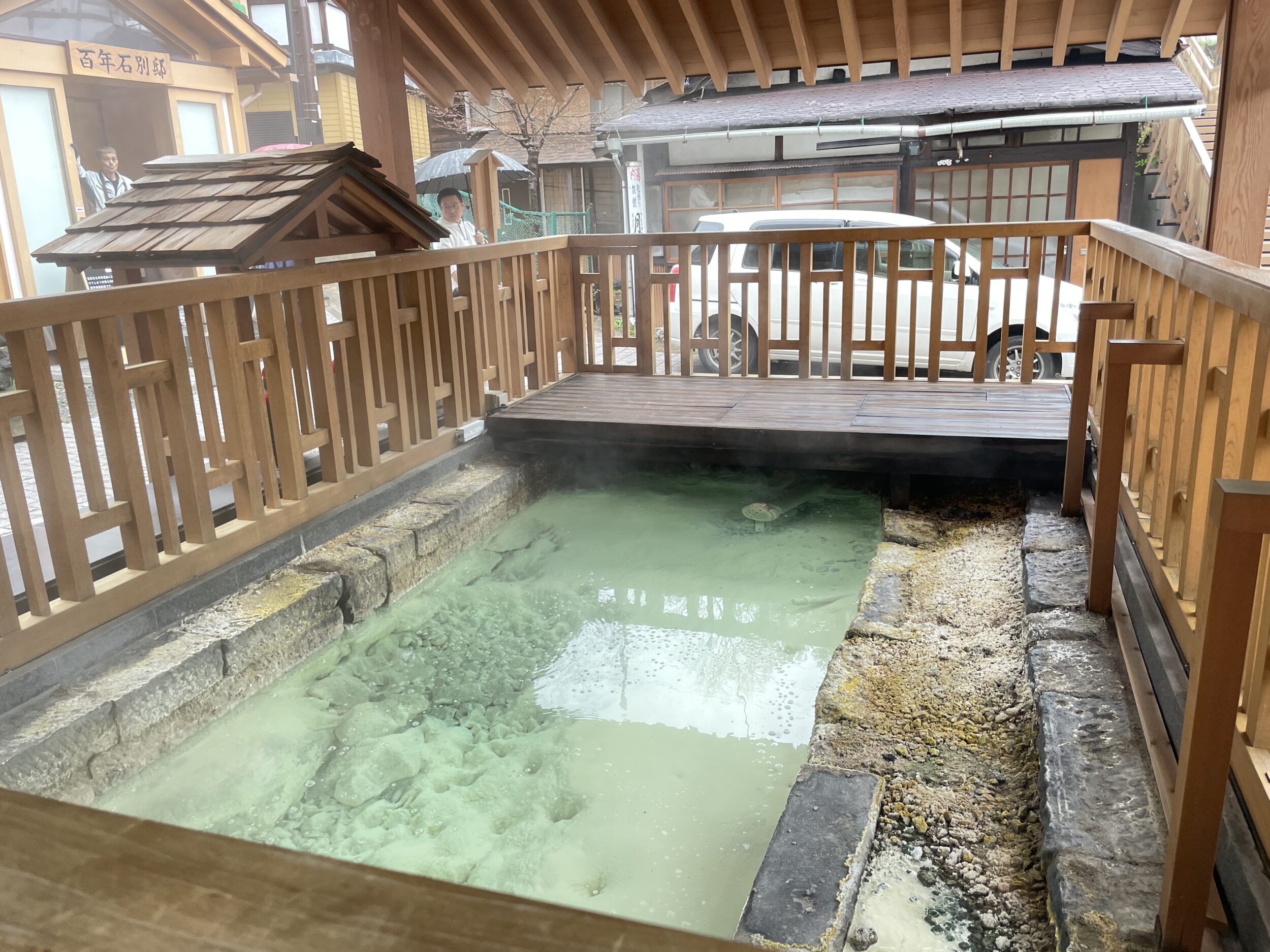
Then the main source (Yubatake), always steaming. You have to walk around it, otherwise you might miss the small artificial waterfall. You see the little boxes where the water is channeled into the open air to be cooled before being sent to the onsens? Despite the presence of sulfur in the water, the smell is quite acceptable.
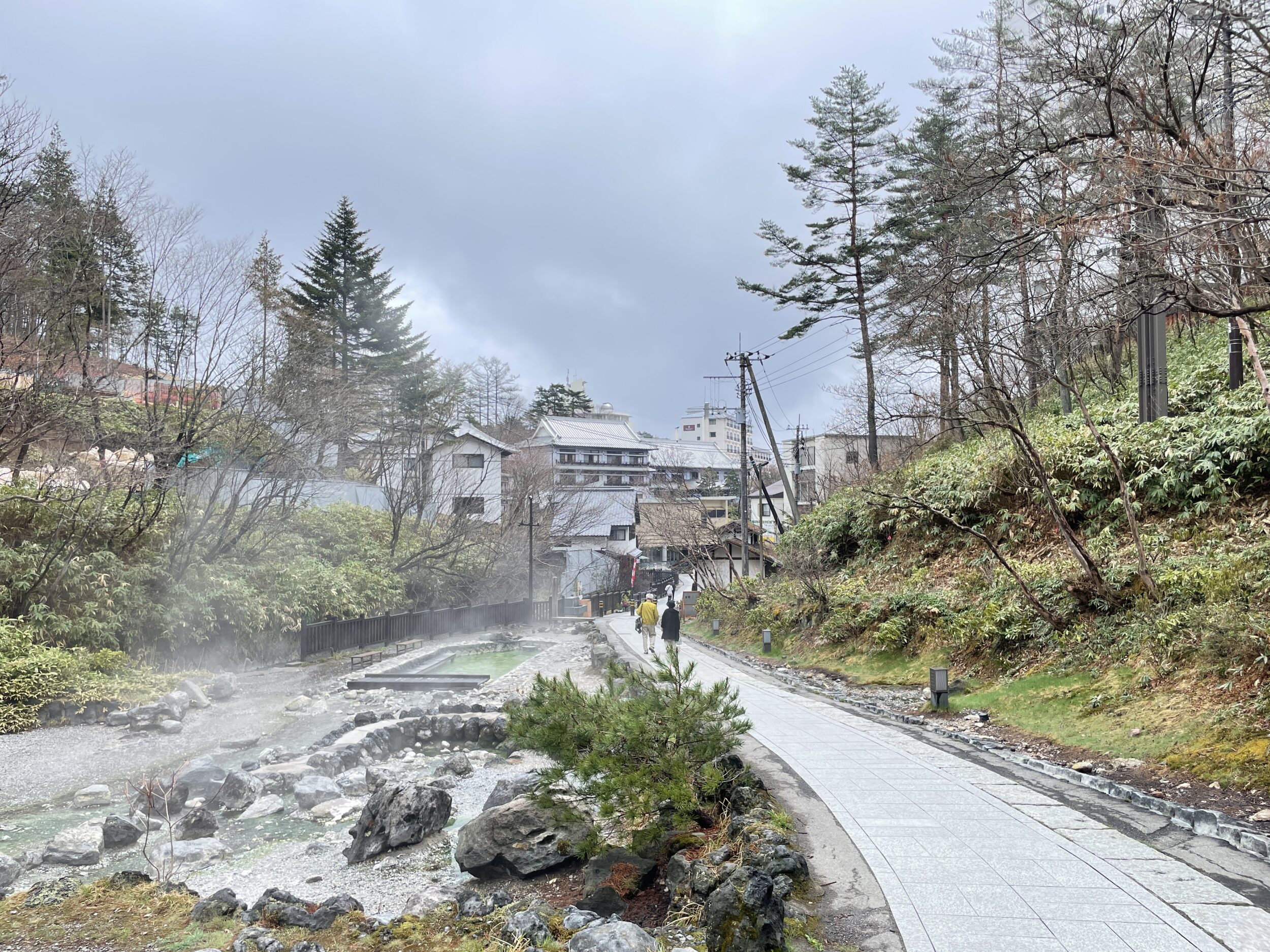
I then take them to soak their feet in 2 other water sources so they can enjoy their benefits.
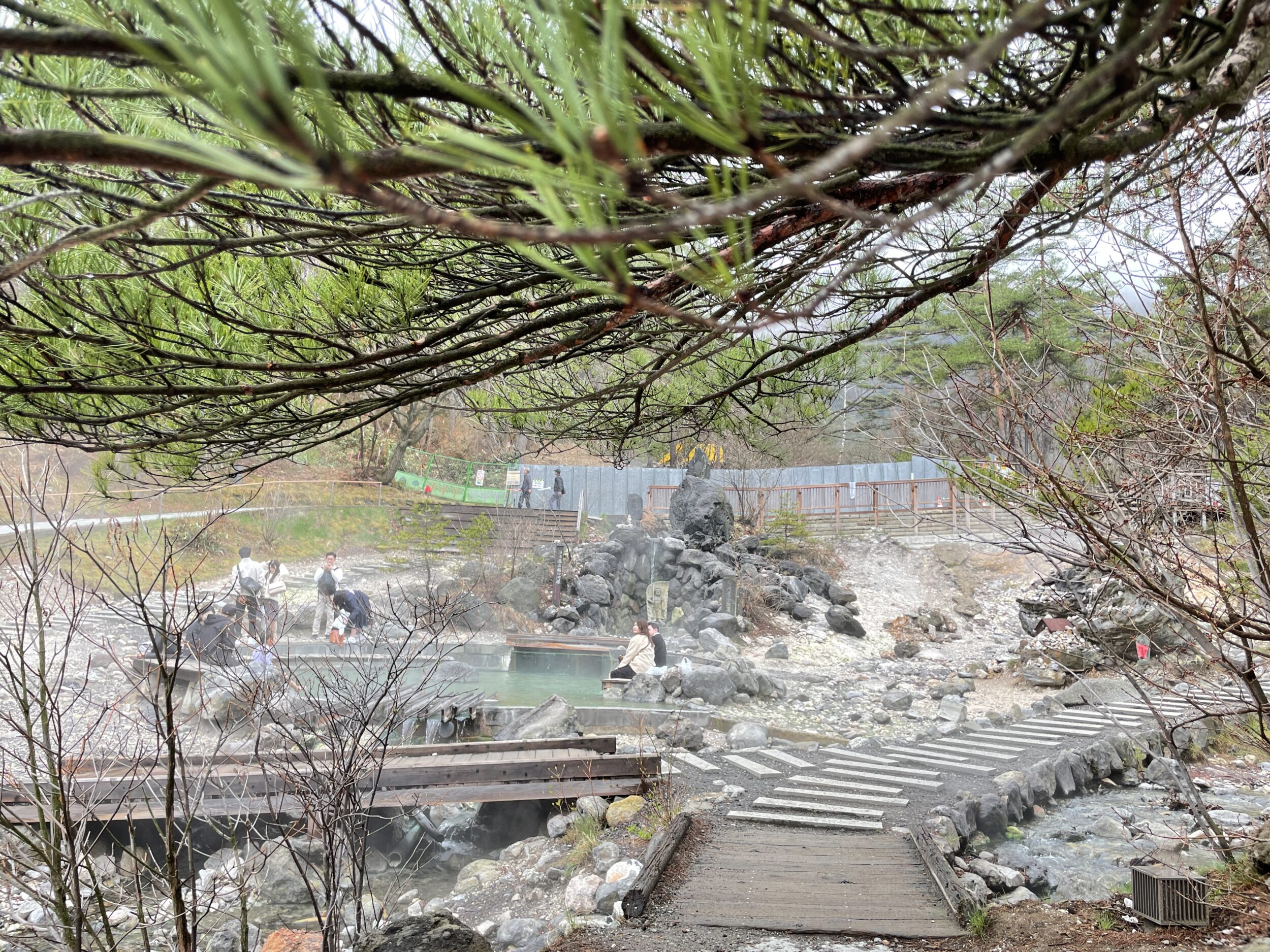
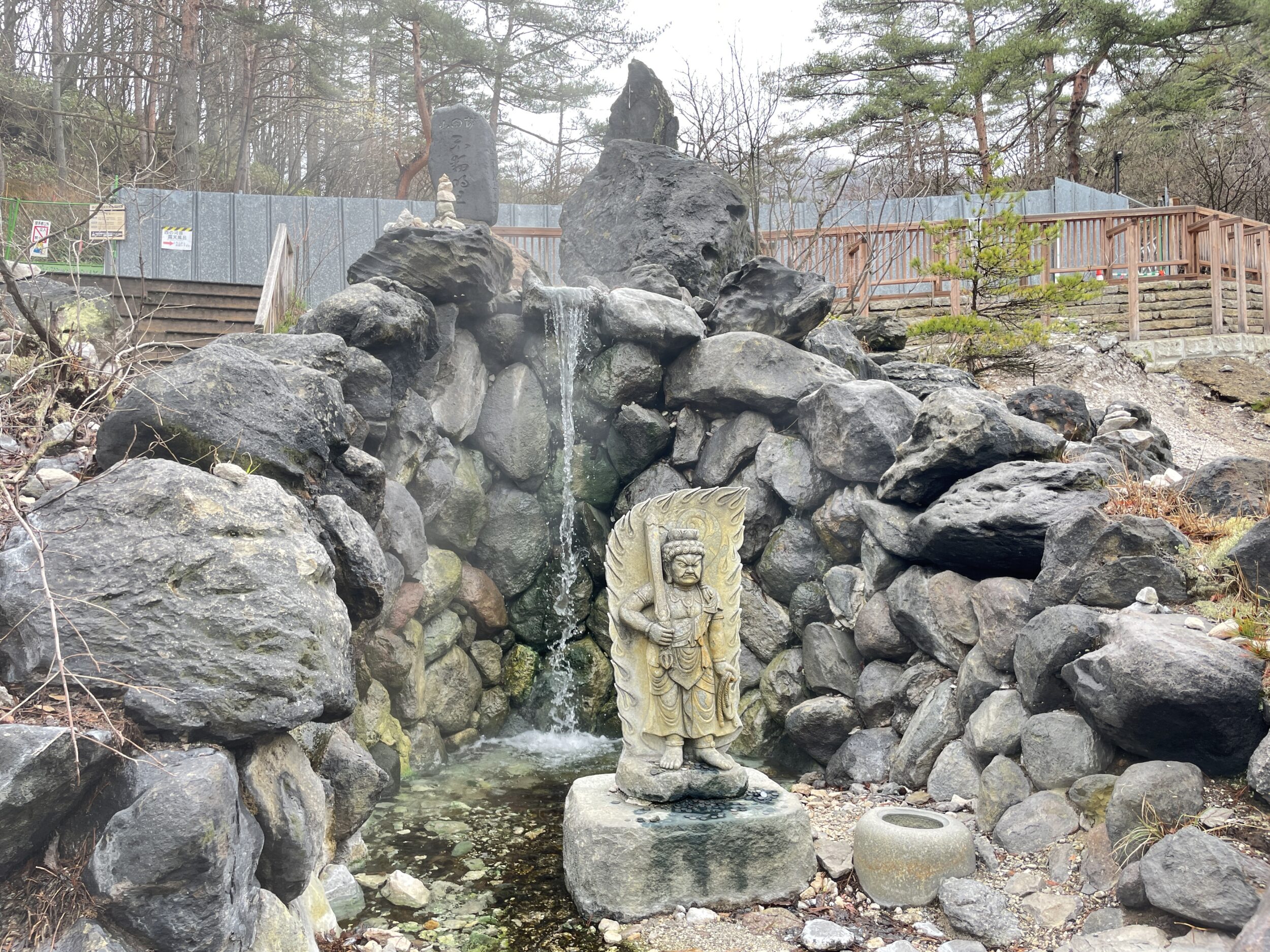
The first one (Sainokawara Park) is in the middle of nature, but the water is not very hot, I’d say only 40 degrees? If you continue up to the top, there’s a huge outdoor onsen, but JB doesn’t seem impressed and doesn’t plan to pay to get in.
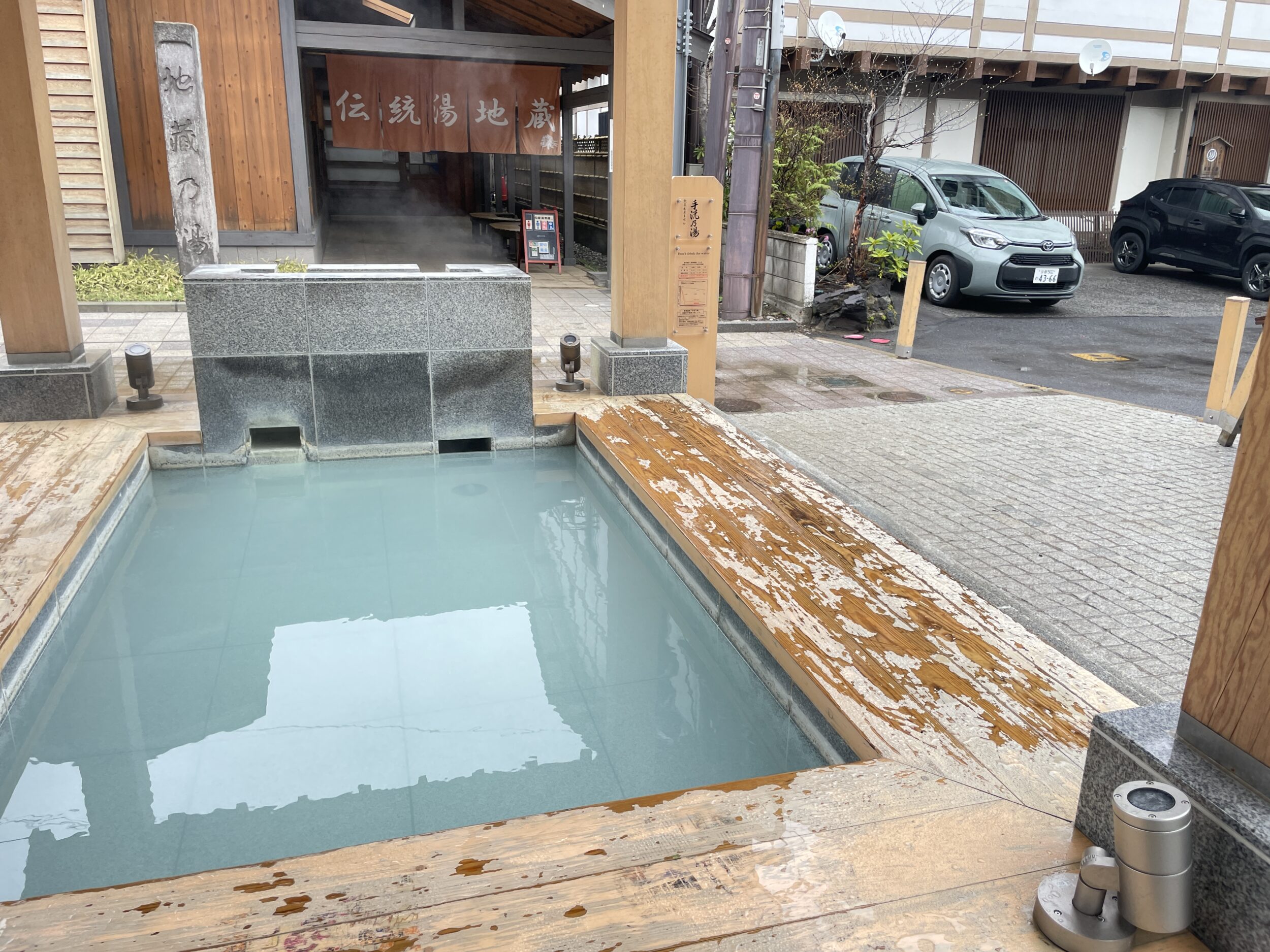
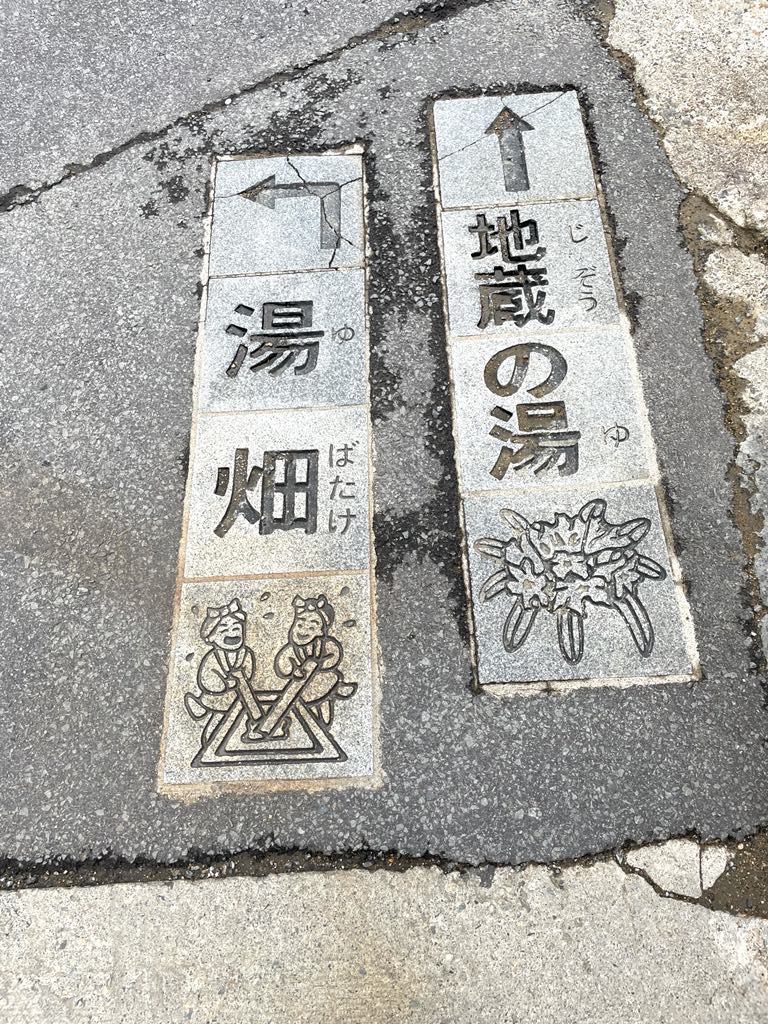
The second is near the city center, in front of the Jizo Hot Spring. This foot bath is not very busy, and the water is much cleaner than the one in the city center. It’s also hot, I’d say around 43-44 degrees. If I’m able to measure the temperature fairly accurately, it’s because I have a well-defined tolerance threshold: 45 degrees is my limit. The foot baths do us a lot of good because they help us recover energy after a few hours of walking in the light rain and wind. Don’t forget to bring a towel to dry your feet.
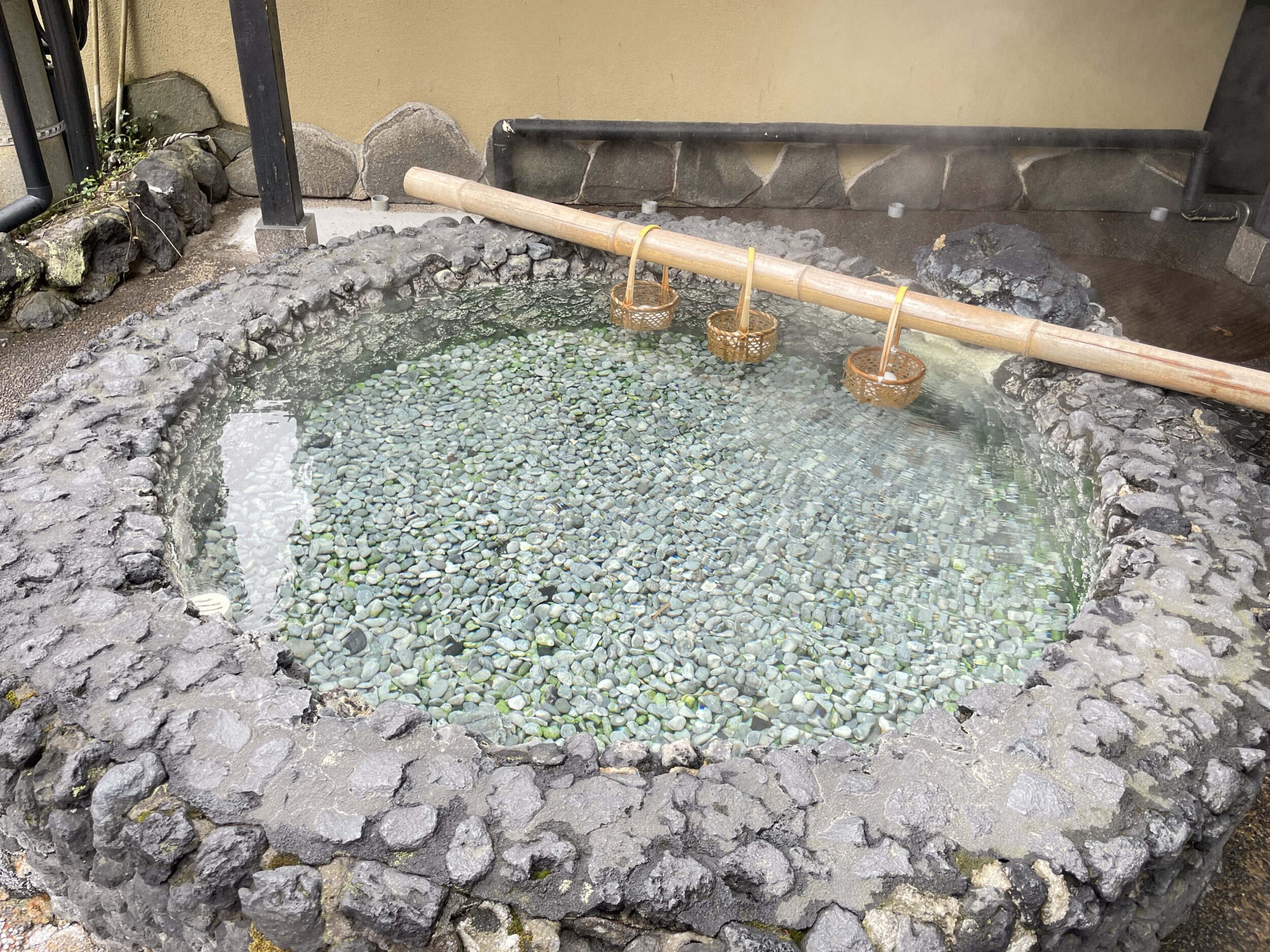
The source:
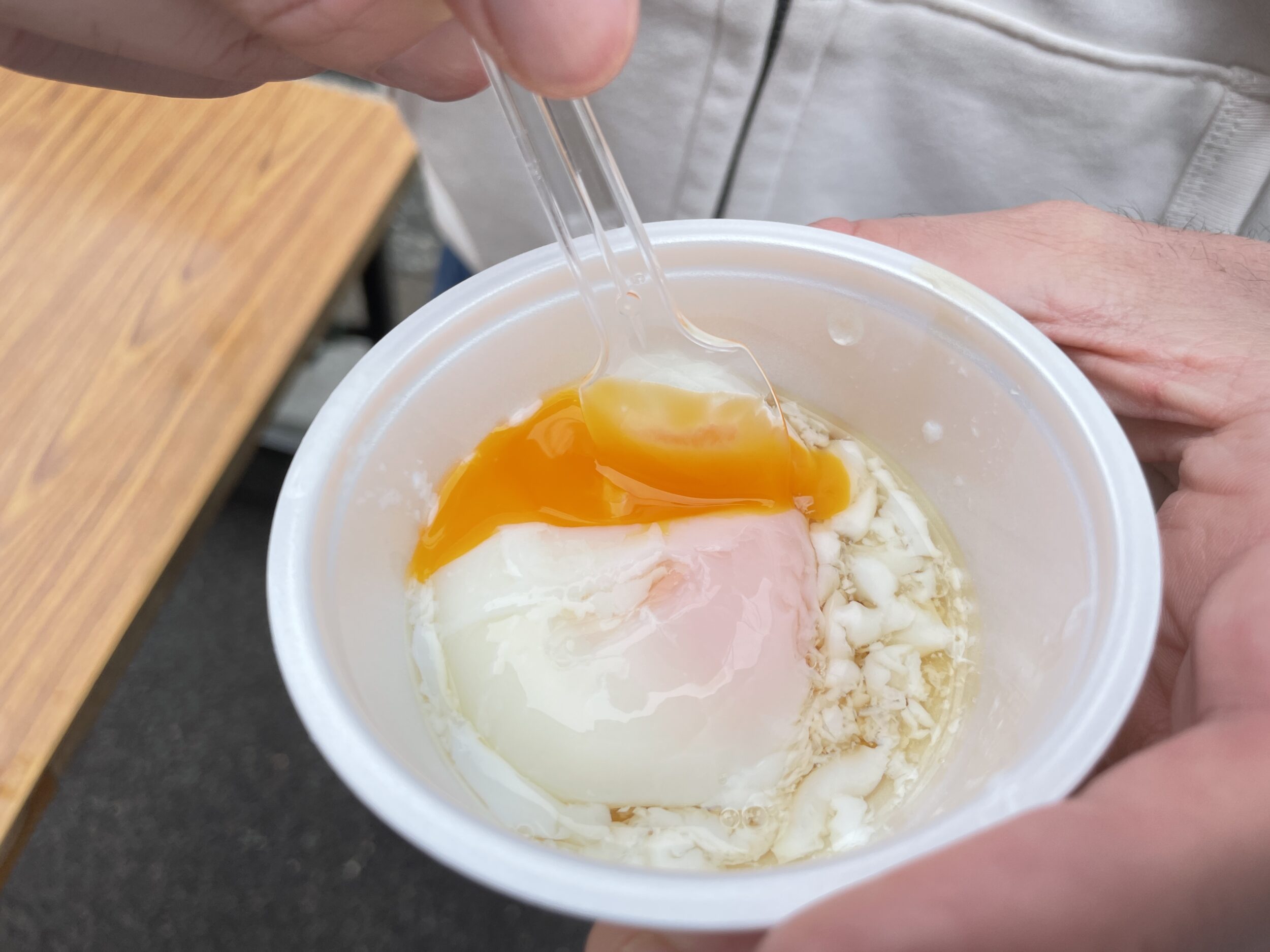
The foot bread:
On the way, we’ll stop in front of a shop where customers eat with their feet in the water. And another where eggs are cooked in the spring water.
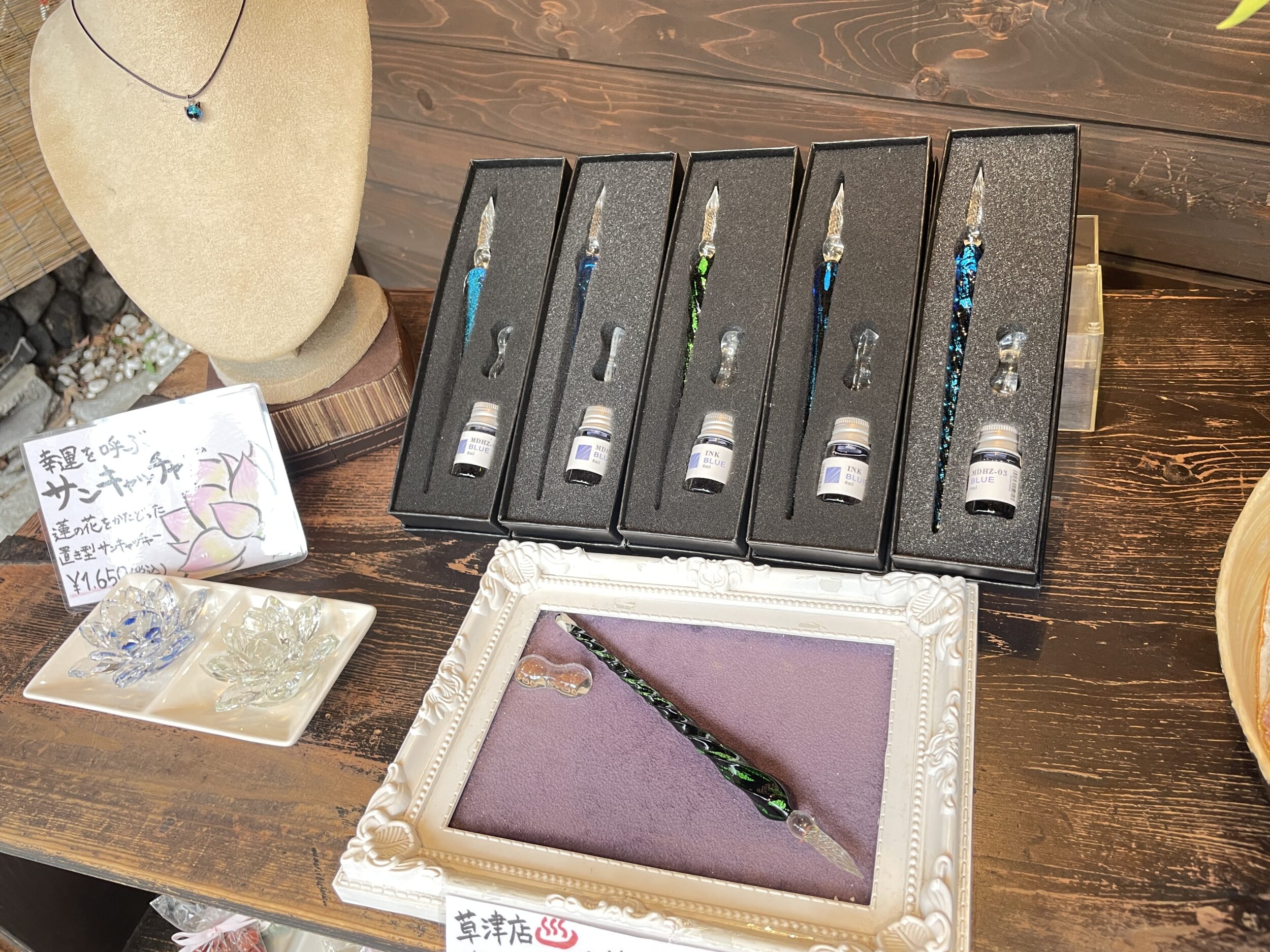
And for the first time, I touch these famous glass calligraphy feathers, which are apparently very difficult to make.
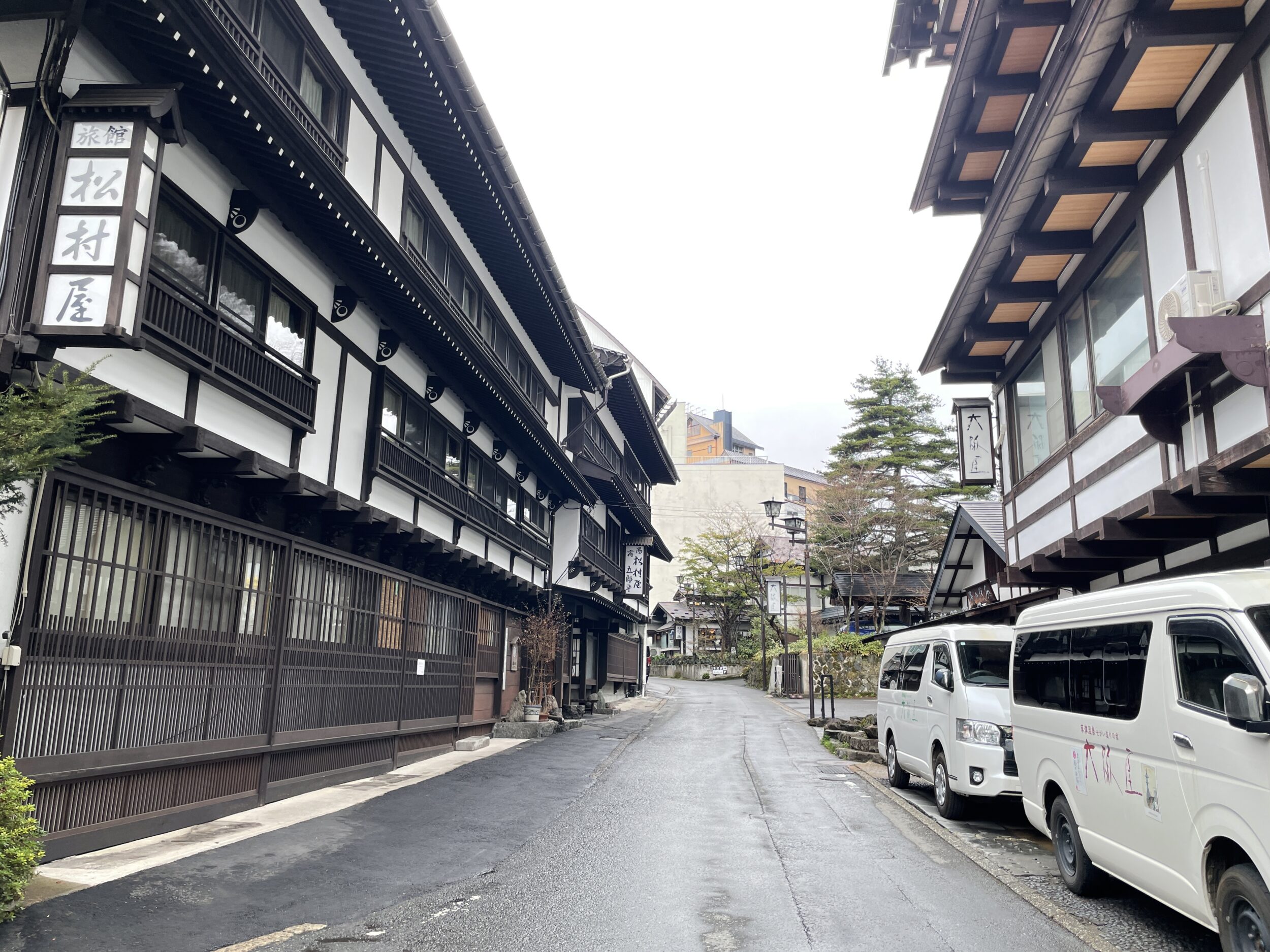
In onsen towns, it’s perfectly acceptable to walk around in a yukata (provided by the hotel) and sandals in relax mode, but it’s too, too cold for us to do so. The town is very pretty and small enough to do everything on foot. Good thing because many streets are closed to cars and parking spots are extremely rare.
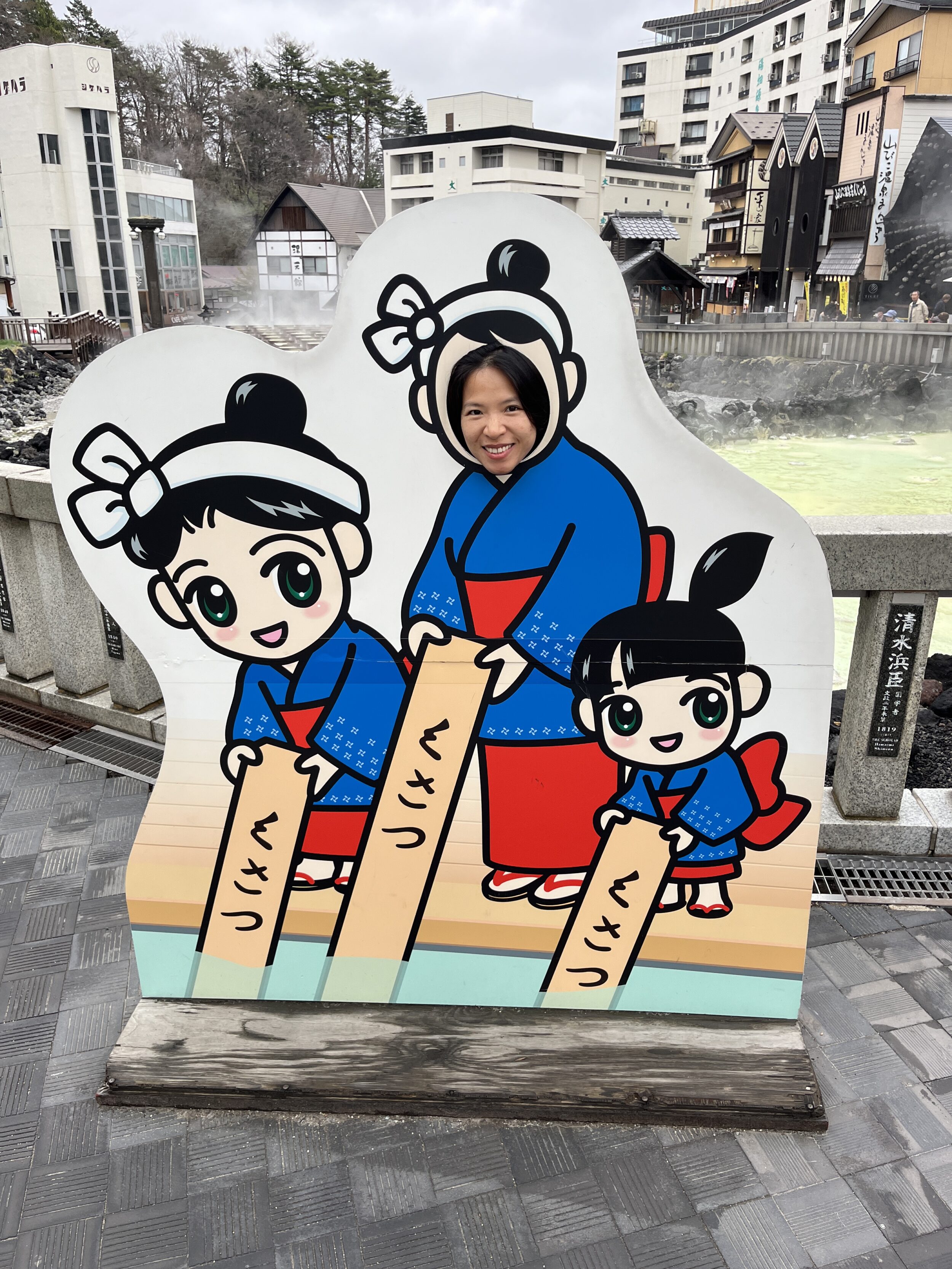
At 3 p.m., you already have to queue for the yumomi performance (in the old days, the water was cooled by hand with wooden paddles).
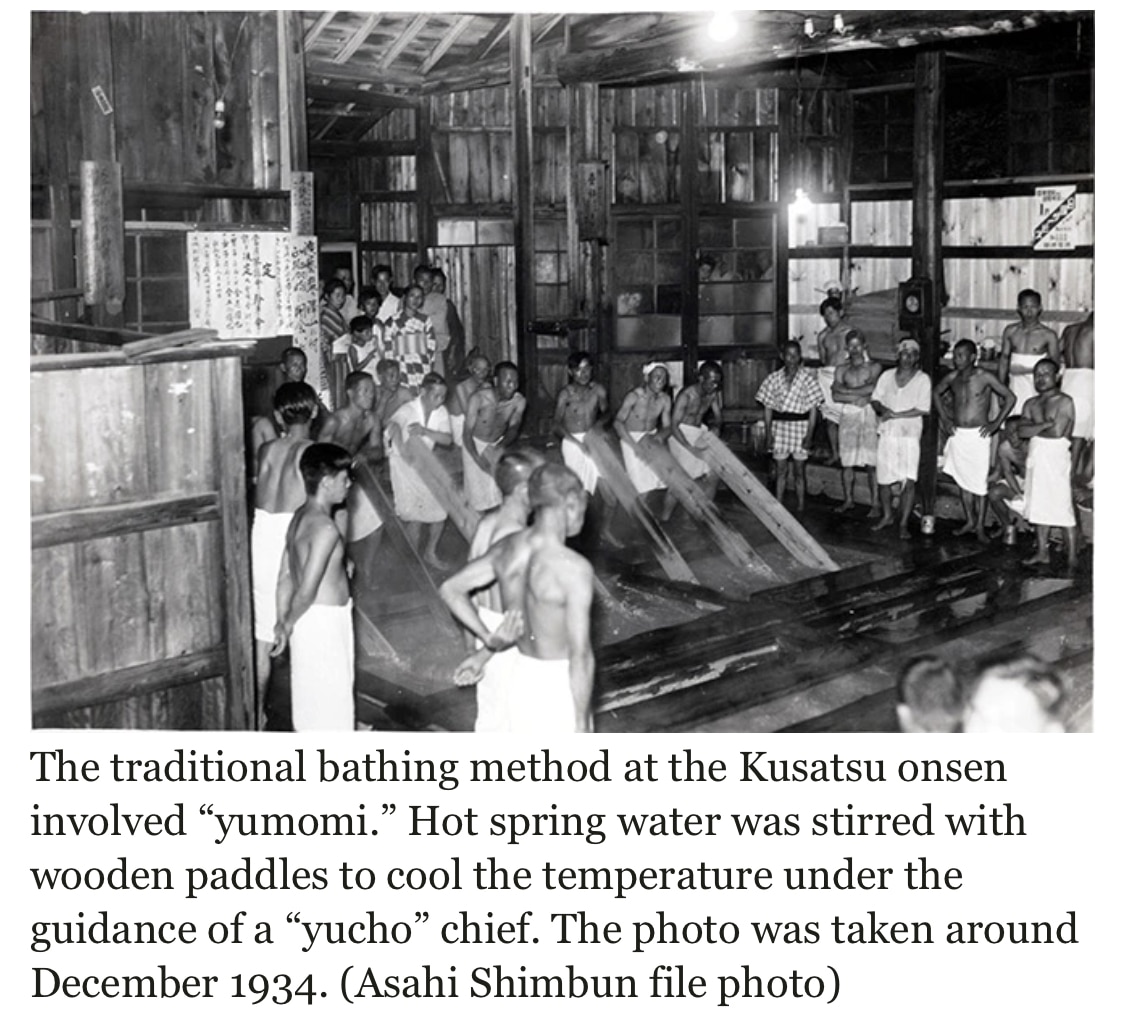
The show attracts a lot of people, and the hall is old and also very pretty. But for 700 yen, we get barely a long incomprehensible speech because it’s entirely in Japanese, a few songs (too short), and a few yumomi demonstrations.
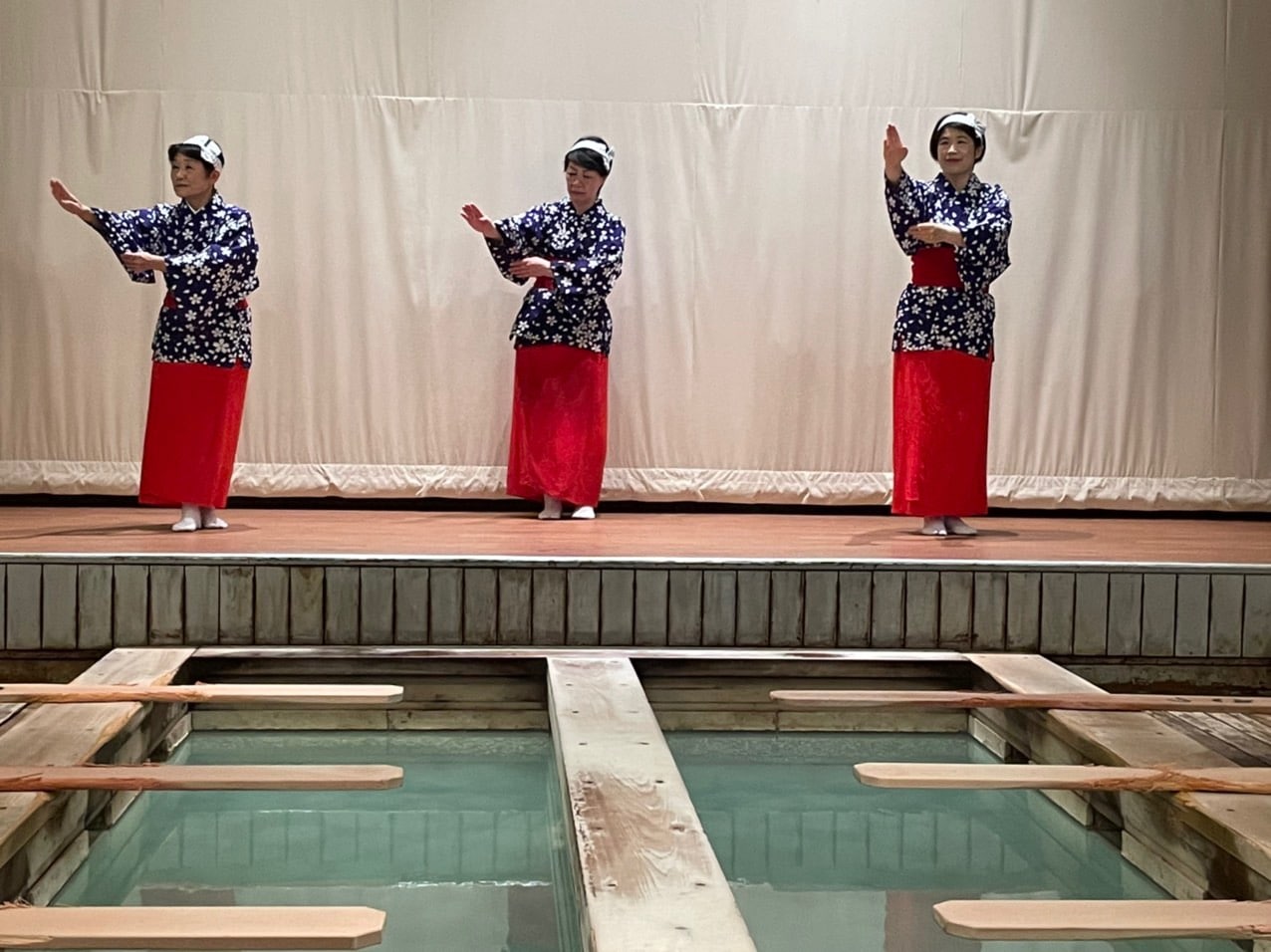
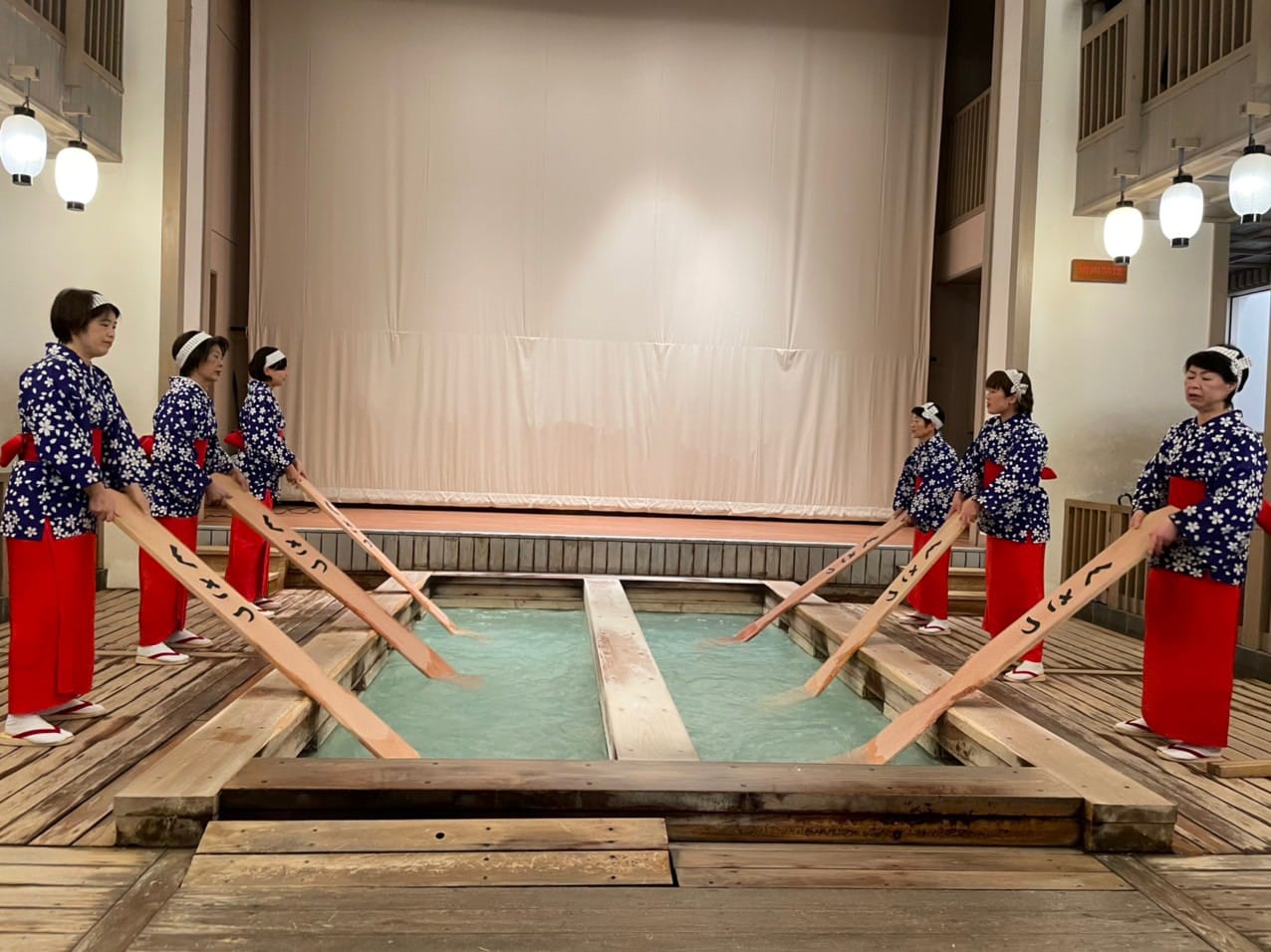
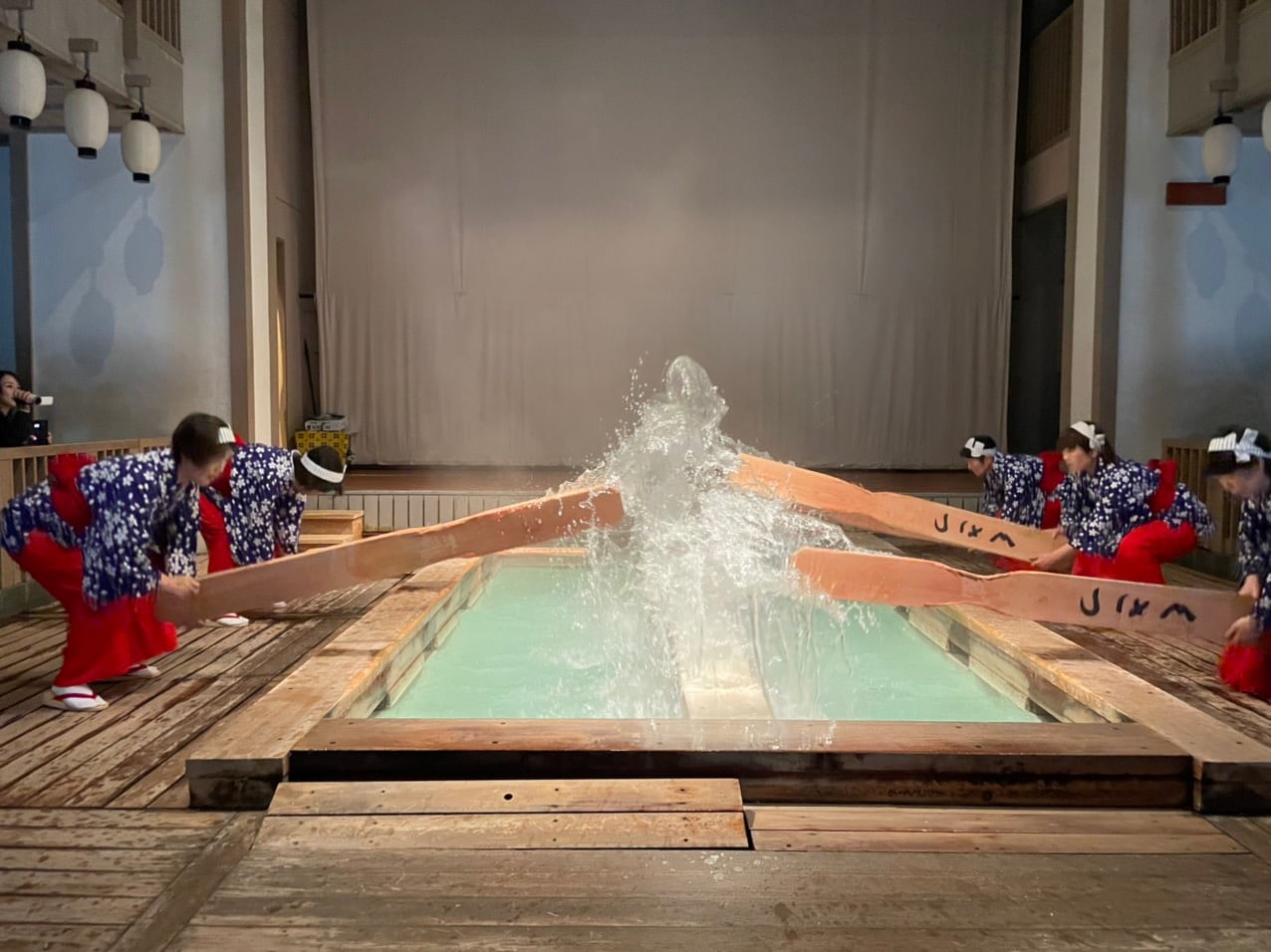
But it remains a local pride, and all over town there are arrows pointing to the performance hall. There are several shows a day, but people go 30 minutes before it starts to get the best seats.
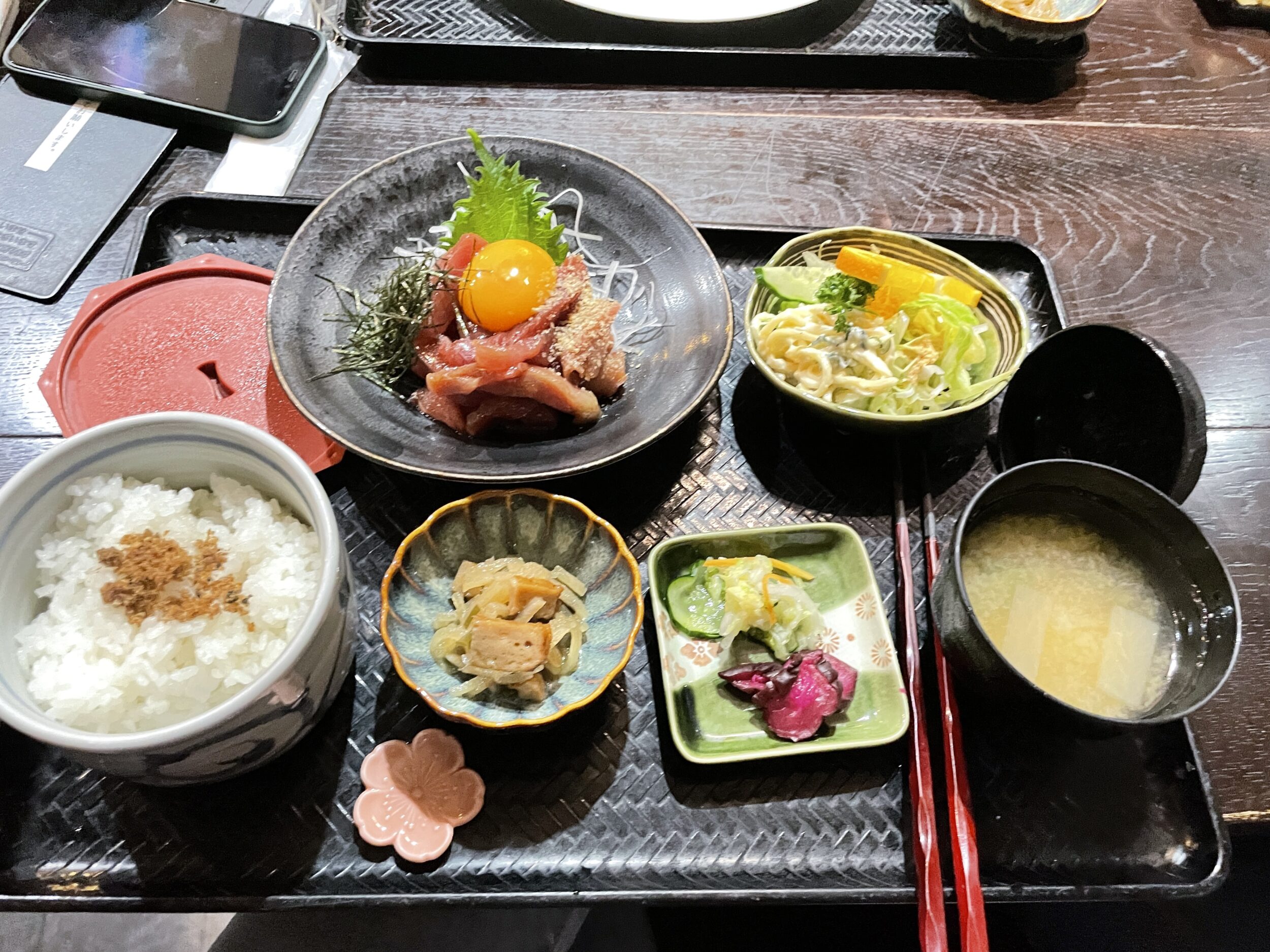
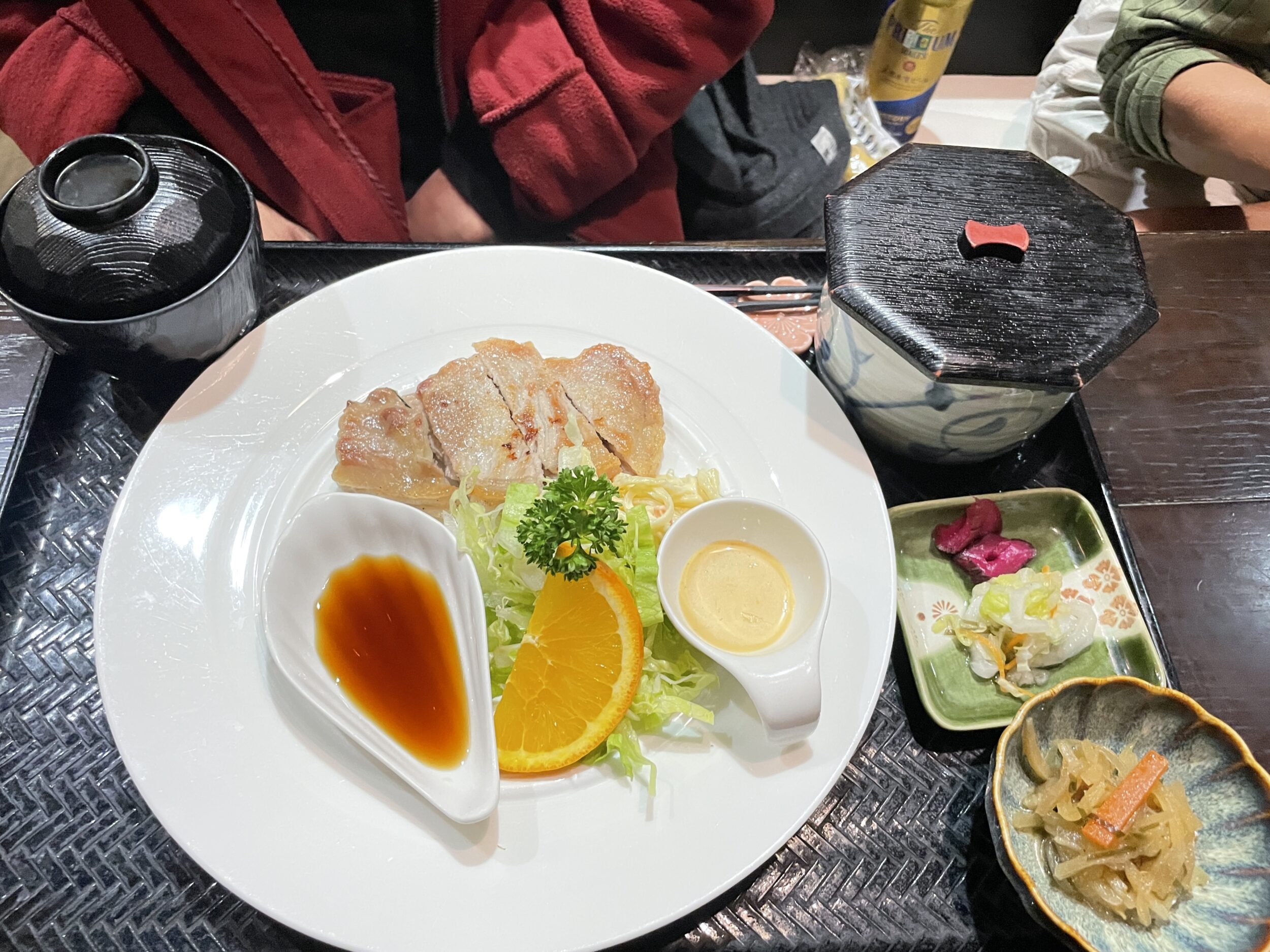
The cold wears us out a lot, and we recharge once more in our onsens. In the evening, we meet just below our hotel at Yume Hana. I discover with surprise the Japanese version of tuna tartare; it tastes almost the same as Korean beef tartare. The pork is also recommended; it’s the specialty of this region.
Onsen again for everyone.
Verdict: my parents had some joint discomfort before our road trip, but it’s all disappeared since. So, healing with hot water is not a myth.
Here’s a recap video of our stay at Kusatsu Onsen:
Part 2: Practical Tips
The detailed itinerary of our road trip is available here
- Visits:
- Snow Monkey Park: 800 yen/person
- Yumomi performance: 700 yen/person
- Accommodation:
- our hotel: Oyado Yukizumi (Booking link), it’s just behind the Lawson, free parking, breakfast included, shared onsen on the ground floor
- my parents’ hotel: Hanaingen (Booking link), their room is the most expensive, 224€/night, breakfast included, private onsen in the room + 4 onsens available for private use in the hotel itself
- Restaurants:
- Restaurant on the road: 1200 yen/person, dessert included
- Izabaya: 11000 yen for 4 people
- Yume Hana: 7000 yen for 4 people

