

Ogimachi, Suganuma, Ainokura, Thatched-Roof Villages and Washi Paper Workshop [Japan Road Trip #5]
We leave Takayama at 8 a.m. because we have a busy day of sightseeing ahead. We need to visit the villages with thatched-roof houses before arriving in Kanazawa for the afternoon. These mountain villages aren’t easy to reach, even though there are a few buses that go there. Most people go by car or on a guided tour. Even Lonely Planet thinks it’s wiser to rent a car. We followed that advice and ended up renting a car for the entire road trip, not just for these mountain villages.
This travel diary is part of a series on our road trip in Japan. If you missed the previous episodes, here are the links: the itinerary, diary #1, #2, #3, #4
Part 1: Travel Journal
Part 2: Practical Tips
Part 1: Travel Journal
Day 4 of the road trip:
In winter, make sure you have snow chains. Luckily, in mid-April, no one needs them, which is a relief because we’re not snow chain experts.
These three villages look like fairy-tale villages in winter when their 60-degree-sloped roofs are completely covered in snow.
Ogimachi
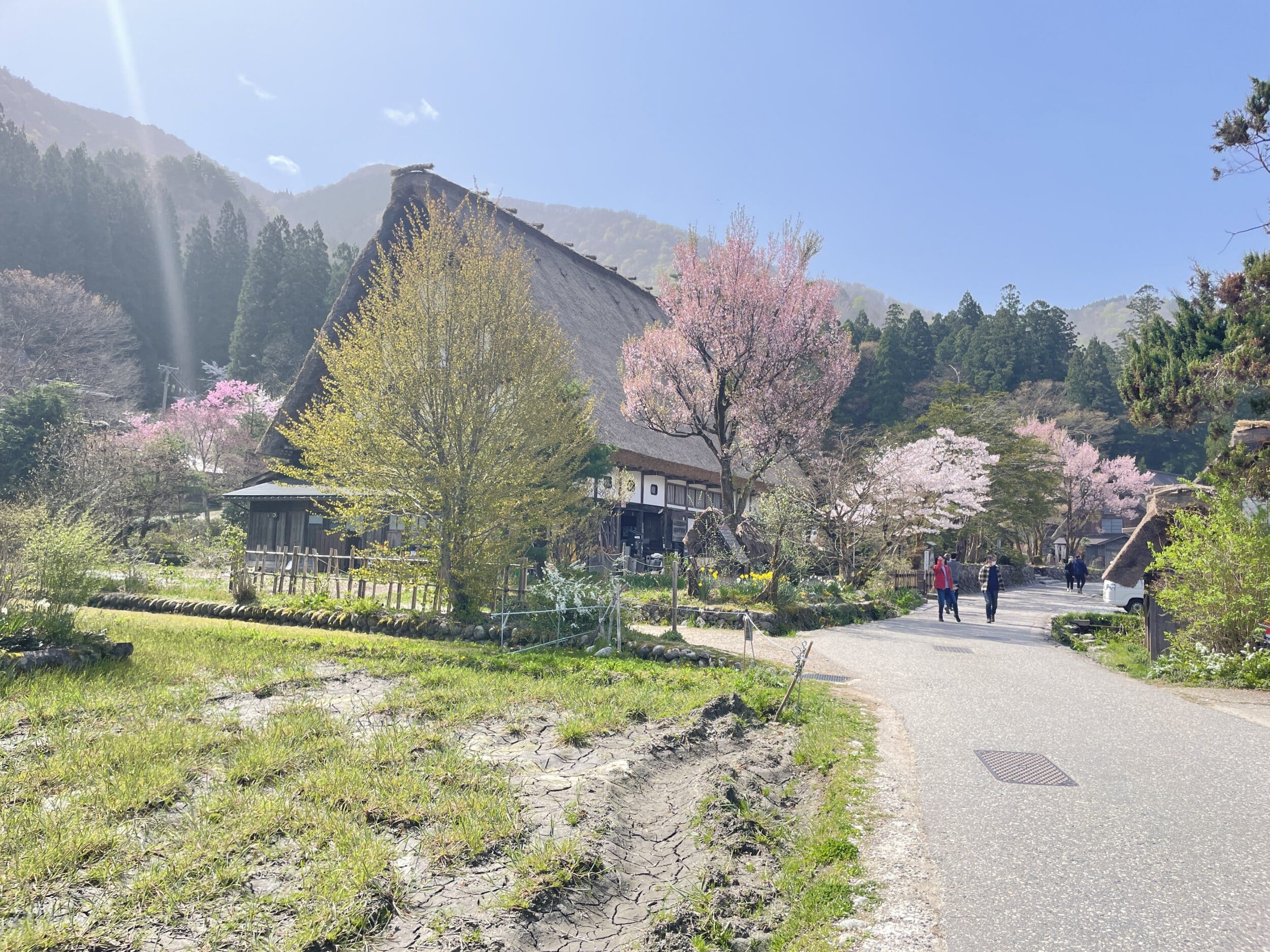
The names on Google Maps can be a bit confusing. To get to Ogimachi (the largest of the three villages), aim for Seseragi Park Parking Lot. Parking costs 1,000 yen for the day, and you’ll be right across from the bridge leading into the village. It’s still early (9 a.m.), most shops are closed, and there are few tourists.
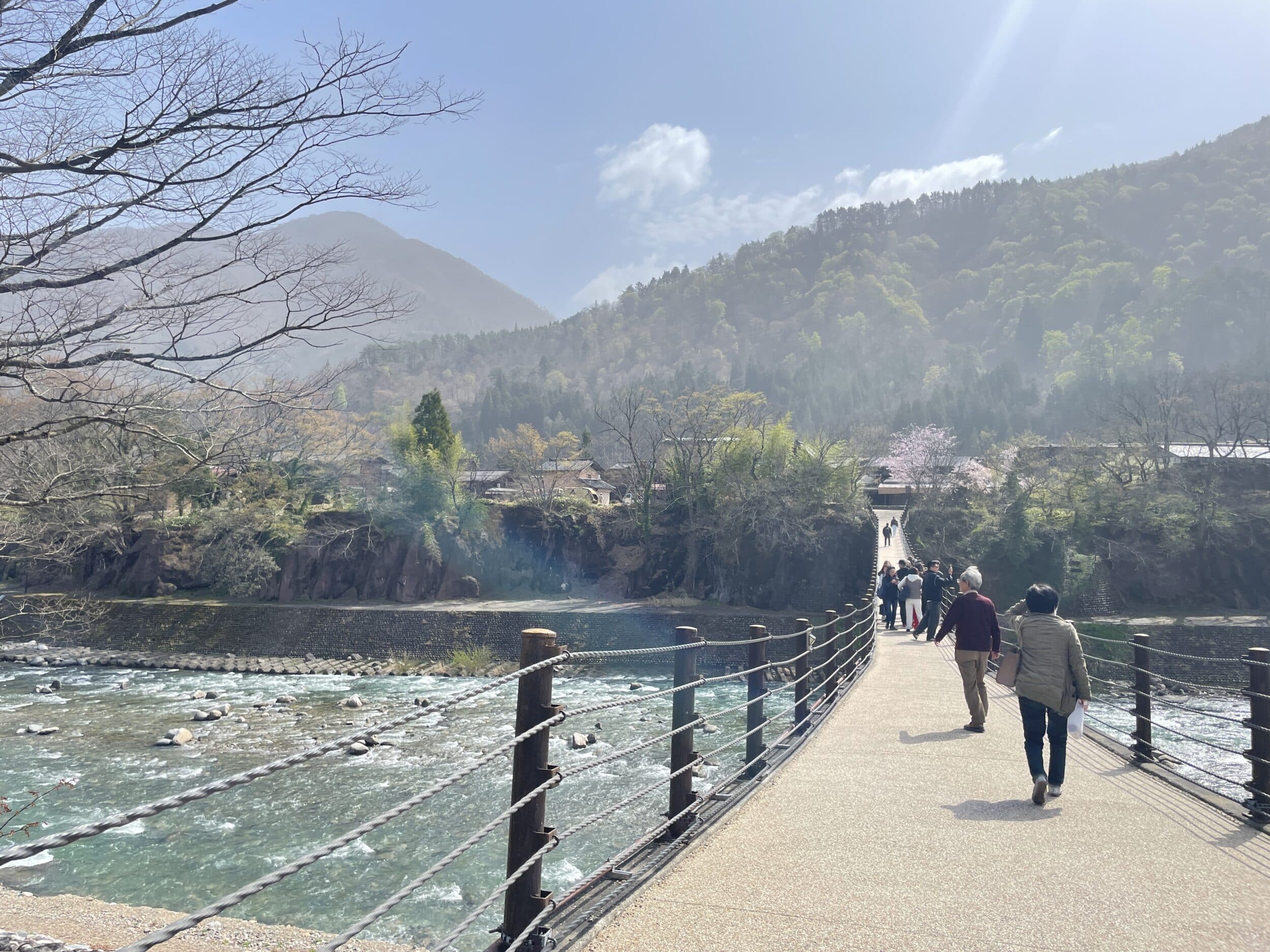
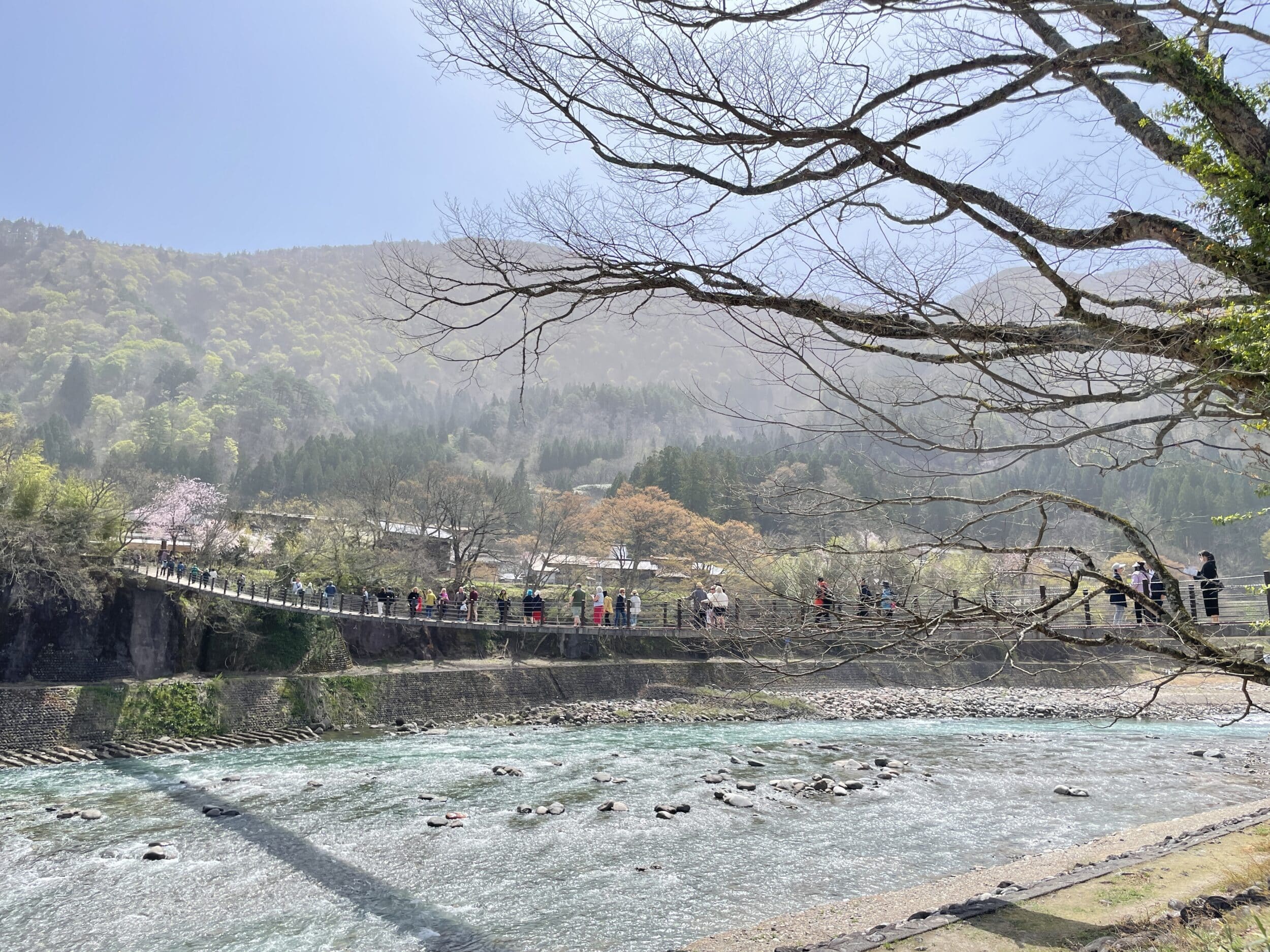
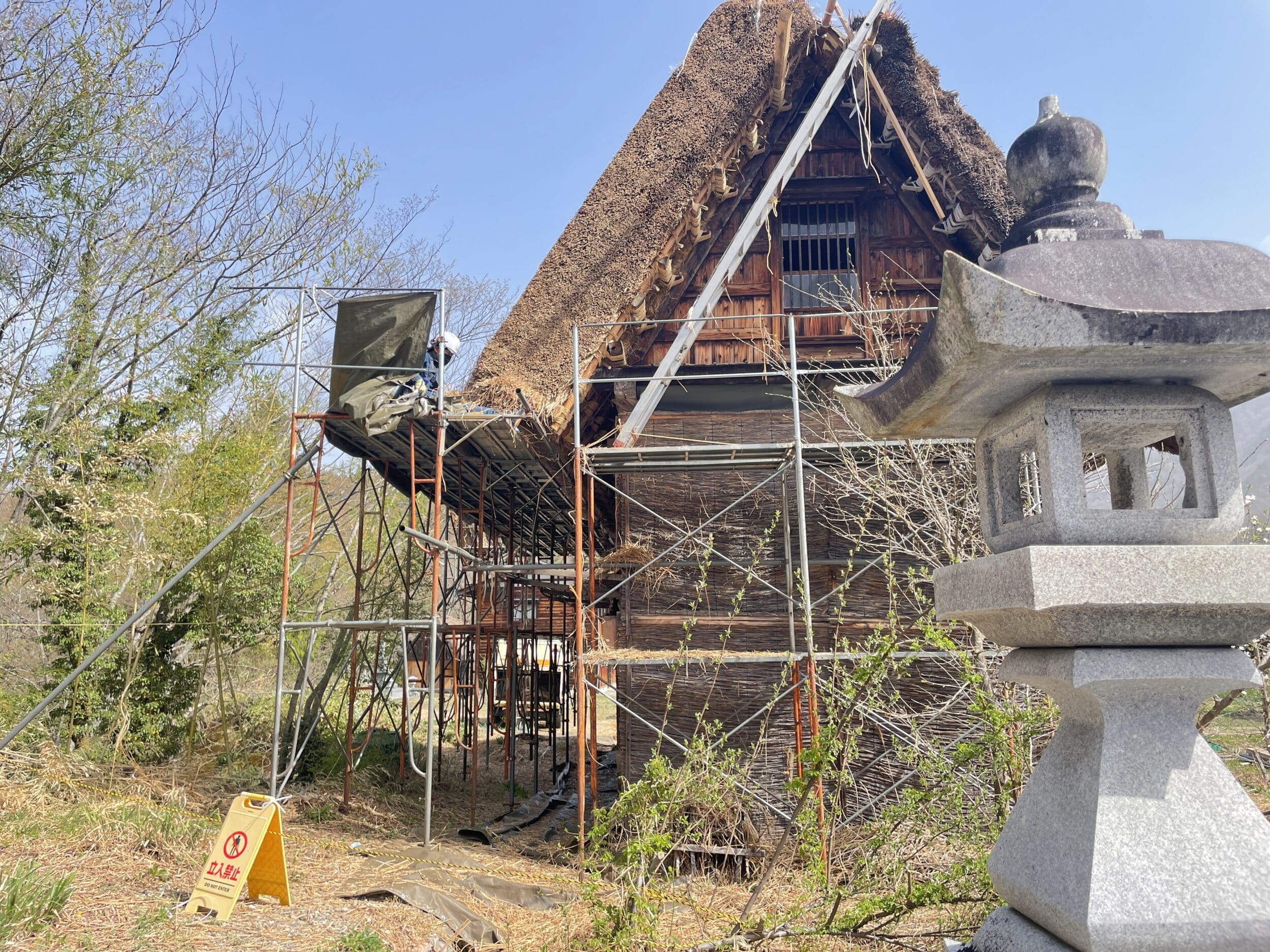
We stumble upon a roof renovation, and the process unfolds before our amazed eyes. The work seems very physical, as you have to stack with a lot of force, and a roof requires a lot of labor. What surprises us, though, is the thickness of the thatched roof!!
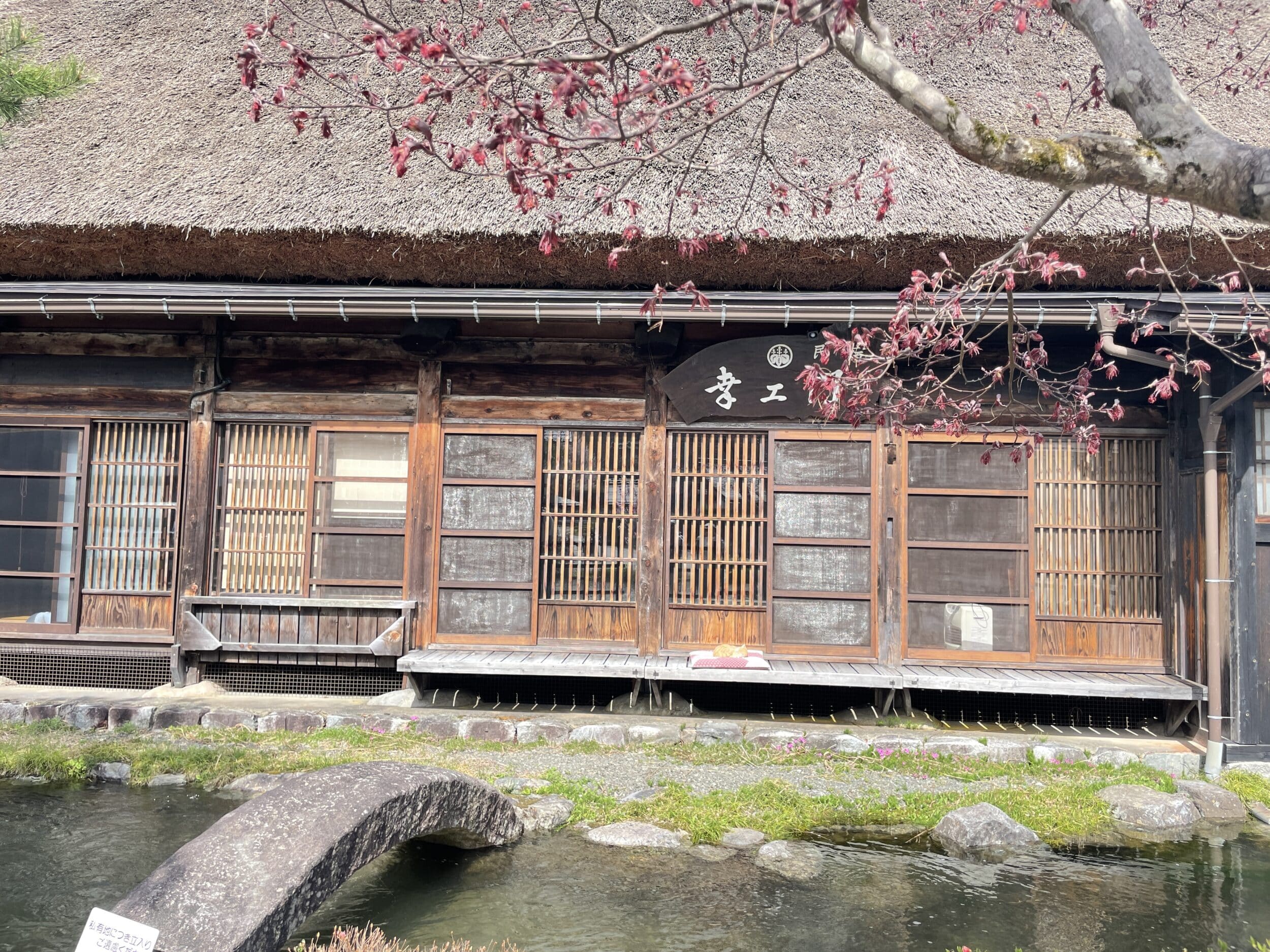
This house is, to me, the most beautiful. Not only does it have a stone bridge in its mini garden, but there’s also a wooden carved cat on a cushion in front of the house. The sculpture is so well done that we thought it was a real cat.
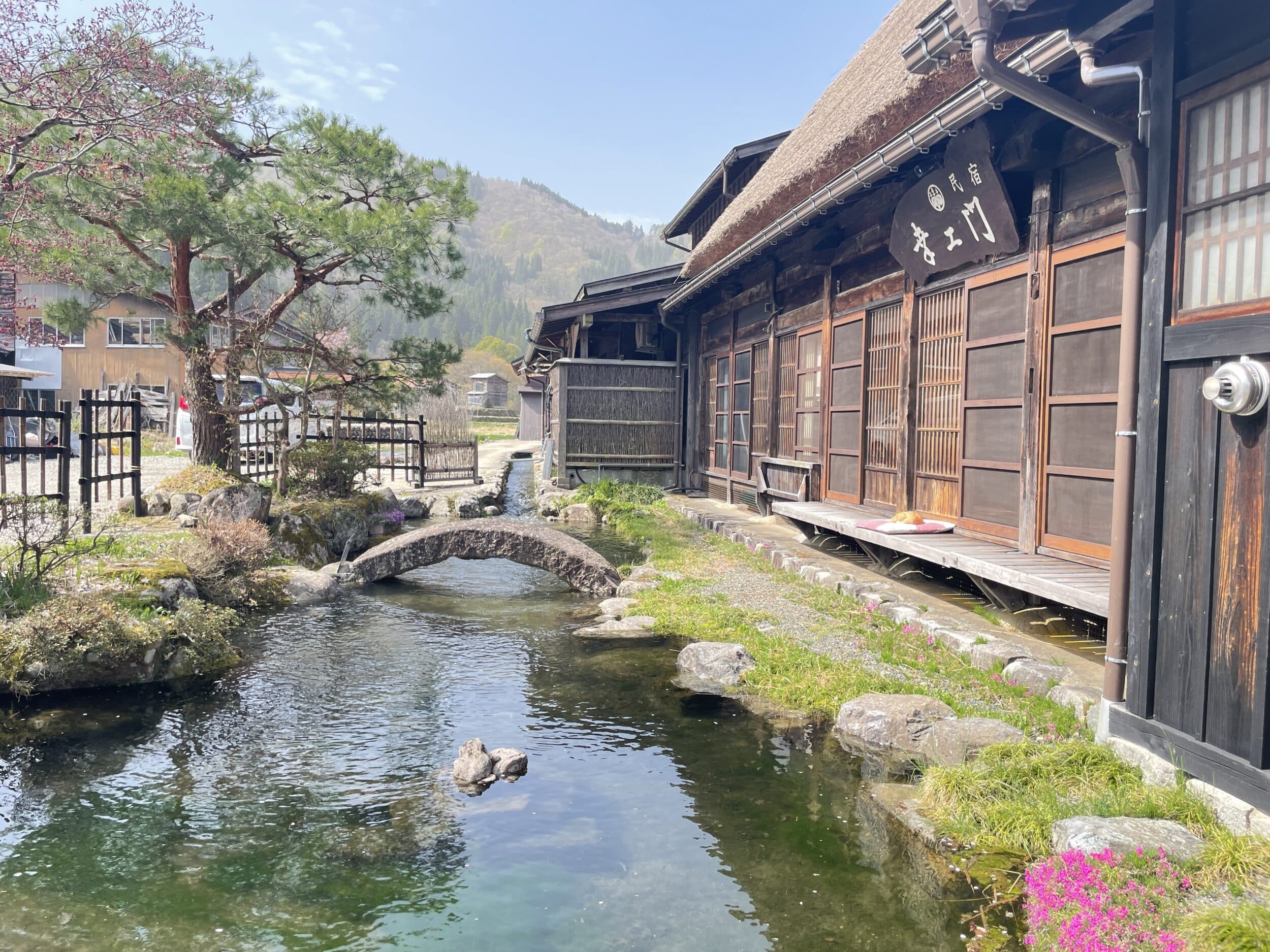
Everything is still closed…
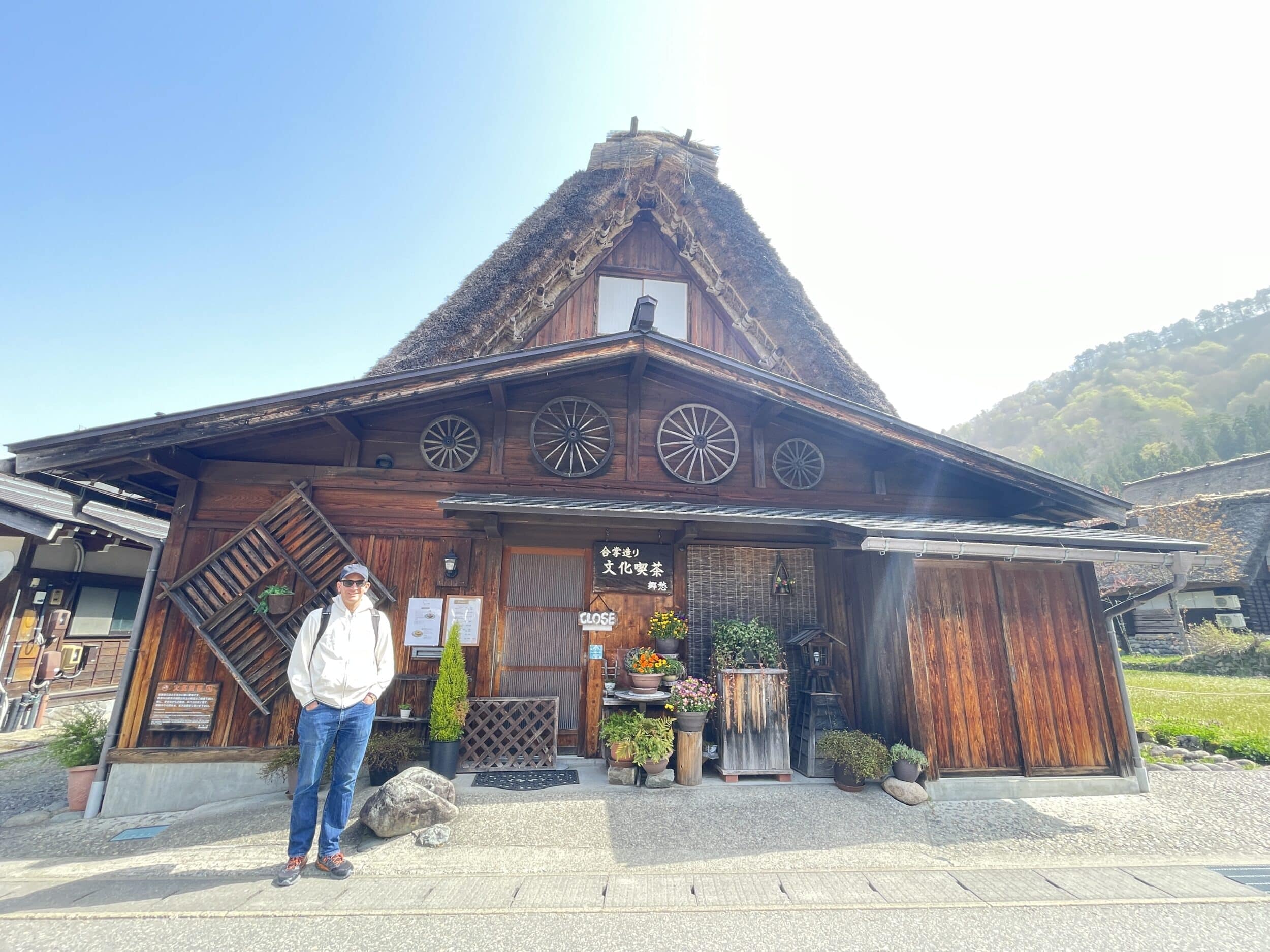
But the vibe is super relaxing…
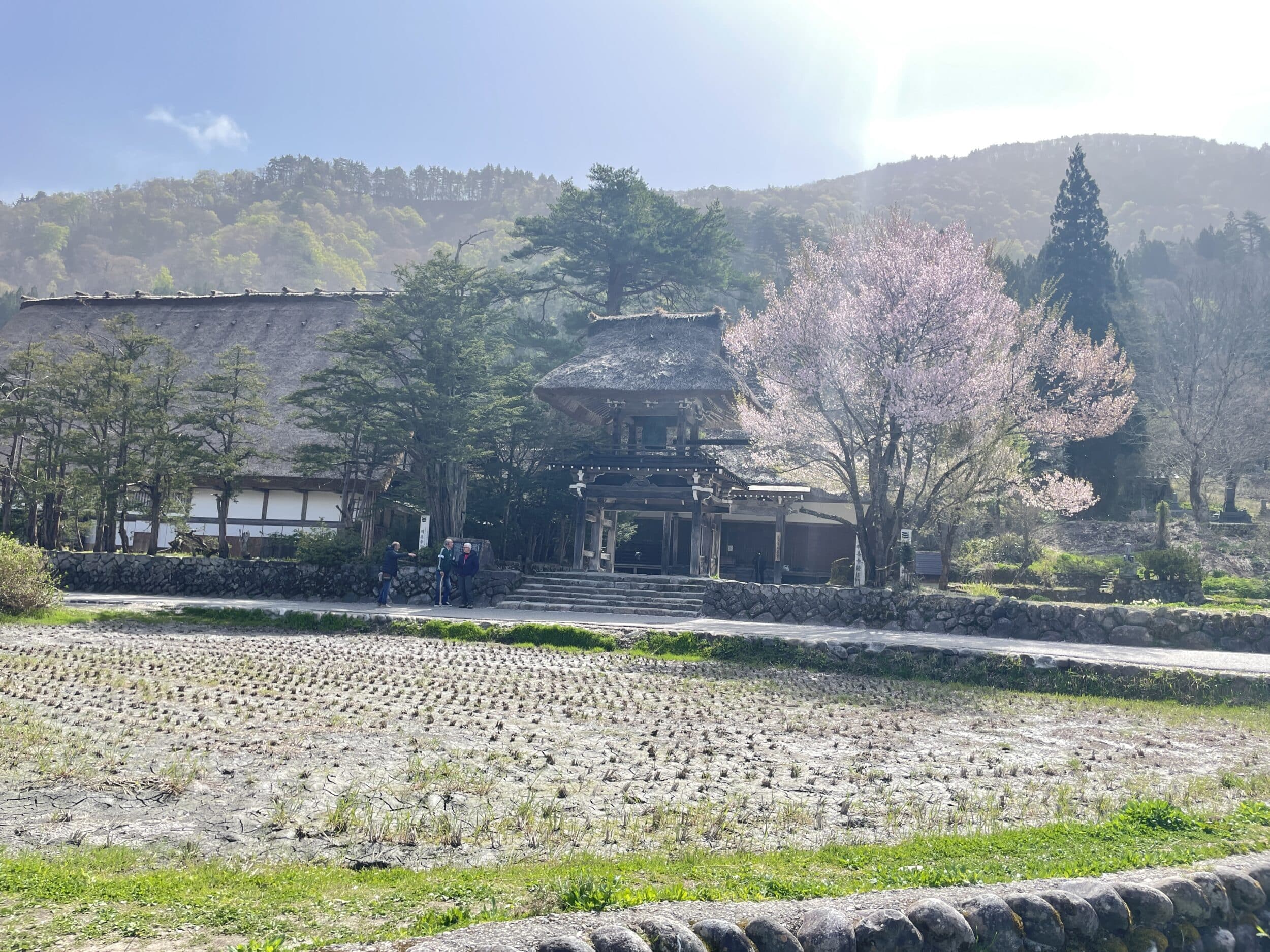
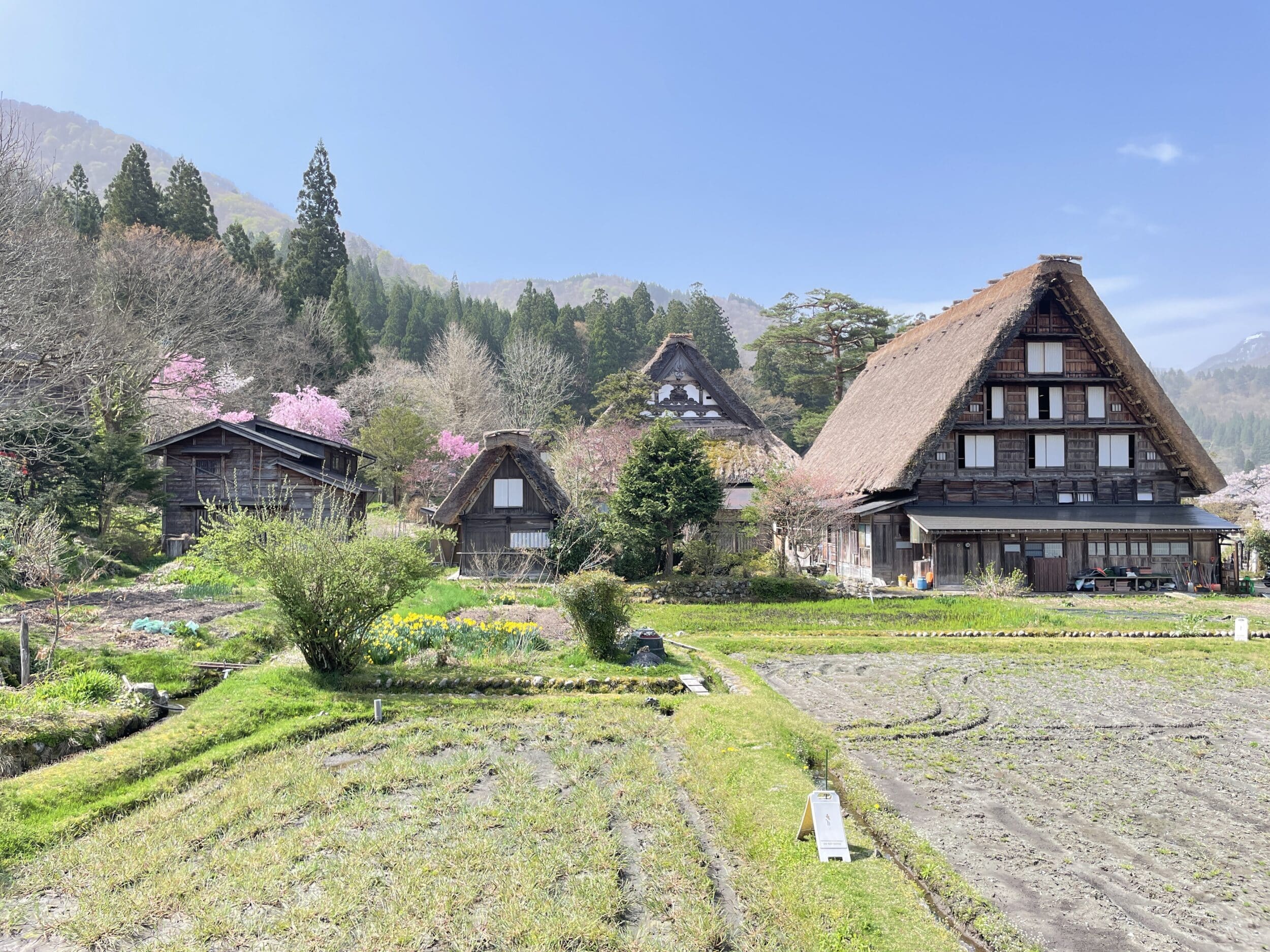
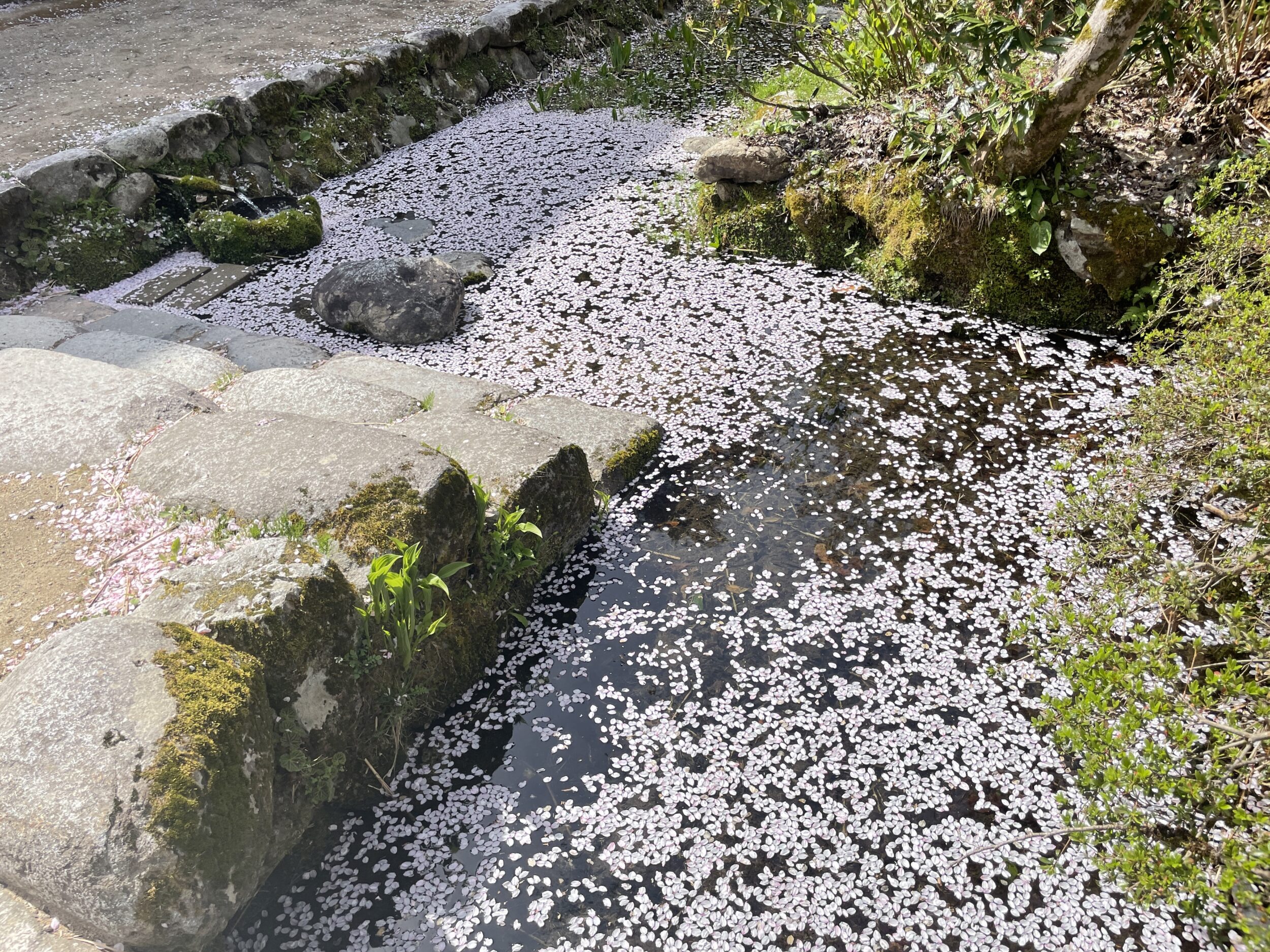
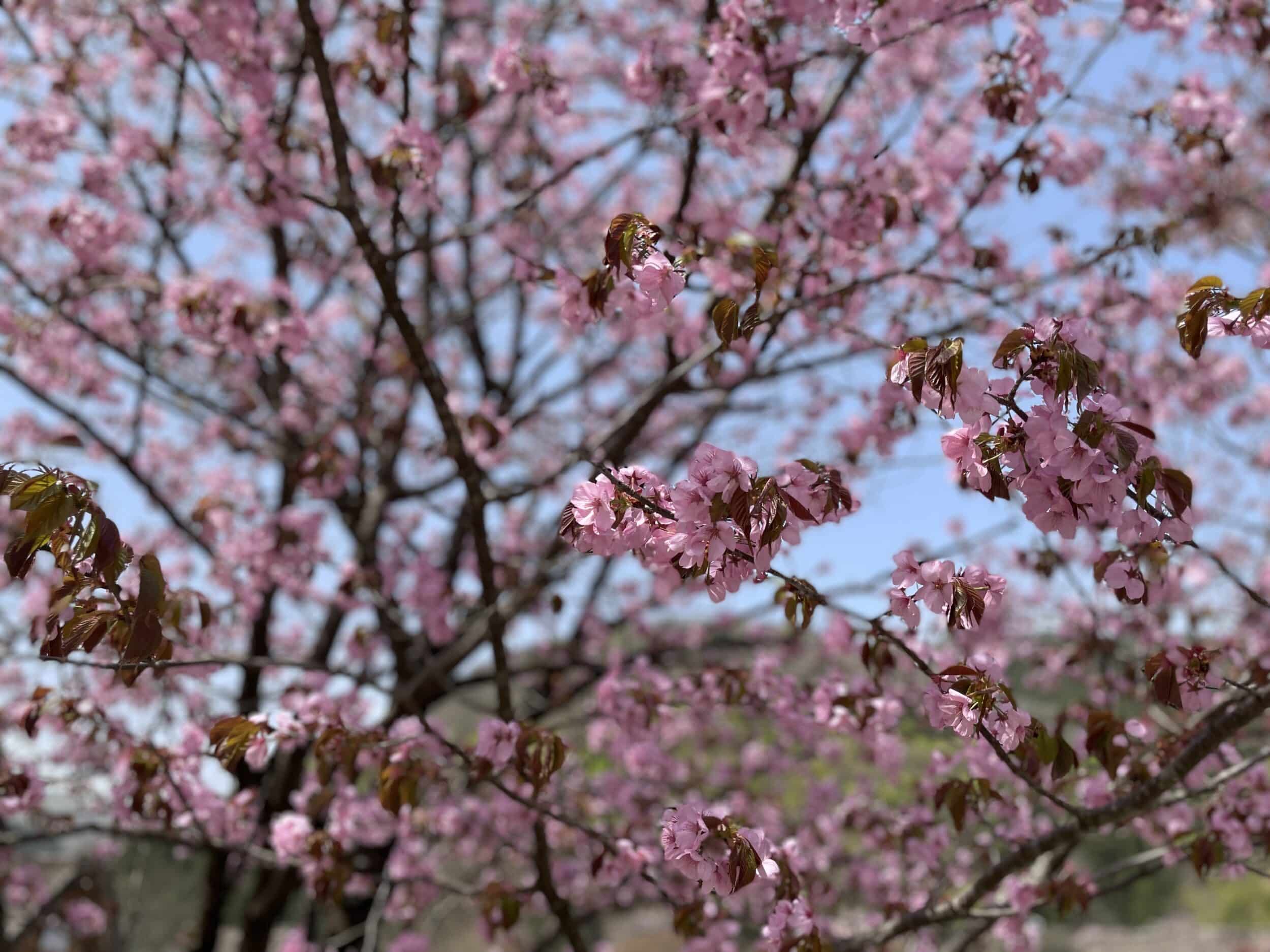
It makes me a bit sad to see all these cherry blossom petals.
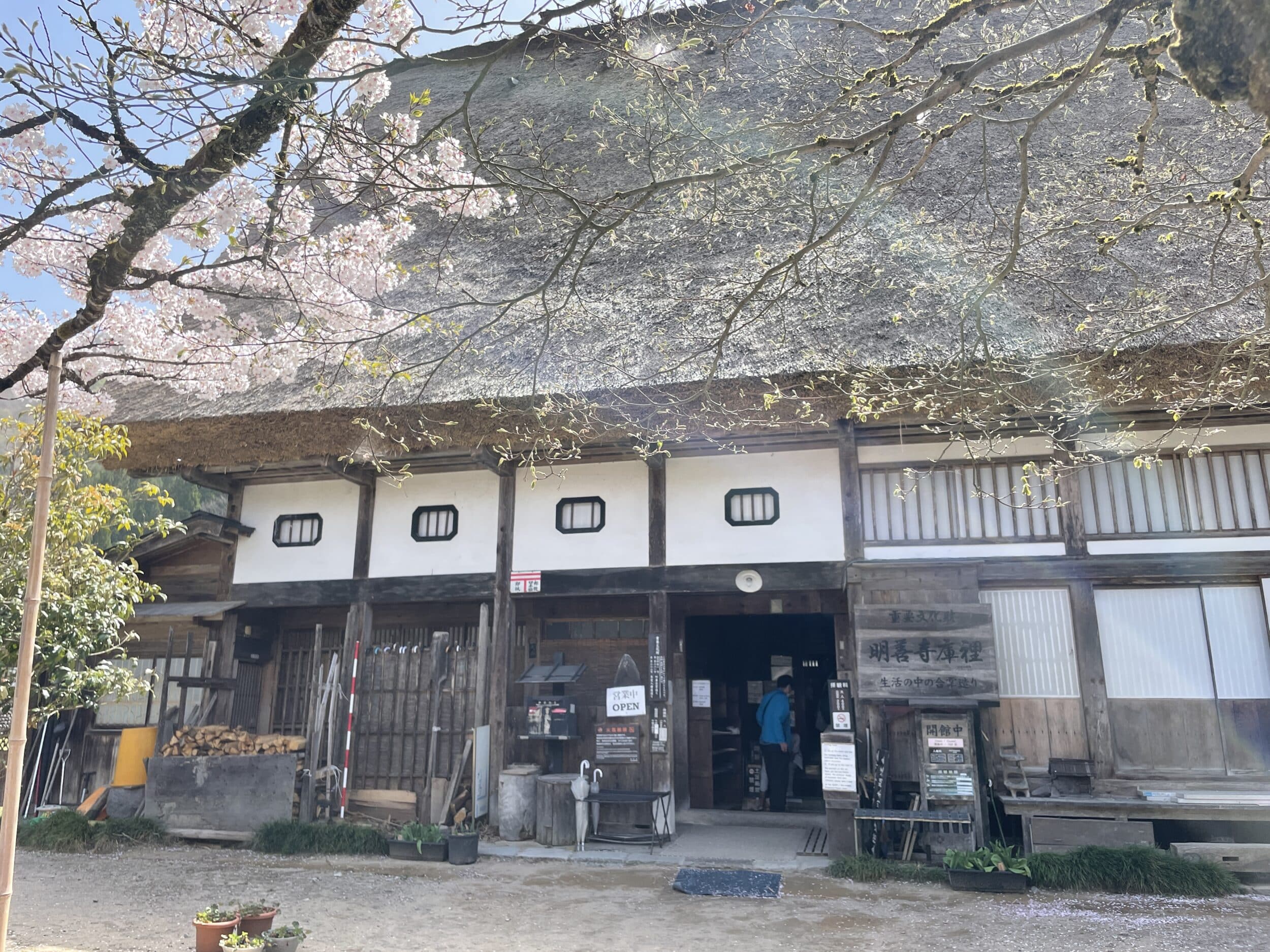
We visit the museum (Myozenji Museum) which has 3 floors and a main hall on the side. Admission costs 400 yen per person. It makes us realize that they do take advantage of the (very high) ceiling, and the construction is very solid since the house doesn’t tremble under our feet. The high ceiling is due to the roof’s 60-degree slope, so snow falls easily instead of staying on the roof.
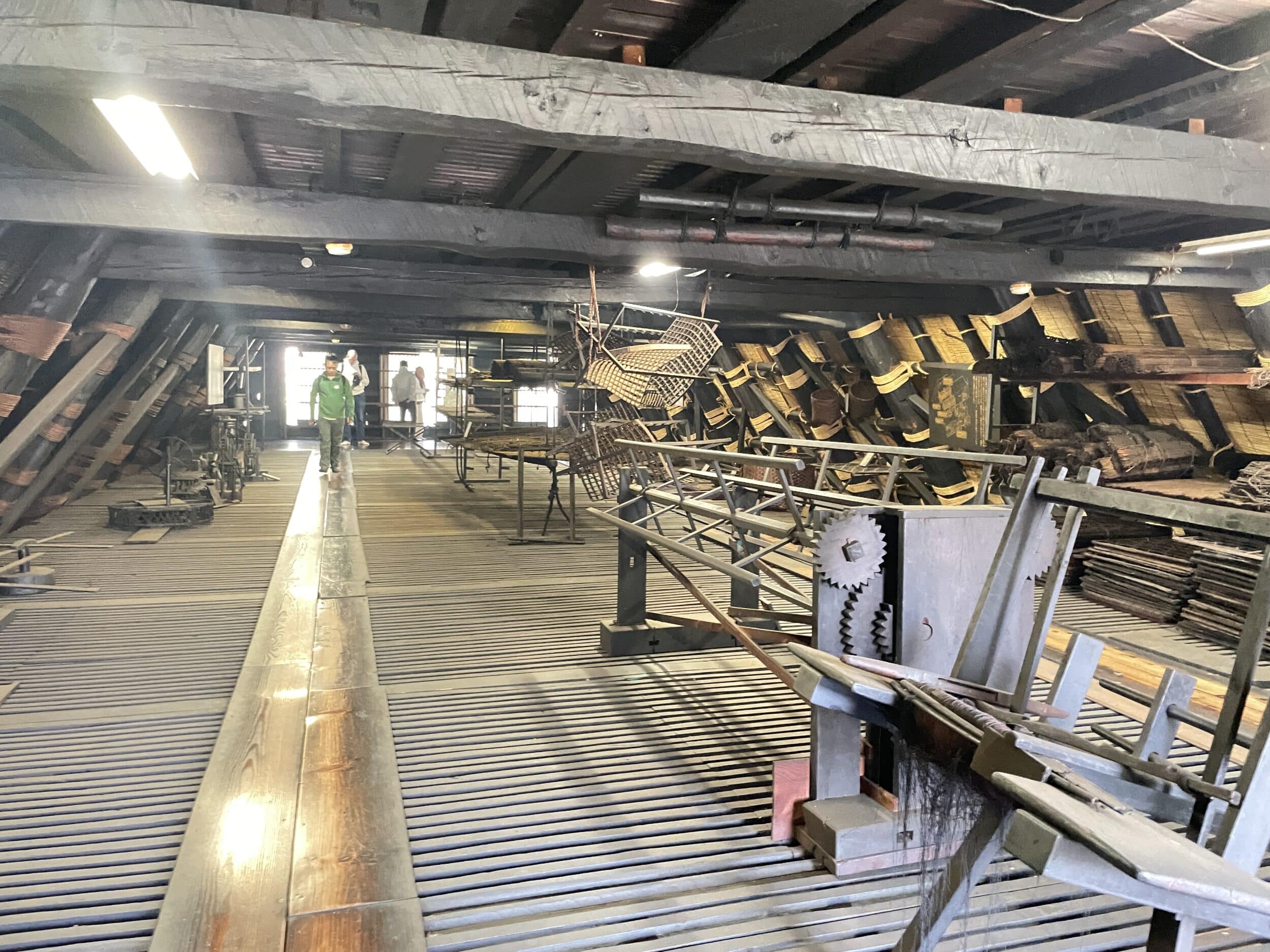
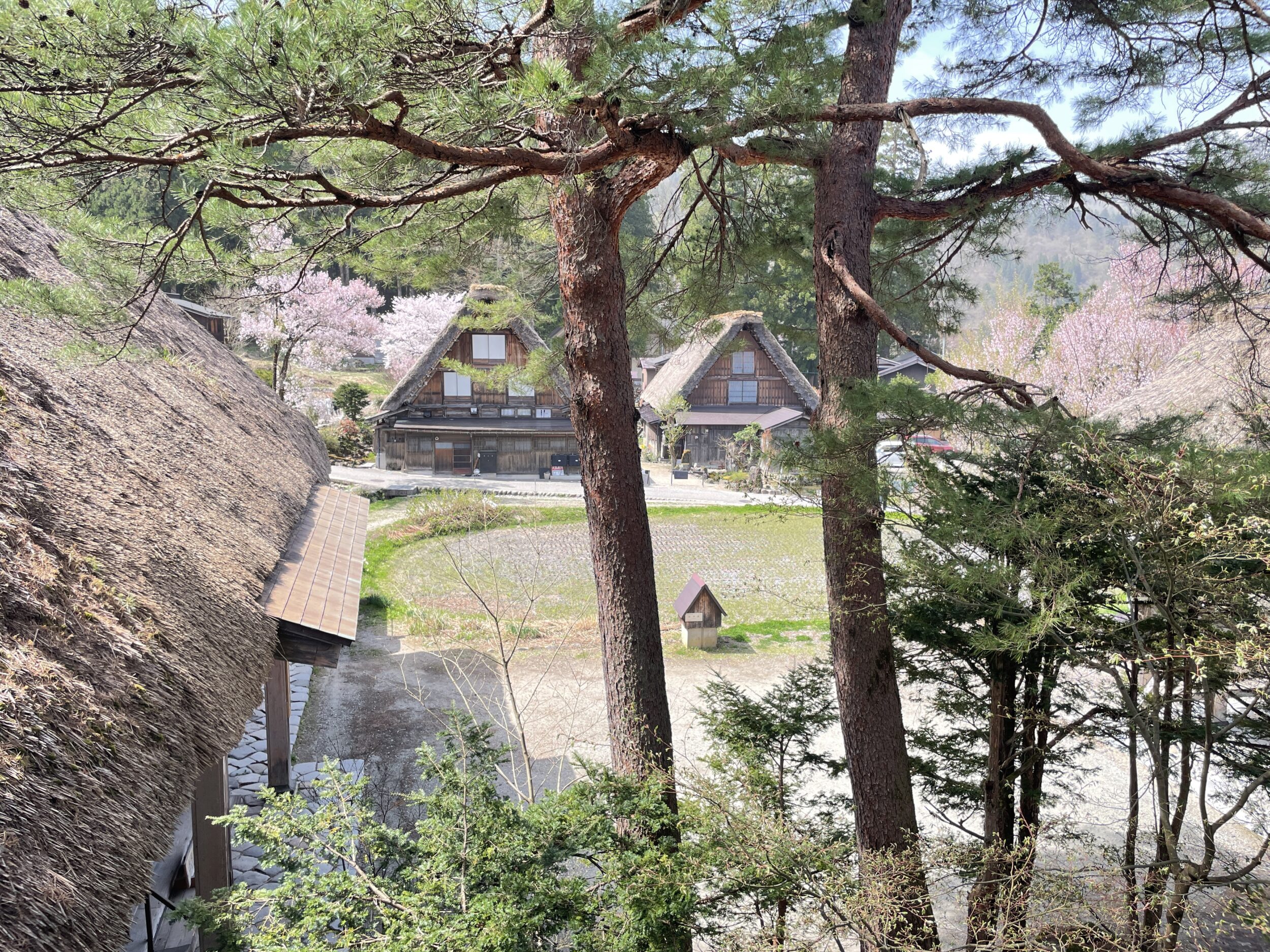
From the top floor, we have a nice view of the village.
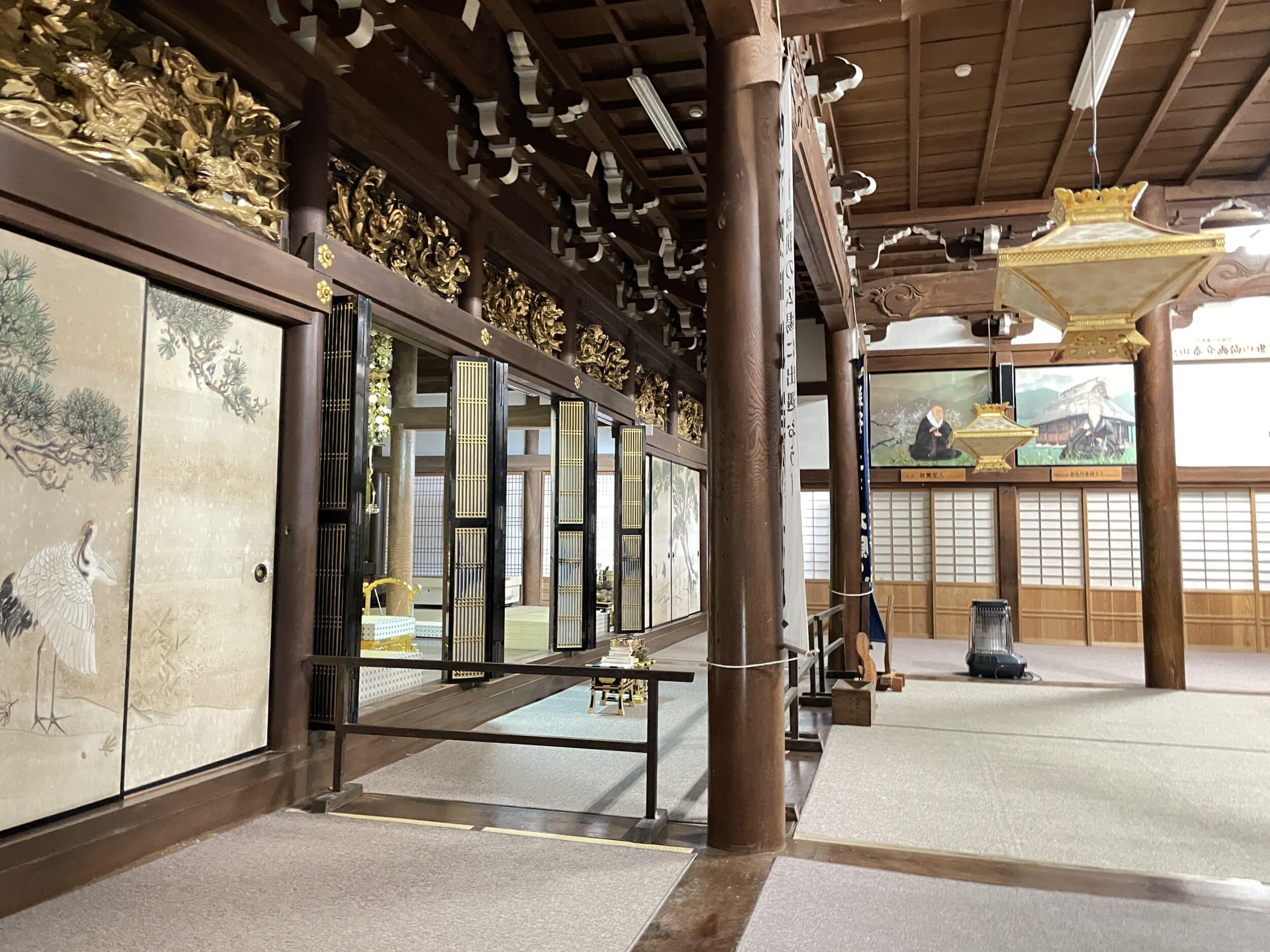
The main hall:
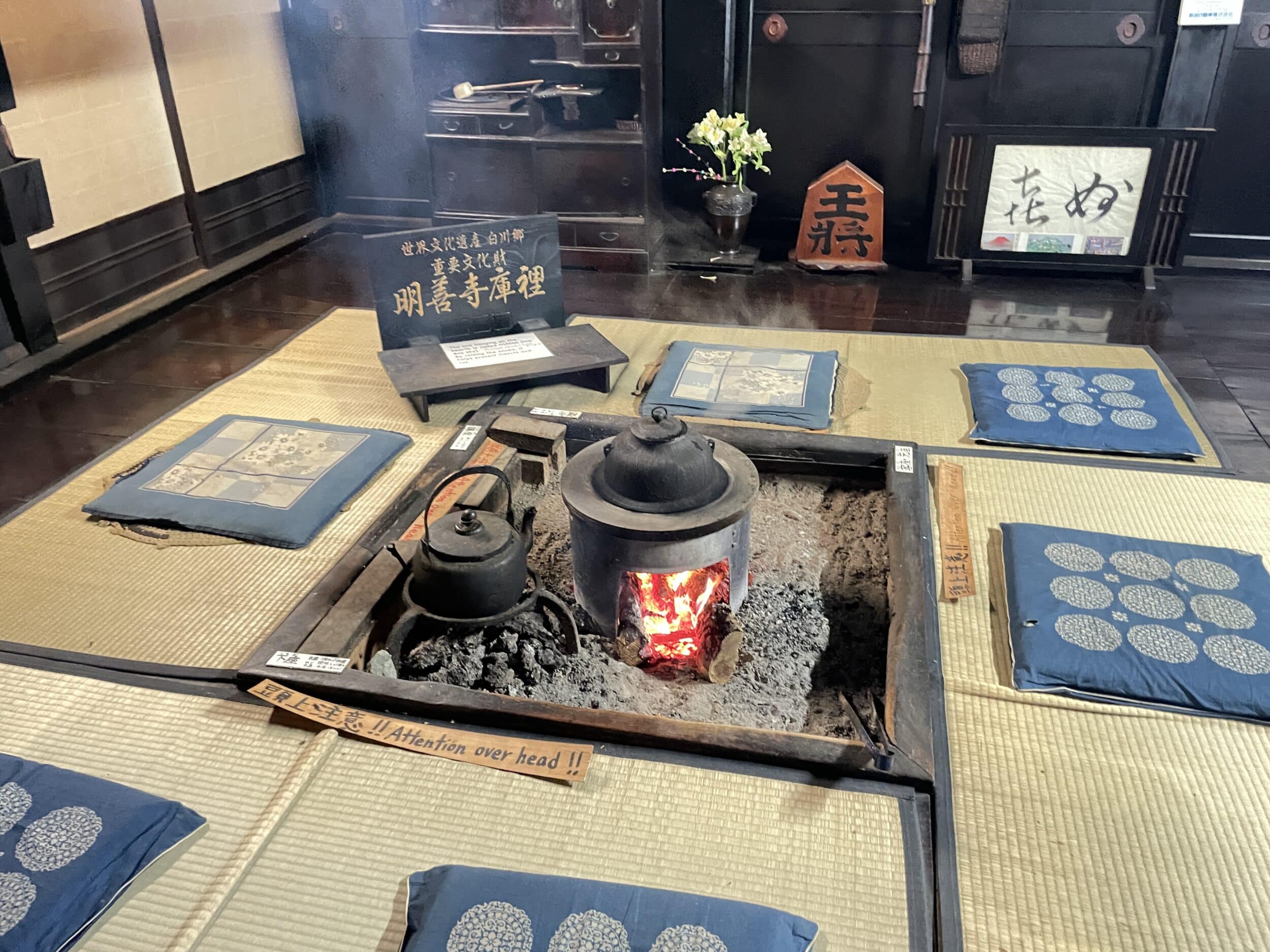
A typical Japanese stove; the smoke helps reduce humidity and keeps insects away.
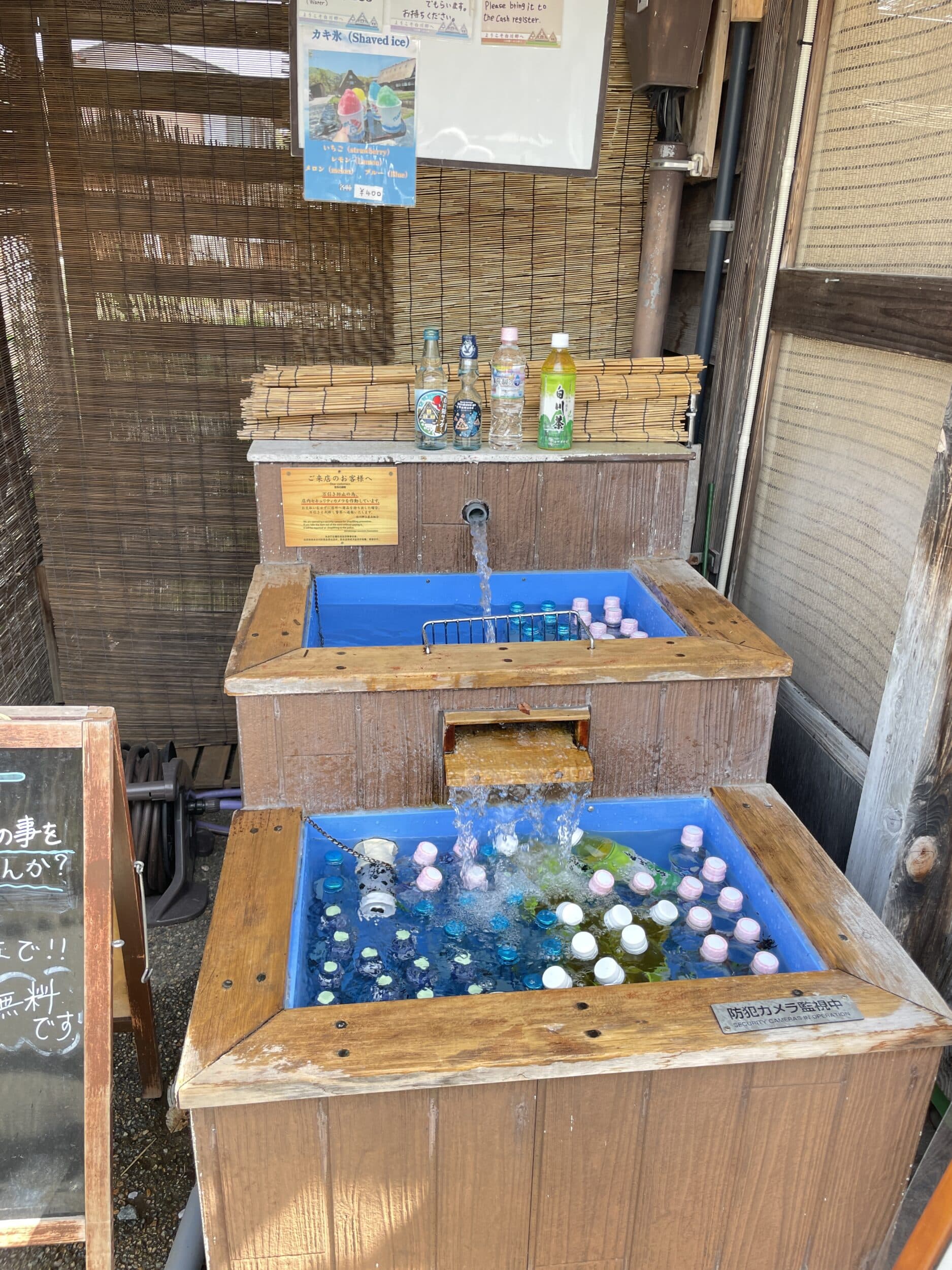
Water from the rivers is channeled throughout the village, and the fresh water even acts as a fridge for drinks 😀
Around 10 a.m., dozens of buses and their tourists arrive. It’s chaos, and we can’t wait to leave.
Suganuma
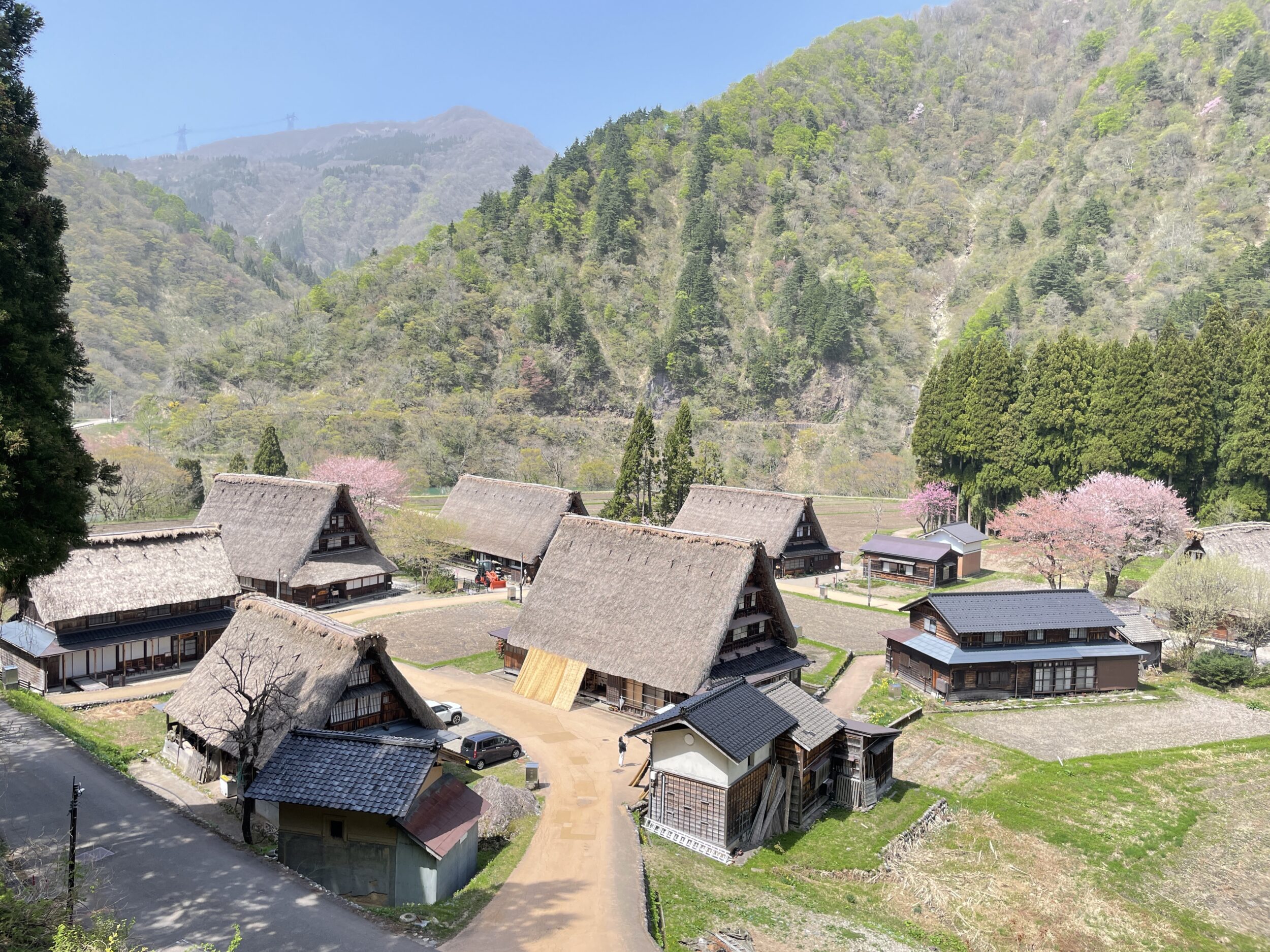
15 km away, Suganuma sits by a river (which then leads to a lake near a dam) at the foot of a big hill. It’s a UNESCO World Heritage site but has far fewer tourists. The parking lot at the top of the village costs 500 yen; we just take a few photos without going down.
Ainokura
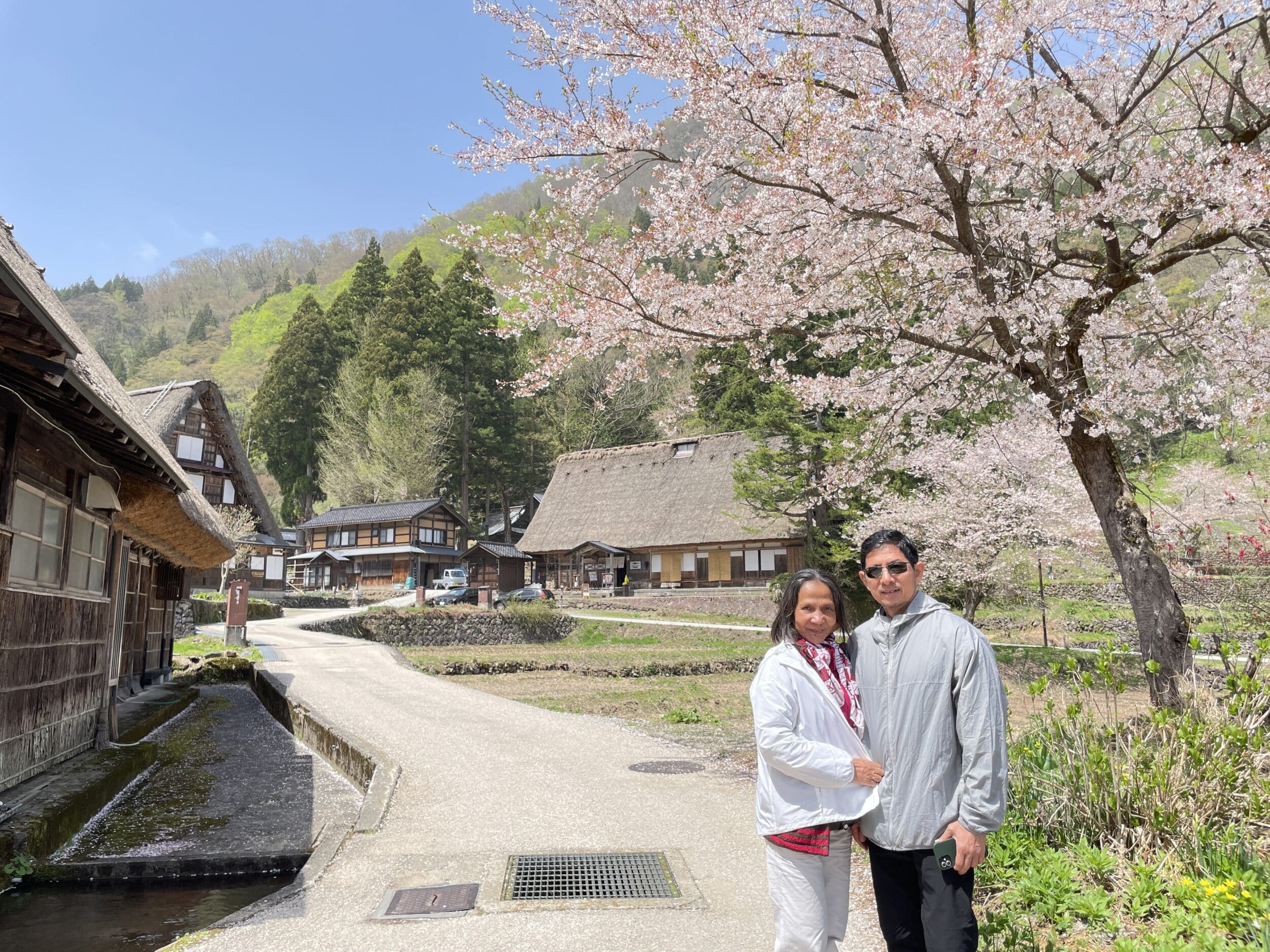
I couldn’t wait to go to Ainokura for the simple reason that there’s a washi paper workshop here. The village itself is very beautiful, but it’s quite similar to the other two villages.
Let me scroll through the photos of my little “workshop” with the craftsman. It’s more of a demo, and the man does the important steps. He has two machines to quickly dry the sheet I just made by hand. Without those machines, my sheet would have taken a whole day to dry. I highly recommend it! Washi paper is plant-based, but it doesn’t have the flaws of wood-based papers like those in Europe. It’s sturdy, acid-free, lasts a long time, and is very thick. It can be folded in any direction, as is the case with handmade papers. It’s now highly prized by painters and calligraphers. Let me refer you to my other article on handmade papers; it’s roughly the same technique. For the man to show you the technique and for you to leave with your sheet, you need to pay 700 yen.
Here’s a more comprehensive video (not mine) on washi paper making:
and one for washi paper with patterns:
The souvenir shop is too interesting; I found lots of colored papers for my upcoming projects.
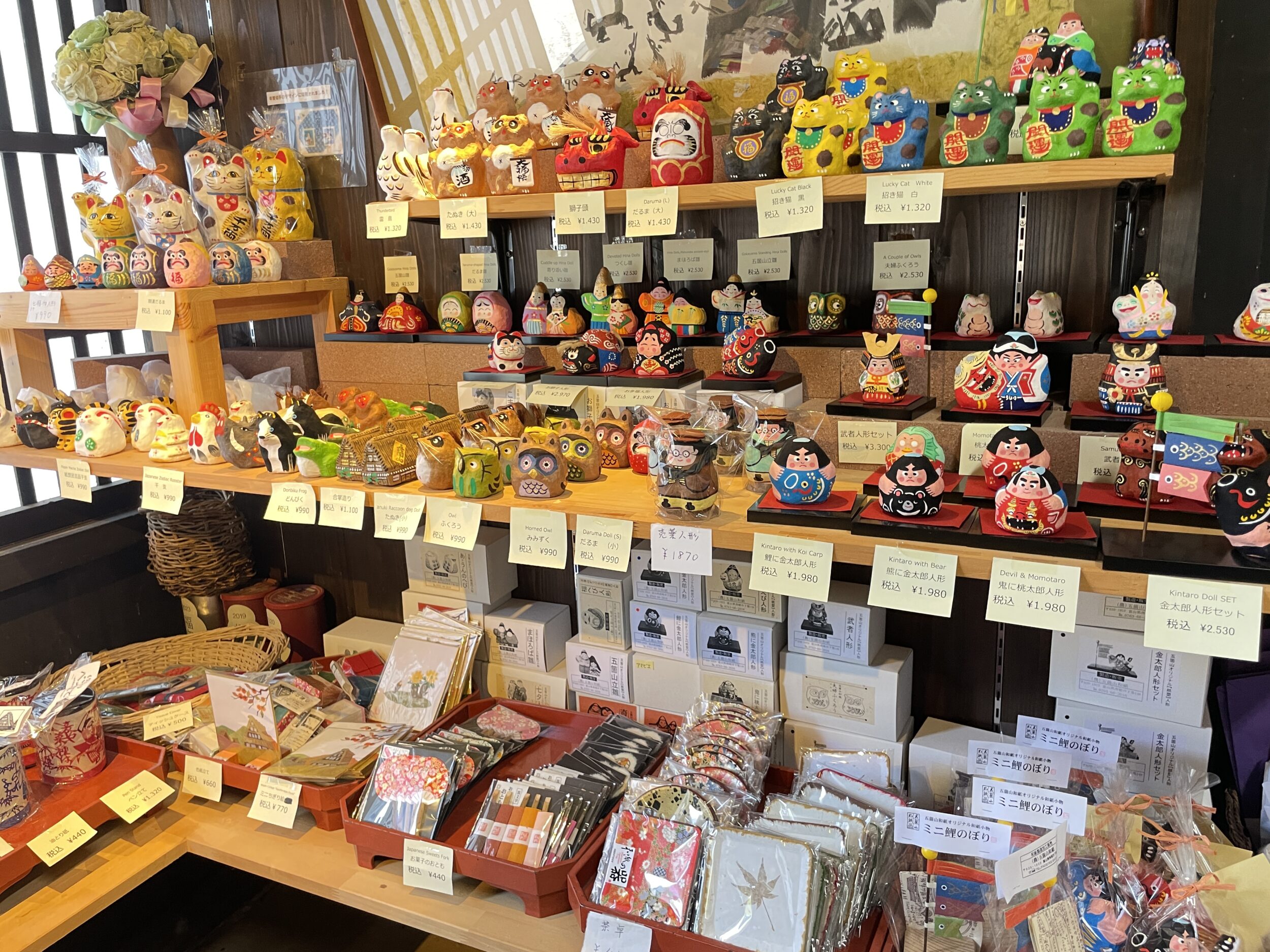
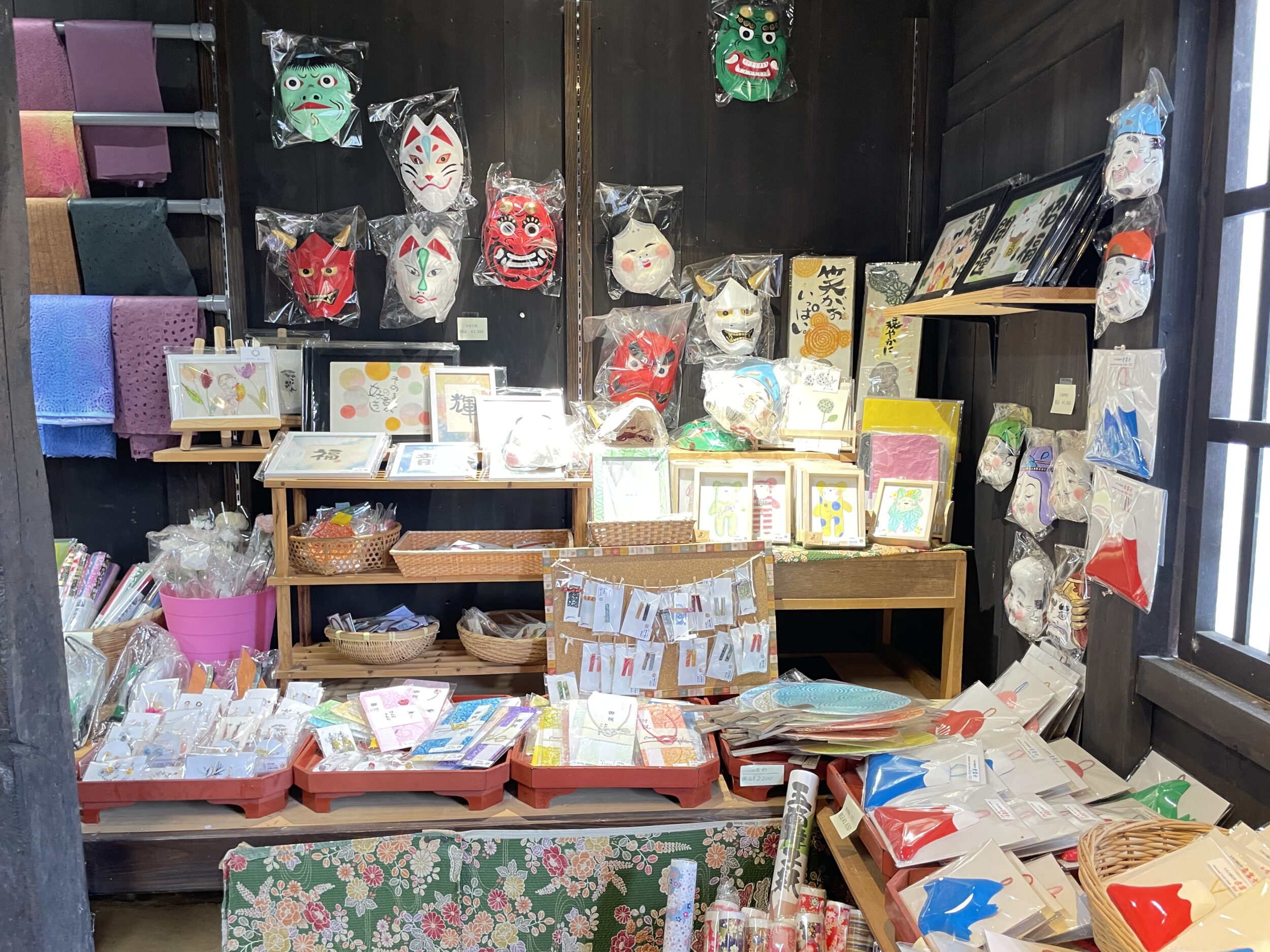
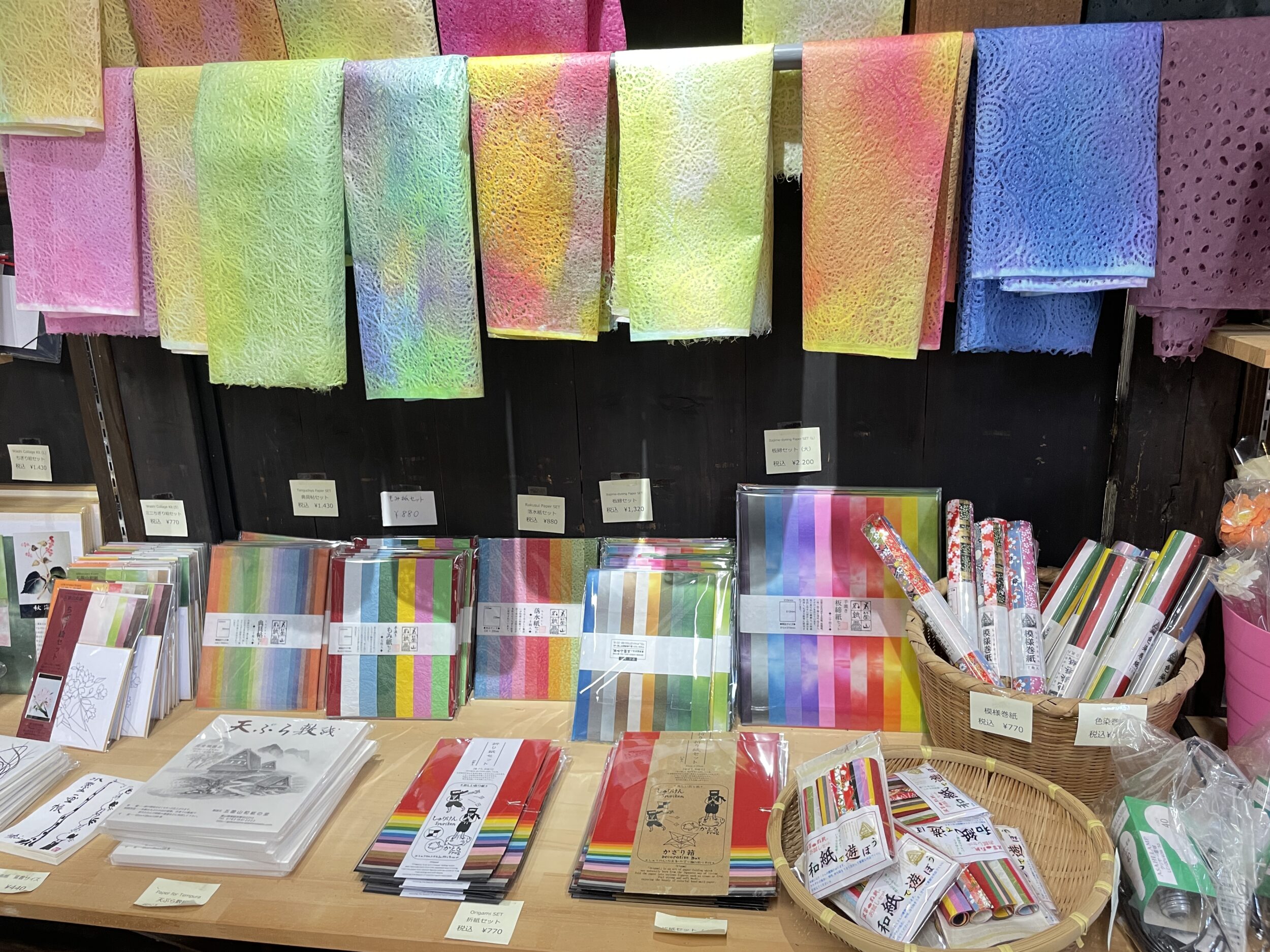
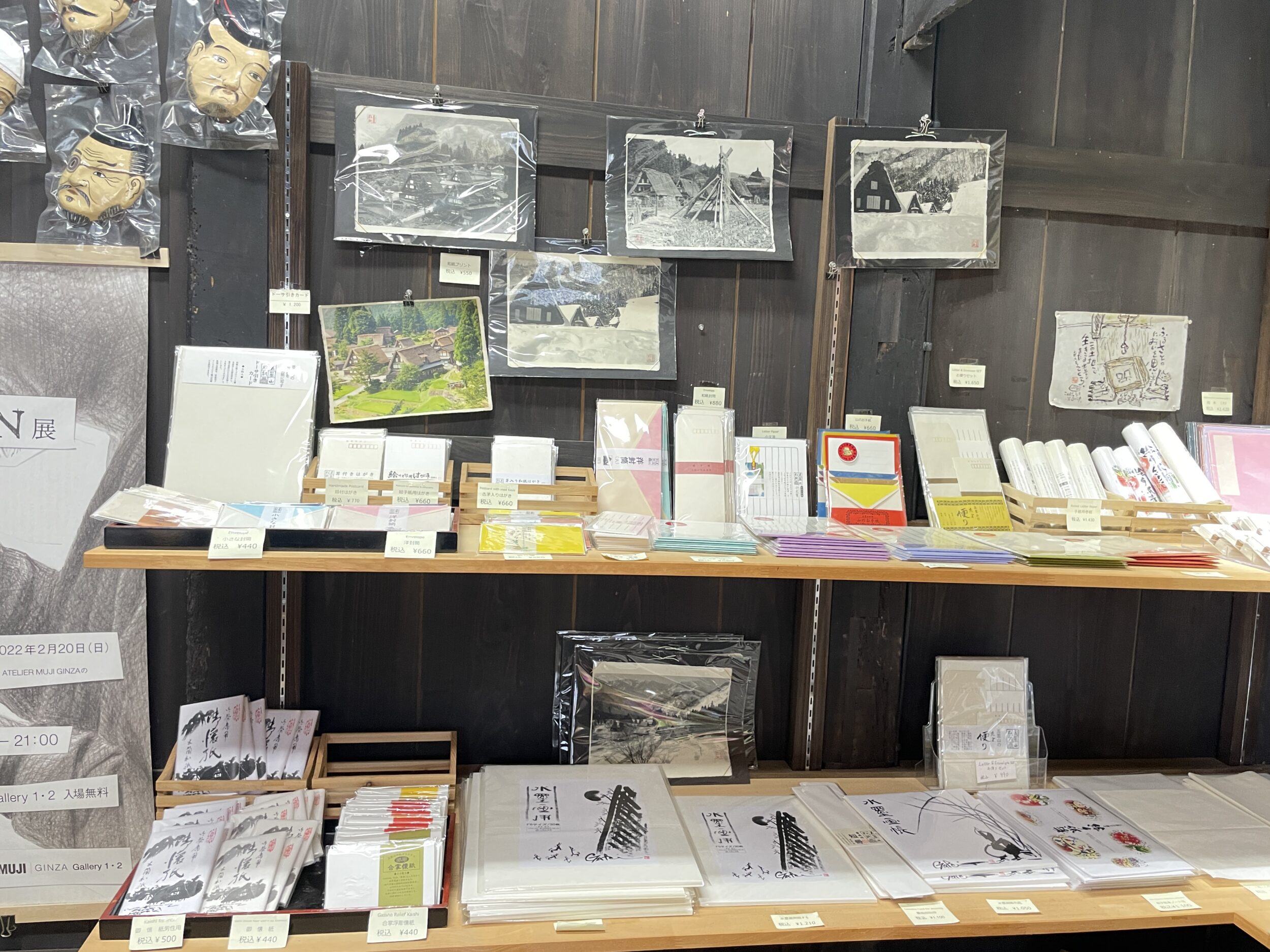
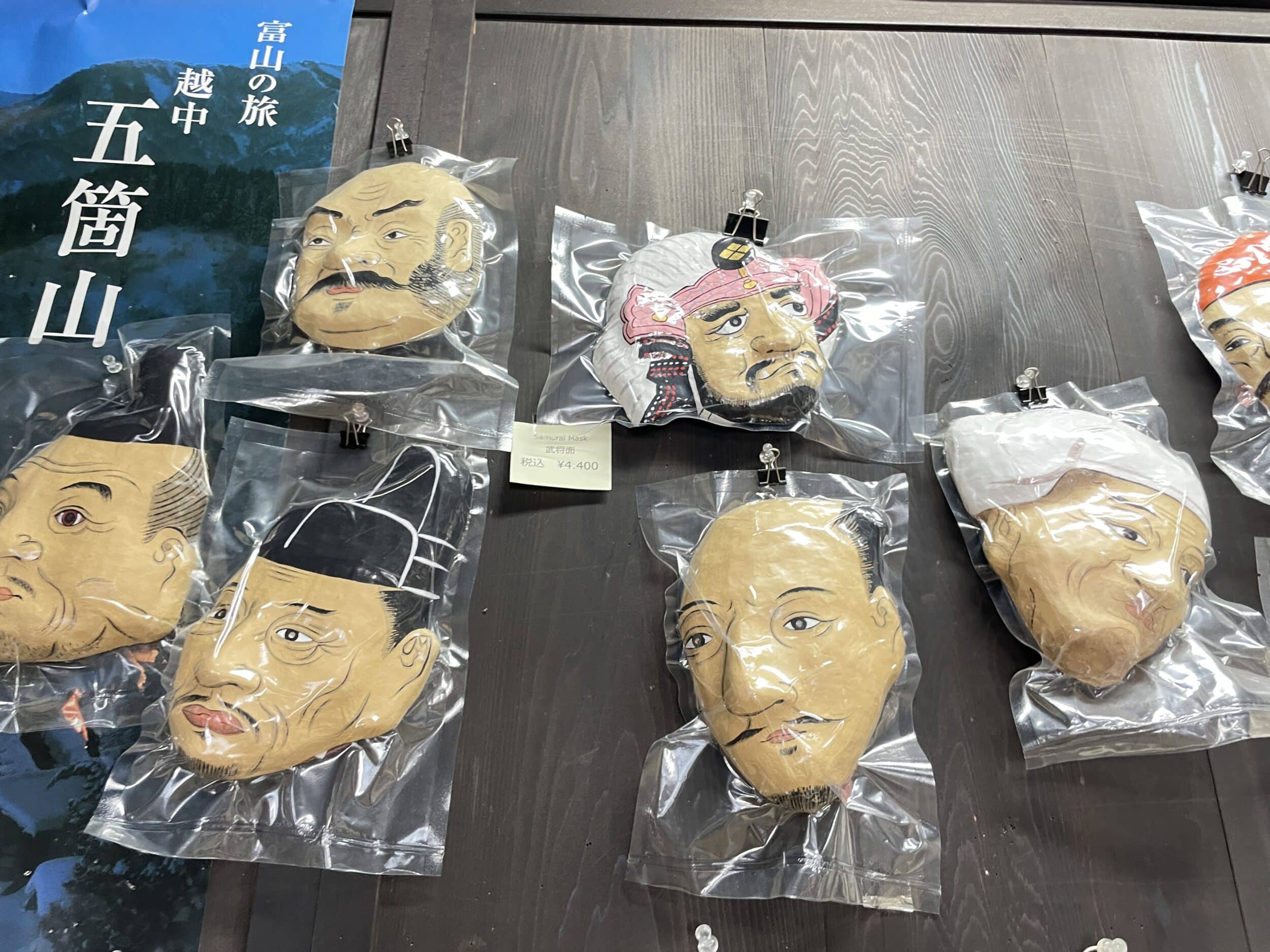
You can see the man making darumas in his workshop with his own washi papers.
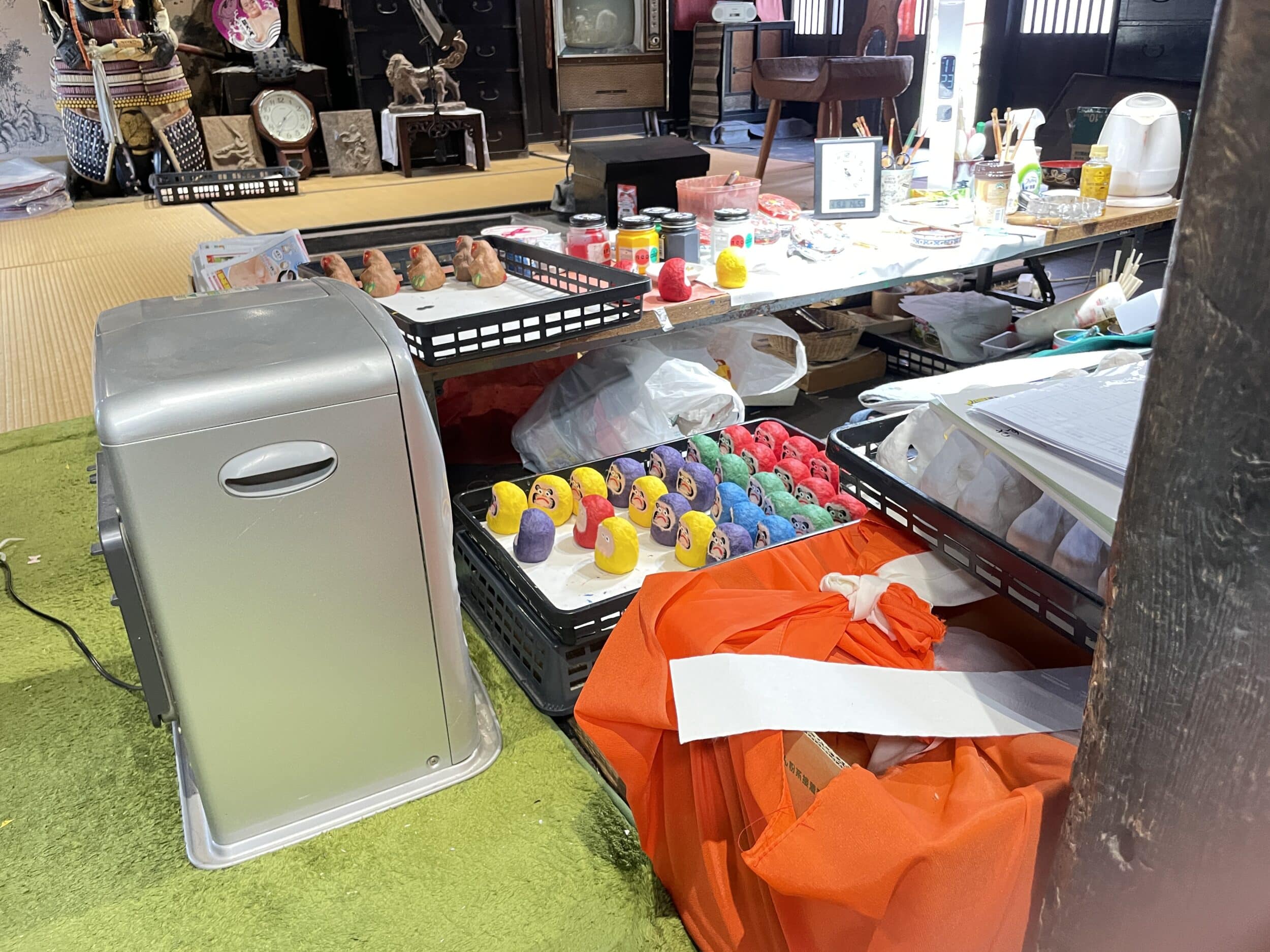
We continue our little stroll.
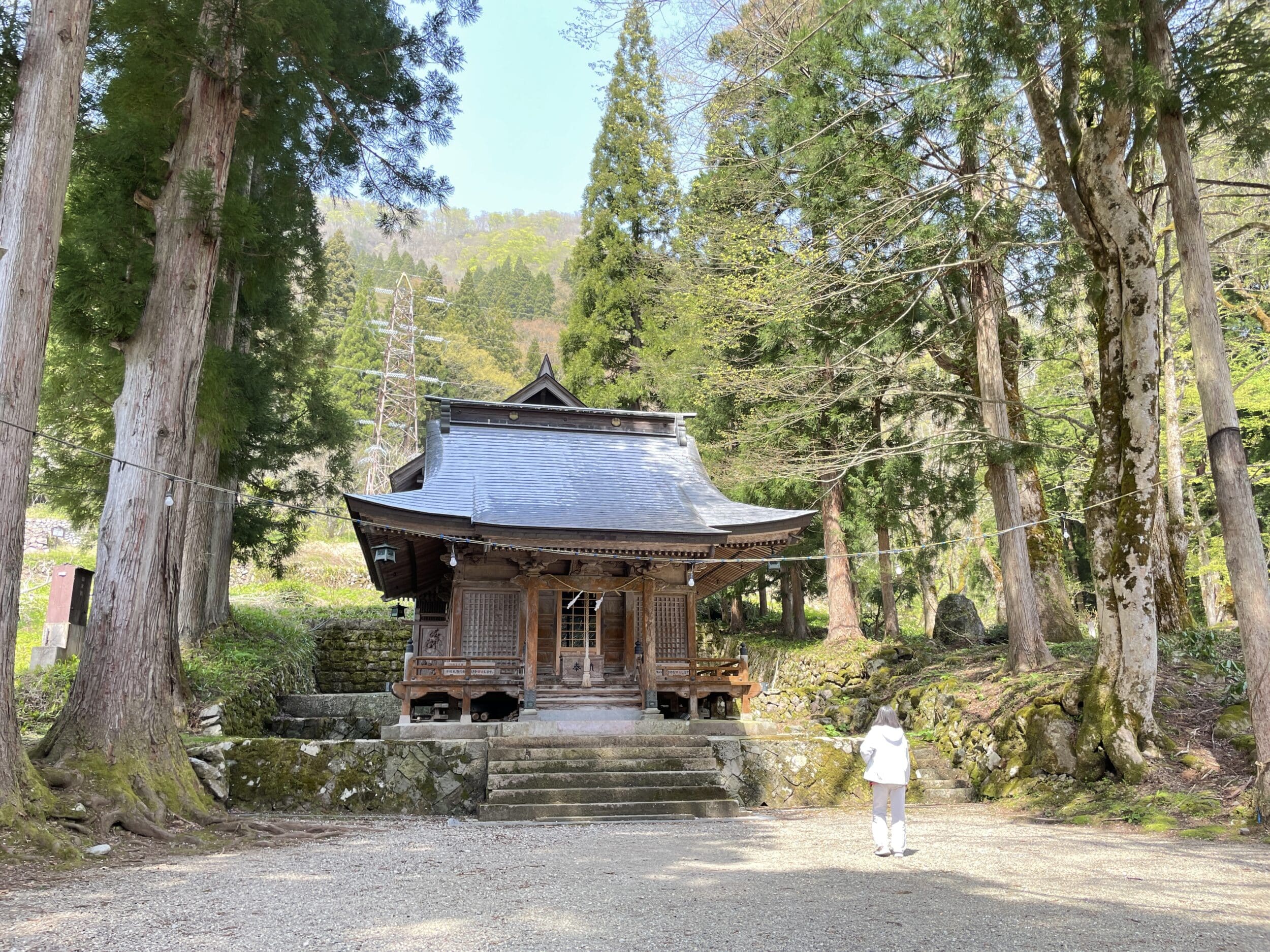
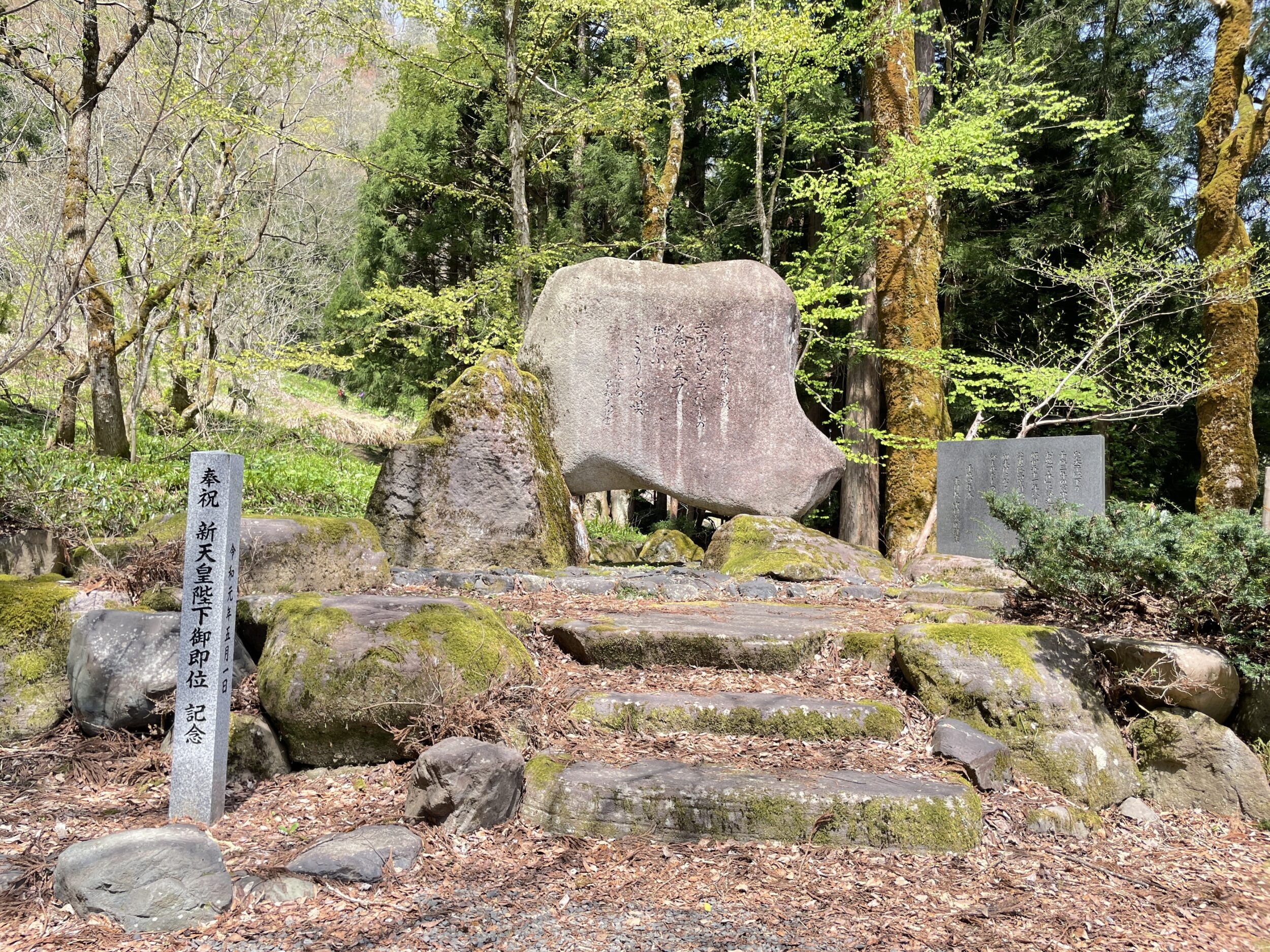
Lunch
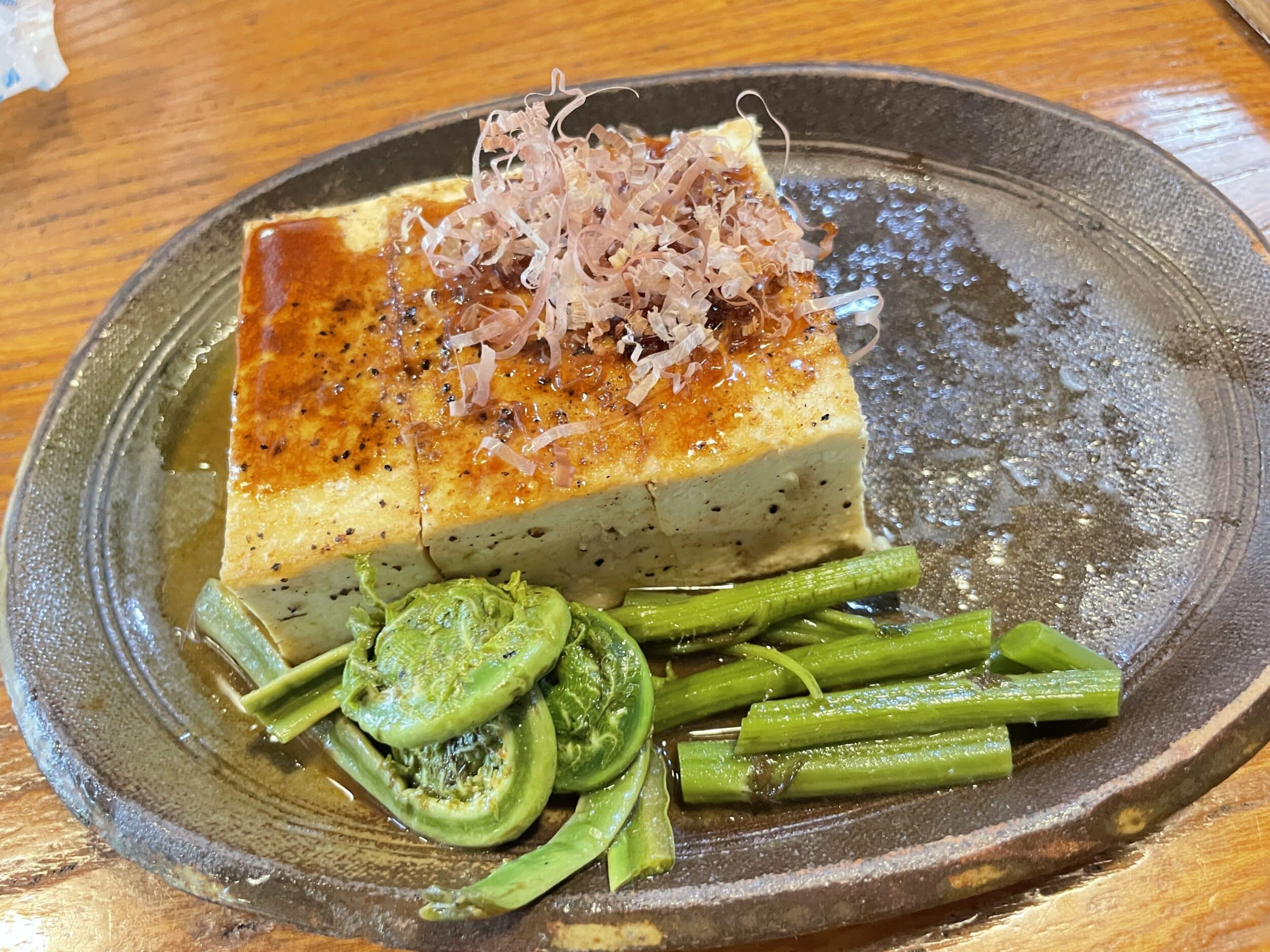
We plan to have lunch at one of the village’s two restaurants, but it doesn’t open until noon. JB saves us again by suggesting another restaurant in the neighboring village (Nanto) called Jippensha. They serve soba (a regional specialty), and some tofu (a regional specialty). I go for cold soba, to dip in the diluted soy sauce. At one point, the waitress brings us a teapot containing water that’s pretty tasteless and slightly cloudy. My mom asks the table next to us how to use it. The old lady at that table is only too happy to explain, in Japanese, how to use it. Thanks to the gestures and a discreet observation of the man at the next table, we figured it out: after eating the soba, you can add this water to the bowl of soy sauce to dilute it and turn it into a broth you can drink. And it’s delicious!
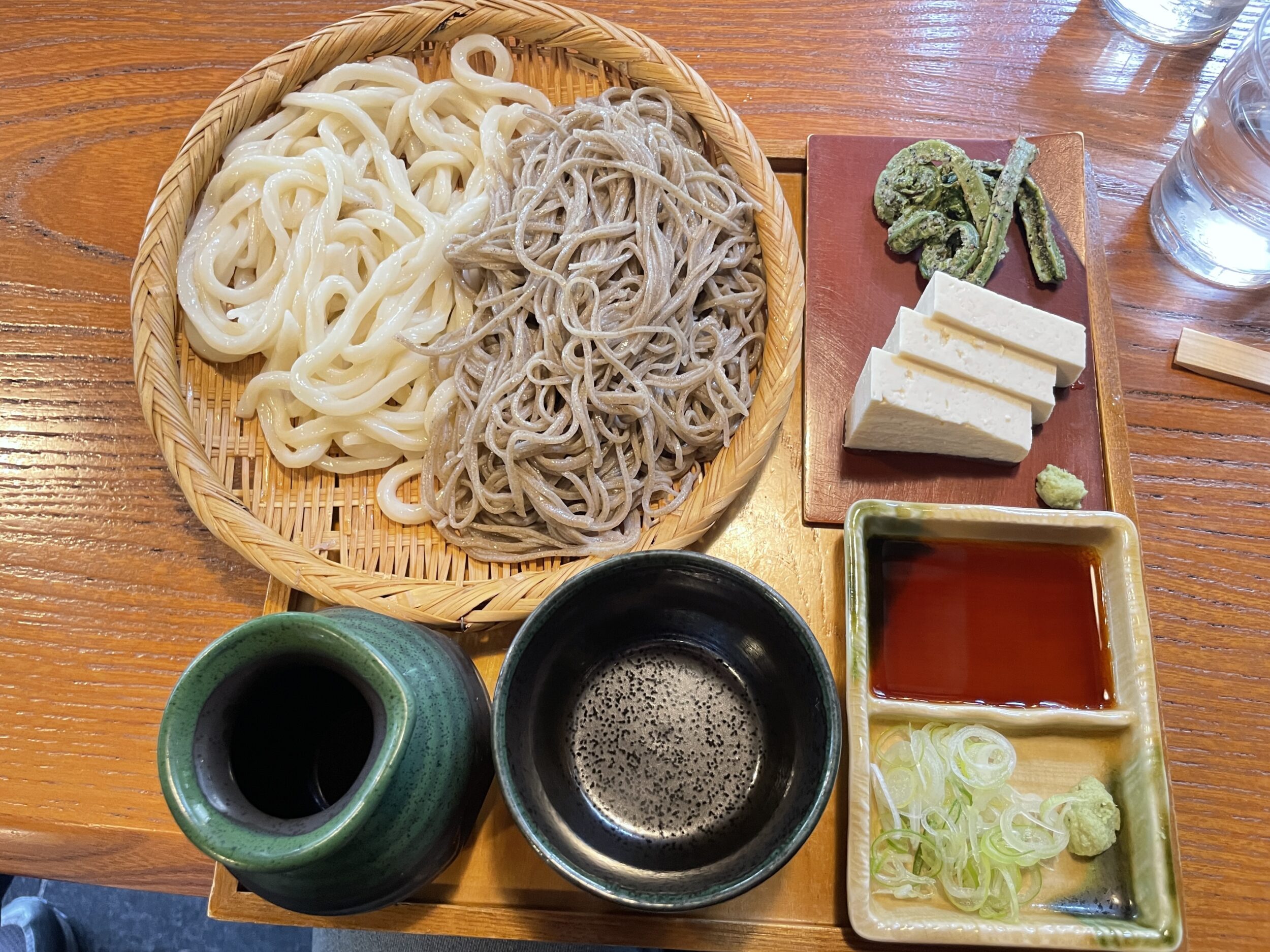
Tofu seems to be a specialty of this area, as we see it on every restaurant menu.
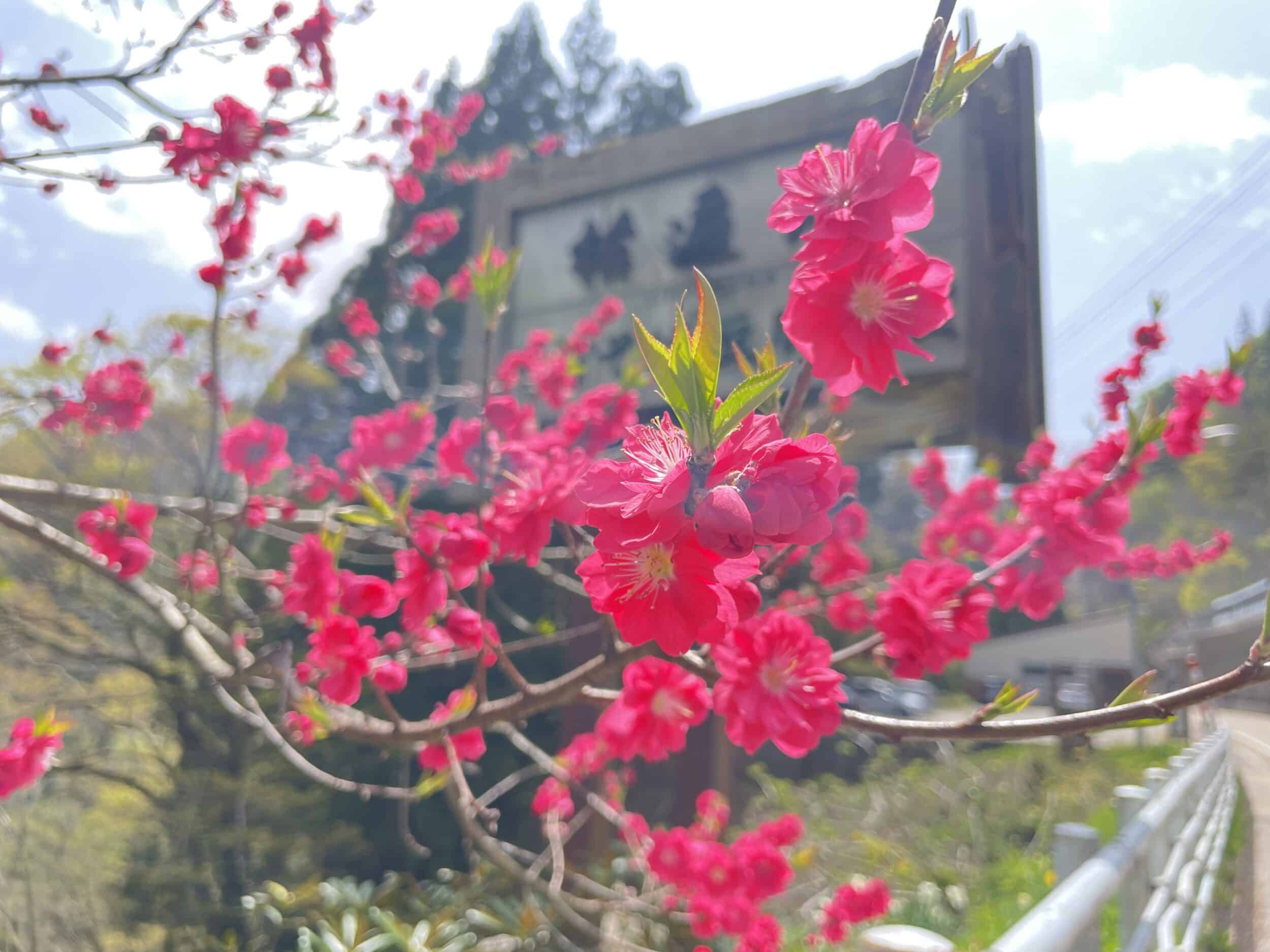
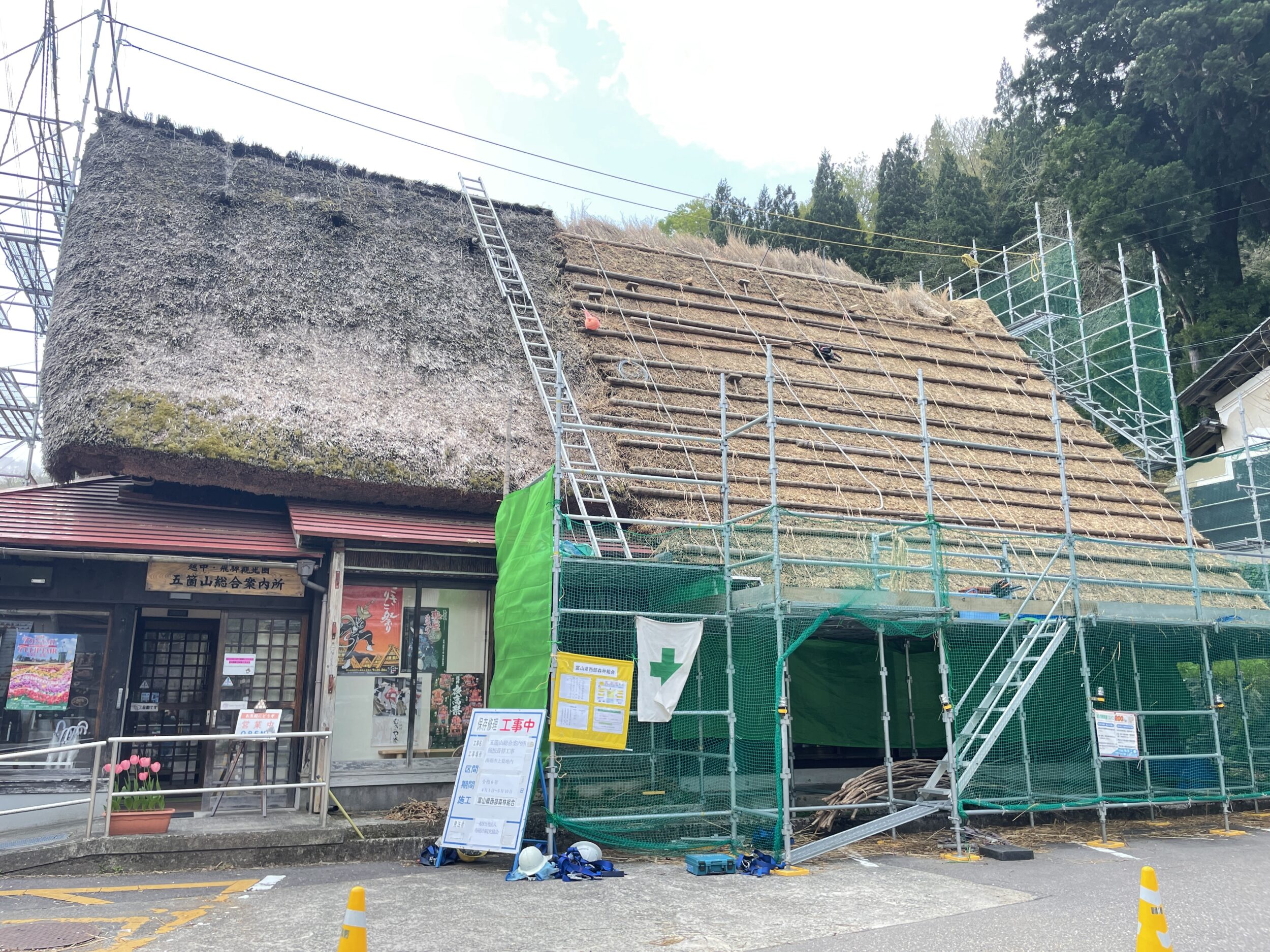
It’s in this same village that we see a team completely redoing the roof of the tourist office.
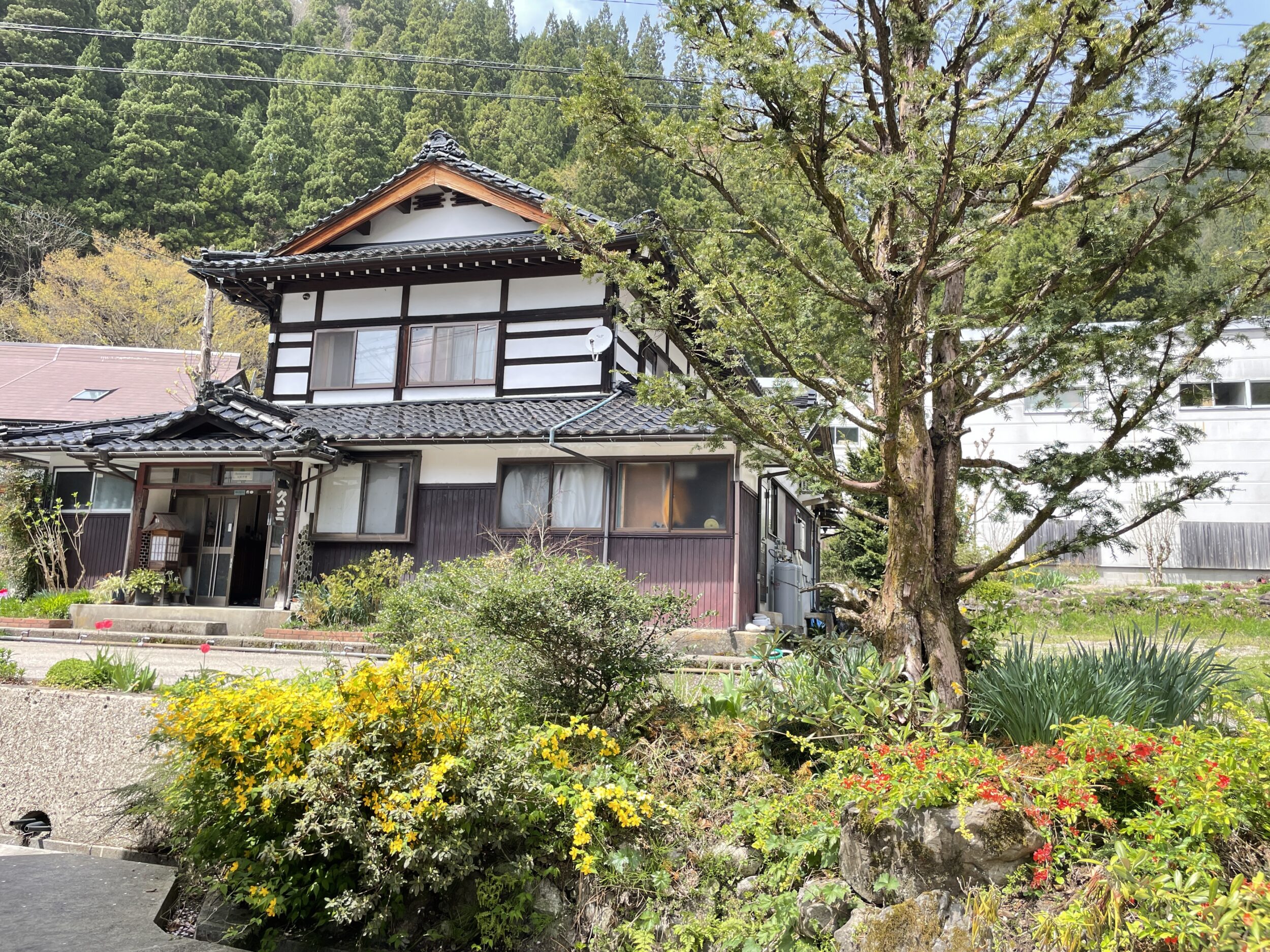
Next door, there’s a tofu shop where we can buy a tofu ice cream (but very creamy) for 350yen. Good tofu requires quality water, and they have it here.
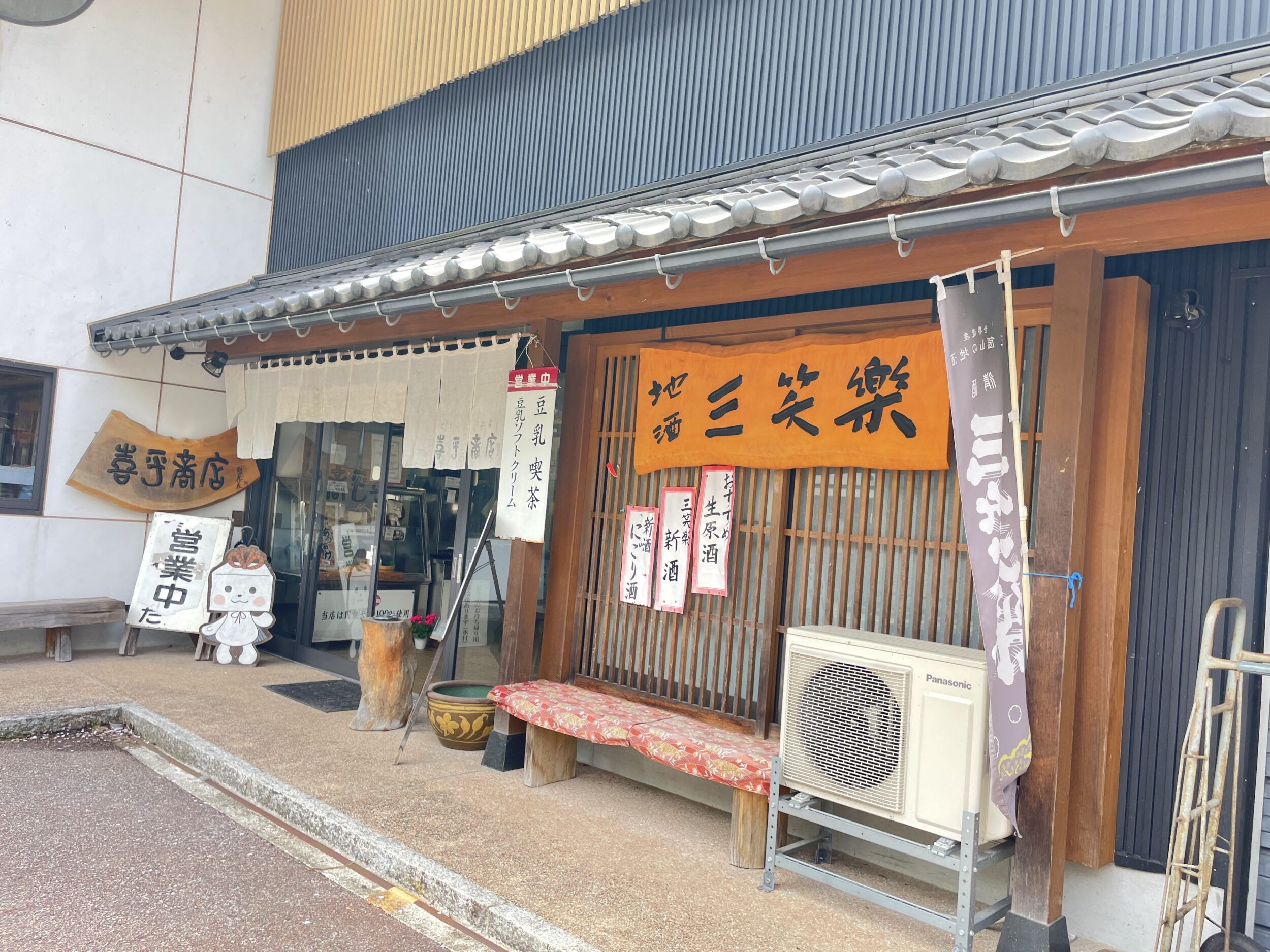
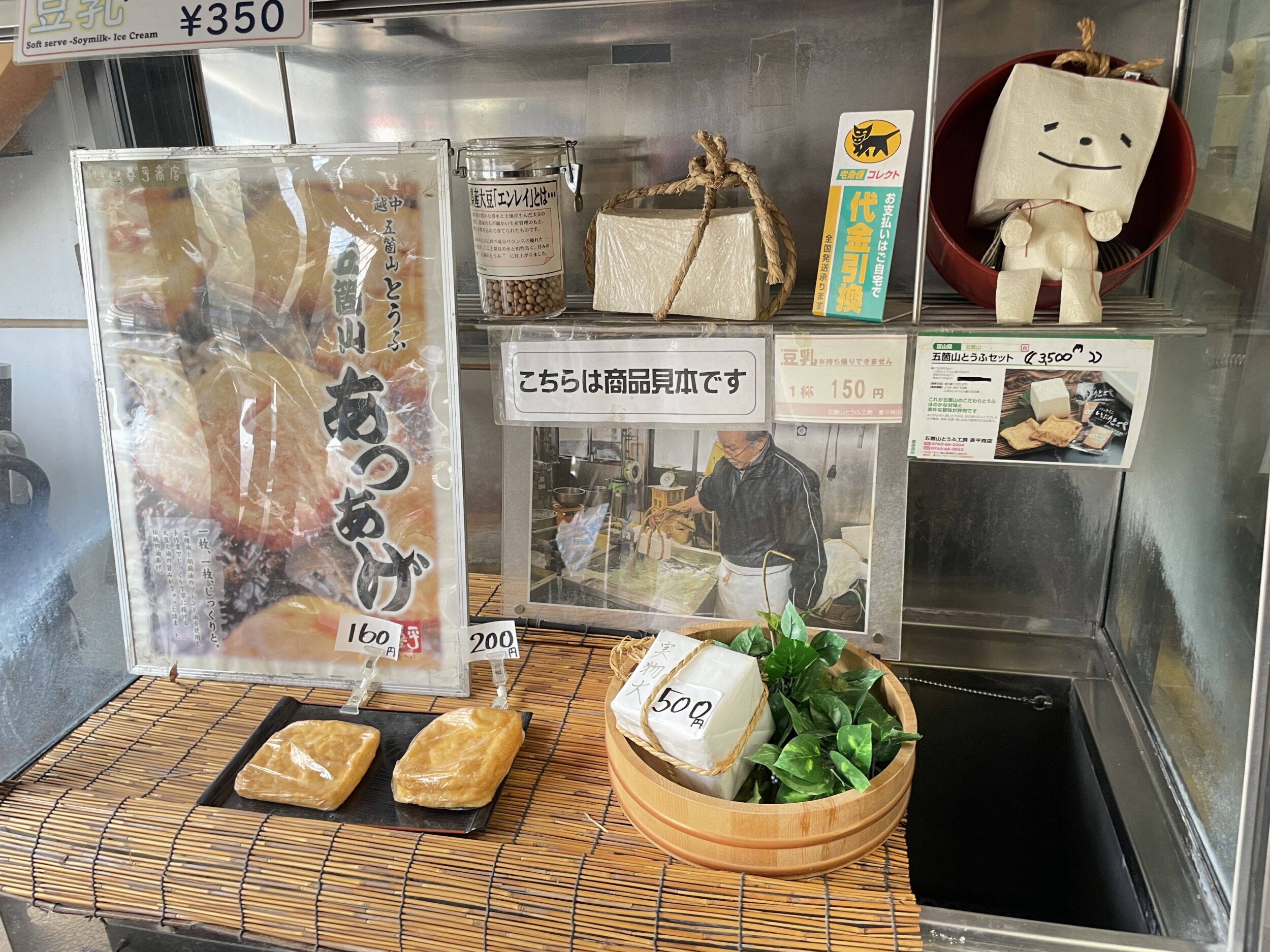
Our adventure in the mountain villages ends here; we hit the road again, heading to Kanazawa, a mini-Kyoto (read more here).
Part 2: Practical Tips
The detailed itinerary of our road trip is available here
- Parking at Ogamichi: 1000yen
- Parking at Suganuma: 500yen
- Parking at Ainokura: 500yen
- Museum: 400yen/person
- Lunch: around 1300yen/person
- Tofu ice cream: 350yen

