

Day trip to Tahiti (French Polynesia)
It’s May 8th and we’re enjoying this long weekend with two of JB’s colleagues and one colleague’s brother. He has a big pickup truck and is going to show us around the island and the peninsula (Tahiti Nui and Tahiti Iti). Luckily he has a car because the island is huge and we would have been exhausted if we had to do the tour on scooters. Also, it rained a lot the day before and it’s still raining on and off.
Because of the rain, the water on the beaches is not as nice as on postcards, but in exchange, the rivers and waterfalls have much more water than usual. I’ll take you along with us. 99% of the info and explanations come from A., JB’s colleague who is Tahitian.
Part 1: Travel Journal
Part 2: Practical Tips
Part 1: Travel Journal
Tahara’a Belvedere
We start with this splendid view at the Tahara’a Belvedere. Because of the trees, we can’t see the cliff. At the bottom is the black sand beach Lafayette. You can get there either by road (it’s right next to a busy road) or by going through the Tahiti Pearl Beach Resort hotel, which seems really nice with lots of activities (I’ll go there someday to give you a little report). You can see lagoons from afar but unfortunately there’s a lack of sunlight to really see the “paradisiacal” side of the island.
From here you can see some bungalows up high. These bungalows belonged to a very old luxury hotel (from the 70s and 80s). When it closed, several organizations tried to recover it but finally only half was resold and divided into private homes (you can rent one for the weekend), while the other half is abandoned. More info about the white lady of this hotel.
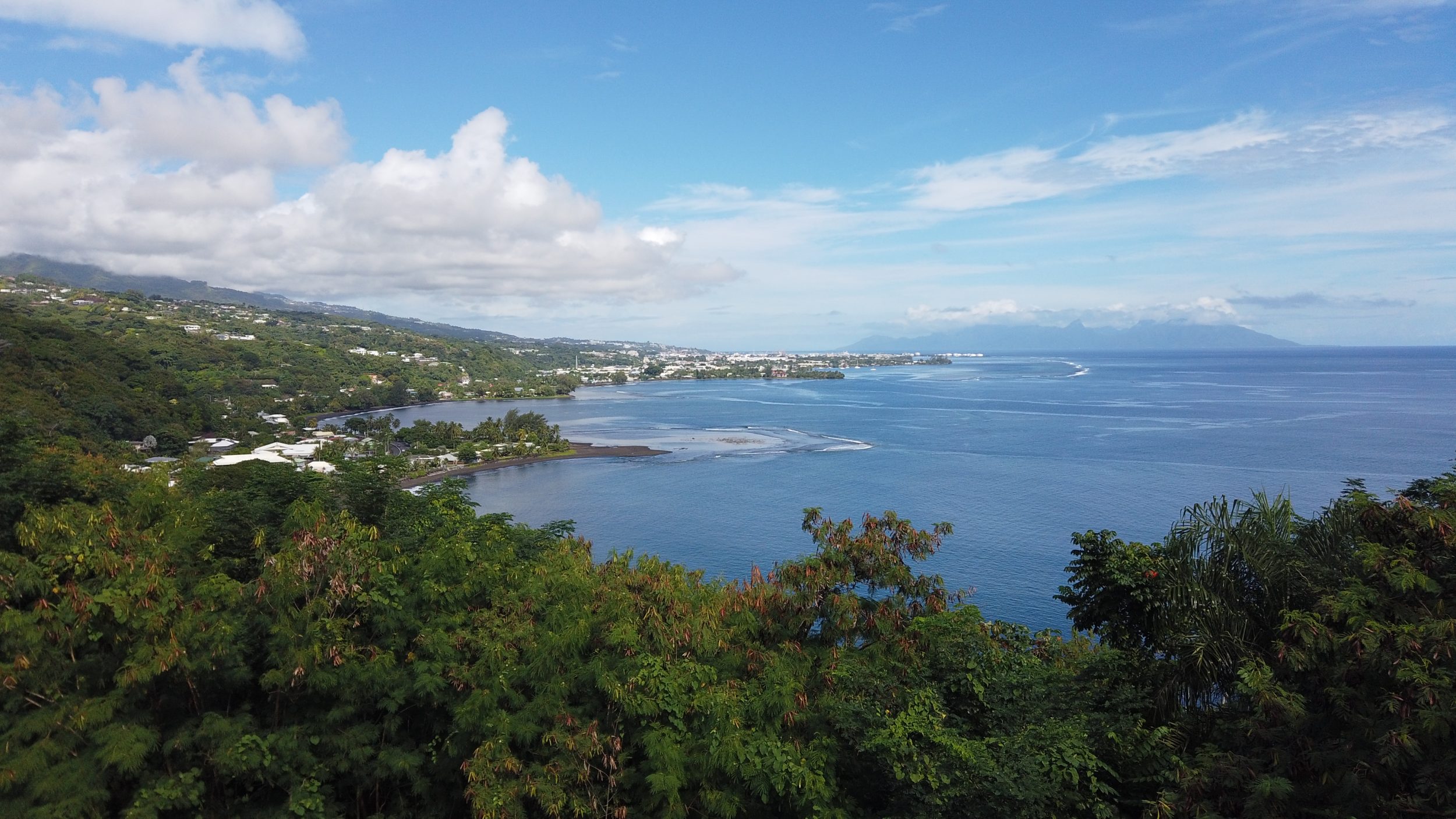
You can see that there are quite a few villas in the heights. Like all small islands, the roads are very steep and living up high is a real social marker. You need powerful and expensive cars to afford a nice view. And you have to change brakes more often because they wear out more easily.
Houses with beach access are also very expensive. They don’t look like much, are even very ugly and small, but cost more than Parisian apartments. Depending on the configuration, the beach is almost privatized for these houses, especially if there are no rights of way allowing an average person to access it. However, houses bordering a public beach are not the best located. Since the beach is public, anyone can bring their sound system in front of your house’s beach and spend the whole day there (and Polynesians love to do that!). So some owners protect “their” beach by putting prickly plants, but that doesn’t deter as much.
In a few months, we’re going to change Airbnbs and we’ll be in a residence made up of bungalows, and the beach facing the residence is almost private because it’s very hard to access without going through our secure residence. I’ll tell you what it’s like to have a “private” beach 10 meters from our bungalow.
The rights of way often bear the names of families because before, these lands belonged to a family, before being divided and sold to others. When you drive along the road near the ocean, you can immediately see which houses belong to the French from mainland France and which belong to locals. People from the mainland always have an ultra-secure, ultra-closed gate 😀
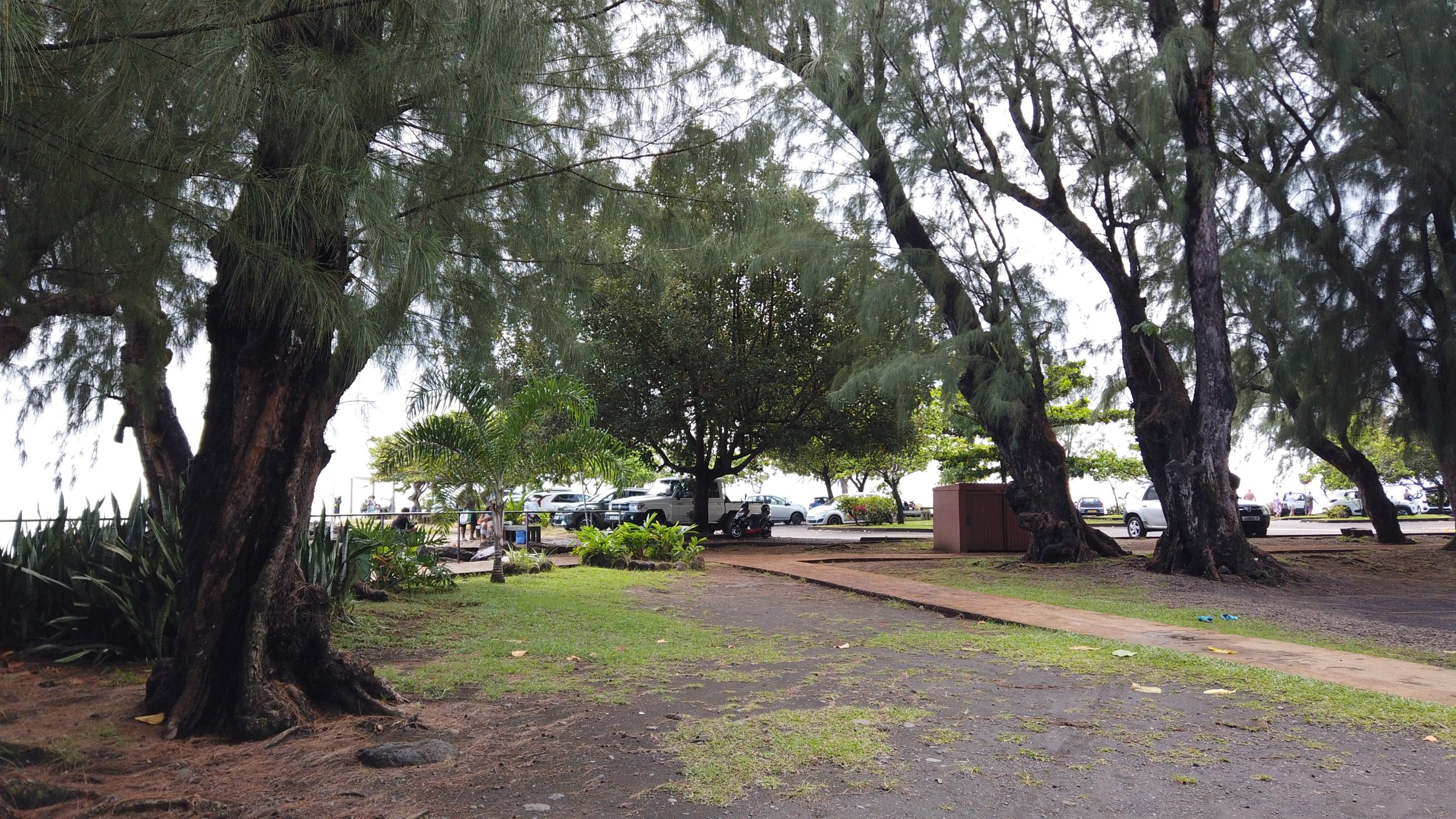
Pointe Venus Beach
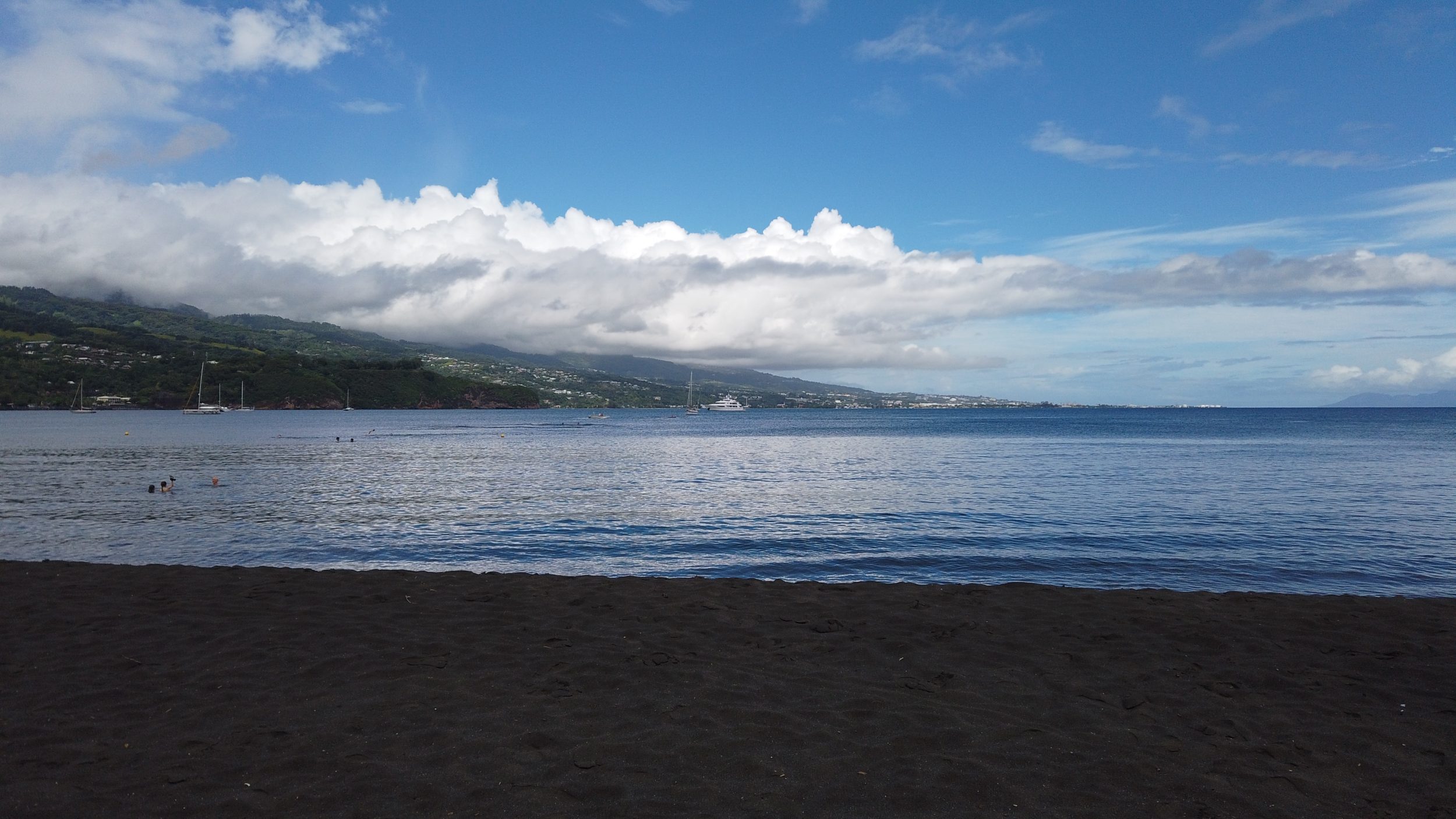
We already went to this beach 10 years ago, but it has changed enormously. There are plenty of parking spots, tables, benches, and facilities to spend the whole day there. It’s the northernmost point of the island. However, you have to be careful, for all black sand beaches, not to burn your feet 😀 Anyway, I think in Polynesia, we’ll have our aqua shoes every time because there are lots of corals everywhere, so the burning black sand shouldn’t be too much of a problem.
The water is particularly calm today, but that’s not always the case. The snorkeling spot is rather on the right side of this photo. You can even see fishermen there from time to time.
Faarumai Waterfalls
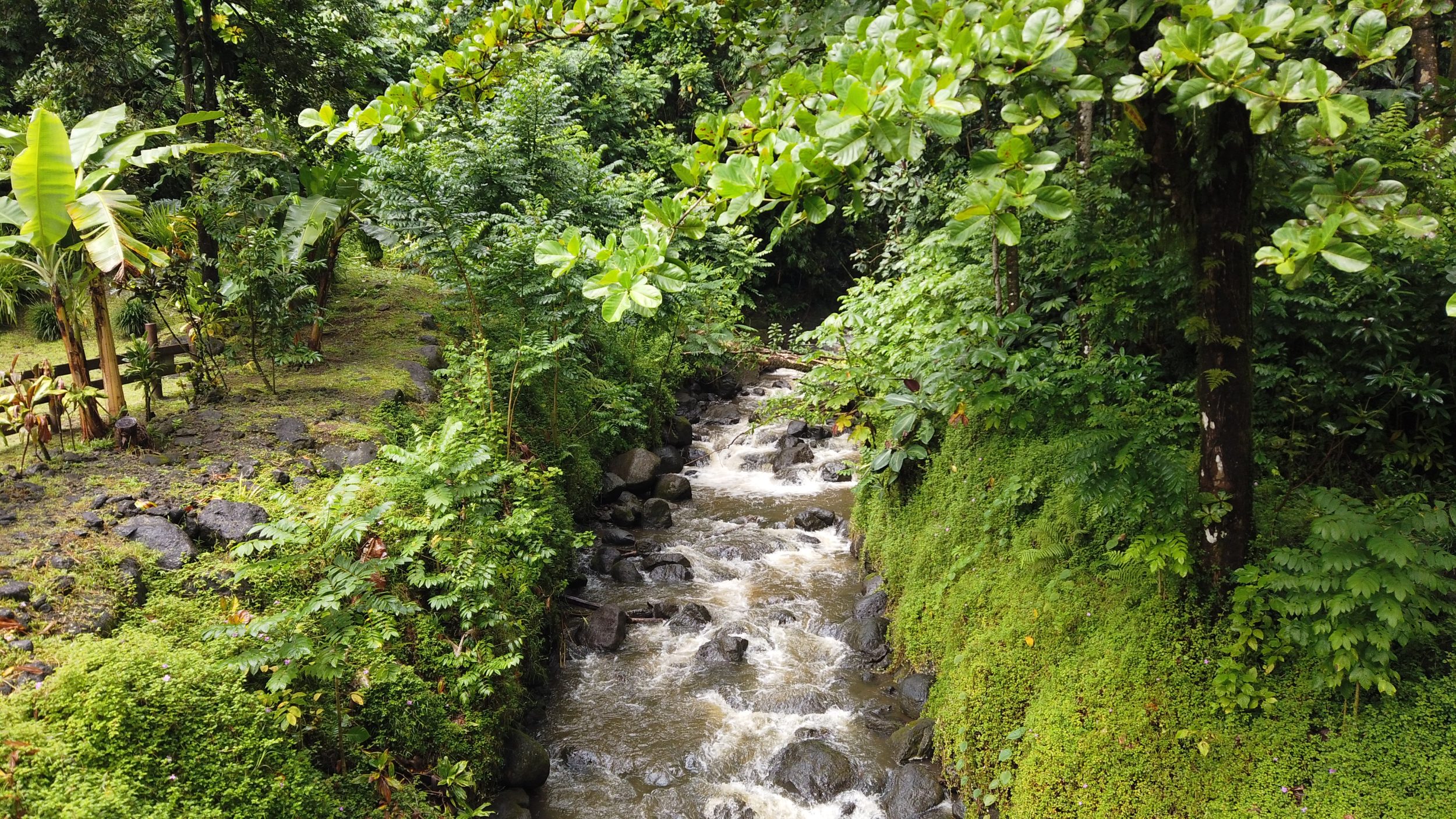
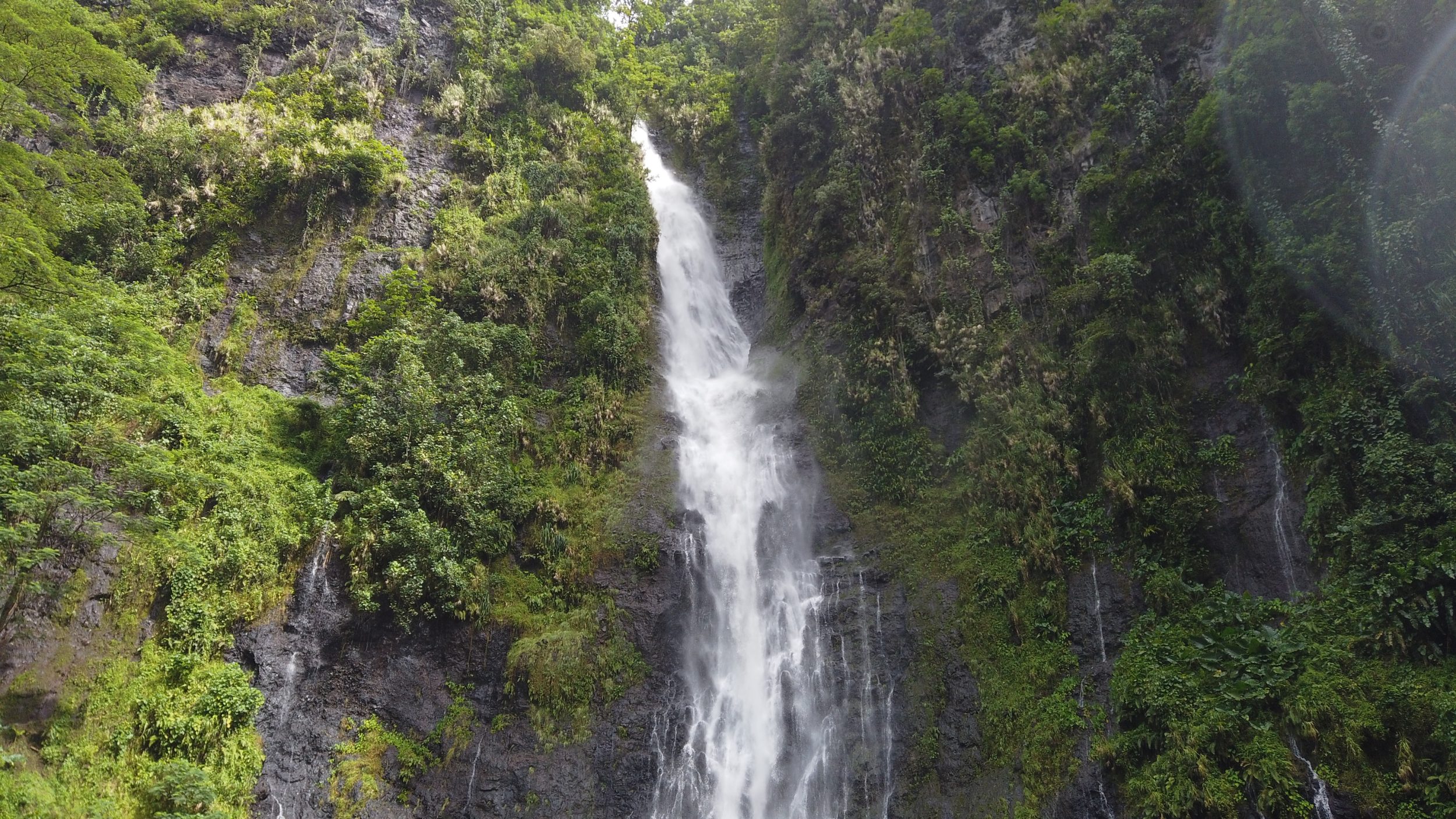
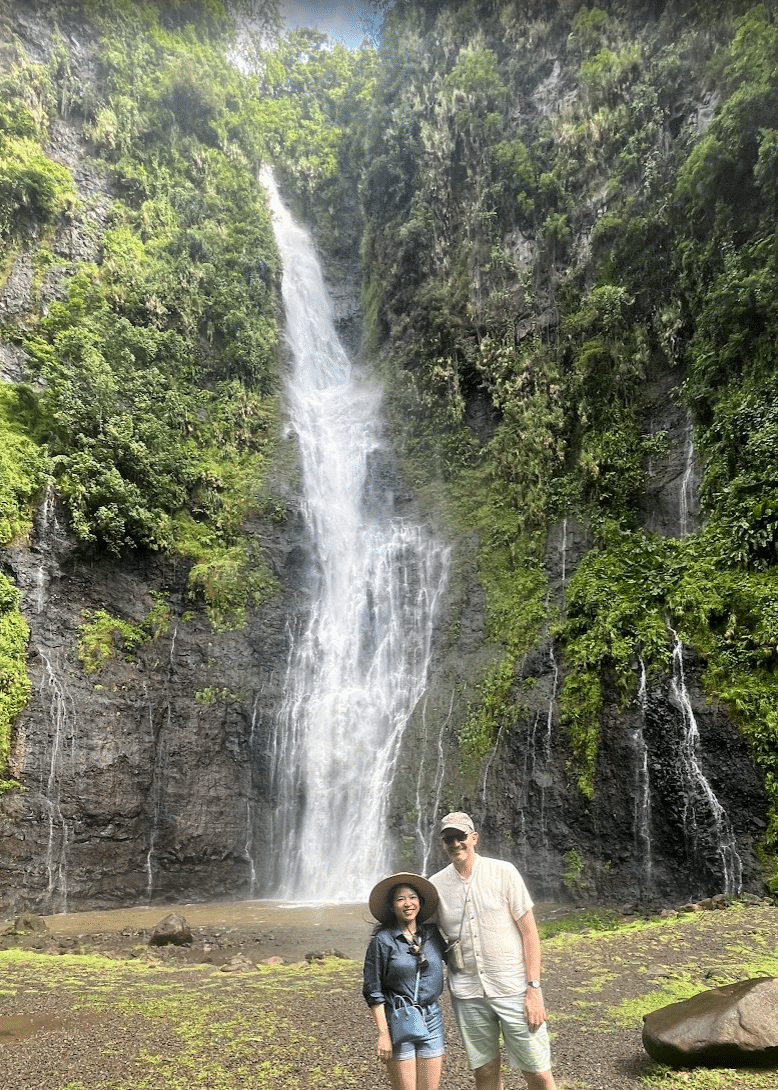
It starts to rain a bit when we arrive at the Faarumai waterfalls. We’re only allowed to visit one waterfall (out of the three). Of course, it’s the closest one, and that suits me fine because it only takes a few minutes of (easy) walking to get there. It’s called VAIMAHUTA, it’s 80 meters high, but it looks much taller because the water whips our faces even though we’re super far.
The Three Waterfalls of Faarumai are not just a natural spectacle — they tell a legend of love, transgression, and metamorphosis.
At the heart of this story lives Faùai, the daughter of Chief Maruraì, kept hidden from the world and subjected to a taboo: never speak to men. But one day, a young stranger named Tua enters the valley and steals flowers from her. Faùai cries out after him, thus breaking the taboo. This cry of emotion, as sweet as it is forbidden, condemns Tua to a brutal death at the hands of the guards.
Faùai’s sadness soon turns to hope when she catches the eye of another young man, Ivi, a mysterious being who is none other than the spirit of the valley. A sincere love blossoms between them, but it is forbidden. They then decide to flee together. Alas, the guards pursue them relentlessly.
In a final act of love and freedom, Ivi and Faùai turn into waterfalls, merging with nature to escape their fate. A third waterfall emerges, engulfing the pursuers. Since then, these three falls — Vaimahuta, Haamaremare Rahi, and Haamaremare Iti — sing the echo of an eternal love to anyone who cares to listen.
Teahupo’o Wave
We drive for a long time until the end of the road on the almost-island of Tahiti Iti. Beyond that, you’ll find people who deliberately flee civilization because the only way to reach them is by boat.
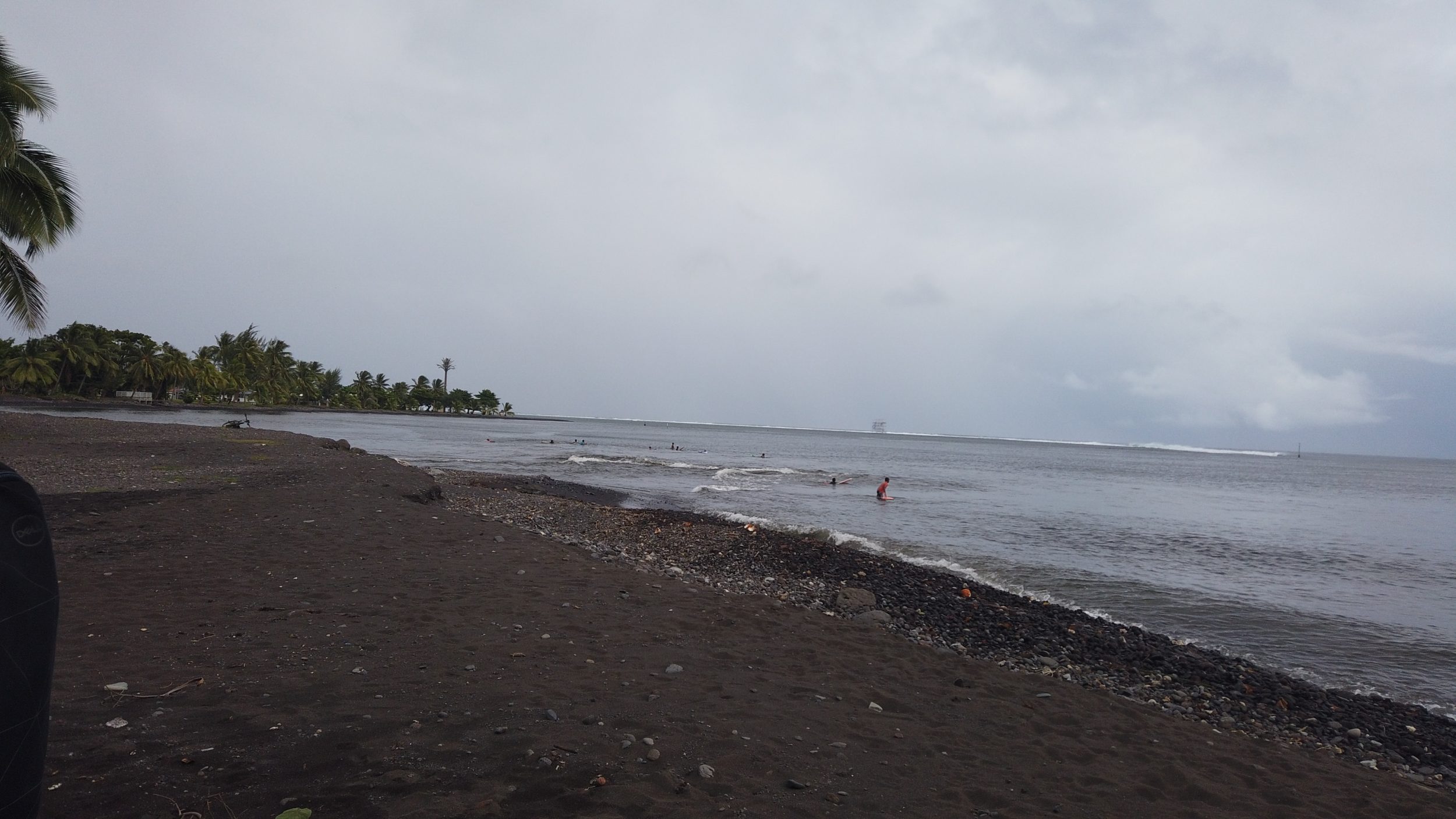
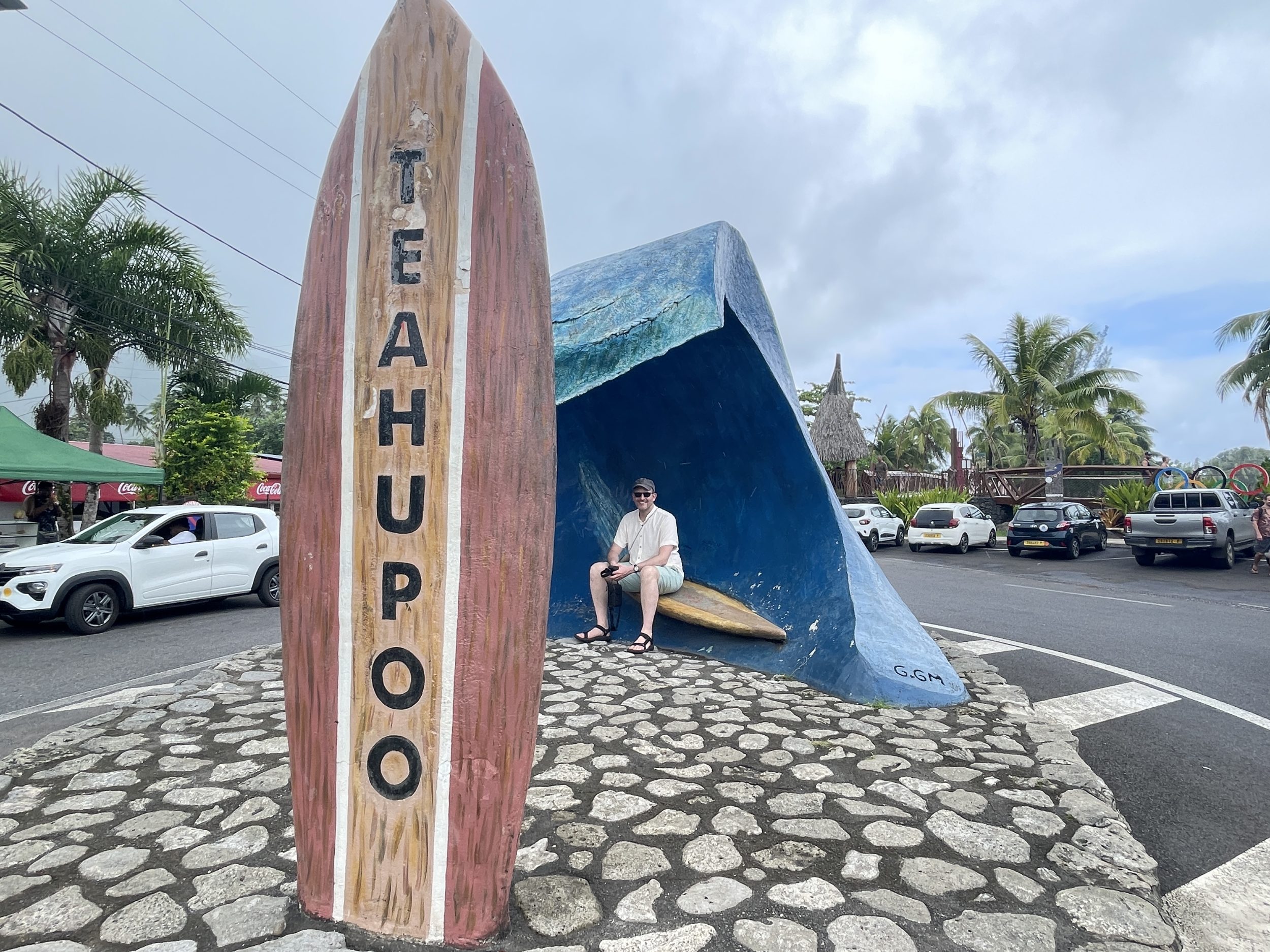
At the very end of the road lies the Teahupo’o wave. This is where the surfing events of the 2024 Olympic Games took place. In the distance, you’ll see a metal structure intended for the Olympic Games jury. Its construction was controversial because it damages the seabed. And destroying it might cause even more controversy, so they left it as is. You can see two areas with waves and in the middle, absolute calm (that’s the area without corals). Boats can take you to the calm area, where you can observe the wave fairly closely, for 3000Fr/person. Today, the wave isn’t very high, but you can still see the beginning of a “tube” it creates with our binoculars.
On good days, it looks like this:
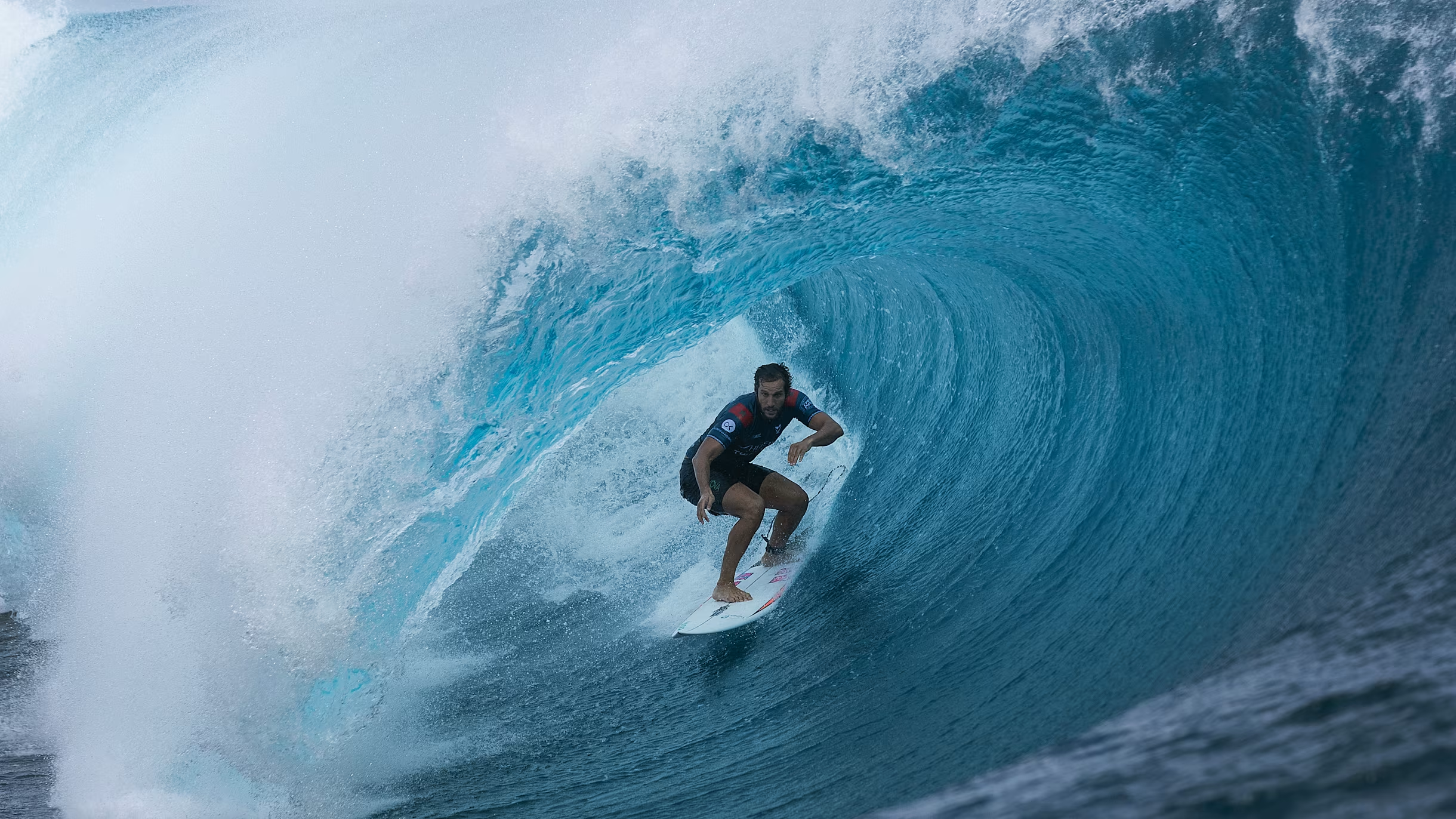
A. explains that only the excellent local surfers dare to tackle it. Because you can be only 20cm from the corals and get very, very hurt if you fall. Facing such a dangerous wave, it’s inevitably a Tahitian, who has trained since childhood, who can win at the Olympics. Even on other surf spots on the island, you need to have good knowledge of the place, because the locals are tired of rescuing beginners who don’t have a clue. So if you surf here, pay for lessons so a local can show you around, and once you’re used to it, you can surf without fear.
On site, you can still see traces of the Olympics, e.g., the Olympic rings, and many hostels that were full during the Olympics and now have no customers at all. We wonder how the place could host the Olympics because the parking lot is tiny and the road isn’t that wide.
Lunch
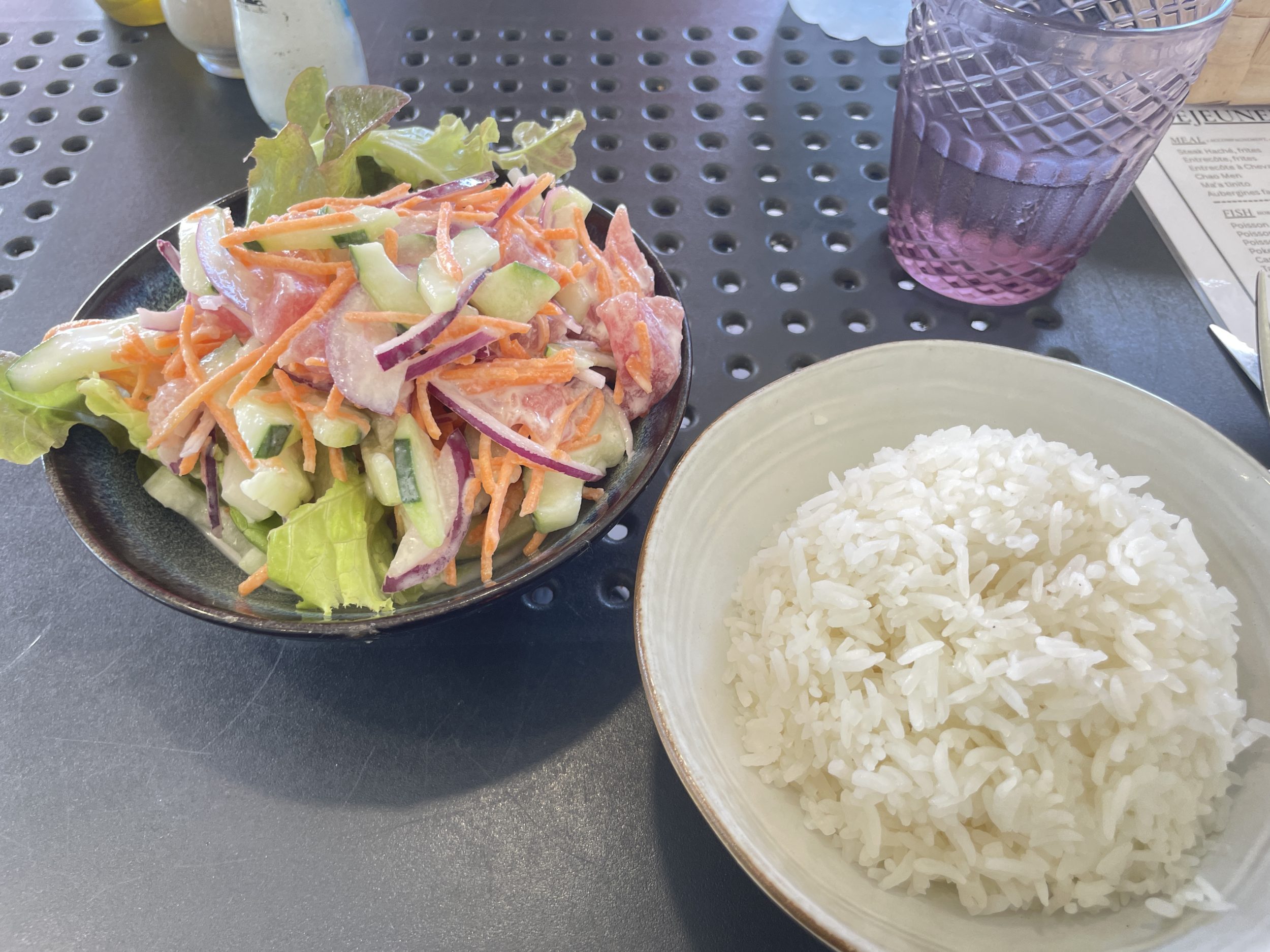
We stop at Taiarapu, the second-largest town (after Papeete) to have lunch at a snack found at random. I opt for raw fish in coconut milk. It’s super tasty, between a white tuna tartare and ceviche. I’ve tried to recreate the same recipe at home, so far without success, but I’ll get it right. JB and I really like tartares, and I’ve managed to make several: beef, scallop, bluefin tuna… It reminds me of a Parisian restaurant I really liked near Plage de Clichy that only sold beef and fish tartares. But apparently, that concept is too niche, so unfortunately it no longer exists 🙁
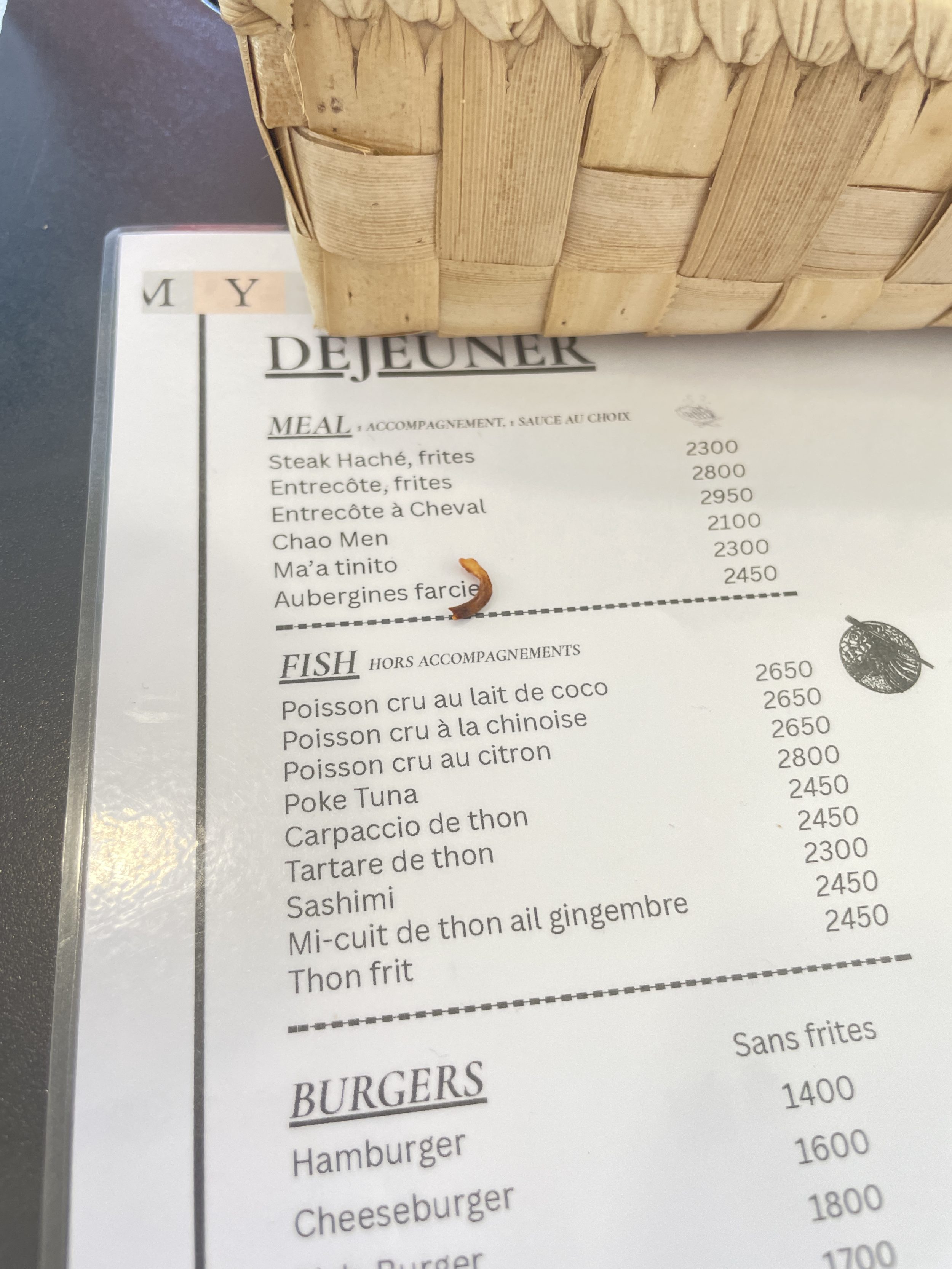
You should try Ma’a tinito next time; it’s a recipe invented for those who want to empty their fridge.
A. tries to take us to the “Blowhole” but the access is blocked (due to works, I think). We’ve already visited it 10 years ago, it looks like a geyser but it’s just the effect of a wave. We saw the equivalent, less impressive, in Bali.
Vaima Spring
Then we go to the Vaima Spring, where locals swim in crystal-clear water that’s not too cold. If you go all the way, you can see two holes where water gushes out. You can lie down as if in a jacuzzi. The downside is that the place is full of eels !!! They are 2 meters long. I almost fainted when I saw them.
They are considered sacred, so locals play with them and even feed them sardines. It’s a place not well known by tourists; there are places like this where locals still like to keep them for themselves and their families, so if you go there, you need to be very careful when you go, you must respect the eels and the tranquility of the place. Sometimes there may be barbecue stands, you can spend the day there because it’s shaded and the place is superb. There’s no changing room/shower etc., but there is a small parking lot.
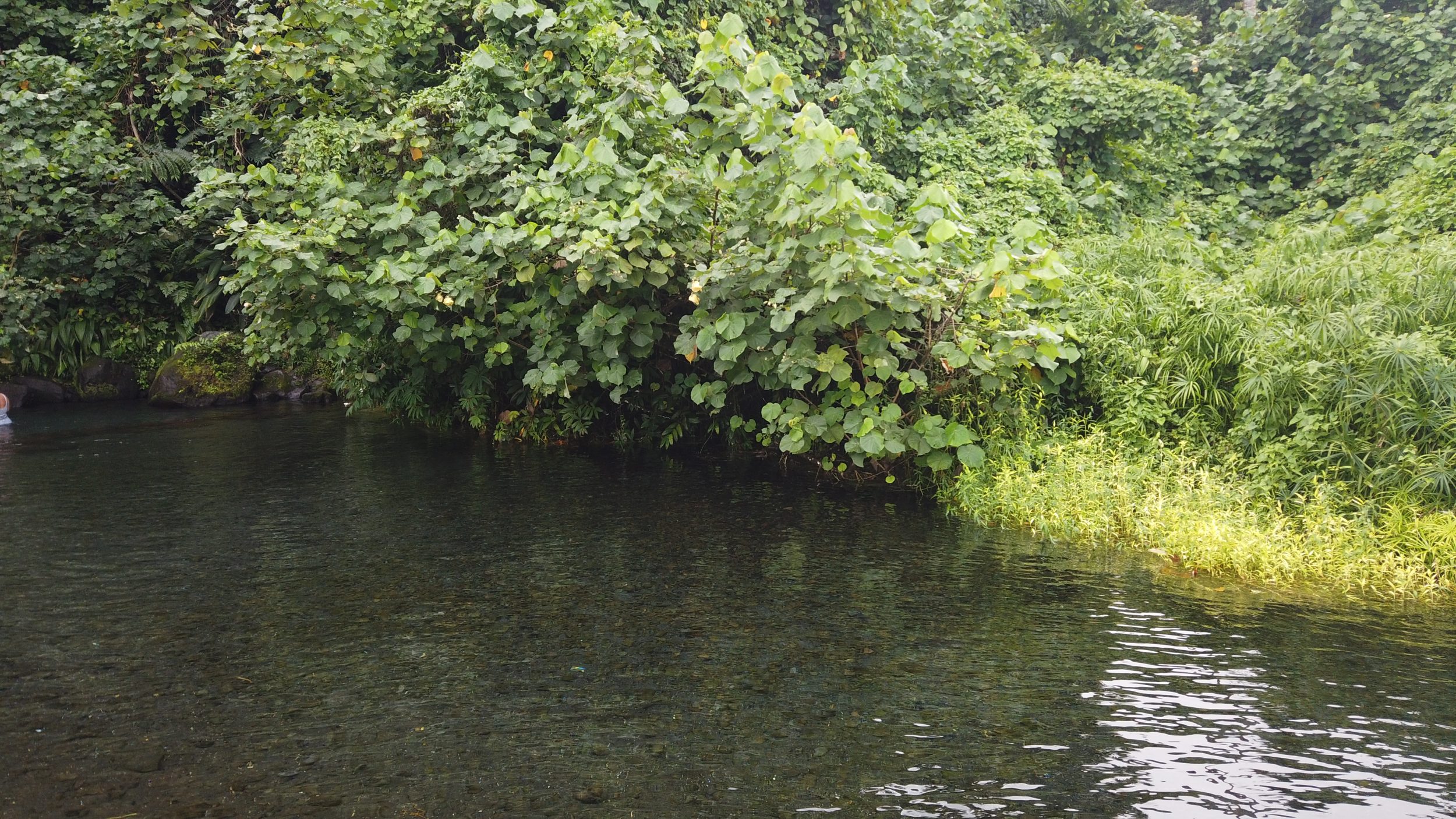
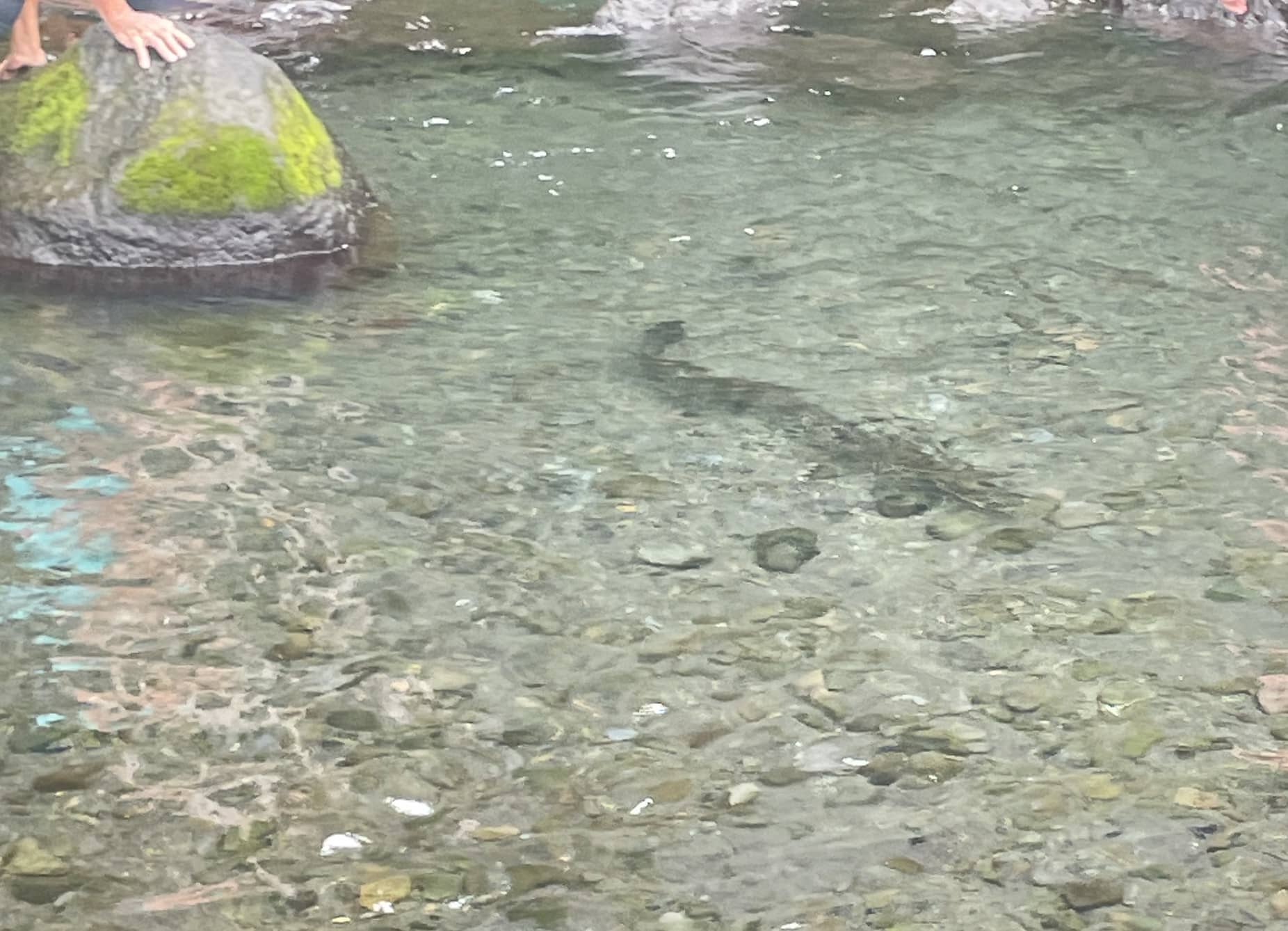
I didn’t know Tahiti had so much water. Looking at the map, I realize the island has many rivers. Part of the electricity is even hydraulic! In some towns, the water is drinkable, but it’s better to ask your landlord in advance if your apartment has drinkable water. For those who don’t, there are several drinking water fountains and people come to fetch it with their water containers.
Mara’a Caves
We visit the Mara’a caves. I know why we didn’t visit them last time. Seeing the photos, I thought they were super deep caves where you have to descend and explore with a lamp, so I skipped them. But actually, they are just small caves that aren’t scary at all.
Discreetly hidden under thick tropical vegetation, the Mara’a caves, located in the commune of Paea on the west coast of Tahiti, are a place steeped in mystery and spirituality. Shaped by natural forces over millennia, these deep cavities, partially submerged, have long fueled the collective imagination of the ancient Polynesians. Their natural coolness, deep silence, and the density of the surrounding flora have contributed to forging their sacred character.
According to oral tradition, the Mara’a caves are linked to a tragic legend: that of Eteturi and Manai, two fishermen who, having violated a taboo by consuming food reserved for the gods, were transformed into human offerings. This story testifies to the rigor of ancestral beliefs, where respect for invisible forces conditioned the balance between man and nature.
Charged with mana, a vital spiritual energy in Polynesian culture, the caves were considered passages to invisible worlds, places where the power of spirits and the memory of ancestors were concentrated. Even today, their humid atmosphere, the muffled resonance of water drops on the walls, and the play of shadows created by the filtering light sustain this feeling of unreality, inviting respect and contemplation.
Thus, beyond their geological beauty, the Mara’a caves remain a living testament to the intimate relationship that the ancient Tahitians maintained with their environment: a sacred dialogue between man, earth, and the divine.
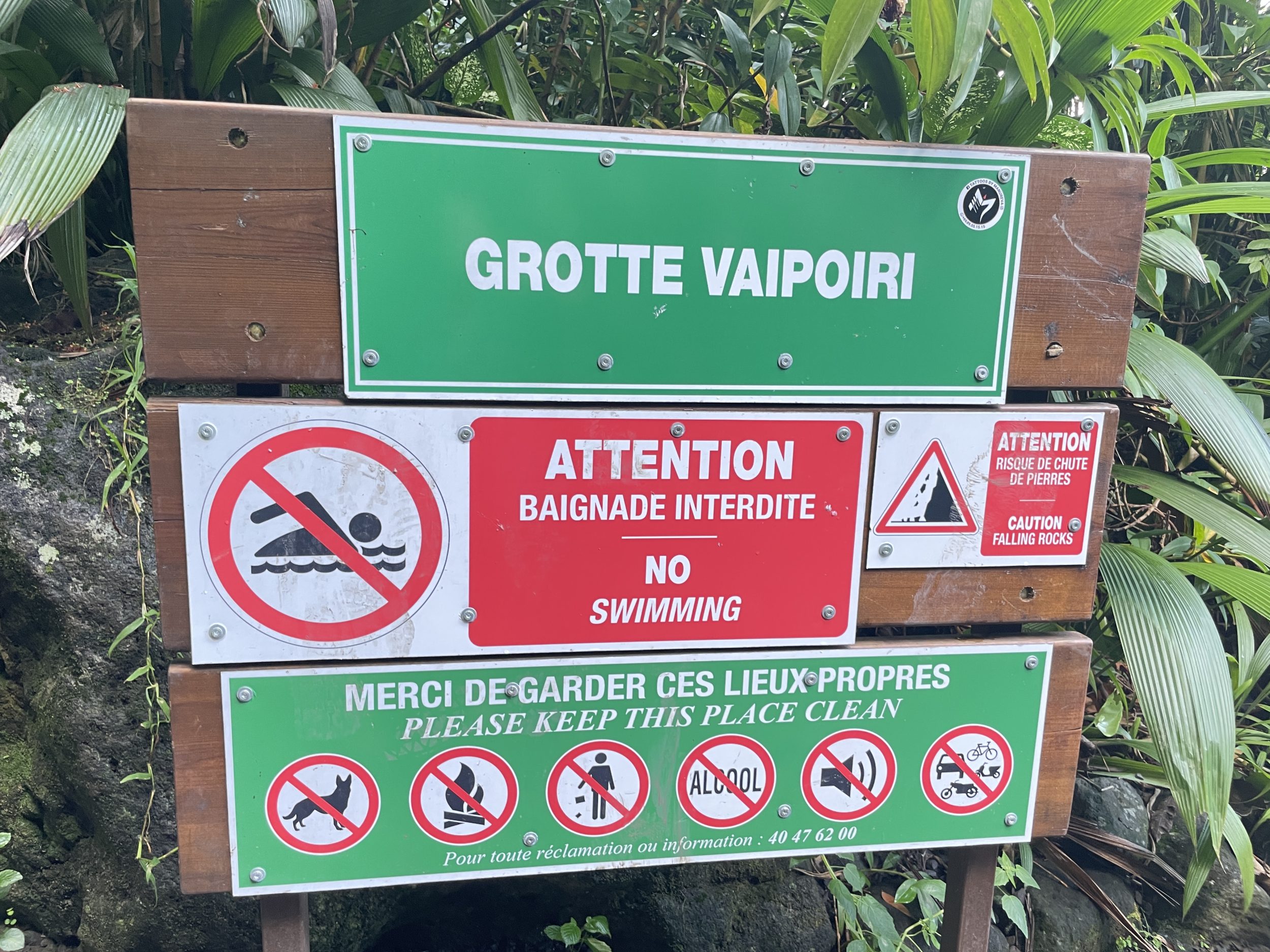
Before, this one was full of water, but there was a landslide, and now it is full of quicksand. Don’t try to venture in, or you’ll have to call for help.
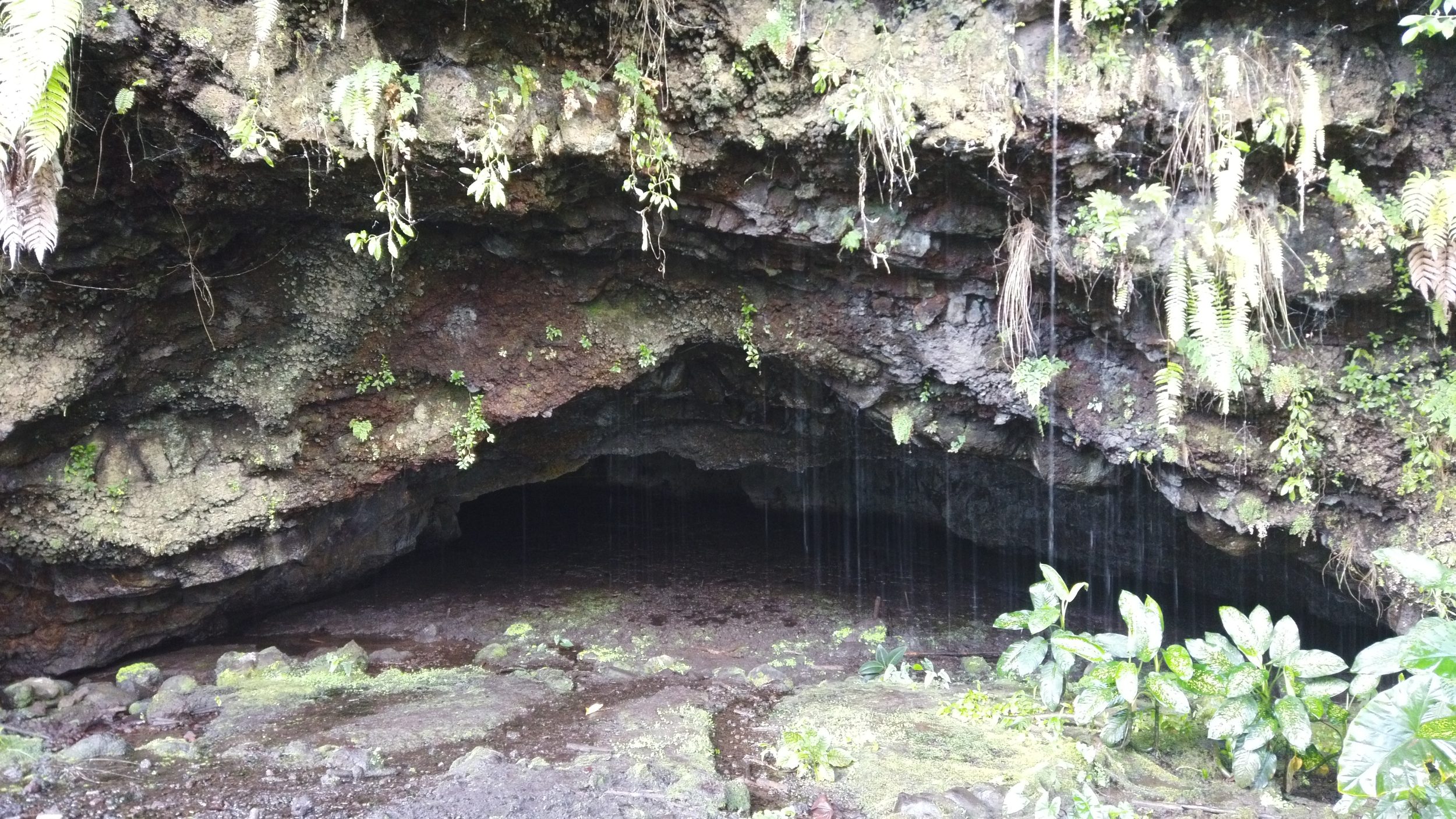
The cave next door is full of water, and you’re not supposed to swim there, but the locals do what they want, right, that doesn’t mean tourists are encouraged to join in too. Here, when the locals want to party, they come with their speakers and the music is super festive, “boom boom”, which is not very pleasant, especially since it can start very early in the morning. That’s why several rentals we saw on Airbnb say “no parties, no music”.
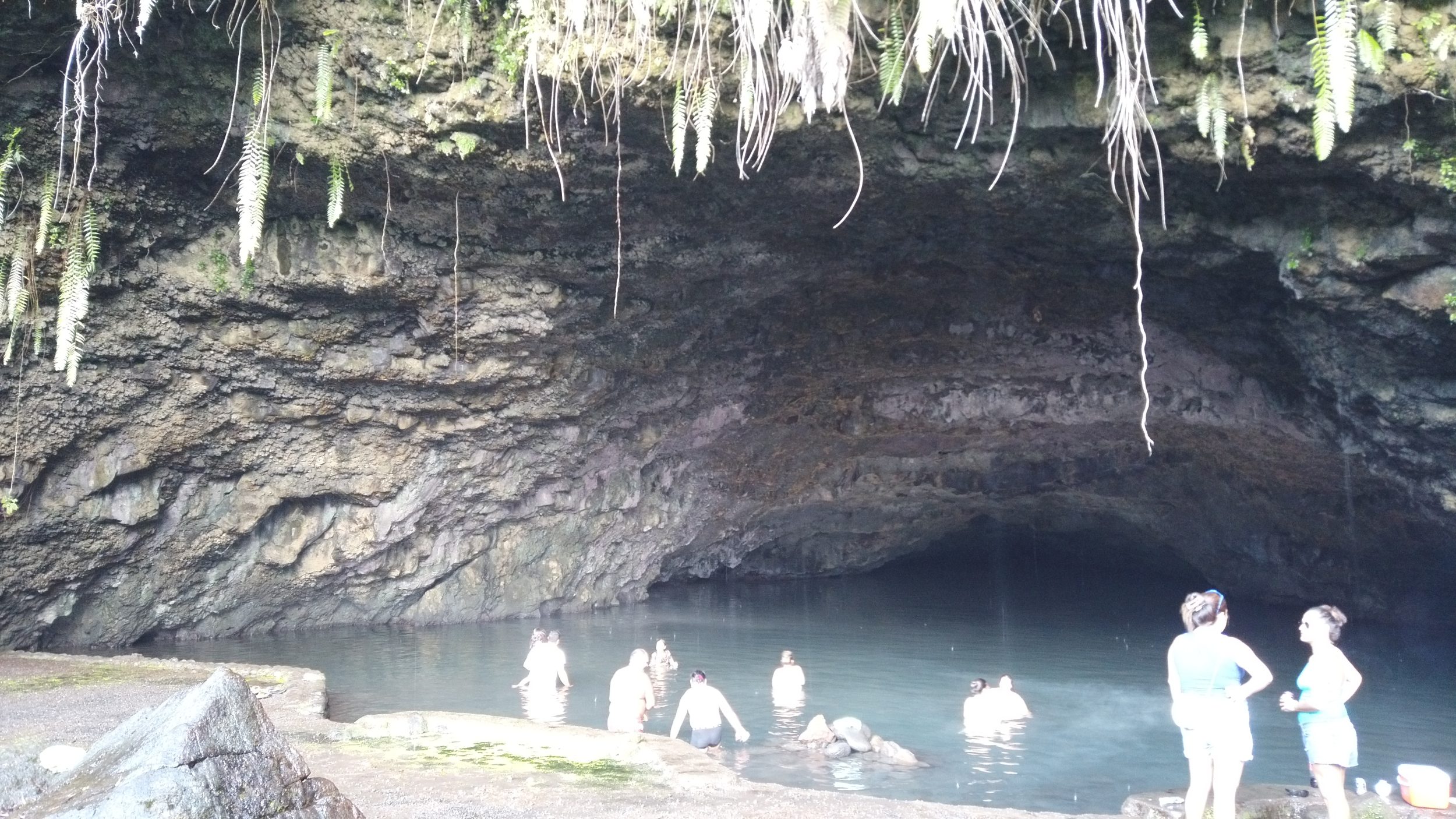
The caves are barely visible from the coastal road, hidden by vegetation, but this one, Te-ana-pape-ō-Vai-pōiri cave, is visible from the sea and helps guide fishermen, whether from Pā’ea or Papara, to one of the nearby passes.
If you’re tired of caves, just cross the road and a beautiful beach awaits you.
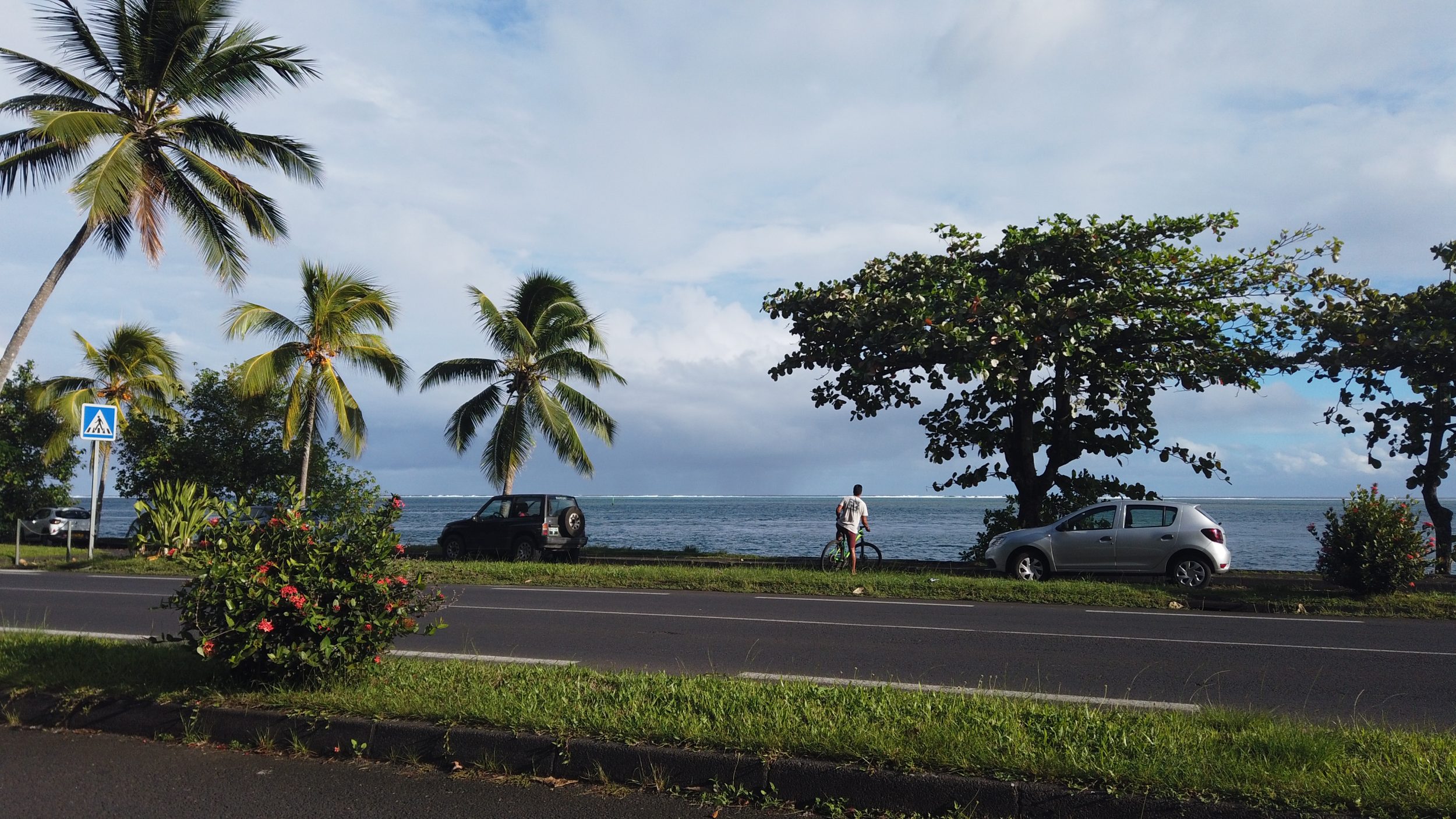
Tahiti Resort
The guys need a nice cold alcoholic drink, and we head to the former Le Méridien hotel, which now goes by another name, to grab a drink.
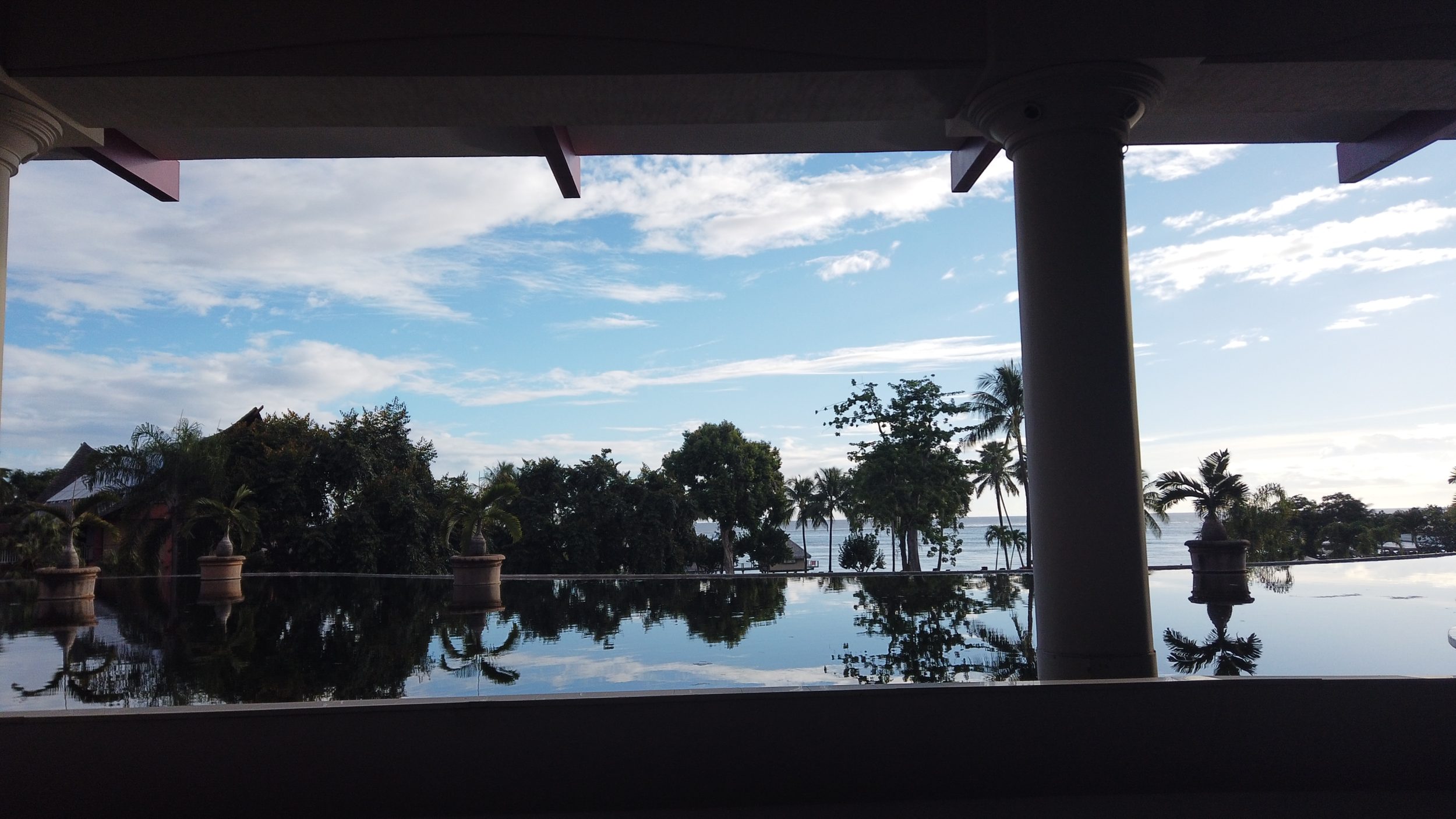
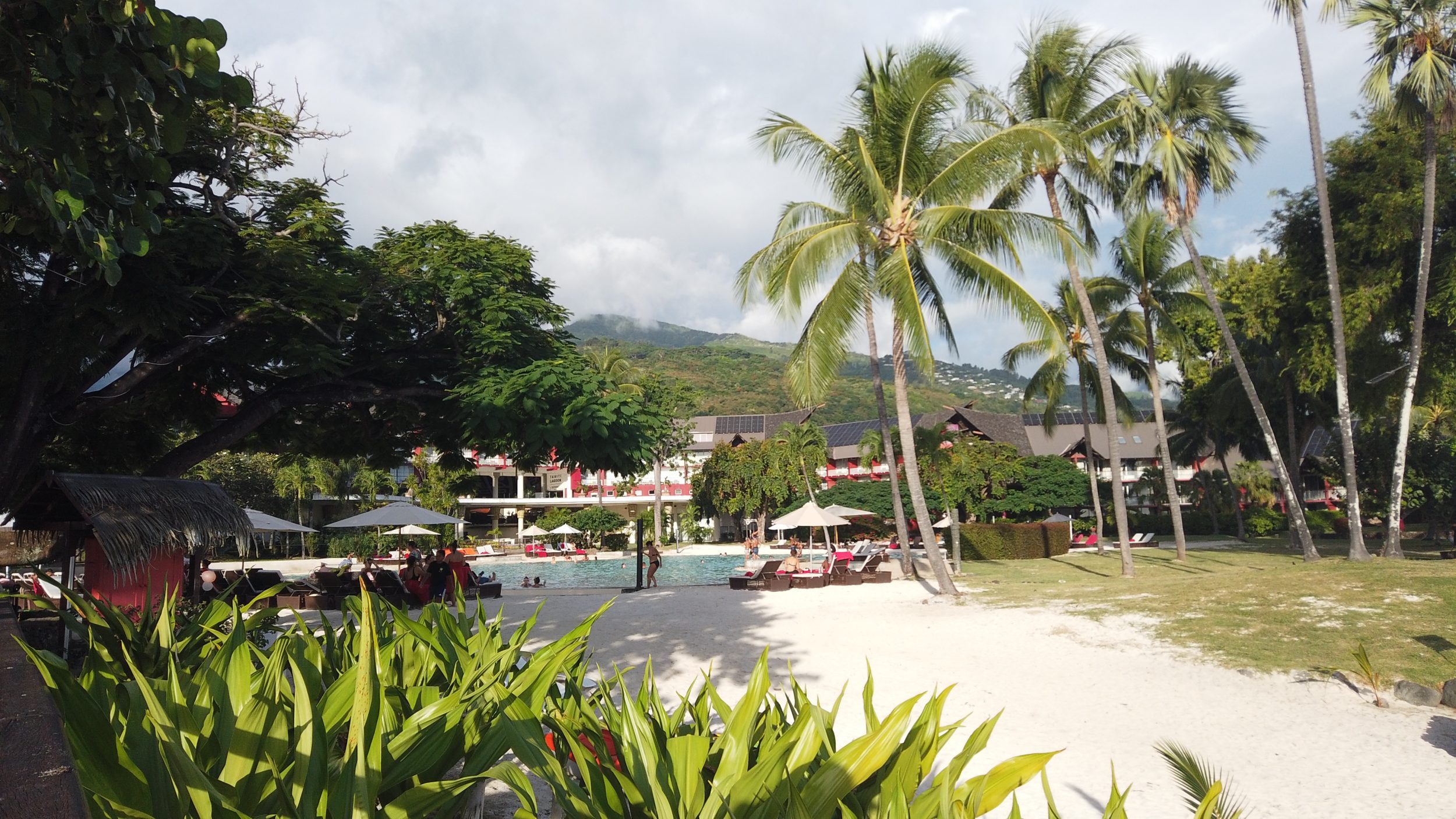
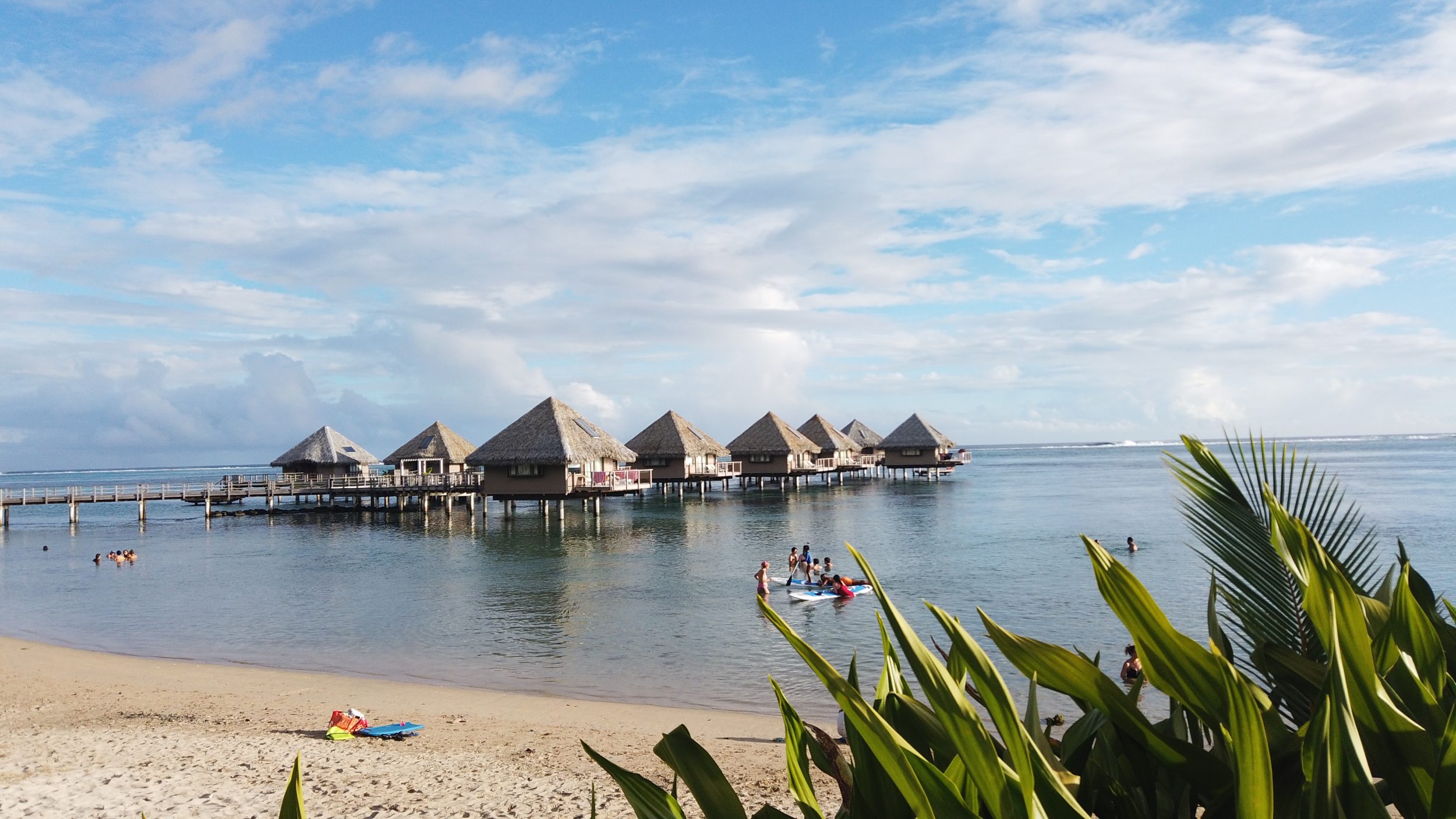
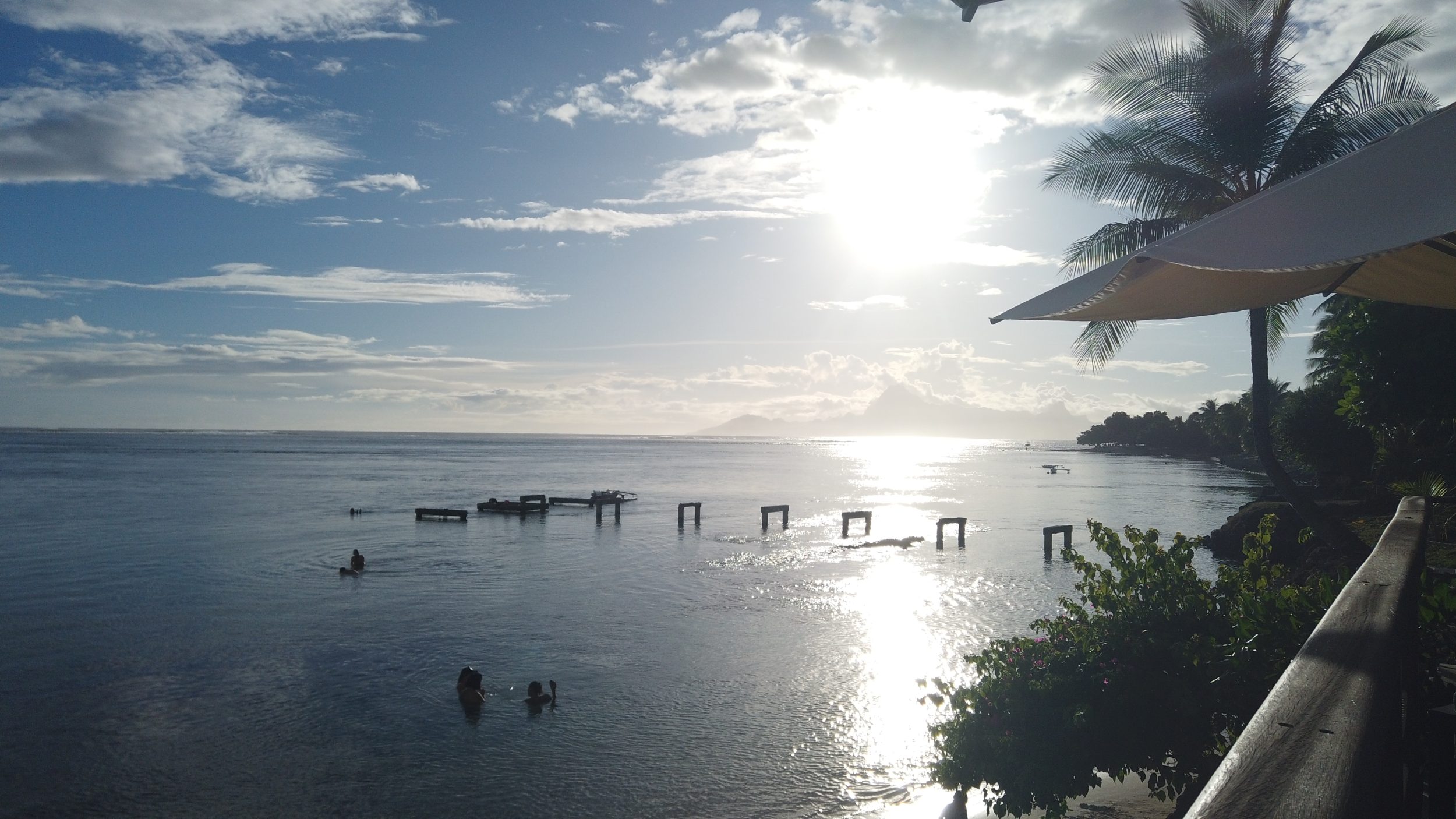
This hotel is the least luxurious of all the hotels we’ve visited so far, but it has the advantage of being very accessible to non-guests (like us), and it has a small beach with yellow sand, and a few overwater bungalows. Other than that, the bar service is not great; we waited a long time for the menu and the waiter. As I often say here, the difference between a 4-star and a 5-star hotel is in the little details, and it shows right away.
Even the 5-star hotels here correspond to 3-4 star hotels in Asia because the service is not attentive or precise enough. Then it depends a lot on the talent of the General Manager. I remember when I was at a hotel in Asia, there was an issue with the shower, and one of the managers came with a handyman to fix it. But he also noticed other malfunctions. This hotel must lack processes because it means no one does a tour of the rooms to spot basic issues; it takes the guest to notice and report it. And I was right because later, at the hotel’s restaurant, even though we stayed 3-4 nights, they kept asking for our room number, whereas the basics for a waiter in this type of hotel is to remember the faces of the guests, at least to distinguish between a guest staying at the hotel and someone just coming for dinner. I read somewhere that a good manager is one who finds things for his team to do. If you’re in a job where you’re bored to death, it means your boss isn’t competent enough – and you aren’t either, don’t step out of your scope to find things to do.
Anyway, we loved our island tour. Thanks to A. for all the information and for taking us around the island. If the weather had allowed, we could have added other viewpoints (especially Taravao) and stopped at the Jardin d’eau, or a surf beach. But it rained intermittently, so we’ll visit them later. In any case, after the reconnaissance in Moorea, I think Tahiti is a great island because it has a diversity of beach types that the other small islands don’t have. Then, it’s interesting to go to the other islands to visit because each island has its own little specialty, e.g., it’s easier to swim with rays and sharks in Moorea than in Tahiti, it’s easier to see manta rays in Bora-Bora than here, etc. Anyway, now thatwe’re finally motorized, we won’t be bored in Tahiti.
Part 2: Practical Tips
I’ve given you the Google Maps plan with the stops here:
You absolutely have to do this by car because it takes at least 3-4 hours of driving.

