

Kanazawa: Tea Ceremony & Geisha [Road Trip Japan #6]
Kanazawa is a major stop on our itinerary. That’s why we’re staying here for 2 nights.
This travel diary is part of a series on our road trip in Japan. If you missed the previous episodes, here are the links: the itinerary, diary #1, #2, #3, #4, #5
Part 1: Travel Journal
Part 2: Practical Tips
Part 1: Travel Journal
Day 4 of the road trip (continued)
We leave the thatched-roof villages and drive non-stop to KanazawaThis city is considered a “mini-Kyoto,” and it retains traces of samurai and geisha (called geiko in Kanazawa). It’s still too early to check in at the hotel, so we first stop at the samurai district (Nagamachi District).
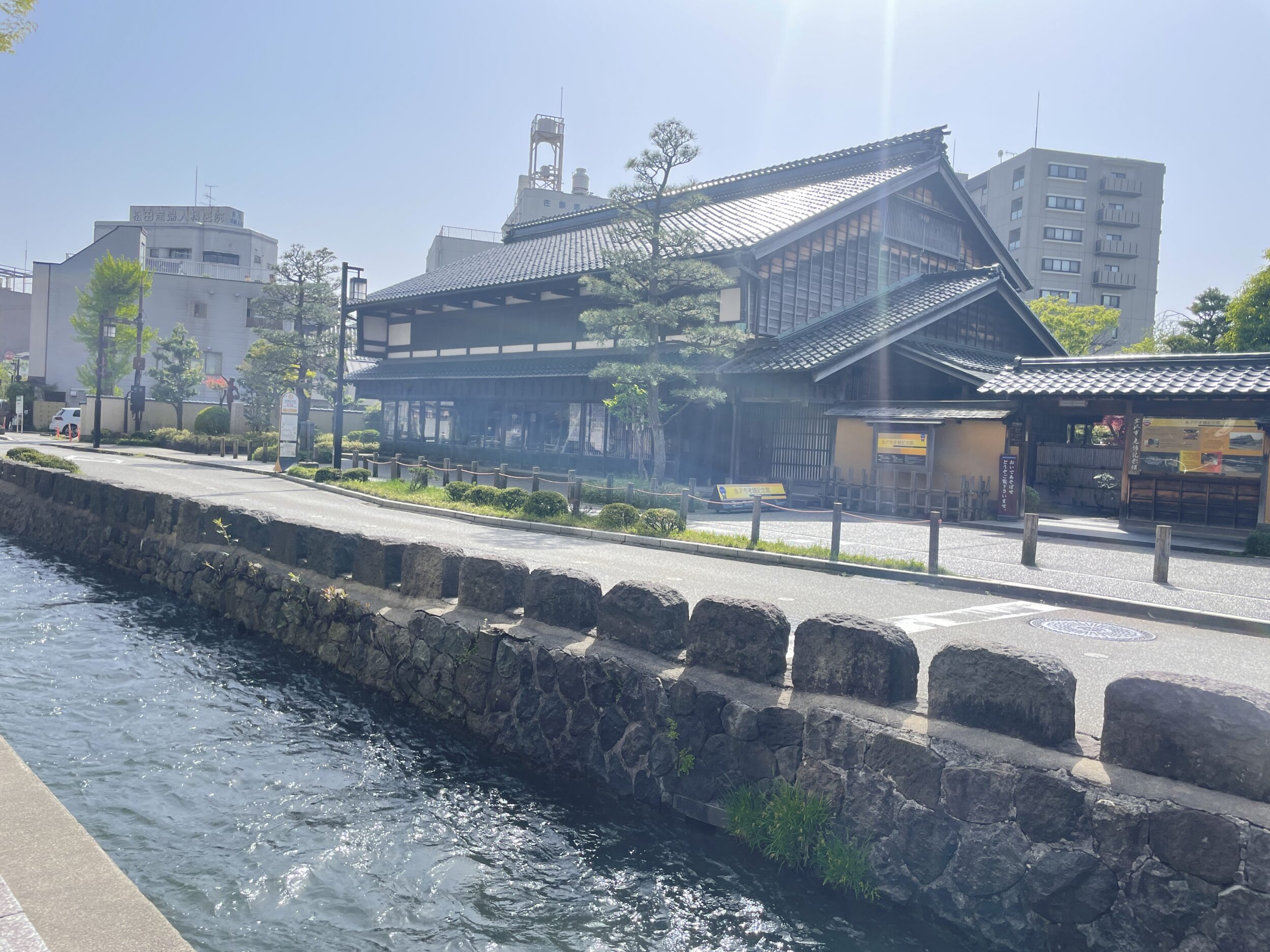
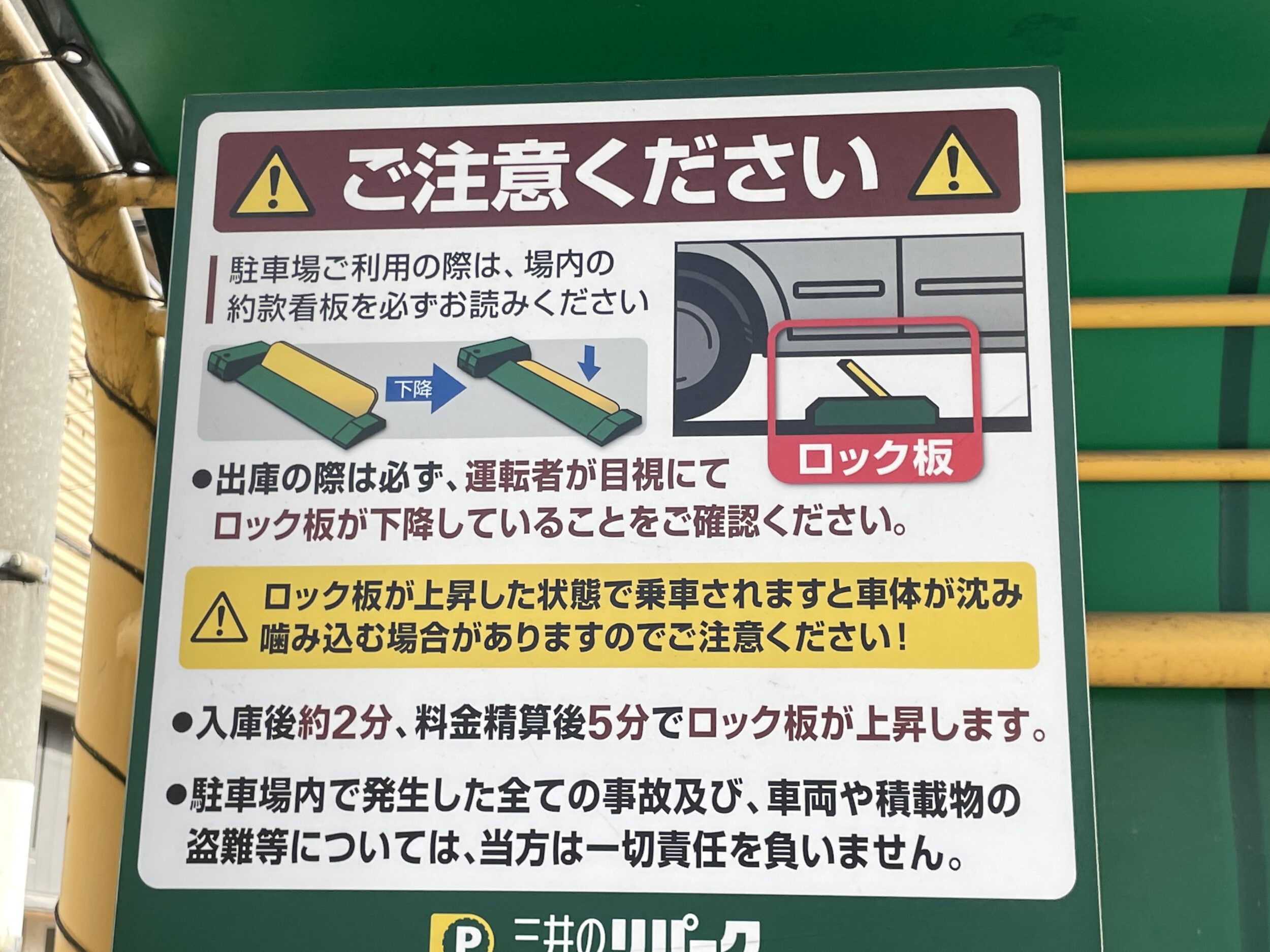
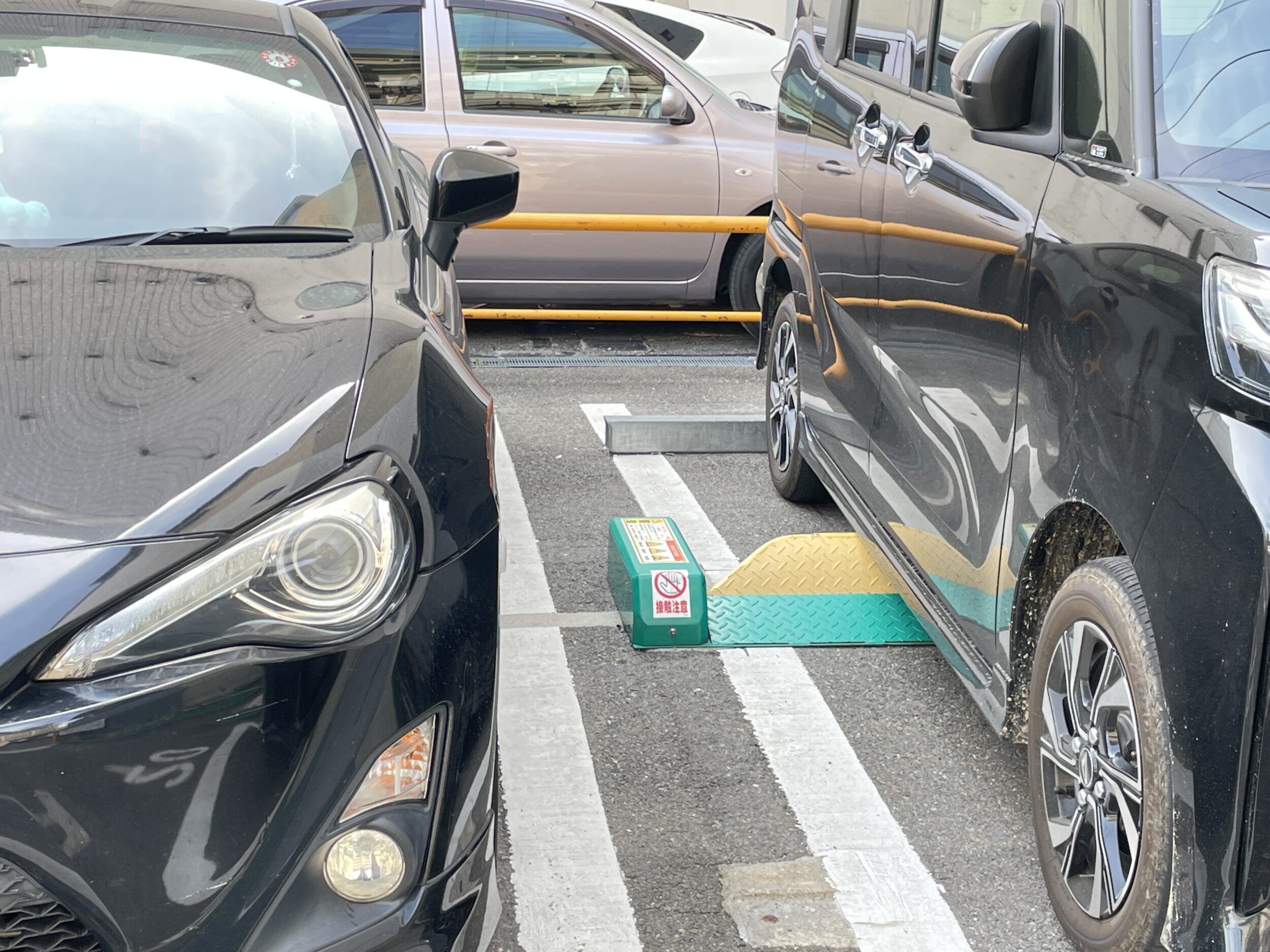
We struggle to find parking and mistakenly think that a parking lot with “boxes that lift up” is for residents only. Luckily, we quickly find a parking spot in the basement of a shopping mall and walk to Nomura-ke Samurai Residence or “samurai house,” belonging to the Nomura family.
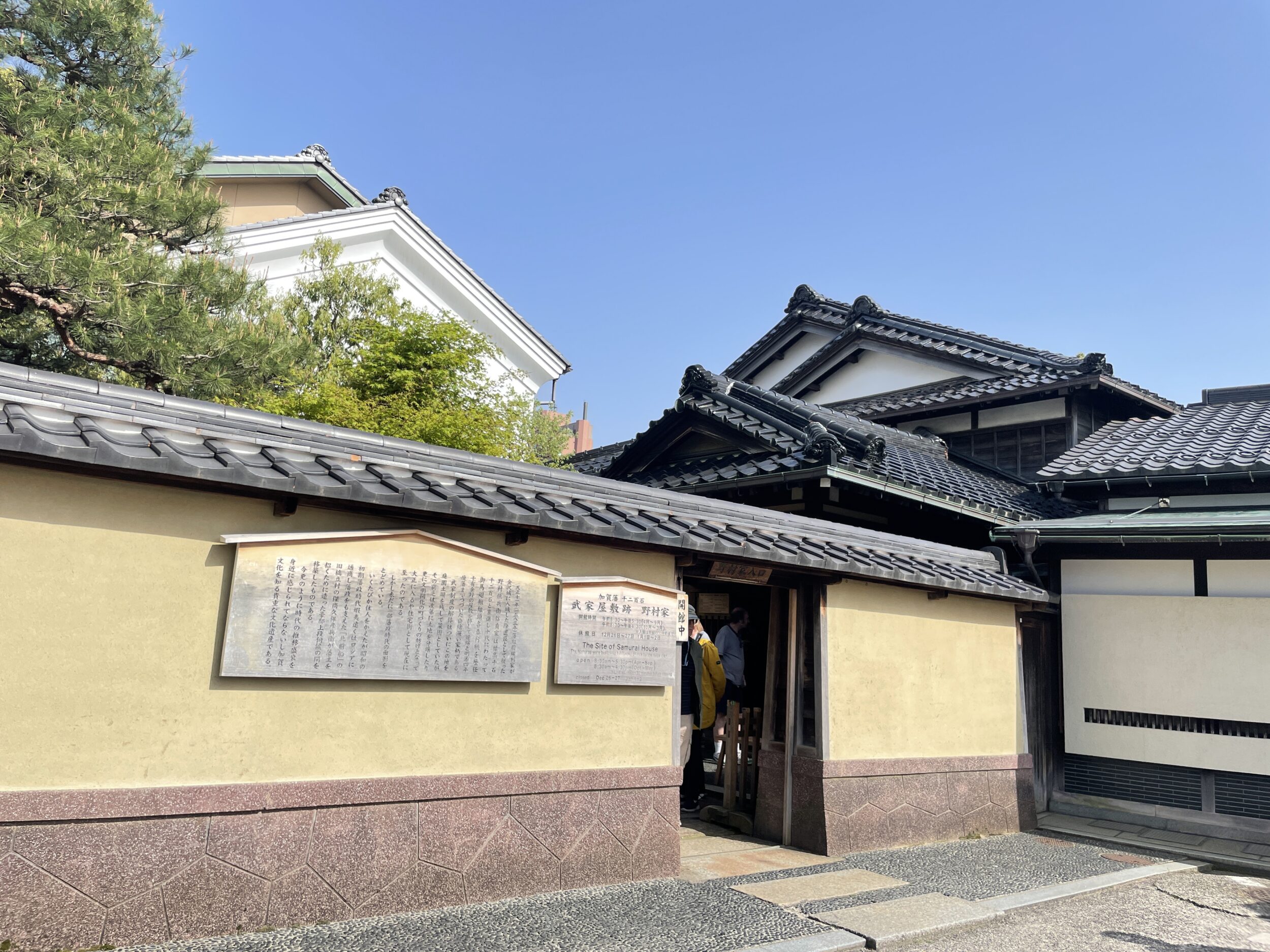
The family successively held leadership positions for generations under the rule of the Maeda family. The house features a coffered ceiling entirely made of Japanese cypress and fusuma-e (paintings on sliding door panels) created by the Maeda family’s personal painter. The garden within the residence houses a Japanese pear tree over 400 years old and a winding stream surrounded by ancient and strangely shaped rocks.
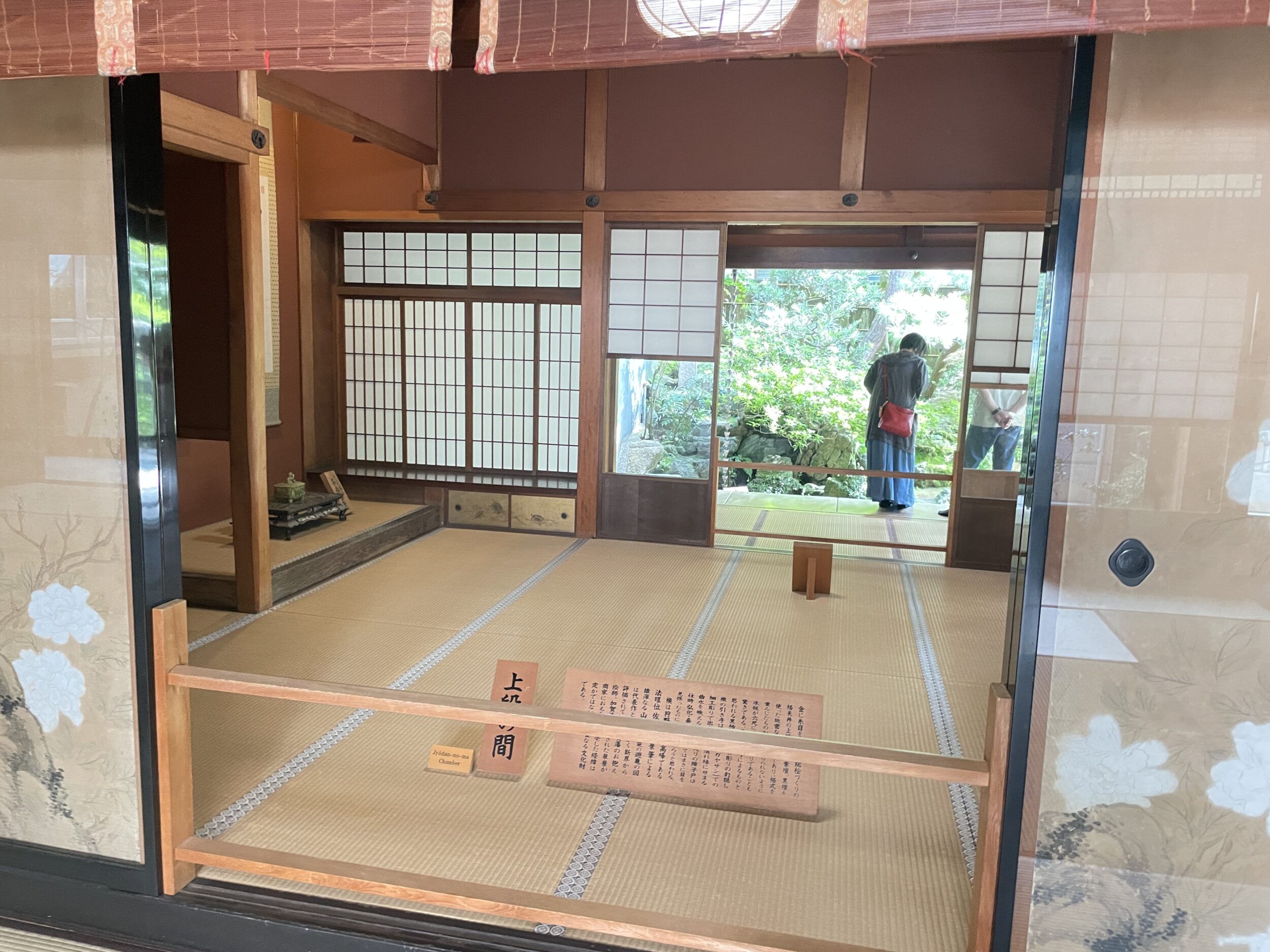
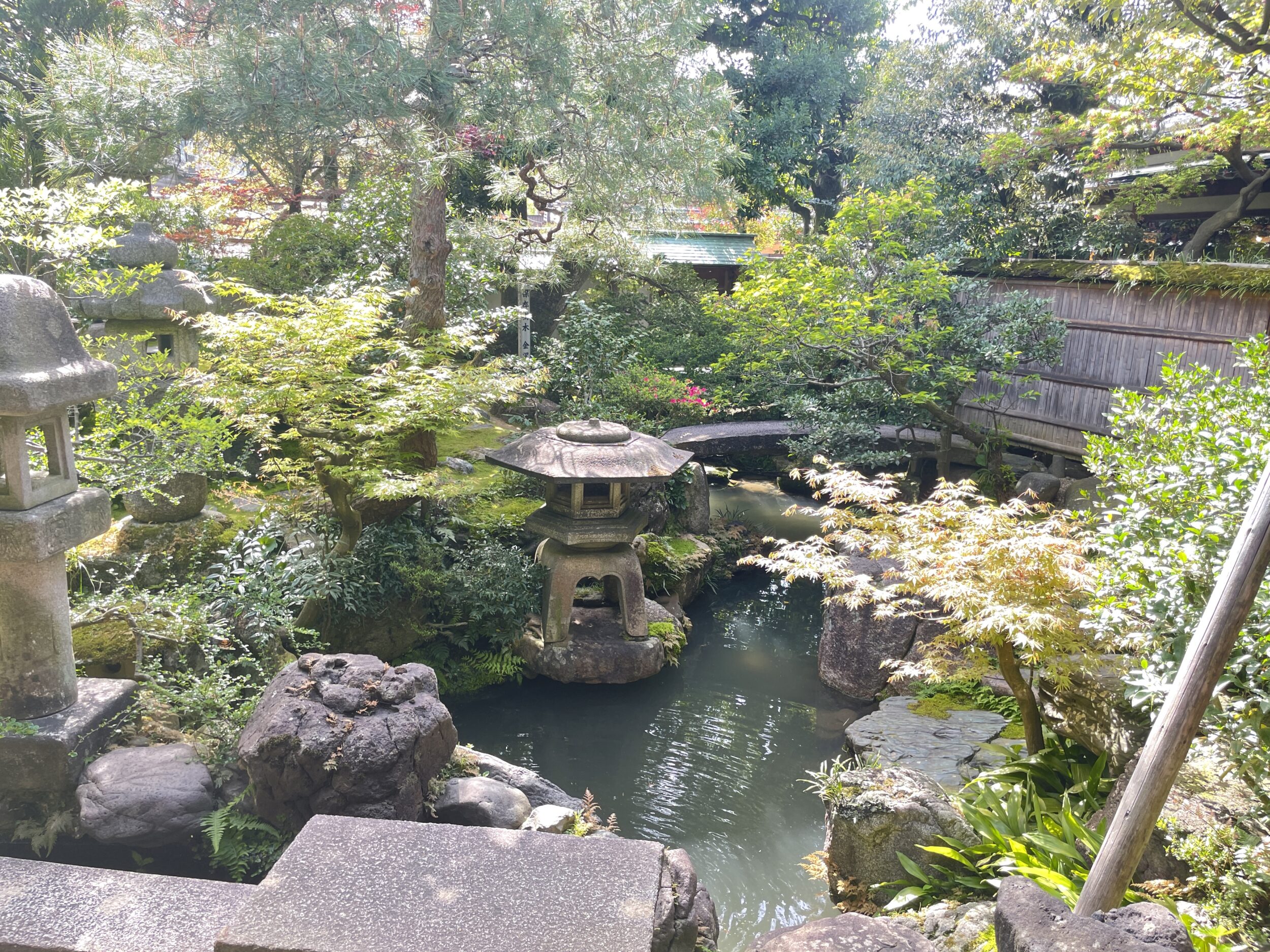
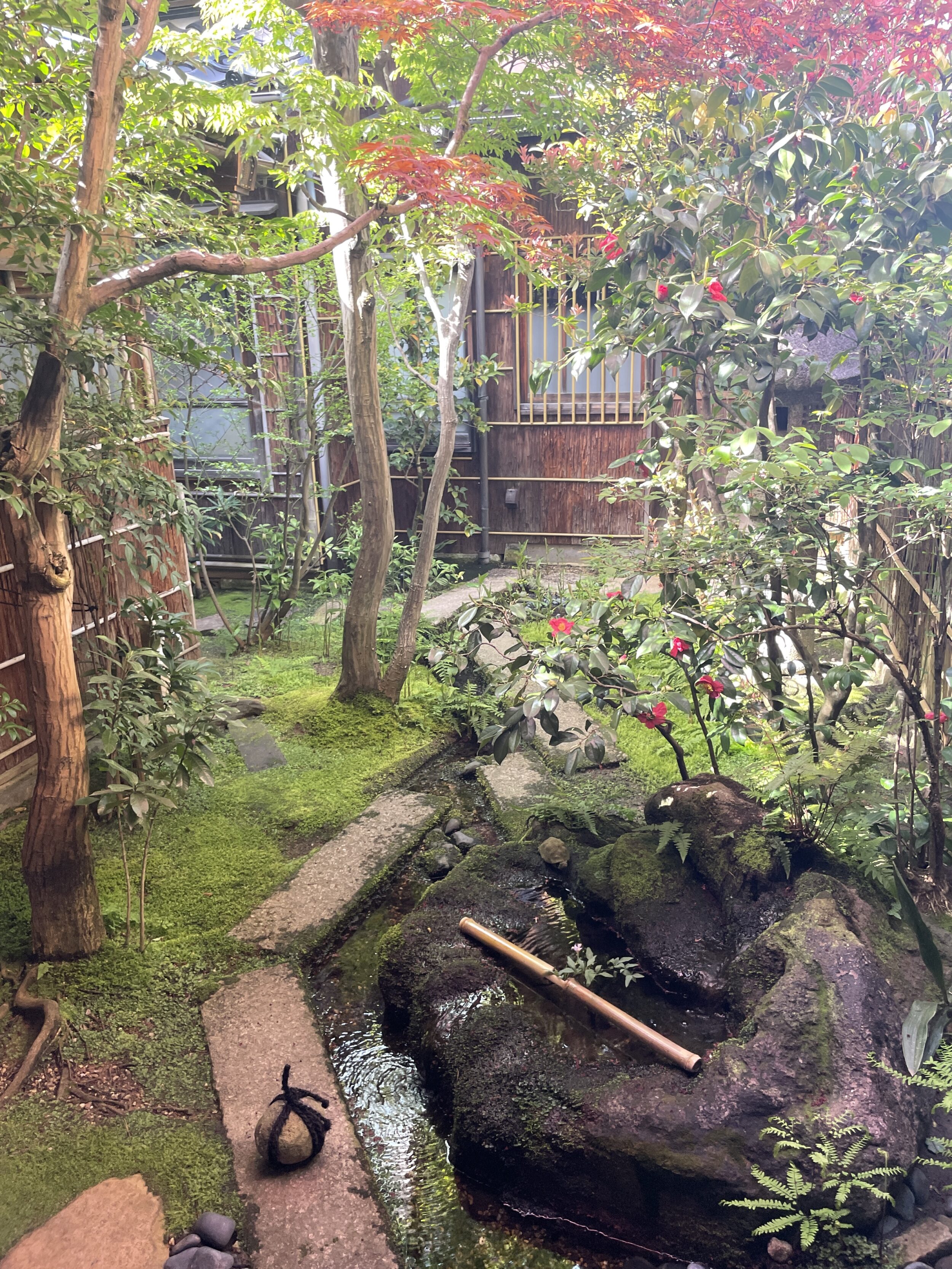
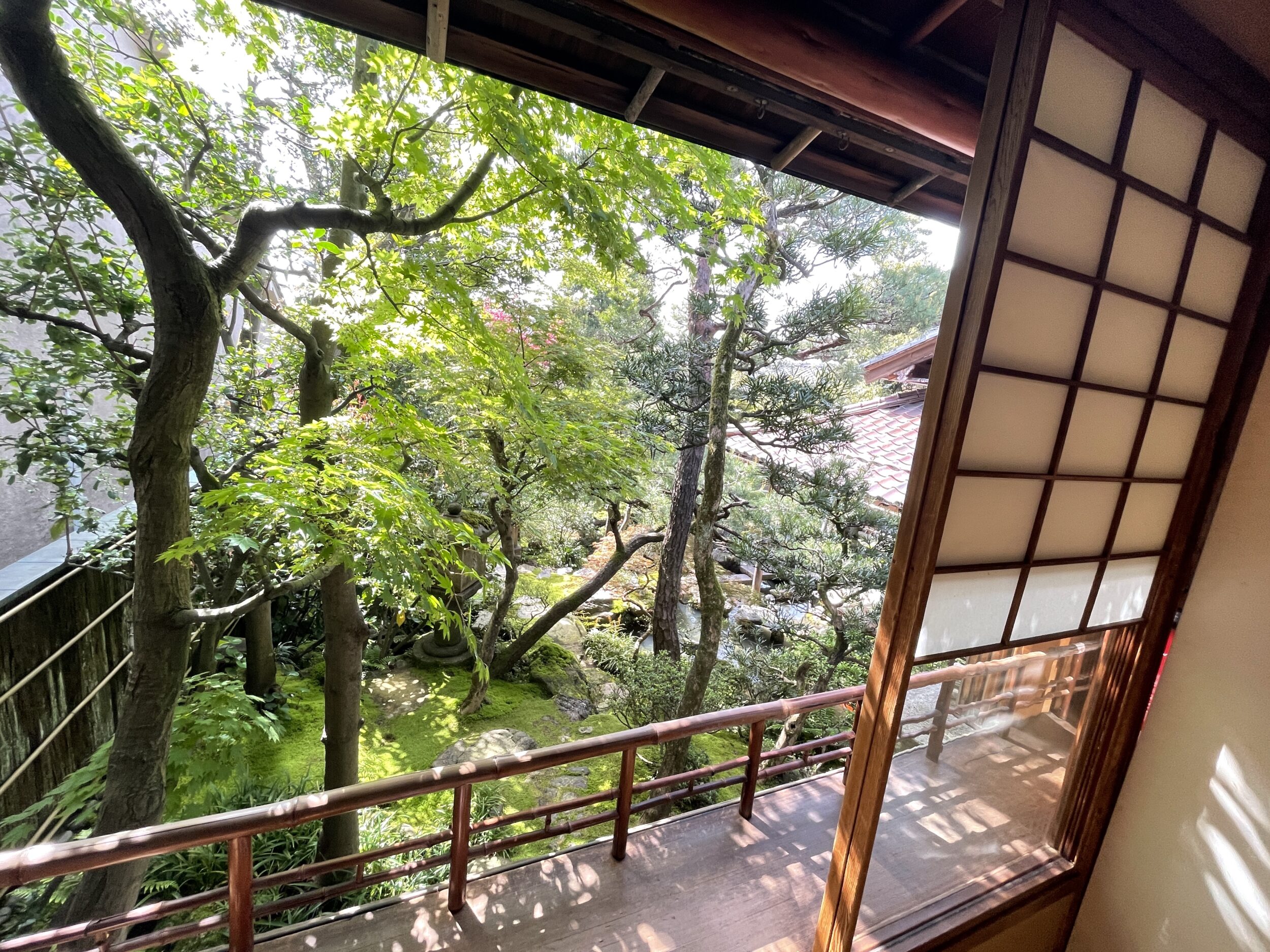
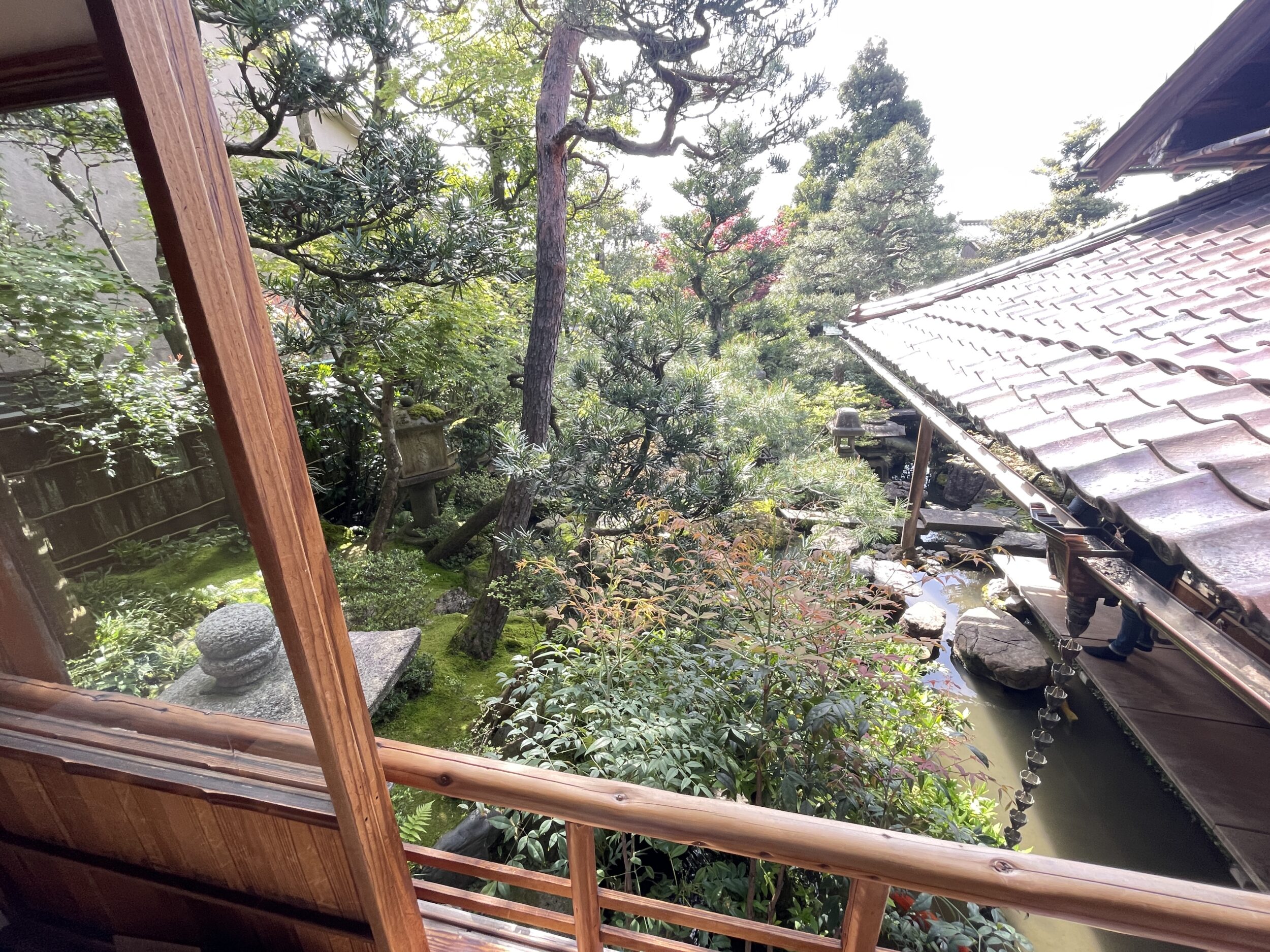
Upstairs, there is a tea house. When no one orders tea, tourists can visit and see the garden from above, but you just need to ask a lady who stands in front of a small, discreet sign that says “matcha tea” for 300 yen, and she will reserve a small room for you. So, by paying just a little bit, we could relax in a private room with a view of the garden. Other tourists don’t quite understand why we get this special treatment, when they could simply order tea like us.
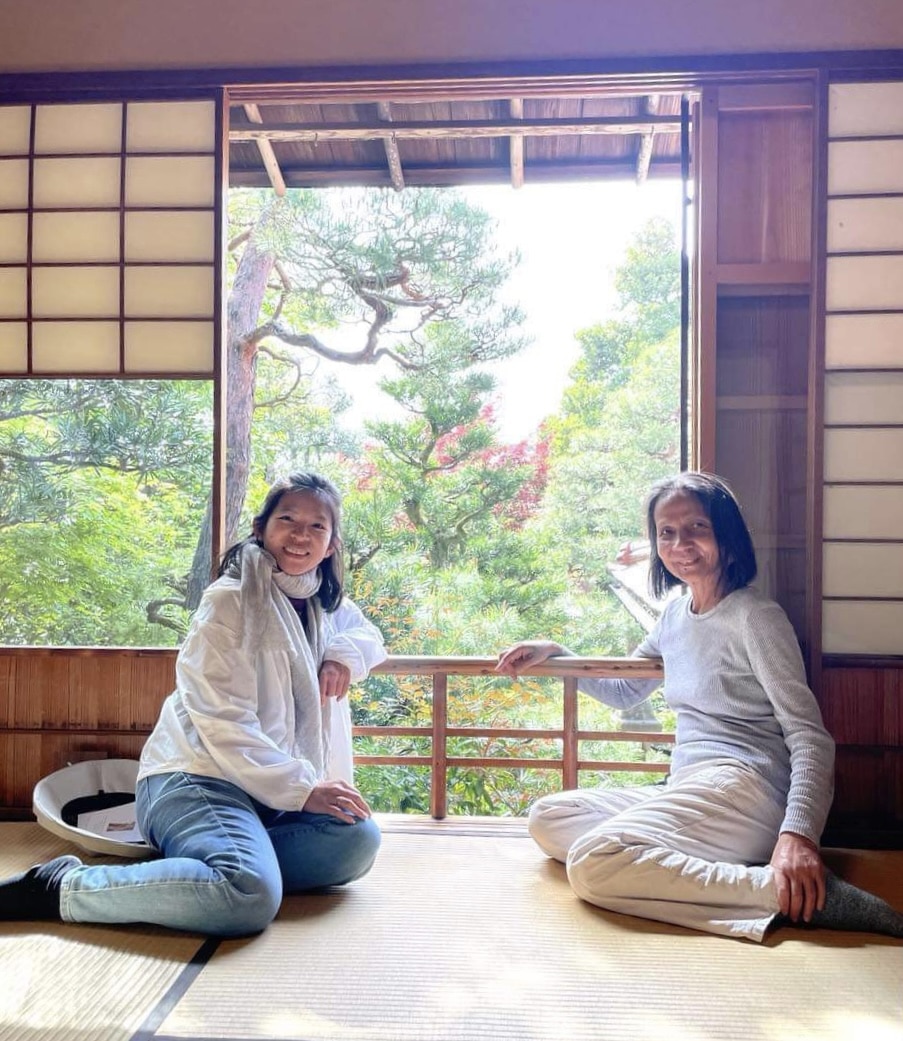
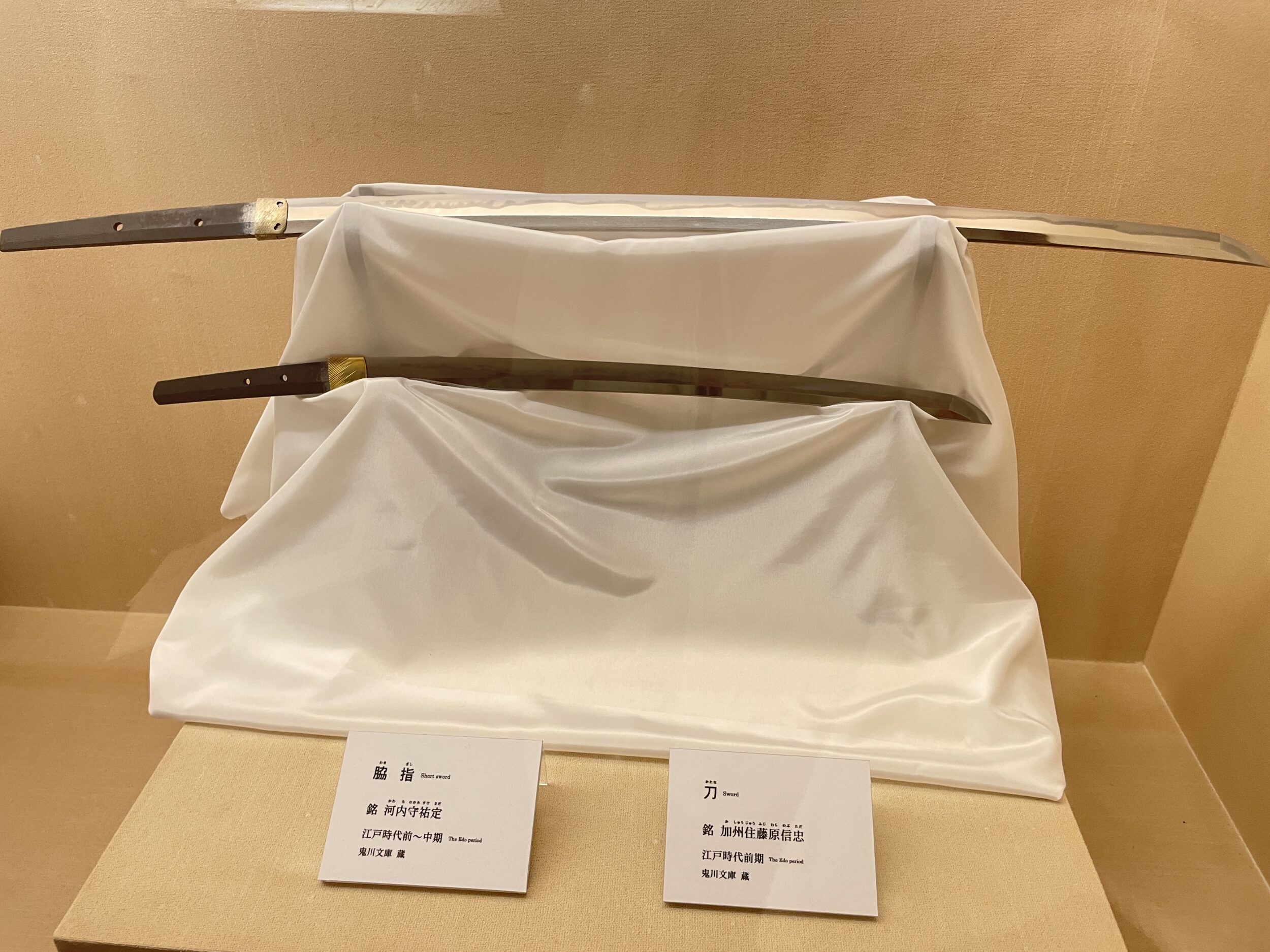
Very few samurai artifacts remain; you’ll find some beautiful swords and an armor. The highlight of this house is probably the garden: it’s small but extremely interesting, with a few places to sit and admire the garden below. Unfortunately, it’s very busy and can become unpleasant. Entry costs 550 yen per person, cash only.
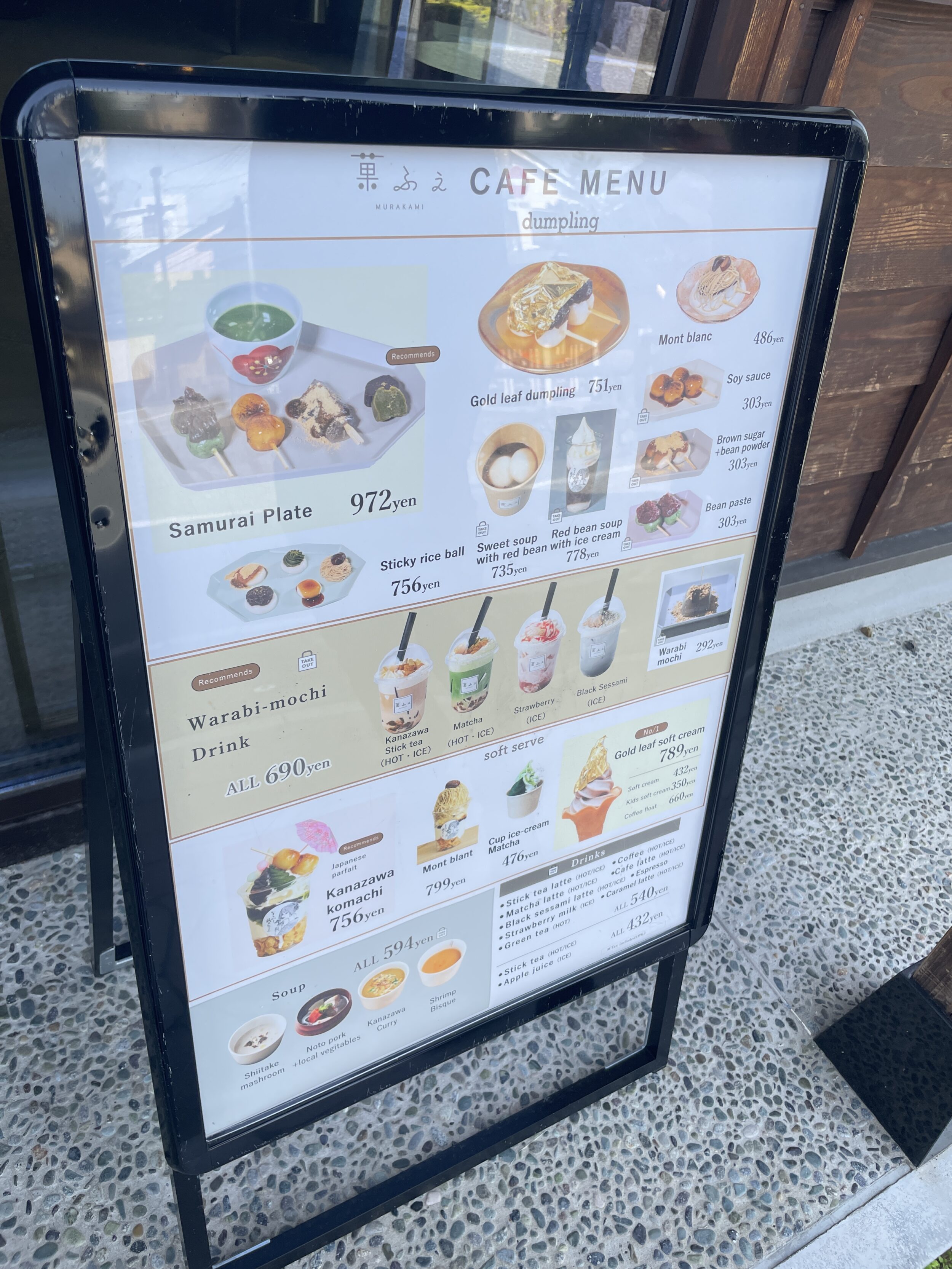
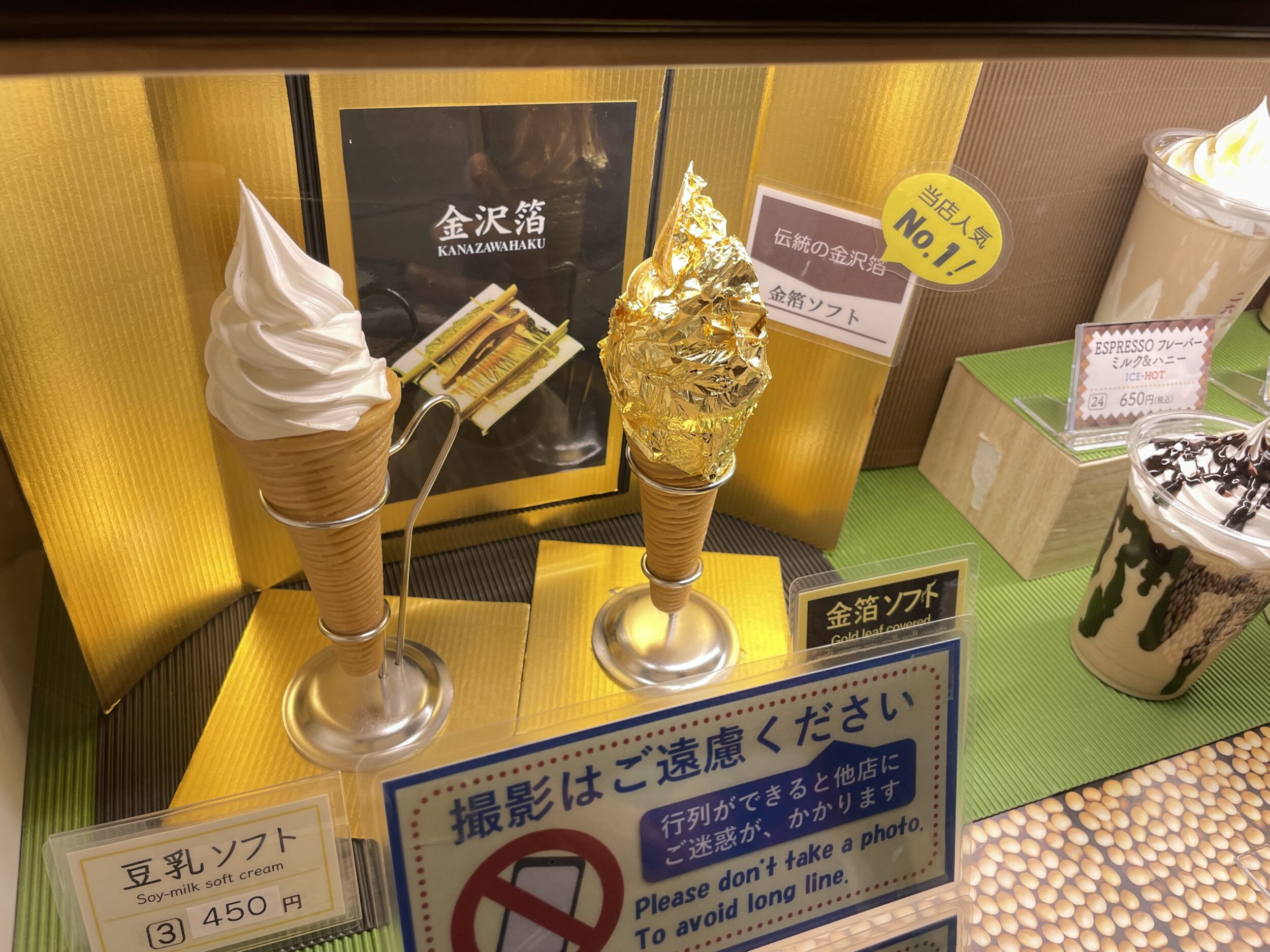
Across from the samurai house, there’s a pastry shop, and we quickly realize that desserts for tourists in Kanazawa will all have gold leaf on top, including ice cream.
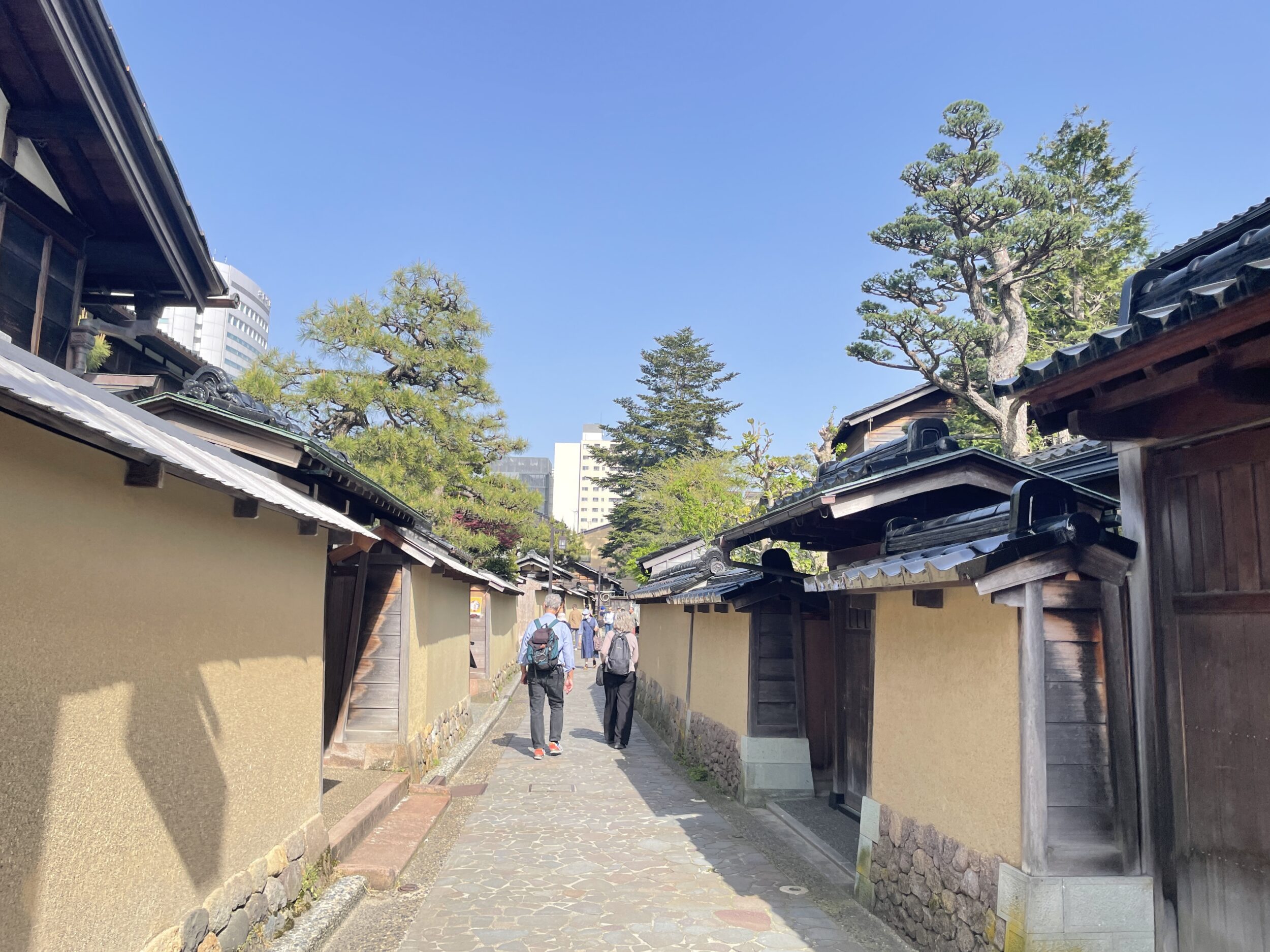
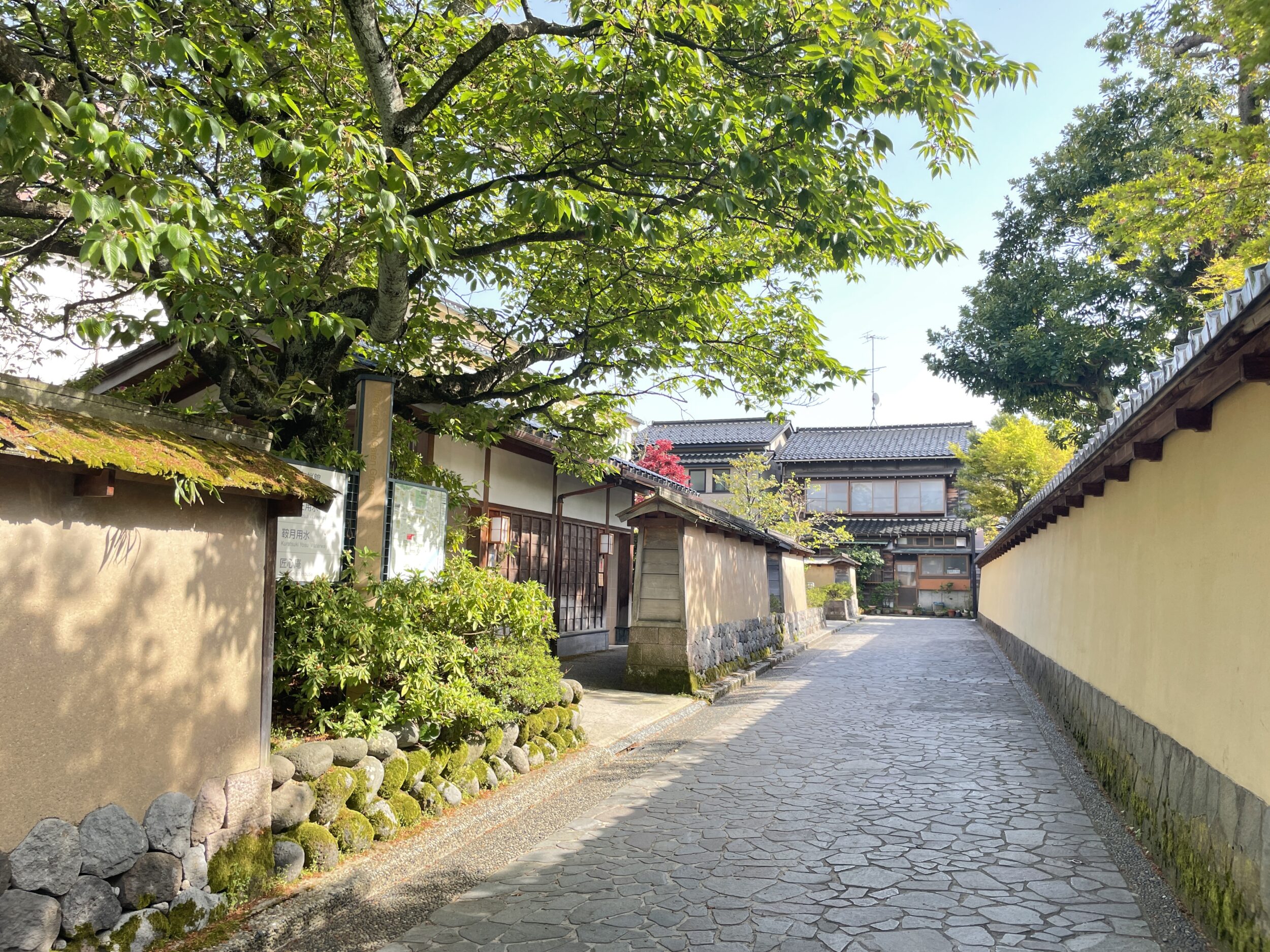
We wander around a bit and visit shops selling ceramics, some hand-decorated. There’s another house where only the garden is open to us. This district is fairly quick to explore.
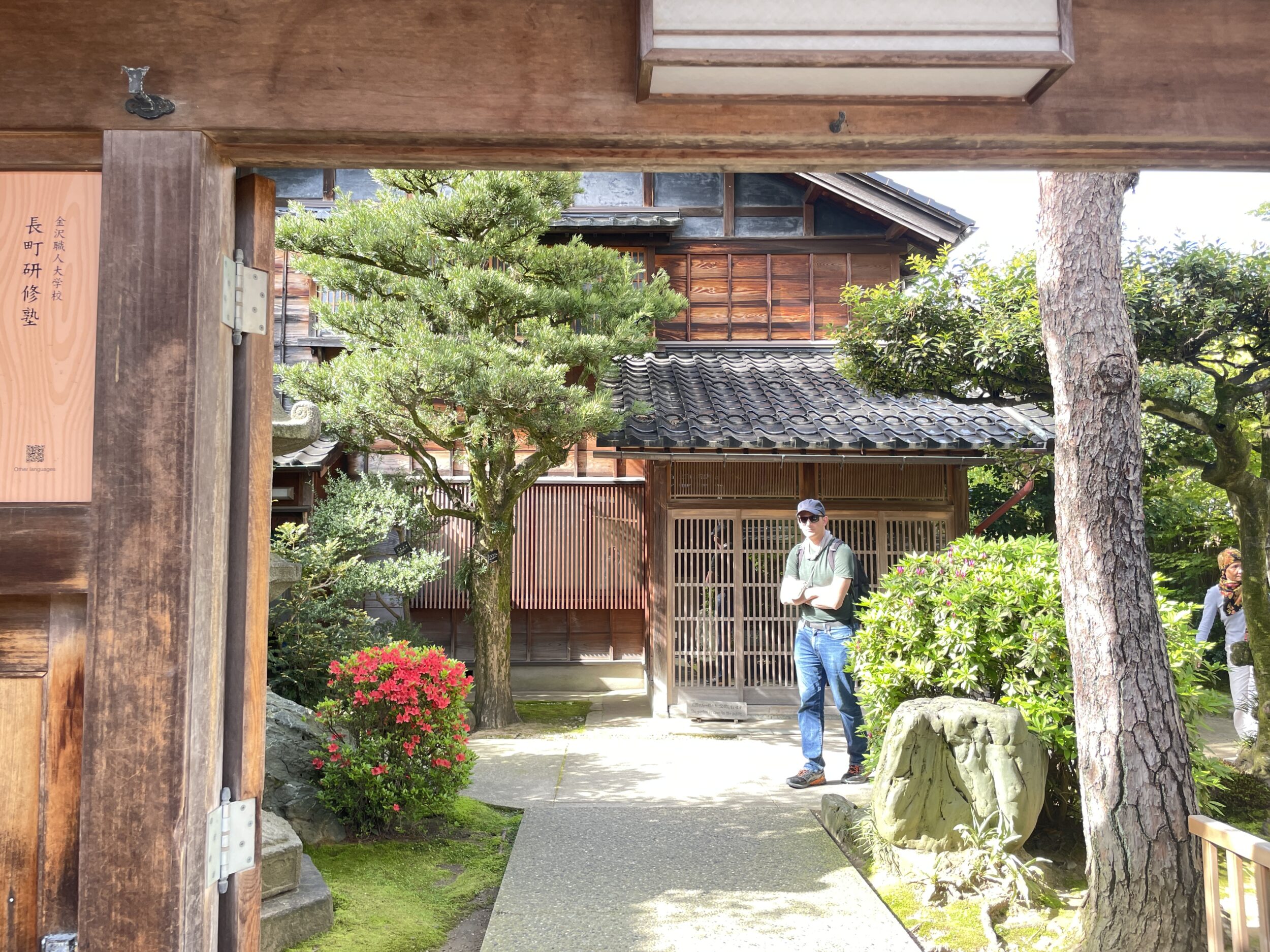
Gold Leaf Museum
This time, we understand the parking system in Kanazawa (which I’ll tell you about below) and can park 10 meters from the Gold Leaf Museum. I’ve been interested in gold leaf ever since I started looking into gilding the edges of my books. I’ve bought several books with gilded edges, and only those gilded with real gold leaf using the traditional technique can retain their color and especially their properties for several hundred years. Moreover, by gilding the edges, especially the top edge, the book can be cleaned more easily. I’ve seen several videos on the semi-manual production of gold leaf in Japan, and this museum was obviously on my itinerary since 98% of Japan’s gold leaf is still made in Kanazawa. Here’s a description of the museum from their official website:
Gold, a precious and rare metal, has always fascinated people with its beauty and eternal luster. Compared to other metals, it has exceptional malleability, allowing it to easily conform to the surface of other objects, hence its use in leaf form in many fields, including architectural decoration and art objects. Almost all gold leaf currently produced in Japan is made in Kanazawa. The museum was the initiative of gold leaf artisan Yasue Takaaki (1898–1997), who built the first gold leaf museum in the Kita-yasue district to pass on to future generations “the pride of gold leaf artisans and everything that justifies it.” The museum housed artworks and tools. To allow more people to enjoy it, the museum was relocated to the Higashiyama district in autumn 2010. The hope is that visitors will appreciate the infinite depth of gold leaf, its intense brilliance, and all its charms, but also feel the fervor with which artisans have strived to continue producing it.
Gold leaves are so thin that from the equivalent of 50 yen in gold, you can spread up to 1.6 m² in gold leaf!! That’s 1/10000 mm thick!
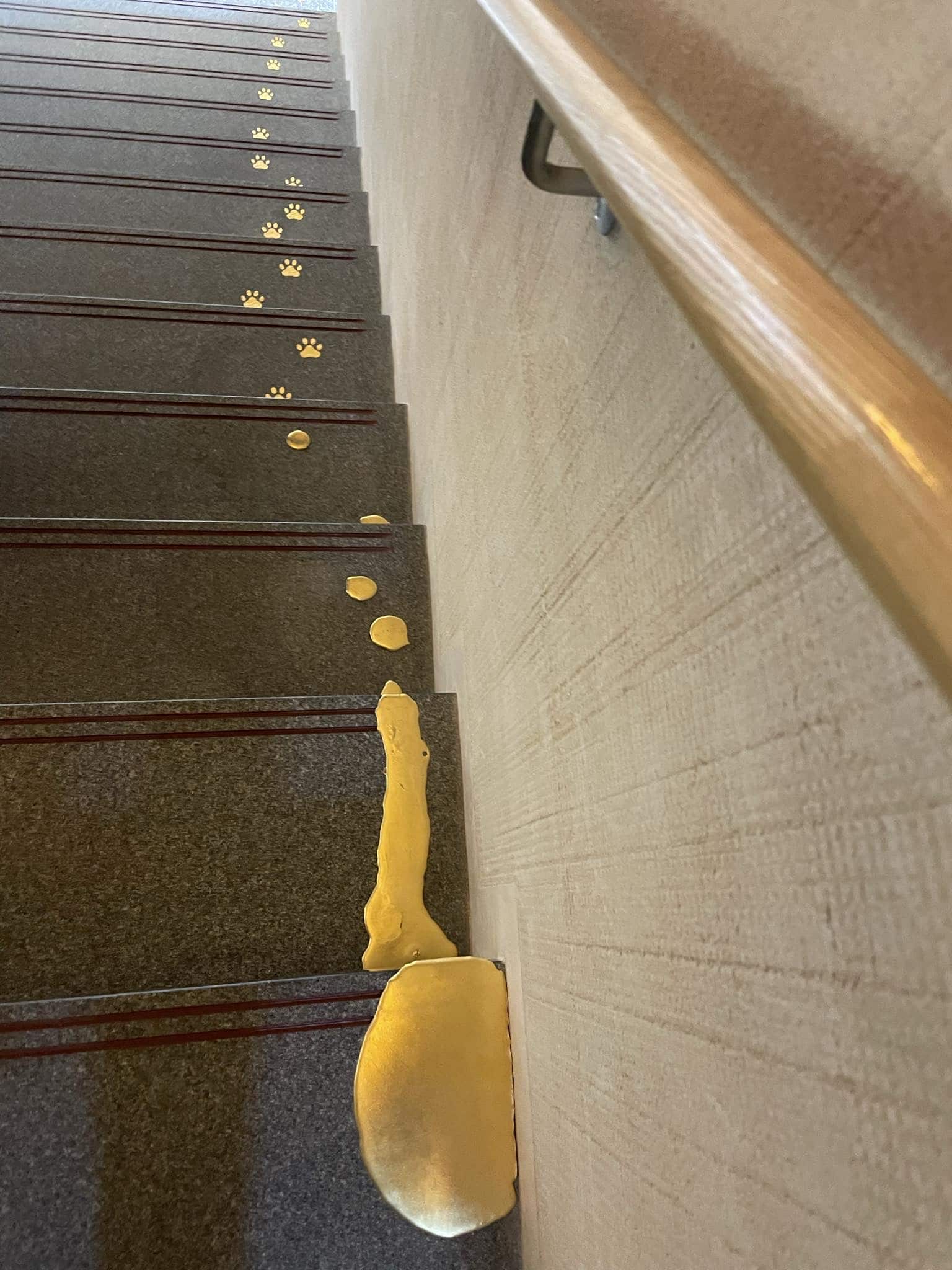
The museum is very fun. There are footprints everywhere. For example, these look like a puddle from an umbrella, and a cat walked through it and left its tracks. There are similar footprints in the restroom—cute. Stop by the ground floor to watch the short explanatory video in English about gold leaf production.
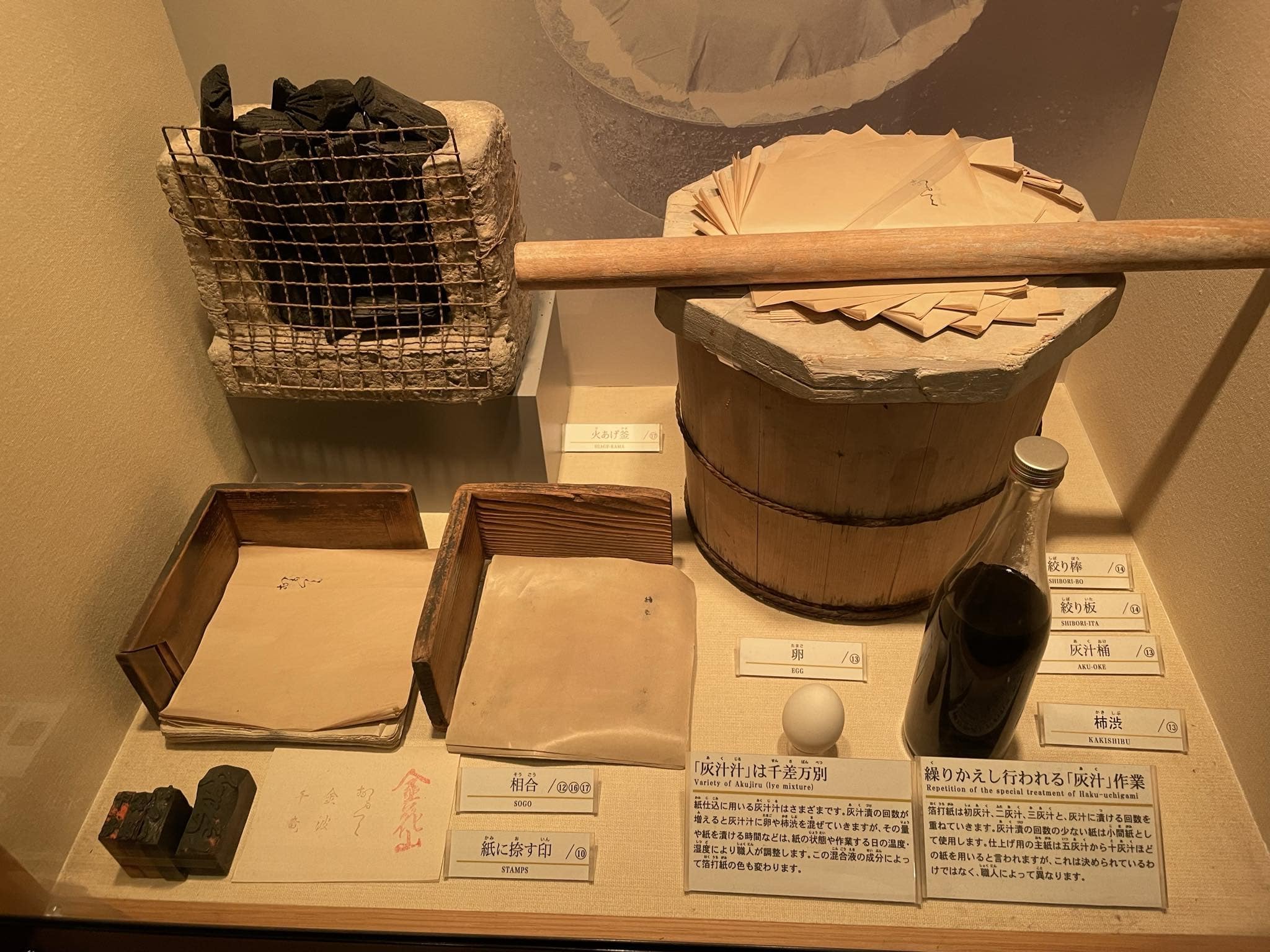
To make gold leaf, you have to hammer continuously. The small pieces of gold are sandwiched between two sheets of handmade paper. The principle of handmade papermaking is quite similar worldwide; I’ll let you check this article , and this one.
Kamijikomi – Making Haku-uchigami First, a lye mixture made of water and rice straw ash is mixed with persimmon tannin and eggs. Then, a type of handmade Japanese paper called Ganpishi is soaked in this liquid. Next, the excess moisture is pressed out of the paper and the edges are aligned to be hammered by the Aku-uchiki (a machine for hammering paper and gold leaf). The paper sticks together under the hammer blows, and then the artisans peel them apart one by one. This work is called Tekazu and must be repeated many times until the paper no longer sticks to each other. When the Kamijikomi process is complete, the paper will be called Haku-uchigami; the paper used for the gold leaf hammering process.
Next, a small amount of gold is placed between two layers of sheets and hammered until it is ultra thin. The gold leaves are then cut so that they are perfectly square.
Here’s a video of the process, found on YouTube:
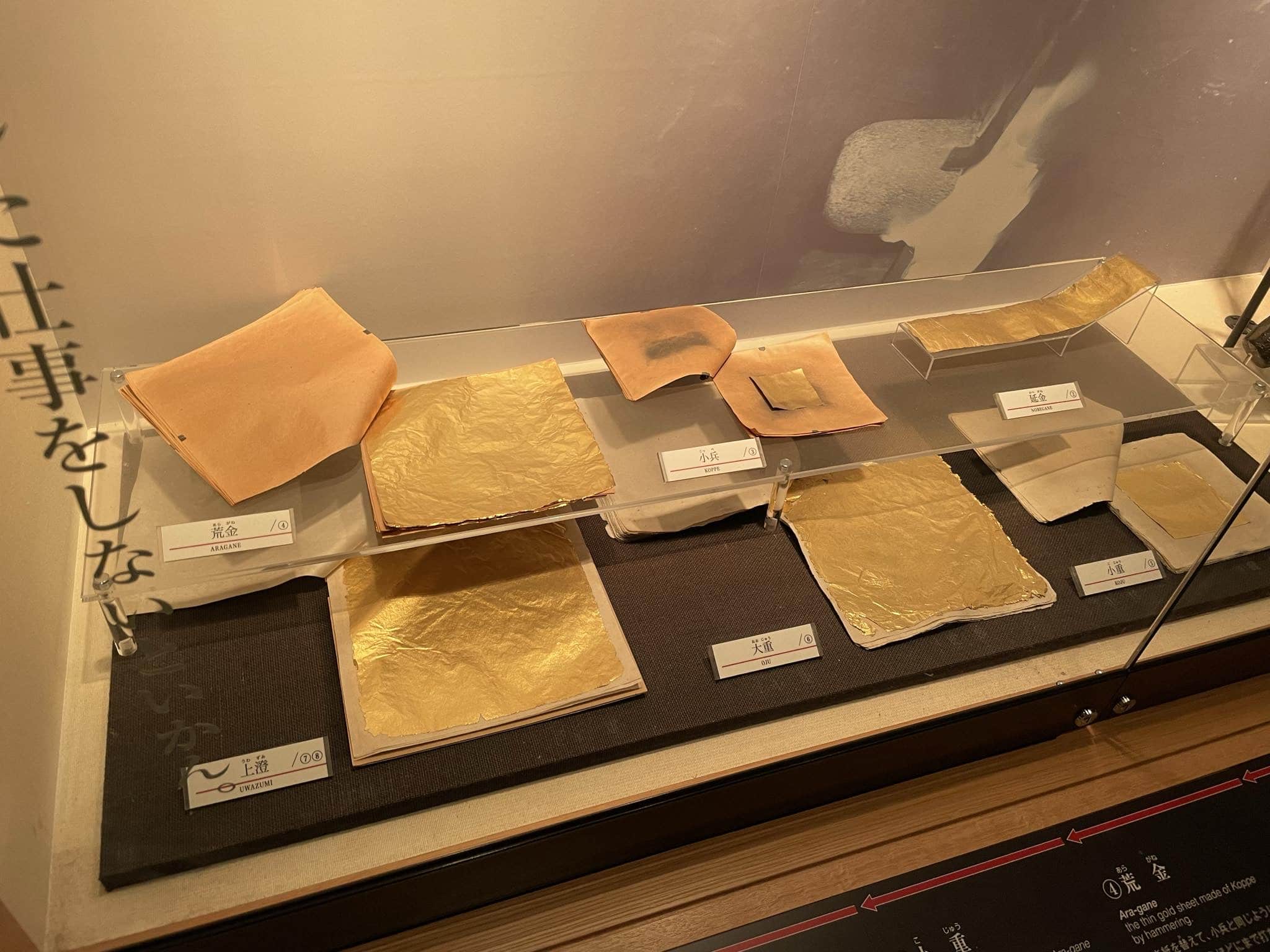
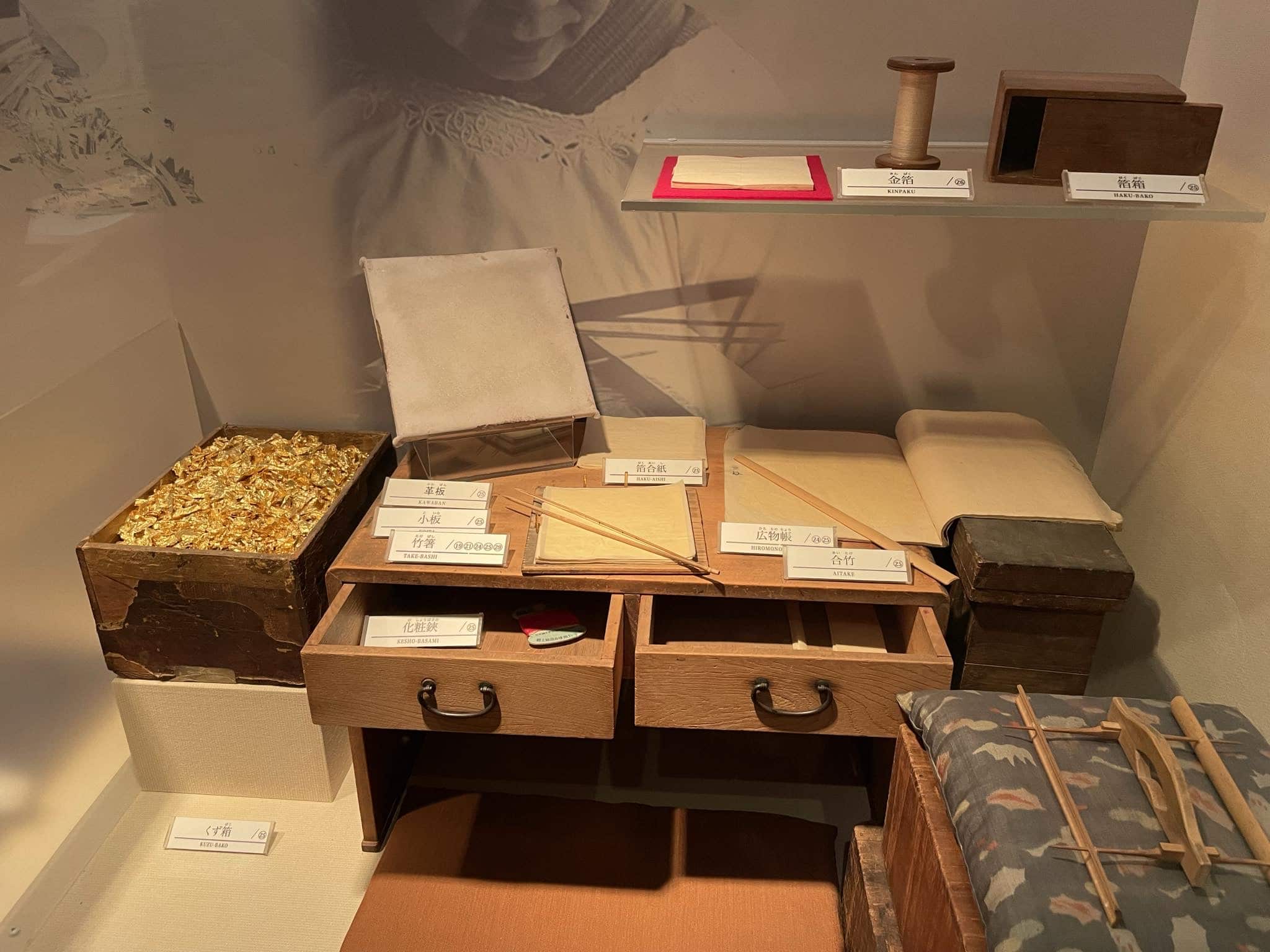
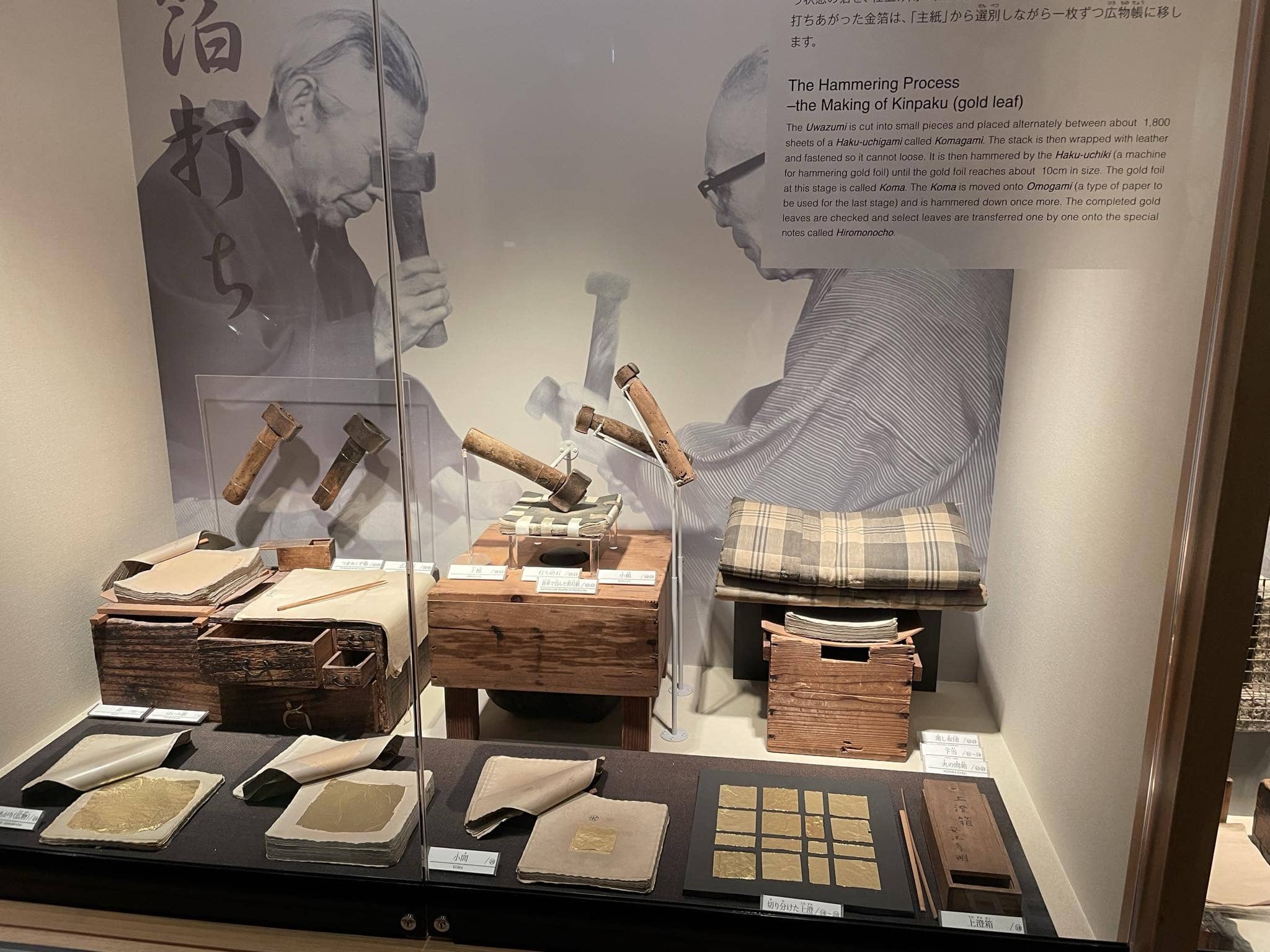
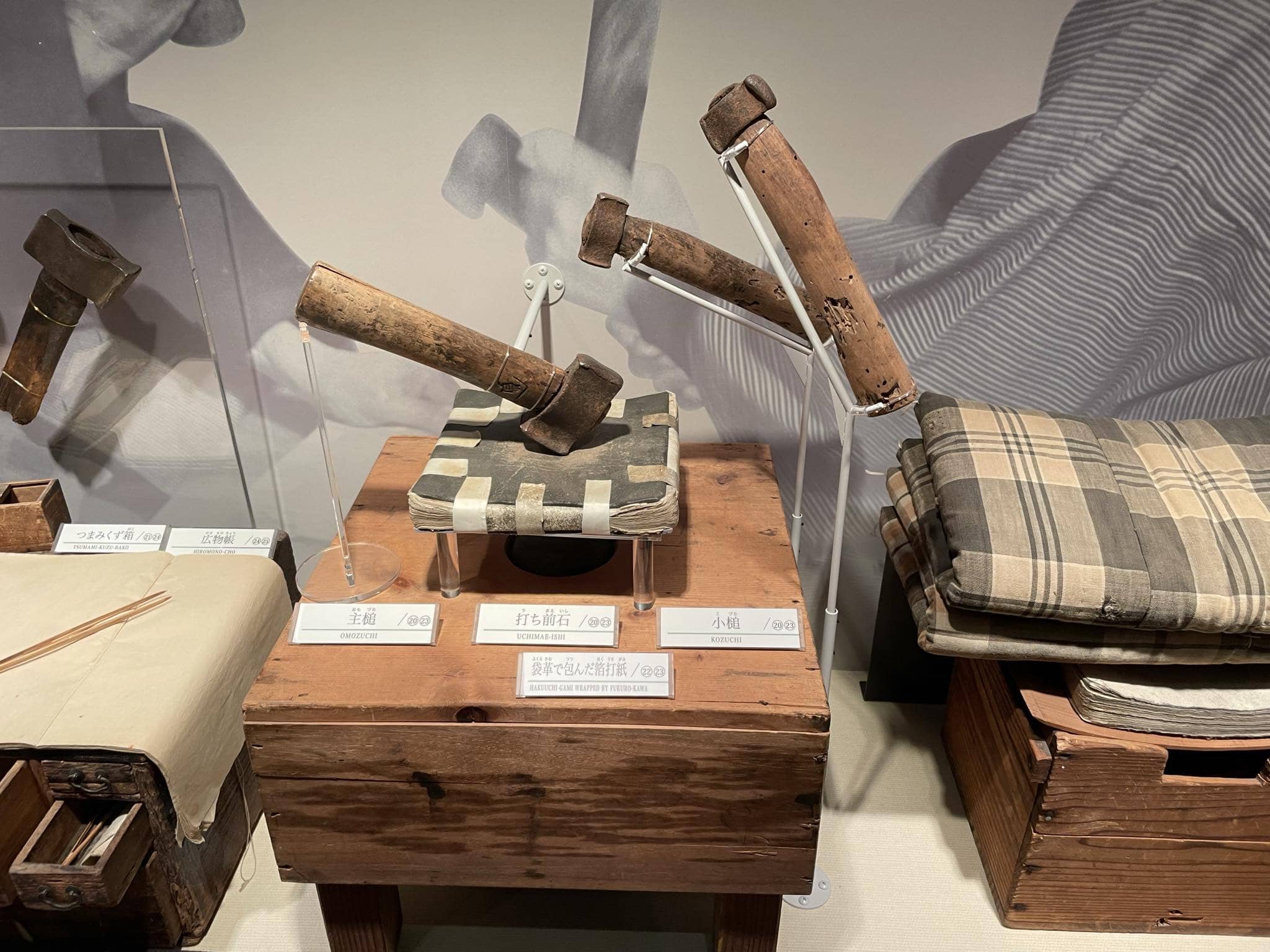
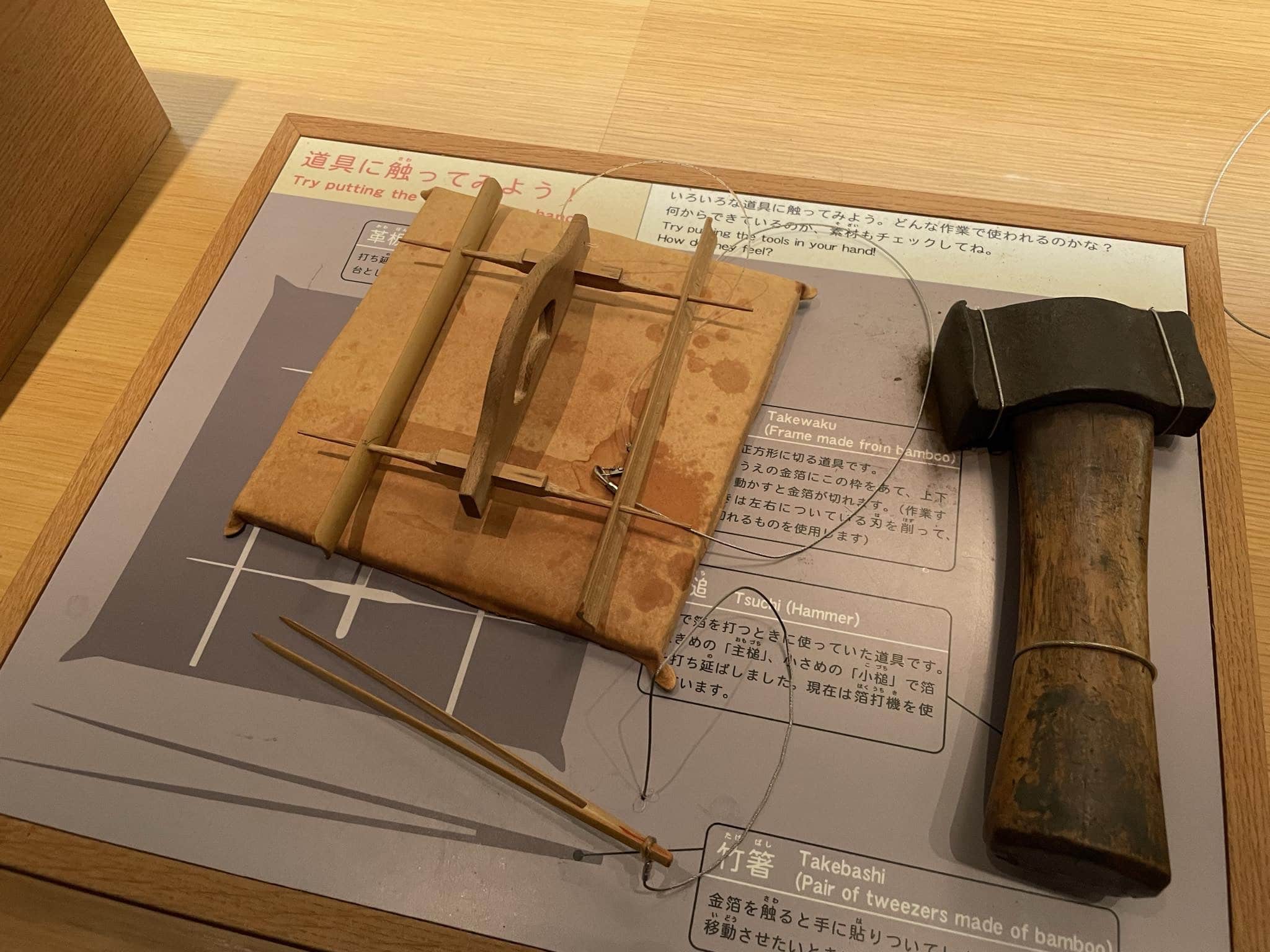
To cut the gold leaves to the right size, you can do it with this tool…
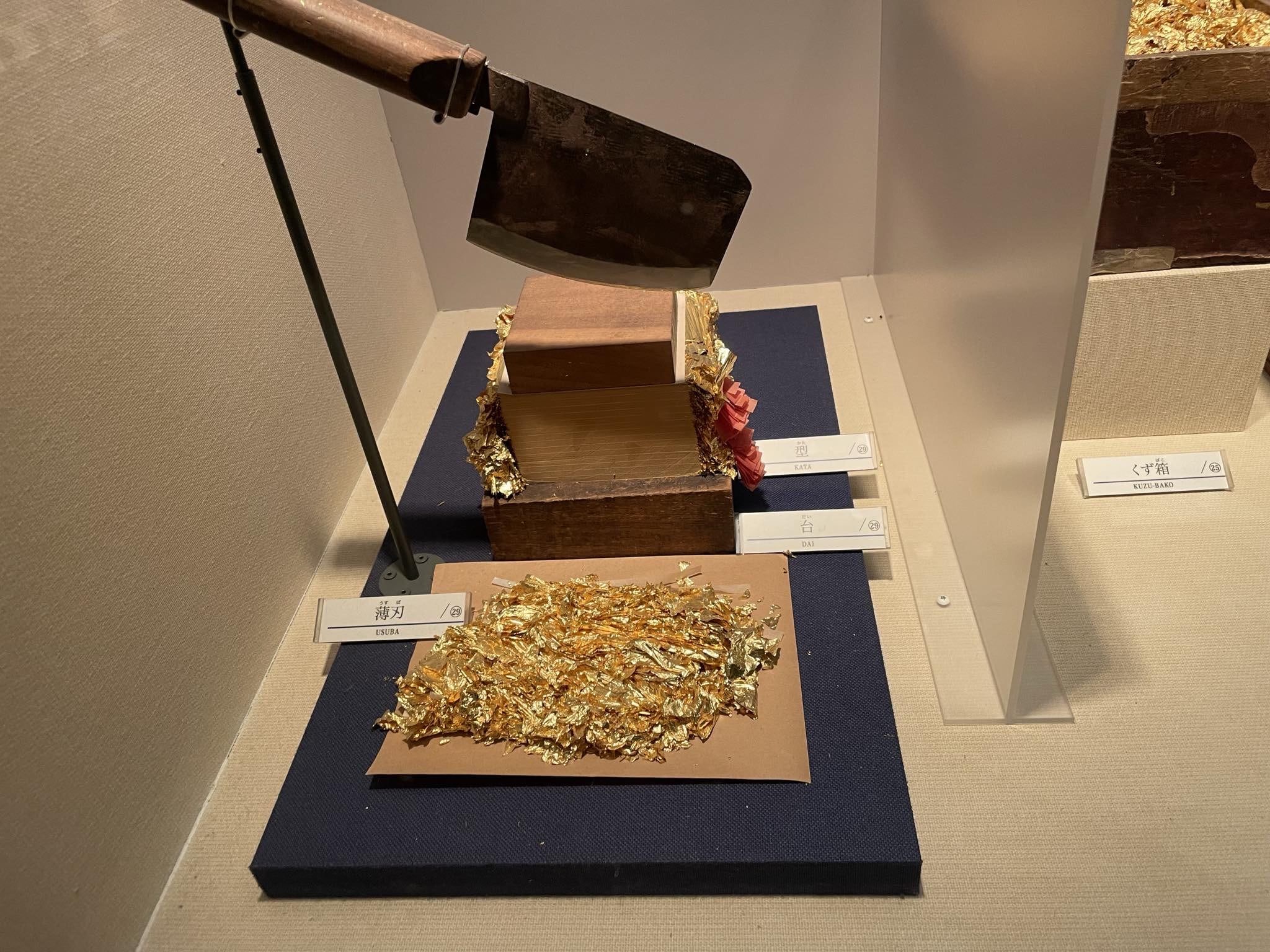
or by using this tool (the 2nd method is preferred these days). The cushions with gold leaves are also special, so that the gold leaves don’t stick to them. To do this delicate work, you must not sneeze or breathe too hard.
Here’s a video, it’s not from me:
The tools used for gilding objects are not shown here, since that’s probably part of the work of other artisans: book gilders, wood gilders, lacquer gilders etc., but the tools are fairly universal according to my research, and even the glue (the binder) seems to be universal: rabbit skin glue!
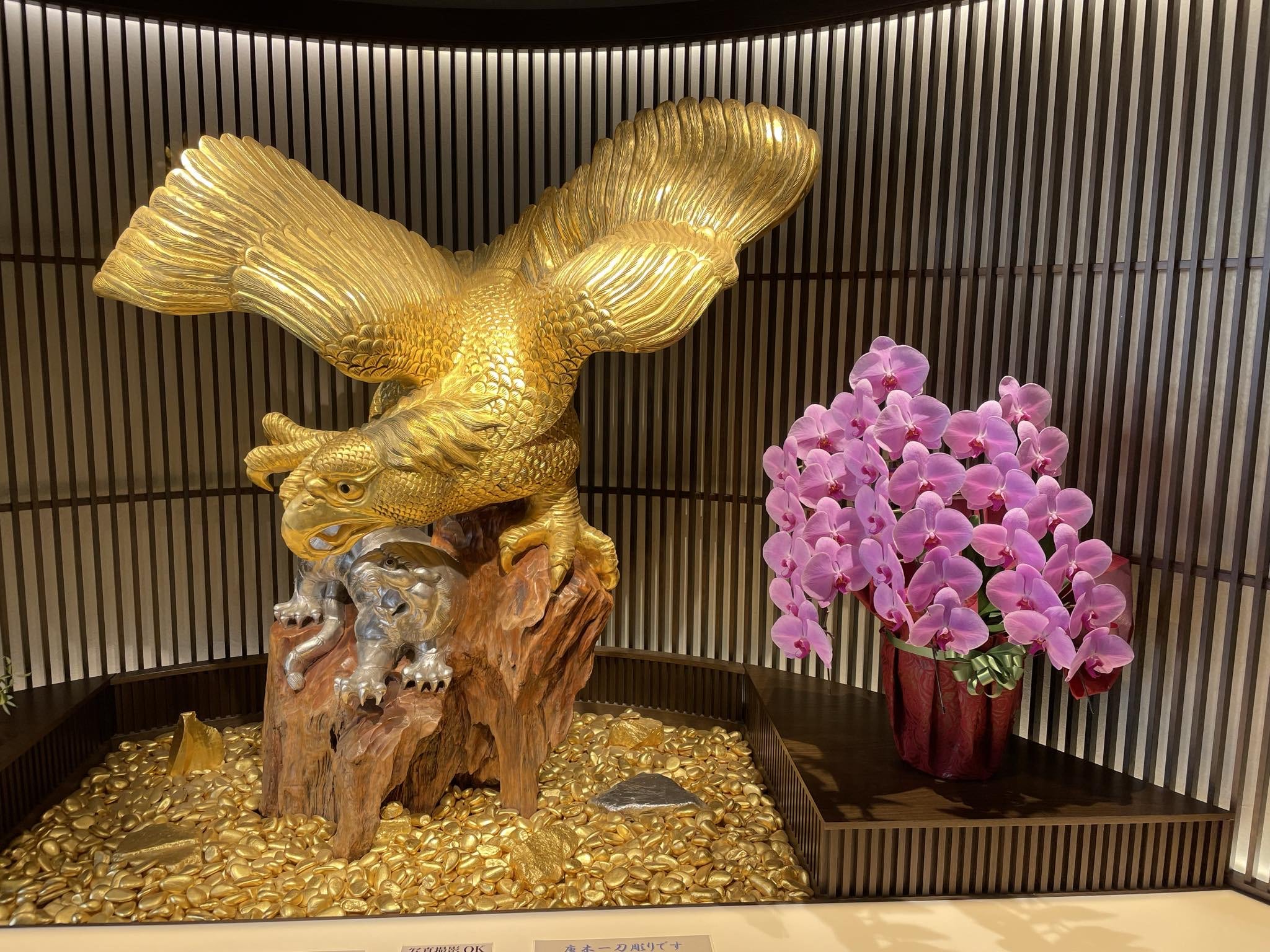
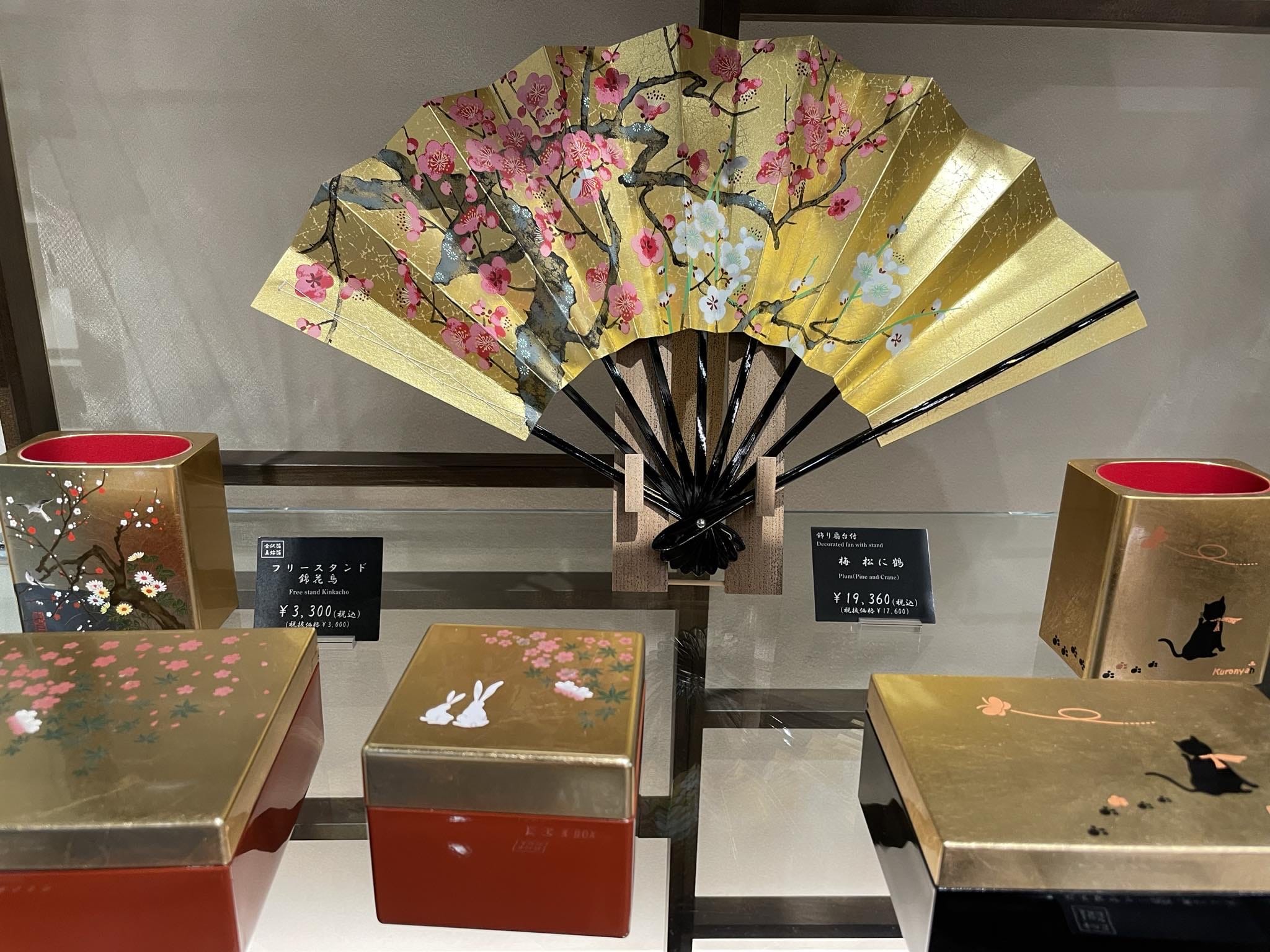
We’re just a few minutes from a geiko district (there are 3 in the city) and take the opportunity to visit it a bit. The souvenir items are all gold-plated, and my parents gave me scraps of gold leaf. Since I don’t have the necessary gilding tools, I’ll just use scraps for my edges, it’ll be cheaper and less complicated for me. If you’re interested in gilding (on lacquer) classes, I saw that there were some at Kanazawa Katani but no idea how to sign up, how much it costs, etc. You’ll have to find out for yourselves.
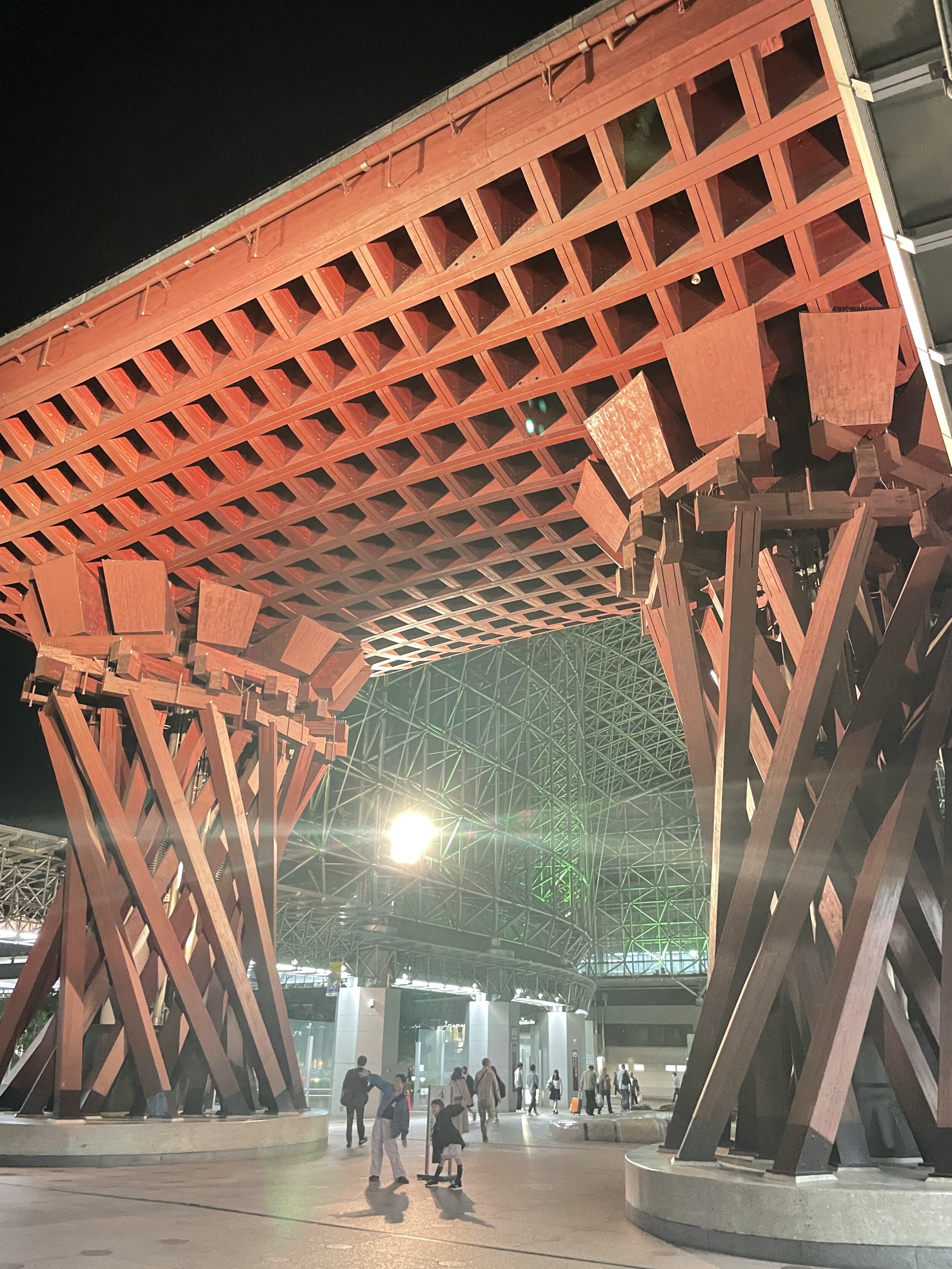
Our poor driver JB is too tired to continue the tour, we go ASAP to the hotel and enjoy the comfort of the hotel (Booking link) as well as its onsen for the rest of the afternoon, before having dinner at a ramen shop. Next to our hotel is Kanazawa Station, one of the most beautiful in Japan. There’s a small clock that shows the time using water jets.
Parking
Just a quick note about parking: in Kanazawa, there are many parking lots with a kind of box on each spot. Actually, you just park your car. No ticket is given. 3 minutes later, the box rises to block the car. And when you want to retrieve it, just enter your parking spot number, press the 4th button on the right, the machine shows the amount to pay, then once payment is made, the box lowers for 5 minutes so you can get the car out. Be careful, these parking lots only accept coins of 10yen and up, and 1000yen bills.
Day 5 of the road trip
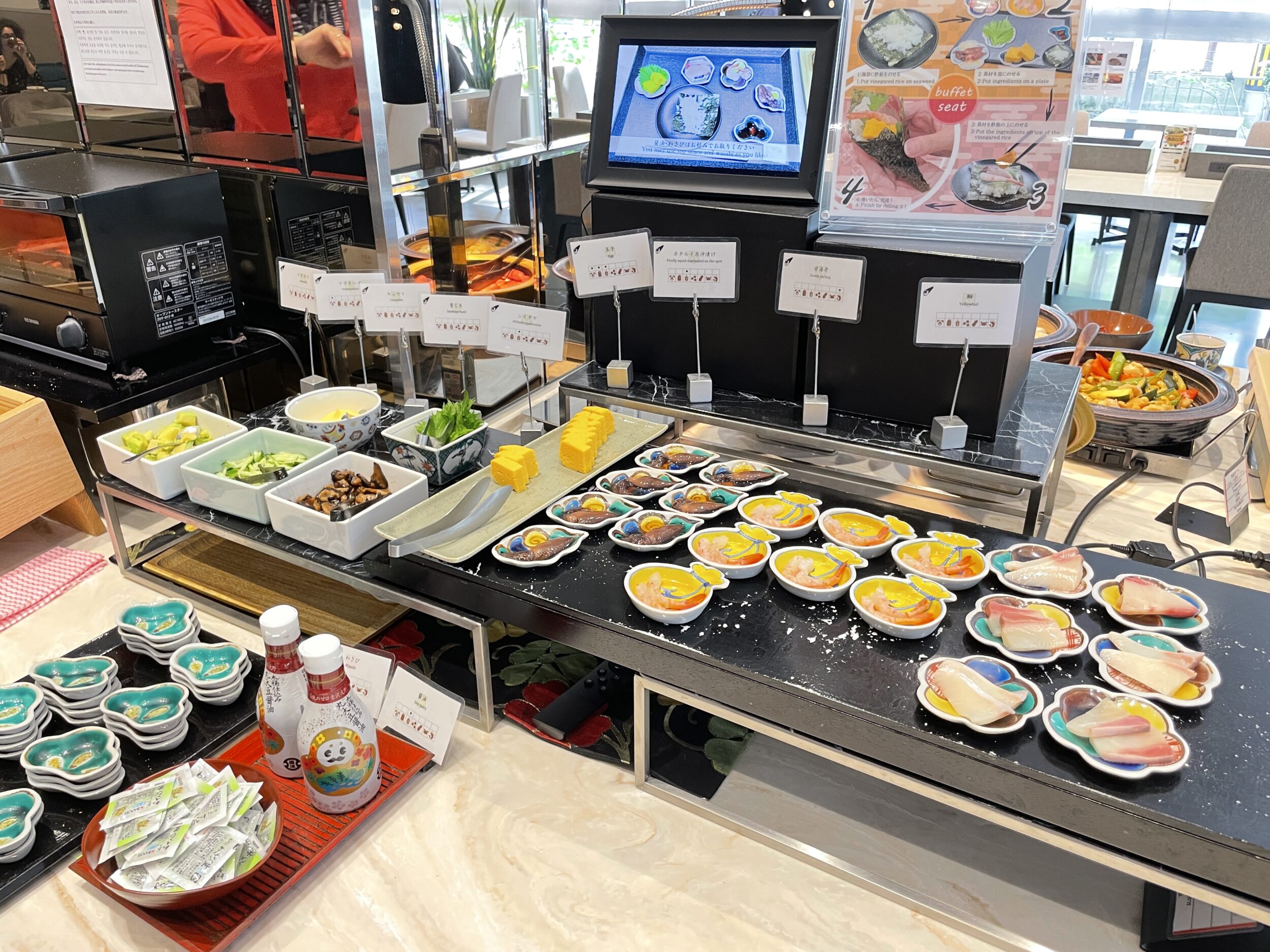
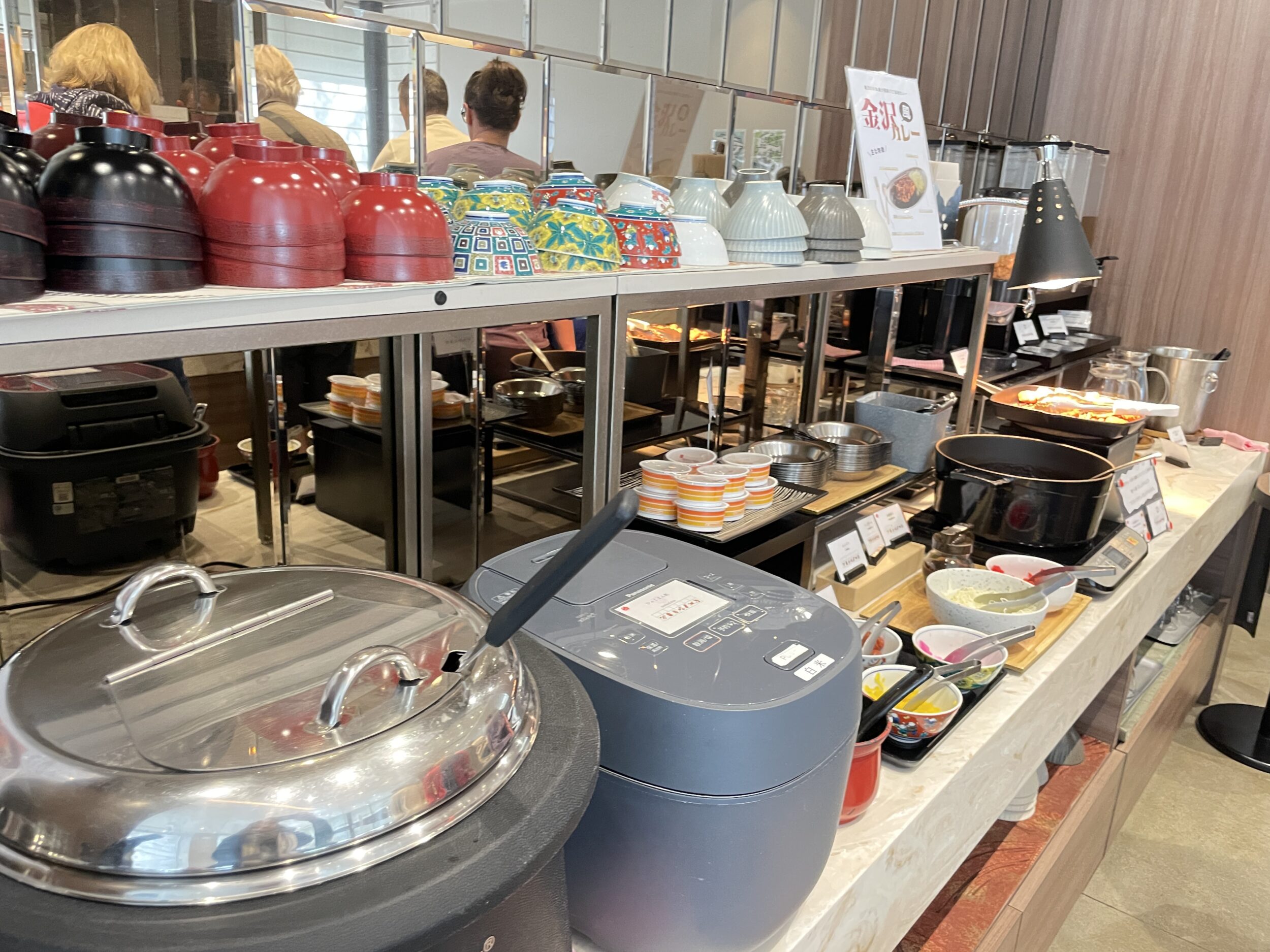
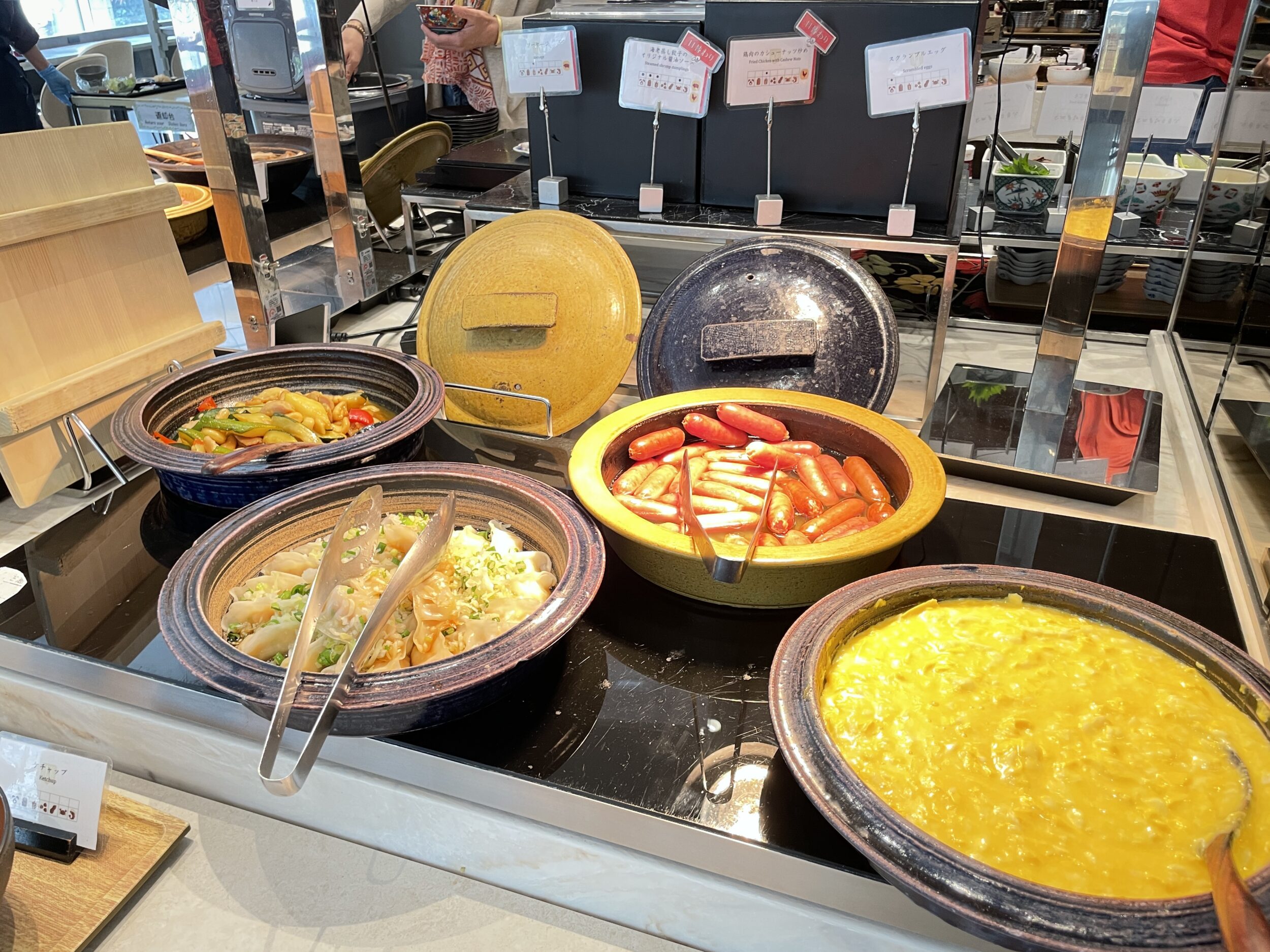
JB got us breakfast tickets (2200yen), it’s the first buffet breakfast of our road trip. It’s quite interesting, especially since there are sashimi and 2 delicious soups.
Our driver JB is not on duty today since we’ll only be taking public transport. I thought the PASMO transport card would work here, but it doesn’t. No bus accepts PASMO, you have to board at the back and exit at the front. When exiting, you put the exact amount in coins into a small box. There are machines next to the driver to exchange 500yen and 1000yen into small coins. And to know the exact amount to pay, just look at Google Maps. It’s also indicated on a screen in the bus, but there are different prices depending on the zones, incomprehensible to us.
Omicho Market
Before going to Omicho Market, we pass by a department store and there’s a huge queue that’s maybe 500 meters long! We can’t figure out at all why people are queuing, maybe for discounts?
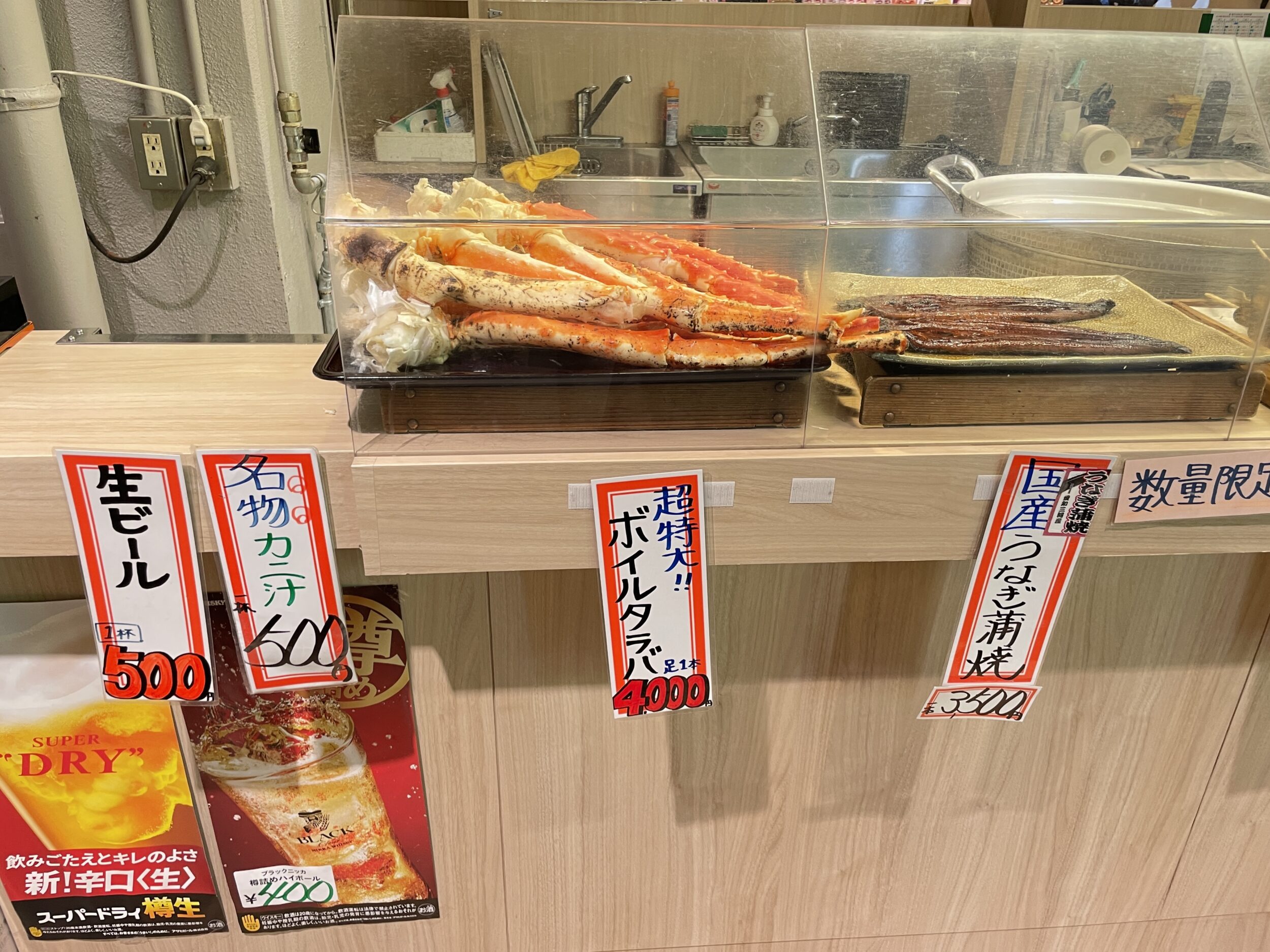
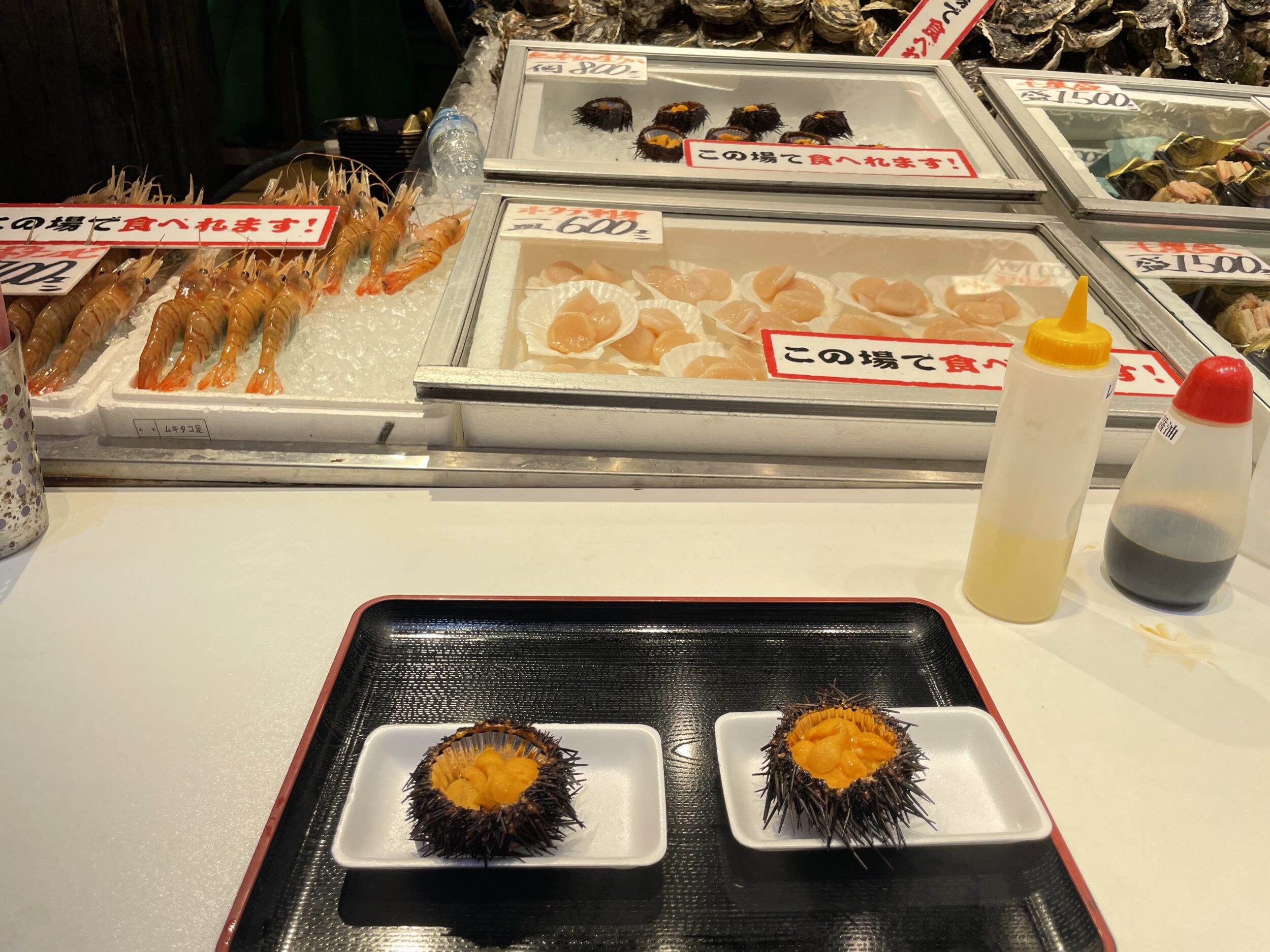
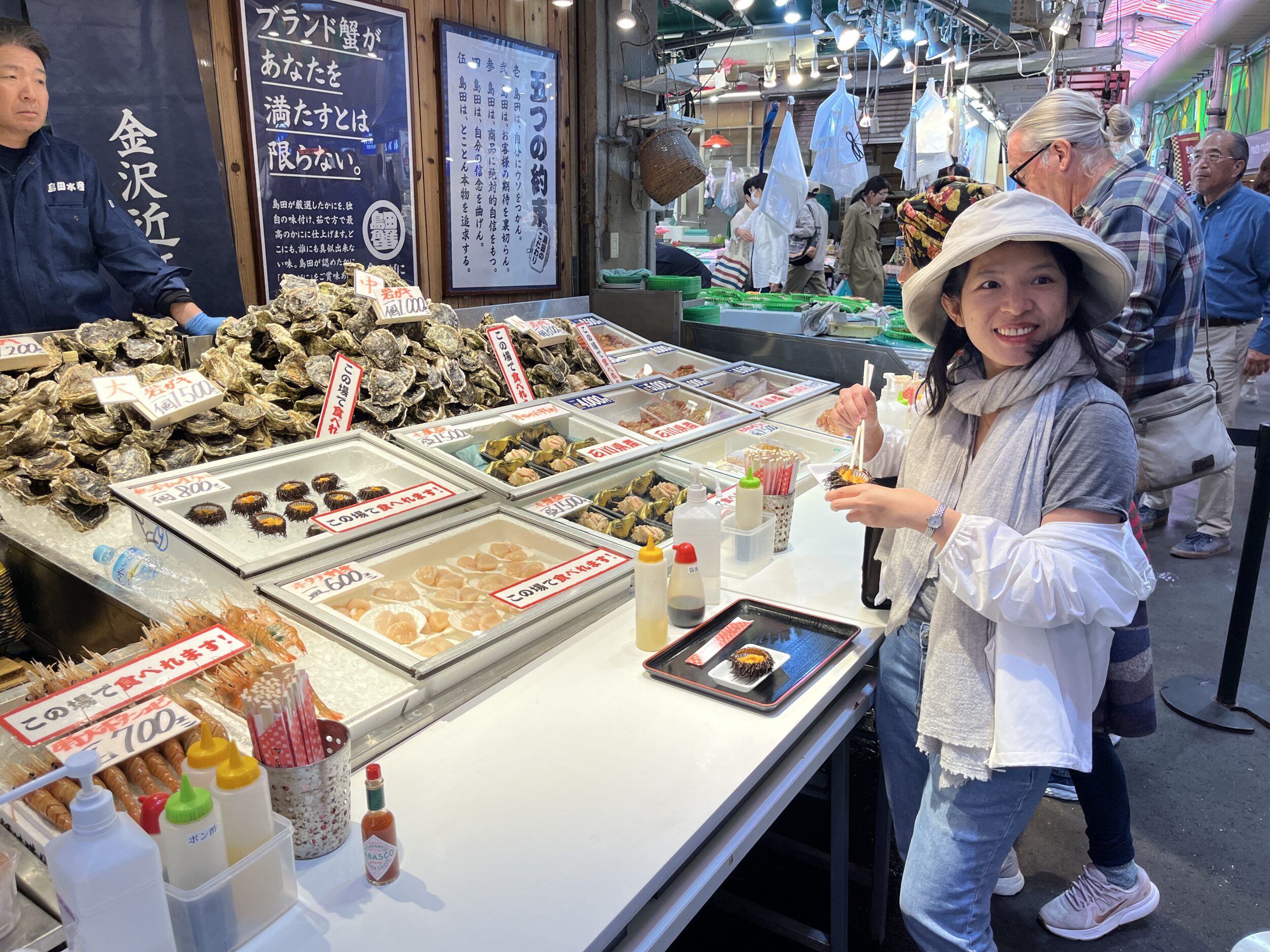
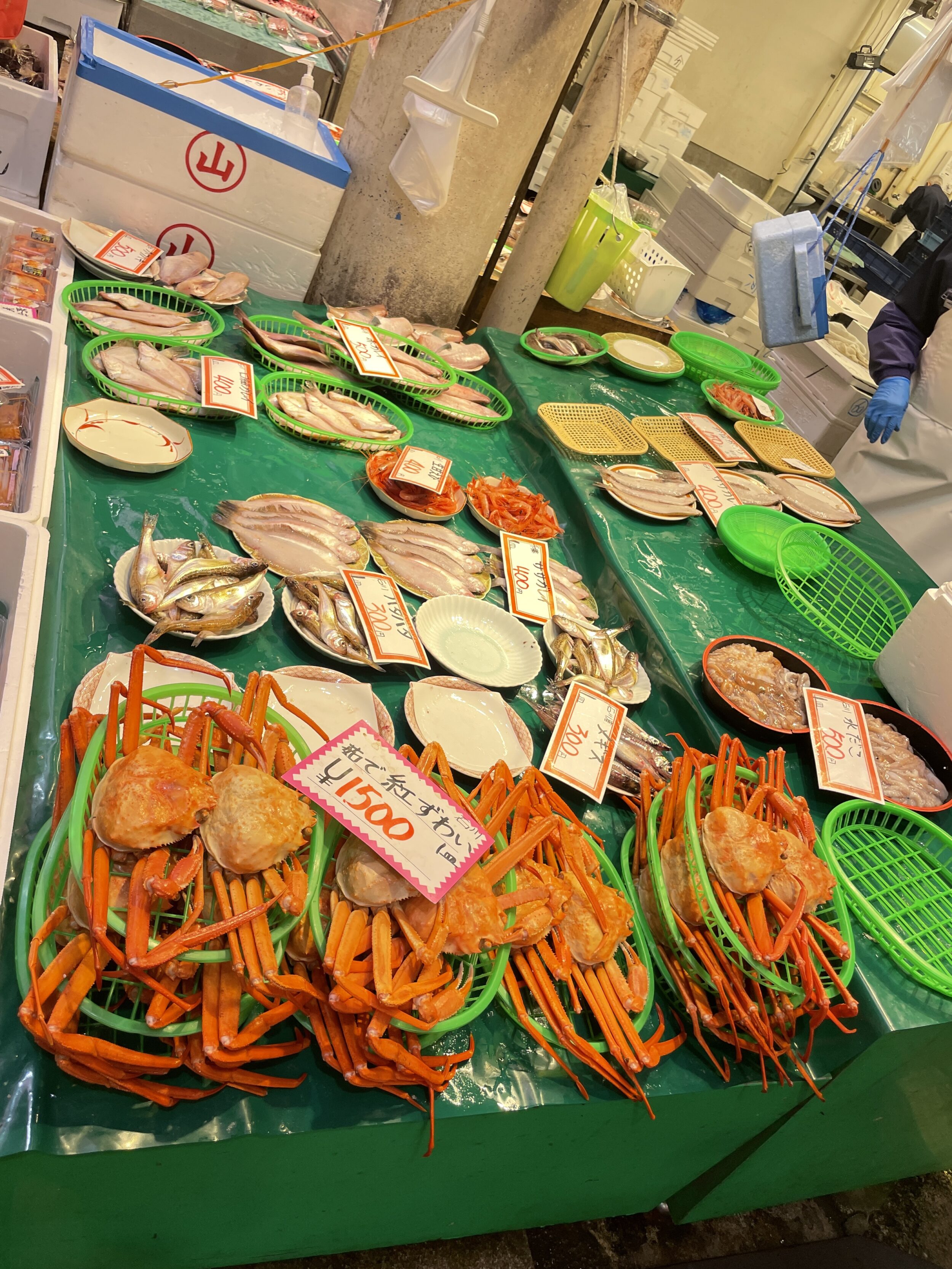
The Omicho market is touristy but prices remain affordable. For example, you can buy ultra-fresh fish for sashimi for 1200yen, whereas at a restaurant, the same amount would have cost three times as much. Honestly, if I had a kitchen, I could have saved a lot of money by buying ingredients here. You can eat oysters and sea urchins here directly, I splurged on 2 sea urchins, 1600yen in total. The oysters are enormous!!! and spider crab legs can cost up to 4000yen each because they weigh a ton!
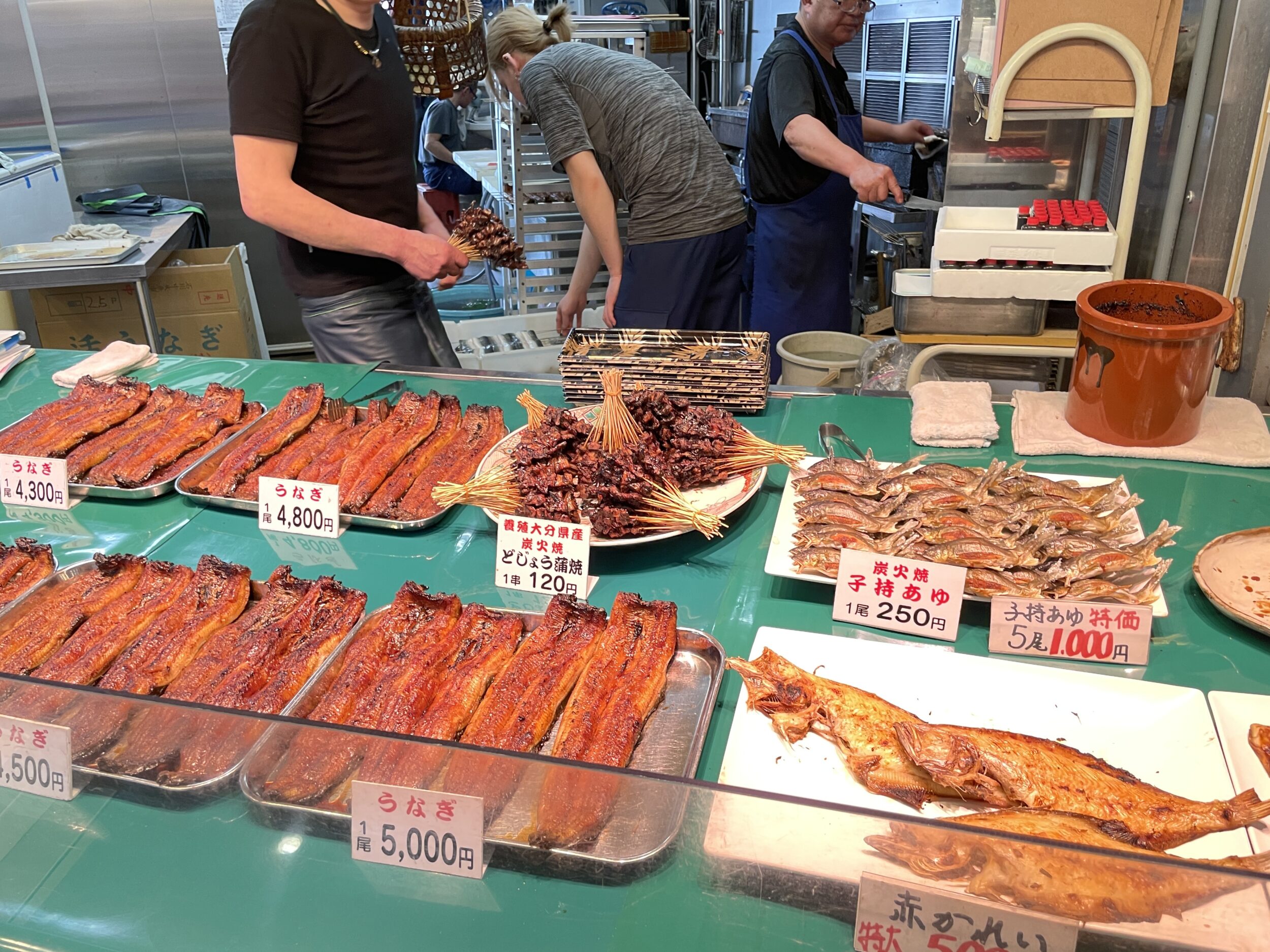
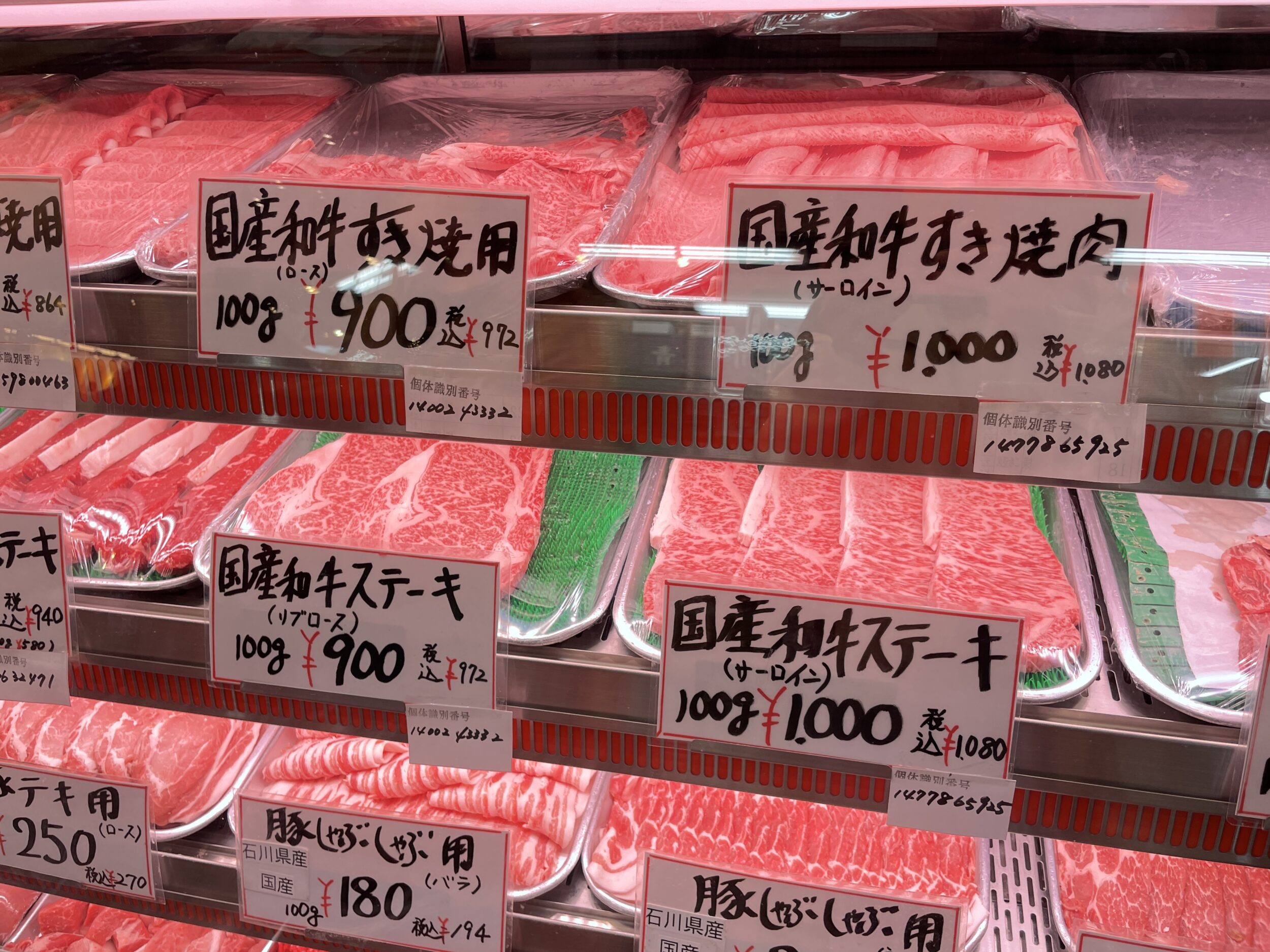
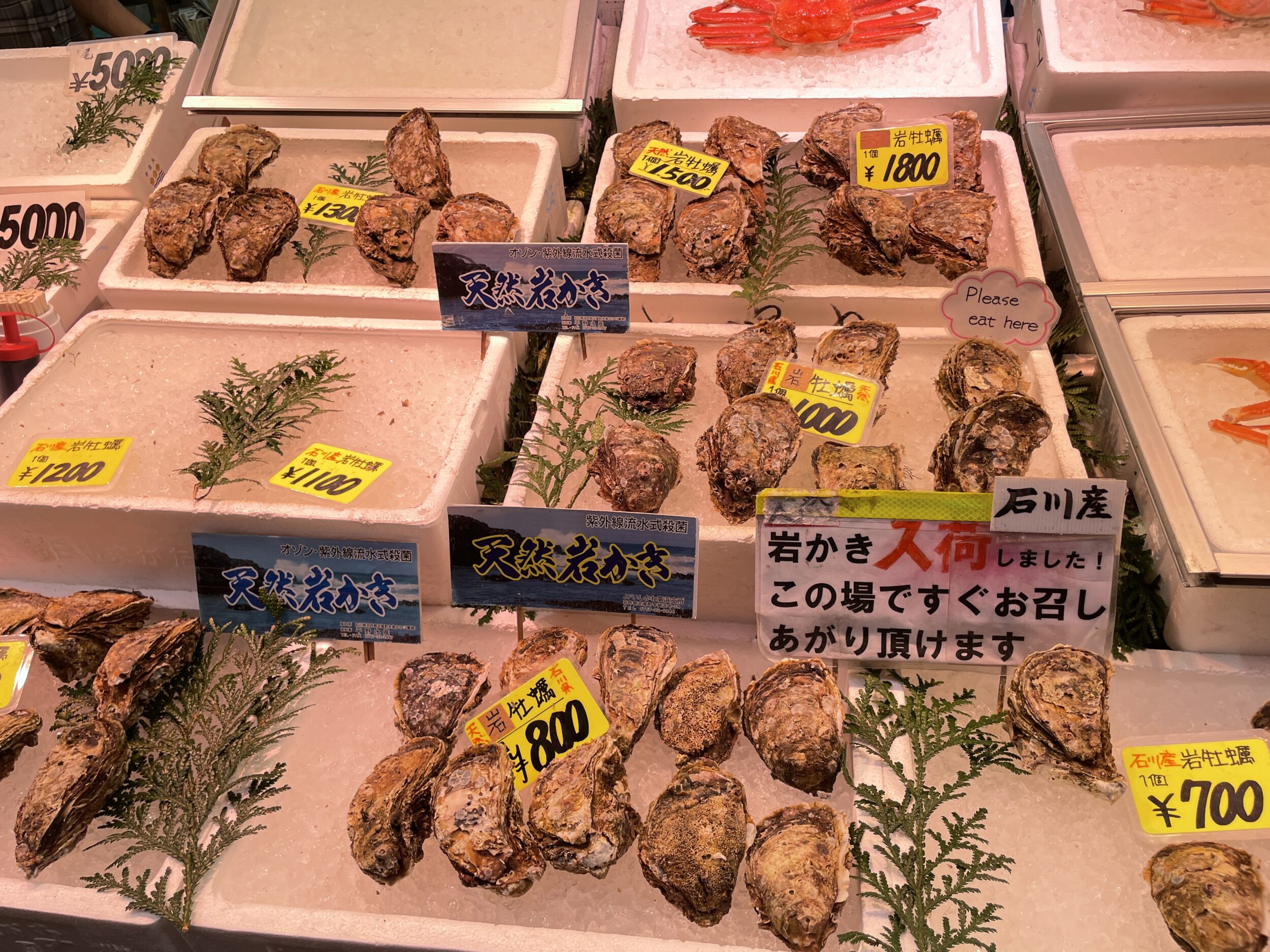
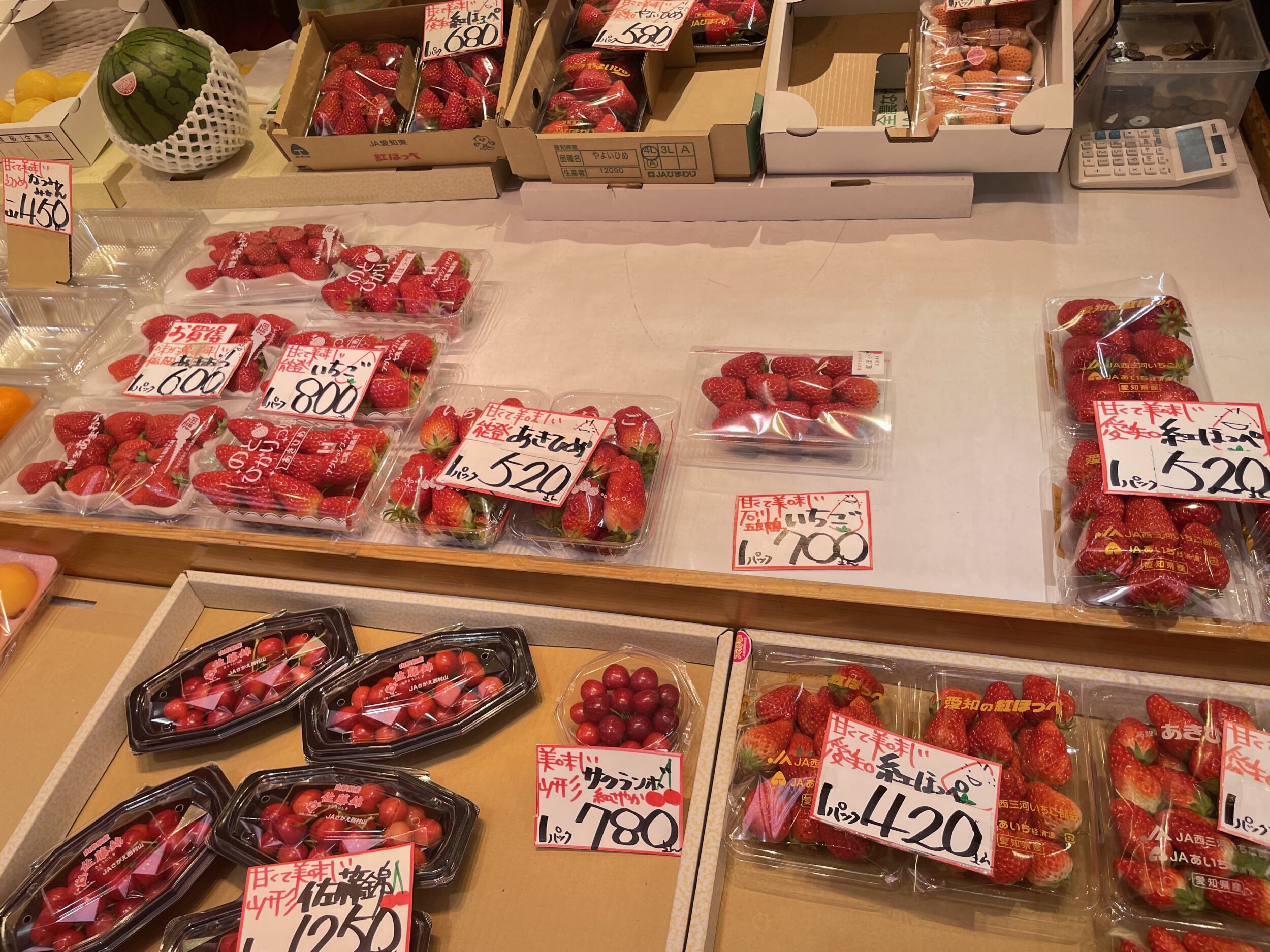
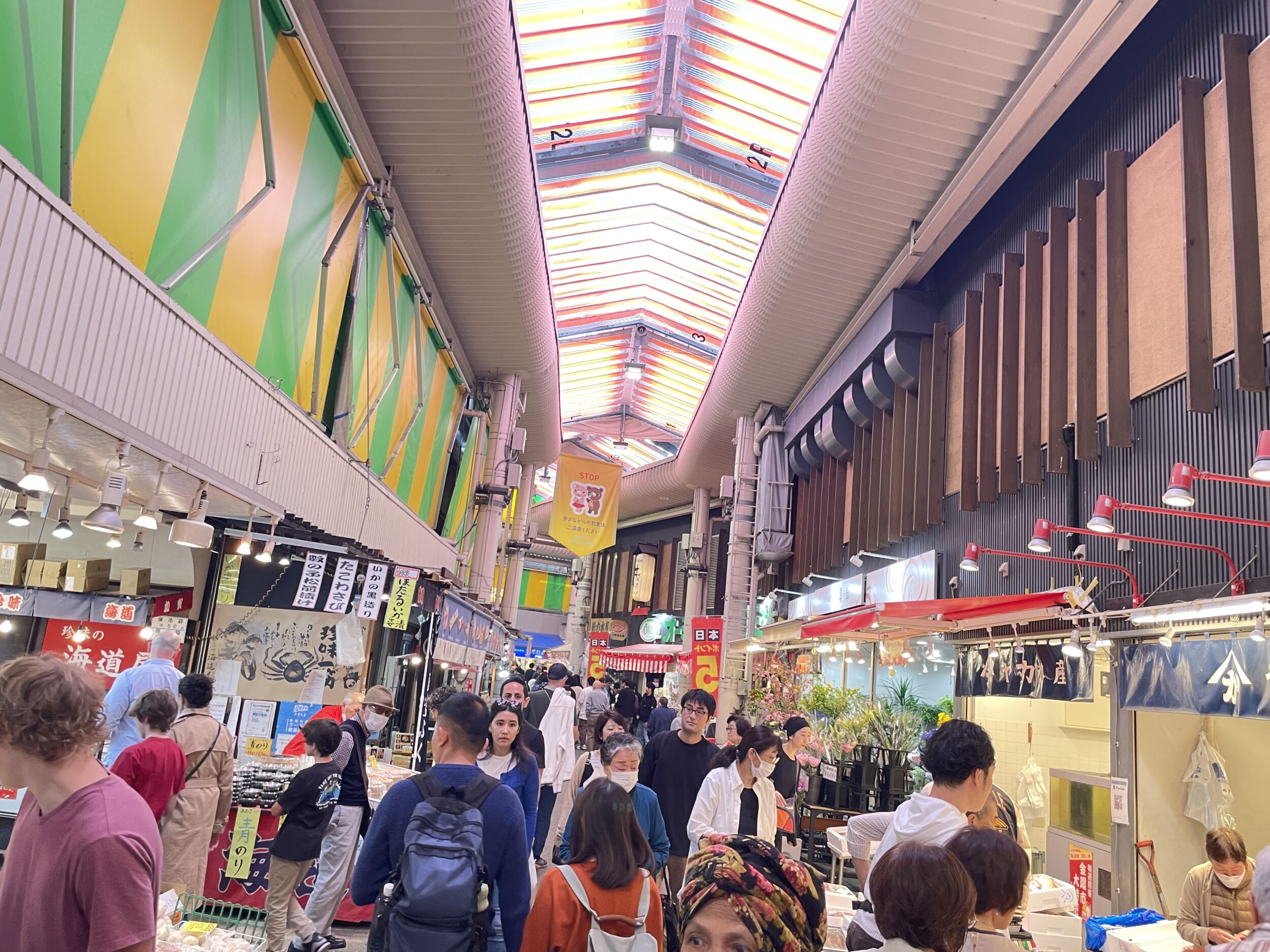
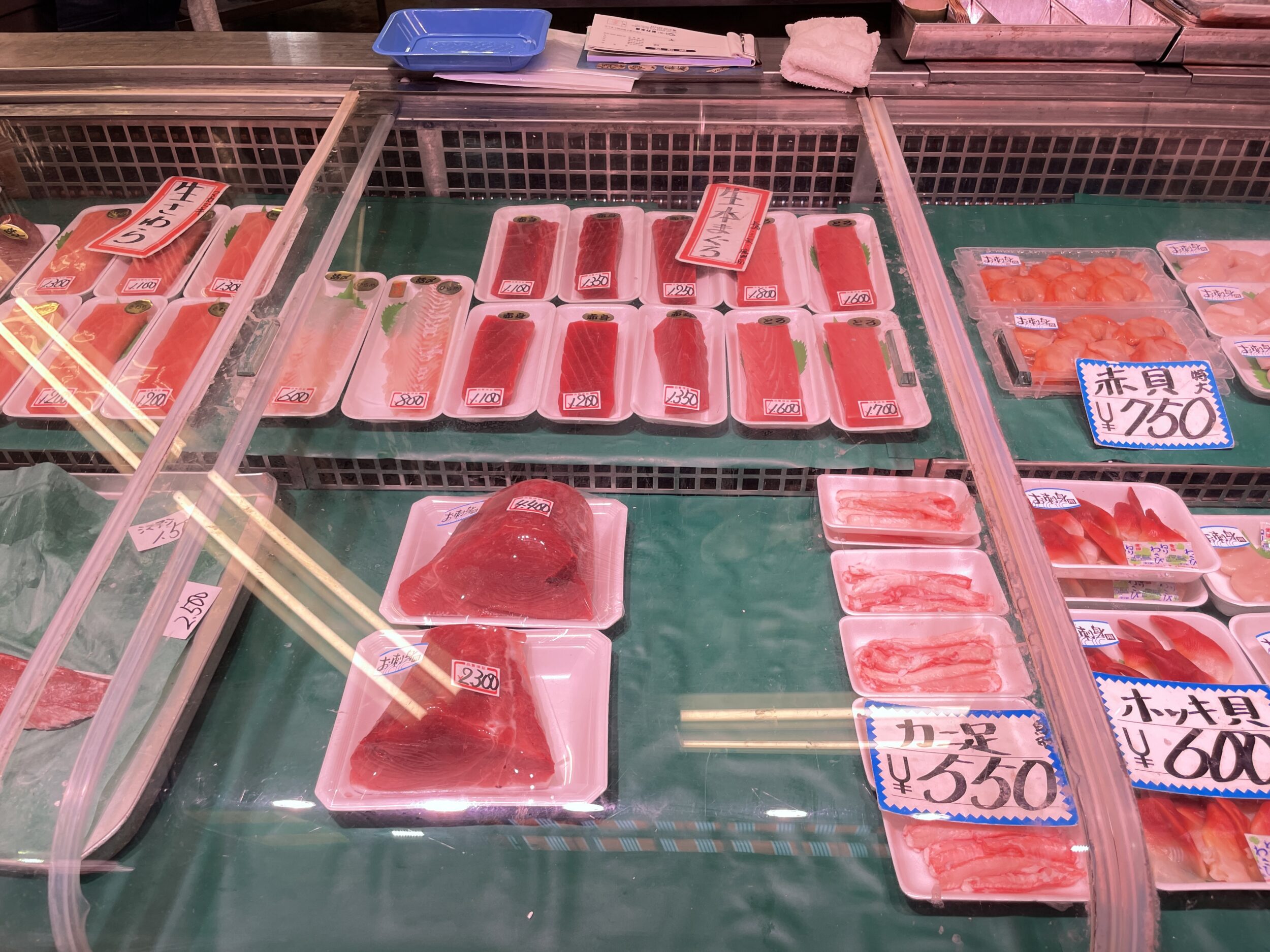
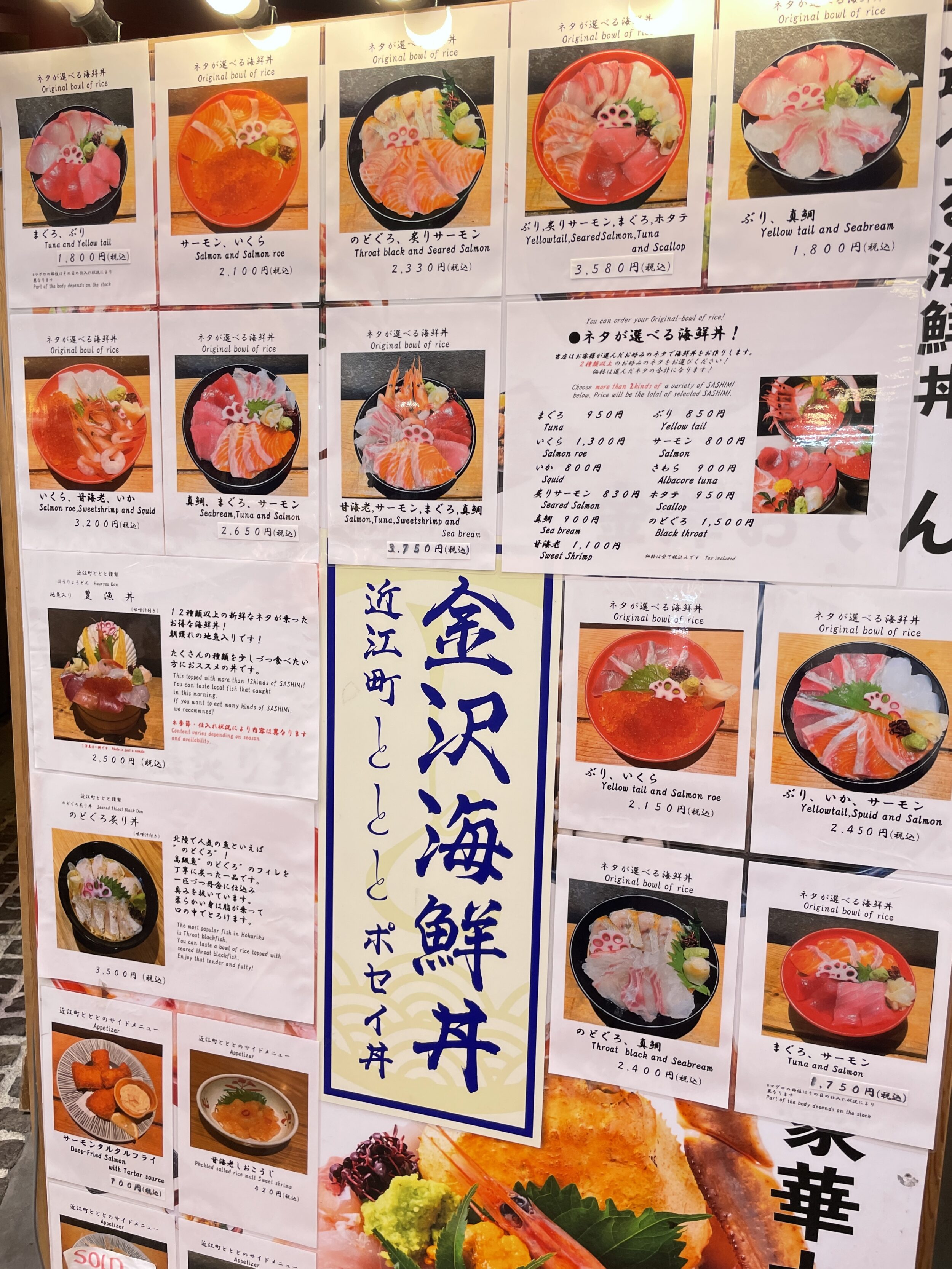
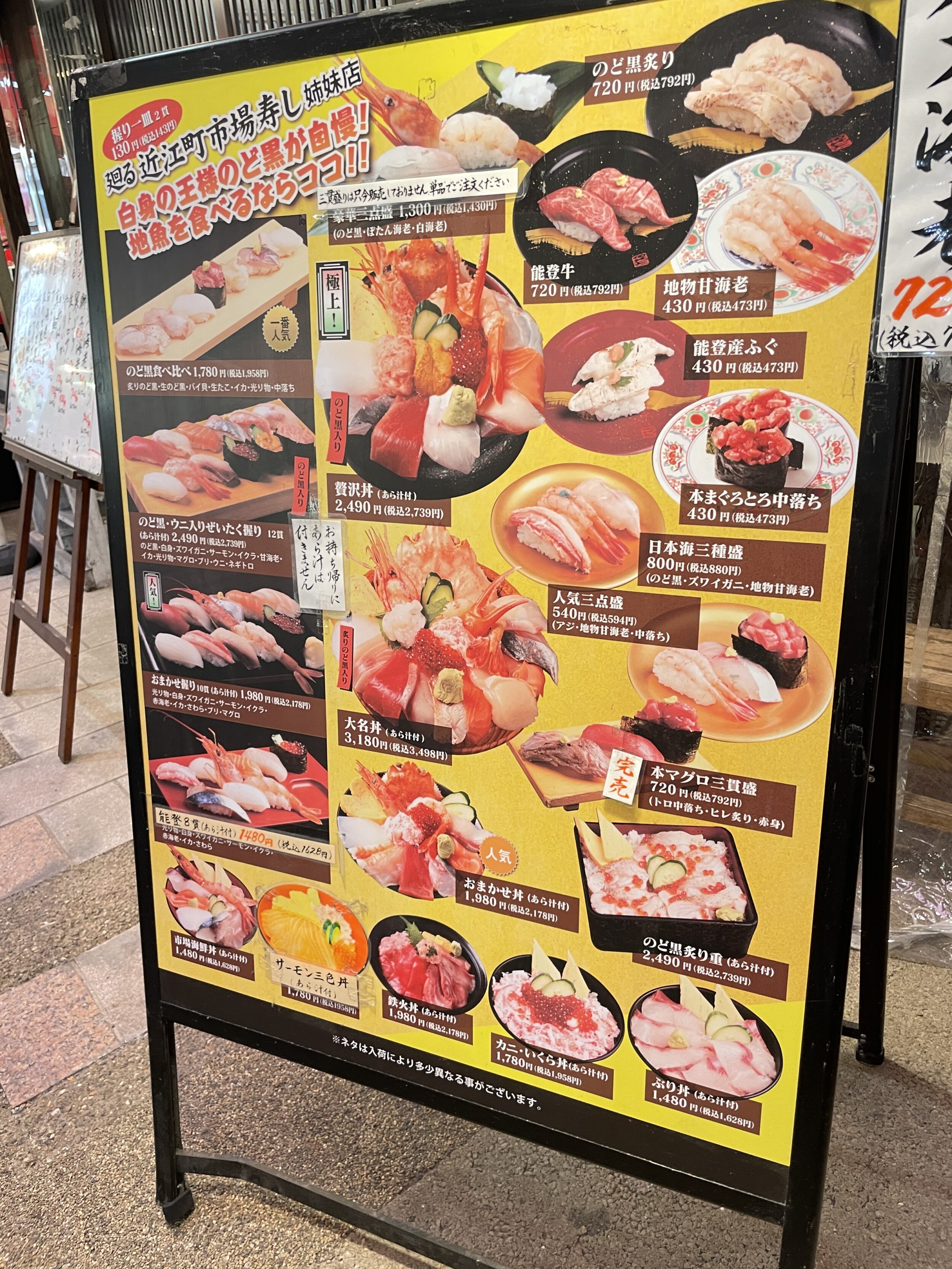
There are seafood restaurants on site, but we don’t understand why some have 20 people queuing and others are empty. Here are the menus for example:
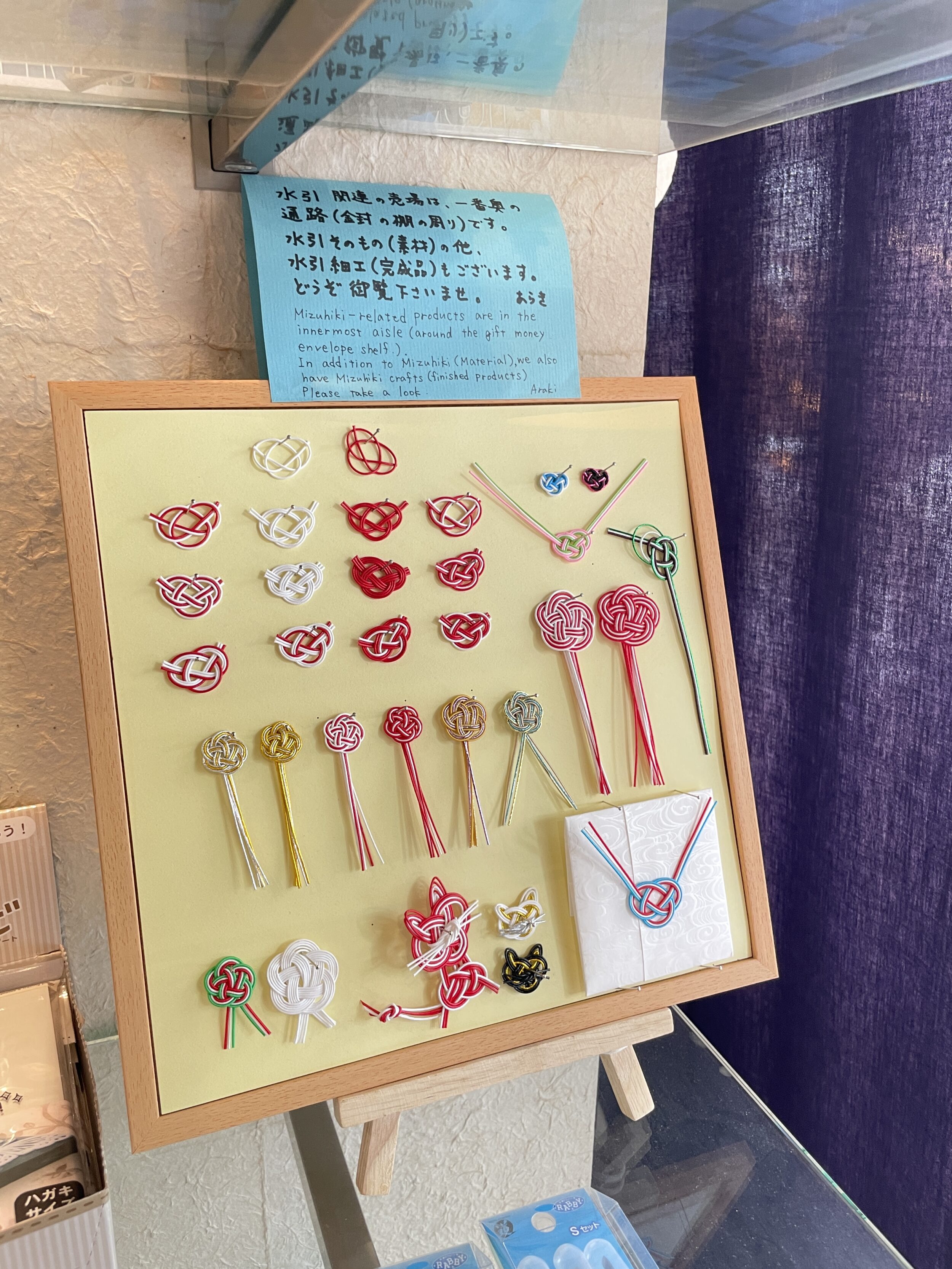
Next door is a paper shop. They also offer workshops. It’s paradise for DIY fans like me. You can also find the mizuhiki : This ancient Japanese art involves tying together very fine paper cords, creating decorative interlacing. The cord is made from tightly rolled rice paper that measures about 2 cm in width. Traditionally, mizuhiki was associated with ceremonial announcements such as weddings, births, and funerals. Nowadays, these creations are used as beautiful jewelry or decorative objects. I was once shown an envelope with a mizuhiki (at Suisen Paris) and I found it so delicate and so beautiful that I bought a scrunchie shaped like mizuhiki and several books that teach you how to make them.
Okay, time to head to our first surprise appointment of the day. My parents know there are 2 surprise appointments, but they have no idea what they are.
Gyokusen-en Nishida Family Garden
We have an appointment at 11:50 AM at Gyokusen-en Nishida Family Garden, but we arrive early just in case… We should have visited the Kaga-Yuzen Kimono Center because it’s small. Kaga-Yuzen Kimono Center showcases an art unique to Kanazawa: kimono painting, very different from the traditional dyeing techniques seen in Kyoto.
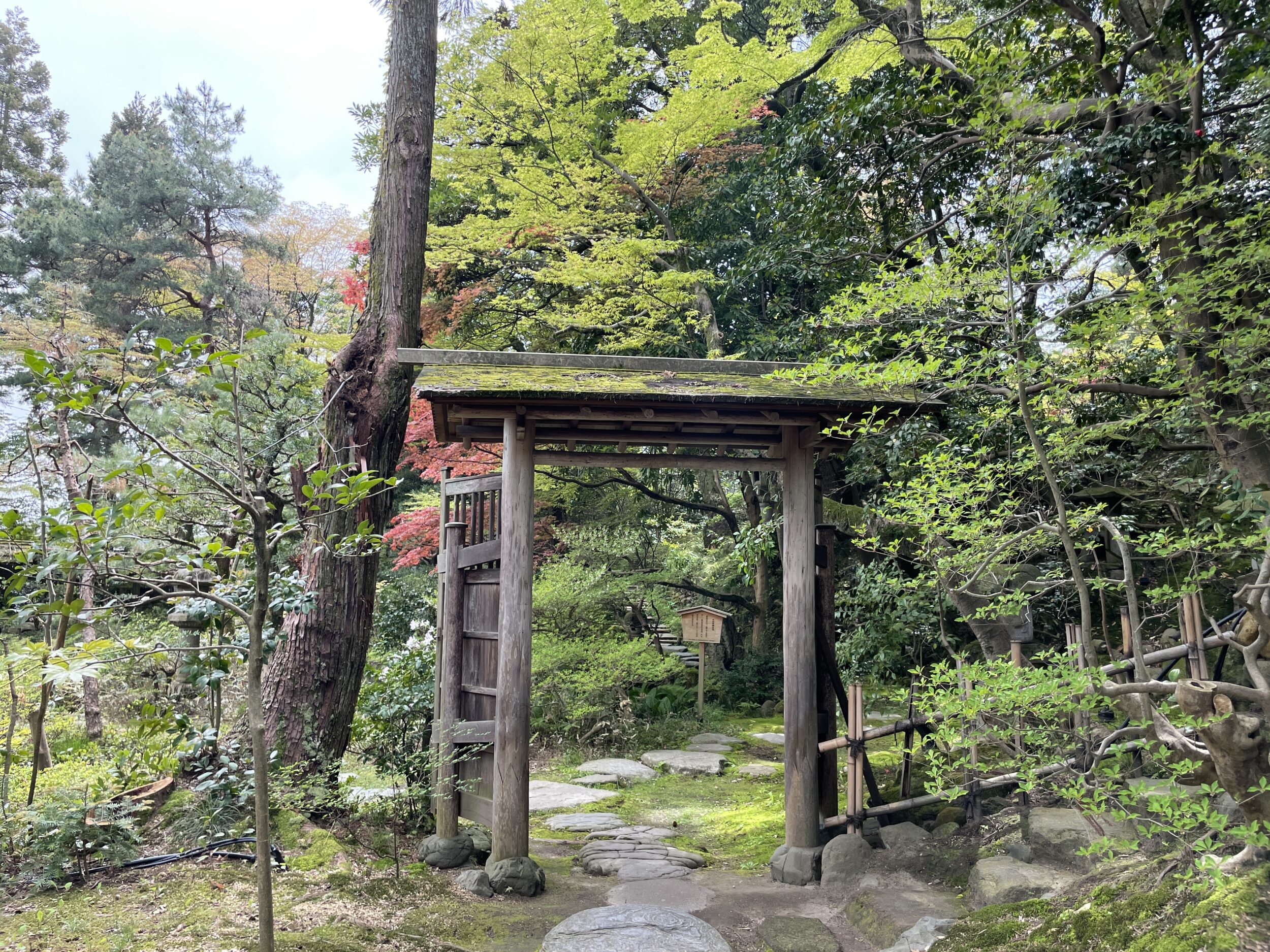
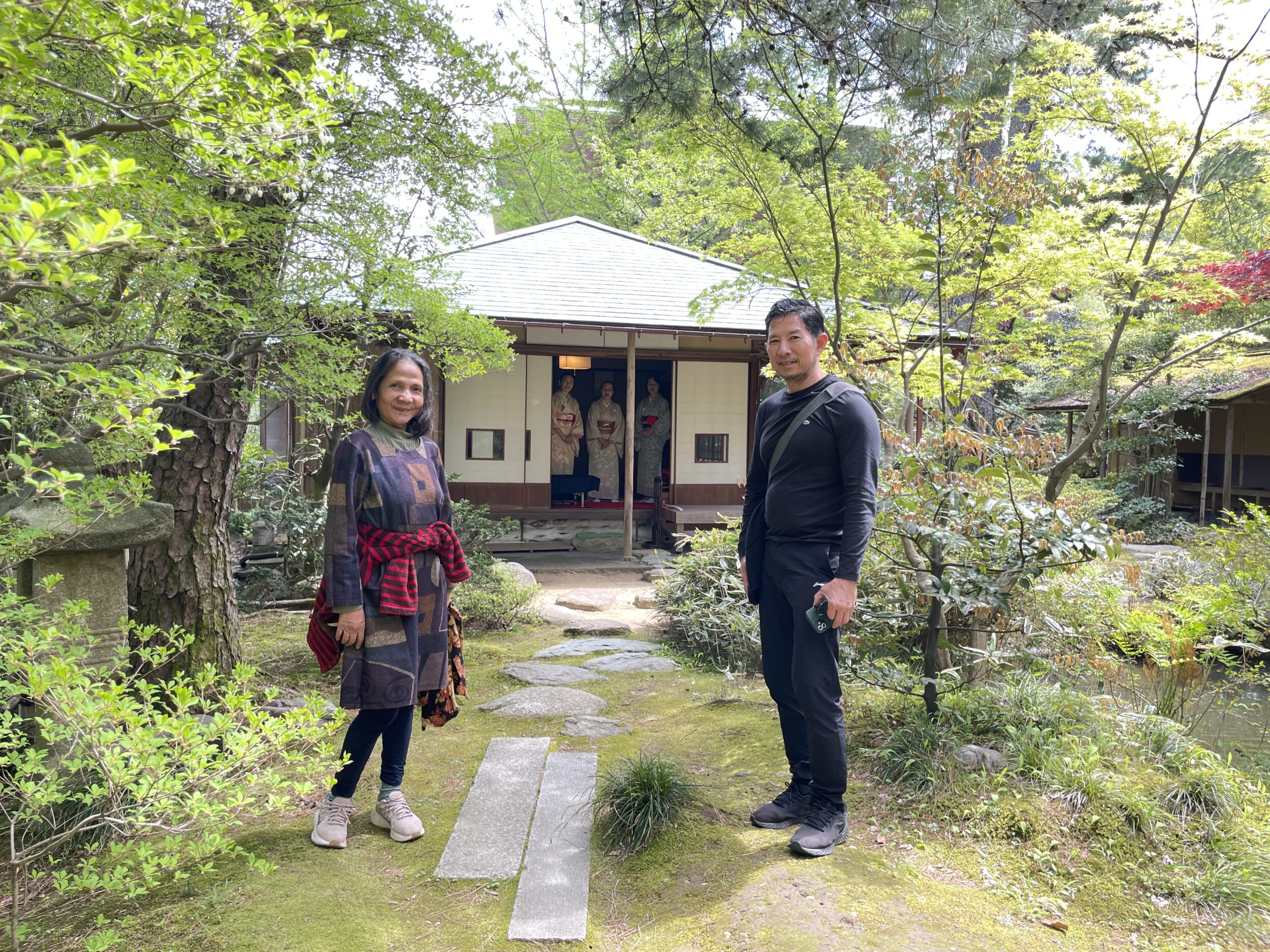
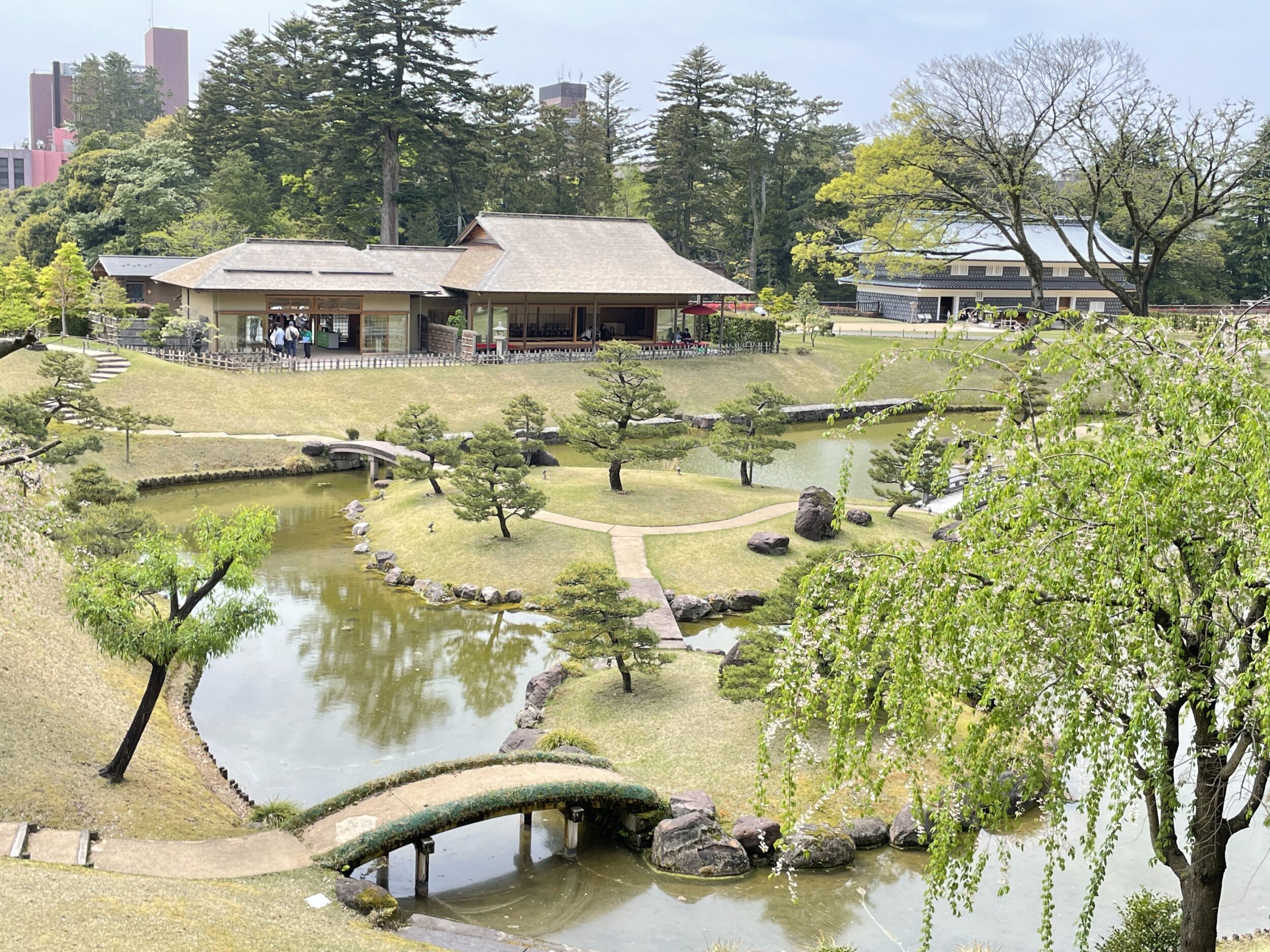
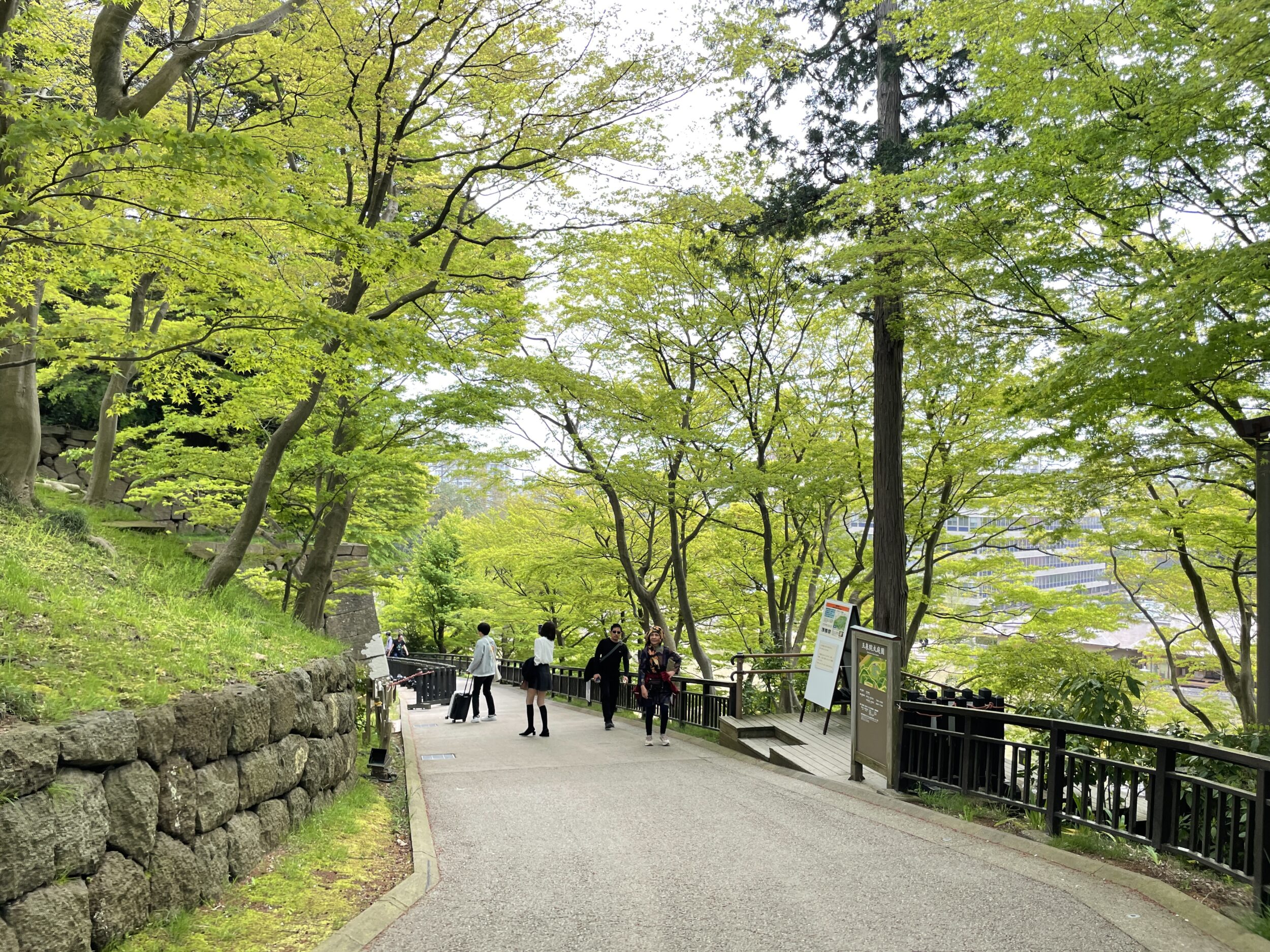
No big deal, because Gyokusen-en Nishida Family Garden has our full attention. It’s a real Japanese garden on a slope, so the scenery changes with every step, with so many details to see and admire.
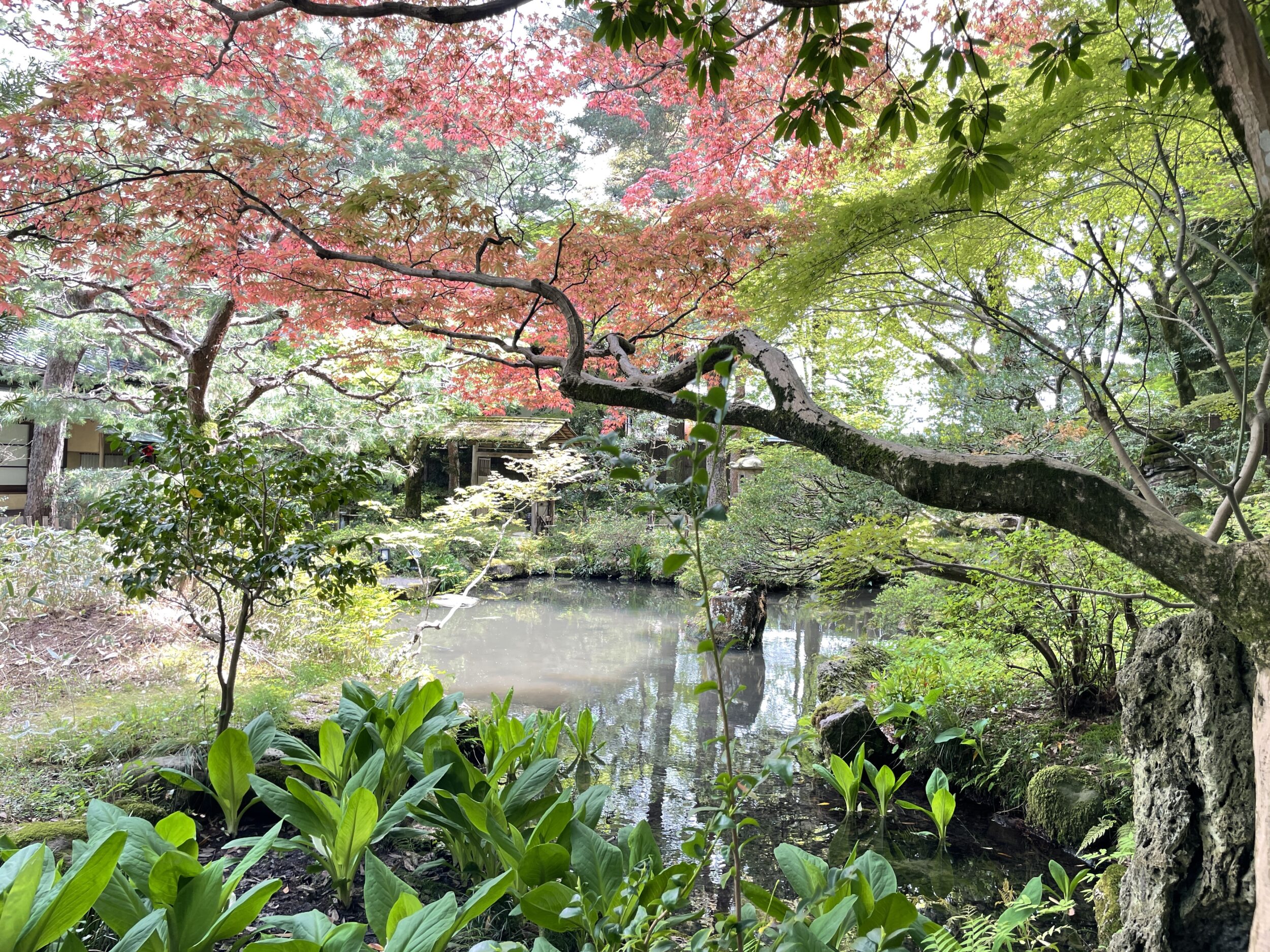
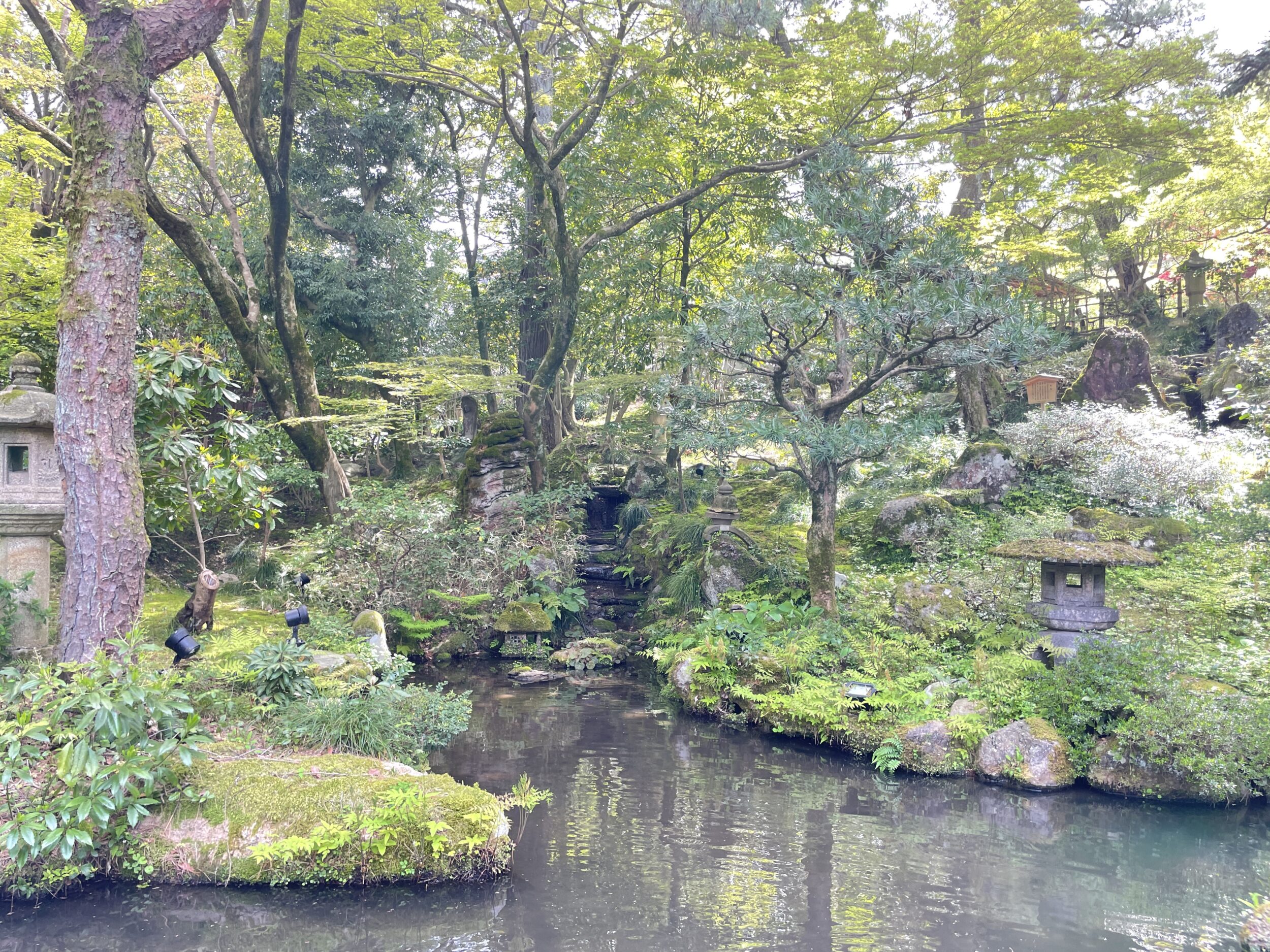
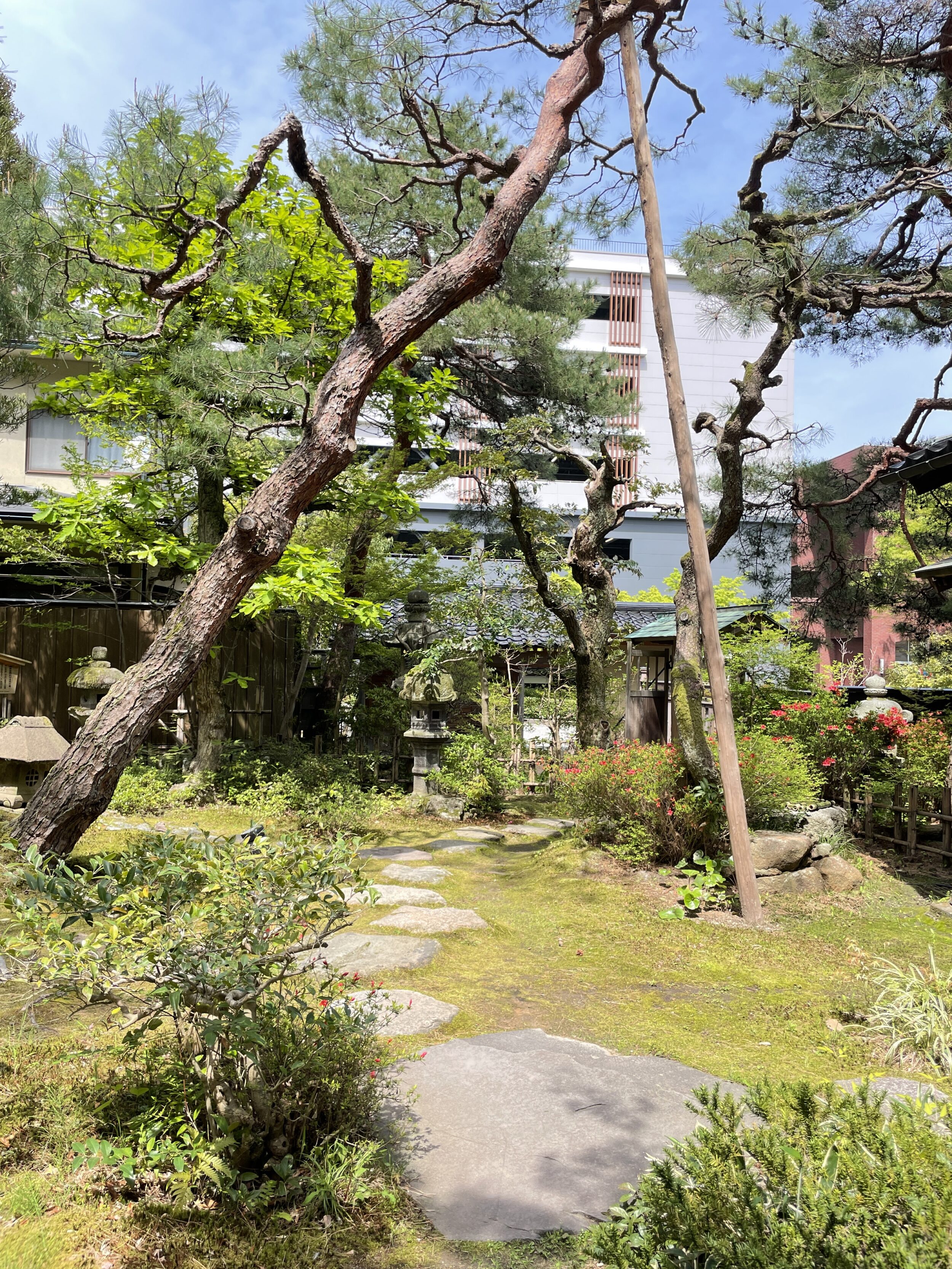
We climb to the very top and my parents are surprised to see a lady dressed in a kimono. They think it’s part of the garden’s “standard” service, but quickly realize it’s the first surprise appointment of the day.
Tea ceremony
I didn’t think I’d be interested in the tea ceremony because last time, it wasn’t exceptional in Kyoto, where we attended a rather stressful ceremony by the hundreds with extremely bitter matcha. It was only through reading the book “Cérémonie du thé” by Noriko Morishita and the film adaptation of the same book, Every Day A Good Day (2018), that I understood the beauty of this ceremony and the beauty of matcha.
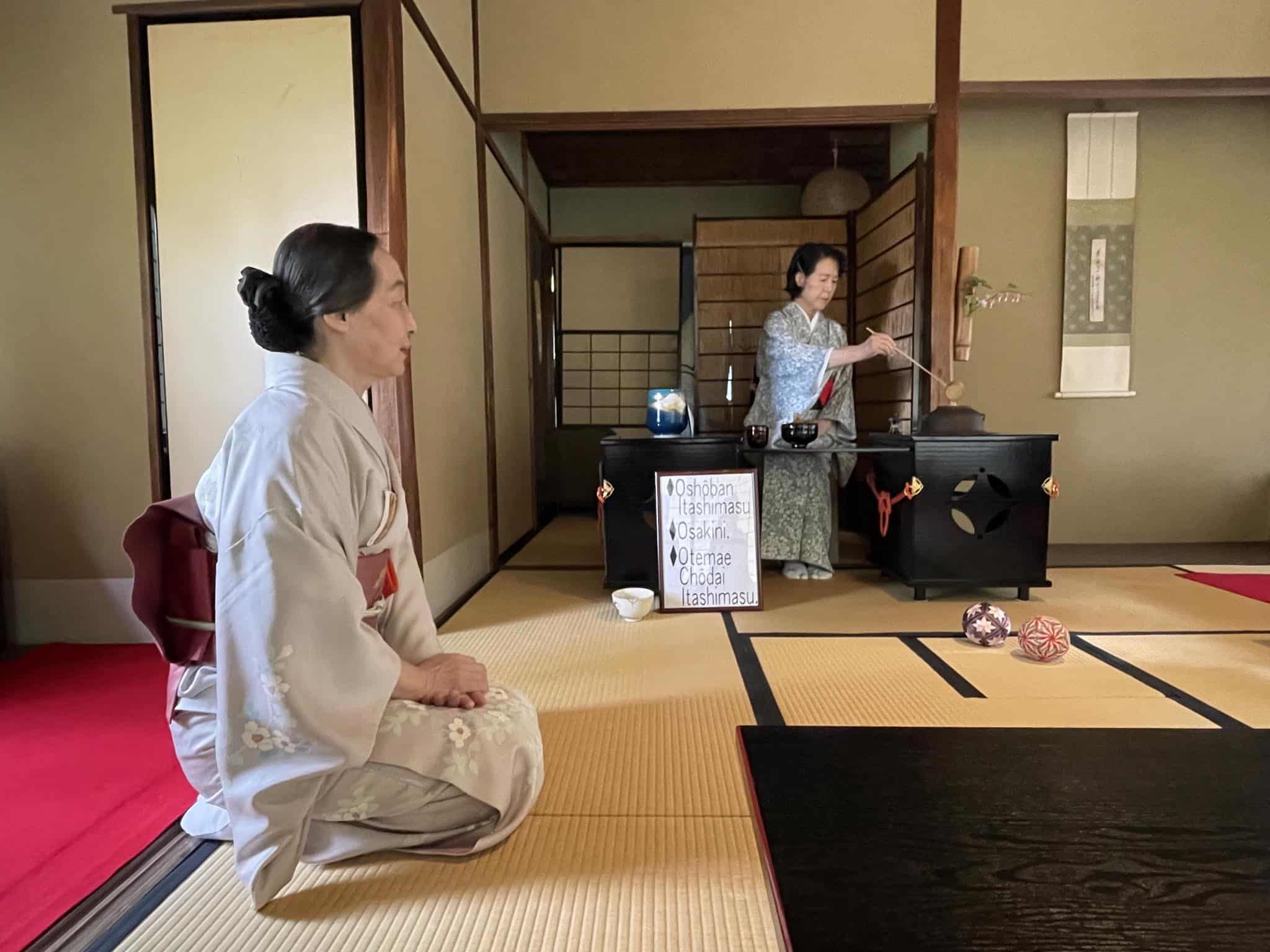
My parents and I have already had several opportunities in recent days to practice the matcha tea ritual (you have to hold the bowl and drink in a certain way), but this is the first time we’ve been this close to a “tea master.” To make the most of the experience and be able to translate for my parents, I privatized the ceremony, but you should know that this room can accommodate up to 8 people at once. You must reserve by email at least 3 days in advance. It’s the most beautiful tea house in Kanazawa, and it’s authentic (400 years old), whereas another tea house in the same garden, near the entrance, is a “fake” (a modern copy of another tea house in Kyoto).
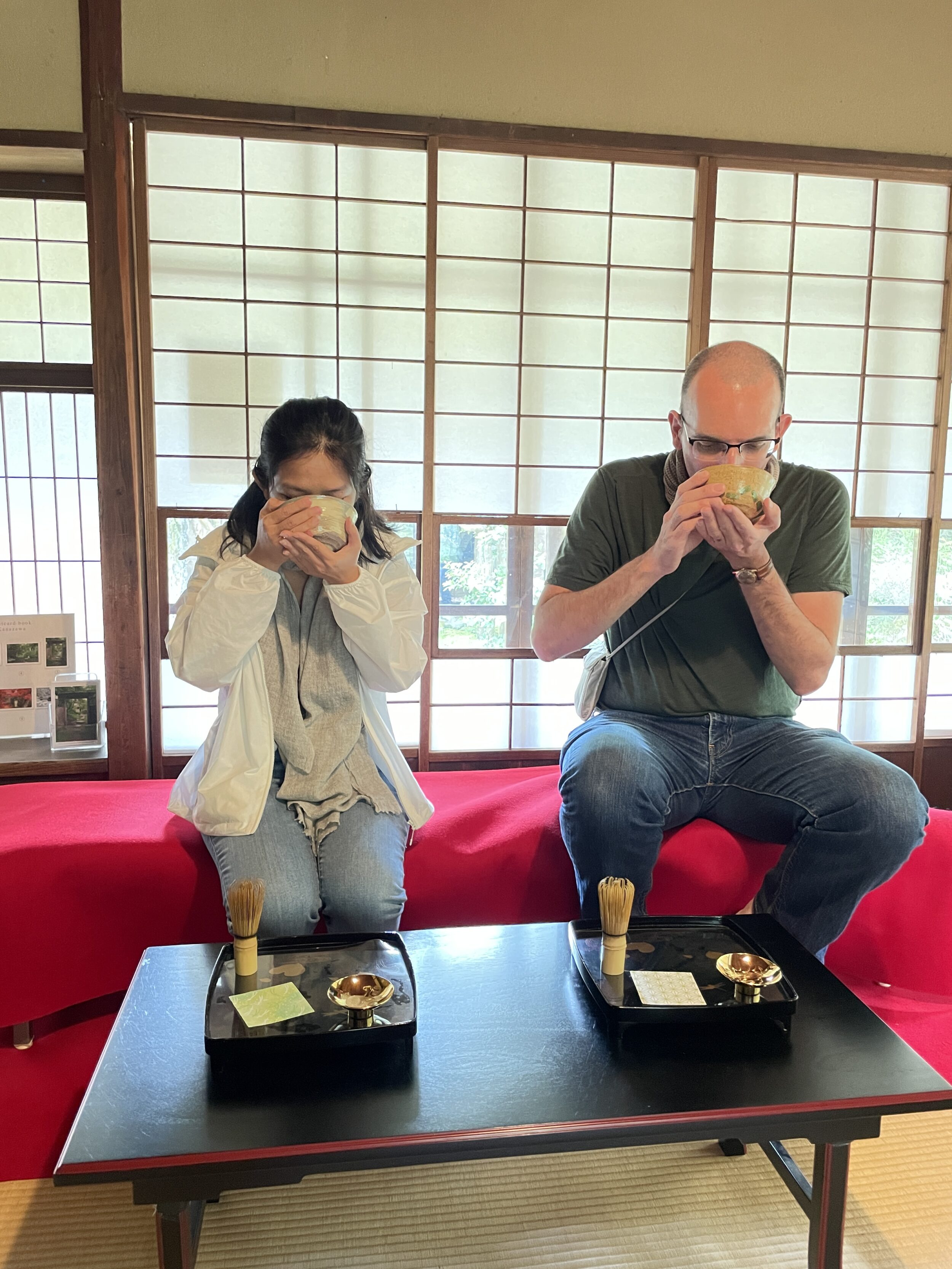
Becoming a tea master is serious business; the gestures may seem simple but require a lot of skill. It looks like dancing. Moreover, there are an incredible number of utensils, and they change depending on the time of season, the season of the year, the weather… There are two types of braziers: the summer brazier and the winter one. Since it’s April, we get to use the summer brazier (not the winter one, which is set into the floor level with the tatami). The pastry we’re served is extremely sweet to offset the bitterness of the matcha. We must finish the pastry and finish the bowl of matcha.
The tea ceremony room is almost empty, but it always contains a scroll on the wall with a poem or phrase related to the day of the ceremony. A few flowers decorate the place; they must be wildflowers, and they come right from the garden. Since we’re tourists, the layout is slightly modified to accommodate us: the brazier is no longer facing the garden, and we’re allowed to sit on small chairs, but normally the tea master and guests must sit traditionally on the tatami.
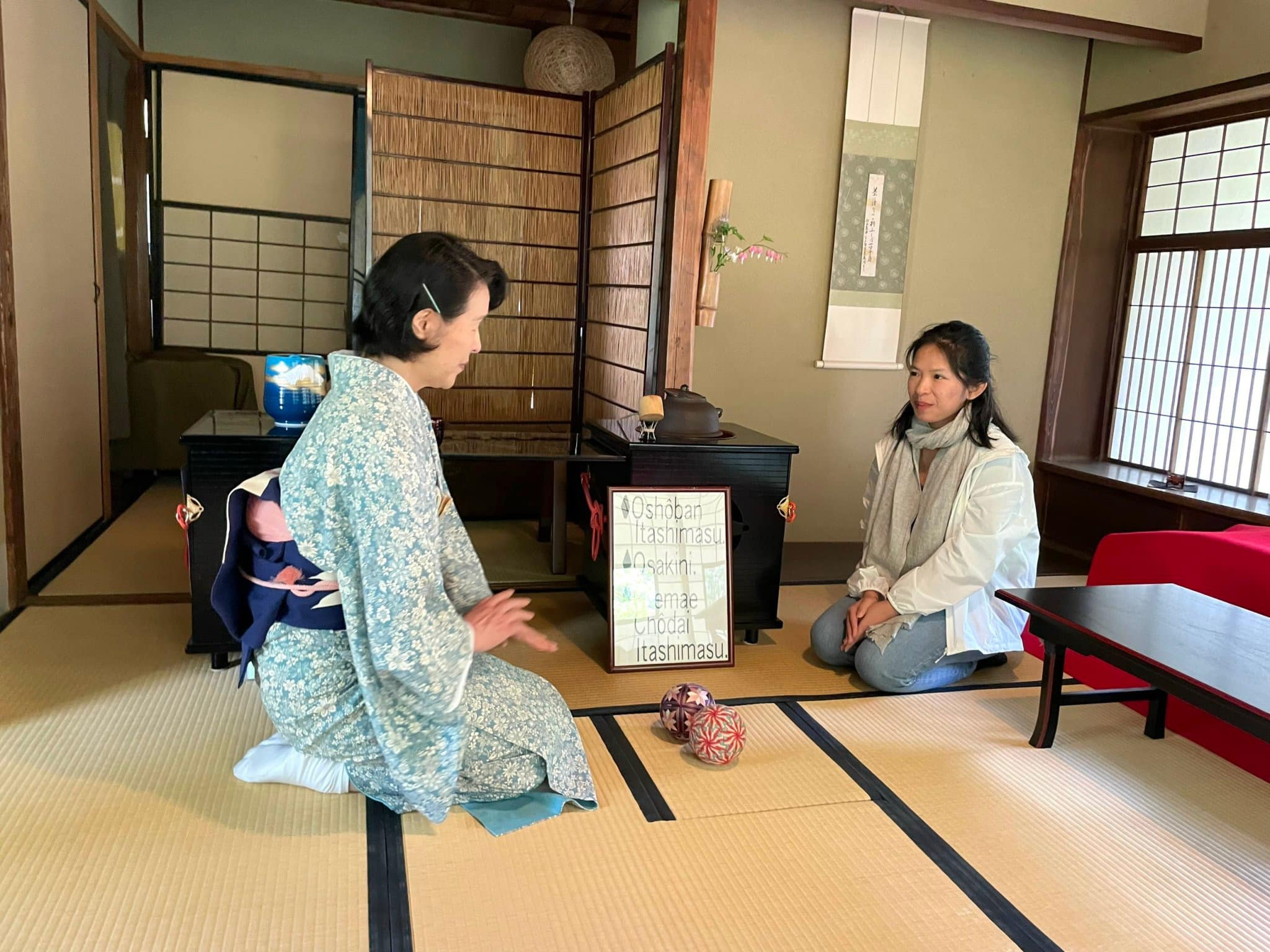
We are received by a lady who tries to communicate with us using her Japanese-French translation device. We ask her to do it in Vietnamese, but it’s too slow. We end up telling her we also understand English, and communication becomes a bit more fluid.
Another lady comes to introduce herself; she’s our guide. She will explain the ceremony and tell us how to behave. We must say certain phrases between us and to the tea master. She also explains how to eat the little pastry and how to drink our bowl of matcha. The tea master prepares a bowl of tea for each of us. Even her container holding the matcha powder is decorated with cherry blossoms to stay “on theme.”
Then she gives us a tray with an unprepared bowl, and it’s our turn to use the chasen (the wooden whisk) to make the characteristic movement to froth the tea. Once the tea is sufficiently frothy, we go around the bowl with the chasen and place it on the tray. In my opinion, JB completely wrecked his chasen because he put it all the way to the bottom of the bowl, while you’re supposed to use it just below the water’s surface. I hope they gave us chasens that weren’t too expensive, because the most beautiful ones are handmade by an experienced artisan from a single piece of bamboo.
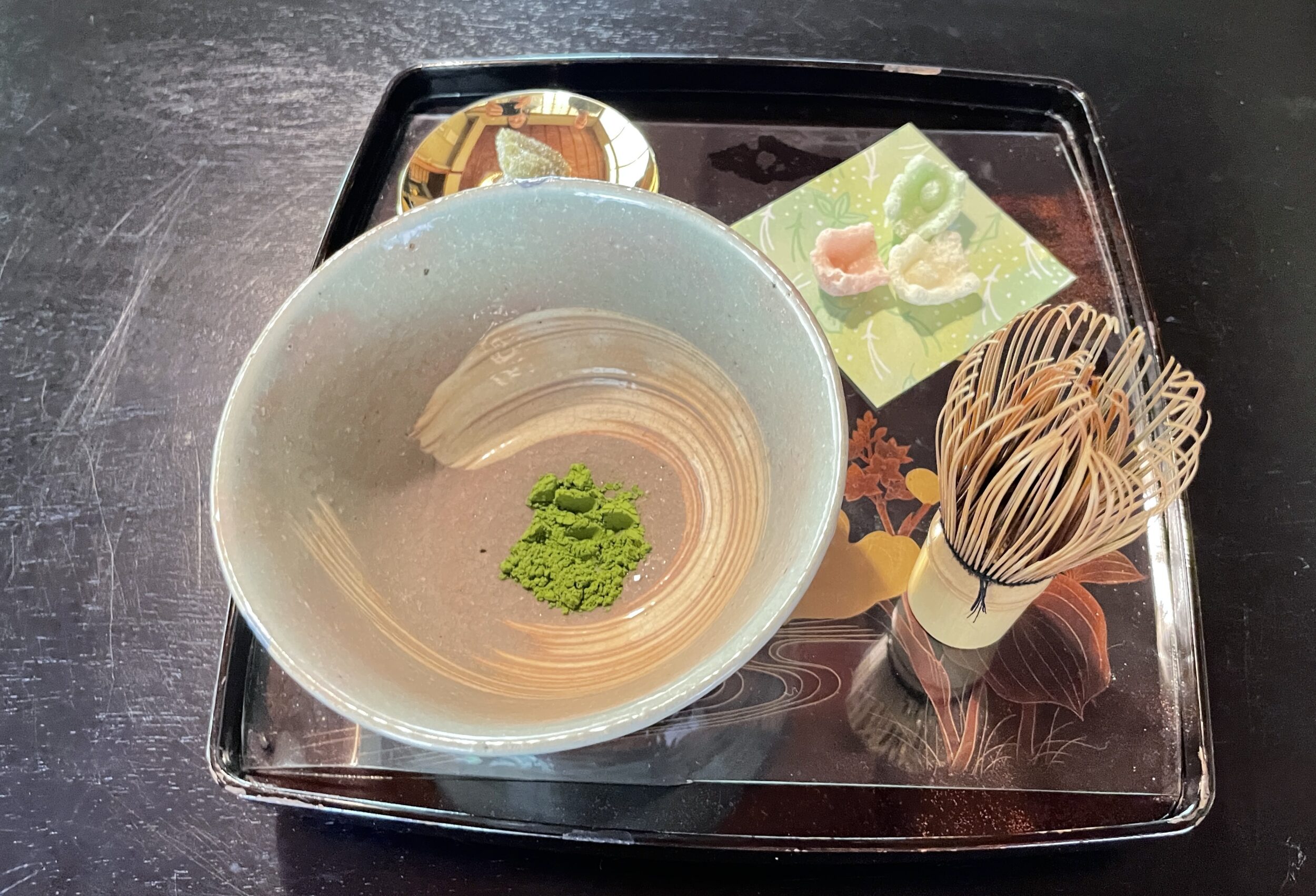
Video of how a traditional chasen is made:
Our tea master then explains that it’s not just about form. The most important thing is to use the tea ceremony to live in the present moment (Ichi-go ichi-e). This moment will never come again, so it’s unique and must be savored. The Japanese tea ceremony beautifully highlights the close connection with nature. Every element of the ceremony must be one with nature: utensils, decoration, process… As a tea master, you must know exactly what the weather is, what day it is: first day of autumn, Children’s Day, etc. You must be in harmony with nature. The choice of bowls is also a message to the guests. It’s not chosen at random, and after drinking, we must admire the bowl chosen for us. Sometimes there are bowls so expensive that you must remove all jewelry to avoid scratching them. And you must look at the underside of the bowl, because the artisan’s signature may be there. I highly recommend reading the book and watching the film before you come, to better appreciate the precision of the gestures.
I was seated as the main guest, so I have a bit more responsibility and need to do more of the talking. But in a real tea ceremony, this role is even more important because you have to ask intelligent questions, especially about the utensils, the wall scroll, etc., as the other guests are not supposed to speak.
Kenroku-en
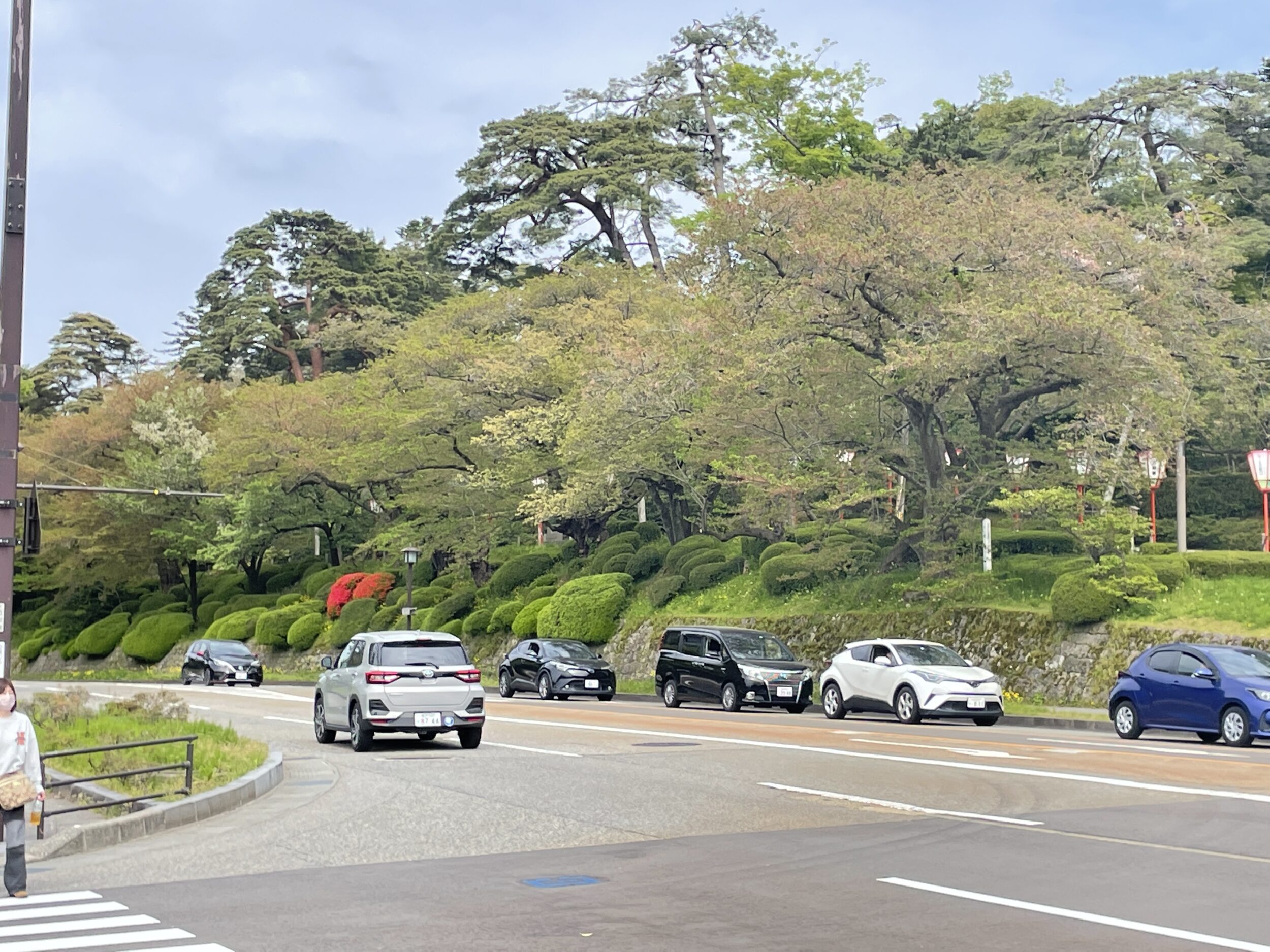
I completely forget about the kimono center and we hurry to visit the famous garden Kenroku-en across the street. I don’t think I fully understood, but if I’m not mistaken, the two gardens used to be one. But now, there’s a road separating them. After several pastries and breakfast, we skip lunch entirely, but know that there are restaurants inside the garden if you ever get hungry.
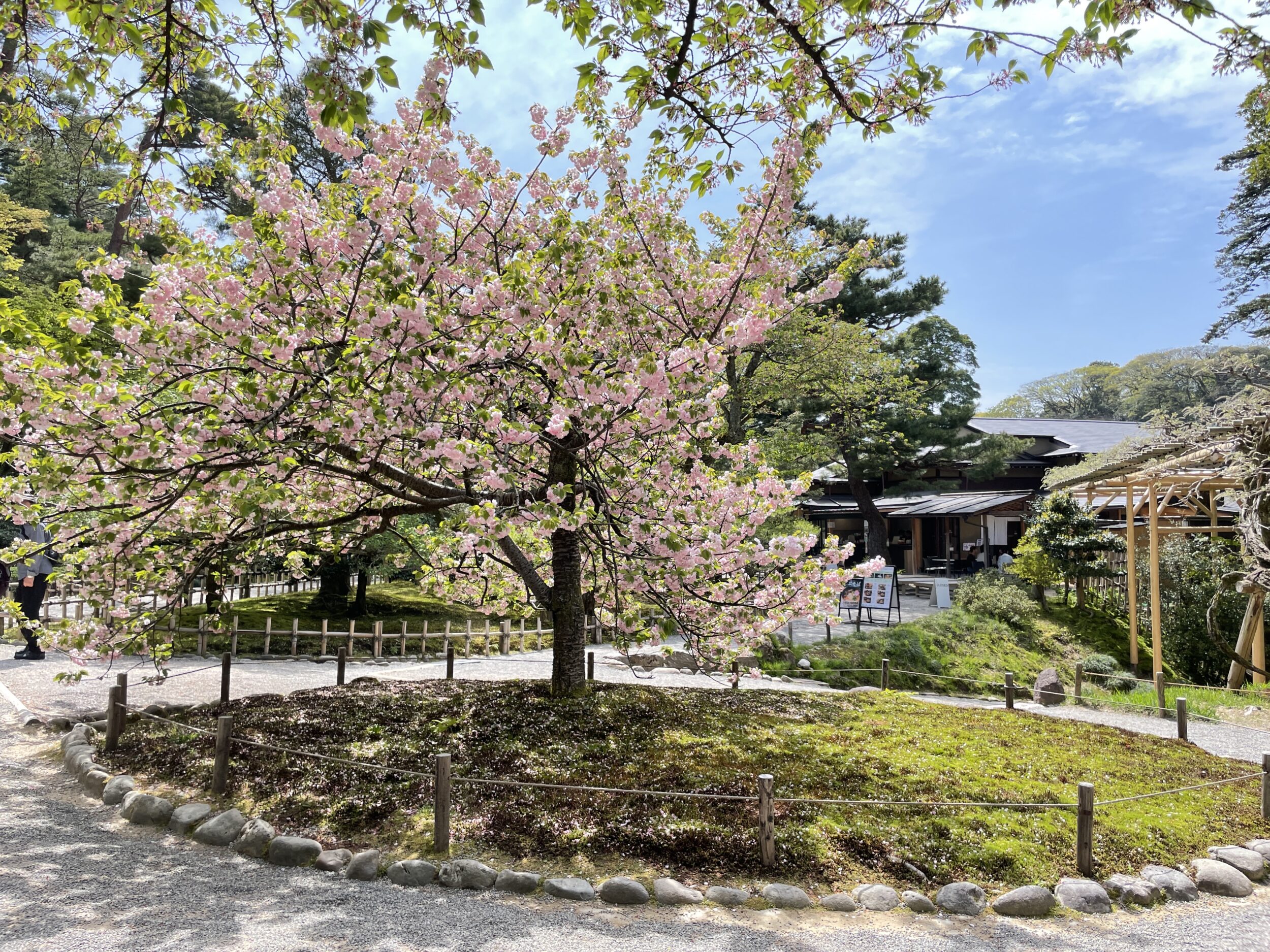
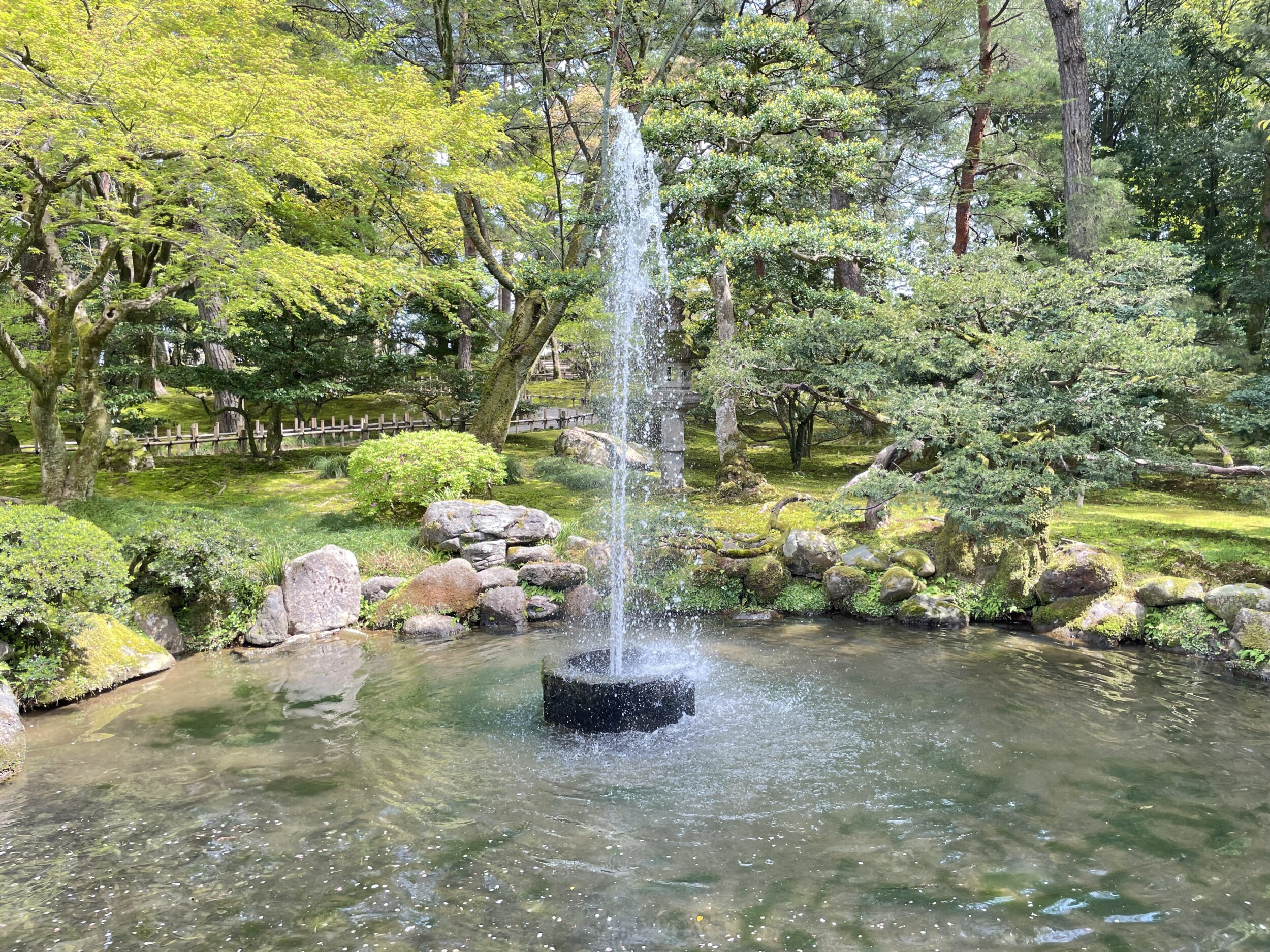
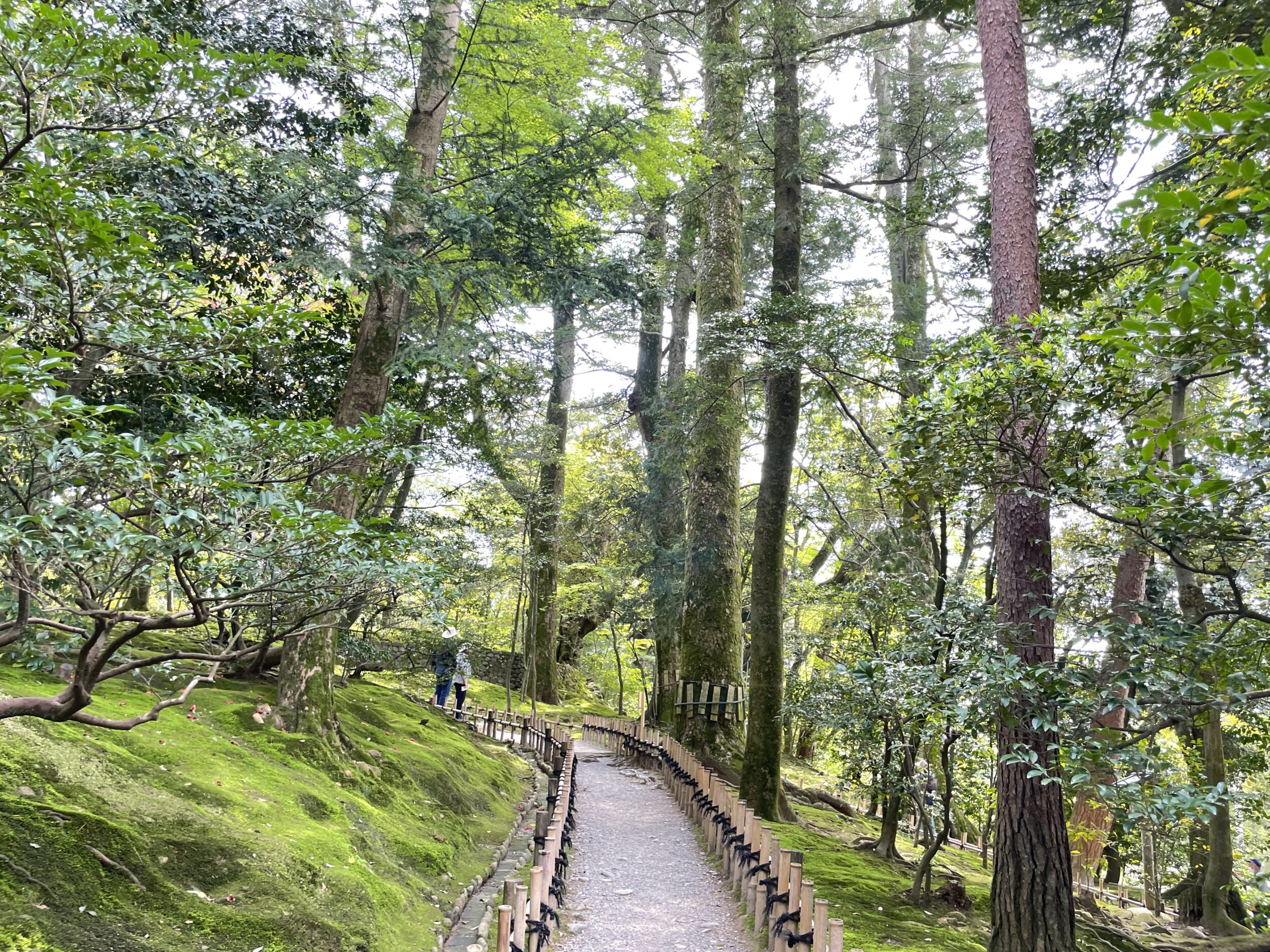
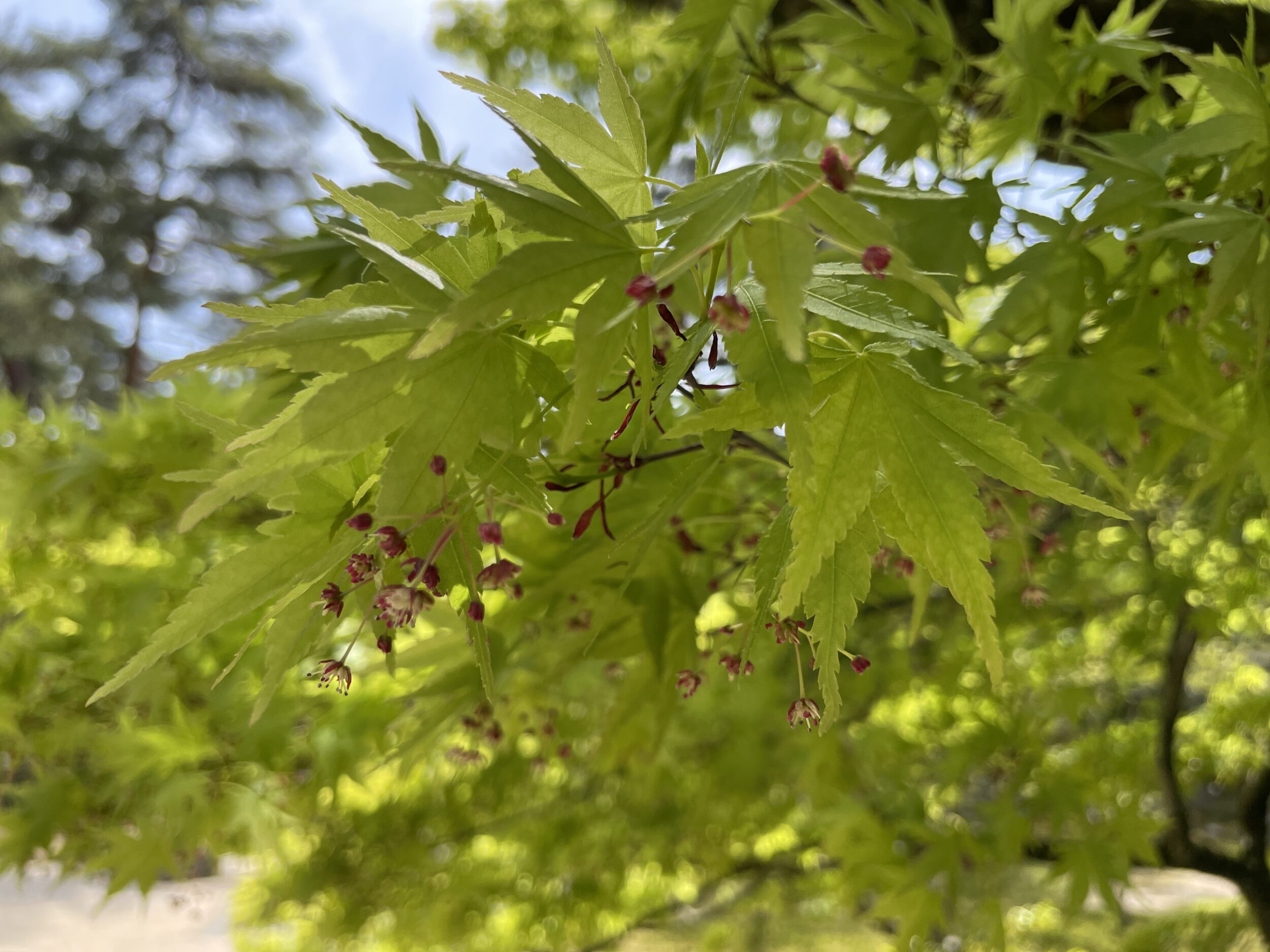
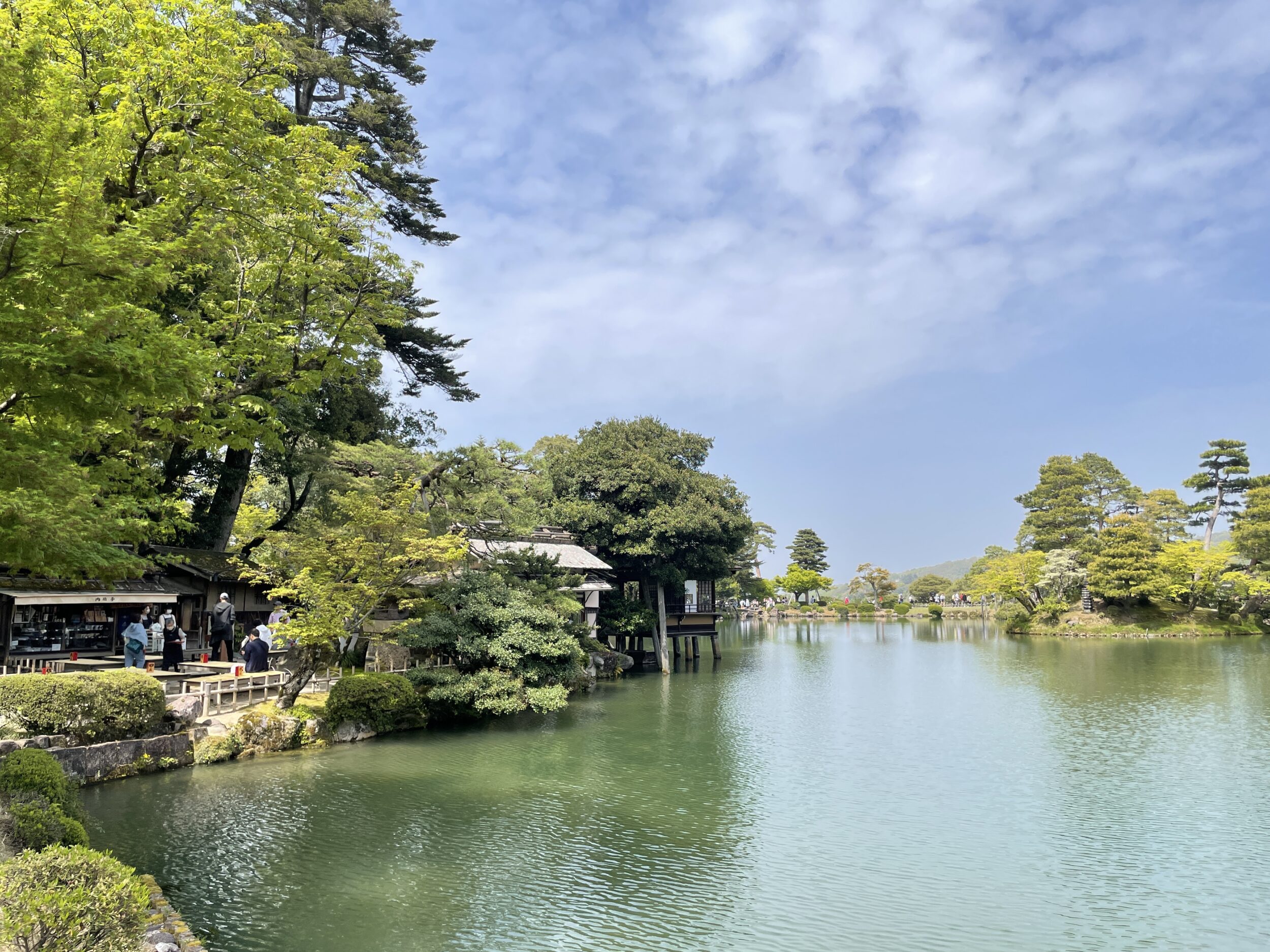
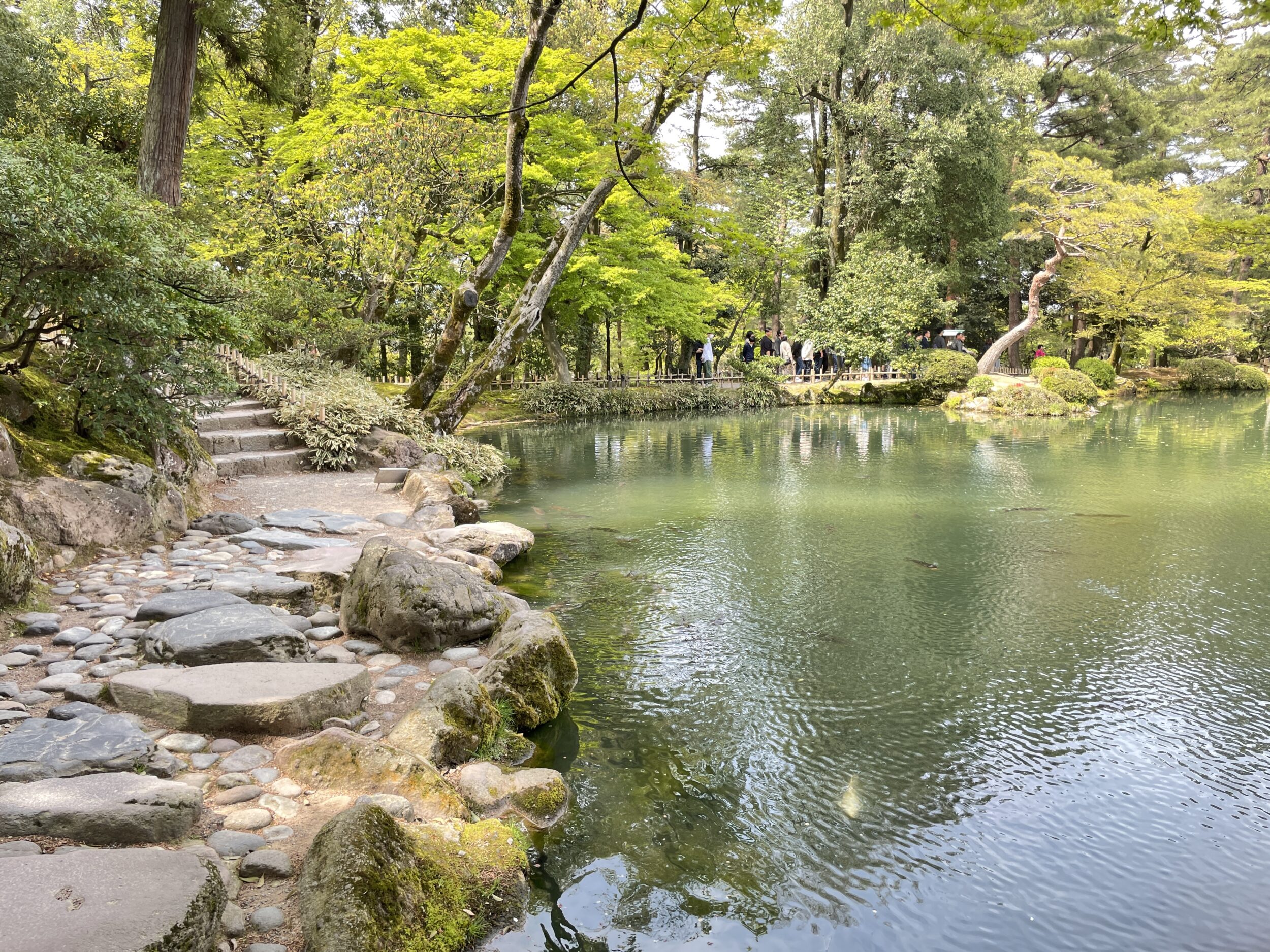
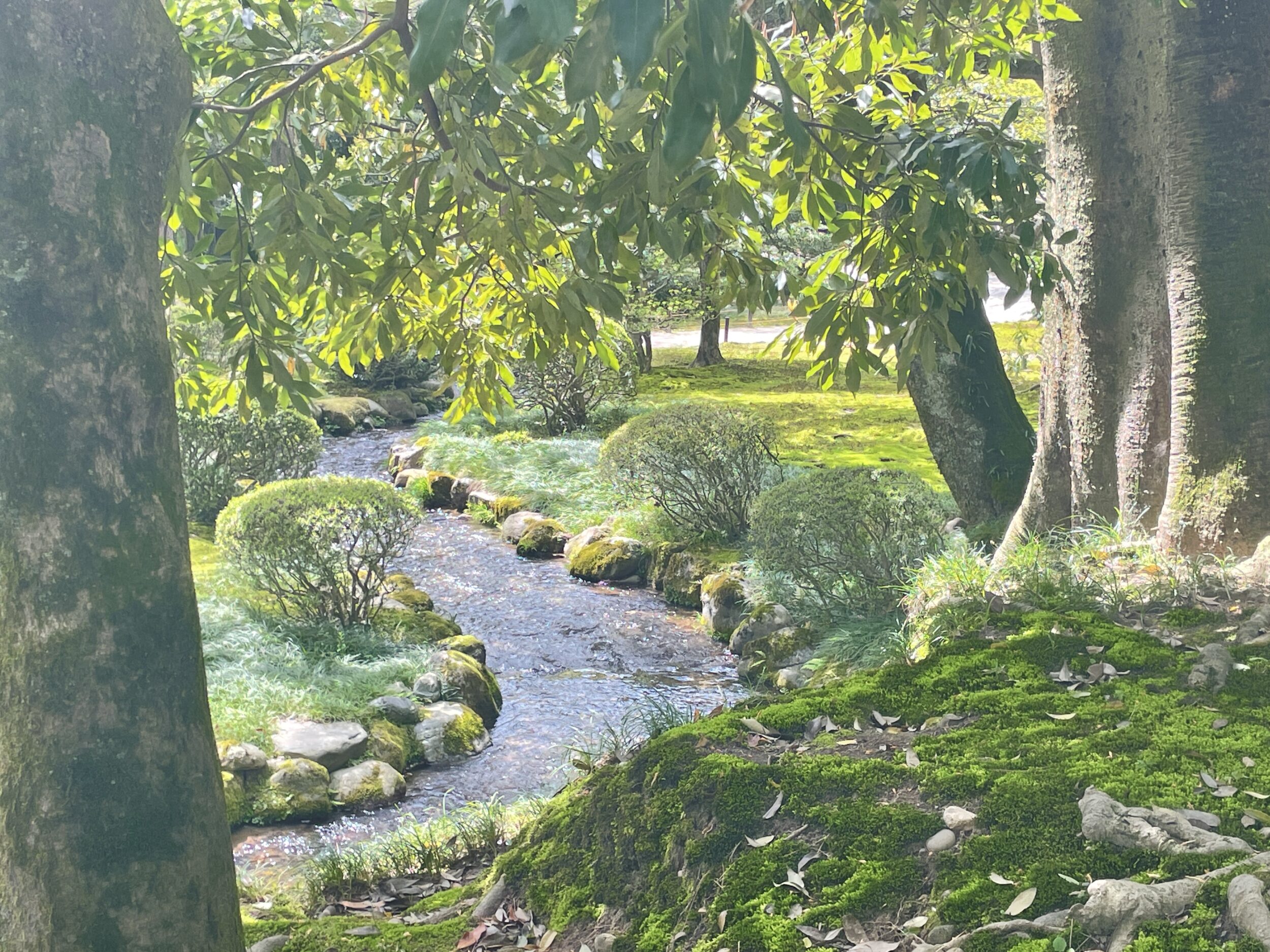
Kenroku-en is one of the most beautiful gardens in the country. It’s huge, and because it’s on a slope, you feel like you’re discovering a different garden as you go up or down a bit. It’s a shame there aren’t many cherry blossoms left in Kanazawa; this garden must have been a particularly popular spot during hanami.
Kanazawa Castle
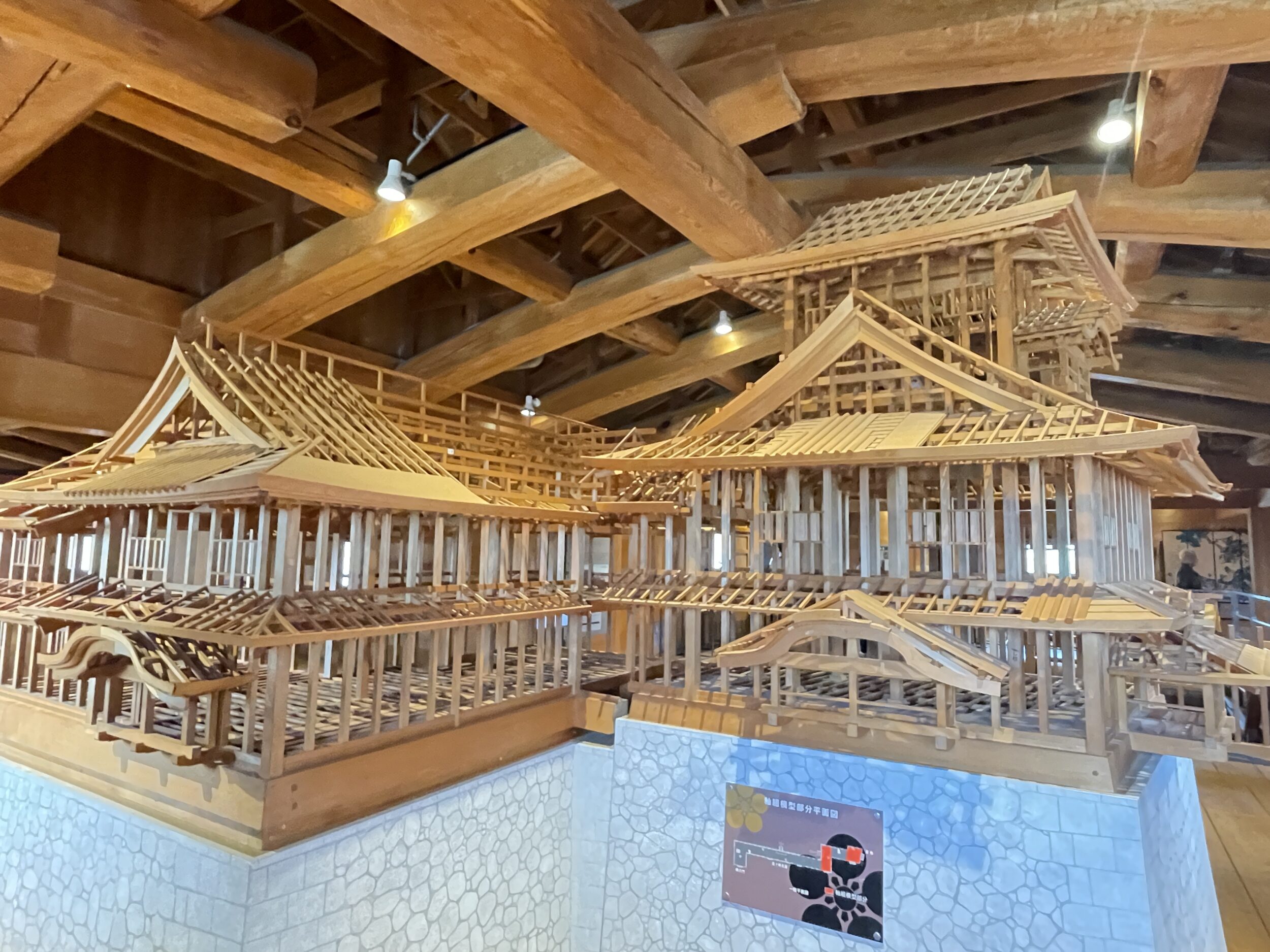
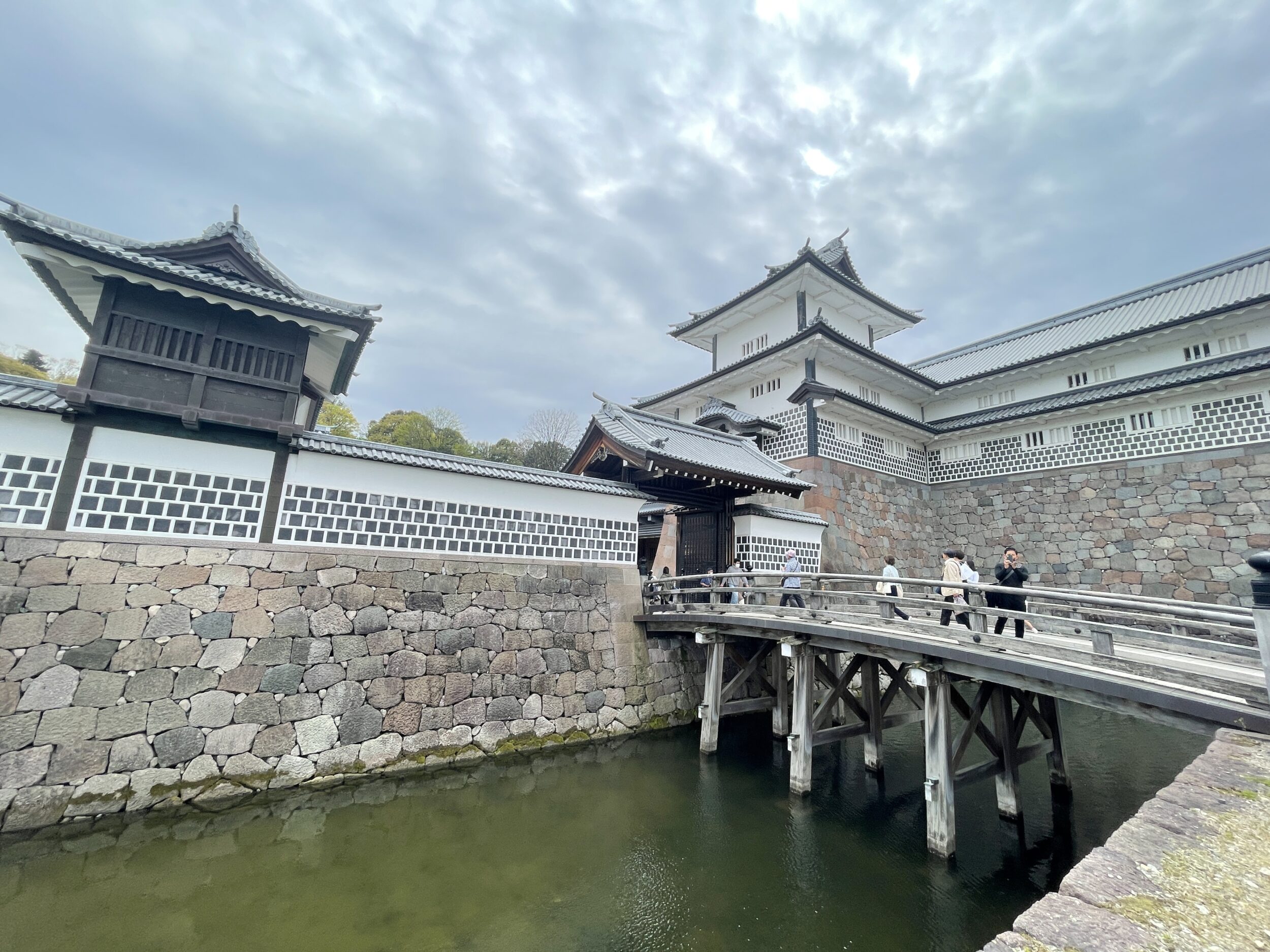
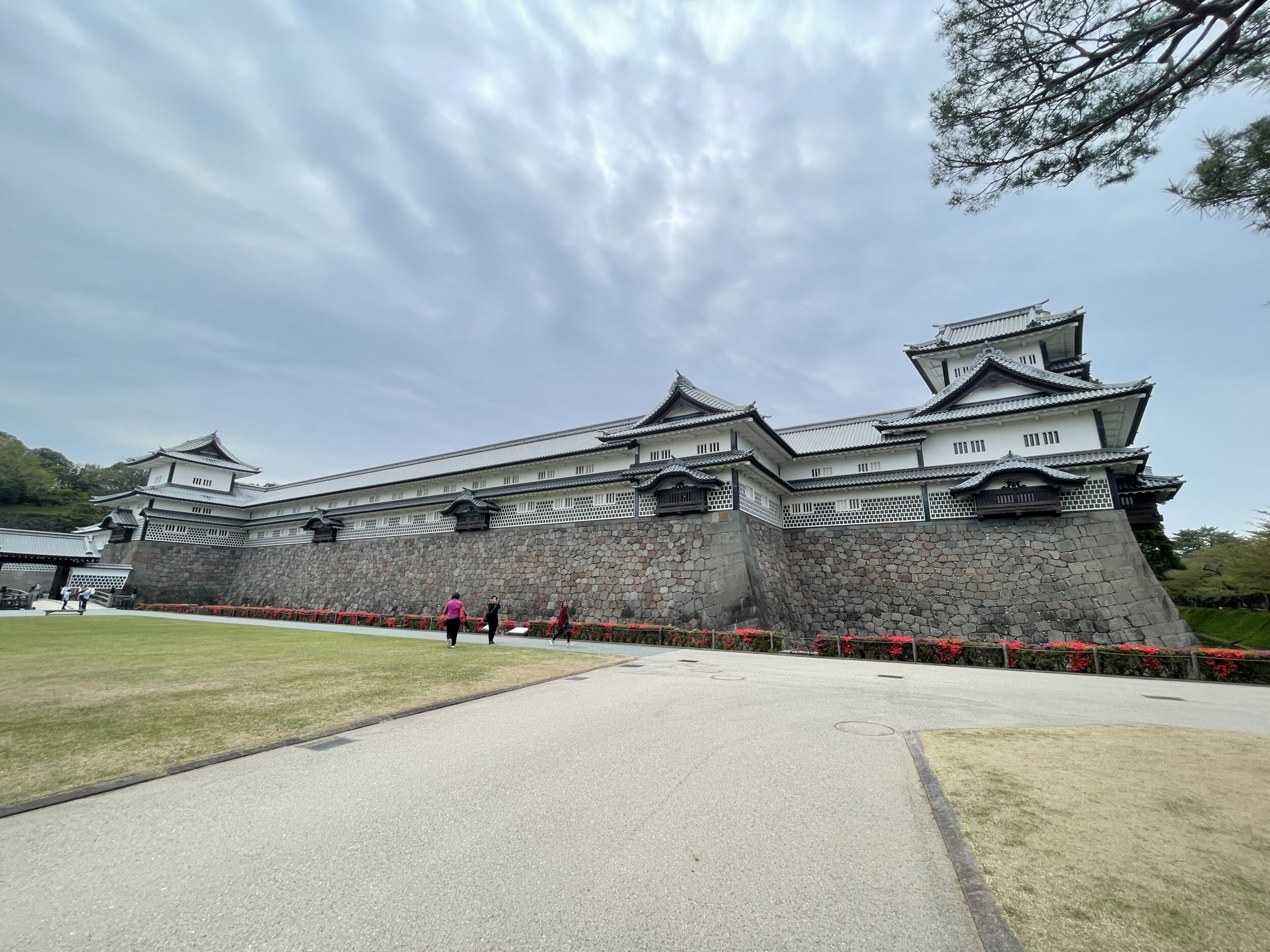
We have to walk a long way to Kanazawa Castle. We go up one side and down the other, which allows us to see it from almost every angle. Nicknamed the “castle of a thousand tatami mats” (one tatami = 1.6m²), it has been burned down twice, and what we see here is a modern effort to rebuild the old castle. The interior is almost empty, all wood. But it’s very beautiful and large. There are discounts if you buy tickets for both the castle and Kenroku-en together; we didn’t know that.
Geiko district
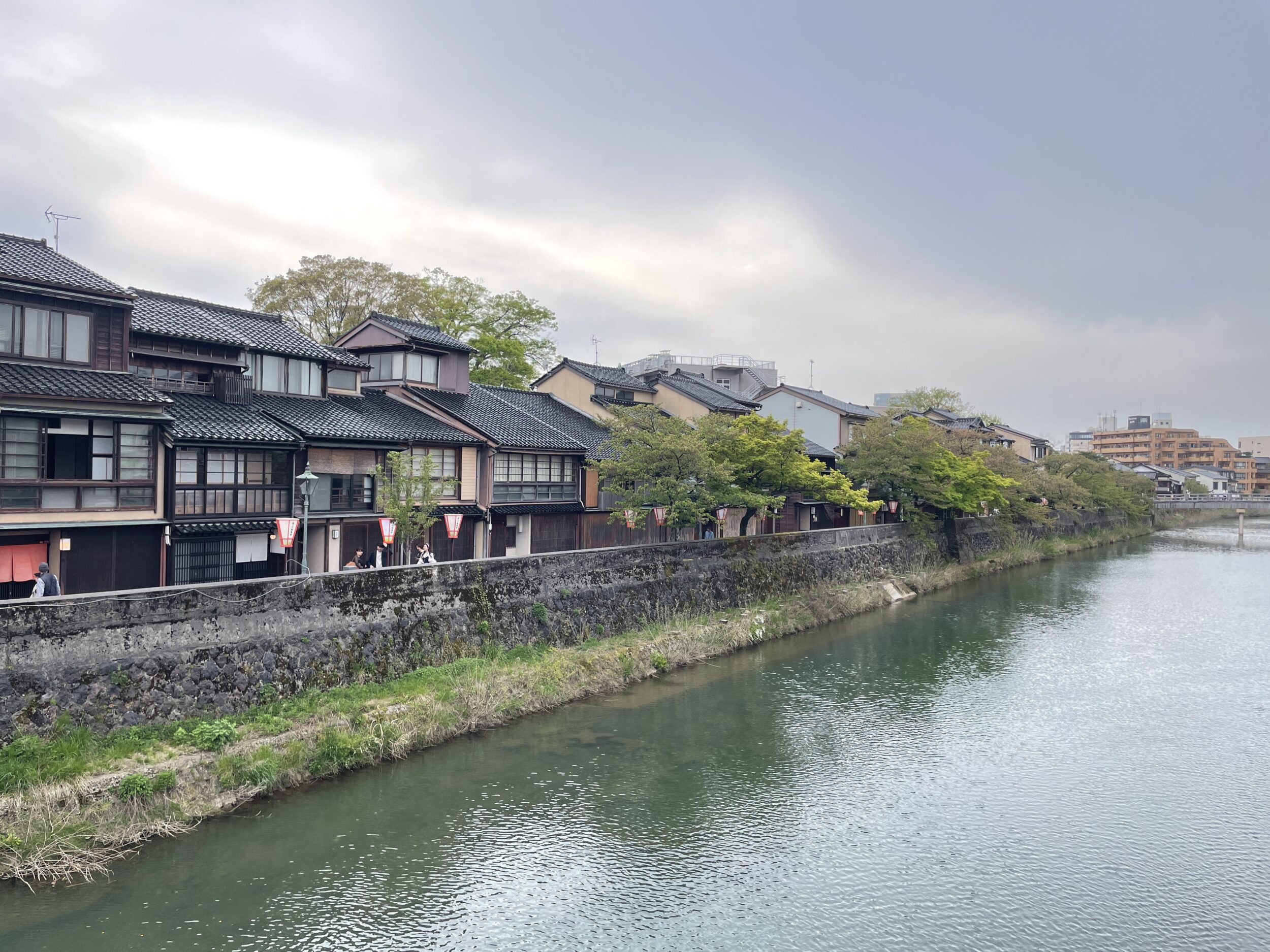
It’s time to get ready for the last surprise appointment of the day. We walk to the geisha district. My parents have a slight idea of the surprise because they know I’m capable of the most extravagant ideas. This district is very touristy but has plenty of cafes and nice shops. You don’t get bored at all despite its small size. It’s crowded, but I find it more acceptable than Gion district in Kyoto. No trace of geisha except for a “geisha house” you can pay to visit. I passed by Soyu, where you can book a tea ceremony at the last minute, but it’s incomparable to the one we had this morning: the place isn’t as classy.
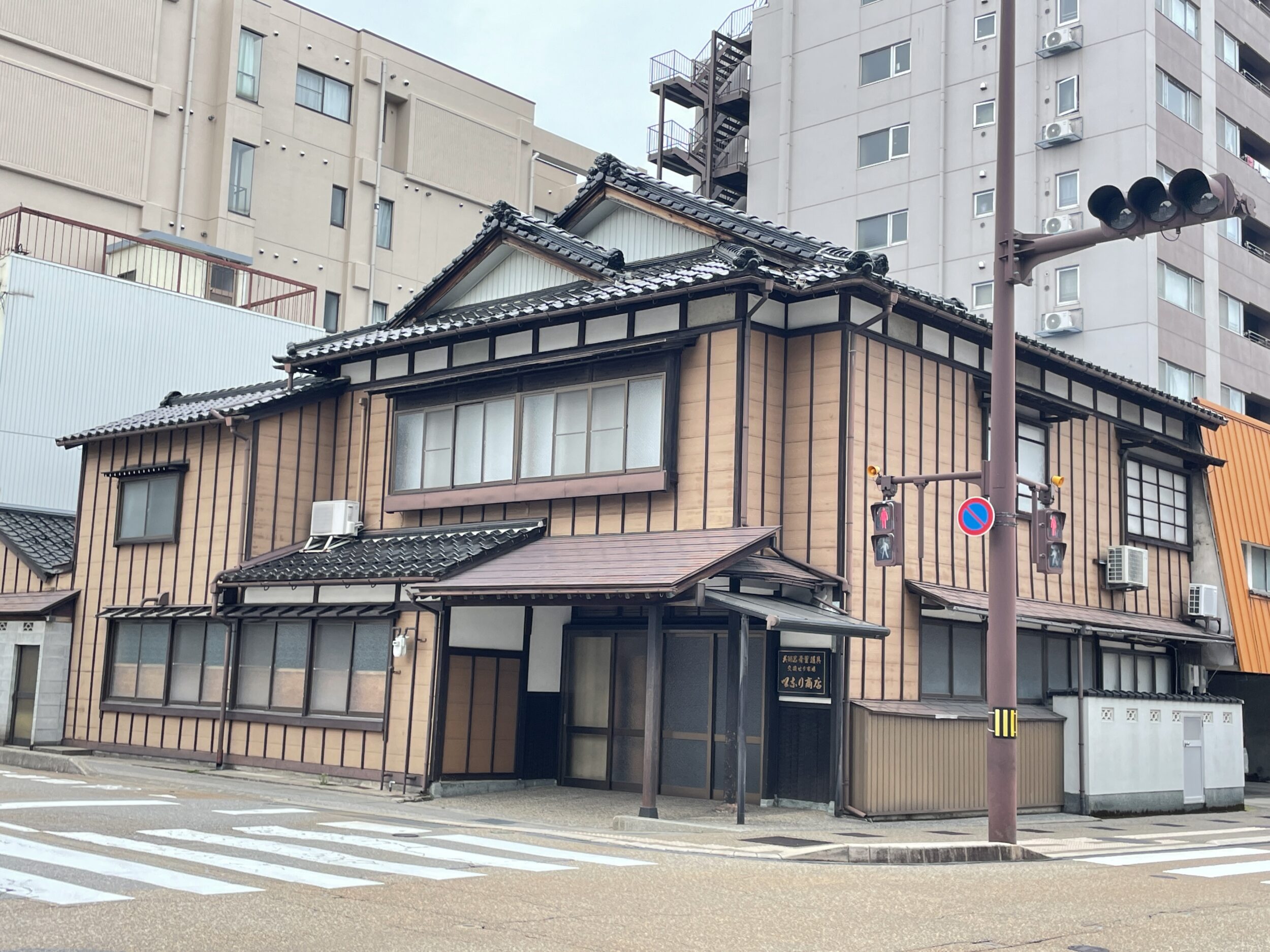
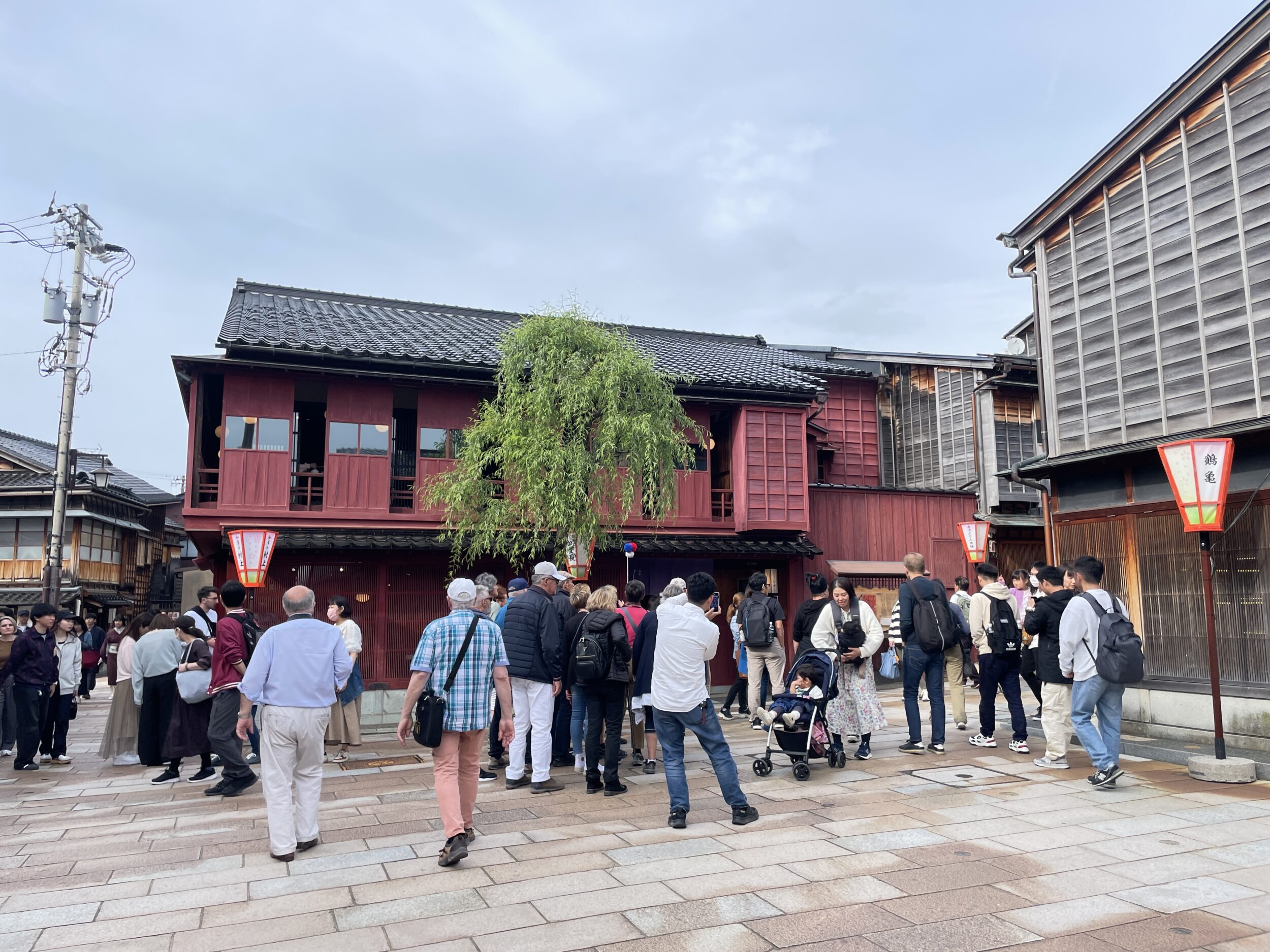
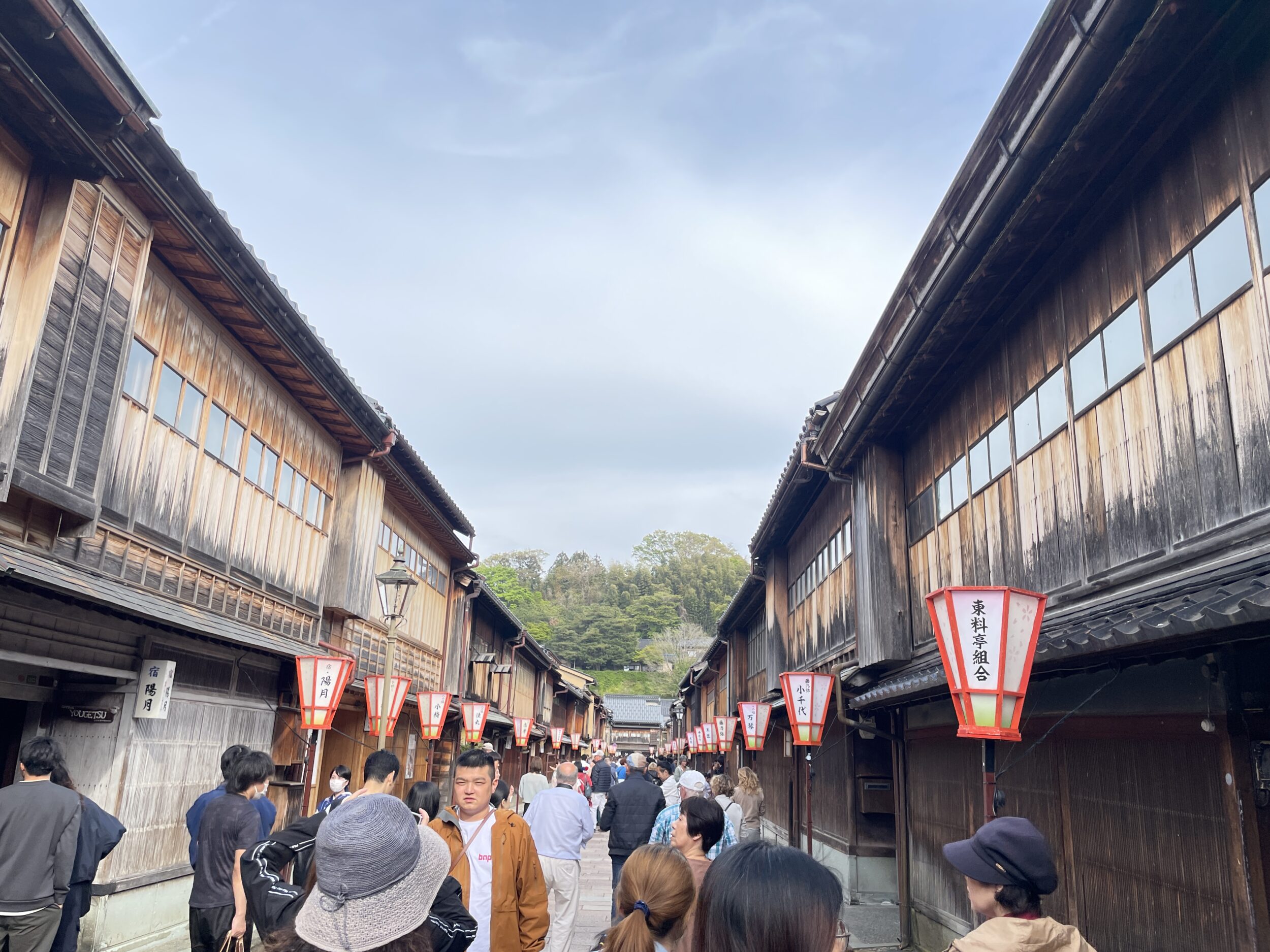
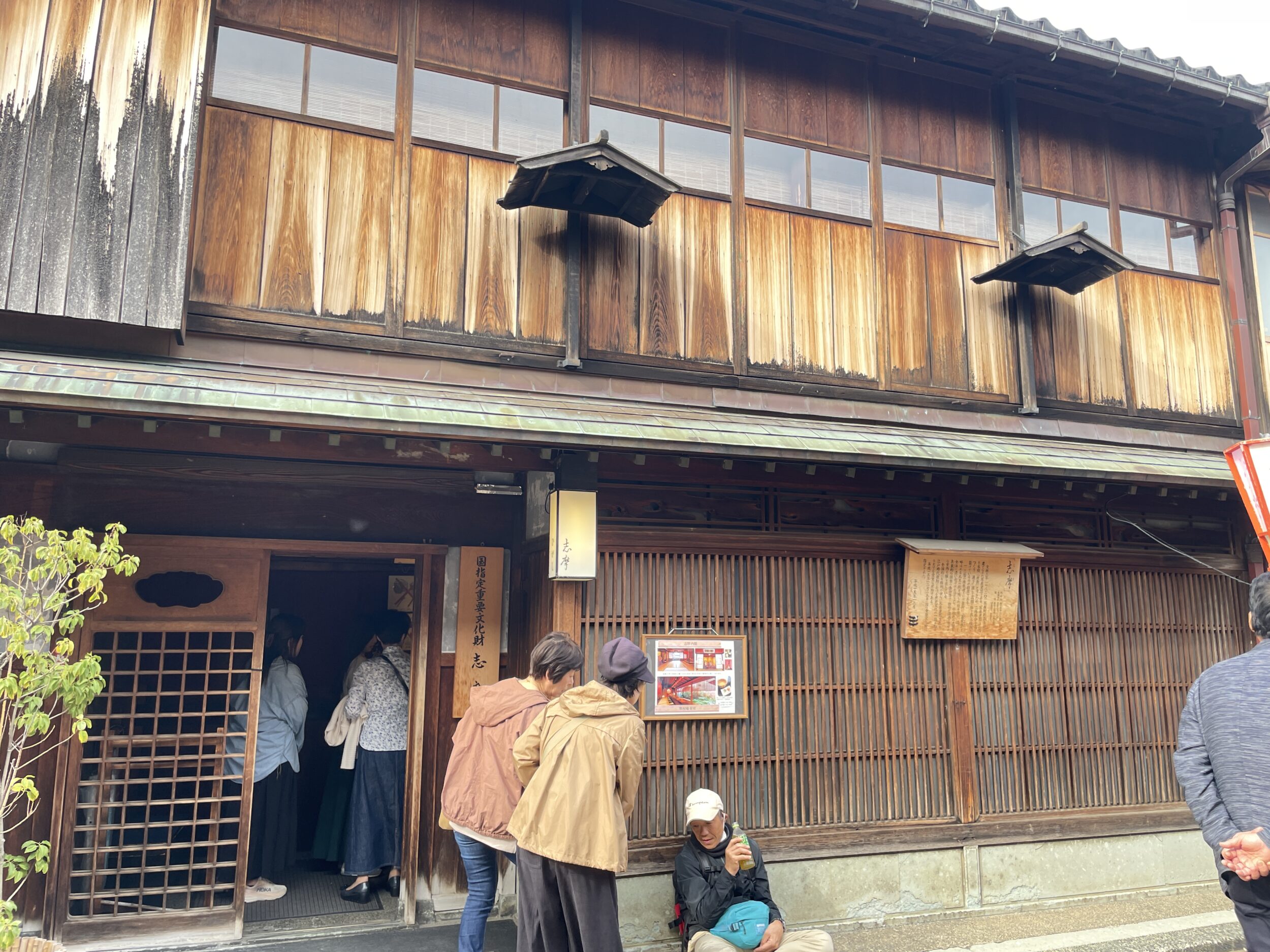
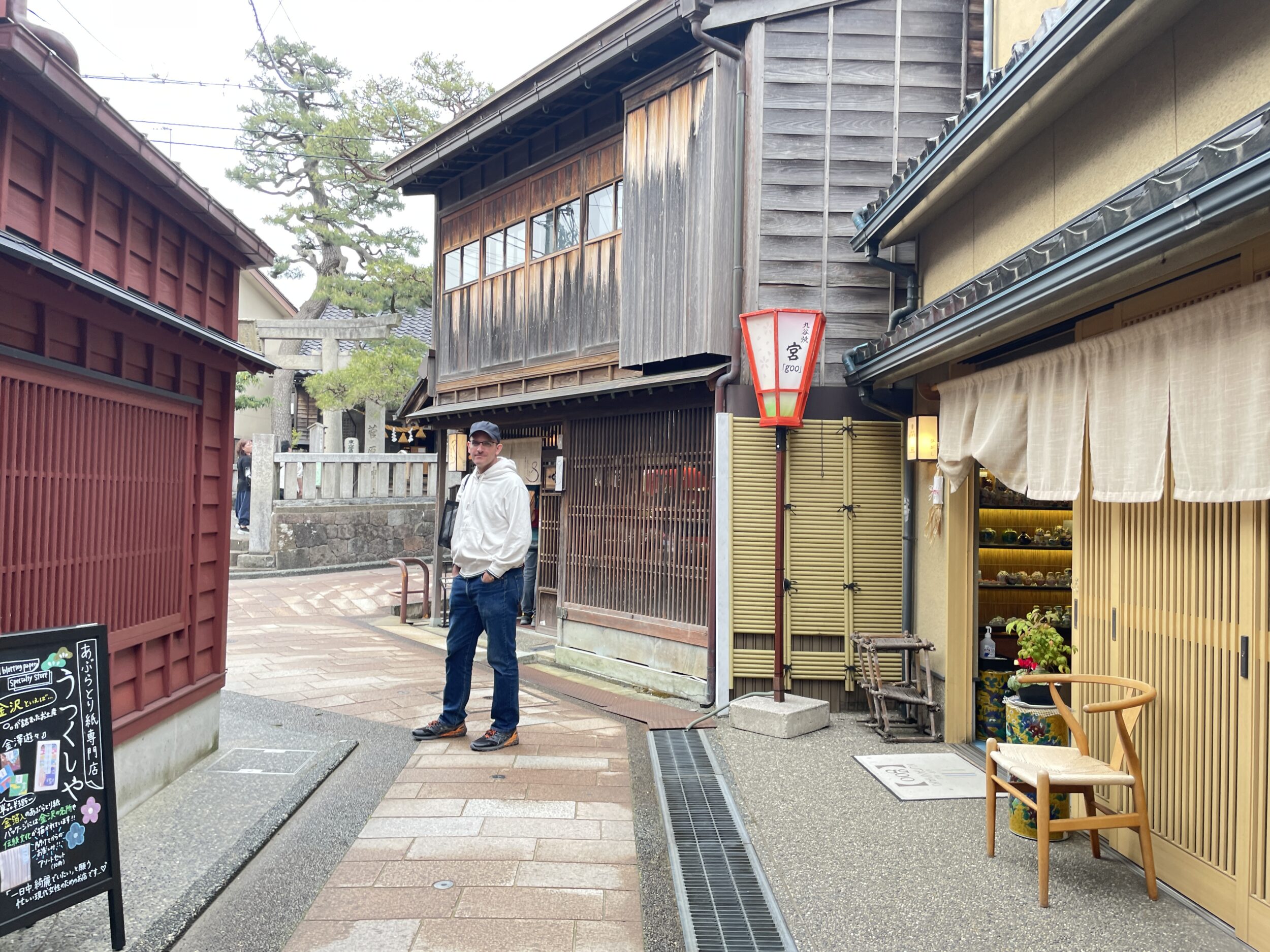
Now I have to reveal the surprise to my parents because we arrive at the venue at 4 PM and the event doesn’t start until 5 PM. Since it’s “first come, first served” for seating, I want to be early to get a good spot. I announce to my parents that we’re going to a small event with geikos. There will be a maximum of 32 people. While waiting, we explore the venue, which isn’t super interesting.
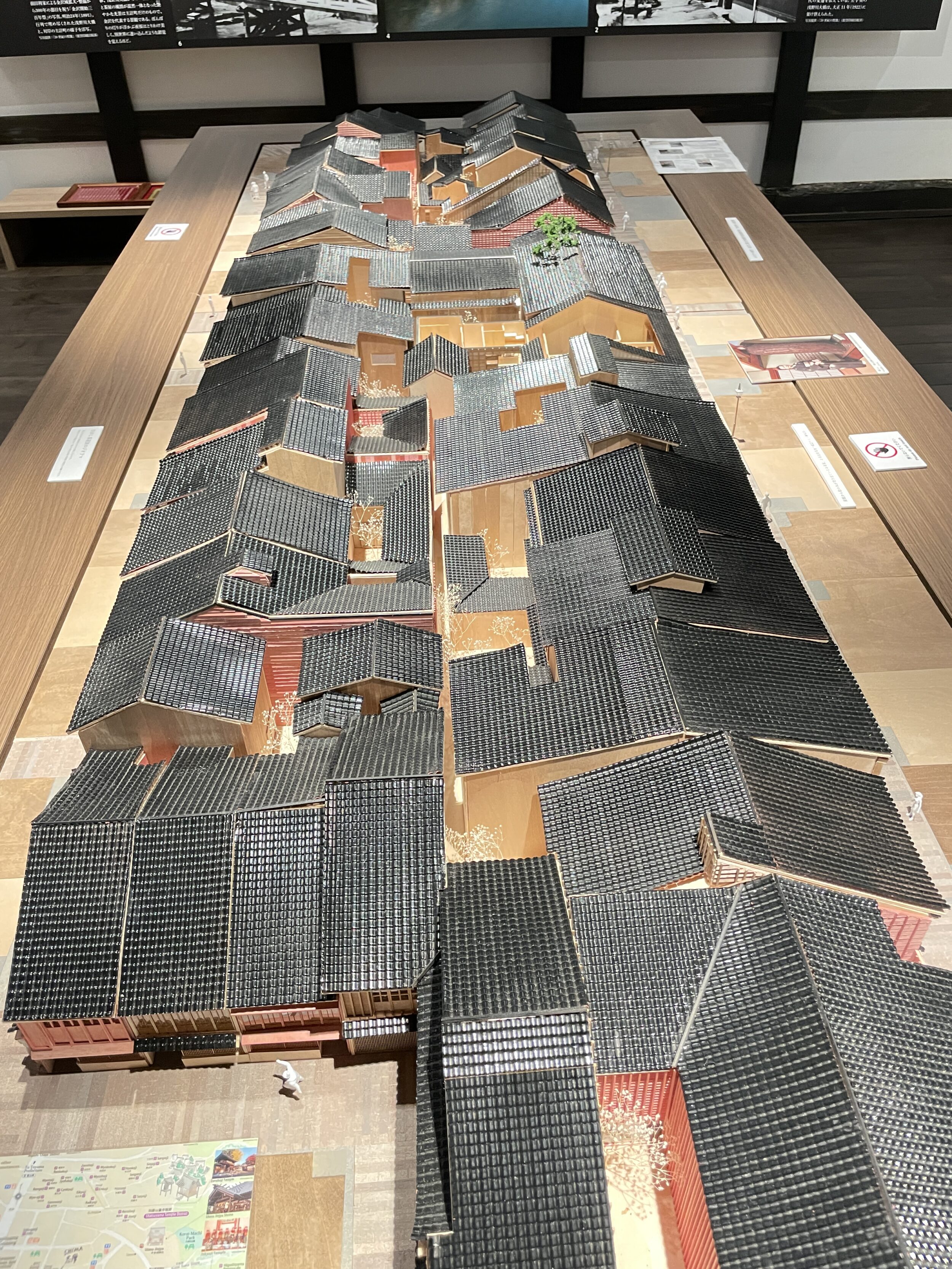
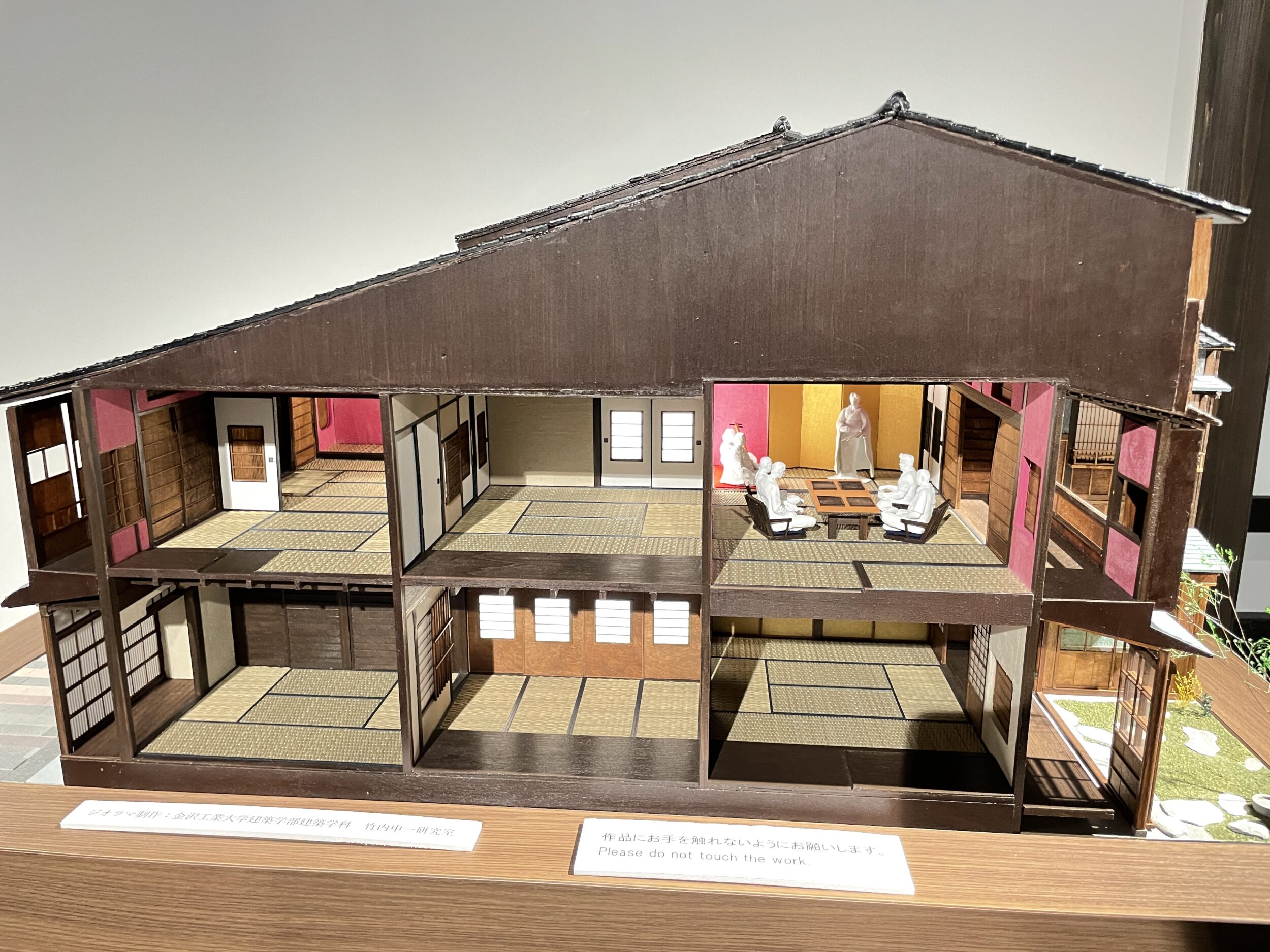
Unfortunately, the organization isn’t up to Japanese standards. For example, we’re the first to arrive but can’t access the room, so the first to enter the room are those closest to the stairs. It’s unfair, but luckily we saw the scam coming from a mile away and still managed to get front row seats for 3 out of 4 people (JB just behind me). For those who really want to be up close, there’s the option of cushions (instead of chairs), but that means sitting Japanese-style for an hour (an option some desperate ones will choose).
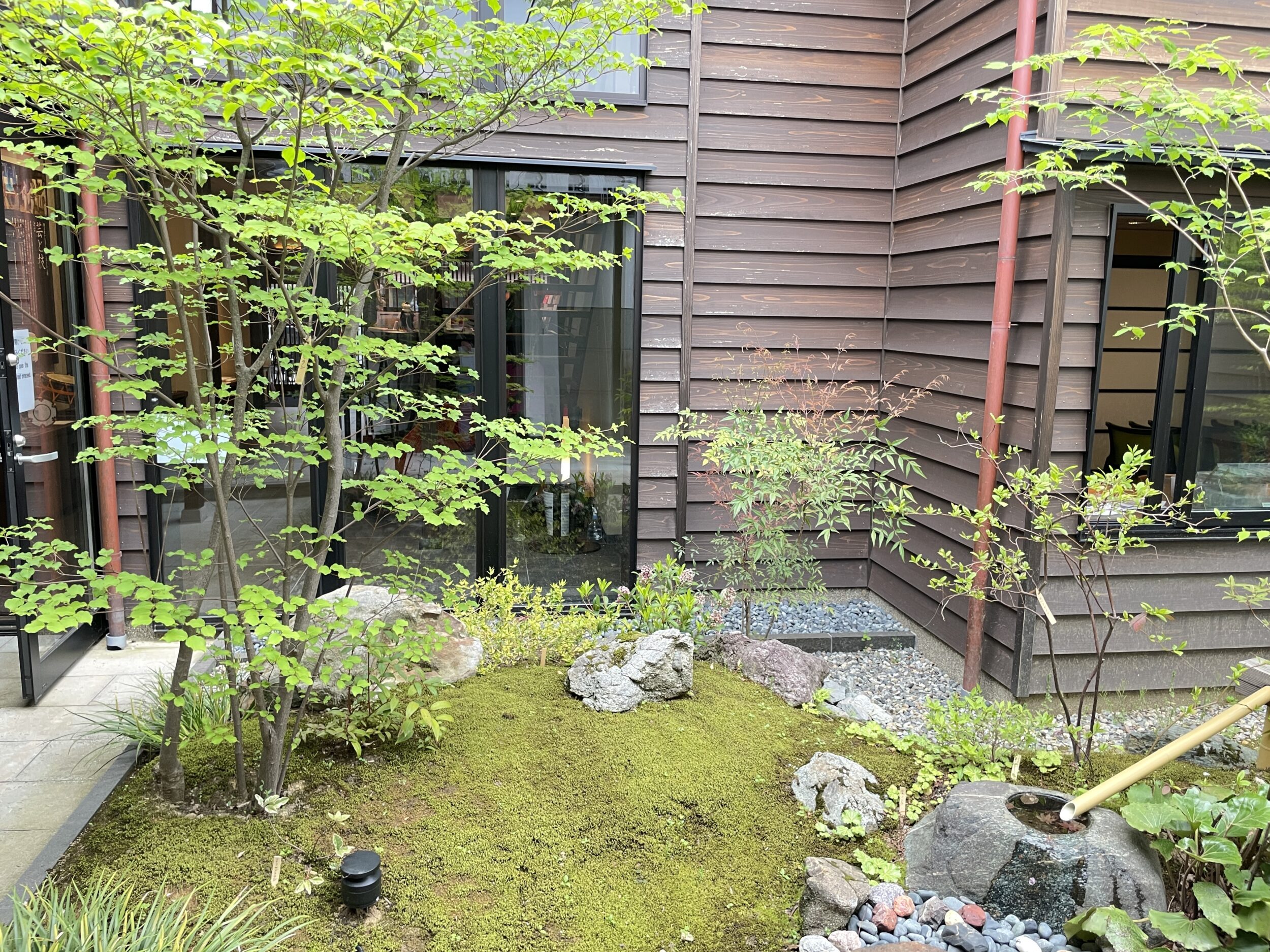
The event Meet the geisha happens only twice a year: two series of 10 shows each, and we’re lucky to attend the last date of the season!!! Considering we’re only there for 2 days. I’m so, so happy. You have to go to the visit kanazawa website to know if there are events like this during your trip. Honestly, since it’s very expensive, I would never have thought to book it for us if my parents weren’t with us. By pleasing them, we also treat ourselves to this unique event.
The evening starts with 10 minutes of dance/singing and percussion. Way too short!! Photography is not allowed.
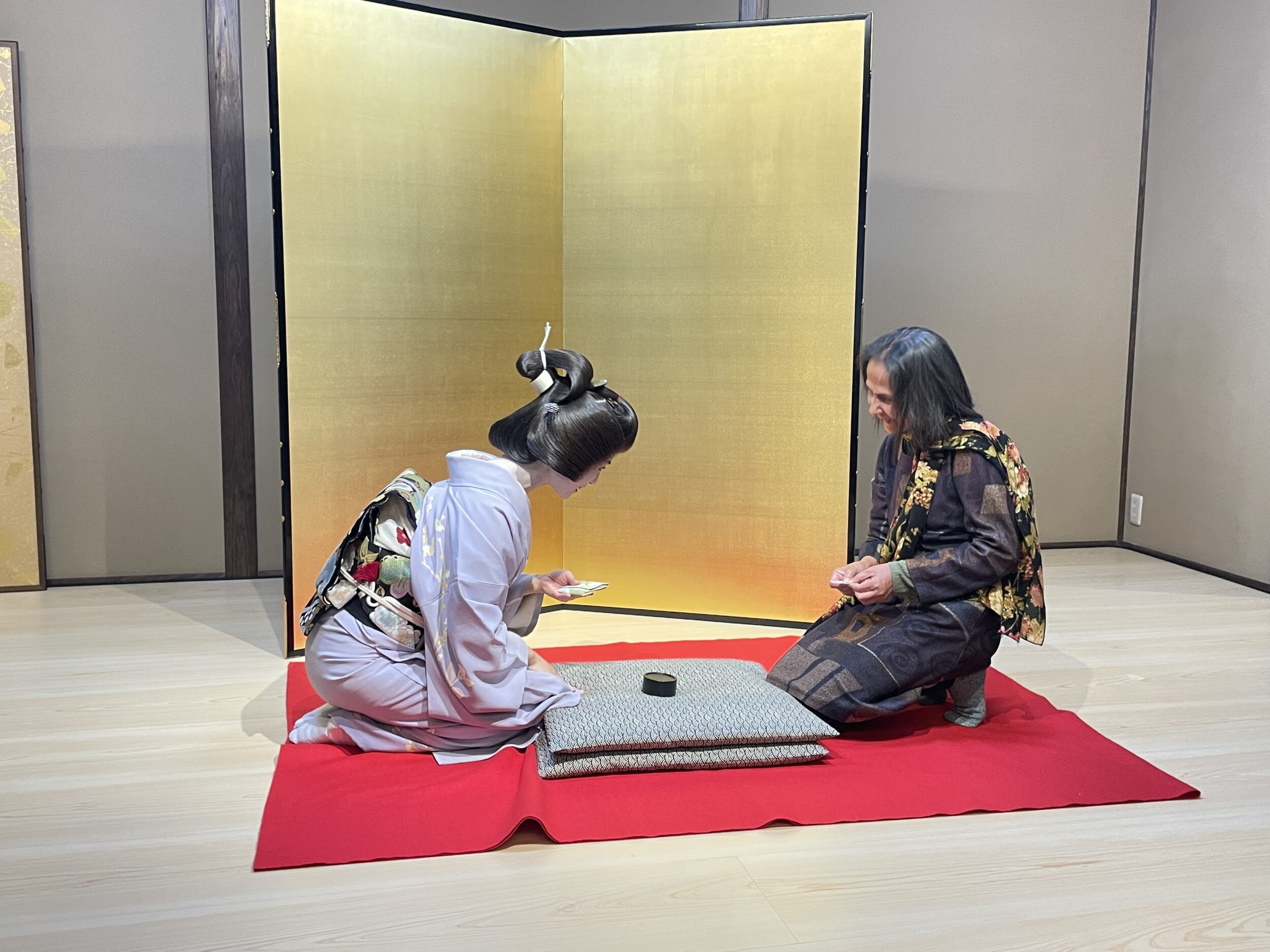
But then follow games where we can play against the geisha. Whether we win or lose, we receive a small piece of paper with the geisha’s name on it (like a lucky charm). I say “geisha” but in Kanazawa, you have to say “geiko”. Unlike geishas from other regions who have a special skill (dance/singing/music), here geikos must master all arts, so they’re very busy.
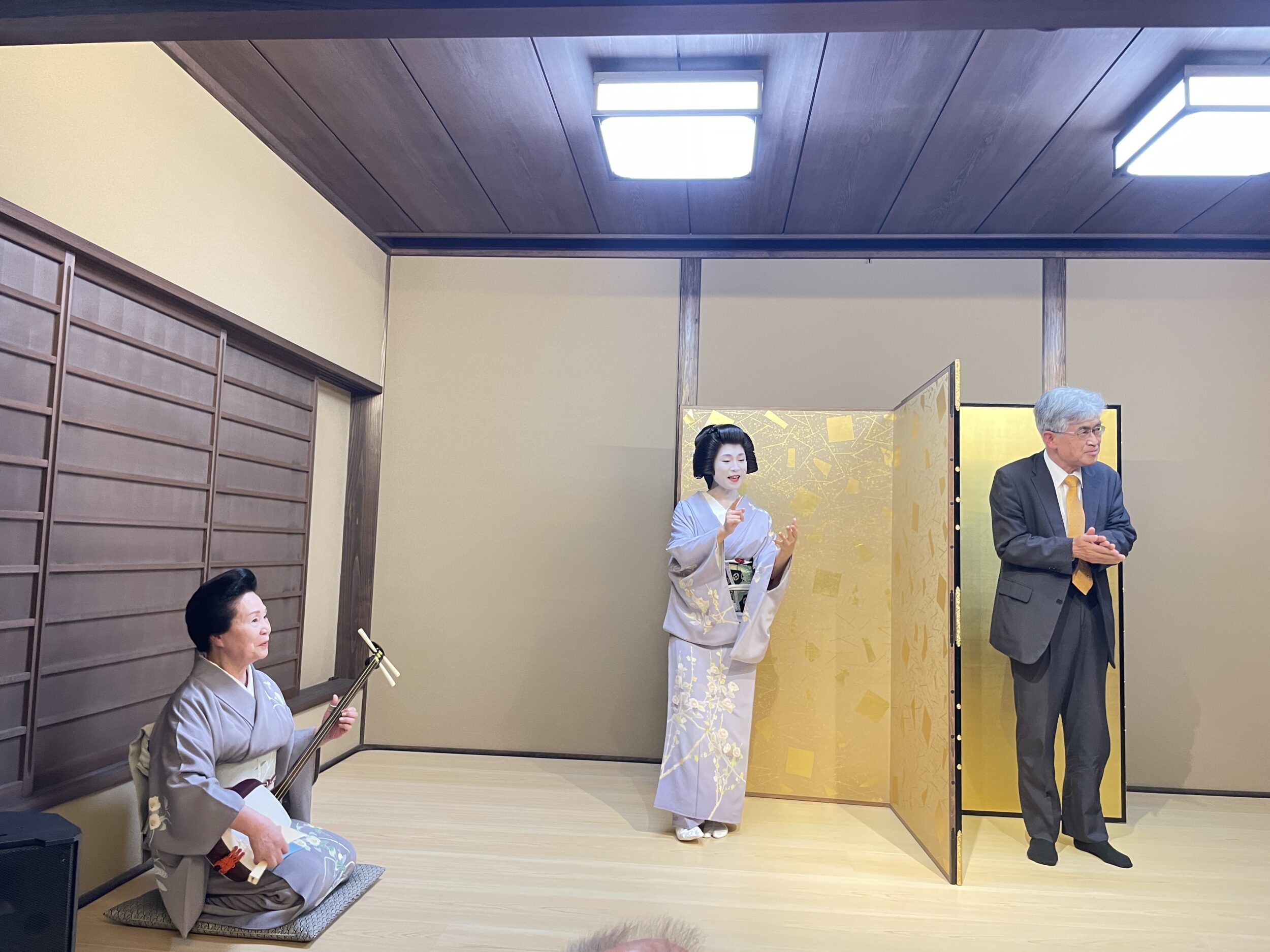
The tourists are quite reserved and don’t dare to play much, especially the first game which seems difficult. The second (with the black box) is easier so my mom and I got to play with the geiko, but we both lost 😀
Then follows a Q&A session with the help of an interpreter. We got to ask pretty naive questions, e.g., can they get married (yes), is being a geisha a full-time job (yes), how many kimonos do they have (a lot). The kimonos they’re wearing today are winter kimonos.
At the end, each group is allowed to take a photo with our two geikos. And everyone leaves the room with smiles from ear to ear.
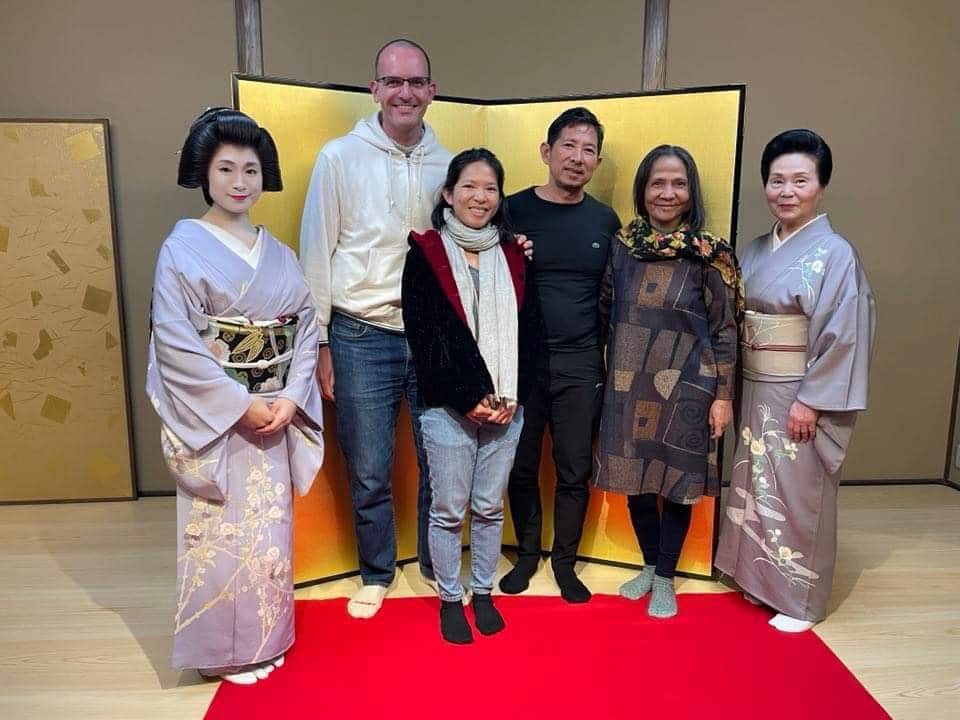
I admit that until now, I didn’t understand the appeal of these women, overly made-up (because in the past, with candlelight, they had to wear that much makeup to make their faces visible), artistically talented, but why do they also have to serve sake? After this evening, I realize how fun it can be to be with a geiko. You can only have a good time: good music, beautiful dances, pleasant conversation, fun games… not to mention they’re very beautiful – by old standards – and impeccable.
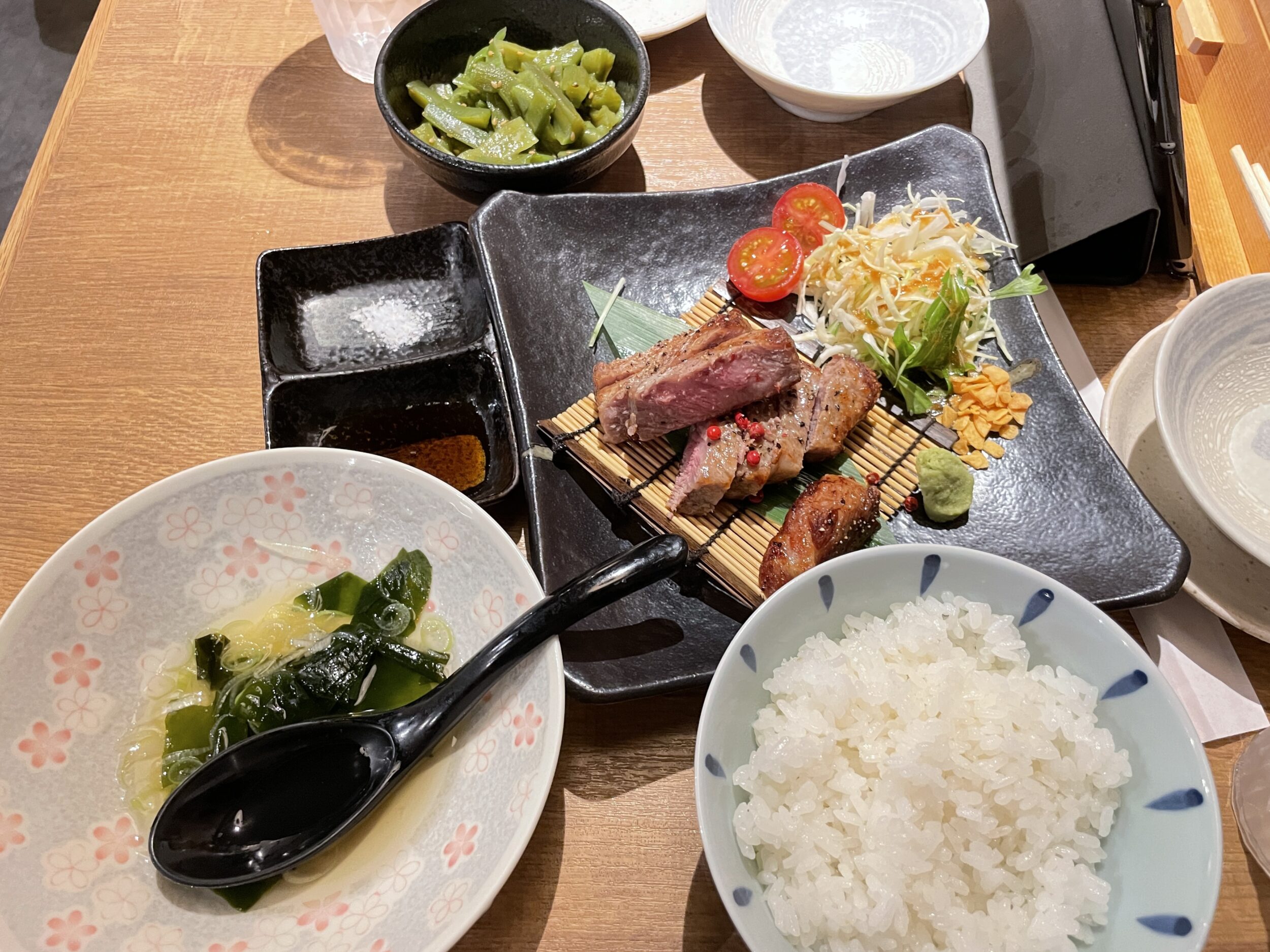
We then have dinner in the basement of the mall right across from the hotel. We go for noto beef, another AOC beef from the region, but it’s less refined than the Hida beef we tasted a few days ago.
A quick onsen session to relax and then sleep. To read the rest of our journey, is right here
Part 2: Practical Tips
The detailed itinerary of our road trip is available here
Well, for this day, we turned a blind eye to the prices. But memorable family experiences are priceless, we’ll keep this day in our hearts forever, so if we had to do it again, we would have made the same choices.
Be careful, bring enough cash with you as some places don’t accept card payments. And to pay for bus + parking
- Samurai house: 550yen/person, cash only
- Bus: 210yen/ride/person, cash only
- Tea ceremony: 4000yen/person + 8000yen if you want to privatize the venue. Cash only. Including free access to the garden. Book at least 3 days in advance by email: [email protected]. Website: gyokusen-en.net
- Kenroku-en: 320yen/person
- Kanazawa Castle: 310yen/person
- Meet the geisha: 11000yen/person, book online, including free access to the Museum of Geisha Culture
- Parking: between 300yen and 800yen. Parking near our hotel: 1200yen for 24h
- Hotel: Torifito Kanazawa 13000yen/person (Booking link), with onsen. Breakfast extra: 2200yen/person
- Dinner with noto beef: 5000yen/person
- Ramen dinner: 2000yen/person

