

My Current Favorites [September 2021] Biographies & investigations: Elon Musk, Steve Jobs, Elizabeth Holmes
After several years of reading mostly spiritual books, I decided to take a break and get more interested in true stories. Whether it’s history books, autobiographies, or real events. I chose to start with books about Silicon Valley.
Elon Musk
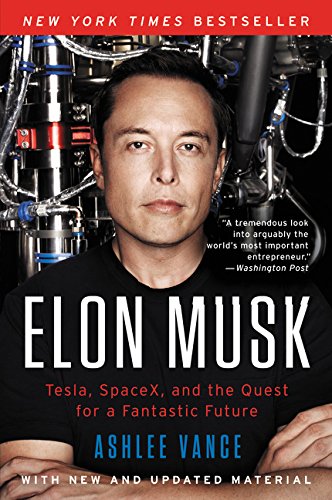
The reading was so enjoyable that I finished it in 24 hours. I got very little sleep to finish this book, but there are so many twists and turns, so many “how is he going to get out of this one?” moments, to see how Elon Musk, a South African from an adventurous family, ends up becoming the man who revolutionized the automotive, space, and energy industries all at once.
Elon Musk probably has Asperger’s syndrome. He doesn’t view things the same way we do. When he reads something, everything he reads is like printed on his brain, and he can recreate that image as clearly as if it had been projected by 3D technology. He also has an extraordinary ability to learn things very quickly by asking engineers very pointed questions. His way of thinking is clearly very different from most of us, which makes him both attractive and a bit strange. And definitely not empathetic.
His first successes came from selling two companies where he didn’t make a remarkable contribution, but it’s with that money that he was able to invest in Tesla and create SpaceX.
This book tells the story of his family and follows Elon Musk’s journey from birth to 2015. It’s full of twists and turns, of unexpected reversals.
Still, you can take away a few lessons:
- when you believe something wholeheartedly, even if it’s far-fetched, but you really believe in it – people will be able to do anything to get you there. Elon Musk’s dream is to colonize Mars; it seems utopian, but he talks about it with so much passion, so much vision, that people can’t help but believe in it and help him achieve that goal.
- people need a clear vision (and if possible a noble one: saving humanity if something happens to our planet) to move forward and give their best. Very few leaders manage to communicate that clearly to their company. Especially in France. When I worked for international companies, we all knew where we were going, what the goal was for the quarter, the year, in 5 years. We regularly had meetings where the big boss would talk to you and motivate you to the max, showing you where you stood relative to the goal. Each of us had to know what role we played on that path toward the company’s grand vision.
- people are capable of extraordinary things if you believe in them (and if they’re smart to begin with)
- when you’re truly passionate about something,you’re better at talking about it and convincing others.
- in many successes, talent isn’t enough; there’s an undeniable “luck” factor : the right timing, the right partner, the right movie that makes Elon Musk the real-life Iron Man, a contract that closes just in time (the one with Boeing that saved both companies from certain death)…
What you can nonetheless criticize the author for is being completely captivated and charmed by Elon Musk. Even though Elon Musk’s lack of empathy is pointed out here and there, his mistreatment of his former or current employees only fills 3 pages. Still, one anecdote near the end of the book tips Elon Musk toward the dark side, the club of toxic entrepreneurs that @balancetastartup would have pointed out: the firing of his secretary. She wanted to ask for a raise, and he told her he’d think about it. If he could work without her for 3 weeks, that would mean she was replaceable and not that useful, so she should be let go. That’s exactly what he did to his ex-wife, seeing that during her vacation, the house ran better without her.
Despite several anecdotes about Elon Musk’s behavior and his lack of appreciation even for the most loyal and indispensable employees, the book still seems to excuse him, in favor of everything he’s done “for humanity” (???!!!). I find this way of thinking extremely dangerous, because many entrepreneurs today increasingly base themselves on people like Elon Musk to justify their pathological behavior, in a “we’re going to change the world, I don’t have time to think about employee well-being” mode.
In this book, a lot of information is delivered as if it came straight out of a marketing brochure. With Tesla cars, there’s this or that feature, after-sales service and this or that… Elon Musk’s vision is so grand, you have to save humanity by offering electric cars, etc. The book offers no counterarguments: no complaints about poor service or problems with Tesla cars, nor why electric cars aren’t such a big improvement after all. It seems the author got fooled by all the marketing messages and the “Musk vision,” shelving his critical thinking. So it’s up to readers to check things out on their own.
However, I really appreciated the technical explanations, which help you understand the difficulty of any given project and better appreciate the progress Tesla and SpaceX have brought to industries.
In short, the book reads a bit like a self-helpbook: you read it with great enthusiasm, get a boost of ambition and energy, it’s very entertaining. Too bad the author doesn’t release a sequel; we’d love to know what goes through Elon Musk’s head when he posts very controversial tweets.
Purchase link: from 7.5€ (Amazon link), ENGLISH ONLY for now
Elizabeth Holmes
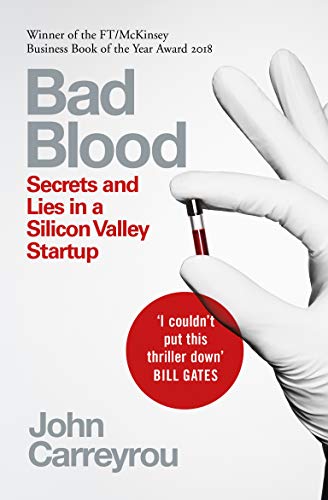
When an entrepreneur succeeds, we excuse them and forget their personality. However, when they fail, their personality is clearly highlighted in this book that reads in one sitting: Bad Blood. This book is about Theranos, founded by Elizabeth Holmes.
The idea behind Theranos was to create a small consumer machine that could draw a tiny drop of blood from a fingertip and run blood tests right at home. The idea is brilliant, the industry it targets is worth billions of dollars, and it’s a true revolution… if it works.
Except, despite millions of dollars invested in the company, the solution doesn’t work. But she still manages to bluff her way past the board of directors, investors, partners, and even employees—whose company culture of secrecy prevents information from being shared between departments. How did she manage to deceive so many people?
Elizabeth Holmes is a die-hard Steve Jobs fan and does everything to emulate him: from training herself not to blink, to hypnotize her interlocutors, to adopting a deeper voice (because it sounds more “manly” and people listen more), to buying the same black turtleneck Steve Jobs used to wear.
The craziest moment in the book is when the board tries to fire her, but she manages to convince them, in just two hours, to keep her! If she has one quality, it’s her persuasion skills.
This book follows the Theranos adventure from the beginning to the revelation of the scandal. It’s John Carreyrou, a journalist at the Wall Street Journal at the time. He’s the one who revealed the fraud behind Theranos to the world, following a series of revelations about the company, all the way to the trial… which is happening right now!!! This journalist also wrote the book, so we discover how the secret came to light, and how Theranos reacted to the article’s publication, their attempts to defend themselves… the book references several interviews with Elizabeth Holmes that are still available on YouTube. Watch them because they’re a great complement to the book. By answering off-topic, playing on emotions, and having a calm and composed attitude, you forget the original question and get completely taken in—even after having seen the book—you find yourself confused after her interview and find her credible.
This book sheds light on the hidden side of Silicon Valley, where people, despite being rich and experienced, base their decisions on hot air before spending millions, where all you need is a bit of charm and storytelling to pocket money (and lies too, incidentally). It highlights the importance of communication. A good communicator wins more ground than a good technician.
A must-read! It reads like a thriller, and I really like the “investigative” side of the second part of the book.
Purchase link: Paperback €20.95 (Amazon link)
Steve Jobs
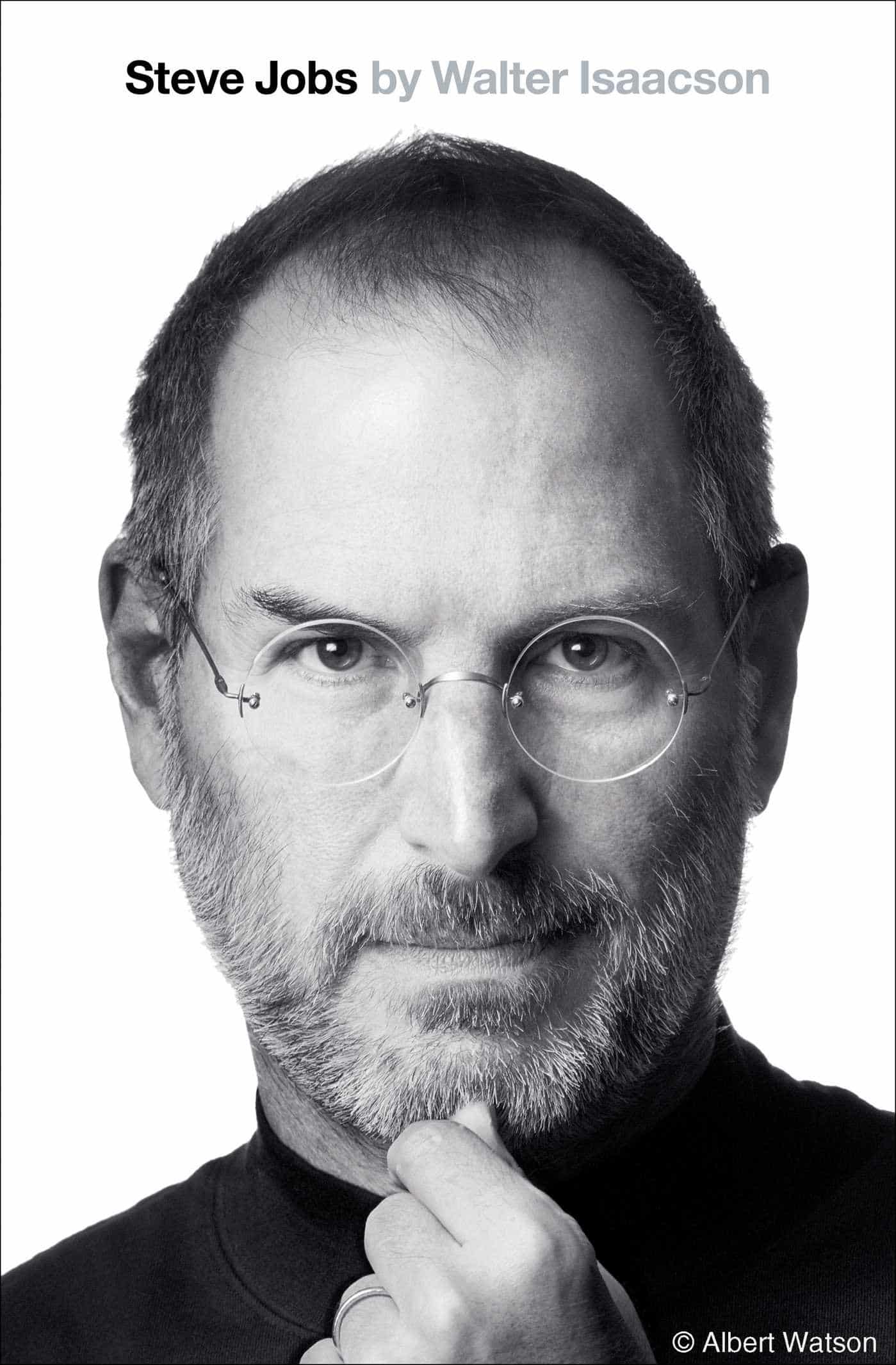
I struggled to enjoy the first part of this book because the opening pages already paint an unflattering portrait of Steve Jobs. It’s not the author’s fault; Isaacson has written several biographies of great men before. It’s a bit presumptuous of Steve Jobs to ask him to write a biography about him and place himself among the “great men.” But that sums up the character well—his narcissism, his pride, and his control-freak.
I knew he wasn’t nice, but here, the word a*shole is far from an exaggeration. I suffered until the moment he was fired from Apple, calling him an a*shole on every page. Fortunately, from Pixar onward, the book becomes much more enjoyable to read. He still remains an a*shole though: parking in handicap spots, cleaning his disgusting bare feet in the sink at work, calling everyone stupid, being stingy with Apple’s best contributors, etc. The list goes on. He must have had psychological issues, been bipolar or something like that, or deeply traumatized by having been “abandoned” by his parents and adopted.
However, one cannot deny that:
- He was the first to bridge the gap between design and computing. He believed the final product should be as beautiful on the outside as it is on the inside; appearance matters, according to him.
- He set the standard for high-tech design. Everyone wants to be like Apple; even headphones become white to imitate Apple’s.
- Steve Jobs is above all an excellent salesman. He has the intuition and flair to know what the other party wants, and their weak point, to manipulate them toward an agreement. He knows how to apply the right strategy, including insults, lies, threats, lawsuits, creating division within a competing or partner company… to lead people toward the agreement he aims for.
- Thanks to Apple’s inventions, we have multi-windowing, pixel-based graphical displays, which they took from Xerox but greatly improved since.
There are some learnings we can take from his successes:
- You need to pay extreme attention to user experience (this wasn’t the case at the beginning of computing). And this experience must be controlled, from product purchase to usage; that’s why Apple’s system is very closed and doesn’t allow users to take their products apart or easily upgrade them.
- Focus : to make few products but perfect ones down to the last detail. He returned to Apple when the company was on the brink of bankruptcy, with teams scattered everywhere working on various projects. He drew 4 boxes and simply explained that you needed one product for each box. And that’s how Apple recovered after 10 years of dysfunction. Unknowingly, that’s what we’ve implemented for our career: we specialize in a niche that concerns very few companies, but when a company really needs our expertise, it doesn’t have many options and has to come to us.
- Between invention and application, there’s a long road to travel. Even though Xerox was behind the display technology we have today, they hadn’t thought of a specific application. It was Apple’s team that saw the idea, understood its potential, and put it into practice. Steve Wozniak was a genius, but without Steve Jobs’ commercial and business side, Apple wouldn’t have become what it is today, because Wozniak just wanted to create and then give it away for free.
- He repeated it several times: A-level people don’t want to work with C-level people. In short, brilliant people don’t want to hang out and work with dumb people. The latter drag the former down. That’s why Apple has an extremely demanding and strict recruitment process, to ensure everyone is brilliant and will pull the team up. It’s awful to say, but in my previous experiences, I’ve seen talent wasted because of an incompetent manager, or because of C-level colleagues who don’t understand what the A-level colleague is saying. I worked for a company made up entirely of superstars and everything that came out of that place was phenomenal!
- You have to persevere : there are many contracts and meetings he secured because he doesn’t let go and keeps pestering people on the phone until they say yes. It’s certainly aggressive and unpleasant, but it brings him more than the tarnished image he already has.
- His obsession with perfection is pathological, but it’s also driven by the passion he has for each product. The iPod was born from the whole team’s passion for music. You can’t make beautiful products or do your job well if you’re not passionate about it. I think that’s an important message because many young people still think that money allows them to overlook the fact that they hate their job, but it’s the opposite. If someone is passionate about their job, they’ll be good at it, and they’ll earn money. It’s actually the other way around!
- Many times, it’s his intuition that led Apple to success. Even though Steve Jobs wasn’t that enlightened (if he really were, he wouldn’t have been so materialistic and stingy with his collaborators), his interest in Buddhism, LSD, and meditation gave him important intuitive abilities. And it’s often ignored by rational people: if your intuition tells you something isn’t right, it’s not necessarily just psychological, it’s a fear already rooted in you, it might be an invaluable help to avoid a big mess.
- Steve Jobs and other top executives made several mistakes that cost their companies a lot of money. Steve Jobs because he’s too much in control and thinks he’s always right. Other leaders like Eisner at Disney almost didn’t buy Pixar because he lacks long-term vision and doesn’t know how to properly evaluate a company. Sculley because he focused too much on sales, instead of being passionate about what he makes… The book covers the 56 years of Steve Jobs’ short life and we have time to reflect on each bad decision, why these people made that decision at that time, and how they could have avoided it in the future.
Is it an easy book to read? Yes and no. If you’re very empathetic like me, the first part is a bit tough.
But it’s good to revisit the vibe of the 1970s, see how Silicon Valley became the Silicon Valley we know today, the early days of computing, the internet bubble, the first laptops… Bill Gates is mentioned several times, because you always need a villain in the story. The portrayal of Bill Gates is just as unflattering as Steve Jobs’ 😀 On the other hand, the two co-founders of Pixar are sweethearts…
It’s not an easy book to read because there’s a lot to think about. Like other books with names of real people, there are hundreds and hundreds of first and last names. People not necessarily well-known, so you have to take notes to remember who we’re talking about, who does what ahahha.
Isaacson managed to stay completely neutral and report the facts, instead of being a fan-boy, unlike the above book on Elon Musk.
Purchase link: Paperback, €10.9 (Amazon link)

