
Haruna Shrine, Shorinzan Daruma-ji and Daruma Talismans [Japan Road Trip #8]
Everyone leaves Kusatsu reluctantly. Not only has the whole family become too fond of onsen towns, but we’re also approaching the end of the road trip. It’s raining a little, but we’re cozy inside the car. Let’s go!
This travel diary is part of a series on our road trip in Japan. If you missed the previous episodes, here are the links: the itinerary, diary #1, #2, #3, #4, #5, #6, #7
Part 1: Travel Journal
Part 2: Practical Tips
Part 1: Travel Journal
Day 8 of the road trip
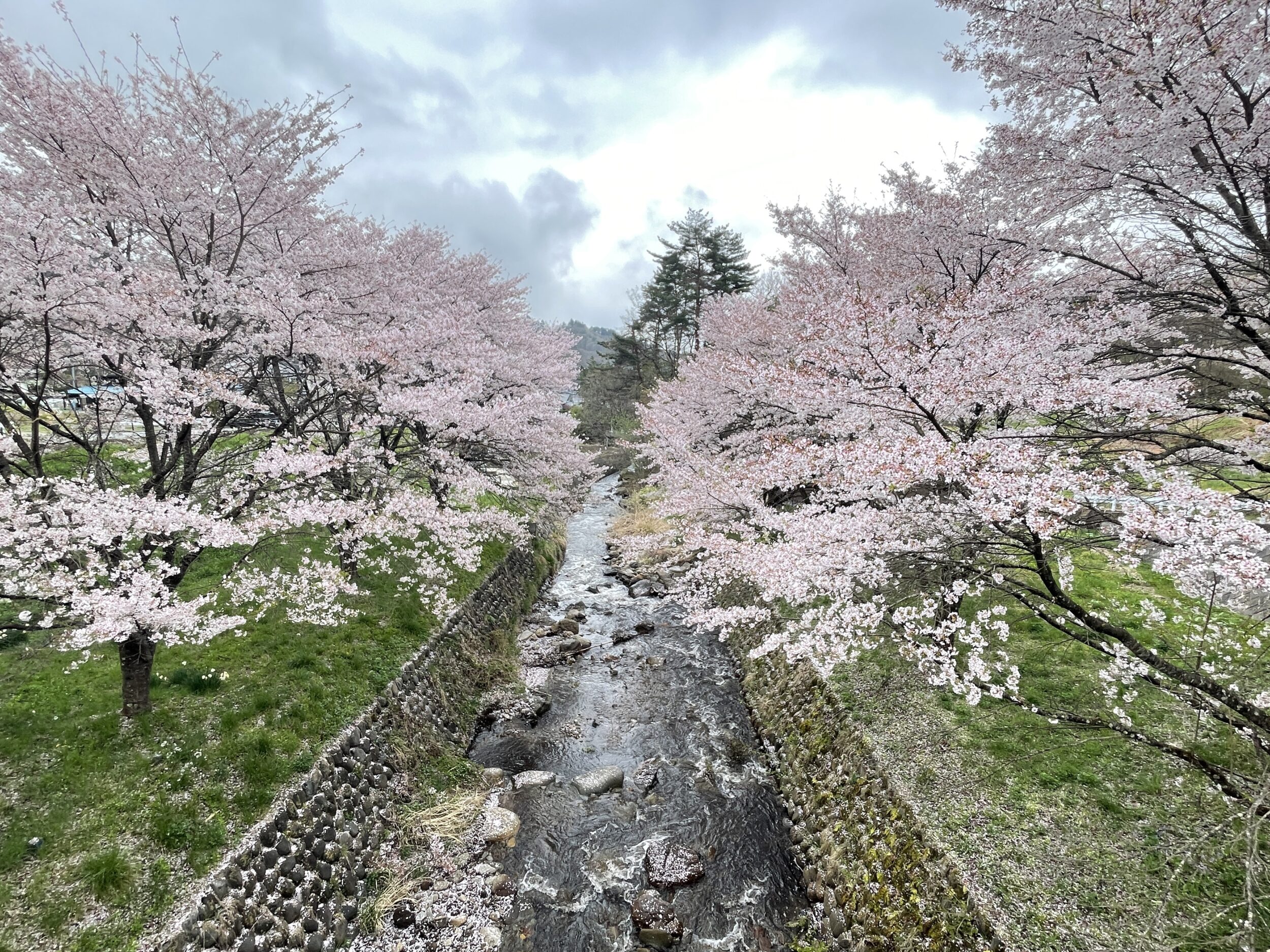
We see the cherry blossoms for the last time, and these full bloom cherry trees near a pretty bridge totally satisfy our desire to capture them forever. Since we’re leaving the mountains, we won’t see them anymore.
The schedule is very light today, there’s a big surprise at the end of the day, and the other stops are just little breaks along the way to make it less long. I manage to find two: the first one pleases mom a lot, and the second one, me 😀 Two days ago, I had to choose between a temple in the forest with monkeys in the onsen, and I think mom would have preferred the temple. This time, I choose a Shinto temple that’s not very accessible by public transport.
Haruna Shrine
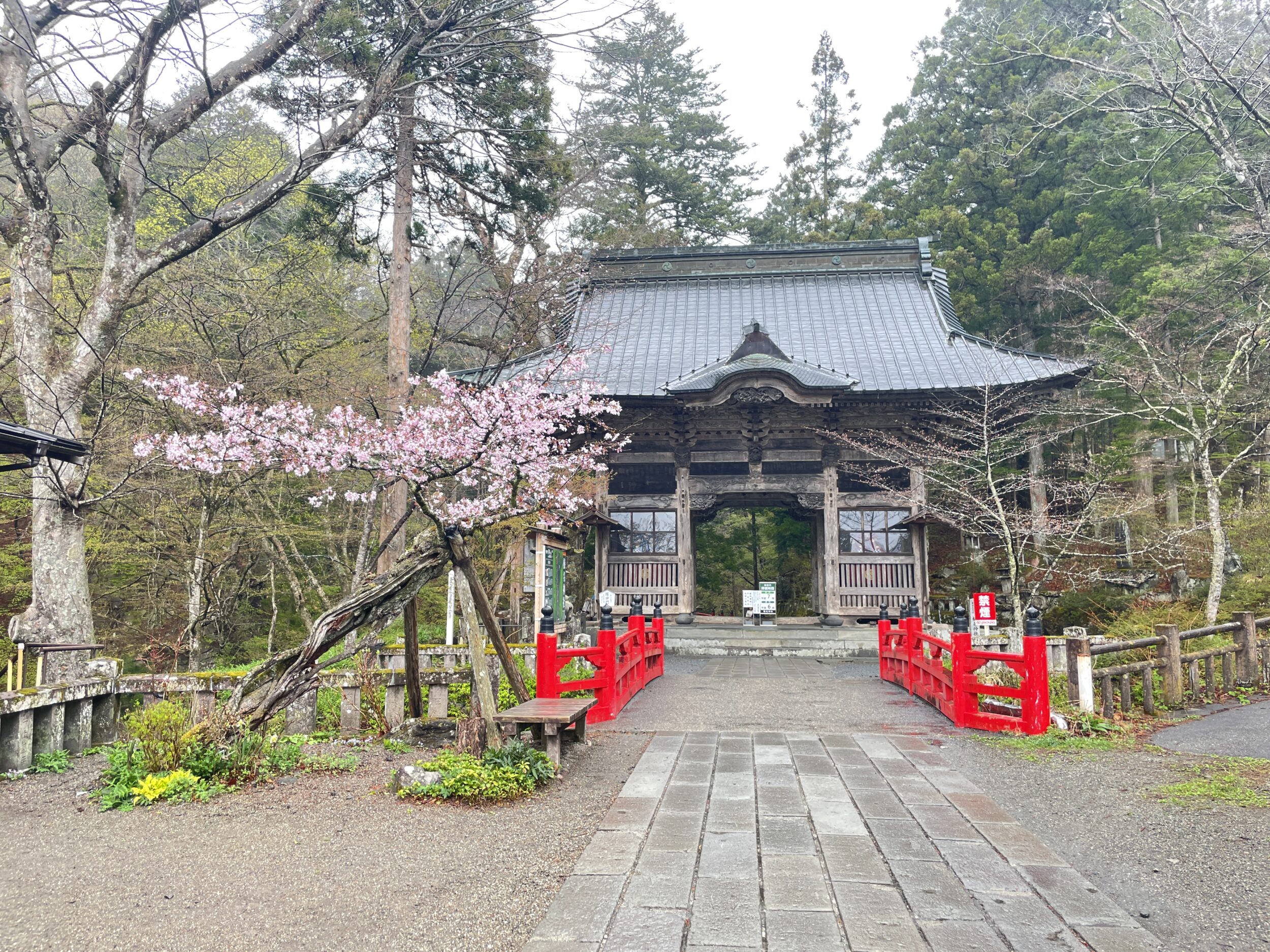
It seems well-known among Japanese people because I see lots of reviews on Google Maps and people driving 5 hours to get there. Apparently, people go there to ask for fortune (for themselves and their business) and ask for rain. In Asia, there are temples where you come to ask for specific things: love, children, academic success, etc., and people won’t hesitate to make the trip to see their wishes fulfilled. However, Haruna Shrine is renowned for its effectiveness in granting all kinds of wishes. It’s believed that the shrine’s omnipotence is made possible by the presence of numerous deities on this land, attracting divine spirits.
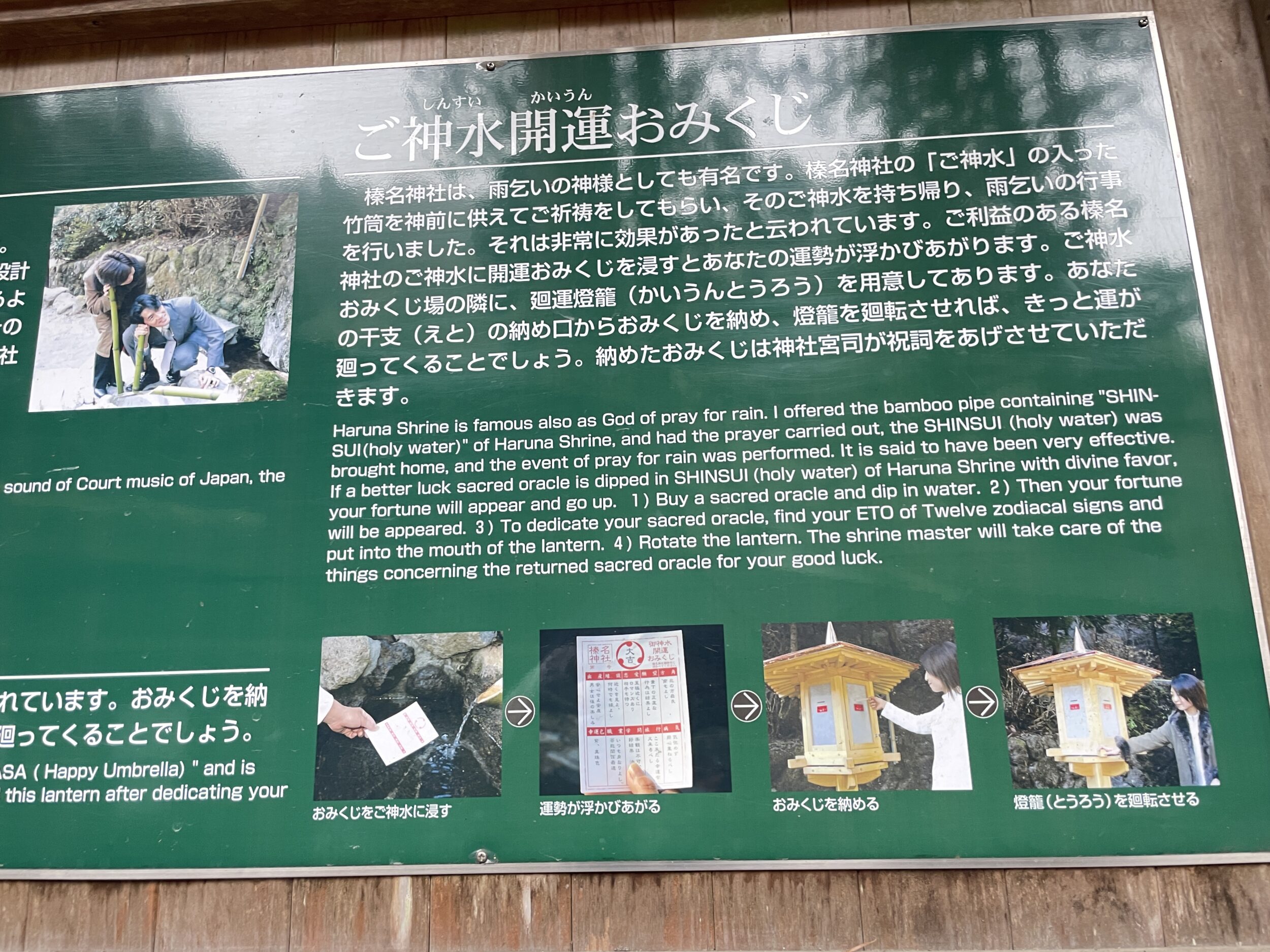
You can buy talismans at the souvenir shop, but also a paper whose content is revealed when you dip it in the sacred spring water right next to it. You then need to insert this sheet into a lantern, through the opening of your zodiac sign, and then turn the lantern. For rain, you need to bring the sacred water back for the rain-making ceremony, to be done at home.
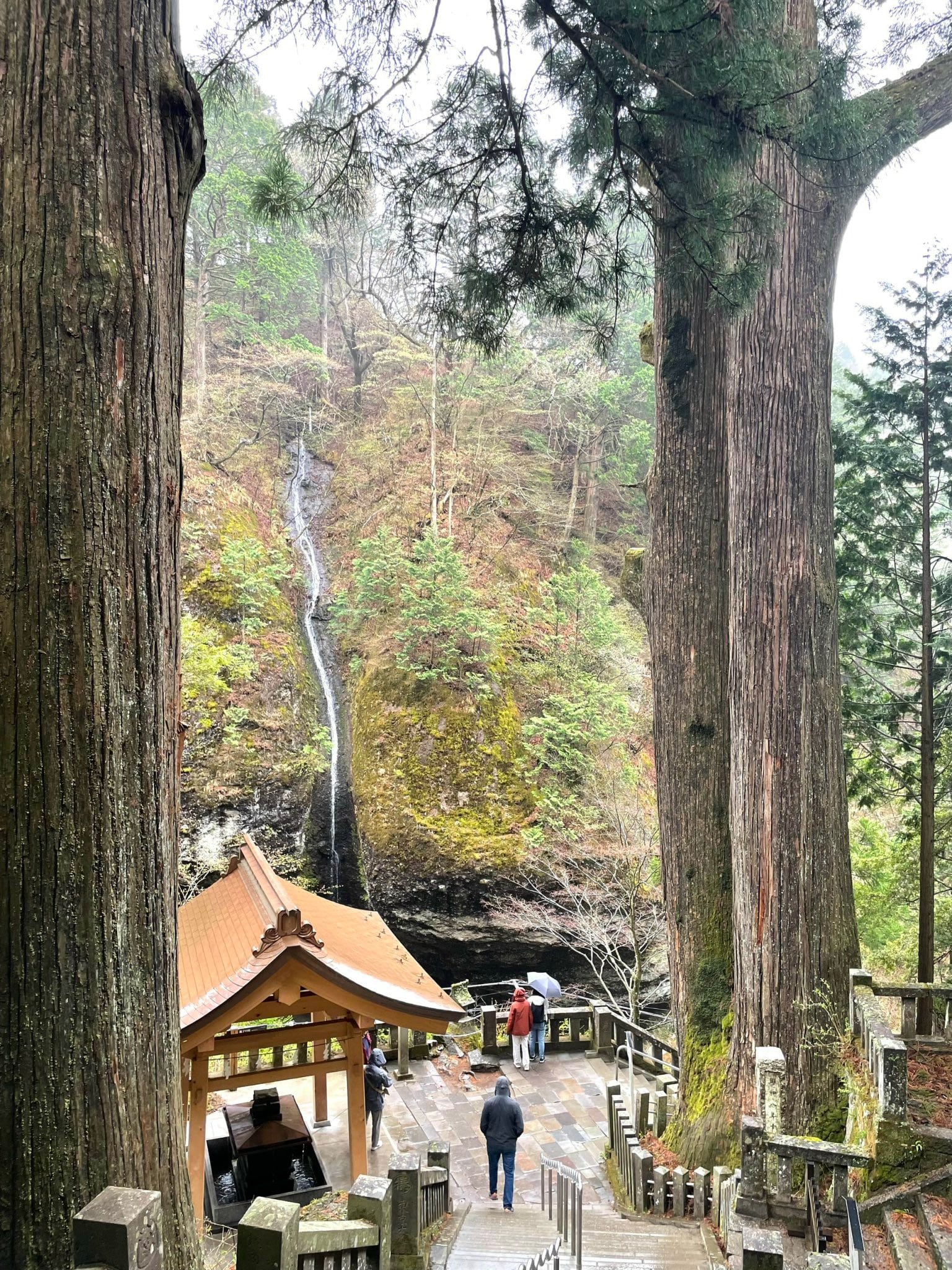
This temple is super super beautiful because it’s at the top of the mountain, nestled against the rocks, yet accessible (only a 15-minute walk), it has all the feng shui elements, a serene atmosphere, pure air, century-old trees. There’s a very pretty waterfall on the side. Everything is harmonious, everything is beautiful!
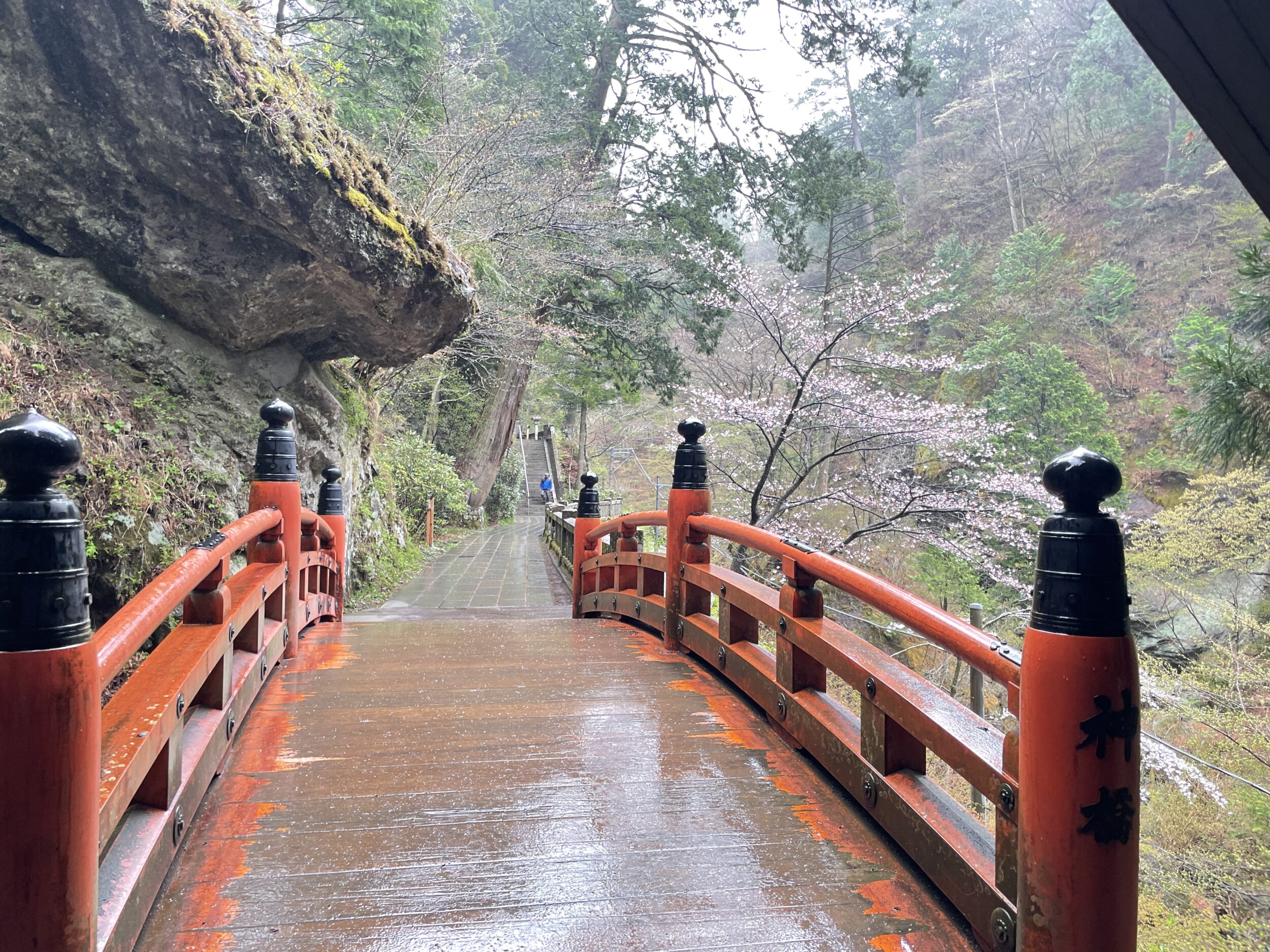
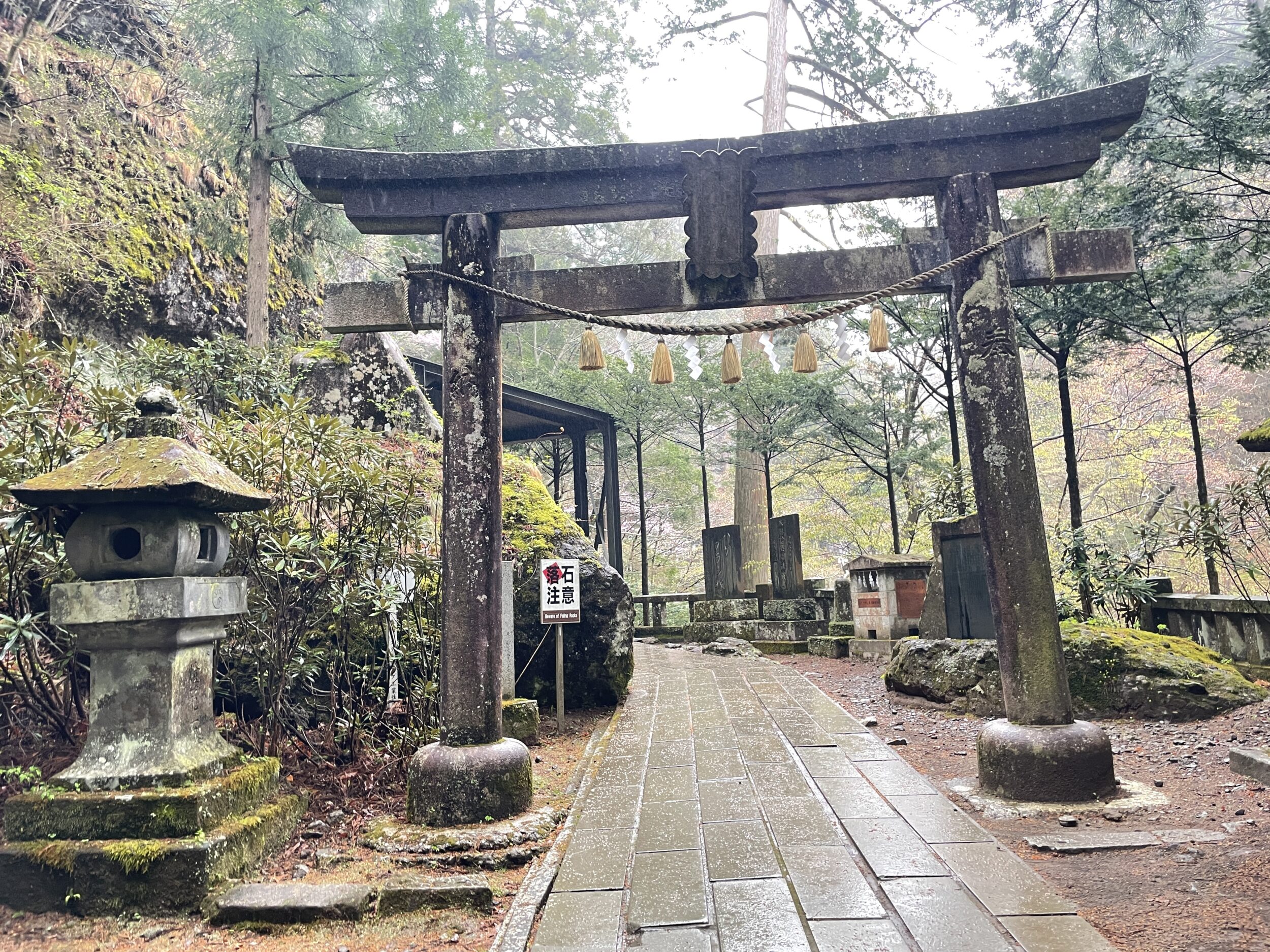
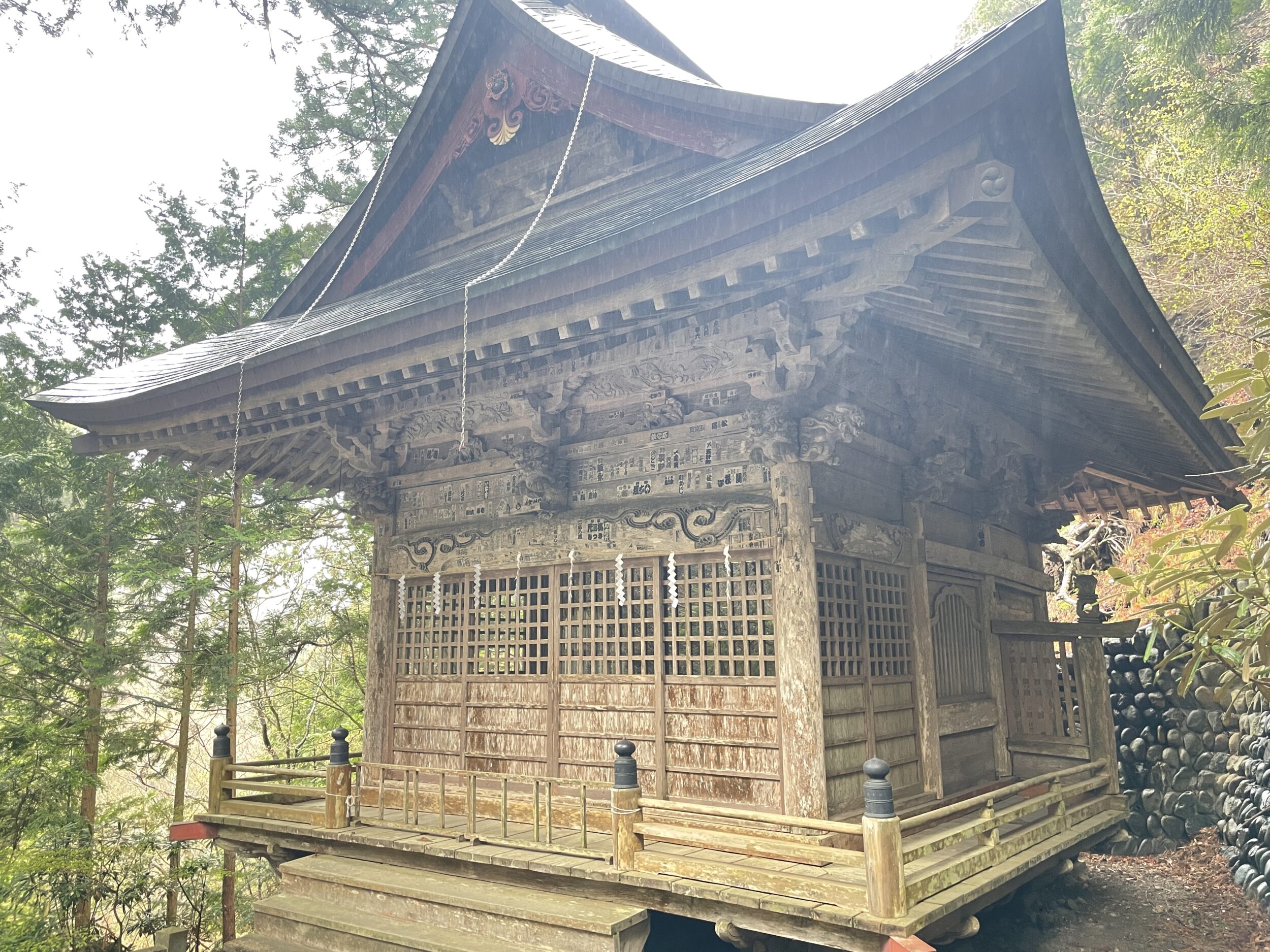
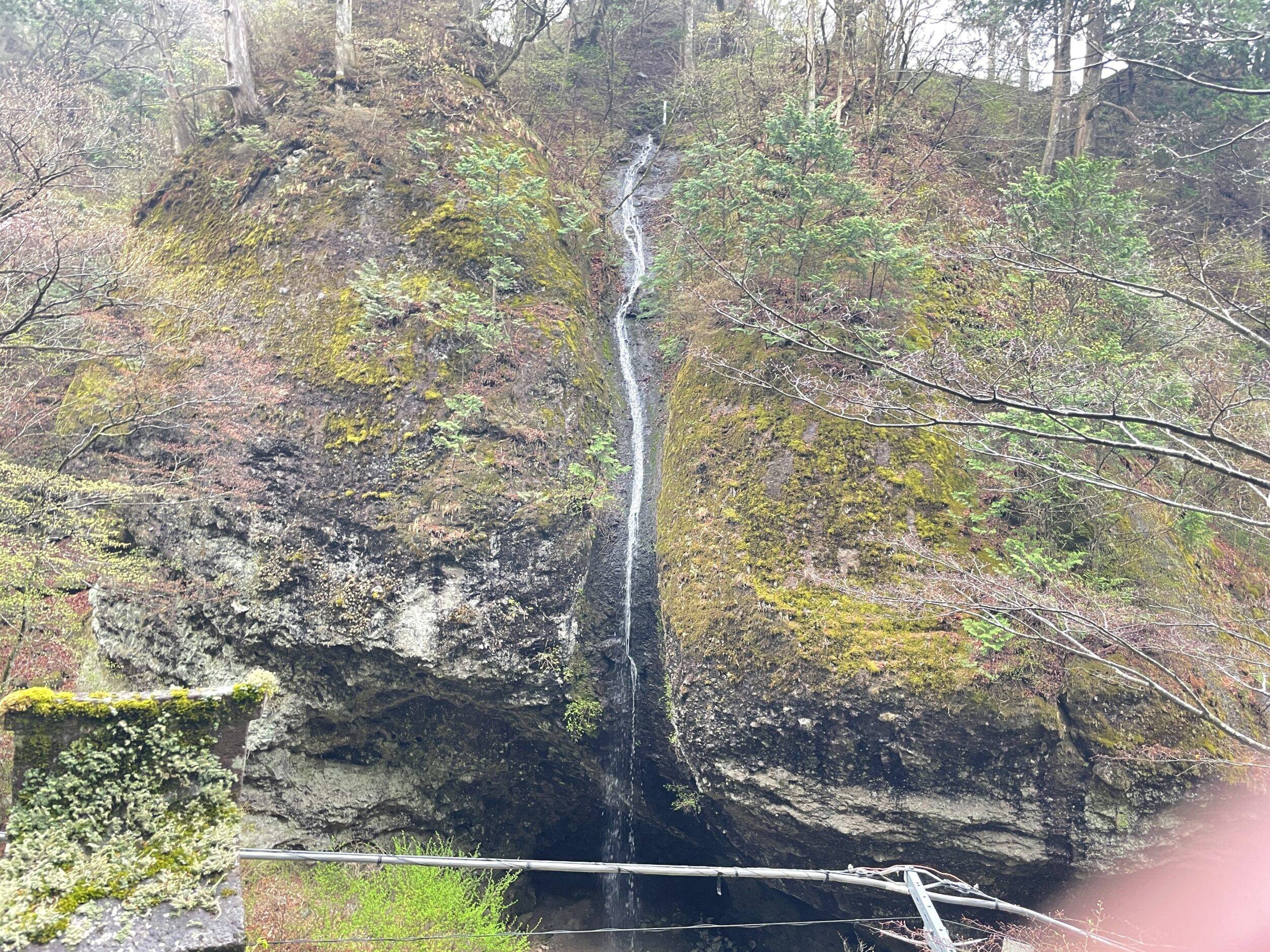
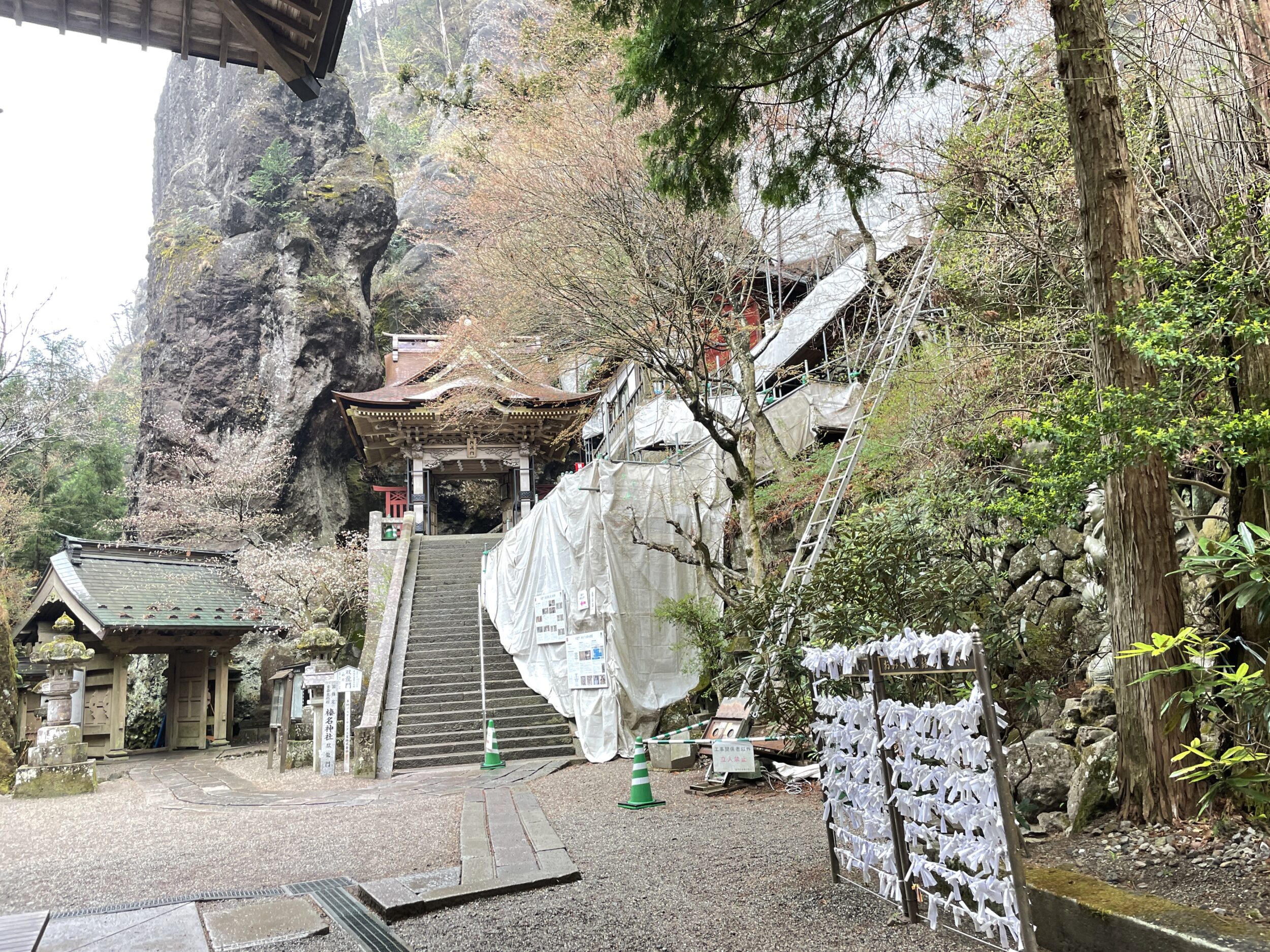
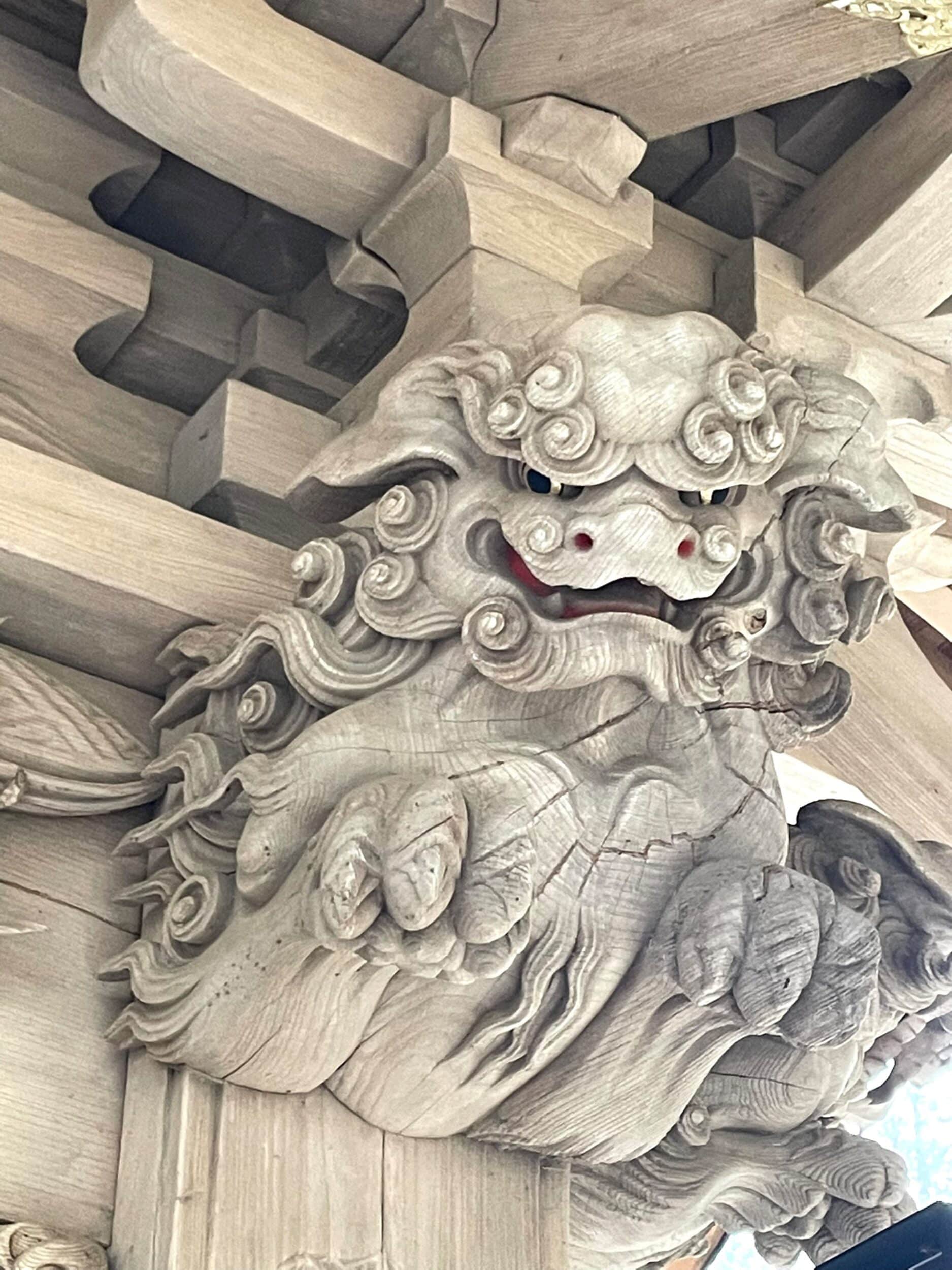
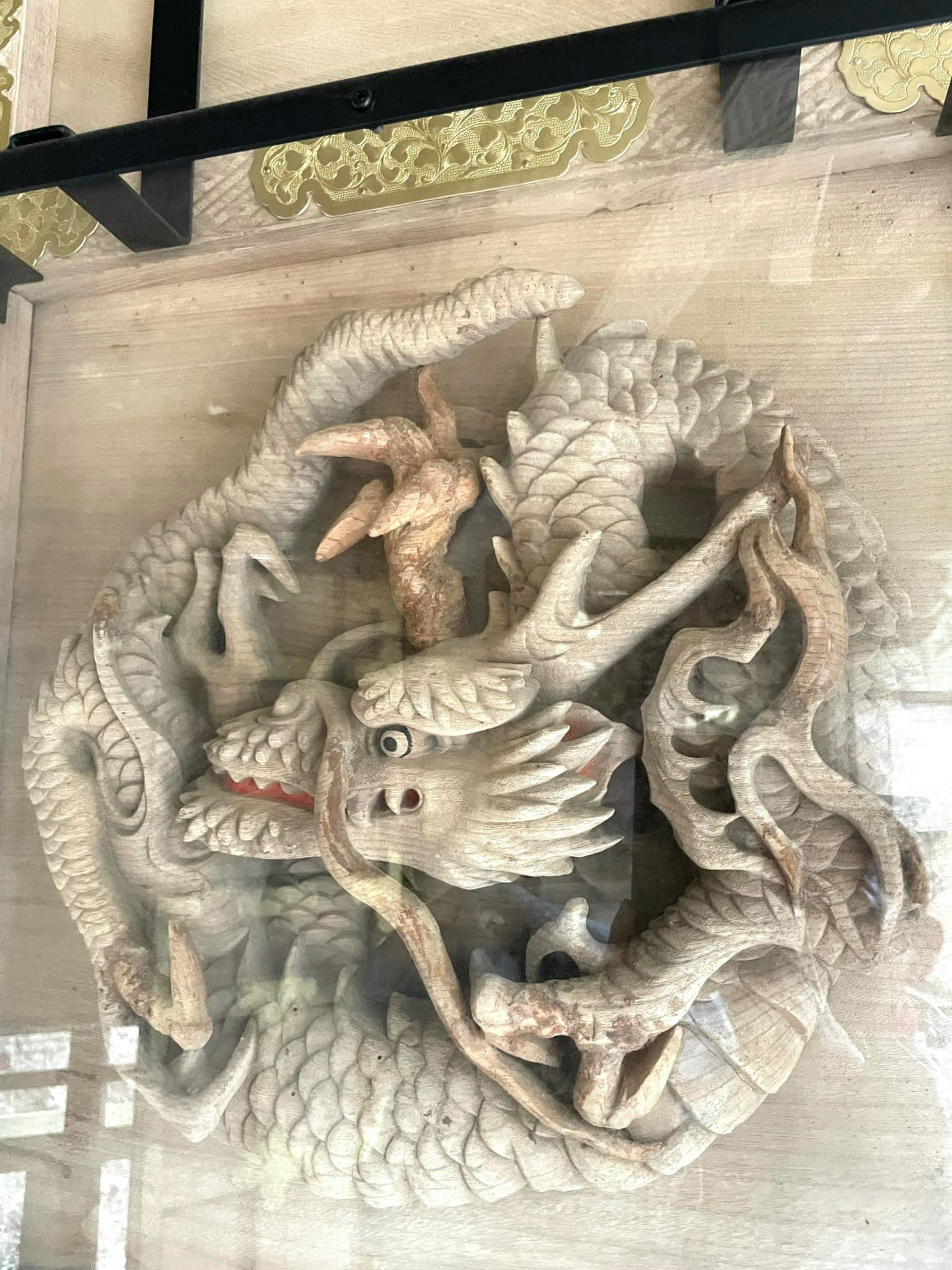
The main temple is under renovation, but we can walk around it and see some wooden sculptures.
We’ll have an Italian ice cream (Swiss chocolate flavor) at the souvenir shop. There are also plenty of darumas for sale. That hints at our next stop.
Takasaki, where darumas are made
Shorinzan Daruma-ji Temple
The daruma is said to represent Bodhidharma; you’ll see this figurine in every souvenir shop in Japan. Takasaki is where this daruma was born, and today, it’s the place that produces the most. The origin of the daruma dates back to Shorinzan Daruma-ji which we’re discovering today. Here’s the document given by the temple:
Bodhidharma, known in Japan as Daruma Daishi, is the founder of Zen Buddhism. Originally from southern India, he was said to be the third prince of the Koshikoku region. He studied Buddhism under his master Hannyatara, who passed on the teachings of Zen to him. Around 520 AD, Daruma Daishi went to China. After an interview with Emperor Butei, he retired to Shorinji Temple, located on Mount Suzan, where it is said he meditated facing a white wall in a cave behind the Engi-Daruma temple for nine years.
The Engi-Daruma, a popular talisman in Japan, is purchased by many Japanese at the beginning of the new year, hoping it will bring them luck. Today, more than a hundred local farming families make these talismans, with production exceeding one million units annually. Originating from the Shorinzan Darumaji area, the Engi-Daruma was popularized by Shinetsu, the founder of this temple, who gave farmers images of Bodhidharma that he drew with a single brushstroke as protection against evil for the year. During the Tenmei famine (1781-1788), Tohgaku, the ninth priest of the temple, created a wooden effigy of Bodhidharma from these images. He taught farmers how to make these “Daruma dolls” to provide them with a livelihood during the hard years.
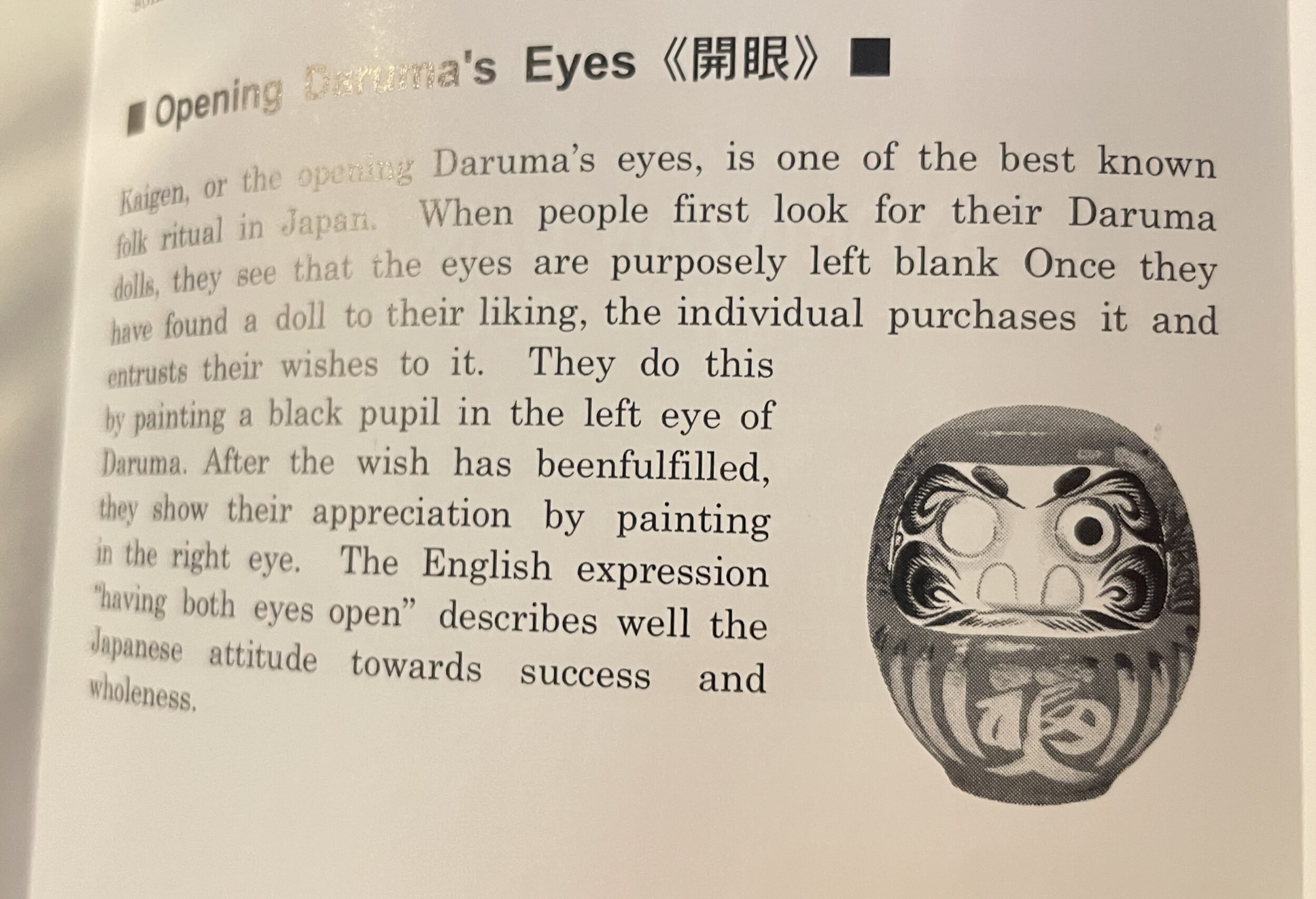
One of the most famous rituals in Japan concerning these dolls is the “Kaigen”, or the opening of Daruma’s eyes. When purchasing a Daruma doll, the eyes are initially absent. The new owner paints a pupil in the left eye when making a wish, and once it comes true, he paints the pupil in the right eye as a sign of gratitude. This practice illustrates the English expression “having both eyes open”, reflecting the Japanese approach to success and accomplishment.
At first, it was the craftsman who painted the first eye, but over the years, it’s now up to its owner to do it.
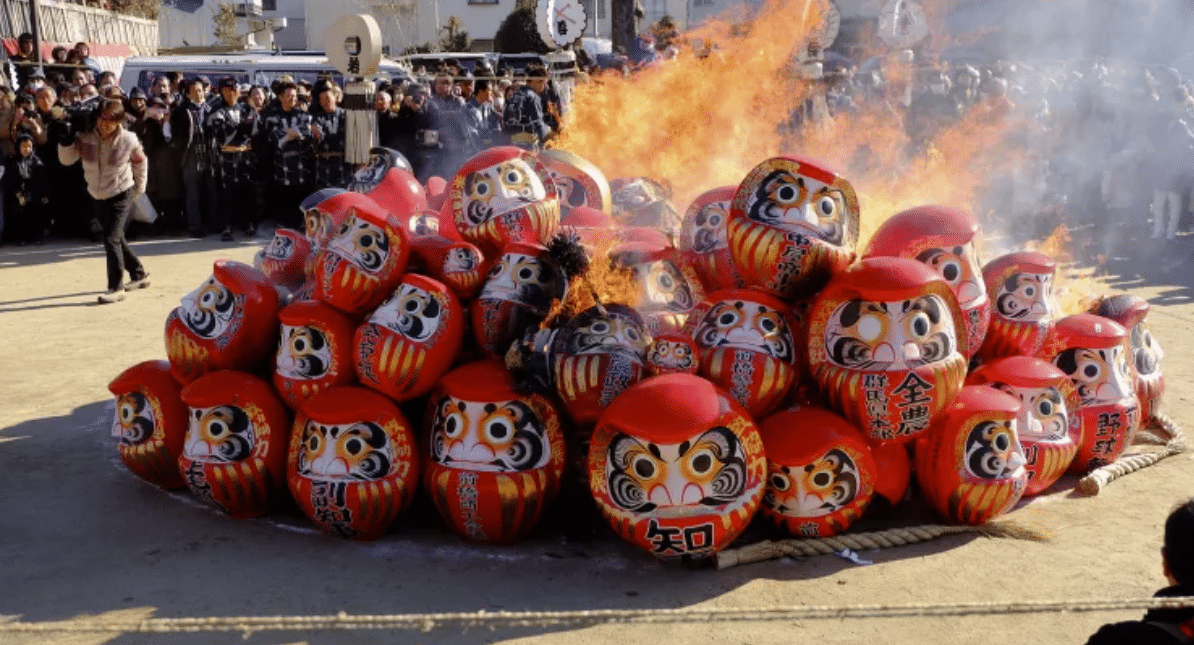
Then, you can bring your darumas with both eyes open back to the temples where they accept them, to have them burned at New Year’s.
The Hatsuichi Matsuri is a lively festival held every year in January since the 17th century. Visitors come to thank the gods for past successes and pray for the new year to be just as happy. To do so, they come with Darumas. The old daruma is placed on a bonfire and replaced with a new one for the coming year.
I brought back some daruma dolls from my first trip to Japan, and they got a lot of attention. The people who received them keep me updated on when they paint in the eyes, and I find that really touching. Thinking about it more, I realize the appeal of these daruma dolls is like Aladdin’s lamp: you suddenly get a wish. And the fact that a daruma only has one eye at first is really motivating: you have to make your dream come true because a daruma with just one eye doesn’t look great.
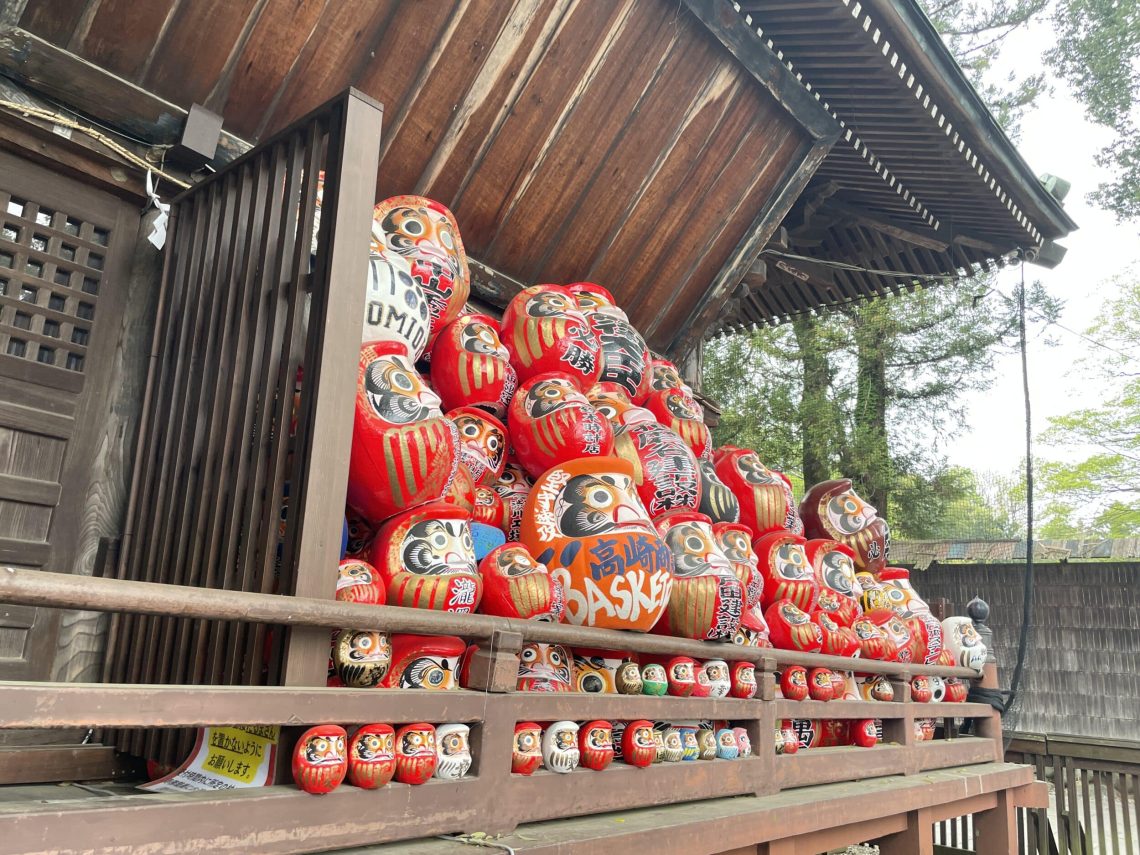
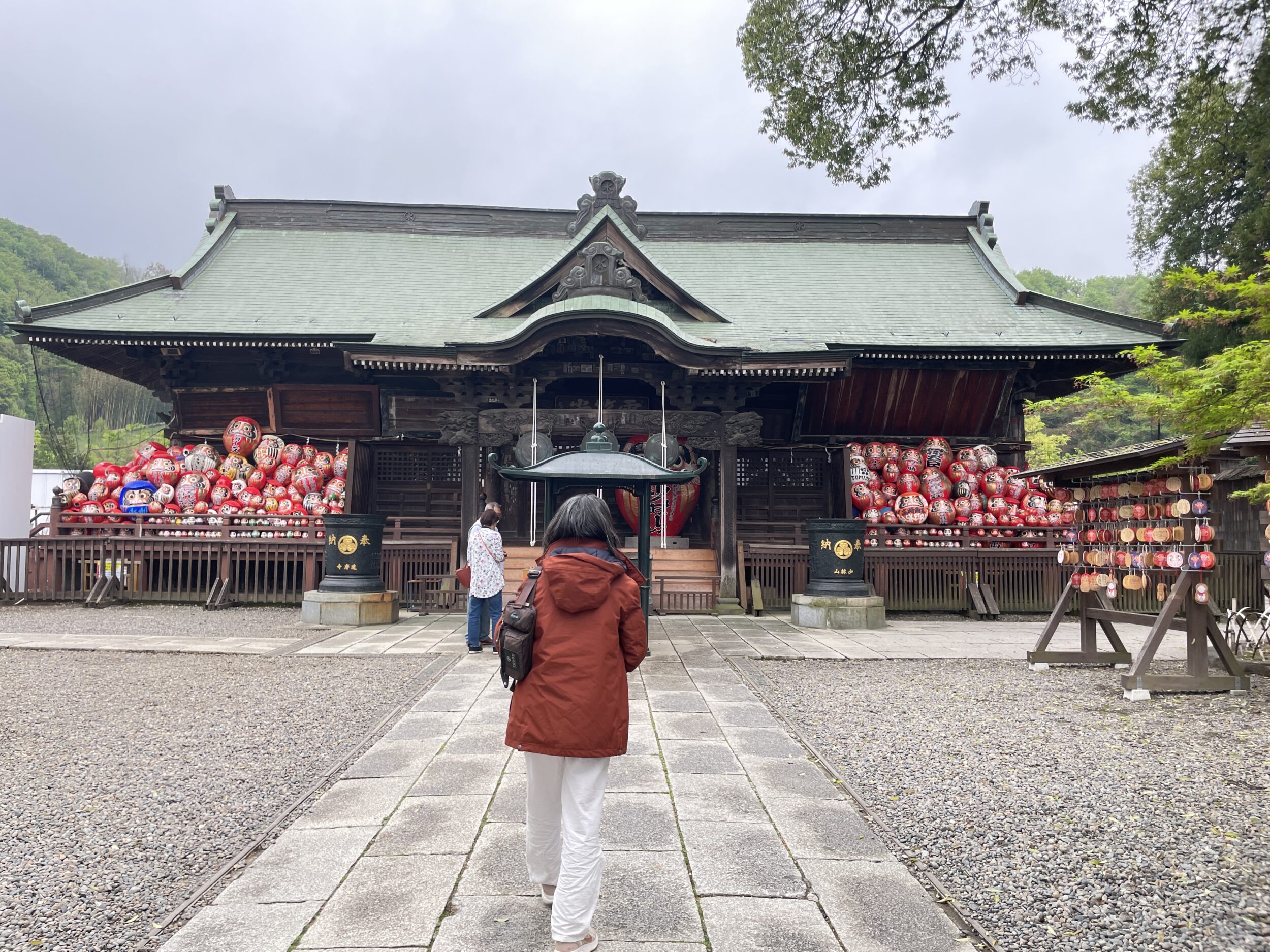
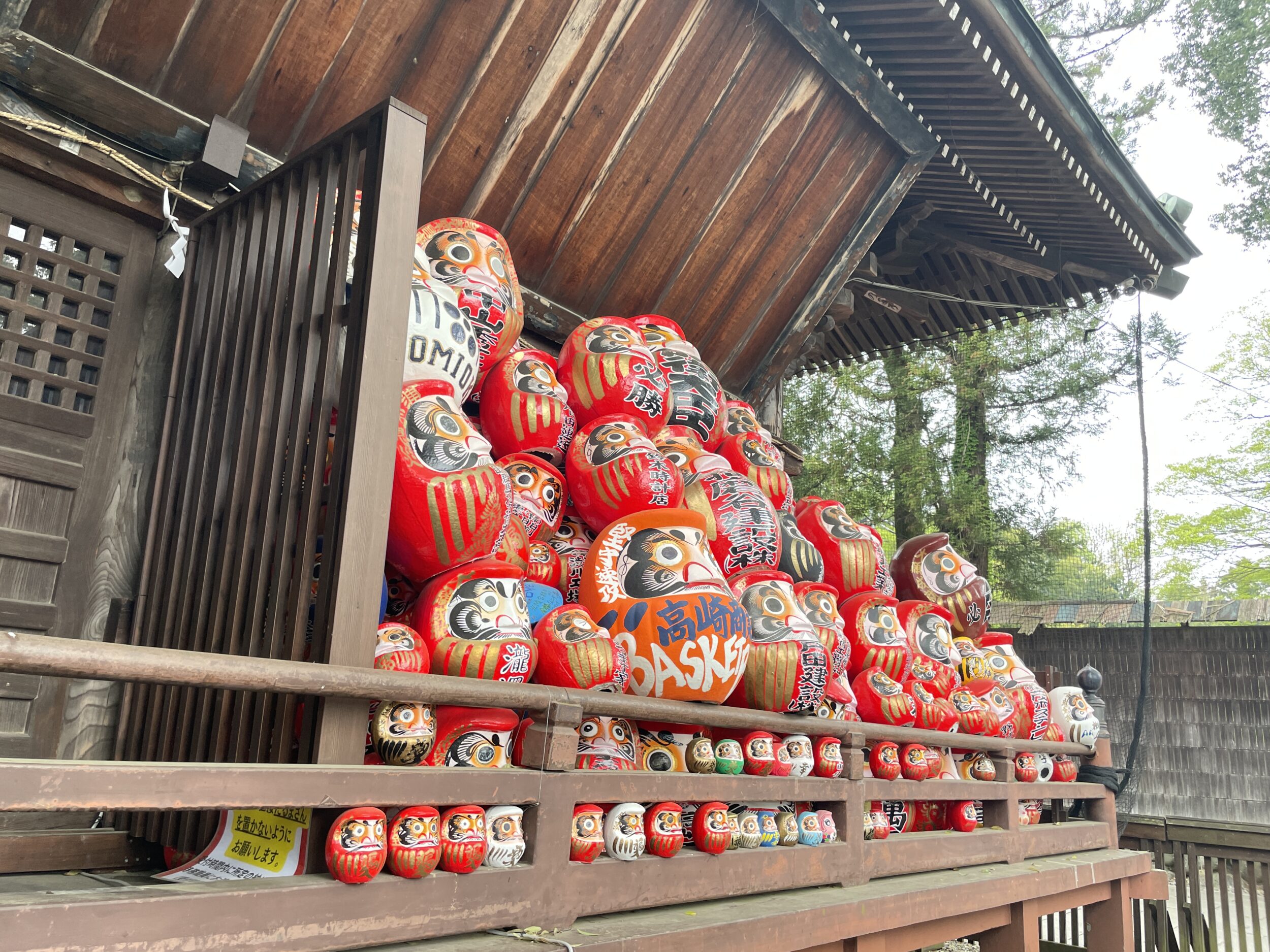
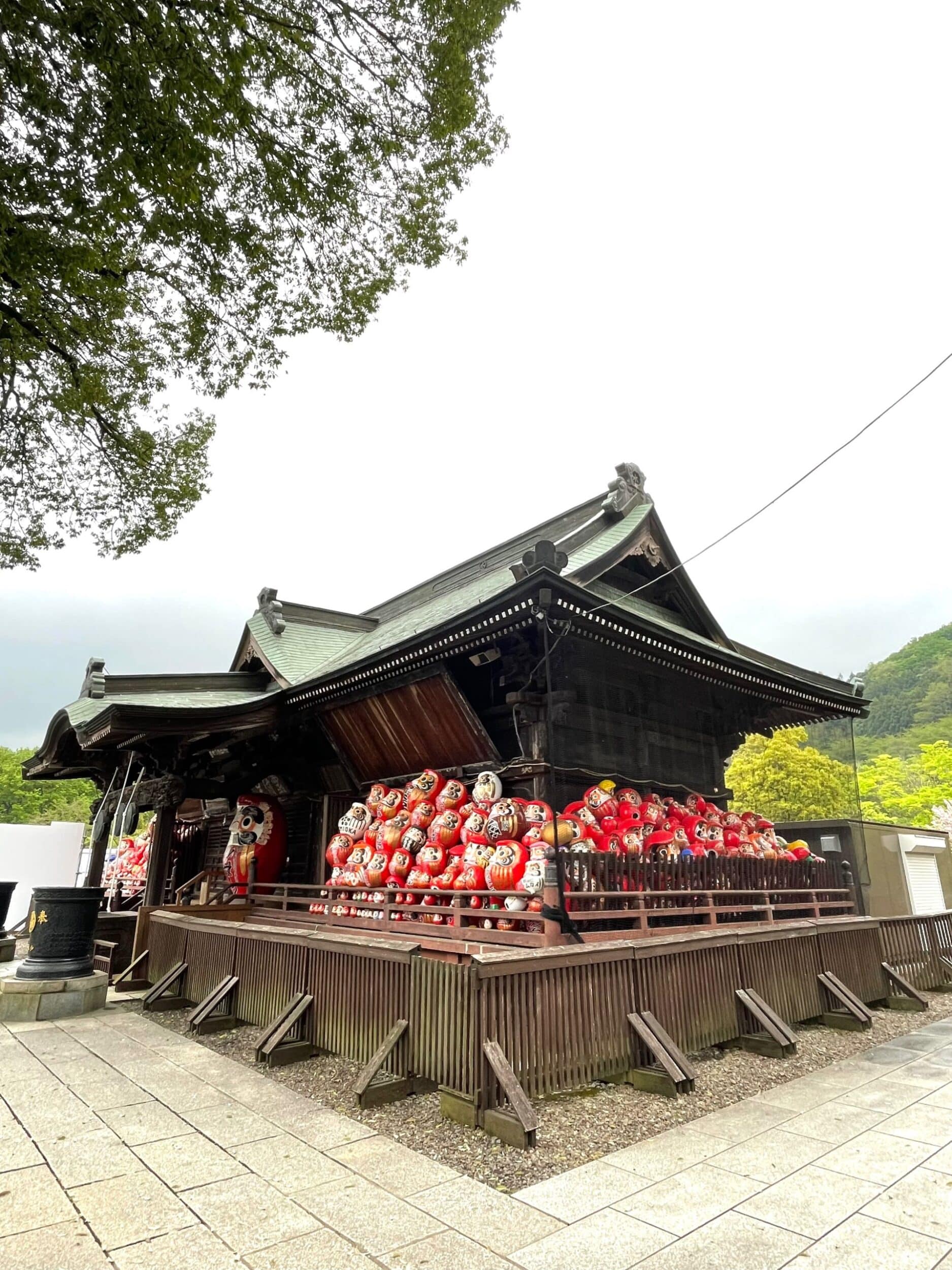
It’s only April, and the number of darumas daruma with both eyes painted in that have been left at the temple is already huge.
They come in all colors and sizes. Usually, they have the owner’s name on the belly and the nature of the wish (e.g., success, prosperity…) written on the sides. You can order a personalized daruma at the temple’s souvenir shop, and it takes a few days to make.
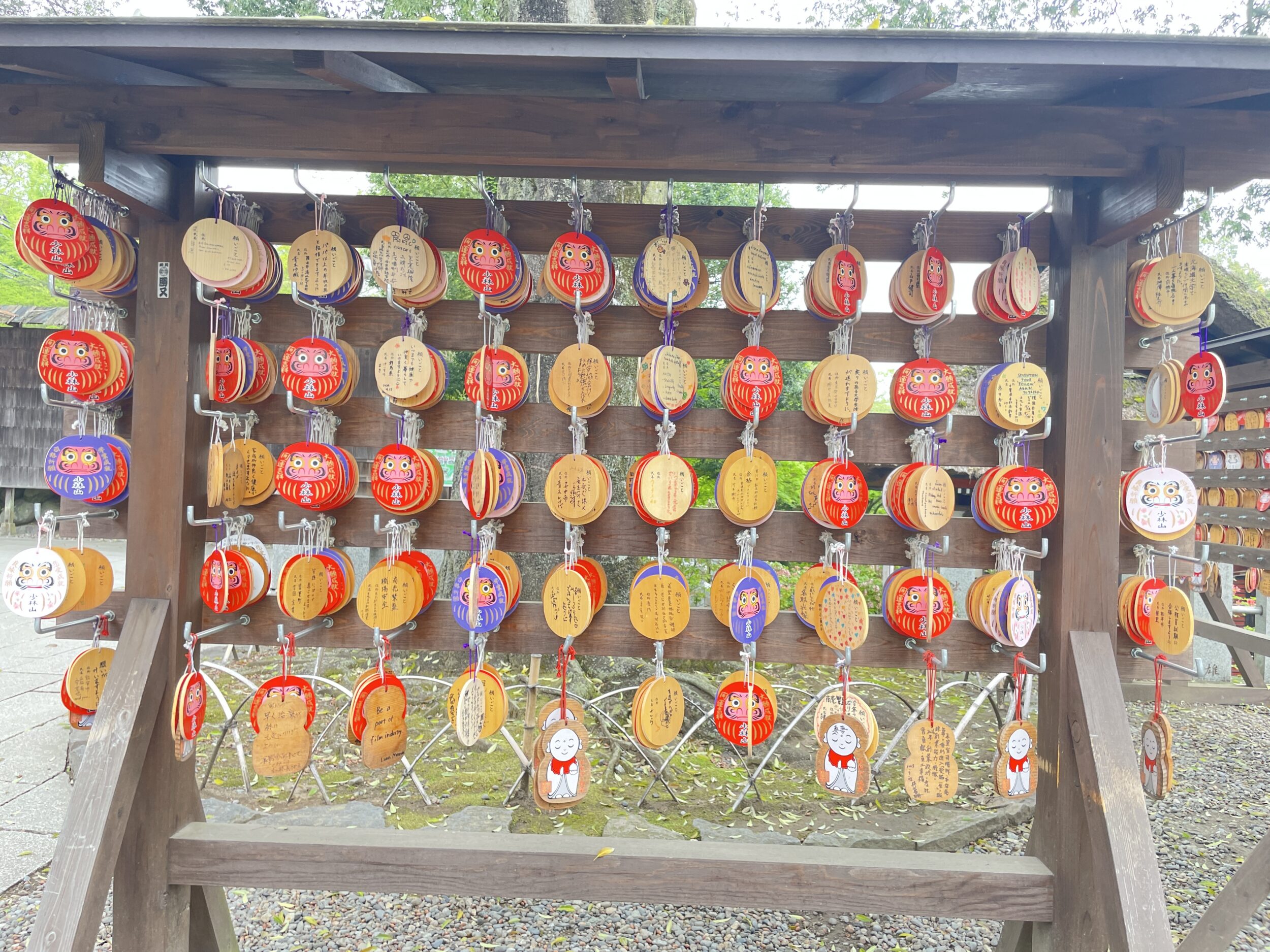
Alternatively, you can simply write a prayer on daruma-shaped wooden plaques.
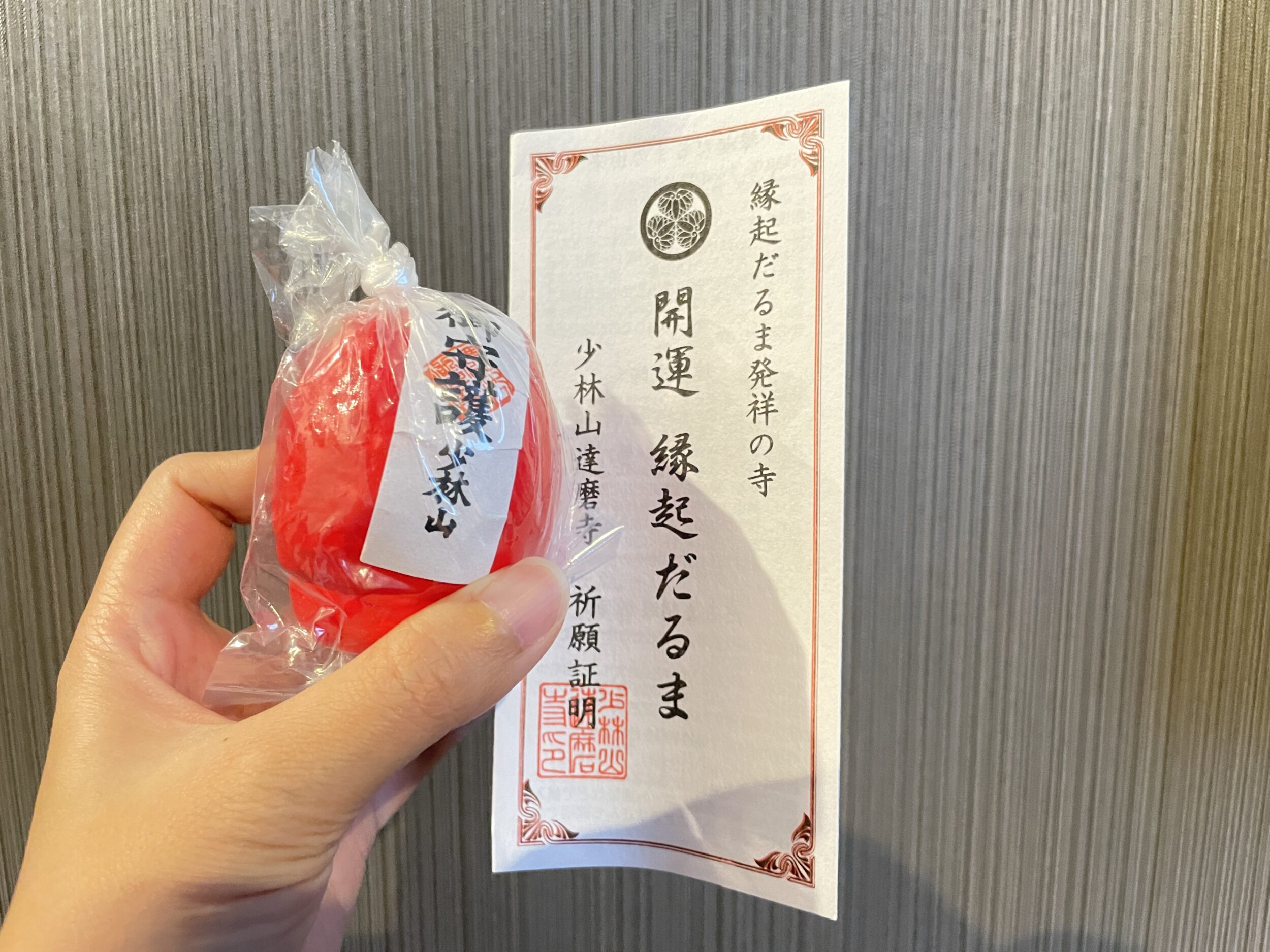
The souvenir shop at this temple is really special because it’s the ONLY one allowed to sell daruma that have received prayers. There’s a talisman stuck on the back of the daruma and a certificate confirming that the daruma has received prayers from the temple’s monks. It costs only slightly more than the daruma sold in other souvenir shops (700 yen for the smallest one).
If you want to go further, you can request a quick ceremony to breathe life into the daruma (the saleswoman pointed to the bottom of the stairs, but I didn’t want to try it).
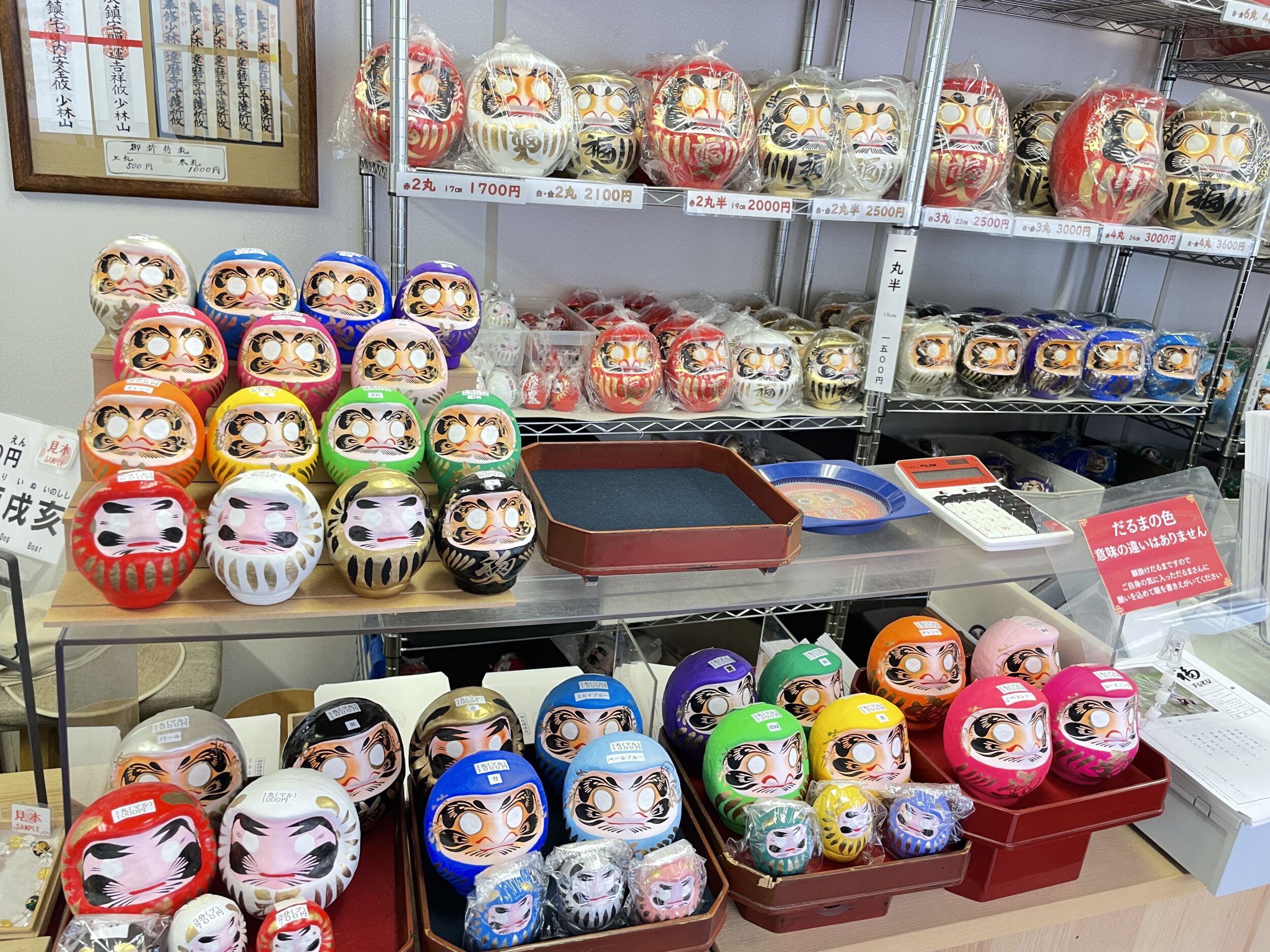
If the first daruma doesn’t help you achieve your dream, you need to buy another one of the same size. Two daruma work better than one 😀 If the dream comes true, then the next one must be bigger; that’s how you end up with daruma costing 20,000 yen!! If you’re going to buy daruma, buy them here because these are the only ones that receive prayers.
Daimonya
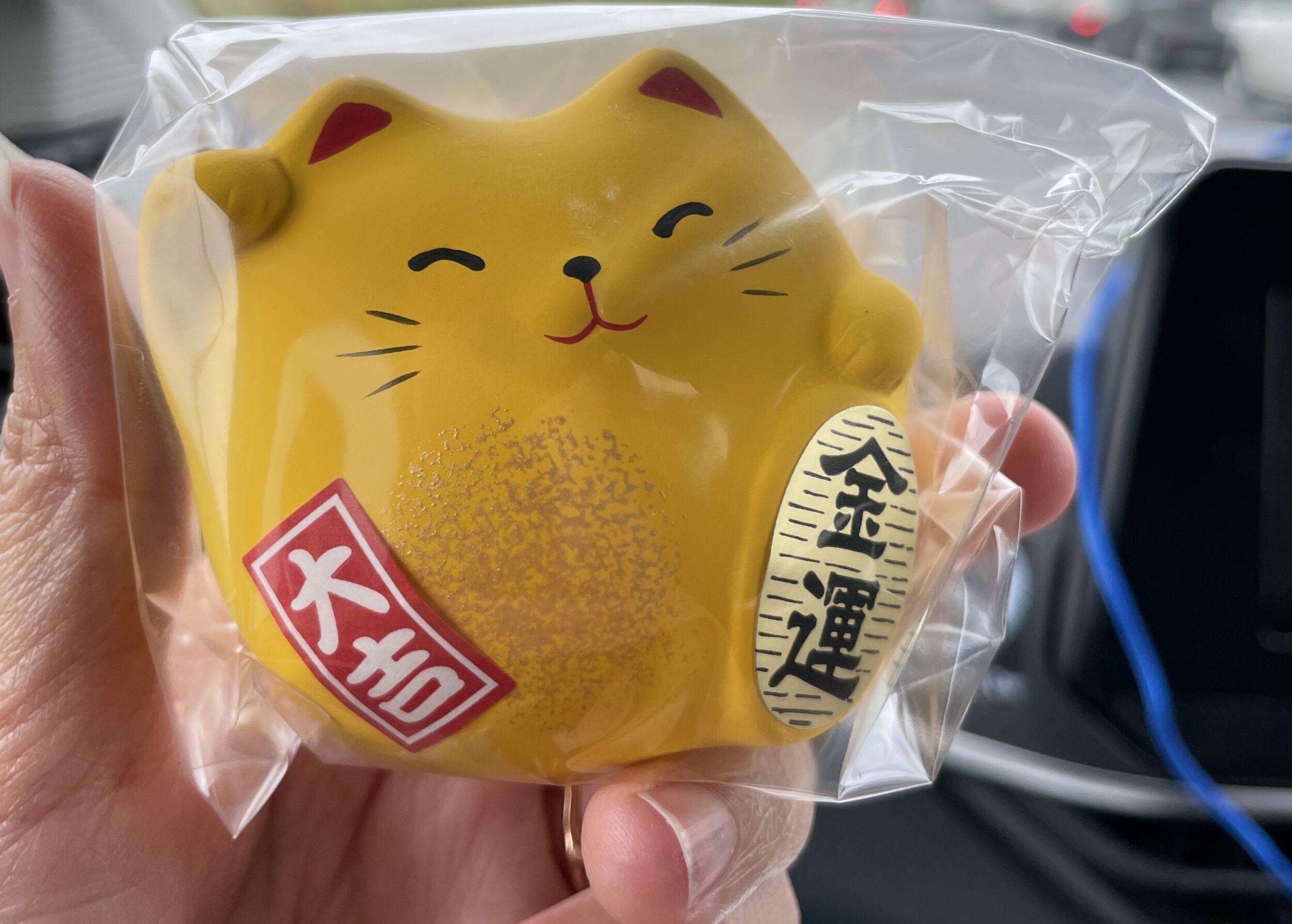
We stop by a daruma shop, not to buy but hoping to see the workshop. Unfortunately, we can only see employees painting daruma from a distance, nothing more. There’s a workshop where you can paint your own daruma, but that’s not for me either. I just bought a cat figurine (with a raised paw) for my girlfriend who has a shop.
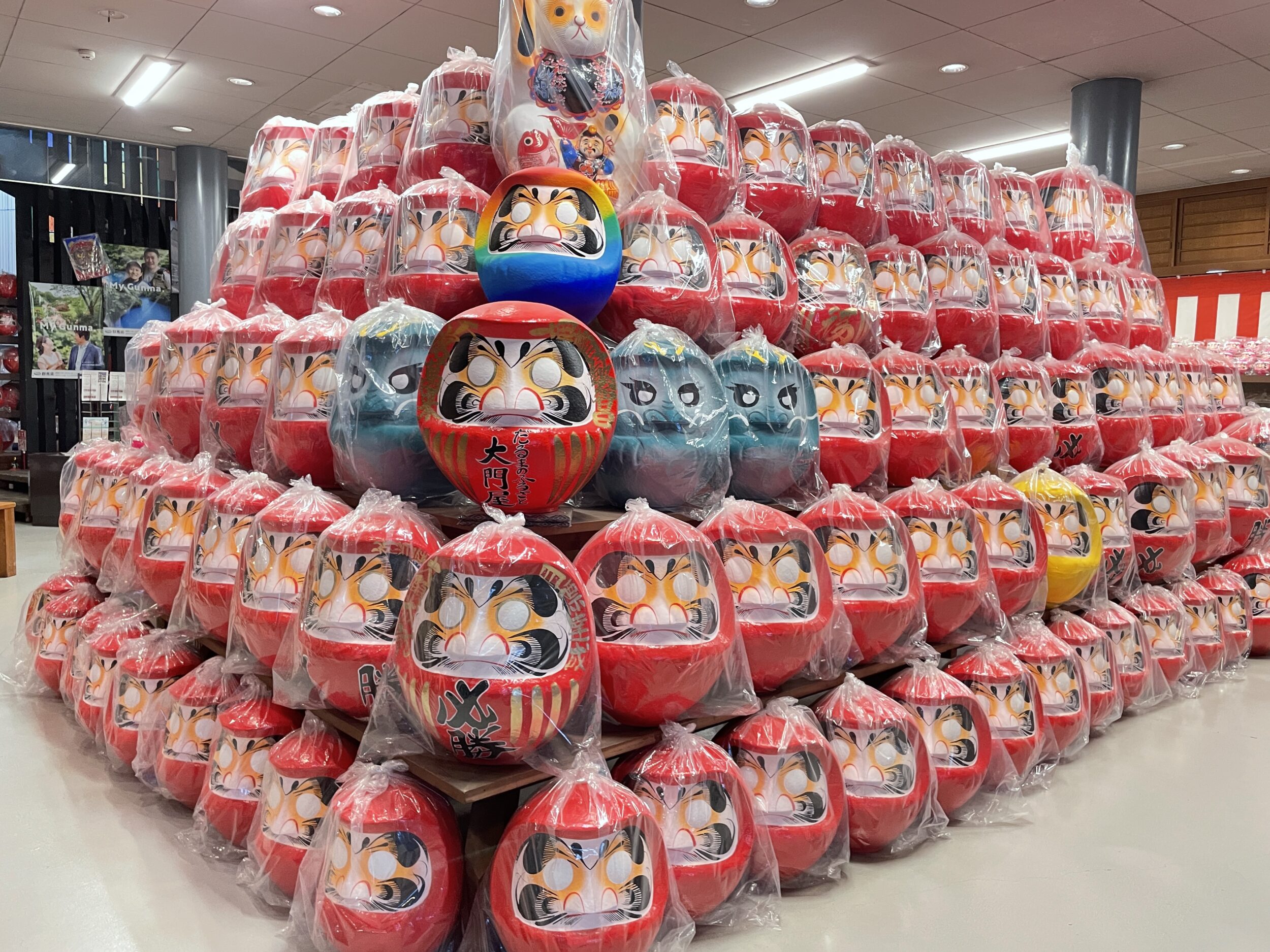
Here, you can see daruma of all sizes. The largest cost 20,000 yen (about €120). They come in all colors. According to souvenir shops, each color has a meaning (health, fortune…) but according to the temple, you can choose any color.
I’m over the moon because there are even limited editions, like sakura right now.
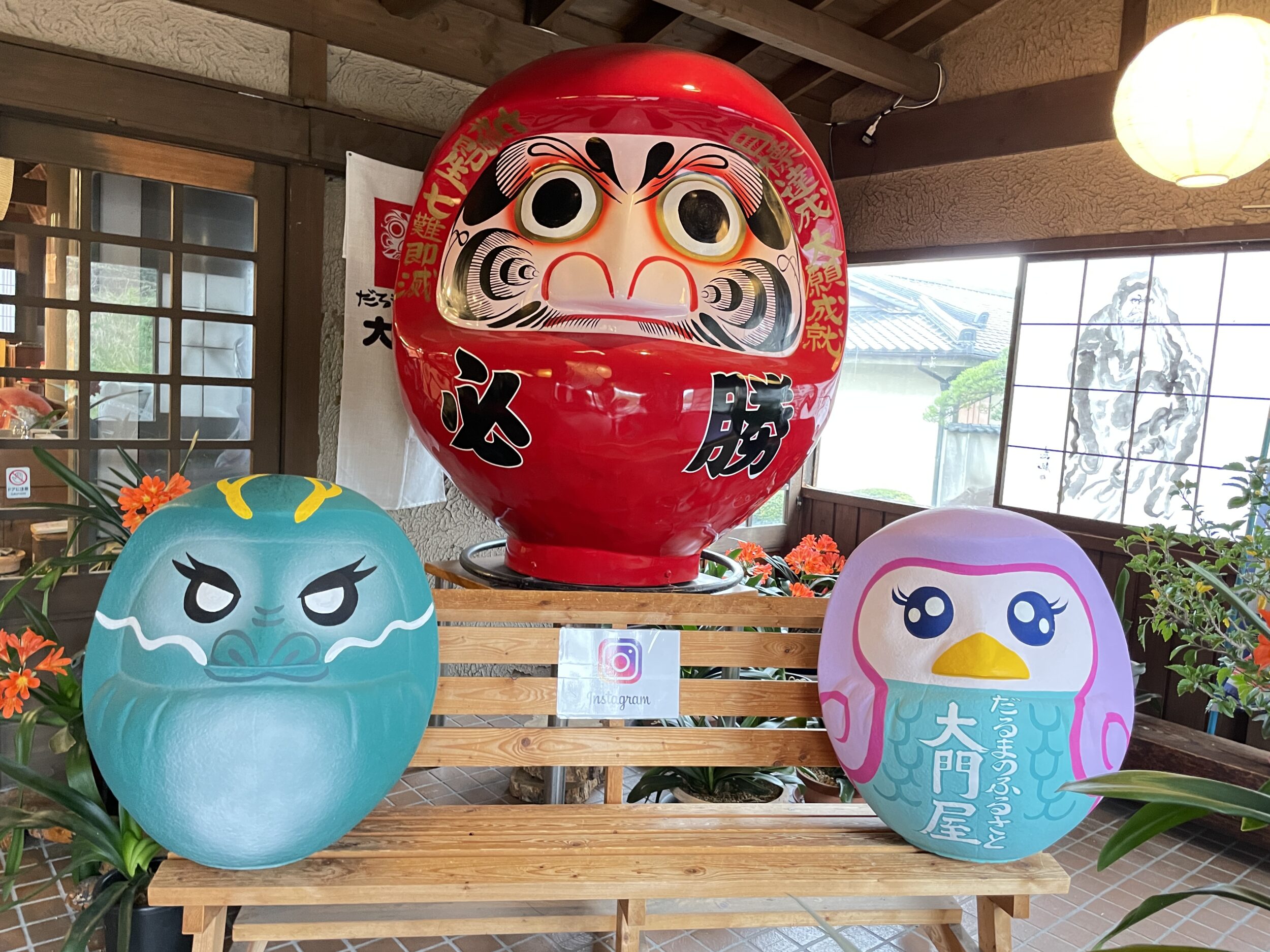
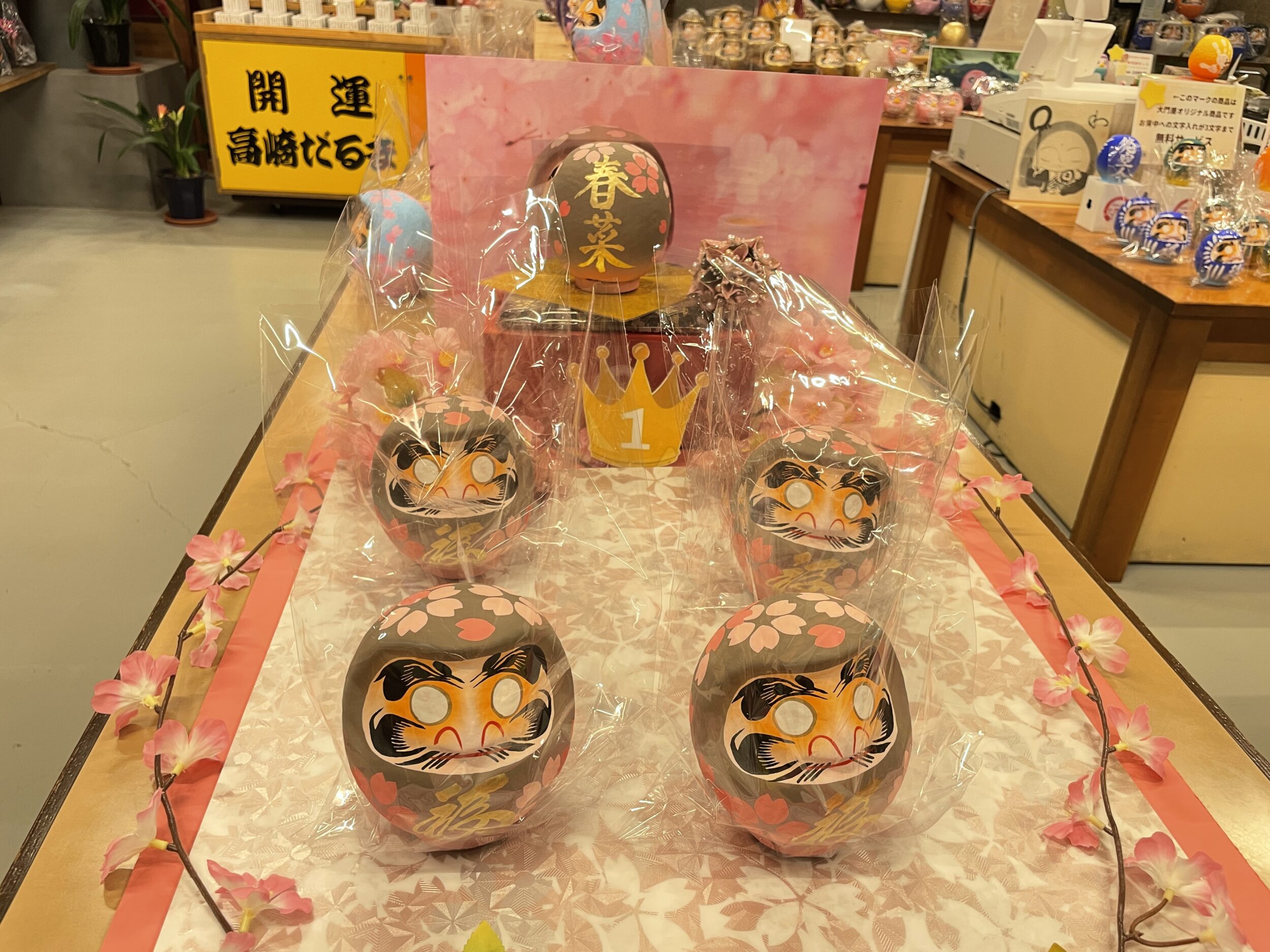
If daruma don’t interest you, there are other super cute figurines too.
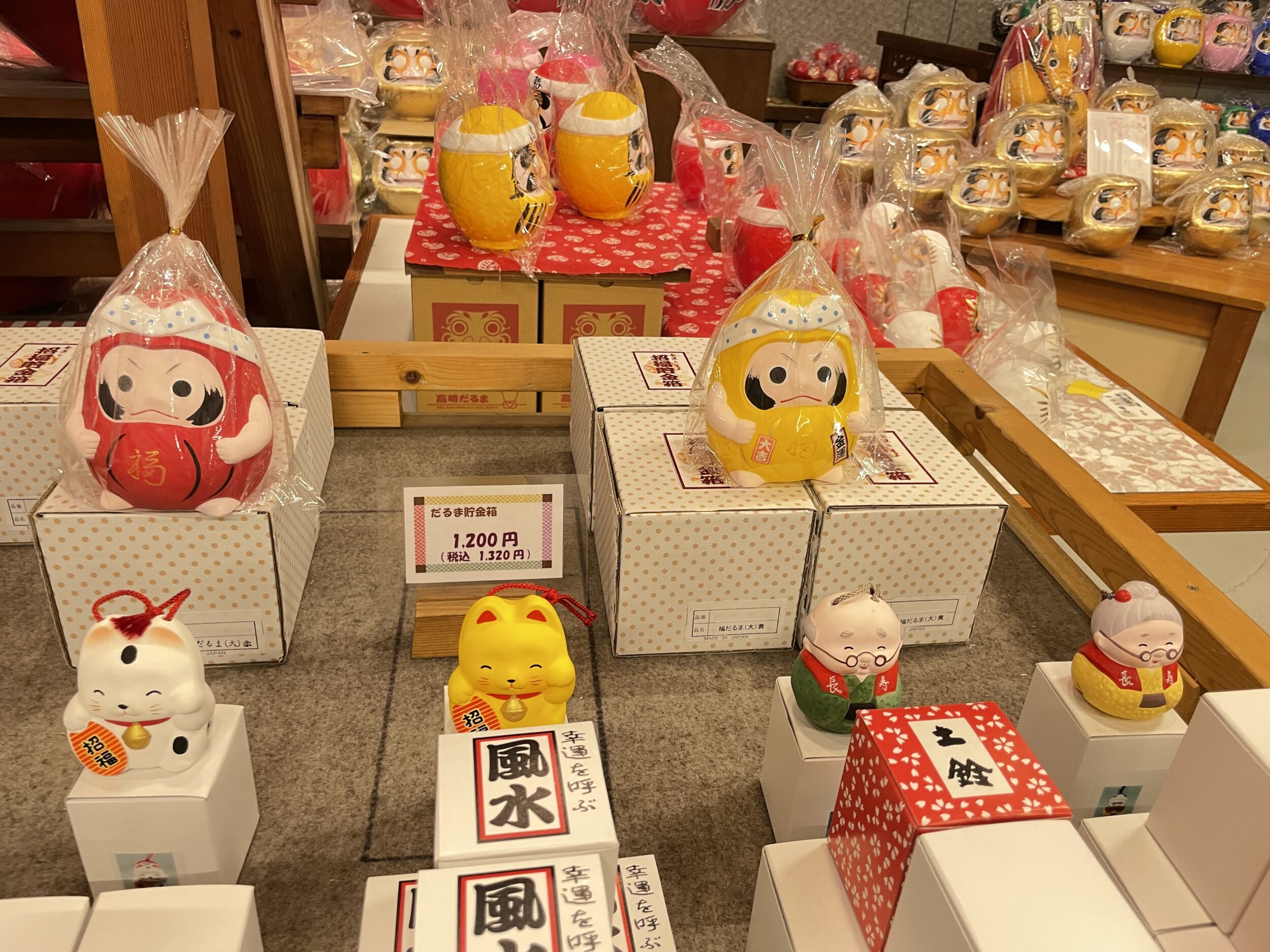
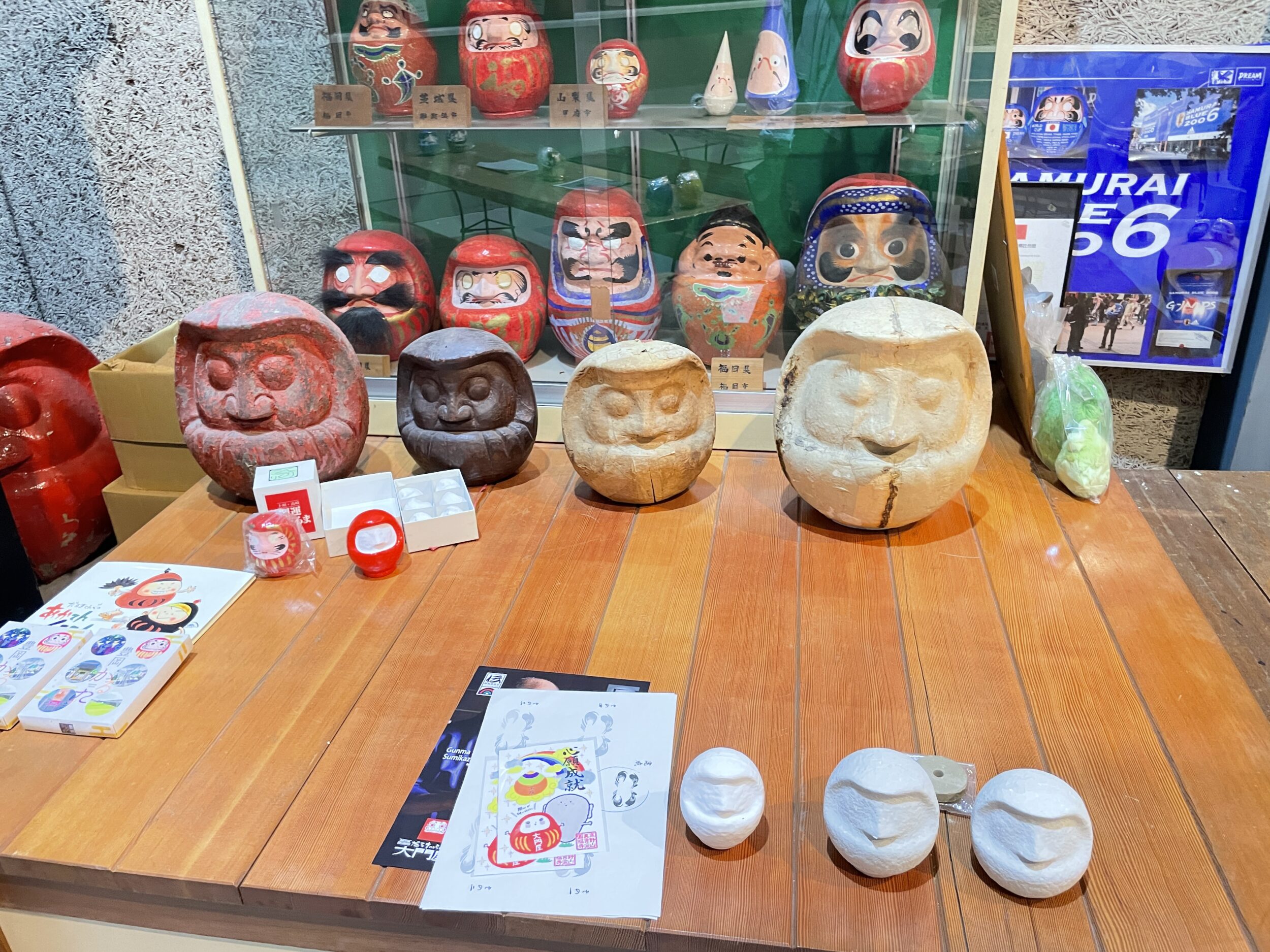
The figurines are made from papier-mâché and then painted. If you have time, it’s better to order your own daruma. Daruma are for individuals as well as businesses; I saw daruma at the temple that belonged to companies 🙂 Let me show you how they’re made in the video below:
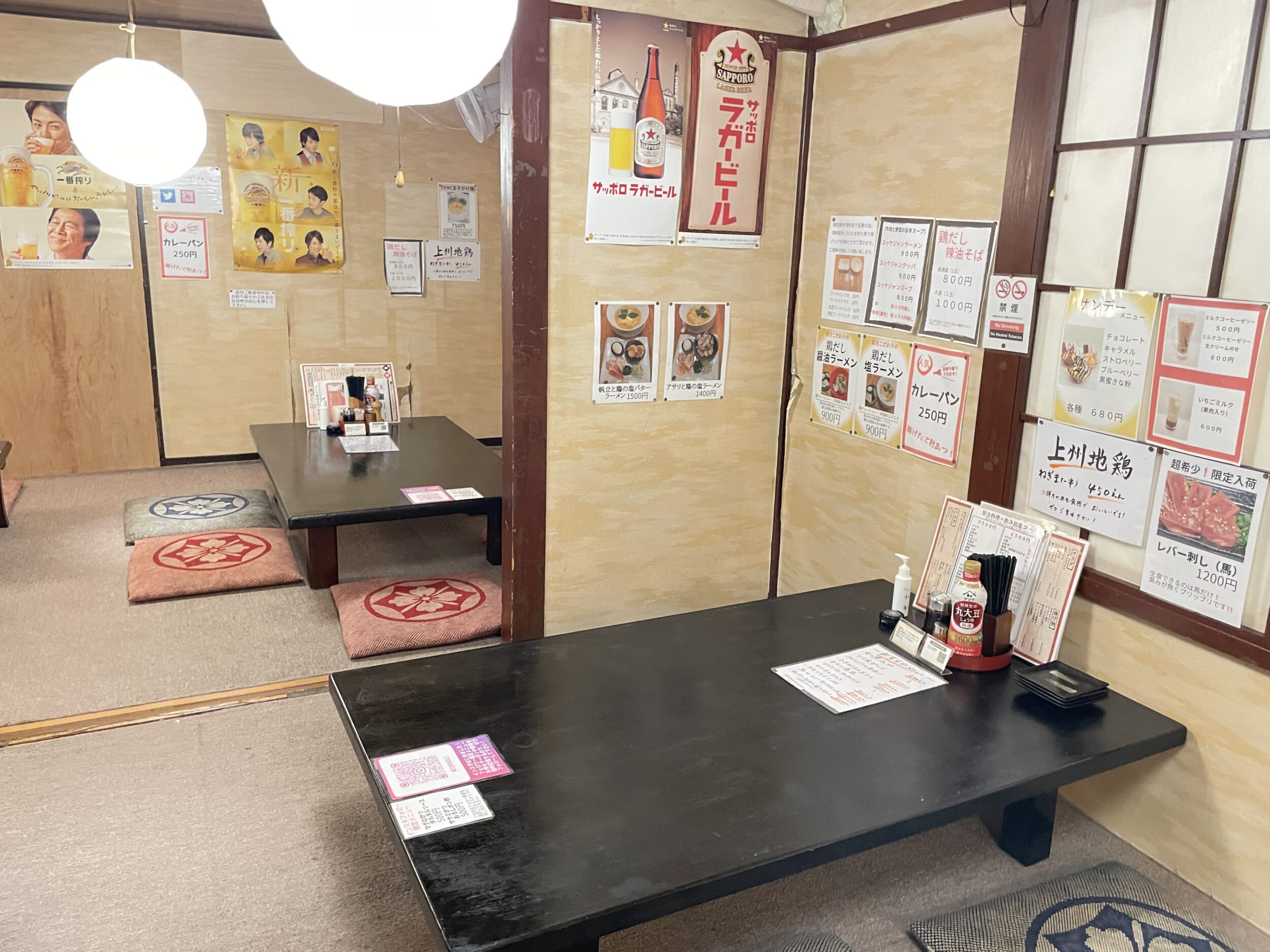
We have lunch right next door, sitting on tatami mats. The menu is entirely in Japanese, and I mess up the order by getting 2 beers instead of 2 skewers 😀
We need to leave quickly to make the most of the most important stop of the day (read more here)
Part 2: Practical Tips
The detailed itinerary of our road trip is available here
- Ice cream: 500 yen
- Daruma: from 700 yen up to 20,000 yen

