

My Current Favorites – [December 2025]: Clothing, Broken Window Theory
Today, let’s talk a bit about winter clothing. Since I’ve switched to only wearing natural materials, I no longer get unpleasant static shocks in winter.
I sewed a wool tailored trouser myself (which I talked about here). Before, I didn’t wear wool trousers because I couldn’t be bothered to take them to the dry cleaner. I really liked this pair because I feel the cold easily (jeans aren’t warm enough for me right now).
I decided to get two more, brand new on Vinted: a Bernard Zins, the Voyage model, and one from the brand Suistudio. I got them for next to nothing because they’re quite niche.
Bernard Zins was the supplier of men’s trousers for Hermès, and that’s all they do: tailored trousers. The Bernard Zins trouser has the advantage of being easy to care for because the composition (60% wool, 38% polyester, 2% elastane) can withstand the abuse of washing machines. Hence its name (Voyage). However, it does itch a bit, and the finishes are good compared to an average brand, but not luxurious enough. I think their “tailored” version will have more refined finishes, but I haven’t been able to test it.
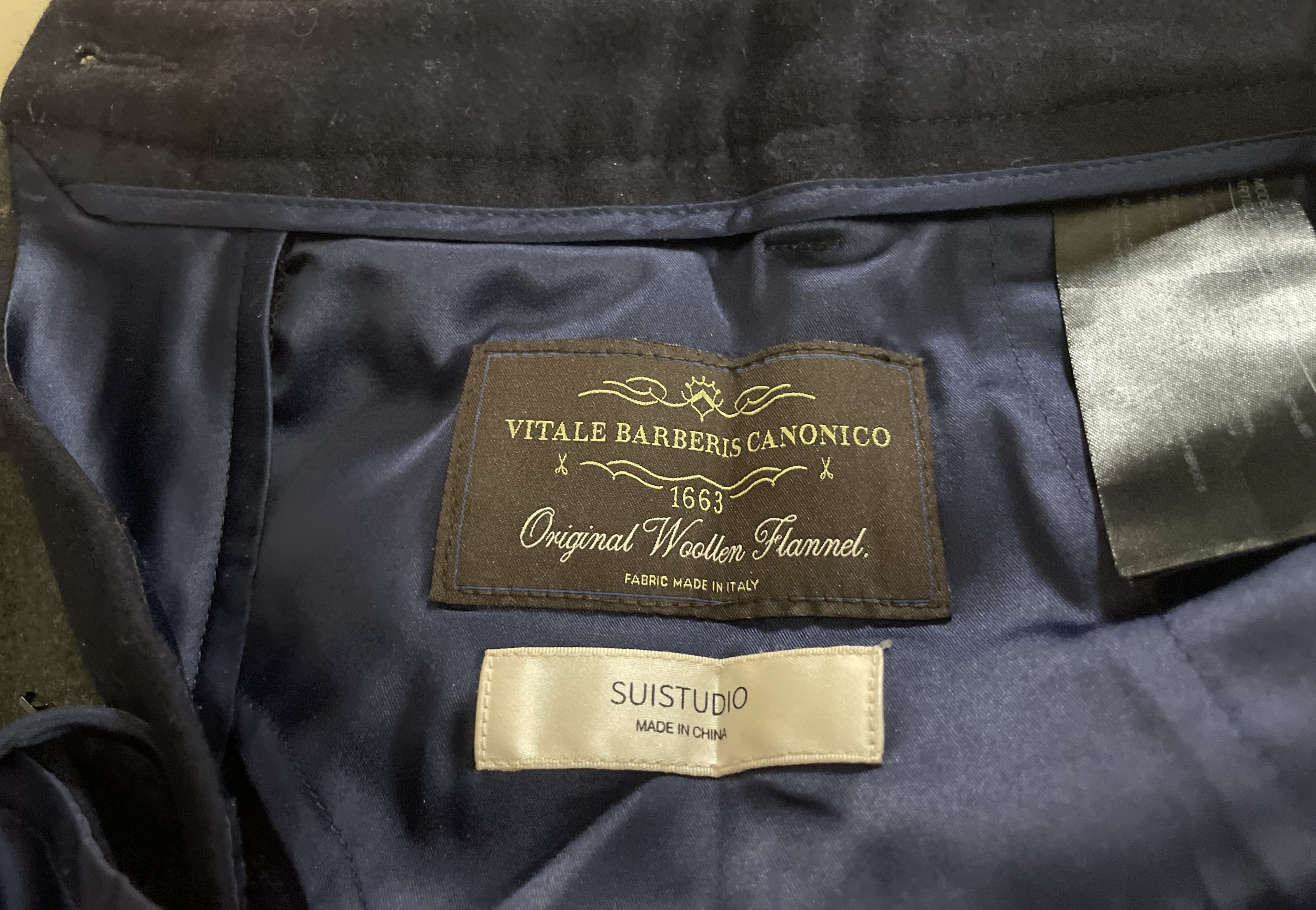
If I had to choose one, I’d recommend Suistudio. This women’s brand from Suitsupply unfortunately no longer exists, but their trousers have all the hallmarks of tailoring. The wool, even if soft, can itch a bit when it comes to trousers, so if the pockets are large, it can minimize the discomfort, and that’s exactly what you get with Suistudio. The waistband is perfectly lined, there are AMF points (an imitation of a hand-finished topstitch) on the pocket openings, the waistband is clean, there’s a bias binding inside; even the belt loops are made with great attention. If you’re looking for a second-hand wool trouser, I highly recommend this brand.
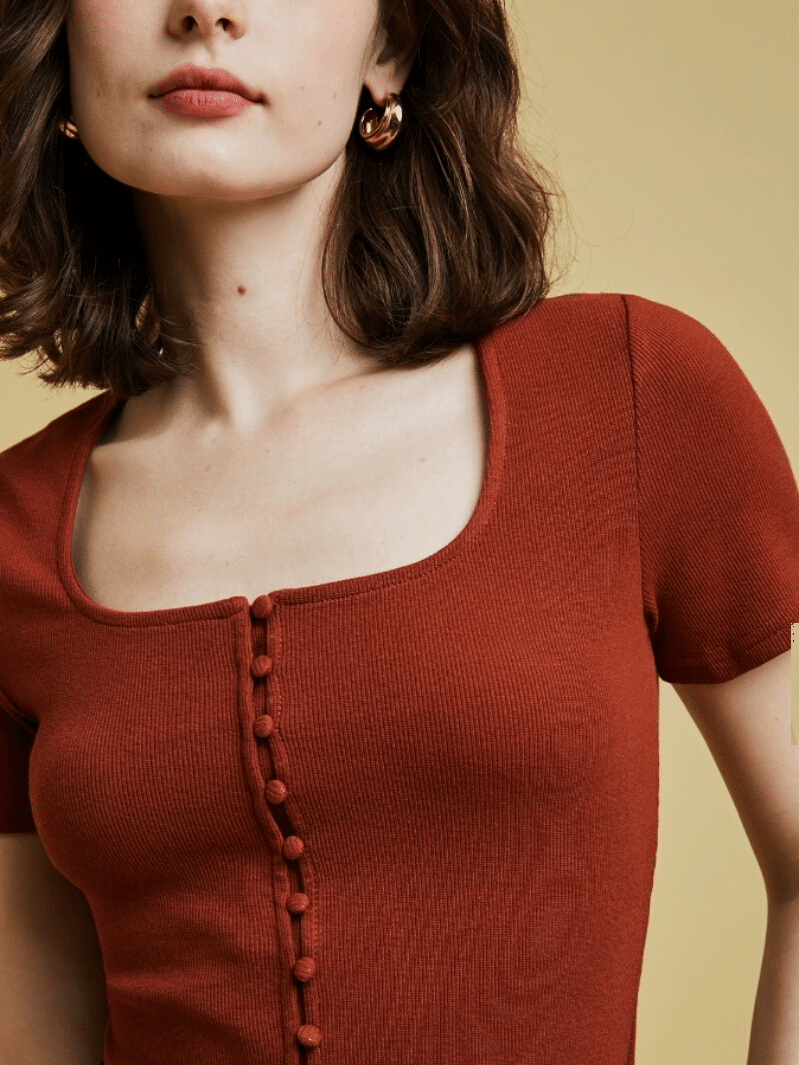
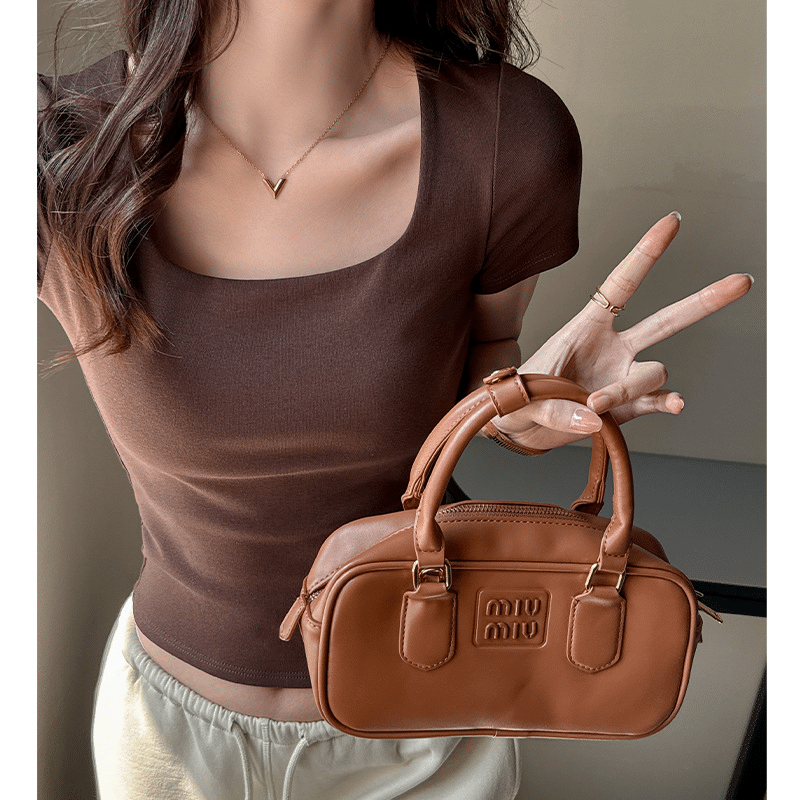
During the Great Braderie de Lille, I was able to buy a boat neck sweater from Eric Bompard (model MO640-00D: boat neck with side slits at the cuffs), the neckline suited me so well that I decided to give up all crew necks and V-necks. From now on, I’ll be favoring square necks and boat necks. A friend (thanks M-G!) kindly explained that crew necks are great for fuller busts, but square necks are better for smaller busts as they add volume. Boat necks, if the depth is right, open up the neckline and make you look taller. That suits me 100%. I bought sweaters on Taobao, 100% cotton.
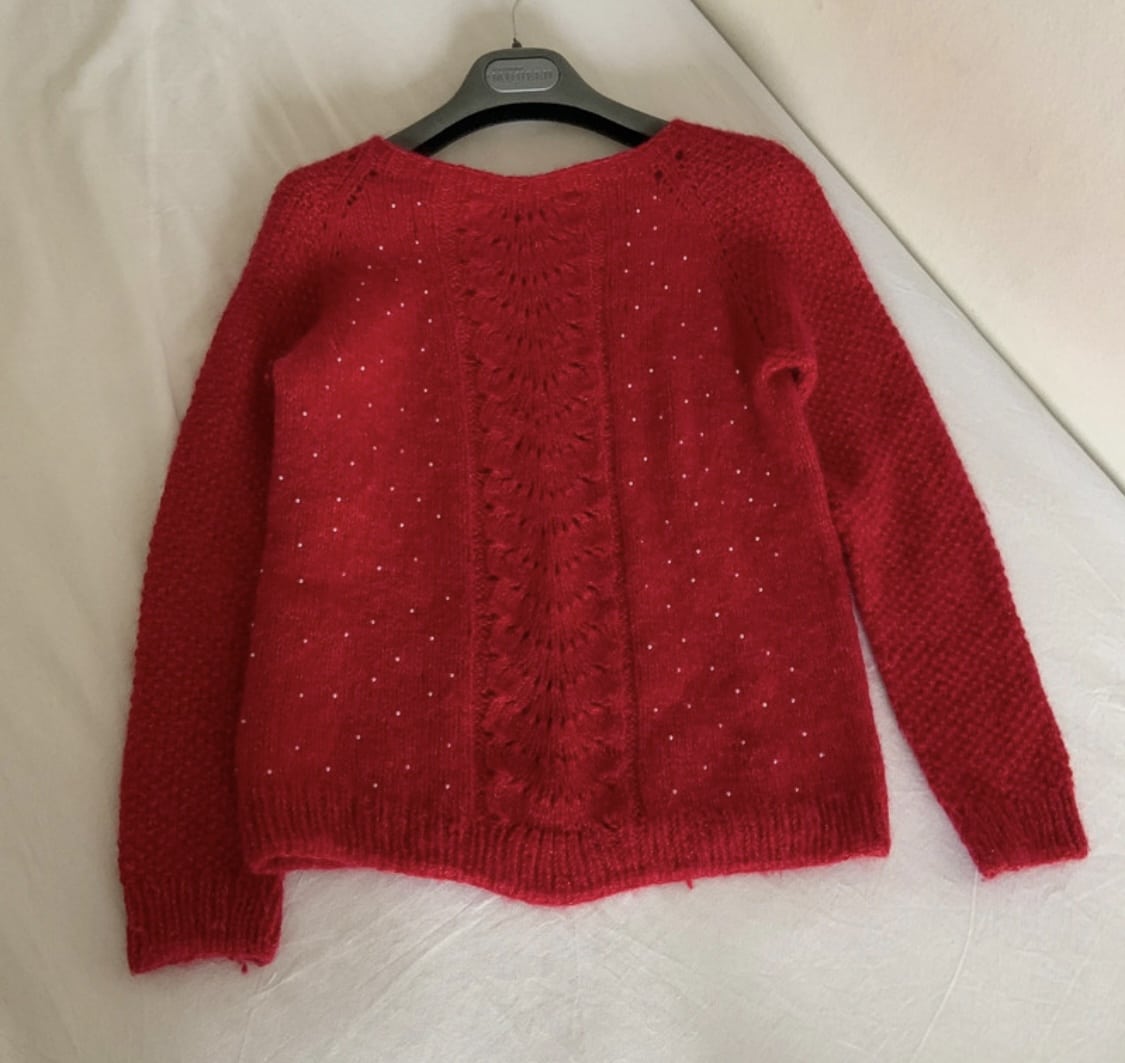
It’s the perfect time to treat yourself to handmade sweaters by lovely souls that aren’t appreciated. Just type “a mano” and you’ll find loads of custom Italian or hand-knitted items. Look, I managed to buy this lovely sweater with extremely professional finishes for €6. We’re not sure of the composition, but based on the burn test, it’s a natural fiber, probably wool blended with mohair.
Second-hand items & qi
For clothing that touches my skin directly, I no longer buy second-hand. I prefer to buy new (whether on Vinted or elsewhere) because I read an article explaining that the qi (vital energy) of previous owners can linger on clothes. If it’s someone with a good life, that qi can be transferred to me, but if the qi is bad, I’ll absorb it too. Once, I bought an inexpensive pearl necklace from a jewelry shop. As a precaution, even though it looked new, I cleaned everything but still had an allergic reaction. I took the necklace completely apart and found that the pearls were brand new, but the 18K gold clasp might be second-hand. After changing the clasp, I never had an allergic reaction to that necklace again. I suspect the clasp was holding onto the qi of the previous owner…
It works the other way too; I don’t want to pass my qi on to anyone else. For clothes I’m getting rid of that I’ve worn long enough to have my qi on them, I just wash them several times, let them dry in the sun for several days, and keep them away from me for several months before selling or donating them.
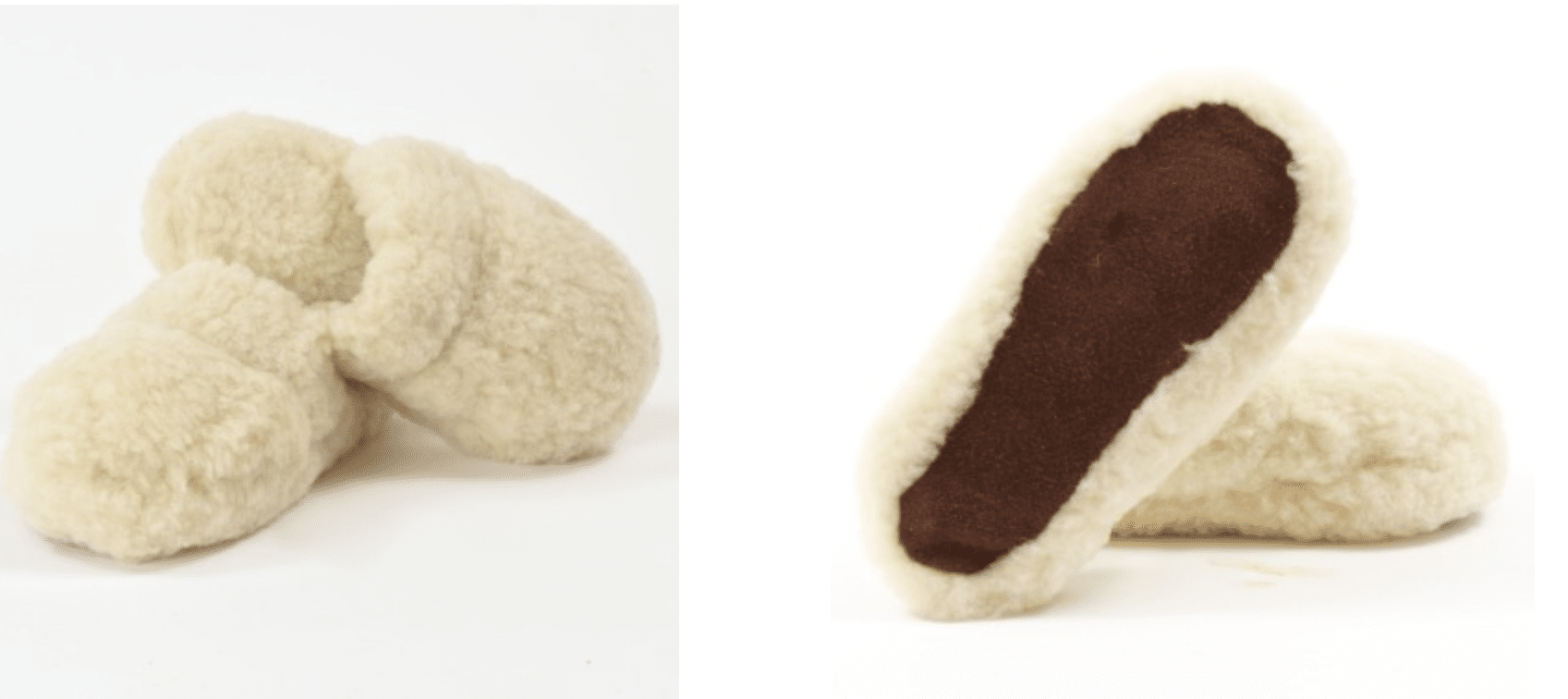
Since I feel the cold, I also bought some sheepskin mules, made in France. The finishes aren’t very refined, but they’re chunky and feel good. I recommend them because they cost only €15 and keep your feet warm. I know you can get wool felt slippers with rubber soles, but I prefer the chunky look of these mules.
Feedback
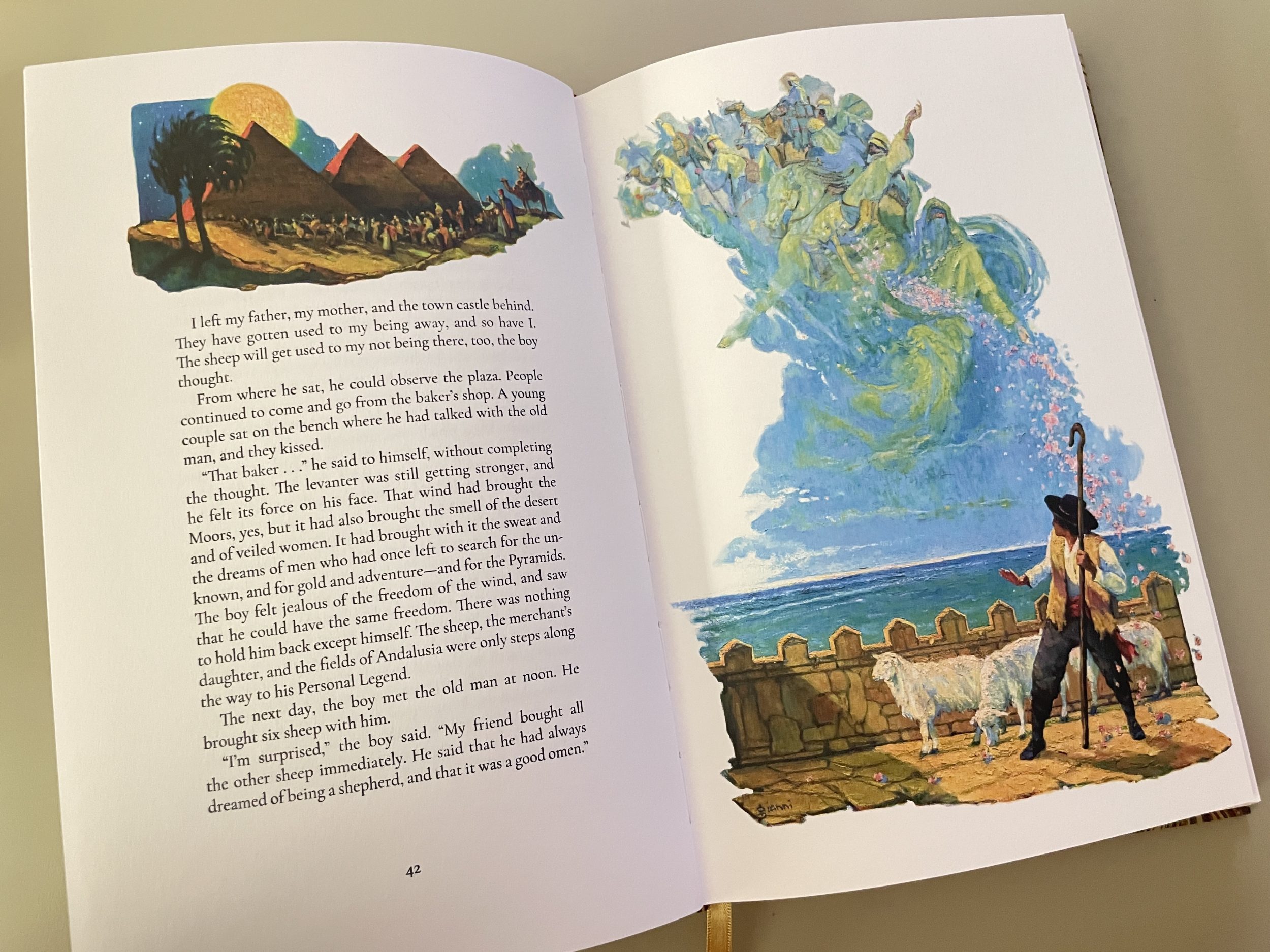
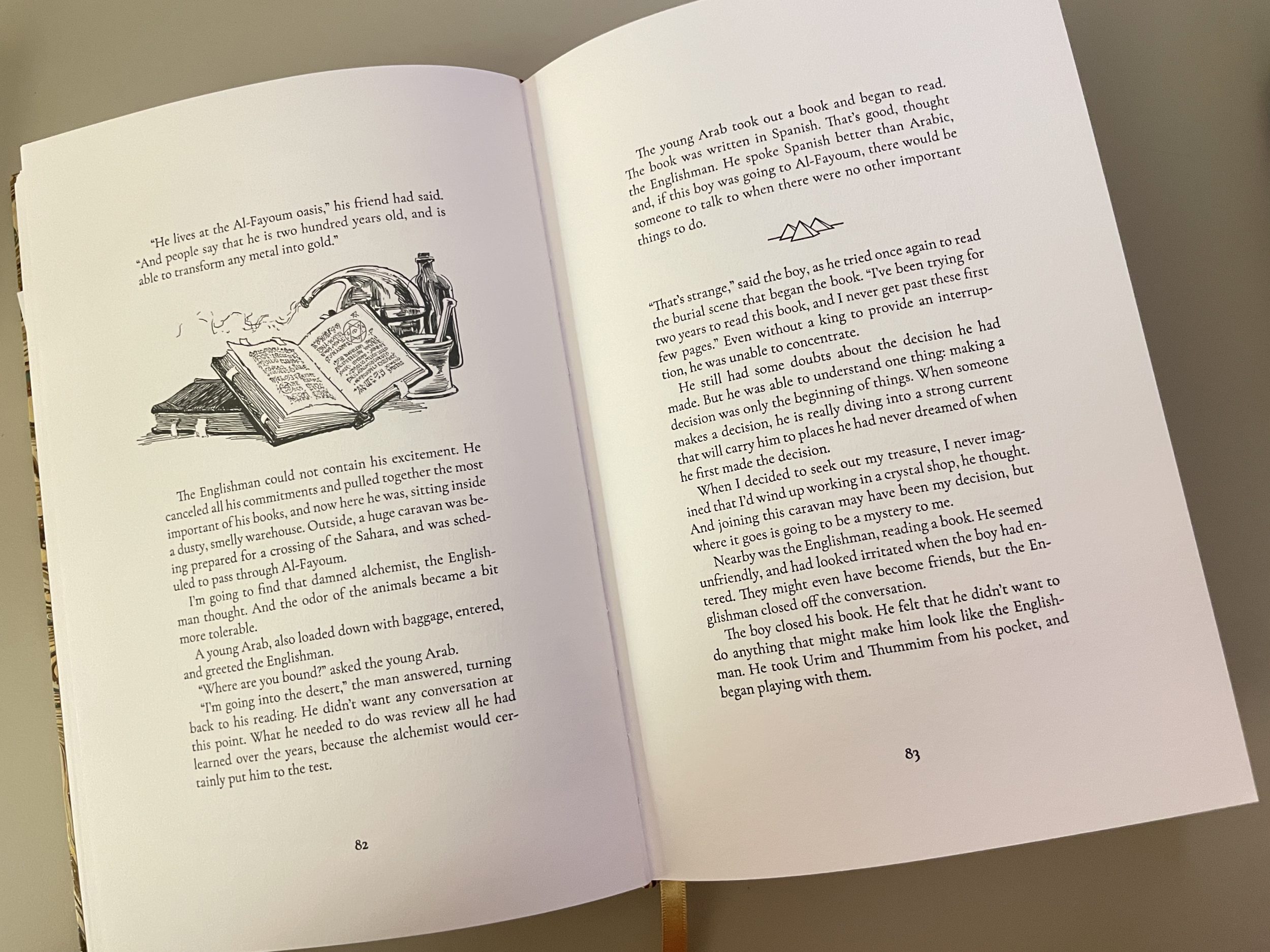
I pre-ordered a limited edition of The Alchemist in English last year and that’s it, the book was just delivered. The binding, the design, and the materials used for the binding are perfect, but I’m completely stuck on the paper, which I find too white, and the colored drawings, which I don’t find sharp enough. Yet, the feedback from all the other buyers is 100% positive!!! I immediately wrote to the publisher to share my feedback, for my personal curiosity. I got a reply 20 minutes later, and I got exclusive info on the choice of paper color, why you see such details in the color illustrations, how they’re printed, why it was expensive, why it was difficult – a real masterclass on printing! I was right to send that email!
The experience taught me that you should never stay silent when you have a doubt or perceive a flaw. Sometimes it’s a simple mistake (e.g., when I didn’t get a raise the month I was promoted, the accountant apologized for the error), an misunderstood artistic choice, or worse: a gradual decline in quality. Because when no one complains, some brands take advantage to cut corners on quality and boost their margins. I had an epiphany when I learned that people take the time to report quality issues to brands (even for a sweater or a pen), and I myself contacted several brands with photos to back it up, and I systematically got a refund or an exchange, even for products that were no longer new.
P.S.: Some brands have such an aura that their customers no longer dare criticize them. Sézane is the perfect example: people took years to break free from that “spell,” despite an obvious drop in quality. These brands hypnotize their consumers, who defend them tooth and nail, as if they’ve sucked out their soul and critical thinking. When I see people going crazy because a Sézane item is out of stock, that’s a red flag for me.
The mechanism of silent degradation reminds me of the “broken window theory”, a criminological theory developed in the 1980s. The principle is simple: if a broken window in a building isn’t repaired, it sends a signal: “no one’s watching here, no one cares.” Soon, more windows will be broken, then graffiti will appear, then more serious damage will follow. The first disorder left uncorrected opens the door to escalation. I’ve also seen hidden camera experiments that confirm this theory: a car parked on the street with its headlights stolen with impunity signals that it’s perfectly acceptable and risk-free to go after the rest (mirrors, wheels, windows). Each unpunished act normalizes the next one and encourages escalation.
This principle applies especially to safety and public order. What I blame France for is precisely this lack of consequences : real criminals don’t end up in prison, while the average citizen who commits a minor offense by mistake is immediately sanctioned. My girlfriend experienced it: harassed on the street, followed into a building, she filmed everything. The police immediately recognized the individual but said they couldn’t do anything because he was undocumented. Result: he can go on harassing and terrorizing women with no consequences. That’s exactly the “broken window” of the theory – unchecked criminal behavior that sends a signal to other criminals that the bolder you are, the more you can get away with. In such a context, it’s impossible to feel safe: not only are crimes not punished, but there’s no deterrent effect.
In Dubai or Singapore, breaking the law costs extremely dear, systematically. Even if you’re very tempted, you think twice before breaking the rules. Lee Kuan Yew explained in his autobiography his choice to impose very high fines in Singapore: in his experience, carrots aren’t enough; you need the stick. Result: countries where you feel extremely safe, where you can finally turn off that anxious “pickpocket alert” program running on a loop in your head.
Thus, whether it’s product quality or public safety, public silence and the absence of consequences open the door to degradation. Giving feedback and maintaining clear standards is about maintaining the “windows” before they all break.
Tools for architects and engineers
Because of my activities in illumination and sacred geometry, I need to find tools that allow for precise lines (since I can’t manage it yet with brushes), while using ink (parchment is a difficult material). I came across the brand Rotring. It’s a German brand specializing in drawing tools for architects and engineers.
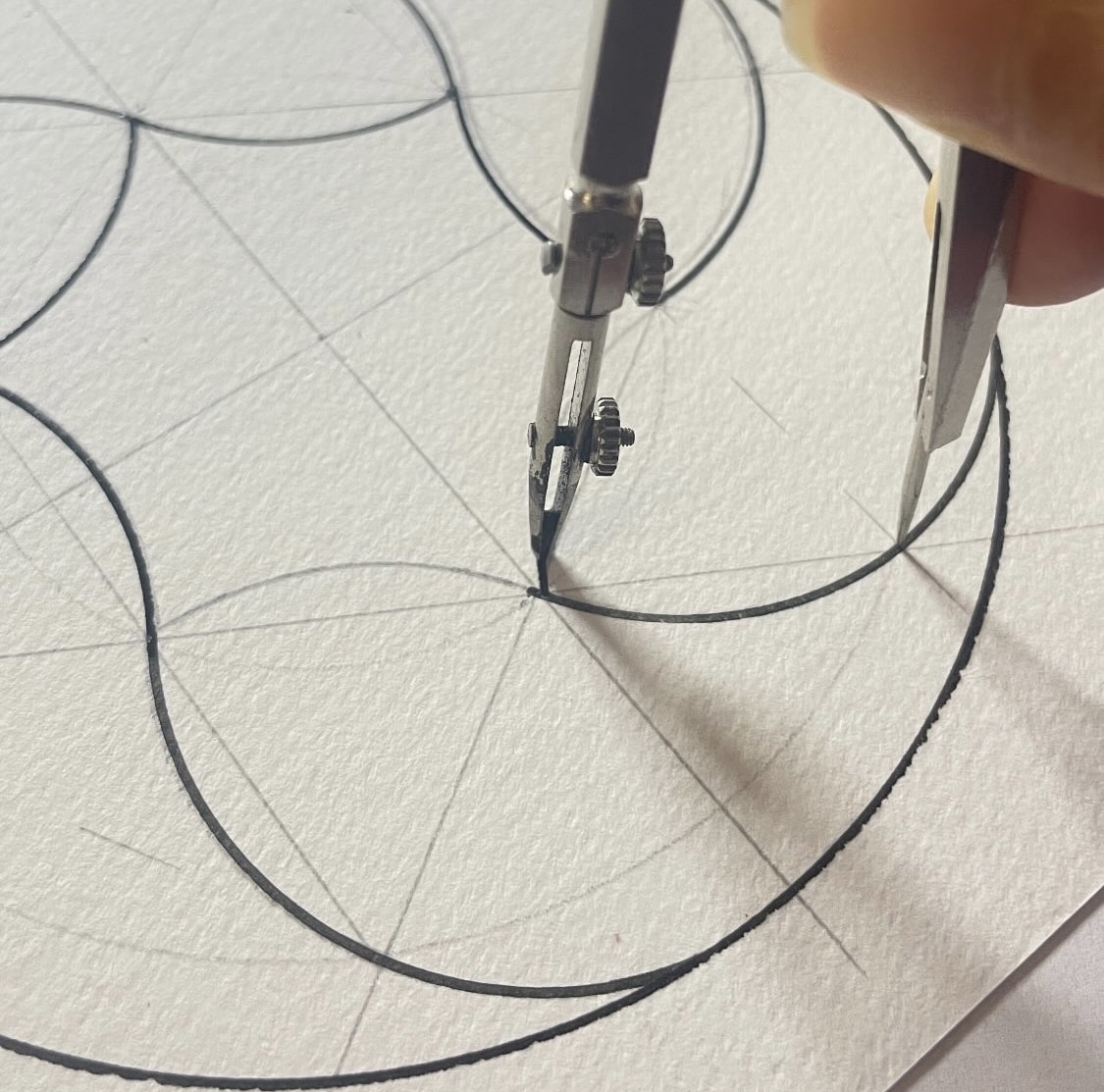
Before, there were very few tools (fountain pens, brushes, pencils), and architects and engineers had to use ruling pens that allowed them to draw lines with constant thickness. These ruling pens also have the advantage of being usable with a compass. Very useful for drawing windows, arcades… like in my example:
Then, isographs (technical pens) were invented. These technical pens use ink but allow for a consistent line thickness with very little pressure, and don’t leave big accidental stains like ruling pens, and you don’t need to refill ink every 30 seconds. They’re so well made that you can also buy spare parts. This type of product can last 30 years without issues, which is why they’re very expensive.
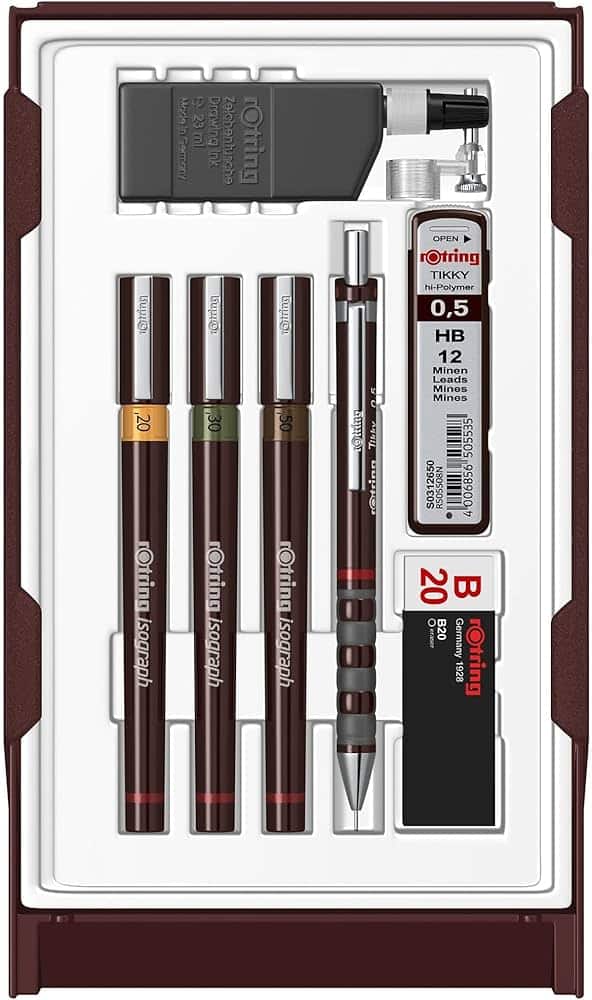
I managed to get my hands on a set on Vinted (search Rotring College Set, you can also buy new on Amazon but it’s pricier, Amazon link).
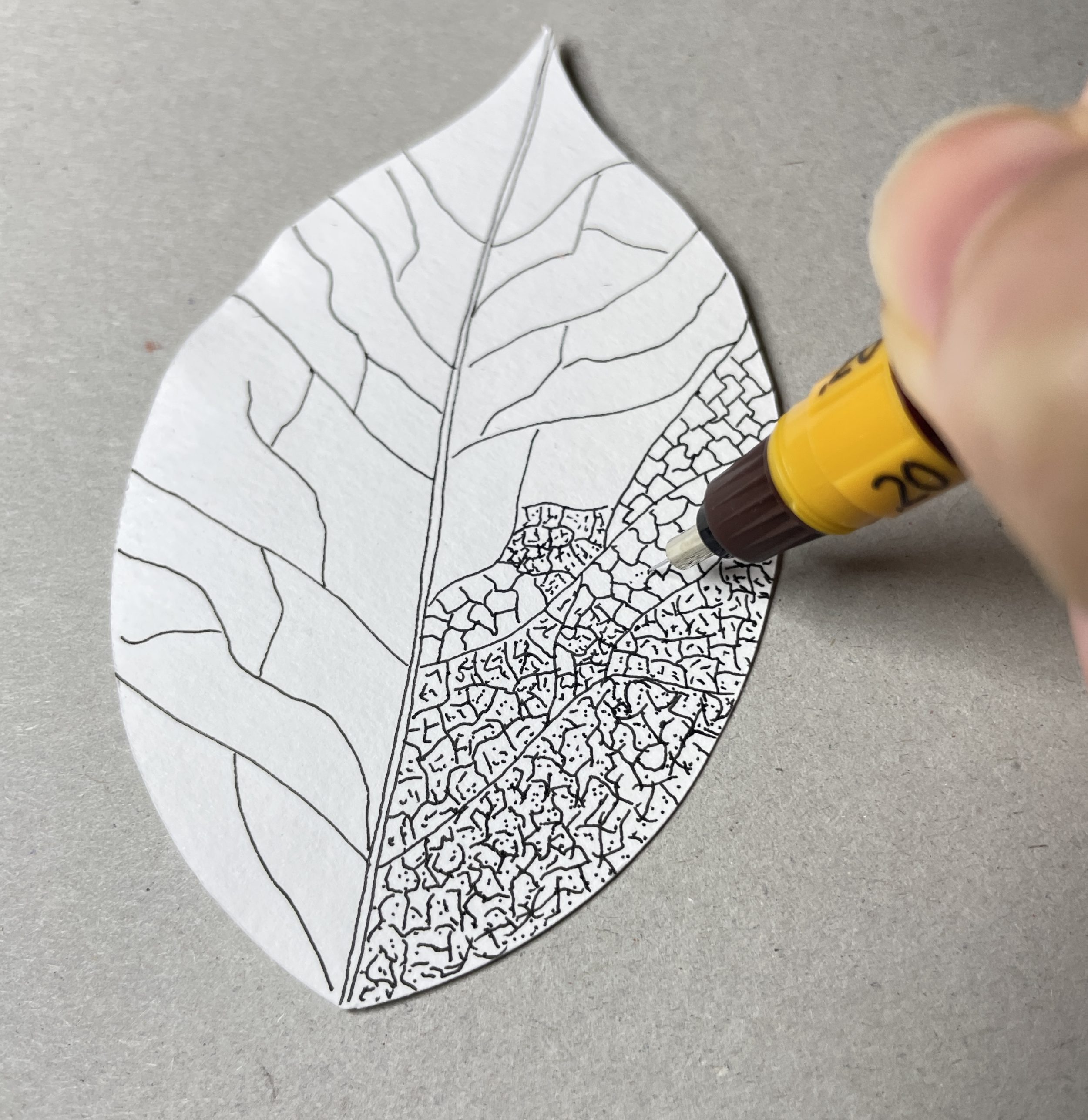
When I showed this sheet to JB, the sharpness of the lines and the quality of the ink made him ask if I had printed the pattern 😀
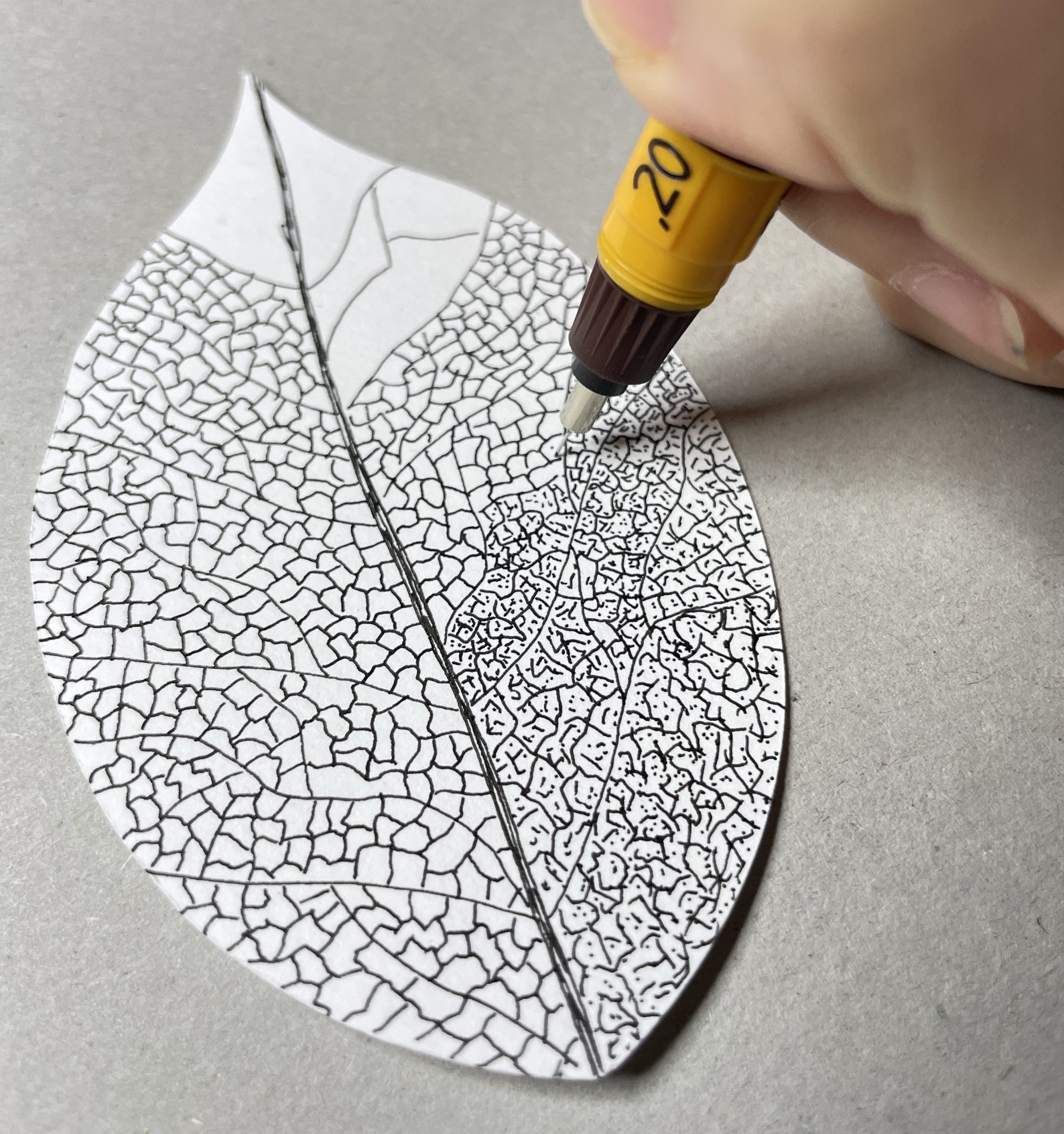
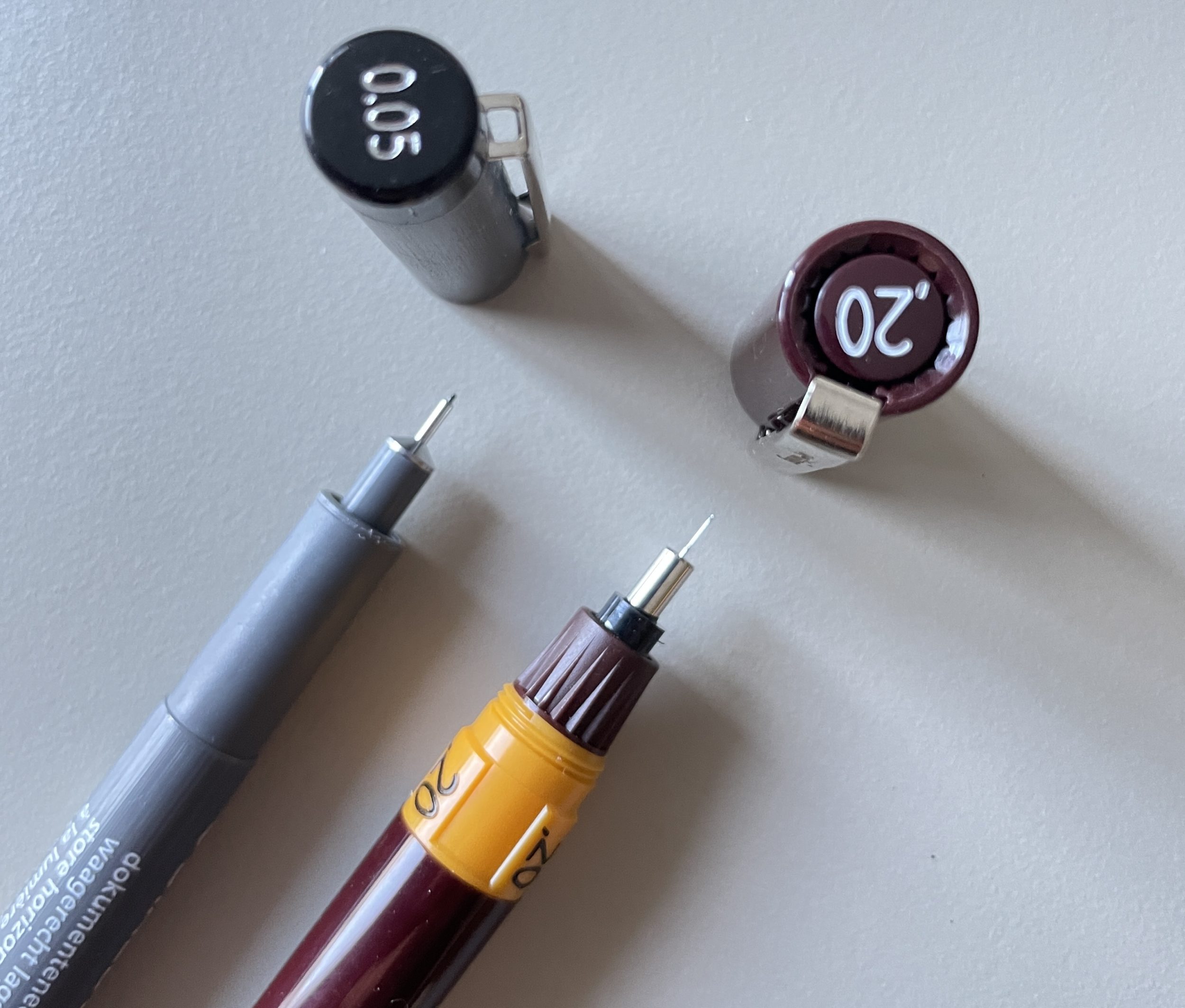
Since the isograph is too expensive and too professional, most people use its cousin, the fineliner. The tip of the fineliner (on the left) is a sort of foam that wears out over time, whereas the isograph (on the right) is steel. The 0.2 from Rotring is much finer than the 0.05 from the fineliner. Plus, isographs can be screwed into the compass of the same brand.
Switching from fineliners to isographs, I feel like I’ve been upgraded to 1st class 😀 The lines are sharp, the ink is really black, and you don’t need to apply much pressure; the width of the pen is perfect, very comfortable for my fingers. I find it fascinating to discover tools of such great quality that can be passed down from generation to generation. On Vinted and Le Bon Coin, you can find plenty of vintage replacement tips and Rotring compasses. Go for 100% metal compasses because they are more precise than plastic ones.
Now that architects no longer draw on paper, it’s artists who use this kind of tool for more precision and sharpness. The only downside I see is the limited choice of ink. It needs to be fluid enough not to dry inside the pen, but not too fluid so it doesn’t run on the paper. For now, I can only find 3 colors: black, red, and blue. That’s enough for illumination, but for an artist, it can be a bit frustrating.
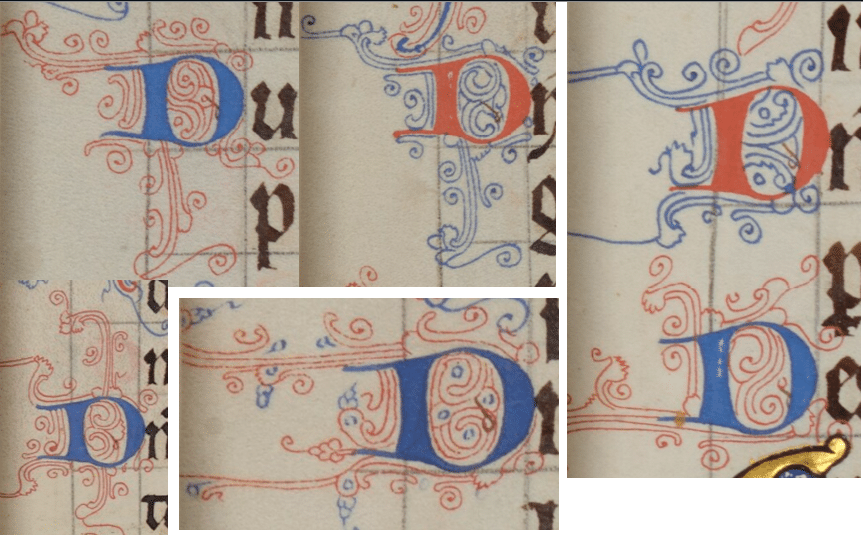
These pens are very reliable and wear little; they are used for mechanically made drawings, or with computer-assisted drawing tools.
For all usage tips and examples, you can watch this video and see my collection of Rotring tools here.
Reducing mental load
I continue my quest to remove mental load. Our apartment is laid out weirdly, so we need to turn on the dehumidifier after every shower. Ours doesn’t start automatically. After months of turning it on manually, we decide to take an hour to find a model compatible with home automation. Now, the new one turns on and off automatically based on the humidity level in the room. Sure, it takes 3 components for that, but once set up, it removes a daily mental load for both of us.
In the list of annoying mental loads, there’s hair removal. So, I booked an appointment for laser hair removal. I had tried IPL, but it didn’t work very well. The new lasers are more effective, almost painless, but you have to go back every 6 weeks. So to get rid of 90% of it, the treatment will last almost a year. But in the future, when I go to the pool or the beach, I won’t have to drag along the mental load of hair removal. Can’t wait!
That’s all for this month, I wish you all happy holidays. Take care of yourselves, especially between December 18 and 21!

