My Current Favorites [August 2026] – Islamic Arts, Wealth Levels, Leather Desk Pad, Guqin
Biomorphic Patterns
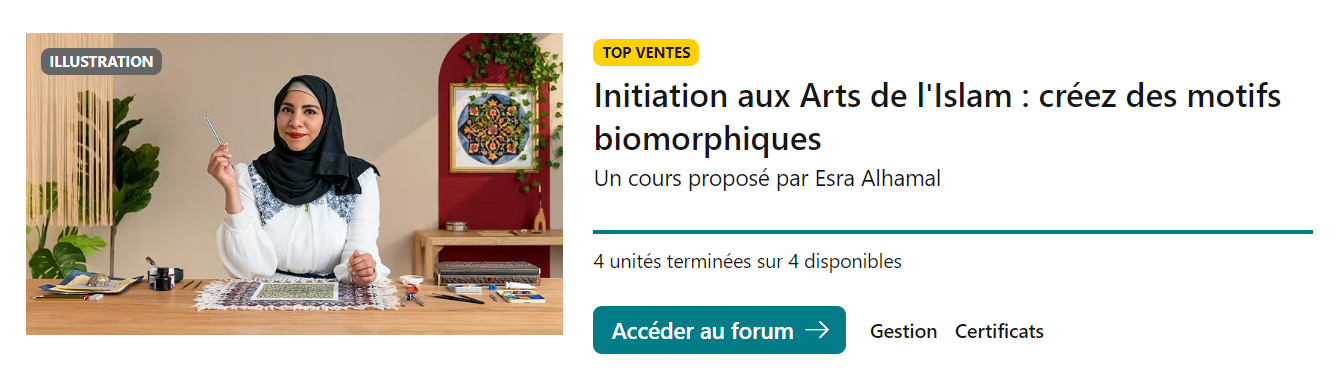
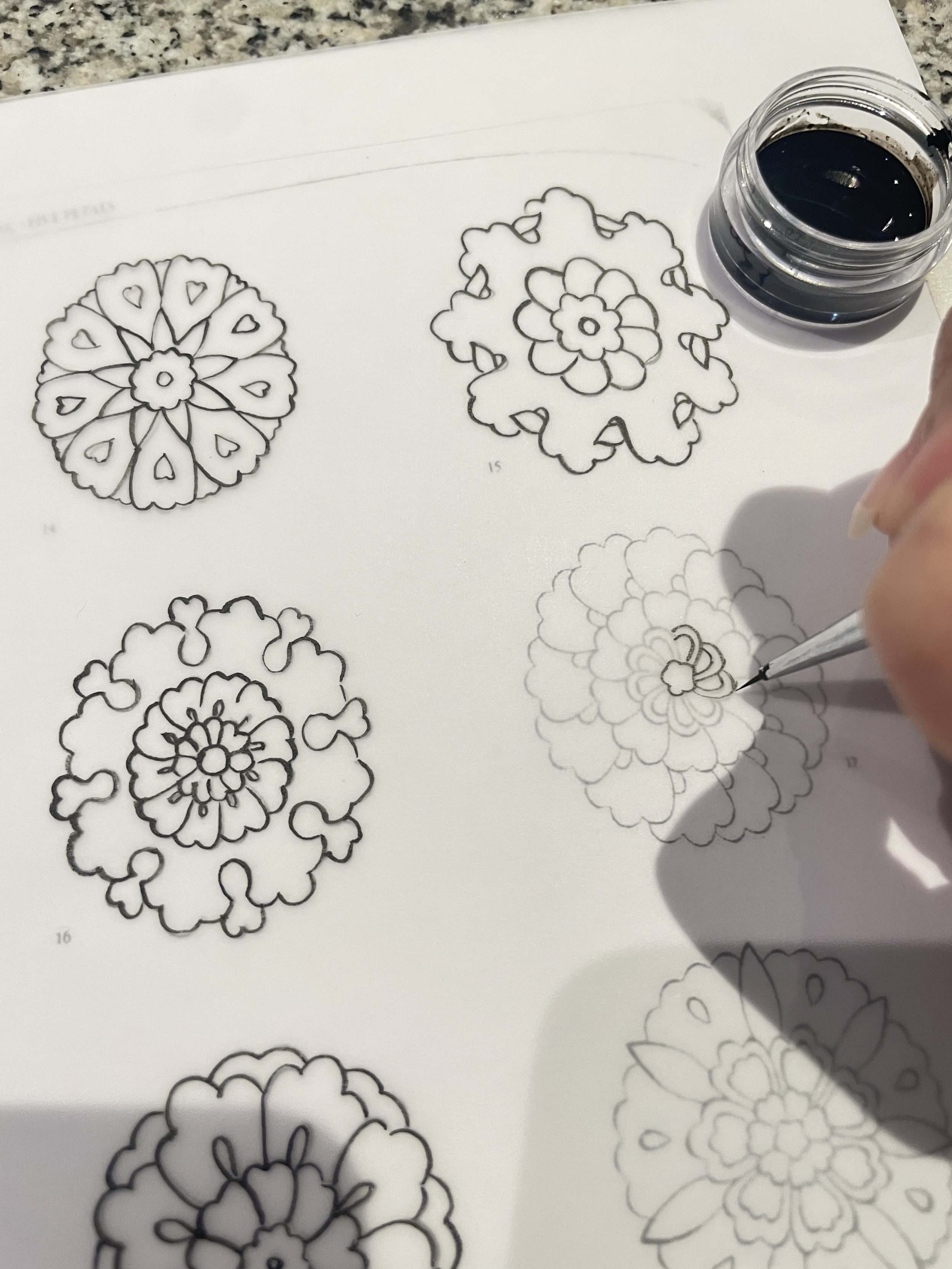
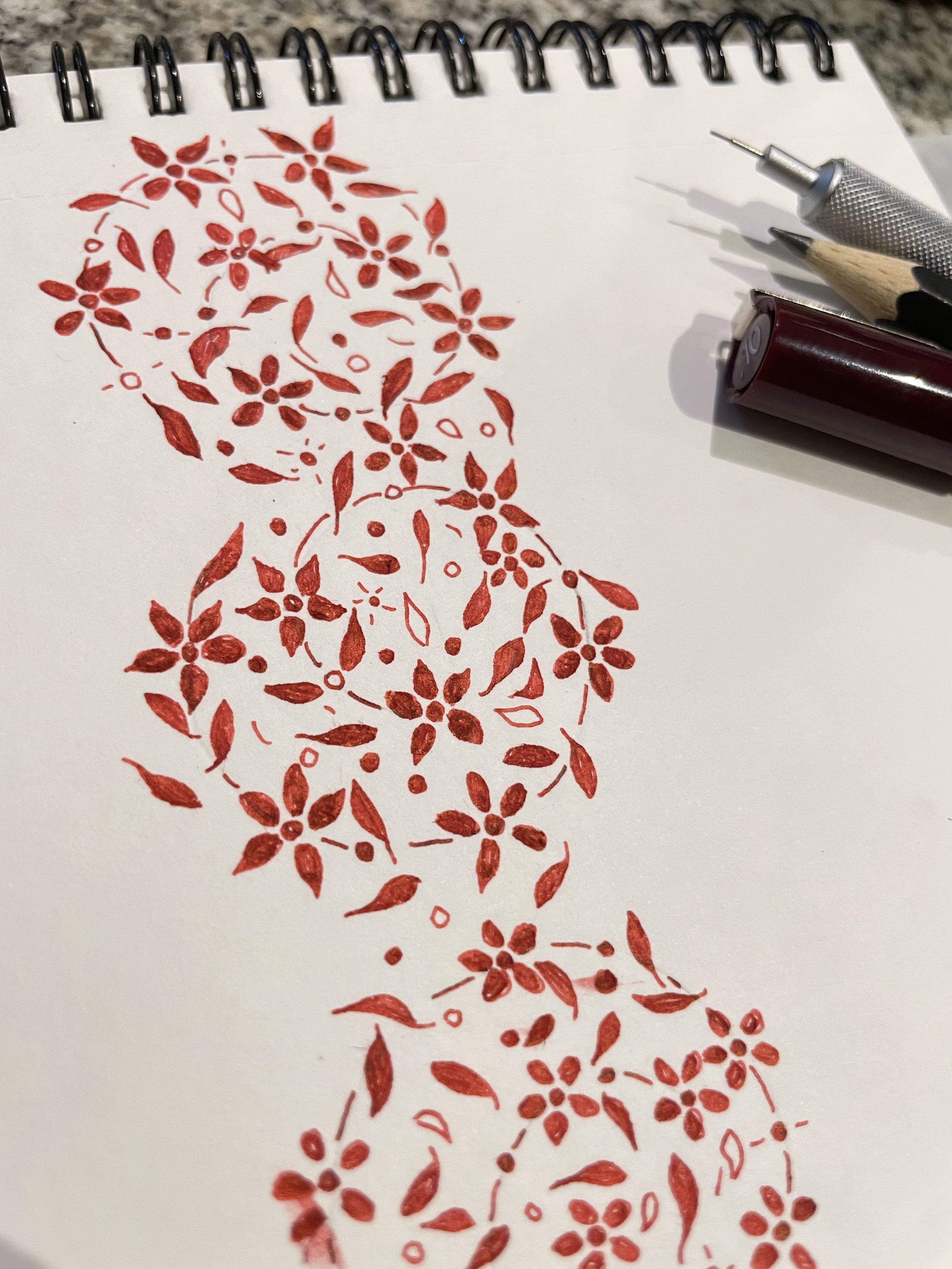
This month, I put down my computer and keyboard for brush pens, rulers and compasses. I’d been wanting to dive into biomorphic patterns for months, but reading books on the subject wasn’t motivating me enough. Luckily, Domestika recently released a course by Esra Alhamal. The course is basic but visual, and that’s what’s encouraging: even with few skills, you can make something pretty.
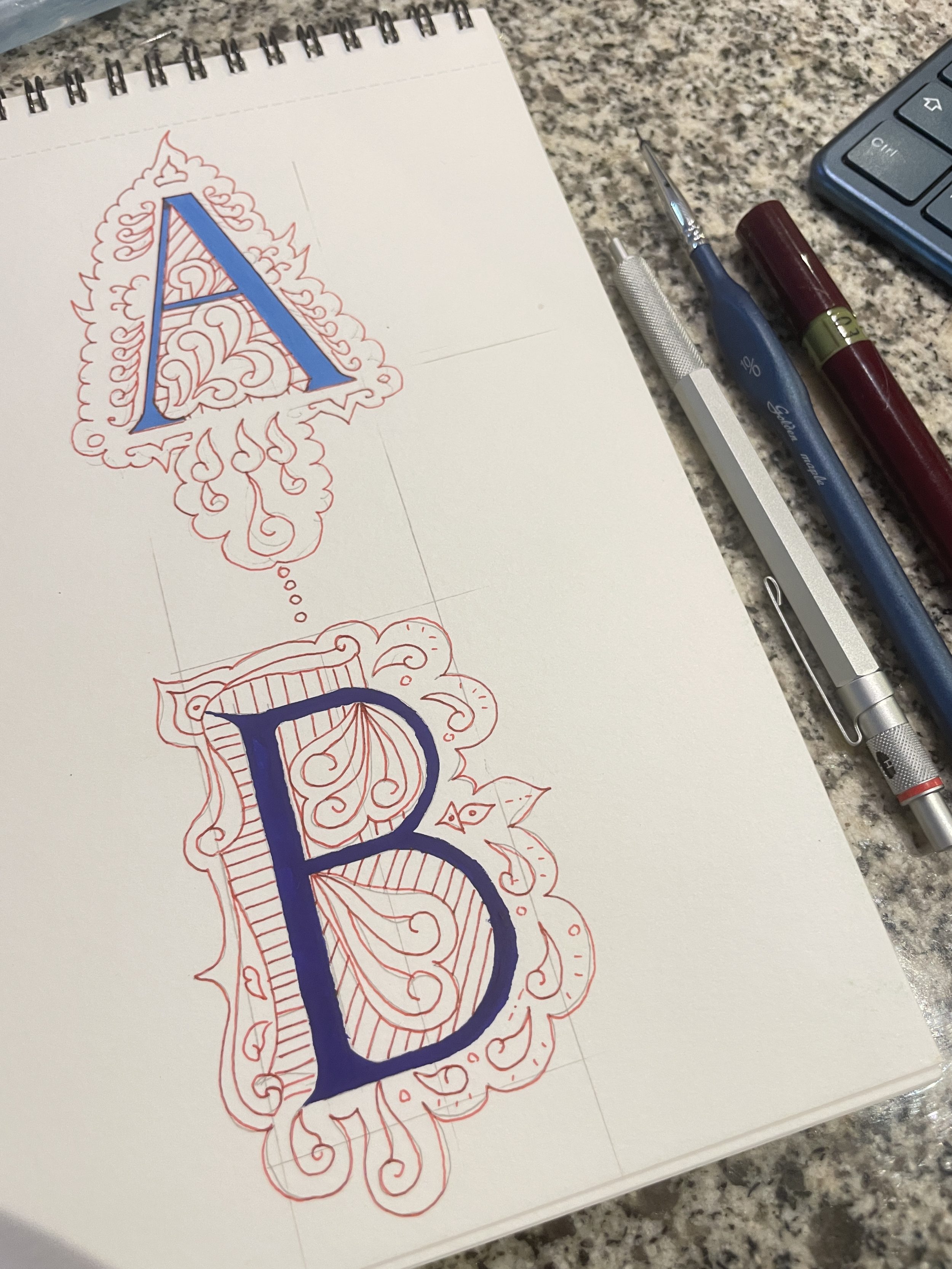
Every time I start a new art form, I forget the essential: you have to COPY first, master the movements, then INVENT. I often start projects created from scratch when I don’t have the skills for it, instead of just copying a ready-made design, making mistakes on that design, and creating my own design later.
So each time, I reread a passage from the book Reaching Excellence (which I reviewed here) Amazon link, which constantly reminds me of 10,000 to 20,000 hours of practice before truly mastering a new skill, to motivate myself. The book criticizes a society that despises effort and mastery, favors instant gratification and passivity, and leads people to believe everything is owed without work. This attitude reduces ambition and discipline. Ideal learning takes five to ten years. That seems long, but over a lifetime, a professional career allows us to master—at the same level as a genius—at least 3 sets of skills. And yet many rest on their laurels and stop learning when they have plenty of time to acquire skill after skill. Moreover, society is changing enormously right now; stopping learning means aiming for unemployment.
Wealth levels according to the Chinese
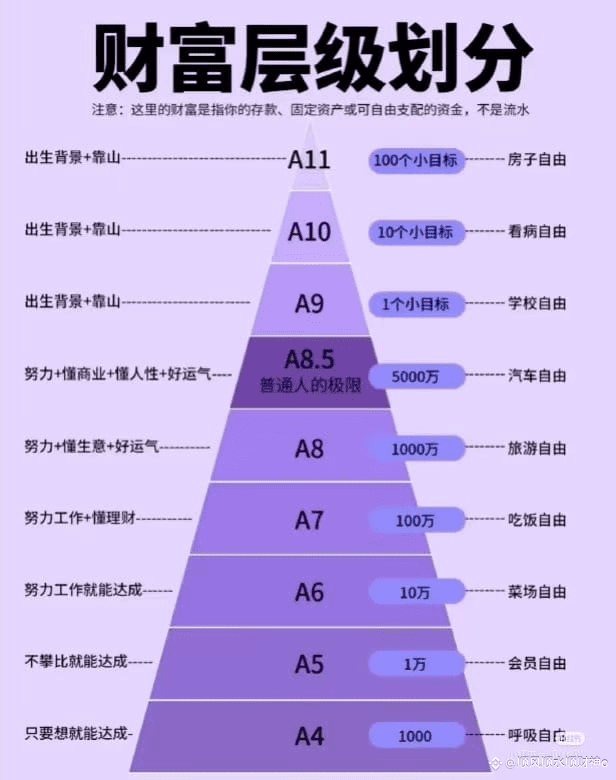
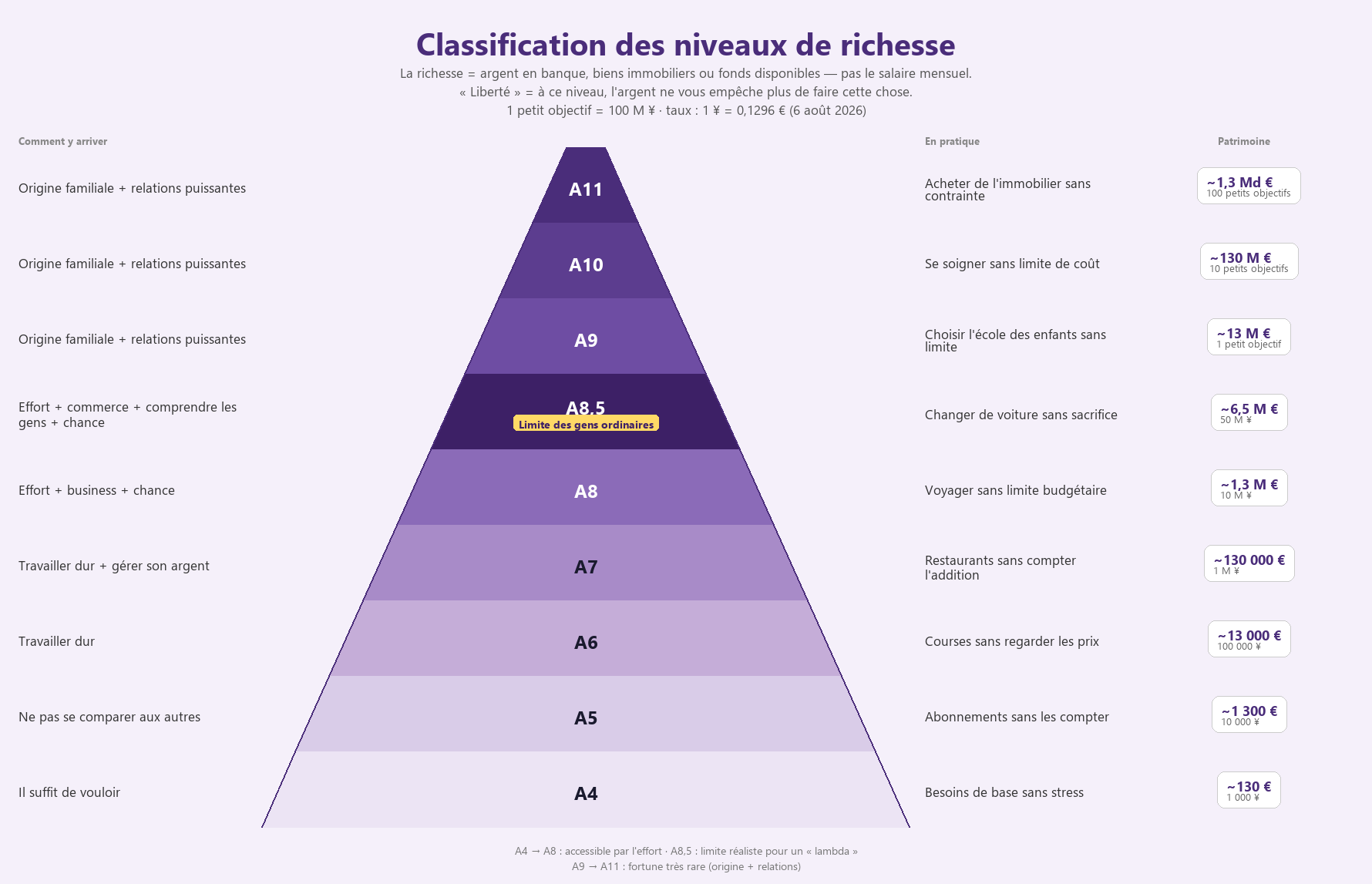
On the other side of the planet, Asia doesn’t despise effort or mastery. I discovered while watching Chinese videos that a wealth scale was circulating in China. This scale allows everyone to “place themselves”. Unlike in the West, where we talk about the top 1%, top 0.01%… the population in China is so huge and the gaps between cities so large that people “place themselves” relative to their net worth (net worth) and the scale is divided into 11 levels. I had the original Chinese image translated by AI and had the amounts converted into euros. The image isn’t perfect, but you get the idea.
A few comments:
We see that even level A4 with a net worth of only €130 is considered enough to survive. Probably in rural China, but it’s interesting to see such a wide range. Ultimately, it’s a question of choice and the degree of freedom one wants to aim for.
The Chinese believe that success is accessible to all, but to be emperor/king, you need the Mandate of Heaven. So despite all efforts, one cannot reach it. Level A8.5 is considered the limit of ordinary mortals. That is to say, a person from a normal family (aka not an heir to Hermès, Bouygues…) can still, according to the Chinese, reach the astronomical sum of 6.5 million euros through the sweat of their brow (meritocracy). That’s a very large amount even for Europe, so imagine that amount for China, where you can go to a restaurant for €1—it’s huge! It’s a very optimistic message, because it means that without the Mandate of Heaven or a powerful family, one can still reach €6.5 million in net worth before being blocked by birth. The x10 factor between A7 and A8 separates a salaried employee who is very well paid and who invests their savings, from an entrepreneur. And the x3 factor separates an entrepreneur who works hard (A8) from an entrepreneur who works hard and has emotional intelligence (A8.5).
However, from A9 onward, it’s no longer meritocracy; the Chinese acknowledge that a good pedigreeis needed. The wealth ratio between A9 and A8.5 is only 2, but A9 is an almost inaccessible level without inheritance, very strong entrepreneurial success, or major real estate/financial leverage. In China, wealth is closely tied to real estate, financial assets, and access to rare opportunities that require a solid network. It’s better to be born into a wealthy family (or be part of the government) for levels A9 and above. It’s funny that China openly acknowledges pedigree & connections as the glass ceiling, unlike France, which is very hypocritical about its elite & the role of family background.
From A9 onward, we’re talking about a “small goal”. Wang Jianlin, president of the Wanda Group and then the richest man in China, was invited to an interview show in August 2016. A young man asked him how to become as rich as him, and he essentially replied: many students say they want to become the richest or create the biggest company in the world, without having a concrete goal or plan. Wanting to be the first on the planet is the right direction, but it’s better to first set a small, achievable goal, giving the example of first earning a hundred million yuan (€12.5 million), asking yourself if you can achieve it in three or five years. The discrepancy between the word “small” and the astronomical sum of 100 million RMB immediately went viral on Chinese social media and the phrase “first set yourself a small goal” became a viral expression in a matter of hours, parodied every which way (“set yourself a little goal, like writing an article that gets over a million views,” “set yourself a little goal, like winning a Nobel Prize,” etc.).
Bibliophilia
On Facebook, I came across a video by a Vietnamese bibliophile who listed his 14 favorite books. He’s an architect, and I really like the way he creates a beautiful reading space for his family.
Here’s his list, I’ve put the ones I’ve read in bold:
- The Ant and the Dove (collection of 103 Russian fables) — Leo Tolstoy (Amazon link)
- Life of Pi — Yann Martel (Amazon link)
- Nobody’s Boy — Hector Malot (Amazon link)
- Eternal bread — Alexander Belyaev (Amazon link)
- Thương Nhớ Mười Hai — Vũ Bằng
- Ivanhoe — Walter Scott (Amazon link)
- Water Margin — Shi Nai’an (Amazon link), I’ve already talked about the four great Chinese classics here
- Shakyamuni Buddha — Master Hsing Yun
- Sapiens — Yuval Noah Harari (Amazon link), my review
- A Little History of the World — E. H. Gombrich (Amazon link)
- Michelangelo: A Life in Six Masterpieces — Miles J. Unger (Amazon link)
- The Prince — Niccolò Machiavelli (Amazon link)
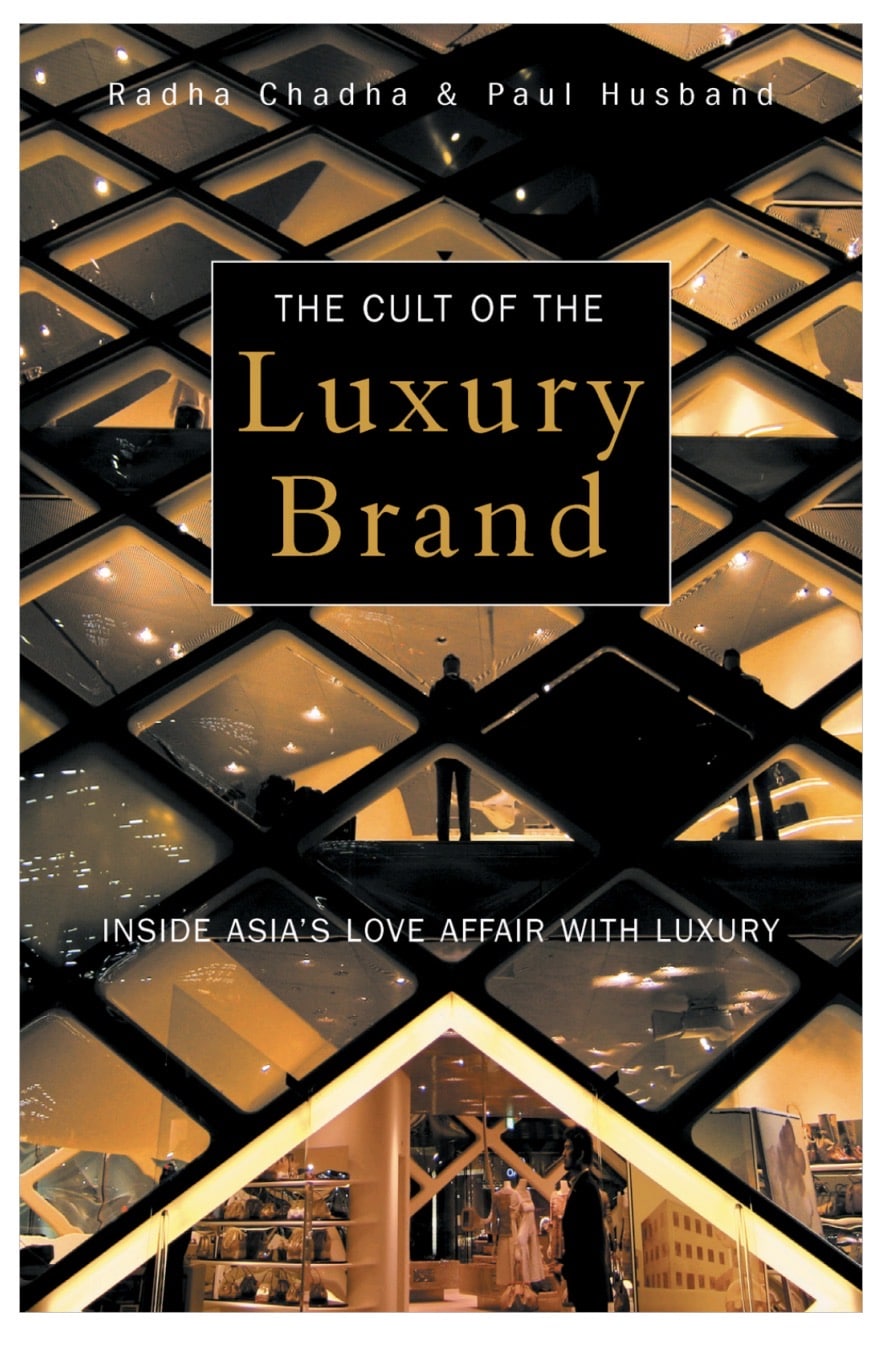
- The Cult of the Luxury Brand: Inside Asia’s Love Affair with Luxury — Radha Chadha and Paul Husband (Amazon link)
- The Tale of Kieu — Nguyễn Du
Bibliophiles often appreciate lists like this. To come up with this list, the person must have read 400-500 books. It saves us a lot of reading time. Numbers 1, 3, and 4 are books he highly recommends to children.
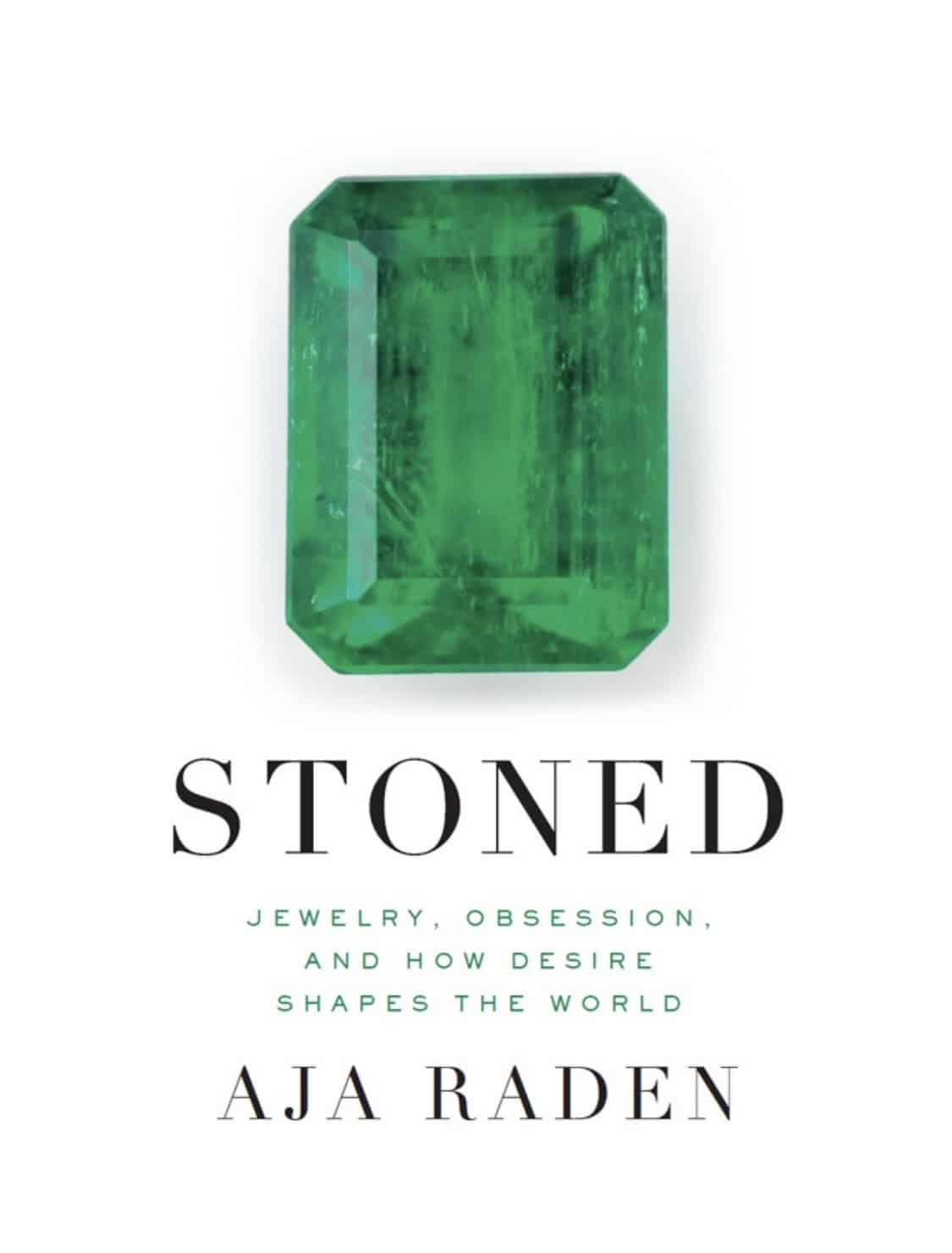
A quick comment on #13. Stoned: Jewelry, Obsession, and How Desire Shapes the World by Aja Raden (Amazon linkand The Cult of the Luxury Brand (Amazon link) explain very well the mechanisms that drive people to consume luxury products. When I feel like I’m getting too swept up in a wave of consumerism, I reread them and it calms me right down.
Leather trays
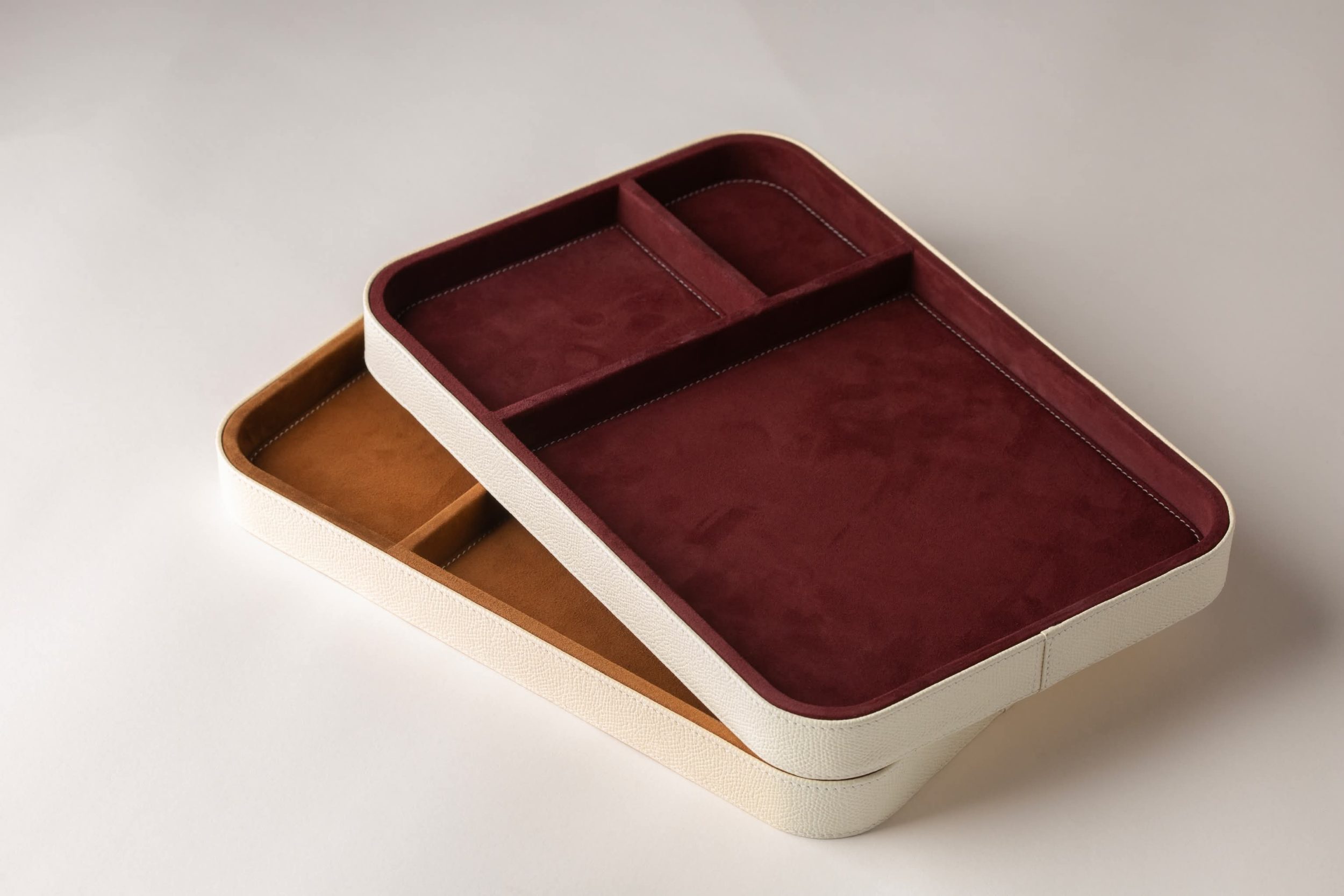
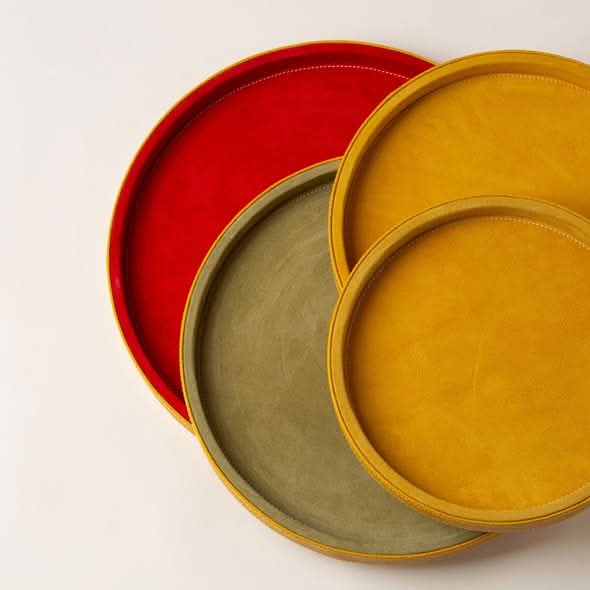
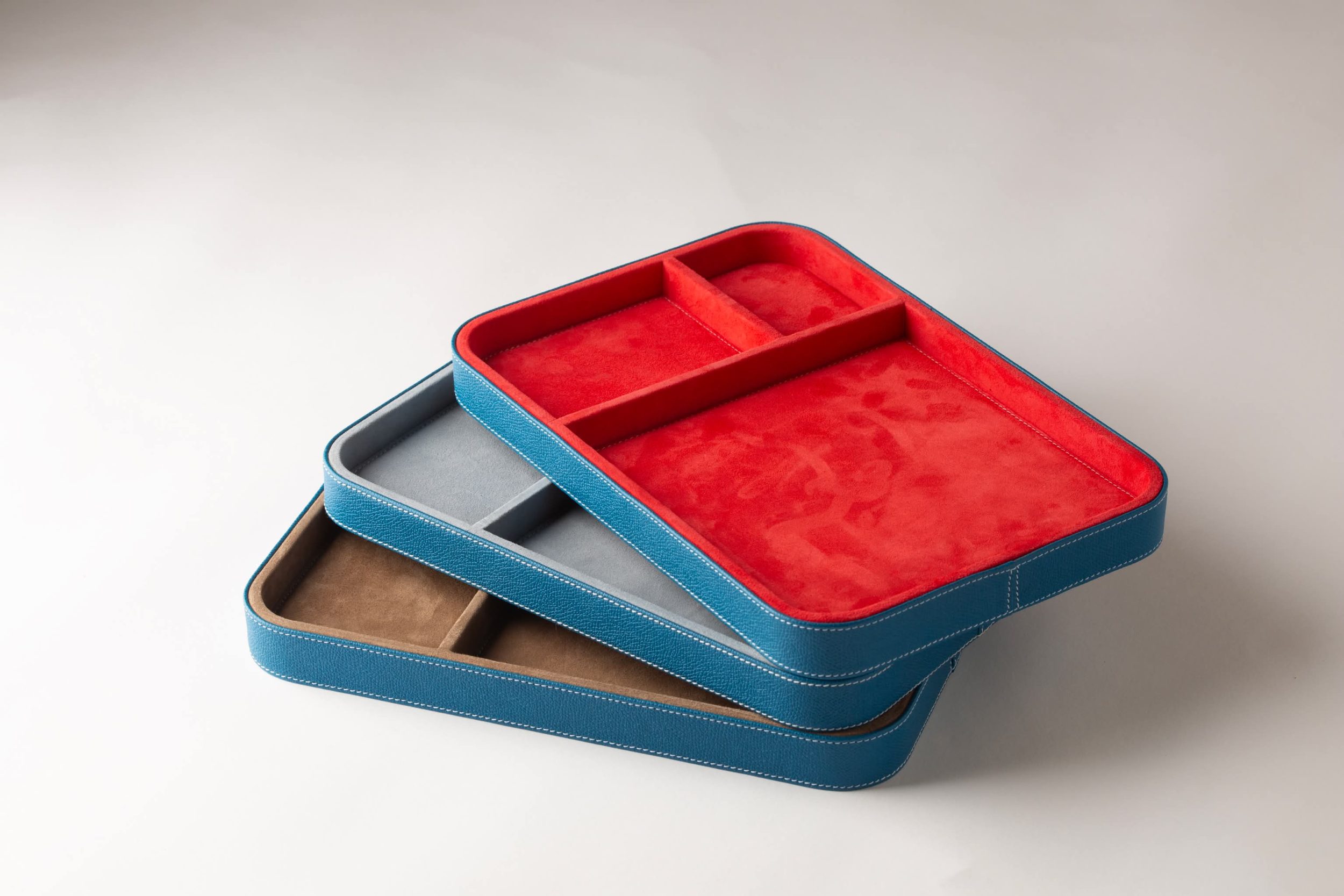
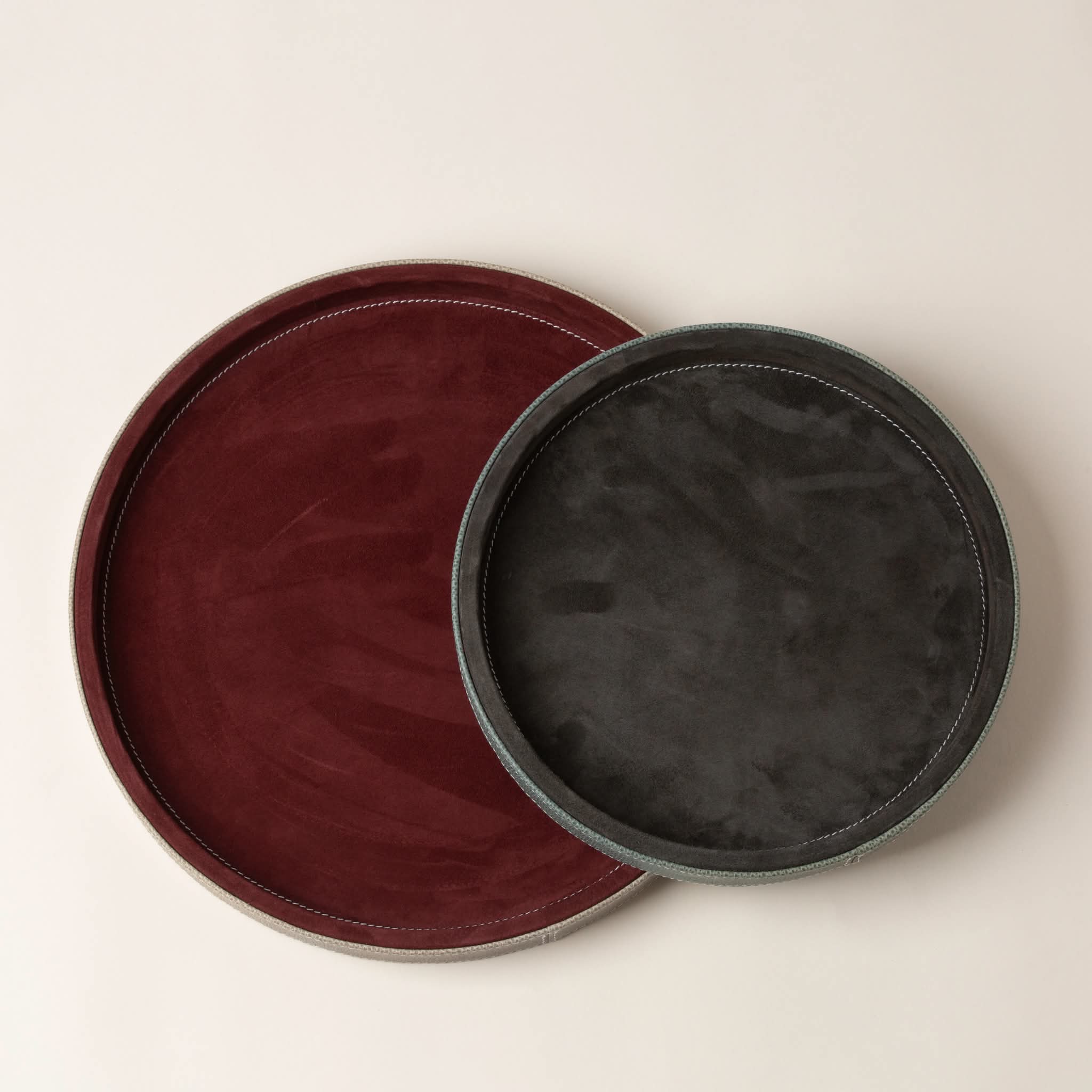
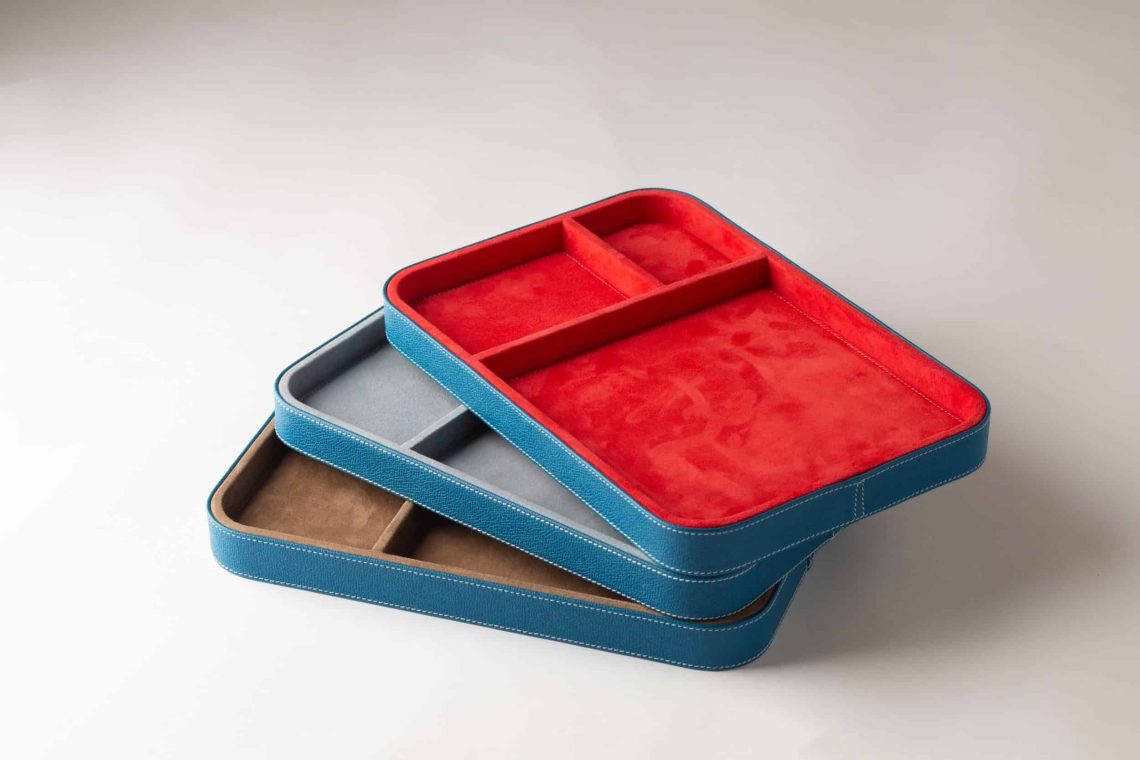
My leather supplier in Vietnam started making leather trays. They’re not selling very well, so I think they’ll stop production soon. I hurried to reserve the round tray in burgundy (€50, diameter 27.5cm). I admit, on this one, I have a bit of FOMO, but I especially love nubuck goat leather and I know they won’t have any more in stock. The outside is a rigid epsom leather. I don’t know when I’ll be able to touch it, but at least I know it’s MINE 😀 This tray will be used to store my beads.
Guqin
I got interested in traditional Chinese instruments: the Guqin and Guzheng. After listening to several pieces, I’m more drawn to the calming sound of the Guqin. The guqin was designed and practiced, from its origins, as an instrument of spiritual cultivation. Originally, it had only 5 strings, corresponding to the 5 elements. And it produces 3 types of sounds corresponding to heaven, earth, and human. Before, I listened to mantras to rebalance myself, now I’m adding Guqin pieces. Type Guqin on YouTube, you’ll find plenty.
Tuna marinated in soy sauce
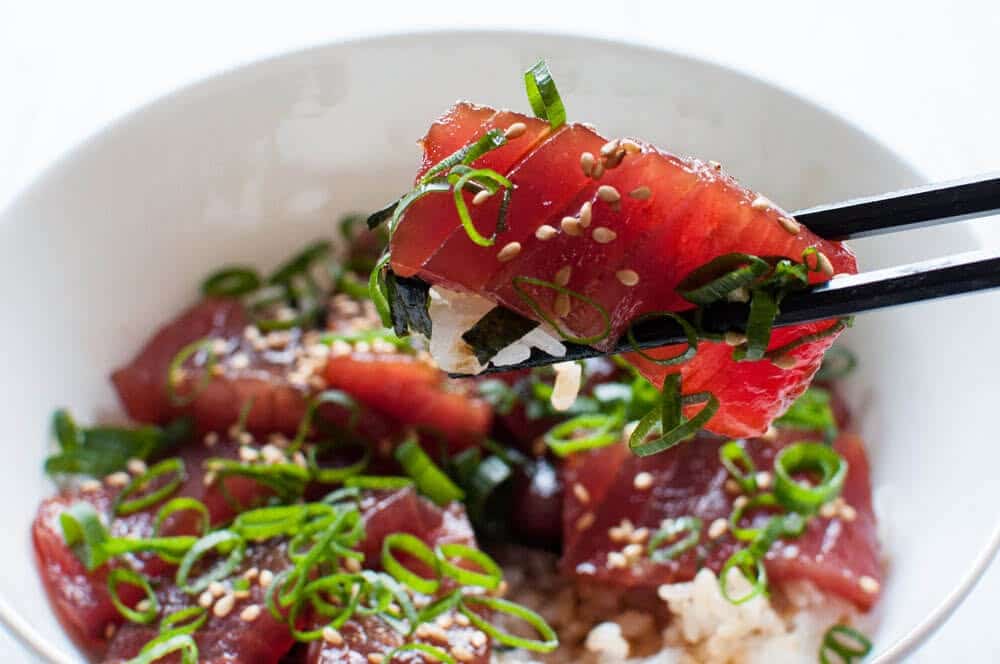
It will never be as good as the Michelin-starred restaurant in Seoul, but at least I won’t be drooling over photos of crab/salmon/shrimp marinated in soy sauce from Tahiti. Now, I know how to make tuna (wild Tahitian) marinated in soy sauce. And it’s delicious!!!! I highly recommend trying it if you like raw fish. It’s super easy, the hardest part is not eating too much of it. My recipe is available here.
Since we became sedentary again, I’ve learned to cook our favorite dishes and frankly, I’ve done pretty well. When I spend too much time in the kitchen, I don’t eat anymore because my nose takes everything in and I feel like I’m not hungry. So my specialty is dishes that take little prep time, or that simmer on their own in the Cookeo, for example tartares (beef, tuna, scallops), marinades, beef bourguignon, couscous, tagines… The catch is that I can’t eat these dishes at restaurants anymore because I’ll find them blander than my own recipes 🙁

